Spiritualism vs Nationalism – The celebration of 66th Independence Day of India

Bharat Darshan – The role of Cultural Nationalism vs Secular Nationalism in the Defense of the Republic of India

Bharat Darshan. Defending the Republic of India. Spiritualism vs Nationalism.
SPIRITUALISM vs INDIAN NATIONALISM-KARGIL WAR 1999 : Indian Army Personnel salute the Kargil War Memorial in Drass, Jammu & Kashmir, India on August 12, 2012 in celebration of 65 Years of Independence. The photo insert shows the winner of Gallantry Award of Param Vir Chakra, Grenadier Yogendra Singh Yadav.

Essence and Existence in the Land of India:

SPIRITUALISM vs INDIAN NATIONALISM : On August 15, 2012, Indian people are celebrating the 66th Independence Day in commemoration of 65 Years of Independence. The Red Fort in New Delhi is the traditional venue for this celebration and the Indian National Flag is hoisted by the Prime Minister of India, the elected representative of People of India. In this context we have to explore the relationship between Spiritualism and Nationalism.

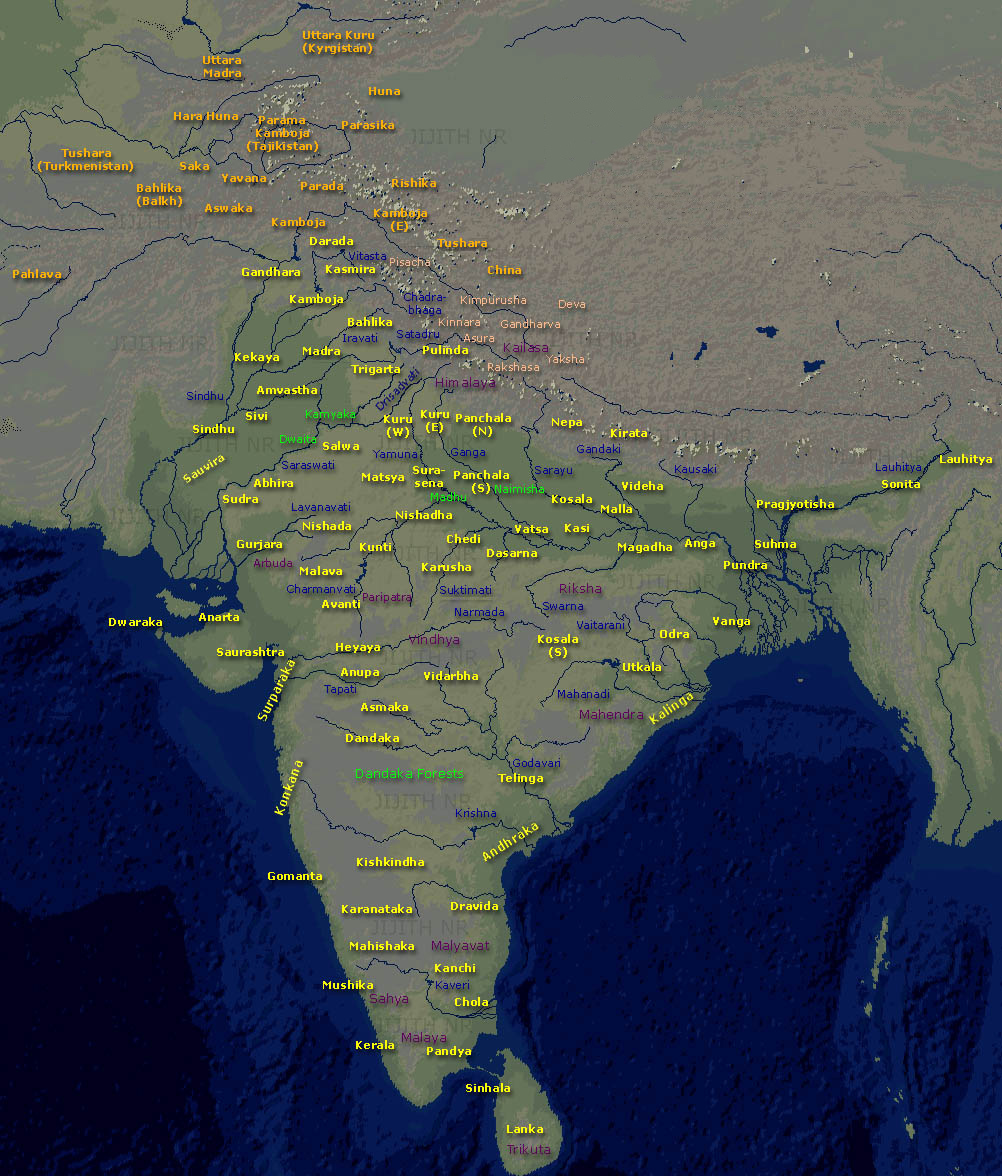
Today, on August 15, 2012, people of India also known as ‘BHARAT’ are celebrating the 66th Independence Day in commemoration of 65 Years of Independence. In this context, we have to examine the relationship between Spiritualism and Nationalism. In the ancient Land of India, human beings have lived continuously for thousands of years. But, it was a Land divided into several hundreds of small and large kingdoms until Indian people joined together in a Nationalist Movement to win their Freedom from foreign rule and occupation. Indians won this Freedom on August 15, 1947 when Great Britain ceased its occupation of India.

What is Nationalism?

SPIRITUALISM vs NATIONALISM-THE LAND OF INDIA : This National Flag of India known as ‘Tricolor’ has infused a sense of new ‘SPIRIT’ called Indian Nationalism, a sense of Devotion to one’s Nation.

Nationalism is the state of mind in which the individual feels that everyone owes his supreme loyalty to the Nation-State. Nationalism is a modern movement and it belongs to the modern world. Before the 18th century, people gave their loyalty to their communities, tribes, feudal lords, princes, or religious groups. The historical sense of attachment to the native soil, to social and cultural traditions, and to established territorial authorities has changed by the end of the 18th century when Nationalism began molding public and private life. Since then, Nationalism has become an important factor of modern history. The American Revolutionary Wars (1775-1783), and the French Revolution (1789) could be regarded as the first manifestations of Nationalism. It led to the formation of modern National States in Europe. The 19th century has been called the Age of Nationalism in Europe. The World War I, and World War II resulted in the spread of Nationalism in Asia and Africa and has manifested itself as a struggle against European Colonialism.

SPIRITUALISM vs NATIONALISM-THE LAND OF INDIA – Indian Nationalism won Freedom at a huge cost in human lives. The British Empire while leaving India during 1947 had divided the Land creating new National entities. The disorder that followed the Partition of India caused the loss of over one million human lives. The concept of Cultural Nationalism cannot and will not defend and preserve human life in the Land of India.

Nationalism began to appear in India after World War I. The Indian National Congress founded in 1885 began a new political process in the private and public lives of Indian people. It had produced leaders such as Mohandas Karamchand Gandhi (1869-1948) who joined the Nationalist Movement for Indian Independence during 1915. The people of India started replacing the king as the center of the Nation. The State had become the people’s State, a National State, and a Motherland.

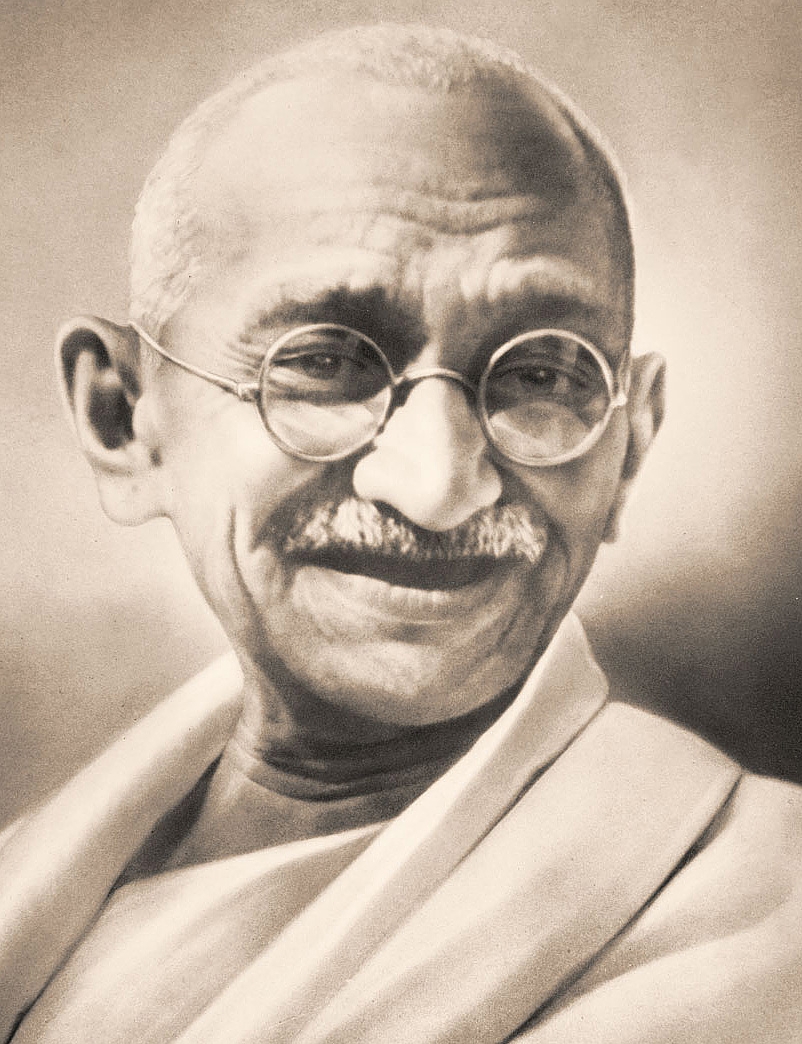
SPIRITUALISM-NATIONALISM-THE LAND OF INDIA : Mahatma Gandhi is correctly recognized as the Father of the Nation. He won a huge political battle and won Freedom for millions of Indian people. Did he secure Peace, Harmony, and Tranquility in the living experience of the People of India? The Past is Never Dead. Spiritualism is the potency generated by Consciousness; the Consciousness or Awareness of the fact of existing in a given physical environment. Spiritualism demands the existence of a Living Soul or Spirit.

Nationalism is not a political program or ideology; it is a perspective on such programs or ideology. Nationalism can be described as a sentiment that places the existence and well-being of the Nation highest in the scale of personal loyalties.

In political terms, it signifies a person’s willingness to work for the Nation against foreign domination. It reflects a person’s willingness to resist foreign political, economic, and cultural domination. Nationalism implies a group’s consciousness of shared history, language, race, and values. Its significance lies in its role in supplying the ties that make the Nation-State a cohesive, viable entity. The terms such as nation, state, or country describe a political entity in which people are united under a particular political organization and are occupying a defined territory. However, the term ‘Nationalism’ demands more than the existence of boundaries or political institutions. Nationalism includes the feelings or thoughts of patriotism, zealous love of one’s country, advocacy of national unity or independence and it involves the creed that fidelity to one’s State or Nation is more important than fidelity to individual interests.

Bharat Darshan – The role of Cultural Nationalism vs Secular Nationalism in the Defense of the Land of India. The Cultural Unity of the people of India was not enough to stop the foreign aggressors who ruled over India

We, the people of India and of Indian origin have to truthfully examine if ‘Nationalism’ has ever existed in the Land of India. We have to truthfully explain as to why the Land of India exists as an easy target for foreign invasion, foreign conquest, foreign occupation, and foreign political, economic, and cultural domination. The Cultural Unity of the people of India was not enough to stop the foreign aggressors who ruled over the Land of India.

Indian Nationalism won Freedom at a huge cost in human lives. The British Empire while leaving India during 1947 had divided the Land creating new National entities. The disorder that followed the Partition of India caused the loss of over one million human lives. The concept of Cultural Nationalism cannot and will not defend and preserve human life in the Land of India.

The Problem of National Unity and the role of Cultural Nationalism in India:

Bharat Darshan – The role of Cultural Nationalism vs Secular Nationalism in the Defense of the Land of India. In the ancient Land of India, human beings have lived continuously for thousands of years. But, it was a Land divided into several hundreds of small and large kingdoms.

There is a fundamental problem with the experience of life in the Land of India. The Nation – State was nonexistent during the greater part of Indian history. People did not give loyalty to the Nation – State but to other, different forms of feudal states. Before 20th century, political allegiance was determined by mostly local and regional factors such as that of a local princely ruler, regional language or regional culture.

Indian Cultural Nationalism mainly consists of expression of some national characteristics through nonpolitical activities such as art, literature, music, dance, and other forms of culture such as the performance of Temple Worship and Pilgrimage. A vast multitude of people may come together at a particular place in celebration of an event and return to their native places. India did not exist as a large, unified territorial state with political, and economic centralization.

The political, and economic centralization that existed in India was largely a product of foreign rule and foreign occupation of the Land of India. This lack of National Unity and the lack of a National identity and Individuality made India an easy target for foreign, military attacks.

The History of Jihad in India

Bharat Darshan – The role of Cultural Nationalism vs Secular Nationalism in the Defense of the Land of India

Sir Jadunath Sarkar, a former Vice-Chancellor of Calcutta University, a historian, reviewed the records kept by Al- Utbi, the Secretary of Sultan Yaminu -d- Daula Mahmud bin Subuktigin known as Sultan Mahmud of Ghazna. The Secretary in the Persian document called the Tarikh -i- Yamini recorded the details of several episodes of bloody campaigns waged by Sultan Mahmud between 1001 A.D. and 1027 A.D. Persian historian Ferishta (“Tarikh-e- Fereshteh” work by Ferishta about Mahomedan Power in India) also recorded the military conquests of India by Sultan Mahmud. The Sultan of Ghazna directed his military attacks on places of spiritual pilgrimage in India. He attacked the temple towns of Nagarkot, Thanesar (1011), Mathura (1018), Kannauj (1019), Kalinjar (1023), and Somnath (1024-25). He also attacked the holy places of Varanasi, Ujjain, Maheswar, Jwalamukhi and Dwaraka. These attacks were witnessed by Persian writers such as Al-Biruni (Muhammad bin Ahmad al-Biruni) and Ferdowsi (Abu ol-Qasem Mansur or Firdawsi/Firdusi). All of these historical records and documents reveal the scale of loss of human life. It is estimated that about two million people died in the Land of India during Sultan Mahmud’s repeated attacks. Asaru -l- Bilad, a Persian geographer had also described some of the foreign conquests of India.

K.S. Lal, an Indian historian estimated that about sixty to eighty million people in India may have died between 1000 and 1525 CE due to foreign invasions. It clearly demonstrates that the idea of Cultural Nationalism did not play a significant role in defending Indian people and had failed to preserve human life. Apparently, Cultural Nationalism did not generate the cohesiveness or Unity that is needed to resist and to defeat foreign military campaigns.

Cultural Nationalism vs Secular Nationalism – The Clash at Kurnool Medical College, Andhra Pradesh:

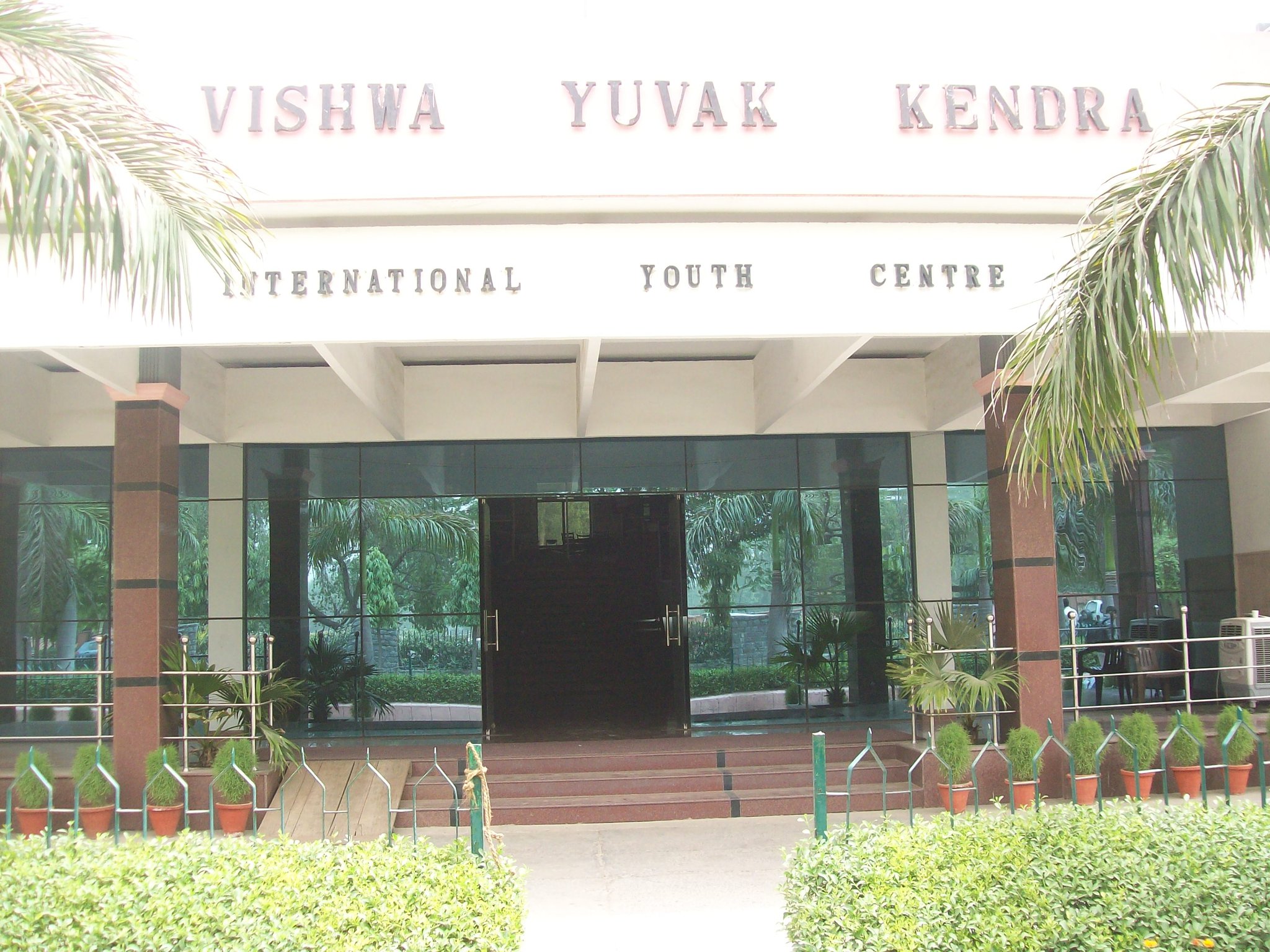
CULTURAL NATIONALISM vs SECULAR NATIONALISM – THE CLASH AT KURNOOL MEDICAL COLLEGE : The clash at Kurnool Medical College is a consequence of my participation as a student delegate in a National Student Seminar on National Integration that was sponsored by Vishwa Yuvak Kendra, International Youth Centre, Chanakyapuri, New Delhi, India during June 1967.
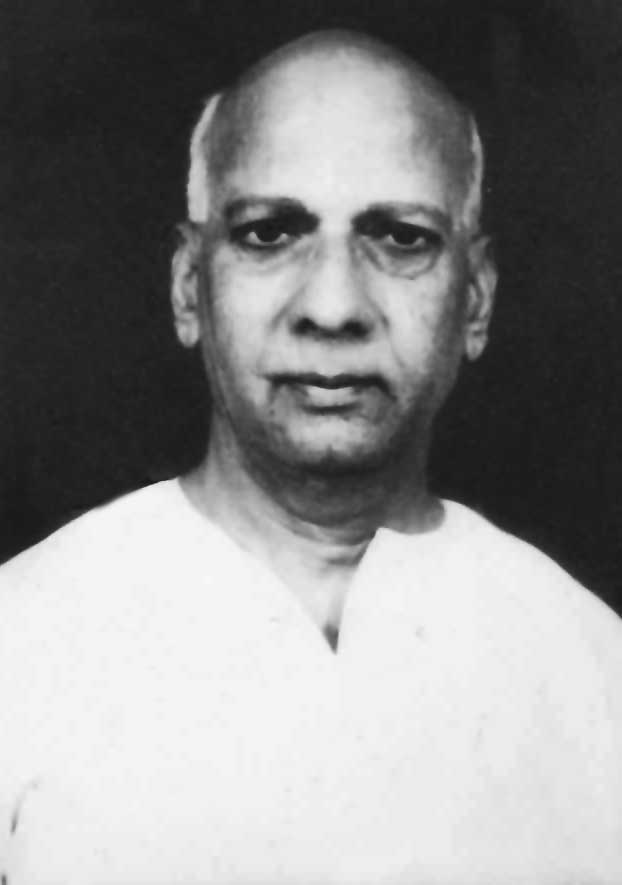
SPIRITUALISM – NATIONALISM – THE LAND OF INDIA : Dr. Sripada Pinakapani, M.D., Professor of Medicine and Superintendent of Kurnool Government General Hospital worked at Kurnool Medical College, Kurnool City, Andhra Pradesh, India from January 1957 to August 1968. He represents the face of forces opposed to the idea of Secular Nationalism. I was a student at Kurnool Medical College who had advocated the need for a National Identity and National Individuality and promoted the idea of formulating marital social relationships neglecting traditional cultural values based upon religion and caste. He had actively opposed my personal initiative and had encouraged my paternal uncle, Dr. R. Anjaneyulu, M.D., Emeritus Professor of Obstetrics & Gynaecology, B. J. Medical College and Sassoon Hospitals, Pune City, Maharashtra State, India to sabotage my career in Indian Army Medical Corps by using his influential contacts with senior Officers of Indian Army Medical Corps.

I submitted an application to Chief Minister Office, Government of Andhra Pradesh, Hyderabad, India on September 02, 2012. The request made by me is registered by the Secretariat Departments of Government of Andhra Pradesh and the Application Number is shown as : SR 12014477 and it reads as follows:

“I was a student of Kurnool Medical College from November 1965 to June 1970. I represented the State of Andhra Pradesh as a student delegate at the four-week long National Student Seminar on National Integration sponsored by Vishwa Yuvak Kendra, New Delhi during 1967 to promote the need for developing a National Identity and National Individuality for National Unity and National Integration. I encouraged students to ignore any identity that is derived from region, religion, language, and caste as India needs Secular Nationalism and not Cultural Nationalism. This was opposed by Dr. Sripada Pinakapani, M.D., who then served as the Professor of Medicine and the Superintendent of Kurnool Government General Hospital. Since he had actively opposed the principle of Secular Nationalism, I would request you to reconsider the decision made by the Government of Andhra Pradesh to name a building on Kurnool Medical College/General Hospital Campus to honour him.”  

ESSENCE AND EXISTENCE IN THE LAND OF INDIA:

The ideas about human soul or spirit( Atman or Atma in Sanskrit language) find their profound expression in the oral and written literature of India. Indian thoughts about the nature of man and his existence can be traced to the ancient texts of Vedas (the Rig-Veda, the Sama-Veda, the Yajur-Veda, and the Atharva-Veda) which were compiled from c. 1500 B.C. to c. 500 B.C. The Sanskrit texts known as the Upanishads (c. 900 – 500 B.C.) have systematized Indian philosophy. There are six classical systems of Indian philosophy that accept the authority of the Veda and the Upanishads; 1. Nyaya (6th century B.C. ) is a school of logic and epistemology, 2. Vaisheshika (3rd century B.C.) posits a sixfold classification of Reality (Substance, Quality, Activity, Generality, Particularity, and Inherence), 3. Samkhya (6th century B.C.) expounds two basic metaphysical principles; Purusha or Soul and Prakriti or Material Nature, 4. Yoga (2nd century B.C.) of Patanjali accepts Samkhya metaphysics, presents an eight-stage discipline of self-control and Meditation, 5. Purva-Mimamsa (2nd century B.C.) sets forth principles of interpretation of the Vedic texts, and 6. Uttara-Mimamsa or Vedanta which includes different schools of thought based on the Brahma-Sutras of Badarayana (early century A.D.) which summarize the Upanishadic doctrine and explain the teachings of the Upanishads. The most important schools of Vedanta are 1. the non-dualist (Advaita) Vedanta of Shankara (A.D. 788-820), 2. the qualified non-dualist Vedanta of Ramanuja (A.D. 1017-1137), and 3. the dualist Vedanta of Madhva (A.D. 1197-1276). Buddhism and Jainism are two important schools of thought that do not accept the authority of Veda and Upanishads. To a great extent, Indian traditions claim that man is an embodied soul. The mind, and body that represent the physical person is an illusion as the human body is thought to be “Asat”, or unreal, perishable, full of ignorance, and not happy. The real or true man as represented by soul or spirit is unborn. The real person is viewed as an eternal person who is not subject to change called life and death. Indian tradition considers that the Objective Reality of man or Essence of man is soul or spirit.

We must note that it is impossible to describe this mental concept called soul or spirit if it is never associated with its human body. The separation of man into body, mind, and soul is not supported by scientific study of man. Man comes into existence from a single, fertilized Egg-Cell. This man cannot be separated into distinct entities like material or physical body, thinking substance called mind, and an immaterial principle called soul. These three aspects of man have no independent existence of their own. There is no life and there is no human existence if body, mind, and soul are separated. Who you are describes your Essence and it is defined by What you do to establish the fact of your Existence. In other words, the Essence (Who you are) is preceded by the reality of Existence (What you do). Thus, Existence is the precondition to recognize Essence. Hence, I describe man as a living soul and not as an embodied soul.

In my impression, the traditional Indian views about human soul or spirit have failed to recognize the importance of human Existence as a precondition to define the nature of human Essence. Indian people have to give due recognition to the problems of human existence and must realize that Essence has no value if its meaning is not attached to the condition called Existence.

In my opinion, Spiritualism demands the existence of a Living Soul or Spirit to understand its characteristic functions that generate peace, harmony, and tranquility as a living human experience. Indians must define the concept of Spiritualism in the context of Self-Preservation.

If Indians seek their existence as a Nation, they have to forget the parochial differences to develop national individualities and the primary focus of allegiance must be the Republic of India and not that of the local language, religion, or culture.

Dr. R. Rudra Narasimham, B.Sc., M.B.B.S.,

Danavaipeta Municipal/Corporation High School, Rajahmundry, East Godavari District, Andhra Pradesh, India,

S.S.L.C.  Class  of March/April, 1961.

BHARAT MATA OR MOTHER INDIA REPRESENTS THE COUNTRY AND THE LAND OF MY ORIGIN. SHE IS THE CULTURAL AND SECULAR ICON OF THE LAND FOR SHE IS THE OWNER OF THE LAND,

SPIRITUALISM AND EXPLORING ANTI-MATTER IN THE UNIVERSE

An example of simulated data modelled for the ...
An example of simulated data modelled for the CMS particle detector on the Large Hadron Collider (LHC) at CERN. Here, following a collision of two protons, a is produced which decays into two jets of hadrons and two electrons. The lines represent the possible paths of particles produced by the proton-proton collision in the detector while the energy these particles deposit is shown in blue. (Photo credit: Wikipedia)

THE SPIRITUAL BEGINNING OF THE UNIVERSE:

Spiritualism and Anti-Matter: Nobel Physics Laureate Samuel Chao Chung Ting born in Ann Arbor, Michigan on 27 January 1936 received the Nobel Prize in Physics during 1976 along with Burton Richter. His work involved the discovery of a subatomic nuclear ‘MESON’ particle. He is the principal investigator for the international Alpha Magnetic Spectrometer that was installed on the International Space Station on 19 May 2011.

There is some evidence to suggest the possibility of existence of material that could be called Anti-Matter. It helps us to understand the structural and functional organization of Matter. The fact of the existence of relationships in the Universe to provide an internally beneficial relationship to the participants of such relationship shows that the Universe had a Spiritual Beginning. Because of the potency called Spiritualism or Spirituality, we have Chemical Elements with stable Atoms and they can form stable Molecules and bond together to exhibit stable properties and interact with each other in a manner that can be expected and be predicted. Everything that changes in this Universe is supported by the Unchanging, underlying Spiritual Principle. The flow of events in Time and Space have a Cyclical pattern and the flow is sustained by the Laws of Conservation of Mass, Energy, and Momentum. If Anti-Matter has been created, it has been safely removed, or placed at a distance without giving it the ability to interact with Matter. The fact of the existence of Life in the Universe suggests that the Universe had a Spiritual Beginning.

Dr. R. Rudra Narasimham, B.Sc., M.B.B.S.,
Personal Number. MS-8466, Rank.Captain AMC/SSC,
Medical Officer, South Column, Operation Eagle (1971-72),
Personal Number. MR-03277K, Rank. Captain/Major, AMC/DPC
Medical Officer, Headquarters Establishment No. 22 , C/O 56 APO(1971-74),
Directorate General of Security,
Office of Inspector General Special Frontier Force,
East Block V, Level IV, R. K. Puram,
New Delhi – 110 022
https://bhavanajagat.com/

THE NATURE OF SPIRITUAL MATTER:

Matter and anti-matter are almost identical, with the
same mass but opposite spin and energy charges. They
can form separate parts of some elementary particles but
if they are mixed together they are both destroyed
instantaneously. To create Living Matter, we need a Life Principle called Soul or Spirit that operates the structural and functional organization of that material substance. 

ANTI-MATTER UNIVERSE SOUGHT BY SPACE-BASED DETECTOR:

SPIRITUALISM AND EXPLORATION OF SPACE FOR ANTI-MATTER:Alpha Magnetic Spectrometer Payload Operations and Command Center at CERN, Geneva.

The International Space Station (ISS) is pictured on a computer monitor at the
Alpha Magnetic Spectrometer (AMS) Payload Operations and Command Center
(POCC) at the European Organization for Nuclear Research (CERN) in Meyrin
near Geneva July 25, 2012. Credit: Reuters/Valentin Flauraud

By Robert Evans
GENEVA | Wed Jul 25, 2012 6:05pm EDT

GENEVA (Reuters) – A seven metric ton particle detector parked for over a year
on the International Space Station (ISS) aims to establish whether there is an
unseen “dark universe” woven into the cosmos, the scientist leading the project
said on Wednesday.

And the detector, the Alpha Magnetic Spectrometer or AMS, has already broken all records in registering some 17 billion cosmic rays and storing data on them for
analysis, Nobel physics laureate Samuel Ting told a news conference.

“The question is: where is the universe made from anti-matter?” said Ting.

“It could be out there somewhere far away producing particles that we could
detect with the AMS.”

Physicists say that the event 13.7 billion years ago that brought the
known universe into existence and has been dubbed the “Big Bang”
must have created equal amounts of matter and anti-matter. But then
anti-matter largely disappeared.

Why that happened is one of the great mysteries of the cosmos which
are being investigated through the AMS and scientific analysts back on the
ground at CERN, the European particle physics research center where
Ting spoke. The purpose of the AMS program, he said, “is to search for
phenomena that so far we have not had the imagination or the
technology to discover”.

Some researchers have suggested that the invisible “dark matter”
estimated to make up about 25 percent of the known universe could be
linked to anti-matter, but others say that is highly unlikely.

WAFTING VEIL

These scientists argue that anti-matter could not survive in the
close proximity to parts of the visible cosmos that latest
observations suggest dark matter occupies – sometimes like a
wafting veil between planets and stars.

Matter and anti-matter are almost identical, with the
same mass but opposite spin and energy charges. They
can form separate parts of some elementary particles but
if they are mixed together they are both destroyed
instantaneously.

Ting was speaking at a news conference with a team of
U.S. astronauts who took the detector, which was
developed and built at CERN, up to the ISS in May last
year on the last mission of the U.S. space shuttle Endeavour.

He said that so far the $2 billion detector, with its
powerful magnets that bend particles with positive
and negative charges in different directions, had functioned
perfectly and not one of its multiple backup systems had
its multiple backup systems had been needed so far.

Ting, a 75-year-old professor at the Massachusetts Institute
of Technology in Boston, supervises the research on the material
gathered from the AMS from CERN, guiding a team of
some 500 scientists in many countries, including Russia and China.

He is however cautious about how long it will take for real
discoveries to compare with the sighting announced this
month of a totally new particle, believed to be the
long-sought Higgs Boson, in CERN’s Large Hadron Collider.

The boson is part of a force called the Higgs Field that
turned the minute pieces of flying debris after the Big Bang
into solid matter, bringing them together to form galaxies, stars
and planets, and later life.

Asked when he expected to be able to report the first
indications of dark matter or of an anti-matter mirror universe,
Ting replied: “As late as possible,” explaining that the
analysis had to be done scrupulously and “step by step”.

It would be at least 50 years “before anyone would be
foolish enough to launch an experiment like this again”
now that the U.S. space program was shut down and current
Chinese and Russian spacecraft could not take a load like
the AMS, he said.

(Editing by Mark Heinrich)

SPIRITUALISM – THE VICTORY OVER DEATH

Spiritualism-The Victory over Death : In Indian tradition, Lord Shiva is the Father Principle and His consort Goddess Parvati is the Mother Principle. Man attains Liberation or ‘Moksh’ and obtains his Release from bondage or ‘Mukti’ or ‘Vimochan’ by severing the connection called ‘Attachment’ to free oneself from the fear of Death. The condition called ‘Death’ causes fear if man is not aware of his Objective Reality. The Truth is that there is no disunity between man and God and there is no separation between man and God.

THE VICTORY OVER DEATH – BREAK THE PEDICLE OF ATTACHMENT – Man is attached to his life by a pedicle or attachment called ‘the fear of death’. Man conquers Death and can declare his Victory over Death by simply severing this attachment that arouses the sense of fear of Death. Spiritualism is the potency that brings man’s Essence and Existence to come together to establish the subjective reality of man in the physical world or the material realm. This hymn called ‘Maha Mrityunjaya  Mantra’ in praise of Lord Shiva known as ‘Triyambaka appears in the ancient Vedic Book of Rig Veda.’

SPIRITUALISM – THE VICTORY OVER DEATH :

SPIRITUALISM – THE VICTORY OVER DEATH: In Indian tradition, the sense of pain and sorrow caused by death is overcome by coming to correct understanding of true or real nature of Man; His Essence and His Existence.

Spiritualism-The Victory over Death : The Rebbapragadas Family Photo. The Rebbapragada Group is mourning the loss of the second son of (Late) Dr. R. Anjaneyulu, M.D. former Professor of Gynaecology & Obstetrics, B.J. Medical College, Dean Faculty of Medicine, Pune University.

Ramakrishna ‘Rama’ Rebbapragada. Born. February 27, 1958, Died. July 25, 2012. A Funeral Service is being held on Saturday, July 28, 2012 at Boyd – Panciera Douglas Road Chapel, Pembroke Pines, Florida. In Indian Tradition the grief, the pain, and the sorrow caused by loss is overcome by declaring ‘The Victory over Death’ by expressing an understanding of true or real nature of man and his existence.

“EKAM EVA ADVITIYAM” – “I ONE ALONE AND THERE IS NO SECOND” :

The Individuality of man is described in a thought that is expressed in Sanskrit language and it appears in the ancient Vedic Book of Chandogya Upanishad( 6:2:1 ) which reads: “Ekam eva Advitiyam” meaning – “I one alone and there is no second.” The intent of this statement is that of seeking the unity of the Objective Reality of Man and the Ultimate Reality called God. There is no duality between the two and there is no disunity between Man and God.

SPIRITUALISM – THE VICTORY OVER DEATH : THE LAW OF CREATION AND INDIVIDUALITY :

In Indian tradition it is explained that the human body is composite of three principles; three bodies in one, ‘tri-ani-pada’ – the Causal, the Spiritual, and the Material; Man is a Created Being, Man is a Spiritual Being, and Man is a Physical Being with body, and mind. Human being exists as a dual entity or two “Purusha” – the Higher, Real-self( the Spirit, the Soul, or Atma ) which is unchanging and is the basis for Man’s Individuality, and the Lower, Body-self which is subject constant change in morphological appearance and is the basis for Man’s physical Identity in this world. The Law of Creation and Individuality claims that Man always arrives into the physical world as a newly created object that is original, one of its own kind, distinctive, and unique; an Individual that has not existed in the Past and an Individual that will never again exist in the Future in the material realm. I describe Spiritualism as the potency of the Spiritual Matter that brings Man’s Essence and Existence to come together. Being born relates Man to the Subjective and Objective Reality of a biological existence in the physical and material world. Man because of his innate Spiritual nature has the intrinsic power to uplift himself from an event called Death to sustain his Individuality which is the unchanging, underlying Principle that supports the existence of a changing form with a morphological appearance. Under the influence of the Cyclical Flow of Time, the events called Birth and Death flow from one state into another while the Individual with Individuality remains as, “I, one alone and there is no second.”

Spiritualism-The Victory over Death : I define Spiritualism as an Unchanging, Underlying Principle that supports the existence of every living Object that changes in Nature under the influence of the Cyclical Flow of Time.


ROYAL CARIBBEANS MOURNS THE LOSS OF RAMAKRISHNA REBBAPRAGADA :

Kindly read about Ramakrishna ‘Rama'(RAMU) Rebbapragada’s great contribution to Royal Caribbeans and to the Cruise Industry:

http://www.seatrade-insider.com/News/News-Headlines/Industry-mourns-Royal-Caribbeans-Rama-Rebbapragada-Global-Sales-Guru.html

Dr. R . Rudra Narasimham, B.Sc., M.B.B.S.,


Operation Eagle – The Past is Never Dead

THE EVIDENCE FOR RECOMMENDATION OF GALLANTRY AWARD – ANNUAL CONFIDENTIAL REPORT-OFFICERS FOR THE YEAR 1971-72

SPIRITUALISM – OPERATION EAGLE – THE PAST IS NEVER DEAD :

GOLDEN EAGLE-OPERATION EAGLE-SPIRITUALISM-THE PAST IS NEVER DEAD: THE SPIRITUAL RELATIONSHIP BETWEEN MYSELF AND THE MEN WHO PARTICIPATED IN OPERATION EAGLE IS NOT DEAD. THE SPIRITS LIVE IN MY CONSCIOUSNESS.

The term ‘Spiritual’ describes the nature of a relationship, a partnership, an association, a connection, or bonding between two or more living entities based upon thoughts or feelings of sympathy and understanding. When I had participated in the military action called ‘Operation Eagle’ that initiated the Liberation of Bangladesh in the Chittagong Hill Tracts during 1971, I had formulated a spiritual relationship with the men of my Unit. I have described ‘Spiritualism’ as the relation between a changing object and its unchanging spiritual nature. Operation Eagle is a past event but because of the unchanging nature of the spiritual relationship, I have to claim: “The past is never dead and it’s not even past.”( Nobel Laureate William Faulkner )

I am happy to speak about the kind support extended by Dr. B. V. Ramarao, PhD, IRSE(Retd) to seek recognition for my participation in Operation Eagle and I am happy to publish this letter he had submitted to Dr. M. M. Pallam Raju, Honourable Union Minister of State for Defence, Raksha Rajya Mantri, Government of India:

DR. MALLIPUDI MANGAPATHI PALLAM RAJU, UNION MINISTER OF STATE FOR DEFENCE, RAKSHA RAJYA MANTRI, 108-B, SOUTH BLOCK, MINISTRY OF DEFENCE, GOVERNMENT OF INDIA, NEW DELHI: OPERATION EAGLE – THE PAST IS NEVER DEAD.

SPECIAL FRONTIER FORCE – OPERATION EAGLE -GALLANTRY AWARD:


RESPECTED Dr. M M PALLAM RAJU garu,

I had written to you in the past about the need to suitably honour
Dr. R. Rudra Narasimham, of Army Medical Corps, who did
exemplary work beyond the call of duty in the Bangla Desh War in
1971, called OPERATION EAGLE, directly handled at that time by
late Prime Minister, Smt. INDIRA GANDHI.

PETITION REFERENCE: case: CABST/E/2012/00154

A brief summary is as follows:

1. Dr. R. Rudra Narasimham, had served in the Special Frontier Force from 22nd September 1971 to 18th December 1974. He was posted to Headquarters Establishment Number. 22 C/O 56 APO as Medical Officer. He served under the Command of Brigadier T S Oberoi. Under a Battle Operation Plan called Operation Eagle sanctioned and approved by the Prime Minister of India and her Cabinet Secretariat, he was posted to the South Column Unit of Operation Eagle under the Command of Lieutenant Colonel B K Narayan.

2. During 1971, Operation Eagle initiated the Liberation of Bangladesh with military action in the Chittagong Hill Tracts. In a written statement, his South Column Unit Commander Lieutenant Colonel B K Narayan had stated that this doctor had displayed a great sense of devotion to duty, maturity, physical toughness, and bravery beyond call of duty during Operation Eagle for which he had recommended the doctor for a gallantry award. In his Annual Confidential Report(Officers) for the year 1971-72, Lieutenant Colonel B K Narayan had written: “A very conscientious and Tough MO who worked hard during the Bangladesh Ops. He did very well and showed Maturity, which was beyond the call of duty. I have recommended this Officer for a gallantry award for which he deserves eminently. He is physically tough and cheerful. Is a fresh entrant with less than 2 years of Service and yet he displayed capability and confidence.” This written Annual Confidential Report(Officers) was forwarded by the Office of Inspector General Special Frontier Force to Military Secretary’s Branch(Army), MS 4(CR), MoD on 13th May 1972.

3. The citation for gallantry award initiated by Lieutenant Colonel B K Narayan was duly reviewed and recommended by Brigadier T S Oberoi and Major General Sujan Singh Uban, Inspector General, Special Frontier Force. This citation recommending the gallantry award was sent to the Medical Directorate, Medical Branch, Adjutant General’s Branch, Army Headquarters. The Director of Medical Services(Army), MoD did not take any further action to obtain the sanction for the recommended award. It is not known as to why the Director of Medical Services(Army) has not forwarded the citation to the Military Secretary’s Branch(Army) MoD. As such it seems that the Medical Branch had blocked or prevented the sanction of gallantry award.

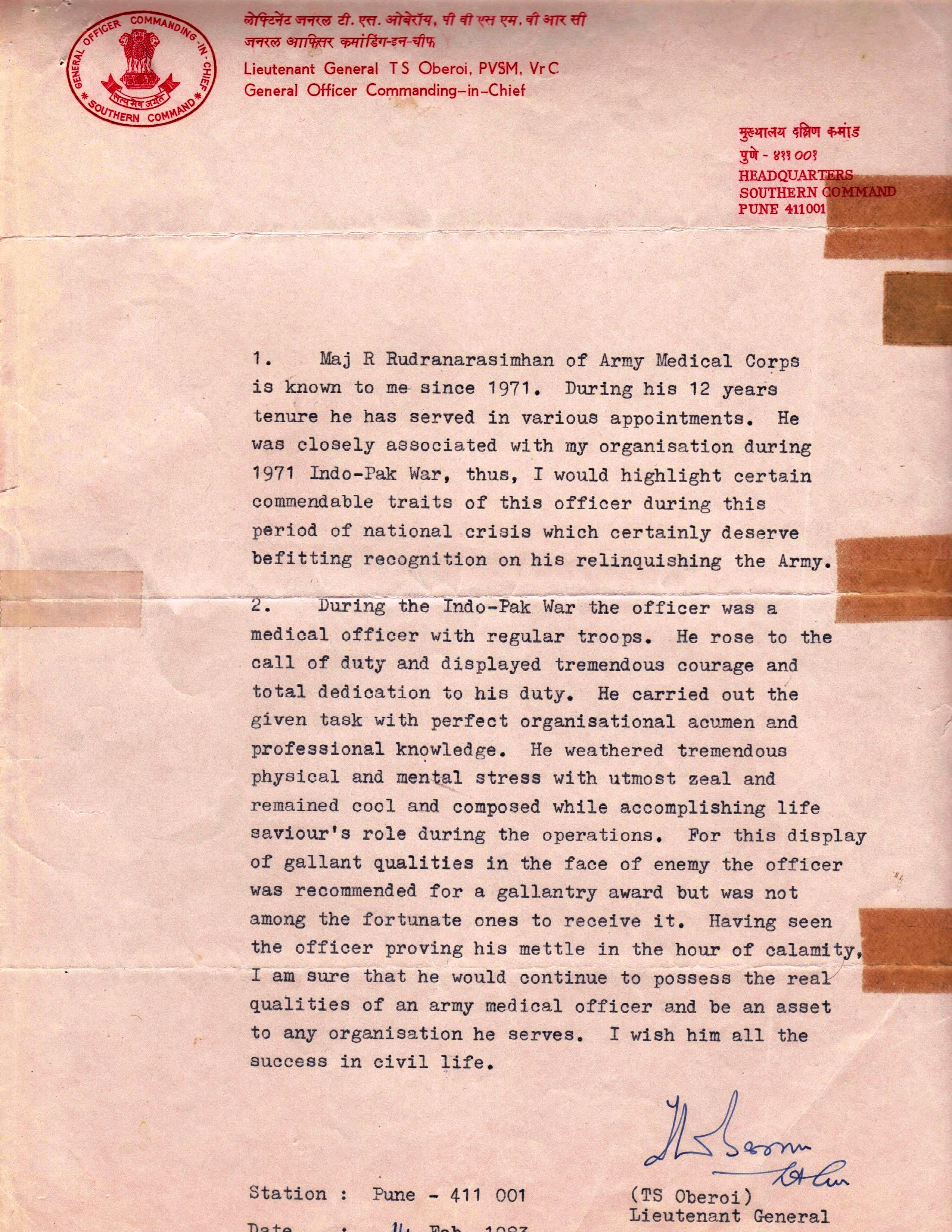
4. In a written testimonial given by Lieutenant General T S Oberoi PVSM VrC, General Officer in Commanding-in-Chief, Headquarters Southern Command, Pune – 411001, dated 14th February 1983, General Oberoi had stated that this doctor deserves befitting recognition for the Service he had rendered to the Nation during the time of a national crisis. The Southern Army Commander had categorically stated that the doctor was recommended for a gallantry award for display of gallant qualities in the face of the enemy.

5. The Prime Minister of India and her Cabinet Secretariat have established the eligibility criteria for grant of Service Medals, Decorations, and Awards to the participants of Operation Eagle 1971-72. This doctor is eligible to receive the gallantry award that was duly recommended by his South Column Unit Commander Lieutenant Colonel B K Narayan, and it was duly reviewed and recommended by Force Commander Brigadier T S Oberoi and approved by Major General Sujan Singh Uban, Inspector General Special Frontier Force.

6. To serve the purpose of Justice and Fairness, I would ask that this doctor should be given the gallantry award that was duly recommended following the rules and procedures established by the Prime Minister of India for her Battle Plan of Operation Eagle.

7. Particulars of the above Officer are as follows:

Dr. R. Rudra Narasimham, B.Sc., M.B.B.S.,
Personal Number. MS-8466 Rank Lieutenant/Captain AMC/SSC,
Medical Officer, South Column, Operation Eagle (1971-72),
Personal Number. MR-03277K Rank Captain/Major AMC/DPC
Medical Officer, Headquarters Establishment No. 22 C/O 56 APO (1971-74),
Directorate General of Security,
Office of Inspector General Special Frontier Force,
East Block V, Level IV, R. K. Puram,
New Delhi – 110 022
https://bhavanajagat.com/

Thanking You,

(Sd. BVRR)

Yours Faithfully,

B V Ramarao, PhD, IRSE (Retd.),
Retired GM (Railways),
10, Prince Apartments, Balaji Nagar,
VISAKHAPATNAM – 530 003
Tel. (0891) 2755691,
eMail: rbodapati
Dated 29 June 2012

Biographical Information:

R. Rudra Narasimham, Son of Shri. R. Suryanarayana Murthy, 13-92, First Cross Road, Prakasam Nagar, Rajahmundry, East Godavari District, Andhra Pradesh, India. Student of Danavaipeta Municipal/Corporation High School, Rajahmundry( S. S. L. C. –  March, 1961.

A Personal Tribute to Colonel B K Narayan, The Regiment of Artillery, Indian Army.

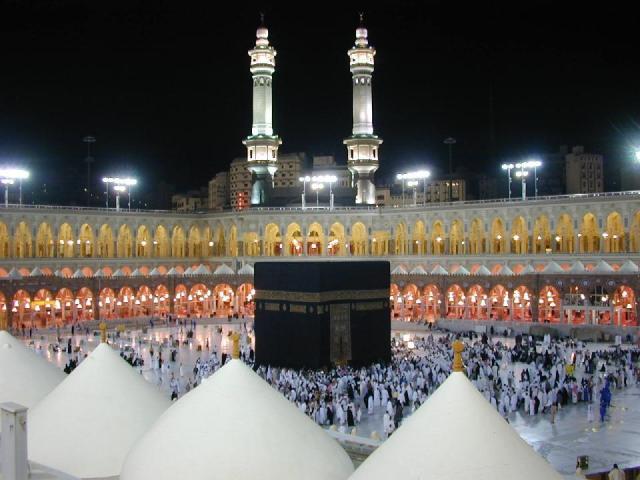
This image has an empty alt attribute; its file name is kaaba-07.jpg
A Sermon in Kaptai, Bangladesh Ops 1971-72. A personal tribute to Colonel B K Narayan, Islamic Scholar who served in Olive Green Uniform. The Imam of Friday Prayer in Kaptai on December 17, 1971: Glorious Quran, Surah VIII, SPOILS OF WAR, Verse 01: “And if they incline to peace, incline thou also to it, and trust in Allah.Lo! He is the Hearer, the Knower.”


Spiritualism – Time and Life – Spiritual Interactions

SPIRITUALISM – TIME AND LIFE – SPIRITUAL INTERACTIONS :


LORD GAUTAMA BUDDHA HAD OBSERVED THAT WHATEVER IS BORN, PRODUCED, OR CONDITIONED CONTAINS WITHIN ITSELF THE NATURE OF ITS OWN DISSOLUTION. LIFE IS CONDITIONED TO EXPERIENCE CHANGE UNDER THE INFLUENCE OF TIME AND LIVING THINGS ARE BORN TO EXPERIENCE DISSOLUTION AT THE END OF THEIR LIFETIME.

Gautama Buddha had observed that whatever is born, produced, conditioned, contains within itself the nature of its own dissolution. The greatest miracle is that of explaining the truth and to make man realize it. What is the Truth? To know the truth about Life, we have to understand the influence of Time. Individual living entities exist during their own LifeTime while the vital principle that animates all Life remains imperishable, immortal, eternal, and unchanging. Time is defined as the duration in which things are considered as happening in the past, present, or future. Time is the measurement of duration, the period between two events during which something exists, happens, or acts. This concept of Time demands that we must make a fundamental distinction between static and dynamic events. Static is the term used to describe a body, mass, or force that is at rest or in equilibrium and hence it is inactive, stationary, not moving, or progressing. Life is a dynamic event in which the object called the living thing exists by a tendency towards change or productive activity. Life requires the presence of a vital, energetic, animating principle that maintains the equilibrium called existence while responding to a flow of events that measure the duration of the existence of that living thing. In my view, Death is also a dynamic event and it is not a static event as the change called Death inevitably flows to cause Rebirth. The flow of Life  must be synchronized with the flow of Time for both of them to proceed until Eternity. I describe Spiritualism and Spirituality as the potency that generates Peace, Harmony, and Tranquility in the Time and Life Interactions to provide the Living Experience that is dependent upon Peace, Harmony, and Tranquility. To know this, we may have to know about  the Cyclical Changes of Matter, and the Cyclical Flow of Time. Chemistry is the Science that would give us the understanding of Living Matter and the Cyclical Changes that are caused by Chemical Reactions. In the study of Life, Chemistry is the Science that describes the nature of ‘Spiritual Interactions’. The ‘Spiritual Interactions’ between Time and Matter  establish, support, and preserve the existence of Life on this planet Earth.

MATTER – CHEMICAL ELEMENTS AND CHEMICAL COMPOUNDS :


HENNING BRAND(c. 1630-c. 1710), GERMAN ALCHEMIST WHO DISCOVERED PHOSPHORUS DURING c.1669 or 1674. I WOULD DESCRIBE CHEMISTRY AS THE SCIENCE OF SPIRITUAL INTERACTIONS.


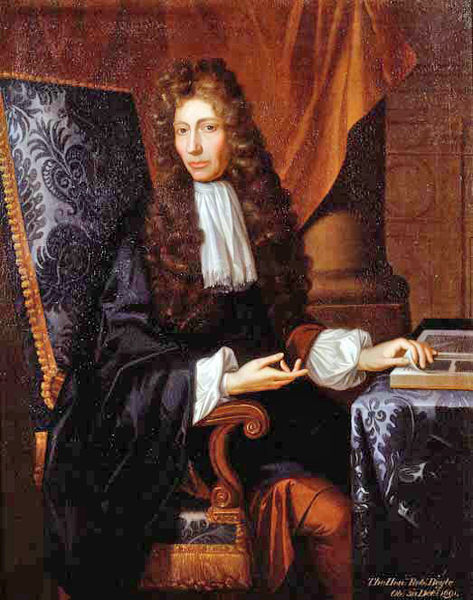
ROBERT BOYLE (1627-1691)THE FATHER OF MODERN CHEMISTRY. Anglo-Irish Physicist and Chemist who separated the Science of Chemistry from Alchemy. He gave the first precise definitions of a Chemical Element, a Chemical Reaction, and Chemical Analysis. He discovered Boyle’s Law(Gas Laws).

All ‘Matter’ is composed of fundamental materials called Chemical Elements. A substance that cannot be decomposed into simpler substances by ordinary chemical processes is by definition an Element. There are about 88 ‘naturally’ occurring Elements, and about 20 Elements are used in measurable amounts by most living organisms. Phosphorus is an essential Element to all Life as it is a component of DNA and RNA that make up the genetic material of all cells and control reproduction of both the cell and the organism. Phosphorus  is part of the energy storage and utilization system at the cellular level. In addition, Carbon, Hydrogen, Nitrogen, Oxygen, Iron, Calcium, Potassium, Magnesium, Cobalt, Cadmium, Copper, Manganese, Zinc, Molybdenum, Boron, Sodium, Chlorine, Fluorine, Iodine, Sulfur, and Chromium are all essential to one form of life or another. Elements can combine with one another to form a wide variety of more complex substances called Chemical Compounds. A Chemical Compound is a substance in which two or more Elements are joined by Chemical Bonds. A Chemical Compound can be created or broken down by means of a Chemical Reaction but not by mechanical or physical separation techniques. It helps to make the distinction between Mixture and Compound. Most naturally occurring Matter represents Physical Mixtures of Chemical Compounds that could be separated using simple physical techniques. While the number of known Elements is small, the number of possible Compounds is almost ‘infinite’; perhaps a million or more Chemical Compounds are known to exist. When two or more Elements combine to form a Compound, they lose their separate identities, and the product called Chemical Compound has characteristics quite different from those of the constituent Elements. For example, the Common Salt or Sodium Chloride is a combination of the highly reactive metallic element Sodium(Na) and the poisonous gas Chlorine(Cl). The unique taste and flavor imparted by Salt cannot be discovered by studying the physical and chemical properties of Sodium or Chlorine. Elements in Compounds always are combined in definite proportion. For instance, a molecule of Water is always made up of two Hydrogen(H) atoms and one Oxygen(O) atom. Again, I would like to pay attention to the fact of two gaseous elements, Hydrogen, and Oxygen with quite different physical and chemical properties can combine to form the Compound Water which has altogether different properties from either Hydrogen or Oxygen. The simple, pure, original, and sweet taste imparted by Fresh Water cannot be discovered in its constituent Elements. I have mentioned that the Element Phosphorus is basic to all Life. Phosphorus is discovered in c.1674 by Hennig Brand. It is an extremely poisonous, yellow to white, waxy, solid substance. When exposed to air, Phosphorus ignites spontaneously. Some of the commercial uses of Phosphorus include the making of detergents, toxic nerve gases and explosives. We have to learn to make the distinction between Chemical Elements and Chemical Compounds and apply this understanding to know the nature of relationship between things. Calcium Phosphate is the principal material found in bones and teeth. Adenosine Triphosphate or ATP is the fundamental energy source in living things. It is very understandable that all Matter is composed of units called Atoms and the physical structure of Atom is well-known. We have to be very careful and avoid deriving understanding about Life and Living Matter from the descriptive knowledge derived from Quantum Physics. To understand the nature of living experience, we need Chemical Molecules and Chemical Compounds whose qualities and characteristics may not be discovered from the study of Nuclear Physics. The phenomenon of creating and breaking down Chemical Compounds in living organisms is known as Metabolism. A Chemical Compound’s smallest units are, Molecules, and Ions. A Molecule can exist in the free state and still retain the characteristics of the Element or Compound; a Molecule can be formed by an Element when it consists of one Atom, or two, or more similar Atoms; a Molecule can be formed by a Compound when it consists of two or more different Atoms. The term ‘Ion’ is used to describe an Atom or Molecule bearing an electric charge as a result of having a number of negative electrons unequal to the number of positive protons in its nuclei. ‘Ionization’ is the process that describes the formation of ‘Ions’ from neutral Atoms or Molecules. ‘Ions’ that are positively charged are known as ‘Cations’, and that are negatively charged are known as ‘Anions’. Simple ‘Ions’ consist of a single charged Atom; double, triple, or even higher positive or negative charges are possible. Oxidation of Hydrogen removes its single electron and gives H+ or cationic Hydrogen which contains no electrons and it has a nucleus which is composed of one proton. This cationic Hydrogen plays a particularly important role in the Acid-Base Chemistry of the human organism with many reactions exchanging protons between soluble molecules. The internal environment of a living cell includes Hydrogen, Potassium, Sodium, Magnesium, Calcium, Chloride, Sulfate, Phosphate and several organic acid ‘Ions’. The chemical events collectively called ‘Metabolism’ require the concentration of Hydrogen Ions and electrolytes to remain within narrow limits in the tissue cells and in the fluid which bathes them. The term ‘pH’ or ‘Acidity’ is a measure of the Hydrogen Ion concentration and a reading level of 7 indicates ‘Neutral’. Human life is possible only if the Hydrogen Ion concentration of body fluid is kept within a narrow range. In health, a blood Hydrogen Ion concentration of 36 – 44 nmol/Liter or pH level of 7.37 – 7.45 is maintained by several closely integrated but widely differing mechanisms.

THE CHEMICAL ELEMENTS AND CHEMICAL COMPOUNDS OF LIFE :


HENRY CAVENDISH(1731-1810), British Chemist and Physicist noted for his discovery of Hydrogen, a gaseous Element during 1766. French Chemist Lavoisier named the gas Hydrogen in 1783. Hydrogen is the most abundant element in the universe and it is the major fuel in fusion reactions of the Sun. However, this gas in its free state is very rare in our planet Earth.


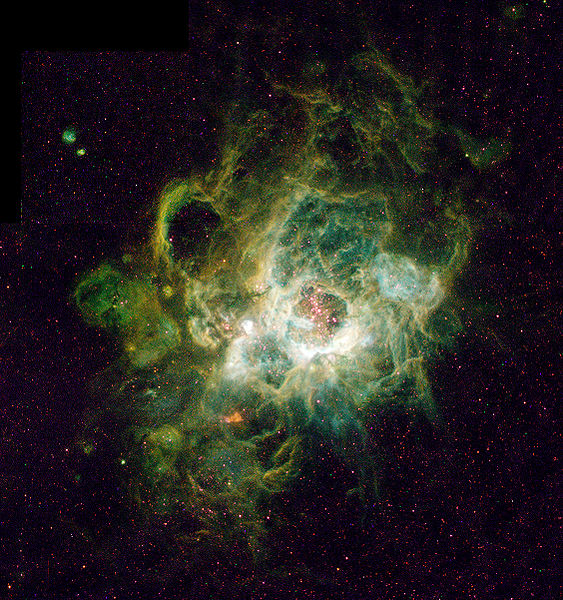
Hydrogen, the most abundant Element in the universe is present in its diatomic, molecular form. Hydrogen is important for the formation of Stars. In this photo image, NGC 604, a giant region of ionized Hydrogen in the Triangulum Galaxy is seen.


Hydrogen makes up most of the mass( over 90%)of the universe and about 75 % of natural Matter by number of Atoms.Naturally occurring atomic Hydrogen is rare on Earth because Hydrogen readily forms covalent Compounds with most Elements. Hydrogen is present in the Water Molecule and in most Organic Compounds found in living organisms. Hydrogen forms a vast variety of Compounds with Carbon that are called Hydrocarbons.

To understand Life, we have to know about Hydrogen as it is the fuel that Sun expends in its role as the Cosmic source of Energy that supports the biological existence of all terrestrial organisms. Man exists on the surface of planet Earth not on account of the merit of his physical, or mental work and effort. Man has no direct access to this source of energy produced from Hydrogen fuel. If Hydrogen is important to support the existence of Life, we have to understand the nature of ‘Spiritual Interactions’. Secondly, Hydrogen is important as it is required to form the Water Molecule. However, Oxygen, a colorless, odorless, tasteless gas, is the most abundant Element at the surface of the Earth. In the terrestrial environment, Oxygen accounts for about half of the mass of the Earth’s crust, 89% of the mass of the oceans, and 23% of the mass of the atmosphere or 21% of its volume. Oxygen makes up about two-thirds of the human body. It is a vital substance which supports vital functions. Among Chemical Elements used by human body, Oxygen has the highest electronegativity and electron affinity. Oxygen can form ‘Anion’ with a double negative charge by accepting electrons from a donor like Hydrogen. Most of the Earth’s rocks and soils are principally compounds of Oxygen with Silicon and other metals. It is well understood that most organisms depend on Oxygen to sustain their biological processes. Biological Oxidation-Reduction Reactions are ultimately the sources of energy for the higher plants and animals. While speaking about the importance of Oxygen in the biosphere, we must recognize that Oxygen is responsible for natural decomposition of all organic material. Waste products from the activity of the living organisms, dead plants and animals decompose or oxidized through the agency of microorganisms. Thus,  Oxygen plays a key role both in its support of important processes of Life and Death. Organic decay and decomposition is of fundamental importance for Life to renew itself and to be reborn and to cause rebirth. The study of ‘Spiritual Interactions’ must include the study of Life and Death.


Joseph Priestley and Karl Scheel were the first to isolate the gaseous Element during 1773-74 which was named by Antoine Laurent Lavoisier as Oxygen. It is a colorless, odorless, tasteless gas, and is the most abundant Element found on planet Earth.


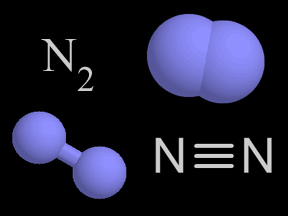
Oxygen makes up about 90% of Water, two-thirds of the human body, and 20% by volume of Air. Normal atmospheric Oxygen is a diatomic Molecule.

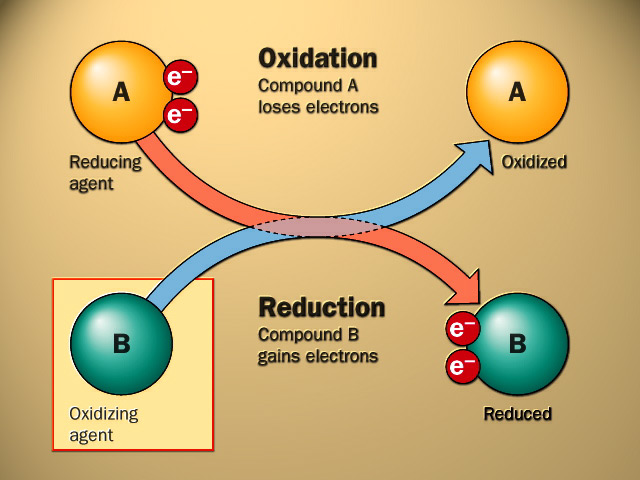
The common Chemical Reaction in which Oxygen unites with another substance is called Oxidation.Combustion or rapid oxidation, the burning of s substance may generate light and heat. The process called Oxidation need not involve the generation of light and heat. Oxygen itself does not burn. The Respiration of plants and animals is a form of Oxidation that is essential to the liberation of the energy stored in such food materials as Carbohydrates, Fats, and Proteins. Oxygen is necessary to sustain Metabolism which primarily involves the Oxidation-Reduction Chemical Reactions. If the Oxygen concentration were to drop to about half its value in the atmosphere, humans could no longer survive. The loss of Oxygen is critical as the human body has no means of storing Oxygen. Because the human body stores no Oxygen, any interference with breathing and ventilation that lasts more than a few minutes can cause Death.

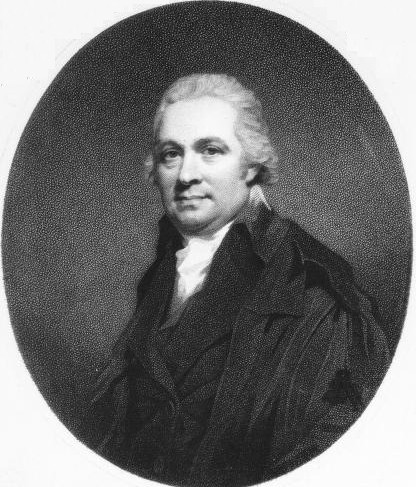
Dr. Daniel Rutherford(1749-1819), Professor of Medicine & Botany, Edinburgh University, Scotland, discovered Nitrogen in 1772. Joseph Priestley and Henry Cavendish in England, and Carl W. Scheele in Sweden also get credit for the discovery of Nitrogen. The French Chemist Antoine Lavoisier proved that it is an Element.

Adenosine Tri Phosphate or ATP is a Nucleotide; the monomeric unit of Nucleic Acid,contains a Purine or Nitrogenous base called Adenosine, a Sugar called Ribose and three Phosphate groups.In most Chemical Reactions of all cells in which transfer of energy occurs, the nucleotide ATP is involved. It functions as a Coenzyme in many enzyme-catalyzed reactions and helps in the performance of chemical, electrical, and osmotic work in animals, plants, and microorganisms.

Cyclic Adenosine Mono Phosphate or cAMP is formed from ATP by the catalytic action of the enzyme Adenyl Cyclase. It controls many important functions in the cell including the ability of the cell to generate electrical impulses and is called “Second Messenger.”It is responsible for the intracellular mediation of hormonal effects on various cellular processes; e.g., Lipid Metabolism, Membrane Transport by opening Ion Channels, and Cell Reproduction.

All living organisms need organic nitrogen compounds such as Proteins, Vitamins like Thiamine and Riboflavin. In nature, Nitrogen from the air is ‘fixed’ by some bacteria and plants. It is then made available to all organisms through ‘Nitrogen Cycle’.

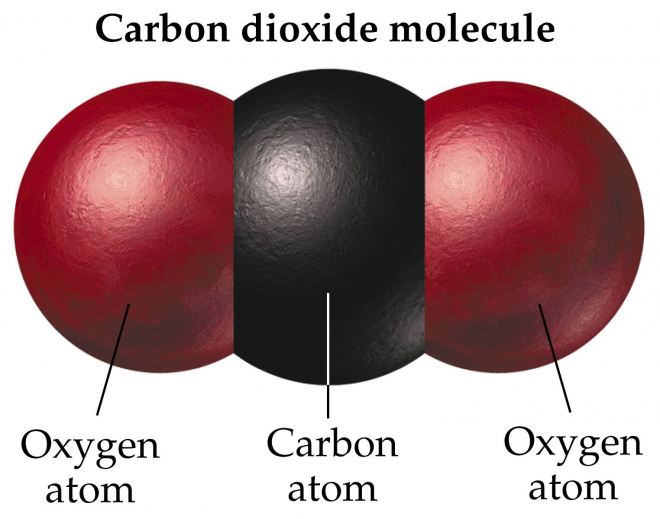
Plants incorporate Carbon into Carbohydrates and other complex organic molecules by means of Photosynthesis. During Respiration or Cellular Oxidation, living organisms combine Oxygen with portions of Carbohydrate molecule, releasing Carbon in the form of Carbon dioxide and water.

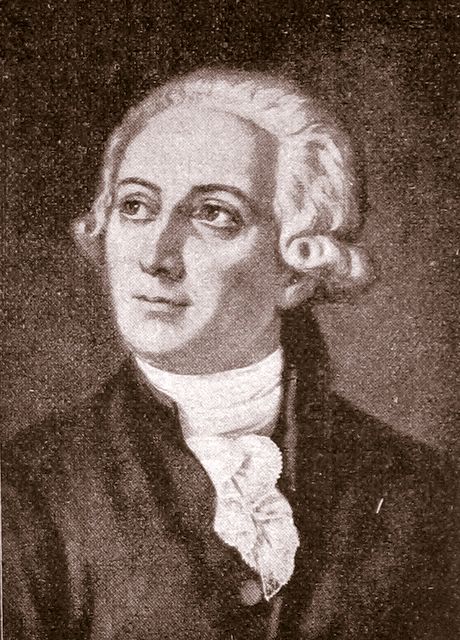
ANTOINE LAURENT LAVOISIER(1743-1794), French Chemist and Physicist. He discovered the Composition of Water Molecule and of various other Organic Compounds.

Water Molecule looks very simple and yet it plays a mysterious role inside all living cells. It is essential to Life and its propagation. Its Spiritual nature is revealed by its pure, original, and sweet taste it imparts apart from its role as a Chemical Compound. It is the main mode of transport of many Elements that are needed by the living organisms. Water is the Agent that leaches Nutrient Elements and Compounds from rocks and soils and makes them available for use by plants ,and animals.

SUN THE COSMIC SOURCE OF ENERGY SHINES ALL THE TIME. IT IS APPARENTLY AN UNCHANGING EVENT. HOW DOES MAN MEASURE HIS TIME?

The Flow of Time is measured as the duration or the interval between two events; Time exists for man and other living organisms as the measure of the period of duration from Sunrise to Sunset that causes an environmental change; the alternating periods of Light(DAY) and Darkness(NIGHT). Earth’s Rotational Spin transforms the instant called ‘FUTURE’ into an instant called ‘PAST’ without giving man any choice to know the instant called ‘PRESENT’. Earth’s Revolution brings Seasons that man experiences at regular and constant intervals of Time while man simply exists on the surface of planet Earth with no physical experience of Earth’s Motions through Space.

The Biological Clock: Every Living System behaves as if it contains a highly dependable ‘CLOCK’. It is a self-sustained internal timing mechanism that controls the ability of an organism to synchronize its existence with events in its internal and external environment.Such Time-Dependent variability in Function is called a Biological Rhythm.

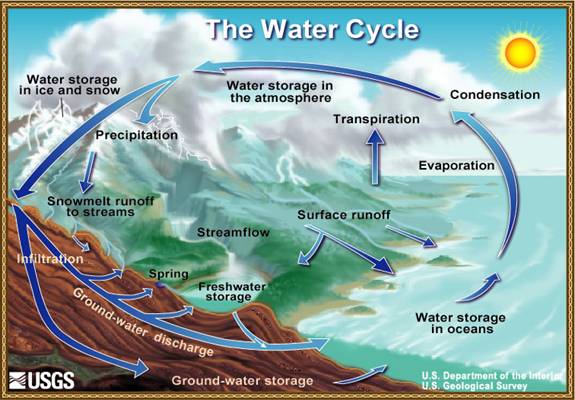
The Water Cycle or Hydrologic Cycle is necessary to the operation of all Nutrient Cycles. The energy for the transportation of Water Molecules is provided by the Sun and it is the Fundamental Basis for all other Time-Life Spiritual Interactions.

The Carbon Cycle clearly illustrates the complexity of relationships involved in the processes of Recycling Nutrient Elements in Nature. Life depends on the interwoven and interdependent relationships of green plants and animals, supplemented by the activities of bacteria, and the constant transport of nutrients within the Ecosystem and within organisms.

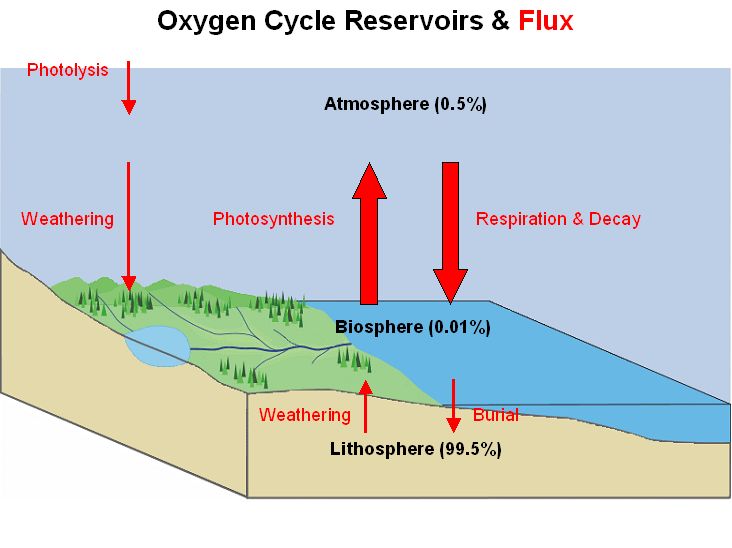
Photosynthesis and Respiration are complementary functions and drive the Oxygen Cycle.Oxygen is necessary to sustain Metabolism. Oxygen is also important and is responsible for natural decomposition of organic material, waste products of Metabolism, oxidative decomposition of dead plants and animals through the agency of microorganisms.

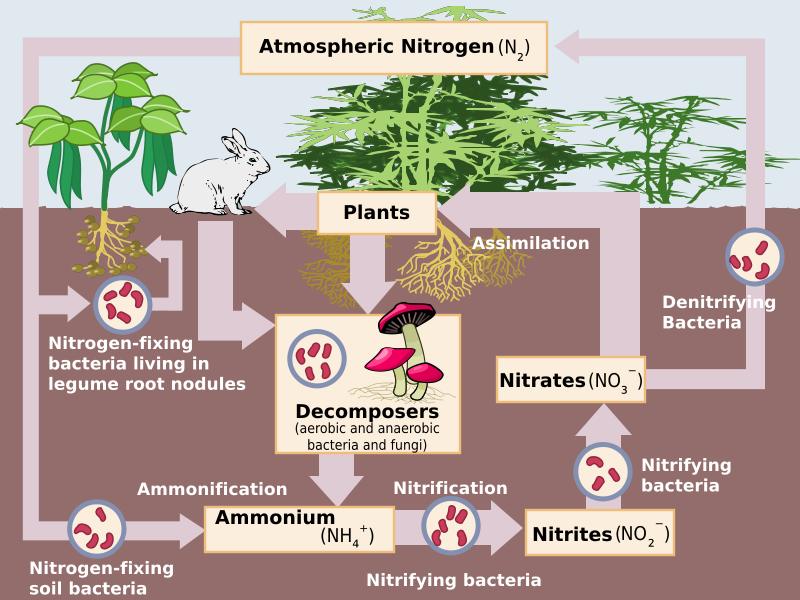
All living organisms participate in the Nitrogen Cycle. It includes the processes and Chemical Reactions involved in producing organic Nitrogen from inorganic Nitrogen and subsequently breaking down organic Nitrogen back to the inorganic form.

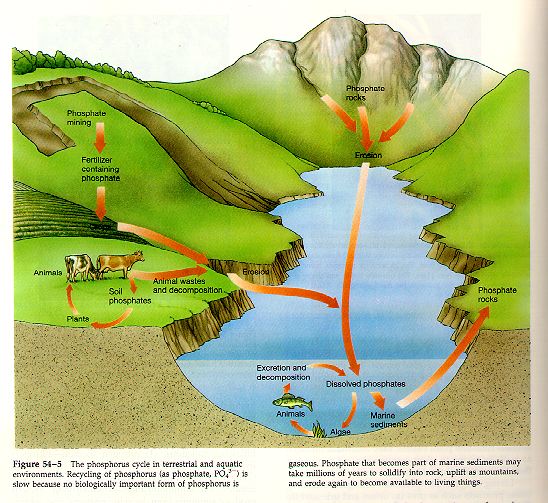
Phosphorus recycles more slowly than other Nutrient Elements. Phosphates are taken up by the roots of green plants and used in organic synthesis. They are passed to animals through ‘Food Chains’. Ultimately, Phosphates are released to soil through bacterial and fungal decomposition after the death of an animal.

We need to make the distinction between the Chemical Element Phosphorus and Phosphate the Chemical Compound that supports Life. The Phosphate mineral found in the rocks may have taken millions of years before it became available to plant Life.

Life depends on the interwoven and interdependent relationships between living organisms and the environment. No organism leads a truly independent existence of its own. Each organism lives by either consuming other organisms or the products from other organisms. In a Biological Community, Life and Death have a relationship which has a Spiritual Basis.

Whole Honor – Operation Eagle – Honors and Gallantry Awards

Special Frontier Force – Operation Eagle – Honors and Awards Representation:

OPERATION EAGLE IS THE NAME OF BATTLE PLAN APPROVED AND SANCTIONED BY PRIME MINISTER INDIRA GANDHI TO INITIATE LIBERATION OF BANGLADESH WITH MILITARY ACTION IN CHITTAGONG HILL TRACTS.
Operation Eagle initiated the Liberation of Bangladesh with Military Action in Chittagong Hill Tracts. Major General(Honorary)Shri. Sujan Singh Uban, Inspector General Special Frontier Force was the Commander of this Operation in Chittagong Hill Tracts.
Operation Eagle-Honours and Awards Representation: The Congress Party Leader, the Chairperson of United Progressive Alliance(UPA), Ms. Sonia Gandhi, had received Bangladesh Freedom Honour Award-‘SWADHINATA SAMMANONA’, on behalf of her mother-in-law,former Prime Minister of India, Indira Gandhi in a function held in Dhaka on Monday, August 01, 2011. President Zillur Rahman of Bangladesh, Prime Minister Sheikha Hasina and Ms. Sonia Gandhi are seen in a photo image taken at President’ House-Bangabhaban. Captain(Retd) A B Tajul Islam, State Minister for Liberation War Affairs was present at this function. Captain Tajul Islam had participated in Operation Eagle.

OPERATION EAGLE – HONOURS AND AWARDS REPRESENTATION:

MS-8466 CAPTAIN R R NARASIMHAM AMC/SSC – OPERATION EAGLE-GALLANTRY AWARD- THE REPRESENTATION IS ABOUT THE RULES AND CONDITIONS THAT WERE USED BY INDIA’S PRIME MINISTER TO FORMULATE THE ELIGIBILITY CRITERIA TO RECEIVE DUE RECOGNITION AND SANCTION OF MILITARY HONOURS AND AWARDS WITH OR WITHOUT ANY AFFILIATION TO THE MINISTRY OF DEFENCE OR INDIAN ARMY.

Shri. B V Ramarao, PhD, IRSE(Retd) of Visakhapatnam, India, on 25th October, 2011, sent a letter of representation to the Honourable Prime Minister of India and Honourable Raksha Mantri( Defence Minister) seeking the sanction of Gallantry Award of Vir Chakra that was recommended to Number. MS-8466, Rank. Lieutenant/Captain. R. R. Narasimham, AMC/SSC for his display of gallant action inside enemy territory while participating in Operation Eagle during 1971. Shri. B V Ramarao had received a response from Military Secretary’s Branch, New Delhi. The letter reads as follows:

This reply from Military Secretary’s Branch(Army) clearly reveals the unwillingness of Indian Army to find the citation that was initiated by Lieutenant Colonel B K Narayan, the Commander of South Column Unit, Operation Eagle. The citation was duly reviewed and authenticated by Brigade Commander, Brigadier T S Oberoi and was duly approved by Force Commander Major General Sujan Singh Uban, Inspector General of Special Frontier Force as required by the rules and conditions established by the Prime Minister of India who had formulated the eligibility criteria for giving recognition and for granting Military Honours and Awards to the participants of Operation Eagle irrespective of an individual’s affiliation to the Ministry of Defence or Indian Army. Ministry of Defence and Indian Army had no role in this decision made by the Prime Minister of India and they have no vested authority or power to change the rules of Operation Eagle and the grant of Military Honours and Awards to the participants of Operation Eagle.
This letter sent from Office of Inspector General Special Frontier Force to the Military Secretary’s Branch contains written evidence about the citation initiated by Lieutenant Colonel B K Narayan, Commander South Column Unit, Operation Eagle.
A Personal Tribute to Colonel B K Narayan, The Regiment of Artillery, Indian Army.

This image has an empty alt attribute; its file name is kaaba-07.jpg
A Sermon in Kaptai, Bangladesh Ops 1971-72. A personal tribute to Colonel B K Narayan, Islamic Scholar who served in Olive Green Uniform. The Imam of Friday Prayer in Kaptai on December 17, 1971: Glorious Quran, Surah VIII, SPOILS OF WAR, Verse 01: “And if they incline to peace, incline thou also to it, and trust in Allah.Lo! He is the Hearer, the Knower.”

Testimonial by Lieutenant General TS Oberoi, PVSM, VrC, General Officer Commanding-in-Chief, Headquarters Southern Command, Pune – 411 011:

Southern Army Commander General T S Oberoi had served as the Commandant of Headquarters Establishment Number.22 during Operation Eagle in the rank of Brigadier and was promoted to the rank of Major General and had served as the Inspector General of Special Frontier Force after the successful accomplishment of Operation Eagle 1971-72.

REMARKS OF EX- NUMBER MS-8466 LIEUTENANT/CAPTAIN R R NARASIMHAM, AMC/SSC, MEDICAL OFFICER, SOUTH COLUMN UNIT, OPERATION EAGLE :

The rules of eligibility for the grant of Military Honours and Awards for the participants of Operation Eagle were established by the then Prime Minister of India. The rules have not stated that the Honours and Awards are conferred within a specific period from the date of the act. The citation to confer the award of Vir Chakra was initiated by the South Column Unit  and it was duly reviewed by Brigadier T S Oberoi, the Brigade Commander at the Force Headquarters, and Major General Sujan Singh Uban, Inspector General Special Frontier Force, the Formation Commander and was submitted on time to the Medical Directorate, Medical Branch, Director of Medical Services (Army), Adjutant General’s Branch, Army HQ, MoD, New Delhi for appropriate further action. The Military Secretary’s Branch (Army) must demand the Medical Directorate (Army) to forward this citation for consideration of an award by the Army HQ Honours and Awards Committee. To receive this Gallantry Award, the Prime Minister of India had established  specific rules and conditions and even Indian Civilian Officers including Shri. Sujan Singh Uban, Dr. Ramesh Chandra, the Senior Medical Officer, Shri. G B Velankar, Assistant Company Commander, S.F.F., and Shri. Tarachand Pande, Assistant Company Commander, S.F.F., who participated in Operation Eagle did  receive Military Honours and Awards. In my opinion, the rules of the game cannot be changed by Defence Minister/Defence Ministry or Indian Army HQ or the Military Secretary’s Branch (Army) MoD. The decision to grant Military Honours and Awards was made by the Prime Minister of India and the decision was communicated to all the participants of Operation Eagle in the formal official briefings held at the Force Headquarters prior to operational deployment in the Chittagong Hill Tracts. The Government of India and the Prime Minister of India have the duty and responsibility to defend the sanctity of an official decision made by Srimati. Indira Gandhi in the discharge of her official duties.

THE SPECIAL FRONTIER FORCE: I served this organization from September 22, 1971 to December 18, 1974. I was not a mercenary working for a foreign government or Agency. I was fully involved and was prepared to defend the legitimate border between India and Tibet as established by the McMahon Treaty and the Simla Agreement of 1914 between India and Tibet. We as an organization defended our own territory to defend our natural rights. We were fully ready to conduct offensive operations against our Enemy who is in illegal occupation of our Land.


Operation Eagle-Special Frontier Force-Honours and Awards Representation

OPERATION EAGLE IS THE NAME OF BATTLE PLAN APPROVED AND SANCTIONED BY PRIME MINISTER INDIRA GANDHI TO INITIATE LIBERATION OF BANGLADESH WITH MILITARY ACTION IN THE CHITTAGONG HILL TRACTS.
Operation Eagle initiated the Liberation of Bangladesh with Military Action in the Chittagong Hill Tracts. Major General Sujan Singh Uban, Inspector General Special Frontier Force was the Commander of this Operation in the Chittagong Hill Tracts.
Operation Eagle-Honours and Awards Representation: The Congress Party Leader, the Chairperson of United Progressive Alliance (UPA), Ms. Sonia Gandhi, received Bangladesh Freedom Honour Award-‘SWADHINATA SAMMANONA’, on behalf of her mother-in-law,former Prime Minister of India, Indira Gandhi in a function held in Dhaka on Monday, August 01, 2011. President Zillur Rahman of Bangladesh, Prime Minister Sheikha Hasina and Ms. Sonia Gandhi are seen in a photo image taken at President’ House-Bangabhaban. Captain(Retd) A B Tajul Islam, State Minister for Liberation War Affairs was present at this function. Captain Tajul Islam participated in Operation Eagle.

OPERATION EAGLE – HONOURS AND AWARDS REPRESENTATION:

MS-8466 CAPTAIN R R NARASIMHAM AMC/SSC – OPERATION EAGLE-GALLANTRY AWARD- THE REPRESENTATION IS ABOUT THE RULES AND CONDITIONS THAT WERE USED BY INDIA’S PRIME MINISTER TO FORMULATE THE ELIGIBILITY CRITERIA TO RECEIVE DUE RECOGNITION AND SANCTION OF MILITARY HONOURS AND AWARDS WITH OR WITHOUT ANY AFFILIATION TO THE MINISTRY OF DEFENCE OR INDIAN ARMY.

Shri. B V Ramarao, PhD, IRSE (Retd) of Visakhapatnam, India, on 25th October, 2011, sent a letter of representation to the Honourable Prime Minister of India and Honourable Raksha Mantri ( Defence Minister) seeking the sanction of Gallantry Award of Vir Chakra that was recommended to Personal Number. MS-8466, Rank.Captain. R. R. Narasimham, AMC/SSC for his display of gallant action inside enemy territory while participating in Operation Eagle during 1971. Shri. B V Ramarao received a response from Military Secretary’s Branch, New Delhi. The letter reads as follows:

This reply from Military Secretary’s Branch (Army) clearly reveals the unwillingness of Indian Army to find the citation that was initiated by Lieutenant Colonel B K Narayan, the Commander of South Column Unit, Operation Eagle. The citation was duly reviewed and authenticated by Brigade Commander, Brigadier T S Oberoi and was duly approved by Force Commander Major General Sujan Singh Uban, Inspector General of Special Frontier Force as required by the rules and conditions established by the Prime Minister of India who had formulated the eligibility criteria for giving recognition and for granting Military Honours and Awards to the participants of Operation Eagle irrespective of an individual’s affiliation to the Ministry of Defence or Indian Army. Ministry of Defence and Indian Army had no role in this decision made by the Prime Minister of India and they have no vested authority or power to change the rules of Operation Eagle and the grant of Military Honours and Awards to the participants of Operation Eagle.
The remarks made by Lt Col B K Narayan on May 13, 1972 in my Annual Confidential Report for 1971-72 are as follows:”A very conscientious and Tough MO who worked hard during the Bangladesh OPs. He did very well and showed Maturity which was beyond the call of duty. I have recommended this Officer for a gallantry award for which he deserves eminently. He is physically Tough and cheerful. Is a fresh entrant with less than 2 years of Service and yet he displayed capability and confidence.
A Personal Tribute to Colonel B K Narayan, The Regiment of Artillery, Indian Army.

This image has an empty alt attribute; its file name is kaaba-07.jpg
A Sermon in Kaptai, Bangladesh Ops 1971-72. A personal tribute to Colonel B K Narayan, Islamic Scholar who served in Olive Green Uniform. The Imam of Friday Prayer in Kaptai on December 17, 1971: Glorious Quran, Surah VIII, SPOILS OF WAR, Verse 01: “And if they incline to peace, incline thou also to it, and trust in Allah.Lo! He is the Hearer, the Knower.”

Testimonial by Lieutenant General TS Oberoi, PVSM, VrC, General Officer Commanding-in-Chief, Headquarters Southern Command, Pune – 411 011:

Southern Army Commander General T S Oberoi served as the Commandant Headquarters Establishment Number. 22 during Operation Eagle in the rank of Brigadier and was promoted to the rank of Major General and served as the Inspector General of Special Frontier Force after the successful execution of Operation Eagle 1971-72.

REMARKS OF PERSONAL NUMBER MS-8466 CAPTAIN R R NARASIMHAM, AMC/SSC, MEDICAL OFFICER, SOUTH COLUMN UNIT, OPERATION EAGLE:

The rules of eligibility for the grant of Military Honours and Awards to the participants of Operation Eagle were established by the then Prime Minister of India. The rules have not stated that the Honours and Awards are conferred within a specific period from the date of the act. The citation to confer the award of Vir Chakra was initiated by the South Column Unit  and it was duly reviewed by Brigadier T S Oberoi, the Brigade Commander at the Force Headquarters, and Major General Sujan Singh Uban, Inspector General Special Frontier Force, the Formation Commander and was submitted on time to the Medical Directorate, Medical Branch, Director of Medical Services (Army), Adjutant General’s Branch, Army HQ, MoD, New Delhi for appropriate further action. The Military Secretary’s Branch(Army) must ask the Medical Directorate (Army) to forward this citation for consideration of an award by the Army HQ Honours and Awards Committee. To receive this Gallantry Award, the Prime Minister of India had established  specific rules and conditions and even Indian Civilian Officers including Shri. Sujan Singh Uban, Dr. Ramesh Chandra, the Senior Medical Officer, Shri. G B Velankar, Assistant Company Commander, S.F.F., and Shri. Tarachand Pande, Assistant Company Commander, S.F.F., who had participated in Operation Eagle received Military Honours and Awards. In my opinion, the rules of the game cannot be changed by Defence Minister/Defence Ministry or Indian Army HQ or the Military Secretary’s Branch (Army) MoD. The decision to grant Military Honours and Awards was made by the Prime Minister of India and the decision was communicated to all the participants of Operation Eagle in the formal official briefings held at the Force Headquarters prior to operational deployment in the Chittagong Hill Tracts. The Government of India and the Prime Minister of India have the duty and responsibility to defend the sanctity of an official decision made by Srimati. Indira Gandhi in the discharge of her official duties.

On January 24, 1966, Indira Gandhi became the First Woman Prime Minister of India heralding the Dawn of a New Era in India’s national life.

DEFINING INDIAN IDENTITY – THE ROLE OF INTERFAITH DIALOGUE

MULTICULTURALISM AND INTERFAITH DIALOGUE :

The Interfaith Dialogue must only be used to give equal represenation to all religious beliefs and faiths and must not be used as a tool to change a person's opinion/belief/faith.

 Multiculturalism is the policy or principle of giving equal attention or representation to the cultural needs and contribution of all the groups in a society. In the development of a pluralistic society, in the existence of a nation with groups distinctive in ethnic origin, cultural patterns, religion, and language, or the like, it would be useful to have “Interfaith Dialogue” to promote social harmony. Unfortunately, we live in a world which is not multipolar and a few nations and a few social/religious groups are actively seeking to expand their sphere of influence and pursue an agenda to dominate the world by changing the opinions/beliefs/ and faiths of other human beings. It is important to understand the role of Interfaith Dialogue in promoting peace and to prevent war. Such Interfaith Dialogue could be of some value in an academic context where the participants of the dialogue seek better understanding of each other in the pursuit of academic knowledge that pertains to theology, morals and ethics, traditions, holidays, festivals, and food culture of people. Such understanding would help in promoting better social interactions and to promote peace and harmony at workplace, or in the local community. Historical events of the past such as the foreign conquest and occupation of the Land of Bharat or India were not shaped by Interfaith Dialogue. Even today, such Dialogue has no role in formulating international relations. War or Aggression between nations will not be prevented by holding Interfaith Dialogues. In the conduct of warfare, it is the aggressor nation or party chooses to define the identity of the victim nation or social group that is targeted for an attack. It would be of no help or consequence if the victim pleads to describe his identity in terms different from the terms of identity chosen by the aggressor. The victim has no choice other than that of defending an identity that the aggressor has imposed to launch his attack. In the context of defining Indian Identity, the Dialogue process will not influence the behavior of Islamic Jihadist groups who attack the Hindu Identity of India. Similarly, the Dialogue process will not deter the Christian Evangelists from conducting their acts of infiltrating and subverting the Hindu society of India to convert the beliefs and faith of Hindu population of India. I have described Indian Identity as that of Individualism. Man exists in this physical world with no choice other than that of being an Individual and has to experience the Subjective Reality of his own existence. We need to formulate universal principles and policies to promote the well-being of all men, of all races, of all religions, of all cultures, and of all nations while showing respect to the Individuality of man who exists as part of a social group.

RELIGION AND FOREIGN POLICY :

I appreciate the fact that many of you would like to discuss the term ‘interfaith dialogue’ in the context of a debate, discussion, or participation in a public forum, meetings, seminars, symposia, and etc., I speak about ‘interfaith dialogue’ in the context of the conduct of foreign policy by national entities. National entities develop foreign policies to define their political relationships with other entities in support of their perceived national interests. Apart from diplomacy, trade, and cultural contacts, national entities often use the military option to achieve their foreign policy objectives. As a former member of Indian Armed Forces, and the Land Forces of the Sultanate of Oman Land Forces, I had a direct opportunity to participate in Security and Intelligence Operations in support of the United States of America and Great Britain. As you would know, military operations, military planning, military training, and military tactics involve preparation to engage the enemy, confront the enemy, and kill the enemy while facing the risk of getting killed by the enemy. The men have to be mentally prepared for this task of killing the enemy and voluntarily accepting the risk of death and injury. The men have to be fully briefed about the enemy, the nature of the enemy, and as to why it is desirable to kill the enemy. Men have to be motivated for the battle and I have attended several such sessions at different locations to fight the enemy defined by the military planners. Religion is the most important element and plays a big role in motivating people to kill others. Particularly, it plays a vital role in Infantry combat operations where a direct and physical fight is needed to achieve the military objective. National entities use religion as a tool to psychologically motivate people to fight wars. There is a dialogue and there is communication between the military planner, the military commander and the men who have to execute the orders given. United States and Great Britain have engaged in several wars across the globe and several times have engaged in proxy wars providing training, finance, military equipment, and logistical support to either other national entities or rebel groups. You must carefully look at the war plan and as to how it shaped the battle in any given conflict. To quote some examples, religion was used in fighting the Soviets in Afghanistan, to break up the Republic of Yugoslavia, to create the State of Kosovo, to bifurcate the Republic of Sudan, in changing the regimes in Iraq and Libya, and to support the ethnic conflicts in Albania, and Chechen Republic of Russia. I have not personally participated in those conflicts, but I was trained, briefed, and equipped by the same Intelligence and Security Agencies which are involved in all of these conflicts. So, I have a personal knowledge, experience, and understanding of American and Great Britain foreign policy when the policy uses religion as its tool to accomplish a military mission to obtain the foreign policy objectives.

I have a good understanding of the military threat posed by the foreign policy of United States and Great Britain to degrade and devitalize the Republic of India. United States and Great Britain have openly supported the Khalistan Movement, and the Kashmir Separatist Movement. These rebels have openly met with Members of Congress and Parliament and
received open encouragement. These countries have clandestinely supported various rebel groups that operated in Northeast India and they have used Christian missionaries as paid agents to motivate the rebels to fight the battle. My Unit while operating in Chittagong Hill Tracts during 1971 Operation Eagle, has captured a British national ( with Australian passport ) working as a Christian Missionary and he was providing motivational support to
the Christian Mizo rebels who were being trained in East Pakistan’s military posts in that region. East Pakistan had deployed the Frontier Regiment and the men are mostly Pathans and a few Baluchis. They are all devout Muslims and have no reason to be served by a British Christian Missionary. This Missionary gained access to those military camps as he was a paid agent. My concern is not about debating or discussing the theology of Christian religion. Both United States and Great Britain use this religion to promote demographical changes
and to use that population to bring about a political change that would be of advantage to obtain their foreign policy objectives. American Evangelism is a multibillion dollar industry and it is entirely subsidized by the State. All the donations, and contributions given to the American Evangelists are tax-exempt. These donors do not pay federal tax on the funds contributed to Church. In other words, American Evangelism must be viewed as a State sponsored Enterprise. In the wake of terrorist attacks on American soil, United States is not allowing foreign Islamic Organizations to support and fund charitable work in the United States. They are not allowed to support even simple educational activities at Islamic
Schools. I would ask the Indian Government to follow the example of the United States and stop the flow of foreign money into India. Churches in the United States must support the needs of their local population where there is unemployment, hunger, and poverty. United States must stop these tax subsidies to Evangelists working in foreign countries. They can use those funds to preach Christianity to people of their own Land who do not care to attend Church or worship God.


Dr. R. Rudra Narasimham, B.Sc., M.B.B.S.,


R. Venkatanarayanan wrote:
 

1. If the word “dialog” is worrying how about using the term, “debate” or “discussion”?
2. Why should one expect or propose or demand that the starting point for debate, dialog or discussion with a Christian Missionary or Mullah should be the acceptance by the latter that he or she will not seek to convert another person? Is ‘conversion’ the only or the primary point of difference or discord between the Abrahamic religions and Hindu Dharma? If so the corollary seems to be that the Hindus must adopt any means to stop it. What are the means other than violence? Is it the proposal?
3. How are Hindus to tackle the misleading or mischievous interpretations and analyses of Hindu Dharma and practices in the intellectual arena, without writing, speaking and debating in the public domain? By running away? Burying their head in the sand? By violence? By voting in the elections?
4. Why should all dialog, debate or discussion be to “convince” the opponent? What about convincing the onlookers/audience?
Should we not consider the foregoing aspects dispassionately? If we do so, will we not be able to come up with some constructive and useful suggestions to deal with inter-Faith matters? Or we Hindus, as a people should think or hold that there is nothing called inter-Faith matter of importance or interest to Hindus?

R.Venkatanarayanan


On Mon, Jan 23, 2012 at 7:52 AM, Rajiv Malhotra wrote: Mr. Rajiv Malhotra is the chairman of the Board of Governors of the India Studies Program at the University of Massachusetts, Dartmouth, U.S.A. He has participated in interfaith exchanges for over a decade and has published two books. The hyperlinks to his books and blog posts on this subject are included at the end of this post.

“The real problem with these internet threads is that they assume there is only one kind of dialog. This is the same reductionist mentality as one religion, one book, one church, one history, etc.

There are many kinds of dialogs between opponents. Before writing something about “dialogs” a serious scholar should take note of this and examine various kinds of dialogs such as the following:

  1. academic panel discussion: each person explaining their own thesis to other scholars/students. Little or no real “dialog” back and forth among the panelists.
  2. fight to knock each other down.
  3. diplomacy in front of the public to win over public support, while remaining opponents internally.
  4. motive of a discussant could be merely to use the event and get int more mainstream discussions and forums, rather than getting branded in one extreme – so he plays his cards accordingly.
  5. some forums are really to promote someone’s book. Calling it a dialog is merely a way to get it approved by the authorities, who would otherwise not give their support for an event that serves one person’s interests.
  6. Genuine desire to learn from one other.
  7. Private meetings to pretend to reach some agreement to a specific problem or dispute.

These are not mutually exclusive. No generic sweeping statement can be applied to all dialogs without some such taxonomy. There are other variables as well which would make the taxonomy even more complex.
One must play the game according to the particular playing field, and this comes from experience of having encounters, not from armchair mouse-clicking activism like most of our “experts” tend to be.”
regards,
rajiv

On Sun, Jan 22, 2012 at 8:42 PM, Mukund Apte wrote:

What you are saying is correct that the competition for resources is the bad thing. But I say competition per say is bad thing. Wherever organisation and ORDER exists, competition cannot be absent. every religion has been established in organizational frame. The people herein therefore have a tendency to compete with others to rise in the hirarchy of the Organisation and this create bad blood as well as conflict in the Religion. All COOPERATION amongst people is lost.
Sanaatan Dharm is based on सहकार There being no hirarchy or even Organization people help each other for progress ON THEIR OWN, i.e. by Cooperation. The चातुर्वर्ण्य is organized to prevent competition and improve cooperation. Responsibilities are allotted to different groups (they are also not pernanent but variable as per desires of the people).
This was mainly based on the behaviour of other species in the Universe. They had their own DHARM and they follow quietly without conficts anywhere. So सनातन धर्म developed on similar lines and with same principles of cooperation and no competition. Every specie in the world lives happily without competition and conflicts, why can’t man does same thing and live peacefully?
This is only because Religions are organized with determined hierarchy. People surely desire to rise in the hirarchy and get involved in jealousy and competition with others. Still this much is acceptable because it is within the small group of the Religion. This situation explodes when some religion considers others i.e. different thoughts/religions not worthy of even existence. Then real conflict starts. With organization, cooperation has been discarded and now with dislike and hate, peace also gets kicked away. The current माहौल (condition) prevails.
Sanaatan Dharm is immersed in Cooperation of ALL SPECIES in the Universe. This aspect has to be understood by all religions and must accept cooperation as basic principle. Again Man is not supreme and very different than other species needs be accepted by Religions. Religion is for its followeres (only) whereas धर्म is for ALL entities and species in th world. With regards to all,
—-Mukund Apte

On Sun, Jan 22, 2012 at 11:02 PM, Major(Retd).R.Rudra Narasimham wrote:

MAN IS A SOCIAL BEING :

The problem with this dialogue is that of the undisclosed motivation for the dialogue. Is it a dialogue to come to a better understanding of each other and to avoid conflict in social interactions? Is this a dialogue to change the opinion and belief of the participant and to mentally prepare the participant to reconcile and give up resistance without the use of physical force? To be a true Christian, to be a true Muslim, the person has no choice other than that of converting people to embrace their faith. The Christian thinks that he is preparing the world for the Second Coming of the Saviour. The Muslim believes that he is acting in obedience to the commandments of Allah. Both of them have very clear objectives. In that context, the dialogue is not an academic exercise and it has no academic purpose or value. Even if they do not openly disclose their motivation or inner intentions, Indians have to better understand their own history, the history of foreign conquest and foreign occupation. The Indian conquest began in a very significant manner by Muhammad of Ghazni and the Arabic word ‘Ghazi’ refers to a Muslim hero, especially one who wars against infidels. The Muslim thinks of nonbelievers as infidels and the Christian thinks of nonbelievers as heathen. Both Muslim and Christian define the word belief and all others in the world are nonbelievers. If they recognize the presence of a nonbeliever, they are required to take action to avoid sin and its consequences.

But, religion, and religious faith is not the biggest problem in the world. The problem is that of competition among members of the same speices for shared resources. Man is a terrestrial organism and there is competition between social groups for the same resources that support human survival and human existence. Man is a social being and he always exists in a social community. Man has a tendency to compete with others while being part of a social group. Man tends to expand his territory to gain access to the natural resources and uses warfare as a tool to expand his territorial rights. There is a fundamental motivation for human behavior and the motivation or drive comes from the perception of his economic condition.Karl Marx has proposed that human history is shaped by man’s economic progression. The Communists have proposed that the Revolution is the answer for man’s economic ills. Just like Muslims, and Christians, the Communist believes in changing man’s social condition to bring the Revolution to cure the problems of man’s existence. In India, we see the problem of Evangelists who would like to bring a peaceful demographic change by converting the people to Christianity and then the Leaders of this change would have access to the natural resources of the Land and can use them without fighting bloody battles. By becoming Christians, people can avoid those nasty battles, save their lives, protect their existence and live upon the few resources spared by the Masters. This has been witnessed in Africa where millions of people got converted and still remain in poverty and misery. The Muslim has tasted the loot and plunder of India over one thousand years and he knows that he can take what he wants by using the power of his sword. However, he cannot do it by himself. He encourages and motivates his followers in the name of God and tells them that it is a divinely ordained duty. The taste of fruits of victory is very addictive and he would seek more of it because of the pleasure it brings. The NaxalMovement inspired by Communist Bosses does not need God, and man is simply willing to join others and wage a group fight to improve his own economic condition. But, we have all seen the results of Communist Revolution. The Party Leaders and officials control the wealth and enjoy it while talking about economic emancipation of man. The social pressures that we see today have economic causes. If not for the sake of God or religion, China would like to extend its influence into India to get a better hold on India’s natural resources. This exploitation becomes easy if people do not challenge it or resist it. In the United States where there is plenty of use of guns to commit crime, people are often reminded to give away their wallets, purse, handbags, backpacks, and belongings if a gunman makes a demand for those items. The Police tell us that it is not rational to lose life to protect such personal belongings. People are advised to give away the car keys and leave the car if a gunman demands to take your car. So, Indians have to make hard choices. They all can become Christians, they all can become Muslims, or they all can become Communists, but if they have to save their life, they may have to give their car, purse, and belongings if a gunman threatens to kill them. They cannot fight this battle as individuals. If they want to fight or resist, there is no choice other than that of fighting as a group.

Dr. R. Rudra Narasimham, B.Sc., M.B.B.S.


INTERFAITH DIALOGUE: HELP OR HINDER

Dr. Babu Seelan :

Several Hindu scholars, saints, teachers, helping professionals, Hindu political leaders, writers and journalists have been entering or engaged in some form of interfaith dialogue with leaders of closed, fundamentalist, mechanistic, reductionists desert dogmas.

It is genuine, sane and required for all concerned Hindus to ask “what do we gain from entering such dialogue with those who refuse to change? What ideas from the desert political dogma which has been used for invasion, plunder, slavery, colonization, oppression, war and terrorism have special significance or value for understanding our relationships? Their closed, rigid, non-compromising belief system and behavior always have been creating effective obstacles in practicing our universal, peaceful Dharma. Islam and Christianity, as closed, rigid, and fundamentalist paradigms have their own philosophy, blind belief system, teachings, followers, war machine, separate states and powerful organizations and are strongly defended by their adherents.

We Hindus are fundamentally all alike and our basic aim is the optimum development of human being. We believe in “World is One Family” (“Vasudeiva Kudumbahakam”). To enhance this goal, we Hindus need to be aware and guided by the best we know of their past brutal history, current sinister plans, cunning strategies and techniques and goals of Islamists and Christian Missionaries.

Yes, the world is changing. We are faced everywhere with the evidence of conflict, hate, destruction, war, beheading, terrorism and coercive religious conversion. Spiritually malignant Muslims and Christians all over the world are trying to establish their own kingdom based on their blind faith. We Hindus are faced with these numberless forces of destruction and conquest. In this time of dire need, it is natural for few Hindus to engage in dialogue with our nemeses. Their good intention is to ceaselessly battle in an effort to thwart the destruction of our Dharma, and stop or slow down coercive and deceptive religious conversion of innocent and gullible Hindus. It is no wonder the frightened Hindus looks wishfully to magic and mystery for protection against our powerful adversary.

One would expect that in the face of overwhelming blows from the the brutal hands of Jihadi and Missionary warlords, Hindus would oppose steadfastedly in a unified, powerful political force. But this is not the case. Hindus are facing destruction from without and within. In this context why Hindus are displaying their extraordinary propensity for dialogue with our enemies attacking on our own existence?

Is the dialogue or debate with our distracters is helping to change their destructive dogma? Are we going to demand that they cease and desist from this deadly paradigm conspiracy? Are we strong enough to demand equitable physical, emotional, spiritual, intellectual, social, political opportunity for Hindus for a meaningful life? Hindus are currently stand with their feet in the mud, their eyes fixed on the stars.

Are we going to be successful by this dialogue to force our enemies for a theoretical change? At this juncture, we need to look at ourselves, and force Hindus to grab political power, declare India as a Hindu Rashtra and change Hindus more effectively for political participation. We have to go beyond interfaith dialogue and use our knowledge for desired change in the closed dogmas? Do we have the power to effect change? Or our enemies will psycho program us using the cunning strategy of dialogue? Christians and Muslims know how to use different increasing social pressure tactics on Hindus. We need to prepare ourselves to deal with Hindu frustration, anger, and those who feel powerless to face the organized and powerful enemy.

The increased need for Hindus is to be competent and strong to teach our adversaries new ways of dealing with Hindus .

Out of these concerns and questions, painful as they may be: Always remember that Shanti comes from Shakthi (Peace comes from strength). It is also important to remember that criminal thinkers and their destructive habits are not going to change with our eclectic and peaceful approach. Hindus need to be strong, and realistic. Reality is always more rich and accurate than our mental picture of it.

https://bharatabharati.wordpress.com/2012/01/18/how-not-to-engage-in-hindu-christian-dialogue-vijaya-rajiva/
http://bharatkalyan97.blogspot.com/2012/01/hindu-christian-encounter-not-dialogue.html

Related Articles and hyperlinks :

1. https://bhavanajagat.com/2009/03/03/the-gods-of-monotheism/

2. https://bhavanajagat.com/2009/01/12/the-right-to-worship-creation-a-fundamental-right/

3. https://bhavanajagat.com/2008/12/09/the-power-of-creation-vs-the-power-of-destruction/

4. https://bhavanajagat.com/2009/01/20/jihadist-attacks-indias-right-to-self-defense/

5. https://bhavanajagat.com/2007/05/29/defining-indian-identity-individualism/

6. http://www.BeingDifferentBook.com

7. http://www.BreakingIndia.com/

8. http://www.stateofformation.org/2012/01/part-one-a-different-kind-of-hindu-christian-dialogue-difference-with-mutual-respect/

7. http://digestingveda.blogspot.com/

8. http://www.mirroroftomorrow.org/blog/archives/2012/1/27/4983773.html


SPIRITUALISM – THE LIFE AND DEATH OF A RELATIONSHIP

WHAT IS SPIRITUALISM ? :
 
The term ‘spiritual’ describes the nature of a relationship between two living persons based upon thoughts, feelings, and understanding such as sympathy, tolerance, cooperation, and mutual assistance. Personal relationships fail and may die if there is no ‘spiritual’ bonding, association, or partnership between the persons participating in a relationship. Spiritualism speaks about the kind and nature of relationships between individuals and it also speaks about the nature of relationships within the individual. A human person when viewed as a multicellular organism, the existence depends upon harmonious interactions between the cells, the tissues, and the organs that are the constituent parts of that human individual who exists because of their living functions. The problem of Cancer provides us a better understanding of the nature of spiritual relationships that exist within the individual and between individuals.
 
KAMALA KAUL NEHRU – THE LIFE AND DEATH OF A REALTIONSHIP :
 

Kamala Kaul and Jawaharlal Nehru got married in1916 and the relationship ended in 1936 with the death of Kamala Kaul Nehru.

Jawaharlal Nehru with wife Kamala Kaul and daughter Indira Priyadarshni in 1918.

The Spiritual Relationship between Jawaharlal Nehru and Kamala Kaul could not survive the threat of Secondhand Smoke and Cancer.


Jawaharlal Nehru continued to smoke after the death of his spiritual relationship with Kamala Kaul.


Life under the shadow of Jawaharlal Nehru's Secondhand Smoke was a prescription for the death of his spiritual relationship with Kamala Kaul Nehru. Kamala Kaul born in 1899, had married Jawaharlal Nehru during 1916 and gave birth to Indira Priyadarshni during 1918. She died in Lausanne, Switzerland in a sanitarium on 28 February, 1936. In my opinion, her death was not the result of Tuberculosis infection. It is more likely and it would be rational to think of Lung Cancer as the cause of her death. Lung Cancer is caused by exposure to Secondhand smoke and at that time the relationship between Cancer and Secondhand Smoke was not understood and was never recognized. The clinical picture and findings of Tuberculosis and that of Lung Cancer are very similar and at that time we had no proper diagnostic tools to conclusively establish the diagnosis of these two conditions and no therapeutic agents and medical interventions were available to provide specific treatments either for Pulmonary Tuberculosis or Lung Cancer. NATIONAL CANCER ACT OF 1971 :The understanding of cancer leads to the understanding of the spiritual substance of the cell.

 NATIONAL CANCER ACT OF 1971 :

On December 23, 1971 President Richard Nixon signed the National Cancer Act to direct efforts to conquer the problem of cancer through investment in cancer research and biomedical science. On the occasion of this 40th anniversary of the signing of the National Cancer Act, we need to reflect upon the problem of cancer. It begins with a single mishap or mutation within the nucleus where 23 pairs of chromosomes on which 20, 000 to 25, 000 genes are scattered. Genes hold the instructions for regulating a variety of cell functions, and proteins carry out the instructions to perform these cell functions. Cancer is a problem associated with abnormal cell proliferation or cell divisions. Cancer study helps us to understand normal functions of cells and to learn about the instructions that tell the cells to grow or to stop growing to make new cells. Normally, cell division begins in response to a signal or instruction received. Cells have circuits or pathways to send instructions. Genes send signals to each other along pathways. When a cancerous cell divides, the new cells receive signals to continue proliferation or cell divisions with the characteristics of immortality. The immune surveillance system may detect the presence of cancerous cells by detecting unique surface marker proteins present on the surface of the cancerous cells and the cells of the immune system neutralize or kill the cancerous cells. The study of cancer provides insight into individual signaling pathways and mutations that are characteristic of cancer. The diagnosis of cancer involves the identification of the cells involved, and their location in the body. For each type of cancer disease, there are many genetic variants. Each cancer has to be defined by knowing the genetic mutation that has affected the individual cell. For example, currently, cancer researchers have identified about 56 sub-types of non-Hodgkin lymphoma. Each sub-type has its own genetic signature. Cancer treatment involves the killing of cancer cells and the therapy may often cause damage or death of healthy cells and tissues. Cancer research is developing targeted therapies that specifically address cellular flaws and spare the normal, and healthy cells, and tissues.

 
CANCER AND THE THEORY OF HUMAN NATURE :
The understanding of the problem of cancer would help us to answer the question: “What is Man?” We need to know and understand man if we have to fight the problem of cancer. Man is an organism represented by a biotic community of about 100 trillion individual living cells and ten times more of other living organisms that inhabit his gastrointestinal tract. The problem of cancer involves the study of the nature of biotic interactions among members of this biological community. If the members, the individual living cells interact in a manner that show characteristics such as mutual assistance, cooperation, sympathy, understanding, devotion, and functional subservience, man will keep his biological existence and the quality of this existence becomes an attribute of his health and well-being. In this context, I define the word ‘Spiritualism’ as a mutually beneficial interaction between individual living cells of the human organism and the Whole Organism represented by the human individual. For example, the Red Blood Cells deliver Oxygen and remove waste products from other cells in the human body displaying the characteristics of a spiritual relationship or partnership. In the problem of cancer, we encounter cancerous cells that fail to display the chracteristics that I have mentioned. The cancer cells behave like an internal enemy; they invade the territory or space of normal and healthy cells and tissues. Cancer grows and causes both structural and functional changes in the tissues and organs where it is located. The cancer cells show the propensity to spread or invade the local and distant parts and sites of the body apart from occupying the place of their origin. Most of our medical interventions aim at destroying these enemy cells that threaten the biological existence of the cancer victim. The cancer variants describe the genetic variations found in the nuclei of cancerous cells and not that of any variation in the cytoplasm of these cells. This corporeal substance found inside the living cells is ‘spiritual’ in its nature where the word ‘spirit’ means the potential for immortality, imperishability, and immutability. This spiritual substance remains unchanged while the cancer disease affects the genes altering the structure and function of genes to deliver normal instructions. Man always comes into existence from a previously existing egg cell and inherits the maternal cytoplasm. Man survives because of the spiritual nature of this inherited maternal cytoplasm. Hence cancer research must explore the spiritual nature of man that has the potential to survive from generation to generation.
 
JOY IN LIFE, LOVE AND COMPASSION IN HEART :
 
The spiritual well-being of man is reflected as joy in life, love, and compassion in heart. In health care, the term ‘comprehensive care’ describes the preventive, the diagnostic, the curative, the rehabilitative, and the restorative care of the entire person and not merely treating the symptoms of the disease. Cancer like several other disease entities imposes stress upon the human organism. The fear of premature death, the fear of disability or disfigurement, the risks imposed by chemotherapy, radiation, or surgery, the medical costs, and the loss of employment or of employability contribute to psychogenic stress. The human body is further exposed to physical and chemical stress because of the nature of medical interventions. Cancer as a disease causes ‘biotic stress’. The cells of the immune defense mechanism may detect the presence of cancerous cells and initiate a battle to destroy them. This immune response causes internal stress and very often there is no cortical awareness of this inner battle to defend life. The hostile biotic interactions between cancer cells and healthy cells produces a stress reaction which is mediated by the same stress pathways; the hypothalamic-pituitary-adrenal pathway. A cancer victim would have a better chance to become a cancer survivor if he is stress resistant and has greater stress tolerance. The restorative care in cancer patients must commence as soon as the diagnosis of cancer is made as the body has already experienced the stress reaction before the clinical diagnosis of cancer could be made. To make a person stress resistant and stress tolerant, it needs the understanding of the spiritual nature of man.  
 
MAN IS A SPIRITUAL BEING :

The Great Banyan Tree of Kolkata has lived for over 250 years. This tropical fig tree known as Ficus benghalensis is native to India; 'adventitious' roots that grow from its branches go downwards and take root to form new trunks over a relatively wide area. In Sanskrit language, the Banyan tree is known as 'ASVATTHA' and is cherished for its everlasting or imperishable nature. If the tree is living, we need to know the nature of its substance that keeps it living.

The Banyan Tree offers unusal appearance. It has roots that appear growing from its branches and the roots are located upwards and away from the ground; it has trunks and branches growing downwards apart from the normal branches that grow upwards and outwards. Because of its adventitious roots, Banyan Tree spreads to cover a wide area and lives for a long time. Knowing and understanding this Asvattha Tree is important to gain the Knowledge of Vedas, the Hindu Scriptures that reveal the Knowledge of the Spiritual Self or Adhyatma Vidya.

 THE KNOWLEDGE OF THE BANYAN TREE  :

The Hindu Scripture of The Bhagavad Gita, Chapter XV known as  Purusottama Yoga speaks about the nature of the Supreme Person. It metaphorically compares the Supreme Being to the popularly known Fig Tree called Ficus benghalensis. The first verse reads as follows:
Sri Bhagavan Uvacha :
 “Urdhva-mulam adhah-sakham Asvattham prahur avyayam,
    Chandamsi yasya parnani yas tam veda sa Veda vit.”
The Supreme Lord Krishna said: There is a Banyan Tree which has its roots upwards and its branches down and metaphorically it is imperishable; and the Vedic hymns are its leaves. One who knows this Tree is the Knower of the Vedas( the person attains the Knowledge of the Ultimate Reality or the Supreme being). When we know the Banyan Tree and its apparent imperishable quality, we may understand the true nature of Man. Man is a spiritual being. The truth or falsity of this proposition depends on the fact of man’s having a substance that is of spiritual nature. Such a substance of spiritual kind is perceptible to the senses, is amenable to direct observation, and could be subjected to verification by experimental science. To establish the fact of man’s spiritual nature, it needs reasoning based upon scientific validity. The structure and the behavior of things contribute to their individual being and function. If man has a set of defining features based upon his structure( Human Anatomy ), function( Human Physiology ), and behavior( Human Behavioral Science ), the spiritual nature of man could be proved on theoretical and practical grounds and could be verified by scientific experiments. I am not seeking to discover a soul or spirit that could have existence independent of man’s physical being. However, it will be important to note that it is not possible to conceive of a soul or spirit if it is never associated with its human body. My purpose is that of describing the spiritual nature of human organism and of other living beings. To understand the true nature of human being, we need to ascertain the validity of Knowledge that pertains to the Spiritual Self.
 
MAN IS A MORTAL BEING :
Man’s greatest need is not only to know the world around him but also to know himself better. Man must understand what it is to be a substance and what it is to exist. Man is a physical being or thing with matter and form. The corporeal body of man is composite of two principles; matter, and form. What is called matter is potentiality, and what is called form is actuality. The corporeal substance called protoplasm becomes actuality and is recognized as a living person because of the uniqueness of its genome that operates its living functions and defines its size, shape, color, and external form or morphological appearance. However, life comes into existence only when matter or substance has the ability to acquire energy from its external environment. The human being comes to life when his corporeal substance uses its potential ability and power called ‘Nutrition’ to acquire energy and material from its environment. Life begins with fertilization, the union of sperm with egg cell, and this event called conception proceeds to develop a human being after an important event called implantation. The life journey after conception continues if there is a connection between the energy seeking embryo and its maternal energy provider. To exist means that the substance is maintaining a relationship, a partnership, a connection, or association with its source of energy. Man leads energy dependent existence deriving energy and material from nature which supports other living forms with a similar corporeal substance called protoplasm. The mortality of man must be understood as the dissolution of man’s physical form. The dissolution of living man into non-living molecules and physical elements would not alter that potentiality of protoplasm to acquire energy and material to create its own substance. Things in Nature change with Time; but what is called Nature remains unchanged even under the influence of Time. As per The Laws of Conservation of Mass and Energy as described in classical Physics, mass or energy remain constant. The potentiality of living substance to acquire energy and material to form its own kind of substance has remained unchanged or unaffected by major natural calamities and other cataclysmic events. Life forms perish and yet life continues as new life forms. During the billions of years of existence, planet Earth has experienced several minor, and major Extinction Events described in its geological history. The Science of Paleontology offers scientific evidence to support an argument based upon theoretical and practical grounds to propose that the substance called protoplasm could be eternal, immovable, immutable, and indestructible. At a fundamental level, it could be stated that man is a mortal or materialistic being who derives his physical form because of its association with an imperishable substance. During any stage of his existence, the form called man cannot be separated from the eternal nature of its substance.

California State Tree known as Redwood includes Sequoia sempevirens, and the Giant Sequoia known as Sequoia gigantea. The Redwoods are the most massive trees in the world and could attain a trunk diameter as large as 30 feet. They also include the tallest trees in the world averaging about 300 feet high. They include the oldest known living trees and may reach ages of over 3,000 years. What is that corporeal substance that is living apparently in an imperishable manner?


Sequoia sempevirens. Man has officially designated this tree as the State Tree of California State. What is the connection between Man and Plants or Trees? What is the corporeal substance shared or common to all living entities?

Sequoia gigantea is a massive tree. A living thing has a form and has matter. We often recognize the form and give it a name. What about the "MATTER" that constitutes the substance of this Living Thing? We need to understand the 'potentiality' of the Matter to know the nature of the Form. The Form has no independent existence of its own. The Form lives if and only if it has Matter that is living.

 WHAT IS SOUL OR SPIRIT ?  :

Traditionally, man has been divided into two parts; body, and soul. In common usage, the term soul represents the immaterial aspect of a human being. Soul is further defined as that part of the individual which is considered to survive the death of the body. The term spirit is often used to describe a disembodied soul. On separation from the human body, the soul or spirit has a life of its own, a capacity for independent existence or self-subsistence which describes its immortality.
 
THE CONCEPTIONS OF SOUL  :
 
There are a variety of conceptions about soul or spirit. Some of the traditional conceptions of soul are the following:
1. Soul is the immaterial substance, form, or principle of self-motion, vitality, life force, or life in living things. The insentient body is completely distinct from the sentient soul.
2. Soul describes the Doctrine of the Self, and is considered to be synonymous with the True-Self. In a human being, soul confers the Individuality and its nature of humanity.
3. Soul is often described as a thinking substance and is equated with mind. The soul has knowledge of itself by reflection of its acts. The soul is the knower and it knows the physical, and mental acts of the human body where it resides.
4. Soul is important to maintain, and to preserve life. Soul may not directly participate in the activities of the human body. However, the activities of the human body may have a polluting effect on soul. If the soul is tainted or contaminated by the sinful acts of the body, the soul may obtain purification by its release from the body. Some form of human effort, activity, attitude, and behavior is essential to keep the soul in its natural, pure, and perfect condition.
5. The soul that has experienced the polluting effects by its association with a human body would be forced to experience perpetual reincarnation by a process called transmigration. The soul continues to reside as a prisoner in different bodies until such time it attains its original state or condition of purity and perfection.
6. Soul is a transcendental or noumenal object that is real but not visible and could not be detected by human sensory perception. The human body that is visible is in fact unreal or is a product of sensory illusion.
 
THE RELATIONSHIP BETWEEN SOUL AND HUMAN BODY  :
 
Most religions and cultures speak about soul and describe it as some incorporeal or immaterial substance/principle of human life that is distinct from the body. Despite the frequent acceptance of the existence of a soul, different religions and philosophers have developed a variety of theories as to the nature of the soul and its relationship to the human body. There are divergent views about the origin of the soul, when and how it gets implanted into the human body, and the mortality or when and if the soul dies. I would like to share the view that is attributed to Lord Krishna, the avatar or reincarnation of Hindu God Lord Vishnu.
 
ADHYATMA VIDYA – THE BHAGAVAD GITA  :
The word ‘vidya’ is related to acquired knowledge derived from studies. The term ‘adhyatma’ pertains to the individual soul, atma, or atman which describes the Spiritual Self. The phrase ‘Adhyatma Vidya’ could be described the Knowledge of the Spiritual Self.
 
The legendary IndianSage Veda Vyasa also known as Krishna Dvaipayana was the author of the epic ‘The Mahabharata'( Great Epic of the Bharata Dynasty ). Veda Vyasa is recognized as the compiler of ancient Hindu texts known as Vedas. In the Book VI of Mahabharata, Lord Krishna had a conversation with Prince Arjuna while the warring parties of Pandavas, and Kauravas had assembled at the battlefield of Kurukshetra. Lord Krishna revealed His views about soul, human body and their relationship in “The Song of the Lord” known as ‘The Bhagavad Gita’. These poems of The Bhagavad Gita give a synopsis of the religious thought and experience of India through the ages. The Chapter X of The Bhagavad Gita is titled ‘Vibhuti-Vistara Yoga’ and it describes the divine or transcendental attributes of the Supreme Lord. In verse #39, the Lord claims, “I am the generating seed of all existences. There is no being, moving or unmoving( “Chara-acharam” ) that can exist without Me.” In verse #32, the Lord proclaims, “….of all the branches of Learning and Knowledge, I am the Knowledge of the Spiritual Self( “Adhyatma Vidya” ). In verse #22, the Lord describes the nature of His connection with the living beings that He has generated, “…. and in living beings, I am Consciousness( “Bhutanam asmi Chetana” ).” He had also clarified that Consciousness or Chetana as a different characteristic and has separated it from mind, intellect and sense perception. Mind is traditionally viewed as the major organ of sense perception, seat of thoughts, intellect, emotions, feelings, and self-ego. Chetana is associated with the characteristics of a living being. The Lord had also cited The Vedanata Sutra to make the distinction between the body, the soul, and the Supersoul. The Vedanta, the insights from Vedic Scriptures describe three manifestations of the Supreme Lord’s Energy. These are 1. Annamoya or dependence upon Food for existence, 2. Pranamoya or the manifestation of the living symptoms and life forms, and 3. Jnanamoya or the Knowledge of the distinction between the body the field of activity and the Knower who resides in the body. If a living being needs food for its existence, and performs its living functions in a state or condition called awareness or consciousness, it could be described as the manifestation of the Supreme Lord’s Energy. In Chapter VII titled ‘Paramahamsa Vijnana Yoga’ or Knowledge of the Ultimate Truth, in verse #9 Lord Krishna claims: “I am the life( “Jivanam” ) of all that lives.” He had demonstrated a connection between life and consciousness to describe the spiritual nature of Self. The Chapter XIII of The Bhagavad Gita titled ‘Kshetra – Kshetrajna Vibhaga Yoga’ deals with the dichotomy or distinction between the material body, immortal soul, and the Supersoul. It states the view that the material body is called the field of activity or Kshetra. One who knows this body, the field of activity is called the Knower of the Field or Kshetrajna. The Knower of the Field is the Owner of the body. The Supreme Lord is also the Knower of the field of activity in all bodies( verse #3 ). In this human body, there is another indwelling obeserver, a sanctioner, a preserver, an enjoyer, and indeed ultimate Controller called ‘Paramatama’ or Supersoul. The Supreme Lord or Paramesvaram is residing equally in all living entities( verses # 23, 27, and 28 ). Just like the Sun who illuminates the entire living world, the soul within the body illuminates the entire field of activity of the physical body by Chetana or Consciousness( verse #34 ). This view as stated suggests that consciousness is the proof or the symptom of the presence of the soul. A similar view is shared in Chapter II titled ‘Sankhya Yoga’. The imperishable or indestructible soul pervades or permeates(“tatam” ) the entire physical body( verse #7 ). What is spread all over the body? Consciousness could be described as spread over the entire body and it leads to the interpretation that the symptom of the soul’s presence is perceived as individual consciousness.
 
The final Chapter XVIII of The Bhagavad Gita titled ‘Moksha-Opadesa Yoga’ comes to an interesting conclusion about the Single Reality that pervades all existence that is divided into innumerable forms. Verse #20 reads as follows:
“Sarva bhutesu yenaikam bhavam avyayam iksate
  avibhaktam vibhaktesu taj jnanam viddhi Sattvikam.”
“Understand that Knowledge by which one undivided, imperishable( “Avyayam” )reality is seen within all diverse living entities is in the nature of goodness( Sattvikam” ). What is that undivided reality that is imperishable that connects all the diverse, living entites?
 
THE BODY-SOUL DICHOTOMY  :
 
In the Indian tradition, the individual soul is known as Atma or Atman. The Supreme Soul or the Supersoul is known as Paramatma, Paramesvaram, or Brahaman, the Ultimate Truth and the Reality. However, the concepts about Atma or individual soul vary and Hindus belong to different schools of thought. While the concepts about individual soul are different, there is general agreement among various Indian thinkers and philosophers about the distinction between the material, insentient, and perishable human body and the immaterial, sentient, and imperishable or immortal soul. Soul is independent, and is not attached and it still requires the substance of the corporeal body. However, I am not able to draw that distinction and make that separation from the substance and its function. To describe function, I need the substance. Man lives and functions with consciousness because of the fundamental nature of the corporeal substance called protoplasm, and this substance is apparently imperishable, indestructible, and immortal. We could destroy the physical form of man and several other living forms, but man or nature and the influence of Time have not demonstrated an ability to destroy this living substance which has survived on planet Earth continuously over billions of years. Man cannot create life and man cannot destroy life. Man can only live or exist because of the spiritual nature of his corporeal substance with which he can not seek separation until the time of his death. The substance has a life of its own and continues to create new substance of its own kind and becomes visible as a living life form with a different identity or morphological appearance.
 
Dr. R. Rudra Narasimham, B.Sc., M.B.B.S.,
Kurnool Medical College, Kurnool, Andhra Pradesh, India,
M.B.B.S.  Class  of  April,  1970.
 
Please also review my earlier post titled “Spirituality,Soul, Consciousness, and the God Connection” which is reproduced below this post.
 
Paire de base
Image via Wikipedia

THE STATUS OF MAN IN NATURE :

The First Book of Moses, The Old Testament Book of Genesis describes the story of Creation; in Chapter 2, verse 7, it narrates man’s creation: “And the LORD God formed man of the dust of the ground, and breathed into his nostrils the breath of life; and man became a living soul.”

The Book of Genesis, Chapter 1, verse 27:"So God created man in His own image; in the image of God He created him; male and female He created them."

MAN IS A CREATED BEING  :  

Man is a created being. Spirituality explores the connection between man and his Creator. The Trimurti at Elephanta Island Cave Temples near Mumbai, India represents God as the Creator(Brahma), the Preserver(Vishnu) and the Destroyer(Shiva).

MAN IS A SPIRITUAL BEING :

The status of man in nature describes man as a created object; a new object, one of its own kind, distinctive, and unique. The principle of Creation
involves the use of inspiration and imagination as opposed to the view proposed by the Theory of Evolution. The fundamental issue is about understanding man’s status in nature. Did man come into existence by gradual changes caused by random and unguided events called genetic mutations? Or, does man actually exist in nature because of his relationship with other objects present in his living environment? What defines man’s existence? What establishes the reality of man’s physical existence? Should we focus on the changing form? Alternately, should we give attention to an unchanging relationship that is a prerequisite for the existence of all life forms? If an object cannot come into its state of existence, how could that object get a shape or form? In the context of a discussion about man’s existence in nature, I state that  man is a created object, and hence man
exists as a Spiritual being. The term Spirituality describes the nature of this connection between man and His Creator. Soul is the immortal part of man as distinguished from his body; it is the vital principle which moves and animates all Life. Soul may represent the essence of a human being, it could be the quality which confers individuality, humanity, and the moral nature of man. I divide man into two categories; the first category is called the ‘SELF’ which represents man as a physical, mental, and social being; and the second category is called the ‘KNOWING-SELF’ which represents man as a moral, and spiritual being. These two categories function together and the functional unity of the human person is an attribute of a neuro-biological function called Consciousness. Man’s physical being is represented by a changing external or morphological appearance and while the physical Identity is constantly changing, the unchanging Individuality is supported by man’s spirituality or the nature of his constant spiritual relationship.  

 THE ETERNAL REALITY OF SOUL’S IMMORTALITY  :

Ajanta Caves near Aurangabad, Maharashtra State, India, Fresco-type wall painting- Man's spiritual dimension describes man's humanity, moral nature, individuality, and Consciousness.

 Religious thinkers have further defined Soul as that part of the individual which partakes of divinity. People of all races, cultures and religions would like to investigate the nature of this God-Connection as they perceive the world and the universe in which they exist as a fact of Creation. I need to find evidence that would fundamentally deny the fact of Creation.

 MAN IS A SOCIAL BEING  :


French philosopher Auguste Comte(1798-1857) coined the term Sociology. He believed that the scientific study of social organization would make possible a reconstitution of the social order based on principles of moral progress.

Apart from being a created Physical being, man is recognized as a Social being as he displays social instincts and social behaviors in all of his activities. A rudimentary understanding of Sociology or Theories of Social Science would clarify this matter. Social instincts and Social Behaviors are seen in all animals including bacteria. At a cellular level, the social function is called ‘Association’. Man is an association of trillions of cells. Each human organ and organ system represents an association of cells that display functional subordination to perform selective tasks. Life is just impossible without social structure and organization.

MAN IS A MORAL BEING  : 


Man is a Spiritual being and is endowed with Moral nature. James Tissot in his painting captures the essence of man. The Book of Matthew, Chapter 27 verses 3-5 narrate the story of Apostle Judas Iscariot and his moral failing that caused the dissolution of his biological existence-"When Judas who had betrayed Him, saw that Jesus was condemned, he was seized with remorse and returned the thirty silver coins to the chief priests and the elders. "I have sinned," he said,"for I have betrayed innocent blood." So Judas threw the money into the temple and left. Then he went away and hanged himself."

Man is an individual who exists in a social group. At the same time, man is a Moral being, as he displays moral behavior even when he is corrupt. Man displays the ability of Repentance for his thoughts, for his actions of commission and omission. Man has the ability to admit his sins, express remorse and may often punish himself for his sinful conduct. Man experiences grief for his actions that are sinful. Man actively searches for solutions for his sinful conduct. Man cannot sustain his biological existence if he had morally failed. A famous example would be that of Apostle Judas Iscariot, the betrayer of Jesus.

 MATTER, ENERGY, AND KNOWLEDGE  :
Greek philosopher  Aristotle had observed that corporeal substances are composite of two principles, form and matter. What is called matter is potentiality, what is called form is actuality. The totality of things have been divided in various ways. The three fundamental distinctions are 1. the distinction between the natural and the supernatural, 2. the distinction between the material and the spiritual, and 3. the distinction between the lifeless and the living. When we make the distinction animate/inanimate, living/non-living, and inorganic/organic, a question arises about the nature of that distinction. The difference, is that one of kind or degree? The Mechanistic View claims the continuity of nature in terms of the universality of purely mechanical principles. I have defined Life as ‘Knowledge in Action’. Please view the blog post at https://bhavanajagat.wordpress.com/2010/08/05/what-is-life-life-is-knowledge-in-action/
I define Life as organization of matter with implanted supernatural Knowledge. The establishment of supernatural Knowledge in matter decribes the operation of ‘God Principle’, Spirit, or Soul. Life comes into existence when matter and energy come together with the establishment of ‘God Connection’.
  
LIFE AND CONSCIOUSNESS  :                    


Amoeba proteus, unicellular, protozoan organism is conscious or aware of its own state of existence. It has the abilities of Motion, Nutrition, and Reproduction. All of its living functions are goal-oriented. It responds to its environment and survives adverse environmental conditions by a process called encystment.

The basic characteristic of a Living Cell or organism is the presence of consciousness. I recognize a cell as a Living Cell if it displays functions that characterize the presence of awareness or consciousness. The Living Cell or Living Object need not be aware or conscious of the Subject who may be investigating or observing the properties of that Object. The Living Object need to be aware of its own existence and its condition called Living. Atoms and molecules display their properties and interact according to the Laws of Physics and Chemistry. Living organic molecules show individualistic behaviors under experimental conditions that could be repeated and be verified. The Living Cell is very selective and it responds in a variable manner to physical and chemical stimuli. It can communicate or send signals to other Living Cells present in its environment. It responds according to its internal condition in relation to the environment in which it exists. The interactions of non-living physical matter are not goal-oriented. The interactions of Living matter are goal-oriented and they specifically achieve the purpose of sustaining, preserving, defending, and continuing the Living functions.

MAN IS A MORTAL, PHYSICAL BEING  :

Man is a mortal being who must eventually die. When Lazarus died and was laid in a tomb for four days, Jesus performed a miracle and Lazarus came back to life from death. The Book of John, Chapter 11, narrates this event. In verses 41 and 42, Jesus said,"Father, I thank You that You have heard Me. And I know that You always hear Me, but I said this for the benefit of the people who are standing here, that they may believe that You sent Me." The risen Lazarus had eventually died.

LIFE AND DEATH IS A CONTINUOUS PROCESS :


When does Life begins? When does Life ends? Life always comes into a state of existence from a previously existing Living Cell. Life and Death is a continuous process and is recognized by the presence of Consciousness and Individuality.

When does Life begins? When does Life ends? Every Living Cell is derived from a previously existing Living Cell. Life has not experienced the final event called DEATH. Life continues its act of Living through a function called Reproduction. A given species is considered to be totally extinct only if there is no surviving member to represent that particular species. Death is a programmed event and it gives meaning to the Identity of a Living Object. The dissolution of a single Living Object should not obscure the fact that Life is a continuous process. Life continues as Living Objects get new Identities. It is very reasonable to expect that Life would continue after the death of a given Living Object. People all over the world are a witness to that simple and direct observation. During the Life-Death continuum, the connection between the Creator and the created Living Object is manifested by the biological function called awareness or consciousness. The presence of Soul is evidenced by the presence of consciousness. As long as the Soul is functioning and is united with the physical being, the presence of consciousness could be detected and could be verified.

THE SOUL AND GOD CONNECTION : 


All types of Living Cells with or without nucleus represent thermodynamically unstable systems. Without a continuous input of energy a Living Cell will degrade spontaneously into a nonliving collection of molecules. Biological existence is possible because of an association or connection, or partnership between energy seeker and energy provider.

 There has been no clearly defined and universally accepted metaphysical conception of the term Soul. It is a term rarely used with precise definition in philosophy, religion, or common life. In this discussion we face the problem of using words to which no definitive meaning is attached. If I make an attempt to define the word ‘God’, you may even speculate that I may belong to a new religious order. We need to come to a consensus even if an entity called ‘God’ does not exist. We need to formulate a view, a hypothetical view about Soul and test that hypothesis by countering it with a skeptical hypothesis. The Science called Physics deals with the properties, changes, interactions, etc. of matter and energy in which energy is considered to be continuous. In the ultimate analysis, matter is a representation of its energy content. The Science called Biology deals with Life and Life processes. While Life is made up of physical matter, Life processes are not explained by simple mechanistic interactions. However, I am willing to use the principles, the methods, and the tools used by Physics. Molecular Biology explains biological events by studying the molecules within cells; the molecular basis of genetics – Nucleic Acids and its relationship to energy cycling and replication. If this universe is seen as matter and energy, I would define God as the Controller of Force/Power/Energy. All living things are essentially made up of the same kind of living matter and yet they appear to be different. Life could be attributed to ONE common principle which has the ability to be simultaneously different. Each living object comes into a state of existence as a new object, as an original object, one of its own kind, unique, and distinctive. This morphological variation is an attribute of the organic molecules that establish the phenotype or the physical identity of that living organism. Physics provides those powerful tools to see the molecules and to recognize their individualistic behavior. Life comes into existence using a creative principle, and creative mechanisms that need inspiration, and imagination apart from the use of simple mechanistic laws. If Life is governed by the Law of Individuality, I would define God as a Creative Force/Power/Energy.


Life is a condition that describes Synchronized Existence, the synchronization of activities, the connection between energy dependent life functions and its Source of Power.

A majority of these life forms that we know and have studied, have synchronized their state of existence with an event that produces alternating periods of light and darkness while that source of light is not being turned ‘on’ and ‘off’. Rather we are forced to experience the effects of an illusion. Sunrise and Sunset is the reality that governs a majority of Biological Rhythms that control the life processes. Illusion is the necessary condition for the biological existence of Life. If Earth’s rotational spin generates this illusion, God uses Force/Power/Energy to cause illusion. In the universe that exists today, to the extent we have verified; there are no two identical celestial objects that exhibit the same rotational spin. In this context, it may be said that the Force/Power/Energy called God has created Earth to provide a home to the life forms that He has created as Individuals. These life forms have the ability called reproduction and yet lack the ability of producing two identical new objects. Sexual or Asexual reproduction always results in the production of new Individuals which could be easily verified by using the Biometric Identification Technology. Even the clones, sharing identical genomes, in reality exist as individuals. This Individuality when investigated by the tools supplied by Physics, it is discovered that the organic molecules behave as Individuals and man is not able to modify that behavior. Under the same experimental conditions, the molecules behave as individuals. When we examine the nature of this biological existence, it indicates that life processes are supported by the provision of energy from an external source. The Living Cell is a thermodynamically unstable system. This means that without a continuous input of energy a Living Cell will degrade spontaneously into a nonliving collection of molecules. This lack of energy independence would direct us to define God as the Power/Force/Energy which delivers Compassion/Mercy/Grace which helps energy acquisition by energy dependent living organisms. Life forms on planet Earth exist depending upon an extraterrestrial source of energy or Cosmic Power/Force/Energy. Life exists because of its ability called ‘Association’. The act of associating, the state of being associated; the companionship, the fellowship, and the partnership is the defining feature of the State or Condition, or Act of Living. Association or patnership between energy seeker and energy provider could be described as God-Connection. Organisms that are single do not live as single cells but develop association with other single cells to form distinct Colonies. Organisms that are multicellular represent an organization of individual cells that are associated having common interests, purposes, sensations, etc., Since association has a purpose, in the context of biological existence, the association or connection, or partnership between the energy seeker, and the energy provider is a meaningful event and not a simple, mechanical, physical event governed by the Laws of Interactions between Matter and Energy. There are Four Fundamental Interactions and they do not regulate or define this Interaction between Living matter and the Cosmic Force/Power/Energy. Living matter uses and exploits energy in a creative manner to build organic molecules and to break down organic molecules. The life processes are very similar and yet the results are totally different. While using energy mostly following a similar metabolic pathway, each organism supports its identity and individuality.


WHO HAS ESTABLISHED THE CONNECTION BETWEEN AUTOTROPHS AND HETEROTROPHS? The creative mechanism to trap Solar Energy describes implanted Knowledge to formulate the connection between autotrophs and heterotrophs.


In mitochondria, many substances(food) are oxidized and ATP, the energy-storing chemical of the Cell is produced. The most important equations for living things are mutually inverse. Respiration of humans, and Cellular Respiration represents the reverse of Photosynthesis.

SOUL AND DEATH  :

The idea of ‘Soul’ always comes in the context of Death. If man is immortal, we will not be spending our time and energy discussing to verify the existence of an immortal principle. The human subject has a limited life span and it arouses a sense of curiosity about the existence of something that could defy Death. I am trying to define the word ‘Soul’ in a manner to promote an understanding that ‘Soul’ is immortal if we look at man as an Association of individual living cells. We need to establish the Identity of that Individual for whose purpose or interest this Association of Individual living cells exists. If we think of Death as a final event, it is not supported by factual evidence. In this Association, death is a daily event. We simply fail to acknowledge this daily event as there is an immortal principle that is escaping this death experience. The Individual thinks that he is alive and sustains his Individuality without getting overwhelmed by the dying process that is continuous. While the human organism is changing its external appearance and identity all the time, the Individuality survives if ‘Soul’ the vital, or operating immortal principle is functioning. The issue or question about ‘transmigration’ of Soul would not arise if every living organism exists strictly as an Individual with an Individuality. As stated before,man has no choice and he must always exist as an Individual even when we use Reproductive Genetic Engineering Technology to produce identical clones with the same genome. The dissolution of matter may not change the Law of Conservation of Energy. If Soul is defined as the God Connection that gives the ability of energy acquisition, the Soul when removed from a physical object to which it has given Individuality, would operate as per the commands of the Controller of Force/Power/Energy. It provides the possibility of carrying the impressions of a previous state of existence into a new state of existence with a new identity and Individuality. During the life span of a given Individual, an association of cells in which death is a daily event, Soul is a continuous principle as its purpose and interest is to maintain Individuality of that Individual.

SOUL AND THE LIVING CELL :

I define man as a physical, mental, social, moral, and spiritual being as I define the term ‘health’ as the physical, mental, social, moral, and spiritual well-being of the man in his environment and community and not merely as absence of disease. This definition of ‘health’ would help me to provide ‘comprehensive health care’ in my role as a Primary Care physician. Specialists and Super specialists provide health care in specific areas involving an organ or an organ system.


Jean Paul Sartre had stated that Nothingness(Non-thing or Neant) is a condition of not having Being and yet it is supported by Being. Nothingness comes into the world by the Being-for-itself. The Conscious Knowing-Self or the Essence of man is preceded by the Subjective Reality of physical Existence.

I attach my ideas to some ideas expressed by others. Sartre is a well-known person. He had won the Nobel Prize for literature but declined to accept it. I may not totally agree with him and his views about consciousness. He had stated his view in a manner that people can easily understand. He makes a distinction between objective things and human consciousness. He claims that consciousness is a ‘non-thing'(‘neant’ or nothingness ) and its reality consists in standing back from things and taking a point of view on them. Because consciousness is a non-thing, it does not have any of the causal involvements that things have with other things. If you stand before a mirror, the reflection exists only if it is supported by the presence of a physical being or thing. If the physical thing is taken away, the reflected image is gone but the reflective surface retains its ability to reflect the images of things.

 THE BIOLOGICAL MEMBRANE AND CONSCIOUSNESS  :


The Biological Membrane is not a simple physical barrier separating the Living Cell from its environment. The Protoplasm or Cytoplasm, the Living Matter uses its Biological Membrane with a sense of awareness or consciousness which recognizes the fact of its existence and the fact of something present in its environment.

 In a Living Cell, consciousness reflects its external environment and its internal condition or internal environment. The Living Cell knows, it is aware of its state, fact, and act of its Living. The Living Cell makes contact with its environment by using a cell membrane, a biological membrane, or a bio-membrane. If you carefully look at some of the functions of this membrane, you would discern that the Living Cell has consciousness or awareness of these functions. The Biological Membrane behaves in a conscious manner and it is not a simple, physical barrier between the Protoplasm, the Living Substance and its environment. If the term ‘soul’ describes a vital principle, or a source of Knowledge, it provides the information with which these functions could be performed. Some molecules and ions can freely move across this Bio-membrane and some are actively pumped in or out of the Cell that involves expenditure of energy. The Living Cell has the ability to recognize the condition of its nucleus, if the DNA is damaged, the Cell can initiate a process and cause its own dissolution.


Red Blood Cells display functional subordination to serve the purpose of the Whole Organism. Functional differentiation, and Functional Unity are important to support the existence of the Subject or Individual who is in reality an association of trillions of cells.

In multicellular organism, the consciousness works both at the level of each individual cell and to establish the functioning of the organism as an individual unit. Without functional unity, the organism cannot maintain its biological existence. Cell differentiation is the process by which the individual cells use adaptation to perform specific tasks. Red Blood Cells perform specific tasks.

 THE NEURO-BIOLOGICAL ASPECTS OF CONSCIOUSNESS  :


Reticular Formation of Brain Stem has connections with almost all other parts of the Central Nervous System and it helps to coordinate and integrate actions of different parts of the CNS. It is important for Behavioral Arousal, and the Capacity for Consciousness.

In the human Brain Stem, several neurons, and nuclei which are in an area called Reticular Formation are functionally adapted to compose the contents of human consciousness. The Reticular Formation gives the Capacity for Consciousness. The contents of this consciousness are read in the cortical areas of the cerebral hemispheres and described as Cortical awareness. Most philosophers, most of the psychologists, and several of the religious thinkers pay attention to this Cortical awareness and describe that as human consciousness. We tend to ignore the fact that there would be no Cortical awareness unless there is a Capacity for Consciousness. Most recently, the surgeons had removed the complete left cerebral hemisphere from a child to stop convulsive seizures. The child is alive, fully conscious, and hopefully would continue to live in future with some neurological deficits. Just like the human heart which has four different muscular chambers and each has a function of its own; we need to understand consciousness by knowing its components. We need to use separate terms to distinguish these different components. There would be confusion if a term is used without attaching a specific meaning. Cortical awareness is important and is very interesting and yet man can exist and survive with minimal cortical awareness. We have seen children with severe degrees of mental retardation, and they can keep their biological existence if they retain the ability to Compose Consciousness. I want to designate the upper Brain Stem as the Seat of Consciousness and the word consciousness itself must describe the functions of the Brain Stem which are most important for man’s biological existence. A man is clinically dead in the absence of these Brain Stem functions involved in the Capacity of Consciousness. In Clinical Medicine, the term conscious is often used to measure the degree of Arousal or Cortical awareness and hence this subject matter would remain confusing for a long time. If a subject is unconscious, I would not issue a ‘death certificate’. In Clinical Medicine, the term used is ‘Brain Death’ and when Brain Death is diagnosed, the human person for all practical purposes is dead. I would suggest that we must use the term ‘Unconscious’ specifically to indicate the Brain Death which is diagnosed by testing the Brain Stem Reflexes. If the human person is viewed as a single physical thing or object, the integration of functions is achieved at the Brain Stem( Reticular Formation), and he maintains his individuality throughout his physical existence only when this part of the brain is functioning. If you like the term individual soul or Jeeva Atma, its existence is a reflection of this function. To see a reflection, we need two things; the physical object and a reflective surface. The quality of reflecting objects may depend upon presence of Knowledge. It is not known if this particular kind of knowledge exists as organic molecules; however, it is very well understood that most of the knowledge to perform a variety of biological functions is contained in organic molecules and the most well-known group of these organic molecules are known as DNA. There are Viruses which can function with RNA. Hence, there is still a possibility of finding organic molecules that could be associated with the functional ability called consciousness, awareness, cognition, recognition, responsiveness, perception, memory, intelligence, and association. The most important aspect of ‘association’ is ‘God Connection’ and without this function of ‘association’ man cannot keep his biological existence.


Consciousness is awareness of existence, the facts that relate to the state or condition of existence. Behavioral Arousal and Cortical awareness of thoughts, feelings, and sensations is an important component of total Biological Existence.

IDENTITY AND INDIVIDUALITY :


The Eternal Reality of Soul's Immortality is described in The Bhagavad Gita, Chapter II, verse 12. Lord Krishna spoke to the Pandava Prince Arjuna :"Na tv evaham jatu nasam na tvam neme JanadhipaH;Na chaiva na bhavisyamaH, sarve vayam ataH param." For each of us our Individuality existed in the past and our Individuality will continue in the future without interruption. Certainly, never at any time did I not exist, nor you, nor all these Kings and certainly never shall we cease to exist in the future.

The issue of spirituality, the nature of Soul and consciousness must be explored in the context of arriving at an understanding of man’s Identity and Individuality. If man is viewed as an association of trillions of cells, we need to know the Identity of that Subject who lives because of the functions of the trillions of cells. The purpose of consciousness at cellular level is to foster functional unity of the multicellular organism and to establish it as an Individual. In a multicellular organism, cells have short lives as individuals. The Subject or the whole organism has a life span of its own and it has effects on individual cells. Multicellularity is accompanied by adaptive subordination of all cells to the requirements of the organism as a whole. To achieve proper numerical balance between functionally related cell groups, the death of many cells is necessary for other cells to reach maturity. This programmed cell death plays an important role in embryological development. Such programmed cell death events are essential if the organism as a whole is to develop its normal final form. Waves of genetically driven cell deaths are critical to the proper modeling of organs and organ systems. We need to know and understand that death of cells is a must to establish the Identity and to sustain the Individuality of the human being. The dying process helps man to understand his Individuality. The Individuality is preserved while death is a daily event at the cellular level. The phenotype or the morphological appearance of the human Subject undergoes constant change during the Life journey and yet the Individuality remains unchanged. We recognize the death of this human Subject when his Soul departs from his body. Soul may be stated as an entity which is regarded as being immortal or spiritual part of the person. The Spirit of a dead person generally refers to a principle separate from the body and leading an existence of its own. If Soul is viewed as a Non-thing or Nothingness, it comes into the world of existence by entering the physical being at its conception which becomes conscious or aware of its existence. This consciousness has also existed in a previously existing Living Egg Cell which is the Mother of Life, Energy, and Knowledge. Consciousness by its very nature is immortal, it is eternal, and it has no birth or death. We recognize the arrival and departure of the new product during the Life-Death continuum where the Individuality is unaffected by the changes that are caused by the powerful influence of Time.

Dr. R. Rudra Narasimham, B.Sc., M.B.B.S.,

Kurnool Medical College, Kurnool, Andhra Pradesh, India,

M.B.B.S., Class of April, 1970

THE UNITED STATES-TIBET RELATIONS

2nd Best Book about China - On China by Henry ...

AMERICA’S 1971 OPENING TO PEKING(BEIJING) :

THE ORIGINAL SIN: The misuse and abuse of political power. Dr. Henry Kissinger had lacked Constitutional Power to conduct secret diplomacy on behalf of the people of the United States.

THE CHECKS AND BALANCES IN GOVERNMENT BY LAW: What is the source of Power which Dr. Henry Kissinger may have used to usurp the role of the Secretary of State while he was employed at the National Security Council from 1968 to 1973???


The actions taken by Dr. Henry Alfred Kissinger prior to September 22, 1973 to foment relations between United States and Communist China by conducting secret visits to Peking and by holding secret negotiations with the Head of State and Prime Minister of Communist China are illegal, and unconstitutional. These actions have undermined the trust placed in the office of the Secretary of State and reveal Dr. Kissinger’s mockery of the United States Constitution.

 Dr. Henry Alfred Kissinger takes credit for the relations between the United States and Communist China that he had helped to shape following his secret visit to Peking(Beijing) during 1971. Dr. Kissinger had published a book, “On China” on May 17, 2011 and most recently this book was reviewed by N. Narasimhan, the former Chief of India’s External Intelligence Agency. I am publishing the guest column that has appeared in Southasiaanalysis.org paper dated 31 December, 2011. Both Dr. Kissinger and N. Narasimhan fail to address a fundamental question about the legitimacy of the actions taken during 1971-72 that paved the way for the normalization of U.S. – China relationship. Dr. Kissinger was appointed as Assistant for National Security Affairs in December 1968. While working on behalf of National Security Council, Dr. Kissinger conducted secret negotiations with Heads of State and Prime Ministers without the participation of Mr. William P. Rogers, the Secretary of State. Dr. Kissinger was sworn in as Secretary of State on September 22, 1973. Dr. Kissinger had grossly misused his position as an adviser and his actions during 1971-1973 prior to his appointment as Secretary of State were illegal and unconstitutional. The United States Constitution demands that the U.S. Administration must be fully accountable for all of its actions, and the U.S. Congress acts on behalf of the people to demand that public accountability. The actions of Dr. Kissinger during 1971-72 were in violation of the trust placed in the office of the Secretary of State. It must be noted that the Constitution is the Power to check the use of power. This is accomplished by a separation of powers. A system of checks and balances limits the power of each branch of the Government and permits the Law of the Constitution to be applied when its officials usurp powers not granted by the Constitution or otherwise act unconstitutionally. Dr. Kissinger was not vested with powers to conduct secret diplomatic negotiations with officials of foreign governments while he was employed at National Security Council.

THE LIVING TIBETAN SPIRITS :

I speak on behalf of the ‘Living Tibetan Spirits’, the spirits of the young Tibetan men who live in my consciousness. Myself, and the Living Tibetan Spirits feel dismayed by Dr. Kissinger’s book “On China”, and its review by the  former chief of India’s External Intelligence Agency. Both of them fail to speak about the United States-Tibet relations that established the multinational defense pact or alliance called Establishment Number. 22(1962) and later named as Special Frontier Force(1966) to establish freedom, liberty, and democracy in the occupied Land of Tibet. There was a basic and fundamental understanding between the people of Tibet and the United States to defend the Freedom of Tibet. Dr. Kissinger has caused a breach of trust between these two parties which have agreed to work together to defend the rights of Tibetan people to regain their lost freedom.

Rudra N. Rebbapragada, Ann Arbor, Michigan, U.S.A. http://www.facebook.com/pages/The-Spirits-of-Special-Frontier-Force/362056613878227

SERVICE INFORMATION:
Service Number: MS-8466/MR-03277K; Rank: Lieutenant/Captain/Major; Branch: Army Medical Corps/Short Service Regular Commission/Direct Permanent Commission(1969-1984); 
Medical Officer, South Column, Operation Eagle(1971-72),
Headquarters Establishment No. 22 C/O 56 APO(1971-74),
Directorate General of Security,
Office of Inspector General Special Frontier Force,
East Block V, Level IV, R. K. Puram,
New Delhi – 110 022

http://www.southasiaanalysis.org/papers49/paper4837.html
Dr.Henry Kissinger’s Book “ON CHINA” – An Indian Perspective

Guest Column: By N. Narasimhan 31/12/2011

“ Relations Between Great Powers cannot b sustained by inertia, commerce or mere sentiments” Aaron Freidburg in New Republic, August 4, 2011.

That this Book is unique in many ways is quite obvious. Not just because of the Statistics. that Dr.Kissinger has counted having made about 50 trips to Beijing and the sheer mental and physical stamina on display. Hypothetically, someone can beat that in numerical terms. Or can conceivably even carry out missions of comparable importance in future. But there is not even a “ghostly” chance of any one replicating the meetings he has had with Mao, Deng, and the successor Chairmen of CPC/CMC/PRC; or the meticulous manner he has kept a record of these and shared them with the world.

For good or bad, this review will be understandably in the nature of lessons to be learnt, in the light of where we are now, our system and other deficiencies, and that have contributed calling for remedial action with urgency, to safeguard long and continually being neglected vital national interests.

India – China Border Dispute and War:

The India – China border war of 1962 has been covered here more in the perspective of a major illustration of Dr.K’s basic thesis on China’s “exceptionalism” and “singularity”, as characteristic style of statecraft distilled in which principles of “deterrent co-existence”, and “offensive-deterrence”(being defined as “luring in the opponents and then dealing them a sharp and stunning blow”) are important components.

Parenthetically, the India – China Border War has also been given dubious pride of place, as a dramatic opening prop for the Prologue with which Dr.K has begun the book ! Not being a critical element to his main purpose of the Book, in Dr.K’s broad brush treatment of the history and actual developments preceding the October – November 1962 Chinese attack on India, the facts are smudgy and a number of crucial issues have been glossed over. In fact, there are arguably many historic inaccuracies.

The Chinese Attack was a well planned meticulous attack
This Book has done yeoman service to the Indian cause by conclusively demonstrating that the Chinese attack was a well planned and meticulously executed “malice aforethought”, which was personally handled by Mao himself. The quotes attributed to Mao in this Section almost all have been sourced from an article by one John K.Garver.

Some of Dr.K’s assessments of Chinese working and decision-making style described in this Section, which get repeated often in different forms, throughout the Book are worth reproduction for ready perusal.

“It was not yet an order for military confrontation; rather a kind of alert to prepare a strategic plan. As such, it triggered the familiar Chinese style of dealing with strategic decisions: thorough analysis; careful preparation; attention to psychological and political factors; quest for surprise; and rapid conclusion“.
(Page 188, Chapter 7 – from an account of Mao’s meeting with Chinese Military Commanders in 1962)

Dr.K goes on to mention two specific points which demonstrated the comprehensive way in which Chinese policy was being planned. The Chinese leaders were concerned that the U.S might use the Sino – Indian conflict they were preparing for to unleash Taiwan against the Mainland. Also the U.S may start some mischief in Indo – China, in the developments of the then current edition of the Vietnam War, and use it for an American attack on Southern China through Laos.

They used a simple subterfuge to obtain quick reassurance on the first point. At the routine Ambassador level meetings then under way at far away Warsaw, they got the U.S. Representative to deny any American intention of armed action in Taiwan by making a false allegation that the U.S. had amassed troops for this purpose, and getting it refuted by him. Remarkable in itself, Dr.K also highlights this to additionally emphasize the difference between a comprehensive approach to policy making (Chinese model) and a segmented one (by others).

Then Chinese Ambassador Wang Bingnan at Warsaw had claimed in his Memoirs that this information played a very “big role” in Beijing’s final decision to proceed with the operations in the Himalayas. (Page-189, Chapter -7).

The role of the Soviet Union, Khrushchev and the Cuban missile crisis finds a mention in this Section, with references to Soviet flip-flops. But Dr.K does not make a specific point that the then raging Sino – Soviet ideological war may have played any significant role in the Chinese decisions and actions leading to the 1962 war – the point (the cruciality of the Soviet/Russian factor and role) he has made in every other of the three major comparable international conflicts/crises he has elaborated on, namely, the Korean war, the Taiwan Straits crises and the third Vietnam war (“We touched the Tiger’s buttocks”), to exemplify China’s use of armed action as a policy tool in its international relations. (Page-340, Chapter-13).

It needs to be noted though that Dr.K has graphically/gleefully, but briefly, described, in different places, caustic /acerbic exchanges between the Chinese and Soviet leaders and their publications, to show China’s irritation and indignation at different aspects of Indo-Soviet relations. But not as significant factor in China launching the Border War.
The so-called 1961 “Indian Forward Policy/Nehru’s Forward Policy” gets mention, as occasion to quote Mao epigrammatically telling the Central Military Commission (CMC) and top leaders, “a person sleeping in comfortable bed is not easily roused by someone else’s snoring”. (Page 187, Chapter 7). (What or whom, did he have in mind in this allusion?!)

Tibet, Tripartite Agreement and Neville Maxwell’s Thesis”

Neville Maxwell who had made much of this “Forward Policy” as the main reason for “India’s China War”, in his eponymous Book sponsored by the PRC, (he was a State guest in Beijing writing the Book) gets a small foot note reference (Serial # 7, Page-545, Notes), in the early tracing of the history of the Simla Tripartite negotiations leading to the McMahon Line Agreement (1914), to quote the Emperor’s then Representatives in Calcutta, Lu Hsing – Chi on the Middle Kingdom’s positive attitude to the Simla Meeting; “We must exert muscles to the utmost during this Conference”, (Page-186, Chapter 7)

Dr.K, however fails to note that the main reason for the then Chinese Central Government’s refusal to fully “sign” the Tripartite Agreement was their non acceptance of the border between “Inner” (Sichuan and Yunnan provinces) and “Outer” (present Autonomous Region area) Tibet, and not the India – Tibet segment of the Line, while he elaborates on the significance/ difference in Diplomatic Practice between “initialling” and “signing” an International Agreement.

Though mentioning Tibet in the context of the evolution the McMahon Line aspect of the border dispute, Dr.K briefly refers to HH the Dalai Lama (DL) taking asylum in India in 1959 in this Section, only to the extent of China beginning “to treat the issue of demarcation line increasingly in strategic terms”, not as a significant trigger for the Border War China launched three and a half years later. (Page 187, Chapter 7).

There is an amazing passage of brutal frankness, in a book replete with breath-taking dialogue scripts, on the 1959 Tibetan Revolt and the D.L’s escape – a verbatim record of a macabre exchange between Mao and Khrushchev during the latter’s visit to Beijing in October, 1959, that has to be highlighted . (Page-171, Chapter-6)

Three Mao quotes given by Dr.K in this Section on India – China 1962 War are worth reproducing, as they unambiguously establish the “malice aforethought” of Mao to unleash the War on India, as supplementary Diplomacy, with meticulous preparedness.
(i)“You (perhaps referring Nehru) wave a gun, and I will wave a gun. We will stand face to face and can each practice our courage.” Mao defined it as policy of “armed coexistence” (to the CMC – page 188, Chapter-7).
(ii) “Lack of forbearance in small matters upsets great plans. We must pay attention to the situation”. (to the CMC – Page 188, Chapter-7)
(iii) “We fought a war with old Chiang (Kai-shek). We fought a war with Japan, and with America. With none of these did we fear. And in each case we won. Now the Indians want to fight a war with us. Naturally, we don’t have fear. We cannot give ground, once we give ground it would be tantamount to letting them seize a big piece of land equivalent to Fujian province……Since Nehru sticks his head out and insists on us fighting him, for us not to fight with him would not be friendly enough. Courtesy emphasizes reciprocity”.(In early October 1962 – “to assembled Chinese leaders to announce the final decision, which was for war” – Page 190, Chapter-7)

Other Aspects of Indian Interest

It is somewhat disappointing for the Indian observer that Dr.K. had not found time and space to cover China – Pakistan relations despite their having been found to be crucial in U.S – China bilateral talks, and had apparently been dealt with as such at top leadership meetings, from two important perspectives, namely, nuclear/missile proliferation and international terrorism, during the Clinton and George W.Bush, Presidencies.(On Terrorism, Dr.K evocatively describes China as an “agnostic bystander” – till America’s “9/11”)

However, all that he has to say on the bilateral, collusive violations of international agreements and commitments on nuclear and missile non proliferation areas by the two “rogue” friends of the U.S. is :–

“Finally, the experience with the “Private” proliferation network of apparently friendly Pakistan with North Korea, Libya, and Iran demonstrates the vast consequences to the international order of the spread of nuclear weapons, even when the proliferating country does not meet the formal criteria of a rogue state.” (Page-496 – Chapter-18).

The following passage from Huang Hua’s harangue to Brzezinski in the segment relating to the third Vietnam War (page 352, Chapter 13) has something India can ponder over, in the light of its so far ineffective responses to Pakistan’s long persisting Low Intensity War strategy, to expose the fallacious perceptions it is based on.
“As for the argument that the Soviet Union would not dare to use conventional arms for fear of nuclear attack from the West, this is only wishful thinking. To base a strategic stance on this thinking is not only dangerous but also unreliable”. (citation # 15, page 352, Chapter 13 and page 555 of Notes ).

The suggestion is that India needs to drastically change the ambiance of bilateral equations in Subcontinent, and gain “strategic space and strategic autonomy”, by appropriate actions and responses to periodic provocations by Pakistan, so that its “all weather friend” China, as ever pragmatic, finds it prudent to read the wisdom of the above quote to its permanently parasitic neighbour – with two small changes, inserting “India” in place of “Soviet Union” and “you” in place of “the West”, as highlighted in passage above.


Four major Historic Occurrences in US-China Relations: Principled?

These figure repeatedly in the context of the four major historic occurrences, marking the evolution of U.S – China bilateral relations, post October 1949, namely; the triangle of U.S – Soviet Union – China, Cold War era and beyond, the tortuous negotiations over Taiwan, the Korean and Vietnam wars, as well as the domestic convulsions engineered by Mao in revolutionary zeal.

Behind the facade of fiery militancy bordering on nuclear war mongering/of “principled” ideological firmness/political toughness/historic Civilizational patience, drawing inspiration from Confucius, Sun Tzu, and so on, the PRC leadership is capable of extreme elasticity and pliability, surpassing the marvels witnessed in the fantastic physical contortions of the famed Chinese Circus Gymnasts.

The only principle of their “Principled stand” is pragmatic achievement of the desired goal, by hook or crook, which may be battle for survival against, or keeping at bay, the Polar Bear time and again, checkmate the U.S. Imperialism in Korea, Vietnam, Taiwan, Southeast Asia, and of late, the East Pacific, or determined pursuit of pulling the country out of backwardness, poverty, towards economic domination of the world.

It looks like the hoary Middle Kingdom Statecraft culture held the concept of “consistency” at arm’s length and use of the ideograph to depict this. Or that it had been banned along the way by Emperor Chin Shi Huang Di, with the writings of Confucius and other Chinese wise men.

Dr.K’s dramatic, ‘blow – by – blow’ account of how the Chinese Leadership desperately sought to settle the crisis precipitated by Fang Lizhi, (China’s Andrei Sakhrov sans the Noble and perhaps the Hydrogen bomb), suddenly seeking refuge in the US Embassy in Beijing with his wife on June 4 1989, fearing the worst to his safety following the Tiananmen (TAM) crack down, is a vivid, “no-holds-barred” play out of most of the above “Chinese characteristics” (pages 428-432, Chapter 15). It is also the high point of the trust Chinese Leaders had in Dr.K and his (brain) power to deliver them from the most awkward of situations (they were many) when he specially undertook this mission (November 1989) as a non official. The passage “At this point Deng got up from his seat and unscrewed the phones between his seat and mine as a symbol that he wanted to talk privately” (page 430) and what followed to a happy, face-saving package deal end, epitomizes the quintessential spirit and substance of Dr.K’s Book, on himself, China, and all in between. Point to note:- When the chips are down, there is no scale to measure the depth of a Chinese climb down.

The Chinese Leadership of all generations practices with consummate success all verbal and physical feints, duplicity, outright lies, wrapped in deliberate studied ambiguity, grandstanding calls for World Revolutions against Imperialism, Revisionism, Hegemonism, Brinkmanship in readiness to risk nuclear war annihilation, as a tool of blackmail, and so on, to achieve well planned, meticulously executed, long-range objectives of domination, even from an intrinsically weak position – Wei Qi style.


The “Chinese characteristics”- the world should take note of:

The known history of the 1962 India-China Border War, and the “unknown” developments in this area of the past three decades since the resumption of the dialogue between the two countries, post the 1962 War hiatus, (dealt with in detail elsewhere in this Paper), are the close-to-home, hurtful, demonstration of these “Chinese Characteristics”.

Most of the time they have succeeded in pulling the wool over the eyes of “friends” as well as “foes” at the given point of time. (many times the same entity is simultaneously invested with both the roles and dealt with).

PRC’s ‘cohort’-ing with impunity with “rogue”countries and their discredited leaders, shunned by most the world at a given point of time, like those of Sudan, Zimbabwe, Ethiopia, Somalia, Cambodia, Myanmar and many despots of later America, inter alias  for crass material benefits like access to oil and other commodities, or for diplomatic purposes, uniquely sets them apart as unafraid of isolation or widespread unpopularity. Eventually they have the last laugh.

There have been, inevitably, a few misfires and failures, in this approach, and the PRC has taken the tumble, at times grievous hurt, on the chin, and continued to march forward.

Now the Chinese involvement with Col. Gaddafi in Libya and the temporary set-back in their oil fortunes there are the latest illustration. Their cozy relationship with Bangladesh after a short interregnum, despite their support to the hilt to Pakistani suppression in the East, prior to and during 1981 war, is another classic of adroit, nimble footwork, turning 180 degrees, sans any qualms.

All along, the Chinese Leadership has demonstrated extraordinary capacity to mobilize resources, man power, material and what have you, on a stupendous scale, and concentrate these to tackle the tasks on hand, be it the Korean War, Taiwan Straits crises, border show downs with the Soviets in Siberia, or the ill-conceived, force-marching of the country to instant economic Utopia, through the Great Leap Forward steroid administration, the Societal Purification and perpetual Revolution sought in the GPCR and dazzling achievements in putting up modern Infrastructure show pieces or disconcerting cyber attacks on strategic assets of countries all over the world with uncanny ease which can poise them to the role of Hitler of the future e-universe.


Aggressive Postures of Chinese Diplomacy:

To illustrate (one of many) the confidence and aggressive facet of Chinese diplomacy, even when in a hole of relative weakness, Dr.K cites detailed accounts of meetings of not only Deng, but also of second tier leaders like Foreign Minister Huang Hua, where they passionately hector his successor NSA, Zbig. Brzezinski, on the wrong line of policy and approach, in their view, adopted by the U.S towards the Soviet Union, (in the backdrop of the 3rd Vietnam War) which, inter alias  allowed the Soviets various concessions in areas of trade and technology, instead of putting military pressure on it, that would rebound to haunt the U.S. through competition and challenge in future (Page 351- 353 Chapter 13).

It is ironic that, now, the shoe is on the other foot. The accommodative policy adopted by the U.S towards China in the past two decades, 1990-2010, in trade and technology transfer areas, have made China a major challenge to U.S, while the Soviet Union had withered away.
Throughout the Book Dr.K gives invaluable insights into the PRC and CPC inner working, and thought – cum – decision-making processes at the highest levels from extensively researched authentic records, mostly of U.S provenance, but also plenty of Chinese and Soviet origin. It is felt that China watching scholars and diplomats will reap adequate dividends if they strive to access similar archival records of Albania, under Enver Hoxha / Mehmet Shehu the only country which PRC/CPC had kept close relations with during its decades of “revolutionary” isolation, including the domestically turbulent GPCR years, when it strove to be the center / leader of World Revolution and Communist Orthodoxy. In particular, significant keys to the mystery of Lin Piao’s death and the rise and fall of the Gang of Four may be available here.

“Insistent Posture” of the Chinese:

The most important take for me personally from Dr.K’s Book, in dealing with China is the phrase “Insistent Posture” (IP). This occurs obscurely (Page 508) in the last brilliant Chapter-18, “The New Millennium”, in the context of Dr.K comprehensively analyzing a December, 2010 seminal, authoritative Statement on PRC Foreign Policy by State Councillor Dai Bingguo in its multifaceted aspects. It has apparently been used by the “Triumphalist” school in the ongoing “The National Destiny Debate”, exemplified by two very popular, “deeply nationalistic” Books, “China is Unhappy”, a 2009 collection of essays, and “China Dream” a 2010 publication by PLA Senior Colonel Liu Mingfu, both of which advocate that China should stand up and follow aggressive measures “to become the number one in the world”. One ostensible purpose of Dai Bingguo is to distance the PRC leadership from this popular, almost militarist posture, carry conviction with and reassure the world about the bonafides of the Official policy, namely, “peaceful rise” – since revised to “peaceful development” – and “harmonious world”. (Pages 504 onwards, Chapter-18).

All the above three offerings have been expertly summarized and analyzed by Dr.K, with appreciable objectivity and thoroughness, as well as realism of an American strategic thinker. Hence, one should refrain from seeking to gild the lily, as it were, but recommend that this Chapter should be read in full, along with the succeeding, equally brilliant, “Epilogue”, where, after drawing parallel from the developments leading to World War-I, with the help of a U.K. diplomatic study, “The Crowe Memorandum”, he weighs in, ever so gently, in favour of a non-confrontationist development of U.S – China relations, in future, in the face of real, strong, inevitable challenges.

I have plumbed that “Insistent Posture” should be the watch word hereafter which should guide India’s approach to all aspects of bilateral relations with the PRC.


Obiter on India – China relations The Indian Public Should be taken into Confidence:

The nitty-gritty of the post Nehru era India – China border dispute negotiations have been marked by near total secrecy. This has been plainly proven to be purposeless, self-defeating, counterproductive, and arguably much worse. This has given rise to lot of unhealthy speculation about various proposals proffered by either side.

One of these is a “swap”, attributed to different Chinese Leaders including Mao, Chou, Deng, at different points of time. In essence this amounted to a Chinese offer that they would allow India to keep the disputed area in the Eastern sector, in return for India’s acceptance of the Chinese claims in the Western (Ladakh) sector.

Dr.K’s Book refers to this Swap in suitably authentic tone, as having been offered by Chou Enlai, and its non acceptance by India, without however any specific official level citation at this point (page 187, Chapter 7). Other references allude to this subject else were in the Book in general terms, basing on the secondary source, Mr John Garver.

Ambassador C.V.Ranganathan Book, “India and China, The Way Ahead”, second edition, 2004, (herein after referred to as “CVR – ICWA”), gives strong credence to this thesis, with a detailed narrative of the 1979 talks in Beijing between Deng and the visiting then Indian External Affairs Minister, Mr. Vajpayee, wherein the Swap had figured (Pages 166 – 168, CVR – ICWA). No documentary authority has however been cited. The narrative also shies away from authoritatively spelling out details of the Swap. It however avers that India rejected the PRC proposals on Constitutional legal, technical grounds, again without citing any authority.

“CVR – ICWA” nevertheless speculates that difficulties envisaged in “selling” any line of territorial compromise to the Indian public to settle the Border issue would be electoral hot potato. Does this mean that India just kept mum without any response, beyond, “Sorry we cannot accept this for domestic political reasons”?. Or they discussed their problems with their counterparts, in whatever fashion, but had chosen to hide it from the Indian public?

Whichever way, even if essentially correct, this premise is a totally fallacious, escapist, if not a “cop-out”, showing poor appreciation and judgement of the dynamics of India’s domestic polity.

India’s relations with the PRC is one area which can be safely postulated as extrinsic to, and fairly well insulated from the vagaries of domestic electoral politics, which can be safely kept that way unless violently mishandled.

Whatever the assessed obstacles, these will not go away with time, but only assume more dangerous dimensions, eventually bringing greater grief to the country, through the tactics of “seeping aggression” being successfully pursued by the PRC, through more frequent, enlarging, and growingly emphatic references to their claims to Tawang and “South Tibet”, which had not been seen till recently.

Recently, there was an article in Chinese media in which the author discussed in detail the relative merits of China handing over to India areas claimed by it in the Eastern Sector (Arunachal Pradesh), in return for India agreeing to China’s retention of the area under its occupation in the Ladakh Sector (Aksai Chin).

Probably for the first time, this author claimed at length that Chairman Mao had himself convincingly advanced in detail (obviously before his death) the strategic advantages of China retaining Aksai Chin, compared to lesser purchase in keeping Arunachal Pradesh. This seemed to indicate the existence of an ongoing debate, or its recrudescence, on the subject within China and a serious attempt being made by some section of the leadership to gain wider acceptance among the country’s population for this move, in the face of internal opposition.

This clearly calls for India to have a goal and a strategy to take advantage of such debates in China by appropriate, adroit modifications in negotiating positions / postures.

India Should produce a White paper on Border Negotiations:

In view of these developments, it is time that Government of India sets all speculation on this at rest without further delay, with an authentic, comprehensive report on Border negotiations held so far since 1963-1964, on the lines of the White Papers published prior to 1963 events. Simultaneously, Government of India should make public every aspect of what all has transpired in bilateral negotiations between the two countries covering all subjects, beyond the Border Dispute too.

The paradox and contrast with Government of India in keeping its “Aam Admi”( general public ) in total darkness on momentous external relations issues affecting national security, thereby denying itself the strength and support of the masses, needs to be taken note of and corrected.


Issue of River Waters:


There is a special urgency to do this immediately in respect of negotiations on the exploitation of waters of international rivers flowing out of Tibet for which both the Governments have constituted the “India – China Expert Level Mechanism on Trans – Border Rivers” which holds annual meetings.

The potential long-term adverse effects of the River Waters issue are much more damaging to the future of the Nation and its population, than even the dispute over Border territorial claims, whose (mis) handling over the years has proved dangerous enough to National security. The absence so far of any meaningful detailed disclosures on this subject, covering Government of India’s attitude and actions, if any, as well as PRC’s responses, if any, evoke an eerie, nightmarish feeling of replay of the Border dispute tragedy of the 1954 – 1962 vintage.

In the absence of more detailed information, the PM’s recent statement on the River Waters, in the current Parliament Session, gives the impression that Government of India may be following a wrong course of action intending to domestically down play the problems with the PRC, in the misplaced assessment that this is either necessary, or will lead to maintaining over all, friction – free, “friendly” relations with the PRC. If so, there has been a culpable failure to learn the lessons from the tragic experiences of Mr.Nehru which led to his refusal to a January, 7 1963 oral message of Chou Enlai requesting to meet personally and discuss the six (Non-Aligned Movement) nation Colombo proposals, with the observation “matters are gone too far and the people of India could not be persuaded to accept Chinese ‘bluff and nonsense’ any more”. (Pages 99 – 101 of India’s CDA in Beijing, Dr.P.K.Banerjee Memoirs of the Chinese Invasion of India).

White papers published by Government of India on the 1962 War graphically show the background for Mr.Nehru’s above frustration. That it is fatal to second guess PRC’s intentions and meanings from their cleverly ambiguous statements, especially from a self-induced, preconceived naive mind-set, resulting in make-believe or wishful interpretations of what one wants to see and hear, rather than nailing the PRC in writing on what they had specifically intended or wanted say.

Two letters exchanged between the two Prime Ministers, one of Mr Nehru dated May, 22, 1959 where he sought it interpret Chou Enlai on having accepted the McMahon Line during his visit to India in January, 1957 (letter written after a lapse of two years after the visit!) and Chou Enlai’s flat contradiction of the same in his reply dated September, 8, 1959 are prime examples of the failure to adopt the methodology of “Insistent Posture” (refer Para 73).

An extract of Diplomatic Note dated 31 May 1962 by the Chinese Foreign Ministry to the Indian Embassy in Beijing at Appendix – II is another shining illustration of the dangers of the preconceived mind-set in dealing with the PRC (Page-142, CVR – ICWA).

There was no Dr.K in the 1950s to wise up the world with experience to share in dealing with latter-day Middle Kingdom Mandarins who have carried the same Imperial DNA for millennia, mutated for good measure with dyed – in – the wool , Marxist – Leninist Revolutionary ambitions.

Government of India will be well advised even now to go over with fine tooth comb what all have been officially exchanged with the PRC, on the subject of River Waters, what replies the PRC had given in writing, including the record of exchanges at annual meetings of Experts. ( hopefully they are comprehensive.


The Concept of “Line of Actual Control”:

The Line of Actual Control (LAC) is a crucial concept, which unfortunately has remained only that, for decades now, in India – China Border negotiations. The PRC has successfully evaded giving any meaningful idea of their version of this LAC, in spite of undertaking to do so in solemn bilateral undertakings in Agreements signed by Heads of States and Governments of the two countries periodically. Absence “Insistent Posture” on Government of India’s part, the PRC has merrily gotten away without giving any concrete description of the LAC, so that they can draw it any time in future South of Tawang and tell Government of India that they have never said anything contradictory before officially and they cannot be proven wrong. And they will get Neville Maxwells of 21st century (perhaps some Indians too!) to paint them as paragons of all Celestial virtues, attributed to Confucius, Sun Tzu etc.


Singularity and Exceptionalism:

Dr.K devotes time and space in the Book to highlight China’s “Singularity” and “Exceptionalism”. One salient aspect emphasized is the great influence of China’s ancient Civilizational history, Culture, and writings of Philosophers like Confucius, Sun Tzu as the bedrock and guiding force throughout the many millennia, to the cataclysmic contemporary developments of 20th/21st Century, and the strength and sustenance Mao and his successors had drawn from this, to the extent of even using the same ancient elliptical, allegoric, epigrammatic, vague circumlocutory verbiage to hide and fudge, so as to thrive and succeed.


India too has a great History:


India has also been blessed with ancient history and civilization and great philosophers and thinkers whose teachings had served generations of Rulers and the Ruled for millennia. Except that in Indian case there seems to be a disastrous break in the past couple of centuries under British colonialism, and contemporary Rulers seem unaware of and unwilling to draw strength, sustenance and guidance from their Heritage, in meaningful, practical ways.
This is an important point to ponder over while learning from the successful Chinese experience, so rivetingly told in the Book by the master practitioner of International Diplomacy.
Another noteworthy/mentionable fact is that the PRC has been most successful in educating and sensitizing the entire country without significant distinction among populations in rural and urban areas, on the major aspects of its Foreign Policies and external relations with important countries at any given point of time, (dealt with in the Book), both in broad strategic long-term perspective and nuances, as well as immediate tactical moves, as situations develop, so as to be able to demonstrate massive support on the street, especially when it concerns countries like Japan, Soviet Union, Vietnam and the U.S.

Even allowing for the differences in the systems of government, control over media etc., this gulf is a major, self-inflicted failure which is regrettably and totally unjustified.
(The writer is a former chief of India’s External Intelligence Agency)

Dr. Kissinger's diplomatic initiatives had totally failed the US Policy in Southeast Asia. Communist China remains a huge military threat in this region and United States had failed in its mission to curb the expansion of Communist Power.
Dr. Kissinger’s diplomatic initiatives had totally failed the US Policy in Southeast Asia. Communist China remains a huge military threat in this region and United States had failed in its mission to curb the expansion of Communist Power.