Defining Indian Identity-The Doctrine of Individualism

Excerpt: In the Indian Tradition, the true or real identity of man is unrelated to the features of his morphological appearance which is subject to changes under the influence of time. These morphological traits are unreal and the real or true man always exists as a Specific Individual with unchanging Individuality and is associated with the vital, animating principle called Soul. The human Soul is capable of transmigrating across all known human races and ethnicities.
What is Individualism?
The word individual is derived from Latin, ‘Individualis’-that which is not divided-an individual. Individualism can be defined as follows:1. a belief that stresses the primary importance and worth of each person and in the virtues of self-reliance and personal independence, 2. the principle or practice of maintaining individuality or independence of the individual, 3. the principle or habit of or belief in independent thought or action, 4. the conception that all values, rights and duties originate in individuals, 5. a doctrine that the interests of the individual are or ought to be ethically paramount, and 6. the pursuit of individual rather than common or collective interests. The doctrine of Individualism may support a view that the interests of the individual should take precedence over the interests of the State or Social Group.
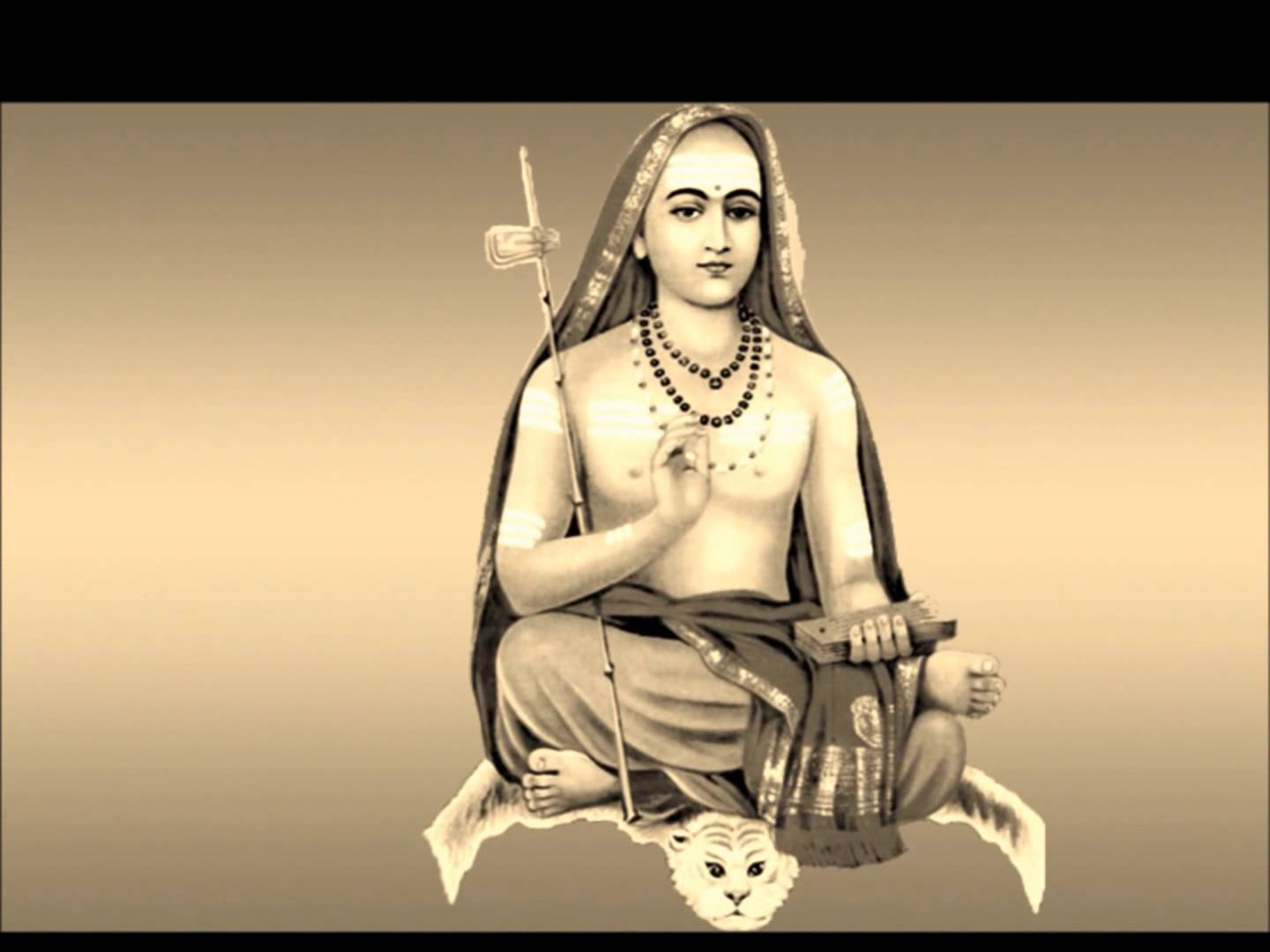

ManO bhudhyahamkaara Chittaani na aHam,
Na Karnam, na Jihvaa, na cha Ghraana Netram,
Na cha Vyoma Bhumir na Tejo na VaayuH,
Chidaananda RuupaH ShivO aHam, ShivO aHam.
Indian Culture views human existence in absolute individualistic terms and the legacy of Indian Culture could be described as ‘Individualism’.
The Foundation for Individualism:

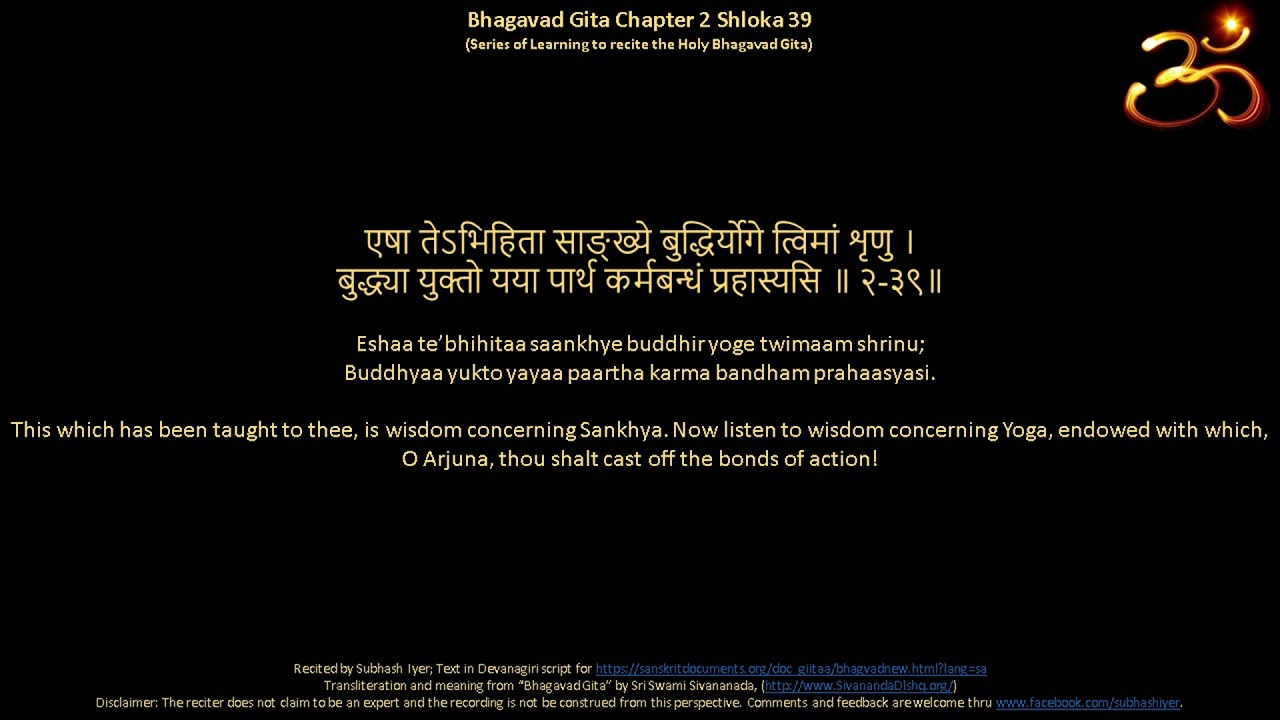
The Bhagavad Gita, Chapter II, Sankhya Yoga, verse 39, claims that the analytical knowledge derived from Samkhya philosophy gives the description of the nature of individual and individuality.
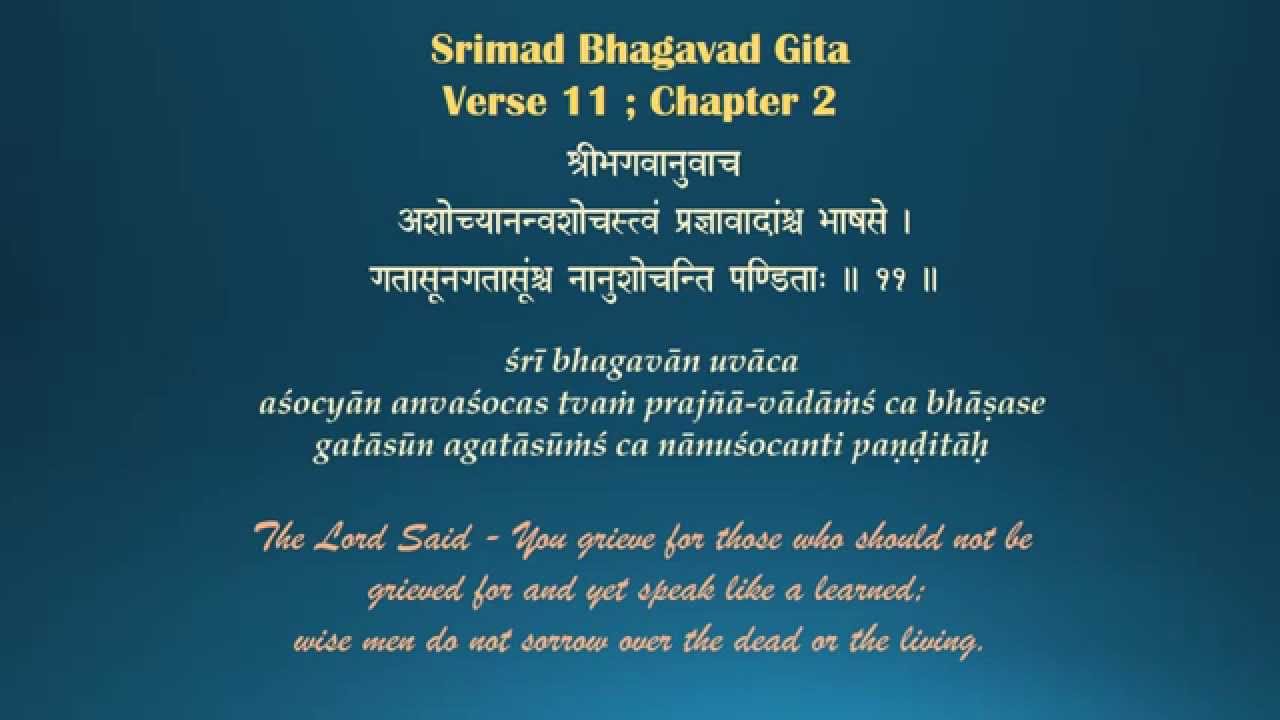
Chapter II, of the Bhagavad Gita explains this philosophy in several verses.Verse 11 claims that those who are wise lament neither for the living nor the dead.
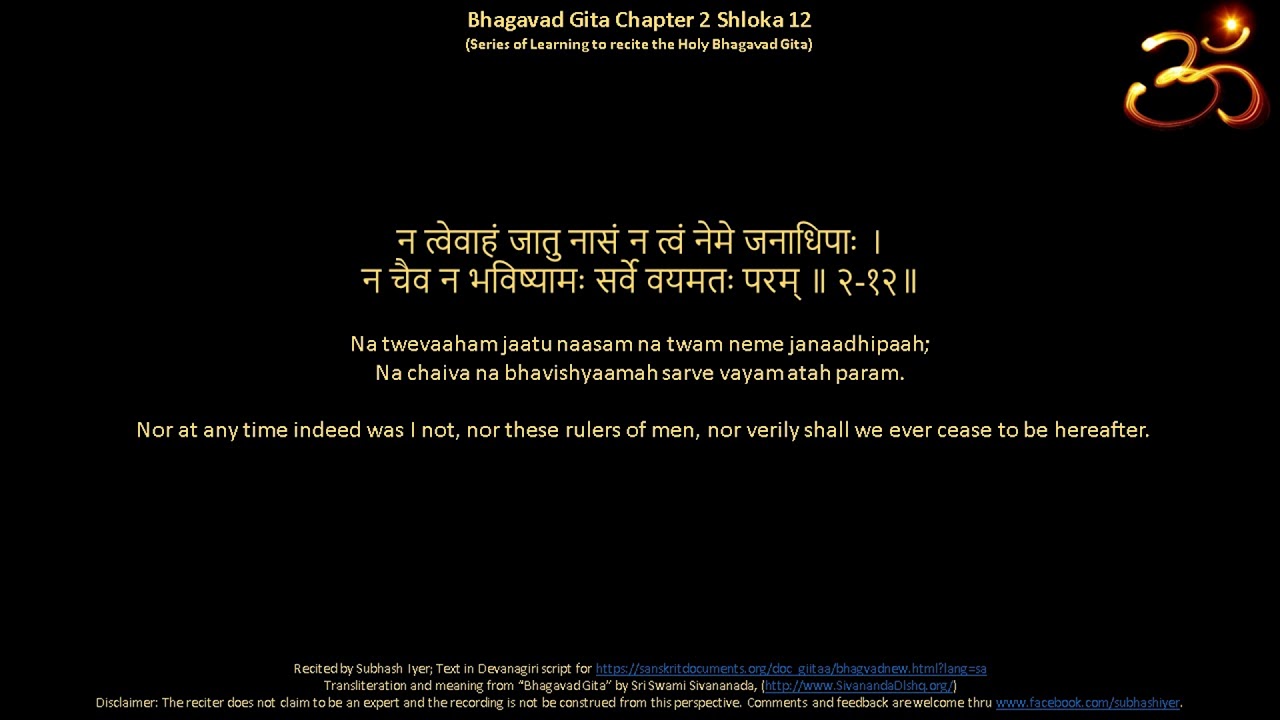
In verse 12, Lord Krishna states that there was never a time when He did not exist, nor Arjuna, nor all others in the battle field, and in the future there will never be a time when any of them cease to exist. Lord Krishna (The Supreme Individual Person) and also all other individuals are eternal persons.They existed as individuals in the past and they will continue to exist as individuals in the future.Their individuality existed in the past and their individuality will continue in the future without interruption. Lord Krishna clearly states that the individuality of all others will continue eternally. Hence, Indians do not accept the bodily conception of the living entities. Living entity is an individual soul and even though the body changes every moment, the soul does not undergo any change.

Verse 13, claims that the embodied soul continually passes, in this body, from boyhood to youth, and then to old age; similarly, the soul also passes into another body at death. By nature the human body is ever changing, and the soul is eternal.
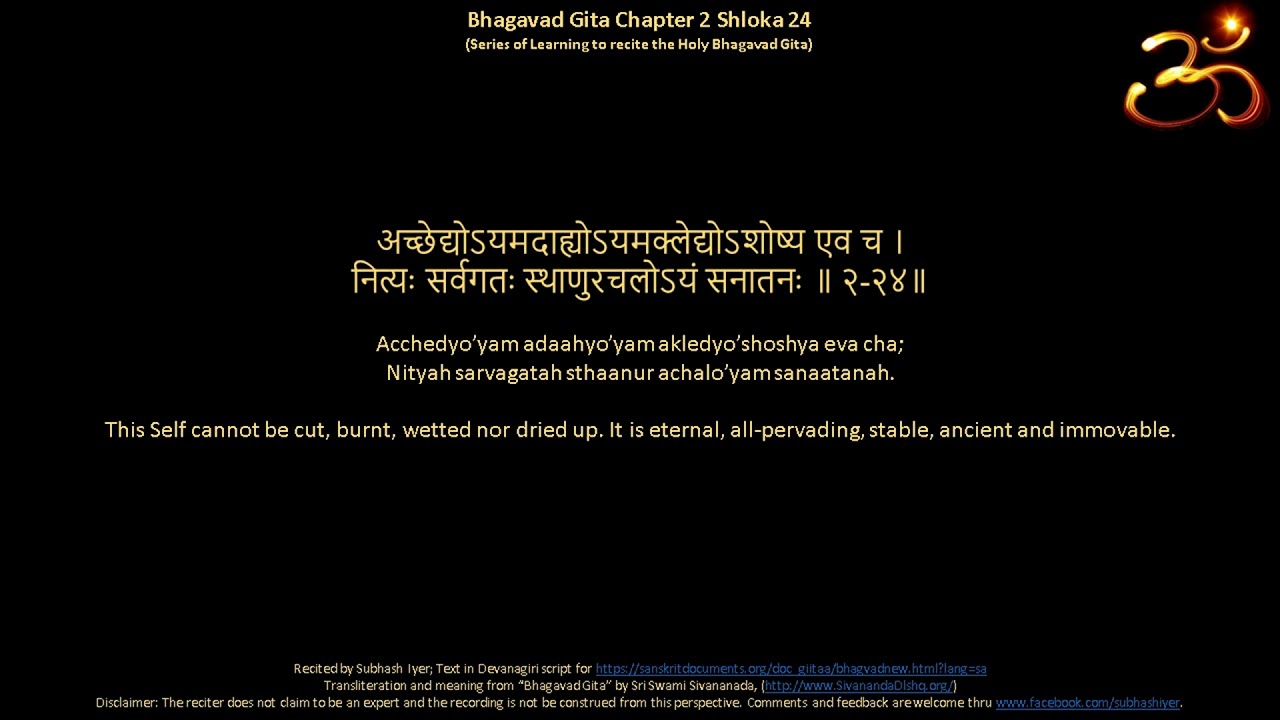
Verse 24 states that this individual soul is unbreakable and insoluble. He is everlasting, unchangeable, immovable, and eternally the same.
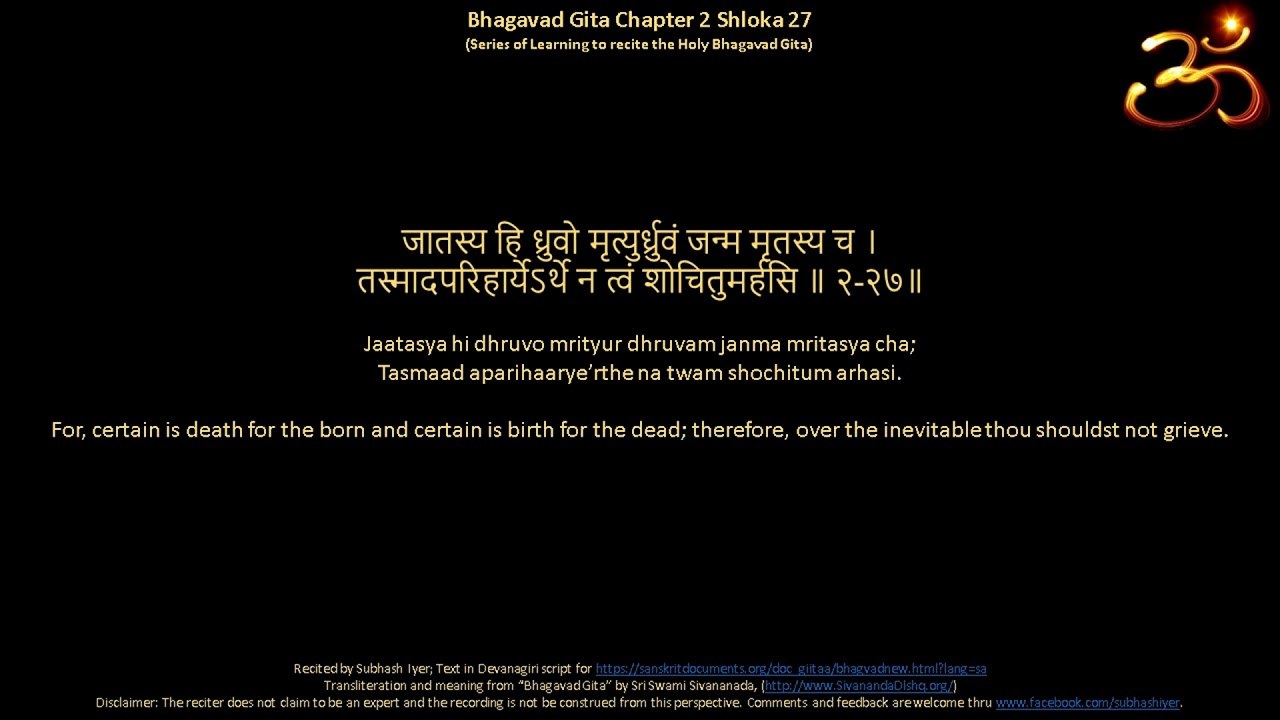
Finally, verse 27 establishes the foundation for ‘Individualism’ by stressing that ” For one who has taken his birth,death is certain; and for one who is dead, birth is certain.”
The Supremacy of Individual:

The primary importance of the individual is established by the Vedic statement “AHAM BRAHMASMI” which describes the True Identity of the Individual as that of Ultimate Reality known as Brahman. The following verse supports the idea that the Individual is a Whole entity as the Whole is derived from the Whole, perfect, Supreme Being:

Om, purna mada, purna midam, purnaat purna mudachyate
Purnasya purna maadaya, purna meva vasishtyate.
“That” (is an indefinite term to designate the Invisible Absolute) is Whole (Perfect Substance with Perfect Nature and Quality); “This” (the visible, the phenomenal embodied Soul) is Whole, from the (invisible) Whole comes forth the (visible) Whole. Though the visible Whole is derived or deducted from that invisible Whole, yet the Whole remains unaltered and both retain their Perfect Condition called Whole. The human entity is virtually trapped in a repeated cycle of birth, death and rebirth.The ultimate purpose of human existence is to achieve Moksha (Liberation) or Mukti (Release) from this Cycle that is referred to as ‘Samsara’.
The Practice of Individualism:

Individualism is built upon the value attached to knowing oneself. We are encouraged to look inwards and to reflect upon the nature of ‘SELF’. Self-Knowledge is considered to be more valuable than gaining knowledge of the material world.The following prayer which is known as Gayatri Mantra is one such example of motivating Individuals to look inwards. Similarly, Socrates suggests, “Know thyself, and you will know the universe and the gods.”
Om Bhur Bhuva Suvah, Om tatsa vitur vareynyam
Bhargo Devasya dhee mahi dheeyo yo nah prachodayaat.
The Individual while firmly establishing his Individuality also takes complete responsibility for his actions.The Individual bears the burden for his own actions.
The Journey to Ultimate Individualism:
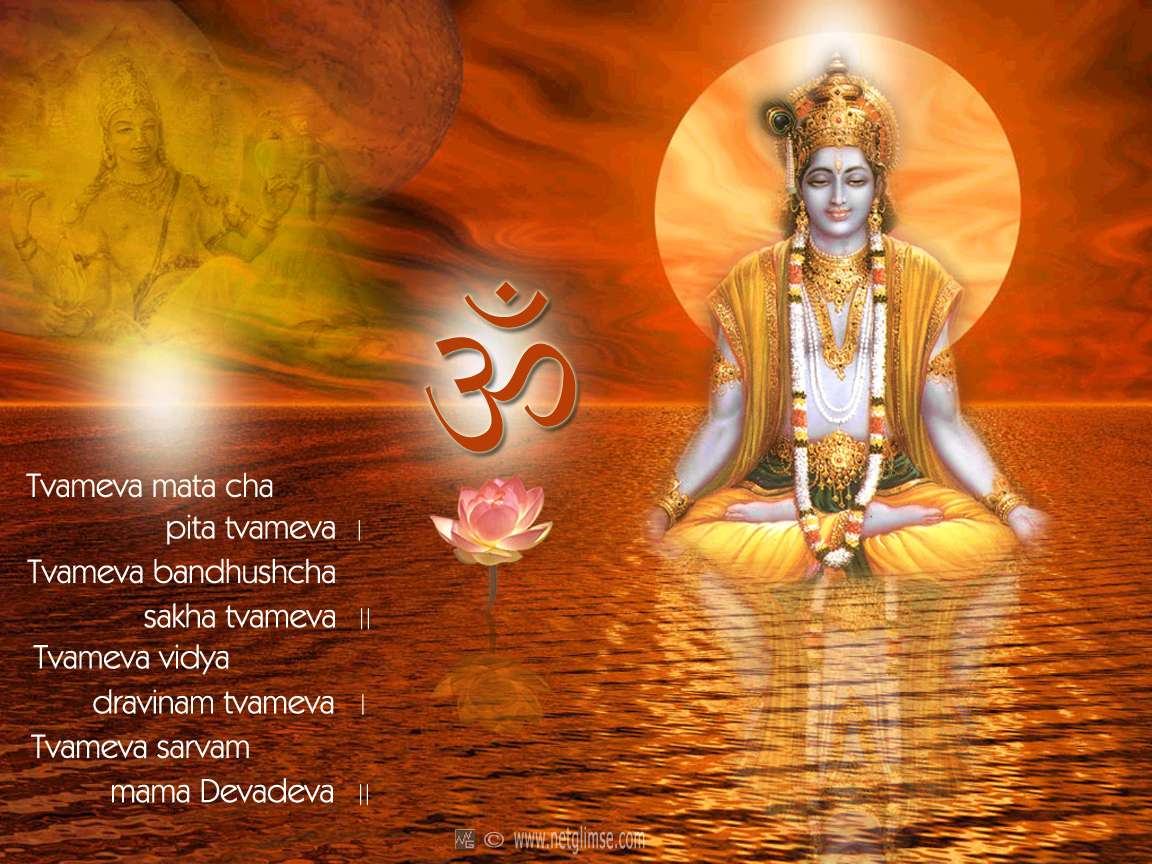
The Individual strives for self-reliance, learns to minimize the importance of all external relationships and concentrates upon developing an intimate relationship with his personal God.The following prayer is one such example of an Individual’s journey on the path of devotion (Bhakti).
Tva meva maata cha pitaa tva meva, Tva meva bandhu cha sakha tva meva,
Tva meva vidya, dravinam tva meva, Tva meva sarvam mama Deva Deva.
Devotion to God practically takes over, replaces and consumes the need for any other kind of external relationship such as man’s relationship to his mother, father, relatives, friends, and educational and material status.
The Goal of Absolute Individualism:
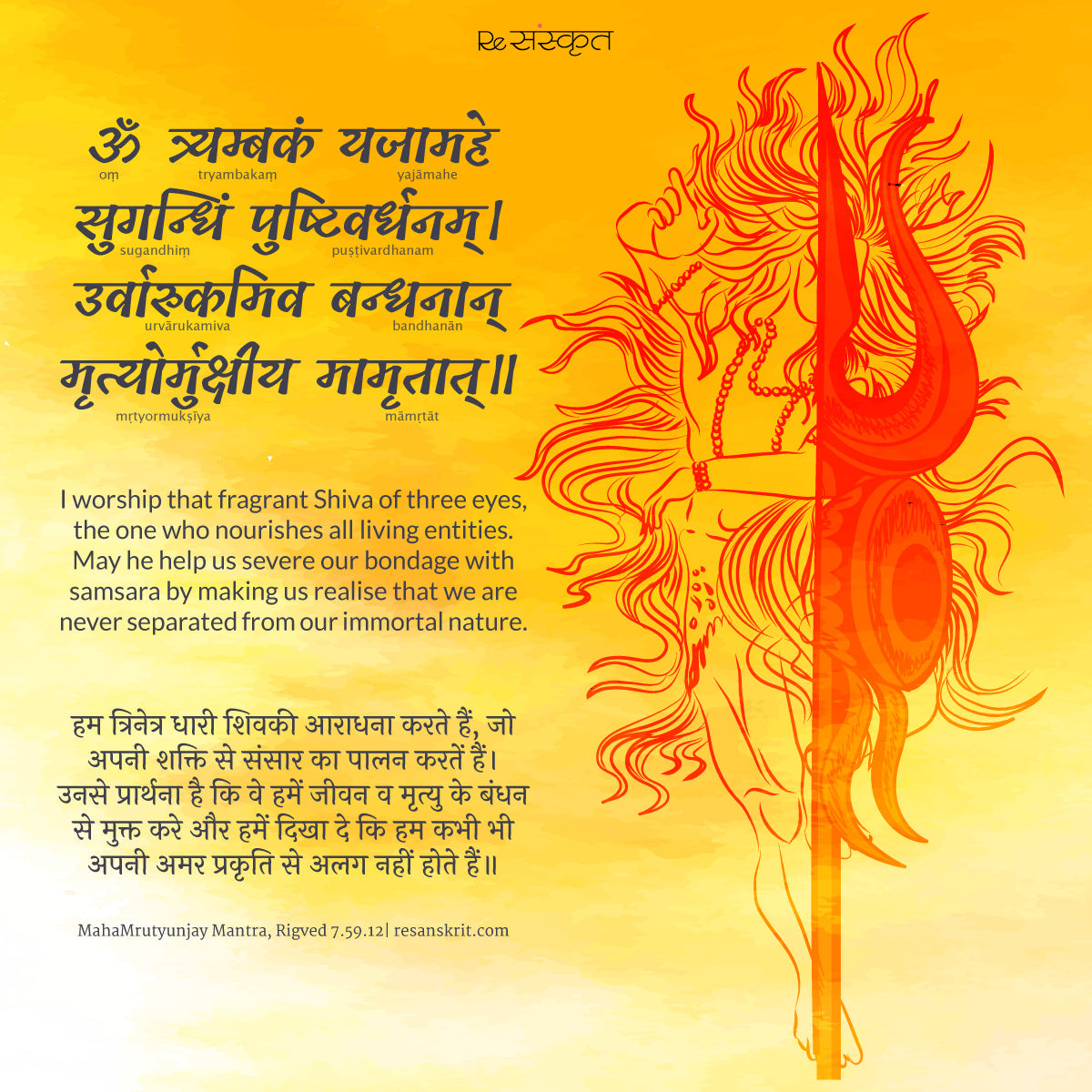
For the individual to win the battle of ‘Samsara’, to gain freedom from the cycle of birth and death, to declare victory over death and to finally reach the shore and complete the long and tiresome swim across the uncharted ocean, he is required to disentangle himself from the cobweb of relationships and set himself free. The following prayer known as Maha Mrityunjaya Mantra illustrates the point:

Om,Triyambakam,Yajamahe sugandhim pushti vardhanam,
Urvaaru kamiva bhandha naat mrutyor muksheeya amrutaat.
Such liberated Individual who had freed himself from all external relationships would be able to proclaim his True Identity and the following verse written by Shri Shankaracharya is an example of an Individual who had reached the Goal Of Absolute Individualism:
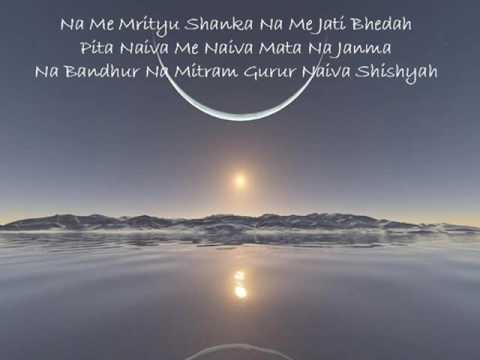
Na Mrityur, na Shankaa, na me Jaati bheydaH,
Pitaa naiva, me naiva Maataa, na Janma,
Na Bandhur,na Mitram, Gurur naiva SishyaH,
Chidaananda RupaH ShivO aHam, ShivO aHam.
Thus Indian Identity is none other than the identity of “SHIVA” whose Individualistic Identity is described as Sat+Chit+Ananda.

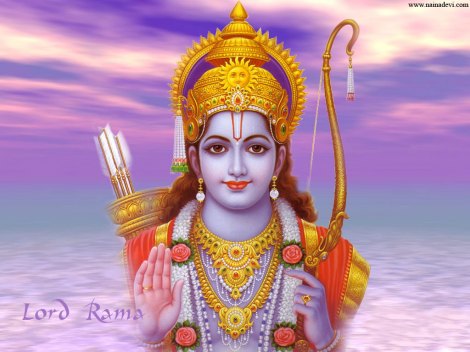
In the Epic Poem of Ramayana, the concept of Individualism is vividly portrayed. Rama alone was required to live in the forest. He could have just refused to do so. No force upon earth could have moved Him but He made His own choice. Lakshmana made His own choice and accompanied His brother for a life in the forest. Rama made no decision about Seeta. He did not want her to accompany Him into the forest. Seeta made Her own decision. All of them express their own personal independence in unique manners.




 Whole Dude - Whole Spirituality