
Spiritualism – The Discovery of BhavanaJagat : What is the “Connection” between man and Sun? Does man have the physical and intellectual ability or capacity to harness Solar Energy to maintain his living functions? Man is a spiritual being as his existence demands the presence of a vital, animating, Life Principle that can be named as soul, or spirit. The purpose of soul or spirit involves the use of awareness or consciousness to obtain energy from an external source to maintain the fact or condition called living. Man has no ability to directly rule or govern the individual, independent living cells of his body that display functional autonomy. Man, to support his existence needs the integration of functions of the cells, the tissues, and the various organ systems that constitute the multicellular, complex organism. Soul or spirit is the agency that operates the guiding or controlling mechanisms to provide mutually beneficial relationships and interactions that have characteristics such as mutual assistance, mutual tolerance, mutual cooperation, and mutual subservience for the benefit of the person who exists because of those functions.
Category Archives: Science of Consciousness
Philosophy of Medicine – Lesson. 74 -Spiritualism vs Panpsychism. The Unity of Science and Humanities
Due to a lack of unity between Natural Sciences and Humanities, we are not able to describe the reality of man, and have failed to describe the reality of this universe using words to which a definite meaning is attached. The universe is build using units such as Matter, Energy, Space, and Time. Man is composed of molecules of matter that is constituted by atoms, and chemical elements like any other form of physical matter. The difference is that of the nature of existence. The physical, non-living matter requires no supply of energy from an external source to maintain its physical existence. The living things that include all “monads” apart from man need continuous supply of energy from the external environment to sustain existence. The atoms and chemical elements of man do have mass and energy and yet that energy is not available for maintaining the living condition.
The fertilized Egg Cell or Human Ovum called Zygote could be called a ‘Whole Monad’.
Philosophy of Medicine – Lesson. 52. The Contents of Conscious ness + The Capacity of Consciousness = Total Consciousness
The Theory of Total Consciousness explores the total contents of conscious experience and determines its significance in relation to the act, state, or condition called Living.
Man enjoys an existence characterized by Peace, Harmony, and Tranquility, as the Soul, or the Life Principle operates the vital functions of the complex organism without relaying all the information to the cortical areas avoiding information overload. Thereby, Man is protected from a huge information overload that is not compatible with mental peace and equilibrium. In this context of defending existence from the threat of Information overload, it may be said, “Ignorance is Bliss.” The Creator is the Source of Great Knowledge (Sanskrit. Prajnanam) and the access to the realities of the Inner World and the Outer World are selectively restricted to defend the wellbeing of the living creatures.
Philosophy of Medicine – Lesson. 51 – Pure Phenomenology-Pure Consciousness-
the term “Whole Phenomenon” can be stated as any event, circumstance, or experience that can be known by human senses, or the mental faculty called intuition under the influence of Illusion. The man can only perceive the reality of this physical world as a product of Illusion and will never have consciousness of the fact of its speed of rotational spin.
In my analysis, all human experiences of the objective world and of human imagination can occur only under the influence of the Power/Force/Energy called Illusion which is popularly described as “Maya” (The Phenomenon of Great Grand Illusion) in Indian Sanskrit language. To facilitate a man’s powers of sensory and intuitive perception, it demands the operation of a mechanism called ‘Illusion’. Man has no choice other than that of gaining perceptual experience under the influence of Mercy, Grace, and Compassion that establishes, supports, and sustains the human existence.
Philosophy of Medicine – Lesson. 46 – Doctrine of Existentialism
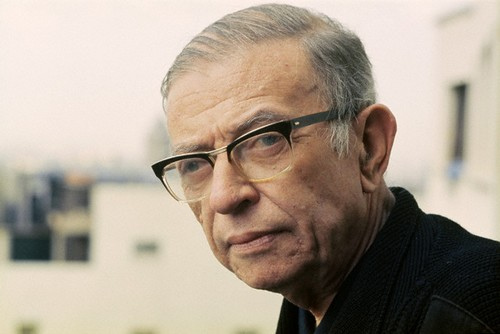
The complexities of Life involve knowing What You Are (Essence) and What You Do (Existence). But, Existence always precedes Essence. I ask my readers to discover Human nature by understanding the biological basis for human existence. Human nature is a reflection of that potency that keeps the human object existing. To describe human nature from mental life or mental states of an individual causes Subject-Object Dualism. I try to know human nature by knowing the characteristics of the substance that exists. The substance when it performs its functions, the characteristics of its behavior could be observed in biotic interactions, the interactions of the cells, the tissues, the organs and the organ systems that constitute the human organism. I try to discover human nature of a subject who objectively exists because of the functions of cells, tissues, organs and organ systems that provide the basis for that existence.
In my view, the physiological function called consciousness primarily involves the awareness of my own energy dependent existence at a given particular time and place. In other words, I am Conscious for I know that I am not Free. Sartre’s concept of human freedom is a simple mental entity and it involves the freedom of imagination. However, man has a very limited freedom to convert his imagination into an external actuality. The man lacks total freedom and has no true freedom as he does not directly rule or govern even a single cell in his body which comprises of trillions of individual living cells which have functional autonomy and are independent entities while being part of a group.
Philosophy of Medicine – Lesson. 41 – The concept of consciousness without contents is irrational and invalid

I ask my readers to define the term consciousness as a biological function, the characteristic of the living things that signifies the existence of its living matter or the corporeal substance.
Consciousness is the natural principle, the vital principle that moves and animates all Life. It has a set of defining features; it is the principle by which a living cell or organism knows the fact of its own existence, it knows as to where it exists, and knows as to how it is existing.
Consciousness describes the condition of an individual; the condition of knowing, awareness, or recognizing the fact, the state, and the act of existence or living in a given environment. Thus, consciousness is a natural principle that could explain what an individual knows and experiences about the world around one and inside one.
Philosophy of Medicine – Lesson. 38 – The Discovery of Self – “I am Consciousness”

I am Consciousness for my Consciousness is protected from the direct sensory experience of my own Speed.
Consciousness is the awareness of energy dependent existence in a given environment and it is the characteristic of all living cells irrespective of their differentiation, functional subordination, and identification as the constituent parts of specific organs, tissues, and organ systems. The idea or Object called “Consciousness” is fundamentally related to the Subject called “I am” both at the level of the entire organism and at the level of individual cells.
Philosophy of Medicine – Lesson. 36 – Whole Proposition: “I am Consciousness, Therefore I am”
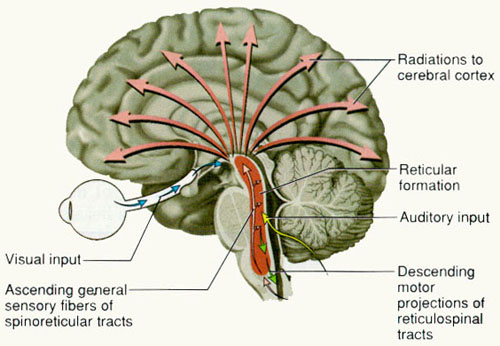
The Creator is the Source of Great Knowledge (Sanskrit. Prajnanam) and the access to the realities of the Inner World and the Outer World are selectively restricted to defend the wellbeing of the living creatures.
“I am Consciousness, therefore I am” is a proposition to explore the nature of human consciousness, the existence of soul and man’s connection to a Conscious entity described as God.
Philosophy of Medicine – Lesson. 35 – Spirituality from the perspective of Cognitive Biology

The Science of Consciousness must explore and investigate the entire contents of Consciousness. By understanding the nature of experience provided by the Totality of Consciousness, the condition, the state, or the act of being Conscious could be explained.
Philosophy of Medicine – Lesson. 21 – Who am I?
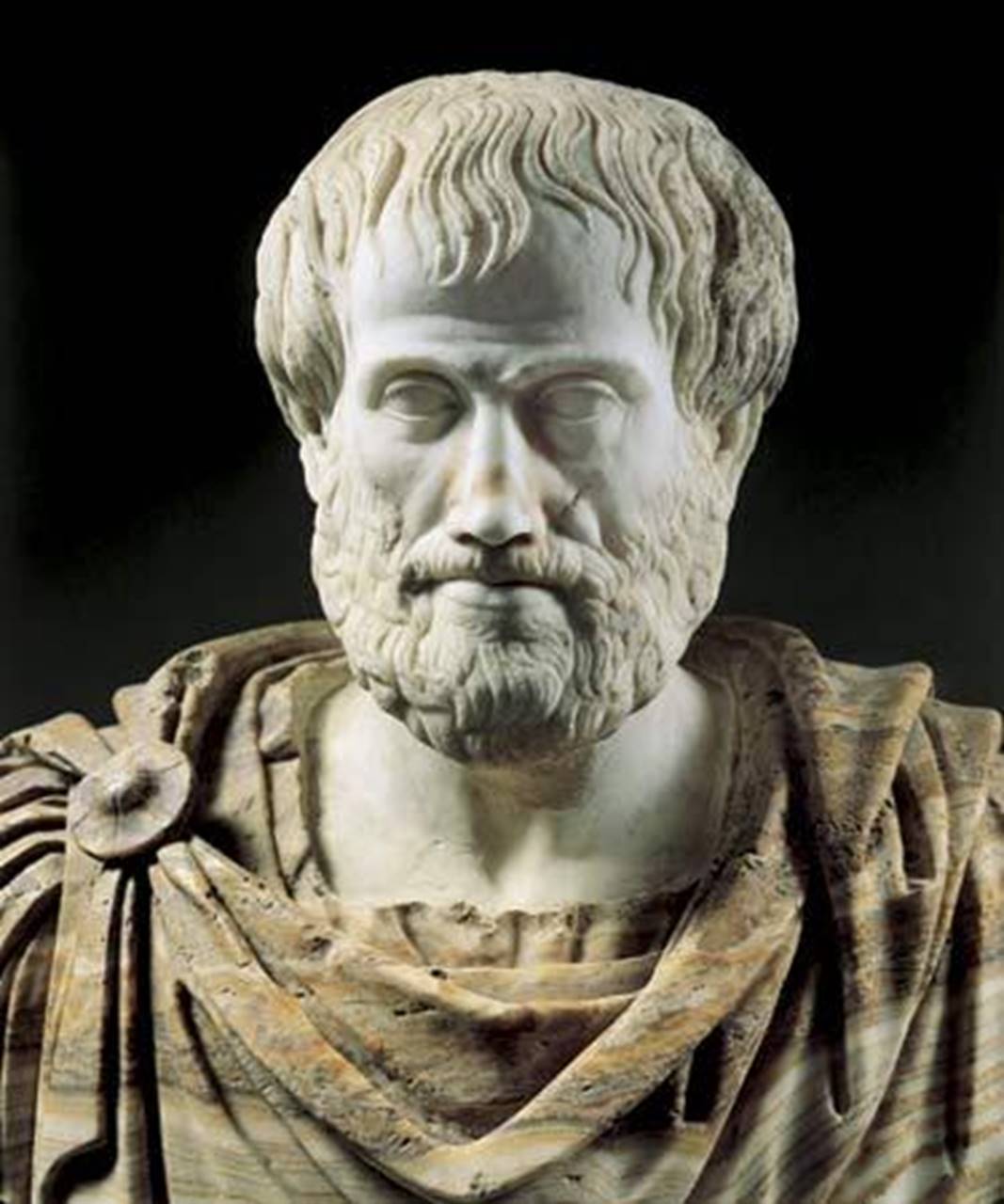
Aristotle – born 384 BC and died 322 BC. His Metaphysics brings about the convergence of Philosophy, Religion, and Science.
For scientific knowledge, we need to know the governing principles of a subject and deduction from these principles provides not only the knowledge that something is true but also the reason as to why it is true. Aristotle is recognized as the Father of Science and he defined Science as a deductive system based on evident axioms.
Aristotle’s Metaphysics, and Plato’s Dialectic describe a method of inquiry that deals with the nature and relation of things – What each is, how it differs from others, what common qualities all have, to what kind each belongs, and in what rank each stands in its kind and whether its being is real-being, and how many beings there are, and how many non-beings to be distinguished from beings.

