A challenge to Existence – A story from Military Hospital Ambala

The incidence of Infectious Disease Tetanus. For example, there are no reported cases in the United States and Europe. A challenge to existence. A story from Military Hospital, Ambala.
Tetanus - pathogen
The spores of Tetanus bacilli can live in soil for years. The spores can survive autoclaving instruments at 121 degrees centigrade. A challenge to existence. A story from Military Hospital Ambala.
Clostridium.tetani - The Tetanus causing bacilli.
The tetanus bacilli live in the guts of humans, cattle, and other animals.
Clostridium tetani
The Tetanus causing bacilli produce deadly Neurotoxin. How would you manage this case of Tetanus if you know that the bacilli are lodged in the endometrial lining of this young woman? In 1971, we had no Human Immunoglobulin. Anti Tetanus Serum is not very effective. What are your options?How would you get rid of the bacilli?
Clostridia and Tetanus
Clostridium.tetani bacilli cause Tetanus.This young woman reported to the Hospital very early and her condition was diagnosed promptly.If you had known that the bacilli are lodged in the endometrial lining of her uterus, would you attempt surgical debridement? Would you attempt Curettage to remove the source of neurotoxin production?What are the risks of surgical debridement? Would you recommend Hysterectomy to save her life?Conservative Treatment did not save her life. Is there a chance that she would have been living after emergency Hysterectomy?
Tetanus disease first manifests in the facial muscles.
The jaw muscles are typically involved in Tetanus.
Tetanus neurotoxin affects the neuro-muscular junction.
Clostridium.botulinum causes Botulism, a paralysis of muscles.

A STORY FROM MILITARY HOSPITAL  AMBALA, HARYANA STATE, INDIA  :    

I served at the Military Hospital, Ambala from July 1970, to September 1971. I served in the rank of Lieutenant during the period of my twelve months Hospital Internship Training. I narrated an earlier experience at the same Military Hospital in my blog post titled ‘Defining Indian Identity-Listen to the Heart’.

I want to recount some of my experiences to understand the nature of human condition and the challenges to human existence. The challenges are many and they are so vastly different. I am choosing to narrate the stories of those individuals whose life was cut short while they had no other health issues that could undermine their ability to live. Padma Sundarji, Lieutenant Colonel D’ Souza, and the athlete at Army Ordnance Corps Centre, Secunderabad fought to defend their existence from the threats of Cancer. I had earlier described the nature of the Immune System that defends the human body from Cancer, infections, and foreign proteins.

This is the story about a very young woman whose life was shortened in tragic circumstances and I want to stress the importance; the medical profession has a duty to avoid costly mistakes while delivering routine care.    

When people walk into a government-run clinic or hospital, the usual impression is that a doctor would listen to the complaints in about a few minutes time, make a very quick evaluation, and send the patient away with a prescription.

I had earlier mentioned that in the Armed Forces, the Medical Officers would love to spend time medically examining people who have no apparent sickness as they lay emphasis upon diagnosing a person’s Good Health. I was introduced to aspects of Medical Practice in Army at Military Hospital, Ambala where I learned that writing a prescription should not be our first concern. Major. Mohan Pal Dhir, AMC, the Senior Surgical Specialist of the Hospital at that time of my service, instructed me to converse with my patients and try to know each one as an individual; as a person and not as a diseased entity. In India, we would still follow the cultural norms and do not intrude into personal lives unless the patient desires to discuss all the aspects of their medical history.    

During 1971, I was in the Hospital Medical Inspection Room around 8.30 P.M. while my friend Lt. Mohan Lal Dubey, AMC was the Orderly Medical Officer;(Dr. M L Dubey is presently Professor, Department of Parasitology, Postgraduate Institute of Medical Education & Research, Chandigarh, India). 

A young woman about 17-years-old accompanied by her father walked into the Clinic. Her father had earlier served in the Indian Army. They were traveling in a bus and she was feeling unwell, and they decided to discontinue their journey. The Military Hospital, Ambala is at a short distance from the Grand Trunk Road and the father knew the Hospital and thought that it would be better to have his daughter checked up before getting back to their village. She could not contribute any further information and did not suffer from any serious illness in her life.

As she walked into the Clinic, I noticed an expression of fear on her face, and it alerted me that there would be some underlying life-threatening problem. Surprisingly, we could not detect any reason( a medical condition ) to explain her feeling of being unwell. Her temperature, pulse, respiration, heart, lungs, and abdomen were all within normal expected limits. I did not want to suggest to this young woman that she was alright. I kept talking to her and her father to arrive at some clues about this sudden sickness that she was experiencing. While speaking to her and intently looking at her face, I noticed with a sense of alarm, that her jaw muscle known as ‘masseters’ appeared to be a lit more ‘taut’.

Masseters are the primary chewing muscles. They cover the sides of the jaw just behind the cheeks. These muscles help us to clench our jaws and to grind our teeth. The stiffening of these muscles forced me to think of the possibility of Tetanus infection. Her medical history did not reveal any possibility of contacting this terrifying disease. She had no injuries of any kind.

Myself and my friend Dr. Dubey, checked her again and could not find any evidence of even a minor injury. Her throat, her teeth were normal. She was not hysterical. She was not exposed to drugs or poisons. She had no concerns or experiencing any difficulty about opening her mouth. There was no stiffness of the muscles that she could experience on her own.

A challenge to existence. A story from Kurnool Medical College.

This stiffness of jaw muscles, this involvement of facial muscles is the basis for diagnosing the disease of Tetanus. We do not need any laboratory investigations. We need not see the Tetanus bacilli to clinically diagnose this condition. The bacilli live in the intestines of humans, cattle, horses, cats, and dogs without causing any disease. The spores of the Tetanus bacilli are widely distributed in nature, especially in top soil. The spores are very resistant to heat, and chemicals like Lysol and can survive for years in the dust. But, the infection is caused only when the spores enter the body through any wound, particularly like a thorn prick, or a puncture wound caused by a nail, a splinter, or an agricultural implement. The bacilli are strict anaerobes, meaning that they cannot thrive in areas receiving free oxygen. The Tetanus bacilli germinate from its spores only where there is reduced oxygen supply. Generally, a patient would be having a dirty wound or injury. The disease manifests itself very quickly in about 2 days to 2 weeks after the spores germinated in the body tissues. The stiffness of the jaw muscles is called ‘Lock Jaw’ or ‘Trismus’.

We could not conclude that she was a case of Tetanus. The sign of ‘Trismus’ was hanging in the air like a ‘SWORD’. We made a decision to admit her to the Family Ward with the Provisional Diagnosis of ? TRISMUS and initiated the prophylactic treatment against Tetanus as recommended in the Standard Text Books of Surgery. During 1970s, Indian Army Hospitals had no Tetanus Human Immunoglobulin, the antitoxin that is used in the United States to neutralize the neurotoxin produced by tetanus bacilli. We were then using Tetanus Anti-Serum that is procured from horses. This Serum could cause some serious side-effects, and very high doses are not recommended unless treating established Tetanus. She was given an initial dose of 5,000 International Units with due precautions. In India during 1970s, and prior to it, the children were not routinely immunized by ‘triple vaccine’ which is very effective against Tetanus infection. As a precaution, she was also started on Penicillin antibiotic and initiated immunization against tetanus with a dose of Tetanus Toxoid injection. I went away hoping that the stiffness of jaw muscles that I had discovered on my examination would go away and that she would be alright.

Next day, when I arrived at the Hospital at about 7.00 A.M., I came to know that the suspicion of Tetanus became stronger and the patient was transferred to the Intensive Care Room at the Acute Surgical Ward. The Surgeon treated her very vigorously and she survived this terrifying ordeal of Tetanus for five days and lost her battle. She received medical attention as soon as she started experiencing illness, and yet could not be saved.

A challenge to existence. A story from Military Hospital, Ambala.

We failed because we could not discover the seat of her infection. The tetanus bacilli after entering human body do not circulate in the blood. They remain stationary at a place where they thrive. The bacilli do not directly harm the body. It is the ‘tetanospasmin’, the neurotoxin that they excrete which circulates in the blood and reaches the neuron cells of the spinal cord that inflicts the damage. It is one of the deadliest poisons known.

A challenge to existence. A story from Military Hospital, Ambala.

The poison is like the poison known as ‘STRYCHNINE’ which is used to kill rats. The poison specifically acts on the synthesis and release of ‘Acetylcholine’, a chemical that has a key role in the transmission of nerve impulses throughout the body. The stimulation, the accumulation of ‘acetylcholine’ results in rigidity of muscle groups of different voluntary muscles. This toxic rigidity of muscles gradually involves face, head, neck, trunk, extremities and the muscles of respiration. This rigidity of the body is punctuated by sudden tonic spasms, and convulsions. The patient would be exhausted and dies due to respiratory failure. Patients are nursed in dark, very quiet rooms, and are not disturbed and moved without reason. If the seat of infection is known, surgery is performed to completely clean the wound and remove all dead tissue where the Tetanus bacilli multiply.

In this young woman, we could not detect the seat of infection while she was treated. After her death, the Hospital conducted an autopsy to discover the problem. We could conduct this autopsy as her father gave us the necessary permission. Apparently, he understood our anxiety to discover the seat of this infection that took away her precious life.

The Hospital Pathologist, Major B K Sharma, AMC who conducted the autopsy informed me that he isolated the Clostridium.tetani bacilli from the lining of her uterus or womb. Apparently, she acquired a ‘Surgical Infection’ after undergoing a simple gynaecological surgical procedure commonly known as ‘CURETTAGE’ in which the lining membrane of the uterus is gently scraped and removed. The father and the patient did not reveal this information to us.

A sense of Modesty and Cultural Sensitivity could have prevented them from disclosing confidential health information. The operation was done in a Clinic or Hospital and we could not obtain any details. The surgical instrument that was used in this procedure was contaminated with dust carrying the Tetanus spores. The spores cannot be killed by autoclave or sterilizing the instruments at 121 degrees centigrade temperature.

This young woman might have experienced a relatively harmless disorder of her menstrual function which may not truly require a surgical treatment. But, we have no treatment for a disease called ‘GREED’. A medical practitioner sometimes performs a surgical procedure to justify charging a patient a large amount in fees to fill up his/her pockets.

In the autopsy examination, we could not find any reason as to why she was subjected to this Surgical Intervention which introduced this deadly infection into her body. She had no other complications from this surgical operation and she had no gynecological problems and our careful examination did not indicate any problem.

As a rule, doctors do not carry out a gynecological pelvic examination in young patients and particularly when they are not married and have no symptoms and signs of a gynecological disease. Even if we had known, we could not have done more to save her life. She was not evaluated by the Gynaecologist at the Military Hospital, Ambala. I would not think that a Gynecologist would have done the operation of ‘CURETTAGE’ for a second time to get rid of Tetanus bacilli from the endometrial lining of her uterus. It could pose risks of its own. An emergency hysterectomy could be life saving as it would have eliminated the source of neurotoxin production and would have given us a chance to fully neutralize the circulating neurotoxin. Tragically, she got caught up in a situation with no further escape.    
BHAJA GOVINDAM:    

A challenge to existence. A story from Military Hospital, Ambala.

We exist at the mercy of our LORD. It is not always easy to defend human existence. This tiny bacillus needs no oxygen for its survival. The antibiotics that we may use may not even reach it in enough concentration. The bacillus has a cell wall coated with sugar molecules which may even prevent the antibiotic from entering the cell. A person even with exceptionally strong and well-developed muscles cannot defend himself from this poison. Only timely immunization is the best way to protect a person. During 1970, a spent a month at the Kurnool General Hospital, Kurnool doing my Internship in Medical Ward III. As an Intern at the Medical Ward, I did a neurological examination of a young male patient with well-built body. He was admitted for Spasticity of muscles of his limbs, and the trunk. He was rigid like a board but did not experience any muscle spasms or convulsions. I diagnosed him as a case of Tetanus and transferred him to the Infectious Diseases Ward as per the Hospital Policy. These were the two instances when I made the Clinical Diagnosis of Tetanus and they are important and live in my memory and constantly remind me to seek the protection which only the LORD provides.    

A challenge to human existence. A story from Kurnool Medical College. Illustration of the anatomy of a female human face

Dr. R. Rudra Narasimham,   

Kurnool Medical College, Kurnool, A.P., India.,   

M.B.B.S., Class of April 1970.   

A squirrel story to explore consciousness

January 21 is Squirrel Appreciation Day. It was established by Christy Hargrove, a wildlife rehabilitator from North Carolina, to draw attention to the importance of these remarkably widespread creatures. Native to five continents and currently living on six (there’s no Antarctic squirrel), there are about 285 species of squirrels in the world, ranging from the tiny African pygmy squirrel to the Bhutan giant flying squirrel (when in Bhutan, be ready to duck).

Like most squirrels, the Eurasian red squirrel pictured here eats primarily nuts and berries. It also has a habit of burying caches of food for later consumption—and even ‘pretending’ to bury food to mislead other animals that might be watching. But squirrel brain capacity being what it is, the squirrel inevitably forgets where some of the food has been buried. Out of that grows one of the humble squirrel’s most important roles in the forest ecosystem: It’s an inadvertent planter of new trees and bushes. Three cheers for the squirrel!

The Squirrel Story that I am sharing is about the fact of Squirrel’s Conscious behavior and actions. While the Squirrel could be forgetful, my memory of events in Chakrata, Uttarakhand, India are still alive.

A SQUIRREL’S CONSCIOUSNESS AND DISPLAY OF MATERNAL INSTINCTIVE BEHAVIOR LEADS ME TO EXPLORE CONSCIOUSNESS. 

A SQUIRREL STORY TO EXPLORE CONSCIOUSNESS

IRATE MOTHER SQUIRREL ATTACKED A VISITING TEACHER ON UNIVERSITY  OF MICHIGAN CAMPUS:

A SQUIRREL STORY TO EXPLORE CONSCIOUSNESS
A SQUIRREL STORY TO EXPLORE CONSCIOUSNESS.

The Ann Arbor News has reported this story about a mother squirrel’s angry attack. A 52-year-old Detroit Public School teacher was with a group of students touring the University of Michigan campus in Ann Arbor on Thursday, April 23, 2010. She had spotted some baby squirrels that were outside of their nest. The teacher had tried to alert the mother squirrel that was at a distance about a baby squirrel that was left alone. The mother squirrel could instantly recognize that the teacher was giving unwanted attention to her baby. The mother squirrel was instinctively aroused, turned on the teacher. The teacher tried to run away from the angry mother squirrel. She slipped and fell on the ground and injured her ankle. Seizing the opportunity, the mother squirrel bit the teacher on her leg. The teacher managed to escape and went to the Hospital Emergency for treatment.     

PARENTAL CARE IS AN INSTINCTIVE BEHAVIOR:     

Parental care is an aspect of social behavior exhibited by all animals. This is a complex unlearned or innate behavior that is influenced by heredity(genetic basis) as well as experience. The study of behavior provides valuable information about relationships among animals. No animal is ever completely isolated from some kind of environment. Animals exhibit social behaviors and form parental societies to care for their offspring. This parental care/maternal instinctive behavior is highly organized amongst mammals. The young are part of the mother while growing inside the mother and are nourished before birth by the ‘placenta’ of the mother. After birth, the young still seek nourishment from the mother and suck or lap milk produced by the mammary glands of the mother. This ensures that there is a strong family association between the mother and the offspring.     

BEHAVIOR AND CONSCIOUSNESS:     

The mother squirrel while displaying its maternal instinctive behavior has demonstrated that it is a ‘CONSCIOUS’ entity. Consciousness is defined as the state of being ‘conscious’ which has two components. 1. Being ‘conscious’ means being aware or recognizing the fact of one’s own existence. 2. Being ‘conscious’ also means being aware of our natural environment and it represents the state of knowing what goes on around one. Being conscious gives us the ability to interact with our environment and display appropriate behavior. In higher animals, this consciousness or awareness is also characterized by the presence of mental activity which includes an awareness of our own thoughts and emotions. A living entity is always conscious of its own existence. A living entity always exists in a state of consciousness. We identify a person as ‘UNCONSCIOUS’ if the person is not spontaneously interacting with his environment. There are several medical conditions that alter and affect our state of consciousness. Several drugs and intoxicants such as alcohol and poisonous agents like carbon monoxide, and carbon dioxide cause drowsiness, stupor, and various levels of semiconscious to deep unconsciousness. Consciousness is very important in evaluating people with head injuries and neurovascular accidents such as ‘stroke’. While a person is unconscious of his environment, he is still aware of his existence. This fact could be easily demonstrated by conducting tests. A living organism or a living cell responds when exposed to a stimulus. For example, an unconscious individual is evaluated by testing to see the response of the pupil of the eye which reacts by constriction of its size on exposure to a light beam.     

CONSCIOUSNESS AND SURVIVAL:     

January 21 is Squirrel Appreciation Day. My reflections on “Chakrata Karma” with the help of a Squirrel Story.

An organism uses its awareness to survive in the environment. I could illustrate this by narrating my personal experience.

On January 21, 1974, I was the Duty Medical Officer at the Military Hospital Wing, Establishment No. 22, Chakrata. We were using the buildings and the living quarters of the British while they ruled India.

On that cold winter night, after finishing the midnight round of the hospital wards, I arrived at the Duty Medical Officer’s Room along with the on duty Medical Nursing Assistants. The Duty Medical Officer is allowed to get some rest as the Duty Officer returns to regular working schedule at 7.00 A.M. at the end of the night duty. All other night duty personnel remain alert for they just work during their night shift. When we reached the room, I found a charcoal ‘sigri’ that was just lit a few moments before my arrival at that room. This type of cheap charcoal burners are used by the poorer working class Indian families to provide warmth during cold winter nights. It is not uncommon to hear about carbon monoxide poisoning associated with the use of such charcoal burners. However, in the Chakrata Military Camp, we were not using charcoal as a heating fuel and during the official inspection tours of the Camp I never discovered the use of the charcoal sigri for heating rooms. Some buildings such as the Officers’ Mess have fireplaces with chimneys and use firewood and not charcoal which poses the risks of carbon monoxide poisoning.

I was surprised to encounter a charcoal sigri for the very first time after arriving at Chakrata in 1971.  The night duty personnel were not sure as to who placed the sigri in the Duty Medical Officers’ room. I never tried a charcoal sigri for room heating purpose while many Indians including my own family used wood coal for cooking purposes in the kitchen.

The Duty Medical Officer’s room at Chakrata Military Hospital is a small room that was not heated by any electrical space or personal heater, and the room had no fireplace or a chimney. I permitted the coal burner to remain in the room. The charcoal burns very slowly giving heat and it lasts for several hours and once the coal is lit, the burner needs no further attention. On that particular night, I did not recognize that the coal was of poor quality and it was not burning as expected and was giving away smoke while I turned off the light and resting in the bed. As the door and the windows of the room were shut, the smoke started filling up the room. The smoke is odorless and is lighter than the room air, and it slowly went up filling the room from the top without alerting me.

I was fully asleep in that dark room, unaware as to what was going on around me. I was suddenly alerted when I experienced ‘palpitation’, a consciousness of the beating of my heart (Heart palpitations, pal-pih-TAY-shuns, are the feelings of having a fast-beating, fluttering or pounding heart). I awoke but still could not see the smoke in the dark room. I evaluated my condition to understand my rapid heart rate. I was in good health and there was no reason to experience an increased heart rate. I decided to investigate my problem and walked up to the door to turn the light switch on. The moment I had turned the light on, I could immediately see the smoke-filled room and the fresh, clear layer of room air was below my bed level. I immediately left the room to get fresh air from outside and saved my life. I was feeling very nauseous and threw up while a fainting spell forced me to hit the floor. The hospital Duty Nursing Officer who was on her rounds watched it and rushed to me to provide assistance. She alerted other night duty staff. I recovered very quickly with the intake of fresh air. The Staff took out the offending charcoal sigri and fully ventilated the room driving away the smoke. With the charcoal sigri gone, the room became safe to be reoccupied. I returned to the room and returned to my morning work schedule at 7.00 A.M.

In my analysis, the charcoal sigri was intentionally planted in the Chakrata Military Hospital Room to harm and endanger my life. I make that claim as no person came forward to apologize to me for placing the charcoal sigri in the duty room. In my view, only an enemy agent would have the motivation to conceal his involvement in the unexpected appearance of a charcoal sigri at our Military Hospital.

Many people are not that fortunate, and we read about entire families losing their lives while sleeping in rooms that are heated by improper burners. I was not conscious of what was going on around me while I was sleeping. However, my body was aware and conscious all the time. The chemical sensors in my body worked alright, they sent signals to my brain centers, which in turn sent signals to increase my heart rate to improve the oxygen delivery. It, fortunately, worked like an alarm for me. Very often, people become more drowsy, become fully unconscious, and lose life while asleep in smoke-filled rooms.     

THE SQUIRREL IN THE STORY OF RAMAYANA:     

A Squirrel Story to explore Consciousness.

Three-striped Indian Palm Squirrels, natives of India, and Sri Lanka are mentioned in the epic poem of Ramayana. All living entities are conscious. Just like the mother squirrel in Ann Arbor which demonstrated its consciousness, in the epic poem of ‘RAMAYANA’, the awareness and the behavioral response of squirrels are described. The story narrates the construction of what is popularly known as “SETHU” or a bridge across the sea from the southern shores of Indian peninsula to the island of LANKA. The squirrels were apparently conscious of their environment. The squirrels had observed the activities of thousands of monkeys throwing stones to build the ‘ADAM’S BRIDGE’, and recognized the presence of LORD Rama who had initiated the effort to build the bridge. The squirrel(s) volunteered to help and in its behavior, it showed attributes of devoted service. The abilities of the squirrel are very small and yet it won the favor of the LORD and is blessed. The LORD is pleased with the squirrel’s conscious efforts to offer devoted service.     

CONSCIOUSNESS AND ENERGY:       

A Squirrel Story to explore Consciousness.

In Bhagavad Gita, Lord Krishna explains the nature of Human Existence. Consciousness gives the ability to seek and establish a connection between an energy seeker and an energy provider and both are Conscious entities. The living human entity or man is known as “NARA” in the Sanskrit language, and the superior energy is personified and is known by the name “NARAYANA”. The poem of ‘BHAGAVAD GITA'( The Divine Song) narrates the dialogue between ‘Nara’ known as prince ARJUNA and ‘Narayana’ known as LORD KRISHNA. The LORD describes the relationship between the human soul( ATMA) and the divine soul( PARAMATMA). In Chapter 7 which is called ‘PARAMAHAMSA VIJNANA YOGA’ (The Knowledge of the Ultimate Truth), verse 5 describes the ‘energy’ relationships. The material nature which is composed of the sky, earth, air, water, and fire are constituted of ‘inferior energy’ of the LORD. The superior energy of the LORD is manifested as the embodied soul of all living entities. This superior energy of the LORD which is in the living entities gives the ability to the living entities to exist in the world by exploiting the inferior material energy from nature.     

THE ENERGY PROVIDER AND ENERGY SEEKER:   

In Clinical Medicine, the medical practitioner evaluates the Level of Arousal or Alertness of his patient.


In Clinical Medicine, the medical practitioner evaluates the Level of Arousal or Alertness of his patient.
Dr Florian Mormann & Dr Christof Koch have defined Neural Correlates of Consciousness as the minimal neuronal mechanism jointly sufficient for any one specific Conscious percept. This definition basically makes no distinction between Thinking and Consciousness. The NCC definition is not based on correct understanding of the function known as Consciousness. It fails to speak about the role of Reticular Formation, and Brain Stem Nuclei that have the Capacity of Consciousness. The Capacity of Consciousness is an essential precondition of the Content of Consciousness. The Reticular Formation filters incoming stimuli to discriminate irrelevant background stimuli and composes the Content of Consciousness before relaying the information to the Cerebral hemispheres to cause Cortical awareness.
 
Dr. Florian Mormann & Dr. Christof Koch have defined Neural Correlates of Consciousness as the minimal neuronal mechanism jointly sufficient for anyone specific Conscious percept. This definition basically makes no distinction between Thinking and Consciousness. The NCC definition is not based on the correct understanding of the function known as Consciousness. It fails to speak about the role of Reticular Formation and Brain Stem Nuclei that have the Capacity of Consciousness. The Capacity of Consciousness is an essential precondition of the Content of Consciousness. The Reticular Formation filters incoming stimuli to discriminate irrelevant background stimuli and composes the Content of Consciousness before relaying the information to the Cerebral hemispheres to cause Cortical awareness.
The Human Organism is an association of trillions of individual living cells. Consciousness serves the purpose of Functional Unity and all the cells display adaptive functional subordination to serve the purpose of the Whole Organism or the Individual. There are two distinct aspects of human Consciousness;1. The Capacity for Consciousness, and 2. The Contents of Consciousness.
 
The Human Organism is an association of trillions of individual living cells. Consciousness serves the purpose of Functional Unity and all the cells display adaptive functional subordination to serve the purpose of the Whole Organism or the Individual. There are two distinct aspects of human Consciousness;1. The Capacity for Consciousness, and 2. The Contents of Consciousness.
A Squirrel Story to explore Consciousness. What is Consciousness?
What is Consciousness? Consciousness is not a simple psychological function. It is a mental experience of thoughts, moods, feelings, and emotions; a sense experience provided by organs of Special Sense and other sensory input; a body experience of its state of existence like temperature, oxygenation of blood, and hydration; a cellular experience of its motion, nutrition, and other metabolic and physiological functions. The Composition of Consciousness and the content of Consciousness includes both body and mind. Humans like other living entities support their existence by deriving energy from the environment. Living cells obtain nutrients such as sugars and use oxygen in their metabolism to generate energy to carry out their vital biological functions. The primary source of energy of all living entities on planet Earth is derived from the Sun. The Sun provides energy by burning its hydrogen fuel. It is reasonable to assume that Sun has derived its energy from a higher source of energy or “Higher Power”. This is evidenced by the observation of stars in various stages of their natural cycles of birth, and death. We can observe the birth of stars, the stars that are existing for a long time, the dying stars, the spectacular supernovas, and the dead stars like the white dwarfs, and the brown dwarfs. Human consciousness brings us awareness and sustains the connection between the energy provider and the energy seeker. We manifest our existence with this unique ability to gain energy from the environment. Just like the squirrel in the story of Ramayana, if we use our awareness, we will become ‘CONSCIOUS’ of LORD’s presence whose superior energy we manifest.       
A Squirrel Story to explore Consciousness.
Can a man know God? How does man acquire knowledge of God? Does man come into existence with this fully developed organ called a brain? How does human embryo, a mere clump of cells with no brain establish an anatomical connection with a host whose physical identity in the real world is not known or experienced by the embryo seeking its own growth and development?
 
A Squirrel Story to explore Consciousness.
Belief in God – Is it a matter of Faith or is it a matter of Pure Reason? What can be known? How it can be known? How certain man could be about his intuition, sense experience, or deductive reasoning? Is there an acceptable method to know God? The consciousness of Innate Knowledge with which man exists in the natural world would provide information and knowledge about God Connection. Please also view related blog post titled ‘I am consciousness, therefore I am’.  

https://bhavanajagat.wordpress.com/2010/05/10/i-am-consciousness-therefore-i-am/  

Dr. R. Rudra Narasimham, B.Sc., M.B.B.S.,   

Kurnool Medical College, Kurnool, Andhra Pradesh, India,   

M.B.B.S., Class of April 1970.

LIVING UNDER THE SHADOW – A PRESCRIPTION FOR DEATH

SUNFLOWERS, HELIANTHUS ANNUUS,BELONGS TO COMPOSITAE/ASTERACEAE, THE FAMILY OF DAISY FLOWERS, NEED FULL SUN TO GROW WELL.   


LIVING UNDER THE SHADOW - A PRESCRIPTION FOR DEATH: Many Indians have known General K S Sundarji, the Indian Army Commander during Operation Blue Star who was appointed as the Chief of Army Staff by Prime Minister Rajiv Gandhi. This is a story about Mrs. Padma Sundarji who lived and died under his shadow.
LIVING UNDER THE SHADOW – A PRESCRIPTION FOR DEATH: Many Indians have known General K S Sundarji, the Indian Army Commander during Operation Blue Star who was appointed as the Chief of Army Staff by Prime Minister Rajiv Gandhi. This is a story about Mrs. Padma Sundarji who lived and died under his shadow.

PADMA SUNDARJI LIVED UNDER THE SHADOW OF GENERAL K S SUNDARJI
Mrs.PADMA SUNDARJI LIVED UNDER THE SHADOW OF GENERAL K S SUNDARJI.

LIVING UNDER SHADOW :   

Shadow gives us protection or shelter from external danger. In India, women before their marriage live under the shadow of their fathers. After marriage, women are expected to live under the shadow of their husbands. Indian Tradition demands that a married woman should be subjected to live under the influence or domination of her husband. Very often, women love to bask under the glory of the position, the status, and the power wielded by their husbands. But, living under shadow should not endanger the very existence of the individual who is seeking the protection. Sunflowers bloom and thrive only when exposed to full sun. These plants cannot grow well under shade or shadow. Every individual has a fundamental Right to exist. No individual should dominate or influence another individual to an extent that compromises the Right to Life.   

A PRESCRIPTION FOR DEATH :   

General Krishnaswamy Sundarrajan,PVSM ( popularly known as General Sundarji) was India’s Chief of Army Staff from February 1, 1985 to May 31, 1988. I had spoken about him in my blog post titled ‘WINNING PEACE – THE ART OF PREPARING FOR WAR’. He was married to Padma Sundarji when he was a Major serving with the MAHAR Infantry Regiment in the Army. She spent the best years of her life living with him and had kept his company throughout his various postings. I met Padma Sundarji for the first time in my life in the year 1978. At that time, General Sundarji was serving as General Officer Commanding (GOC) of First Armoured Division. It was a rare distinction of great honor for an Infantry Officer to Command an elite Armoured Division. I was serving as a Medical Officer in the rank of Major under the Command of General Sundarji.   

I had met Padma Sundarji at the General’s official residence. I went there to personally administer intramuscular injection of Streptomycin which is exclusively reserved for the treatment of Tuberculosis. Three drugs are concurrently used as first-line drugs in the Initial Phase of treatment of Tuberculosis and the daily injections of Streptomycin are used for about three months. Pulmonary Tuberculosis is a “NOTIFIABLE” Communicable Disease in the Armed Forces. Statutory legislations have been made at various levels for imposing legal obligations on all people to facilitate control actions to prevent the spread of the infection in the community. ‘OPEN’ or infectious cases of Pulmonary Tuberculosis are always treated in a ‘Isolation Ward’ of a Hospital. Padma Sundarji was getting treated at her home and hence would not be considered as an ‘open’ case. It also means that there were no Mycobacterium tuberculosis Bacilli ( Gram Positive, Acid-Fast Bacilli) in her sputum. Apparently, she was diagnosed as a case of Pulmonary Tuberculosis simply based upon an interpretation of her chest X-ray films. There was no conclusive evidence to claim that she was having Tuberculosis infection. Tuberculosis is prevalent in India but it is less common among people serving in the Armed Forces. I had mentioned in my earlier blog post that we routinely medically inspect all personnel to detect illness including infections like Tuberculosis. While she lived at the General’s residence, there was no practical chance that she would come into contact with an ‘open’ case of Tuberculosis who could transmit this infection to her. Apart from that, we routinely vaccinate all individuals to protect them from Tuberculosis. These facts were not used in establishing her medical diagnosis. She was diagnosed as a Pulmonary T.B. case by a Medical Specialist who had no special training in the diagnosis or treatment of Lung Cancer. A Medical Specialist while looking at a chest X-ray film would tend to diagnose T.B. and not Lung cancer. This Medical Specialist had misdiagnosed Padma Sundarji as a case of Pulmonary T.B. as he had no experience in the diagnosis of Lung cancer. She was given the Standard Anti- T. B. treatment and if the treatment was correct and appropriate, she would show improvement day after day. She would have felt a little better after each day of her treatment with those very powerful drugs. She had NOT shown any encouraging response to her therapy and in fact her condition was deteriorating day after day. The Medical Specialist was very convinced with his diagnosis and he had never bothered to check upon her while she was religiously taking these daily doses of intramuscular injections of Streptomycin and other drugs.   

When I first met Padma Sundarji, I had immediately diagnosed that she was not in Good Health. Her face lacked the expression that is typically associated with the vigor and bloom of Good Health. I had instinctively known that she was not responding to her Anti-T.B. treatment. I spoke to her mother Smt. Indira Rao. This elderly lady had openly expressed her disbelief in the diagnosis. She was utterly unhappy with the Anti-T.B. treatment that was being given to her daughter. She was already feeling helpless and anxious about her daughter’s life. If Padma Sundarji had been the wife of any other person, I would have immediately sent her to the Hospital and would have obtained an opinion from a different Specialist. In my previous blog post I had narrated as to how I had intervened at Military Hospital, ROORKEE and had publicly exposed the incompetence of the Medical Specialist there during 1973. Padma Sundarji was living under the shadow of her husband. If you are in someone’s shadow, you receive less attention and seem less important. I was less qualified than the Medical Specialist, and I was not in a position to convince General Sundarji to disregard the opinion and the treatment recommended by this Medical Specialist. Padma Sundarji needed urgent re-evaluation. I had asked Smt. Indira Rao to take her daughter to the All India Institute of Medical Sciences at New Delhi and obtain a second opinion. Indian Traditions stood in the way of this battle for life. Women are not expected to act on their own even if their own life is at a great risk. She could not act upon my sincere suggestion and my desire to protect the health of a person to whom I was asked to give an injection. I had administered the injections for only a short period of time and the duty was resumed by another Medical Officer. I had no further contact with her or her mother. Eventually, Padma Sundarji was transferred to Army Hospital, Delhi Cantonment. She died of Lung cancer in 1978. She was cremated in New Delhi. She never had a chance to return alive to the First Armoured Division and to her existence under the shadow of her husband, the General who later became the top Military Commander of Indian Armed Forces.   

THE BATTLE OF LIFE vs DEATH :   

In 1978, the medical community and the general public were not aware of the dangers of ‘SECOND-HAND’ tobacco smoke. People who inhale ‘second-hand’ smoke are exposed to the same cancer-causing agents as smokers. Second-hand tobacco smoke also causes Lung Cancer. By the time symptoms appear, Cancer may have begun to spread. Hence, early diagnosis of Lung Cancer is very important to improve the chances of survival of Cancer victims. I am not claiming that Padma Sundarji would have lived forever if I had admitted her to a Hospital promptly. I could have definitely helped to prolong her life by a few hours or even a few more months. General Sundarji who had repeatedly inspected and tested the Medical Unit under his Command in the First Armoured Division clearly knew that his Medical Officers at their very best could only protect and prolong the lives of his men for a few precious hours. During those precious moments, we evacuate our casualties to the nearest Hospital. If we succeed in doing so, we most certainly save some lives. In the battle of Life vs Death, a few hours makes a huge difference. Padma Sundarji who had lived under the shadow of a General did not receive the benefit that I was trained to give to the men under his Command. She was excluded and I did not evacuate her to the nearest Hospital which could have added a few more hours to her life.    

BHAJA GOVINDAM – PART – II :   

At First Armoured Division, we took pride in our training and preparedness to defend our country from the threats of external aggression. Apart from the threats posed by external enemies, human existence faces several challenges. Many times, we are not aware of the threats faced by our loved ones who live under our shelter. The Art of Diagnosis interests me,but there may be no escape from the threat and hence the ultimate refuge remains the same, the sweet name of GOVINDA.   

Bhaja Govindam, Bhaja Govindam,   

Govindam Bhaja mudha mate,   

Samprapte Sannihite kaale,   

Nahi Nahi rakshati Dukrun karane.     

Nyctanthes. arbor tristis,Night-flowering Jasmine, The tree of Sorrow.

 Service Number: MR-03277K; Rank: Major;

Name: R. R. Narasimham,

Branch: AMC/PC, Designation: Medical Officer,

Unit: 55 Medical Battalion, C/O 56 APO.

Organization: First Armoured Division.

SPIRITUALISM-THE LIFE AND DEATH OF A RELATIONSHIP


The Art of Battlefield Medicine

The Battle Field Resuscitation of Prince Lakshmana by HANUMAN
The Art of Battlefield Medicine.The Battlefield Resuscitation of Prince Lakshmana by Lord HANUMAN.
In the epic poem of Ramayana, the battle wounded Lakshmana is resuscitated by a medicinal herb known as 'SANJIVANI', fetched by mighty Hanuman.Ramayana also describes the Art of Diagnosing the Medical Condition known as 'SHOCK' from the facial appearance of the Battle Casualty.
In the epic poem of Ramayana, the battle wounded Prince Lakshmana is resuscitated by a medicinal herb known as ‘SANJIVANI’, fetched by mighty Hanuman. Ramayana also describes the Art of Diagnosing the medical condition known as ‘SHOCK’ from the facial appearance of the Battle Casualty.
Florence Nightingale became famous for her role in providing CARE and COMFORT to the Battle Casualties in the Crimean War.
The Flag of Indian Army Medical Corps symbolizes its Primary Mission.
The Flag of the Indian Army Medical Corps symbolizes its Primary Mission. The Art of Battlefield Medicine.

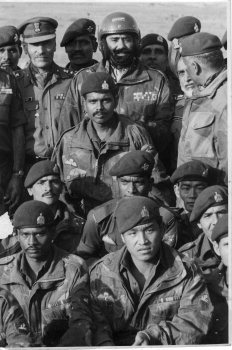
SPECIAL FRONTIER FORCE-OPERATION EAGLE-LIBERATION WAR OF BANGLADESH 1971-72:

OPERATION EAGLE 1971-72 in the Chittagong Hill Tracts of Bangladesh. THE ART OF BATTLEFIELD MEDICINE

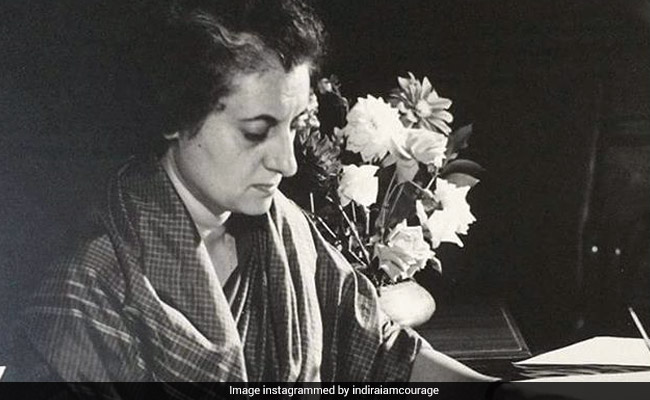
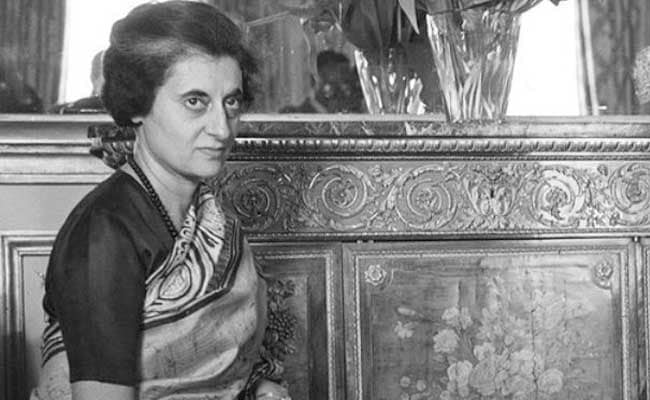
Indian Prime Minister Mrs. Indira Gandhi initiated Liberation of Bangladesh during 1971 with military action in the Chittagong Hill Tracts. The battle plan of this military action is known as Operation Eagle. This post is related to that battlefield experience.

Army represents a large organized force armed and trained for War. The Primary Mission of Army is to wage a War or to defend itself in a War. The purpose of Army Medical Corps is to support the Army to accomplish its Primary Mission. AMC provides support during the Battle, while preparing for the Battle and to keep the Army Battle-Ready at all times. In a Combat, when a direct or indirect contact with an enemy is made, Casualties could occur. These Casualties could fall into three groups :

Group I : These are killed outright or severely wounded past any help. I encountered such Battle Casualties who died in my presence. However, it is important to identify them and document the nature of injuries with an aim to develop a strategy to use more effective Battle Plans and in evolving better personal protective clothing and devices.

Group II : These Casualties are severely wounded, they require continuous medical support and supervision and transportation to a Field Hospital for appropriate Life saving Surgery and further definitive treatment in a Base Hospital.

Group III : These Casualties are less critically injured persons who need minimal medical attention. When appropriately treated at the Battalion level, they could be immediately returned to the Combat Operations and very useful in sustaining the numbers of the fighting force.

Army Medical Corps acts to prevent the loss of life among the Group II and Group III casualties. In doing so, AMC provides a blanket of ‘Care’ and ‘Comfort’ to those injured and it acts to boost up the morale of the entire fighting Force. AMC personnel take part in military Operations as Combatants and are entitled to carry their personal weapons.

THE EFFECTS OF BATTLE INJURIES:

The battle wound is a ‘CONTINUING’ injury and its effects on the entire body are dynamic ones. If  left unattended, the physical condition of the Battle Casualty deteriorates. Hemorrhage or loss of blood from a blood vessel is a major contributing factor to Shock and death. Most of those patients with wounds of great vessels of the chest and abdomen bleed to death before getting medical help. Bleeding could be; (a) External or visible, or (b) Internal or invisible. Apart from loss of blood, injuries damage soft tissues, internal organs and structures like bones and nerves.

Resuscitation actually means the act of reviving or restoring the vital functions of a severely wounded person. Resuscitation involves those procedures which are carried out to counteract the effect of the wound. Since the wound is a ‘continuing’ injury and its effects on the entire body are ‘dynamic’ ones, the Resuscitation is a process of ‘continuing’ treatment. Since the effects of the wound start as soon as the man is injured, Resuscitation should start as soon as the wounded man is seen. Hence, ‘FORWARD’ Medical Care is essential for the survival of the wounded. Resuscitation must commence in the ‘Field’ where the Battle Casualty is found. The AMC personnel, Medical Officers, Nursing Assistants, and Ambulance Assistants are combatants and it is not unfair to send trained medical personnel to the Combat Zone. Use of a qualified doctor in the ‘Forward’ location is far more beneficial to the wounded soldier. During the India-Pakistan War of 1971, I was present in the Combat Zone and my services were immediately made available to the wounded soldiers. I witnessed the benefits of initiating early treatment of Battle casualties. The concept of ‘Combat Life Saver’ improves the chances of Casualty survival. Emergency life saving treatment must start as far ‘FORWARD’ as possible and it must continue as a Casualty is evacuated to the rear. It must be understood that swift medical treatment greatly enhances survival. AMC must plan to provide Emergency medical treatment of soldiers at or near a Combat Zone to increase the chances of survival. The next major problem which contributes to the death of Casualties is that of a faulty Evacuation Plan. Lack of transportation is often the primary cause of untimely Evacuation. I encountered this problem of lack of transportation during the initial phase of the India-Pakistan War of 1971 but I met this challenge with courage and had taken my patients in improvised stretchers on a memorable long march of about 40 miles and had them airlifted in a helicopter. All of my patients survived this ordeal. The initial treatment in the battle field is important to ensure that the Casualty will withstand the journey to the rear. The wounded patient must be able to survive the journey and should not arrive at the Field Hospital dead or dying.

THE PRIMARY AIMS OF TREATMENT AT BATTALION LEVEL:

1. If necessary, establish and maintain an adequate airway. The basic mechanisms of respiration should be intact. A ‘sucking’ wound of the chest must be immediately sealed.

2. Bleeding should be stopped or arrested. Severe blood loss may not be evident immediately after injury. After wounding, a blood-volume deficiency will always occur. As opposed to internal bleeding, bleeding from blood vessels in extremities can be controlled more easily. The pressure dressing used must be tight enough to control bleeding. If applied properly, pressure dressings will often control major hemorrhage than the use of a tourniquet. The aim is to prevent the onset of Shock, delay its progression and to stabilize patient’s condition to prepare him for transportation.

3. Relief of Pain : Pain induces and aggravates stress. Prompt relief of pain provides an enormous sense of Comfort. Pain aggravates the casualty’s poor condition. Fractures apart from causing pain, also increase damage to muscles and thereby promote further blood loss. Fractures must be adequately splinted. Patient must be properly immobilized to withstand Evacuation. The pain associated with most soft tissue injuries could be easily relieved by the use of Morphine. I had very effectively used Injection Tubonic Morphia/ Morphia syrettes 0.25 or 1/4 grain.

4. Prevention of Wound Infection : Wounds break the barriers against bacteria. Bandages should not be applied carelessly. When applied properly, bandages arrest bleeding, prevent disturbance of the wound by foreign objects and prevents further contamination. Battle wounds get easily contaminated. Before clinical evidence of infection, early administration of antibiotics is useful. I had orally administered Tetracycline tablets, a broad-spectrum antibiotic with very good results.

5. DO NOT LAY TOO MUCH EMPHASIS ON TRANSPORTATION : Hurried Evacuation leads to undue deterioration during transportation.  The transportation should not be at the expense of proper treatment. The Medical Officer at the Battalion in a Combat Zone is not merely a First-Aid provider. He is the most important member of the Resuscitation Team. He must take time to institute initial procedures which will best prepare the wounded soldier for transportation. At all times, the Medical Officer must aim to put a Casualty in the best possible condition for transportation in the shortest period of time.

Army Medical Corps and the concept of CARE and COMFORT
The Art of Battlefield Medicine. Army Medical Corps and the concept of CARE and COMFORT during Battle.

THE CONCEPT OF CARE AND COMFORT:

Army Medical Corps accomplishes its mission of providing ‘CARE’ by making an effort and actually by reaching the Battle Casualty as early as possible. The presence and the physical contact with a person providing medical aid gives the feeling of being cared for. The Battle Casualty should not struggle to find his way to reach the Regimental Aid Post. A Battle Casualty feels reassured if the medical care provider demonstrates a sense of resolve, determination, and purpose in reaching out to the wounded person in the Field. An early and effective medical intervention is the key to deliver ‘Care’ and ‘Comfort’. The human body experiences a sense of improvement when the bleeding is stopped, when the pain is relieved and when you are placed in a position that physiologically contributes to the sense of ‘Comfort’. I also speak about the role of compassionate care in the relief of pain and in the management of pain. Compassion acts like a Force/Power/Energy. It has an uplifting power. Compassion provides both a physical and mental experience to the person providing the care and on the person receiving the care. The caregiver experiences less physical and mental fatigue and would be able to accomplish a physically and mentally challenging task with ease and a sense of joy or happiness. The person receiving the care experiences a sense of calm and reassurance, his pain tolerance improves, he becomes pain resistant and wold require less effort in his pain management both in terms of the dose and the frequency of his pain relief medication. The psychological and physical stress caused by the battle injuries is reduced as the wounded person experiences a sense of joy or happiness for getting compassionate attention. Human touch is a powerful tool in the arena of Battlefield Medicine. 

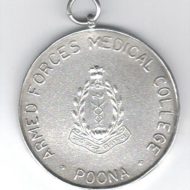
Armed Forces Medical College, Pune and the AMC Centre and School in Lucknow should prepare Medical Officers to face the Greatest Challenge of its Primary Mission.
The Art of Battlefield Medicine. Armed Forces Medical College, Pune and the AMC Centre and School in Lucknow should prepare Medical Officers to face the greatest challenge of its Primary Mission.

THE GREATEST CHALLENGE FOR ARMY MEDICAL CORPS:

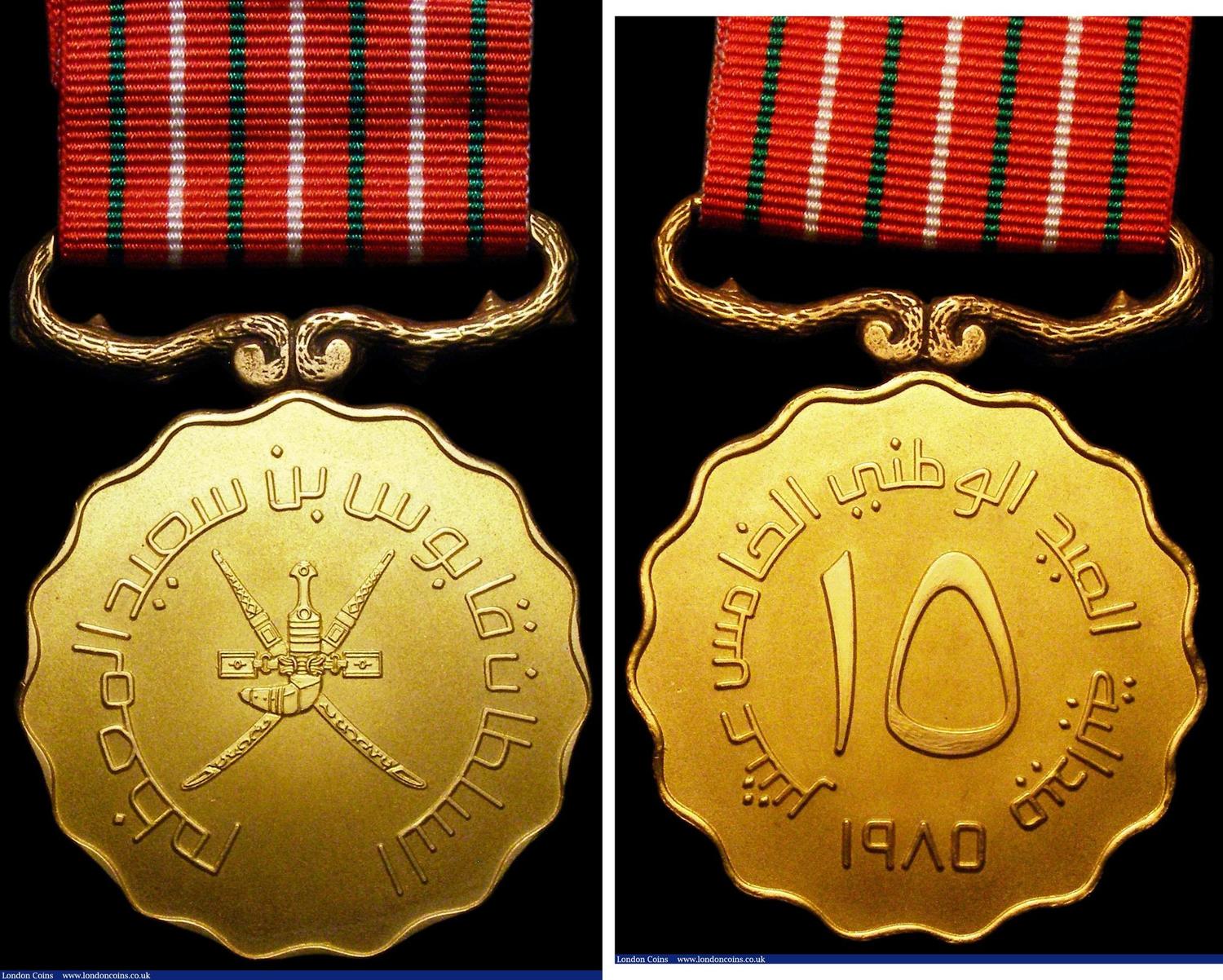
The lives of the seriously wounded soldiers depend upon the professional skills of the Medical Officer and other medical personnel deployed at the Battalion level. I served as a Medical Officer at a Battalion level during the India-Pakistan War of 1971, and later served in a Field Hospital providing support to an Infantry Division, and in a Medical Battalion providing medical support to an Armoured Division. I had also used this experience in serving the Land Forces of the Sultanate of Oman. The need for the best trained men in the most ‘FORWARD’ location where the greatest test of ability is made remains the greatest challenge for the Army Medical Corps. AMC must orient its policy and training to achieve this end. AMC must apportion training time of the Medical Officer so that a maximum training occurs in acquiring the skills to provide initial care to the battle casualty in the combat zone. To supervise the training of the medical care support personnel, the Medical Officer should also be trained to acquire the professional skills that are used by a Nursing Assistant and an Ambulance Assistant. In the Art of Battle-Field Medicine, no job is a small job.

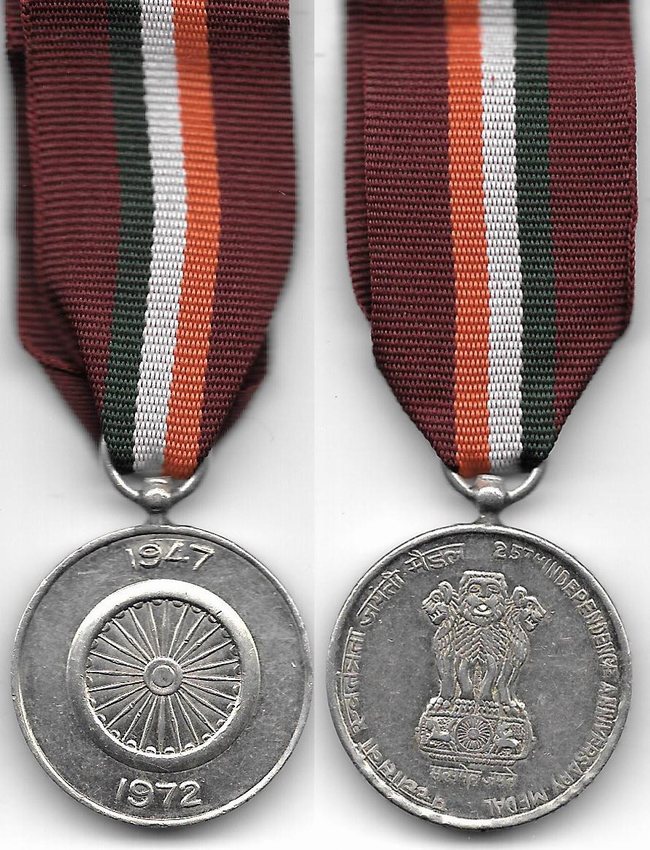
The Art of Battlefield Medicine. The India-Pakistan War of 1971 and the Liberation of Bangladesh are very significant achievements of Prime Minister Indira Gandhi. As I was then serving in Establishment No. 22 under the Cabinet Secretariat, I had direct and personal understanding of her Foreign Policy Initiatives. She approved our military Operation in the Chittagong Hill Tracts. In the conduct of this War, we faced a very critical moment and it needed her personal intervention and a decision that she alone could make. I rendered my services to overcome the challenge posed by that critical situation. The importance of this situation could be understood as it needed an intervention from the Prime Minister. I am now asking the Government of India to recognize my GALLANT response in enemy’s territory without any concern for my personal safety.

Please feel free to share this page with your friends and others who may care about preserving the lives of the battle wounded persons.

Dr. R. Rudra Narasimham, B.Sc., M.B.B.S.,  

Service Number: MS-8466; MR-03277K; Rank: Major; Branch: Army Medical Corps( Direct Permanent Commission)   Designation: Medical Officer, Unit: South Column, Operation Eagle(1971-72) 

Organization: Headquarters Establishment No. 22  C/O  56  APO; Vikas Regiment, Special Frontier Force/Directorate General of Security.   

The Art of Battlefield Medicine. A tribute to Florence Nightingale on International Nurses Day.

The Victory Over Death – The Psychology of Warfare

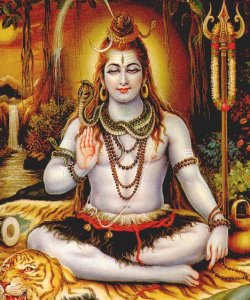
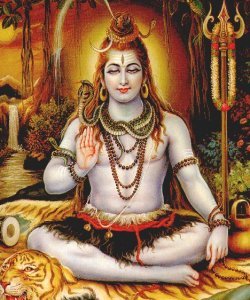
The Victory Over Death – The Psychology of Warfare. The Connection between the Fruit and the Vine. To overcome the Fear of Death, the man is encouraged to sever the attachment to the Cycle of Life and Death which separates man from his true or real immortal essence. Lord Shiva is often called Lord God “MAHESHWARA” is The Protector and the Destroyer God of Hindu Trinity. Shiva physically demonstrates His Freedom from Attachments by covering His entire body with ashes (Bhasma), the burnt residue of His desires.

Special Frontier Force – Operation Eagle – Liberation War of Bangladesh 1971:

Operation Eagle 1971 – The Victory Over Death – The Psychology of Warfare. The Connection between the Fruit and the Vine. To overcome the Fear of Death, the man is encouraged to sever the attachment to the Cycle of Life and Death which separates man from his true or real immortal essence.

Mrs. Indira Gandhi, Prime Minister of India initiated the Liberation of Bangladesh during 1971 with military action in the Chittagong Hill Tracts. The battle plan of this military action is known as Operation Eagle. This blog post is related to the war experience obtained by conducting the military operation in the Chittagong Hill Tracts.

Kachumbar/Cucumber, Cucumis sativus, a native of India.
The Victory Over Death – The Psychology of Warfare. The Connection between the Fruit and the Vine. To overcome the Fear of Death, the man is encouraged to sever the attachment to the Cycle of Life and Death which separates man from his true or real immortal essence. Kachumbar/Cucumber, Cucumis sativus, a native of India.
'DOSA KAI', A POPULAR CUCUMBER OF TELUGU PEOPLE.
The Victory Over Death – The Psychology of Warfare. The Connection between the Fruit and the Vine. To overcome the Fear of Death, the man is encouraged to sever the attachment to the Cycle of Life and Death which separates man from his true or real immortal essence. Dosakai, a popular Cucumber of Telugu People.of India
MRITYUNJAYA MAHA MANTRA
Mrityunjaya Maha Mantra: The Victory Over Death – The Psychology of Warfare. The Connection between the Fruit and the Vine. To overcome the Fear of Death, the man is encouraged to sever the attachment to the Cycle of Life and Death which separates man from his true or real immortal essence.

MRITYUNJAYA MAHA MANTRA:

Om, Triyambakam, Yajamahe,

Sugandhim Pushti Vardhanam,

Urvaru kamiva bandhanaan

Mrityor Mukshiya Maamritaat.

This hymn in praise of Lord Shiva also known as ‘Triyambaka’ appears in the ancient Vedic Book of Rig Veda. It expresses a very unique idea or concept about conquering death. This idea has originated in India as the idea is connected to a plant that is a native of India. Man is mortal, and just like a fully ripened fruit falls off from a tree, a man ripe in his age, even when not afflicted by any disease or sickness, would meet natural physical death. This Mantra suggests that a man can become ‘immortal’ (a person  who has consumed the divine nectar known as ‘Amrita’) and conquer physical death (Mrityu) by simply severing his psychological attachment to his own life and liberating (Mukshiya) himself from bondage. This Mantra compares the act of cutting attachments to free oneself (Mukti) to secure victory (Jaya) over physical death (Mrityu) to the act of harvesting Cucumbers (Urvaru). The pedicle (Kamiva or the stalk of the fruit) should be severed to separate the fruit from its attachment (Bandhan) to the Vine.

The Victory Over Death – The Psychology of Warfare. The Connection between the Fruit and the Vine. To overcome the Fear of Death, the man is encouraged to sever the attachment to the Cycle of Life and Death which separates man from his true or real immortal essence.

Cucumber, Cucumis sativus is a vine fruit. It is a member of the Cucurbitaceae family. It is native to northwestern India and is being cultivated for thousands of years. The fruit is harvested in the immature stage and is eaten in its unripe, green form. The ripe fruit turns bitter and is not eaten. The fruit is firmly attached to the vine by its stalk or pedicle. The unripe, green fruit would not naturally fall off from the vine. The farmer harvests the Cucumber by cutting off the pedicle (Kamiva). This analogy of severing the connection and freeing the Cucumber also implies that man should not wait until he reaches a very ripe age to conquer physical death. A man who is still at an unripe age or still young in years, just like the unripe and green fruit of Cucumber, should plan to overcome death or his ‘liberation’ from death, by cutting away the stalk or pedicle which symbolizes ‘attachment’ (bandhan). The ‘attachment’ in the context of man and his mortality could be described as his ‘Fear of Death’. To overcome the Fear of Death, the man is encouraged to sever the attachment to the Cycle of Life and Death which separates man from his true or real immortal essence. By overcoming his ‘Fear of Death’, a man’s ‘attachment’ to the ‘Cycle of Birth and Death’ is severed and he is ‘Liberated’ (Mukshiya) from Death (Mrityu). As long as the ‘Fear of Death’ is alive, man cannot win his battle against Death and mortality. To achieve ‘immortality’, man must conquer his ‘Fear of Death’. Indians seek to praise (Yajamahe) the Lord known as ‘Triyambaka’ for He declared His victory over Death (Mrityu) by burning away all of His desires to become Free from all Attachments. Shiva physically demonstrates His Freedom from Attachments by covering His entire body with ashes (Bhasma), the burnt residue of His desires.

The Psychology of Warfare:

An Infantry soldier to ‘attack’ his enemy’s position has to physically ‘advance’ towards the entrenched enemy and directly confront the enemy. The ‘assault’ on the enemy’s position or site is carefully planned and the Infantry soldier is physically, and psychologically ready for his task which exposes him to the threat of death. The soldier loosens the attachment called the ‘Fear of Death’ in his march towards the enemy. A man who is tied down by the ‘Fear of Death’ cannot physically move towards his enemy who symbolizes the threat of death.

I participated in the 1971 War of Liberation of Bangladesh. The men of my Unit did not recite the ‘Mrityunjaya Maha Mantra’, but they used its concept in their psychological preparation for War and in their attack on their enemy’s positions. Our success in 1971 over the enemy demonstrates that the concept of breaking the stalk or pedicle is useful to gain victory over the ‘Fear of Death’ before we actually meet the threat of Death.

The Psychology of Warfare.The Indo-Pak War of 1971 and the Birth of Bangladesh are very significant achievements of Prime Minister Indira Gandhi. As I was then serving in an Establishment under the Cabinet Secretariat, I had direct and personal understanding of her Foreign Policy Initiatives. She had personally approved our military Operation in Chittagong Hill Tracts. In the conduct of this War, we had faced a very critical moment and it needed her personal intervention and a decision that she alone could make. I rendered my services and had overcome the challenge posed by that critical situation. The importance of this situation could be understood as it needed an intervention from the Prime Minister. I am now asking the Government of India to recognize my GALLANT response in enemy’s territory without any concern for my personal safety.
To defend her true nature, to preserve her essence, to resist the violation of her personal dignity and honor, Rani Padmini of Chittorgarh, India courageously responded to a difficult and challenging life situation by an act of self-immolation. Her physical being was destroyed by the fire which she had willingly embraced and yet her spirit has survived. She has declared Victory over Death and she lives as an immortal person in the hearts of Indians and gives them a sense of Pride and Identity. Indian Culture and Tradition glorify the act of giving life to resist the Enemy.

In my blog post titled “Proud to be an Indian”, dated Monday, September 17, 2007, I described the ability to conquer fear as ‘Courage’. Courage does not mean the absence of ‘Fear’. Rani Padmini has truly immortalized herself by her victory over the ‘Fear of Death’. She defeated her enemy’s intention to violate her personal dignity and honor. She could embrace fire for she had overcome the ‘Fear of Death’. She lives in our hearts today as a truly “Immortal” person. She is described as a person who declared Victory over Death (Mrityun Jaya).

The Victory Over Death – The Psychology of Warfare. The Connection between the Fruit and the Vine. To overcome the Fear of Death, the man is encouraged to sever the attachment to the Cycle of Life and Death which separates man from his true or real immortal essence. Lord Shiva is often called Lord God “MAHESHWARA” is The Protector and the Destroyer God of Hindu Trinity. Shiva physically demonstrates His Freedom from Attachments by covering His entire body with ashes (Bhasma), the burnt residue of His desires.

The Freedom From Sickness-Sarve Santu Niramaya

The Flag of Indian Army Medical Corps: Dull Cherry is the Color of the Royal Army Medical Corps and is associated with Positive Health, Succor, and Freedom from Disease. Black is the Color of Indian Hospital Corps and it is associated with formless state of creating birth and death. Old Gold is the Color that represents Indian Medical Services which existed in India prior to 1943. The Color symbolizes Sun God or AESCULAPIUS, the God of Medicine.

THE FLAG OF INDIAN ARMY MEDICAL CORPS: DULL CHERRY WAS THE COLOR OF THE ROYAL ARMY MEDICAL CORPS. SIGNIFIES POSITIVE HEALTH AND FREEDOM FROM SICKNESS. BLACK WAS THE COLOR OF INDIAN HOSPITAL CORPS. SYMBOLIC OF BIRTH AND DEATH. OLD GOLD WAS THE COLOR OF INDIAN MEDICAL SERVICES WHICH EXISTED BEFORE 1943. IT IS THE SYMBOL OF SUN GOD AESCULAPIUS, THE GOD OF MEDICINE. ARMY MEDICAL CORPS CAME INTO EXISTENCE ON JANUARY 26, 1950. 

SARVE SANTU NIRAMAYA: 

Sarve Santu Niramaya
The Freedom From Sickness demands a Theory of Health derived from a Theory of Man.
Sarve Bhavantu Sukhinah
The Freedom From Sickness. What is Health?

The motto of the Indian Army Medical Corps is “SARVE SANTU NIRAMAYA”. This is an idea expressed in ‘UPANISHADS’. The hymn appears as a benediction to invoke “PEACE” and hence is known as a ‘Shanti Mantra’.

POSITIVE HEALTH AND COMPREHENSIVE HEALTH CARE: 

The ideas of freedom from misery and sorrow and the state of happiness are clearly associated with freedom from sickness and the complete well-being of an individual.

Health is defined as ‘the state of complete physical, mental, and social well-being, and not merely the absence of disease’. The health care program must embrace all the three aspects of a disease; the preventive, the curative, and the restorative care of an individual. These three aspects of physical, mental, and social well-being are interrelated, interdependent and contiguous. The medical care should be ‘patient-centered’ rather than being ‘disease-centered’.

Comprehensive Health Care can be described as the health promotive, health preservative, preventive, curative, and restorative health care of all individuals, at all stages of life from conception to the grave, and in all spheres of life such as home, school, workplace and in the community.

In the Armed Forces, the medical practitioner gives attention to any condition considered responsible for the deterioration in health or likely to affect adversely the health, morale, and welfare of the personnel under his medical care. The Medical Officer in the Armed Forces not only promotes, preserves and protects the health, but also he periodically carries out an assessment of the environmental, living and working conditions of the personnel under his medical care.

The threats to human health and well-being come from several directions and tragically very healthy individuals may sometimes succumb to sickness and the causative factors of several diseases still remain a mystery. Cancer is one such disease that poses a challenge to our motto of achieving ‘freedom from sickness’. 

ONCOLOGY – THE STUDY OF NEOPLASMS: 

The word ‘Oncology’ is derived from the Greek word of mass which denotes a swelling or a new growth. New growth or neoplasm could be ‘benign’ or ‘malignant’. The ‘benign’ growths are relatively harmless and they may not invade other tissues of the body but can contribute to some functional impairment. The ‘malignant’ growths are dangerous to life as they tend to invade other tissues and spread to other distant sites in the body. Apart from this ‘invasiveness’, the malignant cells display uncontrolled growth and could cause a very rapid deterioration in the state of health of a victim.

The term ‘CANCER’ is used to describe a wide variety of malignant diseases. The factors involved in the causation of many of these diseases still remain unknown. Next to Heart Disease, Cancer is the most common cause of death. Cancers could be grouped into three major groups;1. the Carcinomas which arise in endodermal or ectodermal tissues known as epithelial tissues. Breast and Colon Cancers are well-known Carcinomas. 2. the Sarcomas are fleshy tumors, arise from mesodermal tissues, the connective tissues like bone, cartilage, and fat. Sarcomas of soft tissues constitute only 1 percent of all malignant tumors and they may occur at any location in the body. Roughly twenty different types of Sarcomas are described. 3. the Leukemias and the Lymphomas are derived from the blood cells and the cells of the Lymphatic system.

A fundamental principle of Cancer treatment is to establish the pathological nature of any growth suspected of being neoplastic before making decisions about its management. This usually involves a ‘BIOPSY’; taking a sample of the tissue from the suspected lesion and subject it to a microscopic examination and a histological evaluation to determine the nature of the tissue and the cell type involved. While an early diagnosis is very helpful, the survival of the victim mostly depends upon the nature of Cancer. 

TWO RARE CASES OF CANCER IN PERFECTLY HEALTHY INDIVIDUALS: 

I served as the Regimental Medical Officer at the Army Ordnance Corps Centre, Secunderabad, India from December 1978 to January 1984. I would like to narrate the stories about two individuals who served at the AOC Centre in great physical shape prior to becoming victims of Cancer.

The first case in 1979 involved Lieutenant Colonel D’ Souza, the Commanding Officer of No. 2 Training Battalion of the Centre. He was very tall, handsome, with a well-proportioned body built. He was picture-perfect and had no unhealthy habits like smoking. He walked into my office around 10.00 A.M. with a slight expression of concern on his face. He came to ask me about a pea-sized, painless swelling he had noticed on the gum pad of his left upper incisor tooth. The swelling was of very recent origin and could be easily noticed while brushing teeth. It looked reddish and there was no other discomfort caused by it.

I immediately diagnosed it as a neoplasm(new growth) as I could easily exclude all other possible conditions. He had perfectly healthy teeth and gums and had no other medical problems. The Military Hospital and the Military Dental Centre are at a short distance from the AOC Centre. I told him that I would not prefer to refer him to either of those two places. I told him that the only way to know the diagnosis of that tumor would be by getting a Biopsy report and the earliest way to obtain the Biopsy report would be from the Osmania General Hospital, Hyderabad which is a Post-Graduate Medical Institution that conducts medical research. The Military Hospital has no qualified Histopathologist and cannot provide the report that I wanted quickly.

He proceeded to Hyderabad and had undergone the Biopsy test as recommended by me. I remember Col.D’Souza and my meeting him at AOC Centre Medical Inspection Room. He returned to me with the report after two days. Col.D’ Souza fully understood the gravity of the situation and the report that he had in his hand. Apart from the Military Hospital, we had numerous Specialists in the twin cities of Hyderabad and Secunderabad. He never thought of asking anyone or consulting anyone about his illness. He trusted me because he knew that I was truly involved and concerned about his welfare.

The Biopsy Report suggested that the tumor was an ‘Angiosarcoma’, a very uncommon malignant neoplasm derived from the blood vessels, the vascular endothelial cells that line the inner walls of the blood vessels. It is also an extremely unusual
 presentation for this type of tumor. When we discussed the Biopsy Report, he was very calm, very well composed and took my advice without showing off any anxiety. I am very happy for having met a brave man like Col. D’ Souza. On the very same day, I arranged for his admission to the Military Hospital, Secunderabad and an immediate transfer to the Malignant Disease Treatment Centre in Pune. In spite of this early diagnosis and very prompt hospital admission and Cancer therapy, he did not survive and I missed seeing him again. 

The second story involved a very fine athlete who participates in several events both at the national level and at the International level and had won prizes. The top athletes who belong to the Army Ordnance Corps are usually posted at AOC Centre, Secunderabad and the Centre took great pride in having them there.

This had happened in the year 1983. This tall, well-built and muscular sportsman a Junior Commissioned Officer, noticed a painless swelling, about the size of a small orange, on his trunk, on the back near his waistline. He immediately reported his problem to his Battalion Commander at the Centre. The Battalion Commander wanted to get the swelling treated immediately and took this athlete direct to the Military Hospital and showed him to a Classified Surgical Specialist.

The Surgeon whom I knew personally, is a kind and compassionate person, soft-spoken and gentle in his attitude and bearing. This Surgical Specialist who was apparently preoccupied with his plans for retiring from military service somehow failed to arrive at a proper diagnosis. He misdiagnosed the swelling as a pyogenic abscess and immediately performed a minor surgical procedure called ‘incision and drainage’ to empty the contents of that swelling on the back. He made no attempt to send a sample specimen to the Hospital Laboratory to ascertain the nature of infection if any. The Surgical Specialist further prescribed a course of antibiotic injections for seven days and assured the athlete that the problem would be resolved.

The initial case management of this athlete provided no relief or benefit. The lump/swelling in the back was soft like an abscess but the clinical findings suggested that the lump was seated in the muscles and there was no reason to consider it to be of infectious origin. The patient had no underlying problems like Diabetes or infections like Tuberculosis, or poor nutrition or lack of personal hygiene that could have contributed to a pyogenic abscess. If it was an abscess, he still needed admission to the Hospital and a full evaluation of any underlying disease. In my view, it was incorrect to provide out-patient care.

It would be very exceptional for a healthy male adult to suffer from a large abscess. At the end of the 7-Days antibiotic treatment, the Surgical Specialist was gone and was not available for making an evaluation of the patient’s condition.

This fine athlete and his Battalion Commander came over to my residence in the evening to discuss his health problem. The Surgeon had earlier assured them that the swelling would go away and it was not so. The swelling not only reappeared after the surgery but also was growing in its size. When they walked into my living room and as I asked them to be seated, I could immediately recognize that the athlete was in great danger and that was an insight, an impression I got from his facial expression.

He briefly explained his story and the treatment as an outpatient at the Military Hospital. I examined the swelling on his back and could immediately diagnose it as a very serious case of a Cancer, a malignant tumor that had already invaded other tissues and had spread to the nearby lymph nodes. This Cancerous growth was in his back muscles and is often described as Rhabdomyosarcoma.

I was disappointed by the fact that a qualified Surgical Specialist holding the rank of a Lieutenant Colonel at the Military Hospital misdiagnosed the condition and had subjected this patient to unnecessary treatment. The diagnosis of Cancer was so apparent in this case, I did not need a Biopsy report to confirm it further.

I arranged for his admission to the Military Hospital and an immediate transfer to the Malignant Disease Treatment Centre at Pune. Within a few hours of time, after consultation at my home, this great athlete who was in the prime of his Sporting career boarded a train in Secunderabad on way to Pune for his Cancer treatment. Just like Col. D’ Souza, this Junior Commissioned Officer received my advice with a sense of calmness and I take pride in the fact that the Indian Army has brave and courageous people who receive news about life-threatening conditions with a sense of maturity and without the show of any anxiety. 

In both of these cases, I earnestly wished and hoped that they would survive and return to the Unit. Unfortunately, their Cancers were very aggressive in nature and the Cancer won this unfair battle during their initial course of treatment at MDTC, Pune. 

MY RECOMMENDATIONS TO INDIAN ARMY MEDICAL CORPS: 

I reviewed the Manual of Health for the Armed Forces-1968 Edition. Chapter VI – Assessment of Health and Hygiene in the Armed Forces and Chapter X- Health Care deal with the duties of Regimental Medical Officer. We should involve the Medical Officer to a fuller extent in case management. It should be mandatory for the Medical Officer to visit his Unit personnel who are admitted to a Hospital and enter a written report about the case management. The Unit Medical Officer should be officially informed when his patients are placed on ‘SERIOUSLY ILL LIST’ or ‘DANGEROUSLY ILL LIST’. This official notification should constitute the authority for the Medical Officer to visit his patients in the Hospital and if required to proceed on Temporary Duty to the Hospital.

The Medical Officer should be given additional training to provide psychological and grief counseling to his patients and to the immediate family members. The Medical Officer should be able to refer his patients and their family members for further appropriate psychological counseling. The rules for medical evacuation should be amended and we should authorize and provide qualified medical attendants to support the mental, and social well-being of individuals apart from providing routine curative care and management during the journey.

The Army Medical Corps is not a Charity providing Compassionate Care. We have a duty to provide the Health care that we provide and we need to express the spirit of our Motto through our actions. If there is no freedom from sickness and disease, we can still excel in providing mental comfort and social support to our patients and their immediate family members. Kindly share my concerns with others who may be serving in Uniform and Army Medical Corps should deliver in accordance with its Motto. If you have any questions, please contact me sharing your thoughts on this blog post: 

Bhaja Govindam: 

The Art of Diagnosis has no further value apart from knowing the nature of the threat faced by humans and there are several medical conditions where the outcome ultimately depends upon the nature of the underlying problem. However, knowing the reality is equally important and it helps us to face the consequences and in the end, the sweet name of ‘GOVINDA’ is the only consolation we have while preparing to lose the battle against Death. 

Bhaja Govindam, Bhaja Govindam
The Freedom From Sickness depends upon Divine Mercy, Grace, and Compassion or Providence.

Freedom From Sickness. Sarve Santu Niramaya. 

Dr. R. Rudra Narasimham, 

Kurnool Medical College, Kurnool, Andhra Pradesh, India., 

M.B.B.S., Class of April 1970. 

Whole Spirituality – Whole Positive. BLESSINGS FOR WHOLE PEACE: “Om, Sarvesham Swastir Bhavatu (May Well-being be unto all), Sarvesham Shantir Bhavatu (May Peace be unto all), Sarvesham Purnam Bhavatu (May Fulfillment be unto all), Sarvesham Mangalam Bhavatu (May Prosperity be unto all), Om Shanti, Shanti, Shanti.”

Defining Indian Identity- The Pursuit of Pure and Perfect Knowledge

Bronze Chola statue depicting Shiva dancing as...
Defining Indian Identity. The pursuit of pure and perfect Knowledge.
Goddess Sarasvati symbolizes Indian Cultural Belief in the Pursuit of Pure Knowledge and Perfect Wisdom.

Sarasvati thwayam drushyam Veena pustaka dharini

Hamsa vahana samayuktha Vidya danakaree mama

THE PURSUIT OF KNOWLEDGE AND THE PRINCIPLES OF HUMAN EXISTENCE:        

The pursuit of knowledge is a universal phenomenon. People of all cultures and of all regions have the desire to acquire knowledge. My Indian Identity is displayed by my belief  that some icons could help me in the learning process and in finding Knowledge and to acquire Wisdom.I am encouraged to use three Cultural icons and I am introduced to the use of these icons as the first learning experience of my life. I acquire knowledge to support my human existence. However, Pure Knowledge and Perfect Wisdom is the key, it is the hope and it is deliverance and ultimately it breaks my shackles and gives me the opportunity to conquer the fear of ‘SAMSARA’, a term which explains Indian attitude and understanding about the nature of human existence. I am directed to learn and acquire knowledge not only to make a living and support myself but also to know the nature of Reality.  The pursuit of knowledge is a global phenomenon and it is not the privilege of any particular class of people.        

LORD SHIVA, GOD OF LEARNING:

LORD SHIVA, The God of Learning.
The humble begining for the pursuit of Pure Knowledge and Perfect Wisdom. Learning commences with an attitude of humility and willingness to learn with the intention of using information to apply it in thinking in areas that are covered by that learning process.
The first icon is “Shiva” who is described as the God of Learning.The learning of alphabet “AKSHARA ABHYASAM” began with the writing of a mantra with my finger tip over a bed of rice grains.The five letter mantra of “Aum Namah Shivaya” was followed by a solemn declaration of “SIDDHAM NAMAH”indicating that I am ready and that I am prepared to receive my learning instructions.That is the ground rule for learning.Learning would simply be impossible if the student is unwilling and is unprepared. Shiva ensures that we are willing and obedient before we commence our schooling career.Shiva defines that the purpose of learning is to acquire the ability to think for oneself.
THE LEARNING PROCESS – THE FIVE LETTER MANTRA – Om, Na Ma Si Va Ya.

GODDESS SARASVATI, THE GODDESS OF SPEECH, KNOWLEDGE AND WISDOM:

Sarasvati – The Goddess of Wisdom and Perfect Knowledge, the Goddess of Speech or Vaak presides over the Broca’s Area, the Speech Center of the Brain.

The second icon is Goddess Sarasvati who is described as the Goddess of Speech, Knowledge, and Wisdom.The personality of Sarasvati could be compared to the female person identified as Wisdom in chapters 1,3 and 4 , in the Book of Proverbs (the Proverbs of King Solomon, the son of King David, the King of Israel) of Holy Bible which instructs, ” The fear of the Lord is the beginning of Knowledge.” She represents the value of acquiring pure knowledge.To optimize our learning potential, to draw upon the immense powers of a creative mind, She recommends an attitude of humility,obedience and discipline.The following verse shows that all the Gods of our Culture including Her spouse Lord Brahma worship Her to avoid mental lethargy. She defines that the goal of learning is to transform our minds to make us creative individuals.         

Humility, Obedience, and Discipline are required in the Pursuit of Pure Knowledge and Perfect Wisdom.
Defining Indian Identity. The Pursuit of Pure and Perfect Knowledge.

Ya kundendu tushara hara dhavala, ya shubhra vastravrita
Ya veena vara danda mandithakara, ya shwetha padmaasana
Ya brahmachyutha shankara prabrithibhi devai, sada poojitha
Samaam paatu saraswathi bhagavathi, nihshesha Jaddyapaha.  _/\_

Meaning:

  • Salutations to Devi Saraswati, who is pure white like Jasmine and covered with white garments, with the coolness of Moon, brightness of snow and shines like the necklace of Pearls.
  • Whose hands are adorned with Veena and the boon giving staff and who is seated on white lotus.
  • Who is always adored by lord Brahma, Vishnu, Shankara and other devas.
  • O goddess, please protect me and remove my ignorance due to mental inertia completely.

LORD GANESHA, THE MENTOR OF LEARNING:

LORD GANESHA – THE MENTOR FOR LEARNING – THE ART OF LEARNING WITH HUMILITY, PATIENCE, AND PERSEVERANCE.

Lord Ganesha is the mentor of learning.This belief is so strongly ingrained into our psyche, His idol is worshiped along with the school books placed on the side to remind Him that we are seeking His assistance to learn from those books. He symbolizes the values of attentive listening, writing down words as instructed and patience. In the learning process, He works like a catalyst. He facilitates achievement in the learning process by removing obstacles. He helps students to gain success with a sense of humility. All obstacles are removed and subdued if I meditate upon His face which is a picture of relaxation and total composure.The following prayer specifically guides me to overcome problems by focusing on positive energy that can be gained by reflecting upon a face that promotes tranquility.        

Defining Indian Identity-The pursuit of pure and perfect Knowledge.

This is a prayer to Lord Ganesha, who is also called “Vighneshwara”, Conqueror of Obstacles. This is a Stotra in praise of Him, praying to remove the obstacles on our path.

Lyrics in Sanskrit:शुक्लाम्बरधरं विष्णुं शशिवर्णं चतुर्भुजम् ।प्रसन्नवदनं ध्यायेत् सर्वविघ्नोपशान्तये ॥
Lyrics in English:ShuklaAmbara Dharam Vishnum Shashi Varnam Chatur BhujamPrasanna Vadanam Dhyaayet Sarva Vighnopashaantaye (Vighna Upashaantaye)

O Lord, who is wearing White colored clothes, Who is all pervading, who has four hands

Who has a peaceful, joyous face we meditate on you, remove all the obstacles.

THE SARASVATI TRADITION:

Sarasvati, the destroyer of Mental Inertia and Lethargy.

The worship of Sarasvati is not a mere ritual.The worship would invariably include all the books and even note books that are used in the school.Books are not considered to be just a source of information but they are viewed as objects worthy of reverential treatment and as such are deemed to be physically representative of Sarasvati. Any disrespectful manner of handling books is avoided. For example,books including note books could not be tossed or dropped on to the bare floor.The floor should be cleaned and prepared and is preferably covered with a piece of cloth or a mat and the books should be carefully laid. Books are never to be used as play objects and not allowed to be used to hit another person. As a kid, I actually believed that improper handling of books would displease Sarasvati and I believed that learning would become extremely difficult as a consequence of disrespectful attitude towards books. Self motivation and high expectation of academic achievement are very important in the learning process.The following prayer to Sarasvati demonstrates the need to prepare the mind to expect success while learning.    

Saraswati namastubhyam varadé kāmarūpiṇi | vidyārambham kariṣhyāmi, siddhir bhavatu mé sadā ||

సరస్వతీ నమస్తుభ్యం వరదే కామరూపిణీం! । విద్యారంభం కరిష్యామి సిద్ధిర్భవతు మే సదా ॥

सरस्वति नमस्तुभ्यं वरदे कामरूपिणि । विद्यारम्भं करिष्यामि सिद्धिर्भवतु मे सदा ॥

Meaning: 1: Salutations to Devi Saraswati, Who is the giver of Boons and fulfiller of Wishes, 2: O Devi, when I begin my Studies, Please bestow on me the capacity of Right Understanding, always.

SARASVATI CONSCIOUSNESS AND ACADEMIC LIFE:         

My academic accomplishments are not exceptional but the overall academic experience was great.I read several books on my own and derived much pleasure from reading.Through out my academic life,I had competed with my fellow students and had participated in essay writing competitions,elocution contests and debating events and won several prizes.When I was 11 years old, I won the first prize in an English essay writing competition held at the Danavaipeta Municipal High School,Rajahmundry,when the School conducted such a contest for the first time. At age 13, I finished High School studies and by age 17, I obtained an under graduate degree of Bachelor of Science (Botany,Zoology,Chemistry)from Osmania University,Hyderabad. I did well in both Part I and Part II of the B.Sc examination and had the satisfaction of getting the top position among students who took the same elective courses. I completed my under graduate studies in Medicine at Kurnool Medical College in 1970 and on 26th July 1970,I reported for duty at Army Medical Corps Centre and Officers Training School, Lucknow.The Short Service Regular Commission to join the ranks of the Indian Army was granted to me in 1969 when I was 21 years old.         

Among the several prizes that I had won during my school years, I can rightfully speak about my success in one particular event. In 1965,when I was a freshman at Kurnool Medical College, the Department of English conducted an English essay writing competition that was open to all the College students.To encourage wider participation,the topic was announced in advance of the event. It about ‘Family Planning’. The lecture hall, the venue of the event was filled up and the centre of attention was a final year M.B.B.S student who had already won the first prize at a national level competition for his essay on ‘Family Planning’. The general consensus was that he would easily win this contest too. I arrived at the venue without any prior preparation. All other participants wrote about the importance of Family Planning, the methods and their ideas about implementing the programme. My essay was the only exception which did not delve upon those issues. As I sat down and was getting ready to write my opening statement, my mind was inspired by the creative spirit and had guided me to oppose the idea of Family Planning. After that, my thoughts came down pouring and I kept writing them down until the final minute of that contest.When the results were announced, the student community was astounded for my essay which opposed the idea of Family Planning won the first place for creative writing.         

For the last 24 years I have been living in a Land where Shiva,Sarasvati and Ganesha are not relevant to most of the people in my community. However, I still cling on to my precious icons that made my human existence possible. My mind is not still.My desire for intellectual pursuit is active and alive. Knowledge is revealed to me in tiny bits of information. I learned that the human body is made up of trillions of cells.I learned that I have no” CHOICE ” or ” AUTONOMY ” to impose my authority over my body.There is not even one single cell in my body whose functions I could directly regulate and govern according to my choice.This lack of ability to rule the cells of my body gives me a sense of fear. I exist but I am not governing my existence.The people of my Land of origin for thousands of years depended upon two letters, “RA” and “MA” to complete their life’s journey. I am learning that those two letters could also help me and give me hope and a sense of direction and keep me afloat while I cross the ocean.         

In my pursuit of Pure Knowledge and Perfect Wisdom, I seek Creative inspiration of Lord Rama who guides my pursuit according to the Laws of Karma. I should not seek the fruits of my work, the Knowledge and Wisdom could only help to know the Reality and is not for material gain. I recognize that the two letters or syllables of “RA” and “MA” represent Pure Knowledge, and Perfect Wisdom.

THE SCIENCE OF CONSCIOUSNESS AND HUMAN EXISTENCE:       

I am fully determined to continue my pursuit of pure and perfect knowledge and as before, I have my icons to guide me. My understanding of the term ‘consciousness’ has changed. Human consciousness includes aspects of mental awareness, and rational thoughts. I understand the term consciousness not only in the context of a mental function but also that of awareness at a cellular level. Consciousness is a biological characteristic and this trait is exhibited by all living cells and all biological entities. Each individual cell is conscious or aware of its existence and is aware of its internal and external environment. This awareness or consciousness describes living entities as created entities. In Indian tradition, all living entities are aware and conscious of the Creator. This consciousness gives the living entity a biological ability to exist by exploiting energy from its external environment. This energy dependence could only be instituted by an Energy Controller. Man’s existence in nature is subject to this energy connection with an extraterrestrial source of energy.        

Defining Indian Identity. The pursuit of pure and perfect Knowledge.
A Mantra to illuminate Mind – Mind exists in a state of Ignorance or AVIDYA, a State of Darkness caused by the Power of Illusion called MAYA. Mind seeks to know the Reality using Rational Thought contributed by Acquired Knowledge. Reality can only be known by INNATE KNOWLEDGE, the Knowledge, the Awareness, the Consciousness that connects the Living Entity with Cosmic Enery/Force/Power, the Divine Entity. Because of Ignorance, the mind is not aware of the Cosmic Connection that establishes, sustains, and preserves Human Existence.
The symbolic expression of Ultimate Reality – Sound Energy is the physical manifestation of an Unmanifested Reality. The sound AUM or OM connects the Manifested Reality with the Unmanifest or Transcendental Reality.
GAYATRI MAHA MANTRA GIVES A FORMULA FOR SEEKING PURE KNOWLEDGE AND PERFECT WISDOM. SEEK ILLUMINATION FROM AN EXTERNAL REALITY TO DISPEL DARKNESS, TO BANISH IGNORANCE, TO UNCOVER HIDDEN INFORMATION. THE INTERNAL REALITY IS THE SAME AS THE UNMANIFESTED ULTIMATE REALITY. THIS IS SIMPLY KNOWN BY RECOGNIZING THE COSMIC CONNECTION BETWEEN BREATHING, AND LIVING HUMAN INDIVIDUAL AND ITS DEPENDENCE UPON COSMIC POWER/ENERGY.

Man acquires knowledge by sensory experience, internal reflection, and by rational thought. Such acquired knowledge is useful for man’s material existence in the world. Man has no rational ability or sensory experience to directly know the Ultimate Reality. However, man has innate knowledge whose existence is either hidden or ignored. At the time of conception, man begins his life journey by establishing an anatomical connection with a host without knowing the physical identity of that host. At the time of birth, man continues his life journey as an independent entity. He gains independence from his host but he is not truly energy independent. The newborn declares its connection with a Cosmic Source of Energy and Power by its cry. That simple act of crying announces the vital connection between man and his Energy Provider and Controller. The Journey in the external world after delivery from mother’s womb marks a big transition in the nature of Human Existence. The act of breathing begins, the breath of life assumes control of human existence and this connection is the sign of Divine Providence. The Knowledge of Internal Reality that is physically manifest in the Immanent Realm, and its identity with an External, Unmanifested Reality in Transcendental Realm could be obtained by simple awareness of the connections a Man has to make for his survival and existence in this world.       

Dr. R. Rudra Narasimham, B.Sc., M.B.B.S.,     

Kurnool Medical College, Kurnool, Andhra Pradesh, India,     

M.B.B.S., Class of April, 1970.        

Defining Indian Identity. The pursuit of pure and perfect knowledge.


WHEN DOES HUMAN LIFE BEGINS ?


When does human life begin? :

CONCEPTION- DOES IT BEGIN WITH FERTILIZATION, THE UNION OF SPERM AND EGG?

“BEFORE I FORMED YOU IN THE WOMB I KNEW YOU”

There is no universal understanding of the beginning of human life. When does human life begin? There are several moral and ethical issues that involve the manner in which we define the beginning of human life. The society is totally polarized about woman’s reproductive rights, the right to abortion and about the destruction of human embryos for purposes of scientific research. The moral and ethical validity of abortion and the embryonic stem cell research depend upon our understanding of the origin of human life. People who endorse the choice of abortion, and the scientists who conduct research upon cells derived from the early stages of embryonic development claim that the human individual begins later in the fetal stage of development when the fetus displays clearly visible features of being a human individual. They are opposed by people who believe that life begins at conception when the union of the male gamete with a set of 23 chromosomes with a mature female gamete with a set of 23 chromosomes takes place which results in the formation of a fertilized egg with a set of 46 chromosomes. The newly formed genome is unique and has a new identity of its own and such genome has not existed before and the same genome would not be formed again as each genome displays individualistic variations. This process called conception creates and brings forth a new being. 

Human culture informs us that the human entity is known to the Creator even before it has formed in the womb and much before the individual is born. Since conception appears to be an act of creation, it should be preceded by creative thought. The fact that human life begins with a creative thought is stated repeatedly in several religious traditions. In the Old Testament Book of Genesis, chapter 1, verse 26, God said, “Let us make man in our image, in our likeness” and the thought to create man was expressed before the act of creation. The fact that God is involved in the process of conception is stated when God had promised to Abraham that he would father a son when he was nearing the age of 100 and his wife Sarah was at the age of 90. The Book of Genesis, chapter 17, verse 16 reads, “I will bless her and will surely give you a son by her.” Similarly, the Old Testament Book of Isaiah, chapter 44, verse 2 reads, This is what the Lord says “He who made you, who formed you in the womb,” and in the Book of Jeremiah, chapter 1, verses 4 and 5 read, The word of the Lord came to me, saying, “Before I formed you in the womb I knew you, before you were born I set you apart;” 

THE BIRTH OF JESUS FORETOLD TO VIRGIN MARY:

Mother Mary holding baby Jesus-When does Human Life begins?
Human Life begins after a Creative thought. Mother Mary was informed about the fact of Immaculate Conception before she gave birth to Jesus.


Human Life begins after a Creative thought. Mother Mary was informed about the fact of Immaculate Conception before she gave birth to Jesus.

The idea of ‘Immaculate Conception’ is the cornerstone of Christian belief and is described in the New Testament Book of Luke, chapter 1, verses 30 and 31 which read, But the angel said to her, “Do not be afraid, Mary, you have found favor with God. You will be with child and give birth to a son, and you are to give Him the name Jesus.” The idea that a virgin could conceive is also stated in the Book of Matthew, chapter 1, verse 23 which reads, The virgin will be with child and will give birth to a son, and they will call Him Immanuel which means, “God with us.” It clearly demonstrates that conception is not an accidental event but is pre-planned and is predetermined according to the will of the Creator. This idea that a conception is a pre-planned event is also stated in the Book of Luke, chapter 1, verses 36 and 37 which read ” Now indeed, Elizabeth your relative has also conceived a son in her old age; and this is now the sixth month for her who was called barren. For with God nothing will be impossible.” The son of Elizabeth is known as ‘John the Baptist’ and his crucial role was also foretold. 

THE INDIAN TRADITION ABOUT BEGINNING OF HUMAN LIFE :

The Divine Phenomenon-When does Human Life Begins?
Human Birth is an act of Creation. It is a Divine Phenomenon. This Individuality has existed before in the past and would not cease from its existence and would continue to exist in the future. Man exists in nature as a Created Being and his Individuality remains unchanged during the entire process of Life’s Journey during the different stages of its existence.


Human Birth is an act of Creation. It is a Divine Phenomenon. This Individuality has existed before in the past and would not cease from its existence and would continue to exist in the future. Man exists in nature as a Created Being and his Individuality remains unchanged during the entire process of Life’s Journey during the different stages of its existence.

Srimad Bhagavatam known as Bhagavata Purana in the Seventh Canto narrates the story of Prahlada(Bhagat Prahlad). His birth was foretold and most interestingly, Prahlada had acquired the knowledge of God while he was still in his mother’s womb and he had shared this knowledge of God with others without receiving any further instructions or learning after his physical birth. Human life originates as creative thought and the thought leads to creative action which results in conception, a new beginning. 

THE MORAL IMPLICATIONS OF CREATION:

Human Egg Cell - When does Human Life Begins?
The Human Egg Cell is conscious of its state of existence. It is goal-oriented and it serves the purpose of the Whole Organism(Mother) and displays functional subordination. If the Egg Cell is not fertilized, it has no further purpose, and it gets expelled from the body. It displays no tendency towards implantation or getting embedded into the maternal tissue to continue its existence.


The Human Egg Cell is conscious of its state of existence. It is goal-oriented and it serves the purpose of the Whole Organism(Mother) and displays functional subordination. If the Egg Cell is not fertilized, it has no further purpose, and it gets expelled from the body. It displays no tendency towards implantation or getting embedded into the maternal tissue to continue its existence.
Spirituality Science - Cellular Basis of Spiritual Functions
SPIRITUALITY SCIENCE – CELLULAR BASIS OF SPIRITUAL FUNCTIONS. STRUCTURE AND FUNCTIONS OF HUMAN OVUM OR EGG CELL.


The Human Ovum after fertilization begins its new state of Existence and the fertilized Egg Cell known as Zygote is Conscious or aware of the fact of its Existence. It is goal-oriented and it serves the purpose of the new Whole Organism( Baby). Being aware of its energy dependence, it penetrates, implants, and embeds itself into the maternal tissues to obtain energy for its own growth and further development. While being attached to its Mother by developing a structure known as Placenta, the developing Embryo develops for its own purpose to establish its Identity and Individuality.
 
If a man is created, it implies the operation of a creative force or energy which was set in motion by creative thought and hence man’s beginning becomes the expression of a creative will. The destruction of a human embryo for scientific research and the killing of the human fetus before birth would be viewed as acts of disobedience of that creative will which caused the human existence. 

Dr. R. Rudra Narasimham, B.Sc., M.B.B.S.,

Kurnool Medical College, Kurnool, Andhra Pradesh, India,

M.B.B.S., Class of April 1970.

The Immaculate Conception
The Immaculate Conception (Photo credit: Wikipedia)

Testimonials reveal the story of a career in the Indian Army Medical Corps

Flag of Indian Army
The Flag of Indian Army – The Story about the career of an Indian Army Officer.
Lieutenant General V V S Pratap Rao, The Director General of Armed Forces Medical Services, Indian Army during 1982-83 lied about his actions and the Testimonials reveal that Story.

 TESTIMONIALS REVEAL A STORY: Mr. Todd Embers, a native of Andhra Pradesh, India, who has described himself as an Anglo-Indian, apparently a relative of Lieutenant General V V S Pratap Rao who had served as the Director General of Armed Forces Medical Services of Indian Army has commented that my statements about General Rao are completely erroneous. He has further observed that I am making my statements with a malicious intent to malign the reputation of General Rao. He had concluded that I have the problem called ‘ego’, and that I am self-centered. Kindly read his comments at my Homepage. https://bhavanajagat.com/about

I fully agree with Mr. Todd Embers that this perception that describes me as a person of ‘ego’ has contributed in a very significant manner and may have contributed to the hostility and animosity displayed by General Rao in his official conduct as the Director General of Armed Forces Medical Services. I would like to submit to my readers that I joined the Indian Army while I was a student at Kurnool Medical College, Kurnool with a simple desire to serve the Nation and to defend its territorial integrity. Over the last 25 years, I have gone through a rigorous self-examination leading a life of utter simplicity and humility and have not discovered the problem called ‘ego’.

I speak about the actions of General Rao as he misused and abused his power to undermine my ability to serve in the Indian Army with a sense of Pride and Honor. He had an equal duty, and responsibility to serve the cause of the Nation and he had failed in the discharge of his duties. I have come to this opinion based upon my objective analysis of his actions. I never had any subjective experience of his behavior or conduct and I do not really know him as a person. His actions which were basically unethical and which constitute illegal harassment of a junior Medical Officer are as follows:

1. He had illegally interfered and contacted a Defence Service Civilian Staff Officer at Medical Directorate (DMS/Army) to post me as a Medical Officer of a Medical Battalion in AIZAWL, Mizoram State, India during 1982.

2. When the above posting order was duly challenged, General Rao spoke to Lieutenant General Banerjee, the Director of Medical Services (Army) and instructed him to post me to a different establishment at AIZAWL, Mizoram State, India without allowing the DMS (Army) to exercise his discretionary powers while posting Medical Officers to their assigned posts. General Rao, the DGAFMS has no direct jurisdiction over matters that pertain to postings of Medical Officers and the Office of the DGAFMS is only involved in matters that pertain to training and the training policy in respect of AMC Officers.

3. When I had applied to resign my Permanent Regular Commission in the Army Medical Corps, General Rao repeatedly told lies to Lieutenant Colonel S B Ghosh AMC, Radiologist, Military Hospital, Secunderabad who had directly asked him to verify his decision in the matter of my resignation application. Based upon the false assurance given by General Rao that my letter of resignation was recommended, I contacted several Senior Officers and obtained testimonials from them. The photo images of those testimonials are shared in this blog post.

4. In the remarks he had written and forwarded to the Union Minister of State for Defence, General Rao had failed to provide information to the Government of India that would best serve the interests of the Nation.

I asked for help and secured a personal interview with Shri. Kamakhya Prasad Singh Deo, the Union Minister of State for Defence at his office in South Block on September 18, 1983.

The Minister was not briefed about my meritorious service during 1971 War and was not informed that I was the recipient of the DGAFMS Medal in 1976. The Minister spoke to me and at the end of the interview granted my request to resign my Permanent Regular Commission as the DGAFMS had not supported his own recommendation to reject my request with objective evidence about my performance as an Officer in the Army Medical Corps.

5. Prior to my personal interview with the Union Minister of State for Defence, Government of India, during August 1983, I appealed to the DGAFMS to review the AMC Training Policy and had specifically requested the DGAFMS to provide opportunities like Study Leave, and permit the Medical Officers to undergo Advanced Specialist Training even if the Officer has completed ten years of Service.

6. The DGAFMS did not disclose the decision made by Government of India to grant my appeal to the Director of Medical Services (Army) and other Units of Indian Army, and to Medical Officers like me who had actively opposed the AMC Training Policy that placed restrictions upon opportunities that were available to Medical Officers who had completed ten years of service.

7. The evidence to support my statements about the actions and conduct of General Rao are available in our official documents and correspondence that is archived at Medical Personnel Records Section (Officers), Office of the DGAFMS, Ministry of Defence, New Delhi – 110 011.     

The Symbol of Indian Army Medical Corps – The Director General of Armed Forces Medical Services formulates the Army Medical Corps Policy about the grant of study Leave and the Selection of Medical Officers for Specialist Training. During 1982, Lieutenant General VVS Pratap Rao had instituted a new AMC Training Policy that prohibited Medical Officers from applying for Study Leave and to seek Specialist Training if they had completed ten years of Service. Because of this new AMC Policy, my application for Study Leave during 1982 was rejected and I was also not allowed to apply for Advanced Specialist Training. I had waged a Battle to change this Policy. I won this Battle but there was no Victory Parade. General VVS Pratap Rao kept my victory as a secret until I left Service.
Major Darshan Singh forwarded my application of Resignation through Staff Channels and sent an advance copy of the same to the Director of Medical Services.
Brigadier AM Bhattacharya strongly recommended my Letter of Resignation from Service.
This letter from Lieutenant Colonel D D Singh came as a Big Surprise.
Major Darshan Singh, Adjutant AOC Centre sent a tough message to Medical Directorate, Army Headquarters on 21 February 1983.
Brigadier Bhattacharya had insisted that the Letter of Resignation must be decided by the competent authority.
Brigadier AM Bhattacharya’s Testimonial – Page 1
Brigadier AM Bhattacharya’s Testimonial – Page 2
Brigadier D Jagannadham, VSM Deputy Director of Territorial Army – Testimonial
Brigadier S P Sen gupta, Deputy Director of Medical Services – Testimonial
Brigadier M A George, Commandant, Military Hospital, Jullundur – Testimonial
My personal interview with Shri. Kamakhya Prasad Singh Deo, Union Minister of State for Defence took place on September 18, 1983 in his office at Ministry of Defence, New Delhi. The Minister’s younger brother was serving as Adjutant at 125 Infantry Battalion ( TA ) in Secunderabad. This letter was issued to me by Lt Col Ranjit S Grewal, Commanding Officer, 125 Infantry Battalion ( TA ) on February 27, 1983 several months before my personal interview with the Defence Minister.
Remarks of Lieutenant General T S Oberoi, PVSM, VrC, General Officer Commanding-in-Chief,Headquarters Southern Command Pune 411001.He had remarked about my participation in the Indo-Pak War of 1971. He had not mentioned the name of the Organization(Special Frontier Force-Establishment No. 22 in which we had served to participate in the military action named Operation Eagle).
Under instructions from the Director of Medical Services(ARMY), I had prepared a second application at Central Ordnance Depot, Delhi and took it to South Block and Brigadier J Verghese signed it while standing over the front steps of the Secretariat Building. There is no AOC Centre Office Stamp under his signature. Myself and Commandant Brigadier Verghese were not present in Secunderabad on 17 September, 1983. After he had signed, the application was directly delivered to the Office of DMS(Army). The Medical Services Director knew that I was present in New Delhi and that the Defence Minister had already granted me a personal interview to privately discuss my application to resign my Permanent Regular Commission.

I met Union Minister of State for Defence in New Delhi on 18 September 1983 and got my Letter of Resignation approved. However, he had kept that file in his office until General Pratap Rao had retired from Service. General Pratap Rao retired and left for Muscat, Sultanate of Oman and he was confident that Government of India would not agree to my request to relinquish my Permanent Commission. General Rao was in fact surprised to find me in Muscat, Oman when my friend went to his residence to meet him. General Rao told my friend that Government of India should have rejected my letter of resignation. It amazes me that General Rao had lied about his actions in this matter of my resignation from Service. He was the Top Boss of Armed Forces Medical Services and I would expect that the General should have Courage and if he was truly convinced with his decision, he should be truthful in all of his actions and utterances.

Colonel H B Hande, Officiating Commandant AOC Centre, Secunderabad in his Testimonial dated November 05 1983 made it abundantly clear that my transfer orders were never implemented and that I am waiting to leave Army Service and the orders from the Government were expected. The Minister had wanted that Lieutenant General VVS Pratap Rao, Director General of Armed Forces Medical Services should not be told about my Resignation from Service. All Senior officers and Ministers who had supported my request were concerned about the diabolical role played by the DGAFMS.
A person by name Bhattacharya had recommended my Letter of Resignation. Another person by name Bhattacharya sent me this letter that my Resignation was accepted. This communication was dated 10th January 1984, my Birth Day.
Dr. R. Rudra Narasimham, B.Sc., M.B.B.S.,
Service Number MS-8466 Rank Lieutenant/Captain  AMC/SSC;
Service Number MR-03277K Rank Captain/Major  AMC/DPC
Senior Regimental Medical Officer,
Army Ordnance Corps Centre, Trimulgherry, Secunderabad, A.P., India.
 
Related articles:

Individuality and the Genome

Individuality and the Genome. A COLONY OF GENETICALLY IDENTICAL E. COLI IS ACTUALLY A MOB OF ‘INDIVIDUALS’.

UNDERSTANDING INDIVIDUALITY: 

Individuality and the Genome. Even among simple forms of life, like the common bacterium E. coli, genetics only partly determines what any one organism is like. E. coli expresses its individuality in many ways. All the bacilli above are genetically identical, but the shades show differences in the production of proteins that digest lactose.Credit…Dr. Michael Elowitz

Dr. Michael Elowitz, Physicist at California Institute of Technology has conducted experiments on colonies of genetically identical (Clones) E. coli bacteria under identical experimental conditions and has discovered that the clones behave in different ways which could be viewed as an expression of ‘individuality’.

Individuality and the Genome. The Law of Individuality governs all Individual Living Things.

E. coli bacteria in billions populate our intestines. Typical E. coli bacillus has about 4,000 genes. Human cells have about 20,000 genes. The bacteria have fingerprints of their own and even when they share the exact same genome, they could still be identified as ‘individuals’.

Individuality and the Genome. Dr. Michael Elowitz and Dr. Long Cai are developing a platform through which cells can self-record their lineage and molecular event histories directly into their own DNA as they create new tissues, particularly in the brain. This research will help to address how individual cells in a developing embryo diversify into many distinct cell types, each playing its unique role in the organism.

The key to understanding E. coli’s fingerprints is to recognize that the bacteria are not simple machines. Unlike wires and transistors, E. coli’s molecules are floppy, twitchy and unpredictable. In an electronic device, like a computer or a radio, electrons stream in a steady flow through the machine’s circuits, but the molecules in E. coli jostle and wander. When E. coli begins using a gene to make a protein, it does not produce a smoothly increasing supply. It spurts out the proteins in fits and starts. One clone may produce half a dozen copies of a protein in an hour, while a clone right next to it produces none.

Michael Elowitz, a physicist at Caltech, put these bursts on display in an elegant experiment. He and his colleagues incited E. coli to produce its proteins for feeding on lactose. Dr. Elowitz and his colleagues added extra genes to the bacteria so that when they made lactose-digesting proteins, they also released light.

The bacteria, Dr. Elowitz found, did not produce a uniform glow. They flickered, sometimes brightly, sometimes dimly. And when Dr. Elowitz took a snapshot of the colony, it was not a uniform sea of light. Some microbes were dark at that moment while others shone at full strength.

At the very least, E. coli’s individuality should be a warning to those who would put human nature down to any sort of simple genetic determinism. Living things are more than just programs run by genetic software. Even in minuscule microbes, the same genes and the same genetic network can lead to different fates.

The bacteria have fingerprints of their own and even when they share the same genome, they could still be identified as individuals.

Individuality and the Genome. Man is constituted as a Biotic Community of socially interacting cells and microbes

Humans differ from one another in too many different ways and it is hard to count. The current human population of over six billion could be identified as the same number of individuals. Each human being has an unique genome of his own. There are millions of typographical differences between one genome and another human genome. Even identical twins are not truly identical at all as identical genes in our cells can behave differently. 

Living entities are not like simple machines. When we use a gene to make a protein, the gene may not produce a smoothly increasing supply of that protein. The gene tends to work in fits and starts and spurts out the protein. Identical genes can behave differently as the gene makes protein or remains silent depending upon the ‘Methyl’ groups that cap the DNA strands and function as ‘transducers’. These ‘Methyl’ groups sometimes fall off of DNA or become attached to new spots. Hence genetically identical individuals can have different physical identities in the natural world. The protein molecules that make up living entities, turn them into individuals. 

THE IRRELEVANCE OF EVOLUTION: 

Individuality and the Genome: CHARLES DARWIN’S ORIGIN OF SPECIES (1859) PROPOSES A MECHANISTIC, NONPURPOSIVE ACCOUNT OF EVOLUTION AS THE PRODUCT OF THE NATURAL SELECTION OF RANDOMLY PRODUCED GENETIC MUTATIONS.

In the natural world, all living entities exist as individuals and express their individuality. The Theory of Evolution proposes that a species can descend or arrive to become a new species by changing its genome in a gradual and incremental manner using a mechanism that is described as ‘ natural selection ‘. The mechanism of natural selection operates via a process of random and unguided mutations in the genetic code that changes the genome and eventually produces the ‘biodiversity’ that we witness in the natural world.

Individuality and the Genome. The phenomenon of Diversity must be studied beyond the realm of genes, genetic codes, and genomes. Cytoplasm and its organs must be studied to understand the physiological basis of Diversity

This Theory of Evolution has no relevance to the ultimate identity of each individual member of a given species. This identity is dictated by the interplay between the various components of each individual cell and its interactions with other cells. With the same genomes or different genomes, the living entities can only exist as individuals and they have no other choice. The evolutionary connections are not relevant to this identity. To understand the phenomenon of biodiversity, we will be forced to look at each individual member of each given species. 

THE LAW OF INDIVIDUALITY: 

Individuality and the Genome. The Law of Individuality formulates the phenomenon of Human Individuality.

I propose that the Law of Individuality governs all the living entities and is manifested in various biological phenomena. The genes and the genetic code function in accordance with the Law of Individuality. I would describe Individuality as a Trade Mark. It is the characteristic of a biological entity. Genes and the genetic codes are the tools that an organism uses to express its Individuality. Each organism assembles its own kind of protein molecules to define its identity and to defend its existence in the natural world. 

Individuality and the Genome. The Law of Individuality formulates the phenomenon of Human Individuality.