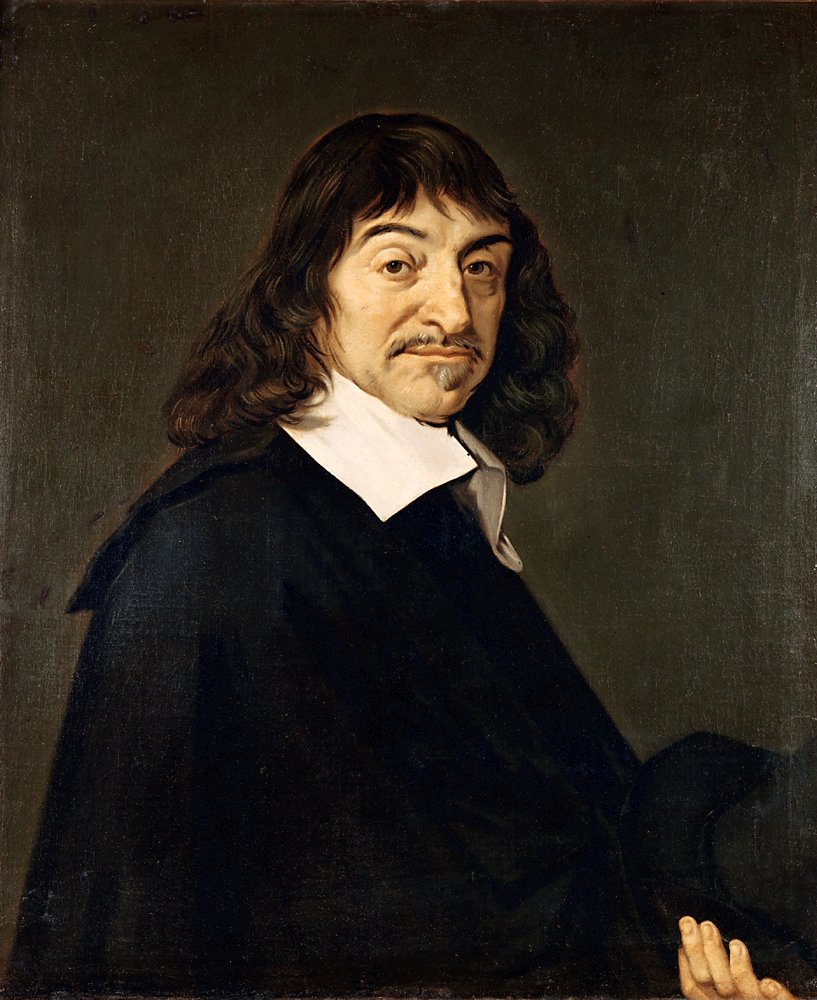
DESCARTES, RENE (b. March 31, 1596, d. February 11, 1650 ), French Mathematician and Father of Modern Philosophy.
Descartes, Rene, The Father of Modern Philosophy: “I Think, Therefore I am.”
The Theory of Total Consciousness.
I am Consciousness, therefore I am
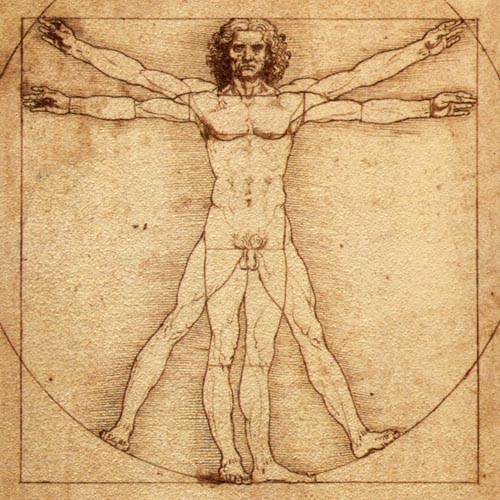
VITRUVIAN MAN, BY LEONARDO DA VINCI (c. 1492). This picture is used as the cover page for Best & Taylor’s Text Book of Human Physiology. Medical Science and Medical Education is knowledge built upon the foundations of understanding and knowing Human Anatomy (Structure ) and Human Physiology (Function).
This is a proposition to gain knowledge, and to understand Truth and Reality. Consciousness is awareness of one’s own state, condition, and fact of existence in a given environment. The Subject who exists because of the living functions of trillions cells has to be identified. The term ‘soul’ describes the functional unity of these trillions of living cells each of which is aware of its own existence in a given environment. My soul is the manifestation of trillions of units of awareness or consciousness of the individual living cells that comprise my human body.
WHO AM I? This question must be answered by applying a reasoning process to Inferential Knowledge about Cell Structure (Anatomy) and Cell Functions (Physiology). Life is defined as “Knowledge in Action.”
To exist in the natural world, my consciousness or awareness establishes what I describe as ‘God Connection’; the connection between the energy-seeker and the energy-provider.
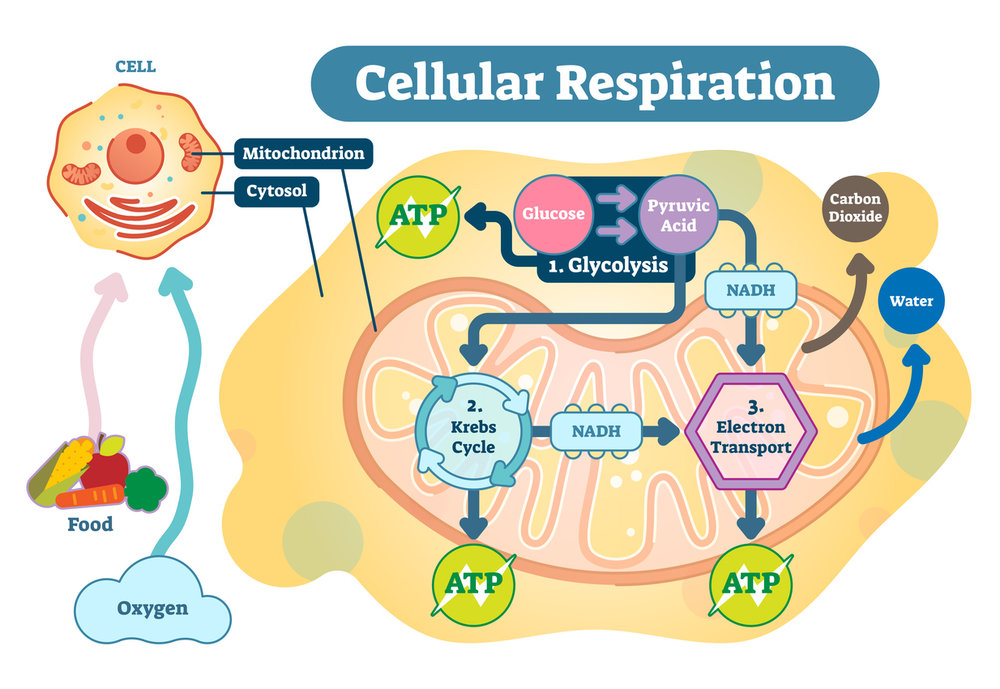
Cellular respiration is a set of metabolic reactions and processes that take place in the cells of organisms to convert biochemical energy from nutrients into adenosine triphosphate (ATP), and then release waste products.
The biological function called Consciousness gives the ability to acquire energy from the given environment in which the living entity is present. To perform mental functions such as thinking, and having feelings, the human being has to maintain physical existence and sustain vital metabolic functions acquiring energy from external environment.
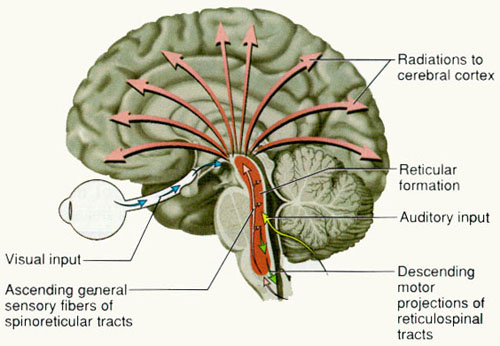
Brain Stem Reticular Formation shown as a red band in the image represents an integrative focus of consciousness functioning through its widespread interconnections with the Cerebral Cortex and other regions of the Brain. It functions to compose the contents of consciousness that would be revealed as Cortical Awareness. Reticular Formation describes “The Capacity of Consciousness” and without this function the contents of consciousness( or cortical awareness) will not be known to the individual.
The Theory of Total Consciousness explores the total contents of conscious experience and determines its significance in relation to the act, state, or condition called Living.
The Ground Substance of Spiritualism and Spirituality. The vital characteristics, the animating principles of Protoplasm could be known by observing Amoeba proteus. The Living Substance works as an organ of Motion or Movement, as an organ of Nutrition, and as an organ of Reproduction to generate new cells which have a life span of their own. In these physiological functions, I describe the characteristics such as Cognition, Consciousness, Memory, and Intelligence which have a Spiritual role as they bring functional unity and harmony in the interactions between different parts of the same individual organism while it exists in an environment as a member of a biological community
Dr. R. Rudra Narasimham, B.Sc., M.B.B.S.,
Kurnool Medical College, Kurnool, Andhra Pradesh, India,
M.B.B.S., Class of April, 1970.
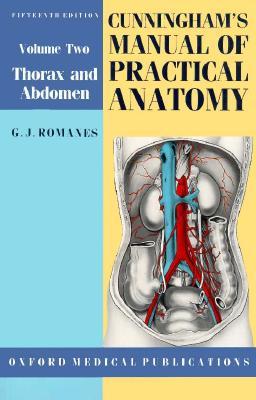
Personal Number: MS-8466. Rank: Captain. Name: R Rudra Narasimham, Branch: Army Medical Corps/Short Service Regular Commission. Unit: Headquarters Establishment Number. 22, C/O 56 APO. Designation: Medical Officer from September 22, 1971 to December 18, 1974. Organization: SPECIAL FRONTIER FORCE.The Rudi-Grant Connection reviews the book Matrudevobhava by Dr. R. Anjaneyulu, M.D., D.G.O., FCPS. What is man? What is woman? Practical Anatomy provides accurate information about the reality of the multicellular human organism.The Rudi-Grant Connection reviews the book Matrudevobhava by Dr. R. Anjaneyulu, M.D., D.G.O., FCPS. Cunningham’s Manual of Practical Anatomy guides me in the investigation of man and woman.The Rudi-Grant Connection reviews the book Matrudevobhava by Dr. R. Anjaneyulu, M.D., D.G.O., FCPS. Cunningham’s Manual of Practical Anatomy describes the structural organization of human male and female.The Rudi-Grant Connection reviews the book Matrudevobhava by Dr. R. Anjaneyulu, M.D., D.G.O., FCPSThe Living SpiritTheory of Total Consciousness
VITRUVIAN MAN, BY LEONARDO DA VINCI(c. 1492). This picture is used as the cover page for Best & Taylor’s Text Book of Human Physiology. Medical Science and Medical Education is knowledge built upon the foundations of understanding and knowing Human Anatomy ( Structure ) and Human Physiology ( Function).
SPIRITUALITY SCIENCE : MY SPIRITUAL JOURNEY – THE INQUIRY ABOUT SELF, SPIRIT, AND SOUL :
I would submit that we have to arrive at an understanding of ‘self’, spirit, and soul by knowing the structure and functional organization of the being that exists.
THE IDENTITY OF MULTICELLULAR HUMAN ORGANISM :
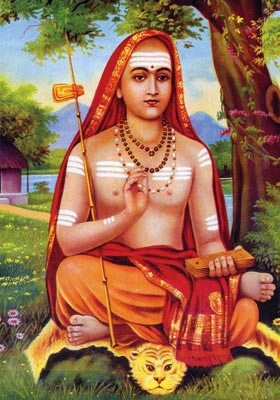
“ManO buddhyaHamkaara, chittani na aHam, Na karnam, na jihvaa, na cha ghraana neytrey, Na cha vyoma, bhuumir na TejO, na vaayuH; Chidaananda Ruupah, Shivo aHam, Shivo aHam.” Adi Shankaracharya has described that his Identity does not pertain to his mind, intellect, the intellectual pride/ego, mental functions, his organs of sense, the five primordial elements of Nature. His Identity could only be stated as SAT+CHIT+ANANDA, the Identity of Ultimate Reality. However, the human organism has an Identity described by Human Anatomy and the organism’s functions(Physiology) establish and defend this Identity of the Human person in Nature.
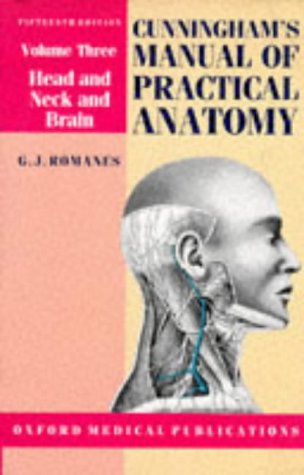
Dr. Daniel John Cunningham( 1850-1909 ), Chair of Anatomy, University of Cambridge has provided this Manual of Practical Anatomy to help medical students dissect human cadavers and learn Human Anatomy. Whether humans know and understand Human Anatomy and Physiology or not, they come into existence with full functional knowledge of every constituent cell in the body. The Human Body has Innate Knowledge of its own Structure and Function. I had acquired this Knowledge from Uneducated individuals who had gifted their bodies to promote Medical Education.
I learned about human body while dissecting the body in a systematic manner. The Manual of Practical Anatomy which guides us through this entire process was published in England. The author Dr. Daniel John Cunningham prepared the Manual while dissecting cadavers of British or Irish citizens. He had never encountered cadavers of Indian citizens. At Kurnool Medical College, Kurnool, Andhra Pradesh, India, where I was a student, the Department of Anatomy obtains dead bodies from Government General Hospital Kurnool and most of the deceased are the poor, illiterate, and uneducated people of that region. None of the deceased had a chance to know this man called Cunningham and Cunningham had no knowledge about the existence of these people who had arrived on our dissection tables. But, as the dissection of the human body proceeded, inch, by inch, we recognized the anatomical parts as described by Cunningham. The manual also lists some anatomical variations and we very often exchanged information between various dissection tables and recognized the variations mentioned. The dissections also involves slicing the organs and studying them, both macroscopically, and microscopically. We did not miss any part of the human body. So what is the Identity of this Human person or Human subject? How does the living Human organism maintain its Identity and Individuality? Apart from the Cultural Traditions of India, several Schools of Religious Thought claim that the Human Individual and its Identity is represented by Human Soul. Where does this soul exist in the human body? What is the location if soul is present in the living person? Does man have a soul?
THE KNOWLEDGE OF FIELD AND THE FIELD OF ACTIVITY :’KSHETRA AND KSHETRA JNANA’ :
The term soul has to be carefully defined if I have to find it by exploring the human body. In the Indian tradition, the human body is described as ‘KSHETRA’ or Field. The individual who knows and enjoys this body, kshetra, or field is often described as ‘PURUSHA’. The knowledge of the body is called ‘KSHETRA JNANA’. The person called Purusha could explore his body called ‘kshetra’ and acquire knowledge called ‘Kshetra Jnana’. So, I had explored my body to find out if I have a soul and as to where it exists. I can explore my body while I am alive. If I am dead, only a different living person may get the opportunity to explore my dead body, but he may not be able to discover the soul which may have already departed from the body. If soul exists in the cadaver, Cunningham would not have missed it, and we the diligent students dissecting human cadavers would not have missed it. By definition, soul does not exist in dead bodies. It has something to do with life and the characteristics of a living person or organism. With the intellectual insight I had gained by studying human anatomy, I can explore my living body without placing it on a dissection table.
THE FUNCTIONAL UNITY OF MULTICELLULAR HUMAN ORGANISM :
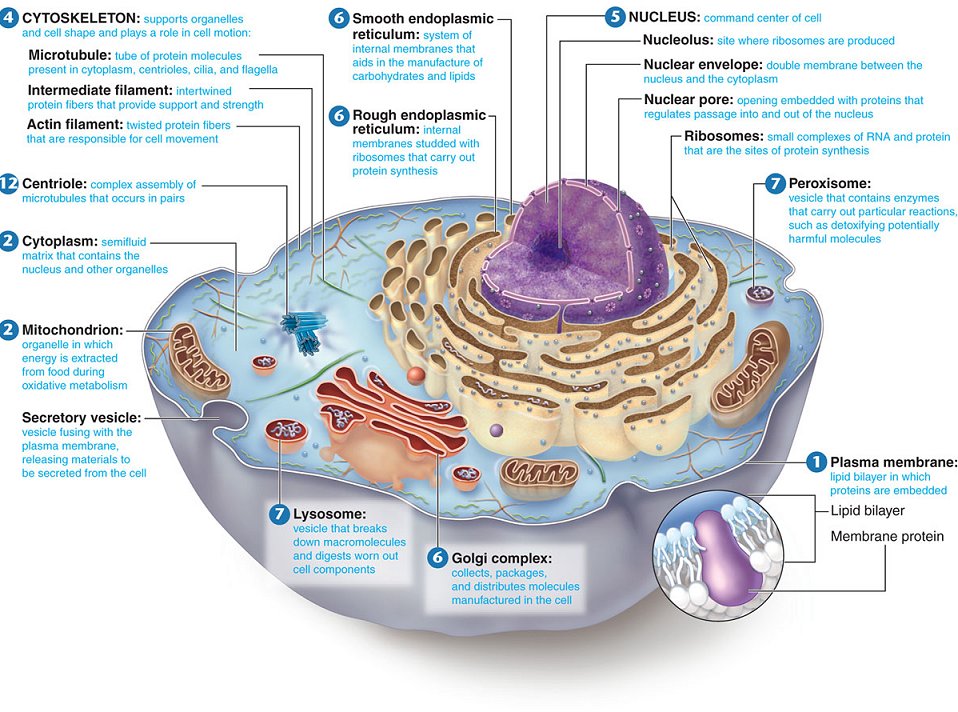
Humans are multicellular organisms. Who or what is the Subject who lives because of the functions of the trillions of cells? Multicellularity found in complex organisms like humans is accompanied by definite capabilities of cells for differentiation. The design of cells has been modified to serve specialized functions of tissues and organs. To achieve proper numerical balance between functionally related cell groups, the death of many cells is necessary for others to reach maturity. This programmed cell death plays an important role during embryological growth and development of human fetus. Waves of genetically driven cell deaths are critical to the proper modeling of organs, and organ systems. Such programmed cell death events are essential if the organism as a whole is to develop its normal final form by which its Identity as an Individual is established. The constituent cells of the organism do not display functional individuality while living as individuals. The cell in a complex organism is not truly an independently functioning unit. The cell exists and functions to achieve Unity of the Organism as a Whole. The one very important part of the environment of a cell is other cells. The Consciousness, the Awareness of individual cells in multicellular organism functions to achieve the Functional Unity of the Whole Organism. Consciousness brings Functional Unity by providing the abilities of recognition, association, and cooperation between all the cells of the multicellular organism. Multicellular organisms are characterized by the ‘Adaptive Subordination’ of the constituent cells to the requirements of the organism as a Whole. For example, mature Red Blood Cells or RBCs have no nuclei and they cannot divide or replicate. They are exclusively adapted to transport Oxygen and serve the whole human organism. The RBCs have short lives as individual cells. The human organism has a life span of its own. During the life time of a human person, RBCs live for short periods of time and are constantly replaced by new RBCs. Thus it may be stated that the purpose of Consciousness at cellular level is to foster Functional Unity of the multicellular organism and establish it as an Individual. If the term ‘Soul’ represents the Identity of this Individual, the Soul is a Functional Attribute of Consciousness at cellular level.
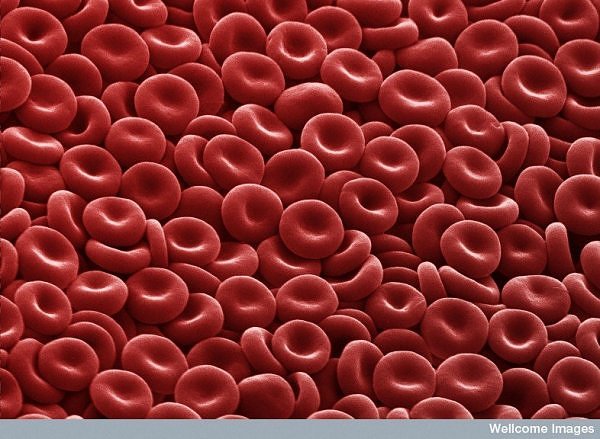
Adaptive Subordination of Red Blood cells to the requirements of the whole Human Organism. The mature RBCs have no nuclei and they cannot divide. They are exclusively adapted to transport Oxygen and serve the Human Organism. During the life span of Human Organism, the RBCs live for short periods of time and are constantly replaced by new RBCs.
THE BIOLOGICAL ASPECTS OF HUMAN SOUL :
Reticular Formation is shown as a single ‘red’ bar in this figure. It consists of numerous Brain Stem nuclei. It is a network of nerve pathways and nuclei throughout the Brain Stem. A single neuron in this network may have synapses/connections with as many as 25,000 other neurons/nerve cells.
Capacity for consciousness is an upper Brain-Stem Function and the Content of consciousness is a Function of the Cerebral Cortex. The Reticular Formation which is located in the central Brain Stem helps to coordinate and integrate actions of different parts of the Central Nervous System such as regulation of muscle and reflex activity;central transmission and composition of sensory impulses; respiration; cardiovascular responses; behavioral arousal; and sleep.
I had explored my body called Kshetra. The Kshetra Jnana, or Knowledge of my body is as follows:
My soul is represented by an anatomical structure described as Reticular Formation in the Brain Stem. Just like my body is composed of trillions of individual cells which collectively represent and establish my physical identity in this world, my soul derives its existence and identity from trillions of these individual units or cells that comprise my body. My soul is actually a composite of trillions of units of consciousness of trillions of individual cells that comprise my human body. The Functional Unity in relation to Consciousness is achieved in the Reticular Formation, the site where Consciousness of the Whole human organism is composed and then is relayed to the Cerebral hemispheres. It is just like a picture or a photo which represents trillions of spots of varying degrees of light intensity or brightness. The term soul has to be defined as the manifestation of “Consciousness”. If there is no “Consciousness”, there is no soul. The existence of soul is witnessed by the presence of “Consciousness”. This biological characteristic described as “Consciousness” exists in every single living cell. If a living organism is made up of one single cell, it has a soul as manifested by its “Consciousness”. For the human person, when identified as an Individual, the anatomical location of his Soul is the Reticular Formation of the Brain Stem which receives input from the rest of the body and shapes the information and sends it to Thalamus and to Cortical Areas of the Brain which provide the awareness, the functional knowledge with which the human organism exists as a living entity. Man enjoys an existence characterized by Peace, Harmony, and Tranquility, as the Soul, or the Life Principle operates most of the vital functions of the complex organism without relaying all the information to the cortical areas where it would be then known to the Man who exists because of these vital functions. Thereby, Man is protected from a huge information overload that is not compatible with mental peace and equilibrium.
“I AM CONSCIOUSNESS, THEREFORE I AM” :
DESCARTES, RENE (b. March 31, 1596, d. February 11, 1650 ), French Mathematician and Father of Modern Philosophy.
Could we extend scientific methodology of investigation into every field of inquiry? Could we find Truth, and Reality as an external experience? Is it possible to visualize Truth and Reality in the realm of Intuition and Conscience? Jean Jacques Rousseau, the French philosopher had suggested that man has to find his way to his pure nature, and this through feelings. Man’s duty is to look for his most deep interior feelings and follow them. Rene Descartes advanced a philosophy based on certitude. He sought to devise a method of inquiry for reaching the Truth. He proposed a method for guaranteeing Knowledge. He argued that in order to provide a secure foundation for Knowledge it was necessary to discover “clear and distinct ideas” that could not be doubted and could serve as a basis for deriving further truths. He found such an idea in the proposition “I think, therefore I am” ( “cogito, ergosum” ). Descartes stressed a world of metaphysical truths that could be discovered by pure reason. He had subjected his beliefs to a series of skeptical hypotheses. He had invoked skepticism as a means of reaching certainty. As per his conclusion, “I think, therefore I am” is beyond skeptical doubt.
CARTESIAN PHILOSOPHY – THE VALUE OF “SYSTEMATIC DOUBT” :
Human body is composed of cells and each of these cells is a conscious entity. Consciousness is a biological, cellular function which brings about Functional Unity of the Whole Organism. Cellular consciousness provides the abilities of recognition, association, and cooperation between cells. Cells are characterized by Adaptive Subordination to meet the requirements of the organism as a whole. Rene Descartes proposition to divide human body into two parts; a thinking part, and a mechanical part is incorrect.
I truly admire Descartes for adopting a strategy of withholding his belief from anything that was not entirely certain and indubitable. Skepticism is an attitude that rejects claims to certainty. Its basic philosophical contention is that the possibility of knowledge is limited by the limitations of the mind itself or by the inaccessibility of the object. Descartes is known as the Father of the Mind-Body Problem. He claimed that human beings are composites of two kinds of substances, mind and body. A mind is a conscious or thinking being, that is, it understands, wills, senses, and imagines. A body is a being extended in length, width, and breadth. He thought that minds are indivisible, whereas bodies are infinitely divisible. The “I” of the “I think, therefore I am” is the mind that he had claimed could exist without being extended, so that it can in principle survive the death of the body. Descartes argued that colors, sounds, tastes, heat, cold, and pain are merely sensations existing in mind/thought and that there is nothing in bodies that resembles the sensation. He thought that all complex functioning of living organisms including human bodies could be explained solely by mechanistic physics. He even denied that consciousness could be attributed to animals in order to explain their behavior. Descartes had influenced the whole course of philosophical enquiry. Using the same Cartesian Philosophy, I found Descartes proposition to be invalid and incorrect based upon my understanding of human body, mind, and consciousness. The proposition which I would use is, “I am Consciousness, therefore I am”. This clear, and distinct idea, which is beyond doubt would help me to discover man’s awareness of God or what I describe as the “GOD CONNECTION”. This “Connection” is the foundation for man’s existence in the natural world.
Kindly also view a related blog post titled ‘A Squirrel Story to Explore Consciousness’.
Kurnool Medical College, Kurnool, Andhra Pradesh, India,
M.B.B.S., Class of April, 1970.
Biographical Information :
1. Place of Birth : Mylapore, Madras City, Chenna Patnam, Chennai, Madras State, Tamil Nadu State, India. Born : Hindu(Brahmin-Niyogi,Smartha), Telugu-Speaking.
2. Date and Place of Marriage : January 29, 1973, Congregational Town Church, Cuddapah, Kadapa District, Andhra Pradesh, India.
LORD KRISHNA IN THE HINDU SCRIPTURE OF BHAGAVAD GITA, Chapter 10, The Opulence of the Absolute, verse 22 claimed that “…in living beings I am Consciousness.” Similarly, in Chapter 7, verses 9 and 10, Lord Krishna claims that “I am the life of all that Lives”, “I am the Original seed of all existences.”
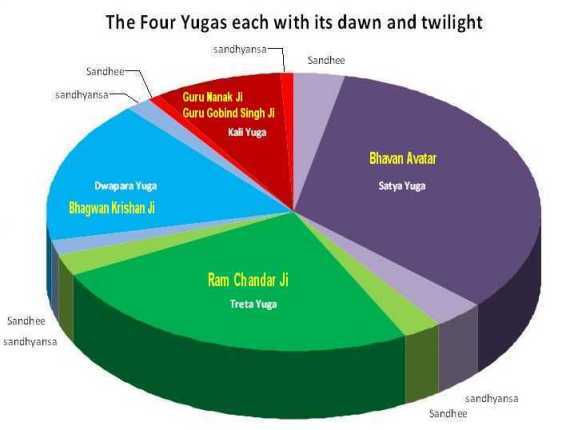
Human Existence in the Age of Stress: Spirituality Science – Cyclical Flow of Time – HUMAN BEHAVIOR AND HUMAN NATURE: IN INDIAN TRADITION, MAN DISPLAYS DIFFERENT KINDS OF BEHAVIOR DUE TO EXTERNAL ENVIRONMENTAL STIMULI THAT VARY UNDER THE INFLUENCE OF TIME. INDIA’S SPIRITUAL LEADER AND MASTER GURU NANAK (c.1469 – c.1539) RESISTED THE POLLUTING EFFECTS OF KALI YUGA AND PREACHED ABOUT FUNDAMENTAL IDENTITY OF ALL RELIGIONS.
We live in an age of “Stress” and the Indian traditions refer to the present times as the age of “Kali Yuga” and describes the human behavioral disorders as the effects of pollution both mental and physical.
Human Existence in the Age of Stress.
The accelerated tempo of life brings forth stimuli of high velocity of action, magnitude, and impact that they stimulate a chain of psycho-physical reactions strong enough to cause manifest effects in the human body. A person experiences ‘strain’ when his life’s demands exceed his ability to meet those demands. Prolonged high intensity intellectual and emotional strain which involves fixation of motives to do hard work, achieve high standards, carryout a task against opposition, and aspiration for high professional, prestigious, economic and social career and status would produce ‘stress’. Stress is produced not so much by the efforts which have been rewarded by success but more often by the ones not ending in satisfactory achievement. The impact of modern living has a significant bearing on the genesis of stress-associated declines in health. Prolonged stress may result in increased levels of stress hormones such as cortisol, a decline in certain aspects of immune system which contributes to a decline in the immune system surveillance against viral infected and cancer cells, increases the rigidity of the vascular system which produces hypertension (high blood pressure), thickening of the coronary arteries that impacts cardiac health, aggravate breathing difficulties, disrupts gastrointestinal microbial balance, and a host of other problems. Depending upon the physical, psychological, and social environments under which the person has been brought up and is presently living; and depending upon the genetic and constitutional factors, stress affects a particular target organ or system. The problems associated with the use of alcohol, tobacco, and a variety of mind altering drugs and substances could be considered as an extension of a response to stressful stimuli and substance abuse further aggravates the ‘stress syndrome’.
The Biological Concept of Stress
Human Existence in the Age of Stress
The word ‘stress’ or ‘strain’ should be understood as a Stimulus-Response-Complex produced in an individual by hostile physical, psychological, or biological invasion. It also leads to the development of resistance to the stressful stimuli. Depending upon the nature of the hostile or invasive factor, the resistance produced may be physical, psychological,biological, or a combination of all. Thus ‘stress’ includes the chain of reactions which constitute the process of development of final resistance to extrinsic strains. Resistance produced may be general or specific. The reactions of stress may produce the ‘General Adaptation’ and ‘Specific Adaptation’ syndromes. Stress precedes and promotes all the resistance phenomena. Final resistance produced by any biological, physical, and psychological stress producing stimulus detremines the survival, or defeat/death of the man under the strain. Stress could be viewed as beneficial when it is produced in tolerable quantum and is spread over a tolerable period of time.
The types of Stressors
Human Existence in the Age of Stress. The types of Stressors.
The biological stress is caused by pathogenic organisms such as bacteria, viruses, parasites, animal bites and stings.
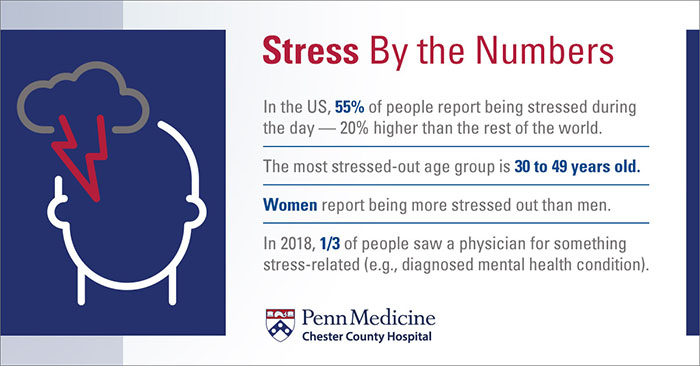
Human Existence in the Age of Stress. During the height of COVID pandemic, the US reported a high incidence of stress-related problems.
Physical stress is caused by physical factors like heat, cold, burn, injury, radiation or privations.
Human Existence in the Age of Stress.
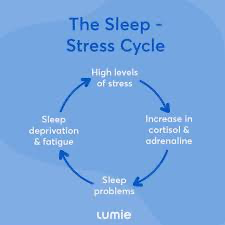
In modern times the most important stress producing cause is that of sleep deprivation. Our biological existence is synchronized with the cosmic event that causes alternating periods of light and darkness. A biological clock manages a variety of biological activities such as the production of stress hormones. Body needs periods of relaxation and should stay tuned with the 24 hour biological rhythm which is popularly known as the ‘circadian rhythm’. We very often disrupt the functioning of this biological rhythm to accomplish one task or the other. Many of us just stay awake for the sake of enjoyment of life. If not at work, or preparing for an examination, we stay awake in front of TV, listening to music, watching sports, playing games, drinking alcohol, partying with friends, and in a myriad of other ways which would provide a sense of euphoria. While we are enjoying our time, the body still experiences stress and reacts to the stress of being in a wakeful stage when it should be resting without receiving any mentally exciting stimuli. Our desire to get away from the stress at work place or daily life, may actually enhance the effects of stress upon our body.
Human Existence in the Age of Stress.
The psychological stress is produced by an adverse situation, proximity of an aggressive or overwhelming personality, or an intellectual, emotional (such as anger or worry), or social challenge. We could therapeutically combat the stress due to biological agents and physical conditions. But the psychological stress is not amenable to an easy therapeutic approach. Stress as a disease producing factor very often refers to the psychological stress.
The Genesis of Stress
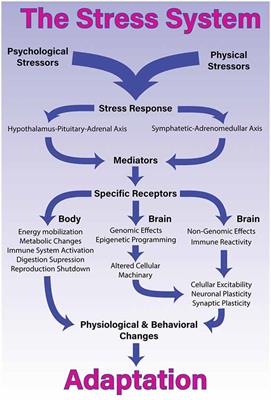
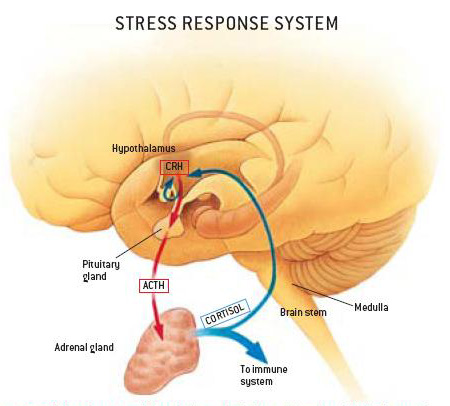
Human Existence. The Age of Stress. Hypothalamus, Pituitary and Adrenal glands play a central role in the Stress response.
The part of the brain known as hypothalamus, and the organs of the endocrine system, particularly the pituitary and adrenal glands play an important part in the body’s adaptation to stress. The hormones such as epinephrine (Adrenalin) and cortisol produced by the adrenal glands help to protect the body and raise its resistance against stress irrespective of the nature of the stimulus.
Human Existence in the Age of Stress
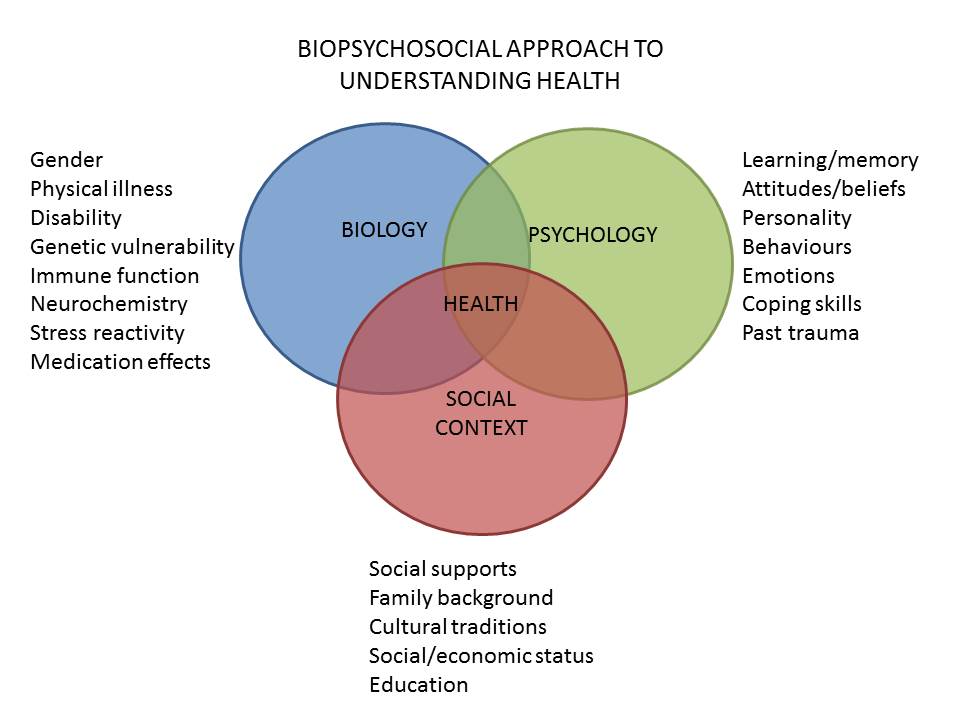
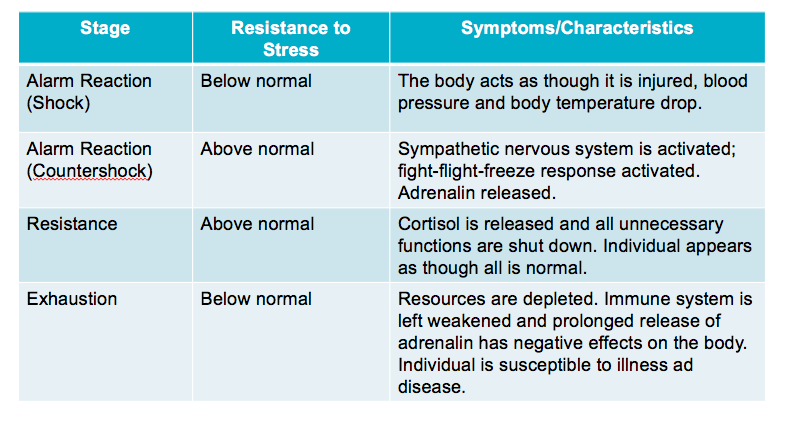
After sudden exposure to stress stimulus, in times of anger, fright, fight, and flight, the initial ‘Alarm Reaction’ produces epinephrine that increases the heart rate and blood pressure. When the stress continues, the adrenals are again stimulated via the hypothalamus-pituitary axis and release hormones such as cortisol which is important for providing glucose, a source of energy for the body. If the stress further continues, body tends to develop resistance against prolonged stimuli. If the stress stimuli are very aggressive and are sustained over a very long period, the ‘General Adaptation’ mechanism of the body could fail, a ‘Stage of Exhaustion’ may follow and the individual could be overwhelmed. Pre-existent resistance against stress reduces the requirement of immediate response of an “Alarm Reaction.” Stress is reduced by pre-existing resistance. The defeat, imperfect production of resistance, or premature arrest of the process of its production gives rise to disease. Heredity, environment, physical and mental health, and social support detremine our ability to resist stress situations. The development of a well integrated personality to face life squarely determines the extent and quality of the resistance. By proper education and training, the threshold for physical and emotional stress could be increased.
Resistance to Stress
Human Existence in the Age of Stress.
A psychological stress stimulus may not cause a similar reaction in all individuals. All individuals have different capacities to perform and adapt when faced with stress. People will react differently depending upon the preformed resistance they have. Five different types of reactions are possible. 1. The stress stimulus acts like an inspiration and becomes a source of healthy pursuit. 2. The stimulus is accepted as a reasonable strain and the individual takes it up as a healthy challenge. 3. The situation appears to be overwhelming and the stimulus becomes either a source of depression, and breakdown or a source of ‘stress syndrome’. 4. It may cause anxiety and becomes a source of an anxiety state or neurosis. 5. The stimulus does not elicit any reaction at all as the individual is apathetic.
Depending upon their response or reaction to stress, we can distinguish five different categories of people.
GROUP I: Persons highly resistant to stress. They have superior preformed resistance and often display an ability to develop resistance within a short time of exposure to stress. They master the stressful event and overcome the stress triumphantly. They do not suffer from any negative consequences while they carry out the task even while under great stress. They have dominant will power and have a great power of endurance.
GROUP II: These persons have enough preformed resistance to overcome the stress partially. They do not show overt ‘stress syndrome’ but suffer to a lesser extent in their attempts to master the stressful situation and achieve success. The task does not suffer. Such persons are likely to suffer from precipitation of internal conditions such as hypertension, coronary artery disease if they have other predisposing risk factors.
GROUP III: These persons have very low preformed resistance. If a stressful situation continues such persons may develop resistance which carries them through for some time but sooner or later they succumb to the situation and show evident ‘stress syndrome’. The task may not always suffer but the individual suffers from physical manifestations of stress.
GROUP IV: These persons have no preformed resistance and their ability to create immediate resistance is low. These persons abandon the task and tend to get away from the stressful situation. The task suffers and the individual could be punished for failing to perform his task.
GROUP V: These persons are Non-Resistant to stress. They have no preformed resistance. They are not capable of favorably reacting to a stress producing situation at all. They succumb and become psychiatric casualties and cease to exist as an organized entity. Sometimes, they may not be able to maintain their biological existence.
Armed Forces consistently strive to select and recruit only Resistant personalities and weed out the vulnerable ones by careful monitoring of the health of the troops.Over fifteen years of military service, I had conducted several thousands of medical examinations to assess the physical and mental fitness of people and was actively involved in preserving their health and promoting the quality of their health.I recruited several thousands of young people for service in the Indian Army and also recommended the removal of people whom I had detected to be falling short of our expected standards of fitness. With proper nutrition, physical training, personal hygiene, clean habits, and immunization, without any doubt we could make people ‘resistant’ to a variety of biological, and physical stress stimuli. The stress imposed by psychological stimuli is also important and the resistance to such ‘stress’ could also be improved. Understanding the phenomenon of stress is important for our existence in the modern times. By improving ‘Stress Resistance’, we keep the men ready for a batlle at all times, maintain the level of Stress Resistance during the most stressful moments of the battle, and protect their well being after the stress of the battle is over. The psychological preparation for batlle includes an effort to increase the stress resistance level by proper motivational techniques used routinely in the medical fitness examinations of men. To sustain productivity in education, and at work, we need to lay emphasis on the concept of stress resistance.
The Sound Energy – A Miracle Cure for Stress. The human body reacts to Stressful Stimuli and the Stress Reaction can manifest with psychological and physical Signs and Symptoms.
The impact of stress on the body reveals how closely mental health and physical health are connected. Stress can also lead to serious mental health problems like depression and anxiety disorders if the body is constantly overloaded.
The Stress Reaction triggers major bodily changes, such as:
Sugars in the bloodstream increase to supply energy
Muscles tense so they’re poised for action
Heart beats faster to get blood pumping
Digestion and other functions slow to save energy needed elsewhere
Stress May Contribute To:
high blood pressure
heart disease and stroke
decreased immune defenses
cancer
stomach problems
poorer brain functioning
Stress also can lead to serious mental health problems, like depression and anxiety disorders.
The Symptoms of Stress Overload:
fatigue
headaches
loss of concentration
difficulty making decisions
inability to control anger
increased use of alcohol, caffeine, cigarettes or drugs
increased or decreased eating
feeling overwhelmed
thinking often about what you need to do
Of course, none of us can remove the sources of stress. But, we can figure out ways to cope better with various kinds of stressful stimuli.A person with a well-integrated personality acquires high resistance against stress and will be able to react healthily while confronting unwholesome life situations.
The Sound Energy – A Miracle Cure for Stress: A person with a well-integrated personality acquires high resistance against stress and will be able to react healthily while confronting unwholesome life situations.
Ten Tools for Resiliency
Connect with Others
Stay Positive
Get Physically Active
Help Others
Get Enough Sleep
Create Joy and Satisfaction
Eat Well
Take Care of Your Spirit
Deal Better with Hard Times
Get Professional Help If You Need It
The attributes of ‘Kali Yuga’ – The Age of Stress:
The Sound Energy – The Miracle Cure for Stress: SPIRITUALITY SCIENCE – CYCLICAL FLOW OF TIME – HUMAN NATURE AND HUMAN BEHAVIOR: IN THE INDIAN TRADITION THE CYCLICAL FLOW OF TIME IS DESCRIBED AS FOUR PERIODS NAMED 1. SATYA YUGA, 2. TRETA YUGA, 3. DWAPARA YUGA, AND 4. KALI YUGA. MAN MAY DISPLAY DIFFERENT BEHAVIORS DURING EACH PERIOD OF TIME OR YUGA.
The Sanskrit word ‘Kali’ means fermented or contaminated water. While fresh water contributes to good health, and vitality, polluted water would induce stress and strain and leads to illness that manifests as strife, discord, quarrel, or contention. One of the attributes of Kali Yuga is the importance attached to wealth acquisition. Money and acquisition of money have become significant stressors in our lives. Money related problems are among top concerns playing a role in anxious or depressed moods. As avarice, greed, and wrath have become common, there is no contentment, nor discernment, and nor mental composure. As men are tormented by worries, the use of prescription drugs such as tranquilizers has become very common. Various methods have been developed to cope with psychogenic or internal stress including the use of psychotherapy. Unhealthy coping of stress is leading people to activities such as smoking, drinking, gambling, compulsive eating, and the use of mood altering drugs and chemical substances. Such unhealthy coping mechanisms to deal with stress can trigger more conflicts both at home and in the society.
Creative uses for Sound Energy:
The Sound Energy – A Miracle Cure for Stress.
The science of acoustics deals with the nature, properties, generation, propagation, and reception of sound waves. Sound is defined as a vibration, a mechanical disturbance from a state of equilibrium that propagates by wave motion through an elastic medium. In gases, and liquids, sound propagates as longitudinal, compression waves. In solids, sound propagates as transverse, shear waves. Sound waves behave in many ways as light waves do. Sound is a form of energy like light. Light is an electromagnetic wave. Unlike light, sound cannot exist in a vacuum. Acoustics is important in fields of speech and hearing, the production of music, in warfare, in research, in exploration, in medical diagnosis and therapy. Sonar is an acronym for sound navigation and ranging. Sonar is used in detection and location of submerged objects like submarines by using acoustical echo. Ultrasonics describe the study of all sound like waves whose frequency is above the range of normal human hearing. Ultrasound is widely used in industry and in medicine. Pulses of ultrasound could be used to shatter kidney stones and gall stones. Ultrasonic drills and saws are useful in surgery and dentistry. Ultrasonic transducers have come to be widely used in medical imaging and have become a common diagnostic tool in pregnancy and for screening medical conditions that affect children. The technique of studying heart motions by ultrasonic means is known as echocardiography. In modern life we use sound energy in several creative ways.
The World is Full of Sounds:
Sound Energy – A Miracle Cure for Stress.
We encounter a great variety of sounds in our daily life. All natural phenomena such as thunder, rain, waterfall, surf, and gusts of wind generate their unique sounds which could be pleasing aswellas frightening. Across animal kingdom, sound is used for detecting danger, navigation, predation, communication, and also for relaxation. Animals possess special structures for production and reception of sounds. The sounds produced could be mechanical or vocal. The special vocal organs could also produce speech and song. Mammals can also produce sounds with parts of the body that are specialized for other purposes. We can produce sound by tapping the floor or by clapping the hands. Many animals are highly vocal and can produce species-specific sounds. By understanding the sound reception mechanisms used by animals, we can also protect ourselves. Snakes have no reception for sounds propagated through air as they do not have external ears. But they recognize the sound vibrations that are propagated through ground. Snakes often bite when they are stressed. During Operation Eagle 1971 in Chittagong Hill Tracts, the War of Bangladesh Liberation, I had allowed a large group of snakes to move under my legs by remaining still and not provoking them with any attempt to move. I had trained soldiers to protect themselves from snake bites. For example, we can easily alert others by shouting and announcing the presence of a snake while standing still and get help to avoid snake bite. Humans have developed Culture and technology such as radio, telephone, and music that allows them to generate, record, transmit, and broadcast sounds. We should further explore the potential uses for sound energy. In ancient India, thoughts were propagated from person to person using the ‘oral tradition’ which involves the use of sound energy as a tool of human communication.
The Biological Effects of Sound:
Sound Energy – A Miracle Cure for Stress.
A sudden, loud sound could disorient a person. High intensity sounds and exposure to noise could cause irritation, anxiety, fear, sleep deprivation, stress-reaction, and hearing loss. It could also cause permanent damage to the sense organs of hearing. High-order explosives produce a supersonic high pressure blast wave that could cause severe primary blast injuries in several organs like brain and lungs.
Sound Energy – A Miracle Cure for Stress.
Humans appreciate the value of sound as a tool for obtaining relaxation, rejuvenation of spirit and for mental amusement and entertainment. The soothing effects of sound can provide us mental comfort, help in the healing and recovery process. The Indian traditions claim that sound could be used as a medicine and the sound could exert medicinal effects taking advantage of the mind-body connection. Sound undoubtedly can affect our physiological responses to stress. Sound could act both like a stressor and as a stress reducer.
The Mystical Effects of Sound:
Sound Energy – A Miracle Cure for Stress
A ‘mantra’ can be defined as a sound, syllable, word, or group of words that are considered capable of creating transformation. The vocal sounds of the ‘mantra’ have inherent meaning independent of the understanding of the person uttering them. The incantor need not know the meaning of the words employed and it makes no difference to the mantric action. When we take prescribed medications, most of us do not understand the chemical formulas of the active ingredients and the pharmacological basis for their medicinal action. The vocal sounds of ‘mantra’ could still work even when we do not know the reason as to how it works. Many of the modern medications are derived from plants, herbs, and compounds that were traditionally used for curing illness.
Sound Energy – A Miracle Cure for Stress
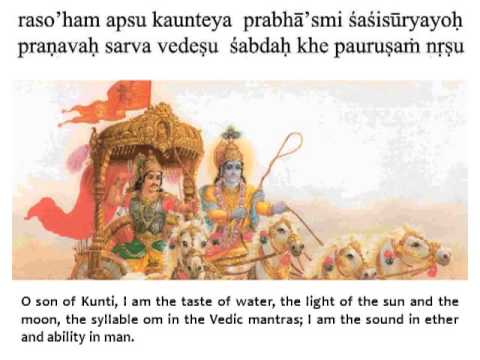
The Indian tradition advocates the efficacy of vocal sounds in providing relief from physical problems that afflict us. In Bhagavad Gita, Chapter 7, verse 8, Lord Krishna states that He is the light of the sun and the moon, and that He is the Sound in ether. Light energy, and sound energy are aspects of the various energy manifestations of an Eternal, Original,and Primeval Person described as ‘Purusha’, the Lord God Creator. Our earthly existence is made possible by our Cosmic Connection with the material energies that we exploit to sustain and support our living functions.. Sound is a unique natural phenomenon of our earthly existence and because of its uniqueness it could be described as a creative energy. In the entire universe that we know and have explored, planet Earth is the only place where sound is generated, sound is propagated, and sound is recognized by living entites with anatomical organs and structures that are designed for that purpose.
An Elixir to destroy the ill-effects of Stress Pollution in the age of Kali Yuga:
The Sound Energy-A Miracle Cure for StressThe Sound Energy-A Miracle Cure for Stress.
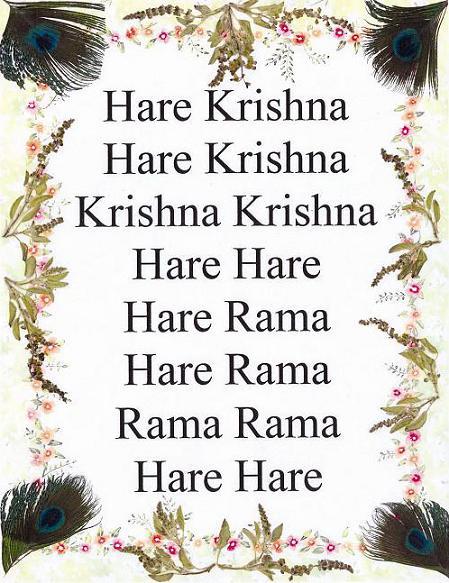
The creative power of sound could be used to counteract the contaminating influence of the age of Kali. The sixteen words of the Hare Rama Mantra is first attested in the ‘Kali santaranopanisad'( Kali Santarana Upanishad) which is associated with the Krishna Yajur Veda. Creator Lord Brahma instructs sage Narada about the efficacy of this Mantra. The mere uttering of the phonetic sounds of words Hari, Rama, and Krishna is enough. A person does not require a Guru or a teacher to instruct the mantra. No fee is expected to obtain the knowledge of this mantra. A person is not expected to change his religion or observe any specific religious rituals as a part of using the mantra. There is no set time, or duration for repeating the words of the mantra. The words could be used individually or the precedence of the words could be rearranged. All the words are of a great potency.A person requires no previous qualification or training to use the mantra. There are no rites of initiation. It is unlike the practice of Yoga or Meditation. The person need not be in a temple or any other secluded place. The mantra could be used while fully engaged in the routine activities of life. The words could be repeated either out loud, softly to oneself, or internally within the mind. The mind hears the sounds of the words irrespective of the manner used to utter them. The Upanishad further states:
TEXT 6
iti sodasakam namnam kali kalmasa nasanam
natah parataropayah sarva vedesu drusyate
iti—in this way; sodasam—sixteen; kam—collections of words;
sarva—in all; vedesu—Vedic scriptures; drusyate—is seen
TRANSLATION
“In this way, the collection of sixteen names is the only destroyer of the polluting effects of Kali-Yuga. No other remedy can be found in any part of the Vedic literature.”
The sixteen words of ‘Hare Rama Maha Mantra’ are especially meant for counteracting the polluting effects of the age of Kali. After searching through all the Vedic literature, one cannot find a better method.
I am not surprised to read about the mystical effects of sounds that could transform our lives and protect us from Stress. I have personal experience of withstanding the physical stress imposed by sun’s scorching heat in the open deserts during military exercises. We used nothing more than a little shade provided by thorny bushes or the camouflage net that we use to conceal our presence. The shade would at the most reduce the heat by a couple of degrees and yet the psychological relief it provides us so immense and it enables us to resist heat the entire day. I spent time in evaluating people and witness their ability to withstand a great variety of physical, chemical, biotic, and environmental stressors. The sixteen words of Hare Krishna Mantra have the potential to destroy the evil effects of stress by increasing our stress tolerance, by inducing stress resistance and by protecting our biological existence. Kindly review a related blog post about Stress.
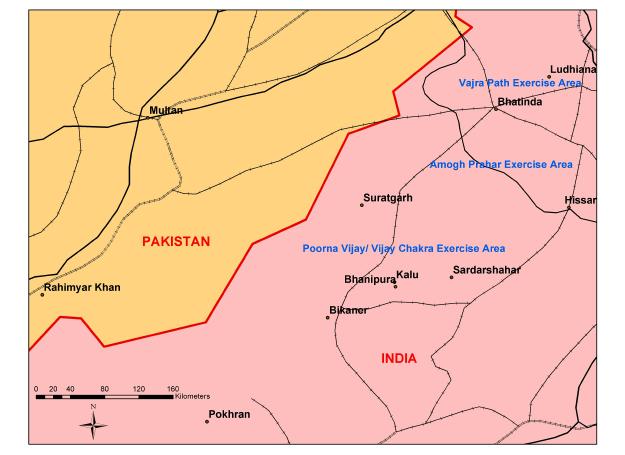
Fighting an Enemy. A story from Suratgarh, Rajasthan. Mahajan Firing Range, Suratgarh.
Indian Armed Forces train and conduct Military Exercises in Suratgarh region of Rajasthan with a sense of ‘excitement’ induced by the preparation to confront the enemy. The attack by an ‘invisible’ enemy is manifested by the medical symptom of mental excitement.
SURATGARH, RAJASTHAN – THE LAND OF RIG VEDA:
Fighting an Enemy. A story from Suratgarh, Rajasthan.
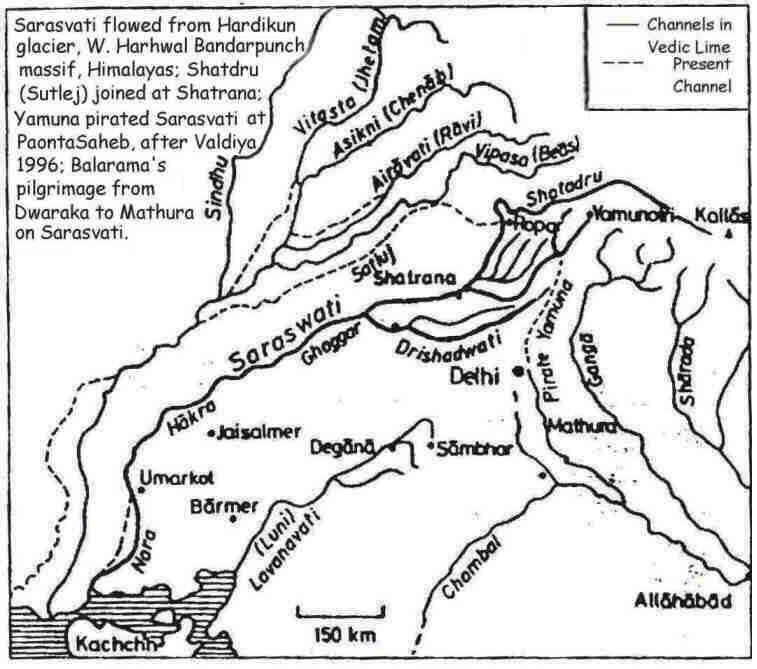
Suratgarh is in Sri Ganganagar District of Rajasthan. Around 3,000 B.C., Suratgarh is believed to be a lush green pasture land due to the presence of Sarasvati River which is repeatedly mentioned in Rig Veda and is described as “Ambi ta mey, Nadi ta mey, Devi ta mey, Sarasvati” meaning that River Sarasvati is Best Mother, Best River, and Best Goddess.
Fighting the Enemy – The Excitement at Suratgarh:
Fighting an Enemy. A story from Suratgarh, Rajasthan.
Suratgarh is of strategic importance. I visited and camped in this area several times during the period from 1976 to 1978. It was not a picnic. My visits were mostly related to military training and exercises that would prepare me to fight the enemy in a battle. Battle preparation always induces a sense of excitement. Apart from the body, the mind would be put on an alert to accept the challenge and confront the enemy. I never missed that feeling on any day that I spent in Suratgarh. During 1977, I camped at Suratgarh for three months where the First Armored Division opened a ‘Desert Driving School’ to impart training to military drivers. The sandy desert terrain poses a challenge to the man aswell as the machine. The driving lessons were imparted by instructors from Army Service Corps which provides provisions(rations) and transportation in the conduct of military operations. We established a very small camp in tents on the Suratgarh-Sri Ganganagar Road. I set up a very modest Medical Inspection Room in a bunker to provide medical services to trainees at our School. I had posted a sign on the road near our School to encourage others to visit my Medical Inspection Room if they needed any help. I had always liked the idea of preparing for the battle. The success in actual war depends upon the skills a person acquires while training for the battle. I thought that it was important that I must learn to drive and operate all types of vehicles that Indian Army would use in the desert terrain. Like all other trainees at the School, I drove a 3- ton Lorry, the basic workhorse of Indian Army. I successfully finished my training and was issued a Military Driver’s License. Apart from 3- ton Lorry, I also operated all other vehicles like Jeep, Jonga, and 1- ton trucks. The driving tracks included regular surface roads and plenty of cross-country driving over sand dunes and desert terrain. It was exciting to face the challenge and be prepared.
Fighting an Invisible Enemy – A Challenge to Human Existence:
Fighting an Enemy. A Story from Suratgarh, Rajasthan. The Enemy, Rabies Virus, has a “Bullet” shape.Fighting an Enemy. A story from Suratgarh, Rajasthan. Mortality from a “Bullet” shaped Virus.
Fighting a visible, external enemy is easier rather than fighting an ‘invisible’ enemy. The Rhabdovirus that causes the fatal disease of RABIES is one such invisible enemy. The virus has a characteristic ‘bullet’ shape. It is described as a neurotropic virus as it chiefly attacks the central nervous tissues and causes brain inflammation. While a person is alive, the infection is always diagnosed on clinical grounds.
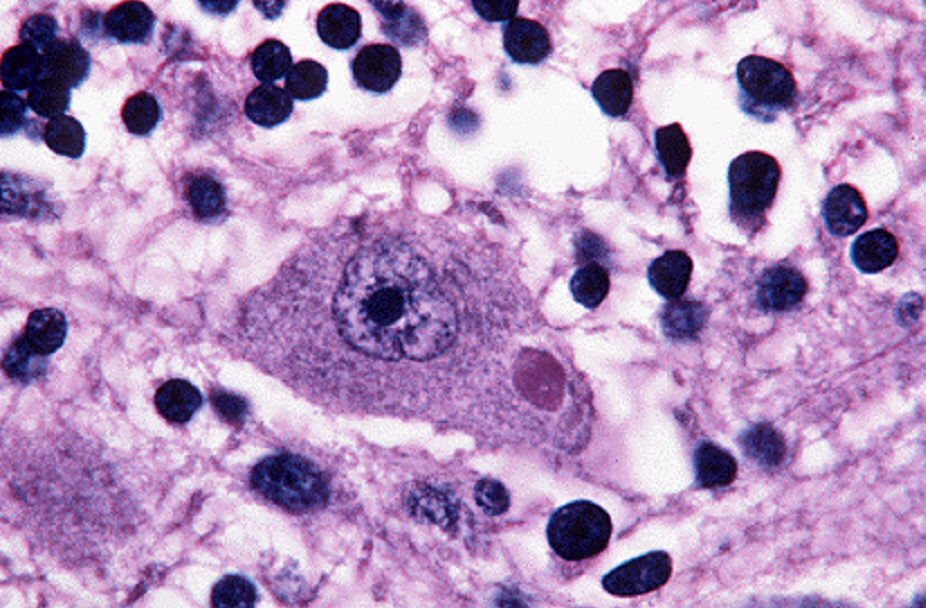
Fighting an Enemy. A story from Suratgarh, Rajasthan. After the battle is lost, the Enemy is identified by the presence of Negri Bodies.Fighting an Enemy. A story from Suratgarh, Rajasthan. The battle is lost before the establishment of Final Diagnosis of the Enemy Agent invading the human body.
After death, the evidence for this infection is demonstrated by the presence of microscopic, the oxyphilic inclusion bodies called the ‘Negri Bodies’ found in the cytoplasm of the brain nerve cells.
The disease once manifested, has no cure and the mortality is 100 percent. The disease was eradicated in Britain and Australia, but is still prevalent in India. Rabies is primarily a disease of a variety of animals( the Canidae tribe) and man is secondarily infected. In India, furious canine rabies causes most cases of the disease in man. The virus also attacks the salivary glands and the virus is present in the saliva of the infected animal.
Fighting an Enemy. A story from Suratgarh, Rajasthan. Carnivore animals are implicated in the transmission of Rabies Virus.Fighting an Enemy. A story from Suratgarh, Rajasthan. Wild animals like Foxes, and Jackals can transmit the Rabies Virus infection to man.
For man, the immediate source of infection is essentially the rabid domestic, street, or pet, dogs, and cats. The infection could also spread from wild animals like Jackals and Foxes. The virus is transmitted to man either by the bite of an infected animal or by contact through the mucous membranes or breaks in the skin such as cuts, abrasions, and open injuries that get licked by the animal.The virus cannot enter the body without some trauma to the skin or mucosa. However, the virus can gain entry if it contacts intact conjunctiva of the eyes. Transmission by ‘droplets’ has also been demonstrated. Once within the body, the virus travels using nervous tissues and attacks the brain. Depending upon the site of entry into the body, the disease can manifest itself in about 10 to 90 days.
HYDROPHOBIA – THE FEAR OF WATER: THE CHARACTERISTIC FEATURE OF RABIES:
During the very initial phase of infection which may last from 1 to 10 days, the disease is manifested as increasing restlessness, excitement, anxiety, and irritability.
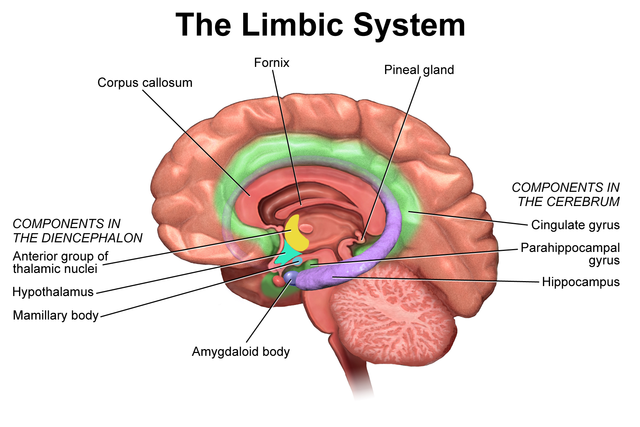
Although rabies has a fairly long incubation period—from the time of the infected bite to the time a person develops symptoms—once the virus impacts the brain it replicates quickly and efficiently. It particularly impacts the limbic system, the part of our brain which controls our emotional and behavioral life (and helps us to form memories).
Fighting an Enemy. A Story from Suratgarh, Rajasthan. Fear, restlessness, mental agitation, and anxiety could be the presenting symptoms of Rabies due to brain inflammation involving the Limbic System.
A person who has rabies will become very fearful, highly agitated and often violent. That’s because the brain is now infected, and the brain’s ability to do its job has been overtaken by the spreading infection.
From the brain, the rabies virus travels to a person’s salivary glands where it reproduces itself at astonishing rates. A person with rabies develops the inability to swallow while simultaneously developing an extreme need to drink.
Working at cross purposes—the need to drink and the inability to swallow—leads to a condition called hydrophobia (“fear of water”). Doctors who treat rabies-infected people see extremely thirsty people pushing away glasses of water. Patients become fearful of drinking because their inability to swallow causes choking.
After the initial period of 1 to 10 days, the symptoms and signs of Hydrophobia appear in the man. This is a characteristic feature of the disease only in man and does not occur in dogs or other animals. The fearful manifestation of Hydrophobia includes violent contractions of the diaphragm and other respiratory muscles if the individual attempts to drink water. The muscles of throat go into spasm and the victim would be unable to drink water despite extreme thirst. The sight of water or even the sound of water may precipitate these very distressing spasms and attacks of panic.Man has no natural immunity against the infection. Anti-Rabic Vaccine treatment is useful during the incubation period. The Vaccine treatment has no value if the Rabies Virus reaches the brain. Once the symptoms of the infection appear, no treatment is possible. Rabies is prevalent in India, but the incidence is very low in the Indian Armed forces. We had 59 reported cases of Rabies from 1944 to 1964, about 3 cases per year. There have been cases of Rabies transmitted by corneal grafts taken from people who had died of undiagnosed Rabies.
THE INVISIBLE ENEMY’S ATTACK IN SURATGARH:
While I was attending to patients at my Medical Inspection Room at the Desert Driving School, a Non-Commissioned Officer (NCO) came to our Camp to seek my assistance. He belonged to the Corps of Electrical & Mechanical Engineers (EME). He being a member of the SIKH religious community could be immediately identified by the turban that he wore and his beard. He was well-groomed and was in proper military attire and had very good physical stature and appearance. His Unit sent a small detachment to Suratgarh area in preparation for some training event. They were camping nearby. His Unit was not directly affiliated to First Armored Division which had set up the Driving School. During that time, Suratgarh had only a Primary Healthcare Clinic. I was the only Army Medical Officer providing services to military personnel stationed in that area. As he walked in, I could see that he was excited and I immediately assured him that he should have no apprehension to seek my services and the Unit affiliations are of no consequence and he should totally feel free to discuss his medical problems with me. He had a very brief medical history. For some unknown reason, he was feeling restless, excited , and becoming anxious about his restlessness. He had no headache, no fever, and no other problems. He was apparently performing all his tasks very well and had no quarrels or arguments with his colleagues. I could easily see his attitude and military bearing. He was displaying a very disciplined behavior, a respectful attitude while coping with a serious and troubling condition. I could immediately rule out the possibility of overt or occult ‘Malingering’. He was a NCO who spent several years in military service, he was very well-adjusted to his military life and had no particular problems with superiors or colleagues of his Unit. I spent time to fully medically examine him and evaluating his general condition and exploring the reasons for this sudden onset of mental restlessness in an adult who had no prior medical problems. He was not disgruntled, cynical or bitter. He was speaking and answering all of my questions in a very coherent manner. He was not expressing any bizarre ideas or thoughts. He was not hallucinating, not deluded or demented. His personal habits were good and he did not consume alcohol or any other mood altering drugs. He was not any medications. He was not experiencing a ‘STRESS’ disorder and appeared to be having good stress resistance. He had no pressing domestic concerns or problems. I could not discover any physical factors like Heat or infections like Malaria or metabolic disorders like diabetes which may explain his condition. Through careful interrogation, I could exclude Psychiatric illness or disorder. After spending some time, I could not still come to any conclusion and I was unwilling to send him away with some symptomatic treatment to relieve his anxiety.
MEDICAL COMFORTS AND MEDICAL DIAGNOSIS:
Unlike in civil medical practice, the army medical practice gives attention to the individual and not exclusively to the disease. At Medical Inspection Rooms, we very often provide ‘Medical Comforts’, to all people who visit us, as needed. The Medical Inspection Room is entitled to draw rations like sugar, tea leaves, and milk powder and very often we serve hot, and refreshing tea while people wait at the Clinic. Suratgarh is an extremely hot place. I was drawing blocks of ice to keep my Clinic cool as there was no electricity or air conditioning. I was also serving chilled water to all visitors and consistently encouraged everyone to consume more fluids.
After my initial, inconclusive evaluation of my patient, I wanted to provide him some ‘Medical Comfort’ and offered him a glass of chilled water as it was already very hot. He declined my offer and showed no interest to drink water. He was not being rude or impolite. He was too excited and was not in a mood to relax. But, that very simple act of offering water as ‘Medical Comfort’ and his refusal made me to contemplate about his condition. It suddenly occurred to me that I could be dealing with a case of Rabies. He had no symptoms or signs that could be identified as ‘Hydrophobia’. He had no such concerns or problems at that time. However, I decided to fully explore that possibility. I again started my interrogation to find out if he had contact with any animal. He never had pet animals. He was never bitten by any animal. He was never licked by any animal. I carefully examined his skin and could not discover any cuts, abrasions, open wounds or healed injuries. His skin was intact and it would not be possible for Rabies Virus to enter his body through his unbroken skin. I had no other options left and I was not able to exclude the possibility of Rabies infection as the cause of his medical complaints of restlessness and anxiety. I had no choice other than acting upon my suspicion even though I fully trusted his statements about never being licked or bitten by any animal.
THE ROAD JOURNEY FROM SURATGARH TO ABOHAR, PUNJAB:
I made a decision to medically evacuate my patient to a military medical facility located about 95 Kilometres away at ABOHAR, Punjab. We made no such prior plans to evacuate patients from the Desert Driving School to Abohar. I had to make that decision on my own keeping the best interests of my patient in my mind. I also decided to transport the patient myself and to drive the 1 – ton truck ambulance. I wanted to assume the full responsibility for taking the military vehicle to Abohar. As we were getting ready for this road journey, I checked and found that I had only 2 ampoules of Injection Chlorpromazine hydrochloride (LARGACTIL), a drug of choice to alleviate anxiety. It can tranquillize the patient without impairing his consciousness. Largactil has a marked sedating effect without causing stupor. However, I had only two ampoules in my Clinic. I quickly ran to Suratgarh Primary Healthcare Centre and met the doctor there to get some additional ampoules of Largactil. He had none in his dispensary. So, I prepared my patient for the road journey after administering the medicine that I had and none for the duration of the journey. The road was in a very bad shape with pot holes. My patient could not be fully sedated with the dose I administered. While I was driving the ambulance, I kept the partition glass window open to check on the patient. Two of my medical assistants were with the patient, and the ambulance driver was in the co-passenger seat in the front. The bumpy ride caused a bit of stress and my patient was constantly shouting from behind asking me to slow down and sometimes he was directing me to speed up. I was happy to hear his voice and finding that his condition was still stable without any worsening of symptoms. By the time we entered the Hospital at Abohar, it was already dark. I contacted the Duty Medical Officer who immediately sent word to the Surgeon to evaluate the patient. The Surgeon carefully examined him and there were no clinical grounds to diagnose Rabies at that hour. The possibility was there. In any case, the patient needed Hospital admission simply on account of his extremely excited condition. I gave the postal address of my Unit and obtained an assurance from the Surgeon that he would communicate to me the Medical Diagnosis of my patient. After that assurance, the patient was duly handed over, I left Abohar and returned to Suratgarh. A few days after this trip, my three months of stay at Suratgarh concluded and I returned to my Unit where I assumed the duties of Unit Adjutant. I received that unfortunate Medical Diagnosis in the mail. The Surgeon wrote to me stating that the Medical Diagnosis of Rabies was confirmed after conducting an autopsy and the demonstration of ‘Negri Bodies’ in the brain nerve cells.
Fighting an Enemy. A story from Suratgarh, Rajasthan. The presence of ‘Negri Bodies’ offers the conclusive evidence of infection with Rabies Virus.
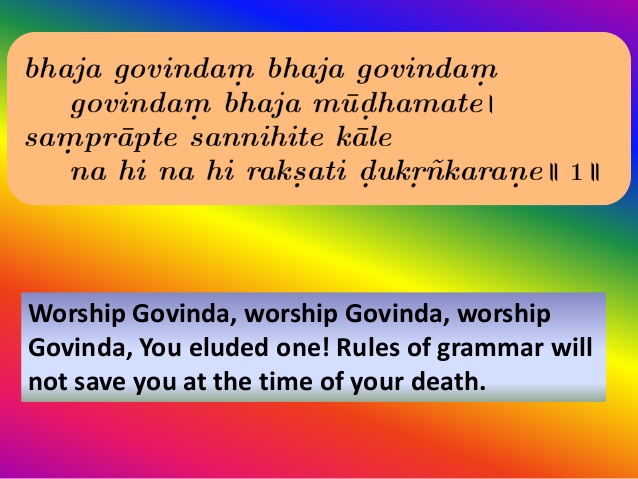
BHAJA GOVINDAM:
Fighting an Enemy. A story from Suratgarh, Rajasthan.
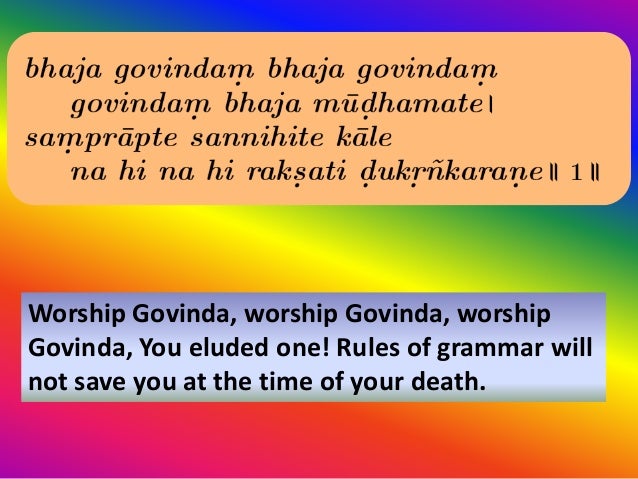
The human body is very vulnerable and could be attacked in several manners. In this particular patient, the deadly virus might have gained its entry into his body through the conjunctiva of his eyes. The saliva, the droplets carrying the Virus from an infected animal like a Jackal or Fox could have entered his eyes while the animal was in his vicinity but escaped from being noticed by him. We camp outdoors and sometimes fail to notice an imminent threat. I would suggest to all of my readers to use protective goggles while camping outdoors and introduce its use on a regular basis while conducting military exercises and training in areas where infected animals could be present. After taking all these precautions, we still need the help, the help of our LORD, the help that a sweet name like GOVINDA could offer to protect and defend our human existence.
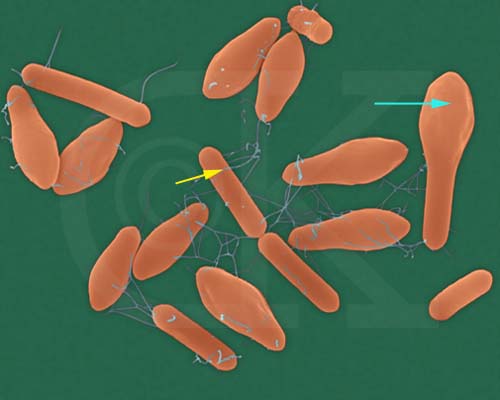
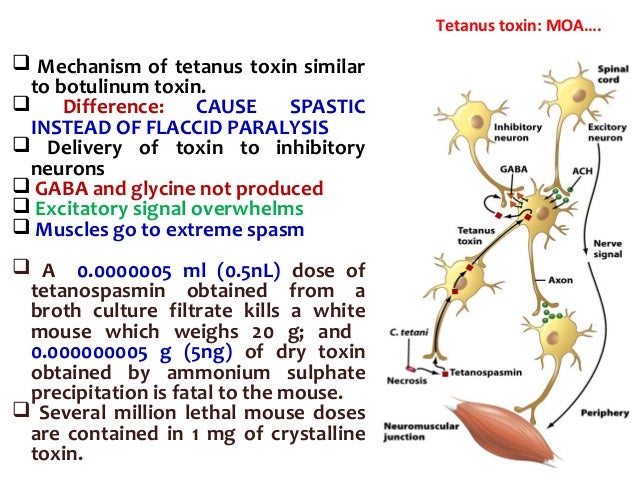
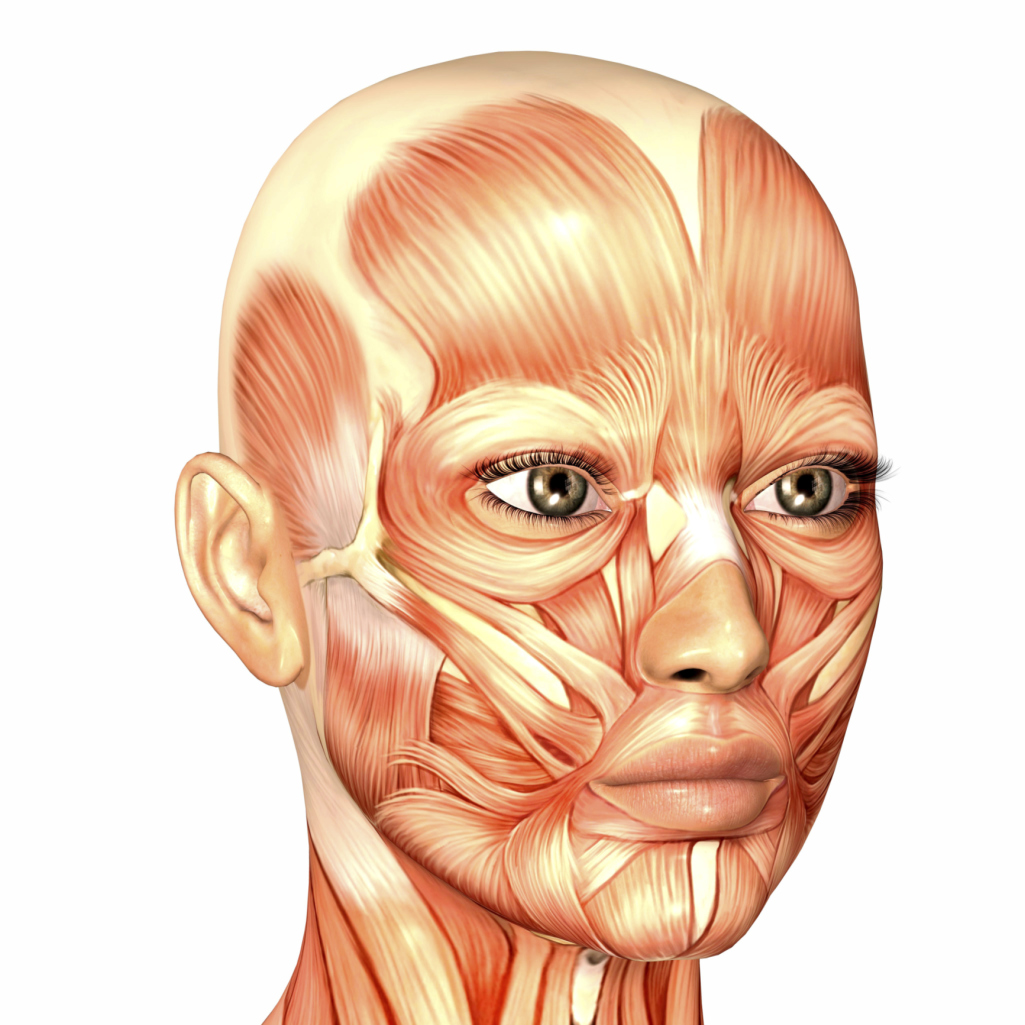
The incidence of Infectious Disease Tetanus. For example, there are no reported cases in the United States and Europe. A challenge to existence. A story from Military Hospital, Ambala.The spores of Tetanus bacilli can live in soil for years. The spores can survive autoclaving instruments at 121 degrees centigrade. A challenge to existence. A story from Military Hospital Ambala.The tetanus bacilli live in the guts of humans, cattle, and other animals.The Tetanus causing bacilli produce deadly Neurotoxin. How would you manage this case of Tetanus if you know that the bacilli are lodged in the endometrial lining of this young woman? In 1971, we had no Human Immunoglobulin. Anti Tetanus Serum is not very effective. What are your options?How would you get rid of the bacilli?Clostridium.tetani bacilli cause Tetanus.This young woman reported to the Hospital very early and her condition was diagnosed promptly.If you had known that the bacilli are lodged in the endometrial lining of her uterus, would you attempt surgical debridement? Would you attempt Curettage to remove the source of neurotoxin production?What are the risks of surgical debridement? Would you recommend Hysterectomy to save her life?Conservative Treatment did not save her life. Is there a chance that she would have been living after emergency Hysterectomy?Tetanus disease first manifests in the facial muscles.The jaw muscles are typically involved in Tetanus.Tetanus neurotoxin affects the neuro-muscular junction.Clostridium.botulinum causes Botulism, a paralysis of muscles.
A STORY FROM MILITARY HOSPITAL AMBALA, HARYANA STATE, INDIA :
I served at the Military Hospital, Ambala from July 1970, to September 1971. I served in the rank of Lieutenant during the period of my twelve months Hospital Internship Training. I narrated an earlier experience at the same Military Hospital in my blog post titled ‘Defining Indian Identity-Listen to the Heart’.
I want to recount some of my experiences to understand the nature of human condition and the challenges to human existence. The challenges are many and they are so vastly different. I am choosing to narrate the stories of those individuals whose life was cut short while they had no other health issues that could undermine their ability to live. Padma Sundarji, Lieutenant ColonelD’ Souza, and the athlete at Army Ordnance Corps Centre, Secunderabad fought to defend their existence from the threats of Cancer. I had earlier described the nature of the Immune System that defends the human body from Cancer, infections, and foreign proteins.
This is the story about a very young woman whose life was shortened in tragic circumstances and I want to stress the importance; the medical profession has a duty to avoid costly mistakes while delivering routine care.
When people walk into a government-run clinic or hospital, the usual impression is that a doctor would listen to the complaints in about a few minutes time, make a very quick evaluation, and send the patient away with a prescription.
I had earlier mentioned that in the Armed Forces, the Medical Officers would love to spend time medically examining people who have no apparent sickness as they lay emphasis upon diagnosing a person’s Good Health. I was introduced to aspects of Medical Practice in Army at Military Hospital, Ambala where I learned that writing a prescription should not be our first concern. Major. Mohan Pal Dhir, AMC, the Senior Surgical Specialist of the Hospital at that time of my service, instructed me to converse with my patients and try to know each one as an individual; as a person and not as a diseased entity. In India, we would still follow the cultural norms and do not intrude into personal lives unless the patient desires to discuss all the aspects of their medical history.
During 1971, I was in the Hospital Medical Inspection Room around 8.30 P.M. while my friend Lt. Mohan Lal Dubey, AMC was the Orderly Medical Officer;(Dr. M L Dubey is presently Professor, Department of Parasitology, Postgraduate Institute of Medical Education & Research, Chandigarh, India).
A young woman about 17-years-old accompanied by her father walked into the Clinic. Her father had earlier served in the Indian Army. They were traveling in a bus and she was feeling unwell, and they decided to discontinue their journey. The Military Hospital, Ambala is at a short distance from the Grand Trunk Road and the father knew the Hospital and thought that it would be better to have his daughter checked up before getting back to their village. She could not contribute any further information and did not suffer from any serious illness in her life.
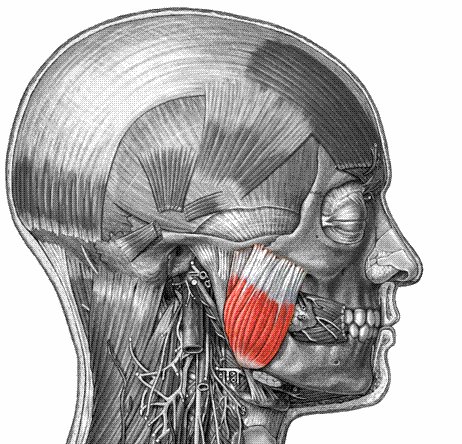
As she walked into the Clinic, I noticed an expression of fear on her face, and it alerted me that there would be some underlying life-threatening problem. Surprisingly, we could not detect any reason( a medical condition ) to explain her feeling of being unwell. Her temperature, pulse, respiration, heart, lungs, and abdomen were all within normal expected limits. I did not want to suggest to this young woman that she was alright. I kept talking to her and her father to arrive at some clues about this sudden sickness that she was experiencing. While speaking to her and intently looking at her face, I noticed with a sense of alarm, that her jaw muscle known as ‘masseters’ appeared to be a lit more ‘taut’.
Masseters are the primary chewing muscles. They cover the sides of the jaw just behind the cheeks. These muscles help us to clench our jaws and to grind our teeth. The stiffening of these muscles forced me to think of the possibility of Tetanus infection. Her medical history did not reveal any possibility of contacting this terrifying disease. She had no injuries of any kind.
Myself and my friend Dr. Dubey, checked her again and could not find any evidence of even a minor injury. Her throat, her teeth were normal. She was not hysterical. She was not exposed to drugs or poisons. She had no concerns or experiencing any difficulty about opening her mouth. There was no stiffness of the muscles that she could experience on her own.
A challenge to existence. A story from Kurnool Medical College.
This stiffness of jaw muscles, this involvement of facial muscles is the basis for diagnosing the disease of Tetanus. We do not need any laboratory investigations. We need not see the Tetanus bacilli to clinically diagnose this condition. The bacilli live in the intestines of humans, cattle, horses, cats, and dogs without causing any disease. The spores of the Tetanus bacilli are widely distributed in nature, especially in top soil. The spores are very resistant to heat, and chemicals like Lysol and can survive for years in the dust. But, the infection is caused only when the spores enter the body through any wound, particularly like a thorn prick, or a puncture wound caused by a nail, a splinter, or an agricultural implement. The bacilli are strict anaerobes, meaning that they cannot thrive in areas receiving free oxygen. The Tetanus bacilli germinate from its spores only where there is reduced oxygen supply. Generally, a patient would be having a dirty wound or injury. The disease manifests itself very quickly in about 2 days to 2 weeks after the spores germinated in the body tissues. The stiffness of the jaw muscles is called ‘Lock Jaw’ or ‘Trismus’.
We could not conclude that she was a case of Tetanus. The sign of ‘Trismus’ was hanging in the air like a ‘SWORD’. We made a decision to admit her to the Family Ward with the Provisional Diagnosis of ? TRISMUS and initiated the prophylactic treatment against Tetanus as recommended in the Standard Text Books of Surgery. During 1970s, Indian Army Hospitals had no Tetanus Human Immunoglobulin, the antitoxin that is used in the United States to neutralize the neurotoxin produced by tetanus bacilli. We were then using Tetanus Anti-Serum that is procured from horses. This Serum could cause some serious side-effects, and very high doses are not recommended unless treating established Tetanus. She was given an initial dose of 5,000 International Units with due precautions. In India during 1970s, and prior to it, the children were not routinely immunized by ‘triple vaccine’ which is very effective against Tetanus infection. As a precaution, she was also started on Penicillin antibiotic and initiated immunization against tetanus with a dose of Tetanus Toxoid injection. I went away hoping that the stiffness of jaw muscles that I had discovered on my examination would go away and that she would be alright.
Next day, when I arrived at the Hospital at about 7.00 A.M., I came to know that the suspicion of Tetanus became stronger and the patient was transferred to the Intensive Care Room at the Acute Surgical Ward. The Surgeon treated her very vigorously and she survived this terrifying ordeal of Tetanus for five days and lost her battle. She received medical attention as soon as she started experiencing illness, and yet could not be saved.
A challenge to existence. A story from Military Hospital, Ambala.
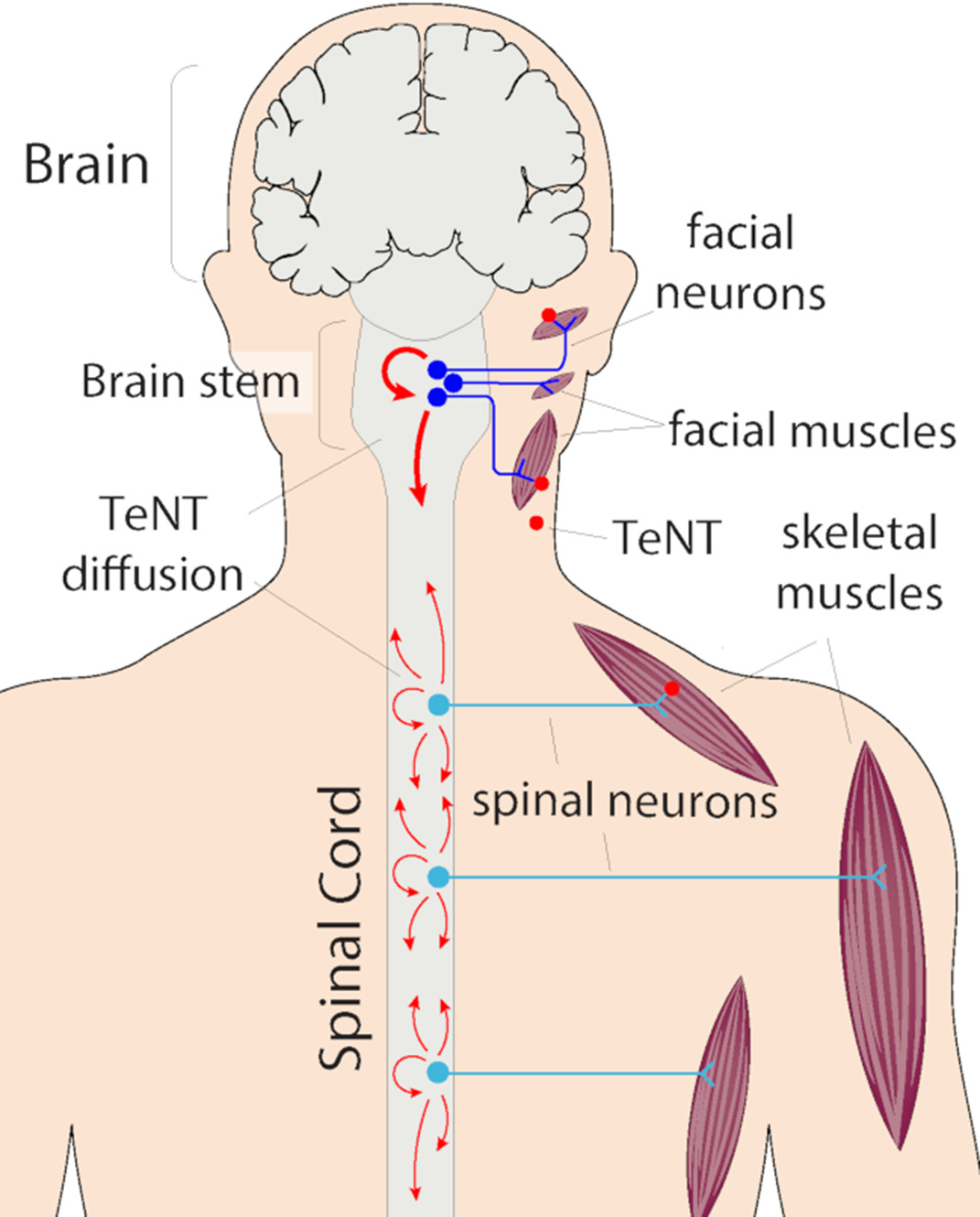
We failed because we could not discover the seat of her infection. The tetanus bacilli after entering human body do not circulate in the blood. They remain stationary at a place where they thrive. The bacilli do not directly harm the body. It is the ‘tetanospasmin’, the neurotoxin that they excrete which circulates in the blood and reaches the neuron cells of the spinal cord that inflicts the damage. It is one of the deadliest poisons known.
A challenge to existence. A story from Military Hospital, Ambala.
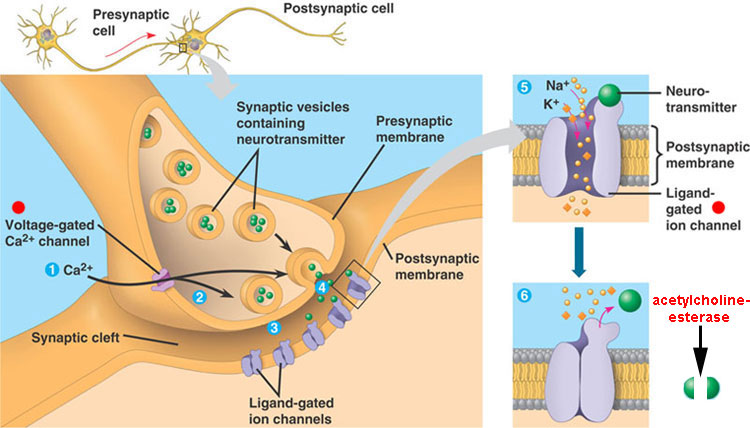
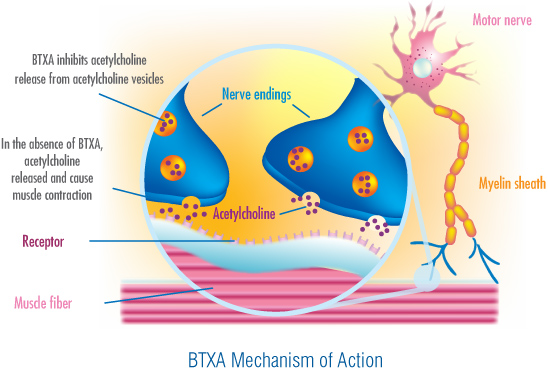
The poison is like the poison known as ‘STRYCHNINE’ which is used to kill rats. The poison specifically acts on the synthesis and release of ‘Acetylcholine’, a chemical that has a key role in the transmission of nerve impulses throughout the body. The stimulation, the accumulation of ‘acetylcholine’ results in rigidity of muscle groups of different voluntary muscles. This toxic rigidity of muscles gradually involves face, head, neck, trunk, extremities and the muscles of respiration. This rigidity of the body is punctuated by sudden tonic spasms, and convulsions. The patient would be exhausted and dies due to respiratory failure. Patients are nursed in dark, very quiet rooms, and are not disturbed and moved without reason. If the seat of infection is known, surgery is performed to completely clean the wound and remove all dead tissue where the Tetanus bacilli multiply.
In this young woman, we could not detect the seat of infection while she was treated. After her death, the Hospital conducted an autopsy to discover the problem. We could conduct this autopsy as her father gave us the necessary permission. Apparently, he understood our anxiety to discover the seat of this infection that took away her precious life.
The Hospital Pathologist, Major B K Sharma, AMC who conducted the autopsy informed me that he isolated the Clostridium.tetani bacilli from the lining of her uterus or womb. Apparently, she acquired a ‘Surgical Infection’ after undergoing a simple gynaecological surgical procedure commonly known as ‘CURETTAGE’ in which the lining membrane of the uterus is gently scraped and removed. The father and the patient did not reveal this information to us.
A sense of Modesty and Cultural Sensitivity could have prevented them from disclosing confidential health information. The operation was done in a Clinic or Hospital and we could not obtain any details. The surgical instrument that was used in this procedure was contaminated with dust carrying the Tetanus spores. The spores cannot be killed by autoclave or sterilizing the instruments at 121 degrees centigrade temperature.
This young woman might have experienced a relatively harmless disorder of her menstrual function which may not truly require a surgical treatment. But, we have no treatment for a disease called ‘GREED’. A medical practitioner sometimes performs a surgical procedure to justify charging a patient a large amount in fees to fill up his/her pockets.
In the autopsy examination, we could not find any reason as to why she was subjected to this Surgical Intervention which introduced this deadly infection into her body. She had no other complications from this surgical operation and she had no gynecological problems and our careful examination did not indicate any problem.
As a rule, doctors do not carry out a gynecological pelvic examination in young patients and particularly when they are not married and have no symptoms and signs of a gynecological disease. Even if we had known, we could not have done more to save her life. She was not evaluated by the Gynaecologist at the Military Hospital, Ambala. I would not think that a Gynecologist would have done the operation of ‘CURETTAGE’ for a second time to get rid of Tetanus bacilli from the endometrial lining of her uterus. It could pose risks of its own. An emergency hysterectomy could be life saving as it would have eliminated the source of neurotoxin production and would have given us a chance to fully neutralize the circulating neurotoxin. Tragically, she got caught up in a situation with no further escape.
BHAJA GOVINDAM:
A challenge to existence. A story from Military Hospital, Ambala.
We exist at the mercy of our LORD. It is not always easy to defend human existence. This tiny bacillus needs no oxygen for its survival. The antibiotics that we may use may not even reach it in enough concentration. The bacillus has a cell wall coated with sugar molecules which may even prevent the antibiotic from entering the cell. A person even with exceptionally strong and well-developed muscles cannot defend himself from this poison. Only timely immunization is the best way to protect a person. During 1970, a spent a month at the Kurnool General Hospital, Kurnool doing my Internship in Medical Ward III. As an Intern at the Medical Ward, I did a neurological examination of a young male patient with well-built body. He was admitted for Spasticity of muscles of his limbs, and the trunk. He was rigid like a board but did not experience any muscle spasms or convulsions. I diagnosed him as a case of Tetanus and transferred him to the Infectious Diseases Ward as per the Hospital Policy. These were the two instances when I made the Clinical Diagnosis of Tetanus and they are important and live in my memory and constantly remind me to seek the protection which only the LORD provides.
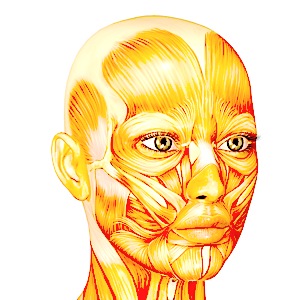
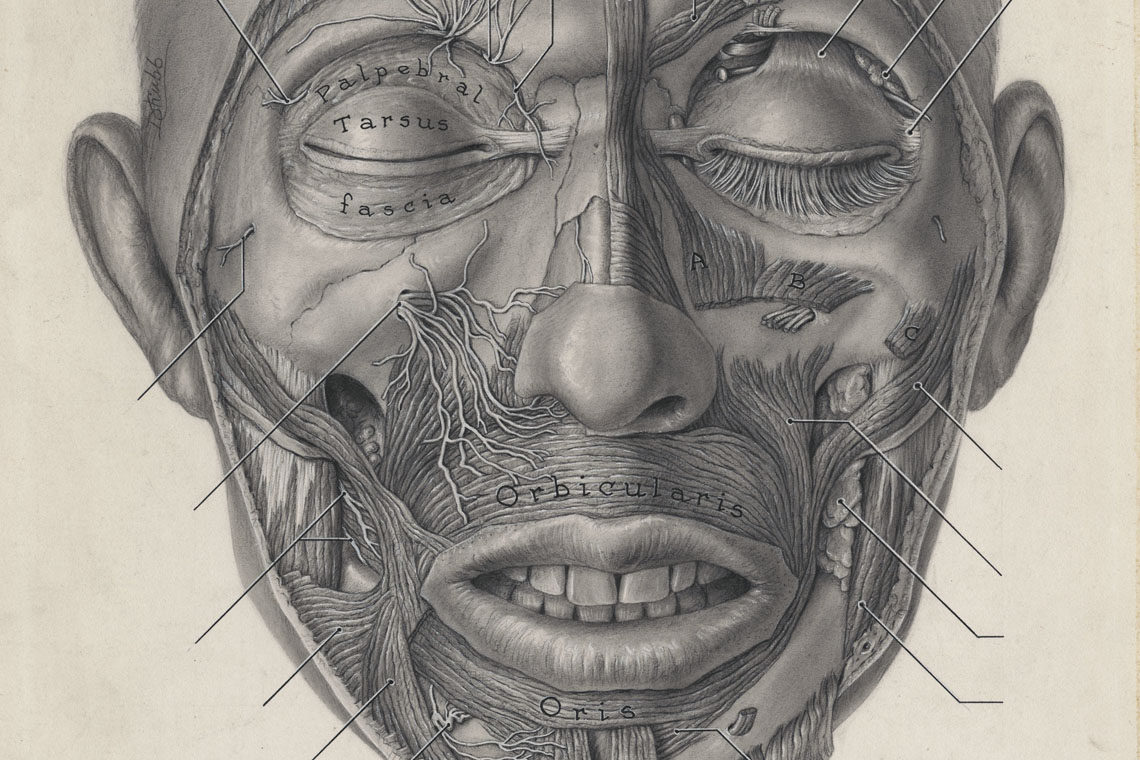
A challenge to human existence. A story from Kurnool Medical College. Illustration of the anatomy of a female human face
January 21 is Squirrel Appreciation Day. It was established by Christy Hargrove, a wildlife rehabilitator from North Carolina, to draw attention to the importance of these remarkably widespread creatures. Native to five continents and currently living on six (there’s no Antarctic squirrel), there are about 285 species of squirrels in the world, ranging from the tiny African pygmy squirrel to the Bhutan giant flying squirrel (when in Bhutan, be ready to duck).
Like most squirrels, the Eurasian red squirrel pictured here eats primarily nuts and berries. It also has a habit of burying caches of food for later consumption—and even ‘pretending’ to bury food to mislead other animals that might be watching. But squirrel brain capacity being what it is, the squirrel inevitably forgets where some of the food has been buried. Out of that grows one of the humble squirrel’s most important roles in the forest ecosystem: It’s an inadvertent planter of new trees and bushes. Three cheers for the squirrel!
The Squirrel Story that I am sharing is about the fact of Squirrel’s Conscious behavior and actions. While the Squirrel could be forgetful, my memory of events in Chakrata, Uttarakhand, India are still alive.
A SQUIRREL’S CONSCIOUSNESS AND DISPLAY OF MATERNAL INSTINCTIVE BEHAVIOR LEADS ME TO EXPLORE CONSCIOUSNESS.
A SQUIRREL STORY TO EXPLORE CONSCIOUSNESS
IRATE MOTHER SQUIRREL ATTACKED A VISITING TEACHER ON UNIVERSITY OF MICHIGAN CAMPUS:
A SQUIRREL STORY TO EXPLORE CONSCIOUSNESS.
The Ann Arbor News has reported this story about a mother squirrel’s angry attack. A 52-year-old Detroit Public School teacher was with a group of students touring the University of Michigan campus in Ann Arbor on Thursday, April 23, 2010. She had spotted some baby squirrels that were outside of their nest. The teacher had tried to alert the mother squirrel that was at a distance about a baby squirrel that was left alone. The mother squirrel could instantly recognize that the teacher was giving unwanted attention to her baby. The mother squirrel was instinctively aroused, turned on the teacher. The teacher tried to run away from the angry mother squirrel. She slipped and fell on the ground and injured her ankle. Seizing the opportunity, the mother squirrel bit the teacher on her leg. The teacher managed to escape and went to the Hospital Emergency for treatment.
PARENTAL CARE IS AN INSTINCTIVE BEHAVIOR:
Parental care is an aspect of social behavior exhibited by all animals. This is a complex unlearned or innate behavior that is influenced by heredity(genetic basis) as well as experience. The study of behavior provides valuable information about relationships among animals. No animal is ever completely isolated from some kind of environment. Animals exhibit social behaviors and form parental societies to care for their offspring. This parental care/maternal instinctive behavior is highly organized amongst mammals. The young are part of the mother while growing inside the mother and are nourished before birth by the ‘placenta’ of the mother. After birth, the young still seek nourishment from the mother and suck or lap milk produced by the mammary glands of the mother. This ensures that there is a strong family association between the mother and the offspring.
BEHAVIOR AND CONSCIOUSNESS:
The mother squirrel while displaying its maternal instinctive behavior has demonstrated that it is a ‘CONSCIOUS’ entity. Consciousness is defined as the state of being ‘conscious’ which has two components. 1. Being ‘conscious’ means being aware or recognizing the fact of one’s own existence. 2. Being ‘conscious’ also means being aware of our natural environment and it represents the state of knowing what goes on around one. Being conscious gives us the ability to interact with our environment and display appropriate behavior. In higher animals, this consciousness or awareness is also characterized by the presence of mental activity which includes an awareness of our own thoughts and emotions. A living entity is always conscious of its own existence. A living entity always exists in a state of consciousness. We identify a person as ‘UNCONSCIOUS’ if the person is not spontaneously interacting with his environment. There are several medical conditions that alter and affect our state of consciousness. Several drugs and intoxicants such as alcohol and poisonous agents like carbon monoxide, and carbon dioxide cause drowsiness, stupor, and various levels of semiconscious to deep unconsciousness. Consciousness is very important in evaluating people with head injuries and neurovascular accidents such as ‘stroke’. While a person is unconscious of his environment, he is still aware of his existence. This fact could be easily demonstrated by conducting tests. A living organism or a living cell responds when exposed to a stimulus. For example, an unconscious individual is evaluated by testing to see the response of the pupil of the eye which reacts by constriction of its size on exposure to a light beam.
CONSCIOUSNESS AND SURVIVAL:
January 21 is Squirrel Appreciation Day. My reflections on “Chakrata Karma” with the help of a Squirrel Story.
An organism uses its awareness to survive in the environment. I could illustrate this by narrating my personal experience.
On January 21, 1974, I was the Duty Medical Officer at the Military Hospital Wing, Establishment No. 22, Chakrata. We were using the buildings and the living quarters of the British while they ruled India.
On that cold winter night, after finishing the midnight round of the hospital wards, I arrived at the Duty Medical Officer’s Room along with the on duty Medical Nursing Assistants. The Duty Medical Officer is allowed to get some rest as the Duty Officer returns to regular working schedule at 7.00 A.M. at the end of the night duty. All other night duty personnel remain alert for they just work during their night shift. When we reached the room, I found a charcoal ‘sigri’ that was just lit a few moments before my arrival at that room. This type of cheap charcoal burners are used by the poorer working class Indian families to provide warmth during cold winter nights. It is not uncommon to hear about carbon monoxide poisoning associated with the use of such charcoal burners. However, in the Chakrata Military Camp, we were not using charcoal as a heating fuel and during the official inspection tours of the Camp I never discovered the use of the charcoal sigri for heating rooms. Some buildings such as the Officers’ Mess have fireplaces with chimneys and use firewood and not charcoal which poses the risks of carbon monoxide poisoning.
I was surprised to encounter a charcoal sigri for the very first time after arriving at Chakrata in 1971. The night duty personnel were not sure as to who placed the sigri in the Duty Medical Officers’ room. I never tried a charcoal sigri for room heating purpose while many Indians including my own family used wood coal for cooking purposes in the kitchen.
The Duty Medical Officer’s room at Chakrata Military Hospital is a small room that was not heated by any electrical space or personal heater, and the room had no fireplace or a chimney. I permitted the coal burner to remain in the room. The charcoal burns very slowly giving heat and it lasts for several hours and once the coal is lit, the burner needs no further attention. On that particular night, I did not recognize that the coal was of poor quality and it was not burning as expected and was giving away smoke while I turned off the light and resting in the bed. As the door and the windows of the room were shut, the smoke started filling up the room. The smoke is odorless and is lighter than the room air, and it slowly went up filling the room from the top without alerting me.
I was fully asleep in that dark room, unaware as to what was going on around me. I was suddenly alerted when I experienced ‘palpitation’, a consciousness of the beating of my heart (Heart palpitations, pal-pih-TAY-shuns, are the feelings of having a fast-beating, fluttering or pounding heart). I awoke but still could not see the smoke in the dark room. I evaluated my condition to understand my rapid heart rate. I was in good health and there was no reason to experience an increased heart rate. I decided to investigate my problem and walked up to the door to turn the light switch on. The moment I had turned the light on, I could immediately see the smoke-filled room and the fresh, clear layer of room air was below my bed level. I immediately left the room to get fresh air from outside and saved my life. I was feeling very nauseous and threw up while a fainting spell forced me to hit the floor. The hospital Duty Nursing Officer who was on her rounds watched it and rushed to me to provide assistance. She alerted other night duty staff. I recovered very quickly with the intake of fresh air. The Staff took out the offending charcoal sigri and fully ventilated the room driving away the smoke. With the charcoal sigri gone, the room became safe to be reoccupied. I returned to the room and returned to my morning work schedule at 7.00 A.M.
In my analysis, the charcoal sigri was intentionally planted in the Chakrata Military Hospital Room to harm and endanger my life. I make that claim as no person came forward to apologize to me for placing the charcoal sigri in the duty room. In my view, only an enemy agent would have the motivation to conceal his involvement in the unexpected appearance of a charcoal sigri at our Military Hospital.
Many people are not that fortunate, and we read about entire families losing their lives while sleeping in rooms that are heated by improper burners. I was not conscious of what was going on around me while I was sleeping. However, my body was aware and conscious all the time. The chemical sensors in my body worked alright, they sent signals to my brain centers, which in turn sent signals to increase my heart rate to improve the oxygen delivery. It, fortunately, worked like an alarm for me. Very often, people become more drowsy, become fully unconscious, and lose life while asleep in smoke-filled rooms.
THE SQUIRREL IN THE STORY OF RAMAYANA:
A Squirrel Story to explore Consciousness.
Three-striped Indian Palm Squirrels, natives of India, and Sri Lanka are mentioned in the epic poem of Ramayana. All living entities are conscious. Just like the mother squirrel in Ann Arbor which demonstrated its consciousness, in the epic poem of ‘RAMAYANA’, the awareness and the behavioral response of squirrels are described. The story narrates the construction of what is popularly known as “SETHU” or a bridge across the sea from the southern shores of Indian peninsula to the island of LANKA. The squirrels were apparently conscious of their environment. The squirrels had observed the activities of thousands of monkeys throwing stones to build the ‘ADAM’S BRIDGE’, and recognized the presence of LORD Rama who had initiated the effort to build the bridge. The squirrel(s) volunteered to help and in its behavior, it showed attributes of devoted service. The abilities of the squirrel are very small and yet it won the favor of the LORD and is blessed. The LORD is pleased with the squirrel’s conscious efforts to offer devoted service.
CONSCIOUSNESS AND ENERGY:
A Squirrel Story to explore Consciousness.
In Bhagavad Gita, Lord Krishna explains the nature of Human Existence. Consciousness gives the ability to seek and establish a connection between an energy seeker and an energy provider and both are Conscious entities. The living human entity or man is known as “NARA” in the Sanskrit language, and the superior energy is personified and is known by the name “NARAYANA”. The poem of ‘BHAGAVAD GITA'( The Divine Song) narrates the dialogue between ‘Nara’ known as prince ARJUNA and ‘Narayana’ known as LORD KRISHNA. The LORD describes the relationship between the human soul( ATMA) and the divine soul( PARAMATMA). In Chapter 7 which is called ‘PARAMAHAMSA VIJNANA YOGA’ (The Knowledge of the Ultimate Truth), verse 5 describes the ‘energy’ relationships. The material nature which is composed of the sky, earth, air, water, and fire are constituted of ‘inferior energy’ of the LORD. The superior energy of the LORD is manifested as the embodied soul of all living entities. This superior energy of the LORD which is in the living entities gives the ability to the living entities to exist in the world by exploiting the inferior material energy from nature.
THE ENERGY PROVIDER AND ENERGY SEEKER:
In Clinical Medicine, the medical practitioner evaluates the Level of Arousal or Alertness of his patient.
Dr Florian Mormann & Dr Christof Koch have defined Neural Correlates of Consciousness as the minimal neuronal mechanism jointly sufficient for any one specific Conscious percept. This definition basically makes no distinction between Thinking and Consciousness. The NCC definition is not based on correct understanding of the function known as Consciousness. It fails to speak about the role of Reticular Formation, and Brain Stem Nuclei that have the Capacity of Consciousness. The Capacity of Consciousness is an essential precondition of the Content of Consciousness. The Reticular Formation filters incoming stimuli to discriminate irrelevant background stimuli and composes the Content of Consciousness before relaying the information to the Cerebral hemispheres to cause Cortical awareness.
Dr. Florian Mormann & Dr. Christof Koch have defined Neural Correlates of Consciousness as the minimal neuronal mechanism jointly sufficient for anyone specific Conscious percept. This definition basically makes no distinction between Thinking and Consciousness. The NCC definition is not based on the correct understanding of the function known as Consciousness. It fails to speak about the role of Reticular Formation and Brain Stem Nuclei that have the Capacity of Consciousness. The Capacity of Consciousness is an essential precondition of the Content of Consciousness. The Reticular Formation filters incoming stimuli to discriminate irrelevant background stimuli and composes the Content of Consciousness before relaying the information to the Cerebral hemispheres to cause Cortical awareness.
The Human Organism is an association of trillions of individual living cells. Consciousness serves the purpose of Functional Unity and all the cells display adaptive functional subordination to serve the purpose of the Whole Organism or the Individual. There are two distinct aspects of human Consciousness;1. The Capacity for Consciousness, and 2. The Contents of Consciousness.
A Squirrel Story to explore Consciousness. What is Consciousness?What is Consciousness? Consciousness is not a simple psychological function. It is a mental experience of thoughts, moods, feelings, and emotions; a sense experience provided by organs of Special Sense and other sensory input; a body experience of its state of existence like temperature, oxygenation of blood, and hydration; a cellular experience of its motion, nutrition, and other metabolic and physiological functions. The Composition of Consciousness and the content of Consciousness includes both body and mind. Humans like other living entities support their existence by deriving energy from the environment. Living cells obtain nutrients such as sugars and use oxygen in their metabolism to generate energy to carry out their vital biological functions. The primary source of energy of all living entities on planet Earth is derived from the Sun. The Sun provides energy by burning its hydrogen fuel. It is reasonable to assume that Sun has derived its energy from a higher source of energy or “Higher Power”. This is evidenced by the observation of stars in various stages of their natural cycles of birth, and death. We can observe the birth of stars, the stars that are existing for a long time, the dying stars, the spectacular supernovas, and the dead stars like the white dwarfs, and the brown dwarfs. Human consciousness brings us awareness and sustains the connection between the energy provider and the energy seeker. We manifest our existence with this unique ability to gain energy from the environment. Just like the squirrel in the story of Ramayana, if we use our awareness, we will become ‘CONSCIOUS’ of LORD’s presence whose superior energy we manifest.
A Squirrel Story to explore Consciousness.Can a man know God? How does man acquire knowledge of God? Does man come into existence with this fully developed organ called a brain? How does human embryo, a mere clump of cells with no brain establish an anatomical connection with a host whose physical identity in the real world is not known or experienced by the embryo seeking its own growth and development?
A Squirrel Story to explore Consciousness.Belief in God – Is it a matter of Faith or is it a matter of Pure Reason? What can be known? How it can be known? How certain man could be about his intuition, sense experience, or deductive reasoning? Is there an acceptable method to know God? The consciousness of Innate Knowledge with which man exists in the natural world would provide information and knowledge about God Connection. Please also view related blog post titled ‘I am consciousness, therefore I am’.
SUNFLOWERS, HELIANTHUS ANNUUS,BELONGS TO COMPOSITAE/ASTERACEAE, THE FAMILY OF DAISY FLOWERS, NEED FULL SUN TO GROW WELL.
LIVING UNDER THE SHADOW – A PRESCRIPTION FOR DEATH: Many Indians have known General K S Sundarji, the Indian Army Commander during Operation Blue Star who was appointed as the Chief of Army Staff by Prime Minister Rajiv Gandhi. This is a story about Mrs. Padma Sundarji who lived and died under his shadow.
Mrs.PADMA SUNDARJI LIVED UNDER THE SHADOW OF GENERAL K S SUNDARJI.
LIVING UNDER SHADOW :
Shadow gives us protection or shelter from external danger. In India, women before their marriage live under the shadow of their fathers. After marriage, women are expected to live under the shadow of their husbands. Indian Tradition demands that a married woman should be subjected to live under the influence or domination of her husband. Very often, women love to bask under the glory of the position, the status, and the power wielded by their husbands. But, living under shadow should not endanger the very existence of the individual who is seeking the protection. Sunflowers bloom and thrive only when exposed to full sun. These plants cannot grow well under shade or shadow. Every individual has a fundamental Right to exist. No individual should dominate or influence another individual to an extent that compromises the Right to Life.
A PRESCRIPTION FOR DEATH :
General Krishnaswamy Sundarrajan,PVSM ( popularly known as General Sundarji) was India’s Chief of Army Staff from February 1, 1985 to May 31, 1988. I had spoken about him in my blog post titled ‘WINNING PEACE – THE ART OF PREPARING FOR WAR’. He was married to Padma Sundarji when he was a Major serving with the MAHAR Infantry Regiment in the Army. She spent the best years of her life living with him and had kept his company throughout his various postings. I met Padma Sundarji for the first time in my life in the year 1978. At that time, General Sundarji was serving as General Officer Commanding (GOC) of First Armoured Division. It was a rare distinction of great honor for an Infantry Officer to Command an elite Armoured Division. I was serving as a Medical Officer in the rank of Major under the Command of General Sundarji.
I had met Padma Sundarji at the General’s official residence. I went there to personally administer intramuscular injection of Streptomycin which is exclusively reserved for the treatment of Tuberculosis. Three drugs are concurrently used as first-line drugs in the Initial Phase of treatment of Tuberculosis and the daily injections of Streptomycin are used for about three months. Pulmonary Tuberculosis is a “NOTIFIABLE” Communicable Disease in the Armed Forces. Statutory legislations have been made at various levels for imposing legal obligations on all people to facilitate control actions to prevent the spread of the infection in the community. ‘OPEN’ or infectious cases of Pulmonary Tuberculosis are always treated in a ‘Isolation Ward’ of a Hospital. Padma Sundarji was getting treated at her home and hence would not be considered as an ‘open’ case. It also means that there were no Mycobacterium tuberculosis Bacilli ( Gram Positive, Acid-Fast Bacilli) in her sputum. Apparently, she was diagnosed as a case of Pulmonary Tuberculosis simply based upon an interpretation of her chest X-ray films. There was no conclusive evidence to claim that she was having Tuberculosis infection. Tuberculosis is prevalent in India but it is less common among people serving in the Armed Forces. I had mentioned in my earlier blog post that we routinely medically inspect all personnel to detect illness including infections like Tuberculosis. While she lived at the General’s residence, there was no practical chance that she would come into contact with an ‘open’ case of Tuberculosis who could transmit this infection to her. Apart from that, we routinely vaccinate all individuals to protect them from Tuberculosis. These facts were not used in establishing her medical diagnosis. She was diagnosed as a Pulmonary T.B. case by a Medical Specialist who had no special training in the diagnosis or treatment of Lung Cancer. A Medical Specialist while looking at a chest X-ray film would tend to diagnose T.B. and not Lung cancer. This Medical Specialist had misdiagnosed Padma Sundarji as a case of Pulmonary T.B. as he had no experience in the diagnosis of Lung cancer. She was given the Standard Anti- T. B. treatment and if the treatment was correct and appropriate, she would show improvement day after day. She would have felt a little better after each day of her treatment with those very powerful drugs. She had NOT shown any encouraging response to her therapy and in fact her condition was deteriorating day after day. The Medical Specialist was very convinced with his diagnosis and he had never bothered to check upon her while she was religiously taking these daily doses of intramuscular injections of Streptomycin and other drugs.
When I first met Padma Sundarji, I had immediately diagnosed that she was not in Good Health. Her face lacked the expression that is typically associated with the vigor and bloom of Good Health. I had instinctively known that she was not responding to her Anti-T.B. treatment. I spoke to her mother Smt. Indira Rao. This elderly lady had openly expressed her disbelief in the diagnosis. She was utterly unhappy with the Anti-T.B. treatment that was being given to her daughter. She was already feeling helpless and anxious about her daughter’s life. If Padma Sundarji had been the wife of any other person, I would have immediately sent her to the Hospital and would have obtained an opinion from a different Specialist. In my previous blog post I had narrated as to how I had intervened at Military Hospital, ROORKEE and had publicly exposed the incompetence of the Medical Specialist there during 1973. Padma Sundarji was living under the shadow of her husband. If you are in someone’s shadow, you receive less attention and seem less important. I was less qualified than the Medical Specialist, and I was not in a position to convince General Sundarji to disregard the opinion and the treatment recommended by this Medical Specialist. Padma Sundarji needed urgent re-evaluation. I had asked Smt. Indira Rao to take her daughter to the All India Institute of Medical Sciences at New Delhi and obtain a second opinion. Indian Traditions stood in the way of this battle for life. Women are not expected to act on their own even if their own life is at a great risk. She could not act upon my sincere suggestion and my desire to protect the health of a person to whom I was asked to give an injection. I had administered the injections for only a short period of time and the duty was resumed by another Medical Officer. I had no further contact with her or her mother. Eventually, Padma Sundarji was transferred to Army Hospital, Delhi Cantonment. She died of Lung cancer in 1978. She was cremated in New Delhi. She never had a chance to return alive to the First Armoured Division and to her existence under the shadow of her husband, the General who later became the top Military Commander of Indian Armed Forces.
THE BATTLE OF LIFE vs DEATH :
In 1978, the medical community and the general public were not aware of the dangers of ‘SECOND-HAND’ tobacco smoke. People who inhale ‘second-hand’ smoke are exposed to the same cancer-causing agents as smokers. Second-hand tobacco smoke also causes Lung Cancer. By the time symptoms appear, Cancer may have begun to spread. Hence, early diagnosis of Lung Cancer is very important to improve the chances of survival of Cancer victims. I am not claiming that Padma Sundarji would have lived forever if I had admitted her to a Hospital promptly. I could have definitely helped to prolong her life by a few hours or even a few more months. General Sundarji who had repeatedly inspected and tested the Medical Unit under his Command in the First Armoured Division clearly knew that his Medical Officers at their very best could only protect and prolong the lives of his men for a few precious hours. During those precious moments, we evacuate our casualties to the nearest Hospital. If we succeed in doing so, we most certainly save some lives. In the battle of Life vs Death, a few hours makes a huge difference. Padma Sundarji who had lived under the shadow of a General did not receive the benefit that I was trained to give to the men under his Command. She was excluded and I did not evacuate her to the nearest Hospital which could have added a few more hours to her life.
BHAJA GOVINDAM – PART – II :
At First Armoured Division, we took pride in our training and preparedness to defend our country from the threats of external aggression. Apart from the threats posed by external enemies, human existence faces several challenges. Many times, we are not aware of the threats faced by our loved ones who live under our shelter. The Art of Diagnosis interests me,but there may be no escape from the threat and hence the ultimate refuge remains the same, the sweet name of GOVINDA.
Bhaja Govindam, Bhaja Govindam,
Govindam Bhaja mudha mate,
Samprapte Sannihite kaale,
Nahi Nahi rakshati Dukrun karane.
Nyctanthes. arbor tristis,Night-flowering Jasmine, The tree of Sorrow.
The Art of Battlefield Medicine.The Battlefield Resuscitation of Prince Lakshmana by Lord HANUMAN.In the epic poem of Ramayana, the battle wounded Prince Lakshmana is resuscitated by a medicinal herb known as ‘SANJIVANI’, fetched by mighty Hanuman. Ramayana also describes the Art of Diagnosing the medical condition known as ‘SHOCK’ from the facial appearance of the Battle Casualty.Florence Nightingale became famous for her role in providing CARE and COMFORT to the Battle Casualties in the Crimean War.The Flag of the Indian Army Medical Corps symbolizes its Primary Mission. The Art of Battlefield Medicine.
SPECIAL FRONTIER FORCE-OPERATION EAGLE-LIBERATION WAR OF BANGLADESH 1971-72:
OPERATION EAGLE 1971-72 in the Chittagong Hill Tracts of Bangladesh. THE ART OF BATTLEFIELD MEDICINE
Indian Prime Minister Mrs. Indira Gandhi initiated Liberation of Bangladesh during 1971 with military action in the Chittagong Hill Tracts. The battle plan of this military action is known as Operation Eagle. This post is related to that battlefield experience.
Army represents a large organized force armed and trained for War. The Primary Mission of Army is to wage a War or to defend itself in a War. The purpose of Army Medical Corps is to support the Army to accomplish its Primary Mission. AMC provides support during the Battle, while preparing for the Battle and to keep the Army Battle-Ready at all times. In a Combat, when a direct or indirect contact with an enemy is made, Casualties could occur. These Casualties could fall into three groups :
Group I : These are killed outright or severely wounded past any help. I encountered such Battle Casualties who died in my presence. However, it is important to identify them and document the nature of injuries with an aim to develop a strategy to use more effective Battle Plans and in evolving better personal protective clothing and devices.
Group II : These Casualties are severely wounded, they require continuous medical support and supervision and transportation to a Field Hospital for appropriate Life saving Surgery and further definitive treatment in a Base Hospital.
Group III : These Casualties are less critically injured persons who need minimal medical attention. When appropriately treated at the Battalion level, they could be immediately returned to the Combat Operations and very useful in sustaining the numbers of the fighting force.
Army Medical Corps acts to prevent the loss of life among the Group II and Group III casualties. In doing so, AMC provides a blanket of ‘Care’ and ‘Comfort’ to those injured and it acts to boost up the morale of the entire fighting Force. AMC personnel take part in military Operations as Combatants and are entitled to carry their personal weapons.
THE EFFECTS OF BATTLE INJURIES:
The battle wound is a ‘CONTINUING’ injury and its effects on the entire body are dynamic ones. If left unattended, the physical condition of the Battle Casualty deteriorates. Hemorrhage or loss of blood from a blood vessel is a major contributing factor to Shock and death. Most of those patients with wounds of great vessels of the chest and abdomen bleed to death before getting medical help. Bleeding could be; (a) External or visible, or (b) Internal or invisible. Apart from loss of blood, injuries damage soft tissues, internal organs and structures like bones and nerves.
Resuscitation actually means the act of reviving or restoring the vital functions of a severely wounded person. Resuscitation involves those procedures which are carried out to counteract the effect of the wound. Since the wound is a ‘continuing’ injury and its effects on the entire body are ‘dynamic’ ones, the Resuscitation is a process of ‘continuing’ treatment. Since the effects of the wound start as soon as the man is injured, Resuscitation should start as soon as the wounded man is seen. Hence, ‘FORWARD’ Medical Care is essential for the survival of the wounded. Resuscitation must commence in the ‘Field’ where the Battle Casualty is found. The AMC personnel, Medical Officers, Nursing Assistants, and Ambulance Assistants are combatants and it is not unfair to send trained medical personnel to the Combat Zone. Use of a qualified doctor in the ‘Forward’ location is far more beneficial to the wounded soldier. During the India-Pakistan War of 1971, I was present in the Combat Zone and my services were immediately made available to the wounded soldiers. I witnessed the benefits of initiating early treatment of Battle casualties. The concept of ‘Combat Life Saver’ improves the chances of Casualty survival. Emergency life saving treatment must start as far ‘FORWARD’ as possible and it must continue as a Casualty is evacuated to the rear. It must be understood that swift medical treatment greatly enhances survival. AMC must plan to provide Emergency medical treatment of soldiers at or near a Combat Zone to increase the chances of survival. The next major problem which contributes to the death of Casualties is that of a faulty Evacuation Plan. Lack of transportation is often the primary cause of untimely Evacuation. I encountered this problem of lack of transportation during the initial phase of the India-Pakistan War of 1971 but I met this challenge with courage and had taken my patients in improvised stretchers on a memorable long march of about 40 miles and had them airlifted in a helicopter. All of my patients survived this ordeal. The initial treatment in the battle field is important to ensure that the Casualty will withstand the journey to the rear. The wounded patient must be able to survive the journey and should not arrive at the Field Hospital dead or dying.
THE PRIMARY AIMS OF TREATMENT AT BATTALION LEVEL:
1. If necessary, establish and maintain an adequate airway. The basic mechanisms of respiration should be intact. A ‘sucking’ wound of the chest must be immediately sealed.
2. Bleeding should be stopped or arrested. Severe blood loss may not be evident immediately after injury. After wounding, a blood-volume deficiency will always occur. As opposed to internal bleeding, bleeding from blood vessels in extremities can be controlled more easily. The pressure dressing used must be tight enough to control bleeding. If applied properly, pressure dressings will often control major hemorrhage than the use of a tourniquet. The aim is to prevent the onset of Shock, delay its progression and to stabilize patient’s condition to prepare him for transportation.
3. Relief of Pain : Pain induces and aggravates stress. Prompt relief of pain provides an enormous sense of Comfort. Pain aggravates the casualty’s poor condition. Fractures apart from causing pain, also increase damage to muscles and thereby promote further blood loss. Fractures must be adequately splinted. Patient must be properly immobilized to withstand Evacuation. The pain associated with most soft tissue injuries could be easily relieved by the use of Morphine. I had very effectively used Injection Tubonic Morphia/ Morphia syrettes 0.25 or 1/4 grain.
4. Prevention of Wound Infection : Wounds break the barriers against bacteria. Bandages should not be applied carelessly. When applied properly, bandages arrest bleeding, prevent disturbance of the wound by foreign objects and prevents further contamination. Battle wounds get easily contaminated. Before clinical evidence of infection, early administration of antibiotics is useful. I had orally administered Tetracycline tablets, a broad-spectrum antibiotic with very good results.
5. DO NOT LAY TOO MUCH EMPHASIS ON TRANSPORTATION : Hurried Evacuation leads to undue deterioration during transportation. The transportation should not be at the expense of proper treatment. The Medical Officer at the Battalion in a Combat Zone is not merely a First-Aid provider. He is the most important member of the Resuscitation Team. He must take time to institute initial procedures which will best prepare the wounded soldier for transportation. At all times, the Medical Officer must aim to put a Casualty in the best possible condition for transportation in the shortest period of time.
The Art of Battlefield Medicine. Army Medical Corps and the concept of CARE and COMFORT during Battle.
THE CONCEPT OF CARE AND COMFORT:
Army Medical Corps accomplishes its mission of providing ‘CARE’ by making an effort and actually by reaching the Battle Casualty as early as possible. The presence and the physical contact with a person providing medical aid gives the feeling of being cared for. The Battle Casualty should not struggle to find his way to reach the Regimental Aid Post. A Battle Casualty feels reassured if the medical care provider demonstrates a sense of resolve, determination, and purpose in reaching out to the wounded person in the Field. An early and effective medical intervention is the key to deliver ‘Care’ and ‘Comfort’. The human body experiences a sense of improvement when the bleeding is stopped, when the pain is relieved and when you are placed in a position that physiologically contributes to the sense of ‘Comfort’. I also speak about the role of compassionate care in the relief of pain and in the management of pain. Compassion acts like a Force/Power/Energy. It has an uplifting power. Compassion provides both a physical and mental experience to the person providing the care and on the person receiving the care. The caregiver experiences less physical and mental fatigue and would be able to accomplish a physically and mentally challenging task with ease and a sense of joy or happiness. The person receiving the care experiences a sense of calm and reassurance, his pain tolerance improves, he becomes pain resistant and wold require less effort in his pain management both in terms of the dose and the frequency of his pain relief medication. The psychological and physical stress caused by the battle injuries is reduced as the wounded person experiences a sense of joy or happiness for getting compassionate attention. Human touch is a powerful tool in the arena of Battlefield Medicine.
The Art of Battlefield Medicine. Armed Forces Medical College, Pune and the AMC Centre and School in Lucknow should prepare Medical Officers to face the greatest challenge of its Primary Mission.
THE GREATEST CHALLENGE FOR ARMY MEDICAL CORPS:
The lives of the seriously wounded soldiers depend upon the professional skills of the Medical Officer and other medical personnel deployed at the Battalion level. I served as a Medical Officer at a Battalion level during the India-Pakistan War of 1971, and later served in a Field Hospital providing support to an Infantry Division, and in a Medical Battalion providing medical support to an Armoured Division. I had also used this experience in serving the Land Forces of the Sultanate of Oman. The need for the best trained men in the most ‘FORWARD’ location where the greatest test of ability is made remains the greatest challenge for the Army Medical Corps. AMC must orient its policy and training to achieve this end. AMC must apportion training time of the Medical Officer so that a maximum training occurs in acquiring the skills to provide initial care to the battle casualty in the combat zone. To supervise the training of the medical care support personnel, the Medical Officer should also be trained to acquire the professional skills that are used by a Nursing Assistant and an Ambulance Assistant. In the Art of Battle-Field Medicine, no job is a small job.
The Art of Battlefield Medicine. The India-Pakistan War of 1971 and the Liberation of Bangladesh are very significant achievements of Prime Minister Indira Gandhi. As I was then serving in Establishment No. 22 under the Cabinet Secretariat, I had direct and personal understanding of her Foreign Policy Initiatives. She approved our military Operation in the Chittagong Hill Tracts. In the conduct of this War, we faced a very critical moment and it needed her personal intervention and a decision that she alone could make. I rendered my services to overcome the challenge posed by that critical situation. The importance of this situation could be understood as it needed an intervention from the Prime Minister. I am now asking the Government of India to recognize my GALLANT response in enemy’s territory without any concern for my personal safety.
Please feel free to share this page with your friends and others who may care about preserving the lives of the battle wounded persons.
Dr. R. Rudra Narasimham, B.Sc., M.B.B.S.,
Service Number: MS-8466; MR-03277K; Rank: Major; Branch: Army Medical Corps( Direct Permanent Commission) Designation: Medical Officer, Unit: South Column, Operation Eagle(1971-72)
Organization: Headquarters Establishment No. 22 C/O 56 APO; Vikas Regiment, Special Frontier Force/Directorate General of Security.
The Art of Battlefield Medicine. A tribute to Florence Nightingale on International Nurses Day.
The Victory Over Death – The Psychology of Warfare. The Connection between the Fruit and the Vine. To overcome the Fear of Death, the man is encouraged to sever the attachment to the Cycle of Life and Death which separates man from his true or real immortal essence. Lord Shiva is often called Lord God “MAHESHWARA” is The Protector and the Destroyer God of Hindu Trinity. Shiva physically demonstrates His Freedom from Attachments by covering His entire body with ashes (Bhasma), the burnt residue of His desires.
Special Frontier Force – Operation Eagle – Liberation War of Bangladesh 1971:
Operation Eagle 1971 – The Victory Over Death – The Psychology of Warfare. The Connection between the Fruit and the Vine. To overcome the Fear of Death, the man is encouraged to sever the attachment to the Cycle of Life and Death which separates man from his true or real immortal essence.
Mrs. Indira Gandhi, Prime Minister of India initiated the Liberation of Bangladesh during 1971 with military action in the Chittagong Hill Tracts. The battle plan of this military action is known as Operation Eagle. This blog post is related to the war experience obtained by conducting the military operation in the Chittagong Hill Tracts.
The Victory Over Death – The Psychology of Warfare. The Connection between the Fruit and the Vine. To overcome the Fear of Death, the man is encouraged to sever the attachment to the Cycle of Life and Death which separates man from his true or real immortal essence. Kachumbar/Cucumber, Cucumis sativus, a native of India.The Victory Over Death – The Psychology of Warfare. The Connection between the Fruit and the Vine. To overcome the Fear of Death, the man is encouraged to sever the attachment to the Cycle of Life and Death which separates man from his true or real immortal essence. Dosakai, a popular Cucumber of Telugu People.of IndiaMrityunjaya Maha Mantra: The Victory Over Death – The Psychology of Warfare. The Connection between the Fruit and the Vine. To overcome the Fear of Death, the man is encouraged to sever the attachment to the Cycle of Life and Death which separates man from his true or real immortal essence.
MRITYUNJAYA MAHA MANTRA:
Om, Triyambakam, Yajamahe,
Sugandhim Pushti Vardhanam,
Urvaru kamiva bandhanaan
Mrityor Mukshiya Maamritaat.
This hymn in praise of Lord Shiva also known as ‘Triyambaka’ appears in the ancient Vedic Book of Rig Veda. It expresses a very unique idea or concept about conquering death. This idea has originated in India as the idea is connected to a plant that is a native of India. Man is mortal, and just like a fully ripened fruit falls off from a tree, a man ripe in his age, even when not afflicted by any disease or sickness, would meet natural physical death. This Mantra suggests that a man can become ‘immortal’ (a person who has consumed the divine nectar known as ‘Amrita’) and conquer physical death (Mrityu) by simply severing his psychological attachment to his own life and liberating (Mukshiya) himself from bondage. This Mantra compares the act of cutting attachments to free oneself (Mukti) to secure victory (Jaya) over physical death (Mrityu) to the act of harvesting Cucumbers (Urvaru). The pedicle (Kamiva or the stalk of the fruit) should be severed to separate the fruit from its attachment (Bandhan) to the Vine.
The Victory Over Death – The Psychology of Warfare. The Connection between the Fruit and the Vine. To overcome the Fear of Death, the man is encouraged to sever the attachment to the Cycle of Life and Death which separates man from his true or real immortal essence.
Cucumber, Cucumis sativus is a vine fruit. It is a member of the Cucurbitaceae family. It is native to northwestern India and is being cultivated for thousands of years. The fruit is harvested in the immature stage and is eaten in its unripe, green form. The ripe fruit turns bitter and is not eaten. The fruit is firmly attached to the vine by its stalk or pedicle. The unripe, green fruit would not naturally fall off from the vine. The farmer harvests the Cucumber by cutting off the pedicle (Kamiva). This analogy of severing the connection and freeing the Cucumber also implies that man should not wait until he reaches a very ripe age to conquer physical death. A man who is still at an unripe age or still young in years, just like the unripe and green fruit of Cucumber, should plan to overcome death or his ‘liberation’ from death, by cutting away the stalk or pedicle which symbolizes ‘attachment’ (bandhan). The ‘attachment’ in the context of man and his mortality could be described as his ‘Fear of Death’. To overcome the Fear of Death, the man is encouraged to sever the attachment to the Cycle of Life and Death which separates man from his true or real immortal essence. By overcoming his ‘Fear of Death’, a man’s ‘attachment’ to the ‘Cycle of Birth and Death’ is severed and he is ‘Liberated’ (Mukshiya) from Death (Mrityu). As long as the ‘Fear of Death’ is alive, man cannot win his battle against Death and mortality. To achieve ‘immortality’, man must conquer his ‘Fear of Death’. Indians seek to praise (Yajamahe) the Lord known as ‘Triyambaka’ for He declared His victory over Death (Mrityu) by burning away all of His desires to become Free from all Attachments. Shiva physically demonstrates His Freedom from Attachments by covering His entire body with ashes (Bhasma), the burnt residue of His desires.
The Psychology of Warfare:
An Infantry soldier to ‘attack’ his enemy’s position has to physically ‘advance’ towards the entrenched enemy and directly confront the enemy. The ‘assault’ on the enemy’s position or site is carefully planned and the Infantry soldier is physically, and psychologically ready for his task which exposes him to the threat of death. The soldier loosens the attachment called the ‘Fear of Death’ in his march towards the enemy. A man who is tied down by the ‘Fear of Death’ cannot physically move towards his enemy who symbolizes the threat of death.
I participated in the 1971 War of Liberation of Bangladesh. The men of my Unit did not recite the ‘Mrityunjaya Maha Mantra’, but they used its concept in their psychological preparation for War and in their attack on their enemy’s positions. Our success in 1971 over the enemy demonstrates that the concept of breaking the stalk or pedicle is useful to gain victory over the ‘Fear of Death’ before we actually meet the threat of Death.
The Psychology of Warfare.The Indo-Pak War of 1971 and the Birth of Bangladesh are very significant achievements of Prime Minister Indira Gandhi. As I was then serving in an Establishment under the Cabinet Secretariat, I had direct and personal understanding of her Foreign Policy Initiatives. She had personally approved our military Operation in Chittagong Hill Tracts. In the conduct of this War, we had faced a very critical moment and it needed her personal intervention and a decision that she alone could make. I rendered my services and had overcome the challenge posed by that critical situation. The importance of this situation could be understood as it needed an intervention from the Prime Minister. I am now asking the Government of India to recognize my GALLANT response in enemy’s territory without any concern for my personal safety.To defend her true nature, to preserve her essence, to resist the violation of her personal dignity and honor, Rani Padmini of Chittorgarh, India courageously responded to a difficult and challenging life situation by an act of self-immolation. Her physical being was destroyed by the fire which she had willingly embraced and yet her spirit has survived. She has declared Victory over Death and she lives as an immortal person in the hearts of Indians and gives them a sense of Pride and Identity. Indian Culture and Tradition glorify the act of giving life to resist the Enemy.
In my blog post titled “Proud to be an Indian”, dated Monday, September 17, 2007, I described the ability to conquer fear as ‘Courage’. Courage does not mean the absence of ‘Fear’. Rani Padmini has truly immortalized herself by her victory over the ‘Fear of Death’. She defeated her enemy’s intention to violate her personal dignity and honor. She could embrace fire for she had overcome the ‘Fear of Death’. She lives in our hearts today as a truly “Immortal” person. She is described as a person who declared Victory over Death (Mrityun Jaya).
The Victory Over Death – The Psychology of Warfare. The Connection between the Fruit and the Vine. To overcome the Fear of Death, the man is encouraged to sever the attachment to the Cycle of Life and Death which separates man from his true or real immortal essence. Lord Shiva is often called Lord God “MAHESHWARA” is The Protector and the Destroyer God of Hindu Trinity. Shiva physically demonstrates His Freedom from Attachments by covering His entire body with ashes (Bhasma), the burnt residue of His desires.