Thekchen Chöling, Dharamsala, HP, India – This morning, His Holiness the Dalai Lama wrote to President Biden to offer profound congratulations on his becoming President of the United States of America.
“As someone deeply concerned with the ecological crisis our planet faces,” he wrote, “I am so pleased that you are elevating the issue of climate change to your highest priority and that the United States is rejoining the Paris Climate Accord. Global warming is an urgent threat to the whole world and to the survival of our species.
“May I also commend you for other measures you are taking towards the betterment of the United States of America. I have long been an admirer of your great country, the bastion of liberty, democracy, religious freedom and the rule of law. The whole world places its hope in the democratic vision and leadership of the United States. In these challenging times, I am confident that you will contribute to shaping a more peaceful world in which those suffering from hunger, disease and violence may find help. The need to address these issues is indeed pressing.
“Once again, I take this opportunity to express our gratitude for your long-standing support for the Tibetan people. It has been our good fortune to have enjoyed the friendship and encouragement of the American people and their leaders in our endeavour to protect and preserve our ancient Buddhist culture, a culture of peace, non-violence and compassion.”
His Holiness concluded, “I pray for your success in meeting the challenges that lie ahead in fulfilling the hopes and aspirations of all Americans and in contributing to a more peaceful and harmonious world.”
January 20, 2021. Special Frontier Force-Establishment No. 22-Vikas Regiment Congratulates the 46th US President.
JANUARY 19, THE CELEBRATION OF EDGAR ALLAN POE. SLEEPLESS IN PARIS SAVED BY EVENING IN PARIS. I AM INVITING READERS TO CONTRIBUTE A ROMANTIC STORY TO PARTICIPATE IN WHOLE ASSIGNMENT TITLED “EVENING IN PARIS.”
I am inviting my readers to contribute a romantic story to participate in a Whole Assignment titled “Evening in Paris.” The story celebrates a fictional Archangel’s memorable trip to Paris to rescue a dame in dire distress.
SLEEPLESS IN PARIS SAVED BY EVENING IN PARIS. A STORY INSPIRED BY EDGAR ALLAN POE’S POEM ‘THE RAVEN’. CAN #ARCHANGEL RESCUE MISS POE POSSESSED BY ‘THE DEVIL’?SLEEPLESS IN PARIS SAVED BY EVENING IN PARIS.: “EVENING IN PARIS” IS THE TITLE FOR A SHORT STORY. MY READERS ARE GIVEN THE WHOLE ASSIGNMENT TO COMPLETE THIS STORY THAT FOLLOWS MY BRIEF INTRODUCTION .I AM POETICALLY INSPIRED BY POEM “THE RAVEN” COMPOSED BY EDGAR ALLAN POE .
Edgar Allan Poe (born. January 19, 1809 – died. October 07, 1849) is one of the most brilliant and original writers in American literature. Poe is part of the American Romantic Movement. His short stories are ingenious and profound. Poe often theorized about the art of writing, as in his essay “The Poetic Principle.” In his view, a poem deserves its title only in as much as it excites by elevating the soul. I find that Poetic Inspiration, and excitement in his poem ‘The Raven’:
Once upon a midnight dreary, while I pondered, weak and weary, over many a quaint and curious volume of forgotten lore –
While I nodded, nearly napping, suddenly there came a tapping,
As of some one gently rapping, rapping at my chamber door.
“Tis some visitor,” I muttered, “tapping at my chamber door –
Only this and nothing more.”
“The Raven” reminds me of ‘The Devil’, ‘The Satan’, ‘The Evil Spirit’ about which a Canaanite woman asked Jesus to show His mercy and drive the demon that took possession of her daughter. This parable about her great faith is in The Book of Matthew, Chapter 15, verses 21 to 28.
SLEEPLESS IN PARIS SAVED BY EVENING IN PARIS. : EVENING IN PARIS IS A SHORT STORY POETICALLY INSPIRED BY EDGAR ALLAN POE’S POEM “THE RAVEN.” IT IS ABOUT THE DEMON THAT TOOK POSSESSION OF THE YOUNG DAUGHTER OF THIS CANAANITE WOMAN WHO IS PLEADING JESUS TO SHOW HIS MERCY .
The New Testament Book of Matthew, Chapter 15, verse# 22 : “LORD, Son of David, have mercy on me! My daughter is suffering terribly from demon possession.” Both man and woman may become the victims of evil spirits or demons which can keep the mind troubled and prevent the joy or happiness obtained by good sleep. Man or woman need the help of a guardian angel to fight the demon that may trouble their hearts.
Evening In Paris (#EveningInParis) is a short story about a young woman by name Miss. Poe (“Sleepless in Paris”) whose heart is troubled by a ‘Demon’ who keeps her awake all night denying her good sleep.
Just like “Saint Michael” who is prominent in Jewish, Christian, and Muslim traditions, the fictional “Archangel” is a young, handsome man who protects and serves young women by defending their Happiness and Excellence in whatever they do. He trains, instructs, and provides information that lets the young women to achieve excellence in their work performance and ensures happiness in their daily lives. #Archangel provides care and comfort to make sure that the young women get a chance to enjoy good sleep. Our “#Archangel” is the only certified “Whole Kisser” in the entire nation and perhaps in the entire world. “#Archangel” operates a Bedtime Reading Program in which he reads from his book ‘Conscious Capitalism’ and puts the young lady to sleep and delivers a ‘Whole Kiss’ as a blessing. ‘Whole Kiss’ is the most ‘Perfect Kiss’ ever described in entire human literature. Fairy Tales like ‘Sleeping Beauty’, ‘Snow White and the Seven Dwarfs, ‘ Frog Prince’ describe kisses that worked like miracles changing the fortunes of people. But none of those Fairy Tale Kisses come close to ‘Whole Kiss’ in terms of Perfection.
Sleepless in Paris Saved by Evening in Paris. The Magical Power of Kiss.
The Magical Power called Kiss. A tiny Green Frog turns into a handsome Prince when kissed by Princess.
January 19. The celebration of Edgar Allan Poe. SLEEPLESS IN PARIS SAVED BY EVENING IN PARIS.: KISS CAN WORK LIKE A MIRACLE . SNOW WHITE RECOVERS FROM THE EFFECTS OF A DEADLY POISON WHEN PRINCE PLANTED A KISS .SLEEPLESS IN PARIS SAVED BY EVENING IN PARIS. THE MAGICAL POWER OF KISS. SLEEPING BEAUTY WAKES UP FROM A LONG, DEEP SLEEP WHEN PRINCE KISSED HERSleepless in Paris Saved by Evening in Paris. Archangel is a Whole Kisser. The Magical Power of his perfect Kiss can either awaken a person from a long, deep sleep, or can ensure a perfect sleep if the person stays awake or sleepless due to troubled sleep.
Evening in Paris is a short story about a young woman by name Miss. Poe (“Sleepless in Paris”) who is troubled by a Demon and can’t sleep. #Archangel is a certified “Whole Kisser” who knows how to put a young lady to sleep with a Perfect Goodnight Kiss.
Evening In Paris is a short story about “#Archangel’s encounter with a young woman by name Miss. Poe (“Sleepless in Paris”). This encounter happens at Louvre, the French Museum of Art in Paris.
January 19. The celebration of Edgar Allan Poe. SLEEPLESS IN PARIS SAVED BY EVENING IN PARIS. EVENING IN PARIS IS A SHORT STORY ABOUT A YOUNG WOMAN BY NAME MISS.POE (“SLEEPLESS IN PARIS”). SHE ACCIDENTALLY MEETS WITH “#ARCHANGEL” AT LOUVRE, THE FRENCH MUSEUM OF ART IN PARIS.
Evening In Paris is a short story about #Archangel who while visiting Paris, accidentally meets a young woman by name Miss. Poe (“Sleepless in Paris”) at Louvre while viewing the great piece of marble sculpture “The Venus de Milo” by Alexandros of Antioch.
January 19. The celebration of Edgar Allan Poe. SLEEPLESS IN PARIS SAVED BY EVENING IN PARIS. EVENING IN PARIS IS A SHORT STORY ABOUT A YOUNG WOMAN BY NAME MISS. POE(“SLEEPLESS IN PARIS”) WHO ACCIDENTALLY MEETS WITH #ARCHANGEL WHILE VIEWING APHRODITE,THE VENUS OF MILO AT LOUVRE IN PARIS .
Evening In Paris is a short story that narrates the events following the accidental encounter between #Archangel and Miss. Poe (“Sleepless in Paris”) at Louvre while viewing the famous sculpture of ‘Aphrodite’. Most interestingly, this story has connection to ‘The Bachelor’ Reality TV Show by ABC. In ‘The Bachelor’ TV Show, a young woman by name Kelsey Poe of Hudsonville, Michigan has competed with 29 other young women to win affection of Bachelor Chris Soules.
Evening In Paris is a short story about Miss. Poe (“Sleepless in Paris”) who is single, restless, and is troubled by a demon who took possession of her mind and would not let her sleep. In ‘The Bachelor’ TV Show, the young woman Kelsey Poe had a panic attack which reveals her mind’s inner anxiety to find love, affection, care, and comfort through a relationship with another person .
Evening In Paris is a short story about Miss. Poe (“Sleepless in Paris”) with a troubled mind and restless heart seeking love and affection. In ‘The Bachelor’ TV Show, Michigan native Kelsey Poe was eliminated in the 6th Episode that followed her panic attack . She had failed to capture the love and affection of Bachelor Chris Soules and went back home to find her destiny.
Evening In Paris is a short story that narrates the events following the accidental encounter between #Archangel and Miss. Poe (“Sleepless in Paris”) at Louvre while viewing the famous sculpture of ‘Aphrodite’.
Evening In Paris is a short story about Miss. Poe (“Sleepless in Paris”) and her accidental encounter with #Archangel at Louvre Museum. After her elimination from ‘The Bachelor’ TV Show, Michigan native Kelsey Poe had shared her future plans of becoming a full-time author and move to Paris, France.
Evening in Paris is a short story about a lonely, young woman (“Sleepless in Paris”) who is restless and is deeply troubled by a demon’s possession of her body, mind, and soul. Michigan native Kelsey Poe who contested in ‘The Bachelor’ TV Show wants to find only Love and nothing more. For she had failed to find the only thing she wanted, she may have decided to move to Paris, France and find comfort by becoming a full-time author.
January 19. The celebration of Edgar Allan Poe. SLEEPLESS IN PARIS SAVED BY EVENING IN PARIS. EVENING IN PARIS IS A SHORT STORY ABOUT A YOUNG WOMAN BY NAME MISS. POE(“SLEEPLESS IN PARIS”).THE STORY IS POETICALLY INSPIRED BY THE EXCITATION OFTHE SOUL FROM READING EDGAR ALLAN POE’S POEM ‘THE RAVEN’.
EVENING IN PARIS – #EVENINGINPARIS (“SLEEPLESS IN PARIS”):
Evening In Paris is a short story about a young woman’s (“SLEEPLESS IN PARIS”) quest for mental care and comfort for her body, mind, and soul are troubled by some unknown evil spirit. This Story goes beyond man or woman’s daily living needs like bread, butter, and shelter. Apart from a place to sleep, a man or woman may need a Soulmate to share mutual feelings of Love and Affection. #Archangel” provides that missing dimension by putting a troubled Soul to sleep while reading a few pages from the famous book titled ‘Conscious Capitalism’ as a Bedtime Story.
Evening In Paris is a short story that has to be completed by my readers who participate in this Whole Assignment. Writing stories has its own rewards. Whole Story writers may make some dough if the story they share can uplift Miss. Poe (“Sleepless in Paris”) from her mental misery caused by chronic sleep deprivation. The fictional #Archangel has the full potential to find and destroy the Demon who took possession of Miss. Poe’s Body, Mind, and Soul. Readers can post their stories as a ‘Comment’ using the ‘Leave a Comment’ feature.
After #Archangel has gone to Paris to rescue Miss Poe from the clutches of ‘The Devil’, we received this Postcard mailed from Paris. I ask readers to narrate as to how #Archangel spent his #EveningInParis.
January 19, the Celebration of Edgar Allan Poe. SLEEPLESS IN PARIS SAVED BY EVENING IN PARIS.
EVENING IN PARIS. #EVENINGINPARIS:
January 19. The celebration of Edgar Allan Poe with a short story, Evening in Paris.
AFTER #ARCHANGEL HAS GONE TO PARIS TO RESCUE MISS POE FROM THE CLUTCHES OF ‘THE DEVIL’, I RECEIVED A POSTCARD MAILED FROM PARIS .
Evening In Paris is an inspirational short story about a young woman by name Miss. Poe (“Sleepless in Paris”) who discovers the three-dimensional Love following her accidental encounter with #Archangel at Louvre Museum in Paris. The rest of this Story has to be contributed by readers who willingly accept the Whole Assignment.
January 19, The celebration of Edgar Allan Poe. Sleepless in Paris Saved by Evening in Paris is a short story about a young woman Miss Poe troubled by the Devil when she tries to sleep.January 19, The celebration of Edgar Allan Poe. Sleepless in Paris Saved by Evening in Paris is a short story about a young woman Miss Poe troubled by the Devil when she tries to sleep.
Whole Team – Whole Assignment – Evening in Paris:
Whole Team – Whole Assignment – Evening In Paris: Evening in Paris is the story that must be completed by Whole Team Members who accept this Whole Assignment. Participants may make some dough (Whole Foods Gift Card) if the story shared can uplift Miss Poe from the problem of chronic sleep deprivation.
Makar Sankranti – Thursday, January 14, 2021. For God created Universe with Life on Earth, Sun traverses across Earth’s Sky giving Man blessed opportunity to Measure Time and Mark His Calendars.
Indian religious festival known as ‘Makar Sankranti’ is celebration of an event witnessed by man who dwells in ‘Natural’ or Terrestrial Realm recognizing Sun’s apparent journey across Sky which belongs to ‘Supernatural’ Realm. The separation and distinction between Natural and Supernatural Realm is important to understand the nature of man’s conditioned existence as a terrestrial organism. Firstly, I would extend ‘Happy Makar Sankranti Greetings to my readers and share some information about Sun’s Path across the Sky known as Ecliptic.
Makar Sankranti:Natural Vs Supernatural Dualism. Sun is a Celestial object that belongs to Supernatural or Extraterrestrial Realm.Makar Sankranti:Natural vs Supernatural Dualism. Sun’s Ecliptic Path belongs to Supernatural Realm and this Motion is apparent to an observer who belongs to Natural or Terrestrial Realm.Makar Sankranti: Natural VS Supernatural Dualism. Sun’s Ecliptic Path. Is this a Problem of Visual Perception or does it describe Reality of man’s conditioned existence in Natural or Terrestrial Realm?Makar Sankranti: Natural Vs Supernatural Dualism. Sun’s apparent motion or path in Supernatural or Extraterrestrial Realm crossing Signs of Zodiac.Makar Sankranti: Natural Vs Supernatural Dualism. While Sun belongs to Supernatural or Extraterrestrial Realm, Sun’s Power/Energy/Force dominates Natural or Terrestrial Realm.MAKAR SANKRANTI: NATURAL Vs SUPERNATURAL DUALISM. MAKAR SANKRANTI IS A FESTIVAL CELEBRATED IN INDIA IN RECOGNITION OF SUN’S CELESTIAL JOURNEY IN SUPERNATURAL OR EXTRATERRESTRIAL REALM, WHEN SUN ENTERS THE ZODIAC SIGN OF CAPRICORN OR ‘MAKAR’ ON THURSDAY, JANUARY 14, 2021.
I am happy to extend my greetings to all of my readers on this festive occasion called Sankranti. In the Indian tradition, Sun is represented as personification of the Divine Energy that sustains the life of all that lives on planet Earth. Apart from being the source of primary Energy, Sun is viewed as the Source of Knowledge and Indians seek Lord Surya, the Sun God’s blessings to illuminate their inner, mental world to banish darkness called ignorance. This would lead me to reflect about the theory of Knowledge and the revolutionary change caused by Immanuel Kant in understanding our philosophic problems and procedures. In the context of our celebration of the Indian festival of Sankranti, I would like to pay a special tribute to Nicholas Copernicus (1457-1543) who laid the foundation for modern astronomy with his heliocentric theory of planetary motion which replaced the geocentric cosmological theory established by Ptolemy (Claudius Ptolemaeus) of 2nd century A.D. Ptolemy’s theory placed Earth motionless at the center of the universe with all celestial bodies revolving around it. Copernican system places the Sun motionless at the center of the solar system with all the planets, including Earth, revolving around it.
THE THEORY OF KNOWLEDGE – A COPERNICAN REVOLUTION:
Nicholas Copernicus, Polish astronomer caused a revolutionary change in Astronomy for he reversed the way scientists think about the relationship of the Earth and the Sun.
Copernicus caused a revolution when he discerned reflections of the Earth’s own motion in the apparent motions of the planets, and stars. To the same extent, German philosopher Immanuel Kant (1724-1804) inaugurated a new era in the development of philosophical thought. He did comprehensive, and systematic work in Theory of Knowledge, Ethics, and Aesthetics.
Immanuel Kant reversed the way philosophers think about the relationship of the world of experience and the mind. As per Kant, the mind is not shaped by the world of experience; rather, the world of experience is shaped by the patterns set by the mind.
Kant altered the nature of philosophic inquiry. He recognized the limits of the philosophical traditions of both Empiricism that stresses Experience, and Rationalism that stresses Reason. He analyzed the tradition of Rene Descartes (Rationalism) and clarified the tradition of Francis Bacon (Empiricism). Kant attempted to incorporate both Experience and Reason, without falling into the Skepticism of the empirical school and without embracing the unverifiable metaphysical structure of the rationalist school. He criticized Leibniz rationalism in his book, “Critique of Pure Reason”(1781). In Kant’s view, objective reality is known only insofar as it conforms to the essential structure of the knowing mind. Only objects of experience or phenomena may be known. Things lying beyond experience or noumena are unknowable. Kant stated that the human mind provides the forms and the categories that can be used to describe experience. He held the view that the problems like the existence of God, freedom, and immortality are insoluble by scientific thought. Kant had proudly asserted that he had accomplished a Copernican Revolution in philosophy. He claimed that the subject doing the knowing constitutes, to a considerable extent, the object of knowing; i.e., that knowledge is in part constituted by the mind itself which imposes its influence upon the data of experience. Hence, knowledge is the product of the knowing subject and not a simple description of an external reality. Kant accounted for the application of the mind’s principles to objects by showing that the objects conform to the mind; in knowing, it is not mind that confirms to things but things confirm to the mind. I have to examine this issue for its relevance to the fundamental concern about human existence.
SPIRITUALISM-A COPERNICAN REVOLUTION:
SUN – SPIRITUALISM – COPERNICAN REVOLUTION: In a moving world and universe called “JAGAT”, the entity called Soul , or “BHAVANA” provides the unchanging operating system to make the human existence a reality.Sun’s Celestial Journey -Spiritualism-Copernican Revolution: Spiritualism is the potency that brings the man’s essence and existence to come together to provide the man the subjective and objective reality of his own existence in the physical, or material world.
The man’s earthly existence is conditioned by constant change under the influence of Space and Time. To make Life happen, the existence has to be synchronized with the external events on which the man has no control. While Earth is spinning at an amazing speed, the man perceives Earth as a motionless object, and experiences the apparent motions of planets and stars. The speed of Earth’s motion, if perceived, is not compatible with human existence. The reality of Sun shining brightly in the sky all the time is not also helpful for human existence. The man needs alternating periods of light and darkness called day, and night. Human existence demands alternating periods of wakefulness and sleep. To experience the physical reality called existence, the man needs the influence of a powerful illusion that changes the perception of reality of this world, and universe that is constantly changing, and moving. The man exists for he cannot alter the sensory experience of Sun’s journey across the heavenly dome.
Sun’s Celestial Journey -Spiritualism-Copernican Revolution: Spiritualism is the potency that brings the man’s essence and existence to come together to provide the man the subjective and objective reality of his own existence in the physical, or material world.
Bharat Darshan: The Atman or the Soul and its experience as Pure Bliss Consciousness.
Atman is a Sanskrit term which describes the spiritual life principle found in all living things, especially regarded as inherent in the real or true Self of the human individual. For all purposes of conversation, Indians use the term Atman to speak about a person’s Soul which is distinct from the Body, and Mind of the person.
Bharat Darshan: The Atman or the Soul and its experience as Pure Bliss Consciousness.
Indian thinkers speak extensively describing in great detail the concept of the Atman. Apart from characteristics such as imperishable, indestructible, and immutable, the Atman is viewed as ‘Light’ that dispels the darkness called Ignorance. Indian thinkers adamantly refuse to describe the structural and the functional attributes of the Atman making it difficult to define the term Atman using the information provided by Human Anatomy and Human Physiology. However, there is general agreement among the Indian thinkers about the nature of the Atman. There are four recurrent themes in the discourse about the Atman. These are, 1. The association of the Atman as the ultimate source of Great Knowledge to overcome the veiling effects of Maya or the Grand Illusion, 2. The experience of the Atman is the prerequisite to find Peace, Harmony, and Tranquility in the conditioned nature of the human existence characterized by pain, and suffering, 3. The Atman is manifested as Pure Joy, Perfect Happiness, and Pure Bliss Consciousness, and 4. The Atman is the Fourth Condition, the Fourth State, or the Fourth Quarter of Consciousness which is Pure for it is devoid of all contents, has no functional attributes, and most importantly, cannot be described.
Bharat Darshan: The Atman or the Soul and its experience as the Pure Bliss Consciousness.
In my analysis, the concept of the Atman, or the Soul is useful and when validated, the concept will provide the tools for practical application to promote the human well-being. To that extent, I invite my readers to study the Functional Anatomy of the Reticular Formation of the Brainstem to interpret it as the structural and functional organization called the Soul. Please review the concept of ‘Emotional Brainstem’ to understand the anatomical and physiological basis of the human experience called Pure Joy, Perfect Happiness, and Pure Bliss Consciousness.
SPIRITUALITY SCIENCE – THE KNOWER – THE KNOWING-SELF : IN THIS IMAGE OF HUMAN BRAIN, THE GREEN PORTION OF BRAINSTEM IS CALLED THE RETICULAR FORMATION. I AM PROPOSING TO CALL IT AS THE KNOWING-SELF AND IT IS THE “KNOWER” OF THE HUMAN BODY WHICH CONSTANTLY CHANGES ITS MORPHOLOGICAL APPEARANCE UNDER THE INFLUENCE OF TIME CALLED THE AGING PROCESS.
In 1949 Moruzzi and Magoun first described the activating role of a wide area within the brainstem. They defined some physiological features of what they called the ascending reticular activating system, setting the scene for the discovery of the multifaceted roles of the reticular formation. In particular, beyond the original effects on behavioral arousal, a variety of effects is generated in the brain by the activation of these discrete nuclei population of the brainstem. In this way, physiological conditions such as the sleep-waking cycle, the level of arousal and attention, the drive for novelty seeking behaviors, the mood states and other brain activities were shown to depend on the ascending reticular formation. Meanwhile, it became more and more evident that an equal amount of processes is controlled by its descending pathways. More specifically, the reticular formation plays a key role in the modulation of posture, extrapyramidal movements, cardiovascular activity, breathing and a variety of harmonic variations in the sympathetic and parasympathetic systems which accompanies motor activity. The descending fibers of the reticular formation, as well as the ascending system, are critical in gating the sensory inputs and play a critical role in pain modulation, mainly by acting on the posterior horn of the spinal cord.
All these activities are impaired when a damage affects critical nuclei of the reticular formation. This may occur either suddenly, due to vascular disorders, or progressively, as it happens in neurodegenerative conditions. Interestingly, in this latter case the spreading of neurodegeneration has been attributed to the rich collaterals connecting various reticular nuclei, which are more and more involved in later stages of many neurodegenerative disorders.
During the last decades the anatomical counterparts of the reticular formation have been further investigated, even though a comprehensive description is still missing. Thus, the present research topic is designed to welcome contributions both defining the updated anatomy of the reticular formation and its physiological functions (sleep-wake cycle, EEG synchronization, postural control, etc.) as well as its involvement in a wide array of neuropsychiatric disorders (Parkinson and extrapyramidal disorders, epilepsy, sleep disorders, ADHD, degenerative dementia, neurovascular disorders, etc.).
The brainstem reticular formation (RF) represents the archaic core of those pathways connecting the spinal cord and the encephalon. It subserves autonomic, motor, sensory, behavioral, cognitive, and mood-related functions. Its activity extensively modulates cortical excitability, both in physiological conditions (i.e., sleep-wake cycle and arousal) and in disease (i.e., epilepsies). Such a wide variety of effects arises from the long course and profuse axonal branching of isodendritic reticular neurons, which allows the neuronal message to travel toward the entire cerebral cortex and downstream to the spinal cord. On the other hand, the isodendritic architecture featuring a monoplanar branching allows most RF neurons to cover roughly half of the brainstem and to be impinged by ascending and descending pathways. In parallel, such a generalized influence on CNS activity occurs in combination with highly focused tasks, such as those involved in the coordination of gaze.
The Journal Frontiers in Neuroanatomy offers an updated view to define the anatomical correlates of the multiple and interconnected roles played by the brainstem reticular formation in health and disease.
In fact, the integration of multiple activities within the brainstem reticular circuitries may explain why alterations of each of these domains may affect the emotional sphere, paving the way to the concept of emotional brainstem (Venkatraman et al.).
The Brainstem in Emotion: A Review
Anand Venkatraman1, Brian L. Edlow2 and Mary Helen Immordino-Yang3,4,5*
1*. Department of Neurology, University of Alabama at Birmingham, Birmingham, AL, USA
2*.Department of Neurology, Massachusetts General Hospital and Harvard Medical School, Boston, MA, USA
3*.Brain and Creativity Institute, University of Southern California, Los Angeles, CA, USA
4*.Rossier School of Education, University of Southern California, Los Angeles, CA, USA
5*.Neuroscience Graduate Program, University of Southern California, Los Angeles, CA, USA
Emotions depend upon the integrated activity of neural networks that modulate arousal, autonomic function, motor control, and somatosensation. Brainstem nodes play critical roles in each of these networks, but prior studies of the neuroanatomic basis of emotion, particularly in the human neuropsychological literature, have mostly focused on the contributions of cortical rather than subcortical structures. Given the size and complexity of brainstem circuits, elucidating their structural and functional properties involves technical challenges. However, recent advances in neuroimaging have begun to accelerate research into the brainstem’s role in emotion. In this review, we provide a conceptual framework for neuroscience, psychology and behavioral science researchers to study brainstem involvement in human emotions. The “emotional brainstem” is comprised of three major networks – Ascending, Descending and Modulatory. The Ascending network is composed chiefly of the spinothalamic tracts and their projections to brainstem nuclei, which transmit sensory information from the body to rostral structures. The Descending motor network is subdivided into medial projections from the reticular formation that modulate the gain of inputs impacting emotional salience, and lateral projections from the periaqueductal gray, hypothalamus and amygdala that activate characteristic emotional behaviors. Finally, the brainstem is home to a group of modulatory neurotransmitter pathways, such as those arising from the raphe nuclei (serotonergic), ventral tegmental area (dopaminergic) and locus coeruleus (noradrenergic), which form a Modulatory network that coordinates interactions between the Ascending and Descending networks. Integration of signaling within these three networks occurs at all levels of the brainstem, with progressively more complex forms of integration occurring in the hypothalamus and thalamus. These intermediary structures, in turn, provide input for the most complex integrations, which occur in the frontal, insular, cingulate and other regions of the cerebral cortex. Phylogenetically older brainstem networks inform the functioning of evolutionarily newer rostral regions, which in turn regulate and modulate the older structures. Via these bidirectional interactions, the human brainstem contributes to the evaluation of sensory information and triggers fixed-action pattern responses that together constitute the finely differentiated spectrum of possible emotions.
Introduction
Emotions are mental and bodily responses that are deployed automatically when an organism recognizes that a situation warrants such a reaction (Damasio, 1994). Due to humans’ intellectual capacities, human emotional reactions are not necessarily triggered by immediate (real) physical or social circumstances, but can also be precipitated by inferences, memories, beliefs or imaginings (Immordino-Yang, 2010). Although human emotions can involve complex cognitive deliberations (Immordino-Yang, 2010, 2015) their activating power fundamentally depends upon the modulation of arousal, motor control and somatosensation. Emotions are therefore regulated by a broad range of subcortical and cortical structures, with a critical role being played by subcortical nuclei in the pontine and midbrain tegmentum (Nauta, 1958; Parvizi and Damasio, 2001), as well as by autonomic and cardiorespiratory nuclei in the medulla (Edlow et al., 2016). Currently, most investigations of human emotion, especially in the neuropsychology literature, have focused on contribution of cortical rather than subcortical structures to human emotion, with a few notable exceptions (Buhle et al., 2013). Given that the brainstem plays a critical role in regulating and organizing emotion-related processing, the aim of this review is to provide a conceptual framework for affective researchers to study the brainstem’s role in human emotion.
Organization of Brain Regions Involved in Emotion
For the purpose of studying its role in emotion, the brainstem can be conceptualized as being composed of Ascending, Descending, and Modulatory networks. The gray matter nodes and white matter connections within each of these networks are summarized in Table 1, while Figure 1 provides a schematic overview of the networks’ brainstem nodes.
TABLE 1.The three networks of brainstem structures involved in emotion processing, and their components.FIGURE 1.Brainstem nuclei involved in human emotion. (A) Sagittal view and (B) Coronal view. DR, Dorsal Raphe; LC, Locus coeruleus; LDT, Laterodorsal tegmental nucleus; Mb, Midbrain; MR, Median raphe; P, Pons; PAG, Periaqueductal gray; PBC, Parabrachial nuclear complex; PPN, Pedunculopontine nucleus; VTA, Ventral tegmental area. The substantia nigra and the nucleus of the tractus solitarius are not shown to optimize visibility of the other structures.
Integration of signaling within these three networks occurs at all levels of the brainstem, while progressively more complex levels of integration occur in the thalamus, hypothalamus and cerebral cortex. This encephalization and hierarchical organization allows phylogenetically older pathways in the brainstem, which evaluate sensory information and give rise to fixed-action pattern responses, to be regulated by evolutionarily newer rostral regions (Tucker et al., 2000). It is important to emphasize here that this conceptual model is based upon limited information about the functioning of the human brainstem, and will likely require revision and further differentiation as new evidence arises (Seeley et al., 2007; Coenen et al., 2011; Hermans et al., 2014).
Ascending Network
Damasio’s (1996) Somatic Markers Hypothesis suggests that emotion processing incorporates somatosensory and visceral feedback from the periphery, either directly or through intervening sensory representations in caudal structures. Multiple representations of the body state in the brainstem and in the insular cortices are believed to enable simulation of future actions and sensations to guide decision making, as well as to contribute to empathy and theory of mind in humans. Self-awareness may arise from successive temporal representations of the body with increasing levels of detail (Craig, 2003a). Even the simple sensory representations of the body in the brainstem nuclei can alter affective experience, as demonstrated by studies showing that subtle modulation of a subject’s facial expressions can change self-reported affect (Harrison et al., 2010).
Interoception, which is the sense of the internal condition of the body, and emotional feeling, may share a common route through the brainstem to the anterior insular cortex (Craig, 2003a; Drake et al., 2010). The interoceptive system, represented in the cortex by the insula and adjacent regions of the frontal operculum, is particularly important for the internal simulation of observed emotion in humans (Preston et al., 2007; Pineda and Hecht, 2009) and for the experience of complex social emotions (Immordino-Yang et al., 2009, 2014, 2016). The other body map in the somatosensory cortex, which is built from dorsal column inputs and segments of the anterolateral pathway, contributes to affective understanding by simulation of facial expressions (Pineda and Hecht, 2009), analogous to the proposed function of primate mirror neurons in perception/action coupling (Rizzolatti and Craighero, 2004).
The neuroanatomic basis for the Ascending sensory network and the mechanisms by which it modulates human emotion remain poorly understood. Although the structural and functional properties of these ascending pathways have been studied extensively in rodents and non-human primates using premortem tract-tracing and invasive electrophysiological studies, these techniques cannot be applied in humans. Recent studies using diffusion tractography and resting-state functional connectivity techniques in humans have found that forebrain regions involved in regulation of mood and affect are interconnected not only with mesencephalic and pontine arousal nuclei, but also with medullary cardiorespiratory and autonomic nuclei through the medial and lateral forebrain bundles (Vertes, 2004; Edlow et al., 2016). Figure 2 provides an overview of the main structures in the Ascending network.
FIGURE 2.Major structures involved in the Ascending network. (1) Spinothalamic tracts. (2) Nucleus of the tractus solitarius. (3) Parabrachial nuclear complex. (4) Thalamus. Green arrows: Ascending projections.
It is well established that sensations from the human body are carried in two major ascending pathways in the brainstem – the dorsal columns of the spinal cord, which continue as the medial lemnisci, carry discriminatory sensation, deep touch and proprioception; the anterolateral pathway, composed of the spinothalamic tracts, carries nociceptive and temperature-related signals (Nogradi et al., 2000-2013).
The Anterolateral Pathway
The nociceptive fibers in the anterolateral pathway give off collaterals at every level that converge with projections from visceral sensory neurons in the brainstem, thereby ensuring close coordination of pain and autonomic processing (Craig, 2003b). The pathway begins with small-diameter fibers that transmit signals of fast and slow pain, chemical changes, temperature, metabolic state of muscles, itch, and sensual or light touch to lamina I of the spinal cord, from where ascending projections arise. In the caudal brainstem, these projections target the nucleus of the tractus solitarius in the medulla (Figure 2), which is also innervated by visceral and taste sensations through the vagus, glossopharyngeal and facial nerves.
The Parabrachial Complex
Tract-tracing studies in rodent models have revealed that ascending projections from the nucleus of the tractus solitarius travel to the parabrachial complex (Figures 1, 2) in the upper pons (Herbert et al., 1990), which also receives direct projections from lamina I neurons (Craig, 2003b), in addition to other inputs such as balance (Balaban, 2002). Rat studies suggest that the parabrachial complex integrates multiple types of converging sensory inputs and in turn projects to rostral regions such as the thalamus, hypothalamus, basal forebrain and amygdala, and may play an important role in arousal (Fuller et al., 2011; Edlow et al., 2012). The upper brainstem, where the parabrachial complex lies, is therefore the most caudal structure where a topographically complete map of the body can be assembled that includes all manner of interoceptive information (Damasio and Carvalho, 2013). There is also ongoing investigation of the role played by the superior colliculus, a structure in the dorsal aspect of the upper brainstem, in sensory and emotional processing in humans, but the available evidence is sparse (Celeghin et al., 2015).
The Thalamus
Immediately rostral to the upper brainstem is the thalamus, and the spinothalamic tracts, as their name indicates, end in the thalamus. A subset of thalamic nuclei function as relay structures between the emotional brainstem and rostral brain structures. The ventral posteromedial nuclei of the thalamus, which receive projections from the parabrachial complex and other parts of the anterolateral pathway, project to the insular cortex, particularly the mid/posterior dorsal part. Craig and colleagues suggested that the posterior part of the ventral medial nucleus of the thalamus, or VMPo, was uniquely involved in pain processing, particularly in primates (Craig, 2003a), but other authors had questioned the separate existence of this nucleus (Willis et al., 2002).
The intralaminar nuclei of the thalamus receive non-topographical sensory input from the spinal cord, which are in turn projected to the orbitofrontal and anterior cingulate cortices. The intralaminar nuclei are involved in orienting and attention, while arousal and visceral sensation are subserved by the midline nuclei (Morgane et al., 2005). In primates a direct pathway from lamina I to the anterior cingulate through the medial dorsal nucleus is also present (Craig, 2003a), and it has been suggested that these pathways may mediate the affective aspect of pain (Tucker et al., 2005). Indeed, the mediodorsal nucleus progressively increases in cytoarchitectonic complexity in higher animals, and is also known to project to the frontal and prefrontal cortices (Morgane et al., 2005). Thus, the thalamus contains multiple structures that appear to play a role in transmitting the signals essential for emotion processing from the brainstem to the forebrain.
Summary statement: Representations of the body of varying degrees of complexity that exist at multiple levels in the Ascending network, including the nucleus of the tractus solitarius and the parabrachial nucleus, are believed to be give rise to the “feeling” of an emotion.
Descending Network
The chief descending pathway in the human brainstem is composed of large, myelinated axons of the corticospinal tracts, transmitting motor impulses to the anterior horn cells of the spinal cord and thereafter to skeletal musculature (Nogradi and Gerta, 2000–2013). In addition, the midbrain and pontine tegmentum, as well as the medulla, contain several structures that serve as the output centers for motor and autonomic regulatory systems, which in turn regulate the bodily manifestations of the “emotion proper” (Damasio, 1994). Holstege (2009) considered the interconnected network of descending fibers and effector regions in the brainstem an “emotional motor system,” distinct from the corticospinal somatic motor pathway, each of which they divided into lateral and medial parts [Figure 3, adapted from (Holstege, 2016)].
FIGURE 3.Holstege’s conception of the Emotional and Somatic motor systems. (Adapted from Holstege, 2016).
The brainstem, as noted previously, contains a hierarchy of circuits linking ascending sensory neurons and descending effector neurons. Evidence from rat and cat studies indicates that the lower-level circuits enable quick stereotypical responses to stimuli, while the higher-level involvement of rostral centers allows for complex motor and autonomic activity and action specificity (Bandler et al., 2000; Gauriau and Bernard, 2002). This close relationship between sensory and effector networks in emotion processing is best illustrated by the close overlap seen between sites involved in emotional vocalization and pain processing in animals. Both physical and psychological pain (caused by separation from caregivers, for example) can produce distress vocalizations in animals, with the caudal brainstem containing multiple regions that control the respiratory and phonetic changes of vocalization (Tucker et al., 2005) and cardiorespiratory function during emotion (Lovick, 1993; Rainville et al., 2006; Edlow et al., 2016). The rostral nuclei are able to modulate the activity of caudal nuclei that control cardiorespiratory control and vocalization in a coordinated manner that makes the resultant action more complex and nuanced.
Lateral Part of the Emotional Motor System
The emotional motor system’s lateral part consists of projections primarily from the periaqueductal gray, as well as more rostral structures such as the amygdala and hypothalamus, to the lateral tegmentum in the caudal pons and medulla (Figures 3, 4). This lateral part of the emotional motor system is involved in specific motor actions invoked in emotions, as well as in the control of heart rate, respiration, vocalization, and mating behavior (Holstege, 2009). Studies in multiple animal models as well as in humans have revealed that the periaqueductal gray (Figures 1, 4) is a major site of integration of affective behavior and autonomic output, with strong connections to other brainstem structures (Behbehani, 1995).
Several fixed patterns of behavior, particularly those related to responding to external threats, with accompanying autonomic changes, are organized in the different columns of the periaqueductal gray in rats (Brandao et al., 2008). The lateral/dorsolateral column receives well-localized nociceptive input (superficial ‘fast’ pain, as might be expected from bites or scratches) and is believed to organize fight-or-flight reactions. When stimulated this column produces emotional vocalization, confrontation, aggression and sympathetic activation, shown by increased blood pressure, heart rate, and respiration. Many of these responses are mediated by descending projections to the paragigantocellularis lateralis nucleus in the rostral ventrolateral medulla (respiratory rhythm), the dorsal motor nucleus of the vagus (heart rate and rhythm), and caudal raphe (cardiorespiratory integration; Lovick, 1993; Edlow et al., 2016). Within this dorsolateral/lateral column itself, there are two parts. The rostral part is responsible for power/dominance (producing a “fight” response), while the caudal part invokes fear (producing a “flight” response) with blood flow to the limbs (Sewards and Sewards, 2002).
The ventrolateral column of the periaqueductal gray receives poorly localized “slow, burning” somatic and visceral pain signals, and on stimulation produces passive coping, long-term sick behavior, freezing with hyporeactivity and an inhibition of sympathetic outflow (Parvizi and Damasio, 2001; Craig, 2003b; Brandao et al., 2005; Benarroch, 2006). In this way, it is likely involved in background emotions such as those that contribute to mood. Rat studies have further revealed that lesions of the dorsolateral periaqueductal gray reduce innate defensive behaviors, while lesions of the caudal ventrolateral part reduce conditioned freezing and increase locomotor activity (Brandao et al., 2005). When the predator is far away, the ventromedial prefrontal cortex and the hippocampus, through the amygdala, activate midbrain structures centered around the ventrolateral periaqueductal gray, which results in freezing (Tucker et al., 2000). In the “circa-strike” stage when the predator is imminent, forebrain pathways are silenced, and the dorsolateral periaqueductal gray is activated, resulting in fight-or-flight reactions.
The Periaqueductal Gray in Human Emotion
Though the reactions detailed above are almost certainly incorporated into human emotion, the precise mechanisms have not been elucidated. One study involving high-resolution MRI of the human periaqueductal gray indicated that this structure has discrete functional subregions that parallel the divisions seen in animals – aversive stimuli caused activation in the ventrolateral regions of the caudal periaqueductal gray and in the lateral/dorsomedial regions of the rostral periaqueductal gray (Satpute et al., 2013). The periaqueductal gray threat response system is likely co-opted in the pathophysiology of conditions such as panic disorder and generalized anxiety disorder. Blood flow analysis suggests that the inhibitory influence of the cortex over the fight-or-flight mechanisms in the periaqueductal gray is reduced in panic disorder (Del-Ben and Graeff, 2009). Functional MRI has also revealed activation of the human periaqueductal gray in complex emotions such as frustration (Yu et al., 2014), admiration and compassion (Immordino-Yang et al., 2009), in addition to more immediate threat responses (Lindner et al., 2015).
Medial Part of the Emotional Motor System
The medial part of the emotional motor system (Figures 3, 4) consists of descending projections from the reticular formation that are involved in level-setting and modulatory functions (Holstege, 2009). Once again, the vast majority of the research on this subject has been in animals. The caudal third of the locus coeruleus (Sasaki et al., 2008) and the caudal raphe nuclei both send projections downward to the spinal cord, as depicted in Figure 4, and are responsible for descending pain modulation (Renn and Dorsey, 2005). The effect of norepinephrine from the locus coeruleus is mostly antinociceptive, while serotonin from the raphe nuclei can have varying effects depending upon the type of receptor activated (Benarroch, 2008). In rats, it has been shown that the midbrain tectum and the dorsal/lateral periaqueductal gray indirectly produce the analgesia that occurs in fear (Coimbra et al., 2006), through a primarily non-opioid mechanism involving GABAergic and serotonergic neurons (as opposed to the ventrolateral periaqueductal gray that produces a long-lasting opioid mediated analgesia; Gauriau and Bernard, 2002). It is likely that this system of fear suppressing the pain system is still present in humans, allowing us to act and move rapidly in situations of threat (Mobbs et al., 2007).
FIGURE 4.Major structures involved in the Descending network. (5) Periaqueductal gray. (6) Locus coeruleus. (7) Caudal raphe nuclei. (8) Rostral ventrolateral medullary nuclei. (9) Dorsal motor nucleus of the vagus nerve. Green arrows: Descending projections from periaqueductal gray. Blue arrows: Descending projections from the caudal raphe and locus coeruleus.
In addition to nociceptive modifications, the medial part of the emotional motor system is also involved in level-setting for arousal levels and muscle function – studies on rodents and monkeys indicate that this is accomplished through norepinephrine secretion from the locus coeruleus (Aston-Jones and Cohen, 2005; Lang and Davis, 2006) and cholinergic projections from the pedunculopontine tegmental nucleus in the upper pons (Bechara and van der Kooy, 1989; Homs-Ormo et al., 2003). Further detail regarding these important structures is provided in the section below on the Modulatory network.
Summary statement: The Descending network, otherwise referred to here as the emotional motor system, has a lateral part that triggers patterned emotional behaviors, while the medial part is responsible for level-setting in sensory and arousal systems that might be important in emotionally charged situations.
Modulatory Neurotransmitter Network – Valence, Arousal, and Reward
Since a major characteristic of an adaptive emotional behavioral response is flexibility, a network that modulates the autonomic, motor, affective and memory changes brought about by different stimuli is needed. The chief upper brainstem structures involved in this modulation are the neurotransmitter pathways arising from the upper raphe nuclei (serotonergic), the ventral tegmental area-substantia nigra pars compacta complex (dopaminergic), and the upper locus coeruleus (noradrenergic), which project widely throughout the hypothalamus, cortex and other parts of the forebrain. In addition, the laterodorsal and the pedunculopontine tegmental nuclei are sources of cholinergic fibers, which stimulate cortical activation through the thalamus. These structures are depicted in Figures 1, 5. Ascending projections from the brainstem to subcortical and cortical structures communicate the states of brainstem structures to more rostral regions of the nervous system, where these states contribute to affective experience. Since these pathways are involved in arousal and in the maintenance of consciousness (Jones, 2003), they are sometimes called the Ascending Reticular Activating System or Ascending Arousal Network (Moruzzi and Magoun, 1949; Edlow et al., 2012). The following sections on the various pathways that comprise the Modulatory network are in large part descriptions of the Ascending Reticular Activating System, albeit with a focus on how these relate to emotion.
FIGURE 5.The nuclei of the Modulatory network. (10) Substantia nigra. (11) Ventral tegmental area. (12) Raphe nuclei. (6) Locus coeruleus. (13) Pedunculopontine nucleus. (14) Laterodorsal tegmental nucleus.
The Valence-Arousal Model of Emotion and Its Critiques
The modulation of affective states by these upper brainstem-based pathways has been expressed through the two domains of valence and arousal. According to the circumplex model of emotions, each basic emotion is postulated to be a combination of these two domains, in differing degrees (Russell, 1980; Zald, 2003; Posner et al., 2009). In humans, valence correlates with pleasantness ratings, heart rate, and facial muscle activity, while arousal correlates with skin conductance, interest ratings and viewing time for stimuli (Lang and Davis, 2006). Both valence and arousal have significant impact on an organism’s relationship with the environment, influencing, for example, the allocation of attention and long term memory formation (Arbib and Fellous, 2004).
Recent work, especially in the neuroimaging literature, has raised questions about whether complex neurological processes like emotions can actually be represented by reducing to dimensions of valence and arousal. Kragel and LaBar (2016), in an interesting review of the nature of brain networks that subserve human emotion, argue that each emotion uniquely correlates with activation of a constellation of cortical and subcortical structures (Kragel and LaBar, 2016), and that the current neuroimaging data do not support the valence-arousal model of emotions. They focused on fMRI studies which have applied novel statistical methods collectively known as multivoxel pattern analysis to identify mappings between mental states and multiple measures of neural activity. The mainstay of earlier neuroimaging research on emotion was univariate pattern analysis, but multivariate analyses have the advantages of higher sensitivity, and the ability to detect counterintuitive relationships because of the lack of reliance on a priori hypotheses. These approaches also have the advantage of overcoming the assumption that dedicated modules or homogeneous neural units subserve each emotion, because they can investigate various neuronal populations at much larger spatial scales.
Kragel and LaBar (2016) suggest that while the use of machine learning approaches to large neuroimaging datasets is likely to expand in the near future, it might be premature to draw conclusions about neural substrates underlying each emotion, because the current studies using multivariate analyses have not all been consistent with one another. These differences may be coming from technical variations in the methods used to induce and assess the emotion and associated neural activations, but might also represent fundamental variations in the circuitry employed in different individuals, or even a lack of emotional “essences” that can be studied in a standardized manner across people and cultures. While this is a valid critique, we believe that the older valence-arousal classification still holds value in furthering our understanding of brainstem contributions to emotions and especially to basic emotions shared with intelligent animals. This debate may eventually be resolved with technical advances in functional neuroimaging and multidisciplinary approaches to studying emotional experiences (Immordino-Yang and Yang, 2017, in press).
Conclusion and Future Directions
The brainstem contains several structures that are likely of critical importance in the generation and experience of emotion. Most prior research on human emotion has focused on cortical mechanisms, largely because of the complexity of the brainstem coupled with the difficulty of analyzing brainstem functioning using current technologies. We have provided a conceptual overview of how tegmental structures of the brainstem are involved in emotion-related processes. Future research on the structural and functional connectivity of the human brainstem is needed to further understand its role in emotion. Such work will undoubtedly contribute to a more enriched and nuanced understanding of the neurobiology of human emotion in psychology and in affective neuroscience.
Bharat Darshan: The Atman or the Soul and its experience as Pure Bliss Consciousness.
Bharat Darshan–The Functional Anatomy of Atman-Soul-The Knowing-Self
The Indian tradition refers to the Mandukya Upanishad, verse 7 to describe the Fourth State, or Fourth Condition, or Fourth Quarter of Consciousness named Turiya. In the interpretation made by Shankara, the founder of the Advaita (Nondualism or Monism) Turiya is Atman or the Soul.
Bharat Darshan – The Functional Anatomy of Atman, Soul, the Knowing-Self
In my analysis, the Fourth Quarter of Consciousness is the Seat of Consciousness where the Contents of the Consciousness are assembled or Composed to account for the Capacity of Consciousness. While the Indian Tradition describes the Fourth Quarter as ATMAN (the True or Real Self), I name it as The Knowing-Self to make the distinction between the Self (Body and Mind) and the Soul. In making the distinction between the Self (Body and Mind) and the Atman or the Soul, I follow the argument proposed by Shankara in his poem the Nirvana Shatakam or Atma Shatakam.
SPIRITUALITY SCIENCE: THE KNOWER-THE KNOWING-SELF: IN THIS IMAGE OF HUMAN BRAIN, THE GREEN PORTION OF BRAINSTEM IS CALLED RETICULAR FORMATION. I AM PROPOSING TO CALL IT AS THE KNOWING-SELF AND IT IS THE “KNOWER” OF THE HUMAN BODY WHICH CONSTANTLY CHANGES ITS MORPHOLOGICAL APPEARANCE UNDER THE INFLUENCE OF TIME CALLED THE AGING PROCESS.
To further describe the Soul, The Knowing-Self, or ATMAN, I will ask my readers to explore the Functional Anatomy of Reticular Formation of the Brainstem. In my view, the ATMAN/SOUL/THE KNOWING-SELF is the substratum associated with the Functional Capacity of Consciousness. Indian thinkers like Shankara and various others account for the information processed by the cerebral cortex of the brain or the cortical awareness as consciousness and are ignorant of the functional anatomy of the Reticular Formation of the Brainstem where the contents of consciousness are actually assembled or composed.
Bharat Darshan-The Functional Anatomy of Atman-the Soul-The Knowing-Self
For example, the human subject who recognizes the fourth quarter or Turiya is always cognizant of the position of his body in space to maintain the postural orientation, postural balance, postural equilibrium, and postural control associated with various dynamic and static activities such as sitting, standing, or running. The man involved in the practices of YOGA such as Dhyana, Meditation, and Samadhi has to still maintain his Asana or Bodily Posture.
Mandukya Upanishad: Translation by Jayaram V
The Mandukya Upanishad belongs to the Atharvaveda. Although it contains only 12 verses, the Mandukya Upanishad occupies an important place in the development of Indian philosophical thought, following a commentary or Karika on it by Gaudapada, who is believed to be a teacher of Adi Shankaracharya.
Gaudapada Karika on the Upanishad became the basis for the emergence of the Advaita Vedanta or the philosophy of monism, according to which Brahman alone is the truth and the rest is an illusion. The Upanishad deals with the symbolic significance of the sacred syllable Aum and its correlation with the four states of consciousness, namely the wakeful consciousness, dream state, the state of deep sleep or dreamless sleep and the state of transcendental consciousness in which all divisions and duality disappear and the self alone exists in its pure state, all by itself.
1. This syllable AUM is verily all this This is the explanation about AUM: The past, the present and the future are AUM, And That beyond these three is also AUM.
2. Brahman is indeed all this. This self in us is also Brahman. And this self has four planes.
3. Vaisvanara is the first stage. Wakeful, outwardly conscious, With seven limbs and nineteen mouths, He is the enjoyer of the gross objects.
4. Taijasa is the second stage. Dreaming, inwardly conscious, With seven limbs and nineteen mouths, He is the enjoyer of the subtle objects.
5. In deep sleep, seeking no desires, Dreaming no dreams, unified into The mass of greater consciousness, Full of bliss, enjoying bliss only, Face turned towards Chetasa, Is Prajna the third stage.
6. This is the Master of All, the Omniscient, The Inmost Dweller and source of Creation and destruction of all beings.
7. Conscious, not internally not externally, Nor either ways, neither ordinary consciousness, Nor the greater and the deeper consciousness, Invisible, otherworldly, incomprehensible, Without qualities, beyond all thoughts, Indescribable, the unified soul in essence, Peaceful, auspicious, without duality, Is the fourth stage, that self, that is to be known.
8. The same Atman is AUM among the syllables, Each syllable in the word AUM is a stage. They Are the letter A, the letter U and the letter M.
9. The wakeful Vaishwanara is the First letter “A”, being the first letter and All pervasive. He who knows thus realizes All his desires and becomes foremost too.
10. The dreaming Taijasa is the second Letter “U”, being superior and situated in The middle. He who knows thus attains Knowledge and children equally and none In his family would be ignorant of Brahman
11. In the world of deep sleep, Prajna, is the Third letter “M”, being the limit and the end of All diversity. He who knows thus is free from All diversity and becomes one with the Self.
12. The fourth state is without parts and entanglements Not bound to this world, It is auspicious and non-dual Thus the form of AUM is verily the Self itself He who knows thus enters into his own Self by himself.
Bharat Darshan-The Functional Anatomy of Atman-The Knowing-Self
Mandukya Upanishad, seventh verse:
नान्तःप्रज्ञं न बहिःप्रज्ञं नोभयतःप्रज्ञं न प्रज्ञानघनं न प्रज्ञं नाप्रज्ञम् | अदृश्यमव्यवहार्यमग्राह्यमलक्षणमचिन्त्यमव्यपदेश्यमेकात्मप्रत्ययसारं प्रपञ्चोपशमं शान्तं शिवमद्वैतं चतुर्थं मन्यन्ते स आत्मा स विज्ञेयः || 7 ||
nāntaḥprajñaṃ na bahiḥprajñaṃ nobhayataḥprajñaṃ na prajñānaghanaṃ na prajñaṃ nāprajñam | adṛśyamavyavahāryamagrāhyamalakṣaṇamacintyamavyapadeśyamekātmapratyayasāraṃ prapañcopaśamaṃ śāntaṃ śivamadvaitaṃ caturthaṃ manyante sa ātmā sa vijñeyaḥ || 7 ||
7. Turīya is not that which is conscious of the internal (subjective) world, nor that which is conscious of the external (objective) world, nor that which is conscious of both, nor that which is a mass all sentiency, nor that which is simple consciousness, nor that which is insentient. (It is) unseen (by any sense organ), not related to anything, incomprehensible (by the mind), uninferable, unthinkable, indescribable, essentially of the nature of Consciousness constituting the Self alone, negation of all phenomena, the Peaceful, all Bliss and the Non-dual. This is what is known as the fourth (Turīya). This is the Ātman and it has to be realised.
(‘Consciousness’ as the nearest English word is used.)
Shankara Bhashya (commentary)
(Objection)—The object was to describe Ātman as having four quarters. By the very descriptions of the three quarters, the fourth is established as being other than the three characterised by the “conscious of the subjective”, etc. Therefore the negation (of attributes relating to the three quarters) for the purpose of indicating Turīya implied in the statement, “Turīya is that which is not conscious of the subjective”, etc., is futile.
(Reply)—No. As the nature of the rope is1 realised by the negation of the (illusory) appearances of the snake, etc., so also it is intended to establish the very Self, which subsists in the three states, as Turīya. This2 is done in the same way as (the great Vedic statement) “Thou art that”. If Turīya were, in fact, anything different3 from Ātman subsisting in the three states, then, the teachings of the Scriptures would have no meaning on4 account of the absence of any instrument of knowledge (regarding Turīya). Or the other (inevitable alternative would be to declare absolute nihilism ( śūnya) to be the ultimate Truth. Like the (same) rope mistaken as snake, garland, etc., when the same Ātman is mistaken as Antaḥprajña (conscious of the subjective) etc., in the three states associated with different characteristics, the knowledge, resulting from the negation of such attributes as the conscious of the subjective, etc., is the means of establishing the absolute absence of the unreal phenomena of the world (imagined) in Ātman. As a matter of fact, the two5 results, namely, the negation of (superimposed) attributes and the disappearance of the unreal phenomena happen at the same time. Therefore no additional6 instrument of knowledge or no other7 effort is to be made or sought after for the realisation of Turīya. With the cessation of the idea of the snake, etc., in the rope, the real nature of the rope becomes revealed and this happens simultaneously with the knowledge of the distinction between the rope and the snake. But those who say that the knowledge, in addition to the removal of the darkness (that envelopes the jar), enables8 one to know the jar, may as well affirm9 that the act of cutting (a tree), in addition to its undoing the relation of the members of the body intended to be cut, also functions (in other ways) in other parts of the body. As the act of cutting intended to divide the tree into two is said to be complete with the severance of the parts (of the tree) so also the knowledge employed to perceive the jar covered by the darkness (that envelopes it) attains its purpose when it results in removing the darkness, though that is not the object intended to be produced. In such case the knowledge of the jar, which is invariably10 connected with the removal of the darkness, is not the result accomplished by the instrument of knowledge. Likewise, the knowledge, which is (here) the same as that which results from the negation of predicates, directed towards the discrimination of such attributes as “the conscious of the subjective” etc., superimposed upon Ātman, cannot11 function with regard to Turīya in addition to its act of negating of such attributes as “the conscious of the subjective” which is not the object intended to be produced. For, with the negation of the attributes such as “conscious of the subjective,” etc., is12 accomplished simultaneously the cessation of the distinction between the knower, the known and the knowledge. Thus it will be said later on, “Duality cannot exist when Gnosis, the highest Truth (non-duality), is realised.” The knowledge of duality cannot exist even for a moment immediately after the moment of the cessation of duality. If it should remain, there would13; follow what is known as regressus ad infinitum; and consequently duality will never cease. Therefore it is established that the cessation of such unreal attributes as “conscious of the subjective” etc., superimposed upon Ātman is14 simultaneous with the manifestation of the Knowledge which, in itself, is the means (pramāṇa) for the negation of duality.
By the statement that it (Turīya) is “not conscious of the subjective” is indicated that it is not “Taijasa”. Similarly by the statement that it is “not conscious of the objective,” it is denied that it (Turīya) is Viśva. By saying that it is “not conscious of either”, it is denied that Turīya is any intermediate state between15 the waking and the dream states. By the statement that Turīya is “not a mass all sentiency”, it is denied that it is the condition of deep sleep—which is held to be a causal16 condition on account of one’s inability to distinguish the truth from error (in deep sleep). By saying that it is “not simple consciousness”, it is implied that Turīya cannot17 simultaneously cognize the entire world of consciousness (by a single act of consciousness). And lastly by the statement that it is “not unconsciousness” it is implied that Turīya is not insentient or of the nature of matter.
(Objection)—How,18 again, do such attributes as “conscious of the subjective,” etc., which are (directly) perceived to subsist in Ātman become non-existent only by an act of negation as the snake, etc. (perceived) in the rope, etc., become non-existent (by means of an act of negation)?
(Reply)—Though19 the states (waking and dream) are really of the essence of consciousness itself, and as such are non-different from each other (from the point of view of the substratum), yet one state is seen to change20 into another as do the appearances of the snake, water-line, etc., having for their substratum the rope, etc. But the consciousness itself is real because it never changes.
(Objection)—Consciousness is seen to change (disappear) in deep sleep.
(Reply)—No, the state of deep sleep is a matter of experience.21 For the Śruti says, “Knowledge of the Knower is never absent.”
Hence it (Turīya) is “unseen”22; and because it is unseen therefore it is “incomprehensible”.23Turīya cannot be apprehended by the organs of action. Alakṣanam means “uninferable”,24 because there is no Liṅga (common characteristic) for its inference. Therefore Turīya is “unthinkable”25 and hence “indescribable”26 (by words). It is “essentially27 of the nature of consciousness consisting of Self”. Turīya should be known by spotting that consciousness that never changes in the three states, viz., waking, etc., and whose nature is that of a Unitary Self. Or,28 the phrase may signify that the knowledge of the one Ātman alone is the means for realising Turīya, and therefore Turīya is the essence of this consciousness or Self or Ātman. The Śruti also says, “It should be meditated upon as Ātman.” Several attributes, such as the “conscious of the subjective” etc., associated with the manifestation (such as, Viśva, etc.) in each of the states have already been negated. Now by describing Turīya as “the cessation of illusion”, the attributes which characterise the-three states, viz., waking, etc., are negated. Hence it is “ever29 Peaceful”, i.e., without any manifestation of change—and “all30 bliss”. As it is non-dual, i.e., devoid of illusory ideas of distinction, therefore it is called “Turīya”, the “Fourth”,31 because it is totally distinct (in character) from the three quarters which’ are mere appearances. “This, indeed, is the Ātman and it should be known,” is intended to show that the meaning of the Vedic statement, “That thou art”, points to the relationless Ātman (Turīya) which is like the rope (in the illustration) different from the snake, line on the ground, stick, etc,, which are mere appearances. That Ātman which has been described in such Śruti passages as “unseen, but the seer”, “the consciousness of the seer is never absent”, etc., should be known. (The incomprehensible) Turīya “should be known”, and this32 is said so only from the standpoint of the previously unknown condition, for duality cannot exist when the Highest Truth is known.
Anandagiri Tika (glossary)
1Is realised—The rope did not cease to be the rope when it appeared as the snake. The rope, again, is seen in its true nature when the snake idea is removed. Similarly, Ātman appears as Viśva, Taijasa and Prājña in the three states. And the same Ātman is realised as Turīya when the upādhis, namely the states, are negated. Turīya is not a separate entity nor is it a fourth state succeeding the three other states. The real nature of Turīya cannot be realised without the negation of the upādhis of the three states.
2This is, etc.—The real significance of “That thou art”, is Turīya and it is realised when the contrary qualities, known as the upādhis, indicated by the words “That” and “thou” are eliminated. Similarly, the Scripture by the negative process, removes the upādhis of the Ātman when associated with the three states and this reveals its eternal identity with Turīya.
3Different—From the relative or causal standpoint, the Ātman associated with any of the three states, is, no doubt, different from Turīya. But from the standpoint of Turīya there is no difference whatsoever between it and the Ātman associated with the three states. As a matter of fact, it is Turīya as the witness (sākṣi) that is revealed out by the three states.
4On account of— Ignorant person, for whom Scripture is prescribed for the attainment of Knowledge, moves in the relative plane of the three states. To him the Scripture suggests the examination of the three states in order to arrive at the Knowledge of Turīya. If Turīya were something totally separate from and essentially unconnected with the three states and if the three states were not the means of realising Turīya, then no other instrument of Knowledge would be left for the realisation of Turīya. It cannot be contended that one can get the Knowledge of Turīya from the Scripture. Because the Scripture also teaches about Turīya by the method of repudiation (apavāda) of the superimposed attributes (adhyāropa) by negating the upādhis which were superimposed upon Turīya. If Turīya were something totally different from the three states, then no scriptural teaching would be effective in establishing it. If Turīya cannot be established through the examination of the Ātman qualified by the three states, by following the scriptural method of negation, then one is faced with the only alternative that the Ultimate Reality is total non-existence (śūnya) because no other reality remains after the negation of the upādhis of the three states if the existence of Turīya be denied.
5Two results—The instrument of Knowledge (pramāṇa) by means of which we become aware of the result of the negation of the upādhis, namely, the three states, reveals the relationless Turīya. It is like the seeing of the real rope (which is never absent) with the cessation of the illusory idea of the snake. It must be carefully noted that the realisation of Turīya is not the result of the Pramāṇa by means of which we become aware of the negation of the attributes of Ātman, viz., the three states. The two results are simultaneous—and not successive in time as the language seems to imply. It is because no new entity known as Turīya is discovered (or comes into existence) after the negation of upādhis. Turīya is always present. Therefore there īs no possibility of taking Turīya as the result of the negation of the upādhis, viz., the three states. Turīya b eing characterised by non-duality there is no subject-object relationship m Turīya in which case alone an instrument of Knowledge would have a meaning.
6Additional instrument, etc.—No instrument of Knowledge can establish Turīya on account of its non-relation and non-dual nature. Even the function of the Śruti which indicates Turīya is only to negate what is unreal, relative and non-Brahman.
7Other effort—Even contemplation, etc., which are the essential features of Yoga cannot establish Turīya, because it cannot be proved that Yogic contemplation can yield such Knowledge. Therefore the realisation of Turīya cannot be characterised as the result of any particular instrument of Knowledge or of any Yogic practice.
8Enables, etc.—This means that the instrument of Knowledge, besides removing the darkness enveloping the Jar, also yields another positive result that is the manifestation of the Jar.
9Affirm—This means that the act of cutting besides severing the parts to which it is directed also functions in other ways. But this is absurd because we have no knowledge of any other effect op the tree produced by the act of cutting.
10Invariably, etc.—It is because the Jar always exists even when it is enveloped in darkness.
11Cannot function.— It is because Turīya is Knowledge itself. Hence no instrument of Knowledge can act upon it. Turīya does not stand in need of any demonstration or proof because it is ever-existent. The instrument of Knowledge only removed the super-impositions falsely attributed to Ātman. The instrument of Knowledge (perception) continues to act upon an object till the object is revealed (as Brahman).
12Is accomplished— The instrument of Knowledge, invariably connected with its employer and an object, can act only in the plane of duality. With the negation of duality, the instrument of Knowledge itself becomes ineffective, for it cannot function the next moment. The idea of time is also annihilated with the destruction of duality. When the non-dual Turīya is realised, all ideas of the instrument of Knowledge, the employer and the object with their distinction are destroyed. Only Brahman is.
13Would follow, etc—It is because a second instrument of Knowledge would be required to negate the residual Knowledge or instrument and a third would be necessary to negate the second and so on ad infinitum. An argument ending in a regressus is not allowed in logical discussion.
14Is simultaneous—Here Pramāṇa is the Jñānam that results from the negation of attributes. And through this instrument of Knowledge alone we know that all relative ideas have been negated.. Simultaneously with this assurance, Turīya is realised.
15intermediate, etc.—It is the state when one experiences something like a “day dream” that is, he half sees the one and half sees the other.
16Causal condition—By seeing the manifestation in the waking state one naturally infers that the preceding state, that is Suṣupti, is the cause of both the waking and dream experiences. In Suṣupti, specific states of consciousness, which manifest themselves as different objects in dream and waking states, remain in a state of indistinguiṣability. In deep sleep, no distinctions are perceived.
17Cannot, etc.—By this are denied such attributes as omniscience, etc., associated with Īśvara.
18How, etc.—The contention of the objector is this: That the idea of the snake, etc., in the rope is an illusion is a matter of’ common experience. When the error is pointed out, the idea of the snake disappears. Therefore the idea of such a snake can be said to be non-existent. But this is not the case with the attributes of Ātman which are sought to be negated. Such attributes are directly perceived by everyone and do not vanish even though they are negated. Therefore the phenomena of the three states cannot be said to be non-existent on the analogy of the rope and the snake.
19Though, etc.—The reply is that the attributes, viz., the three-states, can be demonstrated to be non-existent (unreal) by the act of negation. The illustration of the snake and the rope is quite-apposite. The ideas of the snake, the water-line, etc., for which the rope is mistaken are first pointed out to be illusion because, they are subject to change. Therefore, such objects as are indicated by the ideas are non-existent. Similarly it is a matter or common experience that the states of Jāgrat, Svapna and Suṣupti are subject to change. Therefore they are negatable. In any one state the two other states are negated. Besides, in the state of waking one can realise the three states as following one another. Therefore the three states partake of the nature of unreality as distinguished from Reality which is never subject to any change. Now, what is Reality? From the examination of the three states it becomes clear that though the states are changing and negatable the consciousness which is present therein is constant and invariable. Change of one state to another cannot affect the unchanging nature of Consciousness itself. Therefore pure Consciousness is real. Hence it follows that by constantly examining the changeable and negatable character of the attributes, viz., the three states, one can realise their non-existent or unreal nature. The fallacy of the contention of the objector is due to the partial examination of Reality in only one state in which case the changeable nature of the attributes cannot be realized. But the examination of the three states at once demonstrates their changeable and negatable nature and points out that consciousness itself which is the sub* stratum of the changing attributes is the only Reality.
20Change—That is, no one is aware of consciousness in deep sleep.
21Experience—Consciousness cannot be dissociated from the state of deep sleep. Suṣupti is experienced from the Jāgrat state, that is to say, Turīya in Jāgrat state knows that it experienced deep sleep. Otherwise Suṣupti would have never been known to exist at all.
22Unseen—It cannot be recognised by any organ of perception. It is because Turīya is the negation of all the attributes. It cannot be made the object of any sense-organ.
23incomprehensible—It cannot come within the cognizance of the senses: therefore Turīya cannot serve any purpose (arthakiyā??).
24Uninferable—“Existence, Knowledge and Infinity,” by which Brahman is described in the Taittirīya Upaniṣad are not to be considered to be real and positive attributes for the purpose of drawing an inference about Brahman. They only serve a negative purpose indicating that Brahman is other than non-truth, nonconsciousness and non-infinity. Besides, inference requires a common feature which always presupposes more objects than one. But Brahman is one and without a second. Therefore no inference is possible regarding Brahmān.
26Unthinkable—It is because the predicates by which we can think about an entity have been totally eliminated from Turīya.
28Indescribable—Turīya cannot be described by words because it is unthinkable. That which one thinks in mind, is expressed by words.
27Essentially, etc.—The elimination of all the attributes may make Turīya appear as a void to the unwary student. Therefore it is described as a positive existence which can be realised by spotting it as the changeless and the constant factor in the three states. The states, no doubt, do change but there is a unity of the subject implied in the conscious experience of “I am that perceiver” common to all the three states.
28 Or—The alternative meaning is that through consciousness-of Self alone, which forms the basis of the three states, we can demonstrate Turīya which transcends all the states, or in other words, because there is Pure Consciousness, changeless and constant, known as Turīya, therefore we are aware of self-consciousness in the three states.
29Ever-peaceful—Free from attachment of love and hate, i.e., changeless and immutable.
30All Bliss—Pure and embodiment of the highest Bliss.
31Fourth—This does not signify any numerical relationship-with the three other states narrated previously. Turīya is called the “fourth” because it occupies the “fourth” place in order of explanation of Brahman of which the three states have previously been dealt with.
32This is, etc—The statement that “It should be known cannot be properly made with regard to the non-dual Ātman which is incomprehensible, etc. This objection is, no doubt, valid from, the standpoint of Turīya where there cannot be a separate knower of Ātman. But Turīya is certainly unknown from the standpoint of any of the three states, and from that dual standpoint it is perfectly legitimate to speak of Brahman as something “to be known.”
Consciousness Without Content: A Look at Evidence and Prospects
Narayanan Srinivasan1,2*
1Centre of Behavioural and Cognitive Sciences, University of Allahabad, Allahabad, India
2Interdisciplinary Program in Cognitive Science, Indian Institute of Technology Kanpur, Kanpur, India
Many traditions in the East have proposed that consciousness without content is possible and could be achieved with mental training. However, it is not clear whether such a state is possible given that intentionality is a critical property of mentality and consciousness in many theories of consciousness. A prominent recent attempt to account for such states of “minimal phenomenal experience” is the ascending reticular arousal system (ARAS) model, which proposes a specific type of non-conceptual representational content to address such a state. Consciousness without content can also be understood by studying related or similar states of minimal phenomenal experience and this paper discusses such findings from such states including dreamless sleep experience and their implications. One way to argue for the need for proposing consciousness without content is to locate a property of consciousness that would necessitate postulating it. A continuous state of consciousness without content may be needed to understand continuity of conscious experience. Finally, I discuss the implications of consciousness without content for current theories of consciousness.
Introduction
Multiple contemplative traditions report exceptional experiences and these experiences pose critical questions for the study of consciousness (Thompson, 2014; Metzinger, 2019). These exceptional experiences have been used to characterize and define states of consciousness. One of the earliest writings on states of consciousness comes from the Upanishads (Olivelle, 1998; Thompson, 2014). Verse 7 of the Mandukya Upanishad mentions four states of consciousness. Three states of consciousness are familiar, which are wakefulness, dreaming, and sleep. The most interesting and unusual is the fourth state called Turiya. Turiya is defined as follows: “They consider the fourth quarter as perceiving neither what is inside nor what is outside, nor even both together; not as a mass of perception, neither as perceiving nor as not perceiving; as unseen; as beyond the reach of ordinary transaction; as ungraspable; as without distinguishing marks; as unthinkable; as indescribable; as one whose essence is the perception of itself alone; as the cessation of the visible world; as tranquil; as auspicious; as without a second. That is the self (atman), and it is that which should be perceived (Olivelle, 1998, p. 475).” Turiya is also mentioned in other Upanishads as well; for example, in Brihadaranyaka Upanishad, chapter 5.14.3 (Olivelle, 1998). Turiya is not simply another state of consciousness but is considered the basis of all the other three states of consciousness. Given this conceptualization, the possibility of Turiya has important implications for theories of consciousness (Metzinger, 2019).
A variation of the concept of Turiya can be found in Kashmir Shaivism (Lakshmanjoo, 2015, 2017). According to this, there is a junction between each of three states, wakefulness, dreaming, and deep sleep. Turiya can be experienced in these junctions with practice. Some minor Upanishads and Kashmir Shaivism also propose a fifth state of consciousness called Turiyatita, which is a state beyond Turiya. Kashmir Shaivism also talks of seven states of Turiya or bliss (Lakshmanjoo, 2017) in terms of progressive steps achieved through practice. These include nijananda (the bliss of your own self), nirananda (devoid of limited bliss), prananda (the bliss of breathing), brahmānanda (the bliss which is all-pervading), mahananda (the great bliss), cidānanda (the bliss of consciousness), and jagadānanda (universal bliss).
Buddhists also talk about different states or planes of consciousness. They mention four planes of consciousness, in which the fourth plane is called Lokuttara, which is unintentional consciousness (nirvana). Nirvana is a pure conscious state (Rao and Paranjpe, 2015). In later schools like Vajrayana, Buddha Nature (ultimate reality) is defined as permanence, bliss, purity, and self (Takasaki, 1966). The state of consciousness without content is problematic because such states are described as being non-intentional. Recent attempts to understand such states characterize non-dual consciousness in terms of multiple dimensions, which include presence or being, emptiness, non-representational reflexivity, bliss, luminosity, continuity, and singularity (Josipovic, 2019; Josipovic and Miskovic, 2020).
On a first pass, the definition of Turiya as given in the Upanishads or samadhi or nirvana seems formidable and difficult to capture by empirical methods. It is also possible that pure consciousness is conflated with absorption states like samadhi (Josipovic and Miskovic, 2020). So, the first question ignoring the difficulties posed by the definition is whether Turiya exists. If it does not exist (as defined?), then how do we understand the Turiya experience and how do we explain it? This paper will discuss one such prominent attempt, which is the ascending reticular arousal system (ARAS) model by Metzinger (2019).
If a state of consciousness without content (Turiya or Nirvana) does exist, then how do we study it? This paper sympathetically explores the possibility of consciousness without content and discusses possible ways to attack this problem. One possibility is to link it to states of consciousness or minimal phenomenal experience that are close in nature, study them, and interpolate (Baars, 2013; Windt, 2015). The second possibility is to argue for a need to postulate consciousness without content to explain specific properties of consciousness. In this paper, I will focus on the continuity of conscious experience and whether this necessitates postulation of consciousness without content, primarily based on Buddhist theories of consciousness. Finally, I will discuss current scientific theories in the context of consciousness without content.
A Model of Minimal Phenomenal Experience (MPE)
The nature of consciousness and its phenomenal properties have also been investigated in western philosophy (Tye, 1997). For example, Metzinger (2019) quotes from Moore (1903) regarding transparency: “the moment we try to fix our attention upon consciousness and to see what, distinctly, it is, it seems to vanish: it seems as if we had before us a mere emptiness. When we try to introspect the sensation of blue, all we can see is the blue: the other element is as if it were diaphanous (Moore, 1903, p. 450).” The argument is that we can access only content but not content-carrying vehicle properties. Consciousness without content is not possible and consciousness is a second-order process. The second-order meta-awareness is generally not noticed but can be noticed through attention.
Based on phenomenological reports and analysis, Metzinger (2019, 2020) postulates certain phenomenological constraints for the minimal phenomenal experience (MPE). They are tonic alertness, absence of intentional content or content of “absence,” self-luminosity, introspective availability, epistemicity, and transparency. A state of full absorption is mostly characterized by wakefulness and self-luminosity. Lucid dreamless sleep is also somewhat similar to the state of full absorption, which is discussed in the next section.
Metzinger (2019) defines the minimal form of experience as: “constituted by the content of a predictive model serving to control and regulate the global signal of the ARAS, which in turn determines the brain’s general level of activation (pp. 1).” The model argues that this minimal phenomenal experience appears to be empty because it models a hidden cause of the ARAS signal, which is non-intentional vehicle property. The choice of the ARAS is due to its strength and its non-representational nature and this system needs to be controlled to obtain optimal level of arousal. While the ARAS signal itself is continuous, the ARAS model is discrete. In Metzinger (2020), the minimal phenomenal experience is defined in terms of a representation of tonic alertness maintained by the cingulo-opercular network (Sadaghiani and D’Esposito, 2015).
The model in essence argues that content-less consciousness is an illusion and the pure consciousness state actually has non-conceptual representational content. To be more specific, the model argues that the non-conceptual content is “empty” or “non-representational.” The “content-less” phenomenal state actually carries an abstract form of intentional content. Metzinger (2019, 2020) raises questions about taking the phenomenological reports as they are in terms of no-content. If it is the case that there is no sense of self or time, how could one remember that one was in such a state sans content or remember the duration or onset of such a state? In addition, it points to the fact that the experience and its report could be affected by the expectations and theories associated with such experiences in various contemplative traditions.
States Close to Consciousness Without Content
Irrespective of whether the state of consciousness without content is actually without content or a special content (Metzinger, 2019), it is important to study such a state or reported experiences of such a state. Whether truly consciousness without content is possible or not, some have suggested focusing on states with minimal content as a way to get closer to reported experiences of such non-content states (Baars, 2013). Such suggestions include experiences based on repetition including Ganzfeld experiences and near threshold attending (Baars, 2013).
One possible way to study them would be to study neural measures associated with such a state with meditators who claim to experience such states (Hinterberger et al., 2014). In this electroencephalogram (EEG) study with experienced meditators, participants were asked to perform different types of meditation, which included thoughtless emptiness, focused attention, and open monitoring. Results showed that thoughtless emptiness is characterized not just by reduction in power of high frequencies but also low frequencies in EEG. In a more recent study (Winter et al., 2020) with a single experienced Buddhist meditator, conscious state without content was reported toward the end of the meditation session. EEG results showed a reduction in alpha power and increase in theta power during the self-reported content-free awareness period compared to the rest. The functional connectivity results showed decreases in the posterior default mode network and increases in connectivity in the dorsal anterior network. A direct comparison of the EEG results from the two studies show that the spectral analysis results do not confirm with each indicating the potential difficulties with studying such a state using EEG at present.
Some neural areas or systems have been proposed to underlie MPE states (Baars, 2013; Hinterberger et al., 2014; Josipovic, 2019). One proposal is the central precuneus network (Josipovic, 2014, 2019), which shows increased connectivity between central precuneus and the dorsolateral prefrontal cortex and could underlie nondual awareness. Another neural measure that has been proposed for minimal phenomenal experience is larger theta-alpha power perhaps accompanied by much reduced power in beta or gamma frequency ranges (Baars, 2013). Studies on sensory deprivation have also been used to study MPE states (Ben-Soussan et al., 2019) and insula has been proposed an important area for such states. However, there is very little conclusive evidence for neural mechanisms that underlie such states at the current juncture. It is also not clear whether these states have anything in common, which can also be discerned from the different neural substrates proposed in different studies (Baars, 2013; Hinterberger et al., 2014; Josipovic, 2014).
Dreamless Sleep Experience
Windt (2015) proposes that “dreamless sleep experience can be described as pure temporal experience (pp. 35)” and could be considered a minimal phenomenal experience. In this state of dreamless sleep experience, there is experience of time but without any intentional content. The nature of dreamless sleep has been debated among different Indian philosophical systems (Thompson, 2014; Windt, 2015). Different Indian philosophical systems allow or disallow cognitive states without content. For example, the Nyaya does not allow objectless cognitive states but Advaita does. A state of consciousness without content or a pure temporal experience without content is possible according to Advaita. Given that pure self or consciousness is always present, Advaita argues that consciousness is present during dreamless sleep.
During such a dreamless sleep experience, the experience is that of a no-self and no intentional content. Windt (2015) argues that this experience can be understood as a phenomenal “now.” Using Husserl’s notion of retention (Husserl, 1991), Thompson (2015) argues that the recognition of absence of self and intentional content can possibly be based on retentional aspects of the “now.” While acknowledging, the possibility of dreamless sleep experience as a MPE, Metzinger (2019) points out potential issues with the characterization of dreamless sleep experience. These include contentlessness, atemporality, and epistemicity. The notion of an empty phenomenal now is not clear and phenomenology of the experience of consciousness without content is that of a lack of sense of time. In addition, Windt (2015) account does not take into account “passive, non-agentive knowing,” which captures the notion of “witnessing sleep.” These considerations pointed by Metzinger (2019) are critically important for not just dreamless sleep experience but also other MPE states, both in terms of similarities and differences.
Continuity of Conscious Experience
One important debate about conscious perception is whether it is continuous or discrete (VanRullen and Koch, 2003; Dainton, 2014; Herzog et al., 2016; Fekete et al., 2018; White, 2018). It has been argued that conscious perception is discrete and the continuity of experience is as such an illusion (VanRullen and Koch, 2003; Herzog et al., 2016). Models of time perception, more specifically cinematic models assume discrete frames and imply that continuity of temporal experience is an illusion (Dainton, 2014).
Discrete models of perception generally assume that unconscious integrative processes occur over time and once the integration is complete, this results in all at once in conscious perception. This has been postulated to take around 100–500 ms. It has been argued that the conscious percept is an attractor in phase space (Herzog et al., 2016). Studies on attention have argued that attentional sampling is discrete (around 7–8 Hz) and this is a possible factor that underlies the discreteness of perception (VanRullen and Koch, 2003; VanRullen, 2016).
Arguments have been raised against the discrete model of mind or conscious perception (Spivey and Dale, 2006; Fekete et al., 2018; White, 2018). The proponents of continuous-time models of perception argue that the putative evidence for discrete perception is also consistent with continuous-time models of perception. Occasionally, the duration of the stimulus needed to consciously perceive a stimulus is conflated with the duration or timing of conscious experience (Thompson, 2014, p. 46–48).
White (2018) questions the boundaries of discrete temporal windows of momentary awareness, given that we already know that different perceptual modalities have different temporal resolutions. A gap of 30 ms may be required to segregate two flashes in foveal vision but a gap of 2–5 ms is enough to segregate two tones. In addition to temporal resolution differences across modalities, such differences also exist for different features within modalities. A classic example is the trade-off between peripheral and central vision in terms of spatio-temporal resolution. Moreover, integration of visual-auditory information themselves involve different timescales and our perceptual system can tolerate small asynchronies between the two (sounds and sight), still representing them as co-synchronous even with offsets around 50–100 ms to produce a unified audio-visual experience. White (2018) also considers the ability of such frames to explain feelings of flow, succession, and persistence of experiences beyond and within these frames. Would these problems be addressed by proposing a fourth state that is content less, non-representational, and continuous that underlie our experience?
The answer to the question of continuity (apparent or real) may have implications for the notion of consciousness without content. Different Indian systems argue for or against the continuity of consciousness (Waldron, 2003; Thompson, 2015). Many early Buddhist (Theravada and some Mahayana) theories argue for discrete moments of experience (Collins, 1982; Waldron, 2003; Thompson, 2015). However, for Buddhists, the discrete theories of consciousness do pose a problem in explaining other aspects of mind and consciousness. To quote from Evan Thompson, “How consciousness manages to function coherently, given that it is gappy. If consciousness is strictly momentary, in the sense that there is no consciousness whatsoever that persists during the gaps, then what accounts for its coherent functioning, not only from moment to moment but also across longer stretches of time? For example, what accounts for longer-lasting traits of consciousness, such as the attentional stability arising from meditation practice? Why do not the gaps between moments of awareness disrupt these continuities? (pp. 58).”
Different solutions have been proposed by different schools of Indian thought (Waldron, 2003; Thompson, 2014). The Theravada school distinguishes between active consciousness versus passive consciousness. Active consciousness is about the differing contents of experience. Here, passive consciousness is the basis of continuity of individual; “Life-continuum” or “factor of existence (bhavanga).” The passive exists only in the gaps between active (Waldron, 2003).
The Yogacara school argues for a underlying more base consciousness, which is continuously present at all time – Alaya-vijnana (store consciousness). The alaya-vijnana is the basis for cognitive awareness (which is probably discrete). This alaya-vijnana has no “I” or perspectivalness and it is the ego consciousness that brings in the “I (Waldron, 2003; Thompson, 2014).”
Sometimes bhavanga and alaya-vijnana have been interpreted as an unconscious base, which makes consciousness possible (Waldron, 2003; Rao and Paranjpe, 2015). If bhavanga or alaya-vijnana is interpreted as unconscious (but still presumably part of the mind) but continuous, then it is not clear what provides the continuity of conscious experience and it seems to simply move the problem of continuity of consciousness to continuity of non-consciousness. In addition, the term awareness or consciousness is explicitly used in many Buddhist texts in discussing bhavanga or alaya-vijnana. Alaya-vijnana is translated as storehouse consciousness and need not be interpreted as an unconscious process (Kalupahana, 1992).
Generally, Buddhist theories of time assume time to be discrete (Collins, 1982; Waldron, 2003; Thompson, 2014). Theravada assumes that bhavanga itself is discrete and made of finer moments than consciousness with content. This stance implies that even bhavanga is gappy. It has been argued with consistent meditative practice that this momentariness may become perceivable. However, even if this is true then those who meditate should report a somewhat choppy consciousness without content experience. This is not usually reported even though loss of self and time are reported (Ataria et al., 2015).
Hierarchical theories of time perception assume time scales generally in the 30–100 ms range to a few seconds range (Pöppel, 1997). If bhavanga is made of moments and then is at a scale much smaller than 30 ms range, then these moments could be even of the order of less than 1 ms. From what we know of neuronal firings and their time scales, the discrete frames for a bhavanga would require neurons firing rates that would be difficult given their physical limitations. Of course, one can argue that bhavanga as fine discrete moments is not based on neuronal activations or new finer mechanisms would emerge but at this point there are no clear possible mechanisms available at such a fine temporal scale. The hierarchical nature of time perception itself can possibly achieved with nested, synchronized activity of populations of neurons oscillating at different frequencies, which are coupled and interact with each other (Roux and Uhlhaas, 2014).
Buddhist theories, in general, do use the metaphor of the stream of consciousness and especially describe alaya-vijnana as stream. Some have used citta-santāna or mind-stream as a synonym or alternative for alaya-vijnana (Lusthaus, 2013). For example, Kalupahana (1992) says “Instead of being a completely distinct category, alaya-vijnana merely represents the normal flow of the stream of consciousness uninterrupted by the appearance of reflective self-awareness. It is no more than the unbroken stream of consciousness called the life-process referred to by the Buddha. It is the cognitive process, containing both emotive and conative aspects of human experience, but without the enlarged egoistic emotions and dogmatic graspings characteristic of the next two transformations.”
Representational theories of consciousness like the global workspace theory (Baars, 2013) are generally not concerned with properties of conscious experience like continuity. The ARAS model postulated to handle MPEs is a special representational model and prima facie, it appears that is not concerned with explaining specific phenomenological aspects like continuity of conscious experience (Metzinger, 2019). In addition, while the ARAS signal is continuous, the ARAS model itself is not continuous.
Consciousness Without Content and Theories of Consciousness
A prominent cognitive theory of consciousness is the global workspace theory (Baars, 2013). The global workspace theory, at its core, is a representational or functionalist theory. What one is conscious of is what is globally broadcasted in the brain or mind. If this is the case, and if consciousness is present without content, then this would imply that nothing is broadcast. This seems to go against global workspace workspace theory and representationalist theories, in general (unless the no-content is made into a special non-intentional, non-conceptual content as in the ARAS model). Even if somehow workspace itself is represented and there is no other content, this would still be semantic content (Josipovic, 2019). The maintenance of any content in the global workspace would still need attention and monitoring.
While Baars (Baars, 2013; Josipovic and Baars, 2015) seems to be sympathetic to the possibility of consciousness without content, the implications of consciousness without content for global workspace needs to be explored in detail. It appears that alaya–vijnana or bhavanga awareness cannot be easily accommodated by purely content-based theories of consciousness, since processes operating on content are what makes cognitive or access consciousness possible.
How would other theories of consciousness address the possibility of consciousness without content? For example, consciousness has been conceptualized as a meaning-making process or producing information (Marchetti, 2018). Marchetti (2018) focusing on the content of conscious experience say that “the content of CI coincides with its form.” Given this conceptualization, it is not clear how consciousness without concept can be conceptualized. One could argue for the notion of “pure attention” as a process that does not have content but holds the system in a state of readiness within this theoretical framework (Marchetti, 2018). This is somewhat akin to the proposal of tonic alertness as a possible representational substrate for minimal phenomenal experience (Metzinger, 2020).
Integrated information theory (IIT) is another prominent theory that has been proposed to understand consciousness (Tononi, 2004; Tononi et al., 2016). Tononi et al. (2016) state “Similarly, IIT predicts that the cerebral cortex as a whole may support experience even if it is almost silent, a state which may perhaps be reached through meditative practices designed to achieve ‘naked awareness’ without content (pp. 460).” They also state “States of naked awareness could be compared with states of unawareness that occur, for example, during deep sleep or anesthesia, when the cause-effect repertoires of cortical neurons, regardless of the level of neuronal activity, are disrupted as a result of bistability (pp. 460).”
Dimensional models of consciousness (Berkovich-Ohana and Glicksohn, 2014; Paoletti and Ben-Soussan, 2019, 2020) also try to account for consciousness without content and how they can be achieved. In these dimensional models, time and emotion constitute two dimensions. The third dimension varies: access, varying from low accessibility to high accessibility (Berkovich-Ohana and Glicksohn, 2014) or motivation/self-determination (Paoletti and Ben-Soussan, 2020). The time axis goes from past to future and the emotion axis goes from reward to punishment. They intersect at a point which represent “present” in the time axis and zero emotion in the time axis. Defined in terms of access to awareness (Berkovich-Ohana and Glicksohn, 2014), the third axis goes from minimum access to maximum access or no-access to maximum access. In terms of self-determination (Paoletti and Ben-Soussan, 2019, 2020), the focus is on a particular form of intentionality to act and being aware. The origin or intersection of the all three dimensions possibly represents the state of consciousness without content, which they call the “place of pre-existence” (Paoletti and Ben-Soussan, 2019). It has been argued that such a state of no-self and lack of content is achieved through meditation or possibly sensory deprivation.
How would predictive processing theories handle consciousness without content? Some recent attempts have been made to understand meditation and meditative experience in the context of the predictive processing approach (Lutz et al., 2019; Pagnoni, 2019). Focused attention meditation can be conceived as a way to minimize prediction error through the processes of focusing attention and eliminating distractions with practice (Lutz et al., 2019). If we regard the mind as a hierarchical predictive control system (Jordan, 2003; Kumar and Srinivasan, 2012, 2014), then perhaps one is in a state of effortless perception in which prediction errors at all hierarchical levels are zero. This would include the ability to predict not signals from external environment but interoceptive signals from the body itself, which would need the ability to control the body as well. The ability to control both the body and mind is possible only through interactions with environment, which may partially address the dark room problem (Friston et al., 2012). If consciousness without content is possible, then it is not necessary to have a dark room per se to have absence of content in experience. If it is so, predictive processing theories may need to explain how it is that we have conscious experience, when there is no content (or minimal content) about which predictive inference needs to be made. Of course, it has been argued that the content is a special type of content, which gives rise to the phenomenological experience of no content (Metzinger, 2020). A speculative solution to this would be continuous-time models of perception, which can realize hierarchical predictive inference (Fekete et al., 2018) and may involve prediction of the vehicle (bhavanga or alaya-vijnana) alongside content of consciousness. That is predictive inference not just about the content of experience but also the dynamical structure of experience embedded possibly on a base consciousness.
One of the phenomenal aspects that is very rarely considered in most of these models or theories of consciousness, is Ananda or bliss. As discussed earlier, the Kashmir Shaivists talk of seven different states of bliss associated with Turiya (Lakshmanjoo, 2017). Since emotions or feelings are thought to be intentional mental states, it is not clear why there should be a reported experience of bliss, if there is no content. Consistent with this argument, bliss is not a phenomenal constraint for MPE according to Metzinger (2019). In the spherical models of consciousness (Berkovich-Ohana and Glicksohn, 2014; Paoletti and Ben-Soussan, 2019), the putative point in the three dimensional space representing a state of consciousness without content has zero emotion (neither pleasant nor unpleasant). It is not clear why this point is associated with reports of bliss. Proposers of nondual awareness do include bliss as one of the dimensions of such an awareness (Josipovic, 2019). The term Brahman, the underlying reality according to the Upanishads is generally characterized as sacchidananda (sat – existence or truth, cit – consciousness, and ananda – bliss). It could be important to consider how ananda is linked to consciousness without content or MPEs, in general.
Conclusions
The presence or absence of content-less state of consciousness has important implications for theories of consciousness (Metzinger, 2019). Many current conceptions of consciousness do not consider a content-less state of consciousness as a possibility and would need to be significantly altered if such a state is possible. We need novel paradigms to study and theorize about such states of consciousness without content or minimal phenomenal experience. A thorough understanding of the phenomenal properties of consciousness and its links to functional or neurophysiological aspects would enable us build a comprehensive theory of consciousness (Josipovic and Miskovic, 2020; Metzinger, 2020). The current paper suggests that focusing on the continuity of conscious experience may necessitate proposing consciousness without content a theoretical necessity. Such states of consciousness have been reported for a long time among practitioners in various contemplative traditions and there is a need to take them seriously to eventually understand consciousness. It also seems to be the case that realizing such an experiential state seem to change one’s life in a significant manner. Hence there is also a need to measure the impact of having experienced such a state in day to day life of those practitioners.
Bharat Darshan-The Functional Anatomy of Atman-The Knowing-Self
On the Tenth Day of January 2021, the Septuagenarian knows that his Redeemer Lives.On the Tenth Day of January 2021, the Septuagenarian lives to meet his Redeemer.On the Tenth day of January 2021, the Septuagenarian lives to meet his Redeemer.
On the Tenth Day of January, 2021, the Septuagenarian Discovers the Septuagint
On the Tenth Day of January 2021, the Septuagenarian Discovers the Septuagint.On the Tenth Day of January 2021, the Septuagenarian Discovers the Septuagint
I acknowledge the fulfillment of Isaiah’s prophecy on the Tenth Day of January 2021. At any given place, and time, the external circumstances impacting our living conditions vary as all of us have individualistic life experiences even while sharing a common living environment.
I seek Emotional Equilibrium or Emotional Balance or Mood Balance while preparing to face challenges posed in the new year of my life. I seek Wisdom shared by the Septuagint, the Greek version of the Bible known to Jesus during His lifetime. He cautions people about hardened hearts, spiritual blindness, and deafness that makes people unresponsive to human pain and suffering. I should not hope or desire to find people who have the heart to know my problems, who have eyes to see my difficulties, and who have ears to listen to my pitiable groans.
On the Tenth Day of January 2021, the Septuagenarian Discovers the Septuagint.
It helps me to secure my Emotional Equilibrium by knowing the Septuagint, particularly, the ideas shared by Prophet Isaiah which guided Jesus during His very difficult Life Journey.
On the Tenth Day of January 2021, the Septuagenarian Discovers the Septuagint.
I am not surprised to find that people do not understand the pain that I reveal in my writing. I am not surprised to find that people do not perceive the hardships that I endure. I am not surprised to find that people cannot hear my voice filled with desperation.
On the Tenth Day of January 2021, the Septuagenarian Discovers the Septuagint.
I am not perturbed for I live among people whose hearts have become dull. At least for now, I must live without the benefit of healing promised by Jesus.
Jesus speaks of conversion that leads to healing of hearts. Time has healing power of its own. Both physical wounds and emotional injuries heal under the influence of time. In 2021, I need to wait with patience and ask for the blessings of perseverance for the healing process to manifest its results.My Redeemer lives. I live on the hope of meeting Him.
On the Tenth Day of January 2021, the Septuagenarian Discovers the Septuagint.
On the Tenth Day of January 2021, the Septuagenarian Discovers the Septuagint.On the Tenth Day of January 2021, Septuagenarian Lives to meet his Redeemer.On the Tenth Day of January 2021, the Septuagenarian lives to meet his Redeemer.On the Tenth Day of January 2021, I know that my Redeemer Lives.
Many traditions in the East have proposed that consciousness without content is possible and could be achieved with mental training. In my analysis, the concept of consciousness without contents is irrational and invalid.
Consciousness is the natural principle, the vital principle that moves and animates all Life. It has a set of defining features; it is the principle by which a living cell or organism knows the fact of its own existence, it knows as to where it exists, and knows as to how it is existing.
Consciousness describes the condition of an individual; the condition of knowing, awareness, or recognizing the fact, the state, and the act of existence or living in a given environment. Thus, consciousness is a natural principle that could explain what an individual knows and experiences about the world around one and inside one.
There are two aspects of consciousness that is registered subjectively by an individual; 1. Consciousness is a state of knowing or awareness of what goes on around an individual, and 2. Consciousness is a state of knowing or awareness of what goes on within the individual.
Consciousness is an absolute attribute of Life; it is the fundamental characteristic of living matter or living substance described as Protoplasm or Cytoplasm, the essential living matter or material substance of all animal, and plant cells. Wherever Protoplasm is found, irrespective of the size, shape, and form of the cell or of the living organism, the contents of its consciousness could be discovered.
Dr. Oliver Wendell Holmes, Professor of Anatomy and Physiology, Dean of the Harvard Medical School 1847-1882. “To live is to function and that is all there is in living.” Life is defined by the nature of its living functions. Consciousness is the absolute characteristic of all living functions and so I define Life as “Knowledge in Action.”
WHAT IS CONSCIOUSNESS?
Why is this baby crying? Is it hunger? Is it thirst? Is it a wet diaper? Is it earache? Is it fever? Is it too hot? Is it too cold? Is it gripes or colic? Is it to get attention? Is it consciousness? The baby is aware of something. The baby is aware of its existence in an environment and is also aware of its internal condition.
Consciousness is described as a state of knowing, or awareness, or recognizing the existence, truth, or fact of ‘something’. What is that ‘something’ that is known or recognized by consciousness? I propose to explore the contents of consciousness to answer the question of What is Consciousness?
CONSCIOUSNESS IS A SENSE EXPERIENCE:
What is Consciousness? Is it awareness of Sense Perception? Is it awareness of Thought? Is it awareness of Mood and Feeling? Is it awareness of Existence? Can there be any Perception without Existence? What is that Exists and Knows that it Exists?The Neural Correlates of consciousness defined by Mormann & Koch explores consciousness as a sense experience. It fails to understand the Totality of Consciousness.
Consciousness is generally viewed as a form of relationship or act of the mind towards objects in nature. Consciousness has been described as a continuous field or stream of mental sense-data. Some biologists and neurophysiologists view consciousness as a brain function and describe it as an exclusive function of the nerve cells; neuronal and axonal function. Dr. Florian Mormann and Dr. Christof Koch have defined Neural Correlates of Consciousness( Florian Mormann & Christof Koch (2007) NCC, Scholarpedia 2(12):1740 ) as the minimal neuronal mechanisms jointly sufficient for any one specific conscious percept. Further, Mormann & Koch state that, “Consciousness is a puzzling, state-dependent property of certain types of complex, biological, adaptive, and highly connected systems. A Science of Consciousness must strive to explain the exact relationship between phenomenal, mental states and brain states.” They have posed the question: ” What is the nature of the relationship between the immaterial, conscious mind and its physical basis in the electrochemical interactions in the body? The answer to this question is very simple. Consciousness is related to a material substance that is called Protoplasm and electrochemical interactions in the body describe the properties of this living substance or material. The brain cells and all other cells have the same basic features; they are constituted by Protoplasm which has a Biological Membrane to define the limits of the Cell. Mormann & Koch also erroneously suggest that, “Only a few particular systems can experience anything, why they are Conscious and other systems such as the enteric nervous system or the immune system are not Conscious.” The enteric nervous system does in fact provide a wide range of conscious experiences. A baby would respond with a cry when it experiences gripes or colic. In the practice of Clinical Medicine, evaluation of pain as a symptom and as a diagnostic clinical sign plays a very significant role. The pain experienced by an individual with gastrointestinal, or genitourinary problems, or from inflammation of tissues and organs, and from problems with skeleton and musculature is registered by consciousness. The immune system behaves in a conscious manner and displays specificity, selectivity, and memory. A Living Cell is a highly complex, biological, adaptive, and highly connected system known in the Natural Science. A simple understanding of various cell functions would explain this issue. For example, mitochondria are organelles found within most cells which provide the cells with energy. Extensive protein translocation occurs in mitochondria where about one thousand different polypeptides are imported from the cytosol. This event is orchestrated by distinct translocation machineries in the outer and the inner mitochondrial membranes. Mitochondria display functional awareness and perform the task of oxidising sugars and fats in a deliberate, and sequential manner that involves the use of different enzymes to facilitate each chemical reaction.
CONSCIOUSNESS IS A PHYSICAL OR BODY EXPERIENCE:
Claude Bernard( b. July 12, 1813 – d. February 10, 1878), French Physiologist was the first ever scientist of France who was granted a national funeral. He developed the concept of “MILIEU INTERIEUR” or internal environment of the Organism. He played a role in establishing the principles of experimentation in the Life Sciences to become one of the founders of experimental Medicine. Bernard’s historic role was to demonstrate the experimenter’s need to a guiding hypothesis to be either confirmed or refuted by the results of the experiment.
Apart from thoughts, intellect, feelings, moods, and perception of various sensory information, man is aware of the fact of and the state or condition of his physical existence. Man is aware or Conscious of hunger, thirst, and sexual drive. Man is aware of vital functions like respiration, and circulation. Man is alerted and often reacts with a sense of fear when these vital functions are disturbed or threatened in a significant manner. Consciousness or awareness includes awareness of bodily functions such as appetite, lack of appetite, nausea, vomiting sensation, deglutition ( the act of swallowing food and drink ), satiation, and the functions of excretion and the associated sensations like the fullness of the bladder, and rectum. The human organism has awareness of its internal condition such as the state of hydration, water and electrolyte balance, and acid/base balance. The chemical events collectively called “metabolism” require concentration of hydrogen ions and electrolytes to remain within narrow limits in the tissue cells and in the fluids which bathes them. Body responds to both volume changes and changes in the osmotic pressure of the body fluids. Life is possible only if the hydrogen ion concentration of body fluids is kept within a narrow range. In health, a blood hydrogen ion concentration of 36-44 nmol/liter or pH 7.37 – 7.45 is maintained by several closely integrated but widely differing mechanisms. 19th century French physiologist Claude Bernard had defined “Homeostasis” as “all the vital mechanisms, varied as they are, have only one object; that of preserving constant the conditions of life.” All living things maintain a constant internal environment or Internal Milieu. Living cells and organisms are aware or conscious of the environment in which they exist as well as the state of their own internal environment making possible to witness this phenomenon of Homeostasis.
CONSCIOUSNESS IS A CELLULAR EXPERIENCE:
All the solid tissues in the human body consist of cells that are essentially similar to an Ovum.
Dr. Oliver Wendell Holmes, the former Dean of Harvard Medical School defines Life by stating, “To live is to function and that is all there is in living.” Who or what is the subject who lives because of its living functions? Consciousness is a cellular experience of the cells of the brain and the body. It is an experience shared by the Whole Organism. It is an experience shared by all the living cells. The living functions of cells include uptake and conversion of nutrients, synthesis of new molecules, production of energy, and regulation and coordination of metabolic sequences apart from function of reproduction by asexual cell division. All the solid tissues in the human body can be shown to consist largely of similar cells, differing it is true, but that are essentially similar to an ovum. The most significant feature of similarity between the cells is presence of a soft, gelatinous, semi-fluid, granular material inside the cell. This substance known as Protoplasm is similar to that found in the ovum or the egg cell. This viscous, translucent, colloidal substance is enclosed in a membrane called Plasma Membrane or Biological Membrane. A small, spherical body called nucleus is embedded in the protoplasm. The protoplasm could be differentiated into cytoplasm/cytosol, and nucleoplasm based upon its location. Cytoplasm refers to protoplasm located outside the nucleus. Nucleoplasm refers to the protoplasm located inside the nucleus. The two essential features of any living cell in the human body are that of presence of protoplasm and the nucleus. The most striking characteristics of protoplasm are its vital properties of “MOTION,” and “NUTRITION”. Protoplasm has the intrinsic power to change its shape and position and the motion is described as amoeboid movement as the motion is similar to the motion that is observed in Amoeba proteus. Nutrition is the power which protoplasm has of attracting or drawing the materials that are necessary for its growth and maintenance from surrounding matter/environment. Nutrition is not a passive, unguided, and physical event. The Biological Membrane or the Plasma Membrane allows a highly controlled exchange of matter across the barrier it poses; some compounds are able to pass through the Membrane easily, others are completely blocked. The Biological Membrane helps to maintain cell’s internal environment or constant interior milieu in which intracellular reactions occur. To maintain life, the cell not only repairs or replaces, ( or both) its structures by continual synthesis of new organic molecules. This is characteristic of functional awareness or consciousness that is at work at the cellular level. The human organism uses a repair process and it is described as Inflammation and Repair. Wound healing, and hemostasis (or controlling blood leakage or bleeding from an injured blood vessel) are natural mechanisms operated by Cellular Consciousness. Human existence is possible because of this valuable and protective healing process which comes into immediate play after an injury or damage. Similarly, the human organism defines its identity and defends its existence by deploying unique protein molecules such as the antibodies. Antibodies recognize their antigens or foreign protein molecules with high affinity and extreme selectivity. The ability to develop specific immunity to infection is only one consequence of a wider capacity in the individual to recognize and to specifically respond to the foreignness of an extensive range of biological substances that are not normally present in the body of that individual. The adaptive immune system remembers that particular infectious agent and can prevent it causing disease later. The immune system consists of a variety of molecules and cells that are distributed throughout the body. They play an important role in inflammation, tissue damage and repair, the killing of bacteria, viruses, and tumor cells. Cellular Consciousness defends human existence.
CONSCIOUSNESS IS A SOCIAL EXPERIENCE:
Sociology lays claim to the whole of human life beyond the biological level because virtually all human activities possess a social aspect. Consciousness can be viewed as the capacity in an individual to form harmonious relations with others and to participate in or contribute constructively to changes in the social environment. Man is a social being and he is aware of the social structures and the social organization that he is part of. Parental instincts and social instincts describe an aspect of social behavior exhibited by all animals. Animals exhibit social behaviors and form parental societies to care for their offspring. Bacteria come together to live as colonies. At cellular level, the social aspect of consciousness is reflected by the cell’s abilities such as association, cooperation, communication using signaling molecules, recognition, and functional subordination in its interactions with other living cells present in its environment. In an Ecological System, the consciousness plays the role to establish the interrelatedness, the interdependence, and the interconnectedness of its participating members.
CONSCIOUSNESS IS A MORAL EXPERIENCE:
Consciousness is the attribute of a conscientious person. Conscious behavior is often described as conscientious action that is scrupulous, characterized by or done with careful attention. Conscience describes awareness of one’s own acts and the application of knowledge to discern an act as right or wrong, good or evil, selfish or altruistic. Man has the intrinsic ability to recognize his acts of transgression or sinful conduct. Man is a creature with conscience and hence exists as a moral being.
CONSCIOUSNESS IS A SPIRITUAL EXPERIENCE:
The word spiritual is often used to describe the fact of having a relationship based on sympathy of thought or feeling. Consciousness has a spiritual function as it establishes a relationship between the energy dependent living cell and its energy provider. The living cell is a thermodynamically unstable system. This means that without continuous input of energy, a cell will degrade spontaneously into a nonliving collection of molecules. The life’s journey of the human organism begins as a single, fertilized egg cell. This single, fertilized egg cell is conscious of its existence, is conscious of its energy dependence and it promptly connects itself to its energy provider. Human life begins to move forward when this egg cell implants itself into the maternal tissue and the biological mother has no cortical awareness of this implantation. Thus, cortical awareness does not describe the totality of consciousness. The Science of Consciousness must describe the mental, the sensory, the physical, the cellular, the social, the moral, and the spiritual aspects of Consciousness.
CONSCIOUSNESS IS AWARENESS OF EXISTENCE IN AN ENVIRONMENT:
Amoeba proteus – Is this organism aware of its own existence in an environment? Is it aware of what goes on around it and what goes on within it?
Consciousness describes condition of an individual; condition of knowing, awareness, or recognizing the fact, the state, and the act of existence or living in a given environment. Thus, Consciousness is a natural principle that could explain what an individual knows and experiences about the world around one and inside one. There are two aspects of Consciousness that is registered subjectively by an individual; 1. Consciousness is a state of knowing or awareness of what goes on around an individual, and 2. Consciousness is a state of knowing or awareness of what goes on within the individual. Who is this individual who has ability to know and be aware of its external and internal environment ? The term environment refers to all the conditions, circumstances, and influences surrounding, and affecting existence of a given individual, or group of individuals. The individual is a living organism and the organism could be unicellular or multicellular.
CONSCIOUSNESS AND MATERIAL SUBSTANCE:
Consciousness is an absolute attribute of Life; it is the fundamental characteristic of living matter or living substance described as Protoplasm, Cytoplasm, Cytosol, Nucleoplasm, and etc.,
Consciousness is an absolute attribute of Life; it is the fundamental characteristic of living matter or living substance described as Protoplasm or Cytoplasm, the essential living matter or material substance of all animal, and plant cells. Wherever Protoplasm is found, irrespective of the size, shape, and form of the cell or of the living organism, the contents of its Consciousness could be discovered.
CONSCIOUSNESS-THE LAW OF INDIVIDUALITY AND CREATION:
Identity and Individuality are the two sides of the same Coin. The genome establishes the Identity, and Consciousness establishes the Individuality of a Living Cell or of a Living Organism.
The contents of consciousness vary from individual to individual. There are individualistic variations in the contents of consciousness. There can never be two identical living individuals. Even when the cells are cloned and have the same or identical genomes, the state, or condition of Protoplasm that is Conscious is never identical. With the same genome, or different genomes, the living cells can only exist or live as individuals and they have no other choice. The living substance is the same, and the nature of consciousness is the same and yet the contents of consciousness are not the same. This Individualistic variation of consciousness is the characteristic of all living things and I describe it as ‘The Law of Individuality and Creation’.
THE PRINCIPLES OF CONSCIOUSNESS:
Consciousness is the natural, vital principle that moves and animates all Life. The Living Cell knows the fact of its existence, it knows as to where it exists, and knows as to how it is existing.
Consciousness is the natural principle, the vital principle that moves and animates all Life. It has a set of defining features; it is the principle by which a living cell or organism knows the fact of its own existence, it knows as to where it exists, and knows as to how it is existing. Cognition is described as the act of knowing. Cognitive Science involves the study of all human activities related to Knowledge. These activities include attention, creativity, memory, perception, problem solving, thinking, and the use of language. Cognition is the process involved in knowing, or the act of knowing which includes awareness and judgment. The nature of cognition, the relationship between the knowing mind and external reality, is applicable in the study of living functions that are characteristic of the living substance or material called Protoplasm. These functions at cellular level that require cognition include nutrition, reproduction, metabolism, and association with other living cells present in the immediate environment. The human brain is often viewed as the Seat of Knowledge. Human brain’s ability to acquire, process, store, and use of information is essentially function of the cytoplasm of the brain cells. Cognitive functions like perception and memory would establish Protoplasm as the Seat of Knowledge.
CONSCIOUSNESS IN THE HUMAN ORGANISM:
The Human Organism is an association of trillions of individual living cells. Consciousness serves the purpose of Functional Unity and all the cells display adaptive functional subordination to serve the purpose of the Whole Organism or the Individual. There are two distinct aspects of human Consciousness;1. The Capacity for Consciousness, and 2. The Contents of Consciousness.
There are two distinct aspects of human Consciousness namely the Capacity for Consciousness and the Contents of Consciousness. When Consciousness is viewed as a psychological or strictly as a mental function, it is represented by the Contents of Consciousness, function of Cerebral Cortex. When Consciousness is understood as a biological or living function, it is represented by the aspect of Capacity for Consciousness. The upper brain-stem, the neural structures like the Reticular Formation, and Thalamus function to compose the contents of Consciousness and project the contents to the cerebral hemispheres via the tracts of the Ascending Reticular Activating System. Integrity of these neurons and neural connections is important to maintain the alertness, and Arousal State of the Whole Organism in its relationship to its environment and internal maintenance of coordination of various living functions.
THE GRADING OF CONSCIOUSNESS IN CLINICAL MEDICINE:
Apart from philosophers, psychologists, psychics, theologians and others, the term consciousness is frequently used by the practitioners of Clinical Medicine. It is a useful term with several practical applications in management of individuals with a variety of conditions that impact the neural functions, particularly the Arousal. In medical practice, the assessment and grading of consciousness serves the purpose of being good predictor of the eventual long-term outcome or prognosis of the underlying disease or medical condition.
In Clinical Medicine, the medical practitioner evaluates the Level of Arousal or Alertness of his patient.
In Clinical Medicine, the medical practitioner evaluates the Level of Arousal or Alertness of his patient. The different levels of consciousness are:
a. alert or awake, fully Conscious and fully Oriented to person, place, and time. This Orientation represents the normal operation of Higher Intellectual Functions. A person who is Conscious, but is under the influence of alcohol or other psychotropic drugs, neural stimulants or depressants may not be fully oriented.
b. phase of automatism – the person is not fully alert as in Sleep-walking, or recovering from the effects of anesthesia.
c. Lethargic – drowsy, sleepy, but easily arousable.
d. Delirium – a state of mental confusion, a toxic condition, altered physical, and mental state or condition.
e. Stupor – semiconscious, responsive only to painful stimuli.
f. Coma – Unconscious or not responsive to painful stimuli.
Similarly, the Edinburgh method of grading Consciousness is:
Grade 0 – Fully Conscious
Grade 1 – drowsy but responsive to vocal command.
Grade 2 – Unconscious but responsive to minimal painful stimuli.
Grade 3 – Unconscious but just responsive to strong painful stimuli.
Grade 4 – Unconscious with no response to verbal commands and all other painful stimuli.
The Glasgow Coma Scale (GCS ) is universally used in assessment of the head injury victim. This Scale measures and provides a score that ranges from 3 to 15 points by evaluating three kinds of responses from the patient.
1. Eye Opening: Spontaneous eye opening=4; Eye opening in response to command=3; Eye opening in response to painful stimuli=2; and no response of eye opening=1.
2. Motor Response: Obeys commands=6; Localizes pain=5; Shows flexion(decorticate) response to pain=3; Shows extension (decerebrate) response to pain=2; and no response(no reflex muscular activity)=1.
3. Vocal Response: Oriented to person, place, and time=5; Confused=4; Shows inappropriate speech=3; Makes incomprehensible sounds=2; and no vocal sounds=1.
Such neurological evaluations are repeated periodically to record significant changes in the medical condition of the patient. However, it must be noted that Clinical Medicine always evaluates totality of all living functions and the medical usage of the terms Conscious and Unconscious represent a careful interpretation in the context of the medical condition of the patient.
THE TOTALITY OF CONSCIOUSNESS:
The Vitruvian Man. c. 1492. The painting by Leonardo da Vinci displays the spirit of scientific inquiry. The inquiry of Man must begin with the investigation of Consciousness.
The Science of Consciousness must explore and investigate the entire contents of Consciousness. By understanding the nature of experience provided by the Totality of Consciousness, the condition, the state, or the act of being Conscious could be explained.
Consciousness is a Mental Experience:
The term consciousness is most widely used as meaning “attention to the contents or workings of one’s own mind.” English philosopher John Locke defined Consciousness as a psychological condition; it is described as perception of what passes in a man’s own mind. In Indian tradition, mental activities are of four kinds and collectively constitute what is named as “ANTAHKARANA”; these are : 1. “MANAS”- the seat of thoughts, 2. “BUDDHI” or intellect and knowledge, 3. “CHITTA” or the seat of emotions such as Kindness and Love, and 4. “AHAMKARA” or self-ego. The mental experience, the awareness or knowing of these activities of thoughts, intellect, moods, feelings, and self-ego describe consciousness as a mental experience. Using this view, many philosophers, religious thinkers, and mystics have shared their experience of different levels of consciousness and have given names to the higher levels or states of consciousness. Terms such as Pure Consciousness, Cosmic Consciousness, and Super Consciousness may describe some kind of mental experience and such terms may not add any information to understand the Totality of Consciousness and its experience.
I ask my readers to define the term consciousness as a biological function, the characteristic of the living things that signifies the existence of its living matter or the corporeal substance.
The Neural Correlates of Consciousness defined by Mormann & Koch basically ignores existence of specific Conscious percept like NUTRITION by which the Living Organism shows its awareness of Energy dependence for its existence or living.
Vijay Diwas 2020: PM Modi to light ‘Swarnim Vijay Mashaal’ at National War Memorial. Vijay Diwas is celebrated every year on December 16 to mark India’s triumph in liberating Bangladesh from Pakistan in 1971.
The Indo-Pak war of 1971 was a defining moment in the history of the subcontinent, resulting in Bangladesh becoming independent. This established the progress of the Indian Armed Forces including the Army, Air Force and Navy. The war started on 3 December 1971, when the struggle for independence was going on in East Pakistan. The war ended 13 days later on 16 December with the surrender of the Pakistani Army. Since then, this day has been celebrated as Vijay Diwas in India and Bangladesh.
I take this golden opportunity to acknowledge the leadership role of Prime Minister Mrs. Indira Gandhi in the execution of the Liberation War of Bangladesh. I have first-hand knowledge of her stewardship for she approved the battle plan code-named Operation EAGLE which initiated the liberation with direct military action in the Chittagong Hill Tracts. Her initiative was very critical and she balanced the opposition and the resistance exerted by the United States.
In an official release on Tuesday, the Defence Ministry has said, “In December 1971, the Indian Armed Forces secured a decisive and historic Victory over Pakistan Army, which led to the creation of a Nation – Bangladesh and also resulted in the largest Military Surrender after the World War – II. From 16 December, the Nation will be celebrating 50 Years of India-Pak War, also called ‘Swarnim Vijay Varsh’. Various commemorative events are planned across the Nation.”
Vijay Diwas 2020. Prime Minister Modi pays tribute to the fallen soldiers at the National War Memorial, New Delhi.
Prime Minister Modi was received by Defence Minister Rajnath Singh at the venue. The Prime Minister, Chief of Defence Staff and Tri-Service Chiefs laid a wreath and pay homage to the fallen soldiers.
The Prime Minister lit up the ‘Swarnim Vijay Mashaal’ from the eternal flame of National War Memorial on the occasion.
Vijay Diwas 2020. On the 50th Anniversary of the India-Pakistan War, Prime Minister Modi lit up the ‘Swarnim Vijay Mashaal from the Eternal Flame of the National War Memorial, New Delhi.’ Vijay Diwas 2020. Soldiers carry the victory flames ‘Swarnim Vijay Mashaal’ which was lit-up by Prime Minister Narendra Modi, marking the beginning of Golden Jubilee celebrations of India’s victory over Pakistan in the Indo-Pak War, at the National War Memorial in New Delhi
“Four Victory Mashaals (flames) were lit from the Eternal Flame of National War Memorial. These Mashaals will now be carried to various parts of the country including to villages of Param Vir Chakra and Mahavir Chakra Awardees of 1971 War. Soil from the villages of these Awardees and from areas where major battles were fought in 1971 is being brought to the NWM,” read the release.
India’s Field Marshal Sam Manekshaw on 13th December said “You surrender or We wipe you out,” soon after which India won the war over Pak armed forces.
I regret I have only one life to give for my country. -Prem Ramchandani
Prime Minister Narendra Modi on Wednesday visited the National War Memorial (NWM) in Delhi, where he lit the ‘Swarnim Vijay Mashaal’ on the 50th anniversary of the 1971 India-Pakistan war.
Vijay Diwas 2020. Prime Minister Narendra Modi accompanied by Chief of Defence Staff General Bipin Rawat, Chief of Army Staff General M M Narawane, Chief of Naval Staff Admiral Karambir Singh and Chief of Air Staff Air Chief Marshal R K S Bhadauria lays a wreath at the National War Memorial at the beginning of the Golden Jubilee of India’s victory over Pakistan in the Indo-Pak War, in New Delhi Prime Minister Narendra Modi lays wreath at the National War Memorial at the beginning of the Golden Jubilee of India’s victory over Pakistan in the India-Pakistan War of 1971, in New DelhiI take this golden opportunity to acknowledge the leadership role of Prime Minister Mrs. Indira Gandhi in the execution of the Liberation War of Bangladesh. I have first-hand knowledge of her stewardship for she approved the battle plan code-named Operation EAGLE which initiated the liberation with direct military action in the Chittagong Hill Tracts. Her initiative was very critical and she balanced the opposition and the resistance exerted by the United States.
December 07. Special Frontier Force Joins the Celebration of the Indian Armed Forces Flag Day.
Armed Forces Flag Day 2020
Today, India is celebrating the Armed Forces Flag Day.
Since 1949, December 7 is observed as the Armed Forces Flag Day throughout the country to honour the martyrs and the men in uniform who valiantly fought and continue to fight on our borders to safeguard the country’s honour.
On August 28, 1949, the government had set up a committee under the defence minister and had decided to observe a Flag Day annually on December 7.
This came right after India had achieved independence and the welfare of the defence personnel had to be taken care of. The Armed Forces Flag Day was observed to distribute small flags to the civilians and in return collect donations.
The Flag day is mainly observed to serve three basic purposes which include rehabilitation of battle casualties, the welfare of serving personnel and their families, resettlement and welfare of ex-servicemen and their families.
According to the ministry of defence, every year around 60,000 defence personnel are compulsorily retired. They are released between 35-40 years of age and they are physically fit and young. Therefore, taking the responsibility of these ex-soldiers (ESM) and their families is important.
On the Flag Day all three branches of the Indian armed forces, the Indian Army, the Indian Air Force and the Indian Navy, arrange a variety of shows, carnivals, dramas and other entertainment programmes to showcase to the general public the efforts of their personnel to ensure national security.
December 07. Special Frontier Force Joins the Celebration of the Indian Armed Forces Flag Day.December 07. Special Frontier Force Joins the Celebration of the Indian Armed Forces Flag Day
In Tibet, China occupies the Land, the Body, the Mind, and the Soul of the Tibetans.
In Tibet, China preaches the material over the spiritual
By Yew Lun Tian
In Tibet, China occupies the Land, the Body, the Mind, and the Soul of the Tibetans.
LHASA, China (Reuters) – Dzekyid, a 54-year-old barley farmer, presents himself as a role model for his neighbours and for the success of China’s efforts to tie economic development to social control in Tibet.
Dzekyid’s well-built house in Jangdam village has a hall filled with Buddhist scriptures and Thangka paintings, and a row of prayer wheels for his religious 76-year-old father, Tenzin, to spin twice a day. As a member of China’s ruling Communist Party, Dzekyid is an atheist.
“This house is possible because of good government policies. My heart is wholly with the party, not even one bit with religion,” said Dzekyid, whose family was showcased to a group of reporters on a government-organised tour of Tibet, an area where access to foreign journalists is normally barred.
Government officials in both Beijing and Tibet vetted the reporters from media organisations who were invited to join the trip. On the closely supervised tour, there was little opportunity to interact with ordinary Tibetans without government officials in attendance.
In Tibet, China occupies the Land, the Body, the Mind, and the Soul of the Tibetans.
China is pushing to transform the mindsets and values of Tibetans to bring them into the country’s modern mainstream, which includes urging the region’s devout Buddhists to focus less on religion and more on material prosperity.
“Tibet has some bad old habits, mainly due to the negative influence of religion that emphasises the afterlife and weakens the urge to pursue happiness in the current life,” said Che Dhala, chairman of the Tibet Autonomous Region.
On the trip to Tibet, officials showcased poverty-relief programmes that include relocation of families to better homes, schooling, vocational training, and business development efforts such as a climate-controlled mushroom farm. The efforts are part of China’s push to eradicate rural poverty nationwide by the end of this year.
Officials also described efforts to “manage the minds” of Tibetans, who for centuries lived in a deeply religious society with a belief in reincarnation and a devotion to their spiritual leader.
The head of Caiqutang village, Dekyi Paldron, described how poor households who receive free new government housing “should not” set up a family room for worshipping Buddha, a common feature in traditional Tibetan houses, because they “shouldn’t be two-faced” after benefiting from the atheist Communist Party.
“If space is taken up by the Buddha room, the boy and girl may have to squeeze into one bedroom – this is not ideal for the healthy development of either child,” another official told the visiting journalists.
China seized Tibet after troops entered the region in 1950, in what Beijing calls a “peaceful liberation.”
In 1959, spiritual leader the Dalai Lama fled China after a failed uprising, and the long-impoverished region has been one of the most politically sensitive and restricted parts of China.
PRAY LESS, WORK MORE
Recipients of poverty relief are told to curb their spending on religion and to instead invest in increasing their earning power and in their children.
In Tibet, China is occupying the Land, the Body, the Mind, and the Soul of the Tibetans.
At a vocational school in Nyingchi, a signboard stated that the school uses ideological and political education to fight against “separatism”, denounce the Dalai Lama and to prevent religion from making people “passive”.
“Ten years ago, villagers competed among themselves to see who donates more to temples. Now they compete to see whose son or daughter has a stable government job, or who owns a car,” Karma Tenpa, deputy propaganda minister for the Tibet Autonomous Region, told Reuters.
In Tibet, China occupies the Land, the Body, the Mind, and the Soul of the Tibetans.
Pictures of the Dalai Lama, once commonly displayed in Tibetans’ houses, are banned, but framed posters of President Xi Jinping were visible inside all the homes the journalists were shown.
In Tibet, China occupies the Land, the Body, the Mind, and the Soul of the Tibetans.
Propaganda slogans urging allegiance to China and the Communist Party are conspicuous along roadsides and billboards in Tibet.
Critics say China’s efforts linking poverty eradication to an embrace of a secular life and the Communist Party infringe on human rights.
“The Chinese government’s efforts to force Tibetans to change their way of life to the one the government approves is a violation of their fundamental human rights, including their freedoms of thought and religion,” Maya Wang of Human Rights Watch told Reuters.
A recent Reuters report based on official documents described how growing numbers of rural Tibetans were being pushed into recently built training centres, where they are trained to be factory workers in a programme that some critics have called coercive – a characterisation China rejects.
“At first we have to go around explaining to the nomads and herders why they should go for skills training to earn higher wages. Now that they see the benefit of doing so, they come to us automatically,” Lin Bei, a poverty alleviation official, told Reuters.
FAME OR SHAME
Families who practise good hygiene or have other desirable attributes receive credits for goods such as washing powder or towels, Lin said. The best are listed as “Five Star Families” on the village notice board.
Those deemed to show undesirable behaviour are named and shamed.
“If someone has been lazy, drunk alcohol, hung out at the teahouse or played games instead of taking care of his family, we will call him out at the village meeting,” said Lin, who is a member of China’s ethnic Han majority.
Dzekyid, who like many Tibetans uses only one name, encourages his neighbours to support the party and its programmes. His house was built with a government grant of nearly $20,000.
“Praying to the gods and Buddha can’t get me this,” he told Reuters.
In Tibet, China occupies the Land, the Body, the Mind, and the Soul of the Tibetans.In Tibet, China occupies the Land, the Body, the Mind, and the Soul of the Tibetans.
In Tibet, China occupies the Land, the Body, the Mind, and the Soul of the Tibetans.

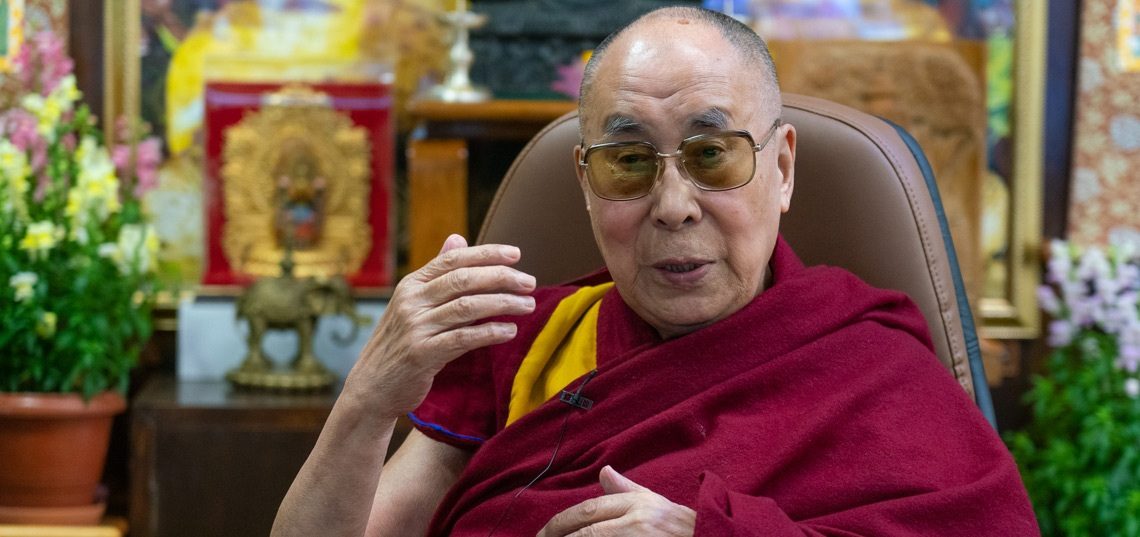







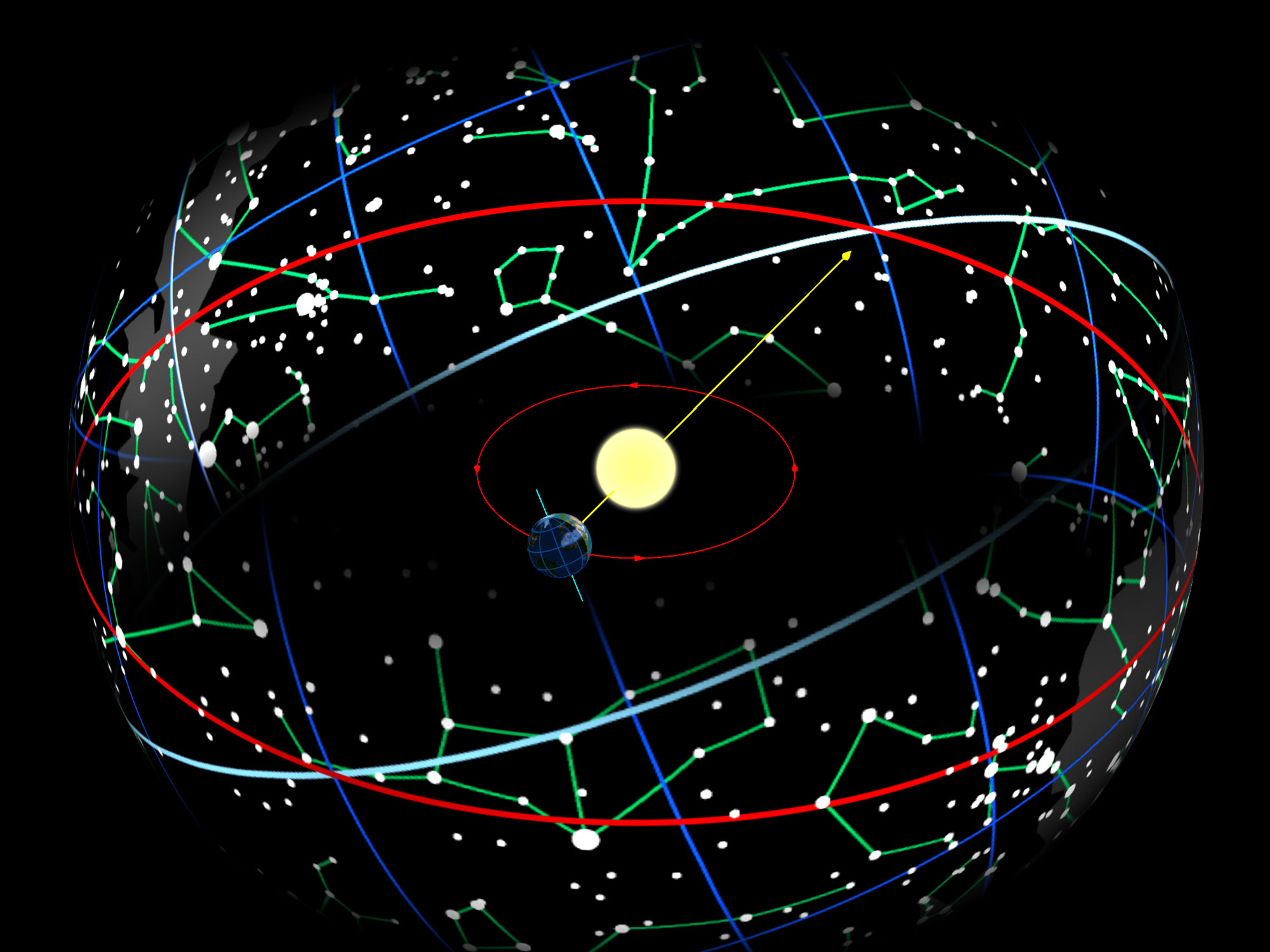

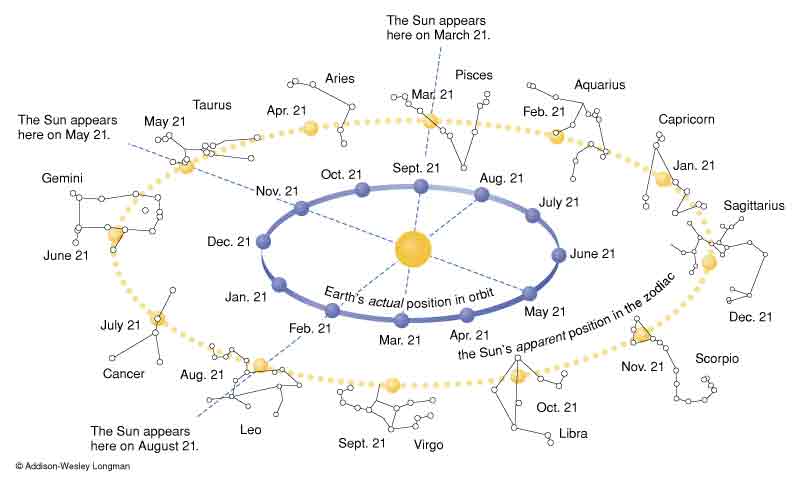


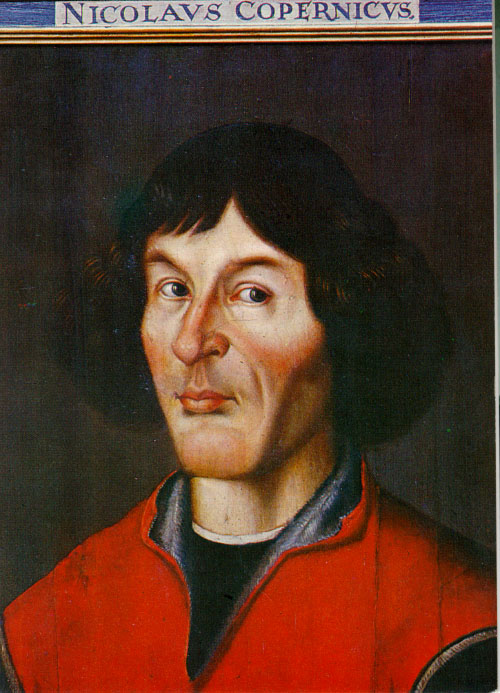


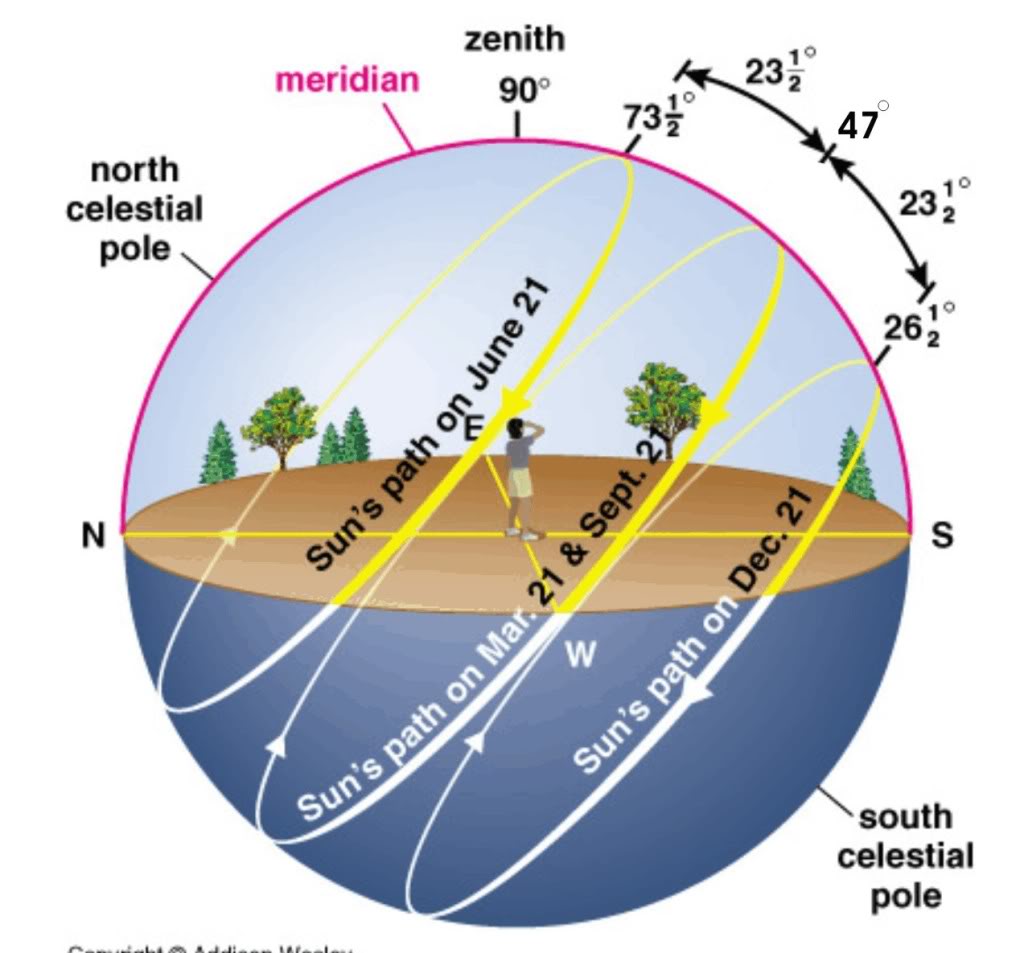
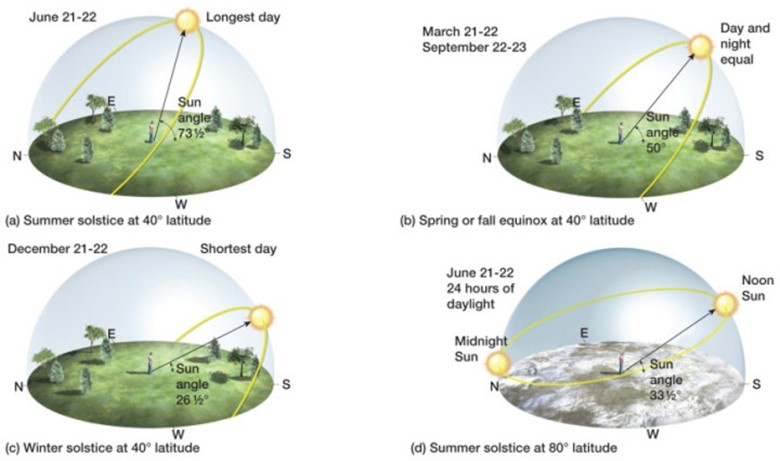


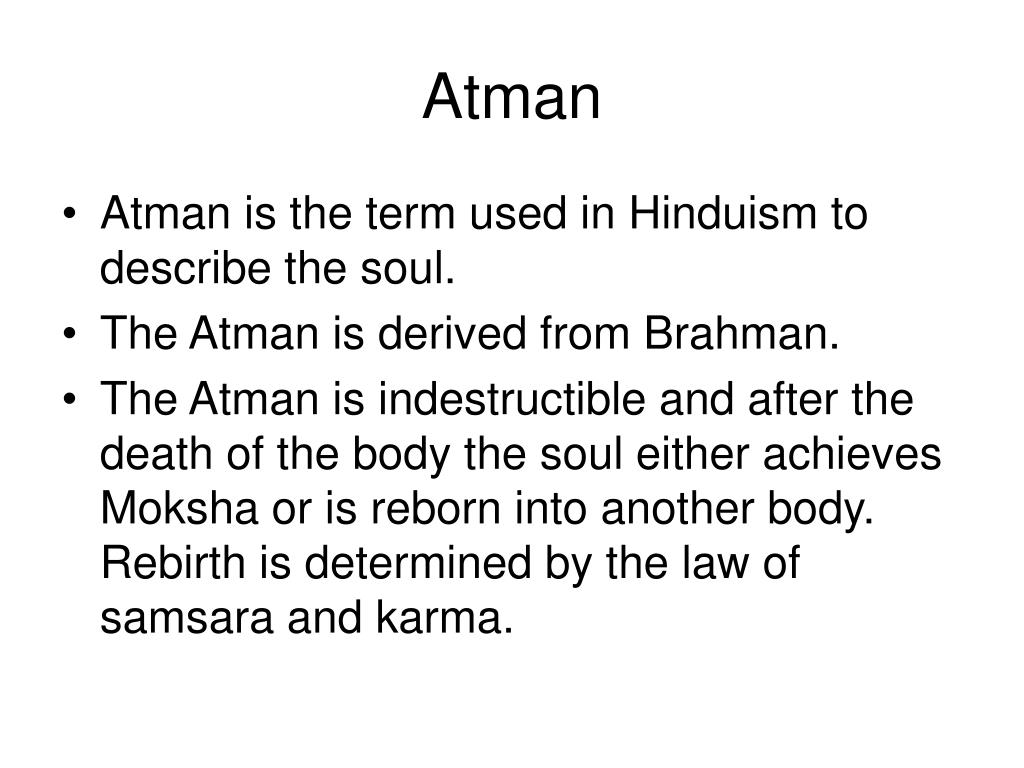


 Filippo S. Giorgi1,2 and Francesco Fornai1,3*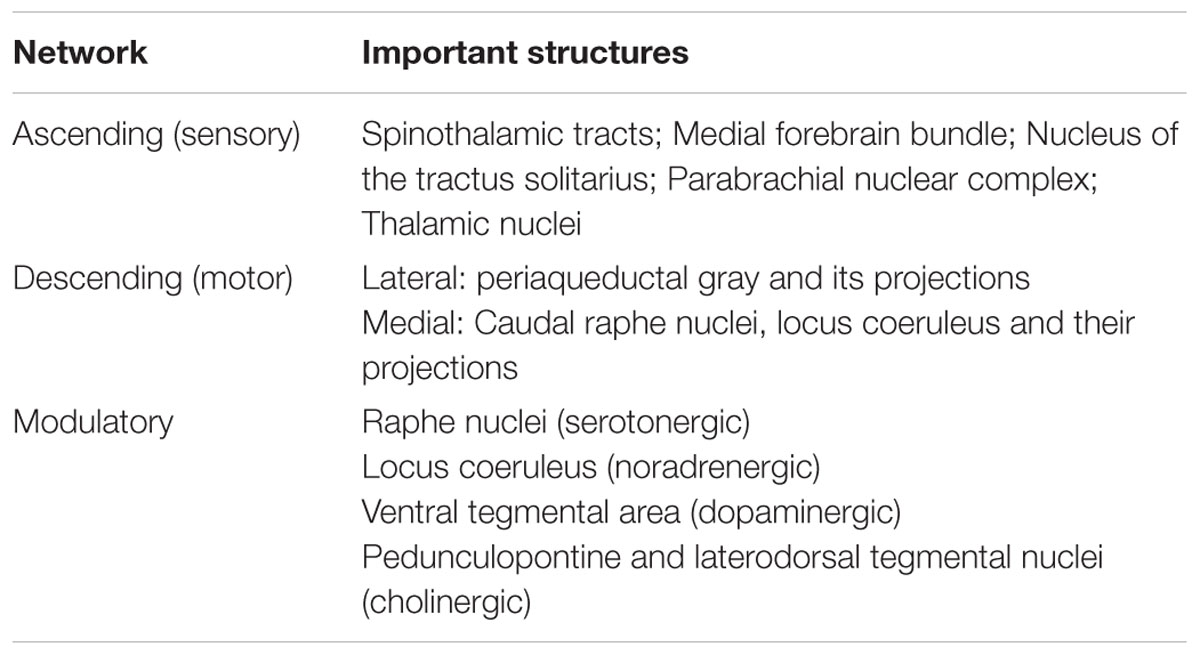
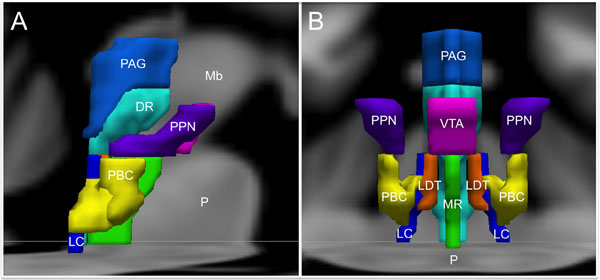
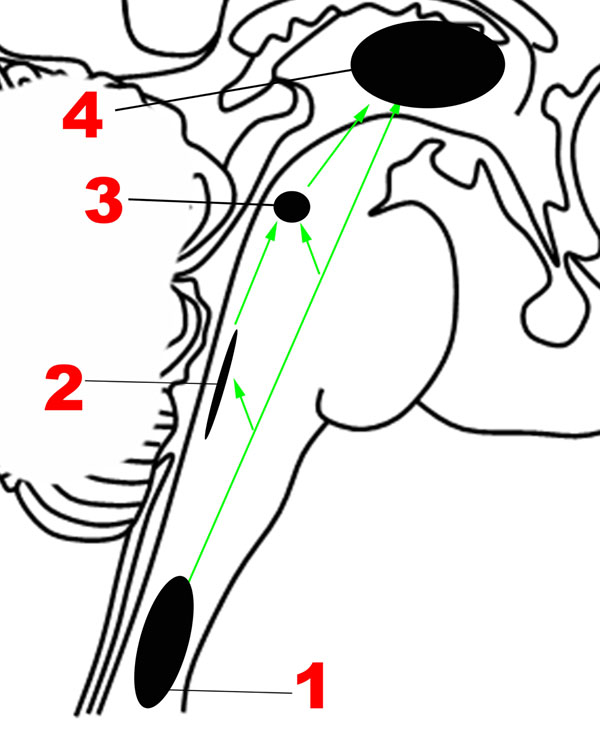
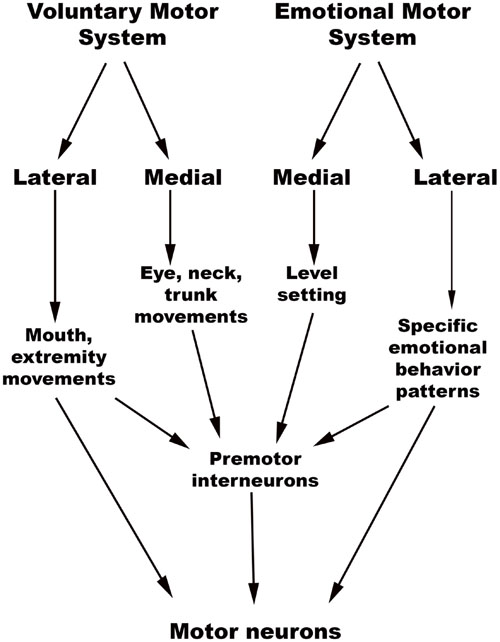
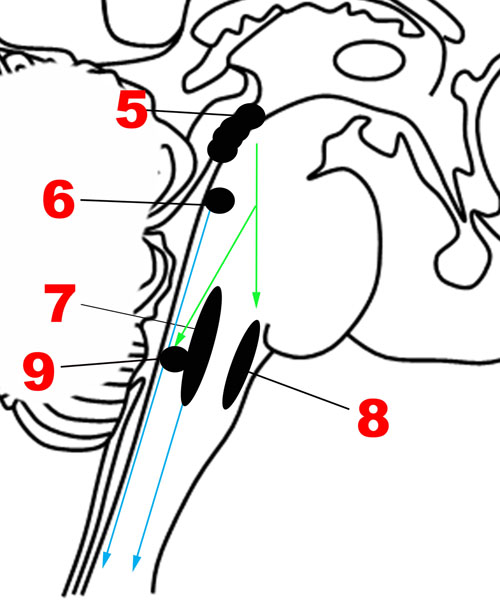
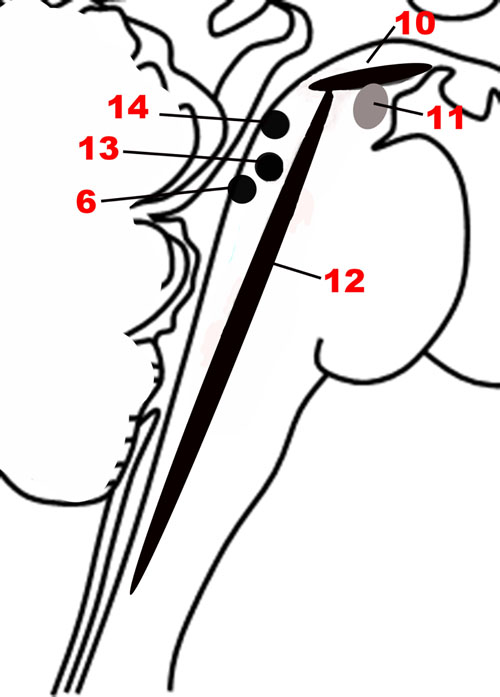

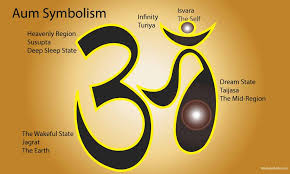
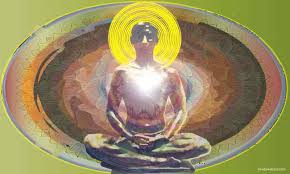


















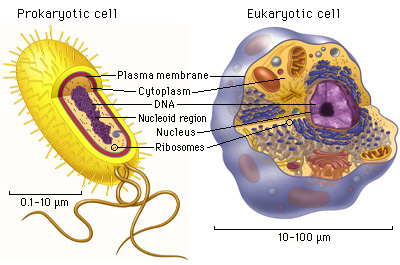
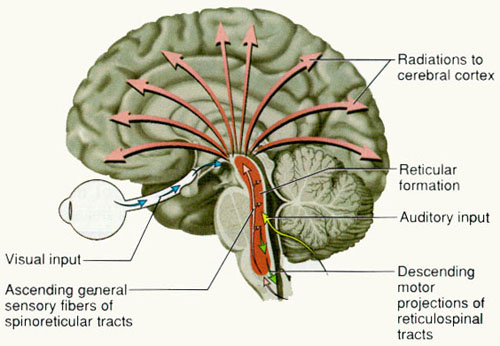

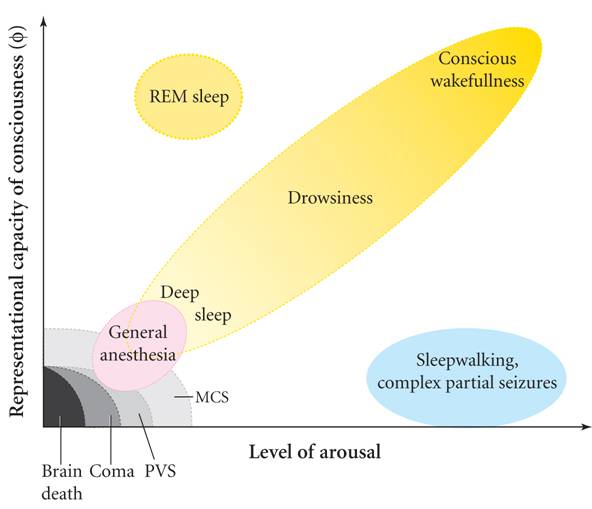
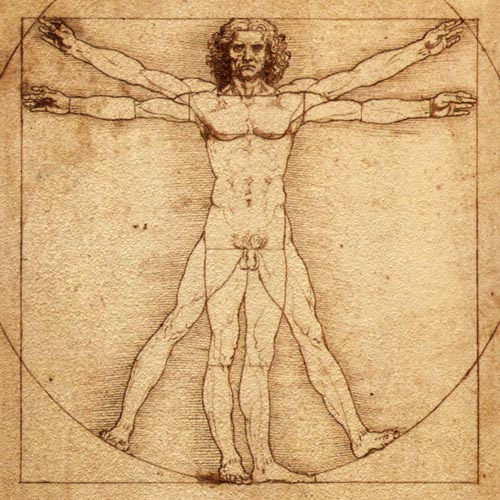





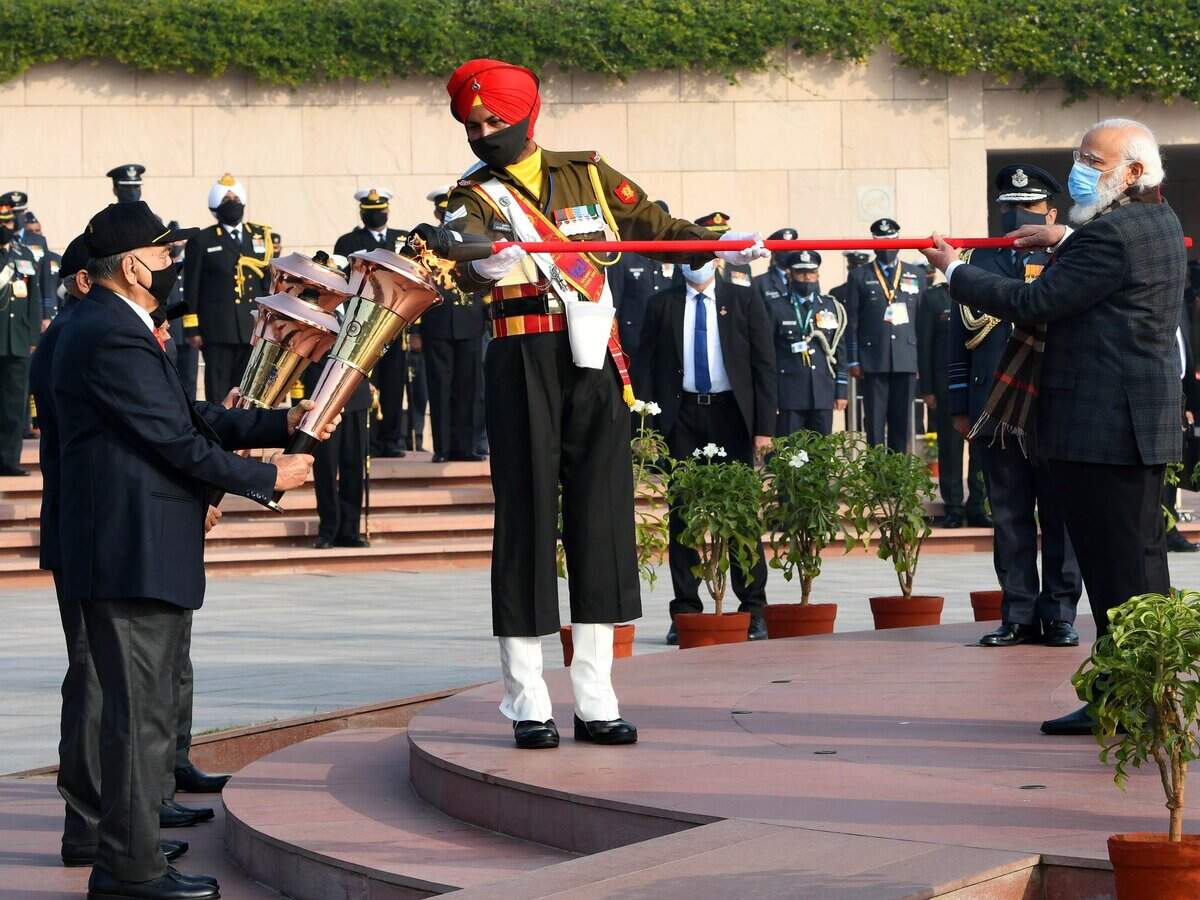





 Whole Dude - Whole Spirituality