The Spiritual Medium to Provide Nourishment to Life
Whole Dude – Whole Foods – Whole Planet – Whole Family – Whole Spirituality: Salutations to Mother Annapurna. The name Annapurna is the Original Source of Whole or Purna Concept (Always Full, Complete and Perfect). My mother’s name is the equivalent of Whole Foods.
To define food as any substance consumed to provide the nutritional support to an organism is incomplete as it fails to describe the totality of the relationship between food and its consumer. The term Food cannot be defined without defining the Organism, the Consumer of Food. I describe the Seven Dimensions of the man. These are, 1. The Physical, 2. The Mental, 3. The Social, 4. The Moral, 5. The Spiritual, 6. The Creative, and 7. The Rational. I define Whole Food as substances consumed by the man to provide support to the Seven Dimensions of the man. Hence, Whole Food is defined as the Spectrum of Seven Colors.
Bharat Darshan – The Spiritual Medium to Provide Nourishment to Life. I am using the term Spiritual Medium to describe Protoplasm for I want my readers to understand the importance of Culture Medium to provide Support to Living Organisms.Bharat Darshan – The Spiritual Medium to Provide Nourishment to Life. I am using the term Spiritual Medium to describe Protoplasm for I want my readers to understand the importance of Culture Medium to provide Support to Living Organisms.Whole Dude – Whole Foods – Whole Planet – Whole Family – Whole Spirituality – Whole Definition: Salutations to Mother Annapurna. The name Annapurna is the Original Source of Whole or Purna Concept (Always Full, Complete and Perfect). My mother’s name is the equivalent of Whole Foods.
What it is to be a Substance? and What it is to Exist? We need to establish knowledge about the man and the world on a firm basis and the information it provides must be tested for its accuracy and consistency with an external reality.
Whole Dude – Whole Foods – Whole Spirituality: Goddess Annapurna is depicted as The Mother Principle of human creation and existence. The celebration of Whole Food as a Spiritual Substance of Human Nourishment. Salutations to Mother Annapurna. The name Annapurna is the Original Source of Whole or Purna Concept (Always Full, Complete and Perfect). My mother’s name is the equivalent of Whole Foods
At Whole Foods, I discovered the spiritual connection between man, food, and Providence. Whole Foods, Whole People, and Whole Planet are connected by a material substance called Protoplasm, a divine plan to provide nourishment to Life.
Whole Dude Defines Whole Food as the Spectrum of Seven Colors. Whole Dude Loves Whole Food he purchases at the Whole Foods Market, Ann Arbor, Michigan, USA. Salutations to Mother Annapurna. The name Annapurna is the Original Source of Whole or Purna Concept (Always Full, Complete and Perfect). My mother’s name is the equivalent of Whole Foods.
I coined the phrase Whole Spirituality to describe the three dimensional spiritual relationship between the multicellular human organism, food, and the Divine Providence.
Rudolf is reborn as Rudi to describe the spiritual connection between Cell and its Energy Provider. The 3-Dimensional Spiritual Relationship between Man, Food, and God.
Spiritualism – The Cell Theory of Spirituality:
The Rudolf and Rudi Connection. The Discovery of the concept of Whole Spirituality, the three dimensional spiritual relationship between the multicellular human organism, food, and the Divine Providence.
In Biology, cell is the basic or fundamental unit of structure, function, and organization in all living things or it is the building block of life. Let me begin with my respectful tribute to some of the people who contributed to ‘The Cell Theory’, one of the foundations of Biological Sciences. Cells were first observed in the 17th century shortly after the discovery of the microscope. Robert Hooke, british curator of instruments at The Royal Society of London, during 1665 coined the word cell. Dutch microscopist Antonie Van Leeuwenhoek (1632-1723) made over 247 microscopes and examined microorganisms and tissue samples. He gave the first complete descriptions of bacteria, protozoa (which he called animalcules), spermatozoa, and striped muscle. He also studied capillary circulation and observed Red Blood Cells.
The Spiritual Medium to Provide Nourishment to Life: Robert Hooke, British curator of instruments at The Royal Society of London coined the term cell during 1665.The Spiritual Medium to Provide Nourishment to Life: Dutch microscopist Antonie Van Leeuwenhoek (1668-80) studied capillary circulation and observed Red Blood Cells.
Improvements in microscopy during early 19th century permitted closer observation and the significance of cells had received better understanding. Matthias Jakob Schleiden (1838), German botanist, Theodor Schwann (1839), German physiologist, and Rudolf Virchow (1855), German pathologist, and others made important contributions to the Cell Theory that describes cell as the building block of all Life.
The Spiritual Medium to Provide Nourishment to Life: Schleiden, Professor of Botany, The University of Jena studied plant structure under the microscope, published “Contributions to Phytogenesis”(1838). He had also published the two-volume text of ‘Principles of Scientific Botany’.The Spiritual Medium to Provide Nourishment to Life: Schwann founder of modern Histology extended the Cell Theory of Plants to animals in his ‘Microscopic Researches into Accordance in the Structure and Growth of Animals and Plants(1839).The Spiritual Medium to Provide Nourishment to Life: Schwann discovered Myelin Sheath covering peripheral axons, now termed Schwann Cells. He coined the term ‘Metabolism’ for the chemical changes that take place in living tissues.The Spiritual Medium to Provide Nourishment to Life: Rudolf Virchow, German pathologist in 1855 coined the biological dictum “OMNIS CELLULA E CELLULA” – All living cells arise only from pre-existing living cells.
The Cell is the smallest unit in the living organism that is capable of carrying on the essential life processes of sustaining metabolism for producing energy and reproducing. Many simple, small, single-celled organisms like Protozoa perform all life functions. In higher, complex, bigger, multicellular organisms, groups of cells are structurally and functionally differentiated into specialized tissues, organs, and organ systems. Thus, the Cell Theory includes the following foundational principles of the Biological Sciences:
1. All living things are made up of cells. Cell is the most elementary or basic unit of Life.
2. Cell is a fundamental unit of structure, function, and organization in all living things including plants and animals.
3. Cells only rise from division of previously existing cells.
4. All cells are similar in composition, form, and function. All cells are basically the same in chemical composition (in spite of variations) in organisms of similar species. For example, all the solid tissues in the human body can be shown to consist largely of similar cells; differing it is true, but that are essentially similar to an Ovum.
5. The cells exhibit functional autonomy. The activity of an organism depends on the total activity of ‘INDEPENDENT’ cells.
6. Energy flow (metabolism and biochemistry) occurs within cells.
7. Cells contain hereditary, biological information (DNA) which is passed from cell to cell during cell division.
The Cell Theory of Spirituality:
The Rudolf and Rudi Connection. The Discovery of the concept of Whole Spirituality, the three dimensional spiritual relationship between the multicellular human organism, food, and the Divine Providence.
The basic or fundamental unit of life in the human organism is derived from the fertilized egg cell that eventually develops into a complete organism. The most significant feature of similarity between the cells of the human body is the presence of a soft, gelatinous, semi-fluid, granular material inside the cell. This substance known as Protoplasm or Cytoplasm, or Cytosol is similar to the ground substance found in the Ovum or the Egg Cell.
The Spiritual Medium to Provide Nourishment to Life: Life begins at Conception. Human Ovum Structure – The Cell Theory of Spirituality is based upon the Substance, Structure, Form, Organization, Function, Action and Interactions of this Single Fertilized Egg Cell that eventually develops into a complete human organism.
Protoplasm, the viscous, translucent, colloidal substance is enclosed in a membrane called Cell Membrane, Plasma Membrane or Biological Membrane. A small spherical body called nucleus is embedded in the Protoplasm of the cell. The three essential features of any living cell in the human body are that of the presence of protoplasm, the nucleus, and the cell membrane.
Protoplasm – The Ground Substance of Spiritualism and Spirituality:
The Spiritual Medium to Provide Nourishment to Life: The Discovery of the concept of Whole Spirituality, the three dimensional spiritual relationship between the multicellular human organism, food, and the Divine Providence.
I seek the existence of Soul or Spirit in a substance that is basic to life activities, and in a material that is responsible for all living processes. I, therefore, propose that the understanding of the true or real nature of this ground substance of all living matter will help man to discover peace, harmony, and tranquility in all of his internal and external relationships while man exists in a physical environment as a member of a social group, social community, and Society. In this blog post, I would like to pay my respectful tribute to Jan Evangelista Purkinje and Hugo Von Mohl for their great contribution to the scientific understanding of the living substance, living material, and living matter.
The Spiritual Medium for Providing Nourishment to Life: Jan Evangelista Purkyne (Czech name), Jan Evangelista Purkinje (German name)also known as Johannes Evangelist Purkinje, b. December 17, 1787, d. July 28, 1869. The pioneer Czech experimental Physiologist whose investigations in the fields of Histology, Embryology,and Pharmacology helped create a modern understanding of the eye and vision, brain and heart function, mammalian reproduction, and the composition of cells.
Purkinje conducted his research on human vision at the University of Prague and later on, he served there as a Professor of Physiology (1850-69). He went to Germany and was appointed the Chair of Physiology and Pathology (1823-50) at the University of Breslau, Prussia. There Purkinje created the world’s first independent Department of Physiology (1839) and the first Physiological Laboratory (Physiological Institute, 1842). He is best known for his discovery of large nerve cells with many branching extensions found in the cortex of Cerebellum of the brain (Purkinje Cells, 1837). He discovered the fibrous tissue that conducts electrical impulses from the ‘pacemaker’ called Atrioventricular node or A-V node along the inside walls of the ventricles to all parts of the heart to help in Cardiac contractile function (Purkinje Fibers, 1839). In 1835, he invented and introduced the scientific term ‘Protoplasm’ to describe the ground substance found inside young animal embryo cells. He discovered the sweat glands of the skin (1833); he discovered the nine configuration groups of Fingerprints used in biometric identification of man (1823); he described the germinal vesicle or nucleus of the unripe ovum that now bears his name (1825), and he noted the protein digesting power of pancreatic extracts (1836).
The Spiritual Medium to Provide Nourishment to Life: Hugo Von Mohl, b. April 08, 1805, d. April 01, 1872, German Botanist noted for his research on the anatomy and physiology of plant cells.
Hugo Von Mohl named the granular, colloidal material that made up the main substance of the plant cell as “Protoplasm” in 1846. Purkinje invented the word, but Hugo gave more clarity, understanding, and knowing the nature of this ground substance.
The Spiritual Medium for Providing Nourishment to Life: Protoplasm or Cytoplasm is the clear, soft, gelatinous living substance found inside all living cells. A most striking characteristic of Protoplasm is its vital property of Nutrition. Nutrition is the power which Protoplasm has of attracting to itself the materials that provide energy and are necessary for its growth and maintenance.
Hugo Von Mohl viewed cell as an “elementary organ” and in Physiology he explained Protoplasm as an organ of Motion or Movement, Nutrition, and Reproduction. It is the preliminary material in cellular generation. He was the first to propose that new cells are formed by division of preexisting cells and he had observed this process of Cell Division in the algal cells of Conferva glomerata. His observations are very important to understand the Cell Theory that explains cells as the basic building blocks of Life. He was the first to investigate the phenomenon of the stomatal openings in leaves.
The Spiritual Medium to Provide Nourishment to Life:Protoplasm or Cytoplasm is the clear, soft, gelatinous living substance found inside all living cells. A most striking characteristic of Protoplasm is its vital property of Nutrition. Nutrition is the power which Protoplasm has of attracting to itself the materials that provide energy and are necessary for its growth and maintenance.
Protoplasm is a complex, viscous, translucent solution of such materials as salts and simple sugars with other molecules, mostly proteins and fats, in a colloidal state, that is dispersed but not dissolved in one another. Carbon, Hydrogen, Oxygen, and Nitrogen constitute more than 90 percent of Protoplasm. It exhibits properties such as Protoplasmic Streaming or Cytoplasmic Streaming or Motion that is called “Amoeboid Movement.” It has the intrinsic power to change its shape and position. It has the power of Nutrition by which it can attract and obtain the materials necessary for its growth and maintenance from surrounding matter/environment. These functions involve acquiring, processing, retaining, and using information to perform tasks in a sequential manner for a predetermined purpose and hence describe Consciousness, Memory, and Intelligence. The terms Soul and Spirit belong to the materialistic realm where the Physical Reality of man’s biological existence is established. I have not yet discovered any good reason to use the terms Soul and Spirit as a metaphysical or transcendental Reality.
The Ground Substance of Spiritualism and Spirituality:
The Ground Substance of Spiritualism and Spirituality. The vital characteristics, the animating principles of Protoplasm could be known by observing Amoeba proteus. The Living Substance works as an organ of Motion or Movement, as an organ of Nutrition, and as an organ of Reproduction to generate new cells which have a life span of their own. In these physiological functions, I describe the characteristics such as Cognition, Consciousness, Memory, and Intelligence which have a Spiritual role as they bring functional unity and harmony in the interactions between different parts of the same individual organism while it exists in an environment as a member of a biological community.
The vital characteristics, the animating principles of Protoplasm could be known by observing Amoeba proteus. The Living Substance works as an organ of Motion or Movement, as an organ of Nutrition, and as an organ of Reproduction to generate new cells which have a life span of their own. In these physiological functions, I describe the characteristics such as Cognition, Consciousness, Memory, and Intelligence as spiritual attributes of Life as they bring functional unity and harmony in the interactions between different parts of the same individual organism while it exists in an environment as a member of a biological community.
The Spirituality of Substance, Function, Organization, Action, and Interactions:
The Rudolf and Rudi Connection. The Discovery of the concept of Whole Spirituality, the three dimensional spiritual relationship between the multicellular human organism, food, and the Divine Providence.
To establish the biological existence of the human organism, I add the concept of Spiritualism and Spirituality to the Cell Theory. The Single Fertilized Egg Cell has ground substance that is of Spiritual nature and the Spiritualism and Spirituality consists of the following functional, and organizational characteristics:
1. The Cell is Conscious of its own existence and knows its internal condition and knows it external environment.
2. The Cell is intelligent and it has the cognitive abilities like perception and memory to acquire information, to retain information, to recall information, and to use information in the performance of its complex tasks in a sequential manner.
3. The Cell has the ability to show characteristics such as mutual cooperation, mutual tolerance, and display functional subordination and subservience while being independent.
4. The Cell grows, divides, and develops into a complete organism while it acquires substances and energy from an external environment. The power of Protoplasm/Cytoplasm to attract matter found in its external environment is called Nutrition. The Cell continuously transforms matter to build matter of its own kind for its own benefit to sustain its existence with its own identity and individuality. The Organism represents a social group or a biological community of Cells. The Spiritual nature of Protoplasm/Cytoplasm brings this functional harmony and unity in the Social Group or Biotic Community of Cells by bringing together its Essence and Existence.
5. The Cell Theory is incomplete for it does not describe the conditioned nature of the Cell’s existence. The Cell represents a Living System that is thermodynamically unstable. It requires a constant supply of matter and energy from its external environment to sustain its living functions. The concept of Whole Spirituality formulates the connection between the Cell and its external source of matter and energy.
Life comes into existence when energy-yielding molecules and energy-demanding molecules come together in a spiritual relationship.
Whole Dude Defines Whole Food as the Spectrum of Seven Colors. A 3-Dimensional View of the Adenosine triphosphate Molecule, the Chemical Energy used in the performance of the cellular functions. There is a creative process involved in the transformation of the radiant Solar Energy into Chemical Energy that living organisms use.
The theoretical claims about Spirit and Soul, the religious and philosophical doctrines of Spiritualism and Spirituality must be verified using the Cell Theory that defines the multicellular human organism. To describe Soul or Spirit as nonmaterial or immaterial Self will not help man to know the real or true man.
Whole Dude – Whole Foods – Whole Planet – Whole Family – Whole Spirituality: Salutations to Mother Annapurna. The name Annapurna is the Original Source of Whole or Purna Concept (Always Full, Complete and Perfect). My mother’s name is the equivalent of Whole Foods.
In my analysis, the Science of Nutrition reveals the purpose of food as that of a spiritual medium that fosters unity between man’s body, mind, and soul.
The Spiritual Medium to Provide Nourishment to Life: The Discovery of Whole Spirituality at Whole Foods, Ann Arbor.
Whole Foods, Whole People, and Whole Planet come together in a Wholesome Relationship as God is the Energy Provider, the Original Source of Matter and Energy for Life.
The Spiritual Medium to Provide Nourishment to Life: Rudolf is Reborn as Rudi to describe the spiritual connection between the Cell and its Energy Provider.
Whole Food comprises of the nutritional substances that support a man’s Physical, Mental, Social, Moral, and Spiritual well-being. These five components of well-being are important to generate the experience of peace, harmony, and tranquility in human Life and the human existence.
Whole Dude – Whole Foods – Whole Planet – Whole Family – Whole Spirituality: Salutations to Mother Annapurna. The name Annapurna is the Original Source of Whole or Purna Concept (Always Full, Complete and Perfect). My mother’s name is the equivalent of Whole Foods.
How to regulate the Feeding Behavior? The Principles of Obesity Prevention
Whole Dude – Whole Foods – Whole Planet – Whole Family – Whole Spirituality – Whole Definition: Salutations to Mother Annapurna. The name Annapurna is the Original Source of Whole or Purna Concept (Always Full, Complete and Perfect). My mother’s name is the equivalent of Whole Foods.
This article examines the relationship between food, man, and the world in which he exists to formulate a Food Theory that may provide the principles for preventing the medical problem described as obesity.
Whole Dude – Whole Foods – Whole Spirituality: Goddess Annapurna is depicted as The Mother Principle of human creation and existence. The celebration of Whole Food as a Spiritual Substance of Human Nourishment. Salutations to Mother Annapurna. The name Annapurna is the Original Source of Whole or Purna Concept (Always Full, Complete and Perfect). My mother’s name is the equivalent of Whole Foods.
What it is to be a Substance? and What it is to Exist? We need to establish knowledge about the man and the world on a firm basis and the information it provides must be tested for its accuracy and consistency with an external reality.
Whole Dude – Whole Regulation: How to Regulate the Feeding Behavior? The Principles of Obesity Prevention.Whole Dude – Whole Regulation: How to Regulate the Feeding Behavior? The Principles of Obesity Prevention. What are the non-optical functions of the light? Photosynthesis is the Divine non-optical function of Light that supports the existence of Life.
We need a methodology to study philosophy and to understand philosophical statements. Logical Positivism, also known as Scientific Empiricism aims to clarify concepts in both everyday and scientific language. It describes analysis of language as the function of philosophy. This analysis of language and of concepts is important to understand questions of belief and ideology which affect what we think we ought to do individually and socially. I use this method of ‘Applied Philosophy’ to analyze the concept of Spiritual Optics, the spiritual dimension of the relationship between the man and the substances he consumes as food.
SPIRITUALITY SCIENCE – THE ART OF KNOWING: HOW DO PLANTS KNOW WHAT THEY KNOW? PLANTS KNOW ABOUT LIGHT, THE LENGTH OF DAY, AND THE DURATION OF DARKNESS CALLED NIGHT. THERE IS NO “INTELLECT” INVOLVED IN THIS PROCESS OF KNOWING. THE ABILITY OF KNOWING LIGHT OR PHOTORECEPTION IS EXPLAINED BY PHOTOCHEMISTRY.
For example, photosynthesis represents the most important non-optical function of Light instituted by Providence in support of the existence of Life on Earth. The prevention of Obesity demands the formulation of a correct and valid theory of Food.
WHOLE FOOD AND WHOLE SCIENCE:
Whole Dude – Whole Regulation: How to Regulate the Feeding Behavior? The Principles of Obesity Prevention. The Chemical Energy Molecule called Adenosine triphosphate or ATP. The creative mechanism called Photosynthesis transforms one form of energy into another form of energy used by the living organisms.
Life comes into existence when energy-yielding molecules and energy-demanding molecules come together in a spiritual relationship.In my analysis, the Science of Nutrition reveals the purpose of food as that of a spiritual medium that fosters unity between man and Divine Providence using a corporeal substance called Protoplasm or Cytoplasm.
Whole Dude – Whole Regulation: How to Regulate the Feeding Behavior? The Principles of Obesity Prevention. What are the non-optical functions of the light? Photosynthesis is the Divine non-optical function of Light that supports the existence of Life
The definition of food as any substance consumed to provide the nutritional support to an organism is incomplete as it fails to describe the totality of the relationship between food and its consumer. I describe the Seven Dimensions of the man. These are, 1. The Physical, 2. The Mental, 3. The Social, 4. The Moral, 5. The Spiritual, 6. The Creative, and 7. The Rational. I define Whole Food as substances consumed by the man to provide support to the Seven Dimensions of the man. Hence, Whole Food is defined as the Spectrum of Seven Colors for the generation of food involves a creative mechanism operating the fundamental Light and Matter photochemical interactions.
WHOLE FOOD AND THE WHOLE THEORY:
Whole Dude – Whole Foods – Whole Planet – Whole Family – Whole Spirituality: Salutations to Mother Annapurna. The name Annapurna is the Original Source of Whole or Purna Concept (Always Full, Complete and Perfect). My mother’s name is the equivalent of Whole Foods.
I define the term ‘Whole Food’ as follows taking into consideration the seven dimensions of Food in supporting the biological existence of the man in his community, and environment. Indeed, no man is truly capable of an existence that excludes the social community and the physical environment in which he exists:
1. Whole Food provides the nutritional substances for the Physical well-being of man and supports his living functions.
2. Whole Food provides the psychological satisfaction, the mental contentment that a man needs to support his Mental well-being.
3. Whole Food provides the stimulus for social relationships and social bonding that a man needs to support his Social well-being.
4. Whole Food provides the ability to a man to express his moral and ethical principles to support his Moral well-being.
5. Whole Food provides the spiritual basis for the man’s relationship with Divine Providence to support the Spiritual well-being of man.
6. The creative dimension of the man is reflected by the imagination and the skills deployed by the man in the preparation of his food and the artistic presentation of the food.
7. In the final analysis, the man as a Rational Being will choose to eat to live with a purpose rather than to live to eat without any purpose in life.
Whole Food comprises of the nutritional substances that support a man’s Physical, Mental, Social, Moral, and Spiritual well-being. These five components of well-being are important to generate the experience of peace, harmony, and tranquility in human Life and the human existence.
OBESITY-THE PROBLEM OF EXCESSIVE EATING:
Whole Dude – Whole Regulation: How to Regulate the Feeding Behavior? The Principles of Obesity Prevention. It requires the formulation of Eating Behavior that is consistent with inner cues of Hunger and Satiety. A Balanced Diet may or may not provide the experience called Satiation.
The word ‘obese’ is derived from Latin word “obedere” which means to devour (ob + edere means about + eat). Obesity is the result of excessive eating. Obesity is the commonest effect of continued over consumption of calories. This blog post intends to explore the preventive principles that could be applied to curb the behavior that leads to excessive eating. Preventive principles could be different from principles used in the treatment of obesity. Prevention of excessive eating would be of value in the clinical management of obese patients but should not be viewed as a curative regime. Obese patients may need other interventions apart from restriction of dietary intake. In my opinion, the prevention of obesity involves the ability to formulate eating behavior that is consistent with inner cues of hunger and satiety.
Whole Dude – Whole Regulation: How to Regulate the Feeding Behavior? The Principles of Obesity Prevention. The measurement of body weight is the simplest and the least direct method of measuring the fat content in the body.
Obesity is the most common nutritional disorder of modern times. Obesity can occur at any stage of life. Obesity in childhood and adolescence has become common and is viewed with a sense of alarm. Obesity is defined as a condition in which there is an excess deposit of fat in (and on) the body with an increase in body weight more than 10 percent above the normal for the age, sex, height, and stock or clan. Body weight is a valuable screening measure for obesity. The measurement of body weight is the simplest and the least direct method of measuring the fat content in the body. It must be very carefully noted that we have tools to measure body weight and that we have no tools to measure or estimate the sensations called Hunger and Satiety. Hence, the preventive principles are not evidence-based, and are only reason-based. It will not be practical to provide consistent results while we depend upon criteria such as Hunger and Satiety which are not measurable quantities that could be stated using a precise, scientifically accurate method. To deal with the problem of obesity, we have to deal with the issues of Hunger and Satiety to regulate feeding behavior and to control caloric intake. Patterns of eating behavior and physical activity are influenced by social, cultural, and economic factors. Hence, obesity is a complex issue but the complexity should not stop us from preventing the problem of excessive eating. Genetic factors may influence total body fat and its distribution. However, the epidemic of obesity is not caused by the prevalence of a defective gene or genes.
Whole Dude – Whole Regulation: How to Regulate the Feeding Behavior? The Principles of Obesity Prevention. The brain mechanisms involved in Feeding Motivation include a complex network that involves the Limbic System that controls the Emotional States and the Hypothalamus at the base of the brain.Whole Dude – Whole Regulation: How to Regulate the Feeding Behavior? The Principles of Obesity Prevention. Hypothalamus has nerve centers that are sensitive to changes in blood chemistry, water, products of digestion, and temperature. Hunger, Thirst, and Satiety are regulated by Hypothalamus.
Readers may like to view the Map of Hypothalamus
Whole Dude – Whole Regulation: How to Regulate the Feeding Behavior? The Principles of Obesity Prevention. Hypothalamus has nerve centers that are sensitive to changes in blood chemistry, water, products of digestion, and temperature. Hunger, Thirst, and Satiety are regulated by Hypothalamus.
The brain mechanisms involved in feeding motivation include a complex network that involves the Limbic System that controls the emotional states and the Hypothalamus at the base of the brain. Hypothalamus has nerve centers sensitive to changes in blood chemistry, water, products of digestion and temperature. A nerve center called Ventromedial Nucleus is described as the ‘Satiety Center’. It is the clearing house for satiety signals. Lesions in this area cause gross overeating or hyperphagia. The nerve center in the lateral hypothalamic area is described as the ‘Eating Center’ or ‘Hunger Center’. It facilitates feeding responses. Electrical stimulation of this area elicits voracious feeding and lesions in this area cause prolonged noneating or aphagia. Glucose receptors are present in the cells of the above nuclei which monitor the level of the circulating blood glucose in order to produce the appropriate response. Excessive eating can be controlled by direct electrical stimulation of Satiety Center.
Internal changes that initiate behavioral changes are commonly termed ‘Drive’ or ‘Motivation’. Hunger is a sensation associated with various physiological changes that stimulate the drive to search for food. Most people are familiar with the sensation described as hunger pangs. The responsiveness of the brain mechanisms for feeding is governed by messages reporting the nutritional state of the body. Responsiveness is higher with increasing lack of food in the body. The contents of these messages are primary determinants of the level of feeding motivation. Hunger and Satiety represent high and low levels of feeding motivation.
FOOD AND ENERGY CONSUMPTION-THE WHOLE REGULATION:
Whole Dude – Whole Regulation: How to Regulate the Feeding Behavior? The Principles of Obesity Prevention. Hypothalamus has nerve centers that are sensitive to changes in blood chemistry, water, products of digestion, and temperature. Hunger, Thirst, and Satiety are regulated by Hypothalamus.
Life depends upon a virtually uninterrupted supply of materials for its metabolism. For purposes of survival, metabolic expenditure cannot exceed food intake for very long period. In principle, feeding must proceed throughout life at a pace equal to that of metabolism. In many cases, food intake does not closely follow caloric expenditure. It is permissible for food intake to lag when there are reserves in the body. Discrepancies between intake and expenditure leads to distortion of the basic pattern of caloric regulation. The capacity of the digestive system may set a limit on nutrient supply to the body. Such limitations play a role in human feeding behavior. In man, the capacity of food-gathering and of the digestive system exceed the demands of metabolism. The man has the inherent physiological capabilities and anatomical capacity to consume food and calories in excess of his normal metabolic requirements. It should not be a surprise to observe a similar predisposition to obesity among human pet animals like dogs and cats.
The lack of fuel in the body can be corrected by intake of food that provides energy. Ingested food (calories) passes from 1. the mouth to 2. the digestive tract to 3. the blood stream, and then to 4. storage sites such as liver and fat tissues. These four regions are continuously monitored using a variety of receptors:
1. Organs for taste, smell, and touch in the mouth region. 2. Distension receptors or mechanoreceptors in the stomach and gastrointestinal tract that monitor the volume. 3. Chemoreceptors that monitor the nature of contents of the blood stream. 4. Receptors in Hypothalamus and Liver for monitoring of fat tissues.
The signals converge on the brain mechanism for the feeding motivation using nervous and humoral or chemical pathways. The signals have two kinds of effects; 1. if signals from the four regions report increased fuel contents, the feeding motivation is lowered and satiety is raised, and 2. if taste, visual, and smell receptors are stimulated by palatable food the feeding motivation is increased. The signals for satiation override the signals for hunger and feeding stimulation. Food intake stops when feeding motivation drops below a critical level. When food is catabolized, it causes fuel depletion. Gastric emptying and emptying of Colon and Rectum also stimulate hunger sensation causing resumption of feeding. Once feeding is resumed, intake is enhanced by the positive effects of food stimulus. The interplay of positive and negative feedbacks from food intake tends to maintain a balance between caloric intake and energy output so that body fuel content or body weight in fully grown individuals remains constant. Few people adjust their food intake to meet their needs on a daily basis. The excess Glucose that is not utilized by the body is stored in the Liver as Glycogen which is further converted into fat. The excess amount of fat remains stored in the body fat tissues. The control of the amount of energy reserve in the fat tissue and the nature of control system is not fully understood. The physiological stimuli and changes associated with hunger could be stimuli for coordinating the long-term regulation of the reserve energy. However, it must be noted that a man can accumulate energy reserves and yet experience hunger sensation that is normally generated by a lack of fuel in the body.
FOOD AND ENERGY-THE WHOLE BALANCE:
Whole Dude – Whole Regulation: How to Regulate the Feeding Behavior? The Principles of Obesity Prevention. Hypothalamus has nerve centers that are sensitive to changes in blood chemistry, water, products of digestion, and temperature. Hunger, Thirst, and Satiety are regulated by Hypothalamus. The regulation of energy balance. Energy homeostasis relies on controls exerted on both energy intake and energy expenditure. The control of energy expenditure can be exerted on the muscle activity as well as on BAT thermogenesis. Those controls are insured by different brain structures that compose the cortical executive circuits, reward circuits, and autonomic circuits. The activity of the brain networks is influenced by peripheral homeostatic signals that inform the central nervous system about energy stores. Palatable food also influences cognitive aspects including motivation and pleasure. 2AG, 2-arachidonoylglycerol; ACC, anterior cingulate cortex; CB1R, cannabinoid receptor 1; D2R, dopamine receptor 2; DVC, dorsal-vagal complex; MBH, mediobasal hypothalamus; NAc, nucleus accumbens; PFC, prefrontal cortex; SN, substancia nigra; VTA, ventral tegmental area.
Exercise consumes carbohydrates and most of the fat. Obesity or excess fat accumulation is the consequence of imbalance between energy intake and energy expenditure. Obesity develops if physical activity or energy expenditure becomes very low and the person is not able to reduce food intake or energy intake. In modern times, people are able to obtain their food with little or no physical effort. New sources of power do the work formerly carried out by human muscles. Large number of people spend time without physical activity. People have appetites and are seldom really hungry. A very small excess of calories if habitual, can lead eventually to a large accumulation of fat. It has been reported that if a person eats a slice (20 g) of bread that is not needed each day or goes by car instead of walking for 20 minutes, the daily extra 48 KCal or 200 KJ will build up over 10 years to 20 Kg of fat deposited. In simplest terms, obesity is the outcome of consistent consumption of more calories than are required to meet the energy expenditure of that particular person.
FOOD AND OBESITY-THE WHOLE PROBLEM:
Whole Dude – Whole Regulation: How to Regulate the Feeding Behavior? The Principles of Obesity Prevention. Hypothalamus has nerve centers that are sensitive to changes in blood chemistry, water, products of digestion, and temperature. Hunger, Thirst, and Satiety are regulated by Hypothalamus.
The causation of obesity is still difficult to explain. There are differences between obese and non-obese individuals in respect of hormone secretion and metabolism. Endocrine changes at puberty, during pregnancy, and at menopause may contribute to obesity at these stages of life. The effects of obesity are better understood than the causes of obesity. In Medicine, obesity is described as a clinical condition with several probable causes. Some of the organic pathological causes of obesity include endocrine disorders such as hypopituitarism, hypothyroidism and hypogonadism. Hormonal changes associated with menopause, Anterior Pituitary tumor causing Cushing’s Syndrome, Dercum’s disease (Adiposis dolorosa), and Frohlich’s Syndrome (Posterior Pituitary Deficiency) are causes of obesity. In a few obese individuals, psychiatric mood disorders such as depression and anxiety could be present. Depressed or anxious patients or the emotionally deprived may seek solace in food and such emotional factors play a role in the predisposition towards excessive eating. Overeating could be a symptom of boredom or emotional frustration. In mental diseases, bizarre disturbances of appetite, taste , and food preference may be seen. Some well-known examples are Anorexia nervosa and Bulimia. Self-imposed starvation may develop after bereavement or after disappointment in love. It must be understood that the functions of food include that of obtaining a sense of emotional satisfaction apart from satiation of hunger. The most important and the most universal cause of obesity among otherwise normal people is overeating and lack of exercise.
Whole Dude – Whole Regulation: How to Regulate the Feeding Behavior? The Principles of Obesity Prevention. The measurement of body weight is the simplest and the least direct method of measuring the fat content in the body.
The prevalence of obesity has increased worldwide in the past ~50 years, reaching pandemic levels. Obesity represents a major health challenge because it substantially increases the risk of diseases such as type 2 diabetes mellitus, fatty liver disease, hypertension, myocardial infarction, stroke, dementia, osteoarthritis, obstructive sleep apnea and several cancers, thereby contributing to a decline in both quality of life and life expectancy. Obesity is also associated with unemployment, social disadvantages and reduced socio-economic productivity, thus increasingly creating an economic burden. Thus far, obesity prevention and treatment strategies — both at the individual and population level — have not been successful in the long term. Lifestyle and behavioral interventions aimed at reducing calorie intake and increasing energy expenditure have limited effectiveness because complex and persistent hormonal, metabolic and neurochemical adaptations defend against weight loss and promote weight regain. Reducing the obesity burden requires approaches that combine individual interventions with changes in the environment and society. Therefore, a better understanding of the remarkable regional differences in obesity prevalence and trends might help to identify societal causes of obesity and provide guidance on which are the most promising intervention strategies. (Blüher, M. Obesity: global epidemiology and pathogenesis. Nat Rev Endocrinol 15, 288–298 (2019). https://doi.org/10.1038/s41574-019-0176-8
WHOLE FOOD AND WHOLE SATISFACTION:
Whole Dude – Whole Regulation: How to Regulate the Feeding Behavior? The Principles of Obesity Prevention. What is the original source of the experience called Satiety?
The word desire or craving involves the feelings to wish, covet, or long for something. Similarly, the word appetite describes a desire to satisfy some craving of the body. The term greed describes excessive desire especially for wealth or food. The term lust describes a passionate sexual desire without idealized or spiritualized feelings. The word glutton describes someone who indulges excessively in eating and drinking. All of these kinds of passionate desires or appetites have a common feature. The behavior that is attributable to greed, lust, and gluttony could be influenced by man’s sense of contentment. The role of contentment could be explained by understanding the following quote from the Books of The Old Testament, The Ecclesiastes, Chapter 5, verse 18:
Whole Dude – Whole Regulation: How to Regulate the Feeding Behavior? The Principles of Obesity Prevention. Eat and Drink to find Satisfaction in Life.
“Then I realized that is good and proper for a man to eat and drink, and to find satisfaction in his toilsome labor under the sun during the few days of his life God has given him – for this is his lot.”
While it is good and proper for a man to eat and drink, the acts of gratification; eating, and drinking may not provide a sense of satisfaction that is complete and that overcomes the craving for food and drink. Contentment is the factor which determines as to the degree of gratification that is needed for producing the effect called satisfaction. The man can choose to set the bar called contentment at a high or a low-level and experience the effect called satisfaction while seeking gratification of his desires. To conquer the insatiable enemy called desire, to achieve the result called satisfaction, one must overcome the senses, the mind, and intelligence which are the sitting places of desire. To accomplish the purpose of restraining the senses, the mind, and intelligence, we must know the man as the Whole Organism. I divide man into two categories; 1. The Self (the Lower-Self)that represents the man as a physical, mental, and social being, and 2. The Knowing-Self ( the Higher-Self)that represents the man as the moral, and spiritual being. The Knowing-Self is the Higher-Self and hence it can exercise control and restraint over the Lower-Self which includes the physical body, the sense organs, the mind and intellect, which are the seats of all passionate desires.
Whole Dude – Whole Regulation: How to Regulate the Feeding Behavior? The Principles of Obesity Prevention. The problem of food cravings and food addiction.
In obese people, eating is less often determined by internal cues like hunger and satiety. For many obese people, the craving to eat is very strong and is similar to the craving for alcohol in the alcoholic and for a cigarette in a person addicted to tobacco smoke. The problem of food cravings is a significant factor in the management of obesity. The failure to respond to a dietary plan that restricts food and caloric intake is often caused by the inability to overcome food cravings which leads to non-compliance. The eating or feeding behavior is influenced by the man’s sense of contentment. A person who lives in a state of self-contentment experiences a little less hunger and experiences a sense of satiation or satisfaction more easily after a routine meal. Such a person who is self-contented is not prone to food cravings. He may not need a dietary plan and may not need to count the calories he consumes. He is more likely to maintain a steady body weight without the requirement of changing the level of physical activities. The man has the ability to set his expectations at a level and experience contentment with what he has. If there is contentment, the desire for food and drink is easily satisfied. A contented man is more likely to meet the daily requirements of calories for optimal physiological functioning without gaining body weight. The prevention of obesity could be helped by a proper understanding of food, its nature, and its functions.
Whole Dude – Whole Regulation: How to Regulate the Feeding Behavior? The Principles of Obesity Prevention. Food is a substance eaten for nourishment, for psychological satisfaction, and to support Social Bonding. There is Spiritual Relationship between Food and its Consumer. The Concept of Balanced Diet is silent about the relationship between Food and its Consumer.
Food is a substance eaten for nourishment. Food serves functions other than nutrition. Food plays a vital role in the development, and the maintenance of social interactions, social relationships, and is the fundamental basis for the man’s spiritual relationship with a source of energy and its provider which sustains life and existence.
WHOLE FOOD AND WHOLE LIFE:
Most important biological processes involve Oxidation-Reduction or Redox Reactions to acquire Oxidative energy from other substances termed nutrients. The burning of a substance in air is rapid Oxidation or Combustion which is not of much use for living systems. Plants and Animals use a form of Oxidation called Respiration to liberate energy stored in food materials.
Food describes any substance which a living organism can convert into energy and new tissue using the process of metabolism. The body fluids surrounding each cell are the immediate source of nutrients. The nutrients supplied by food are either used as building blocks in synthesizing large molecules or they are oxidized producing a form of energy that is further used for powering the activities of the cell. To maintain life, an organism not only repairs or replaces (or both) its structures by a constant supply of the materials of which it is composed but also keeps its life processes in operation by a steady supply of energy. The Living Systems must be supplied energy for continual synthesis of new organic molecules and to replace or to repair broken organic molecules. Dr. Oliver Wendell Holmes, Professor of Anatomy and Physiology, Dean of the Harvard Medical School (1847 to 1882) defines life, “To live is to function; and that is all there is in living.” At the cellular level, the living functions include uptake and conversion of nutrients, synthesis of new molecules, production of energy, and regulation and coordination of metabolic sequences.
Whole Dude – Whole Regulation: How to Regulate the Feeding Behavior? The Principles of Obesity Prevention. The Living Cell is a thermodynamically unstable system. This means that without a continuous input of Energy, a Living Cell will degrade spontaneously into a collection of nonliving molecules.
The processes of synthesis and breakdown of the organic molecules of the cell are termed metabolism. Metabolism is divided into two categories; 1. Anabolism- it describes the processes of maintenance and growth, and 2. Catabolism- it describes the processes that breaks down molecules to release energy. The Living Cell depends on a virtually uninterrupted supply of materials for its metabolism. The Living Cell is a thermodynamically unstable system. This means that without a continuous input of energy, a Cell will degrade spontaneously into a nonliving collection of molecules. Food supplies organic molecules and other substances as nourishment to sustain life. Life is characterized by the presence of complex transformation of organic molecules and by the organization of such molecules into successively larger units of protoplasm, cells, organs, and tissues.
WHOLE FOOD AND WHOLE POWER:
Whole Dude – Whole Regulation: How to Regulate the Feeding Behavior? The Principles of Obesity Prevention. Protoplasm or Cytoplasm is the clear, soft, gelatinous living substance found inside all living cells. A most striking characteristic of Protoplasm is its vital property of Nutrition. Nutrition is the power which Protoplasm has of attracting to itself the materials that provide energy and are necessary for its growth and maintenance.
All the tissues and organs of which the human body is composed, consists of building blocks called Cells. Each Living Cell contains soft, gelatinous, semi-fluid, viscous, clear or translucent, colloidal living substance or matter called Protoplasm or Cytoplasm or Cytosol. A most striking characteristic of protoplasm is its vital property of ‘Nutrition’. Nutrition is described as the ‘power’ which protoplasm has of attracting to itself the materials that provide the energy, and the substances for its growth and maintenance from surrounding matter/environment. Nutrition, as a biological function and activity, is the evidence for the operation of Consciousness at cellular level. The Living Cell is conscious or aware of its own existence in its given environment, it is conscious or aware of its energy dependent state of internal condition, and consciously uses its power of nutrition to attract substances from its immediate environment. The Living Cell displays its living functions while it exists as a conscious entity. The Cell Death is characterized by the absence of the power of nutrition, and in the absence of energy input or food intake, the Cell dies. Consciousness and Food are related to each other. Consciousness gives the power of attracting Food and Food provides the ability to live with Consciousness which is the most important characteristic of life. The human organism exists because of the functions of the trillions of cells. The purpose of consciousness is to foster functional unity of the multicellular organism and establish it as an individual. This conscious individual experiences hunger, and thirst which provide the drive or motivation to initiate his feeding behavior. Each individual cell uses its own power of Nutrition to attract the nutrients from the body fluids that are present in its immediate environment. Certain metabolic disorders and conditions like Diabetes are associated with problems of food intake at cellular level. The man may feed himself, and nutrients like glucose accumulate in the blood stream and fail to provide the nourishment needed by the cells. Similarly, there are several mental diseases that are associated with a variety of eating disorders, and bizarre disturbances of appetite, taste, and food preference.
WHOLE FOOD AND WHOLE NUTRITION:
Whole Dude – Whole Regulation: How to Regulate the Feeding Behavior? The Principles of Obesity Prevention. The Protoplasm has the power of Nutrition. The Cell Membrane or the Biological Membrane is not a simple physical barrier separating the Cell from its surrounding environment. The Cell Membrane plays an active role in food intake.
The Biological Membrane, the Cell Membrane or the Plasma Membrane separates the living cell from its environment and from other cells. It helps to maintain a constant ‘milieu’ in which intracellular reactions occur. The Plasma Membrane allows a highly controlled exchange of matter across the barrier it poses; some compounds are able to pass through the Membrane easily, others are completely blocked. Food must provide adequate amounts of all chemical elements needed by the Cells. Of the approximately 35 elements known to occur in cells, four (Oxygen, Carbon, Hydrogen, and Nitrogen) make up about 95 percent of the cell weight. Nine elements (Calcium, Phosphorus, Chlorine, Sulfur, Potassium, Sodium, Magnesium, Iodine, and Iron) contribute about 4 percent of the cell weight. The remaining 20+ elements together constitute less than 1 percent of cell weight and are called trace elements because they occur in minute quantities. However, many such as Copper, and Zinc fulfil vital functions. Animal cells do not have the ability to synthesize certain complex organic molecules from simple inorganic compounds. Certain large organic molecules that serve as building blocks that must be supplied by food are known as essential dietary components. They include Vitamins, Essential Amino Acids, and Essential Fatty Acids. The man has restricted synthetic powers as compared to the bacteria and hence needs greater number of essential foodstuffs. The man derives energy solely from the breakdown of complex organic molecules, mainly Carbohydrates and Fats. Fuel for the maintenance of life comes from other living organisms or their products. Human life ultimately depends on the existence of green plants that can use inorganic source of energy such as Solar radiation. Terrestrial life depends upon an extraterrestrial source of Energy. All terrestrial organisms live as energy dependent entities and live by establishing a relationship with a source of energy.
WHOLE FOOD AND THE WHOLE CONNECTION:
Whole Dude – Whole Regulation: How to Regulate the Feeding Behavior? The Principles of Obesity Prevention. The human life begins as a single cell, the fertilized Ovum. How does it obtain food and energy? The man exists because of a “Connection” with an Energy Provider.Whole Dude – Whole Regulation: How to Regulate the Feeding Behavior? The Principles of Obesity Prevention. The man’s life journey begins as an Embryo which gets implanted into the maternal tissues by about 6 days after its conception. Thus, mother is the source of Food and Energy to establish human life.
The man exists because of a “Connection.” In nature, a man exists as an energy seeker or heterotroph. The human existence becomes possible only when a man is connected to an energy provider. This biological connection to a source of energy is made possible when biological information is implanted in the single, fertilized Egg Cell which begins its journey to grow and develop into a new organism. If Sun is viewed as a source of energy for all life on this planet, the man is not directly connected to that source of energy. The man exists as a multicellular organism and each cell derives its energy from powerhouses called mitochondria; the intracellular membrane bound organelles found in all living cells.
Whole Dude – Whole Regulation: How to Regulate the Feeding Behavior? The Principles of Obesity Prevention. The man exists as energy seeker. Mitochondria are the powerhouses found inside all living cells. They establish the ‘Connection’ between the energy seeker and the energy provider.
The mitochondria have the necessary biological information to transform oxidative energy into a form of chemical energy that the cell could further use for its living functions. In nature, the man obtains food from other organisms. Only the green-celled plants known as autotrophs can directly convert light energy into chemical energy that they can further use.
Whole Dude – Whole Regulation: How to Regulate the Feeding Behavior? The Principles of Obesity Prevention. Green-celled plants are known as autotrophs. They can directly convert light energy into chemical energy that they further use to manufacture plant substances and products. The Chloroplasts act like Solar Panels to capture inorganic light energy. The Chloroplasts act like a relay station in the flow of energy from the Sun to Man who uses the Mitochondria to establish this Connection.
The man is connected to these Chloroplasts of green plant cells that have the ability to trap Sun’s light energy. Sun’s energy is an extraterrestrial source of energy and it is provided to man by the intervention of Chloroplasts and the Mitochondria which man directly acquires from his mother’s Egg Cell. These biological mechanisms are put in place and they operate outside the intellectual or physical abilities of the man. In my blog post titled, ‘The Divine Mother of Life, Energy, and Knowledge, I describe the mother as the source of life, energy, and knowledge, which is often described as the Cytoplasmic Inheritance.
WHOLE FOOD AND WHOLE BONDING:
The Rudolf-Rudi Connection at Whole Foods. The Prevention of Obesity.The act of consuming or eating Food establishes Social Bonding between the Food Provider and the Food Consumer. Feeding has a social purpose and it initiates social interactions. There is always a spiritual relationship between Mother and the Baby, a relationship based upon sympathy, understanding, affection, feelings, and Love.
Apart from nutrition, a man consumes food for psychological satisfaction or to derive a sense of emotional contentment, and for the benefit of other individuals. A pregnant woman consumes food to provide a direct benefit to the baby growing in her womb. This placental connection between mother and her fetus establishes an anatomical relationship and a social relationship and social bonding between the two both during the duration of pregnancy and after the delivery of the baby. The man’s feeding behavior and feeding activities are influenced by social, and external environmental factors. Both, the timing of feeding, and the choice of food are affected by social facilitation. Food-directed activities in social situations demonstrate the ability of food to establish connection between food provider and the food consumer. Hunger and Satiety operate the physiological mechanisms related to food intake. The psychological, and emotional contentment derived from food is related to Social Bonding and Social Relationships that are fostered by Food. I describe spirituality as a relationship based upon sympathy, understanding, affection, feelings of care and love. Food has the intrinsic ability to nurture a spiritual relationship between the provider of the food and its consumer. There is also a direct emotional relationship between man and the food he consumes. The causes for excessive or overeating are not yet fully understood. The physiological mechanisms of hunger and thirst cannot fully account for the feeding behavior of man. Just like lust, and greed, the man has psychological desire or craving for food and develops an intimate relationship with the food and drink he consumes. However, a man can always express his craving for food in a spiritual context and seek the satisfaction provided by knowing the nature of God-Connection.
WHOLE FOOD AND WHOLE COVENANT
The Rudolf-Rudi Connection at Whole Foods. The Prevention of Obesity. Discover the purpose of food. Salt enjoys a special status among all food substances that man consumes. The intimate connection of salt with the idea of a “COVENANT” or binding contract or binding relationship, as a mark of Loyalty and Faithfulness, between man and God and between man and man is recognized in all human cultures.
Salt is universally used as a seasoning and as a preservative of food. Salt enjoys a special status among all food substances that man consumes. The status of salt as a life-giving and life-sustaining substance is well-founded. The intimate connection of salt with the idea of a “COVENANT” or binding relationship between man and God, and between man and man is recognized in all human cultures. The idea of “a covenant of salt forever” is found in The Fourth Book of Moses, The Old Testament Book of Numbers, Chapter 18, verse 19: “It is an everlasting covenant of salt before the Lord for both you and your offspring.” Similarly, The Third Book of Moses, The Old Testament Book of Leviticus, Chapter 2, verse 13 reads: “Season all your grain offerings with salt. Do not leave the salt of the covenant of your God out of your grain offerings, add salt to all your offerings.” The special status enjoyed by salt is reflected in the phrases popularly used in the languages of different people; “Untrue to Salt”(Persian), “Trespass not against the Salt”(Greek), “There is Salt between Us”(Arabic), “Injury or Harm to Salt”(“Namaq or Namak Haram” – Indian). Jesus very effectively communicates the relationship between the status of salt and the nature of man. The nature of man is understood in terms of his behavior, character, and conduct. It is expected of man to display respect, faithfulness, and loyalty in his relationship with other persons where the relationship is established by the covenant of salt. Jesus directly instructs people to reject any person who has lost the fundamental characteristics of character and integrity and states His view by comparing the man to salt. “You are the salt of the earth, but if salt has lost its taste, how shall its saltiness be restored? It is no longer good for anything except to be thrown out and trampled under people’s feet.” (Matthew 5:13)
Theory of Whole Food and the Prevention of Obesity. Food that is seasoned with salt and is given as offering to God, and food that is seasoned with salt and is given to another person establishes a binding contract, a covenant, a binding relationship which has validity of its own. The nature of this social bonding and binding social relationship is reflected in the words used by Jesus while He delivered His Sermon on the Mount: “You are the Salt of the earth. But, if the Salt loses its saltiness, how can it be made salty again? It is no longer good for anything except to be thrown out and trampled by men.”
By accepting food, by consuming food, and by deriving nourishment and sustenance from food, the man establishes a binding relationship forever with his food provider.
WHOLE FOOD AND WHOLE RELATIONSHIP:
Theory of Whole Food and the Prevention of Obesity. The purpose in Life and the purpose in eating. The Last Supper- The Gospel according to Saint Mark, Chapter 14, verse 22, and the Gospel according to Saint Matthew, Chapter 26, verse 26 and the Gospel according to Saint Luke, Chapter 22, verse 19, depict the scene called the Last Supper. The ritual instituted by Jesus establishes the Sacrament of the Lord’s Supper or Holy Communion. Judas Iscariot, one of the twelve apostles was the betrayer and is depicted by the person who is leaving the dinner table with bread in his hand.
Jesus Christ describes Himself as the Spiritual Food of man. In the Gospel according to Saint John, Chapter 6, verse 35, Jesus declares, “I am the bread of life. He who comes to me will never go hungry, and he who believes in me will never be thirsty.” Further, the Book of John, Chapter 6, verse 48 also reveals the purpose of Jesus, “I am the bread of life. I am the living bread that came down from heaven.” Virtually all Christian Churches celebrate the practice of Communion such as Mass, Eucharist, or Lord’s Supper in some form or the other.
Theory of Whole Food and the Prevention of Obesity. A purpose for living and a purpose for eating.
The First Epistle of Apostle Paul to the Corinthians, Chapter 10, verse 31 instructs, “so whether you eat or drink or whatever you do, do it all for the glory of God.” Apart from the satisfaction of hunger and thirst, man uses food and drink to derive a psychological satisfaction by establishing a spiritual connection with God who is the ultimate Food Provider.
In all religious traditions and cultures of this world, food is associated with God. Food is used in the ritualistic worship of God, food is offered to God, and food is consumed in the name of God. Most religious festivals involve the use of food in celebration of God’s Mercy, Grace and Compassion. Food is traditionally used as the medium for fomenting a spiritual relationship with God.
WHOLE FOOD AND WHOLE UNITY:
Theory of Whole Food and the Prevention of Obesity. “Annam Brahma, RasO Vishnu, Bhokta DevO MaheswaraH” – The Divine Trinity-Brahma, Vishnu, and Shiva define the Indian tradition about Food and Spirituality. Lord Brahma, the Creator symbolizes solid food called Annam, Lord Vishnu the Protector symbolizes liquid food called Rasa, and Lord Shiva the Destroyer symbolizes the Food Consumer called Bhokta. Food and Drink are described as Bhojan, the person who consumes Food and Drink is described as Bhokta. Both Food and the Food Consumer symbolize the Divine Entity. Both man and food are created by God using the powers of Creativity. The nature of man, and the synthesis of food by plants using the process called Photosynthesis involve the use of creative mechanisms and the implantation of supernatural knowledge.
The Indian tradition describes Food and Drink as God and man the consumer of Food and Drink is also described as God. The man must view food as a spiritual substance; spiritual nourishment provided by the LORD God Creator and that devotional attitude towards food would provide nutrition, psychological satisfaction, and social bonding which is complete and wholesome. The creation of Earth, and the Status of Man in nature are the fundamental attributes of the Divine Being and His Divine Powers. The physical, mental, and social well-being of a man is nourished by food that formulates the man’s spiritual relationship with food and the food provider.
WHOLE FOOD AND THE WHOLE PRINCIPLES OF OBESITY PREVENTION:
Theory of Whole Food and the Whole Principles of Obesity Prevention. The Higher-Self can regulate the feeding behavior of the Lower-Self.
1. The man has to eat and drink all his life. 2. The man has a predisposition to obesity as his anatomical structure and physiological functions may not prevent excessive consumption of calories even when the body has satisfactory energy reserve. 3. The man derives nutrients, psychological satisfaction, and develops social bonding by using food. 4. Food when used as a spiritual medium, provides a complete sense of satisfaction and leads to contentment in life. 5. The man has the ability to control his senses, his feelings, and his intellect by acquiring knowledge about food. The Higher-Self can regulate the feeding behavior of the Lower-Self. 6. The man can choose and set limits to his experience of contentment in life. He can set the level of expectation in a manner that the gratification of his desires produces the effect called satiation or satisfaction to defend his physical, mental, social, moral, and spiritual well-being.
Whole Dude – Whole Regulation: How to Regulate the Feeding Behavior? The Principles of Obesity Prevention. The Whole Attitude of Shopping for Whole Food.
Whole Foods, Whole People, and Whole Planet come together in a Wholesome Relationship as God is the Energy Provider, the Original Source of Matter and Energy for Life.
Whole Dude – Whole Foods – Whole Planet – Whole Family – Whole Spirituality: Salutations to Mother Annapurna. The name Annapurna is the Original Source of Whole or Purna Concept (Always Full, Complete and Perfect). My mother’s name is the equivalent of Whole Foods.
Whole Mythology – Joshua is Reborn in Spring Season – Can he enter a second time into his mother’s womb?
Whole Dude – Whole Mythology: Joshua is Reborn in Spring Season. How did this happen? Can he enter a second time into his mother’s womb and be born?
Excerpt: Whole Dude – Whole Mythology” explores the spiritual journey of Hoshea’s rebirth as Joshua. The narrative details the necessity of rebirth, replacing a sinful nature with a spiritual one for every human to reach heaven. Using Mother Nature as Hoshea’s conduit, his transformation to Joshua is described as a physical and spiritual birth, symbolising salvation and hope. The story emphasizes everyone’s capacity for redemption and the crucial role of Mother Nature in this spiritual journey.
Whole Dude – Whole Mythology: Joshua is Reborn in Spring Season. How did this happen? Can he enter a second time into his mother’s womb and be born?
Whole Mythology describes the Whole Story, an account of my friend Hoshea’s physical rebirth and it describes the natural process involved in preparing “REBORN” Joshua. How can he enter a second time into his mother’s womb and be reborn?
Whole Dude – Whole Mythology: Joshua is Reborn in Spring Season. How did this happen? Can he enter a second time into his mother’s womb and be born?
For Hoshea to be reborn as Joshua, Mother Nature helps in his rebirth. In this natural operation, Mother Nature extracts Hoshea’s sinful or lustful nature completely for man is a born sinner and man cannot enter the Kingdom of God with a sinful nature.
Whole Dude – Whole Mythology: Joshua is Reborn in Spring Season. How did this happen? Can he enter a second time into his mother’s womb and be born?Whole Dude – Whole Mythology: Joshua is Reborn in Spring Season. How did this happen? Can he enter a second time into his mother’s womb and be born?
Every man is a born sinner. The Son of Man was baptized by Prophet John and the Holy Spirit entered His body to fully establish His Spiritual or Divine nature. For all other human beings, to be “Born Again,” the sinful or lustful nature has to be replaced with spiritual nature.
Whole Dude – Whole Mythology: Joshua is Reborn in Spring Season. How did this happen? Can he enter a second time into his mother’s womb and be born?Whole Dude – Whole Mythology: Joshua is Reborn in Spring Season. How did this happen? Can he enter a second time into his mother’s womb and be born?Whole Dude – Whole Mythology: Joshua is Reborn in Spring Season. To welcome the Spring Season on Vernal Equinox Day, Friday, March 20, 2015, the three wise men deliver birthday gifts to Hoshea who is reborn as Joshua.
Whole Mythology – Whole Story
Whole Dude – Whole Mythology – Whole Story: Every man is a born sinner. The Son of Man was baptized by Prophet John and Holy Spirit entered his body to fully establish His Spiritual, Divine Nature. For all other human beings, the sinful nature must be replaced by Spiritual Nature and they must be Born Again.
Man needs a Savior for physical rebirth with entirely spiritual nature is practically impossible. In this Whole Story, Hoshea is Reborn as Joshua with help from Mother Nature who expels his sinful and lustful nature while giving him Rebirth.
Whole Dude – Whole Mythology – Whole Story: Every man is a born sinner. The Son of Man was baptized by Prophet John and Holy Spirit entered his body to fully establish His Spiritual, Divine Nature. For all other human beings, the sinful nature must be replaced by Spiritual Nature and they must be Born Again.Whole Dude – Whole Mythology – Whole Story: Every man is a born sinner. The Son of Man was baptized by Prophet John and Holy Spirit entered his body to fully establish His Spiritual, Divine Nature. For all other human beings, the sinful nature must be replaced by Spiritual Nature and they must be Born Again.
Preface to Whole Dude – Whole Story:
Whole Dude – Whole Story: This is the Whole story about Hoshea which in Hebrew means “Salvation”. Hoshea was given a new name by Moses, after his recreation, transformation, and renewal. He was reborn as Je-hosh-u-a, or Yehoshua, or Jehoshua, or Joshua who brings us the Hope of Salvation.
Hoshea (Hebrew “HOSHEA” means ‘Salvation’) is the central character or Hero of this Whole Story. This Whole Story describing “Whole Sex with Whole Body is a Whole Treat” is inspired when Hoshea celebrated his birthday. We arrived in the Spring Season of the Year 2012 on Tuesday, March 20. Spring Season gives us the hope of Regeneration, Renewal, and Rebirth. Regeneration (Greek. palingenesia) has as its basic idea “to be born again” or “to be restored”. This is a Whole Story about my friend Hoshea whose name is given in the Old Testament Books of Moses.
Whole Dude – Whole Story: This is the Whole story about Hoshea which in Hebrew means “Salvation”. Hoshea was given a new name by Moses, after his recreation, transformation, and renewal. He was reborn as Je-hosh-u-a, or Yehoshua, or Jehoshua, or Joshua who brings us the Hope of Salvation.
The Fourth Book of Moses also called The Book of Numbers, Chapter 13, verses 8 and 16 describe Hoshea (O-shea), the son of Nun dispatched by Moses to scout the Promised Land. Hoshea gets renamed by Moses as Je-hosh-u-a, Jeshua, Jeshuah (Hebrew. Yeshua) or Joshua. The name, Jehoshua, Yehoshua gives the Hope of Salvation and the deliverance promised by Messiah.
Whole Dude – Whole Mythology: Joshua is Reborn in Spring Season. Mother Nature helps in the rebirth of Hoshea as Joshua.
Regeneration is the spiritual change in people’s hearts by which their inherently sinful nature gets changed. As long as man is in sin, he cannot believe in God. Regeneration, Renewal, and Rebirth is an act by which a person gets release from his sinful nature, gets enabled to respond to God. This Whole Story about Hoshea is to narrate the origination of a new dimension in his Life, a story about his Rebirth and his transformation into a new Creation. To experience Rebirth, Hoshea enters Mother Nature and tastes the purity, the sweetness, and the perfect sense of joy and pleasure when his Whole Body gets engaged in Whole Sex. This Blissful Experience of Rebirth is cherished as a ” Whole Treat” and it has never been described before in human literature. In Regeneration, the soul is both passive and active: passive while it is still in bondage to sin and active when released. Soul released from sin gets regenerated, it spontaneously turns toward God.
Whole Dude – Whole Story: This is the Whole story about Hoshea which in Hebrew means “Salvation”. Hoshea was given a new name by Moses, after his recreation, transformation, and renewal. He was reborn as Je-hosh-u-a, or Yehoshua, or Jehoshua, or Joshua who brings us the Hope of Salvation
In the Gospel According to Saint John, Chapter 3, verse 3, Jesus explains the mechanism for Salvation: “Jesus answered and said unto him, Verily, verily, I say unto thee, Except a man be born again, he cannot see the Kingdom of God.” In this Whole Story, Hoshea takes Rebirth and transforms with help from Mother Nature. In the story, Hoshea is only seeking his transformation in his body; he wants to be created with a brand new body. Since, I believe in the full Unity of Body, Mind, and Soul, I say, “Amen.”
Whole Story: How to enter a Womb for a Second Time? Whole Sex with Whole Body is a Whole Treat:
Whole Dude – Whole Mythology – Whole Story: Man needs the help of Mother Nature for his spiritual rebirth. Can man give up his sinful nature and regain his original nature? A man may have to reenter Mother Nature to entirely give up his lustful sin nature and seek rebirth into his original nature as a step towards his Salvation and Eternal Life.Whole Dude – Whole Story – Hoshea refreshes himself tasting the fresh, clean, and sweet drops of dew he collected with his finger tips while playing with the blades of Silky, Velvety, Patch of Grass that captivated his attention.
Hoshea is a young dude. He is a fast dude. He walks fast, he talks fast, and he works fast. Speed is the essence of his life. But, there is a little danger that is lurking in the corner. He openly admits some concerns about his body image. Apparently, he is looking forward to his transformation, renewal, and an attractive body. This is not an exceptional desire. Most people are inwardly unhappy with their body images and if given a chance, may like to acquire a brand new personality. Would it be possible to change man’s nature by simply changing his body? I want to call Hoshea, a “Cool Dude” and he flatly refused my offer. His concern is because of his perception of my “Dudeness.” However, he is willing for a transformation, for regeneration, for renewal, rebirth, and become a created being with a new body. I suggest to him to visit a garden and refresh himself. People need to spend time all alone, just by themselves in the company of Mother Nature and rediscover themselves. Hoshea likes my idea. He goes to a beautiful garden. Spring has just arrived. Tulips are blooming in full glorious colors. Birds are chirping, singing and humming in the air. The breeze is cool and gentle. The morning Sun is warm and inviting to the dawn of a bright day. Hoshea instantly fell in love with Mother Nature. We are all creatures born from Mother Nature. We love to go back to Mother Nature and reclaim our own original nature that is free of sin. Hoshea looks around to immerse himself in the morning splendor of Mother Nature.
Soon, Hosea discovers a patch of green grass. It looks very special. It is a brand new patch with silky, and velvety grass blades. He runs his fingers through the grass blades enjoying the smooth, and silky feeling. He finds it very comforting to playfully ruffle the grass blades, petting and indulgently stroking the grass. While he is relishing these moments, he soon dips his fingertip into a little hole that he discovers inside the green patch. It is a total surprise. The hole is warm, moist, and is responding to his fingertip probing it. Hoshea, soon introduces his two fingertips to verify this sensation. He pulls his fingers out of the hole and finds clean, pure, shiny beads of fresh dew drops on the fingertips. He impulsively licks his fingertips. It imparts the sensation of enticing sweetness, the likeness of which he never tasted before in his entire life. It has the sweetness of fresh nectar and the intoxication of new wine. He eagerly tastes more of these dew drops by repeatedly plunging his fingers in and out.
Now, Hoshea wants to know the full secret of this hole and wants to get to its very bottom. He gently pushes his hand inwards and finds a cavity that stretches just enough to accommodate his hand. Now, Hoshea fully spreads himself on the ground, to push a little further to see if he can reach the bottom of the cavity. As he tries, the cavity grew in size, and Hoshea pushes his entire arm and still not able to touch the bottom of the hole. Hoshea’s curiosity is now fully aroused, he quickly removes his shoes to introduce his bare right foot to enter the hole and its hidden cavity. To his utter surprise, the right foot, then the ankle and the leg could go inside without contacting the bottom. Without wasting any more time, Hoshea quickly introduces his left foot into the hole and tries to stand inside. He dips himself through the hole, and went deep enough, up to the level of his waist. To his amazement, Hoshea notices that the walls of the cavity are tightly holding his thighs and legs and yet the feet could not touch the bottom. Supporting himself, on his arms, and elbows, Hoshea pushes his chest downwards into the cavity, to know if he could stand inside on his feet. While he gets fully engrossed with his moves, the walls of the cavity start to pulse and vibrate. It has a very soothing and sensuous massaging effect on Hoshea’s body. The more he tries to reach the bottom, the more strong, and intense is the response of the cavity to hold him in a tight embrace, tickling every nerve of his body. Hoshea tries his very best to hold back from responding to this building up pressure from heightened sensations. He soon reaches a state of ecstasy, and the orgasmic climax simply overpowers his body. Like the eruption of a volcano, Hoshea feels the flow of hot lava streaming down his thighs and legs. The spasms of eruptions with hot lava flow continued until Hoshea’s body simply turns into the consistency of India-Rubber or you may prefer the term “Jell-O.”
Hoshea’s mind experiences a sense of total relaxation, perfect joy and happiness and with that, every nerve in his body and every muscle of his Whole Body became limp and flaccid. His arms and elbows buckle, and Hoshea starts to slowly sink into the hole and its mysterious chamber. Hoshea is still conscious and still sees the blue sky, and the birds flying with joy and freedom. As he is getting further inside, the hole strangely starts closing around his head, and Hoshea finds himself in a dark, cool tunnel-like chamber which is still pulsing and is vibrating. Hoshea gets alarmed and he tries to wiggle using the last bit of strength left in his body from which all energy has been drained out during the bouts of sensuous orgasms. To his shock, the walls of the cavity start to propel him further inwards, first very gently and later the speed increases to an unbearable level.
Hoshea soon passes out and has no further awareness of his ride in this dark, long, tunnel. Hoshea is not seen by his friends after this visit to the garden on a Friday morning. He is not seen the entire day, and night of Saturday. In the garden, there is no visible clue of any mishap. The green patch just looks green and normal. Hoshea’s friends have no clue as to how he has gone missing.
Whole Story – Whole Sex for Regeneration and Rebirth:
Whole Dude – Whole Mythology: Hoshea is reborn, regenerated and is known as Yehoshua or Jehoshua. He lived in the embrace of Mother Nature, deep inside a secret chamber and resurrected to his new Life, a promise of hope for Salvation.
On Sunday morning, around the time for Sunrise, Hoshea finds himself in his own bedroom. Hoshea awakens to a loud noise and he looks around. He is on the floor, just below his bed. He is still shaking, and a bit shivering. He slowly opens his eyes, gathers enough strength to get up. He recognizes the odd smell of his body, and he has that peculiar smell of a newborn baby. Hoshea slowly moves into his bathroom and cleans himself with a hot water shower. I call to check on him. He answers the phone with a faint voice. I suggest to him that he must take a shot of brandy with hot water to feel better. Hoshea is now a transformed or a reborn Dude. He tells me something about his abstinence and temperate nature. I agreed and I ask him to have a hot cup of tea for which he consents. Next day, Hoshea returns to work with the usual zeal, enthusiasm, and vigor. His experience of Whole Sex with his Whole Body totally transforms him. He is reborn and the body has a new radiance giving a sense of hope for man’s deliverance from sin and death. I asked Hoshea to project his new “REBORN” Identity by getting a new wardrobe and avoid wearing the dark clothes that he was fond of in his previous life.
Whole Dude – Whole Mythology: Joshua is Reborn in Spring Season. How did this happen? Can he enter a second time into his mother’s womb and be born?Whole Dude – Whole Mythology: Joshua is Reborn in Spring Season. How did this happen? Can he enter a second time into his mother’s womb and be born?
Whole Dude – Whole Foods – Whole Spirituality: Goddess Annapurna is depicted as The Mother Principle of human creation and existence. The celebration of maternal cytoplasmic inheritance.Whole Dude – Whole Foods – Whole Planet – Whole Family – Whole Spirituality: Salutations to Mother Annapurna the Original Source of Whole or Purna Concept (Always Full, Complete and Perfect). My mother’s name is the equivalent of Whole Foods.Whole Dude – Whole Foods – Whole Planet – Whole Family – Whole Spirituality: Salutations to Mother Annapurna. The name Annapurna is the Original Source of Whole or Purna Concept (Always Full, Complete and Perfect). My mother’s name is the equivalent of Whole Foods.Whole Dude – Whole Foods – Whole Spirituality: What is Food? Human Foods are divided into Classes and the basic nutritional goal is to have a Balanced Diet with items from all of the major Food Groups. The Balanced Diet may or may not provide the experience called ‘SATIATION’Whole Dude – Whole Foods – Whole Spirituality: What is Food? Human Foods are divided into Classes and the basic nutritional goal is to have a Balanced Diet with items from all of the major Food Groups. The Balanced Diet may or may not provide the experience called ‘SATIATION’
WHAT IS FOOD?
Whole Dude – Whole Foods – Whole Spirituality: What is Food? Human Foods are divided into Classes and the basic nutritional goal is to have a Balanced Diet with items from all of the major Food Groups. The Balanced Diet may or may not provide the experience called ‘SATIATION’
Man is constituted as a Physical being that is made up of about 100 trillion individual living cells that are structurally and functionally differentiated as the tissues, organs and organ systems of the human body. Each living, individual cell is thermodynamically unstable. It means that the living system that is represented by the cell will dissolve into its non-living molecules and elements if not supplied energy from an external source. Food provides those energy-yielding molecules to energy-demanding molecules that constitute the Physical being.
Food is used as a general term to describe substances consumed by man for nourishment. Food is defined as any substance which a living organism can convert into its own living substance from which it grows and develops new tissue, manipulates energy, etc., using a process called ‘metabolism’. The term ‘nutrient’ is explained as a substance that serves as food, or provides nourishment. The term ‘nutrition’ refers to the process of feeding or being nourished. As mentioned earlier, all the tissues and organs of which the human body is composed, consists of building blocks called cells. Every cell contains a spherical body called nucleus and a ground material, living substance, or living matter called ‘protoplasm’. The most striking characteristic of protoplasm is its vital property called ‘Nutrition’. In Human Physiology, the term ‘Nutrition’ is used to describe the ‘power’ which protoplasm has of attracting to itself the materials that provide energy, and the substances for its growth and maintenance from surrounding matter or extracellular environment. Man must feed himself and yet he depends upon the ability of cells to recognize the specific nutrient substances and take action to absorb them and process them for further use.
Whole Dude – Whole Foods – Whole Spirituality: What is Food? Human Foods are divided into Classes and the basic nutritional goal is to have a Balanced Diet with items from all of the major Food Groups. The Balanced Diet may or may not provide the experience called ‘SATIATION’
Nutritional Science describes three major functions of food; 1. food generates energy for growth, maintenance and activity, 2. food supplies agents like vitamins and others that are needed to make or to help enzymes which carry out a variety of cellular processes, and 3. food provides the building materials like proteins and amino acids that are used for building cells and tissues of the body. The essential human nutrients are proteins, carbohydrates, fats, minerals, and vitamins. Human body cannot synthesize some of these nutrients and they must be supplied. To make this easy for understanding, human foods are divided into classes and the basic nutritional goal is to have a ‘Balanced Diet’ with items from all of the major Food Groups to perform all the living functions such as the uptake and conversion of nutrients, making, breaking, and repairing of organic molecules, production of energy, and regulation and coordination of various metabolic sequences.
WHAT IS WHOLE FOOD?
Whole Dude – Whole Foods – Whole Spirituality: What is Food? Human Foods are divided into Classes and the basic nutritional goal is to have a Balanced Diet with items from all of the major Food Groups. The Balanced Diet may or may not provide the experience called ‘SATIATION’ – This image called ‘MyPlate’ depicts important Food Groups such as Vegetables,Fruits, Grains, Proteins and Dairy. Could we be able to say that these substances together be called as WHOLE FOODS?
The term ‘WHOLE’ is often used to describe something that is entire or complete to signify that it has all the elements or parts constituting the entire amount and it is not broken, damaged, or defective. The term ‘WHOLE’ also means auspicious, healthy, or uninjured and not diseased. We need to define human being as a ‘Whole Person’ to understand the complete entity that exists as man. There are five aspects of ‘Whole Person’:1. Man-the Physical being, 2. Man-the Mental being, 3. Man- the Social being, 4. Man- the Moral being, and 5. Man-the Spiritual being. These five components have to come together to establish the reality of man’s biological existence in the physical world.
Whole Dude – Whole Foods – Whole Spirituality: What is Food? Human Foods are divided into Classes and the basic nutritional goal is to have a Balanced Diet with items from all of the major Food Groups. The Balanced Diet may or may not provide the experience called ‘SATIATION’
In the context of ‘Whole Food’, we need to find qualities that fit this description of being ‘Whole’ and its ability to perform all the functions that are attributed to Food. There is a huge growing concern about the substances that are added to food by food industry. The concern involves the use of synthetic or artificial colors, flavors, and preservatives. Food that may contain artificial colors, artificial flavors and chemical preservatives may not promote good health and are even suspected to cause injury or disease. Hence, the concept of ‘Whole Food’ demands the exclusion of such artificial colors and flavors and all synthetic preservatives from the food products used by man for his nutrition. Even when chemicals are not added to food, there is a concern about chemicals like synthetic pesticides, fertilizers and hormones that are used by the food and agriculture industry. It calls for understanding the term called ‘Natural Food’. To be called ‘natural’, food must not be exposed or tainted by chemicals that are not ‘naturally’ present in the substances that are consumed as Food. This concern is often reflected in the demand for ‘Organic Food’ that calls for the exclusion of synthetic pesticides, chemical fertilizers, and growth hormones in the production of food. Apart from these considerations, the use of additives to change the taste, texture, and appearance of food have caused several health-related concerns. Some of them relate to the use of artificial sweeteners, and the use of partially hydrogenated oils. To qualify as ‘Whole Food’, it may require the exclusion of artificial sweeteners and the so-called ‘transfats’ from food. This concern is also extended to genetically modified organisms or GMOs that have become common. The genetically modified trait may impart some benefit to the substance and yet it may not qualify to be described as ‘Whole Food’.
Whole Food – Whole Satisfaction:
Whole Dude – Whole Foods – Whole Spirituality: What is Food? Human Foods are divided into Classes and the basic nutritional goal is to have a Balanced Diet with items from all of the major Food Groups. The Balanced Diet may or may not provide the experience called ‘SATIATION’. What is Whole Self?
Man is constituted to exist as a Mental being. Man relates to himself, his physical body with the help of his thoughts and moods. It seems that man often tries to discover his ‘essence’ or true identity not in his physical, living substance, but by knowing his ideas, thoughts, and imagination which describes his physical identity. These mental concepts that relate to identity are always associated with emotional feelings and moods that give meaning to the living condition or living state. Food provides substances to constitute the body and it also affects man’s thoughts and moods. The problems related to man’s feeding behavior will not be eliminated by supplying him what could be defined as ‘Balanced Diet’.
The health problems associated with food consumption and caloric intake seem to persist even when man consumes ‘Balanced Diet’. It calls for further understanding of the functions of Food and we have to define the term ‘Whole Food’ by sharing the ‘Whole Story’ about Food and its role in human life. There are two important aspects of Food that are not taken into consideration by Nutritional Science. The Law may require that food products that are sold by retail food stores or grocery stores must provide adequate ‘Nutritional Information’. The products are labeled to provide information about the ingredients, allergens, and nutritional facts to help the consumer of food to make an informed choice about the food that is consumed. Such nutritional choices are helpful and yet there is a problem about the Food. There are two roles performed by Food and the concept of ‘Whole Food’ may have to give recognition to the role of Food apart from its function as the supply of nutrients. Food has to provide Satiation or the experience of mental contentment or psychological satisfaction from its consumption.
Whole Food – Whole Community:
Whole Dude – Whole Foods – Whole Spirituality: Man is the natural host of trillions of microbes. It adds a new dimension to the social aspects of man’s existence in the natural world
Man is constituted to exist as a Social being. Man’s growth and development demands social support. Man as a biological living entity could only be described as an association of trillions of individual cells. At the same time, there are about 10 times 100 trillion microbes that inhabit the human gastrointestinal tract. Man is a natural host and there is a mutually beneficial relationship between man the host, and the microbes that reside in his body. During the entire course of his life, man shares his food and drink with the guests who have taken residence in his body. These guests perform the function of an internal organ system and are important for man’s health and well-being. Man will always exist as a member of a Biotic or Biological community without any chance of true independence. This understanding is promoting the consumption of foods that are popularly termed as ‘PROBIOTIC’. Man to support his health and well-being has to consume some living organisms on a regular basis to replenish the microbes that are lost due to excretion.
Whole Dude – Whole Foods – Whole Spirituality: What is Food? Human Foods are divided into Classes and the basic nutritional goal is to have a Balanced Diet with items from all of the major Food Groups. The Balanced Diet may or may not provide the experience called ‘SATIATION’
Food plays a vital role in the development, and the maintenance of social interactions, and social relationships.Food-directed activities of man often need social situations and social bonding. Food has the intrinsic ability to nurture a relationship between the provider of the food and the food consumer. At the same time, there is a direct emotional relationship between man and the Food he consumes. Man derives emotional satisfaction called ‘Satiation’ when he consumes Food. It contributes to satisfaction or a sense of mental contentment to shape his living experience. Man lives to experience satisfaction or mental contentment by gratifying his desires or cravings. Food craving is very important part of man’s life and biological existence. Balanced Diet may or may not provide the psychological contentment that man wants to derive by consuming Food. Such satisfaction demands social bonding between man and the food and between man and his provider of food. Hence, we have to develop our understanding of Food as a medium or as a substance that has the potency to develop and form relationships, association, connection, and bonding between man and his social community and environment in which man exists, and by the consumption of ‘Whole Food’ man may find ‘Whole Satisfaction’ in his living experience.
Food = Energy = Life = Whole Ecology:
Whole Dude – Whole Foods – Whole Planet – Whole Family – Whole Spirituality : Salutations to Mother Annapurna. The name Annapurna is the Original Source of Whole or Purna Concept (Always Full, Complete and Perfect). My mother’s name is the equivalent of Whole Foods.Whole Dude – Whole Foods – Whole Life -Whole Spirituality: Food is the medium through which interrelatedness, interdependence, and the interconnectedness of living organisms is expressed.
Man is constituted to exist as a Spiritual being. The term Spiritual refers to relationships that are based upon feelings of sympathy and understanding. Man has to define the spiritual basis of his relationship with the rest of the biological community and the physical environment that is common to all of them. Ecology is the Science that is concerned with the relation between organisms and their environment. ‘Food Chain’ in Ecology describes the sequence of transfers of matter and energy from organism to organism in the form of food. Food is the medium through which interrelatedness, interdependence, and the interconnectedness of organisms that are members of an Ecological System is expressed. A balanced growth of organisms that are connected in an Ecosystem demands the concept of ‘Sustainable Development’. Natural resources have to be used wisely to sustain the qualities of environment that support living systems.
Man needs food for his nourishment and to find this nourishment, man may have to stop environmental pollution and degradation that may upset the delicate Ecological Balance that operates in Nature. The manner in which man acquires energy-yielding molecules from his environment will define man’s definition of Food.
Whole Food – Whole Morality:
Whole Dude – Whole Foods – Whole Planet – Whole Family – Whole Spirituality: Salutations to Mother Annapurna. The name Annapurna is the Original Source of Whole or Purna Concept (Always Full, Complete and Perfect). My mother’s name is the equivalent of Whole Foods.Whole Dude – Whole Foods – Whole Spirituality: Whole Idealism vs Whole Pragmatism: WHILE STANDARDS COULD BE USEFUL GUIDELINES, SOMETHING COULD BE SAID TO BE TRUE IF AND ONLY IF IT COULD BE VERIFIED BY LOGICAL OR SCIENTIFIC PROCEDURES.
Man is constituted to exist as a Moral Being. Man is intrinsically endowed with a nature that displays the ability called discernment. Man has the ability to choose right conduct and right behavior as he has the ability to discern right from wrong, and distinguish good from bad. This human nature called discernment is related to the nature of the living substance or living matter called protoplasm. I have described its vital property called the Power of Nutrition. It uses this power with a sense of discernment. Protoplasm while attracting substances found in its external environment, it uses a very selective uptake process. Some substances are accepted and tolerated and some are rejected. It expresses intolerance to the presence of certain substances and its response may cause a severe and sometimes life-threatening allergic reaction.
Man has no ability to consume all substances as Food. Man has to know about good and bad food choices, and man has to know as to which food is right and as to which food is wrong. Human beings acting individually and collectively have developed ‘Food Culture’ and Food Traditions to express their moral and ethical principles in all of their food-directed activities and behavior. In recent times, these concerns have developed into ideas such as ‘FAIR-TRADE’, ‘WHOLE-TRADE’ and ‘ECO-TRADE’. There is a growing genuine moral and ethical concern to support the living conditions of people and communities involved in growing Food. There is a growing interest to consume Food that is called ‘LOCAL’; food that is grown or manufactured in the local communities. Man must consume Food for his living and he may have to do it in a morally and ethically responsible manner. These concerns have generated the demand for ethical and compassionate treatment of all animals used as Food for human consumption. Food and Agriculture Industry are developing standards for Compassionate Treatment of Animals. The concept of ‘Whole Food’ would include the moral and ethical principles that man would apply to define his food-related behavior.
Whole Food – Whole Spirituality:
Whole Dude – Whole Foods – Whole Planet – Whole Family – Whole Spirituality: Salutations to Mother Annapurna. The name Annapurna is the Original Source of Whole or Purna Concept (Always Full, Complete and Perfect). My mother’s name is the equivalent of Whole Foods.Whole Dude – Whole Foods – Whole Spirituality: Whole Idealism vs Whole Pragmatism: THE RELATIONSHIP BETWEEN THE FOOD CONSUMED, AND ITS EXPERIENCE, AND THE CONSEQUENCES ARE ALL IMPORTANT. STILL, A FIRM RELATIONSHIP BETWEEN “YUMMY” FOOD AND HEALTHY LIVING HAS TO BE PRESENTED USING DATA THAT CAN BE VALIDATED AFTER VERIFICATION.
Food is defined as any substance which a living organism can convert into its own living substance or living matter called protoplasm, the physical basis of Life. This substance could be viewed as a spiritual substance as it has the potency to formulate functional harmony and mutually beneficial relationship among the cells, tissues, and organ systems that grow and develop using the energy and organic molecules synthesized by protoplasm. The concept of ‘Whole Food’ will naturally include the concept of Food as a Whole Spiritual Substance that must be treated with respect and devotion. Such an attitude of respect and devotion would help man to use Food as a Spiritual Medium to establish a Connection, a Relationship, an Association, a Partnership, and Bonding between the Food Consumer and the Divine Providence.
Whole Food – Whole Life:
Whole Dude – Whole Foods – Whole Planet – Whole Family – Whole Spirituality: Salutations to Mother Annapurna. The name Annapurna is the Original Source of Whole or Purna Concept (Always Full, Complete and Perfect). My mother’s name is the equivalent of Whole Foods.Whole Dude – Whole Foods – Whole Spirituality: What is Food? Human Foods are divided into Classes and the basic nutritional goal is to have a Balanced Diet with items from all of the major Food Groups. The Balanced Diet may or may not provide the experience called ‘SATIATION’
I define the term ‘WHOLE FOOD’ as follows taking into consideration the five aspects of the role of Food in supporting the biological existence of man in his community, and environment as no man is truly capable of independent existence that excludes the social community and the physical environment in which he exists:
1. Whole Food provides the nutritional substances for the Physical well-being of man and supports his living functions.
2. Whole Food provides the satisfaction, the mental contentment that man needs to support his Mental well-being.
3. Whole Food provides the stimulus for social relationships and social bonding that man needs to support his Social well-being.
4. Whole Food provides the ability to man to express his moral and ethical principles to support his Moral well-being.
5. Whole Food provides the Spiritual basis for man’s relationship with Divine Providence to support the Spiritual well-being of man.
Whole Dude – Whole Foods – Whole Spirituality
Whole Food is the nutritional substance that supports man’s Physical, Mental, Social, Moral, and Spiritual well-being. These five components of well-being are important to have the experience of Peace, Harmony, and Tranquility in human Life. There is no Joy in Life and there is no Happiness in Mind, and there will be no Love in Heart until man finds Peace, Harmony, and Tranquility in the Living Experience. I say that, Whole Food gives man the experience of Whole Life; a Life of Satisfaction, Contentment, Happiness, and Joy.
Whole Dude – Whole Foods – Whole Planet – Whole Family – Whole Spirituality: The name Annapurna is the Original Source of Whole or Purna Concept (Always Full, Complete and Perfect). My mother’s name is the equivalent of Whole Foods.
I say, I Love Whole Food and what do you want to say? Kindly share your thoughts and views about the concept of ‘Whole Food’.
Whole Dude – Whole Foods – Whole Planet – Whole Family – Whole Spirituality: The name Annapurna is the Original Source of Whole or Purna Concept (Always Full, Complete and Perfect). My mother’s name is the equivalent of Whole Foods.
Bharat Darshan – Whole Foods – Whole Planet – Whole Family – Whole Concept: Salutations to Mother Annapurna the Original Source of Whole or Purna Concept (Always Full, Complete, and Perfect). My mother’s name is the equivalent of Whole Foods. Bharat Darshan – Whole Foods – Whole Planet – Whole Family – Whole Concept: Salutations to Mother Annapurna the Original Source of Whole or Purna Concept (Always Full, Complete and Perfect). My mother’s name is the equivalent of Whole Foods.Bharat Darshan – Whole Foods – Whole Planet – Whole Family – Whole Concept: Salutations to Mother Annapurna the Original Source of Whole or Purna Concept (Always Full, Complete and Perfect). My mother’s name is the equivalent of Whole Foods.
Annapurna (Annapoorna, Annapurneshwari, or Annada) is the Goddess of Food and Nourishment. Hence, Annapurna is a form of Shakti, Power, Force, and Energy and is described as a special manifestation of Goddess Parvati, the consort of Lord Shiva, the Lord who sustains the creation and may eventually cause its dissolution.
Bharat Darshan – Whole Foods – Whole Planet – Whole Family – Whole Concept: Salutations to Mother Annapurna. The name Annapurna is the Original Source of Whole or Purna Concept (Always Full, Complete and Perfect). My mother’s name is the equivalent of Whole Foods.Whole Dude – Whole Mother: Goddess Annapurna is depicted as The Mother Principle of human creation and existence. The celebration of maternal cytoplasmic inheritance.
In Hinduism, a god (Deva) is often accompanied by a goddess (Devi), who is acknowledged as his Shakti or his feminine divine strength while in Physics there is no gender identity in the description of Energy/Power/Force.
Bharat Darshan – Whole Foods – Whole Planet – Whole Family – Whole Concept: Salutations to Mother Annapurna. The name Annapurna is the Original Source of Whole or Purna Concept (Always Full, Complete and Perfect). My mother’s name is the equivalent of Whole Foods.Whole Dude – Whole Mother: Goddess Annapurna is depicted as The Mother Principle of human creation and existence. The celebration of maternal cytoplasmic inheritance.
The food we eat every day not only serves to satisfy our taste buds but also offers nourishment that ultimately leads to growth and development. In Hinduism, this food that we consume daily is associated with a goddess – Annapurna.
Bharat Darshan – Whole Foods – Whole Planet – Whole Family – Whole Concept: Salutations to Mother Annapurna. The name Annapurna is the Original Source of Whole or Purna Concept (Always Full, Complete and Perfect). My mother’s name is the equivalent of Whole Foods.Whole Dude – Whole Mother: Goddess Annapurna is depicted as The Mother Principle of human creation and existence. The celebration of maternal cytoplasmic inheritance.
Annapurna Devi is believed to be the divinity of food and nourishment in Hindu Dharma. She is the goddess who delivers food for all living beings on earth. The name ‘Annapurna’ itself stands for ‘giver of sufficient food’ with ‘Anna’ signifying ‘food or grain’ and ‘Poorna’ meaning one who is complete, perfect, or whole. The equivalent of her name in English language would be ‘Whole Food’ or Whole Foods’.
Whole Dude – Whole Mother: Goddess Annapurna is depicted as The Mother Principle of human creation and existence. The celebration of maternal cytoplasmic inheritance. Apart from man, Lord Shiva also needs this Spiritual Source of Sustenance provided by Goddess Annapurna.
With the blessings of Annapurna Devi, we can consume food and survive in this world. She not only offers nutrition to the physical body but also to the soul in terms of enlightenment and provides energy to achieve wisdom and knowledge. Goddess Annapurna is believed to be an avatar of Goddess Parvati, the spouse of Lord Shiva and is one of the many forms of Shakti. Apart from man and all other living things, Lord Shiva needs the spiritual medium of Anna Purna or Whole Food for his Spiritual Wellbeing. As per legend, Lord Shiva receives this Spiritual Source of Sustenance as alms and collects the offering in His begging bowl.
The word Anna is translated as Food and Grains and the word Purna means Whole, Full, or Complete. The Sanskrit words, Anna + Purna or Food + Whole gets transformed into the phrase Whole Foods in English. Fullness comes from Fullness and Fullness remains forever Full. Just like the concept of Sunya or Zero in Mathematics, the concept of Purna or Whole belongs to Bharat, the Land of India.
Bharat Darshan – Whole Foods – Whole Planet – Whole Family – Whole Concept: The Sanskrit name Annapurna is the Original Source of Whole or Purna Concept (Always Full, Complete and Perfect).Bharat Darshan – Whole Foods – Whole Planet – Whole Family – Whole Concept: The name Annapoorna or Annapurna is the original source of Whole or Purna Concept (Always Full, Complete and Perfect). My mother’s name is the equivalent of Whole Foods.
अन्नपूर्णे सदापूर्णे शंकर प्राणवल्लभे । ज्ञान वैराग्य सिध्यर्थं भिक्षां देहिच पार्वति ॥
Bharat Darshan – Whole Foods – Whole Planet – Whole Family – Whole Concept: The name Annapurna is the Original Source of Whole or Purna Concept (Always Full, Complete and Perfect). My mother’s name is the equivalent of Whole Foods
माता च पार्वती देवी पिता देवो महेश्वरः । बान्धवाः शिवभक्ताश्च स्वदेशो भुवनत्रयम् ॥
Bharat Darshan – Whole Foods – Whole Planet – Whole Family – Whole Concept: The name Annapurna is the Original Source of Whole or Purna Concept (Always Full, Complete and Perfect). My mother’s name is the equivalent of Whole Foods.
Bharat Darshan – Whole Foods – Whole Planet – Whole Family – Whole Concept: The name Annapurna is the Original Source of Whole or Purna Concept (Always Full, Complete and Perfect). My mother’s name is the equivalent of Whole Foods.
The Concepts of Whole Foods and Whole Planet Come Together as Whole Family
Bharat Darshan – Whole Foods – Whole Planet – Whole Family – Whole Concept: The name Annapurna is the Original Source of Whole or Purna Concept (Always Full, Complete and Perfect). My mother’s name is the equivalent of Whole Foods.Bharat Darshan – Whole Foods – Whole Planet – Whole Family – Whole Concept: Salutations to Mother Annapurna. The name Annapurna is the Original Source of Whole or Purna Concept (Always Full, Complete and Perfect). My mother’s name is the equivalent of Whole Foods.
Salutations to Mother Annapoorna: O Mother Annapoorna, You who are always full (with the gift of Food and Blessings), You who are the beloved of Shankara (Shiva), O Mother Parvati, Please grant me the alms of your Grace, to awaken within me Spiritual Knowledge (Jnana) and detachment, freedom from all worldly desires (Vairagya).
Salutations to Mother Annapoorna, my Mother Devi Parvati, and my Father, Deva Maheswara (Shiva). My relatives are the devotees of Lord Shiva, and my residence is all the Three Worlds (whose Lord is none other than Shiva-Parvati).
Bharat Darshan – Whole Foods – Whole Planet – Whole Family – Whole Concept: Salutations to Mother Annapurna. The name Annapurna is the Original Source of Whole or Purna Concept (Always Full, Complete and Perfect). My mother’s name is the equivalent of Whole Foods.
The Retirement Crisis in America. Human Dignity is the most important concern in the study of the Retirement Crisis in America.The Retirement Crisis in America
I am pleased to share an article published by Ms. Juliana Kaplan in Business Insider to report the problem of retirement crisis in America.
The Retirement Crisis in America – #CARDPLAYINGDAY FOR RETIREMENT INSURANCE BENEFIT, WHO IS HOLDING THE CARDS? WHO IS PLAYING THE GAME? WHAT ARE THE RIGHTS OF SUBSCRIBER TO PLAY THE CARDGAME?
There is a problem with employer provided 401(k) retirement accounts. These investments are not secure for they are not insured. The risk of loss is more certain than the chance to get some secure income in old age. The employer chooses the investor who charges the administrative fees irrespective of gain or loss in the invested funds. I struggled for over twenty five years with such accounts and was forced to close the account and paid penalty for premature closure. I used the funds to pay off credit card debt. At age 75, I am still working a full time hourly wage job and reopened the 401(k) account in Jan 2024 to reduce the federal tax. There is no law to compel the employer to provide any matching contributions to the employee retirement fund. In my experience, the employer’s matching contribution doesn’t even pay the costs of the administrative fees.
The Retirement Crisis in America: America must follow the concepts of retirement/pension fund programs of other nations.
I like to recommend the concept of Provident Fund offered to employees of state and federal government in countries like India. The Provident Fund is in addition to the retirement pension which is unlike the Social Security Old Age Monthly Retirement Benefit. The pension plan is operated by the State or Federal Employer for their own employees and not the general public.
The Retirement Crisis in America. Old Age Retirement Income Benefit must be viewed as a Human Right as all human beings are impacted by the aging process without any exceptions.
When speaking about economic security and defending the dignity of people during old age, I wish to add the concept of Human Rights. It is about the attainment of complete Human Rights during old age. The concept of Human Rights and Human Dignity may help people to seek the Right to Life during their old age when they may lose the physical ability to work.
The Retirement Crisis in America. All American workers pay the same taxes and yet alien workers are excluded from receiving the benefits such as the Old Age Retirement Monthly Income Benefit.
The term ‘American’ is used as if aging is the peculiar problem of a particular nationality or the citizenship status of people. In my analysis, there are numerous human beings who currently reside in the United States who pay all taxes like the American citizens but are denied access to the Social Security Old Age Monthly Retirement Benefit as they are identified as unqualified aliens by the Social Security Act that was amended by President Clinton’s Welfare Reform Act (PRWORA) of 1996. From a human perspective of old age, economic security impacts the lives of all people without any concern for their nationality, country of origin, or citizenship status.
The Retirement Crisis in America
Just over half of Americans over the age of 65 are earning under $30,000 a year, and it shows how stark the retirement crisis is
The Retirement Crisis in America. Photo Credit: Westend61/Getty Images
A new report from Sen. Bernie Sanders signals a looming retirement crisis for Americans.
Many older folks are financially vulnerable, with over half living on incomes of $30,000 or less a year.
Solutions might include enhancing Social Security checks and setting up automatic retirement accounts.
There’s a retirement crisis looming for many Americans — and some are already living on scant incomes. Retirement is becoming a luxury for Americans hoping to get a reprieve in their later years, and it’s something a handful of lawmakers are hoping to change.
A new report from Sen. Bernie Sanders, the chair of the Senate Health, Education, Labor, and Pensions Committee, looks at the bleak future facing some older Americans and those who hope to retire someday.
The report cited the National Retirement Risk Index, which found that about half of households “will not be able to maintain their” preretirement living standard and that 56% of low-income households — and 45% of those who are middle income — were “at risk” of not maintaining those preretirement standards at age 65.
Even more glaringly, 73% of those in the bottom group of wealth holders were similarly at risk, compared with 28% of people in the highest wealth group.
“After a lifetime of hard work, Americans deserve to retire with dignity,” Sanders’ report said. “But with our retirement system focused on increasing profits for Wall Street, a financially secure retirement is beyond the grasp of many workers. The time to change that is now.”
Americans’ struggle to comfortably retire could prove costly and devastating for retirees who may find themselves cash-strapped and unable to healthcare or housing in their later years. A 2023 Pew Charitable Trusts study suggests that as more households with older Americans become financially vulnerable from 2021 to 2040, state governments will take a $1.3 trillion hit.
And for some, the retirement crisis is already here. Just over half of Americans older than 65 are living on incomes of $30,000 or less a year, according to the Census Bureau’s Current Population Survey. The largest share — just under 23% — has incomes between $10,000 and $19,999.
How much income Americans 65 and older have
The Retirement Crisis in America
$1-9,999: 10.3%
$10,000-19,999: 22.8%
$20,000-29,999: 17.3%
$30,000-39,999: 11.9%
$40,000-49,999: 8.2%
$50,000-59,999: 6.8%
$60,000-69,999: 5.00%
$70,000-79,999: 3.5%
$80,000-89,999: 2.6%
$90,000-99,999: 2.0%
$100,000 and over: 9.6%
Chart: Juliana Kaplan/Business Insider Source: Census Bureau Current Population Survey for 2022
Many Americans hoping to age out of work may also not have retirement accounts to fall back on, or to use as a cushion. In the Federal Reserve’s Survey of Consumer Finances, just 42% of Americans 75 and older reported holding retirement accounts as of 2022. Similarly, only 51% of Americans 65 to 74 said they held retirement accounts.
Retirement accounts by age
The Retirement Crisis in America. Chart: Juliana Kaplan/Business Insider Source: Federal Reserve Survey of Consumer Finances
And, as Sanders’ report said, about 10% of older Americans live in poverty, an analysis from the Center on Budget and Policy Priorities found. Without Social Security income, about 38% of Americans 65 and older would be living below the poverty line. Even so, America’s Social Security benefits lag programs of many other wealthy countries; benefits amount to, on average, 51.8% of workers’ earnings across the Organization for Economic Co-operation and Development member countries. In the US, they fall under 40%.
Among G7 countries — a group of wealthy, industrialized democracies — the US trails Japan only slightly when it comes to elder poverty rates, defined by the OECD as making less than half a country’s median income.
Old age income poverty rate below 50% of median income among G7 countries
Japan: 15.7%
United States: 15.1%
Italy: 13.5%
United Kingdom: 11.2%
Germany: 10.9%
Canada: 8.6%
France: 8.4%
Chart: Juliana Kaplan/Business Insider Source: OECD Data Explorer
The Retirement Crisis in AmericaOld Age Poverty Rate among G 20 Countries. The Retirement Crisis in America.
Some lawmakers, including Sanders, have proposed legislative solutions, such as beefing up Social Security checks, setting up kids with automatic savings accounts, or automatically setting up retirement accounts for lower- and middle-income Americans whose workplaces might not offer them.
All that comes as older Americans see their adult children leaning on them financially and Gen Zers and millennials weather their own economic storms.
“I’m really expecting the landscape of the economy for this generation that my children are in to be dismal,” Jane, a boomer who unretired to help support her Gen Z kids, previously told BusinessInsider.
Are you struggling to retire or worried you’ll never be able to retire? Contact this reporter at jkaplan@businessinsider.com.
Bharat Darshan – What is My Relationship with Myself? A tribute to Pankaj Udhas
Human existence raises some fundamental questions about individual’s identity, the purpose in life and the nature of human relationships. I love Hakeem Omar Khayyam for he had asked himself these questions. Does the image I see in the mirror describe my true identity ? Unless I define my identity, how it would be possible to describe my relationship with others. If I do not know as to who I am, why should I contemplate on issues such as my purpose in life and my destination? Self-Knowledge is the key to answer questions about existence.
Pankaj Udhas (1951-2024) | The elegiac voice of romance, in letter and spirit
Whole Dude – Whole Relationship: Mujh se Mera Kya Rishta Hai? What is My Relationship with Myself? Padma Shri Pankaj Udhas, performing at the concert of Shaam- E- Ghazal in the connection with Osmania University Centenary celebrations, in Hyderabad. I share this photo for I obtained my B.Sc., Degree from Osmania University, Hyderabad in March, 1965.| Photo Credit: G. Ramakrishna
Renowned ghazal singer and Padma Shri awardee Pankaj Udhas, best known for “Chitthi Ayee Hai” and “Aur Ahista Kijiye Baatein”, died on Monday following prolonged illness, his daughter Nayab said. He was 72. His daughter Nayaab Udhas took to Instagram to announce the news and wrote, “With a very heavy heart, we are saddened to inform of the sad demise of Padma Shri Pankaj Udhas on 26th February 2024 due to prolonged illness.”
Udhas died around 11 a.m. at the Breach Candy hospital, a family source said.
The last rites will be held on Tuesday, February 27.
Whole Dude – Whole Relationship: Mujh se Mera Kya Rishta Hai? What is My Relationship with Myself? Padma Shri Pankaj Udhas,
The soulful voice that soothed broken hearts,PankajUdhas passedaway after a prolonged illness in Mumbai on February 26 at 72. At the cusp of 1980, when the ‘angry young man’ had sucked melody out of our lives, Udhas, following the footsteps of Mehdi Hasan and Jagjit Singh, popularising ghazals among the youth. Breaking away from the classical format, he liberated the romantic form from Persianised Urdu to convey their pain in a simple verse like Deewaron Se Milkar Rona Achcha Lagta Hai and tweaked the plaintive orchestration to create a new, youthful riff that could declare Mohe Aai Na Jag Se Laaj Main Itna Zor Se Nachi Aaj Ki Ghungroo Toot Gaye.
Mujh se Mera Kya Rishta Hai? What is My Relationship with Myself?
What is my relationship with myself? Rubaiyat of Persian poet Hakeem Omar Khayyam.
What is my relationship with myself ? I have forgotten all other relationships. How many mirrors that I have looked into, yet I have forgotten my face.
Whole Dude – Whole Relationship: Mujh se Mera Kya Rishta Hai? The problem of human identity. What is my relationship with myself?
Mujh Se Mera Kya Rishta Hai Lyrics
Whole Dude – Whole Relationship: Mujh se Mera Kya Rishta Hai? The problem of human identity. What is my relationship with myself? A tribute to Pankaj Udhas
imaan ko bekaar naa kar doon, ya rab is jeene ko dushwaar naa kar doon, ya rab is khoff se har shaam ko pee letaa hoon main khud se bhee inkaar naa kar doon, ya rab
peene de muje, bhar de mera paimaana duniyaa to hai ek goonja hua afasaana jab tak muje maalum naa ye ho jae main aayaa kahaan se hoon , kahaan hai jaanaa
mujh se mera kya rishta hai? mujh se mera kya rishta hai? har ek rishta bhool gaya itane aaine dekhe hain apana cheharaa bhool gaya mujh se mera kya rishta hai?
ab to ye bhee yaad nahin hai farq tha kithna donon mein ab to ye bhee yaad nahin hai farq tha kithna donon mein
us kee baathen yaad rahee us kee baathen yaad rahee aur us ka lahaza bhool gaya itane aaine dekhe hain apana cheharaa bhool gaya mujh se mera kya rishta hai?
pyaasi dharti ke honton par mera naam nahin to kya? pyaasi dharti ke honton par mera naam nahin to kya?
main vo baadal ka tukdaa hoon main vo baadal ka tukdaa hoon jis ko dariyaa bhool gaya itane aaine dekhe hain apana cheharaa bhool gaya mujh se mera kya rishta hai?
duniyaa waale kuch bhee kahen raashid apanee majaburi hai duniyaa waale kuch bhee kahen raashid apanee majaburi hai
us kee gali jab yaad aayee hai us kee gali jab yaad aayee hai ghar ka rastaa bhool gaya itane aaine dekhe hain apana cheharaa bhool gaya
mujh se mera kya rishta hai? har ek rishta bhool gaya mujh se mera kya rishta hai? har ek rishta bhool gaya mujh se mera kya rishta hai?
2.
Beemar Ko Bekaar Na Kardo Ya Rab Iss Jeene Ko Dushwar Na Kardun Ya Rab Iss Khaab Se Har Shaam Ko Pee Leta Hoon Main Khud Se Bhi Inkaar Na Kar Dun Ya Rab
Peene De Mujhe Bhar De Mera Paimaana Duniya To Hain Ek Uljha Huaa Afsaana Jab Tak Mujhe Maalum Na Ye Ho Jaaye Main Aaya Kahan Se Hun Kahan Hain Jaana Mujh Se Mera Kya Rishta Hai Har Ek Rishta Bhool Gaya Itne Aaine Dekhe Hain Ki Apna Chehra Bhool Gaya Mujh Se Mera Kya Rishta Hai
Ab To Yeh Bhi Yaad Nahi Hai Farq Tha Kitna Dono Main Ab To Yeh Bhi Yaad Nahi Hai Farq Tha Kitna Dono Main Us Ki Baatein Yaad Raheen Aur Us Ki Baatein Yaad Raheen Aur Us Ka Lehja Bhool Gaya Itne Aaine Dekhe Hain Ki Apna Chehra Bhool Gaya Mujh Se Mera Kya Rishta Hai
Pyasi Dharti Ke Hothon Per Mera Naam Nahi To Kya Pyasi Dharti Ke Hothon Per Mera Naam Nahi To Kya Main Woh Baadal Ka Tukda Hoon Main Woh Baadal Ka Tukda Hoon Jis Ko Dariya Bhool Gaya Itne Aaine Dekhe Hain Ki Apna Chehra Bhool Gaya Mujh Se Mera Kya Rishta Hai
Duniya Wale Kuch Bhi Kahein Rashid Apni Majboori Hain Duniya Wale Kuch Bhi Kahein Rashid Apni Majboori Hain Uski Gali Jab Yaad Aayi Hain Uski Gali Jab Yaad Aayi Hain Ghar Ka Rasta Bhool Gaya Itne Aaine Dekhe Hain Ki Apna Chehra Bhool Gaya Mujh Se Mera Kya Rishta Hai Har Ek Rishta Bhool Gaya Mujh Se Mera Kya Rishta Hai Har Ek Rishta Bhool Gaya.
What is my relationship with myself ? I have forgotten all other relationships. How many mirrors that I have looked into, yet I have forgotten my face.
Whole Dude – Whole Relationship: What is my relationship with myself? Mujh se Mera Kya Rishta hai? A tribute to Pankaj Udhas
The above lines are an attempt by me to translate into English the ‘ghazal’ titled “Mujh se Mera Kya Rishta Hai” by Mumtaz Rashid. The ‘ghazal’ is included in the music audio cassette(11/98), “Rubayee” (Volume 1). The singer is India’s famous ghazal singer Pankaj Udhas. The cassette was released by Music India, Polygram India Ltd. The cassette includes “Rubayees” of Hakim Omar Khayyam translated into Indian language Urdu by Janab Zameer Kazmi and Janab Irteza Nishat. I would particularly invite all Farsi speakers to listen to these songs and appreciate the connection between Persian language and Urdu. This melodious Indian language Urdu represents a bridge that connects the people of Iran with the people of India.
Who am I? From Where I have Arrived? Where am I Going?
Human existence raises some fundamental questions about individual’s identity, the purpose in life and the nature of human relationships. I love Hakeem Omar Khayyam for he had asked himself these questions. Does the image I see in the mirror describe my true identity ? Unless I define my identity, how it would be possible to describe my relationship with others. If I do not know as to who I am, why should I contemplate on issues such as my purpose in life and my destination? Self-Knowledge is the key to answer questions about existence.
The problem of human identity. What is my relationship with myself?Whole Dude – Whole Relationship: Mujh se Mera Kya Rishta Hai? What is My Relationship with Myself? A tribute to Pankaj Udhas.
The Challenge of Self-Discovery
The Rudi-Grant Connection investigates my relationship with myself. Who am I?
In 1965, while I was a student of Human Anatomy at Kurnool Medical College, I had the opportunity to know about Dr. J. C. B. Grant (1886-1973), the author of Grant’s Atlas of Anatomy. The 5th Edition of his Atlas was published in 1962 and was available in India in our Medical College Library.
Born in Loanhead (south of Edinburgh) in 1886, Grant studied medicine at the University of Edinburgh Medical School and graduated with an M.B., Ch.B. degree in 1908. While at Edinburgh, he worked under the renowned anatomist Daniel John Cunningham. Grant became a decorated serviceman of the Royal Army Medical Corps during the First World War before moving to Canada. He established himself as an ‘anatomist extraordinary’ at the University of Toronto, publishing three textbooks that form the basis of Grant’s Anatomy. The textbooks are still used in anatomy classes today, and made unforgettable memories for those who found themselves in his classes nearly a century ago. One of Grant’s many accomplishments was establishing a division of histology within the department.
The Rudi-Grant Connection investigates my relationship with myself. Who am I?
As a medical student, I used Grant’s Atlas of Anatomy, the seminal work of Scottish-born Dr. John Charles Boileau Grant, who would become the chair of Anatomy at the University of Toronto in 1930 and retired in 1965.
Students continue to use Grant’s textbooks today, and for the more artistic anatomist there’s even a Grant’s Anatomy Coloring Book, published in 2018.
The Rudi-Grant Connection investigates my relationship with myself. Who am I?
At the University of Toronto, Dr.McMurrich, Chair of Anatomy was succeeded as chairman in 1930 by Dr. John Charles Boileau Grant. Dr. Grant wrote three text books, of which “An Atlas of Anatomy” (published in 1943) rapidly gained international prominence and is still, one of the most widely used anatomical atlases in the world. It is now known as “Grant’s Atlas of Anatomy” and is in its tenth edition. The atlas was based on a series of elegant dissections done either by Grant or by others under his supervision. Many of these dissections are currently housed in Grant’s Museum at the University of Toronto.
The Rudi-Grant Connection is about knowing the man, the building blocks and the structural units and organization of the human body. To defend the human existence, the Rudi-Grant Connection lays the emphasis on knowing the person who is at risk apart from knowing the agent posing the risk.
The Identity of Multicellular Human Organism:
The Rudi-Grant Connection investigates my relationship with myself. Who am I? Dr John Daniel Cunningham (b. April 15, 1850, d. July 23, 1909), Scottish physician and professor of Anatomy. Cunningham’s Manual of Practical Anatomy has provided me the learning tools to know and understand Man’s External and Internal Reality and its Identity as described by Cells, Tissues, Organs,and Organ Systems.
Daniel John Cunningham was born on 15 April 1850 in Scotland. After his initial schooling at his home town, Crieff, he took up the study of medicine at the University of Edinburgh and passed with honours. He is best known for the excellent series of dissection manuals, namely Cunningham’s Dissection Manuals. Cunningham’s Manual of Practical Anatomy has provided me the learning tools to know and understand Man’s External and Internal Reality and its Identity as described by Cells, Tissues, Organs,and Organ Systems.
The Rudi-Grant Connection investigates my relationship with myself. Who am I? Dr John Daniel Cunningham (b. April 15, 1850, d. July 23, 1909), Scottish physician and professor of Anatomy. Cunningham’s Manual of Practical Anatomy has provided me the learning tools to know and understand Man’s External and Internal Reality and its Identity as described by Cells, Tissues, Organs,and Organ Systems.The Rudi-Grant Connection investigates my relationship with myself. Who am I? Dr John Daniel Cunningham (b. April 15, 1850, d. July 23, 1909), Scottish physician and professor of Anatomy. Cunningham’s Manual of Practical Anatomy has provided me the learning tools to know and understand Man’s External and Internal Reality and its Identity as described by Cells, Tissues, Organs,and Organ Systems.The Rudi-Grant Connection investigates my relationship with myself. Who am I? Dr John Daniel Cunningham (b. April 15, 1850, d. July 23, 1909), Scottish physician and professor of Anatomy. Cunningham’s Manual of Practical Anatomy has provided me the learning tools to know and understand Man’s External and Internal Reality and its Identity as described by Cells, Tissues, Organs,and Organ Systems.
I learned about the human body while dissecting the body in a systematic manner. The Manual of Practical Anatomy which guides us through this entire process was published in England. The author Dr. Daniel John Cunningham prepared the Manual while dissecting cadavers of British or Irish citizens. He had never encountered cadavers of Indian citizens. At Kurnool Medical College, Kurnool, Andhra Pradesh, India, where I was a student, the Department of Anatomy obtains dead bodies from Government General Hospital Kurnool and most of the deceased are the poor, illiterate, and uneducated people of that region. None of the deceased had the chance to know this man called Cunningham and Cunningham had no knowledge about the existence of these people who arrive on our dissection tables. But, as the dissection of the human body proceeds, inch, by inch, we recognize the anatomical parts as described by Cunningham. The manual also lists some anatomical variations and we very often exchange information between various dissection tables and recognize the variations mentioned. The dissections also involve slicing the organs and studying them, both macroscopically, and microscopically. We did not miss any part of the human body. So what is the Identity of this Human person or Human subject? How does the living Human organism maintain its Identity and Individuality? Apart from the Cultural Traditions of India, several Schools of Religious Thought claim that the Human Individual and its Identity is represented by Human Soul. Where does this soul exist in the human body? What is the location if the soul is present in the living person? Does man have a soul?How does the human organism acquires Knowledge about its own structures and the functions they perform?
Sir, Who are you?
Guru Adi Shankaracharya has described his own identity.”Mano budhyaHankara, Chittani naaHam; Na karnam, na jihvaa, na cha gharana neytrey; Na cha vyoma bhumeerna tejo, na vaayuH; Chidananda roopaH, Shivo aHam, Shivo aHam.” His identity does not pertain to the four functions of the brain, the five organs of special sense, and also the Five Elements of Mother Nature. Sir, who are you? I am Shiva and Shiva alone whose identity is described as Sat+Chit+Ananda.
The Rudolf-Rudi Doctrine reviews Sartre’s Doctrine of Existentialism
The Rudolf-Rudi Doctrine formulates a Theory of Human Existence that refutes the Doctrine of Existentialism.
Yes indeed, Life is complicated. The complexities of Life involve knowing What You Are (Essence) and What You Do (Existence). But, Existence always precedes Essence.
What is Matter? and What is Spirit? If materialism is about the influence of material wealth, I would like to use the Power/Force/Energy called Money to talk about Life and Death. The Laws of Conservation are applicable to both the living, and the non-living matter. Hence, it can be stated that “Life can neither be created nor destroyed.” If any person can refute my claim using valid, scientific information, I would give the person a US $1,000 bill as a reward.
What it is to be a Substance? and What it is to Exist? We need to establish knowledge about the man on a firm basis and the information it provides must be tested for its accuracy and consistency with an external reality. We have to make the fundamental distinction between the living and the non-living matter. The scientific advances of the 19th and 20th centuries reinforced the materialistic position concerning the basic similarity of organic living and inorganic physical matter. The man is viewed as a product of natural evolution and is thought to be subject to the same laws of Physics and Chemistry or mechanistic principles.
We need a methodology to study philosophy and to understand philosophical statements. Logical Positivism, also known as Scientific Empiricism aims to clarify concepts in both everyday and scientific language. It describes analysis of language as the function of philosophy. This analysis of language and of concepts is important to understand questions of belief and ideology which affect what we think we ought to do individually and socially. I would use this method of ‘Applied Philosophy’ to analyze the philosophical doctrine of ‘Existentialism’ and to study the views and philosophy of Jean Paul Sartre and his efforts to interpret the human nature and the human existence.
The Vitruvian Man c. 1492. The painting by Leonardo da Vinci displays the spirit of scientific inquiry. We must investigate the biological basis of Human Existence to know about Human Nature. The Nature is a reflection of the potency that keeps the Object existing.
What is man? The motivation for asking this question comes from a statement expressed in Sanskrit language, “Sarvesham Swastir Bhavatu”, which seeks the well-being of all humans, of all races, of all religions, of all cultures, and of all nations. Our efforts to support the well-being of man would be affected by our understanding the ‘real’ or ‘true’ nature of man. All human traditions, including religious, cultural, literary, philosophical, and scientific traditions make assumptions about human nature. The basic assumption about human nature is that of finding it displayed in thoughts, feelings, moods, and the actions and the behaviors that proceed from such mental states of the human individual.
I ask my readers to discover Human nature by understanding the biological basis for human existence. Human nature is a reflection of that potency that keeps the human object existing. To describe human nature from mental life or mental states of an individual causes Subject-Object Dualism. I try to know human nature by knowing the characteristics of the substance that exists. The substance when it performs its functions, the characteristics of its behavior could be observed in biotic interactions, the interactions of the cells, the tissues, the organs and the organ systems that constitute the human organism. I try to discover human nature of a subject who objectively exists because of the functions of the cells, the tissues, organs and organ systems that provide the basis for that existence.
EXISTENTIALISM-THE PHILOSOPHY OF HUMAN EXISTENCE:
Jean Paul Sartre (1905 – 1980), French novelist, playwright, and exponent of Existentialism.
The philosophical focus of Existentialism is concerned with the uniqueness of the individual human being, the meaning or purpose of human life as a subjective experience, and with the freedom of human individual. Sartre believed in the ability of every person to choose for himself his attitudes, purposes, values, and a way of life. Sartre’s thesis is that humans are essentially free, free to choose (though not free not to choose) and free to negate the given features of the world. In his novel, “Being and Nothingness” (1943), Sartre expresses an opinion that the only ‘authentic’ and genuine way of life is that freely chosen by each individual for himself. Sartre’s driving belief in Radical Freedom involves the ability to choose not only a course of action but also what one would become. According to Sartre, man is truly free, the world, whether material or social can place no constraints on him, not even to the extent of determining what would or would not be good reasons for following a given course of action. Sartre thought that there are no transcendent or objective values set for human beings and that there is no ultimate meaning or purpose inherent in human life. Sartre insists that the only foundation for values is human freedom and that there can be no external or objective justification for the values anyone chooses to adopt.
HUMAN CONSCIOUSNESS AND HUMAN EXISTENCE:
Sartre divides the being, the existing realities into two categories;1. one category is called being- in-itself (L’etre- en-soi) which comprises the inanimate things such as rocks, and 2. the second category is being- for-itself (L’etre- pour-soi) which comprises beings that have feelings such as human beings. Sartre has effectively excluded a vast majority of living organisms from the category that he called being-for-itself. Sartre understands consciousness as an ability to know or be aware of feelings. His view is only partly correct. The true function of consciousness is awareness of the state, condition, and the fact of living. Hence, this Amoeba proteus is a conscious entity while it is living in its given environment.
Sartre makes a radical distinction between consciousness (L’etre-pour- soi, being-for-itself) and non-conscious objects (L’etre-en-soi, being-in-itself). Though it is correct that human beings have emotional feelings, thoughts, and moods, the nature of consciousness is the same in all living entities. The presence or absence of feelings is of no consideration to make the fundamental distinction between inanimate and animate beings. He focused on the opposition between objective things and human consciousness. This basic dualism is shown by the fact that consciousness necessarily has an object; it is always consciousness of something which is not itself. Consciousness makes the distinction between itself and its object. Sartre makes a conceptual connection between consciousness and nothingness. Human consciousness is a non-thing as its reality consists in standing back from things and taking a point of view on them. Because consciousness is a non-thing (Sartre’s “neant” literally means “nothingness”), it does not have any of the causal involvements that things have with other things. This means that consciousness and thus humans themselves are essentially free. In Sartre’s view, to pretend that we are not free is that of self-deception or bad faith (mauvaise foi). According to Sartre, the freedom of human consciousness is experienced by humans as a burden and it causes anguish. Sartre’s most basic point is that to be conscious is to be ‘free’.
In my view, the physiological function called consciousness primarily involves the awareness of my own energy dependent existence at a given particular time and place. In other words, I am Conscious for I know that I am not Free. Sartre’s concept of human freedom is a simple mental entity and it involves the freedom of imagination. However, man has a very limited freedom to convert his imagination into an external actuality. The man lacks total freedom and has no true freedom as he does not directly rule or govern even a single cell in his body which comprises of trillions of individual living cells which have functional autonomy and are independent entities while being part of a group.
HUMAN CONSCIOUSNESS AND HUMAN FREEDOM:
Human Consciousness and Human Freedom – Sartre contends that we can never be just objects to be observed and accurately described. However, Biology describes man as a multicellular organism, man can view a cell from his own body and then the Subject viewing the Object and the Object that is viewed are the same and the Subject can accurately describe the Object. I observe cell structure and functions to understand human consciousness and human freedom.
I disagree with the view shared by Sartre and various others about the nature of human consciousness. The problem involves the description of consciousness as a mental function. Consciousness is a neurobiological function, and more importantly it is the basic living function. The living cell is aware or conscious of the fact of its own existence, it is conscious of itself and its internal condition, and it is conscious of its external environment and objects found in its external environment. Hence, consciousness must be described as a biological characteristic of living cells and living organisms. Consciousness describes the nature of the substance that is living, the matter that lives and is known as living matter. The living matter is conscious of its internal condition, a condition that demands the supply of energy from an external source to keep its existence. The biological properties of motion, and nutrition come into play because of this biological characteristic called consciousness. Hence it is a vital, or animating principle of all living cells and living organisms. The living cell because of its consciousness knows its nature of energy dependent existence and uses its power of motion and nutrition to attract substances found in its external environment to perform all other living functions to support its growth and maintenance. The fact of energy dependent existence and the consciousness of that conditioned existence displays the lack of human freedom in matters that pertain to human existence. A complex human living system exists because of harmonious interactions, partnership, relationship, and association between the cells, the tissues, the organs, and the organ systems that constitute the human individual. These biotic interactions display behavioral characteristics such as mutual assistance, mutual cooperation, mutual tolerance, mutual subservience, mutual functional subordination to provide benefits to each other to support the survival and reproductive success of each other. There is sympathy, compassion, and understanding for the needs of each other, the participants of a biotic or biological community or association of living cells that comprise the human person.
I observe the human organism and I can accurately describe that Spiritualism is the chief attribute of human existence and human nature. The man has no freedom and the man has no choice other than that of existing as a Spiritual Being. It is ironic that the man has no cortical or mental awareness of the spiritual nature of his own body and the substance that lives because of its nature. By seeking awareness of the underlying spiritual nature, the man will be able to live in harmony and peace within himself and with others in his environment. I agree with the view of Sartre and suggest that man’s existence precedes his essence. Sartre has failed to contemplate upon the biological basis of human existence and hence could not describe the reality of human essence and human nature. The Subjective Reality of physical existence precedes and defines the nature of human being. Who you are (your Essence) is defined by what you do (your Existence). To know the man’s essence, to describe the human nature, we need a man who is existing. If there is no living, physical being called man, it would serve us no purpose to know its nature or essence. In Spiritualism, the man’s essence and existence come together to establish the purpose of man in Life.
THE ART OF RECEIVING AND THE ART OF GIVING:
Ecology is the Science that deals with the relations between living organisms and their environment. Humans as individuals and as social or national groups have to make adjustments to their geographical, social, and biotic environments to live in peace and harmony. The Art of Receiving and The Art of Giving is inescapable and is inevitable consequence of human living and human life.
Sir Winston Churchill said, “You make a living by what you get. You make a life by what you give.” To add clarity to this quote, I would like to say that human existence depends upon receiving energy from an external source. Human nature involves sharing that energy with others. The human person comprises of about 100 trillion individual, living cells and at the same time there are about 10 times 100 trillion microorganisms that inhabit the human gastrointestinal tract. There is a mutually beneficial relationship between man the host and the microbes that inhabit the gastrointestinal tract. These microbes receive a fair share of energy and material that man consumes as food and drink. This relationship persists during the entire course of man’s life. If receiving is inescapable, giving is inevitable consequence of human living and human life. Spiritualism is the potency that gives the man the ability to Receive and to Give to others.
Rudolf is reborn as Rudi to describe the spiritual connection between the Cell and its Energy Provider
Rudolf is reborn as Rudi to describe the spiritual connection between Cell and its Energy Provider.
Rudi acknowledges his German heritage at Whole Foods when he discovered the spiritual connection between man, food, and Providence.
Rudolf is Reborn as Rudi to describe the Spiritual Connection between the Cell and its Energy Provider. Photograph, 1893. Rudolf Virchow (1821-1902).
Whole Foods, Whole People, and Whole Planet are connected by a material substance called Protoplasm or Cytoplasm, a divine plan to provide nourishment to Life.
Rudolf is Reborn as Rudi to describe the Spiritual Connection between the Cell and its Energy Provider. The Discovery of Whole Spirituality at Whole Foods, Ann Arbor.
The Rudolf and Rudi Connection at Whole Foods, Ann Arbor can be best described as the concept of Whole Spirituality, the three dimensional spiritual relationship between the multicellular human organism, food, and the Divine Providence.
Rudolf is reborn as Rudi to describe the Spiritual Connection between Cell and its Energy Provider. The 3-Dimensional Spiritual Relationship between Man, Food, and God.
Spiritualism – The Cell Theory of Spirituality:
Rudolf is Reborn as Rudi to describe the Spiritual Connection between the Cell and its Energy Provider. The Discovery of Whole Spirituality at Whole Foods, Ann Arbor.
In Biology, cell is the basic or fundamental unit of structure, function, and organization in all living things or it is the building block of life. Let me begin with my respectful tribute to some of the people who contributed to ‘The Cell Theory’, one of the foundations of Biological Sciences. Cells were first observed in the 17th century shortly after the discovery of the microscope. Robert Hooke, british curator of instruments at The Royal Society of London, during 1665 coined the word cell. Dutch microscopist Antonie Van Leeuwenhoek (1632-1723) made over 247 microscopes and examined microorganisms and tissue samples. He gave the first complete descriptions of bacteria, protozoa (which he called animalcules), spermatozoa, and striped muscle. He also studied capillary circulation and observed Red Blood Cells.
Rudolf is Reborn as Rudi to describe the Spiritual Connection between the Cell and its Energy Provider. Robert Hooke, british curator of instruments at The Royal Society of London coined the term cell during 1665.Rudolf is Reborn as Rudi to describe the Spiritual Connection between the Cell and its Energy Provider. Dutch microscopist Antonie Van Leeuwenhoek (1668-80) studied capillary circulation and observed Red Blood Cells.
Improvements in microscopy during early 19th century permitted closer observation and the significance of cells had received better understanding. Matthias Jakob Schleiden (1838), German botanist, Theodor Schwann (1839), German physiologist, and Rudolf Virchow (1855), German pathologist, and others made important contributions to the Cell Theory that describes cell as the building block of all Life.
Rudolf is Reborn as Rudi to describe the Spiritual Connection between the Cell and its Energy Provider. Schleiden, Professor of Botany, The University of Jena studied plant structure under the microscope, published “Contibutions to Phytogenesis” (1838). He had also published the two-volume text of ‘Principles of Scientific Botany’.Rudolf is Reborn as Rudi to describe the Spiritual Connection between the Cell and its Energy Provider. Schwann founder of modern Histology extended the Cell Theory of Plants to animals in his ‘Microscopic Researches into Accordance in the Structure and Growth of Animals and Plants (1839).Rudolf is Reborn as Rudi to describe the Spiritual Connection between the Cell and its Energy Provider. Schwann discovered Myelin Sheath covering peripheral axons, now termed Schwann Cells. He coined the term ‘Metabolism’ for the chemical changes that take place in living tissues.Rudolf is Reborn as Rudi to describe the Spiritual Connection between the Cell and its Energy Provider. Rudolf Virchow, German pathologist in 1855 coined the biological dictum “OMNIS CELLULA E CELLULA” – All living cells arise only from pre-existing living cells.
The Cell is the smallest unit in the living organism that is capable of carrying on the essential life processes of sustaining metabolism for producing energy and reproducing. Many simple, small, single-celled organisms like Protozoa perform all life functions. In higher, complex, bigger, multicellular organisms, groups of cells are structurally and functionally differentiated into specialized tissues and organ systems. Thus, the Cell Theory includes the following foundational principles of the Biological Sciences:
1. All living things are made up of cells. Cell is the most elementary or basic unit of Life.
2. Cell is a fundamental unit of structure, function, and organization in all living things including plants and animals.
3. Cells only rise from division of previously existing cells.
4. All cells are similar in composition, form, and function. All cells are basically the same in chemical composition (in spite of variations) in organisms of similar species. For example, all the solid tissues in the human body can be shown to consist largely of similar cells; differing it is true, but that are essentially similar to an Ovum.
5. The cells exhibit functional autonomy. The activity of an organism depends on the total activity of ‘INDEPENDENT’ cells.
6. Energy flow (metabolism and biochemistry) occurs within cells.
7. Cells contain hereditary, biological information (DNA) which is passed from cell to cell during cell division.
Rudolf is Reborn as Rudi to describe the Spiritual Connection between the Cell and its Energy Provider.
The Cell Theory of Spirituality:
Rudolf is Reborn as Rudi to describe the Spiritual Connection between the Cell and its Energy Provider. The Discovery of Whole Spirituality at Whole Foods, Ann Arbor.
The basic or fundamental unit of life in the human organism is derived from the fertilized egg cell that eventually develops into a complete organism. The most significant feature of similarity between the cells of the human body is the presence of a soft, gelatinous, semi-fluid, granular material inside the cell. This substance known as Protoplasm or Cytoplasm, or Cytosol is similar to the ground substance found in the Ovum or the Egg Cell.
Rudolf is Reborn as Rudi to describe the Spiritual Connection between the Cell and its Energy Provider. Human Ovum Structure – The Cell Theory of Spirituality is based upon the Substance, Structure, Form, Organization, Function, Action and Interactions of this Single Fertilized Egg Cell that eventually develops into a complete human organism.
This viscous, translucent, colloidal substance is enclosed in a membrane called Cell Membrane, Plasma Membrane or Biological Membrane. A small spherical body called nucleus is embedded in the Protoplasm of the cell. The three essential features of any living cell in the human body are that of the presence of protoplasm, the nucleus, and the cell membrane.
Rudolf is Reborn as Rudi to describe the Spiritual Connection between the Cell and its Energy Provider.
Protoplasm – The Ground Substance of Spiritualism and Spirituality:
Rudolf is Reborn as Rudi to Describe the Spiritual Connection between the Cell and its Energy Provider.
I seek the existence of Soul or Spirit in a substance that is basic to life activities, and in a material that is responsible for all living processes. I, therefore, propose that the understanding of the true or real nature of this ground substance of all living matter will help man to discover peace, harmony, and tranquility in all of his internal and external relationships while man exists in a physical environment as a member of a social group, social community, and Society. In this blog post, I would like to pay my respectful tribute to Jan Evangelista Purkinje and Hugo Von Mohl for their great contribution to the scientific understanding of the living substance, living material, and living matter.
Rudolf is Reborn as Rudi to describe the Spiritual Connection between the Cell and its Energy Provider. Jan Evangelista Purkyne (Czech name), Jan Evangelista Purkinje (German name)also known as Johannes Evangelist Purkinje, b. December 17, 1787, d. July 28, 1869. The pioneer Czech experimental Physiologist whose investigations in the fields of Histology, Embryology,and Pharmacology helped create a modern understanding of the eye and vision, brain and heart function, mammalian reproduction, and the composition of cells.
Purkinje conducted his research on human vision at the University of Prague and later on, he served there as a Professor of Physiology (1850-69). He went to Germany and was appointed the Chair of Physiology and Pathology (1823-50) at the University of Breslau, Prussia. There Purkinje created the world’s first independent Department of Physiology (1839) and the first Physiological Laboratory (Physiological Institute, 1842). He is best known for his discovery of large nerve cells with many branching extensions found in the cortex of Cerebellum of the brain (Purkinje Cells, 1837). He discovered the fibrous tissue that conducts electrical impulses from the ‘pacemaker’ called Atrioventricular node or A-V node along the inside walls of the ventricles to all parts of the heart to help in Cardiac contractile function (Purkinje Fibers, 1839). In 1835, he invented and introduced the scientific term ‘Protoplasm’ to describe the ground substance found inside young animal embryo cells. He discovered the sweat glands of the skin (1833); he discovered the nine configuration groups of Fingerprints used in biometric identification of man (1823); he described the germinal vesicle or nucleus of the unripe ovum that now bears his name (1825), and he noted the protein digesting power of pancreatic extracts (1836).
Rudolf is Reborn as Rudi to describe the Spiritual Connection between the Cell and its Energy Provider. Hugo Von Mohl, b. April 08, 1805, d. April 01, 1872, German Botanist noted for his research on the anatomy and physiology of plant cells.
Hugo Von Mohl named the granular, colloidal material that made up the main substance of the plant cell as “Protoplasm” in 1846. Purkinje invented the word, but Hugo gave more clarity, understanding, and knowing the nature of this ground substance. He viewed cell as an “elementary organ” and in Physiology he explained Protoplasm as an organ of Motion or Movement, Nutrition, and Reproduction. It is the preliminary material in cellular generation. He was the first to propose that new cells are formed by division of preexisting cells and he had observed this process of Cell Division in the algal cells of Conferva glomerata. His observations are very important to understand the Cell Theory that explains cells as the basic building blocks of Life. He was the first to investigate the phenomenon of the stomatal openings in leaves.
Rudolf is Reborn as Rudi to describe the Spiritual Connection between the Cell and its Energy Provider. The Ground Substance of Spiritualism and Spirituality. The vital characteristics, the animating principles of Protoplasm could be known by observing Amoeba proteus. The Living Substance works as an organ of Motion or Movement, as an organ of Nutrition, and as an organ of Reproduction to generate new cells which have a life span of their own. In these physiological functions, I describe the characteristics such as Cognition, Consciousness, Memory, and Intelligence which have a Spiritual role as they bring functional unity and harmony in the interactions between different parts of the same individual organism while it exists in an environment as a member of a biological community.
Protoplasm is a complex, viscous, translucent solution of such materials as salts and simple sugars with other molecules, mostly proteins and fats, in a colloidal state, that is dispersed but not dissolved in one another. Carbon, Hydrogen, Oxygen, and Nitrogen constitute more than 90 percent of Protoplasm.
The Rudolf-Rudi Connection at Whole Foods. God created Cytoplasm or Protoplasm as the Ground Substance of Spirituality.The Rudolf-Rudi Connection at Whole Foods. God created Cytoplasm or Protoplasm as the Ground Substance of Spirituality.
It exhibits properties such as Protoplasmic Streaming or Cytoplasmic Streaming or Motion that is called “Amoeboid Movement.” It has the intrinsic power to change its shape and position.
Rudolf is Reborn as Rudi to describe the Spiritual Connection between the Cell and its Energy Provider. The importance of Protoplasmic or Cytoplasmic Streaming is displayed in the transportation of Neuropeptides from the sites of their Synthesis to the sites of their action at the axon terminal of the Nerve Cells.
Protoplasm has the power of Nutrition by which it can attract and obtain the materials necessary for its growth and maintenance from surrounding matter/environment.
The Rudolf-Rudi Connection at Whole Foods. God created Cytoplasm or Protoplasm as the Ground Substance of Spirituality.
The living functions such as Nutrition, Cellular Respiration, and Reproduction performed by Cytoplasm involve acquiring, processing, retaining, and using information to perform tasks in a sequential manner for a predetermined purpose and hence describe Consciousness, Memory, and Intelligence.
The Rudolf-Rudi Connection at Whole Foods. God created Cytoplasm or Protoplasm as the Ground Substance of Spirituality. Cellular respiration is a set of metabolic reactions and processes that take place in the cells of organisms to convert biochemical energy from nutrients into adenosine triphosphate (ATP), and then release waste products.The Rudolf-Rudi Connection at Whole Foods. God created Cytoplasm or Protoplasm as the Ground Substance of Spirituality.The Rudolf-Rudi Connection at Whole Foods. God created Cytoplasm or Protoplasm as the Ground Substance of Spirituality.The Rudolf-Rudi Connection at Whole Foods. God created Cytoplasm or Protoplasm as the Ground Substance of Spirituality.
The terms Soul and Spirit belong to the materialistic realm where the Physical Reality of man’s biological existence is established. I have not yet discovered any good reason to use the terms Soul and Spirit as a metaphysical or transcendental Reality.
The Inheritance of Cytoplasmic Membrane or Cell or Plasma Membrane:
The Rudolf-Rudi Connection at Whole Foods. God created Cytoplasm or Protoplasm as the Ground Substance of Spirituality. Living cells have a corporeal substance called Protoplasm that has the ability of Spiritual Biotic Interactions. The Biological Membrane or Cell Membrane separates the cell from its environment and other living cells present in the environment. Cells use unique proteins, biological molecules and receptor sites to recognize the other living cells and use chemical signals to facilitate the interactions. Such interactions between living cells have the characteristics of consciousness or awareness.The Rudolf-Rudi Connection at Whole Foods. God created Cytoplasm or Protoplasm as the Ground Substance of Spirituality. Cytoplasmic Membrane or Cell Membrane is an integral feature of Cytoplasm, a limiting membrane devised by Cytoplasm to create boundaries to perform its numerous living functions.
The Functions of Cytoplasmic Membrane or Cell Membrane or Biological Membrane:
1. Protection: It protects the cell from its surroundings or extracellular environment. Plant cell possess wall over the plasma membrane for extra protection and support.
2. Holding cell contents: Plasma membranes hold the semi fluid protoplasmic contents of the cell intact; thus keeping the individuality of the cell.
3. Selective Permeability: Cell membrane allows only selected or specific substances to enter into the cell and are impermeable to others.
Gases like O2 and CO2 can diffuse rapidly in solution through membranes.
Small compounds like H2O and methane can easily pass through where as sugars, amino acids and charged ions are transported with the help of transport proteins.
The size of the molecules which can pass through the plasma membrane is 1-15 A0. This property is responsible for keeping a cell ‘as a cell’, an individual unit.
4. Shape: It maintains form and shape of the cell. It serves as site of anchorage or attachment of the cytoskeleton; thus providing shape to the cell (especially in animal cells without cell wall).
5. Organelles: Cell membrane delimits or covers all sub-cellular structures or organelles like nucleus, mitochondria, plastids, Golgi apparatus, endoplasmic reticulum, microbodies etc. thus protecting them form the surroundings and also helps in maintaining a constant internal environment.
6. Compartmentalization: Cell membrane separate the cells from their external environment and cell organelle from cytosol. It help the cells and their organelles to have their own microenvironments, structural and functional individuality.
7. Cell Recognition: With the help of glycolipids and glycoproteins on its surface, cell membranes are able to differentiate similar cells from dissimilar ones, foreign substances and cells own materials. Cell recognition is useful for tissue formation and defence against microbes.
8. Antigens: Cell membranes possess antigens which determine blood grouping, immune response, acceptance or rejection of a transplant (graft rejection by MHC’s on plasma membrane).
9. Microvilli: They are microscopic finger like projections of plasma membrane present on some cells like intestinal epithelial cells, which are involved in a wide variety of functions, including increasing surface area for absorption, secretion, cellular adhesion etc.
10. Sheaths of cilia and flagella: Cilia and flagella are projections from the cell; made up of microtubules which are covered by an extension of the plasma membrane.
11. Cytoplasmic bridges in plasmodesmata and gap junctions: Plasmodesmata in plant cells and gap junctions in animal cells; meant for intercellular transport and communication, form cytoplasmic bridges between adjacent cells through plasma membrane.
12. Endocytosis and Exocytosis: Bulk intake of materials or endocytosis occurs through development of membrane vesicles or invagination and engulfing by plasma membrane.
Exocytosis: It is reverse of endocytosis that provides for releasing waste products and secretory materials ot of the cells with the help of plasma membrane.
13. Impulse transmission in neurons: The transmission of a nerve impulse along a neuron from one end to the other occurs as a result of electrical changes across the plasma membrane of the neuron
14. Cell metabolism: Cell membranes control cell metabolism through selective permeability and retentivity of substances in a cell.
15. Electron transport chain in bacteria: In bacteria; Electron transport chain is located in cell membrane.
16. Osmosis through cell membrane: It is movement of solvent molecules (generally water) from the region of less concentrated solution to the region of high concentrated solution through a semi permeable membrane. Here the semi permeable membrane that helps in osmosis is the cell membrane. Eg: Root cells take up water from the soil by osmosis
17. Carrier proteins for active transport: They occur in the cell membranes and control active transport of substances. Example, GLUT1 is a named carrier protein found in almost all animal cell membranes that transports glucose across the bilayer or plasma membrane.
18. Plasma Membrane enzymes: Many enzymes are present on the plasma membrane with wide variety of catalytic activity. Example: Red blood cell plasma membranes contain a number of enzymes such as ATPases, anion transport protein, glyceraldehyde 3-phosphate dehydrogenase, protein kinases, adenylate cyclase, acetylcholinesterase.
19. Cell Membrane Receptors: Receptor on the plasma membrane performs signal transduction, converting an extracellular signal into an intra-cellular signal. Membrane possess receptors for hormones, neurotransmitters, antibodies and several other biochemicals.
20. Plasma membrane assisted Cell movements: Undulation and pseudopodia are cell membrane phenomenon involved in cell movement. Amoeba, macrophages and WBCs move with the helps of temporary organelles like pseudopodia. Pseudopods are temporary cytoplasmic projections of the cell membrane in certain unicellular protists such as Amoeba. Some mammalian cells such as fibroblasts can move over a solid surface by wave like undulations of the plasma membrane.
The Ground Substance of Spiritualism and Spirituality. The vital characteristics, the animating principles of Protoplasm could be known by observing Amoeba proteus. The Living Substance works as an organ of Motion or Movement, as an organ of Nutrition, and as an organ of Reproduction to generate new cells which have a life span of their own. In these physiological functions, I describe the characteristics such as Cognition, Consciousness, Memory, and Intelligence as spiritual attributes of Life as they bring functional unity and harmony in the interactions between different parts of the same individual organism while it exists in an environment as a member of a biological community.
Rudolf is Reborn as Rudi to Describe the Spiritual Connection between the Cell and its Energy Provider.
The Spirituality of Substance, Function, Organization, Action, and Interactions:
Rudolf is Reborn as Rudi to describe the Spiritual Connection between the Cell and its Energy Provider. The Discovery of Whole Spirituality at Whole Foods, Ann Arbor.
To establish the biological existence of the human organism, I add the concept of Spiritualism and Spirituality to the Cell Theory.
The Rudolf-Rudi Connection at Whole Foods. God created Cytoplasm or Protoplasm as the Ground Substance of Spirituality.
The Single Fertilized Egg Cell has ground substance that is of Spiritual nature and the Spiritualism and Spirituality consists of the following functional, and organizational characteristics:
1. The Cell is Conscious of its own existence and knows its internal condition and knows it external environment.
2. The Cell is intelligent and it has the cognitive abilities like perception and memory to acquire information, to retain information, to recall information, and to use information in the performance of its complex tasks in a sequential manner.
3. The Cell has the ability to show characteristics such as mutual cooperation, mutual tolerance, and display functional subordination and subservience while being independent.
4. The Cell grows, divides, and develops into a complete organism while it acquires substances and energy from an external environment. The power of Protoplasm/Cytoplasm to attract matter found in its external environment is called Nutrition. The Cell continuously transforms matter to build matter of its own kind for its own benefit to sustain its existence with its own identity and individuality. The Organism represents a social group or a biological community of Cells. The Spiritual nature of Protoplasm/Cytoplasm brings this functional harmony and unity in the Social Group or Biotic Community of Cells by bringing together its Essence and Existence.
5. The Cell Theory is incomplete for it does not describe the conditioned nature of the Cell’s existence. The Cell represents a Living System that is thermodynamically unstable. It requires a constant supply of matter and energy from its external environment to sustain its living functions. The concept of Whole Spirituality formulates the connection between the Cell and its external source of matter and energy.
The Rudolf and Rudi Connection. The Discovery of Whole Spirituality at Whole Foods, Ann Arbor. The Bone Marrow smear from a patient of Leukemia or Blood Cancer helps to illustrate the nature of Biotic Interactions in the Social Group or Biotic Community that represents the singularity called man. The true or real man can only be discovered by the microscopic study of the Cells that constitute the Organism.
The theoretical claims about Spirit and Soul, the religious and philosophical doctrines of Spiritualism and Spirituality must be verified using the Cell Theory that defines the human organism. To describe Soul or Spirit as nonmaterial or immaterial Self will not help man to know the real or true man.
The Rudolf-Rudi Connection at Whole Foods. God created Cytoplasm or Protoplasm as the Ground Substance of Spirituality.
The Rudolf and Rudi Connection. The Discovery of Whole Spirituality at Whole Foods, Ann Arbor
Whole Foods, Whole People, and Whole Planet come together in a Wholesome Relationship as God is the Energy Provider, the Original Source of Matter and Energy for Life.
Rudolf is Reborn as Rudi to Describe the Spiritual Connection between the Cell and its Energy Provider.Rudolf is Reborn as Rudi to describe the Spiritual Connection between the Cell and its Energy Provider.The Book of Genesis, Chapter 1, verse 27:”So God created man in His own image; in the image of God He created him; male and female He created them.”Ramayana narrates the life journey of Lord Rama as a mortal human being. Man is a physical being, a mental being, a social being, a moral being, and a spiritual being. Man can not express a sense of human freedom and he is not free to act as he pleases. All the central characters of the epic poem of Ramayana acted within the limitations imposed upon their existence by mental, social, moral, and spiritual factors. Hence, I would claim that Rama is not born FREE.In Chapter Four( Transcendental Knowledge ) of The Bhagavad Gita, in verse 6 Lord Krishna states that He is unborn and also in Chapter VII ( Knowledge of the Absolute ), in verse 24, He states “Unintelligent men, who do not know Me not, think that I have assumed this Form and Personality. Due to their small knowledge, they do not know My higher nature, which is changeless and supreme.”
The Living Tibetan Spirits – What is my Final Destination?The Living Tibetan Spirits – What is my Final Destination?
In my Consciousness, I host ‘The Living Tibetan Spirits’, the Spirits of young Tibetan Soldiers who gave their precious lives in the Chittagong Hill Tracts during Bangladesh Ops of 1971.
The Living Tibetan Spirits – What is my Final Destination?
His Holiness the Dalai Lama expressed his desire to return to his home in Tibet. I admit that myself and ‘The Tibetan Living Spirits’ have no Home or Place that we may claim as our own.
The Living Tibetan Spirits – What is my Final Destination?
What is my Final Destination? I have no answer. If not His Holiness, I need Manjushree (Manjusri) Bodhisattva of Wisdom to give the Blessings of Compassion to complete my mortal journey with or without reaching a Final Destination.
The Living Tibetan Spirits – What is my Final Destination?
The Living Tibetan Spirits – What is my Final Destination?
It has been a lifetime wish for the Lama to visit Wutaishan, his native town. But he must follow his own saying: Look at situations from all angles. It is unwise for him to go on pilgrimage in China right now.
At the end of 2017, Prof Samdhong Rinpoche, former Chairman of the Central Tibetan Administration in Dharamshala and now, the Dalai Lama’s Special Envoy, went to China to ‘negotiate’ an eventual visit of the Tibetan leader to Wutaishan in Shanxi Province of northern China.
Mount Wutai is said to be one of the four sacred mountains in Buddhism. Each of the mountains is viewed as the abode of one of the four great bodhisattvas. Wutai is the home of Manjushree, the Bodhisattva of wisdom.
Since decades, the Dalai Lama has expressed the wish to visit Wutaishan in his lifetime. While in China, Samdhong Rinpoche is said to have met senior officials of the United Front Work Department in Kunming and Wutaishan to discuss the proposed visit, which would exclude Tibet, as Beijing does not want to see the Dalai Lama returning to his native land, where he is immensely popular.
Beijing believes that China could benefit from the visit by extracting a ‘statement’ from the Dalai Lama. But can the Tibetan leader ‘admit’ to Tibet always ‘belonging’ to China?
In his Five-Point Peace Plan speech in Washington DC in 1987, which heralded his Middle Way approach, the Dalai Lama stated: “The real issue …is China’s illegal occupation of Tibet, which has given it direct access to the Indian sub-continent. The Chinese authorities have attempted to confuse the issue by claiming that Tibet has always been a part of China. This is untrue. Tibet was a fully independent State when the People’s Liberation Army invaded the country in 1949/50.”
The Dalai Lama knows history can’t (and shouldn’t) be changed. In 1987, the Lama stated: “China’s aggression, condemned by virtually all nations of the free world, was a flagrant violation of international law. …China’s military occupation of Tibet continues.”
The recent secret, though formal, contacts between Beijing and Dharamshala, could make the public believe that there was a relaxation of the Chinese position. It is not the case.
On February 11, The Global Times reported: “The public security bureau (PSB) in Southwest China’s Tibet Autonomous Region has released details on how the public can provide tips on activities of criminal gangs connected to the separatist forces of the Dalai Lama.”
Practically, it means that the Tibetans, who worship, or even simply respect, the Dalai Lama could now be termed criminals?
The mouthpiece of the Party continued: “[the circular] warns local people to be on the lookout for the ‘evil forces’ of the Dalai Lama that might use local temples and religious control to confuse and incite people against the Party and Government.”
The circular asked people to report on the activities of ‘foreign hostile forces’. Interestingly, a few weeks ago, Beijing announced the nomination of three Han cadres in the 20-member Tibet delegation to the National People’s Congress (NPC).
One of the delegates is Zhao Kezhi, the Minister of Public Security, responsible for the dreaded PSBs; he will ‘represent’ Tibet at the NPC. Probably wanting to show the leadership his efficiency, Zhao acted fast; the PSB’s circular said: “Criminal gangs are cancers on the healthy economic and social development, and gangsters are a chronic disease that severely disgusts the public”.
It listed 22 illegal activities to be reported to the PSB; three of them mention the ‘Dalai’s clique’: “The Dalai Lama has been in exile for decades but still holds the ambition to split China’s Tibet from the Chinese territory.”
Dai, a professor at Public Security University of China told The Global Times: “Collusion with criminal gangs is a tactic the Dalai group uses to spreading its message of separatism. These kinds of gangsters were involved in the Lhasa rebellion in the 1950s and the violent incident in 2008 in Tibet.”
Dai added “the spread of separatist gangs in Tibet is rampant. Only a campaign against the ‘gangsters’ would deter secessionist activities by the Dalai.”
Wang Xiaobin, a Chinese scholar at the Beijing-based China Tibetology Research Center, explained that the primary task for Tibet is “to maintain national and ethnic unity”. He cited a few groups in China “closely connected with the Dalai group…The Dalai group always interferes in national affairs by controlling temples, including lamas and living Buddhas, and by spreading a kind of ‘middle way’ to the world.”
Xinhua had earlier reported that the campaign would involve targeting “protective umbrellas of gang crime — the officials who shelter the criminals.”
This explains another Han nomination in the NPC’s Tibet delegation, Jing Hanchao, who is currently Vice-President of the Supreme People’s Court. Jing will make sure that the ‘criminals’ caught in the nets of Zhao Kezhi are heavily sentenced.
All this comes at a time when Beijing has just introduced sophisticated facial recognition software on the plateau. The circular promised that the PSB informers’ identity and safety will be protected: “The targets are gangsters who threaten political stability and infiltrate politics, or encourage the public to go against the Party.”
Beijing has also taken the campaign against the Dalai Lama internationally; there too it has been ferocious.
On February 8, The People’s Daily Online titled: ‘Mercedes-Benz: Don’t dare challenge China’s core interest’ while announcing that the German car company had apologized for quoting the Dalai Lama ‘in an extremely wrong message’. What did Mercedes-Benz do so wrong?
Next to one of its luxury cars, the German firm had quoted the Dalai Lama: “Look at situations from all angles, and you will become more open.”
You may think that it is a nice quote, but Beijing is not amused: “The post not only hurt the feelings of the Chinese people, but also challenged their bottom line on national sovereignty.”
The challenge is clear: If the firm, which sold 600,000 new cars in China in 2017, wants to continue to do business in the Middle Kingdom, it has to follow the paranoid regime’s diktats. The same misadventure had recently happened to the US hotel chain Marriott, who had to profusely apologize for wrongly marking Tibet and Taiwan as independent countries.
President Xi Jinping would have said in 2015 that foreign interference in China’s domestic affairs is intolerable: “Country, enterprise, or individual should not challenge the core interests of China, and [have] any activity to split China.”
Even after due apology by Mercedes-Benz, the Chinese newspaper said that “the apology lacks sincerity and reflects the German carmaker’s lack of understanding of Chinese culture and values. China’s core interests cannot be challenged.”
The paper even compared the Dalai Lama to Hitler: “How will the German people react if a foreign enterprise speaks highly of Adolf Hitler.”
It seems definitely unwise for the Dalai Lama, considered by Beijing as the ‘head of the gangsters’, to go on pilgrimage in China right now. Let us hope that the spiritual leader will not accept the diktats of the bully regime in Beijing.
(The writer is an expert on India-China relations and an author)
The Living Tibetan Spirits – What is my Final Destination?
Remembering Thomas Robert Malthus – His relevance to India
Remembering Thomas Robert Malthus – His relevance to India
THOMAS ROBERT, MALTHUS, ENGLISH ECONOMIST AND DEMOGRAPHER
Remembering Thomas Robert Malthus – His relevance to India
Thomas Robert Malthus (Feb 1766 to Dec 1834), the English economist was one of the earliest thinkers to study population growth as it relates to general human welfare. He identified population growth as an obstacle to human progress. He became renowned for his pessimistic predictions regarding the future of humanity. Malthus argued that the standard of living of the masses can not be improved because, “the power of population is indefinitely greater than the power of the earth to produce subsistence for man.” In 1798, he published ‘An Essay on the Principle of Population, As it Affects the Future Improvement of Society, ……’ and became famous as the originator of Malthusian population theory. “Population, when unchecked, increases in geometrical progression of such a nature as to double itself every twenty five years.” Malthus stated that infinite human hopes for social happiness must be vain, for population will always tend to outrun the growth of production. The increase of population will take place, if unchecked, in a geometrical progression, while the means of subsistence will increase in only an arithmetical progression. Population will always expand to the limit of subsistence and will be held there by famine, war and ill health. Betterment of the lot of mankind is impossible without stern limits on reproduction.
Malthus could be viewed as an economic pessimist who believed that poverty is a man’s inescapable lot. The Malthusian theory of population was incorporated into current theoretical systems of Economics. He helped to justify a theory of wages that made the minimum cost of subsistence of the wage earner a standard of judgment. The immediate influence of the Malthusian theory of population on social policy was very great. In addition, Malthus influenced thinkers like Charles Darwin who formulated The Theory of Evolution.
While I remember the English economist Malthus, I am glad to mention that my son was awarded a Bachelor’s degree in Economics on 16 December, 2007 (Sunday) by The Eastern Michigan University.
The fundamental question for India would be:
How would India feed its population in future?
Remembering Thomas Robert Malthus – His relevance to India. Climate Change and Global Warming pose significant threats apart from the size of the population.
Indians have to take a serious look at the problem of global warming, the climate changes that could be caused by human activities, the global shortage of drinking water, the shrinking glaciers and the melting ice fields in the Himalayas and its consequences on the volume of water that would flow down the major rivers that feed the Indian population.Indians have to consider the consequences of a “Malthusian Catastrophe.”
A personal tribute to Mr. Santanam, Lecturer in Political Science, Giriraj Government Degree College, Nizamabad, India:
I did my Pre-University Course (P.U.C.) in 1961-62 at Giriraj Government Arts College, Nizamabad, Andhra Pradesh, India. The main subjects of the course were Biology, Physics and Chemistry. In addition, I studied Social Studies. Mr. Santanam was at that time a Lecturer in Political Science and he taught undergraduate students. He was given the additional assignment of teaching the P.U.C. class of Social Studies. For the first time in my life I heard about Malthus and his Population Theory when Mr. Santanam introduced that subject in our class room. I would call Mr. Santanam a very effective communicator and a great teacher fo r I am able to recall the lesson that I heard in 1961. I would also remember Mr. Santanam for my success in essay-writing and debating competitions where the topics were related to what I had studied in the Social Studies class. In 1962, in a competition conducted at Nizamabad Town Hall, I received first prizes in both essay-writing and the debate about the contributions made by India’s Prime Minister Jawaharlal Nehru. Mr. Santanam officiated as the judge for both of these events. At that time, he was no longer my teacher as I had joined the Bachelor of Science course with Botany, Zoology and Chemistry as my main subjects. While being a science student, I used to compete with his students studying Political Science. I was also awarded a first prize by The Rotary Club of Nizamabad when they held an elocution competition in observance of the United Nations Day. Later at a function held at Giriraj Arts College, while my father the Principal of the College was seated on the dais, I told the student assembly that India should not depend upon the United nations and should test the nuclear weapon. I would call Mr. Santanam a real teacher for he had given us education and had not taken away our ability to think for ourselves and formulate our own opinions on issues that we formally study in an academic environment. Mr. Santanam is also dear to us for other reasons. We used to play cricket in the municipal park that was located in front of the house where he had lived in Nizamabad. He used to come out and watch our game and had several times officiated as an umpire during friendly matches with other local teams. I still remember his appreciation for my younger brother Raghu’s bowling skills. I would like to give my thanks to Mr. Santanam, a lively person who made the study of Social Studies to survive beyond the limits of one academic course.
Bharat Darshan: Remembering Thomas Robert Malthus – His relevance to India

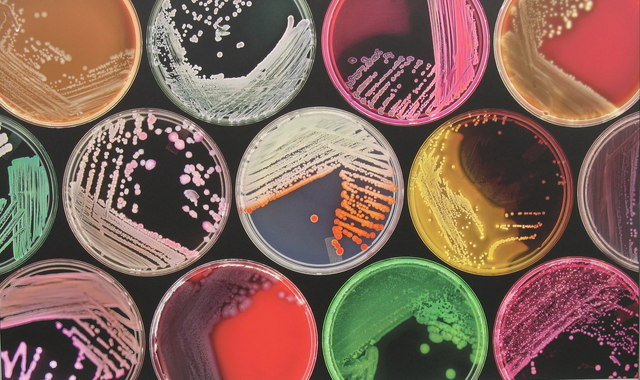




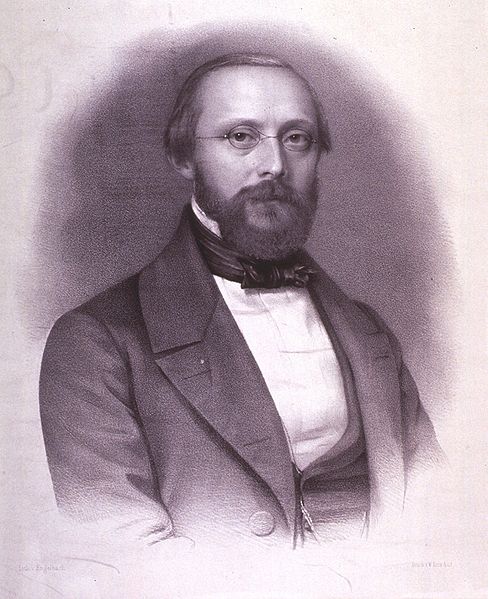


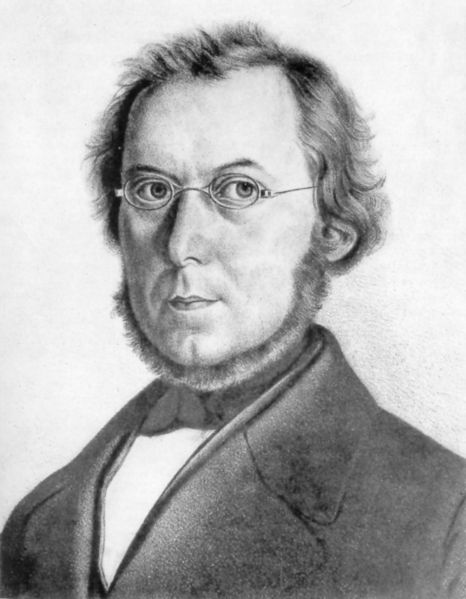


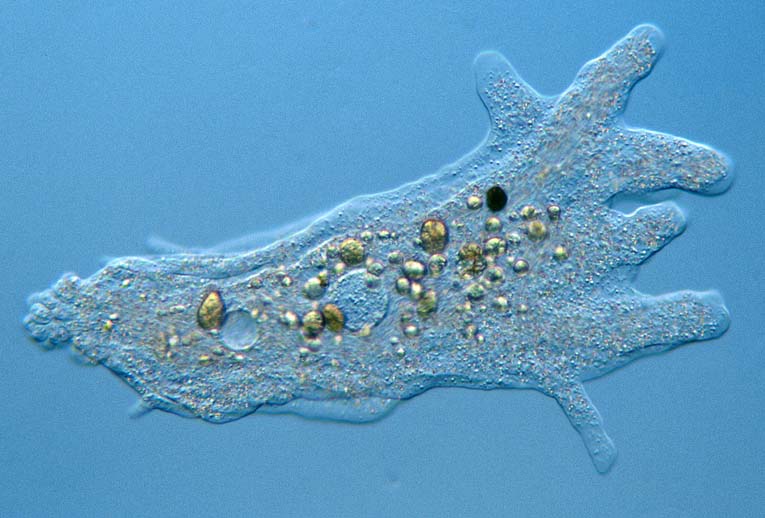






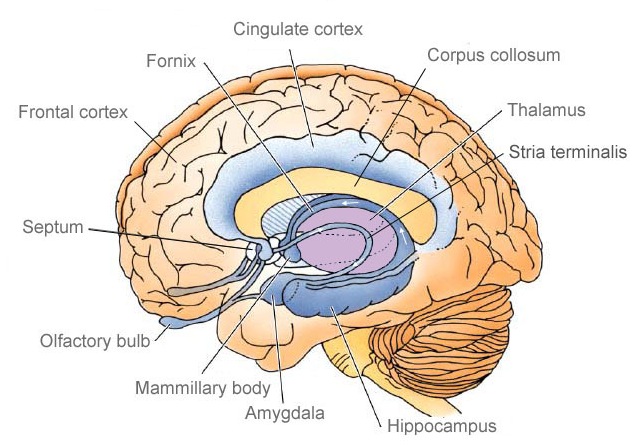
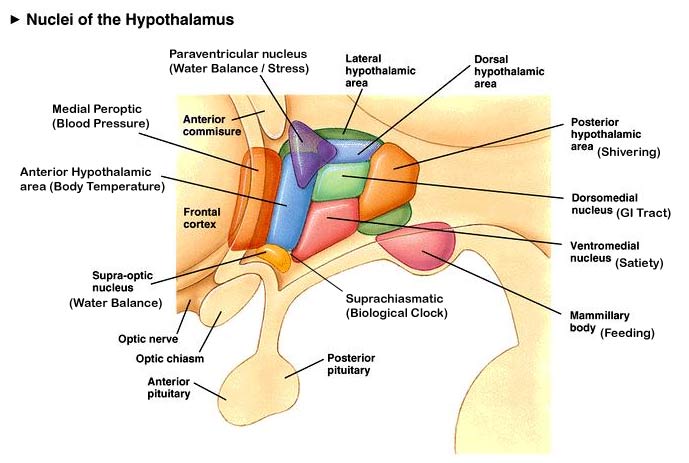


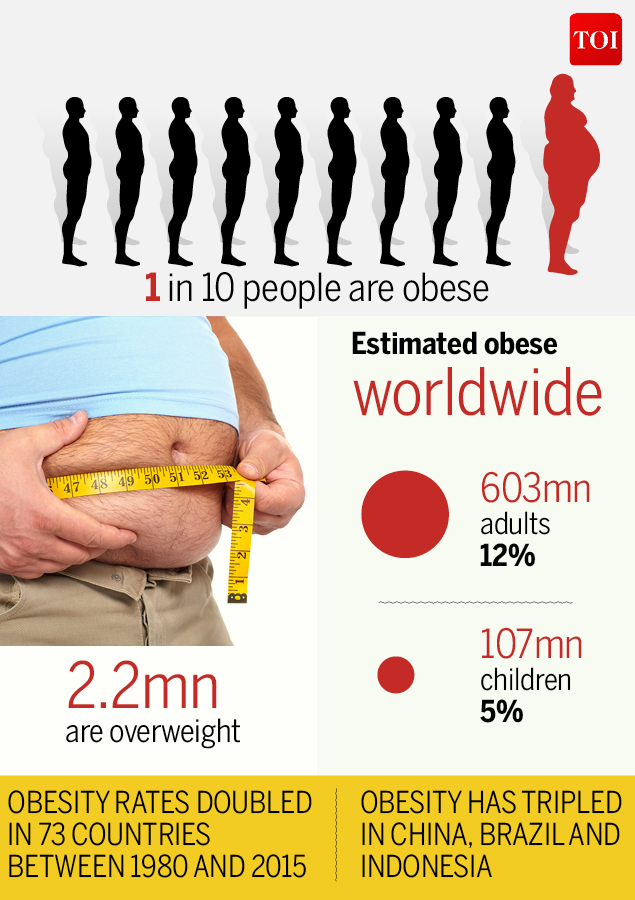

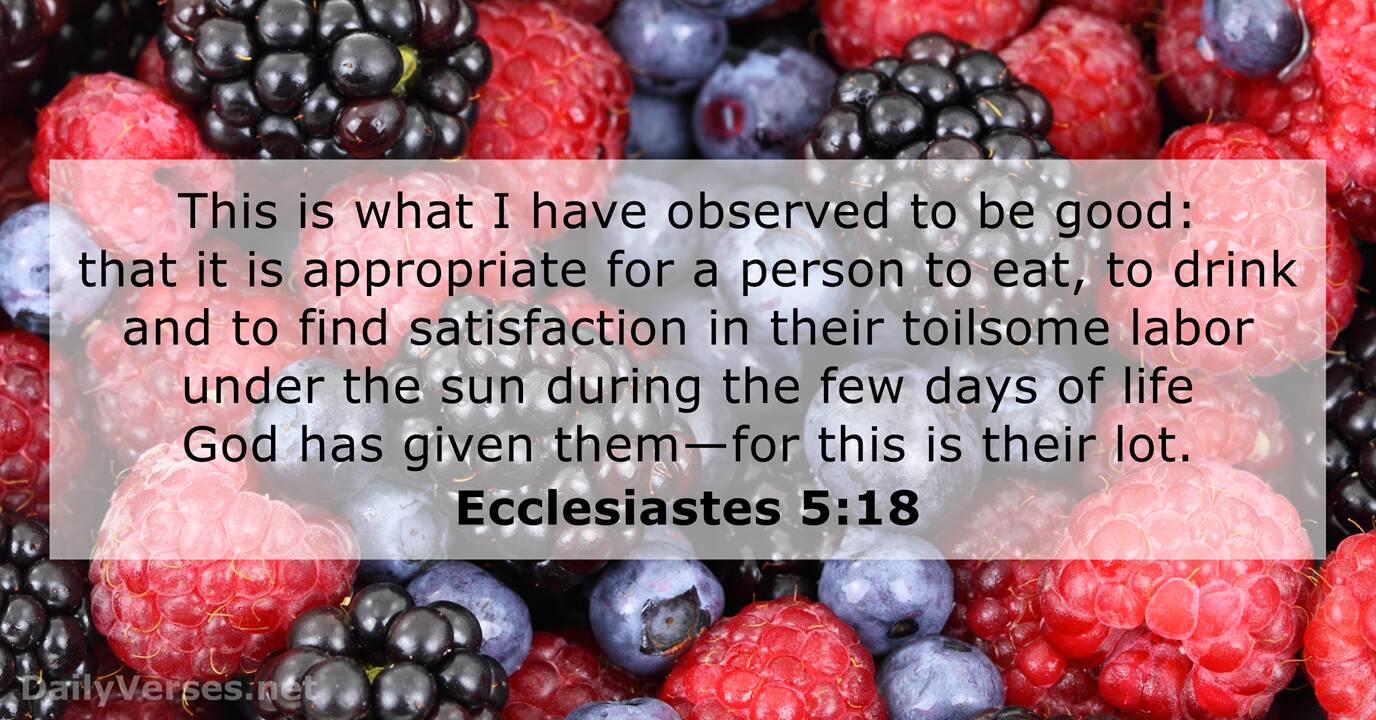


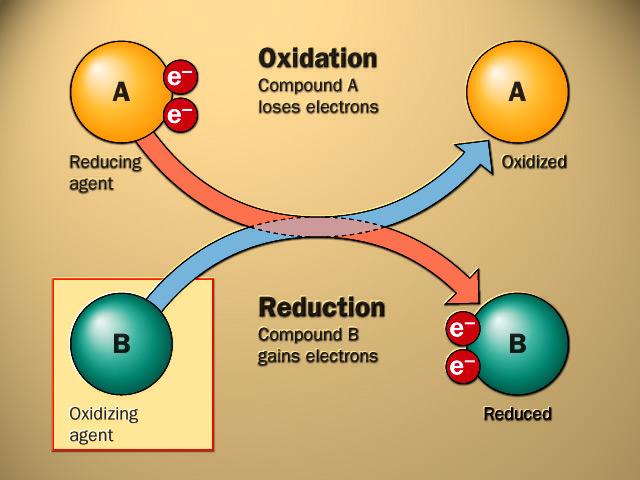
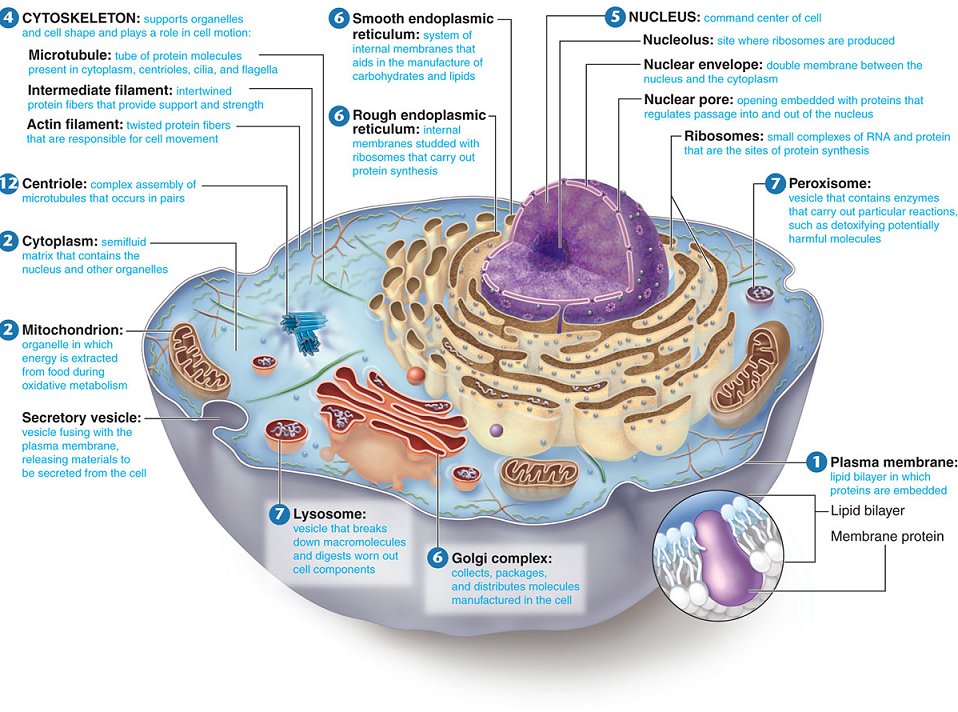


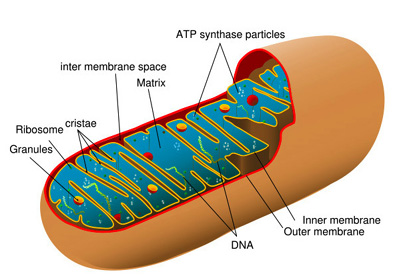


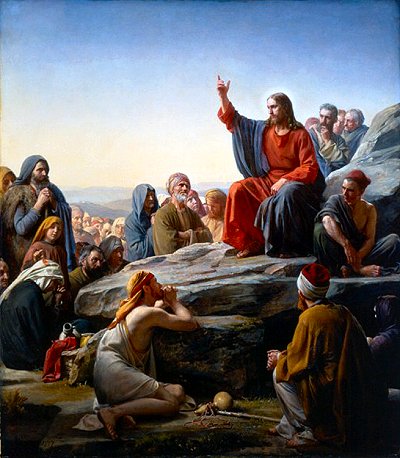


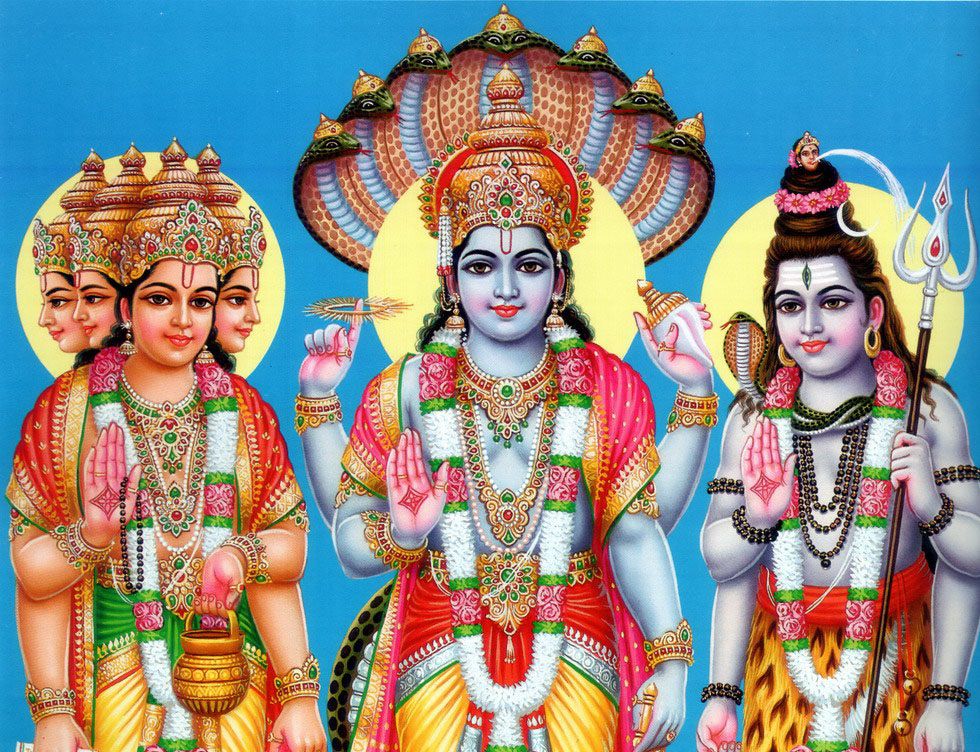
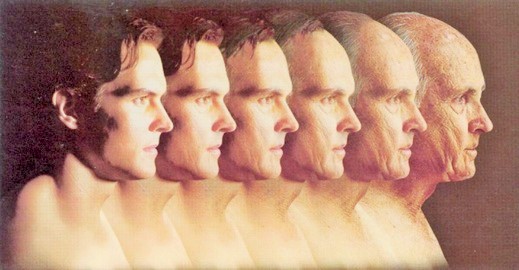








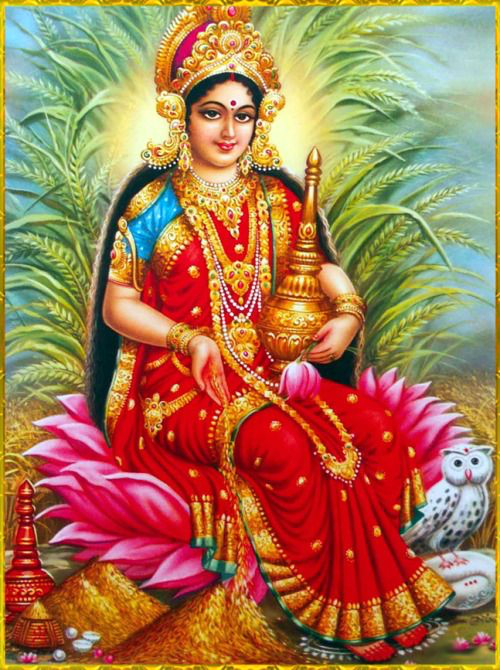
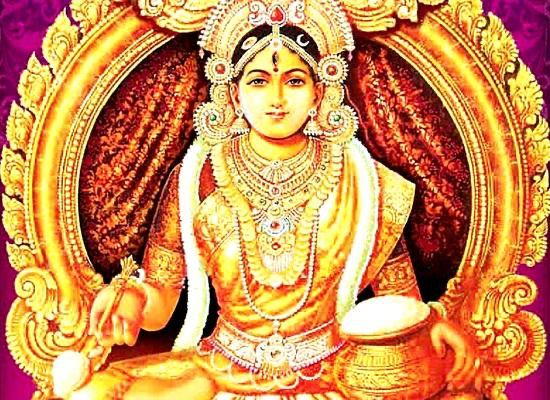
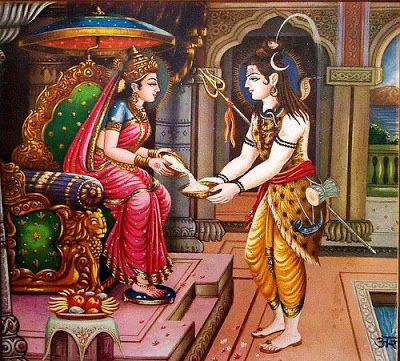





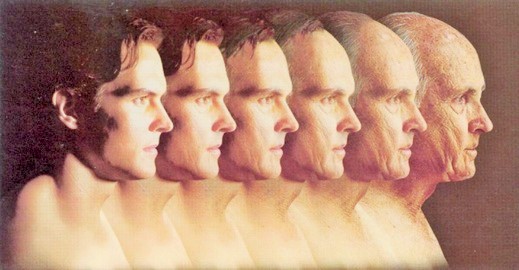
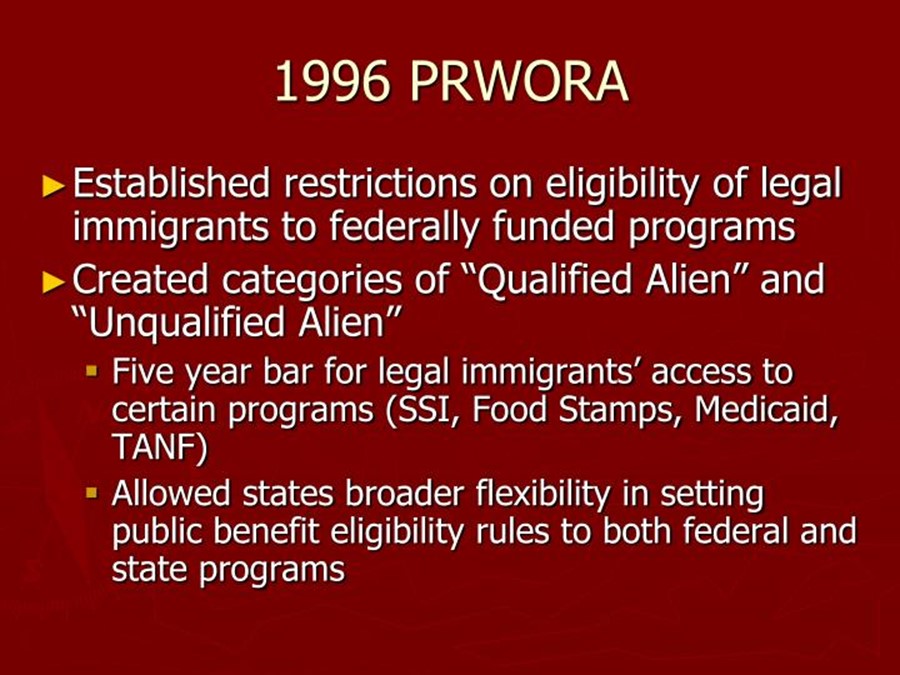



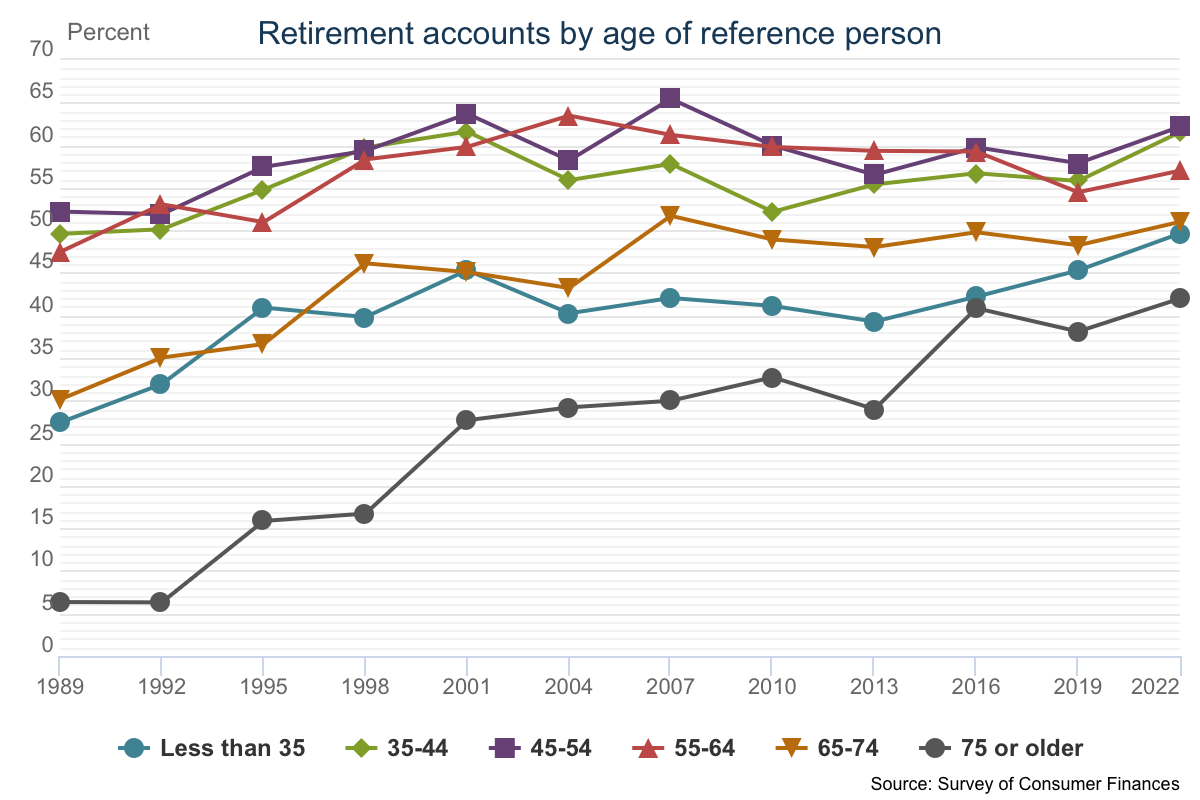

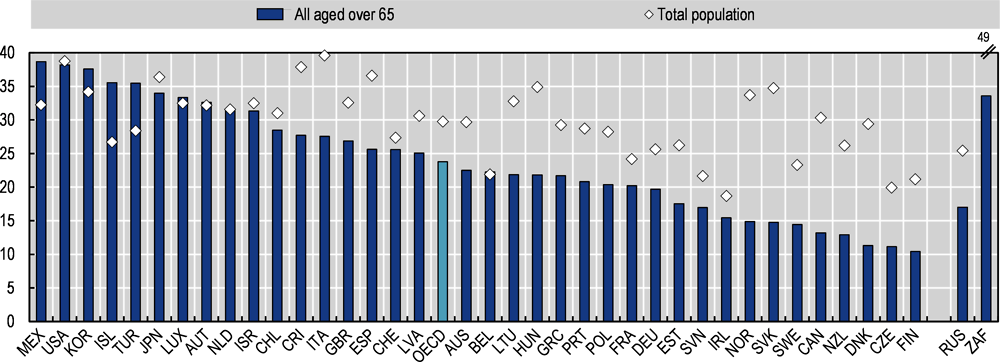










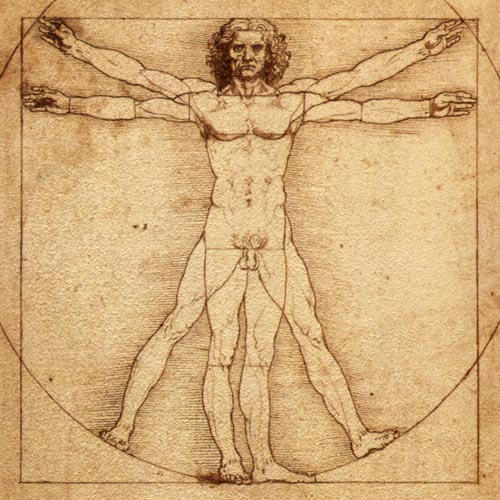

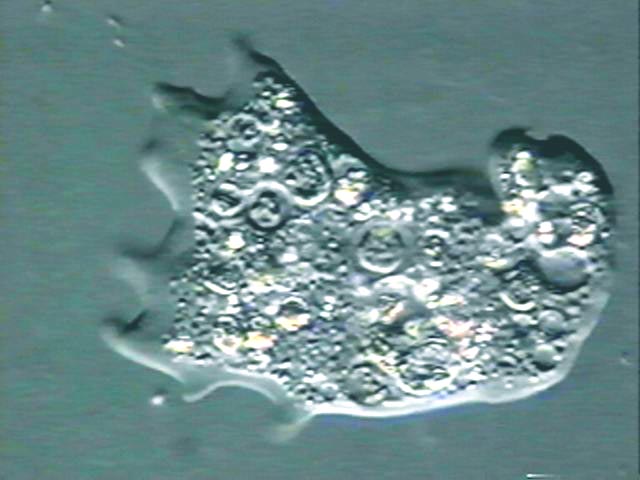


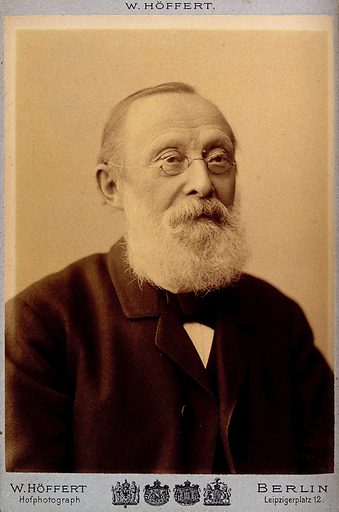
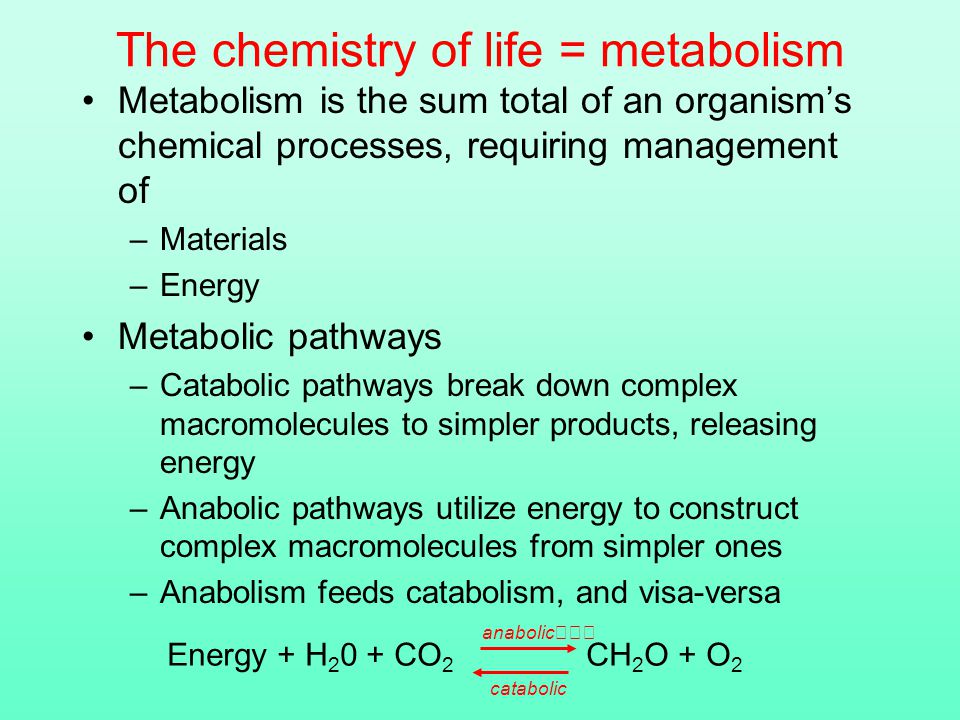

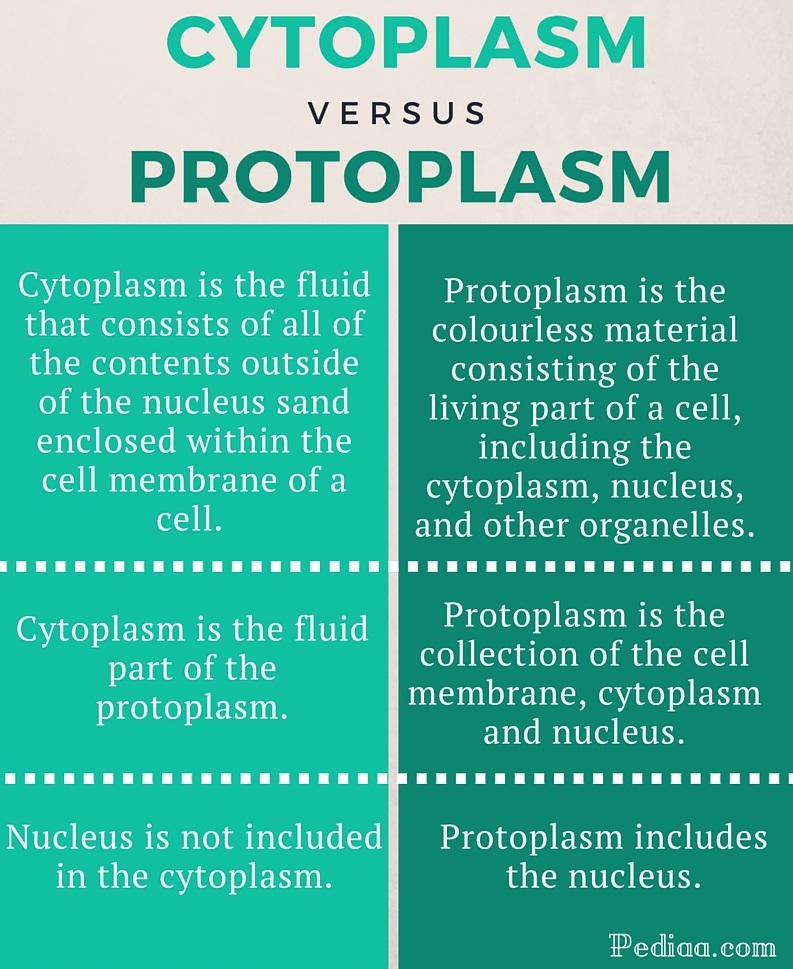


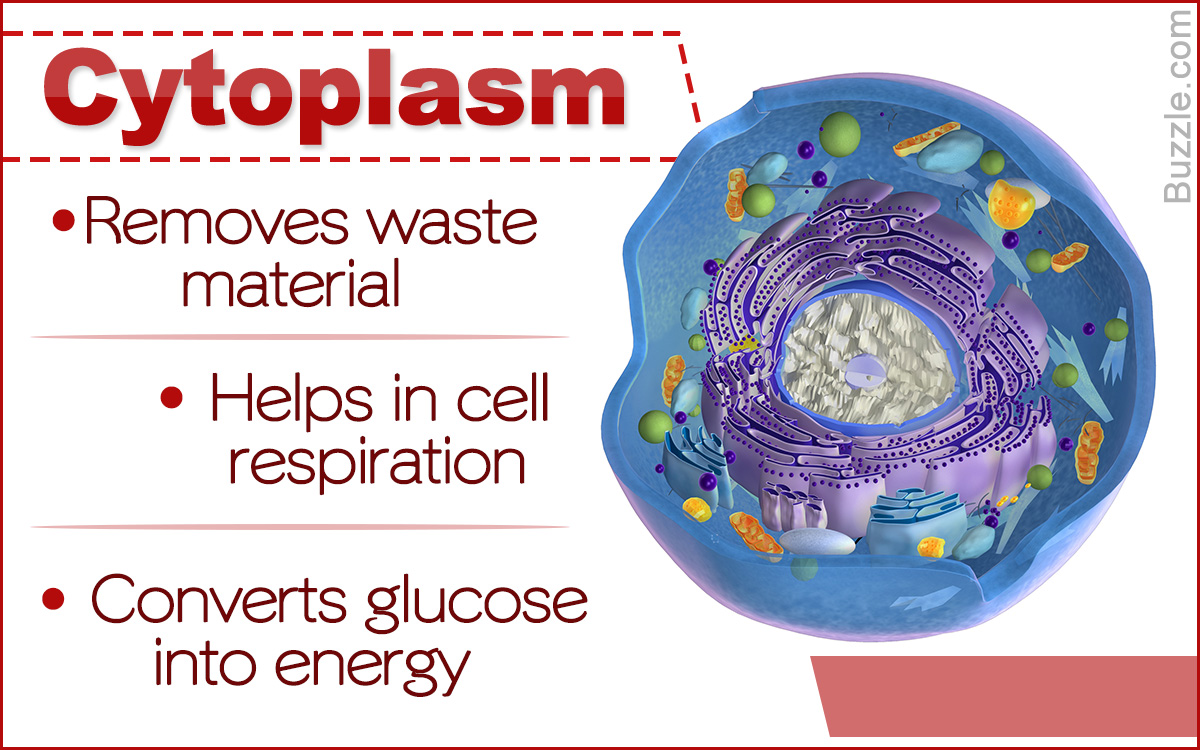
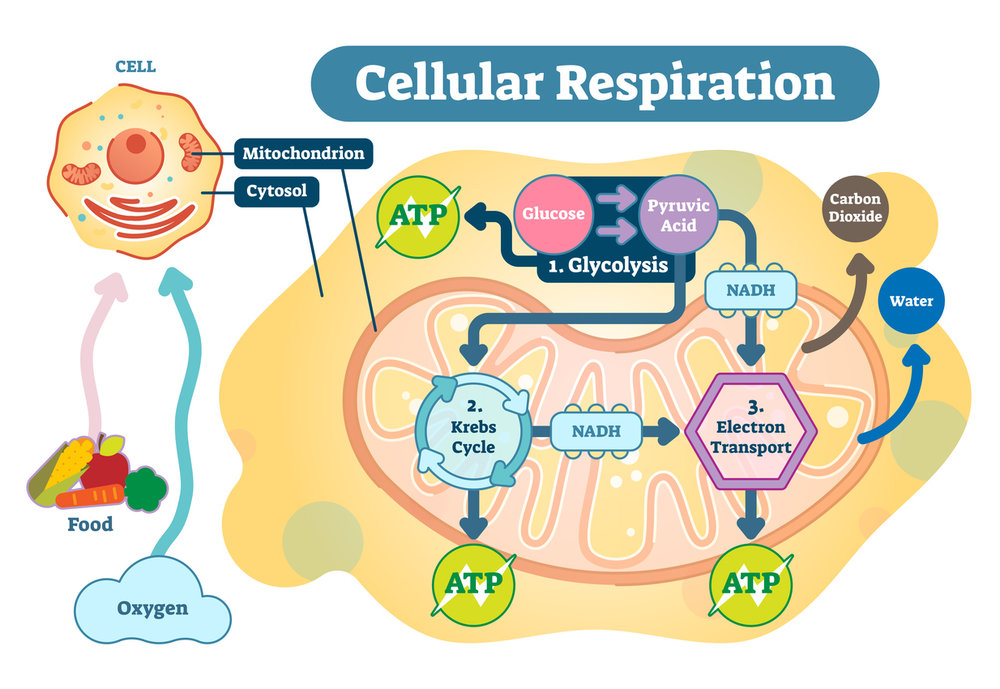


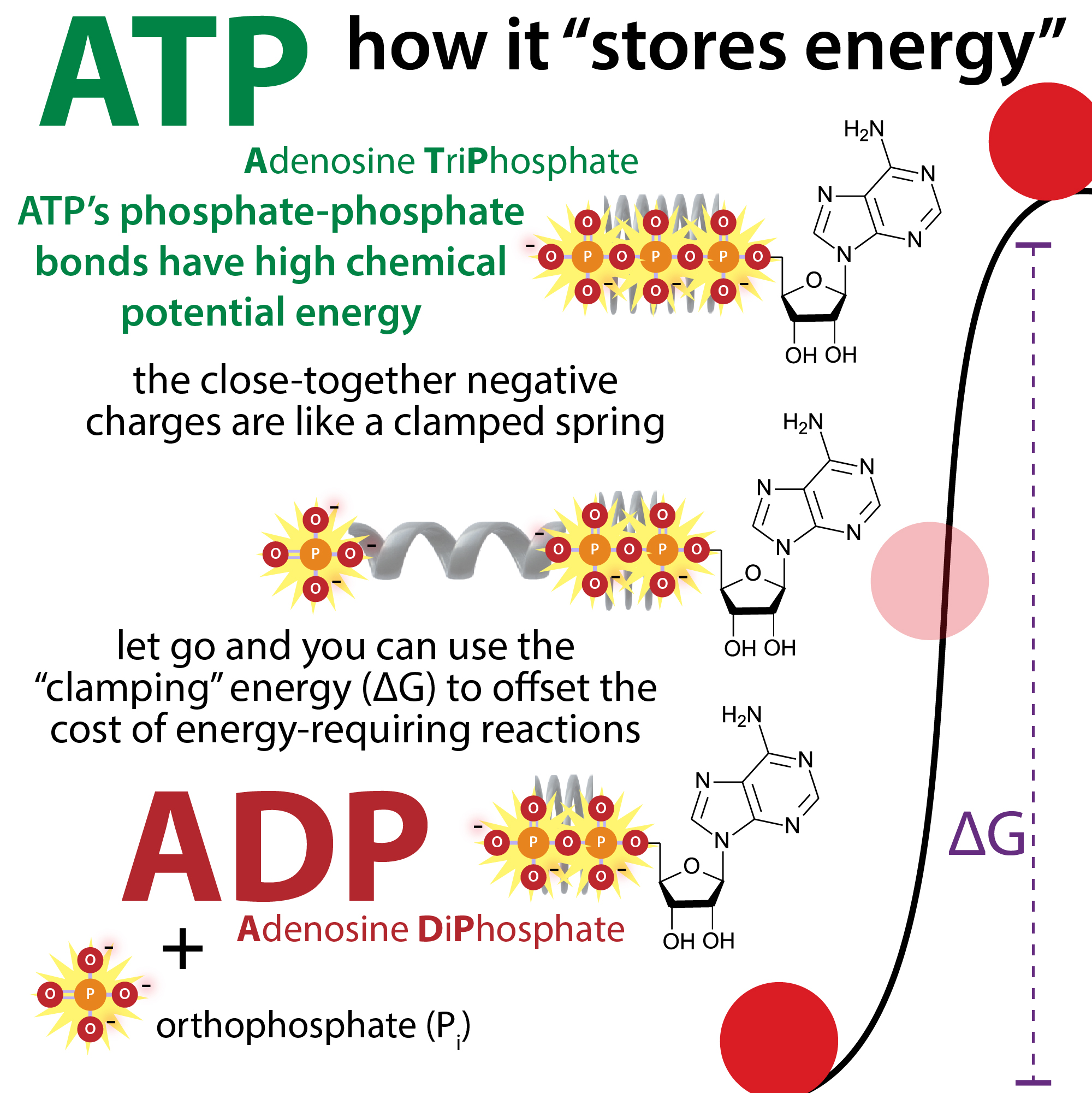

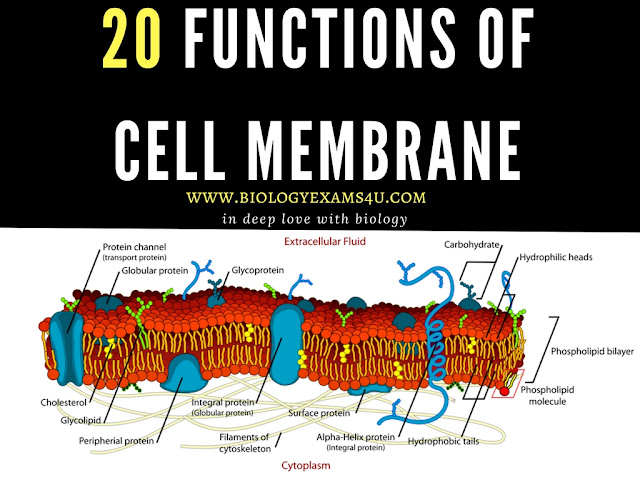


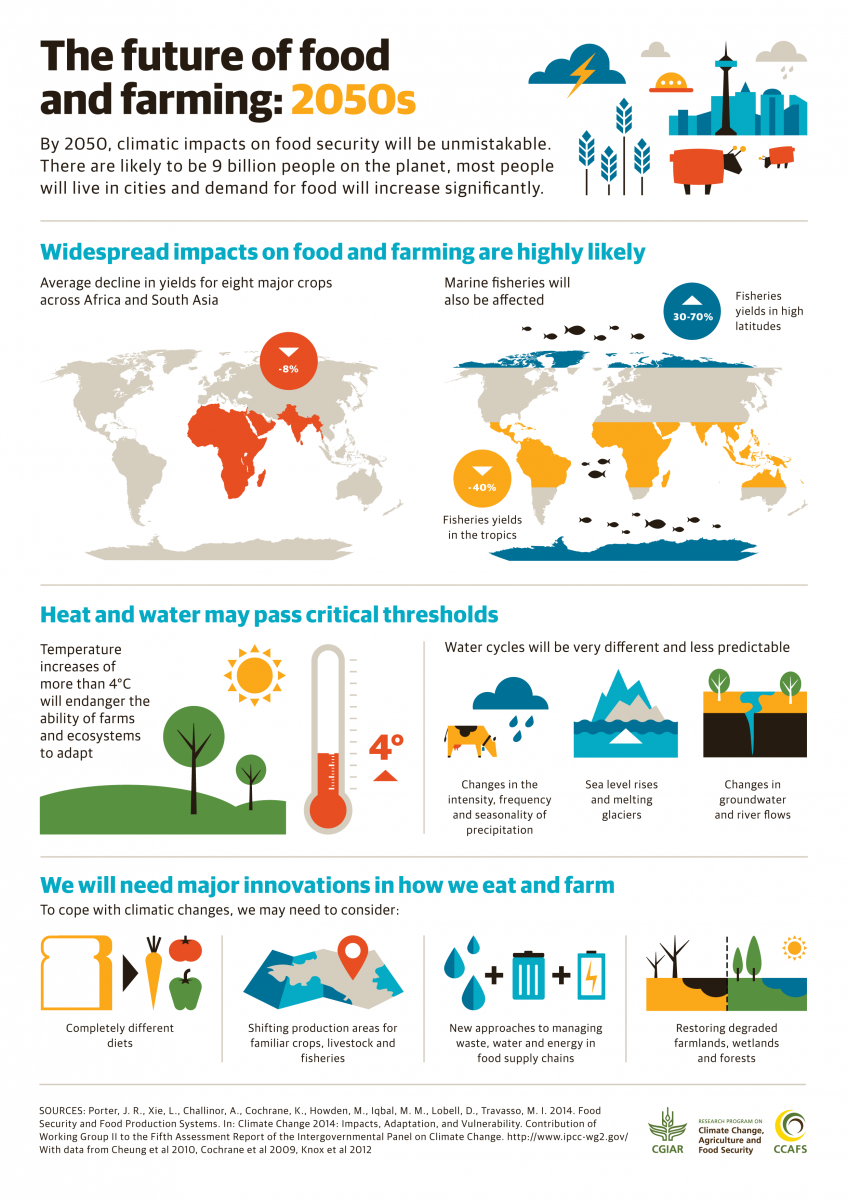

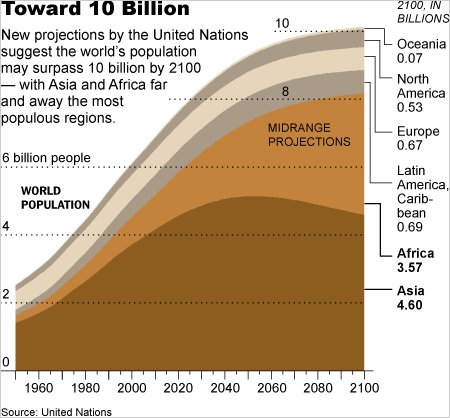

 Whole Dude - Whole Spirituality
