Whole Dude as a Name is in use since September 2003
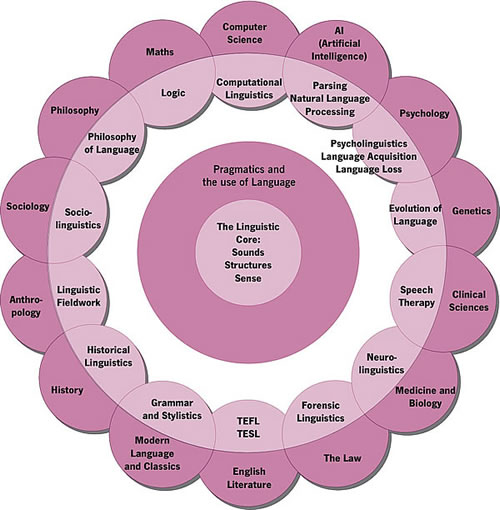
Whole Foods-Whole Inspiration-Whole LanguageWhole Foods Arrives in Ann Arbor, September 1993Whole Foods opened its Store in Ann Arbor on September 16, 1993. Whole Foods, Whole People and Whole Planet inspire Whole Dude to invent Whole Phrases: Whole Linguistics – Whole Language. The concept of Whole Cookie and Whole Love. Whole Dude uses the phrase Whole Linguistics to describe three entities; 1. Language User, 2. Language Interpreter and 3. Language Creator. Image Credit: Agenda Publications, Ann Arbor District Library, Issue Dates, September 1993, December 1997 and February 1998.
The Identity named Whole Dude is derived from Whole Inheritance
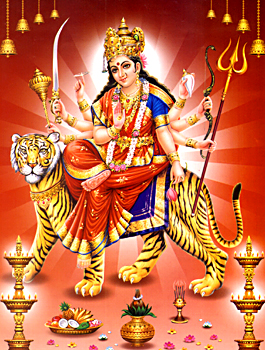
Whole Existence – They Exist, Therefore I am Whole Dude: The Concept of Whole Dude relates to this Idol which personifies the Everlasting Principle as “Ardhanarishwara,” Half-Male and Half-Female at one and the same time. The Male represents the Originating Principle and the Female represents the Source Principle and their Union represents a Perfect Union of Matter, Form and Energy which is always mistaken as a Singular Entity called “I.” The Singular Entity “I” has no Existence of its own unless it is united with the Everlasting Principle to become a Being called “I am.”The Whole Dude Identity is derived from Whole Inheritance: MAN, THE ENTIRE HUMAN ORGANISM IS DERIVED FROM A SINGLE FERTILIZED EGG CELL. HOW IS THE IDENTITY AND INDIVIDUALITY IS ESTABLISHED AND IS KNOWN IN THIS COMPLEX MULTICELLULAR ORGANISM?
What is inheritance?
The Identity named Whole Dude is derived from Whole Inheritance. The Concept of Whole Inheritance goes beyond the Mendel’s Laws of Inheritance.
Inheritance is the process by which genetic information is passed on from parent to child. This is why members of the same family tend to have similar characteristics.
We actually have two genomes each
We get one copy of our genome from each of our parents
Inheritance describes how genetic material is passed on from parent to child.
How is genetic material inherited?
The Identity named Whole Dude is derived from Whole Inheritance. The Concept of Whole Inheritance goes beyond the Mendel’s Laws of Inheritance.
Most of our cells contain two sets of 23 chromosomes (they are diploid).
An exception to this rule are the sex cells (egg and sperm), also known as gametes, which only have one set of chromosomes each (they are haploid).
However, in sexual reproduction the sperm cell combines with the egg cell to form the first cell of the new organism in a process called fertilization.
This cell (the fertilized egg) has two sets of 23 chromosomes (diploid) and the complete set of instructions needed to make more cells, and eventually a whole person that is identified by the Personal Pronoun Whole Dude.
Each of the cells in the new person contains genetic material from the two parents.
This passing down of genetic material is evident if you examine the characteristics of members of the same family, from average height to hair and eye colour to nose and ear shape, as they are usually similar.
What is Cytoplasmic Inheritance?
The Identity named Whole Dude is derived from Whole Inheritance. The Concept of Whole Inheritance goes beyond the Mendel’s Laws of Inheritance.
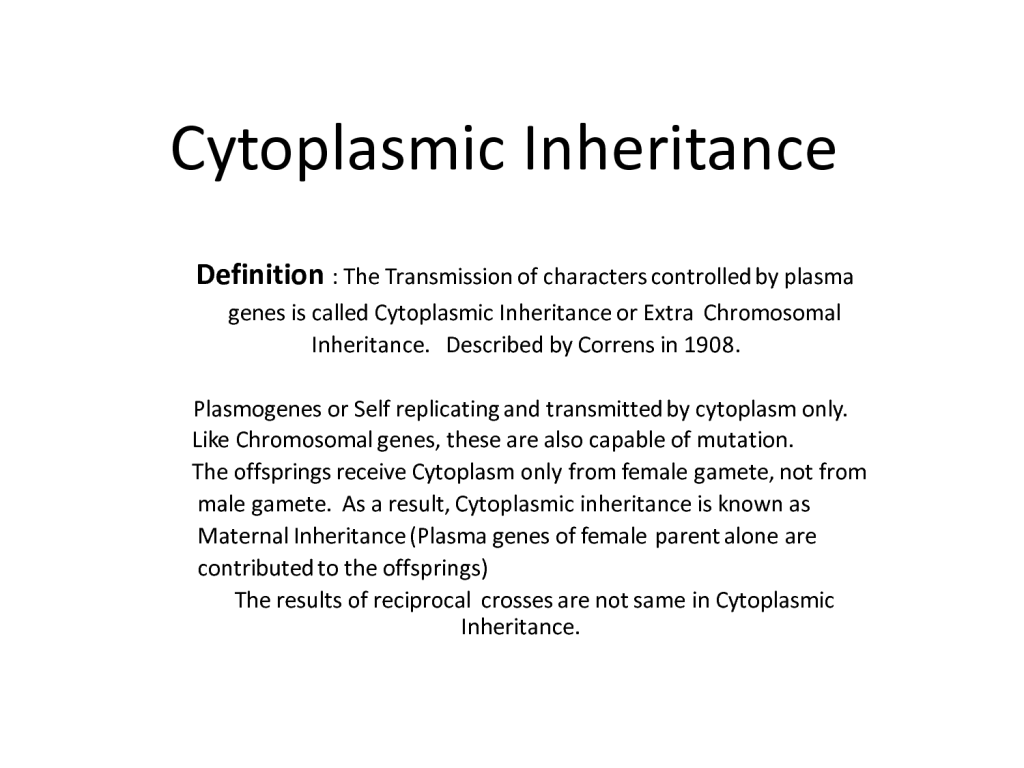
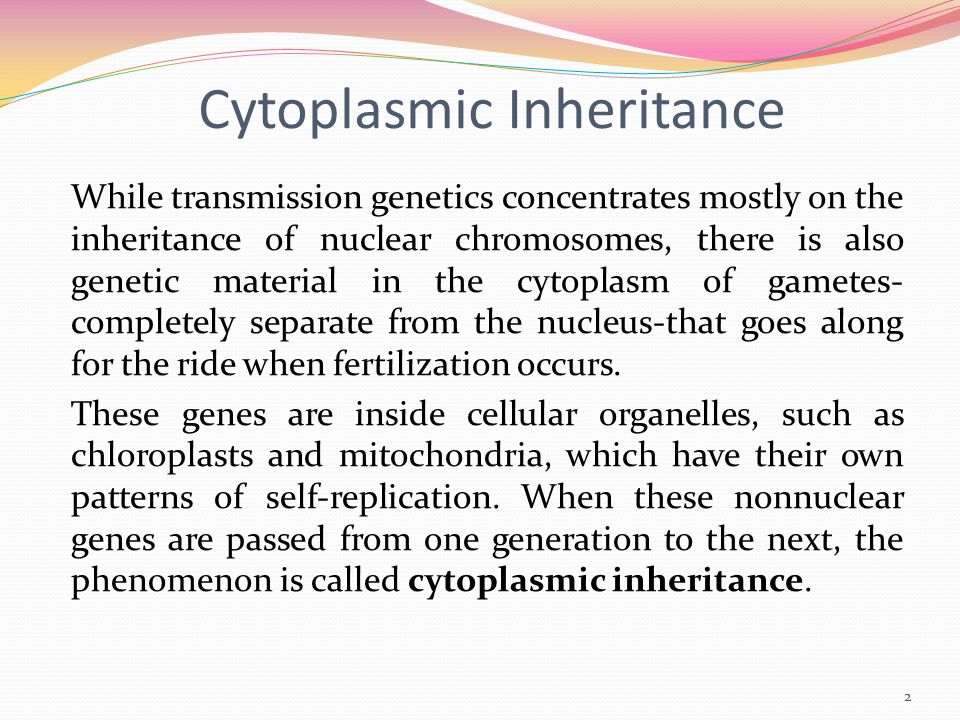
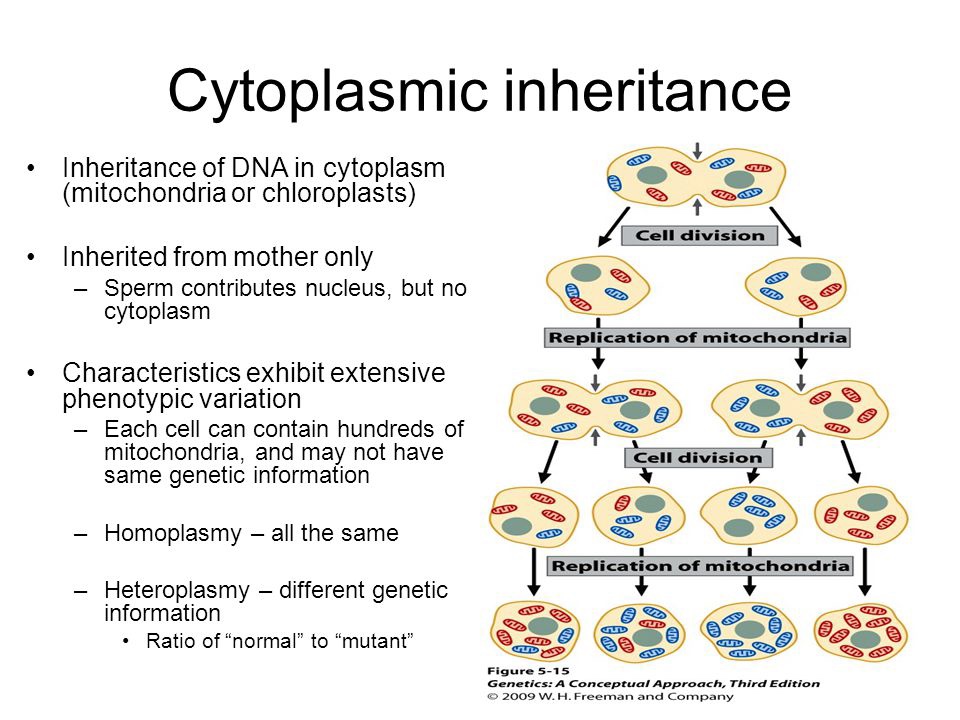
Cytoplasmic inheritance is a type of inheritance which involves DNA of cytoplasmic organelles. In this inheritance, the offspring receives genes from the cytoplasmic organelles (plasma genes or extranuclear genes). Mitochondria and chloroplasts contain genomes composed of DNA. This organelle DNA travels from the mother egg cell to zygote. However, compared to nuclear inheritance, a small number of genes are inherited by the cytoplasmic inheritance. Moreover, it does not follow the Mendelian inheritance pattern, unlike nuclear inheritance.
The Identity named Whole Dude is derived from Whole Inheritance. The Concept of Whole Inheritance goes beyond the Mendel’s Laws of Inheritance.
What is Nuclear Inheritance?
The Identity named Whole Dude is derived from Whole Inheritance. The Concept of Whole Inheritance goes beyond the Mendel’s Laws of Inheritance.. The term Nuclear Inheritance refers to the inheritance of genetic traits such as Blood Type A, B, and O
Nuclear inheritance occurs due to the genes present on the chromosomes. Therefore, the mother nucleus and father nucleus equally contribute to nuclear inheritance. Moreover, the offspring inherits millions of genes from parents via nuclear inheritance.
WHOLE MENDELISM-ORIGIN OF LIFE: Human interest in Coloration lead Gregor Mendel to conduct his famous studies that established the science called Genetics. He conducted experiments studying the white or pinkish flowers of Pea (Pisum sativum) plants.
Whole Dude coined the phrase ‘Whole Mendelism’ to interpret the information about Biogeneration and Propagation using the mechanism of reproduction. Mendel’s Laws of Inheritance describe the transmission of hereditary traits from parent species to offspring. However, the story of Inheritance as described in Biology is not ‘Whole’ or complete for it fails to include other important aspects of ‘Inheritance’.
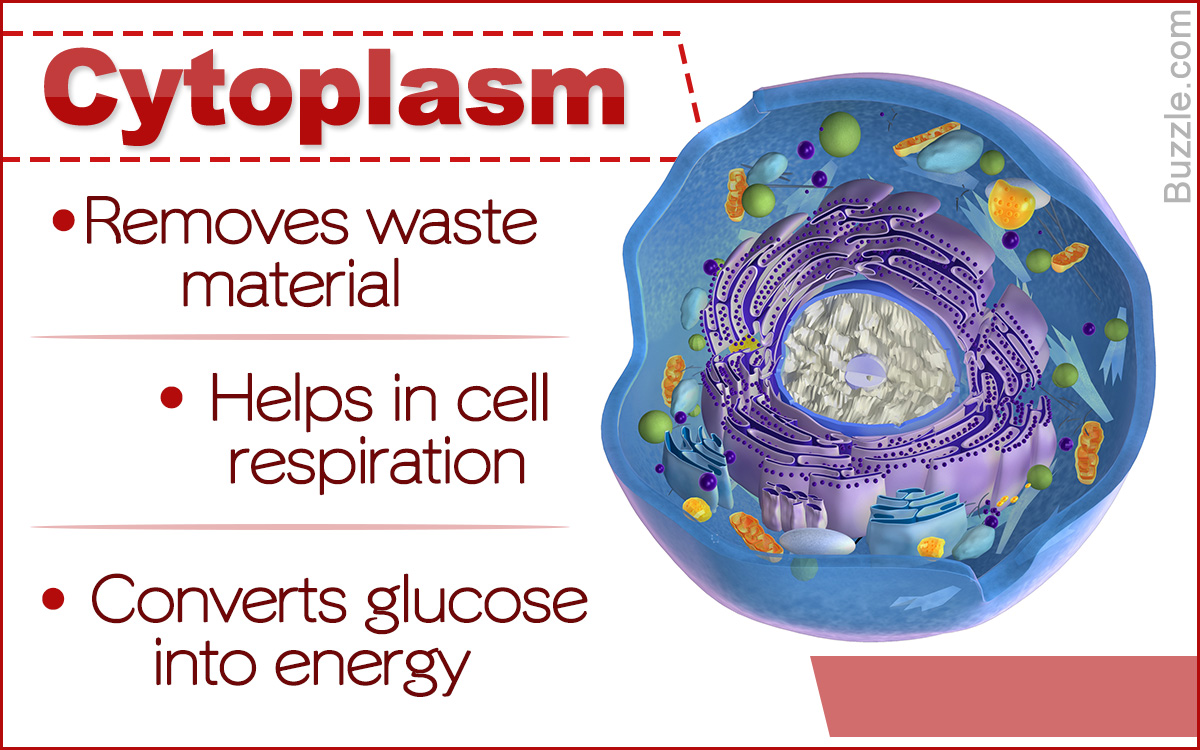
Cells are the building blocks of life. Each living Cell has three basic components, 1. Nucleus or genetic material, 2. Corporeal substance, living matter called protoplasm, cytoplasm, or cytosol which has several kinds of intracellular organelles with membranes, and 3. Limiting Membrane called Cell Membrane, Plasma Membrane or Biological Membrane with which a living Cell separates itself from its surrounding environment including other living cells.
Modern Evolutionary Biologists interpret Theory of Evolution chiefly as that of transmission of genetic traits giving attention to genes and alterations of genetic information or mutation. They do not give attention to the Maternal Cytoplasmic Inheritance and Inheritance of Biological Membrane when a Mother Cell reproduces to develop Daughter Cells.
Whole Dude accounts for their human existence coining the phrase Whole Inheritance which includes the contributions of the Divine Providence, the Father or Paternal Inheritance, and the Mother or Maternal Inheritance. The term inheritance must include the inheritance of Matter, Form and Knowledge to extract Energy apart from the genes which are involved in the inheritance of genetic traits as the fact of existence needs the support from an external environment at any given time and place.
The Identity named Whole Dude is derived from Whole Inheritance. The Concept of Whole Inheritance goes beyond the Mendel’s Laws of Inheritance.
The Divine Providence ensures the creation of the newborn who arrives in a physical and social environment to exist as an Individual with Individuality, an original, one of its own kind of object even if the birth involves the use of reproductive technology such as the production of genetically identical clones.
The Concept of Whole Inheritance
The Identity named Whole Dude is derived from Whole Inheritance. The Concept of Whole Inheritance goes beyond the Mendel’s Laws of Inheritance. The Human Genome is just one dimension of the 3-dimensional inheritance.
The establishment of the human existence primarily involves three kinds of inheritance. 1. The Inheritance of the Human Genome, 2. The Cytoplasmic Inheritance which includes the inheritance of the Cell, Plasma, or Biological Membrane apart from cytoplasmic organelles containing DNA such as the mitochondria, and 3. The Inheritance of Physical and Social Environment that supports the existence.
The Identity named Whole Dude is derived from Whole Inheritance. The Concept of Whole Inheritance goes beyond the Mendel’s Laws of Inheritance. The Human Genome is just one dimension of the 3-dimensional inheritance. The Divine attribute of Motherhood is the Maternal Cytoplasmic Inheritance. The Identity named Whole Dude is derived from Whole Inheritance. The Concept of Whole Inheritance goes beyond the Mendel’s Laws of Inheritance. The Human Genome is just one dimension of the 3-dimensional inheritance. The Divine attribute of Motherhood is the Maternal Cytoplasmic Inheritance.
The Inheritance of Cell or Plasma Membrane:
Living cells have a corporeal substance called Protoplasm that has the ability of Spiritual Biotic Interactions. The Biological Membrane or Cell Membrane separates the cell from its environment and other living cells present in the environment. Cells use unique proteins, biological molecules and receptor sites to recognize the other living cells and use chemical signals to facilitate the interactions. Such interactions between living cells have the characteristics of consciousness or awareness.
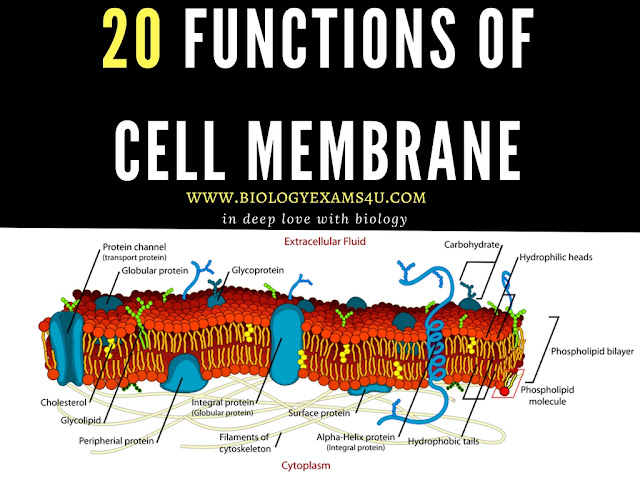
The Functions of Cell Membrane or Biological Membrane:
The Identity named Whole Dude is derived from Whole Inheritance. The Concept of Whole Inheritance goes beyond the Mendel’s Laws of Inheritance. The Human Genome is just one dimension of the 3-dimensional inheritance. The Divine attribute of Motherhood is the Maternal Cytoplasmic Inheritance.
1. Protection: It protects the cell from its surroundings or extracellular environment. Plant cell possess wall over the plasma membrane for extra protection and support.
2. Holding cell contents: Plasma membranes hold the semi fluid protoplasmic contents of the cell intact; thus keeping the individuality of the cell.
3. Selective Permeability: Cell membrane allows only selected or specific substances to enter into the cell and are impermeable to others.
Gases like O2 and CO2 can diffuse rapidly in solution through membranes.
Small compounds like H2O and methane can easily pass through where as sugars, amino acids and charged ions are transported with the help of transport proteins.
The size of the molecules which can pass through the plasma membrane is 1-15 A0. This property is responsible for keeping a cell ‘as a cell’, an individual unit.
4. Shape: It maintains form and shape of the cell. It serves as site of anchorage or attachment of the cytoskeleton; thus providing shape to the cell (especially in animal cells without cell wall).
5. Organelles: Cell membrane delimits or covers all sub-cellular structures or organelles like nucleus, mitochondria, plastids, Golgi apparatus, endoplasmic reticulum, microbodies etc. thus protecting them form the surroundings and also helps in maintaining a constant internal environment.
6. Compartmentalization: Cell membrane separate the cells from their external environment and cell organelle from cytosol. It help the cells and their organelles to have their own microenvironments, structural and functional individuality.
7. Cell Recognition: With the help of glycolipids and glycoproteins on its surface, cell membranes are able to differentiate similar cells from dissimilar ones, foreign substances and cells own materials. Cell recognition is useful for tissue formation and defence against microbes.
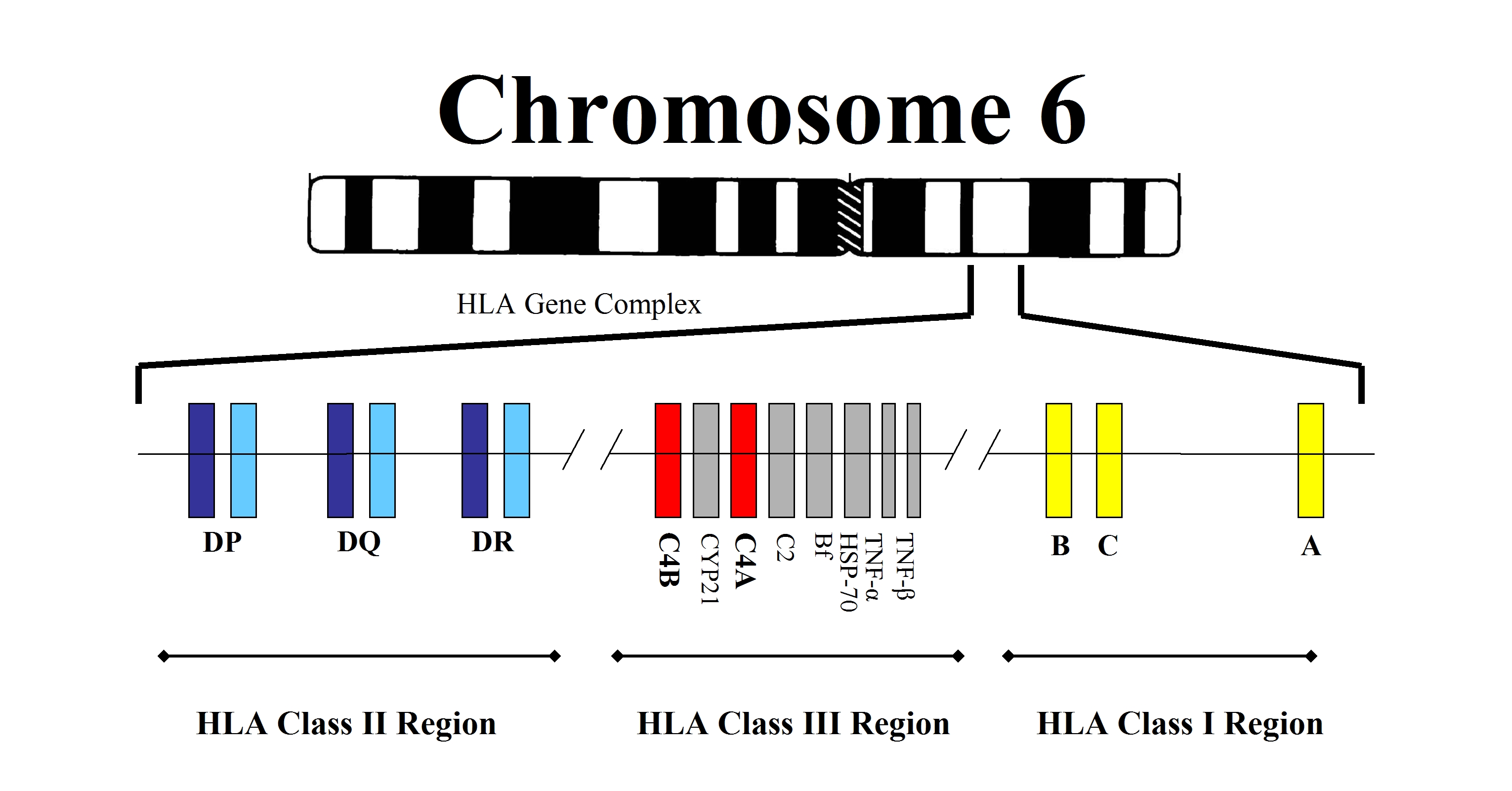
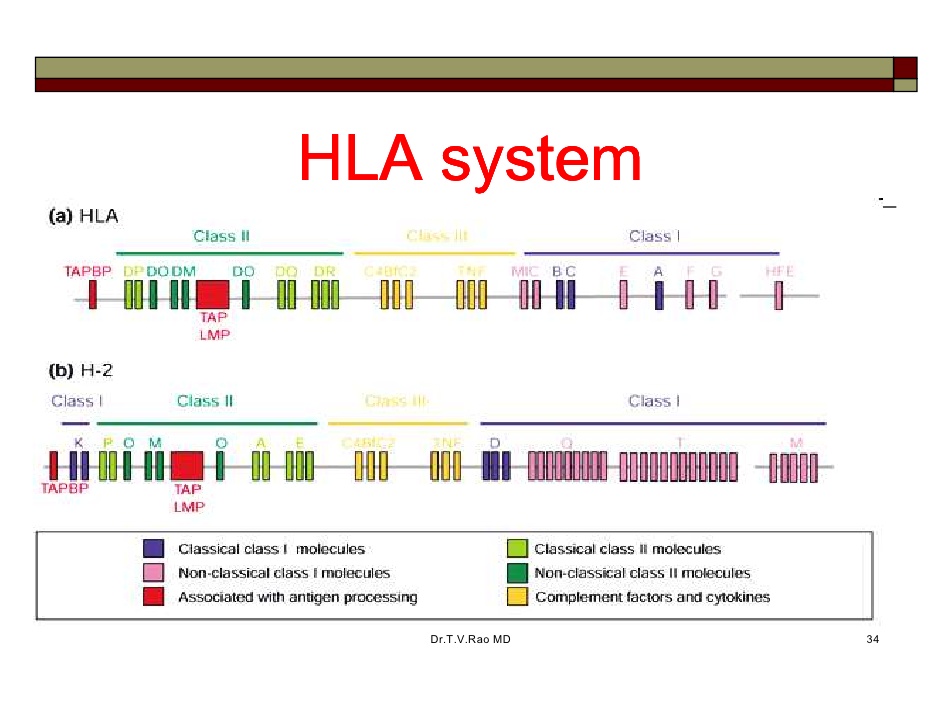
8. Antigens: Cell membranes possess antigens which determine blood grouping, immune response, acceptance or rejection of a transplant (graft rejection by MHC’s on plasma membrane).
9. Microvilli: They are microscopic finger like projections of plasma membrane present on some cells like intestinal epithelial cells, which are involved in a wide variety of functions, including increasing surface area for absorption, secretion, cellular adhesion etc.
10. Sheaths of cilia and flagella: Cilia and flagella are projections from the cell; made up of microtubules which are covered by an extension of the plasma membrane.
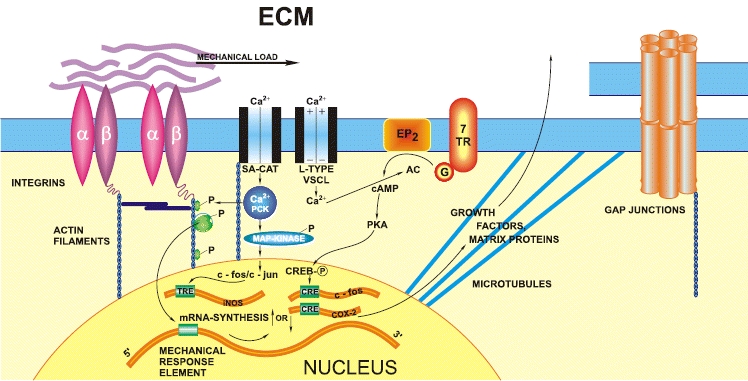
11. Cytoplasmic bridges in plasmodesmata and gap junctions: Plasmodesmata in plant cells and gap junctions in animal cells; meant for intercellular transport and communication, form cytoplasmic bridges between adjacent cells through plasma membrane.
12. Endocytosis and Exocytosis: Bulk intake of materials or endocytosis occurs through development of membrane vesicles or invagination and engulfing by plasma membrane.
Exocytosis: It is reverse of endocytosis that provides for releasing waste products and secretory materials ot of the cells with the help of plasma membrane.
13. Impulse transmission in neurons: The transmission of a nerve impulse along a neuron from one end to the other occurs as a result of electrical changes across the plasma membrane of the neuron
14. Cell metabolism: Cell membranes control cell metabolism through selective permeability and retentivity of substances in a cell.
15. Electron transport chain in bacteria: In bacteria; Electron transport chain is located in cell membrane.
16. Osmosis through cell membrane: It is movement of solvent molecules (generally water) from the region of less concentrated solution to the region of high concentrated solution through a semi permeable membrane. Here the semi permeable membrane that helps in osmosis is the cell membrane. Eg: Root cells take up water from the soil by osmosis
17. Carrier proteins for active transport: They occur in the cell membranes and control active transport of substances. Example, GLUT1 is a named carrier protein found in almost all animal cell membranes that transports glucose across the bilayer or plasma membrane.
18. Plasma Membrane enzymes: Many enzymes are present on the plasma membrane with wide variety of catalytic activity. Example: Red blood cell plasma membranes contain a number of enzymes such as ATPases, anion transport protein, glyceraldehyde 3-phosphate dehydrogenase, protein kinases, adenylate cyclase, acetylcholinesterase.
19. Cell Membrane Receptors: Receptor on the plasma membrane performs signal transduction, converting an extracellular signal into an intra-cellular signal. Membrane possess receptors for hormones, neurotransmitters, antibodies and several other biochemicals.
20. Plasma membrane assisted Cell movements: Undulation and pseudopodia are cell membrane phenomenon involved in cell movement. Amoeba, macrophages and WBCs move with the helps of temporary organelles like pseudopodia. Pseudopods are temporary cytoplasmic projections of the cell membrane in certain unicellular protists such as Amoeba. Some mammalian cells such as fibroblasts can move over a solid surface by wave like undulations of the plasma membrane.
The Divine Principle has to be both male and female and in this article, I present the feminine aspect of Divine Principle as “Whole Angel”, the harmonious blending or coming together of Angel of Beauty, Angel of Mercy, and Angel of Knowledge. My understanding of Mother and Motherhood comes from the study of the building blocks of Life. The most important building block of human life is the fertilized Egg Cell.
The Concept of Whole Inheritance: The newborn baby upon separation from its mother begins life as an independent living entity by initiation of its vital, living functions such as Respiration and Circulation. To survive in physical world, the baby needs the ability to breathe on its own and circulate the vital supply of Oxygen to all tissues and organs of the entire body.
The Father and the Mother – The Principles governing Life:
Whole Inheritance involves the Operation of Three Principles; 1. The Everlasting Principle, 2. The Father or the Originating Principle, and 3. The Mother or the Source Principle, the Source of Matter, Knowledge and Energy. LORD SHIVA’S ESSENCE IN THIS IMAGE IS DESCRIBED AS “ARDHANARISHWARA,” HALF-MALE AND HALF-FEMALE, A PERFECT UNION OF MATTER, FORM, ENERGY, AND THE ENERGY CONTROLLER.
Father is described as the male parent, an ancestor, an originator, and as a Controller. Very often, God is considered as both the Father and the Mother of all life forms. Mother is described as the female parent and something that is regarded as a ‘Source’. Father may be viewed as the ‘Prime Cause’ and Mother is the Source of ‘Prime Energy’. Mother is the source of energy in performance of all kinds of actions and in accomplishment of all kinds of work. The Mother Principle represents the Endeavor/Work/Effort that makes action possible. If Life is defined as function at the level of biological molecules, Mother represents the Source or the Origin of these organic molecules; Mother is the Source of Energy for the synthesis of these organic molecules; and Mother is the Source of Knowledge that provides the ability of recognition and the ability to use the molecules in a sequential manner to manage the biochemical reactions of these organic molecules to function as Life. Man leads a mortal or conditioned existence and the fact of existence always demands the coming together with an Everlasting Principle which is immutable, imperishable, indestructible, immortal, eternal, or always present.
Mother – Source of Life:
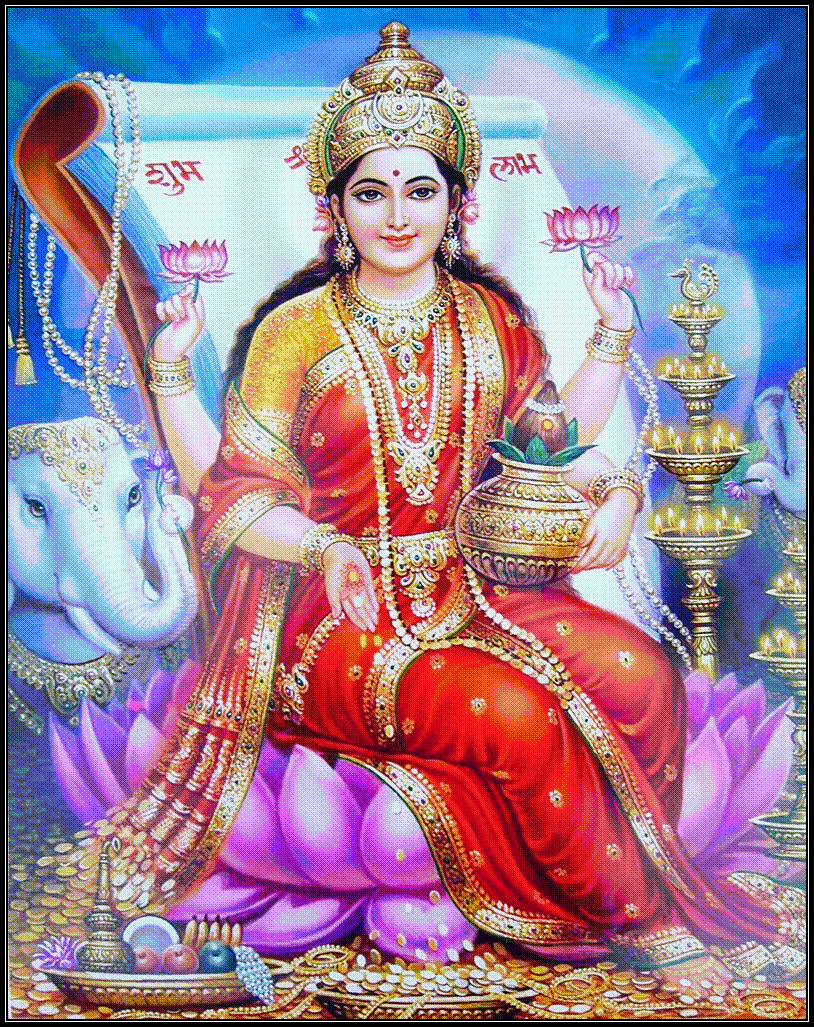
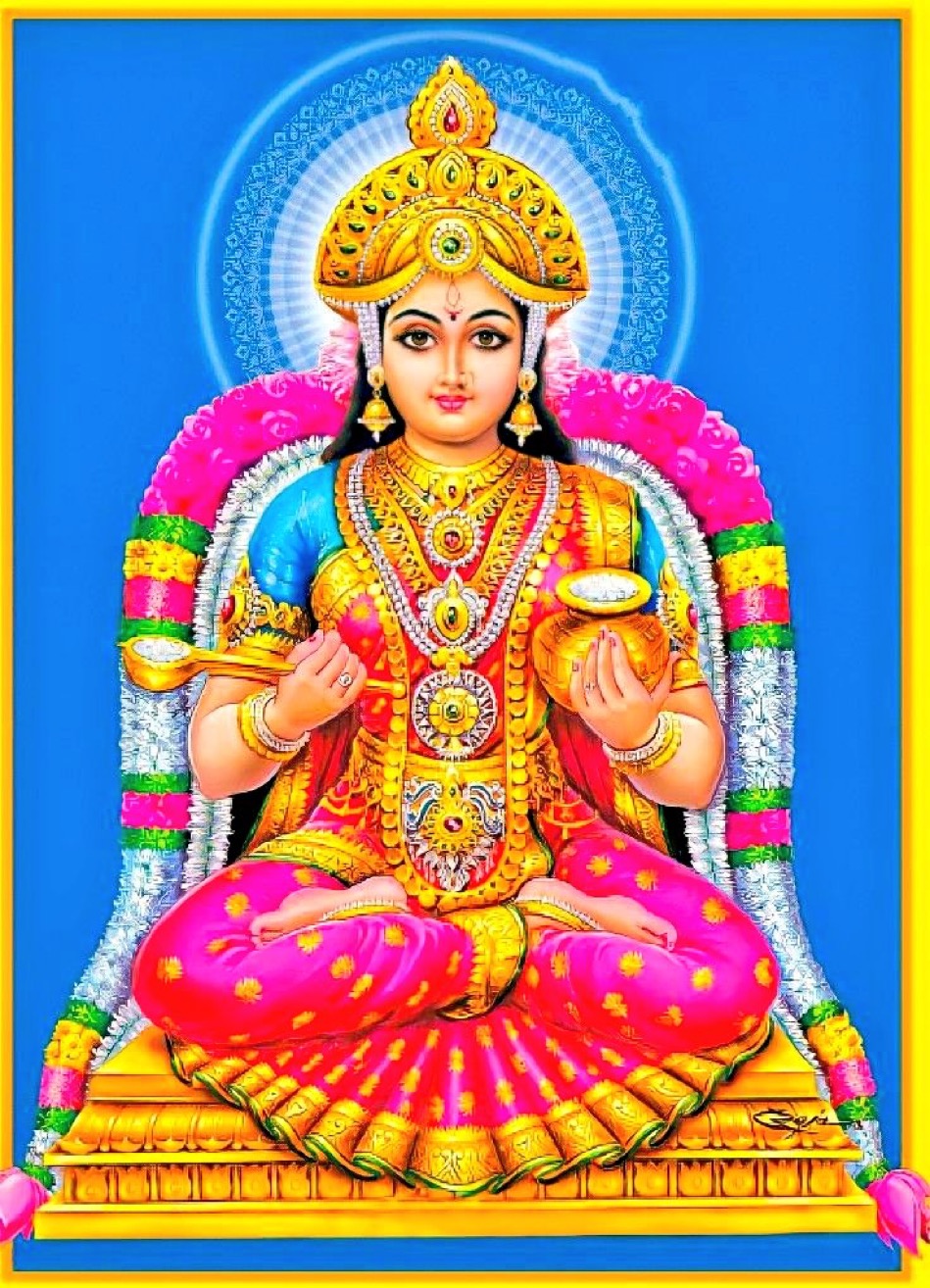
Goddess Laxmi – The Mother Principle that is the Origin of Life and its material well-being.
The complex, multicellular human organism begins as a single cell. That single cell is the source of life, energy, and knowledge.
The Concept of Whole Inheritance. The Divine attribute of Motherhood is the Maternal Cytoplasmic Inheritance. The Biological Dictum states “EX OVO OMNIA” – Everything comes from the Egg.The Concept of Whole Inheritance. The Divine attribute of Motherhood is the Maternal Cytoplasmic Inheritance.The Biological Dictum – “OMNIS CELLULA E CELLULA” means all cells from cells.The Concept of Whole Inheritance. The Divine attribute of Motherhood is the Maternal Cytoplasmic Inheritance of Life, Energy, and Knowledge.The Law of Biogenesis states that organisms arise only by the reproduction of other organisms. This cell known as Oocyte develops into Human Ovum or Egg Cell which begins the life of a new human organism after an event called Fertilization.
Whole Dude, as a human organism exist in this world as they arrived from a previously existing ‘Mother Cell’. By repeated cell growth and cell division or replication known as ‘Mitosis’, the human organism grows and develops into a form containing thousands of billions of cells. This process of development is called ‘Morphogenesis’ which involves not only cell growth but differentiation into specialized types of cells. All the tissues and organs of which the human body is composed have originally developed from a microscopic cell known as ‘Ovum’ or the ‘Egg Cell’. This Ovum or Egg Cell may be regarded as a perfect cell and could be described as ‘Mother Cell’. All the solid tissues in the human body can be shown to consist largely of similar cells; it is true that they may differ, but they are essentially similar to an Ovum. The Ovum is a reproductive cell that is adapted to meet the nutritional requirements of the early developmental stages of the embryo. It is always a large cell because it contains sufficient cytoplasmic substance for the development of a self-sufficient embryo. Some of the substance which is packaged in yolk particles contains cell components; typically an Ovum contains sufficient quantities of components for many cells. Thus the Ovum need not grow as it divides; as the nuclei divide, the cytoplasm subdivides until the Ovum consists of a large number of normal-sized cells. By contrast, the male reproductive cells known as ‘Spermatozoa’ contain very little cytoplasm and they cannot further divide into new cells.
The Source of Life – Protoplasm:
The Concept of Whole Inheritance. The Divine attribute of Motherhood is the Maternal Cytoplasmic Inheritance of Life, Energy, and Knowledge.There is similarity between the cells of a man and that of his Mother Cell or Egg Cell called Ovum.The Identity named Whole Dude is derived from Whole Inheritance. The Concept of Whole Inheritance goes beyond the Mendel’s Laws of Inheritance. The Human Genome is just one dimension of the 3-dimensional inheritance. The Divine attribute of Motherhood is the Maternal Cytoplasmic Inheritance. The Identity named Whole Dude is derived from Whole Inheritance. The Concept of Whole Inheritance goes beyond the Mendel’s Laws of Inheritance. The Human Genome is just one dimension of the 3-dimensional inheritance. The Divine attribute of Motherhood is the Maternal Cytoplasmic Inheritance. The Identity named Whole Dude is derived from Whole Inheritance. The Concept of Whole Inheritance goes beyond the Mendel’s Laws of Inheritance. The Human Genome is just one dimension of the 3-dimensional inheritance. The Divine attribute of Motherhood is the Maternal Cytoplasmic Inheritance.
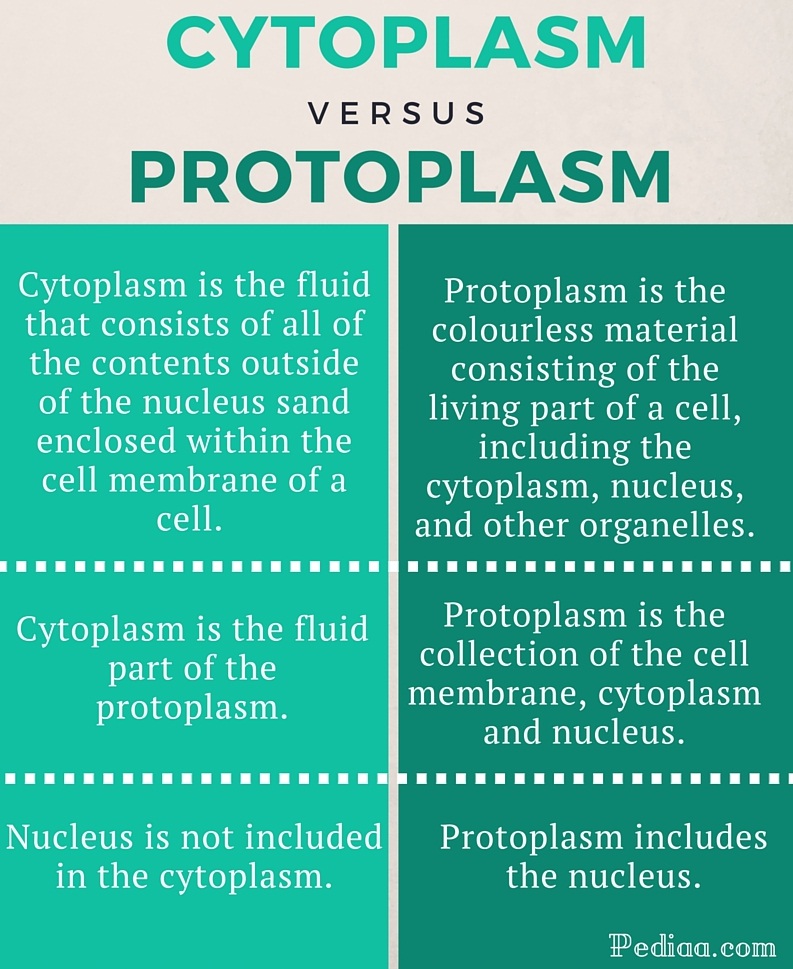
The most significant feature of the similarity between the cells of a man and that of the ‘Mother Cell’ from which he had arrived is presence of a soft gelatinous, semi-fluid, granular material inside the cell. This substance known as ‘Protoplasm’ is similar to that found in the Ovum. The Ovum consists of this viscous, translucent, colloidal substance enclosed in a membrane called Plasma Membrane. A small spherical body called nucleus is embedded in the protoplasm. The protoplasm could also be differentiated into cytoplasm and nucleoplasm based upon its location. Cytoplasm refers to protoplasm located outside the nucleus. Nucleoplasm refers to protoplasm located inside the nucleus. The two essential features of any living cell in the human body are that of presence of protoplasm and the nucleus.
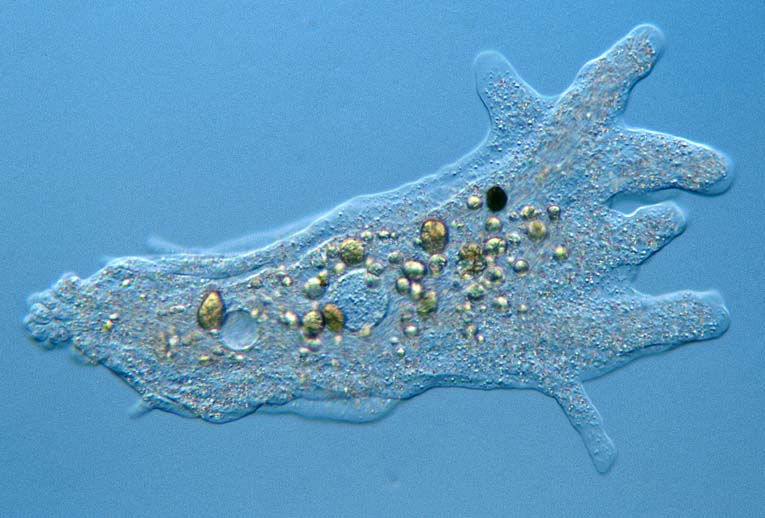
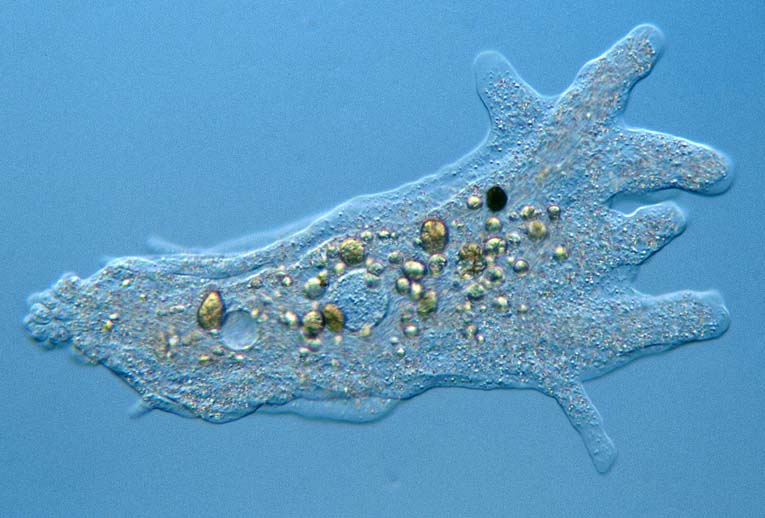
SPIRITUALISM AND CONSCIOUSNESS: Amoeba proteus is a conscious, living organism as it has the ability to perform vital, living functions.
The most striking characteristics of protoplasm are its vital properties of “Motion” and “Nutrition”. Protoplasm has the intrinsic power to change its shape and position. Motion of protoplasm is called ‘amoeboid movement’ as it resembles the movements observed in the Amoeba proteus animalcule. Nutrition is the power which protoplasm has of attracting itself the materials necessary for its growth and maintenance from surrounding matter and environment. The Egg Cell or the Ovum is the Source or the Mother of Life. This living matter, living substance, or corporeal material has divine attributes. It is conscious, it is aware, and it performs cognitive functions to sustain its own living condition.
The Law of Individuality – Heredity and Variation:
The Concept of Whole Inheritance. The Divine attribute of Motherhood is the Maternal Cytoplasmic Inheritance of Life, Energy, and Knowledge. Identity and Individuality. Two-Sides of the same Coin.The Concept of Whole Inheritance. The Divine attribute of Motherhood is the Maternal Cytoplasmic Inheritance. A child is always a created object even when it derives its life from a Mother Cell. Life always comes into existence as a new, original object and displays variation from other members of the same or different species.
Heredity is the sum of all biological processes by which particular characteristics are transmitted from parents to their offspring. A child inherits a genetic constitution from its biological parents. This hereditary endowment, the total of the genes that the child has received from both parents is called the genotype. The genotype of an individual is formed from the constituents of the genotypes of his parents. The genotype in a fertilized Egg Cell influences the developmental pattern of the child. Progeny is not exact duplicates of their parents and usually vary in many traits. Heredity and Variation are two sides of the same coin. The outward appearance of an organism is called the phenotype. The same individual shows different phenotypes in childhood, in adulthood, and in old age. The genotype, on the other hand, does not change during an individual’s life. Each cell in the human body contains the same total genetic information that was present in the fertilized Egg. However, the cells are not identical. In different types of cells, groups of genes are controlled (in effect switched on and off) by various biochemical processes, so that each cell manufactures the proteins and structures needed for it to function. Cells are regulated by the DNA in the nucleus and by the transfer of selected portions of the DNA information to the cytoplasm through the intermediate molecules of ‘Messenger RNA’. It is estimated that, on average, only about 10 percent of the genes of any cell are functional; selection of functional genes varies with the type of cell. This biological phenomenon of selective gene functioning may contribute to what I term as ‘The Law of Individuality’. Deoxyribonucleic acid or DNA accounts for the ability of all living matter to replicate itself exactly and to transmit genetic information from parent to offspring. The child maintains its individuality by selectively switching the inherited DNA on and off. The Law of Individuality applies to all living organisms. Despite the basic biological, chemical, and physical similarities found in all living things, diversity of life exists not only among and between species but also within every natural population.
The Concept of Whole Inheritance. The Divine attribute of Motherhood is the Maternal Cytoplasmic Inheritance.Despite the basic biological, chemical, and physical similarities found in all Living cells, a Diversity of Life exists within every natural population to establish The Law of Individuality.
The Mother Cell is the Source of Life for its child and yet the child comes into existence as a brand new and original product with its own Identity and Individuality. The Mother Cell does not manufacture the new multicellular organism called child. A child is always a created object even when it derives its life from a Mother Cell.
Mother – Source of Energy:
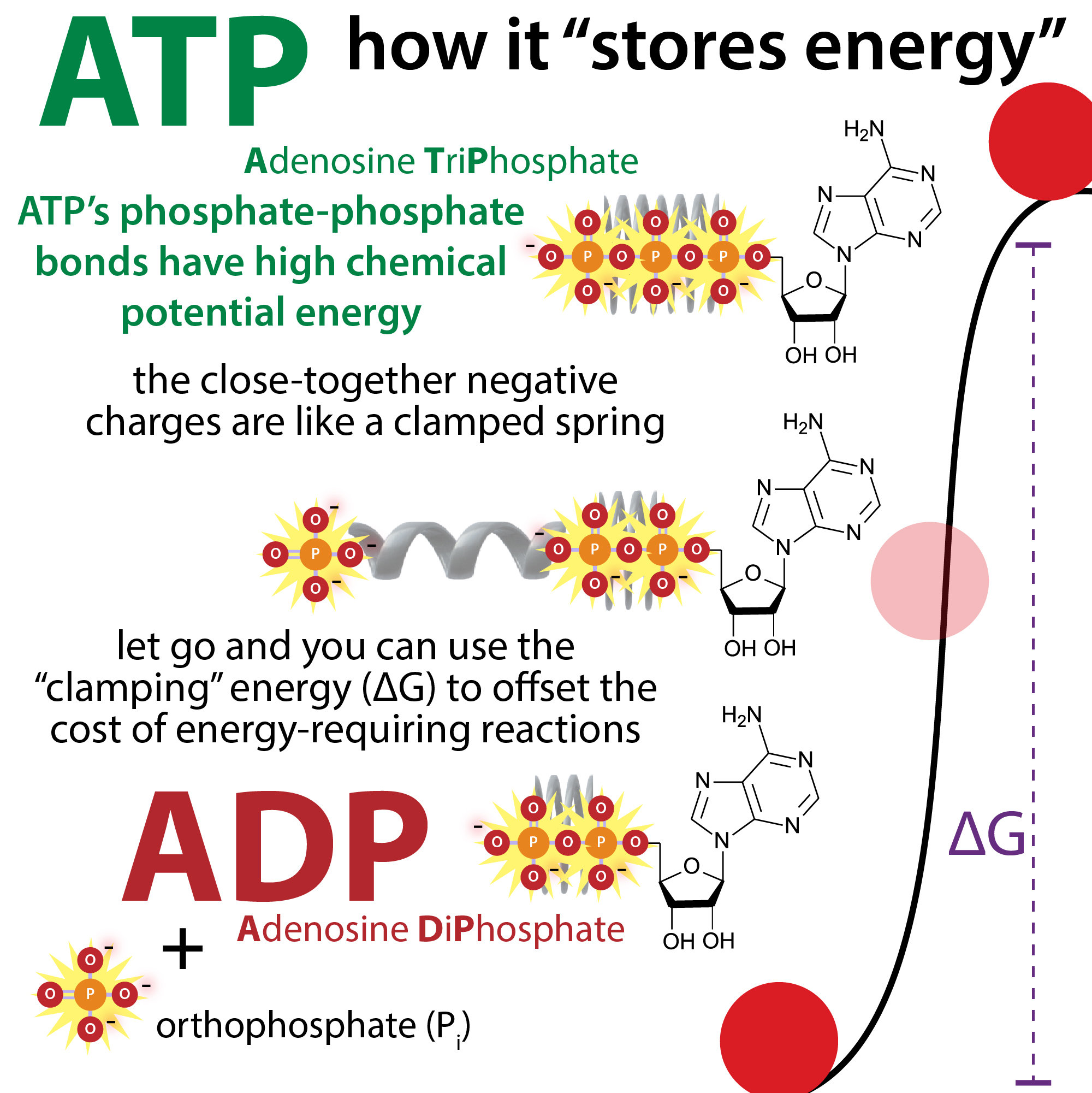
Goddess Shakti, a Protector, a Defender, and a Personification of all Material Energies present in Nature or Prakriti. Man exists as an Energy Seeker, a heterotroph and human existence is possible because of an Energy Provider. Mother is the Source of Energy for man’s physical and mental work.Adenosine triphosphate or ATP is a Nucleotide; the monomeric unit of Nucleic Acid, contains a Purine or Nitrogenous base called Adenosine, a Sugar called Ribose and three Phosphate groups.In most Chemical Reactions of all cells in which transfer of energy occurs, the nucleotide ATP is involved. It functions as a Coenzyme in many enzyme-catalyzed reactions and helps in the performance of chemical, electrical, and osmotic work in animals, plants, and microorganisms.
To maintain life an organism not only repairs or replaces (or both) its structures by a constant supply of the materials of which it is composed but also keeps its life processes in operation by a steady supply of energy.
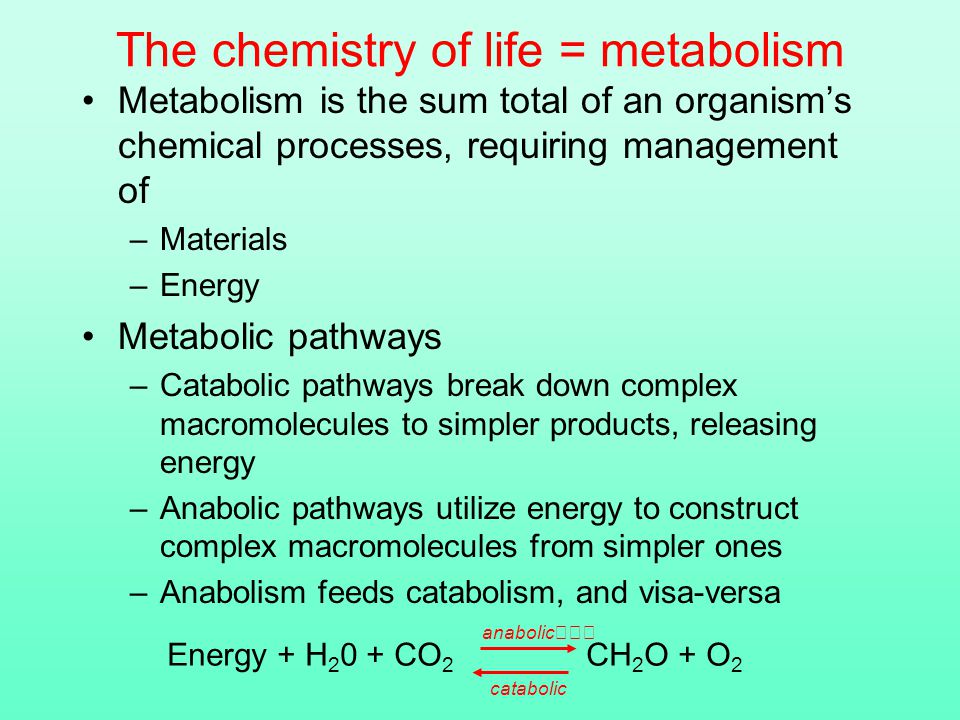
Living systems must be supplied energy for continual synthesis of new organic molecules and to replace or to repair broken organic molecules. This functional activity; the processes of synthesis and breakdown of organic molecules by a living cell, is known as metabolism. Metabolism involves a living system’s continual exchange of some of its materials with its surroundings, principally in the process of building up or destroying its protoplasm. growth involves a higher rate of synthesis of protoplasm than a rate of breakdown of that matter.
Acquisition of Energy:
The Concept of Whole Inheritance. The Divine attribute of Motherhood is the Maternal Cytoplasmic Inheritance.Plant Life acquires useful free energy from the energy of Sunlight and hence described as Photoautotrophs.The Concept of Whole Inheritance. The Divine attribute of Motherhood is the Maternal Cytoplasmic Inheritance. Plants are known as Photoautotrophs as they have ability to use free energy from the energy of Sunlight. The Divine Mother is the Source of all Material Energies.The Concept of Whole Inheritance. The Divine attribute of Motherhood is the Maternal Cytoplasmic Inheritance. Chloroplasts act like Solar Panels to capture Solar Energy, and all terrestrial life forms depend upon energy from an extraterrestrial or Cosmic Source of Energy.
Organisms acquire energy for their metabolism by two general methods and could be classified as autotrophs or self feeders and heterotrophs or feeders of other organisms. Plants are known as Photoautotrophs as they acquire useful free energy from the energy of Sunlight. In a process known as Photosynthesis, plants use Sunlight to break water into Oxygen and Hydrogen. Hydrogen is then combined with Carbon dioxide to produce such energy-rich molecules as Adenosine triphosphate (ATP) and carbohydrates and the Oxygen is released back into the atmosphere. Humans and most other animals are known as heterotrophs – these organisms acquire energy by the controlled breakdown of pre-existing organic molecules (food) supplied by other organisms. Humans utilize the atmospheric Oxygen (released by plant life) to combine chemically with organic matter (food) they have eaten and release Carbon dioxide and water as waste products. Metabolic processes do not occur in one step. It is not similar to burning sugar in air.
Kreb’s Tricarboxylic Acid Cycle:
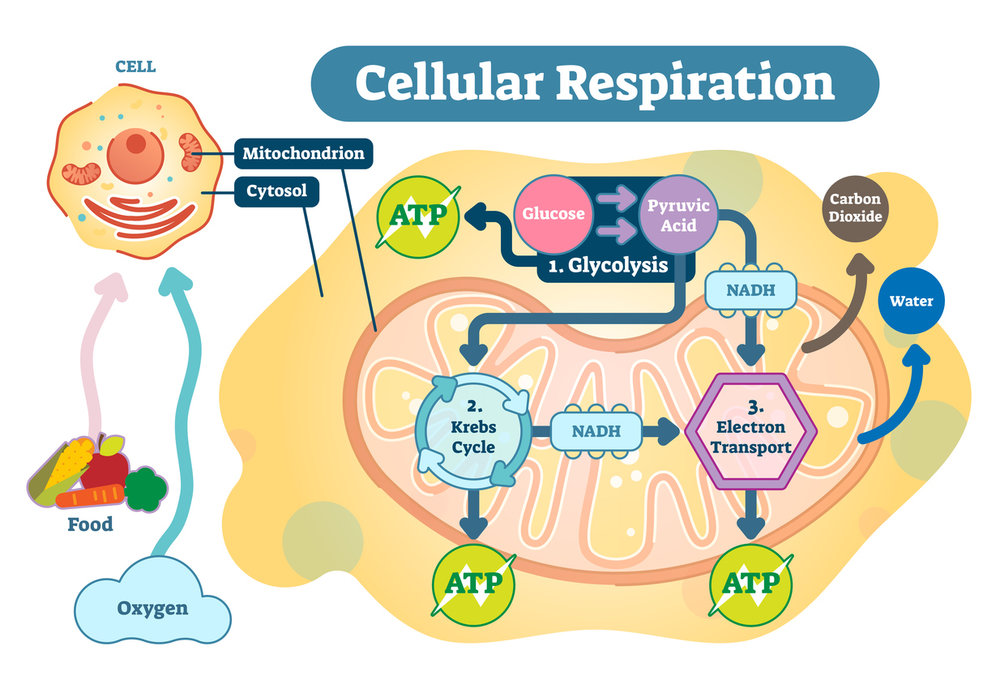
The Concept of Whole Inheritance. The Divine attribute of Motherhood is the Maternal Cytoplasmic Inheritance. Most cells derive their energy from a series of reactions involving Oxygen. In the course of Oxidation, three molecules of energy-rich ATP are generated for each Oxygen atom used to form a molecule of water. The Mitochondria is the cellular site of this respiratory Combustion.
The glucose, a simple sugar is broken down by a series of successive and coordinated steps, each mediated by a particular and specific enzyme. The human organism extracts useful energy by a metabolic process described as Oxidation-Reduction Reactions. The glucose is broken down in a series of about 71 enzymatically catalyzed steps. The first 11 of these biochemical reactions do not involve the use of Oxygen. These Oxidation-Reduction Reactions occur in intracellular organelles known as Mitochondria in the cytoplasm of cells.
Mitochondria – The Powerhouse of Cells:
The Concept of Whole Inheritance. The Divine attribute of Motherhood is the Maternal Cytoplasmic Inheritance.In Mitochondria, many substances are oxidized and ATP, the energy-storing chemical of the cell is produced. This energy is utilized in a variety of cellular functions and activities.
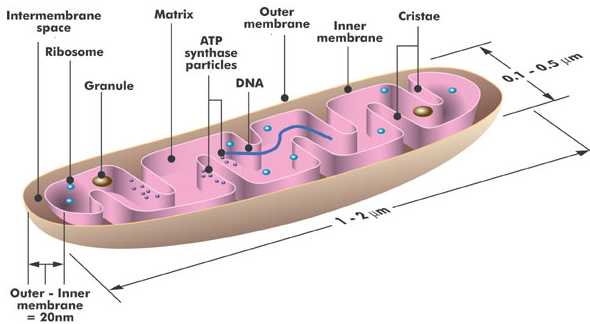
Mitochondria are typically sausage-shaped particles about 0.5 to one micron wide and about 5 to 10 microns long. They are surrounded by an outer unit membrane which controls the passage of material into and out of the mitochondria and govern their internal environment. The inner membrane is the site of the respiratory functions that make the mitochondria the so-called Powerhouse of the Cell. The inner membrane is folded repeatedly into shelf like folds called cristae which contain the enzymes that play an essential role in conversion of the energy of foodstuffs into the energy used for cellular activities.
Mitochondria and Chloroplasts -A Divine Source of Energy Acquisition:
The Concept of Whole Inheritance. The Divine attribute of Motherhood is the Maternal Cytoplasmic Inheritance. Both Mitochondria and the Chloroplasts are semi-independent and self-reproducing parts of the Living Cells. It is a Divine Mechanism to provide Energy for Metabolism the characteristic of Living Matter.The Concept of Whole Inheritance. The Divine attribute of Motherhood is the Maternal Cytoplasmic Inheritance.The Mitochondria have a degree of “AUTONOMY” and they are unlike the other components of cells.
Mitochondria and Chloroplasts found in the green plant cells perform the same fundamental processes. The Chloroplasts contain the green colored pigment known as Chlorophyll. The Chloroplasts convert the energy of Sunlight into energy-rich ATP and use ATP to convert Carbon into specific organic substances. The most important equations for living things are mutually inverse. Respiration of human organisms represents the reverse of Photosynthesis of Green Plants. Both Mitochondria and the Chloroplasts are semi-independent and self-reproducing parts of the living cells. They have a degree of autonomy and they are unlike the other components of cells. Mitochondria contain DNA in the form of a Chromosome arranged in a ring. The DNA of Mitochondria has different distribution of bases from that of the DNA found in the Chromosomes present in the nucleus. Mitochondria carry the genes for their own replication and for the enzymes found in them. They can synthesize some of their own proteins and reproduce by themselves. In one respect the mitochondria function as the parts of the cells and in another respect, they behave like independent organisms that reproduce on their own.
The Concept of Whole Inheritance. The Divine attribute of Motherhood is the Maternal Cytoplasmic Inheritance. A group of Mitochondria – Computer artwork. Who has “Designed” the Mitochondria? Do they represent a Divine Mechanism to provide Energy to Energy Dependent Living Organisms?
The Mother Cell is the source of Mitochondria found in all the cells of my human body. During the Growth and Development of Human Embryo and Fetus, all the newly formed cells contain Mitochondria derived from the Egg Cell. Hence, mother as a biological parent represents the Source of Energy for all the Living Functions and activities of her children. I cannot move a muscle in my body without drawing energy supplied by the maternal Mitochondria which continue to live and replicate establishing my mother as the Source of Energy for my existence during my entire Life’s Journey.
Mother – Source of Knowledge:
Goddess Sarasvati is the Divine Mother of Knowledge. Indian Tradition recognizes Mind, and Intellect as aspects of Material Energies. Life functions with Knowledge implanted into Living Organisms which display the characteristics of awareness, responsiveness, alertness, and consciousness.What is Life? Life is Knowledge in Action. A living cell performs a variety of functions that are characteristic of its life. The Cell Structure known as Nucleus is the Seat of Knowledge. In structures known as Chromosomes it stores hereditary, and biological information for its growth, development, replication, reproduction, and metabolic functions such as protein synthesis for its growth and maintenance. Protein Synthesis takes place in structures known as Ribosomes that are located in Cytoplasm outside the Nucleus. Nucleus transfers information to Ribosomes by using Transfer RNA. Nucleus provides only information and to use that information for its function of Protein Synthesis, the Ribosome derives Energy from another Cell Structure known as Mitochondrion. This process of Cellular Function describes Knowledge in Action.
Life is the state of an individual characterized by the capacity to perform certain functional activities including the ability of responsiveness. Life is further characterized by presence of complex transformation of organic molecules and by organization of such molecules into the successively larger units of protoplasm, cells, organs, and tissues. Hence, I have defined Life as “Knowledge in Action.”
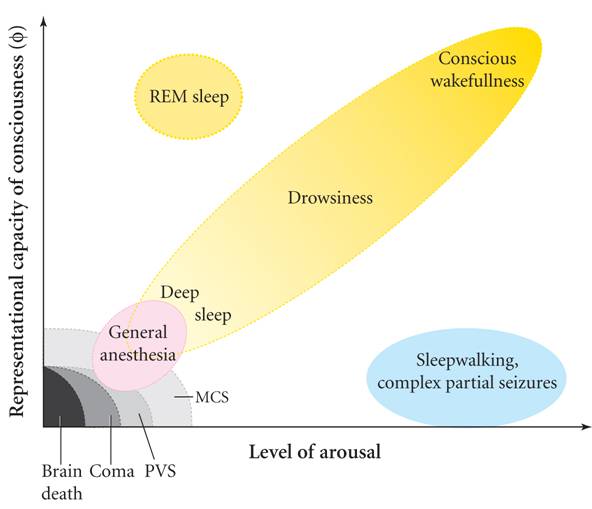
Responsiveness represents the ability of an organism to change in response to alteration in its environment. Responsiveness, alertness, awareness, and consciousness separates living from nonliving matter and defines life’s underlying principle. Living cells are aware or conscious of the environment in which they exist as well as the state of their own internal environment. The one very important part of environment of a cell is other cells. The ability called awareness and responsiveness is important for recognition, association, and cooperation between cells. Cells function together by exchanging chemical signals.
The Biological Membrane – An Organ of Sense Perception:
The Concept of Whole Inheritance. The Divine attribute of Motherhood is the Maternal Cytoplasmic Inheritance.The Biological Membrane or Plasma Membrane functions like an Organ of Sense Perception and it maintains cell’s internal environment and establishes contact with cell’s external environment.
Cell is the most elementary unit of Life. Cell is bounded by a Plasma Membrane which is more correctly described as a Biological Membrane. It separates the cell from the environment and from other cells. It helps to maintain a constant milieu in which intracellular reactions occur. The Biological Membrane allows a highly controlled exchange of matter across the barrier it poses, some compounds are able to pass through the membrane easily, others are blocked. Cells contain various internal structures such as the nucleus, and mitochondria, each of which is enclosed by a Membrane. Both the Biological Membrane and some of the intracellular membranes are parts of a continuous Membrane System that extends through much of the body of the cell. It serves two purposes. A compartmentalization of cell is required for many cellular activities, including uptake and conversion of nutrients, synthesis of new molecules, production of energy, transportation, and release of cell products, and regulation and coordination of metabolic sequences. The cellular organelles are protected from one another’s enzymatic activities, and those of the cytoplasm. The Biological Membrane System functions like an Organ of Sense Perception and maintains the responsiveness of the cell.
The Cytoplasmic or Maternal Inheritance:
The Concept of Whole Inheritance. Mitochondria are inherited from maternal cytoplasm.
Deoxyribonucleic acid or DNA accounts for the ability of all living matter to replicate itself exactly and to transmit genetic information from parent to offspring. While offspring inherit a genetic constitution and hereditary traits from both parents, some characteristics are inherited through the maternal line only. For example, there are no Chlorophyll containing Chloroplasts in pollen grains of (male) flowers. The act of Pollination does not contribute this most important characteristic known as Chloroplasts. Chloroplasts are found only in the Egg Cells of (female) flowers. Similarly, humans inherit the Powerhouses called Mitochondria only from Maternal cytoplasm. A Cytoplasmic Inheritance is entirely Maternal. Human functions that involve Sensory Perception, Mental Cognition, Learning, and the functions of Memory and Consciousness should be viewed as functions of the cytoplasm. Cytoplasm represents the Seat of Knowledge. Man begins Life as a single cell with its cytoplasm and cell membrane. The cell grows and divides while building more of its cytoplasm. Knowledge is the Fact of Knowing, the State of Knowing, and the Act of Knowing a range of information. The Mother or the Source of Knowledge is the Maternal Cytoplasm and the Cell Membrane inherited from the Egg Cell, Ovum, or the Mother Cell.
The Identity named Whole Dude is derived from Whole Inheritance
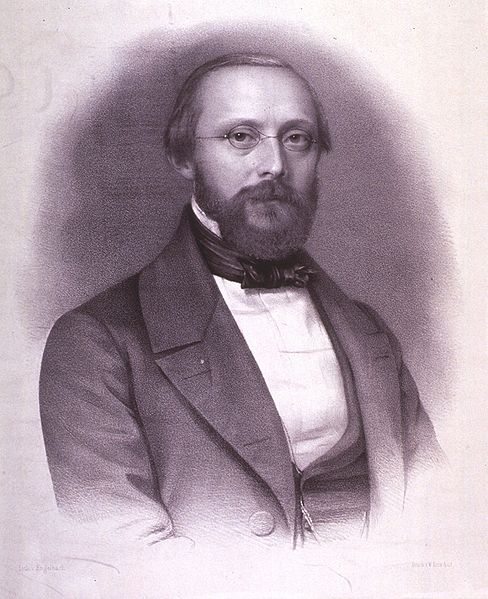
Whole Dude acknowledges their German heritage when they discovered the spiritual connection between man, food, and Providence. Food, People, and the Planet are connected by a material substance called Protoplasm, a divine plan to provide nourishment to Life.
The Rudolf – Whole Dude Connection can be best described as the concept of Whole Spirituality, the three dimensional spiritual relationship between the multicellular human organism, food, and the Divine Providence.
Rudolf is reborn as Whole Dude to describe the spiritual connection between Cell and its Energy Provider. The 3-Dimensional Spiritual Relationship between Man, Food, and God.
Spiritualism – The Cell Theory of Spirituality:
The Rudolf – Whole Dude Connection: The Identity named Whole Dude is derived from Whole Inheritance. The Discovery of Whole Spirituality.
In Biology, cell is the basic or fundamental unit of structure, function, and organization in all living things or it is the building block of life. Let me begin with my respectful tribute to some of the people who contributed to ‘The Cell Theory’, one of the foundations of Biological Sciences. Cells were first observed in the 17th century shortly after the discovery of the microscope. Robert Hooke, british curator of instruments at The Royal Society of London, during 1665 coined the word cell. Dutch microscopist Antonie Van Leeuwenhoek (1632-1723) made over 247 microscopes and examined microorganisms and tissue samples. He gave the first complete descriptions of bacteria, protozoa (which he called animalcules), spermatozoa, and striped muscle. He also studied capillary circulation and observed Red Blood Cells.
Robert Hooke, british curator of instruments at The Royal Society of London coined the term cell during 1665.Dutch microscopist Antonie Van Leeuwenhoek (1668-80) studied capillary circulation and observed Red Blood Cells
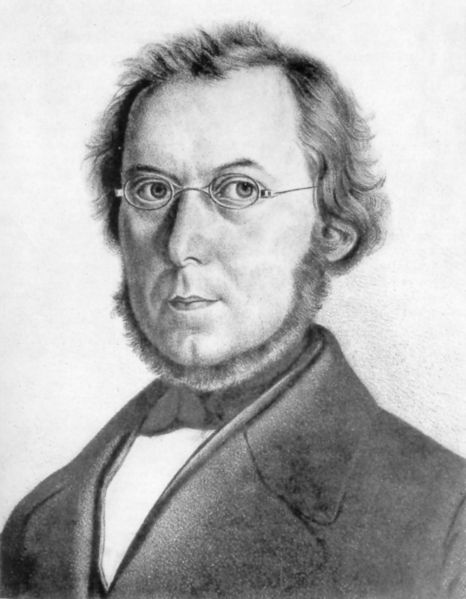
Improvements in microscopy during early 19th century permitted closer observation and the significance of cells had received better understanding. Matthias Jakob Schleiden (1838), german botanist, Theodor Schwann (1839), german physiologist, and Rudolf Virchow (1855), german pathologist, and others made important contributions to the Cell Theory that describes cell as the building block of all Life.
Schleiden, Professor of Botany, The University of Jena studied plant structure under the microscope, published “Contibutions to Phytogenesis”(1838). He had also published the two-volume text of ‘Principles of Scientific Botany’.Schwann founder of modern Histology extended the Cell Theory of Plants to animals in his ‘Microscopic Researches into Accordance in the Structure and Growth of Animals and Plants(1839).Schwann discovered Myelin Sheath covering peripheral axons, now termed Schwann Cells. He coined the term ‘Metabolism’ for the chemical changes that take place in living tissues.Rudolf Virchow, German pathologist in 1855 coined the biological dictum “OMNIS CELLULA E CELLULA” – All living cells arise only from pre-existing living cells.
The Cell is the smallest unit in the living organism that is capable of carrying on the essential life processes of sustaining metabolism for producing energy and reproducing. Many simple, small, single-celled organisms like Protozoa perform all life functions. In higher, complex, bigger, multicellular organisms, groups of cells are structurally and functionally differentiated into specialized tissues and organ systems. Thus, the Cell Theory includes the following foundational principles of the Biological Sciences:
1. All living things are made up of cells. Cell is the most elementary or basic unit of Life.
2. Cell is a fundamental unit of structure, function, and organization in all living things including plants and animals.
3. Cells only rise from division of previously existing cells.
4. All cells are similar in composition, form, and function. All cells are basically the same in chemical composition (in spite of variations) in organisms of similar species. For example, all the solid tissues in the human body can be shown to consist largely of similar cells; differing it is true, but that are essentially similar to an Ovum.
5. The cells exhibit functional autonomy. The activity of an organism depends on the total activity of ‘INDEPENDENT’ cells.
6. Energy flow (metabolism and biochemistry) occurs within cells.
7. Cells contain hereditary, biological information (DNA) which is passed from cell to cell during cell division.
The Cell Theory of Spirituality:
The Rudolf – Whole Dude Connection: The Discovery of Whole Spirituality. The Identity named Whole Dude is derived from Whole Inheritance
The basic or fundamental unit of life in the human organism is derived from the fertilized egg cell that eventually develops into a complete organism. The most significant feature of similarity between the cells of the human body is the presence of a soft, gelatinous, semi-fluid, granular material inside the cell. This substance known as Protoplasm or Cytoplasm, or Cytosol is similar to the ground substance found in the Ovum or the Egg Cell.
Human Ovum Structure – The Cell Theory of Spirituality is based upon the Substance, Structure, Form, Organization, Function, Action and Interactions of this Single Fertilized Egg Cell that eventually develops into a complete human organism.
This viscous, translucent, colloidal substance is enclosed in a membrane called Cell Membrane, Plasma Membrane or Biological Membrane. A small spherical body called nucleus is embedded in the Protoplasm of the cell. The three essential features of any living cell in the human body are that of the presence of protoplasm, the nucleus, and the cell membrane.
Protoplasm – The Ground Substance of Spiritualism and Spirituality:
Whole Dude seeks the existence of Soul or Spirit in a substance that is basic to life activities, and in a material that is responsible for all living processes. Whole Dude, therefore, propose that the understanding of the true or real nature of this ground substance of all living matter will help man to discover peace, harmony, and tranquility in all of his internal and external relationships while man exists in a physical environment as a member of a social group, social community, and Society. In this blog post, Whole Dude pays respectful tribute to Jan Evangelista Purkinje and Hugo Von Mohl for their great contribution to the scientific understanding of the living substance, living material, and living matter.
Jan Evangelista Purkyne(Czech name), Jan Evangelista Purkinje (German name)also known as Johannes Evangelist Purkinje, b. December 17, 1787, d. July 28, 1869. The pioneer Czech experimental Physiologist whose investigations in the fields of Histology, Embryology,and Pharmacology helped create a modern understanding of the eye and vision, brain and heart function, mammalian reproduction, and the composition of cells.
Purkinje conducted his research on human vision at the University of Prague and later on, he served there as a Professor of Physiology (1850-69). He went to Germany and was appointed the Chair of Physiology and Pathology (1823-50) at the University of Breslau, Prussia. There Purkinje created the world’s first independent Department of Physiology (1839) and the first Physiological Laboratory (Physiological Institute, 1842). He is best known for his discovery of large nerve cells with many branching extensions found in the cortex of Cerebellum of the brain (Purkinje Cells, 1837). He discovered the fibrous tissue that conducts electrical impulses from the ‘pacemaker’ called Atrioventricular node or A-V node along the inside walls of the ventricles to all parts of the heart to help in Cardiac contractile function (Purkinje Fibers, 1839). In 1835, he invented and introduced the scientific term ‘Protoplasm’ to describe the ground substance found inside young animal embryo cells. He discovered the sweat glands of the skin (1833); he discovered the nine configuration groups of Fingerprints used in biometric identification of man (1823); he described the germinal vesicle or nucleus of the unripe ovum that now bears his name (1825), and he noted the protein digesting power of pancreatic extracts (1836).
Hugo Von Mohl, b. April 08, 1805, d. April 01, 1872, German Botanist noted for his research on the anatomy and physiology of plant cells.
Hugo Von Mohl named the granular, colloidal material that made up the main substance of the plant cell as “Protoplasm” in 1846. Purkinje invented the word, but Hugo gave more clarity, understanding, and knowing the nature of this ground substance. He viewed cell as an “elementary organ” and in Physiology he explained Protoplasm as an organ of Motion or Movement, Nutrition, and Reproduction. It is the preliminary material in cellular generation. He was the first to propose that new cells are formed by division of preexisting cells and he had observed this process of Cell Division in the algal cells of Conferva glomerata. His observations are very important to understand the Cell Theory that explains cells as the basic building blocks of Life. He was the first to investigate the phenomenon of the stomatal openings in leaves.
The Ground Substance of Spiritualism and Spirituality. The vital characteristics, the animating principles of Protoplasm could be known by observing Amoeba proteus. The Living Substance works as an organ of Motion or Movement, as an organ of Nutrition, and as an organ of Reproduction to generate new cells which have a life span of their own. In these physiological functions, I describe the characteristics such as Cognition, Consciousness, Memory, and Intelligence which have a Spiritual role as they bring functional unity and harmony in the interactions between different parts of the same individual organism while it exists in an environment as a member of a biological community.
Protoplasm is a complex, viscous, translucent solution of such materials as salts and simple sugars with other molecules, mostly proteins and fats, in a colloidal state, that is dispersed but not dissolved in one another. Carbon, Hydrogen, Oxygen, and Nitrogen constitute more than 90 percent of Protoplasm. It exhibits properties such as Protoplasmic Streaming or Cytoplasmic Streaming or Motion that is called “Amoeboid Movement.” It has the intrinsic power to change its shape and position. It has the power of Nutrition by which it can attract and obtain the materials necessary for its growth and maintenance from surrounding matter/environment. These functions involve acquiring, processing, retaining, and using information to perform tasks in a sequential manner for a predetermined purpose and hence describe Consciousness, Memory, and Intelligence. The terms Soul and Spirit belong to the materialistic realm where the Physical Reality of man’s biological existence is established. Whole Dude has not yet discovered any good reason to use the terms Soul and Spirit as a metaphysical or transcendental Reality.
The vital characteristics, the animating principles of Protoplasm could be known by observing Amoeba proteus. The Living Substance works as an organ of Motion or Movement, as an organ of Nutrition, and as an organ of Reproduction to generate new cells which have a life span of their own. In these physiological functions, Whole Dude describes the characteristics such as Cognition, Consciousness, Memory, and Intelligence as spiritual attributes of Life as they bring functional unity and harmony in the interactions between different parts of the same individual organism while it exists in an environment as a member of a biological community.
The Spirituality of Substance, Function, Organization, Action, and Interactions:
The Rudolf – Whole Dude Connection: The Discovery of Whole Spirituality. The Identity named Whole Dude is derived from Whole Inheritance
To establish the biological existence of the human organism, Whole Dude applies the concept of Spiritualism and Spirituality to the Cell Theory. The Single Fertilized Egg Cell has ground substance that is of Spiritual nature and the Spiritualism and Spirituality consists of the following functional, and organizational characteristics:
The Rudolf – Whole Dude Connection. The Concept of Whole Inheritance. Spirituality Science. What do you do for Living? THE PROCESS, THE MECHANISM CALLED CELLULAR RESPIRATION IS NOT LEARNED OR ACQUIRED EXPERIENCE. NO SPIRITUAL TEACHER, NO SPIRITUAL MASTER, AND NO SPIRITUAL GUIDE CAN IMPLANT THIS KNOWLEDGE IN MAN.
1. The Cell is Conscious of its own existence and knows its internal condition and knows it external environment.
2. The Cell is intelligent and it has the cognitive abilities like perception and memory to acquire information, to retain information, to recall information, and to use information in the performance of its complex tasks in a sequential manner.
3. The Cell has the ability to show characteristics such as mutual cooperation, mutual tolerance, and display functional subordination and subservience while being independent.
4. The Cell grows, divides, and develops into a complete organism while it acquires substances and energy from an external environment. The power of Protoplasm/Cytoplasm to attract matter found in its external environment is called Nutrition. The Cell continuously transforms matter to build matter of its own kind for its own benefit to sustain its existence with its own identity and individuality. The Organism represents a social group or a biological community of Cells. The Spiritual nature of Protoplasm/Cytoplasm brings this functional harmony and unity in the Social Group or Biotic Community of Cells by bringing together its Essence and Existence.
5. The Cell Theory is incomplete for it does not describe the conditioned nature of the Cell’s existence. The Cell represents a Living System that is thermodynamically unstable. It requires a constant supply of matter and energy from its external environment to sustain its living functions. The concept of Whole Spirituality formulates the connection between the Cell and its external source of matter and energy.
The Rudolf and Whole Dude Connection. The Discovery of Whole Spirituality. The Bone Marrow smear from a patient of Leukemia or Blood Cancer helps to illustrate the nature of Biotic Interactions in the Social Group or Biotic Community that represents the singularity called man. The true or real man can only be discovered by the microscopic study of the Cells that constitute the Organism.
The theoretical claims about Spirit and Soul, the religious and philosophical doctrines of Spiritualism and Spirituality must be verified using the Cell Theory that defines the human organism. To describe Soul or Spirit as nonmaterial or immaterial Self will not help man to know the real or true man.
Food, People, and the Planet come together in a Wholesome Relationship as God is the Energy Provider, the Original Source of Matter and Energy for Life.
Rudolf is Reborn as Whole Dude to describe the spiritual connection between the Cell and its Energy Provider. THE LIVING CELL IS THERMODYNAMICALLY UNSTABLE. TO EXIST, THE LIVING CELL NEEDS CONTINUOUS SUPPLY OF MATTER AND ENERGY FROM ITS EXTERNAL ENVIRONMENT. PROTOPLASM OR CYTOPLASM USES THE POWER OF NUTRITION TO ACQUIRE MATTER AND ENERGY FROM ITS EXTERNAL ENVIRONMENT AND ENABLES THE LIVING CELL TO PERFORM A VARIETY OF LIVING FUNCTIONS CALLED METABOLISM.
Whole Foods-Whole Inspiration-Whole LanguageWhole Foods Arrives in Ann Arbor, September 1993Whole Foods opened its Store in Ann Arbor on September 16, 1993. Whole Foods, Whole People and Whole Planet inspire Whole Dude to invent Whole Phrases: Whole Linguistics – Whole Language. The concept of Whole Cookie and Whole Love. Whole Dude uses the phrase Whole Linguistics to describe three entities; 1. Language User, 2. Language Interpreter and 3. Language Creator. Image Credit: Agenda Publications, Ann Arbor District Library, Issue Dates, September 1993, December 1997 and February 1998.
The Doctrine of Whole Spirituality
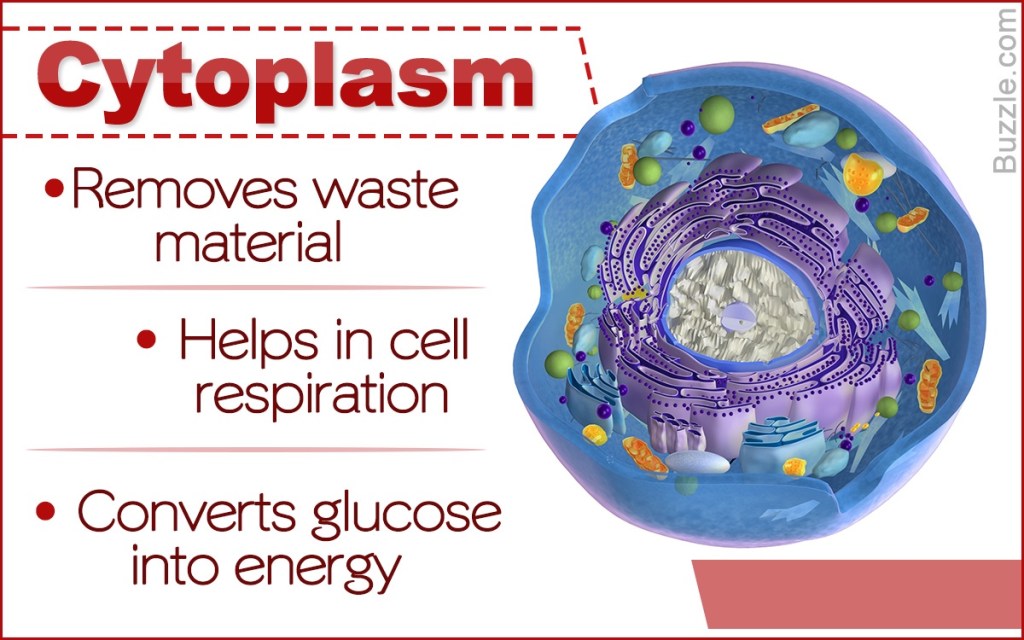
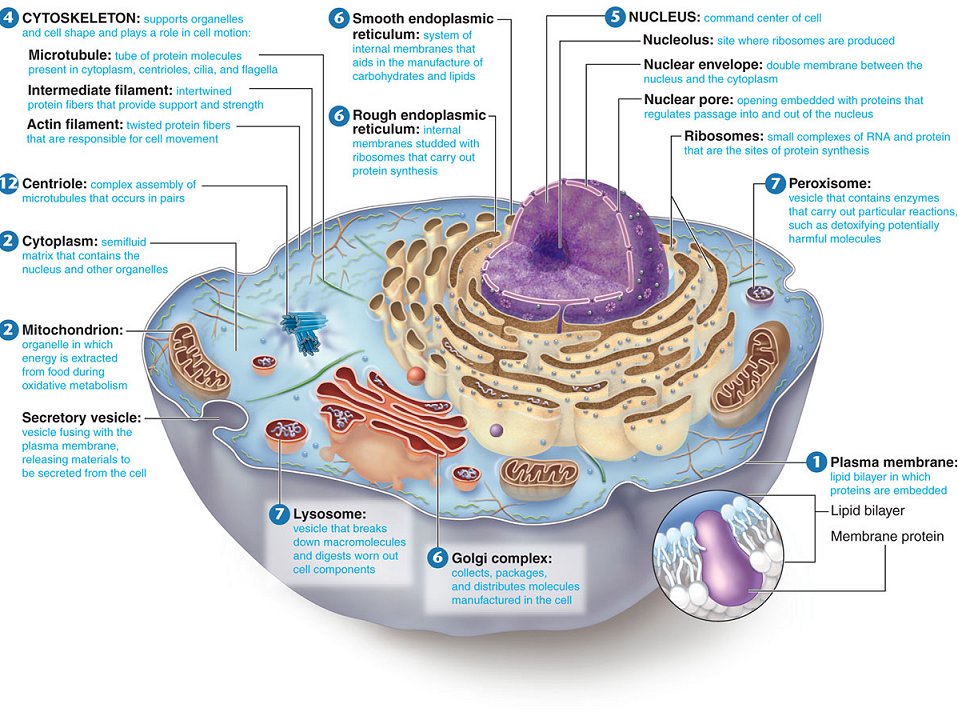
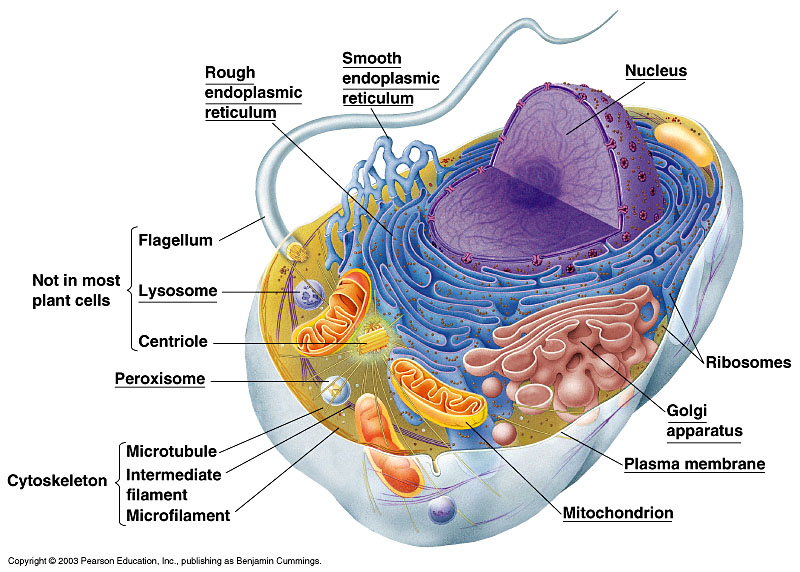
This is the most detailed model of a human cell ever created, built using real scientific data from X-ray crystallography, NMR, and cryo-electron microscopy. Titled “Cellular landscape cross-section through a eukaryotic cell,” this stunning visualization by Evan Ingersoll and Gael McGill reveals the densely packed, molecular complexity of life at the nanoscale.
Yes indeed, Life is Complicated because we still do not know many things about Life. We need to discover the nature of Interactions that operate the Connection between Whole Foods, Whole People, and Whole Planet. I coined the phrase Spiritual Interactions to account for the Physiological Basis of Life. But, I need to Live One More Day to learn about the term Biotic Interactions.
The Material Basis of the Spirituality Science. What is Spiritualism? Whole Dude explains Spiritual Interactions as the Physiological Basis of Life.
The objective of this presentation is to define ‘Spiritualism’ as an internal, mutually beneficial partnership, relationship, association, or bonding between individual living cells of the same organism, or between two different organisms. Spiritualism has to be explained in the context of biotic interactions and consciousness determines the nature and characteristics of such biotic interactions.
Dr. Heinrich Anton de Bary (1831 – 1888), German Physician, Botanist, Founder of Modern Mycology, Microbiologist, Founder of Plant Pathology coined the term ‘Symbiosis’.
Dr. Heinrich Anton de Bary had coined the term ‘Symbiosis’ in 1879. It describes the living together of unlike organisms; the intimate association of two dissimilar organisms from which each organism benefits. Symbiosis (sym – together; bios – life) refers to various kinds of close and permanent associations between members of different species and the term could also be used to describe the nature of social relations between different human beings.
CARIBOU LICHEN – In 1866, Dr. Barry was the first to show that Lichens consist of a fungus and an alga in intimate association for mutual benefit.
What is a Biotic Community?
A biotic community is a biological or natural community consisting of two or more interacting and interdependent populations of living cells or living organisms. No species, and no individual member lives in isolation from other species or other living members in a biological community. The life of the community and of all its members, and of all organisms in it requires energy.
No Man is an Island, Entire of Itself:
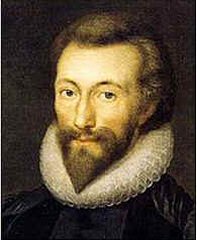
John Donne (1572 – 1631), Jacobean metaphysical poet, author of Devotion Upon Emergent Occasions (1624).
Ernest Hemingway’s novel “For Whom The Bell Tolls” gives this modern version of the quote from John Donne’s Meditation XVII, “Devotion Upon Emergent Occasions” : “No man is an island, entire of itself; every man is a piece of the continent a part of the main.” In this blog post I would like to examine the biological basis for human existence and understand the nature of man and the status of man as an organism existing at a given place, and given environment because of mutually beneficial biotic interactions.
What are Biotic Interactions?
Science and Spiritualism – Spiritualism represents a biotic interaction like Mutualism
Living organisms interact with each other competitively and sometimes beneficially. Some of these interactions are temporary, casual and of minor importance whereas others are permanent, vital and of major significance. Many interactions are highly specialized and complicated involving adaptive changes in structure, function, behavior, and ecology. Some interactions create negative effects on the interactants, reducing survival or reproductive success; other interactions produce effects increasing survival or reproductive success. In some cases, members of an interaction are apparently unaffected. Biotic interactions could be divided into two categories; a. Intraspecific Interactions; interactions between the individual living cells that comprise the same multicellular orgainsm, or interactions between members of the same species, and b. Interspecific Interactions; interactions between members of two or more different species.
The biotic interactions may involve nutritional benefits, support of other metabolic functions, space in which to live, shelter, or protection, transport, or reproductive capability. Biotic interactions are significant not only because they influence individual species but also because they constitute the principal stabilizing, connective linkages among the various species contained in a biotic community. Individual members of any given species in a biological community persist in relative harmony because of biotic interactions despite individual gains and losses. As a consequence of this web of interactions, the biotic community as a whole persists with all of its members ultimately contributing to its continuation. The consequences of biotic interactions could be positive, negative, or neutral.
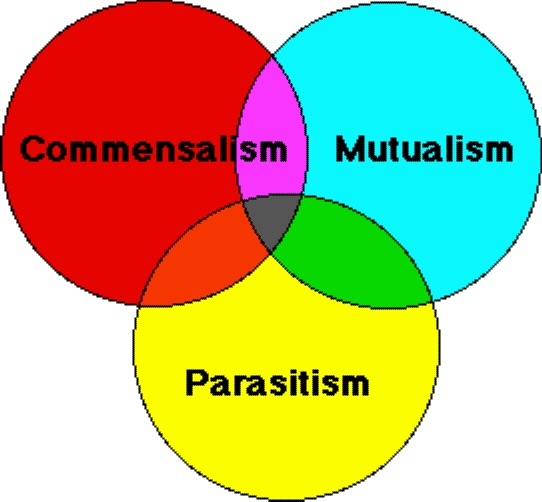
Mutualism is an association of two different species that result in mutual benefit or gain. Facultative Mutualism or Protocooperation involves facultative interactions between plants and animals in ways that are general and indirect but beneficial to both species. The interactions that occur between soil bacteria and fungi and between them and higher plants growing in the soil are Protocooperative. In the zone of plant roots, soil bacteria and fungi interact with each other, some producing nutrients or metabolites required by others and all obtaining nutrients ultimately from root exudates and decaying organic matter. Plants benefit from the actions of this microflora by acquiring needed minerals, and nitrogen compounds. The important association of nitrifying bacteria in the process called Nitrogen Fixation, the extraction of Nitrogen from the environment by the roots of leguminous plants is well-known. Collectively all microflora and higher plants, with associated soil fauna, participate in determining soil composition, soil structure, and soil fertility. Man exists in nature as a terrestrial organism because of these biotic interactions that transform the characteristics of soil and its ability to support life.
Biotic communities that are based on Obligative Mutualism are characterized by stable, persistent, and interdependent associations between species. Coexistence in a given habitat is always required as this association is mandatory for the survival of each participant. This kind of association is perpetrated from one generation to the next. To guarantee the coexistence of the partners, the species involved show relationships based upon structure, behavior, and life history. In lichens, the fungal member penetrates algal cells with feeding tubes or haustoria, thus effecting an intimate physical interconnection. This nutrient exchange helps the algal cells to develop resistance to drying or to extreme temperatures.
Tropical Orchids provide an example of Physical Commensalism.
Commensalism is an association in which one member benefits while the other remains unaffected. Physical Commensalism involves the need for living space and the examples are provided by woody plants that physically support numerous orchids and ferns. Nutritional Commensalism is well illustrated by the many organisms found in the alimentary tracts of man and other higher animals. Such microbial gut flora use host waste products for food and acquire water and a suitable climate in which to live. No harm is done to the hosts.
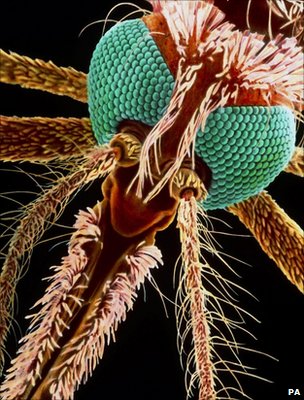
A medical historian described the proboscis of the female Anopheline Mosquito: “Down this tiny tube crept microscopic poison which swept away two of the mightiest empires (of Greece and Rome) the world has ever seen.” Half the morbidity of the human race until very recently due to Malaria transmitted by bites of female Anopheles Mosquito.
In Parasitism, the smaller organism benefits at the expense of the larger organism. Both plants and animals are attacked by parasites. Many parasites cause disease and death of the host organism. Parasitism constitutes a considerable burden on a host population. Many disease causing organisms are parasites carried from host to host by some other organism; for example Malaria is caused by a protozoan parasite transmitted by mosquitoes. In such situations, the biotic interactions involve three necessarily coexisting species: the pathogen, the carrier or vector species, and the host. An intermediate host interposed between the target host and parasite adds ecological complications to host-parasite interactions: the parasite, host, and intermediate host must all be present in the same community in suitable numbers at the same time.
Consumption describes organisms eating organims. It is the most important class of biotic interactions. Herbivory describes animals eating plants. Predation refers to a large or strong animal that consumes a small or weak animal. Scavengers eat or consume dead or decaying organisms and organic material. Consumption is the basic food association (trophic link) through which the composition dynamics and variation of biological community’s structure takes place. All organisms form links in the community food chains and food webs, the nutritional pathways characteristic of given biological community.
Amensalism is an association between organisms of two different species in which one is inhibited or destroyed and the other is unaffected. There are two basic modes of Amensalism; 1. Competition occurs when two species utilize a common, limited resource such as food, space, and water, and in doing so, one species interferes with, injures, or deprives the other species. Competition may involve a larger or stronger organism that excludes a smaller or weaker one from living space or deprives it of food; Intraspecific Competition occurs when competitors are of the same species. Competitive interactions may lead to Competitive Exclusion or Competitive Displacement, and 2. Antibiosis, in which one organism is unaffected but the other is damaged or killed by a chemical secretion. The classic example of Antibiosis is the discovery of Penicillin antibiotic by Dr. Alexander Fleming who had observed that the bread mold Penicillium notatum had effects upon the growth of colonies of bacteria. Mutual Antagonism occurs when a biotic interaction between two species results in harm or death to both.
Interactions within a Species: The Role of Negative Interactions:
Intraspecific Competition provides the ultimate force limiting the abundance of a species in a community. Natural enemies could be present or absent but others of the same species are always present providing the Competition that insures against over exploitation of available resources and the irreversible destruction of a community due to overpopulation. Fighting and territorial defense are some of the overt methods by which Competition manifests itself. Territoriality, the dividng up of resources, mostly space, is a common means of defense against overcrowding. Instead of involving individuals against individuals, it involves groups of individuals. It also produces the response of migration of individuals and mass flight of large groups of individuals. Competitive Intraspecific Interactions between humans and Mutual Antagonism among human social groups may endanger human existence.
The Role of Positive Intraspecific Interactions:
The man’s life journey begins as an Embryo which gets implanted into the maternal tissues by about 6 days after its conception. Thus, mother is the source of Food and Energy to establish human life. The man has no existence in the absence of this positive Intraspecific Interaction between Embryo and Mother.
The man’s life journey begins with conception and implantation of the embryo into maternal tissues about six days after conception. The prolonged period of gestation, the anatomical connection between developing fetus and mother, the psychological bonding and the extended period of dependence of newborn and the role of parental care reveal the importance of Positive Intraspecific Interactions for human existence. Numerous interactions among individuals of the same species lead to the development of social groups. Parental Care and protection provides the basis for many aggregations of like individuals, and social units like families.
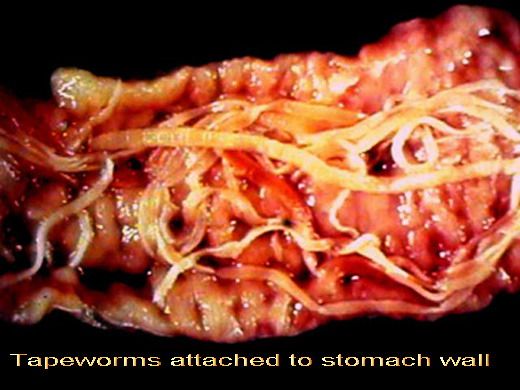
A tapeworm is a ribbon like parasitic flatworm that belongs to the Class Cestoda. The Pork Tapeworm or Taenia solium grows upto 33 feet long and lives in human small intestine which is about 20 feet long. I dissected a human cadaver in which I found the Pork Tapeworm tightly coiled in the entire extent of the small intestine contributing to the death of my human anatomy specimen.
Man’s Biological Existence as the Host of a Biotic Community:
Escherichia Coli – Example of microbial flora of human gastrointestinal tract. The man exists as a natural host to a biotic community of trillions of microorganisms.
The man exists in nature as a natural host to a biotic community of trillions of microorganisms. At birth, the stomach and gastrointestinal tract are usually sterile. With the first intake of food and contact with other humans present in the environment, bacteria commence the colonization of infant’s digestive tract. These microorganisms perform functions beneficial to the host. The microbes are provided with a protected place to live and their environment is rich in nutrients. This mutual, beneficial, symbiotic relationship is always present during the entire course of life after birth. The human body consists of about 100 trillion cells and it carries about ten times as many microbes in the intestines. The microbial flora include enteric bacteria, bacteroides, enterococci, lactobacilli, and clostridia. The small intestine contains low numbers of bacteria, about 100,000 to 10 million bacteria per milliliter of fluid. In the large intestine, the bacterial members can reach 100 billion per milliliter of fluid. It is estimated that these gut flora have around 100 times as many genes in aggregate as there are in the human genome. The metabolic activities performed by these bacteria resemble those of an internal organ of human body. The microbes are important to the health of humans. These bacteria are useful for efficient processing of food, absorption of water, absorption of nutrients like Magnesium, Calcium, and Iron. They perform a variety of useful functions such as synthesis of essential vitamins like Biotin, Vitamin K and production of short-chain fatty acids. The gut flora may produce hormones to direct the host to store fat. They train the host immune system to respond only to pathogens and thereby prevent the growth of harmful, pathogenic bacteria. They stimulate increased growth of human gut cells and also stimulate the growth of indigenous bacteria. Gut flora have enzymes that human cells lack for breaking down complex sugars called polysaccharides. The gut flora help in the digestion of unutilized energy substrates and may contribute upto 60 percent of the weight of the feces for human excretory function. Microbial flora of the gut can influence the phenomenon known as “Oral Tolerance” which may reduce an overactive immune response like those found in allergies and auto-immune disease. Gut flora play a major role in metabolizing dietary carcinogens and hence have a role in prevention of cancer. The human existence demands the play of these biotic interactions for its own benefit and for the benefit of the biotic community as its natural host.
Spiritualism – The Nature of Spiritual Interactions:
Sweetness is the name of this Biotic Interaction. This Interaction has the characteristics of Spiritualism or Spiritual Interaction.
The term ‘spiritual’ describes the nature of a relationship, partnership, an association, or bonding between two living entities based upon the characteristics such as compassion, sympathy, cooperation, mutual assistance, tolerance, voluntary subservience, devotion, and functional subordination to provide some benefit to the members participating in the biotic interaction at a given place and in a given environment. Depending upon the size, complexity, and structure and functions of the Whole Organism, Spiritual Biotic Interactions and Spiritual Relationships are also based upon thoughts and feelings of sympathy and compassion that are attributes of mental functions and emotional makeup of the partners interacting. The Spiritual nature of biotic interactions is a reflection of the Spiritual nature of the Creator of the living entities who has provided the different modes of interactions using inspiration and imagination. Hence, Spiritualism as a biotic interaction describes an internal, mutually beneficial partnership between individual cells of the human organism and the Whole Organism that represents it as a Human Individual. Red Blood Cells provide the best example to explain the concept of Spiritualism and Spirituality.
Red Blood Cells are packed with hemoglobin. Red Cells contains over 600 million hemoglobin molecules. Spiritualism as a biotic interaction describes an internal, mutually beneficial partnership between individual cells of the human organism and the Whole Organism that represents it as a Human Individual.
The basic characteristic of a Living Cell or organism is the presence of consciousness. I recognize a cell as a Living Cell if it displays functions that characterize the presence of awareness or consciousness. The Living Cell or Living Object need not be aware or conscious of the Subject who may be investigating or observing the properties of the Object. The Living Object need to be aware of its own existence and its condition called Living. Atoms and molecules display their properties and interact according to the Laws of Physics and Chemistry. Living organic molecules show individualistic behaviors under experimental conditions that could be repeated and be verified. The Living Cell is very selective and it responds in a variable manner to physical and chemical stimuli. It can communicate or send signals to other Living Cells present in its environment. It responds according to its internal condition in relation to the environment in which it exists. The interactions of non-living physical matter are not goal-oriented. The interactions of Living matter are goal-oriented and they specifically achieve the purpose of sustaining, preserving, defending, and continuing the Living functions.
When does Life begins? When does Life ends? Every Living Cell is derived from a previously existing Living Cell. Life has not experienced the final event called Death. Life continues its act of Living through a function called Reproduction. A given species is considered to be totally extinct only if there is no surviving member to represent that particular species. Death is a programmed event and it gives meaning to the Identity of a Living Object. The dissolution of a single Living Object should not obscure the fact that Life is a continuous process. Life continues as Living Objects get new Identities. It is very reasonable to expect that Life would continue after the death of a given Living Object. People all over the world are a witness to that simple and direct observation. During the Life-Death continuum, the connection between the Creator and the created Living Object is manifested by the biological function called awareness or consciousness. The presence of Soul is evidenced by the presence of consciousness. As long as the Soul is functioning and is united with the physical being, the presence of consciousness could be detected and could be verified.
There has been no clearly defined and universally accepted metaphysical conception of the term Soul. It is a term rarely used with precise definition in philosophy, religion, or common life. In this discussion we face the problem of using words to which no definitive meaning is attached. If I make an attempt to define the word ‘God’, you may even speculate that I may belong to a new religious order. We need to come to a consensus even if an entity called ‘God’ does not exist. We need to formulate a view, a hypothetical view about Soul and test that hypothesis by countering it with a skeptical hypothesis. The Science called Physics deals with the properties, changes, interactions, etc. of matter and energy in which energy is considered to be continuous. In the ultimate analysis, matter is a representation of its energy content. The Science called Biology deals with Life and Life processes. While Life is made up of physical matter, Life processes are not explained by simple mechanistic interactions. However, I am willing to use the principles, the methods, and the tools used by Physics. Molecular Biology explains biological events by studying the molecules within cells; the molecular basis of genetics – Nucleic Acids and its relationship to energy cycling and replication. If this universe is seen as matter and energy, I would define God as the Controller of Force/Power/Energy. All living things are essentially made up of the same kind of living matter and yet they appear to be different. Life could be attributed to One common Creative Principle which has the ability to be Simultaneously Different. Each living object comes into a state of existence as a new object, as an original object, one of its own kind, unique, and distinctive. This morphological variation is an attribute of the organic molecules that establish the phenotype or the physical identity of that living organism. Physics provides those powerful tools to see the molecules and to recognize their individualistic behavior. Life comes into existence using a creative principle, and creative mechanisms that need inspiration, and imagination apart from the use of simple mechanistic laws. For Life is governed by the Law of Individuality, Whole Dude defines God as a Creative Force/Power/Energy.
Life is a condition that describes Synchronized Existence, the synchronization of activities, the connection between energy dependent life functions and its Source of Power.
A majority of these life forms that we know and have studied, have synchronized their state of existence with an event that produces alternating periods of light and darkness while that source of light is not being turned ‘on’ and ‘off’. Rather we are forced to experience the effects of an illusion. Sunrise and Sunset is the reality that governs a majority of Biological Rhythms that control the life processes. Illusion is the necessary condition for the biological existence of Life. If Earth’s rotational spin generates this illusion, God uses Force/Power/Energy to cause illusion. In the universe that exists today, to the extent we have verified; there are no two identical celestial objects that exhibit the same rotational spin. In this context, it may be said that the Force/Power/Energy called God has created Earth to provide a home to the life forms that He has created as Individuals. These life forms have the ability called reproduction and yet lack the ability of producing two identical new objects. Sexual or Asexual reproduction always results in the production of new Individuals which could be easily verified by using the Biometric Identification Technology. Even the clones, sharing identical genomes, in reality exist as individuals. This Individuality when investigated by the tools supplied by Physics, it is discovered that the organic molecules such as the DNA molecules behave as Individuals and the man is not able to modify that behavior. Under the same experimental conditions, the DNA molecules behave as individuals. When we examine the nature of this biological existence, it indicates that life processes are supported by the provision of energy from an external source. The Living Cell is a thermodynamically unstable system. This means that without a continuous input of energy a Living Cell will degrade spontaneously into a nonliving collection of molecules. This lack of energy independence would direct us to define God as the Power/Force/Energy which delivers Compassion/Mercy/Grace which helps energy acquisition by energy dependent living organisms. Life forms on planet Earth exist depending upon an extraterrestrial source of energy or Cosmic Power/Force/Energy. Life exists because of its ability called ‘Association’. The act of associating, the state of being associated; the companionship, the fellowship, and the partnership is the defining feature of the State or Condition, or Act of Living. Association or partnership between energy seeker and energy provider could be described as God-Connection. Organisms that are single do not live as single cells but develop association with other single cells to form distinct Colonies. Organisms that are multicellular represent an organization of individual cells that are associated having common interests, purposes, sensations, etc., Since association has a purpose, in the context of biological existence, the association or connection, or partnership between the energy seeker, and the energy provider is a meaningful event and not a simple, mechanical, physical event governed by the Laws of Interactions between Matter and Energy. There are Four Fundamental Interactions and they do not regulate or define this Interaction between Living matter and the Cosmic Force/Power/Energy. Living matter uses and exploits energy in a creative manner to build organic molecules and to break down organic molecules. The life processes are very similar and yet the results are totally different. While using energy mostly following a similar metabolic pathway, each organism supports its identity and individuality.
WHO HAS ESTABLISHED THE CONNECTION BETWEEN AUTOTROPHS AND HETEROTROPHS? The creative mechanism to trap Solar Energy describes implanted Knowledge to formulate the connection between autotrophs and heterotrophs.In mitochondria, many substances (food) are oxidized and ATP, the energy-storing chemical of the Cell is produced. The most important equations for living things are mutually inverse. Respiration of humans, and Cellular Respiration represent the reverse of Photosynthesis.
Soul and Death:
The idea of ‘Soul’ always comes in the context of Death. If man is immortal, we will not be spending our time and energy to verify the existence of an immortal principle. The human subject has a limited life span and it arouses a sense of curiosity about the existence of something that could defy Death. I am trying to define the word ‘Soul’ in a manner to promote an understanding that ‘Soul’ is immortal if we look at man as an Association of individual living cells. We need to establish the Identity of that Individual for whose purpose or interest this Association of Individual living cells exists. If we think of Death as a final event, it is not supported by factual evidence. In this Association, death is a daily event. We simply fail to acknowledge this daily event as there is an immortal principle that is escaping this death experience. The Individual thinks that he is alive and sustains his Individuality without getting overwhelmed by the dying process that is continuous. While the human organism is changing its external appearance and identity all the time, the Individuality survives if ‘Soul’ the vital, or operating immortal principle is functioning. The issue or question about ‘transmigration’ of Soul would not arise if every living organism exists strictly as an Individual with an Individuality. As stated before,man has no choice and he must always exist as an Individual even when we use Reproductive Genetic Engineering Technology to produce identical clones with the same genome. The dissolution of matter may not change the Law of Conservation of Energy. If Soul is defined as the God Connection that gives the ability of energy acquisition, the Soul when removed from a physical object to which it has given Individuality, would operate as per the commands of the Controller of Force/Power/Energy. It provides the possibility of carrying the impressions of a previous state of existence into a new state of existence with a new identity and Individuality. During the life span of a given Individual, an association of cells in which death is a daily event, Soul is a continuous principle as its purpose and interest is to maintain Individuality of that Individual.
Soul and The Living Cell:
Jean Paul Sartre states that Nothingness (Non-thing or Neant) is a condition of not having Being and yet it is supported by Being. Nothingness comes into the world by the Being-for-itself. In my view, the Conscious Knowing-Self or the Essence of man is always preceded by the reality known as physical existence.
I attach my ideas to some ideas expressed by others. Sartre is a well-known person. He won the Nobel Prize for literature but declined to accept it. I may not totally agree with his views on consciousness. He shares his view in a manner that people can easily understand. He makes a distinction between objective things and human consciousness. He claims that consciousness is a ‘non-thing’ (‘neant’ or nothingness) and its reality consists in standing back from things and taking a point of view on them. Because consciousness is a non-thing, it does not have any of the causal involvements that things have with other things. If you stand before a mirror, the reflection exists only if it is supported by the presence of a physical being or thing. If the physical thing is taken away, the reflected image is gone but the reflective surface retains its ability to reflect the images of things.
The Biological Membrane and Consciousness:
The Biological Membrane is not a simple physical barrier separating the Living Cell from its environment. The Protoplasm or Cytoplasm, the Living Matter uses its Biological Membrane with a sense of awareness or consciousness which recognizes the fact of its existence and the fact of something present in its environment.
In a Living Cell, consciousness reflects its external environment and its internal condition or internal environment. The Living Cell knows, it is aware of its state, fact, and act of its Living. The Living Cell makes contact with its environment by using a cell membrane, a biological membrane, or a bio-membrane. If you carefully look at some of the functions of this membrane, you would discern that the Living Cell has consciousness or awareness of these functions.
Cellular respiration is a set of metabolic reactions and processes that take place in the cells of organisms to convert biochemical energy from nutrients into adenosine triphosphate (ATP), and then release waste products.
The Biological Membrane behaves in a conscious manner and it is not a simple, physical barrier between the Protoplasm, the Living Substance and its environment. If the term ‘soul’ describes a vital principle, or a source of Knowledge, it provides the information with which the living functions like the cellular respiration could be performed. Some molecules and ions can freely move across this Bio-membrane and some are actively pumped in or out of the Cell that involves expenditure of energy. The Living Cell has the ability to recognize the condition of its nucleus, if the DNA is damaged, the Cell can initiate a process and cause its own dissolution.
The Red Blood Cells display functional subordination to serve the purpose of the Whole Organism. Functional differentiation, and Functional Unity are important to support the existence of the Subject or Individual who is in reality an association of trillions of cells.
In a multicellular organism, the consciousness works both at the level of each individual cell and to establish the functioning of the organism as an individual unit. Without functional unity, the organism cannot maintain its biological existence. Cell differentiation is the process by which the individual cells use adaptation to perform specific tasks. The Red Blood Cells perform specific tasks.
The Neurobiological aspects of Consciousness:
Reticular Formation of Brain Stem has connections with almost all other parts of the Central Nervous System and it helps to coordinate and integrate actions of different parts of the CNS. It is important for Behavioral Arousal, and the Capacity for Consciousness.
In the human Brain Stem, several neurons, and nuclei which are in an area called the Reticular Formation are functionally adapted to compose the contents of human consciousness. The Reticular Formation gives the Capacity for Consciousness. The contents of this consciousness are read in the cortical areas of the cerebral hemispheres and described as Cortical awareness. Most philosophers, most of the psychologists, and several of the religious thinkers pay attention to this Cortical awareness and describe that as human consciousness. We tend to ignore the fact that there would be no Cortical awareness unless there is a Capacity for Consciousness. Most recently, the surgeons removed the complete left cerebral hemisphere from a child to stop convulsive seizures. The child is alive, fully conscious, and hopefully would continue to live in future with some neurological deficits. Just like the human heart which has four different muscular chambers and each has a function of its own; we need to understand consciousness by knowing its components. We need to use separate terms to distinguish these different components. There would be confusion if a term is used without attaching a specific meaning. Cortical awareness is important and is very interesting and yet man can exist and survive with minimal cortical awareness. We have seen children with severe degrees of mental retardation, and they can keep their biological existence if they retain the ability to Compose Consciousness. I want to designate the upper Brain Stem as the Seat of Consciousness and the word consciousness itself must describe the functions of the Brain Stem which are most important for man’s biological existence. A man is clinically dead in the absence of these Brain Stem functions involved in the Capacity of Consciousness. In Clinical Medicine, the term conscious is often used to measure the degree of Arousal or Cortical awareness and hence this subject matter would remain confusing for a long time. If a subject is unconscious, I would not issue a ‘death certificate’. In Clinical Medicine, the term used is ‘Brain Death’ and when Brain Death is diagnosed, the human person for all practical purposes is dead. I would suggest that we must use the term ‘Unconscious’ specifically to indicate the Brain Death which is diagnosed by testing the Brain Stem Reflexes. If the human person is viewed as a single physical thing or object, the integration of functions is achieved at the Brain Stem (Reticular Formation), and he maintains his individuality throughout his physical existence only when this part of the brain is functioning. If you like the term individual soul or Jeeva Atma, its existence is a reflection of this function. To see a reflection, we need two things; the physical object and a reflective surface. The quality of reflecting objects may depend upon the presence of Knowledge. It is not known if this particular kind of knowledge exists as organic molecules; however, it is very well understood that most of the knowledge to perform a variety of biological functions is contained in organic molecules and the most well-known group of these organic molecules are known as DNA. There are Viruses which can function with RNA. Hence, there is still a possibility of finding organic molecules that could be associated with the functional ability called consciousness, awareness, cognition, recognition, responsiveness, perception, memory, intelligence, and association. The most important aspect of ‘association’ is ‘God Connection’ and without this function of ‘association’ man cannot keep his biological existence.
Consciousness is the awareness of existence, the facts that relate to the state or condition called existence. Behavioral Arousal and Cortical awareness of thoughts, feelings, and sensations are important components of total Biological Existence.
Identity and Individuality:
The Eternal Reality of Soul’s Immortality is described in The Bhagavad Gita, Chapter II, verse 12. Lord Krishna spoke to the Pandava Prince Arjuna :”Na tv evaham jatu nasam na tvam neme JanadhipaH;Na chaiva na bhavisyamaH, sarve vayam ataH param.” For each of us our Individuality existed in the past and our Individuality will continue in the future without interruption. Certainly, never at any time did I not exist, nor you, nor all these Kings and certainly never shall we cease to exist in the future.
The issue of spirituality, the nature of Soul and consciousness must be explored in the context of arriving at an understanding of man’s Identity and Individuality. If man is viewed as an association of trillions of cells, we need to know the Identity of that Subject who lives because of the functions of the trillions of cells. The purpose of consciousness at cellular level is to foster functional unity of the multicellular organism and to establish it as an Individual. In a multicellular organism, cells have short lives as individuals. The Subject or the whole organism has a life span of its own and it has effects on individual cells. Multicellularity is accompanied by adaptive subordination of all cells to the requirements of the organism as a whole. To achieve proper numerical balance between functionally related cell groups, the death of many cells is necessary for other cells to reach maturity. This programmed cell death plays an important role in embryological development. Such programmed cell death events are essential if the organism as a whole is to develop its normal final form. Waves of genetically driven cell deaths are critical to the proper modeling of organs and organ systems. We need to know and understand that death of cells is a must to establish the Identity and to sustain the Individuality of the human being. The dying process helps man to understand his Individuality. The Individuality is preserved while death is a daily event at the cellular level. The phenotype or the morphological appearance of the human Subject undergoes constant change during the life journey and yet the Individuality remains unchanged. We recognize the death of this human Subject when his Soul departs from his body. Soul may be stated as an entity which is regarded as being immortal or spiritual part of the person. The Spirit of a dead person generally refers to a principle separate from the body and leading an existence of its own. If Soul is viewed as a Non-thing or Nothingness, it comes into the world of existence by entering the physical being at its conception which becomes conscious or aware of its existence. This consciousness has also existed in a previously existing Living Egg Cell which is the Mother of Life, Energy, and Knowledge. Consciousness by its very nature is immortal, it is eternal, and it has no birth or death. We recognize the arrival and departure of the new product during the Life-Death continuum where the Individuality is unaffected by the changes that are caused by the powerful influence of Time.
Rudolf Virchow is reborn to describe the spiritual connection between the Cell and its Energy Provider
What is Matter? and What is Spirit? If materialism is about the influence of material wealth, I would like to use the Power/Force/Energy called Money to talk about Life and Death. The Laws of Conservation are applicable to both the living, and the non-living matter. Hence, it can be stated that “Life can neither be created nor destroyed.” If any person can refute my claim using valid, scientific information, I would give the person a US $1,000 bill as a reward.
Whole Dude acknowledges their German heritage for they discovered the spiritual connection between man, food, and Providence. Whole Foods, Whole People, and Whole Planet are connected by a material substance called Protoplasm or Cytoplasm, a divine plan to provide nourishment to Life. The photochemical reaction called Photosynthesis works not on the account of the man’s physical or mental work.
The Rudolf Virchow Connection at Whole Foods, Ann Arbor can be best described as the concept of Whole Spirituality, the three dimensional spiritual relationship between the multicellular human organism, food, and the Divine Providence.
Rudolf Virchow is reborn to describe the spiritual connection between Cell and its Energy Provider. The 3-Dimensional Spiritual Relationship between Man, Food, and God.
Spiritualism – The Cell Theory of Spirituality:
The Rudolf Virchow Connection. The Discovery of Whole Spirituality at Whole Foods, Ann Arbor.
In Biology, cell is the basic or fundamental unit of structure, function, and organization in all living things or it is the building block of life. Let me begin with my respectful tribute to some of the people who contributed to ‘The Cell Theory’, one of the foundations of Biological Sciences. Cells were first observed in the 17th century shortly after the discovery of the microscope. Robert Hooke, british curator of instruments at The Royal Society of London, during 1665 coined the word cell. Dutch microscopist Antonie Van Leeuwenhoek (1632-1723) made over 247 microscopes and examined microorganisms and tissue samples. He gave the first complete descriptions of bacteria, protozoa (which he called animalcules), spermatozoa, and striped muscle. He also studied capillary circulation and observed Red Blood Cells.
Robert Hooke, british curator of instruments at The Royal Society of London coined the term cell during 1665.Dutch microscopist Antonie Van Leeuwenhoek (1668-80) studied capillary circulation and observed Red Blood Cells.
Improvements in microscopy during early 19th century permitted closer observation and the significance of cells had received better understanding. Matthias Jakob Schleiden (1838), German botanist, Theodor Schwann (1839), German physiologist, and Rudolf Virchow (1855), German pathologist, and others made important contributions to the Cell Theory that describes cell as the building block of all Life.
Schleiden, Professor of Botany, The University of Jena studied plant structure under the microscope, published “Contibutions to Phytogenesis”(1838). He had also published the two-volume text of ‘Principles of Scientific Botany’.Schwann founder of modern Histology extended the Cell Theory of Plants to animals in his ‘Microscopic Researches into Accordance in the Structure and Growth of Animals and Plants(1839).Schwann discovered Myelin Sheath covering peripheral axons, now termed Schwann Cells. He coined the term ‘Metabolism’ for the chemical changes that take place in living tissues.Rudolf Virchow, German pathologist in 1855 coined the biological dictum “OMNIS CELLULA E CELLULA” – All living cells arise only from pre-existing living cells.
The Cell is the smallest unit in the living organism that is capable of carrying on the essential life processes of sustaining metabolism for producing energy and reproducing. Many simple, small, single-celled organisms like Protozoa perform all life functions. In higher, complex, bigger, multicellular organisms, groups of cells are structurally and functionally differentiated into specialized tissues and organ systems. Thus, the Cell Theory includes the following foundational principles of the Biological Sciences:
1. All living things are made up of cells. Cell is the most elementary or basic unit of Life.
2. Cell is a fundamental unit of structure, function, and organization in all living things including plants and animals.
3. Cells only rise from division of previously existing cells.
4. All cells are similar in composition, form, and function. All cells are basically the same in chemical composition (in spite of variations) in organisms of similar species. For example, all the solid tissues in the human body can be shown to consist largely of similar cells; differing it is true, but that are essentially similar to an Ovum.
5. The cells exhibit functional autonomy. The activity of an organism depends on the total activity of ‘independent’ cells.
6. Energy flow (metabolism and biochemistry) occurs within cells.
7. Cells contain hereditary, biological information (DNA) which is passed from cell to cell during cell division.
The Cell Theory of Spirituality:
Whole Dude adds the Concept of Spiritualism and Spirituality to the Cell Theory to account for the Existence of Life. Rudolf Virchow, Photo Image: 1893. Rudolf Virchow (1821-1902).
The basic or fundamental unit of life in the human organism is derived from the fertilized egg cell that eventually develops into a complete organism. The most significant feature of similarity between the cells of the human body is the presence of a soft, gelatinous, semi-fluid, granular material inside the cell. This substance known as Protoplasm or Cytoplasm, or Cytosol is similar to the ground substance found in the Ovum or the Egg Cell.
Human Ovum Structure – The Cell Theory of Spirituality is based upon the Substance, Structure, Form, Organization, Function, Action and Interactions of this Single Fertilized Egg Cell that eventually develops into a complete human organism.
This viscous, translucent, colloidal substance is enclosed in a membrane called Cell Membrane, Plasma Membrane or Biological Membrane. A small spherical body called nucleus is embedded in the Protoplasm of the cell. The three essential features of any living cell in the human body are that of the presence of protoplasm, the nucleus, and the cell membrane.
Protoplasm – The Ground Substance of Spiritualism and Spirituality:
Whole Dude seeks the existence of Soul or Spirit in a substance that is basic to life activities, and in a material that is responsible for all living processes. Whole Dude, therefore, propose that the understanding of the true or real nature of this ground substance of all living matter will help man to discover peace, harmony, and tranquility in all of his internal and external relationships while man exists in a physical environment as a member of a social group, social community, and Society. In this blog post, Whole Dude pays their respectful tribute to Jan Evangelista Purkinje and Hugo Von Mohl for their great contribution to the scientific understanding of the living substance, living material, and living matter.
Jan Evangelista Purkyne(Czech name), Jan Evangelista Purkinje(German name)also known as Johannes Evangelist Purkinje, b. December 17, 1787, d. July 28, 1869. The pioneer Czech experimental Physiologist whose investigations in the fields of Histology, Embryology,and Pharmacology helped create a modern understanding of the eye and vision, brain and heart function, mammalian reproduction, and the composition of cells.
Purkinje conducted his research on human vision at the University of Prague and later on, he served there as a Professor of Physiology (1850-69). He went to Germany and was appointed the Chair of Physiology and Pathology (1823-50) at the University of Breslau, Prussia. There Purkinje created the world’s first independent Department of Physiology (1839) and the first Physiological Laboratory (Physiological Institute, 1842). He is best known for his discovery of large nerve cells with many branching extensions found in the cortex of Cerebellum of the brain (Purkinje Cells, 1837). He discovered the fibrous tissue that conducts electrical impulses from the ‘pacemaker’ called Atrioventricular node or A-V node along the inside walls of the ventricles to all parts of the heart to help in Cardiac contractile function (Purkinje Fibers, 1839). In 1835, he invented and introduced the scientific term ‘Protoplasm’ to describe the ground substance found inside young animal embryo cells. He discovered the sweat glands of the skin (1833); he discovered the nine configuration groups of Fingerprints used in biometric identification of man (1823); he described the germinal vesicle or nucleus of the unripe ovum that now bears his name (1825), and he noted the protein digesting power of pancreatic extracts (1836).
Hugo Von Mohl, b. April 08, 1805, d. April 01, 1872, German Botanist noted for his research on the anatomy and physiology of plant cells.
Hugo Von Mohl named the granular, colloidal material that made up the main substance of the plant cell as “Protoplasm” in 1846. Purkinje invented the word, but Hugo gave more clarity, understanding, and knowing the nature of this ground substance. He viewed cell as an “elementary organ” and in Physiology he explained Protoplasm as an organ of Motion or Movement, Nutrition, and Reproduction. It is the preliminary material in cellular generation. He was the first to propose that new cells are formed by division of preexisting cells and he had observed this process of Cell Division in the algal cells of Conferva glomerata. His observations are very important to understand the Cell Theory that explains cells as the basic building blocks of Life. He was the first to investigate the phenomenon of the stomatal openings in leaves.
The Ground Substance of Spiritualism and Spirituality. The vital characteristics, the animating principles of Protoplasm could be known by observing Amoeba proteus. The Living Substance works as an organ of Motion or Movement, as an organ of Nutrition, and as an organ of Reproduction to generate new cells which have a life span of their own. In these physiological functions, I describe the characteristics such as Cognition, Consciousness, Memory, and Intelligence which have a Spiritual role as they bring functional unity and harmony in the interactions between different parts of the same individual organism while it exists in an environment as a member of a biological community.
Protoplasm is a complex, viscous, translucent solution of such materials as salts and simple sugars with other molecules, mostly proteins and fats, in a colloidal state, that is dispersed but not dissolved in one another. Carbon, Hydrogen, Oxygen, and Nitrogen constitute more than 90 percent of Protoplasm.
The Rudolf Virchow Connection at Whole Foods. God created Cytoplasm or Protoplasm as the Ground Substance of Spirituality.The Rudolf Virchow Connection at Whole Foods. God created Cytoplasm or Protoplasm as the Ground Substance of Spirituality.
It exhibits properties such as Protoplasmic Streaming or Cytoplasmic Streaming or Motion that is called “Amoeboid Movement.” It has the intrinsic power to change its shape and position. It has the power of Nutrition by which it can attract and obtain the materials necessary for its growth and maintenance from surrounding matter/environment.
The Rudolf Virchow Connection at Whole Foods. God created Cytoplasm or Protoplasm as the Ground Substance of Spirituality.
The living functions such as Nutrition, Cellular Respiration, and Reproduction performed by Cytoplasm involve acquiring, processing, retaining, and using information to perform tasks in a sequential manner for a predetermined purpose and hence describe Consciousness, Memory, and Intelligence.
The Rudolf Virchow Connection at Whole Foods. God created Cytoplasm or Protoplasm as the Ground Substance of Spirituality. Cellular respiration is a set of metabolic reactions and processes that take place in the cells of organisms to convert biochemical energy from nutrients into adenosine triphosphate (ATP), and then release waste products.The Rudolf Virchow Connection at Whole Foods. God created Cytoplasm or Protoplasm as the Ground Substance of Spirituality. Cellular respiration is a set of metabolic reactions and processes that take place in the cells of organisms to convert biochemical energy from nutrients into adenosine triphosphate (ATP), and then release waste products.The Rudolf Virchow Connection at Whole Foods. God created Cytoplasm or Protoplasm as the Ground Substance of Spirituality.The Rudolf Virchow Connection at Whole Foods. God created Cytoplasm or Protoplasm as the Ground Substance of Spirituality.
The terms Soul and Spirit belong to the materialistic realm where the Physical Reality of man’s biological existence is established. I have not yet discovered any good reason to use the terms Soul and Spirit as a metaphysical or transcendental Reality.
The Inheritance of Cytoplasmic Membrane or Cell or Plasma Membrane:
The Rudolf Virchow Connection at Whole Foods. God created Cytoplasm or Protoplasm as the Ground Substance of Spirituality. Living cells have a corporeal substance called Protoplasm that has the ability of Spiritual Biotic Interactions. The Biological Membrane or Cell Membrane separates the cell from its environment and other living cells present in the environment. Cells use unique proteins, biological molecules and receptor sites to recognize the other living cells and use chemical signals to facilitate the interactions. Such interactions between living cells have the characteristics of consciousness or awareness.The Rudolf Virchow Connection at Whole Foods. God created Cytoplasm or Protoplasm as the Ground Substance of Spirituality. Cytoplasmic Membrane or Cell Membrane is an integral feature of Cytoplasm, a limiting membrane devised by Cytoplasm to create boundaries to perform its numerous living functions.
The Functions of Cytoplasmic Membrane or Cell Membrane or Biological Membrane:
1. Protection: It protects the cell from its surroundings or extracellular environment. Plant cell possess wall over the plasma membrane for extra protection and support.
2. Holding cell contents: Plasma membranes hold the semi fluid protoplasmic contents of the cell intact; thus keeping the individuality of the cell.
3. Selective Permeability: Cell membrane allows only selected or specific substances to enter into the cell and are impermeable to others.
Gases like O2 and CO2 can diffuse rapidly in solution through membranes.
Small compounds like H2O and methane can easily pass through where as sugars, amino acids and charged ions are transported with the help of transport proteins.
The size of the molecules which can pass through the plasma membrane is 1-15 A0. This property is responsible for keeping a cell ‘as a cell’, an individual unit.
4. Shape: It maintains form and shape of the cell. It serves as site of anchorage or attachment of the cytoskeleton; thus providing shape to the cell (especially in animal cells without cell wall).
5. Organelles: Cell membrane delimits or covers all sub-cellular structures or organelles like nucleus, mitochondria, plastids, Golgi apparatus, endoplasmic reticulum, microbodies etc. thus protecting them form the surroundings and also helps in maintaining a constant internal environment.
6. Compartmentalization: Cell membrane separate the cells from their external environment and cell organelle from cytosol. It help the cells and their organelles to have their own microenvironments, structural and functional individuality.
7. Cell Recognition: With the help of glycolipids and glycoproteins on its surface, cell membranes are able to differentiate similar cells from dissimilar ones, foreign substances and cells own materials. Cell recognition is useful for tissue formation and defence against microbes.
8. Antigens: Cell membranes possess antigens which determine blood grouping, immune response, acceptance or rejection of a transplant (graft rejection by MHC’s on plasma membrane).
9. Microvilli: They are microscopic finger like projections of plasma membrane present on some cells like intestinal epithelial cells, which are involved in a wide variety of functions, including increasing surface area for absorption, secretion, cellular adhesion etc.
10. Sheaths of cilia and flagella: Cilia and flagella are projections from the cell; made up of microtubules which are covered by an extension of the plasma membrane.
11. Cytoplasmic bridges in plasmodesmata and gap junctions: Plasmodesmata in plant cells and gap junctions in animal cells; meant for intercellular transport and communication, form cytoplasmic bridges between adjacent cells through plasma membrane.
12. Endocytosis and Exocytosis: Bulk intake of materials or endocytosis occurs through development of membrane vesicles or invagination and engulfing by plasma membrane.
Exocytosis: It is reverse of endocytosis that provides for releasing waste products and secretory materials ot of the cells with the help of plasma membrane.
13. Impulse transmission in neurons: The transmission of a nerve impulse along a neuron from one end to the other occurs as a result of electrical changes across the plasma membrane of the neuron
14. Cell metabolism: Cell membranes control cell metabolism through selective permeability and retentivity of substances in a cell.
15. Electron transport chain in bacteria: In bacteria; Electron transport chain is located in cell membrane.
16. Osmosis through cell membrane: It is movement of solvent molecules (generally water) from the region of less concentrated solution to the region of high concentrated solution through a semi permeable membrane. Here the semi permeable membrane that helps in osmosis is the cell membrane. Eg: Root cells take up water from the soil by osmosis
17. Carrier proteins for active transport: They occur in the cell membranes and control active transport of substances. Example, GLUT1 is a named carrier protein found in almost all animal cell membranes that transports glucose across the bilayer or plasma membrane.
18. Plasma Membrane enzymes: Many enzymes are present on the plasma membrane with wide variety of catalytic activity. Example: Red blood cell plasma membranes contain a number of enzymes such as ATPases, anion transport protein, glyceraldehyde 3-phosphate dehydrogenase, protein kinases, adenylate cyclase, acetylcholinesterase.
19. Cell Membrane Receptors: Receptor on the plasma membrane performs signal transduction, converting an extracellular signal into an intra-cellular signal. Membrane possess receptors for hormones, neurotransmitters, antibodies and several other biochemicals.
20. Plasma membrane assisted Cell movements: Undulation and pseudopodia are cell membrane phenomenon involved in cell movement. Amoeba, macrophages and WBCs move with the helps of temporary organelles like pseudopodia. Pseudopods are temporary cytoplasmic projections of the cell membrane in certain unicellular protists such as Amoeba. Some mammalian cells such as fibroblasts can move over a solid surface by wave like undulations of the plasma membrane.
The Ground Substance of Spiritualism and Spirituality:
In the middle of the 19th century, various biologist started to recognize the importance of Juicy or Slimy contents of the cells. Purkinje (1839) gave the name protoplasm (Gr., Protos- primitive or first, plasma- substance) to the contents of the cells. This theory states that the cell is an accumulation of living substance or protoplasm, definitely limited in space and possessing a nucleus and a cell membrane .
The vital characteristics, the animating principles of Protoplasm could be known by observing Amoeba proteus. The Living Substance works as an organ of Motion or Movement, as an organ of Nutrition, and as an organ of Reproduction to generate new cells which have a life span of their own. In these physiological functions, Whole Dude describes the characteristics such as Cognition, Consciousness, Memory, and Intelligence as spiritual attributes of Life as they bring functional unity and harmony in the interactions between different parts of the same individual organism while it exists in an environment as a member of a biological community.
The Spirituality of Substance, Function, Organization, Action and Interactions:
The Rudolf Virchow Connection at Whole Foods. To establish the biological existence of the human organism, I add the concept of Spiritualism and Spirituality to the Cell Theory.
To establish the biological existence of the human organism, Whole Dude adds the concept of Spiritualism and Spirituality to the Cell Theory.
The Rudolf Virchow Connection at Whole Foods. God created Cytoplasm or Protoplasm as the Ground Substance of Spirituality.
The Single Fertilized Egg Cell has ground substance that is of Spiritual nature and the Spiritualism and Spirituality consists of the following functional, and organizational characteristics:
1. The Cell is Conscious of its own existence and knows its internal condition and knows it external environment.
2. The Cell is intelligent and it has the cognitive abilities like perception and memory to acquire information, to retain information, to recall information, and to use information in the performance of its complex tasks in a sequential manner.
3. The Cell has the ability to show characteristics such as mutual cooperation, mutual tolerance, and display functional subordination and subservience while being independent.
4. The Cell grows, divides, and develops into a complete organism while it acquires substances and energy from an external environment. The power of Protoplasm/Cytoplasm to attract matter found in its external environment is called Nutrition. The Cell continuously transforms matter to build matter of its own kind for its own benefit to sustain its existence with its own identity and individuality. The Organism represents a social group or a biological community of Cells. The Spiritual nature of Protoplasm/Cytoplasm brings this functional harmony and unity in the Social Group or Biotic Community of Cells by bringing together its Essence and Existence.
5. The Cell Theory is incomplete for it does not describe the conditioned nature of the Cell’s existence. The Cell represents a Living System that is thermodynamically unstable. It requires a constant supply of matter and energy from its external environment to sustain its living functions. The concept of Whole Spirituality formulates the connection between the Cell and its external source of matter and energy.
The Rudolf Virchow Connection. The Discovery of Whole Spirituality at Whole Foods, Ann Arbor. The Bone Marrow smear from a patient of Leukemia or Blood Cancer helps to illustrate the nature of Biotic Interactions in the Social Group or Biotic Community that represents the singularity called man. The true or real man can only be discovered by the microscopic study of the Cells that constitute the Organism.
The theoretical claims about Spirit and Soul, the religious and philosophical doctrines of Spiritualism and Spirituality must be verified using the Cell Theory that defines the human organism. To describe Soul or Spirit as nonmaterial or immaterial Self will not help man to know the real or true man.
The Rudolf Virchow Connection at Whole Foods. God created Cytoplasm or Protoplasm as the Ground Substance of Spirituality.
The Rudolf Virchow Connection. The Discovery of Whole Spirituality at Whole Foods, Ann Arbor. Devi Annapurna literally translates into Whole (Sanskrit. Purna) Foods (Sanskrit. Anna).
Whole Foods, Whole People, and Whole Planet come together in a Wholesome Relationship as God is the Energy Provider, the Original Source of Matter and Energy for Life.
How Little We Know About Life? The doctrine of Whole Spirituality explains Spiritual Biotic Interactions as the Physiological Basis of Life.
Whole Foods-Whole Inspiration-Whole LanguageWhole Foods Arrives in Ann Arbor, September 1993Whole Foods opened its Store in Ann Arbor on September 16, 1993. Whole Foods, Whole People and Whole Planet inspire Whole Dude to invent Whole Phrases: Whole Linguistics – Whole Language. The concept of Whole Cookie and Whole Love. Whole Dude uses the phrase Whole Linguistics to describe three entities; 1. Language User, 2. Language Interpreter and 3. Language Creator. Image Credit: Agenda Publications, Ann Arbor District Library, Issue Dates, September 1993, December 1997 and February 1998.
The Cellular and the Molecular Basis of Identity and Individuality
Whole Dude at Whole Foods has Cellular and Molecular Basis for his Identity and Individuality. Human Identity undergoes changes due to the aging process but the Human Individuality persists unchanged. Individuality and the Genome. The Law of Individuality governs all Individual Living Things.Whole Dude at Whole Foods has Cellular and Molecular Basis for his Identity and Individuality. Human Identity undergoes changes due to the aging process but the Human Individuality persists unchanged. Individuality and the Genome. The Law of Individuality governs all Individual Living Things.Whole Dude at Whole Foods has Cellular and Molecular Basis for his Identity and Individuality. Human Identity undergoes changes due to the aging process but the Human Individuality persists unchanged. Individuality and the Genome. The Law of Individuality governs all Individual Living Things.
In 1965, while Whole Dude was a student of Human Anatomy at Kurnool Medical College, they had the opportunity to know Dr. J. C. B. Grant (1886-1973), the author of Grant’s Atlas of Anatomy. The 5th Edition of his Atlas was published in 1962 and was available in India in their Medical College Library.
Born in Loanhead (south of Edinburgh) in 1886, Grant studied medicine at the University of Edinburgh Medical School and graduated with an M.B., Ch.B. degree in 1908. While at Edinburgh, he worked under the renowned anatomist Daniel John Cunningham. Grant became a decorated serviceman of the Royal Army Medical Corps during the First World War before moving to Canada. He established himself as an ‘anatomist extraordinary’ at the University of Toronto, publishing three textbooks that form the basis of Grant’s Anatomy. The textbooks are still used in anatomy classes today, and made unforgettable memories for those who found themselves in his classes nearly a century ago. One of Grant’s many accomplishments was establishing a division of histology within the department.
Whole Dude at Whole Foods has Cellular and Molecular Basis for his Identity and Individuality. Human Identity undergoes changes due to the aging process but the Human Individuality persists unchanged. Individuality and the Genome. The Law of Individuality governs all Individual Living Things.
As a medical student, Whole Dude used Grant’s Atlas of Anatomy, the seminal work of Scottish-born Dr. John Charles Boileau Grant, who was the chair of Anatomy at the University of Toronto in 1930 and retired in 1965.
Students continue to use Grant’s textbooks today, and for the more artistic anatomist there’s even a Grant’s Anatomy Coloring Book, published in 2018.
Whole Dude at Whole Foods has Cellular and Molecular Basis for his Identity and Individuality. Human Identity undergoes changes due to the aging process but the Human Individuality persists unchanged. Individuality and the Genome. The Law of Individuality governs all Individual Living Things.
At the University of Toronto, Dr.McMurrich, Chair of Anatomy was succeeded as chairman in 1930 by Dr. John Charles Boileau Grant. Dr. Grant wrote three text books, of which “An Atlas of Anatomy” (published in 1943) rapidly gained international prominence and is still, one of the most widely used anatomical atlases in the world. It is now known as “Grant’s Atlas of Anatomy” and is in its tenth edition. The atlas was based on a series of elegant dissections done either by Grant or by others under his supervision. Many of these dissections are currently housed in Grant’s Museum at the University of Toronto.
The concept of Whole Dude relates to knowing the man, the building blocks and the structural units and organization of the human body. To defend human existence, Whole Dude lays the emphasis on knowing the person who is at risk apart from knowing the agent posing the risk.
The Identity of Multicellular Human Organism:
The cellular and the molecular basis of human identity and human individuality. Cunningham’s Manuals of Practical Anatomy provide Whole Dude the learning tools to know and understand Man’s External and Internal Reality and its Identity as described by Cells, Tissues, Organs,and Organ Systems
Daniel John Cunningham was born on 15 April 1850 in Scotland. After his initial schooling at his home town, Crieff, he took up the study of medicine at the University of Edinburgh and passed with honours. He is best known for the excellent series of dissection manuals, namely Cunningham’s Dissection Manuals. Cunningham’s Manual of Practical Anatomy has provided me the learning tools to know and understand Man’s External and Internal Reality and its Identity as described by Cells, Tissues, Organs,and Organ Systems.
The cellular and the molecular basis of human identity and human individuality. Cunningham’s Manuals of Practical Anatomy provide Whole Dude the learning tools to know and understand Man’s External and Internal Reality and its Identity as described by Cells, Tissues, Organs,and Organ SystemsThe cellular and the molecular basis of human identity and human individuality. Cunningham’s Manuals of Practical Anatomy provide Whole Dude the learning tools to know and understand Man’s External and Internal Reality and its Identity as described by Cells, Tissues, Organs,and Organ SystemsThe cellular and the molecular basis of human identity and human individuality. Cunningham’s Manuals of Practical Anatomy provide Whole Dude the learning tools to know and understand Man’s External and Internal Reality and its Identity as described by Cells, Tissues, Organs,and Organ Systems
Whole Dude learned the truths about the living human body and about Life while dissecting dead human bodies in a systematic manner. The Manual of Practical Anatomy which guides students through this entire process was published in England. The author Dr. Daniel John Cunningham prepared the Manual while dissecting cadavers of British or Irish citizens. He never encountered cadavers of Indian citizens. At Kurnool Medical College, Kurnool, Andhra Pradesh, India, where Whole Dude was a student, the Department of Anatomy obtains dead bodies from Government General Hospital Kurnool and most of the deceased are the poor and often illiterate people of that region. None of the deceased had the chance to know this man called Cunningham and Cunningham had no knowledge about the existence of these people who arrive on our dissection tables. But, as the dissection of the human body proceeds, inch, by inch, we recognize the anatomical parts as described by Cunningham. The manual also lists some anatomical variations and we very often exchange information between various dissection tables and recognize the variations mentioned. The dissections also involve slicing the organs and studying them, both macroscopically, and microscopically. We did not miss any part of the human body.
The cellular and the molecular basis of human identity and human individuality. Cunningham’s Manuals of Practical Anatomy provide Whole Dude the learning tools to know and understand Man’s External and Internal Reality and its Identity as described by Cells, Tissues, Organs,and Organ Systems
So what is the Identity of this Human Person who experiences his life using Sensory Experiences such as Taste? How does the living Human organism maintains its Identity and Individuality? Apart from the Cultural Traditions of India, several Schools of Religious Thought claim that the Human Individuality and true or real Identity is represented by Human Soul. Does man have a soul? Where does this soul exist in the human body? What is the location if the soul is present in the living person? How does the human organism acquires Knowledge about its own structures and the functions they perform?To know the burdens of Life, Whole Dude asks his readers to know the reality of man and the nature of his existence.
The cellular and the molecular basis of human identity and human individuality. THE KNOWER AND THE KNOWING-SELF: IN THIS IMAGE OF HUMAN BRAIN, THE GREEN PORTION OF BRAIN STEM IS CALLED RETICULAR FORMATION. WHOLE DUDE DESCRIBES IT AS THE KNOWING-SELF AND IT IS THE “KNOWER” OF THE HUMAN BODY WHICH CONSTANTLY CHANGES ITS MORPHOLOGICAL APPEARANCE UNDER THE INFLUENCE OF TIME CALLED THE AGING PROCESS.
Human Identity vs Human Individuality:
Whole Dude at Whole Foods has Cellular and Molecular Basis for his Identity and Individuality. Human Identity undergoes changes due to the aging process but the Human Individuality persists unchanged. Individuality and the Genome. The Law of Individuality governs all Individual Living Things.
Human Identity may involve a variety of factors such as facial appearance, age, gender, race, ethnicity, language, religion, culture, nationality, sexual orientation, social and occupational status. Whereas human individuality has to be evaluated by using the markers that the human body uses to recognize its own Self and defends its own existence from threats posed by Non-Self.
Whole Dude at Whole Foods has Cellular and Molecular Basis for his Identity and Individuality. Human Identity undergoes changes due to the aging process but the Human Individuality persists unchanged. Individuality and the Genome. The Law of Individuality governs all Individual Living Things.Whole Dude at Whole Foods has Cellular and Molecular Basis for his Identity and Individuality. Human Identity undergoes changes due to the aging process but the Human Individuality persists unchanged. Individuality and the Genome. The Law of Individuality governs all Individual Living Things.Whole Dude at Whole Foods has Cellular and Molecular Basis for his Identity and Individuality. Human Identity undergoes changes due to the aging process but the Human Individuality persists unchanged. Individuality and the Genome. The Law of Individuality governs all Individual Living Things.The cellular and the molecular basis of human identity and human individuality. In the final analysis, the human organism is a biotic community of trillions of individual, independent cells.The cellular and the molecular basis of human identity and human individuality: THE MAJOR HISTOCOMPATIBILITY COMPLEX (MHC) IS THE HUMAN LEUKOCYTE ANTIGEN (HLA) GENE CLUSTER ON CHROMOSOME 6. HUMAN ORGANS AND TISSUES CANNOT BE TRANSPLANTED OR GRAFTED INTO THE BODIES OF UNRELATED INDIVIDUALS. HUMAN IDENTITY MUST BE DISCOVERED AT MOLECULAR LEVEL TO ESTABLISH THE AFFINITY BETWEEN TWO HUMAN INDIVIDUALS.Whole Dude at Whole Foods has Cellular and Molecular Basis for his Identity and Individuality. Human Identity undergoes changes due to the aging process but the Human Individuality persists unchanged. Individuality and the Genome. The Law of Individuality governs all Individual Living Things.
THE MAJOR HISTOCOMPATIBILITY COMPLEX (MHC) IS THE HUMAN LEUKOCYTE ANTIGEN (HLA) GENE CLUSTER ON CHROMOSOME 6. HUMAN ORGANS AND TISSUES CANNOT BE TRANSPLANTED OR GRAFTED INTO THE BODIES OF UNRELATED INDIVIDUALS. HUMAN IDENTITY MUST BE DISCOVERED AT MOLECULAR LEVEL TO ESTABLISH THE AFFINITY BETWEEN TWO HUMAN INDIVIDUALS.
Human Individuality and the Genome
Individuality and the Genome. A COLONY OF GENETICALLY IDENTICAL E. COLI IS ACTUALLY A MOB OF ‘INDIVIDUALS’.
Understanding Individuality:
Individuality and the Genome. Even among simple forms of life, like the common bacterium E. coli, genetics only partly determines what any one organism is like. E. coli expresses its individuality in many ways. All the bacilli above are genetically identical, but the shades show differences in the production of proteins that digest lactose.Credit…Dr. Michael Elowitz
Dr. Michael Elowitz, Physicist at California Institute of Technology has conducted experiments on colonies of genetically identical (Clones) E. coli bacteria under identical experimental conditions and has discovered that the clones behave in different ways which could be viewed as an expression of ‘individuality’.
Whole Dude at Whole Foods has Cellular and Molecular Basis for his Identity and Individuality. Human Identity undergoes changes due to the aging process but the Human Individuality persists unchanged. Individuality and the Genome. The Law of Individuality governs all Individual Living Things.
E. coli bacteria in billions populate our intestines. Typical E. coli bacillus has about 4,000 genes. Human cells have about 20,000 genes. The bacteria have fingerprints of their own and even when they share the exact same genome, they could still be identified as ‘individuals’.
Individuality and the Genome. Dr. Michael Elowitz and Dr. Long Cai are developing a platform through which cells can self-record their lineage and molecular event histories directly into their own DNA as they create new tissues, particularly in the brain. This research will help to address how individual cells in a developing embryo diversify into many distinct cell types, each playing its unique role in the organism.
The key to understanding E. coli’s fingerprints is to recognize that the bacteria are not simple machines. Unlike wires and transistors, E. coli’s molecules are floppy, twitchy and unpredictable. In an electronic device, like a computer or a radio, electrons stream in a steady flow through the machine’s circuits, but the molecules in E. coli jostle and wander. When E. coli begins using a gene to make a protein, it does not produce a smoothly increasing supply. It spurts out the proteins in fits and starts. One clone may produce half a dozen copies of a protein in an hour, while a clone right next to it produces none.
Michael Elowitz, a physicist at Caltech, put these bursts on display in an elegant experiment. He and his colleagues incited E. coli to produce its proteins for feeding on lactose. Dr. Elowitz and his colleagues added extra genes to the bacteria so that when they made lactose-digesting proteins, they also released light.
The bacteria, Dr. Elowitz found, did not produce a uniform glow. They flickered, sometimes brightly, sometimes dimly. And when Dr. Elowitz took a snapshot of the colony, it was not a uniform sea of light. Some microbes were dark at that moment while others shone at full strength.
At the very least, E. coli’s individuality should be a warning to those who would put human nature down to any sort of simple genetic determinism. Living things are more than just programs run by genetic software. Even in minuscule microbes, the same genes and the same genetic network can lead to different fates.
The bacteria have fingerprints of their own and even when they share the same genome, they could still be identified as individuals.
Individuality and the Genome. Man is constituted as a Biotic Community of socially interacting cells and microbes
Humans differ from one another in too many different ways and it is hard to count. The current human population of over six billion could be identified as the same number of individuals. Each human being has an unique genome of his own. There are millions of typographical differences between one genome and another human genome. Even identical twins are not truly identical at all as identical genes in our cells can behave differently.
Living entities are not like simple machines. When we use a gene to make a protein, the gene may not produce a smoothly increasing supply of that protein. The gene tends to work in fits and starts and spurts out the protein. Identical genes can behave differently as the gene makes protein or remains silent depending upon the ‘Methyl’ groups that cap the DNA strands and function as ‘transducers’. These ‘Methyl’ groups sometimes fall off of DNA or become attached to new spots. Hence genetically identical individuals can have different physical identities in the natural world. The protein molecules that make up living entities, turn them into individuals.
The Irrelevance of Evolution:
CHARLES DARWIN’S ORIGIN OF SPECIES (1859) PROPOSES A MECHANISTIC, NON-PURPOSIVE ACCOUNT OF EVOLUTION AS THE PRODUCT OF NATURAL SELECTION OF RANDOMLY PRODUCED GENETIC MUTATIONS.
In the natural world, all living entities exist as individuals and express their individuality. The Theory of Evolution proposes that a species can descend or arrive to become a new species by changing its genome in a gradual and incremental manner using a mechanism that is described as Natural Selection. As per Darwinism, the mechanism of natural selection operates via a process of random and unguided mutations in the genetic code that changes the genome and eventually produces the ‘biodiversity’ that we witness in the natural world.
Individuality and the Genome. The phenomenon of Diversity must be studied beyond the realm of genes, genetic codes, and genomes. Cytoplasm and its organs must be studied to understand the physiological basis of Diversity
This Theory of Evolution has no relevance to the ultimate identity of each individual member of a given species. This identity is dictated by interplay between the various components of each individual cell and its interactions with other cells. With the same genomes or different genomes, the living entities can only exist as individuals and they have no other choice. The evolutionary connections are not relevant to this identity. To understand the phenomenon of biodiversity, we will be forced to look at each individual member of each given species.
The Law of Individuality:
Individuality and the Genome. The Law of Individuality formulates the phenomenon of Human Individuality.
Whole Dude states that the Law of Individuality governs all the living entities and is manifested in various biological phenomena. The genes and the genetic code function in accordance with the Law of Individuality. Hence, Whole Dude describes Individuality as a Trade Mark. It is the characteristic of a biological entity. Genes and the genetic codes are the tools that an organism uses to express its Individuality. Each organism assembles its own kind of protein molecules to define its identity and to defend its existence in the natural world.
Individuality and the Genome. The Law of Individuality formulates the phenomenon of Human Individuality.
Whole Foods-Whole Inspiration-Whole LanguageWhole Foods Arrives in Ann Arbor, September 1993Whole Foods opened its Store in Ann Arbor on September 16, 1993. Whole Foods, Whole People and Whole Planet inspire Whole Dude to invent Whole Phrases: Whole Linguistics – Whole Language. The concept of Whole Cookie and Whole Love. Whole Dude uses the phrase Whole Linguistics to describe three entities; 1. Language User, 2. Language Interpreter and 3. Language Creator. Image Credit: Agenda Publications, Ann Arbor District Library, Issue Dates, September 1993, December 1997 and February 1998.Whole Dude at Whole Foods invests in a Pound of Foolish Belief spending a Penny of Human Wisdom. A Pound of Foolish Belief is better than a Penny of Human Wisdom. Whole Dude is Penny Wise and Pound Foolish.Whole Dude at Whole Foods invests in a Pound of Foolish Belief spending a Penny of Human Wisdom. A Pound of Foolish Belief is better than a Penny of Human Wisdom. Whole Dude is Penny Wise and Pound Foolish.
In 1965, while Whole Dude was a student of Human Anatomy at Kurnool Medical College, they had the opportunity to know about Dr. J. C. B. Grant (1886-1973), the author of Grant’s Atlas of Anatomy. The 5th Edition of his Atlas was published in 1962 and was available in India in our Medical College Library.
Born in Loanhead (south of Edinburgh) in 1886, Grant studied medicine at the University of Edinburgh Medical School and graduated with an M.B., Ch.B. degree in 1908. While at Edinburgh, he worked under the renowned anatomist Daniel John Cunningham.
badge, headdress, British, Royal Army Medical Corps (INS 8067) Brass cap badge of the rod of Aesculapius with a serpent entwined round it, head uppermost and looking left, all within a laurel wreath. Above, an Imperial (King’s) crown and below, a scroll bearing ROYAL ARMY MEDICAL CORPS. Slider to reverse. Copyright: � IWM. Original Source: http://www.iwm.org.uk/collections/item/object/30078877The Cap Badges and the Insignia of the British Royal Medical Corps and the Indian Army Medical Corps reveal the Connection. The Indian Army Medical Corps was created from the British Royal Army Medical Corps.
Grant became a decorated serviceman of the Royal Army Medical Corps during the First World War before moving to Canada. He established himself as an ‘anatomist extraordinary’ at the University of Toronto, publishing three textbooks that form the basis of Grant’s Anatomy. The textbooks are still used in anatomy classes today, and made unforgettable memories for those who found themselves in his classes nearly a century ago. One of Grant’s many accomplishments was establishing a division of histology within the department.
Whole Dude at Whole Foods invests in a Pound of Foolish Belief spending a Penny of Human Wisdom. A Pound of Foolish Belief is better than a Penny of Human Wisdom. Whole Dude is Penny Wise and Pound Foolish.
As a medical student, Whole Dude used Grant’s Atlas of Anatomy, the seminal work of Scottish-born Dr. John Charles Boileau Grant, who would become the chair of Anatomy at the University of Toronto in 1930 and retired in 1965.
John Charles Boileau Grant (1886–1973)
The author of Grant’s Atlas of Anatomy (1943), Grant used to train thousands of medical students around the world. He came to University of Toronto’s Faculty of Medicine from University of Manitoba (and previously Edinburgh), and was Chair of the Department of Anatomy there from 1930 to 1965. Although he is best known for this famous atlas, his research and teaching also included biological anthropology, as evidenced by such work as Anthropometry of the Cree and Saulteaux Indians in Northeastern Manitoba (Archaeological Survey of Canada 1929). The human skeletal collection he formed, the “J.C.B. Grant Collection,” is still a core collection for human osteology in the Department of Anthropology at University of Toronto. He is also remembered in the Grant’s Museum at the Medical Sciences Building at the University of Toronto. This museum, with its displays of anatomical specimens, many of which were dissected by Grant himself, continues to be used in an active learning environment by more than 1000 students each year.
Students continue to use Grant’s textbooks today, and for the more artistic anatomist there’s even a Grant’s Anatomy Coloring Book, published in 2018.
Whole Dude at Whole Foods invests in a Pound of Foolish Belief spending a Penny of Human Wisdom. A Pound of Foolish Belief is better than a Penny of Human Wisdom. Whole Dude is Penny Wise and Pound Foolish.
At the University of Toronto, Dr.McMurrich, Chair of Anatomy was succeeded as chairman in 1930 by Dr. John Charles Boileau Grant. Dr. Grant wrote three text books, of which “An Atlas of Anatomy” (published in 1943) rapidly gained international prominence and is still, one of the most widely used anatomical atlases in the world. It is now known as “Grant’s Atlas of Anatomy” and is in its tenth edition. The atlas was based on a series of elegant dissections done either by Grant or by others under his supervision. Many of these dissections are currently housed in Grant’s Museum at the University of Toronto.
The Whole Dude at Whole Foods is about knowing the Whole Man, the building blocks and the structural units and organization of the Whole Body. To defend human existence, the Whole Dude at Whole Foods lays the emphasis on knowing the Whole Person who is at risk apart from knowing the agents posing the risk.
Whole Dude at Whole Foods invests in a Pound of Foolish Belief spending a Penny of Human Wisdom. A Pound of Foolish Belief is better than a Penny of Human Wisdom. Whole Dude is Penny Wise and Pound Foolish.
The Identity of Multicellular Human Organism:
Cunningham’s Manuals of Practical Anatomy provide Whole Dude the learning tools to know and understand Man’s External and Internal Reality and its Identity as described by Cells, Tissues, Organs,and Organ Systems
Daniel John Cunningham was born on 15 April 1850 in Scotland. After his initial schooling at his home town, Crieff, he took up the study of medicine at the University of Edinburgh and passed with honours. He is best known for the excellent series of dissection manuals, namely Cunningham’s Dissection Manuals. Cunningham’s Manual of Practical Anatomy has provide the learning tools to know and understand Man’s External and Internal Reality and its Identity as described by Cells, Tissues, Organs,and Organ Systems.
Whole Dude at Whole Foods invests in a Pound of Foolish Belief spending a Penny of Human Wisdom. A Pound of Foolish Belief is better than a Penny of Human Wisdom. Whole Dude is Penny Wise and Pound Foolish.Whole Dude at Whole Foods invests in a Pound of Foolish Belief spending a Penny of Human Wisdom. A Pound of Foolish Belief is better than a Penny of Human Wisdom. Whole Dude is Penny Wise and Pound Foolish.Whole Dude at Whole Foods invests in a Pound of Foolish Belief spending a Penny of Human Wisdom. A Pound of Foolish Belief is better than a Penny of Human Wisdom. Whole Dude is Penny Wise and Pound Foolish.
Whole Dude learned the truths about the living human body and about Life while dissecting the dead human bodies in a systematic manner. The Manual of Practical Anatomy which guides us through this entire process was published in England. The author Dr. Daniel John Cunningham prepared the Manual while dissecting cadavers of British or Irish citizens. He had never encountered cadavers of Indian citizens. At Kurnool Medical College, Kurnool, Andhra Pradesh, India, where Whole Dude was a student, the Department of Anatomy obtains dead bodies from Government General Hospital Kurnool and most of the deceased are the poor, illiterate people of that region. None of the deceased had the chance to know this man called Cunningham and Cunningham had no knowledge about the existence of these people who arrive on our dissection tables. But, as the dissection of the human body proceeds, inch, by inch, we recognize the anatomical parts as described by Cunningham. The manual also lists some anatomical variations and we very often exchange information between various dissection tables and recognize the variations mentioned. The dissections also involve slicing the organs and studying them, both macroscopically, and microscopically. We did not miss any part of the human body.
So what is the Identity of this Human Person or Human Subject? How does the living Human organism maintains its Identity and Individuality? Apart from the Cultural Traditions of India, several Schools of Religious Thought claim that the Human Individual and its Identity is represented by Human Soul. Do men have an internal, invisible organ called Soul? Where does this soul exist in the human body? What is the location if the soul is present in the living person? How does the human organism acquires Knowledge about its own structures and the functions they perform or how do these building blocks of Life recognize the Identity of that Human Person who lives because of the living functions that they perform?
A pound of foolish belief is better than a penny of human wisdom
Charles Darwin, b. Feb. 12, 1809, d. Apr. 19, 1882, British Naturalist. Whole Dude at Whole Foods invests in a Pound of Foolish Belief spending a Penny of Human Wisdom. A Pound of Foolish Belief is better than a Penny of Human Wisdom. Whole Dude is Penny Wise and Pound Foolish.
Darwin revolutionized biology with his Theory of Evolution. He claimed that all living species have evolved from preexisting forms and it brought about a reevaluation of the position of humans in relation to all other living forms. Darwin arrived at the idea that species descend or evolve from other species for he had observed that things in nature change with time.
Things in Nature Change With Time:
CHARLES DARWIN(1809-92), A GREAT NATURAL SCIENTIST, IN HIS WORKS, THE ORIGIN OF SPECIES (1859), AND THE DESCENT OF MAN (1871) PROPOSED THE THEORY OF EVOLUTION TO DESCRIBE THE ORIGIN OF MAN.
On November 24, 1859, Darwin published his theory under the title “On the Origin of Species by Means of Natural Selection, or the Preservation of Favoured Races in the Struggle for Life.” Species evolve from more primitive species through the process of Natural Selection which involves adaptations to a particular ecological way of life. In The Descent of Man and Selection in relation to Sex (1871), Darwin provided evidence for human evolution from more primitive species and discussed the role of sexual selection in evolution.
Darwinism accounts for Origin of Man that excludes the principles of Creation.Could We Teach Wisdom to Our Cells?
CHARLES DARWIN’S ORIGIN OF SPECIES (1859) PROPOSED A MECHANISTIC, UNGUIDED, NON-PURPOSIVE ACCOUNT OF EVOLUTION AS THE PRODUCT OF THE NATURAL SELECTION OF RANDOMLY PRODUCED GENETIC MUTATIONS.Could we teach Wisdom to this Cell? Could we alter the nature of Cellular Autonomy? Whole Dude at Whole Foods invests in a Pound of Foolish Belief spending a Penny of Human Wisdom. A Pound of Foolish Belief is better than a Penny of Human Wisdom. Whole Dude is Penny Wise and Pound Foolish.
In the “Struggle for Life”, could we succeed by teaching wisdom to our cells? Could we direct our cells to choose those adaptations to a particular ecological way of life that would guarantee our survival? Do Species evolve from another species by changing their genetic codes? Genetic codes could be changed by changing nuclear DNA. Darwin’s claim of evolution demands incremental changes in the genetic code because of random and unguided or spontaneous mutations. It does not mention the role of Cytoplasm and Cytoplasmic inheritance to account for the ability to survive in Nature.
Inheritance of DNA in cytoplasm (mitochondria or chloroplasts) Inherited from mother only. Sperm contributes nucleus, but no cytoplasm. Characteristics exhibit extensive phenotypic variation. Each cell can contain hundreds of mitochondria, and may not have same genetic information. Homoplasmy – all the same. Heteroplasmy – different genetic information. Ratio of normal to mutant
The process of adaptation and Natural Selection or exposure to ionizing radiation from cosmos or from Earth itself could lead to changes in DNA and mutations which are very harmful to the health and wellbeing of the organism. The DNA inside the cells is damaged on a regular basis due to products of cell’s own metabolism (Oxidation), or due to exposure to drugs, toxic chemicals and sources of ionizing radiation such as X-rays and microwave. Cells are continuously involved in repairing the damaged DNA. Could you help your cells to choose particular kinds of DNA change that would give you an advantage in terms of survival or in evolving into a better species? What is man’s essence and what does he do to exist?
We could use wisdom to fight disease, we could protect ourselves by avoiding exposure to drugs, toxic chemicals and radiation. We could provide nutrients and anti-oxidants to cells and help their metabolic functions. However, cells are functionally autonomous. If cells display an erratic behavior such as when they develop tumors or multiply in an unregulated manner causing cancer, we could only hope to destroy or kill those erratic cells. We may not be able to impart our wisdom to our cells and guide them to function at our will.
Whole Dude at Whole Foods invests in a Pound of Foolish Belief spending a Penny of Human Wisdom. A Pound of Foolish Belief is better than a Penny of Human Wisdom. Whole Dude is Penny Wise and Pound Foolish.
Charles Darwin is correct in his observations. Things in nature will change with time. It is a foundational principle and Time not only changes things but also dissolves all things including the youthful vigor, wealth, social status, intelligence and wisdom of the individual. Truth or Reality which may not be subject to a change would prevail. In our Struggle for Life, how could we just depend upon our intelligence and wisdom which could change with Time?
The Struggle for Life: Man’s Existence is governed by the Eternal Law of Aging. Man exists while he passes through various stages such as Boyhood, Youth, Adulthood, and Old Age that is associated with changes not only in Form and Appearance but also various structural and functional alterations with positive and negative consequences.
Man begins his life journey as a single cell and the phenotype or the external morphological appearance changes as man passes from infancy, boyhood, adolescence, youth, manhood, and old age. However, the genotype remains the same. Man’s individuality remains the same or constant during his entire life journey while the physical identity is subject to change. The Identity and Individuality are two sides of the same coin. The genome by its functional variation keeps changing the phenotype or the physical identity. Man does not exist in Nature because of this ability to change his Identity in relation to Time.
Whole Dude at Whole Foods invests in a Pound of Foolish Belief spending a Penny of Human Wisdom. A Pound of Foolish Belief is better than a Penny of Human Wisdom. Whole Dude is Penny Wise and Pound Foolish.
Man exists in Nature because of his ability to acquire energy from Nature, his physical environment. Man is able to acquire energy because of the connection between the energy seeker and the energy provider. Man does not establish this connection because of his physical or mental effort. Man is conscious or aware of his energy dependence and is able to make a connection for his energy acquisition because of Knowledge that is implanted in the Egg Cell which further grows and develops into an embryo and a fetus. Man’s status in Nature is described by his partnership, association, or connection with his energy provider. The Theory of Evolution speaks about random, unguided mutations of the genetic code and fails to describe the nature of association, partnership, and connection that is fundamental to the process called Living.
Whole Dude at Whole Foods invests in a Pound of Foolish Belief spending a Penny of Human Wisdom. A Pound of Foolish Belief is better than a Penny of Human Wisdom. Whole Dude is Penny Wise and Pound Foolish.
Man does not exist in Nature because of his Wisdom. It could be foolish but man may save his individuality by his faith, a belief that is not derived by reason, or understanding.
A Pound of Foolishness is Better than A Penny of Wisdom:
Whole Dude at Whole Foods invests in a Pound of Foolish Belief spending a Penny of Human Wisdom. A Pound of Foolish Belief is better than a Penny of Human Wisdom. Whole Dude is Penny Wise and Pound Foolish.
For it is written :
“I will destroy the wisdom of the wise;
the intelligence of the intelligent I will frustrate.”
Whole Dude at Whole Foods invests in a Pound of Foolish Belief spending a Penny of Human Wisdom. A Pound of Foolish Belief is better than a Penny of Human Wisdom. Whole Dude is Penny Wise and Pound Foolish.
Where is the wise man ? Where is the scholar ? Where is the philosopher of this age ? Has not God made foolish the wisdom of the world ?
Whole Dude at Whole Foods invests in a Pound of Foolish Belief spending a Penny of Human Wisdom. A Pound of Foolish Belief is better than a Penny of Human Wisdom. Whole Dude is Penny Wise and Pound Foolish.
For since in the wisdom of God, the world through its wisdom did not know Him, God was pleased through the foolishness of what was preached to save those who believe. (The Holy Bible, The New Testament, 1 CORINTHIANS, Chapter 1, verses 19-21)
Wisdom may not last long enough to help you to survive, but through your foolishness if you choose to believe there is a better chance to get saved.
Whole Dude at Whole Foods invests in a Pound of Foolish Belief spending a Penny of Human Wisdom. A Pound of Foolish Belief is better than a Penny of Human Wisdom. Whole Dude is Penny Wise and Pound Foolish.
Whole Foods-Whole Inspiration-Whole LanguageWhole Foods Arrives in Ann Arbor, September 1993Whole Foods opened its Store in Ann Arbor on September 16, 1993. Whole Foods, Whole People and Whole Planet inspire Whole Dude to invent Whole Phrases: Whole Linguistics – Whole Language. The concept of Whole Cookie and Whole Love. Whole Dude uses the phrase Whole Linguistics to describe three entities; 1. Language User, 2. Language Interpreter and 3. Language Creator. Image Credit: Agenda Publications, Ann Arbor District Library, Issue Dates, September 1993, December 1997 and February 1998.
Musings on Whole Bondage of Free Will on October 31, 2025
As a worker who is bound by the Law of At-Will Employment, On Friday, October 31, 2025 Whole Dude acknowledges ‘The Bondage of the Will’ and all of his actions are predestined for he has no ability or freedom to act on his own.
As a worker who is bound by the Law of At-Will Employment, On Friday, October 31, 2025 Whole Dude acknowledges ‘The Bondage of the Will’ and all of his actions are predestined for he has no ability or freedom to act on his own. To the onlookers it may seem that Whole Dude is making choices and choosing his own actions. Whole Dude makes those choices and chooses those actions for God knows his mind and predetermines the external circumstances that compel him to perform actions.
As a worker who is bound by the Law of At-Will Employment, On Friday, October 31, 2025 Whole Dude acknowledges ‘The Bondage of the Will’ and all of his actions are predestined for he has no ability or freedom to act on his own.
Whole Dude’s human effort to seek recognition for his Identity that he describes as Whole Dude is predestined long before he coined that phrase.
As a worker who is bound by the Law of At-Will Employment, On Friday, October 31, 2025 Whole Dude acknowledges ‘The Bondage of the Will’ and all of his actions are predestined for he has no ability or freedom to act on his own.
MARTIN LUTHER POSTS 95 THESES – OCT 31, 1517
As a worker who is bound by the Law of At-Will Employment, On Friday, October 31, 2025 Whole Dude acknowledges ‘The Bondage of the Will’ and all of his actions are predestined for he has no ability or freedom to act on his own.
On this day in 1517, the priest and scholar Martin Luther approaches the door of the Castle Church in Wittenberg, Germany, and nails a piece of paper to it containing the 95 revolutionary opinions that would begin the Protestant Reformation.
In his theses, Luther condemned the excesses and corruption of the Roman Catholic Church, especially the papal practice of asking payment—called “indulgences”—for the forgiveness of sins. At the time, a Dominican priest named Johann Tetzel, commissioned by the Archbishop of Mainz and Pope Leo X, was in the midst of a major fundraising campaign in Germany to finance the renovation of St. Peter’s Basilica in Rome. Though Prince Frederick III the Wise had banned the sale of indulgences in Wittenberg, many church members traveled to purchase them. When they returned, they showed the pardons they had bought to Luther, claiming they no longer had to repent for their sins.
Luther’s frustration with this practice led him to write the 95 Theses, which were quickly snapped up, translated from Latin into German and distributed widely. A copy made its way to Rome, and efforts began to convince Luther to change his tune. He refused to keep silent, however, and in 1521 Pope Leo X formally excommunicated Luther from the Catholic Church. That same year, Luther again refused to recant his writings before the Holy Roman Emperor Charles V of Germany, who issued the famous Edict of Worms declaring Luther an outlaw and a heretic and giving permission for anyone to kill him without consequence. Protected by Prince Frederick, Luther began working on a German translation of the Bible, a task that took 10 years to complete.
The term “Protestant” first appeared in 1529, when Charles V revoked a provision that allowed the ruler of each German state to choose whether they would enforce the Edict of Worms. A number of princes and other supporters of Luther issued a protest, declaring that their allegiance to God trumped their allegiance to the emperor. They became known to their opponents as Protestants; gradually this name came to apply to all who believed the Church should be reformed, even those outside Germany. By the time Luther died, of natural causes, in 1546, his revolutionary beliefs had formed the basis for the Protestant Reformation, which would over the next three centuries revolutionize Western civilization.
As a worker who is bound by the Law of At-Will Employment, On Friday, October 31, 2025 Whole Dude acknowledges ‘The Bondage of the Will’ and all of his actions are predestined for he has no ability or freedom to act on his own.As a worker who is bound by the Law of At-Will Employment, On Friday, October 31, 2025 Whole Dude acknowledges ‘The Bondage of the Will’ and all of his actions are predestined for he has no ability or freedom to act on his own.
The Phenomenon of Illumination – The Celebration of Deepavali on Monday, October 20, 2025.
The Phenomenon of Illumination – The Celebration of Deepavali on Monday, October 20, 2025.
Excerpt: Diwali, or Deepavali, is a Hindu festival of lights signifying the victory of good over evil, celebrated by followers of Jainism, Sikhism, and Buddhism as well. It falls on the 15th day of Kartik month each year. In 2025, it will be celebrated on Monday, October 20. The five-day celebration starts with Dhanteras, buying new utensils and jewelry, followed by Choti Diwali, the main Diwali celebration, Govardhan Puja, and Bhai Dooj. The difference between Diwali and Deepavali lies mainly in regional linguistic variations. The festival is also associated with illuminating the ‘inner light’ that wards off spiritual darkness. I coined the phrase Whole Optics to describe God as the Creator of Light who uses Light as an instrument of Knowledge in the performance of the Vital Function called Respiration that illuminates both the Inner and Outer Worlds by connecting the Energy Seeker and the Energy Provider.
The Phenomenon of Illumination – The Celebration of Deepavali on Monday, October 20, 2025.
Diwali or Deepawali is a festival of Hindus associated with lights (also called as festival of light) that symbolizes the victory of good over evil. Not just Hindus, but people of Jainism, Sikhism and Buddhism religion also celebrate the festival of Diwali with great pomp. According to the ancient calendar, Diwali is observed on Amavasya – the 15th day – of the month of Kartik, every year. In 2025, Diwali will be celebrated on Monday, October 20.
The Phenomenon of Illumination – The Celebration of Deepavali on Friday, November 01, 2024. The New Moon Tithi Amavasya begins on Monday October 20 and concludes on Tuesday, October 21, 2025.
What are the 5 days of Diwali in 2025?
The Phenomenon of Illumination – The Celebration of Deepavali on Monday, October 20, 2025.The Phenomenon of Illumination – The Celebration of Deepavali on Monday, October 20, 2025. Spiritualism-The Victory of Good over Evil : I define Spiritualism as an Unchanging, Underlying Principle that supports the existence of every living Object that changes in Nature under the influence of the Cyclical Flow of Time.
Dhanteras is the first day of Diwali and is considered to be a very auspicious day to buy new utensils and jewelry. On this day, people worship Lord Dhanvantari, the god of medicine and health.
Choti Diwali is the second day of Diwali and is also known as Kali Chaudas. On this day, people worship Lord Hanuman and Goddess Kali. It is also a day to clean the house and get rid of old and unwanted things.
Diwali is the third day of Diwali and is the main day of the festival. On this day, people worship Goddess Lakshmi, the goddess of wealth and prosperity. They also light diyas (oil lamps) and candles to illuminate their homes and businesses.
Govardhan Puja is the fourth day of Diwali and is also known as Annakut. On this day, people worship Lord Krishna and offer him a mountain of food made from various grains and vegetables.
Bhai Dooj is the fifth and final day of Diwali. On this day, sisters apply tilak (vermilion mark) on the foreheads of their brothers and pray for their well-being. Brothers in turn give gifts to their sisters.
What is the difference between Diwali and Deepavali?
Bharat Darshan – The celebration of Deepavali on Monday, October 20, 2025
Diwali and Deepavali are two different names for the same festival, which is widely celebrated in India and by the Indian diaspora around the world. The difference lies in the way the words are spelled and pronounced based on regional and linguistic variations.
Diwali: This is the more commonly used term, and it is widely recognized in North India and other parts of the country. “Diwali” is the anglicized version of the festival’s name and is commonly used in English-language contexts.
Deepavali: This term is commonly used in South India and in some Southeast Asian countries with a significant Indian population. “Deepavali” is the original Sanskrit name of the festival, where “Deepa” means “lamp” or “light,” and “Avali” means “a row” or “a series.” It refers to the rows of lamps and lights that are lit during the festival to symbolize the victory of light over darkness and good over evil.
Diwali is not only a festival of lights, but it also has great cultural and spiritual significance. The festival symbolizes the victory of good over evil, light over darkness, and knowledge over ignorance. The lighting of diyas is believed to represent the inner light that protects us from spiritual darkness. It is also a time for families and friends to come together, share sweets and delicacies, and exchange gifts.
The Phenomenon of Illumination – The Celebration of Deepavali on Monday, October 20, 2025. Indians will be celebrating the festival of KARTHIGAI DEEPAM, KARTHIKAI DEEPAM, OR ‘KARTIKA DEEPAM’. Should man search inwards or search outwards to find God? I can search if and only if my existence is supported. For my existence, I depend upon the ability of plants called photoreception.
The Phenomenon of Illumination – The Celebration of Deepavali on Monday, October 20, 2025.
Light or JYOTI in Sanskrit language represents the Eternal Reality. Jyoti is our conscious, its our awareness and it connects us to the Creator. This consciousness permeates all entities that are created and it includes all the five elements of Mother Nature. Consciousness is a function which enables a living organism to be aware of its own state of existence and to maintain that state of existence. Living organisms are aware of their need for an external source of energy to sustain their state of existence. Living organisms exist as ‘Energy Seekers’ and to exist they need connection with a ‘Energy Provider’. Consciousness is a biological function which establishes the connection between ‘Energy Seeker’ and ‘Energy Provider’. Because of this awareness, all entities would recognize and respond to their Creator, the Prime Source of Energy and the Controller of Energy.
The Phenomenon of Illumination – The Celebration of Deepavali on Monday, October 20, 2025. Deepam Jyoti Param Brahma – Light and Ultimate Reality. Indian Tradition recognizes ‘Light’ as the manifestation of Ultimate Reality known as Param Brahma and Indians worship all sources of light including that of a light bulb.
Indians light up a lamp as a ritual to worship a deity of their choice. In several parts of the world and in various cultural traditions, the use of light is prevalent and is a part of ritualistic worship. In the Land of India, light is not only used as part of a ritual but also is directly worshiped with the belief that light represents God.
The Phenomenon of Illumination – The Celebration of Deepavali on Monday, October 20, 2025.
Spirituality Science – Light of Lights – The Phenomenon of Illumination
THE PHENOMENON OF ILLUMINATION: THE LIGHT IS THE SOURCE OF ILLUMINATION. THE KNOWLEDGE IS THE OBJECT OF ILLUMINATION. THE MIND IS THE OBSERVER OF ILLUMINATION. THERE IS UNITY BETWEEN THE SOURCE, THE OBJECT KNOWN, THE KNOWER TO MANIFEST THE PHENOMENA OF KNOWING.
The Phenomenon of Illumination – The Celebration of Deepavali on Monday, October 20, 2025.SPIRITUALITY SCIENCE – LIGHT OF LIGHTS – THE PHENOMENON OF ILLUMINATION: THE LIGHT IS THE SOURCE OF ILLUMINATION. THE KNOWLEDGE IS THE OBJECT OF ILLUMINATION. THE MIND IS THE OBSERVER OF ILLUMINATION. THERE IS UNITY BETWEEN THE SOURCE, THE OBJECT KNOWN, THE KNOWER TO MANIFEST THE PHENOMENA OF KNOWING.
I am pleased to share an article titled “Light of Lights” published by Dr. Sarvepalli Anantha Padmanabha Rao, M.S. who served for many years as a Professor of Surgery, and as Director of Medical Education in the Government of Andhra Pradesh Medical and Health Services. It is important to know the views shared by the traditional thinkers of India and in my view, Indian Schools of Thought such as Advaita (Non-Dualism) have formulated their theories about the true or real identity of Self (Atman) without considering the physiological or biological basis for hosting a thought about Self (Atman) which may have an independent existence while it is totally detached from the Body, and Mind of its thinker.
Bharat Darshan discovers Indian Identity by turning on the Light Bulb. Deepam Jyoti Param Brahma – Light and Ultimate Reality. Indian Tradition recognizes ‘Light’ as the manifestation of Ultimate Reality known as Param Brahma and Indians worship all sources of light including that of a light bulb.
While Mysticism is a part of various religious traditions, I am asking my readers to seek “Whole Illumination” by investigating and by exploring the basis for man’s existence in the natural world. Any such explanation, or clarification would come to a conclusion and will assert that the man needs association, partnership, relationship, bonding, cooperation, assistance, patronage, Yoking, or Unity with a source of Energy that exists in the man’s external environment. The man cannot maintain the fact or the reality of his physical existence using introspection, meditation, or contemplative prayer which could be of use in illuminating man’s “Inner World” and provide him “Inner Vision”, a vision or illumination that describes the Identity of man’s true or real Self (Atman) and its perfect, complete, and wholesome Divine Nature.
The Phenomenon of Illumination – The Phenomenon of Knowing:
The Phenomenon of Illumination – The Celebration of Deepavali on Monday, October 20, 2025.SPIRITUALITY SCIENCE – LIGHT OF LIGHTS – THE PHENOMENON OF ILLUMINATION: THE ILLUMINED MIND KNOWS THE KNOWER, THE KNOWLEDGE, AND THE SOURCE OF KNOWLEDGE.
The term illumination describes lighting or light. It is often used as the act or process of making something clearer or brighter or as a device for doing so. The word ‘illuminating’ or ‘illuminated’ is often applied to a clarification or explanation that sheds light on a subject that needs careful interpretation of information. In Physics, illumination is about the intensity of light per unit of area; the luminous flux per unit area at any point on a surface exposed to incident light. It is also called Illuminance. However, in Biology, the phenomenon of Illumination requires the study of Optics, Photoreception, and Photochemistry. The biological processes that involve the response of a living thing to the Light stimulus need to be stated as Photochemical Reactions which could be energy dependent and involve the use of chemical energy provided by molecules of Adenosine triphosphate (ATP). The Phenomenon of ‘Illumination’ in Biology requires the operation of three conditions; 1. The Source of Light or Lighting, 2. The Object that is Illuminated, and 3. The Observer who has the Sensory Perception called Vision, or the ability called Photoreception to acknowledge the phenomenon that is observed. Using the nature of photochemical reaction that is observed, living things can be broadly classified into two kinds; 1. Plants that respond to Light stimulus to trap its radiant Energy but have no Sensory Perception called Vision, and 2. Animals (man included) that have the Sensory Perception called Vision but do not have the ability to trap the Light Energy. For human existence, we need all those three conditions, 1. The Sun as the Source of Light, 2. The Plants that trap the radiant energy of Sunlight using their ability called Photoreception, and 3. The man or Purusha who uses the ability called Sensory Perception or Vision and interprets that Light is God.
The Phenomenon of Illumination – The Celebration of Deepavali on Monday, October 20, 2025.SPIRITUALITY SCIENCE – LIGHT OF LIGHTS – THE PHENOMENON OF ILLUMINATION: FOR MAN TO DESCRIBE HIS EXPERIENCE CALLED VISION, OR INNER VISION, APART FROM A SOURCE OF EXTERNAL OR INTERNAL LIGHT, NEEDS THE SUPPORT OF THE VITAL FUNCTION CALLED BREATHING (PRANA) THAT ESTABLISHES MAN AS A BREATHING, LIVING THING (PRANI OR PRANAVANTA).
The above picture image of a verse from Brihadaranyak Upanishad 4:5:11 helps us to understand the nature of the vital function of Breathing and Respiration which is the physiological mechanism that man uses to oxidize food substances and derive energy which he further uses for his physical and mental work.
THE PHENOMENON OF ILLUMINATION: FOR MAN TO DESCRIBE HIS EXPERIENCE CALLED VISION, OR INNER VISION, APART FROM A SOURCE OF EXTERNAL OR INTERNAL LIGHT, NEEDS THE SUPPORT OF THE VITAL FUNCTION CALLED BREATHING (PRANA) THAT ESTABLISHES MAN AS A BREATHING, LIVING THING (PRANI, OR PRANAVANTA)
If Vedas and Holy Scriptures are seen as the Source of knowledge, the transmission of that Knowledge involves the use of Breathing. If “Knowing” is compared to the phenomenon of ‘Illumination’, the act of Knowing will only be possible if there is Unity between God, the Source of Knowledge, Knower, the Individual called Jeeva who performs all his living functions because of the Knowledge implanted in his substance that makes him a Sentient or Sensible thing, or establishes him as the “Knowing-Self.” The natural phenomenon of Life and Living can be defined as ‘Knowledge in Action’. In Indian tradition the “Self” or “Atman” is the source of Inner Light that illuminates the entire human body. I am suggesting that the Light called Self or Atman illuminates by making it possible for a man to maintain his connection with an external source of energy present in the environment even while the man may find perfect Identity with God through the process called Inner Vision, Introspection, Meditation, or Contemplative Prayers with an attitude of “Whole Detachment” with all things present in the external world. I like the presentation “Light of Lights” for it nicely explains the thoughts of Shankara. However, I have noticed that the author did not provide clarification, or explanation for the final sentence, “Tat Asmi PrabhO.” It simply describes the Unity (Asmi) between man (Tat or True Self or Atman) and Lord (Prabhu). The man’s ability of Sensory Perception called Vision, and the ability of Inner Vision are of secondary importance as Existence depends directly on the act of Breathing and the Lord provides Knowledge to perform that act of Breathing. The True Self or Atman illuminates me if it is connected to Lord or Prabhu, the Original Source of Light and Knowledge that connects Energy Seeker and its Energy Provider.
LIGHT OF LIGHTS
The Phenomenon of Illumination – The Celebration of Deepavali on Monday, October 20, 2025.SPIRITUALITY SCIENCE – THE LIGHT OF LIGHTS – THE PHENOMENON OF ILLUMINATION: DR SARVEPALLI ANANTHA PADMANABHA RAO, M.S., PROFESSOR OF SURGERY, DIRECTOR OF MEDICAL EDUCATION, GOVERNMENT OF ANDHRA PRADESH, MEDICAL AND HEALTH SERVICES.
The Phenomenon of Illumination – The Celebration of Deepavali on Monday, October 20, 2025.SPIRITUALITY SCIENCE – LIGHT OF LIGHTS – THE PHENOMENON OF ILLUMINATION: THE DIVINE SONG CALLED THE BHAGAVAD GITA ILLUMINATED THE MIND OF PRINCE ARJUNA WITH KNOWLEDGE AND THE SOURCE OF ALL KNOWLEDGE.
Light illumines manifold objects in varying degrees of darkness; that is its property. Sources of such light may be external or internal to us. Examples of the former class are well-known, such as Sun, moon, fire, various kinds of lamps etc; The latter class, the internal, would be the psychic apparatus of man, comprising the sense organs, intelligence, intuition and above all the transcendental ‘Oversoul’ of R W Emerson the American philosopher. Vedanta too subscribes to such a transcendental super-conscious entity, illumining all, comprehending all and all-encompassing supreme Brahman. Flashes of intuition reveal discoveries which remain obscure prior to such overpowering experiences. Archimedes, crying out ‘eureka – eureka’ and Newton, when the apple fell and the law of gravitation revealed are instances of such intuitions . A deeper mental cloud prevents one from knowing who one exactly is in the ultimate analysis.
There is, in Greek mythology, a river named ‘Lethe’ whose waters, when drunk, would make the drinker profoundly forgetful.. One would forget, who one was, the ‘whence and wherefore’ of one’s own very self. A great philosopher likened our human predicament, to such a state of congenital amnesia, in which we lost our moorings, our “original innocence” as it were. Nescience is the technical term used for this state of primordial ignorance, which is said to cover one’s wisdom, ‘like smoke shrouds the fire or as dust sullies a mirror or as the womb envelops an embryo’ as th bhagavadgiitaa puts it. This is the ultimate darkness which needs for its dispelling, no less a light than that of the ‘Lord’, quoted in the GITA chapterXI-12 ever so stunningly – “if the light of a thousand suns were to blaze forth in the sky all at once, that might resemble the splendour of that exalted Being” – nothing short of an ‘apocalypse’, as it were, a revelation, of something not previously known or realized. Oppenheimer, the nuclear physicist, whose name is associated with the first atom bomb and who was a witness to its detonation.was so awe-struck at the sight that this line of the gItA chapter XI-32 flamed in his mind ” I am the full-blown, the all-destroying Time “. It was an indubitable intimation from the depths of his being and not much later, his intuitive insight was proved right, by the nuclear holocaust, the mayhem and the destruction at Hiroshima and Nagasaki it was cataclysmic in proportion
To Sankara, that transcendental spiritual genius, is ascribed a one-stanza poem, by name, ‘ekashlokI’. In it, is encapsulated the pith, the quintessence of the celebrated “mahAvAkya’s or the four great Vedic statements, called as such in the Advaita Vedanta. They are culled one from each of the four Vedas those statements or rather ‘truths’ are
a) ” praGYAnam Brahma, (Rigveda) pristine consciousness is Brahman.
b) ayam aatmaa Brahma (Atharva veda) – consciousness in all its apparent transformations is Brahman,
c) “tat tvam asi” (Samaveda)- You are, in essence, that consciousness, the eternal nitya, the unsullied shuddha, the fully awakened buddha, and unfettered – mukta ; the corollary follows that you are not the ignorant embodied jiiva, which you imagine you are.
d) (“aham Brahma asmi ” (Yajurveda) I am indeed that all-encompassing consciousness
It is with considerable trepidation that I have dared to translate the ‘mahaavaakya’s for fear that they may suffer the ‘noble transmutation from gold to lead’, in the process.
The order in which they are recounted here is not the temporal order in which they occur in the veda but they seem, to me, to be the order adopted by Sankara in this small ‘upadesha’ work, namely, the ekashlokii ’ As will become clear in the sequel, what is attempted here is not a word-for-word translation of the Sanskrit texts, not even a paraphrase but rather an unfolding of the traditional thought couched in the highly compressed poem
Before reproducing the Sanskrit verse, a short anecdotal account of the poignant scenario in which it is set, would be well in order, One might be tempted to ask ‘why only one verse-an ‘ekashlokI? Had not Sankara composed his shatashlokI of hundred verses and his upadesha sAhasrI of thousand teachings ? After all, what were the extenuating circumstances? As though in answer to such questions, a story is recounted thus: Sankara, on one of his peregrinations, chanced upon a spiritual aspirant who was in the throes of death. bemoaning his fate of his having to die before he could get his ‘beatitude’. The compassionate master had empathy with the man’s plight and knowing well the shruti declaration that “he who departs from this world without realising the ‘axara‘, the Imperishable entity, is a veritable wretch a ‘kRRipaNa“, the master devised for him the shortest discourse and the ‘ekashlokI was the result. The verse was composed in a frisky meter named ‘shArdUla vikrIditam’ which has four quarters of 19 syllables each, to enable him to pack all the punch at his command, in a single stanza. This imaginative story illustrates the truth that, when an exceptional master and a pupil desperately thirsting for the ‘saving wisdom’ come together, spiritual enlightenment can not be far behind.
The poem runs as follows :-
The Phenomenon of Illumination – The Celebration of Deepavali on Monday, October 20, 2025.SPIRITUALITY SCIENCE – LIGHT OF LIGHTS – THE PHENOMENON OF ILLUMINATION: FOR MAN TO DESCRIBE HIS EXPERIENCE CALLED VISION, OR INNER VISION, APART FROM A SOURCE OF EXTERNAL OR INTERNAL LIGHT, NEEDS THE SUPPORT OF THE VITAL FUNCTION CALLED BREATHING (PRANA) THAT ESTABLISHES MAN AS A BREATHING, LIVING THING (PRANI OR PRANAVANTA).
Unless the composition is split up at the right places, it would seem baffling at the first sight, to a beginner. The piece is in the form of a catechism or what in modern pedagogy would be called a ‘one on one’ interactive session. There are five question-answer pairs, one affirmation and one authoritative live-wire exhortation of the teacher and a final total concurrence, by the disciple, after his instant transformation. We shall now proceed with what may, euphemistically, be termed an exegesis of the verse. As will be seen in the sequel, what is attempted here is not a word-to-word rendering in to English, nor even a mere paraphrasing of the work; it is rather an attempt to enter to, and to bring out the traditional import of this Vedantic composition, to the extent my limited faculties permit. Much pertinent digression from the text has been indulged in, in the exposition.
The break up of the verse, is as follows :-
Q 1 :kim jyotih tava ? – what is your illuminator? By this question, the teacher is trying to ascertain a ‘baseline’, as it were, of the pupil’s understanding so as to lead him thence to higher levels. This was a well established methodology of spiritual instruction in the days of yore. It may be noted here that the question is a general one with no adjuncts of time or place specified. The student however thinks the question pertains to daytime and to things within his visual range.
A: bhhaanumaan ahani me – The daylight of the Sun sir. This answer establishes that the seeker has his vision riveted on the external objects – the out-going vision, the so-called ‘paraak pasyati’ concept of the KaThopaniShad.
Q 2 : raatrau ? what after Sun-down ? what illumines then ?
A: pradiipa aadikam– light of the various kinds of lamps which includes illumination from the moonlight, bonfires, lighted torches et cetera; it may be noted that the field being covered is still the outer world.
Affirmation : syaad evam. rightly so my dear; here the guru seems to be saying to himself “ Oh my! your answers are correct as far as they go; but they do not go very far. Here is the next question:
Q 3 Ravi diipa darshana vidhau kim jyotih ? Akhyaahi me – Now tell me what enables you to visualize the objects so illumined by the Sun, the lamps etc.Here the preceptor is shifting focus from the outer to the inner world of the mind. Even the sun, the lamps etc. stand in the relation of visible objects to the perceiving eye.
A: caxuH– “My eye, sir, is the perceiving light in this context” Now the student is made to understand the eye as the window to his inner cognitive apparatus – the mind.
Q4 : tasya nimiilana adi samaye ? If your eyes are shut, what then? The reasons for the shut-down may be many; one may choose to turn a blind eye like Nelson or to give a more noble example, one may actually be blind like Helen Keller. ‘ The word aadi’ in the Sanskrit original in the above question may include a legion instances The guru is taking the student in to deeper waters here, to turning his mind’s eye inward and enable him to watch the gyrations of his own mind
A: dhiiH, sir, it is my intellect that provides me the illumination necessary for my purposes, I can think thoughts that would navigate the scenes for me
Q 5: dhiyaH darshane (kim) ? you are right again my son! But thought is like a spring or a fountain. There must be some faculty to get to its mainspring, its source as it were. What ultimate light is it that stands as a ‘witness’ or ‘sAxI’ as it is technically termed, to your cognitive equipment?
A: ‘tatra aham ’ sir, Shorn of the baggage of all acquired accretions, appurtenances and appearances – in short, of all objective super-impositions I stand in all my majestic aloofness, and isolation (kaivalya). as ‘Myself’.
The great spiritual warrior in Sankara has finally drawn the bitterest foe of his pupil -‘the beginning-less spiritual ignorance’ to the edge of the precipice. with a view to pushing it over to its final annihilation. With a solemn and apocalyptic, coup de maître – a masterstroke, he is going to deliver the final push the student would be led to his beatitude meaning perfect blessedness or happiness. In devising this stepwise instruction Sankara has trodden the path of the ancient sages, established for ages. The famous dialogue between the sage YaaGYavalkya and Janaka the king in the BRRihadaaranyaka Upanishad chapter iv-3, the kaTha Upanishad III-10 as also the Bhavadgiitaa chapter III-42 have laid down the same rising hierarchical levels of consciousness viz – sense objects, sense organs, intelligence, intellect and the highest of all the PuruSha- the non plus ultra, higher than Which there can be nothing. To use the those very Sanskrit words pregnant with proven meaning – proven to mystic seers of all creeds and climes in their deepest visions down the millennia – saa kaashThaa, saa paraa gatiH. THAT is the summum bonum the last post
And what may that stupendous, staggering declaration be ? Let us see that in the next line:-
THE FINAL PUSH : ataH bhavaan paramakam jyotiH Therefore my child, you are verily that Light of lights, which the Vedanta asserts in stentorian voice and peremptory tone- tat tvam asi – That Thou Art. It is not the denoted dictionary meanings of the words of the scriptural testimony that will bring the peace that passes understanding but the inner experience of the truth which is transforming in nature.
The finish : tat asmi prabho !!! Oh my master I am indeed that Light of Lights because I have just experienced that ecstatic mystic state, by your bounteous grace. It is another matter that the experience of that state can communicated in words only after descending somewhat from those Olympian heights. But at all events he has been raised to that dizzy altitude of sage-hood, the memory of which shall stamp its hallmark on every thought word and deed ever-after.
The Phenomenon of Illumination – The Celebration of Deepavali on Monday, October 20, 2025.SPIRITUALITY SCIENCE – LIGHT OF LIGHTS – THE PHENOMENON OF ILLUMINATION: FOR MAN TO DESCRIBE HIS EXPERIENCE CALLED VISION, OR INNER VISION, APART FROM A SOURCE OF EXTERNAL OR INTERNAL LIGHT, NEEDS THE SUPPORT OF THE VITAL FUNCTION CALLED BREATHING (PRANA) THAT ESTABLISHES MAN AS A BREATHING, LIVING THING (PRANI OR PRANAVANTA). LIGHT OF LIGHTS – “TAT ASMI PRABHO” – FIFTH MAHA VAKYA BY DR. SARVEPALLI ANANTHA PADMANABHA RAO.Whole Foods-Whole Inspiration-Whole LanguageWhole Foods, Whole People and Whole Planet inspire Whole Dude to invent Whole Phrases: Whole Linguistics – Whole Language. The concept of Whole Cookie and Whole Love. Whole Dude uses the phrase Whole Linguistics to describe three entities; 1. Language User, 2. Language Interpreter and 3. Language Creator. Image Credit: Agenda Publications, Ann Arbor District Library, Issue Dates, December 1997 and February 1998.
Whole Foods-Whole Inspiration-Whole LanguageWhole Foods, Whole People and Whole Planet inspire Whole Dude to invent Whole Phrases: Whole Linguistics – Whole Language. The concept of Whole Cookie and Whole Love. Whole Dude uses the phrase Whole Linguistics to describe three entities; 1. Language User, 2. Language Interpreter and 3. Language Creator. Image Credit: Agenda Publications, Ann Arbor District Library, Issue Dates, December 1997 and February 1998.Whole Dude at Whole Foods: Yes indeed, Life is Complicated. The complexities of Life begin with our own selves. The universe is vast and man’s role in it is insignificant. Man’s great need is not only to know the world around him but also know himself better. Man has to know the Truth about himself.
Yes indeed, Life is Complicated. The complexities of Life begin with our own selves. The universe is vast and man’s role in it is insignificant. Man’s great need is not only to know the world around him but also know himself better. Man has to know the Truth about himself.
What is Truth? Who am I? I am Consciousness:
Yes indeed, Life is Complicated. The complexities of Life begin with our own selves. The universe is vast and man’s role in it is insignificant. Man’s great need is not only to know the world around him but also know himself better. Man has to know the Truth about himself.
The term Truth suggests confirmity with facts, experience, or with Reality, either as an idealized abstraction or in actual application to statements, ideas, acts, etc., Truth signifies an established or verified fact, or principle. Truth is related to the validity of what we mean. Plato defined the nature of Truth as correspondence between thought and reality. Dr. William Jones in his book, ‘The Principles of Psychology’ states : “True ideas are those we can assimilate, validate, corroborate, and verify.” The universe is vast and man’s role in it is insignificant. Man’s great need is not only to know the world around him but also know himself better. Man has to know the Truth about himself.
The Three Dimensions of Truth:
1. Truth is correspondence between a statement and the reality of external world.
2. Truth is correspondence between the observer and the reality of the observed fact. Here, we need to recognize the method used for the observation such as intuition, sense experience, or revelation.
3. Truth is correspondence between man and his true nature.
Lord Jesus Christ – Truth as Revelation:
The Rudi Connection at Whole Foods Verifies the Proposition, I am Consciousness. The Truth of Jesus, John, Chapter 20, verse 29: Jesus said to him (Thomas), “Have you come to believe because you have seen me? Blessed are those who have not seen and have believed.” Truth-Is it a matter of sight or sense experience, or is it a matter of faith and belief?The Rudi Connection at Whole Foods Verifies the Proposition, I am Consciousness: THE ROMAN GOVERNOR PILATE ASKED JESUS, “WHAT IS TRUTH? “
The Truth about Lord Jesus Christ comes to a very critical scrutiny while he got arrested and stood before Pilate, the Roman Governor. The Book of John, Chapter 18, verses 37 and 38 record the conversation between Jesus and Pilate: So Pilate said to him, “Then you are a King?” Jesus answered, “You say I am a King. For this I was born, and for this I came into the world, to testify to the truth. Everyone who belongs to the truth listens to my voice.” “What is truth?” Pilate asked. Jesus did not answer the question as the truth must have correspondence with a reality in the external world. The truth of Jesus is about the establishment of Kingdom of Heaven upon Earth. It was a prophetic truth and the truth would be evident only when the Prophecy comes true.
Lord Gautama Buddha – Truth as Experience:
LORD GAUTAMA BUDDHA HAD OBSERVED THAT WHATEVER IS BORN, PRODUCED, OR CONDITIONED CONTAINS WITHIN ITSELF THE NATURE OF ITS OWN DISSOLUTION. LIFE IS CONDITIONED TO EXPERIENCE CHANGE UNDER THE INFLUENCE OF TIME AND LIVING THINGS ARE BORN TO EXPERIENCE DISSOLUTION AT THE END OF THEIR LIFETIME.
Lord Gautama Buddha known as Siddhartha (He who will accomplish), c. 563 B.C to c. 483 B.C., left the palace at the age of 29 leaving behind his young wife and infant son. After six years of ascetic life, while meditating under a Pipal tree (later called BODHI or Enlightenment Tree), he became Supreme Buddha (c. 528 B.C.) at the age of 35. He preached his first sermon at Sarnath. He outlined his Doctrine of Four Noble Truths and the First Noble Truth is that of suffering, the experience of pain and sorrow called DUKHA is implicit in human existence. Buddha’s truth relates to man’s experience of the nature of his existence in the world. I maintain that man exists at any stage of his existence, at any given age, under any given circumstance, in either good health or ill health, in pain and suffering or that of joy and happiness due to the operation of a Fundamental Force/Power/Energy that delivers Mercy/Grace/Compassion. If suffering describes one face of the coin called human existence, Compassion describes the second face of the same coin. Compassion is implicit in human existence and the existence of all living things.
Lord Rama – Truth in Action:
The Rudi Connection at Whole Foods Verifies the Proposition, I am Consciousness. “WHO AM I? WHY I AM LIKE THIS?” were the questions asked by Lord Rama and these are the questions that we need to ask ourselves to know the Truth about Self.
In an epic poem known as Ramayana, Indian poet Valmiki describes Lord Rama’s life journey. Rama spent 14 years in the forest to help fulfilment of the word or promise made by his father. In the final Chapter, Book Six, Yuddha Kanda, Chapter (Sarga) 117, verse 11, He asks the following question:
so aHaM yasya yatashchaahaM bhagavaMstadbraviitu me.”
“I think of myself to be a human being, by name Rama, the son of Dasaratha. You, as a gracious Divintiy tell me who I am and why I am like this?”
In the story of Ramayana, the Creator Lord Brahma responds to the questions asked by Lord Rama. These are the questions that we need to ask ourselves. To know Truth about Self, the man must begin his inquiry with the question of WHO AM I?
The Inquiry about Self – Who am I?
The Rudi Connection at Whole Foods Verifies the Proposition, I am Consciousness. Socrates before taking poison that would end his life states, “The unexamined life is not worth living.” “Know thyself” is a virtue and to defend that virtue, Socrates makes no attempt to save his life.
The tradition of knowing oneself is a longer tradition than any other Science. This is a study in which the Knower and the Known are one. The object of scientific inquiry is the nature of the scientist.
How to Discover the Truth about Self?
The Rudi Connection at Whole Foods Verifies the Proposition, I am Consciousness. Austrian psychoanalyst Sigmund Freud: “No knowledge can be obtained from revelation, intuition, or inspiration.”
Religion, Philosophy, and Science may represent three distinct fields of learning about Truth and Reality. Each tries to answer fundamental questions about human life. All three differ from each other in the selection of method and subject matter. Auguste Comte, the 19th century French philosopher, the founder of Sociology describes Positive Science as the study of natural, mental, and social phenomena by empirical methods. In his view, Philosophy is mere speculation and Religion is superstition or irrational belief. Speculation represents a futile attempt to go behind the phenomena in order to discover ultimate causes or substances and such speculative methods may result in guess work or conjecture and not in knowledge. Philosophy may use Logic and system and yet its conclusions may lack the validity or objectivity of Science.The philosophical inquiry does not involve investigation by experiment. Science not only provides the knowledge that something is true, but also the reasons why it is true.
The famous Austrian psychoanalyst Sigmund Freud categorically claims that no knowledge can be obtained from revelation, intuition, or inspiration.
There is a tendency in modern times to reject the methods used by Religion and Philosophy. Philosophy may use intuitive generalization or induction from ordinary sense experience. The scientific method involves induction from an inference from experiments which involve testing and verifying a hypothesis. The observations of scientist go beyond the experiences which ordinary men have in the course of daily life. The instruments that are invented and used by scientists have immense abilities to collect numerous kinds of empirical data with precision, accuracy, and consistency. However, it may not be easy to conclude that Science alone can arrive at correspondence with Truth and Reality. Could we extend scientific methodology of investigation to every field of Inquiry? Could we obtain clarity and certainity in all matters using scientific methods? Could Science be the only avenue to Truth? Could we find Truth and Reality as an external experience? Could man use scientific information to experience Truth and Reality?
The Rudi Connection at Whole Foods Verifies the Proposition, I am Consciousness. Sir Issac Newton demonstrated the properties of Light rays using experimets. Science explains the above optical illusion. Could Science remove the optical illusion and give man a chance to experience the reality of this Pencil. The Reality of this Pencil would be known only when the Pencil is removed from water. When the Pencil is in Water, the man has no choice other than that of perceiving the illusion for man has no ability to change the properties of Light rays.
When a object exists in a conditioned state, like this Pencil in Water, Science may explain the illusion generated. Science and scientific information may not provide the direct experience of Truth and Reality.
The Rudi Connection at Whole Foods Verifies the Proposition, I am Consciousness. Could Science provide the direct sensory experience of the truth and reality of man’s speed?
Man is the observer, and the reality or truth of Earth’s Angular Speed, or Linear Speed is not an observed fact obtained by direct human sense experience. Scientific information can not provide the experience that could be generated by the truth and reality of Earth’s Motion.
The Purpose of Science: The Knowledge about Self:
The Rudi Connection at Whole Foods Verifies the Proposition, I am Consciousness. The purpose of Science is to describe observation and experience and provide accepted body of information and arrange it into a meaningful pattern to explain truth and reality.
The purpose of Science is to describe and codify observation and experiences. Natural Sciences such as Physical Sciences, Biological Sciences, and Medical Sciences provide accepted body of information about the world and human body. We need to arrange this information into a meaningful pattern and interpret it to describe the Reality or Truth about man. We need to apply a reasoning process which involves analysis of basic concepts to determine their consistency. Something could be said to be true if, and only if it could be verified by logical or scientific procedures. We need to use a reasoning process, a philosophical analysis to clarify statements, to verify or refute a theoretical claim by demonstrating relation between the theoretical claim and the observational evidence.
The Self and the Knowing-Self:
I divide man into two categories; 1. The Self : it represents the man as a physical, mental, and social being. The Self represents the thinking person or the person having thoughts, and feelings. 2. The Knowing Self : it represents man as a moral, and spiritual being. The Knowing Self is aware or Conscious of the thoughts and feelings of The Self.
Thinking vs Consciousness:
The Rudi Connection at Whole Foods Verifies the Proposition, I am Consciousness. Dr Florian Mormann & Dr Christof Koch define the Neural Correlates of Consciousness as the minimal neuronal mechanism jointly sufficient for any one specific Conscious percept. This definition basically makes no distinction between Thinking and Consciousness. The NCC definition is not based on correct understanding of the function known as Consciousness. It fails to speak about the role of Reticular Formation, and Brain Stem Nuclei that have the Capacity of Consciousness. The Capacity of Consciousness is an essential precondition of the Content of Consciousness. The Reticular Formation filters incoming stimuli to discriminate irrelevant background stimuli and composes the Content of Consciousness before relaying the information to the Cerebral hemispheres to cause Cortical awareness.
The Self may think about the nature of consciousness, but Thinking and Consciousness are two distinct functions. Thinking and Consciousness are not one and the same. Consciousness functions to provide Awareness and it is not involved in mental activities such as Thinking. The Reticular Formation of the Brain Stem supports functions such as AROUSAL and it maintains wakefulness, alertness, and sleep. In the absence of this Brain Stem function, the Individual is not capable of generating thoughts, and feelings and would not be aware of what goes on inside the Individual, and what goes on outside the Individual.
The Rudi Connection at Whole Foods Verifies the Proposition, I am Consciousness. In Clinical Medicine, the medical practitioner evaluates the Level of Arousal or Alertness of his patient.
The Individual: Identity and Individuality – The Two-Sides of the Same Coin:
The Rudi Connection at Whole Foods Verifies the Proposition, I am Consciousness. The Self has two aspects- External Reality describes the Identity of the Individual; Internal Reality establishes the Individuality of the Individual.
If man is viewed as a living thing, the thing is made of Matter and Form. The Form establishes the morphological appearance in the external world. The Matter establishes the Individuality of the Individual. The external appearance or Phenotype of man undergoes constant change and is not the same at all times. The Individuality is related to the Genotype which remains constant while man goes through various stages of his existence from conception to old age.
As per The Law of Individuality and Creation, man is a created being who always exist as an Individual with Individuality and man has no choice other than that of existing as an Individual. The Truth about Self is not about the Identity of the Individual in terms of his anthropometric measurements, biometric information, name, gender, race, ethnicity, language, religion, nationality, education, social occupation, social status or social ranking, and affiliations. This external reality has a degree of correspondence in the external world as it is often confirmed and is recognized by others who can observe the Individual. But this knowledge is subject to change and the information it provides is not experienced in a constant, and objective manner. The Truth about Self is the Truth about the human organism which is multicellular. We need to know as to who or what is the subject who lives because of the functions of the trillions of cells that comprise the human organism.
Who am I? “I am Consciousness.”
The Rudi Connection at Whole Foods Verifies the Proposition, I am Consciousness. WHO AM I? This question must be answered by applying a reasoning process to Inferential Knowledge about Cell Structure (ANATOMY) and Cell Functions (PHYSIOLOGY). Life is defined as “Knowledge in Action.”
All living organisms use similar building units called cells. Basically, the cell has a membrane, a nucleus, and a living substance known as Protoplasm. The nucleus has nucleic acids like DNA/RNA which have no independent existence of their own. The genome functions when it is associated with Protoplasm which has the exclusive ability to obtain energy (food) from its environment. Consciousness is a natural principle that describes the condition of an Individual; the condition of knowing, awareness, or recognizing the fact, the state, and the act of biological existence in a given environment. The term environment refers to all the conditions, circumstances, and influences surrounding, and affecting the existence of a given Individual, or a group of Individuals. Who is this Individual who has the ability to know and be aware of its external, and internal environment? The Individual is a living organism and the organism could be unicellular or multicellular. The most fundamental aspect of Consciousness as a living function that establishes biological existence is that of acquiring energy from environment. The living cell is a thermodynamically unstable system. This means that without continuous input of energy, a cell will degrade spontaneously into a non living collection of molecules.
“I am Consciousness.” – The Verification of the Proposition:
The proposition that “I am Consciousness” could be subjected to a reasoning process in two manners: 1. The Coherence Theory of Truth, and 2. The Correspondence Theory of Truth.
1. “I am Consciousness” – The Coherence Theory of Truth: The standard of Truth is the logical consistency of a proposition with a large system of propositions. “I am Consciousness” is the proposition. The propositions to support my proposition are:
a. Consciousness is a mental experience.
b. Consciousness is a sense experience.
c. Consciousness is a physical or body experience.
d. Consciousness is a social experience.
e. Consciousness is a moral experience.
f. Consciousness is a spiritual experience.
g. Consciousness is a cellular experience.
The Subject “I am” of the proposition could be defined as a physical, mental, social, moral, and spiritual being based upon the contents of the ‘Total Consciousness’ experience of that Individual.
2. “I am Consciousness” – The Correspondence Theory of Truth: Truth is viewed as a relation between an idea or proposition and its object. “I am Consciousness” is the proposition. The Subject known as “I am” is related to an idea or object described as “Consciousness.” We need to verify the Truth or Reality of a relation between the Subject and its Object. The Subject is the whole or entire human organism comprising of trillions of individual cells which function as organs and tissues of the body. The Subject “I am” can not be defined merely as a single individual, or as a specific organ like brain or mind. The body organ called brain has no independent existence of its own. Brain and its cells (neurons, axons, and connective tissue) need energy to sustain their metabolic activities. The functional relationship between the Subject and the Object operates and involves the activity of the entire organism and is not limited to the activities of brain or mind. The purpose of Consciousness at cellular level is to foster functional unity of the multicellular organism and establish it as an Individual. A living thing maintains it Individuality while being a member of a given social group. The process by which a living cell acquires energy to perform its living functions is called ‘NUTRITION’. Consciousness is the awareness of energy dependent existence in a given environment and it is the characteristic of all living cells irrespective of their differentiation, functional subordination, and identification as the constituent parts of specific organs, tissues, and organ systems. The idea or Object called “Consciousness” is fundamentally related to the Subject called “I am” both at the level of the entire organism and at the level of individual cells.
Human Knowledge and the Knowledge of Self:
The Rudi Connection at Whole Foods Verifies the Proposition, I am Consciousness. WHO AM I? Lord Krishna describes Himself in The Bhagavad Gita, Chapter X, The Opulence of the Absolute, verse 22: “Of the Vedas, I am the Sama Veda; of the demigods, I am Indra; of the senses, I am the Mind; and in Living Beings, I AM CONSCIOUSNESS.”
Human Knowledge is of two kinds; 1. Acquired Knowledge that is dependent upon sense experience, and reason, and 2. Innate or Intuitive Knowledge, the genetic information, the biological information that all living cells and organisms use to perform living functions and to exhibit biological behavior and instincts. The Knowledge of Self, or Self-Knowledge begins with the implantation of Consciousness in Matter and not as Sense Experience, and not on account of rational thinking with application of reason.
The Rudi Connection at Whole Foods verifies the Proposition, I am Consciousness.
Rudolf Virchow is reborn to describe the spiritual connection between the Cell and its Energy Provider
Griffin James Quinoa Challenge Award at Whole Foods Market Inc., Ann Arbor promotes the idea of improving Product Knowledge. Currently, there are no laws to include Nutrition Information about Dietary Polyamine Content of Food Products sold by Retail Food Industry.
Whole Dude acknowledges his German heritage at Whole Foods when he discovered the spiritual connection between Whole Foods, Whole People, and Whole Plane.
Rudolf is Reborn as Rudi to describe the Spiritual Connection between the Cell and its Energy Provider. Photograph, 1893. Rudolf Virchow (1821-1902).
Whole Foods, Whole People, and Whole Planet are connected by a material substance called Protoplasm or Cytoplasm, a divine plan to provide nourishment to Life.
Whole Dude at Whole Foods, Ann Arbor describes his Whole Doctrine as the concept of Whole Spirituality, the three dimensional spiritual relationship between the multicellular human organism, food, and the Divine Providence.
Rudolf is reborn as Rudi to describe the Spiritual Connection between Cell and its Energy Provider. The 3-Dimensional Spiritual Relationship between Man, Food, and God.
Spiritualism – The Cell Theory of Spirituality:
Rudolf is Reborn as Rudi to describe the Spiritual Connection between the Cell and its Energy Provider. The Discovery of Whole Spirituality at Whole Foods, Ann Arbor.
In Biology, cell is the basic or fundamental unit of structure, function, and organization in all living things or it is the building block of life. Let me begin with my respectful tribute to some of the people who contributed to ‘The Cell Theory’, one of the foundations of Biological Sciences. Cells were first observed in the 17th century shortly after the discovery of the microscope. Robert Hooke, british curator of instruments at The Royal Society of London, during 1665 coined the word cell. Dutch microscopist Antonie Van Leeuwenhoek (1632-1723) made over 247 microscopes and examined microorganisms and tissue samples. He gave the first complete descriptions of bacteria, protozoa (which he called animalcules), spermatozoa, and striped muscle. He also studied capillary circulation and observed Red Blood Cells.
Rudolf is Reborn as Rudi to describe the Spiritual Connection between the Cell and its Energy Provider. Robert Hooke, british curator of instruments at The Royal Society of London coined the term cell during 1665.Rudolf is Reborn as Rudi to describe the Spiritual Connection between the Cell and its Energy Provider. Dutch microscopist Antonie Van Leeuwenhoek (1668-80) studied capillary circulation and observed Red Blood Cells.
Improvements in microscopy during early 19th century permitted closer observation and the significance of cells had received better understanding. Matthias Jakob Schleiden (1838), German botanist, Theodor Schwann (1839), German physiologist, and Rudolf Virchow (1855), German pathologist, and others made important contributions to the Cell Theory that describes cell as the building block of all Life.
Rudolf is Reborn as Rudi to describe the Spiritual Connection between the Cell and its Energy Provider. Schleiden, Professor of Botany, The University of Jena studied plant structure under the microscope, published “Contibutions to Phytogenesis” (1838). He had also published the two-volume text of ‘Principles of Scientific Botany’.Rudolf is Reborn as Rudi to describe the Spiritual Connection between the Cell and its Energy Provider. Schwann founder of modern Histology extended the Cell Theory of Plants to animals in his ‘Microscopic Researches into Accordance in the Structure and Growth of Animals and Plants (1839).Rudolf is Reborn as Rudi to describe the Spiritual Connection between the Cell and its Energy Provider. Schwann discovered Myelin Sheath covering peripheral axons, now termed Schwann Cells. He coined the term ‘Metabolism’ for the chemical changes that take place in living tissues.Rudolf is Reborn as Rudi to describe the Spiritual Connection between the Cell and its Energy Provider. Rudolf Virchow, German pathologist in 1855 coined the biological dictum “OMNIS CELLULA E CELLULA” – All living cells arise only from pre-existing living cells.
The Cell is the smallest unit in the living organism that is capable of carrying on the essential life processes of sustaining metabolism for producing energy and reproducing. Many simple, small, single-celled organisms like Protozoa perform all life functions. In higher, complex, bigger, multicellular organisms, groups of cells are structurally and functionally differentiated into specialized tissues and organ systems. Thus, the Cell Theory includes the following foundational principles of the Biological Sciences:
1. All living things are made up of cells. Cell is the most elementary or basic unit of Life.
2. Cell is a fundamental unit of structure, function, and organization in all living things including plants and animals.
3. Cells only rise from division of previously existing cells.
4. All cells are similar in composition, form, and function. All cells are basically the same in chemical composition (in spite of variations) in organisms of similar species. For example, all the solid tissues in the human body can be shown to consist largely of similar cells; differing it is true, but that are essentially similar to an Ovum.
5. The cells exhibit functional autonomy. The activity of an organism depends on the total activity of ‘INDEPENDENT’ cells.
6. Energy flow (metabolism and biochemistry) occurs within cells.
7. Cells contain hereditary, biological information (DNA) which is passed from cell to cell during cell division.
Rudolf is Reborn as Rudi to describe the Spiritual Connection between the Cell and its Energy Provider.
The Cell Theory of Spirituality:
Rudolph Virchow (1821-1902). The Rudolf-Rudi Connection at Whole Foods.
The basic or fundamental unit of life in the human organism is derived from the fertilized egg cell that eventually develops into a complete organism. The most significant feature of similarity between the cells of the human body is the presence of a soft, gelatinous, semi-fluid, granular material inside the cell. This substance known as Protoplasm or Cytoplasm, or Cytosol is similar to the ground substance found in the Ovum or the Egg Cell.
Rudolf is Reborn as Rudi to describe the Spiritual Connection between the Cell and its Energy Provider. Human Ovum Structure – The Cell Theory of Spirituality is based upon the Substance, Structure, Form, Organization, Function, Action and Interactions of this Single Fertilized Egg Cell that eventually develops into a complete human organism.
This viscous, translucent, colloidal substance is enclosed in a membrane called Cell Membrane, Plasma Membrane or Biological Membrane. A small spherical body called nucleus is embedded in the Protoplasm of the cell. The three essential features of any living cell in the human body are that of the presence of protoplasm, the nucleus, and the cell membrane.
Rudolf is Reborn as Rudi to describe the Spiritual Connection between the Cell and its Energy Provider.
Protoplasm – The Ground Substance of Spiritualism and Spirituality:
Rudolf is Reborn as Rudi to Describe the Spiritual Connection between the Cell and its Energy Provider.
I seek the existence of Soul or Spirit in a substance that is basic to life activities, and in a material that is responsible for all living processes. I, therefore, propose that the understanding of the true or real nature of this ground substance of all living matter will help man to discover peace, harmony, and tranquility in all of his internal and external relationships while man exists in a physical environment as a member of a social group, social community, and Society. In this blog post, I would like to pay my respectful tribute to Jan Evangelista Purkinje and Hugo Von Mohl for their great contribution to the scientific understanding of the living substance, living material, and living matter.
Rudolf is Reborn as Rudi to describe the Spiritual Connection between the Cell and its Energy Provider. Jan Evangelista Purkyne (Czech name), Jan Evangelista Purkinje (German name)also known as Johannes Evangelist Purkinje, b. December 17, 1787, d. July 28, 1869. The pioneer Czech experimental Physiologist whose investigations in the fields of Histology, Embryology,and Pharmacology helped create a modern understanding of the eye and vision, brain and heart function, mammalian reproduction, and the composition of cells.
Purkinje conducted his research on human vision at the University of Prague and later on, he served there as a Professor of Physiology (1850-69). He went to Germany and was appointed the Chair of Physiology and Pathology (1823-50) at the University of Breslau, Prussia. There Purkinje created the world’s first independent Department of Physiology (1839) and the first Physiological Laboratory (Physiological Institute, 1842). He is best known for his discovery of large nerve cells with many branching extensions found in the cortex of Cerebellum of the brain (Purkinje Cells, 1837). He discovered the fibrous tissue that conducts electrical impulses from the ‘pacemaker’ called Atrioventricular node or A-V node along the inside walls of the ventricles to all parts of the heart to help in Cardiac contractile function (Purkinje Fibers, 1839). In 1835, he invented and introduced the scientific term ‘Protoplasm’ to describe the ground substance found inside young animal embryo cells. He discovered the sweat glands of the skin (1833); he discovered the nine configuration groups of Fingerprints used in biometric identification of man (1823); he described the germinal vesicle or nucleus of the unripe ovum that now bears his name (1825), and he noted the protein digesting power of pancreatic extracts (1836).
Rudolf is Reborn as Rudi to describe the Spiritual Connection between the Cell and its Energy Provider. Hugo Von Mohl, b. April 08, 1805, d. April 01, 1872, German Botanist noted for his research on the anatomy and physiology of plant cells.
Hugo Von Mohl named the granular, colloidal material that made up the main substance of the plant cell as “Protoplasm” in 1846. Purkinje invented the word, but Hugo gave more clarity, understanding, and knowing the nature of this ground substance. He viewed cell as an “elementary organ” and in Physiology he explained Protoplasm as an organ of Motion or Movement, Nutrition, and Reproduction. It is the preliminary material in cellular generation. He was the first to propose that new cells are formed by division of preexisting cells and he had observed this process of Cell Division in the algal cells of Conferva glomerata. His observations are very important to understand the Cell Theory that explains cells as the basic building blocks of Life. He was the first to investigate the phenomenon of the stomatal openings in leaves.
Rudolf is Reborn as Rudi to describe the Spiritual Connection between the Cell and its Energy Provider. The Ground Substance of Spiritualism and Spirituality. The vital characteristics, the animating principles of Protoplasm could be known by observing Amoeba proteus. The Living Substance works as an organ of Motion or Movement, as an organ of Nutrition, and as an organ of Reproduction to generate new cells which have a life span of their own. In these physiological functions, I describe the characteristics such as Cognition, Consciousness, Memory, and Intelligence which have a Spiritual role as they bring functional unity and harmony in the interactions between different parts of the same individual organism while it exists in an environment as a member of a biological community.
Protoplasm is a complex, viscous, translucent solution of such materials as salts and simple sugars with other molecules, mostly proteins and fats, in a colloidal state, that is dispersed but not dissolved in one another. Carbon, Hydrogen, Oxygen, and Nitrogen constitute more than 90 percent of Protoplasm.
The Rudolf-Rudi Connection at Whole Foods. God created Cytoplasm or Protoplasm as the Ground Substance of Spirituality.The Rudolf-Rudi Connection at Whole Foods. God created Cytoplasm or Protoplasm as the Ground Substance of Spirituality.
It exhibits properties such as Protoplasmic Streaming or Cytoplasmic Streaming or Motion that is called “Amoeboid Movement.” It has the intrinsic power to change its shape and position.
Rudolf is Reborn as Rudi to describe the Spiritual Connection between the Cell and its Energy Provider. The importance of Protoplasmic or Cytoplasmic Streaming is displayed in the transportation of Neuropeptides from the sites of their Synthesis to the sites of their action at the axon terminal of the Nerve Cells.
Protoplasm has the power of Nutrition by which it can attract and obtain the materials necessary for its growth and maintenance from surrounding matter/environment.
The Rudolf-Rudi Connection at Whole Foods. God created Cytoplasm or Protoplasm as the Ground Substance of Spirituality.
The living functions such as Nutrition, Cellular Respiration, and Reproduction performed by Cytoplasm involve acquiring, processing, retaining, and using information to perform tasks in a sequential manner for a predetermined purpose and hence describe Consciousness, Memory, and Intelligence.
The Rudolf-Rudi Connection at Whole Foods. God created Cytoplasm or Protoplasm as the Ground Substance of Spirituality. Cellular respiration is a set of metabolic reactions and processes that take place in the cells of organisms to convert biochemical energy from nutrients into adenosine triphosphate (ATP), and then release waste products.The Rudolf-Rudi Connection at Whole Foods. God created Cytoplasm or Protoplasm as the Ground Substance of Spirituality.The Rudolf-Rudi Connection at Whole Foods. God created Cytoplasm or Protoplasm as the Ground Substance of Spirituality.The Rudolf-Rudi Connection at Whole Foods. God created Cytoplasm or Protoplasm as the Ground Substance of Spirituality.
The terms Soul and Spirit belong to the materialistic realm where the Physical Reality of man’s biological existence is established. I have not yet discovered any good reason to use the terms Soul and Spirit as a metaphysical or transcendental Reality.
The Inheritance of Cytoplasmic Membrane or Cell or Plasma Membrane:
The Rudolf-Rudi Connection at Whole Foods. God created Cytoplasm or Protoplasm as the Ground Substance of Spirituality. Living cells have a corporeal substance called Protoplasm that has the ability of Spiritual Biotic Interactions. The Biological Membrane or Cell Membrane separates the cell from its environment and other living cells present in the environment. Cells use unique proteins, biological molecules and receptor sites to recognize the other living cells and use chemical signals to facilitate the interactions. Such interactions between living cells have the characteristics of consciousness or awareness.The Rudolf-Rudi Connection at Whole Foods. God created Cytoplasm or Protoplasm as the Ground Substance of Spirituality. Cytoplasmic Membrane or Cell Membrane is an integral feature of Cytoplasm, a limiting membrane devised by Cytoplasm to create boundaries to perform its numerous living functions.
The Functions of Cytoplasmic Membrane or Cell Membrane or Biological Membrane:
1. Protection: It protects the cell from its surroundings or extracellular environment. Plant cell possess wall over the plasma membrane for extra protection and support.
2. Holding cell contents: Plasma membranes hold the semi fluid protoplasmic contents of the cell intact; thus keeping the individuality of the cell.
3. Selective Permeability: Cell membrane allows only selected or specific substances to enter into the cell and are impermeable to others.
Gases like O2 and CO2 can diffuse rapidly in solution through membranes.
Small compounds like H2O and methane can easily pass through where as sugars, amino acids and charged ions are transported with the help of transport proteins.
The size of the molecules which can pass through the plasma membrane is 1-15 A0. This property is responsible for keeping a cell ‘as a cell’, an individual unit.
4. Shape: It maintains form and shape of the cell. It serves as site of anchorage or attachment of the cytoskeleton; thus providing shape to the cell (especially in animal cells without cell wall).
5. Organelles: Cell membrane delimits or covers all sub-cellular structures or organelles like nucleus, mitochondria, plastids, Golgi apparatus, endoplasmic reticulum, microbodies etc. thus protecting them form the surroundings and also helps in maintaining a constant internal environment.
6. Compartmentalization: Cell membrane separate the cells from their external environment and cell organelle from cytosol. It help the cells and their organelles to have their own microenvironments, structural and functional individuality.
7. Cell Recognition: With the help of glycolipids and glycoproteins on its surface, cell membranes are able to differentiate similar cells from dissimilar ones, foreign substances and cells own materials. Cell recognition is useful for tissue formation and defence against microbes.
8. Antigens: Cell membranes possess antigens which determine blood grouping, immune response, acceptance or rejection of a transplant (graft rejection by MHC’s on plasma membrane).
9. Microvilli: They are microscopic finger like projections of plasma membrane present on some cells like intestinal epithelial cells, which are involved in a wide variety of functions, including increasing surface area for absorption, secretion, cellular adhesion etc.
10. Sheaths of cilia and flagella: Cilia and flagella are projections from the cell; made up of microtubules which are covered by an extension of the plasma membrane.
11. Cytoplasmic bridges in plasmodesmata and gap junctions: Plasmodesmata in plant cells and gap junctions in animal cells; meant for intercellular transport and communication, form cytoplasmic bridges between adjacent cells through plasma membrane.
12. Endocytosis and Exocytosis: Bulk intake of materials or endocytosis occurs through development of membrane vesicles or invagination and engulfing by plasma membrane.
Exocytosis: It is reverse of endocytosis that provides for releasing waste products and secretory materials ot of the cells with the help of plasma membrane.
13. Impulse transmission in neurons: The transmission of a nerve impulse along a neuron from one end to the other occurs as a result of electrical changes across the plasma membrane of the neuron
14. Cell metabolism: Cell membranes control cell metabolism through selective permeability and retentivity of substances in a cell.
15. Electron transport chain in bacteria: In bacteria; Electron transport chain is located in cell membrane.
16. Osmosis through cell membrane: It is movement of solvent molecules (generally water) from the region of less concentrated solution to the region of high concentrated solution through a semi permeable membrane. Here the semi permeable membrane that helps in osmosis is the cell membrane. Eg: Root cells take up water from the soil by osmosis
17. Carrier proteins for active transport: They occur in the cell membranes and control active transport of substances. Example, GLUT1 is a named carrier protein found in almost all animal cell membranes that transports glucose across the bilayer or plasma membrane.
18. Plasma Membrane enzymes: Many enzymes are present on the plasma membrane with wide variety of catalytic activity. Example: Red blood cell plasma membranes contain a number of enzymes such as ATPases, anion transport protein, glyceraldehyde 3-phosphate dehydrogenase, protein kinases, adenylate cyclase, acetylcholinesterase.
19. Cell Membrane Receptors: Receptor on the plasma membrane performs signal transduction, converting an extracellular signal into an intra-cellular signal. Membrane possess receptors for hormones, neurotransmitters, antibodies and several other biochemicals.
20. Plasma membrane assisted Cell movements: Undulation and pseudopodia are cell membrane phenomenon involved in cell movement. Amoeba, macrophages and WBCs move with the helps of temporary organelles like pseudopodia. Pseudopods are temporary cytoplasmic projections of the cell membrane in certain unicellular protists such as Amoeba. Some mammalian cells such as fibroblasts can move over a solid surface by wave like undulations of the plasma membrane.
The Ground Substance of Spiritualism and Spirituality. The vital characteristics, the animating principles of Protoplasm could be known by observing Amoeba proteus. The Living Substance works as an organ of Motion or Movement, as an organ of Nutrition, and as an organ of Reproduction to generate new cells which have a life span of their own. In these physiological functions, I describe the characteristics such as Cognition, Consciousness, Memory, and Intelligence as spiritual attributes of Life as they bring functional unity and harmony in the interactions between different parts of the same individual organism while it exists in an environment as a member of a biological community.
Rudolf is Reborn as Rudi to Describe the Spiritual Connection between the Cell and its Energy Provider.
The Spirituality of Substance, Function, Organization, Action, and Interactions:
Rudolf is Reborn as Rudi to describe the Spiritual Connection between the Cell and its Energy Provider. The Discovery of Whole Spirituality at Whole Foods, Ann Arbor.
To establish the biological existence of the human organism, I add the concept of Spiritualism and Spirituality to the Cell Theory.
The Rudolf-Rudi Connection at Whole Foods. God created Cytoplasm or Protoplasm as the Ground Substance of Spirituality.
The Single Fertilized Egg Cell has ground substance that is of Spiritual nature and the Spiritualism and Spirituality consists of the following functional, and organizational characteristics:
1. The Cell is Conscious of its own existence and knows its internal condition and knows it external environment.
2. The Cell is intelligent and it has the cognitive abilities like perception and memory to acquire information, to retain information, to recall information, and to use information in the performance of its complex tasks in a sequential manner.
3. The Cell has the ability to show characteristics such as mutual cooperation, mutual tolerance, and display functional subordination and subservience while being independent.
4. The Cell grows, divides, and develops into a complete organism while it acquires substances and energy from an external environment. The power of Protoplasm/Cytoplasm to attract matter found in its external environment is called Nutrition. The Cell continuously transforms matter to build matter of its own kind for its own benefit to sustain its existence with its own identity and individuality. The Organism represents a social group or a biological community of Cells. The Spiritual nature of Protoplasm/Cytoplasm brings this functional harmony and unity in the Social Group or Biotic Community of Cells by bringing together its Essence and Existence.
5. The Cell Theory is incomplete for it does not describe the conditioned nature of the Cell’s existence. The Cell represents a Living System that is thermodynamically unstable. It requires a constant supply of matter and energy from its external environment to sustain its living functions. The concept of Whole Spirituality formulates the connection between the Cell and its external source of matter and energy.
The Rudolf and Rudi Connection. The Discovery of Whole Spirituality at Whole Foods, Ann Arbor. The Bone Marrow smear from a patient of Leukemia or Blood Cancer helps to illustrate the nature of Biotic Interactions in the Social Group or Biotic Community that represents the singularity called man. The true or real man can only be discovered by the microscopic study of the Cells that constitute the Organism.
The theoretical claims about Spirit and Soul, the religious and philosophical doctrines of Spiritualism and Spirituality must be verified using the Cell Theory that defines the human organism. To describe Soul or Spirit as nonmaterial or immaterial Self will not help man to know the real or true man.
The Rudolf-Rudi Connection at Whole Foods. God created Cytoplasm or Protoplasm as the Ground Substance of Spirituality.
Whole Foods, Whole People, and Whole Planet come together in a Wholesome Relationship as God is the Energy Provider, the Original Source of Matter and Energy for Life.
Rudolf is Reborn as Rudi to Describe the Spiritual Connection between the Cell and its Energy Provider.
The Functional Anatomy of Atman-Soul-The Knowing-Self:
Rudolf is Reborn as Rudi to describe the Spiritual Connection between the Cell and its Energy Provider.I am Consciousness because my Consciousness is defended from the direct sensory experience of the truth or the reality of Man’s Speed.Bharat Darshan–The Functional Anatomy of Atman-Soul-The Knowing-Self
The Indian tradition refers to the Mandukya Upanishad, verse 7 to describe the Fourth State, or Fourth Condition, or Fourth Quarter of Consciousness named Turiya. In the interpretation made by Shankara, the founder of the Advaita (Nondualism or Monism) Turiya is Atman or the Soul.
Bharat Darshan – The Functional Anatomy of Atman, Soul, the Knowing-Self
In my analysis, the Fourth Quarter of Consciousness is the Seat of Consciousness where the Contents of the Consciousness are assembled or Composed to account for the Capacity of Consciousness. While the Indian Tradition describes the Fourth Quarter as ATMAN (the True or Real Self), I name it as The Knowing-Self to make the distinction between the Self (Body and Mind) and the Soul. In making the distinction between the Self (Body and Mind) and the Atman or the Soul, I follow the argument proposed by Shankara in his poem the Nirvana Shatakam or Atma Shatakam.
SPIRITUALITY SCIENCE: THE KNOWER-THE KNOWING-SELF: IN THIS IMAGE OF HUMAN BRAIN, THE GREEN PORTION OF BRAINSTEM IS CALLED RETICULAR FORMATION. I AM PROPOSING TO CALL IT AS THE KNOWING-SELF AND IT IS THE “KNOWER” OF THE HUMAN BODY WHICH CONSTANTLY CHANGES ITS MORPHOLOGICAL APPEARANCE UNDER THE INFLUENCE OF TIME CALLED THE AGING PROCESS.
To further describe the Soul, The Knowing-Self, or ATMAN, I will ask my readers to explore the Functional Anatomy of Reticular Formation of the Brainstem. In my view, the ATMAN/SOUL/THE KNOWING-SELF is the substratum associated with the Functional Capacity of Consciousness. Indian thinkers like Shankara and various others account for the information processed by the cerebral cortex of the brain or the cortical awareness as consciousness and are ignorant of the functional anatomy of the Reticular Formation of the Brainstem where the contents of consciousness are actually assembled or composed.
Bharat Darshan-The Functional Anatomy of Atman-the Soul-The Knowing-Self
For example, the human subject who recognizes the fourth quarter or Turiya is always cognizant of the position of his body in space to maintain the postural orientation, postural balance, postural equilibrium, and postural control associated with various dynamic and static activities such as sitting, standing, or running. The man involved in the practices of YOGA such as Dhyana, Meditation, and Samadhi has to still maintain his Asana or Bodily Posture.
Mandukya Upanishad: Translation by Jayaram V
The Mandukya Upanishad belongs to the Atharvaveda. Although it contains only 12 verses, the Mandukya Upanishad occupies an important place in the development of Indian philosophical thought, following a commentary or Karika on it by Gaudapada, who is believed to be a teacher of Adi Shankaracharya.
Gaudapada Karika on the Upanishad became the basis for the emergence of the Advaita Vedanta or the philosophy of monism, according to which Brahman alone is the truth and the rest is an illusion. The Upanishad deals with the symbolic significance of the sacred syllable Aum and its correlation with the four states of consciousness, namely the wakeful consciousness, dream state, the state of deep sleep or dreamless sleep and the state of transcendental consciousness in which all divisions and duality disappear and the self alone exists in its pure state, all by itself.
1. This syllable AUM is verily all this This is the explanation about AUM: The past, the present and the future are AUM, And That beyond these three is also AUM.
2. Brahman is indeed all this. This self in us is also Brahman. And this self has four planes.
3. Vaisvanara is the first stage. Wakeful, outwardly conscious, With seven limbs and nineteen mouths, He is the enjoyer of the gross objects.
4. Taijasa is the second stage. Dreaming, inwardly conscious, With seven limbs and nineteen mouths, He is the enjoyer of the subtle objects.
5. In deep sleep, seeking no desires, Dreaming no dreams, unified into The mass of greater consciousness, Full of bliss, enjoying bliss only, Face turned towards Chetasa, Is Prajna the third stage.
6. This is the Master of All, the Omniscient, The Inmost Dweller and source of Creation and destruction of all beings.
7. Conscious, not internally not externally, Nor either ways, neither ordinary consciousness, Nor the greater and the deeper consciousness, Invisible, otherworldly, incomprehensible, Without qualities, beyond all thoughts, Indescribable, the unified soul in essence, Peaceful, auspicious, without duality, Is the fourth stage, that self, that is to be known.
8. The same Atman is AUM among the syllables, Each syllable in the word AUM is a stage. They Are the letter A, the letter U and the letter M.
9. The wakeful Vaishwanara is the First letter “A”, being the first letter and All pervasive. He who knows thus realizes All his desires and becomes foremost too.
10. The dreaming Taijasa is the second Letter “U”, being superior and situated in The middle. He who knows thus attains Knowledge and children equally and none In his family would be ignorant of Brahman
11. In the world of deep sleep, Prajna, is the Third letter “M”, being the limit and the end of All diversity. He who knows thus is free from All diversity and becomes one with the Self.
12. The fourth state is without parts and entanglements Not bound to this world, It is auspicious and non-dual Thus the form of AUM is verily the Self itself He who knows thus enters into his own Self by himself.
Bharat Darshan-The Functional Anatomy of Atman-The Knowing-Self
Mandukya Upanishad, seventh verse:
नान्तःप्रज्ञं न बहिःप्रज्ञं नोभयतःप्रज्ञं न प्रज्ञानघनं न प्रज्ञं नाप्रज्ञम् | अदृश्यमव्यवहार्यमग्राह्यमलक्षणमचिन्त्यमव्यपदेश्यमेकात्मप्रत्ययसारं प्रपञ्चोपशमं शान्तं शिवमद्वैतं चतुर्थं मन्यन्ते स आत्मा स विज्ञेयः || 7 ||
nāntaḥprajñaṃ na bahiḥprajñaṃ nobhayataḥprajñaṃ na prajñānaghanaṃ na prajñaṃ nāprajñam | adṛśyamavyavahāryamagrāhyamalakṣaṇamacintyamavyapadeśyamekātmapratyayasāraṃ prapañcopaśamaṃ śāntaṃ śivamadvaitaṃ caturthaṃ manyante sa ātmā sa vijñeyaḥ || 7 ||
7. Turīya is not that which is conscious of the internal (subjective) world, nor that which is conscious of the external (objective) world, nor that which is conscious of both, nor that which is a mass all sentiency, nor that which is simple consciousness, nor that which is insentient. (It is) unseen (by any sense organ), not related to anything, incomprehensible (by the mind), uninferable, unthinkable, indescribable, essentially of the nature of Consciousness constituting the Self alone, negation of all phenomena, the Peaceful, all Bliss and the Non-dual. This is what is known as the fourth (Turīya). This is the Ātman and it has to be realised.
(‘Consciousness’ as the nearest English word is used.)
Shankara Bhashya (commentary)
(Objection)—The object was to describe Ātman as having four quarters. By the very descriptions of the three quarters, the fourth is established as being other than the three characterised by the “conscious of the subjective”, etc. Therefore the negation (of attributes relating to the three quarters) for the purpose of indicating Turīya implied in the statement, “Turīya is that which is not conscious of the subjective”, etc., is futile.
(Reply)—No. As the nature of the rope is1 realised by the negation of the (illusory) appearances of the snake, etc., so also it is intended to establish the very Self, which subsists in the three states, as Turīya. This2 is done in the same way as (the great Vedic statement) “Thou art that”. If Turīya were, in fact, anything different3 from Ātman subsisting in the three states, then, the teachings of the Scriptures would have no meaning on4 account of the absence of any instrument of knowledge (regarding Turīya). Or the other (inevitable alternative would be to declare absolute nihilism ( śūnya) to be the ultimate Truth. Like the (same) rope mistaken as snake, garland, etc., when the same Ātman is mistaken as Antaḥprajña (conscious of the subjective) etc., in the three states associated with different characteristics, the knowledge, resulting from the negation of such attributes as the conscious of the subjective, etc., is the means of establishing the absolute absence of the unreal phenomena of the world (imagined) in Ātman. As a matter of fact, the two5 results, namely, the negation of (superimposed) attributes and the disappearance of the unreal phenomena happen at the same time. Therefore no additional6 instrument of knowledge or no other7 effort is to be made or sought after for the realisation of Turīya. With the cessation of the idea of the snake, etc., in the rope, the real nature of the rope becomes revealed and this happens simultaneously with the knowledge of the distinction between the rope and the snake. But those who say that the knowledge, in addition to the removal of the darkness (that envelopes the jar), enables8 one to know the jar, may as well affirm9 that the act of cutting (a tree), in addition to its undoing the relation of the members of the body intended to be cut, also functions (in other ways) in other parts of the body. As the act of cutting intended to divide the tree into two is said to be complete with the severance of the parts (of the tree) so also the knowledge employed to perceive the jar covered by the darkness (that envelopes it) attains its purpose when it results in removing the darkness, though that is not the object intended to be produced. In such case the knowledge of the jar, which is invariably10 connected with the removal of the darkness, is not the result accomplished by the instrument of knowledge. Likewise, the knowledge, which is (here) the same as that which results from the negation of predicates, directed towards the discrimination of such attributes as “the conscious of the subjective” etc., superimposed upon Ātman, cannot11 function with regard to Turīya in addition to its act of negating of such attributes as “the conscious of the subjective” which is not the object intended to be produced. For, with the negation of the attributes such as “conscious of the subjective,” etc., is12 accomplished simultaneously the cessation of the distinction between the knower, the known and the knowledge. Thus it will be said later on, “Duality cannot exist when Gnosis, the highest Truth (non-duality), is realised.” The knowledge of duality cannot exist even for a moment immediately after the moment of the cessation of duality. If it should remain, there would13; follow what is known as regressus ad infinitum; and consequently duality will never cease. Therefore it is established that the cessation of such unreal attributes as “conscious of the subjective” etc., superimposed upon Ātman is14 simultaneous with the manifestation of the Knowledge which, in itself, is the means (pramāṇa) for the negation of duality.
By the statement that it (Turīya) is “not conscious of the subjective” is indicated that it is not “Taijasa”. Similarly by the statement that it is “not conscious of the objective,” it is denied that it (Turīya) is Viśva. By saying that it is “not conscious of either”, it is denied that Turīya is any intermediate state between15 the waking and the dream states. By the statement that Turīya is “not a mass all sentiency”, it is denied that it is the condition of deep sleep—which is held to be a causal16 condition on account of one’s inability to distinguish the truth from error (in deep sleep). By saying that it is “not simple consciousness”, it is implied that Turīya cannot17 simultaneously cognize the entire world of consciousness (by a single act of consciousness). And lastly by the statement that it is “not unconsciousness” it is implied that Turīya is not insentient or of the nature of matter.
(Objection)—How,18 again, do such attributes as “conscious of the subjective,” etc., which are (directly) perceived to subsist in Ātman become non-existent only by an act of negation as the snake, etc. (perceived) in the rope, etc., become non-existent (by means of an act of negation)?
(Reply)—Though19 the states (waking and dream) are really of the essence of consciousness itself, and as such are non-different from each other (from the point of view of the substratum), yet one state is seen to change20 into another as do the appearances of the snake, water-line, etc., having for their substratum the rope, etc. But the consciousness itself is real because it never changes.
(Objection)—Consciousness is seen to change (disappear) in deep sleep.
(Reply)—No, the state of deep sleep is a matter of experience.21 For the Śruti says, “Knowledge of the Knower is never absent.”
Hence it (Turīya) is “unseen”22; and because it is unseen therefore it is “incomprehensible”.23Turīya cannot be apprehended by the organs of action. Alakṣanam means “uninferable”,24 because there is no Liṅga (common characteristic) for its inference. Therefore Turīya is “unthinkable”25 and hence “indescribable”26 (by words). It is “essentially27 of the nature of consciousness consisting of Self”. Turīya should be known by spotting that consciousness that never changes in the three states, viz., waking, etc., and whose nature is that of a Unitary Self. Or,28 the phrase may signify that the knowledge of the one Ātman alone is the means for realising Turīya, and therefore Turīya is the essence of this consciousness or Self or Ātman. The Śruti also says, “It should be meditated upon as Ātman.” Several attributes, such as the “conscious of the subjective” etc., associated with the manifestation (such as, Viśva, etc.) in each of the states have already been negated. Now by describing Turīya as “the cessation of illusion”, the attributes which characterise the-three states, viz., waking, etc., are negated. Hence it is “ever29 Peaceful”, i.e., without any manifestation of change—and “all30 bliss”. As it is non-dual, i.e., devoid of illusory ideas of distinction, therefore it is called “Turīya”, the “Fourth”,31 because it is totally distinct (in character) from the three quarters which’ are mere appearances. “This, indeed, is the Ātman and it should be known,” is intended to show that the meaning of the Vedic statement, “That thou art”, points to the relationless Ātman (Turīya) which is like the rope (in the illustration) different from the snake, line on the ground, stick, etc,, which are mere appearances. That Ātman which has been described in such Śruti passages as “unseen, but the seer”, “the consciousness of the seer is never absent”, etc., should be known. (The incomprehensible) Turīya “should be known”, and this32 is said so only from the standpoint of the previously unknown condition, for duality cannot exist when the Highest Truth is known.
Anandagiri Tika (glossary)
1Is realised—The rope did not cease to be the rope when it appeared as the snake. The rope, again, is seen in its true nature when the snake idea is removed. Similarly, Ātman appears as Viśva, Taijasa and Prājña in the three states. And the same Ātman is realised as Turīya when the upādhis, namely the states, are negated. Turīya is not a separate entity nor is it a fourth state succeeding the three other states. The real nature of Turīya cannot be realised without the negation of the upādhis of the three states.
2This is, etc.—The real significance of “That thou art”, is Turīya and it is realised when the contrary qualities, known as the upādhis, indicated by the words “That” and “thou” are eliminated. Similarly, the Scripture by the negative process, removes the upādhis of the Ātman when associated with the three states and this reveals its eternal identity with Turīya.
3Different—From the relative or causal standpoint, the Ātman associated with any of the three states, is, no doubt, different from Turīya. But from the standpoint of Turīya there is no difference whatsoever between it and the Ātman associated with the three states. As a matter of fact, it is Turīya as the witness (sākṣi) that is revealed out by the three states.
4On account of— Ignorant person, for whom Scripture is prescribed for the attainment of Knowledge, moves in the relative plane of the three states. To him the Scripture suggests the examination of the three states in order to arrive at the Knowledge of Turīya. If Turīya were something totally separate from and essentially unconnected with the three states and if the three states were not the means of realising Turīya, then no other instrument of Knowledge would be left for the realisation of Turīya. It cannot be contended that one can get the Knowledge of Turīya from the Scripture. Because the Scripture also teaches about Turīya by the method of repudiation (apavāda) of the superimposed attributes (adhyāropa) by negating the upādhis which were superimposed upon Turīya. If Turīya were something totally different from the three states, then no scriptural teaching would be effective in establishing it. If Turīya cannot be established through the examination of the Ātman qualified by the three states, by following the scriptural method of negation, then one is faced with the only alternative that the Ultimate Reality is total non-existence (śūnya) because no other reality remains after the negation of the upādhis of the three states if the existence of Turīya be denied.
5Two results—The instrument of Knowledge (pramāṇa) by means of which we become aware of the result of the negation of the upādhis, namely, the three states, reveals the relationless Turīya. It is like the seeing of the real rope (which is never absent) with the cessation of the illusory idea of the snake. It must be carefully noted that the realisation of Turīya is not the result of the Pramāṇa by means of which we become aware of the negation of the attributes of Ātman, viz., the three states. The two results are simultaneous—and not successive in time as the language seems to imply. It is because no new entity known as Turīya is discovered (or comes into existence) after the negation of upādhis. Turīya is always present. Therefore there īs no possibility of taking Turīya as the result of the negation of the upādhis, viz., the three states. Turīya b eing characterised by non-duality there is no subject-object relationship m Turīya in which case alone an instrument of Knowledge would have a meaning.
6Additional instrument, etc.—No instrument of Knowledge can establish Turīya on account of its non-relation and non-dual nature. Even the function of the Śruti which indicates Turīya is only to negate what is unreal, relative and non-Brahman.
7Other effort—Even contemplation, etc., which are the essential features of Yoga cannot establish Turīya, because it cannot be proved that Yogic contemplation can yield such Knowledge. Therefore the realisation of Turīya cannot be characterised as the result of any particular instrument of Knowledge or of any Yogic practice.
8Enables, etc.—This means that the instrument of Knowledge, besides removing the darkness enveloping the Jar, also yields another positive result that is the manifestation of the Jar.
9Affirm—This means that the act of cutting besides severing the parts to which it is directed also functions in other ways. But this is absurd because we have no knowledge of any other effect op the tree produced by the act of cutting.
10Invariably, etc.—It is because the Jar always exists even when it is enveloped in darkness.
11Cannot function.— It is because Turīya is Knowledge itself. Hence no instrument of Knowledge can act upon it. Turīya does not stand in need of any demonstration or proof because it is ever-existent. The instrument of Knowledge only removed the super-impositions falsely attributed to Ātman. The instrument of Knowledge (perception) continues to act upon an object till the object is revealed (as Brahman).
12Is accomplished— The instrument of Knowledge, invariably connected with its employer and an object, can act only in the plane of duality. With the negation of duality, the instrument of Knowledge itself becomes ineffective, for it cannot function the next moment. The idea of time is also annihilated with the destruction of duality. When the non-dual Turīya is realised, all ideas of the instrument of Knowledge, the employer and the object with their distinction are destroyed. Only Brahman is.
13Would follow, etc—It is because a second instrument of Knowledge would be required to negate the residual Knowledge or instrument and a third would be necessary to negate the second and so on ad infinitum. An argument ending in a regressus is not allowed in logical discussion.
14Is simultaneous—Here Pramāṇa is the Jñānam that results from the negation of attributes. And through this instrument of Knowledge alone we know that all relative ideas have been negated.. Simultaneously with this assurance, Turīya is realised.
15intermediate, etc.—It is the state when one experiences something like a “day dream” that is, he half sees the one and half sees the other.
16Causal condition—By seeing the manifestation in the waking state one naturally infers that the preceding state, that is Suṣupti, is the cause of both the waking and dream experiences. In Suṣupti, specific states of consciousness, which manifest themselves as different objects in dream and waking states, remain in a state of indistinguiṣability. In deep sleep, no distinctions are perceived.
17Cannot, etc.—By this are denied such attributes as omniscience, etc., associated with Īśvara.
18How, etc.—The contention of the objector is this: That the idea of the snake, etc., in the rope is an illusion is a matter of’ common experience. When the error is pointed out, the idea of the snake disappears. Therefore the idea of such a snake can be said to be non-existent. But this is not the case with the attributes of Ātman which are sought to be negated. Such attributes are directly perceived by everyone and do not vanish even though they are negated. Therefore the phenomena of the three states cannot be said to be non-existent on the analogy of the rope and the snake.
19Though, etc.—The reply is that the attributes, viz., the three-states, can be demonstrated to be non-existent (unreal) by the act of negation. The illustration of the snake and the rope is quite-apposite. The ideas of the snake, the water-line, etc., for which the rope is mistaken are first pointed out to be illusion because, they are subject to change. Therefore, such objects as are indicated by the ideas are non-existent. Similarly it is a matter or common experience that the states of Jāgrat, Svapna and Suṣupti are subject to change. Therefore they are negatable. In any one state the two other states are negated. Besides, in the state of waking one can realise the three states as following one another. Therefore the three states partake of the nature of unreality as distinguished from Reality which is never subject to any change. Now, what is Reality? From the examination of the three states it becomes clear that though the states are changing and negatable the consciousness which is present therein is constant and invariable. Change of one state to another cannot affect the unchanging nature of Consciousness itself. Therefore pure Consciousness is real. Hence it follows that by constantly examining the changeable and negatable character of the attributes, viz., the three states, one can realise their non-existent or unreal nature. The fallacy of the contention of the objector is due to the partial examination of Reality in only one state in which case the changeable nature of the attributes cannot be realized. But the examination of the three states at once demonstrates their changeable and negatable nature and points out that consciousness itself which is the sub* stratum of the changing attributes is the only Reality.
20Change—That is, no one is aware of consciousness in deep sleep.
21Experience—Consciousness cannot be dissociated from the state of deep sleep. Suṣupti is experienced from the Jāgrat state, that is to say, Turīya in Jāgrat state knows that it experienced deep sleep. Otherwise Suṣupti would have never been known to exist at all.
22Unseen—It cannot be recognised by any organ of perception. It is because Turīya is the negation of all the attributes. It cannot be made the object of any sense-organ.
23incomprehensible—It cannot come within the cognizance of the senses: therefore Turīya cannot serve any purpose (arthakiyā??).
24Uninferable—“Existence, Knowledge and Infinity,” by which Brahman is described in the Taittirīya Upaniṣad are not to be considered to be real and positive attributes for the purpose of drawing an inference about Brahman. They only serve a negative purpose indicating that Brahman is other than non-truth, nonconsciousness and non-infinity. Besides, inference requires a common feature which always presupposes more objects than one. But Brahman is one and without a second. Therefore no inference is possible regarding Brahmān.
26Unthinkable—It is because the predicates by which we can think about an entity have been totally eliminated from Turīya.
28Indescribable—Turīya cannot be described by words because it is unthinkable. That which one thinks in mind, is expressed by words.
27Essentially, etc.—The elimination of all the attributes may make Turīya appear as a void to the unwary student. Therefore it is described as a positive existence which can be realised by spotting it as the changeless and the constant factor in the three states. The states, no doubt, do change but there is a unity of the subject implied in the conscious experience of “I am that perceiver” common to all the three states.
28 Or—The alternative meaning is that through consciousness-of Self alone, which forms the basis of the three states, we can demonstrate Turīya which transcends all the states, or in other words, because there is Pure Consciousness, changeless and constant, known as Turīya, therefore we are aware of self-consciousness in the three states.
29Ever-peaceful—Free from attachment of love and hate, i.e., changeless and immutable.
30All Bliss—Pure and embodiment of the highest Bliss.
31Fourth—This does not signify any numerical relationship-with the three other states narrated previously. Turīya is called the “fourth” because it occupies the “fourth” place in order of explanation of Brahman of which the three states have previously been dealt with.
32This is, etc—The statement that “It should be known cannot be properly made with regard to the non-dual Ātman which is incomprehensible, etc. This objection is, no doubt, valid from, the standpoint of Turīya where there cannot be a separate knower of Ātman. But Turīya is certainly unknown from the standpoint of any of the three states, and from that dual standpoint it is perfectly legitimate to speak of Brahman as something “to be known.”
Consciousness Without Content: A Look at Evidence and Prospects
Narayanan Srinivasan1,2*
1Centre of Behavioural and Cognitive Sciences, University of Allahabad, Allahabad, India
2Interdisciplinary Program in Cognitive Science, Indian Institute of Technology Kanpur, Kanpur, India
Many traditions in the East have proposed that consciousness without content is possible and could be achieved with mental training. However, it is not clear whether such a state is possible given that intentionality is a critical property of mentality and consciousness in many theories of consciousness. A prominent recent attempt to account for such states of “minimal phenomenal experience” is the ascending reticular arousal system (ARAS) model, which proposes a specific type of non-conceptual representational content to address such a state. Consciousness without content can also be understood by studying related or similar states of minimal phenomenal experience and this paper discusses such findings from such states including dreamless sleep experience and their implications. One way to argue for the need for proposing consciousness without content is to locate a property of consciousness that would necessitate postulating it. A continuous state of consciousness without content may be needed to understand continuity of conscious experience. Finally, I discuss the implications of consciousness without content for current theories of consciousness.
Introduction
Multiple contemplative traditions report exceptional experiences and these experiences pose critical questions for the study of consciousness (Thompson, 2014; Metzinger, 2019). These exceptional experiences have been used to characterize and define states of consciousness. One of the earliest writings on states of consciousness comes from the Upanishads (Olivelle, 1998; Thompson, 2014). Verse 7 of the Mandukya Upanishad mentions four states of consciousness. Three states of consciousness are familiar, which are wakefulness, dreaming, and sleep. The most interesting and unusual is the fourth state called Turiya. Turiya is defined as follows: “They consider the fourth quarter as perceiving neither what is inside nor what is outside, nor even both together; not as a mass of perception, neither as perceiving nor as not perceiving; as unseen; as beyond the reach of ordinary transaction; as ungraspable; as without distinguishing marks; as unthinkable; as indescribable; as one whose essence is the perception of itself alone; as the cessation of the visible world; as tranquil; as auspicious; as without a second. That is the self (atman), and it is that which should be perceived (Olivelle, 1998, p. 475).” Turiya is also mentioned in other Upanishads as well; for example, in Brihadaranyaka Upanishad, chapter 5.14.3 (Olivelle, 1998). Turiya is not simply another state of consciousness but is considered the basis of all the other three states of consciousness. Given this conceptualization, the possibility of Turiya has important implications for theories of consciousness (Metzinger, 2019).
A variation of the concept of Turiya can be found in Kashmir Shaivism (Lakshmanjoo, 2015, 2017). According to this, there is a junction between each of three states, wakefulness, dreaming, and deep sleep. Turiya can be experienced in these junctions with practice. Some minor Upanishads and Kashmir Shaivism also propose a fifth state of consciousness called Turiyatita, which is a state beyond Turiya. Kashmir Shaivism also talks of seven states of Turiya or bliss (Lakshmanjoo, 2017) in terms of progressive steps achieved through practice. These include nijananda (the bliss of your own self), nirananda (devoid of limited bliss), prananda (the bliss of breathing), brahmānanda (the bliss which is all-pervading), mahananda (the great bliss), cidānanda (the bliss of consciousness), and jagadānanda (universal bliss).
Buddhists also talk about different states or planes of consciousness. They mention four planes of consciousness, in which the fourth plane is called Lokuttara, which is unintentional consciousness (nirvana). Nirvana is a pure conscious state (Rao and Paranjpe, 2015). In later schools like Vajrayana, Buddha Nature (ultimate reality) is defined as permanence, bliss, purity, and self (Takasaki, 1966). The state of consciousness without content is problematic because such states are described as being non-intentional. Recent attempts to understand such states characterize non-dual consciousness in terms of multiple dimensions, which include presence or being, emptiness, non-representational reflexivity, bliss, luminosity, continuity, and singularity (Josipovic, 2019; Josipovic and Miskovic, 2020).
On a first pass, the definition of Turiya as given in the Upanishads or samadhi or nirvana seems formidable and difficult to capture by empirical methods. It is also possible that pure consciousness is conflated with absorption states like samadhi (Josipovic and Miskovic, 2020). So, the first question ignoring the difficulties posed by the definition is whether Turiya exists. If it does not exist (as defined?), then how do we understand the Turiya experience and how do we explain it? This paper will discuss one such prominent attempt, which is the ascending reticular arousal system (ARAS) model by Metzinger (2019).
If a state of consciousness without content (Turiya or Nirvana) does exist, then how do we study it? This paper sympathetically explores the possibility of consciousness without content and discusses possible ways to attack this problem. One possibility is to link it to states of consciousness or minimal phenomenal experience that are close in nature, study them, and interpolate (Baars, 2013; Windt, 2015). The second possibility is to argue for a need to postulate consciousness without content to explain specific properties of consciousness. In this paper, I will focus on the continuity of conscious experience and whether this necessitates postulation of consciousness without content, primarily based on Buddhist theories of consciousness. Finally, I will discuss current scientific theories in the context of consciousness without content.
A Model of Minimal Phenomenal Experience (MPE)
The nature of consciousness and its phenomenal properties have also been investigated in western philosophy (Tye, 1997). For example, Metzinger (2019) quotes from Moore (1903) regarding transparency: “the moment we try to fix our attention upon consciousness and to see what, distinctly, it is, it seems to vanish: it seems as if we had before us a mere emptiness. When we try to introspect the sensation of blue, all we can see is the blue: the other element is as if it were diaphanous (Moore, 1903, p. 450).” The argument is that we can access only content but not content-carrying vehicle properties. Consciousness without content is not possible and consciousness is a second-order process. The second-order meta-awareness is generally not noticed but can be noticed through attention.
Based on phenomenological reports and analysis, Metzinger (2019, 2020) postulates certain phenomenological constraints for the minimal phenomenal experience (MPE). They are tonic alertness, absence of intentional content or content of “absence,” self-luminosity, introspective availability, epistemicity, and transparency. A state of full absorption is mostly characterized by wakefulness and self-luminosity. Lucid dreamless sleep is also somewhat similar to the state of full absorption, which is discussed in the next section.
Metzinger (2019) defines the minimal form of experience as: “constituted by the content of a predictive model serving to control and regulate the global signal of the ARAS, which in turn determines the brain’s general level of activation (pp. 1).” The model argues that this minimal phenomenal experience appears to be empty because it models a hidden cause of the ARAS signal, which is non-intentional vehicle property. The choice of the ARAS is due to its strength and its non-representational nature and this system needs to be controlled to obtain optimal level of arousal. While the ARAS signal itself is continuous, the ARAS model is discrete. In Metzinger (2020), the minimal phenomenal experience is defined in terms of a representation of tonic alertness maintained by the cingulo-opercular network (Sadaghiani and D’Esposito, 2015).
The model in essence argues that content-less consciousness is an illusion and the pure consciousness state actually has non-conceptual representational content. To be more specific, the model argues that the non-conceptual content is “empty” or “non-representational.” The “content-less” phenomenal state actually carries an abstract form of intentional content. Metzinger (2019, 2020) raises questions about taking the phenomenological reports as they are in terms of no-content. If it is the case that there is no sense of self or time, how could one remember that one was in such a state sans content or remember the duration or onset of such a state? In addition, it points to the fact that the experience and its report could be affected by the expectations and theories associated with such experiences in various contemplative traditions.
States Close to Consciousness Without Content
Irrespective of whether the state of consciousness without content is actually without content or a special content (Metzinger, 2019), it is important to study such a state or reported experiences of such a state. Whether truly consciousness without content is possible or not, some have suggested focusing on states with minimal content as a way to get closer to reported experiences of such non-content states (Baars, 2013). Such suggestions include experiences based on repetition including Ganzfeld experiences and near threshold attending (Baars, 2013).
One possible way to study them would be to study neural measures associated with such a state with meditators who claim to experience such states (Hinterberger et al., 2014). In this electroencephalogram (EEG) study with experienced meditators, participants were asked to perform different types of meditation, which included thoughtless emptiness, focused attention, and open monitoring. Results showed that thoughtless emptiness is characterized not just by reduction in power of high frequencies but also low frequencies in EEG. In a more recent study (Winter et al., 2020) with a single experienced Buddhist meditator, conscious state without content was reported toward the end of the meditation session. EEG results showed a reduction in alpha power and increase in theta power during the self-reported content-free awareness period compared to the rest. The functional connectivity results showed decreases in the posterior default mode network and increases in connectivity in the dorsal anterior network. A direct comparison of the EEG results from the two studies show that the spectral analysis results do not confirm with each indicating the potential difficulties with studying such a state using EEG at present.
Some neural areas or systems have been proposed to underlie MPE states (Baars, 2013; Hinterberger et al., 2014; Josipovic, 2019). One proposal is the central precuneus network (Josipovic, 2014, 2019), which shows increased connectivity between central precuneus and the dorsolateral prefrontal cortex and could underlie nondual awareness. Another neural measure that has been proposed for minimal phenomenal experience is larger theta-alpha power perhaps accompanied by much reduced power in beta or gamma frequency ranges (Baars, 2013). Studies on sensory deprivation have also been used to study MPE states (Ben-Soussan et al., 2019) and insula has been proposed an important area for such states. However, there is very little conclusive evidence for neural mechanisms that underlie such states at the current juncture. It is also not clear whether these states have anything in common, which can also be discerned from the different neural substrates proposed in different studies (Baars, 2013; Hinterberger et al., 2014; Josipovic, 2014).
Dreamless Sleep Experience
Windt (2015) proposes that “dreamless sleep experience can be described as pure temporal experience (pp. 35)” and could be considered a minimal phenomenal experience. In this state of dreamless sleep experience, there is experience of time but without any intentional content. The nature of dreamless sleep has been debated among different Indian philosophical systems (Thompson, 2014; Windt, 2015). Different Indian philosophical systems allow or disallow cognitive states without content. For example, the Nyaya does not allow objectless cognitive states but Advaita does. A state of consciousness without content or a pure temporal experience without content is possible according to Advaita. Given that pure self or consciousness is always present, Advaita argues that consciousness is present during dreamless sleep.
During such a dreamless sleep experience, the experience is that of a no-self and no intentional content. Windt (2015) argues that this experience can be understood as a phenomenal “now.” Using Husserl’s notion of retention (Husserl, 1991), Thompson (2015) argues that the recognition of absence of self and intentional content can possibly be based on retentional aspects of the “now.” While acknowledging, the possibility of dreamless sleep experience as a MPE, Metzinger (2019) points out potential issues with the characterization of dreamless sleep experience. These include contentlessness, atemporality, and epistemicity. The notion of an empty phenomenal now is not clear and phenomenology of the experience of consciousness without content is that of a lack of sense of time. In addition, Windt (2015) account does not take into account “passive, non-agentive knowing,” which captures the notion of “witnessing sleep.” These considerations pointed by Metzinger (2019) are critically important for not just dreamless sleep experience but also other MPE states, both in terms of similarities and differences.
Continuity of Conscious Experience
One important debate about conscious perception is whether it is continuous or discrete (VanRullen and Koch, 2003; Dainton, 2014; Herzog et al., 2016; Fekete et al., 2018; White, 2018). It has been argued that conscious perception is discrete and the continuity of experience is as such an illusion (VanRullen and Koch, 2003; Herzog et al., 2016). Models of time perception, more specifically cinematic models assume discrete frames and imply that continuity of temporal experience is an illusion (Dainton, 2014).
Discrete models of perception generally assume that unconscious integrative processes occur over time and once the integration is complete, this results in all at once in conscious perception. This has been postulated to take around 100–500 ms. It has been argued that the conscious percept is an attractor in phase space (Herzog et al., 2016). Studies on attention have argued that attentional sampling is discrete (around 7–8 Hz) and this is a possible factor that underlies the discreteness of perception (VanRullen and Koch, 2003; VanRullen, 2016).
Arguments have been raised against the discrete model of mind or conscious perception (Spivey and Dale, 2006; Fekete et al., 2018; White, 2018). The proponents of continuous-time models of perception argue that the putative evidence for discrete perception is also consistent with continuous-time models of perception. Occasionally, the duration of the stimulus needed to consciously perceive a stimulus is conflated with the duration or timing of conscious experience (Thompson, 2014, p. 46–48).
White (2018) questions the boundaries of discrete temporal windows of momentary awareness, given that we already know that different perceptual modalities have different temporal resolutions. A gap of 30 ms may be required to segregate two flashes in foveal vision but a gap of 2–5 ms is enough to segregate two tones. In addition to temporal resolution differences across modalities, such differences also exist for different features within modalities. A classic example is the trade-off between peripheral and central vision in terms of spatio-temporal resolution. Moreover, integration of visual-auditory information themselves involve different timescales and our perceptual system can tolerate small asynchronies between the two (sounds and sight), still representing them as co-synchronous even with offsets around 50–100 ms to produce a unified audio-visual experience. White (2018) also considers the ability of such frames to explain feelings of flow, succession, and persistence of experiences beyond and within these frames. Would these problems be addressed by proposing a fourth state that is content less, non-representational, and continuous that underlie our experience?
The answer to the question of continuity (apparent or real) may have implications for the notion of consciousness without content. Different Indian systems argue for or against the continuity of consciousness (Waldron, 2003; Thompson, 2015). Many early Buddhist (Theravada and some Mahayana) theories argue for discrete moments of experience (Collins, 1982; Waldron, 2003; Thompson, 2015). However, for Buddhists, the discrete theories of consciousness do pose a problem in explaining other aspects of mind and consciousness. To quote from Evan Thompson, “How consciousness manages to function coherently, given that it is gappy. If consciousness is strictly momentary, in the sense that there is no consciousness whatsoever that persists during the gaps, then what accounts for its coherent functioning, not only from moment to moment but also across longer stretches of time? For example, what accounts for longer-lasting traits of consciousness, such as the attentional stability arising from meditation practice? Why do not the gaps between moments of awareness disrupt these continuities? (pp. 58).”
Different solutions have been proposed by different schools of Indian thought (Waldron, 2003; Thompson, 2014). The Theravada school distinguishes between active consciousness versus passive consciousness. Active consciousness is about the differing contents of experience. Here, passive consciousness is the basis of continuity of individual; “Life-continuum” or “factor of existence (bhavanga).” The passive exists only in the gaps between active (Waldron, 2003).
The Yogacara school argues for a underlying more base consciousness, which is continuously present at all time – Alaya-vijnana (store consciousness). The alaya-vijnana is the basis for cognitive awareness (which is probably discrete). This alaya-vijnana has no “I” or perspectivalness and it is the ego consciousness that brings in the “I (Waldron, 2003; Thompson, 2014).”
Sometimes bhavanga and alaya-vijnana have been interpreted as an unconscious base, which makes consciousness possible (Waldron, 2003; Rao and Paranjpe, 2015). If bhavanga or alaya-vijnana is interpreted as unconscious (but still presumably part of the mind) but continuous, then it is not clear what provides the continuity of conscious experience and it seems to simply move the problem of continuity of consciousness to continuity of non-consciousness. In addition, the term awareness or consciousness is explicitly used in many Buddhist texts in discussing bhavanga or alaya-vijnana. Alaya-vijnana is translated as storehouse consciousness and need not be interpreted as an unconscious process (Kalupahana, 1992).
Generally, Buddhist theories of time assume time to be discrete (Collins, 1982; Waldron, 2003; Thompson, 2014). Theravada assumes that bhavanga itself is discrete and made of finer moments than consciousness with content. This stance implies that even bhavanga is gappy. It has been argued with consistent meditative practice that this momentariness may become perceivable. However, even if this is true then those who meditate should report a somewhat choppy consciousness without content experience. This is not usually reported even though loss of self and time are reported (Ataria et al., 2015).
Hierarchical theories of time perception assume time scales generally in the 30–100 ms range to a few seconds range (Pöppel, 1997). If bhavanga is made of moments and then is at a scale much smaller than 30 ms range, then these moments could be even of the order of less than 1 ms. From what we know of neuronal firings and their time scales, the discrete frames for a bhavanga would require neurons firing rates that would be difficult given their physical limitations. Of course, one can argue that bhavanga as fine discrete moments is not based on neuronal activations or new finer mechanisms would emerge but at this point there are no clear possible mechanisms available at such a fine temporal scale. The hierarchical nature of time perception itself can possibly achieved with nested, synchronized activity of populations of neurons oscillating at different frequencies, which are coupled and interact with each other (Roux and Uhlhaas, 2014).
Buddhist theories, in general, do use the metaphor of the stream of consciousness and especially describe alaya-vijnana as stream. Some have used citta-santāna or mind-stream as a synonym or alternative for alaya-vijnana (Lusthaus, 2013). For example, Kalupahana (1992) says “Instead of being a completely distinct category, alaya-vijnana merely represents the normal flow of the stream of consciousness uninterrupted by the appearance of reflective self-awareness. It is no more than the unbroken stream of consciousness called the life-process referred to by the Buddha. It is the cognitive process, containing both emotive and conative aspects of human experience, but without the enlarged egoistic emotions and dogmatic graspings characteristic of the next two transformations.”
Representational theories of consciousness like the global workspace theory (Baars, 2013) are generally not concerned with properties of conscious experience like continuity. The ARAS model postulated to handle MPEs is a special representational model and prima facie, it appears that is not concerned with explaining specific phenomenological aspects like continuity of conscious experience (Metzinger, 2019). In addition, while the ARAS signal is continuous, the ARAS model itself is not continuous.
Consciousness Without Content and Theories of Consciousness
A prominent cognitive theory of consciousness is the global workspace theory (Baars, 2013). The global workspace theory, at its core, is a representational or functionalist theory. What one is conscious of is what is globally broadcasted in the brain or mind. If this is the case, and if consciousness is present without content, then this would imply that nothing is broadcast. This seems to go against global workspace workspace theory and representationalist theories, in general (unless the no-content is made into a special non-intentional, non-conceptual content as in the ARAS model). Even if somehow workspace itself is represented and there is no other content, this would still be semantic content (Josipovic, 2019). The maintenance of any content in the global workspace would still need attention and monitoring.
While Baars (Baars, 2013; Josipovic and Baars, 2015) seems to be sympathetic to the possibility of consciousness without content, the implications of consciousness without content for global workspace needs to be explored in detail. It appears that alaya–vijnana or bhavanga awareness cannot be easily accommodated by purely content-based theories of consciousness, since processes operating on content are what makes cognitive or access consciousness possible.
How would other theories of consciousness address the possibility of consciousness without content? For example, consciousness has been conceptualized as a meaning-making process or producing information (Marchetti, 2018). Marchetti (2018) focusing on the content of conscious experience say that “the content of CI coincides with its form.” Given this conceptualization, it is not clear how consciousness without concept can be conceptualized. One could argue for the notion of “pure attention” as a process that does not have content but holds the system in a state of readiness within this theoretical framework (Marchetti, 2018). This is somewhat akin to the proposal of tonic alertness as a possible representational substrate for minimal phenomenal experience (Metzinger, 2020).
Integrated information theory (IIT) is another prominent theory that has been proposed to understand consciousness (Tononi, 2004; Tononi et al., 2016). Tononi et al. (2016) state “Similarly, IIT predicts that the cerebral cortex as a whole may support experience even if it is almost silent, a state which may perhaps be reached through meditative practices designed to achieve ‘naked awareness’ without content (pp. 460).” They also state “States of naked awareness could be compared with states of unawareness that occur, for example, during deep sleep or anesthesia, when the cause-effect repertoires of cortical neurons, regardless of the level of neuronal activity, are disrupted as a result of bistability (pp. 460).”
Dimensional models of consciousness (Berkovich-Ohana and Glicksohn, 2014; Paoletti and Ben-Soussan, 2019, 2020) also try to account for consciousness without content and how they can be achieved. In these dimensional models, time and emotion constitute two dimensions. The third dimension varies: access, varying from low accessibility to high accessibility (Berkovich-Ohana and Glicksohn, 2014) or motivation/self-determination (Paoletti and Ben-Soussan, 2020). The time axis goes from past to future and the emotion axis goes from reward to punishment. They intersect at a point which represent “present” in the time axis and zero emotion in the time axis. Defined in terms of access to awareness (Berkovich-Ohana and Glicksohn, 2014), the third axis goes from minimum access to maximum access or no-access to maximum access. In terms of self-determination (Paoletti and Ben-Soussan, 2019, 2020), the focus is on a particular form of intentionality to act and being aware. The origin or intersection of the all three dimensions possibly represents the state of consciousness without content, which they call the “place of pre-existence” (Paoletti and Ben-Soussan, 2019). It has been argued that such a state of no-self and lack of content is achieved through meditation or possibly sensory deprivation.
How would predictive processing theories handle consciousness without content? Some recent attempts have been made to understand meditation and meditative experience in the context of the predictive processing approach (Lutz et al., 2019; Pagnoni, 2019). Focused attention meditation can be conceived as a way to minimize prediction error through the processes of focusing attention and eliminating distractions with practice (Lutz et al., 2019). If we regard the mind as a hierarchical predictive control system (Jordan, 2003; Kumar and Srinivasan, 2012, 2014), then perhaps one is in a state of effortless perception in which prediction errors at all hierarchical levels are zero. This would include the ability to predict not signals from external environment but interoceptive signals from the body itself, which would need the ability to control the body as well. The ability to control both the body and mind is possible only through interactions with environment, which may partially address the dark room problem (Friston et al., 2012). If consciousness without content is possible, then it is not necessary to have a dark room per se to have absence of content in experience. If it is so, predictive processing theories may need to explain how it is that we have conscious experience, when there is no content (or minimal content) about which predictive inference needs to be made. Of course, it has been argued that the content is a special type of content, which gives rise to the phenomenological experience of no content (Metzinger, 2020). A speculative solution to this would be continuous-time models of perception, which can realize hierarchical predictive inference (Fekete et al., 2018) and may involve prediction of the vehicle (bhavanga or alaya-vijnana) alongside content of consciousness. That is predictive inference not just about the content of experience but also the dynamical structure of experience embedded possibly on a base consciousness.
One of the phenomenal aspects that is very rarely considered in most of these models or theories of consciousness, is Ananda or bliss. As discussed earlier, the Kashmir Shaivists talk of seven different states of bliss associated with Turiya (Lakshmanjoo, 2017). Since emotions or feelings are thought to be intentional mental states, it is not clear why there should be a reported experience of bliss, if there is no content. Consistent with this argument, bliss is not a phenomenal constraint for MPE according to Metzinger (2019). In the spherical models of consciousness (Berkovich-Ohana and Glicksohn, 2014; Paoletti and Ben-Soussan, 2019), the putative point in the three dimensional space representing a state of consciousness without content has zero emotion (neither pleasant nor unpleasant). It is not clear why this point is associated with reports of bliss. Proposers of nondual awareness do include bliss as one of the dimensions of such an awareness (Josipovic, 2019). The term Brahman, the underlying reality according to the Upanishads is generally characterized as sacchidananda (sat – existence or truth, cit – consciousness, and ananda – bliss). It could be important to consider how ananda is linked to consciousness without content or MPEs, in general.
Conclusions
The presence or absence of content-less state of consciousness has important implications for theories of consciousness (Metzinger, 2019). Many current conceptions of consciousness do not consider a content-less state of consciousness as a possibility and would need to be significantly altered if such a state is possible. We need novel paradigms to study and theorize about such states of consciousness without content or minimal phenomenal experience. A thorough understanding of the phenomenal properties of consciousness and its links to functional or neurophysiological aspects would enable us build a comprehensive theory of consciousness (Josipovic and Miskovic, 2020; Metzinger, 2020). The current paper suggests that focusing on the continuity of conscious experience may necessitate proposing consciousness without content a theoretical necessity. Such states of consciousness have been reported for a long time among practitioners in various contemplative traditions and there is a need to take them seriously to eventually understand consciousness. It also seems to be the case that realizing such an experiential state seem to change one’s life in a significant manner. Hence there is also a need to measure the impact of having experienced such a state in day to day life of those practitioners.
Bharat Darshan-The Functional Anatomy of Atman-The Knowing-Self
The Discovery of Whole Language to invent Whole Phrases
Whole Foods-Whole Inspiration-Whole LanguageWhole Foods Arrives in Ann Arbor, September 1993Whole Foods opened its Store in Ann Arbor on September 16, 1993. Whole Foods, Whole People and Whole Planet inspire Whole Dude to invent Whole Phrases: Whole Linguistics – Whole Language. The concept of Whole Cookie and Whole Love. Whole Dude uses the phrase Whole Linguistics to describe three entities; 1. Language User, 2. Language Interpreter and 3. Language Creator. Image Credit: Agenda Publications, Ann Arbor District Library, Issue Dates, September 1993, December 1997 and February 1998.Whole Foods, Whole People and Whole Planet inspire Whole Dude to invent Whole Phrases: Whole Linguistics – Whole Language. The concept of Whole Cookie and Whole Love.
Whole Dude describes these 365 Everyday Value Mismatched Sandwich Cremes as “Whole Cookies.” To account for human life and human existence, Whole Dude uses “Whole Linguistics” and “Whole Language.” The Whole Cookie symbolizes the concept of Whole Love.
Yes indeed, Life is Complicated. The complexities of Life demand the understanding of the nature of human life and human existence by applying the concept of Whole Language.
Whole Foods, Whole People and Whole Planet inspire Whole Dude to invent Whole Phrases: Whole Linguistics – Whole Language. The concept of Whole Cookie and Whole Love. Whole Dude uses the phrase Whole Linguistics to describe three entities; 1. Language User, 2. Language Interpreter and 3. Language Creator
Language is how human beings, as members of a social group and participants in its culture, communicate. Language is the peculiar possession of human beings. Human Speech (spoken and written) is the criteria by which we can easily recognize the difference that exists between man and other species. In this article, I inform my readers about the requirement to develop concepts that I name as “Whole Linguistics” and “Whole Language” to understand the nature of Human Life and Human Existence.
Whole Foods, Whole People and Whole Planet inspire Whole Dude to invent Whole Phrases: Whole Linguistics – Whole Language. The concept of Whole Cookie and Whole Love.
Language is defined as a system of vocal sounds and combination of such sounds to which meaning is attributed, used for the expression or communication of thoughts and for sharing information.
I define “Whole Language” as the particular form or manner of selecting and combining words characteristic of a “Whole Man”, “Whole Person”, or “Whole Dude.” It is a style of expression in words to explain and account for Human Life and Human Existence without depending upon the ability to attach meanings to the words and languages man uses. The structure and properties of human language do not formulate the basis for man’s biological existence.
Linguistics which is described as the Science of Language includes phonetics, phonology, morphology, syntax, and semantics. Linguistics is sometimes subdivided into Descriptive, Historical, Comparative, Theoretical, Applied, and Geographical Linguistics. Since Linguistics is concerned with Language it must include the study of vocalized human speech, human writing, human reading, and human sensory perception of sounds and their interpretation. In proposing to use the phrase “Whole Linguistics”, Whole Dude visualizes the existence of three entities, 1. Language User, 2. Language Interpreter, and 3. Language Creator. It introduces a concept about the Creative Beginning of man and his Language.
Whole Linguistics – Whole Language: Bertrand Russell developed the system of language analysis called Logical Atomism. In his opinion, Language can be analyzed in terms of aggregates of fixed, irreducible units or elements. How about Life and Existence?
Dr. Bertrand Russell developed the system of Language Analysis called “Logical Atomism.” In his opinion, Language can be analyzed in terms of fixed, irreducible units or elements or an “Atom” of Language. Russell thinks that there can be a perfect one-to-one correspondence existing between an “Atom of Language” (an “Atomic Proposition”) and an “Atomic Fact.” An Atomic Proposition is a term that asserts that a certain thing has a certain quality. An Atomic Fact is the simplest kind of fact and consists in possession of a certain quality by some specific individual thing. According to Russell, for Language to mirror reality it can be proposed that the world is composed of facts that are utterly simple and comprehensible. He uses ‘Atomic Propositions’ as the building blocks from which logical connectives, the more complex “Molecular Propositions” are constructed.
Whole Foods, Whole People and Whole Planet inspire Whole Dude to invent Whole Phrases: Whole Linguistics – Whole Language. The concept of Whole Cookie and Whole Love. Whole Dude uses the phrase Whole Linguistics to describe three entities; 1. Language User, 2. Language Interpreter and 3. Language Creator
Whole Dude encounters several problems if he tries to apply Russell’s Theory of “Logical Atomism” to interpret nature of Human Life and Human Existence. What is that ‘Atomic Proposition’, or ‘Atomic Fact’ that can describe man as a specific, individual thing? How is the Identity of Human Individual is established in multicellular human organism? Who is that specific, individual thing for whose benefit all the trillions of individual, living cells exist? If man is known as a specific, individual thing, how do these trillions of individual cells recognize his Identity?
Whole Foods, Whole People and Whole Planet inspire Whole Dude to invent Whole Phrases: Whole Linguistics – Whole Language. The concept of Whole Cookie and Whole Love. Whole Dude uses the phrase Whole Linguistics to describe three entities; 1. Language User, 2. Language Interpreter and 3. Language Creator
Russell demands that concepts must be clarified in both every day and scientific Language. In his view, all genuine knowledge about man and nature can be expressed in a single Language common to all the Sciences. Semantics is the branch of Linguistics concerned with the nature, the structure, the development and changes of the meanings of speech forms or with contextual meaning. Whole Dude uses the phrase “Whole Semantics” to describe the relationship between Language User who uses words, phrases, concepts, feelings, (etc., associated with them) and the mind of Language Interpreter who exists as “Whole Person,” “Whole Man,” or “Whole Dude.” By combining words, by coining new phrases, Whole Dude describes an original term whose meaning, or explanation could be missing if the original term is used as such. For example, by using the phrase ‘Whole Person, ‘Whole Man’, or ‘Whole Dude’ help to account for all the dimensions of Human Life, and Human Existence. The term ‘man’ when used alone could be interpreted by each reader in slightly differing manners based upon their individual mental makeups. By using the phrase such as ‘Whole Man’, I am alerting the reader to interpret its meaning considering the various possibilities, the various dimensions to life such as a physical dimension (age, sex, color, race, ethnicity, and country of origin), a mental dimension described by his thoughts and feelings, a social dimension described by the language he uses, his religion, his social position, education, occupation, and his culture, his moral dimension that includes his perceptions about right and wrong, his spiritual dimension that may account for his existence as a created being, one of its own kind, and distinctive that makes him an Individual with Individuality and his rational dimension that describes the reasoning process used to verify truth of any given statement.
Whole Foods, Whole People and Whole Planet inspire Whole Dude to invent Whole Phrases: Whole Linguistics – Whole Language. The concept of Whole Cookie and Whole Love. Whole Dude uses the phrase Whole Linguistics to describe three entities; 1. Language User, 2. Language Interpreter and 3. Language Creator
Language represents a very complex series of events. These events take place in many planes of experience; 1. Physical (the sound waves), 2. Chemical (the body Chemistry), 3. Physiological (the movements of nerve impulses and of the various muscles and structures involved in articulation or generation of sounds), 4. Psychological (the reaction to stimuli), 5. General Cultural (situation of the speaker in respect to the cultural system of his society), 6. Linguistic (the Language being spoken), and 7. Semantic (its meaning). Vocabulary is a list of words and often phrases, abbreviations, inflectional forms, etc., arranged in alphabetical order and defined as in a dictionary or glossary. Whole Dude uses the phrase “Whole Vocabulary” to explain that the human body does not use Human Language to perform its functions at the level of individual cells, tissues, organs, and organ systems that comprise the human body. Human organism interacts with its constituent cells, tissues, and organs all the time using chemical molecules to send signals without any need for any known human language.
Whole Foods, Whole People and Whole Planet inspire Whole Dude to invent Whole Phrases: Whole Linguistics – Whole Language. The concept of Whole Cookie and Whole Love. Whole Dude uses the phrase Whole Linguistics to describe three entities; 1. Language User, 2. Language Interpreter and 3. Language Creator
SPIRITUALITY SCIENCE – WHOLE LINGUISTICS – WHOLE LANGUAGE: THIS DIAGRAM OR MODEL OF SIGNAL TRANSDUCTION PATHWAY IN MECHANOTRANSDUCTION EXPLAINS MECHANOSENSITIVITY IN CELLS AND TISSUES. SOME OF THE ABBREVIATIONS ARE, EP2-PROSTAGLANDIN RECEPTOR 2, 7TR-SEVEN TRANSMEMBRANE HELIX RECEPTOR, G GTP-BINDING PROTEIN, cAMP-CYCLIC ADENOSINE MONOPHOSPHATE, PKA-PROTEIN KINASE A, PKC-PROTEIN KINASE C, CRE-cAMP RESPONSE ELEMENT. MAN HAS TO DEVISE NUMEROUS TERMS TO SPEAK ABOUT LIVING FUNCTIONS WHICH TAKE PLACE WITH NO CONCERN FOR USING VOCABULARY.
Whole Foods, Whole People and Whole Planet inspire Whole Dude to invent Whole Phrases: Whole Linguistics – Whole Language. The concept of Whole Cookie and Whole Love. Whole Dude uses the phrase Whole Linguistics to describe three entities; 1. Language User, 2. Language Interpreter and 3. Language Creator
SPIRITUALITY SCIENCE – WHOLE LINGUISTICS – WHOLE LANGUAGE: AMONG ALL LIFE FORMS, THERE ARE SIMILAR SIGNAL TRANSDUCTION PATHWAYS THAT ARE USED TO COMMUNICATE INSTRUCTIONS TO CELLS USING NERVE IMPULSES OR CHEMICAL MOLECULES CALLED HORMONES. THE ABILITY OF THE CELL TO UNDERSTAND THE MESSAGE AND RESPOND WITH A PROPER SEQUENCE OF ACTIONS WHICH OFTEN INVOLVES A ‘SECOND MESSENGER’ IS THE BASIS FOR LIFE AND EXISTENCE. GLUTAMATE SIGNALING THAT IS INVOLVED IN SIGNAL TRANSDUCTION PATHWAYS THAT STIMULATE A CELL TO DIVIDE OR PROLIFERATE CANNOT BE AFFECTED BY VERBAL COMMANDS.
Whole Foods, Whole People and Whole Planet inspire Whole Dude to invent Whole Phrases: Whole Linguistics – Whole Language. The concept of Whole Cookie and Whole Love. Whole Dude uses the phrase Whole Linguistics to describe three entities; 1. Language User, 2. Language Interpreter and 3. Language Creator
WHOLE LINGUISTICS–WHOLE LANGUAGE: COMMUNICATION WITHIN THE HUMAN ORGANISM INVOLVES THE SEQUENTIAL ACTIONS AND INTERACTIONS THAT INVOLVE A VARIETY OF CHEMICAL MOLECULES. MAN HAS NO ABILITY TO SPEAK TO THE CELL USING HUMAN LANGUAGE AND INSTRUCT IT TO PERFORM TASKS LIKE CELL DIVISION.
To understand the Language that human body uses to perform its myriad living functions, we need to learn about chemical molecules that act as major communicators. The Cyclic Adenosine Monophosphate (cAMP) is a major communicator molecule in cells. cAMP controls many important functions in the cell including the ability of the cell to generate electrical impulses. It is often called “Second Messenger” and it activates Inactive Protein Kinase, and the Active Protein Kinase then triggers responses of target cells or structures by activating enzymes, stimulating cellular secretion, opening ion channels, and etc., Cyclic Monophosphate mononucleotide of Adenosine or cAMP is formed from Adenosine Triphosphate or ATP by the catalytic action of the enzyme Adenylyl Cyclase. cAMP is responsible for the intracellular mediation of hormonal effects on various cellular processes such as lipid metabolism, membrane transport and cell proliferation.
Whole Foods, Whole People and Whole Planet inspire Whole Dude to invent Whole Phrases: Whole Linguistics – Whole Language. The concept of Whole Cookie and Whole Love. Whole Dude uses the phrase Whole Linguistics to describe three entities; 1. Language User, 2. Language Interpreter and 3. Language Creator
WHOLE LINGUISTICS–WHOLE LANGUAGE: IN THE ENTIRE HUMAN VOCABULARY THERE IS NO WORD OR PHRASE THAT MAN CAN USE TO COMMUNICATE WITH THE CELLS OF HIS OWN BODY.
Whole Dude asserts the inability to issue verbal commands to any human body and direct it to perform according to the Dude’s choice or desires. In the entire human Vocabulary there is no word or phrase that man can use to communicate with the cells, tissues, and organs of his own body. Language can be used to describe living functions such as ‘Metabolism’ but Life and Existence is not about the ability to attach meanings to words or the ability called Language Arts. Russell held the view that it is possible to infer something about the world from the Language in which it is correctly described. He further directed that Language must be used to state its minimum requirements and avoid the use of descriptive phrases which may postulate the existence of objects. Russell finds it very easy and convenient to formulate his opinion and conclude that a ‘Proposition’ is a picture of the facts that it asserts and must have in a sense the same structure. He stresses the importance of similarity of structure as a criterion in inferring causal relationships. He endorses the application of rationality to all aspects of thought and Language.
Humans have the distinctive ability to use Language and yet there is no similarity of structure in the Language used for human communication and the structure of chemical molecules involved in communications between cells, tissues, and organs of his own body. To account for Human Life and Human Existence, we need to overcome the linguistic barriers placed by Russell.
Whole Foods, Whole People and Whole Planet inspire Whole Dude to invent Whole Phrases: Whole Linguistics – Whole Language. The concept of Whole Cookie and Whole Love. Whole Dude uses the phrase Whole Linguistics to describe three entities; 1. Language User, 2. Language Interpreter and 3. Language Creator
To establish the existence of man as a ‘speaking animal’, I use the concept of ‘Whole Devotion’; a valid method of inquiry guided and controlled by ‘Love’ which acts as the Fundamental Force operating Human Life and Human Existence. ‘Whole Love’ as a phrase accounts for Subjective and Objective Reality called Existence that man experiences in his daily living condition. In times of crisis, when man faces challenges to his life and existence, man may not be able to make use of his knowledge and wisdom to effectively communicate with his body to alter or correct the problems of his structural and functional organization. However, human Language can be used for a system of communication called ‘PRAYER’. The hope that the communication called ‘Prayer’ will be received gives man the chance to survive tough times with a sense of peace and tranquility. The purpose of human language is to provide comfort and reassurance when language becomes ineffective in solving human problems.
Whole Foods, Whole People and Whole Planet inspire Whole Dude to invent Whole Phrases: Whole Linguistics – Whole Language. The concept of Whole Cookie and Whole Love. Whole Dude uses the phrase Whole Linguistics to describe three entities; 1. Language User, 2. Language Interpreter and 3. Language Creator
Spirituality Science – The Origin of Man:
SPIRITUALITY SCIENCE – THE ORIGIN OF MAN: In Indian tradition, Goddess Sarasvati personifies human intellectual abilities like Language, Arts, and Music. She is the Goddess of Speech, Pure Knowledge and of Perfect Wisdom. In Indian Culture, human learning commences after seeking Her Blessings for the fulfilment of human desire to acquire Knowledge and Wisdom. This article is dedicated to Goddess Sarasvati as I recognize Human Speech and Language have spiritual characteristics.
The problem of the origin of man is connected with the problem of the origin of Language. The Theory of Evolution proposed by Charles Darwin believes that man has descended from other forms of life such as apes. It must be noted that Language is one of the principal characteristics of the specifically human world. Human Speech, both spoken and written is the criteria by which we can recognize the difference that exists between man and other species. Language is the means by which human beings communicate as members of a social group and as participants in its Culture. Language is the peculiar possession of human beings. No other species has conventionalized its cries and utterances to constitute a systematic symbolism in the same manner as human Language. Man may be described as the talking and writing animal.
Language represents a complex series of events. These events are on many planes of experience; 1. Physical, that involves the ability to generate sound waves, the propagation of sound waves, and the reception of sound waves or the perception called hearing. The physical capacity for the use of Language requires the physical capacity called ‘Precision Grip’ which gives the ability to write using a writing instrument, 2. Chemical, that involves body chemistry and its ability to generate the energy needed for performing the functions associated with the use of Language, 3. Physiological, that involves the transmission of nerve impulses and the movements of muscles used in speech or writing, 4. Psychological, that involves a generation of thoughts and feelings and the reaction to such stimuli, 5. Cultural, that pertains to the situation of the speaker or writer in respect to the cultural system of his society, 6. Linguistic, that involves the specific Language that is spoken or used for communication, and 7. Semantics, that involves the ability to convey and grasp the meaning of the Language used in communication.
The Tower of Babel – The Confusion of Tongues:
SPIRITUALITY SCIENCE – THE ORIGIN OF MAN – THE ORIGIN OF LANGUAGE: The Old Testament Book of GENESIS describes the origin of man and describes as to why men may not understand one another’s speech. Human species are constituted as a single species and yet it displays an amazing varieties of tongues that they use for speech and writing.
If human beings constitute members of a single species which share certain common characteristics of both anatomical structures and physiological functions, Language must be the same for all the members of this given species. Like human society, human Language seem to be partly natural, and partly conventional. All conventional languages have certain features of structure which indicate their natural basis in the physical and mental constitution of man. All conventional languages have a common, natural basis, and the confusion of tongues is explained in Bible. The Old Testament Book of Genesis, Chapter 11, verses 1-9 tells us that “The whole earth was of one language and one speech,” but at the time when men began to build ” a tower whose top may reach into heaven,” the LORD said, ” Behold, the people is one, and they all have one language; and this they begin to do and now nothing will be restrained from them, which they have imagined to do. Go to, let us go down, and there confound their language, that they may not understand one another’s speech.” At the Tower of Babel (“The Gate of God”), the structure that was built-in the plain of Shinar, by the hand of God every man was stricken for his rebellion, with an oblivion of his former language. God frustrated human plans by confusing their Language and scattered them over all the earth.
The Art and the History of Writing:
Spirituality Science – The Origin of Alphabet. The History of Writing.
Writing is the visible recording of Language that is peculiar to the human species. Writing is not the mere transmission of ideas for it uses a medium that can be used as a historical record. The first known writing dates from 6,000 B.C. Ancient languages like Sanskrit developed alphabet where one letter symbolizes one phoneme or a significant sound. The major non-alphabetic forms of writing are Chinese, in which each character represents a word or concept, and Japanese, in which each character represents a syllable. It appears that writing arose independently in different parts of the world.
Spirituality Science – The Origin of Man. The History of Writing.
Seven original systems of writing that can be recognized are, 1. Sumerian in Mesopotamia, 3100 B.C. to A.D. 75, 2. Proto-Elamite in Elam, 3000 B.C. to A.D. 400, 3. Egyptian in Egypt, 3000 B.C. to A.D. 400, 4. Proto-Indic in the Indus Valley around 2200 B.C., 5. Cretan in Crete and Greece, 2000 to 1200 B.C., 6. Chinese in China, 1300 B.C. to the present, and 7. Hittite in Anatolia and Syria, 1500 B.C. to 700 B.C. The original, ideographic, writing system of Maya tribes of Central America developed independently in their Pre-Classic Period (1500 B.C. ? – A.D. 300).
SPIRITUALITY SCIENCE – THE ORIGIN OF MAN – THE ORIGIN OF LANGUAGE: The Cuneiform(Latin=Wedge-shaped) system of writing developed before the last centuries of the 4th millennium B.C. in the lower Tigris and Euphrates Valley by the Sumerians.SPIRITUALITY SCIENCE – THE ORIGIN OF MAN – THE ORIGIN OF LANGUAGE: The Proto-Elamite writing system found in Elam, 3000B.C.SPIRITUALITY SCIENCE – THE ORIGIN OF MAN – THE ORIGIN OF LANGUAGE: Egyptian Hieroglyphic(Greek=Priestly writing) type of writing were already perfected in the first dynasty 3110 – 2884 B.C.SPIRITUALITY SCIENCE – THE ORIGIN OF MAN – THE ORIGIN OF LANGUAGE: Proto-Indic in the Indus Valley, c. 2500 – c. 1500 B.C. flourished along the Indus River.SPIRITUALITY SCIENCE – THE ORIGIN OF MAN – THE ORIGIN OF LANGUAGE: The chief cities of Indus Valley Civilization were Mohenjo-Daro, and Harappa. People had used copper, bronze, and pottery. They used a pictograph script.SPIRITUALITY SCIENCE – THE ORIGIN OF MAN – THE ORIGIN OF LANGUAGE: Phaistos Disk, Crete, Greece. Minoan Seal Stones.SPIRITUALITY SCIENCE – THE ORIGIN OF MAN – THE ORIGIN OF LANGUAGE: Hittite of Anatolia and Syria had used a cuneiform writing style, 1500 B.C. to 700 B.C.SPIRITUALITY SCIENCE – THE ORIGIN OF MAN – THE ORIGIN OF LANGUAGE:: Chinese characters can be traced to 4000 B.C. signs. Bronze Age China, Shang dynasty, Oracle Bone Script.SPIRITUALITY SCIENCE – THE ORIGIN OF MAN – THE ORIGIN OF LANGUAGE: Maya tribes of Central America developed an original, ideographic system of writing with which they recorded chronology, astronomy, history, and religion.SPIRITUALITY SCIENCE – THE ORIGIN OF MAN – THE ORIGIN OF LANGUAGE: The first alphabetic system of writing was developed by the Greeks
Writing serves the purpose of communication and the written shapes become signs for elements of linguistic value. However, it must be noted that painting pictures on the walls of caves or on the rocks may not fall in the category of writing. Aristotle says that man is the only animal whom nature “has endowed with the gift of speech.” The origin of human Speech cannot be explained in evolutionary terms. Human Speech is a creative phenomenon and it uses a creative mechanism to generate variations while the humans are endowed with the same kind of gift. Human Language is the instrument by which the thoughts of men’s minds are conveyed from one to another. Language expresses thought, diverse languages are different mediums of the same thing. Aristotle declares, “All men may not have the same speech sounds, but the mental experiences which these directly symbolize, are the same for all.” The human community when conceived in terms of the communication of thought is not limited by political boundaries. Man overcomes the barriers set up by a diversity of tongues by using a tool called translation.
Human Language has the Spiritual attribute called Immortality for it includes the thoughts shared by the living and the dead and extends to those as yet unborn. Human Civilization can be described as the Civilization of Dialogue and the conversation continues from one generation to the next as if man is not a perishable creature. Plato observes, “thought and speech are the same, with this exception, that which is called thought is the unuttered conversation of the Soul with itself.”
Griffin James Quinoa Challenge Award at Whole Foods Market Inc., Ann Arbor promotes the idea of improving Product Knowledge. Currently, there are no laws to include Nutrition Information about Dietary Polyamine Content of Food Products sold by Retail Food Industry.
Whole Foods-Whole Inspiration-Whole LanguageWhole Foods, Whole People and Whole Planet inspire Whole Dude to invent Whole Phrases: Whole Linguistics – Whole Language. The concept of Whole Cookie and Whole Love. Whole Dude uses the phrase Whole Linguistics to describe three entities; 1. Language User, 2. Language Interpreter and 3. Language Creator. Image Credit: Agenda Publications, Ann Arbor District Library, Issue Dates, December 1997 and February 1998.Whole Dude cannot choose between Free Will and Predestination while shopping at Whole Foods, Ann Arbor. Griffin James Quinoa Challenge Award at Whole Foods Market Inc., Ann Arbor promotes the idea of improving Product Knowledge. Currently, there are no laws to include Nutrition Information about Dietary Polyamine Content of Food Products sold by Retail Food Industry.
Yes indeed, Life is Complicated. The most baffling complexity of Life involves the man’s apparent ability to make choices while trapped in a Body that is governed by Conditioned Existence over which the man has no choice.
Whole Dude at Whole Foods cannot choose between Free Will and Determinism. My existence is not dependent upon Freedom or Free Will but on Divine Providence. Do I have a choice? Is Freedom an entitlement? Is there Freedom in Free World? Freedom is it self-determined or is it determined by external causes?
The word ‘Freedom’ has many meanings – theological, metaphysical, psychological, moral, natural, and civil. Freedom may mean enjoyment of personal liberty, of not being a slave, nor a prisoner, and in essence it speaks about the freedom in acting and choosing. Freedom may imply the state of not being subject to determining forces. Is it self-determined or is it determined by external causes?
Whole Dude at Whole Foods cannot choose between Free Will and Determinism. My existence is not dependent upon Freedom or Free Will but on Divine Providence. Do I have a choice? Is Freedom an entitlement? Is there Freedom in Free World? Freedom is it self-determined or is it determined by external causes?Whole Dude at Whole Foods cannot choose between Free Will and Determinism. Freedom in Free World: I arrived in the United States for I shared the Motto of this Nation: “In God We Trust.” The New Testament Book, The Epistle of Apostle Paul to Ephesians, Chapter 2, verse# 19 speaks of my quest for Freedom: “Consequently, you are no longer Foreigners and Aliens, but fellow citizens with God’s people and members of God’s household,…” How can I find that Freedom to enter God’s household if I am a Foreigner, or Alien? There is a promise in The New Testament Book, The Epistle of Apostle Paul to Romans, Chapter 9, verse# 25: As He says in Hosea: “I will call them ‘my people’ who are not my people;”
“Free World” is a Cold War era term often used by the US to describe those countries that are not in the sphere of influence of Communist States like the Soviet Union, or the People’s Republic of China. United States is the Leader of the Free World, and it is the world’s Democratic Superpower. In response to Communist China’s military occupation of the autonomous nation of Tibet, United States to defend its own national interests and to combat the threat of Communist expansionism, initiated a program to render assistance to the Tibetan resistance movement to uphold the principles of Freedom and Democracy in the Land of Tibet. John F. Kennedy, the 35th President of the United States (1961-1963) created a military alliance/pact between the US, India, and Tibet to fight the military threat posed by China. During 1969, I made a deliberate choice to serve in India’s Armed Forces to face the military challenge and threat posed by China after it had brutally attacked India across its Himalayan frontier during 1962. On completion of my military training, I was posted to this US, India, Tibet military organization called Establishment 22, Special Frontier Force, or Vikas Regiment. I was very passionate about defending the cause of Freedom and Democracy. I spent several years in India and I had imagined that I had freedom to choose and act and had deliberately expressed this sense of personal freedom when I got married during 1973. This choice had its consequences. It initiated a process of alienation and estrangement from my birth-related social community. The first blow to my sense of social identity and birth affiliation was delivered during 1976 while I was at Armed Forces Medical College, Pune. By the year 1982, I recognized that I have no freedom to choose, or act without compromising my sense of self-respect, and self-dignity. For all practical purposes, I was transformed into a Foreigner or Alien while I was still serving my country as a Commissioned Officer of its Armed Forces. It undermined my ability to serve in the Armed Forces to defend the Freedom of the country while I was perceived as a Foreigner or Alien. Now, I am conscious of the lack of freedom to make choices, or I may state that I am only free to make a choice that is foreordained, or predetermined.
Whole Dude at Whole Foods cannot choose between Free Will and Determinism
In the drama of human life and history, do we have the capacity to choose our Life? The issue of human freedom, and freedom in world may have to be reconciled with God’s omniscience, and omnipotence to understand as to what extent the will of an individual can and does determine some of his acts. If man is entirely dependent upon God’s power, can man make bad, or evil choices? Do we need divine grace for both meritorious, and even bad acts? How to define the problem of the universal supposition of responsibility for personal actions? Can there be Freedom in the absence of Divine Providence, and Divine Grace?
Determinism vs Free Will:
Whole Dude at Whole Foods cannot choose between Free Will and Determinism. This Kid apparently has Free Will and can choose to get wet in the rain. He can also choose to remain under a shade and keep dry. This ability to choose is operated by an external contingency called rain. Does man have the natural ability to make choices in the face of all types of external contingencies? Plato held that actions are determined by the extent of a person’s understanding, or reasoning. The New Testament Book, The Epistle of Apostle Paul to Romans, Chapter 8, verses 28-30 describe the concept of “Predestination.” Verse# 30 reads: “Moreover, those He predestined, them He also called; those He called, them He also Justified; those He justified, them He also glorified.” I live in the expectation of finding this ‘glory’ in the eyes of God.
The term Free Will refers to the power or capacity to choose among alternatives. It refers to the ability to act in certain situations independently of natural, social, or divine restraints. Will is the factor which turns human thought into human action and behavior. Existentialist thinkers like Jean Paul Sartre speak about the concept of a radical, perpetual, and frequently agonizing freedom of choice. Sartre claims that man is “condemned to be free” even though his situation may be wholly determined. Behavioral psychologists hold the view that human action and behavior is determined by the nature of an external environmental stimulus.
Whole Dude at Whole Foods cannot choose between Free Will and Determinism. My existence is not dependent upon Freedom or Free Will but on Divine Providence. Do I have a choice? Is Freedom an entitlement? Is there Freedom in Free World? Freedom is it self-determined or is it determined by external causes?
Sigmund Freud held the view that human actions are determined by hidden mental causes which control their actions; “You have an illusion of a psychic freedom within you which you do not want to give up.” Freud recommends that this “deeply rooted belief in psychic freedom and choice” must be given up because it “is quite unscientific.” Man appears to be subject to the Law of Cause and Necessity, or is governed by a doctrine of Psychic Determinism.
The Doctrine of Predestination:
Whole Dude at Whole Foods cannot choose between Free Will and Determinism. Saint Augustine (354-430), Doctor of the Church, founder of Christian theology followed the doctrine of predestination or divine grace that states God’s superintendence of the Whole Cosmos and everything in it.Whole Dude at Whole Foods cannot choose between Free Will and Determinism. Martin Luther (November 10, 1483 to February 18, 1546), German theologian, leader of the Protestant Reformation held the view that everything is determined by God from the beginning.Whole Dude at Whole Foods cannot choose between Free Will and Determinism.John Calvin (1509 – 1564), French Protestant theologian of the Reformation held the view that human free will is predetermined. While rejecting the role of free will, Calvinism maintains that God’s grace is irresistible.Whole Dude at Whole Foods cannot choose between Free Will and Determinism. Aquino’s held the view of God’s omnipotence does not include the predetermination of human will.
Saint Thomas Aquinas held the view that God’s omnipotence does not include the predetermination of human will. The Roman Catholic Church teaches that predestination is consistent with free will since God moves the soul according to its nature. Do I make my own choices while God foreordained my circumstances? Does God have foreknowledge of my reaction to His Choice? If God foreordained the circumstances, the choices, and the destiny of the person according to His Perfect Will, how to explain the exercise of free will? It appears to me that God may elect or predestinate the circumstances of a person and make a choice on His own initiative on the basis of His knowing in advance the reactions of the person to His Will. Man’s free will is like the game of chess; man can make his moves while playing the game according to God’s plan while God is the second Player with whom man has to contend.
Whole Dude at Whole Foods cannot choose between Free Will and Determinism. My existence is not dependent upon Freedom or Free Will but on Divine Providence. Do I have a choice? Is Freedom an entitlement? Is there Freedom in Free World? Freedom is it self-determined or is it determined by external causes? Whole Dude at Whole Foods cannot choose between Free Will and Determinism. My existence is not dependent upon Freedom or Free Will but on Divine Providence. Do I have a choice? Is Freedom an entitlement? Is there Freedom in Free World? Freedom is it self-determined or is it determined by external causes?
The Concept of Whole Love to Formulate Wholesome Interpersonal Relationships
Whole Foods-Whole Inspiration-Whole LanguageWhole Foods, Whole People and Whole Planet inspire Whole Dude to invent Whole Phrases: Whole Linguistics – Whole Language. The concept of Whole Cookie and Whole Love. Whole Dude uses the phrase Whole Linguistics to describe three entities; 1. Language User, 2. Language Interpreter and 3. Language Creator. Image Credit: Agenda Publications, Ann Arbor District Library, Issue Dates, December 1997 and February 1998.Christopher Columbus is coming back to rediscover America – The Land Where Love Grows. On Columbus Day I ask Americans to begin a new holiday tradition in celebration of Love: Columbus Day is a legal holiday commemorating the Discovery of America on October 12, 1492.
The word ‘Whole’ as an adjective describes the quality of being healthy, sound, auspicious, not broken, not defective, entire, undivided, complete, containing or constituting the entire amount, or having all of its natural elements. The word ‘Whole’ is also used as a noun to describe a thing or entity that is complete in itself and which lacks none of its parts.
THE DISCOVERY OF WHOLE LOVE IS AS SIGNIFICANT AS THE DISCOVERY OF AMERICA ON OCTOBER 12, 1492 BY CHRISTOPHER COLUMBUS (1451-1506) . THE LAND HE DISCOVERED WAS NOT INDIA AND THE PEOPLE HE FOUND ARE NOT INDIANS. YOU CANNOT FIND LOVE IN LIFE WITHOUT KNOWING THE PEOPLE WITH WHOM YOU GET ATTACHED. ON WEDNESDAY, JULY 30, 2014, I PROCLAIMED THAT I DESERVE THE RECOGNITION FOR DISCOVERING THE MEANING OF WHOLE LOVE.
THE DISCOVERY OF WHOLE LOVE IS AS SIGNIFICANT AS THE DISCOVERY OF AMERICA ON OCTOBER 12, 1492 BY CHRISTOPHER COLUMBUS (1451-1506) . THE LAND HE DISCOVERED WAS NOT INDIA AND THE PEOPLE HE FOUND ARE NOT INDIANS. YOU CANNOT FIND LOVE IN LIFE WITHOUT KNOWING THE PEOPLE WITH WHOM YOU GET ATTACHED. ON WEDNESDAY, JULY 30, 2014, I CLAIM THAT I DESERVE THE RECOGNITION FOR DISCOVERING THE MEANING OF WHOLE LOVE.
Christopher Columbus (1451-1506) discovered America on October 12, 1492 for he was determined to reach India by sailing West. He indeed discovered the New World but failed to discover Love or the meaning of Love. The Land that Columbus discovered was not India and he mistakenly identified its people as Indians. The Discovery of America by Columbus resulted in the introduction of sexually transmitted infection called Syphilis from the New World to the Old World. That is the reason I choose to compare my Discovery with the historical Discovery of America. My discovery is not about the New World, or the Old World. My discovery will be known as the Whole Discovery, the discovery of all the dimensions of Love, a discovery with a potential to transform the Whole World.
THE DISCOVERY OF THE NEW WORLD BY CHRISTOPHER COLUMBUS MAY HAVE CAUSED THE TRANSMISSION OF THIS BACTERIUM CALLED TREPONEMA PALLIDUM FROM THE NEW WORLD TO THE OLD WORLD. THIS INFECTION IS ACQUIRED DURING LOVE-MAKING AND IN REALITY IT IS A SYMPTOM OF THE ABSENCE OF WHOLE LOVE.
Whole Dude – Whole Discovery:
Christopher Columbus is coming back to rediscover America – The Land Where Love Grows. On Columbus Day I ask Americans to begin a new holiday tradition in celebration of Love: Columbus Day is a legal holiday commemorating the Discovery of America on October 12, 1492.
On Wednesday, July 30, 2014, I discovered the meaning of Whole Love. I am the ‘Creme’ just like the Creme of a Sandwich Creme Cookie and my original human nature reflects the sweetness of God’s Love. I discovered the three fundamental dimensions of Love, which must come together to give the experience of Whole Love.
Love is about relationships and it is central to the man’s connection with God, and the man’s relation to other persons apart from man’s relationship with his own self.
The White House Announces, “Columbus is Coming Back.” – The Rediscovery of America
Christopher Columbus is coming back to rediscover America – The Land Where Love Grows. On Columbus Day I ask Americans to begin a new holiday tradition in celebration of Love: Columbus Day is a legal holiday commemorating the Discovery of America on October 12, 1492.Christopher Columbus is coming back to rediscover America – The Land Where Love Grows. On Columbus Day I ask Americans to begin a new holiday tradition in celebration of Love: Columbus Day is a legal holiday commemorating the Discovery of America on October 12, 1492.
On Columbus Day, I ask Americans to begin a new holiday tradition in celebration of Love
Columbus Day is a legal holiday in the US commemorating the discovery of America by Christopher Columbus on October 12, 1492. The holiday is observed on the second Monday in October.
Christopher Columbus is coming back to rediscover America – The Land Where Love Grows. On Columbus Day I ask Americans to begin a new holiday tradition in celebration of Love: Columbus Day is a legal holiday commemorating the Discovery of America on October 12, 1492.
On August 3, 1492, Christopher Columbus set sail from Palos, Spain, with three small ships, the Santa Maria, the Pinta and the Nina. On October 12, the expedition reached land, probably Watling Island in the Bahamas. Later that month, Columbus sighted Cuba, which he thought was mainland China, and in December the expedition landed on Hispaniola, which Columbus thought might be Japan. He established a small colony there with 39 of his men. The explorer returned to Spain with gold, spices, and “Indian” captives in March 1493 and was received with the highest honors by the Spanish court. He was the first European to explore the Americas since the Vikings set up colonies in Greenland and Newfoundland in the 10th century.
Christopher Columbus is coming back to rediscover America – The Land Where Love Grows. On Columbus Day I ask Americans to begin a new holiday tradition in celebration of Love: Columbus Day is a legal holiday commemorating the Discovery of America on October 12, 1492.
During his lifetime, Columbus led a total of four expeditions to the “New World,” exploring various Caribbean islands, the Gulf of Mexico, and the South and Central American mainlands, but he never accomplished his original goal—a western ocean route to the great cities of Asia. Columbus died in Spain in 1506 without realizing the great scope of what he did achieve: He had discovered for Europe the New World, whose riches over the next century would help make Spain the wealthiest and most powerful nation on earth.
Christopher Columbus is coming back to rediscover America – The Land Where Love Grows. On Columbus Day I ask Americans to begin a new holiday tradition in celebration of Love: Columbus Day is a legal holiday commemorating the Discovery of America on October 12, 1492.
Columbus was honored with a U.S. federal holiday in 1937. The second Monday in October is celebrated as Columbus Day.
Christopher Columbus is coming back to rediscover America – The Land Where Love Grows. On Columbus Day I ask Americans to begin a new holiday tradition in celebration of Love: Columbus Day is a legal holiday commemorating the Discovery of America on October 12, 1492. Shavout is the celebration of the Law (Torah) given to the Jews at Mount Sinai.
The word Love does not appear in the Torah (Law) given to the Jews at Mount Sinai. I conducted a study of the holiday traditions of the US and I am totally surprised to note that there is no traditional celebration of the Proclamation of the two Great Love Commandments of Jesus Christ. Jewish Holiday Shavout celebrates the giving of the Torah (the Law or Instruction) to the Jews. God gave the Ten Commandments (The Decalogue, The Code of The Ten Words) on the sixth night of the Hebrew month of Sivan. Shavuot always falls 50 days (Pentecost) after the second night of Passover. The 49 days between Passover and Shavuot are known as Omer. While retaining the essence of The Code of The Ten Words, Jesus changes the Operating Principle of the Torah or The Law. Jesus instructs that the Law would be followed by His believers not through the use of force or authority but by simply embracing the equally powerful influence called Love.
Christopher Columbus is coming back to rediscover America – The Land Where Love Grows. On Columbus Day I ask Americans to begin a new holiday tradition in celebration of Love: Columbus Day is a legal holiday commemorating the Discovery of America on October 12, 1492.
I am posting this article to make an open appeal to all the members of the US Congress to pass a decree or law to commence a new tradition in the national life that celebrates the central role of love in developing wholesome human relationships. Love is central to man’s relationship to God and man’s relations with other persons apart from man’s relationship with one’s own self. Love has to be known as “The Medium” that generates the attachment or devotion to another person; this kind of care and concern for a person, or persons in a relationship could be called ‘Whole Love’ if whatever is done for Love occurs beyond Good and Evil.
Christopher Columbus is coming back to rediscover America – The Land Where Love Grows. On Columbus Day I ask Americans to begin a new holiday tradition in celebration of Love: Columbus Day is a legal holiday commemorating the Discovery of America on October 12, 1492: German philosopher Friedrich Wilhelm Nietzsche (1844-1900) states, “What is done out of Love always takes place beyond Good and Evil.” God’s Love for man is unconditioned and God loves man without demanding that man must acknowledge God’s Love.
What is Love?
Love is a powerful emotion felt for another person manifesting itself in deep affection, devotion or sexual desire. If love is viewed as fondness or affection it may include or based in part on sexual attraction which is related to libido (sexual urge or instinct), and lust (a desire to gratify the senses or bodily appetite that seeks unrestrained gratification). Love implies feelings that are attached to relationships or objects and assumes various forms such as sexual love, brotherly love, and love of God. The attachment may be felt for inanimate things as well as people, or ideas, or expressed as an abstraction. There are many different kinds of love; different in object, different in tendency, and different in expression. The problem of the kinds of love is further complicated by the need to differentiate and relate love and desire. The category of love known as sexual love has the tendency to desire possession of the object that is loved. The tendency of desire is acquisitive. Sexual love is a love born of desire, and the drive of desire continues until it is satisfied by possession of the loved object. Physical possession is the basis for the satisfaction of sexual desire, sexual appetite, or sexual hunger, or sexual thirst. The other forms of love do not tend to possess the object loved but seek to benefit the object that is loved. Love is selfish when it acts like hunger, thirst, or appetite which need to be satisfied for the benefit of the person expressing that love. Love is altruistic when it acts for the good or the benefit of the beloved. Conjugal love may include a combination of selfishness and altruism. The ancient languages have three distinct words for the main types of love; Eros, Philia, and Agape in Greek language; Amor, Amicita or Dilectio, and Caritas in Latin language. However, English language has no such distinct words and hence it becomes necessary to use such phrases as “sexual love”, “love of friendship”, and “love of charity” in order to indicate plainly that love is common to all three, and to distinguish the three meanings. The idea of love expressed in Biblical Scriptures makes no distinction between Amor, Dilectio, and Caritas.
Christopher Columbus is coming back to rediscover America – The Land Where Love Grows. On Columbus Day I ask Americans to begin a new holiday tradition in celebration of Love: Columbus Day is a legal holiday commemorating the Discovery of America on October 12, 1492.
For example, Matthew, Chapter 22, verses 37, 38, and 39 speak of the Great Commandments of The Laws of Moses: Jesus said unto him, “Thou shalt love the Lord thy God with all thy heart, and with all thy soul, and with all thy mind. This is the first and great commandment. And the second is like unto it. Thou shalt love thy neighbour as thyself.”
Christopher Columbus is coming back to rediscover America – The Land Where Love Grows. On Columbus Day I ask Americans to begin a new holiday tradition in celebration of Love: Columbus Day is a legal holiday commemorating the Discovery of America on October 12, 1492.
Jesus brings unity between the idea of self-love, love of God, and the love of one another without making distinction between the three different kinds of love. Jesus does not specify if man should wish and expect to be loved in return. Jesus did not attach any purpose to this act of love, and did not describe the nature of desire, the attachment, and the gratification of his Love Commandment.
The Origin of Love:
Sigmund Freud places the origin of Love in sexual instincts and he claims that the many varieties or categories of Love are simply the forms which love takes as the libido fixes upon various objects.
Sigmund Freud’s theory places the origin of love in the sexual instincts, and so for him the many varieties of love are simply the forms which love takes as the ‘Libido’ fixes upon various objects. He states, “The nucleus of what we mean by love naturally consists …… in sexual love with sexual union as its aim. We do not separate from this; on the one hand, self-love, and on the other, love for parents and children, friendship and love for humanity in general, and also devotion to concrete objects and to abstract ideas….. All these tendencies are an expression of the same instinctive activities…. They differ from sexual love only because they are diverted from its aim or prevented from reaching it, though they always preserve enough of their original nature to keep their identity recognizable.” If love is the passion of the sexual instinct, temperance is an inadequate restraint. Neither reason nor law is adequate to the task of subduing the nature of the sexual instinct. Sexual instinct is a very powerful biological instinct and it profoundly influences human behavior. Hence it becomes necessary to transform sexual love either by repressing it, or sublimating it, or mixing it with tenderness or kindness. In that context, friendship, charity or compassion, and devotion to God could be stated as transformations of sexual love. Sexual instincts are inhibited or actually repressed in the expression of brotherly love, or feelings of deep affection for children and others where the relationship should not be based upon feelings of sexual attraction.
The Complexity of Love:
Love is a very complex emotional instinct and it is complex as it may not always provide a sense of joy or happiness. There is a fact about love; love frequently turns into its opposite, hate. Sometimes there is love and hate of the same object; sometimes love inspires hate, and love may also cause jealousy, anger, and fear. Love seems to be the primal passion, generating all the others according to the oppositions of pleasure and pain and by relation of cause and effect. The individual’s experience of love is extremely variable and it includes the operation of both positive and negative impulses. The Indian tradition has carefully examined this complex instinctual behavior and has instructed people of the Land of Bharat or India to understand the three major distinctions or categories of love and to apply a sense of restraint, or that of repression to bring love under the purview of morality, the code of Right Conduct or Dharma. The Indian Culture does not provide the linguistic tools to express feelings associated with sexual passion without using temperance. There is no linguistic equivalent in classical Indian languages to profess love. The terms and words that Indians use have specific meaning attached to them.
Love vs Prema:
Christopher Columbus is coming back to rediscover America – The Land Where Love Grows. On Columbus Day I ask Americans to begin a new holiday tradition in celebration of Love: Columbus Day is a legal holiday commemorating the Discovery of America on October 12, 1492.
Love is not a universal term and this idea is not expressed in Indian tradition and classical literature. The word “Love” appears repeatedly in the Bible, in several different editions of Bible. I am not a language expert and I believe that people who had translated Bible have exercised great care to convey the meaning of love. Many editions of Bible have further clarified the meaning of Love in their glossary section or Bible dictionary and define Love as a deep sense of affection, devotion for someone or something and they very carefully exclude sexual desire and sexual passion. In English speaking world, and in English literature, the word Love is used to describe desire, libido, lust, and passion based upon sexual attraction. So, Love is a generic term and it may not always mean brotherly love and goodwill. Indian Culture has erected subtle barriers and has not provided linguistic tools to use the word Love as we like. It separates Love into various categories and sets them apart. The feelings of affection, or fondness that are associated with sexual attraction are specifically known as ‘Kama’ and intense sexual passion or desire is called ‘Moha’. Any intense or passionate desire could be called Kama and to act under its influence could be stated as Moha. My love for God could only be expressed in terms of Bhakti or Devotion, and the desire could be called Preet. The desire called Preeti or Preet is a legitimate desire. It is also called “Ishta.” I am allowed to seek or desire certain things in my life and that desire is subject to the rule of Good Conduct or Dharma. I can express the sentiment of Preet only when, and where such desire is allowed to be stated in a legitimate manner, and is acceptable to tradition and established conventions and social norms. If I entertain thoughts of sexual attraction about my attractive and rich neighbor, I am not allowed to express my feelings as Preet. It can not be called “Ishta.” I can call it Kama or Moha. In the epic poem of Ramayana, when King Ravana of Lanka wanted to marry Princess Sita and attended her Swayamvara ( a traditional function in which the bride selects her partner among the group of invited suitors), the desire was legitimate and he was allowed to feel sexual attraction and it was not Kama. But, when he abducted her while she was lawfully married to Prince Rama, that desire and sexual attraction represents an impulsive action of Moha, and Kama. King Ravana was not entitled to express his Love for Sita if it is formulated by Kama, and intense sexual passion known as lust or Moha. Similarly, a man can express his love or Preet for a woman in a respectful or legitimate manner and to seek a valid relationship. If the relationship is illegal, it can not be called Preet. A father’s love, or mother’s love, or brother’s love is described as “Vasthalya,” a natural sense of affection and fondness which is not related to sexual attraction or desire. The word “Prema” or “Prem” is used to describe the feelings of affection, fondness, friendship (Sneha), kindness (Daya, or Karuna), compassion (Krupa), happiness, joy (Ananda) that have no direct relationship to the satisfaction of sexual desires and passions. The deep sense of affection between husband and wife is often called “Anurag” which indicates an intimate friendship. I can not literally translate the word Love into any of the Indian languages as such expression is not allowed without stating the nature of its contents.
Christopher Columbus is coming back to rediscover America – The Land Where Love Grows. On Columbus Day I ask Americans to begin a new holiday tradition in celebration of Love: Columbus Day is a legal holiday commemorating the Discovery of America on October 12, 1492.
To express the Commandment of Jesus to Love your neighbour as thyself in the Indian languages is not easy. Jesus has not stated that idea in terms of friendship (Sneha), kindness (Daya), or giving happiness (Ananda). The attributes of friendship, kindness, and giving joy or happiness must be specifically described to write the preaching of Jesus to express Love of one another.
Christopher Columbus is coming back to rediscover America – The Land Where Love Grows. On Columbus Day I ask Americans to begin a new holiday tradition in celebration of Love: Columbus Day is a legal holiday commemorating the Discovery of America on October 12, 1492.
However, in the Indian tradition, the deep sense of affection or fondness of God is stated as Bhakti or devotion. Mirabai has expressed such deep sense of affection and I would not call it as her love of Krishna. Jayadeva in his famous description of Lord Krishna’s creative activities in Vrindavan has depicted the intense erotic feelings of the young maidens as a product of their intense devotion to the Lord. I can not use the word Love to describe the sexual passions of the Gopis or the young maidens of Vrindavan.
Self-Love and Narcissism:
Christopher Columbus is coming back to rediscover America – The Land Where Love Grows. On Columbus Day I ask Americans to begin a new holiday tradition in celebration of Love: Columbus Day is a legal holiday commemorating the Discovery of America on October 12, 1492.
My concern is not about Prema or Love. My concern is about self-love, a man’s love of himself. In psychology the word ‘Narcissism’ is used to describe excessive self-love. In my experience, I have not encountered such narcissistic tendencies among people of Indian origin. The Indian tradition has erected barriers and would not easily let us identify ourselves with the physical-self. Indian tradition repeatedly instructs us about our Essence and true Identity and reminds us not to get attached to the physical-self. If I have no feelings of attachment to my physical-self, I can not really love myself. If I can not truly love myself, I can not also love my neighbor in the same manner, or to the same degree or extent of my self-love. If man is not expected to love himself, the issue of loving the neighbor is redundant. In my analysis, Self-Love is an essential attribute of the concept of Whole Love for man can never avoid the fundamental duty of self-preservation and keep his own existence with self-respect and human dignity.
Christopher Columbus is coming back to rediscover America – The Land Where Love Grows. On Columbus Day I ask Americans to begin a new holiday tradition in celebration of Love: Columbus Day is a legal holiday commemorating the Discovery of America on October 12, 1492.
Christopher Columbus is coming back to rediscover America – The Land Where Love Grows. On Columbus Day I ask Americans to begin a new holiday tradition in celebration of Love: Columbus Day is a legal holiday commemorating the Discovery of America on October 12, 1492.
At Whole Foods Market, Ann Arbor, Michigan, Whole Dude has formally announced his Whole Discovery, the discovery of the experience called Whole Love. Love is an emotional experience and it is both a Subjective, and an Objective experience. Love is a personal experience and the experience can be objectively verified. The mental experience called Love demands a Subject who may experience the feelings termed as Love and at the same time, Love demands an Object that may experience those feelings described as Love. Love is always manifested as a connection, a relationship, as an attachment, a bonding, or a cementing feeling that brings together the persons involved in the attraction called Love. Hence, there are three fundamental aspects of the experience called Love. These are, 1. The Subject who experiences Love by expressing Love of another person which is identified as the Object loved, and 2. Experiencing Love for being the Object of another person’s Love, and 3. To have the experience called Whole Love each person needs to be both the Subject who is Loving, and also be the Object that is Loved.
It may be very easy to claim that Love is a mutually shared experience and state that the partners in a Love relationship experience Love for one another to the same extent. When you examine the reality of the present day world, very few people may truly claim that they have discovered Love. To be the Subject who is Loving and simultaneously be the Object that is Loved on a reciprocal basis is not happening as frequently as people would expect to find. There is a gap or a ‘Mismatch’ between the feelings expressed and the feelings returned. Many relationships are simply ending when they find this gap or Mismatch a bit overwhelming. For Love involves mental attachments, a person in Love needs the experience of an emotional attachment from the person that he truly loves and get the feeling that he is the most loved person when that person feels attached to him through expression of the sentiments of love. To explain the three aspects of Whole Love, I invite my readers to taste the 365 Everyday Value Mismatched Sandwich Cremes, exclusively sold at the Whole Foods Market.
Christopher Columbus is coming back to rediscover America – The Land Where Love Grows. On Columbus Day I ask Americans to begin a new holiday tradition in celebration of Love: Columbus Day is a legal holiday commemorating the Discovery of America on October 12, 1492.
On Wednesday, July 30, 2014, I purchased 365 Everyday Value Mismatched Sandwich Cremes to declare that, “I am the Creme of Life. The Vanilla Cookie gives me the feeling that I am the most Loved Person in the World. And the Chocolate Cookie gives me the feeling that I have never, ever experienced for being so much in Love during my entire Life.” For I am the Creme of Life, I can experience all the dimensions of Whole Love at the same time. The Two Cookies, get transformed into a singularity that I call Whole Cookie by getting intimately attached to my Whole Body, Mind, Heart, and Soul, giving me the Full, Total, Complete, and the Whole experience called Whole Love.
Christopher Columbus is coming back to rediscover America – The Land Where Love Grows. On Columbus Day I ask Americans to begin a new holiday tradition in celebration of Love: Columbus Day is a legal holiday commemorating the Discovery of America on October 12, 1492.
God’s Unconditioned Love goes beyond Good and Evil. However, the human interpersonal relationships will not be Wholesome unless they are based upon the pillars of trust, respect, and commitment. In other words, the human love relationships will never last unless the feelings of mutual attraction include the foundational values of trust, respect, and commitment. Whole Love in its essence reflects the three dimensions of Love. These dimensions are, 1. Self-Love, 2. God’s Love and 3. Love of another person.
In the United States, we have no Law, or a cultural tradition to commemorate the event in which Jesus Christ has issued the two great commandments asking people to observe the Law of ‘Whole Love’ which demands, 1. The Love of God with Whole Body, Heart, Mind, and Soul, and 2. The Love of Neighbor as a requirement of God’s Law for man
In the United States, we have no Law, or a cultural tradition to commemorate the event in which Jesus Christ has issued the two great commandments asking people to observe the Law of ‘Whole Love’ which demands, 1. The Love of God with Whole Body, Heart, Mind, and Soul, and 2. The Love of Neighbor as a requirement of God’s Law for man. After my ‘Whole Discovery’, the discovery of the experience of ‘Whole Love’ at Whole Foods Market, Ann Arbor, Michigan on Wednesday, July 30, 2014, I have decided to promote the establishment of a ‘Whole Tradition’ to follow the Spirit of the ‘Whole Law’ to truly observe the Commandment of ‘Whole Love’. To commemorate my ‘Whole Discovery’, I am writing this appeal to ask all the members of the US Congress to approve a new Law to observe the last Wednesday of July as the ‘Whole Love Holiday’. The choice of Wednesday is very appropriate as most other legal holidays are observed on Mondays as a matter of convenience and not for the purposes of obedience to a Divine Law which should be the source and inspiration for the Human Law. The concept of ‘Whole Love’ represents the ‘Whole Law’ that is explicitly pronounced by Jesus Christ as the only Commandment that man must follow and observe in his lifetime. To acknowledge the ‘Whole Law’, to celebrate its pronouncement, we need a new ‘Whole Tradition’ which is reflected by instituting a new ‘Whole Holiday’.
Christopher Columbus is coming back to rediscover America – The Land Where Love Grows. On Columbus Day I ask Americans to begin a new holiday tradition in celebration of Love: Columbus Day is a legal holiday commemorating the Discovery of America on October 12, 1492. The concept of Whole Love to formulate Wholesome Interpersonal Relationships. Matthew 5 45. Sun shines on good and evil and the blessings of rain reach both just and unjust.