
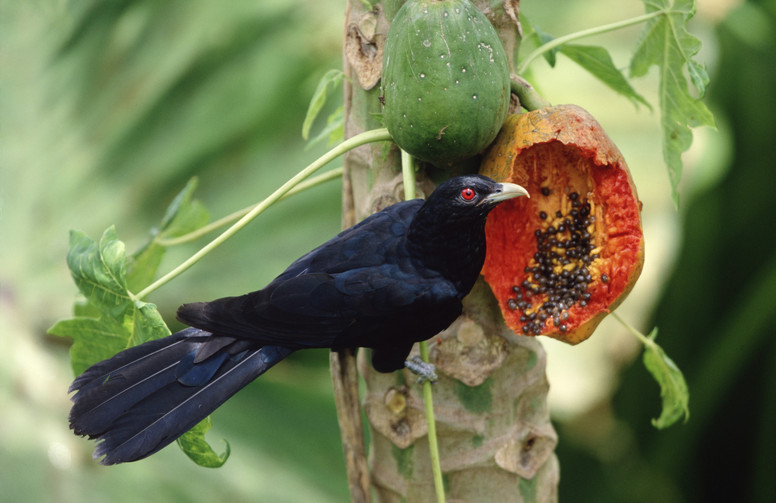
No single function can explain the coloration of living things. We need a comprehensive theory that predicts the lines and patterns of coloration of plants and animals. An artist’s palette containing only three properly chosen colors is entirely adequate under most circumstances to produce the various visual effects of color that is observed. The optical mechanisms involved in the production of color are complex. Coloration is a dynamic and complex characteristic and the term must be clearly distinguished from the term ‘color’ which only refers to the spectral qualities of emitted or reflected light. It is apparent that plants, and animals have no cognitive abilities to produce the coloration by which they are recognized. However, the coloration displayed gives us a clue about the nature of the “Whole Artist” who could be using imagination, has feelings for the forms created and seeks satisfaction from the visual effects that he produced. If man has the ability called visual perception, he must use the ability to visualize the “Whole Artist” who is at work.
Tag Archives: Whole Optics
Philosophy of Medicine – Lesson. 82 – The Great Grand Illusion hiding the Realities of the Universe

Who or what created this Universe? A spontaneous event cannot be described as a creative event. Creation is associated with imagination, purpose, design, inspiration and all of these could be called creative thought or influence.
The Greek word for Universe is ‘Cosmos’ which stands for Beauty and Order. The Universe is everything that exists; all matter and energy; all living, nonliving matter, and all forms of energy including the chemical energy that living entities use to establish, and to sustain their existence in support of various living functions. The Universe is immense and could be of unknown proportions. Earth is nearly 13,000 km across, a tiny speck among myriads of larger and smaller specks in the Universe. I seek the Knowledge of the Universe as it exists with a purpose. The purpose of the Universe is to provide me and other life forms a place to live in it.
Philosophy of Medicine – Lesson. 78 – Biological Rhythms are manifested under the influence of a Vital, Animating, and Unchanging Principle

This ability to connect the activities of past and present with activities that occur in the future requires the operation of an unchanging principle that is not influenced by changes of time. The colorful changes that we witness during the Autumn season relate us to the works of a Whole Designer, a Whole Architect, a Whole Planner, and a Whole Artist.
In my view, all natural phenomena require the operation of an unchanging condition that gives the opportunity to experience the change that is manifested. The change called Day and Night, and the changes called Autumn, Winter, Spring, and Summer Seasons are manifested because of an unchanging condition; the fact of Sun shining with its full brightness 24-hours, and at all times.
The rhythmically recurring phenomena called biological rhythms are manifested for living functions operate under the influence of an unchanging, vital, animating principle called Soul, or Spirit.
Philosophy of Medicine – Lesson. 70 – The Phenomenon of Illumination
Light of Lights – The Phenomenon of Illumination and the Phenomenon of Knowing.
THE LIGHT IS THE SOURCE OF ILLUMINATION. THE KNOWLEDGE IS THE OBJECT OF ILLUMINATION. THE MIND IS THE OBSERVER OF ILLUMINATION. THERE IS UNITY BETWEEN THE SOURCE, THE OBJECT KNOWN, THE KNOWER TO MANIFEST THE PHENOMENA OF KNOWING.
The man’s ability of Sensory Perception called Vision, and the ability of Inner Vision are of secondary importance as Existence depends directly on the act of Breathing and the Lord or Prabhu provides Knowledge for performing that act of Breathing. The True Self or Atman illuminates me if it is connected to Lord or Prabhu, the Original Source of Light.
Philosophy of Medicine – Lesson. 32 – Discover the Whole Connection – The Red Blood Cell connects the Body, Mind and Soul
The Red Blood cells constitute the principal stabilizing, connective linkage among the trillions of living cells that comprise the biological community which gets recognized as the human being.
The Red Blood Cells display functional subordination to the requirements of the organism as a Whole. Altruism is a theory of conduct that regards the good of others as the end of moral action. The Red Blood Cells have very short, individual lifespans and the entire period of their existence involves unselfish concern for the welfare of other cells.
When man is viewed as a multicellular organism, the human subject finds his objective existence because of the living functions of the cells, tissues, organs, and organ systems that provide the biological basis for that existence. In multicellular eukaryotes, cells with the same genes must differentiate into many types. Multicellularity is accomplished by definite capabilities for differentiation. The functional differentiation is not a simple process that can be called adaptation. To achieve differentiation, complex control mechanisms determine which genes are active in a given cell at a given time.
Philosophy of Medicine – Lesson. 17 – The Material Basis of Spirit and Life

Man exists in physical world not because of the abilities of his physical or mental work. The separation of Matter and Spirit as two distinct entities will not help us to understand the reality of human existence. Man has to know that there is no disunity between Matter and Spirit.
Life means the experience of Peace, Harmony, Tranquility, Hope, Fear, Love, Joy, and Wisdom. The problem of Death is experienced as a Fear as Death means the inability to have the subjective experiences associated with Life. But, man does not exist in the physical world because of the abilities of his physical, or mental work. Man exists because of the nature of Matter, and Spirit and this nature is only an extension of the Divine Nature.
Philosophy of Medicine – Lesson. 14 – The phenomenon of illumination – Man is Spiritually Blind
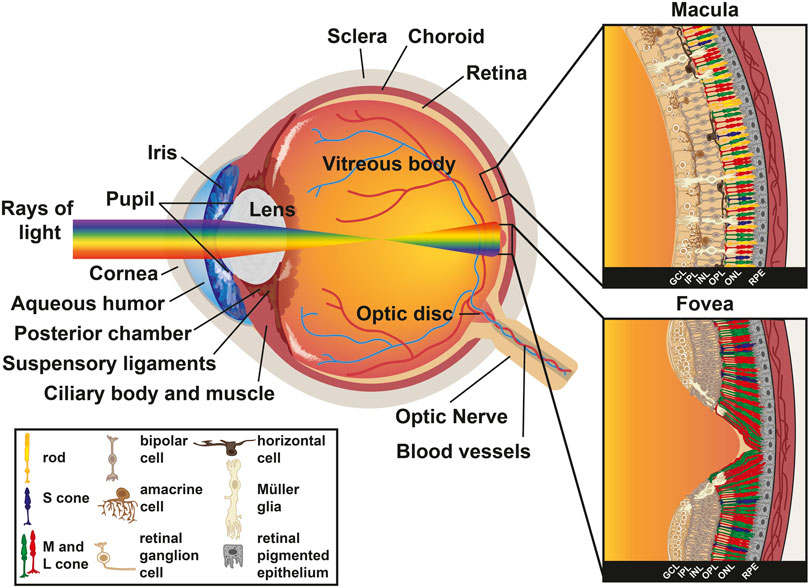
Photochemical reactions that play a vital role in biological systems are called Photobiological processes. Photochemistry establishes relationship between the laws of Physics, and Chemistry with the living functions to synchronize the interactions between Light and Matter that is important for Life to exist on planet Earth.
Photoreception is an intelligent function that leads to immanent actions in which the living thing senses, grows, and develops performing those actions. Photoreception in living things is unlike the mechanical action performed by a camera made by man. Photoreception is created to synchronize the existence of the two major systems of life; plants and animals perform their living functions to complement the functions and actions of each other. Hence Photoreception could be described as the spiritual basis for all kinds of existence on planet Earth.
Philosophy of Medicine – Lesson. 13 -Photoreception is a Spiritual Function
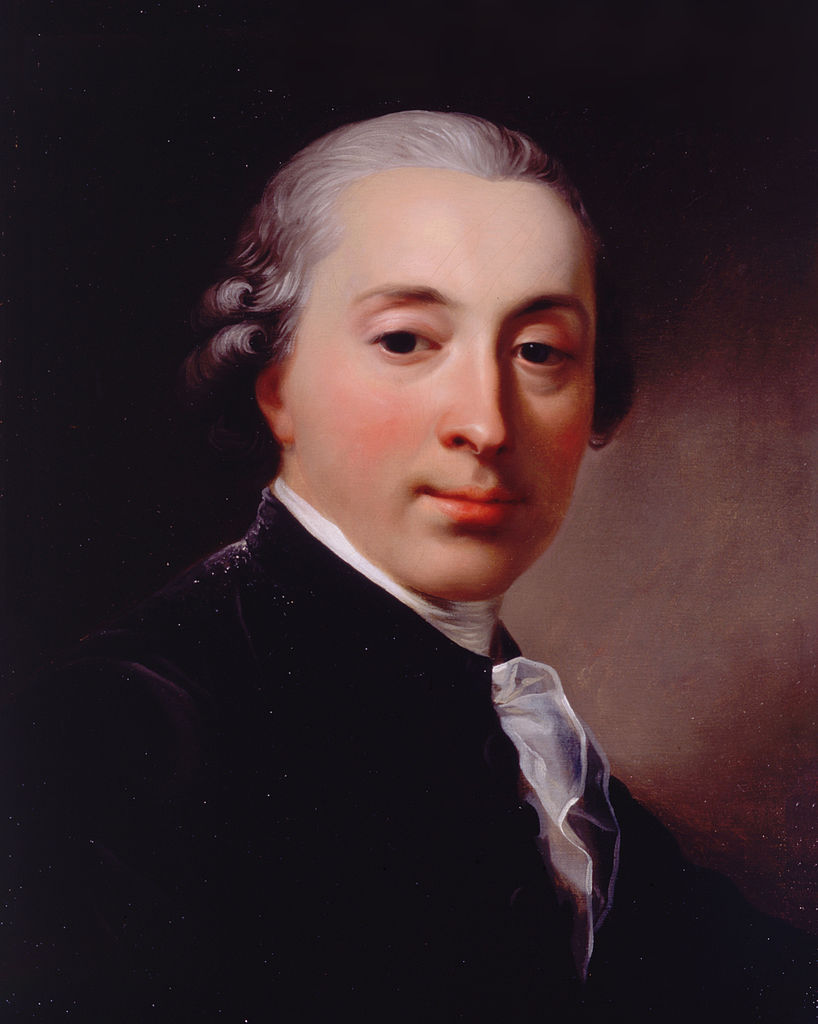
The ability called Photoreception is the fundamental basis for all kinds of existence on planet Earth. Plants have the ability of Perception of Spiritual Light.
Photoreception can only be interpreted as a Spiritual Function as the Knowledge to perform and use the function to create new Organic Molecules cannot be acquired through the Learning Process; no Teacher can teach it and no Book can impart this Knowledge.
Philosophy of Medicine – Lesson. 12 – The role of Chlorophyll in formulating the Spiritual Connection between Energy and Life

Chlorophyll is not simply about generating coloration in plant leaves. It describes the work, the imagination, the inspiration used by a Whole Architect who uses matter, energy, time, space, and color in a very creative manner.
Green plants with Chlorophyll pigment trap light energy, and transform it into chemical energy and use it in the process described as Photosynthesis. It is a creative mechanism to transform one form of energy into a different form of stored chemical energy that can be further used to create new forms of matter called organic molecules that are not present in nature. These organic molecules come into existence because of the activity of living things. It shows the intent of a designer to use energy, and matter to create the visual, sensory effect.
Philosophy of Medicine – Lesson. 11 – Light and Matter Interactions – The Photoelectric Effect
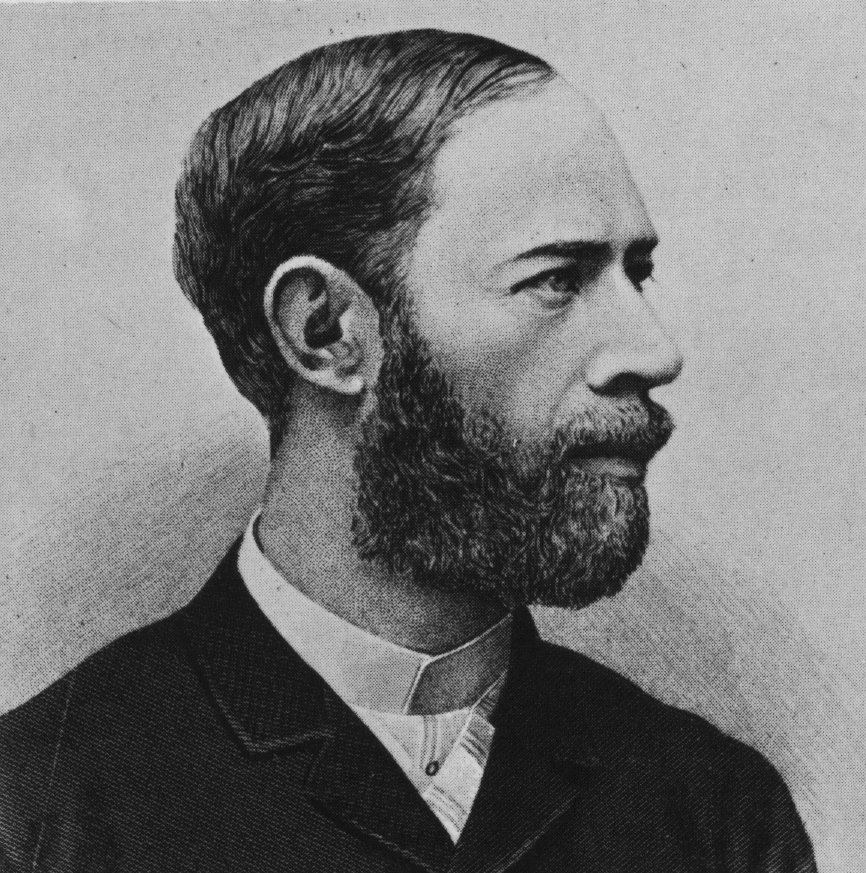
Photochemical reactions that play a vital role in biological systems are called Photobiological processes. Photochemistry establishes relationship between the laws of Physics, and Chemistry with the living functions to synchronize the interactions between Light and Matter that is important for Life to exist on planet Earth.
Photochemical reactions that play a vital role in biological systems are called Photobiological processes. Photochemistry establishes relationship between the laws of Physics, and Chemistry with the living functions to synchronize the interactions between Light and Matter that is important for Life to exist on planet Earth.

