Adi Shankaracharya – Instructs us to seek the Mercy, the Compassion, and the grace of Lord Govinda to get to the Shore, to complete a Journey known as ‘Samsara’.
Human existence faces challenges from several directions. The nature of man’s existence is conditioned and man has no alternative other than that of seeking the protection of LORD God. The sweet name of Govinda is the ultimate refuge when man is checkmated and has no way to escape from dangers threatening his life.
The Law of Individuality governs all Individual Living Things.The Law of Individuality. Genetically identical bacteria is actually a mob of Individuals.
A colony of genetically identical E. coli bacteria is actually a mob of individuals.
Understanding Individuality:
Dr. Michael Elowitz and Dr. Long Cai are developing a platform through which cells can self-record their lineage and molecular event histories directly into their own DNA as they create new tissues, particularly in the brain. This research will help to address how individual cells in a developing embryo diversify into many distinct cell types, each playing its unique role in the organism.
Dr. Michael Elowitz, Physicist at California Institute of Technology has conducted experiments on colonies of genetically identical (clones) E. coli bacteria under identical conditions and discovered that they behave in different ways.
Even among simple forms of life, like the common bacterium E. coli, genetics only partly determines what any one organism is like. E. coli expresses its individuality in many ways. All the bacilli above are genetically identical, but the shades show differences in the production of proteins that digest lactose.Credit…Dr. Michael Elowitz
The key to understanding E. coli’s fingerprints is to recognize that the bacteria are not simple machines. Unlike wires and transistors, E. coli’s molecules are floppy, twitchy and unpredictable. In an electronic device, like a computer or a radio, electrons stream in a steady flow through the machine’s circuits, but the molecules in E. coli jostle and wander. When E. coli begins using a gene to make a protein, it does not produce a smoothly increasing supply. It spurts out the proteins in fits and starts. One clone may produce half a dozen copies of a protein in an hour, while a clone right next to it produces none.
Michael Elowitz, a physicist at Caltech, put these bursts on display in an elegant experiment. He and his colleagues incited E. coli to produce its proteins for feeding on lactose. Dr. Elowitz and his colleagues added extra genes to the bacteria so that when they made lactose-digesting proteins, they also released light.
The bacteria, Dr. Elowitz found, did not produce a uniform glow. They flickered, sometimes brightly, sometimes dimly. And when Dr. Elowitz took a snapshot of the colony, it was not a uniform sea of light. Some microbes were dark at that moment while others shone at full strength.
At the very least, E. coli’s individuality should be a warning to those who would put human nature down to any sort of simple genetic determinism. Living things are more than just programs run by genetic software. Even in minuscule microbes, the same genes and the same genetic network can lead to different fates.
The bacteria have fingerprints of their own and even when they share the same genome, they could still be identified as individuals.
The Law of Individuality:
I propose the Law of Individuality which governs all the living entities. Either with the same and identical genome or with different genomes, all living organisms have no choice other than that of living as ‘Individuals’. The genes and the genetic codes function in accordance with the Law of Individuality. While the genetic structural organization is the same, there is functional variability due to factors over which the organism has no control. I describe Individuality as a Trade Mark. It is the characteristic of a biological entity. Genes and the genetic codes are the tools that an organism uses to express its Individuality. Each organism assembles its own kind of protein molecules to define its identity and to defend its existence in the natural world. The concept of Biological Individual and Individuality has to be always defined in the context of the Individual’s relationship with its own Body, Social Group, Society, Time, and the Environment in which the Individual finds the reality of its own Existence.
The Law of Individuality leaves the Individual with no choice other than that of expressing variability while being a member of a Social Group which may have a fixed Identity.
The Magic of Creation and Protein Synthesis.The Magic of Creation and Protein Synthesis.
If you eat some sweet Garden Peas, you can directly taste the Magic of Creation.
The Magic of Creation and Protein Synthesis.
Gregor Mendel, an Austrian monk demonstrated the inheritance patterns of the Garden Peas, Pisum sativum through breeding experimentations in his monastery’s garden.
The Magic of Creation and Protein Synthesis
There are twenty amino acids. Protein synthesis involves the unique and Creative ways of arranging these amino acids into chains as polypeptides. Protein synthesis is recognized as a “Creative” process because the product it creates has the ability to impart a unique sensory experience.
The Magic of Creation and Protein Synthesis.
We can distinguish plant and animal proteins by their distinctive characteristics in terms of taste, flavor, and texture. Man uses his culinary skills to further improve the palatability of the proteins he consumes as food for his existence.
A reason to celebrate the power of creationA reason to celebrate the power of creationA reason to celebrate the power of creation
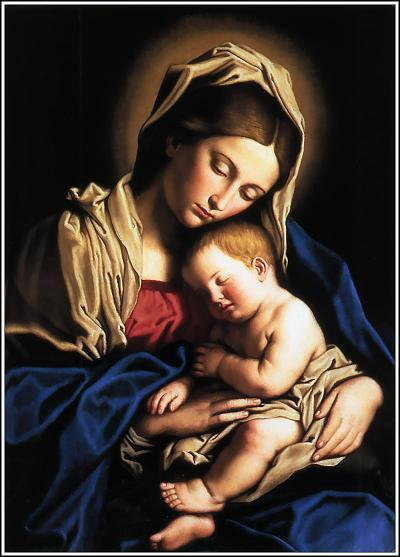
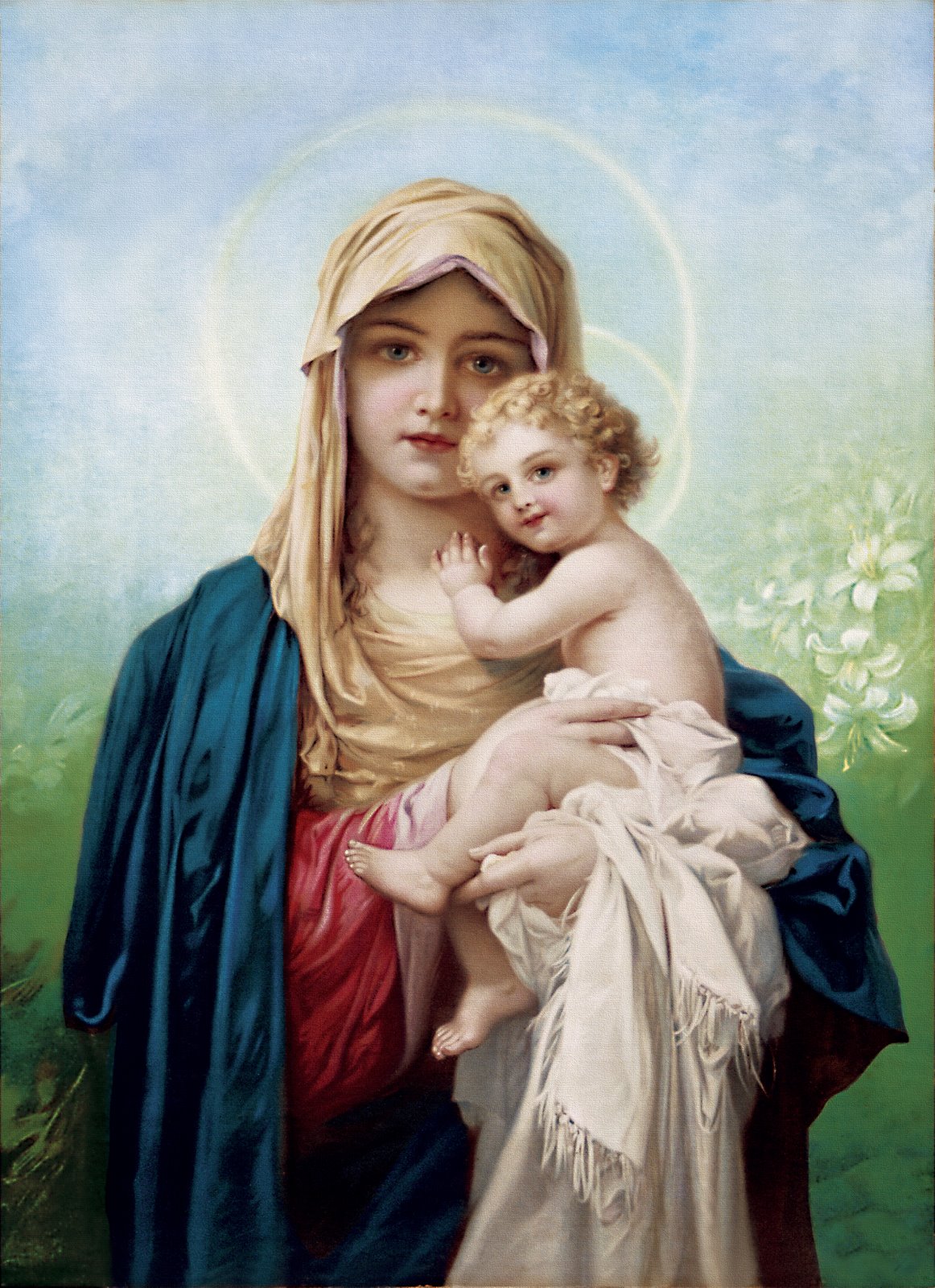
We can directly experience the power of Creation that gives a natural sense of Joy by simply holding our own baby.
A reason to celebrate the power of creation
Creation is defined as to make or bring into existence an object, something new, original, one of its kind, unique, and distinctive. and to produce an object through imaginative skill or inspiration. As per the Theory of Creation, the natural world in which we exist is the physical manifestation of an act of Creation. People all over the world directly experience the natural phenomenon of Creation. Creation is not merely a past event. Creation is an observable phenomenon of our present times. Creation is a phenomenon that would repeat and perpetuate itself as long as planet Earth exists and the Cosmic Balance, the Cosmic Harmony, and the Cosmic Connection prevails. Creation is a Reality that is very evident by its own nature. Creation is a self-evident Truth.
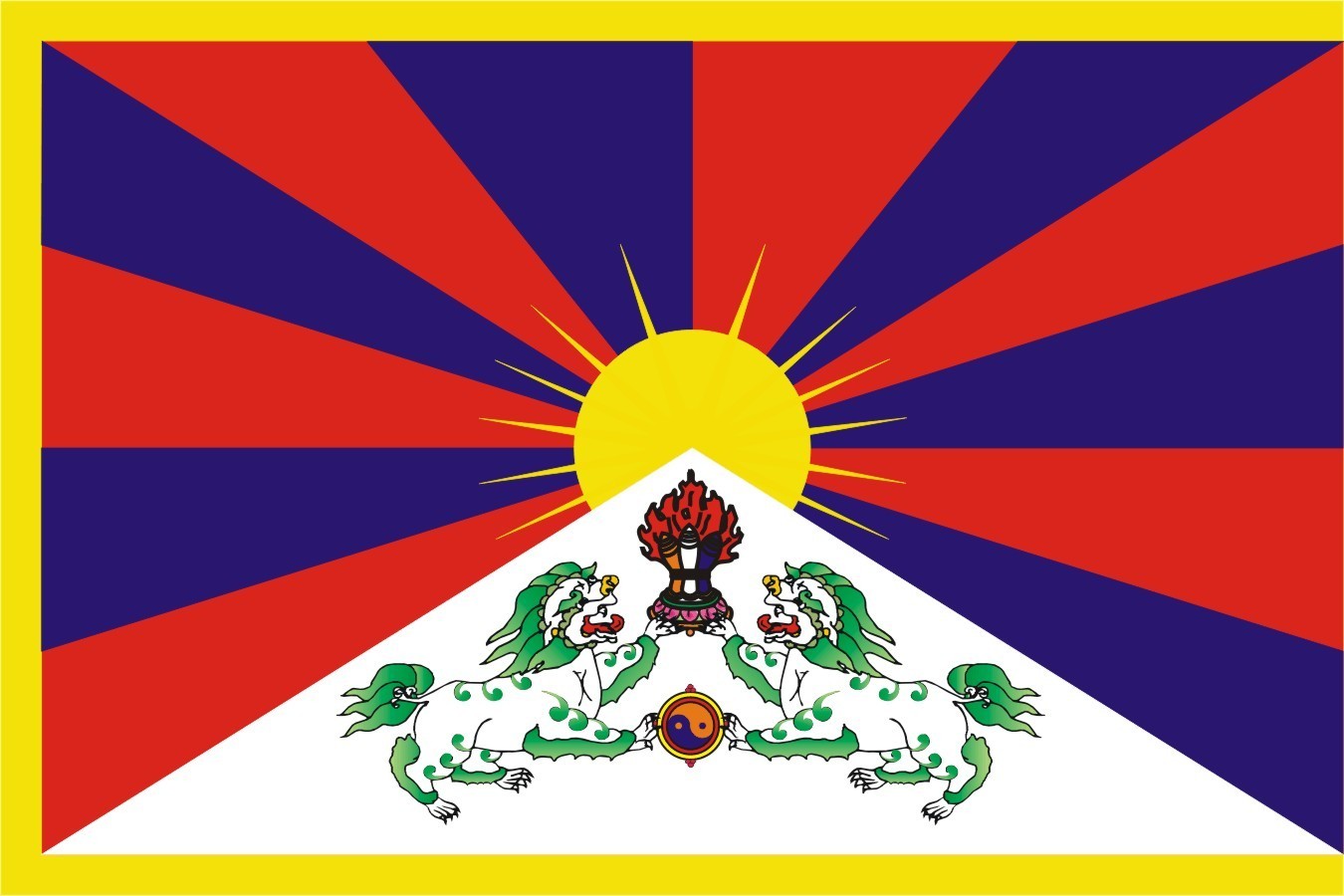
His Holiness The 14th Dalai Lama is a personification of patience and perseverance. He spent over five decades in exile to preserve the Tibetan Identity.
A PROUD SYMBOL OF TIBETAN IDENTITY AND THE QUEST FOR FREEDOM
I want to pay my tribute to Tibetan exiles for the display of an undying spirit to preserve their identity and to pass this identity to the future Tibetan generations. I am particularly pained by the actions of South Africa and its refusal to issue a visa to H.H. Dalai Lama to participate in a Peace Conference which is planning to discuss ways of using a popular game like SOCCER to fight racism and xenophobia.
Rudra N. Rebbapragada, Ann Arbor, Michigan, U.S.A.
Service Information:
Name: R. Rudra Narasimham/R. R. Narasimham;
Service Number: MS-8466/MR-03277K; Rank: Lieutenant/Captain/Major;
Branch: Army Medical Corps/Short Service Regular Commission/ Direct Permanent Commission(1969-1984);
A PROUD SYMBOL OF TIBETAN IDENTITY AND ASPIRATION FOR FREEDOM
SOUTH AFRICA – A PUPPET CONTROLLED BY COMMUNIST CHINA
South Africa is selected as the host of 2010 Soccer World Cup Games. The Soccer Organizing Committee has planned to host a Conference on March 27, 2009 to discuss ways of using soccer to fight racism and xenophobia. Nobel Peace Laureates Nelson Mandela, Archibishop Desmond Tutu, and F W de Klerk had invited H.H. Dalai Lama, a Noble Peace Laureate to join them in this Peace Conference. Communist China which is a big investor and trade partner of South Africa has openly opposed H.H. Dalai Lama’s trips to other countries. Beijing claimed that “We resolutely oppose any country’s government having official contact with the Dalai Lama….”. Succumbing to intense pressure from Communist China, South Africa has denied a visa to H.H. Dalai Lama and consequently the Peace Conference is indefinitely postponed. South Africa has failed to act as an independent, and sovereign nation. In yielding to Chinese pressure and refusing to issue a visa to H.H. Dalai Lama, South Africa has tainted its democratic credentials and like a puppet it acted in a subservient manner.
FIFTY YEARS IN EXILE – UNDYING QUEST FOR FREEDOM
Tibetans, young and old, including monks, nuns,, and children are planning to celebrate five decades of exiled life in 35 Tibetan settlements located in different parts of India. I had visited the LugSam Tibetan settlement at BYLAKUPPE in the KARNATAKA State of India. I had personally spoken to hundreds of Tibetan boys and had interviewed them individually. I spent nearly a month and lived at the BYLAKUPPE Tibetan settlement. The boys cherished a strong sense of Tibetan identity and had a remarkable passion to seek their freedom and regain their LAND. Tashi Wangdu of Bylakuppe has stated that Tibetans would present glimpses of the TIBET experience to people across India. Tibetan identity, culture, religion, language, songs, and folk dances will be showcased at year-long ‘THANK YOU INDIA’ Thanksgiving functions and Tibetans are hosting a four day festival from March 26. H.H. Dalai Lama is hosting an Thanksgiving function at New Delhi on March 31.
Sonam Dorjee, a 70-year old Tibetan who crossed over to India with H.H. Dalai Lama in 1959 has recalled his undying spirit in the following words : “Vicissitudes of life not withstanding, we have been able to bond together spanning two generations owing to our determination to keep the hope for a free and independent Tibet alive and carry on the struggle for returning to the homeland one day or other”.
Tibetans firmly believe that they belong to an ancient race, have unique identity, language, and traditions and they wish to pass this identity to future generations whatever be the price.
Human Existence-The Cosmic ConnectionHuman Existence-The Cosmic ConnectionHuman Existence-The Cosmic Connection
Water is vital to life. Water is the most common substance on Earth, but 97 percent of the Earth’s water is in the oceans and this water is too salty and is of no direct use to the terrestrial life. A vast majority of plants, animals and human beings depend upon the purified, fresh water that reaches the ground from the sky.
CELESTIAL MECHANICS – A DEVOTIONAL INQUIRY: I AM INVITING MY READERS TO USE THE VALID, SCIENTIFIC PRINCIPLE OF INQUIRY CALLED DEVOTION TO ACCOUNT FOR CELESTIAL DYNAMICS. IN THIS PHOTO IMAGE, THE SUNRISE DESCRIBES A PURPOSIVE, GUIDED, AND GOAL-ORIENTED ACTION.
The Indian Cultural traditions recognize the Sun as the Cosmic Father, and He is often described as provider of great rains and as a friend of waters that flow across the land. Earthly existence is simply impossible without this harmonious relationship between the Sun and the living creatures.
The Gods of Monotheism. The Fundamental Separation of the Transcendent and the Immanent Realms.
The Concept of Monotheism: “ONE AND ONLY ONE GOD”
The concept of Monotheism is fundamentally flawed. I understand that this concept originated in India and spread to other nations. Apart from members of ‘Arya Samaj’, Sikhs, and other followers of Vedic rituals, it gained more attention among the followers of Prophet Muhammad.
Firstly, the LORD God Creator has not given to the man the ability to directly experience God’s existence. The human mental experiences of all kinds are conditioned by Fundamental Forces such as the Gravitation. Man has the ability to subjectively and objectively experience his own living condition and not that of God. The speculative nature of the Theory of Monotheism becomes apparent when we verify the Theory by finding its correspondence to an external reality. You may search the entire physical world, you will not find the One and Only One God of your imagination. That God is an idea, a mere mental percept without any correspondence with an external Object. You cannot find One and Only One God in the ‘Transcendent’ Realm for man is conditioned. Man cannot cross the boundaries of the Physical or Immanent Realm. In fact, the One and Only One God of Jews, Christians, Muslims, Vedic Hindus, and Sikhs are not the same. However, I want to make it clear that I admire the Bhagats and their traditions of Devotional Worship of God. The issue is not that of accepting or rejecting the Vedas or Gurbani. The Man arrives in the world all alone. The Man departs from the world all alone. Bhagat Kabir communicates this problem of Individualistic Existence because of the separation of the Transcendent and the Immanent Realms. The Man cannot hope to ride on the shoulders of his Guru, Master, or Teacher. The man who departs from this world has to reach his Final Destination using his own effort, actions, or “KARANI.” Even, the Guru has to reach his Final Destination using his own effort, actions, or “Karani.” No exceptions to this rule.
The Gods of Monotheism. The Fundamental Separation of the Transcendent and the Immanent Realms.
THE GODS OF MONOTHEISM
The Gods of Monotheism. The Fundamental Separation of the Transcendent and the Immanent Realms.
Monotheism is a term that was introduced in an effort to study religions. It is described as a religious belief that only one God exists. This belief in a single and transcendent God contrasts particularly with Polytheism which is described as a belief in many gods.
Such oversimplification may conceal the true identity of the Gods of Monotheism. Judaism, Christianity, and Islam are the principal Monotheistic religions. The demarcation between these faiths is very easy to determine and it is not so easy to establish their common ground. Dogmatic differences or differences in articles of faith must be explicitly recognized.
The identity of the Divine is not represented merely by the philosophical speculations about God’s essence but by the God whom men worship in all the acts of piety which comprise the rituals of religion.
If you consider the dogmas of religion; the articles of religious faith-based solely on divine revelation, you would conclude that the Gods of Monotheism live in different Heavens. There is no chance that the God of children of Israel, The Holy Trinity (Father, Jesus, the Holy Ghost/Spirit), and the God of Ishmael could coexist in the same transcendent or immanent realm.
The doctrinal differences are too many. There are very serious differences on matters such as salvation, the nature, and mission of the synagogue/church/masjid, the places of their worship, its rituals and sacraments.
The Monotheist concept of religious belief has not nurtured the concept of shared humanity that is united in religious brotherhood.
The desire to assert the dominion of the one and only true God has often lead to violence and intolerance. Historically, Monotheists have killed to gain theological as well as political dominance. The Gods of Monotheism have caused far more wars and conflicts than the many gods of Polytheism.
The adherence to an ABSOLUTIST thesis that only my God is God has resulted in a strict demand for intolerance of others holding different creeds. The Israelites practiced the worship of one God without denying the existence of other gods and the Torah also instructs them to act decently toward one another. The trinitarian creed of Christianity sets it apart from other religions.
The Gods of Monotheism. The Fundamental Separation of the Transcendent and the Immanent Realms.
The Islamic interpretation of Monotheism is more literal and uncompromising than that of any other religion in the world. ‘TAWHID’ or oneness of God is the foremost article of the Muslim faith. Muslim belief is based upon the unity of Allah and the prophethood of Muhammad. To bestow Allah’s indivisible reality upon another god is considered by Muslims to be a lie, and stands as the only sin which Allah will not forgive. The Holy Book of Quran mentions that to attribute divinity to a created entity is the only unpardonable sin.
The only point of agreement amongst Monotheistic religions is that of their hatred of idols. Polytheism is not an acceptable choice and it is considered as a form of Atheism. Idolatry ranks as perhaps the most common topic in the Bible and Quran.
The people of India are ridiculed and are scoffed at because of their conceptions of God as anthropomorphic. Indians are verbally assaulted every day by Christian Evangelists for worshiping inanimate objects and historically, Indians were punished for being patrons of idolatry.
In an effort to wipe out idolatry from India, numerous temples were destroyed and about 60 to 80 million people were killed between 1000 and 1525 CE.
The Gods of Monotheism. The Fundamental Separation of the Transcendent and the Immanent Realms.
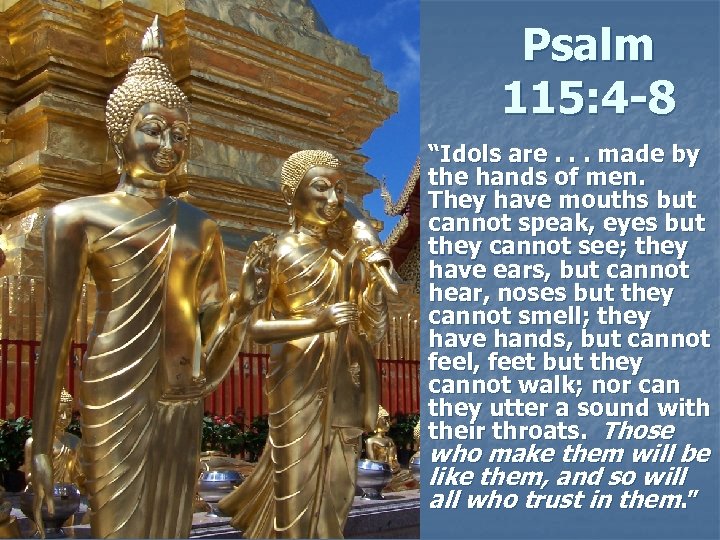
Psalm 115, verses 4 to 8 from The Old Testament Book of Psalms, illustrates the hatred of idols:
“But their idols are silver and gold,
made by the hands of men.
They have mouths, but cannot speak,
eyes, but they cannot see;
they have ears, but cannot hear,
noses but they cannot smell;
they have hands, but cannot feel,
feet, but they cannot walk,
nor can they utter a sound with their throats.
Those who make them will be like them,
and so will all who trust in them…”
THE INDIAN CONCEPT OF GOD WORSHIP
The Vedic Scripture of Shukla Yajurveda in its final chapter of ‘Isha Upanishad’ (Ishavasya Upanishad), verses 12-14 recommend the worship of the Divine in its Immanent (manifest, visible phenomenal forms) and it’s Transcendent (unmanifest, invisible, Absolute) forms.
“Into deep darkness falls those who follow the immanent. Into deeper darkness fall those who follow the transcendent. By the worship of the Manifested, one end is attained; by the worship of the Unmanifested, another.
Thus we have heard from the wise men who taught us this. He who knows at the same time both the Unmanifested and the Manifested, he crosses over death through knowledge of the manifested and attains immortality through the knowledge of the First Cause.”
A HYMN FOR INVOCATION OF PEACE:
The Gods of Monotheism. The Fundamental Separation of the Transcendent and the Immanent Realms. The Invisible or the Unmanifest vs The Visible or the Manifest Fundamental Dualism.
THAT (the Invisible or Unmanifest Absolute) is WHOLE, WHOLE is THIS (the Visible or Manifest Absolute); what has come out of WHOLE (the Invisible) is also WHOLE ( the Visible). When the WHOLE is taken out of the WHOLE, the WHOLE remains WHOLE (it remains unaltered).
OM! PEACE, PEACE, LET PEACE ALONE PREVAIL.
Dr. R. Rudra Narasimham, B.Sc., M.B.B.S.,
Kurnool Medical College, Kurnool, Andhra Pradesh, India,
BETH-EL – THE HOUSE FOR GOD OF ISRAEL. JACOB’S PILLOW-PILLAR STONE MARKS THE SITE AS ‘BETHEL’, THE HOUSE OF GOD. WHERE IS THE HOUSE?
The Story of Jacob:
Bethel – The House for God of Israel. Where is the House? The Story of Jacob.
The story of Jacob is described in the Book of Genesis, the first Book of Old Testament. He was the son of Issac, the grandson of Abraham, and the twin brother of Esau. He was named Jacob as he came out with his hand grasping his older twin brother Esau’s heel (Genesis 25:26). Jacob was the father of the founders of the twelve tribes of Israel.
BETH-EL – THE HOUSE FOR GOD OF ISRAEL. Jacob gets the name Israel after a spiritual struggle at Jabbok.
Jacob was given the name Israel after he withstood a spiritual struggle at Jabbok (Genesis 32:22-30). Jacob literally wrestled with God who came down in the form of a man. The name Israel is derived from the words ‘SARA’ meaning TO STRUGGLE, WRESTLE, and ‘EL’ meaning God. El is one short form of ‘ELOHIM’, the name used for God.
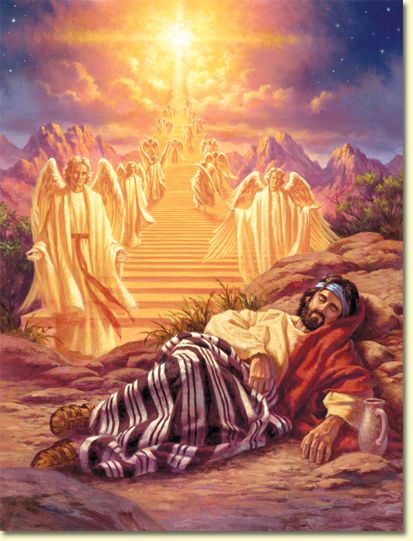
JACOB’S DREAM AT BETHEL
Jacob received his older brother’s blessing from his father and then flees to Laban in Haran to escape from his brother’s anger. His dream at Bethel is narrated in Genesis, chapter 24, verses 10-17:
BETH-EL – THE HOUSE FOR GOD OF ISRAEL. Jacob’s Dream at Bethel.
Jacob left Beersheba and set out for Haran. When he reached a certain place, he stopped for the night because the sun had set. Taking one of the stones there, he put it under his head and lay down to sleep. He had a dream in which he saw a stairway resting on the earth, with its top reaching to heaven, and the angels of God were ascending and descending on it. There above it stood the LORD, and He said: “I am the LORD, the God of your father Abraham and the God of Issac. I will give you and your descendants the land on which you are lying….” When Jacob awoke from his sleep, he thought, “Surely the LORD is in this place, and I was not aware of it.” He was afraid and said, “How awesome is this place! This is none other than the house of God; this is the gate of heaven.”
Bethel – The House for God of Israel. Where is the House?
Early the next morning Jacob took the stone he had placed under his head and set it up as a pillar and poured oil on top of it. He called the place Bethel, though the city used to be called Luz. He had further taken a vow stating that the stone he had set up as a pillar would be God’s house.
THE HOUSE OF GOD AT MOUNT MORIAH
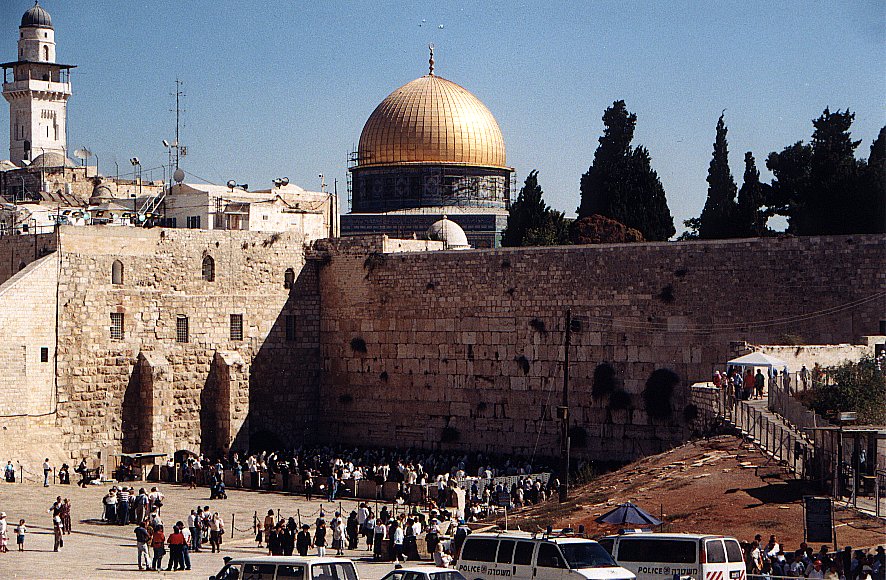
In Judaism, Mount Moriah is also known as the ‘TEMPLE MOUNT’, and is the most venerated as the holiest spot on Earth. After liberating Jews from a life of slavery in Egypt, at Mount Sinai, God enters into a ‘New Covenant’ and He appears in the form of fire before Moses and other elders.
BETH-EL – THE HOUSE FOR GOD OF ISRAEL. WHERE IS THE HOUSE?
The Book of EXODUS, chapter 25, verses 8-9, God asks the Jews: “Then have them make a sanctuary for me, and I will dwell among them. Make the Tabernacle and all its furnishings exactly like the pattern I will show you…”
God set up Laws for the Israelites mostly regarding holiness and worship. The Old Testament Book Leviticus, Chapter 16, verse 34: “This is to be a lasting ordinance for you; Atonement is to be made once a year for all the sins of the Israelites.” The Children of Jacob (the son of Issac, and grandson of Prophet Abraham) need a House for God of Israel.
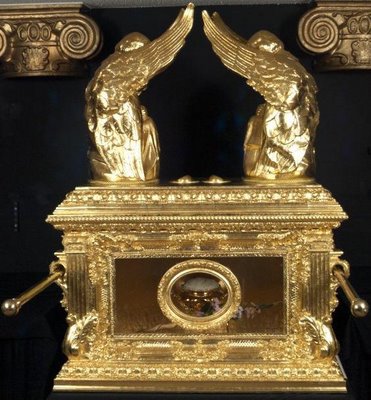
The Ark of the Covenant was where God manifested His presence on earth and the Ark went ahead of the Israelites wherever they traveled. The Ark was only housed in a tent for many long years and King David could only erect an altar for God (Book of 2 Samuel, chapter 24:25). The opportunity to build a House for God in His Name was given to Solomon, the son of King David.
BETH-EL – THE HOUSE FOR GOD OF ISRAEL. WHERE IS THE HOUSE?
Book of 1 KINGS, chapter 8, verse 13, Solomon declares: “I have indeed built a magnificent temple for you, a place for you to dwell forever.” The site selected by God for the establishment of the Holy Temple in His Name also is considered to be the spot where creation of world began, and Adam the first man was created here. Abraham brought his son Issac for sacrifice at this place. The Jewish tradition known as ‘Midrash’ also claims that Jacob had a dream and had erected a monument and declared it as the House of Holy One. God had pushed that rock with His right foot and the rock had become the ‘Foundation Stone’, the ‘Corner Stone’, and is also known as the ‘Key Stone’ of Solomon’s First Temple. The Temple of God stands over a stone identified by Jacob as the ‘gate of heaven’.
BETH-EL – THE HOUSE FOR GOD OF ISRAEL. WHERE IS THE HOUSE?
When Solomon dedicated this Temple to God in 957 B.C., God entered His House in the form of a cloud.
GOD OF ISRAEL’S DWELLING PLACE
Bethel – The House for God of Israel. Where is the House?Bethel – The House for God of Israel. Where is the House?Bethel – The House for God of Israel. Where is the House?
Psalm 115, song 2-3 says:
Why do the nations say,
“Where is their God? “
Our God is in heaven;
He does whatever pleases Him.
Bethel – The House for God of Israel. Where is the House?
“I have indeed built a magnificent Temple for you to dwell forever.” The remnants of Second Temple stand mutely at a place known as Gate of Heaven. The children of Israel need a House for their God.
“I have indeed built a magnificent Temple for you to dwell forever.” The remnants of Second Temple stand mutely at a place known as Gate of Heaven. The children of Israel need a House for their God.“I have indeed built a magnificent Temple for you to dwell forever.” The remnants of Second Temple stand mutely at a place known as Gate of Heaven. The children of Israel need a House for their God.
Propagation – Is that a Fundamental Right?Saligrama Sheila – The Physical Manifestation of the Supreme LORD as a personal deity. Since, propagation is not a Fundamental Right or Freedom, and because propagation is counter productive, we need an amendment of PART III, Article 25 of the Constitution of India.
The Tradition of Saligrama Shila Worship:
Since, propagation is not a Fundamental Right or Freedom, and because propagation is counter productive, we need an amendment of PART III, Article 25 of the Constitution of India.
The black stone known as Saligrama (Shaligram) Shila (rocks bearing Ammonite fossils) obtained from the river bed of the Himalayan river Kali-Gandaki is believed to be the physical, personal manifestation of the Supreme Lord and His devotees lovingly worship His idol.
Since, propagation is not a Fundamental Right or Freedom, and because propagation is counter productive, we need an amendment of PART III, Article 25 of the Constitution of India.
This tradition is related to the story of a pious lady by the name of VRINDA and her reincarnation as a plant known as ‘TULASI’. The leaves and the flowers of ‘TULASI’ are used in the worship of the LORD and ‘TULASI’ plant is also worshiped with great devotion and hence ‘TULASI’ adorns several Indian homes.Tulasi,Ocimum tenuiflorum, Ocimum sanctum, Holy Basil is known to Indians for thousands of years and is very often used in the Indian traditional medicine of ‘AYURVEDA’.
Since, propagation is not a Fundamental Right or Freedom, and because propagation is counter productive, we need an amendment of PART III, Article 25 of the Constitution of India.
The Indian scripture of Bhagavad Gita, chapter 10, verse 10 describes the Infinite Glories of the Ultimate Truth, Lord Krishna speaks to the Pandava prince Arjuna:
“tesam satata yuktanam bhajatam priti purvakam
dadami buddhi yogam tam yena mam upayanti te.”
tesam-priti-purvakam-bhajatam: to those devotees who worship Me with love
satata-yuktanam: and who are constantly aspiring for My association
dadami: I bestow
buddhi yogam: the intelligence, understanding, and insight
yena: by which
te: they
upayanti: can come
mam: unto Me.
To those devotees who are constantly devoted and worship Me with love, I bestow the spiritual intelligence, understanding, and insight by which they can come unto Me.
The Ultimate Reality, the Supreme Absolute Truth exists beyond man’s reasoning powers and it is not possible to understand the Supreme by speculating and by argumentation. However, through devotional service rendered with love the Lord could be pleased and as an act of special mercy He reveals Himself to His devotee.
Worship of other Gods:
Since, propagation is not a Fundamental Right or Freedom, and because propagation is counter productive, we need an amendment of PART III, Article 25 of the Constitution of India.
Indian thinkers have stated that, “Truth is one, though the sages know it as many”. Indians tolerate other religious practices and do not prohibit the worship of other Gods. Ideas that originated outside the Land of India specifically prohibit the worship of other Gods and condemn other religious practices. For example, the Holy Bible, the Old Testament, the Book of Exodus (chapter 20, verses 3-5), and the Book of Deuteronomy (chapter 5, verses7-9) state the folowing :
“you shall have no other gods before me. You shall not make for yourself an idol in the form of anything in heaven above or on the earth beneath or in the waters below. You shall not bow down to them or worship them; for I, the LORD your God, am a jealous God.”
Since, propagation is not a Fundamental Right or Freedom, and because propagation is counter productive, we need an amendment of PART III, Article 25 of the Constitution of India.
Holy Bible and other scriptures like Quran specifically prohibit the Indian traditions of the worship of ‘Saligrama Shila’, and of idols used by Indians for their devotional worship of Lord God Creator.
International Covenant on Civil and Political Rights:
This is a United Nations Treaty based on the Universal Declaration of Human Rights and India has ratified this treaty. Amongst other things the Article 18, para3 of the treaty states :
“Freedom to manifest one’s religion or beliefs may be subjected only to such limitations as are prescribed by law and are necessary to protect public safety, order, health, or morals or the fundamental rights and freedoms of others.”
Propagation – Is that a Fundamental Right or Freedom?
The word propagation means the spreading of ideas from one person or one place to another person or place. Propagation aims at converting people to another opinion. Propagation attempts to alter people to adopt another point of view. Countries like Greece and Malayasia specifically prohibit propagation of religious ideas. Freedom of Religion, Freedom of Association, and Freedom of Speech are not the same as Freedom of Propagation. Propagation involves destroying the ability of people to think for themselves and it aims at converting people to change their ideas and practices. Propagation creates tension, disrupts social harmony, contributes to a breakdown of public order, and is not conducive to maintaining public safety. Propagation is unwanted violation of the Fundamental Rights of others, and propagation is unnecessary interference of the Fundamental Freedom of Religion of others. Propagation results in the destruction of the Right to practice religion and to worship God according to one’s choice. Since, propagation is not a Fundamental Right or Freedom, and because propagation is counter productive, we need an amendment of PART III, Article 25 of the Constitution of India.
Since, propagation is not a Fundamental Right or Freedom, and because propagation is counter productive, we need an amendment of PART III, Article 25 of the Constitution of India.
































 Whole Dude - Whole Spirituality