TIBET OCCUPATION- UNFORGOTTEN MEMORY-GREATEST CRIME AGAINST HUMANITY

TIBET OCCUPATION – UNFORGOTTEN MEMORY – GREATEST CRIME AGAINST HUMANITY
 
... 书奖)(Forbidden Memory:Tibet During the Cultural Revolution
Tibet Occupation – Unforgotten Memory – Greatest Crime Against Humanity. Thank You Tsering Woeser.
 
Evil Red Empire’s Tibet Occupation ranks as World History’s Worst Crime Against Humanity. I seek the appointment of an International War Crimes Tribunal to fully investigate Red China’s Tibet Occupation and the atrocities of ‘Cultural Revolution’ as Crimes Against Humanity. I warmly appreciate Ms. Tsering Woeser’s efforts to expose these Crimes.
 
 Rudranarasimham Rebbapragada
Ann Arbor, MI 48104-4162 USA
 
THE NEW YORK TIMES


The Cultural Revolution in Tibet: A Photographic Record

SINOSPHERE

By LUO SILING OCT. 3, 2016


Tibet Occupation – Unforgotten Memory – World History’s Worst Crime Against Humanity.


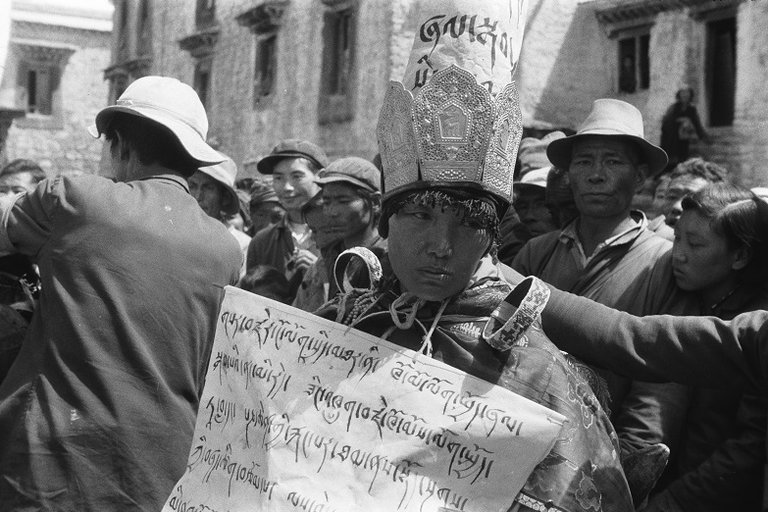
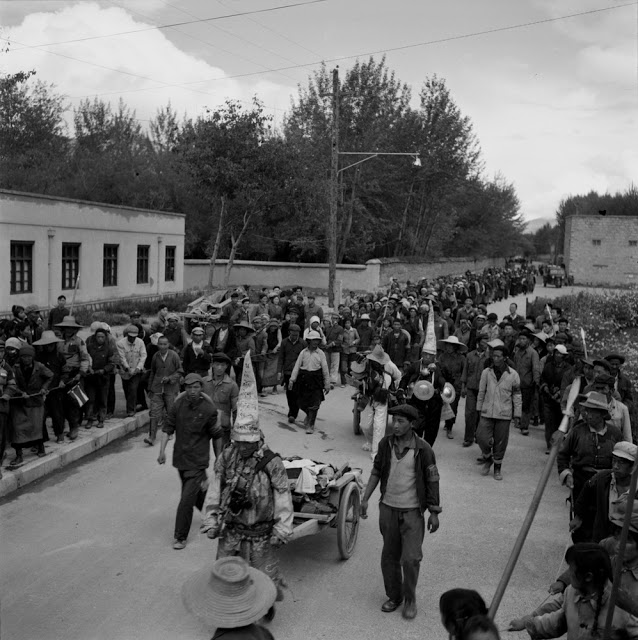
Tsering Woeser’s father, an officer in the People’s Liberation Army in Lhasa when the Cultural Revolution broke out in 1966, photographed many public attacks on Tibet’s old ruling class and religious leaders. Here, a Buddhist nun wears a sign labeling her as a counterrevolutionary. Credit Tsering Dorje

In 1999, the Tibetan writer Tsering Woeser came across Wang Lixiong’s book “Sky Burial: The Fate of Tibet.” On finishing it, she sent Mr. Wang photographs taken by her father, who was with the People’s Liberation Army when it entered Tibet in the 1950s and documented the early years of the Cultural Revolution in Lhasa in the 1960s. Mr. Wang wrote back, saying, “It’s not for me, as a non-Tibetan, to use these photos to reveal history. That task can only be yours.”

Ms. Woeser began tracking down and interviewing people who appeared in the photos. This resulted in two books published by Locus in Taiwan in 2006: “Forbidden Memory: Tibet During the Cultural Revolution,” based on her father’s photographs, and “Tibet Remembered,” an oral history narrated by 23 people who appear in them. Meanwhile, Ms. Woeser had begun taking her own photos, using her father’s camera, of the places he photographed. Many were included in a new edition of “Forbidden Memory,” published this year on the 50th anniversary of the start the Cultural Revolution.


The Cultural Revolution in Tibet: A Photographic Record - The New York ...
Tibet Occupation – Unforgotten Memory – World History’s Worst Crime Against Humanity. Tsering Dorje before the Potala Palace in 1969.
 
Tsering Dorje standing before the Potala Palace in Lhasa in 1969, in a photograph provided by his daughter, Tsering Woeser.


Ms. Woeser was born in Lhasa in 1966 to a Tibetan mother and her father, Tsering Dorje, who was half Tibetan and half Han, the dominant ethnicity in China. But in 1970, her father, who had served as deputy commander of the Lhasa military district, was transferred to Sichuan Province. It wasn’t until 1990 that Ms. Woeser returned to Lhasa, where she became editor of the journal “Tibetan Literature.” In 2003, she published “Notes on Tibet,” a collection of essays and short stories that was soon banned by the Chinese government. She is now a freelance writer and poet based in Beijing with Mr. Wang, whom she married in 2004. In an interview, she discussed what she learned from her father’s photographs of Tibet’s experience of the Cultural Revolution.

How did your father manage to take these photos?

In 1950, Mao Zedong ordered the People’s Liberation Army into Tibet, and on the way it passed through my father’s hometown, Derge, which is in the present-day Garze Tibetan Autonomous Prefecture in Sichuan. At the time my father, who was only 13, was sent away by his Han father to enlist in the P.L.A. His mother was a local Tibetan. During the Cultural Revolution, my father served as an officer in the political department of the Tibet Military District. I suppose he was able to take photos because of his privileges as a P.L.A. officer.

It’s curious, however, that for all the photos that my father took, he was able to keep the photos and negatives. This certainly could not have happened if the army had assigned him to take the photos. This indicates that my father’s activity was not commissioned by the military.


Tibet Occupation – Unforgotten Memory – World History’s Worst Crime Against Humanity


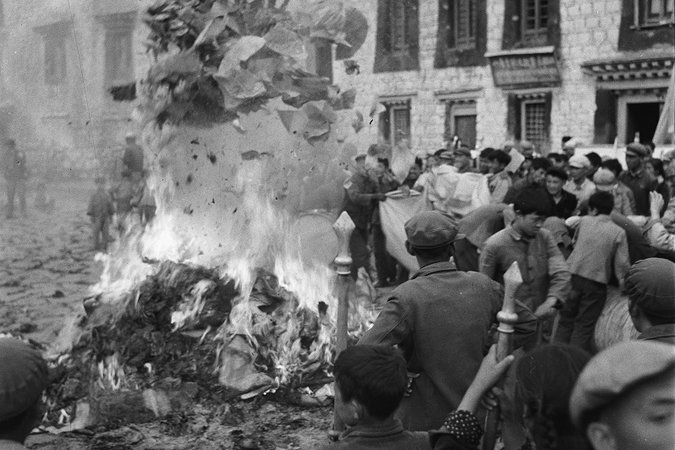
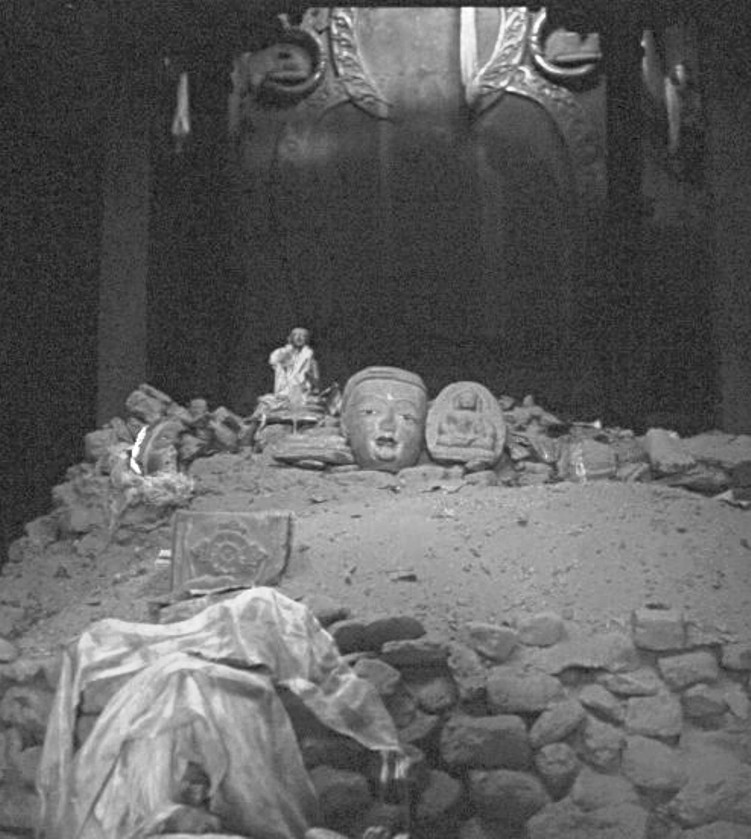
On Aug. 24, 1966, in Lhasa, Buddhist scriptures were burned as part of the campaign against the “Four Olds” – old customs, old culture, old habits, old ideas. Credit Tsering Dorje


Very few people had cameras then, and even fewer had the chance to take photos of public events. There were several media agencies active in Tibet then. They produced lots of documentaries, photos and reports. And yet in the newspapers and posters from then you can’t find any photos of ruined temples or “struggle sessions” against “counterrevolutionary monsters and demons.” I’ve looked at all the issues of Tibet Daily from 1966 to 1970 but can find no such photos.

What do your father’s photos show?

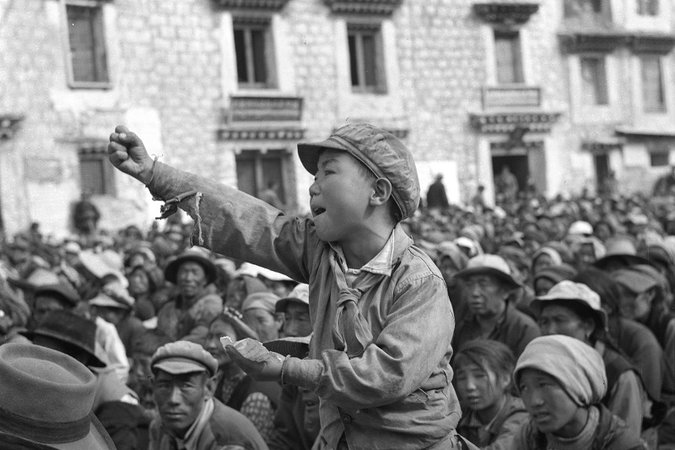
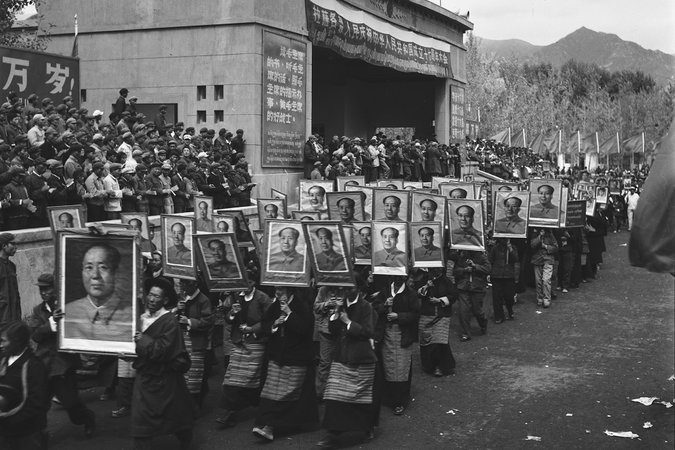
Mostly mass meetings and “incidents.” By mass meetings I mean large-scale gatherings such as the celebration by tens of thousands of Chairman Mao’s launching of the Cultural Revolution. Incidents include the destruction of temples and struggles against “monsters and demons.” The photos contain many identifiable figures including the Communist leaders of Tibet, the founder of the Tibetan Red Guards, individual Red Guards, as well as nobles, clergy and officials of the old Tibet society who were targeted in “struggle sessions.” In my investigations most of my efforts were focused on these people, because it’s through them that the photos have their greatest value. Over six years, I interviewed about 70 people in the photos.

How do your photographs and your father’s, taken in the same locations, differ?

In 1966 and 1967, my father took photos of mass meetings and rallies of Red Guards and the P.L.A. in front of the Potala Palace. In 2012, when I went to the same place to take photos, two self-immolations by Tibetans had taken place in Lhasa that May. As a result, the government tightened its policy of ethnic segregation and took more security measures against Tibetans, especially those from outside Lhasa. The measures were first implemented in March 2008, when protests broke out across the Tibetan region, and became more severe in 2012. As I took my photos, I noticed a curious phenomenon: the palace square was filled with men in black. They had umbrellas on their backs, which they would use to block people from taking pictures if an incident broke out. They lined up in rows and monitored the people passing by. They prohibited anyone from sitting in the square.

 
The Cultural Revolution in Tibet: A Photographic Record - The New York ...
Tibet Occupation – Unforgotten Memory – World History’s Worst Crime Against Humanity. Tsering Woeser in Lhasa with her father’s camera.
 
Tsering Woeser, with her father’s camera, in Lhasa in 2013. Credit Pazu Kong


Another example: In 2014, I was standing where my father had taken photos in front of the Jokhang Temple. What did he see back then? Red Guards trying to hang Chairman Mao’s portrait on the roof of the temple, where the Chinese flag was also planted. Though I didn’t see any Mao portraits there, the flag was waving in the same place. Also, there were quite a few believers kneeling and praying, as well as a crowd of tourists fascinated by their actions. On the roof of a house diagonally across from the temple there were sharpshooters from the armed police. Ever since 2008, sharpshooters have been deployed on the roofs of buildings around the temple.

Comparing today with the Cultural Revolution, there were no believers kneeling back then, and the temple was ruined, while today the temple offers a bustling scene where believers may freely worship. But these are only superficial differences. Religious worship is still strictly controlled. Furthermore, there is now commercialized tourism, with gawking tourists who treat Tibetans like exotic decorations and Lhasa as a theme park.

Who was the founder of the Lhasa Red Guards?

Tao Changsong, born in Yangzhou, Jiangsu Province. In 1960, he graduated from East China Normal University and volunteered to move to Tibet, where he became a teacher of Chinese at Lhasa Middle School. During the Cultural Revolution he was the main force behind the creation of the Lhasa Red Guards, as well as commander of the Lhasa Revolutionary Rebels Headquarters. When the Revolutionary Committee of the Tibet Autonomous Region was formed, he became its deputy director, a position equivalent to vice chairman of the Tibet Autonomous Region today. He also went to Beijing many times and met with Zhou Enlai, Jiang Qing and other key members of the Central Revolutionary Committee. In 2001, I interviewed him twice. I didn’t show him my father’s photos, assuming he might not tell me the story if he saw them, since he appears in one. It shows him at the Dalai Lama’s summer palace, the Norbulingka, leading a team of Red Guards hanging up a poster on which is written “People’s Park.”

 
The Cultural Revolution in Tibet: A Photographic Record - The New York ...
Tibet Occupation – Unforgotten Memory – World History’s Worst Crime Against Humanity.
 
A public rally in Lhasa to force “monsters and demons” to confess their failings. Credit Tsering Dorje


There were two “rebel factions” in Lhasa during the Cultural Revolution. One was the Revolutionary Rebels Headquarters. The other was the Great Alliance of Proletarian Revolutionaries Command, or Great Alliance Command for short. The two fought each other for power. In the later period of the Cultural Revolution, the Headquarters faction lost ground, while the other faction achieved total control, and retained it even after the Cultural Revolution [which ended in 1976]. Headquarters members were purged from the party. Tao Changsong was investigated on suspicion of belonging to the “three types of people” – “people who followed the Lin Biao-Jiang Qing counterrevolutionary faction,” “people with a strong factionalist bent” and “people who engaged in looting and robbery.” After the mid-1980s, he worked at the Tibetan Academy of Social Sciences and served as assistant editor of the journal “Tibet Studies” and as deputy director of the Modern Tibetan Research Institute. Now he’s retired and lives in Chengdu and Lhasa, where he is in good standing with the government.

Mr. Tao is a lively talker with a sharp memory. He also showed his cautious side when he began having difficulty answering my questions about the Red Guards’ campaign against the “Four Olds” at the Jokhang Temple. The statement in his account that left the deepest impression on me concerned the P.L.A.’s crackdown on “second rebels” [Tibetans who revolted in 1969]. He said: “The Tibetans are too simple-minded. If you execute them they say, ‘Thank you.’ If you give them 200 renminbi they also say, ‘Thank you.’ “

Tibet was an exception to the general practice of purging the “three types of people” after the Cultural Revolution. In Tibet there were few purges of that kind. When Hu Yaobang came to Lhasa in 1980, he put an end to the purging of the “three types.” Why? Because there were many Tibetans among them. Hu thought if you purged them, the party wouldn’t be able to find reliable agents among local Tibetans. So the party couldn’t purge them. And some of them not only were shielded from purges but even received promotions. As a result, the people who rose in power during the Cultural Revolution still dominate Tibet, whether Tibetan or Han.


Tibet Occupation – Unforgotten Memory – World History’s Worst Crime Against Humanity.


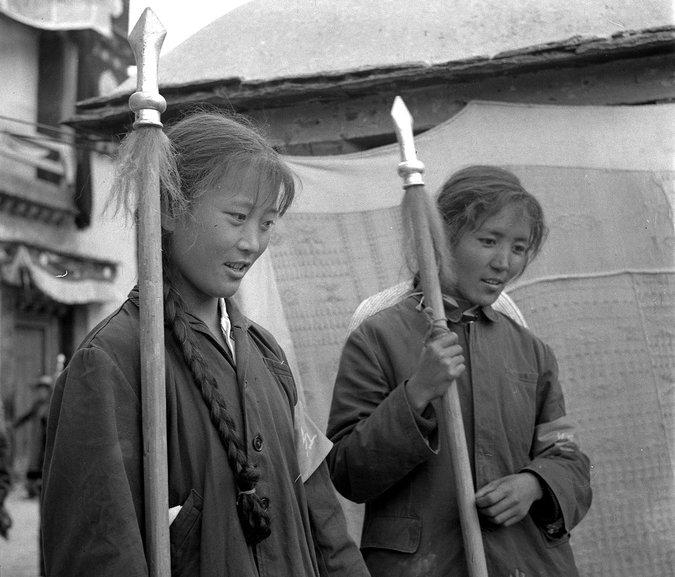
Two Red Guards in Lhasa in 1966. Credit Tsering Dorje


Tell us about the people in the photographs who were victims of the struggle sessions.

There were about 40 of them. They belonged to a variety of professions in the old Tibet: monks, officials, merchants, physicians, officers, estate overlords and so on. The settings included struggle sessions at mass assemblies, in the streets and at local neighborhood committees that methodically conducted their sessions by turns. The time frame was from August to September 1966. After that, the division between the factions led each to conduct its own separate struggle sessions. The people attacked in these sessions were incorporated into the “monsters and demons” unit, where they were ordered to attend long-term labor and study sessions at their assigned neighborhood committee.

What’s most interesting about these victims is that most were members of the upper class whom the Communist Party from the 1950s to the eve of the Cultural Revolution had designated as “targets to be won over.” And since they did not follow the Dalai Lama and flee the country during the 1959 uprising, the party rewarded them with many privileges. In other words, they were partners of the party. One of them, a monk, even served as an informant for the military.

But after the Cultural Revolution began they were labeled “monsters and demons” and suffered humiliating attacks. In the end they were overtaken by madness, illness and death. Some died during the Cultural Revolution, others afterward. Most of the victims died. Of the few who survived, some went abroad. Some, however, remained in Tibet, where they took up the party’s offer and joined the system to regain their high status. Today these people are found in the Chinese People’s Political Consultative Conference, the National People’s Congress and the Buddhist Association, where they fulfill ceremonial functions needed by the party.


Tibet Occupation – Unforgotten Memory – World History’s Worst Crime Against Humanity.


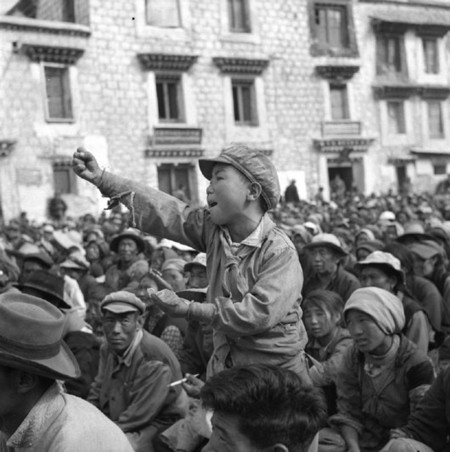
A National Day celebration on Oct. 1, 1966, in Lhasa marking the anniversary of the founding of the People’s Republic of China. Credit Tsering Dorje


Given the fate of most of the victims, the people I interviewed were mostly their relatives, or in some cases the disciples of victimized monks. They told me so many stories.

Such as?

Tibet Occupation – Unforgotten Memory – World History’s Worst Crime Against Humanity.
 
 
Sampho Tsewang Rinzin, from one of the most renowned noble families in Tibet. Sampho began working with the Party in the 1950s and benefited from that. But he was cruelly struggled against during the Cultural Revolution, as you can see in the photos. The Red Guards who were beating him made him wear the uniform of a Senior Minister in the Tibetan Government, which as much as it made him look splendid, brought him so much humiliation and stripped him of all dignity, so that in the end he was sobbing in front of everyone. He died soon after this.
Then there was the “female living Buddha” – an erroneous term; we call them rinpoche – Samding Dorje Phagmo Dechen Chodron. Historically there have been very few female living Buddhas in Tibet. She was the most famous. In 1959 she followed the Dalai Lama and escaped to India. But she was persuaded by party cadres to return to Tibet and was held up as a patriot who had “resolved to shun the darkness and embrace the light.” She even met with Mao. After the Cultural Revolution started she was labeled a “monster and demon” and humiliated at struggle sessions.


The Female Living Buddha and her parents were
Tibet Occupation – Unforgotten Memory – World History’s Worst Crime Against Humanity.


Ngawang Gelek, a member of the Little Red Guards, which replaced the Young Pioneers children’s organization during the Cultural Revolution, at a rally in Lhasa. He later became a militia commander and eventually a devout Buddhist. Credit Tsering Dorje.
 
In the photo where she is shown being beaten, she was only 24. She was weak then, because she had recently given birth to her third child. Her husband was the son of the great Lhasa nobleman Kashopa. The couple eventually divorced. It was her ex-husband who told me about her experiences as well as those of her parents after I showed him the photos.


Today, Dorje Phagmo is vice chairwoman of the Tibetan Autonomous Region and a member of the Chinese People’s Political Consultative Conference Standing Committee. She often appears on television attending various conferences.

Did you interview the Red Guards in the photos?

In one of my father’s photos there is a female activist, a quite vicious one during the Cultural Revolution. She once led a team to ransack a house where she not only seized the owner’s property but set fire to manuscripts bequeathed to the owner by the great Tibetan scholar Gendun Choephel. A Tibetan scholar called this a major crime against Tibetan history and culture. Later this woman became party secretary at the Wabaling neighborhood committee. When I found her there, she looked quite insignificant. As soon as I brought up the Cultural Revolution, her facial expression immediately changed. She refused to give an interview or let me take her photo.

There was also a former monk I interviewed who had smashed Buddhist stupas and burned scriptures during the Cultural Revolution. Afterward, he volunteered to be a janitor at the Jokhang Temple and worked there for 17 years. He told me: “If it weren’t for the Cultural Revolution, I think I would have lived my entire life as a good monk. I would have worn monk’s robes. The temples would still be there. Inside the temples I would have devotedly read scriptures. But the Cultural Revolution came. The robes could no longer be worn. Though I have never looked for a woman or abandoned monastic life, I am not fit to wear the robes again. This is the most painful thing in my life.”

Follow Luo Siling on Twitter @luosiling.

This article was adapted from a three-part interview in the Chinese-language site of The New York Times.

© 2016 The New York Times Company


Cultural Revolution and its effects: Tsaparang, LhakangMarpo / Lhasa ...
Tibet Occupation – Unforgotten Memory – World History’s Worst Crime Against Humanity.


on Tibet
TIBET OCCUPATION – UNFORGOTTEN MEMORY – WORLD HISTORY’S WORST CRIME AGAINST HUMANITY. AUTHOR OF FORBIDDEN MEMORY – CULTURAL REVOLUTION IN TIBET Ms. TSERING WOESER.


... titled 'Revisiting the cultural revolution in Tibet' held [Video
TIBET OCCUPATION – UNFORGOTTEN MEMORY – WORLD HISTORY’S WORST CRIME AGAINST HUMANITY


photos_uncategorized_2007_04_13_tibet_cultural_revolution_2-tm
TIBET OCCUPATION – UNFORGOTTEN MEMORY – WORLD HISTORY’S WORST CRIME AGAINST HUMANITY


The Female Living Buddha and her parents were “criticised and struggled against”.

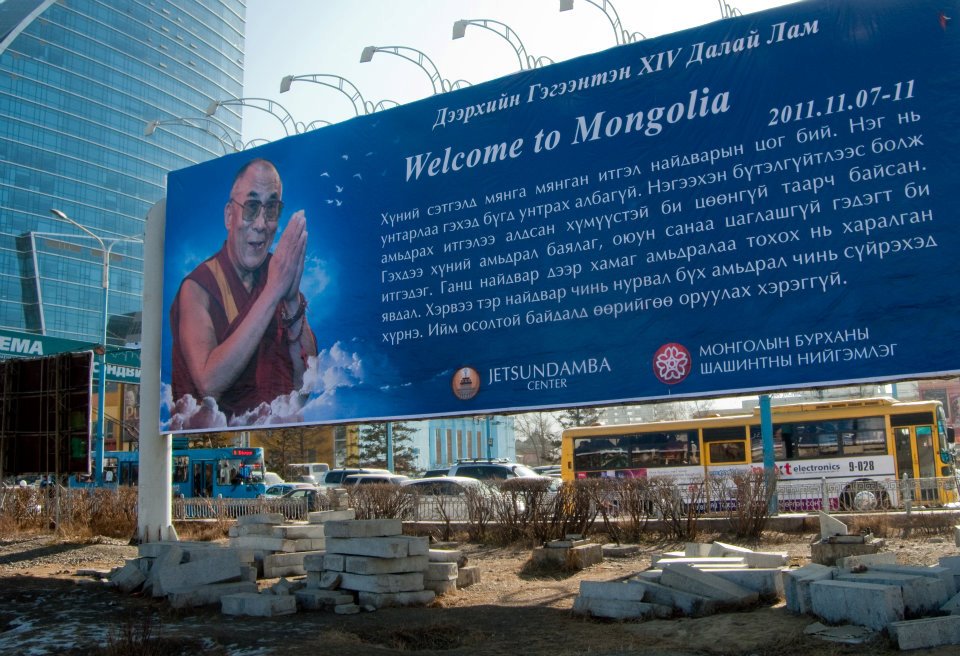
BEIJNG DOOMED – DALAI LAMA VISITS MONGOLIA

BEIJING DOOMED – DALAI LAMA VISITS MONGOLIA

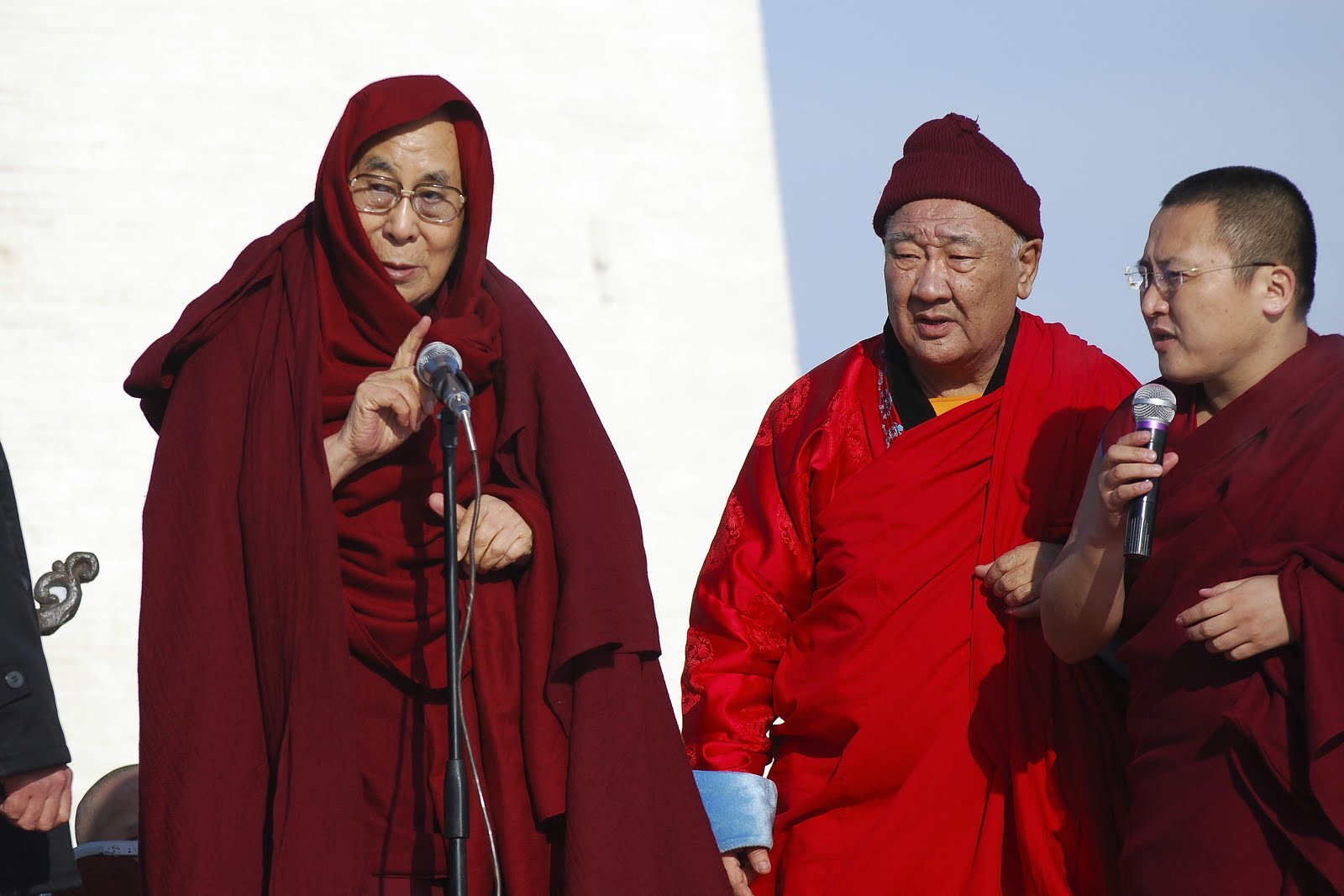
BEIJING DOOMED – 14th Dalai Lama Visits Mongolia.
BEIJING DOOMED – 14th DALAI LAMA VISITS MONGOLIA, 19th & 20th NOVEMBER, 2016.
Beijing Doomed – 14th Dalai Lama Visits Mongolia.
BEIJING DOOMED – OCEAN OF WISDOM TEACHES IN MONGOLIA
In 1574, Mongol Emperor Altan Khan offered Sonam Gyatso the title of ‘Dalai Lama’ which literally means Ocean of Wisdom. Thus Sonam Gyatso became the Third Dalai Lama as the title was applied posthumously to two Lamas whom he represented as reincarnation. In 1588, the Third Dalai Lama died while teaching in Mongolia. The Great Fifth Dalai Lama founded the Ganden Phodrang Government of Tibet in 1642. The successive Dalai Lamas have headed the Tibetan State for nearly four centuries.

His Holiness the 14th Dalai Lama’s visit to Mongolia is very significant as it attests historical connections between Tibet and Mongolia.
Rudranarasimham Rebbapragada
Ann Arbor, MI 48104-4162 USA

SPECIAL FRONTIER FORCE

[Central Tibetan Administration]<http://tibet.net/>

His Holiness the Dalai Lama Visits Gandan Tegchenling Monastery in Ulaanbaatar, Mongolia

November 20, 2016

By Staff Writer

Ulaanbaatar, Mongolia, 19 November 2016 – His Holiness the Dalai Lama left Japan for Mongolia late yesterday morning. As the plane descended through the clouds over Ulaanbaatar, a white blanket of snow covered the land as far as the eye could see.

[His Holiness the Dalai Lama arriving at the airport in Ulaanbaatar, Mongolia on November 18, 2016. Photo/Tenzin Taklha/OHHDL]<http://tibet.net/wp-content/uploads/2016/11/2016-11-19-Mongolia-N01-PB180009.jpg>

His Holiness was greeted at the door of the plane by Khambo Lama Choi Gyamtso with other senior Mongolian lamas, a representative of the Indian Embassy, and Representative Telo Tulku from Moscow.

A large number of monks awaited His Holiness in the arrival hall and he spent a few minutes talking to dignitaries who had come to receive him. He gave a brief interview to Mongolian National Television. Expressing happiness at being able to visit Mongolia once again, he said he was looking forward to giving Buddhist teachings, visiting Gandan Tegchenling Monastery and interacting with members of the younger generation over the next four days.

This morning, a short drive through Ulaanbaatar brought His Holiness to Gandan Tegchenling Monastery. After first paying his respects in the Vajradhara Temple, he took his seat in the Gandan Assembly Hall. Khambo Lama Choi Gyamtso offered the mandala and three representations of the body, speech and mind of enlightenment on behalf of the entire congregation. Following prayers and a tsok offering, His Holiness gave the oral transmission of his ‘Praise to the Seventeen Masters of Nalanda’.

Lunch, offered in His Holiness’s honour by Gandan Tegchenling Monastery, was served in a traditional Mongolian yurt.

[His Holiness the Dalai Lama speaking at Yiga Choeling Dratsang in Ulaanbaatar, Mongolia on November 19, 2016. Photo/Tenzin Taklha/OHHDL]<http://tibet.net/wp-content/uploads/2016/11/2016-11-19-Mongolia-N02-MG_5266.jpg>

In the afternoon, several thousand people braved extremely cold weather to greet His Holiness in front of the Avalokiteshvara Temple. He briefly told them too how happy he was to be in Mongolia again. He urged the crowd not only to perform rituals and prayers, but also to study what Buddhist teachings mean. He promised to explain how to do this during teachings he is scheduled to give tomorrow.

More than 1000 monks packed into the Yiga Choeling Dratsang to listen to His Holiness. He explained to them how he has been holding discussions with modern scientists for more than 30 years, focussing primarily on four fields-cosmology, neurobiology, physics, especially quantum physics, and psychology. Since both sides have learned a great deal from each other, their dialogue has been richly and mutually beneficial.

“I first started talking to scientists out of simple curiosity. But as our conversations developed, I realized that there were some things they knew about that we could usefully learn about in our monastic institutions. Consequently, we have introduced the study of some aspects of science into the curriculums of several of our major monastic universities in India.”

[Some of the over 1000 monks listening to His Holiness the Dalai Lama at Yiga Choeling Dratsang in Ulaanbaatar, Mongolia on November 19, 2016. Photo/Igor Yanchoglov]<http://tibet.net/wp-content/uploads/2016/11/2016-11-19-Mongolia-N05-IMG_2882.jpg>

His Holiness also stressed the importance of studying the classic texts composed by Nalanda masters.

“It is not enough just to have simple faith, as many people in the past have done. It is essential that our faith is based on knowledge and reason. This is why these days I advise Tibetans to be 21st century Buddhists, which means following Buddhist teachings on the basis of sound understanding. It’s also important to be able to sustain faith and religious tradition in the light of modern knowledge. So, I advise you Mongolians to be 21st century Buddhists too.”

His Holiness answered several questions from the audience before returning to the Guest House where he is staying. Tomorrow, he will teach Je Tsongkhapa’s ‘In Praise of Dependent Arising’ and ‘Three Principal Aspects of the Path’ and give a permission of Je Rinpoche in conjunction with the Deities of the Three Families.

... Yiga Choeling Dratsang in Ulannbaatar, Mongolia on November 18, 2016
Beijing Doomed – 14th Dalai Lama Visits Mongolia.
... Yiga Choeling Dratsang in Ulannbaatar, Mongolia on November 18, 2016
Beijing Doomed – 14th Dalai Lama Visits Mongolia.

Arrival in Mongolia and Visit to Gandan Tegchenling Monastery
Beijing Doomed – Dalai Lama Visits Mongolia.


temple of Gandantegchenlin monastery in Ulaanbaatar, Mongolia ...
Beijing Doomed – 14th Dalai Lama in Beijing.
the Dalai Lama at the Janraiseg temple of Gandantegchenlin monastery ...
Beijing Doomed – Dalai Lama Visits Mongolia.
The 10 Most Beautiful Stops on the Trans-Siberian Railway
ULAN-UDE, RUSSIA. IVOLGINSKY DATSAN MONASTERY. SINCE 1992, DALAI LAMA PAID FIVE VISITS TO THIS MONASTERY.On theculturetrip.com

2016  Central Tibetan Administration  


Inserted from <http://tibet.net/2016/11/his-holiness-the-dalai-lama-visits-gandan-tegchenling-monastery-in-ulaanbaatar-mongolia/>

WHAT IS MAN? – MAN IS LIVING THING

WHAT IS MAN? – MAN IS LIVING THING

What is Man? – Man is Living Thing. The Vitruvian Man( c. 1492 ) by Leonardo da Vinci. Man is composite of two Principles; 1. Form, and 2. Matter.

What is Man? The motivation for asking this question comes from a statement expressed in Sanskrit language, ‘Sarvesham Svastir Bhavatu’ which seeks the well-being of all human beings of all races, of all nations, of all cultures, and of all religions.

WHAT IS MAN?  MAN IS LIVING THING AND IS COMPOSITE OF TWO PRINCIPLES, 1. FORM, AND 2. MATTER.
WHAT IS MAN? MAN IS LIVING THING AND IS COMPOSITE OF TWO PRINCIPLES, 1. FORM, AND 2. MATTER.

The term Altruism describes unselfish concern for the welfare of others. It involves Human Behavior and Action that appear to favor another Individual’s chances of Survival and Reproduction. The thought expressed in Sanskrit Language reveals Human Nature.

Our efforts to support the well-being of Man would be affected by our understanding the ‘real’ or ‘true’ nature of Man. All religious and cultural traditions make assumptions about Human Nature. The basic assumption about Human Nature is that of finding it displayed in Feelings, Thoughts, Action, and Behavior.If Man is viewed as Multicellular organism, we need to discover Human nature of this Subject who lives because of functions performed by trillions of cells. Hence, we need to know if Human Nature is displayed in the functional characteristics that are observable in interactions of cells that constitute Human Organism.

The objective of this Blog Post is to explore Universal Principles that determine Human Nature. Unlike Human Cultures and Religions that define Human Nature reflected in Man’s Thoughts, Feelings, Moods, Action, and Behavior, I discover Human Nature by describing the characteristics of Functional Behavior exhibited by cells, the Building Blocks of Man.

THE STUDY OF MAN AS A LIVING THING :

What is Man? Man is Living Thing. Greek philosopher and the founder of Biology Aristotle(384 – 322 B.C.). Science investigates Being as Being and the Attributes which belong to Being in virtue of its own Nature.

Greek philosopher and the founder of Biology, Aristotle( 384 – 322 B.C. ) claims that Science investigates Being as Being and the Attributes which belong to Being in virtue of its Nature. For a Thing to come into Being, Aristotle describes Four Kinds of Causes; 1. Efficient Cause, 2. Formal Cause, 3. Material Cause, and 4. Final Cause, the end or Purpose for which a Thing exists.

Aristotle describes Living Things  are composite of two Principles; 1. Form, and 2. Matter. Matter and Form are the Material and the Formal Cause respectively of what comes to be known as a Thing. Matter represents Potentiality of the Living Corporeal Substance and Form represents  Actuality of the Living Thing. The structure and the behavior of things contribute to their individual being and function. Aristotle did not regard the Body and Soul as two separate entities as the Soul is merely a set of defining features.

I would like to proceed with my presentation keeping the basic criteria that Aristotle would use to know Human Nature, 1. Form, 2.  Matter, 3. the Human Living Thing, its nature being function of its structure and its behavior. In case of Man, the Form undergoes changes during every stage of its existence such as infancy, boyhood, youth, adult, and old age. The Living Matter or Protoplasm continues to live without any apparent changes in its fundamental living properties. The biological functions or the Chemical Composition of Living Matter or Protoplasm does not evolve or change because of its survival value for the species. The living functions such as consciousness, responsiveness, recognition, communication through signalling, motion, and nutrition are innate properties of the living substance or protoplasm and are not acquired by a learning process. This innate ability of protoplasm to perform functions helps in development of instinctive behavior that is observed in the organism. It is not surprising to observe that certain important features of human nature are innate rather than learned from experience. There are several factors involved in development of human nature and in formation of individual character. We need to recognize the contrast between the innate and the learned, heredity and environment, nature and nurture or social upbringing. The biological properties such as Motion, and Nutrition, the biological characteristics such as consciousness or awareness of its own condition called existence in a given environment, and the biological nature such as responsiveness, communication, and recognition of other living cells present in its external environment could account for an instinctive behavior pattern observed in all living organisms. This instinctive behavior pattern accounts for the nature of biotic interactions among members of a given biotic community. To explain human nature, we need to study the character and behavior of man’s corporeal substance or protoplasm and view man as a terrestrial organism represented by a biotic community of trillions of individual living cells and as a natural host to trillions of microbes that inhabit man’s gastrointestinal tract. The terms such as spirit or soul must be used by stating its defining features and we need to understand the connection between the feature and the substance that contributes to that feature of soul or spirit that is seen as the vital, animating principle found in all living things.

THE MECHANIST CONCEPT OF LIFE :

What is Man? Man is Living Thing. There is fundamental distinction between the lifeless and the living, animate and inanimate, living and nonliving matter. The living system cannot maintain its living functions by exclusively using the elementary laws of Physics and Chemistry.

The Mechanist Concept of Life asserts that the phenomena of life are merely processes and transformations obeying elementary laws of Physics and Chemistry. The living system is ultimately reducible to its constituent molecules and atoms. The living cell is a thermodynamically unstable system. This means that without continuous input of energy, a living cell will degrade spontaneously into a nonliving collection of molecules. To maintain life an organism not only repairs or replaces( or both ) its structures by a constant supply of the materials of which it is composed but also keeps its life processes in operation by a steady supply of energy. This functional activity of a living cell is called metabolism. Living systems must be supplied energy for continual synthesis of new organic molecules and to replace, or to repair broken organic molecules. We need to explain this functional ability of a living system to acquire energy from its external environment. This ability is not operated by laws of Physics and Chemistry. For example, in Physics, the force by which every mass or particle of matter including photons attracts and attracted by every other mass or particle is called Gravitation which is the weakest of the four Fundamental Forces operating in nature. A Living System does not use the force of Gravitation to attract a substance to use it for its Metabolism. Physics explains the process of diffusion and operation of Osmosis in which a solvent passes through a semipermeable membrane such as the wall of a living cell, into solution of higher concentration, so as to equalize concentrations on both sides of the membrane( the osmotic pressure gradient ). Osmosis is a relevant biological mechanism but it does not fully account for the energy acquisition by a living cell.

HOW DOES PROTOPLASM ACQUIRE ENERGY?

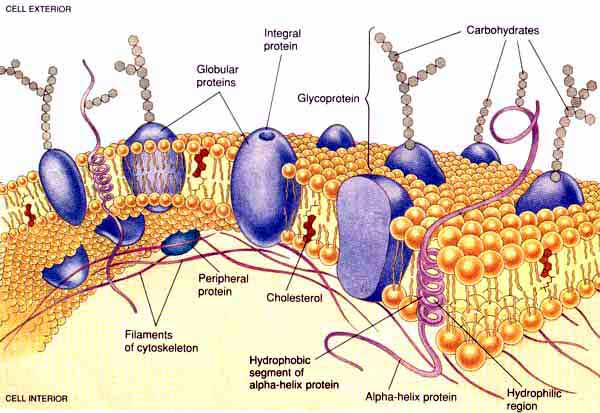
What is Man? Man is Living Thing. The Biological Membrane or the Plasma Membrane separates Protoplasm of the Cell from its environment. It allows a highly controlled exchange of matter across the barrier it poses.

The functional activity called Metabolism involves a Living System’s continual exchange of some of its materials with its surroundings, principally in the process of building up or destroying its protoplasm. The most striking characteristics of protoplasm are its vital properties of Motion, and Nutrition. Motion is  the property of Protoplasm with which it changes shape and position using “intrinsic power” and to exhibit amoeboid movement. Ciliary movement or vibration of hair-like processes from the surface of any cell may also be regarded as a variety of motion with which Protoplasm is endowed. Nutrition is the “power” which protoplasm has of attracting to itself the materials necessary for its growth and maintenance from surrounding matter. When any foreign particle comes in contact with the protoplasmic substance, it becomes incorporated in it, being enwrapped by one or more processes projected from the parent mass which encloses it. When thus taken up, the foreign particle may remain in substance of  Protoplasm for some time without change, or may be again extruded. The living substance called protoplasm has the “intrinsic power” of motion and uses its power to ingest and to expel foreign particles in the external environment with which it may come into contact. The Biological Membrane or the Plasma Membrane which separates protoplasm of the cell from its environment allows a highly controlled exchange of matter across the barrier it poses; some compounds are able to pass through the membrane easily, others are completely blocked. The screening effect on the substances that enter and leave the cell is perhaps the most important function of the membrane. The actions and behavior of protoplasmic substance are dependent upon its innate “power” and may not be attributable to elementary laws of Physics and Chemistry.

SPIRITUALITY AND HUMAN NATURE :

What is Man? Man is Living Thing. Red Blood Cells provide a very good example of the adaptive subordination of cells to meet requirements of the Whole Organism. The specialized functions of tissues and organs of Human Body are possible because of such functional subordination.

The structural differentiation and the functional organization of various organ systems makes man a very complex living organism. This kind of specialized functions of tissues and organs is possible because of adaptive subordination of the cells to the requirements of the Whole Organism. If altruism describes any behavior that appears to favor another individuals’ chances of survival, we can easily recognize this characteristic in the functions performed by the Red Blood Cells. Each Red Blood Cell lives for a very limited life span of its own and during its short period of existence it serves the purpose of the Whole Human Organism with a sense of devotion, with the spirit of cooperation, to provide assistance to all other cells, tissues, and organs of the body in a selfless manner.

I define the term ‘Spiritual’ as the NATURE of a relationship, a partnership, an association, or bonding between two individual living entities based upon characteristics such as compassion, sympathy, understanding, cooperation, mutual assistance, mutual tolerance, voluntary subservience to provide some benefit to the member participating in interactions. Spirituality is Innate and is not Acquired by Learning Experience. The very existence of Man, performing characteristic living functions, depends upon Living Matter, Corporeal Substance called Protoplasm which has Intrinsic or Innate “Power” to acquire Matter and Energy from its external environment.

Man’s Form becomes the actuality that it represents because of its Spiritual association with Protoplasm or Living Matter. Man lives as a Spiritual Being because of the Spiritual Nature of his Corporeal Substance.

Rudranarasimham Rebbapragada

BHAVANAJAGAT.ORG


WHAT IS MAN? – PLATO’S THEORY OF HUMAN FORMS

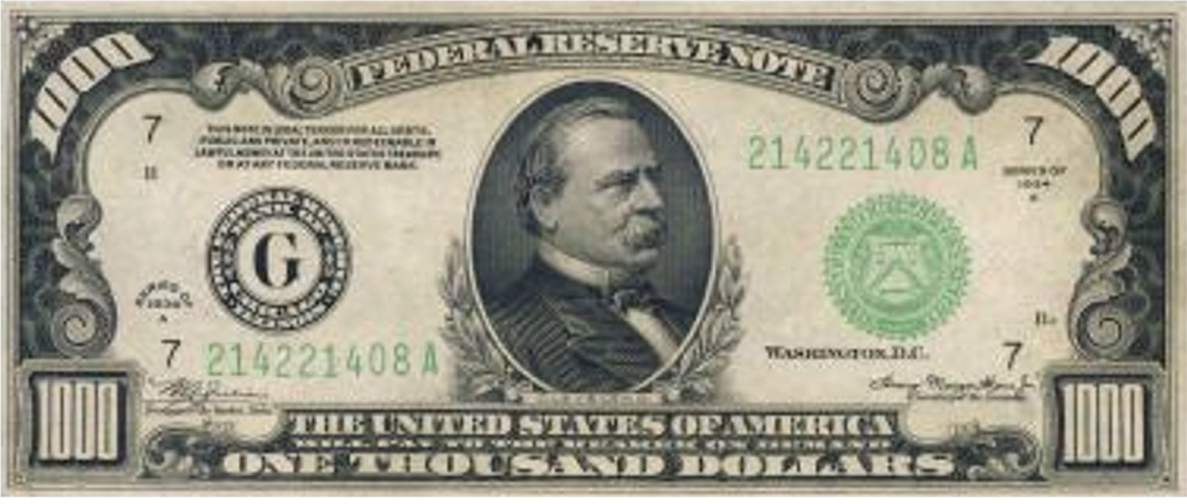
The Material Basis of Spirituality. What is Matter? and What is Spirit? If materialism is about the influence of money and material wealth, I would like to use the Power/Force/Energy called Money to talk about Life and Death. The Law of Conservation is applicable to both the living, and the non-living matter. If any person can refute my claim using valid, scientific information, I would give the person a US $1,000 bill as a reward.

What it is to be a Substance? and What it is to Exist? We need to establish knowledge about the man on a firm basis and the information it provides must be tested for its accuracy and consistency with an external reality. We have to make the fundamental distinction between the living and the non-living matter. The scientific advances of the 19th and 20th centuries reinforced the materialistic position concerning the basic similarity of organic living and inorganic physical matter. The man is viewed as a product of natural evolution and is thought to be subject to the same laws of Physics and Chemistry or mechanistic principles.

We need a methodology to study philosophy and to understand philosophical statements. Logical Positivism, also known as Scientific Empiricism aims to clarify concepts in both everyday and scientific language. It describes analysis of language as the function of philosophy. This analysis of language and of concepts is important to understand questions of belief and ideology which affect what we think we ought to do individually and socially. I would use this method of ‘Applied Philosophy’ to analyze the philosophical doctrine of ‘Materialism’ and to study the views of Greek philosophers and their efforts to interpret human nature and human existence.

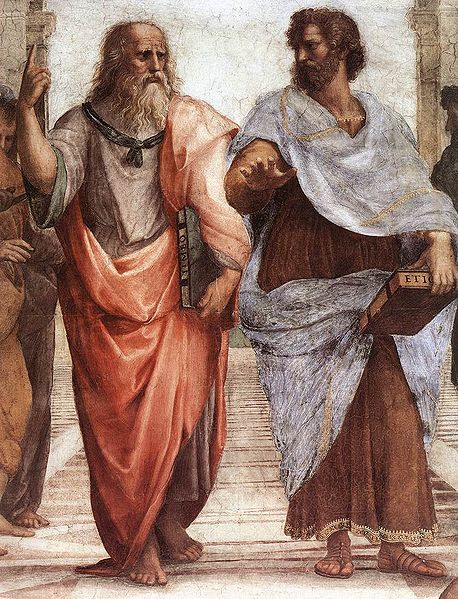
What is Man? Plato’s Theory of Human Forms. Greek Philosophers Plato and Aristotle – To understand Man and Human Nature, we must know the Human Form, its actions and behavior.

What is Man? The motivation to ask this question comes from a statement expressed in the Sanskrit language, ‘Sarvesham Svastir Bhavatu’, which seeks the well-being of all humans, of all races, of all cultures, of all religions, and of all nations.

WHAT IS MAN? PLATO'S THEORY OF HUMAN FORMS. DISCOVERY OF PEACE, HARMONY, AND TRANQUILITY AS LIVING EXPERIENCE.
WHAT IS MAN? PLATO’S THEORY OF HUMAN FORMS. THE DISCOVERY OF PEACE, HARMONY, AND TRANQUILITY AS LIVING EXPERIENCE.

Our efforts to support the well-being of Man would be affected by our understanding the ‘real’ or ‘true’ nature of Man. Aristotle describes corporeal substances are composite of two principles, 1. Form and 2. Matter. It is important to seek a proper understanding of Human Form and to know the truth about Human Nature by describing the Form. Being born relates the man to the Subjective Reality of his physical existence and Human Nature is related to the fact of man’s existence in the physical world and universe. If the Objective Reality of the man is non-material or immaterial, we still need to know as to what exists in the world, and as to how it exists.

PLATO’S THEORY OF FORMS-THE DUALISM OF BODY AND SOUL:

Greek philosopher Plato (427 B.C. to 347 B.C.) describes Human Nature by his Theory of Forms. He describes four aspects or dimensions of Man; 1. The Logical Form, 2. The Epistemological Form, 3. The Moral Form, and 4. The Metaphysical Form.

I.The Logical Form: It describes the Physical Being, the Physical Form, and its Identity. Each human being has characteristic physical features using which he can be identified as a member of the genus Homo and he has very specific features that establish his identity that is shared by all the members of a species known as Homo sapiens, sapiens. Members of this species could be further identified as Specific Individuals using the present Identification Technology.

This Specific Individual will not exist with the same identifying features during the entire duration of his physical existence. The Logical Form of Man is impermanent and is subject to constant change and eventual death. However, the existence of this Physical Form is important to support the existence of Man and to know his Human Nature. Existence precedes Human Nature or Essence. The Essence (or, Who You Are) is defined and preceded by Existence (or, What You Do).

The man belongs to a Social Group, and always exists as an Individual with Individuality while his Physical Form changes and passes through various stages such as infancy, boyhood, teenage, adult and old age. The Logical Form is subject to change, decay, and death. Hence, the reality of this Form is often doubted. Plato has not known the man as a multicellular organism and his description of the Logical Form is not based upon the study of Human Anatomy and Human Physiology. 

II.The Epistemological Form: The term Epistemology deals with the Theory of Knowledge. It describes the possible kinds of Knowledge and the degrees of certainty for each kind of Knowledge. Plato describes the kind of Knowledge that Man can acquire through Education, a process of Learning from Sensory Experience, and teaching imparted by others. Plato expects to obtain full Knowledge of Human Forms through proper Education. In Plato’s view, such Self-Knowledge is important to know the Metaphysical Form of Man. Self-Knowledge leads to an understanding of the man’s true or real nature. Perception of impermanent, material, perishable Human Body is described by Plato as opinion or belief and he considers that such perception is not true Knowledge of Human Form.

Plato has not given attention to Knowledge that is Innate or that is not Acquired by the Learning Process. To perform Living Functions in support of existence, the man uses biological information that is Inherited and not Knowledge that has to be Acquired through Learning.

III.The Moral Form: It describes qualities such as Courage and Justice, the observable aspects of Human Nature described from Human Action and Human Behavior.

IV.The Metaphysical Form: Plato claims that the Metaphysical Form is not perceivable by any of the senses. The Metaphysical Form is the Real Form of Man as compared to the Logical Form which is considered to be unreal. The Metaphysical Form is not present in Space or Time, as it is beyond the World of changeable and perishable things. It belongs to the Realm of Unchanging, Eternal Forms. This Form being True can be fully known through Intuitive Knowledge.

Plato’s Theory of Body-Soul Dualism:

Plato divides Man into two categories; 1. Body – a material entity, and 2. Mind or Soul – a non-material or immaterial entity which can exist apart from the Body. Plato maintains that the Mind or Soul is indestructible, it existed eternally before Birth and will exist eternally after Death.

Plato further describes three parts of Soul as 1. Appetite – the seat of desires and passion such as hunger, thirst, and sexual desire, 2. Reason – the seat of discernment that chooses right from wrong and makes distinctions between good and evil, and 3. Spirit – the seat of self-assertion, self-interest, anger, indignation, and self-pride. Plato considers that the well-being of Man depends upon harmonious interactions of three aspects of the Soul. Plato thinks that such harmonious interactions would only be possible when Reason controls both Spirit and Appetite. To strike this balance and to maintain harmony, Man has to obtain Knowledge of Eternal, Unchanging Metaphysical Form.

Plato thinks that Justice is revealed as a Principle of each thing performing the function most appropriate to its nature, a Principle of the proper adjudication of Activity and Being. The Principle of Justice is revealed or discovered in the Individual Human Soul when each part of the Soul performs its proper and appropriate function. Plato believes that Human Soul rules the Human Body. The Rule of Reason is required to combine the virtue of Temperance with Self-Mastery. Harmony results when all elements agree as to which should do what.

The Six Dimensions of Man:

I describe Six Forms of the man and each Form can be identified by its own Action/Behavior; 1. The Physical Form, described by Human Anatomy and Human Physiology, 2. The Mental Form, described by Sciences such as Psychology and Psychiatry, the Form associated with Thinking, Imagination, Intellect, Memory, Moods, Feelings, and Self-Pride, 3. The Social Form described by Social Sciences, the social aspects of the man, his activities, and the structure and organization of all human institutions. I view the man as a multicellular organism that naturally hosts trillions of microbes and in fact exists as an interacting biological community or a social group, 4. The Moral Form described by Man’s power of Discernment or Conscience to make moral and ethical choices, 5. The Spiritual Form, the aspect that formulates harmonious interactions between the cells, tissues, organs, and the organ systems of Human Body whose individual functions generate the Singular Effect known as Man, and 6. The Creative Form described by the man’s Individuality that compels the man to always exist as Specific Individual, Original, Unique, Distinctive, and One of his own Kind of Living Thing. The man’s existence would be at risk if any of these Six Dimensions is adversely impacted. Unless we seek clear, visual images of Human Form in all its Dimensions, we will fail to understand the man and his Purpose in Life.

Simon Cyrene

BHAVANAJAGAT.ORG

VITRUVIAN MAN, BY LEONARDO DA VINCI(c. 1492). This picture is used as the cover page for Best & Taylor’s Text Book of Human Physiology. Medical Science and Medical Education is knowledge built upon the foundations of understanding and knowing Human Anatomy ( Structure ) and Human Physiology ( Function).
The Material Basis of Spirituality. What is Matter? and What is Spirit? If materialism is about the influence of money and material wealth, I would like to use the Power/Force/Energy called Money to talk about Life and Death. The Law of Conservation is applicable to both living, and non-living matter. If any person can refute my claim using valid, scientific information, I would give the person a US $1,000 bill as a reward

WHAT IS MAN? WHO IS HARAPPAN MAN?

WHAT IS MAN? WHO IS HARAPPAN MAN?

Science Unmasks New Knowledge about the Indus Civilization : ALL ...
On pakistaniat.com

Red was one of the Indus people’s favorite colors.
On amazingancient.com

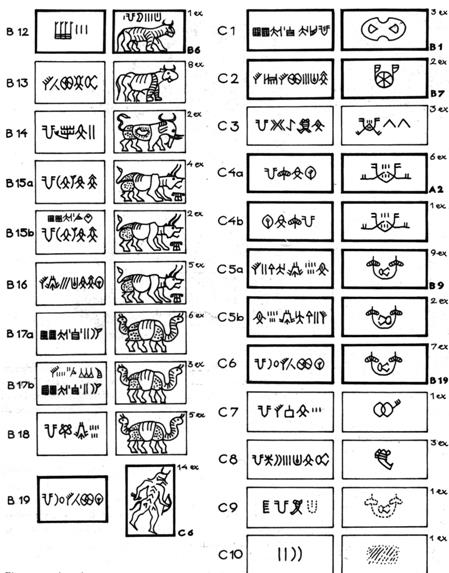
I am pleased to share an article published by Srinivasan Kalyanraman that deals with the problem of deciphering Indus Valley Harappa – Mohenjo Daro Script.

Human Language is the peculiar possession of Anatomically Modern Man described as Homo sapiens sapiens.

Who is Harappan Man? What is his Anatomical Identity???

Rudranarasimham Rebbapragada
Ann Arbor, MI 48104-4162 USA
BHAVANAJAGAT.ORG

.in/2016/11/on-failed-attempts -at-decipherment-of.html

NOV
13

On the failed attempts at decipherment of Harappa (Indus) Script and outline of a breakthrough Indian Lexicon to read rebus Meluhha hypertexts

Mirror: http://tinyurl.com/zht j4qa

VEDIC RIVER SARASVATI AND HINDU CIVILIZATION: S. Kalyanaraman (Ed.)

The re-discovery of Vedic River Sarasvati is a major research effort that redefines the ancient history of Bharata. See:Kalyanaraman, S., 2008, Vedic River Sarasvati and Hindu Civilization, New Delhi, Aryan Books International,
ISBN 13: 9788173053658


http://eshakha.pbworks.com/f/V edic_River_Sarasvati_and_Hindu _Civilization.pdf


This book is a compilation of papers presented at a Conference on “Vedic River Sarasvati and Hindu Civilization” held at India International Centre, New Delhi from Oct. 24 to 26, 2008. Participants included scholars from many disciplines including ancient Indian history, archaeology, space imaging, hydrology, meteorology, glaciology, seismology, ice-age geodynamics, sea-level changes, metallurgy and other earth- and life-sciences. The Conference explores the validation of a consensus that the ancient civilization that emerged and prospered on the banks of Vedic River Sarasvati is the precursor to the civilization that is known and exists today as Hindu civilization, establishing a continuum of human society and achievement. As a result of archaeological explorations since 1947, it became clear that over 80% of about 2600 archaeological sites were not on the banks of river Sindhu but on the banks of Vedic River Sarasvati mentioned in Rigveda in 72 rica-s. Underscoring the indigenous evolution of Hindu civilization on this river basin, theories propounded earlier about Aryan invasions/migrations stand negated. Projects are ongoing to revive the river which provides an impetus for establishing a National Water Grid.


This left the unresolved issues of the identity of the Sarasvati people, the language of the civilization, the purport and content of the messages left behind by the people on Harappa (Indus) Script inscriptions. A resolution of these issues is a critical area of research in Proto-Historic studies of the civilization.

Hence, the effort which had commenced in 1978 continued and was brought to fruition by the publication of 16 books until 2016, conclusively establishing the nature, functions and purport of the writing system, decipherment of over 7000 inscriptions mostly on seals and tablets (including 218 copper tablets) and data mining evidencing the contributions made by Bharatam Janam to metallurgical advances of the Tin-Bronze Revolution along the Maritime Tin Route from Hanoi to Haifa, a route which preceded the Silk Road by 2 millennia.

From about 2000 inscriptions recorded in Mahadevan concordance (Mahadevan, Iravatham, 1977, The Indus Script: Texts, concordance and tables, Delhi, Archaeological Survey of India), the corpora have grown to over 7000 inscriptions thanks to the further excavations at Harappa (by Harvard project group called HARP begun in 1986), and reports of explorations/excavations in Kalibangan, Dholavira,Banawali, Bhirrana, Farmana, Binjor, Gola Dhoro (Bagasra), Khirsara, Rakhigarhi, Balakot, Ropar, Ganweriwala. Persian Gulf sites such as Failaka, Bahrain, Salut, have yielded so-called Dilmun seals with Harappa (Indus) Script hieroglyphs. Many cylinder seals and artifacts from Susa, Mari and other sites of Ancient Near East also have yielded Harappa (Indus) Script hieroglyphs as signifiers of metalwork transactions. Three pure tin ingots were found in a shipwreck in Haifa. The ingots had Harappa (Indus) Script signifiers. ranku ‘antelope’ ranku ‘liquid measure’ rebus: ranku ‘tin’ dATu ‘cross’ rebus: dhAtu ‘mineral ore’ mũh ‘face’ Rebus: mũhe ‘ingot’. muhã ‘qua ntity of metal produced at one time in a native smelting furnace.’ This lexeme also explains why the expression mleccha-mukha means ‘copper’ (Samskrtam) corcordant with milakkhu ‘copper’ (Pali). Thus, the corpora have now grown to include over 7000 inscriptions, an adequate database to validate any cryptographic investigation.

Linguistic studies have also advanced beyond identification of Indo-Aryan, Dravidian and Munda (Austro-Asiatic) families in Bharat into the formulation of a Bharata (Indian) sprachbund, which is a linguistic area where language families interacted and absorbed language features from one another. FBJ Kuiper prepared a lexis of Munda words in Vedic and Samskrtam. Emeneau, Colin Masica and Kuiper postulated the Indian sprachbund recognizing the existence of vocables which cannot be explained as mere borrowings but possibly as substratum words of the civilization area. The compilation of Indian Lexicon (comparative dictionary of 25+ ancient languages including the three language families of Vedic, Indo-Aryan, Munda and Dravidian) provided over 8000 semantic clusters evidencing the Indian sprachbund.

The idea of a Linguistic Area is linked with the term sprachbund which was introduced in April 1928 in the 1st Intl. Congress of Linguists by Nikolai Trubetzkoy. He made a distinction between Sprachfamilien and Sprachbunde: the distinction in classifying languages was suggested by Trubetzkoy in order to avoid ‘missverstandnisse und fehler’ (trans. misunderstandings and errors).


The metaphor of a ‘family’ gets expanded to an area of intense cultural contacts among people resulting in the formation of a sprachbund.

What is a sprachbund?

“First, the languages of a Sprachbund show certain similarities in the field of phonetics, morphology, syntax and lexis. Secondly, the languages of a Sprachbund belong to different families. They are neighbouring geographically, as Trubetzkoy has show, using the example of the Balkansprachbund…In contrast to the genetically defined family of languages (genus proximum), the Sprachbund comprises a typologically defined group of geographically neighbouring language whose common features are derived from mutual influences (differentia specifica).” (Schaller, Helmut W, Roman Jakobson’s conception of ‘sprachbund’ in: Cahiers de l’ILSL, No. 9, 1997, p.200, 202). R. Jakobson published in 1931 three articles about the question of Sprachbund. He also noted that the phonological system of Serbo-Croatian is a remnant of proto-slavic languag features.

In Ancient India, Dravidian, Munda and Indo-Aryan languages shared a number of features that were not inherited from a common source, but were areal features, the result of diffusion during sustained contact.(Emeneau, Murray (1956), “India as a Linguistic Area”, Language, 32 (1): 3–16).

The delineation of Indian sprachbund of the Bronze Age is based on the metallurgical vocables and expressions so diffused during sustained contacts along the Maritime Tin Route.


The database lexis of metalwork words and expressions provided by the Indian Lexicon could be matched with Harappa (Indus) Script hieroglyphs and read rebus, following the method used to read Egyptian hieroglyphs.
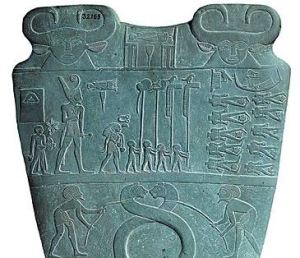
narmer1.JPGCartouches on the palette show name: Narmer

ScreenShot612.jpg
Asko Parpola has demonstrated the rebus method of reading the ancient Harappa (Indus) Script by citing the example of Egyptian hieroglyphs. The Narmer Palette provided a clear rebus rendering of the Emperor’s name by hieroglyphs n’r ‘cuttle fish’ + m’r ‘awl, chisel’ as signifiers of the composition: Nar-mer to pronounce the name of the Emperor. (http://www.thehindu.com/multi media/archive/00133/_A_Dravidi an_Soluti_133901a.pdf)


A good compendium of attempts at decipherment of Harappa (Indus) Script is in the first volume of Gregory Possehl’s magnum opus in 3 volumes. The first volume (1996) is titled Indus Age: The writing system:

  • Possehl, Gregory L., 1996. Indus Age: the writing system. Philadelphia: University of Pennsylvania Press; New Delhi: Oxford IBH Publishing Co. Pvt. Ltd. 29 cm, xiv, 244 pp., 16 pl. Hb ISBN 0-8122-3345-X & 81-204-1083-1.
  • Possehl, Gregory L., 1999. Indus age: the beginnings. Philadelphia: University of Pennsylvania Press; New Delhi: Oxford & IBH Publishing Co. Pvt. Ltd. 29 cm, xxxvi, 1063 pp., 580 b/w ill. Hb ISBN 0-8122-3417-0. Reviewed: Asko Parpola, The Times Higher Education Supplement, 3 Dec 1999.
  • Possehl, Gregory L., 2002. The Indus civilization: a contemporary perspective. Walnut Creek, CA: AltaMira Press. 29 cm, xi, 276 pp., ill., maps. Pb ISBN 0-7591-0172-8. Hb ISBN 0-7591-0171-X.


Gregory Possehl’s is the only work which includes a Gazetteer of Sites of the civilization. This Gazetteer is a revelation: about 2000 sites (out of 2600) are NOT sited in Indus river valley but in Sarasvati River Basin.


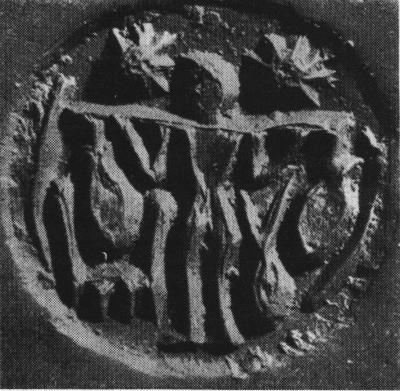
Gregory Possehl provides a succinct evaluation of the failed attempts at decipherment and recalls the brilliant insights provided by Cyril Gadd who identified Indus Script seals in Ancient Near East and also explained the hieroglyphic nature of a ‘sign’ of the script citing the example of a seal:
Image result for water-carrier seal gadd

Seal impression. Ur. C.J. Gadd, Seals of ancient Indian style found at Ur, Proceedings of the British Academy, XVIII, 1932, pp. 11-12, Plate II, No. 12; Description: water carrier with a skin (or pot?) hung on each end of the yoke across his shoulders and another one below the crook of his left arm; the vessel on the right end of his yoke is over a receptacle for the water; a star on either side of the head (denoting supernatural?). The whole object is enclosed by ‘parenthesis’ marks. The parenthesis is perhaps a way of splitting of the ellipse (Hunter, G.R., JRAS, 1932, 476). An unmistakable example of an ‘hieroglyphic’ seal.

John Marshall also commented on the writing system in his first report.

“The Indus inscriptions resemble the Egyptian hieroglyphs far more than they do the Sumerian linear and cuneiform system. And secondly, the presence of detached accents in the Indus scriptis a feature which distinguishes it from any of these systems.” (Mohenjo-daro and the Indus Civilization, Being an official account of archaeological excavations at Mohenjo-daro carried out by the Government of India between the years 1922 and 1927, in 3 volumes, London, Arthur Probstain, 1931, Vol.1, p.424).

The major reason for the failed decipherments of the past is that the insights of Cyril Gadd and John Marshall were not pursued; the insight was hieroglyphic nature of the Harappa (Indus) Script.

By ignoring the insight, 150+ decipherments (Kalyanaraman, S., 1988, Indus Script, a bibliography, Manila, Philippines) attempted to assign ‘syllabic’ values to the ‘signs’ of the script and almost always ignored the imperative of deciphering the pictorial motifs or field symbols which occupied space on majority of seals and tablets and which constituted hieroglyphic components of the writing system. Some decipherers just wished away the pictorials as ‘totem symbols’ and started with the assumption that the ‘signs’ constituted texts which could represent ‘names or titles’.

It is well-known that the seals and tablets were used in trade transactions. It is also well-known that many seals and tablets could be traced in Ancient Near East (opcit., Gadd, C., Seals of ancient Indian style found at Ur, in: Proceedings of the British Academy, XVIII, 1932).

This meant that the messages of Harappa (Indus) Script had to be explained in the context of trade with neighbouring civilizations. If the messages related to trad, did the seals/tablets record trade transactions? This question was NOT posed and answered in the past decipherments.

The decipherments also failed to note an important feature: that many inscriptions were recorded on metal — on copper plates and on weapons/implements themselves. BM Pande, Inscribed copper tablets from Mohenjo-daro: a preliminary analysis, in: DP Agrawal & A Ghosh eds., Radiocarbon and Indian Archaeology, Tata Institute of Fundamental Research, Bombay, 1973, pp. 305-322).

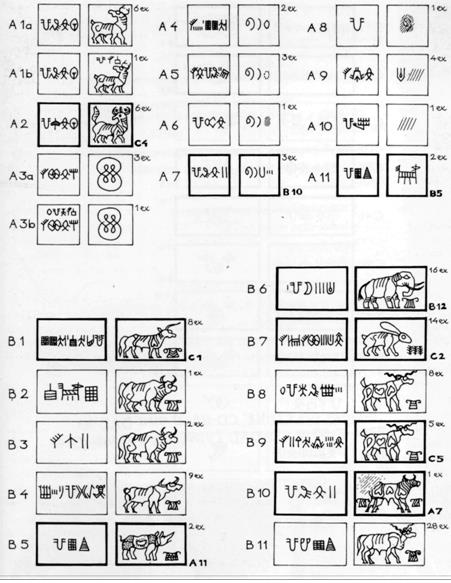
Copper plates with inscriptions
ScreenShot271.jpg
ScreenShot272.jpg

Source: Copper plates from Mohenjo-daro: an analysis of 46 tablet groups of 218 copper tablet inscriptions (After Parpola, 1994, fig 7.14)

A list of Inscribed metal tools

Broken axe, Chanhu-daro (C-40) inscribed on both sides.
Ingot. Chanhu-daro (C-39)
Chisel. Kalibangan (K-121). Wt. 210 g.
Parallels broken chisel (tang) Mohenjo-daro (DK-7856). Wt. 165/343 g/
Axe. Kaibangan (K-122). Wt. 476 g.
Parallels axe Mohenjo-daro (DK-7835). Wt. 1910.030 g.
Knife. DK-7800
Spearhead DK-7857
Axe. DK-7855. Wt. 262 g.


(Note: Of the five metal objects from Mohenjo-daro, four were found ‘at the low level 24.4 ft.[ and one (copper knife) was found 18.4 ft. below datum. (Mackay 1938: 454; Vol. II. Pl. CXXVI #2.3 and 5, Pl. CXXVII #1, Pl. CXXXI; Vol. II. Pl. CXXXIII#1).Mackay 1938: Vol. 1, p. 348, Vol. 2, Pl. XC,1; XCVI, 520.


see: Pettersson, JS, 1999, Indian Journal of Historyh of Science, 34(2): 89-108 http://www.new.dli.erne t.in/rawdataupload/upload/insa /INSA_2/20005a61_89.pdf

Chanhu-daro Pl. LXXIV and Mohenjo-daro: copper and bronze tools and utensils (an inscriptions line mirrored on a zebu seal)

Indus writing on utensils and metal tools page:6

Chanhu-daro, Pl. LXXIV & Mohenjo-daro: copper and bronze tools and utensils (an inscription line mirrored on a zebu seal)

This typological analysis of inscriptions on copper plates and on metal implements should have been pursued by decipherers to unravel the messages conveyed.

These are explanations for the failure of the decipherment efforts of the past.

The failure to decipher the copper plate inscriptions ia a major failure given the fact that many early epigraphs of the historical periods of Bharat were on copper plates. The possibility of this tradition of copper plate inscriptions is also evidenced on a Pre-Mauryan copper plate called Sohgaura plate read in Brahmi by John Fleet in 1894. (Fleet, JRAS, 63, 1894 proceedings, 86, plate, IA 25. 262; cf. Sohgaura copper plate/B.M. Barua. The Indian Historical Quarterly, ed. Narendra Nath Law. Reprint. 41).

W.Theobald had pointed out in 1890 and 1901, and described 342 ‘symbols’ on early punch-marked coins. (W. Theobald, 1890, Notes on some of the symbols found on the punch-marked coins of Hindustan, and on their relationship to the archaic symbolism of other races and distant lands, Journal of the Asiatic Society of Bengal, Bombay Branch (JASB), Part 1. History , Literature etc., Nos. III & IV, 1890, pp. 181 to 184) W. Theobald, Symbols on punch-marked coins of Hindustan (1890,1901). This lead was pursued by CL Fabri indicating the parallels with Harappa (Indus) Script hieroglyphs. (Fabri, CL, The punch-marked coins: a survival of the Indus Civilization, 1935, Journal of the Royal Asiatic Society of Great Britain and Ireland, Cambridge University Press. pp.307-318.)

These leads of Sohgaura copper plate with a top line using Harappa (Indus) Script hieroglyphs and tens of thousands of early coins of Bharat using such hieroglyphs should have been pursued and evaluated in the decipherments The failure to do so explains the failure of the decipherments.

Many pictorial motifs are not merely pictographs but also narratives. For e.g., tablet M478 narrates 1. jungle clearing which should have led to the recognition of a rebus reading of erga ‘ jungle clearing’ with rebus: erako ‘molten cast copper’; 2. a person on a tree branch (spy): heraka ‘spy’ rebus: eraka ‘copper’; 3. tiger looks back; Hieroglyph: Looking back: krammara ‘look back’ (Telugu) kamar ‘smith, artisan’ (Santali); 4. Hieroglyph: tree: kuṭhi ‘tree’ rebus: kuṭhi ‘furnace’ (Santal i).
Mohejodaro, tablet in bas relief (M-478)
m0478B tablet erga = act of clearing jungle (Kui) [Note image showing two men carrying uprooted trees].


eraka, hero = a messenger; a spy (Gujarati) heraka = spy (Skt.); er to look at or for (Pkt.); er uk- to play ‘peeping tom’ (Ko.) Rebus: eraka, arka ‘copper’ (Ka.)

All the 500+ ‘signs’ of Harappa (Indus) Script are also hieroglyphs. Dennys Frenez and Massimo Vidale have demonstrated the orthography of the script as composed of hyper texts by combing hieroglyph elements.

Frenez Dennys, & Massimo Vidale, 2012, Harappan Chimaeras as ‘Symbolic Hypertexts’. Some Thoughts on Plato, Chimaera and the Indus Civilization

t/harappan-chimaeras-%E2%80%98 symbolic-hypertexts%E2%80%99-s ome-thoughts-plato-chimaera-an d-indus-civilization
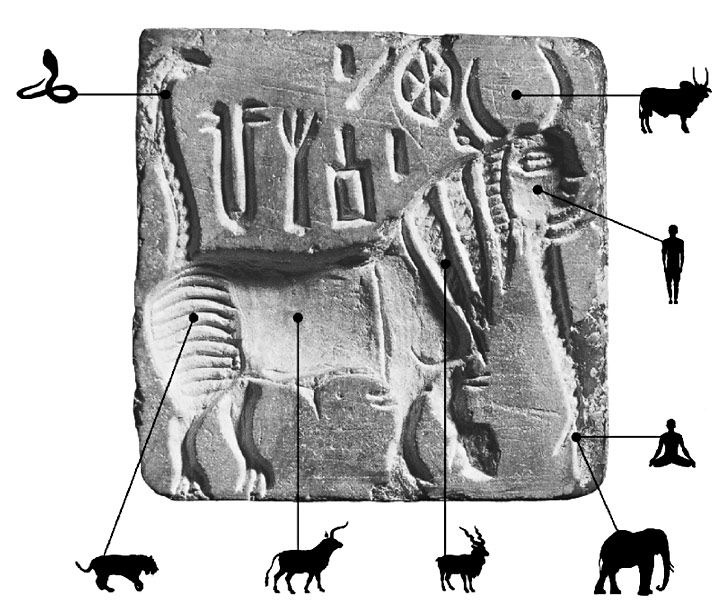
Image result for chimera indus

This demonstrates that each hieroglyph-multiplex is a composition of orthography signifying various creatures and phenomena as components of the hypertext. Reading each component and rebus rendering in Indian sprachbund lexis of metalwork words, results in the decipherment of all 7000+ inscriptions as metalwork catalogues.

The resultant decipherment of metalwork catalogues provides a database of the contributions made by Bharatam Janam, the artisans and artificers in particular to the Tin-Bronze Revolution of the Bronze Age.

This compound Bhāratam Janam is attested by Viśvāmitra in Rigveda:

viśvāmitrasya rakṣati brahmedam bhāratam janam Trans. This mantra of Visvamitra protects the Bharata people. (RV 3.53.1).
51C0TZrRq2L._SX348_BO1,204,203,200_.jpg

The language of Indian sprachbund which provided the metalwork lexis is called Meluhha (cognate Mleccha). The lexis is traceable as spoken forms of words recorded in Indian Lexicon.
d/0B4BAzCi4O_l4MnkyeUwtMFp4QWM /view?usp=drive_web

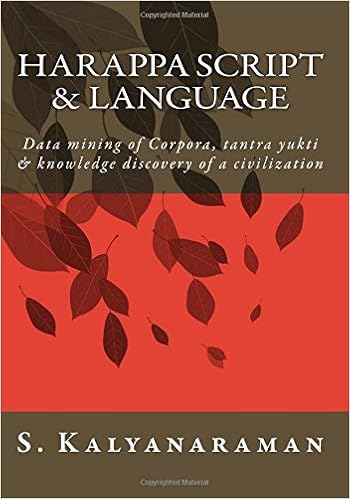
S. Kalyanaraman, 2016, Harappa Script & Language: Data mining of Corpora, tantra yukti & knowledge discovery of a civilization, Amazon

This is a treatise, a formal and systematic written discourse on knowledge discovery of a civilization in two domains of knowledge 1. Archaeo-metallurgical advances during Bronze Age Revolution; and 2. Invention of a writing system to document, in Meluhha (Harappa) language, technical details of these advances anchored on the imperative of supporting long-distance trade transactions by seafaring artisans and merchants. The objective of the treatise is to unravel the semantics of Dharma samjnA or Bharatiya hieroglyphs using a method of data mining. The method of data mining of Harappa Script Corpora of over 7000 inscriptions is based on the principles of tantra yukti.

S. Kalyanaraman

Sarasvati Research Center
November 13, 2016

S. Kalyanaraman

.

stime=1479039689
fpc.pl?ywarid=515FB27823A7407E&a=10001310322279&js=no&resp=img&cf12=CP__,_._,___

WHAT IS MAN?- SPIRITUALITY AND SELF-REALIZATION

WHAT IS MAN? – SPIRITUALITY AND SELF-REALIZATION:

What is Man? Spirituality and Self-Realization.The Vitruvian Man c. 1492. The painting by Leonardo da Vinci displays spirit of scientific inquiry. Self-Realization is defined as complete fulfillment of Self or full development of Self. Man does not acquire Spirituality through Learning and Practice.

What is Man? I want to respectfully begin this conversation by stating my motivation for asking the question.

WHAT IS MAN? SPIRITUAL BEING AND SELF-REALIZATION. SPIRITUALITY IS NOT LEARNED OR ACQUIRED EXPERIENCE.
WHAT IS MAN? SPIRITUALITY AND SELF-REALIZATION. SPIRITUALITY IS NOT LEARNED OR ACQUIRED EXPERIENCE.

The motivation to know Real Man comes from a statement expressed in Sanskrit language: “Sarvesham Swastir Bhavatu” that seeks the well-being of all humans, of all races, of all cultures, of all religions, and of all nations.

The meaning and purpose of human life are affected by whatever we think is the ‘real’, or ‘true’ nature of Man. But, more importantly, our efforts to support the well-being of man would require correct understanding and knowledge of ‘real’, or ‘true’ Man.
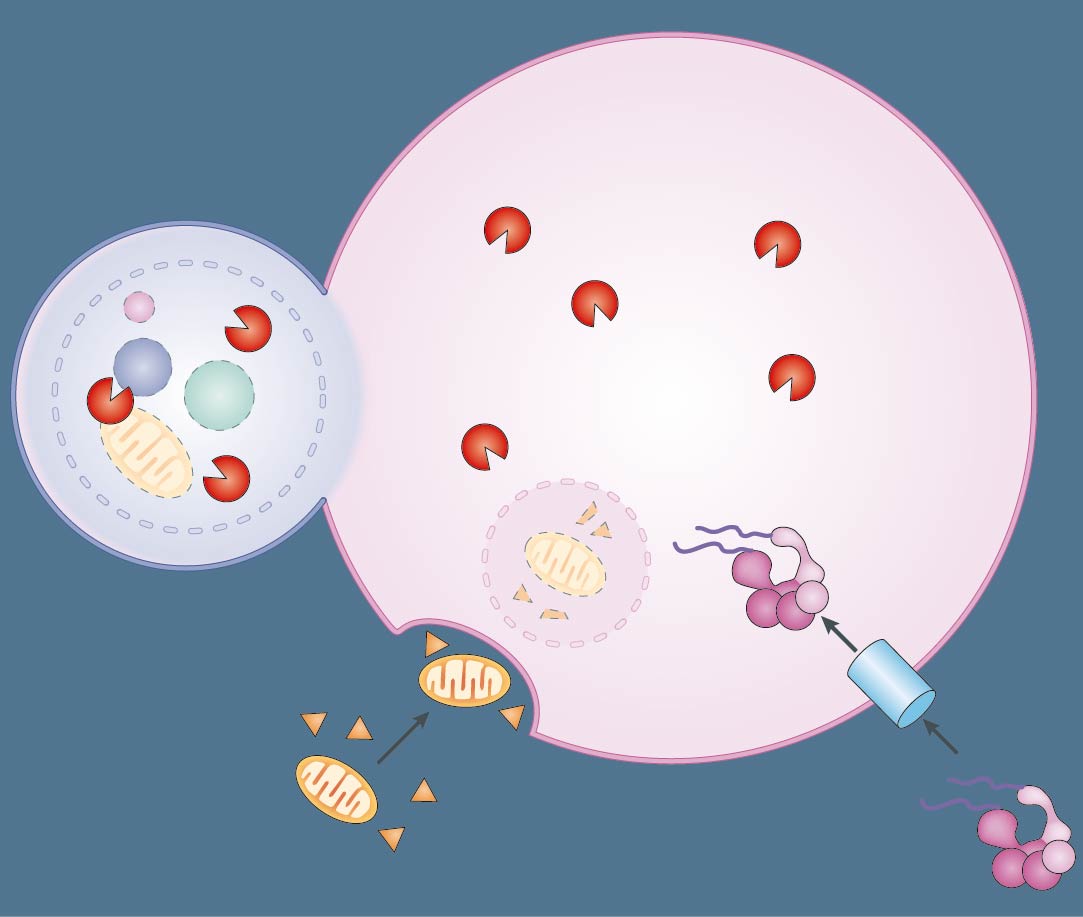
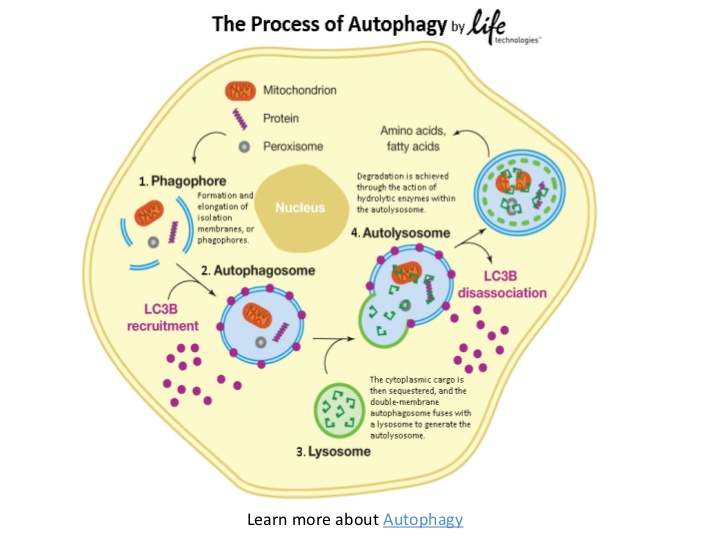
Human Cultures and Traditions all over the world venerate people recognized as Prophets and Saints, as people of Spiritual Knowledge. Such Spiritual Masters, Spiritual Teachers, Spiritual Gurus, or Spiritual Guides instruct Man to discover True Self using a process called  Self-Realization. This could be defined as complete fulfillment of the Self or full development of one’s ‘real’, or ‘true’ Self without which Man is thought to be incomplete.
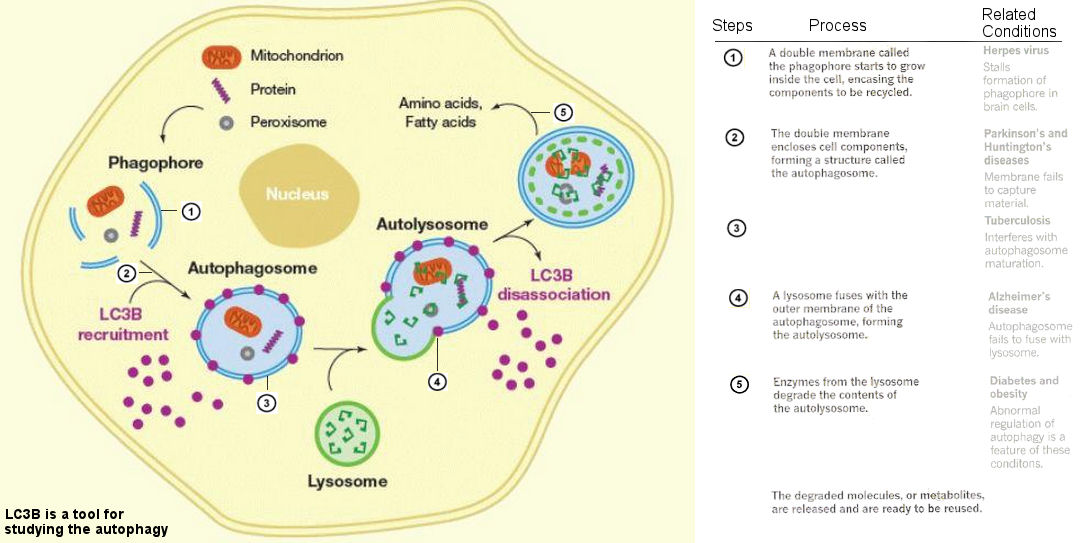
I submit to my readers that I do not intend to show any disrespect towards any of these Masters of Spiritual Learning and Teachers of various kinds of Spiritual Practices. I have a basic right to know and understand ‘true’ or ‘real’ Self and I believe such understanding has practical applications to promote and preserve the well-being of all humanity. The reasoning process that I use could be called Applied Philosophy which involves Application of Conceptual Analysis to questions of Belief and Faith which affect what we think about ourselves and what we think we ought to do individually and socially. We need to carefully verify the concepts of Soul, and Spirituality to define Self-Realization.

HUMAN BIRTH IS A DIVINE PHENOMENON:

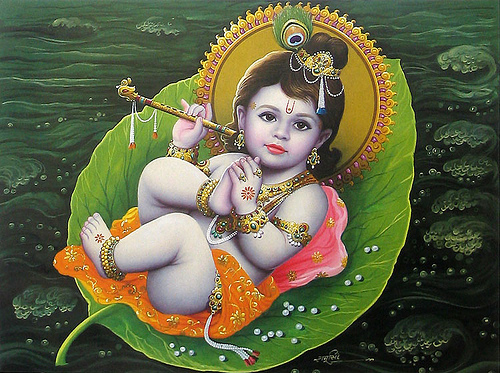
What is Man? Spirituality and Self-Realization. Lord Krishna, Divine Supreme Being arrived in this Physical, Material World as a Newborn Baby, a Spiritual Being. Man always arrives as a Spiritual Being and Spirituality is not Learned or Acquired Knowledge and Behavior.

Spirituality is the potency that brings Man’s Essence and Man’s Existence to come together to provide Man the Subjective and Objective Reality of his own biological existence in the Physical and Material Realm. Spirituality is the potency that shapes Man’s Existence as a Spiritual Being. Human Birth is a Divine Phenomenon. The Newborn Baby always arrives as a Spiritual Being. This statement has two important implications; 1. There is complete development and fulfillment at birth for Man to exist as a Spiritual Being, and 2. Spirituality is not Learned or Acquired Knowledge and Behavior. Man does not transform himself into a Spiritual Being by his physical or mental efforts. In other words, Spirituality does not involve learning from Holy Scriptures, practice of techniques like Meditation, and observation of religious rituals like pilgrimage and Temple worship. Man, the Physical Being is created not as an Embodied Soul but as a Living Soul that lives as a Spiritual Being.

Man acquires several important benefits by reading Holy Scriptures and through religious practices such as Prayer, Meditation, and Worship. I do not discourage or disrespect such practices and religious behavior. Rather, I categorically submit to my readers that Man does not transform himself into a Spiritual Being by virtue of any of his physical, and mental efforts. To think that Man is born as a Physical Being and slowly transforms himself into a Spiritual Being through a process called Self-Realization is a myth.

If the Human Body is described as a field of activity or ‘KSHETRA’, the Knower, and the Enjoyer of this field of activity called ‘KSHETRAJNA’ exists at birth. This Spiritual Being does not come into existence during a later part of life through a process of Learning from sensory experience or intellectual introspection.

CREATION AND SELF-REALIZATION:

Man, like all other living entities represents a thermodynamically unstable system. Man does not exist in the physical, material world because of his own Power/Force/Energy. Man needs continuous supply of energy from an external source during the entire span of his life. The fact of Man’s Physical Existence in Natural World could be explained as Manifestation of Power/Force/Energy of the Supreme Being. Operation of this Divine Power or Potency underlies the process of Self-Realization, the process or mechanism by which the Creative Power/Force/Energy establishes the complete Self. In Indian tradition, the process of Self-Realization involves Four Stages before it arrives at the Final Stage called God-Realization. These initial Four Stages are as follows:

1. First Stage of Self-Realization – The Establishment of Knowledge or JNANAMOYA:

What is Man? Spirituality and Self-Realization.Human life begins at conception. Father is the Originating Principle and Mother is the Providing Principle. Self-Realization begins with implantation of Knowledge in Egg Cell, making it Conscious or Aware of its own Living Condition that initiates Growth and Development.

Human Life begins at conception as a Single, Fertilized Egg Cell. This Egg Cell always comes from a previously existing Egg Cell that experienced Growth and Development into a human being. Father is the Originating Principle. Mother, the divine source of Life, Energy, and Knowledge, is the Providing Principle. In my view, Self-Realization begins with implantation of Knowledge in Substance of the Egg Cell making it Conscious or Aware of its own Living Condition that initiates its Growth and Development into Embryo, Fetus, and a fully formed human baby. Hence, Life could be defined as “Knowledge in Action.” In Indian tradition, this aspect of Self-Realization is described as “Jnanamoya”, the Living Symptoms manifested as Consciousness.

2. The Second Stage of Self-Realization or The Establishment of Vital Functions, PRANAMOYA: 

What is Man? Spirituality and Self-Realization.The Newborn Baby upon separation from Mother begins life as an independent living entity by initiation of its vital, living functions such as Respiration and Circulation.

The Newborn Baby upon separation from Mother, begins life as an independent living entity by initiation of its vital, living functions such as Respiration and Circulation. To survive in the physical world, the Baby needs to breathe on its own and circulate vital supply of Oxygen to all the tissues, and organs of entire body. In Indian tradition this manifestation of living symptoms as Consciousness or Self-Realization is called “Pranamoya”; the ability to perform vital functions like Breathing independent of Mother.

3. The Third Stage of Self-Realization or The Establishment of Nutrition, ANNAMOYA:

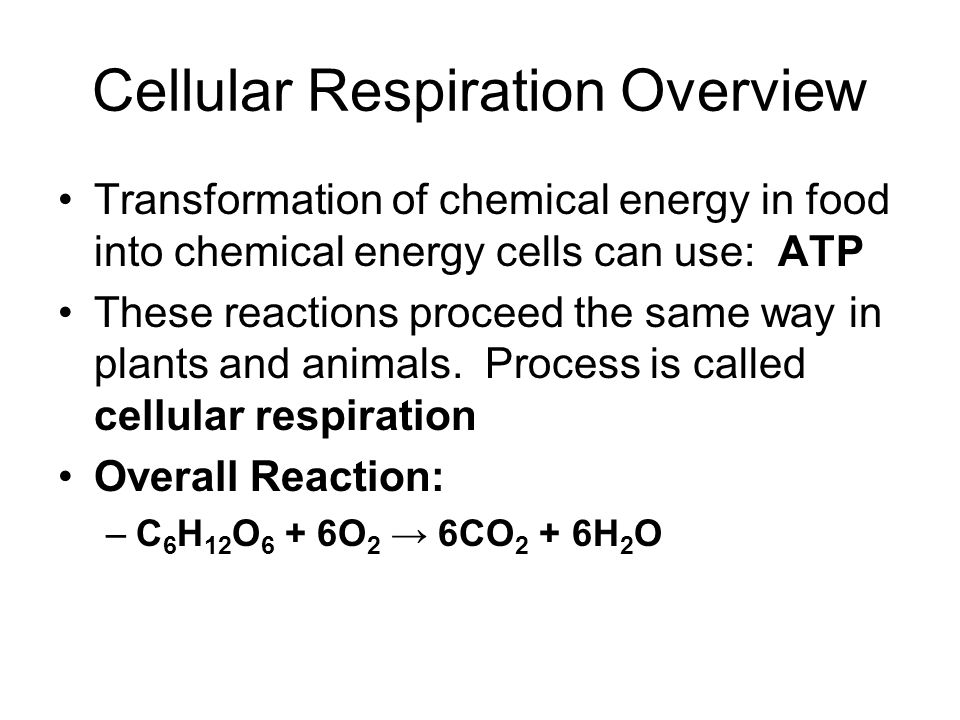
WHAT IS MAN? SPIRITUALITY AND SELF-REALIZATION. RESPIRATION PLAYS CRUCIAL ROLE IN ENERGY TRANSFORMATION.
WHAT IS MAN? SPIRITUALITY AND SELF-REALIZATION. RESPIRATION PLAYS CRUCIAL ROLE IN ENERGY TRANSFORMATION FOR COMPLETE FULFILLMENT OR FULL ESTABLISHMENT OF SELF WITH CONSCIOUSNESS AS ITS LIVING SYMPTOM.

During the stages of Growth and Development, Embryo and Fetus receive nutritional support from Mother. Complete Fulfillment or Full Establishment of Self with Consciousness as Living Symptom primarily involves acquisition of Matter and Energy from an External Source.

What is Man? Spirituality and Self-Realization. Fulfillment or Establishment of Human Life primarily involves acquisition of Matter and Energy from an External Source.

The Newborn Baby must continue to feed through all the stages of its physical existence for the rest of its entire life span.

WHAT IS MAN? SPIRITUALITY AND SELF-REALIZATION. THE PROCESS OR MECHANISM CALLED CELLULAR RESPIRATION IS NOT LEARNED OR ACQUIRED EXPERIENCE. NO SPIRITUAL TEACHER, NO SPIRITUAL MASTER, AND NO SPIRITUAL GUIDE CAN IMPLANT THIS KNOWLEDGE IN MAN.
WHAT IS MAN? SPIRITUALITY AND SELF-REALIZATION. THE PROCESS OR MECHANISM CALLED CELLULAR RESPIRATION IS NOT LEARNED OR ACQUIRED EXPERIENCE. NO SPIRITUAL TEACHER, NO SPIRITUAL MASTER, AND NO SPIRITUAL GUIDE CAN IMPLANT THIS KNOWLEDGE OF CELLULAR RESPIRATION IN MAN.

No Spiritual Teacher, no Spiritual Master, and no Spiritual Guide can implant Knowledge in Man to perform Living Function called Cellular Respiration, the Living Symptom manifested as Consciousness.In Indian tradition this manifestation of Consciousness or Self-Realization as Living Symptoms that involve dependence upon Food for Existence is called “Annamoya”, or the Materialistic Realization of the Supreme Being’s Divine Power, Energy, or Potency.

4. The Fourth Stage of Self-Realization or The Establishment of ‘The Knowing-Self’, VIJNANAMOYA:

What is Man? Spirituality and Self-Realization.The anatomical structure known as Reticular Formation shown as a red band in this image is in the Brain Stem. It composes Contents of Consciousness and its functions are important to bring Unity of trillions of independent, individual living cells of human organism to generate Singular Effect called Man. It is the Knower, and the Enjoyer of the activities of the entire Human Body.

The cells, tissues, and organ systems of the Newborn Baby display functional subservience for the benefit of Self which lives because of their living functions. Reticular Formation in the Brain Stem functions as ‘The Knowing-Self’, and is involved in composition of Consciousness which brings functional unity in the complex, multicellular human organism to generate Singular Effect called Man. Reticular Formation of Brain Stem can be described as the “Knower”, and the “Enjoyer” or “KSHETRAJNA” of the field of activities of Human Body called “KSHETRA”. In Indian Tradition, Establishment of this “Knower”, “Enjoyer”, or the ‘Knowing-Self’ as manifestation of Living Symptom of Consciousness  is described as the Fourth Stage of Self- Realization, or ‘Brahman-Realization’ called “Vijnanamoya.”

For the reasons I shared, the Complete Fulfillment or Full Establishment of Self as Living, Spiritual Being is not Learned or Acquired Behavior.

Rudranarasimham Rebbapragada

BHAVANAJAGAT.ORG

WHAT IS MAN? – THEORY OF HUMAN NATURE

WHAT IS MAN? – THEORY OF HUMAN NATURE

What is Man? Theory of Human Nature.The Vitruvian Man c. 1492. The painting by Leonardo da Vinci promotes Spirit of Scientific Inquiry of Human Nature.

What is Man? The motivation for asking this question comes from a statement expressed in Sanskrit Language.

WHAT IS MAN? THEORY OF HUMAN NATURE. PURSUIT OF PEACE, HARMONY, AND TRANQUILITY IN HUMAN LIVING EXPERIENCE.
WHAT IS MAN? THEORY OF HUMAN NATURE RELATES TO MAN’S PURSUIT OF PEACE, HARMONY, AND TRANQUILITY IN HUMAN LIVING EXPERIENCE.

“Sarvesham Swastir Bhavatu,” Shanti Mantra seeks the well-being of all humans, of all races, of all cultures, of all religions, and of all nations. My Theory of Human Nature draws inspiration from Man’s pursuit of Peace, Harmony, and Tranquility in Human Living Experience. Our efforts to support the well-being of Man would be affected by our understanding the ‘real’, or ‘true’ Nature of Man.

All human traditions including several philosophical and scientific traditions make assumptions about Human Nature. The basic assumption about Human Nature is that of finding it displayed in feelings, thoughts, moods, action, and behavior. I try to study Human Nature from the functional characteristics that are observable in interactions of cells, tissues, and organs that constitute the Human Organism. Man is Multicellular Organism, and I discover Human Nature of Subject who lives, taking into account functions of the cells, tissues, organs and organ systems providing the structural basis.

THE KEY TO HUMAN NATURE – EVOLUTION vs CREATION :

What is Man? Theory of Human Nature. Charles Darwin’s great contributions to Biology: “The Origin of Species by means of Natural Selection: Or the Preservation of Favoured Races in the Struggle of Life”(1859), The Descent of Man(1871), The Expression of the Emotions in Man and Animals(1872).

Man’s “Evolution” from ape-like ancestors is thought to be the key to our true Human Nature. Ethology or the scientific study of Animal Behavior is based on the Theory of Evolution. In order to explain human condition, Ethological Theories of Human Nature appeal to the “evolutionary” past of man.

What is Man? Theory of Human Nature. Konrad Zacharias Lorenz ( November 1903 to February 1989 ), Austrian Zoologist, founder of modern Ethology, Scientific Study of Animal Behavior by means of comparative zoological methods. He won the Nobel Prize for Physiology along with two other Animal Behavior experts.

Lorenz sees Man as an animal who has evolved from other animals. He thinks that Human Behavior is subject to the same causal Laws of Nature as all Animal Behavior. Many patterns of Animal Behavior show “hereditary coordination” or “instinctive movements” that are innate rather than learned. The ‘instinctual’ Behavior is fixed and may not be eliminated or altered by the environment. Instinct is inherited and it is essentially unlearned Behavior. Some of the most important aspects of Animal Behavior are innate.

Lorenz studied the nature of instinctive behavioral acts. The instinctual Behavior is caused by a ‘drive’ which causes the Behavior to appear spontaneously. The “four big-drives” are Feeding, Reproduction, Flight, and Aggression. Very often, Behavior is activated by two or more basic drives. To account for an instinctive Behavior Pattern in a Species, reference is made to Survival Value it has for the genes responsible for that Behavior. To explain the existence of any particular organ or Behavior Pattern, Lorenz looks for its Survival Value for the given Species.

In his book, “On Aggression” ( 1963 ), he explains the Natural History of Man’s Aggressive Behavior. He considers that Man has an innate drive to Aggressive Behavior towards his own species like many other animals. Fighting and warlike Behavior in Man have an inborn basis. He seeks an evolutionary explanation for human innate aggressiveness or ‘Intra-Specific’ Aggression which is concerned with fighting and threats between members of the same Species. The most destructive aspect of Human Aggression is its communal nature and the fighting is not between Individuals but between Groups. Humans fight as Groups and human beings are the only animals to indulge in mass slaughter of their own Species. He explains that this innate Aggressive Behavior has evolved from the communal defense response of our pre-human ancestors.

However, it is important to know that Lorenz made no scientific study of Behavior displayed by Apes. Among the members of Homo genus, Man is the only surviving representative of the Homo sapiens Species and hence it will not be easy to validate his conclusions about evolutionary origin of innate Human Aggressive Behavior. If Aggression is viewed as Hereditary Behavior which is based upon its Survival Value for the genes for that Behavior, it must be noted that there are no surviving human ancestral Species. It appears that Aggressive Behavior had no value in defending survival of Members of Hominin Family, immediate ancestors of Anatomically Modern Man.

COMPASSION WITHIN THE INDIVIDUAL AND BETWEEN INDIVIDUALS :

Compassion or sympathy( sym=together + pati=suffer ) describes the emotional feelings of sorrow for the sufferings or troubles of another person or others accompanied by an urge to help. Compassion describes an understanding arising from the sameness of emotional feeling. When man recognizes pain or sorrow in the lives of others, it spontaneously arouses the emotional feelings of Compassion. This understanding and the emotional response to pain and suffering in the lives of others appears to be instinctive. Apart from the “four big-drives”, Compassion is operated by an Innate Drive or it represents Motivated Behavior.

Compassion and Altruism( any behavior that appears to favor another individual’s chances of survival ) is a response generated by Human Nature. Compassion acts like a physical force, power, or energy. It has the power to uplift Man from both physical and mental pain. The instinct of Compassion comes into play and acts as a force, power, or energy when Man experiences sorrow in recognition of suffering or troubles of another man or other living entities. I am further suggesting that the Motivated Behavior of Compassion is expressed within Individual actions apart from Interactions between Individuals. If my personal experience of pain or suffering does not elicit emotional reaction of Compassion from others, fortunately, I can derive benefit of the uplifting power of Compassion by simply knowing the Source of Compassion that exists within myself.

When a person is enjoying state or condition of good health, we find that the cells, tissues, and organs of that human person are interacting with each other in a harmonious manner and these intraspecific biotic interactions display characteristics such as mutual assistance, mutual cooperation, mutual tolerance, and mutual functional subservience to provide a benefit to the human individual who lives because of such interactions. The constituent parts of the Human Body interact with each other with a sense of devotion, sympathy, compassion, and understanding.

We often acknowledge Compassion in the actions performed by others in response to pain, and suffering that they witnessed. We describe Compassion from the thoughts, emotional feelings, understanding, and sympathetic response that we witness in the Behavior and action of others. I recognize Compassion in the nature of interactions between the cells, tissues, and organs of my body and consider that such Compassion always operates to keep me the human person in good and positive health.

The Reality of Human Existence is possible because Compassion is innate to Human Nature guiding living functions both in health and sickness. I observe operation of Compassion in the Wound Healing Mechanism described as ‘Inflammation and Repair’.

The emotional feelings associated with Compassion are important for the Survival of Man who needs  to find Psychological Satisfaction from his Living Experience. The instinctive Behavior of Compassion supports Survival of Man as it provides Mental Satiation or Contentment which contributes to the Experience of Joy and Happiness in Life.

COMPASSION IS THE KEY TO HUMAN NATURE :

What is Man? The Key to Human Nature could be discovered by knowing Cell Structure and Functions. If hereditary behavior is operated by information present in genes, it must be noted that the genes have no independent existence of their own. The nucleus and the genes perform their cellular functions deriving energy from Cytoplasm or Protoplasm of the cell. The biological properties, characteristics, and the biological nature of the Living Substance or Protoplasm could account for the instinctive behavior pattern of Compassion.

The biological properties, characteristics, and biological nature of the Living Substance or Protoplasm accounts for an instinctive Behavior Pattern of Compassion. Biological functions and characteristics such as Nutrition, Cognition, Awareness, Responsiveness, and Communication with other Living Cells have not “evolved” because of their Survival Value for the Species. At a fundamental level, certain living characteristics or Nature is innate or implanted in Living Matter at the beginning or Origin of Life. The Living Substance or Matter known as Cytoplasm or Protoplasm has implanted or innate Nature of Compassion.


Rudranarasimham Rebbapragada

BHAVANAJAGAT.ORG


WHAT IS MAN? – HUMAN NATURE vs HUMAN BEHAVIOR

WHAT IS MAN? – HUMAN NATURE vs HUMAN BEHAVIOR : “SARVESHAM SVASTIR BHAVATU”

What is Man? The Vitruvian Man c. 1492. The painting by Leonardo da Vinci displays Spirit of Scientific Inquiry. I make distinction between Human Nature and Human Behavior.

What is Man? The motivation for asking this question comes from a statement expressed in Sanskrit language :

WHAT IS MAN? THE MOTIVATION FOR ASKING THE QUESTION COMES FROM SHANTI MANTRA PROMOTING FINDING OF PEACE, HARMONY, AND TRANQUILITY IN MAN'S LIVING EXPERIENCE.
WHAT IS MAN? THE MOTIVATION FOR ASKING THE QUESTION COMES FROM SHANTI MANTRA PROMOTING FINDING OF PEACE, HARMONY, AND TRANQUILITY IN MAN’S LIVING EXPERIENCE.

“Sarvesham Svastir Bhavatu”, Shanti Mantra in Sanskrit seeks the well-being of all humans, of all races, of all religions, of all cultures, and of all nations. It promotes finding of Peace, Harmony, and Tranquility in Man’s Living Experience.

Our efforts to support the well-being of Man get affected by our understanding the ‘real’ or ‘true’ nature of Man. I recognize Man’s Existence with Six Forms or Dimensions. These are, 1. the Physical Being described by Human Anatomy, Human Physiology and other Medical Sciences, the human being in health and sickness, 2. the Mental Being, the intellect, thoughts and emotional states of Man described by Psychology and Psychiatry, 3. the Social Being described by Social Sciences, 4. the Moral Being described by Moral Science and Ethics, the power of discernment used by Man to make distinction between good and evil, and right and wrong, 5. the Spiritual Being described by Vital Power, Animating /Sensible Properties, and Conscious/Cognitive abilities of Man’s Corporeal Substance that develops and builds the cells, tissues, and organs of Human Body.

WHAT IS MAN? HUMAN NATURE vs HUMAN BEHAVIOR.
WHAT IS MAN? HUMAN NATURE vs HUMAN BEHAVIOR. MAN’S SPIRITUAL NATURE IS DISPLAYED BY ALTRUISTIC BEHAVIOR OF HIS RED BLOOD CELLS.

I try to know Spiritual Dimension of Human Nature by observing functional relationships facilitating interactions of cells, tissues, and organs making up the human organism. For Man is Multicellular organism, Human Nature gets reflected in the biotic interactions of cells, tissues, and organs because of whose functions Man lives in the world. While the cells are Independent, Individual entities, their functional activity is characterized by Mutual Assistance, Mutual Cooperation, Mutual Tolerance, and Mutual Subordination to provide benefit to Man. And lastly, Man’s Identity and Individuality establish him as Created Being, one of its own kind, original, unique and distinctive.

These Six Dimensions of Man contribute to six kinds of Behavior of Man; the physical, mental, social, moral, spiritual and creative facets of Behavior. For example, muscle cell displays the behavior of contraction in response to a stimulus; it is able to contract because of its contractile nature which gives it the power of contracting. I account for Spiritual Dimension of Human Nature as that of generating Singular, Harmonious Effect in the working of trillions of cells giving Man power or ability to perform his living functions such as Respiration and display his characteristic Behaviors like Feeding, and Reproduction.

HUMAN BEHAVIOR AND ENVIRONMENT :

What is Man? Burrhus Frederick Skinner( 1904 – 1990 ), Professor of Psychology at Harvard University( 1948 – 1974 ) proposes empirical study of human behavior as the only way to arrive at a true theory of human nature. He published several books, The Behavior of Organisms:An Experimental Analysis(1938), Science and Human Behavior(1953), and Verbal Behavior(1957).

B. F. Skinner studied Behavior and the environmental causes of Behavior mediated through conditioning mechanisms. In his opinion, all Behavior is function of environmental variables. He proposes a thesis of ‘Universal Determinism, and thinks that every human event including all human choices has a set of preceding environmental causes.

WHAT IS MAN? HUMAN NATURE vs HUMAN BEHAVIOR. HUMAN BEHAVIOR IS CONDITIONED BY EXTERNAL INFLUENCES OF MATERIAL NATURE.

WHAT IS MAN?
WHAT IS MAN? HUMAN NATURE vs HUMAN BEHAVIOR. THERE ARE FIVE FACTORS TO ACCOUNT FOR HUMAN ACTIONS AND BEHAVIOR.

In Indian tradition, the Bhagavad Gita explains the relation between Human Behavior and Environment or ‘Prakriti’. Chapter XIV, verse 5 states : “Sattvam, rajas, tama iti gunah prakriti sambhavah”, the modes of Human Behavior such as Sattva( the mode of goodness ), Rajas( the mode of passion ), and Tamas( the mode of ignorance ) generated by the interactions between Man and the environment in which he lives. At the same time, Indian tradition makes a very clear distinction between true Human Nature and the three modes of Human Behavior. The real, or true Man is identified by Spiritual attributes of Human Nature.

WHAT IS MAN?
WHAT IS MAN? HUMAN NATURE vs HUMAN BEHAVIOR. SPIRITUAL NATURE IS UNDIVIDED, IS SEEN IN ALL LIVING ENTITIES.

The Bhagavad Gita in Chapter XVIII, verse 20 claims that all living entities share a single reality even while they are divided into innumerable forms( “Sarva bhutesu yenaikam bhavam avyayam iksate” ) and directs us to recognize that Spiritual Nature as the true reality that is common to different living forms.

Skinner gives attention to the external causes or influences that generate or modify Human Behavior. Skinner avoids the study of Innate or Intrinsic Cause of Behavior. He gives no importance to the role of Heredity in Human Behavior. This internal influence on organism’s behavior is not directly observable and an experimenter cannot manipulate such internal influences to conduct experimental studies of Behavior. Skinner’s findings about external influences and environmental conditioning mechanisms explain several aspects of Human behavior but they do not explain the relationship between Human Behavior and Human Existence. To understand Human Existence, we have to learn about the Nature of Man’s Substance and the Behavior of cells, tissues, and organs which formulate Structure and Functions of Man as a Living Thing.

Man is a very complex living organism showing structural differentiation with functional organization of numerous independent, individual cells, tissues, organs and organ systems. These specialized functions of tissues and organs are possible because of the functional subordination of the cells to the requirements of the organism as a whole. In other words, the specialized functions of tissues and organs could be described as ‘altruistic’ behavior, a behavior that promotes the well-being and appears to favor the individual’s chances of survival and reproduction. 

Man may exhibit Behavior under the influence of environment and may act in the Modes of Behavior such as goodness(Sattva), passion(Rajas), or ignorance(Tamas), but his existence is made possible by his Innate Human Nature which as internal or intrinsic guiding influence or controlling mechanism determines the characteristics of biotic interactions between cells, tissues, organs and organ systems of his own body.

Rudra Narasimham Rebbapragada,

BHAVANAJAGAT.ORG


WHAT IS MAN ? – SIX DIMENSIONS OF MAN

WHAT IS MAN ? – SIX DIMENSIONS OF MAN

WHAT IS MAN ? – SIX DIMENSIONS OF MAN. LORD SHIVA REPRESENTS GOD BOTH MALE AND FEMALE AT ONE AND SAME TIME. HUMAN GENOME, BOTH MALE AND FEMALE ALWAYS CARRIES FEMALE PRINCIPLE DERIVED FROM EGG CELL.

For purposes of brevity and convenience, I am using the term ‘Man’ to describe Human Being that can be either Male or Female. In Indian tradition, Lord Shiva represents God both Male and Female at one and same time. Human Genome, both Male and Female always carries Female Principle derived from Egg Cell.This Man cannot be divided into Perishable Body and Imperishable Soul or Spirit. As per Fundamental Laws of Conservation of Matter and Energy, Matter is neither created nor destroyed. It may be said that God pervades all material objects with no exception.

What is Man ? – Six Dimensions of Man. It is incorrect to divide Man into Perishable Body and Imperishable Soul. God is the Ultimate Source of both Perishable and Imperishable.On bhavanajagat.com

The division or separation of Man into Body,Mind, and Soul or three entities such as Gross Body, Causal Body, and Spiritual Body leads to misinterpretation of information about Man that is verified by Science. The Physical Reality of Man represents Unity of Body, Mind, and Soul.

What is Man ? – Six Dimensions of Man. The Division of Man into Body, Mind, and Soul is incorrect. The Physical Reality of Man represents Unity of Body, Mind, and Soul.On bhavanajagat.com

MAN IS CONSTITUTED BY SINGLE, FERTILIZED EGG CELL

What is Man ? – Six Dimensions of Man. The entire Human Organism is derived from Growth, Division, Development, and Differentiation of Single, Fertilized Egg Cell.On bhavanajagat.com

Man is derived from Single, Fertilized Egg Cell which grows, develops, divides and differentiates to create the complex human organism. All the cells of human body are essentially like the Egg Cell or Fertilized Ovum from which they are derived. The cells of human body can vary in size and shape but all of them carry the same genome in structure called Nucleus and similar living matter called Cytoplasm.

What is Man ? – Six Dimensions of Man. Identity and Individuality. Face Recognition is an important dimension of Human Identity. Each Person can be recognized as Specific Individual.On bhavanajagat.com

For Body is divisible into numerous parts and yet the Same, derived from Single Source, its relevant to describe Dimensions of Body to recognize Identity and Individuality of Human Subject. Using current Face Recognition technology, all Persons including identical twins can be recognized as Specific Individuals. I describe Six Dimensions of Man, and these are, 1. Physical Being, 2. Mental Being, 3. Social Being, 4. Moral Being, 5. Spiritual Being, and 6. Created Being.

WHAT IS MAN? MORTAL, PHYSICAL BEING

WHAT IS MAN ? – SIX DIMENSIONS OF MAN. PHYSICAL, MORTAL BEING DOES NOT GIVE FULL ACCOUNT OF MAN’S EXPERIENCE OF HIS LIVING CONDITION CALLED LIFE.

Man is Physical, Mortal Being. But that Dimension of Man does not represent full account of Man’s Experience of His Living Condition called Life.

MAN IS PHENOMENAL BEING:

WHAT IS MAN ? SIX DIMENSIONS OF MAN. MAN IS PHENOMENAL BEING WHO VARIES HIS LIVING FUNCTIONS TO SYNCHRONIZE HIS EXISTENCE WITH ALTERNATING PERIODS OF LIGHT (DAY) AND DARKNESS (NIGHT).

Man’s existence is synchronized with changes in external environment. Man varies his Living Functions to synchronize his Existence with alternating periods of Light called Day and Darkness called Night. Man is constituted as Phenomenal Being for his Existence is conditioned by Change; Earth is constantly moving and is not in the same position at any two given instants.

WHAT IS MAN? MAN IS PHYSICAL BEING:

What is Man ? – Six Dimensions of Man. Physical, Mortal Being called Man is governed by Eternal Law of Aging. The Physical Dimension of Man is Subject to Constant Change under external influence of Time.

Man is constituted as Physical Being governed by Eternal Law of Aging. The Physical Dimension of Man is Subject to Constant Change under external influence of Time.

WHAT IS MAN? MAN IS MENTAL BEING:

WHAT IS MAN ? – SIX DIMENSIONS OF MAN. SON OF MAN. BEHOLD THE MAN. LOOK AT THIS MAN! (JOHN 19:5). MAN IS MENTAL BEING. HE KNOWS GOD’S MIND, HIS PURPOSE IN LIFE.

Man is constituted as Mental Being. He knows God’s Mind and hence has ability to discover God’s Purpose in Man’s Life.

WHAT IS MAN? MAN IS SOCIAL BEING:

WHAT IS MAN ? – SIX DIMENSIONS OF MAN. BEHOLD THE MAN. LOOK AT THIS MAN! (JOHN 19:5) MAN IS SOCIAL BEING FOR HE HAS FATHER IN HEAVEN.

Man is constituted as Social Being and his existence demands Biological Parents, and Social Community. Man is Social Being for He has Father in Heaven.

WHAT IS MAN? MAN IS MORAL BEING:

WHAT IS MAN ? – SIX DIMENSIONS OF MAN. BEHOLD THE MAN. LOOK AT THIS MAN! (JOHN 19:5) MAN IS MORAL BEING, ALWAYS BOUND BY DIVINE LAW. NOT FREE TO LIVE THROUGH SIN. THE LAW OF SIN DOESN’T GIVE LIFE.

Man is constituted as Moral Being with discerning abilities to know Right and Wrong and make distinction between Good and Evil. Man is always bound by Divine Law. Man is not Free to Live through Sin. The Law of Sin and Death doesn’t give Life.

WHAT IS MAN? MAN IS SPIRITUAL BEING:

WHAT IS MAN? MAN IS SPIRITUAL BEING. SIX DIMENSIONS OF MAN. BEHOLD THE MAN. LOOK AT THIS MAN!(JOHN 19:5) MAN DIED TO SIN AND LIVES THROUGH SPIRIT.

Man cannot entirely account for the Reality of His own Physical Existence in Natural World. Spirit or Soul constitutes Man as Spiritual Being. ‘The Creation itself will be Liberated from its Bondage to Decay and brought into the glorious Freedom of the Children of God'(ROMANS 8:21).

WHAT IS MAN? MAN IS CREATED BEING:

WHO IS MAN ? – SIX DIMENSIONS OF MAN. MAN IS CREATED BEING FOR MAN’S EXISTENCE HAS ULTIMATE CAUSE, ULTIMATE SOURCE AND ULTIMATE RESTING PLACE.

Man’s Existence is Personification of Ultimate Cause, Ultimate Source and Ultimate Resting Place of all that Exists.

MAN AND LORD GOD CREATOR:

WHAT IS MAN ? – SIX DIMENSIONS OF MAN. TO ACCOUNT FOR PHYSICAL REALITY OF HIS OWN EXISTENCE, MAN TRIES TO KNOW HIS LORD GOD CREATOR OR MAHADEVA OF INDIAN TRADITION.

To account for Physical Reality of His own Existence, Man tries to know His LORD God Creator or MAHADEVA of Indian tradition.Man using his limited knowledge and reasoning abilities may define His relationship with LORD God Creator describing or attributing Special Forms such as Creator (Lord BRAHMA), Sustainer (Lord Vishnu), and Destroyer (Lord Shiva).

MAN AND BIOGENETIC LAW:

WHAT IS MAN ? – SIX DIMENSIONS OF MAN. NEWBORN BABY ALWAYS ARRIVES WITH UNIQUE, ORIGINAL, DISTINCTIVE, ONE OF ITS OWN KIND OF GENOME THAT NEVER EXISTED IN THE PAST AND WILL NEVER AGAIN EXIST IN FUTURE.

Man always arrives in the World as Individual with Individuality defined by Human Genome that is Original, One of its own kind, Unique, Distinctive, that never existed in the Past and will never again exist in Future.

For purposes of convenience, I divide man into two categories; 1. Self, and 2. The Knowing-Self. The first three dimensions of Man are more often expressed by category called Self and the last three dimensions of Man involve category called The Knowing-Self. However, it is important to know as to how Human Organism makes distinction between Self and Non-Self by study of Science called Immunology.

What is Man ? – Six Dimensions of Man. How Does Human Organism Makes Distinction between Self and Non-Self. Molecular Basis of Human Identity.

This organization of information about Man is important for millions of people all over the world who suffer from Diseases called Autoimmune Disorders in which Body’s Immune System attacks, damages, kills, and destroys its own cells, and tissues for it identifies them as NON-SELF or Foreign. Any discussion about Man’s Identity, subjects such as Self, Ego, and Subject called “I” have to include interpretation of information provided by Science called Immunology.

Rudranarasimham Rebbapragada
Ann Arbor, MI 48104-4162 USA
BHAVANAJAGAT.ORG

WHAT IS MAN ? HOW DOES HUMAN ORGANISM MAKES DISTINCTION BETWEEN SELF AND NON-SELF ? WHAT IS AUTOIMMUNE DISEASE/DISORDER ?

From: PREM SABHLOK:

In Vedas Soul and Spirit are different. Mind is part of Gross body, Spirit is part of Kundalini in our spiritual body and Soul is in our Causal Body near the heart. Human beings are tri-ani-pada (three bodies in one). Soul is omniscience principle and contains the entire knowledge of Brahmjnan as contained in Vedas. Spirit is energy principle and on death merges with Cosmic energy and sum total of energy always remains constant. Mind is in gross body.and and gets knowledge through human senses and sense organs and in Yogic stage gets knowledge from Soul as. Human soul is vachispatiah i.e one can communicate with soul in Yogic stage after crossing Five Koshas. Human Soul is our Real self containing a-priori knowledge.

According to Vedas I am not a body but I have a Body. Thus human gross body is not our Real self. Guru Nanak Dev Ji was a self realized Brahmjnani and his each word was a Divine Message.

From: DEVINDER SINGH GULATI:

Is Self the same as soul? Is Self Spirit?

The Self is the immortal portion in human beings that survives death. The self (small ‘s’) on the other hand is the mortal self that comprises of mind, body, life-force, and the ego.

Every human knows that (s)he exists. She needs no further proof. Even animals are aware of their existence as they seek to preserve it. But there is a greater knowing. Sages throughout history have reported knowing in a more concrete way than the mental knowing that their real self is immortal. This knowing comes from identification with the Self.

When Guru Nanak was 27 years of age he identified with the Self. His contact with it henceforth was constant. This is called Self- realization.


Most interpreters of Gurbani make the following common mistakes:

1. That mind and spirit are the same thing.

2. That all consciousness can be spoken of as “mind”.

3. That all consciousness therefore is of a spiritual substance.

4. That the body is merely Matter, not conscious, therefore something quite different from the spiritual part of the nature.

Sri Aurobindo’s clarification on the subject in Letters on Yoga goes far to throw light on Spirit as distinct from Mind.

First, the spirit and the mind are two different things and should not be confused together. The mind is an instrumental entity or instrumental consciousness whose function is to think and perceive – the spirit is an essential entity or consciousness which does not need to think or perceive either in the mental or the sensory way, because whatever knowledge it has is direct or essential knowledge, svayaṃprakāśa.

Next, it follows that all consciousness is not necessarily of a spiritual make and it need not be true and is not true that the thing commanding and the thing commanded are the same, are not at all different, are of the same substance and therefore are bound or at least ought to agree together.

Third, it is not even true that it is the mind which is commanding the mind and finds itself disobeyed by itself. First, there are many parts of the mind, each a force in itself with its formations, functionings, interests, and they may not agree. One part of the mind may be spiritually influenced and like to think of the Divine and obey the spiritual impulse, another part may be rational or scientific or literary and prefer to follow the formations, beliefs or doubts, mental preferences and interests which are in 3.gif2.gif3.gife.gif conformity with its education and its nature. But quite apart from that, what was commanding in St. Augustine may very well have been the thinking mind or reason while what was commanded was the vital, and mind and vital, whatever anybody may say, are not the same. The thinking mind or buddhi lives, however imperfectly in man, by intelligence and reason. Vital, on the other hand, is a thing of desires, impulses, force-pushes, emotions, sensations, seekings after life-fulfilment, possession and enjoyment; these are its functions and its nature; – it is that part of us which seeks after life and its movements for their own sake and it does not want to leave hold of them if they bring it suffering as well as or more than pleasure; it is even capable of luxuriating in tears and suffering as part of the drama of life. What then is there in common between the thinking intelligence and the vital and why should the latter obey the mind and not follow its own nature? The disobedience is perfectly normal instead of being, as Augustine suggests, unintelligible. Of course, man can establish a mental control over his vital and in so far as he does it he is a man, – because the thinking mind is a nobler and more enlightened entity and consciousness than the vital and ought, therefore, to rule and, if the mental will is strong, can rule. But this rule is precarious, incomplete and held only by much self-discipline. For if the mind is more enlightened, the vital is nearer to earth, more intense, vehement, more directly able to touch the body. There is too a vital mind which lives by imagination, thoughts of desire, will to act and enjoy from its own impulse and this is able to seize on the reason itself and make it its auxiliary and its justifying counsel and supplier of pleas and excuses. There is also the sheer force of Desire in man which is the vital’s principal support and strong enough to sweep off the reason, as the Gita says, “like a boat on stormy waters”, nāvamivāmbhasi.

Finally, the body obeys the mind automatically in those things in which it is formed or trained to obey it, but the relation of the body to the mind is not in all things that of an automatic perfect instrument. The body also has a consciousness of its own and, though it is a submental instrument or servant consciousness, it can disobey or fail to obey as well. In many things, in 4.gif2.gif3.gife.gif matters of health and illness for instance, in all automatic functionings, the body acts on its own and is not a servant of the mind. If it is fatigued, it can offer a passive resistance to the mind’s will. It can cloud the mind with tamas, inertia, dullness, fumes of the subconscient so that the mind cannot act. The arm lifts, no doubt, when it gets the suggestion, but at first the legs do not obey when they are asked to walk; they have to learn how to leave the crawling attitude and movement and take up the erect and ambulatory habit. When you first ask the hand to draw a straight line or to play music, it can’t do it and won’t do it. It has to be schooled, trained, taught, and afterwards it does automatically what is required of it. All this proves that there is a body-consciousness which can do things at the mind’s order, but has to be awakened, trained, made a good and conscious instrument. It can even be so trained that a mental will or suggestion can cure the illness of the body. But all these things, these relations of mind and body, stand on the same footing in essence as the relation of mind to vital and it is not so easy or primary a matter as Augustine would have it.

This puts the problem on another footing with the causes more clear and, if we are prepared to go far enough, it suggests the way out, the way of yoga.

P.S. All this is quite apart from the contributing and very important factor of plural personality of which psychological enquiry is just beginning rather obscurely to take account. That is a more complex affair.

*http://www.aurobindo.ru/ workings/sa/22/0005_e.htm#vi


DOOMED GUN OF DOOM DOOMA – NIXON-KISSINGER VIETNAM TREASON

DOOMED GUN OF DOOM DOOMA – NIXON-KISSINGER VIETNAM TREASON

Doomed Gun of Doom Dooma – Nixon-Kissinger Vietnam Treason. US Rifle M14. President befriends Enemy denying opportunity to fight Enemy.
Doomed Gun of Doom Dooma – Nixon-Kissinger Vietnam Treason. United States Rifle M14. President befriends Enemy.
Doomed Gun of Doom Dooma – Nixon-Kissinger Vietnam Treason. US Army Rifle M14. President befriends Enemy while Men are fighting and bleeding.
Doomed Gun of Doom Dooma – Nixon-Kissinger Vietnam Treason. US Rifle M14 Witnessed Historical Process. President befriends Enemy I am destined to Oppose.
Doomed Gun of Doom Dooma – Nixon-Kissinger Vietnam Treason. US Rifle M14. DoomSayer Predestined. President during War, befriends Enemy.
Doomed Gun of Doom Dooma – Nixon-Kissinger Vietnam Treason. Good, Reliable Service Weapon Not Put into Use by Doomed Presidency.
Doomed Gun of Doom Dooma – Nixon-Kissinger Vietnam Treason. US Rifle M14 Relic of Doomed Presidency. President withdraws from Battle exposing Men to Harm.
Doomed Gun of Doom Dooma – Nixon-Kissinger Vietnam Treason. Couldn’t use it to fight against Enemy as President befriended Enemy.
Doomed Gun of Doom Dooma – Nixon-Kissinger Vietnam Treason. President’s Treacherous Deviation From State Policy while Nation is at War.
DOOMED GUN OF DOOM DOOMA – NIXON-KISSINGER VIETNAM TREASON

In 1971, I was first introduced to United States Rifle, 7.62mm, M14. I describe it as ‘Doomed Gun of Doom Dooma’ where I had opportunity to join US War on Communism. However, Nixon-Kissinger US administration flatly denied me that opportunity. Nixon-Kissinger Vietnam Treason forced me to reject United States Rifle, M14. This Gun is Doomed for it is given to me to use against Enemy whom US President befriended in Treacherous Deviation of US Policy on Communism.

Rudranarasimham Rebbapragada
Ann Arbor, MI 48104-4162 USA

NIXON-KISSINGER TREASON IN VIETNAM – REMEMBERING JANUARY 23, 1973
... were also wounded 40 us involvement in the war ends january 23 1973
Doomed Gun of Doom Dooma – Nixon-Kissinger Vietnam Treason.
On January 23, 1973, President Nixon announced about ‘The Agreement on Ending the War and Restoring Peace in Vietnam’ popularly known as Paris Peace Accords. This Vietnam Peace Treaty was signed on January 27, 1973 with cease-fire effective from January 28, 1973. Nixon-Kissinger are guilty of treason in Vietnam for President Nixon won his election for first-term in 1968, and later won his election for second-term in 1972 by using Vietnam War for political gain and not to serve the purpose of the United States which was at War actively fighting against enemy. For all practical purposes, ‘The Fate of Saigon’, and ‘The Fall of Saigon’ on April 30, 1975 was decisively concluded on January 23, 1973.

THE WASHINGTON POST

SECRET ARCHIVE OFFERS FRESH INSIGHT INTO NIXON PRESIDENCY

#yiv5160397915 .yiv5160397915hidetext{position:absolute;}

October 11 at 9:29 AM


The Post’s Bob Woodward, author of the new book, “The Last of the President’s Men,” talks to former Nixon aide Alexander Butterfield about a previously undisclosed top-secret memo updating Nixon on war developments. (Ultan Guilfoyle and Tom LeGro/The Washington Post)
President Richard Nixon believed that years of aerial bombing in Southeast Asia to pressure North Vietnam achieved “zilch” even as he publicly declared it was effective and ordered more bombing while running for reelection in 1972, according to a handwritten note from Nixon disclosed in a new book by Bob Woodward.
Nixon’s note to Henry Kissinger, then his national security adviser, on Jan. 3, 1972, was written sideways across a top-secret memo updating the president on war developments. Nixon wrote: “K. We have had 10 years of total control of the air in Laos and V.Nam. The result = Zilch. There is something wrong with the strategy or the Air Force.”
The day before he wrote the “zilch” note, Nixon was asked about the military effectiveness of the bombing by Dan Rather of CBS News in an hour-long, prime-time television interview. “The results have been very, very effective,” Nixon declared.
Nixon’s private assessment was correct, Woodward writes: The bombing was not working, but Nixon defended and intensified it in order to advance his reelection prospects. The claim that the bombing was militarily effective “was a lie, and here Nixon made clear that he knew it,” Woodward writes.
Nixon’s note, which has not previously been disclosed, was found in a trove of thousands of documents taken from the White House by Alexander P. Butterfield, deputy to H.R. Haldeman, Nixon’s chief of staff, and not made public until now. Butterfield’s odyssey through Nixon’s first term is the subject of Woodward’s book, “The Last of the President’s Men,” to be published Tuesday by Simon & Schuster.
Doomed Gun of Doom Dooma – Nixon-Kissinger Vietnam Treason.


Richard Nixon performs the last acts of his devastated presidency in the White House East Room on Aug. 9, 1974, as he bids farewell to his Cabinet, aides and staff. (AP)
Butterfield became a key figure in the Watergate scandal when he revealed to Senate investigators the existence of the White House taping system. The tapes captured Nixon’s role in the coverup and marked a critical turning point in the collapse of his presidency. He resigned in 1974. Woodward and Carl Bernstein exposed the Watergate story in The Washington Post.
The new book, based on the documents and more than 46 hours of interviews with Butterfield, offers an intimate but disturbing portrayal of Nixon in the Oval Office. Butterfield depicts Nixon, who died in 1994, as forceful and energetic, but also vengeful, petty, lonely, shy and paranoid.
Butterfield felt deeply conflicted; he was proud to be serving but chagrined to be caught up in the underside of Nixon’s presidency. “The whole thing was a cesspool,” he told Woodward.
Doomed Gun of Doom Dooma – Nixon-Kissinger Vietnam Treason. Nixon Staffer Alexander Butterfield.


Alexander Butterfield is photographed in Washington, D.C., on Oct. 10. (Nikki Kahn/The Washington Post)
Butterfield, now 89, was in charge of preventing other Nixon staffers from leaving the White House with government documents, but he saw many, including the late Nixon counselor Arthur Burns, haul away boxes when they left.
Butterfield anticipated writing a memoir, so when he left the White House in 1973, “I just took my boxes of stuff and left,” he told Woodward, packing them into his and his wife’s car. Woodward writes that the boxes contained everything from routine chronologies and memos to some top-secret exchanges with Kissinger and a few highly classified CIA bulletins.

The new book by The Post’s Bob Woodward, “The Last of the President’s Men,” is based on previously undisclosed documents and more than 46 hours of interviews with Alexander Butterfield, the Nixon aide who revealed the existence of the White House taping system. (Ultan Guilfoyle and Tom LeGro/The Washington Post)
Butterfield acknowledged to Woodward that it was improper and wrong to remove them, and pledged to ensure that they will be deposited with a proper archive.
Woodward, who wrote that he thought the Nixon story was over for him after his book on Mark Felt, the FBI associate director and secret source known as Deep Throat, said he was “shocked” at the existence of Butterfield’s secret files. “So the story, like most of history, does not end,” he writes.
‘SHAKE THEM UP!!’

The Vietnam War had been all-consuming for Nixon’s presidency. The antiwar movement was strong in the United States, and Nixon was under political pressure to end the conflict. The centerpiece of Nixon’s approach was “Vietnamization”: withdraw U.S. troops so the South Vietnamese could take over, and negotiate a peace settlement “with honor,” avoiding anything that could be labeled a defeat.
As ground troops withdrew, air power was one of Nixon’s few remaining tools to pressure Hanoi. In late December 1971, Nixon ordered renewed bombing of North Vietnamese targets for five days.
By early 1972, Nixon was on the verge of announcing his reelection campaign and taking his momentous trip to China. But he was worried about reports of a major North Vietnamese buildup, foreshadowing a possible offensive.
On Jan. 2, 1972, in the CBS television interview, Rather asked Nixon, “On everyone’s mind is the resumption of the widespread bombing of North Vietnam. Can you assess the military benefits of that?” Nixon reiterated what he had often said about the bombing, that it was “very, very effective,” and added, “I think that effectiveness will be demonstrated by the statement I am now going to make.” Nixon then announced that he would soon bring home more troops — virtually removing any U.S. combat force in Vietnam.
Woodward said he could find no evidence that the study was ever carried out.
[How Mark Felt Became ‘Deep Throat’]

In another memo written a few months later, also found in the Butterfield files, Nixon complained to Kissinger that the military and bureaucracy were too timid. Nixon demanded action that is “strong, threatening and effective” to “punish the enemy” and “go for broke.” Nixon may also have been frustrated at North Vietnamese resilience. Woodward cites CIA, Defense Intelligence Agency and Pentagon memos showing that the bombing was not that effective because the North was getting more supplies than it needed to fight the ground war in the south, and could hold out for two years even if the bombing continued.
Kissinger, in an interview, told Woodward he agreed with the conclusion that years of bombing North Vietnam had failed, and he recalled that Nixon was frustrated. “He was in the habit of wanting more bombing . . . his instructions most often were for more bombing,” Kissinger said.
Woodward writes: “The ‘zilch’ conclusion had grown over three years. In what way and when did he realize this? History may never know. Maybe Nixon never knew, never grasped the full weight of his own conclusion.”
Woodward concludes that while Nixon knew the bombing was militarily futile, he believed it would reap political rewards at home. After Nixon resigned, papers found in his hideaway office in the White House included a GOP polling study, commissioned in 1969, that showed that the American people would favor bombing and blockading North Vietnam for six months. Woodward cites the work of Ken Hughes of the University of Virginia’s Miller Center to show that “the massive bombing did not do the job militarily but it was politically popular. Hughes argues with a great deal of evidence that the bombing was chiefly designed so Nixon would win re-election.”
[Woodward and Bernstein: Nixon was far worse than we thought]

The “zilch” note was followed in February by orders for intensified bombing of North Vietnam. On May 8, Nixon ordered the mining of Haiphong Harbor and bombing of key military targets. On Sept. 8, Nixon reported to Kissinger that poll numbers favored the bombing. “It’s two-to-one for bombing,” he boasted.
On Oct. 16, just weeks before the election, Nixon recalled the May 8 decision to mine the harbor and told Kissinger, “May 8 was the acid test. And how it’s prepared us for all these things. The election, for example.” Kissinger replied, “I think you won the election on May 8.” Nixon was reelected by a landslide in November.
In that election year, the United States dropped 1.1 million tons of bombs in the Vietnam War, including 207,000 tons in North Vietnam alone, Woodward reports, citing Pentagon records.
‘DEEP, DEEP RESENTMENTS’

Before joining the White House, Butterfield was a 42-year-old U.S. Air Force colonel with an assignment in Australia. After Nixon’s triumph in the 1968 election, Butterfield reached out to Haldeman, an acquaintance from their university years at UCLA. Haldeman then hired Butterfield as his White House deputy. Butterfield was an outsider, unlike many of the others around Nixon, and what he saw in the next four years left a vivid impression.
When Butterfield was introduced to the president in the Oval Office by Haldeman, Nixon mumbled, cleared his throat and gestured. “No words came out, only a kind of growl,” Woodward writes, based on Butterfield’s recollection. Another time, also in the White House, Nixon dropped by a birthday party for Paul Keyes, a comedy writer and Nixon friend who had helped on the 1968 campaign. When Nixon entered the room, there was an unnatural hush. No one offered a handshake or a glass of wine. Nixon seemed at a loss. Keyes was wearing a solid green blazer. “Ah, ah, ah . . . uh,” Nixon muttered, according to Woodward’s account. “Then Nixon pointed down at the carpet, a worn, faded maroon. He spoke in a deep but barely audible voice. ‘Green coat . . . red rug . . . Christmas colors.’ He then wheeled around and strode out of the room to the Oval Office.”
Doomed Gun of Doom Dooma – Nixon-Kissinger Vietnam Treason. Alexander Butterfield, July 02, 1974.


Alexander Butterfield, administrator of the Federal Aviation Administration, arrives at the Rayburn Building to testify before the Judiciary Committee in Washington, D.C., on July 2, 1974.
(Bob Burchette/The Washington Post)
Woodward says Butterfield felt that “Nixon was quickly becoming the oddest man he’d ever known.”
“It was if he were locked in his own deeply personal world, thinking, planning and churning,” Woodward writes of Butterfield’s impressions. Butterfield described Nixon as so lonely that he often took dinner by himself in the Old Executive Office Building, sitting with his suit coat still on, writing on his legal pad. “He was happiest when he was alone,” Butterfield recalled.
Nixon’s relationship with his wife, Pat, was cold, Butterfield observed. At the Winter White House, a compound in Key Biscayne, Fla., she stayed in a separate house.
On Christmas Eve 1969, Nixon walked through the Executive Office Building adjacent to the White House to wish employees a merry Christmas. The president discovered that some support staff employees had prominently displayed photographs of President John F. Kennedy — and that one worker had two. Nixon was furious and ordered Butterfield to remove all photos of other presidents. On Jan. 16, 1970, Butterfield wrote a memo to the president, titled “Sanitization of the EOB,” describing how all 35 offices displayed only Nixon’s photograph.

Alexander Butterfield, deputy assistant to President Richard Nixon, describes to The Post’s Bob Woodward how Nixon barred certain reporters from traveling with him to China in 1972. (Ultan Guilfoyle and Tom LeGro/The Washington Post)
Butterfield learned that Nixon did not just have an “enemies list” with dozens of names, but also an “opponents list” and a “freeze list.” One day Nixon exploded in anger after finding out that Derek Bok, then the president of Harvard University, was at the White House. “I don’t ever want that son of a bitch back here on the White House grounds,” he told Butterfield. “And you get those enemies lists, make sure everybody knows who’s on them.”
[Kissinger: the Dr. Frankenstein of foreign affairs, or just self-promoter?]
The president constantly scrutinized event invitation lists, striking names. Nixon organized a procedure with Butterfield so that during coffee after a state dinner, only a pre-selected group of five out of some 100 invited guests would get a chance to talk to the president. No one else could approach him.
Butterfield told Woodward that Nixon was controlled by “his various neuroses, the deep, deep, deep resentments and hatreds — he seemed to hate everybody. The resentments festered. And he never mellowed out.”
Butterfield did not know about the specifics of the Watergate break-in, but witnessed how Nixon’s obsessions led to it. At one point, Butterfield was given the assignment to plant a spy in the Secret Service detail of Sen. Edward M. Kennedy (D-Mass.). Nixon later mused that the spy — a retired agent who was reactivated — might find information that would “ruin him for ’76,” when Kennedy might be considered a possible presidential candidate. Butterfield knew the plan was illegal, and told Woodward that he was surprised at himself for going along with it.

Alexander Butterfield, deputy assistant to President Richard Nixon, talks to The Post’s Bob Woodward about revealing the existence of the White House taping system. (Ultan Guilfoyle and Tom LeGro/The Washington Post)
It fell to Butterfield to organize the White House taping system, installed at Nixon’s behest in February 1971. Although Nixon endlessly explored and sifted his options on most issues, Woodward reports that “there was apparently no discussion about the merits or risks of such a taping system.” It was installed over a weekend by the Secret Service while the president was out of town. Five microphones were put in the president’s desk, on the top, concealed with a coating of varnish. The lights on the mantel in the Oval Office also carried microphones, a place where Nixon often took guests, including heads of state, to chat. The microphones were connected to voice-activated tape recorders behind a metal door in the basement.
When the Watergate scandal broke, “I was thinking of the tapes the whole time,” Butterfield recalled. “God, if they only knew. If they only knew. In a way I wanted it to be known. In the deep recesses of my brain, I was eager to tell.” Woodward devotes several chapters to Butterfield’s personal struggle over whether to reveal the secret taping system, which Nixon thought would never be made public.
On the day of Nixon’s departure from the White House, Aug. 9, 1974, Butterfield saw many White House officials and workers weeping in the East Room. “I could not believe that people were crying in that room,” he told Woodward. “It was sad, yes. But justice had prevailed. Inside I was cheering. That’s what I was doing. I was cheering.”
washingtonpost.com

#yiv5160397915 .yiv5160397915hidetext{position:absolute;}#yiv5160397915 .yiv5160397915pb-feature.yiv5160397915pb-f-page-comments .yiv5160397915pb-comment-wrapper{padding-right:0;border-bottom:none;}#yiv5160397915 .yiv5160397915pb-feature.yiv5160397915pb-f-page-comments{border-right:1px solid #d5d5d5;padding-right:50px;}#yiv5160397915 .yiv5160397915the-most ul.yiv5160397915large li{display:none;}