AN ATTACK ON INDIA’S SYMBOL OF PRIDE

The Gateway of India
Image via Wikipedia

THE TAJ MAHAL PALACE HOTEL, BOMBAY (MUMBAI) BUILT IN 1903 – THE FIRST LUXURY HOTEL OF INDIA

A SAD DAY IN THE LIVES OF PEOPLE WHO LOVE INDIA

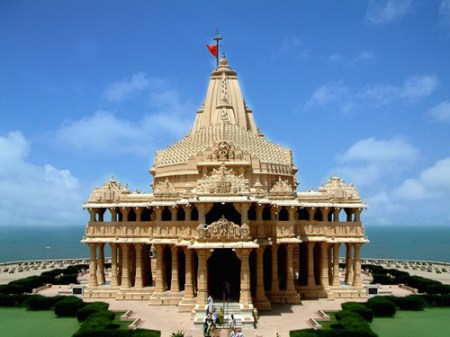
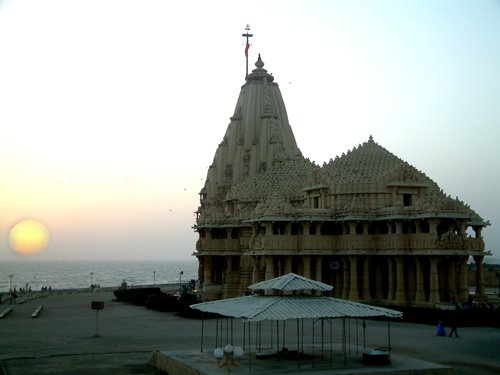
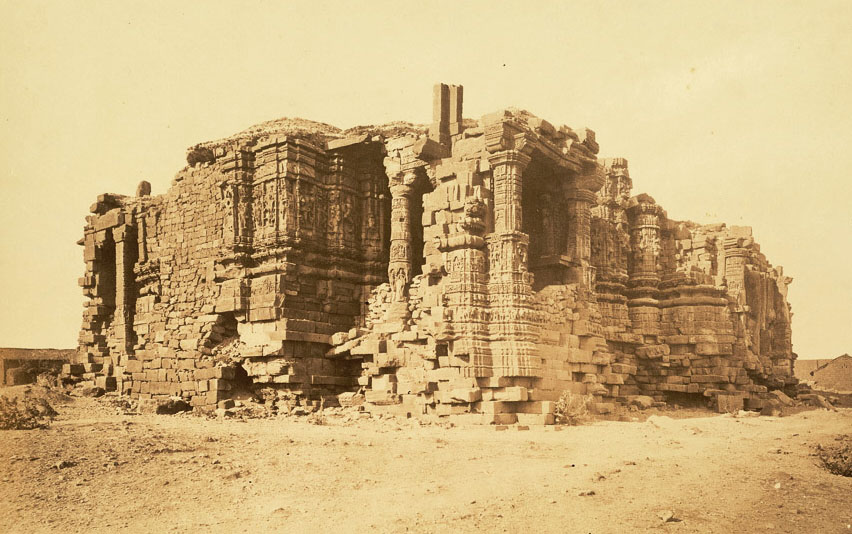
November 27, 2008 ( A HAPPY THANKS GIVING DAY IN THE UNITED STATES) is indeed a sad day in the lives of many people who love India and cherish its rich Culture and take pride in its noble values. It is painful to watch the beautiful landmark of Bombay engulfed in smoke and fire. We as a nation share this grief and mourn the loss of our people from an unprovoked and sudden attack. The repeated attacks on Mumbai reminds of the repeated assaults on SOMNATH Temple and the Temple was rebuilt seventeen times and we may need that kind of patience and endurance and demonstrate our resilience and frustrate our enemy.

India achieved much progress and Bombay (Mumbai) is the proud symbol of that progress and it is the natural home to people of all faiths. The presence of Parsis, Jews and other religious minority groups in Mumbai speaks about the spirit of tolerance of the city’s inhabitants. They are countless number of Muslims who are part of that rich heritage and they are part of a well-integrated society. India , a land of peace and non-violence has come under the attack of an enemy who knows no mercy and has no sense of human values. We should be united and stay determined to fight this threat. We need to be prepared for the next confrontation. Our willingness to defend ourselves is the only force that will deter our enemies.

HEARTY CONGRATULATIONS TO MUMBAI POLICE DEPARTMENT

I am particularly happy to know that the Mumbai Police had captured a terrorist alive and the terrorist was taken to the court. The details of this heinous crime have already emerged and very soon the international community would recognize that Pakistan has sponsored and has premeditated this crime against the people of India. The Mumbai Police Department took the brunt of this attack, displayed great bravery and they should be fully equipped to fight back any such future assault on innocent civilians.

THE TAJ MAHAL PALACE HOTEL

Jamestji Nasarwanji Tata, the legendary founder of India’s largest industrial house built this 565-room hotel with its architecture blending Moorish, Oriental, and Florentine styles. It was built-in 1903, much before the Gateway of India was completed in 1928 to commemorate the visit of Britain’s King George V and Queen Victoria. It offers a panoramic view of the Arabian Sea and is considered to be a heritage structure. The restoration of the century-old Taj Mahal Palace could take as much as 12 months and may cost about $ 100 million.

THE PROBLEMS OF URBAN WARFARE

We need to cope up with the realities of Urban Warfare. Urban centers of life have come under repeated attacks. We could easily see the sense of shock, the unspeakable amount of pain, and the heavy burden of anxiety on the faces of people, the innocent victims of this ruthless warfare. Because of the vulnerability of our borders, the enemy could sneak in and launch a surprise attack at any time. A small contingent of enemy force with assault rifles and hand grenades can inflict a large number of casualties amongst unarmed and unprepared civilians in a very short time. It needs a considerable amount of effort to flush out the enemy when the enemy is holed up in big buildings with a large civilian population. We need to immediately alert people to leave the streets and take cover in their homes and places of business should be shut down and large establishments such as hotels should have emergency plans to keep their guests until help arrives. During World War II civilians were regularly alerted by air raid warnings. We could also send the emergency warning over the radio, television and the mobile phones and the paging devices. People at Taj Mahal, Oberoi Hotel, and Nariman Place were not alerted when the enemy started his first attack at the Victoria Terminus. A city-wide alert could have helped people to barricade themselves. The streets were not safe even for police personnel if they use unprotected vehicles. It was reported that five police personnel were shot and killed when their vehicle got ambushed. People in buildings should also be warned to stay away from glass windows. Like in air raids, people would be safer if the lights are turned off. We can not negotiate with our enemies over hostages and the only option we have is to retake our land and property that comes under the enemy occupation. We need to prepare for these urban military operations and we should have personnel with proper equipment for fighting a battle in crowded cities and concrete buildings.

Our intelligence capabilities appear to be limited and we can not actually depend upon the government of Pakistan to provide us with information about groups which are training and preparing for these attacks on their soil. Amongst Muslim nations, I could expect some help from Iran which is the home of Shia faith. Iran is interested in selling its natural gas and has also taken the initiative to restore the historical monuments at Golconda, Hyderabad. Iran has the ability to penetrate the Shia groups operating from Pakistan. The recent attackers called themselves as ‘DECCAN MUJAHIDEEN’ and it may indicate that they are a Shia group. The Shia faith arrived in the Deccan region of India from Persia( the present day Iran) and the terror group is taking its orders from Pakistan and Iran is not involved in their command and control. The Parsi community which also arrived in India from Persia gave us peace and prosperity. Iran the home of Shia faith should shoulder the burden of controlling the Shia groups operating out of Pakistan.

Dr. R. Rudra Narasimham, B.Sc., M.B.B.S.,

Kurnool Medical College, Kurnool, Andhra Pradesh, India,

M.B.B.S.  Class  of  April,  1970.

The Sky is Blue. Defining the Indian Identity

John Strutt, 3rd Baron Rayleigh, Senior Wrangl...
The Sky is Blue. Defining the Indian Identity. My tribute to physicist Lord Rayleigh who provided the explanation for the Sky’s Blue Color.

MOTHER NATURE’S GENEROUS GIFT TO THE MAN-THE BLUE SKY 

The Sky is Blue. Defining the Indian Identity. Mother Nature’s generous gift to the man, the Blue Sky.

THE FIVE PRIMORDIAL ELEMENTS OF NATURE-“PANCHA MAHA BHOOTA” 

Nature (Prakriti) supports and sustains life on this planet. Nature operates through five life giving forces or energies known as Sky, Earth, Wind, Water, and Fire. These five forces existed from the very beginning prior to the arrival of life forms on this planet. 

NATURE’S BOUNTY-BLUE SKY 

The Sky is Blue. Defining the Indian Identity.

Planet Earth is a very unique and special place in the universe that we know today. Man is privileged to live under the blue sky. In popular opinion, sky is the expanse of heavens that forms an apparent arch over the Earth. The sky provides the background for the clouds, Sun, Moon, and the stars and as such they are generally viewed as a part of the sky. In spirituality, sky symbolizes the infinite universe. The story of creation in the Book of Genesis, chapter 1, verses 6, 7, and 8 describe as to how God had created an expanse above the waters of the Earth and called the expanse “sky”. Sky is viewed poetically as a solid arch or vault and is known as firmament or a strengthening support. 

SKY IS BLUE-DEFINING THE INDIAN IDENTITY – THE CELEBRATION OF MOTHER EARTH. MAN’S EXISTENCE IS SHAPED BY FLAT EARTH WITH ARCHED DOME EXPERIENCE.

In reality, this apparent enclosing dome known as the sky is caused by the Earth’s atmosphere. The sky is generated by the interaction of light and the gas molecules in the atmosphere. The dome like contour is attributable to Earth’s shape and curvature. Atmosphere ( Greek -atmos means vapor) is the gaseous envelope surrounding the Earth. It is 21 % oxygen, 78 % nitrogen, and 1 % other gases. Because of Earth’s gravitational force, the gaseous atmosphere rotates with the earth. The atmosphere exerts a moderating influence upon temperature. In the absence of atmosphere, Earth would experience the extremes of temperature variations and practically life becomes impossible.The air in the atmosphere is in constant motion, with both horizontal and vertical air currents. The natural movement of air, the wind flow is very important for control of climatic conditions. The earth’s atmosphere is the environment for most of its biological activity and it also exerts a considerable influence on the ocean and lake environment. The atmosphere protects Earth’s life forms from harmful radiation and cosmic debris. The ozone layer in the upper atmosphere protects Earth from the Sun’s harmful ultraviolet rays.

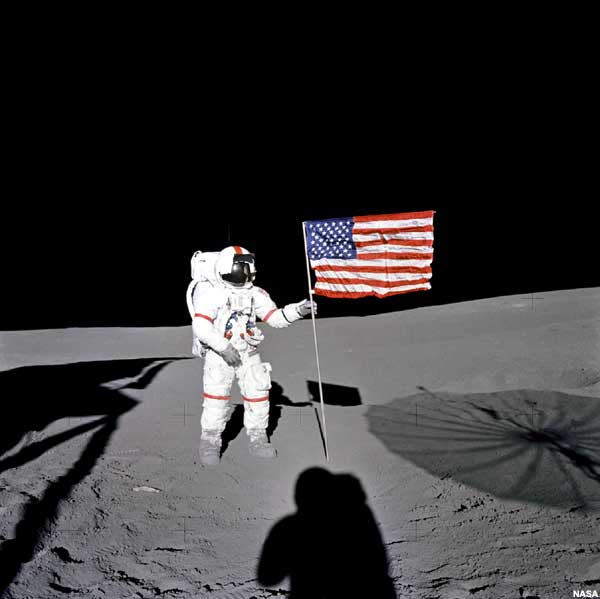
The Sky is Blue. Defining the Indian Identity. Astronaut Alan Shepard is pictured on Moon. The Moon surface is seen illuminated. The Sky is Dark. The Sky is also Dark in the rest of the Universe. Earth is one of its own kind original celestial object with its Blue Sky.

The moment we exit from Earth’s atmosphere and enter the outer space, we would miss seeing the beautiful blue sky. Moon has very thin atmosphere and a person standing on Moon would not be able to see the blue sky.

The Sky is Blue. Defining the Indian Identity. Astronaut Edwin Buzz Aldrin, Apollo 11 Mission to Moon confirms the uniqueness of Planet Earth.

The atmospheric conditions on Venus, Mars, and Mercury are very different from Earth and hence they can not offer the blue sky. The atmospheric conditions on other celestial bodies is not yet fully studied and very little is known and the right conditions to witness a blue sky may not exist at all in rest of the universe that we know. 

WHY THE SKY IS BLUE IN COLOR? 

The Sky is Blue. Defining the Indian Identity. View of “Blue Planet”- Earth viewed from Lunar surface – Apollo 8 Mission, December 25, 1968- A Christmas Day Gift.

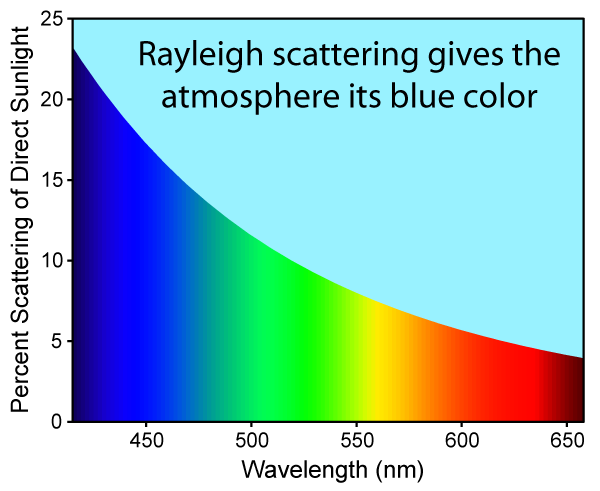
The blue color of the clear daytime sky results from the selective scattering of light rays by the gas molecules, minute particles of dust and water vapor in the atmosphere. Physicist Lord Rayleigh provided the explanation for the sky color and the phenomenon is called “Rayleigh’s Scattering.” Sun’s light when it enters Earth’s atmosphere, the light rays with longer wavelengths such as the reds and yellow pass through most readily, whereas the shorter wavelengths such as the blues are scattered and are seen by the observer on the ground causing the apparent blue sky. Humans are also capable of color vision and animals that lack this ability of color vision can not appreciate sky’s blue color.

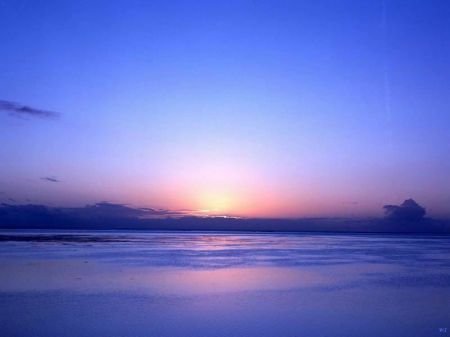
The Sky is Blue. Defining the Indian Identity. The Sky appears dark at night time as the illumination is not adequate to scatter enough Blue light.

The sky appears dark at night time as the level of illumination from Moon and the stars is not adequate to scatter enough blue light. Blue sky is a natural gift to people who inhabit planet Earth. 

BLUE IS THE COLOR OF GOD 

The Sky is Blue. Defining the Indian Identity. Lord Rama – The Blue color symbolizes an Infinite God. I like the Blue color. There are many human beings with natural black or dark skin color. Blue skin color of Rama makes it easy to visualize His Divinity.

Blue is the color of the sky and blue is also associated with sea and water. Blue is the color that symbolizes the spiritual. The Egyptian God of heaven, Amon Ra and the Greek God Zeus are associated with blue color. The Norse God Odin’s cape is blue. Virgin Mary’s cloak is blue and she has been called the Blue Lily. In the Bible, blue signifies celestial love of truth, because blue is the color of the sky and is thought to signify truth from a celestial origin, which is truth from God. Across different cultures on this planet, blue color is related to Heaven and to God. But all of those cultural beliefs outside of India are of only of academic interest as blue color is not currently used by those people to project their present religious/spiritual beliefs. 

The Sky is Blue. Defining the Indian Identity. Lord Krishna – The Sky is Blue – An Infinite God.

Indians are fascinated by the blue color of the sky to a far greater extent than any other people upon this Earth. This fondness of blue color has become a visible feature of Hindu belief. Hindu God Vishnu, the Preserver and His popular reincarnations of Lord Rama and Lord Krishna are represented in Indian visual arts as persons with blue colored skin. Traditionally, in Indian Literature and the scriptures, these Gods are described as black in color and the blackness is described in words such as “GHANA SHYAMA” (of great black color) or “MEGHA VARNA” (the color of very dark rain bearing clouds). Bammera Potana( 1450-1510), a very famous Telugu poet had described these Gods as of black skin color. Visual artists generally tend to depict persons as described in popular literature but they made an exception and had selected the sky blue color as the color of these very popularly worshipped Gods. Blue color became the chosen medium to represent the infinite nature of the Supreme God. Today, most Indians visually identify Lord Vishnu, Lord Rama, and Lord Krishna by their sky blue skin color.

THE BLACK TO BLUE TRANSFORMATION 

The Sky is Blue. Defining the Indian Identity. Lord Shiva’s transformation. As per the popularly known Story from Bhagavata Purana, Lord Shiva had swallowed an extremely dangerous poison and held it in His throat which then turned Blue. He was given the name of Neela Kantha to signify the altered color of His throat.

This transformation of skin color from very black to sky blue may have happened because of the artists desire to produce a more visually appealing picture. It may have started with drawing pictures of Lord Shiva (The Changer of the Hindu Trinity) who is also popularly known as “NILA KANTHA” in Sanskrit and it specifically refers to the color of His throat which changed in its appearance when He swallowed an extremely poisonous substance and held it in His throat and protected mankind. The word “NILA” actually means black but the word also refers to a plant known as ‘NILA’ which provides a blue pigment. As plants are a common source of pigments and dyes, in common usage the word “NILA” also describes the blue color. Lord Shiva is believed to be grey in color for He would always fully cover His body by smearing it with ashes. Lord Shiva is an ascetic who has no materialistic desires. He had literally burnt down all of His desires and had reduced them to ashes and had used the ashes to cover His body to declare His victory over materialistic desires. An artist trying to draw a portrait of Lord Shiva would face a challenge as a black colored throat would not offer a visually pleasing contrast with rest of Shiva’s grey colored body. Hence, I would think that the artists had exercised their freedom to interpret the word “NILA” as blue color rather than as black color. Lord Shiva’s images showing Him with a blue colored throat have become extremely popular with Indian people. This might have given an opportunity to the artists to use the blue color for drawing images of Lord Vishnu, Lord Rama, and Lord Krishna whose skin color is often described in Sanskrit as that of ‘NILA MEGHA’ which means a very dark, black rain-bearing cloud. Since the word ‘NILA’ has dual meanings, the artists interpreted it as blue color even though there are no blue colored clouds. It did not raise any controversy as in the popular opinion clouds are seen as part of the blue sky. The blue colored images and drawings of Lord Vishnu, Lord Rama and Lord Krishna became immensely popular all across India. However, some artists also portray Lord Krishna as a very dark black colored person. Blue and Black are the natural colors of the Sky and the same word could be used interchangeably to describe the color of the Sky. Black horses and Black Lotus flowers are also described as ‘Nila’ or ‘Neela’. 

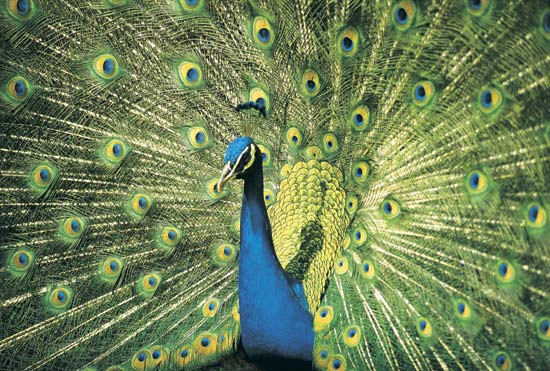
The Sky is Blue. Defining the Indian Identity. Indian Blue Peacock and the Blue Sky
The Sky is Blue. Defining the Indian Identity. Pavo cristatus – The Indian Blue Peacock is also known as “NILA KANTHA”.

The blue sky on one hand represents nature’s life supporting energies and on the other hand it defines the Indian Identity and symbolizes their belief in an infinite God. 

The Sky is Blue. Defining the Indian Identity. SPIRITUALITY SCIENCE- THE ART OF KNOWING: HOW DO PLANTS KNOW WHAT THEY KNOW? PLANTS KNOW ABOUT LIGHT, THE LENGTH OF DAY, AND THE DURATION OF DARKNESS CALLED NIGHT. THERE IS NO “INTELLECT” INVOLVED IN THIS PROCESS OF KNOWING. THE ABILITY OF KNOWING LIGHT OR PHOTORECEPTION IS EXPLAINED BY PHOTOCHEMISTRY.

The Sky is Blue and this visual sensation is the direct evidence that the man exists in a world that is created for him.

Dr. R. Rudra Narasimham, B.Sc., M.B.B.S.,

Kurnool Medical College, Kurnool, Andhra Pradesh, India,

M.B.B.S.  Class  of  April,  1970.

The Sky is Blue. Defining the Indian Identity. The wave propagation of Light. The scattering effect of submicroscopic particles of the atmosphere.

The Doctrine of Creation – Defining Indian Identity

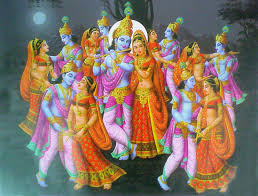
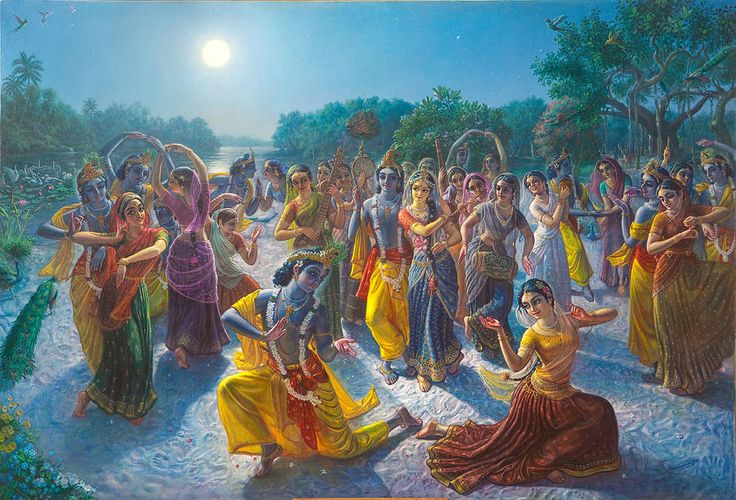
The Doctrine of Creation and Creative Potency called Maya. Raas Leela – Lord Krishna in Vrindavan dancing with Gopis. Lord Krishna is simultaneously ONE and DIFFERENT. He is the manifestation of Creative Energy.This Group Dance is an example of ‘Individualistic Rhythm’.

‘RAAS LEELA’-LORD KRISHNA IN VRINDAVAN DANCING WITH GOPIS, SIMULTANEOUSLY ONE AND DIFFERENT-A MANIFESTATION OF CREATIVE ENERGY AND CREATIVE POTENCY CALLED MAYA

The Doctrine of Creation and Creative Potency called Maya. Simultaneously One and Different.

The Doctrine of Creation and Creative Potency called Maya:

The Doctrine of Creation and Creative Potency called Maya. Simultaneously One and Different.

The term creation refers to the beginning of things and it helps man to specify his place in the universe and serves as a basis for the orientation of man in the world. The ideas about creation impact our culture in a very significant manner and shape man’s identity.

Krishna Consciousness – Defining Indian Identity

Krishna Consciousness. The Doctrine of Creation and Creative Potency called Maya. Simultaneously One and Different.

Krishna is known from the descriptions given in the Indian epic poems of BHAGAVATA PURANA, MAHABHARATA, and The Bhagavad Gita (The Lord’s Song).
Jayadeva (late 12th century), the author of celebrated Sanskrit poem ‘GITA GOVINDA’ (“Song of Cowherd”), described Lord Krishna’s delightful and enchanting pastimes, His playful activities are popularly known as “RAAS LEELA.” Jayadeva used the Sanskrit word “ADBHUTA” (an amazing feat) to narrate the mystical ability of Krishna to present Himself in several different forms at one and the same time. Jayadeva’s Gita Govinda gives the readers a sense of joy and the devotional service to Lord Krishna gives a chance to experience a sense of sweetness which is called MADHURYA in the Sanskrit Language. 
Sri Chaitanya Mahaprabhu (16th century) established the sublime doctrine of Krishna: ‘Simultaneously One and Different’. He promoted devotion to Krishna and I claim that ‘KRISHNA CONSCIOUSNESS’ defines my Indian Identity.

The Doctrine of Creation and Creative Potency called Maya. Simultaneously One and Different.

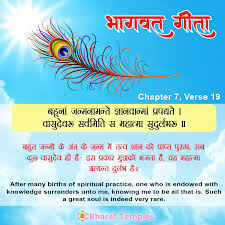
LORD KRISHNA – THE CAUSE OF ALL CAUSES (THE BHAGAVAD GITA, CHAPTER 7, THE YOGA OF WISDOM, THE KNOWLEDGE OF ABSOLUTE, VERSE 19):
Lord Krishna is the primary cause of all material manifestations. The Sanskrit word ‘MAYA’ describes the creative energy or potency of Lord Krishna (Bhagavad Gita 7:25).

The Doctrine of Creation and Creative Potency called Maya. Simultaneously One and Different.

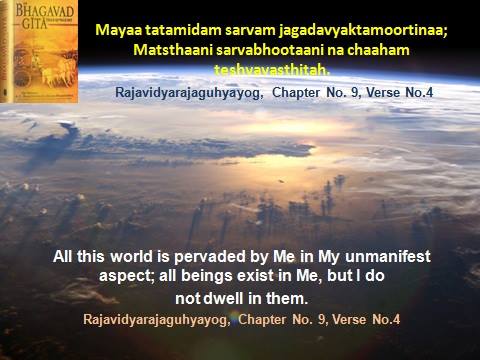
Maya is the governing principle of the material manifestation of the universe and all that it contains. Krishna described Himself as the Supreme Lord, as the governing principle of material manifestation (Bhagavad Gita 7:30).

The Doctrine of Creation and Creative Potency called Maya. Simultaneously One and Different.

The creative energy works on three different levels. 1. Material creation leads to the creation of the total material energy known by the Sanskrit word ‘MAHA TATTVA’. 2. The creative principle enters into all the universes to create diversities in each of them. The fundamental particles that constitute matter have varying characteristics and properties. The individual variations are an attribute of a creative process. 3. The creative force is diffused as the all-pervading Supersoul in all the universes and is known by the Sanskrit word ‘PARAMATMA’. It is present even in atoms.

The Doctrine of Creation and Creative Potency called Maya. Simultaneously One and Different.

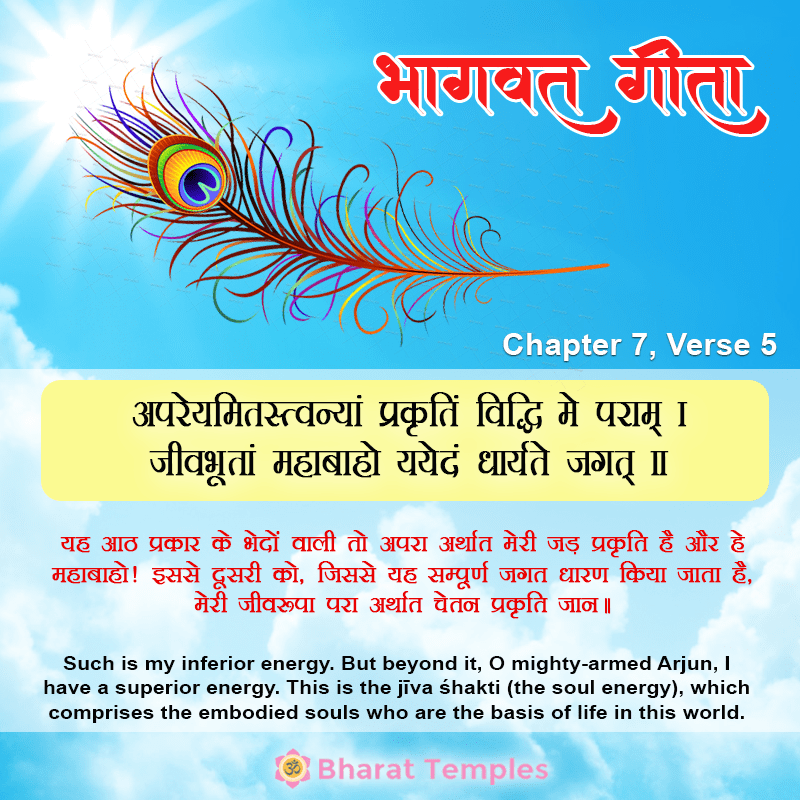
The material universe is a manifestation of the energy of the Lord. All the activities of the material world are directed by the above mentioned three forms of creative energy. However, a distinction could be made between non-living matter and the living entities. It may be said that the living entities are the manifestation of superior energy as they exist by exploiting the products of the gross and subtle inferior energy that manifests as matter (Bhagavad Gita 7:5).

The Doctrine of Creation and Creative Potency called Maya. Simultaneously One and Different.

Krishna consciousness is active in every sphere. Earth, water, fire, air, and every active principle, all chemicals, and all material elements are due to Krishna (Bhagavad Gita 7:4).

The Doctrine of Creation and Creative Potency called Maya. Simultaneously One and Different.

He is the origin and dissolution of all that is material and all that is spiritual in this world (Bhagavad Gita 7:6).

The Doctrine of Creation and Creative Potency called Maya. Simultaneously One and Different.

He is the original fragrance of this earth, He is the light in the fire, and He is the life of all that lives (Bhagavad Gita 7:9).

The Doctrine of Creation and Creative Potency called Maya. Simultaneously One and Different.

He is the taste of water, the light of the sun and the moon, and He is the syllable’ AUM’, He is the sound in ether, and He is the ability in man (Bhagavad Gita 7:8).

The Doctrine of Creation and Creative Potency called Maya. Simultaneously One and Different.

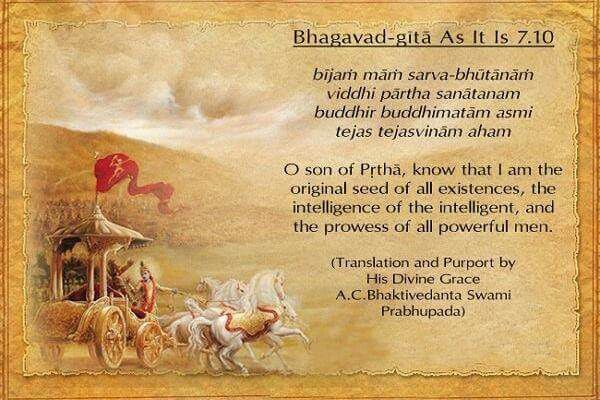
Lord Krishna is the original seed of all existences (Bhagavad Gita 7:10).

The Doctrine of Creation and Creative Potency called Maya.

Most interestingly, a similar claim is made in the Gospel According to Apostle John. The Book of John, chapter 1, verse 3 states, “All things were made through Him, and without Him, nothing was made that was made.” The Bhagavad Gita describes Lord Krishna as the Controller, and all living entities are controlled by Him.

THE DIVERSE ENERGIES OF THE LORD:

The Doctrine of Creation and Creative Potency called Maya.

All states or modes of existence such as goodness, passion, and ignorance are manifestations of His energy (Bhagavad Gita 7:12). The material nature is known by the Sanskrit word ‘PRAKRITI’, and all living entities are viewed as the multi energies of Krishna.
The difference lies in the quantity of energy that they contain. Energies are always controlled by the ‘Energetic’, the true source of energy. As such living entities are always controlled and they have no independent existence. While Krishna is everything, but He is independent. He is not controlled by the modes of this material nature (Bhagavad Gita 7:12).

Humans exist by drawing energy from material nature and Krishna has no such dependence. Human life is a manifestation of the creative power and energy and the existence is dependent upon the five life-giving forces contained in the material nature. Sun and moon are seen as components of the sky. They control the biological rhythms of all living creatures. The energy from Sun is trapped by the plants and is converted into complex compounds by a process known as photosynthesis. Photosynthesis is also the source of stored energies such as coal, fossil fuels, and natural gas. The Earth and its atmosphere provide all the nutrients (directly or indirectly via the mechanism of the food chains), the minerals, and the elements that are important for the structure and functioning of living entities. Water is the chief ingredient of living organisms. The act of breathing, the mechanism of respiration is an important physiological mechanism for living cells. The ability to use wind/air to a great extent defines the living process. Respiration is the process by which the cells generate energy for their activities. Fire provides the heat and energy for all metabolic activities and we exist by burning sugars and other energy providing sources. Nature ( FIVE LIFE GIVING ENERGIES) supports life and it helps to bring forth new members from preexisting forms of life but can not generate new beings on its own. Life can not begin spontaneously without the intervention of a creative force/energy.

WHAT IS CREATIVITY?

The Doctrine of Creation and Creative Potency called Maya. All living things exist as Individuals with Individuality even if the Genome is cloned or genetically identical. The variation expressed is the nature of the DNA molecule.

Creative power is the power that is able to bring forth new beings. Creativity is the ability to make or otherwise bring into existence something new. The single most important element in the creative process is believed to be originality or uniqueness. Nature (FIVE LIFE GIVING ENERGIES) helps in the process of replication/reproduction and sustains life. As per the Biogenetic Law, a species breeds to produce its own kind. Creativity imparts that label of distinctiveness by causing individualistic variations. 
Krishna is the personification of that creative energy and the beautiful paintings of ‘RAAS LEELA’ are an example of His ability to be one and different at the same time.

The Doctrine of Creation and Creative Potency called Maya. The existence of all living things as Individuals with Individualistic Variations is the manifestation of the Creative Potency called Maya

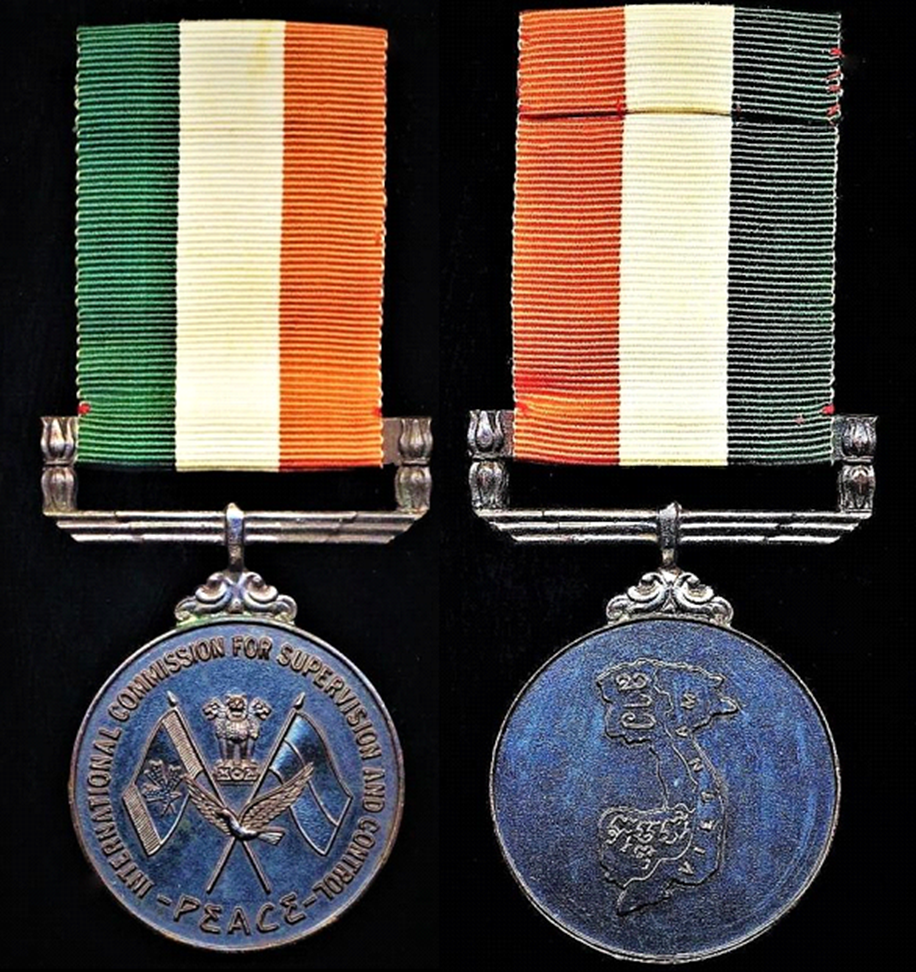
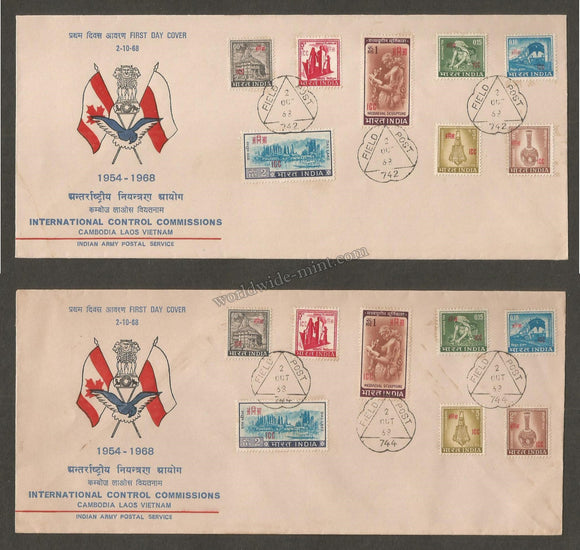
International Control Commission for Vietnam – The Great Eagle Connection

International Control Commission for Vietnam – The Great Eagle Coonection. French Indochina refers to the territories of Vietnam, Laos, and Kampuchea (Cambodia).

The Great Eagle Connection – The Bald Eagle, The Golden Eagle and Operation Eagle 1971 :

International Control Commission for Vietnam — The Great Eagle Connection. The Bald Eagle, the Golden Eagle, and Operation Eagle.

The Bald Eagle is the symbol of American Power. While taking part in Operation Eagle 1971 in the Chittagong Hill Tracts, I got connected to the Bald Eagle in a very significant manner. The military operation in remote, roadless, forest, hilly terrain had some similarities to the Vietnam War that United States fought against the Communist rebel forces. I participated in Operation Eagle to train and obtain practical experience to fight the Communists. The objective of Vietnam War and Operation Eagle were essentially one and the same, it’s about the spread of Communism in Asia. The objective of both these military missions was to resist and contain the growth of Communist power and influence in Southeast Asia. I participated in Operation Eagle in the same spirit displayed by United States Army and Service personnel who were fighting in Vietnam. The Chief of Staff at the Force Headquarters of Operation Eagle had earlier served in Vietnam and we frequently discussed about Vietnam War.

International Control Commission for Vietnam – The Great Eagle Connection

This essay is a tribute to India’s peace keeping efforts and its commendable contributions to United Nations’ Peace keeping Forces. Starting with Korean War, time and again, India has risked the lives of its soldiers in peace keeping efforts of the United Nations. In 1972, I served under the command of Colonel Iqbal Singh who had earlier served in Vietnam and I would also like to pay a special tribute to him for his role at the International Control Commission for Vietnam. Another officer of my unit, Major Laxman Singh had earlier served in Lebanon.

International Control Commission:

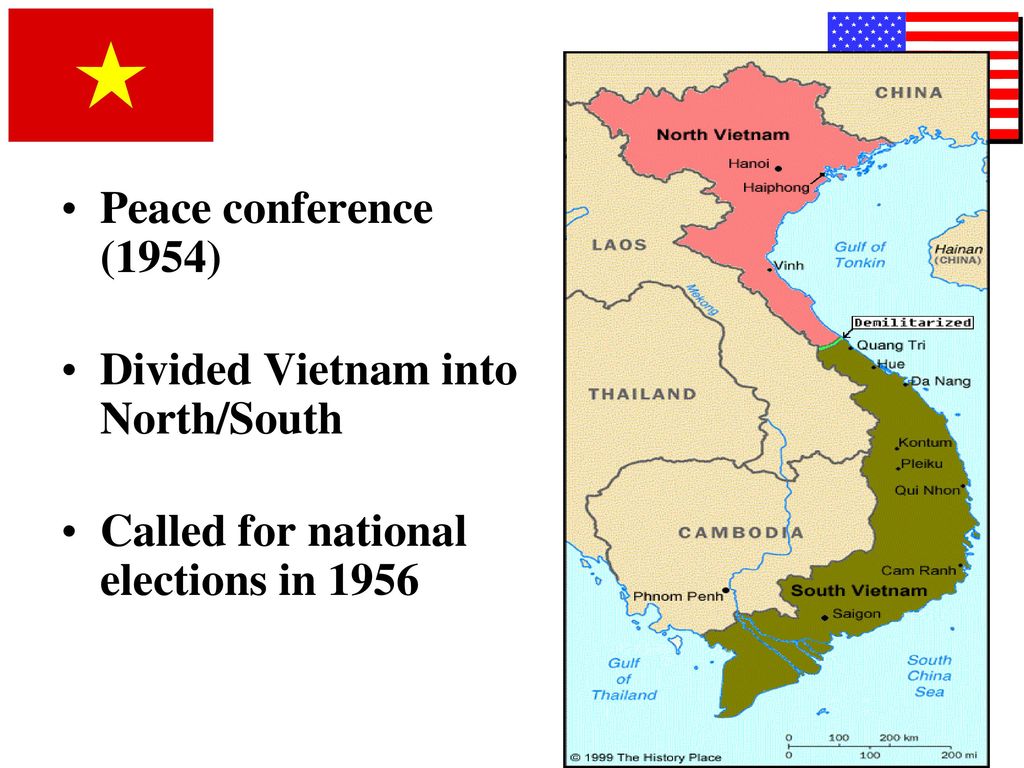
International Control Commission for Vietnam – The Great Eagle Connection. Peace conference (1954) Divided Vietnam into North/South and called for national elections in 1956

In mid-19th century, French occupied and established colonies in the Indochinese Peninsula of Southeast Asia. In March 1945, the Japanese drove the French from Indochina. People were opposed to French and Japanese occupation. At the end of World War II, France regained control of Indochina. In 1946, the First Indochina War began. The War became a focus of struggle among the major powers of the world. The Viet Minh forces had the support of Soviet Union and China. France was supported by the United States. The Geneva Conference on Indochina had put an end to this War in July 1954. The Geneva Accords that ended the War resulted in the partition of Vietnam at the 17th parallel. The International Control Commission was established in 1954 to implement the ceasefire agreement between Vietnam, Laos, Cambodia and France. Three separate Commissions were set up, one each for Vietnam, Cambodia, and Laos. Each Commission had India as Chairman and Canada and Poland as members. The Commission was supported by forces drawn from India, Canada, and Poland. India provided one infantry battalion and supporting staff. The Geneva Accords created Laos as a neutral, buffer state between Thailand and Vietnam. If countries had adhered to the terms of the Geneva Accords, peace would have prevailed in the region and India would have gained proper recognition for its peace keeping role. An important aspect of the Geneva Accords was reunification of Vietnam after holding national elections in 1956. Under guidance from the United States, South Vietnam refused to sign the Geneva Agreement and did not conduct national elections to decide the issue of reunification. North Vietnam retaliated by its own violation of Geneva Agreement and supported Viet Cong in its war against South Vietnam. The Second Indochina War which is also popularly known as Vietnam War extracted a heavy toll in terms of money, human lives and damage to the fragile environment. The War finally ended in 1975. Unfortunately, for lack of support from the major participants of this War, the International Control Commission had to cease its activities and India’s participation ended in 1968, 1969, and 1970 when Indian troops and staff returned to India.

About War and Peace

International Control Commission for Vietnam – The Great Eagle Connection

The Super Power rivalry, the Cold War in Asia resulted in armed conflicts in Asia. India which had won its independence only in 1947 tried its best to reduce global tensions and to promote peace. The Indian military contingent deployed in Indochina was very small and its role was not that of enforcing the Geneva Accords. At best, Indian troops could monitor the activities and help as neutral observers. I commend India and the Indian military for this peacekeeping role, while the Super Powers continued their fight for domination in Southeast Asia. I also appreciate the spirit of nationalism displayed by the people of Vietnam. I understand their struggle and they had taken support from both China, and the Soviet Union in their quest for freedom. I would not blame them for getting support from Communists. Later, Vietnam successfully stopped both China, and the Soviet Union in exercising any control on their lives. In India, the nationalists in their struggle for freedom had experienced similar problems. Indian nationalist leader, ‘NETAJI’ Subhash Chandra Bose cultivated friendship with Japan during the Second World War and made an attempt to win freedom with help from the Japanese armed forces. In my home town of Rajahmundry and elsewhere in India, we love ‘NETAJI’ and his spirit of patriotism. The people of Vietnam fought with a great sense of determination and won victory over a superior force. The First Indochina War is a war for the liberation of Vietnam from the colonial rule. The Second Indochina War is a war for the reunification of Vietnam which was unjustly partitioned in July 1954.

Operation Eagle 1971 – Colonel Iqbal Singh of The Regiment of Artillery:

The Golden Eagle – The Bald Eagle – Operation Eagle Connection: OPERATION EAGLE 1971 – VIETNAM WAR – COLONEL IQBAL SINGH OF THE REGIMENT OF ARTILLERY

I speak about Colonel Iqbal Singh of the Regiment of Artillery for two reasons. He was the Chief of Staff at the Force Headquarters of Operation Eagle 1971. He had intimate knowledge of the military operation in the Chittagong Hill Tracts. After the conclusion of Operation Eagle,  I served under the Command of Colonel Iqbal Singh at Doom Dooma, Tinsukia District, Assam in support of our mission in India’s North East Frontier Agency (NEFA) which is now known as Arunachal Pradesh. His remarks and recommendation given on my application for Direct Permanent Commission in Army Medical Corps (AMC Examination of 1972) helped me in the interview conducted by the Director General of Armed Forces Medical Services, Ministry of Defence New Delhi during September 1972 to clinch my selection at that interview. Colonel Iqbal Singh had prior experience of service in Vietnam. During Operation Eagle 1971, he had introduced to me the Infantry weapons, ammunition, signal equipment, medical supplies, field rations and other documents that were routinely used by United States Army in the conduct of its Vietnam War. Colonel Iqbal Singh suggested to me that I could use an Infantry weapon used by United States Army for my personal protection during the military operation as I did not bring the weapon (9mm Submachine Gun or SMG ) issued to me by Indian Army. However, I politely declined his offer to use a gun supplied to the U.S. Army. But, I had willingly used the field rations, medical supplies, personal clothing/camping supplies and signal equipment used by the U.S. Army in its Vietnam War. This connection between United States and the military operation in the Chittagong Hill Tracts is of great interest to me. United States fought a bitter battle against the Communist supported Viet Cong forces in Vietnam and paid a huge price both in terms of human costs, money, and political prestige. The same United States secretly contacted the Chinese Communists and had asked them to attack India in the North East Frontier Agency region to defeat our military operation to liberate Bangladesh during 1971. It had really surprised me as I had always viewed myself as a partner or ally of the United States in its global mission to combat Communism.

The Golden Eagle – The Bald Eagle – Operation Eagle Connection to fight Communism:

United States of America must stand firm in its commitment to defend Freedom, Democracy, and Human Rights. United States supported our military mission during my participation in Operation Eagle 1971-72 and the support was based upon a mutual interest to combat Communism to promote Democracy and Individual Freedom.

Dr. R. R. Narasimham, B.Sc., M.B.B.S.,

Personal Number MS-8466 Captain  Army Medical Corps,

Medical Officer South Column Operation Eagle

Headquarters Establishment No. 22  C/O  56  APO

The Right to Life means a Life for Life

The Right to Life means a Life for Life. REBBAPRAGADA SUBBARAO (1893-1948), LAWYER, POET, SPORTSMAN, DISTINGUISHED CITIZEN OF RAJAHMUNDRY.

REBBAPRAGADA SUBBARAO (1893-1948), LAWYER, POET, SPORTSMAN, DISTINGUISHED CITIZEN OF RAJAHMUNDRY

This entry is dedicated to the memory of my grandfather, Shri.Rebbapragada Subbarao, who served the British Crown as a Public Prosecutor at East Godavari District Sessions Court in Rajahmundry for two terms from 1940. He never hesitated in seeking the capital punishment when he prosecuted criminals for the offense of murder. I was not fortunate enough to witness his performance as a Public Prosecutor but my grandmother shared information about his stellar qualities and his great reputation. While I grew up in Rajahmundry, during a school field trip, I visited the Central Jail in Rajahmundry where the death sentence is carried out by hanging. My impression from that trip was that the death sentence is appropriate and is not cruel. This entry is an effort to understand my grandfather’s support for capital punishment.

The Right to Life:

The Right to Life means a Life for Life: Thomas Jefferson’s Declaration of Independence seeking natural inalienable rights was made seeking support with a firm reliance on the protection of Divine Providence. The operation of Divine Providence is the central requirement if man has the natural, inalienable rights to Life, Liberty, and the pursuit of Happiness.

Human beings everywhere demand the realization of diverse values to ensure their individual and collective well-being. A fundamental value that is universally claimed by all people is that of the Right to Life. Thomas Jefferson asserts that his countrymen are a “free people claiming their rights as derived from the laws of nature and not as the gift of their Chief Magistrate.” In the Declaration of Independence proclaimed on July 4, 1776, he eloquently claims, “We hold these truths to be self-evident, that all men are created equal, that they are endowed by the Creator with certain unalienable Rights, that among them are Life, Liberty and the Pursuit of Happiness.” The basic principle of the French Declaration of the Rights of Man and of the Citizen (1789) was that “all men are born free and equal in rights,” which were specified as the rights of Liberty, Private Property, the inviolability of the person, and resistance to oppression. It specifically states that Liberty consists in being able to do anything that does not harm others: thus the exercise of the natural rights of every human has no bounds other than those that ensure to the other members of society the enjoyment of these same rights.

The Reason for Punishment:

The Right to Life means a Life for Life. If there is no penalty attached, the above words would be vain words.

A Right which is not protected is not a Right and a Law without penalty attached is not a Law. If the Constitution declares a ‘Right to Life’ and if Moses proclaims the divine law that commands that “You shall not murder” (The Book of Exodus 20:13, and The Book of Deuteronomy 5:17), if there is no penalty attached, these words would be vain words.

The Right to Life means a Life for Life. If there is no penalty attached, the above words would be vain words.

A penalty is imposed as a consequence to an act of wrongdoing. Punishment is generally conceived as the infliction of pain. Why men should be punished is one of the most controversial questions in the field of moral and political thought, and in psychology and theology as well. There are three major types of wrongdoing in relation to which men discuss the nature and the need of punishment, its justice or its expediency. Punishment is traditionally considered in relation to, evil or wicked actions, violations of law, and sin. Murder is an act which simultaneously violates the moral, the civil and the divine law.

The Purpose of Punishment:

The Right to Life means a Life for Life. The concept of punishment proposed by Jesus demands self-evaluation.

The question about the purpose of punishment critically tests the meaning of anyone’s theory of Law and Justice. The purpose of punishment will affect the penalties to be imposed for wrongdoing. Some people think that punishment need only be inherently just and others think that punishment cannot be justified without reference to its utility or expediency. The purpose of punishment could be described under three different categories:

1. Punishment should be justified only by its consequences.

2. Punishment should be a combination of awarding a just penalty and securing good effects.

3. Punishment should be a just retaliation exclusively.

The Utilitarian Theory of Punishment:

This view is based upon the idea that punishment should not be equal to revenge or an act of hostility. A punishment is an evil inflicted by public authority on those who have transgressed the law so that the will of men may be better disposed to obedience. The chief aim of punishment is securing the reformation and the deterrence of criminals and to maintain public peace. The Court does not exist for punishment only but also for the salvation of the criminal. The spirit and meaning of punishment is seen as the salvation and the reformation of the wrongdoer.

According to Socrates, “to suffer punishment is another name for being justly corrected when you do wrong,” and he “who is punished and suffers retribution, suffers justly.” He believed that justice is restored to the soul of the wrongdoer. “The proper office of punishment is two-fold; he who is rightly punished ought either to become better and profit by it or he ought to be made an example to his fellows, that they may see what he suffers, and fear and become better.”

Plato had implied that virtue could be taught. “He who desires to inflict rational punishment does not retaliate for a past wrong which cannot be undone.” He punishes for the sake of prevention. Plato thought that the death penalty should be imposed only on the incurable who cannot profit from an example to other men not to offend.

Hobbes places the reason for punishment in the future rather than in the past in its utility to procure certain effects rather than retaliation. “Men look not at the greatness of the evil past, but the greatness of the good to follow.” We are forbidden to inflict punishment with any other design than for the correction of the offender, or the direction of others.

Locke derives from natural law the right to punish those who transgress that law and to restrain and prevent the like offence.

Rousseau lays great emphasis on the reformation of the criminal. “There is not a single ill-doer who could not be turned to some good. The State has no right to put to death, even for the sake of making an example, anyone whom it can leave alive without danger.”

The Retributive Purpose of Punishment:

The Right to Life means a Life for Life. In the modern human society, the individual has the right to report a crime and the justice is served by the Society after due verification of the crime.

Kant and Hegel viewed that retribution or retaliation is the only basis for punishment. Punishment should be purely retributive and it need not serve some end beyond itself and need not produce some desired consequence in the future. We should punish only because we have, under the moral law, a duty to do so. The purpose of punishment is to uphold the moral law.

The effect of the punishment upon the wrongdoer or upon others whose conduct may be affected by punishments meted out, must not be taken into account at all. Punishment of the transgressor may heal the feelings of those he has injured and it may even satisfy a desire for revenge, but those factors should have no motivating force. Nothing should be sought except the preservation of the balance sheet of justice. Every wrong is duly requited by a proportionate measure of punishment. It should not consider any person except the wrongdoer himself.

According to Kant, “Judicial punishment can never be administered merely as a means of promoting another good, either with regard to the Criminal himself, or to Civil Society, but must in all cases be imposed only because the individual on whom it is inflicted has committed a Crime…….The Penal Law is a Categorical Imperative.”Punishment cannot be justified except as doing the work of Justice.

The Right of Retaliation (ius talionis ):

The Right to Life means a Life for Life

Kant says, “It is just the Principle of Equality by which the pointer Scale of Justice is made to incline no more to one side than the other; It may be rendered by saying that the undeserved evil which anyone commits on another, is to be regarded as perpetrated on himself…….This is the Right of Retaliation; and properly understood it is the only principle which can definitely assign both the quality and the quantity of a just penalty. All other standards are wavering and uncertain; and on account of other considerations involved in them, they contain no principle conformable to the sentence of pure and strict Justice.” Retributive Punishment or retaliation seems to express the principle of justice or fairness in exchange.

A Life for Life ( lex talionis ):

The Right to Life means a Life for Life

A Life for Life is the symbolic statement in the Greek as well as the Hebrew tradition. “Who so’er shall take the sword, shall perish by the sword.” Retribution is not revenge. It is the righting of wrong. It is the very act of crime itself which vindicates itself.

The gravity of the offense is the only determinant of the severity of the punishment. The punishment should fit the crime, not the nature of the criminal as someone capable of being benefitted by punishment. Kant and Hegel do not think that the justification of the death penalty depends upon the curability or incurability of the offender. The taking of the criminal’s life need not be motivated by a desire to protect society from his future depredations. It is sufficient that he has taken a life and it should be repaid by a proportionate requital.

The Right to Life means A Life for Life.

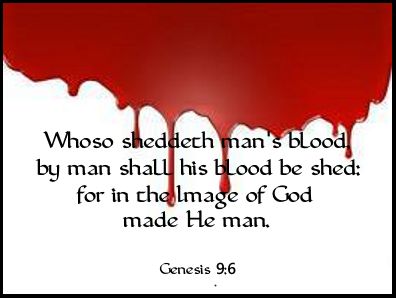
“Whoever sheds the blood of man,

by man shall his blood be shed:

for in the image of God

has God made man. ” (The Book of Genesis, chapter 9, verse 6)

The reason murderers deserved the death penalty was the supreme value of human life. To destroy human life is to attack the image of God, and therefore God demands an accounting.

Murder must be described as a sin, as a crime and as a vice. The Criminal gives his consent for Capital Punishment by his very act.

Dr. R. Rudra Narasimham, B.Sc., M.B.B.S.,

Kurnool Medical College, Kurnool, Andhra Pradesh, India,

M.B.B.S.  Class  of  April,  1970.

The Right to Life means a Life for Life. If anyone takes a human life, that person’s life will also be taken by human hands. For God made human beings in his own image.

DEPENDENCE UPON FOREIGN OIL IS A MUST FOR THE UNITED STATES

Cut and edited from Image:MiddleEast.png, in t...
Image via Wikipedia

UNITED STATES IMPORTS 45 PERCENT OF ITS OIL FROM THE MIDDLE EAST AND AFRICA

As the gas prices across the United States hit record high levels, I am not concerned about the United States’ dependence upon oil from the Middle East. If the United States is not willing to buy its oil from the Middle East, China is in a position to gobble it up. The position of the United States as a global superpower is dependent upon its level of oil consumption. If and when China steps in to dominate the oil market, it would proportionately increase its military supremacy and we would witness the Chinese war ships patrolling the Persian Gulf.

United States may forego its need for Middle East oil, but could it step back from its role to provide peace and stability in that region ???

Dr. R. Rudra Narasimham, B.Sc., M.B.B.S.,

Ex – Number XSCO – 324 CAPTAIN/NAQEEB FORCE MEDICAL SERVICES

Headquarters Sultanate of Oman’s Land Forces,

Muaskar Al Murtafaa, MAM, Muscat, Sultanate of Oman.

Bharat Darshan – City of Rajahmundry shapes My connection to India and Indian literature

Rajahmundry Formulates My Connection to India and Indian Literature

Bharat Darshan – City of Rajahmundry shapes My connection to India and Indian literature. Shri. Sarat Chandra Chatterjee or Chattopadhyay, popularly known as Sarat Babu.
Shri. Sarat Chandra Chatterjee or Chattopadhyay, popularly known as Sarat Babu.

SARAT CHANDRA CHATTERJEE (CHATTOPADHYAY), SEPT 15, 1876 – JAN 16, 1938

I belong to Rajahmundry where Kandukuri Veeresalingam had written the first novel ever written in the Telugu language. However, it was ‘ SARAT BABU’ who had first provoked my interest in reading Telugu literature. Sarat Babu, the famous novelist had written in Bengali language but fortunately, his books are translated into Telugu language and while I grew up in Rajahmundry, his novels were extremely popular he quickly aroused my curiosity.

Rajahmundry – My connection to India and Indian literature.

In 1953, the Telugu film ‘DEVADASU’ with Akkineni Nageswara Rao (A N R) in the lead role was released and the songs from that film though not written by Sarat Babu also became very popular. It was not the popularity of this film which had drawn me towards the novels written by Sarat Babu.

Rajahmundry – My connection to India and Indian literature

I actually started reading his translated stories a few years later after joining Danavaipeta Municipal Corporation High School. I was attracted by his powerful narrative style and the portrayal of the characters in his stories. His novels were easily available in the City Public Library. I know Telugu people who learned the Bengali language just to get the pleasure of reading Sarat Babu’s original works. I also know some of my friends who acquired their names from Sarat Babu. I should acknowledge the fact that his novels gave me the impetus to develop the habit of reading books. While Telugu people could embrace and adore a Bengali novelist, I have not witnessed any love for Tamil writers. While I attended Danavaipeta Municipal High School in Rajahmundry, I learned about ‘TIRUKKURAL’ and was not introduced to any other Tamil literature.

The Bengal, Andhra, Tamil Connection:

Rajahmundry – My connection to India and Indian literature.

Since Mylapore, Madras is my birthplace, I grew up with a sense of fondness for that City and during the 1950s I visited Madras several times as my maternal grandparents still lived there. The Howrah-Madras Mail connected Rajahmundry and Madras. At Rajahmundry I got connected to the nation and much of it was inspired by the writers and thinkers of Bengal. At the beginning of the 20th century, Bengal shaped our sentiments and exerted a great influence on our minds. I am not surprised that ‘Vande Mataram’ is our National Song and ‘Jana Gana Mana’ is our National Anthem and the honor goes to Bengal. Unfortunately, Madras apart from being the State Capital could not excite Telugu people’s’ hearts in the way Bengal did. I can not recall the name of even one public figure from the Tamil speaking areas of Madras State who may have visited Rajahmundry or other Telugu speaking areas of Madras State. Actually, the relationship between Telugu and Tamils started deteriorating after India’s independence in 1947 and it led to the linguistic partition of India. I am proud of my Telugu heritage but I am not truly happy with the partition of the country on a linguistic basis.

Rajahmundry – My connection to India and Indian literature

Dr. R. Rudra Narasimham, B.Sc., M.B.B.S.,

C/O Shri. R. Suryanarayana Murthy, M.A., B.Ed.,

13-92 First Cross Road, Prakasam Nagar, Rajahmundry,

East Godavari District, Andhra Pradesh, India.

S.S.L.C.  MARCH 1961, Danavaipeta Municipal High School, Rajahmundry. 

Rajahmundry – My connection to India and Indian literature

His Holiness the Dalai Lama – There is Joy in Emptiness

THE SPIRITS OF SPECIAL FRONTIER FORCE WELCOME HIS HOLINESS THE DALAI LAMA TO ANN ARBOR, MICHIGAN.
THE SPIRITS OF SPECIAL FRONTIER FORCE WELCOME HIS HOLINESS THE DALAI LAMA TO ANN ARBOR, MICHIGAN

His Holiness, The 14th Dalai Lama spoke on “Engaging Wisdom and Compassion” on April 19-20, 2008 at Crisler Arena, The University of Michigan, Ann Arbor.

The concept of Sunyata, Emptiness or Nothingness:

The emptying of the mind and the attainment of an undifferentiated unity is a theme of the ‘Sunyata’ doctrine developed by Acharya Nagarjuna. ‘Sunyata’ can be stated as a state of “pure consciousness” in which the mind has been emptied of all particular objects and images. The emptied mind reflects or manifests the undifferentiated reality in which the world appears without distinction and multiplicity.

H.H. Dalai Lama’s presentation :

“At the root of all our suffering lies a form of ignorance, a form of unknowing”. The origin of suffering is attachment. “Self-grasping( or self-focus) gives rise to suffering. It is the root of all afflictions”. “Self-grasping” leads to attachment to impermanent things or thoughts which gives rise to suffering. Emptiness is created by casting aside the attachment to everyday things and worries.

H.H. Dalai Lama advised practicing loving kindness to eliminate the afflictions caused by attachment. The goal, he said is,”Cultivating the Wisdom of no self”, a sense of grand emptiness that leaves behind everyday pollutants that can take both physical or emotional form.

THE SPIRITS OF SPECIAL FRONTIER FORCE:

Special Frontier Force is a multinational defense plan to defend freedom and democracy in the occupied Land of Tibet. I had emptied my mind of all desires. The Spirits that inhabit my Consciousness seek Freedom in their Land of origin.

    Bharat Darshan – A tribute to Rajahmundry’s traditions of Performing Arts

    Bharat Darshan – A tribute to Rajahmundry’s traditions of Performing Arts

    Bharat Darshan – A tribute to Rajahmundry’s traditions of Performing Arts

    Bharat Darshan – A tribute to Rajahmundry’s traditions of Performing Arts

    GOVERNMENT ARTS COLLEGE, RAJAHMUNDRY WHERE STUDENTS EXCEL IN PERFORMING ARTS

    The Traditions of Performing Arts in Rajahmundry

    Bharat Darshan – A Tribute to Rajahmundry’s Traditions of Performing Arts

    Rajahmundry gets credit for being the home for great artists. The first drama in Telugu language was written by Kandukuri Veeresalingam, a native of Rajahmundry. During the few years I spent in Rajahmundry, I had witnessed several wonderful performances and all of them without paying an entrance fee or buying a ticket. The community supports these performances and they are staged for public enjoyment free of cost. I had earlier mentioned about a traditional art form known as ‘BURRA KATHA‘. There is another traditional form of story narration known as ‘HARI KATHA’ and it introduced to me several interesting stories from the Indian epic poems.

    Bharat Darshan – A Tribute to Rajahmundry’s Traditions of performing Arts. The Tradition of story-telling called Harikatha.

    Apart from story narration, Rajahmundry is a great place to witness artists performing drama. The themes are selected from mythology, history, social satire and modern social life. We have several companies in Rajahmundry that provide costumes, makeup artists, and stage equipment. During the major festivals and summer school vacations, we very often get a chance to enjoy the performances on makeshift stages putup at road intersections during night time. At the Government Arts College, Rajahmundry, students always celebrate their annual functions with several drama performances.

    Just in Time- A Little Performance for Little Kids:

    Bharat Darshan – A Tribute to Rajahmundry’s Traditions of Performing Arts

    There is a memorable performance that I witnessed at the Government Arts College, Rajahmundry, fully enacted by little kids. I remember some of the lines from this song drama :

    A little girl sings,

    “Found a peanut, Found a peanut, Found a peanut Just Now,”

    The girl relishes eating the peanut,

    Very soon, the girl is in trouble,

    “Stomach aching, Stomach aching, Stomach aching Just Now,”

    The girl can not bear the pain and asks for help,

    “Call the Doctor, Call the Doctor, Call the Doctor Just Now”,

    A young kid in doctor’s costume arrives, and the girl instructs the doctor,

    “Cut it Open, Cut it Open, Cut it Open Just Now”,

    The young doctor performs the mock surgery as the girl demands,

    “Find the Peanut, Find the Peanut, Find the Peanut Just Now”,

    The doctor successfully removes the offending Peanut, and the girl recovers,

    “Thank You Doctor, Thank You Doctor, Thank You Doctor Just Now.”

    A Tribute to Rajahmundry’s Traditions of performing Arts

    My sister was the little girl in this performance and the audience received this brief show with a great sense of amusement and because of that pleasurable experience, I still happen to remember the lines.

    This is my tribute to the great lovers of performing arts whose patronage makes Rajahmundry a wonderful place and I still cherish those pleasant memories of spending the evening hours watching very entertaining dramas.

    Dr. R. Rudra Narasimham, B.Sc., M.B.B.S.,

    DANAVAIPETA MUNICIPAL HIGH SCHOOL, RAJAHMUNDRY,

    S.S.L.C.  CLASS OF MARCH, 1961.

    Bharat Darshan – A Tribute to Rajahmundry’s Traditions of Performing Arts. The tradition of story-telling called Burrakatha.

    Bharat Darshan – Rajahmundry – The Gateway to Traditions and History

    Rajahmundry – The Gateway to Traditions and History

    Bharat Darshan – Rajahmundry – The Gateway to Traditions and History. Kandukuri Veeresalingam Pantulu of Rajahmundry

    Kandukuri Veeresalingam Pantulu of Rajahmundry 

    Bharat Darshan – Rajahmundry – The Gateway to Traditions and History

    I am a native of Rajahmundry of East Godavari District, Andhra Pradesh, India by way of my family connections. I lived only a small part of my life in my hometown. Within those few years, Rajahmundry very graciously connected me to the nation that we know as India. On one hand, I was introduced to the traditions of River Worship and Idol Worship, I got acquainted with the ideas of Ahimsa (non-injury), and at the same time I was also introduced to India’s history of foreign occupation, the pain imposed by the Muslim invaders, the struggle for Independence from the British Rule and equally important is the social awakening of the people. During the 19th century, India saw the rise of nationalism and simultaneously there was a wish to reform the society. The natives of Rajahmundry received inspiration from a variety of sources.

    Bharat Darshan – Rajahmundry – The Gateway to Traditions and History. ANNIE BESANT – ANGEL OF INDIA.

    Ms. Annie Besant who became the President of the Theosophical Society in 1907 visited Rajahmundry twice and established a place of worship known as ‘Divya Gjyan Samaj’ in a residential sub-division of Rajahmundry which is still known as ‘ALCOT GARDENS’ (named after Theosophist Henry Steel Olcott).

    Bharat Darshan – Rajahmundry – The Gateway to Traditions and History

    Bipin Chandra Pal (1858-1932), the leader of ‘Vande Mataram’ nationalist movement visited Rajahmundry in April 1907.

    Bharat Darshan – Rajahmundry – The Gateway to Traditions and History

    Alluri Sita Ramaraju (1898-1924) was inspired by the patriotic zeal of the revolutionaries in Bengal and waged a brief war against the British winning the hearts of the natives of Rajahmundry.  

    Kandukuri Veeresalingam Pantulu Garu:  

    Bharat Darshan – Rajahmundry – The Gateway to Traditions and History

    He was born into a poor Brahmin family at Rajahmundry in 1848. About one hundred years later, when I arrived in Innespeta subdivision of Rajahmundry, the first time I had known this great man was during a visit to the municipal park on the Main Road, just a short walking distance from my grandparents’ house. There is a very imposing statue and people spoke about him with pride and admiration. My eldest brother, Hari was a student at the Veeresalingam Theistic High School in Innespeta. During the academic year 1952-53, I studied in 3rd grade at ‘Shade Girls High School’ located near ‘Kambala Cheruvu’ (Lake Kambala) while my family resided in Danavaipeta subdivision of Rajahmundry. Myself and my elder brother Pratap used to walk to the school and the easiest way to reach the school was a private road which traverses the Veeresalingam Gardens. The subdivisions of Danavai peta and the Danavai Pond and Prakasam Nagar are located on the southern side of the Gardens and Gandhi Nagar is located along the northern perimeter of the Gardens. The school is at a short distance from the north-west entrance to the Gardens. Apart from the tombs of Veeresalingam and his wife Rajya Lakshmi, the Gardens had a venue to conduct marriage functions and there was a Home for Widows. On our way to the school, we used to enter the Widow’s Home and a classmate of ours by name Sai Baba would join us in the walk to the school. On our return trip, the three of us used to reach the Home and after leaving Sai Baba, myself and my brother would resume our walk to our residence in Danavaipeta. There were several occasions when we would wait at the Home while Sai Baba’s mother would be breastfeeding him. During that school year, it was my daily experience and I knew that my friend and his mother derived their support from this great benefactor known as Veeresalingam.  

    As my family lived on the outer fringes of Veeresalingam Gardens during the most part of my later school years at Danavaipeta Municipal High School, walking across the Gardens and playing cricket in the evening in the open areas of the Garden became a part of my daily routine. The Gardens had several flowering plants and fruit-bearing trees and to celebrate the festival of Ganesh we used to gather from the Gardens several flowers, leaves, and fruits which are required for the worship. At the same time, I also knew about ‘Hithakarani Samajamu’. Veeresalingam donated all his lifetime earnings and had established this trust in 1907. Addepalli Vivekananda Devi, a social worker, and educationist lived in Danavaipeta and I had seen her several times and I was aware that she was continuing the relentless effort started by Veeresalingam to empower women and for the uplifting of women.

    Bharat Darshan – Rajahmundry – The Gateway to Traditions and History

    In 1968, Ms. Addepalli Vivekananda Devi successfully established Srimati. Kandukuri Rajya Lakshmi College for Women near the Lake known as ‘Danavai Gunta’. My sister and a sister-in-law studied in this College.  

    Veeresalingam was influenced by the ideals of ‘BRAHMO SAMAJ‘ founded by the great social reformers of Bengal, Raja Ram Mohan Roy, Keshub Chunder Sen, and Iswar Chandra Vidya Sagar who did much work for women’s emancipation. Veeresalingam was the pioneer of social reform in Andhra areas of the Madras Presidency apart from his remarkable contributions to Telugu literature and for the cause of education. 

    Bharat Darshan – Rajahmundry – The Gateway to Traditions and History

    During the course of life, moments slip away and fortunately, they are laid into account. If there are no memories, there is no life worth speaking about. 

    Dr. R. Rudra Narasimham, B.Sc., M.B.B.S., 

    Danavaipeta Municipal High School, Rajahmundry,

    S.S.L.C. Class, March 1961

    Bharat Darshan – Rajahmundry – The Gateway to Traditions and History.