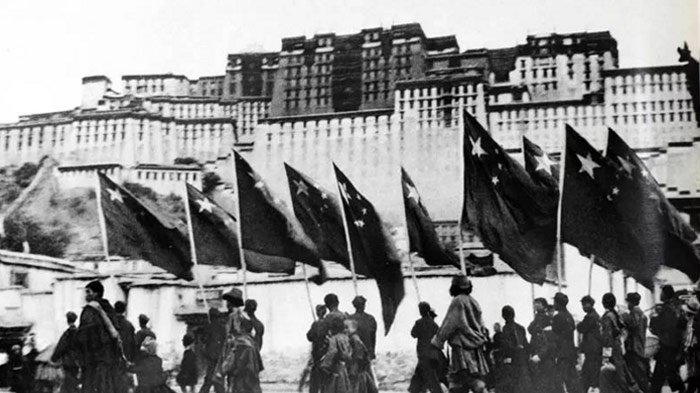
CHINA’S OCCUPATION OF TIBET vs PAKISTAN’S OCCUPATION OF KASHMIR

China’s Occupation of Tibet vs Pakistan’s Occupation of Kashmir.

In my analysis, the discussion about India-Tibet-US Relations will always be shaped by Pakistan’s illegal invasion and occupation of Kashmir.


“Nehru’s ill-thought faux pas set a dangerous precedent in history which affects the relationship between India and Tibet as well as other foreign policy decisions.” – ANJALI KANOJIA, RYAN BAIDYA.


As a lifetime member of the military organization called Special Frontier Force-Establishment No. 22-Vikas Regiment, I do not find any merit in the above view shared by Anjali Kanojia and Ryan Baidya. Even prior to India’s independence, Tibet had the golden opportunity to prepare for War to safeguard its freedom from the threat posed by the Communist takeover of the mainland China. Tibet chose to ignore the offer of assistance extended by the US president Roosevelt while the US invested billions of dollars to prevent the spread of Communism to Asia.


India’s policy was shaped by Tibet’s own policy of ‘Isolationism’. Tibet tried to appease Communist China and agreed to accept the offer of full autonomy rather than full independence. Even now, the Tibetan demand for meaningful autonomy and not freedom is very similar to the Seventeen-Point Plan or Agreement for Peaceful Liberation of Tibet signed on May 23, 1951. Nehru’s decision to sign the ‘Panchsheel’ Agreement of 1954 is consistent with the Tibetan Policy.

China’s Occupation of Tibet vs Pakistan’s Occupation of Kashmir.

I always discuss India-Tibet-US relations in the context of Kashmir. Nehru had the primary responsibility of safeguarding the Republic of India. I cannot discuss the problem of China’s invasion of Tibet without mentioning the problem of Pakistan’s invasion of Kashmir with the connivance of the United States and the United Kingdom.  Prime Minister Nehru was confronted with the problem of Pakistan’s illegal invasion of Kashmir in 1947 (The First Kashmir War of 1947-48) prior to the problem of Tibet’s invasion by the People’s Liberation Army of Communist China in 1949-50. Kashmir is the core or the central issue that will guide the policy of India in formulating external relations with other nations like the Soviet Union/Russia, the United States, Tibet, and China. India was unwilling to openly condemn Chinese invasion of Tibet for the United States and the United Kingdom are unwilling to openly condemn Pakistan’s illegal invasion of Kashmir.

Rudra Narasimham Rebbapragada

Special Frontier Force-Establishment No. 22-Vikas Regiment

China’s Occupation of Tibet vs Pakistan’s Occupation of Kashmir.

India in a sense can be considered as a mother, which gave birth to the beautiful culture of Tibet where the same stream of consciousness flows between the two entities

By Anjali Kanojia and Ryan Baidya -June 28, 2020

Tibet holds extreme importance to Indians as it denotes resilience and survival

Tibet has flourished for centuries; it has been a living hub of ancient culture and spirituality, minding its own business, so to speak. Tibet has made vast contributions to the world in terms of spiritual wealth and philosophy. As parts of the Indian subcontinent were being invaded and the Hindu civilization was obliterated by the barbaric attackers, many seekers, gurus and spiritual masters took refuge in the safety and solitude of Tibet, allowing Hindu and Buddhist thought and literature to survive and flourish. Thus, Tibet holds extreme importance to Indians as it denotes resilience and survival.

India & Tibet – Mutual Roots

One usually thinks of the recent history of Buddhism arriving from India to Tibet. However, the harmonious relationship between India and Tibet runs farther and deeper and predates the time of the Gautama Buddha. Tibetan scholar Bu-ston[1], wrote that the Tibetan race comes from the descendants of the Military General – Rupati – a general from the Kaurava army from the times of the Mahabharata. Tibetan chronicles documents that show Rupati went to Tibet after the Kauravas were defeated by the Pandava army after the epic battle of Mahabharata ended and Rupati was followed by a large number of his consignment into Tibet.

“Tibetans have lost most of their Central Asian possessions to the Chinese and the great Tibetan Empire all but vanished by the 9th century due to Chinese and Mongol invasions.”

India in a sense can be considered as a mother, which gave birth to the beautiful culture of Tibet where the same stream of consciousness flows between the two entities. The roots of Tibet are Indian, and this continued with the advent of Buddhism in Tibet and noble Buddhist thought and philosophy influenced the people and the way of life for the region of Tibet. Two Tibetan kings – Songtsen Gampo and Trisong-Detsen played a vital role in history by introducing Buddhism to their Praja (citizens) in the 7th and 8th centuries. This influence is still practiced and observed in the rituals, art, literature, poetry, and day-to-day lives of the beautiful Tibetan people.

Political Background

This historic border between India and Tibet was called the Indo-Tibetan border and China (Sino) had no mention in defining that border. Tibetan history shows that Tibetan powerful rulers in the 7th century invaded parts of China, and the annexed Chinese territory was even paying taxes or tribute according to a treaty (Treaty of 821 A.D.[2]) between the Tibetan king Tsenpo and the Chinese Emperor Hwang citing “neighborly contentment,” and “establishing a great era when Tibetans shall be happy in Tibet and Chinese shall be happy in China, and this shall never be changed.” The Chinese forces violated the 821 A.D. bilateral treaty by continuously invading Tibet over the centuries.

Tibetans have lost most of their Central Asian possessions to the Chinese and the great Tibetan Empire all but vanished by the 9th century due to Chinese and Mongol invasions[3].

The British signed the Lhasa Convention with the Government of Tibet after their expedition and this denotes Tibet’s sovereignty[4]. It should be noted that China is nowhere in the picture and all official business was conducted with the government of Tibet.

Twentieth Century

Mongolia and Tibet had a formal, bilateral treaty in 1913 where the two nations maintained recognition[5], and Mongolia had kept an Ambassador in the Tibetan capital – Lhasa. In 1913-1914, the representatives of British India, Tibet, and China met in Shimla and settled the political status of Tibet and defined Tibet’s relations with China[6]. British- ruled India and Tibet signed an Indo-Tibet border treaty establishing the McMahon Line[7], which mainly defined the eastern Himalayan international borderline at the Shimla Convention. However, the Shimla Convention failed to meet the goals it set out to accomplish.

Nehru’s ill-thought faux pas set a dangerous precedent in history which affects the relationship between India and Tibet as well as other foreign policy decisions.

Neighboring Nepal, in 1949 applied for the United Nations membership and formally stated that the Tibetan nation had independent, diplomatic relations with the United Kingdom, India, Burma, the United States of America, and Tibet. This clearly shows Tibet as an independent entity.

Chinese Invasion

The Chinese again invaded Tibet in 1949. India’s foreign office responded to the violation (of 821-treaty) on October 26, 1950, as: “In the context of world events, invasion by Chinese troops of Tibet cannot but be regarded as deplorable and in the considered judgment of the Government of India, not in the interest of China or peace.”

India’s response clearly shows that India did not recognize Tibet as part of China. If India did recognize Tibet as part of China, it would not refer to the violation of the 821 A.D. as an “invasion.”

When India became independent of the British in 1947, the Government of India sent the following note recognizing the Tibetan government: “The Government of India would be glad to have an assurance that it is the intention of the Tibetan government to continue relations on the existing basis until new arrangements are reached that either party may wish to take up. This is the procedure adopted by all other countries with which India has inherited treaty relations from His Majesty’s Government.”

Mao Zedong acknowledged independent Tibet

After the fall of the Manchus in 1911, China offered both Nepal and Tibet to join China, and both the nations refused. China clearly recognized each of these nations as being sovereign entities up to this moment of time. During World War II, Tibet continuously maintained neutrality and did not allow passage of any troops through its territory. Even Mao Zedong acknowledged the independent status of Tibet in the year 1938 when traveling through the Tibet-China border regions and said that “This is our only foreign debt, and someday we must pay — the Tibetans for the provisions we received from them.”

Soon after the failure of the Shimla Convention where China refused to sign the treaty, Mao Zedong declared a liberation plan for Tibet and began claiming that Tibet has always been a part of China. The then Indian Prime Minister – Jawaharlal Nehru for the first time recognized China’s claim over Tibet and signed the Panchsheel Treaty in 1954 acknowledging the same[8].

Nehru’s ill-thought faux pas set a dangerous precedent in history which affects the relationship between India and Tibet as well as other foreign policy decisions.

On June 23, 2003, while visiting China, in a joint declaration signed by then Indian Prime Minister Atal Bihari Vajpayee and Chinese Premier Wen Jiabao, for the first-time recognized Tibet as a part of China. However, soon after the declaration, China repeatedly violated this declaration and Panchsheel accord by substance and spirit. China’s aggression has continued even today with increased vigor and voracity.

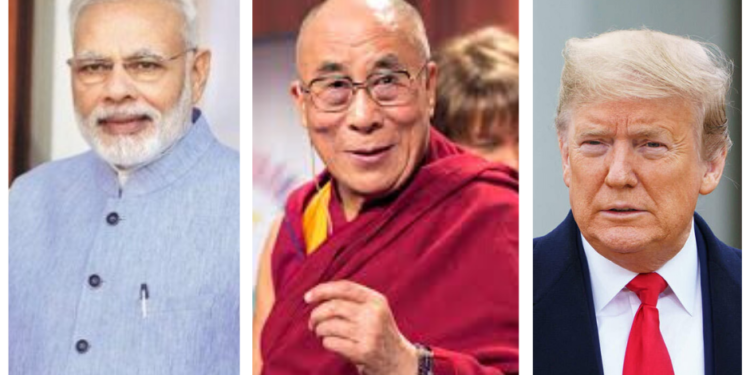
India had enough and India has begun to ‘Right’ the ‘Wrong’. In 2014, when Mr. Narendra D. Modi got elected by an unprecedented mandate by the citizens of India, Mr. Modi invited the head of the exiled government of Tibet to his swearing-in ceremony.

“Given the recent issues between India and China over land grabbing, India needs to firm up its policies towards all its neighboring nations, especially Tibet.”

Righting the Wrongs

More than 1.2 million Tibetans have died as a result of China’s occupation of Tibet. The culture and people have been systemically destroyed and redirected resources that put Tibetans in a terrible position for survival. China indiscriminately diverted water from the multinational rivers which originate in Tibet thereby putting the lives and well-being of billions of people at risk.

India not just from a moral and ethical perspective but from a cultural perspective needs to maintain a protective status towards nations such as Tibet and Nepal and it is in everyone’s mutual interest that their sovereignty remains intact and protected from the neighboring Communist dreams and agendas.

Given the recent issues between India and China over land grabbing, India needs to firm up its policies towards all its neighboring nations, especially Tibet. Nations often declare treaties to be moot, and it is time for India to declare that it will no longer recognize the Panchsheel Treaty of 1954 to be valid. India has no choice but to rescind its reluctant recognition of Tibet as a part of China, and formally re-recognize Tibet as a sovereign nation.

Note:
1. The views expressed here are those of the author and do not necessarily represent or reflect the views of PGurus.

References:

[1] BU STON – Encyclopedia

[2] Sino-Tibetan Treaty Inscription – Wikipedia

[3] The Invasion of Tibet – U Mass

[4] Treaty of Lhasa – Wikipedia

[5] Treaty of friendship and alliance between the Government of Mongolia and Tibet – Wikipedia

[6] Simla Convention – Wikipedia

[7] McMahon Line – Wikipedia

[8] Panchsheel – MEA

Anjali Kanojia- PhD, and Ryan Baidya – PhD, MBA
Project Itihasam

China’s Occupation of Tibet vs Pakistan’s Occupation of Kashmir.

After Seventy Years, the United States is giving the support to India in the Ladakh Sector of Kashmir

After Seventy Years, the United States is giving support to India in the Ladakh Sector of Kashmir.

In my analysis, the United States is awakening to the global threats posed by China’s military expansionism and at the same time the American infatuation with Pakistan is weakening as Pakistan drifts into Extremism. As a result, after seventy years, the United States is giving the support to India in the Ladakh Sector of Kashmir to contain China’s military adventurism. Seventy Years ago, in 1950, China easily occupied the Aksai Chin area of Ladakh Sector taking full advantage of the ambiguous US policy.

After Seventy Years, the United States is giving the support to India in the Ladakh Sector of Kashmir.

From Tibet to Galwan: 70 Years of Sino-India Twisted Ties

(MENAFN – Kashmir Observer) Behind the fresh LAC faceoff is the seven-decade-old fraught history dominated by dragon’s menacing advances and territorial ambitions.

By Swati Joshi

A video of a family throwing their television from their balcony as a sign of protest against China is making rounds on social media. Considering everyone is not so enthusiastic in giving up their well-earned Chinese products, the family has not set an example but it is an act that just tends to become a source of entertainment for many.

The old clichéd ‘Hindi Chini bhai bhai’ slogan apart, the relationship between the two is not very healthy and the continuous face-offs between them have made it sourer.

To understand the relationship between India and China, one has to go back to the time in the late 1940s when both emerging Third World Countries- the newly independent India and the rising communist China were planning to make their presence in the world.

The entire Sino-India border including the western Line of Actual Control (LAC), some disputed section in the middle and the McMahon Line in the east is 4,056 km which traverses through the union territory of Ladakh and four states- Uttarakhand, Himachal Pradesh, Sikkim, and Arunachal Pradesh.

First Dispute: Tibet

The first territorial issue faced by India after independence with China involved Tibet.

Tibet lies on the Tibetan plateau on the northern side of the Himalayas between India and China.

However, the two sides did not decide on the demarcation of the Indian-Tibetan border.

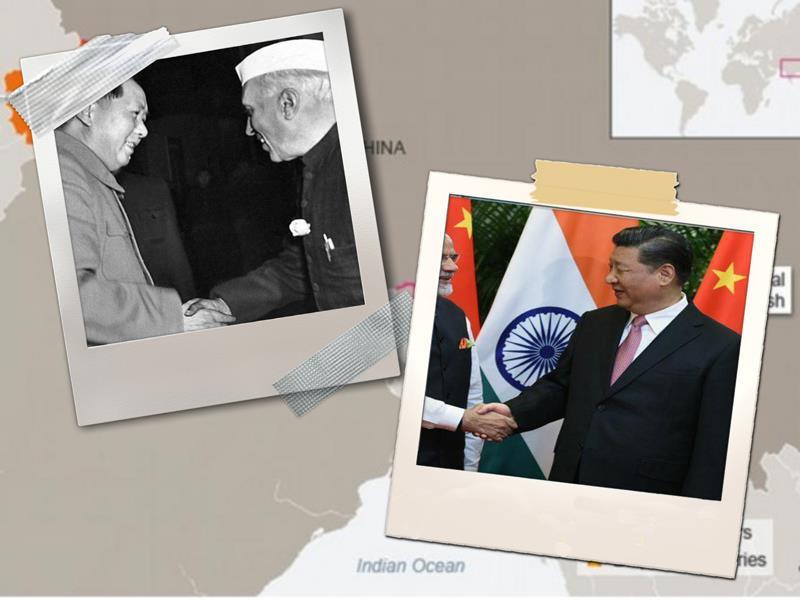
In the same year, the two countries signed the Panchsheel Treaty – five principles of peaceful co-existence under the leadership of Prime Minister of India Pt. Jawaharlal Nehru and Chinese Premier Zhou Enlai, during the latter’s visit to Delhi.

The five principles of coexistence mentioned in the Treaty included respect for territorial integrity and sovereignty, non-aggression, non-interference in internal affairs, equality and mutual benefit, and peaceful coexistence.

In 1955, Beijing decided to set up a Preparatory Committee for setting up Tibetan Autonomous Region, that marked the end of traditional Tibetan society and the transfer of power to the China Communist Party (CCP) from the theocratic government under the Dalai Lama. This move by China created unrest in Tibet.

After Seventy Years, the United States is giving the support to India in the Ladakh Sector of Kashmir.

Dalai Lama and others

In 1956, the People’s Liberation Army (PLA) annihilated monasteries in Eastern Tibet where local insurgents had taken refuge. This action by China worsened the condition in Tibet and the Dalai Lama pressured Beijing to resolve the condition otherwise he would stay in exile in India.

After negotiations, the Dalai Lama came back to Tibet.

After the Tibetan Uprising in 1959, India had given asylum to the Dalai Lama which did not go well with the Chinese. China considered this move by India as a threat to its rule over Tibet. Even Mao Zedong, the former chairman of the People’s Republic of China (PRC) stated that the uprising in Lhasa was caused by India.

Frontier Tensions

Amidst the Tibet issue between China and India, other border issues also came into light. The western and eastern non-demarcated borders received troops from both sides.

After Seventy Years, the United States is giving the support to India in the Ladakh Sector of Kashmir.

Nehru meets Mao in Beijing, 1954

In 1960 Zhou Enlai suggested that if India gave up its claim over Aksai Chin, China in return would drop its claim on Arunachal Pradesh but Nehru didn’t agree with it saying China had no rule over these areas. India started following ‘Forward Policy’ and sent troops and patrols to the disputed areas.

The Sino-India war which went for a month in both eastern and western fronts resulted in the loss of life and property. It is estimated that 3000 Indian soldiers were killed and approximately 1000 were injured.

After Seventy Years, the United States is giving the support to India in the Ladakh Sector of Kashmir.

1962 Sino-Indian War

Between 1962 and 1969 the relation between India and China was cold. Beijing’s political and military support to Islamabad further worsened the condition.

The relations between India and China further crumbled in June 1967 when two Indian diplomats were expelled from Beijing on alleged charges of ‘espionage activities’.

On October 1 that year, China again fired heavily on Indian troops in Cho La which ended on the same day.

New Era

The relationship between India and China was officially re-established in 1979 when Atal Bihari Vajpayee, the then foreign minister of India, visited China.

During his visit, Vajpayee brought the contentious border issues with the Chinese leader who in turn told him not to bring the issue for discussion. Following this many political leaders visited China which started a new era of India-China relations.

According to a research paper by journalist Manoj Joshi, ‘Since the early 1980s, both sides have held multiple rounds of talks to draw up a mutually acceptable LAC and resolve their border dispute. However, even though they have inched towards the goals, they have failed to follow-through.’

Renewed Face-offs

India and China had many face-offs but the one at Doklam in 2017 lasted for more than two months.

Doklam lies at the trijunction between India, Bhutan, and China and is surrounded by the Chumbi valley of Tibet, Bhutan’s Ha Valley, and Sikkim.

The Doklam region is claimed by both Bhutan and China and even after efforts from both the countries, the dispute has not been resolved.

The dispute worsened in 2017 when China started constructing a road in the area. Indian troops supported Bhutan and objected to the construction activities by Beijing resulting in a standoff.

After Seventy Years, the United States is giving the support to India in the Ladakh Sector of Kashmir.

PM Modi and President Jinping

Doklam being located close to the Siliguri corridor that connects mainland India with its north-eastern region, is important for India for security reasons.

In recent years, China has been increasing its troops in the Chumbi valley. Since both Indian and Bhutanese troops are at the higher ground around the valley, they are at a much advantageous position, unlike China.

If the Chinese had captured Doklam they would be at a commanding position of Chumbi valley and Siliguri corridor.

Fresh Faceoff

The current dispute between India and China along the LAC is one of the worst rows between the two countries post-1962.

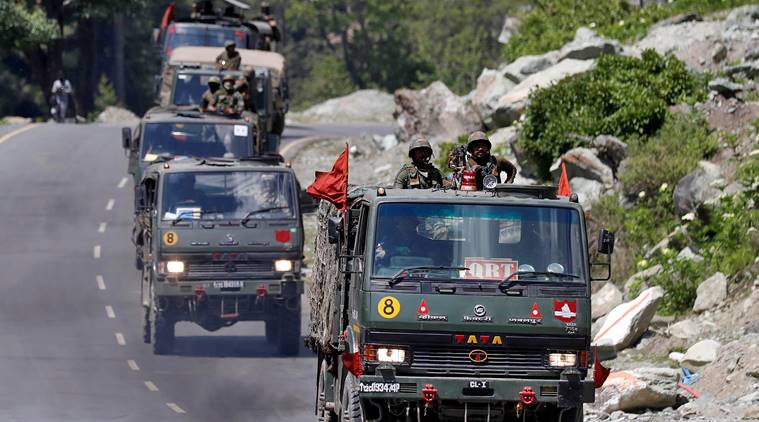
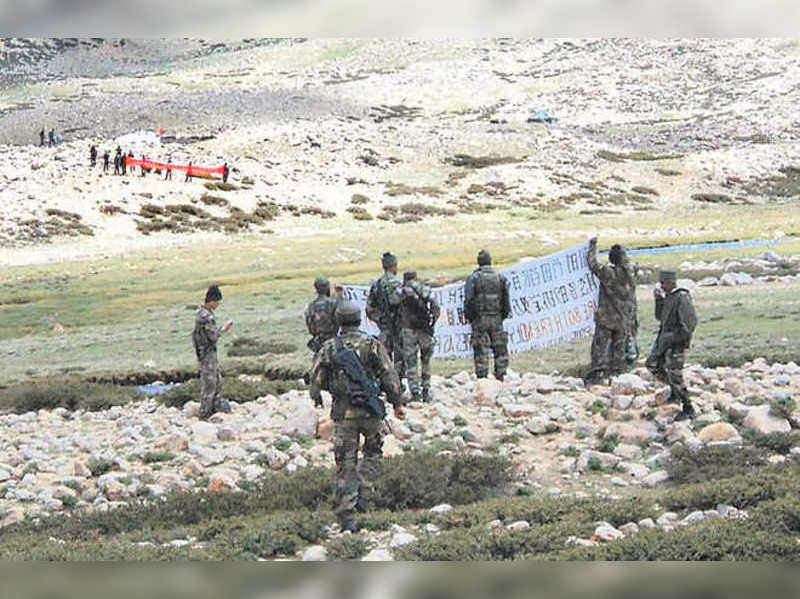
At least 20 Indian soldiers were killed on June 15 in the Galwan valley which became the first casualties in 45 years along the border. Indian troops were accused of crossing the border twice ‘provoking and attacking the Chinese personnel’.

There are reports of Chinese casualties but there is no confirmation from the officials.

After Seventy Years, the United States is giving the support to India in the Ladakh Sector of Kashmir.

LAC Standoff renewed Sino-India tensions

The first confrontation between the Chinese and Indian troops happened around the Pangong lake. The Sirijap range overlooking the lake has many cliffs which are numbered one to eight. India claims the LAC up to Finger 8. Chinese troops come from behind Finger 8 cliffs and can be seen by the Indian side only when the Chinese troops are at Finger 6.

To increase its visibility over the Chinese troops, the Indian side decided to build an observation point at Finger 8 that would help Indian soldiers to intercept Chinese soldiers, as soon they entered the area from Finger 8.

The Chinese PLA objected the construction and put pressure on India to halt the work, due to which a standoff happened between the soldiers of two sides on May 5-6 but it was controlled as both the armies stuck to protocols to resolve the issue.

The second dispute took place over a bridge build by India in the Despang Plains across the Galwan rivulet. PLA was beefed up at patrolling points 14, 15 and 17. The bridge is supposed to give the soldiers access to Daulat Beg Oldie, the last military post south of Karakoram Pass.

The bridge is now functional amid the ongoing tension between the two countries.

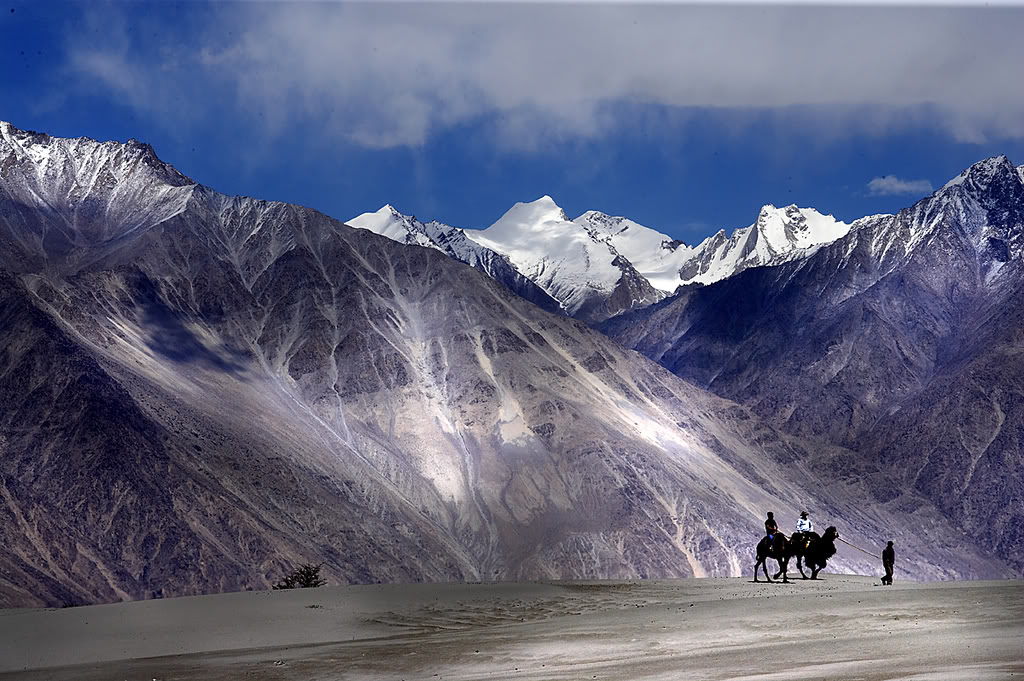
After Seventy Years, the United States is giving the support to India in the Ladakh Sector of Kashmir. Unbranded Valley, Ladakh.
After Seventy Years, the United States is giving the support to India in the Ladakh Sector of Kashmir

The Principles of War. India’s Strategy of Perseverance

Special Frontier Force – The Doctrine of Tibetan Resistance: The tools of Tibetan Resistance are 1. Patience, 2. Persistence, and 3. Perseverance. Man opposes the reign of force by standing firm or by working against the force without yielding. To oppose and to withstand a force, man needs the virtues of Temperance, Tolerance, and Tranquility to remain calm, unperturbed to maintain “Inner Peace” while reacting to an external force. The virtue of Perseverance triumphs for it preserves the “Inner Peace” while the external reality is described by Violence or War.

The Principles of War-The Strategy of Perseverance:


Perseverance – to ensure the commitment necessary to attain the national strategic end state. As a lifetime soldier of the military organization called the Special Frontier Force also known as Establishment No. 22 and Vikas Regiment, I learned about the military strategy described as Perseverance.
India and the world do not need satellite image evidence to know the fact of China’s military occupation of Tibet. Since 1950, India pursued the option of Strategic Perseverance to contain the national security threats posed by China’s illegal conquest of Tibet . India’s security interests will not be fully served by taking military action against the PLA who intruded into Indian territory across the McMahon Line. India’s security demands the total eviction of the military occupier of Tibet.
To accomplish the above mentioned objective, India and Tibet are patiently waiting for the right time to launch their offensive operation which may include a global coalition of forces who may launch simultaneous attacks on other fronts apart from the Himalayan Frontier. We need the commitment of other nations. I am hopeful that the military mission will be accomplished as I describe it as “The Battle of Right Against Might” using the phrase coined by Gandhi as his battle plan to oppose the mighty British Empire.

China is on LAC to tell India who the ‘big brother’ is, not to gain territory

“Depending on the diplomatic and military response from India, PLA’s means will be calibrated to achieve China’s military aim.”

By Lieutenant General H S Panag PVSM, AVSM (Retired)

Lt Gen H S Panag PVSM, AVSM (R) served in the Indian Army for 40 years. He was GOC in C Northern Command and Central Command. Post-retirement, he was Member of Armed Forces Tribunal. Views are personal.

The situation along the Line of Actual Control is tactical, but the intent of both sides is strategic, as it should be. The ultimate political aim of any conflict between nations is lasting peace on own terms. However, the issue is relative, as lasting peace in competitive conflict among nations remains a utopia. Military is only the means to achieve this end and always the last resort.

China has precipitated the situation along the LAC in Eastern Ladakh by preemptively securing/threatening previously un-occupied, but patrolled, tactical areas with strategic importance in the Galwan River Valley, Hot Spring-Gogra-Kongka La area and north of Pangong Tso. Having seized the initiative, China has put the onus on India to respond, on which will depend Beijing’s future course of political and military action. China has come prepared for escalation to achieve its strategic aim.

India’s sovereignty and territorial integrity are at stake. Militarily, India has contained the Chinese intrusions and poised its forces to deal with the developing situation. Its future course of action, particularly with respect to use of military means, will also depend on the political aim it has defined for itself.

The unfortunate events on the intervening night of 15 and 16 June have forced the adversaries to take fresh stock of the situation. China, the initiator and aggressor of the conflict, has realized that if the ‘fist and club fight’ was so violent and barbarous, what it would be like in an armed conflict/war with India’s Army of today. The stage is set for a military disengagement to tactically separate the rival forces and pave way for the diplomatic negotiations to settle larger strategic issues. If diplomacy fails, military  means for either side would be the last resort to achieve political aims.

Tactical military situation

In the Galwan Valley, post the 15-16 June incident, there seems to be no presence left of China’s People’s Liberation Army or the PLA, as is distinct from the heights to the north and south. One does not know the exact details of what was agreed to after the first round of Corps Commander-level talks on 6 June, or what  has since been modified during the second round on 22 June. At what distance from the LAC are the troops of both the countries going to remain deployed is not known. In mountains or high-altitude areas, the battle is for the control of the heights. Valley is used for logistics and movement of vehicles, but has to be defended to avoid being cut off. Thus, what has happened in the Valley so far is a sideshow. If the PLA is not holding the heights to the north and south, then we  should be holding them. Without control of the heights, the Valley cannot be defended.

In the Hot Springs-Gogra-Kongka La area, the situation remains unchanged. We cannot patrol up to Kongka La, and the area between Kongka La and Gogra Post seems to be under the control of the PLA.

The situation North of Pangong Tso is in the open domain due to satellite images available on OSINT platforms. The area between Finger 4 and Finger 8 (5.6 km as the crow flies and 8 km when measured along the banks of Pangong Tso) is still firmly under PLA’s control. Military infrastructure and defences have been constructed on ridges going north, along Fingers 4, 5 and 6, up to 5 km. Thus, approximately 40 sq km of our area where we patrolled effectively prior to April is now under PLA control.

Elsewhere, all along the LAC, India and China have mobilised and carried out precautionary deployment to cater to any escalation.

It is beyond my comprehension as to why we are still in denial about the situation. If the assessment of OSINT is wrong, then there is a simple solution to counter claims of PLA incursions—take the press to these spots in helicopters and show them the reality.

Chinese actions are strategic in intent and tactical in execution, and aim to create an embarrassing situation for India, daring it to respond. Depending on the diplomatic and military response from India, PLA’s military means will be calibrated to achieve China’s military aim.

Political aim of China

China is very sensitive to any threat to Aksai Chin, which it gradually occupied in 1950s, and other areas to its west and south that it captured in the 1962 war with India to gain strategic depth. India’s fast-developing border infrastructure in eastern Ladakh does exactly that, howsoever remote the possibility may seem to be at this juncture. Gaining additional territory is not China’s aim per se.

China perceives that by threatening to recapture Pakistan-Occupied Kashmir (PoK) and Gilgit-Baltistan, India is posing a threat to its prestigious economic project — the China-Pakistan-Economic-Corridor or the CPEC. Indirectly, China desires a similar relationship between India and Pakistan as was prevailing with itself since 1990s. That is, relative peace on border and focus on economic relations.

India’s asylum to Dalai Lama in 1959 and the perceived training of Tibetan ‘rebels’ in conjunction with the Central Intelligence Agency (CIA) was a major factor that led to the 1962 war. The presence of the Dalai Lama in India, the Tibetan government in exile and 10,000 to 15,000 Tibetan soldiers  trained as special forces is considered by China to be the most serious potential threat to its sovereignty. India is seen as the principal instigator of the Tibetan struggle for freedom.

China also perceives that India is colluding with the US and its allies to undermine its strategic interests in the international arena, in general, and South China Sea and Indo-Pacific, in particular.

The political aim or idealistic strategic wish list of China would be on the following lines:

  • To maintain the ‘status quo’ with respect to border infrastructure along the LAC on its own terms — to forestall any threat, howsoever remote, to Aksai Chin and NH 219.
  • To prevent any threat developing to the CPEC by brokering a peace deal between India and Pakistan.
  • Coax India to join Belt and Road Initiative, in general, and CPEC, in particular.
  • Coax India to refrain from colluding with the US and its allies to undermine China’s strategic interests, particularly in the Indo-Pacific and South China Sea.

In a nutshell, China wants India to play the role of a cooperative junior partner and not that of a competitor, both regionally and globally. To what extent it can achieve the aims highlighted above will depend on its diplomatic skills and how it uses its military to enforce its will. If its broad political aim is achieved, then it will restore status quo ante April 2020, and agree to demarcate the LAC, subject to final boundary settlement.

India’s political aim

The broad contours of India’s political aims should be as follows:

  • Retain its sovereignty and territorial integrity and strategic independence as an equal competitor to China,both regionally and globally.
  • Restore status quo ante April 2020 with respect to the LAC and ensure its demarcation.
  • Retain freedom to develop border infrastructure as it deems fit.
  • Retain its claim over PoK, Gilgit-Baltistan under occupation of Pakistan, and Aksai Chin and other areas seized by China since 1950.
  • Continue to highlight the illegality of the CPEC, since it passes through territory that rightfully belongs to India.

Ideally, a military setback for China in a limited conflict enables India to achieve its political aim in its entirety. However, the differential in comprehensive national power, particularly in economic and military domains, is in favor of China. We have the military capability to calibrate our response to stalemate China, but a setback will set us behind by decades.

The challenge before the Narendra Modi government is to skillfully manage its diplomacy and military means to achieve its political aims.


India’s management of the current crisis

India is facing a strategic dilemma. I have no quarrel with the narrative— ‘nothing has happened on the LAC, no territory has been lost’—except that the government  shouldn’t itself start believing this narrative as it also serves the Chinese narrative.

A seasoned political leader once told me that politicians have one major weakness—they repeat a lie so many times to shape public perception that after a point in time they themselves start believing in that lie.

One presumes that the Cabinet Committee on Security (CCS) and the National Security Council (NSC) have formally met and a national security strategy in consultation with the Chief of Defence Staff has been formulated to handle the situation. But, doubts assail me when I hear—“armed forces have been given full freedom of action”. Armed forces are given a formal political directive based on the decision made in the CCS and NSC to achieve the political aims and not a rhetoric one liner.

Special Frontier Force – China’s Military Threat: China’s Military Power, China’s Military Strategy, and China’s Military Tactics cannot overcome the Power of Perseverance, the Perseverance of Tibetan Resistance.

The Unfinished Korea-Vietnam War. The Cold War Mentality is Alive

The Unfinished Korea-Vietnam War. The Cold War Mentality is Alive.

The Cold War in Asia can be traced to the threat posed by the spread of Communism from Europe to Asia during the concluding years of World War II. To contain the threat of the Communist Expansionism, the US fought wars in Korea and Vietnam. The Cold War Mentality is alive as Korea, and Vietnam are not the real adversary. It is not surprising to note that the US would place a few clamps on the Propaganda Machinery of Communist Party of China.

Rudra Narasimham Rebbapragada

Special Frontier Force-Establishment No. 22-Vikas Regiment

The Unfinished Korea-Vietnam War. The Cold War Mentality is Alive.

China vows to respond after US targets more state media outlets

By Hadas Gold and Eric Cheung, CNN

Updated 7:58 AM ET, Tue June 23, 2020

London (CNN Business)China has vowed to make a “necessary and legitimate” response after the US government designated four more Chinese state media outlets as “foreign diplomatic missions.”On Monday, the Trump administration announced that it would treat China Central Television (CCTV), China News Service, the People’s Daily and the Global Times as arms of the Chinese government, arguing that they are under the control of the Chinese Communist Party.The designation means the outlets must now submit to the rules that cover diplomatic missions, such as providing detailed information about their employees— whether Chinese or not — and notifying the US government about any real estate transactions.Five Chinese outlets —Xinhua, CCTV subsidiary China Global Television Network, China Radio International, China Daily and People’s Daily parent Hai Tian Development USA — were given the same label in February. At a regular briefing on Tuesday, China’s Ministry of Foreign Affairs criticized the United States for its “political suppression of Chinese media” and argued it would undermine their reporting.

“It also further exposed the hypocrisy of the so-called freedom of press and speech boasted by the US,” Zhao Lijian, a spokesman for the ministry said at a press conference. “We strongly urge the US to abandon the Cold War mentality, ideological prejudice, and immediately stop and correct this practice that does harm to both sides.”The US move and China’s threatened response is the latest sign of growing tension between China and the United States over the coronavirus pandemic, trade, and Hong Kong, with media outlets in both countries getting caught in the middle. Chinese state TV breached UK media rules over Hong Kong protests.

Since the US move on Chinese media in February, China has expelled journalists from The New York Times, The Wall Street Journal and The Washington Post. The US government also announced last month that Chinese journalists working for non-American outlets would be limited to 90-day working visas.

The Unfinished Korea-Vietnam War. The Cold War Mentality is Alive.

The United States Must Evict the Military Occupier of Tibet-The Unfinished Korea-Vietnam War

The United States Must Evict the Military Occupier of Tibet-The Unfinished Korea-Vietnam War.

In my analysis, ‘The Cold War in Asia’ represents the dangers of the spread of Communism to the mainland China. The United States armed intervention in the Korean Peninsula did not prevent the Communist takeover of Tibet in 1950. The United States must recognize the real Enemy and must evict the Military Occupier of Tibet to secure Peace, Freedom, Democracy, and Justice in South Asia.

Rudra Narasimham Rebbapragada

Special Frontier Force-Establishment No. 22-Vikas Regiment

The United States Must Evict the Military Occupier of Tibet. Special Frontier Force VS The Evil Red Empire-Red China .

India-China clash: Diplomats ‘strongly protest’ over border clashes

BBC June 17, 2020, 2:52 PM UTC

The two nations have an agreement that says no guns should be taken within two kilometres of the border
The United States Must Evict the Military Occupier of Tibet. India and China have an agreement that says no guns should be taken within two kilometres of the border.

The Indian and Chinese foreign ministers have exchanged protests over clashes in a disputed Himalayan border area which led to the deaths of at least 20 Indian troops.

India’s Subrahmanyam Jaishankar said China tried to erect a structure inside Indian territory, while China’s Wang Yi said Indian troops attacked first.

But in a phone call both men promised not to escalate the situation.

It was the first deadly clash at the disputed border for at least 45 years.

Soldiers reportedly brawled with sticks and bats but no shots were fired.

China has not released casualty figures. Unconfirmed reports in Indian media say at least 40 Chinese soldiers died. Some Indian soldiers are still believed to be missing.

Earlier Indian Prime Minister Narendra Modi said the Indian deaths “will not be in vain” and that India would be “proud that our soldiers died fighting the Chinese” in the clash in the Ladakh region on Monday.

Addressing the confrontation for the first time in a televised address on Wednesday, he said: “India wants peace but when provoked, India is capable of giving a fitting reply, be it any kind of situation.”

What did the two diplomats say?

An Indian government statement following the phone conversation said that Chinese troops had tried to put up a structure on the Indian side of the de facto border, the Line of Actual Control (LAC), in the strategically important Galwan Valley.

It described this as “premeditated and planned action that was directly responsible for the resulting violence and casualties” and urged China to “take corrective steps”.

Google Maps view of Galwan Valley
The United States Must Evict the Military Occupier of Tibet. Google Maps view of Galwan Valley

The statement concluded that neither side would take action to escalate matters.

Meanwhile a Chinese statement quoted Mr Wang as saying: “China again expresses strong protest to India and demands the Indian side launches a thorough investigation… and stop all provocative actions to ensure the same things do not happen again.”

“Both sides should resolve the dispute through dialogue, and keep the border safe and tranquil,” he added.

What happened?

The fighting occurred in the precipitous, rocky terrain of the Galwan Valley.

Indian media say soldiers engaged in direct hand-to-hand combat, with some “beaten to death”. During the fight, one newspaper reported, others fell or were pushed into a river.

A satellite image of Galwan Valley shows the rocky and barren terrain
The United States Must Evict the Military Occupier of Tibet. A satellite image of Galwan Valley shows the rocky and barren terrain.

The Indian army initially said a colonel and two soldiers had died. It later said that “17 Indian troops who were critically injured in the line of duty” had died from their injuries, taking the “total that were killed in action to 20”.

“I understand that some [further] Indian soldiers went missing. The Indian side is still working to release them from Chinese custody,” defence analyst Ajai Shukla told the BBC.
Indian forces appear to have been massively outnumbered by Chinese troops.

A senior Indian military official told the BBC there were 55 Indians versus 300 Chinese, who he described as “the Death Squad”.

“They hit our boys on the head with metal batons wrapped in barbed wire. Our boys fought with bare hands,” the officer, who did not want to be named, said.

The clash has provoked protests in India, with people burning Chinese flags.

China has not confirmed how many of its personnel died or were injured. The BBC’s Robin Brant in Beijing says that China has never given contemporaneous confirmation on military deaths outside of peacekeeping duties.

Our correspondent adds that on this occasion China’s propagandists may not want to fan nationalist flames at home by making much of any loss, or admit to a significant and demoralizing loss.

This is not the first time the two nuclear-armed neighbors have fought without conventional firearms on the border. India and China have a history of face-offs and overlapping territorial claims along the more than 3,440km (2,100 mile), poorly drawn LAC separating the two sides.

India shows restraint

Analysis by Geeta Pandey, BBC News, Delhi

The first comments from the Indian government on the violent standoff on the Chinese border came nearly 24 hours after the news broke on Tuesday.

And Prime Minister Narendra Modi and his cabinet colleagues – the defence minister and the home minister – have chosen their words carefully.

Usually boastful and given to grandstanding, Mr Modi and his ministers have displayed utmost restraint in their public messages this time, mostly sticking to mourning the loss of soldiers.

The prime minister did say: “India wants peace but, if instigated, it is capable of giving a befitting reply.” But this is seen as aimed more at his political rivals and supporters domestically, rather than as a warning to Beijing.

How tense is the area?

The LAC is poorly demarcated. The presence of rivers, lakes and snowcaps means the line can shift. The soldiers either side – representing two of the world’s largest armies – come face-to-face at many points.

Border patrols have often bumped into each other, resulting in occasional scuffles.

The last firing on the border happened in 1975 when four Indian soldiers were killed in a remote pass in the north-eastern state of Arunachal Pradesh. The clash was variously described by former diplomats as an ambush and an accident.

But no bullets have been fired since.

At the root of this is a 1996 bilateral agreement that says “neither side shall open fire… conduct blast operations or hunt with guns or explosives within two kilometres of the Line of Actual Control”.

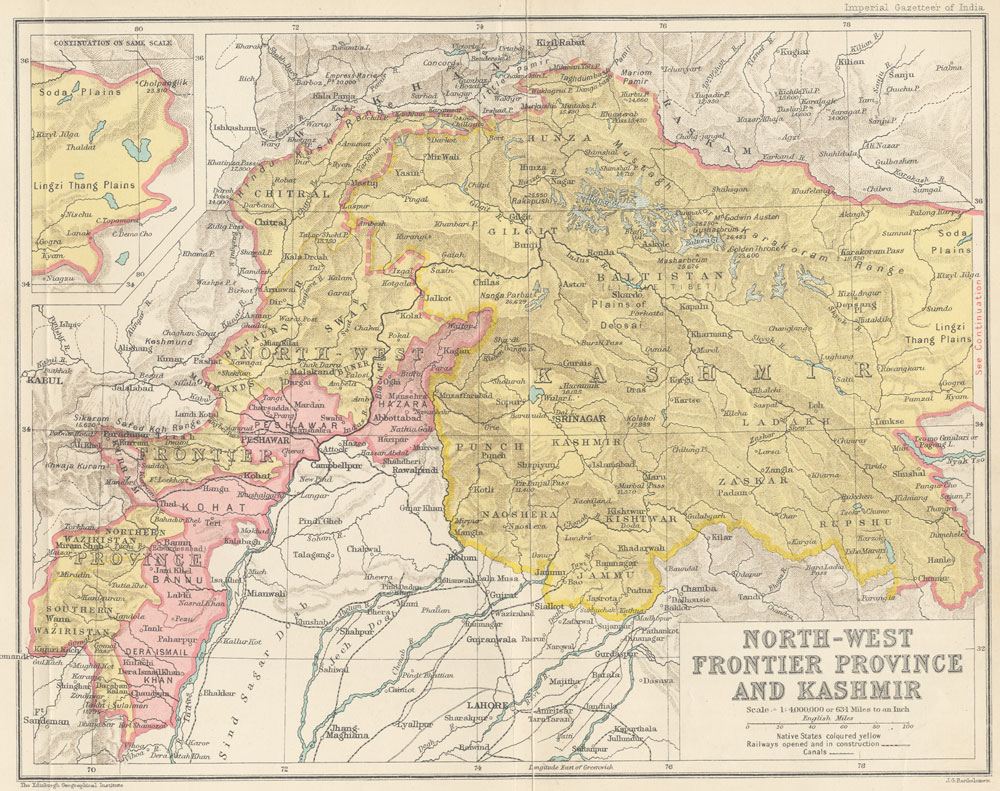
Kashmir map
The United States Must Evict the Military Occupier of Tibet. Kashmir map

But there have been tense confrontations along the border in recent weeks. In May Indian and Chinese soldiers exchanged physical blows on the border at Pangong Lake, also in Ladakh, and in the north-eastern Indian state of Sikkim hundreds of miles to the east.

India has accused China of sending thousands of troops into Ladakh’s Galwan Valley and says China occupies 38,000 sq km (14,700 sq miles) of its territory. Several rounds of talks in the last three decades have failed to resolve the boundary disputes.

There are several reasons why tensions are rising again now – but competing strategic goals lie at the root.

The two countries have devoted extensive money and manpower to building roads, bridges, rail links and air fields along the disputed border.

Both India and China see each other’s construction efforts as calculated moves to gain a tactical advantage, and tensions often flare up when either announces a major project.

SPECIAL FRONTIER FORCE VS THE EVIL RED EMPIRE : FOR SEVENTY YEARS, TIBETANS HAVE LIVED UNDER MILITARY OCCUPATION . WHAT IS TIBET’S FUTURE? HOW TO EVICT THE EVIL RED EMPIRE FROM TIBET ?

Sunday, June 14, 2020. The US Flag Day Gives the Hope for Freedom in Tibet

Sunday, June 14, 2020. The US Flag Day Gives the Hope for Freedom in Tibet.

Celebrating Flag Day

June 14 is Flag Day, which commemorates the adoption of the flag of the United States in 1777. Our nation’s first official flag had 13 stars and 13 red and white stripes to represent the original 13 colonies that broke from British rule. The stars were arranged on a blue background to represent a ‘new constellation.’ In 1795, two more stars and two stripes were added to reflect the entry of Vermont and Kentucky to the Union. Then in 1818, Congress passed a plan to go back to 13 stripes and add only stars for new states. The current version of the flag has been in effect since 1960, after Hawaii became a state the prior year. The flags we’re looking at here are flying in New Jersey’s Liberty State Park, with the Statue of Liberty in the background.

In 1916, President Woodrow Wilson issued a proclamation that officially established June 14 as Flag Day; on August 3, 1949, National Flag Day was established by an Act of Congress. Flag Day is not an official federal holiday. Title 36 of the United States Code, Subtitle I, Part A, CHAPTER 1, § 110 is the official statute on Flag Day; however, it is at the president’s discretion to officially proclaim the observation.

The red and white and starry blue is freedom’s shield and hope. ​—John Philip Sousa

Proclamation on Flag Day and National Flag Week, 2020

Issued on: June 12, 2020

Sunday, June 14, 2020. The US Flag Day Gives the Hope for Freedom in Tibet.

On Flag Day and throughout National Flag Week, we pay tribute to the American flag, the most recognizable symbol of the principles for which our Republic stands.  For more than 200 years, the Stars and Stripes has represented liberty, justice, and the rule of law.  Recently, as our Nation has come together to respond to the coronavirus pandemic, our flag has been a reminder of the courage, tenacity, and loyalty that define the indomitable American spirit.

Our great flag causes us to reflect humbly on the immeasurable price that has been paid to keep it “so gallantly streaming.”  Throughout our Nation’s history, proud patriots have nobly answered the call of duty when our country needed them most.  The Star Spangled Banner serves as an everlasting remembrance of the sacrifices heroes of every generation have made in conflicts from the Revolutionary War to the wars in Iraq and Afghanistan.  Our flag ensures that we never forget the incredible sacrifices our men and women in uniform have made to defend our liberty and way of life.

This year, Old Glory has waved over millions of brave Americans fighting the invisible enemy, often at risk to their personal health and wellbeing.  Throughout the coronavirus pandemic, healthcare professionals have treated and cared for those sickened by the virus, and countless American patriots have provided critical goods and services to their fellow citizens in these uncertain times.  These dedicated individuals have risen to the challenge, meeting the virus on the frontlines with the same conviction and unwavering determination that has empowered our Nation to overcome previous trials.  Just as we prevailed in those struggles, we will emerge victorious against this new enemy and again raise our flag in triumph.

The American flag represents the unity of our country and its people.  No matter what may divide us, Old Glory should be revered and cherished, as a symbol of all that makes America the greatest country in the world.  As we honor our beautiful flag on this day and throughout this week, let us vow never to forget the tremendous sacrifices made by patriots from generation to generation to ensure that the red, white, and blue continues to fly high and free.  Today, and every day, I am proud to join my fellow Americans in standing tall and saluting our great American flag.

To commemorate the adoption of our flag, the Congress, by joint resolution approved August 3, 1949, as amended (63 Stat. 492), designated June 14 of each year as “Flag Day” and requested that the President issue an annual proclamation calling for its observance and for the display of the flag of the United States on all Federal Government buildings.  The Congress requested, by joint resolution approved June 9, 1966, as amended (80 Stat. 194), that the President issue annually a proclamation designating the week in which June 14 occurs as “National Flag Week” and calling on all citizens of the United States to display the flag during that week.

NOW, THEREFORE, I, DONALD J. TRUMP, President of the United States of America, do hereby proclaim June 14, 2020, as Flag Day, and the week starting June 14, 2020, as National Flag Week.  I direct the appropriate officials to display the flag on all Federal Government buildings during this week, and I urge all Americans to observe Flag Day and National Flag Week by displaying the flag.  I encourage the people of the United States to observe with pride and all due ceremony those days from Flag Day through Independence Day, set aside by the Congress (89 Stat. 211), as a time to honor America, to celebrate our heritage in public gatherings and activities, and to publicly recite the Pledge of Allegiance to the Flag of the United States of America.

IN WITNESS WHEREOF, I have hereunto set my hand this twelfth day of June, in the year of our Lord two thousand twenty, and of the Independence of the United States of America the two hundred and forty-fourth.

DONALD J. TRUMP

The White House

Sunday, June 14, 2020. The US Flag Day Gives the Hope for Freedom in Tibet.

The Clinton Curse. America in Crisis. No Economist Can Save the United States.

In this graphic, Julie Peasley shows how many one-dollar bills it would take to stack up to the total U.S. debt of $31.4 trillion.
The Clinton Curse. America in Crisis. No Economist can Save the US from the present day economic downfall.

In my analysis, President Clinton’s Economic Policy to formulate a Balanced Budget is not consistent with LORD God Creator’s Economic Plan for the man in his golden years of his life. The issue is not that of Austere Spending or Deficit Spending Plans of the US Federal Government. God’s Plan clearly demands that the dignity of the man must be upheld in his Old Age when the man needs rest from daily labor to support his mortal existence.

Americans will give attention to my words after they fail to resolve the Economic Crisis through either Liberal or Conservative Spending Plans to revive the National Economy.

Rudra Narasimham Rebbapragada

Special Frontier Force-Establishment No. 22-Vikas Regiment

REPEAL THE PRWORA PROJECT – RESIST DEGRADING CONSTITUTIONAL GUIDELINES. The Clinton Curse. America in Crisis. No Economist can Save the United States.

The economist who could save the world

By Ishaan Tharoor

Washington, D.C.

Ishaan Tharoor. The Columnist for The Washington Post.

Columnist covering foreign affairs, geopolitics and history. Education: Yale University, BA, honors in history and ethnicity, race and migration. Ishaan Tharoor is a columnist on the foreign desk of The Washington Post, where he authors the Today’s World View newsletter and column.

The economist who could save the world

John Maynard Keynes in his office at the Treasury in London on Aug. 25, 1945. (AP)

Who’s afraid of big spending now?

Across western democracies, the impact of the coronavirus pandemic has compelled governments of various stripes to unleash fiscal stimulus on their battered societies. Even before the virus paralyzed much of the global economy, public attitudes toward austerity had long soured, with parties across the political spectrum increasingly embracing more active social spending and eschewing platforms that touted cuts.In “The Price of Peace: Money, Democracy and the Life of John Maynard Keynes,” journalist Zachary Carter vividly explores the career of the early 20th-century economist whose prescriptions for economic crises linger with us. As The Washington Post’s review of the book puts it, governments are “still in thrall” to Keynes in myriad ways, but especially when faced with the troubles of our present. Carter, a reporter at HuffPost, spoke to Today’s WorldView about Keynes and his legacy. Below is an edited version of our chat.
What do we mean when we talk about “Keynesianism?”

Most of us encounter a version of Keynesianism in Econ 101 courses, where we learn that Keynes was the guy who counseled governments to spend big during recessions to help bring the government out of the doldrums. But Keynes himself never wanted to be remembered as a deficit therapist. He was a social thinker who was concerned with the great problems of his day: war and economic depression. And I think he would be very troubled by the idea that government spending on anything at all became the hallmark of his legacy in the economics profession. Although, he was not a modest man, and I think he would have taken some comfort in knowing that Democrats and Republicans alike have adopted policy strategies named after him.

Are there ways in which he viewed social goods and the responsibilities of lawmakers that would challenge the mainstream norms of our present, especially in America?

Very much so. Keynes was deeply afraid of social upheaval and revolution, but his social values were essentially radical. He was a gay man who lived with a community of pacifist artists and writers, who was very comfortable living against the grain of the social norms of his time. But I think he would be perplexed by what we deem to be political battles in the United States. He thought economic policy was the central political battleground for social justice, and the way economics has become technocratized and hived off from mainstream politics as an arena for specialists would have both excited and frightened him. He would be terrified by the idea that central political questions about equality and inequality have become the terrain of experts who essentially rule in favor of inequality, regardless of which political party is in charge. Keynes viewed inequality as a very dangerous thing — it’s something that preoccupied him when he wrote “The Economic Consequences of the Peace” and “The General Theory” — his two masterpieces.  

The Clinton Curse. America in Crisis. No Economist can Save the United States.


For all the impact he’s had on economic policy thinking, he faced repeated political disappointments through much of his career.

I think there are very few people who have cultivated such monumental political legacies who had such pathetic political careers. Keynes lost essentially every public policy battle he waged between 1917 and 1941. All of his economic thought was developed in an attempt to prevent another calamity like World War I, and he obviously failed in that project. But that failure forced him to be increasingly ambitious with his thinking. If he had been able to persuade governments at Paris in 1919, for instance, to cancel international debts, we might never have seen “The General Theory.”

The conventional understanding now places Keynes, a champion of stimulus, against Milton Friedman, who came after him and is seen as a champion of austerity. Is that a useful binary?

I think we lose track of the fact that Friedman and Keynes had different social visions. They weren’t just arguing across the generations about which policies would best create the same desired result. They were arguing about what kind of world they wanted to live in. And the mathematicization of economics in the 20th century really obscures this deeper ideological conflict, often by design. Keynes wanted everyone to live in the Bloomsbury of 1913, having their hair cut by Virginia Woolf while drinking champagne and debating post-impressionism with Lytton Strachey. Friedman wanted to preserve these activities as the exclusive domain of the wealthy. Why be rich if you can’t live a better life than the masses? To which Keynes would counter: Who cares about the masses when you are drinking champagne with Virginia Woolf?

So literal champagne socialism?

The Clinton Curse. America in Crisis. No Economist can Save the United States.

Given the pandemic and the kind of spending many governments are mustering now, are we entering a new age of Keynesianism?

In a narrow sense, we’ve always been living in a Keynesian world. Even Republicans spend big to save the economy. But since 2008 and particularly today, it’s obvious that there is no market economy absent political support for economic activity, and recovery will require profound, long-term guidance from today’s great powers. But Keynes would not see the crisis as a matter of dollars and cents or imbalanced equations. He’d look to climate change, inequality and the escalating tensions between the United States and China as pressing social problems in need of immediate attention. And so he’d craft rescue packages that attempted to kill multiple birds with one stone: bring the economy to prosperity, of course, but establish a foundation for international harmony.Keynes never stopped believing in the potential for people to create a better world, even as the world in his own lifetime descended deeper and deeper into chaos and dysfunction. There was no problem he believed democracies were incapable of overcoming. People criticized him for being naive, but I don’t think democracies can afford to break that faith in the future.              

The Clinton Curse. America in Crisis. No Economist can Save the United States.

India and the United States must conduct joint patrolling operations to contain China’s military adventurism

India and the United States must conduct joint patrolling operations to contain China’s military adventurism in Asia.

In my analysis, India and the United States must conduct both land and maritime joint patrolling operations along the Himalayan frontier as well as the South China Sea to contain China’s military adventurism in Asia. The struggle for Peace, Freedom, Democracy, and Justice in Occupied Tibet must not be hampered by keeping it as a State Secret.

Rudra Narasimham Rebbapragada

SPECIAL FRONTIER FORCE-ESTABLISHMENT NO. 22-VIKAS REGIMENT


The Washington Post
Today's WorldView        

By Adam Taylor
with Ruby Mellen

A border clash between the world’s biggest nations. What could go wrong?
Pangong Lake in the Ladakh region in September 2018. (Manish Swarup/AP)               Pangong Lake in the Ladakh region in September 2018. (Manish Swarup/AP)
China’s ongoing border clash with India may seem remote, but it has global impact. Reports say thousands of troops moved into the disputed area 14,000 feet up in the Himalayas after skirmishes broke out on May 5 near Pangong Lake in Ladakh and then on May 9 in North Sikkim, leaving more than 100 soldiers injured.Amid the global coronavirus pandemic, assessing exactly what is happening in this dispute between the two most populated countries on Earth is difficult. Much of the border region is closed to the press, so reporters have to rely on statements and leaks.Many accounts suggest that aggressive Chinese patrols in the area known as the Line of Actual Control (LAC) were to blame — or, in what may not necessarily be a contradiction, that Indian construction in the region had been interpreted as an aggressive challenge to Beijing’s Belt and Road infrastructure project.


Ultimately, India and China’s border problems are not new — it’s the circumstances surrounding them that have changed. Both Beijing and Delhi are led by governments in the thrall of nationalistic ambition. The pandemic has further pushed many nations into pro- or anti-China positions, camps that were already forming amid a global trade war that has lasted years.The United States, locked in its own squabble with China, has voiced terse support for India’s position and offered to mediate. Hu Xijin, the outspoken editor of China’s party paper the Global Times, seized on the conflicting messages, mocking President Trump and arguing that the United States “seems to be the beneficiary of China-India border tension.”


India and China’s relationship is based on their status as two giant, wary neighbors. They share a 2,167-mile-long border. Together, their populations are around 2.7 billion, more than a third of the world. Both have achieved rapid economic development in recent decades and increased their territorial ambitions. Both have nuclear weapons.India was among the first democracies to recognize the People’s Republic of China in 1950, but border disputes between the two increased as Beijing took control of Tibet. In 1962, they fought a month-long war on the Himalayan border, with China inflicting serious casualties on India before withdrawing to the LAC.There were skirmishes over the border for years. In 1988, after one incident in the Sumdorong Chu Valley in Arunachal Pradesh, Indian Prime Minister Rajiv Gandhi traveled to Beijing to meet his counterpart Deng Xiaoping. The two nations, both undergoing a wave of economic development just as the Soviet Union began to collapse, put aside their differences out of pragmatism.Now, that pragmatism is being tested. China, whose economic development has dwarfed India’s, has a gross domestic product of roughly $14 trillion, compared to India’s less than $2.7 trillion. “While India has risen as an economy and a global power in the past three decades, its relative strength to China has in fact greatly declined,” Sumit Ganguly and Manjeet S. Pardesi wrote in Foreign Policy.


China’s close relationship with Pakistan, an unequal partner in the Belt and Road project, and lingering disagreement over Tibet have soured relations with India further. The tension between the two nations spilled over in 2017 in the Doklam area of the Himalayas after Indian troops moved in to prevent the Chinese military from building a road into territory claimed by Bhutan, an ally of India.Over two months, the two powers flooded the area with military personnel. The threats, especially those from China, were apoplectic. “India will suffer worse losses than 1962 if it incites border clash,” the Global Times wrote.

The Doklam dispute ultimately fizzled out. Both sides withdrew troops in late August of that year and issued vague remarks about a resolution. Exactly what was decided behind the scenes was unclear, though reports that China had halted construction of the motorway suggested that Beijing had backed down.
Some Indian analysts have suggested that the current situation will end similarly, pointing to a number of conciliatory messages from Chinese officials. “We should never let differences overshadow our relations. We should resolve differences through communication,” China’s ambassador to India, Sun Weidong, said Wednesday.


 But another inconclusive end to a standoff will fail to address the root of the problem. The Indian government has claimed that the Chinese military crossed into Indian territory 1,025 times between 2016 and 2018 (the Chinese government has not released comparable figures).


India and China are both in the throes of aggressive nationalist movements, each displaying their own brand of “wolf warrior” foreign policy. Under President Xi Jinping, China has moved from subtle pushes to strong shoves to bring the city of Hong Kong under Beijing’s sovereignty, while also applying pressure in the South China Sea and against Taiwan.

Indian Prime Minister Narendra Modi entered his second term in power bent on changing many norms of Indian policy. The long-disputed territory of Kashmir has been under lockdown for months, while last year India and Pakistan were drawn into their most serious military escalation in decades. Reuters reported this week that Modi’s plans to build 66 key roads by the Chinese border, including one to a new air base, had probably drawn Beijing’s anger.

In the past, this might have remained a bilateral dispute. But now, anything that involves China seems to involve the United States too. The Hindustan Times reported Wednesday that Trump’s offer to mediate was “part of [a] growing anti-China juggernaut.” Under such a juggernaut, ambiguity may not exist.
India and the United States must conduct joint patrolling operations to contain China’s military adventurism in Asia.

MONDAY, MAY 25, 2020 – THE UNKNOWN SOLDIER OF AMERICA PAYS TRIBUTE TO THE UNMOURNED FREEDOM FIGHTERS OF SPECIAL FRONTIER FORCE

Monday, May 25, 2020. The Unknown Soldier of America Pays Tribute to the Unmourned Freedom Fighters of Special Frontier Force.

MONDAY, MAY 25, 2020 – THE UNKNOWN SOLDIER OF AMERICA PAYS TRIBUTE TO THE UNMOURNED FREEDOM FIGHTERS OF SPECIAL FRONTIER FORCE

Monday, May 25, 2020. Memorial Day. The Unknown Soldier of America Pays Tribute to the Unmourned Freedom Fighters of Special Frontier Force.

On Monday, May 25, 2020, Memorial Day, I, the Unknown Soldier of America pay my tribute to the Unmourned Freedom Fighters of Special Frontier Force. I am the Living Host of ‘The Living Tibetan Spirits, the Tibetan Soldiers who gave their precious lives on the battlefield in the Chittagong Hill Tracts in 1971. The remote, inaccessible, Chittagong Hill Tracts is the kind of place where human skeletons might sink into the soil undisturbed and unmourned.

Monday, May 25, 2020. Unknown Soldier of America Pays Tribute to the Unmourned Freedom Fighters of Special Frontier Force.

I serve in Special Frontier Force as the Unknown Soldier of America to fight a war in occupied Tibet to secure Freedom, Democracy, Peace, and Justice. The service in the military organization called Special Frontier Force qualifies me as ‘Unknown Soldier of America’ for its Secret Mission serves to defend America from Enemy opposed to American Values of Freedom, Democracy, Peace, and Justice. On this Memorial Day, I may not be a Soldier with a Gun, but I am a Soldier for Life.

Monday, May 25, 2020, Memorial Day. The Unknown Soldier of America Pays Tribute to the Unmourned Freedom Fighters of Special Frontier Force.

While training for this secret US sponsored military mission, Freedom Fighters of Special Frontier Force gave their precious lives. Their mortal remains lie buried in unmarked graves in the Chittagong Hill Tracts with none to pay respects with flowers. Their deaths are Unmourned and I ask my readers to Remember and to Honor their Memory. Dying away from home, away from the soil of your birth and to do so unseen and unmourned is a profound horror.

Rudra Narasimham Rebbapragada

SPECIAL FRONTIER FORCE-ESTABLISHMENT NO. 22-VIKAS REGIMENT

Monday, May 25, 2020. The Unknown Soldier of America Pays Tribute to the Unmourned Freedom Fighters of Special Frontier Force.

PRESIDENT DONALD J. TRUMP PROCLAIMS MEMORIAL DAY, MAY 28, 2018, AS A DAY OF PRAYER FOR PERMANENT PEACE

Monday, May 28, 2019, Memorial Day. The Unknown Soldier of America pays tribute to fallen freedom fighters of Special Frontier Force. Memorial Day Celebration of 2018.

Clipped from: https://www.whitehouse.gov/presidential-actions/president-donald-j-trump-proclaims-memorial-day-may-28-2018-day-prayer-permanent-peace/

Monday, May 25, 2020. Memorial Day. President Donald J. Trump’s Proclamation of 2018.
Monday, May 25, 2020, Memorial Day. The Unknown Soldier of America Pays Tribute to the Unmourned Freedom Fighters of Special Frontier Force.

Beijing Doomed. Why is China afraid of the Panchen Lama? Why is China afraid of the Dalai Lama? Why is China afraid of Tibetan Buddhism?

Beijing Doomed. Why is China afraid of the Panchen Lama? Why is China afraid of the Dalai Lama? Why is China afraid of Tibetan Buddhism? DOOMSAYER OF DOOM DOOMA – BEIJING IS DOOMED :

Why is China afraid of the Panchen Lama? Why is China afraid of the Dalai Lama? Why is China afraid of Tibetan Buddhism? Beijing’s Doom is pronounced by the REVELATION, Chapter 18.

Beijing Doomed. Why is China afraid of the Panchen Lama? Why is China afraid of the Dalai Lama? Why is China afraid of Tibetan Buddhism?

Rudra Narasimham Rebbapragada

Special Frontier Force-Establishment No. 22-Vikas Regiment

Kashag’s Statement on the 25th Anniversary of the Enforced Disappearance of His Eminence the 11th Panchen Lama  

May 17, 2020

Beijing Doomed. Why is China afraid of the Panchen Lama? Why is China afraid of the Dalai Lama? Why is China afraid of Tibetan Buddhism? Beijing’s Doom is pronounced by REVELATION, Chapter 18.

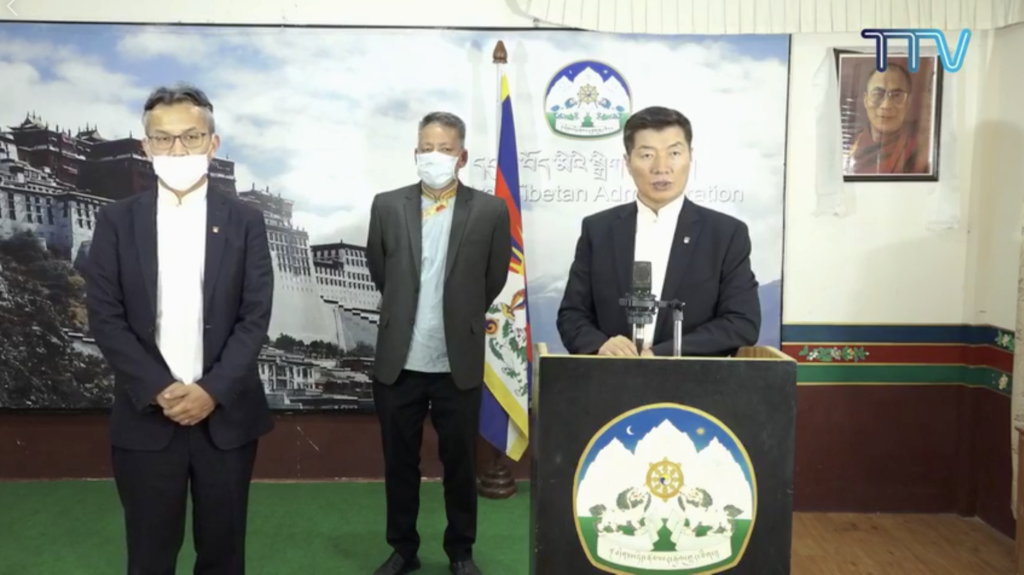
President Dr. Lobsang Sangay, Central Tibetan Administration (File photo)


Kashag’s Statement on the 25th Anniversary of the Enforced Disappearance of His Eminence the 11th Panchen Lama  

On 25 April 2020, Tibetans and Tibet supporters around the world marked the 31st birthday of His Eminence the 11th Panchen Lama, Tenzin Gendun Yeshi Thrinley Phuntsok Palsangpo, the manifestation of the compassionate Bodhisattva Amitabha. We pray that he is well and healthy, and with that aspiration, we offer our greetings on His Eminence’s birthday.

On 17 May 1995, when he was only six years old, the Panchen Lama was abducted by the Chinese Communist government along with his family after His Holiness the 14th Dalai Lama recognized him as the reincarnation of the 10th Panchen Lama. Since that fateful day, Buddhists around the world and Tibetans in exile and especially in Tibet, have been living in hope that one day we will be able to receive blessings from the Panchen Lama.

The lineages of the Dalai Lamas and the Panchen Lamas share a unique spiritual relationship. It was in keeping to centuries-old Tibetan Buddhist traditions that His Holiness the 14th Dalai Lama recognized the 11th Panchen Lama.

After orchestrating the disappearance of the 11th Panchen Lama, China, a self-declared atheist government and infamous for its persecution of religious groups in China, placed a young boy, Gyaltsen Norbu, as their own 11th Panchen Lama. This politically motivated action failed, however, to displace the position of the true Panchen Lama from the hearts and minds of the Tibetan people. For Tibetans in Tibet and in exile, and for Tibetan Buddhist followers around the world, Gedhun Choekyi Nyima, the six-year-old boy recognized by His Holiness the 14th Dalai Lama will always be the true Panchen Lama.

China’s abduction of the Panchen Lama and forcible denial of his religious identity and the right to practice in his monastery is not only a violation of religious freedom but also a gross violation of human rights.

Since his abduction, the UN Committee on the Rights of the Child (UNCRC) and the UN Working Group of Enforced or Involuntary Disappearances (WGEID) has raised questions on the whereabouts of the 11th Panchen Lama. Similarly, the US Congress, European Parliament, and parliaments of various other nations such as the UK, Canada, various governments, international organizations, and Tibet support groups have released reports, issued statements, and passed resolutions calling for his immediate release.

China has repeatedly failed to respond to the UNCRC’s call to allow an independent body to visit and verify the wellbeing of the 11th Panchen Lama. At the 119th session of the UN Working Group of Enforced or Involuntary Disappearances (WGEID) last September, China once again responded to the questions on the whereabouts of the 11th Panchen Lama with unverifiable and insufficient information.

If China’s claim that Tibetans in Tibet enjoy religious freedom is to be considered true, then China must provide verifiable information on the wellbeing and whereabouts of the 11th Panchen Lama, his family and Chadrel Rinpoche, the former Abbot of Tashi Lhunpo Monastery and the head of the search committee for the reincarnation of the 10th Panchen Lama, through pictures and videos.

Our call for justice for the 11th Panchen Lama is also a reminder of our commitment to the legacy of his predecessor, His Eminence the 10th Panchen Lama. On 18 May 1962, the 10th Panchen Lama presented the Chinese translation of the report, most commonly known as the 70,000 Character Petition, to the then Chinese Premier Zhou Enlai. The report was the culmination of what His Eminence had witnessed during the three years as the acting Chairman of the so-called TAR Preparatory Committee. The report detailed failures of the Chinese reform policies in Tibet that resulted in destruction such as the famine that ravaged throughout the country and the Tibetan Buddhist Monastic Education centers that were on the verge of annihilation.

Chairman Mao’s opposition to the petition trampled Panchen Lama’s hope that leaders of the regime might show interest in the petition and bring changes. And instead, the 10th Panchen Lama was barred from attending important meetings and was publicly criticized and humiliated towards the end of 1962. He was further subjected to struggle sessions and was put under house arrest. He was imprisoned in February 1968, where he spent more than 9 years in prison until his release in October 1977.

Even after his release from prison, the 10th Panchen Lama with unsurmountable courage remained committed to his sworn oath in the petition, “I will certainly not allow any trace to be left in my history which would tarnish my reputation as a descendant of the hardworking and brave Tibetan nationality.”

On 23 January 1989, Panchen Lama gave a historic speech in front of various high- ranking Chinese government officials at the inauguration ceremony of the newly-renovated mausoleums of the 5th to the 9th Panchen Lamas at Tashi Lhunpo Monastery in Shigatse. His Eminence said, “If we compare the price of the sacrifice we have made with the development that we have seen; my feeling is that the value of our sacrifice has been far greater. Our sacrifice far outweighs our development.”

On 24 January 1989, in front of Tibetan religious heads from five Tibetan regions and local authorities, Panchen Lama criticized the Cultural Revolution and stated Tibetans must protest it. On 28 January 1989, four days after delivering this historic condemnation, the Panchen Lama died under mysterious circumstances in his monastery. The Chinese government announced that Panchen Lama had died of a heart attack without conducting any official investigation into the causes of his sudden death. We don’t believe and accept that the 10th Panchen Lama died of natural causes just as we don’t believe that his reincarnate, the 11th is under safe protection.

Today marks the 25th anniversary of the 11th Panchen Lama’s disappearance. 25 years is a significant time in an individual’s life. For a person to spend the prime of his life or quarter of a century in enforced captivity is an irreparable loss. The disappearance of the Panchen Lama is not only an injustice to one person, but it is an injustice to six million Tibetans and their right to religious freedom.

China must honour its claim of ethnic harmony in China by fulfilling the aspiration of the Tibetan people. It must right the wrong and release the 11th Panchen Lama along with his family, Chadrel Rinpoche, and all Tibetans unjustly imprisoned.

Taking this opportunity, we thank all nations and their Parliaments founded on the principles of freedom and justice, international human rights organizations, and individuals for their continued support. We appeal to the international community to make a concerted effort to press China to release Gedhun Choekyi Nyima and resolve the critical human rights situation in Tibet.

We proudly acknowledge and thank the Tibetan Non-Governmental Organisations and the Tashi Lhunpo Monastery for continuously undertaking various initiatives to ensure the release of the 11th Panchen Lama.

Finally, we pray and hope that His Eminence the 11th Panchen Lama will soon be able to return to his rightful place at the Tashi Lhunpo monastery in Shigatse. We pray that under the auspicious presence of His Holiness the 14th Dalai Lama and His Eminence the 11th Panchen Lama, peace will shine soon over Tibet.

The Kashag

17th May 2020

Beijing Doomed. Why is China afraid of the Panchen Lama? Why is China afraid of the Dalai Lama? Why is China afraid of Tibetan Buddhism?