Whole Dude cannot choose between Free Will and Predestination while shopping at Whole Foods, Ann Arbor

Whole Dude cannot choose between Free Will and Predestination while shopping at Whole Foods, Ann Arbor. Griffin James Quinoa Challenge Award at Whole Foods Market Inc., Ann Arbor promotes the idea of improving Product Knowledge. Currently, there are no laws to include Nutrition Information about Dietary Polyamine Content of Food Products sold by Retail Food Industry.

Yes indeed, Life is Complicated. The most baffling complexity of Life involves the man’s apparent ability to make choices while trapped in a Body that is governed by Conditioned Existence over which the man has no choice.

Whole Dude at Whole Foods cannot choose between Free Will and Determinism. My existence is not dependent upon Freedom or Free Will but on Divine Providence. Do I have a choice? Is Freedom an entitlement? Is there Freedom in Free World? Freedom is it self-determined or is it determined by external causes?

The word ‘Freedom’ has many meanings –  theological, metaphysical, psychological, moral, natural, and civil. Freedom may mean enjoyment of personal liberty, of not being a slave, nor a prisoner, and in essence it speaks about the freedom in acting and choosing. Freedom may imply the state of not being subject to determining forces. Is it self-determined or is it determined by external causes?


Whole Dude at Whole Foods cannot choose between Free Will and Determinism. My existence is not dependent upon Freedom or Free Will but on Divine Providence. Do I have a choice? Is Freedom an entitlement? Is there Freedom in Free World? Freedom is it self-determined or is it determined by external causes?
Freedom in Free World: I have arrived in the United States for I shared the Motto of this Nation: "In God We Trust." The New Testament Book, Apostle Paul's Letter to Ephesians, Chapter 2, verse# 19 speaks of my quest for Freedom: "Consequently, you are no longer foreigners and aliens, but fellow citizens with God's people and members of God's household,..."  How can I find that Freedom to enter God's household if I am a Foreigner, or Alien???
Whole Dude at Whole Foods cannot choose between Free Will and Determinism. Freedom in Free World: I arrived in the United States for I shared the Motto of this Nation: “In God We Trust.” The New Testament Book, The Epistle of Apostle Paul to Ephesians, Chapter 2, verse# 19 speaks of my quest for Freedom: “Consequently, you are no longer Foreigners and Aliens, but fellow citizens with God’s people and members of God’s household,…” How can I find that Freedom to enter God’s household if I am a Foreigner, or Alien? There is a promise in The New Testament Book, The Epistle of Apostle Paul to Romans, Chapter 9, verse# 25: As He says in Hosea: “I will call them ‘my people’ who are not my people;”

“Free World” is a Cold War era term often used by the US to describe those countries that are not in the sphere of influence of Communist States like the Soviet Union, or the People’s Republic of China. United States is the Leader of the Free World, and it is the world’s Democratic Superpower. In response to Communist China’s military occupation of the autonomous nation of Tibet, United States to defend its own national interests and to combat the threat of Communist expansionism, initiated a program to render assistance to the Tibetan resistance movement to uphold the principles of Freedom and Democracy in the Land of Tibet. John F. Kennedy, the 35th President of the United States (1961-1963) created  a military alliance/pact between the US, India, and Tibet to fight the military threat posed by China. During 1969, I made a deliberate choice to serve in India’s Armed Forces to face the military challenge and threat posed by China after it had brutally attacked India across its Himalayan frontier during 1962. On completion of my military training, I was posted to this US, India, Tibet military organization called Establishment 22, Special Frontier Force, or Vikas Regiment. I was very passionate about defending the cause of Freedom and Democracy. I spent several years in India and I had imagined that I had freedom to choose and act and had deliberately expressed this sense of personal freedom when I got married during 1973. This choice had its consequences. It initiated a process of alienation and estrangement from my birth-related social community. The first blow to my sense of social identity and birth affiliation was delivered during 1976 while I was at Armed Forces Medical College, Pune. By the year 1982, I recognized that I have no freedom to choose, or act without compromising my sense of self-respect, and self-dignity. For all practical purposes, I was transformed into a Foreigner or Alien while I was still serving my country as a Commissioned Officer of its Armed Forces. It undermined my ability to serve in the Armed Forces to defend the Freedom of the country while I was perceived as a Foreigner or Alien. Now, I am conscious of the lack of freedom to make choices, or I may state that I am only free to make a choice that is foreordained, or predetermined.

Whole Dude at Whole Foods cannot choose between Free Will and Determinism

In the drama of human life and history, do we have the capacity to choose our Life? The issue of human freedom, and freedom in world may have to be reconciled with God’s omniscience, and omnipotence to understand as to what extent the will of an individual can and does determine some of his acts. If man is entirely dependent upon God’s power, can man make bad, or evil choices? Do we need divine grace for both meritorious, and even bad acts? How to define the problem of the universal supposition of responsibility for personal actions? Can there be Freedom in the absence of Divine Providence, and Divine Grace?

Determinism vs Free Will:

This Kid is apparently has Free Will and can choose to get wet in the rain. He can also choose to remain under a shade and keep dry. This ability to choose is operated by an external contingency called rain. Does man have the natural ability to make choices in the face of all types of external contingencies. Plato held that actions are determined by the extent of a person's understanding, or reasoning.
Whole Dude at Whole Foods cannot choose between Free Will and Determinism. This Kid apparently has Free Will and can choose to get wet in the rain. He can also choose to remain under a shade and keep dry. This ability to choose is operated by an external contingency called rain. Does man have the natural ability to make choices in the face of all types of external contingencies? Plato held that actions are determined by the extent of a person’s understanding, or reasoning. The New Testament Book, The Epistle of Apostle Paul to Romans, Chapter 8, verses 28-30 describe the concept of “Predestination.” Verse# 30 reads: “Moreover, those He predestined, them He also called; those He called, them He also Justified; those He justified, them He also glorified.” I live in the expectation of finding this ‘glory’ in the eyes of God.

The term Free Will refers to the power or capacity to choose among alternatives. It refers to the ability to act in certain situations independently of natural, social, or divine restraints. Will is the factor which turns human thought into human action and behavior. Existentialist thinkers like Jean Paul Sartre speak about the concept of a radical, perpetual, and frequently agonizing freedom of choice. Sartre claims that man is “condemned to be free” even though his situation may be wholly determined. Behavioral psychologists hold the view that human action and behavior is determined by the nature of an external environmental stimulus.


Whole Dude at Whole Foods cannot choose between Free Will and Determinism. My existence is not dependent upon Freedom or Free Will but on Divine Providence. Do I have a choice? Is Freedom an entitlement? Is there Freedom in Free World? Freedom is it self-determined or is it determined by external causes?

Sigmund Freud held the view that human actions are determined by hidden mental causes which control their actions; “You have an illusion of a psychic freedom within you which you do not want to give up.” Freud recommends that this “deeply rooted belief in psychic freedom and choice” must be given up because it “is quite unscientific.” Man appears to be subject to the Law of Cause and Necessity, or is governed by a doctrine of Psychic Determinism.

The Doctrine of Predestination:

Saint Augustine(354-430), Doctor of the Church, founder of Christian theology followed the doctrine of predestination or divine grace that states God's superintendence of the Whole Cosmos and everything in it.
Whole Dude at Whole Foods cannot choose between Free Will and Determinism. Saint Augustine (354-430), Doctor of the Church, founder of Christian theology followed the doctrine of predestination or divine grace that states God’s superintendence of the Whole Cosmos and everything in it.
Martin Luther(November 10, 1483 to February 18, 1546), German theologian, leader of the Protestant Reformation held the view that everything is determined by God from the beginning.
Whole Dude at Whole Foods cannot choose between Free Will and Determinism. Martin Luther (November 10, 1483 to February 18, 1546), German theologian, leader of the Protestant Reformation held the view that everything is determined by God from the beginning.
John Calvin(1509 - 1564), French Protestant theologian of the Reformation held the view that human free will is predetermined. While rejecting the role of free will, Calvinism maintains that God's grace is irresistible.
Whole Dude at Whole Foods cannot choose between Free Will and Determinism.John Calvin (1509 – 1564), French Protestant theologian of the Reformation held the view that human free will is predetermined. While rejecting the role of free will, Calvinism maintains that God’s grace is irresistible.
Whole Dude at Whole Foods cannot choose between Free Will and Determinism. Aquino’s held the view of God’s omnipotence does not include the predetermination of human will.

Saint Thomas Aquinas held the view that God’s omnipotence does not include the predetermination of human will. The Roman Catholic Church teaches that predestination is consistent with free will since God moves the soul according to its nature. Do I make my own choices while God foreordained my circumstances? Does God have foreknowledge of my reaction to His Choice? If God foreordained the circumstances, the choices, and the destiny of the person according to His Perfect Will, how to explain the exercise of free will? It appears to me that God may elect or predestinate the circumstances of a person and make a choice on His own initiative on the basis of His knowing in advance the reactions of the person to His Will. Man’s free will is like the game of chess; man can make his moves while playing the game according to God’s plan while God is the second Player with whom man has to contend.


Whole Dude at Whole Foods cannot choose between Free Will and Determinism. My existence is not dependent upon Freedom or Free Will but on Divine Providence. Do I have a choice? Is Freedom an entitlement? Is there Freedom in Free World? Freedom is it self-determined or is it determined by external causes?

Whole Dude at Whole Foods cannot choose between Free Will and Determinism. My existence is not dependent upon Freedom or Free Will but on Divine Providence. Do I have a choice? Is Freedom an entitlement? Is there Freedom in Free World? Freedom is it self-determined or is it determined by external causes?

Whole Dude at Whole Foods discovers the Whole Connection – The Red Blood Cell connects the Body, Mind and Soul

The Designing of the Red Blood Cell

The spiritual nature of the Red Blood Cell Design. Spiritual Optics. The Designing of the Red Blood Cells

Yes Indeed, Life is Complicated. The complexity of Life involves the use of a very complex predetermined plan to design the tissues, the organs, and the organ systems of the entire human organism from a single, fertilized egg cell that divides and differentiates into a most complex variety of cells which perform very specialized functions. The Red Blood Cell provides the connective linkage to sustain the living functions of the trillions of the building blocks of the human body.

The spiritual nature of the Red Blood Cell Design. The Whole Person, The Whole Man, The Whole Body, Mind, and Spirit, The Whole Dude, or the entire human organism is derived from this single, fertilized Egg Cell which I describe as “The Whole Cell.”

What it is to be a Substance? and What it is to Exist? We need to establish knowledge about the man and the world on a firm basis and the information it provides must be tested for its accuracy and consistency with an external reality. We have to make the fundamental distinction between the living and the non-living matter. The scientific advances of the 19th and 20th centuries reinforced the materialistic position concerning the basic similarity of organic living and inorganic physical matter. The man is viewed as a product of natural evolution and is thought to be subject to the same laws of Physics and Chemistry or mechanistic principles.

We need a methodology to study philosophy and to understand philosophical statements. Logical Positivism, also known as Scientific Empiricism aims to clarify concepts in both everyday and scientific language. It describes analysis of language as the function of philosophy. This analysis of language and of concepts is important to understand questions of belief and ideology which affect what we think we ought to do individually and socially. I use this method of ‘Applied Philosophy’ to analyze the concept of Spiritual Optics, the Spiritual Connection between Energy and Life. The Laws of Thermodynamics are important unifying principles of Biology. The First Law of Thermodynamics, also known as the Law of Conservation of Energy, states that Energy can neither be created nor destroyed. Spiritual Optics accounts for the capacity of photoreception and the term Spiritual Light refers to the creation of Light by God to begin the designing of Matter, the designing of the Living Matter which lives by consuming Matter called Food which is created by the use of the creative mechanism called Photosynthesis. The Substance called Food describes the activities of Life. The Red Blood Cell delivers Oxygen molecules for the oxidation of food substances.

WholeDude - WholeDesigner - Red Blood Cells: In multicellular organisms, cells with the same genes must differentiate into many types. Complex control mechanisms determine which genes are active in a given cell at a given time. Human life begins as a single fertilized Egg Cell. The multicellular organism grows and develops as it has definite capabilities for differentiation. The "Design" of cells has been modified to serve the specialized functions of tissues and organs that comprise the human body. Red Blood Cells are "designed" to perform their highly specialized functions.
The spiritual nature of the Red Blood Cell Design: In multicellular organisms, cells with the same genes must differentiate into many types. Complex control mechanisms determine which genes are active in a given cell at a given time. Human life begins as a single fertilized Egg Cell. The multicellular organism grows and develops as it has definite capabilities for differentiation. The “Design” of cells has been modified to serve the specialized functions of tissues and organs that comprise the human body. The Red Blood Cells are “designed” to perform their highly specialized functions.

If a man is viewed as a multicellular organism, the human subject finds his objective existence because of the living functions of the cells, tissues, and organ systems that provide the biological basis for that existence. In multicellular eukaryotes, cells with the same genes must differentiate into many types. Multicellularity is accomplished by definite capabilities for differentiation. The functional differentiation is not a simple process that can be called adaptation. To achieve differentiation, complex control mechanisms determine which genes are active in a given cell at a given time.

The spiritual nature of the Red Blood Cell Design: Man, the entire human organism is derived from a single, fertilized Egg Cell. How does this complex multicellular organism knows its own Identity and Individuality?

The “Design” of cells has been modified by a predetermined plan to serve the specialized function of tissues and organs. The structural differentiation and the functional organization of various organ systems makes a man a very complex living organism. It must be clearly understood that the living cell is a thermodynamically unstable system. This means that without a continuous input of energy, a cell will degrade spontaneously into a nonliving collection of molecules. The cells that comprise the human organism derive their energy by oxidation of food substances such as glucose. The cells of the body require oxygen to obtain the energy stored in food substances. The loss of oxygen is very critical as there is no means of storing oxygen in the human body. During the entire course of human life, the human body requires continuous delivery of oxygen to its various cells, tissues, and organs.

The Red Blood Cells display functional subordination to the requirements of the organism as a Whole. Altruism is a theory of conduct that regards the good of others as the end of moral action. The Red Blood Cells have very short, individual lifespans and the entire period of their existence involves unselfish concern for the welfare of other cells.

The Red Blood Cell – Erythrocyte -The Red Corpuscle:

WholeDude - WholeDesigner - Red Blood Cell: Erythropoiesis. Red Blood Cells are formed in the bone marrow. Hemoglobin Synthesis begins during yhe Proerythroblast stage of the RBC Cycle. Heme synthesis takes place in the mitochondria and the protein, globin molecule is synthesized in ribosomes. The mature Red Cells have no nuclei, and no intracellular organelles like the mitochondria and the ribosomes.
The spiritual nature of the Red Blood Cell Design: Erythropoiesis. Red Blood Cells are formed in the bone marrow. Hemoglobin Synthesis begins during the Proerythroblast stage of the RBC Cycle. Heme synthesis takes place in the mitochondria and the protein, globin molecule is synthesized in ribosomes. The mature Red Cells have no nuclei, and no intracellular organelles like the mitochondria and the ribosomes.
WholeDude - WholeDesigner - Red Blood Cell: Red Blood Cells are packed with hemoglobin. Each Red Cell contains over 600 million hemoglobin molecules.
The spiritual nature of the Red Blood Cell Design: Red Blood Cells are packed with hemoglobin. Each Red Cell contains over 600 million hemoglobin molecules. A normal man has about 5 liters of blood containing more than 25 trillion Red Blood Cells. Each lives for about 100 to 120 days. Red Blood Cells sustain their meager energy needs by a form of anaerobic respiration. If man is viewed as a biotic community of cells, Red Cells show no concern for their individual gains or losses and they serve and contribute to the continuation of the Whole community.

Red Blood Cells, or Erythrocytes, or Red Corpuscles are tiny, flat, round, biconcave disks, with depressed center, averaging 7.5 microns in diameter. In its profile view, the Red Blood Cell appears dumbell-shaped. A normal man has about 5  liters of blood containing more than 25 trillion Red Blood Cells. There are about 5.2 million Red Blood Cells per cubic millimeter of blood in adult humans. The normal lifespan of Red Cells is only about 100 to 120 days. More than 200 billion Red Cells are normally destroyed each day by the spleen and must be replaced. The creation of new Red Cells and their subsequent destruction proceeds during all the days of human life. The Red Cells give the blood its characteristic color. The cell is flexible and can change its shape to pass through extremely small blood vessels. It is covered with a membrane composed of lipids and proteins. The mature Red Blood Cells lacks a nucleus and hence cannot divide into new daughter cells. The mature Red Blood Cell also lacks intracellular organelles called mitochondria which provide energy for metabolic functions. During the course of its development and maturation, the nucleus and mitochondria disappear from the Red Cell. The amount of oxygen required by the Red Cell for its own metabolism is very low. The Red Cell shows the features of a careful design or plan that makes it to perform its function of delivering oxygen with great efficiency. In invertebrate organisms, the oxygen-carrying pigment called Heme is found in a free state in the plasma for they lack the Red Blood Cells. The concentration of Heme pigment and the biconcave shape of the Red Blood Cell makes it very efficient  to perform the function of exchange of gases; the Red Cell can deliver almost all of its oxygen it carries and free it into the tissues where there is demand for oxygen and its shape allows oxygen exchange at a constant rate over the largest possible area.

WholeDude - WholeDesigner - Red Blood Cell: The Red Cell has the ability to work as an oxygen sensor and it also has the ability to modulate the tone of the blood vessel in which it travels passively. By initiating a mechanism, the Red Cell can cause an effect called vasodilatation that would increase the flow of blood in microvasculature to meet the local tissue oxygen demand.
The spiritual nature of the Red Blood Cell Design: The Red Cell has the ability to work as an oxygen sensor and it also has the ability to modulate the tone of the blood vessel in which it travels passively. By initiating a mechanism, the Red Cell can cause an effect called vasodilation that would increase the flow of blood in blood vessels to meet the local tissue oxygen demand.
WholeDude - Whole Designer - Red Blood Cell: The Red Cells move passively in the blood circulation, but can actively interact with the blood vessel in response to the oxygen tension of the tissues. These interactions are helped by PR(Purinergic Receptor), Erythrocyte-derived Adenosine triphosphate(ATP), Gi(Heterotrimeric G Protein), cAMP(3'5'-Adenosine monophosphate), PKA(Protein Kinase A), CFTR(Cystic fibrosis transmembrane conductance regulator, ? undientified conduit for ATP release + stimulation. Through oxygen-dependent release of the vasodilator ATP, signal transduction within the RBC and microvessels, the SMC(the smooth muscle cell) of the blood vessel is stimulated to dilate. The signals pass through the Endo(endothelium) or the cells that line the inner surface of the blood vessel.
The spiritual nature of the Red Blood Cell Design: The Red Cells move passively in the blood circulation, but can actively interact with the blood vessel in response to the oxygen tension of the tissues. These interactions are helped by PR(Purinergic Receptor), Erythrocyte-derived Adenosine triphosphate(ATP), Gi(Heterotrimeric G Protein), cAMP(3’5′-Adenosine monophosphate), PKA(Protein Kinase A), CFTR(Cystic fibrosis transmembrane conductance regulator, ? unidentified conduit for ATP release + stimulation. Through oxygen-dependent release of the vasodilator ATP, signal transduction within the RBC and microvessels, the SMC(the smooth muscle cell) of the blood vessel is stimulated to dilate. The signals pass through the Endo(endothelium) or the cells that line the inner surface of the blood vessel.

The main function of the Red Cells is to transport oxygen from the lungs to the tissues and organs of the entire human body. During the process of oxidation, the cells generate carbon dioxide as a waste product which must be removed. The Red Cells carry carbon dioxide to the lungs and release it to be returned to the atmospheric air. This is possible because of hemoglobin which forms unstable, reversible bond with oxygen; in the oxygenated state it is called Oxyhemoglobin and is bright red in color. When oxygen is delivered, in the reduced state the hemoglobin is purple-blue and this color can be easily noticed from the color of the veins that return blood to heart from various parts of the body. Asphyxiation occurs when the blood contains an excess of substances like carbon dioxide, and carbon monoxide with which hemoglobin forms semipermanent or permanent compounds instead of reversible bonds that hemoglobin forms with oxygen.

WholeDude - WholeDesigner - Red Blood Cell: The Red Blood Cell is designed to efficiently perform its specialized functions.
The spiritual nature of the Red Blood Cell Design: The Red Blood Cell is designed to efficiently perform its specialized functions.
WholeDude - WholeDesigner - Red Blood Cell: The regulation of oxygen delivery.
The spiritual nature of the Red Blood Cell Design:The regulation of oxygen delivery. The Red Cell Membrane transport protein “Band 3” uses ion exchange transport mechanism to promote the release of oxygen from hemoglobin.
WholeDude - WholeDesigner - Red Blood Cell: Oxygen Delivery
The spiritual nature of the Red Blood Cell Design: Oxygen Delivery is carefully regulated to maintain it at appropriate amounts as both excess and shortage in delivery of oxygen can be harmful.
WholeDude - WholeDesigner - Red Blood Cell: The Red Cell apart from delivering oxygen, plays a role in the regulation of blood flow.
The spiritual nature of the Red Blood Cell Design: The Red Cell apart from delivering oxygen, plays a role in the regulation of blood flow. Red Cells sequentially consume and release Nitric Oxide (NO) for control of blood flow in response to changing oxygen levels.
WholeDude - WholeDesigner - Red Blood Cell: Metabolic Sensor in Red Cell, Ion Exchange Transport mechanism, Release of Nitric Oxide to modulate Vascular tone and to cause vasodilation.
The spiritual nature of the Red Blood Cell Design: Metabolic Sensor in Red Cell, Ion Exchange Transport mechanism, Release of Nitric Oxide to modulate Vascular tone and to cause vasodilation.

Heme Pigment and Hemoglobin – The Magic of Creation:

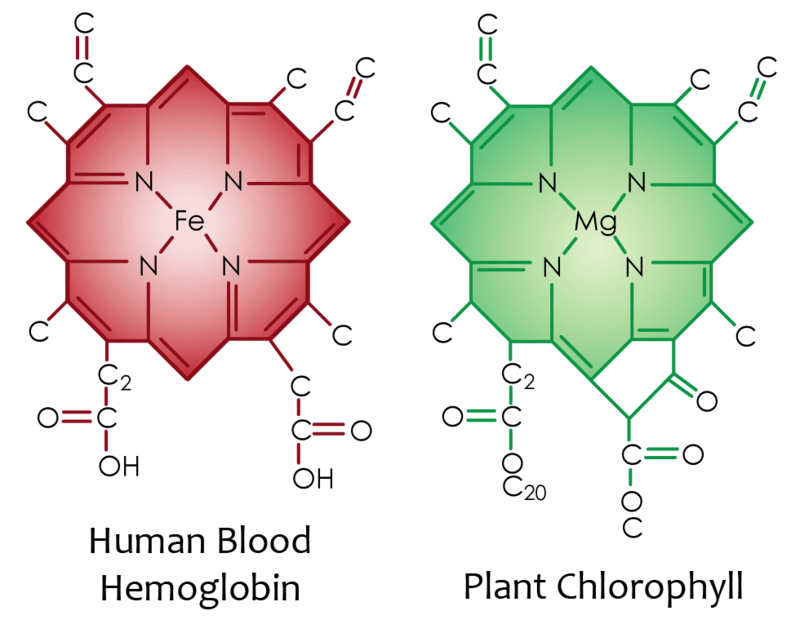
WholeDude - Wholedesigner - Red Blood Cell: The Magic of Creation will be appreciated by simply comparing Hemoglobin molecule with Chlorophyll molecule.
The spiritual nature of the Red Blood Cell Design: The Magic of Creation will be appreciated by simply comparing  the structure of Hemoglobin molecule with Chlorophyll molecule. The affinity of Hemoglobin molecule for oxygen is predetermined by the ability of Chlorophyll molecule to trap radiant energy which is converted into chemical energy during the photosynthetic reaction. These molecules perform goal-oriented, sequential actions to achieve a predetermined purpose. Living things obtain energy not because of random, unguided, interactions of chemical molecules. 
WholeDude - WholeDesigner - Red Blood Cell: The designing effect of pigments. Among biochromes, Heme, and Chlorophyll are the most important pigment substances that provide a striking contrast in color while having similar molecular structures.
The spiritual nature of the Red Blood Cell Design: The designing effect of pigments. Among biochromes, Heme, and Chlorophyll are the most important pigment substances that provide a striking contrast in color while having similar molecular structures.
WholeDesigner-Hemoglobin
The spiritual nature of the Red Blood Cell Design: The four subunits( 2 alpha, and 2 beta chains) of tetrameric Hemoglobin molecules. The synthesis of these chains need genetic information derived  mainly from chromosomes 16 and 11. The Magic of Creation will be appreciated when its structure and function is compared with the structure and function of Chlorophyll molecules that impart green color to plants.
WholeDude - WholeDesigner - Red Blood Cell: Heme is a respiratory pigment found in the Red Blood Cells of all vertebrates and some invertebrates. Pigment  is a substance that implants color to materials. Plants derive their green color from Chlorophyll pigment, and blood derives it red color from Heme pigment. Both Chlorophyll and Heme are similar molecules containing ring structures called Porphyrins. Chlorophyll contains Magnesium and Heme contains Iron that imparts the red color.
The spiritual nature of the Red Blood Cell Design: Heme is a respiratory pigment found in the Red Blood Cells of all vertebrates and some invertebrates. Pigment is a substance that imparts color to materials. Plants derive their green color from Chlorophyll pigment, and blood derives it red color from Heme pigment. Both Chlorophyll and Heme are similar molecules containing ring structures called Porphyrins. Chlorophyll contains Magnesium and Heme contains Iron that imparts the red color.

Adult hemoglobin is an alpha(2):beta(2) tetrameric hemeprotein; a combination of heme and the protein component called globin. Each subunit of a hemoglobin tetramer has a heme prosthetic group. The variations in amino acid composition impart marked differences in hemoglobin’s oxygen carrying properties. The quaternary structure of hemoglobin leads to physiologically important allosteric interactions between the subunits. Oxygen is incrementally loaded into the four subunits. In deoxygenated tissue, oxygen is incrementally unloaded from the four subunits and the affinity of hemoglobin for oxygen is reduced. Thus at the lowest oxygen tensions found in very active tissues, the bonding affinity of hemoglobin for oxygen is very low allowing maximal delivery of oxygen to the tissues. To maintain the status called good and positive health, the cells, tissues, and organs of the multicellular human organism have to be interacting with each other in a harmonious manner. These interactions during normal, good health display characteristics such as mutual assistance, mutual cooperation, mutual tolerance, and mutual functional subordination to provide a benefit to the human individual who lives because of the functions of the cells, tissues, and organs that comprise his human body.

Spiritual Biotic Interactions – The Role of Red Blood Cells:

WholeDude - WholeDesigner - Red Blood Cell: The nature of Spiritual Biotic Interactions that maintain man's existence can be studied by knowing the role of Red Blood Cells and their interaction with the tissues, and organs of the entire human body.
The spiritual nature of the Red Blood Cell Design: The nature of Spiritual Biotic Interactions that maintain the man’s existence can be studied by knowing the role of Red Blood Cells and their interaction with the tissues, and organs of the entire human body.

The terrestrial human organism represents a biotic, or biological community of about 100 trillion, individual, independent, mostly autonomous living cells that participate in constant interactions with each other. These interactions at cellular level are dependent upon the cognitive nature of the living cell. The living cell has the ability to recognize the presence of other cells in its immediate, external environment. The life of all of the cells in this biotic community that forms the human body requires energy input from an external source. The term “Spiritual” describes a relationship, a partnership, an association, a bonding, or a connection between two living entities that can formulate an interaction that can display features such as assistance, cooperation, tolerance, subservience, subordination, sympathy, and compassion to provide some benefit to the partner that is participating in the biotic interaction.

The Red Blood Cells interact with the cells of tissues, and organs of human body to provide them a service, assistance, or a benefit without seeking any benefit in return. The Red Blood Cells do not seek to reproduce, have very minimal requirement for energy and willingly deliver oxygen to the tissues and relieve them from the burden imposed by the waste products of their metabolic activities. The ‘spiritual’ nature of such interaction is a reflection of the ‘spiritual’ nature of the Creator of the living entities who could be called the Whole Artist, the Whole Designer, or the Whole Architect who meticulously planned and instituted the mechanisms and provided the necessary tools for such varied interdependent, and interrelated interactions between living cells. Thus, the Red Blood Cells constitute the principal stabilizing, connective linkage among the trillions of living cells that comprise the biological community which gets recognized as the human being.

The Red Blood cells constitute the principal stabilizing, connective linkage among the trillions of living cells that comprise the biological community which gets recognized as the human being.

Simon Cyrene

The Material Basis of Spirituality Science. Spiritual Optics. The Designing of the Red Blood Cells. The Dutch Microscopist Jan Swammerdam (1637-1680), the first person to describe the Red Blood Cells.

Musings at Whole Foods, Ann Arbor – Quinoa Plant Discovered the Recipe for the Odor of Human Semen Long Before the Origin of Man

Musings on Quinoa Flavor Smell Test on October 09, 2013

Musings at Whole Foods, Ann Arbor – Quinoa Plant Discovered the Recipe for the Odor of Human Semen Long Before the Origin of Man. Phytochemistry of Chenopodium Quinoa. The Nutritional Regulators of Human Fertility. The seeds (Flakes) when boiled release Seminous odor and it is very remarkable coincidence between the odor generated by a plant and the glands of human male reproductive system

Phytochemistry is the branch of Chemistry dealing with the chemical processes associated with plant life and the chemical compounds produced by plants.

Musings at Whole Foods, Ann Arbor – Quinoa Plant Discovered the Recipe for the Odor of Human Semen Long Before the Origin of Man. Phytochemistry of Chenopodium Quinoa. The Nutritional Regulators of Human Fertility. The seeds (Flakes) when boiled release Seminous odor and it is very remarkable coincidence between the odor generated by a plant and the glands of human male reproductive system

The Magic of Creation can be interpreted from an understanding of Photochemistry and Phytochemistry. Photochemistry provides information about light and matter interactions in the material world where the living things survive using directly, or indirectly the energy trapped by photosynthetic organisms. Phytochemistry provides information about the creation, or the synthesis of chemical molecules by plants which are not endowed with organs of special sensation.

Musings at Whole Foods, Ann Arbor – Quinoa Plant Discovered the Recipe for the Odor of Human Semen Long Before the Origin of Man. Phytochemistry of Chenopodium Quinoa. The Nutritional Regulators of Human Fertility. The seeds (Flakes) when boiled release Seminous odor and it is very remarkable coincidence between the odor generated by a plant and the glands of human male reproductive systemSpiritual Optics. The Designing of Chemical Molecules by Plants. The Magic of Creation. Take the Smell Test.

The Magic of Creation is experienced by man who has the faculties of special sensation such as vision, olfaction (smell), and taste. Plants create chemical molecules that have the ability to provide the stimulus to cause a sensation that man can easily recognize. The fact of Creation can be recognized by knowing the color, the odor, the smell, the scent, the fragrance, the aroma, the flavor, and the taste of chemical molecules synthesized by plants.

Musings at Whole Foods, Ann Arbor – Quinoa Plant Discovered the Recipe for the Odor of Human Semen Long Before the Origin of Man. Phytochemistry of Chenopodium Quinoa. The Nutritional Regulators of Human Fertility. The seeds (Flakes) when boiled release Seminous odor and it is very remarkable coincidence between the odor generated by a plant and the glands of human male reproductive system

Plants create a combination of colors, smells, odors, fragrances, and aromas by synthesizing a variety of chemical molecules even while they lack the specific sensory abilities to recognize the characteristics of those molecules.

The Magic of Creation discovered at Whole Foods, Ann Arbor – The Proof of the Pudding is in the Eating. The Designing of Unchanging Chemical Molecules. The role of Quinoa as an Aphrodisiac. The Birth of Venus, by Sandro Botticelli, depicts the goddess of love floating on a giant scallop shell. The word aphrodisiac derives from her Greek name, Aphrodite.
Phytochemistry of Chenopodium Quinoa. The Nutritional Regulators of Human Fertility: The seeds of Chenopodium quinoa. These seeds contain the same chemical compounds found in Seminal Plasma or Semen, a complex fluid created by the male, human reproductive system.

In this blog post, I explore the connection between the chemical compounds made by Chenopodium quinoa and the male human reproductive system. I am totally amazed for my Whole Discovery of a plant that creates the same chemical compounds in the precise concentration and combination to generate the same odor, smell, flavor, scent, or aroma that is produced by a freshly voided sample of human male Semen, the biological fluid that contains seeds called Spermatozoa. Apparently, Quinoa Plant knows the Recipe to generate this Primary Odor long before the Origin of Man. In my entire food experience with a wide variety of plant, and animal products, I have never encountered a similar observation where I see convergence in chemical processes to generate unique, unmistakable and distinctive odor by two entirely different organisms. Both plants and man may synthesize similar chemical compounds using similar enzymatic pathways, still it would be very exceptional to generate an odor that man can easily recognize as his own. The mechanisms that operate the phenomenon of Evolution cannot bring about this kind of convergence. In my interpretation, it is the evidence of an artistic Unit created by the Whole Designer, or Whole Architect, and a Master Planner.

WholeDude - WholeDesigner - Phytochemistry: Chenopodium quinoa synthesizes several amino chemical compounds called Polyamines such as Putrescine, Spermine, and Spermidine which are also present in the human, male reproductive secretion called Seminal Plasma or Semen.
Phytochemistry of Chenopodium Quinoa. The Nutritional Regulators of Human Fertility: Chenopodium quinoa synthesizes several amino chemical compounds called Polyamines such as Putrescine, Spermine, and Spermidine which are also present in the human, male reproductive secretion called Seminal Plasma or Semen. But to generate a specific, identical odor, or smell, both the seeds and Semen must have a similar concentration, combination, and mixture of volatile, odor generating airborne molecules.

Quinoa (Spanish – Quinua, Quechua, Kinwa) is a member of the Goosefoot family and belongs to the genus called Chenopodium. These are weedy plants with small green flowers and scruffy foliage. These plants are cultivated by the Incas in the Altiplano of Bolivia, and Peru for the last 7,000 years challenging highly different environmental conditions. Quinoa is not a true cereal and is sometimes called pseudocereal as it does not belong to the Grass family like the true cereals such as Wheat and Rice. Quinoa plants produce fruits and seeds used as flour for making bread, pasta, breakfast flakes, and other staples.

WholeDude - Whole Designer - Phytochemistry: Chenopodium quinoa belongs to the Goosefoot family called Chenopodiaceae, Order Caryophyllales, dicotyledonous plants including Chard, Spinach, and Beets. The leaf may have some resemblance to a Goose Foot.
Phytochemistry of Chenopodium Quinoa. The Nutritional Regulators of Human Fertility: Chenopodium quinoa belongs to the Goosefoot family called Chenopodiaceae, Order Caryophyllales, dicotyledonous plants including Chard, Spinach, and Beets. The leaf may have some resemblance to a Goose Foot. This plant makes polyamines and the seeds have similar combination, and concentration of these chemicals to produce the same odor or smell that is given off by a freshly voided sample of human, male Semen.

Quinoa is one of the staple foods of the people of the Andes region of South America. It is described as complete food because of its protein quality; the balance between protein, fat, and carbohydrates. Unlike Wheat, and Rice, it is a good source of amino acid Lysine. It is a good source of minerals like iron, calcium, potassium, sodium, and zinc. The chemical analysis of Chenopodium quinoa seeds reveals the presence of several chemical compounds such as Phenols, Sterols, Terpens, Saponins, Amides, and Alkaloids. However, I emphasize about the presence of Polyamines, a class of chemical compounds found in all plant, and animal cells. The presence of Saponins in the outer layers of Quinoa seeds imparts a bitter taste to the food preparations and often people refuse to use Quinoa because of its taste, and smell.

Phytochemistry of Chenopodium Quinoa. The Nutritional Regulators of Human Fertility: Incas have been continuously cultivating Quinoa for the last 7,000 years. They may not be aware of the chemical compounds made by these plants. However, they should be able to very easily recognize the smell, the odor, the scent, the aroma, and the flavor of the plant products that they use. A ‘Smell Test’ can accurately detect the presence of some odoriferous chemical molecules and man will be able to describe the odor without being a Chemist, or a Biochemist.

What are Polyamines?

WholeDude - WholeDesigner - Phytochemistry: Biosynthetic pathways of Polyamines. There are three important sources for the human body Polyamine Pool; 1. The biosynthesis within the body, 2. Production by microorganisms residing in the gastrointestinal tract, and 3. Dietary contribution.
Phytochemistry of Chenopodium Quinoa. The Nutritional Regulators of Human Fertility: Biosynthetic pathways of Polyamines. There are three important sources for the human body Polyamine Pool; 1. The biosynthesis within the body, 2. Production by microorganisms residing in the gastrointestinal tract, and 3. Dietary contribution.
WholeDude - WholeDesigner - Phytochemistry: Diamine, any of a group of chemical compounds containing two NH radicals, or double amino groups. Putrescine, 1,4-Diaminobutane is a foul-smelling organic chemical compound often produced by the breakdown of amino acids.
Phytochemistry of Chenopodium Quinoa. The Nutritional Regulators of Human Fertility: Diamine, any of a group of chemical compounds containing two NH2 radicals, or double amino groups. Putrescine, 1,4-Diaminobutane is a foul-smelling organic chemical compound often produced by the breakdown of amino acids. Its name describes its connection with putrid substances such as rotten meat or decaying organic matter.
Whole Dude - WholeDesigner - Phytochemistry: Cadaverine is a foul-smelling diamine compound produced by protein hydrolysis. Compounds such as 1,5-Pentanediamine/Pentamethylenediamine impart putrid odor to dead and decaying animal matter.
Phytochemistry of Chenopodium Quinoa. The Nutritional Regulators of Human Fertility: Cadaverine is a foul-smelling diamine compound produced by protein hydrolysis. Compounds such as 1,5-Pentanediamine/Pentamethylenediamine impart putrid odor to dead and decaying animal matter.
WholeDude - WholeDesigner - Phytochemistry: Spermidine is a Polyamine and it is the precursor of a polyamine called Spermine. It is associated with the smell and flavor of Semen, the thick, whitish fluid secreted by the human male reproductive organs.
Phytochemistry of Chenopodium Quinoa. The Nutritional Regulators of Human Fertility: Spermidine is a Triamine or Polyamine and it is the precursor of a polyamine called Spermine. It is associated with the smell and flavor of Semen, the thick, whitish fluid secreted by the human male reproductive organs.
WholeDude - WholeDesigner - Phytochemistry:  This amino compound was first found in human semen sevral centuries ago. It is a basic substance associated with Nucleic Acids such as DNA and RNA, and cell membranes. It is found in nearly all animal, and plant cells. Its presence imparts smell and flavor to human Semen.
Phytochemistry of Chenopodium Quinoa. The Nutritional Regulators of Human Fertility:TETRAMINE-POLYAMINE- SPERMINE – This amino compound was first found in human Semen several centuries ago. It is a basic substance associated with Nucleic Acids such as DNA and RNA, and cell membranes. It is found in nearly all animal, and plant cells. Its presence imparts smell and flavor to human Semen.
WholeDude - WholeDesigner - Phytochemistry: Spermine imparts odor to human Semen. To be odorous, a substance must be sufficiently volatile for its molecules to be given off and carried into the nostrils where the Olfactory epithelim recognizes the presence of odiferous molecules when they fit into functioning groups and specific receptors according to molecular size and shape.
Phytochemistry of Chenopodium Quinoa. The Nutritional Regulators of Human Fertility: Spermine imparts odor to human Semen. To be odorous, a substance must be sufficiently volatile for its molecules to be given off and carried into the nostrils where the Olfactory epithelium recognizes the presence of odoriferous molecules when they fit into functioning groups and specific receptors according to molecular size and shape.

Polyamines are described as small aliphatic amines found in all animal, and plant cells. They are the major components which are not only involved in fundamental cellular processes, for example, cell proliferation, cell differentiation, and programmed cell death, but also in adaptive responses to environmental stresses.The human body Polyamine Pool has three major sources; 1. Synthesis within the body, 2. Production by microbes that inhabit the intestinal tract, and 3. dietary uptake of Polyamines. According to a study, the concentration levels of these chemical compounds in human male Semen are, 1. Putrescine ranged from 0 to 1.96 mmol/L (mean value= 0.10mmol/L), 2. Spermidine ranged from 0.017 to 0.96 mmol/L (mean value= 0.16mmol/L), and 3. Spermine ranged from 0.13 to 20.80 mmol/L (mean value= 2.43mmol/L). It must be noted that the odor sensation is influenced by both the arrangement of atoms within the molecule as well as the particular chemical groups that comprise the molecule. Olfaction is 10,000 times more sensitive than taste.

To describe the role of Polyamines in Plant and Human Physiology, I would like to quote from the abstract prepared by Lefevre PL, Palin MF, and Murphy BD in their article titled ‘Polyamines on the reproductive landscape’, and its full text may be viewed at:

http://www.ncbi.nlm.nih.gov/pubmed/21791568

The polyamines are ubiquitous polycationic compounds. Some of these namely spermine, spermidine, and putrescine are essential to male and female reproductive processes and to embryo/fetal development. Indeed their absence is characterized by infertility and arrest in embryogenesis. Mammals synthesize polyamines de novo from amino acids or import these compounds from the diet. They are essential regulators of cell growth and gene expression and they are implicated in both mitosis and meiosis. In male reproduction, polyamine expression correlates with stages of spermatogenesis and they function to promote sperm motility. Polyamines are involved in ovarian follicle development and ovulation in female mammals. Polyamine synthesis is required for steroidogenesis in the ovary. Polyamines play the role in embryo implantation. Elimination of polyamine synthesis abrogate embryo development at gastrulation. Polyamines play the role in implantation, in decidualization, in placenta formation and function. Polyamine deprivation during gestation results in intrauterine growth retardation. Dietary arginine and dietary polyamines act as nutritional regulators of fertility.

Similarly, I can quote several other research papers that describe the physiology of natural polyamines and their significance in performing a variety of metabolic functions. Please read the articles cited as references.

Quinoa’s Phytochemistry – A Natural Aphrodisiac Formulated Before the Creation of Man:

WholeDude - WholeDesigner - Phytochemistry:  Greek mythology describes Adonis as a youth of remarkable beauty. He is the chosen favorite of Greek goddess Aphrodite. The name 'Aphrodisiac' describes any agent that can increase, arouse, and enhance male sexual excitement, sexual performance or stimulate sexual desire. I would like to carefully describe Quinoa as an Aphrodisiac that should be used by both young men, and women who are sexually active and have concerns about fertility. The scent, the odor, the smell, or aroma of Quinoa preparation gives me the clue that it could be a source of dietary polyamines which are nutritional regulators of fertility.
Phytochemistry of Chenopodium Quinoa. The Nutritional Regulators of Human Fertility: Greek mythology describes Adonis as a youth of remarkable beauty. He is the chosen favorite of Greek goddess Aphrodite. The name ‘Aphrodisiac’ describes any agent that can increase, arouse, and enhance male sexual excitement, sexual performance or stimulate sexual desire. I would like to carefully describe Quinoa as an Aphrodisiac that should be used by both young men, and women who are sexually active and have concerns about fertility. The scent, the odor, the smell, or aroma of Quinoa preparation gives me the clue that it could be a source of dietary polyamines which are nutritional regulators of fertility.

It is important to recognize the significance of Polyamine compounds such as Putrescine, Spermidine, and Spermine in Reproductive Biology. Animals derive essential amino acids and other organic compounds from their diet. Nutrition plays an important role in the reproductive success of an organism. Since scientific literature supports the view that dietary polyamines act as nutritional regulators of fertility, they can be easily incorporated into human dietary regimen, particularly of those young men and women who are sexually active and plan for reproductive success that ensures the birth of healthy babies. I am recommending the use of Quinoa as it is easy to verify the presence of nutritional polyamines by conducting a simple ‘Smell Test’. Its easy and takes only 90 seconds.

The Quinoa Challenge: The Proof of Pudding is in the Eating:

WholeDude - WholeDesigner - Phytochemistry: The strong, penetrating odor of freshly voided Semen is very distinctive, and is easily recognized by people of all Cultures. The smell, the odor, the scent, the flavor, or the aroma of Semen is attributed to the presence of amino compounds such as Putrescine, Cadaverine, Spermidine, and Spermine. Semen is a fluid of complex composition and it is produced by the secretions from several glands of the male reproductive system such as the Testes, Epididymis, the Ampulla of Ductus Deferens, the Seminal Vesicles, the Prostate, the Bulbourethral and Urethral Glands(Cowper & Littre glands).
Phytochemistry of Chenopodium Quinoa. The Nutritional Regulators of Human Fertility: The strong, penetrating odor of freshly voided Semen is very distinctive, and is easily recognized by people of all Cultures. The smell, the odor, the scent, the flavor, or the aroma of Semen is attributed to the presence of amino compounds such as Putrescine, Cadaverine, Spermidine, and Spermine. Semen is a fluid of complex composition and it is produced by the secretions from several glands of the male reproductive system such as the Testes, Epididymis, the Ampulla of Ductus Deferens, the Seminal Vesicles, the Prostate, the Bulbourethral and Urethral Glands (Cowper & Littre glands).

I am asking my readers to take the ‘Quinoa Challenge’, which is a simple ‘Smell Test’ to discover the presence of Polyamines Putrescine, Spermidine, and Spermine in the breakfast cereal of Quinoa Flakes made by Ancient Harvest. In 90 seconds, you will find the dietary polyamines without conducting a time-consuming chemical analysis. If your Quinoa porridge has Semen-like smell, it most certainly contains those Polyamines. As the saying goes: “The Proof of Pudding is in the Eating.”

WholeDude - WholeDesigner - Phytochemistry: The Sensation of Olfaction or Odor Quality is 10,000 times more sensitive than Taste sensation. Olfaction involves the detection of airborne chemical molecules. The Quinoa Challenge involves the detection of odor of Quinoa Flakes after heating them with water for just 90 seconds. Without conducting a chemical analysis, I can prove that Human Semen and Quinoa Flakes when cooked have nearly identical Polyamine composition that imaprt the unmistakable Semen odor or smell.
Phytochemistry of Chenopodium Quinoa. The Nutritional Regulators of Human Fertility: The Sensation of Olfaction or Odor Quality is 10,000 times more sensitive than Taste sensation. Olfaction involves the detection of airborne chemical molecules. The Quinoa Challenge involves the detection of odor of Quinoa Flakes after heating them with water for just 90 seconds. Without conducting a chemical analysis, I can prove that Human Semen and Quinoa Flakes when cooked have nearly identical Polyamine composition that impart the unmistakable Semen odor or smell. For my study, I purchased Ancient Harvest Quinoa Flakes sold by Whole Foods Market, Ann Arbor. The box is priced at $5.99.
WholeDude - WholeDesigner - Phytochemistry: The seeds of Chenopodium album - Lambsquarters or Pigweed are chewed or used in Inca traditional medicine in the treatment of urinary problems and for the problem of semen discharge during urination.
Phytochemistry of Chenopodium Quinoa. The Nutritional Regulators of Human Fertility: The seeds of Chenopodium album – Lambsquarters or Pigweed are chewed or used in Inca traditional medicine in the treatment of urinary problems and for the problem of semen discharge during urination.
WholeDude - WholeDesigner - Phytochemistry: Chenopodium vulvaria, Stinking Goosefoot, Notchweed, is a foul-smelling, or rank-smelling plant. The term 'rank-smelling' is used to describe strong, offensive smells like the smell of deer in sexual heat. The leaves of this plant are used in traditional Inca medicine for the treatment of hysteria and nervous trouble among women.
Phytochemistry of Chenopodium Quinoa. The Nutritional Regulators of Human Fertility: Chenopodium vulvaria, Stinking Goosefoot, Notchweed, is a foul-smelling, or rank-smelling plant. The term ‘rank-smelling’ is used to describe strong, offensive smells like the smell of deer in sexual heat. The leaves of this plant are used in traditional Inca medicine for the treatment of hysteria and nervous trouble among women.
WholeDude - WholeDesigner - Phytochemistry:  Polyamines are important for the production of Sperm cells in the Testes of males. Polyamines are equally important in human female reproductive system. Polyamines are involved in Ovarian follicle development, ovulation, the production of sex hormones in the Ovary and for female fertility, the ability to give birth to a baby.
Phytochemistry of Chenopodium Quinoa. The Nutritional Regulators of Human Fertility: Polyamines are important for the production of Sperm cells in the Testes of males. Polyamines are equally important in human female reproductive system. Polyamines are involved in Ovarian follicle development, ovulation, the production of sex hormones in the Ovary and for female fertility, the ability to give birth to a baby.

The Magic of Creation – Take the Smell Test:

Phytochemistry of Chenopodium Quinoa. The Nutritional Regulators of Human Fertility: Polyamines are important for the production of Sperm cells in the Testes of males. Polyamines are equally important in human female reproductive system. Polyamines are involved in Ovarian follicle development, ovulation, the production of sex hormones in the Ovary and for female fertility, the ability to give birth to a baby.
WholeDude - WholeDesigner - WholeMagic: The Water Molecule can exist in three different physical conditions such as liquid, soild, and gas. But, it maintains the same chemical composition, and displays unchanging behavior without being influenced by changing times.
WholeDude – WholeDesigner – WholeMagic: The Water Molecule can exist in three different physical conditions such as liquid, solid, and gas. But, it maintains the same chemical composition, and displays unchanging behavior without being influenced by changing times. In essence, it is the same chemical compound that existed in all living things of the past, and the present.

The Theory of Evolution tries to explain changes in the morphological appearances of organisms which exist under the influence of time. But, the fact of existence of life can only be explained by the unchanging creative mechanisms that operate the Laws of Phytochemistry. We have witnessed changes in the appearances of organisms while the nature, and composition of chemical molecules essentially remains the same, and the same oxidative-reduction chemical reactions operate during the life and death of organisms. For example, the unchanging chemical composition of water molecule makes possible the creation of a wide variety of other chemical molecules to establish biodiversity.

WholeDude - WholeDesigner - WholeMagic: The chemical equations for operation of life, and death are essentially the same and have not changed under the influence of time.
WholeDude – WholeDesigner – WholeMagic: The chemical equations for operation of life, and death are essentially the same and have not changed under the influence of time.

The detection of chemical molecules that stimulate the smell or olfaction sensation plays an important role in the survival of most animals. Smell is used for identifying and evaluating food, finding predators or prey, marking territory, and to stimulate reproductive activity. In several human traditions, the importance of smell, scent, odor, fragrance, and aroma is recognized and is glorified.

WholeDude - WholeDesigner - WholeMagic: In Roman mythology, Goddess Flora is recognized as the Goddess of Flowers and the Floral Fragrance.
WholeDude – WholeDesigner – WholeMagic: In Roman mythology, Goddess Flora is recognized as the Goddess of Flowers and the Floral Fragrance.

Seven odors such as sweaty, spermous, fishy, malty, urinous, and musky have been described as primary odors. The genetic and molecular analysis of the mechanisms of olfaction are researched by Linda Brown Buck, and Richard Axel who published a paper identifying 1,000 G-protein coupled receptors used for olfaction.

WholeDude - WholeDesigner - WholeMagic: Linda Brown Buck(born-1947), American scientist received the 2004 Nobel Prize for Physiology or Medicine for her work on Olfactory Receptors.
WholeDude – WholeDesigner – WholeMagic: Linda Brown Buck (born-1947), American scientist received the 2004 Nobel Prize for Physiology or Medicine for her work on Olfactory Receptors.
WholeDude - WholeDesigner - WholeMagic: Richard Axel(born- 1946), American scientist received the 2004 Nobel Prize for Physiology or Medicine for his research on Olfactory receptors.
WholeDude – WholeDesigner – WholeMagic: Richard Axel(born {1946), American scientist received the 2004 Nobel Prize for Physiology or Medicine for his research on Olfactory receptors.

There could be 1,000 genes for Olfactory receptors which may detect the size, and shape of molecules and compose information for further recognition as a specific smell or odor. The word smell, or odor can be used as a general term to describe the quality or the characteristic perceived through the olfactory sense. Smell or odor suggests the presence or existence of something. The term scent refers to the emanation from the thing that is smelled. Scent could be faint, but it is a pervasive smell that gives a clue that could be tracked or followed. Odor is a heavier emanation and is often more clearly recognized. Smell or odor could be pleasant or unpleasant. Several descriptive terms are used to make the distinction between sensations that are appealing or offending. Fragrance is an agreeable, sweet smell, or pleasant odor. Aroma is a pleasant spicy odor. Perfume is relatively strong but usually pleasant smell that is natural, or manufactured. Bouquet is the fragrance of wine or brandy, and is also used to describe the characteristic aroma of a bunch of cut flowers. The term Redolence describes rich, pleasant combination of smells The term stink, or stench describe offending, or repulsive odors emanated by decaying organic materials. The term musty odor describes stale, moldy smell, and denotes the lack of freshness.

WholeDude - WholeDesigner - Phytochemistry: The photo image of human embryo at 6 days. Polyamines play a role in embryo implantation. Polyamines are important for palcenta formation and function. Polyamines help in intrauterine growth of embryo and fetus. During pregnancy, maternal nutrition is important and it must include dietary sources of proteins, polyamines, vitamins, and minerals.
Phytochemistry of Chenopodium Quinoa. The Nutritional Regulators of Human Fertility: The photo image of human embryo at 6 days. Polyamines play a role in embryo implantation. Polyamines are important for placenta formation and function. Polyamines help in intrauterine growth of embryo and fetus. During pregnancy, maternal nutrition is important and it must include dietary sources of proteins, polyamines, vitamins, and minerals to ensure the birth of a healthy baby.

Phytochemistry of Chenopodium Quinoa. The Nutritional Regulators of Human Fertility: Polyamines are important for the production of Sperm cells in the Testes of males. Polyamines are equally important in human female reproductive system. Polyamines are involved in Ovarian follicle development, ovulation, the production of sex hormones in the Ovary and for female fertility, the ability to give birth to a baby.

References:

1. Polyamines and the integrity of the plant body. Galston AW

http://www.ncbi.nlm.nih.gov/pubmed/11540939

2.1,4-Diaminobutane(putrescine) spermidine and spermine. Tabor CW, Tabor H.

http://www.ncbi.nlm.nih.gov/pubmed/786151
3.Physiology of the natural polyamines. Raina A, Janne J

http://www.ncbi.nlm.nih.gov/pubmed/169440

4. Polyamines in Plant Physiology. AW Galston, RK Sawhney

http://www.ncbi.nlm.nih.gov/pubmed/11537482

5. Chenopodium quinoa(Wild): Composition, Chemistry, nutritional and functional properties. Abuqoch James LE

http://www.ncbi.nlm.nih.gov/pubmed/19878856

6. Advances in polyamine research in 2007. Kusanot, Yamaguchi K et al.,

http://www.ncbi.nlm.nih.gov/pubmed/17351711

7.Development of polyamine database for assessing dietary intake. Zoumas M C

http://www.ncbi.nlm.nih.gov/pubmed/17524725

Plants synthesize chemical molecules that can be recognized by their smell, scent, odor, fragrance, aroma, and flavor. The sensory recognition or perception of smell or odor indicates the presence of something; the something that I recognize is that of the operation of Divine Providence called Mercy, Grace, and Compassion.


Musings at Whole Foods, Ann Arbor – Quinoa Plant Discovered the Recipe for the Odor of Human Semen Long Before the Origin of Man. Phytochemistry of Chenopodium Quinoa. The Nutritional Regulators of Human Fertility. The seeds (Flakes) when boiled release Seminous odor and it is very remarkable coincidence between the odor generated by a plant and the glands of human male reproductive system. Spiritual Optics. The Designing of Chemical Molecules by Plants.

The Magic of Creation – The Proof of the Pudding is in the Eating – Discovery reported in 2013

Griffin James Quinoa Challenge Award at Whole Foods Market Inc., Ann Arbor promotes the idea of improving Product Knowledge. Currently, there are no laws to include Nutrition Information about Dietary Polyamine Content of Food Products sold by Retail Food Industry.

James Griffin is an expert in Food Retail Industry. To promote knowledge of food products, in 2014, he announced the “James Griffin Quinoa Challenge Award” and the same was presented to me at Whole Foods Market Inc., Ann Arbor, Michigan, USA on Sunday, May 18, 2014. This award describes importance of the development of a food database that food consumers can easily use to make important decisions about the food products they purchase to promote their health and to prevent diseases like cancer. I ask my readers to acknowledge the creative use of putrid smelling Nitrogen containing unchanging biomolecules that operate the creation of life and the dissolution of life. The fact of Creation is simply revealed by knowing the Smell, the Scent, the Aroma, the Flavor and the Odor of Polyamine Molecules that declare their presence in the performance of human Reproduction as well as the nature of Mortal Existence making it extremely difficult to conceal the forensic evidence of Death.

WholeDude - WholeDesigner - Phytochemistry: Quinoa seeds are Gluten-Free. It is also Cholesterol-free, low-fat, and high in protein. Throughout the ages many foods have been considered sexual stimulants. Quinoa has a special reason to be recognized as an Aphrodisiac, a chemical agent that can enhance sexual performance. Such a claim can be based upon the study of Polyamines found in its leaves and seeds.
Phytochemistry of Chenopodium Quinoa. The Nutritional Regulators of Human Fertility: Quinoa seeds are Gluten-Free. It is also Cholesterol-free, low-fat, and high in protein. Throughout the ages many foods have been considered sexual stimulants. Quinoa has a special reason to be recognized as an Aphrodisiac, a chemical agent that can enhance sexual performance. Such a claim can be based upon the study of Polyamines found in its leaves and seeds. Polyamines are now thought of as the nutritional regulators of human fertility.

Incas have been continuously cultivating Quinoa for the last 7,000 years. They may not be aware of the chemical compounds made by these plants. However, they should be able to very easily recognize the smell, the odor, the scent, the aroma, and the flavor of the plant products that they use. A ‘Smell Test’ can accurately detect presence of some odoriferous chemical molecules and man will be able to describe the odor without being a Chemist, or a Biochemist. Spermine imparts odor to human Semen. To be odorous, a substance must be sufficiently volatile for its molecules to be given off and carried into the nostrils where the Olfactory epithelium recognizes the presence of odoriferous molecules when they fit into functioning groups and specific receptors according to molecular size and shape. The strong, penetrating odor of freshly voided Semen is very distinctive, and is easily recognized by people of all Cultures. The smell, the odor, the scent, the flavor, or the aroma of Semen is attributed to presence of amino compounds such as Putrescine, Spermidine, and Spermine. Semen is a fluid of complex composition and it is produced by the secretions from several glands of the male reproductive system such as the Testes, Epididymis, the Ampulla of Ductus Deferens, the Seminal Vesicles, the Prostate, the Bulbourethral and Urethral Glands (Cowper & Littre glands).                                                                              

I am asking my readers to take the ‘Quinoa Challenge’, which is a simple ‘Smell Test’ to discover the presence of Polyamines Putrescine, Spermidine, and Spermine in the breakfast cereal of Quinoa Flakes made by Ancient Harvest. In 90 seconds, you will find the dietary polyamines without conducting a time-consuming chemical analysis.
Man’s Life Journey begins with the union of Sperm with Egg Cell and the Unity of Body, Mind, and Soul begins at Human Conception. Musings at Whole Foods, Ann Arbor – Quinoa Plant Discovered the Recipe for the Odor of Human Semen Long Before the Origin of Man. Phytochemistry of Chenopodium Quinoa. The Nutritional Regulators of Human Fertility. The seeds (Flakes) when boiled release Seminous odor and it is very remarkable coincidence between the odor generated by a plant and the glands of human male reproductive system

Taking the Smell Test at Whole Foods, Ann Arbor to acknowledge the Magic of Creation

Musings on Quinoa Flavor on October 09, 2013

WholeDude – WholeDesigner – Phytochemistry: Quinoa seeds are Gluten-Free. It is also Cholesterol-free, low-fat, and high in protein. Throughout the ages many foods have been considered sexual stimulants. Quinoa has a special reason to be recognized as an Aphrodisiac, a chemical agent that can enhance sexual performance. Such a claim can be based upon the study of Polyamines found in its leaves and seeds.

What it is to be a Substance? and What it is to Exist? We need to establish knowledge about the man and the world on a firm basis and the information it provides must be tested for its accuracy and consistency with an external reality. We have to make the fundamental distinction between the living and the non-living matter. The scientific advances of the 19th and 20th centuries reinforced the materialistic position concerning the basic similarity of organic living and inorganic physical matter. The man is viewed as a product of natural evolution and is thought to be subject to the same laws of Physics and Chemistry or mechanistic principles.

We need a methodology to study philosophy and to understand philosophical statements. Logical Positivism, also known as Scientific Empiricism aims to clarify concepts in both everyday and scientific language. It describes analysis of language as the function of philosophy. This analysis of language and of concepts is important to understand questions of belief and ideology which affect what we think we ought to do individually and socially. I would use this method of ‘Applied Philosophy’ to analyze the concept of Spiritual Optics, the Spiritual dimension of biological coloration and the synthesis of chemical molecules by plants.

The Magic of Creation. Take the Smell Test.

The Magic of Creation can be interpreted from an understanding of Photochemistry and Phytochemistry. Photochemistry provides information about light and matter interactions in the material world where the living things survive using directly, or indirectly the energy trapped by photosynthetic organisms. Phytochemistry provides information about the creation, or the synthesis of chemical molecules by plants which are not endowed with organs of special sensation.

Spiritual Optics. The Designing of Chemical Molecules by Plants. The Magic of Creation. Take the Smell Test.

The Magic of Creation is experienced by man who has the faculties of special sensation such as vision, olfaction (smell), and taste. Plants create chemical molecules that have the ability to provide the stimulus to cause a sensation that man can easily recognize. The fact of Creation can be recognized by knowing the color, the odor, the smell, the scent, the fragrance, the aroma, the flavor, and the taste of chemical molecules synthesized by plants.

WholeDude - WholeDesigner - WholeMagic: The Water Molecule can exist in three different physical conditions such as liquid, soild, and gas. But, it maintains the same chemical composition, and displays unchanging behavior without being influenced by changing times.
WholeDude – WholeDesigner – WholeMagic: The Water Molecule can exist in three different physical conditions such as liquid, solid, and gas. But, it maintains the same chemical composition, and displays unchanging behavior without being influenced by changing times. In essence, it is the same chemical compound that existed in all living things of the past, and the present.

The Theory of Evolution tries to explain changes in the morphological appearances of organisms which exist under the influence of time. But, the fact of existence of life can only be explained by the unchanging creative mechanisms that operate the Laws of Phytochemistry. We have witnessed changes in the appearances of organisms while the nature, and composition of chemical molecules essentially remains the same, and the same oxidative-reduction chemical reactions operate during the life and death of organisms. For example, the unchanging chemical composition of water molecule makes possible the creation of a wide variety of other chemical molecules to establish biodiversity.

WholeDude - WholeDesigner - WholeMagic: The chemical equations for operation of life, and death are essentially the same and have not changed under the influence of time.
WholeDude – WholeDesigner – WholeMagic: The chemical equations for operation of life, and death are essentially the same and have not changed under the influence of time.

The Magic of Creation – Take the Smell Test:

WholeDude – WholeDesigner – Phytochemistry: This amino compound Spermine was first found in human semen several centuries ago. It is a basic substance associated with Nucleic Acids such as DNA and RNA, and cell membranes. It is found in nearly all animal, and plant cells. Its presence imparts smell and flavor to human Semen.

The detection of chemical molecules that stimulate the smell or olfaction sensation plays an important role in the survival of most animals. Smell is used for identifying and evaluating food, finding predators or prey, marking territory, and to stimulate reproductive activity. In several human traditions, the importance of smell, scent, odor, fragrance, and aroma is recognized and is glorified.

WholeDude - WholeDesigner - WholeMagic: In Roman mythology, Goddess Flora is recognized as the Goddess of Flowers and the Floral Fragrance.
WholeDude – WholeDesigner – WholeMagic: In Roman mythology, Goddess Flora is recognized as the Goddess of Flowers and the Floral Fragrance.

Seven odors such as sweaty, spermous, fishy, malty, urinous, and musky have been described as primary odors. The genetic and molecular analysis of the mechanisms of olfaction are researched by Linda Brown Buck, and Richard Axel who published a paper identifying 1,000 G-protein coupled receptors used for olfaction.

WholeDude - WholeDesigner - WholeMagic: Linda Brown Buck(born-1947), American scientist received the 2004 Nobel Prize for Physiology or Medicine for her work on Olfactory Receptors.
WholeDude – WholeDesigner – WholeMagic: Linda Brown Buck (born-1947), American scientist received the 2004 Nobel Prize for Physiology or Medicine for her work on Olfactory Receptors.
WholeDude - WholeDesigner - WholeMagic: Richard Axel(born- 1946), American scientist received the 2004 Nobel Prize for Physiology or Medicine for his research on Olfactory receptors.
WholeDude – WholeDesigner – WholeMagic: Richard Axel(born {1946), American scientist received the 2004 Nobel Prize for Physiology or Medicine for his research on Olfactory receptors.

There could be 1,000 genes for Olfactory receptors which may detect the size, and shape of molecules and compose information for further recognition as a specific smell or odor. The word smell, or odor can be used as a general term to describe the quality or the characteristic perceived through the olfactory sense. Smell or odor suggests the presence or existence of something. The term scent refers to the emanation from the thing that is smelled. Scent could be faint, but it is a pervasive smell that gives a clue that could be tracked or followed. Odor is a heavier emanation and is often more clearly recognized. Smell or odor could be pleasant or unpleasant. Several descriptive terms are used to make the distinction between sensations that are appealing or offending. Fragrance is an agreeable, sweet smell, or pleasant odor. Aroma is a pleasant spicy odor. Perfume is relatively strong but usually pleasant smell that is natural, or manufactured. Bouquet is the fragrance of wine or brandy, and is also used to describe the characteristic aroma of a bunch of cut flowers. The term Redolence describes rich, pleasant combination of smells The term stink, or stench describe offending, or repulsive odors emanated by decaying organic materials. The term musty odor describes stale, moldy smell, and denotes the lack of freshness.

WholeDude - WholeDesigner - WholeMagic: Cinnamomum camphora. The smell called Camphor is derived from Sanskrit word "Karpurah" which is strong and penetrating, and stimulating.
WholeDude – WholeDesigner – WholeMagic: Cinnamomum camphora. The smell called Camphor is derived from Sanskrit word “Karpurah” which is strong and penetrating, and stimulating.
WholeDude - WholeDesigner - WholeMagic: The sweet floral fragrance of Rose is known to man since prehistoric times. It is a favorite flower in many lands.
WholeDude – WholeDesigner – WholeMagic: The sweet floral fragrance of Rose is known to man since prehistoric times. It is a favorite flower in many lands.
WholeDude - WholeDesigner - WholeMagic: Pogostemon cablin or Patchouli is known for its strong smell and is used in Aroma Therapy.
WholeDude – WholeDesigner – WholeMagic: Pogostemon cablin or Patchouli is known for its strong smell and is used in Aroma Therapy.
WholeDude - WholeDesigner - WholeMagic: Patchouli is known for its musky, sensuous odor.
WholeDude – WholeDesigner – WholeMagic: Patchouli is known for its musky, sensuous odor.
WholeDude - WholeDesigner - WholeMagic: Oncidium aureum, Redolence Orchid is known for its rich, pleasant combination of smells called heavenly scent.
WholeDude – WholeDesigner – WholeMagic: Oncidium or Redolence Orchid is known for its rich, pleasant combination of smells called heavenly scent.
WholeDude - WholeDesigner - WholeMagic: Nyctanthes arbor - tristis, Night Jasmine. In Indian tradition, a legend describes that this tree was stolen from a celestial garden and was planted on earth to provide the pleasure of enjoying its fragrant flowers to Lord Krishna's queen.
WholeDude – WholeDesigner – WholeMagic: Nyctanthes arbor – tristis, Night Jasmine. In Indian tradition, a legend describes that this tree was stolen from a celestial garden and was planted on earth to provide the pleasure of enjoying its fragrant flowers to Lord Krishna’s queen.
WholeDude - WholeDesigner - WholeMagic: Mentha piperita known for its aromatic, fragrant foliage.
WholeDude – WholeDesigner – WholeMagic: Mentha piperita known for its aromatic, fragrant foliage.
WholeDude - WholeDesigner - WholeMagic: Nicotiana tabacum, a native of Americas. is known for the fine tobacco aroma of its cured leaves.
WholeDude – WholeDesigner – WholeMagic: Nicotiana tabacum, a native of Americas. is known for the fine tobacco aroma of its cured leaves.
WholeDude - WholeDesigner - WholeMagic: Hibiscus abelmoschus is known for its musky fragrance and the seeds are used in making perfume.
WholeDude – WholeDesigner – WholeMagic: Hibiscus abelmoschus is known for its musky fragrance and the seeds are used in making perfume.
WholeDude - WholeDesigner - WholeMagic: The aroma of wine is described as Bouquet.
WholeDude – WholeDesigner – WholeMagic: The aroma of wine is described as Bouquet.
WholeDude - WholeDesigner - WholeMagic: Capsicum longum is known for its fruits which impart a piercing, burning, biting, and painful sensation associated with pungent odor.
WholeDude – WholeDesigner – WholeMagic: Capsicum longum is known for its fruits which impart a piercing, burning, biting, and painful sensation associated with pungent odor.
WholeDude - WholeDesigner - WholeMagic: Titan Arum, a native of Sumatra, Indonesia is known for its extremely offensive corpse-like stinky odor.
WholeDude – WholeDesigner – WholeMagic: Titan Arum, a native of Sumatra, Indonesia is known for its extremely offensive corpse-like stinky odor.
WholeDude - WholeDesigner - WholeMagic: Pisum sativum. The sweetness of fresh, garden peas can be instantly recognized and is cultivated by man for thousands of years.
WholeDude – WholeDesigner – WholeMagic: Pisum sativum. The sweetness of fresh, garden peas can be instantly recognized and is cultivated by man for thousands of years.
WholeDude - WholeDesigner - WholeMagic: Chenopodium quinoa. The seeds when boiled release Seminous odor and it is very remarkable coincidence between the odor generated by a plant and the glands of human male reproductive system
WholeDude – WholeDesigner – WholeMagic: Chenopodium quinoa. The seeds when boiled release Spermous(Semen-like) odor and it is a very remarkable coincidence between the odor generated by a plant and the glands of human male reproductive system.

Plants create a combination of colors, smells, odors, fragrances, and aromas by synthesizing a variety of chemical molecules even while they lack the specific sensory abilities to recognize the characteristics of those molecules.

Spiritual Optics. The Designing of Chemical Molecules by Plants.

Plants synthesize chemical molecules that can be recognized by their smell, scent, odor, fragrance, aroma, and flavor. The sensory recognition or perception of smell or odor indicates the presence of something; the something that I recognize is that of the operation of Divine Providence called Mercy, Grace, and Compassion.

Spiritual Optics. The Designing of Chemical Molecules by Plants.

The Quinoa Challenge: The Proof of the Pudding is in the Eating:

WholeDude - WholeDesigner - Phytochemistry: The strong, penetrating odor of freshly voided Semen is very distinctive, and is easily recognized by people of all Cultures. The smell, the odor, the scent, the flavor, or the aroma of Semen is attributed to the presence of amino compounds such as Putrescine, Cadaverine, Spermidine, and Spermine. Semen is a fluid of complex composition and it is produced by the secretions from several glands of the male reproductive system such as the Testes, Epididymis, the Ampulla of Ductus Deferens, the Seminal Vesicles, the Prostate, the Bulbourethral and Urethral Glands(Cowper & Littre glands).
Phytochemistry of Chenopodium Quinoa. The Nutritional Regulators of Human Fertility: The strong, penetrating odor of freshly voided Semen is very distinctive, and is easily recognized by people of all Cultures. The smell, the odor, the scent, the flavor, or the aroma of Semen is attributed to the presence of amino compounds such as Putrescine, Cadaverine, Spermidine, and Spermine. Semen is a fluid of complex composition and it is produced by the secretions from several glands of the male reproductive system such as the Testes, Epididymis, the Ampulla of Ductus Deferens, the Seminal Vesicles, the Prostate, the Bulbourethral and Urethral Glands (Cowper & Littre glands).

I am asking my readers to take the ‘Quinoa Challenge’, which is a simple ‘Smell Test’ to discover the presence of Polyamines Putrescine, Spermidine, and Spermine in the breakfast cereal of Quinoa Flakes made by Ancient Harvest. In 90 seconds, you will find the dietary polyamines without conducting a time-consuming chemical analysis. If your Quinoa porridge has Semen-like smell, it most certainly contains those Polyamines. As the saying goes: “The Proof of the Pudding is in the Eating.”

WholeDude - WholeDesigner - Phytochemistry: The Sensation of Olfaction or Odor Quality is 10,000 times more sensitive than Taste sensation. Olfaction involves the detection of airborne chemical molecules. The Quinoa Challenge involves the detection of odor of Quinoa Flakes after heating them with water for just 90 seconds. Without conducting a chemical analysis, I can prove that Human Semen and Quinoa Flakes when cooked have nearly identical Polyamine composition that imaprt the unmistakable Semen odor or smell.
Phytochemistry of Chenopodium Quinoa. The Nutritional Regulators of Human Fertility: The Sensation of Olfaction or Odor Quality is 10,000 times more sensitive than Taste sensation. Olfaction involves the detection of airborne chemical molecules. The Quinoa Challenge involves the detection of odor of Quinoa Flakes after heating them with water for just 90 seconds. Without conducting a chemical analysis, I can prove that Human Semen and Quinoa Flakes when cooked have nearly identical Polyamine composition that impart the unmistakable Semen odor or smell. For my study, I purchased Ancient Harvest Quinoa Flakes sold by Whole Foods Market, Ann Arbor. The box is priced at $5.99.

Plants synthesize chemical molecules that can be recognized by their smell, scent, odor, fragrance, aroma, and flavor. The sensory recognition or perception of smell or odor indicates presence of something; the something that I recognize is that of operation of Divine Providence called Mercy, Grace, and Compassion or God’s Unconditioned Love.

QUINOA - I AM THE SECRET INGREDIENT - MAGIC OF CREATION. THE SENSATION OF SMELL OR OLFACTION HELPS MAN TO KNOW THE PRESENCE OF SOMETHING, SECRET INGREDIENT, IN THINGS THAT HE SMELLS. IN FINAL ANALYSIS, THAT SECRET INGREDIENT IS ALWAYS DIVINE MERCY, GRACE, AND COMPASSION, OR GOD'S UNCONDITIONED LOVE. THE GOD WHO SAYS, "I AM WHO I AM."
QUINOA – I AM THE SECRET INGREDIENT – MAGIC OF CREATION. THE SENSATION OF SMELL OR OLFACTION HELPS MAN TO KNOW THE PRESENCE OF SOMETHING, SECRET INGREDIENT, IN THINGS THAT HE SMELLS. IN FINAL ANALYSIS, THAT SECRET INGREDIENT IS ALWAYS DIVINE MERCY, GRACE, AND COMPASSION, OR GOD’S UNCONDITIONED LOVE. THE GOD WHO SAYS, “I AM WHO I AM.”

Whole Designer – The Detection of a Specific Primary Odor at Whole Foods, Ann Arbor reveals the designing of Biomolecules

The Magic of Creation – The Proof of the Pudding is in the Eating – Discovery reported in 2013

Griffin James Quinoa Challenge Award at Whole Foods Market Inc., Ann Arbor promotes the idea of improving Product Knowledge. Currently, there are no laws to include Nutrition Information about Dietary Polyamine Content of Food Products sold by Retail Food Industry.

The Magic of Creation can be interpreted from an understanding of Photochemistry and Phytochemistry. Photochemistry provides information about light and matter interactions in the material world where the living things survive using directly, or indirectly the energy trapped by photosynthetic organisms. Phytochemistry provides information about the creation, or the synthesis of chemical molecules by plants which are not endowed with organs of special sensation. The Magic of Creation is experienced by man who has the faculties of special sensation such as vision, olfaction (smell), and taste. Plants create chemical molecules that have the ability to provide the stimulus to cause a sensation that man can easily recognize. The fact of Creation can be recognized by knowing the color, the odor, the smell, the scent, the fragrance, the aroma, the flavor, and the taste of chemical molecules synthesized by plants.

The Magic of Creation discovered at Whole Foods, Ann Arbor – The Proof of the Pudding is in the Eating. The Designing of Unchanging Chemical Molecules. The History of Quinoa. a, Seeds of C. suecicumC. pallidicaule and quinoa. b, The proportion of gene pairs in each species binned according to Ks values. c, Maximum likelihood tree generated from 3,132 SNPs. Black branches, diploid species. Colored branches, tetraploid species: red, quinoa; blue, C. berlandieri; yellow, C. hircinum. Branch values represent the percentage of 1,000 bootstrap replicates that support the topology. Scale bar represents substitutions per site. d, Evolutionary relationships of Chenopodium species, showing the hypothesized long-range dispersal of an ancestral C. berlandieri to South America, and the eventual domestication of quinoa from C. hircinum, either from a single event that gave rise to highland and subsequently coastal quinoa (1), or in two events that gave rise to highland (2a) and coastal (2b) quinoa independently. Blue, red and yellow shading represents the geographic distribution of C. berlandieri, quinoa and C. hircinum, respectively.

The Theory of Evolution tries to explain changes in the morphological appearances of organisms which exist under the influence of time. But, the fact of existence of life can only be explained by the unchanging creative mechanisms that operate the Laws of Phytochemistry. We have witnessed changes in the appearances of organisms while the nature, and composition of chemical molecules essentially remains the same, and the same oxidative-reduction chemical reactions operate during the life and death of organisms. For example, the unchanging chemical composition of water molecule makes possible the creation of a wide variety of other chemical molecules to establish biodiversity.

WholeDude - WholeDesigner - WholeMagic: The Water Molecule can exist in three different physical conditions such as liquid, soild, and gas. But, it maintains the same chemical composition, and displays unchanging behavior without being influenced by changing times.
WholeDude – WholeDesigner – WholeMagic: The Water Molecule can exist in three different physical conditions such as liquid, solid, and gas. But, it maintains the same chemical composition, and displays unchanging behavior without being influenced by changing times. In essence, it is the same chemical compound that existed in all living things of the past, and the present.

What it is to be a Substance? and What it is to Exist? We need to establish knowledge about the man and the world on a firm basis and the information it provides must be tested for its accuracy and consistency with an external reality. We have to make the fundamental distinction between the living and the non-living matter. The scientific advances of the 19th and 20th centuries reinforced the materialistic position concerning the basic similarity of organic living and inorganic physical matter. The man is viewed as a product of natural evolution and is thought to be subject to the same laws of Physics and Chemistry or mechanistic principles.

The Magic of Creation discovered at Whole Foods, Ann Arbor – The Proof of the Pudding is in the Eating. The Designing of Unchanging Chemical Molecules. SPIRITUALITY SCIENCE – THE ART OF KNOWING : HOW DO PLANTS KNOW WHAT THEY KNOW? PLANTS KNOW ABOUT LIGHT, THE LENGTH OF DAY, AND THE DURATION OF DARKNESS CALLED NIGHT. THERE IS NO “INTELLECT” INVOLVED IN THIS PROCESS OF KNOWING. THE ABILITY OF KNOWING LIGHT OR PHOTORECEPTION IS EXPLAINED BY PHOTOCHEMISTRY.

We need a methodology to study philosophy and to understand philosophical statements. Logical Positivism, also known as Scientific Empiricism aims to clarify concepts in both everyday and scientific language. It describes analysis of language as the function of philosophy. This analysis of language and of concepts is important to understand questions of belief and ideology which affect what we think we ought to do individually and socially. I would use this method of ‘Applied Philosophy’ to analyze the concept of Spiritual Optics, the Spiritual dimension of biological coloration and the synthesis of chemical molecules by plants.

Whole Dude – Whole Designer – Phytochemistry:

The Magic of Creation discovered at Whole Foods, Ann Arbor – The Proof of the Pudding is in the Eatng. The Designing of Unchanging Chemical Molecules.

Phytochemistry is the branch of Chemistry dealing with the chemical processes associated with plant life and the chemical compounds produced by plants.

WholeDude - WholeDesigner - Phytochemistry: The seeds of Chenopodium quinoa. These seeds are related to the chemical compounds found in Seminal Plasma or Semen, a fluid created by the male, human reproductive system.
The Magic of Creation discovered at Whole Foods, Ann Arbor – The Proof of the Pudding is in the Eating. The Designing of Unchanging Chemical Molecules. Whole Dude – Whole Designer – Phytochemistry: The seeds of Chenopodium quinoa. These seeds contain the same chemical compounds found in Seminal Plasma or Semen, a complex fluid created by the male, human reproductive system.

In this blog post, I explore the connection between the chemical compounds made by Chenopodium quinoa and the male human reproductive system. I am amazed to  discover that a plant creates the same chemical compounds in the precise concentration and combination to generate the same odor, smell, flavor, scent, or aroma that is produced by a freshly voided sample of human male Semen, the biological fluid that contains seeds called Spermatozoa. In my entire food experience with a wide variety of plant, and animal products, I never encountered a similar observation where I observe the convergence in chemical processes to generate the unique, unmistakable and distinctive odor by two entirely different organisms. Both plants and the man may synthesize similar chemical compounds using similar enzymatic pathways, still it would be very exceptional to generate an odor that a man can easily recognize as his own. The mechanisms that operate the phenomenon of Evolution cannot bring about this kind of convergence. In my interpretation, it is the evidence of an Artistic Unit created by Whole Designer, or Whole Architect, and a Whole Planner.

WholeDude - WholeDesigner - Phytochemistry: Chenopodium quinoa synthesizes several amino chemical compounds called Polyamines such as Putrescine, Spermine, and Spermidine which are also present in the human, male reproductive secretion called Seminal Plasma or Semen.
The Magic of Creation discovered at Whole Foods, Ann Arbor – The Proof of the Pudding is in the Eating. The Designing of Unchanging Chemical Molecules. Whole Dude – Whole Designer – Phytochemistry: Chenopodium quinoa synthesizes several amino chemical compounds called Polyamines such as Putrescine, Spermine, and Spermidine which are also present in the human, male reproductive secretion called Seminal Plasma or Semen. But to generate a specific, identical odor, or smell, both the seeds and Semen must have a similar concentration, combination, and mixture of volatile, odor generating airborne molecules.

I ask my readers to acknowledge the creative use of putrid smelling Nitrogen containing unchanging biomolecules that operate the creation of life and the dissolution of life. The fact of Creation is simply revealed by knowing the Smell, the Scent, the Aroma, the Flavor and the Odor of Polyamine Molecules that declare their presence in the performance of human Reproduction as well as the nature of Mortal Existence making it extremely difficult to conceal the forensic evidence of Death.

WholeDude - Whole Designer - Phytochemistry: Chenopodium quinoa belongs to the Goosefoot family called Chenopodiaceae, Order Caryophyllales, dicotyledonous plants including Chard, Spinach, and Beets. The leaf may have some resemblance to a Goose Foot.
The Magic of Creation discovered at Whole Foods, Ann Arbor – The Proof of the Pudding is in the Eating. The Designing of Unchanging Chemical Molecules.Whole Dude – Whole Designer – Phytochemistry: Chenopodium quinoa belongs to the Goosefoot family called Chenopodiaceae, Order Caryophyllales, dicotyledonous plants including Chard, Spinach, and Beets. The leaf may have some resemblance to a Goose Foot. This plant makes polyamines and the seeds have similar combination, and concentration of these chemicals to produce the same odor or smell that is given off by a freshly voided sample of human, male Semen.

Quinoa (Spanish – Quinua, Quechua, Kinwa) is a member of the Goosefoot family and belongs to the genus called Chenopodium. These are weedy plants with small green flowers and scruffy foliage. These plants are cultivated by the Incas in the Altiplano of Bolivia, and Peru for the last 7,000 years challenging highly different environmental conditions. Quinoa is not a true cereal and is sometimes called pseudocereal as it does not belong to the Grass family like the true cereals such as Wheat and Rice. Quinoa plants produce fruits and seeds used as flour for making bread, pasta, breakfast flakes, and other staples.

The Magic of Creation discovered at Whole Foods, Ann Arbor – The Proof of the Pudding is in the Eating. The Designing of Unchanging Chemical Molecules. Whole Dude – Whole Designer – Phytochemistry: Incas have been continuously cultivating Quinoa for the last 7,000 years. They may not be aware of the chemical compounds made by these plants. However, they should be able to very easily recognize the smell, the odor, the scent, the aroma, and the flavor of the plant products that they use. A ‘Smell Test’ can accurately detect presence of some odoriferous chemical molecules and any man will be able to describe the odor without being a Chemist, or a Biochemist.

Polyamines continue to be a subject of intense study, with over 75,000 papers written on the topic since 1900. Since 2013, after reporting my Whole Discovery at Whole Foods, Ann Arbor, no researcher has shared my findings on the role of the Sense of Olfaction in describing the presence of Polyamines in aromatic compounds synthesized by Plants.

WholeDude - WholeDesigner - Phytochemistry: Quinoa seeds are Gluten-Free. It is also Cholesterol-free, low-fat, and high in protein. Throughout the ages many foods have been considered sexual stimulants. Quinoa has a special reason to be recognized as an Aphrodisiac, a chemical agent that can enhance sexual performance. Such a claim can be based upon the study of Polyamines found in its leaves and seeds.
The Magic of Creation discovered at Whole Foods, Ann Arbor – The Proof of the Pudding is in the Eating. The Designing of Unchanging Chemical Molecules. Whole Dude – Whole Designer – Phytochemistry: Quinoa seeds are Gluten-Free. It is also Cholesterol-free, low-fat, and high in protein. Throughout the ages many foods have been considered sexual stimulants. Quinoa has a special reason to be recognized as an Aphrodisiac, a chemical agent that can enhance sexual performance. Such a claim can be based upon the study of Polyamines found in its leaves and seeds. Polyamines are now thought of as the nutritional regulators of human fertility.

Quinoa is one of the staple foods of the people of the Andes region of South America. It is described as complete food because of its protein quality; the balance between protein, fat, and carbohydrates. Unlike Wheat, and Rice, it is a good source of amino acid Lysine. It is a good source of minerals like iron, calcium, potassium, sodium, and zinc. The chemical analysis of Chenopodium quinoa seeds reveals the presence of several chemical compounds such as Phenols, Sterols, Terpens, Saponins, Amides, and Alkaloids. However, I emphasize about the presence of Polyamines, a class of chemical compounds found in all plant, and animal cells. The presence of Saponins in the outer layers of Quinoa seeds imparts a bitter taste to the food preparations and often people refuse to use Quinoa because of its taste, and smell.

WholeDude – WholeDesigner – WholeMagic: Chenopodium quinoa. The seeds when boiled release Seminous odor and it is very remarkable coincidence between the odor generated by a plant and the glands of human male reproductive system

Incas have been continuously cultivating Quinoa for the last 7,000 years. They may not be aware of the chemical compounds made by these plants. However, they should be able to very easily recognize the smell, the odor, the scent, the aroma, and the flavor of the plant products that they use. A ‘Smell Test’ can accurately detect presence of some odoriferous chemical molecules and man will be able to describe the odor without being a Chemist, or a Biochemist. Spermine imparts odor to human Semen. To be odorous, a substance must be sufficiently volatile for its molecules to be given off and carried into the nostrils where the Olfactory epithelium recognizes the presence of odoriferous molecules when they fit into functioning groups and specific receptors according to molecular size and shape. The strong, penetrating odor of freshly voided Semen is very distinctive, and is easily recognized by people of all Cultures. The smell, the odor, the scent, the flavor, or the aroma of Semen is attributed to presence of amino compounds such as Putrescine, Spermidine, and Spermine. Semen is a fluid of complex composition and it is produced by the secretions from several glands of the male reproductive system such as the Testes, Epididymis, the Ampulla of Ductus Deferens, the Seminal Vesicles, the Prostate, the Bulbourethral and Urethral Glands (Cowper & Littre glands).                                                                              

What are Polyamines?

WholeDude - WholeDesigner - Phytochemistry: Biosynthetic pathways of Polyamines. There are three important sources for the human body Polyamine Pool; 1. The biosynthesis within the body, 2. Production by microorganisms residing in the gastrointestinal tract, and 3. Dietary contribution.
The Magic of Creation discovered at Whole Foods, Ann Arbor – The Proof of the Pudding is in the Eating. The Designing of Unchanging Chemical Molecules. Whole Dude – Whole Designer – Phytochemistry: Biosynthetic pathways of Polyamines. There are three important sources for the human body Polyamine Pool; 1. The biosynthesis within the body, 2. Production by microorganisms residing in the gastrointestinal tract, and 3. Dietary contribution.
WholeDude - WholeDesigner - Phytochemistry: Diamine, any of a group of chemical compounds containing two NH radicals, or double amino groups. Putrescine, 1,4-Diaminobutane is a foul-smelling organic chemical compound often produced by the breakdown of amino acids.
The Magic of Creation discovered at Whole Foods, Ann Arbor – The Proof of the Pudding is in the Eating. The Designing of Unchanging Chemical Molecules. Whole Dude – Whole Designer – Phytochemistry: Diamine, any of a group of chemical compounds containing two NH2 radicals, or double amino groups. Putrescine, 1,4-Diaminobutane is a foul-smelling organic chemical compound often produced by the breakdown of amino acids. Its name describes its connection with putrid substances such as rotten meat or decaying organic matter.
Whole Dude - WholeDesigner - Phytochemistry: Cadaverine is a foul-smelling diamine compound produced by protein hydrolysis. Compounds such as 1,5-Pentanediamine/Pentamethylenediamine impart putrid odor to dead and decaying animal matter.
The Magic of Creation discovered at Whole Foods, Ann Arbor – The Proof of the Pudding is in the Eating. The Designing of Unchanging Chemical Molecules. Whole Dude – Whole Designer – Phytochemistry: Cadaverine is a foul-smelling diamine compound produced by protein hydrolysis. Compounds such as 1,5-Pentanediamine/Pentamethylenediamine impart putrid odor to dead and decaying animal matter.
WholeDude - WholeDesigner - Phytochemistry: Spermidine is a Polyamine and it is the precursor of a polyamine called Spermine. It is associated with the smell and flavor of Semen, the thick, whitish fluid secreted by the human male reproductive organs.
The Magic of Creation discovered at Whole Foods, Ann Arbor – The Proof of the Pudding is in the Eating. The Designing of Unchanging Chemical Molecules.Whole Dude – Whole Designer – Phytochemistry: Spermidine is a Triamine or Polyamine and it is the precursor of a polyamine called Spermine. It is associated with the smell and flavor of Semen, the thick, whitish fluid secreted by the human male reproductive organs.
WholeDude - WholeDesigner - Phytochemistry: This amino compound was first found in human semen sevral centuries ago. It is a basic substance associated with Nucleic Acids such as DNA and RNA, and cell membranes. It is found in nearly all animal, and plant cells. Its presence imparts smell and flavor to human Semen.
The Magic of Creation discovered at Whole Foods, Ann Arbor-The Proof of the Pudding is in the Eating. The Designing of Unchanging Chemical Molecules. Whole Dude – Whole Designer – Phytochemistry:TETRAMINE-POLYAMINE- SPERMINE – This amino compound was first found in human Semen several centuries ago. It is a basic substance associated with Nucleic Acids such as DNA and RNA, and cell membranes. It is found in nearly all animal, and plant cells. Its presence imparts smell and flavor to human Semen.
WholeDude - WholeDesigner - Phytochemistry: Spermine imparts odor to human Semen. To be odorous, a substance must be sufficiently volatile for its molecules to be given off and carried into the nostrils where the Olfactory epithelim recognizes the presence of odiferous molecules when they fit into functioning groups and specific receptors according to molecular size and shape.
The Magic of Creation discovered at Whole Foods, Ann Arbor-The Proof of the Pudding is in the Eating. The Designing of Unchanging Chemical Molecules. Whole Dude – Whole Designer – Phytochemistry: Spermine imparts odor to human Semen. To be odorous, a substance must be sufficiently volatile for its molecules to be given off and carried into the nostrils where the Olfactory epithelium recognizes the presence of odoriferous molecules when they fit into functioning groups and specific receptors according to molecular size and shape.

Polyamines are described as small aliphatic amines found in all animal, and plant cells. They are the major components which are not only involved in fundamental cellular processes, for example, cell proliferation, cell differentiation, and programmed cell death, but also in adaptive responses to environmental stresses.The human body Polyamine Pool has three major sources; 1. Synthesis within the body, 2. Production by microbes that inhabit the intestinal tract, and 3. dietary uptake of Polyamines. According to a study, the concentration levels of these chemical compounds in human male Semen are, 1. Putrescine ranged from 0 to 1.96 mmol/L ( mean value= 0.10 mmol/L), 2. Spermidine ranged from 0.017 to 0.96 mmol/L(mean value= 0.16 mmol/L), and 3. Spermine ranged from 0.13 to 20.80 mmol/L(mean value= 2.43 mmol/L). It must be noted that the odor sensation is influenced by both arrangement of atoms within the molecule as well as the particular chemical groups that comprise the molecule. Olfaction is 10,000 times more sensitive than taste. The levels of these compounds in popular dietary items is shown in the tables below:

WholeDude - WholeDesigner - Phytochemistry : Dietary Sources of Polyamines found in top ten foods. None of them generate the same odor as that of human male Semen.
The Magic of Creation discovered at Whole Foods, Ann Arbor- The Proof of the Pudding is in the Eating. The Designing of Unchanging Chemical Molecules. Whole Dude – Whole Designer – Phytochemistry : Dietary Sources of Polyamines found in top ten foods. None of them generate the same odor as that of human male Semen.
WholeDude - WholeDesigner - Phytochemistry: Top ten sources of dietary Polyamines. None of these foods is associated with the Semen-like odor generated by Quinoa Flakes.
The Magic of Creation discovered at Whole Foods, Ann Arbor – The Proof of the Pudding is in the Eating. The Designing of Unchanging Chemical Molecules. Whole Dude – Whole Designer – Phytochemistry: Top ten sources of dietary Polyamines. None of these foods is associated with the Semen-like odor generated by Quinoa Flakes.

To describe the role of Polyamines in Plant and Human Physiology, I would like to quote from the abstract prepared by Lefevre PL, Palin MF, and Murphy BD in their article titled ‘Polyamines on the reproductive landscape’, and its full text may be viewed at:

http://www.ncbi.nlm.nih.gov/pubmed/21791568

The polyamines are ubiquitous polycationic compounds. Some of these namely spermine, spermidine, and putrescine are essential to male and female reproductive processes and to embryo/fetal development. Indeed their absence is characterized by infertility and arrest in embryogenesis. Mammals synthesize polyamines de novo from amino acids or import these compounds from the diet. They are essential regulators of cell growth and gene expression and they are implicated in both mitosis and meiosis. In male reproduction, polyamine expression correlates with stages of spermatogenesis and they function to promote sperm motility. Polyamines are involved in ovarian follicle development and ovulation in female mammals. Polyamine synthesis is required for steroidogenesis in the ovary. Polyamines play the role in embryo implantation. Elimination of polyamine synthesis abrogate embryo development at gastrulation. Polyamines play the role in implantation, in decidualization, in placenta formation and function. Polyamine deprivation during gestation results in intrauterine growth retardation. Dietary arginine and dietary polyamines act as nutritional regulators of fertility.

Similarly, I can quote several other research papers that describe the physiology of natural polyamines and their significance in performing a variety of metabolic functions. Please read the articles cited as references.

Quinoa’s Phytochemistry – A Natural Aphrodisiac:

WholeDude - WholeDesigner - Phytochemistry: Greek mythology describes Adonis as a youth of remarkable beauty. He is the chosen favorite of Greek goddess Aphrodite. The name 'Aphrodisiac' describes any agent that can increase, arouse, and enhance male sexual excitement, sexual performance or stimulate sexual desire. I would like to carefully describe Quinoa as an Aphrodisiac that should be used by both young men, and women who are sexually active and have concerns about fertility. The scent, the odor, the smell, or aroma of Quinoa preparation gives me the clue that it could be a source of dietary polyamines which are nutritional regulators of fertility.
The Magic of Creation discovered at Whole Foods, Ann Arbor -The Proof of the Pudding is in the Eating. The Designing of Unchanging Chemical Molecules. Whole Dude – Whole Designer – Phytochemistry: Greek mythology describes Adonis as a youth of remarkable beauty. He is the chosen favorite of Greek goddess Aphrodite. The name ‘Aphrodisiac’ describes any agent that can increase, arouse, and enhance male sexual excitement, sexual performance or stimulate sexual desire. I would like to carefully describe Quinoa as an Aphrodisiac that should be used by both young men, and women who are sexually active and have concerns about fertility. The scent, the odor, the smell, or aroma of Quinoa preparation gives me the clue that it could be a source of dietary polyamines which are nutritional regulators of fertility.

It is important to recognize significance of Polyamine compounds such as Putrescine, Spermidine, and Spermine in Reproductive Biology. Animals derive essential amino acids and other organic compounds from their diet. Nutrition plays an important role in the reproductive success of an organism. Since scientific literature supports the view that dietary polyamines act as nutritional regulators of fertility, they can be easily incorporated into human dietary regimen, particularly of those young men and women who are sexually active and plan for reproductive success that ensures the birth of healthy babies. I am recommending the use of Quinoa as it is easy to verify presence of nutritional polyamines by conducting a simple ‘Smell Test’. Its easy and takes only 90 seconds.

The Quinoa Challenge: The Proof of the Pudding is in the Eating:

I am asking my readers to take the ‘Quinoa Challenge’, which is a simple ‘Smell Test’ to discover presence of Polyamines Putrescine, Spermidine, and Spermine in the breakfast cereal of Quinoa Flakes made by Ancient Harvest. In 90 seconds, you will find the dietary polyamines without conducting a time-consuming chemical analysis. If your Quinoa porridge has Semen-like smell, it most certainly contains those Polyamines. As the saying goes: “The Proof of the Pudding is in the Eating.”

WholeDude - WholeDesigner - Phytochemistry: The strong, penetrating odor of freshly voided Semen is very distinctive, and is easily recognized by people of all Cultures. The smell, the odor, the scent, the flavor, or the aroma of Semen is attributed to the presence of amino compounds such as Putrescine, Cadaverine, Spermidine, and Spermine. Semen is a fluid of complex composition and it is produced by the secretions from several glands of the male reproductive system such as the Testes, Epididymis, the Ampulla of Ductus Deferens, the Seminal Vesicles, the Prostate, the Bulbourethral and Urethral Glands(Cowper & Littre glands).
The Magic of Creation discovered at Whole Foods, Ann Arbor – The Proof of the Pudding is in the Eating. The Designing of Unchanging Chemical Molecules. Whole Dude – Whole Designer – Phytochemistry: The strong, penetrating odor of freshly voided Semen is very distinctive, and is easily recognized by people of all Cultures. The smell, the odor, the scent, the flavor, or the aroma of Semen is attributed to presence of amino compounds such as Putrescine, Cadaverine, Spermidine, and Spermine. Semen is a fluid of complex composition and it is produced by the secretions from several glands of the male reproductive system such as the Testes, Epididymis, the Ampulla of Ductus Deferens, the Seminal Vesicles, the Prostate, the Bulbourethral and Urethral Glands(Cowper & Littre glands).
PHYTOCHEMISTRY OF CHENOPODIUM QUINOA : I USED ANCIENT HARVEST QUINOA HOT CEREAL FLAKES TO CONDUCT QUINOA SMELL TEST .
The Magic of Creation discovered at Whole Foods, Ann Arbor – The Proof of the Pudding is in the Eating. The Designing of Unchanging Chemical Molecules. PHYTOCHEMISTRY OF CHENOPODIUM QUINOA : I USED ANCIENT HARVEST QUINOA HOT CEREAL FLAKES TO CONDUCT THE QUINOA SMELL TEST .
WholeDude - WholeDesigner - Phytochemistry: The Sensation of Olfaction or Odor Quality is 10,000 times more sensitive than Taste sensation. Olfaction involves the detection of airborne chemical molecules. The Quinoa Challenge involves the detection of odor of Quinoa Flakes after heating them with water for just 90 seconds. Without conducting a chemical analysis, I can prove that Human Semen and Quinoa Flakes when cooked have nearly identical Polyamine composition that imaprt the unmistakable Semen odor or smell.
The Magic of Creation discovered at Whole Foods, Ann Arbor – The Proof of the Pudding is in the Eating. The Designing of Unchanging Chemical Molecules. Whole Dude – Whole Designer – Phytochemistry: The Sensation of Olfaction or Odor Quality is 10,000 times more sensitive than Taste sensation. Olfaction involves detection of airborne chemical molecules. The Quinoa Challenge involves detection of odor of Quinoa Flakes after heating them with water for just 90 seconds. Without conducting a chemical analysis, I can prove that Human Semen and Quinoa Flakes when cooked have nearly identical Polyamine composition that impart the unmistakable Semen odor or smell. For my study, I purchased Ancient Harvest Quinoa Flakes sold by Whole Foods Market, Ann Arbor. The box is priced at $5.99 or more.
WholeDude - WholeDesigner - Phytochemistry: The seeds of Chenopodium album - Lambsquarters or Pigweed are chewed or used in Inca traditional medicine in the treatment of urinary problems and for the problem of semen discharge during urination.
The Magic of Creation discovered at Whole Foods, Ann Arbor – The Proof of the Pudding is in the Eating. The Designing of Unchanging Chemical Molecules. Whole Dude – Whole Designer – Phytochemistry: The seeds of Chenopodium album – Lambsquarters or Pigweed are chewed or used in Inca traditional medicine in treatment of urinary problems and for the problem of semen discharge during urination.
WholeDude - WholeDesigner - Phytochemistry: Chenopodium vulvaria, Stinking Goosefoot, Notchweed, is a foul-smelling, or rank-smelling plant. The term 'rank-smelling' is used to describe strong, offensive smells like the smell of deer in sexual heat. The leaves of this plant are used in traditional Inca medicine for the treatment of hysteria and nervous trouble among women.
The Magic of Creation discovered at Whole Foods, Ann Arbor – The Proof of the Pudding is in the Eating. The Designing of Unchanging Chemical Molecules. Whole Dude – Whole Designer – Phytochemistry: Chenopodium vulvaria, Stinking Goosefoot, Notchweed, is a foul-smelling, or rank-smelling plant. The term ‘rank-smelling’ is used to describe strong, offensive smells like the smell of deer in sexual heat. The leaves of this plant are used in traditional Inca medicine for treatment of hysteria and nervous trouble among women.
WholeDude - WholeDesigner - Phytochemistry: Polyamines are important for the production of Sperm cells in the Testes of males. Polyamines are equally important in human female reproductive system. Polyamines are involved in Ovarian follicle development, ovulation, the production of sex hormones in the Ovary and for female fertility, the ability to give birth to a baby.
The Magic of Creation discovered at Whole Foods, Ann Arbor-The Proof of the Pudding is in the Eating. The Designing of Unchanging Chemical Molecules. Whole Dude – Whole Designer – Phytochemistry: Polyamines are important for production of Sperm cells in the Testes of males. Polyamines are equally important in human female reproductive system. Polyamines are involved in Ovarian follicle development, ovulation, production of sex hormones in the Ovary and for female fertility, the ability to give birth to a baby.
WholeDude - WholeDesigner - Phytochemistry: The photo image of human embryo at 6 days. Polyamines play a role in embryo implantation. Polyamines are important for palcenta formation and function. Polyamines help in intrauterine growth of embryo and fetus. During pregnancy, maternal nutrition is important and it must include dietary sources of proteins, polyamines, vitamins, and minerals.
The Magic of Creation discovered at Whole Foods, Ann Arbor – The Proof of the Pudding is in the Eating. The Designing of Unchanging Chemical Molecules. Whole Dude – Whole Designer – Phytochemistry: The photo image of human embryo at 6 days. Polyamines play a role in embryo implantation. Polyamines are important for placenta formation and function. Polyamines help in intrauterine growth of embryo and fetus. During pregnancy, maternal nutrition is important and it must include dietary sources of proteins, polyamines, vitamins, and minerals to ensure the birth of a healthy baby.

The Problem of Male Potency – The Role of Quinoa as an Aphrodisiac:

The Magic of Creation discovered at Whole Foods, Ann Arbor – The Proof of the Pudding is in the Eating. The Designing of Unchanging Chemical Molecules. The role of Quinoa as an Aphrodisiac. The Birth of Venus, by Sandro Botticelli, depicts the goddess of love floating on a giant scallop shell. The word aphrodisiac derives from her Greek name, Aphrodite.

The term potent is derived from the Sanskrit word “Pati” which means Master or husband. It generally refers to the ability to have  erection and hence have the power or energy or strength or capacity to engage in sexual intercourse. Very often, when human males are concerned about the problem of male potency they describe it as a problem of erectile dysfunction. When females are investigated for the problem of infertility, investigation of the male partner sometimes reveals the problems such as very low sperm counts and other abnormalities associated with the Seminal Fluid or Semen analysis. For men, impotence involves the problem of getting sexually excited, stimulation of sexual desire for the successful execution of sexual intercourse.

I do not propose Quinoa as an Erotic Food, or a Love Potion. Man’s universal attribution of libidinous effects to certain foods originated in the ancient belief; the belief in the therapeutic efficacy of “signatures.” If an object resembled genitalia, it is believed in several native cultures, that the object possessed sexual powers. Because of this belief, people describe the legendary aphrodisiac powers of Ginseng root and powdered Rhinoceros horn. Drugs like alcohol, marijuana, mescaline, opium, and others may cause sexual excitation through disinhibition. The fear, anxiety associated with erectile power and sexual performance may indeed have an inhibitory influence and may diminish sexual capacity. Inhibition could be the cause of much sexual malfunctioning. My recommendation of Quinoa as an aphrodisiac is based upon other considerations. Androgens are sex hormones that influence the growth and development of the male reproductive system. Testosterone is produced by the male testes. In the male, the Interstitial Cells of Leydig in the connective tissue surrounding the sperm-producing tubules of the testes are responsible for the production and secretion of androgens which are essential for the growth of the reproductive organs, the formation of sperm cells and for maintenance of sexual interest and libido or sexual drive. Secondly, Polyamines are required to protect the sperm cells during their journey in the female genital tract. Polyamines are alkaline compounds that counteract and buffer the acidic environment of the vaginal canal and protect DNA inside sperm cells. From a study of Phytochemistry, plant physiology, human physiology, biochemistry, medical biology, endocrinology, embryology, and human nutrition, it could be recommended to include some dietary sources of polyamines during the reproductive activity of both men and women to ensure the birth of viable, and healthy babies. For that reason, I am suggesting the use of Quinoa and if there is any doubt, perform the ‘Smell Test’ to verify the presence of aromatic amino compounds which play a role in both mitosis, and meiosis cell division apart from their association with Nucleic Acids like DNA, RNA, and their role in activity of Ribosomes and the Cell Membrane. Studies indicate that reducing concentration of Polyamines in the body pool may slow cancer process as the rapidly proliferating cancer cells need polyamines. To study viruses, Virologists use Chenopodium quinoa plants as plant virus hosts. Development of Polyamine Database for assessing Dietary Intake has been recommended and I am hopeful that nutritional guidelines will become available.

Quinoa is a functional food and it must be used in support of various physiological functions and its intake and of other polyamines could be also important in management of cancer. The biosynthesis of chemical molecules by plants is a creative process and the mechanism is creative as it generates diversity while the molecules maintain their unchanging properties and characteristics.

Simon Cyrene

References:

1. Polyamines and the integrity of the plant body. Galston AW

http://www.ncbi.nlm.nih.gov/pubmed/11540939

2.1,4-Diaminobutane(putrescine) spermidine and spermine. Tabor CW, Tabor H.

http://www.ncbi.nlm.nih.gov/pubmed/786151

3.Physiology of the natural polyamines. Raina A, Janne J

http://www.ncbi.nlm.nih.gov/pubmed/169440

4. Polyamines in Plant Physiology. AW Galston, RK Sawhney

http://www.ncbi.nlm.nih.gov/pubmed/11537482

5. Chenopodium quinoa(Wild): Composition, Chemistry, nutritional and functional properties. Abuqoch James LE

http://www.ncbi.nlm.nih.gov/pubmed/19878856

6. Advances in polyamine research in 2007. Kusanot, Yamaguchi K et al.,

http://www.ncbi.nlm.nih.gov/pubmed/17351711

7.Development of polyamine database for assessing dietary intake. Zoumas M C

http://www.ncbi.nlm.nih.gov/pubmed/17524725

The Magic of Creation discovered at Whole Foods, Ann Arbor. The Proof of the Pudding is in the Eatingi. The Designing of Unchanging Chemical Molecules. Phytochemistry of Quinoa plants.

Whole Magic – Biomolecules present evidence at Whole Foods, Ann Arbor to refute the Theory of Evolution

Whole Discovery – The Unchanging Biomolecules that operate the Creation of Life and the Dissolution of Life

Quinoa – The Biological Significance of Secret Chemical Ingredient: Chenopodium quinoa synthesizes several amino chemical compounds called Polyamines such as Putrescine, Spermine, and Spermidine which are also present in the human, male reproductive secretion called Seminal Plasma or Semen. But to generate a specific, identical odor, or smell, both the seeds and Semen must have a similar concentration, combination, and mixture of volatile, odor generating molecules.                                                                                                                                                            

James Griffin is an expert in Food Retail Industry. To promote knowledge of food products, in 2014, he announced the “James Griffin Quinoa Challenge Award” and the same was presented to me at Whole Foods Market Inc., Ann Arbor, Michigan, USA on Sunday, May 18, 2014. This award describes importance of the development of a food database that food consumers can easily use to make important decisions about the food products they purchase to promote their health and to prevent diseases like cancer. I ask my readers to acknowledge the creative use of putrid smelling Nitrogen containing unchanging biomolecules that operate the creation of life and the dissolution of life. The fact of Creation is simply revealed by knowing the Smell, the Scent, the Aroma, the Flavor and the Odor of Polyamine Molecules that declare their presence in the performance of human Reproduction as well as the nature of Mortal Existence making it extremely difficult to conceal the forensic evidence of Death.

Quinoa – The Biological Significance of Secret Chemical Ingredient: Chenopodium quinoa belongs to the Goosefoot family called Chenopodiaceae, Order Caryophyllales, dicotyledonous plants including Chard, Spinach, and Beets. The leaf may have some resemblance to a Goose Foot. This plant makes polyamines and the seeds have similar combination, and concentration of these chemicals to produce the same odor or smell that is given off by a freshly voided sample of human, male Semen.

Polyamines continue to be a subject of intense study, with over 75,000 papers written on the topic since 1900. Since 2013, after reporting my Whole Discovery at Whole Foods, Ann Arbor, no researcher has shared my findings on the role of the Sense of Olfaction in describing the presence of Polyamines in aromatic compounds synthesized by Plants.

Quinoa – The Biological Significance of Secret Chemical Ingredient: The seeds of Chenopodium quinoa. These seeds contain the same chemical compounds found in Seminal Plasma or Semen, a complex fluid created by the male, human reproductive system.

Incas have been continuously cultivating Quinoa for the last 7,000 years. They may not be aware of the chemical compounds made by these plants. However, they should be able to very easily recognize the smell, the odor, the scent, the aroma, and the flavor of the plant products that they use. A ‘Smell Test’ can accurately detect presence of some odoriferous chemical molecules and man will be able to describe the odor without being a Chemist, or a Biochemist. Spermine imparts odor to human Semen. To be odorous, a substance must be sufficiently volatile for its molecules to be given off and carried into the nostrils where the Olfactory epithelium recognizes the presence of odoriferous molecules when they fit into functioning groups and specific receptors according to molecular size and shape. The strong, penetrating odor of freshly voided Semen is very distinctive, and is easily recognized by people of all Cultures. The smell, the odor, the scent, the flavor, or the aroma of Semen is attributed to presence of amino compounds such as Putrescine, Spermidine, and Spermine. Semen is a fluid of complex composition and it is produced by the secretions from several glands of the male reproductive system such as the Testes, Epididymis, the Ampulla of Ductus Deferens, the Seminal Vesicles, the Prostate, the Bulbourethral and Urethral Glands (Cowper & Littre glands).                                                                              

QUINOA – I AM THE SECRET INGREDIENT – MAGIC OF CREATION. QUINOA GROWN NEAR UYUNI ON THE BOLIVIAN ALTIPLANO (3653 M). MT. TUNUPA IN THE BACKGROUND.

Phytochemistry is the branch of Chemistry dealing with the chemical processes associated with plant life and the chemical compounds produced by plants. In this blog post, I would like to explore the connection between the chemical compounds made by Chenopodium quinoa and the male human reproductive system.

I am totally amazed to discover that a plant creates the same chemical compounds in the precise concentration and combination to generate the same odor, smell, flavor, scent, or aroma that is produced by a freshly voided sample of human male Semen, the biological fluid that contains seeds called Spermatozoa. In my entire food experience with a wide variety of plant, and animal products, I have never encountered a similar observation where I see convergence in chemical processes to generate unique, unmistakable and distinctive odor by two entirely different organisms. Both plants and man may synthesize similar chemical compounds using similar enzymatic pathways, still it would be very exceptional to generate an odor that man can easily recognize as his own. The mechanisms that operate the phenomenon of Evolution cannot bring about this kind of convergence. In my interpretation, it is evidence of an artistic Unit created by the WholeDesigner, or WholeArchitect, and a Master Planner.

Quinoa – The Biological Significance of Secret Chemical Ingredient: Incas have been continuously cultivating Quinoa for the last 7,000 years. They may not be aware of the chemical compounds made by these plants. However, they should be able to very easily recognize the smell, the odor, the scent, the aroma, and the flavor of the plant products that they use. A ‘Smell Test’ can accurately detect presence of some odoriferous chemical molecules and man will be able to describe the odor without being a Chemist, or a Biochemist.                                                                                                               

Quinoa (Spanish – Quinua, Quechua, Kinwa) is a member of the Goosefoot family and belongs to the genus called Chenopodium. These are weedy plants with small green flowers and scruffy foliage. These plants are cultivated by the Incas in the Altiplano of Bolivia, and Peru for the last 7,000 years challenging highly different environmental conditions. Quinoa is not a true cereal and is sometimes called pseudocereal as it does not belong to the Grass family like the true cereals such as Wheat and Rice. Quinoa plants produce fruits and seeds used as flour for making bread, pasta, breakfast flakes, and other staples.

Quinoa – The Biological Significance of Secret Chemical Ingredient: Quinoa seeds are Gluten-Free, Cholesterol-free, low-fat, and high in protein. Throughout the ages many foods have been considered sexual stimulants. Quinoa has a special reason to be recognized as an Aphrodisiac, a chemical agent that can enhance sexual performance. Such a claim can be based upon the study of Polyamines found in its leaves and seeds. Polyamines are now thought of as the nutritional regulators of human fertility.

Quinoa is one of the staple foods of the people of the Andes region of South America. It is described as complete food because of its protein quality; the balance between protein, fat, and carbohydrates. Unlike Wheat, and Rice, it is a good source of amino acid Lysine. It is a good source of minerals like iron, calcium, potassium, sodium, and zinc. The chemical analysis of Chenopodium quinoa seeds reveals presence of several chemical compounds such as Phenols, Sterols, Terpens, Saponins, Amides, and Alkaloids. However, I would like to emphasize about presence of Polyamines, a class of chemical compounds found in all plant, and animal cells. Presence of Saponins in the outer layers of Quinoa seeds imparts a bitter taste to the food preparations and often people refuse to use Quinoa because of its taste, and smell.

What are Polyamines?

Quinoa – The Biological Significance of Secret Chemical Ingredient: Biosynthetic pathways of Polyamines. There are three important sources for the human body Polyamine Pool; 1. The biosynthesis within the body, 2. Production by microorganisms residing in the gastrointestinal tract, and 3. Dietary contribution.                                                                                   
Quinoa – The Biological Significance of Secret Chemical Ingredient: Diamine, any of a group of chemical compounds containing two NH2 radicals, or double amino groups. Putrescine, 1,4-Diaminobutane is a foul-smelling organic chemical compound often produced by the breakdown of amino acids. Its name describes its connection with putrid substances such as rotten meat or decaying organic matter.                                         
Quinoa – The Biological Significance of Secret Chemical Ingredient: Cadaverine is a foul-smelling diamine compound produced by protein hydrolysis. Compounds such as 1,5-Pentanediamine/Pentamethylenediamine impart putrid odor to dead and decaying animal matter.                          
Quinoa – The Biological Significance of Secret Chemical Ingredient: Spermidine is a Triamine or Polyamine and it is the precursor of a polyamine called Spermine. It is associated with the smell and flavor of Semen, the thick, whitish fluid secreted by the human male reproductive organs.                                                      
Quinoa – The Biological Significance of Secret Chemical Ingredient:Tetramine-Polyamine- Spermine – This amino compound was first found in human Semen several centuries ago. It is a basic substance associated with Nucleic Acids such as DNA and RNA, and cell membranes. It is found in nearly all animal, and plant cells. Its presence imparts smell and flavor to human Semen.                                                          
Quinoa – The Biological Significance of Secret Chemical Ingredient: Spermine imparts odor to human Semen. To be odorous, a substance must be sufficiently volatile for its molecules to be given off and carried into the nostrils where the Olfactory epithelium recognizes the presence of odoriferous molecules when they fit into functioning groups and specific receptors according to molecular size and shape.

Polyamines are described as small aliphatic amines found in all animal, and plant cells. They are the major components which are not only involved in fundamental cellular processes, for example, cell proliferation, cell differentiation, and programmed cell death, but also in adaptive responses to environmental stresses.The human body Polyamine Pool has three major sources; 1. Synthesis within the body, 2. Production by microbes that inhabit the intestinal tract, and 3. dietary uptake of Polyamines. According to a study, the concentration levels of these chemical compounds in human male Semen are, 1. Putrescine ranged from 0 to 1.96 mmol/L ( mean value= 0.10mmol/L), 2. Spermidine ranged from 0.017 to 0.96 mmol/L(mean value= 0.16mmol/L), and 3. Spermine ranged from 0.13 to 20.80 mmol/L(mean value= 2.43mmol/L). It must be noted that the odor sensation is influenced by both arrangement of atoms within the molecule as well as the particular chemical groups that comprise the molecule. Olfaction is 10,000 times more sensitive than taste. The levels of these compounds in popular dietary items is shown in the tables below:

Quinoa – The Biological Significance of Secret Chemical Ingredient: Dietary Sources of Polyamines found in top ten foods. None of them generate the same odor as that of human male Semen.                                                                                                   
Quinoa – The Biological Significance of Secret Chemical Ingredient: Top ten sources of dietary Polyamines. None of these foods is associated with the Semen-like odor generated by Quinoa Flakes.

To describe the role of Polyamines in Plant and Human Physiology, I would like to quote from the abstract prepared by Lefevre PL, Palin MF, and Murphy BD in their article titled ‘Polyamines on the reproductive landscape’, and its full text may be viewed at:

http://www.ncbi.nlm.nih.gov/pubmed/21791568

The polyamines are ubiquitous polycationic compounds. Some of these namely spermine, spermidine, and putrescine are essential to male and female reproductive processes and to embryo/fetal development. Indeed their absence is characterized by infertility and arrest in embryogenesis. Mammals synthesize polyamines de novo from amino acids or import these compounds from the diet. They are essential regulators of cell growth and gene expression and they are implicated in both mitosis and meiosis. In male reproduction, polyamine expression correlates with stages of spermatogenesis and they function to promote sperm motility. Polyamines are involved in ovarian follicle development and ovulation in female mammals. Polyamine synthesis is required for steroidogenesis in the ovary. Polyamines play the role in embryo implantation. Elimination of polyamine synthesis abrogate embryo development at gastrulation. Polyamines play the role in implantation, in decidualization, in placenta formation and function. Polyamine deprivation during gestation results in intrauterine growth retardation. Dietary arginine and dietary polyamines act as nutritional regulators of fertility.

Similarly, I can quote several other research papers that describe the physiology of natural polyamines and their significance in performing a variety of metabolic functions. Please read the articles cited as references.

Quinoa’s Phytochemistry – A Natural Aphrodisiac:

Quinoa – The Biological Significance of Secret Chemical Ingredient: Greek mythology describes Adonis as a youth of remarkable beauty. He is the chosen favorite of Greek goddess Aphrodite. The name ‘Aphrodisiac’ describes any agent that can increase, arouse, and enhance male sexual excitement, sexual performance or stimulate sexual desire. I would like to carefully describe Quinoa as an Aphrodisiac that should be used by both young men, and women who are sexually active and have concerns about fertility. The scent, the odor, the smell, or aroma of Quinoa preparation gives me the clue that it could be a source of dietary polyamines which are nutritional regulators of fertility.

It is important to recognize significance of Polyamine compounds such as Putrescine, Spermidine, and Spermine in Reproductive Biology. Animals derive essential amino acids and other organic compounds from their diet. Nutrition plays an important role in the reproductive success of an organism. Since scientific literature supports the view that dietary polyamines act as nutritional regulators of fertility, they can be easily incorporated into human dietary regimen, particularly of those young men and women who are sexually active and plan for reproductive success that ensures the birth of healthy babies. I am recommending the use of Quinoa as it is easy to verify presence of nutritional polyamines by conducting a simple ‘Smell Test’. Its easy and takes only 90 seconds.

The Quinoa Challenge: The Proof of Pudding is in the Eating:

I am asking my readers to take the ‘Quinoa Challenge’, which is a simple ‘Smell Test’ to discover the presence of Polyamines Putrescine, Spermidine, and Spermine in the breakfast cereal of Quinoa Flakes made by Ancient Harvest. In 90 seconds, you will find the dietary polyamines without conducting a time-consuming chemical analysis.

I am asking my readers to take the ‘Quinoa Challenge’, which is a simple ‘Smell Test’ to discover presence of Polyamines Putrescine, Spermidine, and Spermine in the breakfast cereal of Quinoa Flakes made by Ancient Harvest. In 90 seconds, you will find the dietary polyamines without conducting a time-consuming chemical analysis. If your Quinoa porridge has Semen-like smell, it most certainly contains those Polyamines. As the saying goes: “The Proof of Pudding is in the Eating.”

Quinoa – The Biological Significance of Secret Chemical Ingredient: The strong, penetrating odor of freshly voided Semen is very distinctive, and is easily recognized by people of all Cultures. The smell, the odor, the scent, the flavor, or the aroma of Semen is attributed to presence of amino compounds such as Putrescine, Spermidine, and Spermine. Semen is a fluid of complex composition and it is produced by the secretions from several glands of the male reproductive system such as the Testes, Epididymis, the Ampulla of Ductus Deferens, the Seminal Vesicles, the Prostate, the Bulbourethral and Urethral Glands (Cowper & Littre glands).
Quinoa – The Biological Significance of Secret Chemical IngredientDI: The Sensation of Olfaction or Odor Quality is 10,000 times more sensitive than Taste sensation. Olfaction involves detection of airborne chemical molecules. The Quinoa Challenge involves detection of odor of Quinoa Flakes after heating them with water for just 90 seconds. Without conducting a chemical analysis, I can prove that Human Semen and Quinoa Flakes when cooked have nearly identical Polyamine composition that impart the unmistakable Semen odor or smell. For my study, I purchased Ancient Harvest Quinoa Flakes sold by Whole Foods Market, Ann Arbor. The box is priced at $5.99 or more.                                                  
Quinoa – The Biological Significance of Secret Chemical Ingredient: The seeds of Chenopodium album – Lambsquarters or Pigweed are chewed or used in Inca traditional medicine in treatment of urinary problems and for the problem of semen discharge during urination.           
Quinoa – The Biological Significance of Secret Chemical Ingredient: Chenopodium vulvaria, Stinking Goosefoot, Notchweed, is a foul-smelling, or rank-smelling plant. The term ‘rank-smelling’ is used to describe strong, offensive smells like the smell of deer in sexual heat. The leaves of this plant are used in traditional Inca medicine for treatment of hysteria and nervous trouble among women.                                                                   
Quinoa – The Biological Significance of Secret Chemical Ingredient: Polyamines are important for production of Sperm cells in the Testes of males. Polyamines are equally important in human female reproductive system. Polyamines are involved in Ovarian follicle development, ovulation, production of sex hormones in the Ovary and for female fertility, the ability to give birth to a baby. Picture shows Structure of Human Ovum or Egg Cell.                                           
Quinoa – The Biological Significance of Secret Chemical Ingredient: The photo image of human embryo at 6 days. Polyamines play a role in embryo implantation. Polyamines are important for placenta formation and function. Polyamines help in intrauterine growth of embryo and fetus. During pregnancy, maternal nutrition is important and it must include dietary sources of proteins, polyamines, vitamins, and minerals to ensure the birth of a healthy baby.

References:

1. Polyamines and the integrity of the plant body. Galston AW

http://www.ncbi.nlm.nih.gov/pubmed/11540939

2.1,4-Diaminobutane(putrescine) spermidine and spermine. Tabor CW, Tabor H.

http://www.ncbi.nlm.nih.gov/pubmed/786151

3.Physiology of the natural polyamines. Raina A, Janne J

http://www.ncbi.nlm.nih.gov/pubmed/169440

4. Polyamines in Plant Physiology. AW Galston, RK Sawhney

http://www.ncbi.nlm.nih.gov/pubmed/11537482

5. Chenopodium quinoa(Wild): Composition, Chemistry, nutritional and functional properties. Abuqoch James LE

http://www.ncbi.nlm.nih.gov/pubmed/19878856

6. Advances in polyamine research in 2007. Kusanot, Yamaguchi K et al.,

http://www.ncbi.nlm.nih.gov/pubmed/17351711

7.Development of polyamine database for assessing dietary intake. Zoumas M C

http://www.ncbi.nlm.nih.gov/pubmed/17524725

Griffin James Quinoa Challenge Award at Whole Foods Market Inc., Ann Arbor promotes the idea of improving Product Knowledge. Currently, there are no laws to include Nutrition Information about Dietary Polyamine Content of Food Products sold by Retail Food Industry.

Whole Discovery at Whole Foods, Ann Arbor – Unchanging Biomolecules operate the Creation of Life and the Dissolution of Life

Griffin James Quinoa Challenge Award at Whole Foods, Ann Arbor

Griffin James Quinoa Challenge Award at Whole Foods Market Inc., Ann Arbor promotes the idea of improving Product Knowledge. Currently, there are no laws to include Nutrition Information about Dietary Polyamine Content of Food Products sold by Retail Food Industry.

James Griffin is an expert in Food Retail Industry. To promote knowledge of food products, in 2014, he announced the “James Griffin Quinoa Challenge Award” and the same was presented to me at Whole Foods Market Inc., Ann Arbor, Michigan, USA on Sunday, May 18, 2014. This award describes importance of the development of a food database that food consumers can easily use to make important decisions about the food products they purchase to promote their health and to prevent diseases like cancer. I ask my readers to acknowledge the creative use of putrid smelling Nitrogen containing unchanging biomolecules that operate the creation of life and the dissolution of life. The fact of Creation is simply revealed by knowing the Smell, the Scent, the Aroma, the Flavor and the Odor of Polyamine Molecules that declare their presence in the performance of human Reproduction as well as the nature of Mortal Existence making it extremely difficult to conceal the forensic evidence of Death.

Polyamines continue to be a subject of intense study, with over 75,000 papers written on the topic since 1900. Since 2013, after reporting my Whole Discovery at Whole Foods, Ann Arbor, no researcher has shared my findings on the role of the Sense of Olfaction in describing the presence of Polyamines in aromatic compounds synthesized by Plants.

Incas have been continuously cultivating Quinoa for the last 7,000 years. They may not be aware of the chemical compounds made by these plants. However, they should be able to very easily recognize the smell, the odor, the scent, the aroma, and the flavor of the plant products that they use. A ‘Smell Test’ can accurately detect presence of some odoriferous chemical molecules and man will be able to describe the odor without being a Chemist, or a Biochemist.                                                                          

WholeDude - WholeDesigner - Phytochemistry: The strong, penetrating odor of freshly voided Semen is very distinctive, and is easily recognized by people of all Cultures. The smell, the odor, the scent, the flavor, or the aroma of Semen is attributed to the presence of amino compounds such as Putrescine, Cadaverine, Spermidine, and Spermine. Semen is a fluid of complex composition and it is produced by the secretions from several glands of the male reproductive system such as the Testes, Epididymis, the Ampulla of Ductus Deferens, the Seminal Vesicles, the Prostate, the Bulbourethral and Urethral Glands(Cowper & Littre glands).
Phytochemistry of Chenopodium Quinoa. The Nutritional Regulators of Human Fertility: The strong, penetrating odor of freshly voided Semen is very distinctive, and is easily recognized by people of all Cultures. The smell, the odor, the scent, the flavor, or the aroma of Semen is attributed to the presence of amino compounds such as Putrescine, Cadaverine, Spermidine, and Spermine. Semen is a fluid of complex composition and it is produced by the secretions from several glands of the male reproductive system such as the Testes, Epididymis, the Ampulla of Ductus Deferens, the Seminal Vesicles, the Prostate, the Bulbourethral and Urethral Glands (Cowper & Littre glands).
I am asking my readers to take the ‘Quinoa Challenge’, which is a simple ‘Smell Test’ to discover the presence of Polyamines Putrescine, Spermidine, and Spermine in the breakfast cereal of Quinoa Flakes made by Ancient Harvest. In 90 seconds, you will find the dietary polyamines without conducting a time-consuming chemical analysis.
QUINOA CHALLENGE – WHOLE FLAVOR – WHOLEMAGIC: Quinoa Challenge is a Smell Test. It requires preparing a small serving of hot, Quinoa Porridge using Ancient Harvest Quinoa Flakes, and smelling the Quinoa Porridge while it is steaming hot. The Winner has to correctly name the Primary Odor generated by Quinoa.

On Griffin’s recommendation, the Whole Foods Market in Ann Arbor presented to me the “Griffin James Quinoa Challenge Award” on May 18, 2014 (Sunday). This award describes the importance of the development of a food database that food consumers can easily use to make important decisions about the food products that they may want to purchase and use to promote their health and to prevent diseases like cancer.

JAMES GRIFFIN QUINOA CHALLENGE AWARD: This Award promotes the development of a food database that will help consumers to know the levels of polyamines in different foods. The Nutrition Facts and Nutrition Information must include the levels of Polyamines such as Putrescine, Spermidine, and Spermine.
GRIFFIN JAMES QUINOA CHALLENGE AWARD: This Award promotes the development of a food database that will help consumers to know the levels of polyamines in different foods. The Nutrition Facts and Nutrition Information must include the levels of Polyamines such as Putrescine, Spermidine, and Spermine.

Nitrogen containing amino compounds such as Putrescine, Spermidine, and Spermine are commonly described as Food Polyamines. There are three sources of Polyamines; 1. Synthesis within the human body, 2. Production by microorganisms residing in the human gut or intestinal tract, and 3. Contribution from the diet. There is extensive literature to describe the role of Polyamines in plants and animals. The Polyamines are ubiquitous polycationic compounds and are essential to male and female reproductive processes and to embryo/fetal development. Indeed their absence is characterized by infertility and arrest in embryogenesis. Mammals synthesize Polyamines de novo from amino acids or import these compounds from the diet. Polyamines are essential regulators of cell growth and gene expression and they are implicated in both mitosis and meiosis. In male reproduction, Polyamine expression correlates with stages of spermatogenesis and they function to promote sperm motility. In the female reproductive system, Polyamines are involved in ovarian follicle development and ovulation and Polyamine synthesis is required for steroidogenesis (production of steroid hormones) in the ovary. Polyamines play a role in implantation, in decidualization, in placenta formation and its function. Polyamine deprivation during gestation results in intrauterine growth retardation. Dietary arginine (amino acid) and dietary Polyamines can be stated as nutritional regulators of human fertility.

Polyamines were first discovered in 1678 by Antonie van Leeuwenhoek, who observed crystalline substances in human semen that were later identified as spermine phosphate. The chemical structures of the primary polyamines (spermidine and spermine) were determined in the early 20th century, and the biosynthetic pathways were established by the late 1950s, notably through the work of Herb and Celia Tabor. These developments led to intense research into their functions, revealing their critical roles in cell growth, proliferation, and their involvement in various diseases, including cancer. 

Key Figures and Discoveries of Biomolecules of Amino Compounds

  • Antonie van Leeuwenhoek (1678): The pioneer of microscopy observed crystalline substances in human semen, which were the first polyamines to be discovered. 
  • Rosenheim (1910s)Further investigations by Rosenheim elucidated the structure of the substance Van Leeuwenhoek observed
  • Herb and Celia Tabor & Sanford Rosenthal (late 1950s): Their work was crucial in identifying the biosynthetic pathways of polyamines, which spurred significant interest in their physiological roles. 
  • Russell (late 1970s)Russell’s findings that polyamines were excreted in the urine of cancer patients brought polyamines to the attention of oncologists. 
  • Seymour Cohen: His book, “The Guide to the Polyamines,” is mentioned as a work of great scholarship on the subject. 

Polyamines in Research

Essential for Cell GrowthPolyamines are vital for cell growth and proliferation in all known species. 

Involvement in DiseaseHigh levels of polyamines are often observed in cancer cells. 

Therapeutic PotentialTheir crucial role in cell processes has led to research into their potential as therapeutic agents and in the development of new drugs, such as the drug DFMO for neuroblastoma treatment. 

Ongoing Research: Polyamines continue to be a subject of intense study, with over 75,000 papers written on the topic since 1900. 

Griffin James Quinoa Challenge Award: This amino compound was first found in human semen several centuries ago. It is a basic substance associated with Nucleic Acids such as DNA and RNA, and cell membranes. It is found in nearly all animal, and plant cells. Its presence imparts smell and flavor to human Semen.
Griffin James Quinoa Challenge Award: Spermidine is a Polyamine and it is the precursor of a polyamine called Spermine. It is associated with the smell and flavor of Semen, the thick, whitish fluid secreted by the human male reproductive organs.
Griffin James Quinoa Challenge Award: Cadaverine is a foul-smelling diamine compound produced by protein hydrolysis. Compounds such as 1,5-Pentanediamine/Pentamethylenediamine impart putrid odor to dead and decaying animal matter.
Griffin James Quinoa Challenge Award: Diamine, any of a group of chemical compounds containing two NH radicals, or double amino groups. Putrescine, 1,4-Diaminobutane is a foul-smelling organic chemical compound often produced by the breakdown of amino acids.

Polyamines are universally distributed in all living cells. Biosynthesis of Polyamines from amino acids ornithine and methionine fluctuates according to the metabolic needs of the cell. Polyamines specifically interact with Nucleic Acids (DNA and RNA) and these compounds are found in intracellular organelle called ribosomes where they stimulate protein and RNA synthesis. There is an extensive literature indicating the physiological significance of these amino compounds.

JAMES GRIFFIN QUINOA CHALLENGE AWARD: The purpose of this Award is to seek the full description of the Chemical Composition of Food products that we consume. The Nutrition Facts must include all items of nutritional significance.
GRIFFIN JAMES QUINOA CHALLENGE AWARD: The purpose of this Award is to seek the full description of the Chemical Composition of Food products that we consume. The Nutrition Facts must include all items of nutritional significance.
JAMES GRIFFIN QUINOA CHALLENGE AWARD: This Award focuses its attention on the Nutrition Facts of Food products sold by Retail Food Industry. Currently, the  US laws are inadequate and do not demand inclusion of information of the Polyamine content.
GRIFFIN JAMES QUINOA CHALLENGE AWARD: This Award focuses its attention on the Nutrition Facts of Food products sold by Retail Food Industry. Currently, the US laws are inadequate and do not demand inclusion of information of the Polyamine content.

However, it must be noted that current research indicates the importance of reducing the concentration of Polyamines in the body pool in slowing the growth of cancerous tumors. Since dietary Polyamines significantly contribute to the body pool of Polyamines, quantifying them in diet is important.

JAMES GRIFFIN QUINOA CHALLENGE AWARD: This Award is about knowing the levels of Polyamines found in Human Diet.
GRIFFIN JAMES QUINOA CHALLENGE AWARD: This Award is about knowing the levels of Polyamines found in Human Diet.
JAMES GRIFFIN QUINOA CHALLENGE AWARD: This Award demands a scrutiny of Nutrition Facts and Nutrition Information that is posted on Food items sold by the US Food Retail Industry.
GRIFFIN JAMES QUINOA CHALLENGE AWARD: This Award demands a scrutiny of Nutrition Facts and Nutrition Information that is posted on Food items sold by the US Food Retail Industry.
JAMES GRIFFIN QUINOA CHALLENGE AWARD: The biosynthetic pathways of Polyamine synthesis are described. The concern is about the dietary sources and dietary contribution of Polyamines.
GRIFFIN JAMES QUINOA CHALLENGE AWARD: The biosynthetic pathways of Polyamine synthesis are described. The concern is about the dietary sources and dietary contribution of Polyamines.

Dietary polyamines are essential for numerous biological functions, including promoting cell growth, proliferation, differentiation, and stabilizing DNA and RNA, which are crucial for human health and longevity. They also possess important antioxidant and anti-inflammatory properties that can protect against age-related diseases. However, in some contexts, particularly with high intake and certain genetic predispositions, dietary polyamines may also promote cancer growth. 

Key Biological Roles of Polyamines:

  • Cell Regulation: Polyamines are vital for cell growth, proliferation, and differentiation, as well as the normal processes of apoptosis (programmed cell death). 
  • Nucleic Acid and Protein Synthesis: They stabilize the negative charges on DNA and RNA, and play a role in protein synthesis and the stability of nucleic acids. 
  • Immune Response: Dietary polyamines help in the development and differentiation of the immune system. 
  • Intestinal Health: They are essential for the development, maturation, and barrier function of the intestinal lining. 

Health Benefits of Polyamines

  • Antioxidant and Anti-inflammatory Effects: Polyamines have antioxidant properties, protect against harmful stimuli, and can mitigate inflammation, which is beneficial for preventing chronic diseases. 
  • Longevity: A correlation has been observed between higher levels of luminal polyamines and increased longevity in mice, suggesting a role in healthy aging. 

Potential Health Risks of Polyamines 

  • Cancer Promotion: High dietary polyamine intake has been linked to increased risk of cancer growth and metastasis in some cases. For example, high intake was found to induce carcinogenic growth in the rat colon. 
  • Tumor Growth: Elevated polyamine levels are often observed in tumor cells, and their uptake can be promoted by dietary sources. 

Dietary Sources of Polyamines

Endogenous and Dietary Intake: While the body synthesizes polyamines, a significant source comes from the diet, particularly from foods rich in fermented products like sauerkraut, anchovies, certain cheeses, and sausages. 

Absorption: Polyamines from food are rapidly and completely absorbed in the small intestine. 

Griffin James Quinoa Challenge Award promotes the importance of knowing the levels of Polyamines in different foods. It is of interest due to the association of these bioactive nutrients to health and diseases like cancer. There is a lack of relevant information on their content in foods. For that reason, I would ask all of my readers to demand the US Department of Agriculture, Food Manufacturers and Food Retailers to disclose the Dietary Polyamine content of all food items sold in the US Markets. 

References:

1. Food Polyamines – Putrescine, Spermidine, Spermine.

2. Biological Significance of Dietary Polyamines.

3.Polyamines on the Reproductive Landscape.

Griffin James Quinoa Challenge Award: Spermine imparts odor to human Semen. To be odorous, a substance must be sufficiently volatile for its molecules to be given off and carried into the nostrils where the Olfactory epithelim recognizes the presence of odiferous molecules when they fit into functioning groups and specific receptors according to molecular size and shape.

Whole Dude Discovers the Biological Significance of Dietary Polyamines at Whole Foods, Ann Arbor

The Biological Significance of Dietary Polyamines

Griffin James Quinoa Challenge Award at Whole Foods Market Inc., Ann Arbor promotes the idea of improving Product Knowledge. Currently, there are no laws to include Nutrition Information about Dietary Polyamine Content of Food Products sold by Retail Food Industry.

James Griffin is an expert in Food Retail Industry. To promote knowledge of food products, in 2014, he announced the “James Griffin Quinoa Challenge Award” and the same was presented to me at Whole Foods Market Inc., Ann Arbor, Michigan, USA on Sunday, May 18, 2014. This award describes importance of the development of a food database that food consumers can easily use to make important decisions about the food products they purchase to promote their health and to prevent diseases like cancer. I ask my readers to acknowledge the creative use of putrid smelling Nitrogen containing unchanging biomolecules that operate the creation of life and the dissolution of life. The fact of Creation is simply revealed by knowing the Smell, the Scent, the Aroma, the Flavor and the Odor of Polyamine Molecules that declare their presence in the performance of human Reproduction as well as the nature of Mortal Existence making it extremely difficult to conceal the forensic evidence of Death.

Polyamines continue to be a subject of intense study, with over 75,000 papers written on the topic since 1900. Since 2013, after reporting my Whole Discovery at Whole Foods, Ann Arbor, no researcher has shared my findings on the role of the Sense of Olfaction in describing the presence of Polyamines in aromatic compounds synthesized by Plants.

Whole Flavor-Whole Magic-James Griffin Quinoa Challenge Award: Quinoa Challenge is a Smell Test. It requires preparing a small serving of hot, Quinoa Porridge using Ancient Harvest Quinoa Flakes, and smelling the Quinoa Porridge while it is steaming hot. The Winner has to correctly name the Primary Odor generated by Quinoa

Quinoa Challenge primarily involves a ‘Smell Test’. It requires preparing a small serving of hot, Quinoa Porridge using Ancient Harvest Organic Quinoa Flakes and smelling the Quinoa Porridge while it is steaming hot. The Winner of Quinoa Challenge has to correctly name the Primary Odor generated by Quinoa. The Quinoa Challenge takes about 90 seconds. I am pleased to announce that I am the First Winner of Quinoa Challenge in Michigan. Most possibly, I could be the First Winner of Quinoa Challenge in the entire World. I have not read any articles, or stories about people who may have correctly identified the Primary Odor generated by Quinoa. Please share your Quinoa Flavor experience.

JAMES GRIFFIN QUINOA CHALLENGE AWARD: The purpose of this Award is to seek the full description of the Chemical Composition of Food products that we consume. The Nutrition Facts must include all items of nutritional significance.
Griffin James Quinoa Challenge Award: The purpose of this Award is to seek the full description of the Chemical Composition of Food products that we consume. The Nutrition Facts must include all items of nutritional significance.

The Primary Odors include the following and this listing varies according to different classifications of Odor:

1. Sweaty, 2. Spermous, 3. Fishy, 4. Malty, 5. Urinous, 6. Musky, 7. Camphoraceous, 8. Pepperminty, 9. Putrid, 10. Pungent, 11. Floral, and 12. Ethereal.

WholeDude – WholeDesigner – Phytochemistry: This amino compound was first found in human semen several centuries ago. It is a basic substance associated with Nucleic Acids such as DNA and RNA, and cell membranes. It is found in nearly all animal, and plant cells. Its presence imparts smell and flavor to human Semen.

There are three sources of Polyamines; 1. Synthesis within the human body, 2. Production by microorganisms residing in the human gut or intestinal tract, and 3. Contribution from the diet. There is extensive literature to describe the role of Polyamines in plants and animals. The Polyamines are ubiquitous polycationic compounds and are essential to male and female reproductive processes and to embryo/fetal development. Indeed their absence is characterized by infertility and arrest in embryogenesis. Mammals synthesize Polyamines de novo from amino acids or import these compounds from the diet. Polyamines are essential regulators of cell growth and gene expression and they are implicated in both mitosis and meiosis. In male reproduction, Polyamine expression correlates with stages of spermatogenesis and they function to promote sperm motility. In the female reproductive system, Polyamines are involved in ovarian follicle development and ovulation and Polyamine synthesis is required for steroidogenesis( production of steroid hormones) in the ovary. Polyamines play a role in implantation, in decidualization, in placenta formation and its function. Polyamine deprivation during gestation results in intrauterine growth retardation. Dietary arginine (amino acid) and dietary Polyamines can be stated as nutritional regulators of human fertility. Polyamines are universally distributed in all living cells. Biosynthesis of Polyamines from amino acids ornithine and methionine fluctuates according to the metabolic needs of the cell. Polyamines specifically interact with Nucleic Acids ( DNA and RNA ) and these compounds are found in intracellular organelle called ribosomes where they stimulate protein and RNA synthesis. There is an extensive literature indicating the physiological significance of these amino compounds.

Quinoa Challenge-Quinoa Smell Test-First Winner in Michigan

WholeDude – WholeDesigner – Phytochemistry: Greek mythology describes Adonis as a youth of remarkable beauty. He is the chosen favorite of Greek goddess Aphrodite. The name ‘Aphrodisiac’ describes any agent that can increase, arouse, and enhance male sexual excitement, sexual performance or stimulate sexual desire. I would like to carefully describe Quinoa as an Aphrodisiac that should be used by both young men, and women who are sexually active and have concerns about fertility. The scent, the odor, the smell, or aroma of Quinoa preparation gives me the clue that it could be a source of dietary polyamines which are nutritional regulators of fertility.

After discovering the ‘Essence of Man’ by simply smelling a Quinoa preparation (more specifically Ancient Harvest Organic Quinoa Flakes), I started encouraging others to take the ‘Quinoa Challenge’. I was even willing to pay for the price of the Quinoa Flakes to give others a chance to experience this unique aroma, flavor, scent, or smell of aromatic chemical compounds made by both plants and animals but do not always make a recognizable sensory impact.

In the entire biological kingdom, Chenopodium quinoa is a plant that makes compounds just like those chemical compounds found in the biological fluid like Semen.

WholeDude - WholeDesigner - Phytochemistry: The seeds of Chenopodium quinoa. These seeds are related to the chemical compounds found in Seminal Plasma or Semen, a fluid created by the male, human reproductive system. Quinoa Challenge is a Smell Test to discover the Essence of Man by simply smelling a preparation of hot Quinoa Porridge made with Ancient Harvest Organic Quinoa Flakes.
James Griffin Quinoa Challenge Award: WholeDude – WholeDesigner – Phytochemistry: The seeds of Chenopodium quinoa. These seeds are related to the chemical compounds found in Seminal Plasma or Semen, a fluid created by the male, human reproductive system. Quinoa Challenge is a Smell Test to discover the Essence of Man by simply smelling a preparation of hot Quinoa Porridge made with Ancient Harvest Organic Quinoa Flakes.

I am pleased to officially declare that Mr. B.G. of Ann Arbor, Michigan, USA is the Second Winner of Quinoa Challenge. He is the second person who formally participated in the “Quinoa Challenge”  and has correctly identified the Primary Odor of freshly prepared hot Quinoa porridge. I am very hopeful that the “James Griffin Quinoa Challenge Award” will help humanity to correctly identify the Flavor and the Magic of Chenopodium Quinoa.  Hopefully, this discovery about Chenopodium quinoa’s Flavor would be recognized as the most significant finding after ‘The Discovery of America’ by Christopher Columbus.

WholeDude – WholeDesigner – Phytochemistry: Quinoa seeds are Gluten-Free. It is also Cholesterol-free, low-fat, and high in protein. Throughout the ages many foods have been considered sexual stimulants. Quinoa has a special reason to be recognized as an Aphrodisiac, a chemical agent that can enhance sexual performance. Such a claim can be based upon the study of Polyamines found in its leaves and seeds.

The Quinoa Challenge: The Proof of Pudding is in the Eating:

JAMES GRIFFIN QUINOA CHALLENGE AWARD: This Award focuses its attention on the Nutrition Facts of Food products sold by Retail Food Industry. Currently, the US laws are inadequate and do not demand inclusion of information of the Polyamine content.
Griffin James Quinoa Challenge Award: This Award focuses its attention on the Nutrition Facts of Food products sold by Retail Food Industry. Currently, the US laws are inadequate and do not demand inclusion of information of the Polyamine content.

I am asking my readers to take the ‘Quinoa Challenge’, which is a simple ‘Smell Test’ to discover the presence of Polyamines Putrescine, Spermidine, and Spermine in the breakfast cereal of Quinoa Flakes made by Ancient Harvest. In 90 seconds, you will find the dietary polyamines without conducting a time-consuming chemical analysis. If your Quinoa porridge has Semen-like smell, it most certainly contains those Polyamines. As the saying goes: “The Proof of Pudding is in the Eating.”

WholeDude - WholeDesigner - Phytochemistry: The strong, penetrating odor of freshly voided Semen is very distinctive, and is easily recognized by people of all Cultures. The smell, the odor, the scent, the flavor, or the aroma of Semen is attributed to the presence of amino compounds such as Putrescine, Cadaverine, Spermidine, and Spermine. Semen is a fluid of complex composition and it is produced by the secretions from several glands of the male reproductive system such as the Testes, Epididymis, the Ampulla of Ductus Deferens, the Seminal Vesicles, the Prostate, the Bulbourethral and Urethral Glands(Cowper & Littre glands).
Phytochemistry of Chenopodium Quinoa. The Nutritional Regulators of Human Fertility: The strong, penetrating odor of freshly voided Semen is very distinctive, and is easily recognized by people of all Cultures. The smell, the odor, the scent, the flavor, or the aroma of Semen is attributed to the presence of amino compounds such as Putrescine, Cadaverine, Spermidine, and Spermine. Semen is a fluid of complex composition and it is produced by the secretions from several glands of the male reproductive system such as the Testes, Epididymis, the Ampulla of Ductus Deferens, the Seminal Vesicles, the Prostate, the Bulbourethral and Urethral Glands (Cowper & Littre glands).
WholeDude - WholeDesigner - Phytochemistry: The Sensation of Olfaction or Odor Quality is 10,000 times more sensitive than Taste sensation. Olfaction involves the detection of airborne chemical molecules. The Quinoa Challenge involves the detection of odor of Quinoa Flakes after heating them with water for just 90 seconds. Without conducting a chemical analysis, I can prove that Human Semen and Quinoa Flakes when cooked have nearly identical Polyamine composition that imaprt the unmistakable Semen odor or smell.
Phytochemistry of Chenopodium Quinoa. The Nutritional Regulators of Human Fertility: The Sensation of Olfaction or Odor Quality is 10,000 times more sensitive than Taste sensation. Olfaction involves the detection of airborne chemical molecules. The Quinoa Challenge involves the detection of odor of Quinoa Flakes after heating them with water for just 90 seconds. Without conducting a chemical analysis, I can prove that Human Semen and Quinoa Flakes when cooked have nearly identical Polyamine composition that impart the unmistakable Semen odor or smell. For my study, I purchased Ancient Harvest Quinoa Flakes sold by Whole Foods Market, Ann Arbor. The box is priced at $5.99.


The Polyamines are ubiquitous polycationic compounds and are essential to male and female reproductive processes and to embryo/fetal development. Indeed their absence is characterized by infertility and arrest in embryogenesis.
I am asking my readers to take the ‘Quinoa Challenge’, which is a simple ‘Smell Test’ to discover the presence of Polyamines Putrescine, Spermidine, and Spermine in the breakfast cereal of Quinoa Flakes made by Ancient Harvest. In 90 seconds, you will find the dietary polyamines without conducting a time-consuming chemical analysis.

Whole Challenge at Whole Foods, Ann Arbor – Demand the Development of Food Database to Know the Polyamine Content of Retail Food Products

Quinoa Challenge Award demands the development of food database quantifying the Polyamine content of Retail Food Products

Griffin James Quinoa Challenge Award at Whole Foods Market Inc., Ann Arbor promotes the idea of improving Product Knowledge. Currently, there are no laws to include Nutrition Information about Dietary Polyamine Content of Food Products sold by Retail Food Industry.

Griffin James, an expert in Food Retail industry takes pride in disseminating information on food products sold in the US markets. On Griffin’s recommendation, the Whole Foods Market Inc., Ann Arbor presented to me the “Griffin James Quinoa Challenge Award” on Sunday, May 18, 2014. This award describes importance of the development of a food database that food consumers can easily use to make important decisions about the food products they purchase to promote their health and to prevent diseases like cancer.

JAMES GRIFFIN QUINOA CHALLENGE AWARD: This Award promotes the development of a food database that will help consumers to know the levels of polyamines in different foods. The Nutrition Facts and Nutrition Information must include the levels of Polyamines such as Putrescine, Spermidine, and Spermine.
Griffin James Quinoa Challenge Award: This Award promotes the development of a food database that will help consumers to know the levels of polyamines in different foods. The Nutrition Facts and Nutrition Information must include the levels of Polyamines such as Putrescine, Spermidine, and Spermine. The biosynthetic pathways of Polyamine synthesis are described. The concern is about the dietary sources and dietary contribution of Polyamines.

Nitrogen containing amino compounds such as Putrescine, Spermidine, and Spermine are commonly described as Food Polyamines.

JAMES GRIFFIN QUINOA CHALLENGE AWARD: The biosynthetic pathways of Polyamine synthesis are described. The concern is about the dietary sources and dietary contribution of Polyamines.
Griffin James Quinoa Challenge Award: This Award promotes the development of a food database that will help consumers to know the levels of polyamines in different foods. The Nutrition Facts and Nutrition Information must include the levels of Polyamines such as Putrescine, Spermidine, and Spermine. The biosynthetic pathways of Polyamine synthesis are described. The concern is about the dietary sources and dietary contribution of Polyamines.
WholeDude - WholeDesigner - Phytochemistry: Diamine, any of a group of chemical compounds containing two NH radicals, or double amino groups. Putrescine, 1,4-Diaminobutane is a foul-smelling organic chemical compound often produced by the breakdown of amino acids.
The Magic of Creation discovered at Whole Foods, Ann Arbor – The Proof is in the Pudding. The Designing of Unchanging Chemical Molecules. Whole Dude – Whole Designer – Phytochemistry: Diamine, any of a group of chemical compounds containing two NH2 radicals, or double amino groups. Putrescine, 1,4-Diaminobutane is a foul-smelling organic chemical compound often produced by the breakdown of amino acids. Its name describes its connection with putrid substances such as rotten meat or decaying organic matter.
Whole Dude - WholeDesigner - Phytochemistry: Cadaverine is a foul-smelling diamine compound produced by protein hydrolysis. Compounds such as 1,5-Pentanediamine/Pentamethylenediamine impart putrid odor to dead and decaying animal matter.
The Magic of Creation discovered at Whole Foods, Ann Arbor – The Proof is in the Pudding. The Designing of Unchanging Chemical Molecules. Whole Dude – Whole Designer – Phytochemistry: Cadaverine is a foul-smelling diamine compound produced by protein hydrolysis. Compounds such as 1,5-Pentanediamine/Pentamethylenediamine impart putrid odor to dead and decaying animal matter.
WholeDude - WholeDesigner - Phytochemistry: Spermidine is a Polyamine and it is the precursor of a polyamine called Spermine. It is associated with the smell and flavor of Semen, the thick, whitish fluid secreted by the human male reproductive organs.
The Magic of Creation discovered at Whole Foods, Ann Arbor – The Proof is in the Pudding. The Designing of Unchanging Chemical Molecules.Whole Dude – Whole Designer – Phytochemistry: Spermidine is a Triamine or Polyamine and it is the precursor of a polyamine called Spermine. It is associated with the smell and flavor of Semen, the thick, whitish fluid secreted by the human male reproductive organs.
WholeDude - WholeDesigner - Phytochemistry: This amino compound was first found in human semen sevral centuries ago. It is a basic substance associated with Nucleic Acids such as DNA and RNA, and cell membranes. It is found in nearly all animal, and plant cells. Its presence imparts smell and flavor to human Semen.
The Magic of Creation discovered at Whole Foods, Ann Arbor-The Proof is in the Pudding. The Designing of Unchanging Chemical Molecules. Whole Dude – Whole Designer – Phytochemistry:TETRAMINE-POLYAMINE- SPERMINE – This amino compound was first found in human Semen several centuries ago. It is a basic substance associated with Nucleic Acids such as DNA and RNA, and cell membranes. It is found in nearly all animal, and plant cells. Its presence imparts smell and flavor to human Semen.
WholeDude - WholeDesigner - Phytochemistry: Spermine imparts odor to human Semen. To be odorous, a substance must be sufficiently volatile for its molecules to be given off and carried into the nostrils where the Olfactory epithelim recognizes the presence of odiferous molecules when they fit into functioning groups and specific receptors according to molecular size and shape.
The Magic of Creation discovered at Whole Foods, Ann Arbor-The Proof is in the Pudding. The Designing of Unchanging Chemical Molecules. Whole Dude – Whole Designer – Phytochemistry: Spermine imparts odor to human Semen. To be odorous, a substance must be sufficiently volatile for its molecules to be given off and carried into the nostrils where the Olfactory epithelium recognizes the presence of odoriferous molecules when they fit into functioning groups and specific receptors according to molecular size and shape.

There are three sources of Polyamines; 1. Synthesis within the human body, 2. Production by microorganisms residing in the human gut or intestinal tract, and 3. Contribution from the diet. There is extensive literature to describe the role of Polyamines in plants and animals. The Polyamines are ubiquitous polycationic compounds and are essential to male and female reproductive processes and to embryo/fetal development. Indeed their absence is characterized by infertility and arrest in embryogenesis. Mammals synthesize Polyamines de novo from amino acids or import these compounds from the diet. Polyamines are essential regulators of cell growth and gene expression and they are implicated in both mitosis and meiosis. In male reproduction, Polyamine expression correlates with stages of spermatogenesis and they function to promote sperm motility. In the female reproductive system, Polyamines are involved in ovarian follicle development and ovulation and Polyamine synthesis is required for steroidogenesis( production of steroid hormones) in the ovary. Polyamines play a role in implantation, in decidualization, in placenta formation and its function. Polyamine deprivation during gestation results in intrauterine growth retardation. Dietary arginine (amino acid) and dietary Polyamines can be stated as nutritional regulators of human fertility. Polyamines are universally distributed in all living cells. Biosynthesis of Polyamines from amino acids ornithine and methionine fluctuates according to the metabolic needs of the cell. Polyamines specifically interact with Nucleic Acids ( DNA and RNA ) and these compounds are found in intracellular organelle called ribosomes where they stimulate protein and RNA synthesis. There is an extensive literature indicating the physiological significance of these amino compounds.

JAMES GRIFFIN QUINOA CHALLENGE AWARD: The purpose of this Award is to seek the full description of the Chemical Composition of Food products that we consume. The Nutrition Facts must include all items of nutritional significance.

Griffin James Quinoa Challenge Award at Whole Foods Market Inc., Ann Arbor promotes the idea of improving Product Knowledge. Currently, there are no laws to include Nutrition Information about Dietary Polyamine Content of Food Products sold by Retail Food Industry.
JAMES GRIFFIN QUINOA CHALLENGE AWARD: This Award focuses its attention on the Nutrition Facts of Food products sold by Retail Food Industry. Currently, the US laws are inadequate and do not demand inclusion of information of the Polyamine content.

Griffin James Quinoa Challenge Award at Whole Foods Market Inc., Ann Arbor promotes the idea of improving Product Knowledge. Currently, there are no laws to include Nutrition Information about Dietary Polyamine Content of Food Products sold by Retail Food Industry.

However, it must be noted that current research indicates importance of reducing concentration of Polyamines in the body pool in slowing the growth of cancerous tumors. Since dietary Polyamines significantly contribute to the body pool of Polyamines, quantifying them in diet is important.

JAMES GRIFFIN QUINOA CHALLENGE AWARD: This Award is about knowing the levels of Polyamines found in Human Diet.

Griffin James Quinoa Challenge Award at Whole Foods Market Inc., Ann Arbor promotes the idea of improving Product Knowledge. Currently, there are no laws to include Nutrition Information about Dietary Polyamine Content of Food Products sold by Retail Food Industry.
JAMES GRIFFIN QUINOA CHALLENGE AWARD: This Award demands a scrutiny of Nutrition Facts and Nutrition Information that is posted on Food items sold by the US Food Retail Industry.

Griffin James Quinoa Challenge Award at Whole Foods Market Inc., Ann Arbor promotes the idea of improving Product Knowledge. Currently, there are no laws to include Nutrition Information about Dietary Polyamine Content of Food Products sold by Retail Food Industry.

Griffin James Quinoa Challenge Award promotes importance of knowing the levels of Polyamines in different foods. It is of interest due to association of these bioactive nutrients to health and diseases like cancer. There is a lack of relevant information on their content in foods. For that reason, I would ask all of my readers to demand the US Department of Agriculture, Food Manufacturers and Food Retailers to disclose the Dietary Polyamine content of all food items sold in the US Markets. 

References:

1. Food Polyamines – Putrescine, Spermidine, Spermine.

2. Biological Significance of Dietary Polyamines.

3.Polyamines on the Reproductive Landscape.


Griffin James Quinoa Challenge Award at Whole Foods Market Inc., Ann Arbor promotes the idea of improving Product Knowledge. Currently, there are no laws to include Nutrition Information about Dietary Polyamine Content of Food Products sold by Retail Food Industry.
Quinoa-Smell-Test-Challenge-I am the Secret Ingredient: We need a Polyamine Database for assessing Dietary intake of Chemical Compounds such as Spermine, Spermidine and Putrescine.

The Discovery of Whole Love at Whole Foods, Ann Arbor

The Concept of Whole Love to Formulate Wholesome Interpersonal Relationships

Christopher Columbus is coming back to rediscover America – The Land Where Love Grows. On Columbus Day I ask Americans to begin a new holiday tradition in celebration of Love: Columbus Day is a legal holiday commemorating the Discovery of America on October 12, 1492.

The word ‘Whole’ as an adjective describes the quality of being healthy, sound, auspicious, not broken, not defective, entire, undivided, complete, containing or constituting the entire amount, or having all of its natural elements. The word ‘Whole’ is also used as a noun to describe a thing or entity that is complete in itself and which lacks none of its parts.

THE DISCOVERY OF WHOLE LOVE IS AS SIGNIFICANT AS THE DISCOVERY OF AMERICA ON OCTOBER 12, 1492  BY  CHRISTOPHER COLUMBUS (1451-1506) . THE LAND HE DISCOVERED WAS NOT INDIA AND THE PEOPLE HE FOUND ARE NOT INDIANS. YOU CANNOT FIND LOVE IN LIFE WITHOUT KNOWING THE PEOPLE WITH WHOM YOU GET ATTACHED. ON WEDNESDAY, JULY 30, 2014, I PROCLAIMED THAT I DESERVE THE RECOGNITION FOR DISCOVERING THE MEANING OF WHOLE LOVE.

WHOLE DUDE - WHOLE CREME: THE DISCOVERY OF "WHOLE" LOVE. CHRISTOPHER COLUMBUS(1451-1506) IS RECOGNIZED FOR HIS DISCOVERY OF AMERICA ON OCTOBER 12, 1492. ON WEDNESDAY, JULY 30, 2014, I AM FORMALLY SEEKING RECOGNITION FOR DISCOVERING THE MEANING OF "WHOLE LOVE."
THE DISCOVERY OF WHOLE LOVE IS AS SIGNIFICANT AS THE DISCOVERY OF AMERICA ON OCTOBER 12, 1492  BY  CHRISTOPHER COLUMBUS (1451-1506) . THE LAND HE DISCOVERED WAS NOT INDIA AND THE PEOPLE HE FOUND ARE NOT INDIANS. YOU CANNOT FIND LOVE IN LIFE WITHOUT KNOWING THE PEOPLE WITH WHOM YOU GET ATTACHED. ON WEDNESDAY, JULY 30, 2014, I CLAIM THAT I DESERVE THE RECOGNITION FOR DISCOVERING THE MEANING OF WHOLE LOVE.

Christopher Columbus (1451-1506) discovered America on October 12, 1492 for he was determined to reach India by sailing West. He indeed discovered the New World but failed to discover Love or the meaning of Love.  The Land that Columbus  discovered was not India and he mistakenly identified its people as Indians. The Discovery of America by Columbus resulted in the introduction of sexually transmitted infection called Syphilis from the New World to the Old World. That is the reason I choose to compare my Discovery with the historical Discovery of America.  My discovery is not about the New World, or the Old World. My discovery will be known as the Whole Discovery, the discovery of all the dimensions of Love, a discovery with a potential to transform the Whole World.

WHOLE DUDE - WHOLE CREME: THE DISCOVERY OF THE NEW WORLD BY CHRISTOPHER COLUMBUS MAY HAVE CAUSED THE TRANSMISSION OF THIS BACTERIUM CALLED TREPONEMA PALLIDUM FROM THE NEW WORLD TO THE OLD WORLD. THIS INFECTION IS ACQUIRED DURING LOVE-MAKING AND IN REALITY IT IS A SYMPTOM OF THE ABSENCE OF WHOLE LOVE.
THE DISCOVERY OF THE NEW WORLD BY CHRISTOPHER COLUMBUS MAY HAVE CAUSED THE TRANSMISSION OF THIS BACTERIUM CALLED TREPONEMA PALLIDUM FROM THE NEW WORLD TO THE OLD WORLD. THIS INFECTION IS ACQUIRED DURING LOVE-MAKING AND IN REALITY IT IS A SYMPTOM OF THE ABSENCE OF WHOLE LOVE.

Whole Dude – Whole Discovery:

Christopher Columbus is coming back to rediscover America – The Land Where Love Grows. On Columbus Day I ask Americans to begin a new holiday tradition in celebration of Love: Columbus Day is a legal holiday commemorating the Discovery of America on October 12, 1492.

On Wednesday, July 30, 2014, I discovered the meaning of Whole Love. I am the ‘Creme’ just like the Creme of a Sandwich Creme Cookie and my original human nature reflects the sweetness of God’s Love. I discovered the three fundamental dimensions of Love, which must come together to give the experience of Whole Love.

Love is about relationships and it is central to the man’s connection with God, and the man’s relation to other persons apart from man’s relationship with his own self.

The White House Announces, “Columbus is Coming Back.” – The Rediscovery of America

Christopher Columbus is coming back to rediscover America – The Land Where Love Grows. On Columbus Day I ask Americans to begin a new holiday tradition in celebration of Love: Columbus Day is a legal holiday commemorating the Discovery of America on October 12, 1492.

On Columbus Day, I ask Americans to begin a new holiday tradition in celebration of Love

Columbus Day is a legal holiday in the US commemorating the discovery of America by Christopher Columbus on October 12, 1492. The holiday is observed on the second Monday in October.

Christopher Columbus is coming back to rediscover America – The Land Where Love Grows. On Columbus Day I ask Americans to begin a new holiday tradition in celebration of Love: Columbus Day is a legal holiday commemorating the Discovery of America on October 12, 1492.

On August 3, 1492, Christopher Columbus set sail from Palos, Spain, with three small ships, the Santa Maria, the Pinta and the Nina. On October 12, the expedition reached land, probably Watling Island in the Bahamas. Later that month, Columbus sighted Cuba, which he thought was mainland China, and in December the expedition landed on Hispaniola, which Columbus thought might be Japan. He established a small colony there with 39 of his men. The explorer returned to Spain with gold, spices, and “Indian” captives in March 1493 and was received with the highest honors by the Spanish court. He was the first European to explore the Americas since the Vikings set up colonies in Greenland and Newfoundland in the 10th century.

Christopher Columbus is coming back to rediscover America – The Land Where Love Grows. On Columbus Day I ask Americans to begin a new holiday tradition in celebration of Love: Columbus Day is a legal holiday commemorating the Discovery of America on October 12, 1492.

During his lifetime, Columbus led a total of four expeditions to the “New World,” exploring various Caribbean islands, the Gulf of Mexico, and the South and Central American mainlands, but he never accomplished his original goal—a western ocean route to the great cities of Asia. Columbus died in Spain in 1506 without realizing the great scope of what he did achieve: He had discovered for Europe the New World, whose riches over the next century would help make Spain the wealthiest and most powerful nation on earth.

Christopher Columbus is coming back to rediscover America – The Land Where Love Grows. On Columbus Day I ask Americans to begin a new holiday tradition in celebration of Love: Columbus Day is a legal holiday commemorating the Discovery of America on October 12, 1492.

Columbus was honored with a U.S. federal holiday in 1937. The second Monday in October is celebrated as Columbus Day.

Christopher Columbus is coming back to rediscover America – The Land Where Love Grows. On Columbus Day I ask Americans to begin a new holiday tradition in celebration of Love: Columbus Day is a legal holiday commemorating the Discovery of America on October 12, 1492. Shavout is the celebration of the Law (Torah) given to the Jews at Mount Sinai.

The word Love does not appear in the Torah (Law) given to the Jews at Mount Sinai. I conducted a study of the holiday traditions of the US and I am totally surprised to note that there is no traditional celebration of the Proclamation of the two Great Love Commandments of Jesus Christ. Jewish Holiday Shavout celebrates the giving of the Torah (the Law or Instruction) to the Jews. God gave the Ten Commandments (The Decalogue, The Code of The Ten Words) on the sixth night of the Hebrew month of Sivan. Shavuot always falls 50 days (Pentecost) after the second night of Passover. The 49 days between Passover and Shavuot are known as Omer. While retaining the essence of The Code of The Ten Words, Jesus changes the Operating Principle of the Torah or The Law. Jesus instructs that the Law would be followed by His believers not through the use of force or authority but by simply embracing the equally powerful influence called Love.

Christopher Columbus is coming back to rediscover America – The Land Where Love Grows. On Columbus Day I ask Americans to begin a new holiday tradition in celebration of Love: Columbus Day is a legal holiday commemorating the Discovery of America on October 12, 1492.

I am posting this article to make an open appeal to all the members of the US Congress to pass a decree or law to commence a new tradition in the national life that celebrates the central role of love in developing wholesome human relationships. Love is central to man’s relationship to God and man’s relations with other persons apart from man’s relationship with one’s own self. Love has to be known as “The Medium” that generates the attachment or devotion to another person; this kind of care and concern for a person, or persons in a relationship could be called ‘Whole Love’ if whatever is done for Love occurs beyond Good and Evil.

Christopher Columbus is coming back to rediscover America – The Land Where Love Grows. On Columbus Day I ask Americans to begin a new holiday tradition in celebration of Love: Columbus Day is a legal holiday commemorating the Discovery of America on October 12, 1492: German philosopher Friedrich Wilhelm Nietzsche (1844-1900) states, “What is done out of Love always takes place beyond Good and Evil.” God’s Love for man is unconditioned and God loves man without demanding that man must acknowledge God’s Love.

What is Love?

Love is a powerful emotion felt for another person manifesting itself in deep affection, devotion or sexual desire. If love is viewed as fondness or affection it may include or based in part on sexual attraction which is related to libido (sexual urge or instinct), and lust (a desire to gratify the senses or bodily appetite that seeks unrestrained gratification). Love implies feelings that are attached to relationships or objects and assumes various forms such as sexual love, brotherly love, and love of God. The attachment may be felt for inanimate things as well as people, or ideas, or expressed as an abstraction. There are many different kinds of love; different in object, different in tendency, and different in expression. The problem of the kinds of love is further complicated by the need to differentiate and relate love and desire. The category of love known as sexual love has the tendency to desire possession of the object that is loved. The tendency of desire is acquisitive. Sexual love is a love born of desire, and the drive of desire continues until it is satisfied by possession of the loved object. Physical possession is the basis for the satisfaction of sexual desire, sexual appetite, or sexual hunger, or sexual thirst. The other forms of love do not tend to possess the object loved but seek to benefit the object that is loved. Love is selfish when it acts like hunger, thirst, or appetite which need to be satisfied for the benefit of the person expressing that love. Love is altruistic when it acts for the good or the benefit of the beloved. Conjugal love may include a combination of selfishness and altruism. The ancient languages have three distinct words for the main types of love; Eros, Philia, and Agape in Greek language; Amor, Amicita or Dilectio, and Caritas in Latin language. However, English language has no such distinct words and hence it becomes necessary to use such phrases as “sexual love”, “love of friendship”, and “love of charity” in order to indicate plainly that love is common to all three, and to distinguish the three meanings. The idea of love expressed in Biblical Scriptures makes no distinction between Amor, Dilectio, and Caritas.

Christopher Columbus is coming back to rediscover America – The Land Where Love Grows. On Columbus Day I ask Americans to begin a new holiday tradition in celebration of Love: Columbus Day is a legal holiday commemorating the Discovery of America on October 12, 1492.

For example, Matthew, Chapter 22, verses 37, 38, and 39 speak of the Great Commandments of The Laws of Moses: Jesus said unto him, “Thou shalt love the Lord thy God with all thy heart, and with all thy soul, and with all thy mind. This is the first and great commandment. And the second is like unto it. Thou shalt love thy neighbour as thyself.”

Christopher Columbus is coming back to rediscover America – The Land Where Love Grows. On Columbus Day I ask Americans to begin a new holiday tradition in celebration of Love: Columbus Day is a legal holiday commemorating the Discovery of America on October 12, 1492.

Jesus brings unity between the idea of self-love, love of God, and the love of one another without making distinction between the three different kinds of love. Jesus does not specify if man should wish and expect to be loved in return. Jesus did not attach any purpose to this act of love, and did not describe the nature of desire, the attachment, and the gratification of his Love Commandment.

The Origin of Love:

Sigmund Freud places the origin of Love in sexual instincts and he claims that the many varieties or categories of Love are simply the forms which love takes as the libido fixes upon various objects.

Sigmund Freud’s theory places the origin of love in the sexual instincts, and so for him the many varieties of love are simply the forms which love takes as the ‘Libido’ fixes upon various objects. He states, “The nucleus of what we mean by love naturally consists …… in sexual love with sexual union as its aim. We do not separate from this; on the one hand, self-love, and on the other, love for parents and children, friendship and love for humanity in general, and also devotion to concrete objects and to abstract ideas….. All these tendencies are an expression of the same instinctive activities…. They differ from sexual love only because they are diverted from its aim or prevented from reaching it, though they always preserve enough of their original nature to keep their identity recognizable.” If love is the passion of the sexual instinct, temperance is an inadequate restraint. Neither reason nor law is adequate to the task of subduing the nature of the sexual instinct. Sexual instinct is a very powerful biological instinct and it profoundly influences human behavior. Hence it becomes necessary to transform sexual love either by repressing it, or sublimating it, or mixing it with tenderness or kindness. In that context, friendship, charity or compassion, and devotion to God could be stated as transformations of sexual love. Sexual instincts are inhibited or actually repressed in the expression of brotherly love, or feelings of deep affection for children and others where the relationship should not be based upon feelings of sexual attraction.

The Complexity of Love:

Love is a very complex emotional instinct and it is complex as it may not always provide a sense of joy or happiness. There is a fact about love; love frequently turns into its opposite, hate. Sometimes there is love and hate of the same object; sometimes love inspires hate, and love may also cause jealousy, anger, and fear. Love seems to be the primal passion, generating all the others according to the oppositions of pleasure and pain and by relation of cause and effect. The individual’s experience of love is extremely variable and it includes the operation of both positive and negative impulses. The Indian tradition has carefully examined this complex instinctual behavior and has instructed people of the Land of Bharat or India to understand the three major distinctions or categories of love and to apply a sense of restraint, or that of repression to bring love under the purview of morality, the code of Right Conduct or Dharma. The Indian Culture does not provide the linguistic tools to express feelings associated with sexual passion without using temperance. There is no linguistic equivalent in classical Indian languages to profess love. The terms and words that Indians use have specific meaning attached to them.

Love vs Prema:

Christopher Columbus is coming back to rediscover America – The Land Where Love Grows. On Columbus Day I ask Americans to begin a new holiday tradition in celebration of Love: Columbus Day is a legal holiday commemorating the Discovery of America on October 12, 1492.

Love is not a universal term and this idea is not expressed in Indian tradition and classical literature. The word “Love” appears repeatedly in the Bible, in several different editions of Bible. I am not a language expert and I believe that people who had translated Bible have exercised great care to convey the meaning of love. Many editions of Bible have further clarified the meaning of Love in their glossary section or Bible dictionary and define Love as a deep sense of affection, devotion for someone or something and they very carefully exclude sexual desire and sexual passion. In English speaking world, and in English literature, the word Love is used to describe desire, libido, lust, and passion based upon sexual attraction. So, Love is a generic term and it may not always mean brotherly love and goodwill. Indian Culture has erected subtle barriers and has not provided linguistic tools to use the word Love as we like. It separates Love into various categories and sets them apart. The feelings of affection, or fondness that are associated with sexual attraction are specifically known as ‘Kama’ and intense sexual passion or desire is called ‘Moha’. Any intense or passionate desire could be called Kama and to act under its influence could be stated as Moha. My love for God could only be expressed in terms of Bhakti or Devotion, and the desire could be called Preet. The desire called Preeti or Preet is a legitimate desire. It is also called “Ishta.” I am allowed to seek or desire certain things in my life and that desire is subject to the rule of Good Conduct or Dharma. I can express the sentiment of Preet only when, and where such desire is allowed to be stated in a legitimate manner, and is acceptable to tradition and established conventions and social norms. If I entertain thoughts of sexual attraction about my attractive and rich neighbor, I am not allowed to express my feelings as Preet. It can not be called “Ishta.” I can call it Kama or Moha. In the epic poem of Ramayana, when King Ravana of Lanka wanted to marry Princess Sita and attended her Swayamvara ( a traditional function in which the bride selects her partner among the group of invited suitors), the desire was legitimate and he was allowed to feel sexual attraction and it was not Kama. But, when he abducted her while she was lawfully married to Prince Rama, that desire and sexual attraction represents an impulsive action of Moha, and Kama. King Ravana was not entitled to express his Love for Sita if it is formulated by Kama, and intense sexual passion known as lust or Moha. Similarly, a man can express his love or Preet for a woman in a respectful or legitimate manner and to seek a valid relationship. If the relationship is illegal, it can not be called Preet. A father’s love, or mother’s love, or brother’s love is described as “Vasthalya,” a natural sense of affection and fondness which is not related to sexual attraction or desire. The word “Prema” or “Prem” is used to describe the feelings of affection, fondness, friendship (Sneha), kindness (Daya, or Karuna), compassion (Krupa), happiness, joy (Ananda) that have no direct relationship to the satisfaction of sexual desires and passions. The deep sense of affection between husband and wife is often called “Anurag” which indicates an intimate friendship. I can not literally translate the word Love into any of the Indian languages as such expression is not allowed without stating the nature of its contents.

Christopher Columbus is coming back to rediscover America – The Land Where Love Grows. On Columbus Day I ask Americans to begin a new holiday tradition in celebration of Love: Columbus Day is a legal holiday commemorating the Discovery of America on October 12, 1492.

To express the Commandment of Jesus to Love your neighbour as thyself in the Indian languages is not easy. Jesus has not stated that idea in terms of friendship (Sneha), kindness (Daya), or giving happiness (Ananda). The attributes of friendship, kindness, and giving joy or happiness must be specifically described to write the preaching of Jesus to express Love of one another.

Christopher Columbus is coming back to rediscover America – The Land Where Love Grows. On Columbus Day I ask Americans to begin a new holiday tradition in celebration of Love: Columbus Day is a legal holiday commemorating the Discovery of America on October 12, 1492.

However, in the Indian tradition, the deep sense of affection or fondness of God is stated as Bhakti or devotion. Mirabai has expressed such deep sense of affection and I would not call it as her love of Krishna. Jayadeva in his famous description of Lord Krishna’s creative activities in Vrindavan has depicted the intense erotic feelings of the young maidens as a product of their intense devotion to the Lord. I can not use the word Love to describe the sexual passions of the Gopis or the young maidens of Vrindavan.

Self-Love and Narcissism:

Christopher Columbus is coming back to rediscover America – The Land Where Love Grows. On Columbus Day I ask Americans to begin a new holiday tradition in celebration of Love: Columbus Day is a legal holiday commemorating the Discovery of America on October 12, 1492.

My concern is not about Prema or Love. My concern is about self-love, a man’s love of himself. In psychology the word ‘Narcissism’ is used to describe excessive self-love. In my experience, I have not encountered such narcissistic tendencies among people of Indian origin. The Indian tradition has erected barriers and would not easily let us identify ourselves with the physical-self. Indian tradition repeatedly instructs us about our Essence and true Identity and reminds us not to get attached to the physical-self. If I have no feelings of attachment to my physical-self, I can not really love myself. If I can not truly love myself, I can not also love my neighbor in the same manner, or to the same degree or extent of my self-love. If man is not expected to love himself, the issue of loving the neighbor is redundant. In my analysis, Self-Love is an essential attribute of the concept of Whole Love for man can never avoid the fundamental duty of self-preservation and keep his own existence with self-respect and human dignity.

Christopher Columbus is coming back to rediscover America – The Land Where Love Grows. On Columbus Day I ask Americans to begin a new holiday tradition in celebration of Love: Columbus Day is a legal holiday commemorating the Discovery of America on October 12, 1492.

Whole Creme – Whole Cookie – Whole Discovery – Whole Foods:

Christopher Columbus is coming back to rediscover America – The Land Where Love Grows. On Columbus Day I ask Americans to begin a new holiday tradition in celebration of Love: Columbus Day is a legal holiday commemorating the Discovery of America on October 12, 1492.

At Whole Foods Market, Ann Arbor, Michigan, Whole Dude has formally announced his Whole Discovery, the discovery of the experience called Whole Love. Love is an emotional experience and it is both a Subjective, and an Objective experience. Love is a personal experience and the experience can be objectively verified. The mental experience called Love demands a Subject who may experience the feelings termed as Love and at the same time, Love demands an Object that may experience those feelings described as Love. Love is always manifested as a connection, a relationship, as an attachment, a bonding, or a cementing feeling that brings together the persons involved in the attraction called Love. Hence, there are three fundamental aspects of the experience called Love. These are, 1. The Subject who experiences Love by expressing Love of another person which is identified as the Object loved, and 2. Experiencing Love for being the Object of another person’s Love, and 3. To have the experience called Whole Love each person needs to be both the Subject who is Loving, and also be the Object that is Loved.

It may be very easy to claim that Love is a mutually shared experience and state that the partners in a Love relationship experience Love for one another to the same extent. When you examine the reality of the present day world, very few people may truly claim that they have discovered Love. To be the Subject who is Loving and simultaneously be the Object that is Loved on a reciprocal basis is not happening as frequently as people would expect to find. There is a gap or a ‘Mismatch’ between the feelings expressed and the feelings returned. Many relationships are simply ending when they find this gap or Mismatch a bit overwhelming.  For Love involves mental attachments, a person in Love needs the experience of an emotional attachment from the person that he truly loves and get the feeling that he is the most loved person when that person feels attached to him through expression of the sentiments of love. To explain the three aspects of Whole Love, I invite my readers to taste the 365 Everyday  Value Mismatched Sandwich Cremes, exclusively sold at the Whole Foods Market.

Christopher Columbus is coming back to rediscover America – The Land Where Love Grows. On Columbus Day I ask Americans to begin a new holiday tradition in celebration of Love: Columbus Day is a legal holiday commemorating the Discovery of America on October 12, 1492.

On Wednesday, July 30, 2014, I purchased 365 Everyday Value Mismatched Sandwich Cremes to declare that, “I am the Creme of Life. The Vanilla Cookie gives me the feeling that I am the most Loved Person in the World. And the Chocolate Cookie gives me the feeling that I have never, ever experienced for being so much in Love during my entire Life.” For I am the Creme of Life, I can experience all the dimensions of Whole Love at the same time. The Two Cookies, get transformed into a singularity that I call Whole Cookie by getting  intimately attached to my Whole Body, Mind, Heart, and Soul,  giving me the Full, Total, Complete, and the Whole experience called Whole Love.

Christopher Columbus is coming back to rediscover America – The Land Where Love Grows. On Columbus Day I ask Americans to begin a new holiday tradition in celebration of Love: Columbus Day is a legal holiday commemorating the Discovery of America on October 12, 1492.

God’s Unconditioned Love goes beyond Good and Evil. However, the human interpersonal relationships will not be Wholesome unless they are based upon the pillars of trust, respect, and commitment. In other words, the human love relationships will never last unless the feelings of mutual attraction include the foundational values of trust, respect, and commitment. Whole Love in its essence reflects the three dimensions of Love. These dimensions are, 1. Self-Love, 2. God’s Love and 3. Love of another person.

In the United States, we have no Law, or a cultural tradition to commemorate the event in which Jesus Christ has issued the two great commandments asking people to observe the Law of ‘Whole Love’ which demands, 1. The Love of God with Whole Body, Heart, Mind, and Soul, and 2. The Love of Neighbor as a requirement of God’s Law for man

In the United States, we have no Law, or a cultural tradition to commemorate the event in which Jesus Christ has issued the two great commandments asking people to observe the Law of ‘Whole Love’ which demands, 1. The Love of God with Whole Body, Heart, Mind, and Soul, and 2. The Love of Neighbor as a requirement of God’s Law for man. After my ‘Whole Discovery’, the discovery of the experience of ‘Whole Love’ at Whole Foods Market, Ann Arbor, Michigan on Wednesday, July 30, 2014, I have decided to promote the establishment of a ‘Whole Tradition’ to follow the Spirit of the ‘Whole Law’ to truly observe the Commandment of ‘Whole Love’. To commemorate my ‘Whole Discovery’, I am writing this appeal to ask all the members of the US Congress to approve a new Law to observe the last Wednesday of July as the ‘Whole Love Holiday’. The choice of Wednesday is very appropriate as most other legal holidays are observed on Mondays as a matter of convenience and not for the purposes of obedience to a Divine Law which should be the source and inspiration for the Human Law. The concept of ‘Whole Love’ represents the ‘Whole Law’ that is explicitly pronounced by Jesus Christ as the only Commandment that man must follow and observe in his lifetime. To acknowledge the ‘Whole Law’, to celebrate its pronouncement, we need a new ‘Whole Tradition’ which is reflected by instituting a new ‘Whole Holiday’.

Christopher Columbus is coming back to rediscover America – The Land Where Love Grows. On Columbus Day I ask Americans to begin a new holiday tradition in celebration of Love: Columbus Day is a legal holiday commemorating the Discovery of America on October 12, 1492. The concept of Whole Love to formulate Wholesome Interpersonal Relationships. Matthew 5 45. Sun shines on good and evil and the blessings of rain reach both just and unjust.