The Essence and the Existence of Ebola Virus – The Foundations of Spirituality Science

Viruses are small masses of material (100 – 2,000 angstrom), complex molecular life-forms that blur the boundaries of living and non-living material. Most Viruses are smaller than the wavelength of visible light. They are extremely small and can only be seen with an electron microscope. As compared to light microscope, electron microscope can increase magnification from 1,000 – 2,000 diameters to around 300, 000 diameters. Viruses are 1,000 times more plentiful in water than originally suspected and hence Viruses could be the most numerous life-forms on Earth. Many hundreds of different types of Viruses exist and all of them need living cells to serve them as hosts. Viruses can only complete their life cycles as parasites as they reproduce only within the cells of their hosts, upon which they depend for many of their fundamental life processes. While many Viruses are harmless to their hosts, certain Viruses are responsible for important diseases of humans, animals, and plants. Many Viruses are known to man by the specific disease entities that they cause: Smallpox, Chickenpox, Measles, Mumps, Yellow fever, Polio myelitis, Rabies, Influenza, and the Common Cold. All of us without any exception would get the chance of experiencing the bouts of one or the other Viral infections.

During the stage of its life cycle, when the Virus is free and infectious, the virus particle or Virion is inert, and does not carry out the usual functions of a living entity, such as reproduction or growth in numbers. The propagation of a Virus requires the internal environment of a complete cell, including its biochemical machinery. The Virus loses the protein coat upon entry into a cell, after which the genetic material of the Virus reproduces using materials made by the host cell. The Virus leaves the host cell surrounded by the protein coat, the characteristics of these protein molecules are determined by the genes in the Virus, but the protein molecules are synthesized by the host cell. Viruses are often described as “naked genes” which have discarded all other attributes of complete cells. The Virion or virus particle contains the knowledge or biological information that is needed for its replication. However, to perform that reproductive function, a Virus needs the host cell’s chemical energy, and protein-and nucleic-acid synthesizing ability.
The most recent concerns about the outbreak of Ebola Virus infection in West Africa and its spread to the United States give us an opportunity to define the term Spirituality and Spiritual Biotic Interactions.
I am using the term ‘Spiritualism’ to describe a commonsense approach to religion and God by rational interpretation of verified information provided by Science.
The molecules and processes responsible for energy acquisition, energy manipulation, growth and reproduction are basically similar in all life-forms. To understand life, consideration must be given to describe the molecules that determine its structure and to the ways in which molecules are organized. The Molecular Basis of Spirituality describes the organization of molecules that is responsible for the coordination of living functions and living activities of life-forms. Spiritualism involves the capacity or capability to organize molecules to establish the reality of biological existence by any life-form. To explain the Molecular Basis of Spirituality, I recommend the study of the simplest life-forms such as Bacteria (the Science called Bacteriology), Viruses (the Science called Virology) and human parasites (the Science called Medical Parasitology).

A complete virus particle or Virion consists of one molecule of Nucleic Acid, single or double-stranded, either DNA or RNA depending on the specific Virus. It has a protein coat called Capsid which consists of a specific number of protein molecules or Capsomers in a definitive arrangement. In some Viruses, the outer coat has lipid (fat) and carbohydrate. The protein coat helps the survival of the Virus while it exists outside a living cell. The protein coat is also concerned with the mechanisms by which the Virus enters and infects the host cell.
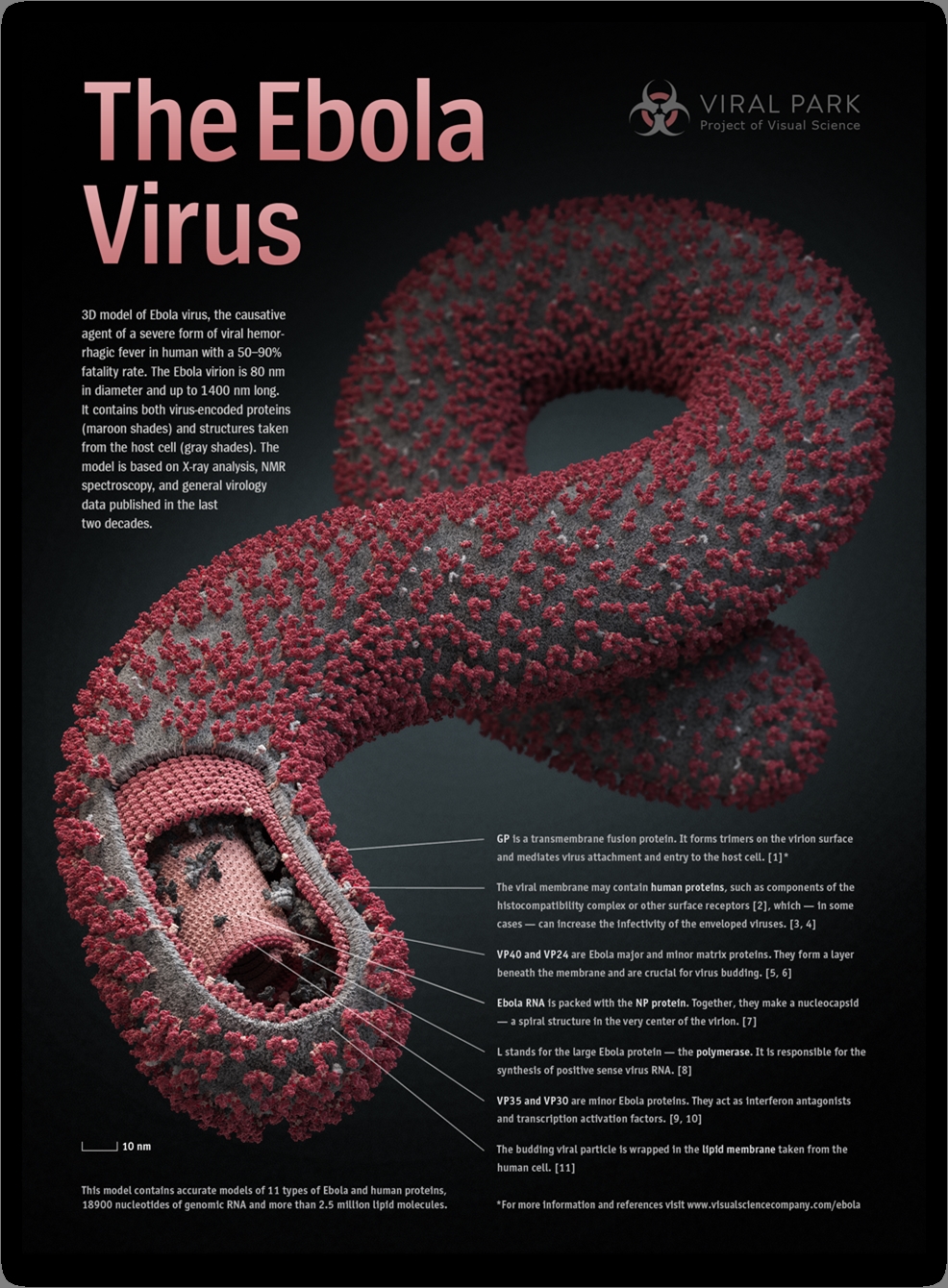
The Ebola virus is a long, thread-like (filamentous) particle about 80 nanometers wide and up to 1,000 nanometers long. It features a central single-stranded RNA genome wrapped in a helical core, surrounded by a lipid membrane studded with glycoprotein spikes, and supported by internal matrix proteins.
RNA Molecule as Genetic Material:
The RNA-containing Viruses are unique among living systems. They use RNA as their primary genetic material. Retroviruses produce the enzyme called RNA-directed DNA Polymerase or Reverse Transcriptase, which can make a DNA molecule from the Viral RNA molecule. This DNA molecule formed from RNA then serves as the principal genetic molecule within the infected, host cell. Retrovirus uses a life process that is termed ‘reverse transcription’. Two Retroviruses are associated with human leukemia which are Cancer of T-cells. The Retrovirus known as Human Immunodeficiency Virus or HIV is responsible for Acquired Immunodeficiency Syndrome or AIDS.
The Ebola virus is not a retrovirus. Ebola is a single-stranded, negative-sense RNA virus belonging to the Filoviridae family (genus Ebolavirus), whereas retroviruses (like HIV) belong to the Retroviridae family and use an enzyme called reverse transcriptase to integrate their genetic material into the host’s DNA.
Key Differences in Biology:
Ebola Virus (Filovirus): Contains a negative-sense RNA genome that replicates directly in the host cell cytoplasm using its own RNA-dependent RNA polymerase, without ever integrating into the host’s nuclear DNA.
Retrovirus: Contains a positive-sense single-stranded RNA genome that is converted into double-stranded DNA via reverse transcriptase, which is then permanently integrated into the host cell’s genome by an integrase enzyme.

The problem of the Ebola Virus infection outbreak in West Africa helps us to investigate the molecular basis for human existence. In my view, Spirituality Science is fundamentally concerned with the nature of Interactions between biomolecules that define human existence.
The Nucleic Acid Molecule – The Essence (What You Are) and Existence (What You Do) of Life:

Nucleic Acids are organic substances that are characteristic of all living things. These organic molecules are not found in nature except as components or products of organisms. They are called macromolecules; molecules of molecular weight greater than 10,000 daltons or 10,000 times the weight of a Hydrogen atom. These molecules are long chains or polymers that consist of chains of smaller units called monomers. Each Nucleic Acid chain is composed of subunits called nucleotides, each of which is composed of a specific sugar molecule( Deoxyribose or Ribose ), a molecule of Phosphoric Acid, and a molecule of one of four organic bases: Adenine(A), Guanine (G), Cytosine (C), and Thymine (T). The two chief types of Nucleic Acid are DNA (Deoxyribonucleic Acid), and RNA (Ribonucleic Acid). DNA contains the sugar deoxyribose and RNA contains the sugar ribose, and the base Uracil (U) instead of Thymine (T). The specific sequences of nucleotides constitute the genetic information of the life-form. Each three-nucleotide sequence specifies one particular amino acid. The long sequences of nucleotides thus correspond to the sequences of amino acids in the proteins that are synthesized. In order to be expressed as protein, the genetic information is carried to the protein-synthesizing machinery called Ribosomes found in the cytoplasm of the cell. Forms of RNA mediate this process and are important in the expression of the genetic code contained in the DNA for the synthesis of proteins. Although the triplet nucleotide code seems to be universal, the actual sequences of the nucleotides vary according to the species and individual organism.

The Nucleic Acid Molecules, DNA/RNA is the substance of heredity; it carries the ‘essence’ or character of an organism from one generation to next generation. But, in the study of Viruses we have found that this ‘essence’ is not displayed until its ‘existence’ is supported and is established in a complete living cell. The Nucleic Acid Molecules do not have the capacity or capability of acquiring energy from their external environment. The Virion or virus particle is inert until it finds a host cell to establish its life as a living thing. The Nucleic Acid Molecules are important to establish the ‘essence’ of an organism and I find the characteristics called ‘Spiritualism’ or ‘Spirituality’ in the functional organization of those Molecules that establish the ‘existence’ of a living entity.
During the stage of its life cycle, when the Virus is free and infectious, the virus particle or Virion is inert, and does not carry out the usual functions of a living entity, such as reproduction or growth in numbers. The propagation of a Virus requires the internal environment of a complete cell, including its biochemical machinery. The Virus loses the protein coat upon entry into a cell, after which the genetic material of the Virus reproduces using materials made by the host cell. The Virus leaves the host cell surrounded by the protein coat, the characteristics of these protein molecules are determined by the genes in the Virus, but the protein molecules are synthesized by the host cell. Viruses are often described as “naked genes” which have discarded all other attributes of complete cells. The Virion or virus particle contains the knowledge or biological information that is needed for its replication. However, to perform that reproductive function, a Virus needs the host cell’s chemical energy, and protein-and nucleic-acid synthesizing ability.

Ebola Hemorrhagic Virus is discovered in 1976. The Virus attacks the Endothelial Cells which form the lining of the blood vessels, the White Blood Cells called Phagocytes, Liver Cells or Hepatocytes and the cells of Kidney and the structural and functional damage caused can lead to unconsciousness apart from manifesting various symptoms due to bleeding from the affected organs and tissues.
I define the word “Spiritual” as a relationship, a partnership, a connection, a bonding, or an association between living entities based upon characteristics such as compassion, sympathy, cooperation, mutual assistance, tolerance, voluntary subservience, and functional subordination to provide some benefit to the members of a biotic community participating in Biotic Interactions in a given environment. Viruses survive as parasites for they need a host cell to supply the chemical energy and matter to perform its basic living function called replication.
Humans have about 20,000 protein-encoding genes, whereas the Ebola Virus has 7 genes. But, the Virus uses a protein called VP40, a Transformer Protein that can assume three distinct shapes, each with a separate function that is critical to the Virus’s survival. Each of VP40’s structural arrangement is linked to a different function in the Virus life-cycle; it assumes a butterfly shape but, near the nucleus of the host cell, VP40 transforms into a ring that regulates how the Viral genetic information is copied. At the Cell Membrane of the host cell, VP40 assembles into a linear structure which plays a role in the creation of new Viruses. While the human host cells provides a variety of benefits to the Virus, the interactions between the Virus and the cells of the human organism contribute no benefit to the man. If we study the interactions that occur between the trillions of individual living cells that comprise the human organism, we witness mutually beneficial partnership between the cells of the human organism and the Whole Organism that represents the Human Individual.
The interactions between Viral protein molecules and the biomolecules of human life are detrimental to human well-being for those interactions do not establish the experience of peace, harmony, and tranquility in the human living condition.

At the same time, it may be realized that man is a natural host to trillions of microbes that reside in man’s gastrointestinal tract. It is estimated that these gut microbial flora have around 100 times as many genes in aggregate as there are in the human genome that comprises of 20,000 genes. The spiritual nature of the biotic interactions between the cells of the human organism and the microbes that naturally reside in the human stomach, and intestines shows that there is a spiritual basis for the molecules of life that define the human organism and support his existence.
To understand the concept of Spiritualism as a functional relationship that generates the experience of Peace, Harmony and Tranquility in the human living condition, we must know the nature of biotic interaction called Parasitism that causes Disease. Millions of human lives have perished due to the scourge of Bacterial,Viral and Parasitic Diseases that afflict humankind.
The purpose and goal of Spiritualism or Spirituality is that of generating Peace, Harmony, Tranquility and Equilibrium in all functional relationships within the Individual and between members of the Biotic or Biological Community. The disease, the disability, the morbidity, and the deaths caused by Viral infections demonstrate the consequences of Biotic Interactions called Parasitism. The functional organization of a variety of Molecules that formulate the phenomenon of ‘Existence’ is attributable to the ground substance found inside the Living, Complete Cell. The viral particles have no such functional organizational capacity or capability. In my analysis, the Spirit or Soul represents the ‘Knower’ of the functions and is the operating principle of the molecular organization underlying the phenomenon of ‘Existence’. The protoplasm, the ground substance, or the corporeal material of lifeforms is the ‘spiritual’ basis of Existence.

The Molecular Basis of Spirituality:

1. I am asking readers to explore ‘Spiritual Nature’ by careful study of information provided by Natural Science.
2. Living Things are essentially composed of Matter. Chemical Molecules of Life have to be studied to understand behavior exhibited by Living Things such as Viruses, Bacteria, Parasites, Plants, and Animals which includes Man.
3. Life is possible for there are Laws of Conservation, and Law of Definite Proportions that determines Chemical Composition of Biomolecules that operate all living functions.

4. Most Molecular and Cellular Biologists study bacterial cells to study complex Metabolic Pathways involved in performance of living functions.
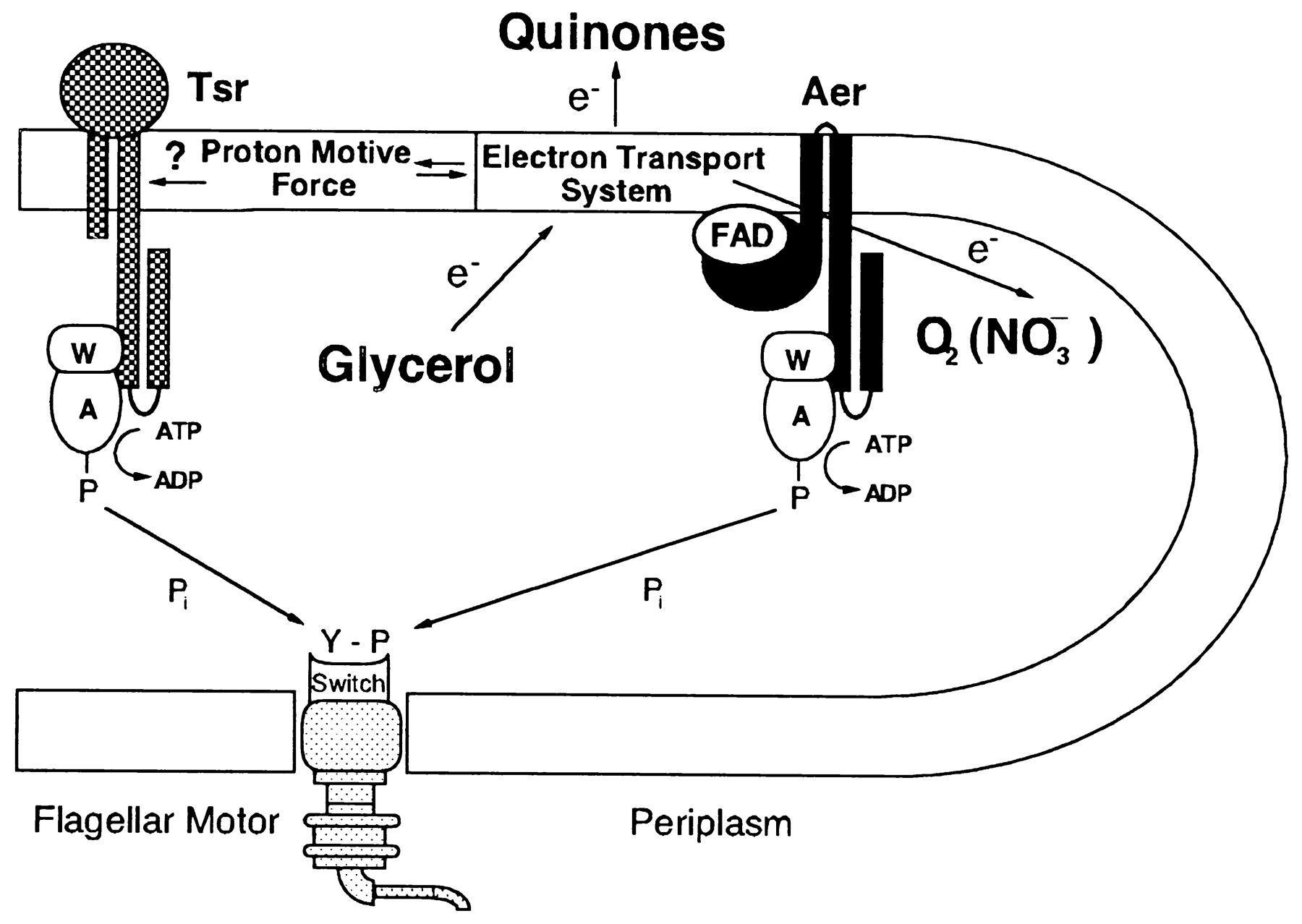
5. There is no surprise to find Science using this information to synthesize hormones used by Man using bacteria.
6. There is an Unchanging Spiritual Nature common to all Living Things. Man cannot acquire “Higher” Nature through listening to religious preachings. In the same way, Man cannot alter or “Lower” his Nature by listening to religious preachings. There can be several good reasons to study Scriptures like Torah, Bible, Quran, The Bhagavad Gita, and others. For God created Man with predetermined Nature using Unchanging Laws, Man can only seek to know his True or Real Nature by submission to God’s Will.
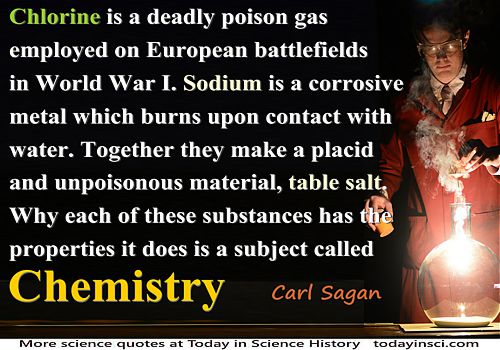
8. You cannot change Nature without changing its Essence. Salt derives its taste from Chemical Elements Sodium and Chlorine combined in Definite Proportions. Good, Passionate, and Ignorant people experience the same taste as they have no ability to change or alter the Chemical Composition of Chemical Compound called Salt.
9. Both Good and Evil people perform the same kind of living functions for Life always operates on the basis of Spiritual Nature formulated by Unchanging Laws.

Dr. Rudranarasimham, Rebbapragada, B.Sc., M.B.B.S.,
Father’s Name: R. Suryanarayana Murty, M.A., B.Ed.,
Sri Venkateswara University, M.B.B.S. Class of April 1970
Andhra Pradesh Medical Council Medical Registration Number: AMC5282; Date of Registration: September 16, 1971.


