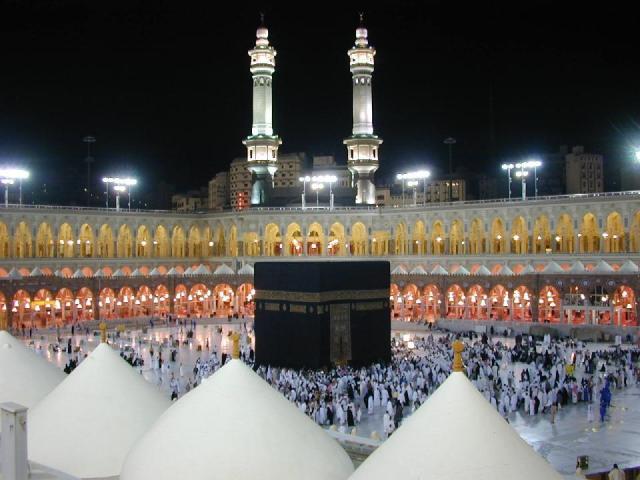
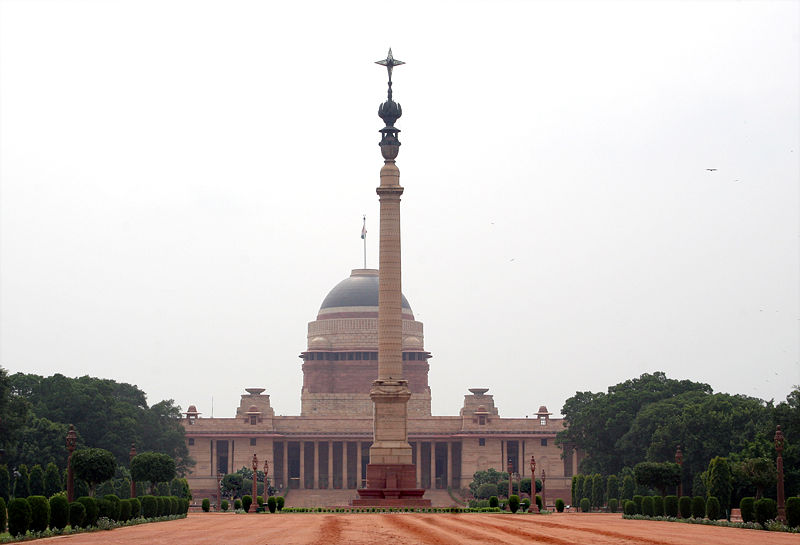
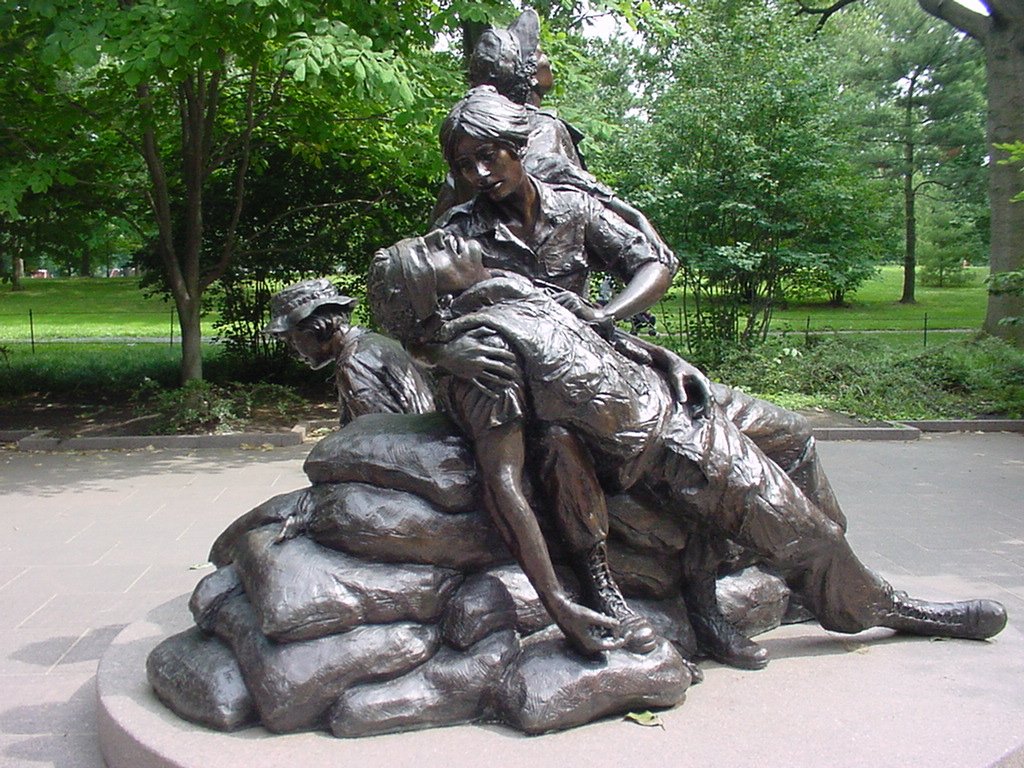
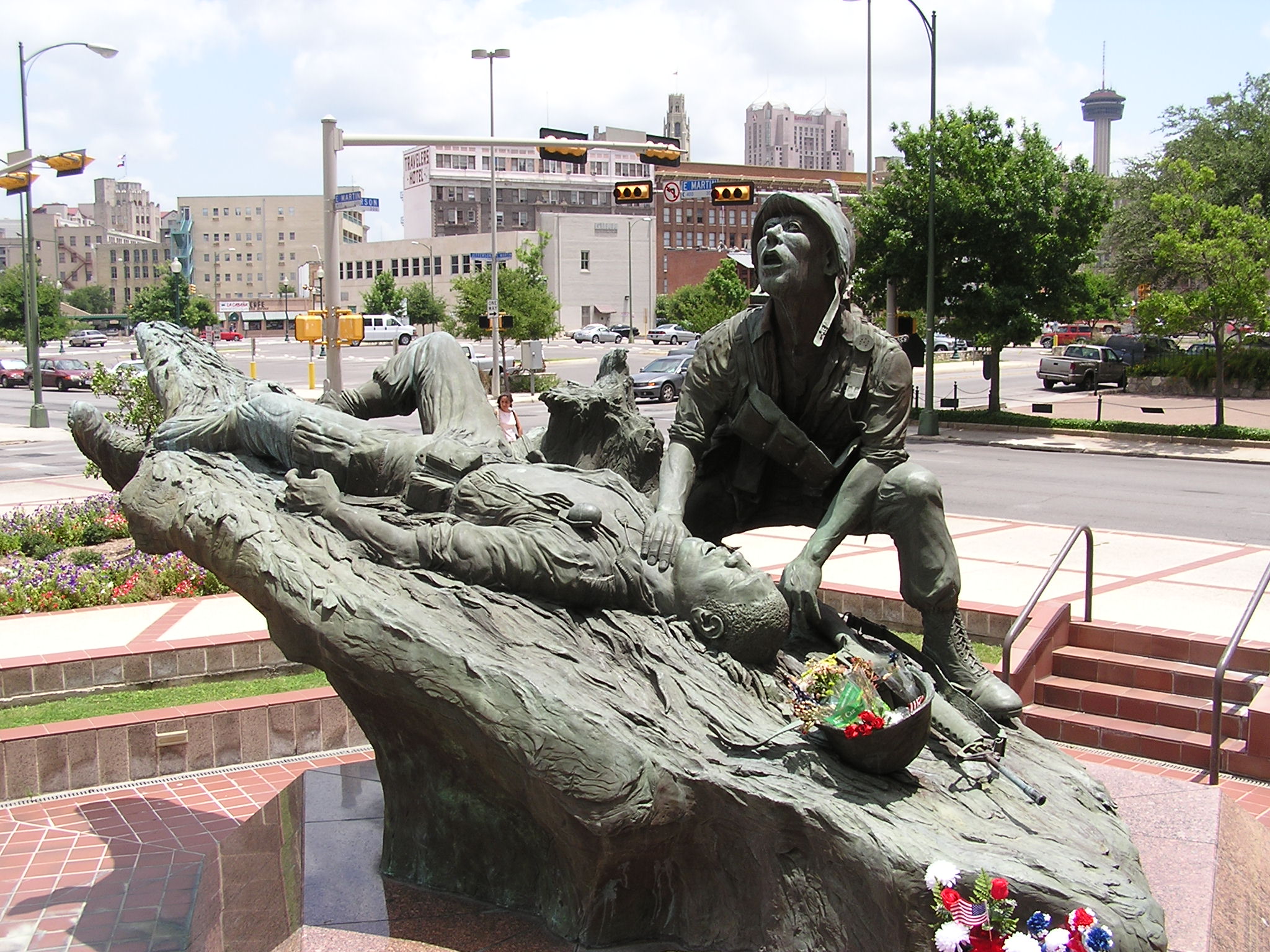
The WordPress.com stats helper monkeys prepared a 2013 annual report for this blog.
BhavanaJagat is inspired by Goddess Sarasvati who personifies Pure Knowledge and Perfect Wisdom.
Here’s an excerpt:
BHAVANAJAGAT AT LOUVRE MUSEUM: Millions of people visit the Museum to simply look at the exhibits. I would like to invite my readers to visit http://BhavanaJagat.com to read my posts and share their opinions.
SPECIAL FRONTIER FORCE – INDIA – UNITED STATES EXTERNAL RELATIONS:
India’s diplomatic relations with the United States have come under critical scrutiny after the public humiliation of an Indian diplomat posted at the Indian Consulate in the City of New York. In spite of serious political differences, both India and the United States along with Tibet could formulate a military alliance/pact that has resulted in the creation of a military organization called Special Frontier Force or Establishment No. 22. There is a common understanding and a shared vision between these three countries about the military threat posed by Communist China’s illegal occupation of Tibet since 1950. This military alliance/pact has withstood the test of times and continues to thrive despite several changes in the political leadership in India and the United States. This is an area of agreement and cooperation. At the same time, India must not be blind or gullible enough to ignore the goals of US foreign policy in Southeast Asia. The United States continues to be an important ally of Pakistan and a major military partner of India’s enemy. From the day of its inception, Pakistan continues to pose the same military threat to India’s vital security interests in Jammu and Kashmir. This security threat is further aggravated by the military relationships between People’s Republic of China and Pakistan. While Pakistan pursues its open agenda of occupying Kashmir using military force, both the United States and China desire to downsize the Republic of India. Both of them share a vision of India that is broken into several smaller, independent state entities. If that is the reality, India must estimate the need for its Consular services in the United States. Mr. Prabhu Dayal, the former Indian diplomat who had served in New York has recommended closing down the Indian Consulate in New York. In my view, India has no requirement to maintain several Consulates in the United States and all functions must be centralized at the Indian Embassy in Washington DC. Further, India must ask the United States to close down all US Consulates operating in Indian cities of Mumbai, Chennai, Kolkata, and Hyderabad in due recognition of the US foreign policy that aims to breakup Indian Union.
R. Rudra Narasimham, B.Sc., M.B.B.S., Personal Numbers: MS-8466/MR-03277K. Rank: Lieutenant/Captain/Major. Branch: Army Medical Corps/Short Service Regular Commission(1969-1972); Direct Permanent Commission(1973-1984). Designation: Medical Officer. Unit: Establishment No.22(1971-1974)/South Column, Operation Eagle(1971-1972). Organization: Special Frontier Force.
“Fear and loathing in New York: Former diplomat Prabhu Dayal reveals how Indian envoys to the US can fall victim to maids pursuing their American dreams.”
PUBLISHED: 18:03 EST, 22 December 2013 | UPDATED: 18:08 EST, 22 December 2013
Prabhu Dayal was India’s Consul General in New York from September 2008 to February 2013.
SPECIAL FRONTIER FORCE – ESTABLISHMENT NO. 22 – INDIA – USA EXTERNAL RELATIONS: India-Tibet-United States military alliance/pact must be reviewed because of the US foreign policy that encourages Sikh Separatists who demand the creation of Khalistan. The USA grants political asylum to Sikh Separatists and is recruiting them to serve in the US Armed Forces with an intention to use them in a future Separatist War on India. The USA is also supporting the Separatists of Kashmir. The US must choose its allies if it has to confront the military threat posed by the People’s Republic of China.
Devyani Khobragade’s arrest has resulted in an unprecedented Indo-US row which shows little sign of abating. Since I was Consul General in New York from September 2008 till February 2013, I feel duty-bound to put the situation in a full and correct perspective.
Devyani worked as my deputy towards the end of my term. Moreover, I also faced a lawsuit about which some misinformed comments continue to be made in sections of the media. I met (Devyani’s domestic help) Sangeeta Richard several times at the consulate. She not only seemed happy and cheerful, but also struck me as being quite well-groomed and educated – not the usual type of domestic worker.
Given the recent history of problems faced by the consulate, I advised Devyani to be careful. I also told her that there were plenty of people around who could misguide Sangeeta and create trouble. Cases of desertion by domestic assistants are not new. For decades, domestic assistants accompanying our diplomats to the US have gone missing, preferring to stay there illegally and pursue their dollar dreams.
Countless security guards, including many from the police and paramilitary services, have also done likewise.
Although the US authorities have invariably been informed whenever this has happened, they have done nothing to nab them. As is well-known, the US has a very large number of illegal, undocumented aliens who provide cheap labor. However, in October 2000, the US Congress enacted the Victims of Trafficking and Violence Protection Act (TVPA). In terms of this Act, our domestic assistants who abscond can now obtain a trafficking visa by alleging that they were subjected to involuntary servitude and not paid wages as per US laws. They can get a three-year T Visa which gets converted to full resident status.
Naturally, such persons allege that they would face extreme hardship if they were deported back, as Sangeeta Richard has done. In return, they have to cooperate with the law enforcement agencies against the alleged traffickers – their former employers. Then in 2010, New York state enacted the Domestic Workers Bill of Rights, after which there has been a spate of lawsuits filed by domestic workers.
HOOK OR CROOK:
Devyani Khobragade may have fallen victim to a common menace – maids desperately seeking green cards.
It is no secret that many Indians go to the US and try to stay on by hook or crook. Thousands of Sikhs have managed to obtain political asylum by alleging that they are being persecuted in India and thus getting full resident-status.
Privately, many of them admit that they only took the asylum route as it was the only way they could get a Green Card. However, the US authorities continue to give asylum visas to many Sikh applicants, blindly ignoring the fact that the Sikhs are a thriving community in India, and that our Prime Minister is himself a Sikh. However, the asylum visa is not available to everybody. This is where the TVPA has opened the doors to people like Sangeeta Richard, who can obtain official passports as domestic assistants of our diplomats, get an A3 visa from the US Embassy, reach US shores, work there for some months, abscond and then obtain a T Visa.
The visa fraud allegedly committed by Devyani Khobragade was in fact committed by Sangeeta Richard as she misrepresented her terms of employment to the US Embassy during her interview with the Consular officer to get an A3 domestic worker visa, which would later enable her to leapfrog to a trafficking T Visa.
Now, a few words about two earlier cases which took place in New York.
Shanti Gurung worked as a housekeeper for Dr. Neena Malhotra, Consul for over three years. I met her often as she would come to the consulate to attend functions such as Republic Day, Independence Day, Diwali, Baisakhi etc., as well as music concerts, and she was always happy and contented.
I was shocked when she went missing on the eve of Dr Neena’s departure from New York on transfer, and even more shocked when she filed a lawsuit a year later against her employer alleging confinement, forced labor, slavery, ill-treatment etc. No doubt, she did so to obtain a T Visa.
Mrs. Santosh Bhardwaj worked as my housekeeper for two years in India and four years in Morocco before joining me as my domestic assistant in New York in February 2009. Eleven months later, in January 2010, she absconded from the consulate building where she lived.
Seventeen months after that, she filed a suit against me alleging slavery, forced labor, non-payment of full wages etc. She alleged that she was not given proper accommodation and was made to sleep in a storage area. She also made an allegation about an incident of sexual harassment. These allegations were prominently reported in the media.
Six weeks later, her lawyers filed an amended suit in which the allegation about sexual harassment and being made to sleep in a storage area were voluntarily dropped.
Under US judicial practice, a plaintiff enjoys absolute litigation privilege and can amend a suit by adding or deleting charges. However, these and many other allegations had already received wide publicity in the media and continue to be referred to even now.
The fact was that she was not made to sleep in a storage area but was provided a fully furnished one bedroom apartment in the consulate building with heating, air-conditioning, television and an attached bathroom, and there were many witnesses to this fact.
As regards sexual harassment, this charge was also false. The media gave very little coverage to the voluntary dropping of these charges.
She was so well treated in Delhi and Morocco that she voluntarily went with us to New York. Did our treatment towards her suddenly change so drastically in New York that it was tantamount to slavery and involuntary servitude?
The suit alleged that I had not paid her wages at $10 an hour as per the contract. Here, I would like to draw attention to the website of the US State Department which states the following: “As of March 2011, the Department has decided that no deductions are allowed for lodging, medical care, medical insurance or travel. As of April 2012,deductions taken for meals are no longer allowed”.
However, Mrs. Bhardwaj worked for me in New York from January 2009 till February 2010, when deductions for perks were allowed by the State Department. If perks are included, the emoluments of my domestic assistant were considerably more than what she was to get under the contract. A fully furnished one bedroom apartment in the Upper East part of New York does not come for less than $2,500!
Added to this were the expenses towards water, electricity, heating, air-conditioning, food, medical cover, travel passages (including for home leave) plus a handsome salary.
BIASED & HIGH-HANDED:
The emoluments of all officials posted by the MEA(Ministry of External Affairs) to Embassies and Consulates include salary and perks; the emoluments of a domestic assistant accompanying an Indian diplomat are built into the officer’s own package, and include salary and perks.
It is only after March 2011 that the US State Department has begun to disallow deductions for perks for domestic assistants. Litigation in the US is a very expensive and stressful process. Most lawsuits end up in an out of court settlement without acknowledgement of wrongdoing.
I, too, had no option but to settle the case. India’s view has been that the domestic assistants of our diplomats hold official passports and should be outside the purview of US labor laws. The US side has not agreed to this, insisting that US laws apply to them. This impasse continues.
What about the future? We should either get the US to agree to our position or change our present arrangement relating to the domestic assistants. Our officers should not be caught in this sort of situation arising from how the Ministry of External Affairs interprets the emoluments given to domestic assistants and how differently the US authorities interpret them. This would prevent the sort of ordeal which Dr Neena, Devyani and I myself have gone through.
It is understood that the MEA is trying to revamp the system and may itself sign contracts with domestic workers instead of officers having to do so.
Will this revamped arrangement shield officials posted at our Consulates fully? I am afraid not, for one must recall the case of Krittika Biswas, a 12th grade student and daughter of a Vice-Consul serving under me in New York. She was arrested and handcuffed in front of her fellow students at her school on the charge of cyber-bullying one of her teachers, although she asserted that she had a diplomatic passport. She was not allowed to contact her parents or anyone till the evening, and was kept in a detention center for 28 hours with prostitutes and drug addicts in the same manner as Devyani.
My colleagues and I had to run from pillar to post to get her released. She was not taken back to her school but had to attend a sort of reform school. Later, it was discovered that it was not Krittika but another student who was responsible for the cyber-bullying, but he was not arrested.
What can one make of this except that the New York law enforcement agencies were biased and high-handed?
The Krittika Biswas case makes me apprehensive that given the US position on immunity, even if we were to revamp our system relating to domestic assistants, we will not be able to guarantee that officials in our Consulates will not be arrested or dragged into law courts for some reason or another.
The US is a highly litigious country where suing people is a sort of favorite pastime. Family members of consulate officials are not given any ID cards and have absolutely no immunity. Hence, they are even more vulnerable.
An atmosphere of fear already pervades our Consulate in New York, and the New York Consulate is no longer a sought-after posting for this reason.
What are we to do in such a situation? Some of my former colleagues go to the extent of saying that if diplomats posted in our Consulates in the USA do not enjoy immunity, then we should close down these Consulates and do all Consular work from the Embassy in Washington DC, where our officials enjoy immunity.
This is not so cynical as it may sound. Firstly, Consular work relating to passports, visas, OCI cards, PIO cards has already been outsourced. Instead of bringing the documents to the Consulates, the outsourcing company could courier them to the Embassy.
Secondly, a large number of persons already send their applications to the Consulates by mail, and they would instead have to send these to Washington DC. What difference would it make if someone living in Boston has to send the application to Washington DC instead of to New York?
Of course, the Embassy’s consular Section would have to be considerably strengthened for handling the additional load. All other work such as information, culture, outreach and economic would also have to be done from Washington alone, which is not so difficult in today’s age of instant electronic communications.
DON’T DRAG FEET:
As regards all the endless protocol work involving receiving and seeing off delegations which keep coming to New York, it could be done by the Permanent Mission to the UN, whose officials enjoy immunity.
At present, the protocol load is shared by the Permanent Mission and the Consulate. Again, the protocol wing of the Permanent Mission will have to be augmented.
I know that this suggestion by my former colleagues may be dismissed as being too cynical. There is no doubt, however, that our officers posted at the Consulate in New York have begun to feel very insecure after all these recent cases, and the same may also be true for the other Consulates in Chicago, San Francisco, Houston and Atlanta.
How will India protect its diplomats posted to the consulates given the US position on immunity? Drastic situations call for drastic steps, and if we can’t learn from bad experiences, then we alone are to be blamed. Foot-dragging will not get us anywhere.
(The writer is a senior diplomat who has served as India’s Consul General in New York)
Whole Dude – Whole Genocide: US President Richard M Nixon in his taped conversation with US National Security Adviser Dr. Henry Kissinger reveals his personal understanding of historical events such as the persecution of Jews in Germany by Hitler, the massacre of black Catholics in Biafra region of Nigeria, the slaughter of civilian population of East Pakistan. I am not surprised to note that they had no sympathy for the suffering of Tibetan people and they took the sinful action to formulate a new US foreign policy that involved establishing trade, commerce, and diplomatic relationships with Communist China.
I am pleased to share the blog post titled “Looking Away From Genocide” authored by Gary J Bass, Professor of Politics and International Affairs at Princeton University. This blog includes excerpts from the conversation between US President Richard M Nixon, and US National Security Adviser Dr. Henry Alfred Kissinger. President Nixon makes a direct comparison to the slaughter in East Pakistan to other atrocities against humanity and asks Kissinger for his opinion on Biafra massacre(Nigeria) and the persecution of Jews in Germany by Hitler. President Nixon reveals his personal understanding of such historical events in this brief conversation and it would have a most chilling effect on any reader. I am not surprised to note that Kissinger had no interest in formulating a true national security policy. He was totally obsessed with his own plans to dominate the foreign policy conversation and getting rid of William P Rogers, the US Secretary of State. In the face of such moral bankruptcy, India’s Prime Minister Indira Gandhi had boldly launched her Secret War in East Pakistan and I am glad that I had participated in the training of Bengali guerrilla fighters and later initiated the Liberation of Bangladesh on 03 November, 1971 with military action in Chittagong Hill Tracts with attacks on Pakistani border posts deep inside the enemy territory.
SERVICE INFORMATION:
R. Rudra Narasimham, B.Sc., M.B.B.S., Personal Numbers:MS-8466/MR-03277K. Rank:Lieutenant/Captain/Major. Branch:Army Medical Corps/Short Service Regular Commission(1969-1972); Direct Permanent Commission(1973-1984). Designation:Medical Officer. Unit:Establishment No.22(1971-1974)/South Column,Operation Eagle(1971-1972). Organization: Special Frontier Force.
NOVEMBER 20, 2013
LOOKING AWAY FROM GENOCIDE
POSTED BY GARY BASS
On March 25, 1971, the Pakistani Army launched a devastating military crackdown on restive Bengalis in what was then East Pakistan. While the slaughter in what would soon become an independent Bangladesh was underway, the C.I.A. and State Department conservatively estimated that roughly two hundred thousand people had died (the official Bangladeshi death toll is three million). Some ten million Bengali refugees fled to India, where untold numbers died in miserable conditions in refugee camps. Pakistan was a Cold War ally of the United States, and Richard Nixon and his national-security advisor, Henry Kissinger, resolutely supported its military dictatorship; they refused to impose pressure on Pakistan’s generals to forestall further atrocities. My new book, “The Blood Telegram: Nixon, Kissinger, and a Forgotten Genocide,” tries to reconstruct this dark chapter of the Cold War, using declassified documents, investigative reporting, and countless hours of White House tapes, including about a hundred newly transcribed conversations. Thanks to the secret taping system that he installed to record his own blunt conversations, Nixon inadvertently left behind the most transparent Administration in American history. The tapes offer the most revealing account of Nixon and Kissinger’s raw thinking. Staffers at the White House and the State Department were often more pragmatic than their principals, so the documents they produced make the Administration appear more moderate than it was. It’s only on the audio tapes that Nixon and Kissinger’s full radicalism is on display. But the White House tapes are maddeningly hard to use. The State Department’s official historians have done excellent work in declassifying some of the most sensitive discussions, but to this day, particularly embarrassing portions of the tapes are bleeped out on the basis of specious national-security concerns. (I’ve made my own requests for a mandatory declassification review of these bleeps under the terms of an executive order.) The tapes remain a largely untapped resource, in part because they are enormous, unwieldy, badly organized, often bleeped, crackly, laborious to transcribe, and hard to understand. You can hear Nixon and Kissinger at work in the following audio clip, which is followed by an annotated transcript I made for “The Blood Telegram.” (Some snippets from this conversation are available in a volume of the State Department’s “Foreign Relations of the United States” series, but this is the first full transcript.) This discussion, which also involved the White House chief of staff, H. R. Haldeman, took place not long after the start of the crackdown in East Pakistan. Nixon and Kissinger are having one of their typically prolix and digressive conversations, concentrating this time on foreign policy. The tape is unusually clean: the sound quality is good, and there are no bleeps, though there is some music playing in the background. The clip below begins just as the conversation has turned from the Vietnam War to the possibility of an opening to China. To establish communications with Mao Zedong’s regime, the White House was exploring several clandestine channels, including messages carried to the Chinese leadership by Romania’s Communist despot, Nicolae Ceausescu, and Pakistan’s military dictator, General Agha Muhammad Yahya Khan, known as Yahya. The Pakistan channel would soon culminate in Kissinger’s first secret trip to Beijing, in July, 1971. He flew direct from Pakistan, which provided an airplane and a cloak-and-dagger cover story—another reason for the White House to support Pakistan even as the killing continued. WHITE HOUSE TAPES OVAL OFFICE 477-1 APRIL 12, 1971, 10:24-10:33 A.M. NIXON: Now, another thing. I want to know about Yahya and Pakistan.
Nixon had a great personal fondness for Pakistan’s military ruler, who was carrying out the brutal crackdown on the Bengalis. “He’s a decent man,” Nixon repeatedly said, as the death toll mounted.
I want to be sure that we’re not caught in a crack here where State then puts out a whole lot of stuff that they’ve done. Now Bill has not said that he wants to say anything about Pakistan, has he?
The President seems to be making sure that the distrusted State Department would not, on its own, condemn Yahya for killing Bengalis. “Bill” is William Rogers, Nixon’s ineffectual Secretary of State, who had been reduced to near-total irrelevance by his rival Kissinger.
KISSINGER: No. NIXON: Has Sisco?
Joseph Sisco, the headstrong assistant secretary of state for Near Eastern and South Asian affairs, was a particular annoyance to Nixon and Kissinger, who would later call him “a maniac” and “such a whore.”
KISSINGER: No. But it’s out there, out there [indistinct]. The Dhaka consulate is in open rebellion.
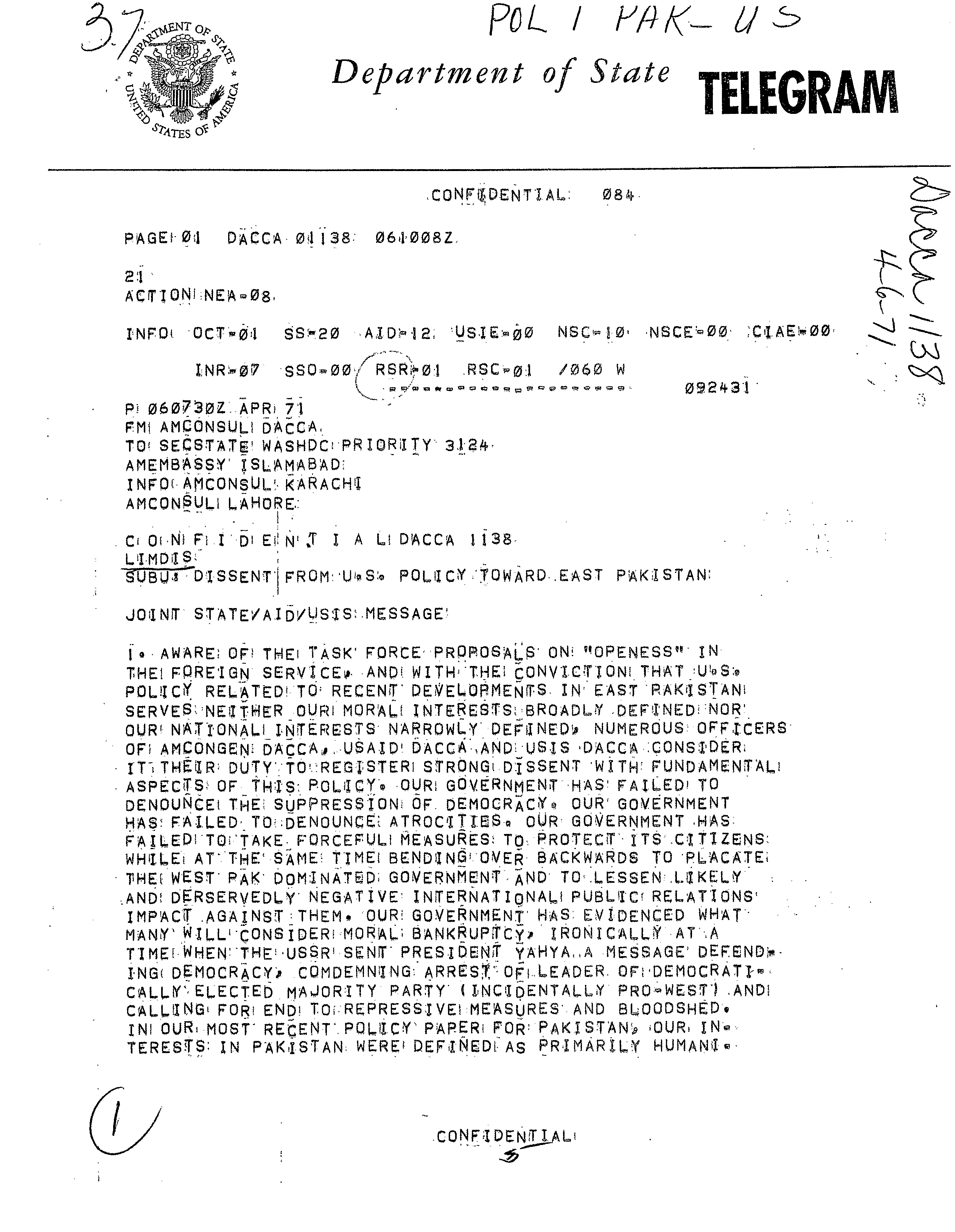
American diplomats in East Pakistan, horrified by the slaughter, had been reporting the killing in gruesome detail. On April 6th—just a few days before this conversation—the U.S. consul general in Dhaka, Archer Blood, sent a telegram signed by almost all of the U.S. officials in East Pakistan, formally voicing “strong dissent” from the White House’s pro-Pakistan policy, which they characterized as “moral bankruptcy” in the face of “genocide.” In retaliation, Nixon and Kissinger would soon eject Blood from his post in Dhaka.
NIXON: I understand…[indistinct] I want to know how we can respond to it [indistinct]. We’re going to be…[indistinct] you know what I mean? KISSINGER (emphatically): Mr. President, we’re going to wind up on the worst side if we start backing a rebellion there now.
Though Nixon and Kissinger were discussing actual rebellions in East Pakistan and Biafra, Kissinger was also accusing Blood of “open rebellion” for having sent his formal cable of dissent through official channels. Kissinger would later call Blood “this maniac in Dacca, the Consul General who is in rebellion.”
NIXON: But Bill—but Henry, we did not back the rebellion in Biafra, did we?
Even before the crackdown in East Pakistan began, U.S. officials had warned that the country could descend into the kind of bloody chaos that had recently been seen in Biafra, an oil-rich region of Nigeria that attempted to secede in 1967. The Nigerian government managed to crush the Biafran resistance in 1970. As a candidate for President in 1968, Nixon had denounced genocide in Biafra; by 1971, yesterday’s inaction in Biafra had become a rationale for today’s support of Pakistan.
KISSINGER: That’s right. NIXON: That’s a hell of a lot more reasonable. I know, there are less people in Biafra. Is that the reason? Does morality become—look, there weren’t very many Jews in Germany.
As Nixon knew, Kissinger was one of those German Jews; at least thirteen of his close relatives had been murdered in the Holocaust.
KISSINGER (murmurs): That’s right. NIXON: Was it immoral—was it therefore not immoral for Hitler to kill them?
Nixon, unprompted, is comparing the slaughter in East Pakistan to Biafra and the Holocaust.
KISSINGER (murmurs): That’s right.
Kissinger goes along with Nixon’s comparison of Hitler and Yahya, but still maintains his support for the Pakistani dictator.
NIXON: See, that’s my— [indistinct] And the Biafrans are black— [indistinct] Catholics!
This part is hard to hear, but may be about how Americans ignored the Biafrans because they were black, and about Catholic support for the Biafran cause. As Nixon later said, “Biafra stirred up a few Catholics.”
KISSINGER: Mr. President, if we get in there now— NIXON (cross-talk): It’s ridiculous. KISSINGER: —we get West Pakistan turned against us, and we get—the Bengalis are going to go left anyway.
The State Department had repeatedly noted that the Bengali leadership was quite pro-American, but Kissinger dismisses that.
NIXON: Yeah. KISSINGER: They are by nature left. Their moderate leadership is in jail, maybe they shouldn’t have been put in jail, but that’s the way it is now, and, uh—
Kissinger realizes he’s made a wrong turn, is actually criticizing Yahya, and falls awkwardly silent.
NIXON: I just want to [indistinct]… get a little work… [indistinct] Is that in the West—West Pakistan thing or not? [indistinct] KISSINGER: Why don’t you wait ’til Wednesday, Mr. President, when we have the meeting and then we can get a paper to you. NIXON: All right. KISSINGER: Because I am afraid in the present state of the State Department if you interfere too early— NIXON (annoyed): I’m not interfering, I just want to know what he thinks!
Nixon snaps at Kissinger for the nonstop bureaucratic combat against Rogers. To handle Kissinger’s obsessive feuding with the Secretary of State, the President had Haldeman set up an informal “Henry-handling committee.” In the end, Kissinger drove Rogers out, and claimed both top foreign-policy jobs, national-security advisor and Secretary of State.
KISSINGER: Well, he’s going to submit a paper to us and then you’ll know what you think—what he thinks. NIXON: Oh. He’s going to submit a paper? KISSINGER: Yeah. NIXON: You’re sure he knows I want it? KISSINGER: Oh yes, he knows you want it. No, he’s—Bill is all right.
Kissinger starts to walk back, trying to praise Rogers.
Bill is— NIXON: I just got to know what the hell they think. I mean, I’m not trying to—… [indistinct] I think if we get in the middle of the whole thing [indistinct], it’s a hell of a mistake. KISSINGER: It’s a disaster. No one else is doing it. NIXON: Look—let’s face it. The people that bitch about Vietnam bitched about it because we intervened in what they say was a civil war.
This was one of Nixon’s most potent arguments to silence Americans who were outraged by the suffering in East Pakistan. Democrats like Ted Kennedy, the White House argued, were simply trying to drag the United States into another civil war in Asia.
KISSINGER: That’s right. NIXON: Now some of those same bastards, like… [indistinct] want us to intervene in Biafra. And some of those same people want us to intervene here. Both civil wars. Real civil wars. Now what in the hell are we talking about? KISSINGER: They want us to cut out economic aid to West Pakistan. NIXON (surprised): For what reason?
Kissinger is careful to defend U.S. aid to the Pakistani military government, despite the atrocities. Blood had argued that the bloodshed in East Pakistan was a very good reason to cut off economic aid to Yahya.
KISSINGER: It’s—pure doctrinaire reasons. Because India is screaming in turn, because they’re scared to death of their own Bengalis. Deep down the Indians don’t really want an independent East Pakistan, because within ten years of that the West Bengalis are going to start bringing pressure on them for autonomy. It’s a classic situation for us to stay out of. There’s nothing for us in there to take sides in this. And for us to cut off aid will infuriate the West Pakistanis.
Millions of Bengalis in India were deeply shocked by the killing of their brethren across the border in East Pakistan. The Indian state of West Bengal, unstable and impoverished, was already a headache for the Indian government—and the crackdown in East Pakistan sent some ten million refugees fleeing into India’s border states, above all into West Bengal. This left the Indian government fearful of further unrest in the state, and desperate to find a way to get the refugees to return home. India secretly sponsored Bengali guerrillas fighting back against Pakistani troops. Finally, in December, 1971, India and Pakistan would fight a brief fourteen-day war, ending with an Indian victory and the creation of the new country of Bangladesh. Unlike Blood and the other Americans in Dhaka, Kissinger seems not to realize that the loss of so many Bengali lives might impact American foreign policy. For all his mastery of the use of American leverage, he nevertheless rules out the possibility of applying any pressure on the Pakistani military.
Photograph by Frederic Lewis/Hulton Archive/Getty
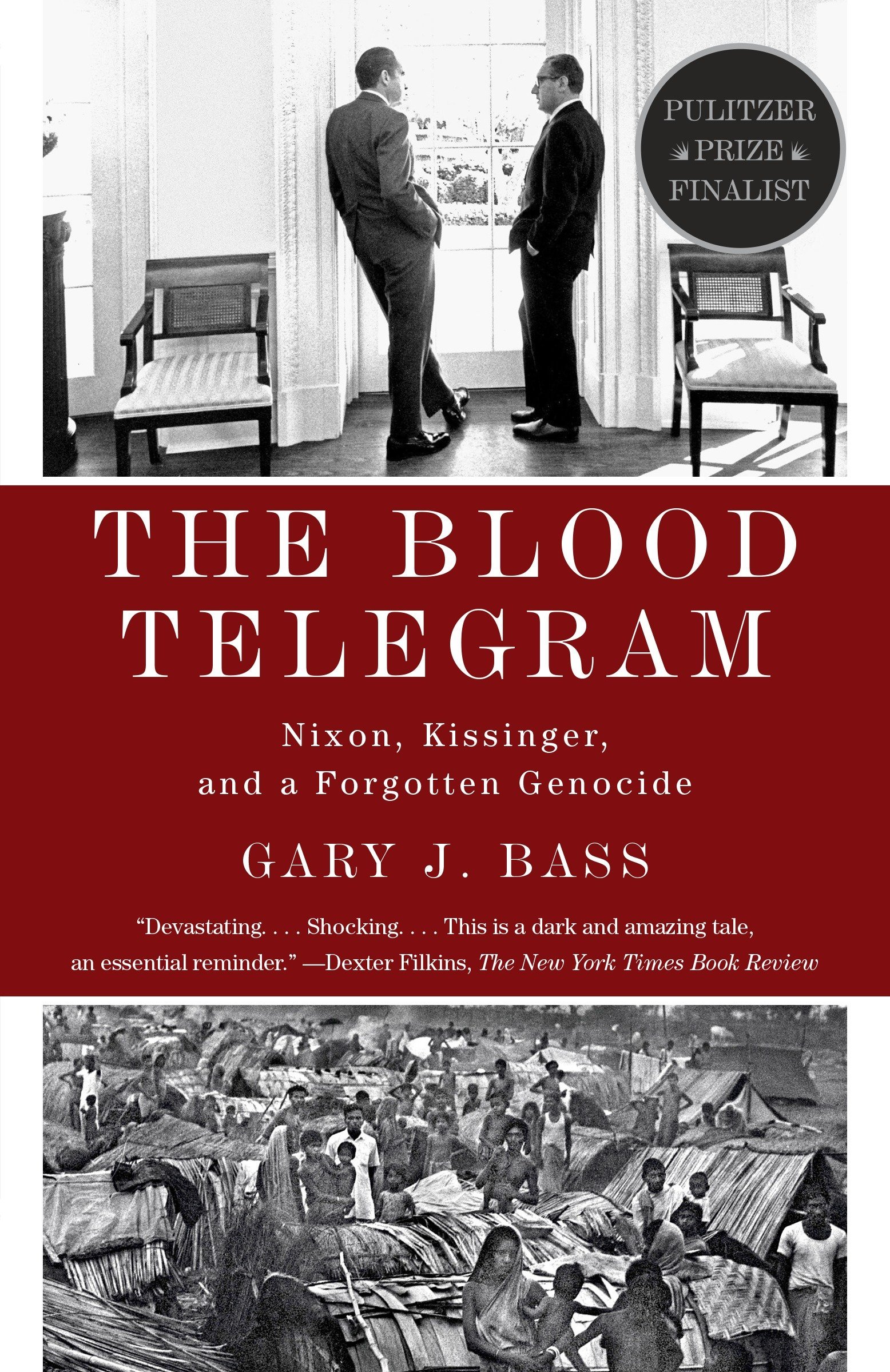
Nixon and Kissinger: A Forgotten Genocide in Bangladesh
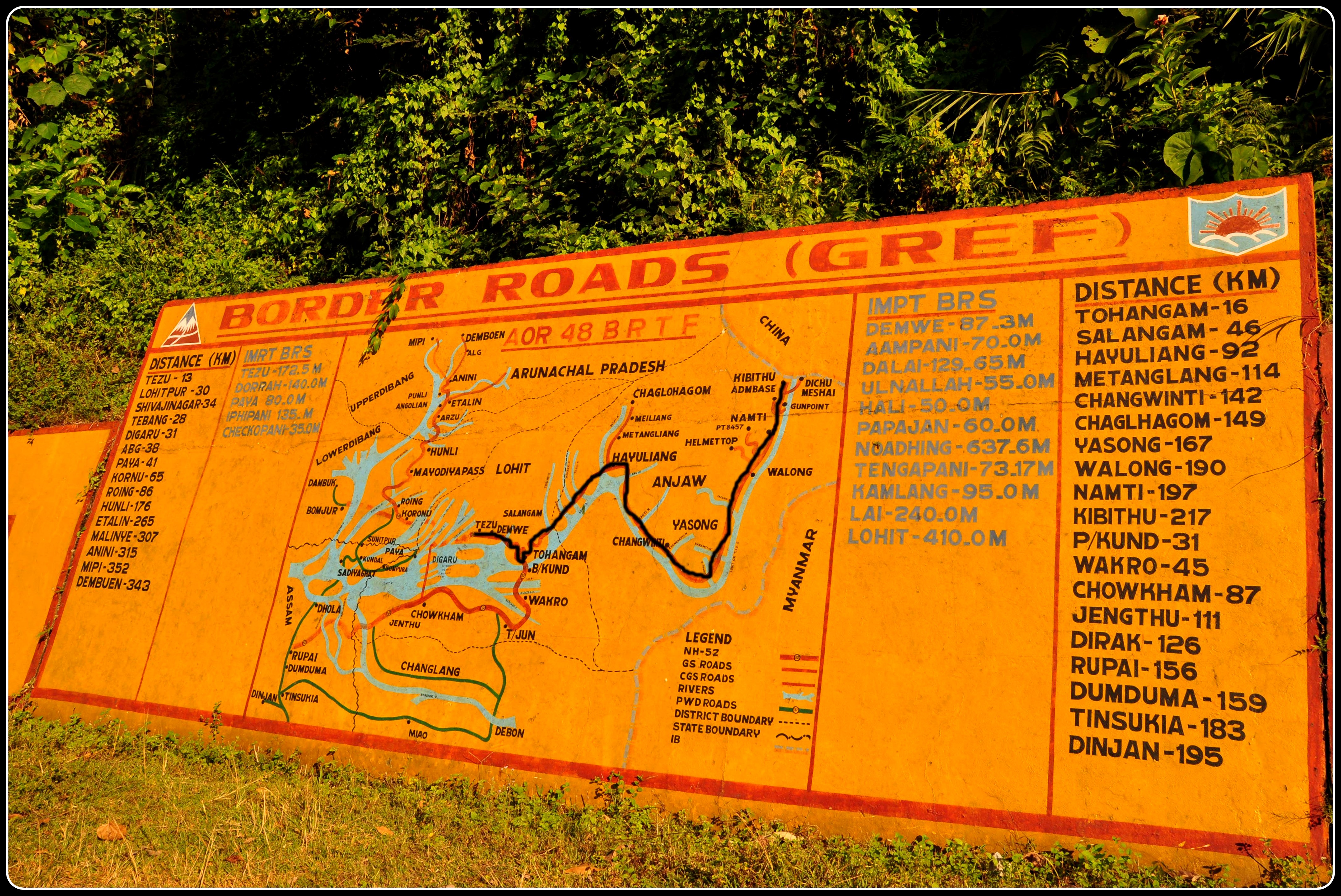
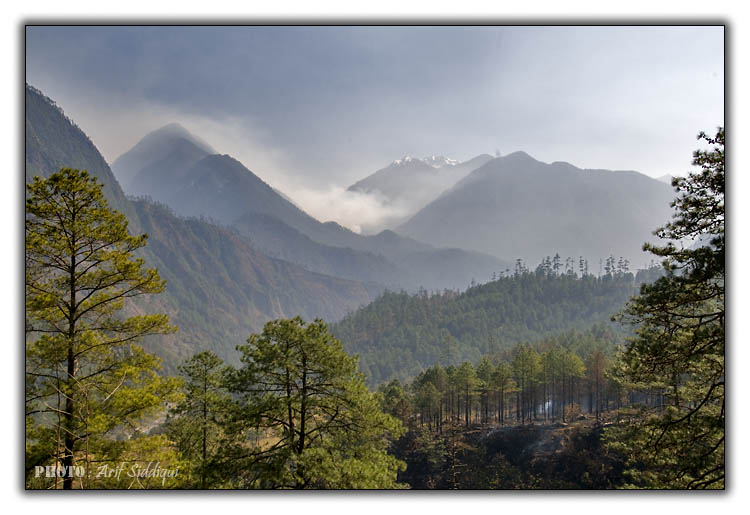
This is my special tribute to Lohit River and I post this blog to remember my life’s journey; a journey from 1962 to 1972. During 1962, I was a student at Giriraj Government Arts College, Nizamabad, Andhra Pradesh, India and I was studying in the First Year of a 3-Year Bachelor of Science Degree Course. During October 1962, when China attacked India across the Himalayan Frontier, Indian people spontaneously reacted condemning the act of Chinese aggression. It gave me a strong motivation to serve the country to defend the Northern Frontier. My dream came true during 1969 when I was granted Short Service Regular Commission to join the Indian Army Medical Corps. On completion of my basic military and professional training, I was deputed to Special Frontier Force and I had the proudest moment of my life when I visited the War Memorial in Walong, Lohit District, North East Frontier Agency(NEFA) during 1972. I got married during January 1973, while I was serving in the North East Frontier Agency and Lohit River is my witness to my Life’s Journey and Commitment.
SPECIAL FRONTIER FORCE – LOHIT RIVER: Map of Anjaw District, Arunachal Pradesh State, India.
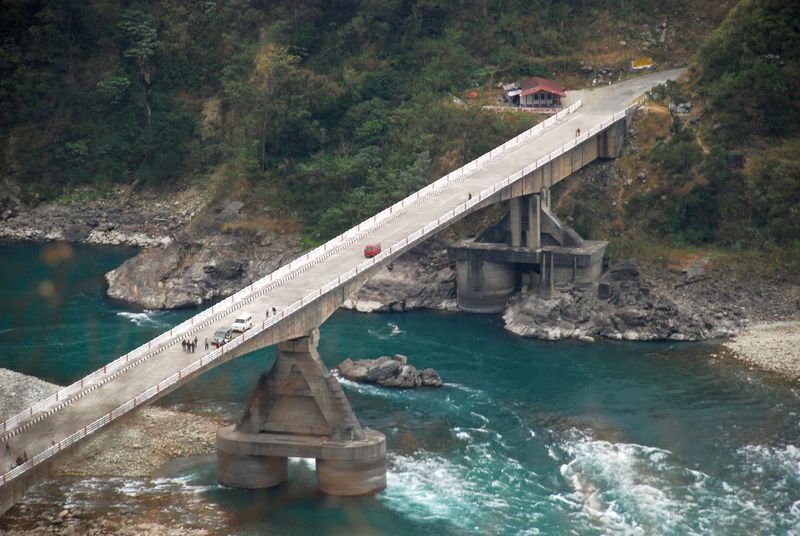
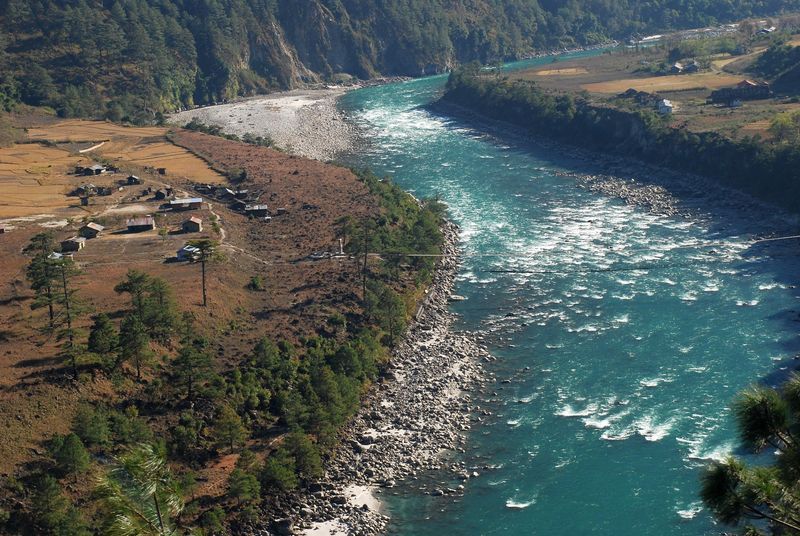
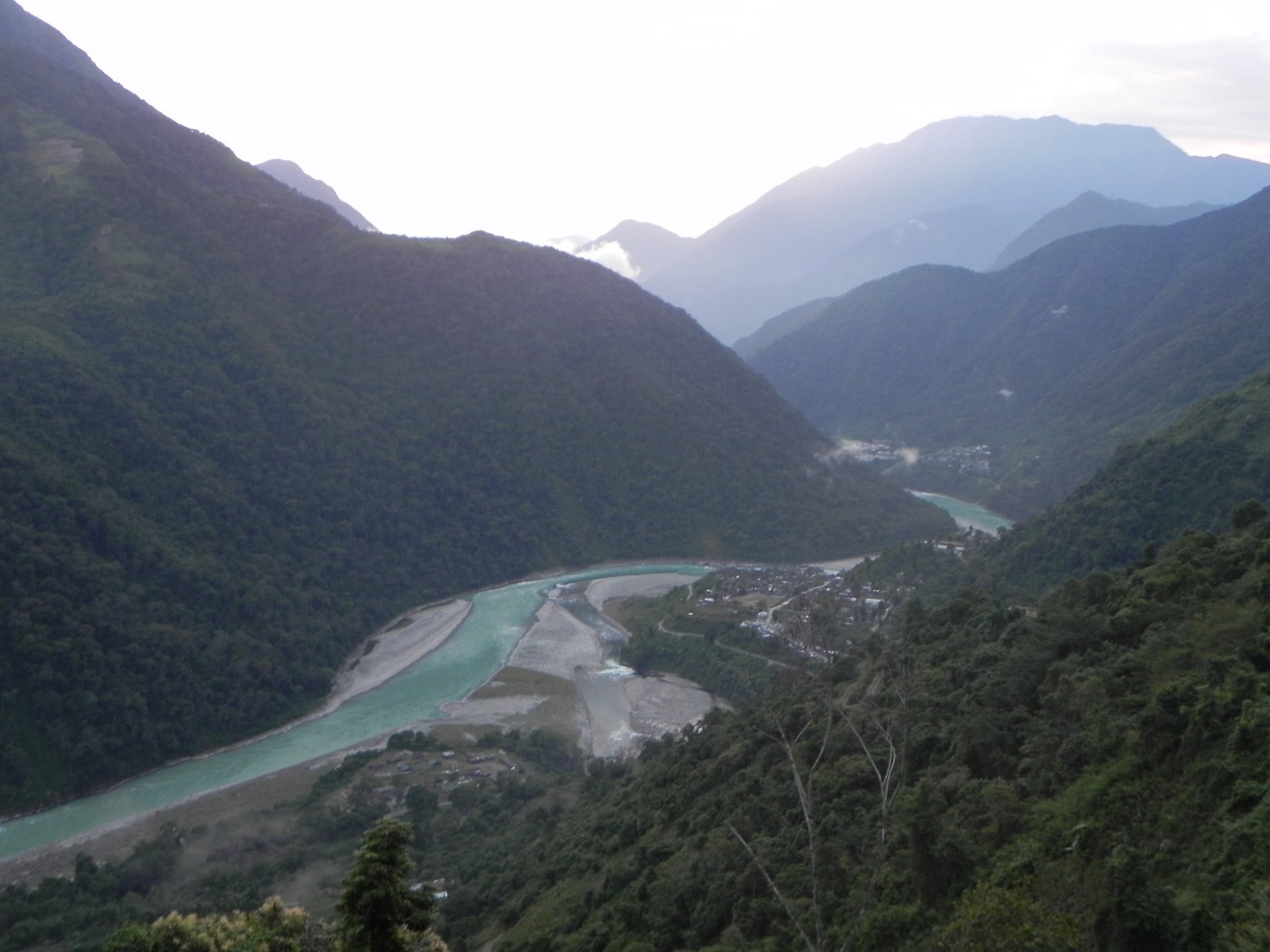
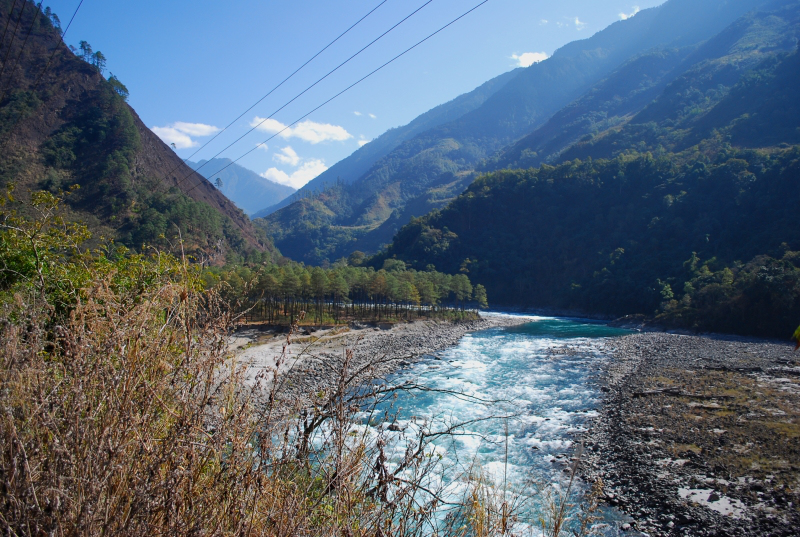
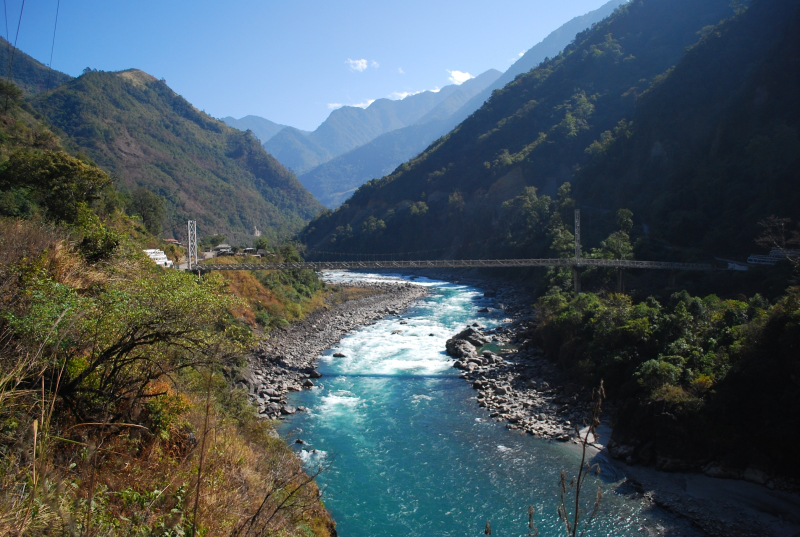
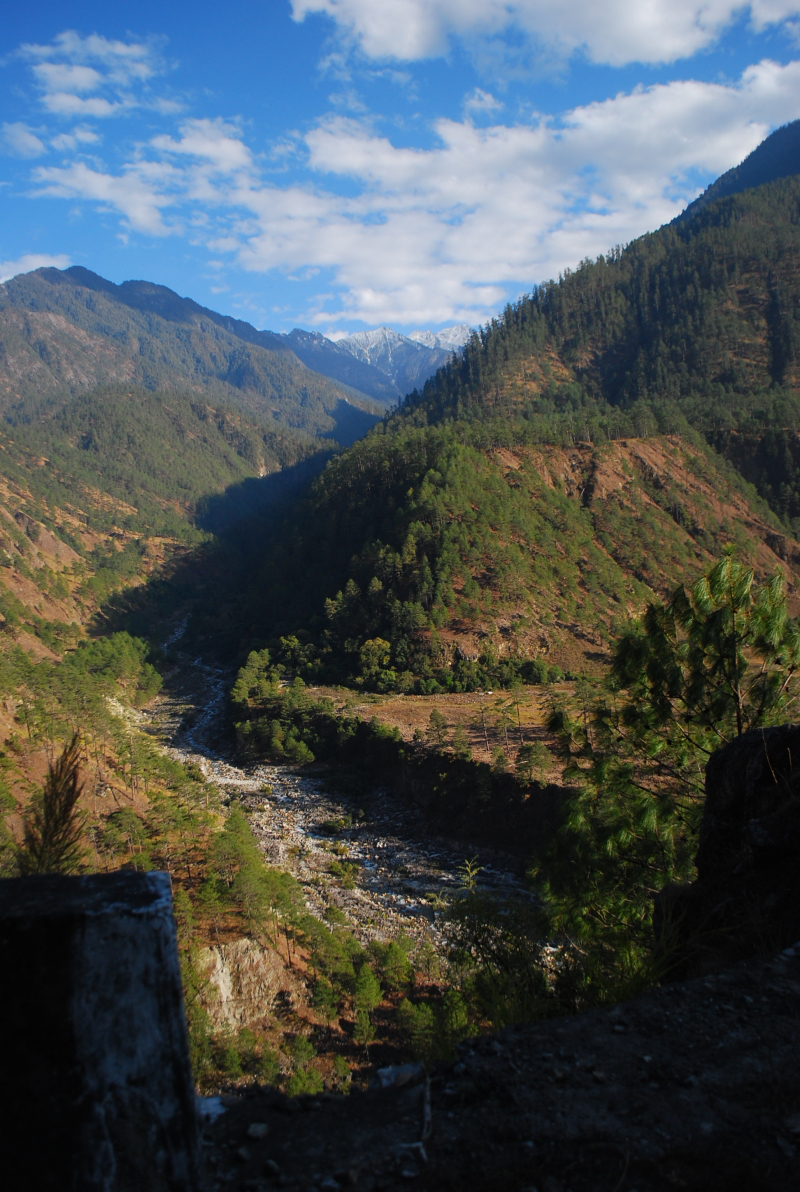
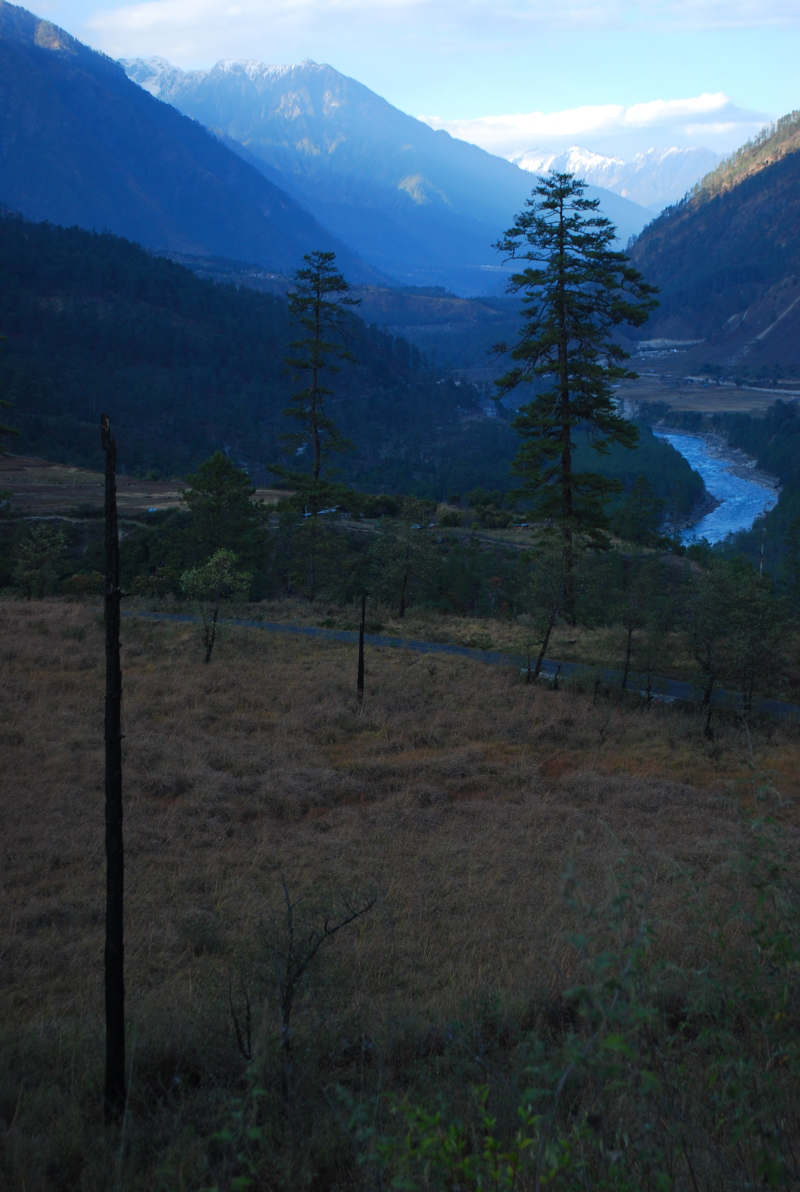
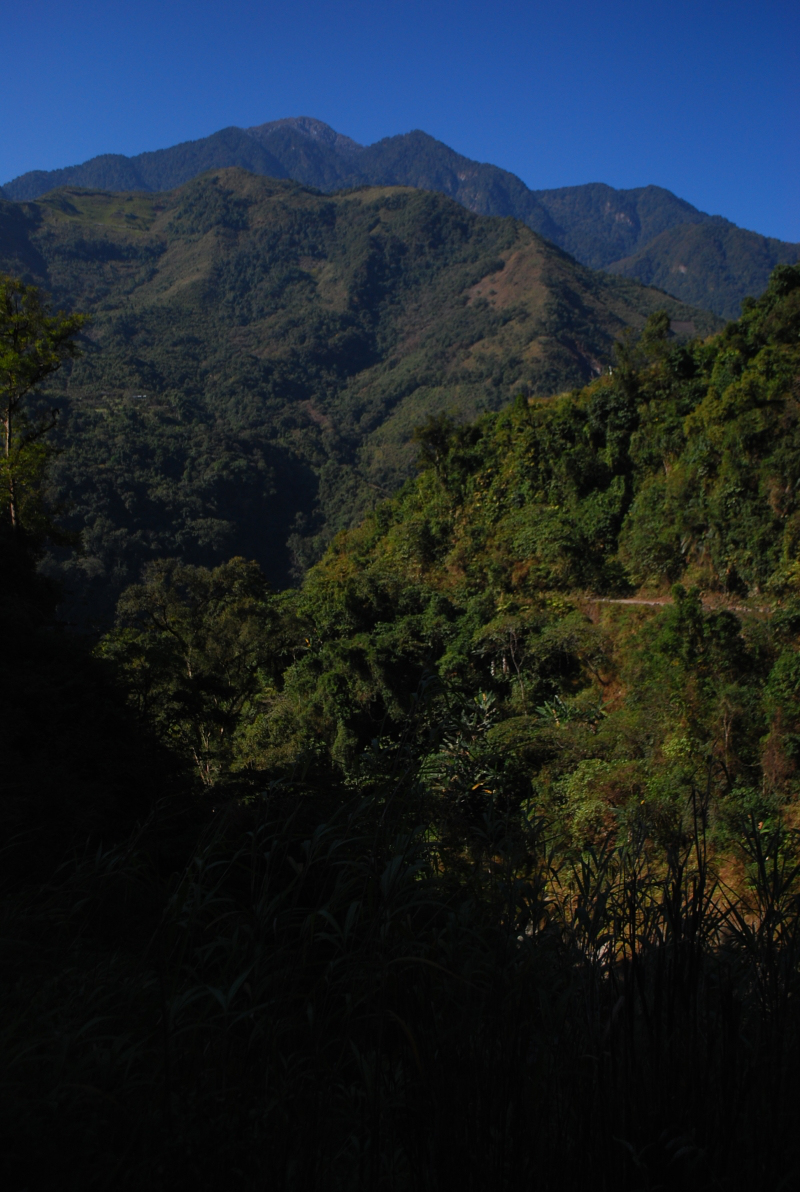
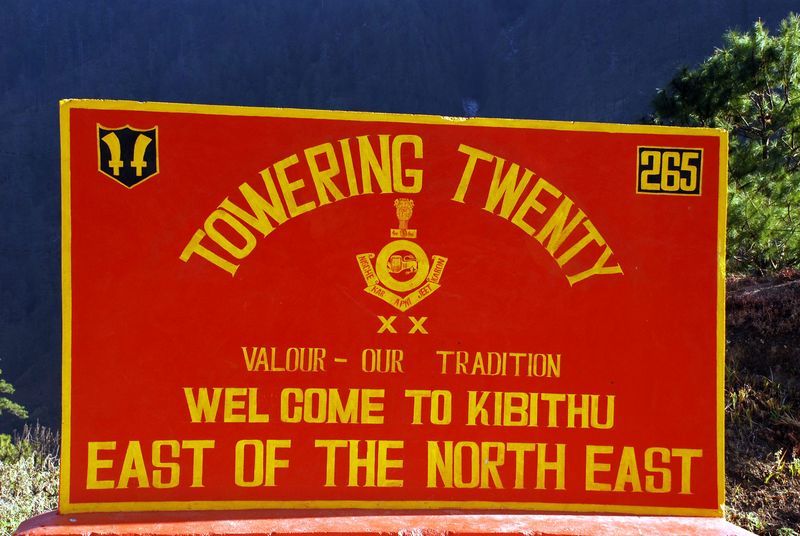
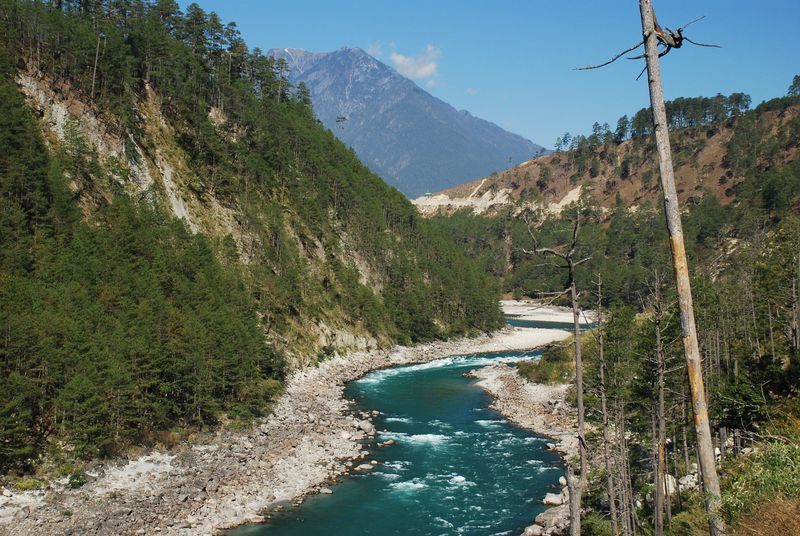
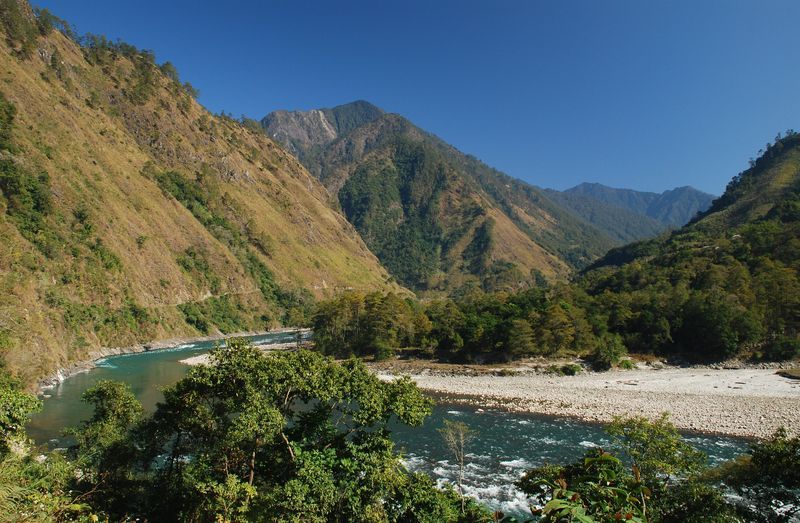
I am pleased to share an article titled ‘China opens new highway near Arunachal Pradesh Border’ written by Ananth Krishnan that was published in the HINDU on November 01, 2013. I had served in that area and the military organization in which I had served discouraged photography and I did not take photos of the natural scenery of that area. I would like to share some photo images published by http://GreenerPasturesInd.Wordpress.com and others, particularly the images of Lohit River that flows down the Anjaw District of Arunachal Pradesh.
The North East Frontier Agency(NEFA) was constituted in 1912-13. To settle the border between India and Tibet, Sir Henry McMahon, Secretary in the Indian Foreign Department represented Great Britain at a conference held in Simla during 1913-14. The Simla Accord or Simla Agreement between India, Tibet, and China resulted in the McMahon Treaty and the McMahon Line established the official border between India and Tibet. India after gaining her independence and after becoming an independent Republic has ratified the McMahon Treaty. People’s Republic of China which came into existence during 1949 had opposed this Treaty and had occupied Tibet during 1950 rejecting the status of Tibet of being an independent nation. The Communist China’s occupation of Tibet has posed a military threat to Peace and Democracy in Southeast Asia and Tibet’s Head of State, His Holiness the 14th Dalai Lama fled to India during March 1959 as a consequence of China’s repressive, brutal military actions. On August 26, 1959, in this northeast frontier sector, China’s People’s Liberation Army crossed the McMahon Line for the first time to capture an Indian border post. China abandoned this post during 1961 and launched a major offensive war during October 1962 attacking Indian Army positions in the entire North East Frontier Agency. Due to the firm intervention by the US President John F. Kennedy, China declared unilateral ceasefire and withdrew its forces from all the areas it had captured in the North East Frontier Agency. One of the consequences of this 1962 War of China’s Aggression on India was the creation of a military alliance/pact between India, Tibet, and the United States to defend the border and to challenge the military occupation of Tibet. This military pact/alliance has established a military organization called Establishment No. 22 which is later given the name of Special Frontier Force. I had served in Special Frontier Force along with Tibetan soldiers and we were defending North East Frontier Agency during that period of my military service. The North East Frontier Agency became Indian Union Territory and was named Arunachal Pradesh on January 20, 1972. The State of Arunachal Pradesh was formed on February 20, 1987. I had arrived at Doom Dooma(Dum Duma) during February 1972 after my successful participation in the military action called ‘Operation Eagle’ which initiated the Liberation of Bangladesh on November 03, 1971 with attacks on Pakistan’s military border posts in Chittagong Hill Tracts. The United States had withdrawn its CIA personnel from our Organization prior to the launch of Operation Eagle. However, our military alliance/pact withstood the test of the times. In 1972, CIA contacted my Unit in North East Frontier Agency and had requested us for our assistance to plant monitoring devices to record data from China’s underground nuclear tests in occupied Tibet. China’s occupation of Tibet, it claims for Indian territory and China’s military build up still pose a grave threat to Peace and Freedom in Southeast Asia.
Special Frontier Force – Lohit River: I was based at Dum Duma(Doom Dooma) Airfield during 1972-73.
Special Frontier Force – Lohit River: Lohit River enters the plains and flows as the Brahmaputra River.
Special Frontier Force – Lohit River: At the southern end of Lohit District, Lohit River enters the plains.
Special Frontier Force – Lohit River: The bridge near Parasuram Kund also known as Brahma Kund.
Special Frontier Force – Lohit River: This Border Road along Lohit River did not exist during 1972-73. I had the pleasure of trekking along this route.
Special Frontier Force – Lohit River: Suspension Bridge across Lohit River.
Special Frontier Force – Lohit River: A Special Tribute to Lohit River.
Special Frontier Force – Lohit River: This bridge swings in the air and is commonly called “JHULA” which refers to the swing found in recreational parks and playgrounds.
Special Frontier Force – Lohit River: Walong Valley
Special Frontier Force – Lohit River: Parashuram Kund
Special Frontier Force – Lohit River: A view taken at Hayuliang.
Special Frontier Force – Lohit River: Hayuliang-Walong Road.
Special Frontier Force – Lohit River:
Special Frontier Force – Lohit River: Walong War Memorial
Special Frontier Force – Lohit River: “WALONG WILL NEVER FALL AGAIN.”
Special Frontier Force – Lohit River: Walong, Anjaw District.
Special Frontier Force – Lohit River: Trip to Kibithu
Special Frontier Force – Lohit River: Mishmi Hills
Special Frontier Force – Lohit River: Hayuliang
Special Frontier Force – Lohit River: The Border Post at Kibithu
Special Frontier Force – Lohit River: Lohit River near India – Tibet Border.
R. Rudra Narasimham, B.Sc., M.B.B.S., Personal Numbers:MS-8466/MR-03277K. Rank:Lieutenant/Captain/Major. Branch:Army Medical Corps/Short Service Regular Commission(1969-1972); Direct Permanent Commission(1973-1984). Designation:Medical Officer. Unit:Establishment No.22(1971-1974)/South Column,Operation Eagle(1971-1972). Organization: Special Frontier Force.
Published in the HINDU: November 1, 2013 03:14 IST | BEIJING, November 1, 2013
China opens new highway near Arunachal Pradesh border
Ananth Krishnan
Nearly 1 billion Yuan project comes to light after seven failed attempts over the past 50 years
China on Thursday opened a new highway that links what the government has described as Tibet’s “last isolated county” – located near the border with Arunachal Pradesh – with the rest of the country and will now provide all-weather access to the strategically important region. Chinese state media have hailed the opening of the highway to Medog – which lies close to the disputed eastern section of the border with India – as a technological breakthrough, with the project finally coming to fruition after seven failed attempts over the past fifty years. China started attempting to build the highway to Medog – a landlocked county in Tibet’s Nyingchi prefecture – in the 1960s, according to State media reports, in the aftermath of the 1962 war with India. With Thursday’s opening of the road, every county in Tibet is now linked through the highway network, underlining the widening infrastructure gulf across the disputed border, even as India belatedly pushes forward an upgrading of border roads in more difficult terrain. The official Xinhua News Agency on Thursday described Medog as “the last roadless county in China”. Before this week, Medog was the only one of China’s 2,100 counties to remain isolated from the highway network, according to State broadcaster China Central Television (CCTV). What the project will do State media reports have focused on the development benefits that the project would bring and have sought to play down the strategic dimensions. Local officials said the road’s opening will bring down commodity prices and widen access to healthcare. The road will also provide access to the border county for nine months of the year. That the government was willing to spend as much as 950 million Yuan – or $ 155 million – on a 117-km highway, with ostensibly few economic returns expected, has underscored the project’s importance to State planners. Local officials said prior to the opening of the highway, reaching Medog required traversing the treacherous Galung La and Doxong La mountains at an altitude of 4,000 metres. With frequent landslides, the road was often rendered impassable. Now, the road will be accessible for “8 to 9 months per year, barring major natural disasters”, Ge Yutao, Communist Party head of the transportation department for the Tibet Autonomous Region (TAR), told Xinhua. Work on the 117-km road began in 2009, a year after the project was given the green light by the State Council, or Cabinet. Renewed attention on infrastructure projects The opening of the road comes at a time when there has been renewed attention on infrastructure projects in border areas in India and China. Last week, both countries signed a Border Defence Cooperation Agreement (BDCA) during Prime Minister Manmohan Singh’s visit to Beijing, aimed at expanding confidence-building measures. The agreement calls for setting up channels of communication between military commands, increasing the number of border personnel meetings, and formalizing rules such as no tailing of patrols, to build trust and avoid incidents. The agreement does not specify or limit either country’s plans to boost infrastructure – an issue that, analysts say, has in the past triggered tensions along the disputed Line of Actual Control (LAC), most notably in April when a Chinese incursion sparked a three-week-long stand-off in Depsang, Ladakh. Han Hua, a South Asia scholar at Peking University, suggested in a recent interview that the “basic reason” for the incident was “too much construction” along the border. The Chinese side, she acknowledged, did not have to build closer to the disputed LAC because their infrastructure, as well as more favourable terrain enabled quicker mobilisation. “If we don’t have the overall collaboration of the military, policy-makers and decision-makers on both sides,” she said, “it will be difficult to avoid such incidents”. ‘India’s plans will not be limited’ The BDCA, Indian officials said, will not limit India’s plans to upgrade infrastructure. It recognises the principle of equal and mutual security, which allows either side to pursue its security in its own way. At the same time, officials say the BDCA will still help “regulate activity” along the border by opening up new channels of communication, even as the border continues to remain a matter of dispute. On Thursday, Chinese Defence Ministry spokesperson Yang Yujun told a regular press conference that military personnel would hold “regular meetings” and “make joint efforts” to maintain peace in border areas, following the signing of the BDCA. The agreement, he said according to a Xinhua report, “summarised good practices and experiences on the management of differences in China-India border areas”.
Whole Dude – Whole Villain: Archer Kent Blood, the US Consul General at Dacca, East Pakistan sent this “Blood Telegram” to question the US Foreign Policy that utterly failed to denounce the atrocities, the massacre of innocent, unarmed civilians, mostly Hindu minority community living in East Pakistan during 1971 by the military rulers of Pakistan. He sent this telegram as his moral duty to uphold the humanitarian principles.
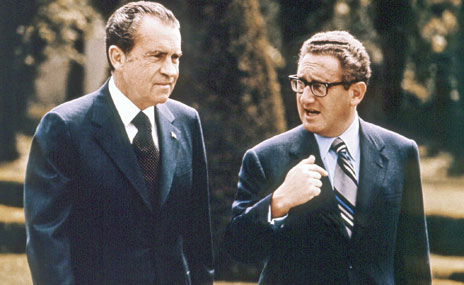
WHOLE DUDE – WHOLE VILLAIN: Richard Milhous Nixon, 37th President of the United States(1969-1974), and Dr Alfred Henry Kissinger, the National Security Adviser(1969-1975) deserve to be known as Whole Villains for not responding to the problem of genocide in East Pakistan( now known as Bangladesh) during 1971. Their actions are evil, unprincipled, and make mockery of the US Constitution.
The word ‘Villain’ describes a wicked or unprincipled character in a novel, play, etc., who opposes the protagonist or hero. Villain is someone or something regarded as the cause of a problem, difficulty, injustice, or great crime. It speaks about the evil nature of a person, very bad, disagreeable, or objectionable and such a person is often characterized as a ‘scoundrel’. I am pleased to share Ashok Malik’s review of the book “The Blood Telegram – India’s Secret War in East Pakistan” authored by Gary J. Bass. The book reveals Archer Kent Blood, the chief US diplomat in Dacca as the hero or protagonist who had suffered on account of the actions of President Nixon and Dr. Kissinger, the National Security Adviser during 1971 . The real character and nature of President Nixon and Kissinger as ‘Villains’ can be easily discerned by reading this historical story titled “The Blood Telegram.” The book talks of the courage and uprightness of Archer Blood who was a first-hand witness to the genocide in East Pakistan, the oppression of Bengali speaking Pakistanis, the mass murder and elimination of Hindu minorities and the humanitarian crisis that spilled into a massive refugee problem in India. Mr. Blood meticulously reported the massacres, the bloodshed in East Pakistan and had urged the US administration to take action to stop the military dictator of West Pakistan. Mr. Blood suffered greatly for his efforts and devotion to work. He was ignored, singled out and victimized by Dr. Kissinger. Mr. Blood’s career in the US State Department was utterly ruined and destroyed. This book is the story of what Mr. Blood did and how he suffered for being true to his conscience and his calling. It must be noted that the men and women who make up the State Department or work for the Central Intelligence Agency(CIA) are often conscientious, well-meaning folks, schooled in the simplicity and goodness of small-town, middle class life in the heart of America. They are moral people, keen to use their country’s power to make the world a better place. Such conscientious people who belonged to the Central Intelligence Agency(CIA) had rendered their service at a military organization in India known as Special Frontier Force or Establishment No. 22. Both the US President Richard M. Nixon, and Dr. Henry Kissinger, the National Security Adviser must be recognized as “WholeVillains” for their actions were motivated by an unprincipled desire to befriend Communist China without any concern for its involvement in killing its own people during the “Great Leap Forward” program of 1957-58, and during the infamous “Cultural Revolution” of 1966-69. The story reveals how Nixon and Kissinger were blinded by hate for India and Indians. They had visualized Pakistan as an essential ally and gateway to Communist China and had totally ignored the problem of human suffering in the Land that took a very painful birth as Bangladesh after India’s victory in a military battle during November-December 1971.
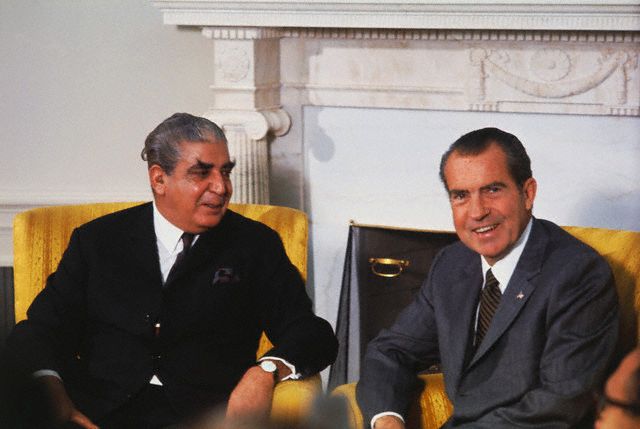
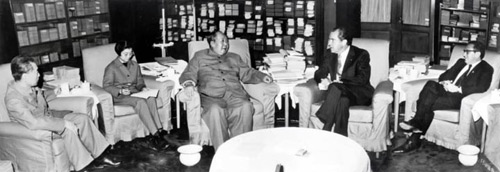
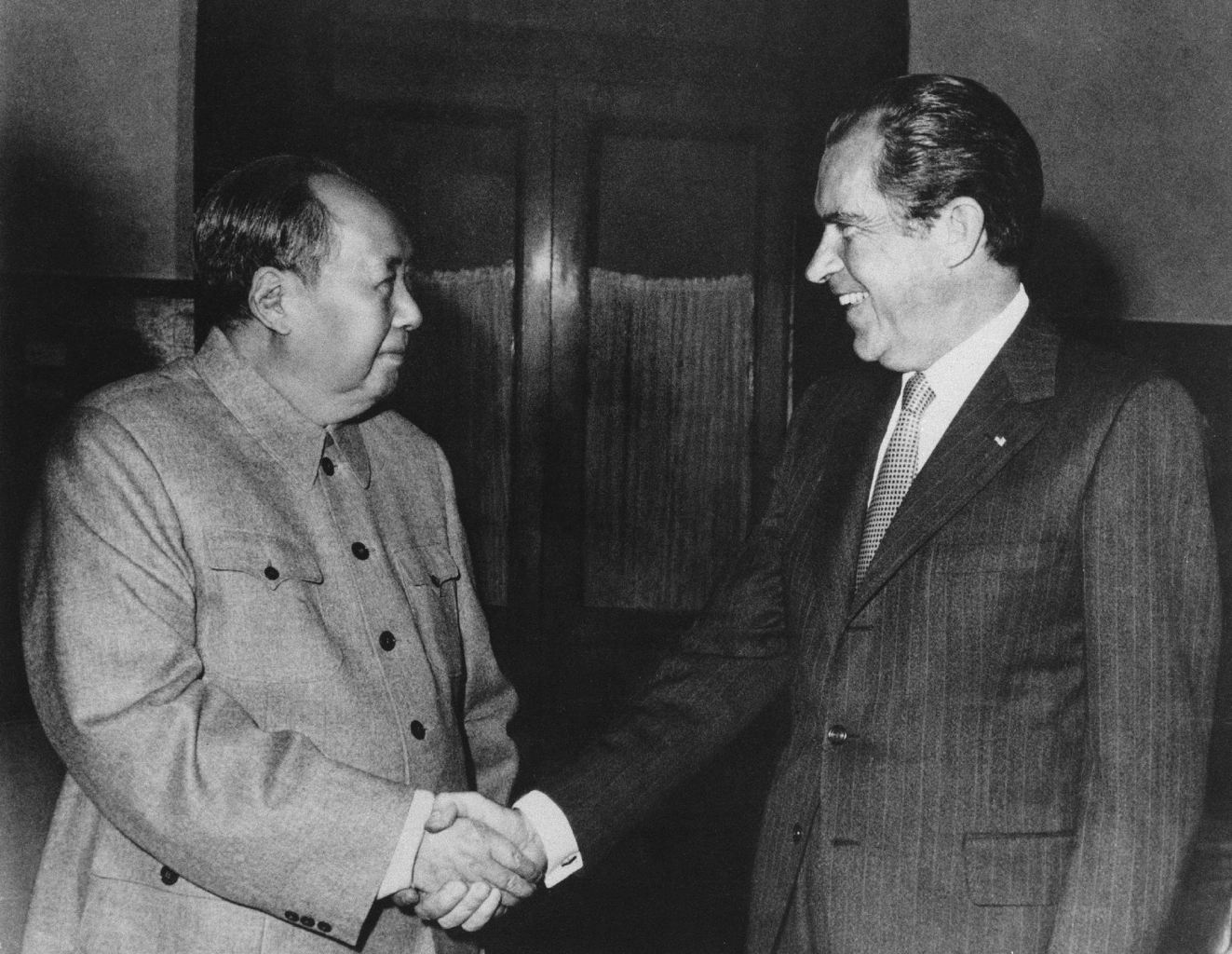
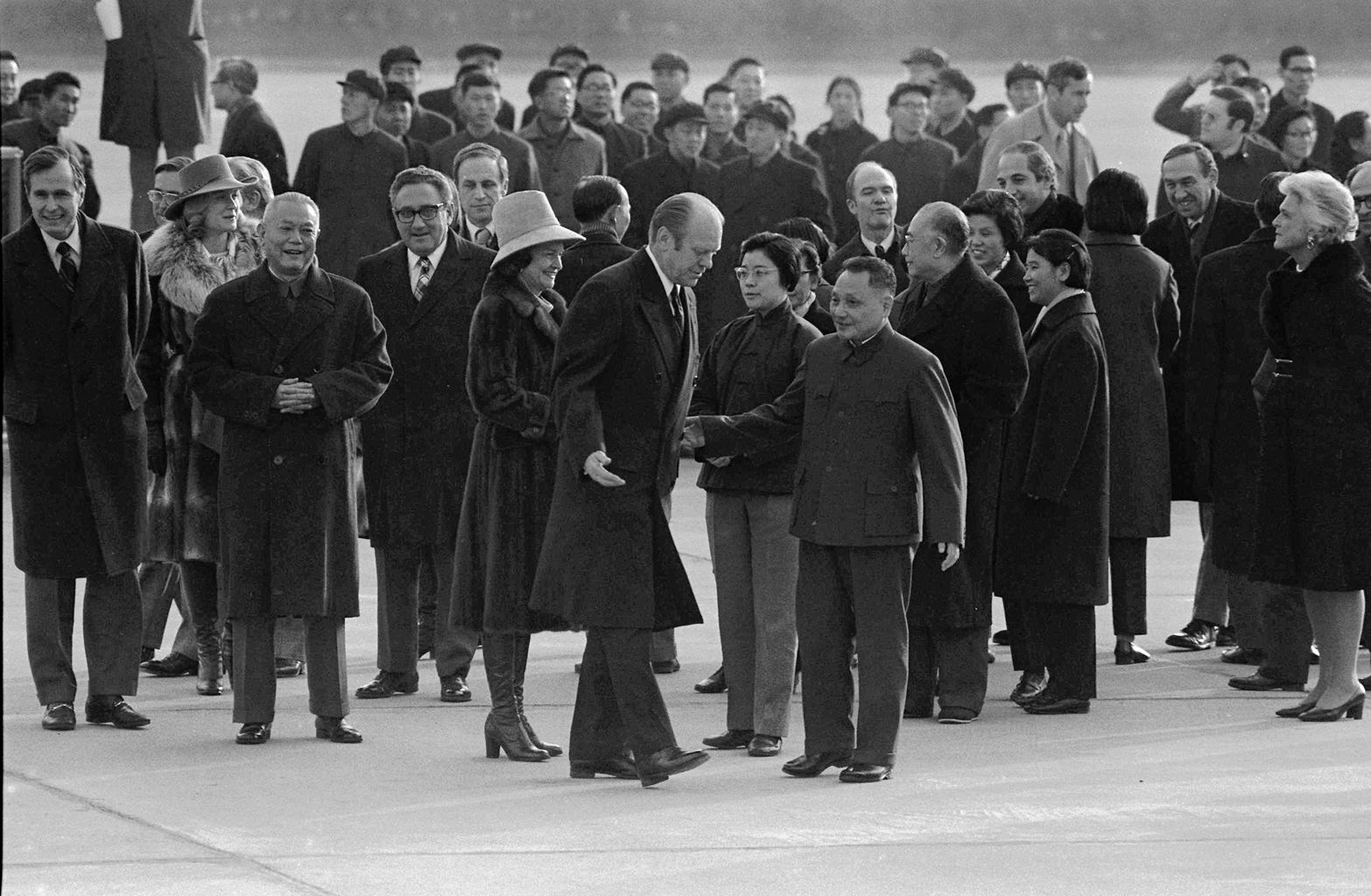
Gary J. Bass, Professor of Politics & International Affairs at Princeton University is the author of the book titled “The Blood Telegram.” He described the heroic role of Archer Kent Blood, the US Consul General in Dacca(Dhaka), East Pakistan during 1971.Archer Kent Blood(March 20, 1923 to September 03, 2004) was the US Consul General, the Chief US Diplomat in Dacca, East Pakistan during 1971.Whole Dude – Whole Villain: Massacre in East Pakistan during 1971 is fully revealed in this book. This Genocide must not be forgotten and the Villains must be exposed.Whole Dude – Whole Villain: The role of General Yahya Khan, the military ruler of Pakistan, and US President Nixon in the brutal killings of unarmed civilians in East Pakistan during 1971 is now fully revealed. This is their photo image dated October 24, 1970. In this relationship, the US has totally disregarded the value of Democracy and showed no concern for Human Dignity and ignored its traditional role of defending Human Rights.Whole Dude – Whole Villain: The mockery of the US Constitution. Dr. Henry Kissinger is the Arch Villain in this story and he is seen in this photo meeting the leader of another country while the responsibility of conducting diplomacy belonged to the US State Department. Kissinger flew to China from Pakistan and had used Pakistan as a gateway to Communist China. Both of these Villains are responsible for the millions of people who died in the land called East Pakistan during 1971. Kissinger had misused and abused his position as the National Security Adviser. In clear violation of the US Constitution, he had usurped the power of the Secretary of State to conduct secretive, diplomatic negotiations with foreign leaders.
During 1971, I served in a military organization called Establishment No. 22, or Special Frontier Force which in reality represents a military alliance/pact between India, Tibet, and the United States to contain the military threat posed by Communist China’s illegal occupation of Tibet. It must be noted that Nixon had served as Vice President for two terms 1953-1956, and 1957-1960, during the presidency of Dwight David Eisenhower. President Eisenhower and his Secretary of State John Foster Dulles continued President Truman’s policy of containing Communism. In Southeast Asia, Eisenhower supported and had employed the Central Intelligence Agency(CIA) to organize the Tibetan Resistance Movement since 1957-58. Later, President John F. Kennedy took the initiative to formulate the military alliance with India and Tibet that created the Special Frontier Force during 1962. The Central Intelligence Agency(CIA) has represented the US as our military partner and took the initial responsibility to impart the necessary military training to all personnel. The mission of this Organization is that of fighting a war to evict China from the Land of Tibet and the men are not used for spying, or gathering intelligence as undercover agents. The CIA has used the services of this Organization to monitor the nuclear activities of Communist China as China was conducting underground nuclear tests inside Tibet. During 1971-72, in a complete reversal of its foreign policy, the United States allowed the National Security Adviser to change the course of the country and to make decisions on foreign relations without giving any role to the duly appointed Secretary of State. Kissinger used the infrastructure of US State Department to orchestrate a policy that has ignored the vital US national interests and its commitment to Democracy and Freedom. Kissinger had chosen to support Pakistan’s military dictator and had used him to gain access to the Communist Leaders in Peking that paved the way for President Nixon’s visit to China during February 1972. This book reveals as to how Nixon was baffled and annoyed by American sympathies for India and he communicated this opinion to Pakistan’s military dictator General Yahya Khan and observed that Americans could be suffering from a “physiological disorder.” Nixon and Kissinger encouraged other countries to illegally ship their US supplied weapons to Pakistan in violation of US laws that prohibit such transfer of military equipment.
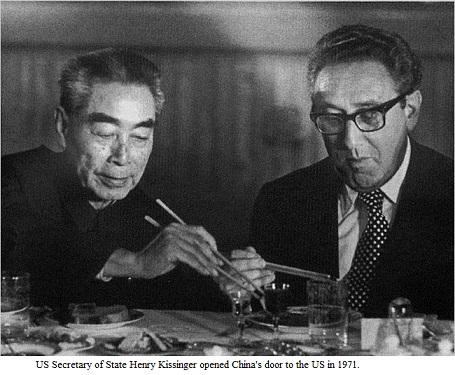
Kissinger had urged China’s Foreign Minister Chou En-Lai to open a second front and attack India to stop India from giving assistance to the people of East Pakistan. As India initiated the Liberation of Bangladesh, Nixon sent the US Seventh Fleet into Bay of Bengal without any concern about India’s logistical support to the US Army that was fighting a bloody war in Vietnam, a war in which Communist China had played a big role to ensure the defeat of the US Army.
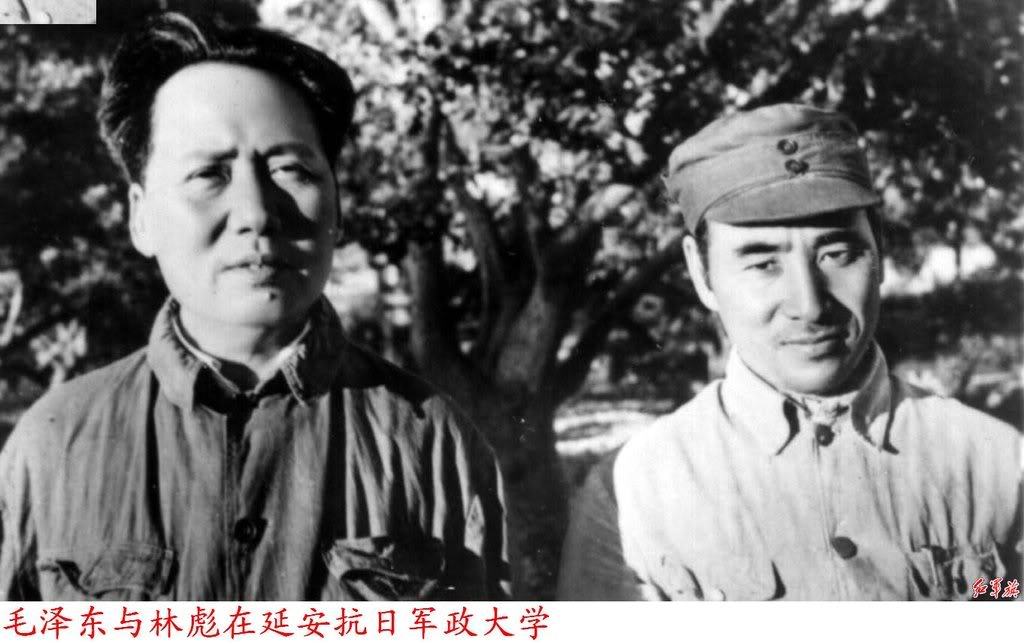
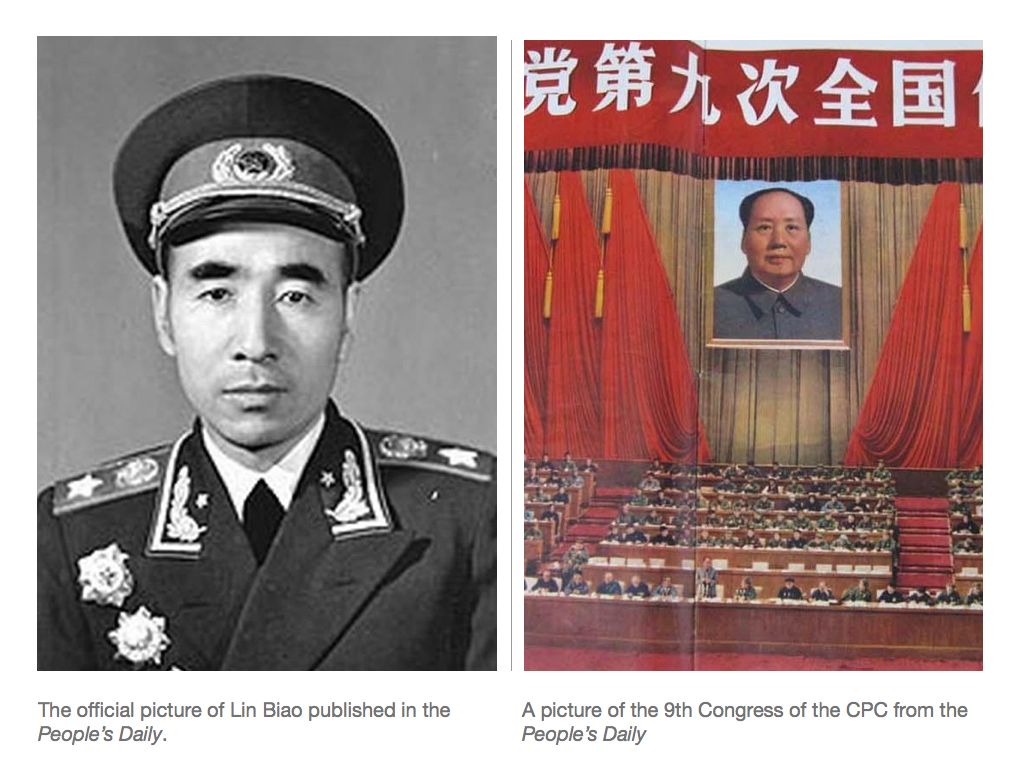
WHOLE DUDE – WHOLE VILLAIN: During April 1969, Chairman Mao Tse Tung had selected his Defence Minister Lin Biao as his successor and Lin became the Vice Chairman of the Communist Party. Both of them must be held accountable for the atrocities, the crimes against humanity perpetrated in the name of “Cultural Revolution” during 1966-69.WHOLE DUDE – WHOLE VILLAIN: Lin Biao Defence Minister and Communist Party Vice Chairman, the successor of Chairman Mao Tse Tung was apparently assassinated by Prime Minister Chou En-lai and Chairman Mao Tse Tung on September 13, 1971 as he tried to escape from the country. After his killing, most of the People’s Liberation Army’s Generals of high command were purged. It totally amazes me to know that the US National Security Adviser Henry Kissinger had requested Prime Minister Chou En-Lai to launch a military attack on India during that time to prevent India from taking military action to resolve the humanitarian crisis in East Pakistan.
During 1971, the US National Security Adviser, Dr Henry Kissinger had kept his visit to Peking as a big secret. However, at Special Frontier Force, Establishment No. 22, we were fully aware of his activities. The Central Intelligence Agency(CIA) officials who were serving at Establishment No.22 as military instructors were abruptly asked to return to the United States. Communist China had insisted that it would agree to meet Henry Kissinger and receive him in Peking only after the United States removes all its personnel from India who at that time were employed in the Special Frontier Force/Establishment No. 22. After their departure, India and Tibet had agreed to jointly launch a military action in Chittagong Hill Tracts to initiate the Liberation of Bangladesh and to stop the genocide in East Pakistan.
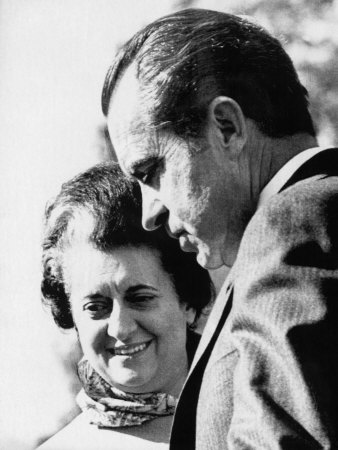
Whole Dude – Whole Villain: On November 04, 1971, India’s Prime Minister Indira Gandhi made a final attempt to get support from President Richard Nixon to resolve the humanitarian crisis in East Pakistan. By that time, US had already decided to remove all its CIA personnel who were employed as military instructors at Special Frontier Force/Establishment No. 22. However, we began our military operation to initiate Liberation of Bangladesh without any assistance from the US personnel deputed by the CIA.Whole Dude – Whole Villain: India’s Prime Minister Indira Gandhi could not obtain any support from US President Richard Nixon during her visit to Washington D.C. on November 04, 1971. However, it did not deter Special Frontier Force/Establishment No. 22 from initiating our military action to dislodge Pakistan’s Army from East Pakistan. We began our military action on November 03, 1971, a day before this meeting.
INDIA’S SECRET WAR IN EAST PAKISTAN:
WHOLE DUDE – WHOLE VILLAIN: These two leaders, the US President, the military dictator of Pakistan must be held accountable for the genocide in East Pakistan during 1971.WHOLE DUDE – WHOLE VILLAIN – ORIGINAL SIN: The mockery of the US Constitution. The US National Security Adviser, Dr. Kissinger had misused and abused his official position to meet foreign Heads of State to formulate US foreign relations without the participation of the US Secretary of State. I call this Villainous act as “Original Sin”. Both Chairman Mao Tse Tung, and Prime Minister Chou En-Lai were leaders of the “Cultural Revolution” during 1966-69 that participated in crimes against humanity.Whole Dude – Whole Villain: “The Cruel Birth of Bangladesh” by Archer Kent Blood, the US Consul General in Dacca during 1971 describes the Villainy, the detestable acts of Pakistan’s military generals, and US President, and National Security Adviser.
India launched a Secret War in East Pakistan to respond to the huge humanitarian crisis which could not be resolved. United States pretended its ignorance of this whole problem. This military operation was given the code name Operation Eagle. On November 03, 1971, while India’s Prime Minister was visiting Washington D.C. in a final bid to enlist the support of President Nixon, Special Frontier Force without the US personnel moved into Chittagong Hill Tracts. President Richard Nixon had failed to endorse our military action, but we executed this military action using military equipment, field gear and rations provided by the United States. The infantry weapons and all other tools that we had used were the same as those used by the US Army in its Vietnam War. We prevailed in the battlefield and forced Pakistan’s Army to withdraw from their entrenched positions. The official war of India with Pakistan was declared by India’s Prime Minister on December 03, 1971.
Rudra Narasimham Rebbapragada Ann Arbor, MI 48104-4162, USA Special Frontier Force-Establishment No.22-Vikas Regiment
SERVICE INFORMATION:
Personal Numbers: MS-8466/MR-03277K; Rank: Major. Branch: Army Medical Corps/Short Service Regular Commission(1969-1972); Direct Permanent Commission(1973-1984). Designation: Medical Officer. Unit: Establishment No.22(1971-1974)/South Column,Operation Eagle(1971-1972).
Reference: National Security Archive Electronic Briefing Book No. 79. The Tilt: The U.S. and the South Asian Crisis of 1971.
Whole Dude – Whole Designer – Matter and Spirit: Baruch (Benedict) Spinoza( 1632-1677) Dutch philosopher taught that there is but one infinite substance called God or Nature having infinite attributes. He held that mind, and body as merely different aspects of a single substance. In his view, God is Nature in its fullness.
Matter is an actual substance that has properties such as mass or weight, and occupies space. Matter has other attributes like motion, size, shape, and a form by which it may be recognized. Materialism is defined as a system of thought that explains the nature of world as entirely dependent on “matter” the final reality. Materialism as a philosophical doctrine deals with matter as the only reality and that everything in the world, including thought, will, and feeling can be explained only in terms of matter. Baruch (Benedict) Spinoza, Dutch philosopher taught that there is but one infinite substance, God or Nature, having infinite attributes of which only thought and extension are knowable. He was excommunicated from his Jewish community. He held that mind and body as merely different aspects of a single substance. In his view, God is Nature in its fullness. Matter is immutable or indestructible, and Spinoza explained the indestructibility of matter is established by the uncreated and eternal nature of God. “By Body”, Spinoza writes, “I understand a mode which expresses in a certain and determinate manner the essence of God in so far as He is considered as the thing extended.”
This philosophical doctrine of Materialism is used in modern times to explain that comfort, pleasure, and wealth are the only goals or values of human life and human existence. The idea of materialism is used to contrast it with the spiritual, or intellectual goals, or values of human life. In my view, man will not be able to define his purpose in life if there is separation of matter, and spirit. Man is a physical being with matter and form. To define the goals, or values of human life, man must understand what it is to be a substance and what it is to exist. If matter and spirit are separated, and if there is no unity between matter and spirit, human life would be simply impossible. The word or term ‘Spirit’ is associated with characteristics such as immutable, immortal, immovable, imperishable, indestructible, immaterial, eternal, and unchanging, or constant nature of a substance which withstands the influence of time If God is uncreated and is eternal, Spirit is a natural extension of that God’s nature and shares the same attributes. To recognize the spiritual potential of a substance, we have to understand the nature of matter.
The Laws of Conservation – “Life is neither created nor destroyed”
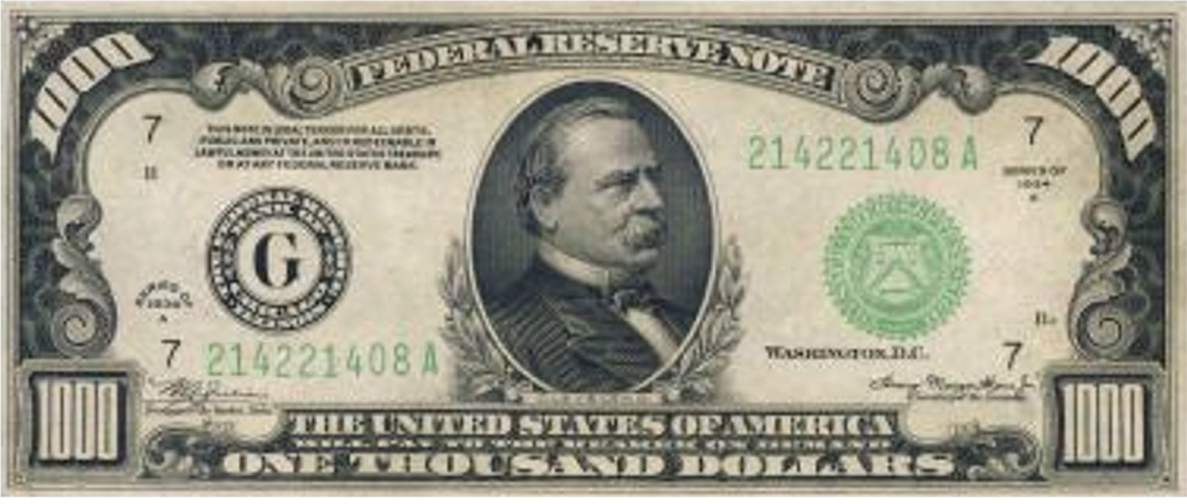
WHOLE DUDE – WHOLE DESIGNER – MATTER AND SPIRIT: If materialism is about the influence of material wealth, I would like to use the Power/Force/Energy called Money to talk about Life and Death. The Laws of Conservation are applicable to both living, and non-living matter. Hence, it can be stated that “Life can neither be created nor destroyed.” If any person can refute my claim using valid, scientific information, I would give the person an US $1,000 bill as a reward.
If materialism is about the influence of material wealth, I would like to use the Power/Force/Energy called Money to talk about Life and Death. The Laws of Conservation are applicable to both living, and non-living matter. Hence, if matter can neither be created nor destroyed, it can be stated that “Life can neither be created nor destroyed.” If any person can refute my claim using valid, scientific information, I would give the person an US $1,000 bill as a reward.
The Laws of Conservation of Matter:
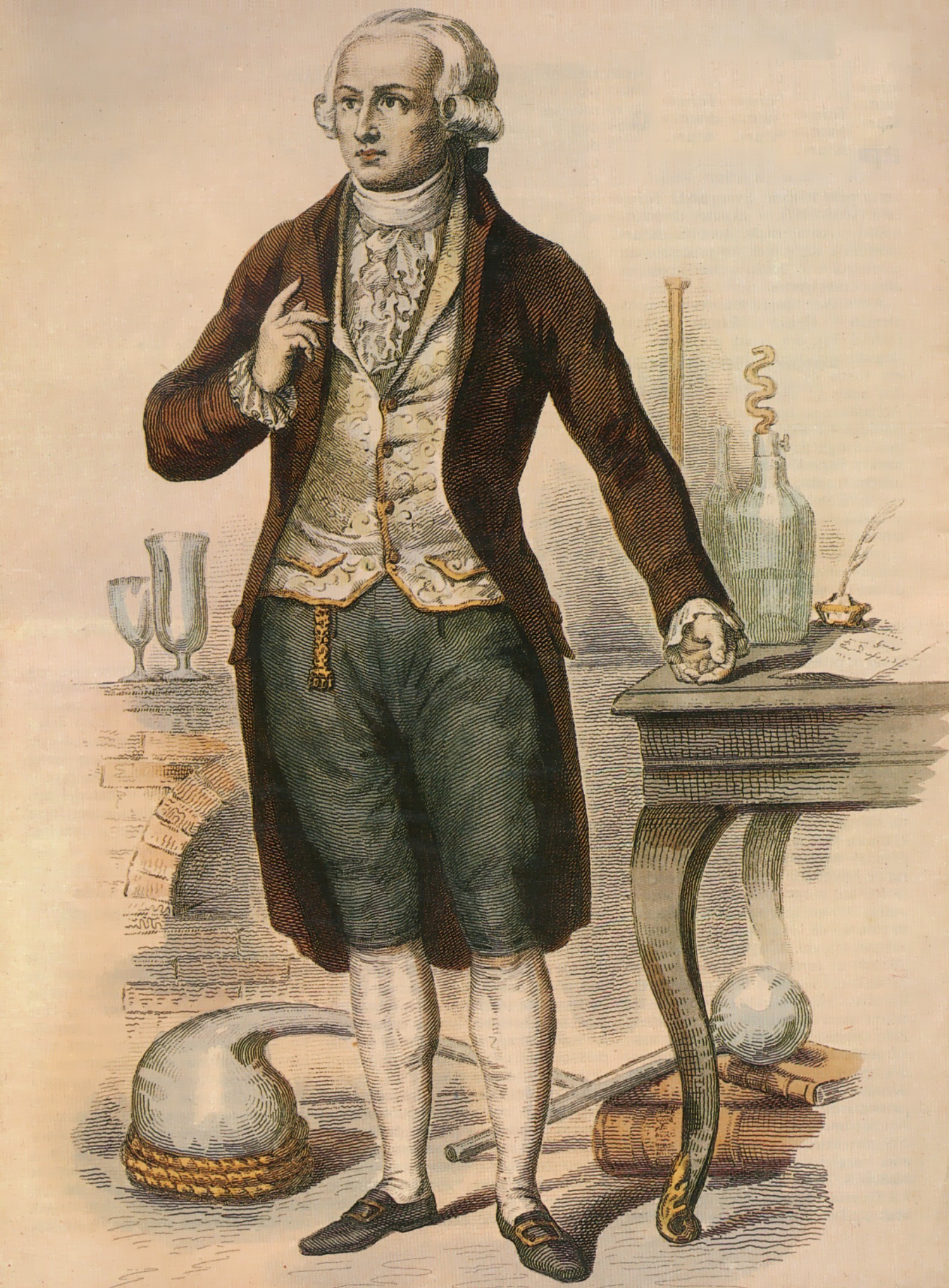
Whole Dude – Whole Designer – Matter and Spirit: Antoine Laurent Lavoisier (1743-1794) French chemist and physicist, the founder of modern Chemistry. He gave the name Oxygen to the gaseous chemical element discovered by Joseph Priestley. He discovered the composition of Water molecule. He formulated the Law of Conservation of Mass.
Chemical elements are the fundamental materials of which all matter is composed. There are about 107 known chemical elements. Chemical elements can combine with one another to form a wide variety of more complex substances called compounds. The number of possible compounds is infinite; perhaps a million chemical compounds are known. When two or more elements combine to form a compound, they lose their separate identities and the product has characteristics quite different from those of the constituent elements. The gaseous elements hydrogen and oxygen with quite different properties can combine to form the compound water which has altogether different properties from either hydrogen or oxygen. Most of naturally occurring matter represents physical mixtures of compounds. The indestructibility of matter was explained by Lavoisier as the Law of Conservation. “We may lay it down as an incontestable axiom,” Lavoisier writes, “that in all the operations of art and nature, nothing is created; an equal quantity of matter exists both before and after the experiment.” What appears to be the destruction of a body is merely the transformation of its matter into another physical condition, without loss of mass unless there is an equivalent gain in energy. The total quantity of matter and energy remains constant throughout all physical changes. Material substances undergo changes when they interact with other material substances, but this “change” cannot be described as the permanent reality. The permanent reality describes the unchanging, or constant nature of chemical elements and molecules in spite of their tendency to interact with other elements and molecules.
WHOLE DUDE – WHOLE DESIGNER – MATTER AND SPIRIT: Water is the simplest and most abundant of all the molecules found in all living matter. The chemical composition of living matter reveals 70 to 80 percent water. At the same time, water can exist as simple, physical, or non-living matter. I claim that water molecule has the potentiality to constitute living matter because of its spiritual nature. Under the influence of time, living matter is transformed into molecules of non-living matter and yet the properties of molecules is fundamentally conserved allowing the change to proceed in either direction.
The Laws of Conservation are any of the several principles applied in Physics and Chemistry that state that certain properties of an isolated system remain constant with time. Each Law signifies that the nature of a substance or thing that does not change with the passage of time. However, it must be noted that change is the pervasive phenomenon of the natural world. It is said that, “Things in Nature Change with Time.” Although matter may change its form, or shape under the influence of time, its mass always remains the same. The Law of Conservation of Mass implies that matter can be neither created nor destroyed, that is, processes that change the physical, or chemical properties of substances within an isolated system leave the total mass unchanged. Similarly, The Law of Conservation of Energy implies that energy can be neither created nor destroyed, although it can be changed from one form (mechanical, kinetic, chemical, etc.,) into another form such as heat, or the energy consumed in the performance of work. In an isolated system, the sum of all forms of energy therefore remain constant. Every conservation law concerns a collection of two, or more objects, isolated from external influence, for which some physical quantity remains unchanged in time, or is conserved, quite apart from the details of what goes on between the interacting particles within the system. An important function of conservation laws is that they make it possible to predict the macroscopic behavior of a system without having to consider the microscopic details of the course of a physical process or chemical reaction. The fundamental character of these conservation laws is evident in the fact that each law may be deduced from or related to a symmetry property of space and time. The symmetry property of space and time determines the periodic frequency with which a natural change occurs while the nature or properties of things is conserved to allow the change to repeat itself in an expected manner.
What is Spirit? Unchanging Nature in a Changing World:
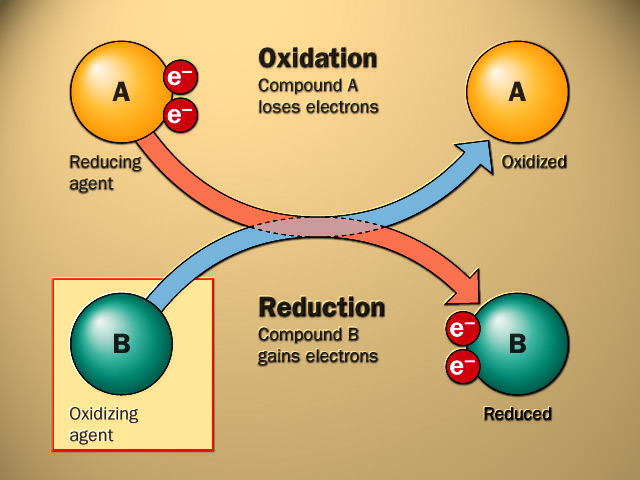
WholeDude – WholeDesigner – Matter and Spirit: Many important biological processes involve Redox or Oxidation and Reduction Chemical Reactions. These chemical reactions reveal a dynamic process that is the characteristic of both Life and Death. If Life is explained by a series of chemical reactions, the same process continues into Death.
Natural Science, and Natural History is about the natural phenomenon called change. The systematized knowledge of Biological Sciences provide us with information about extinction which is the most common phenomenon in planet Earth’s Natural History. Earth has witnessed several major, and minor episodes called extinction during which certain life forms got wiped out. While extinction is driven by climate change and its associated environmental change, life continues to exist on Earth without any apparent change in the chemical composition of living matter. Extinction involves the loss of forms and it does not involve a change in the nature of the corporeal substance that has the potential called Life and is known as Living Matter. In other words, it may be stated that if a change is observed in the natural world, it is always supported by an underlying, unchanging principle. While living things are born and die at the end of their lifetime, the matter, or the corporeal substance which has the potential to establish Life remains unchanged and its nature is conserved and is not affected by time. Under the influence of the cyclical flow of time, individual, living things are born and are dying while the Principle of Conservation maintains the unchanging nature of things that constitute Life or Living Matter. Life is established by a vital, animating principle called Spirit; the presence of Spirit can be related to the unchanging or immutable nature of Matter that gets the nature called Eternal, or Immortal, or Imperishable or Indestructible that overcomes the limitations imposed by Time and Space. The Magic of Creation involves the use of a design, or plan to introduce the abilities such as thought, will, feelings, and cognition into matter that reveals their presence or absence while passing through stages like Life and Death. The same chemical elements, chemical compounds, and chemical reactions operate in the state called living and death and both are maintained by the same unchanging nature of Matter and Spirit. In my opinion, it may not be correct to regard Spirit as separate from Matter. It will not be correct to separate man into physical body or matter, thinking substance or mind, and immaterial substance called Spirit. There is no human existence if there is disunity or separation of Matter, Spirit, the Body, and the Mind. The uncreated, Eternal, Spiritual nature of God that is shared by Spirit and Matter would lead us to claim: “Life can neither be created nor destroyed.”
SPECIAL FRONTIER FORCE – HIMALAYAN BLUNDER: Indian Prime Minister Dr. Manmohan Singh and Chinese Prime Minister Li Keqiang signed The Border Defense Cooperation Agreement(BDCA) on Wednesday, October 23, 2013 in Beijing. India and China do not have an internationally recognized common border between the two countries. India’s neighbor Tibet which shares a border with India has not signed this BDCA Agreement,
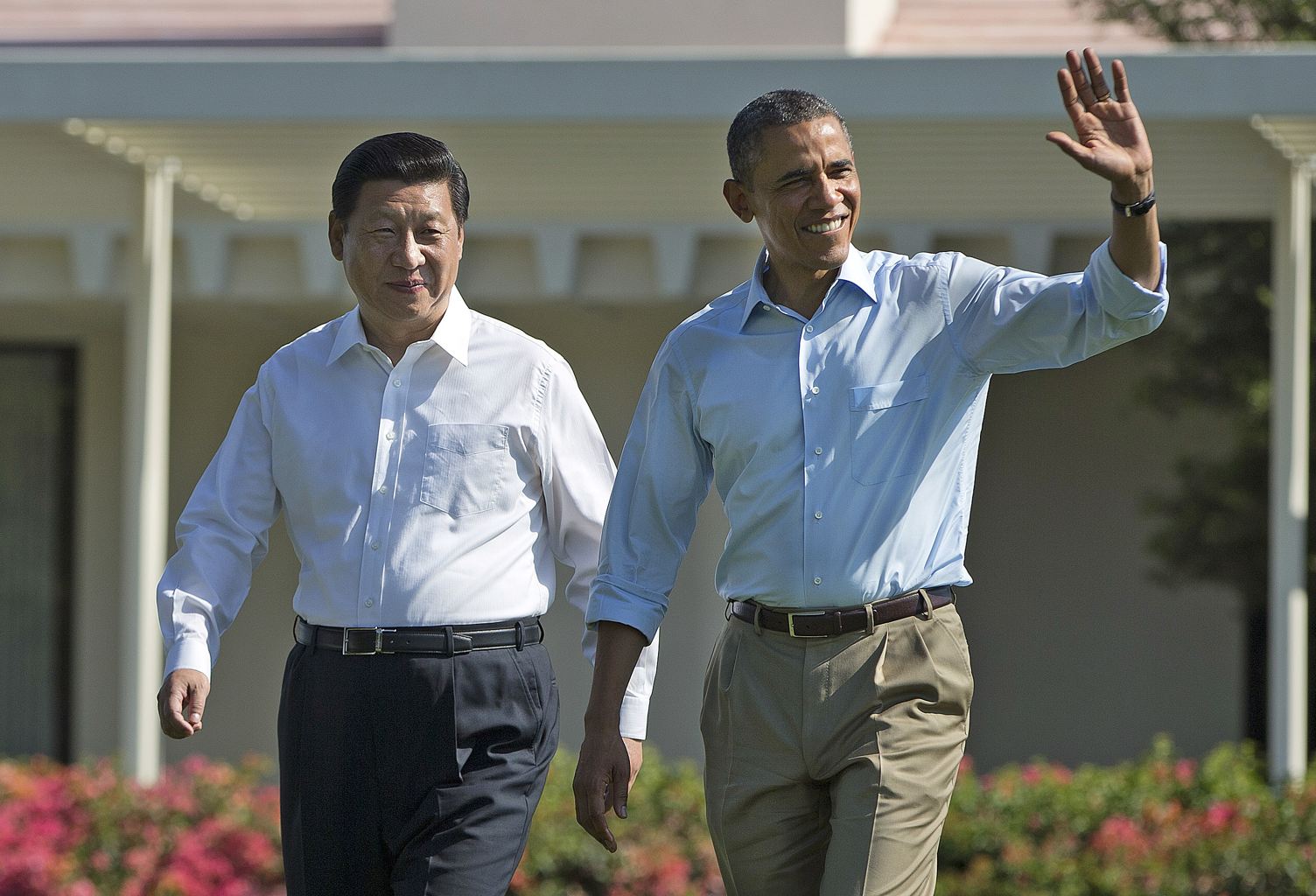
SPECIAL FRONTIER FORCE – HIMALAYAN BLUNDER: Indian Prime Minister met with People’s Republic of China’s President Xi Jinping on Wednesday, October 23, 2013. Both India, and China very clearly understand that the military occupation of Tibet poses security concerns and the Border Defense Cooperation Agreement(BDCA) that they signed is not valid under international law. They have no legal rights to compromise the territorial integrity of Tibet, a sovereign nation under illegal occupation since 1950.
SPECIAL FRONTIER FORCE – HIMALAYAN BLUNDER: Indian Prime Minister Dr. Manmohan Singh signed a bilateral Border Defense Cooperation Agreement with People’s Republic of China during his most three-day visit to Beijing from October 22, to October 24, 2013. This allows China to exercise control over Indian territory along the entire length of India’s Himalayan Frontier without even fighting a war. Dr. Manmohan Singh must be held accountable for this act of high treason and for giving aid and comfort to India’s enemy who had already illegally occupied Indian territory in Indian State of Jammu and Kashmir.
Dr. Manmohan Singh, Prime Minister of India had visited People’s Republic of China on a three-day visit from Tuesday, October 22, to Thursday, October 24, 2013. On Wednesday, October 23, Indian Prime Minister and Chinese Prime Minister Li Keqiang had entered into an agreement called The Border Defence Cooperation Agreement(BDCA)for border management while India has no recognized or official border with People’s Republic of China. Six months back, during the month of April 2013, Chinese troops intruded into Indian territory of Depsang Sector, Ladakh Province of India’s Jammu and Kashmir State. India has substantial trade and commerce relationship with China and their bilateral trade rose to $66 billion during 2012. It is claimed that not a shot was fired along the entire Himalayan frontier since 1975. The BDCA may promote an increase in bilateral trade but at the same time it permits China to exercise control on Indian territory along its entire Himalayan frontier without even fighting a war. At a fundamental level, BDCA is not a legitimate agreement as India has not recognized that it shares a common border with People’s Republic of China. Secondly, BDCA may give some legitimacy to Communist China’s illegal occupation of Tibet. In my opinion, BDCA is not a valid agreement and Indian Parliament may not even ratify this bilateral agreement in which Tibet has no representation. Prime Minister Dr. Manmohan Singh must be held accountable for this act of high treason and for giving aid and comfort to India’s enemy who had illegally occupied Tibet, apart from occupying Indian territory in Ladakh Sector.
SPECIAL FRONTIER FORCE – HIMALAYAN BLUNDER: Just six months ago, People’s Republic of China intruded into Depsang Sector(Daulat Beg Oldi) of Ladakh Province. China had already occupied the area known as Aksai Chin and the dispute is not yet settled. The Border Defence Cooperation Agreement(BDCA) signed on October 23, 2013 is not a valid, or legitimate Agreement. Indian Parliament may refuse to ratify this Agreement.
SPECIAL FRONTIER FORCE – HIMALAYAN BLUNDER: Indian Prime Minister signed an agreement with Chinese Prime Minister on October 23, 2013 to come to an understanding to control the Himalayan Frontier and avoid military conflict. This Border Defence Cooperation Agreement(BDCA) has given away Indian territory to China without the need to fight a war. BDCA seriously undermines India’s ability to defend its territory while China still claims India’s North East Frontier Agency or Arunachal Pradesh as its territory. The fact is, India and China do not share a common border. India cannot give legitimacy to China’s military occupation of Tibet.
I am pleased to share an article published by Ravindra Narayan Ravi, former Special Director, India’s Intelligence Bureau who had worked for nearly two decades on the military threat posed by China’s illegal occupation of Tibet. I thank him for speaking on this issue and exposing the fraud without any sense of fear. In the past, I had worked with Intelligence Bureau(Research and Analysis Wing/RAW), and it was a pleasure to patrol along the Lohit River in North East Frontier Agency which is named Arunachal Pradesh. It is the sector where India is particularly strong and had valiantly resisted Chinese aggression during the 1962 War. It is indeed very shocking and makes me sad to read that India is giving away territory on a silver plate. It is a serious insult to the memory of our fallen soldiers who gave their precious lives, and Lohit River bears witness to that sacrifice. At Walong War Memorial, the following tribute was paid by Deputy Commissioner Bernard S Dougal:
SPECIAL FRONTIER FORCE – HIMALAYAN BLUNDER: Indian Prime Minister Dr. Manmohan Singh has insulted the memory of Indian soldiers who had valiantly resisted Communist China’s aggression across the Himalayan Frontier during October-November 1962. This War Memorial was erected in Walong, Anjaw District, Arunachal Pradesh to pay tribute to the fallen soldiers.
The sentinel hills that round us stand Bear witness that we loved our Land; Amidst shattered rocks and flaming pine, We fought and died on Namti Plain. O’ Lohit gently by us glide, Pale stars above us softly shine, As we sleep here in Sun and rain.
SPECIAL FRONTIER FORCE – HIMALAYAN BLUNDER: I served in Special Frontier Force, a military organization that was created during November 1962 as a military alliance/pact between India, Tibet, and the United States. During 1972, I had served in Anjaw District, Arunachal Pradesh and had visited Namtifield or Namti Plains where Indian Army had valiantly resisted People’s Liberation Army of Communist China during the 1962 War.
R. Rudra Narasimham, B.Sc., M.B.B.S., Personal Numbers:MS-8466/MR-03277K. Rank:Lieutenant/Captain/Major. Branch:Army Medical Corps/Short Service Regular Commission(1969-1972); Direct Permanent Commission(1973-1984). Designation:Medical Officer. Unit:Establishment No.22(1971-1974)/South Column,Operation Eagle(1971-1972). Organization: Special Frontier Force.
The border agreement with China is yet another dose of insidious placebos administered on the people of India by their own government that has been in perpetual denial over the steady incremental loss of strategic Indian territory, says R N Ravi. Dr Manmohan Singh, the most widely foreign-travelled among Indian prime ministers, is learnt to have concluded his official foreign visits in his current term as the head of government with his latest trip to Beijing from October 22-24. The seminal achievement of this visit, as being touted by his government, is the Border Defence Co-operation Agreement he signed with Li Keqiang, his Chinese counterpart, on October 23. The agreement is being hailed as a landmark progress in the chronically troubled India-China relationship and a historic achievement of the United Progressive Alliance government towards securing India’s border with China. An observer of India-China border relations is baffled at the banality called the BDCA and shocked at the brazenness with which a repetitive deception on India is being peddled as an important measure for safeguarding India’s territorial interests from China’s strategic belligerence. Status quo at the Line of Actual Control between India and China is at the core of the numerous agreements and protocols signed between the two countries since 1993. However, China has not yet revealed its position on the alignment of the LOAC. India, too, for some obscure and self-defeating reasons, has not yet categorically articulated its position on the geographical alignment of the LOAC. Its failure to do so helps China enormously in sustaining its strategic belligerence at the border. China does not bind itself by articulating its own position on the LOAC and keeps making tactical incremental territorial advances into India to achieve its strategic objectives: a) gain crucial territories in geo-strategically sensitive areas and thereby irreversibly depleting India’s strategic territorial depth imperative for its national defence vis-à-vis China; and b) severely undermine India’s covert and overt potential capabilities for adventures across the border in Tibet or Xinjiang by keeping its own border region perpetually destabilised. There has been some shift in India-China relations in the last over two decades. Quantum jump in trade and commerce between the two countries has somewhat improved the atmospherics of the relationship. On the vexed border issue, there has been a perceptible convergence in the language of reconciliation. The two countries have signed some half a dozen agreements and protocols reiterating mutual restraint and non-aggression at the LOAC. However, in the absence of a mutually agreed LOAC, all the agreements and protocols for maintaining the status quo are no more than mere vacuous expressions of intent that only helps the more powerful of the two. In the absence of a mutually agreed LOAC, the situation becomes all the more irredeemable for an asymmetrically placed India when it does not spell out its own perception of the LOAC. To make matters worse for itself, India restrains its border guarding troops from patrolling its LOAC. Unlike India’s border with Pakistan where Indian troops have their posts at the Line of Control and regularly patrol the LoC, India does not allow its border guarding forces even to venture up to the LOAC. The troops are not allowed to go beyond the Line of Patrolling, a unilaterally chosen retreat position of India that runs far behind the LOAC. With no boots on the ground the Indian stance at the LOAC is militarily untenable. China takes full advantage of this institutionalised military vacuum between the Indian LOAC and the LOP. It moves its troops forward without any resistance. China could not have asked for a better scenario when it steadily gains territory and fulfills its strategic objectives without any resistance. It is a classic illustration of winning a war without a fight, a military doctrine attributed to Sun Tzu, a Chinese military strategist. China has already taken, post-1962 war, a fairly large tract of India’s land in the sub-sector north in Ladakh. Since 2005 and especially after 2009 it has shown enhanced belligerence in this sector and has moved its troops further deep inside the Indian territory beyond its stated claims in 1960 and what it captured in the 1962 war. It has been steadily nibbling into the Shyok valley, an area of crucial strategic significance for India, to maintain a tenable position in this sub-sector and retain its claim at the strategic Karakoram pass linking India with Xinjiang and Central Asia. On the eastern front, in Arunachal Pradesh, during the last four years Chinese military pressure has increased manifold at strategically sensitive points on the border. Its aggressive push since 2008 in Tatu Bowl/Dichu in Anjaw district along the Lohit river is alarming. Today it dominates the only route for Indian patrols to visit the India-China-Myanmar tri-junction. Fearing a likely face-off with the Chinese, India has stopped patrolling this segment of the border. China has, bilaterally, fixed its border with Myanmar at the Diphu Pass at the India-Myanmar border in Arunachal Pradesh, pushing the India-China-Myanmar tri-junction fixed by the McMahon Line down by over eight km. Chinese advance along the Lohit has serious adverse geo-strategic consequences for security in India’s North-East. Ironically, the China’s military belligerence became more pronounced after India and China began talking peace and signing agreements and protocols. The BDCA, the latest among the agreements, is repetitive in its essence and more ambivalent in its language than the previous agreements. The Agreement on the Maintenance of Peace and Tranquility Along the Line of Actual Control signed in September 1993, the first among such agreements, was far more emphatic in its intent and language than the tame and highly ambiguous BDCA. It inter alia states, ‘No side shall overstep the line of actual control’ and adds that ‘in case personnel of one side cross the line of actual control, upon being cautioned by the other side, they shall immediately pull back to their own side of the line of actual control’. On the issue of air intrusion it categorically obligates the two countries ‘to ensure that air intrusions across the line of actual control do not take place’. Contrast these with the corresponding clause Article II of the BDCA: ‘The two sides shall assist the other side in locating personnel… and aerial vehicles that may have crossed or are possibly in the process of crossing the line of actual control in the India-China border areas’. Instead of pressing the Chinese for fixing the LOAC, the core interim issue pending the final settlement of border, Prime Minister Manmohan Singh returned home diluting the earlier commitments of China for non-aggression and assuring the Chinese that our troops will share sweets with their Chinese counterparts on our national days and festivals (article V, BDCA). The BDCA is yet another dose of insidious placebos administered on the people of India by their own government that has been in perpetual denial over the steady incremental loss of strategic Indian territory. It perpetuates the dynamic status quo grossly tilted in favour of China and does not, in any way, safeguard the territorial integrity of India. Land grab by China continues. Chinese aircraft, helicopters and unmanned aerial vehicles are intruding into Indian air space in far more numbers than before.
R N Ravi is a retired special director of the Intelligence Bureau and monitored the China border for over 20 years. He can be reached at ravindra.narayan.ravi@gmail.com
Establishment 22 – Vikas Regiment – Special Frontier Force – Operation Eagle:
Establishment No. 22 – Operation Eagle: This badge represents a military alliance/pact between India, Tibet, and the United States of America. Its first combat mission was in Chittagong Hill Tracts which unfolded on 03 November 1971. It was Code-named Operation Eagle. It accomplished its mission of securing peace in the region that is now known as Republic of Bangladesh.ESTABLISHMENT NO. 22 – OPERATION EAGLE: IT WAS AN ACT OF UNDECLARED WAR ON PAKISTAN SANCTIONED BY PRIME MINISTER OF INDIA TO SECURE PEACE IN THE REGION NOW KNOWN AS THE REPUBLIC OF BANGLADESH.
Under the provisions of International Law, the Laws of War that deal with the nature of armed conflict between nations, and according to the rules of Warfare, the military action called Operation Eagle was an act of “Undeclared War” that was duly sanctioned by the Prime Minister of India. However, it must be noted that this undeclared war of aggression is not a ‘War Crime’ as it serves Bangla refugees in India. The purpose of this War was to secure Peace in the region that is now known as the Republic of Bangladesh. This War of India on Pakistan must not be confused with the War of India on Pakistan that the Prime Minister of India had formally announced to the country on 03 December, 1971. This military action called Operation Eagle unfolded on 03 November, 1971 with violation of territory in Chittagong Hill Tracts that was under the national jurisdiction of the Government of Pakistan. Operation Eagle began with land invasion and on 09 November, 1971, Prime Minister of India sanctioned violation of Pakistan’s airspace in support of this War. Prime Minister of India approved rules of engagement and Battle Plan of Operation Eagle, an act of “Unconventional Warfare.” I am openly demanding that the rules of this game must not be changed after we had played the game and the game is over.
Establishment No. 22 – Operation Eagle: At Mobile Reserve Force, Establishment No. 22, the elder brother of His Holiness the 14th Dalai Lama, Gyalo Thondup had spoken to the chief players of Operation Eagle. Tibetan nationals who serve in Establishment No. 22 executed Operation Eagle.Establishment No. 22/Special Frontier Force is military alliance/pact between India, Tibet, and the United States. Major General Sujan Singh Uban, Inspector General Special Frontier Force, Secretary R. N. Kao of Research and Analysis Wing(RAW), and Brigadier T S Oberoi, the Commandant, Establishment No. 22 are seen seated behind the speaker.Establishment No. 22 – Operation Eagle: Most Americans would be able to easily recognize this Vietnam War Era Infantry Assault Rifle. Operation Eagle had used these Rifles with a great success during India’s Undeclared War on Pakistan in 1971. American troops did not participate in this military action but the United States being a partner of the military alliance/pact with India and Tibet could not avoid its participation as Establishment No. 22 chiefly operates using US military equipment and field supplies.This retired Air Force Officer, Parvez Jamasji received Gallantry Award of Vir Chakra for giving air support to my Unit during military action in Chittagong Hill Tracts in 1971. At that time, Flight Lieutenant Parvez Jamasji airlifted my battlefield casualties from the front line to Field Hospital. He belonged to Aviation Research Centre(ARC).
I registered the following petitions/grievances with the Department of Administrative Reforms and Public Grievances that relate to my participation in Operation Eagle as a member of Establishment No. 22, the military organization known as Special Frontier Force managed by Directorate General of Security. Cabinet Secretariat administers Special Frontier Force and other organizations such as the Research and Analysis Wing(RAW – Intelligence Bureau), and Aviation Research Centre(ARC).
I want to challenge Ministry of Defence’s refusal to grant gallantry award of “Vir Chakra” that was approved by my Formation Commander Major General Sujan Singh Uban, Inspector General Special Frontier Force based upon a citation that was initiated by Lieutenant Colonel B K Narayan, the Commander of South Column Unit, and the citation was seen by Colonel Iqbal Singh, the Chief of Staff, and was duly reviewed and recommended by the Brigade Commander, Brigadier T S Oberoi. :
A Personal Tribute to Colonel B K Narayan, The Regiment of Artillery, Indian Army.
A Sermon in Kaptai, Bangladesh Ops 1971-72. A personal tribute to Colonel B K Narayan, Islamic Scholar who served in Olive Green Uniform. The Imam of Friday Prayer in Kaptai on December 17, 1971: Glorious Quran, Surah VIII, SPOILS OF WAR, Verse 01: “And if they incline to peace, incline thou also to it, and trust in Allah.Lo! He is the Hearer, the Knower.”
1. MODEF/E/2011/00761 dated 24 September 2011.
2. CABST/E/2012/00154 dated 26 May 2012.
3. DARPG/E/2013/82606 dated 07 September 2013.
In addition the President’s Secretariat had received the following petitions/grievances:
1. PRSEC/E/2009/05526 dated 25 August 2009.
2. PRSEC/E/2012/19182 dated 27 November 2012.
THE DESCRIPTION OF GRIEVANCE ABOUT THE SANCTION OF GALLANTRY AWARD – OPERATION EAGLE:
1. A gallantry award is always granted in recognition of a past event and the gallant event would always exist as a past event.
2. In the history of Republic of India, for the first time during 1971, the Prime Minister sanctioned a military action that was not planned by Indian Army/Ministry of Defence.
3. Operation Eagle, in which I had the honour to participate was not planned and executed under orders issued by Army Headquarters/Ministry of Defence.
4. The gallant action which received the recognition for grant of gallantry award did not happen in the context of a border skirmish or that of a border conflict.
5. It was not related to the conventional, official War on Pakistan that was formally declared by the Prime Minister on 03 December, 1971.
6. The gallant action pertains to a deliberate, planned attack deep inside the territory defended by Pakistan’s regular army. I had participated in all the aspects of the planning of this attack, and had physically marched on foot along with the men who had executed the attack.
7. There was no Regimental Aid Post at the border, inside Indian territory of Mizo Hills. The battlefield casualties were treated at the enemy post that we had captured. The treatment of battle casualties began at the site of battle, about 40 miles from the international border.
8. The Brigade headquarters which had the primary responsibility of airlifting battle casualties could not dispatch the helicopter provided by the Aviation Research Centre(ARC) as the Prime Minister did not sanction the violation of Pakistan’s airspace during the first phase of Operation Eagle.
9. I, as the Unit Medical Officer, took the initiative, went beyond the Call of Duty, to ensure a safe, and timely evacuation of the battle casualties to preserve the morale of the men and had shaped the success of this military mission. I had marched a distance of over 80 miles from Sunrise to Sunset to complete my task inside the enemy territory while the enemy was still dispersed in the area.
10. Indian Army concluded its military operation on 16 December 1971. Operation Eagle concluded its military operation during January 1972.
11. The fact that the Prime Minister had established the Eligibility Criteria for the sanction of gallantry awards to the participants of Operation Eagle could be proved by the simple fact that the gallantry award of Vir Chakra was given to Shri. G. B. Velankar, a civilian officer of my Unit who was allowed the use of Major’s rank on a honorary basis. The eligibility criteria, as sanctioned by the Prime Minister, stipulated that only Indian nationals could be granted Indian Army Medals, Decorations, Military Honours, and gallantry awards. The foreign nationals who executed the War were not allowed the grant of those awards.
12. Under the battle plan of Operation Eagle, the Prime Minister did not impose any time restrictions as this War was not a conventional battle that Indian Army routinely fights and participates in its long history of battle tradition.
13. Special Frontier Force had strictly followed the guidelines, and the citation that approved the grant of gallantry award was directly sent to the Director of Medical Services (DMS-Medical Directorate, Army Headquarters) as I was serving at Establishment No. 22 on deputation from the Indian Army Medical Corps. This citation reached the DMS (Army) in a timely manner before the conclusion of Operation Eagle.
14. I am not responsible for delivering the citation to the MS Branch, Ministry of Defence while deployed on operational duty in Chittagong Hill Tracts. Army Medical Directorate failed in the performance of its duty and its failure is unacceptable. I should not be penalized for the failure of Army and its Medical Directorate.
Rudra N Rebbapragada Ann Arbor, MI 48104-4162, USA SPECIAL FRONTIER FORCE
SERVICE INFORMATION:
R. Rudra Narasimham, B.Sc., M.B.B.S., Personal Numbers:MS-8466/MR-03277K. Rank:Lieutenant/Captain/Major. Branch: Army Medical Corps/Short Service Regular Commission (1969-1972); Direct Permanent Commission (1973-1984). Designation: Medical Officer. Unit: Establishment No.22(1971-1974)/South Column,Operation Eagle(1971-1972). Organization: Special Frontier Force.
Establishment No. 22 – Special Frontier Force – Operation Eagle. TE3N Movie in its Section titled ‘Search For Black Van’s Owner displayed this Portrait of my 1972, Indian Army Picture ID.
An Open Letter to the President of India regarding the grant of Gallantry Award for participation in Operation Eagle, the Undeclared War of India on Pakistan, while serving with Establishment Number. 22, also known as Special Frontier Force.
Government of India, Department of Administrative Reforms & Public Grievances Portal for Petitions and Grievances: http://www.pgportalgov.in/
Registration Number: MODEF/E/2013/01709
Name of Complainant: Rebbapragada Pratap Narayan
Date of Receipt: 05 September 2013
Received by: Department of Defence
Officer Name: Shri. Sameer Kumar Khare
Officer Designation: Joint Secretary ( Estt. and PG )
Contact Address: Room No. 97, South Block, New Delhi – 110 001
Contact Number: 23792043
e-mail: jse@nic.in
Grievance Description:
1. My younger brother, Service Number: MS-8466/MR-03277K, Name:R. Rudra Narasimham (or R. R. Narasimham ) served as Medical Officer in Army Medical Corps from 26 July 1970 to 10 January 1984 after the grant of Short Service Commission (September 1969) and Direct Permanent Commission (March 1973). He served in the rank of Lieutenant/Captain at Establishment No. 22/Special Frontier Force from 22 September 1971 to 18 December 1974.
2. He had served under the command of Major General Sujan Singh Uban, Inspector General Special Frontier Force and took part in Operation Eagle from November 1971 to January 1972. Operation Eagle had initiated the Liberation of Bangladesh with military action in Chittagong Hill Tracts. The Brigade Commander of Operation Eagle was Brigadier T S Oberoi, the Commandant, Establishment No. 22. The Chief Staff Officer was Colonel Iqbal Singh. My brother served in the South Column Unit that was commanded by Lieutenant Colonel BK Narayan. During November 1971, his Unit had attacked and captured an enemy post defended by regular troops of Pakistan’s Army. In this Infantry attack, my brother was at the front line marching with the men. The two Company Commanders, Major Savendra Singh Negi(Grenadiers), and Major G B Velankar (SFF-EST No. 22, a Civilian Officer) who led the assault on the enemy position were awarded the Gallantry Award of Vir Chakra. My brother who took part in this action with the men of these two Company Commanders was also recommended to receive the Gallantry Award of Vir Chakra. The citation for the grant of this Gallantry Award was initiated by Lieutenant Colonel BK Narayan, it was seen by Colonel Iqbal Singh, the Chief Staff Officer, it was reviewed and recommended by Brigadier T S Oberoi and it was finally approved by Major General Sujan Singh Uban, IG SFF who had recommended it and sent it directly to the Director of Medical Services, DMS (Army), Medical Directorate, New Delhi for favour of sending the citation to the MS Branch, Army Hq for their necessary action to sanction the Gallantry Award.
3. It must be clearly noted that the eligibility criteria for the grant of military awards, decorations and honours were included in the Battle Plan of Operation Eagle which was duly approved and sanctioned by the Prime Minister of India. The Prime Minister’s Office (PMO) and the Cabinet Secretariat are fully aware of the terms and conditions for the grant of awards to members who took part in Operation Eagle. My brother is requesting that the Gallantry Award to be granted as approved and recommended by the Inspector General of Special Frontier Force. My brother applied for Direct Permanent Commission during September 1972 and his application for AMC Examination held in September 1972 includes the remarks of recommendation signed by Colonel Iqbal Singh who had mentioned the citation, and had substantially quoted the citation giving the full details of my brother’s gallant response in the face of enemy action. This application for Permanent Regular Commission in Army Medical Corps is archived at the Medical Personnel Records Section(Officers)/ MPRS(O), Office of the DGAFMS, Ministry of Defence, New Delhi.
4. If you need any further information, kindly write to me and I will be happy to provide the same.
Current Status: Received the Grievance.
A Personal Tribute to Colonel B K Narayan, The Regiment of Artillery, Indian Army.
A Sermon in Kaptai, Bangladesh Ops 1971-72. A personal tribute to Colonel B K Narayan, Islamic Scholar who served in Olive Green Uniform. The Imam of Friday Prayer in Kaptai on December 17, 1971: Glorious Quran, Surah VIII, SPOILS OF WAR, Verse 01: “And if they incline to peace, incline thou also to it, and trust in Allah.Lo! He is the Hearer, the Knower.”THE EVIDENCE FOR RECOMMENDATION OF GALLANTRY AWARD – ANNUAL CONFIDENTIAL REPORT-OFFICERS FOR THE YEAR 1971-72
WholeDude-WholeTweet: The Cuckoo of India called “KOEL”, Eudynamys scolopacea symbolizes the thoughts that I “Tweet.”
I only want to be heard and I do not want to be seen. I speak about the relation between sound and echo, the song and the singer, the Creator, and the created.