SPIRITUALITY SCIENCE – WHOLE MEDICINE: The birth of Aesculapius. The Healing Art of Ancient Greece.
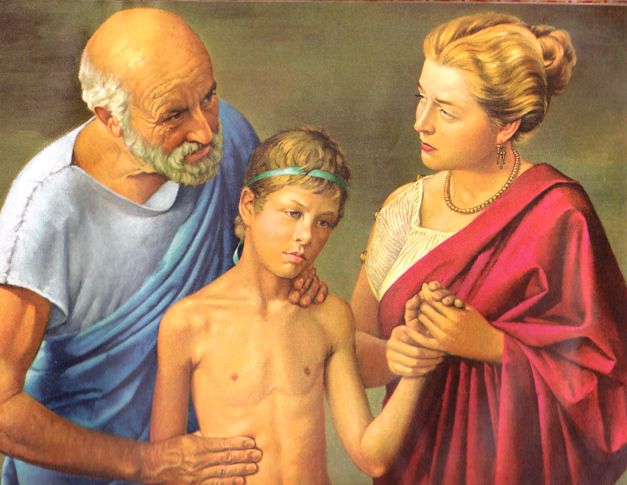
Medicine is among the most ancient of human occupations. Evidences of the practice of ritual healing, combining religion, and primitive science, are found in the earliest traces of human society and communal living. The Healing Art of ancient Greece was associated with the worship of Apollo who taught Medicine to Chiron and it was passed on to Aesculapius who could be a real person that lived in Greece around 1,200 B.C. The term ‘Asclepiad’ describes a physician and it was used to designate physicians belonging to a family that had produced well-known physicians for generations.
SPIRITUALITY SCIENCE – WHOLE MEDICINE: While the physician in ancient Greece was called Aesculapius, the place of Healing was known as the Temple of Aesculapius. Healing was considered to be a Divine Function or it involved Divine Mechanisms.
In ancient Greece, the knowledge of Medicine was imparted at Medical Schools and such institutions of Learning were known as ‘Askleipion’.
SPIRITUALITY SCIENCE – WHOLE MEDICINE: This ancient School of Medicine is called the ‘Askleipion’ and this could be the Hippocratic Medical School of Kos, Greece.
HIPPOCRATES – THE FATHER OF MEDICINE:
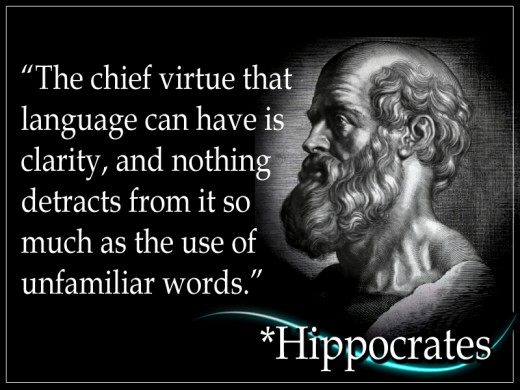
SPIRITUALITY SCIENCE – WHOLE MEDICINE: Hippocrates, Greek physician of antiquity is traditionally regarded as the Father of Medicine. He belonged to the Greek Island of Kos.
Hippocrates, c. 460 – 377 B.C. was undoubtedly a historical figure in spite of the fact that most accounts about his life could be imaginative. Little is known about him, but a great tradition surrounds his name. Apart from practising his art, he presumably taught at the Medical School at Kos.
SPIRITUALITY SCIENCE – WHOLE MEDICINE: Hippocrates exercised a permanent influence on the development of Medicine and on the ideals and ethics of the medical profession.
Greek philosopher Plato called Hippocrates, “The Asclepiad of Kos.” Greek philosopher Aristotle said that, Hippocrates was called “The Great Physician.” Hippocrates had a philosophical approach to Medicine. He regarded the body as a “WHOLE” – that is, as an Organism. His medical practice resulted from his collection of information regarding parts of the body into an embracing concept and thereafter, the division of the “WHOLE” into its parts. He had promoted Medicine based on objective observation and deductive reasoning.
SPIRITUALITY SCIENCE – WHOLE MEDICINE: Hippocrates stressed the importance of relying on facts, clinical observation, and experiment.
Hippocrates stated that it is more important to know what sort of person has a disease than to know what sort of disease a person has. In a quote attributed to Hippocrates, he claimed that wherever the art of Medicine is loved, there is also a love of humanity. Hippocrates may not have authored the so-called “Hippocratic Oath”, but he could have stressed the ethical code for the medical profession. He had also stressed the importance of diet and hygiene.
SPIRITUALITY SCIENCE – WHOLE MEDICINE: Hippocrates stressed the importance of human nutrition, the role of diet in the causation of disease and the use of food in treating disease.
The principles taught by Hippocrates are, 1. a physician should work not for personal gain but for love of humanity, 2. disease should be studied by meticulous observation, and cases should be carefully recorded and studied to establish a prognosis, 3. disease is often the result of environmental forces, diet, climate, and occupation, and 4. a physician should emphasize simple treatment supplemented with careful diet and surgical intervention when necessary. In spite of the breathtaking rapidity of developments in modern Medicine, the basic concepts are still the same.
THE PHILOSOPHY OF MEDICINE – THE CONCEPT OF WHOLE MEDICINE:
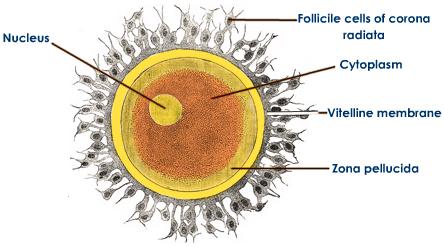
SPIRITUALITY SCIENCE – WHOLE MEDICINE: If man is viewed as a “WHOLE” Organism, the organism is derived by the growth, multiplication, and development of this “Whole Cell”, the fertilized Ovum. I am advocating a systematic study of the Physical, Mental, Moral, Social, and Spiritual aspects of man’s well-being in relation to health and disease. Such as study must include the concept of this “WHOLE CELL” which has all the attributes that can be observed in man.
Medicine is the Science and Art of Diagnosing, Curing, and Preventing Disease and it includes the relief of pain, minimizing of disabilities, improving, preserving and maintaining health. The term ‘Medicine’ is also used to describe any drug or other substance used in treating disease, healing, or relieving pain. In several native traditions across the globe, Medicine may include any object, spell, rite, etc., supposed to have natural or supernatural powers as a remedy, curative, preventive, or protective. The idea of ‘Take One’s Medicine describes the requirement to endure just punishment or accepting the results of one’s action. In my view, Medicine must be concerned with the status of man in the universe, in his natural environment, in his social community while the man exists as an individual with individuality. In other words, Medicine as a Science must primarily be concerned with the biological basis for the reality of man’s physical existence in the world. A systematic study of the biological basis of human existence would demand the study of Soul and Spirit as the vital, animating principle found in all living things. I seek the existence of Soul and Spirit in a substance that is basic to life activities. Spirit or Soul must be found in a living material substance that is responsible for all living processes. The term Soul and Spirit belong to the materialistic realm where the physical reality of man’s biological existence is established. Further, I do not intend to use the term Soul or Spirit as a metaphysical or transcendental reality independent of the living organism. I would define the phrase “Whole Medicine” as a systematic study of the Physical, Mental, Moral, Social, and Spiritual aspects of Man’s Well-Being in relation to health and disease while the man exists as a Created Being.
SPIRITUALITY SCIENCE – HOLISTIC MEDICINE: The Concept of ‘Holistic Medicine’ is fundamentally flawed. It fails to describe the term “WHOLE PERSON.” If the Person is not known, the concept cannot promote the Health and Well-Being of that Person. The central issue would be about knowing the True or Real Man.
Holistic Medicine is a system of health care based on a concept of the “WHOLE” person as one whose body, mind, spirit, and emotions are in balance with the environment. It is a movement within Medicine that emphasizes the need to perceive patients as “WHOLE” persons and to treat them accordingly. Holistic Medical Care follows three basic tenets; 1. Recognition of the psychological, environmental, and social contributions to disease, 2. Active involvement of the patient in the treatment process, and 3. Emphasis on preventive medicine and on life-styles that lessen the probability of developing disease. Holistic Care stresses the importance of personal responsibility for health without accounting for man’s existence in the physical world. Apart from conventional Medicine, Holistic health care may recommend alternative medicine such as Chiropractic, Acupuncture, Biofeedback, Faith Healing, Folk Medicine like “AYURVEDA”, Megavitamin therapy, Meditation and Yoga. It may avoid Surgery and Prescription Drugs. Holistic Health practitioners may encourage their patients to establish self-regulated regimes to control such illness-related factors as poor diet, smoking, alcohol intake, and stress. It may be noted that the concept of Holistic Medicine and Holistic Health Care is not officially recognized by the American Medical Association.
American Holistic Medical Association – AHMA:
SPIRITUALITY SCIENCE – HOLISTIC MEDICINE: American Holistic Medical Association must define the words it uses in the description of the concept of the “WHOLE” Person. What is Spirit? Where is Spirit in the multicellular Human Organism? What is the Structure and What are the Functions of the Spirit? AHMA must clarify the Biological Basis for Human Existence before sharing its views about the factors that contribute to Human Illness, Sickness, or Disease. IF MEDICINE OR MEDICAL INTERVENTION WORKS, AHMA MUST ALSO EXPLAIN AS TO WHY THE MEDICINE WORKS.
American Holistic Medical Association, AHMA founded in 1978 is serving as the leading advocate for the use of Holistic and Integrative Medicine. AHMA defines Holistic Medicine as the Art and Science of Healing that addresses care of the “WHOLE PERSON” – Body, Mind, and Spirit. It integrates conventional and complementary therapies to promote optimal health, and prevent and treat disease by addressing contributing factors. Holistic Health Care practitioners strive to meet the patient with grace, kindness, acceptance, and “spirit” without condition as Love is Life’s most powerful healer. Each person is seen as a unique individual rather than an example of a particular disease. AHMA states that disease must be understood to be the result of physical, emotional, “spiritual”, social, and environmental imbalance. AHMA concludes that healing takes place naturally when the physical, emotional, “spiritual”, social, and environmental aspects of Life are brought into proper balance. AHMA does not mention as to how the physical, emotional, “spiritual”, social, and environmental aspects of Life establish the reality of the Human Being who may exist in the physical world because of the interaction of these factors that are involved in the causation of Disease.
The Concept of Whole Person, Whole Man, Whole Self, and Whole Dude:
SPIRITUALITY SCIENCE – HOLISTIC MEDICINE: THE DEFINITION OF WHOLE PERSON. 1. CONSCIOUS BEING, 2. PHYSICAL BEING, 3. MENTAL BEING, 4. SOCIAL BEING, 5. MORAL BEING, and 6. SPIRITUAL BEING. This entire Human Organism is derived from a Single, Fertilized Egg Cell.SPIRITUALITY SCIENCE – HOLISTIC MEDICINE: THE WHOLE PERSON, THE WHOLE MAN, THE WHOLE BODY, MIND, AND SPIRIT, THE WHOLE DUDE, OR THE ENTIRE HUMAN ORGANISM IS DERIVED FROM THIS SINGLE, FERTILIZED EGG CELL, OR “THE WHOLE CELL.”
I would ask my readers to give due consideration to the definition of the ‘WHOLE PERSON’. I suggest that the ‘WHOLE PERSON’ is derived from the Single, Fertilized, Egg Cell or Ovum which always comes into existence with a unique Genome that is Original, distinctive, one of its own kind, and a Genome that has not existed in the Past, and will not exist again in the Future. Hence, I claim that the ‘WHOLE PERSON’ always arrives in the World as a Created Being even if man uses the latest reproductive technology to use a fertilized Egg Cell that is cloned. Man always exists as a Created Being with Identity and Individuality without any exceptions. This Person is a Conscious Being and hence is distinct from all other physical matter and all other Living Matter. The Person is Conscious of the fact of his own Existence at any given time, place, and environment. Every aspect of the ‘WHOLE PERSON’ is derived or contributed by this Single, Fertilized Egg Cell which I would like to recognize as the ‘WHOLE CELL’. To promote the health and well-being of man at any stage of his human existence; at any age, any place, any environment, and as a member of any social community, I submit that, the factors that contribute to the establishment of the ‘WHOLE CELL’ and its transformation and existence as the ‘WHOLE PERSON’ must be explained.
SPIRITUALITY SCIENCE – WHOLISTIC MEDICINE: THE CELEBRATION OF LIFE. A SPECIAL TRIBUTE TO PROFESSOR RENE JULES DUBOS(February 20, 1901 to February 20, 1982) of The Rockefeller University, a Microbiologist, Humanist-Philosopher
Holism is described as the view that an organic or integrated whole has an independent reality which cannot be understood simply through understanding of its parts. The term or phrase “HOLISTIC” deals with a view that is concerned with whole or integrated systems rather than with their parts.
SPIRITUALITY SCIENCE – WHOLISTIC MEDICINE: THE CELEBRATION OF LIFE OF PROFESSOR RENE DUBOS AND HIS CONTRIBUTION TO THE DEVELOPMENT OF HOLISTIC OR WHOLISTIC MEDICINE.
I am indeed pleased to write this blog post in Celebration of Life, the life of Professor Rene Jules Dubos of The Rockefeller University, the French-American Microbiologist who had advocated the need to perceive man as a Whole Person. The term ‘Whole’ means auspicious, sound, uninjured, healthy, entire, complete, intact, containing all the elements or parts or constituting the entire amount, extent, and number. When the term ‘Whole’ is applied to a human being, it must state all aspects of one’s being that are instrumental to the establishment of the existence of that Living Being.
SPIRITUALITY SCIENCE – WHOLISTIC MEDICINE: Professor Rene Dubos won the Pulitzer Prize for his work titled “SO HUMAN AN ANIMAL – HOW WE ARE SHAPED BY SURROUNDINGS AND EVENTS” during 1969.
Professor Rene Dubos is credited for discovering the first commercially produced antibiotic, Tyrothricin-Gramicidin, an antibiotic that is effective against Gram-Positive bacteria. He isolated the antibiotic from soil microorganisms. He laid the basis for chemotherapy. Rene Dubos played a great role in promoting our understanding of environmental and social determinants of human health and disease. In his book, ‘Mirage of Health’ (1959) he had expressed the view that man will never be free from disease because man has to continuously adapt to environmental changes. Disease results from the dynamic process of life, a process of adaptation to constant changes, both in the internal living condition, and in the external environment in which man physically exists. In his book, ‘So Human An Animal’, Rene Dubos contends that each human being is unique, unprecedented, and unrepeatable. For the same reasons that Dubos had shared, I describe man as a ‘Created Being’, the being that exists with unique, one of its own kind, original Genome which has never existed in the past, and will never again exist in the future. Rene Dubos expresses the concern that each person faces the critical danger of losing this very humaneness to his mechanized surroundings: “People spend their days in a confusion of concrete and steel, trapped in the midst of noise, dirt, ugliness, and absurdity.”
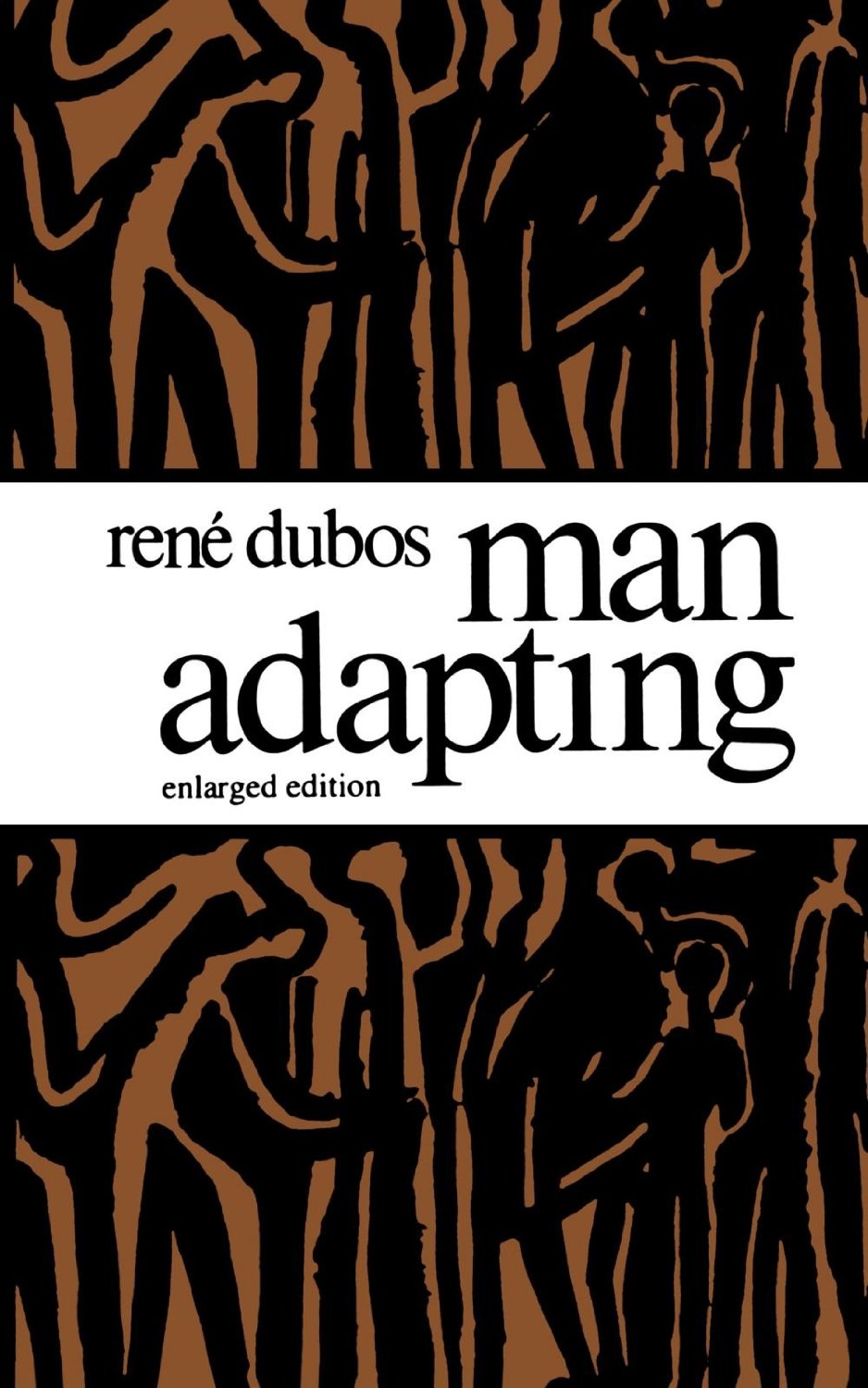
SPIRITUALITY SCIENCE – WHOLISTIC MEDICINE: Professor Rene Dubos in his book, ‘MAN ADAPTING'(1965) speaks about the man who has to continuously adapt to environmental changes.
The medical term ‘Etiology’ describes the causes or origins of disease. Professor Rene Dubos had promoted the understanding of the disease as a consequence of the relationships between the host, the etiological agents such as the disease-causing bacteria, and parasites under the influence of social, and environmental conditions that demand man to adapt to constant changes in his living conditions.
SPIRITUALITY SCIENCE – WHOLISTIC MEDICINE: In his book, ‘A GOD WITHIN'(1972), Professor Rene Dubos speaks about the importance of developing richness and diversity in Life at various levels. It provides a perspective on Ecological Crisis.
Professor Rene Dubos provides a perspective on Ecological Crisis and seeks positive values in man’s relationship to Nature. He sees hope in Benedictine stewardship. He speaks of “The Demon within”..”The thrust of technology and institutions that may run counter to living in harmony with nature.”
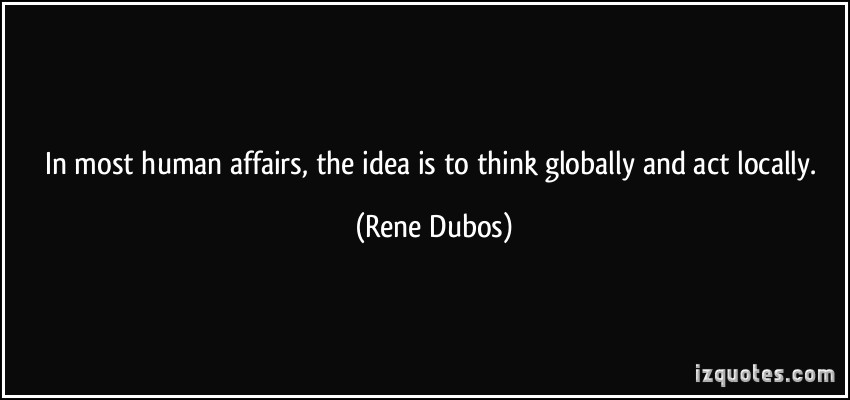
SPIRITUALITY SCIENCE – WHOLISTIC MEDICINE: Professor Rene Dubos in his book, ‘REASON AWAKE : SCIENCE FOR MAN(1970) describes the impact of scientific knowledge and advancement on humanity and civilization.SPIRITUALITY SCIENCE – WHOLISTIC MEDICINE: In his book, ‘THE WOOING OF EARTH'(1980), Professor Rene Dubos stated his famous dictum, “THINK GLOBALLY AND ACT LOCALLY.” He developed a Philosophy of Man in his Environment.SPIRITUALITY SCIENCE – WHOLISTIC MEDICINE: Professor Rene Dubos shared a Philosophy of Man in his Environment. Man always exists in a given physical environment, and lives as a biological member participating in biotic interactions with his biological community.
In various books that Professor Rene Dubos had authored, he developed a Philosophy of Man in his Environment. He stressed the importance of man’s relationship to the natural environment. Some of his works include, ‘Health and Disease'(1965), ‘Man, Medicine, and Environment'(1968), and ‘Beast or Angel'(1974). He described human choices and interventions to shape life, environment, and civilization. He paved the way for social action to combat environmental problems and to prevent environmental degradation that have health consequences.
In his final book, ‘The Celebration of Life'(1981), Professor Rene Dubos stressed the importance of understanding life in the context of the entire web of ecological relationships. The famous dictum of this book is: “WHEREVER HUMAN BEINGS ARE INVOLVED, TREND IS NOT DESTINY.” I am hopeful that this ‘Destiny’ of man will be shaped by God’s Unconditioned Love that flows Beyond the Good and Evil Behavior of Man.
WholeChrist – WholeLove – Nietzsche: “That which is done out of Love always takes place beyond Good and Evil.” Man with his Good or Evil actions and behavior cannot control the flow of God’s Unconditioned or ‘WholeLove’.
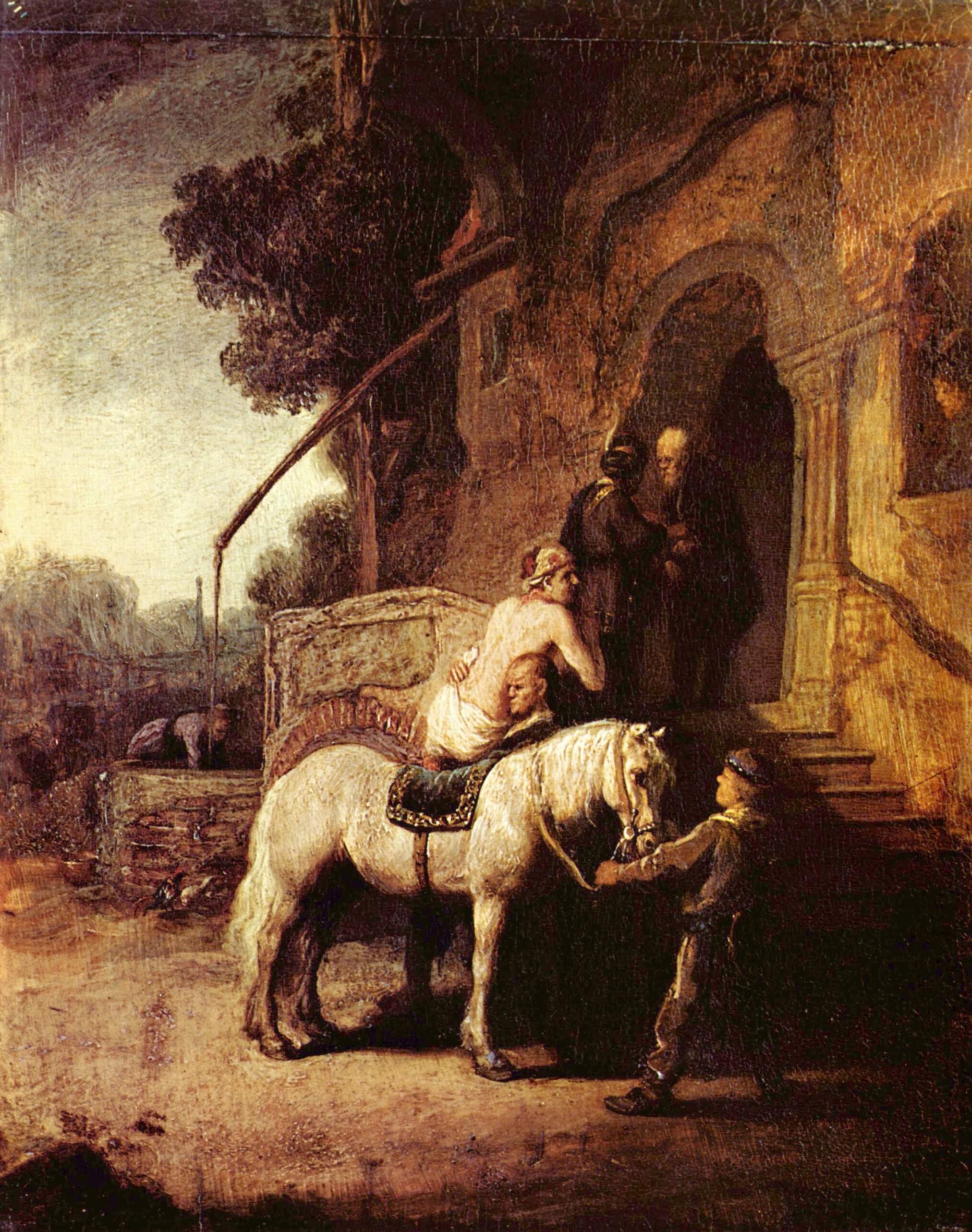
IN GOD WE TRUST – WHO IS MY NEIGHBOR: To know and to understand God’s purpose in Human Life, man must know his neighbor. Man cannot obey God’s Commandment if the term ‘Neighbor’ is not understood. The Parable of The Good Samaritan from The New Testament Gospel According to Saint Luke, Chapter 10, verses 25 – 37 give a clear description of the term ‘Neighbor’. This understanding of the term ‘Neighbor’ is relevant in the context of the discussion about the US Immigration Reform.
IN GOD WE TRUST – WHO IS MY NEIGHBOR: The Parable of The Good Samaritan defines the term ‘Neighbor’ as a person who comes to the aid of another who is entirely helpless. A Good Samaritan has signified a “true Neighbor”, a generous and self-forgetful person. I am exploring the concept of a true ‘Neighbor’ to formulate my opinion on the US Immigration Reform.
I am writing this blog post to recognize Mark Elliot Zuckerberg, the Founder, Chairman, and CEO of Facebook, Inc., as my true ‘Neighbor’, or ‘The Good Samaritan’. To know and to understand God’s purpose in human life, we need to clearly understand the meaning of ‘Neighbor’. The concept of ‘Neighbor’ cannot be simply derived by describing a person’s place of residence, the country of residence, or things situated near one another. My religion, my race, my ethnicity, my skin color, my gender, my language, my country of origin, or my place of residence cannot conclusively determine the identity of my ‘Neighbor’. To recognize Facebook CEO Mark Zuckerberg as my ‘Neighbor’, I seek the understanding provided by The Parable of The Good Samaritan that is narrated in The New Testament Book, The Gospel According to Saint Luke, Chapter 10, verses 25 to 37.
IN GOD WE TRUST – WHO IS MY NEIGHBOR: This young man aged 29-years, Mark Elliot Zuckerberg(born. May 14, 1984), the Founder, Chairman and CEO of Facebook, Inc., could be recognized as a true ‘Neighbor’, ‘The Good Samaritan’ concept is based upon the nature of his generous actions to help others who are not able to help themselves. I am defining the term ‘Neighbor’ to seek clarity in our discussion about the US Immigration Reform. I commend Zuckerberg for finding organizations such as FWD.us to advocate for Immigration Reform.
The term ‘Samaritan’ originally refers to a native or inhabitant of Samaria, a district of ancient Israel between Galilee and Judea which in the Biblical times belonged to the North Kingdom of the Hebrews. These residents of Samaria represent a sectarian Jewish Community who were colonists introduced after the Assyrian conquest of the region during 722 B.C. The Samaritans adopted a form of Judaism based entirely on ‘Pentateuch'(the first five books of The Old Testament) the Scripture revealed by Prophet Moses whom they recognize as the only Prophet. The Jews refused to recognize Samaritans as their ‘neighbors’ and had treated them as strangers or even as enemies. The Jews had refused to let the Samaritans participate in building the Second Temple in Jerusalem and the Samaritans built their own Temple on Mount Gerizim which was destroyed in 128 B.C. This historical context must be understood while reading the Parable of The Good Samaritan and to derive the meaning of ‘Neighbor’. The story begins when an expert in the Law stood up to test Jesus and had asked, “What must I do to inherit eternal life?” To inherit eternal life, the expert on Law had correctly stated that the Scripture demands, “‘Love the Lord your God with all your heart and with all your soul and with all your strength and with all your mind’; and, ‘Love your neighbor as yourself’.” The expert in the Law had further asked Jesus to explain, “And who is my neighbor?” Jesus responds by sharing the Parable of The Good Samaritan which described the actions of a Priest, a Levite, and a Samaritan and Jesus concluded the story by asking the expert in the Law, “Which of these do you think was a neighbor to the man who fell into the hands of robbers?” The expert in the Law replied, “The one who had mercy on him.” Jesus told the expert in the Law, “Go and do likewise.” To inherit eternal life, man has to perform actions apart from loving Lord God. Man has no ability to reflect or return God’s Unconditioned Love even while man chooses to love God with all his heart, all his soul, with all his strength, and with all his mind. Fundamentally, there is a problem as man has no true ability to recognize God’s existence and man has no true Knowledge of God’s existence. However, man has the ability to recognize the existence of a fellow human being. Man has a chance to redeem himself in his actions and interactions with his fellow human beings. To inherit eternal life, man needs the Grace, Mercy, and Compassion of the Lord God and man can easily qualify himself to receive God’s Mercy by simply showing some compassion in his actions to respond and to provide some assistance to another person who is in a disabled situation and cannot help himself.
WHO IS MY NEIGHBOR??? WHY IMMIGRATION REFORM ???:
IN GOD WE TRUST – WHO IS MY NEIGHBOR: I would like to recognize my ‘Neighbor’ if I have to Love my ‘Neighbor’. In this context of knowing my ‘Neighbor’. I would like to know the Legal, and the Illegal Residents of The United States of America. To receive the Blessings of eternal life, man has to learn to recognize and to love his ‘Neighbor’. I would apply this principle to enact legislation that may bring Immigration Reform and improve neighborly relations among all the residents of the United States.
The United States must take pride in itself and must also give the opportunity to others to cherish the place with a sense of pride.
IN GOD WE TRUST – WHO IS MY NEIGHBOR: President John F. Kennedy is known to me for he founded the military organization called the Special Frontier Force – Establishment No. 22 during 1962 to secure Freedom, Democracy, Peace, and Justice in the occupied Land of Tibet. President Kennedy had acted as a ‘True Neighbor’ of Tibet when he acted with compassion after recognizing the plight of helpless Tibetan people. The United States must reflect its true national values in the manner in which it treats its alien residents.
Facebook CEO, Mark Zuckerberg founded on April 11, 2013, FWD.us.,(http://FWD.us/), a 501(c)(4) Lobbying group that aims to lobby and advocate for Immigration Reform to provide some relief to about 11 million immigrants that are estimated to be living in the United States without being Legal Residents. The US Senate passed a comprehensive bill last June but, the legislation has stalled in the US House where Republicans have rejected a comprehensive approach to Immigration Reform. Mark Zuckerberg and his organization FWD.us has launched a nationwide advertisement campaign on Monday, March 03, 2014 that implores US House Republicans to act this year on legislation overhauling the nation’s Immigration System.
IN GOD WE TRUST – WHO IS MY NEIGHBOR: President Barack Obama displayed the spirit of a true ‘Neighbor’ and had implored the Members of the US Congress to take urgent action to implement the Immigration Reform.
IN GOD WE TRUST – WHO IS MY NEIGHBOR: The debate about Immigration Reform may have to define the term ‘Neighbor’ and may seek to establish good neighborly relations among fellow human beings and among all residents of the United States.
IN GOD WE TRUST – WHO IS MY NEIGHBOR: The issue of Immigration Reform involves knowing our ‘Neighbors’ and knowing the benefits of good neighborly relations among all residents of the Social Community.
IN GOD WE TRUST – WHO IS MY NEIGHBOR: I am presenting the Parable of The Good Samaritan to define the term ‘Neighbor’ in the context of the debate on Immigration Reform in the United States. I confer the Blessings of Eternal Life on Mark Zuckerberg, Chairman and CEO of Facebook, Inc.,
In the context of the debate on Immigration Reform in the United States, I make this attempt to define my ‘true neighbor’. I recognize Mark Zuckerberg, Chairman and CEO of Facebook, Inc., as the ‘Good Samaritan’, and I am pleased to write that I would seek to confer the Blessings of Eternal Life on Mark Zuckerberg in due acknowledgment of his efforts to promote good neighborly relations among the residents of the United States.
Special Frontier Force as a military organization symbolizes the recognition of Tibet as a Sovereign Nation and it specifically acknowledges that the Institution of Dalai Lama and the person holding this title as the true independent, ruler of Tibet apart from being a high-ranking priest of Tibetan Buddhism.
SPECIAL FRONTIER FORCE AT THE WHITE HOUSE: The title ‘Dalai Lama’ is not simply about the person known as Tenzin Gyatso. The term is applied to a Sovereign, political institution of Tibet that provides a system of governance based upon popular belief in traditional Tibetan Buddhism. The Tibetan soldiers who serve in Special Frontier Force do not acknowledge any superior authority and they owe their total allegiance to their Supreme Commander called Dalai Lama.
SPECIAL FRONTIER FORCE AT THE WHITE HOUSE: His Holiness the 14th Dalai Lama speaking with US President Barack Obama during their meeting in the Map Room of The White House in Washington, DC on Friday, February 21, 2014.(Official White House photo by Pete Souza)
Special Frontier Force is a military organization jointly founded by the United States, India, and Tibet during the presidency of John F. Kennedy. The US and Indian nationals who serve in this organization derive their authority over the Tibetan soldiers of this organization by virtue of the power granted by Dalai Lama the Supreme Commander of the Tibetan Force. On March 31, 1959, His Holiness the 14th Dalai Lama had arrived in India as a political exile and was granted political asylum in India. He had established the Tibetan Government-in-Exile which is based in Dharamsala of India.
SPECIAL FRONTIER FORCE AT THE WHITE HOUSE: His Holiness the 14th Dalai Lama speaking with US President Barack Obama during their meeting in the Map Room of The White House in Washington, DC on July 16, 2011.
The United States often describes His Holiness the 14th Dalai Lama as a spiritual, and cultural leader of Tibetan people without explaining the cultural aspects of Tibetan governance. In Tibetan Culture, the title Dalai Lama is given to the Leader or Chief who provides a system of Government. The Dalai Lama has the same executive powers that are typically exercised by the Head of State of any independent, sovereign nation. The title of Dalai Lama is the equivalent of titles such as President or Prime Minister who hold the executive power in nations like the United Sates, India, and Great Britain.
SPECIAL FRONTIER FORCE AT THE WHITE HOUSE: His Holiness the 14th Dalai Lama speaking with US President Barack Obama during their meeting in the Map Room of The White House, Washington, DC on February 18, 2010.
THE SOVEREIGN, POLITICAL INSTITUTION OF DALAI LAMA:
SPECIAL FRONTIER FORCE AT THE WHITE HOUSE: His Holiness the 14th Dalai Lama who has visited The White House on numerous occasions during the last 30 years is the rebirth of a long line of “TULKUS” who descend from the Compassionate Bodhisattva named “AVALOKITESVARA.”
His Holiness the 14th Dalai Lama who had visited The White House in Washington, DC on February 21, 2014 and on numerous other occasions meeting with various US Presidents during the last 30 years, is the rebirth of a long line of “TULKUS” who descend from the Compassionate Bodhisattva named “AVALOKITESVARA.” In Tibetan Buddhism, a “TULKU” is a particularly high-ranking Lama, of whom the Dalai Lama is one. But, it is very important to recognize Dalai Lama as a ‘Hierarch’, a Leader or Chief who provides a system of Government. The Sovereign, political institution of Dalai Lama is formally known as ‘Ganden Phodrang’. The succession of this ‘hierarchy’ is maintained by the discovery of a child born soon after the death of a Dalai Lama into whom the ‘Spirit’ of the deceased has entered.
SPECIAL FRONTIER FORCE AT THE WHITE HOUSE: Tenzin Gyatso(b. 1935), the 14th Dalai Lama’s Enthronement Ceremony on 22 February, 1940. Dalai Lama is the ruler of Tibet.
SPECIAL FRONTIER FORCE AT THE WHITE HOUSE: The 14th Dalai Lama sitting on the throne in this photo image of 1956-57 while Tibet came under Communist China’s military occupation during 1950. With military assistance from the United Sates and India, Tibetans had revolted against the Communists and the Dalai Lama fled into exile when the massive Tibetan Uprising failed during March 1959.
SPECIAL FRONTIER FORCE AT THE WHITE HOUSE: The Sovereign, political institution of Dalai Lama is formally known as ‘Ganden Phodrang’ and this is the Official Seal of the Tibetan Government.
The Great Fifth Dalai Lama, Lobsang Gyatso(1617-1682) founded the Ganden Phodrang Government of Tibet in 1642. During his reign, the Potala Palace on the Red Hill in Lhasa was built. The successive Dalai Lamas have headed the Tibetan Nation for nearly four centuries. The name “DALAI” is the anglicized version of Mongolian word “TA -LE” which is used as an honorific title and the equivalent of the Tibetan “RGYA-MTSHO” meaning Sea or Ocean which suggests the breadth and depth of wisdom and the temporal power of Dalai Lama on Tibetan way of life. Tibetans call the Dalai Lama as ‘Rgyal-ba Rin-po-che’ which means ‘Great Precious Conqueror. The Third Dalai Lama, Sonam Gyatso(1543-1588) had received this honorific title during 1578 while on a visit to the Mongol Chief Altan Khan who had applied this title retrospectively to the previous hierarchs making Gendun Drupa(1391-1474) the First Dalai Lama, and Gendun Gyatso(1475-1542) who became the Second Dalai Lama. This strong hierarchical organization of Tibetan Buddhism and the governance of Tibet has become the focus of Tibetan Cultural Identity and Tibetan National Character. The Eighth Dalai Lama, Jamphel Gyatso(1758-1804) fought a war with the Gurkha troops from Nepal and had defeated them with some assistance from Manchu China. Tibet existed in a serene and unperturbed state for several centuries even while Tibet came under the control of the Yuan or Mongol Dynasty of China. In 1644, Chinese Manchu, Qing or Ching Dynasty was established and Tibet during the reign of its Seventh Dalai Lama, Kelsang Gyatso(1708-1757) came under Manchu China’s nominal protection although for the most part, the Tibetans retained full control over their internal affairs. The Manchu China Dynasty was overthrown in 1911 and the 13th Dalai Lama, Thupten Gyatso(1876-1933) had expelled the Manchu China’s troops from Tibet, promptly reasserted Tibet’s full Independence. The Great 13th Dalai Lama ruled with full personal authority and reigned as head of a Sovereign State. He had further formally announced Tibet’s full Independence on February 13, 1913.
SPECIAL FRONTIER FORCE AT THE WHITE HOUSE: The Potala Palace on the Red Hill in Lhasa was built during the reign of Lobsang Gyatso(1617-1682), the Great Fifth Dalai Lama. The Sovereign Authority of the Dalai Lama as the Ruler of Tibet was established before the US President became the Chief Executive of the United States.
SPECIAL FRONTIER FORCE AT THE WHITE HOUSE: Special Frontier Force was founded by the United States, India, and Tibet during 1962 to defend the Tibetan Nation represented by this Flag. The Command and Control of the Tibetan soldiers, the chief fighting element of the Special Frontier Force is based upon the Supreme Authority of the institution of Dalai Lama.
Tibetans celebrate the 13th day of February as Tibetan Independence Day in recognition of their sovereignty. Being ‘Sovereign’ means that Tibetans do not acknowledge any superior and being a Sovereign Nation, Tibet has the full power to levy War, conclude Peace, contract alliances, establish Commerce and do all other acts and things which independent states may have the right to do. For 39 years, from 1911 to 1950, Tibet had indeed existed as an Independent Nation and had signed the bilateral “Mc Mahon Treaty” in Delhi during 1914 following the ‘Simla Agreement’. During October 1950, Communist China’s People’s Liberation Army invaded Tibetan soil and Tibet has come under China’s military occupation. It will be incorrect to suggest that Tibet is a part of China. Tibetans do not acknowledge China’s rule and Special Frontier Force is a military alliance that symbolizes the Tibetan Resistance Movement to oppose the occupation of Tibet. I am pleased to share a few photo images of His Holiness the 14th Dalai Lama, the living symbol of the Tibetan Resistance Movement when he visited The White House in recent past.
SPECIAL FRONTIER FORCE AT THE WHITE HOUSE: The construction of The White House started in 1792. The United States started diplomatic relations with Tibet as it got alarmed by the Communist takeover of China during 1949. However, the 14th Dalai Lama is the first Dalai Lama who has ever visited The White House.
SPECIAL FRONTIER FORCE AT THE WHITE HOUSE: On April 16, 1991, the 14th Dalai Lama met with US President George H.W. Bush during his first visit to The White House. President Bush had served as the Director of Central Intelligence Agency during 1976-77 and was directly associated with the military organization called Special Frontier Force.
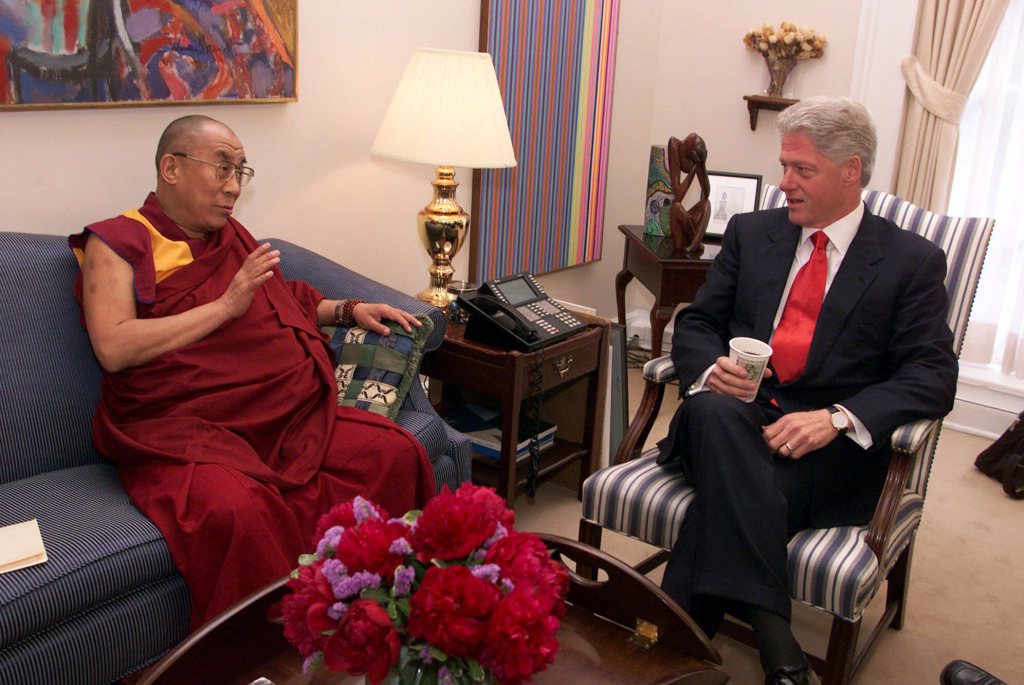
SPECIAL FRONTIER FORCE AT THE WHITE HOUSE: The 14th Dalai Lama met with US President Bill Clinton on June 20, 2000 at The White House.
SPECIAL FRONTIER FORCE AT THE WHITE HOUSE: His Holiness the 14th Dalai Lama speaking with US President George Bush during their meeting in The White House on September 10, 2003.
SPECIAL FRONTIER FORCE AT THE WHITE HOUSE: His Holiness the 14th Dalai Lama speaking with US President George Bush during their meeting at The White House in Washington, DC on November 09, 2005.
SPECIAL FRONTIER FORCE AT THE WHITE HOUSE: His Holiness the 14th Dalai Lama speaking with US President Bill Clinton during their meeting in The White House in Washington, DC.
I would like to respectfully submit to my readers that the term “DALAI LAMA” recognizes the person who represents the sovereign, political institution, the seat of Tibetan Government and Tibetan Sovereignty. Kindly permit me to offer you my “TASHI DELEK” greetings to all of you to seek your support for Tibetan Freedom from occupation.
SPIRITUALITY SCIENCE – BEHOLD THE MAN – ECCE HOMO:
SPIRITUALITY SCIENCE – BEHOLD THE MAN – ECCE HOMO: Roman Governor of Judea, Pontius Pilate of 1st century A.D. had presented Jesus to a big crowd of Jews of Jerusalem making this announcement: “Ecce Homo.”( etcha homo. Latin. Behold The Man). This reality of Jesus actually represents the fundamental problem of man who exists as a prisoner because of the problem called ‘Sin’. To liberate man from the burden of Sin, Jesus was arrested and was tried like a criminal. I would like to Behold Jesus, the Son of Man to describe the physiological function called ‘Homeostasis’ that maintains stability and equilibrium to keep constant the conditions of Life.
SPIRITUALITY SCIENCE – BEHOLD THE MAN – ECCE HOMO: Friedrich Wilhelm Nietzsche(1844-1900), German philosopher wrote his last book titled “Ecce Homo: How One Becomes What One Is” in 1888 before losing his mental lucidity. I Behold The Man to describe the physiological condition called ‘Homeostasis’ that provides stability and equilibrium within the organism to maintain all the vital mechanisms to keep the conditions of Life constant in the face of varied internal and external environmental conditions.
I define the term ‘Spirituality’ as an internal mutually beneficial partnership between the cells, the tissues, and the organ systems of the human organism and the Whole Organism which exists as the human being. Spirituality brings structural unity and functional harmony and is the fundamental basis for man to discover Peace, Harmony, and Tranquility in his living condition and in his living experience in any given external environment as a member of any given external community. In terms of Science, the human being is a biological community of independent cells and each exists with its own internal environment and an external environment and constantly interacts with its own intracellular organelles and other living cells found in its external environment. Similarly, man has an internal environment called ‘Milieu Interieur’ and the organism tries to maintain ‘Homeostasis’ which is defined as the tendency to maintain internal stability by coordinated responses of the organ systems that automatically compensate for environmental changes and it is analogous to maintenance of stability or equilibrium while participating in social interactions within a social group. French physiologist, Dr. Claude Bernard(1813-1878) described ‘Homeostasis’: “All the vital mechanisms, varied as they are, have only one object; that of preserving constant the conditions of Life.” In this context of the structural and functional relationship of the human organism to maintain stability and equilibrium within the organism and while participating in social interactions within a social group, I would ask my readers to “Behold The Man.” I would like to present two men and provide a contrast as to how their ‘Homeostasis’ was compromised and as to how they failed to keep their existence; 1. due to an external threat to existence posed by the social group in which the individual lived and participated in social interactions, and 2. due to an internal threat posed by another living organism with which the individual participated in biotic interactions.
BEHOLD THE MAN – ECCE HOMO – THE SON OF MAN:
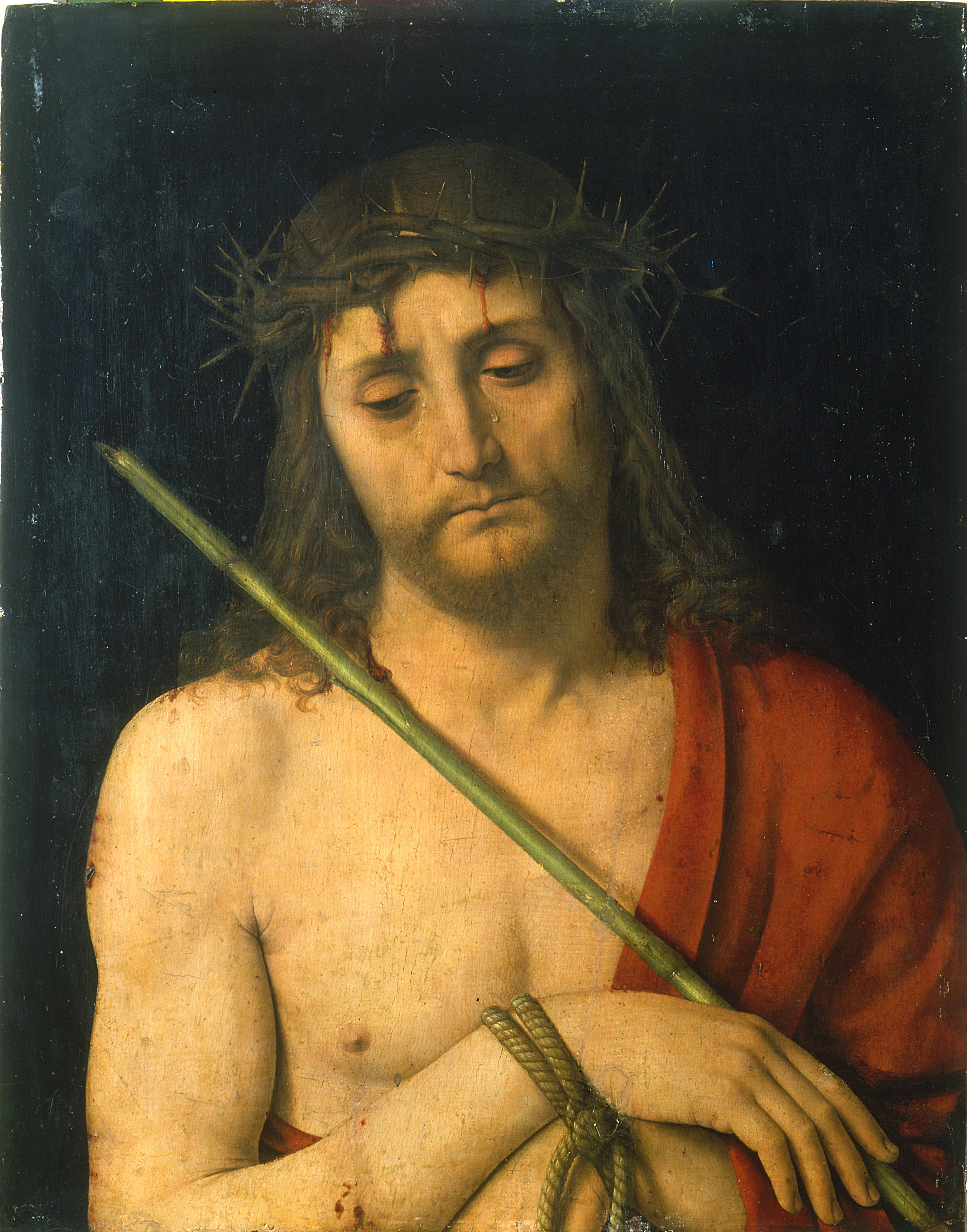
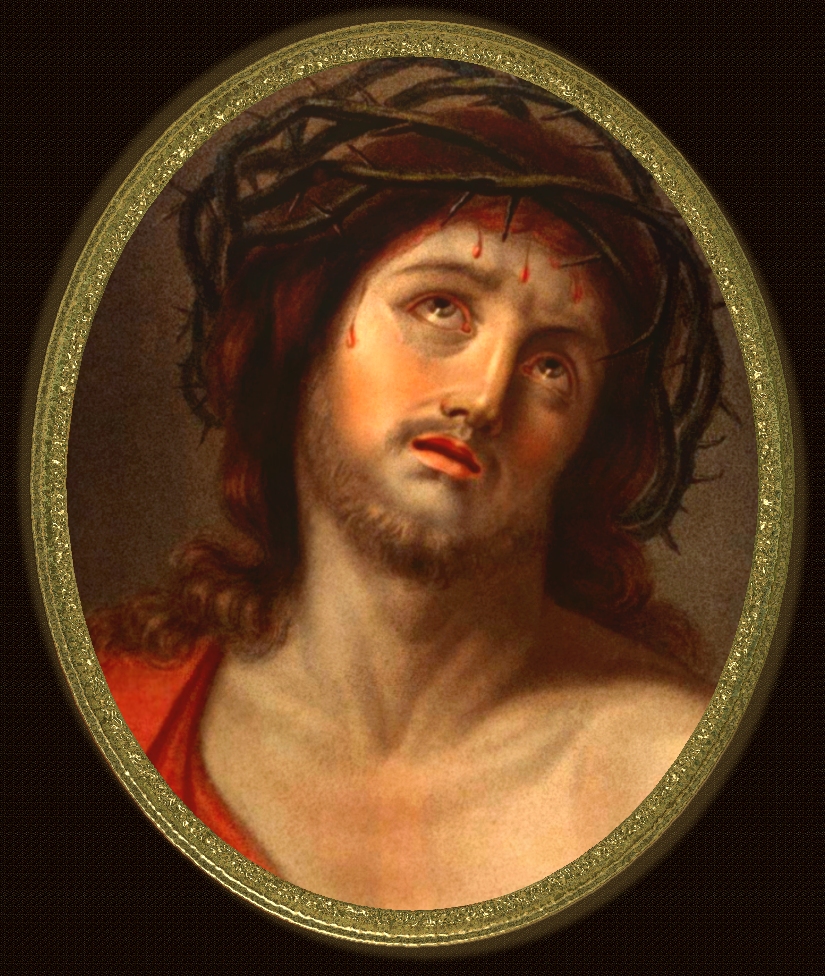
SPIRITUALITY SCIENCE – BEHOLD THE MAN – ECCE HOMO: Jesus Christ, the Son of Man, lived as a human being. The phrase ‘Ecce Homo'(Latin. Behold The Man) is used to describe a picture or statue of Jesus wearing a Crown of Thorns. This picture describes the nature of man’s dependent and conditioned existence. Man in his mind and imagination makes himself “Free” and in reality exists as a Slave to a sinful nature. Man can either exist as a Slave of God or as a Slave of Sin. There is no “Freedom” or “Salvation”, or “Liberation”, or Deliverance from Bondage without the operation of an uplifting Force of God’s Unconditioned Love called “Divine Providence”, the Force of Mercy, Grace, and Compassion called “KRUPA” in Indian Sanskrit language.
The Vulgate or Latin Version of the Bible, the official biblical text of the Roman Catholic Church, in the New Testament Book of The Gospel According to Apostle John, Chapter 19, verses 4 and 5 describe the words used by the Roman Governor of Judea, Pontius Pilate when he presented Jesus to a huge crowd of Jews that had gathered outside his palace to demand that Jesus must be punished by Crucifixion: Once more Pilate came out and said to the Jews, “Look, I am bringing him out to you to let you know that I find no basis for a charge against him.” When Jesus came out wearing the crown of thorns and the purple robe, Pilate said to them, “Ecce Homo !”(Behold The Man)
SPIRITUALITY SCIENCE – BEHOLD THE MAN – ECCE HOMO: Man leads a dependent and conditioned existence. The existence of Jesus, the Son of Man was conditioned by God’s Plan for humanity who acquired Sin through acts of disobedience that violated God’s Will and Purpose in man’s life. Jesus when confronted by an external threat, the demand for crucifixion, that takes away the stability and equilibrium needed for his existence, He did not beg for mercy, did not plead with Pilate to set Him free. The existence of Jesus as a human being was threatened from the time of His conception for He was sent to the world to live in an environment and interact with a social community that had already inherited Sin.
To maintain Life, man has to always preserve the stability and equilibrium of his internal and external living conditions. But, man constantly faces several threats to his existence and these threats may exist within or without, the environment in which the existence is maintained. Jesus faced the threat called the demand for his crucifixion because of His social interactions with members of His own social community of Jews who failed to understand God’s Will and God’s Purpose in human life. The Roman Governor of Judea, Pontius Pilate was unwilling to find any crime in the conduct of Jesus and had repeatedly told the gathering of Jews that he finds no basis for a charge against Him. Pilate very reluctantly imposed the capital punishment not only because of the insistent demand of Jews , but because of the unwillingness of Jesus to beg for mercy or pleading to set Him free. Apostle John has reported on the conversation between Pilate and Jesus 😦 John 19:10-11) “Do you refuse to speak to me?” Pilate said, “Don’t you realize I have power either to free you or to crucify you?” Jesus answered, “You have no power over me if it were not given to you from above. Therefore the one who handed me over to you is guilty of a greater sin.” Before His arrest and trial by Pilate, Jesus had demonstrated various kinds of supernatural powers and had performed miracles. In fact, both the Jews and the Romans had mockingly told Jesus that He could save Himself from crucifixion using supernatural powers and prove His claim to be ‘The Son of God’. I understand the Biblical narration of crucifixion to behold the human being, to understand the human condition that has no real freedom and is simply dependent upon an external source of support called ‘Providence’. Jesus who had stated that His mission or purpose in life as that of sharing the ‘Truth’, knows that the human being has no ‘Free Will’ and understands that man has no choice apart from living in obedience to God’s Will and Purpose in human life. It is not surprising to find that Jesus made no attempt to run away from the threat, and did nothing to defend His existence. He had simply desired to bear witness to God’s Will and God’s purpose of His human existence. Jesus as a Spiritual Being showed patience and showed tolerance of people who were persecuting Him and for His Deliverance, He called upon His Father: “Jesus called out with a loud voice, ‘Father, into your hands I commit my spirit.’ When he said this, he breathed his last.”(The New Testament Book of the Gospel According to Apostle Luke, Chapter 23, verse #46). The fact that Jesus has simply existed like any other mortal human being is revealed in His final announcement as mentioned in The Gospel According to Apostle John, Chapter 19, verse#28 which reads: Later, knowing that all was now completed, and so that the Scripture would be fulfilled, Jesus said, “I am thirsty.” In my view, thirst is the clearest symptom of mortal existence.
BEHOLD THE MAN – ECCE HOMO – NIETZSCHE:
SPIRITUALITY SCIENCE – BEHOLD THE MAN – ECCE HOMO: Nietzsche wrote this book in 1888 and it was published twenty years later in 1908. He signs the book “Dionysus versus the Crucified.” Nietzsche made an attempt to draw a contrast between himself and Jesus Christ.
Spirituality Science – Behold The Man – Ecce Homo: In his final book, Nietzsche claimed that he truly is a man and in his view, to be a “man” alone is to be more than a “Christ.”
To Behold The Man called Nietzsche, as a practitioner of Medicine, I would give a least amount of attention to his views and perspectives about human values and human existence. I would like to ascertain his complete medical history and assess his medical condition through a careful physical examination and use any investigative tools that may help me to know the man under my observation. Nietzsche born October 05, 1844 was apparently in good health during 1864 when he went to the University of Bonn to study theology and classical philology and in 1865 he transferred to University of Leipzig. He began military service in October 1867 in the cavalry company of an artillery regiment, sustained a serious chest injury while mounting a horse in March 1868. He resumed his studies in University of Leipzig in October 1868 while on extended sick leave from the military. In 1869, the University of Leipzig conferred the doctorate without examination or dissertation and paved the way for his selection for professorship in classical philology(Linguistics) in the University of Basel, Switzerland. He took leave during August 1870 when he had participated in Franco-Prussian War as a voluntary medical orderly. He had to quit that service when he contracted dysentery and diphtheria. His health problems continued to persist and by October 1876, Nietzsche requested and received a year’s sick leave. Because his health continued to deteriorate steadily he resigned his professorial chair on June 14, 1879. Nietzsche was seriously ill, half-blind, in virtually unrelenting pain during a decade of isolation from 1879 to 1889. He lived in boarding houses in Switzerland, France, and Italy with only limited human contacts. His most acknowledged literary and philosophical masterpiece, “Thus Spake Zarathustra” was published between 1883 and 1885 in four parts. Nietzsche’s final lucid year was 1888, a period of supreme productivity. He wrote and published ‘The Case of Wagner’, wrote a synopsis of his philosophy, ‘Twilight of the Idols'(published later in 1889), The Antichrist(published later in 1895), ‘Nietzsche contra Wagner’, and ‘Ecce Homo : How One becomes What One Is’, a reflection on his own works and his human significance. Ecce Homo got published in 1908, twenty years after its composition. Nietzsche collapsed in the streets of Turin, Italy in January 1889 and lost control of his mental faculties. He spent the last 11 years of his life in total mental darkness. He was first moved to an asylum in Basel, then he lived in Naumburg under his mother’s care and after her death in 1897, he lived in Weimar in his sister’s care. He died on August 25, 1900. His medical condition suggests the diagnosis of Atypical General Paralysis caused by the Tertiary Stage of Syphilitic infection and is known as Neurosyphilis which is the involvement of brain and nervous system due to dormant Syphilitic infection. I am most surprised to note that Nietzsche had failed to take into account the problems of his own injury and sickness that compelled him to change the direction of his life repeatedly without giving him the opportunity called “Free to Will.”
Spirituality Science – Behold The Man – Ecce Homo: This Spirochete bacterium known as Treponema pallidum which had infected Nietzsche had eventually wiped out his mortal existence. This Syphilitic infection causes Meningoencephalitis, inflammation of the brain and nerve tissues that destroys cerebral cortex leading to general dissolution and death within 3 to 10 years after the onset of clinical symptoms of brain involvement.
Nietzsche’s ability to maintain ‘Homeostasis’ was undermined when he got exposed to infection by a Spirochete bacterium called Treponema pallidum which infects man during sexual relationship with an infected individual. It is very easy to ignore this infection as in its Primary Stage the infection causes a painless sore at the site of infection and the sore heals without application of any medication. This bacterium remains dormant and may manifest signs of infection called Secondary Stage after a lapse of several months. During that Secondary Phase there would be generalized eruptions of the skin, mucous membranes, inflammation of eyes, bones, and central nervous system. It must be noted that during Nietzsche’s lifetime, there were no proper antibiotic drugs to treat the Syphilitic infection. The Tertiary Stage is delayed for some time(15 to 25 years) after the initial infection. During the period Nietzsche had lived, this kind of Syphilitic infection accounted for 10 percent of all admissions to mental hospitals. In Nietzsche’s case, looking at the medical problems that he had experienced during 1876, I would like to suggest that he had contacted Syphilitic infection during 1861 while he was about 17-years of age, because of a social interaction with another human being who was already infected by Syphilis. Nietzsche had formulated all his perspectives and views about human values, and human existence not knowing that he has no “Will to Power”, or “Will to Life” if he fails in the battle against the invasion of his body by this Spirochete bacterium. In his book Ecce Homo, Nietzsche proclaims the ultimate value of everything that has happened to him including his near-blindness as an example of ‘Love of Fate'(amor fati). He might not have given attention to problems like injuries and diseases which have a direct relationship to the course of action that man deliberately chooses to express his sense of Freedom of choice and action. The madness that claimed Nietzsche only months after he began writing Ecce Homo had already begun its work. He reveals the tragic fact that his very aliveness was in a state of being overwhelmed, consumed, by powerful unconscious emotion, the condition called ‘decadence’. He writes about Christianity’s decadence while in reality his brain was getting destroyed by the Syphilitic infection.
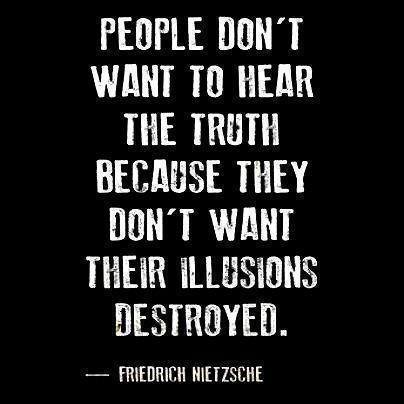
SPIRITUALITY SCIENCE – BEHOLD THE MAN – ECCE HOMO: Nietzsche has correctly stated that people don’t want to hear the ‘Truth’. As a human being, he is not an exception to that Rule. The Truth is, man needs an Illusion if he has to exist on the surface of fast spinning object called planet Earth.
In the last Chapter of Ecce Homo titled, “Why I am a Destiny”, Nietzsche suggests a contrast with Jesus to claim that he truly is a “man.” In his view, to be a “man” alone is to be more than a “Christ.” In my opinion, both Nietzsche and Jesus had lived their lives as human beings and they faced great threats to their existence from different directions. It is indeed correct to suggest that man is like Christ for man is created in God’s own image. Nietzsche’s Spiritual Being was challenged by the problem of a bacterium that entered his body and similarly, the Spiritual nature of human society is challenged by the problem of Sin and acts of disobedience. Man finds it to difficult to experience Peace, Harmony, and Tranquility as there is no stability or equilibrium in his living condition. I would like to invite my readers to “Behold The Man” to know the human being and the physiological mechanism called ‘Homeostasis’ that is central to the mortal human existence as it faces internal or external threats. Eventually, man depends upon the Force of Mercy, Grace, and Compassion called “KRUPA” in Indian Sanskrit language even when man has no knowledge of God’s existence.
SPIRITUALITY – THE SCIENCE OF VIRTUE AND VICE: Socrates(470-399 B.C.), Greek philosopher compares the harmony produced by virtue in the Soul with the harmony of the parts in a healthy body. His view provides a rational basis for seeking a scientific understanding of Virtue and Vice.
Greek philosopher Socrates(470-399 B.C.) compares the harmony produced by Virtue in the Soul with the harmony of the parts in a healthy body. He states, “Virtue is the health and beauty and well-being of the Soul, and Vice the disease and weakness and deformity of the same.” His view provides a rational basis for seeking a scientific understanding of Virtue and Vice. If Soul or Spirit is defined as the vital, animating principle that operates in all living beings, Spirituality is a Science that describes the establishment and existence of man as a Spiritual Being. I would define Spirituality as an internal, mutually beneficial partnership between the cells, the tissues, and the organ systems of the human organism and the Whole Organism which exists as the human being. To that extent it may be stated that, Spirituality brings structural unity and functional harmony in the multicellular human organism. Spirituality involves both intrapersonal, and interpersonal relationships. However, in common usage Spiritual relationships are stated as interpersonal relationships based upon sympathy, and understanding of thoughts and feelings. To develop a basis for scientific understanding of Soul or Spirit and the characteristic attributes of Spiritual functions, I would like to give special attention to the following defining aspects of man, his living condition, and the nature of human existence: 1. Man as a Conscious being, 2. Man as an Intelligent and Mental being, 3. Man as a Moral being with ability called Discernment, 4. Man as a Social being formulating his biological existence through spiritual, biotic interactions both intraspecific and interspecific, and 5. Man as a Physical being making choices between right and wrong in the context of self-preservation or existence. The last is an area where I would like to suggest that we have to make a careful distinction between Human Nature and Human Behavior. In my view, I seek to find Human Nature in terms of living functions that the human organism performs to maintain its existence while living in a given environment and participating in interactions with other members of its biotic community and much of these functions can only be understood at molecular and cellular levels. The term Human Behavior is the subject of study of a Science called Psychology. The terms Virtue and Vice are used without making a careful distinction between Human Nature and Human Behavior and hence cause some confusion in defining them.
VIRTUE IS GOOD, AND VICE IS EVIL:
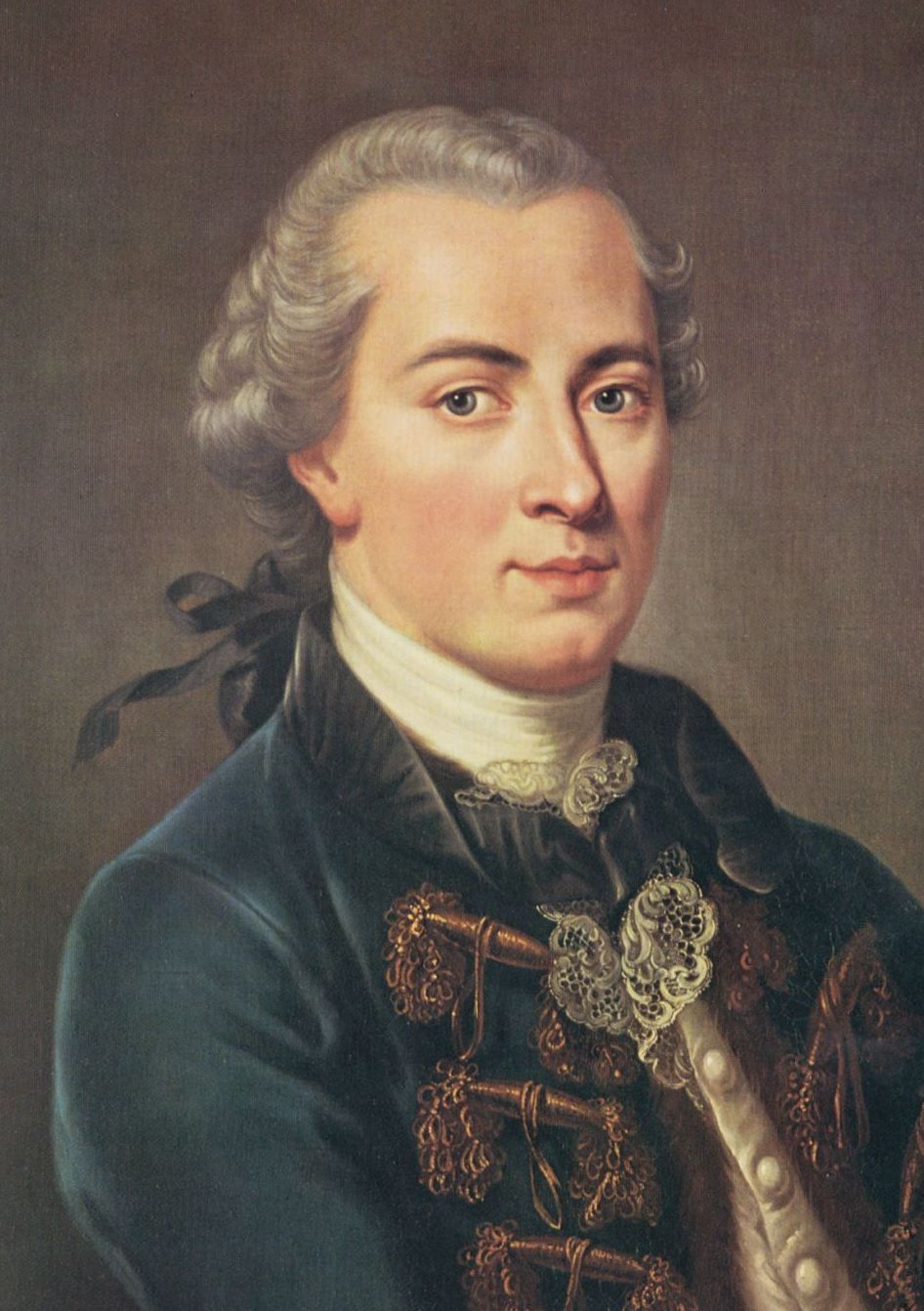
SPIRITUALITY – SCIENCE OF VIRTUE AND VICE: Immanuel Kant(1724-1804), German philosopher states that good and evil occur only in the realm of freedom, not at all in the realm of existence or nature.
Virtue is Good and Vice is Evil. Men tend to estimate or judge all things according to their own condition and the way things affect them. What is the principle of goodness in the virtues? There are several questions about objectivity or subjectivity of good and evil. How to determine good and evil? Are they determined by nature or convention? Are they objects of Knowledge or simply a matter of Opinion? Are they relative to individual desires? The terms Virtue and Vice are related to Morality, consideration of Good and Evil in human life, and with the issue of Right and Wrong in human desires, thoughts, and actions. However, to make the determination about good and evil, to make the distinction between Virtue and Vice, a few objective principles could be relevant; 1. The Rule of Reason, 2. Confirmity to Nature or Natural Law, 3. The Standard of Utility – useful and profitable nature of Virtue, 4. Obedience to the Moral Law and Moral Duty which is often shaped by acceptable standards established by social conventions or man-made rules and regulations that regulate human actions and behavior in a civilized society, and 5. Submission to God’s Will as dictated by individual’s religious faith. According to Immanuel Kant(1724-1804), German philosopher, good and evil occur only in the realm of freedom, not at all in the realm of existence or nature. Kant asserts that good and evil always imply a reference to the will as determined by the Law of Reason which is the Law of Freedom. In Kant’s view, virtue is the moral strength of a man’s will in his obedience to duty and Free Will is the seat or the source of all the goodness or evil that there is. While I appreciate the view shared by Kant and its relevance to the understanding of human actions and behavior, the concept of “Free Will” fails to account for man’s biological existence. To exercise “Free Will” man must establish his living condition called existence. The Law of Reason, human rationality, and human knowledge do not fully account for human existence. It is not rational for man to exist on the surface of a very fast spinning object like planet Earth. Man’s power of reasoning has no role. Man’s existence is possible because of the Force of Gravitation, a Law of Nature and its operation can be explained but cannot be accounted by the Law of Reason.
MORAL PHILOSOPHY – THE SCIENCE OF VIRTUE AND VICE:
SPIRITUALITY – THE SCIENCE OF VIRTUE AND VICE: Thomas Hobbes(1588-1679), English philosopher claims, “Moral philosophy is the Science of Virtue and Vice,” – and “Therefore the true doctrine of the Laws of Nature is the true Moral Philosophy.”
According to Thomas Hobbes(1588-1679), English philosopher, “Moral philosophy is the science of virtue and vice” – and “Therefore the true doctrine of the Laws of Nature is the true Moral philosophy.” In Hobbes opinion, virtues derive their goodness from Natural Law or the Laws of Nature. Their contrary are vice. Natural Law demands man to do whatever is required for self-preservation and peace. Self-preservation is the end which determines the direction of virtuous conduct. Hobbes defines human nature as self-interested cooperation. In his view, the goodness of virtues must be praised as the means of peaceable, sociable, and comfortable living.
THE LAW OF REASON, THE LAW OF NATURE, AND DIVINE NATURE:
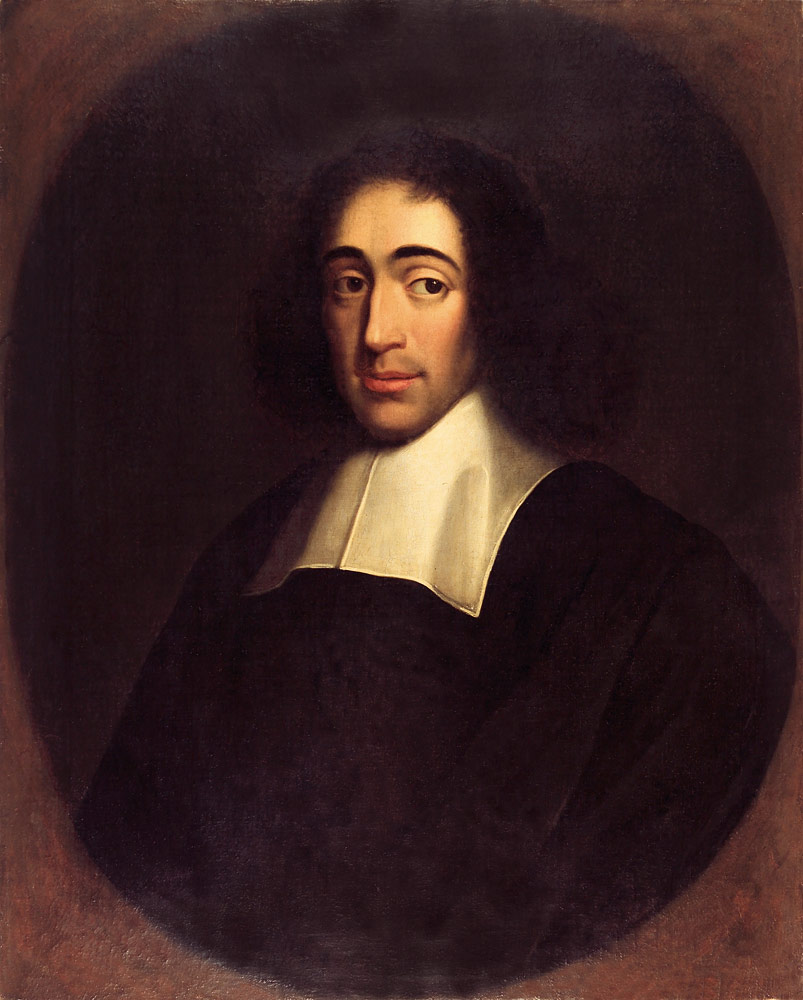
SPIRITUALITY – THE SCIENCE OF VIRTUE AND VICE: Baruch Spinoza(1632-1677), Dutch philosopher taught that there is but one Infinite Substance, God or Nature having infinite attributes. He held that human mind and human body as merely different aspects of a single Substance and God is Nature in its fullness.
Baruch Spinoza(1632-1677), Dutch philosopher taught that there is one Infinite Substance, God or Nature having infinite attributes of which only thought and extension are knowable. He held that human mind, and human body as merely different aspects of a single Substance and God is Nature in its fullness. Both Spinoza and Hobbes stated a theory of Virtue making self-preservation the end which determines the direction of virtuous conduct. Both consider civil peace or the good of others in relation to self. Whereas Hobbes describes Virtue by reference to Natural Law, Spinoza identifies virtue in terms of adequate ideas of God’s Nature. Spinoza identifies Virtue with power and holds that, “The more each person strives and is able to seek his own profit, that is to say, to preserve his own being, the more virtue does he possess.” “The endeavor after self-preservation…….the primary and only foundation of Virtue.” “To act in confirmity with Virtue is to act according to the guidance of reason……, it is a good which is common to all men, and can be equally possessed by all in so far as they are of the same nature.” In Spinoza’s view, self-preservation has its foundation in knowledge of God. While I generally agree with the view shared by Spinoza, I tend to think that this self-preservation or human existence is fundamentally established by God’s Unconditioned Love which does not demand knowledge about existence of God. In other words, man can maintain his conditioned existence without any basic ability to gain knowledge of God.
THE RELATIONSHIP OF VIRTUE AND VICE WITH HAPPINESS:
SPIRITUALITY – THE SCIENCE OF VIRTUE AND VICE: Aristotle(384-322 B.C.), Greek philosopher states that happiness may be seen as constituted by bodily and external goods such as health, pleasure, friendship, and wealth. Virtue is the good that causes our thinking and acting well with respect to all other goods. Happy man is one who is active in accordance with complete virtue.
Virtue can be viewed in the context of Duty or that of gratification and pleasure. Virtue can be seen as the means to obtain the end called Happiness. Virtue is a natural and necessary condition of Happiness. Virtue and Happiness can be explained as reciprocal notions like Cause and Effect. In Kant’s view, Virtue consists of doing one’s duty to become worthy of happiness. Virtue is related to happiness through the medium of duty. Aristotle(384-322 B.C.), Greek philosopher states a view of Happiness in which it may be seen as constituted by bodily and external goods such as health, pleasure, friendship, and wealth. Virtue is the good that causes our thinking and acting well with respect to all other goods. Happy man is one who is active in accordance with complete Virtue. If the object of Virtue is Happiness, I would like to assert that there will be no Happiness unless and until man discovers Peace, Harmony, and Tranquility in his living condition called existence. The specific quality of the maxims that define the difference between Virtue and Vice are Peace, Harmony, and Tranquility. In my opinion, man the Spiritual Being is known from the nature of his conditioned human existence seeking Peace, Harmony, and Tranquility within himself and with others in his environment, and community. I would like to define the terms Virtue and Vice as relative to man’s experience of Peace, Harmony, and Tranquility in his own life and in his interactions with his external environment and community.
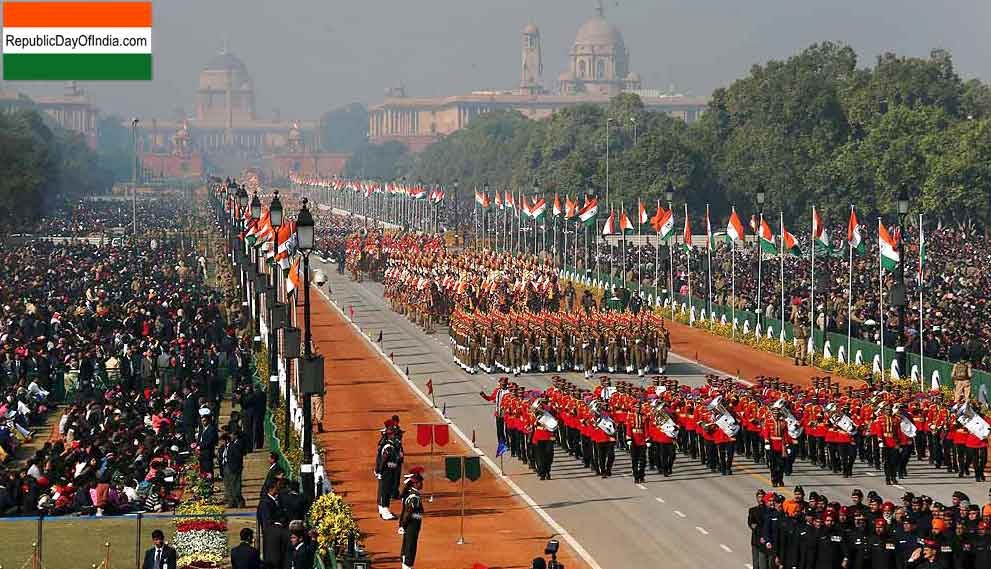
Special Frontier Force – China’s Military Threat: On the happy occasion of the celebration of India’s Republic Day on January 26, 2014, I would like to speak about the military threat posed by China’s military occupation of Tibet.
India declared itself as a sovereign Republic on January 26, 1950. As Indians celebrate Republic Day on this day, I would like to share an article titled “AIM OF CHINA’S MILITARY REFORMS” authored by Professor Jayadeva Ranade, a member of the National Security Advisory Board, Distinguished Fellow with the Centre for Air Power Studies, New Delhi and who had in the past served as the additional Secretary in the Cabinet Secretariat with which I was associated during service at Special Frontier Force. This military organization has come into its existence during 1962 following a military pact/alliance between the United States, India, and Tibet. Its military mission is to counter the military threat posed by China by its military occupation of Tibet since 1950. China’s military conquest of Tibet still poses the same threat.
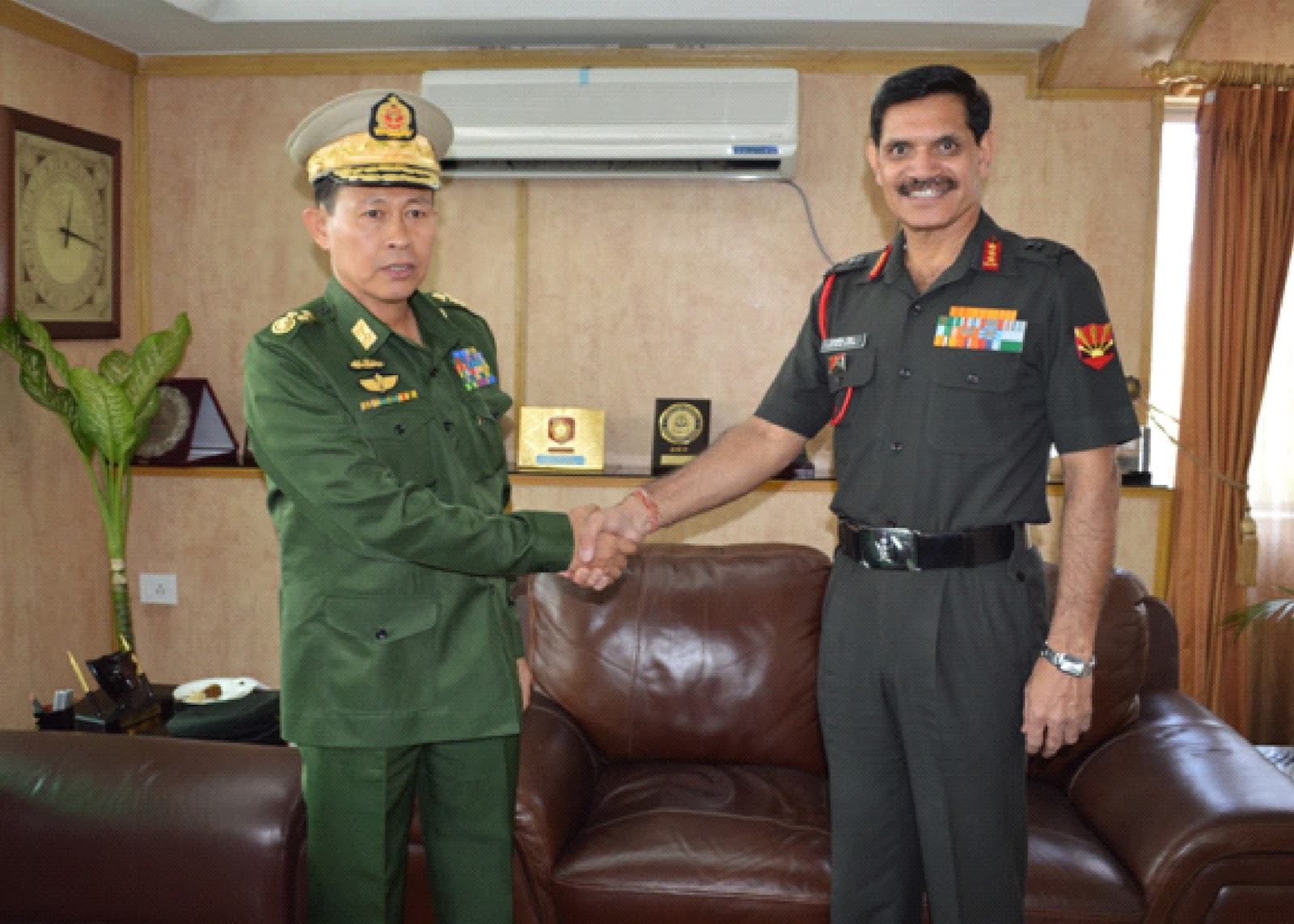
Special Frontier Force – China’s Military Threat: The Deputy Commander-in-Chief, Myanmar Defence Service and Commander-in-Chief, Myanmar Army Vice Senior General Soe Win visited the Indian Army Eastern Command Headquarters in Fort William, Kolkata on December 10, 2013. He is seen with Eastern Army Commander Lieutenant General Dalbir Singh Suhag who served as the Inspector General Special Frontier Force from April 2009 to March 2011.
For the first time in the history of Special Frontier Force, its Inspector General is now appointed as the Vice Chief of Army Staff(VCOAS). Lieutenant General Dalbir Singh Suhag served as Inspector General Special Frontier Force from April 2009 to March 2011. He served as the GOC-in-C, Eastern Command from June 16, 2012 to December 31, 2013. His present appointment as the Vice Chief of Army Staff indicates that he will become the next Indian Army Chief in August 2014.
In my opinion, China’s military power, military strategy, and military tactics will not assure the inevitability of peace that is imposed by its military occupation of Tibet. Peace and War are conditions that prevail in relationship with an external reality called Natural Order. Tibetan Resistance is a symptom of the absence of Natural Order in Tibet. Resistance will prevail, and Resistance will endure if Natural Order is not restored in Tibet. Tibetans love Tibet and the Love of one’s own country is neither a moral, nor a religious virtue for it is a Natural Virtue. Speaking of War and Peace in Tibet, I would like to ask, “Can we order Peace for the sake of War, and not War for the sake of Peace?” If Perseverance is the Secret of all Triumphs, Tibetan Resistance can hope for its Victory.
Special Frontier Force – China’s Military Threat: China’s Military Power, China’s Military Strategy, and China’s Military Tactics cannot overcome the Power of Perseverance, the Perseverance of Tibetan Resistance.
R. Rudra Narasimham, B.Sc., M.B.B.S., Personal Numbers:MS-8466/MR-03277K. Rank:Lieutenant/Captain/Major. Branch:Army Medical Corps/Short Service Regular Commission(1969-1972); Direct Permanent Commission(1973-1984). Designation:Medical Officer. Unit:Establishment No.22(1971-1974)/South Column,Operation Eagle(1971-1972). Organization: Special Frontier Force.
Aim of China’s Military Reforms
By Jayadeva Ranade
SPECIAL FRONTIER FORCE – CHINA’S MILITARY THREAT: WORLD PARLIAMENTARIANS CONVENTION ON TIBET HELD IN OTTAWA, CANADA, 2012. Carl Gershman, President of the National Endowment for Democracy, Washington, DC, Professor Jayadeva Ranade, Distinguished Fellow with the Centre for Air Power Studies, New Delhi, with Richard Gere, Chairman of the International Campaign for Tibet.
Published: 21st January 2014 06:00 AM
The writer is a member of the National Security Advisory Board and former additional secretary in the cabinet secretariat, Indian government.
Special Frontier Force – China’s Military Threat: China CV-16 Liaoning Aircraft Carrier. Navy J-15 Flying Shark takeoff. China has modernized its military capabilities.
Modernisation of China’s People’s Liberation Army (PLA) has entered the final stage of its current phase. The Chinese Communist Party (CCP)’s Third Plenum, which was held in November 2013 and represents a major advance in China’s reforms, provided a substantive push to the PLA’s modernisation when it approved proposals for major organisational restructuring. The reforms coincide with China’s continuing assertiveness that has unsettled its neighbours. Appointments to the Central Military Commission (CMC) effected earlier by the CCP’s 18th Congress in Beijing in November 2012 accelerated the drive to strengthen and modernise the 2.3 million-strong PLA. Within days of his appointment as the CMC chairman, Xi Jinping not only endorsed the military modernisation policies of his predecessors Hu Jintao and Jiang Zemin, but also began bluntly advocating more rapid modernisation and technological upgrade of the PLA. The organisational reforms approved by the CCP’s Third Plenum indicate that changes are imminent in the PLA’s command structure comprising the four principal departments and seven military regions. The PLA Navy (PLAN), PLA Air Force (PLAAF) and China’s strategic missile strike force, namely the Second Artillery, have clearly been allotted an enhanced operational role and will receive priority in allocation of budgets and manpower. Personnel of the Second Artillery, PLAAF and PLAN already receive higher salaries than their counterparts in the PLA’s ground forces. Within days of the Third Plenum, CMC vice-chairman and till recently the PLAAF commander, Xu Qiliang, wrote an article in the party mouthpiece People’s Daily confirming the reforms will be implemented. He mentioned that the number of non-combatants would be drastically reduced and that the reforms would enable the PLA to win wars. Quite separately, reports filtering out of Beijing and disclosed initially in the solitary official English-language China Daily, suggest that plans have been finalised to merge the military regions. These envisage reorganising the seven military regions into five “combat zones” (zhan chu) within the next five years. Over the past few years China’s military literature has hinted at such impending change with occasional references to “Theatre Commands”. The reorganisation is intended to concentrate firepower and troops trained for a specific type of warfare within a single theatre or zone for ease of rapid deployment. Land and sea warfare forces are to be grouped separately. This reorganisation gives the PLA a definite “outward orientation” neatly meshing with its doctrine of “active defence”.
Special Frontier Force – China’s Military Threat: Shenyang SAC J-16 Stealth Fighter Aircraft. Military Spending will not increase Military Power.
According to these reports, the three mainly coastal military regions of Jinan, Nanjing and Guangzhou are to be converted into three “combat zones”. Adopting a mainly maritime role, their primary objective will be to reinforce China’s efforts to establish dominance over the East China Sea and South China Sea and face up to the US-Japan alliance. By 2020, all three zones will be reinforced by three aircraft carrier combat groups. Reports suggest existing aircraft carrier Liaoning will be deployed in the East China Sea, while the other two aircraft carriers will be in the South China Sea. Interestingly on January 1, Xinhua showed pictures of Liaoning returning to its home base in Qingdao after month-long exercises in the South China Sea, but avoided mention of the run-in with the US-guided missile warship USS Cowpens. In April 2013, Xinhua reported Rear Admiral Song Xue, deputy chief of staff of the PLA Navy, saying a second aircraft carrier was under construction. He told foreign military attaches that it would be larger and carry more fighter aircraft. On January 18, 2014, party secretary of Liaoning province Wang Min disclosed China’s second domestically produced aircraft carrier is being built at Dalian and would be ready in six years. The four inland military regions of Shenyang, Beijing, Chengdu and Lanzhou are to similarly be merged into two large combat zones. Chengdu and Lanzhou both exercise operational jurisdiction over the India-China border. Each of the two new zones will have units of the PLA Navy, Air Force and Second Artillery integral to them. They will function under a new unified combat command. These reports also disclose that the PLA’s 300,000 non-combatant personnel will be eliminated by 2022. Though China’s ministry of defence denied the reports, it is pertinent that mention was first made in China Daily and that its contents are generally in consonance with Xu Qiliang’s assertion in People’s Daily and the reforms approved at the CCP CC’s Third Plenum.
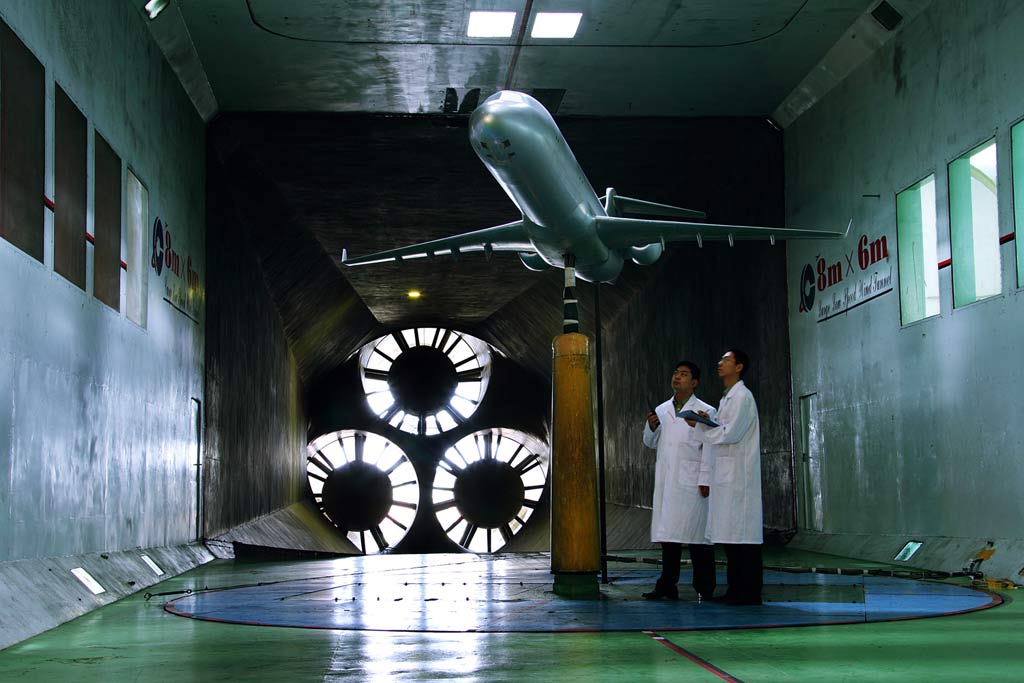
Special Frontier Force – China’s Military Threat: China has built over 39 Wind Tunnels that include Subsonic, Supersonic, Hypersonic, and others to improve its ability to design and test its military aircraft.
Special Frontier Force – China’s Military Threat: China has reportedly developed a WU-14 Hypersonic Glide Vehicle. China’s Military Empire will collapse under its own weight as things in Nature change while Natural Order remains Unchanging.
Rapid advances have also been made in the indigenous development of advanced defence technology and hardware in the past three years. Emphasis was underscored with the appointment of General Zhang Youxia, a known proponent of indigenous development of modern advanced defence technology, as director of the PLA’s General Armaments Department (GAD) in October 2012. The latest development was the announcement on January 9 that China had conducted the first flight test of a new hypersonic glide vehicle, dubbed the WU-14 by the Pentagon, thus becoming one of five nations to possess this capability. The hypersonic vehicle, capable of travelling at speeds between Mach 8 and 12, represents a major advance in China’s secretive strategic nuclear and conventional military and missile programmes. China had in May 2012 opened a new JF12 shockwave hypersonic wind tunnel—the largest of its kind—that replicates flying conditions between Mach 5 and 9.
Also this month, pictures of the new two-seater J-16 stealth fighter built by the Shenyang Aircraft Corporation were posted online. Slated to first be inducted by PLAN and later the PLAAF, the J-16 is loaded with eight tons of air-to-air and anti-ship missiles and has a combat radius of several hundred miles, enabling it to help Chinese warships battle for control of regional waters claimed by China. Some reports claim two dozen J-16 are ready for induction. These military reforms will give the PLA an outward focus, implying that “recovery” of territories claimed by Beijing will be a central feature of China’s strategic agenda. They will reinforce diplomacy aimed at realising “China’s Dream”. Xi Jinping, meanwhile, continues to further tighten his and the CCP’s grip on the PLA. An important example is the Third Plenum approving the PLA being brought within the ambit of the party’s anti-corruption watchdog, the Central Discipline Inspection Commission. Professor Jayadeva Ranade is a member of the National Security Advisory Board and former additional secretary in the cabinet secretariat, Indian government.
The WordPress.com stats helper monkeys prepared a 2013 annual report for this blog.
BhavanaJagat is inspired by Goddess Sarasvati who personifies Pure Knowledge and Perfect Wisdom.
Here’s an excerpt:
BHAVANAJAGAT AT LOUVRE MUSEUM: Millions of people visit the Museum to simply look at the exhibits. I would like to invite my readers to visit http://BhavanaJagat.com to read my posts and share their opinions.
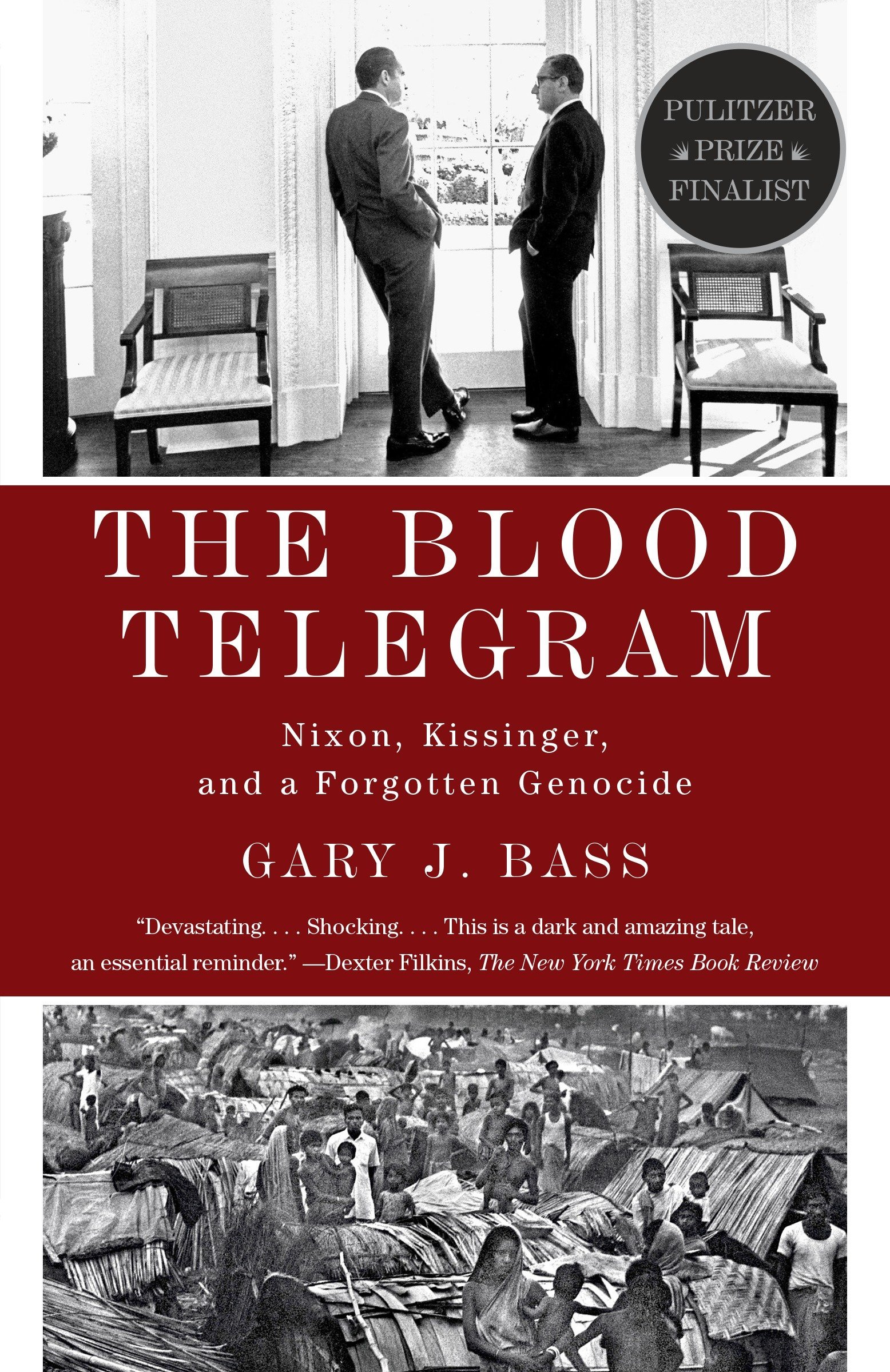
Whole Dude – Whole Genocide: US President Richard M Nixon in his taped conversation with US National Security Adviser Dr. Henry Kissinger reveals his personal understanding of historical events such as the persecution of Jews in Germany by Hitler, the massacre of black Catholics in Biafra region of Nigeria, the slaughter of civilian population of East Pakistan. I am not surprised to note that they had no sympathy for the suffering of Tibetan people and they took the sinful action to formulate a new US foreign policy that involved establishing trade, commerce, and diplomatic relationships with Communist China.
I am pleased to share the blog post titled “Looking Away From Genocide” authored by Gary J Bass, Professor of Politics and International Affairs at Princeton University. This blog includes excerpts from the conversation between US President Richard M Nixon, and US National Security Adviser Dr. Henry Alfred Kissinger. President Nixon makes a direct comparison to the slaughter in East Pakistan to other atrocities against humanity and asks Kissinger for his opinion on Biafra massacre(Nigeria) and the persecution of Jews in Germany by Hitler. President Nixon reveals his personal understanding of such historical events in this brief conversation and it would have a most chilling effect on any reader. I am not surprised to note that Kissinger had no interest in formulating a true national security policy. He was totally obsessed with his own plans to dominate the foreign policy conversation and getting rid of William P Rogers, the US Secretary of State. In the face of such moral bankruptcy, India’s Prime Minister Indira Gandhi had boldly launched her Secret War in East Pakistan and I am glad that I had participated in the training of Bengali guerrilla fighters and later initiated the Liberation of Bangladesh on 03 November, 1971 with military action in Chittagong Hill Tracts with attacks on Pakistani border posts deep inside the enemy territory.
SERVICE INFORMATION:
R. Rudra Narasimham, B.Sc., M.B.B.S., Personal Numbers:MS-8466/MR-03277K. Rank:Lieutenant/Captain/Major. Branch:Army Medical Corps/Short Service Regular Commission(1969-1972); Direct Permanent Commission(1973-1984). Designation:Medical Officer. Unit:Establishment No.22(1971-1974)/South Column,Operation Eagle(1971-1972). Organization: Special Frontier Force.
NOVEMBER 20, 2013
LOOKING AWAY FROM GENOCIDE
POSTED BY GARY BASS
On March 25, 1971, the Pakistani Army launched a devastating military crackdown on restive Bengalis in what was then East Pakistan. While the slaughter in what would soon become an independent Bangladesh was underway, the C.I.A. and State Department conservatively estimated that roughly two hundred thousand people had died (the official Bangladeshi death toll is three million). Some ten million Bengali refugees fled to India, where untold numbers died in miserable conditions in refugee camps. Pakistan was a Cold War ally of the United States, and Richard Nixon and his national-security advisor, Henry Kissinger, resolutely supported its military dictatorship; they refused to impose pressure on Pakistan’s generals to forestall further atrocities. My new book, “The Blood Telegram: Nixon, Kissinger, and a Forgotten Genocide,” tries to reconstruct this dark chapter of the Cold War, using declassified documents, investigative reporting, and countless hours of White House tapes, including about a hundred newly transcribed conversations. Thanks to the secret taping system that he installed to record his own blunt conversations, Nixon inadvertently left behind the most transparent Administration in American history. The tapes offer the most revealing account of Nixon and Kissinger’s raw thinking. Staffers at the White House and the State Department were often more pragmatic than their principals, so the documents they produced make the Administration appear more moderate than it was. It’s only on the audio tapes that Nixon and Kissinger’s full radicalism is on display. But the White House tapes are maddeningly hard to use. The State Department’s official historians have done excellent work in declassifying some of the most sensitive discussions, but to this day, particularly embarrassing portions of the tapes are bleeped out on the basis of specious national-security concerns. (I’ve made my own requests for a mandatory declassification review of these bleeps under the terms of an executive order.) The tapes remain a largely untapped resource, in part because they are enormous, unwieldy, badly organized, often bleeped, crackly, laborious to transcribe, and hard to understand. You can hear Nixon and Kissinger at work in the following audio clip, which is followed by an annotated transcript I made for “The Blood Telegram.” (Some snippets from this conversation are available in a volume of the State Department’s “Foreign Relations of the United States” series, but this is the first full transcript.) This discussion, which also involved the White House chief of staff, H. R. Haldeman, took place not long after the start of the crackdown in East Pakistan. Nixon and Kissinger are having one of their typically prolix and digressive conversations, concentrating this time on foreign policy. The tape is unusually clean: the sound quality is good, and there are no bleeps, though there is some music playing in the background. The clip below begins just as the conversation has turned from the Vietnam War to the possibility of an opening to China. To establish communications with Mao Zedong’s regime, the White House was exploring several clandestine channels, including messages carried to the Chinese leadership by Romania’s Communist despot, Nicolae Ceausescu, and Pakistan’s military dictator, General Agha Muhammad Yahya Khan, known as Yahya. The Pakistan channel would soon culminate in Kissinger’s first secret trip to Beijing, in July, 1971. He flew direct from Pakistan, which provided an airplane and a cloak-and-dagger cover story—another reason for the White House to support Pakistan even as the killing continued. WHITE HOUSE TAPES OVAL OFFICE 477-1 APRIL 12, 1971, 10:24-10:33 A.M. NIXON: Now, another thing. I want to know about Yahya and Pakistan.
Nixon had a great personal fondness for Pakistan’s military ruler, who was carrying out the brutal crackdown on the Bengalis. “He’s a decent man,” Nixon repeatedly said, as the death toll mounted.
I want to be sure that we’re not caught in a crack here where State then puts out a whole lot of stuff that they’ve done. Now Bill has not said that he wants to say anything about Pakistan, has he?
The President seems to be making sure that the distrusted State Department would not, on its own, condemn Yahya for killing Bengalis. “Bill” is William Rogers, Nixon’s ineffectual Secretary of State, who had been reduced to near-total irrelevance by his rival Kissinger.
KISSINGER: No. NIXON: Has Sisco?
Joseph Sisco, the headstrong assistant secretary of state for Near Eastern and South Asian affairs, was a particular annoyance to Nixon and Kissinger, who would later call him “a maniac” and “such a whore.”
KISSINGER: No. But it’s out there, out there [indistinct]. The Dhaka consulate is in open rebellion.
American diplomats in East Pakistan, horrified by the slaughter, had been reporting the killing in gruesome detail. On April 6th—just a few days before this conversation—the U.S. consul general in Dhaka, Archer Blood, sent a telegram signed by almost all of the U.S. officials in East Pakistan, formally voicing “strong dissent” from the White House’s pro-Pakistan policy, which they characterized as “moral bankruptcy” in the face of “genocide.” In retaliation, Nixon and Kissinger would soon eject Blood from his post in Dhaka.
NIXON: I understand…[indistinct] I want to know how we can respond to it [indistinct]. We’re going to be…[indistinct] you know what I mean? KISSINGER (emphatically): Mr. President, we’re going to wind up on the worst side if we start backing a rebellion there now.
Though Nixon and Kissinger were discussing actual rebellions in East Pakistan and Biafra, Kissinger was also accusing Blood of “open rebellion” for having sent his formal cable of dissent through official channels. Kissinger would later call Blood “this maniac in Dacca, the Consul General who is in rebellion.”
NIXON: But Bill—but Henry, we did not back the rebellion in Biafra, did we?
Even before the crackdown in East Pakistan began, U.S. officials had warned that the country could descend into the kind of bloody chaos that had recently been seen in Biafra, an oil-rich region of Nigeria that attempted to secede in 1967. The Nigerian government managed to crush the Biafran resistance in 1970. As a candidate for President in 1968, Nixon had denounced genocide in Biafra; by 1971, yesterday’s inaction in Biafra had become a rationale for today’s support of Pakistan.
KISSINGER: That’s right. NIXON: That’s a hell of a lot more reasonable. I know, there are less people in Biafra. Is that the reason? Does morality become—look, there weren’t very many Jews in Germany.
As Nixon knew, Kissinger was one of those German Jews; at least thirteen of his close relatives had been murdered in the Holocaust.
KISSINGER (murmurs): That’s right. NIXON: Was it immoral—was it therefore not immoral for Hitler to kill them?
Nixon, unprompted, is comparing the slaughter in East Pakistan to Biafra and the Holocaust.
KISSINGER (murmurs): That’s right.
Kissinger goes along with Nixon’s comparison of Hitler and Yahya, but still maintains his support for the Pakistani dictator.
NIXON: See, that’s my— [indistinct] And the Biafrans are black— [indistinct] Catholics!
This part is hard to hear, but may be about how Americans ignored the Biafrans because they were black, and about Catholic support for the Biafran cause. As Nixon later said, “Biafra stirred up a few Catholics.”
KISSINGER: Mr. President, if we get in there now— NIXON (cross-talk): It’s ridiculous. KISSINGER: —we get West Pakistan turned against us, and we get—the Bengalis are going to go left anyway.
The State Department had repeatedly noted that the Bengali leadership was quite pro-American, but Kissinger dismisses that.
NIXON: Yeah. KISSINGER: They are by nature left. Their moderate leadership is in jail, maybe they shouldn’t have been put in jail, but that’s the way it is now, and, uh—
Kissinger realizes he’s made a wrong turn, is actually criticizing Yahya, and falls awkwardly silent.
NIXON: I just want to [indistinct]… get a little work… [indistinct] Is that in the West—West Pakistan thing or not? [indistinct] KISSINGER: Why don’t you wait ’til Wednesday, Mr. President, when we have the meeting and then we can get a paper to you. NIXON: All right. KISSINGER: Because I am afraid in the present state of the State Department if you interfere too early— NIXON (annoyed): I’m not interfering, I just want to know what he thinks!
Nixon snaps at Kissinger for the nonstop bureaucratic combat against Rogers. To handle Kissinger’s obsessive feuding with the Secretary of State, the President had Haldeman set up an informal “Henry-handling committee.” In the end, Kissinger drove Rogers out, and claimed both top foreign-policy jobs, national-security advisor and Secretary of State.
KISSINGER: Well, he’s going to submit a paper to us and then you’ll know what you think—what he thinks. NIXON: Oh. He’s going to submit a paper? KISSINGER: Yeah. NIXON: You’re sure he knows I want it? KISSINGER: Oh yes, he knows you want it. No, he’s—Bill is all right.
Kissinger starts to walk back, trying to praise Rogers.
Bill is— NIXON: I just got to know what the hell they think. I mean, I’m not trying to—… [indistinct] I think if we get in the middle of the whole thing [indistinct], it’s a hell of a mistake. KISSINGER: It’s a disaster. No one else is doing it. NIXON: Look—let’s face it. The people that bitch about Vietnam bitched about it because we intervened in what they say was a civil war.
This was one of Nixon’s most potent arguments to silence Americans who were outraged by the suffering in East Pakistan. Democrats like Ted Kennedy, the White House argued, were simply trying to drag the United States into another civil war in Asia.
KISSINGER: That’s right. NIXON: Now some of those same bastards, like… [indistinct] want us to intervene in Biafra. And some of those same people want us to intervene here. Both civil wars. Real civil wars. Now what in the hell are we talking about? KISSINGER: They want us to cut out economic aid to West Pakistan. NIXON (surprised): For what reason?
Kissinger is careful to defend U.S. aid to the Pakistani military government, despite the atrocities. Blood had argued that the bloodshed in East Pakistan was a very good reason to cut off economic aid to Yahya.
KISSINGER: It’s—pure doctrinaire reasons. Because India is screaming in turn, because they’re scared to death of their own Bengalis. Deep down the Indians don’t really want an independent East Pakistan, because within ten years of that the West Bengalis are going to start bringing pressure on them for autonomy. It’s a classic situation for us to stay out of. There’s nothing for us in there to take sides in this. And for us to cut off aid will infuriate the West Pakistanis.
Millions of Bengalis in India were deeply shocked by the killing of their brethren across the border in East Pakistan. The Indian state of West Bengal, unstable and impoverished, was already a headache for the Indian government—and the crackdown in East Pakistan sent some ten million refugees fleeing into India’s border states, above all into West Bengal. This left the Indian government fearful of further unrest in the state, and desperate to find a way to get the refugees to return home. India secretly sponsored Bengali guerrillas fighting back against Pakistani troops. Finally, in December, 1971, India and Pakistan would fight a brief fourteen-day war, ending with an Indian victory and the creation of the new country of Bangladesh. Unlike Blood and the other Americans in Dhaka, Kissinger seems not to realize that the loss of so many Bengali lives might impact American foreign policy. For all his mastery of the use of American leverage, he nevertheless rules out the possibility of applying any pressure on the Pakistani military.
Photograph by Frederic Lewis/Hulton Archive/Getty
Nixon and Kissinger: A Forgotten Genocide in Bangladesh