BUDDHISM IS AN INCOMPLETE STUDY OF THE MAN

Lord Gautama Buddha has stated that the experience of sorrow or ‘DUKHA’ is unavoidable. If the experience of pain is inevitable, the experience of Compassion is also inescapable. The experience of Compassion gives us the sensation of Sweetness called ‘MADHURYA’. Photo by Noelli from the Flickr site. http://www.dalekoniedaleko.pl

Lord Gautama Buddha’s simple preachings have generated intense debate and discussion among his followers leading to the creation of different Schools of Buddhist Thought, varying traditions, apart from the production of volumes of literature in various human languages.

In my analysis, Lord Gautama Buddha and the various brands of Buddhism with established traditions have failed to formulate a complete ‘Theory of Man’. In my view, Buddhism as such is an incomplete study of the Man for it fails to comprehend the nature of the living matter, the living substance, the corporeal matter described in Biology as ‘protoplasm’ or ‘cytoplasm’ which is found in all living things.

The spiritual inquiry, the spiritual investigation, the spiritual study of the Man demands the learning process called ‘Adhyatma Vidya’, the Knowledge of Self, or the spiritual journey called Self-Discovery to answer the two fundamental questions about the Man. The questions are 1. Who am I? and 2. Why am I like this? Lord Gautama Buddha’s life journey begins with a quest to find answers for the conditioned nature of human existence but his study remains incomplete for he has not studied the human being whose existence is conditioned.

Rudra Narasimham Rebbapragada

Special Frontier Force-Establishment No. 22

‘Buddhism in Tibet is a complete tradition’

Suganthy Krishnamachari. OCTOBER 10, 2019

Venerable Samdhong Rinpoche, Tibetan Buddhist monk
Buddhism is an incomplete study of the Man.

Venerable Samdhong Rinpoche, Tibetan Buddhist monk   | Photo Credit: B_JOTHI RAMALINGAM

Venerable Samdhong Rinpoche speaks of the salient features of the religion, which originated in India

Beginning his study of Buddhism in the Gadhan Dhechenling Monastery, in Tibet, Venerable Samdhong Rinpoche, came to India in 1959, at the age of 20. He headed the Central Tibetan Administration, Dharamsala, for two terms. A highly regarded scholar of Buddhism, he has held many important positions with academic and administrative responsibilities. A few of them: Member General Body Indian Council of Philosophical Research; member, Governing Council, Asiatic Society, Kolkata; member of the National Advisory Committee for Buddhist Studies; President, Association of Indian Universities; President, Coomaraswamy Centre for Traditional Studies, Lucknow; member, Association of Commonwealth Universities. Member, Governing Body, Krishnamurti Foundation of India, Chennai; member, Expert Advisory Committee, Ministry of Culture, Government of India.

Venerable Samdhong Rinpoche was in Chennai for a short visit. The following are excerpts from an interview with him:

What are the distinctive features of Tibetan Buddhism?

First of all, there is no such thing as Tibetan Buddhism. It is an expression, which Western scholars use, and I do not know why they do. Do you talk of British Christianity or American Christianity? There are different schools of philosophy in Buddhism like Mahayana, Hinayana, etc. But Buddhism is not divided by geography. If at all there is any country to which Buddhism belongs, that is India, because Buddha was born here. It is Indians who can take pride in Buddhism because it originated here.

I stand corrected. Let me rephrase the question. What is special about Buddhism in Tibet?

Buddhism in Tibet is a complete tradition. Educational centers such as Nalanda, Taxila, Bodhgaya, and Sarnath produced Buddhist canonical literature. All of this was translated into the Tibetan language.

How big is this collection of Tibetan works?

We have a compilation of 108 volumes of Buddha’s teachings. It includes 3,000 titles. Woodblock techniques have been used to preserve ancient Tibetan texts. We also have 223 volumes of commentaries of Indian scholars, which include 4,000 titles. The topics range from Mahayana and Hinayana to Ayurveda, dharma, and literature.

Prof. Hahn’s dissertation was on Vrttamalastuti, where each stanza illustrated a different Sanskrit meter. It was a text that was preserved only in a Tibetan translation. And this kindled Hahn’s interest in recovering the Sanskrit literature of Buddhism from Tibetan translations. So, would it be correct to say that Tibetan translations have helped preserve the Buddhist tradition, because of the possibility of re-translations from Tibetan to Sanskrit?

Certainly. Tibetan translations are the most accurate, and the Tibetan collection is also the largest available translation of Buddhist texts. The original texts, which were in Sanskrit were lost when Nalanda University was destroyed. Mahayana texts were in Sanskrit, whereas Hinayana texts were mostly in Prakrit. In Tibet, Mahayana school is followed. So, if we want the original Sanskrit texts about Mahayana, we can now work backward from Tibetan to Sanskrit. So, in that way, the Tibetan translations help us to get back the basic Sanskrit texts.

Hahn was a close friend of mine. But even before Hahn, there were other European scholars who took an interest in Buddhist literature which had been translated to Tibetan. The Italian scholar Tucci, for instance. Tibet enjoys an unbroken lineage of Buddhism, and before the days of Communism, Buddhists from Russia and Mongolia came to Tibet and studied Buddhist teachings preserved in the Tibetan language.

You talk about Mahayana texts in Sanskrit. What about the commentaries? Were they also in Sanskrit?

Yes, but Buddhist Sanskrit is a hybrid Sanskrit. It is a mixture of Sanskrit, Prakrit, Apabrahmsa, etc. Paninian sutras were not strictly followed.

Why was it a hybrid?

Because the Buddha spoke in a simple language. He wanted his teachings to reach the masses. So, he spoke a language that was easy to understand.

And what about efforts at translation now? Are they continuing?

A lot of translation work has been going on in the Central Institute of Higher Tibetan Studies in Sarnath, Varanasi. It is a deemed University. I was associated with the Institute for 30 years, first as Principal and then director. One hundred Tibetan Buddhist texts have been translated to Sanskrit by the scholars in this University.

Where can we find the largest collection of Tibetan texts?

In the Library of Congress in the U.S.

And in India?

The Institute of Tibetology in Sikkim, the library in Dharamsala, in Sarnath and the Central Institute of Buddhist studies in Leh, Ladakh.

What is the Tibetan way of ordination for monks?

In the bhikshu ordination, mulsarvastivadin school is followed in Tibet.

Does Buddhism in Tibet follow Tantric traditions?

Wherever Mahayana is followed, there is a tantric tradition. So, this is not unique to Tibet.

Does Buddhist art vary according to the school of philosophy followed?

If you observe minutely, there might be some differences. But by and large, art is just an expression of imagination. So, there are only a few minor variations. But mandala constructions are found only in art based on Vajrayana, which is a part of Mahayana.

MY COMMENT ON THE ABOVE INTERVIEW BY MS.SUGANTHY KRISHNAMACHARI WAS NOT APPROVED BY THEHINDU.COM

‘Buddhism in Tibet is a complete tradition’ on thehindu.com
 My Comment:
 
Buddhism is an incomplete study of the man:
I am affiliated to a military organization called Special Frontier force-Establishment No. 22-Vikas Regiment where I medically examined hundreds of Tibetan men and women.
Lord Gautama Buddha’s preachings are essentially simple. However, they generated numerous interpretations and massive human literature in different languages. He examined the conditioned nature of human existence without fully examining the human being whose existence is conditioned.
Buddhism remains an incomplete study irrespective of its various traditions. It is incomplete for it does not study the living matter or the living substance of the man while sharing views on the human condition of the living being with a physical form that we identify as the man.
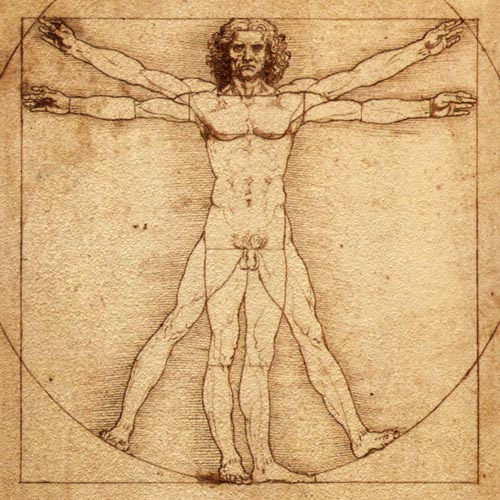
Vitruvian Man, the creation of Leonardo da Vinci – Spirituality Science. The Discovery of Bhavanajagat.org: The Self-Discovery begins with the two fundamental questions. 1. Who am I ? and Why am I like this?

A FRESH LOOK AT THE TIBETAN RESISTANCE MOVEMENT IN INDIA

A fresh look at the Tibetan Resistance Movement in India.

Ms. Madhu Gurung in her book, “Tibet With My Eyes Closed” takes a fresh look at the Tibetan Resistance Movement in India.

Rudra Narasimham Rebbapragada

SpecialFrontierForce

Review: Tibet With My Eyes Closed by Madhu Gurung

A fresh look at the Tibetan Resistance Movement in India.

A fresh look at the experience of Tibetan refugees in India

A fresh look at the Tibetan Resistance Movement in India.

BOOKS Updated: Oct 04, 2019 19:03 IST

Thubten Samphel

Thubten Samphel
Hindustan Times

The Dalai Lama speaks at a Tibetan temple in McLeod Ganj.
The Dalai Lama speaks at a Tibetan temple in McLeod Ganj.(Shyam Sharma/Hindustan Times)
253pp, Rs 350; Speaking Tiger
A fresh look at the Tibetan Resistance Movement in India.

253pp, Rs 350; Speaking Tiger

There is a new interest in Tibet and Tibetan culture amongst the Indian public. This is because of the Dalai Lama’s tireless efforts to reach out to the Indian public to alert them to the relevance of ancient India’s wisdom in our vexing times. There is also whispered foreboding of what would happen to the Tibetan community in India and elsewhere and the fate of Tibet itself when he is no longer what us.

Tibet With My Eyes Closed is a fresh look at the experience of the Tibetan refugees in India and the pain of separation of families and being uprooted from their homeland. It is also of a story of how the community as a whole faced and still faces the challenges of adaption and survival.

In her exploration and discovery of the Tibetan refugee community in India, Madhu Gurung quotes an old Tibetan proverb. “If I tell you my dream, you might forget it. If I act on my dream, perhaps you will remember it, but if I involve you — it becomes your dream too.” Madhu Gurung’s dream of the Tibetan community in exile is a gentle paring of the community’s many layers of strength, weakness, human quirks and the need to survive as an individual and community.

The author kicks off her Tibetan story by narrating in broad contours the birth of the resistance movement in Tibet in the 1950s. This resistance relocated to Mustang in Nepal and then fought in Bangladesh’s war for independence. Some scholars call the Tibetan soldiers who fought in the war “Phantoms of Chittagong.” Sangay, the main protagonist in Gurung’s first story Zinda, was a little boy when members of his family whispered the formation of the resistance in central Tibet. He expressed his wish to join the resistance. He was told to wait till he became thirteen. Then, “You … will be of some use to them.”

Tibetan resistance grew not only because of repression and forced land distribution but also because of the implementation of the Great Leap Forward with its excessive stress on industrialization to the neglect of agriculture and production of food. This created the biggest famine in Chinese history and Tibet was caught up in this man-made disaster.

Madhu Gurung
A fresh look at the Tibetan Resistance Movement in India.

Madhu Gurung ( Courtesy the author )

Sangay and his father, leaving with excruciating pain other family members, including his mother, behind in Tibet, were able to escape this political disaster and the great famine. In India “everything was strange – the language, the food and the people.” At school, he got a greater shock, a huge dent to his Tibetan pride and sense of self and identity. He discovered that the Tibetans were the ‘nowhere’ people. His schoolmates did not know where Tibet was.

However, during the period of ‘liberalization’ which the post-Mao leader Deng Xiaoping initiated in China and Tibet, Sangay was able to return to Tibet and bring his mother to their new home in Dehradun auspiciously named Zinda. Shakti Gurung informs the readers that Sangay’s home village in Tibet called Zinda which the author says in Hindi means “Alive.”

That Sangay survived all these ordeals is a tribute to his character and his generation of Tibetan refugees. Back in the late 1950s while on their way to Lhasa, someone in his group shouted: “Lhasa is burning.” These days rather than burning Lhasa is drowning in concrete, amazing infrastructure development and the sheer weight of the growing demographic strength of the migrant Chinese workers. Tibet With My Eyes Closed is a cautionary tale for the countries and people strung along the Himalayan belt. You might be next, maybe an exaggeration but exaggeration is not enough to describe the true intentions and scale of the People’s Republic of China’s ambitions. The book is also a cautionary tale for the coming generation of Tibetan exiles. They inherit a cohesive and productive community scattered across the globe, a legacy of the first generation of Tibetan refugees. Keeping its cohesion and productivity will be a huge challenge in the coming years of adversity.

Thubten Samphel is an independent researcher and a former director of the Tibet Policy Institute

A fresh look at the Tibetan Resistance Movement in India.


MY REFLECTIONS ON THE HINDU-SIKH CONNECTION. INDIVIDUAL vs GROUP IDENTITY

MY REFLECTIONS ON THE HINDU-SIKH CONNECTION. INDIVIDUAL vs GROUP IDENTITY:
 
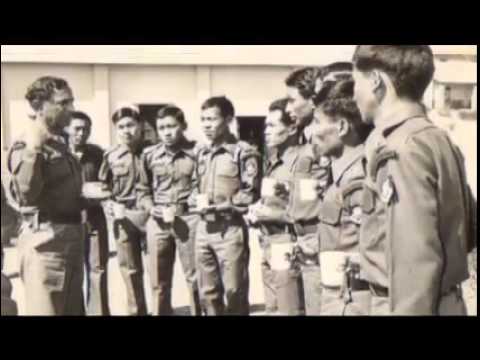
My reflections on the Hindu-Sikh Connection: This is a photo image taken in 1972 while I served in the Special Frontier Force at Doom Dooma, Tinsukia District, Assam, India.
I ask my readers to give their attention to the problem of Individual Identity vs Group Identity. I identify the action called ‘Compassion’ with the Individual Identity and I associate the action called ‘Aggression’ with the Group Identity.
 
The Sikhs like all other human beings have to know the dimensions of Individual and Group Identities.
 
I concede that the Group Identity named ‘Tat Khalsa’ may give some political advantages to channelize acts of aggression towards other human groupings such as the Hindus. The Tat Khalsa Community gets energized by collectively expressing their hatred and animosity towards individuals that they perceive as their Enemy. I am not surprised to find Christians and Muslims supporting the aggressive stance of the Tat Khalsa for their own political gains. If the political factor is removed, the Sikh Doctrine cannot be energized by the Christain or Muslim Doctrine. The Tat Khalsa may win its battle against the Hindu but will succumb to the collective energy of either Christian or Muslim Group who desire to benefit by encouraging the Group Rivalry between the Sikhs and the Hindus.


SPIRITUALITY SCIENCE-THE KEY TO HUMAN NATURE-INDIVIDUAL vs GROUP IDENTITY: “SARVESHAM SWASTIR BHAVATU”

The Vitruvian Man c. 1492. The painting by Leonardo da Vinci displays the Spirit of Scientific Inquiry about Human Nature.

What is Man? The motivation for asking this question comes from a statement expressed in the Sanskrit language, “Sarvesham Swastir Bhavatu” which seeks the well-being of all humans of all races, of all cultures, of all religions, and of all nations. Our efforts to support the well-being of man would be affected by our understanding the ‘real’, or ‘true’ nature of man. All human traditions including several philosophical and scientific traditions make assumptions about human nature. The basic assumption about human nature is that of finding it displayed in feelings, thoughts, moods, action, and behavior. I try to know human nature from the functional characteristics that are observable in biotic interactions of cells, tissues, and organs that constitute the human organism. If a man is viewed as a multicellular organism, I need to discover the human nature of this subject who lives because of the functions of the cells, tissues, and organs that provide the structural basis of the human organism.

THE KEY TO HUMAN NATURE – EVOLUTION vs CREATION :

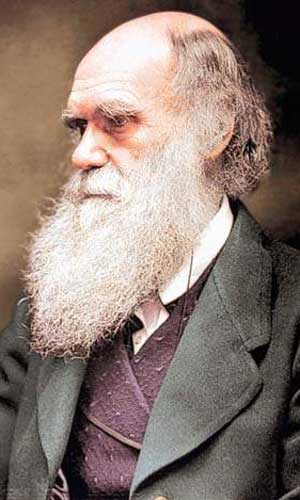
Charles Darwin’s great contributions to Biology: “The Origin of Species by means of Natural Selection: Or the Preservation of Favoured Races in the Struggle of Life”(1859), The Descent of Man(1871), The Expression of the Emotions in Man and Animals(1872).

Man’s evolution from ape-like ancestors is thought to be the key to our true human nature. Ethology or the scientific study of animal behavior is based on the Theory of Evolution. In order to explain the human condition, ethological theories of human nature appeal to the evolutionary past of man.

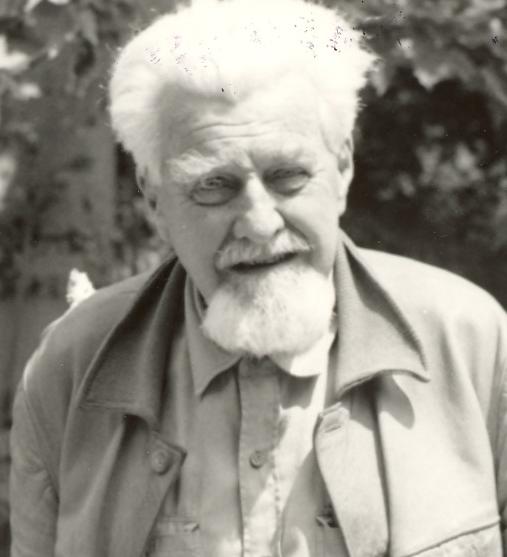
Konrad Zacharias Lorenz( November 1903 to February 1989 ), Austrian zoologist, founder of modern Ethology which involves the scientific study of animal behavior by means of comparative zoological methods. He won the Nobel Prize for Physiology along with two other animal behaviorist.

Lorenz sees man as an animal who has evolved from other animals. He thinks that human behavior is subject to the same causal laws of nature as all animal behavior. Many patterns of animal behavior show “hereditary coordination” or “instinctive movements” that are innate rather than learned. The ‘instinctual’ behavior is fixed and may not be eliminated or altered by the environment. Instinct is inherited and it is essentially unlearned behavior. Some of the most important aspects of animal behavior are innate. Lorenz studied the nature of instinctive behavioral acts. The instinctual behavior is caused by a ‘drive’ which causes the behavior to appear spontaneously. The “four big-drives” are feeding, reproduction, flight, and aggression. Very often, behavior is activated by two or more basic drives. To account for an instinctive behavior pattern in a species, reference is made to its survival value it has for the genes for that behavior. To explain the existence of any particular organ or behavior pattern, Lorenz looks for its survival value for the species. In his book, “On Aggression” ( 1963 ), he explains the natural history of man’s aggressive behavior. He considers that man has an innate drive to aggressive behavior towards his own species like many other animals. Fighting and warlike behavior in man have an inborn basis. He seeks an evolutionary explanation for human innate aggressiveness or ‘Intra-Specific’ aggression which is concerned with fighting and threats between members of the same species. The most destructive aspect of human aggression is its communal nature and the fighting is not between individuals but between groups. Humans fight as groups and human beings are the only animals to indulge in the mass slaughter of their own species. He explains that this innate aggressive behavior has evolved from the communal defense response of our pre-human ancestors. However, Lorenz made no scientific study of behavior displayed by apes. Among the members of Homo genus, man is the only surviving representative of the Homo sapiens species and hence it will not be easy to validate his conclusions about the evolutionary origin of innate human aggressive behavior. If aggression is viewed as a hereditary behavior which is based upon its survival value for the genes for that behavior, it must be noted that all human ancestors had perished and have gone extinct and the behavior of aggression could not be of value in defending their survival as a species.

COMPASSION WITHIN THE INDIVIDUAL AND BETWEEN INDIVIDUALS :

Compassion or sympathy( sym=together + pati=suffer ) describes the emotional feelings of sorrow for the sufferings or troubles of another person or others accompanied by an urge to help. Compassion describes an understanding arising from the sameness of emotional feeling. When man recognizes pain or sorrow in the lives of others, it spontaneously arouses the emotional feelings of compassion.

This understanding and the emotional response to the pain and suffering in the lives of others appears to be instinctive. Apart from the “four big-drives”, compassion is operated by an innate drive or it is a motivated behavior. Compassion and altruism( any behavior that appears to favor another individual’s chances of survival ) is a response generated by human nature.

Compassion acts like a physical force, power, or energy. It has the power to uplift the man from physical pain and mental, or emotional pain or sorrow. The instinct of compassion comes into play and acts as a force, power, or energy when a man experiences sorrow and reacts to the suffering or troubles of another man. I am also suggesting that the emotionally motivated behavior of compassion is found within individuals apart from between individuals.

If my experience of pain or suffering does not elicit the emotional response of compassion from others, fortunately, I can derive the benefit of the uplifting power of compassion by simply knowing the source of compassion that exists within myself.

When a person is enjoying a state of good health, we find that the cells, tissues, and organs of that human person are interacting with each other in a harmonious manner and these intraspecific biotic interactions display characteristics such as mutual assistance, mutual cooperation, mutual tolerance, and mutual functional subservience to provide a benefit to the human individual who lives because of the functions of these cells, tissues, and organs. The constituent parts of the human body interact with each other with a sense of devotion, sympathy, compassion, and understanding.

We often try to find compassion in the actions performed by others in response to the pain and suffering that we may experience. We describe compassion from the thoughts, emotional feelings, understanding, and sympathetic response that we witness in the behavior and action of others.

I recognize compassion in the nature of the interactions between the cells, tissues, and organs of my body and consider that such compassion always operates to keep me the human person in good and positive health. I understand the reality of human existence and suggest that the existence is made possible because compassion is innate to human nature guiding the normal living functions both in health and sickness. I observe the operation of compassion in the wound healing mechanism that is described as ‘Inflammation and Repair’. The emotional feelings of compassion are important for the survival of the man who exists to find emotional satisfaction from his living experience. The instinctive behavior of compassion supports the survival of man as it provides an emotional sense of satisfaction and contentment which contributes to the experience of joy and happiness in life.

COMPASSION IS THE KEY TO HUMAN NATURE:

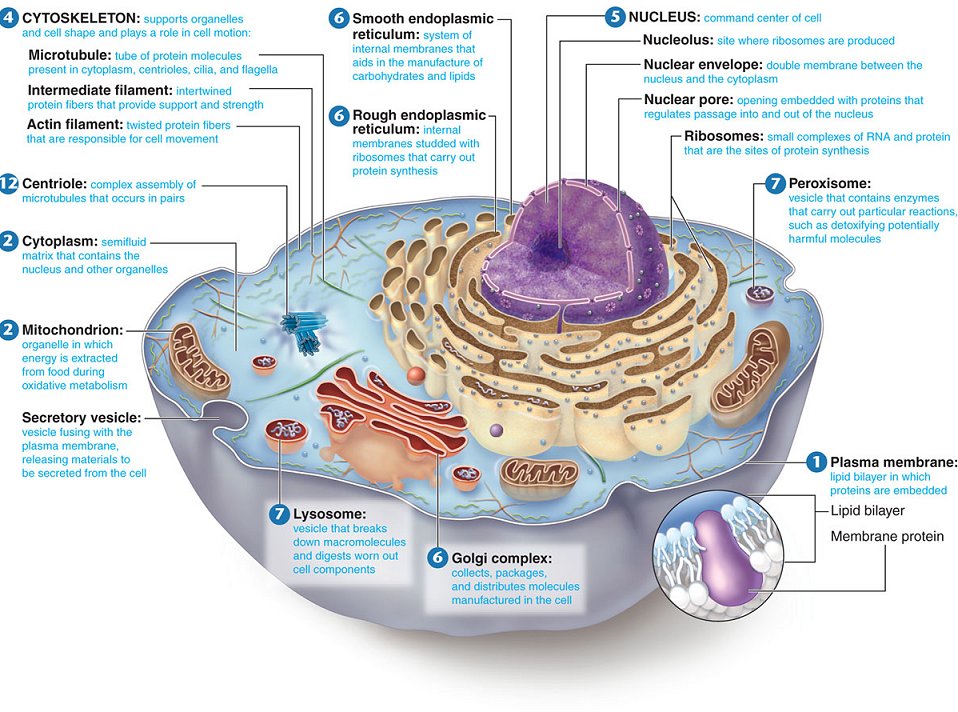
The Key to Human Nature could be discovered by knowing the Cell Structure and Functions. If hereditary behavior is operated by the information present in genes, it must be noted that the genes have no independent existence of their own. The nucleus and the genes perform their cellular functions deriving energy from the cytoplasm or protoplasm of the cell. The biological properties, characteristics, and the biological nature of the living substance or protoplasm could account for the instinctive behavior pattern of compassion.

The biological properties, characteristics, and the biological nature of the living substance or protoplasm could account for an instinctive behavior pattern like compassion. Biological functions and characteristics such as nutrition, recognition, awareness, responsiveness, and communication with other living cells have not evolved because of their survival value for the species. At a fundamental level, certain living characteristics or nature is innate or implanted in the matter at the beginning of life. The nature called compassion is implanted or innate to the living substance or matter which is known as protoplasm.

I make the distinction between Individual Identity and Group Identity. The first operates to display behavior or actions called Compassion. The second operates to display behavior or actions called Aggression. Human Aggressive Behavior is of particular concern as humans when acting as a Group cause more harm and destruction as compared to their actions when acting strictly as Individuals.

Rudra Narasimham Rebbapragada

Ann Arbor, Michigan, USA 48104

SPECIAL FRONTIER FORCE

My Reflections on the Hindu-Sikh Connection. The Individual Identity vs The Group Identity.

THE CITIZENSHIP OF THE KINGDOM OF HEAVEN ON EARTH

THE CITIZENSHIP OF THE KINGDOM OF HEAVEN ON EARTH

The Citizenship of the Kingdom of Heaven on Earth. The celebration of Constitution Day and Citizenship Day.

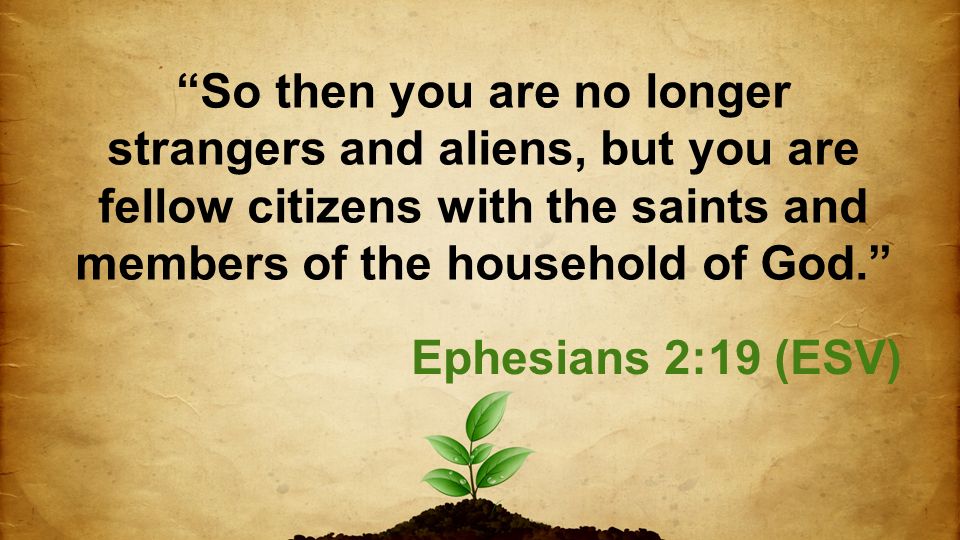
On September 17, 2019, I celebrate Constitution Day and Citizenship Day reflecting upon the words shared by Apostle Paul in his Second Letter to the Ephesians.

The Citizenship of the Kingdom of Heaven on Earth. The celebration of Constitution Day and Citizenship Day.

On Tuesday, September 17, 2019, as the nation celebrates Constitution Day and Citizenship Day, I have no reason to feel unloved, unimportant, or insecure for I remember to whom and to which Kingdom I belong.

Rudra Narasimham Rebbapragada

SPECIAL FRONTIER FORCE

September 17, 2019

Constitution Day and Citizenship Day

The Citizenship of the Kingdom of Heaven on Earth. The celebration of Constitution Day and Citizenship Day.

Constitution Day and Citizenship Day is a single celebration that commemorates the formation and signing of the US Constitution while also recognizing both naturalized citizens and those born in the US. It’s a day to learn about these subjects, as well as a day many people become naturalized citizens in group ceremonies. (On average, about 700,000 people become US citizens every year.) To celebrate, we’re looking at an unusual close-up of the Statue of Liberty, a welcoming sight to immigrants and a symbol of freedom since 1886. The statue’s tablet has the date of the signing of the Declaration of Independence (July 4, 1776) inscribed in Roman numerals: JULY IV MDCCLXXVI.

So why is today both Constitution Day and Citizenship Day? The reason is rooted in the World War II era. In 1940, Congress created I Am an American Day, a demonstration of US patriotism. Twelve years later, President Harry Truman signed into law Citizenship Day, which replaced I Am an American Day and moved the observance to September 17, the day the Constitution was signed in 1787. Eventually, in 2004 the day was designated as the mash-up of observances we have today—the jointly celebrated Constitution Day and Citizenship Day.

The Citizenship of the Kingdom of Heaven on Earth. The celebration of Constitution Day and Citizenship Day.

BACKSTABBERS OF THE TIBETAN NATION. THE DOOMED PRESIDENCY OF NIXON AND FORD

BACKSTABBERS OF THE TIBETAN NATION. THE DOOMED PRESIDENCY OF NIXON AND FORD

The doomed presidency of Nixon and Ford. Doomed for not playing the ‘Tibet Card’.
The doomed Presidency of Nixon and Ford. Doomed for not playing the ‘Tibet Card’.
The doomed Presidency of Nixon and Ford stands in Ann Arbor. Doomed for not playing the ‘Tibet Card’.
The doomed Presidency of Nixon and Ford. Doomed for not playing the ‘Tibet Card’.
The doomed Presidency of Nixon and Ford. Backstabbers of Tibetan Nation.
September 08, 1974. President Ford grants pardon to President Nixon. The doomed presidency of Nixon and Ford. Doomed for not playing the ‘Tibet Card’.

On September 08, 1974, President Gerald R. Ford grants unconditional pardon to Richard M Nixon, 37th President of the United States of America. I served in Special Frontier Force during the presidency of Nixon and Ford. I live in Ann Arbor, Michigan where I have the opportunity to visit Gerald R. Ford’s Presidential Library on the University of Michigan Campus. 

The doomed Presidency of Nixon and Ford. Nixon and Kissinger treacherous actions in the Vietnam War cannot be pardoned.
In my opinion, President Ford’s pardon may not include Nixon’s Vietnam Treason. I cannot grant pardon to Nixon for he had never admitted his crime of Betrayal, Treachery in the conduct of the Vietnam War. I still recognize Nixon and Ford as Backstabbers of Tibetan Nation. Their Presidency doomed for they failed to play the ‘Tibetan Card’.
 
Rudra Narasimham Rebbapragada
Ann Arbor, MI 48104-4162 USA
 
 
Nixon and Ford attending the funeral function of President Lyndon B. Johnson. The doomed Presidency of Nixon and Ford.

This Day in History: Ford pardons Nixon

SEPTEMBER 08
 
 
  •  
The Watergate scandal erupted after it was revealed that Nixon and his aides had engaged in illegal activities during his reelection campaign–and then attempted to cover up evidence of wrongdoing. With impeachment proceedings underway against him in Congress, Nixon bowed to public pressure and became the first American president to resign. At noon on August 9, Nixon officially ended his term, departing with his family in a helicopter from the White House lawn. Minutes later, Vice President Gerald R. Ford was sworn in as the 38th president of the United States in the East Room of the White House. After taking the oath of office, President Ford spoke to the nation in a television address, declaring, “My fellow Americans, our long national nightmare is over.”
 
Ford, the first president who came to the office through appointment rather than election, had replaced Spiro Agnew as vice president only eight months before. In a political scandal independent of the Nixon administration’s wrongdoings in the Watergate affair, Agnew had been forced to resign in disgrace after he was charged with income tax evasion and political corruption. Exactly one month after Nixon announced his resignation, Ford issued the former president a “full, free and absolute” pardon for any crimes he committed while in office. The pardon was widely condemned at the time.
 
Decades later, the John F. Kennedy Library Foundation presented its 2001 Profile in Courage Award to Gerald Ford for his 1974 pardon of Nixon. In pardoning Nixon, said the foundation, Ford placed his love of country ahead of his own political future and brought needed closure to the divisive Watergate affair. Ford left politics after losing the 1976 presidential election to Democrat Jimmy Carter. Ford died on December 26, 2006, at the age of 93.
The doomed presidency of Nixon and Ford. September 08, 1974. Doomed for not playing the 'Tibet Card'.
September 08, 1974. President Ford grants pardon to President Nixon. The doomed Presidency of Nixon and Ford. Doomed for not playing the ‘Tibet Card’.


BLESSINGS FOR PEACE FROM THE HOLY WATERS OF YAMDROK LAKE

BLESSINGS FOR PEACE FROM THE HOLY WATERS OF YAMDROK LAKE

Aerial View of Yamdrok Lake in Tibet

The scenery of the Yamdrok Lake and surrounding villages in Nagarze County of Shannan, Tibet. (Xinhua/Jigme Dorje)

Placid and peaceful: enjoy the aerial view of Tibet’s holy lake, Yamdrok Lake.

SHANNAN, Sept. 2, 2019 (Xinhua) — Yamdrok Lake with an area of about 590 square km is located in Nagarze County in the city of Shannan, Tibet. It’s about 100 kilometers south of the region’s capital Lhasa.

Yamdrok Lake along with Lake Namtso and Lake Manasarovar are regarded as the three holy lakes of Tibet.

The scenery of the Yamdrok Lake in Nagarze County of Shannan, Tibet. (Xinhua/Li Xin)

The scenery of the Yamdrok Lake in Nagarze County of Shannan, Tibet. (Xinhua/Jigme Dorje

The scenery of the Yamdrok Lake in Nagarze County of Shannan, Tibet. (Xinhua/Jigme Dorje)

The scenery of the Yamdrok Lake in Nagarze County of Shannan, Tibet. (Xinhua/Li Xin)

The scenery of the Yamdrok Lake in Nagarze County of Shannan, Tibet. (Xinhua/Jigme Dorje)

The scenery of the Yamdrok Lake in Nagarze County of Shannan, Tibet. (Xinhua/Li Xin)

SPIRITUALITY SCIENCE-FREE WILL vs PREDESTINATION

SPIRITUALITY SCIENCE-FREE WILL vs PREDESTINATION

I am sharing the film review of Indian Movie ‘Anuradha'(1960) to comment upon the concepts of ‘Free Will’ and ‘Predestination’. In my view, the man has no ‘Free Will’ to define his “Essence” for his “Existence” is always conditioned by predetermined external circumstances upon which the man has no control even by changing the place of residence or place of work.

Anuradha (1960): Stalwarts Hrishikesh Mukherjee, Leela Naidu, Balraj Sahni and Pt Ravi Shankar Join Hands in Graceful Classic


Anuradha (1960) was produced and directed by the prolific Hrishikesh Mukherjee. The film had Balraj Sahni and Leela Naidu in lead roles, along with Nasir Hussain, Asit Sen, Mukri, Hari Shivdasani, Abhi Bhattacharya, David and Ranu Mukherjee. Leela Naidu had won the Miss India title and had been offered this eponymous role by Mukherjee.
The film’s music was composed by Pandit Ravi Shankar, who rarely composed music for Bollywood films. The film was based on a story by Sachin Bhowmick that was published in the Bengali magazine Desh. The film went on to win the National Film Award for Best Feature Film and was nominated for the Golden Bear at the 11th Berlin International Film Festival in 1961.
A noted radio singer and dancer Anuradha Roy (Leela Naidu) falls in love with an idealistic doctor, Dr. Nirmal Chowdhary (Balraj Sahni). Her father is against this relationship as he feels that there is a wide gap between his status as a wealthy man and that of the doctor of humble origins and meager means.
Dr. Nirmal was her brother Ashim’s friend. They had met in a saree store. When Anu sprains her ankle after a performance, Dr. Nirmal treats her. Her father Brijeshwar Prasad Roy (Hari Shivdasani) is biased against Dr. Nirmal but his family doctor assures him that Dr. Nirmal is competent.
So enchanted is Anu with her lover that she is willing to give up everything for him.
Anu decides to marry Dr. Nirmal against her father’s will. Nirmal’s mother had died without adequate medical help. Since then he has this burning desire to serve the rural poor so that no one meets his mother’s fate. He decides to serve the poor in a distant village called Nandagaon. He cautions Anu about the life of hardship that she would have to endure with him.
But Anu decides to throw caution to the winds. She marries him and follows him to the village. Her father had plans to get her married to the London-returned Deepak (Abhi Bhattacharya). Deepak is magnanimous when he comes to know of Anu’s love with Dr. Nirmal. He promises to help her in the future in case she needs any help.
After her marriage, Anu is blessed with a daughter. But soon life becomes monotonous and humdrum. Anu gets busy with the household chores and quits singing. Ten years later, Anuradha is a homebody with a life characterized by drudgery. Her husband is forever preoccupied with his patients. He has little time for his wife. He forgets to take her to the village festival she had been excitedly looking forward to.
After many years, her father visits her and requests her to relocate to the city. He is unable to see his daughter in financial distress. But Dr. Nirmal refuses the offer.
Deepak meets with an accident while traveling with his girlfriend. Dr. Nirmal successfully operates on his girlfriend and Deepak lands up in Dr. Nirmal’s home where he is tended by Anu with lots of care and affection. He realizes the hardships the once-rich girl has to endure in a remote village. He suggests that she leave Nirmal and move to the city to lead a life of luxury and comfort. Dr. Nirmal agrees to this proposal. Maybe Anu can start her singing career all over again. So what decision does Anuradha take? Does she leave her husband and go out in pursuit of a singing career that can give her name, fame, and prosperity? Or is she satisfied leading the life of a homemaker?
Lyricist Shailendra wrote the lyrics for timeless classics like “Hai Re Who Din Kyon Na Aaye”, “Bahut Din Huye”, “Kaise Din Beete, Kaise Beeti Ratiyan”, “Sanware Sanware Kahe Mose” and “Jane Kaise Sapno Mein”.
“Haye re wo din’ was based on raga Janasammohini – a variant of the more common Kalawati.
 Anuradha is a film about the common man and the problems that he faces in his day-to-day life. Here the spotlight is on the housewife. The story of a young woman who gives up her dreams to be with the love of her life is not a common script in Bollywood. Similar themes resonated in films like Abhinetri (Hema Malini & Shashi Kapoor) and Anubhav (Sanjeev Kumar & Tanuja) but the treatment was completely different.
Characters like the man who falls sick thinking about his wife (Mukri) or the man on a diet who cannot resist sweets (Asit Sen) or Ram Bharose (Rashid Khan), the conductor of the bus, who engages in idle conversation with Dr. Nirmal are lovable and believable. They add sparkle to the plot that otherwise runs the risk of becoming mundane.
Balraj Sahni’s acting skills are legendary and well-documented and therefore do not need any special mention. He is one of the finest actors in Indian cinema. His restrained performance in Anurdaha is exemplary. This is Leela Naidu’s debut but she delivers her role with so much conviction that you start believing in the trials and tribulations of Anuradha. What you see on the screen is not Naidu but Anuradha Roy – melancholic and desolate, pining for her lost love and struggling to deal with the loneliness unsuspectingly bestowed on her.
Ranu Mukherjee (playback singer Hemant Kumar’s daughter) plays Anuradha’s daughter. Mukherjee has shown glimpses of domestic life that lend authenticity to the narrative (like Anuradha tucking in a mosquito net around her child’s bed) or the sound of dogs howling late at night.
The film raises an important question. Should a woman sacrifice her career for her love? Will giving up on your dreams lead to happiness?
A complex film that manages to portray a marital relationship sensitively, Leela Naidu’s exquisite beauty and effervescent charm add immense value to the plot. Actresses like Nargis or Nutan could have enacted the role but then Anuradha would not have been the classic as it is touted to be today. Considering Nargis had done Lajwanti with Sahni and Nutan had done Sone Ki Chidiya and Seema with Sahni, the novelty value would have been lost.
Leela Naidu was unique – an intellectual woman who strayed into Bollywood for a brief while – blithe about the name, fame, and money associated with the film industry. Surprisingly, both Naidu and Sahni share great screen chemistry despite the fact that Naidu was just 20 years old and Sahni was much older than her.
Mukherjee had the knack of making extraordinary films about ordinary people and Anuradha is symbolic of his directorial ability and editorial panache. Dialogues are simple and devoid of any cinematic touches.
The ending may appear trite but if a woman really loves a man, she may just leave everything and follow him. The argument about home or career after a woman’s marriage is still considered relevant but there are so many illustrious personalities who have given up their flourishing career to make peace at home. Anuradha could have still continued her singing at home with a little encouragement from Dr. Nirmal who ought not to have taken his wife for granted. A woman’s marriage must not lead to the end of her career aspirations but then how many women are lucky to sail both the boats at the same time?
(After working in the corporate world for close to two decades, Bhagyalakshmi started her second career innings as a head-hunter. She is passionate about Hindi movies and loves retro music. When her family shifted to Chennai in the ’80s, Bhagya had a taste of Tamil cinema too. In the long term, she plans a book on two of her favorite directors – Guru Dutt and K Balachander. She travels across the country on work and is based in Mysore.)
Thanks for sharing this film review. I was in School in 1960 and had no time to spend watching movies.
I like the title of the movie for it relates to my belief in Hindu Astrology that names 27 stars or “Nakshatras”. The name “Anuradha” refers to ‘the disciple of divine spark’. Indian traditions attach personalities to various celestial objects including the Sun and Moon.
I have chosen the name Doom Dooma for I got married while serving in Doom Dooma, Tinsukia District, Assam. The marriage has predicted the “doom” of my medical career, the career that I rejected in July 1986.
I made the decision to leave my doctor’s career to keep the marriage that has given me two children named Ashwini, and Anuradha. I believe in the principle of predestination, a principle that does not sanction freewill to the man. People may think that I am making my own choice and have given up my options to pursue my doctor’s career. The predestination acts in a mystical manner. It alters the external circumstances forcing the man to choose a predetermined course of action.
Anuradha gave up her singing career to seek marital bliss in the company of a doctor. I gave up my doctor’s career to maintain a marital relationship. The choices are similar. But, I reconcile to the choice for I have no ability to change the external circumstances that compel me to change the direction of my life’s journey.

Image result for anuradha 1960 movie

SPIRITUALITY SCIENCE. COMPASSION CANNOT BE RECRUITED

SPIRITUALITY SCIENCE. COMPASSION CANNOT BE RECRUITED. WHO IS THE FATHER OF COMPASSION?

Spirituality Science. Compassion cannot be recruited. Love, Compassion, and Forgiveness demand the God Connection, the connection to the original source of Love, Compassion, and Forgiveness.

There are two basic problems with the current medical education and health care policy that formulates the delivery of medical services to people. Medical Science has not yet defined the meaning of the term called man. “What is Man?” Without answering that question, we will not be able to answer the question, “What is Health?”

Unlike His Holiness the Dalai Lama, I recognize the man as a created being. I speak about compassion after identifying the source of the behavioral response identified as compassionate care.

The natural healing mechanism called Repair and Inflammation is a divine gift and it guides me to reflect upon Providence or Divine Mercy, Grace, and Compassion that formulates the human existence both in good health as well as ill-health.

Spirituality Science. Compassion cannot be recruited. Love, Compassion, and Forgiveness demand the God Connection, the connection to the original source of Love, Compassion, and Forgiveness. Dr. William James, Father of Psychology defines ‘True Ideas’.

I cannot validate, I cannot verify, I cannot corroborate, and I cannot assimilate the ideas shared by Gyatso Tenzin, the 14th Dalai Lama, and Dr. Ralph Snyderman, the “Father of Personalized Medicine” on compassion and its role in health care. Their basic assumptions about compassion are fundamentally flawed for the following reasons:

1. Compassion is neither a desire nor an emotion. The acts or behavioral response called compassion does not involve thoughts or thinking process.

Spirituality Science. Compassion cannot be recruited. Love, Compassion, and Forgiveness demand the God Connection, the connection to the original source of Love, Compassion, and Forgiveness. Compassion is neither Acquired nor Learned Behavior.

2. Compassion cannot be recruited and it cannot be imparted or acquired through the learning process or educational experience.

3. The existence of man as well as that of all living things at all stages of their existence at any given time or place is dependent upon the Divine Providence which is the original source of compassion. The experience called compassion is dependent upon ‘God Connection’ for the man’s Existence always precedes his Essence.

4. The primary role of a Physician is that of promoting good and positive health. The medical interventions are of secondary importance.

Simon Cyrene

Bhavanajagat.org

https://bhavanajagat.com/2010/05/20/philosophy-of-medicine/

Recruiting The Dalai Lama To Bring Compassion Back Into Medicine

  AUG 9, 2019

  • Spirituality Science. Compassion cannot be recruited. Love, Compassion, and Forgiveness demand the God Connection, the connection to the original source of Love, Compassion, and Forgiveness. Dr. William Osler, the Father of Modern Medicine emphasized the first duties of the physician in promoting good, and positive Health.

    THE TWO EVIL DOCTRINES TORMENTING INDIA FROM THE VERY BEGINNING

    THE TWO EVIL DOCTRINES TORMENTING INDIA-TIBET RELATIONS FROM THE VERY BEGINNING

    Image result for the british divide and rule policy

    India gained full independence in 1947 but is besieged with two evil doctrines tormenting her from the very beginning. On one hand, India faces an insurmountable problem due to the evil doctrine of the ‘Divide and Rule’ policy of the British Empire to systematically weaken India using Pakistan as a hostile force. On the other hand, India faces a very serious threat to her security by the evil doctrine of ‘Expansionism’, the State policy of Communist China which replaced the Imperialist China in 1949. Apart from Pakistan’s invasion and occupation of Kashmir, India faces the difficult challenge to defend the entire Himalayan Frontier which basically existed for several centuries with no troops guarding the border.

    Image result for Chairman Mao Zedong's expansionist doctrine

    I entirely agree with Indian Prime Minister Nehru’s assessment made in 1953. India lacks the military capabilities to intervene in Tibet to counter Communist China’s Expansionist Policy.

    Rudra Narasimham Rebbapragada

    Special Frontier Force

    Review: Will Tibet Ever Find Her Soul Again? by Claude Arpi

    Claude Arpi’s new book is particularly relevant as China rolls out the Belt and Road Initiative

    BOOKS Updated: Apr 05, 2019 17:59 IST

    Thubten Samphel

    Thubten Samphel

    Hindustan Times
    A view of Lhasa, Tibet, on March 27, 2019.
    A view of Lhasa, Tibet, on March 27, 2019.(VCG via Getty Images)
    578pp, Rs 1550; Vij Books

    578pp, Rs 1550; Vij Books

    The brilliance of new China’s leaders in pursuing their hard-nosed strategic objectives in Tibet was to weave a plausible narrative of ‘liberation’ around what was an outright invasion of the country. The other twist in the narrative was to force Lhasa to sign the 17-Point Agreement in 1951 in which Tibet promised to “return voluntarily to the lap of the motherland.” Half the world, largely the socialist camp, bought China’s story on Tibet.

    The process of dealing with China’s fait accompli on the Roof of the World was particularly painful in the corridors of power in New Delhi. Should close cultural, commercial bonds and an open, unguarded border between India and Tibet blindside New Delhi to the changed new geopolitical reality in which the balance of power between independent India and new China had shifted in Beijing’s favor?

    In dealing with the issue of Tibet, the two Asian giants brought two different mindsets. India had hoped, as articulated by Nehru, de-colonizing Asia and Africa would come together as one big family to work for common prosperity and peace. China on the other hand was there for itself, in whatever form that enduring Chinese imperial impulse was dressed up in the reigning ideology of the day.

    The clash of views of men on the ground who figured out China’s true intentions in Tibet and beyond and those who took Beijing’s comforting words at their face value are put together in Will Tibet Ever Find Her Soul Again? The value of Claude Arpi’s contribution to scholarship on the subject is that it is based on the Nehru papers housed in the Nehru Memorial Library and Museum and the National Archives of India. “It is the first time such documents have been used (or even seen),” says Arpi.

    At the time these events unfolded in Tibet, New Delhi’s man in Lhasa was Sumul Sinha. In his briefing to New Delhi about Chinese intentions, he wrote: “It seems to me that we are not facing fairly and squarely the realities of the situation here, inclined as we are to gloss over Chinese dislike and distrust for insignificant aliens like us, for no better reason than to keep Delhi in good humour and to keep alive the illusions of our policy-makers who still believe that much maligned Chinese are just as good today as they were in the past.”

    Author Claude Arpi

    Author Claude Arpi ( Courtesy the author )

    In his briefing note to Major SM Krishnatry, the Indian Trade Agent in Gyantse, Sinha was brutally honest. He accused the People’s Liberation Army of doing a Robert Clive act on Tibet. “I hardly think that Chinese officials in Tibet can help being adventurous nor do I blame them for dreaming of conquest far beyond the confines of Tibet. They are physically placed at the outskirt of an empire and has happened in so much of history, think and behave like modern Clives and Hastings, always anxious to out-do their own achievements.”

    In this Great Game played out between independent India and re-united China, Arpi’s ability to piece together all the confidential memos and exchange of notes in high places serve as a fly on the wall. His contribution on the subject will serve as a guide for new players not to repeat the mistakes of the past. With China rolling out the almost globe-girdling Belt and Road Initiative to improve sea and land connectivity to purportedly facilitate international trade but also to assert its political influence on the countries strung along the new Silk Road, the Great Game is being played with new vigour. Arpi’s contribution constitutes a playbook for the participants in the new Great Game, now rebranded and re-sold as the Belt and Road Initiative.

    Image result for twin threats to India's security

    THE US-CHINA TRADE WAR. MY REFLECTIONS ON PRESIDENT NIXON’S ORIGINAL SIN

    THE US-CHINA TRADE WAR. MY REFLECTIONS ON PRESIDENT NIXON’S ORIGINAL SIN

    The term ‘sin’ is portrayed using a variety of terms. The biblical writers describe sin as that condition and activity of human beings that is offensive to God. Sin is a revolt against holiness and sovereign will of God. It is both a condition of the heart, mind, will, affections and the practical outworking of that condition in thoughts, words, and deeds that offend God and transgress His holy law. In secular terms, sin means any offense against good morals, any offense against established law of the Land, and any violation of standard code for human behavior and action.

    THE FOUNDING PRINCIPLES OF THE UNITED STATES

    WHOLE DUDE - WHOLE SIN : Sin is that condition of the heart, mind, will, affections and the practical outworking of that condition in thoughts, words, and deeds that offend this Declaration of Independence and sin is any action that transgress the intent of this Declaration of Independence upon which the nation called the United States of America is created.
    My Reflections on President Nixon’s Original Sin: Sin is that condition of the heart, mind, will, affections and the practical outworking of that condition in thoughts, words, and deeds that offend this Declaration of Independence and sin is any action that transgresses the intent of this Declaration of Independence upon which the nation called the United States of America is created.

    The Declaration of Independence adopted July 04, 1776 to pronounce the creation of the United States spells in very clear, and transparent terms the American ideal of Government based on the Theory of Natural Rights. This Declaration states the philosophy of Human Freedom and the Nation and its Government is formed by Social Contract. The United States and its elected officials who represent the entity called Government have to adhere to these founding principles and they must be guided by the Laws of Nature which guarantee inalienable rights of man.

    Governments are instituted among men to secure their unalienable rights and Governments derive their just powers from the consent of the governed. And for the support of this Human Freedom, we must mutually pledge to each other our Lives, our Fortunes, and our sacred Honor. In this context, I would like to define the term “WHOLE SIN” as a condition of the heart, mind, will, affections and the practical outworking of that condition in thoughts, words, and deeds that offend the Declaration of Independence and transgress the Laws of Nature.

    REMEMBERING NIXON-KISSINGER VIETNAM TREASON:

    Memorial is anything that serves to help people to remember some person or event. I would like to share the photo images of the Vietnam Veterans War Memorials to remind people that we fought these wars to contain the threat posed by Communism to the doctrine of Human Freedom, and the Rule of Governance called Democracy.

    Whole Dude - Whole Sin : Remember the Vietnam War. America called its sons and daughters to pledge their Lives, their Fortunes and their sacred Honor to fight the Enemy called Communism.
    My Reflections on President Nixon’s Original Sin: Remember the Vietnam War. America called its sons and daughters to pledge their Lives, their Fortunes, and their Sacred Honor to fight the Enemy called Communism.

    WHOLE DUDE - WHOLE SIN - SAN ANTONIO TEXAS VIETNAM VETERANS MEMORIAL . This monument reminds people that the sons and daughters of the United States of America have pledged their Lives, their Fortunes, and their sacred Honor to defend Human Freedom, and Democracy and fought the Enemy called Communism.
    My Reflections on President Nixon’s Original Sin: SAN ANTONIO, TEXAS VIETNAM VETERANS MEMORIAL. This monument reminds people that the sons and daughters of the United States of America have pledged their Lives, their Fortunes, and their Sacred Honor to defend Human Freedom, and Democracy and fought the Enemy called Communism.

    THE ORIGINAL SIN OF NIXON AND KISSINGER:

    WHOLE DUDE - WHOLE SIN : The prophesy revealed by Father Moses in The Old Testament, The Fifth Book of Moses, The Book of Deuteronomy, Chapter 28, verses 47 to 50 has come true in the lives of American people. The RED DRAGON, The People's Republic of China, The Communist nation is the Enemy that Americans will be forced to serve like slaves.
    My Reflections on President Nixon’s Original Sin: The prophecy revealed by Father Moses in The Old Testament, The Fifth Book of Moses, The Book of Deuteronomy, Chapter 28, verses 47 to 50 has come true in the lives of American people. The RED DRAGON, The People’s Republic of China, the Communist nation is the Enemy that Americans will be forced to serve as slaves.

    WHOLE DUDE - WHOLE SIN : The photo image evidence for the "Original Sin." Chairman Mao Zedong, and Prime Minister Zhou-Enlai are guilty of the crime called "GENOCIDE." The UN Convention of 1949 defined the crime of Genocide; the systematic destruction by government of a racial, religious, or ethnic group. Dr. Henry Alfred Kissinger of National Security Affairs is guilty of the crime called the misuse and abuse of power. His sinful actions represent the violation of the Supreme Law established by the Constitution of The United States of America. He usurped the powers entitled to the Secretary of State. He conducted secret diplomacy before he was administered the oath to the Office and before he pledged his allegiance to the Constitution.
    My reflections on President Nixon’s Original Sin: This photo image is the evidence for the “Original Sin.” Chairman Mao Zedong, and Prime Minister Zhou-Enlai are guilty of the crime called “GENOCIDE.” The UN Convention of 1949 defined the crime of Genocide; the systematic destruction by government of a racial, religious, or ethnic group. Dr. Henry Alfred Kissinger of National Security Affairs is guilty of the crime called the misuse and abuse of power. His sinful actions represent the violation of the Supreme Law established by the Constitution of The United States of America. He usurped the powers entitled to the Secretary of State. He conducted secret diplomacy before he was administered the oath to the Office and before he pledged his allegiance to the Constitution.

    In the history of the nation called The United States of America, President Richard Milhous Nixon(37th president of the US 1969-1974), and Dr. Henry Alfred Kissinger( initially appointed by President Nixon in 1969 as an Adviser, National Security Affairs and later the Secretary of State from September 1973-1977) are guilty of the offense called ‘The Original Sin’ for they transgressed the Supreme Law of this nation.

    We have to recognize China’s Cultural Revolution of 1966 – 1969 as a mass campaign sponsored by the Communist government to commit “GENOCIDE.” Many thousands died and there was no proper accounting of the atrocities committed and there was never a full inquiry of this human tragedy. The Cultural Revolution officially ended in 1969, but we all know that many of its excesses continued until the death of Communist Party leader Mao  Tse-Tung in 1976.

    In the words that I chose from The Old Testament, The Fifth Book of Moses, The Book of Deuteronomy, Chapter 28, verses 47 to 50, I describe their actions of “WHOLE SIN” and its consequences as follows:

    “Because you did not serve the LORD your God joyfully and gladly in the time of prosperity, therefore in hunger and thirst, in nakedness and dire poverty, you will serve the enemies the LORD sends against you. The LORD will bring a nation against you from far away, from the ends of the Earth, like an eagle swooping down, a nation whose language you will not understand, a fierce-looking nation without respect for the old or pity for the young.” 

    I would like to share some of these photo images that reveal the transgression of Natural Law and its consequences. The people of The United States of America failed to serve the LORD GOD joyfully and gladly in the time of prosperity, will now serve the Enemy that LORD sent against them.

    WHOLE DUDE WHOLE SIN : February 21, 1972. President Richard Nixon with Communist leader Mao-Tse Tung in Peking(Beijing). Chairman Mao represents the Face of Crimes Against Humanity.
    My Reflections on President Nixon’s Original Sin: February 21, 1972. President Richard Nixon with Communist leader Mao-Tse Tung in Peking(Beijing). Chairman Mao represents the Face of Crimes Against Humanity. The UN Convention of 1949 has defined the crime of Genocide as systematic destruction by a government of a racial, religious, or ethnic group. When this photo was taken, the United States was officially engaged in a battle in Vietnam to contain the direct threat posed by Communism. China’s Communist Party leader represents the face of that Enemy.

    WHOLE DUDE - WHOLE SIN : Communist China's Premier Zhou En-Lai and the US National Security Adviser Dr. Henry Alfred Kissinger are the faces that represent the Original Sin, they are guilty of the offense called transgression of Law.
    My Reflections on President Nixon’s Original Sin: Communist China’s Premier Zhou En-Lai and the US National Security Adviser Dr. Henry Alfred Kissinger are the faces that represent the Original Sin, they are guilty of the offense called transgression of Law. William P. Rogers was the Secretary of State from 1969 to 1973. Dr. Kissinger had usurped the powers of the Secretary of State and had misused and had abused his office to conduct secret diplomatic negotiations with the Enemy while the United States was openly fighting a grim battle to contain the threat of Communism in Vietnam.

    WHOLE DUDE - WHOLE SIN : December 01, 1975. President Gerald Ford with Deng Xiaoping in Beijing. George Herbert Walker Bush who later became CIA's Director on January 30, 1976 is also seen in this photo. Both President Ford and George Bush were fully aware of America's partnership with India, and Tibet to fight the military threat posed by Communism.
    My Reflections on President Nixon’s Original Sin: December 01, 1975. President Gerald Ford with  China’s Communist leader Deng Xiaoping in Beijing. George Herbert Walker Bush who later became CIA’s Director on January 30, 1976, is also seen in this photo. Both President Ford and George Bush were fully aware of America’s partnership with India, and Tibet to fight the military threat posed by Communism.

    Whole Dude - Whole Sin
    My Reflections on President Nixon’s Original Sin: January 30, 1979. The White House Ceremony. President James Earl Carter(39th president of the US 1977-1981) with Chinese Communist Party leader Teng Hsiao Ping. Does the Declaration of Independence envisage friendly relations with the Communists?

    Whole Dude-Whole Sin-April 26-1984-President Li Xiannian-President Ronald Reagan-Peking
    My Reflections on President Nixon’s Original Sin: April 26, 1984. President Ronald Wilson Reagan(40th president of the US 1981-1989) with China’s Communist Party leader and President Li Xiannian. President Reagan, who demanded the tearing down of the ‘Berlin Wall’, must have avoided the immoral friendship with the Communists.

    Whole Dude -Whole Sin
    My Reflections on President Nixon’s Original Sin: February 25, 1989. President George Herbert Walker Bush(41st president of the US 1989-1993) riding the bike given by China’s Communist Party leader, Premier Li Pang in Beijing. President Bush who had earlier served as the Director of CIA is fully aware of the US military alliance/pact with India, and Tibet to face the military threat posed by Communist China’s occupation of Tibet since 1950.

    Whole Dude - Whole Sin-June 27 1998
    My Reflections on President Nixon’s Original Sin: June 27, 1998. President William Jefferson Clinton(42nd President of the US 1993-2001) with China’s Communist Party leader and Premier Li Peng in Beijing. A willingness to serve the Enemy.

    Whole Dude - Whole Sin
    My Reflections on President Nixon’s Original Sin: February 21, 2002. President George W. Bush(43rd president of the US) with China’s Communist Party leader, President Jiang Zemin in Beijing. Communist China’s lack of respect for Human Rights should deter the United States from pursuing this path of self-destruction.

    Whole Dude - Whole Sin
    My Reflections on President Nixon’s Original Sin: Friday, June 07, 2013. President Barack Obama with China’s Communist Party leader and President Xi Jinping. The prophecy predicted in the Book of Deuteronomy, Chapter 28, verses 47-50 is coming true.

    Whole Dude - Whole Sin
    My Reflections on President Nixon’s Original Sin: Saturday, June 08, 2013. Rancho Mirage, California. President Barack Obama with China’s Communist Party leader, President Jiang Zemin. The word ‘Mirage’ describes an Optical Illusion, something that falsely appears to be real. American Citizens have to wake up to the reality of the Enemy who has arrived on their shores from a distant land. ( The Book of Deuteronomy, Chapter 28, verses 47-50.)

    The Supreme Law of the United States of America is called The Constitution of The United States of America. The Constitution was preceded by The Declaration of Independence, the written document that pronounced the creation of the nation called The United States of America. I am respectfully claiming that the elected representatives and other officials that constitute the Government have transgressed the Laws of the nation when they began the unholy relationship with Communist China which is opposed to Human Freedom, and the principle of governance by Social Contract called Democracy.

    Rudra N. Rebbapragada, Ann Arbor, Michigan, U.S.A.,

    Organization: Special Frontier Force.