The Material Basis of Spirituality Science. Spiritual Optics. Chlorophyll formulates the Spiritual Connection between Energy and Life.
What it is to be a Substance? and What it is to Exist? We need to establish knowledge about the man and the world on a firm basis and the information it provides must be tested for its accuracy and consistency with an external reality. We have to make the fundamental distinction between the living and the non-living matter. The scientific advances of the 19th and 20th centuries reinforced the materialistic position concerning the basic similarity of organic living and inorganic physical matter. The man is viewed as a product of natural evolution and is thought to be subject to the same laws of Physics and Chemistry or mechanistic principles.
We need a methodology to study philosophy and to understand philosophical statements. Logical Positivism, also known as Scientific Empiricism aims to clarify concepts in both everyday and scientific language. It describes analysis of language as the function of philosophy. This analysis of language and of concepts is important to understand questions of belief and ideology which affect what we think we ought to do individually and socially. I use this method of ‘Applied Philosophy’ to analyze the concept of Spiritual Optics, the Spiritual Connection between Energy and Life. The Laws of Thermodynamics are important unifying principles of Biology. The First Law of Thermodynamics, also known as the Law of Conservation of Energy, states that Energy can neither be created nor destroyed.
Whole Dude – Whole Designer – Chlorophyll:
The Material Basis of Spirituality Science. Spiritual Optics. Chlorophyll formulates the Spiritual Connection between Energy and Life: Cyanobacteria chains (Blue-Green Algae) appear Blue-Green as the Green pigment is masked by the presence of other pigments. They could be some of the oldest living organisms of planet Earth. Their use of photosynthesis to convert Carbon Dioxide into organic compounds with the release of Oxygen into atmosphere serves a basic purpose to support the existence of other living organisms that depend upon Oxygen.The Material Basis of Spirituality Science. Spiritual Optics. Chlorophyll formulates the Spiritual Connection between Energy and Life: These filaments of Cyanobacteria are thought to be algae in the past. We speak about the Theory of Evolution and in reality the Molecule of Life, Chlorophyll Molecule retains its molecular structure over billions of years without any apparent modification.The Material Basis of Spirituality Science. Spiritual Optics. Chlorophyll formulates the Spiritual Connection between Energy and Life: Chlorella vulgaris, spherical, unicellular organisms with Chlorophyll pigment have no capacity called visual perception. However, the man can easily recognize the green coloration and can look for the presence of Chlorophyll. In the final analysis, the function of the design is not simply a matter of producing visual satisfaction.
The word Chlorophyll is derived by combining two Greek words; Chloros means green, and Phyllon means a leaf. It refers to the green pigment found in the Cyanobacteria (Blue-Green algae), and in the chloroplasts of Grass-Green algae, and plant cells. Chlorophyll occurs in five forms; especially Chlorophyll a, and Chlorophyll b. Chlorophyll a is the most widely distributed form in nature.
The Material Basis of Spirituality Science. Spiritual Optics. Chlorophyll formulates the Spiritual Connection between Energy and Life: This simple, unicellular, flagellate organism called Chlamydomonas, Grass-Green algae, Division Chlorophyta, contains the photosynthetic pigments Chlorophyll a and b, and Xanthophyll in the same proportions as those seen in other higher plants.The Material Basis of Spirituality Science. Spiritual Optics. Chlorophyll formulates the Spiritual Connection between Energy and Life: Chlorophyll pigments are found in all green plant cells and they are the most important biomolecules in nature.
The pigments of biological tissues that reflect or transmit light are known as biochromes. Apart from causing, or generating color, biochromes play a pivotal role in metabolic processes. Chlorophyll is a nitrogenous biochrome, an organic molecule that contains nitrogen. It is the only substance in nature that has the ability to trap and store the energy of Sunlight. It absorbs light most strongly in the blue portion of the electromagnetic spectrum followed by the red portion. It is a poor absorber of green and near-green portions of the spectrum. The green portion of the spectrum is reflected and thus Chlorophyll appears green.
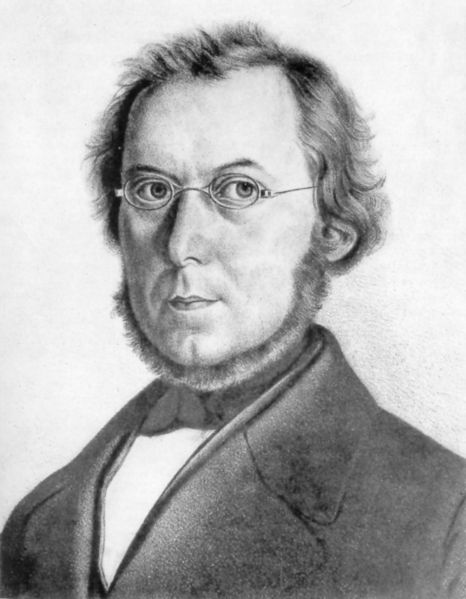
The Molecular Basis of Spirituality Science. Spiritual Optics. Chlorophyll formulates the Spiritual Connection between Energy and Life: Pierre Joseph Pelletier (1788-1842), French chemist worked along with Joseph Bienaime Caventou (1795-1877) at Ecole de Pharmacie Paris and first isolated Chlorophyll in 1817. They established the basis for Alkaloid Chemistry. They paved the way for the use of chemical compounds found in the nature.The Material Basis of Spirituality Science. Spiritual Optics.Chlorophyll formulates the Spiritual Connection between Energy and Life: Joseph Bienaime Caventou (1795-1877), French chemist was the first to isolate Chlorophyll and shares this credit with Pelletier.
French chemists, Joseph Bienaime Caventou and Pierre Joseph Pelletier get the credit for first isolating Chlorophyll in 1817. They paved the way for research on natural organic compounds and they established the foundation for Alkaloid Chemistry. They isolated several plant alkaloids like Quinine, Strychnine, Emetine, and Caffeine. The general molecular structure of Chlorophyll was first described by Hans Fischer, a German chemist in 1940. Fischer investigated pigments in blood, bile, and Chlorophyll in leaves. He was awarded 1930 Nobel Prize for Chemistry.
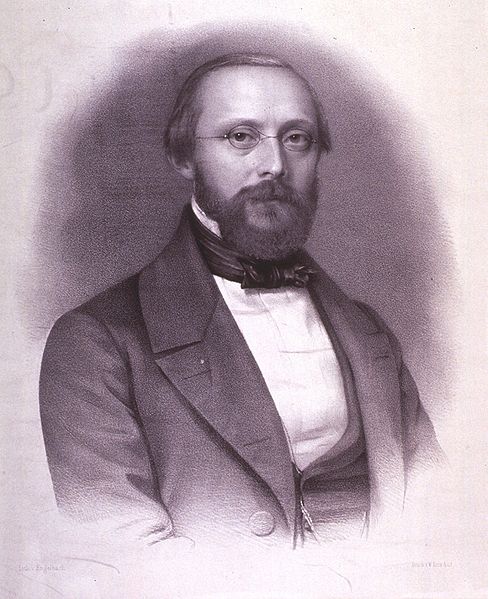
The Material Basis of Spirituality Science. Spiritual Optics. Chlorophyll formulates the Spiritual Connection between Energy and Life: Hans Fischer (1881-1945), German chemist investigated Chemistry of Pyrrole compounds from which the pigments found in blood, bile, and leaves are derived. He was awarded 1930 Nobel Prize for Chemistry.
Pyrrole describes a class of organic compounds of the heterocyclic series characterized by a ring structure composed of four carbon atoms and one nitrogen atom. In Chlorophyll, four Pyrrole rings (Tetrapyrrole) are joined in a larger ring system known as Porphyrin. Porphyrins are a group of water-soluble, nitrogenous Pyrrole derivatives that combine with either Iron, or Magnesium. Chlorophyll has a Porphyrin ring (Chlorin ring) coordinated to a central Magnesium ion.
The Material Basis of Spirituality Science. Spiritual Optics. Chlorophyll formulates the Spiritual Connection between Energy and Life: Chlorin ring, Tetrapyrrole Porphyrin Ring called Chlorophyll with central ion of Magnesium.The Material Basis of Spirituality Science. Spiritual Optics. Chlorophyll formulates the Spiritual Connection between Energy and Life: Robert Burns Woodward (1917-1979) American chemist who worked at Harvard University published a total synthesis of Chlorophyll molecule in 1960. He synthesized many complex natural products. He was awarded 1965 Nobel Prize for Chemistry.
Robert Burns Woodward, American chemist who worked at Harvard University determined the structure of organic compounds such as Penicillin, Terramycin, and Aureomycin. During 1940s, he had synthesized many complex natural products including Quinine, Cholesterol, Cortisone, Strychnine, Lysergic Acid, Reserpine, Cephalosporin, and Colchicine. He was the first to synthesize Chlorophyll during 1960.
The Material Basis of Spirituality Science. Spiritual Optics. Chlorophyll formulates the Spiritual Connection between Energy and Life: Three-dimensional view of Chlorophyll molecule.The Material Basis of Spirituality Science. Spiritual Optics. Chlorophyll formulates the Spiritual Connection between Energy and Life: The light absorption spectra of chlorophyll molecules a and b.
The Chlorophyll molecule is the active part that absorbs the Sunlight. In order to do this job called photo reception, Chlorophyll needs to be attached to the backbone of a very complicated protein. This protein may look haphazard in design, but it has exactly the correct structure to orient the Chlorophyll molecules in the optimal position to enable them to react with Carbon Dioxide, and Water molecules in a very efficient manner. The Chlorophyll photosynthetic pigments perform the light harvesting function because of Chlorophyll-Protein Complex that is part of the Thylakoid Membrane of the Chloroplast, the disc-like structures in which the pigment is found.
The Material Basis of Spirituality Science. Spiritual Optics. Chlorophyll formulates the Spiritual Connection between Energy and Life: Thylakoid Membrane bound proteins form a Complex with Chlorophyll pigments to perform the photosynthetic function.
Whole Designer – Whole Architect:
The Material Basis of Spirituality Science. Spiritual Optics. Chlorophyll formulates the Spiritual Connection between Energy and Life: The biological production of color is more complex than the use of a Color Order System described by Albert Henry Munsell. In green plants, the color is associated with an important function called Photosynthesis which involves the ability to trap radiant energy. The design involves the use of parts, format for the structural components, various details apart from a color scheme. I name this as the work of a Whole Designer. The green pigment called Chlorophyll is found inside structures or Artistic Units called Chloroplasts.
In biology, the generation of color is more complex than the use of a Color Order System described by Albert Henry Munsell. Firstly, the information for the Color Order System must be transplanted in the genetic material such as the DNA of the organism to make the information as its hereditary characteristic. Secondly, when we look at the green plants, the green pigment called Chlorophyll is found inside structures called Chloroplasts. It involves the designing and arrangement of parts, details of structural units, and formulate a creative scheme apart from the use of the scheme for the color. The fact of designing can be known by studying the purpose and the functions of the Artistic Unit that is created.
Green plants with Chlorophyll pigment trap light energy, and transform it into chemical energy and use it in the process described as Photosynthesis. It is a creative mechanism to transform one form of energy into a different form of stored chemical energy that can be further used to create new forms of matter called organic molecules that are not present in nature. These organic molecules come into existence because of the activity of living things. It shows the intent of a designer to use energy, and matter to create the visual, sensory effect.
Chlorophyll is not simply about generating coloration in plant leaves. It describes the work, the imagination, the inspiration used by a Whole Architect who uses matter, energy, time, space, and color in a very creative manner.
Who is the Artist? Who is the Designer?
The Material Basis of Spirituality Science. Spiritual Optics. Chlorophyll formulates the Spiritual Connection between Energy and Life. Who is the Artist? Who is the Designer? An artist uses colors with imagination to create forms and to generate a desired visual effect. A “Whole Artist” is a person who creates his own canvas, his own tools, his own pigments, and creates the desired visual effects while the forms that are created have no such creative and cognitive abilities.
No single function can explain the coloration of living things. We need a comprehensive theory that predicts the lines and patterns of coloration of plants and animals. An artist’s palette containing only three properly chosen colors is entirely adequate under most circumstances to produce the various visual effects of color that is observed. The optical mechanisms involved in the production of color are complex. Coloration is a dynamic and complex characteristic and the term must be clearly distinguished from the term ‘color’ which only refers to the spectral qualities of emitted or reflected light. It is apparent that plants, and animals have no cognitive abilities to produce the coloration by which they are recognized. However, the coloration displayed gives us a clue about the nature of the “Whole Artist” who could be using imagination, has feelings for the forms created and seeks satisfaction from the visual effects that he produced. If man has the ability called visual perception, he must use the ability to visualize the “Whole Artist” who is at work. I ask my readers to give attention to the three dimensions of Color Perception. These are, 1. The Designer or the Artist, 2. The Object of Perception, and 3. The visual capacity of the Viewer.
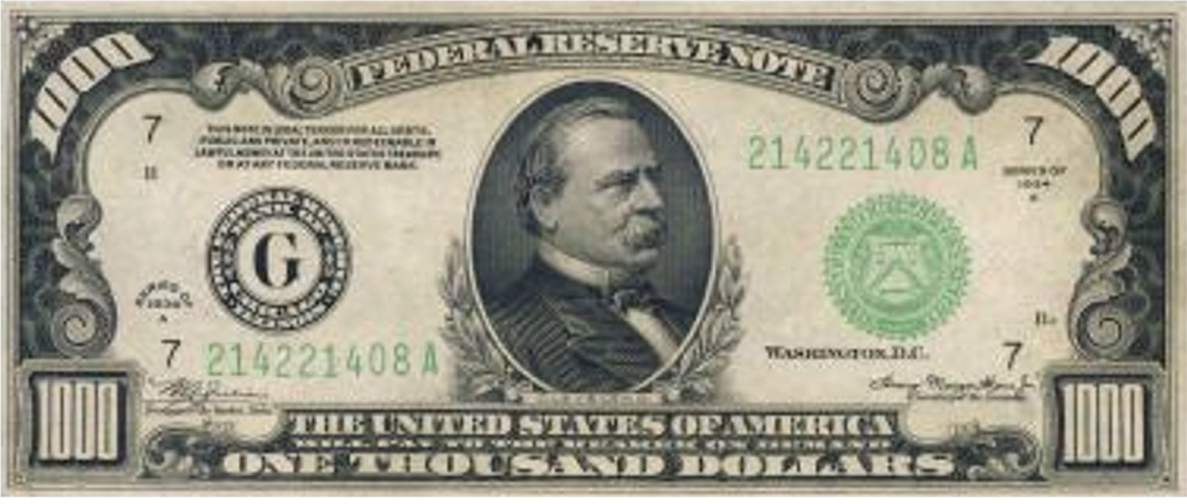
What is Matter? and What is Spirit? What is the Color of Money? If materialism is about the influence of material wealth, I would like to use the Power/Force/Energy called Money to talk about Life and Death. The Laws of Conservation are applicable to both the living, and the non-living matter. Hence, it can be stated that “Life can neither be created nor destroyed.” If any person can refute my claim using valid, scientific information, I would offer the person a US $1,000 bill as a reward
Dr. Rudranarasimham, Rebbapragada, B.Sc., M.B.B.S.,
Father’s Name: R. Suryanarayana Murty
Sri Venkateswara University, M.B.B.S. Class of April, 1970
Andhra Pradesh Medical Council Registration Number: AMC5282 Date of Registration: September 16, 1971
THE MATERIAL BASIS OF SPIRITUALITY SCIENCE . SPIRITUAL OPTICS. CHLOROPHYLL FORMULATES THE SPIRITUAL CONNECTION BETWEEN ENERGY AND LIFE. THE ART OF KNOWING : HOW DO PLANTS KNOW WHAT THEY KNOW ? PLANTS KNOW ABOUT LIGHT, THE LENGTH OF DAY, AND THE DURATION OF DARKNESS CALLED NIGHT. THERE IS NO “INTELLECT” INVOLVED IN THIS PROCESS OF KNOWING. THE ABILITY OF KNOWING LIGHT OR PHOTORECEPTION IS EXPLAINED BY PHOTOCHEMISTRY.The Colors of Spiritualism: The first recorded Covenant between God and Man. The Book of Genesis, Chapter 9, verses 12-16.
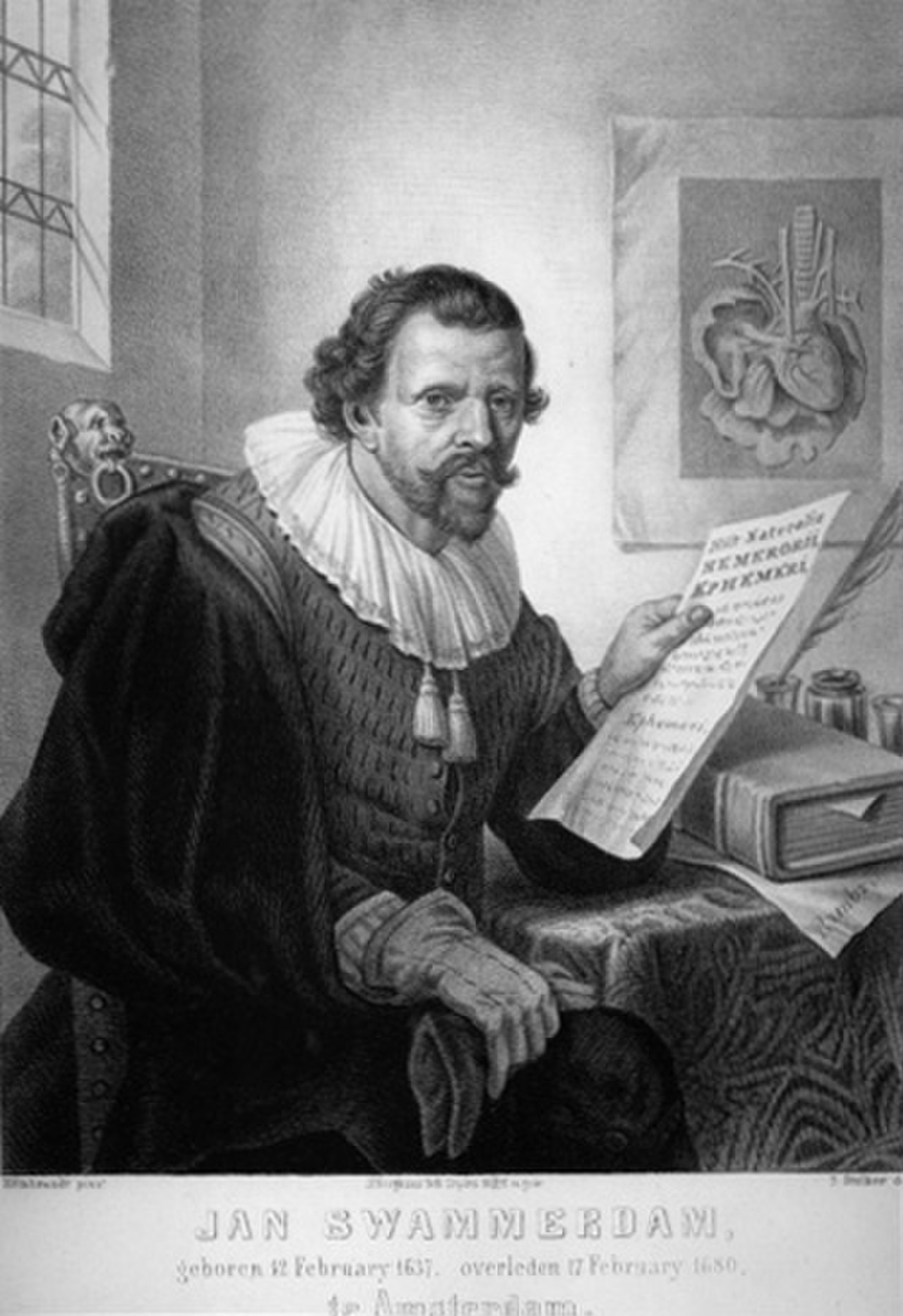
The Material Basis of Spirituality Science. Spiritual Optics. Light and Matter Interactions. The Magic Called Photochemistry. The artistic beauty of the surrealist masterpiece, LesAmantsII (1928), by René Magritte visualizes two entities, locked in an ambiguous setting and unable to truly communicate or touch but essentially entangled. This piece of art reveals a couple (like entangled entities) separated by the veil of physical realm, entities distinct yet connected
What it is to be a Substance? and What it is to Exist? We need to establish knowledge about the man and the world on a firm basis and the information it provides must be tested for its accuracy and consistency with an external reality. We have to make the fundamental distinction between the living and the non-living matter. The scientific advances of the 19th and 20th centuries reinforced the materialistic position concerning the basic similarity of organic living and inorganic physical matter. The man is viewed as a product of natural evolution and is thought to be subject to the same laws of Physics and Chemistry or mechanistic principles.
We need a methodology to study philosophy and to understand philosophical statements. Logical Positivism, also known as Scientific Empiricism aims to clarify concepts in both everyday and scientific language. It describes analysis of language as the function of philosophy. This analysis of language and of concepts is important to understand questions of belief and ideology which affect what we think we ought to do individually and socially. I use this method of ‘Applied Philosophy’ to analyze the concept of Spiritual Optics, the Spiritual Connection between Energy and Life. The Laws of Thermodynamics are important unifying principles of Biology. The First Law of Thermodynamics, also known as the Law of Conservation of Energy, states that Energy can neither be created nor destroyed.
Spiritual Optics accounts for the capacity of photoreception and the term Spiritual Light refers to the creation of Light by God to begin the designing of Matter.
The Material Basis of Spirituality Science. Spiritual Optics. Light and Matter Interactions. The Magic called Photochemistry.
Whole Dude – Whole Designer – Photochemistry:
Whole Dude-Whole Designer-Photochemistry: Johann Heinrich Schulze or Schultz (1687-1744), German Professor of Anatomy had discovered in 1727 that the phenomenon of darkening of silver salts was caused by light and not heat. He used those effects to capture temporary photographic images.
Photochemistry is the study of chemical processes that are exclusively brought about by the interaction of light with matter. The term design describes the action to make a plan, a pattern and carry out the execution by artistic arrangement in a skillful way. Artists, Designers, and Architects are persons who make plans, patterns, the artful scheme for the arrangement of parts, the details, the form, the substance, the color, etc., so as to produce an artistic unit. The study of Photochemistry helps us to recognize the artistic work of a Whole Designer, a Whole Architect, and a Whole Artist who uses Light, Matter, Color, Space, and Time to create living systems which are interdependent, interrelated, and interconnected.
The existence of two major systems of Life, plants, and animals is perfectly synchronized and each performs its living functions to complement the living functions performed by the other. Photochemistry establishes the fundamental basis for this spiritual relationship among the living systems. I am pleased to narrate the story about Photochemistry sharing the images of a number of chief players who contributed to the understanding of the design that formulates the interaction between the Laws of Physics, Chemistry, and Biology to generate this amazingly wonderful artistic unit called planet Earth which provides the home to all living things.
The Law of Photochemistry:
Whole Dude-Whole Designer-Photochemistry: Theodor von Grotthuss (1785-1822), German chemist in 1817 stated the first law of Photochemistry.Whole Dude-Whole Designer-Photochemistry: John William Draper (1811-1882), American chemist, physician, photographer conducted research in Photochemistry. He produced the first clear photograph of human face. He had confirmed the claim made by Grotthus; only light that is absorbed by a system can cause a photochemical reaction.
Grotthuss – Draper Law of Photochemistry: Light must be absorbed by a chemical substance in order for a photochemical reaction to take place. Photochemical reactions are chemical processes initiated by the absorption of energy in the form of visible, infrared or ultraviolet radiation. Johann Heinrich Schulze discovered in 1727 that silver nitrate darkens upon exposure to light. The darkening of silver salts is a phenomenon known since the 16th century and possibly earlier and the effect of light on chemical substances was not understood. The art and science of Photography is based on a photochemical process, the action of light on grains of silver chloride, or silver bromide.
Whole Dude-Whole Designer-Photochemistry: Heinrich Rudolf Hertz 1857-1894), German physicist while experimenting on electromagnetic waves, discovered the Photoelectric Effect in which light falling on special surfaces can generate electricity.
Heinrich Rudolf Hertz who expanded James Clerk Maxwell’s electromagnetic theory discovered the Photoelectric Effect in 1887. His research contributed to the development of radio, television, and radar.
The Photoelectric Effect:
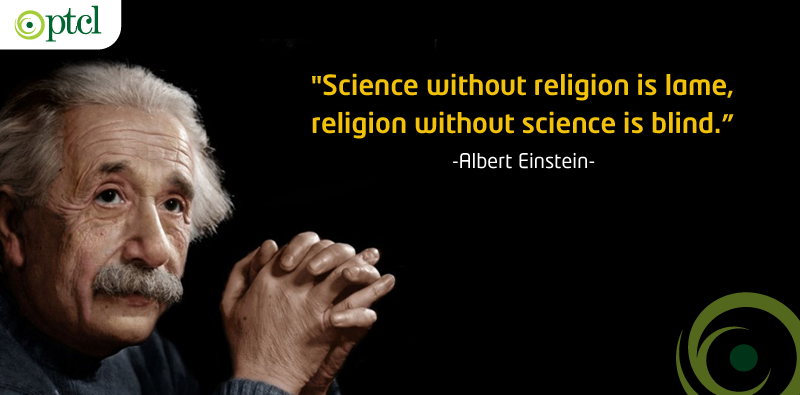
Whole Dude-Whole Designer-Photochemistry: Albert Einstein (1879-1955), American theoretical physicist received the 1921 Nobel Prize for Physics particularly for his work on Photoelectric Effect.
Photoelectric effect describes the emission of electrons by substances when light falls on their surface. Light energy is transferred in discrete packets, or photons. The energy of each photon is equal to the frequency of the light multiplied by Planck’s Constant “h”. Light imparts energy to a charged particle when one of its photons collides with the particle. In a photochemical process, one atom or molecule absorbs a single quantum of light energy called photon. The immediate consequence of the absorption of one photon by one atom or molecule is called the primary photochemical process. The basic process by which light is absorbed by matter was first proposed by Albert Einstein (1905). His Theory of Light has established that a beam of light is a beam of photons, or quanta (energy packets) of electromagnetic radiation.
Whole Dude-Whole Designer-Photochemistry: The Photoelectric Effect describes the emission of electrons by substances when light falls on their surface.Whole Dude-Whole Designer-Photochemistry: The energy change initiating a photochemical process always involves excitation of one electron from a state of low energy to a state of higher energy. The energy content of light depends upon its frequency.
When a quantum of light energy (a photon) is absorbed by a molecule, the direct consequence of this interaction is that the molecule is raised to an electronically excited state. The electronically excited state can be viewed as a molecule in which the distribution of the electrons about the atoms that compose the molecule is changed relative to the normal, or ground state of the molecule. Because the electronic distribution affects such properties as bond strengths and molecular geometry, many changes can take place in an electronically excited state that may not occur in the normal, or ground state. The consequences of the absorption of light by a chemical molecule and the subsequent formation of an electronically excited state can be grouped into two main classes; 1. Physical processes, and 2. Chemical processes. In a Photophysical process, a molecule undergoes no direct change in its chemical identity. Examples: Fluorescence, Phosphorescence, and the Photoelectric Effect. In Photochemical processes some change takes place in the bonding arrangement of the atoms in the molecule. Simple photochemical reactions involve the breaking or rearranging of a chemical bond, or both. Visible light and Ultraviolet light are intrinsically energetic enough to break several types of chemical bonds. Photochemistry differs from most other aspects of Chemistry in one regard. If an atom or molecule absorbs energy from a beam of light, it gains far more energy than it ever could by other methods; eg. from ordinary heating. Consequently, photochemical processes are sometimes extremely efficient for the conversion of energy from light into Chemical energy.
The most important photochemical process for living systems is the process of Photosynthesis.
Photoelectric Cell:
Photoelectric Cell or Photocell is a device whose electrical characteristics vary when light is incident upon it. Three different kinds of Photoelectric Cells exist that use the three different forms of the Photophysical reaction called the Photoelectric Effect. 1. The Photoconductive Cell, known as a Photoresistor is the sensor that scans codes on grocery items in Supermarkets at Checkout Counters.
Whole Dude-Whole Designer-Photochemistry: Photoconductive Cell or Photoresistor is popularly used in Supermarkets to scan the codes on grocery items at Checkout Counters.
2. The Photoemissive Cell; Phototubes, “Electric Eyes” that trigger the automatic opening of doors are examples of the Photoemissive Cells.
Whole Dude- Whole Designer-Photochemistry: Photoemissive Cells. A common example is the Electric Eye that triggers the automatic opening of doors.
3. The Photovoltaic Cell used in Fiber Optics technology, and the Solar Cells are common examples of Photovoltaic Cells which convert light energy into electric energy. For Solar Cells, Solar Energy, or Sun is the source of light and it has several applications.
Whole Dude-Whole Designer-Photochemistry: Photovoltaic Cell, Solar Cell uses Sunlight as the source of energy and converts it into electric energy.
Photochemical reactions that play a vital role in biological systems are called Photobiological processes. Photochemistry establishes relationship between the laws of Physics, and Chemistry with the living functions to synchronize the interactions between Light and Matter that is important for Life to exist on planet Earth.
The Material Basis of Spirituality Science. Spiritual Optics. Light and Matter Interactions. The Magic of Photochemistry. THE ART OF KNOWING : HOW DO PLANTS KNOW WHAT THEY KNOW ? PLANTS KNOW ABOUT LIGHT, THE LENGTH OF DAY, AND THE DURATION OF DARKNESS CALLED NIGHT. THERE IS NO “INTELLECT” INVOLVED IN THIS PROCESS OF KNOWING. THE ABILITY OF KNOWING LIGHT OR PHOTORECEPTION IS EXPLAINED BY PHOTOCHEMISTRY.
Green plants with Chlorophyll pigment trap light energy, and transform it into chemical energy and use it in the process described as Photosynthesis. It is a creative mechanism to transform one form of energy into a different form of stored chemical energy that can be further used to create new forms of matter called organic molecules that are not present in nature. These organic molecules come into existence because of the activity of living things. It shows the intent of a designer to use energy, and matter to create the visual, sensory effect.
Who is the Artist? Who is the Designer?
The Material Basis of Spirituality Science. Spiritual Optics. The Phenomenon of Color Perception. Who is the Artist? Who is the Designer? An artist uses colors with imagination to create forms and to generate a desired visual effect. A “Whole Artist” is a person who creates his own canvas, his own tools, his own pigments, and creates the desired visual effects while the forms that are created have no such creative and cognitive abilities.
No single function can explain the coloration of living things. We need a comprehensive theory that predicts the lines and patterns of coloration of plants and animals. An artist’s palette containing only three properly chosen colors is entirely adequate under most circumstances to produce the various visual effects of color that is observed. The optical mechanisms involved in the production of color are complex. Coloration is a dynamic and complex characteristic and the term must be clearly distinguished from the term ‘color’ which only refers to the spectral qualities of emitted or reflected light. It is apparent that plants, and animals have no cognitive abilities to produce the coloration by which they are recognized. However, the coloration displayed gives us a clue about the nature of the “Whole Artist” who could be using imagination, has feelings for the forms created and seeks satisfaction from the visual effects that he produced. If man has the ability called visual perception, he must use the ability to visualize the “Whole Artist” who is at work. I ask my readers to give attention to the three dimensions of Color Perception. These are, 1. The Designer or the Artist, 2. The Object of Perception, and 3. The visual capacity of the Viewer.
What is Matter? and What is Spirit? What is the Color of Money? If materialism is about the influence of material wealth, I would like to use the Power/Force/Energy called Money to talk about Life and Death. The Laws of Conservation are applicable to both the living, and the non-living matter. Hence, it can be stated that “Life can neither be created nor destroyed.” If any person can refute my claim using valid, scientific information, I would offer the person a US $1,000 bill as a reward
Dr. Rudranarasimham, Rebbapragada, B.Sc., M.B.B.S.,
Father’s Name: R. Suryanarayana Murty
Sri Venkateswara University, M.B.B.S. Class of April, 1970
Andhra Pradesh Medical Council Registration Number: AMC5282 Date of Registration: September 16, 1971
The Material Basis of Spirituality Science. Spiritual Optics. Light and Matter Interactions. The Magic of Photochemistry demonstrates the distinction between the Living and Nonliving Matter.The Colors of Spiritualism: The Rainbow Covenant is the first recorded Covenant between God, Man, Earth and all Living Things. Genesis, Chapter 9, verses 12-16. The Rainbow is the evidence for Creation of Light, the use of Color to serve Living Functions by the use of Artistic Units.
The Material Basis of Spirituality Science. Spiritual Optics. Munsell Color Order System and the Designing of the Artistic Units.
What it is to be a Substance? and What it is to Exist? We need to establish knowledge about the man and the world on a firm basis and the information it provides must be tested for its accuracy and consistency with an external reality. We have to make the fundamental distinction between the living and the non-living matter. The scientific advances of the 19th and 20th centuries reinforced the materialistic position concerning the basic similarity of organic living and inorganic physical matter. The man is viewed as a product of natural evolution and is thought to be subject to the same laws of Physics and Chemistry or mechanistic principles.
We need a methodology to study philosophy and to understand philosophical statements. Logical Positivism, also known as Scientific Empiricism aims to clarify concepts in both everyday and scientific language. It describes analysis of language as the function of philosophy. This analysis of language and of concepts is important to understand questions of belief and ideology which affect what we think we ought to do individually and socially. I use this method of ‘Applied Philosophy’ to analyze the concept of Spiritual Optics, the Spiritual dimension of biological coloration. Light is the Source of Life and Color provides the evidence for the creation and designing of artistic units to serve a specific purpose and in the performance of goal-oriented functions which essentially refutes the Theory of Evolution.
What is Color and What is Coloration?
The Material Basis of Spirituality Science. Spiritual Optics. Munsell Color Order System and the Designing of the Artistic Units.
The term ‘color’ refers to the spectral qualities of emitted or reflected light. The term ‘coloration’ is a dynamic and complex characteristic that has captured human interest and attention for a long time. The human interest to coloration ranges from purely aesthetic to the rigidly pragmatic.
Biological Coloration:
The Material Basis of Spirituality Science. Spiritual Optics. Munsell Color Order System and the Designing of the Artistic Units.
Biological Coloration refers to the general appearance of an organism as determined by the quality and quantity of light that is reflected or emitted from its surface. This Coloration depends upon several factors:
1. The integrity and deployment of the structural units and features involved in the generation of color,
2. The color and distribution of the organism’s pigments, and the relative location of differently colored areas,
3. The shape, posture, position, and movement of the organism,
4. The quality and quantity of light striking the organism, including the seasonal light and temperature variations,
5. The psychological, behavioral, hormonal, and other physiological conditions associated with the use of color,
6. The visual capacity of the viewer.
The comprehensive understanding of biological coloration demands a study of Physics, Chemistry, Physiology, Biology, Psychology and other subjects. It is equally important to pay tribute to people who have contributed to a better understanding of the principles involved in color production. I am happy to introduce Albert Henry Munsell (1858-1918), American painter, professor of Arts, Massachusetts Normal Art School to my readers.
Whole Dude – Whole Designer – Munsell:
The Material Basis of Spirituality Science. Spiritual Optics. Munsell Color Order System and the Designing of the Artistic Units: Albert Henry Munsell (1858-1918), an artist of distinction, a gifted teacher of art, made the description of color accurate and convenient for teaching of color. He made the foundation for all other Color Order Systems.
Albert Henry Munsell is the reputed author of A Color Notation (1905), and the Atlas of Munsell Color System (1915). The Color System he created is used internationally for specifying opaque colors of dyed or pigmented surfaces.
The Munsell Color Tree:
The Material Basis of Spirituality Science. Spiritual Optics. Munsell Color Order System and the Designing of the Artistic Units: The Munsell Color Tree refers to the three-dimensional representation of the Munsell Color System which is a method of designating colors based on a color arrangement scheme that defines colors by measured scales of hue, value, and chroma.
The Munsell Color Tree refers to the three-dimensional representation of the Munsell Color System. It is a method of designating colors based on a color arrangement scheme developed by the american art instructor and painter Albert H Munsell. It defines colors by measured scales of hue, value, and chroma, which correspond respectively to dominant wavelength, brightness, and strength or purity. The Color System developed by Munsell has become the foundation for all other Color Order Systems.
The Scheme for the Color Order System:
The Material Basis of Spirituality Science. Spiritual Optics. Munsell Color Order System and the Designing of the Artistic Units: The Scheme for the Color Order System used by any living creature has to be initially incorporated in its genetic material and it is carried as its hereditary information.The Material Basis of Spirituality Science. Spiritual Optics. Munsell Color Order System and the Designing of the Artistic Units: The biological production of color is more complex than the use of a Color Order System described by Albert Henry Munsell. In green plants, the color is associated with an important function called Photosynthesis which involves the ability to trap radiant energy. The design involves the use of parts, format for the structural components, various details apart from a color scheme. I name this as the work of a Whole Designer. The green pigment called Chlorophyll is found inside structures or Artistic Units called Chloroplasts.
In biology, the generation of color is more complex than the use of a Color Order System described by Albert Henry Munsell. Firstly, the information for the Color Order System must be transplanted in the genetic material such as the DNA of the organism to make the information as its hereditary characteristic. Secondly, when we look at the green plants, the green pigment called Chlorophyll is found inside structures called Chloroplasts. It involves the designing and arrangement of parts, details of structural units, and formulate a creative scheme apart from the use of the scheme for the color. The fact of designing can be known by studying the purpose and the functions of the Artistic Unit that is created.
Green plants with Chlorophyll pigment trap light energy, and transform it into chemical energy and use it in the process described as Photosynthesis. It is a creative mechanism to transform one form of energy into a different form of stored chemical energy that can be further used to create new forms of matter called organic molecules that are not present in nature. These organic molecules come into existence because of the activity of living things. It shows the intent of a designer to use energy, and matter to create the visual, sensory effect.
Who is the Artist? Who is the Designer?
The Material Basis of Spirituality Science. Spiritual Optics. Munsell Color Order System and the Designing of Artistic Units. Who is the Artist? Who is the Designer? An artist uses colors with imagination to create forms and to generate a desired visual effect. A “Whole Artist” is a person who creates his own canvas, his own tools, his own pigments, and creates the desired visual effects while the forms that are created have no such creative and cognitive abilities.
No single function can explain the coloration of living things. We need a comprehensive theory that predicts the lines and patterns of coloration of plants and animals. An artist’s palette containing only three properly chosen colors is entirely adequate under most circumstances to produce the various visual effects of color that is observed. The optical mechanisms involved in the production of color are complex. Coloration is a dynamic and complex characteristic and the term must be clearly distinguished from the term ‘color’ which only refers to the spectral qualities of emitted or reflected light. It is apparent that plants, and animals have no cognitive abilities to produce the coloration by which they are recognized. However, the coloration displayed gives us a clue about the nature of the “Whole Artist” who could be using imagination, has feelings for the forms created and seeks satisfaction from the visual effects that he produced. If man has the ability called visual perception, he must use the ability to visualize the “Whole Artist” who is at work. I ask my readers to give attention to the three dimensions of Color Perception. These are, 1. The Designer or the Artist, 2. The Object of Perception, and 3. The visual capacity of the Viewer.
What is Matter? and What is Spirit? What is the Color of Money? If materialism is about the influence of material wealth, I would like to use the Power/Force/Energy called Money to talk about Life and Death. The Laws of Conservation are applicable to both the living, and the non-living matter. Hence, it can be stated that “Life can neither be created nor destroyed.” If any person can refute my claim using valid, scientific information, I would offer the person a US $1,000 bill as a reward
Dr. Rudranarasimham, Rebbapragada, B.Sc., M.B.B.S.,
Father’s Name: R. Suryanarayana Murty
Sri Venkateswara University, M.B.B.S. Class of April, 1970
Andhra Pradesh Medical Council Registration Number: AMC5282 Date of Registration: September 16, 1971
The Material Basis of Spirituality Science. Spiritual Optics. Munsell Color Order System. The Designing of the Artistic Units.The Colors of Spiritualism: The Rainbow Covenant is the first recorded Covenant between God, Man, Earth and all Living Things. Genesis, Chapter 9, verses 12-16. The Rainbow is the evidence for Creation of Light, the use of Color to serve Living Functions by the use of Artistic Units.
The Material Basis of Spirituality Science. Spiritual Optics. The Phenomenon of Color Perception. The contributions of James Clerk Maxwell.
What it is to be a Substance? and What it is to Exist? We need to establish knowledge about the man and the world on a firm basis and the information it provides must be tested for its accuracy and consistency with an external reality. We have to make the fundamental distinction between the living and the non-living matter. The scientific advances of the 19th and 20th centuries reinforced the materialistic position concerning the basic similarity of organic living and inorganic physical matter. The man is viewed as a product of natural evolution and is thought to be subject to the same laws of Physics and Chemistry or mechanistic principles.
We need a methodology to study philosophy and to understand philosophical statements. Logical Positivism, also known as Scientific Empiricism aims to clarify concepts in both everyday and scientific language. It describes analysis of language as the function of philosophy. This analysis of language and of concepts is important to understand questions of belief and ideology which affect what we think we ought to do individually and socially. I use this method of ‘Applied Philosophy’ to analyze the concept of Spiritual Optics, the Spiritual dimension of biological coloration.
What is Color and What is Coloration?
The Material Basis of Spirituality Science. Spiritual Optics. The Phenomenon of Color Perception: The wave propagation of Light and the visible spectrum.
The term ‘color’ refers to the spectral qualities of emitted or reflected light. The term ‘coloration’ is a dynamic and complex characteristic that has captured human interest and attention for a long time. The human interest to coloration ranges from purely aesthetic to the rigidly pragmatic.
Biological Coloration:
The Material Basis of Spirituality Science. Spiritual Optics. The Phenomenon of Color Perception.
Biological Coloration refers to the general appearance of an organism as determined by the quality and quantity of light that is reflected or emitted from its surface. This Coloration depends upon several factors:
1. The integrity and deployment of the structural units and features involved in the generation of color,
2. The color and distribution of the organism’s pigments, and the relative location of differently colored areas,
3. The shape, posture, position, and movement of the organism,
4. The quality and quantity of light striking the organism, including the seasonal light and temperature variations,
5. The psychological, behavioral, hormonal, and other physiological conditions associated with the use of color,
6. The visual capacity of the viewer.
The comprehensive understanding of biological coloration demands a study of Physics, Chemistry, Physiology, Biology, Psychology and other subjects. It is equally important to pay tribute to people who have contributed to a better understanding of the principles involved in color production. I am happy to introduce James Clerk Maxwell (1831-1879), Scottish physicist, the first professor of Experimental Physics, Cavendish Laboratory, Cambridge to my readers.
Whole Dude – Whole Designer – Maxwell:
Whole Dude-Whole Designer: James Clerk Maxwell(1831-1879), Scottish Physicist, first Professor of Experimental Physics, Cavendish Laboratory, Cambridge who researched Electricity and Magnetism and contributed to a greater understanding of Color.
James Clerk Maxwell developed a comprehensive theory of electricity and magnetism. His theory, ‘A Treatise on Electricity and Magnetism’ (1873) concludes that electric and magnetic energy travel in transverse waves that propagate at a speed equal to that of light; light is thus only one type of electromagnetic radiation. Defining fields as a tension in the medium, he stated that energies reside in fields as well as bodies. This pointed the way to the application of electromagnetic radiation for such present day uses as radio, television, radar, microwaves, and thermal imaging. Modern technology rests firmly on the foundations established by Maxwell.
Electromagnetic Radiation Spectrum:
The Material Basis of Spirituality Science. Spiritual Optics. The phenomenon of Color Perception: It is important to understand Light as a form of Electromagnetic Radiation. Life exists on planet Earth by exploiting Light radiation, and living things which have visual perception, experience light and color because of the creative use of energy to design the artistic scheme of this physical universe in which man exists.
Electromagnetic Radiation refers to energy radiated in the form of a wave comprised of an electric field interacting with a magnetic field. Electromagnetic Radiation is the result of the acceleration of a charged particle. It does not require a material medium, and can travel through a vacuum. Maxwell’s theory received support after Heinrich Hertz proved the existence of radiowaves in 1887. The individual quantum of Electromagnetic Radiation is known as the photon. Light energy is transferred in discrete packets, or photons. The energy of each photon is equal to the frequency of the light multiplied by Planck’s Constant ‘h’.
SPIRITUALITY SCIENCE – THE ART OF KNOWING : HOW DO PLANTS KNOW WHAT THEY KNOW ? PLANTS KNOW ABOUT LIGHT, THE LENGTH OF DAY, AND THE DURATION OF DARKNESS CALLED NIGHT. THERE IS NO “INTELLECT” INVOLVED IN THIS PROCESS OF KNOWING. THE ABILITY OF KNOWING LIGHT OR PHOTORECEPTION IS EXPLAINED BY PHOTOCHEMISTRY.
Green plants with Chlorophyll pigment trap light energy, and transform it into chemical energy and use it in the process described as Photosynthesis. It is a creative mechanism to transform one form of energy into a different form of stored chemical energy that can be further used to create new forms of matter called organic molecules that are not present in nature. These organic molecules come into existence because of the activity of living things. It shows the intent of a designer to use energy, and matter to create the visual, sensory effect.
The Perception of Color:
The Material Basis of Spirituality Science. Spiritual Optics. The phenomenon of Color Perception: James Clerk Maxwell studied Color Vision. He established Red, Green, and Blue as the primary colors. All other colors can be produced by an additive or subtractive process.The Material Basis of Spirituality Science. Spiritual Optics. The phenomenon of Color Perception: Red, Green, and Blue are the true primary colors. All other colors can be produced using additive or subtractive mixing.The Material Basis of Spirituality Science. Spiritual Optics.The Phenomenon of Color Perception: James Clerk Maxwell produced this first color photo image of a Scottish tartan ribbon.
Maxwell’s many interests included color. He studied Color Vision. He established Red, Green, and Blue as the primary colors. All other colors can be produced by an additive or subtractive process. He analyzed the phenomenon of Color Perception which led him to invent the trichromatic process. He introduced Colorimetry, the analysis of color. The role of light and the creation of color for the benefit of things that have the ability, or capacity of visual perception speaks of a carefully planned work of a Whole Designer. At a fundamental level, color provides the sensory stimulus and the man perceives color as the evidence of a work done by a Designer who is intentionally providing a sense of psychological satisfaction in the mind of the viewer.
Who is the Artist? Who is the Designer?
The Material Basis of Spirituality Science. Spiritual Optics. The Phenomenon of Color Perception. Who is the Artist? Who is the Designer? An artist uses colors with imagination to create forms and to generate a desired visual effect. A “Whole Artist” is a person who creates his own canvas, his own tools, his own pigments, and creates the desired visual effects while the forms that are created have no such creative and cognitive abilities.
No single function can explain the coloration of living things. We need a comprehensive theory that predicts the lines and patterns of coloration of plants and animals. An artist’s palette containing only three properly chosen colors is entirely adequate under most circumstances to produce the various visual effects of color that is observed. The optical mechanisms involved in the production of color are complex. Coloration is a dynamic and complex characteristic and the term must be clearly distinguished from the term ‘color’ which only refers to the spectral qualities of emitted or reflected light. It is apparent that plants, and animals have no cognitive abilities to produce the coloration by which they are recognized. However, the coloration displayed gives us a clue about the nature of the “Whole Artist” who could be using imagination, has feelings for the forms created and seeks satisfaction from the visual effects that He produced. If man has the ability called visual perception, he must use the ability to visualize the “Whole Artist” who is at work. I ask my readers to give attention to the three dimensions of Color Perception. These are, 1. The Designer or the Artist, 2. The Object of Perception, and 3. The visual capacity of the Viewer.
What is Matter? and What is Spirit? What is the Color of Money? If materialism is about the influence of material wealth, I would like to use the Power/Force/Energy called Money to talk about Life and Death. The Laws of Conservation are applicable to both the living, and the non-living matter. Hence, it can be stated that “Life can neither be created nor destroyed.” If any person can refute my claim using valid, scientific information, I would offer the person a US $1,000 bill as a reward
Dr. Rudranarasimham, Rebbapragada, B.Sc., M.B.B.S.,
Father’s Name: R. Suryanarayana Murty,
Sri Venkateswara University, M.B.B.S. Class of April, 1970
Andhra Pradesh Medical Council Registration Number: AMC5282; Date of Registration: September 16, 1971
The Material Basis of Spirituality Science-Spiritual Optics-The Phenomenon of Color PerceptionThe Colors of Spiritualism: The first recorded Covenant between God and Man. The Book of Genesis, Chapter 9, verses 12-16.
Scientific Naturalism – The Coming Together of Man, Sky, Earth and Light
The Material Basis of Spirituality Science. Spiritual Optics. The Coming Together of Man, Sky, Earth, and Light by accounting for Rayleigh Scattering..
What it is to be a Substance? and What it is to Exist? We need to establish knowledge about the man and the world on a firm basis and the information it provides must be tested for its accuracy and consistency with an external reality. We have to make the fundamental distinction between the living and the non-living matter. The scientific advances of the 19th and 20th centuries reinforced the materialistic position concerning the basic similarity of organic living and inorganic physical matter. The man is viewed as a product of natural evolution and is thought to be subject to the same laws of Physics and Chemistry or mechanistic principles.
We need a methodology to study philosophy and to understand philosophical statements. Logical Positivism, also known as Scientific Empiricism aims to clarify concepts in both everyday and scientific language. It describes analysis of language as the function of philosophy. This analysis of language and of concepts is important to understand questions of belief and ideology which affect what we think we ought to do individually and socially. I would use this method of ‘Applied Philosophy’ to analyze the concept of Spiritual Optics, the Spiritual dimension of biological coloration.
What is Color and What is Coloration?
The Material Basis of Spirituality Science. Spiritual Optics. The Coming Together of Man, Sky, Earth, and Light, by accounting for Rayleigh Scattering: The wave propagation of Light and the visible spectrum.
The term ‘color’ refers to the spectral qualities of emitted or reflected light. The term ‘coloration’ is a dynamic and complex characteristic that has captured human interest and attention for a long time. The human interest to coloration ranges from purely aesthetic to the rigidly pragmatic.
The comprehensive understanding of biological coloration demands a study of Physics, Chemistry, Physiology, Biology, Psychology and other subjects. It is equally important to pay tribute to people who have contributed to a better understanding of the principles involved in color production. I am happy to introduce Lord John William Strutt Rayleigh, 3rd Baron, 1842-1919, British physicist, professor and Superintendent at the Royal Institution, London (1887-1905) to my readers.
Whole Dude – Whole Designer – Rayleigh:
The Material Basis of Spirituality Science. Spiritual Optics. The Coming Together of the Man, Earth, Light, and the Sky by accounting for Rayleigh Scattering: Lord John William Strutt Rayleigh, 3rd baron, 1842-1919, English Physicist, Professor at Royal Institution, London(1887-1905). He provided the theoretical explanation for Sky’s Blue Color.
John Tyndall stated that Sky’s Blue color results from the scattering of the Sun’s rays by molecules in the atmosphere. Lord Rayleigh provided the theoretical explanation for Sky’s Blue color. Lord Rayleigh conducted research in Sound (Acoustics), and Light (Optics). He stated the Theory of Wave Propagation of Light. He had received the 1904 Nobel prize in Physics for the discovery of Argon, inert atmospheric gas. During 1871, Lord Rayleigh published paper about dispersion of electromagnetic radiation by particles that have a radius less than approximately 1/10th wavelength of radiation.
The Color of the Sky:
The Material Basis of Spirituality Science. Spiritual Optics. The Coming Together of Man, Sky, Earth, and Light by accounting for Rayleigh Scattering.The Material Basis of Spirituality Science. Spiritual Optics. The Coming Together of Man, Sky, Earth, and Light, by accounting for Rayleigh Scattering: The wave propagation of Light. The scattering effect of submicroscopic particles of the atmosphere.
The atmosphere consists of air molecules, dust particles, and water droplets, most of which are small in size by comparison with the wavelength of visible light. The submicroscopic particles of the atmosphere scatter part of the Sun light.
Rayleigh Scattering occurs when light interacts with particles smaller than 1/10th of the light’s wavelength (visible light has a wavelength between ~400nm for blue light and ~700nm for red light). Any sufficiently small particles will do, but the most common will be molecules of nitrogen and oxygen (which make up about 78% and 21% of the atmosphere, respectively).
The probability of scattering is inversely proportional to the 4th power of the wavelength. Since red light has a wavelength about 1.75 times longer than blue light, blue light is about 9.4 times more likely to scatter than red light.
The scattering is elastic, which means that the photon of light does not gain or lose any energy – it only changes direction.
The Material Basis of Spirituality Science. Spiritual Optics. The Coming Together of Man, Sky, Earth, and Light by accounting for Rayleigh Scattering.
Light reaching us from the sun travels in a straight line. If there was no Rayleigh Scattering, then the sky would appear black (as it does on the moon – which has no atmosphere). Because of Rayleigh Scattering, the sky is filled with scattered light – most of which is blue because it scatters the most.
The Material Basis of Spirituality Science. Spiritual Optics. The Coming Together of Man, Sky, Earth, and Light, by accounting for Rayleigh Scattering: A view of Planet Earth from Lunar surface. Photo image by Apollo-8 astronaut taken on December 25, 1968. When viewed from the surface of Moon, the Sky appears dark, and Black.
Violet light whose wavelength is 400nm is scattered more effectively than Red light whose wavelength is 700nm. The color of the Sky is caused by this selective scattering; the scattered light reaching the observer being predominantly Blue.
The Material Basis of Spirituality Science.Spiritual Optics. The Coming Together of Man, Sky, Earth, and Light by accounting for Rayleigh Scattering.
The sky appears reddish around sunrise and sunset because the light has to travel a greater distance through the atmosphere. This results in much of the shorter wavelengths of light (blue and green) scattering long before they reach us, leaving only the longer red wavelengths reaching our eyes. At Sunrise, and Sunset, the light from the Sun loses its short wavelength components by selective scattering before reaching the observer; and the Sky is therefore Yellow, Orange, or even Red at Sunrise, and Sunset. f you observe the sky very carefully during sunrise or sunset, when the top part of the sky is blue and the bottom part is red, you may observe a thin yellow and green band between them. All the colors are a result of Rayleigh Scattering.
The Material Basis of Spirituality Science. Spiritual Optics. The Coming Together of Man, Sky, Earth, and Light by accounting for Rayleigh Scattering: Interference colors from an oil film on water can be related to the thickness of the film. The color seen depends upon the angle of view. The index of refraction of the oil is greater than that of the water.
About 99% of the Earth’s atmosphere is contained between sea level and an altitude of about 18 miles. Above 18 miles, there is very little Rayleigh Scattering and the sky above appears very dark. Rayleigh Scattering still occurs in the atmosphere below and it appears blue.
The Material Basis of Spirituality Science. Spiritual Optics. The Coming Together of Man, Sky, Earth, and Light by accounting for Rayleigh Scattering.The Man is conditioned to exist under the influence of Earth’s Atmosphere.
The appearance of Sky’s color when viewed by an observer on planet Earth is Blue, and yet this appearance is not common in the vast universe that man has explored. It may be suggested that planet Earth is unique, original, distinct, and one of its own kind of celestial object and it meets the criteria that are required to name an object as a designed object.
The Material Basis of Spirituality Science. Spiritual Optics.The Coming Together of Man, Sky, Earth and Light by accounting for Rayleigh Scattering. Beauty is in the Eye of Beholder.
The fact of Planet Earth’s creation as a designed object could be revealed by the appearance of the color of the Sky when it is viewed from Earth’s surface. The chance of discovering a similar Earth-like Planet appears to be very remote as man has already discovered thousands of planets that exist beyond our Solar System. The man is conditioned to exist on the surface of Earth under the influence of Earth’s atmosphere. Rayleigh Scattering accounts for the coming together of the man, Earth, Light, and the Sky.
Who is the Artist? Who is the Designer?
The Material Basis of Spirituality Science. Spiritual Optics. The Coming Together of Man, Sky, Earth, and Light by accounting for Rayleigh Scattering. The Designing of Natural Colors. Tyndall Effect. Who is the Artist? Who is the Designer? An artist uses colors with imagination to create forms and to generate a desired visual effect. A “Whole Artist” is a person who creates his own canvas, his own tools, his own pigments, and creates the desired visual effects while the forms that are created have no such creative and cognitive abilities.
No single function can explain the coloration of living things. We need a comprehensive theory that predicts the lines and patterns of coloration of plants and animals and of the World in which they exist. An artist’s palette containing only three properly chosen colors is entirely adequate under most circumstances to produce the various visual effects of color that is observed. The optical mechanisms involved in the production of color are complex. Coloration is a dynamic and complex characteristic and the term must be clearly distinguished from the term ‘color’ which only refers to the spectral qualities of emitted or reflected light. It is apparent that plants, and animals have no cognitive abilities to produce the coloration by which they are recognized. However, the coloration displayed gives us a clue about the nature of the “Whole Artist” who could be using imagination, has feelings for the forms created and seeks satisfaction from the visual effects that he produced. If man has the ability called visual perception, he must use the ability to visualize the “Whole Artist” who is at work. I ask my readers to give attention to the three dimensions of Color Perception. These are, 1. The Designer or the Artist, 2. The Object of Perception, and 3. The visual capacity of the Viewer.
What is Matter? and What is Spirit? What is the Color of Money? If materialism is about the influence of material wealth, I would like to use the Power/Force/Energy called Money to talk about Life and Death. The Laws of Conservation are applicable to both the living, and the non-living matter. Hence, it can be stated that “Life can neither be created nor destroyed.” If any person can refute my claim using valid, scientific information, I would offer the person a US $1,000 bill as a reward
Dr. Rudranarasimham, Rebbapragada, B.Sc., M.B.B.S.,
Father’s Name: R. Suryanarayana Murty,
Sri Venkateswara University, M.B.B.S. Class of April, 1970
Andhra Pradesh Medical Council Registration Number: AMC5282; Date of Registration: September 16, 1971.
The Colors of Spiritualism: The first recorded Covenant between God and Man. The Book of Genesis, Chapter 9, verses 12-16.
The Material Basis of Spirituality Science.Spiritual Optics. Scientific Naturalism. The Designing of Natural Colors. Tyndall Effect.
What it is to be a Substance? and What it is to Exist? We need to establish knowledge about the man and the world on a firm basis and the information it provides must be tested for its accuracy and consistency with an external reality. We have to make the fundamental distinction between the living and the non-living matter. The scientific advances of the 19th and 20th centuries reinforced the materialistic position concerning the basic similarity of organic living and inorganic physical matter. The man is viewed as a product of natural evolution and is thought to be subject to the same laws of Physics and Chemistry or mechanistic principles.
We need a methodology to study philosophy and to understand philosophical statements. Logical Positivism, also known as Scientific Empiricism aims to clarify concepts in both everyday and scientific language. It describes analysis of language as the function of philosophy. This analysis of language and of concepts is important to understand questions of belief and ideology which affect what we think we ought to do individually and socially. I use this method of ‘Applied Philosophy’ to analyze the concept of Spiritual Optics, the Spiritual dimension of biological coloration.
What is Color and What is Coloration?
The Material Basis of Spirituality Science. Spiritual Optics. Scientific Naturalism. The Designing of Natural Colors. Tyndall Effect. Scientific Naturalism.
The term ‘color’ refers to the spectral qualities of emitted or reflected light. The term ‘coloration’ is a dynamic and complex characteristic that has captured human interest and attention for a long time. The human interest to coloration ranges from purely aesthetic to the rigidly pragmatic.
Biological Coloration:
The Material Basis of Spirituality Science. Spiritual Optics. Scientific Naturalism. The Designing of Natural Colors. Tyndall Effect.
Biological Coloration refers to the general appearance of an organism as determined by the quality and quantity of light that is reflected or emitted from its surface. This Coloration depends upon several factors:
1. The integrity and deployment of the structural units and features involved in the generation of color,
2. The color and distribution of the organism’s pigments, and the relative location of differently colored areas,
3. The shape, posture, position, and movement of the organism,
4. The quality and quantity of light striking the organism, including the seasonal light and temperature variations,
5. The psychological, behavioral, hormonal, and other physiological conditions associated with the use of color,
6. The visual capacity of the viewer.
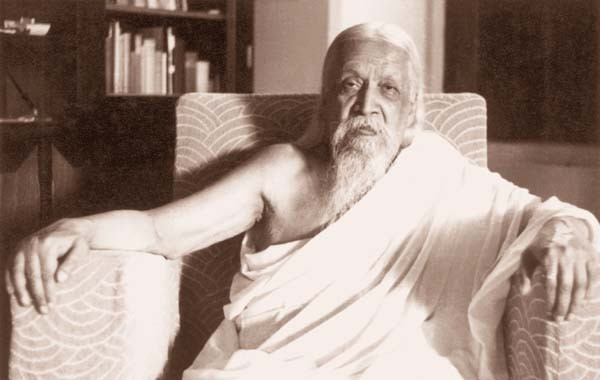
The comprehensive understanding of biological coloration demands a study of Physics, Chemistry, Physiology, Biology, Psychology and other subjects. It is equally important to pay tribute to people who have contributed to a better understanding of the principles involved in color production. I am happy to introduce John Tyndall (1820-1893), Irish-British physicist, professor and Superintendent at the Royal Institution, London (1853-1887) to my readers. As a public intellectual, Tyndall’s was one of the loudest voices advocating a scientific explanation for the natural world and for life itself, a scientific naturalism.
Whole Dude – Whole Designer – Tyndall Effect:
The Material Basis of Spirituality Science. Spiritual Optics. Scientific Naturalism. The Designing of Natural Colors. Tyndall Effect: John Tyndall(1820-1893), English Physicist, Professor, and Superintendent at the Royal Institution, London(1853-1887), researched sound, light, and radiant heat. The scattering of light by colloids is known as Tyndall Effect.
Sir Issac Newton concluded that bodies appear colored under white light because they reflect some of its spectral components more strongly than other components of the light spectrum. The mechanisms of color production in nature involves several factors and John Tyndall explained what is named as Tyndall Effect.
The Material Basis of Spirituality Science. Spiritual Optics. Scientific Naturalism. The Designing of Natural Colors. Tyndall Effect.
Colloidal particles are larger than molecules but, too small to be observed by a light microscope. Some examples are, emulsions like ink, milk, jellies, dust, or smoke in air, fog, and shaving foam, Styrofoam, and aerosols. The pigments of biological tissues that reflect, or transmit light are known as biochromes. Colors produced by the structural features of an organism, created by submicroscopic structures such as striations or facets are called schemochromes. The scattering, and polarization of a light beam by colloidal particles in a dispersed system was explained by Tyndall. The physical phenomena that generate structural blue colors are similar to the phenomena that make the sky to appear blue. In birds, the light reflective properties of feathers cause violet and blue light to be selectively reflected from feather surface in the case of violet/blue feathers, whereas white feathers reflect all light. Schemochromes result from the reflection, fractination, or scattering of incident light.
Whole Dude-Whole Design: The blue color of Blue Jay, Cyanocitta cristata could be explained as Tyndall Effect.
The scattering of light to produce blue colors of structural origin, such as those of eyes, or of many feathers, occurs when small air vesicles, or suspended particles scatter the shorter wavelengths of blue light while allowing the remaining colors to be absorbed by an underlying layer of dark pigments. Reflection of the entire light spectrum imparts whiteness to flower petals, feathers, fur, and hair, is often produced by minute air spaces lying between finely divided materials.
Whole Dude-Whole Design: Mynah, Bali Starling, Leucopsar rothschilidi, the whiteness is an example of Tyndall Effect.
The structural production of colors is often reinforced by pigments lying above or below the structures, and the two may act in combination; the greens of fishes, amphibians, reptiles most often arise from blue light scattered through a layer of yellow pigments.
Whole Dude-Whole Design: Rough Green Snake- Opheodrys aestivus appears green because of blue light scattered through a layer of yellow pigments.
Interference, the fractination of light into its constituent colors is produced by repeated reflection through ultra thin films and results in striking iridescence, as seen in peacock feathers, some insect wings, and pearls.
Whole Dude-Whole Design: Iridescent Beetle is an example of the reflective light caused by structural elements.Whole Dude-Whole Designer: Iridescent colors seen on the head of Mallard Duck- get their color from interference which is due to waves of light interacting with each other to produce either constructive reinforcement, or destructive cancellation of particular wavelengths or colors.
John Tyndall demonstrated why the sky is blue which was later explained theoretically by Lord Rayleigh.
The Material Basis of Spirituality Science. Spiritual Optics. Scientific Naturalism. The Designing of Natural Colors. The Scattering of Light. Tyndall Effect.
The diffusion of light by large molecules is important to understand the phenomenon of biological coloration. These molecules are able to interact because of the design created with a purpose by the Whole Designer.
Who is the Artist? Who is the Designer?
The Material Basis of Spirituality Science. Spiritual Optics. Scientific Naturalism. The Designing of Natural Colors. Tyndall Effect. Who is the Artist? Who is the Designer? An artist uses colors with imagination to create forms and to generate a desired visual effect. A “Whole Artist” is a person who creates his own canvas, his own tools, his own pigments, and creates the desired visual effects while the forms that are created have no such creative and cognitive abilities.
No single function can explain the coloration of living things. We need a comprehensive theory that predicts the lines and patterns of coloration of plants and animals. An artist’s palette containing only three properly chosen colors is entirely adequate under most circumstances to produce the various visual effects of color that is observed. The optical mechanisms involved in the production of color are complex. Coloration is a dynamic and complex characteristic and the term must be clearly distinguished from the term ‘color’ which only refers to the spectral qualities of emitted or reflected light. It is apparent that plants, and animals have no cognitive abilities to produce the coloration by which they are recognized. However, the coloration displayed gives us a clue about the nature of the “Whole Artist” who could be using imagination, has feelings for the forms created and seeks satisfaction from the visual effects that he produced. If man has the ability called visual perception, he must use the ability to visualize the “Whole Artist” who is at work. I ask my readers to give attention to the three dimensions of Color Perception. These are, 1. The Designer or the Artist, 2. The Object of Perception, and 3. The visual capacity of the Viewer.
What is Matter? and What is Spirit? What is the Color of Money? If materialism is about the influence of material wealth, I would like to use the Power/Force/Energy called Money to talk about Life and Death. The Laws of Conservation are applicable to both the living, and the non-living matter. Hence, it can be stated that “Life can neither be created nor destroyed.” If any person can refute my claim using valid, scientific information, I would offer the person a US $1,000 bill as a reward
Dr. Rudranarasimham, Rebbapragada, B.Sc., M.B.B.S.,
Father’s Name: R. Suryanarayana Murty
Sri Venkateswara University, M.B.B.S. Class of April, 1970
Andhra Pradesh Medical Council Registration Number: AMC5282 Date of Registration: September 16, 1971

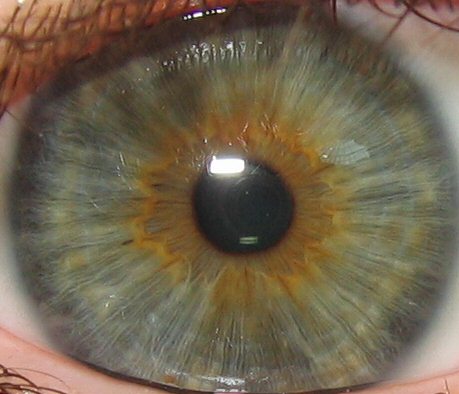
The Material Basis of Spirituality Science. Scientific Naturalism. The Designing of Natural Colors. Tyndall Effect. The Blue Iris is an example of Tyndall Effect.The Colors of Spiritualism: The first recorded Covenant between God and Man. The Book of Genesis, Chapter 9, verses 12-16.
The Magic of Creation – The creative use of Pigments
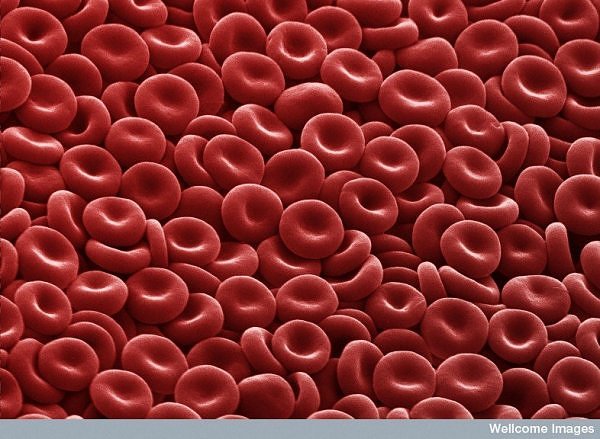
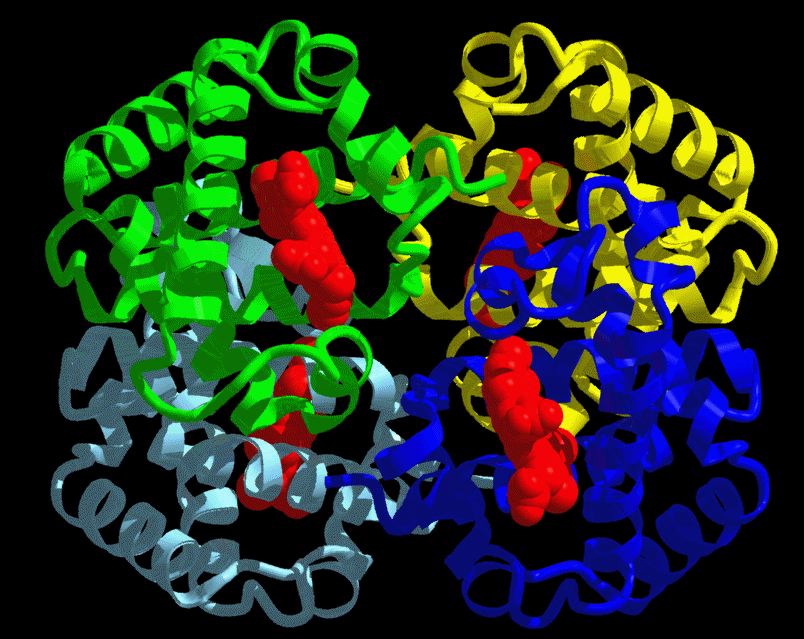
Whole Dude – Whole Designer – Red Blood Cell: The Magic of Creation will be appreciated by simply comparing Hemoglobin molecule with Chlorophyll molecule.What is Matter? and What is Spirit? What is the Color of Money? If materialism is about the influence of material wealth, I would like to use the Power/Force/Energy called Money to talk about Life and Death. The Laws of Conservation are applicable to both the living, and the non-living matter. Hence, it can be stated that “Life can neither be created nor destroyed.” If any person can refute my claim using valid, scientific information, I would offer the person a US $1,000 bill as a reward.
What it is to be a Substance? and What it is to Exist? We need to establish knowledge about the man and the world on a firm basis and the information it provides must be tested for its accuracy and consistency with an external reality. We have to make the fundamental distinction between the living and the non-living matter. The scientific advances of the 19th and 20th centuries reinforced the materialistic position concerning the basic similarity of organic living and inorganic physical matter. The man is viewed as a product of natural evolution and is thought to be subject to the same laws of Physics and Chemistry or mechanistic principles.
We need a methodology to study philosophy and to understand philosophical statements. Logical Positivism, also known as Scientific Empiricism aims to clarify concepts in both everyday and scientific language. It describes analysis of language as the function of philosophy. This analysis of language and of concepts is important to understand questions of belief and ideology which affect what we think we ought to do individually and socially. I use this method of ‘Applied Philosophy’ to analyze the concept of Spiritual Optics, the Spiritual dimension of biological coloration.
What is Color and What is Coloration?
The Material Basis of Spirituality Science. Spiritual Optics. What is Color? White Light is composed of every color in the Spectrum. But, color is more than an optical function.
The term ‘color’ refers to the spectral qualities of emitted or reflected light. The term ‘coloration’ is a dynamic and complex characteristic that has captured human interest and attention for a long time. The human interest to coloration ranges from purely aesthetic to the rigidly pragmatic.
The Concept of Whole Artist:
The Material Basis of Spirituality Science. Spiritual Optics. Who is the Artist? An artist uses colors with imagination to create forms and to generate a desired visual effect. A “Whole Artist” is a person who creates his own canvas, his own tools, his own pigments, and creates the desired visual effects while the forms that are created have no such creative and cognitive abilities.
The term artist is used to describe a person who works in, or is skilled in the technique of any of the fine arts, especially in painting, drawing, and sculpture. The term artistry describes the artistic ability which includes the use of imagination, a feeling for form, and a feeling for effect. I am using the term ‘Whole Artist’ to discover the person who may have used imagination to create forms to produce desired effects while the form itself lacks the cognitive abilities to generate its own form.
Plants may produce flowers of different colors while they essentially lack cognitive abilities to recognize the visual effect of the color they produce.
Biological Coloration:
The Material Basis of Spirituality Science. Spiritual Optics. Who is the Artist?
Biological Coloration refers to the general appearance of an organism as determined by the quality and quantity of light that is reflected or emitted from its surface. This Coloration depends upon several factors:
1. The integrity and deployment of the structural units and features involved in the generation of color,
2. The color and distribution of the organism’s pigments, and the relative location of differently colored areas,
3. The shape, posture, position, and movement of the organism,
4. The quality and quantity of light striking the organism, including the seasonal light and temperature variations,
5. The psychological, behavioral, hormonal, and other physiological conditions associated with the use of color,
6. The visual capacity of the viewer.
The role of pigments in biological coloration
The Material Basis of Spirituality Science. Spiritual Optics explores the creative use of pigments . Adolf Von Baeyer discovered the chemical structure of Indigo dye in 1883, and could successfully synthesize the plant pigment in 1890. He won the 1905 Nobel Prize in Chemistry in recognition of his service in the advancement of Organic Chemistry and the Chemical Industry through his work on Organic Dyes.The Material Basis of Spirituality Science. Spiritual Optics explores the creative use of pigments. Indigo is the name of blue-colored plant dye derived from a plant that is a native of India. The Indigo plants belong to the genus Indigofera, the species include, I. sumatrana, I. arrecta, and I. tinctoria. The credit for discovering the chemical structure of Indigo goes to German Chemist, Adolf Von Baeyer.
The biological coloration generated by the pigments of biological tissues that reflect or transmit light are known as biochromes. The organic compounds, biochromes, are classified according to the presence or absence of Nitrogen. Pigments produce color by selective absorption of light. The molecules of pigment absorb a limited range of wavelengths; the light that is not absorbed is reflected and its dominant wavelength determines the pigment’s color. However, it must be noted that biochromes are involved in the performance of various, pivotal, metabolic functions apart from imparting color. The natural coloration of living things is more complex than the visual sensory experience of the color associated with living things.
The Material Basis of Spirituality Science. Spiritual Optics explores the creative use of pigments. Fischer’s Turaco fischeri is unique. It produces its own special green pigment called turacoverdin.The Material Basis of Spirituality Science. Spiritual Optics explores the creative use of pigments . Red-crested Turaco, Tauraco erythrolophus. The red color results from turacin pigment derived from Porphyrin.
Pigments are substances that impart color to other materials. Most paint pigments are metallic compounds. Some metallic pigments occur naturally. Plants and animals contain pigments. Most opaque substances owe their color to a combination of scattering and absorption within the body of the material. The production of color depends upon the wavelength of incident light, the diameter of the pigment particle, and the relationship between the refractive index of the pigment and that of the vehicle in which the pigment particles are suspended. The color of a chemical compound depends on the selective absorption of light by molecules whose size or vibrational wavelengths or both lie between 3000 and 7000 angstrom. Selective absorption of visible light results from retardation in the relative speed or vibrational frequency of the many rapidly vibrating electron pairs found in the chemical compound. The chemical molecule is imparted a special motion or chemical resonance. If this molecular resonance involves short, rapid waves, the shorter, visible light waves (Violet and Blue) are absorbed, and the chemical compound appears Yellow or Orange. The Red-appearing pigments have slightly longer resonance values, absorb light from the Blue and Green regions of the light spectrum. Blue, and Green compounds result from cancellation of light in the Red, or Orange realms. Black substances absorb all light equally and completely; White compounds absorb no light in the visible spectrum. The color reflected by a pigment usually includes all the wavelengths of visible light except the absorbed fraction; the observed color of a compound thus depends upon the dominant wavelength reflected or transmitted. In most cases, the color observed by the viewer depends upon the optical absorption characteristics of the pigment, and the scattering effect caused by the medium in which the pigment molecules are suspended.
The role of pigments in biological coloration displays the role of an artist who chooses the pigments to generate a desired visual effect in organisms that have the visual capacity to recognize the color.
Dr. Rudranarasimham, Rebbapragada, B.Sc., M.B.B.S.,
Father’s Name: R. Suryanarayana Murty
Sri Venkateswara University, M.B.B.S. Class of April 1970
Andhra Pradesh Medical Council Registration Number: AMC5282; Date of Registration: September 16, 1971

What is Matter? and What is Spirit? What is the Color of Money? If materialism is about the influence of material wealth, I would like to use the Power/Force/Energy called Money to talk about Life and Death. The Laws of Conservation are applicable to both the living, and the non-living matter. Hence, it can be stated that “Life can neither be created nor destroyed.” If any person can refute my claim using valid, scientific information, I would offer the person a US $1,000 bill as a reward. Whole Dude’s WholeTheory of Man, The Spectrum of Seven Colors: These Colors or Dimensions are, 1. The Physical, 2. The Mental, 3. The Social, 4. The Moral, 5. The Spiritual, 6. The Creative, and 7. The Rational. Man as a Rational Being studies the Sign in the Clouds to learn about the Creator of Earth and Life on Earth.
What is Matter? and What is Spirit? What is the Color of Money? If materialism is about the influence of material wealth, I would like to use the Power/Force/Energy called Money to talk about Life and Death. The Laws of Conservation are applicable to both the living, and the non-living matter. Hence, it can be stated that “Life can neither be created nor destroyed.” If any person can refute my claim using valid, scientific information, I would offer the person a US $1,000 bill as a reward
What it is to be a Substance? and What it is to Exist? We need to establish knowledge about the man and the world on a firm basis and the information it provides must be tested for its accuracy and consistency with an external reality. We have to make the fundamental distinction between the living and the non-living matter. The scientific advances of the 19th and 20th centuries reinforced the materialistic position concerning the basic similarity of organic living and inorganic physical matter. The man is viewed as a product of natural evolution and is thought to be subject to the same laws of Physics and Chemistry or mechanistic principles.
We need a methodology to study philosophy and to understand philosophical statements. Logical Positivism, also known as Scientific Empiricism aims to clarify concepts in both everyday and scientific language. It describes analysis of language as the function of philosophy. This analysis of language and of concepts is important to understand questions of belief and ideology which affect what we think we ought to do individually and socially. I would use this method of ‘Applied Philosophy’ to analyze the concept of Spiritual Optics, the Spiritual dimension of biological coloration.
What is Color and What is Coloration?
The Material Basis of Spirituality Science. Spiritual Optics. What is Color? White Light is composed of every color in the Spectrum. But, color is more than an optical function.
The term ‘color’ refers to the spectral qualities of emitted or reflected light. The term ‘coloration’ is a dynamic and complex characteristic that has captured human interest and attention for a long time. The human interest to coloration ranges from purely aesthetic to the rigidly pragmatic.
Biological Coloration:
The Material Basis of Spirituality Science. Spiritual Optics. The Measurement of Color. The Tristimulus Theory of Color.
Biological Coloration refers to the general appearance of an organism as determined by the quality and quantity of light that is reflected or emitted from its surface. This Coloration depends upon several factors:
1. The integrity and deployment of the structural units and features involved in the generation of color,
2. The color and distribution of the organism’s pigments, and the relative location of differently colored areas,
3. The shape, posture, position, and movement of the organism,
4. The quality and quantity of light striking the organism, including the seasonal light and temperature variations,
5. The psychological, behavioral, hormonal, and other physiological conditions associated with the use of color,
6. The visual capacity of the viewer.
The Tristimulus Theory of Color
The comprehensive understanding of biological coloration demands a study of Physics, Chemistry, Physiology, Biology, Psychology and other subjects. It is equally important to pay tribute to people who have contributed to a better understanding of the principles involved in color production. I am happy to introduce Herbert Eugene Ives (1882-1953), son of Frederic Eugene Ives (1856-1937) to my readers.
The Material Basis of Spirituality Science. Spiritual Optics. The Measurement of Color. The Tristimulus Theory of Color. Herbert Eugene Ives, President of the Optical Society of America (1924-25) made a systematic study of the spectral absorption characteristics of all readily available pigments. He became an expert in Color Photography, Color Facsimile, and Color Television Systems.The Material Basis of Spirituality Science. Spiritual Optics. The Measurement of Color. The Tristimulus Theory of Color. The creation of an artistic unit which is recognized by its Color demands designing ability where the Designer knows the object of perception and the mind that has the ability called perception. The problem of Color Blindness illustrates the importance of the physiology of perception.The Material Basis of Spirituality Science. Spiritual Optics. The Measurement of Color. The Tristimulus Theory of Color.. From a human perspective, the sensory organ called Eye is very important for Color Perception, but perception also involves a psychological function as humans attach feelings, moods, and thoughts to the colors that they perceive. The object of perception, like the colors of flowers do not know the mind of its viewer. The above image describes the role of Tapetum Lucidum to improve light perception.
Herbert Eugene Ives is recognized for his study of the spectral absorption characteristics of all readily available pigments and he concluded that an artist’s palette containing only three properly chosen colors is entirely adequate under most circumstances for color production.
The Material Basis of Spirituality Science. Spiritual Optics. The Measurement of Color. The Tristimulus Color Theory. We need to understand as to how the sensory stimulus generates a sense of psychological satisfaction in the mind of the viewer.
Ives introduced modern Tristimulus Colorimetry, the three-components theory of chromatic adaptation. Through his devotion to the science of Optics and the art of Photography, he proved that three colors are adequate to handle the vast majority of colors needed for naturalistic painting. In nature, the beauty of colorful objects is in the imagination of the viewer. I would like to share some photo images of Glory-bower which belongs to Family Verbenaceae, Order Lamiales, tropical plants and shrubs that are grown for their attractive flowers, and foliage.
The Material Basis of Spirituality Science. Spiritual Optics. The Measurement of Color. The Tristimulus Theory of Color. Clerodendrum thomsonae. Bleeding heart glory-bower from Africa. Blooms resemble bleeding heart and the leaves are heart-shaped, glossy, dark-green. The plant exists blissfully without any awareness of an anatomical organ called heart.The Material Basis of Spirituality Science. Spiritual Optics. The Measurement of Color. The Tristimulus Theory of Color. Flaming, or Scarlet Glory-bower, Clerodendrum spendens. Red-Orange flowers among heart-shaped leaves.The Material Basis of Spirituality Science. Spiritual Optics. The Measurement of Color. The Tristimulus Theory of Color. Glory-bower from Asia. Clerodendrum speciosissimum. Flame-Orange flowers above heart-shaped bronze leaves.
The Tristimulus Theory of Color is important as it has several useful, practical applications and it helps the man to reproduce natural colors. At a fundamental level, color provides the sensory stimulus and the man perceives color as the evidence of a work done by a Designer who is intentionally providing a sense of psychological satisfaction in the mind of the viewer.
Who is the Artist?
The Material Basis of Spirituality Science. Spiritual Optics. The Measurement of Color. The Tristimulus Theory of Color. Who is the Artist? An artist uses colors with imagination to create forms and to generate a desired visual effect. A “Whole Artist” is a person who creates his own canvas, his own tools, his own pigments, and creates the desired visual effects while the forms that are created have no such creative and cognitive abilities.
No single function can explain the coloration of living things. We need a comprehensive theory that predicts the lines and patterns of coloration of plants and animals. An artist’s palette containing only three properly chosen colors is entirely adequate under most circumstances to produce the various visual effects of color that is observed. The optical mechanisms involved in the production of color are complex. Coloration is a dynamic and complex characteristic and the term must be clearly distinguished from the term ‘color’ which only refers to the spectral qualities of emitted or reflected light. It is apparent that plants, and animals have no cognitive abilities to produce the coloration by which they are recognized. However, the coloration displayed gives us a clue about the nature of the “Whole Artist” who could be using imagination, has feelings for the forms created and seeks satisfaction from the visual effects that he produced. If man has the ability called visual perception, he must use the ability to visualize the “Whole Artist” who is at work. I ask my readers to give attention to the three dimensions of Color Perception. These are, 1. The Designer or the Artist, 2. The Object of Perception, and 3. The Subject who has the visual capacity of Color Perception.
The Material Basis of Spirituality Science. Spiritual Optics. The Measurement of Color. The Tristimulus Theory of Color. There are Three Dimensions of Color Perception. 1. The Designer or the Artist, 2. The Object of Perception, and 3. The Subject who has the visual capacity of Color Perception.
Dr. Rudranarasimham, Rebbapragada, B.Sc., M.B.B.S.,
Father’s Name: R. Suryanarayana Murty
Sri Venkateswara University, M.B.B.S. Class of April, 1970
Andhra Pradesh Medical Registration Number: AMC5282; Date of Registration: September 16, 1971

What is Matter? and What is Spirit? What is the Color of Money? If materialism is about the influence of material wealth, I would like to use the Power/Force/Energy called Money to talk about Life and Death. The Laws of Conservation are applicable to both the living, and the non-living matter. Hence, it can be stated that “Life can neither be created nor destroyed.” If any person can refute my claim using valid, scientific information, I would offer the person a US $1,000 bill as a reward.
Whole Dude’s WholeTheory of Man, The Spectrum of Seven Colors: These Colors or Dimensions are, 1. The Physical, 2. The Mental, 3. The Social, 4. The Moral, 5. The Spiritual, 6. The Creative, and 7. The Rational. Man as a Rational Being studies the Sign in the Clouds to learn about the Creator of Earth and Life on Earth.
What is Matter? and What is Spirit? If materialism is about the influence of material wealth, I would like to use the Power/Force/Energy called Money to talk about Life and Death. The Laws of Conservation are applicable to both the living, and the non-living matter. Hence, it can be stated that “Life can neither be created nor destroyed.” If any person can refute my claim using valid, scientific information, I would offer the person a US $1,000 bill as a reward
What it is to be a Substance? and What it is to Exist? We need to establish knowledge about the man on a firm basis and the information it provides must be tested for its accuracy and consistency with an external reality. We have to make the fundamental distinction between the living and the non-living matter. The scientific advances of the 19th and 20th centuries reinforced the materialistic position concerning the basic similarity of organic living and inorganic physical matter. The man is viewed as a product of natural evolution and is thought to be subject to the same laws of Physics and Chemistry or mechanistic principles.
We need a methodology to study philosophy and to understand philosophical statements. Logical Positivism, also known as Scientific Empiricism aims to clarify concepts in both everyday and scientific language. It describes analysis of language as the function of philosophy. This analysis of language and of concepts is important to understand questions of belief and ideology which affect what we think we ought to do individually and socially. I use this method of ‘Applied Philosophy’ to analyze the concept of Spiritual dimension of biological coloration.
The Material Basis of Spirituality Science. The Colors of Life: Sir Isaac Newton (1642-1727),English mathematician, physicist, and natural philosopher was the first to explain what he called “the permanent colours of natural bodies.”
I begin with a special tribute to Sir Isaac Newton who discovered that white light is composed of every color in the spectrum. No single function can fully explain the coloration of living things. We need to integrate the optical, the visual, and the physiological functions of biological coloration and I carefully formulate the concept of spiritual dimension of color as I am not convinced about the role of color in what is described as “Natural Selection” by evolutionary biologists. Color plays an important role in every aspect of life. Most of us are familiar with coloration changes; the physiological, seasonal, age-related changes in color that are regulated by environmental stimuli such as light and temperature, coloration change due to emotions like excitement, and hormonal changes that are related to color function. Graying hair is a familiar badge of the elderly. The brilliant colors produced by a prism is an optical phenomenon caused by diffraction or dispersion, or interference of light. However, the understanding of color involves not only physics, but physiology and psychology as well. The term ‘Optics’ describes the scientific study of light. Physical Optics is concerned with the genesis, nature, and properties of light. Geometrical Optics is concerned with the Geometry involved in the reflection and refraction of light as encountered in the study of mirror, lens, and prism. Physiological Optics is concerned with the role of light in causing visual sensation. I add the dimension that I often describe as ‘Spiritualism’ to obtain a greater understanding of color as a function of living things.
The Material Basis of Spirituality Science. The Colors of Life.
The New Testament Book of The Gospel According to Apostle John, Chapter 1, verses 3 and 4 read: ” Through Him all things were made, without Him nothing was made that has been made. In Him was life, and that life was the light of men.” There is a direct relationship between life and light and hence there is a need to describe Spiritual Optics and know the coloration of living things as a spiritual function.
The Material Dimension of Spirituality Science. The Colors of Life. Richard Gere in 2013. We are most familiar with changes in man’s coloration that is related to age. In several cultures, people with silvery gray hair are treated with respect as the color symbolizes maturity, and wisdom.
What is Color?
The Material Dimension of Spirituality Science. The Colors of Life. White light is perceived as colorless as only a neutral color sensation is aroused by it. White light is composed of every color in the spectrum. Human civilization has developed taste in color and has attached names, values and functions to the colors it visualizes. A sense of fitness has been acquired concerning the use of color.
Color is a sensation that is aroused when light falls on the retina of the eye. Color is the visual effect resulting from the eye’s ability to distinguish the different wavelengths or frequencies of light. The apparent color of an object depends on the wavelength of the light that it reflects. Light may originate directly from a light source or as reflected light. Color perception depends on the different degrees to which various wavelengths of light stimulate the eye. In white light, an opaque object that reflects all wavelengths appears white and the object that absorbs all wavelengths appears black. White light is perceived as colorless as only a neutral sensation is aroused by it. Any three primary or spectral colors can be combined in various proportions to produce any other color sensation. The ‘additive mixing’ involves combining colored lights. A painter uses a process called ‘subtractive mixing’ to generate colors when pigments are combined to produce the desired visual effect.
It must be noted that a strict definition of color is difficult as different observers attach different meanings. The chemist is conscious of color as a quality concerning a pigment or a dye. The psychologist describes color in terms of visual perception, and this perception is further modified by human civilization that attached meanings, qualities, feelings, moods, and other special values to the colors perceived. The physicist may describe color in terms of qualities such as the wavelength of light, its intensity or brightness, and its hue, a particular shade or tint of a given color.
The Material Basis of Spirituality Science.The Colors of Life: What is Color? The answer depends upon the perspective of the person who may provide the answer to that question. But, it is important to know that colors are generated by either ‘Additive’, or ‘Subtractive Mixing. Additive mixing involves combining colored lights as done in generating color movie pictures. An artist combines dyes or pigments where the pigment absorbs or subtracts certain wavelengths and reflects some wavelengths.Spiritualism-The Colors of Life: What is Color? Munsell Color System. Munsell developed a system to describe a color using three criteria; hue, chroma, and value.The Material Basis of Spirituality Science. Colors of Life-What is Color? Munsell System may provide a great understanding of color, but a biologist has to understand the role and purpose of color in relation to a living thing’s ability to survive in nature by defending its existence and through reproductive success and by adapting to variable environmental conditions and factors that are peculiar to its biological community with which it constantly interacts.
Biological Coloration:
The Material Basis of Spirituality Science. The Colors of Life. What is Color? Color performs a protective function. This insect resembles a twig which is an unrelated species Does this insect have the ability to predetermine its own color and its own appearance in its given environment?
Animals have distinctive color patterns that seem to play an important role to support their existence in a given ecological community that shares a common physical environment. The color may serve the purpose of protection by concealing the organism from predators or its own prey. The term ‘protective coloration’ describes coloration or color pattern that facilitates escape from observation by predators or prey. The color may help reproductive success and is used to attract mates, or to get recognized by the members of its own group. The color may constitute a warning to its natural enemies. Plants extensively use attractive colors to assist the process called pollination.
CRYPTIC COLORATION:
The most widespread form of coloration is called cryptic resemblance or cryptic coloration in which the coloration and pattern on the skin of the animal enables it to blend in with the coloration of its natural habitat. This kind of coloration may conceal the animal from its predator or prey and it involves the use of colors that have general resemblance with its surroundings. The advantageous resemblance of one species to another, often unrelated species or to a feature of its own habitat is predetermined by its own genetic endowment.
The Material Basis of Spirituality Science. The Colors of Life: What is Color? The purpose of cryptic coloration is that of concealment. because of background resemblance.
IMITATIVE COLORATION:
Coloration is an adaptive mechanism and an animal can conceal its presence by imitating the appearance of a natural object present in its environment.
The Material Basis of Spirituality Science. The Colors of Life. What is Color? The purpose of Coloration could be an adaptive mechanism and this insect very closely imitates the color and appearance of the leaves.The Material Basis of Spirituality Science. The Colors of Life. What is Color? Marine animals often imitate the appearance of Corals or rocks to conceal their presence.
WARNING COLORATION AND BATESIAN MIMICRY:
Warning coloration consists of bold markings that warn predators away from inedible or poisonous animals. Mimicry is a deceptive coloration in which the animal resembles or mimic a warning-colored animal or predator.
The Material Basis of Spirituality Science.The Colors of Life: What is Color? Color may serve as a warning sign and it involves the use of bold markings. Mimicry involves deceptive coloration in which the animal deceptively uses the warning coloration of another animal.Monarch butterfly/The Viceroy butterfly: The North American Monarch is poisonous and is distasteful and is protected by its Warning Coloration which the Viceroy uses for its Mimicry.
SUDDEN CHANGES IN COLORATION:
Chameleon is famous for its ability to change its color suddenly to express anger or fright. The change is caused by movement of pigment called chromatophores within the cells.
The Material Basis of Spirituality Science.The Colors of Life: What is Color? The purpose of color could be that of expressing sudden mood changes like that of anger, or excitement. Chameleon is known for such Sudden Change in Coloration.
SEASONAL CHANGES IN COLORATION:
The Snow Hare is white in winter and is Brown during Summer and Autumn.
The Material Basis of Spirituality Science.The Colors of Life: What is Color? The purpose of Color may relate to change in temperatures, environmental changes associated with changing Seasons. The Snow Hare is white in Winter and is Brown during Summer and Autumn.
COLORATION FOR REPRODUCTIVE SUCCESS:
The use of color may serve the purpose of getting recognition from other members of its own group and it may specifically attract the attention of mates during the reproductive season. Many plants use colors to aid pollination by bees and moths.
The Material Basis of Spirituality Science.The Colors of Life: What is Color? The purpose of color could be that of promoting reproductive success. A male, marine Stickleback, tiny Bony Fish( 3 to 10 cm long) in reproductive condition with complete armour plates develops special red coloration to attract its mate during breeding season.The Material Basis of Spirituality Science.The Colors of Life: What is Color? Bees are active during day and are attracted by brightly colored flowers such as the flowers of Milkweed.The Material Basis of Spirituality Science.The Colors of Life: What is Color? Flowers and Pollination. Flowers may have often bright color markings called ‘honey-guides’ to attract pollinating insects.The Material Dimension of Spirituality Science.The Colors of Life: What is Color? Plants that depend upon moths for pollination generally produce white or dull-colored flowers that open late afternoon or night. Moths are active at dusk or night. These Mayapple white flowers produce ample nectar and carry heavy fragrance to attract the moths.
The Problem of Albinism:
Albino describes animal or plant lacking normal pigmentation. The albino body covering such as skin, eyes, hair, and feathers lack pigment. Melanin is the pigment found in human skin, hair, and eyes. The amino acid tyrosine is required for melanin synthesis. An inherited lack of enzyme required for melanin synthesis results in one form of albinism. This defect is inherited as a recessive trait.
The Material Dimension of Spirituality Science. The Colors of Life. What is Color? The problem of Albinism helps in the understanding of the purpose of Biological Coloration. The Tiger with stripes and color has a better ability to conceal itself from its prey before attacking the unsuspecting prey.The Material Dimension of Spirituality Science. The Colors of Life. What is Color? This is definitely a pretty sight. This albino Peacock would not have the advantage of attracting its mate during the mating season as compared to its normal colored partner.
Biological Coloration is genetically determined and the living organism does not voluntarily select the colors it may display. Human beings could be an exception as man uses colors for purposes other than those designed by Nature for human existence.
What is the Color of Man?
The Material Dimension of Spirituality Science. The Colors of Life. What is Color? What is the Color of Man? All newborn babies of all human races appear pinkish-red when they are just born. A process of maturation that extends over weeks is needed for the development of skin pigmentation.
All newborn babies of all human races appear pinkish-red when they are just born. A process of maturation that extends over weeks is needed for the development of skin pigmentation.
Spiritualism-The Colors of Life: What is Color? Man uses the tactic called ‘Camouflage and Concealment’ to fight a battle against his enemy.The Material Dimension of Spirituality Science.The Colors of Life: What is Color? This man has used the military tactic called Camouflage and Concealment. What is the true Color of Man?
What is the True Color of Man?
To explore the spiritual basis of biological coloration, in my next post, I would discuss as to how living things generate colors that play a vital role in biochemical reactions such as photosynthesis, maintenance of thermal balance and other physiological functions.
Dr. Rudranarasimham, Rebbapragada, B.Sc., M.B.B.S.,
Father’s Name: R. Suryanarayana Murty
Sri Venkateswara University, M.B.B.S. Class of April 1970
Andhra Pradesh Medical Council Registration Number : AMC5282; Date of Registration: September 16, 1971
What is Matter? and What is Spirit? What is the Color of Money? If materialism is about the influence of material wealth, I would like to use the Power/Force/Energy called Money to talk about Life and Death. The Laws of Conservation are applicable to both the living, and the non-living matter. Hence, it can be stated that “Life can neither be created nor destroyed.” If any person can refute my claim using valid, scientific information, I would offer the person a US $1,000 bill as a reward.
The Material Dimension of Spirituality Science. The Colors of Life. An artist uses colors with imagination to create forms and to generate a desired visual effect. A “Whole Artist” is a person who creates his own canvas, his own tools, his own pigments, and creates the desired visual effects while the forms that are created have no such creative and cognitive abilities.Whole Dude’s WholeTheory of Man, The Spectrum of Seven Colors: These Colors or Dimensions are, 1. The Physical, 2. The Mental, 3. The Social, 4. The Moral, 5. The Spiritual, 6. The Creative, and 7. The Rational. Man as a Rational Being studies the Sign in the Clouds to learn about the Creator of Earth and Life on Earth.
Whole Foods-Whole Inspiration-Whole LanguageWhole Foods, Whole People and Whole Planet inspire Whole Dude to invent Whole Phrases: Whole Dude, Whole Linguistics,Whole Language, Whole Cookie, Whole Love and others. Whole Dude uses the phrase Whole Linguistics to describe three entities; 1. Language User, 2. Language Interpreter and 3. Language Creator. Image Credit: Agenda Publications, Ann Arbor District Library, Issue Dates, December 1997 and February 1998.
Whole Optics: The Science of Spiritual Optics
The Science of Spiritual Optics. What is Matter? and What is Spirit? The Laws of Conservation are applicable to both the living, and the non-living matter. Hence, it can be stated that “Life can neither be created nor destroyed.”
What it is to be a Substance? and What it is to Exist? We need to establish knowledge about the man on a firm basis and the information it provides must be tested for its accuracy and consistency with an external reality. We have to make the fundamental distinction between the living and the non-living matter. The scientific advances of the 19th and 20th centuries reinforced the materialistic position concerning the basic similarity of organic living and inorganic physical matter. The man is viewed as a product of natural evolution and is thought to be subject to the same laws of Physics and Chemistry or mechanistic principles.
We need a methodology to study philosophy and to understand philosophical statements. Logical Positivism, also known as Scientific Empiricism aims to clarify concepts in both everyday and scientific language. It describes analysis of language as the function of philosophy. This analysis of language and of concepts is important to understand questions of belief and ideology which affect what we think we ought to do individually and socially. I use this method of ‘Applied Philosophy’ to analyze the concept of Spiritual Optics, the Spiritual dimension of biological coloration.
The Science of Optics-Spiritual Light-Spiritual Optics-God is Light:
Whole Dude at Whole Foods discovers the Material Basis of Spirituality Science to describe the concept of Whole Optics. The Material Basis of Spirituality Science. Spiritual Light and Spiritual Optics involves a scientific study of Light or Optics. God is Light or God created Light; Light is Energy, Light is Energy of Life and Color is the evidence for the use of imagination to formulate spiritual relationships between energy dependent life and energy providing Supreme Being.
Optics is the scientific study of Light and the study of Light should be concerned with the genesis, nature, properties of Light and its purpose and role in the establishment of life and interactions among living things.
Whole Dude at Whole Foods discovers the Material Basis of Spirituality Science to describe the concept of Whole Optics. Spiritual Light and Spiritual Optics involves a scientific study of Light or Optics. God is Light or God created Light; Light is Energy, Light is Energy of Life and Color is the evidence for the use of imagination to formulate spiritual relationships between energy dependent life and energy providing Supreme Being.
Whole Dude at Whole Foods discovers the Material Basis of Spirituality Science to describe the concept of Whole Optics. The Material Basis of Spirituality Science. Spiritual Light and Spiritual Optics involves a scientific study of Light or Optics. God is Light or God created Light; Light is Energy, Light is Energy of Life and Color is the evidence for the use of imagination to formulate spiritual relationships between energy dependent life and energy providing Supreme Being.
The first recorded utterance of God in the Bible is, “Let there be light.” (The Old Testament, The First Book of Moses, The Book of Genesis, Chapter 1, verse 3.) Light is the sign of divine operation in the world of chaos and darkness. Light brings order to the world. Without a source of light, a primary source of external energy, life would be impossible on planet Earth. Further, it can be stated that light is essential for life for the synchronization of life’s living functions, and to generate the experience of peace, harmony, and tranquility in the living condition, or state.
Thus light is associated with the experience called happiness. “Every good and perfect gift is from above, coming down from the Father of the heavenly lights.” (The New Testament, The Epistle of Apostle James, Chapter 1, verse 17) The most important function of light is not that of providing visual sensation. Light performs several non optical functions. Plants do not have the visual ability to see Light. But, plants have the ability to use light energy to perform biochemical reactions such as Photosynthesis which is a creative mechanism to trap light energy and convert it into chemical energy that living things can further use to perform a variety of their living functions. Hence light is Divine Providence to transform nonliving matter into Living Organisms which can be identified by their color, and appearance.
The Material Basis of Spirituality Science. Spiritual Optics: The most important function of light is not that of providing visual sensation. Light performs several non optical functions. Plants do not have the ability to see Light. But, plants have the ability to use light energy to perform biochemical reactions such as Photosynthesis which is a creative mechanism to trap light energy and convert it into chemical energy that living things can further use to perform a variety of their living functions. Hence light is Divine Providence to transform nonliving matter into Living Organisms which can be identified by their color, and appearance.
What is Color and What is Coloration?
The term ‘color’ refers to the spectral qualities of emitted or reflected light. The term ‘coloration’ is a dynamic and complex characteristic that has captured human interest and attention for a long time. The human interest to coloration ranges from purely aesthetic to the rigidly pragmatic. The human interest in coloration gave the impetus to the experiments conducted by the Moravian abbot Gregor Johann Mendel (1822-1884 ), the botanist who studied inherited characteristics establishing the science of Genetics, using visual clues from the coloration of plant flowers.
Whole Dude at Whole Foods discovers the Material Basis of Spirituality Science to describe the concept of Whole Optics. The Material Basis of Spirituality Science. Spiritual Light and Spiritual Optics involves a scientific study of Light or Optics. God is Light or God created Light; Light is Energy, Light is Energy of Life and Color is the evidence for the use of imagination to formulate spiritual relationships between energy dependent life and energy providing Supreme Being. The human interest in Coloration lead Gregor Mendel to conduct his famous studies that established the science called Genetics. He conducted experiments studying the white or pinkish flowers of Pea (Pisum sativum) plants.
Biological Coloration:
Biological Coloration refers to the general appearance of an organism as determined by the quality and quantity of light that is reflected or emitted from its surface. This Coloration depends upon several factors:
1. The integrity and deployment of the structural units and features involved in the generation of color,
2. The color and distribution of the organism’s pigments, and the relative location of differently colored areas,
3. The shape, posture, position, and movement of the organism,
4. The quality and quantity of light striking the organism, including the seasonal light and temperature variations,
5. The psychological, behavioral, hormonal, and other physiological conditions associated with the use of color,
6. The visual capacity of the viewer.
The Optical and Non-Optical Functions of Coloration:
WholeDude – Whole Artist : Chilean Mimulus flowers. Mimulus luteus. Who is the artist that caused this visual effect?
In plants and animals, coloration serves the function of communication. Plants do not have the ability called visual perception and yet they can transmit optical signals to attract the attention of pollinators to achieve reproductive success. Coloration such as ‘advertising coloration’ may emphasize optical signals and thereby enhance communication. Organisms use such communication to modify biotic interactions with other members of their biological community. The coloration may repel, or attract another organism. However, coloration could also be used to suppress optical signals or to specifically create incorrect signals and thereby reduce communication. Thus coloration contributes to adaptive interactions; and the deceptive coloration serves to lessen detrimental or maladaptive interaction with other organisms.
The Material Basis of Spirituality Science. Spiritual Optics. The Display Coloration of Cock of the Rock (Rupicola rupicola of Peru).The Material Basis of Spirituality Science. Spiritual Optics: The Display Coloration, Flash Colors of male frigate bird (Fregata minor) with red throat patch inflated to attract a female.Whole Dude – Whole Colors: Display Coloration. Keel-billed Toucan (Ramphastos sulfuratus) uses color for species recognition.Whole Dude-Whole Colors: Alluring Coloration. The blue-tailed skink (Eumeces skiltonianus) can shed its tail at will and uses it to distract potential predators.Whole Dude-Whole Colors: Display Coloration. The Courtship Coloration of male Mandrill (Mandrillus sphynx).Whole Dude-Whole Colors: The Display Coloration. Peacock, the male peafowl (Pavo cristatus) displays a stunningly beautiful array of colors to attract the attention of female.Whole Dude – Whole Colors: Structures called Chloroplasts found inside the cells of green plants contain the green pigment known as Chlorophyll is the only substance in nature able to trap and store the energy of Sunlight. The light absorbed by Chlorophyll molecules is mainly in the red and blue-violet parts of the visible spectrum; the green portion is not absorbed but reflected, and thus Chlorophyll appears Green. The function of Light and Color is that of Creation of Life.
Coloration may affect an organism in ways other than its interaction with other organisms. Such non optical functions of coloration include physiological roles that depend on the molecular properties (e.g., strength and type of chemical bonds) of the chemicals that create color. Chlorophyll is a green pigment which has the exclusive ability of trapping solar energy. Other examples include, dark hair is mechanically stronger than light hair, and dark feathers resist abrasion better than light feathers. Coloration may play a role in organism’s energy budget because biochromes create color by the differential reflection and absorption of solar energy and can contribute to maintain thermal equilibrium. Color pigments like melanin work as a barrier against the harmful effects of the ultraviolet rays of Sunlight. It is the mechanism for the absorption of heat in cold environments by small cold-blooded animals. Pigments found in the eye limit the incidence of beams of light entering the eye by absorbing scattered light within the eyeball that allows greater visual acuity. Coloration or its pattern affects an animal’s own vision. Surfaces near the eye may be darkly colored to reduce reflectance that interferes with vision. Emitted light or Bioluminescence forms a portion of the coloration of some organisms. It serves as a light source in nocturnal species or in deep water marine animals such as Pinecones Fishes which have bright photophores or bioluminescent organs.
Whole Dude-Whole Colors: Bioluminescence is a non optical function of Coloration as seen in this deep water fish Monocentris japonicus.
Coloration can result from accumulation of by-products of metabolic processes. The abnormal coloration called ‘jaundice’ or ‘icterus’ describes the greenish-yellow condition of the skin, urine, and eyeballs from increased amounts of bile pigments in the blood and it often indicates a diseased condition like hepatitis, a liver disorder. Similarly, Cyanosis describes a bluish or purple coloration of skin, lips, fingers, eyes, and other mucous membranes caused by lack of oxygen, the presence of desaturated hemoglobin, or abnormal hemoglobin in the blood.
Whole Dude-Whole Colors: Coloration may reveal an underlying diseased condition. This yellow discoloration of eyes and face is called ‘Jaundice’ or Icterus often caused by Liver inflammation.Whole Dude-Whole Colors: The bluish skin coloration of this baby is called Cyanosis and the presence of this coloration helps to diagnose the condition of the baby.
Spiritual Light – Spiritual Optics:
Whole Dude at Whole Foods discovers the Material Basis of Spirituality Science to describe the concept of Whole Optics. The Material Basis of Spirituality Science. Spiritual Light and Spiritual Optics involves a scientific study of Light or Optics. God is Light or God created Light; Light is Energy, Light is Energy of Life and Color is the evidence for the use of imagination to formulate spiritual relationships between energy dependent life and energy providing Supreme Being.
Light is the source of Life. The establishment of light on planet Earth is a creative process that uses light energy to recreate the spectral colors in the lives of individual organisms. The Biological Coloration is the most compelling evidence of the fact of creation. Animals, and plants do not have the ability to generate colors by simply depending upon spontaneous, random, and unguided mutations. Biological Coloration requires complex synchronization of morphological appearance, biotic interactions and behavior of living organisms that share a given environment. Light is the primary source of external energy to support the existence of all living things. The principles of Physical Optics, Geometrical Optics, Physiological Optics have to operate in conjunction with Spiritual Optics to generate the experience of peace, harmony, and tranquility that is fundamental to existence. Life is a manifestation of order to replace disorder, or confusion that could be caused if light does not provide the stimulus called illumination that drives away darkness. It is no surprise to note that the major Biological Rhythm is called the Diurnal, or Day, or Solar Rhythm.
Dr. Rudranarasimham, Rebbapragada, B.Sc., M.B.B.S.,
Father’s Name: R. Suryanarayana Murty,
Sri Venkateswara University, M.B.B.S. Class of April 1970,
Andhra Pradesh Medical Council Registration Number: AMC5282; Date of Registration: September 16, 1971
The Colorful images of Spiritual Optics:
The Colors of Spiritualism: TARANTULA SPIDER – Poecilotheria metallica. Spider of Southeast India, and Sri Lanka. What is Color? What generates the Color?The Images of Spiritualism: Naja naja. The Indian snake Cobra with warning coloration on its hood.Spiritualism in Images: Concealing and Disruptive Coloration of Tiger.Spiritualism in Images: Disruptive Coloration of Zebras – Equus burchelli.Spiritualism in Images: Concealing and Protective Coloration – Shadow pattern – Odocoileus virginianus – Mottling of the fawn’s coat.Spiritualism in Images: Protective Coloration – Counter-shading – Kobus – Kobus – kob – thomasi of Uganda.Spiritualism in Images: Concealing Coloration. Ceylon leaf insect – Philium.Spiritualism in Images: Concealing Coloration. Walking stick insect – Phasmatidae – Phraortes illepidus.Spiritualism in Images: Concealing Coloration – Leaf Butterfly – AnaeaSpiritualism in Images: Concealing Coloration. Thorn treehopper – Umbonia spinosa.Spiritualism in Images: Concealing Coloration. Black Swallowtail Butterfly – Papilio.Spiritualism in Images: Concealing Coloration. Pleuronectiformes – Flatfish.Spiritualism in Images: Concealing Coloration. Right-eyed Flounder.Spiritualism in Colors: Concealing Coloration. Scolopax rusticola. European Woodcock.Spiritualism in Images: Disruptive and Concealing Coloration. Blacksmith Plover. Vanellus armatus.Spiritualism in Images: Concealing and Disruptive Coloration. Willow Ptarmigan. Lagopus lagopus.Spiritualism in Images: Disruptive and Concealing Coloration. Moorish Idol. Zanclus canescens.Spiritualism in Images: Concealing Coloration. Orchid Mantis of Malay peninsula. Hymenopus coronatus.Spiritualism in Images: Disruptive and Protective Coloration. Emperor moth. Saturnia pavonia.Spiritualism in Images – Protective Coloration. Startle Markings. False eye. Butterfly fish. Chaetodon capistratus.Spiritualism in Images: Warning Coloration. Puss moth caterpillar Cerura when threatened, raised head and tail thorns displayed.Spiritualism in Images: Protective Coloration. Startle markings. False eyes on Noctuid moth. Noctuidae. Donuca orbigera.Spiritualism in Images – Adaptive Coloration. Octopus vulgaris can blanch and change its coloration.Spiritualism in Images: Adaptive Coloration. Anolis carolinensis can gradually change its coloration from green to brown to match its background.Spiritualism in Images. Batesian Mimicry. Non-venomous Scarlet King snake mimicking of the venomous Coral snake. Both have colored rings encircling their bodies. Coral snake has black-yellow-red-yellow ring order, and Scarlet snake has black-yellow-black-red ring order. Its predator has no perfect discrimination ability and gets easily confused about its identity.Spiritualism in Images: Mullerian Mimicry. The black-and-yellow coloration of bees and wasps is an advertising, warning coloration to warn the third-party of dangerous or inedible qualities of the organism. This is not deceptive coloration. Potential predators easily learn and generalize this optic signal.Spiritualism in Images: Warning Coloration. Yellow and black markings on Poison frogs. Mimic of Ranitomeya summersi.Spiritualism in Colors: What is Color? What generates the Color? The Colors of Eugenes fulgens. It is the radiating Spiritual Light that is reflected and is recognized by the viewer.Spiritualism in Images: The Superb Tanager. Tangara fastuosa. What is Color? What generates the Color? This Superb creature is known for its Tyndall Blue Color. It needs structural elements and pigments to generate these alluring colors it displays.What is Matter? and What is Spirit? What is the Color of Money? If materialism is about the influence of material wealth, I want to use the Power/Force/Energy called Money to talk about Life and Death. The Laws of Conservation are applicable to both the living, and the non-living matter. Hence, it can be stated that “Life can neither be created nor destroyed.” If any person can refute my claim using valid, scientific information, I would offer the person a US $1,000 bill as a reward.Whole Dude at Whole Foods discovers the Material Basis of Spirituality Science to describe the concept of Whole Optics. The Material Basis of Spirituality Science. Spiritual Light and Spiritual Optics involves a scientific study of Light or Optics. God is Light or God created Light; Light is Energy, Light is Energy of Life and Color is the evidence for the use of imagination to formulate spiritual relationships between energy dependent life and energy providing Supreme Being. Whole Dude’s WholeTheory of Man, The Spectrum of Seven Colors: These Colors or Dimensions are, 1. The Physical, 2. The Mental, 3. The Social, 4. The Moral, 5. The Spiritual, 6. The Creative, and 7. The Rational. Man as a Rational Being studies the Sign in the Clouds to learn about the Creator of Earth and Life on Earth.