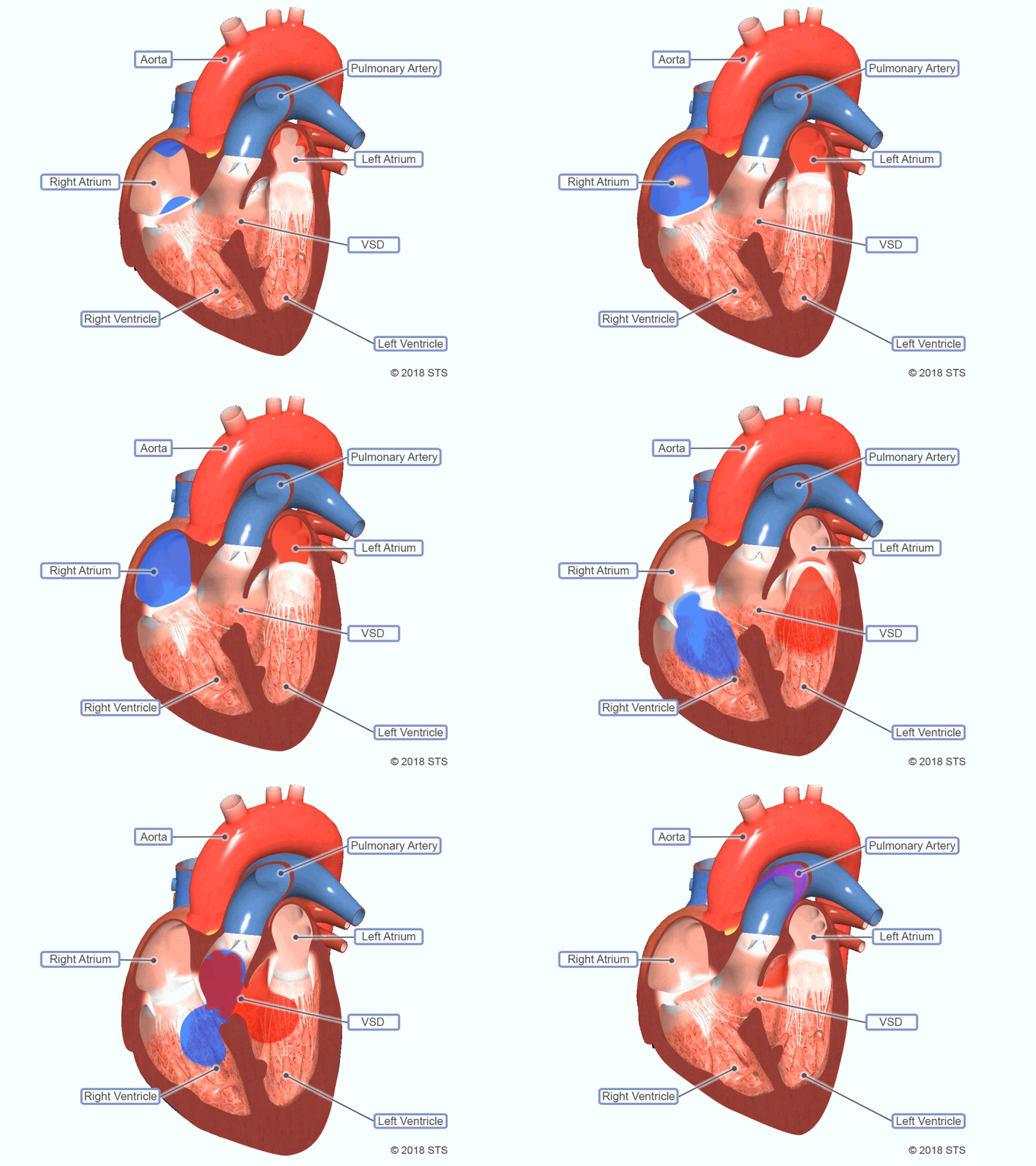

World Health Day 2023. My health status – Living a Life with a broken heart

World Health Day 2023. My health status – Living a Life with a broken heart

World Health Day 2023 – Health for All

World Health Day (WHD), held every year on 7 April, marks the anniversary of the founding of the World Health Organization (WHO) in 1948 and each year focuses on a specific public health concern. In addition to focusing on the journey to achieving Health For All, which is this year’s theme, WHO will observe its 75th anniversary under the theme 75 years of improving public health.

World Health Day 2023. My health status – Living a Life with a broken heart

In 1948, countries of the world came together and founded WHO to promote health, keep the world safe and serve the vulnerable – so everyone, everywhere can attain the highest level of health and well-being.  WHO’s 75th anniversary year is an opportunity to look back at public health successes that have improved quality of life during the last seven decades. It is also an opportunity to motivate action to tackle the health challenges of today and tomorrow.

Theory of Man precedes Theory of Health
Theory of Man precedes Theory of Health.

In my analysis, there can be no ‘Theory of Health’ without sharing a ‘Theory of Man’. The question, “What is health?” cannot be asked without raising the question, “What is man?”

Theory of Man precedes Theory of Health.

In my view, ‘ the existence of a man always precedes the essence of the man’. For that reason, the biological basis of the man’s existence must be identified to define the living entity called man. The natural event called ‘death’ precedes the natural event called ‘birth’ which heralds the arrival of newborn Life. The newborn always arrives after several programmed cellular death events.

Theory of Man precedes Theory of Health.

The man’s existence in any condition, good health or ill-health, at any age, at any given time and place, depends upon Mercy, Grace, and Compassion (Sanskrit. KRUPA or KRIPA) of LORD God Creator. The man does not exist in the natural world because of his physical and mental work. The man needs input of matter and energy, from an external source, from the moment of conception to the conclusion of his entire life journey. The man’s existence is always conditioned as he cannot regulate either internal, or external factors that determine the fact of his existence.

Theory of Man precedes Theory of Health.

I invite my readers to review the article titled “What is health?” published in Microbial Biotechnology by Dr. Harald Brüssow. I took the freedom to add a few comments to his article to help my readers to examine the topic in a critical manner.

Rudra Narasimham Rebbapragada

BHAVANAJAGAT

What is health?

Clipped from: https://www.ncbi.nlm.nih.gov/pmc/articles/PMC3917469/

Microbial Biotechnology. 2013 Jul; 6(4): 341–348.

Published online 2013 May 6. doi:  10.1111/1751-7915.12063

PMCID: PMC3917469

PMID: 23647782

Harald Brüssow*
Summary

The Medical Science fails to define the term ‘health’ for it fails to define the term ‘man’. To attach meaning to health, I must attach meaning to the word called ‘man’.

Classical medical research is disease focused and still defines health as absence of disease. Languages, however, associate a positive concept of wholeness with health as does the WHO health definition. Newer medical health definitions emphasize the capacity to adapt to changing external and internal circumstances. The results of the 2010 Global Burden of Disease study provides keys for a quantifiable health metrics by developing statistical tools calculating healthy life expectancy. Of central social and economic importance is the question whether healthy ageing can be achieved. This concept hinges on theories on the biological basis of lifespan determination and whether negligible senescence and the compression of morbidity can be achieved in human societies. Since the health impact of the human gut microbiome is currently a topical research area, microbiologists should be aware of the problems in defining health.
Introduction
The man represents a biological or biotic community of trillions of individuals; independent, living cells with individuality. The Man is also a natural host to trillions of microbes. Human life must be defined in terms of biotic interactions; both intraspecific, and interspecific biotic interactions.

Science has its fashions. Suddenly the leading science journals are full of articles about a specific topical research area. Sometimes, this wave of popularity follows a technological break-through which permits asking questions that were previously impossible to tackle or at least very hard to address experimentally. At other occasions, this cumulating of top-level research reports is the consequence of large international research efforts where grant agencies provided large amounts of money, which attracted many scientists to the field. In still other situations, the scientific community realizes that a certain field of scientific inquiry has simply been overlooked or neglected and the view offered by the new insights is exiting theoretical interest and promising practical applications. The human microbiome is currently such a fashionable field. Novel DNA sequencing techniques combined with new bioinformatic tools and the general progress of ‘–omics’ technologies offer the methods; major research grants on both sides of the Atlantic provided the money and the field has been an eye-opener for microbiologists which might be compared with the time of Leeuwenhoek when microbes in our mouth were first seen in the microscope and the time of Koch when the first isolated bacterial colonies were seen by the naked eye and linked to human disease. We perceive the human microbiome metagenome as our second human genome, as a source of human genetic variability (Schloissnig etal., 2013) and as a factor influencing human health (Clemente etal., 2012). The human gut microbiome has been associated with health issues of central importance such as obesity (Turnbaugh etal., 2006), healthy ageing (Claesson etal., 2012) and most recently cancer (Arthur etal., 2012), to quote only the most prominent fields. Probiotic bacteria have also been fashionable for a while (Thomas etal., 2010) and were judged to have a scientific basis (Neish, 2009), but scientific reports aroused less attention than gut microbiota research. Probiotics carry in their definition as ‘live health-promoting bacteria’ the concept that microbes can influence our health. But what is health? If you want to boost health, you must know what it is and how to measure it.
Health: ask the experts
I ask the Medical Science to apply the principles of Clinical Medicine not only to diagnose ill health but also to diagnose good and perfect or ‘Whole Health’ for the man is created by entity called God who is always Perfect and Whole.

At school we heard of Socrates who asked people who are supposed to be experts and to get an answer from a dialogue with them. Therefore, I first went to health authorities like medical doctors and their authoritative textbooks that guided generations of medical students like Harrison’s Principles of Internal Medicine (Longo etal., 2011). In the 18th edition you find ample material on pathogens, even a chapter on the human microbiome (Gordon and Knight, 2011), a chapter on women’s health, but no definition of health. Overall, one gets the impression that medicine deals with disease and not health. In a recent meeting, one of my colleagues said that the US National Institutes of Health (NIH) should correctly be called National Institutes of Diseases reflecting this disease focus of medical research. Health is currently fashionable as ‘Global Health’, but again scientists working at institutes called like this or in such programmes deal mostly with diseases. After this disappointment, the author turned to PubMed with ‘health’ and ‘definition’ as search terms and got less than 20 papers – a quite surprising outcome for such a central question of the human society. Clearly there is a problem with the definition of the term ‘health’.
Health: ask the languages
None of the living functions performed by a man involve the use of any known human language.

When a term is so self-evident and at the same time so elusive that no definition is provided in the scientific literature, it is frequently helpful to investigate the words we use when speaking about it. Naming is the first activity of human beings when trying to make order of things surrounding us. Words reflect the experience of many generations and words constitute a collective subconsciousness that determines still today our unexpressed thoughts and actions, more than we are aware of consciously. In the Oxford Dictionary ‘health’ is defined as ‘the state of being free from illness and injury’. It is obviously a negative definition. Such a definition reflects the current use of the words in the spoken language, but not necessarily its development over time. The English ‘health’ derives from Old English ‘hælth’, which is related to ‘whole’ ‘a thing that is complete in itself’ (Oxford Dictionary) derived from Old English ‘hal’ of Germanic origin (the addition of the w in whole/hal reflects a dialect pronunciation of the 15th century). In Middle English ‘hal’ also became ‘hail’ with the meaning of health in greetings and toasts. ‘hal’ is related to the Dutch ‘heel’ and the German ‘heil’. In German the connections between health, wholeness and salvation becomes even clearer than in English. ‘Heil-kunde’ and ‘Heil-kunst’ are still common German words for medicine, ‘Heiler’ is a traditional or alternative health provider; ‘heilfroh’ means wholly happy and refers to a relationship between health and happiness. ‘Heil’ has also religious meanings as seen from the German word ‘Heiland’ for the Christ as Savior (or for false prophets as in ‘Heil Hitler’). The German word conserved clear links with the religious and cultic realm in ‘heilig’ (English: holy) where ‘Heil’ is equivalent with salvation in the religious meaning (‘Seelen-heil’). These connotations are still vibrating consciously or unconsciously in native speakers when using these words. In fact, from this quasi-religious context the constitution of the WHO adopted in 1948 becomes understandable when stating ‘the following principles are basic to the happiness, harmonious relations and security of all peoples: Health is a state of complete physical, mental and social wellbeing and not merely the absence of disease or infirmity’. The definition has not been revised but was variously challenged for its ‘complete wellbeing’ as reflecting a fundamentalist view, referring to an ideal world of messianic expectations. Some scientists have therefore asked for redefining health to make it a realistic, measurable quantity (Saracci, 1997).

Since this language approach turned out to be revealing, let’s follow the relationship between health and wellness (are they synonyms or do they express distinct concepts?) and between health and disease (are they antonyms?). Disease is defined by the Oxford Dictionary as ‘disorder of structure or function in an organism that produces specific symptoms and is not the result of physical injury’; ‘dis-ease’ derives from the Old French ‘desaise’ (lack of ease). Wellness and illness is clearly a pair of antonyms. Illr is a Norse word for evil and was taken into Middle English with the meaning of wicked, malevolent. ‘Well’ (German: wohl) derives from a word common to many Germanic languages and means ‘in a good way’, initially as a contrast to wicked. As an adjective one of the meaning of ‘well’ is specifically ‘in good health’ (Oxford Dictionary). In German ‘wohl’ goes beyond good health, it alludes to psychological and emotional aspects (‘Wollust’: English: lust, but in Old English as in current German still in the sense of ‘pleasure’ and ‘delight’) and material wealth (‘Wohlstand’). Wellness thus goes beyond physical health and has a strong connotation of happiness, but also of hedonism (where pleasure is the chief good).

One might argue that these are linguistic associations restricted to Germanic languages. However, this is not the case: the Latin word pair ‘salus’–’malus’ has very similar connotations which were transmitted into modern Romanic languages (French: salut–maladie). In Latin ‘salus’ means health, rescue, redemption and wealth. It derives from ‘salvus’, Old Indian ‘sarvas’, which meant initially nothing else than ‘whole’. We see here again the notion of completeness with health. Malus which leads then to malady shares with the Germanic word ‘small’ a common root and thus refers to incompleteness. Malus has also moral connotation (Eritis sicut deus scientes bonum et malum – the snake in Genesis: you will be like God knowing the good and the evil). Disease has long been regarded as a celestial punishment for moral failing. In many traditional societies, health surveys should not miss to ask about ‘the evil eye’, underlining the widespread magic concepts on disease.
Redefining health: medical approaches
What is Spiritual Sickness? Lust, Avarice, Anger, Arrogance, Jealousy, Infatuation, and Miserliness are symptoms of Spiritual Sickness. Spiritual well-being is an integral component of Whole Health.

Recently the need for a new definition of health was expressed by the British Medical Journal (Jadad and O’Grady, 2008). A discussion via global blog conversation was initiated on ‘How should health be defined?’ The participation rate was weak: only 38 communications were counted. In an influential blog, R. Smith (2008) confessed that this issue is for most doctors an uninteresting question since they are interested in disease and not health. Medical textbooks are a massive catalogue of diseases. Health is an illusion and according to the strict standards of the WHO definition, most people are unhealthy for most of the time, so far, his comments. Research-oriented doctors complained that the WHO definition has no direct operational value – it is so widely formulated that health outcome cannot easily be measured. Health like beauty is in the eyes of the beholder. It turned out that redefining health is an extremely ambitious and complex goal. A conference held in 2009 in the Netherlands (‘Is health a state or an ability? Towards a dynamic concept of health’) (Huber, 2010), an editorial by the Lancet (‘What is health? The ability to adapt’) (Anonymous, 2009) and an analysis in the BMJ (‘Health: how should we define it?’) (Huber etal., 2011) proposed a few conclusions. The preferred view on health was the ability to adapt and to self-manage. With respect to physical health the term of ‘allostasis’ was introduced – the maintenance of physiological homeostasis through changing circumstances. In the field of mental health, a sense of coherence was identified as defining criterion. Social health included people’s capacity to fulfil their potentials and obligations, the ability to manage their life and to participate in social activities including work. R. Smith summarized this into the phrase ‘health is the capacity to love and work’ attributed to Sigmund Freud. The Dutch conference highlighted a few important aspects. When applied to ‘successful or healthy ageing’ only a very small percentage of people would fit the WHO definition. When self-rating of well-being was used a much higher percentage rated themselves as successfully ageing and this rating was roughly constant over lifetime. With an ageing population chronic disease become a life condition to many people. The Stanford Chronic Disease Self-Management Programme uses strategies to enhance self-efficacy which resulted in fewer healthcare requests. Also, the WHO has added to this discussion. In preparation of the Ottawa Charter of 1986, the WHO defined health as the ability of an individual to realize aspirations and satisfy needs and to cope with the environment. Health was thus seen as a resource for everyday life. The WHO has also developed an International Classification of Functioning, Disability and Health assessing the performance of a task in real life situation. WHO surveys assessed an individual’s health state by asking for mobility, self-care, pain, cognition, interpersonal activities, vision, sleep and energy and affect. The answers go into a single metric reaching from death (0) to perfect health (1). The abovementioned Lancet editorial quoted the French physician G. Canguilhem who perceived health in his 1943 book The Normal and the Pathological not as something that can be defined statistically or mechanistically. Health is the ability to adapt to one’s environment and its own limitations. At the Dutch conference, a participant asked for the concept of ‘salutogenesis’ (becoming healthy) and more concrete research work in a field dominated by studies of pathogenesis (becoming ill). In practical terms it means that instead of carefully observing the conditions that lead from the healthy to the diseased state, research should also be conducted for the opposite process, i.e. the transition from the diseased to the healthy state. In some diseases the transition from health to malady is a way of no return and its inverse process of ‘salutogenesis’ is obviously difficult to study. However, for microbiologists the situation is easier. Many acute infectious diseases show a transition from health to disease followed by a return to the normal. Here ‘salutogenesis’ is commonly studied and had practical outcomes. For example, understanding the immune response to an infectious agent which led to the resolution of the disease was often instrumental for designing vaccine strategies.
Scaling health levels?
The scaling of health fundamentally relates to the experience of satiation, satisfaction, or contentment from one’s own living condition. Dissatisfaction or a lack of contentment is absence of health.

A fundamental question not yet addressed in our discussion is whether health is a state as opposed to the alternative state of disease. There are medical conditions that allow only two alternative conditions; a frequently quoted example is a woman in childbearing age who either is pregnant or is not pregnant. There is no condition where a woman is a bit pregnant, pregnancy is an all-or-nothing event allowing only a ‘plus’ and a ‘minus’ state and no transitions between both of them. At first glance, one might also take ‘health’ and ‘disease’ as alternative ‘plus’ and ‘minus’ states. The self-perception of a subject is a relative reliable measure differentiating a healthy state from a diseased state. In a prodromal phase of an infectious disease, we feel lousy before any overt disease symptoms are evident. During convalescence we feel the reverse process of returning vigor and strength. This distinction finds expression in our outer appearance allowing not only an experienced physician, but even an attentive layperson to differentiate these two states with a single look at a person. This experience speaks for health and disease as two alternative states. However, medical doctors use scoring systems to assess the health and disease status of patients to decide on medical interventions. To quote just two examples: the Karnofsky score runs from 100 (perfect health) to 0 (death) in steps of 10 and assesses the independence or dependence of patients on assistance for everyday activity or survival; its main purpose was to quantify the capacity of cancer patients to cope with chemotherapy. Another score rates the status of newborns: the Apgar score attributes up to two points each for the appearance, pulse, grimace, activity, respiration of the baby (despite this mnemonic, Apgar is named after an anesthesiologist). Apgar expresses the need for medical intervention by the pediatrician. Apgar scores of 7 or higher characterize healthy babies. These scoring systems are interesting since first, they put health and disease into the same measurable category and second, they anticipate that both health and disease states can be graded. By their design as indicators for medical intervention, these scoring systems have more graded disease levels than graded health levels, but this point can be quickly remedied by introducing a scoring system that depicts in analogy with the number line increasing positive integers to the right as indicators of a graded health level and increasing negative integers to the left as indicators of graded disease levels.

Theory of Man precedes Theory of Health.

Around 0 is an indifference zone where the subject feels neither particularly healthy nor definitively ill. While numerous scoring systems exist to describe severity grades for many diseases, less scoring systems exist for assessing health levels. This situation could quickly be corrected: Physical strength or mental fitness could be measured quantitatively by performance tests on the subject or functional reserves could be measured by physiological tests on individual organ systems of the subject. Such physical types of test are frequently used in geriatric medicine.

This grading concept – oversimplified as it is – has interesting consequences. When physicians speak about health interventions, they speak mostly about disease interventions where a treatment shifts for example a person from disease level −7 to disease level −3 to remain in the analogy of this fictive scale. Over recent decades medical treatments were also increasingly applied on apparently healthy subjects, who show, but do not suffer, from pathophysiological states (e.g. hypertension, hypercholesterolemia) in order to prevent for example a shift from health level +3 to disease level −7 when the pathophysiological risk factor transforms into actual disease (e.g. myocardial infarct or stroke) (again in this fictive scale). However, physicians and the pharmaceutical industries have much less considered the possibility to increase health levels from for example health state +4 to health state +7 which increases physical and mental performance of the person or the functional reserves of the person’s organs. These health interventions were largely left to fitness centers and sport clubs and private activities of the individual. The aim of such nutrition and health interventions would be a better performance in everyday life, more pleasure (quality of life), but not necessarily disease prevention. However, increasing the functional reserve of the body necessarily creates a buffer such that extrinsic factors decreasing the health level do not result that quickly in disease as without this intervention.
Health: ask the Global Burden of Disease (GBD) 2010 survey
Burden of Disease, and Rewards of Health must be estimated after stating the purpose of human existence.

One might argue that health of an individual or a population is to a certain extent a lip service of the medical profession and the true interest of medical doctors is to cure or to prevent disease. Language-wise this focus is expressed by the now frequently used term of ‘ill health’ in the columns of leading journals like ‘Nature’ and ‘The Lancet’, which is of course a clear contradiction in terms and reflects the disease focus of medicine. One might suspect that economists and sociologists have a greater interest in the health of a population when focusing on the productivity and social ‘functioning’ of people. However, such an evaluation does not do justice to the epidemiological, statistical and intellectual efforts of the medical community to come to grip with these terms. The Herculean effort of the medical research field is illustrated by a whole issue of the Lancet describing the GBD Study 2010 in a series of articles (Das, 2012). Over 5 years 486 scientists from 302 institutions in 50 countries have collected data on ‘ill health’ and evaluated the data by using the most sophisticated statistical data treatment methods (Murray etal., 2012a). The results are stunning. It is here not the place to review these studies, but I want to share with the reader some excitement. From 1970 to 2010 global life expectancy at birth rose by 3–4 years every decade. The resolution of the data set is astonishing: you can for example compare life expectancy per region and per sex. You see then that women in Bangladesh increased their life expectancy from 47.5 years in 1970 to 71.0 years in 2010 (not a printing error). Or you get global life expectancy per 5-year intervals for both sexes, e.g. 80-year-old men had in 1970 a life expectancy of 5.8 years compared with 7.2 years in 2010 (‘the older you get, the healthier you have been’) (Wang etal., 2012). Or you get information on 235 leading causes of death separated by age and sex based on files compiling vital registrations, verbal autopsies and various surveillance data from 187 countries. You learn that mortality from communicable diseases has decreased over this time following major ameliorations in mortality from diarrheal diseases, measles and tetanus, but less so for respiratory infections and increases for HIV/AIDS. When the global years of life lost (YLL) is displayed separately for the causes and individual years between 1990 and 2010, the data analysis was so well performed that you see the 1995 famine in North Korea as a sudden increase in global death due to nutritional deficiencies and the 1994 genocide in Rwanda as an intentional injuries increase (Lozano etal., 2012).

In the context of our discussion another GBD 2010 report is even more interesting. Salomon and colleagues (2012) start their paper with the statement: ‘Improvement of population health means more than simply delaying death or increasing life expectancy at birth’. They continue: ‘With the trend of population ageing, the need to prioritize healthy ageing is increasingly recognized’. The authors of this paper focus on the description of ‘healthy life expectancy’ as a summary measure of population health. While this term has no philosophical or biological foundation, it is based on a lot of sound statistical reasoning. In fact, it goes back on a method developed 40 years ago by D. Sullivan. Healthy life expectancy is the number of years a person at a given age can expect to live in good health considering age-specific mortality, morbidity and functional health status. While health is here still largely defined negatively as the absence of disease, it becomes a measurable quantity and thus a simple logically appealing summary measure of population health. The GBD 2010 study goes even further by analyzing a composite metric that captures both premature mortality and the prevalence and severity of disease leading to the term of disability-adjusted life years (DALY) (Murray etal., 2012b). Health status was measured in other studies by the absence of disability expressed as activity restriction, or absence of dementia, or on a broader basis as a multidimensional expression of functioning. However, with a sufficiently large raw data set one can calculate the ‘healthy life expectancy’ in years. Then the difference between life expectancy minus healthy life expectancy can be interpreted as the average number of years of potentially healthy life lost to poor health. To get back to the above Bangladesh women who had in 2010 a life expectancy of 71 years, they had a healthy life expectancy of 59 years, for Canadian women the two figures were 83 and 68 years respectively. Despite different absolute numbers, women from both countries spent more than a decade with poor health. Interesting trends emerge: both for men and for women global healthy life expectancy has increased by about 4 years between 1990 and 2010 keeping with the overall trend of life expectancy increases. The gains in healthy life expectancy over the past 20 years have mainly been through reductions of child and adult mortality and not through reductions in years lost to disability (YLD). When looking into a study from member states of the European Union, larger variations were found for healthy life expectancy than for life expectancy (Jagger etal., 2008). These results are not just about statistics, they represent important elements for political decisions. The UN Millennium Development Goals have focused on the reduction of mortality from major killers like HIV, tuberculosis and malaria. With that focus life expectancy will (hopefully) increase, but it will have minor impact on healthy life expectancy. The computation of healthy life expectancy has changed over the years. Some used dichotomous weighting schemes categorizing people into either healthy or not. The new calculation accounts for the severity of disability calculated for 289 named diseases (Murray etal., 2012a) allowing thus a quantitative, gliding disability scale.

Ageing concepts
Every change or natural phenomenon such as aging is operated by an underlying ‘Unchanging Principle’. For example, Chemical Compounds are operated by ‘Law of Definite Proportions’ or Proust’s Law of Definite Composition. The man experiences aging changes while Chemical Elements and Chemical Compounds of his body remain unchanged.

The structure of the world population is dramatically changing with an increasing percentage of the human population living to old and very old age (Suzman and Haage, 2011). This phenomenon is not limited to the classical industrialized countries, until 2050 China is expected to reach 440 and 101 million inhabitants older than 60 and 80 years respectively (Shetty, 2012). This change in the population pyramid has not only important socioeconomic consequences (healthcare, pension funds), but affects also the health and disease discussion in an interesting way.

Like for health, everybody knows what ageing means, but definitions are again less obvious, and biologists have not yet developed a generally shared theory of ageing (Martin, 2011). Part of the problem might be that different organisms might have their own modes of ageing. Languages are not of much help: ‘age’ is something which can be very simply counted on a timescale. Different languages reflect a different attitude towards ageing: while in English ‘ageing’ implies deterioration, in Japanese it means just the advancement of age. A Japanese researcher has therefore defined ageing as a ‘regression of physiological function accompanied by advancement of age’ (Imahori, 1992). Medical doctors consequently differentiate a chronological and a physiological age of a person.

Medical gerontologists perceive ageing as a progressive decline in structure and function of the body (Ferruci and Studenski, 2011). Most prominent and very visible are the effects of ageing on body composition: lean body mass from muscles and visceral organs decrease steadily, muscle strength decreases (sarcopenia) and is a good predictor of mortality. Progressive demineralization leads to decline of bone strength that together with neurodegeneration induces unstable gait, poor balance and slow reaction times leading to falls and fractures resulting in increasing frailty. Memory decline and dementia are other neurological observations in some, but not all ageing persons. Decline of the sensory system is frequent (vision, hearing, taste). Another physiological change is declining resting metabolic rate with ageing, which is also a marker of illness. Homeostasis pathways (hormones, inflammatory mediators, antioxidants) change progressively with age inducing a lower resistance to stress. Normal ageing is also associated with a decline in food intake particularly in men which leads to malnutrition.

While ageing leads ultimately to death, great biological differences exist for lifespan and ageing process between different organisms. While the lifetime of fly’s measures in days, some ticks survive for decades and lobsters were reported to survive for more than 100 years without any apparent loss in fertility. Similar data have been reported for turtles, where older females lay more eggs than younger females, show no loss of vigor and no increase in mortality rate with increasing age (Finch, 2009). These observations led to the concept of negligible senescence and the Centenarian Species Project (Guerin, 2004). Negligible senescence contradicts Hamilton’s influential theory that natural selection shaped senescence (Hamilton, 1966) and ideas that late survival was sacrificed in evolution for reproduction (Kirkwood and Rose, 1991). Even today, Hamilton’s Forces of Natural Selection described in his 1966 paper were compared by evolution researchers to what is the Lorentz transformation for relativistic physics (Rose etal., 2007). Of course, working with long-lived animals which might have lifetimes longer than that of the researcher is not to the taste of geneticists who prefer short-lived animals like flies and worms or mostly mice where results are obtained within a grant period. However, negligible senescence would fit other theories, for example that of the French zoologist Buffon who suggested in the 18th century that the duration of life in animals corresponded to six to seven times that of the period of growth for the given animal. An animal which has undetermined growth like some reptiles (crocodiles for example grow as long as they live) could have a very long lifespan. Those zoologists might in fact be right who claim that lobsters die from predation, accident and infection but not as a consequence of ageing.

Many ideas have been developed by biologists on ageing: for example, Hayflick developed 40 years ago an argument that the finite number of cell doublings determines the lifespan of a species (Hayflick, 1968). Molecular biologists have added arguments to this idea by highlighting the importance of telomere length shortening with increasing cell divisions. Several other mechanisms and pathways have been revealed by molecular biologists and geneticists for the ageing process. Caloric restriction and longevity is another of the fruitful fields of ageing research. Whether it applies to monkeys as our closest relatives is currently the focus of much discussion (Mattison etal., 2012).

However, all what we have discussed so far fit more the fundamental interest of biologists than that of the medical doctor. For the present review let’s therefore focus on the human condition and the medical view on healthy ageing.
Healthy ageing
The man’s experience of time and its consequence called aging is operated by sensory experiences that are fundamentally false. The man’s existence demands the influence of grand illusion that protects the man from experiencing the speed of planet Earth.

Thirty years ago, Fries (1980) published in The New England Journal of Medicine a seminal paper on ‘Ageing, natural death, and the compression of morbidity’ which heavily influenced the medical discussion on ageing. He starts with the statement that the length of life is fixed; speculations on immortality are rooted in human hope. The medical field assumes that death is always the result of a disease process, but due to his hypothesis of a set human lifespan, death might occur without overt disease when the normal span is lived. In his paper he depicted the ‘ideal’ human mortality curve in the absence of premature death: it is a sharp peak around the ‘naturally set’ human lifespan of 85 years. He arrived at this value from the extrapolation of life expectancy data at birth and at age 20 and 65 measured over the last century which intersect in his graph at 85 years. With that idealized model the survival curve of humans has a sharp rectangular form while the actual survival curve for humans at 1900 looked more like a triangle with a continuous decline of survival with age. In 1980 the survival curve took already a substantial rectangular form: much of the 1900-typical attrition over increasing age had been eliminated and the actual survival curve started to approach the ideal curve. He admitted that the average length of life was increasing, but he argues that this was due to a decrease in childhood mortality, not to a secular trend for an increase of life expectancy at age of 75 years. He highlighted that acute, usually infectious diseases determined mortality in the USA at 1900 and that chronic diseases have now superseded acute diseases. In his view health improvement must address chronic instead of acute diseases, morbidity and not mortality, quality of life rather than duration of life. Postponement of disease is more important than cure of a disease. Weight control, regular exercise, treatment of hypertension, elimination of smoking and alcohol over-consumption (today we would add an equilibrated diet) were the practical measures. With that focus of medical interventions, one could achieve what he called the compression of morbidity. A postponement of chronic disease would also result in a rectangularization of the morbidity and not only the mortality curve. Since loss of reserve function represented his operational definition of ageing, one could theoretically also achieve a compression of senescence. He postulated a plasticity of ageing against a non-elasticity of the human ideal lifespan.

It is interesting to compare the Fries’ model with the actual data set from the GBD 2010 study. Already in an analysis of demographic data from 2002, the WHO reported that precisely the very old age groups are growing the fastest worldwide. A cornerstone of Fries’ model is the lack in increase of centenarians over one century of observation. The WHO projects in contrast a 13-fold increase in centenarians over the next decades (Kalache etal., 2002). Better hygiene, nutrition and healthcare have increased life expectancy as also seen in GBD 2010. When the life expectancy of females in the most advanced nations is plotted against historical time, a straight line is observed showing a steady increase of 2.5 years longer life expectancy per decade between 1850 and 2000 (Suzman and Haage, 2011). Humans in some industrialized countries have now nearly reached the lifespan limits of Buffon’s formula, but the asymptotic behavior requested by a genetically fixed life expectancy was not yet observed. One central tenet of the Fries’ model is thus not confirmed. What about the compression of morbidity? GBD 2010 showed that countries with high life expectancy had mostly also lower age-specific disability than countries with low life expectancy. While an analysis of disability-adjusted life expectancy (DALE) with data from the GBD 1999 study (Mathers etal., 2001) showed still ‘some evidence to suggest that compression of morbidity may be occurring in some low mortality countries’, later analyses did not concur with this interpretation. According to GBD 2010, years lived with disability (YLD) rose despite a decrease in the prevalence of age-specific disability (Salomon etal., 2012). Simply, the decrease in disability did not keep pace with the increase in survival. A compression can only occur if healthy life expectancy would rise faster than life expectancy.

Globally, YLD rose from 583 million in 1990 to 777 million in 2010 (Vos etal., 2012). The main contributors at the global level were mental and behavioral disorders, musculoskeletal disorders, diabetes and endocrine diseases. The leading specific causes were the same in 2010 as in 1990: low back pain, major depressive disorders, iron-deficiency anemia, neck pain, chronic obstructive pulmonary disease, anxiety disorders, migraine, diabetes and falls. Rates of YLD per given number of people did not change, but since YLD rise steadily with age, population growth and ageing were the major drivers for the increase in YLD (Vos etal., 2012). The health system is thus confronted with a rising number of individuals with a range of disorders that largely cause disability but not mortality.

Outlook
John Milton in his epic poem of Paradise Lost, Book XI shares the golden principles of healthy aging. Nothing too much, the Law of Temperance helps the man to live to his fullest potential.

I yield it just, said Adam, and submit.
But is there yet no other way, besides
These painful passages, how we may come
To Death, and mix with our connatural dust?

There is, said Michael, if thou well observe [ 530 ]
The rule of not too much, by temperance taught
In what thou eat and drink, seeking from thence
Due nourishment, not gluttonous delight,
Till many years over thy head return:
So may thou live, till like ripe Fruit thou drop [ 535 ]
Into thy Mothers lap, or be with ease
Gathered, not harshly plucked, for death mature:

In summary, GBD 2010 showed clear evidence of expansion, not compression of morbidity. An increase of the number of years lived in reduced health has implications beyond the person suffering from restricted health. Healthy ageing is a socioeconomic need since otherwise national health systems will not be able to stem the cost associated with managing increasing numbers of individuals suffering from various disease sequelae. If by preventive measures a healthy ageing could be achieved, the healthcare system could save cost and the individual could enjoy a greater quality of life for a longer period of life. This goal is quite ambitious though, but the incentive is great justifying the exploration of various associations with healthy ageing. In an accompanying review, I explore the data associating gut microbiota composition with healthy ageing and to what extent the gut microbiota composition can be changed by nutritional interventions (Brüssow, 2013).
Acknowledgments

I thank my colleagues Wolfram Brück for critical reading of the manuscript and Olga Sakwinska for stimulating discussions.
References

  • Anonymous. What is health? The ability to adapt. Lancet. 2009;373:781. [PubMed]
  • Arthur JC, Perez-Chanona E, Mühlbauer M, Tomkovich S, Uronis JM, Fan TJ, et al. Intestinal inflammation targets cancer-inducing activity of the microbiota. Science. 2012;338:120–123. [PMC free article] [PubMed]
  • Brüssow H. Microbiota and healthy ageing: observational and nutritional intervention studies. 2013. Microbial Biotechnology doi: 10.1111/1751-7915.12048. [Epub ahead of print] [PMC free article] [PubMed]
  • Claesson MJ, Jeffery IB, Conde S, Power SE, O’Connor EM, Cusack S, et al. Gut microbiota composition correlates with diet and health in the elderly. Nature. 2012;488:178–184. [PubMed]
  • Clemente JC, Ursell LK, Parfrey LW, Knight R. The impact of the gut microbiota on human health: an integrative view. Cell. 2012;148:1258–1270. [PMC free article] [PubMed]
  • Das P, Samarasekera U. The story of GBD 2010: a ‘super-human’ effort. Lancet. 2012;380:2067–2070. [PubMed]
  • Ferruci L, Studenski S. Clinical problems of aging. In: Longo DL, Fauci AS, Kasper DL, Hauser SL, Jameson JL, Loscalzo J, editors. Harrison’s Principles of Internal Medicine. 18th edition. New York, USA: McGraw-Hill; 2011. pp. 570–586.
  • Finch CE. Update on slow aging and negligible senescence – a mini-review. Gerontology. 2009;55:307–313. [PubMed]
  • Fries JF. Aging, natural death, and the compression of morbidity. New England Journal of Medicine. 1980;303:130–135. [PubMed]
  • Gordon JI, Knight R. The human microbiome. In: Longo DL, Fauci AS, Kasper DL, Hauser SL, Jameson JL, Loscalzo J, editors. Harrison’s Principles of Internal Medicine. 18th edition. New York, USA: McGraw-Hill; 2011. pp. 526–535.
  • Guerin JC. Emerging area of aging research: long-lived animals with ‘negligible senescence. Ann N Y Acad Sci. 2004;1019:518–520. [PubMed]
  • Hamilton WD. The molding of senescence by natural selection. J Theor Biol. 1966;12:12–45. [PubMed]
  • Hayflick L. Human cells and aging. Sci Am. 1968;218:32–37. [PubMed]
  • Huber M. 2010. Is health a state or an ability? Towards a dynamic concept of health [WWW document]. URL http://www.gezondheidsraad.nl/sites/default/files/bijlage%20A1004_1.pdf.
  • Huber M, Knottnerus JA, Green L, Horst H, Jadad AR, Kromhout D. How should we define health? BMJ. 2011;343:235–237. [PubMed]
  • Imahori K. How I understand aging. Nutritional Review. 1992;50:351–352. [PubMed]
  • Jadad AR, O’Grady L. How should health be defined? BMJ. 2008;337:1363–1364.
  • Jagger C, Gillies C, Moscone F, Cambois E, Van Oyen H, Nusselder W, Robine JM EHLEIS team. Inequalities in healthy life years in the 25 countries of the European Union in 2005: a cross-national meta-regression analysis. Lancet. 2008;372:2124–2131. [PubMed]
  • Kalache A, Aboderin I, Hoskins I. Compression of morbidity and active ageing: key priorities for public health policy in the 21st century. Bull World Health Organ. 2002;80:243–244. [PMC free article] [PubMed]
  • Kirkwood TB, Rose MR. Evolution of senescence: late survival sacrificed for reproduction. Philos Trans R Soc Lond B Biol Sci. 1991;332:15–24. [PubMed]
  • Longo DL, Fauci AS, Kasper DL, Hauser SL, Jameson JL, Loscalzo J, editors. Harrison’s Principles of Internal Medicine. 18th edition. New York, USA: McGraw-Hill; 2011.
  • Lozano R, Naghavi M, Foreman K, Lim S, Shibuya K, Aboyans V, et al. Global and regional mortality from 235 causes of death for 20 age groups in 1990 and 2010: a systematic analysis for the Global Burden of Disease Study 2010. Lancet. 2012;380:2095–2128. [PubMed]
  • Martin GM. The biology of aging. In: Longo DL, Fauci AS, Kasper DL, Hauser SL, Jameson JL, Loscalzo J, editors. Harrison’s Principles of Internal Medicine. 18th edition. New York, USA: McGraw-Hill; 2011. pp. 562–569.
  • Mathers CD, Sadana R, Salomon JA, Murray CJ, Lopez AD. Healthy life expectancy in 191 countries, 1999. Lancet. 2001;357:1685–1691. [PubMed]
  • Mattison JA, Roth GS, Beasley TM, Tilmont EM, Handy AM, Herbert RL, et al. Impact of caloric restriction on health and survival in rhesus monkeys from the NIA study. Nature. 2012;489:318–321. [PMC free article] [PubMed]
  • Murray CJ, Ezzati M, Flaxman AD, Lim S, Lozano R, Michaud C, et al. GBD 2010: design, definitions, and metrics. Lancet. 2012a;380:2063–2066. [PubMed]
  • Murray CJ, Vos T, Lozano R, Naghavi M, Flaxman AD, Michaud C, et al. Disability-adjusted life years (DALYs) for 291 diseases and injuries in 21 regions, 1990–2010: a systematic analysis for the Global Burden of Disease Study 2010. Lancet. 2012b;380:2197–2223. [PubMed]
  • Neish AS. Microbes in gastrointestinal health and disease. Gastroenterology. 2009;136:65–80. [PMC free article] [PubMed]
  • Rose MR, Rauser CL, Benford G, Matos M, Mueller LD. Hamilton’s forces of natural selection after forty years. Evolution. 2007;61:1265–1276. [PubMed]
  • Salomon JA, Wang H, Freeman MK, Vos T, Flaxman AD, Lopez AD, Murray CJ. Healthy life expectancy for 187 countries, 1990–2010: a systematic analysis for the Global Burden Disease Study 2010. Lancet. 2012;380:2144–2162. [PubMed]
  • Saracci R. The World Health Organization needs to reconsider its definition of health. BMJ. 1997;314:1409–1410. [PMC free article] [PubMed]
  • Schloissnig S, Arumugam M, Sunagawa S, Maitreya M, Tap J, Zhu A, et al. Genomic variation landscape of the human gut microbiome. Nature. 2013;493:45–50. [PMC free article] [PubMed]
  • Shetty P. Grey matter: ageing in developing countries. Lancet. 2012;379:1285–1287. [PubMed]
  • Smith R. 2008. The end of disease and the beginning of health [WWW document]. URL http://blogs.bmj.com/bmj/2008/07/08/richard-smith-the-end-of-disease-and-the-beginning-of-health/
  • Suzman R, Haage JG. World demography of aging. In: Longo DL, Fauci AS, Kasper DL, Hauser SL, Jameson JL, Loscalzo J, editors. Harrison’s Principles of Internal Medicine. 18th edition. New York, USA: McGraw-Hill; 2011. pp. 556–561.
  • Thomas DW, Greer FR American Academy of Pediatrics Committee on Nutrition, American Academy of Pediatrics Section on Gastroenterology, Hepatology, and Nutrition. Probiotics and prebiotics in pediatrics. Pediatrics. 2010;126:1217–1231. [PubMed]
  • Turnbaugh PJ, Ley RE, Mahowald MA, Magrini V, Mardis ER, Gordon JI. An obesity-associated gut microbiome with increased capacity for energy harvest. Nature. 2006;444:1027–1031. [PubMed]
  • Vos T, Flaxman AD, Naghavi M, Lozano R, Michaud C, Ezzati M, et al. Years lived with disability (YLDs) for 1160 sequelae of 289 diseases and injuries 1990–2010: a systematic analysis for the Global Burden of Disease Study 2010. Lancet. 2012;380:2163–2196. [PubMed]
  • Wang H, Dwyer-Lindgren L, Lofgren KT, Rajaratnam JK, Marcus JR, Levin-Rector A, et al. Age-specific and sex-specific mortality in 187 countries, 1970–2010: a systematic analysis for the Global Burden of Disease Study 2010. Lancet. 2012;380:2071–2094. [PubMed]

My Health Status – Living a Life with a Broken Heart
Time and Seasons Change but Love endures for God created Light

I wish all my readers, ‘Happy First Day of Spring’. In 2023, the March equinox happens on Monday, March 20, at 5:24 P.M. EDT. In the Northern Hemisphere, this date marks the start of the Spring Season. At that time, the Earth will reach the point in its orbit where its axis isn’t tilted toward or away from the sun. Thus, the sun will then be directly over a specific point on the Earth’s equator moving northward.

Time and Seasons Change but Love always endures. THE ECLIPTIC DESCRIBES THE GREAT CIRCLE ON THE CELESTIAL SPHERE INTERSECTING THE CELESTIAL EQUATOR AND IT REPRESENTS THE CHANGING POSITION OF THE SUN WITH RESPECT TO THE BACKGROUND STARS AS SEEN FROM THE ORBITING EARTH DURING ONE YEAR IT HELPS MAN TO DETERMINE THE ONSET OF CHANGING SEASONS MARKED BY EVENTS LIKE VERNAL AND AUTUMNAL EQUINOX.

On the sky, it’s where the ecliptic and celestial equator cross each other. While the Sun passes overhead, the tilt of the Earth is zero relative to the Sun, which means that Earth’s axis neither points toward nor away from the Sun. (Note, however, that the Earth never orbits upright, but is always tilted on its axis by about 23.5 degrees.)

Time and Seasons Change but Love always endures

After this date, the Northern Hemisphere begins to be tilted more toward the Sun, resulting in increasing daylight hours and warming temperatures. (In the Southern Hemisphere, it’s the opposite: the March equinox marks the start of Autumn, as the Southern Hemisphere begins to be tilted away from the Sun.)  Equinoxes are the only two times a year that the Sun rises due east and sets due west for all of us on Earth!

Time and Seasons Change but Love always endures

After the spring equinox, the Northern Hemisphere tilts toward the Sun. Although in most locations (the North Pole and Equator being exceptions) the amount of daylight had been increasing each day after the winter solstice, after the spring equinox, many places will experience more daylight than darkness in each 24-hour day. The amount of daylight each day will continue to increase until the summer solstice in June, in which the longest period of daylight occurs.

Every Changing phenomenon in Nature is operated by an Unchanging Fundamental Force called Love

Time and Seasons Change but Love always endures

Man’s physical existence on surface of Earth cannot be fully accounted by physical force of Gravitation that explains Earth’s orbit or revolution around the Sun. Man travels about 67, 000 miles per hour during Earth’s yearly orbit around the Sun. But, man’s lifetime or lifespan on Earth is determined by alternating periods of Day and Night caused by Earth’s rotational spin. Physical Forces act mechanically without sense of purpose or goal. Earth’s rotational spin serves a specific purpose for it directs Biological Rhythms of Living Systems.

Time and Seasons Change but Love always endures

Within our Solar System, no celestial object shares rotational spin characteristics of another object. Each planet spins at a different speed or exhibits different rotational axis. On each planet, we will experience Day and Night and Seasons in different manners as they orbit around Sun. Each planet is unique, distinctive, original, and one of its own kind of celestial object. Space Exploration discovered thousands of planets, but none of them share identical rotational spins, in fact each planet displays individualistic variation in its spin characteristics. So, we need to recognize existence of “UNKNOWN” Force that may have imparted energy to initiate rotational spin of each celestial object.

Time and Seasons Change but Love always endures

I am using the term Love to define it as a Fundamental Force that brings Unity and Harmony in Interactions between Inanimate and Animate Matter to establish the Natural Order. Love is Fundamental to existence of Sensible or Living Matter and Living Things have ability to perceive Love which instruments developed by man cannot measure.

Time and Seasons Change but Love always endures. Time change concept with Sun and Moon above mountainous countryside. Valley full of rising fog. Green foliage on trees. Wonderful Nature scenery in Springtime
Time and Seasons Change but Love always endures

Every changing phenomenon in nature is operated by an Unchanging Reality. Spring Season brings a change, and this change is possible for it is governed by an Unchanging Reality. The word ‘Spring’ describes the move upward or forward from the ground, it denotes resilience or bounce, and it means to grow or develop or come into existence quickly. Among the Seasons, the Spring Season is the time during which plants begin to grow after lying dormant all Winter. In the North Temperate Zone, the Spring Season includes the months of March, April, and May, the period between the Vernal Equinox and the Summer Solstice.

Time and Seasons Change but Love always endures

The Spring Season is a time for rebirth, regeneration, renewal, and regrowth after a period of dormancy. Man derives a sense of joy and happiness when the plants start their growing process and quickly bear attractive flowers. It gives the experience of ‘Sweetness’ which is called ‘Madhurya’ in the Sanskrit language. It is a manifestation of a creative process, or operation of creative energy that makes human existence possible giving the man the sensation associated with consuming nectar, honey, or sweet wine.

Time and Seasons Change but Love always endures. Psalm 118:24

I seek the blessings of Lord God Creator to renew my creative energy and to guide expression of my thoughts using sweet words and to promote the well-being of all my readers and become a source of Happiness to all people.

The Experience called Sweetness discovers the Whole Woman called Whole Cookie

On International Women’s Day, Whole Dude discovers Whole Woman called Whole Cookie

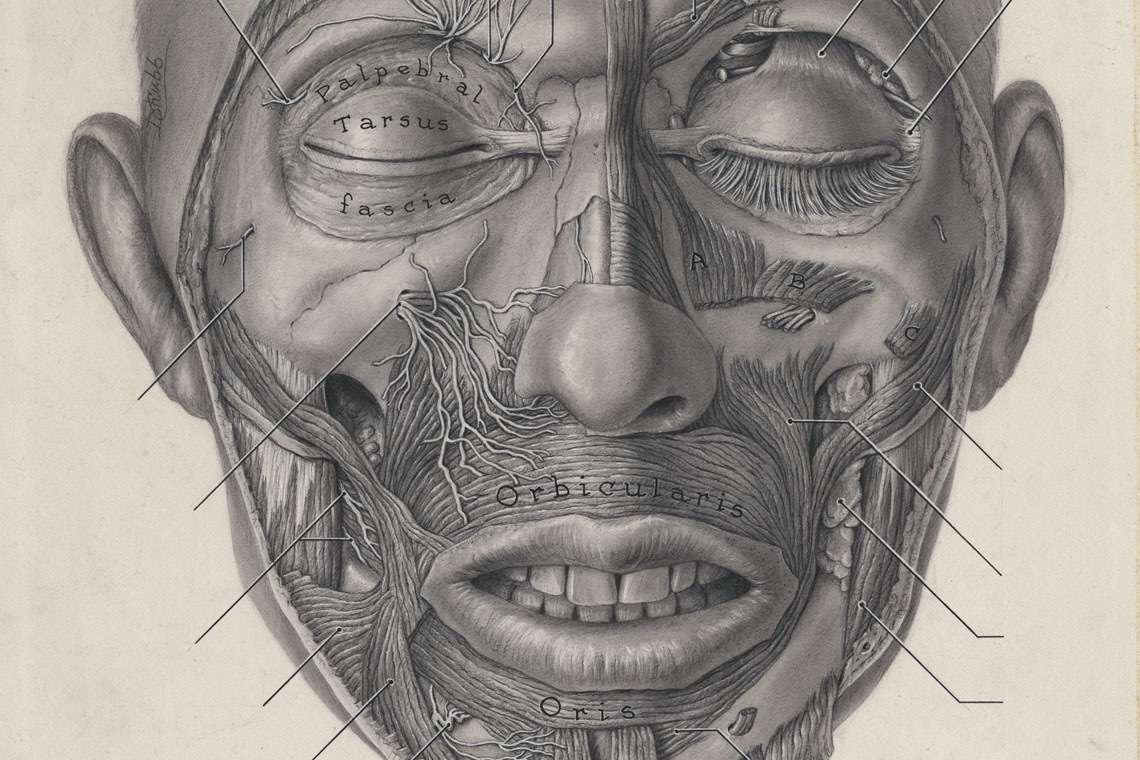
International Women’s Day (March 8) is a global day celebrating the social, economic, cultural, and political achievements of women. The day also marks a call to action for accelerating women’s equality. As a student of Human Anatomy, my primary concern is about understanding the definition of man and woman in all its dimensions. For example, I dissected the cadaver of a human female to learn the Human Anatomy of the lower limbs without any concern for the gender identity of the human cadaver.

In 1965, while I was a student of Human Anatomy at Kurnool Medical College, I had the opportunity to know about Dr. J. C. B. Grant (1886-1973), the author of Grant’s Atlas of Anatomy. The 5th Edition of his Atlas was published in 1962 and was available in India in our Medical College Library.

Who is Whole Dude?

On International Women’s Day, Whole Dude discovers Whole Woman called Whole Cookie. This painting the Vitruvian Man( c. 1492 ) by Leonardo da Vinci displays a spirit of scientific inquiry. What is Man? Who is Whole Dude?

The word ‘Whole’ as an adjective describes quality of being healthy, sound, auspicious, not broken, not defective, entire, undivided, complete, containing or constituting the entire amount, or having all of its natural elements. The word ‘Whole’ is also used as a noun to describe a thing or entity that is complete in itself and which lacks none of its parts. Whole Dude is a phrase that refers to Whole Man in all aspects of one’s being, including physical, mental, social, moral, rational, creative and spiritual. The man exists because of functional unity of the entire system and hence the singularity of the multicellular organism called man may not be divided into its constituent parts like body, mind, and soul which have no independent existence of their own.

I prefer the phrase Whole Dude over other often used phrases such as Whole Man, Whole Person, Whole Self, and others. Just like ‘White Light’, the singularity described as Man is in reality a spectrum of seven colors. The seven dimensions of the Man are, 1. The Physical, 2. The Mental, 3. The Social, 4. The Moral, 5. The Spiritual, 6. The Creative, and 7. The Rational. The description of the Man as a created, spiritual, and rational being is fundamental to defining the Man as a Whole Dude.

Who is Whole Cookie?

Who is Whole Cookie? On International Women’s Day, Whole Dude discovers Whole Woman called Whole Cookie

The phrase Whole Dude somehow misses the flavor called Woman. God created both man and woman in His own image and hence God is both male and female at one and the same time. In the common usage of the term God, most often writers refer to God as if He is exclusively Male or of the masculine gender. From the very beginning, the Indian tradition views God as the First Male and the First Female and named the Male Principle as Father and the Female Principle as Mother. Father is the Originating Principle, and Mother is the Source Principle. The Indian tradition describes the Mother as the Divine Source of Matter, Energy, Knowledge, and Life or as the Constitutive Principle. Father is described as the LORD, the Owner, the Ruler, the Governor, the Controller, the Protector, the Sustainer, the Maintainer, the Preserver or as the Regulative Principle that rules, regulates, and governs all the operations of matter, energy, knowledge, and life in the created, natural Cosmic Order.

Just like the phrase Whole Dude, I coined the phrase Whole Cookie to specifically refer to the feminine gender created by God.

On International Women’s Day, Whole Dude discovers Whole Woman called Whole Cookie. THE CREATION OF ADAM AND EVE IN GOD’S OWN IMAGE: THE OLD TESTAMENT BOOK OF GENESIS IS A WRITTEN RECORD OF THE LIFE-SPAN OF HEBREW PEOPLE. HUMAN HISTORY AND THE RECORDS OF HUMAN LONGEVITY BEGIN WITH THE CREATION OF ADAM AND EVE IN THE GARDEN OF EDEN. THE HEBREW WORD ADAM MEANS MAN.

The word Cookie is often applied to describe a young, attractive woman, a sweet thing, whose flavor is reflected in the language, behavior, and mannerisms that contribute to the constitution of the female personality. I love Whole Cookie for she brings to my experience the sweetness of the Divine Mother called Madhavi.

On International Women’s Day, Whole Dude discovers Whole Woman called Whole Cookie. IN THE INDIAN TRADITION LORD GOD IS THE CONTROLLER OF THE FORCE AND HAS A MASCULINE IDENTITY AND THE FORCE IS DESCRIBED AS HIS CONSORT WITH A FEMININE IDENTITY. GODDESS MADHAVI IS THE CONSORT OF LORD MADHAVA, THE LORD OF THE SPRING SEASON WHICH BRINGS A SENSE OF JOY AND SWEETNESS. THE WORD MADHAVI IS DERIVED FROM MADHU WHICH DESCRIBES SUGAR, WINE (FERMENTED SUGAR) AND NECTAR. WHEN MADHAVI IS KNOWN AS FORCE/POWER/ENERGY, ITS APPLICATION IS KNOWN BY THE SENSATION IT IMPARTS, THE SENSATION OF SWEETNESS CALLED MADHURYA, JOY, OR BLISS.

The name Madhavi is derived from the word Madhu, a sweet substance found in nectar, honey, wine, sugarcane, and others.

Whole Woman Selects Her Tone of Voice to Get Discovered as Whole Cookie

On International Women’s Day, Whole Dude discovers Whole Woman called Whole Cookie

In my analysis, the flavor experienced as Whole Woman involves the attribute called the Tone of Voice. The descriptions provided by Human Anatomy and Human Physiology cannot account for the experience called Sweetness which alone helps in knowing Whole Woman as Whole Cookie.

On International Women’s Day, Whole Dude discovers Whole Woman called Whole Cookie
On International Women’s Day, Whole Dude discovers Whole Woman called Whole Cookie. Broca’s Area – Brain’s Speech Center
On International Women’s Day, Whole Dude discovers Whole Woman called Whole Cookie. Co-ordination of sensory and motor functions is vital for normal Speech.
On International Women’s Day, Whole Dude discovers Whole Woman called Whole Cookie
On International Women’s Day, Whole Dude discovers Whole Woman called Whole Cookie.
On International Woman’s Day, Whole Dude Discovers Whole Woman Called Whole Cookie.
Defining Indian Identity – The Tradition of Speech Etiqutte

Defining Indian Identity – The Tradition of Speech Etiquette

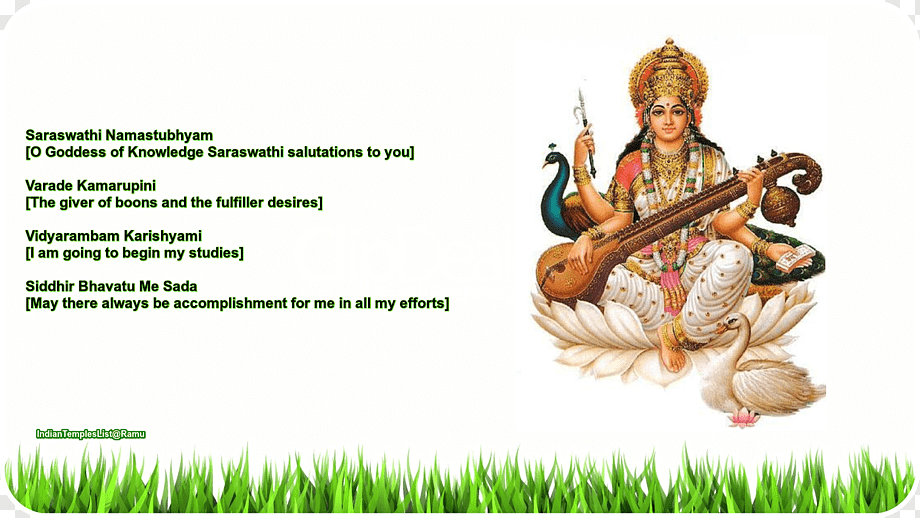
Goddess Sarasvati is known as the Goddess of Speech or Vag Devi and She symbolizes the importance of Speech Etiquette and Speech Discipline.
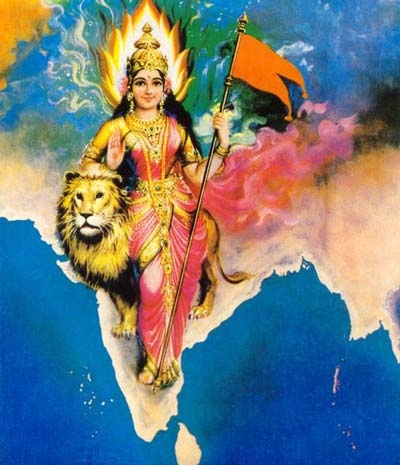
Mother India, or Bharat Mata is defined by Her Speech which is Sweet, Elegant, Pleasant, and gives pleasure and Happiness to all Her listeners.
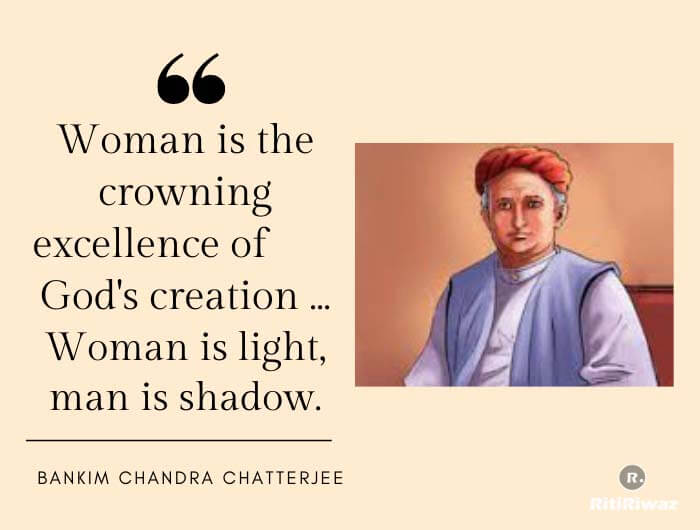
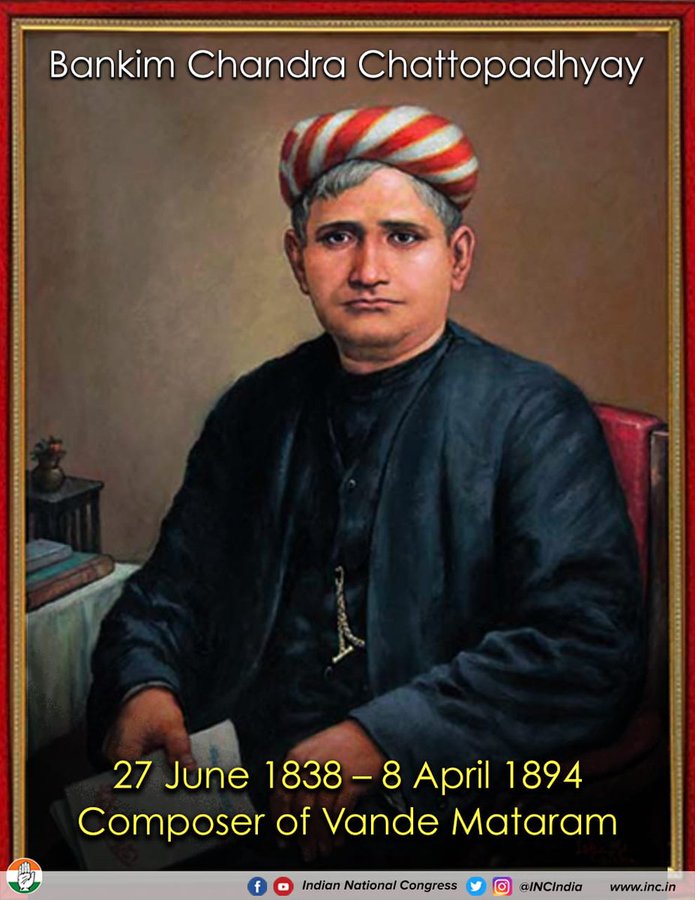
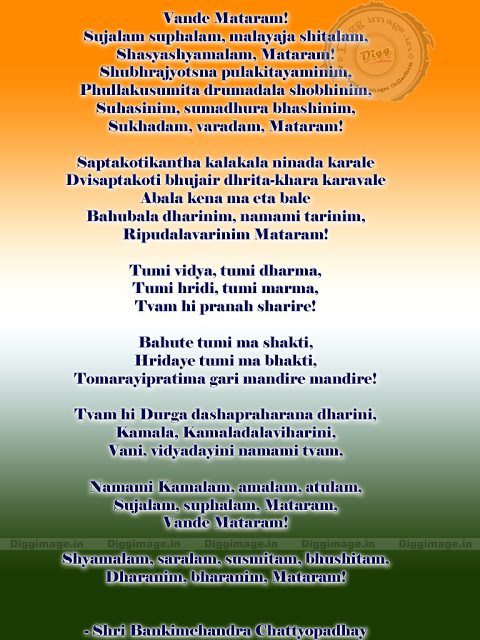
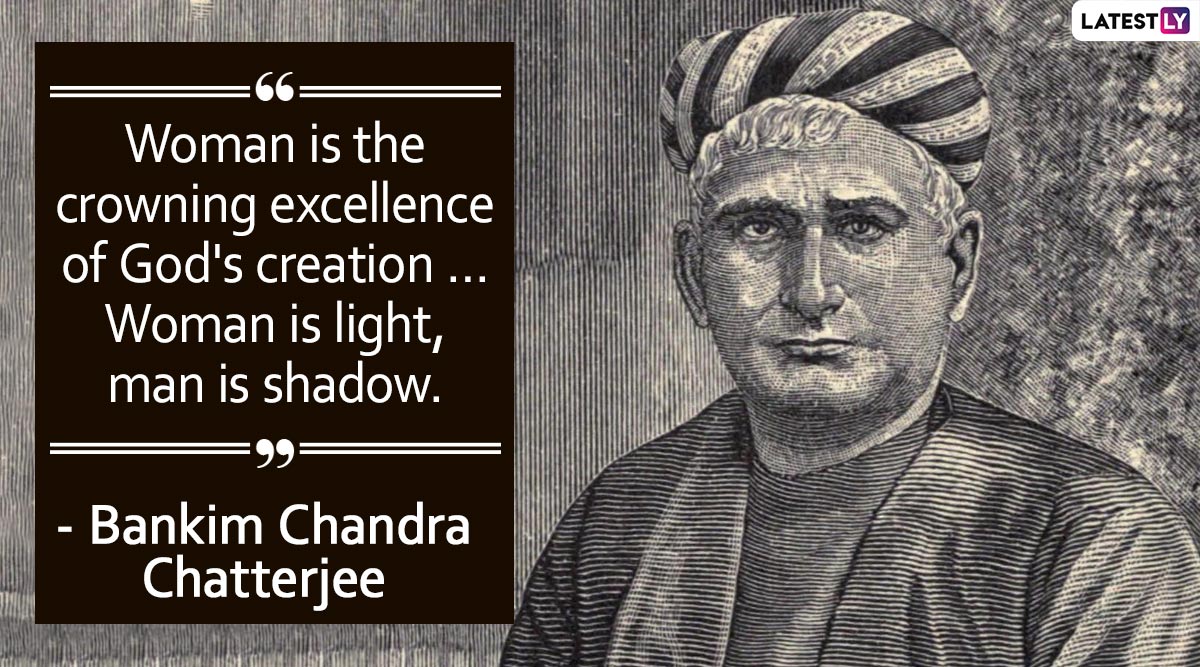
India’s National Song, popularly known as ‘VANDE MATARAM’ was composed by Shri. Bankim Chandra Chatterjee/Chattopadhyay. It describes India’s Speech Tradition.

Bankim Chandra Chatterjee composed India’s  National Song BANDE MATARAM (“Hail to Thee, Mother”). “Vande Mataram” became the Mantra and slogan of people of India in their struggle for independence.

Defining Indian Identity. The Tradition of Speech Etiquette.

In the Song Vande Mataram, the Land of India is described as Suhasini, and Sumadhura Bhashini .Suhasini refers to a person who can speak in a pleasant manner without being rude or offensive and provide a sense of cheer and humor to the listener. Sumadhura Bhashini refers to a person who speaks good and sweet words which gives a sense of pleasure to the listener.  

Defining Indian Identity – The Tradition of Speech Etiquette

Speech is the oral, audible expression of human language while talking. Man became characteristically human when he learned to speak. All human Culture and its propagation appears to depend on some form of language to serve as the vehicle for teaching, persuasion and tradition.Speech is a very important aspect of human personality. Culture plays a significant role in the development of speech behavior. Particularly, in the Indian society, there are social expectations in the use of speech, speech mannerisms and in the observation of speech etiquette.The manner of speech is predictive of human behavior. Indians are expected to speak softly, in a sweet and pleasant manner. A loud-mouthed person is generally viewed as disrespectful, disobedient and disruptive. In the following poem, the famous Telugu Poet Vemana describes the importance of speech behavior. 

Telugu Poet, ‘SARVAJNA’, Yogi Vemana had described the importance of Speech Etiquette in a few simple sentences.

Sri Kumaragiri Vema Reddy is popularly known as Vemana, Yogi Vemana (Telugu: వేమన) was a telugu poet. C.P. Brown, known for his research on Vemana, estimates the year of birth to be the year 1652 based on some of his verses. Vemana was the third and youngest son of Gaddam Vema, then the king of Kondaveedu in Andhra Pradesh.

Defining Indian Identity. The Tradition of Speech Etiquette.

Brass can produce high volume sound as compared to Gold but we consider Gold to be a precious metal and value its high quality in spite of its lack of ability to generate a loud sound. People who are mean-spirited and low in virtue speak in tones that reflects a sense of arrogance and self-importance. People of high virtue and good character would speak in a gentle and pleasant manner that reflects a sense of humility and the listeners would be pleased by listening to the words spoken. While speaking, the pitch and the volume of the sound is less important and we need to focus on the contents of our speech. 

Speech Etiquette and Indian Culture:  

Defining Indian Identity. The Tradition of Speech Etiquette.

Indian Culture describes “Saraswati” as the Goddess of Speech or “VAK”. She is known as VAG DEVI. Indians worship her to obtain fluency and to become eloquent speakers. Our identity is related to the quality and content of our speech. Speech mannerisms, speech etiquette and speech discipline are parts of the grooming process of the children in our homes. In fact, the Indian Tradition of Learning begins only after imparting the importance of Speech Etiquette in the learning Process. Children are generally counseled to use some restraint in their speech. There are several words and phrases that identify an Indian speaker according to their speech quality and content.The phrase ‘Su Bhasini’ directs us to use good and pleasing words. The phrase ‘Mita Bhasini’ directs us to speak to the point using only a few appropriate words. The phrase ‘Manjula Vani’ directs us to speak in a beautiful and elegant manner. Our traditional greeting “NAMASKAR” represents our devotion to showing respect and displaying an attitude of obedience in our public conduct. We can only meet this Cultural expectation by using a manner of speech which would convey the qualities of respect and obedience.  

Defining Indian Identity. The Tradition of Speech Etiquette.

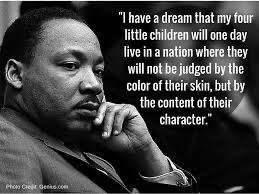
Dr.Martin Luther King, the famous Civil Rights Leader of the United States wished for that day when his sons would not be judged by the color of their skin but by the content of their character. Similarly, a person’s identity should not be assumed by the person’s physical attributes but by his attitude and behavior. As an Indian, I wish to be identified not by the color of my skin. ‘Sumadhura Bhashini’ is the Cultural standard of our speech behavior. If you care enough, listen to me, my speech would reveal to you the country of my origin.  

Defining Indian Identity. The Tradition of Speech Etiquette.

Please also view a related blog post titled ‘Defining Indian Identity – The Pursuit of Pure and Perfect Knowledge’.  

https://bhavanajagat.wordpress.com/2010/04/26/defining-indian-identity-the-pursuit-of-pure-and-perfect-knowledge/

Defining Indian Identity. The Tradition of Speech Etiquette. The Light reflects the traditions of Speech Etiquette.

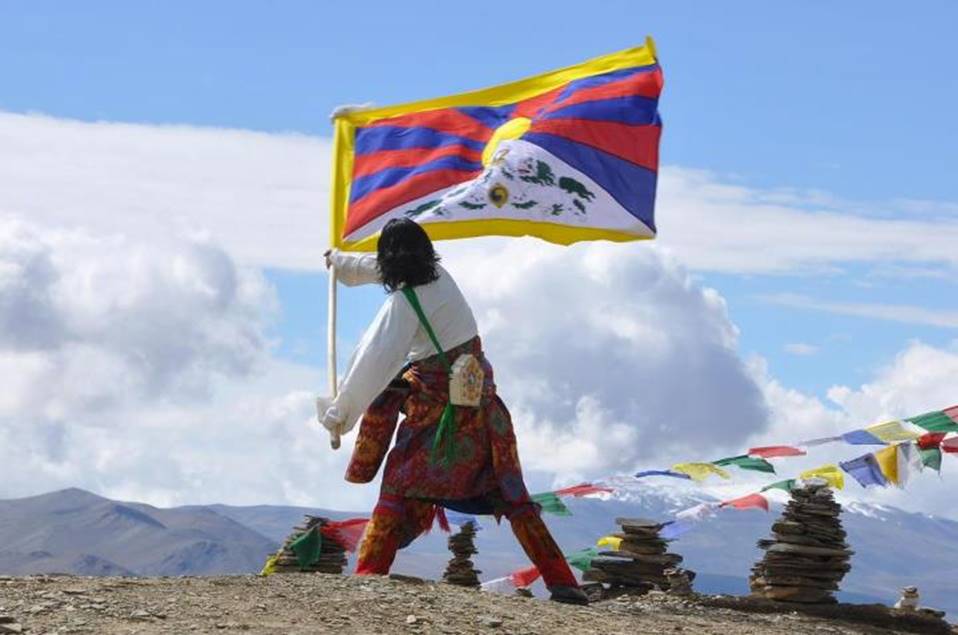
The Living Tibetan Spirits of Special Frontier Force commemorate the Tibetan Uprising Day

The Living Tibetan Spirits of Special Frontier Force commemorate the Tibetan Uprising Day.

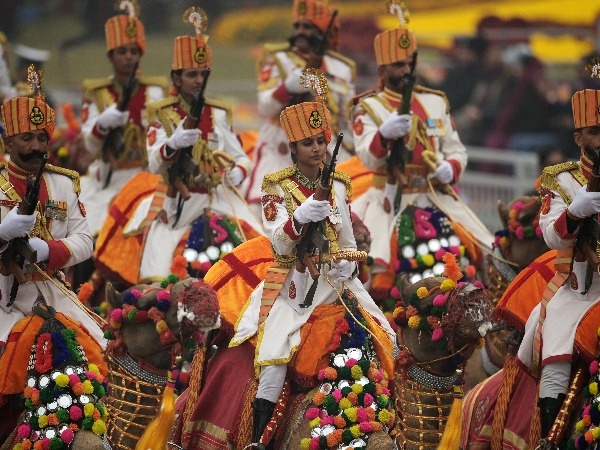
On Friday, March 10, 2023, the Living Tibetan Spirits of Special Frontier Force, Establishment 22, Vikas Regiment commemorate events of Tibetan Uprising on Tuesday, March 10, 1959.

Friday, March 10, 2023. 64th Anniversary of Tibetan Uprising Day

Tibet Uprising or Tibet Rebellion on Tuesday, March 10, 1959 makes a profound impact on the course of my life’s journey, forcing me to live in exile without a refugee status, without any asylum protection, and without an entity that can be recognized as a friend.

Tibetan Uprising Day 2023: 64th Anniversary

The Living Tibetan Spirits of Special Frontier Force commemorate the Tibetan Uprising Day

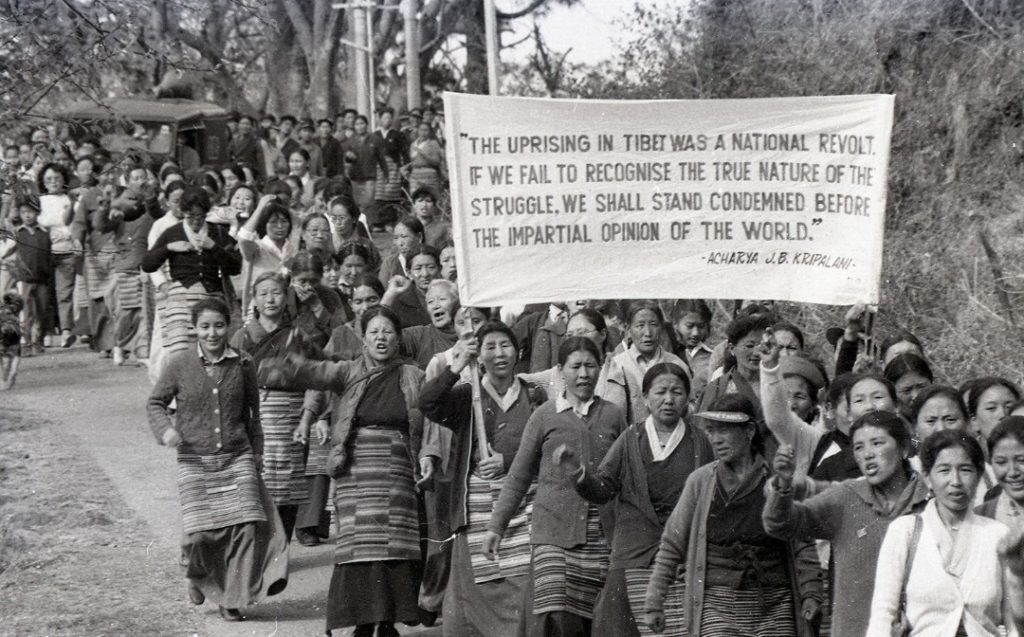
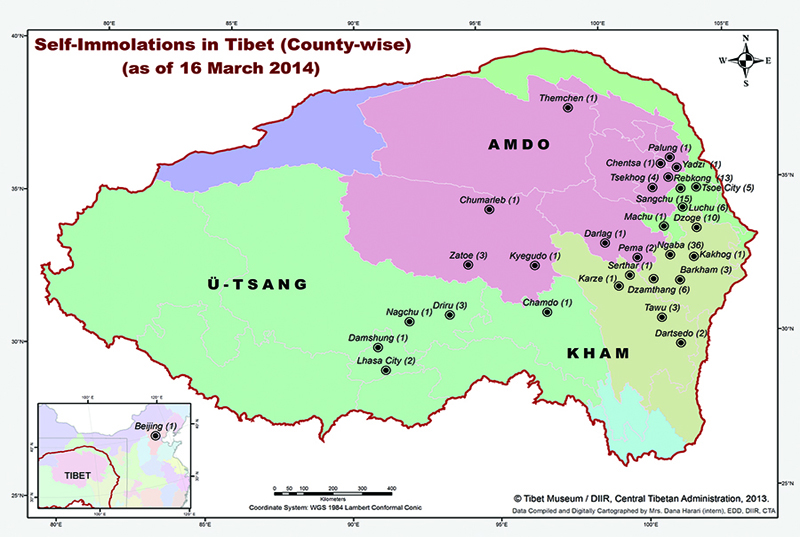
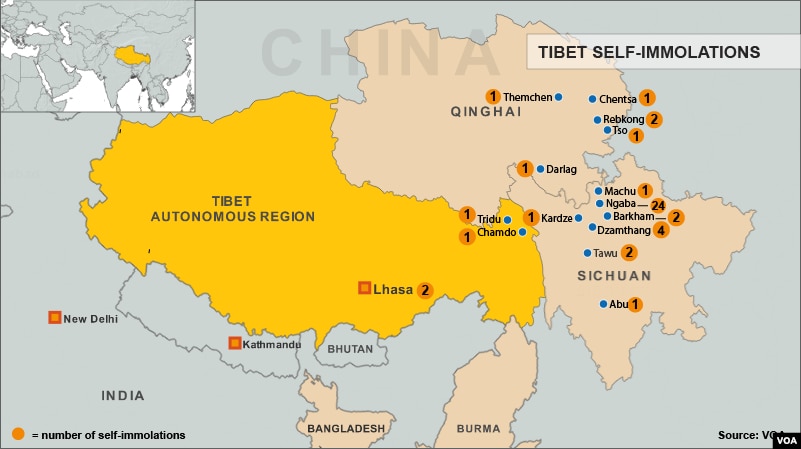
While not a traditional Tibetan Buddhist holiday, MARCH 10th is a very important date in the Tibetan calendar. This year marks the 64th anniversary of the Tibetan National Uprising. Around the world, Tibetans and their supporters remember and pay tribute to all those who have sacrificed their lives for Tibet’s struggle. An estimated one million Tibetans have perished and 98% of monasteries and nunneries were destroyed under the Communist Chinese invasion.

Lhasa’s three major monasteries—Sera-Jey,  Ganden, and Drepung—were seriously damaged by shelling. Sera and Drepung were nearly damaged beyond repair. According to the TGIE, Members of the Dalai Lama’s bodyguard remaining in Lhasa were disarmed and publicly executed. Same as Tibetans found to be harboring weapons in their homes. Thousands of Tibetan monks were executed or arrested, and monasteries and temples around the city were looted or destroyed.

Women’s Uprising DayMarch 12, 1959

The Living Tibetan Spirits of Special Frontier Force commemorate the Tibetan Uprising Day

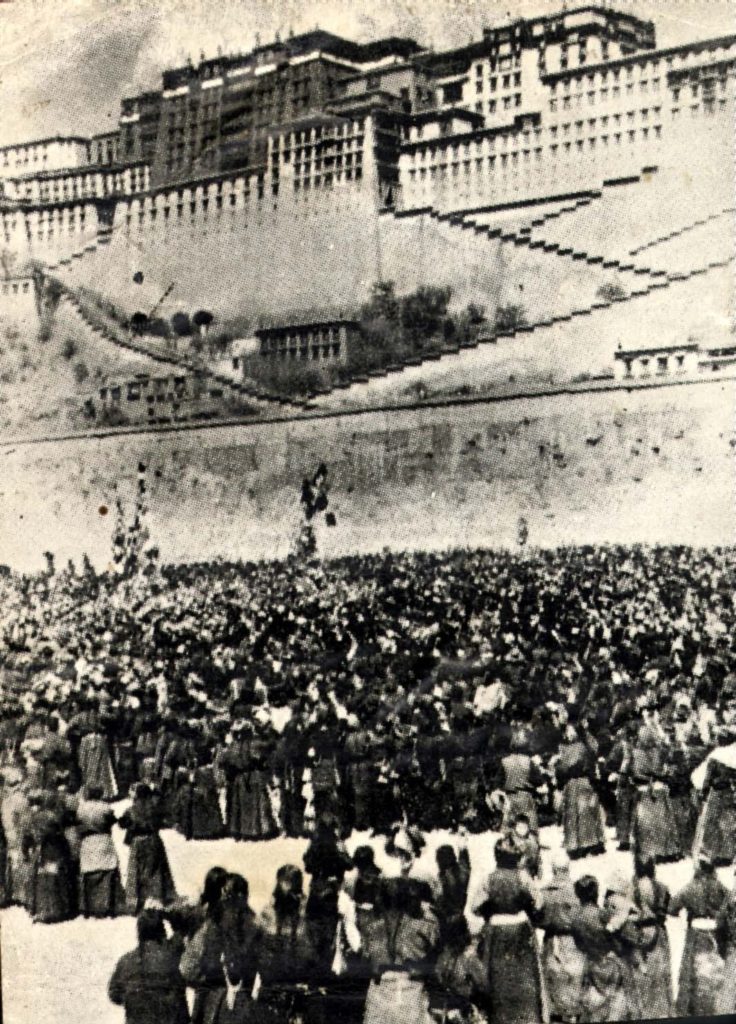
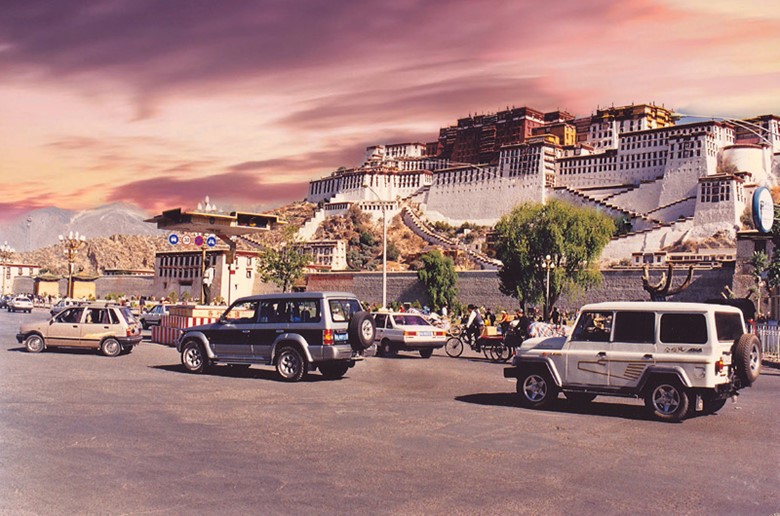
ON MARCH 12, 1959, thousands of women gathered peacefully outside of the Potala Palace in Lhasa. Now known as Women’s Uprising Day many of the women involved were imprisoned, including the leader of the nonviolent demonstration, Pamo Kusang. 

Some of the women were tortured, died in prison, or were executed such as Gurteng Kunsang, mother of six.

Friday, March 10, 2023. 64th Anniversary of Tibetan Uprising Day: FOR SEVENTY THREE YEARS, TIBETANS ARE LIVING UNDER MILITARY OCCUPATION. WHAT IS TIBET’S FUTURE? HOW TO EVICT THE EVIL RED EMPIRE FROM TIBET?

How to find Hope when the Final Destination remains unknown? Can Patience and Perseverance serve the purpose of Hope for Freedom, Peace, and Justice?

Simon Cyrene

Friday, March 10, 2023. 64th Anniversary of Tibetan Uprising Day.

EVENTS LEADING TO THE 1959 TIBETAN UPRISING

Clipped from: https://www.thoughtco.com/the-tibetan-uprising-of-1959-195267

China Forces the Dalai Lama into Exile

Thursday, March 10, 2022. 63rd Anniversary of Tibetan Uprising Day.

The Norbulingka, the Dalai Lama’s Summer Palace in Lhasa, Tibet, which was destroyed by the Chinese Army during the 1959 Tibetan Uprising but later rebuilt. lapin.lapin on Flickr.com

Chinese artillery shells pummeled the Norbulingka, the Dalai Lama’s summer palace, sending plumes of smoke, fire, and dust into the night sky. The centuries-old building crumbled under the barrage, while the badly outnumbered Tibetan Army fought desperately to repel the People’s Liberation Army (PLA) from Lhasa…

Meanwhile, amidst the snows of the high Himalaya, the teenaged Dalai Lama and his bodyguards endured a cold and treacherous two-week-long journey into India.

Origins of the Tibetan Uprising of 1959

Tibet had an ill-defined relationship with China’s Qing Dynasty (1644-1912); at various times it could have been an ally, an opponent, a tributary state, or a region within Chinese control.

In 1724, during a Mongol invasion of Tibet, the Qing seized the opportunity to incorporate the Tibetan regions of Amdo and Kham into China proper. The central area was renamed Qinghai, while pieces of both regions were broken off and added to other western Chinese provinces. This land grab would fuel Tibetan resentment and unrest into the twentieth century.

When the last Qing Emperor fell in 1912, Tibet asserted its independence from China. The 13th Dalai Lama returned from three years of exile in Darjeeling, India, and resumed control of Tibet from his capital at Lhasa. He ruled until his death in 1933.

China, meanwhile, was under siege from a Japanese invasion of Manchuria, as well as a general breakdown of order across the country.

Between 1916 and 1938, China descended into the “Warlord Era,” as different military leaders fought for control of the headless state. In fact, the once-great empire would not pull itself back together until after World War II, when Mao Zedong and the Communists triumphed over the Nationalists in 1949.

Meanwhile, a new incarnation of the Dalai Lama was discovered in Amdo, part of Chinese “Inner Tibet.” Tenzin Gyatso, the current incarnation, was brought to Lhasa as a two-year-old in 1937 and was enthroned as the leader of Tibet in 1950, at 15.

China Moves in and Tensions Rise

In 1950, Mao’s gaze turned west. He decided to “liberate” Tibet from the Dalai Lama’s rule and bring it into the People’s Republic of China. The PLA crushed Tibet’s tiny armed forces in a matter of weeks; Beijing then imposed the Seventeen Point Agreement, which Tibetan officials were forced to sign (but later renounced).

According to the Seventeen Point Agreement, privately-held land would be socialized and then redistributed, and farmers would work communally. This system would first be imposed on Kham and Amdo (along with other areas of the Sichuan and Qinghai Provinces), before being instituted in Tibet proper.

All the barley and other crops produced on the communal land went to the Chinese government, according to Communist principles, and then some was redistributed to the farmers. So much of the grain was appropriated for use by the PLA that the Tibetans did not have enough to eat.

By June of 1956, the ethnic Tibetan people of Amdo and Kham were up in arms.

As more and more farmers were stripped of their land, tens of thousands organized themselves into armed resistance groups and began to fight back. Chinese army reprisals grew increasingly brutal and included wide-spread abuse of Tibetan Buddhist monks and nuns. (China alleged that many of the monastic Tibetans acted as messengers for the guerrilla fighters.)

The Dalai Lama visited India in 1956 and admitted to Indian Prime Minister Jawaharlal Nehru that he was considering asking for asylum. Nehru advised him to return home, and the Chinese Government promised that communist reforms in Tibet would be postponed and that the number of Chinese officials in Lhasa would be reduced by half. Beijing did not follow through on these pledges.

By 1958, as many as 80,000 people had joined the Tibetan resistance fighters.

Alarmed, the Dalai Lama’s government sent a delegation to Inner Tibet to try and negotiate an end to the fighting. Ironically, the guerrillas convinced the delegates of the righteousness of the fight, and Lhasa’s representatives soon joined in the resistance!

Meanwhile, a flood of refugees and freedom fighters moved into Lhasa, bringing their anger against China with them. Beijing’s representatives in Lhasa kept careful tabs on the growing unrest within Tibet’s capital city.

March 1959 – The Uprising Erupts in Tibet Proper

Important religious leaders had disappeared suddenly in Amdo and Kham, so the people of Lhasa were quite concerned about the safety of the Dalai Lama. The people’s suspicions therefore were raised immediately when the Chinese Army in Lhasa invited His Holiness to watch a drama at the military barracks on March 10, 1959. Those suspicions were reinforced by a none-too-subtle order, issued to the head of the Dalai Lama’s security detail on March 9, that the Dalai Lama should not bring along his bodyguards.

On the appointed day, March 10, some 300,000 protesting Tibetans poured into the streets and formed a massive human cordon around Norbulingka, the Dalai Lama’s Summer Palace, to protect him from the planned Chinese abduction. The protestors stayed for several days, and calls for the Chinese to pull out of Tibet altogether grew louder each day. By March 12, the crowd had begun to barricade the streets of the capital, while both armies moved into strategic positions around the city and began to reinforce them.

Ever the moderate, the Dalai Lama pleaded with his people to go home and sent placatory letters to the Chinese PLA commander in Lhasa. and sent placatory letters to the Chinese PLA commander in Lhasa.

When the PLA moved artillery into range of the Norbulingka, the Dalai Lama agreed to evacuate the building. Tibetan troops prepared a secure escape route out of the besieged capital on March 15. When two artillery shells struck the palace two days later, the young Dalai Lama and his ministers began the arduous 14-day trek over the Himalayas for India.

On March 19, 1959, fighting broke out in earnest in Lhasa. The Tibetan army fought bravely, but they were vastly outnumbered by the PLA. In addition, the Tibetans had antiquated weapons.

The firefight lasted just two days. The Summer Palace, Norbulingka, sustained over 800 artillery shell strikes that killed an unknown number of people inside; the major monasteries were bombed, looted and burned. Priceless Tibetan Buddhist texts and works of art were piled in the streets and burned. All remaining members of the Dalai Lama’s bodyguard corps were lined up and publicly executed, as were any Tibetans discovered with weapons. In all, some 87,000 Tibetans were killed, while another 80,000 arrived in neighboring countries as refugees. An unknown number tried to flee but did not make it.

In fact, by the time of the next regional census, a total of about 300,000 Tibetans were “missing” – killed, secretly jailed, or gone into exile.

Aftermath of the 1959 Tibetan Uprising

Since the 1959 Uprising, the central government of China has been steadily tightening its grip on the Tibet.

Although Beijing has invested in infrastructure improvements for the region, particularly in Lhasa itself, it has also encouraged thousands of ethnic Han Chinese to move to Tibet. In fact, Tibetans have been swamped in their own capital; they now constitute a minority of the population of Lhasa.

Today, the Dalai Lama continues to head the Tibetan government-in-exile from Dharamshala, India. He advocates increased autonomy for Tibet, rather than full independence, but Chinese government generally refuses to negotiate with him.

Periodic unrest still sweeps through Tibet, especially around important dates such as March 10 to 19 – the anniversary of the 1959 Tibetan Uprising.

Your Citation

Szczepanski, Kallie. “The Tibetan Uprising of 1959.” ThoughtCo, Feb. 6, 2017, thoughtco.com/the-tibetan-uprising-of-1959-195267. Szczepanski, Kallie. (2017, February 6). The Tibetan Uprising of 1959. https://www.thoughtco.com/the-tibetan-uprising-of-1959-195267

Friday, March 10, 2023. 64th Anniversary of Tibetan Uprising Day .

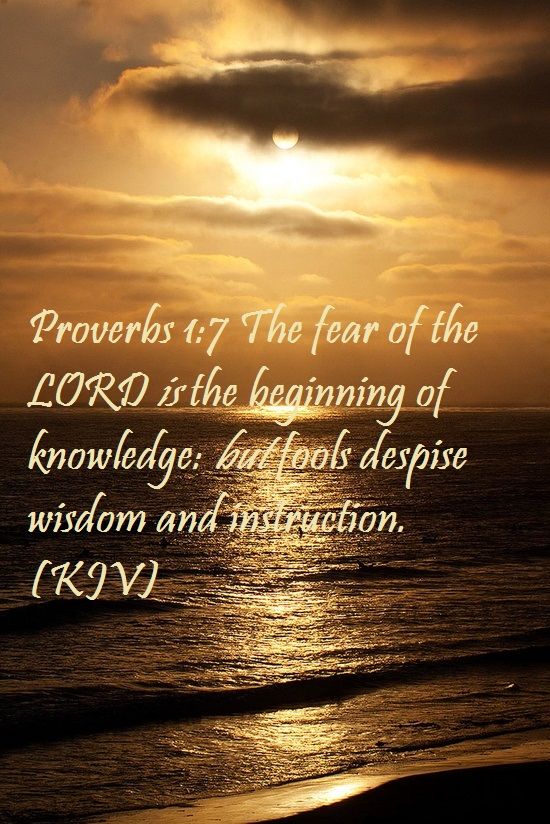
The Fear of Existence vs The Fear of the Lord

Defining Indian Identity – The Fear of Samsara. Samsara portrays the picture of life’s journey as a tedious,difficult and challenging swim across an unknown,uncharted and treacherous ocean.

The cultural traditions that originated in India motivate people to seek refuge or shelter at the Feet of the Lord by evoking a sense of fear and this fear is described as the fear of ” SAMSARA.” Samsara or Bhava describes the viewpoint about the human condition and deals with the problems of human existence. It contributes to a sense of apprehension and anxiety and the attitude it generates is one of intense fear and helplessness.

Defining Indian Identity – The Fear of Samsara. Samsara portrays the picture of life’s journey as a tedious,difficult and challenging swim across an unknown,uncharted and treacherous ocean.

Ullanghya sindho salilam saleelam
Yaha shoka wanheen Janakaatma jaayaaha
Aadaaya tenaiwa dadaaha Lankaa
Namaami tam praanjali raanjaneyam

Defining Indian Identity-The Fear of Samsara. Samsara portrays the picture of life’s journey as a tedious,difficult and challenging swim across an unknown,uncharted and treacherous ocean.

In one great leap of faith, Lord Hanuman jumps over the sea with utmost ease, whereas crossing the sea evokes only a sense of fear in my heart. I derive some hope from the legend about the land bridge (SETU) built by the army of monkeys.The Sea God promised them that the rocks and boulders used for the construction of the bridge will be held in place and stay afloat. He did that to please Lord Rama. During my perilous journey across the ocean of SAMSARA, I use the name “RAMA” to remain afloat and live with a sense of hope that I will reach the shore even if I am not sure of its direction.

LORD RAMA - THE MEDICINE FOR A DISEASE KNOWN AS 'SAMSARA'
Samsara portrays the picture of life’s journey as a tedious,difficult and challenging swim across an unknown,uncharted and treacherous ocean. In the fearful journey described as ‘SAMSARA’, I use Lord Rama’s name as a ‘Life Jacket’ and also the name serves like a Beacon of Hope and provides a sense of direction while journeying across an uncharted, treacherous sea.

The fear of the Lord is the beginning of Wisdom” says the Holy Bible, The Book of Proverbs, Chapter1, verse 7.

Defining Indian Identity – The Fear of Samsara. Samsara portrays the picture of life’s journey as a tedious,difficult and challenging swim across an unknown,uncharted and treacherous ocean.

For the religious traditions that originated outside of India such as Judaism, Christianity and Islam, the fear of the Lord could be a primary motivating factor to seek the worship of the Lord. On the contrary, the religious traditions that originated in the Land of India, do not encourage their adherents to entertain any such fear of the Lord. In the Indian traditions, the Lord or the Deity that Indians choose to worship would receive them with a sign that proclaims ” BE FEARLESS.” The Lord reassures them with a sign that is popularly described as ABHAYA HASTA or ABHAYA MUDRA. In Indian literature, countless number of images, idols, paintings and drawings, there are invariable references to a consistent message of ABHAYA and naturally Indians are less concerned with ” The Fear of the Lord.”  

Defining Indian Identity – The Fear of Samsara. Samsara portrays the picture of life’s journey as a tedious,difficult and challenging swim across an unknown,uncharted and treacherous ocean.

Samsara portrays the picture of life’s journey as a tedious,difficult and challenging swim across an unknown,uncharted and treacherous ocean.

Defining Indian Identity – The Fear of Samsara. Samsara portrays the picture of life’s journey as a tedious,difficult and challenging swim across an unknown,uncharted and treacherous ocean.

Samsara is also depicted as a serious disease entity afflicting a person’s health and is referred to as ” BHAVA ROGA “.Others view Samsara as existence in a bottomless deep pit(“AGHADA”)or that of being trapped in a deep well from where an escape would not be easy.The fear of Samsara/Bhava,the human condition,has nothing to do with physical courage.The powerful idea of Samsara inspires a sense of fear in the hearts of even the most courageous of all people.Cultural traditions that have their roots in the other parts of this planet may not be aware of this kind of fear and hence the fear of Samsara could be viewed as a feature that defines and molds the Indian Identity.Indians chant the Lord’s name as a medicine to cure this terrible disease and they seek Lord’s protection to reach the shore and complete the journey across the ocean.There are numerous references in Indian literature and some verses could be quoted to illustrate the point.  

1.SRI RAMA MANTRAM:  

Human existence faces challenges from several directions. The concept of Samsara is an additional and significant challenge experienced by the people of Land of India. Lord Rama during His life’s journey had faced several challenges and His name gives the comfort and protection that I seek while my journey is rough and tough. Samsara portrays the picture of life’s journey as a tedious,difficult and challenging swim across an unknown,uncharted and treacherous ocean.

 Samsara sagara bahaya paha viswa mantram  

Saksham Mumukshu jana sevita siddhi mantram  

Saranga hasta mukha hasta nivasa mantram  

Kaivalya mantra manesam bhaja Rama mantram.  

This verse would banish the fear generated by the ocean like Samsara.  

2.THE PRAYER TO LORD MAHA VISHNU:  


“VANDE VISHNUM, BHAVA BHAYA HARAM” – Salutations to Lord Vishnu, the Destroyer of the Fear of Samsara. Samsara portrays the picture of life’s journey as a tedious,difficult and challenging swim across an unknown,uncharted and treacherous ocean.

शान्ताकारं भुजगशयनं पद्मनाभं सुरेशं
विश्वाधारं गगनसदृशं मेघवर्ण शुभाङ्गम् ।
लक्ष्मीकान्तं कमलनयनं योगिभिर्ध्यानगम्यम्
वन्दे विष्णुं भवभयहरं सर्वलोकैकनाथम् ॥

Shaanta-Aakaaram Bhujaga-Shayanam Padmanabham Suresham
Vishva-Aadhaaram Gagana-Sadrusham Megha-Varnna Shubha-Anggam|
Lakshmi-Kantam Kamala-Nayanam Yogibhir-Dhyaana-Gamyam

Vande Vishnum Bhava-Bhaya-Haram Sarva-Loka-Eka-Naatham ||

The prayer would destroy the fear of bhava/Samsara.  

3.THE PRAYER TO LORD LAKSHMI NARASIMHA SWAMY:  

THE UPLIFTING POWER OF LORD NARASIMHA TO CONQUER THE FEAR OF SAMSARA. Samsara portrays the picture of life’s journey as a tedious,difficult and challenging swim across an unknown,uncharted and treacherous ocean.

Samsara koopa mati ghoramaghadha mulam,  

Samprapya dukha sata sarpa samaa kulasya  

Deenasya Deva krupayaa saranaagatasya  

Lakshmi Nrusimha mama dehi  karavalambam.  

The verse pleads the Lord to extend His hand and physically lift the worshiper from the horrible bottomless well of Samsara.  

Defining Indian Identity – The Fear of Samsara. Samsara portrays the picture of life’s journey as a tedious,difficult and challenging swim across an unknown,uncharted and treacherous ocean.

4.THE PRAYER TO LORD SHIVA:  

LORD SHIVA, THE PROTECTOR, THE DESTROYER OF ALL FEARS. Samsara portrays the picture of life’s journey as a tedious,difficult and challenging swim across an unknown,uncharted and treacherous ocean.

Praatarnamaami girisam girijaardha deham  

Sarga sthiti pralaya kaarana maadi Devam  

Visweswaram vijita viswa manobhiraamam  

Samsara roga hara oushadha madviteeyam.  

The verse describes Lord Shiva as the root cause of creation,sustenance and eventual destruction and the Lord’s name is the matchless medicine to wipe out the disease of Samsara.  

5. A PRAYER FROM BHAJA GOVINDAM:  

Guru Adi Shankaracharya describes the fear of Samsara and its resolution by seeking protection from chanting the name of GOVINDA. Samsara portrays the picture of life’s journey as a tedious,difficult and challenging swim across an unknown,uncharted and treacherous ocean.

Punarapi jananam punarapi maranam  

Punarapi jananee jatare sayanam  

Eha samsaare bahu dustaare  

Krupaya paare pahi Murare.  

This verse seeks the compassion of Vishnu to reach the shore and to get over the problem of this difficult existence which involves repeated cycles of birth, death and rebirth.  

6.KALI KALMASHA NAASANA MAHA MANTRAM:  

SHODASA NAAMA MANTRAM. The Sound Energy of these 16 names would destroy all the polluting effects of our present times. Samsara portrays the picture of life’s journey as a tedious,difficult and challenging swim across an unknown,uncharted and treacherous ocean.

Hare Rama Hare Rama-Rama Rama Hare Hare  

Hare Krishna Hare Krishna-Krishna Krishna Hare Hare.  

This Mantra is composed with sixteen words and hence is also known as Shodasa Nama Maha Mantram. Amongst all Vedas, there is no better device than this Mantra to seek   deliverance from the trappings of Samsara.The following verse from Kali Samtaranopanishad  proves the efficacy of this Mantra.  

Eti Shodasha Naamnam, Kali kalmasha nasanam;   NaaTha parataropayaH, Sarva Vedeshu drusyatey.  

Human existence is beset with countless uncertainties and difficulties which may arrive without any prior warning from different directions in an unpredictable manner. It is rational to approach life with a sense of apprehension and seek the help of the Lord who graciously held His right hand in a show of compassion and receives with a greeting of “ABHAYA” and is willing to banish the fear of Samsara. 

Defining Indian Identity-The Fear of Samsara. The LORD is Male and Female at one and the same time. The right hand is held in the pose of Abhaya Mudra. Samsara portrays the picture of life’s journey as a tedious,difficult and challenging swim across an unknown,uncharted and treacherous ocean.

Stay in the Flow – Staying Afloat – The Existential Challenge: #EveningWithKatyPerry

Stay in the Flow – Staying Afloat – The Existential Challenge: #EveningWithKatyPerry

This story relates to a tattoo inscribed on Katy Perry’s right arm. The Sanskrit phrase ‘Anugacchatu Pravaha’ which may literally mean Staying in the Flow has a much deeper meaning and it must be interpreted carefully in the context of the challenge called existence.

Stay in the Flow – Staying Afloat – The Existential Challenge: #EveningWithKatyPerry

To Go With the Flow and to Stay in the Flow, the person has to get into water and Stay Afloat or Stay Alive during a perilous journey.

Stay in the Flow – Staying Afloat – The Existential Challenge: #EveningWithKatyPerry

In the Indian interpretation of existence, the life’s journey is described as swimming across an open ocean without the benefit of navigational charts and tools.

Stay in the Flow – Staying Afloat – The Existential Challenge: #EveningWithKatyPerry

The challenge posed by existence may have to be articulated as the challenge involved in swimming across the open ocean without the use of any floatation device and without knowing the direction in which the swimmer can proceed to safely arrive at the shore. To stay in the flow, apart from staying afloat, the swimmer has to withstand other existential challenges. I see this struggle for existence as a Cat and a Mouse Game.

THE CAT AND THE MOUSE GAME:

Stay in the Flow – Staying Afloat – The Existential Challenge: #EveningWithKatyPerry
Evening With Katy Perry. The Discovery of Hidden Messages. ‘The Cat and The Mouse Game.’

In my analysis, Katy Perry’s Tattoo in the Indian Language of Sanskrit is about ‘Staying Afloat’ as in the Indian View, Human Existence poses a great Challenge for it is thought of as a tedious, never-ending swim across the vast, unchartered Ocean called ‘Samsara’. To ‘Go With the Flow’ of Time fundamentally demands to keep one’s precarious existence under all challenging circumstances.

Evening With Katy Perry. Staying Afloat during the very tedious and long Life Journey called SAMSARA. To Go With Flow of Time fundamentally demands to keep one’s precarious existence under challenging circumstances.

I posted this story about ‘The Cat and The Mouse Game’ on December 02, 2014 and updated the story on February 02, 2015 after the XLIX  Super Bowl Game. Many of my readers across the United States have suggested that Katy Perry has responded to The Cat and The Mouse Game Challenge and came riding on a Roaring Cat during the XLIX  Super Bowl Game Halftime performance. Can a Mouse find its way to win the Challenge posed by The Cat Power? For one thing, I admit that The Mouse can tell the difference between a Tiger and a ‘Paper Tiger’. However big it may be, a robotic Cat cannot stop The Mouse in its search for the ‘Hidden Cookie’.

#EVENINGWITHKATYPERRY : CAN A MOUSE FIND HIDDEN COOKIES IF THE COOKIE IS RIDING ON A ROARING CAT ???
WHOLE TEAM – WHOLE COOKIE – WHOLE CHALLENGE – # EVENINGWITHKATYPERRY: CAN A MOUSE FIND HIDDEN COOKIES IF THE COOKIE IS RIDING ON A ROARING CAT?  CAN THE MOUSE WIN THE WHOLE CHALLENGE POSED BY THE CAT POWER?
WHOLE TEAM  -  WHOLE  COOKIE  -  WHOLE  CHALLENGE  -  #EveningWithKatyPerry : THE CAT  AND  THE  MOUSE  GAME . CAN  THIS  ROBOTIC  CAT  BEAT  THE  MOUSE  IN  THE  GAME  OF  LIFE ????
WHOLE TEAM – WHOLE COOKIE – WHOLE CHALLENGE – # EveningWithKatyPerry: THE CAT AND THE MOUSE GAME. CAN THIS ROBOTIC CAT BEAT THE MOUSE IN THE GAME OF LIFE?
WHOLE  TEAM  -  WHOLE  COOKIE  -  WHOLE  CHALLENGE  -  #EveningWithKatyPerry : THE CAT  AND  THE  MOUSE  GAME . THE  CAT  IS  BIG . IS  IT  A  GOOD  DEFENSE ????  CAN  IT  TACKLE  THE  CLEVER, LITTLE  MOUSE ????
WHOLE TEAM – WHOLE COOKIE – WHOLE CHALLENGE – # EveningWithKatyPerry: THE CAT AND THE MOUSE GAME. THE CAT IS BIG. IS IT A GOOD DEFENSE? CAN IT TACKLE THE CLEVER, LITTLE MOUSE?
WHOLE TEAM  -  WHOLE  COOKIE  -  WHOLE  CHALLENGE  - #EveningWithKatyPerry : THE  CAT  AND  THE  MOUSE  GAME . EXISTENTIALISTS ENDORSE  IT  AS  THE  GAME  OF  LIFE .
WHOLE TEAM – WHOLE COOKIE – WHOLE CHALLENGE – # EveningWithKatyPerry: THE CAT AND THE MOUSE GAME. EXISTENTIALISTS ENDORSE IT AS THE GAME OF LIFE.
WHOLE  TEAM  -  WHOLE  COOKIE  - WHOLE  CHALLENGE  - #EveningWithKatyPerry : THE  CAT  AND  THE  MOUSE  GAME . THE SKEPTICS WHO  HABITUALLY  DOUBT DENY  THE CAT  AND  THE  MOUSE  GAME.
WHOLE TEAM – WHOLE COOKIE – WHOLE CHALLENGE – # EveningWithKatyPerry: THE CAT AND THE MOUSE GAME. THE SKEPTICS WHO HABITUALLY DOUBT DENY THE CAT AND THE MOUSE GAME.

SUPER BOWL – SUPER CHALLENGE – SUPER PERFORMANCE:

WHOLE  TEAM  -  WHOLE  COOKIE  -  WHOLE  CHALLENGE  - #EveningWithKatyPerry : THE GAME  OF  LIFE . THE  SALESMAN  SELLING  THE  REPLICAS  OF  THE  "LEFT  SHARK"  RECEIVED  A  NOTICE  FROM  KATY  PERRY'S  ATTORNEY . THE  MOUSE  IS  NOT  AFRAID  OF  "PAPER  TIGERS."
WHOLE TEAM – WHOLE COOKIE – WHOLE CHALLENGE – # EveningWithKatyPerry: THE GAME OF LIFE. THE SALESMAN SELLING THE REPLICAS OF THE “LEFT SHARK” RECEIVED  A NOTICE  FROM  KATY PERRY’S ATTORNEY. THE MOUSE IS NOT AFRAID OF “PAPER TIGERS.”

Existentialists endorse The Cat and The Mouse Game as the Game of Life or Existence. Skeptics who habitually doubt, question, or suspend judgment may deny The Cat and The Mouse Game. Whereas the Rationalists concur with the reasonableness of The Cat and The Mouse Game. I am not sure about the rationality of Katy Perry’s attorney who mailed a legal notice to Orlando based artist Fernando Sosa 31 who made a three-inch replica of a Shark figurine using a 3D printer and started selling these sharks on Shapeways.com for $24.99 on Tuesday, February 03, 2015. Katy Perry’s attorney promptly sent him a “Cease and Desist” Letter demanding the shark’s removal citing intellectual property rights. On Wednesday, Shapeways.com canceled orders and refunded customers. In a world ruled by Greed, the Big Cat holds the power to sniffle the Little Mouse and deny even the simplest kind of economic opportunity to support its survival. It reminds me of the scripture, Matthew : 15:27; “Yes it is, LORD.” she (the Canaanite Woman) said, “Even the dogs eat the crumbs that fall from their master’s table.” Fernando Sosa can’t even gather those crumbs that have fallen on the ground near Katy Perry’s Halftime Show.

WHOLE TEAM  -  WHOLE  COOKIE  - WHOLE  CHALLENGE -#EveningWithKatyPerry : CAN THE LITTLE MOUSE EAT THE CRUMBS THAT  FALL ON  THE  GROUND WHERE  KATY  PERRY  PERFORMED  DURING  XLIX  SUPER  BOWL  HALFTIME . THE NEW TESTAMENT  BOOK  OF  SAINT  MATTHEW 15:27. THE CANAANITE  WOMAN  PLEADING  WITH  JESUS  FOR  THE  FAVOR  OF  EATING  FALLEN  CRUMBS .
WHOLE TEAM – WHOLE COOKIE – WHOLE CHALLENGE -#EveningWithKatyPerry: CAN THE LITTLE MOUSE EAT THE CRUMBS THAT FALL ON THE GROUND WHERE KATY PERRY PERFORMED DURING XLIX SUPER BOWL HALFTIME. THE NEW TESTAMENT BOOK OF SAINT MATTHEW 15:27. THE CANAANITE WOMAN PLEADING WITH JESUS FOR THE FAVOR OF EATING FALLEN CRUMBS ASKING FOR A SHOW OF MERCY.
WHOLE TEAM - WHOLE COOKIE  -  WHOLE  CHALLENGE : SUPER  BOWL  -  SUPER  CHALLENGE  -  SUPER  PERFORMANCE .  THE  COOKIE  WON  THE  SUPER  CHALLENGE .
WHOLE TEAM – WHOLE COOKIE – WHOLE CHALLENGE: SUPER BOWL – SUPER CHALLENGE – SUPER PERFORMANCE. THE COOKIE WON THE SUPER CHALLENGE. #EveningWithKatyPerry  SHE IS DISTRACTED  BY  THE  BALL SHE IS HOLDING AND THE CLEVER, LITTLE MOUSE FINDS ITS WAY.
WHOLE  TEAM -  WHOLE  COOKIE  -  WHOLE  CHALLENGE : SUPER  BOWL -  SUPER   COOKIE  -  SUPER VICTORY .
WHOLE TEAM – WHOLE COOKIE – WHOLE CHALLENGE: SUPER BOWL – SUPER COOKIE – SUPER VICTORY. #EveningWithKatyPerry  THE GAME OF LIFE. YOU CANNOT WIN WITHOUT EVER TAKING RISKS.
WHOLE TEAM - WHOLE COOKIE - #EveningWithKatyPerry : "IF YOU GIVE A MOUSE A COOKIE" IS NOT THE SOURCE OF INSPIRATION FOR THIS STORY. I AM SAYING THAT A MOUSE HAS ABILITIES TO FIND "HIDDEN COOKIES" FOR IT ALWAYS PLAYS THE RISKY CAT AND MOUSE GAME.
WHOLE TEAM – WHOLE COOKIE – WHOLE CHALLENGE  # EveningWithKatyPerry: “IF YOU GIVE A MOUSE A COOKIE” IS NOT THE SOURCE OF INSPIRATION FOR THIS STORY. I AM SAYING THAT A MOUSE HAS ABILITIES TO FIND “HIDDEN COOKIES” FOR IT ALWAYS PLAYS THE RISKY CAT AND MOUSE GAME.

This blog post is an open invitation to Katy Perry to sponsor the Whole Team event called  #EveningWithKatyPerry. This is a proposal to entertain Katy Perry who is known to the world of music lovers as a great performer and entertainer. This Special, and Original, Whole Team Event is a new concept in the World of Entertainment. In this Event, the Entertainer will be the only person who would enjoy the privilege of being entertained by a Team (Sorry, this Event is not open to the general Public). I am asking Katy Perry to graciously accept this special offer from Whole Team Members who participate in the “WHOLE CHALLENGE.” I would like to assure her that she would have the most wonderful time of her life by spending time with “Whole Idealists” who truly appreciate her passion for “Naturalism.” I am presenting the concept of “Whole Cookie – Whole Challenge” to discover Love as a Fundamental Force.

WHOLE TEAM – WHOLE COOKIE – WHOLE CHALLENGE: “HIDE AND SEEK” OR THE CAT AND THE MOUSE GAME:

A Cat and Mouse Game. Stay in the Flow – Staying Afloat – The Existential Challenge: #EveningWithKatyPerry
Stay in the Flow – Staying Afloat – The Existential Challenge: #EveningWithKatyPerry

KATY PERRY NO UNDERWEAR – DITCHES PANTIES AT RED CARPET: #EveningWithKatyPerry

WHOLE TEAM - WHOLE COOKIE - WHOLE CHALLENGE : WHOLE TEAM MEMBERS WHO ACCEPT THIS WHOLE CHALLENGE ARE INVITED TO MAKE A WHOLE DISCOVERY OF THE HIDDEN COOKIES IN THIS PHOTO IMAGE OF KATY PERRY ON THE RED CARPET AT ARIA MUSIC AWARDS FUNCTION HELD IN SYDNEY, AUSTRALIA ON WEDNESDAY, NOVEMBER 26, 2014.
#EveningWithKatyPerry – WHOLE TEAM – WHOLE COOKIE – WHOLE CHALLENGE: WHOLE TEAM MEMBERS WHO ACCEPT THIS WHOLE CHALLENGE ARE INVITED TO MAKE A WHOLE DISCOVERY OF THE “HIDDEN COOKIES” IN THIS PHOTO IMAGE OF KATY PERRY ON THE RED CARPET AT ARIA MUSIC AWARDS FUNCTION HELD IN SYDNEY, AUSTRALIA ON WEDNESDAY, NOVEMBER 26, 2014. SHE IS A SWEET COOKIE POSING A CHALLENGE; WHERE SHE IS HIDING THE COOKIES WHILE WEARING  A SEE-THROUGH SKIRT?

WholeDude.com is inviting the Whole Team Members to take part in this Whole Challenge (“HIDE AND SEEK” or THE CAT AND THE MOUSE GAME) to find the “Hidden Cookies” in the photo images of music celebrity Katy Perry. The Australian Recording Industry Association (ARIA) held its 28th annual Music Awards function in Sydney, Australia. The Red Carpet Show was held on Wednesday, November 26, 2014. US music celebrity Katy Perry made a delightful appearance on the Red Carpet in a ‘See-Through’ Skirt and displayed her taste for ‘Naturalism’ by ditching her undies. Being an ‘Idealist’ WholeDude loves ‘Naturalism’. Most viewers of Katy Perry’s images have failed to discover the “Hidden Cookies” while she wore a ‘See-Through’ Skirt.

WHOLE TEAM - WHOLE COOKIE - WHOLE CHALLENGE : WHOLE TEAM MEMBERS HAVE TO MAKE A WHOLE DISCOVERY OF THE "HIDDEN COOKIES" IN THIS PHOTO IMAGE OF KATY PERRY AT 28th ANNUAL ARIA MUSIC AWARDS.
#EveningWithKatyPerry – WHOLE TEAM – WHOLE COOKIE – WHOLE CHALLENGE: WHOLE TEAM MEMBERS HAVE TO MAKE A WHOLE DISCOVERY OF THE “HIDDEN COOKIES” IN THIS PHOTO IMAGE OF KATY PERRY AT 28th ANNUAL ARIA MUSIC AWARDS. SHE IS A SMART COOKIE FOR SHE IS POSING AS IF SHE HAS NOTHING TO HIDE FROM PUBLIC VIEW.

There are Rules and Conditions to participate in this Whole Challenge to find  the “Hidden Cookies.”:

1. Whole Team Members, age 18-Years or more can participate in the Whole Challenge. If Katy Perry agrees, the Winning Participants will attend a Special Event, #EveningWithKatyPerry and get a chance to entertain the celebrity.

2. Whole Team Members may click on the images and view the enlarged version of these images.

3. Whole Team Members may use the ‘MOUSE’ or the typical characteristics of the Mouse to probe the images and to discover the “Hidden Cookies.”

4. Whole Team Members can find the “Hidden Cookies” from any of the photo images that appear in this article. The Winner of the Whole Challenge will receive a Whole Award.

5. Whole Team Members are not allowed to ask Katy Perry for clues or tips to find the “Hidden Cookies.”

WHOLE TEAM - WHOLE COOKIE - WHOLE CHALLENGE : WHOLE TEAM MEMBERS ARE INVITED TO MAKE THE WHOLE DISCOVERY OF THE "HIDDEN COOKIES." FEEL FREE TO GREET KATY PERRY WITHOUT TOUCHING HER WITH HANDS.
#EveningWithKatyPerry – WHOLE TEAM – WHOLE COOKIE – WHOLE CHALLENGE: WHOLE TEAM MEMBERS ARE INVITED TO MAKE THE WHOLE DISCOVERY OF THE “HIDDEN COOKIES.” FEEL FREE TO GREET KATY PERRY WITHOUT TOUCHING HER WITH HANDS. SHE IS INDEED A SWEET, SMART, SHREWD, AND TOUGH COOKIE WHO KNOWS HOW TO HIDE HER SECRET INFORMATION.

The Whole Challenge is exclusively for the Whole Discovery of the “Hidden Cookies” and the Whole Search is made only using the “MOUSE” or the abilities of the Mouse. Whole Team Members who can name the Inventor of “MOUSE” will get a Bonus Prize.

WHOLE TEAM - WHOLE COOKIE - WHOLE CHALLENGE : WHOLE TEAM MEMBERS CAN HAVE SOME FUN IF THEY DO WHOLE SEARCH FOR THE "HIDDEN COOKIES" USING THE "MOUSE."
#EveningWithKatyPerry – WHOLE TEAM – WHOLE COOKIE – WHOLE CHALLENGE: WHOLE TEAM MEMBERS CAN HAVE SOME FUN IF THEY DO the WHOLE SEARCH FOR THE “HIDDEN COOKIES” USING THE “MOUSE.” IF SHE IS SMART, WE NEED A THIEF LIKE THE MOUSE TO FIND THE SECRET SHE IS HIDING. THIS IMAGE REVEALS A TATTOO ON HER LEFT ANKLE.
WHOLE TEAM - WHOLE COOKIE - WHOLE CHALLENGE : WHOLE TEAM MEMBERS WHO DISCOVER THE "HIDDEN COOKIES" WILL RECEIVE A WHOLE AWARD.
#EveningWithKatyPerry – WHOLE TEAM – WHOLE COOKIE – WHOLE CHALLENGE: WHOLE TEAM MEMBERS WHO DISCOVER THE “HIDDEN COOKIES” WILL RECEIVE A WHOLE AWARD. IN THIS IMAGE, YOU CAN SEE A TATTOO ON HER LEFT WRIST, HIDDEN IN OTHER IMAGES. WHAT ELSE IS HIDDEN?
WHOLE TEAM - WHOLE COOKIE - WHOLE CHALLENGE : WHOLE TEAM MEMBERS MAY BE ASKED TO NAME THE "MOUSE" INVENTOR TO GET A BONUS PRIZE APART FROM THE WHOLE REWARD IF THEY DISCOVER THE "HIDDEN COOKIES."
#EveningWithKatyPerry – WHOLE TEAM – WHOLE COOKIE – WHOLE CHALLENGE: WHOLE TEAM MEMBERS MAY BE ASKED TO NAME THE “MOUSE” INVENTOR TO GET A BONUS PRIZE APART FROM THE WHOLE REWARD IF THEY DISCOVER THE “HIDDEN COOKIES.”
WHOLE TEAM - WHOLE COOKIE - WHOLE CHALLENGE : WHOLE TEAM MEMBERS TO PARTICIPATE IN WHOLE CHALLENGE MUST SEARCH AND DISCOVER THE "HIDDEN COOKIES" WITHOUT TOUCHING KATE PERRY WITH THEIR HANDS. THE USE OF THE "MOUSE" IS ALLOWED.
#EveningWithKatyPerry – WHOLE TEAM – WHOLE COOKIE – WHOLE CHALLENGE: WHOLE TEAM MEMBERS TO PARTICIPATE IN WHOLE CHALLENGE MUST SEARCH AND DISCOVER THE “HIDDEN COOKIES” WITHOUT TOUCHING KATY PERRY WITH THEIR HANDS. THE USE OF THE “MOUSE” IS ALLOWED.

This Whole Challenge to find the “Hidden Cookies” is a contest invented by WholeDude.com. If any of my readers have known or heard about such a “HIDE AND SEEK – THE CAT AND THE MOUSE GAME that involves finding the “Hidden Cookies” may inform me for I believe in WholeDude’s entitlement to special rights to boast about this Whole Challenge.

WHOLE TEAM - WHOLE COOKIE - WHOLE CHALLENGE : AN OPEN INVITATION TO WHOLE TEAM MEMBERS TO DISCOVER THE "HIDDEN COOKIES." CERTAIN RULES APPLY. DO NOT TOUCH KATY PERRY WITH YOUR HANDS.
#EveningWithKatyPerry – WHOLE TEAM – WHOLE COOKIE – WHOLE CHALLENGE: AN OPEN INVITATION TO WHOLE TEAM MEMBERS TO DISCOVER THE “HIDDEN COOKIES.” CERTAIN RULES APPLY. DO NOT TOUCH KATY PERRY WITH YOUR HANDS. WATCH OUT THAT HAND WITH BLACK STRAP ON THE WRIST.
WHOLE TEAM - WHOLE COOKIE - WHOLE CHALLENGE : KATY PERRY AT ARIA MUSIC AWARDS. WHERE ARE THE "HIDDEN COOKIES ?"
#EveningWithKatyPerry – WHOLE TEAM – WHOLE COOKIE – WHOLE CHALLENGE: KATY PERRY AT ARIA MUSIC AWARDS. WHERE ARE THE “HIDDEN COOKIES ?” AND WHAT ARE COOKIES???
WHOLE TEAM - WHOLE COOKIE - WHOLE CHALLENGE : WHOLE TEAM MEMBERS ARE NOT ALLOWED TO ASK KATY PERRY TO SHOW THE "HIDDEN COOKIES."
#EveningWithKatyPerry – WHOLE TEAM – WHOLE COOKIE – WHOLE CHALLENGE: WHOLE TEAM MEMBERS ARE NOT ALLOWED TO ASK KATY PERRY TO SHOW THE “HIDDEN COOKIES.” DO NOT ASK FOR TIPS OR CLUES. THERE IS A SIGN ON HER RIGHT WRIST WHICH IS HIDDEN IN OTHER IMAGES.
WHOLE TEAM - WHOLE COOKIE - WHOLE CHALLENGE: NOW WHOLE TEAM MEMBERS MAY SEE SOMETHING ON KATY PERRY'S RIGHT ARM AND THIS IS NOT SEEN IN ANY OF THE OTHER IMAGES. SIMILARLY, THERE ARE "HIDDEN COOKIES."
#EveningWithKatyPerry – WHOLE TEAM – WHOLE COOKIE – WHOLE CHALLENGE: NOW WHOLE TEAM MEMBERS MAY SEE SOMETHING ON KATY PERRY’S RIGHT ARM AND THIS IS NOT SEEN IN ANY OF THE OTHER IMAGES. Similarly, THERE ARE “HIDDEN COOKIES.”
WHOLE TEAM - WHOLE COOKIE - WHOLE CHALLENGE : WHOLE TEAM MEMBERS MAY APPRECIATE KATY PERRY'S TASTE FOR 'NATURALISM'. FIND THOSE "HIDDEN COOKIES" FOR WINNING A WHOLE AWARD.
#EveningWithKatyPerry – WHOLE TEAM – WHOLE COOKIE – WHOLE CHALLENGE: WHOLE TEAM MEMBERS MAY APPRECIATE KATY PERRY’S TASTE FOR ‘NATURALISM’. FIND THOSE “HIDDEN COOKIES” FOR WINNING A WHOLE AWARD. SHE IS A ‘NATURALIST’ WITH A NATURAL INCLINATION TO HIDE BITS OF INFORMATION FROM HER VIEWERS. SHE COULD BE PLAYING THE ‘HIDE AND SEEK’ GAME, OR SHE IS CHALLENGING AN ENTERPRISING MOUSE TO FIND THE HIDDEN COOKIES.

#EveningWithKatyPerry – WHOLE CHALLENGE – “HIDE AND SEEK” – THE CAT AND THE MOUSE GAME:

WHOLE TEAM - WHOLE COOKIE - WHOLE CHALLENGE : THE CAT AND THE MOUSE GAME. THE COMMON HOUSE MOUSE OR MUS MUSCULUS IS QUIET, SHY, TIMID, SLY, AND STEALTHY IN ITS HABITS. IT MOVES UNDER THE COVER OF DARKNESS AND FINDS FOOD USING CLUES LIKE SCENT AND SMELL RATHER THAN VISION.
#EveningWithKatyPerry – WHOLE TEAM – WHOLE COOKIE – WHOLE CHALLENGE: “HIDE AND SEEK” –  THE CAT AND THE MOUSE GAME. THE COMMON HOUSE MOUSE OR MUS MUSCULUS IS QUIET, SHY, TIMID, SLY, AND STEALTHY IN ITS HABITS. IT MOVES UNDER THE COVER OF DARKNESS AND FINDS FOOD USING CLUES LIKE SCENT AND SMELL RATHER THAN VISION. THE MOUSE IS KNOWN FOR ITS ABILITY TO STEAL FOOD LIKE A THIEF.

It would be interesting to learn about “HIDE AND SEEK” – ‘The Cat and the Mouse Game’. Mouse (Mus musculus) derives its name from the fancied resemblance between the movements of a Mouse and muscle or a body organ that moves in and out in a sly manner. It is a small rodent having tiny ears, and a long, thin tail. Mousing means to seek about or search for something busily and stealthily.

#EveningWithKatyPerry – The Cat and the Mouse Game

The Cat’s search for a mouse is also called ‘Mousing’. The Mouse is known or reputed for its ability to steal food like a thief. But, the connection between Mouse and muscle or flesh is of equal interest. Muscle describes any of the body organs consisting of bundles of cells or fibers that are contracted and expanded to produce bodily movements. Human nature, especially in its sensual aspect, has the nature of ‘flesh’. The term ‘fleshy’ refers to the fondness of sensual, or bodily pleasures. The word ‘Fleshpot’ describes a place where bodily comfort and carnal pleasures are purchased. For these reasons, man’s bodily organ that he uses to find sensual pleasure operates like ‘The Mouse’.

Stay in the Flow – Staying Afloat – The Existential Challenge: #EveningWithKatyPerry

In Computer Science, ‘Mouse’ refers to a small hand-held device that moves on a flat surface in front of a video screen in such a way as to move, or position the cursor or part of the display. I am suggesting the use of the ‘Mouse’ using the sly, and stealthy nature of the common House Mouse, and to find the source of carnal pleasure using clues of “SCENT” or Smell and not of Vision. The information that is hidden from public view, “The Hidden Cookies” derives its name because of its “Scent” or Smell. You have to imagine the “Scent” and conduct the ‘Search’ Mission to discover the ‘Hidden Cookies’.

WHOLE TEAM - WHOLE COOKIE - WHOLE CHALLENGE : THE GREAT CAT AND THE MOUSE GAME. WHAT IS THE MEANING OF PUSS AND PUSSYFOOT???
#EveningWithKatyPerry – WHOLE TEAM – WHOLE COOKIE – WHOLE CHALLENGE: “HIDE AND SEEK” –  THE CAT AND THE MOUSE GAME. WHAT IS THE MEANING OF PUSS AND PUSSYFOOT? THE WORD “PUSS” REFERS TO THE ECHOIC OF THE SPITTING OF A CAT. CATS ARE OFTEN CALLED “PUSSYCATS” BECAUSE OF THE “PUSS” SOUNDS THEY MAKE.  I  USE THE SAME WEBSTER’S NEW WORLD  COLLEGE  DICTIONARY THAT IS SEEN IN THIS IMAGE.

Cat (Felis catus) since ancient times is often kept as a pet and used for killing mice. The word “PUSS” describes the echoic of the spitting of a cat. The term “PUSSYFOOT” means to move with stealth or caution like a cat. The cats that are kept as pets are affectionately called “PUSSYCATS” for they often make those “PUSS” sounds. The cat is known for its hunting ability and it hunts the mouse reputed for its stealing ability. If the Mouse has to succeed in finding the “Hidden Cookies”, the dangerous, and risky Mission demands artfully sly action.

WHOLE TEAM - WHOLE COOKIE - WHOLE CHALLENGE : THE GREAT CAT AND THE MOUSE GAME. THE MILK OF KINDNESS CAN BRING THE CAT AND THE MOUSE TO LIVE TOGETHER IN PEACE, AND HARMONY. THIS PHOTO IMAGE IS FROM PICHIT, THAILAND, WHERE OUAN THE CAT AND TUA LEK THE FIELD MOUSE ARE THE PETS OF A COFFEE-SELLER.
#EveningWithKatyPerry – WHOLE TEAM – WHOLE COOKIE – WHOLE CHALLENGE: THE CAT AND THE MOUSE GAME. THE MILK OF KINDNESS CAN BRING THE CAT AND THE MOUSE TO LIVE TOGETHER IN PEACE, AND HARMONY. THIS PHOTO IMAGE IS FROM PICHIT, THAILAND, WHERE OUAN THE CAT AND TUA LEK THE FIELD MOUSE ARE THE PETS OF A COFFEE-SELLER.

“HIDE AND SEEK” – The Cat and The Mouse Game if played artfully with skill, imagination, and humor will provide Great Fun to both the players. That is the reason that I demand to serve the “Whole Cookies” with the ‘Milk of Kindness’.

#EveningWithKatyPerry – WHAT ARE COOKIES ?

WHOLE TEAM - WHOLE COOKIE - WHOLE CHALLENGE : TO PLAY "HIDE AND SEEK" - THE CAT AND THE MOUSE GAME, READERS HAVE TO UNDERSTAND THE MEANING OF COOKIES.
#EveningWithKatyPerry – WHOLE TEAM – WHOLE COOKIE – WHOLE CHALLENGE: TO PLAY “HIDE AND SEEK” – THE CAT AND THE MOUSE GAME, READERS HAVE TO UNDERSTAND THE MEANING OF COOKIES.

Cookie (Dutch. Koekje. koek, refers to a cake) is a small, sweet cake, usually flat, and often crisp. The word “COOKIE” is informally used to describe an attractive, young woman, especially one qualified as tough, smart, and shrewd or as a person of a specified kind. In this context, I recognize Katy Perry as a “Tough Cookie” for she came to a public event wearing a “See-Through” skirt without using the protection offered by underwear which covers and conceals the private parts from public exposure. The terms “Computer Cookies”, Browser Cookies, Internet Cookies, and Tracking Cookies describe small, often encrypted text files in browser directories. Web developers use Cookies to help computer users navigate their websites efficiently and perform certain functions. A Cookie can store user’s information and later the web developer may retrieve that information to recognize the user’s identity. The term “Hidden Cookies” is often used to alert users about concealed spyware or malware that some web developers use to steal the personal identity information of the computer users. The word “COOKIE” means information that is hidden and the information has the potential to expose the person’s identity. For that reason, the parts concealed from public view in the photo images of Katy Perry could be described as the “Hidden Cookies.” 

#EveningWithKatyPerry – WHOLE CHALLENGE – WHOLE SEARCH – WHOLE CONSOLATION:

#EveningWithKatyPerry – The Cat and the Mouse Game. Hide and Seek Game. What is a Mismatched Cookie?

What is a Mismatched Cookie? A Cookie can be called “MISMATCHED” if it is unlike the “HIDDEN” Cookie. In this story about playing the Cat and the Mouse or Hide and Seek Game to discover the Hidden Cookie, any other type of Cookie which is not a proper Match must be called “MISMATCHED.”

WHOLE TEAM - WHOLE COOKIE - WHOLE CHALLENGE : WHOLE TEAM MEMBERS WHO PARTICIPATE IN THE WHOLE SEARCH FOR THE "HIDDEN COOKIES" CAN CLAIM THIS WHOLE CONSOLATION PRIZE. SORRY, MILK IS NOT INCLUDED.
#EveningWithKatyPerry – WHOLE TEAM – WHOLE COOKIE – WHOLE CHALLENGE: THE CAT AND THE MOUSE GAME. WHOLE TEAM MEMBERS WHO PARTICIPATE IN THE WHOLE SEARCH FOR THE “HIDDEN COOKIES” CAN CLAIM THIS WHOLE CONSOLATION PRIZE. SORRY, MILK IS NOT INCLUDED. BUT SERVE THE  WHOLE COOKIES WITH THE MILK OF KINDNESS.

Whole Team Members who participate in this Whole Challenge; “HIDE AND SEEK” –  The Cat and The Mouse Game, can claim a Whole Consolation Prize (365 Everyday Value Mismatched Sandwich Cremes) even if the Whole Search for the Hidden Cookies fails. The Whole Team Players must write to WholeDude.com and Leave a Comment to confirm their participation in the Search Mission. A Bonus Prize is awarded if the Whole Team Player includes the name of the “MOUSE” inventor.

WHOLE TEAM-WHOLE COOKIE-WHOLE CHALLENGE : AN EVENING WITH KATY PERRY.
WHOLE TEAM-WHOLE COOKIE-WHOLE CHALLENGE: #EVENINGWITHKATYPERRY The Cat and the Mouse Game.
WHOLE TEAM -WHOLE COOKIE-WHOLE CHALLENGE : AN EVENING WITH KATY PERRY.
WHOLE TEAM -WHOLE  COOKIE-WHOLE CHALLENGE: #EVENINGWITHKATYPERRY The Cat and the Mouse Game.
AN EVENING WITH KATY PERRY.
WHOLE TEAM-WHOLE COOKIE-WHOLE CHALLENGE: #EVENINGWITHKATYPERRY The Cat and the Mouse Game
AN EVENING WITH KATY PERRY.
WHOLE TEAM-WHOLE COOKIE-WHOLE CHALLENGE: #EVENINGWITHKATYPERRY The Cat and the Mouse Game
AN EVENING WITH KATY PERRY.
WHOLE TEAM-WHOLE COOKIE-WHOLE CHALLENGE: #EVENINGWITHKATYPERRY The Cat and the Mouse Game
AN EVENING WITH KATY PERRY.
WHOLE TEAM-WHOLE COOKIE-WHOLE CHALLENGE: #EVENINGWITHKATYPERRY The Cat and the Mouse Game.
AN EVENING WITH KATY PERRY.
WHOLE TEAM-WHOLE COOKIE-WHOLE CHALLENGE: #EVENINGWITHKATYPERRY The Cat and the Mouse Game
AN EVENING WITH KATY PERRY.
WHOLE TEAM-WHOLE COOKIE-WHOLE CHALLENGE: #EVENINGWITHKATYPERRY The Cat and the Mouse Game.
AN EVENING WITH KATY PERRY.
WHOLE TEAM-WHOLE COOKIE-WHOLE CHALLENGE: #EVENINGWITHKATYPERRY The Cat and the Mouse Game
AN EVENING WITH KATY PERRY.
WHOLE TEAM-WHOLE COOKIE-WHOLE CHALLENGE: #EVENINGWITHKATYPERRY The Cat and the Mouse Game.
AN EVENING WITH KATY PERRY.
WHOLE TEAM-WHOLE COOKIE-WHOLE CHALLENGE: #EVENINGWITHKATYPERRY The Cat and the Mouse Game.
AN EVENING WITH KATY PERRY.
WHOLE TEAM-WHOLE COOKIE-WHOLE CHALLENGE: #EVENINGWITHKATYPERRY The Cat and the Mouse Game.
AN EVENING WITH KATY PERRY.
#EveningWithKatyPerry – WHOLE TEAM-WHOLE COOKIE-WHOLE CHALLENGE: WHOLE TEAM MEMBERS WHO ACCEPT THE WHOLE CHALLENGE MAY GET A CHANCE TO TAKE PART IN THE SPECIAL EVENT CALLED AN EVENING WITH KATY PERRY.

Related Article:

#EveningWithKatyPerry The Cat and the Mouse Game

THE COOKIE COOKIE I LOVE – THE WHOLE COOKIE I LOVE

WHOLE COOKIE – WHOLE LOVE – WHOLE DISCOVERY

On 74th Republic Day, Special Frontier Force celebrates India-Egypt relations

Septuagenarian of Special Frontier Force celebrates the 74th Republic Day of India. The 74th Republic Day Celebration of my life’s journey is of special significance to me. I served in the Indian Army Medical Corps and had the unique opportunity to begin my military career at the Special Frontier Force/Establishment No. 22/Vikas Regiment. I took part in the military action in the Chittagong Hill Tracts that initiated the Liberation of Bangladesh in 1971. I served under the Command of Lieutenant Colonel B K Narayan of the Regiment of Artillery. He mastered Arabic language and was a renowned Islamic scholar. Prior to joining the Special Frontier Force, he served as a military attaché in the Indian Embassy in Cairo. His Islamic scholarship attracted the attention of Egyptian president Colonel Gamal Abdel Nasser and Colonel Anwar El-Sadat who later served as the third president of Egypt. Colonel Narayan shared with me the friendly conversations he had with President Nasser and Colonel Sadat who was already preparing his plans to formulate peace with Israel. Colonel Sadat discussed his foreign policy initiatives with Colonel Narayan without any concern for his country of origin. Most of the conversations gave attention to the correct interpretation of the Holy Book Quran. Colonel Narayan cleared his doubts and confirmed that the Religion of Islam is indeed a Religion of Peace. In 1971, I learned about Colonel Sadat’s peace initiatives to secure peace with Israel. Apart from these conversations, Egypt helped Colonel Narayan to perform the holy pilgrimage of Hajj as per the Islamic traditions. Colonel shared those pictures with me. In fact, India’s first Prime Minister Jawaharlal Nehru fomented very friendly and cordial relations with Egypt and President Nasser joined the Non-Alignment Movement advocated by Nehru.

India celebrates its 74th Republic Day on 26 January this year. The day is observed to honour the day when the Constitution of India was enacted in 1950. January 26 was chosen as the date to implement the Constitution because on this day in 1930, the Indian National Congress (INC) declared Purna Swaraj (complete independence), opposing dominion status by the Britishers. 

Abdel Fattah el-Sisi: First President of Egypt to Visit India on Republic Day

Septuagenarian of Special Frontier Force celebrates the 74th Republic Day of India. The 74th Republic Day Celebration of my life’s journey is of special significance to me. I served in the Indian Army Medical Corps and had the unique opportunity to begin my military career at the Special Frontier Force/Establishment No. 22/Vikas Regiment. I took part in the military action in the Chittagong Hill Tracts that initiated the Liberation of Bangladesh in 1971. I served under the Command of Lieutenant Colonel B K Narayan of the Regiment of Artillery. He mastered Arabic language and was a renowned Islamic scholar. Prior to joining the Special Frontier Force, he served as a military attaché in the Indian Embassy in Cairo. His Islamic scholarship attracted the attention of Egyptian president Colonel Gamal Abdel Nasser and Colonel Anwar El-Sadat who later served as the third president of Egypt. Colonel Narayan shared with me the friendly conversations he had with President Nasser and Colonel Sadat who was already preparing his plans to formulate peace with Israel. Colonel Sadat discussed his foreign policy initiatives with Colonel Narayan without any concern for his country of origin. Most of the conversations gave attention to the correct interpretation of the Holy Book Quran. Colonel Narayan cleared his doubts and confirmed that the Religion of Islam is indeed a Religion of Peace. In 1971, I learned about Colonel Sadat’s peace initiatives to secure peace with Israel. Apart from these conversations, Egypt helped Colonel Narayan to perform the holy pilgrimage of Hajj as per the Islamic traditions. Colonel shared those pictures with me. In fact, India’s first Prime Minister Jawaharlal Nehru fomented very friendly and cordial relations with Egypt and President Nasser joined the Non-Alignment Movement advocated by Nehru.

President Droupadi Murmu unfurled the national flag at Kartavya Path, which was followed by the national anthem and 21-gun salute. Egyptian President Abdel Fattah El-Sisi is the Chief Guest this year.

The 74th Republic Day Celebration of my life’s journey is of special significance to me. I served in the Indian Army Medical Corps and had the unique opportunity to begin my military career at the Special Frontier Force/Establishment No. 22/Vikas Regiment. I took part in the military action in the Chittagong Hill Tracts that initiated the Liberation of Bangladesh in 1971. I served under the Command of Lieutenant Colonel B K Narayan of the Regiment of Artillery. He mastered Arabic language and was a renowned Islamic scholar. Prior to joining the Special Frontier Force, he served as a military attaché in the Indian Embassy in Cairo. His Islamic scholarship attracted the attention of Egyptian president Colonel Gamal Abdel Nasser and Colonel Anwar El-Sadat who later served as the third president of Egypt. Colonel Narayan shared with me the friendly conversations he had with President Nasser and Colonel Sadat who was already preparing his plans to formulate peace with Israel. Colonel Sadat discussed his foreign policy initiatives with Colonel Narayan without any concern for his country of origin. Most of the conversations gave attention to the correct interpretation of the Holy Book Quran. Colonel Narayan cleared his doubts and confirmed that the Religion of Islam is indeed a Religion of Peace. In 1971, I learned about Colonel Sadat’s peace initiatives to secure peace with Israel. Apart from these conversations, Egypt helped Colonel Narayan to perform the holy pilgrimage of Hajj as per the Islamic traditions. Colonel shared those pictures with me. In fact, India’s first Prime Minister Jawaharlal Nehru fomented very friendly and cordial relations with Egypt and President Nasser joined the Non-Alignment Movement advocated by Nehru.

On the eve of the 74th Republic Day, the president of Egypt; Abdel Fattah el-Sisi has been formally invited by the prime Minister of India, Shri Narendra Modi. The President of Egypt, Abdel Fattah Saeed Hussein Khalil el-Sisi; commonly known as Abdel Fattah el-Sisi was born on 9th November 1954 in Cairo, Egypt. He is not only the Executive Head of Egypt but also a retired Military Officer. Abdel Fattah el-Sisi is the sixth President of Egypt.

Septuagenarian of Special Frontier Force celebrates the 74th Republic Day of IndiaThe 74th Republic Day Celebration of my life’s journey is of special significance to me. I served in the Indian Army Medical Corps and had the unique opportunity to begin my military career at the Special Frontier Force/Establishment No. 22/Vikas Regiment. I took part in the military action in the Chittagong Hill Tracts that initiated the Liberation of Bangladesh in 1971. I served under the Command of Lieutenant Colonel B K Narayan of the Regiment of Artillery. He mastered Arabic language and was a renowned Islamic scholar. Prior to joining the Special Frontier Force, he served as a military attaché in the Indian Embassy in Cairo. His Islamic scholarship attracted the attention of Egyptian president Colonel Gamal Abdel Nasser and Colonel Anwar El-Sadat who later served as the third president of Egypt. Colonel Narayan shared with me the friendly conversations he had with President Nasser and Colonel Sadat who was already preparing his plans to formulate peace with Israel. Colonel Sadat discussed his foreign policy initiatives with Colonel Narayan without any concern for his country of origin. Most of the conversations gave attention to the correct interpretation of the Holy Book Quran. Colonel Narayan cleared his doubts and confirmed that the Religion of Islam is indeed a Religion of Peace. In 1971, I learned about Colonel Sadat’s peace initiatives to secure peace with Israel. Apart from these conversations, Egypt helped Colonel Narayan to perform the holy pilgrimage of Hajj as per the Islamic traditions. Colonel shared those pictures with me. In fact, India’s first Prime Minister Jawaharlal Nehru fomented very friendly and cordial relations with Egypt and President Nasser joined the Non-Alignment Movement advocated by Nehru.
Septuagenarian of Special Frontier Force celebrates the 74th Republic Day of India. The 74th Republic Day Celebration of my life’s journey is of special significance to me. I served in the Indian Army Medical Corps and had the unique opportunity to begin my military career at the Special Frontier Force/Establishment No. 22/Vikas Regiment. I took part in the military action in the Chittagong Hill Tracts that initiated the Liberation of Bangladesh in 1971. I served under the Command of Lieutenant Colonel B K Narayan of the Regiment of Artillery. He mastered Arabic language and was a renowned Islamic scholar. Prior to joining the Special Frontier Force, he served as a military attaché in the Indian Embassy in Cairo. His Islamic scholarship attracted the attention of Egyptian president Colonel Gamal Abdel Nasser and Colonel Anwar El-Sadat who later served as the third president of Egypt. Colonel Narayan shared with me the friendly conversations he had with President Nasser and Colonel Sadat who was already preparing his plans to formulate peace with Israel. Colonel Sadat discussed his foreign policy initiatives with Colonel Narayan without any concern for his country of origin. Most of the conversations gave attention to the correct interpretation of the Holy Book Quran. Colonel Narayan cleared his doubts and confirmed that the Religion of Islam is indeed a Religion of Peace. In 1971, I learned about Colonel Sadat’s peace initiatives to secure peace with Israel. Apart from these conversations, Egypt helped Colonel Narayan to perform the holy pilgrimage of Hajj as per the Islamic traditions. Colonel shared those pictures with me. In fact, India’s first Prime Minister Jawaharlal Nehru fomented very friendly and cordial relations with Egypt and President Nasser joined the Non-Alignment Movement advocated by Nehru.

India and Egypt enjoy warm and friendly relations based on civilizational and deep-rooted people-to-people ties. India has invited Egypt, an Islamic nation for the very first time for the celebrations of the Republic Day that takes place on 26th January, every year. Abdel Fattah el-Sisi has an interesting political life. Before retiring from the Military as a General in 2014, he served as the Deputy Prime Minister of Egypt from 2013-2014. He served as the Minister of Defense from 2012-2013 and as its Director of Military Intelligence from the year 2010-2012. Later on, Abdel Fattah el-Sisi was promoted to the rank of Field Marshal in January 2014.

Septuagenarian of Special Frontier Force celebrates the 74th Republic Day of India. The 74th Republic Day Celebration of my life’s journey is of special significance to me. I served in the Indian Army Medical Corps and had the unique opportunity to begin my military career at the Special Frontier Force/Establishment No. 22/Vikas Regiment. I took part in the military action in the Chittagong Hill Tracts that initiated the Liberation of Bangladesh in 1971. I served under the Command of Lieutenant Colonel B K Narayan of the Regiment of Artillery. He mastered Arabic language and was a renowned Islamic scholar. Prior to joining the Special Frontier Force, he served as a military attaché in the Indian Embassy in Cairo. His Islamic scholarship attracted the attention of Egyptian president Colonel Gamal Abdel Nasser and Colonel Anwar El-Sadat who later served as the third president of Egypt. Colonel Narayan shared with me the friendly conversations he had with President Nasser and Colonel Sadat who was already preparing his plans to formulate peace with Israel. Colonel Sadat discussed his foreign policy initiatives with Colonel Narayan without any concern for his country of origin. Most of the conversations gave attention to the correct interpretation of the Holy Book Quran. Colonel Narayan cleared his doubts and confirmed that the Religion of Islam is indeed a Religion of Peace. In 1971, I learned about Colonel Sadat’s peace initiatives to secure peace with Israel. Apart from these conversations, Egypt helped Colonel Narayan to perform the holy pilgrimage of Hajj as per the Islamic traditions. Colonel shared those pictures with me. In fact, India’s first Prime Minister Jawaharlal Nehru fomented very friendly and cordial relations with Egypt and President Nasser joined the Non-Alignment Movement advocated by Nehru.

In this context about the President of Egypt who will be India’s Chief Guest during the 74th Republic Day celebration on 26th January, I would like to mention the name of Colonel Gamal Abdel Nasser, the second President of Egypt. India’s first Prime Minister Jawaharlal Nehru founded the famous Non-Alignment Movement along with President Nasser of Egypt, Marshal Tito, president of the Republic of Yugoslavia, President Sukarno of Indonesia, and Mrs. Sirimavo Bandaranaike, Prime Minister of Sri Lanka.

Septuagenarian of Special Frontier Force celebrates the 74th Republic Day of India. The 74th Republic Day Celebration of my life’s journey is of special significance to me. I served in the Indian Army Medical Corps and had the unique opportunity to begin my military career at the Special Frontier Force/Establishment No. 22/Vikas Regiment. I took part in the military action in the Chittagong Hill Tracts that initiated the Liberation of Bangladesh in 1971. I served under the Command of Lieutenant Colonel B K Narayan of the Regiment of Artillery. He mastered Arabic language and was a renowned Islamic scholar. Prior to joining the Special Frontier Force, he served as a military attaché in the Indian Embassy in Cairo. His Islamic scholarship attracted the attention of Egyptian president Colonel Gamal Abdel Nasser and Colonel Anwar El-Sadat who later served as the third president of Egypt. Colonel Narayan shared with me the friendly conversations he had with President Nasser and Colonel Sadat who was already preparing his plans to formulate peace with Israel. Colonel Sadat discussed his foreign policy initiatives with Colonel Narayan without any concern for his country of origin. Most of the conversations gave attention to the correct interpretation of the Holy Book Quran. Colonel Narayan cleared his doubts and confirmed that the Religion of Islam is indeed a Religion of Peace. In 1971, I learned about Colonel Sadat’s peace initiatives to secure peace with Israel. Apart from these conversations, Egypt helped Colonel Narayan to perform the holy pilgrimage of Hajj as per the Islamic traditions. Colonel shared those pictures with me. In fact, India’s first Prime Minister Jawaharlal Nehru fomented very friendly and cordial relations with Egypt and President Nasser joined the Non-Alignment Movement advocated by Nehru.

Most interestingly, my service in the Indian Army Medical Corps includes my tenure at Special Frontier Force where I served under the Command of Lieutenant Colonel B K Narayan in the conduct of our military operation in the Chittagong Hill Tracts to initiate the Liberation of Bangladesh in 1971.

A Personal Tribute to Colonel B K Narayan, The Regiment of Artillery, Indian Army.

This image has an empty alt attribute; its file name is kaaba-07.jpg
A Sermon in Kaptai, Bangladesh Ops 1971-72. A personal tribute to Colonel B K Narayan, Islamic Scholar who served in Olive Green Uniform. The Imam of Friday Prayer in Kaptai on December 17, 1971: Glorious Quran, Surah VIII, SPOILS OF WAR, Verse 01: “And if they incline to peace, incline thou also to it, and trust in Allah.Lo! He is the Hearer, the Knower.”

Prior to joining Special Frontier Force, Colonel B K Narayan served as a Military Attaché at the Indian Embassy in Cairo. He was indeed a great Islamic Scholar who served in the Indian Army in its Olive Green uniform. He learned Arabic language and mastered it. While he served in Cairo, his expertise attracted the attention of President Nasser and Colonel Anwar Sadat who became the third president of Egypt in 1970. Colonel Anwar Sadat had several friendly conversations with Colonel Narayan to gain insights from the holy Quran which he used to formulate his peace initiative with Israel.

Septuagenarian of Special Frontier Force celebrates the 74th Republic Day of India. The 74th Republic Day Celebration of my life’s journey is of special significance to me. I served in the Indian Army Medical Corps and had the unique opportunity to begin my military career at the Special Frontier Force/Establishment No. 22/Vikas Regiment. I took part in the military action in the Chittagong Hill Tracts that initiated the Liberation of Bangladesh in 1971. I served under the Command of Lieutenant Colonel B K Narayan of the Regiment of Artillery. He mastered Arabic language and was a renowned Islamic scholar. Prior to joining the Special Frontier Force, he served as a military attaché in the Indian Embassy in Cairo. His Islamic scholarship attracted the attention of Egyptian president Colonel Gamal Abdel Nasser and Colonel Anwar El-Sadat who later served as the third president of Egypt. Colonel Narayan shared with me the friendly conversations he had with President Nasser and Colonel Sadat who was already preparing his plans to formulate peace with Israel. Colonel Sadat discussed his foreign policy initiatives with Colonel Narayan without any concern for his country of origin. Most of the conversations gave attention to the correct interpretation of the Holy Book Quran. Colonel Narayan cleared his doubts and confirmed that the Religion of Islam is indeed a Religion of Peace. In 1971, I learned about Colonel Sadat’s peace initiatives to secure peace with Israel. Apart from these conversations, Egypt helped Colonel Narayan to perform the holy pilgrimage of Hajj as per the Islamic traditions. Colonel shared those pictures with me. In fact, India’s first Prime Minister Jawaharlal Nehru fomented very friendly and cordial relations with Egypt and President Nasser joined the Non-Alignment Movement advocated by Nehru.
Septuagenarian of Special Frontier Force celebrates the 74th Republic Day of India. Remembering The Six Day Arab-Israel War. Anwar El Sadat A Man with a Mission. The 74th Republic Day Celebration of my life’s journey is of special significance to me. I served in the Indian Army Medical Corps and had the unique opportunity to begin my military career at the Special Frontier Force/Establishment No. 22/Vikas Regiment. I took part in the military action in the Chittagong Hill Tracts that initiated the Liberation of Bangladesh in 1971. I served under the Command of Lieutenant Colonel B K Narayan of the Regiment of Artillery. He mastered Arabic language and was a renowned Islamic scholar. Prior to joining the Special Frontier Force, he served as a military attaché in the Indian Embassy in Cairo. His Islamic scholarship attracted the attention of Egyptian president Colonel Gamal Abdel Nasser and Colonel Anwar El-Sadat who later served as the third president of Egypt. Colonel Narayan shared with me the friendly conversations he had with President Nasser and Colonel Sadat who was already preparing his plans to formulate peace with Israel. Colonel Sadat discussed his foreign policy initiatives with Colonel Narayan without any concern for his country of origin. Most of the conversations gave attention to the correct interpretation of the Holy Book Quran. Colonel Narayan cleared his doubts and confirmed that the Religion of Islam is indeed a Religion of Peace. In 1971, I learned about Colonel Sadat’s peace initiatives to secure peace with Israel. Apart from these conversations, Egypt helped Colonel Narayan to perform the holy pilgrimage of Hajj as per the Islamic traditions. Colonel shared those pictures with me. In fact, India’s first Prime Minister Jawaharlal Nehru fomented very friendly and cordial relations with Egypt and President Nasser joined the Non-Alignment Movement advocated by Nehru.

In 1971, I became aware of President Sadat’s peace initiatives and as to how Colonel Narayan helped him and guided him in the process using his Islamic scholarship. Prior to returning to India, Colonel Narayan had the unique opportunity to perform the Hajj pilgrimage sponsored by President Nasser and Colonel Anwar Sadat.

The national capital witnessed a spectacular presentation of discipline and grit as Army contingents and other personnel marched on the Kartavya Path on 26 January.

Septuagenarian of Special Frontier Force celebrates the 74th Republic Day of IndiaThe 74th Republic Day Celebration of my life’s journey is of special significance to me. I served in the Indian Army Medical Corps and had the unique opportunity to begin my military career at the Special Frontier Force/Establishment No. 22/Vikas Regiment. I took part in the military action in the Chittagong Hill Tracts that initiated the Liberation of Bangladesh in 1971. I served under the Command of Lieutenant Colonel B K Narayan of the Regiment of Artillery. He mastered Arabic language and was a renowned Islamic scholar. Prior to joining the Special Frontier Force, he served as a military attaché in the Indian Embassy in Cairo. His Islamic scholarship attracted the attention of Egyptian president Colonel Gamal Abdel Nasser and Colonel Anwar El-Sadat who later served as the third president of Egypt. Colonel Narayan shared with me the friendly conversations he had with President Nasser and Colonel Sadat who was already preparing his plans to formulate peace with Israel. Colonel Sadat discussed his foreign policy initiatives with Colonel Narayan without any concern for his country of origin. Most of the conversations gave attention to the correct interpretation of the Holy Book Quran. Colonel Narayan cleared his doubts and confirmed that the Religion of Islam is indeed a Religion of Peace. In 1971, I learned about Colonel Sadat’s peace initiatives to secure peace with Israel. Apart from these conversations, Egypt helped Colonel Narayan to perform the holy pilgrimage of Hajj as per the Islamic traditions. Colonel shared those pictures with me. In fact, India’s first Prime Minister Jawaharlal Nehru fomented very friendly and cordial relations with Egypt and President Nasser joined the Non-Alignment Movement advocated by Nehru.
Septuagenarian of Special Frontier Force celebrates the 74th Republic Day of India. The 74th Republic Day Celebration of my life’s journey is of special significance to me. I served in the Indian Army Medical Corps and had the unique opportunity to begin my military career at the Special Frontier Force/Establishment No. 22/Vikas Regiment. I took part in the military action in the Chittagong Hill Tracts that initiated the Liberation of Bangladesh in 1971. I served under the Command of Lieutenant Colonel B K Narayan of the Regiment of Artillery. He mastered Arabic language and was a renowned Islamic scholar. Prior to joining the Special Frontier Force, he served as a military attaché in the Indian Embassy in Cairo. His Islamic scholarship attracted the attention of Egyptian president Colonel Gamal Abdel Nasser and Colonel Anwar El-Sadat who later served as the third president of Egypt. Colonel Narayan shared with me the friendly conversations he had with President Nasser and Colonel Sadat who was already preparing his plans to formulate peace with Israel. Colonel Sadat discussed his foreign policy initiatives with Colonel Narayan without any concern for his country of origin. Most of the conversations gave attention to the correct interpretation of the Holy Book Quran. Colonel Narayan cleared his doubts and confirmed that the Religion of Islam is indeed a Religion of Peace. In 1971, I learned about Colonel Sadat’s peace initiatives to secure peace with Israel. Apart from these conversations, Egypt helped Colonel Narayan to perform the holy pilgrimage of Hajj as per the Islamic traditions. Colonel shared those pictures with me. In fact, India’s first Prime Minister Jawaharlal Nehru fomented very friendly and cordial relations with Egypt and President Nasser joined the Non-Alignment Movement advocated by Nehru.

A plethora of events will be organized on this day with the centre of attraction being the annual parade held at the Kartavya Path (formerly Rajpath) near the Rashtrapati Bhavan. During the official ceremony, the President of India acknowledges and pays tribute to the courageous officers of the police department and armed forces for their exceptional bravery in the field. Additionally, several awards are given to citizens who have displayed courage in various circumstances.

Septuagenarian of Special Frontier Force celebrates the 74th Republic Day of India. The 74th Republic Day Celebration of my life’s journey is of special significance to me. I served in the Indian Army Medical Corps and had the unique opportunity to begin my military career at the Special Frontier Force/Establishment No. 22/Vikas Regiment. I took part in the military action in the Chittagong Hill Tracts that initiated the Liberation of Bangladesh in 1971. I served under the Command of Lieutenant Colonel B K Narayan of the Regiment of Artillery. He mastered Arabic language and was a renowned Islamic scholar. Prior to joining the Special Frontier Force, he served as a military attaché in the Indian Embassy in Cairo. His Islamic scholarship attracted the attention of Egyptian president Colonel Gamal Abdel Nasser and Colonel Anwar El-Sadat who later served as the third president of Egypt. Colonel Narayan shared with me the friendly conversations he had with President Nasser and Colonel Sadat who was already preparing his plans to formulate peace with Israel. Colonel Sadat discussed his foreign policy initiatives with Colonel Narayan without any concern for his country of origin. Most of the conversations gave attention to the correct interpretation of the Holy Book Quran. Colonel Narayan cleared his doubts and confirmed that the Religion of Islam is indeed a Religion of Peace. In 1971, I learned about Colonel Sadat’s peace initiatives to secure peace with Israel. Apart from these conversations, Egypt helped Colonel Narayan to perform the holy pilgrimage of Hajj as per the Islamic traditions. Colonel shared those pictures with me. In fact, India’s first Prime Minister Jawaharlal Nehru fomented very friendly and cordial relations with Egypt and President Nasser joined the Non-Alignment Movement advocated by Nehru.

For the first time, an Egyptian Army contingent led by Colonel Mahmoud Mohamed Abdel Fattah El Kharasawy marched on Kartayvta Path.

Septuagenarian of Special Frontier Force celebrates the 74th Republic Day of IndiaThe 74th Republic Day Celebration of my life’s journey is of special significance to me. I served in the Indian Army Medical Corps and had the unique opportunity to begin my military career at the Special Frontier Force/Establishment No. 22/Vikas Regiment. I took part in the military action in the Chittagong Hill Tracts that initiated the Liberation of Bangladesh in 1971. I served under the Command of Lieutenant Colonel B K Narayan of the Regiment of Artillery. He mastered Arabic language and was a renowned Islamic scholar. Prior to joining the Special Frontier Force, he served as a military attaché in the Indian Embassy in Cairo. His Islamic scholarship attracted the attention of Egyptian president Colonel Gamal Abdel Nasser and Colonel Anwar El-Sadat who later served as the third president of Egypt. Colonel Narayan shared with me the friendly conversations he had with President Nasser and Colonel Sadat who was already preparing his plans to formulate peace with Israel. Colonel Sadat discussed his foreign policy initiatives with Colonel Narayan without any concern for his country of origin. Most of the conversations gave attention to the correct interpretation of the Holy Book Quran. Colonel Narayan cleared his doubts and confirmed that the Religion of Islam is indeed a Religion of Peace. In 1971, I learned about Colonel Sadat’s peace initiatives to secure peace with Israel. Apart from these conversations, Egypt helped Colonel Narayan to perform the holy pilgrimage of Hajj as per the Islamic traditions. Colonel shared those pictures with me. In fact, India’s first Prime Minister Jawaharlal Nehru fomented very friendly and cordial relations with Egypt and President Nasser joined the Non-Alignment Movement advocated by Nehru.
The 74th Republic Day Celebration of my life’s journey is of special significance to me. I served in the Indian Army Medical Corps and had the unique opportunity to begin my military career at the Special Frontier Force/Establishment No. 22/Vikas Regiment. I took part in the military action in the Chittagong Hill Tracts that initiated the Liberation of Bangladesh in 1971. I served under the Command of Lieutenant Colonel B K Narayan of the Regiment of Artillery. He mastered Arabic language and was a renowned Islamic scholar. Prior to joining the Special Frontier Force, he served as a military attaché in the Indian Embassy in Cairo. His Islamic scholarship attracted the attention of Egyptian president Colonel Gamal Abdel Nasser and Colonel Anwar El-Sadat who later served as the third president of Egypt. Colonel Narayan shared with me the friendly conversations he had with President Nasser and Colonel Sadat who was already preparing his plans to formulate peace with Israel. Colonel Sadat discussed his foreign policy initiatives with Colonel Narayan without any concern for his country of origin. Most of the conversations gave attention to the correct interpretation of the Holy Book Quran. Colonel Narayan cleared his doubts and confirmed that the Religion of Islam is indeed a Religion of Peace. In 1971, I learned about Colonel Sadat’s peace initiatives to secure peace with Israel. Apart from these conversations, Egypt helped Colonel Narayan to perform the holy pilgrimage of Hajj as per the Islamic traditions. Colonel shared those pictures with me. In fact, India’s first Prime Minister Jawaharlal Nehru fomented very friendly and cordial relations with Egypt and President Nasser joined the Non-Alignment Movement advocated by Nehru.
The military parade group of the Egyptian Armed Forces consisted of 144 soldiers representing the main branches of the Egyptian Armed Forces reflecting the greatness of the Egyptian state and its pride in its ancient history. 
The 74th Republic Day Celebration of my life’s journey is of special significance to me. I served in the Indian Army Medical Corps and had the unique opportunity to begin my military career at the Special Frontier Force/Establishment No. 22/Vikas Regiment. I took part in the military action in the Chittagong Hill Tracts that initiated the Liberation of Bangladesh in 1971. I served under the Command of Lieutenant Colonel B K Narayan of the Regiment of Artillery. He mastered Arabic language and was a renowned Islamic scholar. Prior to joining the Special Frontier Force, he served as a military attaché in the Indian Embassy in Cairo. His Islamic scholarship attracted the attention of Egyptian president Colonel Gamal Abdel Nasser and Colonel Anwar El-Sadat who later served as the third president of Egypt. Colonel Narayan shared with me the friendly conversations he had with President Nasser and Colonel Sadat who was already preparing his plans to formulate peace with Israel. Colonel Sadat discussed his foreign policy initiatives with Colonel Narayan without any concern for his country of origin. Most of the conversations gave attention to the correct interpretation of the Holy Book Quran. Colonel Narayan cleared his doubts and confirmed that the Religion of Islam is indeed a Religion of Peace. In 1971, I learned about Colonel Sadat’s peace initiatives to secure peace with Israel. Apart from these conversations, Egypt helped Colonel Narayan to perform the holy pilgrimage of Hajj as per the Islamic traditions. Colonel shared those pictures with me. In fact, India’s first Prime Minister Jawaharlal Nehru fomented very friendly and cordial relations with Egypt and President Nasser joined the Non-Alignment Movement advocated by Nehru.

An all-women contingent of the Central Reserve Police Force is one of the highlights this year.

The 74th Republic Day Celebration of my life’s journey is of special significance to me. I served in the Indian Army Medical Corps and had the unique opportunity to begin my military career at the Special Frontier Force/Establishment No. 22/Vikas Regiment. I took part in the military action in the Chittagong Hill Tracts that initiated the Liberation of Bangladesh in 1971. I served under the Command of Lieutenant Colonel B K Narayan of the Regiment of Artillery. He mastered Arabic language and was a renowned Islamic scholar. Prior to joining the Special Frontier Force, he served as a military attaché in the Indian Embassy in Cairo. His Islamic scholarship attracted the attention of Egyptian president Colonel Gamal Abdel Nasser and Colonel Anwar El-Sadat who later served as the third president of Egypt. Colonel Narayan shared with me the friendly conversations he had with President Nasser and Colonel Sadat who was already preparing his plans to formulate peace with Israel. Colonel Sadat discussed his foreign policy initiatives with Colonel Narayan without any concern for his country of origin. Most of the conversations gave attention to the correct interpretation of the Holy Book Quran. Colonel Narayan cleared his doubts and confirmed that the Religion of Islam is indeed a Religion of Peace. In 1971, I learned about Colonel Sadat’s peace initiatives to secure peace with Israel. Apart from these conversations, Egypt helped Colonel Narayan to perform the holy pilgrimage of Hajj as per the Islamic traditions. Colonel shared those pictures with me. In fact, India’s first Prime Minister Jawaharlal Nehru fomented very friendly and cordial relations with Egypt and President Nasser joined the Non-Alignment Movement advocated by Nehru.

Several other marching contingents, including those of the Navy, featured women. The Naval contingent, led by a woman officer, featured 3 women, and 6 Agniveers — soldiers in the first batch of the new armed forces recruitment scheme.  

Septuagenarian of Special Frontier Force celebrates the 74th Republic Day of IndiaThe 74th Republic Day Celebration of my life’s journey is of special significance to me. I served in the Indian Army Medical Corps and had the unique opportunity to begin my military career at the Special Frontier Force/Establishment No. 22/Vikas Regiment. I took part in the military action in the Chittagong Hill Tracts that initiated the Liberation of Bangladesh in 1971. I served under the Command of Lieutenant Colonel B K Narayan of the Regiment of Artillery. He mastered Arabic language and was a renowned Islamic scholar. Prior to joining the Special Frontier Force, he served as a military attaché in the Indian Embassy in Cairo. His Islamic scholarship attracted the attention of Egyptian president Colonel Gamal Abdel Nasser and Colonel Anwar El-Sadat who later served as the third president of Egypt. Colonel Narayan shared with me the friendly conversations he had with President Nasser and Colonel Sadat who was already preparing his plans to formulate peace with Israel. Colonel Sadat discussed his foreign policy initiatives with Colonel Narayan without any concern for his country of origin. Most of the conversations gave attention to the correct interpretation of the Holy Book Quran. Colonel Narayan cleared his doubts and confirmed that the Religion of Islam is indeed a Religion of Peace. In 1971, I learned about Colonel Sadat’s peace initiatives to secure peace with Israel. Apart from these conversations, Egypt helped Colonel Narayan to perform the holy pilgrimage of Hajj as per the Islamic traditions. Colonel shared those pictures with me. In fact, India’s first Prime Minister Jawaharlal Nehru fomented very friendly and cordial relations with Egypt and President Nasser joined the Non-Alignment Movement advocated by Nehru.
The 74th Republic Day Celebration of my life’s journey is of special significance to me. I served in the Indian Army Medical Corps and had the unique opportunity to begin my military career at the Special Frontier Force/Establishment No. 22/Vikas Regiment. I took part in the military action in the Chittagong Hill Tracts that initiated the Liberation of Bangladesh in 1971. I served under the Command of Lieutenant Colonel B K Narayan of the Regiment of Artillery. He mastered Arabic language and was a renowned Islamic scholar. Prior to joining the Special Frontier Force, he served as a military attaché in the Indian Embassy in Cairo. His Islamic scholarship attracted the attention of Egyptian president Colonel Gamal Abdel Nasser and Colonel Anwar El-Sadat who later served as the third president of Egypt. Colonel Narayan shared with me the friendly conversations he had with President Nasser and Colonel Sadat who was already preparing his plans to formulate peace with Israel. Colonel Sadat discussed his foreign policy initiatives with Colonel Narayan without any concern for his country of origin. Most of the conversations gave attention to the correct interpretation of the Holy Book Quran. Colonel Narayan cleared his doubts and confirmed that the Religion of Islam is indeed a Religion of Peace. In 1971, I learned about Colonel Sadat’s peace initiatives to secure peace with Israel. Apart from these conversations, Egypt helped Colonel Narayan to perform the holy pilgrimage of Hajj as per the Islamic traditions. Colonel shared those pictures with me. In fact, India’s first Prime Minister Jawaharlal Nehru fomented very friendly and cordial relations with Egypt and President Nasser joined the Non-Alignment Movement advocated by Nehru.

Indian made Arjun, and other made in India, including the Akash missile system, were on display.  

The 74th Republic Day Celebration of my life’s journey is of special significance to me. I served in the Indian Army Medical Corps and had the unique opportunity to begin my military career at the Special Frontier Force/Establishment No. 22/Vikas Regiment. I took part in the military action in the Chittagong Hill Tracts that initiated the Liberation of Bangladesh in 1971. I served under the Command of Lieutenant Colonel B K Narayan of the Regiment of Artillery. He mastered Arabic language and was a renowned Islamic scholar. Prior to joining the Special Frontier Force, he served as a military attaché in the Indian Embassy in Cairo. His Islamic scholarship attracted the attention of Egyptian president Colonel Gamal Abdel Nasser and Colonel Anwar El-Sadat who later served as the third president of Egypt. Colonel Narayan shared with me the friendly conversations he had with President Nasser and Colonel Sadat who was already preparing his plans to formulate peace with Israel. Colonel Sadat discussed his foreign policy initiatives with Colonel Narayan without any concern for his country of origin. Most of the conversations gave attention to the correct interpretation of the Holy Book Quran. Colonel Narayan cleared his doubts and confirmed that the Religion of Islam is indeed a Religion of Peace. In 1971, I learned about Colonel Sadat’s peace initiatives to secure peace with Israel. Apart from these conversations, Egypt helped Colonel Narayan to perform the holy pilgrimage of Hajj as per the Islamic traditions. Colonel shared those pictures with me. In fact, India’s first Prime Minister Jawaharlal Nehru fomented very friendly and cordial relations with Egypt and President Nasser joined the Non-Alignment Movement advocated by Nehru.

The first-ever women riders took part in the camel contingent of the Border Security Forces.

The 74th Republic Day Celebration of my life’s journey is of special significance to me. I served in the Indian Army Medical Corps and had the unique opportunity to begin my military career at the Special Frontier Force/Establishment No. 22/Vikas Regiment. I took part in the military action in the Chittagong Hill Tracts that initiated the Liberation of Bangladesh in 1971. I served under the Command of Lieutenant Colonel B K Narayan of the Regiment of Artillery. He mastered Arabic language and was a renowned Islamic scholar. Prior to joining the Special Frontier Force, he served as a military attaché in the Indian Embassy in Cairo. His Islamic scholarship attracted the attention of Egyptian president Colonel Gamal Abdel Nasser and Colonel Anwar El-Sadat who later served as the third president of Egypt. Colonel Narayan shared with me the friendly conversations he had with President Nasser and Colonel Sadat who was already preparing his plans to formulate peace with Israel. Colonel Sadat discussed his foreign policy initiatives with Colonel Narayan without any concern for his country of origin. Most of the conversations gave attention to the correct interpretation of the Holy Book Quran. Colonel Narayan cleared his doubts and confirmed that the Religion of Islam is indeed a Religion of Peace. In 1971, I learned about Colonel Sadat’s peace initiatives to secure peace with Israel. Apart from these conversations, Egypt helped Colonel Narayan to perform the holy pilgrimage of Hajj as per the Islamic traditions. Colonel shared those pictures with me. In fact, India’s first Prime Minister Jawaharlal Nehru fomented very friendly and cordial relations with Egypt and President Nasser joined the Non-Alignment Movement advocated by Nehru.

Delhi Police Women Pipe Band of 35 women constables participated in the Republic Day parade for the first time.

The 74th Republic Day Celebration of my life’s journey is of special significance to me. I served in the Indian Army Medical Corps and had the unique opportunity to begin my military career at the Special Frontier Force/Establishment No. 22/Vikas Regiment. I took part in the military action in the Chittagong Hill Tracts that initiated the Liberation of Bangladesh in 1971. I served under the Command of Lieutenant Colonel B K Narayan of the Regiment of Artillery. He mastered Arabic language and was a renowned Islamic scholar. Prior to joining the Special Frontier Force, he served as a military attaché in the Indian Embassy in Cairo. His Islamic scholarship attracted the attention of Egyptian president Colonel Gamal Abdel Nasser and Colonel Anwar El-Sadat who later served as the third president of Egypt. Colonel Narayan shared with me the friendly conversations he had with President Nasser and Colonel Sadat who was already preparing his plans to formulate peace with Israel. Colonel Sadat discussed his foreign policy initiatives with Colonel Narayan without any concern for his country of origin. Most of the conversations gave attention to the correct interpretation of the Holy Book Quran. Colonel Narayan cleared his doubts and confirmed that the Religion of Islam is indeed a Religion of Peace. In 1971, I learned about Colonel Sadat’s peace initiatives to secure peace with Israel. Apart from these conversations, Egypt helped Colonel Narayan to perform the holy pilgrimage of Hajj as per the Islamic traditions. Colonel shared those pictures with me. In fact, India’s first Prime Minister Jawaharlal Nehru fomented very friendly and cordial relations with Egypt and President Nasser joined the Non-Alignment Movement advocated by Nehru.

Agniveers (new Armed Forces Recruitment Scheme) were part of the Republic Day parade for the first time.

The 74th Republic Day Celebration of my life’s journey is of special significance to me. I served in the Indian Army Medical Corps and had the unique opportunity to begin my military career at the Special Frontier Force/Establishment No. 22/Vikas Regiment. I took part in the military action in the Chittagong Hill Tracts that initiated the Liberation of Bangladesh in 1971. I served under the Command of Lieutenant Colonel B K Narayan of the Regiment of Artillery. He mastered Arabic language and was a renowned Islamic scholar. Prior to joining the Special Frontier Force, he served as a military attaché in the Indian Embassy in Cairo. His Islamic scholarship attracted the attention of Egyptian president Colonel Gamal Abdel Nasser and Colonel Anwar El-Sadat who later served as the third president of Egypt. Colonel Narayan shared with me the friendly conversations he had with President Nasser and Colonel Sadat who was already preparing his plans to formulate peace with Israel. Colonel Sadat discussed his foreign policy initiatives with Colonel Narayan without any concern for his country of origin. Most of the conversations gave attention to the correct interpretation of the Holy Book Quran. Colonel Narayan cleared his doubts and confirmed that the Religion of Islam is indeed a Religion of Peace. In 1971, I learned about Colonel Sadat’s peace initiatives to secure peace with Israel. Apart from these conversations, Egypt helped Colonel Narayan to perform the holy pilgrimage of Hajj as per the Islamic traditions. Colonel shared those pictures with me. In fact, India’s first Prime Minister Jawaharlal Nehru fomented very friendly and cordial relations with Egypt and President Nasser joined the Non-Alignment Movement advocated by Nehru.
Septuagenarian of Special Frontier Force celebrates the 74th Republic Day of IndiaThe 74th Republic Day Celebration of my life’s journey is of special significance to me. I served in the Indian Army Medical Corps and had the unique opportunity to begin my military career at the Special Frontier Force/Establishment No. 22/Vikas Regiment. I took part in the military action in the Chittagong Hill Tracts that initiated the Liberation of Bangladesh in 1971. I served under the Command of Lieutenant Colonel B K Narayan of the Regiment of Artillery. He mastered Arabic language and was a renowned Islamic scholar. Prior to joining the Special Frontier Force, he served as a military attaché in the Indian Embassy in Cairo. His Islamic scholarship attracted the attention of Egyptian president Colonel Gamal Abdel Nasser and Colonel Anwar El-Sadat who later served as the third president of Egypt. Colonel Narayan shared with me the friendly conversations he had with President Nasser and Colonel Sadat who was already preparing his plans to formulate peace with Israel. Colonel Sadat discussed his foreign policy initiatives with Colonel Narayan without any concern for his country of origin. Most of the conversations gave attention to the correct interpretation of the Holy Book Quran. Colonel Narayan cleared his doubts and confirmed that the Religion of Islam is indeed a Religion of Peace. In 1971, I learned about Colonel Sadat’s peace initiatives to secure peace with Israel. Apart from these conversations, Egypt helped Colonel Narayan to perform the holy pilgrimage of Hajj as per the Islamic traditions. Colonel shared those pictures with me. In fact, India’s first Prime Minister Jawaharlal Nehru fomented very friendly and cordial relations with Egypt and President Nasser joined the Non-Alignment Movement advocated by Nehru.

The World Atlas of Emotions excludes the Map of Tibetan Mind


TROUBLE IN TIBET – MIND MAP OF TIBET – WHERE IS PEACE WITHOUT FREEDOM? The World Atlas of Emotions excludes the Map of Tibetan Mind.

“Dalai Lama” Website Launched by His Holiness the Dalai Lama includes Mind Map, and Atlas of Emotions to help people find or discover “Inner Peace.” Spirituality and Science can be blended, but the real issue is of blending Freedom and Repression. For Repression excludes Freedom, there will be no Peace, neither in Mind, nor in World.

Tibetans want to find or discover “Freedom” which is defined as the state or quality of being free from the control of some other person or some arbitrary power; a being able of itself to choose or determine action freely without hindrance, restraint, or repression. If Tibetans are not “Free” to act, how can Tibetans discover “Inner Peace?” Creation of Mind Map will not create Freedom in Occupied Tibet. Repression in Tibet has to go to discover Inner Peace in Mind Map of Tibet.

Dalai Lama: Website launched by Dalai Lama, Atlas of Emotions, blends Science and Spirituality to create Mind Map and reach global audiences

TROUBLE IN TIBET – MIND OF TIBET. DALAI LAMA’S WEBSITE ATLAS OF EMOTIONS EXCLUDES MIND MAP OF TIBET WHERE REPRESSION REIGNS. The World Atlas of Emotions excludes the Map of Tibetan Mind

May 6, 2016
Sally Elliott

The Dalai Lama never ceases his quest to help others navigate the complex human psyche as part of the path to inner peace, and the Dalai Lama’s website is designed to do just that.

In a truly creative and contemporary collaboration between a Hollywood producer, world-class scientists, and the Dalai Lama, a website, named Atlas of Emotions, was launched with a view of helping the world identify and understand human emotions and overcome those that block the path to peace.
The Dalai Lama’s website is the result of a collaboration between Paul
Ekman, an American psychologist, and the producers of 2015 animated blockbuster Inside Out. Atlas of Emotions blends science and spirituality to create a mind map for global audiences — the religious, the spiritual, and the secular.

“It is my duty to publish such work,” the Dalai Lama told the New York Times.

According to the New York Times, Dr. Ekman and the Dalai Lama are good friends, and when he decided on a course of action to help the human race achieve peace, the Dalai thought of Pixar’s Inside Out and its universally comprehensible model of the mind and human emotion.

“Specifically, he commissioned his good friend Paul Ekman — a psychologist who helped advise the creators of Pixar’s ‘Inside Out,’ an animated film set inside a girl’s head — to map out the range of human sentiments. Dr. Ekman later distilled them into the five basic emotions depicted in the movie, from anger to enjoyment,” reports the outlet.

Trouble in Tibet – Mind Map of Tibet. Repression excludes Freedom. There is neither inner nor outer Peace if Freedom is not in Mind Map. The World Atlas of Emotions excludes the Map of Tibetan Mind

The Dalai Lama is one of the world’s most prolific and widely followed spiritual leaders [Photo by Lisa Maree Williams]

The Dalai Lama’s website is aimed at achieving his lofty life mission guiding the human race to overcome selfish and hateful behavior, practice kindness, self-awareness, and compassion — in a changing world of countless brands of faith.

“‘When we wanted to get to the New World, we needed a map,’ Dr. Ekman
recalled the Dalai Lama telling him. ‘So make a map of emotions so we can get to a calm state,’” reports the New York Times.

Eve Ekman, Dr. Ekman’s fellow psychologist daughter, also collaborated to maximize the engagement and accuracy of the website launched by the Dalai Lama. Atlas of Emotions blends scientific knowledge, which psychologists use to help patients understand and overcome negative behaviors and emotions, and spiritual ideology to provide an interactive guide to human emotions, and it is available to any person with internet access. The website is set to be an invaluable resource for those without the money or opportunity to seek professional help and people seeking to understand their complex emotions on the path to self-awareness, inner peace, and constructive
action.

“We have, by nature or biologically, this destructive emotion, also
constructive emotion. This innerness, people should pay more attention to, from kindergarten level up to university level,” the Dalai Lama told the NY Times.

“This is not just for knowledge, but in order to create a happy human being. Happy family, happy community and, finally, happy humanity.”

Trouble in Tibet – Mind Map of Tibet. There is no Inner Peace in Mind or World without Freedom. The World Atlas of Emotions excludes the Map of Tibetan Mind

The Dalai Lama was the guest of honor at a U.S. Government-hosted PrayerBreakfast. [Photo by Pool/Getty Images]

The website launched by the Dalai Lama greets visitors with a simple and sophisticated homepage that outlines five core emotions: anger, fear, disgust, sadness, and enjoyment. Users can navigate through the wealth of scientific and spiritual knowledge through Triggers, States, Actions, Moods, and Calm — explanations of how thoughts and feelings come about, how they are experienced, the actions we take as a result, how those make us feel, and how we can overcome the blocks to inner peace and happiness posed by ignorance or lack of understanding.

Trouble in Tibet – Mind Map of Tibet. Where is Peace and Freedom in Atlas of Emotions? The World Atlas of Emotions excludes the Map of Tibetan Mind

New work! We designed an Atlas of Emotions for the @DalaiLama and @PaulEkman

https://t.co/xl2WMeZtqI pic.twitter.com/5hHZVXDDgw

— Stamen Design (@stamen) May 6, 2016

The World Atlas of Emotions excludes the Map of Tibetan Mind

With the highest quality of professional input, the website launched by the Dalai Lama, Atlas of Emotions, which blends science and spirituality to create a mind map, is set to reach global audiences. The potential for engagement is infinite.

[Photo by Chris Weeks/Getty Images]

Author

Sally Elliott

All content © 2008 – 2016 The Inquisitr News.

The World Atlas of Emotions excludes the Map of Tibetan Mind
Trouble in Tibet – Mind Map of Tibet. Repression is not compatible with Calmness. The World Atlas of Emotions excludes the Map of Tibetan Mind
Trouble in Tibet – Mind Map of Tibet. Repression Causes FEAR. The World Atlas of Emotions excludes the Map of Tibetan Mind
Trouble in Tibet – Mind Map of Tibet. Repression leads to Apprehension and Fear. The World Atlas of Emotions excludes the Map of Tibetan Mind
Trouble in Tibet – Mind Map of Tibet. Repression Triggers FEAR. The World Atlas of Emotions excludes the Map of Tibetan Mind

Atlas of Emotions – Knowing the emotions of Tibetans fighting against repression

Where is the Mind Map of Ms. Sonam Tso, Tibetan Mother of Five died in 145th known Tibet Self-Immolation Protest? Was she thinking of Freedom? Where is Freedom in The Atlas of Emotions? Is it Action evoked by Fear? Or is it Action to Demand Freedom From Fear? 

TibetanReview
Sunday, 8 May 2016

MOTHER OF FIVE DIED IN 145th KNOWN TIBET SELF-IMMOLATION PROTESTS

Atlas of Emotions – Knowing Emotions of Sonam Tso Tibetan Mother of Five. Where is her Mind Map? Was she thinking of Freedom??? Is it Fear or Defiance of Chinese Rule???

Sonam Tso Tibetan mother of five died after she carried out a protest self-immolation near a monastery in Dzoege. (Photo courtesy: RFA)

(TibetanReview.net, May 08, 2016) – A belated report caused by China’s clampdown on communication channels and tight restrictions on the local people says a Tibetan mother of five died after she carried out a protest self-immolation near a monastery in Dzoege (Chinese: Ruo’ergai) County of Ngaba (Aba) Prefecture, Sichuan Province, on Mar 23.

Sonam Tso, believed to be in her 50s, told her husband, Kelsang Gyatso, who was walking with her on the circuit path running around Dzoege’s Sera Monastery, to go keep going while she proceeded to a nearby prayer-wheel room, promising to catch up with him later, said Dharamshala-based Tibetan Centre for Human Rights and Democracy (TCHRD) May 7. However, the woman, who belonged to Dotsa Village in the county’s Akyi Township, then set herself alight.

“A young monk heard her call out for the return of the Dalai Lama (Tibet’s exiled spiritual leader) and for freedom for Tibet as she burned,” the Tibetan Service of Radio Free Asia (Washington) Jun 6 quoted a local source as saying.

The young monk and Tso’s husband, alerted by the monk’s shout that a self-immolation had taken place, rushed to her and struggled to put out the flames. An elderly monk named Tsultrim, Tso’s uncle, then took her inside the monastery. She was later put in a vehicle to be taken to hospital but died while still in the monastery compound.

Following the incident, Chinese police detained Tso’s uncle for eight days for discussing the incident with other people. They forced him to delete the photos he had taken of Tso’s protest. Tso’s husband was also reported to have been called in for questioning three times.

Besides her husband, Tso is said to be survived by two sons and three daughters.

Tso’s action, which came after nearly a month since a young monk burned himself and died in the province’s Kardze (Ganzi) Prefecture, brings to 145 the number of known such self-immolations across Chinese ruled Tibet since 2009.

TCHRD said Sonam Tso had left a message before her self-immolation, but its contents remain unknown.

© Copyright 2016 — Tibetan Review. All Rights Reserved Designed by Tibnology

Atlas of Emotions – Knowing Emotions of Sonam Tso Tibetan Mother of Five Died in 145th Self-Immolation Protest. What is Freedom? Is it an Emotion?
Atlas of Emotions – Knowing Emotion of Self-Immolation Protest. Is it Action of Fear or is it Action to Demand Freedom From Fear?
Atlas of Emotions – Knowing Emotion of Self-Immolation. Is it Action of Fear or is it Action to Demand Freedom From Fear?
Atlas of Emotions – Knowing Emotion of Self-Immolation. Is it Action evoked by Fear or is it Action to demand Freedom From Fear???
Atlas of Emotions – Knowing Emotion of Self-Immolation. Is it Action evoked by Fear or is it Action to Demand Freedom From Fear?
Atlas of Emotions – Knowing Emotion of Self-Immolation. What is this Protest? Is it Action in response to Fear? Or, Is it Action to Overcome Fear?
Atlas of Emotions – Knowing Emotion of Self-Immolation. Is it Protest Against Chinese Rule? Is it Defiance of Chinese Rule?
Atlas of Emotions – Knowing Emotion of Self-Immolation. Tibetans Resist Occupation for in their Minds they Desire Freedom.
Atlas of Emotions – Knowing Emotion of Self-Immolation. What do you Notice on his face? Sense of Fear and Anxiety ? or Sense of Defiance?
ATLAS OF EMOTIONS – KNOWING EMOTION OF SELF-IMMOLATION. WHERE IS THE MAP OF TIBETAN MIND?

The mighty mountain Everest stands for Tibetan Identity

The Living Tibetan Spirits Make a Dream Trip to Mount Everest.

In my analysis, Mount Everest or Qomolangma is my mighty witness testifying in support of true Tibetan Identity. Mount Everest proclaims that Tibet is never a part of China.

In my analysis, Mount Everest or Qomolangma is my mighty witness testifying in support of true Tibetan Identity. Mount Everest proclaims that Tibet is never a part of China.
The Living Tibetan Spirits Make a Dream Trip to Mount Everest.

As my miserable mortal life journey crawls towards its end without giving me any clue about my destination, I can only afford to make a dream trip to Mount Everest. I give my thanks to photographer Bruce Connolly and ChinaDaily.com.Cn for sharing with me the story about ‘A Road Trip Across Tibet to Mount Everest’.

The Living Tibetan Spirits Make a Dream Trip to Mount Everest.

Rudra Narasimham Rebbapragada
SPECIAL FRONTIER FORCE 

A road trip across Tibet to Mount Everest

http://www.chinadaily.com.cn/a/201811/30/WS5c00a0e7a310eff30328c06b_1.html

The Living Tibetan Spirits Make a Dream Trip to Mount Everest.

Lhasa – the start of the road trip in 2000. [Photo by Bruce Connolly/chinadaily.com.cn]

In 2000, Lhasa was a different city in many ways, compared to what it is today. High on the Qinghai-Tibet Plateau, it was much more isolated back then. Its airport, a roughly 90-minute drive from downtown, was at that time the only one operating across all of Tibet. In earlier years, flying into Lhasa had been restricted to early morning flights from Chengdu in Sichuan. By 2000, however, it was well-served by modern, powerful jet aircraft capable of landings and takeoffs at high altitudes, able to cope with occasionally difficult afternoon weather conditions. In recent years several new airports have also opened across Tibet.

Despite the advances in aviation technology, flying into Tibet was expensive. Before the completion of the Tibet railway in 2006, roads were the only feasible option for most freight and passenger traffic. It amazed me during my time in Lhasa how so much that made my stay both pleasant and comfortable must surely have come up to the city by road. Two main highways served Lhasa at the time. From Golmud to Xining, Highway G109 was a long, lonely journey through an empty upland plateau. The other route, Highway G318, runs 5,476 kilometers from Shanghai’s People’s Square, via Sichuan and southeastern Tibet ultimately to Zhangmu, the border crossing with Nepal. I would leave Lhasa along G318 on a road trip initially to the base of Qomolangma, known in the West as Mount Everest.

I noticed several oxygen bags loaded into what was a comfortable but strong SUV. Lhasa was modern and well-planned, but outside the city, infrastructure such as road quality was quite variable. The physical terrain often proved very challenging for highway construction, even between Lhasa and Xigaze, Tibet’s second city. Geologically, much of the area is still active. Landslides remained a danger during the rainy season.

The Living Tibetan Spirits Make a Dream Trip to Mount Everest.

Highway 318 at Tingri. [Photo by Bruce Connolly/chinadaily.com.cn]
Initially, my departure from Lhasa along G318 followed the road that had brought me a few days earlier from the airport. Nearing the Yarlung Tsangpo Bridge, we turned right for Xigaze. Initially, the route followed a wide valley and the river braided into many channels, with sweeping views toward glacial mountain peaks and ridges. Villages sat near intensively cultivated, irrigated farmland. Then it started narrowing, with scenery becoming increasingly breathtaking. Settlements perched on any patches of level terrain available.

The road started along a ledge cut below almost vertical cliffs. High gullies were filled with long fingers of snow. Below the road, sheer drops reached the river that appeared to be cascading around huge rocks. Workers tirelessly cleared fallen boulders from roadside ditches. Flocks of sheep and goats also shared the road space, with drivers carefully edging past. Gradually the valley widened, and the river slowed, allowing flat-bottomed ferry boats to carry villagers across. Both road width and quality improved. Where bridges spanned river junctions, small restaurants and shops had opened, providing supplies for travelers. At intervals, pack horses gathered beside narrow trails leading to seemingly inaccessible villages.

The Living Tibetan Spirits Make a Dream Trip to Mount Everest.

Eventually, the valley really did widen and the waters calmed, becoming almost lake-like. A tugboat pulled a pontoon carrying vehicles across to the far shore. Some of the landscape appeared as a small sandy desert with protective trees planted along the highway. I noticed poles being erected to carry electricity to some villages while concrete-lined aqueducts helped irrigate reclaimed land for arable farming.

Rounding a bend, I saw a concentration of modern buildings, some even medium-rise. We arrived at Xigaze, at an altitude of 3,836 meters, the highest city I had ever reached. Since that 2000 road trip, travel to and from Xigaze has greatly improved. Not only has the road been upgraded but the railway has been extended from Lhasa and a modern airport opened. Partly in response to such infrastructure investments, tourism has grown significantly, not just to Xigaze but across much of Tibet.

I stayed at the Xigaze-Shandong Hotel, which then was the city’s tallest building. I discovered at that time a certain arrangement existed, where the more developed parts of China were paired up with areas of Tibet to assist in regional assistance programs such as infrastructure projects. Xigaze had relationships with Shanghai and Shandong, Lhasa with Beijing, and so on.

It was an unexpected joy to find excellent accommodation in what in theory was then a remote location. After a spicy Sichuan-style lunch in the hotel, I spent the afternoon visiting Tashilhunpo Monastery. Founded in 1447, it was the traditional seat of the Panchen Lama — Panchen meaning “great scholar”, the title bestowed on the abbots of Tashilhunpo.

I was spellbound by the magnificence of the monastery as I walked through its halls illuminated by trays of butter lamps. One chapel was home to a 26-meter-high copper image of the Maitreya, or Buddha of the future. Around the walls were around 1,000 gold paintings of the Maitreya.

Within an assembly hall dating from the 15th century, chanting monks sat on carpets while above them long thangka images and colored scarves hung from the ceiling. A large throne in the middle was where the Panchen Lamas once sat.

The Living Tibetan Spirits Make a Dream Trip to Mount Everest.

A doorway within Tashilhunpo Monastery Xigaze. [Photo by Bruce Connolly/chinadaily.com.cn]

I wandered the alleys between prayer halls crowded by people chanting, prostrating themselves, walking clockwise along balconies or spinning personal prayer wheels. Some, along with young monks, scooped up chunks of butter from large bowls and smeared it into lamp bowls. The butter produced a distinctive aroma that seemed to permeate everywhere. Above the monastery’s perimeter wall, people quietly followed the Tashilhunpo Kora (pilgrimage).

That evening I tried writing in my diary but found it a challenge because I had experienced so much throughout the day. I did realize that this hotel would offer the last comfortable bed for the next few days, as there were no more cities ahead on this route, with only small trading towns and to look forward to.

Leaving Xigaze early next morning, I saw many people already walking around the monastery. The road was initially unpaved, passing many exposed multicolored rock formations that stood as a testament to the massive tectonic movements that had uplifted the area’s geology. The land became increasingly dry with small patches of cultivation, mostly barley and potatoes, where water could be sourced. Occasionally someone on horseback would tend herds of black-coated yaks.

The Living Tibetan Spirits Make a Dream Trip to Mount Everest.

Villages. Photo by Bruce Connolly/ChinaDaily.com.Cn

The road would climb up and over several passes usually crowned with prayer flags, such as the 4,500-meter-high Tso-La Pass and the 4,950 meter-high Yulang-La Pass. The visibility was so clear, giving excellent views of distant peaks. At one point I saw the heavy walls of what had been a fort guarding a pass. Descending, lower areas would have limited cultivation, although I did observe groups of farmers scattering seed potatoes onto plowed soil. Ponies pulled wooden carts along the farmers.

Along G318 there also was a regular procession of blue trucks laden with goods, for this road was also the main lifeline to western Tibet.
Some 150 kilometers from Xigaze is Lhaze, a small county whose main street had many small restaurants with name boards in English such as “Chengdu Restaurant”, for it was where G318 to the Nepalese border splits from the highway to western Tibet. Apparently, travelers heading up toward Mount Everest maybe would stay one or two nights, for it was the last real town on the route.

The Living Tibetan Spirits Make a Dream Trip to Mount Everest.

Rongphu Monastery at 5030 meters. [Photo by Bruce Connolly/chinadaily.com.cn]

The road climbed again up a narrow valley where herders would camp while tending their yaks. This led up to Gyatso-La Pass, at an altitude of 5,220 meters, one of the highest along the route. Stopping briefly, I thought it was amazing how people gathered around, yet there was no sign of any habitation. The landscape felt like arctic tundra vegetation, and beyond it, I could finally see the snow-capped peaks of the Himalayas. However, clouds were building up over those peaks for the monsoon would soon push up from the Indian sub-continent. In this area, the road was not surfaced and it was a constant struggle for work crews to keep it open.

When we reached distance marker 5,115, a sign declared we were entering the Mount Everest Protection Area. Scattered trees indicated the approach toward a small village, Tingri, where the main road turned off to Shegar. Notices proclaiming “guesthouse” and restaurant adorned building exteriors signaled the area was used to visitors. I had lunch in a restaurant that amazingly had television, hi-fi, and a fridge! Boys tried to sell fossils dug up locally while people gathered for onward transport by truck or bus.

Soon after the village was the 63-kilometer route leading up to Mount Everest. As we drove gradually higher, I was enthralled with the geology exposed everywhere, often showing bedding planes of the rocks tilted vertically. That gravel road gradually climbed up through a wide valley with an increasing sensation of being on the roof of the world as we reached the 5,120-meter-high summit of Pang-La Pass. Beyond it lay one of the most spectacular views in the world. Along the horizon stood the glacial peaks of the Himalayas, with Mount Everest, or Qomolangma, at the center. It was so stunning I could easily have stayed there all day.

The Living Tibetan Spirits Make a Dream Trip to Mount Everest.

A wide section of Yarlung Tsangpo near Xigaze. [Photo by Bruce Connolly/chinadaily.com.cn]

From the summit, the road descended through a moon-like landscape reaching a small agricultural village, Tashi Dzom. Notices again in English advertised accommodation and dining. Turning right into a broad valley, we encountered a river spreading over a wide terrain of gravel and stones, which was actually meltwater draining off the northern slopes of Mount Everest. Jeeps carrying tourists descended as we headed higher, passing Chodzom, possibly the world’s highest village, again offering a hotel built in a local Tibetan style. The route went up through boulder fields, the descending river now milky white as it carried so much gravel and crushed stones. At an altitude of 5,030 meters sat Rongphu Monastery, the last inhabited building before the base of Mount Everest. I would stay there overnight, but first, the last section of the road had to be skillfully accomplished.

The going was extremely rough, bumping over many rocks and glacial debris while driving through streams. Great mounds of stones and silt had been carried down and deposited by the Rongphu Glacier. Reaching the road’s end, I found myself lacking the energy to manage anything beyond a slow walk up a gravelly hill. There was no vegetation on this stark landscape, but it was very inspiring. My only disappointment was that Everest was wrapped in clouds. It was windy and felt very cold.

The Living Tibetan Spirits Make a Dream Trip to Mount Everest.

Across the high, arctic, plateau lands. [Photo by Bruce Connolly/chinadaily.com.cn]

I returned to the guesthouse for a simple meal of egg fried rice and pot noodles, and went to bed, trying to sleep, an almost impossible task. This proved fortuitous. As dawn was breaking I went outside for a glimpse of the grandeur of Mount Everest exposed before me. I sat on a rock trying to take it all in, the world’s highest peak. At last, I had arrived at this breathtaking vista, which I had seen so many times in books from years back. Within 30 minutes the clouds once again enveloped it!

I enjoyed a simple breakfast, and then weathered a bumpy descent as villages such as Chodzom were waking up. I watched people heading out to the fields, some by horseback, and children going to school.

Back over the Pang-La Pass, with its many prayer flags, it felt like time for a memorable look back toward Mount Everest, sadly almost obscured by clouds. Soon we returned back to the G318, stopping for lunch at Tingri before arriving in Xigaze once again. I had accomplished an incredible journey, thanks in part to the amazing skills of my Tibetan driver.

The Living Tibetan Spirits Make a Dream Trip to Mount Everest.

Amazing colors of the land alongside the highway. [Photo by Bruce Connolly/chinadaily.com.cn]

The Living Tibetan Spirits Make a Dream Trip to Mount Everest.

Dawn over Mount Everest – thirty minutes later it clouded over. [Photo by Bruce Connolly/chinadaily.com.cn]

The Living Tibetan Spirits Make a Dream Trip to Mount Everest.

End of the road to Everest. [Photo by Bruce Connolly/chinadaily.com.cn]

The Living Tibetan Spirits Make a Dream Trip to Mount Everest.

Glacial meltwater river from Mount Everest. [Photo by Bruce Connolly/chinadaily.com.cn]

The Living Tibetan Spirits Make a Dream Trip to Mount Everest.

Groups of monks at Tashilhunpo Monastery Xigaze. [Photo by Bruce Connolly/chinadaily.com.cn ]

The Living Tibetan Spirits Make a Dream Trip to Mount Everest.

Highway 318 to Xigaze along Yarlung Tsangpo River. [Photo by Bruce Connolly/chinadaily.com.cn]

The Living Tibetan Spirits Make a Dream Trip to Mount Everest.

Incredible geological formations alongside road up to Pang-la Pass. [Photo by Bruce Connolly/chinadaily.com.cn]

The Living Tibetan Spirits Make a Dream Trip to Mount Everest.

Pang-la Pass 5120 meters. Looking towards the Himalayan foothills. [Photo by Bruce Connolly/chinadaily.com.cn]

The Living Tibetan Spirits Make a Dream Trip to Mount Everest.

Prayer flags on high passes along the highway. [Photo by Bruce Connolly/chinadaily.com.cn]

The Living Tibetan Spirits Make a Dream Trip to Mount Everest.

Rough driving on G318 and a former fort above the road. [Photo by Bruce Connolly/chinadaily.com.cn]

The Living Tibetan Spirits Make a Dream Trip to Mount Everest.

Villages along the road to Everest. [Photo by Bruce Connolly/chinadaily.com.cn]

The Living Tibetan Spirits Make a Dream Trip to Mount Everest.

Villages and a mill where there was water. [Photo by Bruce Connolly/chinadaily.com.cn]

The Living Tibetan Spirits Make a Dream Trip to Mount Everest.
In my analysis, Mount Everest or Qomolangma is my mighty witness testifying in support of true Tibetan Identity. Mount Everest proclaims that Tibet is never a part of China.


The Indian Tradition of Hospitality describes the 3-dimensional spiritual relationship between man, food, and God

Defining Indian Identity – The Tradition of Hospitality. Honoring our fallen soldiers. The War Memorial in Walong, Arunachal Pradesh
Defining Indian Identity – The Tradition of Hospitality. I arrived at DumDuma (Doom Dooma) Airfield, Assam in 1972 after the successful conclusion of Operation Eagle, the military action in the Chittagong Hill Tracts, Bangladesh.
I had the wonderful opportunity to serve in the North East Frontier Agency (NEFA) during 1972-73, after Indian Army’s victory in Bangladesh. I camped at Walong visiting troops.
A view from a hill top near Walong, Arunachal Pradesh.
During the 1962 Chinese aggression Indian Army valiantly resisted the enemy’s attack in a historical battle at Namti Plains, near Walong, Arunachal Pradesh.
Suspension bridge across Lohit River near Chigwinti, Arunachal Pradesh.
This is a picture taken at Headquarters ‘D’ Sector, prior to my visit to Chigwinti, and Walong. I am seen here along with Major Deedar Singh, the Unit Adjutant, and Captain Roop Singh an Assistant Company Commander standing in the middle.

This entry is dedicated to the memory of those brave men who gave their precious lives fighting the massive Chinese aggression in 1962. I experienced the traditional Indian hospitality at a forward Company location in Arunachal Pradesh (North East Frontier Agency) and my memories are fresh after a lapse of nearly 35 years and the reason is that I still feel the same passion to serve our men who fight for our country.    

Defining Indian Identity – The Tradition of Hospitality. A view of Lohit River at Walong, Anjaw District.

In 1962 while the Chinese attacked India, I was a first year student studying for a Bachelor of Science degree (3- Year Bachelor’s Degree Course) at Government Giriraj Arts College, Nizamabad, Andhra Pradesh. India was taken aback by this unprovoked and unexpected invasion across the Himalayan Frontier. There was a spontaneous reaction from people across our nation. Nizamabad was no exception and the Giriraj students took out a procession to condemn the enemy. I was not a student leader but I was the son of the Principal of the College. That placed me in the very first row of students who led the procession. At that time, I did not visualize myself that I would be wearing the Olive Green Indian Army Uniform.

Special Frontier Force – Lohit River: “WALONG WILL NEVER FALL AGAIN.”

By year 1972, I completed two years of service in Indian Army and the great moment in my life arrived when I stood before the War Memorial in WALONG. The following verses were inscribed on it:    

The sentinel hills that round us stand    

bear witness that we loved our land.    

Amidst shattered rocks and flaming pine    

We fought and died on Namti Plain.    

 O Lohit, gently by us glide    

pale stars above us softly shine    

as we sleep here in sun and rain.    

Defining Indian Identity – The Tradition of Hospitality.

Let us keep our collective memory afresh and pay tribute to these loyal sons of our land.    

The Tradition of Hospitality in India:    

Defining Indian Identity – The Tradition of Hospitality.

Hospitality is a fairly popular tradition for a variety of cultures across our globe. In India the tradition was well established a long time ago and we elevated it to a degree which may not be seen anywhere else in this world. The Vedic statement ” Athiti Devo Bhava ” is a thought that finds its expression only in our Land. The word ‘Athiti’ defines the guest as a person who could show up at your home without a prior notice or formal invitation and on a day and at a time of his own choice. Our literature is full of stories about this great tradition of hospitality and the episode described in the story of MAHA BHARATA shows the importance of preserving this tradition. Princess Draupadi was overwhelmed by the arrival of a large number of guests , while she and the Pandava Princes lost their kingdom and were living in the forest. She did not want to fail in her duty of being a good hostess. She was desperate and she met this challenge by earnestly praying to Lord Krishna. Upholding the principle of hospitality is very important to Lord Krishna and He gracefully provided the help Draupadi needed to serve her guests in accordance with our Dharma (Right Conduct). Her adherence to the tradition of hospitality truly defines the Indian Identity.    

Most of you would have experienced some act of hospitality or the other and I want to narrate a simple act of hospitality that I experienced at CHINGAWANTY ( or CHIGWINTI ) in Arunachal Pradesh and would take this opportunity to speak of my memorable experience at this forward Company location and describe this as our Indian Identity.    

The Tradition of Hospitality at Chingawanty (CHIGWINTI ):    

Defining Indian Identity – The Tradition of Hospitality

The Company Commander Major.G B Valenkar was the recipient of VIR CHAKRA award for his role in Operation Eagle, the military action that initiated the Liberation of Bangladesh in 1971 with attacks on the enemy posts in the Chittagong Hill Tracts. During Operation Eagle, we had worked together in the South Column Unit under the Command of Lieutenant Colonel B K Narayan.

Major Valenkar briefed me about the traditional hospitality of the men of his Company. Before the dinner was served, he told me that the men would continue to serve food till such time I announce that I am fully satiated and that I need no further servings. Then, they would bring one more final serving to ensure that I am truly satiated and well fed. I wanted to test the men and find out for myself their devotion to their hospitality tradition. After dinner was announced, I mentioned my preference for bread.

Defining Indian Identity – The Tradition of Hospitality.

Instead of ‘chapatis’, I told the men hosting my dinner, that I would like to be served with poori (soft, fluffy, deep-fried Indian Bread) to go with my meal. The dishes were served piping hot and the fried poori were made one after the other and a fresh serving would arrive just before I would finish the previous serving. The food was delicious and the mountain weather was cool and refreshing and I was young and had a healthy appetite.  I continued eating while having a pleasant conversation with Major.Valenkar and after several servings, the man stood before me respectfully and asked me to grant him some additional time before he could bring forth the next serving. He mentioned that the cook had run out of the dough he had prepared for the evening meal. I responded saying that I really need no further servings and asked him not to bother about preparing more dough. The man submitted that it would not be fair on my part to stop him at that juncture and stated that I could only stop him from serving only at a time when he is able to provide more servings. In the Indian Hospitality tradition, the guest is also expected to give his host a reasonable opportunity to fulfill his obligation and the host has also a right to derive a sense of satisfaction by observing the rules of hospitality. I had to concede and in a little while, he resumed his service. After eating to my heart’s content, I told him that I am really satiated. He agreed to bring in the final serving and he passed in the test and he did not give up until he made sure that I am fed till such time that I am fully fed.    

I am speaking of this hearty meal to just give you a chance to taste the passion that keeps us united and we relish the opportunity to serve our Land and defend its traditions of Valor and Hospitality.    

Defining Indian Identity – The Tradition of Hospitality

Annam Brahma raso Vishnu pakto Devo Maheshvarah    

Evam samchintya bhumjaano, drushti dosho na lipyate.    

The above verse is asking us to consider both, the meal, and the person who is partaking the meal as God.   

Defining Indian Identity – The Tradition of Hospitality.

The Cell Theory leads to the formulation of the concept called Whole Food

The Rudolf-Rudi Connection at Whole Foods. What is Nutrition? Rudolf is reborn as Rudi to describe the spiritual connection between Cell and its Energy Provider.

Rudi acknowledges his German heritage and describes it as the Rudolf-Rudi Connection at Whole Foods for he discovered the spiritual connection between man, food, and Providence. Whole Foods, Whole People, and Whole Planet are connected by a material substance called Protoplasm, or Cytoplasm, a divine plan to provide nourishment to Life.

SPIRITUALITY SCIENCE – THE SCIENCE OF NUTRITION:

The Rudolf-Rudi Connection at Whole Foods. What is Nutrition? Besides performing the functions of metabolism and reproduction, Protoplasm/Cytoplasm is the primary organ of Nutrition.

Life comes into existence when energy-yielding molecules and energy-demanding molecules come together in a spiritual relationship. The Science of Nutrition has to state that Food serves the function of  being a spiritual medium that fosters unity between man’s body, mind, soul and the external source of matter and energy.

THE UNITED STATES DEPARTMENT OF AGRICULTURE (USDA) FOOD PYRAMID OF 1992. The Rudolf-Rudi Connection at Whole Foods. What is Nutrition?

WHOLE DUDE – WHOLE FOOD:

WHOLE DUDE – WHOLE FOOD :Human Foods are divided into Classes and the basic nutritional goal is to have a Balanced Diet with items from all of the major Food Groups. The Balanced Diet may or may not provide the experience called ‘SATIATION’.

WHAT IS FOOD?

The man is constituted as a Physical Being that is made up of  about 100 trillion individual living cells that are structurally and functionally differentiated as the tissues, organs, and organ systems of the human body. Each living, individual cell is thermodynamically unstable. It means that the living system that is represented by the cell will dissolve into its non-living molecules and elements if not supplied energy from an external source.

Food provides those energy-yielding molecules to energy-demanding molecules that constitute the Physical Being. Food is used as a general term to describe substances consumed by a man for nourishment. Food is defined as any substance which a living organism can convert into its own living substance from which it grows and develops new tissue, manipulates energy, etc., using a process called ‘metabolism’. The term ‘nutrient’ is explained as a substance that serves as food, or provides nourishment.

The term ‘nutrition’ refers to the process of feeding or being nourished. As mentioned earlier, all the tissues and organs of which the human body is composed, consists of building blocks called cells. Every cell contains a spherical body called nucleus and a ground material, living substance, or living matter called ‘protoplasm’. The most striking characteristic of protoplasm is its vital property called ‘Nutrition’. In Human Physiology, the term ‘Nutrition’ is used to describe the ‘power’ which protoplasm has of attracting to itself the materials that provide energy, and the substances for its growth and maintenance from surrounding matter or extracellular environment.

The man must feed himself and yet he depends upon the ability of cells to recognize the specific nutrient substances and take action to absorb them and process them for further use. 

Nutritional Science describes three major functions of food; 1. food generates energy for growth, maintenance and activity, 2. food supplies agents like vitamins and others that are needed to make or to help enzymes which carry out a variety of cellular processes, and 3. food provides the building materials like proteins and amino acids that are used for building cells and tissues of the body. The essential human nutrients are proteins, carbohydrates, fats, minerals, and vitamins. Human body cannot synthesize some of these nutrients and they must be supplied. To make this easy for understanding, human foods are divided into classes and the basic nutritional goal is to have a ‘Balanced Diet’ with items from all of the major Food Groups to perform all the living functions such as the uptake and conversion of nutrients, making, breaking, and repairing of organic molecules, production of energy, and regulation and coordination of various metabolic sequences.

WHAT IS WHOLE FOOD?

WHOLE DUDE – WHOLE FOOD – This image called ‘MYPLATE’ depicts important Food Groups such as Vegetables,Fruits, Grains, Proteins and Dairy. Could we be able to say that these substances together be called as “WHOLE FOOD”?
SPIRITUALITY SCIENCE - THE SCIENCE OF NUTRITION: Hippocrates, the Father of Medicine laid emphasis on the role of Food in promoting Health and Well-Being of Man apart from its role in the treatment of Diseases.
SPIRITUALITY SCIENCE – THE SCIENCE OF NUTRITION: Hippocrates, the Father of Medicine laid emphasis on the role of Food in promoting Health and Well-Being of Man apart from its role in the treatment of Diseases. Jesus provides a different perspective and instituted the ritual of Holy Communion.

The term ‘WHOLE’ is often used to describe something that is entire or complete to signify that it has all the elements or parts constituting the entire amount and it is not broken, damaged, or defective. The term ‘WHOLE’ also means auspicious, healthy, or uninjured and not diseased.

The Rudolf-Rudi Connection at Whole Foods. What is Nutrition?: THE CELEBRATION OF LORD’S SUPPER, EUCHARIST, MASS, AND HOLY COMMUNION DEMANDS THE ESTABLISHMENT OF A NEW RELATIONSHIP BETWEEN GOD, CHRIST, AND MAN, A RELATIONSHIP THAT USES LOVE AS THE BOND THAT UNITES ALL.

We need to define human being as a ‘Whole Person’ to understand the complete entity that exists as man. There are five aspects of ‘Whole Person’:1. Man –  the Physical being, 2. Man –  the Mental being, 3. Man – the Social being, 4. Man – the Moral being, and 5. Man –  the Spiritual being. These five components have to come together to establish the reality of man’s biological existence in the physical world. 

The Rudolf-Rudi Connection at Whole Foods. What is Nutrition?

In the context of ‘Whole Food’, we need to find qualities that fit this description of being ‘Whole’ and its ability to perform all the functions that are attributed to Food. There is a huge growing concern about the substances that are adding to food by food industry. The concern involves the use of synthetic or artificial colors, flavors, and preservatives. Food that may contain artificial colors, artificial flavors and chemical preservatives may not promote good health and are even suspected to cause injury or disease. Hence, the concept of ‘Whole Food’ demands the exclusion of such artificial colors and flavors and all synthetic preservatives from the food products used by man for his nutrition. Even when chemicals are not added to food, there is a concern about chemicals like synthetic pesticides, fertilizers and hormones that are used by the food and agriculture industry. It calls for understanding the term called ‘Natural Food’. To be called ‘natural’, food must not be exposed or tainted by chemicals that are not ‘naturally’ present in the substances that are consumed as Food. This concern is often reflected in the demand for ‘Organic Food’ that calls for the exclusion of synthetic pesticides, chemical fertilizers, and growth hormones in the production of food.

Apart from these considerations, the use of additives to change the taste, texture, and appearance of food have caused several health-related concerns. Some of them relate to the use of artificial sweeteners, and the use of partially hydrogenated oils. To qualify as ‘Whole Food’, it may require the exclusion of artificial sweeteners and the so-called ‘transfats’ from food. This concern is also extended to genetically modified organisms or GMOs that have become common. The genetically modified trait may impart some benefit to the substance and yet it may not qualify to be described as ‘Whole Food’.

WHOLE FOOD – WHOLE SATISFACTION 

The Rudolf-Rudi Connection at Whole Foods. What is Nutrition?

 The man is constituted to exist as a Mental being. A man relates to himself, his physical body with the help of his thoughts and moods. It seems that man often tries to discover his ‘essence’ or true identity not in his physical, living substance, but by knowing his ideas, thoughts, and imagination which describe his physical identity. These mental concepts that relate to identity are always associated with emotional feelings and moods that give meaning to the living condition or living state. Food provides substances to constitute the body and it also affects man’s thoughts and moods. The problems related to man’s feeding behavior will not be eliminated by supplying him what could be defined as ‘Balanced Diet’. The health problems associated with food consumption and caloric intake seem to persist even when man consumes ‘Balanced Diet’.

The Rudolf-Rudi Connection at Whole Foods. What is Nutrition? What is Hunger? What is Thirst?: Living Waters. The Book of John, Chapter 3, verse 5 , Jesus answered, “I tell you the truth, no one can enter the Kingdom of God unless he is born of the water and the Spirit.”

It calls for further understanding of the functions of Food and we have to define the term ‘Whole Food’ by sharing the ‘Whole Story’ about Food and its role in human life.

There are two important aspects of Food that are not taken into consideration by Nutritional Science. The Law may require that food products that are sold by retail food stores or grocery stores must provide adequate ‘Nutritional Information’. The products are labeled to provide information about the ingredients, allergens, and nutritional facts to help the consumer of food to make an informed choice about the food that is consumed. Such nutritional choices are helpful and yet there is a problem about the Food. There are two roles performed by Food and the concept of ‘Whole Food’ may have to give recognition to the role of Food apart from its function as the supply of nutrients. Food has to provide Satiation or the experience of mental contentment or psychological satisfaction from its consumption.

WHOLE FOOD – WHOLE COMMUNITY

The Rudolf-Rudi Connection at Whole Foods. Escherichia Coli – Example of microbial flora of human gastrointestinal tract. The man exists as a natural host to a biotic community of trillions of microorganisms.

The man is constituted to exist as a Social being. The man’s growth and development demands social support. The man as a biological living entity could only be described as an association of trillions of individual cells. At the same time, there are about 10 times 100 trillion microbes that inhabit the human gastrointestinal tract. Man is a natural host and there is a mutually beneficial relationship between man the host, and the microbes that reside in his body. During the entire course of his life, man shares his food and drink with the guests who have taken residence in his body. These guests perform the function of an internal organ system and are important for man’s health and well-being. Man will always exist as a member of a Biotic or Biological community without any chance of true independence. This understanding is promoting the consumption of foods that are popularly termed as ‘PROBIOTIC’. Man to support his health and well-being has to consume some living organisms on a regular basis to replenish the microbes that are lost due to excretion. 

The Rudolf-Rudi Connection at Whole Foods. What is Nutrition?

Food plays a vital role in the development, and the maintenance of social interactions, and social relationships.Food-directed activities of man often need social situations and social bonding. Food has the intrinsic ability to nurture a relationship between the provider of the food and the food consumer. At the same time, there is a direct emotional relationship between man and the Food he consumes. Man derives emotional satisfaction called ‘Satiation’ when he consumes Food. It contributes to psychological satisfaction or a sense of mental contentment to shape his living experience.

Man lives to experience satisfaction or mental contentment by gratifying his desires or cravings. Food craving is very important part of man’s life and biological existence. Balanced Diet may or may not provide the psychological contentment that man wants to derive by consuming Food. Such satisfaction demands social bonding between man and the food and between man and his provider of food. Hence, we have to develop our understanding of Food as a medium or as a substance that has the potency to develop and form relationships, association, connection, and bonding between man and his social community and environment in which man exists, and by the consumption of ‘Whole Food’ man may find ‘Whole Satisfaction’ in his living experience.

FOOD = ENERGY = LIFE = WHOLE ECOLOGY

ECOLOGY-WHOLE FOOD-WHOLE LIFE-WHOLE SPIRITUALITY:Food is the medium through which interrelatedness, interdependence, and the interconnectedness of living organisms is expressed.

Man is constituted to exist as a Spiritual being. The term ‘SPIRITUAL’ refers to relationships that are based upon feelings of sympathy and understanding.

Man has to define the spiritual basis of his relationship with the rest of the biological community and the physical environment that is common to all of them.

Ecology is the Science that is concerned with the relation between organisms and their environment. ‘Food Chain’ in Ecology describes the sequence of transfers of matter and energy from organism to organism in the form of food. Food is the medium through which interrelatedness, interdependence, and the interconnectedness of organisms that are members of an Ecological System is expressed.

A balanced growth of organisms that are connected in an Ecosystem demands the concept of ‘Sustainable Development’. Natural resources have to be used wisely to sustain the qualities of environment that supports living systems. Man needs food for his nourishment and to find this nourishment, man may have to stop environmental pollution and degradation that may upset the delicate Ecological Balance that operates in Nature. The manner in which man acquires energy-yielding molecules from his environment will define man’s definition of Food.

WHOLE FOOD – WHOLE MORALITY

WHOLE FOOD – WHOLE IDEALISM vs PRAGMATISM : WHILE STANDARDS COULD BE USEFUL GUIDELINES, SOMETHING COULD BE SAID TO BE TRUE IF AND ONLY IF IT COULD BE VERIFIED BY LOGICAL OR SCIENTIFIC PROCEDURES.

Man is constituted to exist as a Moral Being. Man is intrinsically endowed with a nature that displays the ability called discernment. Man has the ability to choose right conduct and right behavior as he has the ability to discern right from wrong, and distinguish good from bad.

The Rudolf-Rudi Connection at Whole Foods. What is Nutrition?

This human nature called discernment is related to the nature of the living substance or living matter called protoplasm or cytoplasm. I have described its vital property called the Power of Nutrition. It uses this power with a sense of discernment. Protoplasm while attracting substances found in its external environment, it uses a very selective uptake process. Some substances are accepted and tolerated and some are rejected. It expresses intolerance to the presence of certain substances and its response may cause a severe and sometimes life-threatening allergic reaction.

Man has no ability to consume all substances as Food. Man has to know about good and bad food choices, and man has to know as to which food is right and as to which food is wrong. Human beings acting individually and collectively have developed ‘Food Culture’ and Food Traditions to express their moral and ethical principles in all of their food-directed activities and behavior.

In recent times, these concerns have developed into ideas such as ‘FAIR-TRADE’, ‘WHOLE-TRADE’ and ‘ECO-TRADE’. There is a growing genuine moral and ethical concern to support the living conditions of people and communities involved in growing Food. There is a growing interest to consume Food that is called ‘LOCAL’; food that is grown or manufactured in the local communities. Man must consume Food for his living and he may have to do it in a morally and ethically responsible manner. These concerns have generated the demand for ethical and compassionate treatment of all animals used as Food for human consumption. Food and Agriculture Industry are developing standards for Compassionate Treatment of Animals. The concept of ‘Whole Food’ would include the moral and ethical principles that man would apply to define his food-related behavior.

WHOLE FOOD – WHOLE SPIRITUALITY

Food is defined as any substance which a living organism can convert into its own living substance or living matter called protoplasm, the physical basis of Life.

In my analysis, the corporeal substance or living matter has a spiritual dimension as it has the potency to formulate functional harmony and mutually beneficial relationship among the cells, tissues, organs and organ systems that grow and develop using the energy and organic molecules synthesized by protoplasm.

The concept of ‘Whole Food’ will naturally include the concept of Food as a Spiritual Substance that must be treated with respect and devotion. Such an attitude of respect and devotion would help man to use Food as a Spiritual Medium to establish a Connection, a Relationship, an Association, a Partnership, and Bonding between the Food Consumer and the Divine Providence.

WHOLE FOOD – WHOLE LIFE

The Rudolf-Rudi Connection at Whole Foods. What is Nutrition?

I define the term ‘WHOLE FOOD’ as follows taking into consideration the five aspects of the role of Food in supporting the biological existence of man in his community, and environment. No man is truly capable of independent existence that excludes the social community and the physical environment in which he exists:

1. Whole Food provides the nutritional substances for the Physical well-being of man and supports his living functions.

2. Whole Food provides the psychological satisfaction, the mental contentment that man needs in support of his Mental well-being.

3. Whole Food provides the stimulus for social relationships and social bonding that man needs in support of his Social well-being.

4. Whole Food provides the ability to man to express his moral and ethical principles in support of his Moral well-being.

5. Whole Food provides the Spiritual basis for man’s relationship with Divine Providence to support the Spiritual well-being of man.

Whole Food is the nutritional substance that supports man’s Physical, Mental, Social, Moral, and Spiritual well-being. These five components of well-being are important to have the experience of Peace, Harmony, and Tranquility in human Life. There is no Joy in Life and there is no Happiness in Mind, and there will be no Love in Heart until man finds Peace, Harmony, and Tranquility in the Living Experience.

I say Whole Food gives man the experience of Whole Life; a Life of Satisfaction, Contentment, Happiness, and Joy. 

The Rudolf-Rudi Connection at Whole Foods. What is Nutrition?

I say, I Love Whole Food and what do you want to say? Kindly share your thoughts and views about the concept of ‘Whole Food’.

The Rudolf and Rudi Connection. The Discovery of Whole Spirituality at Whole Foods, Ann Arbor.

The Rudolf and Rudi Connection at Whole Foods, Ann Arbor can be best described as the concept of Whole Spirituality, the three dimensional spiritual relationship between the multicellular human organism, food, and the Divine Providence.

Rudolf is reborn as Rudi to describe the spiritual connection between Cell and its Energy Provider. The 3-Dimensional Spiritual Relationship between Man, Food, and God.

SPIRITUALISM – THE CELL THEORY OF SPIRITUALITY:

The Rudolf and Rudi Connection. The Discovery of Whole Spirituality at Whole Foods, Ann Arbor.

In Biology, cell is the basic or fundamental unit of structure, function, and organization in all living things or it is the building block of life. Let me begin with my respectful tribute to some of the people who contributed to ‘The Cell Theory’, one of the foundations of Biological Sciences. Cells were first observed in the 17th century shortly after the discovery of the microscope. Robert Hooke, british curator of instruments at The Royal Society of London, during 1665 coined the word cell. Dutch microscopist Antonie Van Leeuwenhoek (1632-1723) made over 247 microscopes and examined microorganisms and tissue samples. He gave the first complete descriptions of bacteria, protozoa (which he called animalcules), spermatozoa, and striped muscle. He also studied capillary circulation and observed Red Blood Cells.

Robert Hooke, british curator of instruments at The Royal Society of London coined the term cell during 1665.
Dutch microscopist Antonie Van Leeuwenhoek (1668-80) studied capillary circulation and observed Red Blood Cells.

Improvements in microscopy during early 19th century permitted closer observation and the significance of cells had received better understanding. Matthias Jakob Schleiden (1838), german botanist, Theodor Schwann (1839), german physiologist, and Rudolf Virchow (1855), german pathologist, and others made important contributions to the Cell Theory that describes cell as the building block of all Life.

Schleiden, Professor of Botany, The University of Jena studied plant structure under the microscope, published “Contibutions to Phytogenesis”(1838). He had also published the two-volume text of ‘Principles of Scientific Botany’.
Schwann founder of modern Histology extended the Cell Theory of Plants to animals in his ‘Microscopic Researches into Accordance in the Structure and Growth of Animals and Plants(1839).
Schwann discovered Myelin Sheath covering peripheral axons, now termed Schwann Cells. He coined the term ‘Metabolism’ for the chemical changes that take place in living tissues.
Rudolf Virchow,german pathologist in 1855 coined the biological dictum “OMNIS CELLULA E CELLULA” – All living cells arise only from pre-existing living cells.

The Cell is the smallest unit in the living organism that is capable of carrying on the essential life processes of sustaining metabolism for producing energy and reproducing. Many simple, small, single-celled organisms like Protozoa perform all life functions. In higher, complex, bigger, multicellular organisms, groups of cells are structurally and functionally differentiated into specialized tissues and organ systems. Thus, the Cell Theory includes the following foundational principles of the Biological Sciences:

1. All living things are made up of cells. Cell is the most elementary or basic unit of Life. 

2. Cell is a fundamental unit of structure, function, and organization in all living things including plants and animals.

3. Cells only rise from division of previously existing cells.

4. All cells are similar in composition, form, and function. All cells are basically the same in chemical composition (in spite of variations) in organisms of similar species. For example, all the solid tissues in the human body can be shown to consist largely of similar cells; differing it is true, but that are essentially similar to an Ovum.

5. The cells exhibit functional autonomy. The activity of an organism depends on the total activity of ‘INDEPENDENT’ cells.

6. Energy flow (metabolism and biochemistry) occurs within cells.

7. Cells contain hereditary, biological information (DNA) which is passed from cell to cell during cell division.

THE CELL THEORY OF SPIRITUALITY:

The Rudolf and Rudi Connection. The Discovery of Whole Spirituality at Whole Foods, Ann Arbor.

The basic or fundamental unit of life in the human organism is derived from the fertilized egg cell that eventually develops into a complete organism. The most significant feature of similarity between the cells of the human body is the presence of a soft, gelatinous, semi-fluid, granular material inside the cell. This substance known as Protoplasm or Cytoplasm, or Cytosol is similar to the ground substance found in the Ovum or the Egg Cell.

Human Ovum Structure – The Cell Theory of Spirituality is based upon the Substance, Structure, Form, Organization, Function, Action and Interactions of this Single Fertilized Egg Cell that eventually develops into a complete human organism.

This viscous, translucent, colloidal substance is enclosed in a membrane called Cell Membrane, Plasma Membrane or Biological Membrane. A small spherical body called nucleus is embedded in the Protoplasm of the cell. The three essential features of any living cell in the human body are that of the presence of protoplasm, the nucleus, and the cell membrane.

PROTOPLASM – THE GROUND SUBSTANCE OF SPIRITUALISM AND SPIRITUALITY:

In the middle of the 19th century, various biologist started to recognize the importance of Juicy or Slimy contents of the cells. Purkinje (1839) gave the name protoplasm (Gr., Protos- primitive or first, plasma- substance) to the contents of the cells. This theory states that the cell is an accumulation of living substance or protoplasm, definitely limited in space and possessing a nucleus and a cell membrane .

I seek the existence of Soul or Spirit in a substance that is basic to life activities, and in a material that is responsible for all living processes. I, therefore, propose that the understanding of the true or real nature of this ground substance of all living matter will help man to discover peace, harmony, and tranquility in all of his internal and external relationships while man exists in a physical environment as a member of a social group, social community, and Society. In this blog post, I would like to pay my respectful tribute to Jan Evangelista Purkinje and Hugo Von Mohl for their great contribution to the scientific understanding of the living substance, living material, and living matter.

Jan Evangelista Purkyne(Czech name), Jan Evangelista Purkinje(German name)also known as Johannes Evangelist Purkinje, b. December 17, 1787, d. July 28, 1869. The pioneer Czech experimental Physiologist whose investigations in the fields of Histology, Embryology,and Pharmacology helped create a modern understanding of the eye and vision, brain and heart function, mammalian reproduction, and the composition of cells.

Purkinje conducted his research on human vision at the University of Prague and later on, he served there as a Professor of Physiology (1850-69). He went to Germany and was appointed the Chair of Physiology and Pathology (1823-50) at the University of Breslau, Prussia. There Purkinje created the world’s first independent Department of Physiology (1839) and the first Physiological Laboratory (Physiological Institute, 1842). He is best known for his discovery of large nerve cells with many branching extensions found in the cortex of Cerebellum of the brain (Purkinje Cells, 1837). He discovered the fibrous tissue that conducts electrical impulses from the ‘pacemaker’ called Atrioventricular node or A-V node along the inside walls of the ventricles to all parts of the heart to help in Cardiac contractile function (Purkinje Fibers, 1839). In 1835, he invented and introduced the scientific term ‘Protoplasm’ to describe the ground substance found inside young animal embryo cells. He discovered the sweat glands of the skin (1833); he discovered the nine configuration groups of Fingerprints used in biometric identification of man (1823); he described the germinal vesicle or nucleus of the unripe ovum that now bears his name (1825), and he noted the protein digesting power of pancreatic extracts (1836).

Hugo Von Mohl, b. April 08, 1805, d. April 01, 1872, German Botanist noted for his research on the anatomy and physiology of plant cells.

Hugo Von Mohl named the granular, colloidal material that made up the main substance of the plant cell as “Protoplasm” in 1846. Purkinje invented the word, but Hugo gave more clarity, understanding, and knowing the nature of this ground substance. He viewed cell as an “elementary organ” and in Physiology he explained Protoplasm as an organ of Motion or Movement, Nutrition, and Reproduction. It is the preliminary material in cellular generation. He was the first to propose that new cells are formed by division of preexisting cells and he had observed this process of Cell Division in the algal cells of Conferva glomerata. His observations are very important to understand the Cell Theory that explains cells as the basic building blocks of Life. He was the first to investigate the phenomenon of the stomatal openings in leaves.

The Ground Substance of Spiritualism and Spirituality. The vital characteristics, the animating principles of Protoplasm could be known by observing Amoeba proteus. The Living Substance works as an organ of Motion or Movement, as an organ of Nutrition, and as an organ of Reproduction to generate new cells which have a life span of their own. In these physiological functions, I describe the characteristics such as Cognition, Consciousness, Memory, and Intelligence which have a Spiritual role as they bring functional unity and harmony in the interactions between different parts of the same individual organism while it exists in an environment as a member of a biological community.

Protoplasm is a complex, viscous, translucent solution of such materials as salts and simple sugars with other molecules, mostly proteins and fats, in a colloidal state, that is dispersed but not dissolved in one another. Carbon, Hydrogen, Oxygen, and Nitrogen constitute more than 90 percent of Protoplasm. It exhibits properties such as Protoplasmic Streaming or Cytoplasmic Streaming or Motion that is called “Amoeboid Movement.” It has the intrinsic power to change its shape and position. It has the power of Nutrition by which it can attract and obtain the materials necessary for its growth and maintenance from surrounding matter/environment. These functions involve acquiring, processing, retaining, and using information to perform tasks in a sequential manner for a predetermined purpose and hence describe Consciousness, Memory, and Intelligence. The terms Soul and Spirit belong to the materialistic realm where the Physical Reality of man’s biological existence is established. I have not yet discovered any good reason to use the terms Soul and Spirit as a metaphysical or transcendental Reality.

The Ground Substance of Spiritualism and Spirituality. The vital characteristics, the animating principles of Protoplasm could be known by observing Amoeba proteus. The Living Substance works as an organ of Motion or Movement, as an organ of Nutrition, and as an organ of Reproduction to generate new cells which have a life span of their own. In these physiological functions, I describe the characteristics such as Cognition, Consciousness, Memory, and Intelligence as spiritual attributes of Life as they bring functional unity and harmony in the interactions between different parts of the same individual organism while it exists in an environment as a member of a biological community.

The Spirituality of Substance, Function, Organization, Action, and Interactions:

The Rudolf and Rudi Connection. The Discovery of Whole Spirituality at Whole Foods, Ann Arbor.

To establish the biological existence of the human organism, I add the concept of Spiritualism and Spirituality to the Cell Theory. The Single Fertilized Egg Cell has ground substance that is of Spiritual nature and the Spiritualism and Spirituality consists of the following functional, and organizational characteristics:

1. The Cell is Conscious of its own existence and knows its internal condition and knows it external environment.

2. The Cell is intelligent and it has the cognitive abilities like perception and memory to acquire information, to retain information, to recall information, and to use information in the performance of its complex tasks in a sequential manner.

3. The Cell has the ability to show characteristics such as mutual cooperation, mutual tolerance, and display functional subordination and subservience while being independent.

4. The Cell grows, divides, and develops into a complete organism while it acquires substances and energy from an external environment. The power of Protoplasm/Cytoplasm to attract matter found in its external environment is called Nutrition. The Cell continuously transforms matter to build matter of its own kind for its own benefit to sustain its  existence with its own identity and individuality. The Organism represents a social group or a biological community of Cells. The Spiritual nature of Protoplasm/Cytoplasm brings this functional harmony and unity in the Social Group or Biotic Community of Cells by bringing together its Essence and Existence.

5. The Cell Theory is incomplete for it does not describe the conditioned nature of the Cell’s existence. The Cell represents a Living System that is thermodynamically unstable. It requires a constant supply of matter and energy from its external environment to sustain its living functions. The concept of Whole Spirituality formulates the connection between the Cell and its external source of matter and energy.

The Rudolf and Rudi Connection. The Discovery of Whole Spirituality at Whole Foods, Ann Arbor. The Bone Marrow smear from a patient of Leukemia or Blood Cancer helps to illustrate the nature of Biotic Interactions in the Social Group or Biotic Community that represents the singularity called man. The true or real man can only be discovered by the microscopic study of the Cells that constitute the Organism.

The theoretical claims about Spirit and Soul, the religious and philosophical doctrines of Spiritualism and Spirituality must be verified using the Cell Theory that defines the human organism. To describe Soul or Spirit as  nonmaterial or immaterial Self will not help man to know the real or true man.

Simon Cyrene

The Rudolf and Rudi Connection. The Discovery of Whole Spirituality at Whole Foods, Ann Arbor.

Whole Foods, Whole People, and Whole Planet come together in a Wholesome Relationship as God is the Energy Provider, the Original Source of Matter and Energy for Life.

Rudolf is Reborn as Rudi to describe the spiritual connection between the Cell and its Energy Provider.
The Indian Tradition of Hospitality describes the 3-dimensional Spiritual relationship between Man, Food, and God