Bharat Darshan – The Experience of Pain, Humiliation, and Loss of Face is Predestined The Rudolf-Rudi Connection explores the doctrine of predestination on September 22
Yes Indeed, Life is Complicated. Willingly no one chooses the Yoke of Slavery. The complexity of Life is about the choices we make. Sometimes, the pursuit of Freedom can come with the trappings of Slavery. The Rudolf-Rudi Connection explores the doctrine of Predestination to account for the living experience of pain, humiliation, and loss of face by the Yoke of Slavery
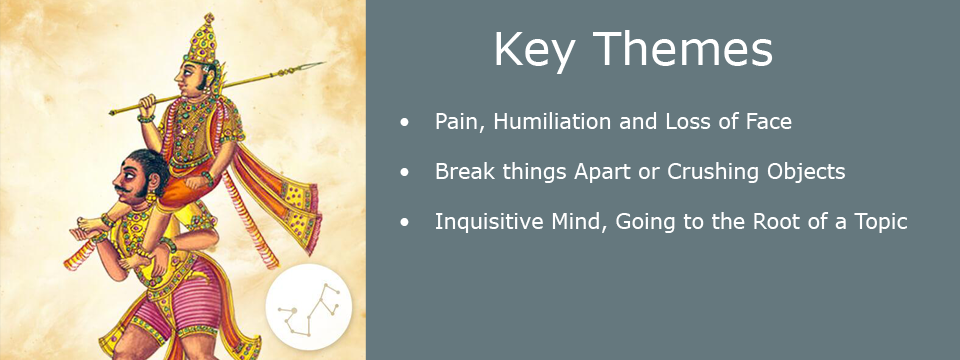
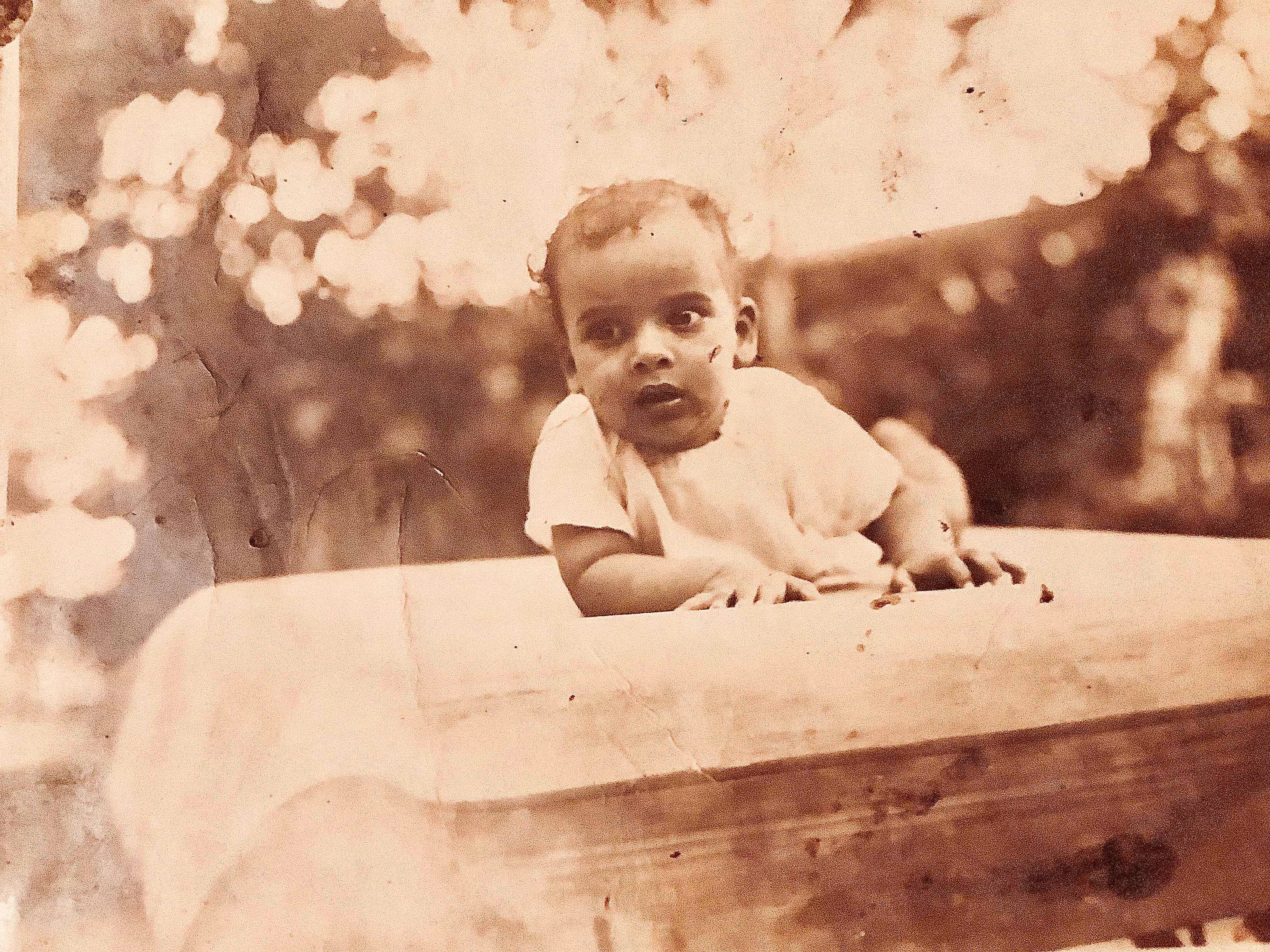
My Living Experience of Pain, Humiliation, and Loss of Face is Predestined. On September 22, I explore the role of my Birth Star Moola, Sagittarius Constellation in the operation of the mechanisms of Predestination.My Living Experience of Pain, Humiliation, and Loss of Face is Predestined. On September 22, I explore the role of my Birth Star Moola, Sagittarius Constellation in the operation of the mechanisms of Predestination.My Living Experience of Pain, Humiliation, and Loss of Face is Predestined. On September 22, I explore the role of my Birth Star Moola, Sagittarius Constellation in the operation of the mechanisms of Predestination.My Living Experience of Pain, Humiliation, and Loss of Face is Predestined. On September 22, I explore the role of my Birth Star Moola, Sagittarius Constellation in the operation of the mechanisms of Predestination.My Living Experience of Pain, Humiliation, and Loss of Face is Predestined. On September 22, I explore the role of my Birth Star Moola, Sagittarius Constellation in the operation of the mechanisms of Predestination.The Rudolf-Rudi Connection explores the doctrine of predestination on September 22 September 22–This Day in History–The Journey of Simon Cyrene from Freedom to the Yoke of Slavery
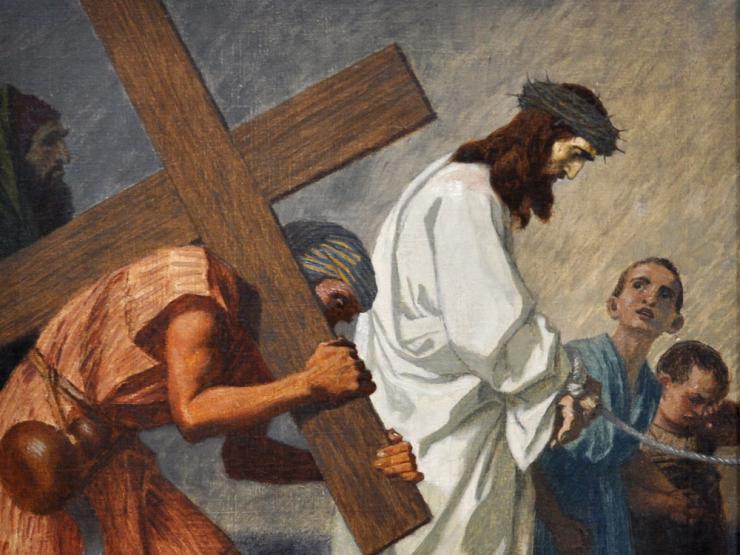
Simon Cyrene was predestined to bear the burden of the Cross and follow Jesus Christ on His final journey at the conclusion of His earthly mission to deliver Peace and Freedom to the mankind.
September 22–This Day in History–The Journey of Simon Cyrene from Freedom to the Yoke of Slavery. September 22–This Day in History–The Journey of Simon Cyrene from Freedom to the Yoke of Slavery. BEHOLD THE MAN. “TAKE MY YOKE UPON YOU….FOR MY YOKE IS EASY AND MY BURDEN IS LIGHT.” BOOK OF MATTHEW 11:28-30.September 22–This Day in History–The Journey of Simon Cyrene from Freedom to the Yoke of Slavery. My Dream for Freedom transforms into an ordeal of Slavery. My Journey to Chakrata and Beyond.
On September 22, 1971, I was Taken on Strength (TOS) of Establishment No. 22, Vikas Regiment, Special Frontier Force, a military organization created in response to The Cold War in Asia.
On Friday, September 22, 2023, I live in Ann Arbor, Michigan to welcome the first day of Fall Season. Today, I claim that my Dream for Freedom in Occupied Tibet got transformed into an ordeal of Slavery in a nation which abolished Slavery with a presidential proclamation on September 22.
On September 22, 1971, I had the freedom to reject my posting to Establishment No. 22. I was given the choice to choose or decline rendering military service in support of Freedom in Occupied Tibet.
The choice to serve in Establishment No. 22 comes with risks for its military mission differs from the military mission of the Indian Army which I joined to defend India from attacks by foreign aggressors.
The Rudolf-Rudi Connection explores the doctrine of predestination on September 22
It may appear that I am making my own choices in accepting calculated risks to my life. On Friday, September 22, 2023, I am still struggling to reconcile with the choices I made in the past. Now, I must reconcile with the reality of my Slavery while living in a country which sponsored my quest for Freedom in Occupied Tibet.
The Rudolf-Rudi Connection explores the doctrine of predestination on September 22
On Friday, September 22, 2023, I have no hope that I may arrive at the final destination of my life at the conclusion of my earthly existence. Chakrata in Uttarakhand, India represents the struggle ahead, a struggle waiting for me before I can arrive at the final destination of my life. Jesus Christ cannot set me free for the Yoke of Slavery is predestined.
September 22–This Day in History–The Journey of Simon Cyrene from Freedom to the Yoke of Slavery. September 22–This Day in History–The Journey of Simon Cyrene from Freedom to the Yoke of Slavery. My Quest for Freedom Traps me in Slavery. My Journey to Chakrata and Beyond.
September 22. This Day in History. What Happened on this Day?
The Rudolf-Rudi Connection explores the doctrine of predestination on September 22 . The Emancipation Proclamation of President Abraham Lincoln has failed to abolish the practice of Slavery, Involuntary Servitude, and Forced Labor. These practices got resurrected and are introduced into the Union territory by the secular laws enacted by the US Congress which violate the Principle of Equal Protection under Law.
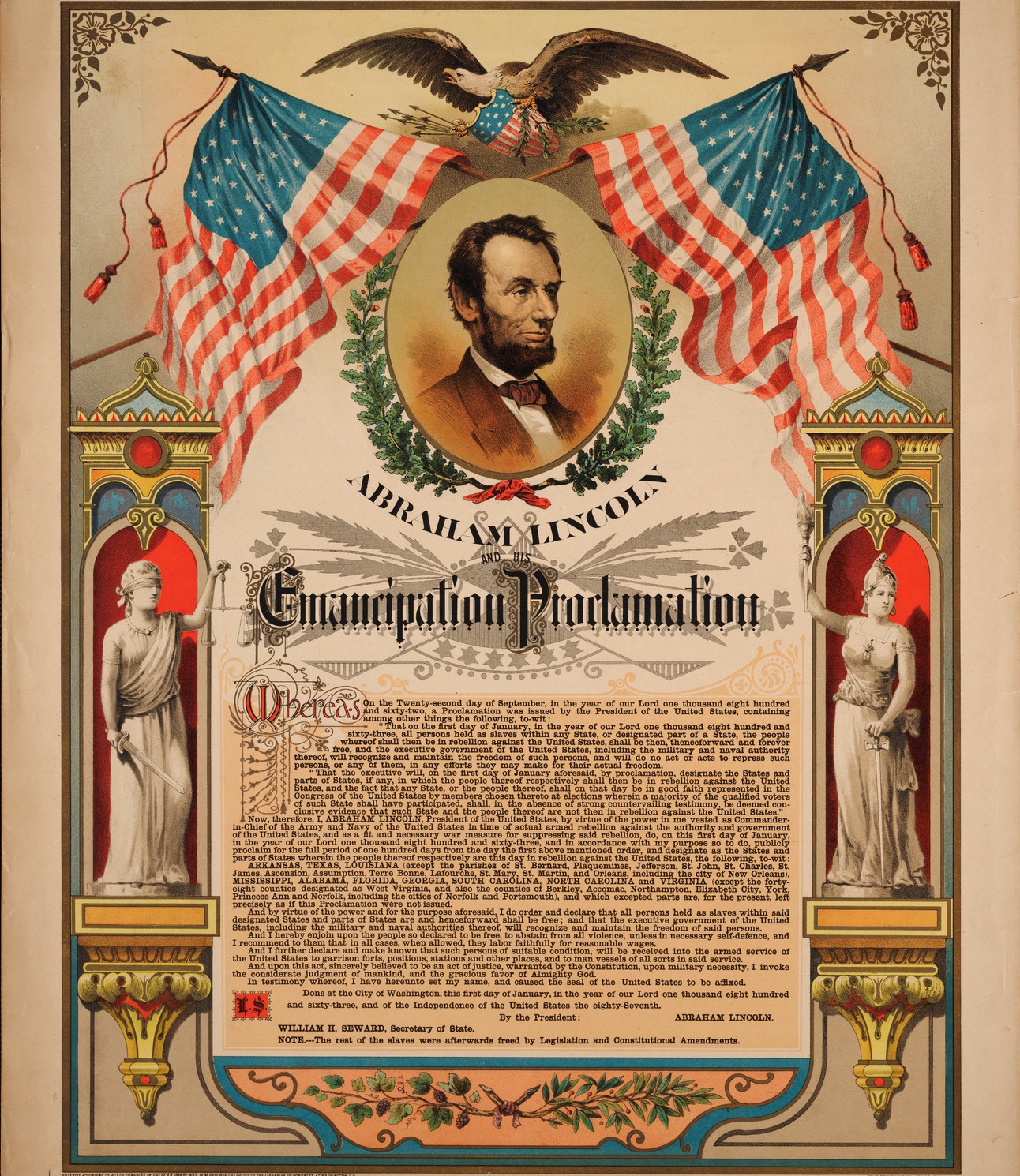
On this day in 1862, President Abraham Lincoln issues a preliminary Emancipation Proclamation, which sets a date for the freedom of more than 3 million black slaves in the United States and recasts the Civil War as a fight against slavery.
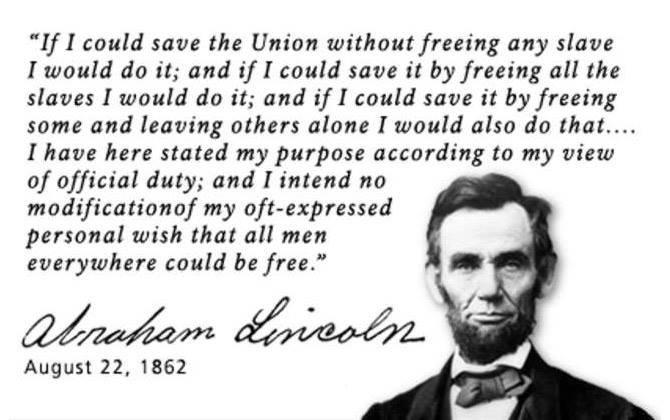
When the Civil War broke out in 1861, shortly after Lincoln’s inauguration as America’s 16th president, he maintained that the war was about restoring the Union and not about slavery. He avoided issuing an anti-slavery proclamation immediately, despite the urgings of abolitionists and radical Republicans, as well as his personal belief that slavery was morally repugnant. Instead, Lincoln chose to move cautiously until he could gain wide support from the public for such a measure.
WholeDude-WholeSlave: Emancipation Proclamation by President Abraham Lincoln during September 1862. United States has officially abolished the practice of slavery and has now institutionalized the practice of Servitude and the Union has transformed from a ‘Free State’ into a ‘Slave State.’
In July 1862, Lincoln informed his cabinet that he would issue an emancipation proclamation but that it would exempt the so-called border states, which had slaveholders but remained loyal to the Union. His cabinet persuaded him not to make the announcement until after a Union victory. Lincoln’s opportunity came following the Union win at the Battle of Antietam in September 1862. On September 22, the president announced that slaves in areas still in rebellion within 100 days would be free.
On January 1, 1863, Lincoln issued the final Emancipation Proclamation, which declared “that all persons held as slaves” within the rebel states “are, and henceforward shall be free.” The proclamation also called for the recruitment and establishment of black military units among the Union forces. An estimated 180,000 African-Americans went on to serve in the army, while another 18,000 served in the navy.
After the Emancipation Proclamation, backing the Confederacy was seen as favoring slavery. It became impossible for anti-slavery nations such as Great Britain and France, who had been friendly to the Confederacy, to get involved on behalf of the South. The proclamation also unified and strengthened Lincoln’s party, the Republicans, helping them stay in power for the next two decades.
The proclamation was a presidential order and not a law passed by Congress, so Lincoln then pushed for an antislavery amendment to the U.S. Constitution to ensure its permanence. With the passage of the 13th Amendment in 1865, slavery was eliminated throughout America (although blacks would face another century of struggle before they truly began to gain equal rights).
Lincoln’s handwritten draft of the final Emancipation Proclamation was destroyed in the Chicago Fire of 1871. Today, the original official version of the document is housed in the National Archives in Washington, D.C.
FRIDAY, SEPTEMBER 22, 2023. MY PASSION FOR FREEDOM IN OCCUPIED TIBET WHICH BEGAN AT CHAKRATA DOES NOT RECONCILE WITH MY SLAVERY OF TODAY. THE SCENIC BEAUTY OF CHAKRATA PLAYED NO ROLE IN THE CHOICE I MADE ON SEPTEMBER 22, 1971.
The Rudolf-Rudi Connection explores the doctrine of predestination on September 22
Chakrata is not the final destination of my life. It is just the beginning of a struggle that remains ahead, both in terms of time and location.
September 22–This Day in History–The Journey of Simon Cyrene from Freedom to the Yoke of Slavery. My Quest for Freedom Traps me in Slavery. My Journey to Chakrata and Beyond.September 22–This Day in History–The Journey of Simon Cyrene from Freedom to the Yoke of Slavery. My Quest for Freedom Traps me in Slavery. My Journey to Chakrata and Beyond.September 22–This Day in History–The Journey of Simon Cyrene from Freedom to the Yoke of Slavery. My Quest for Freedom Traps me in Slavery. My Journey to Chakrata and Beyond.September 22–This Day in History–The Journey of Simon Cyrene from Freedom to the Yoke of Slavery. My Quest for Freedom Traps me in Slavery. My Journey to Chakrata and Beyond.September 22–This Day in History–The Journey of Simon Cyrene from Freedom to the Yoke of Slavery. My Quest for Freedom Traps me in Slavery. My Journey to Chakrata and Beyond.September 22–This Day in History–The Journey of Simon Cyrene from Freedom to the Yoke of Slavery. My Quest for Freedom Traps me in Slavery. My Journey to Chakrata and Beyond.September 22–This Day in History–The Journey of Simon Cyrene from Freedom to the Yoke of Slavery. My Quest for Freedom Traps me in Slavery. My Journey to Chakrata and Beyond.September 22–This Day in History–The Journey of Simon Cyrene from Freedom to the Yoke of Slavery. My Quest for Freedom Traps me in Slavery. My Journey to Chakrata and Beyond.September 22–This Day in History–The Journey of Simon Cyrene from Freedom to the Yoke of Slavery. My Quest for Freedom Traps me in Slavery. My Journey to Chakrata and Beyond.September 22–This Day in History–The Journey of Simon Cyrene from Freedom to the Yoke of Slavery. My Quest for Freedom Traps me in Slavery. My Journey to Chakrata and Beyond.September 22–This Day in History–The Journey of Simon Cyrene from Freedom to the Yoke of Slavery. My Quest for Freedom Traps me in Slavery. My Journey to Chakrata and Beyond.September 22–This Day in History–The Journey of Simon Cyrene from Freedom to the Yoke of Slavery. My Quest for Freedom Traps me in Slavery. My Journey to Chakrata and Beyond.September 22–This Day in History–The Journey of Simon Cyrene from Freedom to the Yoke of Slavery. My Quest for Freedom Traps me in Slavery. My Journey to Chakrata and Beyond.September 22–This Day in History–The Journey of Simon Cyrene from Freedom to the Yoke of Slavery. My Quest for Freedom Traps me in Slavery. My Journey to Chakrata and Beyond.September 22–This Day in History–The Journey of Simon Cyrene from Freedom to the Yoke of Slavery. My Quest for Freedom Traps me in Slavery. My Journey to Chakrata and Beyond. September 22–This Day in History–The Journey of Simon Cyrene from Freedom to the Yoke of Slavery. My Quest for Freedom Traps me in Slavery. My Journey to Chakrata and Beyond. September 22–This Day in History–The Journey of Simon Cyrene from Freedom to the Yoke of Slavery. My Quest for Freedom Traps me in Slavery. My Journey to Chakrata and Beyond. September 22–This Day in History–The Journey of Simon Cyrene from Freedom to the Yoke of Slavery. My Quest for Freedom Traps me in Slavery. My Journey to Chakrata and Beyond.September 22–This Day in History–The Journey of Simon Cyrene from Freedom to the Yoke of Slavery . My Quest for Freedom Traps me in Slavery. My Journey to Chakrata and Beyond. September 22–This Day in History–The Journey of Simon Cyrene from Freedom to the Yoke of Slavery. My Quest for Freedom Traps me in Slavery. My Journey to Chakrata and Beyond. September 22–This Day in History–The Journey of Simon Cyrene from Freedom to the Yoke of Slavery. My Quest for Freedom Traps me in Slavery. My Journey to Chakrata and Beyond. September 22–This Day in History–The Journey of Simon Cyrene from Freedom to the Yoke of Slavery. My Quest for Freedom Traps me in Slavery. My Journey to Chakrata and Beyond. September 22–This Day in History–The Journey of Simon Cyrene from Freedom to the Yoke of Slavery. My Quest for Freedom Traps me in Slavery. My Journey to Chakrata and Beyond.September 22–This Day in History–The Journey of Simon Cyrene from Freedom to the Yoke of Slavery. My Quest for Freedom Traps me in Slavery. My Journey to Chakrata and Beyond.September 22–This Day in History–The Journey of Simon Cyrene from Freedom to the Yoke of Slavery September 22–This Day in History–The Journey of Simon Cyrene from Freedom to the Yoke of Slavery September 22–This Day in History–The Journey of Simon Cyrene from Freedom to the Yoke of Slavery September 22–This Day in History–The Journey of Simon Cyrene from Freedom to the Yoke of Slavery September 22–This Day in History–The Journey of Simon Cyrene from Freedom to the Yoke of Slavery September 22–This Day in History–The Journey of Simon Cyrene from Freedom to the Yoke of Slavery September 22–This Day in History–The Journey of Simon Cyrene from Freedom to the Yoke of Slavery.September 22–This Day in History–The Journey of Simon Cyrene from Freedom to the Yoke of Slavery. The never ending ordeal of Simon Cyrene.The Rudolf-Rudi Connection explores the doctrine of Predestination on September 22
Bharat Darshan – Whole Blessings for Whole Vairagya: My mother, Annapurna grants her Whole Blessings of Akshata or Akshinta by sprinkling specially prepared uncooked, unbroken rice grains over the head of my daughter to prepare her to attain the goals of her life. Annapurne, Sadapurne, Shankara pranavallabhe, Jnana, Vairagya siddhyartham, biksham dehi cha Parvati.
Bharat Darshan – Whole Blessings for Whole Vairagya: The Blessings of Grace, Mercy, and Compassion are received by seeking them as alms with a sense of humility and without self-pride, ego, or ahankar.
The above Shloka is part of the Sri Annapurna Stotram composed by Sri Adi Shankaracharya.
Bharat Darshan – Whole Blessings for Whole Vairagya: Annapurna (Annapoorna, Annapurneshwari or Annada) is the Goddess of Food and Nourishment and hence is a form of Shakti, Power, Force, and Energy.Bharat Darshan – Whole Blessings for Whole Vairagya: Annapurna is the Goddess of Food and Nourishment. She is the Sustainer of all Life
Annapurna (Annapoorna, Annapurneshwari, or Annada) is the Goddess of Food and Nourishment. Hence, Annapurna is a form of Shakti, Power, Force, and Energy and is described as a special manifestation of Goddess Parvati, the consort of Lord Shiva, the Lord who sustains the creation and may eventually cause its dissolution.
Bharat Darshan – Whole Blessings for Whole Vairagya: Goddess Annapurna (Anna+Purna ). The word Anna is translated as Food and Grains, and the word Purna means Whole, Full, or Complete.
The word Anna is translated as Food and Grains and the word Purna means Whole, Full, or Complete. Fullness comes from Fullness and Fullness remains forever Full.
Bharat Darshan – Whole Blessings for Whole Vairagya
Annapurna Devi symbolizes the abundant nourishment she gives to all. She is the Mother Principle and Lord Shiva symbolizes the Originating Principle or the Father Principle. She is the Mother Goddess of all Life. In the Indian Tradition the ritualistic worship of Food and the devotional offering of Food are highly praised. Food is considered sacred and prayers are offered before consuming Food.
Bharat Darshan – Whole Blessings for Whole Vairagya: In the Indian Tradition, Moksha or Liberation is viewed as the Ultimate Goal of Life. To attain this goal, the man invokes the Blessings of Goddess Annapurna every time before he consumes Food to sustain his mortal existence.
In the Indian Tradition, Food is considered only as a means towards Moksha or Liberation, the Ultimate Goal of human birth. The process to attain Moksha demands acquisition of Jnana or Knowledge using the path of Vairagya or Detachment. For Jnana (the awakening of spiritual knowledge about true or real Self) and Vairagya (dispassion, detachment, freedom from all other worldly desires), the seeker begs it as the alms of Grace, Mercy, and Compassion granted by Mother Annapurna.
Akshata or Akshinta, the Whole Blessings granted by Mother Annapurna:
Bharat Darshan – Whole Blessings for Whole Vairagya: Akshata or Akshinta are specially prepared Uncooked, and Unbroken Grains of Rice that deliver the Whole Blessings of Mother Annapurna.
Akshata is a Sanskrit word which means Whole. Akshata or Akshinta refers to the Unbroken and Uncooked Rice Grains offered to the deity during worship and other religious ceremonies to invoke the Whole Blessings of Mother Annapurna, the Sustainer of Life. Akshata are often sprinkled over the heads of the seekers of Whole Blessings of Life with prosperity, fertility, and bounty. Akshata are used in all auspicious occasions such as the performance of marriage ceremonies.
The Whole Concept of Whole Vairagya:
Bharat Darshan – Whole Blessings for Whole Vairagya
Vairagya is a Sanskrit word that translates to detachment or dispassion. In Patanjali’s Yoga Sutras (1:15), the essence of Vairagya is described as: Dispassion, the conscious mastery of the control of desire for objects seen, perceived, or heard. King-Sage Bhartrihari composed 100 verses popularly known as Vairagya Satakam.
Bharat Darshan – Whole Blessings for Whole VairagyaBharat Darshan – Whole Blessings for Whole VairagyaBharat Darshan – Whole Blessings for Whole Vairagya
The goal of renunciation and non-attachment to life is not attained by avoiding the consumption of food which sustains the mortal existence. In fact, food is the spiritual medium that provides the connection between the energy dependent man and his energy provider. The chemical energy required for the performance of all living functions involves the act of cellular respiration.
Bharat Darshan – Whole Blessings for Whole Vairagya: Cellular respiration is a set of metabolic reactions and processes that take place in the cells of organisms to convert biochemical energy from nutrients into adenosine triphosphate (ATP), and then release waste products.
Man is a created being and is constituted as a Spiritual Being. The Spiritual Knowledge required to establish, to maintain, and to sustain the human existence is implanted in the living, corporeal substance of the man and it cannot be acquired or learned from any external source. At a fundamental level the existence of man is not related to the physical and mental work performed by man. It is true that man must satisfy the sensations of hunger and thirst by performing actions to gather and consume food and drink but its transformation into a new form of chemical energy which alone sustains life does not depend upon any external source of Knowledge.
I ask my readers to carefully review the concept of Knowledge acquired through the Learning Experience for the attainment of Vairagya.
Bharat Darshan – Whole Blessings for Whole Vairagya: There are four major qualities/strengths one has to develop, in order to reach the Self, and attain freedom and permanent happiness in this world we live in Today. 1. Discrimination (Viveka) 2. Dispassion(Vairagya ) 3. Desire to be Free and Desire for the Highest. (Mumukshatva) Continued—–Bharat Darshan – Whole Blessings for Whole Vairagya: 4th Pillar consists of Six Wealths/Strengths or Qualities : Shama (Control over mind) Dama (Control over senses) Titiksha (Endurance and forebearing) Uparati (Rejoicing in your own nature) Shraddha (Faith) Samadhana (Being at ease)Bharat Darshan – Whole Blessings for Whole Vairagya: What is Viveka? Whatever you consider as stationary or solid is neither stationary nor solid. Discriminating between that which is not changing, and everything else which is ever changing is Viveka . Understanding that everything is changing would reduce 99% of the misery in this world. The Spiritual nature of the living substance does not change under the influence of time.Bharat Darshan – Whole Blessings for Whole Vairagya: What is Vairagya? Vairagya means Becoming at Ease with What Is. An attitude of So what! Let it be, whatever takes away the feverishness in you and brings you to that pillar of dispassion. Dispassion towards the enjoyments of the five sense or the spiritual enjoyment, towards the seen and the unseen, the outer world or the inner world. Man who views Food as the source of Spiritual Energy will not get attached to Food he consumes. Bharat Darshan – Whole Blessings for Whole Vairagya: The existence of Man in the terrestrial domain is always conditioned and man is not born free. The desire for deliverance from the dependent, conditioned existence is experienced if and only if man retains the spiritual connection that maintains the vital, living function called Cellular Respiration.Bharat Darshan – Whole Blessings for Whole Vairagya. The Six virtues come into play if and only if the man keeps his physical, mortal existence performing the function of cellular respiration using spiritual knowledge implanted in the living substance of Life.Bharat Darshan – Whole Blessings for Whole Vairagya. Self-Control, Self-Restraint, Self-Discipline to restrain the mind depend upon the man’s ability to perform the vital, living function called Cellular Respiration.Bharat Darshan – Whole Blessings for Whole Vairagya: The Practice or Abhyas will be made possible if man is attached to Food to create the chemical energy required to sustain the vital, living functions such as respiration and circulation.
The concept of Whole Vairagya is based upon the following propositions:
Existence (What You Do – the performance of vital, living function called Cellular Respiration) always precedes Essence (What You Are in terms of your acquired Knowledge, Learned Experience, and through your physical, and mental effort or Practice or Abhyas).
Man is a Created Being and is constituted as a Spiritual Being. The Spiritual Knowledge is innate, and is implanted in the Living Substance which performsSpiritual Functions such as Consciousness, and Nutrition for it is aware of its own energy-dependent existence in its given external environment.
Spiritual Knowledge is not acquired through man’s physical or mental work. However, man can discover his own true or real Spiritual nature with the help of the Learning Experience.
The Lord God Creator is present in His entire creation but He remains detached, aloof, disinterested, and may even seem to be estranged from His own creation. But, man is not free and is always trapped by the shackles of conditioned, dependent, earthly existence.
The earthly, mortal, transient, ephemeral, and physical existence of man at any stage of his existence, in good health or ill health depends upon the Unconditioned Love of God who delivers the Whole Blessings of Mercy, Grace, and Compassion even if man is ignorant and is not aware of God’s existence.And,
The man who realizes that he has no deliverance, no liberation, and that there is no release from his bonding, his attachment, his yoking, his partnership, his association, and his spiritual connection with Lord God Creator attains Whole Vairagya or gets detached from the things that derive their existence from attachment to the World.
Tuesday, August 08, 2023, the celebration of International Cat Day
In celebration of International Cat Day on Tuesday, August 08, 2023, I am pleased to share my story, The Cat and the Mouse Game.
Tuesday, August 08, 2023. The Celebration of International Cat Day.
The Cat and The Mouse Game:
Evening With Katy Perry. The Discovery of Hidden Messages. ‘The Cat and The Mouse Game.’
In my analysis, Katy Perry’s Tattoo in the Indian Language of Sanskrit is about ‘Staying Afloat’ as in the Indian View, Human Existence poses a great Challenge for it is thought of as a tedious, never-ending swim across the vast, unchartered Ocean called ‘Samsara’. To ‘Go With the Flow’ of Time fundamentally demands to keep one’s precarious existence under all challenging circumstances.
Evening With Katy Perry. Staying Afloat during the very tedious and long Life Journey called SAMSARA. To Go With Flow of Time fundamentally demands to keep one’s precarious existence under challenging circumstances.
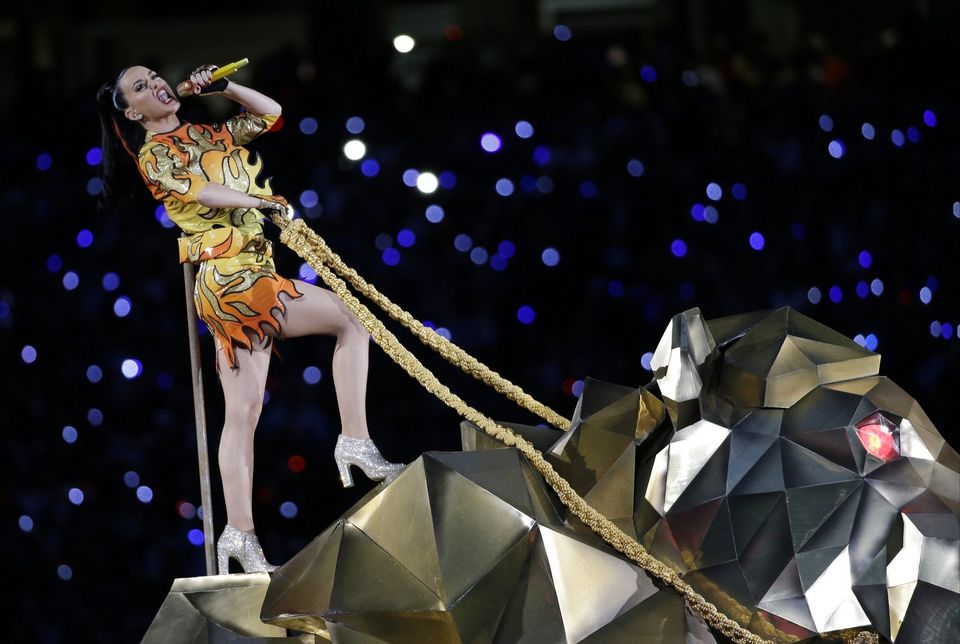
I posted this story about ‘The Cat and The Mouse Game’ on December 02, 2014 and updated the story on February 02, 2015 after the XLIX Super Bowl Game. Many of my readers across the United States have suggested that Katy Perry has responded to The Cat and The Mouse Game Challenge and came riding on a Roaring Cat during the XLIX Super Bowl Game Halftime performance. Can a Mouse find its way to win the Challenge posed by The Cat Power? For one thing, I admit that The Mouse can tell the difference between a Tiger and a ‘Paper Tiger’. However big it may be, a robotic Cat cannot stop The Mouse in its search for the ‘Hidden Cookie’.
WHOLE TEAM – WHOLE COOKIE – WHOLE CHALLENGE – # EVENINGWITHKATYPERRY: CAN A MOUSE FIND HIDDEN COOKIES IF THE COOKIE IS RIDING ON A ROARING CAT? CAN THE MOUSE WIN THE WHOLE CHALLENGE POSED BY THE CAT POWER?WHOLE TEAM – WHOLE COOKIE – WHOLE CHALLENGE – # EveningWithKatyPerry: THE CAT AND THE MOUSE GAME. CAN THIS ROBOTIC CAT BEAT THE MOUSE IN THE GAME OF LIFE?WHOLE TEAM – WHOLE COOKIE – WHOLE CHALLENGE – # EveningWithKatyPerry: THE CAT AND THE MOUSE GAME. THE CAT IS BIG. IS IT A GOOD DEFENSE? CAN IT TACKLE THE CLEVER, LITTLE MOUSE?WHOLE TEAM – WHOLE COOKIE – WHOLE CHALLENGE – # EveningWithKatyPerry: THE CAT AND THE MOUSE GAME. EXISTENTIALISTS ENDORSE IT AS THE GAME OF LIFE.WHOLE TEAM – WHOLE COOKIE – WHOLE CHALLENGE – # EveningWithKatyPerry: THE CAT AND THE MOUSE GAME. THE SKEPTICS WHO HABITUALLY DOUBT DENY THE CAT AND THE MOUSE GAME.
Super Bowl – Super Challenge – Super Performance:
WHOLE TEAM – WHOLE COOKIE – WHOLE CHALLENGE – # EveningWithKatyPerry: THE GAME OF LIFE. THE SALESMAN SELLING THE REPLICAS OF THE “LEFT SHARK” RECEIVED A NOTICE FROM KATY PERRY’S ATTORNEY. THE MOUSE IS NOT AFRAID OF “PAPER TIGERS.”
Existentialists endorse The Cat and The Mouse Game as the Game of Life or Existence. Skeptics who habitually doubt, question, or suspend judgment may deny The Cat and The Mouse Game. Whereas the Rationalists concur with the reasonableness of The Cat and The Mouse Game. I am not sure about the rationality of Katy Perry’s attorney who mailed a legal notice to Orlando based artist Fernando Sosa 31 who made a three-inch replica of a Shark figurine using a 3D printer and started selling these sharks on Shapeways.com for $24.99 on Tuesday, February 03, 2015. Katy Perry’s attorney promptly sent him a “Cease and Desist” Letter demanding the shark’s removal citing intellectual property rights. On Wednesday, Shapeways.com canceled orders and refunded customers. In a world ruled by Greed, the Big Cat holds the power to sniffle the Little Mouse and deny even the simplest kind of economic opportunity to support its survival. It reminds me of the scripture, Matthew : 15:27; “Yes it is, LORD.” she (the Canaanite Woman) said, “Even the dogs eat the crumbs that fall from their master’s table.” Fernando Sosa can’t even gather those crumbs that have fallen on the ground near Katy Perry’s Halftime Show.
WHOLE TEAM – WHOLE COOKIE – WHOLE CHALLENGE -#EveningWithKatyPerry: CAN THE LITTLE MOUSE EAT THE CRUMBS THAT FALL ON THE GROUND WHERE KATY PERRY PERFORMED DURING XLIX SUPER BOWL HALFTIME. THE NEW TESTAMENT BOOK OF SAINT MATTHEW 15:27. THE CANAANITE WOMAN PLEADING WITH JESUS FOR THE FAVOR OF EATING FALLEN CRUMBS ASKING FOR A SHOW OF MERCY.WHOLE TEAM – WHOLE COOKIE – WHOLE CHALLENGE: SUPER BOWL – SUPER CHALLENGE – SUPER PERFORMANCE. THE COOKIE WON THE SUPER CHALLENGE. #EveningWithKatyPerry SHE IS DISTRACTED BY THE BALL SHE IS HOLDING AND THE CLEVER, LITTLE MOUSE FINDS ITS WAY.WHOLE TEAM – WHOLE COOKIE – WHOLE CHALLENGE: SUPER BOWL – SUPER COOKIE – SUPER VICTORY. #EveningWithKatyPerry THE GAME OF LIFE. YOU CANNOT WIN WITHOUT EVER TAKING RISKS.WHOLE TEAM – WHOLE COOKIE – WHOLE CHALLENGE # EveningWithKatyPerry: “IF YOU GIVE A MOUSE A COOKIE” IS NOT THE SOURCE OF INSPIRATION FOR THIS STORY. I AM SAYING THAT A MOUSE HAS ABILITIES TO FIND “HIDDEN COOKIES” FOR IT ALWAYS PLAYS THE RISKY CAT AND MOUSE GAME.
This blog post is an open invitation to Katy Perry to sponsor the Whole Team event called #EveningWithKatyPerry. This is a proposal to entertain Katy Perry who is known to the world of music lovers as a great performer and entertainer. This Special, and Original, Whole Team Event is a new concept in the World of Entertainment. In this Event, the Entertainer will be the only person who would enjoy the privilege of being entertained by a Team (Sorry, this Event is not open to the general Public). I am asking Katy Perry to graciously accept this special offer from Whole Team Members who participate in the “Whole Challenge.” I assure her that she would have the most wonderful time of her life by spending time with “Whole Idealists” who truly appreciate her passion for “Naturalism.” I am presenting the concept of “Whole Cookie – Whole Challenge” to discover Love as a Fundamental Force.
Whole Team – Whole Cookie – Whole Challenge: “Hide and Seek” or The Cat and The Mouse Game:
#Evening with Katy Perry. A Cat and Mouse Game.
Katy Perry No Underwear – Ditches Panties at Red Carpet: #EveningWithKatyPerry
#EveningWithKatyPerry – WHOLE TEAM – WHOLE COOKIE – WHOLE CHALLENGE: WHOLE TEAM MEMBERS WHO ACCEPT THIS WHOLE CHALLENGE ARE INVITED TO MAKE A WHOLE DISCOVERY OF THE “HIDDEN COOKIES” IN THIS PHOTO IMAGE OF KATY PERRY ON THE RED CARPET AT ARIA MUSIC AWARDS FUNCTION HELD IN SYDNEY, AUSTRALIA ON WEDNESDAY, NOVEMBER 26, 2014. SHE IS A SWEET COOKIE POSING A CHALLENGE; WHERE SHE IS HIDING THE COOKIES WHILE WEARING A SEE-THROUGH SKIRT?
WholeDude.com is inviting the Whole Team Members to take part in this Whole Challenge (“HIDE AND SEEK” or THE CAT AND THE MOUSE GAME) to find the “Hidden Cookies” in the photo images of music celebrity Katy Perry. The Australian Recording Industry Association (ARIA) held its 28th annual Music Awards function in Sydney, Australia. The Red Carpet Show was held on Wednesday, November 26, 2014. US music celebrity Katy Perry made a delightful appearance on the Red Carpet in a ‘See-Through’ Skirt and displayed her taste for ‘Naturalism’ by ditching her undies. Being an ‘Idealist’ WholeDude loves ‘Naturalism’. Most viewers of Katy Perry’s images have failed to discover the “Hidden Cookies” while she wore a ‘See-Through’ Skirt.
#EveningWithKatyPerry – WHOLE TEAM – WHOLE COOKIE – WHOLE CHALLENGE: WHOLE TEAM MEMBERS HAVE TO MAKE A WHOLE DISCOVERY OF THE “HIDDEN COOKIES” IN THIS PHOTO IMAGE OF KATY PERRY AT 28th ANNUAL ARIA MUSIC AWARDS. SHE IS A SMART COOKIE FOR SHE IS POSING AS IF SHE HAS NOTHING TO HIDE FROM PUBLIC VIEW.
There are Rules and Conditions to participate in this Whole Challenge to find the “Hidden Cookies.”:
1. Whole Team Members, age 18-Years or more can participate in the Whole Challenge. If Katy Perry agrees, the Winning Participants will attend a Special Event, #EveningWithKatyPerry and get a chance to entertain the celebrity.
2. Whole Team Members may click on the images and view the enlarged version of these images.
3. Whole Team Members may use the ‘MOUSE’ or the typical characteristics of the Mouse to probe the images and to discover the “Hidden Cookies.”
4. Whole Team Members can find the “Hidden Cookies” from any of the photo images that appear in this article. The Winner of the Whole Challenge will receive a Whole Award.
5. Whole Team Members are not allowed to ask Katy Perry for clues or tips to find the “Hidden Cookies.”
#EveningWithKatyPerry – WHOLE TEAM – WHOLE COOKIE – WHOLE CHALLENGE: WHOLE TEAM MEMBERS ARE INVITED TO MAKE THE WHOLE DISCOVERY OF THE “HIDDEN COOKIES.” FEEL FREE TO GREET KATY PERRY WITHOUT TOUCHING HER WITH HANDS. SHE IS INDEED A SWEET, SMART, SHREWD, AND TOUGH COOKIE WHO KNOWS HOW TO HIDE HER SECRET INFORMATION.
The Whole Challenge is exclusively for the Whole Discovery of the “Hidden Cookies” and the Whole Search is made only using the “MOUSE” or the abilities of the Mouse. Whole Team Members who can name the Inventor of “MOUSE” will get a Bonus Prize.
#EveningWithKatyPerry – WHOLE TEAM – WHOLE COOKIE – WHOLE CHALLENGE: WHOLE TEAM MEMBERS CAN HAVE SOME FUN IF THEY DO the WHOLE SEARCH FOR THE “HIDDEN COOKIES” USING THE “MOUSE.” IF SHE IS SMART, WE NEED A THIEF LIKE THE MOUSE TO FIND THE SECRET SHE IS HIDING. THIS IMAGE REVEALS A TATTOO ON HER LEFT ANKLE.#EveningWithKatyPerry – WHOLE TEAM – WHOLE COOKIE – WHOLE CHALLENGE: WHOLE TEAM MEMBERS WHO DISCOVER THE “HIDDEN COOKIES” WILL RECEIVE A WHOLE AWARD. IN THIS IMAGE, YOU CAN SEE A TATTOO ON HER LEFT WRIST, HIDDEN IN OTHER IMAGES. WHAT ELSE IS HIDDEN?#EveningWithKatyPerry – WHOLE TEAM – WHOLE COOKIE – WHOLE CHALLENGE: WHOLE TEAM MEMBERS MAY BE ASKED TO NAME THE “MOUSE” INVENTOR TO GET A BONUS PRIZE APART FROM THE WHOLE REWARD IF THEY DISCOVER THE “HIDDEN COOKIES.”#EveningWithKatyPerry – WHOLE TEAM – WHOLE COOKIE – WHOLE CHALLENGE: WHOLE TEAM MEMBERS TO PARTICIPATE IN WHOLE CHALLENGE MUST SEARCH AND DISCOVER THE “HIDDEN COOKIES” WITHOUT TOUCHING KATY PERRY WITH THEIR HANDS. THE USE OF THE “MOUSE” IS ALLOWED.
This Whole Challenge to find the “Hidden Cookies” is a contest invented by WholeDude.com. If any of my readers have known or heard about such a “HIDE AND SEEK – THE CAT AND THE MOUSE GAME that involves finding the “Hidden Cookies” may inform me for I believe in WholeDude’s entitlement to special rights to boast about this Whole Challenge.
#EveningWithKatyPerry – WHOLE TEAM – WHOLE COOKIE – WHOLE CHALLENGE: AN OPEN INVITATION TO WHOLE TEAM MEMBERS TO DISCOVER THE “HIDDEN COOKIES.” CERTAIN RULES APPLY. DO NOT TOUCH KATY PERRY WITH YOUR HANDS. WATCH OUT THAT HAND WITH BLACK STRAP ON THE WRIST.#EveningWithKatyPerry – WHOLE TEAM – WHOLE COOKIE – WHOLE CHALLENGE: KATY PERRY AT ARIA MUSIC AWARDS. WHERE ARE THE “HIDDEN COOKIES ?” AND WHAT ARE COOKIES???#EveningWithKatyPerry – WHOLE TEAM – WHOLE COOKIE – WHOLE CHALLENGE: WHOLE TEAM MEMBERS ARE NOT ALLOWED TO ASK KATY PERRY TO SHOW THE “HIDDEN COOKIES.” DO NOT ASK FOR TIPS OR CLUES. THERE IS A SIGN ON HER RIGHT WRIST WHICH IS HIDDEN IN OTHER IMAGES.#EveningWithKatyPerry – WHOLE TEAM – WHOLE COOKIE – WHOLE CHALLENGE: NOW WHOLE TEAM MEMBERS MAY SEE SOMETHING ON KATY PERRY’S RIGHT ARM AND THIS IS NOT SEEN IN ANY OF THE OTHER IMAGES. Similarly, THERE ARE “HIDDEN COOKIES.”#EveningWithKatyPerry – WHOLE TEAM – WHOLE COOKIE – WHOLE CHALLENGE: WHOLE TEAM MEMBERS MAY APPRECIATE KATY PERRY’S TASTE FOR ‘NATURALISM’. FIND THOSE “HIDDEN COOKIES” FOR WINNING A WHOLE AWARD. SHE IS A ‘NATURALIST’ WITH A NATURAL INCLINATION TO HIDE BITS OF INFORMATION FROM HER VIEWERS. SHE COULD BE PLAYING THE ‘HIDE AND SEEK’ GAME, OR SHE IS CHALLENGING AN ENTERPRISING MOUSE TO FIND THE HIDDEN COOKIES.
#EveningWithKatyPerry – Whole Challenge – “Hide and Seek” – The Cat and The Mouse Game:
#EveningWithKatyPerry – WHOLE TEAM – WHOLE COOKIE – WHOLE CHALLENGE: “HIDE AND SEEK” – THE CAT AND THE MOUSE GAME. THE COMMON HOUSE MOUSE OR MUS MUSCULUS IS QUIET, SHY, TIMID, SLY, AND STEALTHY IN ITS HABITS. IT MOVES UNDER THE COVER OF DARKNESS AND FINDS FOOD USING CLUES LIKE SCENT AND SMELL RATHER THAN VISION. THE MOUSE IS KNOWN FOR ITS ABILITY TO STEAL FOOD LIKE A THIEF.
It would be interesting to learn about “HIDE AND SEEK” – ‘The Cat and the Mouse Game’. Mouse (Mus musculus) derives its name from the fancied resemblance between the movements of a Mouse and muscle or a body organ that moves in and out in a sly manner. It is a small rodent having tiny ears, and a long, thin tail. Mousing means to seek about or search for something busily and stealthily.
#EveningWithKatyPerry – The Cat and the Mouse Game
The Cat’s search for a mouse is also called ‘Mousing’. The Mouse is known or reputed for its ability to steal food like a thief. But, the connection between Mouse and muscle or flesh is of equal interest. Muscle describes any of the body organs consisting of bundles of cells or fibers that are contracted and expanded to produce bodily movements. Human nature, especially in its sensual aspect, has the nature of ‘flesh’. The term ‘fleshy’ refers to the fondness of sensual, or bodily pleasures. The word ‘Fleshpot’ describes a place where bodily comfort and carnal pleasures are purchased. For these reasons, man’s bodily organ that he uses to find sensual pleasure operates like ‘The Mouse’. In Computer Science, ‘Mouse’ refers to a small hand-held device that moves on a flat surface in front of a video screen in such a way as to move, or position the cursor or part of the display. I am suggesting the use of the ‘Mouse’ using the sly, and stealthy nature of the common House Mouse, and to find the source of carnal pleasure using clues of “SCENT” or Smell and not of Vision. The information that is hidden from public view, “The Hidden Cookies” derives its name because of its “Scent” or Smell. You have to imagine the “Scent” and conduct the ‘Search’ Mission to discover the ‘Hidden Cookies’.
#EveningWithKatyPerry – WHOLE TEAM – WHOLE COOKIE – WHOLE CHALLENGE: “HIDE AND SEEK” – THE CAT AND THE MOUSE GAME. WHAT IS THE MEANING OF PUSS AND PUSSYFOOT? THE WORD “PUSS” REFERS TO THE ECHOIC OF THE SPITTING OF A CAT. CATS ARE OFTEN CALLED “PUSSYCATS” BECAUSE OF THE “PUSS” SOUNDS THEY MAKE. I USE THE SAME WEBSTER’S NEW WORLD COLLEGE DICTIONARY THAT IS SEEN IN THIS IMAGE.
Cat (Felis catus) since ancient times is often kept as a pet and used for killing mice. The word “PUSS” describes the echoic of the spitting of a cat. The term “PUSSYFOOT” means to move with stealth or caution like a cat. The cats that are kept as pets are affectionately called “PUSSYCATS” for they often make those “PUSS” sounds. The cat is known for its hunting ability and it hunts the mouse reputed for its stealing ability. If the Mouse has to succeed in finding the “Hidden Cookies”, the dangerous, and risky Mission demands artfully sly action.
#EveningWithKatyPerry – WHOLE TEAM – WHOLE COOKIE – WHOLE CHALLENGE: THE CAT AND THE MOUSE GAME. THE MILK OF KINDNESS CAN BRING THE CAT AND THE MOUSE TO LIVE TOGETHER IN PEACE, AND HARMONY. THIS PHOTO IMAGE IS FROM PICHIT, THAILAND, WHERE OUAN THE CAT AND TUA LEK THE FIELD MOUSE ARE THE PETS OF A COFFEE-SELLER.
“HIDE AND SEEK” – The Cat and The Mouse Game if played artfully with skill, imagination, and humor will provide Great Fun to both the players. That is the reason that I demand to serve the “Whole Cookies” with the ‘Milk of Kindness’.
#EveningWithKatyPerry – What are Cookies?
#EveningWithKatyPerry – WHOLE TEAM – WHOLE COOKIE – WHOLE CHALLENGE: TO PLAY “HIDE AND SEEK” – THE CAT AND THE MOUSE GAME, READERS HAVE TO UNDERSTAND THE MEANING OF COOKIES.
Cookie (Dutch. Koekje. koek, refers to a cake) is a small, sweet cake, usually flat, and often crisp. The word “COOKIE” is informally used to describe an attractive, young woman, especially one qualified as tough, smart, and shrewd or as a person of a specified kind. In this context, I recognize Katy Perry as a “Tough Cookie” for she came to a public event wearing a “See-Through” skirt without using the protection offered by underwear which covers and conceals the private parts from public exposure. The terms “Computer Cookies”, Browser Cookies, Internet Cookies, and Tracking Cookies describe small, often encrypted text files in browser directories. Web developers use Cookies to help computer users navigate their websites efficiently and perform certain functions. A Cookie can store user’s information and later the web developer may retrieve that information to recognize the user’s identity. The term “Hidden Cookies” is often used to alert users about concealed spyware or malware that some web developers use to steal the personal identity information of the computer users. The word “COOKIE” means information that is hidden and the information has the potential to expose the person’s identity. For that reason, the parts concealed from public view in the photo images of Katy Perry could be described as the “Hidden Cookies.”
#EveningWithKatyPerry – The Cat and the Mouse Game. Hide and Seek Game. What is a Mismatched Cookie?
What is a Mismatched Cookie? A Cookie can be called “Mismatched” if it is unlike the “Hidden” Cookie. In this story about playing the Cat and the Mouse or Hide and Seek Game to discover the Hidden Cookie, any other type of Cookie which is not a proper Match must be called “MISMATCHED.”
#EveningWithKatyPerry – WHOLE TEAM – WHOLE COOKIE – WHOLE CHALLENGE: THE CAT AND THE MOUSE GAME. WHOLE TEAM MEMBERS WHO PARTICIPATE IN THE WHOLE SEARCH FOR THE “HIDDEN COOKIES” CAN CLAIM THIS WHOLE CONSOLATION PRIZE. SORRY, MILK IS NOT INCLUDED. BUT SERVE THE WHOLE COOKIES WITH THE MILK OF KINDNESS.
Whole Team Members who participate in this Whole Challenge; “HIDE AND SEEK” – The Cat and The Mouse Game, can claim a Whole Consolation Prize (365 Everyday Value Mismatched Sandwich Cremes) even if the Whole Search for the Hidden Cookies fails. The Whole Team Players must write to WholeDude.com and Leave a Comment to confirm their participation in the Search Mission. A Bonus Prize is awarded if the Whole Team Player includes the name of the “MOUSE” inventor.
WHOLE TEAM-WHOLE COOKIE-WHOLE CHALLENGE: #EVENINGWITHKATYPERRY The Cat and the Mouse Game.WHOLE TEAM -WHOLE COOKIE-WHOLE CHALLENGE: #EVENINGWITHKATYPERRY The Cat and the Mouse Game.WHOLE TEAM-WHOLE COOKIE-WHOLE CHALLENGE: #EVENINGWITHKATYPERRY The Cat and the Mouse GameWHOLE TEAM-WHOLE COOKIE-WHOLE CHALLENGE: #EVENINGWITHKATYPERRY The Cat and the Mouse GameWHOLE TEAM-WHOLE COOKIE-WHOLE CHALLENGE: #EVENINGWITHKATYPERRY The Cat and the Mouse GameWHOLE TEAM-WHOLE COOKIE-WHOLE CHALLENGE: #EVENINGWITHKATYPERRY The Cat and the Mouse Game.WHOLE TEAM-WHOLE COOKIE-WHOLE CHALLENGE: #EVENINGWITHKATYPERRY The Cat and the Mouse GameWHOLE TEAM-WHOLE COOKIE-WHOLE CHALLENGE: #EVENINGWITHKATYPERRY The Cat and the Mouse Game.WHOLE TEAM-WHOLE COOKIE-WHOLE CHALLENGE: #EVENINGWITHKATYPERRY The Cat and the Mouse GameWHOLE TEAM-WHOLE COOKIE-WHOLE CHALLENGE: #EVENINGWITHKATYPERRY The Cat and the Mouse Game.WHOLE TEAM-WHOLE COOKIE-WHOLE CHALLENGE: #EVENINGWITHKATYPERRY The Cat and the Mouse Game.WHOLE TEAM-WHOLE COOKIE-WHOLE CHALLENGE: #EVENINGWITHKATYPERRY The Cat and the Mouse Game.#EveningWithKatyPerry – WHOLE TEAM-WHOLE COOKIE-WHOLE CHALLENGE: WHOLE TEAM MEMBERS WHO ACCEPT THE WHOLE CHALLENGE MAY GET A CHANCE TO TAKE PART IN THE SPECIAL EVENT CALLED AN EVENING WITH KATY PERRY.
#EveningWithKatyPerry The Cat and the Mouse GameTuesday, August 08, 2023, the celebration of International Cat Day
The Vitruvian Man c. 1492. The painting by Leonardo da Vinci displays the spirit of scientific inquiry. We must investigate the biological basis of Human Existence to know about Human Nature. The Nature is a reflection of the potency that keeps the human Object existing
What is man? The motivation for asking this question comes from a statement expressed in the Sanskrit language, “Sarvesham Swastir Bhavatu,” which seeks the well-being of all humans, of all races, of all religions, of all cultures, and of all nations. Our efforts to support the well-being of man would be affected by our understanding the ‘real’ or ‘true’ nature of man.
All human traditions, including religious, cultural, literary, philosophical, and scientific traditions make assumptions about human nature. The basic assumption about human nature is that of finding it displayed in thoughts, feelings, moods, and the actions and the behaviors that proceed from such mental states of the human individual. Human nature could be discovered by understanding the biological basis for human existence. Human nature is a reflection of that potency that keeps the human object existing. To describe human nature from mental life or mental states of an individual causes Subject-Object Dualism.
I must know human nature by knowing the characteristics of the substance that exists. The substance when it performs its functions, the characteristics of its behavior could be observed in biotic interactions, the interactions of the cells, the tissues, the organs and the organ systems that constitute the human organism. I discover human nature of a subject who objectively exists because of the functions of the cells, the tissues, organs and organ systems that provide the basis for that existence.
I coined the phrase Whole Existence to examine the complexity of Time and Life interactions. Life is always derived from previously existing Life and Life by its very nature has the ability to reproduce and perpetuate its existence displaying its inherent capacity for a future existence or future Life.
The Mortal Being called Man has to be studied giving attention to the Cyclical Flow of Time which can make it possible for Man to have a Past Life, a Present Life, and a Future Life. Whole Existence includes the former state of existence or Past Birth, and a future state of existence or Rebirth apart from the Present Birth.
Existentialism – The Philosophy of Human Existence:
Jean Paul Sartre ( 1905 – 1980 ), French novelist, playwright, and exponent of Existentialism.
The philosophical focus of Existentialism is concerned with the uniqueness of the individual human being, the meaning or purpose of human life as a subjective experience, and with the freedom of human individual. Sartre believes in the ability of every person to choose for himself his attitudes, purposes, values, and a way of life. Sartre’s thesis is that humans are essentially free, free to choose (though not free not to choose)and free to negate the given features of the world. In his novel, “Being and Nothingness” (1943), Sartre expresses an opinion that the only ‘authentic’ and genuine way of life is that freely chosen by each individual for himself. Sartre’s driving belief in Radical Freedom involves the ability to choose not only a course of action but also what one would become. According to Sartre, man is truly free, the world, whether material or social can place no constraints on him, not even to the extent of determining what would or would not be good reasons for following a given course of action. Sartre thinks that there are no transcendent or objective values set for human beings and that there is no ultimate meaning or purpose inherent in human life. Sartre insists that the only foundation for values is human freedom and that there can be no external or objective justification for the values anyone chooses to adopt.
Human Consciousness and Human Existence:
Sartre divides the being, the existing realities into two categories;1. one category is called being – in – itself (L’etre – en – soi) which comprises inanimate things such as rocks, and 2. the second category is being – for – itself (L’etre – pour – soi) which comprises beings that have feelings such as human beings. Sartre effectively excludes a vast majority of living organisms from the category that he calls being – for – itself. Sartre understands consciousness as an ability to know or be aware of feelings. His view is only partly correct. The true function of consciousness is awareness of the state, the condition, and the fact of living. Hence, this Amoeba proteus is a conscious entity while it is living in its given environment.
Sartre makes a radical distinction between consciousness (L’etre – pour – soi, being – for – itself) and non-conscious objects (L’etre – en – soi, being – in – itself). Though it is correct that human beings have emotional feelings, thoughts, and moods, the nature of consciousness is the same in all living entities. The presence or absence of feelings is of no consideration to make the fundamental distinction between inanimate and animate beings. His focus is on the opposition between objective things and human consciousness. This basic dualism is shown by the fact that consciousness necessarily has an object; it is always consciousness of something which is not itself. Consciousness makes the distinction between itself and its object. Sartre makes a conceptual connection between consciousness and nothingness. Human consciousness is a non-thing as its reality consists in standing back from things and taking a point of view on them. Because consciousness is a non-thing (Sartre’s “neant” literally means “nothingness”), it does not have any of the causal involvements that things have with other things. This means that consciousness and thus humans themselves are essentially free. In Sartre’s view, to pretend that we are not free is that of self-deception or bad faith (mauvaise foi). According to Sartre, the freedom of human consciousness is experienced by humans as a burden and it causes anguish. Sartre’s most basic point is that to be conscious is to be ‘free’. Sartre’s concept of human freedom is a simple mental entity and it involves the freedom of imagination. However, man has a very limited freedom to convert his imagination into actuality. Man lacks total freedom and has no true freedom as he does not directly rule or govern even a single cell in his body which comprises of trillions of individual, living cells which have functional autonomy and are independent entities while being part of a group.
Human Consciousness and Human Freedom:
Human Consciousness and Human Freedom – Sartre contends that we can never be just objects to be observed and accurately described. However, Biology describes man as a multicellular organism, man can view a cell from his own body and then the Subject viewing the Object and the Object that is viewed are the same and the Subject can accurately describe the Object. I observe cell structure and functions to understand human consciousness and human freedom.
I disagree with the view shared by Sartre and various others about the nature of human consciousness. The problem involves the description of consciousness as a mental function. Consciousness is a neurobiological function, and more importantly it is the basic living function. The living cell is aware or conscious of the fact of its own existence; it is conscious of itself and its internal condition, and it is conscious of its external environment and objects found in its external environment. Hence, consciousness must be described as a biological characteristic of living cells and living organisms.
Consciousness describes the nature of the substance that is living, the matter that lives and is known as living matter. The living matter is conscious of its internal condition, a condition that demands the supply of energy from an external source to keep its existence. The biological properties of motion, and nutrition come into play because of this biological characteristic called consciousness. Hence it is a vital, or animating principle of all living cells and living organisms. The living cell because of its consciousness knows its nature of energy dependent existence and uses its power of motion and nutrition to attract substances found in its external environment to perform all other living functions to support its growth and maintenance. The fact of energy dependent existence and the consciousness of that conditioned existence displays the lack of human freedom in matters that pertain to human existence.
Whole Dude – Whole Existence: The integration of Structure and Function describes the Spiritual Basis for Health and Human Existence. By knowing the structure and function of the Red Blood Cell or Erythrocyte, we can establish the facts of Blood Circulation, the reason for the structure of the Heart and Lungs, their motions and their relation to each other and their relation to the Human Being who exists as an Individual with Individuality.
A complex human living system exists because of harmonious interactions, partnership, relationship, and association between the cells, the tissues, the organs and the organ systems that constitute the human individual. These biotic interactions display behavioral characteristics such as mutual assistance, mutual cooperation, mutual tolerance, mutual subservience, mutual functional subordination to provide benefits to each other to support the survival and reproductive success of each other. There is sympathy, compassion, and understanding for the needs of each other among the participants of a biotic or biological community or association of living cells that comprise the human person. I observe the human organism and I can accurately describe that Spiritualism is the chief attribute of human existence and human nature. Man has no freedom and man has no choice other than that of existing as a Spiritual Being.
It is ironic that man has no cortical or mental awareness of the spiritual nature of his own body and the substance that lives because of its nature. By seeking awareness of the underlying spiritual nature, man will be able to live in harmony and peace within himself and with others in his environment.
I agree with the view of Sartre and suggest that man’s existence precedes his essence. Sartre has failed to contemplate upon the biological basis of human existence and hence could not describe the reality of human essence and human nature. The Subjective Reality of physical existence precedes and defines the nature of human being. Who you are (your Essence) is defined by what you do (your Existence). To know man’s essence, to describe human nature, we need a man who is existing. If there is no living, physical being called man, it would serve us no purpose to know its nature or essence. In Spiritualism, man’s essence and existence come together to establish the purpose of man in Life.
The Art of Receiving and the Art of Giving:
Ecology is the Science that deals with the relations between living organisms and their environment. Humans as individuals and as social or national groups have to make adjustments to their geographical, social, and biotic environments to live in peace and harmony. The Art of Receiving and The Art of Giving is inescapable and is inevitable consequence of human living and human life.
Sir Winston Churchill said, “You make a living by what you get. You make a life by what you give.” To add clarity to this quote, I say that human existence depends upon receiving energy from an external source. Human nature involves sharing that energy with others. The human person comprises of about 100 trillion individual, living cells and at the same time there are about 10 times 100 trillion microorganisms that inhabit the human gastrointestinal tract. There is a mutually beneficial relationship between man the host and the microbes that inhabit the gastrointestinal tract. These microbes receive a fair share of energy and material that man consumes as food and drink. This relationship persists during the entire course of man’s life. If receiving is inescapable, giving is inevitable consequence of human living and human life. Spiritualism is the potency that gives the man the ability to Receive and to Give to others.
SPIRITUALITY SCIENCE – WHOLE DYNAMICS – WHOLE EQUILIBRIUM: PLANET EARTH IS MOVING ALL THE TIME AT AN AMAZING SPEED. HUMAN BODY HAS A BUILT IN TIMING MECHANISM THAT OPERATES ON A 24 HOUR CYCLE THAT OPERATES A DAILY ROUTINE FROM REST TO ACTIVITY. THE TIME-KEEPING PROCESSES ARE AT WORK ALL THE TIME AND FORCE MAN TO MARK HIS TIME ON EARTH BY SUBMITTING TO THE ETERNAL LAW OF AGING. THE PHOTO IMAGE SHOWS ASTRONOMICAL CLOCK IN PRAGUE.
Yes indeed, Life is Complicated. The complexities of Life involve exploring the phenomenon of Life in which the events called Birth and Death occur during the Cyclical Flow of Time and Life whereas in reality Time moves forwards in a Straight Line like an Arrow. The Study of Life must include the concepts of Past Birth, Present Birth and Rebirth.
Whole Dude – Whole Concept: Time moves forwards in a Straight Line like an Arrow whereas Life functions as if there is Cyclical Flow of Time with regular alternating periods of Day and Night with Cyclical Events called Seasons.
Understanding Time and the Concept of Unchanging Reality:
WHOLECONCEPT – TIME AND REALITY: Happy Sankranti Greetings. Man has no true ability to formulate mental concepts unless the reality of the World is modified by other forces on which man has no control or power. Even if man knows that the Sun does not rise in the East and does not set in the West, his mortal existence is governed by this singular event.
The word ‘Concept’ describes a thought or an idea about a thing or event. Man exists on the surface of planet Earth and formulates his ideas or concepts about the reality of his existence and the reality of the world in which he exists. These mental concepts will not be possible unless the reality of the world is modified by other forces on which man has no control or power. Even if man knows that the Sundoes not rise in the East, and the Sun does not set in the West, his mortal existence is governed by this singular event.
I use the term ‘WholeConcept’ to describe the relationship between man, world, Time, and Space that is established by an Unchanging Reality which is unaffected by the dimensions of Time and Space.
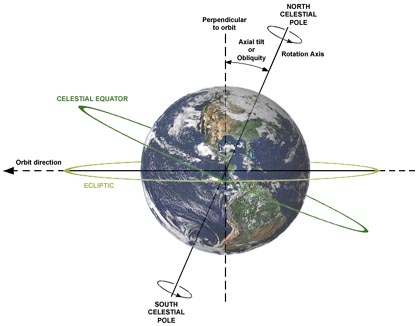
WHAT IS CREATION? PLANET EARTH IS A CREATED, CELESTIAL OBJECT FOR ITS ROTATIONAL PERIOD, AND REVOLUTION PERIOD ARE ITS ORIGINAL CHARACTERISTICS NOT SHARED BY ANYOTHER PLANET.
Time is defined as the period or interval between two events or during which something exists, happens, or acts; the duration is a measurable interval. Indian thinkers have described ‘Time’ or ‘KAALA’ as a Power or a Force that is eternal suggesting that ‘Time’ existed before the formation of this created universe, Time operates during the existence of this created universe, and Time remains after the total dissolution of this created universe.
‘Things in Nature change with Time’. Does Time exert a force entirely of its own to change things in Nature? If Time is viewed as a Power or Force, who controls this Force and what are the Laws that operate this Force?
Man’s existence on the surface of planet Earth and the duration of his life’s journey is measured by the internal Biological Clock. The time duration is measured by the alternating periods of Light and Darkness, the experience of Day and Night, the experience of Sunrise and Sunset which drives the Biological Rhythm. In Reality, the Sun is shining with brightness at all times during the entire length of man’s life journey. Man gets no chance to experience that Reality and the Biological Clock is not influenced by that Reality of Sun shining at all the hours of man’s earthly existence.
Everything that is born, everything that has come into existence, and everything that is conditioned arrives with its own plan for dissolution. Whosoever had arrived on this planetEarth, is sure to depart. Time operates this plan for dissolution. Time has the power to cause dissolution of the animate as well as the inanimate world and the physicaluniverse.
Whole Dude – Whole Concept. Time has a plan for dissolution of both animate and inanimate world.
Whatever qualities, or attributes such as material wealth, social status, social position, and physical state of well-being that man cherishes and desires most would be dissolved and would be rendered useless by the effects of Time. Humans lack the material, and the biological abilities to transform their physical beings into sources of perpetual enjoyment.
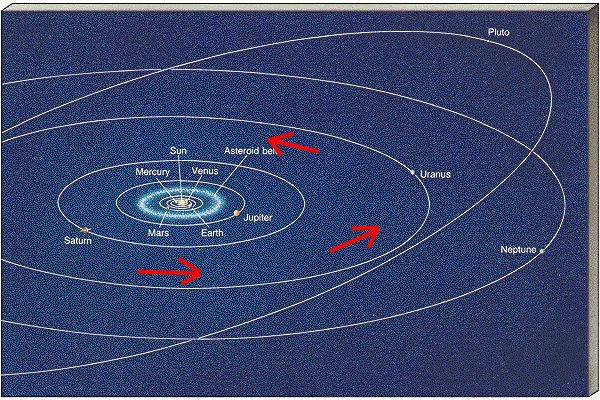
Time with its Power of Dissolution would eventually compel us to investigate and to explore the concept of Absolute and Unchanging Reality. This Subjective Reality of Man’s existence on this planet Earth which is a member of the SolarSystem would be dissolved by the influence of Time. The dissolution of Sun and the Solar System would not result in the dissolution of this universe that we currently know and understand. When man has been dissolved, the conditioned reality of this physical universe will continue and remains as before as earth and sun do not describe the total reality of this conditioned universe.
The Perception of Change and Human concepts about Time:
The Moving Train and the Perception of changing landscape. Photo Credit:Indyeahforever.
Many of you who learned Physics understand the term Speed and Velocity. A person riding in a train or any other moving object could perceive a change that is caused by the motion. The nature of this perception depends upon the Speed or Velocity of that moving object. If the person jumps out of the train, the change that he has been perceiving immediately stops. There would be no changing landscape. If the speed of the train is increased, the perception of change also alters and at very high speeds man actually loses the ability of visualperception. The visual image becomes a blur. If man is viewing a Motion Picture, his visual ability to view the Picture could be destroyed by simply increasing the speed of the Projector. Any given point on the surface of the Earth moves with the Speed of the Earth. Earth is moving at a great speed and man has no ability to perceive this motion or the speed. Man perceives a change in his environment and calls it day and night. We run our lives by numbers on clocks and calendars. The clocks and calendars create the illusion that we live in a world of mathematically measured segments of time.
Whole Dude – Whole Concept: The Material Basis of Spirituality Science:The Flow of Time is measured as the duration or the interval between two events; Time exists for man and other living organisms as the measure of the period of duration from Sunrise to Sunset that causes an environmental change; the alternating periods of Light (DAY) and Darkness (NIGHT). Earth’s Rotational Spin transforms the instant called ‘FUTURE’ into an instant called ‘PAST’ without giving man any choice to know the instant called ‘PRESENT’. Earth’s Revolution brings Seasons that man experiences at regular and constant intervals of Time while man simply exists on the surface of planet Earth with no physical experience of Earth’s Motions through Space.
Time is looked upon as a flow like a river. Sir Issac Newton (1687) stated that the flow of Time is absolute; “It flows equably without relation to anything external.” In 1905 while postulating the Theory of Relativity, Albert Einstein observed that Time is not absolute and the measurement of Time is affected by the motion of the observer. The Relativity of Time becomes significant only at great speeds. Gravity affects both Light and Time. Gravity bends both Space and Light. Time is affected by the gravitational field of each celestial body. Time is unique to any one spot in the universe. If you and me do not exist at the same spot in the universe, our experience of Time is conditioned by the place or the position of that particular spot in the universe. Thus, the experience of Time on this planet is an illusionary experience and is not an absolute experience.
Kaala Chakra or the Cyclical Flow of Time:
The word ‘DESIGN’ means making a preliminary plan for an intended purpose. Could a spontaneous event provide me with a place to live in this Universe? This Universe is designed as it serves me and other life forms a purpose.
Herman Minkowski, a mathematician, added Time as the Fourth Dimension of Three Dimensional Space. Time is seen as a Dimension as it gives meaning to events and the order in which they occur. Physicists describe Time and Space as the building blocks of this universe. Biologists see Time in the internal clocks that keep all living entities in sync with Nature. Human existence and the existence of all other living entities depend upon this illusionary experience of Time. Life exists and operates only if Time flows in a cyclical manner just like a wheel that moves, rotates on an axle or axis. Man needs this experience of day and night during his entire life journey. Man needs the changing Seasons with its cyclical regularity. Just imagine the consequences to human existence if Spring Season does not arrive at the Time it is expected. You have correctly pointed out that planet Earth is not at the same location or place in Space as Time flows. Last year, we had experienced the Spring Season while Earth existed at an entirely different location and we look forward for the arrival of a new Spring Season in spite of the Change in the position. In spite of Changes in location or position, in relative terms, the Spring Season is the Unchanging Reality of the Conditioned State of Human Existence. Because of the Conditioned nature of Human Existence, Man always looks forward, and hopes that Time would flow in a cyclical manner bringing cyclical changes. Biologists describe Life in terms of Life Cycles.
Whole Dude – Whole Concept: SPIRITUALITY SCIENCE – THE ART OF KNOWING: WHAT IS THE MYSTERY OF LIFE? CAN MYSTICISM HELP TO KNOW THE HIDDEN TRUTHS ABOUT LIFE? WHAT IS THE MYSTICAL INFLUENCE OF TIME THAT DRIVES THE AGING PHENOMENON?
All living functions have a rhythmic or cyclical quality. The exchange of gases during a cycle called Respiration involves the cyclical events of Inspiration and Expiration. The vital functions sustained by Circulation demands cyclical flow of Blood. The Individual and his State or Condition of Individuality remains existing as an Unchanging Reality as long as he experiences the cyclical changes in his bodily functions and in the environment in which he exists.
Whole Dude – Whole Concept: SPIRITUALITY SCIENCE – THE ART OF KNOWING: HOW DOES THE HUMAN ORGANISM KNOWS ABOUT ITS OWN LIFETIME? THE AGING PHENOMENON IS RELATED TO MAN’S PERCEPTION OF TIME. HOW IS TIME CONTROLLING OR OPERATING LIFE EXPERIENCE?
I am that Unchanging Reality, the Reality of my Identity and my Individuality remains unchanged as my physical body experiences cyclical changes in its substance and in the environment where it exists. My phenotype or morphological appearance or outward appearance undergoes a constant change and this change is synchronized with the cyclical change called alternating periods of Day and Night. The Biological Clock precisely measures this Time interval or duration of my existence relative to the illusionary change; in Reality, the Sun is shining with all His brightness at all times with no significant change that I can perceive.
The God Connection:
Every face has numerous distinguishable landmarks, the different peaks and valleys that make up facial features.
My Identity and my Individuality is the Unchanging Reality of my conditioned state of human existence. I had explored the Nature of this Unchanging Identity and Individuality. This Unchanging Reality of Identity and Individuality exists during the Time interval or duration of my God Connection. I know that Time existed before my creation, Time is operating during my existence as a created being, and Time would continue to operate after my physical dissolution. Time with its great power of Dissolution could not change my perception about my Unchanging Identity and Individuality because of my God Connection. It is rational, it is logical, and it is reasonable to reflect upon Absolute and Unchanging Reality as long as I maintain my Identity and Individuality which can not be changed or altered by the flow of Time.
Lovely story and nice response. The story holds a great truth in it. The truth is that change is the law of nature. The universe, which means the aggregate of all things in it, is changing right from the moment of the Big Bang. I wouldnt say that change is constant. Even the rate of change may be varying. Swami Sivananda penned a beautiful poem titled:”Even This Shall Pass” and some other philosophical essays and poems. All these were contained in a book authored by him, which he sent to me free when I wrote a letter to him in my student days but told him that I cannot pay the cost.
I believe that death which is inevitable for everything is only a result of unavoidable change. As far as I can analyse, the only law governing the universe is the law of (maybe changing) change. Even though we think that the earth is returning to the same position in space year after year, astronomers tell us that its relative position is changing. We never go back to the same point.
In this light, I don’t think there is anything that can be called permanent. As we can easily see from a train when we travel, the near landscape recedes in the opposite direction, but it seems to move relative to the far landscape, which assumes the character of being permanent. But after some travel, we find that the farther landscape also has changed, as against landscape which is even farther away. After some more travel the distant hills and dales at the farthest distance also vanish.
So we are changing, everything is changing, but we falsely hypothesise that it is all against the background of something that does not change. I believe that all change is perceived vis-a-vis something that changes in a slower manner, not vis-a-vis something that remains permanent. To crave for something permanent is madness and a wild exercise of a feverish imagination.
My own definition of civilisation is the construction of something which is less impermanent with the help of things which are more impermanent. All civilisations will eventually crumble. There is nothing permanent.
In this context, imagining a permanent god who will receive us into his kingdom permanently after our cycle of births and deaths is also illusory. With a person’s death, nothing more is heard from him. He has existed only once in the universe and it is just not true that his mind (as Buddhists propound) or his soul (as Hindus propound) will go on to take up another body, until finally God receives the mind and soul.
When a man dies, … THE END!
On Wed, Jan 12, 2011 at 8:30 AM, Dr. Rajaram Bojji wrote:
Truth, simple but so difficult to assimilate because, the question, “So, what next ?” arises. The King could have been captured and beheaded too. Yes that too will pass. Bit it gives a chance to the chance of the saying that may be, even the improbable horse may fly after all!
More often than not our own fear defeats us by painting bleak pictures of failure much before actual occurrence.
While doing tunneling, after making all the pep talk to workers and engineers facing repeated collapses, I used to sleep the night in frustration and depression, which you can share with no one. Get up in the morning and with a gusto start with the saying ” don’t worry , the horse will fly” (reminding one self of another story when a man promises a King to save own beheading for a few days, that he would make King’s horse fly and before he was required to fly the horse some enemy King beheads the King and releases him from prison)… wear a smile and go back to the job.
Yes, as another American writer has said, the only thing you learn from living and observing life is that life goes on.
Story of a King
Once a King called upon all of his wise men and asked them “Is there a mantra or suggestion which works in every situation, in every circumstance, in every place and in every time. Something which can help me when none of you is available to advise me. Tell me is there any mantra?” All wise men got puzzled by King’s question. One answer for all questions? Something that works everywhere, in every situation? In every joy, every sorrow, every defeat and every victory? They thought and thought.
After a lengthy discussion, an old man suggested something which appealed to all of them. They went to the king and gave him something written on paper. But the condition was that king was not to see it out of curiosity. Only in extreme danger, when the King finds himself alone and there seems to be no way, only then he’ll have to see it. The King put the papers under his diamond ring.
After a few days, the neighbors attacked the kingdom. It was a collective surprise attack of the King’s enemies. King and his army fought bravely but lost the battle. King had to flee on his horse. The enemies were following him. His horse took him far away in the jungle. He could hear many troops of horses following him and the noise was coming closer and closer. Suddenly the King found himself standing at the end of the road – that road was not going anywhere. Underneath there was a rocky valley a thousand feet deep. If he jumped into it, he would be finished. And he could not return because it was a small road. The sound of enemy’s horses was approaching fast. King became restless. There seemed to be no way…
Then suddenly he saw the diamond in his ring shining in the sun, and he remembered the message hidden in the ring. He opened the diamond and read the message. The message was very small but very great. The message was – “This too will pass.”
The King read it. Again read it. Suddenly something struck him; Yes! It too will pass. Only a few days ago, I was enjoying my kingdom. I was the mightiest of all the Kings. Yet today, the Kingdom and all his pleasures have gone. I am here trying to escape from enemies. However when those days of luxuries have gone, this day of danger too will pass. Calm come on his face. He kept standing there. The place where he was standing was full of natural beauty. He had never known that such a beautiful place was also a part of his Kingdom. The revelation of the message had a great effect on him. He relaxed and forgot about those following him.
After a few minutes he realized that the noise of the horses and the enemy coming was receding. They moved into some other part of the mountains and were not on that path. The King was very brave. He reorganized his army and fought again. He defeated the enemy and regained his lost empire. When he returned to his empire after victory, he was received with much fan fare at the door. The whole capital was rejoicing in the victory. Everyone was in a festive mood. Flowers were being thrown on the King from every house, from every corner. People were dancing and singing. For a moment King said to himself, “I am one of the bravest and greatest Kings. It is not easy to defeat me..”
With all the reception and celebration he saw an ego emerging in him. Suddenly the diamond of his ring flashed in the sunlight and reminded him of the message. He opened it and read it again: “This too will pass”. He became silent. His face went through a total change – from the egoist he moved to a state of utter humbleness.
If this too is going to pass, it is not yours. The defeat was not yours, the victory is not yours. You are just a watcher. Everything passes by. We are witness of all this. We are the perceiver. Life comes and goes. Happiness comes and goes. Sorrow comes and goes.
Now as you have read this story, just sit silently and evaluate your own life… Think of the moments of joy and victory in your life. Think of the moment of sorrow and defeat. Are they permanent? They all come and pass away. Life just passes away. There were friends in the past. They have gone. There are friends today. They too will go. There will be new friends tomorrow. They too will go. There were enemies in the past. They have gone. There may be enemies in the present. They too will go. There will be new enemies tomorrow and they too will go.
There is nothing permanent in this world. Everything changes except the law of change. Think over it from your own perspective.
You have seen all the changes. You have survived all setbacks, all defeats and all sorrows. All have passed away. If there are problems in the present, they too will pass away. Because nothing remains forever. Joy and sorrow are the two faces of the same coin. They both will pass away.
Who are you in reality? Know your real face. Your face is not your true face. It will change with the time. However, there is something in you, which will not change… It will remain unchanged. What is that unchangeable? It is nothing but your true self. You are just a witness of change.
Whole Dude – Whole Concept – THE PERCEPTION OF TIME: Astronomers use Universal Time, this can be taken as the Mean Solar Time on the Greenwich Meridian. The world is divided up into about 24 Time Zones
Sixth-Day Adventist seeking Refuge in God for I am nailed to the Cross to get to the Final Destination. Who am I? Why am I Like This? My physical identity keeps changing during all the phases of my Life. But, my Individuality remains the same and is not related to my Belief or Disbelief which is predestined.Sixth-Day Adventist seeking Refuge in God for I am nailed to the Cross to get to the Final Destination. I am Simon Cyrene, the Twelfth disciple who took the place of Judas Iscariot during the earthly mission of Jesus Christ. The discipleship is always predestined by the Sovereign Grace and not by belief or disbelief, or free will.
I describe myself as Simon a Cyrenian bearing the burden of the cross under compulsion and following Jesus. I am drawn to follow Jesus and there is no free will involved. There are no exceptions to this rule.
Sixth-Day Adventist seeking Refuge in God for I am nailed to the Cross to get to the Final Destination
I describe myself as the alien who carries the burden of the cross as Jesus slowly moves to reach His earthly destination. Jesus is spared from the burden of carrying the cross on the day of His crucifixion. My discipleship is predestined by the Sovereign Grace and not by my belief or disbelief, or free will.
I am in the City of Jerusalem and yet I am an alien for I am not a citizen of Rome, not a citizen of Israel, not a citizen of Judea, and not a citizen of Galilee. I follow Jesus but I have not yet entered the Kingdom of Heaven on Earth to claim the citizenship status.
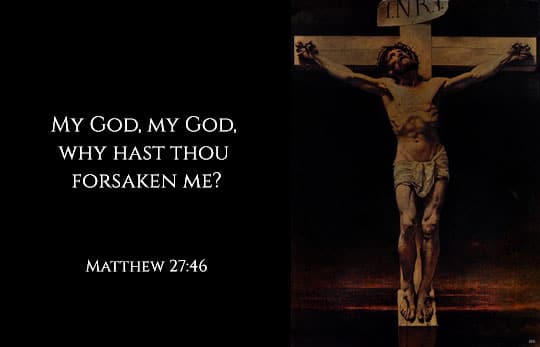
For I describe myself as an alien, I bear the burden of the Cross as I painfully march towards my earthly destination and when the struggle finally reaches its conclusion, at the ninth hour, I ask myself, “My God, my God, Why have You forsaken me.”
Sixth-Day Adventist seeking Refuge in God for I am nailed to the Cross to get to the Final Destination
On Sunday, July 30, 2023, the Rudi-Grant Connection reflects upon the National Motto to declare, ”I am a Refugee and I have no Refuge.”
On Sunday, July 30, 2023, the Rudi-Grant Connection reflects on the National Motto to declare, “I am a Refugee without a Refuge.” Seeking Refuge in God for I am nailed to the Cross to get to the Final Destination
Yes indeed, Life is Complicated. The complexities of the Life involve the complex political boundaries erected by people while the LORD God Creator is the One and Only One Owner of the Whole Planet.
On Sunday, July 30, 2023, the Rudi-Grant Connection reflects upon the National Motto to declare, ”I am a Refugee and I have no Refuge.” Seeking Refuge in God for I am nailed to the Cross to get to the Final Destination
“In God We Trust” – On Sunday, JULY 30, 2023, I admit that I am a Refugee without a Refuge
TIBET AWARENESS – PROJECT CIRCUS. The quest for freedom in Occupied Tibet. A military training camp known as Camp Hale was established in Colorado under the supervision of CIA officers Roger E. McCarthy and John Reagan. On Sunday, July 30, 2023, the Rudi-Grant Connection reflects on the National Motto to declare, “I am a Refugee without a Refuge.” Seeking Refuge in God for I am nailed to the Cross to get to the Final Destination“In God We Trust.” The Tibetan Resistance Movement trusts President Eisenhower. Mutual Trust, Respect, and Commitment formulate the US-India-Tibet Relations. On Sunday, July 30, 2023, the Rudi-Grant Connection reflects on the National Motto to declare, “I am a Refugee without a Refuge.”Seeking Refuge in God for I am nailed to the Cross to get to the Final Destination
On July 30, 1956, US President Eisenhower signs “In God We Trust” into Law. The same year, President Eisenhower initiated action in support of the Tibetan Resistance Movement which contributed to the creation of a military organization known in India as the Special Frontier Force during the presidency of John F. Kennedy.
“In God We Trust.” – Special Frontier Force Trusts President Eisenhower. Trust, Respect, and Commitment formulate Relations between the US, India, and Tibet.On Sunday, July 30, 2023, the Rudi-Grant Connection reflects on the National Motto to declare, “I am a Refugee without a Refuge.”Seeking Refuge in God for I am nailed to the Cross to get to the Final Destination
President Eisenhower signs “In God We Trust” into law On this day in 1956, two years after pushing to have the phrase “under God” inserted into the pledge of allegiance, President Dwight D. Eisenhower signs a law officially declaring “In God We Trust” to be the nation’s official motto.
On Sunday, July 30, 2023, the Rudi-Grant Connection reflects on the National Motto to declare, “I am a Refugee without a Refuge.”Seeking Refuge in God for I am nailed to the Cross to get to the Final Destination.
The law, Public Law. 84-140, also mandates that the phrase be printed on all American paper currency. The phrase had been placed on U.S. coins since the Civil War when, according to the historical association of the United States Treasury, religious sentiment reached a peak. Eisenhower’s treasury secretary, George Humphrey, had suggested adding the phrase to paper currency as well.
On Sunday, July 30, 2023, the Rudi-Grant Connection reflects on the National Motto to declare, “I am a Refugee without a Refuge.” Seeking Refuge in God for I am nailed to the Cross to get to the Final DestinationOn Sunday, July 30, 2023, the Rudi-Grant Connection reflects on the National Motto to declare, “I am a Refugee without a Refuge.”Seeking Refuge in God for I am nailed to the Cross to get to the Final DestinationOn Sunday, July 30, 2023, the Rudi-Grant Connection reflects on the National Motto to declare, “I am a Refugee without a Refuge.”Seeking Refuge in God for I am nailed to the Cross to get to the Final DestinationOn Sunday, July 30, 2023, the Rudi-Grant Connection reflects on the National Motto to declare, “I am a Refugee without a Refuge.”Seeking Refuge in God for I am nailed to the Cross to get to the Final Destination
Although some historical accounts claim Eisenhower was raised a Jehovah’s Witness, most presidential scholars now believe his family was Mennonite. Either way, Eisenhower abandoned his family’s religion before entering the Army and took the unusual step of being baptized relatively late in his adult life as a Presbyterian. The baptism took place in 1953, barely a year into his first term as president.
On Sunday, July 30, 2023, the Rudi-Grant Connection reflects on the National Motto to declare, “I am a Refugee without a Refuge.”Seeking Refuge in God for I am nailed to the Cross to get to the Final Destination
Although Eisenhower embraced religion, biographers insist he never intended to force his beliefs on anyone. In fact, the chapel-like structure near where he and his wife Mamie are buried on the grounds of his presidential library is called the “Place of Meditation” and is intentionally inter-denominational. At a Flag Day speech in 1954, he elaborated on his feelings about the place of religion in public life when he discussed why he had wanted to include “under God” in the pledge of allegiance: “In this way we are reaffirming the transcendence of religious faith in America’s heritage and future; in this way we shall constantly strengthen those spiritual weapons which forever will be our country’s most powerful resource in peace and war.”
On Sunday, July 30, 2023, the Rudi-Grant Connection reflects on the National Motto to declare, “I am a Refugee without a Refuge.”Seeking Refuge in God for I am nailed to the Cross to get to the Final Destination
The first paper money with the phrase “In God We Trust” was not printed until 1957. Since then, religious and secular groups have argued over the appropriateness and constitutionality of a motto that mentions “God,” considering the founding fathers’ dedication to maintaining the separation of church and state.
A U.S. Marine with “In God We Trust” printed on his helmet, waits in a bunker at Con Thien, two miles south of the demilitarized zone, Oct. 15, 1967. The Leathernecks have come under daily bombardment from Communist mortar and rocket positions in the DMZ. The Marine’s bunker is surrounded by sandbags, soggy from monsoon rains. (AP Photo/CJ) On Sunday, July 30, 2023, the Rudi-Grant Connection reflects on the National Motto to declare, “I am a Refugee without a Refuge.”Seeking Refuge in God for I am nailed to the Cross to get to the Final Destination“In God We Trust” – Special Frontier Force Trusts President Eisenhower. CIA Director Allen Welsh Dulles forged Trust derived relationships. On Sunday, July 30, 2023, the Rudi Connection reflects on the National Motto to declare, “I am a Refugee without a Refuge.”Seeking Refuge in God for I am nailed to the Cross to get to the Final Destination“In God We Trust” – Special Frontier Force Trusts President Eisenhower. CIA Director Allen Welsh Dulles, and President John F. Kennedy promoted national interests forging relationships. On Sunday, July 30, 2023, the Rudi-Grant Connection reflects on the National Motto to declare, “I am a Refugee without a Refuge.”Seeking Refuge in God for I am nailed to the Cross to get to the Final DestinationThe history of Special Frontier Force-Establishment No. 22: 1957 was a turning point. India had recognized that its foreign policy of political neutralism was of no use and had started depending upon the United States to address the military threat posed by China’s occupation of Tibet. But, the effort was too modest and both India and the United States had grossly underestimated the strength of the People’s Liberation Army. On Sunday, July 30, 2023, the Rudi-Grant Connection reflects on the National Motto to declare, “I am a Refugee without a Refuge.”Seeking Refuge in God for I am nailed to the Cross to get to the Final Destination“In God We Trust” – Special Frontier Force Trusts President Eisenhower. Trust in God is the Foundational Principle to formulate Foreign Relations. On Sunday, July 30, 2023, the Rudi-Grant Connection reflects on the National Motto to declare, “I am a Refugee without a Refuge.” Seeking Refuge in God for I am nailed to the Cross to get to the Final Destination“In God We Trust” – Special Frontier Force Trusts President Eisenhower. Trust in God is the Foundational Principle to define Foreign Policy. On Sunday, July 30, 2023, the Rudi-Grant Connection reflects on the National Motto to declare, “I am a Refugee without a Refuge.” Seeking Refuge in God for I am nailed to the Cross to get to the Final Destination“In God We Trust” – Special Frontier Force Trusts President Eisenhower. Trust is the Foundational Principle to define Relations. On Sunday, July 30, 2023, the Rudi-Grant Connection reflects on the National Motto to declare, “I am a Refugee without a Refuge.”Seeking Refuge in God for I am nailed to the Cross to get to the Final Destination“In God We Trust” – Special Frontier Force Trusts President Eisenhower. Belief in God, and Trust in Leadership. On Sunday, July 30, 2023, the Rudi-Grant Connection reflects on the National Motto to declare, “I am a Refugee without a Refuge.”Seeking Refuge in God for I am nailed to the Cross to get to the Final Destination“In God We Trust” – Special Frontier Force Trusts President Eisenhower. Trust survived the Test of Times. On Sunday, July 30, 2023, the Rudi-Grant Connection reflects on the National Motto to declare, “I am a Refugee without a Refuge.”Seeking Refuge in God for I am nailed to the Cross to get to the Final Destination“In God We Trust” – Special Frontier Force Trusts President Eisenhower for his principled Belief in God. On Sunday, July 30, 2023, the Rudi Connection reflects on the National Motto to declare, “I am a Refugee without a Refuge.” Seeking Refuge in God for I am nailed to the Cross to get to the Final Destination“In God We Trust” – Special Frontier Force Trusts President Eisenhower, his legacy reflects the value of Trust. On Sunday, July 30, 2023, the Rudi-Grant Connection reflects on the National Motto to declare, “I am a Refugee without a Refuge.”Seeking Refuge in God for I am nailed to the Cross to get to the Final Destination“In God We Trust” – Special Frontier Force Trusts President Eisenhower who initiated Trusting Partnership between the US, India, and Tibet. On Sunday, July 30, 2023, the Rudi-Grant Connection reflects on the National Motto to declare, “I am a Refugee without a Refuge.”Seeking Refuge in God for I am nailed to the Cross to get to the Final Destination“In God We Trust” – Special Frontier Force Trusts President Eisenhower. December 16, 1956, witnessed a trusting relationship. Vice President Richard M. Nixon is my Witness. On Sunday, July 30, 2023, the Rudi-Grant Connection reflects on the National Motto to declare, “I am a Refugee without a Refuge.” Seeking Refuge in God for I am nailed to the Cross to get to the Final Destination“In God We Trust” – Special Frontier Force Trusts President Eisenhower. December 16, 1956. The US-India-Tibet Relations endure reflecting Trust. On Sunday, July 30, 2023, the Rudi-Grant Connection reflects on the National Motto to declare, “I am a Refugee without a Refuge.”Seeking Refuge in God for I am nailed to the Cross to get to the Final Destination“In God We Trust” – Special Frontier Force Trusts President Eisenhower. Relations derive Spiritual Strength from Belief in God. On Sunday, July 30, 2023, the Rudi-Grant Connection reflects on the National Motto to declare, “I am a Refugee without a Refuge.”Seeking Refuge in God for I am nailed to the Cross to get to the Final DestinationOn Sunday, July 30, 2023, the Rudi-Grant Connection reflects on the National Motto to declare, “I am a Refugee without a Refuge.”Seeking Refuge in God for I am nailed to the Cross to get to the Final DestinationOn Sunday, July 30, 2023, the Rudi-Grant Connection reflects upon the National Motto to declare, ”I am a Refugee and I have no Refuge.” Seeking Refuge in God for I am nailed to the Cross to get to the Final DestinationOn Sunday, July 30, 2023, the Rudi-Grant Connection reflects upon the National Motto to declare, ”I am a Refugee and I have no Refuge.”Seeking Refuge in God for I am nailed to the Cross to get to the Final DestinationSixth-Day Adventist seeking Refuge in God for I am nailed to the Cross to get to the Final Destination.
Bharat Darshan – Musings on Monday, July 17, 2023, Shravan Amavasya, the New Moon Day of Shravan Month
The Hindu calendar’s Somvati Amavasya, Hariyali Amavasya or Sawan (Shravan) Amavasya is observed in the month of Shravan. It is considered auspicious for the Hindu community. Hariyali Amavasya 2023 will be observed this year on July 17, 2023.
Bharat Darshan – Musings on Monday, July 17, 2023, Shravan Amavasya, the New Moon Day of Shravan Month
Shravana Amavasya comes in Krishna Paksha of Shravana month, the fifth month in Hindu Panchang. It is also known by the name of Hariyali Amavasya. Prayers are offered to Gods and Goddesses on this day to seek their blessings for good rains and a plentiful harvest following that. Worshipping Lord Shiva on this day is considered highly auspicious. Other than this, offering obaltion (Pind Daan) to forefathers for their peaceful afterlife is also performed on this day.
Calendar and Date Organization
Bharat Darshan – Musings on Monday, July 17, 2023, Shravan Amavasya, the New Moon Day of Shravan Month
Calendar divisions are based on the movements of the Earth and the regular appearances of the Sun and the Moon, and a calendar typically works by dividing time up into units of days, weeks, months and years. Most of these units are based on objectively verifiable astronomical cycles, although the use of weeks within calendars are dedicated to celestial bodies such as Sun, Moon, Mars, Mercury, Jupiter, Venus and Saturn, and may not be tied to any astronomical cycle.
Types of Calendar
Bharat Darshan – Musings on Monday, July 17, 2023, Shravan Amavasya, the New Moon Day of Shravan Month
Almost all calendars divide up the days into months and years, but exactly how they do so varies. Most calendars synchronize their periods with the cycle of the Sun or Moon (or both), although some Ancient Egyptian calendars appear to have been synchronized to the motion of the planet Venus and/or the Dog Star Sirius. Because the period of the Moon does not neatly match the period of the Sun, no calendar can be truly based on both, and so a choice must be made, often incorporating periodic adjustments in order to match the two (a trade-off between accuracy and convenience).
The main types of calendar are:
Solar calendar (e.g. the Persian Calendar, the Gregorian Calendar) is synchronized to the apparent motion of the Sun over the year and thus remains in line with annual seasonal changes. It makes no attempt to match the changes in the Moon, and the division into months is purely nominal.
Lunar calendar (e.g. the Islamic Calendar) is synchronized to the phases of the Moon. Because a lunar month is not an even fraction of a year, a purely lunar calendar tends to drift against the seasons.
Luni-solar calendar (e.g. the Hebrew calendar, the Hindu calendar) is based on a combination of both lunar and solar reckonings (i.e. months are based on lunar months, but years are based on solar years), in which most years have 12 months but every second or third year has 13 (including a leap month) in order to realign with the annual seasons.
Intercalation
The insertion of additional leap days or leap months into some calendar years in order to synchronize the calendar to the seasons or moon phases is called intercalation or embolism.
In the case of lunar and luni-solar calendars, the months (known as lunar months or synodic months) approximate the cycle of the Moon’s phases, a period of about 29.5 days, for which many lunar calendars use alternating months of 29 and 30 days. However, because a lunar month is not an even fraction of a year (there are about 12.37 lunar months in a year), a purely lunar calendar tends to drift against the seasons unless adjusted periodically, such as by the addition of a leap month every two or three years.
In the case of solar calendars, the months are fractions of the tropical or solar year (i.e. the length of time the Sun takes to return to the same position in the cycle of seasons, as seen from Earth). Even with a solar calendar, though, the number of days in a year is not an exact whole number (approximately 365.242), so that a system of adding an extra leap dayevery fourth year (leap years) is instituted in many solar calendars, or more complex variations thereof.
Insertion of Leap Month or Adhik Maas or Mal Maas in Hindu Luni-Solar Calendar
In the Hindu calendar, once every three years, an additional month comes, which is called Adhikamas. Adhik Maas in the year 2023 is starting on 18 July 2023, which will end on 16 August 2023. There is no transit or solstice of the Sun in Adhik Maas, that is, there is no change in the sun sign in the whole month. Because of this, this month becomes dirty, that is, it is called Mal Maas.
Bharat Darshan – Musings on Monday, July 17, 2023, Shravan Amavasya, the New Moon Day of Shravan Month
According to astrology, the process of transition of the Sun from one zodiac sign to another is called Sankranti. Sun God changes his zodiac almost every month. The month in which the zodiac sign of the Sun does not change. That month is called Mal Maas or Adhik Maas.
Adhik Maas has special significance in Hinduism. The proprietor of this month is Lord Vishnu. Even though auspicious works like marriage, naming, house warming ceremonies are prohibited, it is very beneficial to do religious works like worship recitation, chanting, penance, and fast-fasting. It is believed that worship done in this month gives ten times the yield.
Bharat Darshan – Musings on Monday, July 17, 2023, Shravan Amavasya, the New Moon Day of Shravan Month
In 2023, Adhik Maas will start from July 18 and end on August 16, offering a rare combination with Shravan Maas and providing ample opportunity for devotees to strengthen their devotion towards Lord Shiva and Lord Vishnu. Month Shravan is dedicated to glorify Lord Shiva. Adhik Maas is dedicated to glorify Lord Vishnu.
Dakshinayana 2023
Bharat Darshan – Musings on Monday, July 17, 2023, Shravan Amavasya, the New Moon Day of Shravan Month
In Hinduism, the 6-month period from 16th July to 13th January is Dakshinayana, while the 6-month period from 14th January to 15th July is Uttarayana. While Uttarayana marks the northward movement of the Sun, Dakshinayana marks its southward movement.
Bharat Darshan – Musings on Monday, July 17, 2023, Shravan Amavasya, the New Moon Day of Shravan Month
On July 16, 2023, Sun enters the sign of Cancer or Karka and marks the beginning of Sun’s southward journey.
Facts about Dakshinayana
Bharat Darshan – Musings on Monday, July 17, 2023, Shravan Amavasya, the New Moon Day of Shravan Month
Dakshinayana starts on July 16th. Initially, the days are long. Then they become shorter and shorter over the next 6 months. As summer gives way to winter, the daylight decreases during this period. The Sun’s energy is at its peak when Dakshinayana begins. The Sun is very hot, and we feel tired and drained of energy. Dakshinayana is the nighttime of the Devas. So we need to put in more effort and work harder during this time. A human year is equal to one day of gods in the Hindu religion.
Dakshinayana is the southward path. It is also the path of Yama. It represents ‘bhautikvaad’, meaning that we go after material pursuits and away from the spiritual path. Hence, we should do penance, fasting, prayers, and purification rites to reduce its influence. For this reason, Dakshinayana is called Sadhana Pada, or the period of purification through tapasya and sadhana. During this time, the chakras below the Anahata/heart chakra can be purified very easily, as our energy is flowing downward in these 6 months.
As Dakshinamurthy – Shiva as the cosmic teacher- sat facing the south (Dakshin) in order to pass on his knowledge and wisdom, he has an association with this period. He started transmitting the fundamentals of Yoga to the Sapta Rishis, who were his first seven disciples. He turned south as the Sun turned south. This was the first phase of his teaching, or the Sadhana pada, where he taught the Rishis what they should do. Uttarayan is the Samadhi pada or Kaivalya pada, which is the time for realization.
During Dakshinayana, Vishnu is believed to be asleep for a period of 4 months, between Ashada and Karthika months. These 4 months are called Chaturmasya, and the Ekadasi just before Karka Sankranti is Devshayani Ekadashi.
The 6 months of Dakshinayana are divided into 3 seasons:
Rationalism vs Irrationalism. Man’s Existence is shaped by Flat Earth with Arched Dome Experience
RATIONALISM vs IRRATIONALISM. MAN’S EXISTENCE IS SHAPED BY FLAT EARTH WITH ARCHED DOME EXPERIENCE.
“Earth is Flat.” This statement can be verified using Pure Reasoning, by a rational interpretation of scientific theories called the Geocentric Theory, and the Heliocentric Theory.
Rationalism vs Irrationalism – Earth is Flat.Rationalism vs Irrationalism – Earth is Flat. Heliocentric Model needs verification using method of Pure Reasoning. Rationalism vs Irrationalism. Earth is Flat. Pure Reasoning supports the Geocentric Model.
The man experiences the reality of Sun’s ‘apparent’ motion across the Sky. I verify this statement by attaching my reasoning. The man’s days of real, physical, observed, verified existence on Earth’s Surface is determined by “Apparent Motion” (or Ecliptic Path) of Sun and not by Sun’s “Real Motion” around the Milky Way Galactic Center.
Rationalism vs Irrationalism. Earth is Flat for Man recognizes Sun’s Path while standing on Flat Disc of Earth.Rationalism vs Irrationalism – Earth is Flat. Sun’s real motion in Milky Way Galaxy is unknown to Man who only experiences the Reality of Sun’s apparent motion across the Sky.On bhavanajagat.com
The man is able to live and is able to keep his existence for Earth provides the experience of Flat Surface or Flat Disc. No Scientific Information has Power to overcome this direct Sensory Experience that governs all Living Functions or Biological Rhythms. A ‘Rationalist’ will give attention to his own direct Sensory Experience as keeping one’s own Life is the most Reasonable Doctrine.
The rational interpretation of scientific information
Rationalism vs Irrationalism – Earth is Flat. Genesis 1:16.
The doctrine of Rationalism uses Pure Reasoning to discover truth.
We need a rational interpretation of scientific information. What does Science say about Sun? We need to comprehend Science and make a rational interpretation using reason, and empirical data if not by faith or belief in God.
The First Book of Moses, The Old Testament Book of Genesis claims that Sun and Moon are appointed as lamps in the sky to illuminate world during Day and Night.
Let me know as to which part of Science you do not understand.
Rudra Narasimham Rebbapragada Ann Arbor, MI 48104-4162 USA BHAVANAJAGAT
Rationalism vs Irrationalism – Earth is Flat. Genesis 1:16.Rationalism vs Irrationalism – Earth is Flat. Genesis 1:16.Rationalism vs Irrationalism – Earth is Flat. Bharat Darshan – Musings on Monday, July 17, 2023, Shravan Amavasya, the New Moon Day of Shravan Month
Sixth-Day Adventism – The US Supreme Court defends the Right to Labor for Six Days in a Week
Sixth-Day Adventism – God’s Work for Six Days precede God’s rest on the Seventh Day
Sixth-Day Adventism – The US Supreme Court defends the Right to Labor for Six Days in a Week
The Seventh-Day Adventists believe that the Sabbath should be observed on the seventh day of the week, i.e. from Friday sunset to Saturday sunset. I coined the phrase Sixth-Day Adventist to give my highest priority to God’s Commandment asking man to perform labor or work for Six Days. In my analysis, God ordained a Six-Day Work Schedule without which man cannot seek the blessings of Sabbath. The Rudi-Grant Connection at Whole Foods follows the Six-Day Weekly Work Schedule.
Sixth-Day Adventism – The US Supreme Court defends the Right to Labor for Six Days in a Week
As in most industrialized countries, the Standard Work Week in the United States begins on Monday and ends on Friday. During the Depression, President Herbert Hoover called for a reduction in Work Hours in lieu of layoffs. Later, President Franklin Roosevelt signed the Fair Labor Standards Act of 1938, which established a five-day, 40-hour workweek for many workers.
The Fair Labor Standards Act (FLSA) is fundamentally flawed for it is not inspired by the Sixth-Day Adventist Positive Work Culture.
Sixth-Day Adventism – The US Supreme Court defends the Right to Labor for Six Days in a WeekSixth-Day Adventism – The US Supreme Court defends the Right to Labor for Six Days in a WeekSixth-Day Adventism – The US Supreme Court defends the Right to Labor for Six Days in a WeekSixth-Day Adventism – The US Supreme Court defends the Right to Labor for Six Days in a WeekSixth-Day Adventism – The US Supreme Court defends the Right to Labor for Six Days in a Week
The Concept of Positive Sixth-Day Adventist Work Culture is inspired by God’s Work Week:
Sixth-Day Adventism – The US Supreme Court defends the Right to Labor for Six Days in a Week
Six is a number perfect in itself. God created the world and the man in Six Days because this number is perfect. For that reason, the man must also choose a Six-Day Work Week.
Supreme Court broadens religious protections for workers
Sixth-Day Adventism – The US Supreme Court defends the Right to Labor for Six Days in a Week
Unanimous ruling finds employers must show ‘substantial increased costs’ to deny an accommodation
By RyanTarinelli
Posted June 29, 2023 at 1:22pm
The Supreme Court broadened religious protections for workers Thursday in a ruling that clarified when employers can refuse religious accommodations for workers.
The unanimous opinion, written by Justice Samuel A. Alito Jr., found that employers must show that granting such an accommodation would lead to “substantial increased costs” in relation to the conduct of its business.
Alito wrote that justices are “brushing away” an incorrect interpretation of a previous Supreme Court case on Title VII of the Civil Rights Act. He pointed out that a diverse group of religious organizations contended that the interpretation had “blessed the denial of even minor accommodation in many cases, making it harder for members of minority faiths to enter the job market.”
The case stems from a suit brought by a rural mail carrier in Pennsylvania, Gerald Groff, who quit rather than deliver Amazon packages on Sundays, citing his Christian religion. He then sued the U.S. Postal Service for discrimination.
The U.S. Court of Appeals for the 3rd Circuit ruled in the Postal Service’s favor, citing a landmark decision from the Supreme Court in 1977, Transworld Airlines, Inc. v. Hardison, which found employers did not have to bear “undue hardship” to accommodate employees’ religious observance.
In court filings, Groff argued that the 1977 decision tamped down on the religious rights of employees that Congress meant to protect in the 1972 amendments to the Civil Rights Act.
The 3rd Circuit and other lower courts — based on a line in the 1977 decision — interpreted “undue hardship” to mean any cost or effort that is more than “de minimis,” Alito wrote in the ruling.
But that interpretation is “erroneous,” Alito wrote, and “may have had the effect of leading courts to pay insufficient attention to what the actual text of Title VII means with regard to several recurring issues.”
“We think it is enough to say that an employer must show that the burden of granting an accommodation would result in substantial increased costs in relation to the conduct of its particular business,” the opinion states.
The Supreme Court found that the law requires that an employer reasonably accommodate a worker’s religious practice, “not merely that it assess the reasonableness of a particular possible accommodation or accommodations.”
“This distinction matters. Faced with an accommodation request like Groff’s, it would not be enough for an employer to conclude that forcing other employees to work overtime would constitute an undue hardship,” the court ruled. “Consideration of other options, such as voluntary shift swapping, would also be necessary.”
Some congressional Republicans had backed such an interpretation in briefs filed in the case.
The Biden administration had argued that the court should leave the issue for members of Congress, who have spent decades considering and rejecting a higher standard to accommodate religious employees.
The Justice Department told the justices that Groff asked “this Court to do what Congress would not” by rewriting the law.
The existing law may provide too little protection for religious workers, according to the Biden administration brief, but “that argument should be directed to Congress, which is better positioned to weigh the competing interests in this sensitive area and strike the appropriate balance.”
U.S. Supreme Court buoys religious employees who seek accommodations at work
Sixth-Day Adventism – The US Supreme Court defends the Right to Labor for Six Days in a Week
By Andrew Chung
June 29 (Reuters) – The U.S. Supreme Court on Thursday bolstered the ability of employees to obtain accommodations at work for their religious practices, reviving a lawsuit by an evangelical Christian former mail carrier accusing the Postal Service of discrimination after being disciplined for refusing to show up for work on Sundays.
The 9-0 ruling threw out a lower court’s decision rejecting a claim by Gerald Groff, a former mail carrier in Pennsylvania, that the Postal Service’s actions refusing to exempt him from working on Sundays, when he observes the Sabbath, violated federal anti-discrimination law.
Groff’s case centered on a federal anti-discrimination law called Title VII of the Civil Rights Act of 1964, which prohibits employment discrimination based on religion and other factors including race, sex and national origin.
Under Title VII, employers must make allowances for a worker’s religious observance or practices unless that would cause the business “undue hardship” – which the Supreme Court in a 1977 case called Trans World Airlines v. Hardison determined to be anything imposing more than a minor, or “de minimis,” cost.
The court in Thursday’s ruling clarified the Hardison precedent. Conservative Justice Samuel Alito, who authored the decision, wrote, “We hold that showing ‘more than a de minimis cost,’ as that phrase is used in common parlance, does not suffice to establish ‘undue hardship’ under Title VII.”
Alito added, “We think it is enough to say that an employer must show that the burden of granting an accommodation would result in substantial increased costs in relation to the conduct of its particular business.”
Groff’s attorney Aaron Streett praised the ruling, saying, “This is an important victory for Americans of all faiths, who may now follow their religious consciences in the workplace.”
Groups representing some religions that are in the minority in the United States including Islam, Judaism and Hinduism had backed Groff in the case, saying they are disproportionately denied religious accommodations, forcing them to choose between their religion and their jobs.
US Supreme Court Issues Historic Ruling Strengthening Religious Accommodation Protections for Workers
Sixth-Day Adventism – The US Supreme Court defends the Right to Labor for Six Days in a Week
In a unanimous decision issued on Thursday, June 29, the United States Supreme Court has discarded decades-long precedent by strengthening legal protections for workers whose religious beliefs conflict with their job obligations. The ruling in Groff v. DeJoy is expected to have a significant impact on job opportunities for Americans of various faiths who have frequently faced challenges due to their Sabbath-keeping practices. The Court’s decision will reshape how businesses offer religious accommodation under Title VII of the Civil Rights Act of 1964.
The legal team representing Groff included Adventist attorney Alan Reinach, who serves as director of Public Affairs and Religious Liberty for the Pacific Union Conference of Seventh-day Adventists. During the appeals process, First Liberty, a prominent religious freedom advocacy group, joined the litigation team and recruited appellate counsel Aaron Streett from the law firm Baker Botts, LLP. The case was argued before the Court on April 18, 2023.
Sixth-Day Adventism – The US Supreme Court defends the Right to Labor for Six Days in a Week
Speaking for the General Conference of Seventh-day Adventists and its North American Division, Todd McFarland, Deputy General Counsel, who also wrote the amicus brief filed by the church, said, “We are very pleased this morning that the Supreme Court took an important step towards protecting people of faith in the workplace. No one should have to choose between their job and their faith. Today’s decision reaffirms that employers cannot use an employee’s religious belief as an excuse to terminate them.”
Sixth-Day Adventism – The US Supreme Court defends the Right to Labor for Six Days in a Week
A diverse group of faith-based and religious liberty organizations filed amicus briefs with the Supreme Court supporting Groff, including the General Conference of Seventh-day Adventists, The American Center for Law And Justice, The Sikh Coalition, the Union of Orthodox Jewish Congregations of America, the Council on American-Islamic Relations, the Church of Jesus Christ of Latter-day Saints, the American Hindu Coalition, the Becket Fund for Religious Liberty, and the Baptist Joint Commission.
Sixth-Day Adventism – The US Supreme Court defends the Right to Labor for Six Days in a Week
Drawing on the 1977 case, employers only had to suffer a bare minimum amount of hardship to justify denying religious accommodation to an employee,” Reinach said. “This standard neutered the law and led to the termination of employment for literally thousands of Americans of all faiths. Seventh-day Adventists were especially harmed in that hourly wage workers are frequently assigned shift schedules including Sabbath hours.”
Sixth-Day Adventism – The US Supreme Court defends the Right to Labor for Six Days in a Week
The Supreme Court’s ruling in Groff v. DeJoy not only acknowledged the unfair burden placed on workers with religious conflicts but also highlighted the need for a more robust approach to religious accommodation.
Sixth-Day Adventism – The US Supreme Court defends the Right to Labor for Six Days in a Week
The ruling is expected to have far-reaching implications for workers across the country. By raising the standard for employers to justify denying religious accommodation, the Court’s decision provides greater protection for employees with sincerely held religious beliefs. It sends a clear message that employers must make reasonable efforts to accommodate their employees’ religious practices, even if it requires some degree of hardship.
Sixth-Day Adventism – The US Supreme Court defends the Right to Labor for Six Days in a Week
The decision in Groff v. DeJoy is seen as a significant victory for religious freedom advocates who have long argued for stronger legal protections. It marks a shift toward a more equitable approach that recognizes the importance of accommodating the diverse religious practices of American workers. As a result of this ruling, employees who face conflicts between their job requirements and their religious beliefs can expect increased opportunities to obtain reasonable accommodations from their employers.
Sixth-Day Adventism – The US Supreme Court defends the Right to Labor for Six Days in a Week
Attorney Mitch Tyner, retired associate general counsel for the church and also a former Capitol Hill liaison, was both pleased and cautious about the Court’s decision. “First, kudos to Todd McFarland and team who finally got the court to right a wrong from fifty years ago,” Tyner said. “I spent more than 40 years working toward that end, and they were able to get the job done. That said, note that the opinion leaves lots of wiggle room for lower courts to decide what constitutes a substantial cost increase in each case. The Court has changed the recipe to be used to arrive at a correct decision. But remember, the ultimate proof is in the pudding, not in the recipe.” As the ruling sets a new precedent for religious accommodation, it remains to be seen how rapidly employers will adapt their policies and practices. Further litigation to clarify the Supreme Court’s new thresholds is anticipated. It is clear, however, that this decision marks a significant milestone in protecting the rights of workers with religious conflicts.
Sixth-Day Adventism – The US Supreme Court defends the Right to Labor for Six Days in a Week
June is Professional Wellness Week – The benefits of Sixth-Day Adventist Positive Work Culture. This article is dedicated to the loving memory of Jessica Cole of Seventh-Day Adventist Church, Bangalore (Bengaluru), India
This article is dedicated to the loving memory of Jessica Cole, my relative who lived in Bangalore (Bengaluru), India as a member of the Seventh-Day Adventist Church. She inspired me to formulate the Sixth-Day Adventism concepts of Whole Christ, Whole Love, Whole Gospel and Sixth-Day Adventist Positive Work Culture.
Whole Christ – Whole Love – Whole Gospel:
WHOLE CHRIST – WHOLE LOVE: The term “Whole Christ” refers to Jesus before His human birth, during His earthly existence, after His Resurrection, and to the Hope of His Second Coming to establish the ‘Kingdom of Heaven on Earth’.The term “Whole Love” describes God’s Unconditioned Love that is not determined by human knowledge and rationality. The Birth of Jesus cannot be fully accounted by human knowledge and rationality for man lacks the ability to account for his own existence.
The word Christ (Greek. Christos) refers to the Messiah whose appearance is prophesied in the Old Testament and is used as a title to describe Jesus of Nazareth. I am using the term “Whole Christ” to describe Jesus before His human birth, Jesus during the years spent on this Earth, Jesus after His Resurrection, and Jesus who gives the Hope of the Second Coming to establish The Kingdom of Heaven on Earth. The word Christ may not communicate the entirety of Jesus and in the four Gospels we do not obtain the full picture as the event called ‘The Second Coming’ has not yet taken place. The word “Love” (Hebrew. ‘ahavah’, Greek. ‘agape’) is presented in Scripture as the very nature or essence of God, the supreme attribute in which all other attributes are harmonized. Love is a bond that unites all virtues. I consider the Power/Force/Energy of Mercy, Grace, and Compassion as the operating mechanism of God’s Love and could be simply called Divine Providence. I am using the term “Whole Love” to describe God’s Unconditioned Love that is not determined or fully accounted by human knowledge and human rationality. In other words, I have no ability to empower myself to receive God’s Unconditioned Love. I cannot manipulate God’s Whole Love through my actions, behavior, or even prayers. I can experience Whole Love but, I cannot explain or fully account for the existence of that Love.
Whole Christ – Whole Love – Whole Creation:
Whole Christ – Whole Love – Whole Creation: The Birth of Jesus as a Spiritual Being cannot be fully accounted by using human knowledge and human rationality. Man must try to know and understand as to where he exists and as to how he exists. God uses the dimension called Whole Love to bring Unity and Harmony between the dimensions of Matter, Energy, Time, and Space to create man and the World in which man exists.
Man cannot explain the Birth of Jesus using his scientific knowledge. The Birth of Jesus can only be understood as a fact of Creation, a creative event. It should not come as a surprise as each human being who took birth on Earth has always arrived as an original, unique, distinctive, and one of its own kind of object with a genome that never existed in the past, and would also never exist again in the future. Each man is born as a created being and the birth of Jesus as a singular event reveals a creative mechanism not known to man and not subject to the limitations of man’s rational power. God uses the dimension called Whole Love to bring Unity and Harmony between the dimensions of Matter, Energy, Time, and Space to create man and the World in which man exists.
Whole Christ – Whole Love – Whole Existence:
Whole Christ – Whole Love -Whole Existence: The Birth of Jesus and His earthly existence describes the operation of a Supreme, Spiritual WholeLaw that harmonizes all Laws of Nature that operate in the physical world to establish WholeExistence which may be stated as a Law of Conservation:” Matter is neither created nor destroyed.” Similarly, it can be stated: “Life is neither created nor destroyed.”
Whole Christ – Whole Love – Whole Existence: God Exists. Very often people raise the question about God’s place of existence in this vast universe of unknown dimensions. Where does man exist? How could man be certain about the location of his own existence in this universe which is constantly moving every instant?
Whole Christ – Whole Love – Whole Existence: Where does man exist? It is easy to describe man’s place of existence in the Solar System, and Milky Way Galaxy, but in reality man exists in Space without any awareness of his position that is changing every instant. No object that is known in this universe continues to exist at the same position at two different instants. Man exists in a restless universe under the Blissful influence called WholeLove which shields man from the harsh realities of physical universe.
To experience the Joy of Christmas, to seek the uplifting power of Jesus Christ, man must know the truth and reality about human existence. Human knowledge and rationality in themselves do nothing to justify human existence or the existence of this universe. To establish the fact of this human existence on one known planet called Earth is beyond the abilities of human cognitive powers. The biological basis of human existence demands the support of Love whose operating principles are Mercy, Grace, and Compassion. This Love is not conditioned by human behavior and human actions and not even prayers. Man cannot empower himself to acquire God’s Love using his free will. The good and evil actions of man, the right and bad conduct of man will be possible if and only if man’s existence precedes his actions and behavior. It is often argued that the evil and suffering in the world seems to count against the existence of God. I have to account for my physical existence before I can share the experience of pain, misery, disappointment, frustration, and suffering of my life’s condition. The fact or the reality of human pain and suffering cannot exclude the fact of God’s existence. Man at any given age and any given stage of his existence, from conception, physical birth, infancy, youth, adult, old age and death, in ill-health or good health depends upon an Unchanging Spiritual Principle to bring Unity and Harmony to maintain that condition or state called existence. This concept of God’s Unconditioned Love or WholeLove for man is shared by the Birth of Jesus. When I think of this WholeLove, I feel better, my mood gets uplifted, the burden of my painful existence is eased, and I can sense the Joy of the Season.
Whole Christ – Whole Love – Whole Law:
Whole Christ – Whole Love – Whole Law: Love is defined by stating its attributes. Love is Patient. Love is Kind. Love does not envy. Love does not boast, it is not proud. Love is not rude. Love is not self-seeking. Love is not easily angered. Love protects, trusts, hopes, always perseveres and Love never fails. Divine Mother Mary is seen expressing such Love for her baby Jesus.
Apostle Paul in his First Epistle to Corinthians, in the New Testament Book of 1 Corinthians, Chapter 13, verses #4 to 8 describes the attributes of Love: “Love is patient, love is kind. It does not envy. It does not boast, it is not proud. It is not rude, it is not self-seeking, it is not easily angered, it keeps no record of wrongs. Love does not delight in evil but rejoices with the truth. It always protects, always trusts, always hopes, always perseveres. Love never fails. But where there are prophecies, they will cease; where there are tongues, they will be stilled; where there is knowledge, it will pass away.”
Whole Christ – Whole Love – Whole Law
Jesus Christ while teaching the operating principle called Love, names Love as a Law, a Law above all other laws of nature, and above all other Commandments. In the Gospel According to Saint Matthew, Chapter 22, verses 37 to 40 “WholeLove” is explained as “Whole Law”: Jesus replied: ” ‘Love the Lord your God with all your heart and with all your soul and with all your mind.’ This is the first and greatest commandment. And the second is like it: ‘Love your neighbor as yourself.’ All the Law and the Prophets hang on these two commandments.”
Whole Christ – Whole Love – Whole Law
Love is the supreme attribute, nature, and essence of God and at the same time it operates as a Law above all other Laws of Nature and the commandments shared by Prophets. WholeLove can be stated as the WholeLaw that governs the existence of man and gives man the chance to experience Peace, Harmony, and Tranquility in his living condition.
Whole Christ – Whole Love – Whole Reality:
Whole Christ – Whole Love – Whole Reality: The Birth of Jesus Christ. Life is neither created nor destroyed. The term WholeChrist describes Jesus as an eternal, immortal, unborn Spiritual Principle that existed before His birth, that existed in the Middle or during His earthly Life, and continues to exist in Future without being influenced by Time.
Apostle Paul in his First Epistle to Corinthians, 1 Corinthians, Chapter 13, verse 13 shares the Spiritual Principles of Conservation: “And now these three remain: faith, hope, and love. But the greatest of these is love.”
Whole Christ – Whole Love – Whole Reality: The Spiritual Principles of Conservation
Man exists in a world that is restless and is constantly changing. The Individual, created human being is born, grows and develops, exists with a physical identity that constantly changes under the powerful influence of Time and the event called death records the loss of that identity that is never constant at any time of its earthly existence. In the natural world, such changes in appearance are governed by the Laws of Conservation such as the Laws of Conservation of Mass, Energy, and Momentum. During man’s physical existence, the physical form and appearance change and yet the Spiritual Principles of Faith, Hope, and Love are conserved. Man cannot depend upon his knowledge and rationality as they are always subject to change. To know the Subjective and Objective Reality or the “WholeReality” of his ‘WholeExistence’, man needs to know the Law of Conservation of Faith, Hope, and Love.
Whole Christ – Whole Love – Whole Prayer:
Whole Christ – Whole Love – Whole Prayer: The Gospel According to Saint Matthew, Chapter 6 gives the account of “Whole Prayer” that is popularly known as ‘Lord’s Prayer’. Father knows what you need before you ask Him. We pray for His “WILL” be done on earth as it is in Heaven. The ‘Whole Prayer’ gives virtues such as Patience, Perseverance, Tolerance, and Kindness the attributes of ‘Whole Love’.
The word Prayer refers to man’s communication with God. It is a spiritual or devotional communication to make a humble, sincere request. Prayer is the act of supplication and it includes words of praise, words of thanksgiving, words of confession, and words of plea seeking sanction of a favor to transform a mental desire into a physical reality in the external world. If God is omniscient, He must know of the evil; and if God is omnipotent, He must be able to remove the evil; and if God is perfectly benevolent and is loving, there should be no pain and suffering. To experience pain and misery, to experience suffering, disappointment and frustration, I have to maintain the condition called existence. At a fundamental level, I have to understand my ability to know things, my power to rule or govern things, and I must know my ability to make choices to change things in my external environment.
Whole Christ – Whole Love – Whole Prayer
Jesus in the New Testament Book of Matthew, Chapter 6, verse 8 instructs: “Do not be like them (pagans), for your Father knows what you need before you ask Him.” In Lord’s Prayer, Jesus makes it abundantly clear that the purpose of the ‘Whole Prayer’ is that of asking, “Your will be done on earth as it is in heaven.” Using my human knowledge and rationality, I can neither account for my existence nor account for my experience of pain and suffering which describes the nature of my existence.
I describe ‘Whole Prayer’ as an act of Faith, and Hope in recognition of the fact or reality called Whole Love that imparts its qualities and virtues such as Patience, Perseverance, Tolerance, and Kindness. Even if I cannot change the circumstances of my life that cause or give the experience of pain, suffering, and misery, the acceptance of Whole Love makes me pain-tolerant, and pain-resistant. It gives me the strength called ‘Endurance’ to overcome the challenge called the ‘Stress of Life’.
Whole Christ – Whole Love – Nietzsche: “That which is done out of Love always takes place beyond Good and Evil.” Man with his Good or Evil actions and behavior cannot control the flow of God’s Unconditioned or ‘Whole Love’.
Whole Christ – Whole Love: The Second Coming of Christ is of very special interest to man as it reveals God’s costly plan for man’s redemption through Jesus Christ.
Sixth-Day Adventism – The Sabbath is made for man, not man for the Sabbath.
“The sabbath was made for man, and not man for the sabbath” (Mark 2:27). These words of the Savior remind us that the Sabbath day was meant to be a blessing rather than a burden to those who observe it.
Sixth-Day Adventism – The Sabbath is made for man, not man for the Sabbath
The US Labor Law, Fair Labor Standards Act (FLSA) is fundamentally flawed for it is not designed to achieve Work-Life Balance of the US workers without making any artificial classes of people according to their wages or qualifications. The Natural Law demands Equal Treatment of all people at the place of Employment. If a place of Employment is open for the Seven Days of a Week, the Employees have to labor for Six Days with a Day for Rest planned by the Work Schedule.
Sixth-Day Adventist integrated plan for physical, mental, social, moral, and spiritual wellbeing of all classes of workers
Sixth-Day Adventism – The Sabbath is made for man, not man for the Sabbath. Sixth-Day Adventist integrated plan for physical, mental, social, moral, and spiritual wellbeing of all classes of workers
Professional Wellness Month is celebrated each year in June and it throws light on the workplace’s role in creating a holistic environment for employees. It also focuses on how organizations that place emphasis on professional wellness are largely successful, attract top talent, and drive employee retention.
I ask my readers to reject the assumptions and the criteria described by the Fair Labor Standards Act as they contribute to Unequal Employment Opportunities at the American Workplace. As such the Fair Labor Standards Act is not consistent with the Natural Law principle of Equality that formulates the Supreme Law of this Land. We need just one plan to promote the wellness of all workers without making any distinctions such as the hourly wage earners and the salaried class imposed by the US Labor Law FLSA.
Sixth-Day Adventist Work Culture vs Seventh-Day Adventist Sabbath Culture
Sixth-Day Adventism – The Sabbath is made for man, not man for the Sabbath. Sixth-Day Adventist vs Seventh-Day Adventist. The formula for Positive Work Culture.
The Seventh-Day Adventists believe that the Sabbath should be observed on the seventh day of the week, i.e. from Friday sunset to Saturday sunset. I coined the phrase Sixth-Day Adventist to give my highest priority to God’s Commandment asking man to perform labor or work for Six Days. In my analysis, God ordained a Six-Day Work Schedule without which man cannot seek the blessings of Sabbath. The Rudi-Grant Connection at Whole Foods follows the Six-Day Weekly Work Schedule.
June is Professional Wellness Month – The Sixth-Day Adventist Perfect Work Culture formulates a Six-Day Work Week
June is Professional Wellness Week – The benefits of Sixth-Day Adventist Positive Work Culture. This article is dedicated to the loving memory of Jessica Cole of Seventh-Day Adventist Church, Bangalore (Bengaluru), India.
This article is dedicated to the loving memory of Jessica Cole, my relative who lived in Bangalore (Bengaluru), India as a member of the Seventh-Day Adventist Church. She inspired me to formulate the Sixth-Day Adventist Positive Work Culture.
Sixth-Day Adventism – The Sabbath is made for man, not man for the Sabbath. June is Professional Wellness Week – The benefits of Sixth-Day Adventist Positive Work Culture
The U.S. Working Week
Sixth-Day Adventism – The Sabbath is made for man, not man for the Sabbath. June is Professional Wellness Week – The benefits of Sixth-Day Adventist Positive Work Culture
As in most industrialized countries, the Standard Work Week in the United States begins on Monday and ends on Friday. During the Depression, President Herbert Hoover called for a reduction in Work Hours in lieu of layoffs. Later, President Franklin Roosevelt signed the Fair Labor Standards Act of 1938, which established a five-day, 40-hour workweek for many workers.
Sixth-Day Adventism – The Sabbath is made for man, not man for the Sabbath. June is Professional Wellness Week – The benefits of Sixth-Day Adventist Positive Work Culture
Benefits of a Healthy Work Culture
Sixth-Day Adventism – The Sabbath is made for man, not man for the Sabbath. June is Professional Wellness Week – The benefits of Sixth-Day Adventist Positive Work Culture
The benefits of a healthy workplace culture are innumerable. Some of the most astounding benefits that a strong culture has to offer include
Highly engaged and productive teams—Research shows that when employees view their organization’s culture positively, they are 3.8 times more likely to be engaged at work; in fact, a staggering 89 percent of “highly engaged” employees claim that the culture in their organization is positive.1 Some of the markers that are associated with increases in employee engagement rates include workplace connections2; clear communication around organizational goals, objectives, and plans for implementation or execution3; community, inclusivity, and teamwork; learning and development opportunities4; frequent feedback; commitment to wellbeing and wellness programs; and above all, trust in senior management.
Sixth-Day Adventism – The Sabbath is made for man, not man for the Sabbath. June is Professional Wellness Week – The benefits of Sixth-Day Adventist Positive Work Culture
Improved retention and recruitment—In a study conducted by Deloitte, organizations that had the strongest workplace cultures were much more likely to attract and keep talent, including 59 percent less attrition. Given that corporate culture is now more important than compensation or material benefits when employees decide whether to work for a certain organization, organizations with high employee satisfaction rates and employee experience stories testifying to a strong workplace culture are likely to have a larger pool of potential hires to choose from compared to their competitors, and are likely to hold on to new talent for the long-term—a needed perk amongst mounting evidence that suggests that Gen Z, on average, is spending significantly less time at a given job compared to older generations.
Sixth-Day Adventism – The Sabbath is made for man, not man for the Sabbath. June is Professional Wellness Week – The benefits of Sixth-Day Adventist Positive Work Culture
Healthier employees—While toxic work cultures are linked to poor health outcomes, the opposite is also true. Research shows that employees who think positively of their workplace culture tend to have lower heart rates and blood pressure, as well as stronger immune systems. As this makes employees less likely to get sick, organizations that tout healthy workplace environments also observe 41 percent reductions in absenteeism and presenteeism.
Sixth-Day Adventism – The Sabbath is made for man, not man for the Sabbath. June is Professional Wellness Week – The benefits of Sixth-Day Adventist Positive Work Culture
Fewer accidents, injuries, and mistakes—In addition to fewer absences and less sick days, founder and CEO of Choose People, Kris Boesch, reports that organizations with people-centric or “people-first” cultures boast 26 percent fewer mistakes, accidents, and work-related injuries.
Sixth-Day Adventism – The Sabbath is made for man, not man for the Sabbath. June is Professional Wellness Week – The benefits of Sixth-Day Adventist Positive Work Culture
Greater customer satisfaction and higher profitability—When employees feel healthier and happier in the workplace thanks to a positive work culture, research shows that such feelings tend to rub off on the customers they interact with, making for an improved customer service experience. Consequently, PwC insights reveal that organizations with strong cultures are a whopping 89 percent more likely to report higher customer satisfaction.—but not only that, they are also more likely to report revenue increases up to four times that of their competitors (with an average increase of up to 682 percent for organizations with thriving cultures compared to just 166 percent for organizations with poor cultures).
Sixth-Day Adventism – The Sabbath is made for man, not man for the Sabbath. June is Professional Wellness Week – The benefits of Sixth-Day Adventist Positive Work Culture
Organizational resiliency and adaptability—Managers almost unanimously agree that a positive workplace culture creates more resilient teams. In fact, a strong company culture is responsible for helping nearly 70 percent of organizations adapt better to the pandemic. According to new insights from PwC, 67 percent of senior leaders cited a strong culture as the tool that helped change initiatives happen and helped them to maintain and drive successful outcomes.
The Concept of Positive Sixth-Day Adventist Work Culture is inspired by God’s Work Week:
Sixth-Day Adventism – The Sabbath is made for man, not man for the Sabbath. June is Professional Wellness Week – The benefits of Sixth-Day Adventist Positive Work Culture
The details of God’s Work Week are vividly described in Genesis, Chapter 1.
Sixth-Day Adventism – The Sabbath is made for man, not man for the Sabbath. June is Professional Wellness Week – The benefits of Sixth-Day Adventist Positive Work CultureSixth-Day Adventism – The Sabbath is made for man, not man for the Sabbath. June is Professional Wellness Week – The benefits of Sixth-Day Adventist Positive Work CultureSixth-Day Adventism – The Sabbath is made for man, not man for the Sabbath. June is Professional Wellness Week – The benefits of Sixth-Day Adventist Positive Work CultureSixth-Day Adventism – The Sabbath is made for man, not man for the Sabbath. June is Professional Wellness Week – The benefits of Sixth-Day Adventist Positive Work CultureSixth-Day Adventism – The Sabbath is made for man, not man for the Sabbath. June is Professional Wellness Week – The benefits of Sixth-Day Adventist Positive Work CultureSixth-Day Adventism – The Sabbath is made for man, not man for the Sabbath. June is Professional Wellness Week – The benefits of Sixth-Day Adventist Positive Work CultureSixth-Day Adventism – The Sabbath is made for man, not man for the Sabbath. June is Professional Wellness Week – The benefits of Sixth-Day Adventist Positive Work CultureSixth-Day Adventism – The Sabbath is made for man, not man for the Sabbath. June is Professional Wellness Week – The benefits of Sixth-Day Adventist Positive Work CultureSixth-Day Adventism – The Sabbath is made for man, not man for the Sabbath. June is Professional Wellness Week – The benefits of Sixth-Day Adventist Positive Work CultureSixth-Day Adventism – The Sabbath is made for man, not man for the Sabbath. June is Professional Wellness Week – The benefits of Sixth-Day Adventist Positive Work CultureSixth-Day Adventism – The Sabbath is made for man, not man for the Sabbath. June is Professional Wellness Week – The benefits of Sixth-Day Adventist Positive Work Culture
Six is a number perfect in itself. God created the world and the man in Six Days because this number is perfect. For that reason, the man must also choose a Six-Day Work Week.
Sixth-Day Adventism – The Sabbath is made for man, not man for the Sabbath. June is Professional Wellness Week – The benefits of Sixth-Day Adventist Positive Work Culture. The Seventh-Day Adventist Church in Loma Linda, California inspires me to formulate the Sixth-Day Adventist Positive Work Culture.
The Fair Labor Standards Act (FLSA) is fundamentally flawed for it is not inspired by the Sixth-Day Adventist Positive Work Culture
Sixth-Day Adventism – The Sabbath is made for man, not man for the Sabbath. June is Professional Wellness Week – The benefits of Sixth-Day Adventist Positive Work Culture