Stay in the Flow – Staying Afloat – The Existential Challenge: #EveningWithKatyPerryStay in the Flow – Staying Afloat – The Existential Challenge: #EveningWithKatyPerry
This story relates to a tattoo inscribed on Katy Perry’s right arm. The Sanskrit phrase ‘Anugacchatu Pravaha’ which may literally mean Staying in the Flow has a much deeper meaning and it must be interpreted carefully in the context of the challenge called existence.
Stay in the Flow – Staying Afloat – The Existential Challenge: #EveningWithKatyPerryStay in the Flow – Staying Afloat – The Existential Challenge: #EveningWithKatyPerry
To Go With the Flow and to Stay in the Flow, the person has to get into water and Stay Afloat or Stay Alive during a perilous journey.
Stay in the Flow – Staying Afloat – The Existential Challenge: #EveningWithKatyPerryStay in the Flow – Staying Afloat – The Existential Challenge: #EveningWithKatyPerry
In the Indian interpretation of existence, the life’s journey is described as swimming across an open ocean without the benefit of navigational charts and tools.
Stay in the Flow – Staying Afloat – The Existential Challenge: #EveningWithKatyPerryStay in the Flow – Staying Afloat – The Existential Challenge: #EveningWithKatyPerryStay in the Flow – Staying Afloat – The Existential Challenge: #EveningWithKatyPerryStay in the Flow – Staying Afloat – The Existential Challenge: #EveningWithKatyPerryStay in the Flow – Staying Afloat – The Existential Challenge: #EveningWithKatyPerry
The challenge posed by existence may have to be articulated as the challenge involved in swimming across the open ocean without the use of any floatation device and without knowing the direction in which the swimmer can proceed to safely arrive at the shore. To stay in the flow, apart from staying afloat, the swimmer has to withstand other existential challenges. I see this struggle for existence as a Cat and a Mouse Game.
THE CAT AND THE MOUSE GAME:
Stay in the Flow – Staying Afloat – The Existential Challenge: #EveningWithKatyPerryEvening With Katy Perry. The Discovery of Hidden Messages. ‘The Cat and The Mouse Game.’
In my analysis, Katy Perry’s Tattoo in the Indian Language of Sanskrit is about ‘Staying Afloat’ as in the Indian View, Human Existence poses a great Challenge for it is thought of as a tedious, never-ending swim across the vast, unchartered Ocean called ‘Samsara’. To ‘Go With the Flow’ of Time fundamentally demands to keep one’s precarious existence under all challenging circumstances.
Evening With Katy Perry. Staying Afloat during the very tedious and long Life Journey called SAMSARA. To Go With Flow of Time fundamentally demands to keep one’s precarious existence under challenging circumstances.
I posted this story about ‘The Cat and The Mouse Game’ on December 02, 2014 and updated the story on February 02, 2015 after the XLIX Super Bowl Game. Many of my readers across the United States have suggested that Katy Perry has responded to The Cat and The Mouse Game Challenge and came riding on a Roaring Cat during the XLIX Super Bowl Game Halftime performance. Can a Mouse find its way to win the Challenge posed by The Cat Power? For one thing, I admit that The Mouse can tell the difference between a Tiger and a ‘Paper Tiger’. However big it may be, a robotic Cat cannot stop The Mouse in its search for the ‘Hidden Cookie’.
WHOLE TEAM – WHOLE COOKIE – WHOLE CHALLENGE – # EVENINGWITHKATYPERRY: CAN A MOUSE FIND HIDDEN COOKIES IF THE COOKIE IS RIDING ON A ROARING CAT? CAN THE MOUSE WIN THE WHOLE CHALLENGE POSED BY THE CAT POWER?WHOLE TEAM – WHOLE COOKIE – WHOLE CHALLENGE – # EveningWithKatyPerry: THE CAT AND THE MOUSE GAME. CAN THIS ROBOTIC CAT BEAT THE MOUSE IN THE GAME OF LIFE?WHOLE TEAM – WHOLE COOKIE – WHOLE CHALLENGE – # EveningWithKatyPerry: THE CAT AND THE MOUSE GAME. THE CAT IS BIG. IS IT A GOOD DEFENSE? CAN IT TACKLE THE CLEVER, LITTLE MOUSE?WHOLE TEAM – WHOLE COOKIE – WHOLE CHALLENGE – # EveningWithKatyPerry: THE CAT AND THE MOUSE GAME. EXISTENTIALISTS ENDORSE IT AS THE GAME OF LIFE.WHOLE TEAM – WHOLE COOKIE – WHOLE CHALLENGE – # EveningWithKatyPerry: THE CAT AND THE MOUSE GAME. THE SKEPTICS WHO HABITUALLY DOUBT DENY THE CAT AND THE MOUSE GAME.
SUPER BOWL – SUPER CHALLENGE – SUPER PERFORMANCE:
WHOLE TEAM – WHOLE COOKIE – WHOLE CHALLENGE – # EveningWithKatyPerry: THE GAME OF LIFE. THE SALESMAN SELLING THE REPLICAS OF THE “LEFT SHARK” RECEIVED A NOTICE FROM KATY PERRY’S ATTORNEY. THE MOUSE IS NOT AFRAID OF “PAPER TIGERS.”
Existentialists endorse The Cat and The Mouse Game as the Game of Life or Existence. Skeptics who habitually doubt, question, or suspend judgment may deny The Cat and The Mouse Game. Whereas the Rationalists concur with the reasonableness of The Cat and The Mouse Game. I am not sure about the rationality of Katy Perry’s attorney who mailed a legal notice to Orlando based artist Fernando Sosa 31 who made a three-inch replica of a Shark figurine using a 3D printer and started selling these sharks on Shapeways.com for $24.99 on Tuesday, February 03, 2015. Katy Perry’s attorney promptly sent him a “Cease and Desist” Letter demanding the shark’s removal citing intellectual property rights. On Wednesday, Shapeways.com canceled orders and refunded customers. In a world ruled by Greed, the Big Cat holds the power to sniffle the Little Mouse and deny even the simplest kind of economic opportunity to support its survival. It reminds me of the scripture, Matthew : 15:27; “Yes it is, LORD.” she (the Canaanite Woman) said, “Even the dogs eat the crumbs that fall from their master’s table.” Fernando Sosa can’t even gather those crumbs that have fallen on the ground near Katy Perry’s Halftime Show.
WHOLE TEAM – WHOLE COOKIE – WHOLE CHALLENGE -#EveningWithKatyPerry: CAN THE LITTLE MOUSE EAT THE CRUMBS THAT FALL ON THE GROUND WHERE KATY PERRY PERFORMED DURING XLIX SUPER BOWL HALFTIME. THE NEW TESTAMENT BOOK OF SAINT MATTHEW 15:27. THE CANAANITE WOMAN PLEADING WITH JESUS FOR THE FAVOR OF EATING FALLEN CRUMBS ASKING FOR A SHOW OF MERCY.WHOLE TEAM – WHOLE COOKIE – WHOLE CHALLENGE: SUPER BOWL – SUPER CHALLENGE – SUPER PERFORMANCE. THE COOKIE WON THE SUPER CHALLENGE. #EveningWithKatyPerry SHE IS DISTRACTED BY THE BALL SHE IS HOLDING AND THE CLEVER, LITTLE MOUSE FINDS ITS WAY.WHOLE TEAM – WHOLE COOKIE – WHOLE CHALLENGE: SUPER BOWL – SUPER COOKIE – SUPER VICTORY. #EveningWithKatyPerry THE GAME OF LIFE. YOU CANNOT WIN WITHOUT EVER TAKING RISKS.WHOLE TEAM – WHOLE COOKIE – WHOLE CHALLENGE # EveningWithKatyPerry: “IF YOU GIVE A MOUSE A COOKIE” IS NOT THE SOURCE OF INSPIRATION FOR THIS STORY. I AM SAYING THAT A MOUSE HAS ABILITIES TO FIND “HIDDEN COOKIES” FOR IT ALWAYS PLAYS THE RISKY CAT AND MOUSE GAME.
This blog post is an open invitation to Katy Perry to sponsor the Whole Team event called #EveningWithKatyPerry. This is a proposal to entertain Katy Perry who is known to the world of music lovers as a great performer and entertainer. This Special, and Original, Whole Team Event is a new concept in the World of Entertainment. In this Event, the Entertainer will be the only person who would enjoy the privilege of being entertained by a Team (Sorry, this Event is not open to the general Public). I am asking Katy Perry to graciously accept this special offer from Whole Team Members who participate in the “WHOLE CHALLENGE.” I would like to assure her that she would have the most wonderful time of her life by spending time with “Whole Idealists” who truly appreciate her passion for “Naturalism.” I am presenting the concept of “Whole Cookie – Whole Challenge” to discover Love as a Fundamental Force.
WHOLE TEAM – WHOLE COOKIE – WHOLE CHALLENGE: “HIDE AND SEEK” OR THE CAT AND THE MOUSE GAME:
A Cat and Mouse Game. Stay in the Flow – Staying Afloat – The Existential Challenge: #EveningWithKatyPerryStay in the Flow – Staying Afloat – The Existential Challenge: #EveningWithKatyPerry
KATY PERRY NO UNDERWEAR – DITCHES PANTIES AT RED CARPET: #EveningWithKatyPerry
#EveningWithKatyPerry – WHOLE TEAM – WHOLE COOKIE – WHOLE CHALLENGE: WHOLE TEAM MEMBERS WHO ACCEPT THIS WHOLE CHALLENGE ARE INVITED TO MAKE A WHOLE DISCOVERY OF THE “HIDDEN COOKIES” IN THIS PHOTO IMAGE OF KATY PERRY ON THE RED CARPET AT ARIA MUSIC AWARDS FUNCTION HELD IN SYDNEY, AUSTRALIA ON WEDNESDAY, NOVEMBER 26, 2014. SHE IS A SWEET COOKIE POSING A CHALLENGE; WHERE SHE IS HIDING THE COOKIES WHILE WEARING A SEE-THROUGH SKIRT?
WholeDude.com is inviting the Whole Team Members to take part in this Whole Challenge (“HIDE AND SEEK” or THE CAT AND THE MOUSE GAME) to find the “Hidden Cookies” in the photo images of music celebrity Katy Perry. The Australian Recording Industry Association (ARIA) held its 28th annual Music Awards function in Sydney, Australia. The Red Carpet Show was held on Wednesday, November 26, 2014. US music celebrity Katy Perry made a delightful appearance on the Red Carpet in a ‘See-Through’ Skirt and displayed her taste for ‘Naturalism’ by ditching her undies. Being an ‘Idealist’ WholeDude loves ‘Naturalism’. Most viewers of Katy Perry’s images have failed to discover the “Hidden Cookies” while she wore a ‘See-Through’ Skirt.
#EveningWithKatyPerry – WHOLE TEAM – WHOLE COOKIE – WHOLE CHALLENGE: WHOLE TEAM MEMBERS HAVE TO MAKE A WHOLE DISCOVERY OF THE “HIDDEN COOKIES” IN THIS PHOTO IMAGE OF KATY PERRY AT 28th ANNUAL ARIA MUSIC AWARDS. SHE IS A SMART COOKIE FOR SHE IS POSING AS IF SHE HAS NOTHING TO HIDE FROM PUBLIC VIEW.
There are Rules and Conditions to participate in this Whole Challenge to find the “Hidden Cookies.”:
1. Whole Team Members, age 18-Years or more can participate in the Whole Challenge. If Katy Perry agrees, the Winning Participants will attend a Special Event, #EveningWithKatyPerry and get a chance to entertain the celebrity.
2. Whole Team Members may click on the images and view the enlarged version of these images.
3. Whole Team Members may use the ‘MOUSE’ or the typical characteristics of the Mouse to probe the images and to discover the “Hidden Cookies.”
4. Whole Team Members can find the “Hidden Cookies” from any of the photo images that appear in this article. The Winner of the Whole Challenge will receive a Whole Award.
5. Whole Team Members are not allowed to ask Katy Perry for clues or tips to find the “Hidden Cookies.”
#EveningWithKatyPerry – WHOLE TEAM – WHOLE COOKIE – WHOLE CHALLENGE: WHOLE TEAM MEMBERS ARE INVITED TO MAKE THE WHOLE DISCOVERY OF THE “HIDDEN COOKIES.” FEEL FREE TO GREET KATY PERRY WITHOUT TOUCHING HER WITH HANDS. SHE IS INDEED A SWEET, SMART, SHREWD, AND TOUGH COOKIE WHO KNOWS HOW TO HIDE HER SECRET INFORMATION.
The Whole Challenge is exclusively for the Whole Discovery of the “Hidden Cookies” and the Whole Search is made only using the “MOUSE” or the abilities of the Mouse. Whole Team Members who can name the Inventor of “MOUSE” will get a Bonus Prize.
#EveningWithKatyPerry – WHOLE TEAM – WHOLE COOKIE – WHOLE CHALLENGE: WHOLE TEAM MEMBERS CAN HAVE SOME FUN IF THEY DO the WHOLE SEARCH FOR THE “HIDDEN COOKIES” USING THE “MOUSE.” IF SHE IS SMART, WE NEED A THIEF LIKE THE MOUSE TO FIND THE SECRET SHE IS HIDING. THIS IMAGE REVEALS A TATTOO ON HER LEFT ANKLE.#EveningWithKatyPerry – WHOLE TEAM – WHOLE COOKIE – WHOLE CHALLENGE: WHOLE TEAM MEMBERS WHO DISCOVER THE “HIDDEN COOKIES” WILL RECEIVE A WHOLE AWARD. IN THIS IMAGE, YOU CAN SEE A TATTOO ON HER LEFT WRIST, HIDDEN IN OTHER IMAGES. WHAT ELSE IS HIDDEN?#EveningWithKatyPerry – WHOLE TEAM – WHOLE COOKIE – WHOLE CHALLENGE: WHOLE TEAM MEMBERS MAY BE ASKED TO NAME THE “MOUSE” INVENTOR TO GET A BONUS PRIZE APART FROM THE WHOLE REWARD IF THEY DISCOVER THE “HIDDEN COOKIES.”#EveningWithKatyPerry – WHOLE TEAM – WHOLE COOKIE – WHOLE CHALLENGE: WHOLE TEAM MEMBERS TO PARTICIPATE IN WHOLE CHALLENGE MUST SEARCH AND DISCOVER THE “HIDDEN COOKIES” WITHOUT TOUCHING KATY PERRY WITH THEIR HANDS. THE USE OF THE “MOUSE” IS ALLOWED.
This Whole Challenge to find the “Hidden Cookies” is a contest invented by WholeDude.com. If any of my readers have known or heard about such a “HIDE AND SEEK – THE CAT AND THE MOUSE GAME that involves finding the “Hidden Cookies” may inform me for I believe in WholeDude’s entitlement to special rights to boast about this Whole Challenge.
#EveningWithKatyPerry – WHOLE TEAM – WHOLE COOKIE – WHOLE CHALLENGE: AN OPEN INVITATION TO WHOLE TEAM MEMBERS TO DISCOVER THE “HIDDEN COOKIES.” CERTAIN RULES APPLY. DO NOT TOUCH KATY PERRY WITH YOUR HANDS. WATCH OUT THAT HAND WITH BLACK STRAP ON THE WRIST.#EveningWithKatyPerry – WHOLE TEAM – WHOLE COOKIE – WHOLE CHALLENGE: KATY PERRY AT ARIA MUSIC AWARDS. WHERE ARE THE “HIDDEN COOKIES ?” AND WHAT ARE COOKIES???#EveningWithKatyPerry – WHOLE TEAM – WHOLE COOKIE – WHOLE CHALLENGE: WHOLE TEAM MEMBERS ARE NOT ALLOWED TO ASK KATY PERRY TO SHOW THE “HIDDEN COOKIES.” DO NOT ASK FOR TIPS OR CLUES. THERE IS A SIGN ON HER RIGHT WRIST WHICH IS HIDDEN IN OTHER IMAGES.#EveningWithKatyPerry – WHOLE TEAM – WHOLE COOKIE – WHOLE CHALLENGE: NOW WHOLE TEAM MEMBERS MAY SEE SOMETHING ON KATY PERRY’S RIGHT ARM AND THIS IS NOT SEEN IN ANY OF THE OTHER IMAGES. Similarly, THERE ARE “HIDDEN COOKIES.”#EveningWithKatyPerry – WHOLE TEAM – WHOLE COOKIE – WHOLE CHALLENGE: WHOLE TEAM MEMBERS MAY APPRECIATE KATY PERRY’S TASTE FOR ‘NATURALISM’. FIND THOSE “HIDDEN COOKIES” FOR WINNING A WHOLE AWARD. SHE IS A ‘NATURALIST’ WITH A NATURAL INCLINATION TO HIDE BITS OF INFORMATION FROM HER VIEWERS. SHE COULD BE PLAYING THE ‘HIDE AND SEEK’ GAME, OR SHE IS CHALLENGING AN ENTERPRISING MOUSE TO FIND THE HIDDEN COOKIES.
#EveningWithKatyPerry – WHOLE CHALLENGE – “HIDE AND SEEK” – THE CAT AND THE MOUSE GAME:
#EveningWithKatyPerry – WHOLE TEAM – WHOLE COOKIE – WHOLE CHALLENGE: “HIDE AND SEEK” – THE CAT AND THE MOUSE GAME. THE COMMON HOUSE MOUSE OR MUS MUSCULUS IS QUIET, SHY, TIMID, SLY, AND STEALTHY IN ITS HABITS. IT MOVES UNDER THE COVER OF DARKNESS AND FINDS FOOD USING CLUES LIKE SCENT AND SMELL RATHER THAN VISION. THE MOUSE IS KNOWN FOR ITS ABILITY TO STEAL FOOD LIKE A THIEF.
It would be interesting to learn about “HIDE AND SEEK” – ‘The Cat and the Mouse Game’. Mouse (Mus musculus) derives its name from the fancied resemblance between the movements of a Mouse and muscle or a body organ that moves in and out in a sly manner. It is a small rodent having tiny ears, and a long, thin tail. Mousing means to seek about or search for something busily and stealthily.
#EveningWithKatyPerry – The Cat and the Mouse Game
The Cat’s search for a mouse is also called ‘Mousing’. The Mouse is known or reputed for its ability to steal food like a thief. But, the connection between Mouse and muscle or flesh is of equal interest. Muscle describes any of the body organs consisting of bundles of cells or fibers that are contracted and expanded to produce bodily movements. Human nature, especially in its sensual aspect, has the nature of ‘flesh’. The term ‘fleshy’ refers to the fondness of sensual, or bodily pleasures. The word ‘Fleshpot’ describes a place where bodily comfort and carnal pleasures are purchased. For these reasons, man’s bodily organ that he uses to find sensual pleasure operates like ‘The Mouse’.
Stay in the Flow – Staying Afloat – The Existential Challenge: #EveningWithKatyPerry
In Computer Science, ‘Mouse’ refers to a small hand-held device that moves on a flat surface in front of a video screen in such a way as to move, or position the cursor or part of the display. I am suggesting the use of the ‘Mouse’ using the sly, and stealthy nature of the common House Mouse, and to find the source of carnal pleasure using clues of “SCENT” or Smell and not of Vision. The information that is hidden from public view, “The Hidden Cookies” derives its name because of its “Scent” or Smell. You have to imagine the “Scent” and conduct the ‘Search’ Mission to discover the ‘Hidden Cookies’.
#EveningWithKatyPerry – WHOLE TEAM – WHOLE COOKIE – WHOLE CHALLENGE: “HIDE AND SEEK” – THE CAT AND THE MOUSE GAME. WHAT IS THE MEANING OF PUSS AND PUSSYFOOT? THE WORD “PUSS” REFERS TO THE ECHOIC OF THE SPITTING OF A CAT. CATS ARE OFTEN CALLED “PUSSYCATS” BECAUSE OF THE “PUSS” SOUNDS THEY MAKE. I USE THE SAME WEBSTER’S NEW WORLD COLLEGE DICTIONARY THAT IS SEEN IN THIS IMAGE.
Cat (Felis catus) since ancient times is often kept as a pet and used for killing mice. The word “PUSS” describes the echoic of the spitting of a cat. The term “PUSSYFOOT” means to move with stealth or caution like a cat. The cats that are kept as pets are affectionately called “PUSSYCATS” for they often make those “PUSS” sounds. The cat is known for its hunting ability and it hunts the mouse reputed for its stealing ability. If the Mouse has to succeed in finding the “Hidden Cookies”, the dangerous, and risky Mission demands artfully sly action.
#EveningWithKatyPerry – WHOLE TEAM – WHOLE COOKIE – WHOLE CHALLENGE: THE CAT AND THE MOUSE GAME. THE MILK OF KINDNESS CAN BRING THE CAT AND THE MOUSE TO LIVE TOGETHER IN PEACE, AND HARMONY. THIS PHOTO IMAGE IS FROM PICHIT, THAILAND, WHERE OUAN THE CAT AND TUA LEK THE FIELD MOUSE ARE THE PETS OF A COFFEE-SELLER.
“HIDE AND SEEK” – The Cat and The Mouse Game if played artfully with skill, imagination, and humor will provide Great Fun to both the players. That is the reason that I demand to serve the “Whole Cookies” with the ‘Milk of Kindness’.
#EveningWithKatyPerry – WHAT ARE COOKIES ?
#EveningWithKatyPerry – WHOLE TEAM – WHOLE COOKIE – WHOLE CHALLENGE: TO PLAY “HIDE AND SEEK” – THE CAT AND THE MOUSE GAME, READERS HAVE TO UNDERSTAND THE MEANING OF COOKIES.
Cookie (Dutch. Koekje. koek, refers to a cake) is a small, sweet cake, usually flat, and often crisp. The word “COOKIE” is informally used to describe an attractive, young woman, especially one qualified as tough, smart, and shrewd or as a person of a specified kind. In this context, I recognize Katy Perry as a “Tough Cookie” for she came to a public event wearing a “See-Through” skirt without using the protection offered by underwear which covers and conceals the private parts from public exposure. The terms “Computer Cookies”, Browser Cookies, Internet Cookies, and Tracking Cookies describe small, often encrypted text files in browser directories. Web developers use Cookies to help computer users navigate their websites efficiently and perform certain functions. A Cookie can store user’s information and later the web developer may retrieve that information to recognize the user’s identity. The term “Hidden Cookies” is often used to alert users about concealed spyware or malware that some web developers use to steal the personal identity information of the computer users. The word “COOKIE” means information that is hidden and the information has the potential to expose the person’s identity. For that reason, the parts concealed from public view in the photo images of Katy Perry could be described as the “Hidden Cookies.”
#EveningWithKatyPerry – The Cat and the Mouse Game. Hide and Seek Game. What is a Mismatched Cookie?
What is a Mismatched Cookie? A Cookie can be called “MISMATCHED” if it is unlike the “HIDDEN” Cookie. In this story about playing the Cat and the Mouse or Hide and Seek Game to discover the Hidden Cookie, any other type of Cookie which is not a proper Match must be called “MISMATCHED.”
#EveningWithKatyPerry – WHOLE TEAM – WHOLE COOKIE – WHOLE CHALLENGE: THE CAT AND THE MOUSE GAME. WHOLE TEAM MEMBERS WHO PARTICIPATE IN THE WHOLE SEARCH FOR THE “HIDDEN COOKIES” CAN CLAIM THIS WHOLE CONSOLATION PRIZE. SORRY, MILK IS NOT INCLUDED. BUT SERVE THE WHOLE COOKIES WITH THE MILK OF KINDNESS.
Whole Team Members who participate in this Whole Challenge; “HIDE AND SEEK” – The Cat and The Mouse Game, can claim a Whole Consolation Prize (365 Everyday Value Mismatched Sandwich Cremes) even if the Whole Search for the Hidden Cookies fails. The Whole Team Players must write to WholeDude.com and Leave a Comment to confirm their participation in the Search Mission. A Bonus Prize is awarded if the Whole Team Player includes the name of the “MOUSE” inventor.
WHOLE TEAM-WHOLE COOKIE-WHOLE CHALLENGE: #EVENINGWITHKATYPERRY The Cat and the Mouse Game.WHOLE TEAM -WHOLE COOKIE-WHOLE CHALLENGE: #EVENINGWITHKATYPERRY The Cat and the Mouse Game.WHOLE TEAM-WHOLE COOKIE-WHOLE CHALLENGE: #EVENINGWITHKATYPERRY The Cat and the Mouse GameWHOLE TEAM-WHOLE COOKIE-WHOLE CHALLENGE: #EVENINGWITHKATYPERRY The Cat and the Mouse GameWHOLE TEAM-WHOLE COOKIE-WHOLE CHALLENGE: #EVENINGWITHKATYPERRY The Cat and the Mouse GameWHOLE TEAM-WHOLE COOKIE-WHOLE CHALLENGE: #EVENINGWITHKATYPERRY The Cat and the Mouse Game.WHOLE TEAM-WHOLE COOKIE-WHOLE CHALLENGE: #EVENINGWITHKATYPERRY The Cat and the Mouse GameWHOLE TEAM-WHOLE COOKIE-WHOLE CHALLENGE: #EVENINGWITHKATYPERRY The Cat and the Mouse Game.WHOLE TEAM-WHOLE COOKIE-WHOLE CHALLENGE: #EVENINGWITHKATYPERRY The Cat and the Mouse GameWHOLE TEAM-WHOLE COOKIE-WHOLE CHALLENGE: #EVENINGWITHKATYPERRY The Cat and the Mouse Game.WHOLE TEAM-WHOLE COOKIE-WHOLE CHALLENGE: #EVENINGWITHKATYPERRY The Cat and the Mouse Game.WHOLE TEAM-WHOLE COOKIE-WHOLE CHALLENGE: #EVENINGWITHKATYPERRY The Cat and the Mouse Game.#EveningWithKatyPerry – WHOLE TEAM-WHOLE COOKIE-WHOLE CHALLENGE: WHOLE TEAM MEMBERS WHO ACCEPT THE WHOLE CHALLENGE MAY GET A CHANCE TO TAKE PART IN THE SPECIAL EVENT CALLED AN EVENING WITH KATY PERRY.
Septuagenarian of Special Frontier Force celebrates the 74th Republic Day of India. The 74th Republic Day Celebration of my life’s journey is of special significance to me. I served in the Indian Army Medical Corps and had the unique opportunity to begin my military career at the Special Frontier Force/Establishment No. 22/Vikas Regiment. I took part in the military action in the Chittagong Hill Tracts that initiated the Liberation of Bangladesh in 1971. I served under the Command of Lieutenant Colonel B K Narayan of the Regiment of Artillery. He mastered Arabic language and was a renowned Islamic scholar. Prior to joining the Special Frontier Force, he served as a military attaché in the Indian Embassy in Cairo. His Islamic scholarship attracted the attention of Egyptian president Colonel Gamal Abdel Nasser and Colonel Anwar El-Sadat who later served as the third president of Egypt. Colonel Narayan shared with me the friendly conversations he had with President Nasser and Colonel Sadat who was already preparing his plans to formulate peace with Israel. Colonel Sadat discussed his foreign policy initiatives with Colonel Narayan without any concern for his country of origin. Most of the conversations gave attention to the correct interpretation of the Holy Book Quran. Colonel Narayan cleared his doubts and confirmed that the Religion of Islam is indeed a Religion of Peace. In 1971, I learned about Colonel Sadat’s peace initiatives to secure peace with Israel. Apart from these conversations, Egypt helped Colonel Narayan to perform the holy pilgrimage of Hajj as per the Islamic traditions. Colonel shared those pictures with me. In fact, India’s first Prime Minister Jawaharlal Nehru fomented very friendly and cordial relations with Egypt and President Nasser joined the Non-Alignment Movement advocated by Nehru.
India celebrates its 74th Republic Day on 26 January this year. The day is observed to honour the day when the Constitution of India was enacted in 1950. January 26 was chosen as the date to implement the Constitution because on this day in 1930, the Indian National Congress (INC) declared Purna Swaraj (complete independence), opposing dominion status by the Britishers.
Abdel Fattah el-Sisi: First President of Egypt to Visit India on Republic Day
Septuagenarian of Special Frontier Force celebrates the 74th Republic Day of India. The 74th Republic Day Celebration of my life’s journey is of special significance to me. I served in the Indian Army Medical Corps and had the unique opportunity to begin my military career at the Special Frontier Force/Establishment No. 22/Vikas Regiment. I took part in the military action in the Chittagong Hill Tracts that initiated the Liberation of Bangladesh in 1971. I served under the Command of Lieutenant Colonel B K Narayan of the Regiment of Artillery. He mastered Arabic language and was a renowned Islamic scholar. Prior to joining the Special Frontier Force, he served as a military attaché in the Indian Embassy in Cairo. His Islamic scholarship attracted the attention of Egyptian president Colonel Gamal Abdel Nasser and Colonel Anwar El-Sadat who later served as the third president of Egypt. Colonel Narayan shared with me the friendly conversations he had with President Nasser and Colonel Sadat who was already preparing his plans to formulate peace with Israel. Colonel Sadat discussed his foreign policy initiatives with Colonel Narayan without any concern for his country of origin. Most of the conversations gave attention to the correct interpretation of the Holy Book Quran. Colonel Narayan cleared his doubts and confirmed that the Religion of Islam is indeed a Religion of Peace. In 1971, I learned about Colonel Sadat’s peace initiatives to secure peace with Israel. Apart from these conversations, Egypt helped Colonel Narayan to perform the holy pilgrimage of Hajj as per the Islamic traditions. Colonel shared those pictures with me. In fact, India’s first Prime Minister Jawaharlal Nehru fomented very friendly and cordial relations with Egypt and President Nasser joined the Non-Alignment Movement advocated by Nehru.
President Droupadi Murmu unfurled the national flag at Kartavya Path, which was followed by the national anthem and 21-gun salute. Egyptian President Abdel Fattah El-Sisi is the Chief Guest this year.
The 74th Republic Day Celebration of my life’s journey is of special significance to me. I served in the Indian Army Medical Corps and had the unique opportunity to begin my military career at the Special Frontier Force/Establishment No. 22/Vikas Regiment. I took part in the military action in the Chittagong Hill Tracts that initiated the Liberation of Bangladesh in 1971. I served under the Command of Lieutenant Colonel B K Narayan of the Regiment of Artillery. He mastered Arabic language and was a renowned Islamic scholar. Prior to joining the Special Frontier Force, he served as a military attaché in the Indian Embassy in Cairo. His Islamic scholarship attracted the attention of Egyptian president Colonel Gamal Abdel Nasser and Colonel Anwar El-Sadat who later served as the third president of Egypt. Colonel Narayan shared with me the friendly conversations he had with President Nasser and Colonel Sadat who was already preparing his plans to formulate peace with Israel. Colonel Sadat discussed his foreign policy initiatives with Colonel Narayan without any concern for his country of origin. Most of the conversations gave attention to the correct interpretation of the Holy Book Quran. Colonel Narayan cleared his doubts and confirmed that the Religion of Islam is indeed a Religion of Peace. In 1971, I learned about Colonel Sadat’s peace initiatives to secure peace with Israel. Apart from these conversations, Egypt helped Colonel Narayan to perform the holy pilgrimage of Hajj as per the Islamic traditions. Colonel shared those pictures with me. In fact, India’s first Prime Minister Jawaharlal Nehru fomented very friendly and cordial relations with Egypt and President Nasser joined the Non-Alignment Movement advocated by Nehru.
On the eve of the 74th Republic Day, the president of Egypt; Abdel Fattah el-Sisi has been formally invited by the prime Minister of India, Shri Narendra Modi. The President of Egypt, Abdel Fattah Saeed Hussein Khalil el-Sisi; commonly known as Abdel Fattah el-Sisi was born on 9th November 1954 in Cairo, Egypt. He is not only the Executive Head of Egypt but also a retired Military Officer. Abdel Fattah el-Sisi is the sixth President of Egypt.
Septuagenarian of Special Frontier Force celebrates the 74th Republic Day of India. The 74th Republic Day Celebration of my life’s journey is of special significance to me. I served in the Indian Army Medical Corps and had the unique opportunity to begin my military career at the Special Frontier Force/Establishment No. 22/Vikas Regiment. I took part in the military action in the Chittagong Hill Tracts that initiated the Liberation of Bangladesh in 1971. I served under the Command of Lieutenant Colonel B K Narayan of the Regiment of Artillery. He mastered Arabic language and was a renowned Islamic scholar. Prior to joining the Special Frontier Force, he served as a military attaché in the Indian Embassy in Cairo. His Islamic scholarship attracted the attention of Egyptian president Colonel Gamal Abdel Nasser and Colonel Anwar El-Sadat who later served as the third president of Egypt. Colonel Narayan shared with me the friendly conversations he had with President Nasser and Colonel Sadat who was already preparing his plans to formulate peace with Israel. Colonel Sadat discussed his foreign policy initiatives with Colonel Narayan without any concern for his country of origin. Most of the conversations gave attention to the correct interpretation of the Holy Book Quran. Colonel Narayan cleared his doubts and confirmed that the Religion of Islam is indeed a Religion of Peace. In 1971, I learned about Colonel Sadat’s peace initiatives to secure peace with Israel. Apart from these conversations, Egypt helped Colonel Narayan to perform the holy pilgrimage of Hajj as per the Islamic traditions. Colonel shared those pictures with me. In fact, India’s first Prime Minister Jawaharlal Nehru fomented very friendly and cordial relations with Egypt and President Nasser joined the Non-Alignment Movement advocated by Nehru.Septuagenarian of Special Frontier Force celebrates the 74th Republic Day of India. The 74th Republic Day Celebration of my life’s journey is of special significance to me. I served in the Indian Army Medical Corps and had the unique opportunity to begin my military career at the Special Frontier Force/Establishment No. 22/Vikas Regiment. I took part in the military action in the Chittagong Hill Tracts that initiated the Liberation of Bangladesh in 1971. I served under the Command of Lieutenant Colonel B K Narayan of the Regiment of Artillery. He mastered Arabic language and was a renowned Islamic scholar. Prior to joining the Special Frontier Force, he served as a military attaché in the Indian Embassy in Cairo. His Islamic scholarship attracted the attention of Egyptian president Colonel Gamal Abdel Nasser and Colonel Anwar El-Sadat who later served as the third president of Egypt. Colonel Narayan shared with me the friendly conversations he had with President Nasser and Colonel Sadat who was already preparing his plans to formulate peace with Israel. Colonel Sadat discussed his foreign policy initiatives with Colonel Narayan without any concern for his country of origin. Most of the conversations gave attention to the correct interpretation of the Holy Book Quran. Colonel Narayan cleared his doubts and confirmed that the Religion of Islam is indeed a Religion of Peace. In 1971, I learned about Colonel Sadat’s peace initiatives to secure peace with Israel. Apart from these conversations, Egypt helped Colonel Narayan to perform the holy pilgrimage of Hajj as per the Islamic traditions. Colonel shared those pictures with me. In fact, India’s first Prime Minister Jawaharlal Nehru fomented very friendly and cordial relations with Egypt and President Nasser joined the Non-Alignment Movement advocated by Nehru.Septuagenarian of Special Frontier Force celebrates the 74th Republic Day of India. The 74th Republic Day Celebration of my life’s journey is of special significance to me. I served in the Indian Army Medical Corps and had the unique opportunity to begin my military career at the Special Frontier Force/Establishment No. 22/Vikas Regiment. I took part in the military action in the Chittagong Hill Tracts that initiated the Liberation of Bangladesh in 1971. I served under the Command of Lieutenant Colonel B K Narayan of the Regiment of Artillery. He mastered Arabic language and was a renowned Islamic scholar. Prior to joining the Special Frontier Force, he served as a military attaché in the Indian Embassy in Cairo. His Islamic scholarship attracted the attention of Egyptian president Colonel Gamal Abdel Nasser and Colonel Anwar El-Sadat who later served as the third president of Egypt. Colonel Narayan shared with me the friendly conversations he had with President Nasser and Colonel Sadat who was already preparing his plans to formulate peace with Israel. Colonel Sadat discussed his foreign policy initiatives with Colonel Narayan without any concern for his country of origin. Most of the conversations gave attention to the correct interpretation of the Holy Book Quran. Colonel Narayan cleared his doubts and confirmed that the Religion of Islam is indeed a Religion of Peace. In 1971, I learned about Colonel Sadat’s peace initiatives to secure peace with Israel. Apart from these conversations, Egypt helped Colonel Narayan to perform the holy pilgrimage of Hajj as per the Islamic traditions. Colonel shared those pictures with me. In fact, India’s first Prime Minister Jawaharlal Nehru fomented very friendly and cordial relations with Egypt and President Nasser joined the Non-Alignment Movement advocated by Nehru.Septuagenarian of Special Frontier Force celebrates the 74th Republic Day of India. The 74th Republic Day Celebration of my life’s journey is of special significance to me. I served in the Indian Army Medical Corps and had the unique opportunity to begin my military career at the Special Frontier Force/Establishment No. 22/Vikas Regiment. I took part in the military action in the Chittagong Hill Tracts that initiated the Liberation of Bangladesh in 1971. I served under the Command of Lieutenant Colonel B K Narayan of the Regiment of Artillery. He mastered Arabic language and was a renowned Islamic scholar. Prior to joining the Special Frontier Force, he served as a military attaché in the Indian Embassy in Cairo. His Islamic scholarship attracted the attention of Egyptian president Colonel Gamal Abdel Nasser and Colonel Anwar El-Sadat who later served as the third president of Egypt. Colonel Narayan shared with me the friendly conversations he had with President Nasser and Colonel Sadat who was already preparing his plans to formulate peace with Israel. Colonel Sadat discussed his foreign policy initiatives with Colonel Narayan without any concern for his country of origin. Most of the conversations gave attention to the correct interpretation of the Holy Book Quran. Colonel Narayan cleared his doubts and confirmed that the Religion of Islam is indeed a Religion of Peace. In 1971, I learned about Colonel Sadat’s peace initiatives to secure peace with Israel. Apart from these conversations, Egypt helped Colonel Narayan to perform the holy pilgrimage of Hajj as per the Islamic traditions. Colonel shared those pictures with me. In fact, India’s first Prime Minister Jawaharlal Nehru fomented very friendly and cordial relations with Egypt and President Nasser joined the Non-Alignment Movement advocated by Nehru.
India and Egypt enjoy warm and friendly relations based on civilizational and deep-rooted people-to-people ties. India has invited Egypt, an Islamic nation for the very first time for the celebrations of the Republic Day that takes place on 26th January, every year. Abdel Fattah el-Sisi has an interesting political life. Before retiring from the Military as a General in 2014, he served as the Deputy Prime Minister of Egypt from 2013-2014. He served as the Minister of Defense from 2012-2013 and as its Director of Military Intelligence from the year 2010-2012. Later on, Abdel Fattah el-Sisi was promoted to the rank of Field Marshal in January 2014.
Septuagenarian of Special Frontier Force celebrates the 74th Republic Day of India. The 74th Republic Day Celebration of my life’s journey is of special significance to me. I served in the Indian Army Medical Corps and had the unique opportunity to begin my military career at the Special Frontier Force/Establishment No. 22/Vikas Regiment. I took part in the military action in the Chittagong Hill Tracts that initiated the Liberation of Bangladesh in 1971. I served under the Command of Lieutenant Colonel B K Narayan of the Regiment of Artillery. He mastered Arabic language and was a renowned Islamic scholar. Prior to joining the Special Frontier Force, he served as a military attaché in the Indian Embassy in Cairo. His Islamic scholarship attracted the attention of Egyptian president Colonel Gamal Abdel Nasser and Colonel Anwar El-Sadat who later served as the third president of Egypt. Colonel Narayan shared with me the friendly conversations he had with President Nasser and Colonel Sadat who was already preparing his plans to formulate peace with Israel. Colonel Sadat discussed his foreign policy initiatives with Colonel Narayan without any concern for his country of origin. Most of the conversations gave attention to the correct interpretation of the Holy Book Quran. Colonel Narayan cleared his doubts and confirmed that the Religion of Islam is indeed a Religion of Peace. In 1971, I learned about Colonel Sadat’s peace initiatives to secure peace with Israel. Apart from these conversations, Egypt helped Colonel Narayan to perform the holy pilgrimage of Hajj as per the Islamic traditions. Colonel shared those pictures with me. In fact, India’s first Prime Minister Jawaharlal Nehru fomented very friendly and cordial relations with Egypt and President Nasser joined the Non-Alignment Movement advocated by Nehru.
In this context about the President of Egypt who will be India’s Chief Guest during the 74th Republic Day celebration on 26th January, I would like to mention the name of Colonel Gamal Abdel Nasser, the second President of Egypt. India’s first Prime Minister Jawaharlal Nehru founded the famous Non-Alignment Movement along with President Nasser of Egypt, Marshal Tito, president of the Republic of Yugoslavia, President Sukarno of Indonesia, and Mrs. Sirimavo Bandaranaike, Prime Minister of Sri Lanka.
Septuagenarian of Special Frontier Force celebrates the 74th Republic Day of India. The 74th Republic Day Celebration of my life’s journey is of special significance to me. I served in the Indian Army Medical Corps and had the unique opportunity to begin my military career at the Special Frontier Force/Establishment No. 22/Vikas Regiment. I took part in the military action in the Chittagong Hill Tracts that initiated the Liberation of Bangladesh in 1971. I served under the Command of Lieutenant Colonel B K Narayan of the Regiment of Artillery. He mastered Arabic language and was a renowned Islamic scholar. Prior to joining the Special Frontier Force, he served as a military attaché in the Indian Embassy in Cairo. His Islamic scholarship attracted the attention of Egyptian president Colonel Gamal Abdel Nasser and Colonel Anwar El-Sadat who later served as the third president of Egypt. Colonel Narayan shared with me the friendly conversations he had with President Nasser and Colonel Sadat who was already preparing his plans to formulate peace with Israel. Colonel Sadat discussed his foreign policy initiatives with Colonel Narayan without any concern for his country of origin. Most of the conversations gave attention to the correct interpretation of the Holy Book Quran. Colonel Narayan cleared his doubts and confirmed that the Religion of Islam is indeed a Religion of Peace. In 1971, I learned about Colonel Sadat’s peace initiatives to secure peace with Israel. Apart from these conversations, Egypt helped Colonel Narayan to perform the holy pilgrimage of Hajj as per the Islamic traditions. Colonel shared those pictures with me. In fact, India’s first Prime Minister Jawaharlal Nehru fomented very friendly and cordial relations with Egypt and President Nasser joined the Non-Alignment Movement advocated by Nehru.Septuagenarian of Special Frontier Force celebrates the 74th Republic Day of India. The 74th Republic Day Celebration of my life’s journey is of special significance to me. I served in the Indian Army Medical Corps and had the unique opportunity to begin my military career at the Special Frontier Force/Establishment No. 22/Vikas Regiment. I took part in the military action in the Chittagong Hill Tracts that initiated the Liberation of Bangladesh in 1971. I served under the Command of Lieutenant Colonel B K Narayan of the Regiment of Artillery. He mastered Arabic language and was a renowned Islamic scholar. Prior to joining the Special Frontier Force, he served as a military attaché in the Indian Embassy in Cairo. His Islamic scholarship attracted the attention of Egyptian president Colonel Gamal Abdel Nasser and Colonel Anwar El-Sadat who later served as the third president of Egypt. Colonel Narayan shared with me the friendly conversations he had with President Nasser and Colonel Sadat who was already preparing his plans to formulate peace with Israel. Colonel Sadat discussed his foreign policy initiatives with Colonel Narayan without any concern for his country of origin. Most of the conversations gave attention to the correct interpretation of the Holy Book Quran. Colonel Narayan cleared his doubts and confirmed that the Religion of Islam is indeed a Religion of Peace. In 1971, I learned about Colonel Sadat’s peace initiatives to secure peace with Israel. Apart from these conversations, Egypt helped Colonel Narayan to perform the holy pilgrimage of Hajj as per the Islamic traditions. Colonel shared those pictures with me. In fact, India’s first Prime Minister Jawaharlal Nehru fomented very friendly and cordial relations with Egypt and President Nasser joined the Non-Alignment Movement advocated by Nehru.Septuagenarian of Special Frontier Force celebrates the 74th Republic Day of India. The 74th Republic Day Celebration of my life’s journey is of special significance to me. I served in the Indian Army Medical Corps and had the unique opportunity to begin my military career at the Special Frontier Force/Establishment No. 22/Vikas Regiment. I took part in the military action in the Chittagong Hill Tracts that initiated the Liberation of Bangladesh in 1971. I served under the Command of Lieutenant Colonel B K Narayan of the Regiment of Artillery. He mastered Arabic language and was a renowned Islamic scholar. Prior to joining the Special Frontier Force, he served as a military attaché in the Indian Embassy in Cairo. His Islamic scholarship attracted the attention of Egyptian president Colonel Gamal Abdel Nasser and Colonel Anwar El-Sadat who later served as the third president of Egypt. Colonel Narayan shared with me the friendly conversations he had with President Nasser and Colonel Sadat who was already preparing his plans to formulate peace with Israel. Colonel Sadat discussed his foreign policy initiatives with Colonel Narayan without any concern for his country of origin. Most of the conversations gave attention to the correct interpretation of the Holy Book Quran. Colonel Narayan cleared his doubts and confirmed that the Religion of Islam is indeed a Religion of Peace. In 1971, I learned about Colonel Sadat’s peace initiatives to secure peace with Israel. Apart from these conversations, Egypt helped Colonel Narayan to perform the holy pilgrimage of Hajj as per the Islamic traditions. Colonel shared those pictures with me. In fact, India’s first Prime Minister Jawaharlal Nehru fomented very friendly and cordial relations with Egypt and President Nasser joined the Non-Alignment Movement advocated by Nehru.Septuagenarian of Special Frontier Force celebrates the 74th Republic Day of India. The 74th Republic Day Celebration of my life’s journey is of special significance to me. I served in the Indian Army Medical Corps and had the unique opportunity to begin my military career at the Special Frontier Force/Establishment No. 22/Vikas Regiment. I took part in the military action in the Chittagong Hill Tracts that initiated the Liberation of Bangladesh in 1971. I served under the Command of Lieutenant Colonel B K Narayan of the Regiment of Artillery. He mastered Arabic language and was a renowned Islamic scholar. Prior to joining the Special Frontier Force, he served as a military attaché in the Indian Embassy in Cairo. His Islamic scholarship attracted the attention of Egyptian president Colonel Gamal Abdel Nasser and Colonel Anwar El-Sadat who later served as the third president of Egypt. Colonel Narayan shared with me the friendly conversations he had with President Nasser and Colonel Sadat who was already preparing his plans to formulate peace with Israel. Colonel Sadat discussed his foreign policy initiatives with Colonel Narayan without any concern for his country of origin. Most of the conversations gave attention to the correct interpretation of the Holy Book Quran. Colonel Narayan cleared his doubts and confirmed that the Religion of Islam is indeed a Religion of Peace. In 1971, I learned about Colonel Sadat’s peace initiatives to secure peace with Israel. Apart from these conversations, Egypt helped Colonel Narayan to perform the holy pilgrimage of Hajj as per the Islamic traditions. Colonel shared those pictures with me. In fact, India’s first Prime Minister Jawaharlal Nehru fomented very friendly and cordial relations with Egypt and President Nasser joined the Non-Alignment Movement advocated by Nehru.
Most interestingly, my service in the Indian Army Medical Corps includes my tenure at Special Frontier Force where I served under the Command of Lieutenant Colonel B K Narayan in the conduct of our military operation in the Chittagong Hill Tracts to initiate the Liberation of Bangladesh in 1971.
A Personal Tribute to Colonel B K Narayan, The Regiment of Artillery, Indian Army.
A Sermon in Kaptai, Bangladesh Ops 1971-72. A personal tribute to Colonel B K Narayan, Islamic Scholar who served in Olive Green Uniform. The Imam of Friday Prayer in Kaptai on December 17, 1971: Glorious Quran, Surah VIII, SPOILS OF WAR, Verse 01: “And if they incline to peace, incline thou also to it, and trust in Allah.Lo! He is the Hearer, the Knower.”
Prior to joining Special Frontier Force, Colonel B K Narayan served as a Military Attaché at the Indian Embassy in Cairo. He was indeed a great Islamic Scholar who served in the Indian Army in its Olive Green uniform. He learned Arabic language and mastered it. While he served in Cairo, his expertise attracted the attention of President Nasser and Colonel Anwar Sadat who became the third president of Egypt in 1970. Colonel Anwar Sadat had several friendly conversations with Colonel Narayan to gain insights from the holy Quran which he used to formulate his peace initiative with Israel.
Septuagenarian of Special Frontier Force celebrates the 74th Republic Day of India. The 74th Republic Day Celebration of my life’s journey is of special significance to me. I served in the Indian Army Medical Corps and had the unique opportunity to begin my military career at the Special Frontier Force/Establishment No. 22/Vikas Regiment. I took part in the military action in the Chittagong Hill Tracts that initiated the Liberation of Bangladesh in 1971. I served under the Command of Lieutenant Colonel B K Narayan of the Regiment of Artillery. He mastered Arabic language and was a renowned Islamic scholar. Prior to joining the Special Frontier Force, he served as a military attaché in the Indian Embassy in Cairo. His Islamic scholarship attracted the attention of Egyptian president Colonel Gamal Abdel Nasser and Colonel Anwar El-Sadat who later served as the third president of Egypt. Colonel Narayan shared with me the friendly conversations he had with President Nasser and Colonel Sadat who was already preparing his plans to formulate peace with Israel. Colonel Sadat discussed his foreign policy initiatives with Colonel Narayan without any concern for his country of origin. Most of the conversations gave attention to the correct interpretation of the Holy Book Quran. Colonel Narayan cleared his doubts and confirmed that the Religion of Islam is indeed a Religion of Peace. In 1971, I learned about Colonel Sadat’s peace initiatives to secure peace with Israel. Apart from these conversations, Egypt helped Colonel Narayan to perform the holy pilgrimage of Hajj as per the Islamic traditions. Colonel shared those pictures with me. In fact, India’s first Prime Minister Jawaharlal Nehru fomented very friendly and cordial relations with Egypt and President Nasser joined the Non-Alignment Movement advocated by Nehru.Septuagenarian of Special Frontier Force celebrates the 74th Republic Day of India. Remembering The Six Day Arab-Israel War. Anwar El Sadat A Man with a Mission. The 74th Republic Day Celebration of my life’s journey is of special significance to me. I served in the Indian Army Medical Corps and had the unique opportunity to begin my military career at the Special Frontier Force/Establishment No. 22/Vikas Regiment. I took part in the military action in the Chittagong Hill Tracts that initiated the Liberation of Bangladesh in 1971. I served under the Command of Lieutenant Colonel B K Narayan of the Regiment of Artillery. He mastered Arabic language and was a renowned Islamic scholar. Prior to joining the Special Frontier Force, he served as a military attaché in the Indian Embassy in Cairo. His Islamic scholarship attracted the attention of Egyptian president Colonel Gamal Abdel Nasser and Colonel Anwar El-Sadat who later served as the third president of Egypt. Colonel Narayan shared with me the friendly conversations he had with President Nasser and Colonel Sadat who was already preparing his plans to formulate peace with Israel. Colonel Sadat discussed his foreign policy initiatives with Colonel Narayan without any concern for his country of origin. Most of the conversations gave attention to the correct interpretation of the Holy Book Quran. Colonel Narayan cleared his doubts and confirmed that the Religion of Islam is indeed a Religion of Peace. In 1971, I learned about Colonel Sadat’s peace initiatives to secure peace with Israel. Apart from these conversations, Egypt helped Colonel Narayan to perform the holy pilgrimage of Hajj as per the Islamic traditions. Colonel shared those pictures with me. In fact, India’s first Prime Minister Jawaharlal Nehru fomented very friendly and cordial relations with Egypt and President Nasser joined the Non-Alignment Movement advocated by Nehru.
In 1971, I became aware of President Sadat’s peace initiatives and as to how Colonel Narayan helped him and guided him in the process using his Islamic scholarship. Prior to returning to India, Colonel Narayan had the unique opportunity to perform the Hajj pilgrimage sponsored by President Nasser and Colonel Anwar Sadat.
The national capital witnessed a spectacular presentation of discipline and grit as Army contingents and other personnel marched on the Kartavya Path on 26 January.
Septuagenarian of Special Frontier Force celebrates the 74th Republic Day of India. The 74th Republic Day Celebration of my life’s journey is of special significance to me. I served in the Indian Army Medical Corps and had the unique opportunity to begin my military career at the Special Frontier Force/Establishment No. 22/Vikas Regiment. I took part in the military action in the Chittagong Hill Tracts that initiated the Liberation of Bangladesh in 1971. I served under the Command of Lieutenant Colonel B K Narayan of the Regiment of Artillery. He mastered Arabic language and was a renowned Islamic scholar. Prior to joining the Special Frontier Force, he served as a military attaché in the Indian Embassy in Cairo. His Islamic scholarship attracted the attention of Egyptian president Colonel Gamal Abdel Nasser and Colonel Anwar El-Sadat who later served as the third president of Egypt. Colonel Narayan shared with me the friendly conversations he had with President Nasser and Colonel Sadat who was already preparing his plans to formulate peace with Israel. Colonel Sadat discussed his foreign policy initiatives with Colonel Narayan without any concern for his country of origin. Most of the conversations gave attention to the correct interpretation of the Holy Book Quran. Colonel Narayan cleared his doubts and confirmed that the Religion of Islam is indeed a Religion of Peace. In 1971, I learned about Colonel Sadat’s peace initiatives to secure peace with Israel. Apart from these conversations, Egypt helped Colonel Narayan to perform the holy pilgrimage of Hajj as per the Islamic traditions. Colonel shared those pictures with me. In fact, India’s first Prime Minister Jawaharlal Nehru fomented very friendly and cordial relations with Egypt and President Nasser joined the Non-Alignment Movement advocated by Nehru.Septuagenarian of Special Frontier Force celebrates the 74th Republic Day of India. The 74th Republic Day Celebration of my life’s journey is of special significance to me. I served in the Indian Army Medical Corps and had the unique opportunity to begin my military career at the Special Frontier Force/Establishment No. 22/Vikas Regiment. I took part in the military action in the Chittagong Hill Tracts that initiated the Liberation of Bangladesh in 1971. I served under the Command of Lieutenant Colonel B K Narayan of the Regiment of Artillery. He mastered Arabic language and was a renowned Islamic scholar. Prior to joining the Special Frontier Force, he served as a military attaché in the Indian Embassy in Cairo. His Islamic scholarship attracted the attention of Egyptian president Colonel Gamal Abdel Nasser and Colonel Anwar El-Sadat who later served as the third president of Egypt. Colonel Narayan shared with me the friendly conversations he had with President Nasser and Colonel Sadat who was already preparing his plans to formulate peace with Israel. Colonel Sadat discussed his foreign policy initiatives with Colonel Narayan without any concern for his country of origin. Most of the conversations gave attention to the correct interpretation of the Holy Book Quran. Colonel Narayan cleared his doubts and confirmed that the Religion of Islam is indeed a Religion of Peace. In 1971, I learned about Colonel Sadat’s peace initiatives to secure peace with Israel. Apart from these conversations, Egypt helped Colonel Narayan to perform the holy pilgrimage of Hajj as per the Islamic traditions. Colonel shared those pictures with me. In fact, India’s first Prime Minister Jawaharlal Nehru fomented very friendly and cordial relations with Egypt and President Nasser joined the Non-Alignment Movement advocated by Nehru.Septuagenarian of Special Frontier Force celebrates the 74th Republic Day of India. The 74th Republic Day Celebration of my life’s journey is of special significance to me. I served in the Indian Army Medical Corps and had the unique opportunity to begin my military career at the Special Frontier Force/Establishment No. 22/Vikas Regiment. I took part in the military action in the Chittagong Hill Tracts that initiated the Liberation of Bangladesh in 1971. I served under the Command of Lieutenant Colonel B K Narayan of the Regiment of Artillery. He mastered Arabic language and was a renowned Islamic scholar. Prior to joining the Special Frontier Force, he served as a military attaché in the Indian Embassy in Cairo. His Islamic scholarship attracted the attention of Egyptian president Colonel Gamal Abdel Nasser and Colonel Anwar El-Sadat who later served as the third president of Egypt. Colonel Narayan shared with me the friendly conversations he had with President Nasser and Colonel Sadat who was already preparing his plans to formulate peace with Israel. Colonel Sadat discussed his foreign policy initiatives with Colonel Narayan without any concern for his country of origin. Most of the conversations gave attention to the correct interpretation of the Holy Book Quran. Colonel Narayan cleared his doubts and confirmed that the Religion of Islam is indeed a Religion of Peace. In 1971, I learned about Colonel Sadat’s peace initiatives to secure peace with Israel. Apart from these conversations, Egypt helped Colonel Narayan to perform the holy pilgrimage of Hajj as per the Islamic traditions. Colonel shared those pictures with me. In fact, India’s first Prime Minister Jawaharlal Nehru fomented very friendly and cordial relations with Egypt and President Nasser joined the Non-Alignment Movement advocated by Nehru.
A plethora of events will be organized on this day with the centre of attraction being the annual parade held at the Kartavya Path (formerly Rajpath) near the Rashtrapati Bhavan. During the official ceremony, the President of India acknowledges and pays tribute to the courageous officers of the police department and armed forces for their exceptional bravery in the field. Additionally, several awards are given to citizens who have displayed courage in various circumstances.
Septuagenarian of Special Frontier Force celebrates the 74th Republic Day of India. The 74th Republic Day Celebration of my life’s journey is of special significance to me. I served in the Indian Army Medical Corps and had the unique opportunity to begin my military career at the Special Frontier Force/Establishment No. 22/Vikas Regiment. I took part in the military action in the Chittagong Hill Tracts that initiated the Liberation of Bangladesh in 1971. I served under the Command of Lieutenant Colonel B K Narayan of the Regiment of Artillery. He mastered Arabic language and was a renowned Islamic scholar. Prior to joining the Special Frontier Force, he served as a military attaché in the Indian Embassy in Cairo. His Islamic scholarship attracted the attention of Egyptian president Colonel Gamal Abdel Nasser and Colonel Anwar El-Sadat who later served as the third president of Egypt. Colonel Narayan shared with me the friendly conversations he had with President Nasser and Colonel Sadat who was already preparing his plans to formulate peace with Israel. Colonel Sadat discussed his foreign policy initiatives with Colonel Narayan without any concern for his country of origin. Most of the conversations gave attention to the correct interpretation of the Holy Book Quran. Colonel Narayan cleared his doubts and confirmed that the Religion of Islam is indeed a Religion of Peace. In 1971, I learned about Colonel Sadat’s peace initiatives to secure peace with Israel. Apart from these conversations, Egypt helped Colonel Narayan to perform the holy pilgrimage of Hajj as per the Islamic traditions. Colonel shared those pictures with me. In fact, India’s first Prime Minister Jawaharlal Nehru fomented very friendly and cordial relations with Egypt and President Nasser joined the Non-Alignment Movement advocated by Nehru.
For the first time, an Egyptian Army contingent led by Colonel Mahmoud Mohamed Abdel Fattah El Kharasawy marched on Kartayvta Path.
Septuagenarian of Special Frontier Force celebrates the 74th Republic Day of India. The 74th Republic Day Celebration of my life’s journey is of special significance to me. I served in the Indian Army Medical Corps and had the unique opportunity to begin my military career at the Special Frontier Force/Establishment No. 22/Vikas Regiment. I took part in the military action in the Chittagong Hill Tracts that initiated the Liberation of Bangladesh in 1971. I served under the Command of Lieutenant Colonel B K Narayan of the Regiment of Artillery. He mastered Arabic language and was a renowned Islamic scholar. Prior to joining the Special Frontier Force, he served as a military attaché in the Indian Embassy in Cairo. His Islamic scholarship attracted the attention of Egyptian president Colonel Gamal Abdel Nasser and Colonel Anwar El-Sadat who later served as the third president of Egypt. Colonel Narayan shared with me the friendly conversations he had with President Nasser and Colonel Sadat who was already preparing his plans to formulate peace with Israel. Colonel Sadat discussed his foreign policy initiatives with Colonel Narayan without any concern for his country of origin. Most of the conversations gave attention to the correct interpretation of the Holy Book Quran. Colonel Narayan cleared his doubts and confirmed that the Religion of Islam is indeed a Religion of Peace. In 1971, I learned about Colonel Sadat’s peace initiatives to secure peace with Israel. Apart from these conversations, Egypt helped Colonel Narayan to perform the holy pilgrimage of Hajj as per the Islamic traditions. Colonel shared those pictures with me. In fact, India’s first Prime Minister Jawaharlal Nehru fomented very friendly and cordial relations with Egypt and President Nasser joined the Non-Alignment Movement advocated by Nehru.The 74th Republic Day Celebration of my life’s journey is of special significance to me. I served in the Indian Army Medical Corps and had the unique opportunity to begin my military career at the Special Frontier Force/Establishment No. 22/Vikas Regiment. I took part in the military action in the Chittagong Hill Tracts that initiated the Liberation of Bangladesh in 1971. I served under the Command of Lieutenant Colonel B K Narayan of the Regiment of Artillery. He mastered Arabic language and was a renowned Islamic scholar. Prior to joining the Special Frontier Force, he served as a military attaché in the Indian Embassy in Cairo. His Islamic scholarship attracted the attention of Egyptian president Colonel Gamal Abdel Nasser and Colonel Anwar El-Sadat who later served as the third president of Egypt. Colonel Narayan shared with me the friendly conversations he had with President Nasser and Colonel Sadat who was already preparing his plans to formulate peace with Israel. Colonel Sadat discussed his foreign policy initiatives with Colonel Narayan without any concern for his country of origin. Most of the conversations gave attention to the correct interpretation of the Holy Book Quran. Colonel Narayan cleared his doubts and confirmed that the Religion of Islam is indeed a Religion of Peace. In 1971, I learned about Colonel Sadat’s peace initiatives to secure peace with Israel. Apart from these conversations, Egypt helped Colonel Narayan to perform the holy pilgrimage of Hajj as per the Islamic traditions. Colonel shared those pictures with me. In fact, India’s first Prime Minister Jawaharlal Nehru fomented very friendly and cordial relations with Egypt and President Nasser joined the Non-Alignment Movement advocated by Nehru.
The military parade group of the Egyptian Armed Forces consisted of 144 soldiers representing the main branches of the Egyptian Armed Forces reflecting the greatness of the Egyptian state and its pride in its ancient history.
The 74th Republic Day Celebration of my life’s journey is of special significance to me. I served in the Indian Army Medical Corps and had the unique opportunity to begin my military career at the Special Frontier Force/Establishment No. 22/Vikas Regiment. I took part in the military action in the Chittagong Hill Tracts that initiated the Liberation of Bangladesh in 1971. I served under the Command of Lieutenant Colonel B K Narayan of the Regiment of Artillery. He mastered Arabic language and was a renowned Islamic scholar. Prior to joining the Special Frontier Force, he served as a military attaché in the Indian Embassy in Cairo. His Islamic scholarship attracted the attention of Egyptian president Colonel Gamal Abdel Nasser and Colonel Anwar El-Sadat who later served as the third president of Egypt. Colonel Narayan shared with me the friendly conversations he had with President Nasser and Colonel Sadat who was already preparing his plans to formulate peace with Israel. Colonel Sadat discussed his foreign policy initiatives with Colonel Narayan without any concern for his country of origin. Most of the conversations gave attention to the correct interpretation of the Holy Book Quran. Colonel Narayan cleared his doubts and confirmed that the Religion of Islam is indeed a Religion of Peace. In 1971, I learned about Colonel Sadat’s peace initiatives to secure peace with Israel. Apart from these conversations, Egypt helped Colonel Narayan to perform the holy pilgrimage of Hajj as per the Islamic traditions. Colonel shared those pictures with me. In fact, India’s first Prime Minister Jawaharlal Nehru fomented very friendly and cordial relations with Egypt and President Nasser joined the Non-Alignment Movement advocated by Nehru.The 74th Republic Day Celebration of my life’s journey is of special significance to me. I served in the Indian Army Medical Corps and had the unique opportunity to begin my military career at the Special Frontier Force/Establishment No. 22/Vikas Regiment. I took part in the military action in the Chittagong Hill Tracts that initiated the Liberation of Bangladesh in 1971. I served under the Command of Lieutenant Colonel B K Narayan of the Regiment of Artillery. He mastered Arabic language and was a renowned Islamic scholar. Prior to joining the Special Frontier Force, he served as a military attaché in the Indian Embassy in Cairo. His Islamic scholarship attracted the attention of Egyptian president Colonel Gamal Abdel Nasser and Colonel Anwar El-Sadat who later served as the third president of Egypt. Colonel Narayan shared with me the friendly conversations he had with President Nasser and Colonel Sadat who was already preparing his plans to formulate peace with Israel. Colonel Sadat discussed his foreign policy initiatives with Colonel Narayan without any concern for his country of origin. Most of the conversations gave attention to the correct interpretation of the Holy Book Quran. Colonel Narayan cleared his doubts and confirmed that the Religion of Islam is indeed a Religion of Peace. In 1971, I learned about Colonel Sadat’s peace initiatives to secure peace with Israel. Apart from these conversations, Egypt helped Colonel Narayan to perform the holy pilgrimage of Hajj as per the Islamic traditions. Colonel shared those pictures with me. In fact, India’s first Prime Minister Jawaharlal Nehru fomented very friendly and cordial relations with Egypt and President Nasser joined the Non-Alignment Movement advocated by Nehru.
An all-women contingent of the Central Reserve Police Force is one of the highlights this year.
The 74th Republic Day Celebration of my life’s journey is of special significance to me. I served in the Indian Army Medical Corps and had the unique opportunity to begin my military career at the Special Frontier Force/Establishment No. 22/Vikas Regiment. I took part in the military action in the Chittagong Hill Tracts that initiated the Liberation of Bangladesh in 1971. I served under the Command of Lieutenant Colonel B K Narayan of the Regiment of Artillery. He mastered Arabic language and was a renowned Islamic scholar. Prior to joining the Special Frontier Force, he served as a military attaché in the Indian Embassy in Cairo. His Islamic scholarship attracted the attention of Egyptian president Colonel Gamal Abdel Nasser and Colonel Anwar El-Sadat who later served as the third president of Egypt. Colonel Narayan shared with me the friendly conversations he had with President Nasser and Colonel Sadat who was already preparing his plans to formulate peace with Israel. Colonel Sadat discussed his foreign policy initiatives with Colonel Narayan without any concern for his country of origin. Most of the conversations gave attention to the correct interpretation of the Holy Book Quran. Colonel Narayan cleared his doubts and confirmed that the Religion of Islam is indeed a Religion of Peace. In 1971, I learned about Colonel Sadat’s peace initiatives to secure peace with Israel. Apart from these conversations, Egypt helped Colonel Narayan to perform the holy pilgrimage of Hajj as per the Islamic traditions. Colonel shared those pictures with me. In fact, India’s first Prime Minister Jawaharlal Nehru fomented very friendly and cordial relations with Egypt and President Nasser joined the Non-Alignment Movement advocated by Nehru.
Several other marching contingents, including those of the Navy, featured women. The Naval contingent, led by a woman officer, featured 3 women, and 6 Agniveers — soldiers in the first batch of the new armed forces recruitment scheme.
Septuagenarian of Special Frontier Force celebrates the 74th Republic Day of India. The 74th Republic Day Celebration of my life’s journey is of special significance to me. I served in the Indian Army Medical Corps and had the unique opportunity to begin my military career at the Special Frontier Force/Establishment No. 22/Vikas Regiment. I took part in the military action in the Chittagong Hill Tracts that initiated the Liberation of Bangladesh in 1971. I served under the Command of Lieutenant Colonel B K Narayan of the Regiment of Artillery. He mastered Arabic language and was a renowned Islamic scholar. Prior to joining the Special Frontier Force, he served as a military attaché in the Indian Embassy in Cairo. His Islamic scholarship attracted the attention of Egyptian president Colonel Gamal Abdel Nasser and Colonel Anwar El-Sadat who later served as the third president of Egypt. Colonel Narayan shared with me the friendly conversations he had with President Nasser and Colonel Sadat who was already preparing his plans to formulate peace with Israel. Colonel Sadat discussed his foreign policy initiatives with Colonel Narayan without any concern for his country of origin. Most of the conversations gave attention to the correct interpretation of the Holy Book Quran. Colonel Narayan cleared his doubts and confirmed that the Religion of Islam is indeed a Religion of Peace. In 1971, I learned about Colonel Sadat’s peace initiatives to secure peace with Israel. Apart from these conversations, Egypt helped Colonel Narayan to perform the holy pilgrimage of Hajj as per the Islamic traditions. Colonel shared those pictures with me. In fact, India’s first Prime Minister Jawaharlal Nehru fomented very friendly and cordial relations with Egypt and President Nasser joined the Non-Alignment Movement advocated by Nehru.Septuagenarian of Special Frontier Force celebrates the 74th Republic Day of India. The 74th Republic Day Celebration of my life’s journey is of special significance to me. I served in the Indian Army Medical Corps and had the unique opportunity to begin my military career at the Special Frontier Force/Establishment No. 22/Vikas Regiment. I took part in the military action in the Chittagong Hill Tracts that initiated the Liberation of Bangladesh in 1971. I served under the Command of Lieutenant Colonel B K Narayan of the Regiment of Artillery. He mastered Arabic language and was a renowned Islamic scholar. Prior to joining the Special Frontier Force, he served as a military attaché in the Indian Embassy in Cairo. His Islamic scholarship attracted the attention of Egyptian president Colonel Gamal Abdel Nasser and Colonel Anwar El-Sadat who later served as the third president of Egypt. Colonel Narayan shared with me the friendly conversations he had with President Nasser and Colonel Sadat who was already preparing his plans to formulate peace with Israel. Colonel Sadat discussed his foreign policy initiatives with Colonel Narayan without any concern for his country of origin. Most of the conversations gave attention to the correct interpretation of the Holy Book Quran. Colonel Narayan cleared his doubts and confirmed that the Religion of Islam is indeed a Religion of Peace. In 1971, I learned about Colonel Sadat’s peace initiatives to secure peace with Israel. Apart from these conversations, Egypt helped Colonel Narayan to perform the holy pilgrimage of Hajj as per the Islamic traditions. Colonel shared those pictures with me. In fact, India’s first Prime Minister Jawaharlal Nehru fomented very friendly and cordial relations with Egypt and President Nasser joined the Non-Alignment Movement advocated by Nehru.Septuagenarian of Special Frontier Force celebrates the 74th Republic Day of India. The 74th Republic Day Celebration of my life’s journey is of special significance to me. I served in the Indian Army Medical Corps and had the unique opportunity to begin my military career at the Special Frontier Force/Establishment No. 22/Vikas Regiment. I took part in the military action in the Chittagong Hill Tracts that initiated the Liberation of Bangladesh in 1971. I served under the Command of Lieutenant Colonel B K Narayan of the Regiment of Artillery. He mastered Arabic language and was a renowned Islamic scholar. Prior to joining the Special Frontier Force, he served as a military attaché in the Indian Embassy in Cairo. His Islamic scholarship attracted the attention of Egyptian president Colonel Gamal Abdel Nasser and Colonel Anwar El-Sadat who later served as the third president of Egypt. Colonel Narayan shared with me the friendly conversations he had with President Nasser and Colonel Sadat who was already preparing his plans to formulate peace with Israel. Colonel Sadat discussed his foreign policy initiatives with Colonel Narayan without any concern for his country of origin. Most of the conversations gave attention to the correct interpretation of the Holy Book Quran. Colonel Narayan cleared his doubts and confirmed that the Religion of Islam is indeed a Religion of Peace. In 1971, I learned about Colonel Sadat’s peace initiatives to secure peace with Israel. Apart from these conversations, Egypt helped Colonel Narayan to perform the holy pilgrimage of Hajj as per the Islamic traditions. Colonel shared those pictures with me. In fact, India’s first Prime Minister Jawaharlal Nehru fomented very friendly and cordial relations with Egypt and President Nasser joined the Non-Alignment Movement advocated by Nehru.Septuagenarian of Special Frontier Force celebrates the 74th Republic Day of India. The 74th Republic Day Celebration of my life’s journey is of special significance to me. I served in the Indian Army Medical Corps and had the unique opportunity to begin my military career at the Special Frontier Force/Establishment No. 22/Vikas Regiment. I took part in the military action in the Chittagong Hill Tracts that initiated the Liberation of Bangladesh in 1971. I served under the Command of Lieutenant Colonel B K Narayan of the Regiment of Artillery. He mastered Arabic language and was a renowned Islamic scholar. Prior to joining the Special Frontier Force, he served as a military attaché in the Indian Embassy in Cairo. His Islamic scholarship attracted the attention of Egyptian president Colonel Gamal Abdel Nasser and Colonel Anwar El-Sadat who later served as the third president of Egypt. Colonel Narayan shared with me the friendly conversations he had with President Nasser and Colonel Sadat who was already preparing his plans to formulate peace with Israel. Colonel Sadat discussed his foreign policy initiatives with Colonel Narayan without any concern for his country of origin. Most of the conversations gave attention to the correct interpretation of the Holy Book Quran. Colonel Narayan cleared his doubts and confirmed that the Religion of Islam is indeed a Religion of Peace. In 1971, I learned about Colonel Sadat’s peace initiatives to secure peace with Israel. Apart from these conversations, Egypt helped Colonel Narayan to perform the holy pilgrimage of Hajj as per the Islamic traditions. Colonel shared those pictures with me. In fact, India’s first Prime Minister Jawaharlal Nehru fomented very friendly and cordial relations with Egypt and President Nasser joined the Non-Alignment Movement advocated by Nehru.The 74th Republic Day Celebration of my life’s journey is of special significance to me. I served in the Indian Army Medical Corps and had the unique opportunity to begin my military career at the Special Frontier Force/Establishment No. 22/Vikas Regiment. I took part in the military action in the Chittagong Hill Tracts that initiated the Liberation of Bangladesh in 1971. I served under the Command of Lieutenant Colonel B K Narayan of the Regiment of Artillery. He mastered Arabic language and was a renowned Islamic scholar. Prior to joining the Special Frontier Force, he served as a military attaché in the Indian Embassy in Cairo. His Islamic scholarship attracted the attention of Egyptian president Colonel Gamal Abdel Nasser and Colonel Anwar El-Sadat who later served as the third president of Egypt. Colonel Narayan shared with me the friendly conversations he had with President Nasser and Colonel Sadat who was already preparing his plans to formulate peace with Israel. Colonel Sadat discussed his foreign policy initiatives with Colonel Narayan without any concern for his country of origin. Most of the conversations gave attention to the correct interpretation of the Holy Book Quran. Colonel Narayan cleared his doubts and confirmed that the Religion of Islam is indeed a Religion of Peace. In 1971, I learned about Colonel Sadat’s peace initiatives to secure peace with Israel. Apart from these conversations, Egypt helped Colonel Narayan to perform the holy pilgrimage of Hajj as per the Islamic traditions. Colonel shared those pictures with me. In fact, India’s first Prime Minister Jawaharlal Nehru fomented very friendly and cordial relations with Egypt and President Nasser joined the Non-Alignment Movement advocated by Nehru.
Indian made Arjun, and other made in India, including the Akash missile system, were on display.
The 74th Republic Day Celebration of my life’s journey is of special significance to me. I served in the Indian Army Medical Corps and had the unique opportunity to begin my military career at the Special Frontier Force/Establishment No. 22/Vikas Regiment. I took part in the military action in the Chittagong Hill Tracts that initiated the Liberation of Bangladesh in 1971. I served under the Command of Lieutenant Colonel B K Narayan of the Regiment of Artillery. He mastered Arabic language and was a renowned Islamic scholar. Prior to joining the Special Frontier Force, he served as a military attaché in the Indian Embassy in Cairo. His Islamic scholarship attracted the attention of Egyptian president Colonel Gamal Abdel Nasser and Colonel Anwar El-Sadat who later served as the third president of Egypt. Colonel Narayan shared with me the friendly conversations he had with President Nasser and Colonel Sadat who was already preparing his plans to formulate peace with Israel. Colonel Sadat discussed his foreign policy initiatives with Colonel Narayan without any concern for his country of origin. Most of the conversations gave attention to the correct interpretation of the Holy Book Quran. Colonel Narayan cleared his doubts and confirmed that the Religion of Islam is indeed a Religion of Peace. In 1971, I learned about Colonel Sadat’s peace initiatives to secure peace with Israel. Apart from these conversations, Egypt helped Colonel Narayan to perform the holy pilgrimage of Hajj as per the Islamic traditions. Colonel shared those pictures with me. In fact, India’s first Prime Minister Jawaharlal Nehru fomented very friendly and cordial relations with Egypt and President Nasser joined the Non-Alignment Movement advocated by Nehru.
The first-ever women riders took part in the camel contingent of the Border Security Forces.
The 74th Republic Day Celebration of my life’s journey is of special significance to me. I served in the Indian Army Medical Corps and had the unique opportunity to begin my military career at the Special Frontier Force/Establishment No. 22/Vikas Regiment. I took part in the military action in the Chittagong Hill Tracts that initiated the Liberation of Bangladesh in 1971. I served under the Command of Lieutenant Colonel B K Narayan of the Regiment of Artillery. He mastered Arabic language and was a renowned Islamic scholar. Prior to joining the Special Frontier Force, he served as a military attaché in the Indian Embassy in Cairo. His Islamic scholarship attracted the attention of Egyptian president Colonel Gamal Abdel Nasser and Colonel Anwar El-Sadat who later served as the third president of Egypt. Colonel Narayan shared with me the friendly conversations he had with President Nasser and Colonel Sadat who was already preparing his plans to formulate peace with Israel. Colonel Sadat discussed his foreign policy initiatives with Colonel Narayan without any concern for his country of origin. Most of the conversations gave attention to the correct interpretation of the Holy Book Quran. Colonel Narayan cleared his doubts and confirmed that the Religion of Islam is indeed a Religion of Peace. In 1971, I learned about Colonel Sadat’s peace initiatives to secure peace with Israel. Apart from these conversations, Egypt helped Colonel Narayan to perform the holy pilgrimage of Hajj as per the Islamic traditions. Colonel shared those pictures with me. In fact, India’s first Prime Minister Jawaharlal Nehru fomented very friendly and cordial relations with Egypt and President Nasser joined the Non-Alignment Movement advocated by Nehru.
Delhi Police Women Pipe Band of 35 women constables participated in the Republic Day parade for the first time.
The 74th Republic Day Celebration of my life’s journey is of special significance to me. I served in the Indian Army Medical Corps and had the unique opportunity to begin my military career at the Special Frontier Force/Establishment No. 22/Vikas Regiment. I took part in the military action in the Chittagong Hill Tracts that initiated the Liberation of Bangladesh in 1971. I served under the Command of Lieutenant Colonel B K Narayan of the Regiment of Artillery. He mastered Arabic language and was a renowned Islamic scholar. Prior to joining the Special Frontier Force, he served as a military attaché in the Indian Embassy in Cairo. His Islamic scholarship attracted the attention of Egyptian president Colonel Gamal Abdel Nasser and Colonel Anwar El-Sadat who later served as the third president of Egypt. Colonel Narayan shared with me the friendly conversations he had with President Nasser and Colonel Sadat who was already preparing his plans to formulate peace with Israel. Colonel Sadat discussed his foreign policy initiatives with Colonel Narayan without any concern for his country of origin. Most of the conversations gave attention to the correct interpretation of the Holy Book Quran. Colonel Narayan cleared his doubts and confirmed that the Religion of Islam is indeed a Religion of Peace. In 1971, I learned about Colonel Sadat’s peace initiatives to secure peace with Israel. Apart from these conversations, Egypt helped Colonel Narayan to perform the holy pilgrimage of Hajj as per the Islamic traditions. Colonel shared those pictures with me. In fact, India’s first Prime Minister Jawaharlal Nehru fomented very friendly and cordial relations with Egypt and President Nasser joined the Non-Alignment Movement advocated by Nehru.
Agniveers (new Armed Forces Recruitment Scheme) were part of the Republic Day parade for the first time.
The 74th Republic Day Celebration of my life’s journey is of special significance to me. I served in the Indian Army Medical Corps and had the unique opportunity to begin my military career at the Special Frontier Force/Establishment No. 22/Vikas Regiment. I took part in the military action in the Chittagong Hill Tracts that initiated the Liberation of Bangladesh in 1971. I served under the Command of Lieutenant Colonel B K Narayan of the Regiment of Artillery. He mastered Arabic language and was a renowned Islamic scholar. Prior to joining the Special Frontier Force, he served as a military attaché in the Indian Embassy in Cairo. His Islamic scholarship attracted the attention of Egyptian president Colonel Gamal Abdel Nasser and Colonel Anwar El-Sadat who later served as the third president of Egypt. Colonel Narayan shared with me the friendly conversations he had with President Nasser and Colonel Sadat who was already preparing his plans to formulate peace with Israel. Colonel Sadat discussed his foreign policy initiatives with Colonel Narayan without any concern for his country of origin. Most of the conversations gave attention to the correct interpretation of the Holy Book Quran. Colonel Narayan cleared his doubts and confirmed that the Religion of Islam is indeed a Religion of Peace. In 1971, I learned about Colonel Sadat’s peace initiatives to secure peace with Israel. Apart from these conversations, Egypt helped Colonel Narayan to perform the holy pilgrimage of Hajj as per the Islamic traditions. Colonel shared those pictures with me. In fact, India’s first Prime Minister Jawaharlal Nehru fomented very friendly and cordial relations with Egypt and President Nasser joined the Non-Alignment Movement advocated by Nehru.Septuagenarian of Special Frontier Force celebrates the 74th Republic Day of India. The 74th Republic Day Celebration of my life’s journey is of special significance to me. I served in the Indian Army Medical Corps and had the unique opportunity to begin my military career at the Special Frontier Force/Establishment No. 22/Vikas Regiment. I took part in the military action in the Chittagong Hill Tracts that initiated the Liberation of Bangladesh in 1971. I served under the Command of Lieutenant Colonel B K Narayan of the Regiment of Artillery. He mastered Arabic language and was a renowned Islamic scholar. Prior to joining the Special Frontier Force, he served as a military attaché in the Indian Embassy in Cairo. His Islamic scholarship attracted the attention of Egyptian president Colonel Gamal Abdel Nasser and Colonel Anwar El-Sadat who later served as the third president of Egypt. Colonel Narayan shared with me the friendly conversations he had with President Nasser and Colonel Sadat who was already preparing his plans to formulate peace with Israel. Colonel Sadat discussed his foreign policy initiatives with Colonel Narayan without any concern for his country of origin. Most of the conversations gave attention to the correct interpretation of the Holy Book Quran. Colonel Narayan cleared his doubts and confirmed that the Religion of Islam is indeed a Religion of Peace. In 1971, I learned about Colonel Sadat’s peace initiatives to secure peace with Israel. Apart from these conversations, Egypt helped Colonel Narayan to perform the holy pilgrimage of Hajj as per the Islamic traditions. Colonel shared those pictures with me. In fact, India’s first Prime Minister Jawaharlal Nehru fomented very friendly and cordial relations with Egypt and President Nasser joined the Non-Alignment Movement advocated by Nehru.
Septuagenarian of Special Frontier Force celebrates the 74th Republic Day of India
India celebrates its 74th Republic Day on 26 January this year. The day is observed to honour the day when the Constitution of India was enacted in 1950. January 26 was chosen as the date to implement the Constitution because on this day in 1930, the Indian National Congress (INC) declared Purna Swaraj (complete independence), opposing dominion status by the Britishers.
Abdel Fattah el-Sisi: First President of Egypt to Visit India on Republic Day
Septuagenarian of Special Frontier Force celebrates the 74th Republic Day of India
On the eve of the 74th Republic Day, the president of Egypt; Abdel Fattah el-Sisi has been formally invited by the prime Minister of India, Shri Narendra Modi. The President of Egypt, Abdel Fattah Saeed Hussein Khalil el-Sisi; commonly known as Abdel Fattah el-Sisi was born on 9th November 1954 in Cairo, Egypt. He is not only the Executive Head of Egypt but also a retired Military Officer. Abdel Fattah el-Sisi is the sixth President of Egypt.
Septuagenarian of Special Frontier Force celebrates the 74th Republic Day of IndiaSeptuagenarian of Special Frontier Force celebrates the 74th Republic Day of IndiaSeptuagenarian of Special Frontier Force celebrates the 74th Republic Day of India
India and Egypt enjoy warm and friendly relations based on civilizational and deep-rooted people-to-people ties. India has invited Egypt, an Islamic nation for the very first time for the celebrations of the Republic Day that takes place on 26th January, every year. Abdel Fattah el-Sisi has an interesting political life. Before retiring from the Military as a General in 2014, he served as the Deputy Prime Minister of Egypt from 2013-2014. He served as the Minister of Defense from 2012-2013 and as its Director of Military Intelligence from the year 2010-2012. Later on, Abdel Fattah el-Sisi was promoted to the rank of Field Marshal in January 2014.
Septuagenarian of Special Frontier Force celebrates the 74th Republic Day of India
In this context about the President of Egypt who will be India’s Chief Guest during the 74th Republic Day celebration on 26th January, I would like to mention the name of Colonel Gamal Abdel Nasser, the second President of Egypt. India’s first Prime Minister Jawaharlal Nehru founded the famous Non-Alignment Movement along with President Nasser of Egypt, Marshal Tito, president of the Republic of Yugoslavia, President Sukarno of Indonesia, and Mrs. Sirimavo Bandaranaike, Prime Minister of Sri Lanka.
Septuagenarian of Special Frontier Force celebrates the 74th Republic Day of IndiaSeptuagenarian of Special Frontier Force celebrates the 74th Republic Day of IndiaSeptuagenarian of Special Frontier Force celebrates the 74th Republic Day of IndiaSeptuagenarian of Special Frontier Force celebrates the 74th Republic Day of India
Most interestingly, my service in the Indian Army Medical Corps includes my tenure at Special Frontier Force where I served under the Command of Lieutenant Colonel B K Narayan in the conduct of our military operation in the Chittagong Hill Tracts to initiate the Liberation of Bangladesh in 1971. Prior to joining Special Frontier Force, Colonel B K Narayan served as a Military Attaché at the Indian Embassy in Cairo. He was indeed a great Islamic Scholar who served in the Indian Army in its Olive Green uniform. He learned Arabic language and mastered it. While he served in Cairo, his expertise attracted the attention of President Nasser and Colonel Anwar Sadat who became the third president of Egypt in 1970. Colonel Anwar Sadat had several friendly conversations with Colonel Narayan to gain insights from the holy Quran which he used to formulate his peace initiative with Israel.
Septuagenarian of Special Frontier Force celebrates the 74th Republic Day of IndiaSeptuagenarian of Special Frontier Force celebrates the 74th Republic Day of India. Remembering The Six Day Arab-Israel War. Anwar El Sadat A Man with a Mission.
In 1971, I became aware of President Sadat’s peace initiatives and as to how Colonel Narayan helped him and guided him in the process using his Islamic scholarship. Prior to returning to India, Colonel Narayan had the unique opportunity to perform the Hajj pilgrimage sponsored by President Nasser and Colonel Anwar Sadat.
Septuagenarian of Special Frontier Force celebrates the 74th Republic Day of India
A plethora of events will be organized on this day with the centre of attraction being the annual parade held at the Kartavya Path (formerly Rajpath) near the Rashtrapati Bhavan. During the official ceremony, the President of India acknowledges and pays tribute to the courageous officers of the police department and armed forces for their exceptional bravery in the field. Additionally, several awards are given to citizens who have displayed courage in various circumstances.
Bharat Ratna
Bharat Ratna is the nation’s highest civilian award. It is given in honour of great work or accomplishment of the highest order in any area of human endeavour. The Prime Minister recommends candidates for Bharat Ratna to the President of India. There is no requirement for official recommendations for Bharat Ratna. There can only be three Bharat Ratna Awards given out in a calendar year.
Padma Awards
The recipients of the Padma Awards- one of the highest civilian honours in the country- are announced annually on the eve of Republic Day. Instituted in 1954, these awards seek to recognise achievements across various fields involving an element of public service. The awards are split into three categories based on the level of achievement. In descending order, first comes Padma Vibhushan, followed by Padma Bhushan, and Padma Shri.
All nominations for Padma Awards are presented to a special committee, which is constituted each year separately by the prime minister. The Home Secretary, the Secretary to the President, and four to six distinguished individuals serve on the Padma Awards Committee, presided over by the Cabinet Secretary. The Prime Minister and President of India are required to approve the committee’s recommendations.
Gallantry Awards
On 26 January 1950, the Government of India established the first three gallantry awards- Param Vir Chakra, Maha Vir Chakra, and Vir Chakra. The government then introduced the three additional gallantry awards known as the Ashoka Chakra Class-I, Class-II, and Class-III on 4 January 1952. However, in January 1967, these honours were given new titles: the Ashoka Chakra, Kirti Chakra, and Shaurya Chakra, respectively. The recipients of these honours are announced twice a year- first on Republic Day and later on Independence Day. As per significance, the gallantry awards are the Param Vir Chakra, the Ashoka Chakra, the Mahavir Chakra, the Kirti Chakra, the Vir Chakra, and the Shaurya Chakra.
President’s Police Medals
The awards were once known as the President’s Police and Fire Service Medal when they were first established on 1 March 1951. Regardless of rank or length of service, the medals may be presented to any police officer. The country’s law enforcement officials are recognized by the President with three police medals for meritorious service- distinguished service, and bravery. A monthly stipend is awarded to those who achieve the medal. It is paid to them even after retirement and is continued to be paid to the recipient’s surviving spouse after their demise.
Pradhan Mantri Rashtriya Bal Puraskar
This award is presented to youngsters under the age of 18 who have demonstrated exceptional creativity, academic excellence, or outstanding contribution in the fields of social service, the arts and humanities, bravery, or sports. In
Jeevan Raksha Padak
Instituted in 1961, this particular award is given to a person for saving someone’s life. It comes in three categories: Sarvottam Jeevan Raksha Padak, Uttam Jeevan Raksha Padak and Jeevan Raksha Padak. The award is given to citizens who save lives from fire, drowning, or other tragedies.
Correctional Service Medals
The President of India honours prison staff in three categories including Distinguished Service, Meritorious Service, and Gallantry Medals in the recognition of their work in the nation’s correctional facilities.
Septuagenarian of Special Frontier Force celebrates the 74th Republic Day of India
TROUBLE IN TIBET – MIND MAP OF TIBET – WHERE IS PEACE WITHOUT FREEDOM? The World Atlas of Emotions excludes the Map of Tibetan Mind.
“Dalai Lama” Website Launched by His Holiness the Dalai Lama includes Mind Map, and Atlas of Emotions to help people find or discover “Inner Peace.” Spirituality and Science can be blended, but the real issue is of blending Freedom and Repression. For Repression excludes Freedom, there will be no Peace, neither in Mind, nor in World.
Tibetans want to find or discover “Freedom” which is defined as the state or quality of being free from the control of some other person or some arbitrary power; a being able of itself to choose or determine action freely without hindrance, restraint, or repression. If Tibetans are not “Free” to act, how can Tibetans discover “Inner Peace?” Creation of Mind Map will not create Freedom in Occupied Tibet. Repression in Tibet has to go to discover Inner Peace in Mind Map of Tibet.
Dalai Lama: Website launched by Dalai Lama, Atlas of Emotions, blends Science and Spirituality to create Mind Map and reach global audiences
TROUBLE IN TIBET – MIND OF TIBET. DALAI LAMA’S WEBSITE ATLAS OF EMOTIONS EXCLUDES MIND MAP OF TIBET WHERE REPRESSION REIGNS. The World Atlas of Emotions excludes the Map of Tibetan Mind
May 6, 2016 Sally Elliott
The Dalai Lama never ceases his quest to help others navigate the complex human psyche as part of the path to inner peace, and the Dalai Lama’s website is designed to do just that.
In a truly creative and contemporary collaboration between a Hollywood producer, world-class scientists, and the Dalai Lama, a website, named Atlas of Emotions, was launched with a view of helping the world identify and understand human emotions and overcome those that block the path to peace. The Dalai Lama’s website is the result of a collaboration between Paul Ekman, an American psychologist, and the producers of 2015 animated blockbuster Inside Out. Atlas of Emotions blends science and spirituality to create a mind map for global audiences — the religious, the spiritual, and the secular.
“It is my duty to publish such work,” the Dalai Lama told the New York Times.
According to the New York Times, Dr. Ekman and the Dalai Lama are good friends, and when he decided on a course of action to help the human race achieve peace, the Dalai thought of Pixar’s Inside Out and its universally comprehensible model of the mind and human emotion.
“Specifically, he commissioned his good friend Paul Ekman — a psychologist who helped advise the creators of Pixar’s ‘Inside Out,’ an animated film set inside a girl’s head — to map out the range of human sentiments. Dr. Ekman later distilled them into the five basic emotions depicted in the movie, from anger to enjoyment,” reports the outlet.
Trouble in Tibet – Mind Map of Tibet. Repression excludes Freedom. There is neither inner nor outer Peace if Freedom is not in Mind Map. The World Atlas of Emotions excludes the Map of Tibetan Mind
The Dalai Lama is one of the world’s most prolific and widely followedspiritual leaders [Photo by Lisa Maree Williams]
The Dalai Lama’s website is aimed at achieving his lofty life mission guiding the human race to overcome selfish and hateful behavior, practice kindness, self-awareness, and compassion — in a changing world of countless brands of faith.
“‘When we wanted to get to the New World, we needed a map,’ Dr. Ekman recalled the Dalai Lama telling him. ‘So make a map of emotions so we can get to a calm state,’” reports the New York Times.
Eve Ekman, Dr. Ekman’s fellow psychologist daughter, also collaborated to maximize the engagement and accuracy of the website launched by the Dalai Lama. Atlas of Emotions blends scientific knowledge, which psychologists use to help patients understand and overcome negative behaviors and emotions, and spiritual ideology to provide an interactive guide to human emotions, and it is available to any person with internet access. The website is set to be an invaluable resource for those without the money or opportunity to seek professional help and people seeking to understand their complex emotions on the path to self-awareness, inner peace, and constructive action.
“We have, by nature or biologically, this destructive emotion, also constructive emotion. This innerness, people should pay more attention to, from kindergarten level up to university level,” the Dalai Lama told the NY Times.
“This is not just for knowledge, but in order to create a happy human being. Happy family, happy community and, finally, happy humanity.”
Trouble in Tibet – Mind Map of Tibet. There is no Inner Peace in Mind or World without Freedom.The World Atlas of Emotions excludes the Map of Tibetan Mind
The Dalai Lama was the guest of honor at a U.S. Government-hosted PrayerBreakfast. [Photo by Pool/Getty Images]
The website launched by the Dalai Lama greets visitors with a simple and sophisticated homepage that outlines five core emotions: anger, fear, disgust, sadness, and enjoyment. Users can navigate through the wealth of scientific and spiritual knowledge through Triggers, States, Actions, Moods, and Calm — explanations of how thoughts and feelings come about, how they are experienced, the actions we take as a result, how those make us feel, and how we can overcome the blocks to inner peace and happiness posed by ignorance or lack of understanding.
Trouble in Tibet – Mind Map of Tibet. Where is Peace and Freedom in Atlas of Emotions?The World Atlas of Emotions excludes the Map of Tibetan Mind
New work! We designed an Atlas of Emotions for the @DalaiLama and @PaulEkman
The World Atlas of Emotions excludes the Map of Tibetan Mind
With the highest quality of professional input, the website launched by the Dalai Lama, Atlas of Emotions, which blends science and spirituality to create a mind map, is set to reach global audiences. The potential for engagement is infinite.
The World Atlas of Emotions excludes the Map of Tibetan MindTrouble in Tibet – Mind Map of Tibet. Repression is not compatible with Calmness.The World Atlas of Emotions excludes the Map of Tibetan MindTrouble in Tibet – Mind Map of Tibet. Repression Causes FEAR. The World Atlas of Emotions excludes the Map of Tibetan MindTrouble in Tibet – Mind Map of Tibet. Repression leads to Apprehension and Fear. The World Atlas of Emotions excludes the Map of Tibetan MindTrouble in Tibet – Mind Map of Tibet. Repression Triggers FEAR.The World Atlas of Emotions excludes the Map of Tibetan Mind
Atlas of Emotions – Knowing the emotions of Tibetans fighting against repression
Where is the Mind Map of Ms. Sonam Tso, Tibetan Mother of Five died in 145th known Tibet Self-Immolation Protest? Was she thinking of Freedom? Where is Freedom in The Atlas of Emotions? Is it Action evoked by Fear? Or is it Action to Demand Freedom From Fear?
TibetanReview Sunday, 8 May 2016
MOTHER OF FIVE DIED IN 145th KNOWN TIBET SELF-IMMOLATION PROTESTS
Atlas of Emotions – Knowing Emotions of Sonam Tso Tibetan Mother of Five. Where is her Mind Map? Was she thinking of Freedom??? Is it Fear or Defiance of Chinese Rule???
Sonam Tso Tibetan mother of five died after she carried out a protest self-immolation near a monastery in Dzoege. (Photo courtesy: RFA)
(TibetanReview.net, May 08, 2016) – A belated report caused by China’s clampdown on communication channels and tight restrictions on the local people says a Tibetan mother of five died after she carried out a protest self-immolation near a monastery in Dzoege (Chinese: Ruo’ergai) County of Ngaba (Aba) Prefecture, Sichuan Province, on Mar 23.
Sonam Tso, believed to be in her 50s, told her husband, Kelsang Gyatso, who was walking with her on the circuit path running around Dzoege’s Sera Monastery, to go keep going while she proceeded to a nearby prayer-wheel room, promising to catch up with him later, said Dharamshala-based Tibetan Centre for Human Rights and Democracy (TCHRD) May 7. However, the woman, who belonged to Dotsa Village in the county’s Akyi Township, then set herself alight.
“A young monk heard her call out for the return of the Dalai Lama (Tibet’s exiled spiritual leader) and for freedom for Tibet as she burned,” the Tibetan Service of Radio Free Asia (Washington) Jun 6 quoted a local source as saying.
The young monk and Tso’s husband, alerted by the monk’s shout that a self-immolation had taken place, rushed to her and struggled to put out the flames. An elderly monk named Tsultrim, Tso’s uncle, then took her inside the monastery. She was later put in a vehicle to be taken to hospital but died while still in the monastery compound.
Following the incident, Chinese police detained Tso’s uncle for eight days for discussing the incident with other people. They forced him to delete the photos he had taken of Tso’s protest. Tso’s husband was also reported to have been called in for questioning three times.
Besides her husband, Tso is said to be survived by two sons and three daughters.
Tso’s action, which came after nearly a month since a young monk burned himself and died in the province’s Kardze (Ganzi) Prefecture, brings to 145 the number of known such self-immolations across Chinese ruled Tibet since 2009.
TCHRD said Sonam Tso had left a message before her self-immolation, but its contents remain unknown.
Atlas of Emotions – Knowing Emotions of Sonam Tso Tibetan Mother of Five Died in 145th Self-Immolation Protest. What is Freedom? Is it an Emotion?Atlas of Emotions – Knowing Emotion of Self-Immolation Protest. Is it Action of Fear or is it Action to Demand Freedom From Fear?Atlas of Emotions – Knowing Emotion of Self-Immolation. Is it Action of Fear or is it Action to Demand Freedom From Fear?Atlas of Emotions – Knowing Emotion of Self-Immolation. Is it Action evoked by Fear or is it Action to demand Freedom From Fear???Atlas of Emotions – Knowing Emotion of Self-Immolation. Is it Action evoked by Fear or is it Action to Demand Freedom From Fear?Atlas of Emotions – Knowing Emotion of Self-Immolation. What is this Protest? Is it Action in response to Fear? Or, Is it Action to Overcome Fear?Atlas of Emotions – Knowing Emotion of Self-Immolation. Is it Protest Against Chinese Rule? Is it Defiance of Chinese Rule?Atlas of Emotions – Knowing Emotion of Self-Immolation. Tibetans Resist Occupation for in their Minds they Desire Freedom.Atlas of Emotions – Knowing Emotion of Self-Immolation. What do you Notice on his face? Sense of Fear and Anxiety ? or Sense of Defiance?ATLAS OF EMOTIONS – KNOWING EMOTION OF SELF-IMMOLATION. WHERE IS THE MAP OF TIBETAN MIND?
The Living Tibetan Spirits Make a Dream Trip to Mount Everest.
In my analysis, Mount Everest or Qomolangma is my mighty witness testifying in support of true Tibetan Identity. Mount Everest proclaims that Tibet is never a part of China.
In my analysis, Mount Everest or Qomolangma is my mighty witness testifying in support of true Tibetan Identity. Mount Everest proclaims that Tibet is never a part of China.In my analysis, Mount Everest or Qomolangma is my mighty witness testifying in support of true Tibetan Identity. Mount Everest proclaims that Tibet is never a part of China.In my analysis, Mount Everest or Qomolangma is my mighty witness testifying in support of true Tibetan Identity. Mount Everest proclaims that Tibet is never a part of China.In my analysis, Mount Everest or Qomolangma is my mighty witness testifying in support of true Tibetan Identity. Mount Everest proclaims that Tibet is never a part of China.In my analysis, Mount Everest or Qomolangma is my mighty witness testifying in support of true Tibetan Identity. Mount Everest proclaims that Tibet is never a part of China.In my analysis, Mount Everest or Qomolangma is my mighty witness testifying in support of true Tibetan Identity. Mount Everest proclaims that Tibet is never a part of China.In my analysis, Mount Everest or Qomolangma is my mighty witness testifying in support of true Tibetan Identity. Mount Everest proclaims that Tibet is never a part of China.In my analysis, Mount Everest or Qomolangma is my mighty witness testifying in support of true Tibetan Identity. Mount Everest proclaims that Tibet is never a part of China.In my analysis, Mount Everest or Qomolangma is my mighty witness testifying in support of true Tibetan Identity. Mount Everest proclaims that Tibet is never a part of China.In my analysis, Mount Everest or Qomolangma is my mighty witness testifying in support of true Tibetan Identity. Mount Everest proclaims that Tibet is never a part of China.In my analysis, Mount Everest or Qomolangma is my mighty witness testifying in support of true Tibetan Identity. Mount Everest proclaims that Tibet is never a part of China.In my analysis, Mount Everest or Qomolangma is my mighty witness testifying in support of true Tibetan Identity. Mount Everest proclaims that Tibet is never a part of China.In my analysis, Mount Everest or Qomolangma is my mighty witness testifying in support of true Tibetan Identity. Mount Everest proclaims that Tibet is never a part of China.In my analysis, Mount Everest or Qomolangma is my mighty witness testifying in support of true Tibetan Identity. Mount Everest proclaims that Tibet is never a part of China.The Living Tibetan Spirits Make a Dream Trip to Mount Everest.
As my miserable mortal life journey crawls towards its end without giving me any clue about my destination, I can only afford to make a dream trip to Mount Everest. I give my thanks to photographer Bruce Connolly and ChinaDaily.com.Cn for sharing with me the story about ‘A Road Trip Across Tibet to Mount Everest’.
The Living Tibetan Spirits Make a Dream Trip to Mount Everest.
The Living Tibetan Spirits Make a Dream Trip to Mount Everest.
Lhasa – the start of the road trip in 2000. [Photo by Bruce Connolly/chinadaily.com.cn]
In 2000, Lhasa was a different city in many ways, compared to what it is today. High on the Qinghai-Tibet Plateau, it was much more isolated back then. Its airport, a roughly 90-minute drive from downtown, was at that time the only one operating across all of Tibet. In earlier years, flying into Lhasa had been restricted to early morning flights from Chengdu in Sichuan. By 2000, however, it was well-served by modern, powerful jet aircraft capable of landings and takeoffs at high altitudes, able to cope with occasionally difficult afternoon weather conditions. In recent years several new airports have also opened across Tibet.
Despite the advances in aviation technology, flying into Tibet was expensive. Before the completion of the Tibet railway in 2006, roads were the only feasible option for most freight and passenger traffic. It amazed me during my time in Lhasa how so much that made my stay both pleasant and comfortable must surely have come up to the city by road. Two main highways served Lhasa at the time. From Golmud to Xining, Highway G109 was a long, lonely journey through an empty upland plateau. The other route, Highway G318, runs 5,476 kilometers from Shanghai’s People’s Square, via Sichuan and southeastern Tibet ultimately to Zhangmu, the border crossing with Nepal. I would leave Lhasa along G318 on a road trip initially to the base of Qomolangma, known in the West as Mount Everest.
I noticed several oxygen bags loaded into what was a comfortable but strong SUV. Lhasa was modern and well-planned, but outside the city, infrastructure such as road quality was quite variable. The physical terrain often proved very challenging for highway construction, even between Lhasa and Xigaze, Tibet’s second city. Geologically, much of the area is still active. Landslides remained a danger during the rainy season.
The Living Tibetan Spirits Make a Dream Trip to Mount Everest.
Highway 318 at Tingri. [Photo by Bruce Connolly/chinadaily.com.cn] Initially, my departure from Lhasa along G318 followed the road that had brought me a few days earlier from the airport. Nearing the Yarlung Tsangpo Bridge, we turned right for Xigaze. Initially, the route followed a wide valley and the river braided into many channels, with sweeping views toward glacial mountain peaks and ridges. Villages sat near intensively cultivated, irrigated farmland. Then it started narrowing, with scenery becoming increasingly breathtaking. Settlements perched on any patches of level terrain available.
The road started along a ledge cut below almost vertical cliffs. High gullies were filled with long fingers of snow. Below the road, sheer drops reached the river that appeared to be cascading around huge rocks. Workers tirelessly cleared fallen boulders from roadside ditches. Flocks of sheep and goats also shared the road space, with drivers carefully edging past. Gradually the valley widened, and the river slowed, allowing flat-bottomed ferry boats to carry villagers across. Both road width and quality improved. Where bridges spanned river junctions, small restaurants and shops had opened, providing supplies for travelers. At intervals, pack horses gathered beside narrow trails leading to seemingly inaccessible villages.
The Living Tibetan Spirits Make a Dream Trip to Mount Everest.
Eventually, the valley really did widen and the waters calmed, becoming almost lake-like. A tugboat pulled a pontoon carrying vehicles across to the far shore. Some of the landscape appeared as a small sandy desert with protective trees planted along the highway. I noticed poles being erected to carry electricity to some villages while concrete-lined aqueducts helped irrigate reclaimed land for arable farming.
Rounding a bend, I saw a concentration of modern buildings, some even medium-rise. We arrived at Xigaze, at an altitude of 3,836 meters, the highest city I had ever reached. Since that 2000 road trip, travel to and from Xigaze has greatly improved. Not only has the road been upgraded but the railway has been extended from Lhasa and a modern airport opened. Partly in response to such infrastructure investments, tourism has grown significantly, not just to Xigaze but across much of Tibet.
I stayed at the Xigaze-Shandong Hotel, which then was the city’s tallest building. I discovered at that time a certain arrangement existed, where the more developed parts of China were paired up with areas of Tibet to assist in regional assistance programs such as infrastructure projects. Xigaze had relationships with Shanghai and Shandong, Lhasa with Beijing, and so on.
It was an unexpected joy to find excellent accommodation in what in theory was then a remote location. After a spicy Sichuan-style lunch in the hotel, I spent the afternoon visiting Tashilhunpo Monastery. Founded in 1447, it was the traditional seat of the Panchen Lama — Panchen meaning “great scholar”, the title bestowed on the abbots of Tashilhunpo.
I was spellbound by the magnificence of the monastery as I walked through its halls illuminated by trays of butter lamps. One chapel was home to a 26-meter-high copper image of the Maitreya, or Buddha of the future. Around the walls were around 1,000 gold paintings of the Maitreya.
Within an assembly hall dating from the 15th century, chanting monks sat on carpets while above them long thangka images and colored scarves hung from the ceiling. A large throne in the middle was where the Panchen Lamas once sat.
The Living Tibetan Spirits Make a Dream Trip to Mount Everest.
A doorway within Tashilhunpo Monastery Xigaze. [Photo by Bruce Connolly/chinadaily.com.cn]
I wandered the alleys between prayer halls crowded by people chanting, prostrating themselves, walking clockwise along balconies or spinning personal prayer wheels. Some, along with young monks, scooped up chunks of butter from large bowls and smeared it into lamp bowls. The butter produced a distinctive aroma that seemed to permeate everywhere. Above the monastery’s perimeter wall, people quietly followed the Tashilhunpo Kora (pilgrimage).
That evening I tried writing in my diary but found it a challenge because I had experienced so much throughout the day. I did realize that this hotel would offer the last comfortable bed for the next few days, as there were no more cities ahead on this route, with only small trading towns and to look forward to.
Leaving Xigaze early next morning, I saw many people already walking around the monastery. The road was initially unpaved, passing many exposed multicolored rock formations that stood as a testament to the massive tectonic movements that had uplifted the area’s geology. The land became increasingly dry with small patches of cultivation, mostly barley and potatoes, where water could be sourced. Occasionally someone on horseback would tend herds of black-coated yaks.
The Living Tibetan Spirits Make a Dream Trip to Mount Everest.
Villages. Photo by Bruce Connolly/ChinaDaily.com.Cn
The road would climb up and over several passes usually crowned with prayer flags, such as the 4,500-meter-high Tso-La Pass and the 4,950 meter-high Yulang-La Pass. The visibility was so clear, giving excellent views of distant peaks. At one point I saw the heavy walls of what had been a fort guarding a pass. Descending, lower areas would have limited cultivation, although I did observe groups of farmers scattering seed potatoes onto plowed soil. Ponies pulled wooden carts along the farmers.
Along G318 there also was a regular procession of blue trucks laden with goods, for this road was also the main lifeline to western Tibet. Some 150 kilometers from Xigaze is Lhaze, a small county whose main street had many small restaurants with name boards in English such as “Chengdu Restaurant”, for it was where G318 to the Nepalese border splits from the highway to western Tibet. Apparently, travelers heading up toward Mount Everest maybe would stay one or two nights, for it was the last real town on the route.
The Living Tibetan Spirits Make a Dream Trip to Mount Everest.
Rongphu Monastery at 5030 meters. [Photo by Bruce Connolly/chinadaily.com.cn]
The road climbed again up a narrow valley where herders would camp while tending their yaks. This led up to Gyatso-La Pass, at an altitude of 5,220 meters, one of the highest along the route. Stopping briefly, I thought it was amazing how people gathered around, yet there was no sign of any habitation. The landscape felt like arctic tundra vegetation, and beyond it, I could finally see the snow-capped peaks of the Himalayas. However, clouds were building up over those peaks for the monsoon would soon push up from the Indian sub-continent. In this area, the road was not surfaced and it was a constant struggle for work crews to keep it open.
When we reached distance marker 5,115, a sign declared we were entering the Mount Everest Protection Area. Scattered trees indicated the approach toward a small village, Tingri, where the main road turned off to Shegar. Notices proclaiming “guesthouse” and restaurant adorned building exteriors signaled the area was used to visitors. I had lunch in a restaurant that amazingly had television, hi-fi, and a fridge! Boys tried to sell fossils dug up locally while people gathered for onward transport by truck or bus.
Soon after the village was the 63-kilometer route leading up to Mount Everest. As we drove gradually higher, I was enthralled with the geology exposed everywhere, often showing bedding planes of the rocks tilted vertically. That gravel road gradually climbed up through a wide valley with an increasing sensation of being on the roof of the world as we reached the 5,120-meter-high summit of Pang-La Pass. Beyond it lay one of the most spectacular views in the world. Along the horizon stood the glacial peaks of the Himalayas, with Mount Everest, or Qomolangma, at the center. It was so stunning I could easily have stayed there all day.
The Living Tibetan Spirits Make a Dream Trip to Mount Everest.
A wide section of Yarlung Tsangpo near Xigaze. [Photo by Bruce Connolly/chinadaily.com.cn]
From the summit, the road descended through a moon-like landscape reaching a small agricultural village, Tashi Dzom. Notices again in English advertised accommodation and dining. Turning right into a broad valley, we encountered a river spreading over a wide terrain of gravel and stones, which was actually meltwater draining off the northern slopes of Mount Everest. Jeeps carrying tourists descended as we headed higher, passing Chodzom, possibly the world’s highest village, again offering a hotel built in a local Tibetan style. The route went up through boulder fields, the descending river now milky white as it carried so much gravel and crushed stones. At an altitude of 5,030 meters sat Rongphu Monastery, the last inhabited building before the base of Mount Everest. I would stay there overnight, but first, the last section of the road had to be skillfully accomplished.
The going was extremely rough, bumping over many rocks and glacial debris while driving through streams. Great mounds of stones and silt had been carried down and deposited by the Rongphu Glacier. Reaching the road’s end, I found myself lacking the energy to manage anything beyond a slow walk up a gravelly hill. There was no vegetation on this stark landscape, but it was very inspiring. My only disappointment was that Everest was wrapped in clouds. It was windy and felt very cold.
The Living Tibetan Spirits Make a Dream Trip to Mount Everest.
Across the high, arctic, plateau lands. [Photo by Bruce Connolly/chinadaily.com.cn]
I returned to the guesthouse for a simple meal of egg fried rice and pot noodles, and went to bed, trying to sleep, an almost impossible task. This proved fortuitous. As dawn was breaking I went outside for a glimpse of the grandeur of Mount Everest exposed before me. I sat on a rock trying to take it all in, the world’s highest peak. At last, I had arrived at this breathtaking vista, which I had seen so many times in books from years back. Within 30 minutes the clouds once again enveloped it!
I enjoyed a simple breakfast, and then weathered a bumpy descent as villages such as Chodzom were waking up. I watched people heading out to the fields, some by horseback, and children going to school.
Back over the Pang-La Pass, with its many prayer flags, it felt like time for a memorable look back toward Mount Everest, sadly almost obscured by clouds. Soon we returned back to the G318, stopping for lunch at Tingri before arriving in Xigaze once again. I had accomplished an incredible journey, thanks in part to the amazing skills of my Tibetan driver.
The Living Tibetan Spirits Make a Dream Trip to Mount Everest.
Amazing colors of the land alongside the highway. [Photo by Bruce Connolly/chinadaily.com.cn]
The Living Tibetan Spirits Make a Dream Trip to Mount Everest.
Dawn over Mount Everest – thirty minutes later it clouded over. [Photo by Bruce Connolly/chinadaily.com.cn]
The Living Tibetan Spirits Make a Dream Trip to Mount Everest.
End of the road to Everest. [Photo by Bruce Connolly/chinadaily.com.cn]
The Living Tibetan Spirits Make a Dream Trip to Mount Everest.
Glacial meltwater river from Mount Everest. [Photo by Bruce Connolly/chinadaily.com.cn]
The Living Tibetan Spirits Make a Dream Trip to Mount Everest.
Groups of monks at Tashilhunpo Monastery Xigaze. [Photo by Bruce Connolly/chinadaily.com.cn ]
The Living Tibetan Spirits Make a Dream Trip to Mount Everest.
Highway 318 to Xigaze along Yarlung Tsangpo River. [Photo by Bruce Connolly/chinadaily.com.cn]
The Living Tibetan Spirits Make a Dream Trip to Mount Everest.
Incredible geological formations alongside road up to Pang-la Pass. [Photo by Bruce Connolly/chinadaily.com.cn]
The Living Tibetan Spirits Make a Dream Trip to Mount Everest.
Pang-la Pass 5120 meters. Looking towards the Himalayan foothills. [Photo by Bruce Connolly/chinadaily.com.cn]
The Living Tibetan Spirits Make a Dream Trip to Mount Everest.
Prayer flags on high passes along the highway. [Photo by Bruce Connolly/chinadaily.com.cn]
The Living Tibetan Spirits Make a Dream Trip to Mount Everest.
Rough driving on G318 and a former fort above the road. [Photo by Bruce Connolly/chinadaily.com.cn]
The Living Tibetan Spirits Make a Dream Trip to Mount Everest.
Villages along the road to Everest. [Photo by Bruce Connolly/chinadaily.com.cn]
The Living Tibetan Spirits Make a Dream Trip to Mount Everest.
Villages and a mill where there was water. [Photo by Bruce Connolly/chinadaily.com.cn]
The Living Tibetan Spirits Make a Dream Trip to Mount Everest.In my analysis, Mount Everest or Qomolangma is my mighty witness testifying in support of true Tibetan Identity. Mount Everest proclaims that Tibet is never a part of China.
Defining Indian Identity – The Tradition of Hospitality. Honoring our fallen soldiers. The War Memorial in Walong, Arunachal PradeshDefining Indian Identity – The Tradition of Hospitality. I arrived at DumDuma (Doom Dooma) Airfield, Assam in 1972 after the successful conclusion of Operation Eagle, the military action in the Chittagong Hill Tracts, Bangladesh.I had the wonderful opportunity to serve in the North East Frontier Agency (NEFA) during 1972-73, after Indian Army’s victory in Bangladesh. I camped at Walong visiting troops.A view from a hill top near Walong, Arunachal Pradesh.During the 1962 Chinese aggression Indian Army valiantly resisted the enemy’s attack in a historical battle at Namti Plains, near Walong, Arunachal Pradesh.Suspension bridge across Lohit River near Chigwinti, Arunachal Pradesh.This is a picture taken at Headquarters ‘D’ Sector, prior to my visit to Chigwinti, and Walong. I am seen here along with Major Deedar Singh, the Unit Adjutant, and Captain Roop Singh an Assistant Company Commander standing in the middle.
This entry is dedicated to the memory of those brave men who gave their precious lives fighting the massive Chinese aggression in 1962. I experienced the traditional Indian hospitality at a forward Company location in Arunachal Pradesh (North East Frontier Agency) and my memories are fresh after a lapse of nearly 35 years and the reason is that I still feel the same passion to serve our men who fight for our country.
Defining Indian Identity – The Tradition of Hospitality. A view of Lohit River at Walong, Anjaw District.
In 1962 while the Chinese attacked India, I was a first year student studying for a Bachelor of Science degree (3- Year Bachelor’s Degree Course) at Government Giriraj Arts College, Nizamabad, Andhra Pradesh. India was taken aback by this unprovoked and unexpected invasion across the Himalayan Frontier. There was a spontaneous reaction from people across our nation. Nizamabad was no exception and the Giriraj students took out a procession to condemn the enemy. I was not a student leader but I was the son of the Principal of the College. That placed me in the very first row of students who led the procession. At that time, I did not visualize myself that I would be wearing the Olive Green Indian Army Uniform.
Special Frontier Force – Lohit River: “WALONG WILL NEVER FALL AGAIN.”
By year 1972, I completed two years of service in Indian Army and the great moment in my life arrived when I stood before the War Memorial in WALONG. The following verses were inscribed on it:
The sentinel hills that round us stand
bear witness that we loved our land.
Amidst shattered rocks and flaming pine
We fought and died on Namti Plain.
O Lohit, gently by us glide
pale stars above us softly shine
as we sleep here in sun and rain.
Defining Indian Identity – The Tradition of Hospitality.
Let us keep our collective memory afresh and pay tribute to these loyal sons of our land.
The Tradition of Hospitality in India:
Defining Indian Identity – The Tradition of Hospitality.
Hospitality is a fairly popular tradition for a variety of cultures across our globe. In India the tradition was well established a long time ago and we elevated it to a degree which may not be seen anywhere else in this world. The Vedic statement ” Athiti Devo Bhava ” is a thought that finds its expression only in our Land. The word ‘Athiti’ defines the guest as a person who could show up at your home without a prior notice or formal invitation and on a day and at a time of his own choice. Our literature is full of stories about this great tradition of hospitality and the episode described in the story of MAHA BHARATA shows the importance of preserving this tradition. Princess Draupadi was overwhelmed by the arrival of a large number of guests , while she and the Pandava Princes lost their kingdom and were living in the forest. She did not want to fail in her duty of being a good hostess. She was desperate and she met this challenge by earnestly praying to Lord Krishna. Upholding the principle of hospitality is very important to Lord Krishna and He gracefully provided the help Draupadi needed to serve her guests in accordance with our Dharma (Right Conduct). Her adherence to the tradition of hospitality truly defines the Indian Identity.
Most of you would have experienced some act of hospitality or the other and I want to narrate a simple act of hospitality that I experienced at CHINGAWANTY ( or CHIGWINTI ) in Arunachal Pradesh and would take this opportunity to speak of my memorable experience at this forward Company location and describe this as our Indian Identity.
The Tradition of Hospitality at Chingawanty (CHIGWINTI ):
Defining Indian Identity – The Tradition of Hospitality
The Company Commander Major.G B Valenkar was the recipient of VIR CHAKRA award for his role in Operation Eagle, the military action that initiated the Liberation of Bangladesh in 1971 with attacks on the enemy posts in the Chittagong Hill Tracts. During Operation Eagle, we had worked together in the South Column Unit under the Command of Lieutenant Colonel B K Narayan.
Major Valenkar briefed me about the traditional hospitality of the men of his Company. Before the dinner was served, he told me that the men would continue to serve food till such time I announce that I am fully satiated and that I need no further servings. Then, they would bring one more final serving to ensure that I am truly satiated and well fed. I wanted to test the men and find out for myself their devotion to their hospitality tradition. After dinner was announced, I mentioned my preference for bread.
Defining Indian Identity – The Tradition of Hospitality.
Instead of ‘chapatis’, I told the men hosting my dinner, that I would like to be served with poori (soft, fluffy, deep-fried Indian Bread) to go with my meal. The dishes were served piping hot and the fried poori were made one after the other and a fresh serving would arrive just before I would finish the previous serving. The food was delicious and the mountain weather was cool and refreshing and I was young and had a healthy appetite. I continued eating while having a pleasant conversation with Major.Valenkar and after several servings, the man stood before me respectfully and asked me to grant him some additional time before he could bring forth the next serving. He mentioned that the cook had run out of the dough he had prepared for the evening meal. I responded saying that I really need no further servings and asked him not to bother about preparing more dough. The man submitted that it would not be fair on my part to stop him at that juncture and stated that I could only stop him from serving only at a time when he is able to provide more servings. In the Indian Hospitality tradition, the guest is also expected to give his host a reasonable opportunity to fulfill his obligation and the host has also a right to derive a sense of satisfaction by observing the rules of hospitality. I had to concede and in a little while, he resumed his service. After eating to my heart’s content, I told him that I am really satiated. He agreed to bring in the final serving and he passed in the test and he did not give up until he made sure that I am fed till such time that I am fully fed.
I am speaking of this hearty meal to just give you a chance to taste the passion that keeps us united and we relish the opportunity to serve our Land and defend its traditions of Valor and Hospitality.
Defining Indian Identity – The Tradition of Hospitality
Annam Brahma raso Vishnu pakto Devo Maheshvarah
Evam samchintya bhumjaano, drushti dosho na lipyate.
The above verse is asking us to consider both, the meal, and the person who is partaking the meal as God.
Defining Indian Identity – The Tradition of Hospitality.
The Cell Theory leads to the formulation of the concept called Whole Food
The Rudolf-Rudi Connection at Whole Foods. What is Nutrition? Rudolf is reborn as Rudi to describe the spiritual connection between Cell and its Energy Provider.
Rudi acknowledges his German heritage and describes it as the Rudolf-Rudi Connection at Whole Foods for he discovered the spiritual connection between man, food, and Providence. Whole Foods, Whole People, and Whole Planet are connected by a material substance called Protoplasm, or Cytoplasm, a divine plan to provide nourishment to Life.
SPIRITUALITY SCIENCE – THE SCIENCE OF NUTRITION:
The Rudolf-Rudi Connection at Whole Foods. What is Nutrition? Besides performing the functions of metabolism and reproduction, Protoplasm/Cytoplasm is the primary organ of Nutrition.
Life comes into existence when energy-yielding molecules and energy-demanding molecules come together in a spiritual relationship. The Science of Nutrition has to state that Food serves the function of being a spiritual medium that fosters unity between man’s body, mind, soul and the external source of matter and energy.
THE UNITED STATES DEPARTMENT OF AGRICULTURE (USDA) FOOD PYRAMID OF 1992. The Rudolf-Rudi Connection at Whole Foods. What is Nutrition?
WHOLE DUDE – WHOLE FOOD:
WHOLE DUDE – WHOLE FOOD :Human Foods are divided into Classes and the basic nutritional goal is to have a Balanced Diet with items from all of the major Food Groups. The Balanced Diet may or may not provide the experience called ‘SATIATION’.
WHAT IS FOOD?
The man is constituted as a Physical Being that is made up of about 100 trillion individual living cells that are structurally and functionally differentiated as the tissues, organs, and organ systems of the human body. Each living, individual cell is thermodynamically unstable. It means that the living system that is represented by the cell will dissolve into its non-living molecules and elements if not supplied energy from an external source.
Food provides those energy-yielding molecules to energy-demanding molecules that constitute the Physical Being. Food is used as a general term to describe substances consumed by a man for nourishment. Food is defined as any substance which a living organism can convert into its own living substance from which it grows and develops new tissue, manipulates energy, etc., using a process called ‘metabolism’. The term ‘nutrient’ is explained as a substance that serves as food, or provides nourishment.
The term ‘nutrition’ refers to the process of feeding or being nourished. As mentioned earlier, all the tissues and organs of which the human body is composed, consists of building blocks called cells. Every cell contains a spherical body called nucleus and a ground material, living substance, or living matter called ‘protoplasm’. The most striking characteristic of protoplasm is its vital property called ‘Nutrition’. In Human Physiology, the term ‘Nutrition’ is used to describe the ‘power’ which protoplasm has of attracting to itself the materials that provide energy, and the substances for its growth and maintenance from surrounding matter or extracellular environment.
The man must feed himself and yet he depends upon the ability of cells to recognize the specific nutrient substances and take action to absorb them and process them for further use.
Nutritional Science describes three major functions of food; 1. food generates energy for growth, maintenance and activity, 2. food supplies agents like vitamins and others that are needed to make or to help enzymes which carry out a variety of cellular processes, and 3. food provides the building materials like proteins and amino acids that are used for building cells and tissues of the body. The essential human nutrients are proteins, carbohydrates, fats, minerals, and vitamins. Human body cannot synthesize some of these nutrients and they must be supplied. To make this easy for understanding, human foods are divided into classes and the basic nutritional goal is to have a ‘Balanced Diet’ with items from all of the major Food Groups to perform all the living functions such as the uptake and conversion of nutrients, making, breaking, and repairing of organic molecules, production of energy, and regulation and coordination of various metabolic sequences.
WHAT IS WHOLE FOOD?
WHOLE DUDE – WHOLE FOOD – This image called ‘MYPLATE’ depicts important Food Groups such as Vegetables,Fruits, Grains, Proteins and Dairy. Could we be able to say that these substances together be called as “WHOLE FOOD”?SPIRITUALITY SCIENCE – THE SCIENCE OF NUTRITION: Hippocrates, the Father of Medicine laid emphasis on the role of Food in promoting Health and Well-Being of Man apart from its role in the treatment of Diseases. Jesus provides a different perspective and instituted the ritual of Holy Communion.
The term ‘WHOLE’ is often used to describe something that is entire or complete to signify that it has all the elements or parts constituting the entire amount and it is not broken, damaged, or defective. The term ‘WHOLE’ also means auspicious, healthy, or uninjured and not diseased.
The Rudolf-Rudi Connection at Whole Foods. What is Nutrition?: THE CELEBRATION OF LORD’S SUPPER, EUCHARIST, MASS, AND HOLY COMMUNION DEMANDS THE ESTABLISHMENT OF A NEW RELATIONSHIP BETWEEN GOD, CHRIST, AND MAN, A RELATIONSHIP THAT USES LOVE AS THE BOND THAT UNITES ALL.
We need to define human being as a ‘Whole Person’ to understand the complete entity that exists as man. There are five aspects of ‘Whole Person’:1. Man – the Physical being, 2. Man – the Mental being, 3. Man – the Social being, 4. Man – the Moral being, and 5. Man – the Spiritual being. These five components have to come together to establish the reality of man’s biological existence in the physical world.
The Rudolf-Rudi Connection at Whole Foods. What is Nutrition?
In the context of ‘Whole Food’, we need to find qualities that fit this description of being ‘Whole’ and its ability to perform all the functions that are attributed to Food. There is a huge growing concern about the substances that are adding to food by food industry. The concern involves the use of synthetic or artificial colors, flavors, and preservatives. Food that may contain artificial colors, artificial flavors and chemical preservatives may not promote good health and are even suspected to cause injury or disease. Hence, the concept of ‘Whole Food’ demands the exclusion of such artificial colors and flavors and all synthetic preservatives from the food products used by man for his nutrition. Even when chemicals are not added to food, there is a concern about chemicals like synthetic pesticides, fertilizers and hormones that are used by the food and agriculture industry. It calls for understanding the term called ‘Natural Food’. To be called ‘natural’, food must not be exposed or tainted by chemicals that are not ‘naturally’ present in the substances that are consumed as Food. This concern is often reflected in the demand for ‘Organic Food’ that calls for the exclusion of synthetic pesticides, chemical fertilizers, and growth hormones in the production of food.
Apart from these considerations, the use of additives to change the taste, texture, and appearance of food have caused several health-related concerns. Some of them relate to the use of artificial sweeteners, and the use of partially hydrogenated oils. To qualify as ‘Whole Food’, it may require the exclusion of artificial sweeteners and the so-called ‘transfats’ from food. This concern is also extended to genetically modified organisms or GMOs that have become common. The genetically modified trait may impart some benefit to the substance and yet it may not qualify to be described as ‘Whole Food’.
WHOLE FOOD – WHOLE SATISFACTION
The Rudolf-Rudi Connection at Whole Foods. What is Nutrition?
The man is constituted to exist as a Mental being. A man relates to himself, his physical body with the help of his thoughts and moods. It seems that man often tries to discover his ‘essence’ or true identity not in his physical, living substance, but by knowing his ideas, thoughts, and imagination which describe his physical identity. These mental concepts that relate to identity are always associated with emotional feelings and moods that give meaning to the living condition or living state. Food provides substances to constitute the body and it also affects man’s thoughts and moods. The problems related to man’s feeding behavior will not be eliminated by supplying him what could be defined as ‘Balanced Diet’. The health problems associated with food consumption and caloric intake seem to persist even when man consumes ‘Balanced Diet’.
The Rudolf-Rudi Connection at Whole Foods. What is Nutrition? What is Hunger? What is Thirst?: Living Waters. The Book of John, Chapter 3, verse 5 , Jesus answered, “I tell you the truth, no one can enter the Kingdom of God unless he is born of the water and the Spirit.”
It calls for further understanding of the functions of Food and we have to define the term ‘Whole Food’ by sharing the ‘Whole Story’ about Food and its role in human life.
There are two important aspects of Food that are not taken into consideration by Nutritional Science. The Law may require that food products that are sold by retail food stores or grocery stores must provide adequate ‘Nutritional Information’. The products are labeled to provide information about the ingredients, allergens, and nutritional facts to help the consumer of food to make an informed choice about the food that is consumed. Such nutritional choices are helpful and yet there is a problem about the Food. There are two roles performed by Food and the concept of ‘Whole Food’ may have to give recognition to the role of Food apart from its function as the supply of nutrients. Food has to provide Satiation or the experience of mental contentment or psychological satisfaction from its consumption.
WHOLE FOOD – WHOLE COMMUNITY
The Rudolf-Rudi Connection at Whole Foods. Escherichia Coli – Example of microbial flora of human gastrointestinal tract. The man exists as a natural host to a biotic community of trillions of microorganisms.
The man is constituted to exist as a Social being. The man’s growth and development demands social support. The man as a biological living entity could only be described as an association of trillions of individual cells. At the same time, there are about 10 times 100 trillion microbes that inhabit the human gastrointestinal tract. Man is a natural host and there is a mutually beneficial relationship between man the host, and the microbes that reside in his body. During the entire course of his life, man shares his food and drink with the guests who have taken residence in his body. These guests perform the function of an internal organ system and are important for man’s health and well-being. Man will always exist as a member of a Biotic or Biological community without any chance of true independence. This understanding is promoting the consumption of foods that are popularly termed as ‘PROBIOTIC’. Man to support his health and well-being has to consume some living organisms on a regular basis to replenish the microbes that are lost due to excretion.
The Rudolf-Rudi Connection at Whole Foods. What is Nutrition?
Food plays a vital role in the development, and the maintenance of social interactions, and social relationships.Food-directed activities of man often need social situations and social bonding. Food has the intrinsic ability to nurture a relationship between the provider of the food and the food consumer. At the same time, there is a direct emotional relationship between man and the Food he consumes. Man derives emotional satisfaction called ‘Satiation’ when he consumes Food. It contributes to psychological satisfaction or a sense of mental contentment to shape his living experience.
Man lives to experience satisfaction or mental contentment by gratifying his desires or cravings. Food craving is very important part of man’s life and biological existence. Balanced Diet may or may not provide the psychological contentment that man wants to derive by consuming Food. Such satisfaction demands social bonding between man and the food and between man and his provider of food. Hence, we have to develop our understanding of Food as a medium or as a substance that has the potency to develop and form relationships, association, connection, and bonding between man and his social community and environment in which man exists, and by the consumption of ‘Whole Food’ man may find ‘Whole Satisfaction’ in his living experience.
FOOD = ENERGY = LIFE = WHOLE ECOLOGY
ECOLOGY-WHOLE FOOD-WHOLE LIFE-WHOLE SPIRITUALITY:Food is the medium through which interrelatedness, interdependence, and the interconnectedness of living organisms is expressed.
Man is constituted to exist as a Spiritual being. The term ‘SPIRITUAL’ refers to relationships that are based upon feelings of sympathy and understanding.
Man has to define the spiritual basis of his relationship with the rest of the biological community and the physical environment that is common to all of them.
Ecology is the Science that is concerned with the relation between organisms and their environment. ‘Food Chain’ in Ecology describes the sequence of transfers of matter and energy from organism to organism in the form of food. Food is the medium through which interrelatedness, interdependence, and the interconnectedness of organisms that are members of an Ecological System is expressed.
A balanced growth of organisms that are connected in an Ecosystem demands the concept of ‘Sustainable Development’. Natural resources have to be used wisely to sustain the qualities of environment that supports living systems. Man needs food for his nourishment and to find this nourishment, man may have to stop environmental pollution and degradation that may upset the delicate Ecological Balance that operates in Nature. The manner in which man acquires energy-yielding molecules from his environment will define man’s definition of Food.
WHOLE FOOD – WHOLE MORALITY
WHOLE FOOD – WHOLE IDEALISM vs PRAGMATISM : WHILE STANDARDS COULD BE USEFUL GUIDELINES, SOMETHING COULD BE SAID TO BE TRUE IF AND ONLY IF IT COULD BE VERIFIED BY LOGICAL OR SCIENTIFIC PROCEDURES.
Man is constituted to exist as a Moral Being. Man is intrinsically endowed with a nature that displays the ability called discernment. Man has the ability to choose right conduct and right behavior as he has the ability to discern right from wrong, and distinguish good from bad.
The Rudolf-Rudi Connection at Whole Foods. What is Nutrition?
This human nature called discernment is related to the nature of the living substance or living matter called protoplasm or cytoplasm. I have described its vital property called the Power of Nutrition. It uses this power with a sense of discernment. Protoplasm while attracting substances found in its external environment, it uses a very selective uptake process. Some substances are accepted and tolerated and some are rejected. It expresses intolerance to the presence of certain substances and its response may cause a severe and sometimes life-threatening allergic reaction.
Man has no ability to consume all substances as Food. Man has to know about good and bad food choices, and man has to know as to which food is right and as to which food is wrong. Human beings acting individually and collectively have developed ‘Food Culture’ and Food Traditions to express their moral and ethical principles in all of their food-directed activities and behavior.
In recent times, these concerns have developed into ideas such as ‘FAIR-TRADE’, ‘WHOLE-TRADE’ and ‘ECO-TRADE’. There is a growing genuine moral and ethical concern to support the living conditions of people and communities involved in growing Food. There is a growing interest to consume Food that is called ‘LOCAL’; food that is grown or manufactured in the local communities. Man must consume Food for his living and he may have to do it in a morally and ethically responsible manner. These concerns have generated the demand for ethical and compassionate treatment of all animals used as Food for human consumption. Food and Agriculture Industry are developing standards for Compassionate Treatment of Animals. The concept of ‘Whole Food’ would include the moral and ethical principles that man would apply to define his food-related behavior.
WHOLE FOOD – WHOLE SPIRITUALITY
Food is defined as any substance which a living organism can convert into its own living substance or living matter called protoplasm, the physical basis of Life.
In my analysis, the corporeal substance or living matter has a spiritual dimension as it has the potency to formulate functional harmony and mutually beneficial relationship among the cells, tissues, organs and organ systems that grow and develop using the energy and organic molecules synthesized by protoplasm.
The concept of ‘Whole Food’ will naturally include the concept of Food as a Spiritual Substance that must be treated with respect and devotion. Such an attitude of respect and devotion would help man to use Food as a Spiritual Medium to establish a Connection, a Relationship, an Association, a Partnership, and Bonding between the Food Consumer and the Divine Providence.
WHOLE FOOD – WHOLE LIFE
The Rudolf-Rudi Connection at Whole Foods. What is Nutrition?
I define the term ‘WHOLE FOOD’ as follows taking into consideration the five aspects of the role of Food in supporting the biological existence of man in his community, and environment. No man is truly capable of independent existence that excludes the social community and the physical environment in which he exists:
1. Whole Food provides the nutritional substances for the Physical well-being of man and supports his living functions.
2. Whole Food provides the psychological satisfaction, the mental contentment that man needs in support of his Mental well-being.
3. Whole Food provides the stimulus for social relationships and social bonding that man needs in support of his Social well-being.
4. Whole Food provides the ability to man to express his moral and ethical principles in support of his Moral well-being.
5. Whole Food provides the Spiritual basis for man’s relationship with Divine Providence to support the Spiritual well-being of man.
Whole Food is the nutritional substance that supports man’s Physical, Mental, Social, Moral, and Spiritual well-being. These five components of well-being are important to have the experience of Peace, Harmony, and Tranquility in human Life. There is no Joy in Life and there is no Happiness in Mind, and there will be no Love in Heart until man finds Peace, Harmony, and Tranquility in the Living Experience.
I say Whole Food gives man the experience of Whole Life; a Life of Satisfaction, Contentment, Happiness, and Joy.
The Rudolf-Rudi Connection at Whole Foods. What is Nutrition?
I say, I Love Whole Food and what do you want to say? Kindly share your thoughts and views about the concept of ‘Whole Food’.
The Rudolf and Rudi Connection. The Discovery of Whole Spirituality at Whole Foods, Ann Arbor.
The Rudolf and Rudi Connection at Whole Foods, Ann Arbor can be best described as the concept of Whole Spirituality, the three dimensional spiritual relationship between the multicellular human organism, food, and the Divine Providence.
Rudolf is reborn as Rudi to describe the spiritual connection between Cell and its Energy Provider. The 3-Dimensional Spiritual Relationship between Man, Food, and God.
SPIRITUALISM – THE CELL THEORY OF SPIRITUALITY:
The Rudolf and Rudi Connection. The Discovery of Whole Spirituality at Whole Foods, Ann Arbor.
In Biology, cell is the basic or fundamental unit of structure, function, and organization in all living things or it is the building block of life. Let me begin with my respectful tribute to some of the people who contributed to ‘The Cell Theory’, one of the foundations of Biological Sciences. Cells were first observed in the 17th century shortly after the discovery of the microscope. Robert Hooke, british curator of instruments at The Royal Society of London, during 1665 coined the word cell. Dutch microscopist Antonie Van Leeuwenhoek (1632-1723) made over 247 microscopes and examined microorganisms and tissue samples. He gave the first complete descriptions of bacteria, protozoa (which he called animalcules), spermatozoa, and striped muscle. He also studied capillary circulation and observed Red Blood Cells.
Robert Hooke, british curator of instruments at The Royal Society of London coined the term cell during 1665.Dutch microscopist Antonie Van Leeuwenhoek (1668-80) studied capillary circulation and observed Red Blood Cells.
Improvements in microscopy during early 19th century permitted closer observation and the significance of cells had received better understanding. Matthias Jakob Schleiden (1838), german botanist, Theodor Schwann (1839), german physiologist, and Rudolf Virchow (1855), german pathologist, and others made important contributions to the Cell Theory that describes cell as the building block of all Life.
Schleiden, Professor of Botany, The University of Jena studied plant structure under the microscope, published “Contibutions to Phytogenesis”(1838). He had also published the two-volume text of ‘Principles of Scientific Botany’.Schwann founder of modern Histology extended the Cell Theory of Plants to animals in his ‘Microscopic Researches into Accordance in the Structure and Growth of Animals and Plants(1839).Schwann discovered Myelin Sheath covering peripheral axons, now termed Schwann Cells. He coined the term ‘Metabolism’ for the chemical changes that take place in living tissues.Rudolf Virchow,german pathologist in 1855 coined the biological dictum “OMNIS CELLULA E CELLULA” – All living cells arise only from pre-existing living cells.
The Cell is the smallest unit in the living organism that is capable of carrying on the essential life processes of sustaining metabolism for producing energy and reproducing. Many simple, small, single-celled organisms like Protozoa perform all life functions. In higher, complex, bigger, multicellular organisms, groups of cells are structurally and functionally differentiated into specialized tissues and organ systems. Thus, the Cell Theory includes the following foundational principles of the Biological Sciences:
1. All living things are made up of cells. Cell is the most elementary or basic unit of Life.
2. Cell is a fundamental unit of structure, function, and organization in all living things including plants and animals.
3. Cells only rise from division of previously existing cells.
4. All cells are similar in composition, form, and function. All cells are basically the same in chemical composition (in spite of variations) in organisms of similar species. For example, all the solid tissues in the human body can be shown to consist largely of similar cells; differing it is true, but that are essentially similar to an Ovum.
5. The cells exhibit functional autonomy. The activity of an organism depends on the total activity of ‘INDEPENDENT’ cells.
6. Energy flow (metabolism and biochemistry) occurs within cells.
7. Cells contain hereditary, biological information (DNA) which is passed from cell to cell during cell division.
THE CELL THEORY OF SPIRITUALITY:
The Rudolf and Rudi Connection. The Discovery of Whole Spirituality at Whole Foods, Ann Arbor.
The basic or fundamental unit of life in the human organism is derived from the fertilized egg cell that eventually develops into a complete organism. The most significant feature of similarity between the cells of the human body is the presence of a soft, gelatinous, semi-fluid, granular material inside the cell. This substance known as Protoplasm or Cytoplasm, or Cytosol is similar to the ground substance found in the Ovum or the Egg Cell.
Human Ovum Structure – The Cell Theory of Spirituality is based upon the Substance, Structure, Form, Organization, Function, Action and Interactions of this Single Fertilized Egg Cell that eventually develops into a complete human organism.
This viscous, translucent, colloidal substance is enclosed in a membrane called Cell Membrane, Plasma Membrane or Biological Membrane. A small spherical body called nucleus is embedded in the Protoplasm of the cell. The three essential features of any living cell in the human body are that of the presence of protoplasm, the nucleus, and the cell membrane.
PROTOPLASM – THE GROUND SUBSTANCE OF SPIRITUALISM AND SPIRITUALITY:
In the middle of the 19th century, various biologist started to recognize the importance of Juicy or Slimy contents of the cells. Purkinje (1839) gave the name protoplasm (Gr., Protos- primitive or first, plasma- substance) to the contents of the cells. This theory states that the cell is an accumulation of living substance or protoplasm, definitely limited in space and possessing a nucleus and a cell membrane .
I seek the existence of Soul or Spirit in a substance that is basic to life activities, and in a material that is responsible for all living processes. I, therefore, propose that the understanding of the true or real nature of this ground substance of all living matter will help man to discover peace, harmony, and tranquility in all of his internal and external relationships while man exists in a physical environment as a member of a social group, social community, and Society. In this blog post, I would like to pay my respectful tribute to Jan Evangelista Purkinje and Hugo Von Mohl for their great contribution to the scientific understanding of the living substance, living material, and living matter.
Jan Evangelista Purkyne(Czech name), Jan Evangelista Purkinje(German name)also known as Johannes Evangelist Purkinje, b. December 17, 1787, d. July 28, 1869. The pioneer Czech experimental Physiologist whose investigations in the fields of Histology, Embryology,and Pharmacology helped create a modern understanding of the eye and vision, brain and heart function, mammalian reproduction, and the composition of cells.
Purkinje conducted his research on human vision at the University of Prague and later on, he served there as a Professor of Physiology (1850-69). He went to Germany and was appointed the Chair of Physiology and Pathology (1823-50) at the University of Breslau, Prussia. There Purkinje created the world’s first independent Department of Physiology (1839) and the first Physiological Laboratory (Physiological Institute, 1842). He is best known for his discovery of large nerve cells with many branching extensions found in the cortex of Cerebellum of the brain (Purkinje Cells, 1837). He discovered the fibrous tissue that conducts electrical impulses from the ‘pacemaker’ called Atrioventricular node or A-V node along the inside walls of the ventricles to all parts of the heart to help in Cardiac contractile function (Purkinje Fibers, 1839). In 1835, he invented and introduced the scientific term ‘Protoplasm’ to describe the ground substance found inside young animal embryo cells. He discovered the sweat glands of the skin (1833); he discovered the nine configuration groups of Fingerprints used in biometric identification of man (1823); he described the germinal vesicle or nucleus of the unripe ovum that now bears his name (1825), and he noted the protein digesting power of pancreatic extracts (1836).
Hugo Von Mohl, b. April 08, 1805, d. April 01, 1872, German Botanist noted for his research on the anatomy and physiology of plant cells.
Hugo Von Mohl named the granular, colloidal material that made up the main substance of the plant cell as “Protoplasm” in 1846. Purkinje invented the word, but Hugo gave more clarity, understanding, and knowing the nature of this ground substance. He viewed cell as an “elementary organ” and in Physiology he explained Protoplasm as an organ of Motion or Movement, Nutrition, and Reproduction. It is the preliminary material in cellular generation. He was the first to propose that new cells are formed by division of preexisting cells and he had observed this process of Cell Division in the algal cells of Conferva glomerata. His observations are very important to understand the Cell Theory that explains cells as the basic building blocks of Life. He was the first to investigate the phenomenon of the stomatal openings in leaves.
The Ground Substance of Spiritualism and Spirituality. The vital characteristics, the animating principles of Protoplasm could be known by observing Amoeba proteus. The Living Substance works as an organ of Motion or Movement, as an organ of Nutrition, and as an organ of Reproduction to generate new cells which have a life span of their own. In these physiological functions, I describe the characteristics such as Cognition, Consciousness, Memory, and Intelligence which have a Spiritual role as they bring functional unity and harmony in the interactions between different parts of the same individual organism while it exists in an environment as a member of a biological community.
Protoplasm is a complex, viscous, translucent solution of such materials as salts and simple sugars with other molecules, mostly proteins and fats, in a colloidal state, that is dispersed but not dissolved in one another. Carbon, Hydrogen, Oxygen, and Nitrogen constitute more than 90 percent of Protoplasm. It exhibits properties such as Protoplasmic Streaming or Cytoplasmic Streaming or Motion that is called “Amoeboid Movement.” It has the intrinsic power to change its shape and position. It has the power of Nutrition by which it can attract and obtain the materials necessary for its growth and maintenance from surrounding matter/environment. These functions involve acquiring, processing, retaining, and using information to perform tasks in a sequential manner for a predetermined purpose and hence describe Consciousness, Memory, and Intelligence. The terms Soul and Spirit belong to the materialistic realm where the Physical Reality of man’s biological existence is established. I have not yet discovered any good reason to use the terms Soul and Spirit as a metaphysical or transcendental Reality.
The Ground Substance of Spiritualism and Spirituality. The vital characteristics, the animating principles of Protoplasm could be known by observing Amoeba proteus. The Living Substance works as an organ of Motion or Movement, as an organ of Nutrition, and as an organ of Reproduction to generate new cells which have a life span of their own. In these physiological functions, I describe the characteristics such as Cognition, Consciousness, Memory, and Intelligence as spiritual attributes of Life as they bring functional unity and harmony in the interactions between different parts of the same individual organism while it exists in an environment as a member of a biological community.
The Spirituality of Substance, Function, Organization, Action, and Interactions:
The Rudolf and Rudi Connection. The Discovery of Whole Spirituality at Whole Foods, Ann Arbor.
To establish the biological existence of the human organism, I add the concept of Spiritualism and Spirituality to the Cell Theory. The Single Fertilized Egg Cell has ground substance that is of Spiritual nature and the Spiritualism and Spirituality consists of the following functional, and organizational characteristics:
1. The Cell is Conscious of its own existence and knows its internal condition and knows it external environment.
2. The Cell is intelligent and it has the cognitive abilities like perception and memory to acquire information, to retain information, to recall information, and to use information in the performance of its complex tasks in a sequential manner.
3. The Cell has the ability to show characteristics such as mutual cooperation, mutual tolerance, and display functional subordination and subservience while being independent.
4. The Cell grows, divides, and develops into a complete organism while it acquires substances and energy from an external environment. The power of Protoplasm/Cytoplasm to attract matter found in its external environment is called Nutrition. The Cell continuously transforms matter to build matter of its own kind for its own benefit to sustain its existence with its own identity and individuality. The Organism represents a social group or a biological community of Cells. The Spiritual nature of Protoplasm/Cytoplasm brings this functional harmony and unity in the Social Group or Biotic Community of Cells by bringing together its Essence and Existence.
5. The Cell Theory is incomplete for it does not describe the conditioned nature of the Cell’s existence. The Cell represents a Living System that is thermodynamically unstable. It requires a constant supply of matter and energy from its external environment to sustain its living functions. The concept of Whole Spirituality formulates the connection between the Cell and its external source of matter and energy.
The Rudolf and Rudi Connection. The Discovery of Whole Spirituality at Whole Foods, Ann Arbor. The Bone Marrow smear from a patient of Leukemia or Blood Cancer helps to illustrate the nature of Biotic Interactions in the Social Group or Biotic Community that represents the singularity called man. The true or real man can only be discovered by the microscopic study of the Cells that constitute the Organism.
The theoretical claims about Spirit and Soul, the religious and philosophical doctrines of Spiritualism and Spirituality must be verified using the Cell Theory that defines the human organism. To describe Soul or Spirit as nonmaterial or immaterial Self will not help man to know the real or true man.
The Rudolf and Rudi Connection. The Discovery of Whole Spirituality at Whole Foods, Ann Arbor.
Whole Foods, Whole People, and Whole Planet come together in a Wholesome Relationship as God is the Energy Provider, the Original Source of Matter and Energy for Life.
Rudolf is Reborn as Rudi to describe the spiritual connection between the Cell and its Energy Provider.The Indian Tradition of Hospitality describes the 3-dimensional Spiritual relationship between Man, Food, and God
Defining Indian Identity – The Light Bulb Connection to the Reality of Existence.Defining Indian Identity – The Light Bulb Connection to the Reality of Existence. Deepam Jyoti Param Brahma – Light and Ultimate Reality Indian Tradition recognizes ‘Light’ as the manifestation of Ultimate Reality known as Param Brahma and Indians worship all sources of light including that of a light bulb.Defining Indian Identity – The Light Bulb Connection to the Reality of existence. Indians celebrate the festival of “KARTHIGAI DEEPAM” . “KARTHIKAI DEEPAM” OR ‘KARTIKA DEEPAM’. Should man search inwards or search outwards to find God? I can search if and only if my existence is supported. For my existence, I depend upon the ability of plants called photo-reception.
Defining Indian Identity – The Light Bulb Connection. Thomas Alva Edison – A Great Inventor of Modern Times. His invention has connected me to my Indian Identity.
Firstly,I want to give my thanks to Mr.Thomas Alva Edison,the great American inventor. He is most famous for his development of the first commercially practical incandescent lamp (1879). Perhaps his greatest contribution,however, was the development of the world’s first central-electric-light-power station.We owe him thanks for making the human existence pleasant and comfortable. I also give my thanks to Nikola Tesla who is indeed the Genius Who Lit the World.
Defining Indian Identity – The Light Bulb Connection. While speaking about Light and Electricity, I also pay my homage to Nikola Tesla, The Genius Who Lit the World.
What is this Light Bulb connection that may define the Indian Identity?
Defining Indian Identity – The Light Bulb Connection. Indian Tradition recognizes ‘Light’ as the manifestation of Ultimate Reality known as Param Brahma and Indians worship all sources of light including that of a Light Bulb. This Light Bulb appears lit. What is the source of its energy?
I grew up in India. People visit a variety of temples to worship and to seek the presence of God.They do that at homes as well.When I was a boy, one of my early observations was that, in the evening hours as it gets dark after the sunset, when I flip the switch to turn the light on, my mother would pay respects to the light bulb. It is almost like a reflex behavior. I asked my mother about it.The instant the light bulb comes to life, it becomes a source of light and being a source of light, it would represent God. My mother told me that she would be reminded of God’s presence when the light bulb is switched on. My grandmother had also done the same thing.We worship the light bulb as it gives us the awareness and makes us conscious of the reality of God.
LIGHT AND CONSCIOUSNESS:
Light is God, God is Light, the Light Bulb Connection to the Reality of Existence.
Light or JYOTI in Sanskrit language represents the Eternal Reality. Jyoti is our conscious, its our awareness and it connects us to the Creator. This consciousness permeates all entities that are created and it includes all the five elements of Mother Nature. Consciousness is a function which enables a living organism to be aware of its own state of existence and to maintain that state of existence. Living organisms are aware of their need for an external source of energy to sustain their state of existence. Living organisms exist as ‘Energy Seekers’ and to exist they need connection with a ‘Energy Provider’. Consciousness is a biological function which establishes the connection between ‘Energy Seeker’ and ‘Energy Provider’. Because of this awareness, all entities would recognize and respond to their Creator, the Prime Source of Energy and the Controller of Energy. In the Old Testament Book of Exodus, Chapter 14 narrates the story of Moses leading children of Israel on dry ground in the midst of Red Sea.
The Old Testament Book of Exodus, Chapter 14, verse 16 :”But lift up your rod, and stretch your hand over the Sea and divide it. And the children of Israel shall go on dry ground through the midst of the Sea.”
Water one of the five elements of Nature has ‘awareness’, or ‘conscious’ of its Creator. Otherwise, how could Moses lead his people to ‘The Promised Land’ across the Sea? It is not just humans who possess the awareness of God. In India, in the State of Andhra Pradesh, there is a beautiful town known as SRI KALA HASTI. According to legend, at this place, a spider, a snake, an elephant, and a man worshiped Lord Shiva with an excellent sense of devotion.
Defining Indian Identity – The Light Bulb Connection. Sri Kalahasti temple, India. All living entities are ‘CONSCIOUS’ and are aware of their existence and their living environment. Living Entities are also ‘CONSCIOUS’ of the Creator. The legend at Sri Kalahasti establishes the awareness of creatures like a spider, a snake, and an elephant and their desire to seek the LORD.
Indians light up a lamp as a ritual to worship a deity of their choice. In several parts of the world and in various cultural traditions, the use of light is prevalent and is a part of ritualistic worship. In the Land of India, light is not only used as part of a ritual but also is directly worshiped with the belief that light represents God. Light is also worshiped in a personal form known as JYOTI, the sister of SKANDA and the daughter of Lord Shiva and Mother Parvati.
Defining Indian Identity – The Light Bulb Connection. Deepam, Jyoti, or Light represents God. The personification of light is Goddess Jyoti, daughter of Parvati, the Divine Mother.Defining Indian Identity – The Light Bulb Connection
Asato ma Sadgamaya
Tamaso ma Jyotirgamaya
Mrutyor ma Amrutamgamaya
Om, Shanti,Shanti,ShantiH.
Defining Indian Identity – The Light Bulb Connection
The above is a prayer to lead us towards Right Conduct, to lead us from darkness towards LIGHT (ETERNAL REALITY) and to lead us from death towards Eternal Life.
It is easy and simple to know the Indian Identity. Flip that light switch and let the ‘Light Bulb’ connect you to the Reality. The First Book of Moses called GENESIS, Chapter 1, verses 2, and 3 describe the creation of Light: Then God said, “Let there be light”; and there was light. If light was not created, the physical matter could have simply existed as dark matter. I describe luminosity, the quality of giving off light as an event of creation.
Defining Indian Identity – The Light Bulb Connection
ESSENCE AND EXISTENCE:
Defining Indian Identity – The Light Bulb Connection
Man, the multicellular human organism exists as a physical, mental, social, moral, and spiritual being. Man’s existence is conditioned by the subjective reality called alternating periods of light and darkness known as day and night, and the unconditioned reality is that of Sun who shines with the same brightness all the time while man experiences Sunrise and Sunset.
Defining Indian Identity – The Light Bulb Connection to the Reality of Existence.Defining Indian Identity – The Light Bulb Connection to the Reality of Existence. Indian Tradition recognizes ‘Light’ as the manifestation of Ultimate Reality known as Param Brahma and Indians worship all sources of light including that of a Light Bulb. This Light Bulb appears lit. What is the source of its energy?
Earthly Existence is synchronized by the creation of Day and Night
Earthly Existence is Synchronized by the Creation of Day and Night. The Vitruvian Man c.1492. The painting by Leonardo da Vinci displays the spirit of scientific inquiry. The term Self-Realization describes complete fulfillment or full development of the Self and Man is not complete without full development of God-Connection. God-Realization is not about Faith or Belief in God. It is about understanding the connection between Man, the Energy Consumer, and God, the Energy Controller.
The Man’s Experience of Life in the Natural World
What it is to be a Substance? and What it is to Exist? We need to establish knowledge about the man on a firm basis and the information it provides must be tested for its accuracy and consistency with an external reality. We have to make the fundamental distinction between the living and the non-living matter. The scientific advances of the 19th and 20th centuries reinforced the materialistic position concerning the basic similarity of organic living and inorganic physical matter. The man is viewed as a product of natural evolution and is thought to be subject to the same laws of Physics and Chemistry or mechanistic principles.
We need a methodology to study philosophy and to understand philosophical statements. Logical Positivism, also known as Scientific Empiricism aims to clarify concepts in both everyday and scientific language. It describes analysis of language as the function of philosophy. This analysis of language and of concepts is important to understand questions of belief and ideology which affect what we think we ought to do individually and socially. I would use this method of ‘Applied Philosophy’ to analyze the concept of Spiritual Optics, the Spiritual dimension of the Man’s experience of Life in the Natural World.
The Beginning. The Story of Creation
Earthly Existence is Synchronized by the Creation of Day and Night.Earthly Existence is Synchronized by the Creation of Day and Night.
The Holy Bible, The Old Testament, Book of Genesis, Chapter 1 (verses 1,3,4,5,14 and 15) describes the creation of day and night.
In the beginning God created the heavens and the earth.
And God said, “Let there be light,” and there was light.
God saw that the light was good, and He separated the light from the darkness.
God called the light “day,” and the darkness He called “night.” And there was evening, and there was morning – the first day.
And God said, “Let there be lights in the expanse of the sky to separate the day from the night, and let them serve as signs to mark seasons and days and years, and let them be lights in the expanse of the sky to give light on the earth.”
Earthly Existence is Synchronized by the Creation of Day and Night. .Are We Living in a Designer Universe? The Geocentric Model describes the Design Effect.Video Credit: NASA, Animation: James O’Donoghue (JAXA)
Explanation: How does your favorite planet spin? Does it spin rapidly around a nearly vertical axis, or horizontally, or backwards? The featured video animates NASA images of all eight planets in our Solar System to show them spinning side-by-side for an easy comparison. In the time-lapse video, a day on Earth — one Earth rotation — takes just a few seconds. Jupiter rotates the fastest, while Venus spins not only the slowest (can you see it?), but backwards. The inner rocky planets, across the top, most certainly underwent dramatic spin-altering collisions during the early days of the Solar System. The reasons why planets spin and tilt as they do remains a topic of research with much insight gained from modern computer modeling and the recent discovery and analysis of hundreds of exoplanets: planets orbiting other stars.
Earthly Existence is Synchronized by the Creation of Day and Night. The First Book of Moses called GENESIS, Chapter 1, verse 4 :”And God saw the light, that it was good; and God divided the light from the darkness.”
Different planets have different rates of rotation. We use Earth’s spin to define coordinate systems for locating objects both on the ground and the sky. The timekeeping system that we use is related to the rotation of the Earth. My human existence in this Universe is synchronized with the rotational spin of the Earth. The spin gives me alternating periods of light and darkness known as Day and Night while the Sun is shining all the time.
Synchronization of the External and Internal Environment of the Living Things
Earthly Existence is Synchronized by the Creation of Day and Night. The First Book of Moses called GENESIS, Chapter 1, verse 14: Then God said,”Let there be lights in the firmament of the heavens to divide the day from the night; and let them be for signs and seasons, and for days and years;”
The Biological Clock – Every living system studied behaves as if it contains a highly dependable clock. The specialized properties of this clock suggest that it involves some unique biological mechanism indissociable from life itself.
Biological Clock is an internal-timing mechanism to synchronize biological functions.
The Biological Clock is a self-sustained internal timing mechanism that controls cyclic patterns, or rhythms, of a living organism. All organisms have this ability to synchronize their existence to events in both their internal or external environment. Because of this internal timing, certain physiological and behavioural events vary in intensity. Such time-dependent variability is expressed as a rhythm, or oscillation, with a frequency equal to that of the underlying biological clock. Biological clocks time the Solar day, the period of the Earth’s rotation relative to the Sun.
Earthly Existence is Synchronized by the Creation of Day and Night. THE ETERNAL LAW OF AGING: THE EPIGENETIC CLOCK, HORVATH’S CLOCK IS A BIOLOGICAL CLOCK TO MEASURE THE AGE OF MOST HUMAN TISSUES, CELL TYPES, AND ORGANS IN THE SAME INDIVIDUAL WHICH CAN HELP IN PREDICTING THE AGING PROCESS.
The Biological Rhythm – Biological Rhythms represent the periodic biological fluctuation in an organism that corresponds to and is in response to periodic environmental change. The most important example of such environmental change is that of the cyclical variations in the relative position of the Earth to the Sun and the immediate effect of this variation is that of night alternating with day or the change from darkness to light. Biological Rhythms that occur once a day are called Circadian(Latin circa:”about,” di: “day,”), Solar day, diel, daily, diurnal(day-active), or nycthemeral rhythm. Circadian rhythms are the most pervasive rhythms regulating many events for every day in the lives of most living organisms. Circadian rhythms are synchronized to an external time-giving stimulus. The external stimulus that is important for most living organisms is that of Sun rise and Sun set, the daily light-dark cycle determined by Earth’s rotation.
The Day Active or Diurnal Rhythm Regulating the Man
Earthly Existence is Synchronized by the Creation of Day and Night: THE HUMAN ORGANISM RUNS ITS LIVING FUNCTIONS AS IF OPERATED BY A PRECISE TIMEKEEPING DEVICE OR BIOLOGICAL CLOCK. MAN’S EXPERIENCE OF TIME IS RELATED TO SUN’S APPARENT MOTIONS IN THE SKY. MAN KNOWS THE REALITY OF TIME BECAUSE OF AN ILLUSION THAT CAUSES DAY AND NIGHT GIVING MAN THE PERCEPTION OF SUN’S APPARENT MOTION WHILE CONCEALING THE REALITY OF SUN’S MOTION IN THE MILKY WAY GALAXY.
Within the 24-hour cycle(circadian), a person usually sleeps approximately 8 hours and is awake 16 hours. In man, the daily alteration of sleep and wakefulness is accompanied by many changes, including activities of the nervous and endocrine systems and the liver and kidneys. Daily variations occur in body temperature, in heart and respiratory rates, and in blood pressure and composition of the blood.There are daily variations in chemical syntheses and in cell divisions.
Earthly Existence is Synchronized by the Creation of Day and Night: There are two kinds of biological responses or rhythms. 1. The activities like Sleep and Wakefulness are related to the fluctuations of physical environment such as darkness, and light, or night and day variation, and 2. The rhythms such as heartbeat, and respiratory rate occur without external geophysical correlates as a consequence of the movements of the Earth.
During the wakeful hours, mental and physical functions are most active and tissue-cell growth increases. During sleep, voluntary muscle activities nearly disappear and there is a decrease in metabolic rate, respiration, heart rate, and blood pressure. The activity of digestive system increases during the resting period, but that of the urinary system decreases. Hormones secreted by the body, such as the stimulant epinephrine(adrenaline) are released in maximal amounts about two hours before awakening so that the body is prepared for activity.
Earthly Existence is Synchronized by the Creation of Day and Night. The Eternal Law of Aging: HUMAN EXISTENCE IS SYNCHRONIZED WITH DAILY CHANGES IN THE EXTERNAL ENVIRONMENT IN RESPONSE TO DAYLIGHT OR DARK.
If a person tries to break the circadian rhythm by ignoring sleep for a number of days, psychological disorders begin to arise.
The Laws of Nature
Earthly Existence is Synchronized by the Creation of Day and Night. THE ETERNAL LAW OF AGING: THERE ARE SEVERAL THEORIES ABOUT SENESCENCE. APART FROM THE MEASUREMENT OF CHRONOLOGICAL AGE, IT WOULD BE VERY USEFUL TO ASSESS AND MEASURE THE BIOLOGICAL AGE OF THE HUMAN ORGANISM AS THAT WOULD HELP TO PREDICT AGE-RELATED CHANGES IN THE STRUCTURE AND FUNCTION AND INVENT INTERVENTION MECHANISMS TO REDIRECT OR REGULATE THE AGING PROCESS.
Diverse aspects of human physiology and behaviour show that human existence is synchronized with the Laws of Nature. When we live in accordance with the law, we get a chance to know the provider of the law.
Defining Indian Identity – Guru Puja. The Worship of Jagat Guru, the Great Teacher of the World.Defining Indian Identity – Guru Puja. The Worship of Jagat Guru, the Great Teacher of the World.Defining Indian Identity – Guru Puja. The Worship of Jagat Guru, the Great Teacher of the World.
Defining Indian Identity – Guru Puja. The Worship of Jagat Guru, the Great Teacher of the World.Defining Indian Identity – Guru Puja. The Worship of Jagat Guru, the Great Teacher of the World.Defining Indian Identity – Guru Puja. The Worship of Jagat Guru, the Great Teacher of the World.
THE TRADITION OF “GURU” WORSHIP (PUJA):
Defining Indian Identity – Guru Puja. The Worship of Jagat Guru, the Great Teacher of the World.
Since Vedic times, in the Land of India, teachers are held in high esteem and the reverence is reflected in the following verse. According to my uncle, Capt.R. R. Rao, “there is no Mantra greater than this”:
Defining Indian Identity – Guru Puja. The Worship of Jagat Guru, the Great Teacher of the World.
My Guru:
Defining Indian Identity – Guru Puja. The Worship of Jagat Guru, the Great Teacher of the World.
After joining Kurnool Medical College in 1965, I started visualizing Lord Sri Krishna as my personal Guru.I had a pocket-size edition of Bhagavad Gita published by Gita Press, Gorakhpur, Uttar Pradesh, India.The book includes the verses in Sanskrit with its English translation.That format allowed me to read the verse in its original form and understand its purport through my own efforts.I had a hectic time at the School and was exposed to new information every day.
Over four and half years time, I studied Physics, Human Anatomy, Human Physiology, Medical Biochemistry, Pharmacology, Microbiology, Pathology, Forensic Medicine, Ear, Nose & Throat diseases, Ophthalmology, Social & Preventive Medicine, General Medicine, Surgery, and Obstetrics & Gynecology. Simultaneously, I was reading one or more chapters from Gita every day and was slowly incorporating Krishna as my Guru. I was more attracted to His teaching of “Karma Yoga” and I would still consider Him as my Guru even if “Gita” is the only known contribution made by Him.
Defining Indian Identity – Guru Puja. The Worship of Jagat Guru, the Great Teacher of the World.
My other Guru:
Defining Indian Identity – Guru Puja. The Worship of Jagat Guru, the Great Teacher of the World.Adi Shankaracharya has emphatically stated that his identity is neither that of Guru nor that of a student or disciple. I am not free to describe him as my Guru and I cannot call myself his disciple. I need to reflect upon my Identity and seek that Identity to experience the Reality.
Fortunately,I did not spend any time and energy to search and discover the right Guru.The choice was made for me the moment I arrived on this planet.I grew up in a family which followed the “Smartha” tradition established by Adi Shankaracharya. I have the freedom to designate Shiva as my personal Protector. I am free to choose Rama as my Benefactor.I seek favors from Sarasvathi in my pursuit of Pure Knowledge.I make the perilous journey across the ocean with encouragement from Hanuman. Ganesha assures me of success in my personal endeavors. In my struggles and battle of life, Krishna guides me to find the winning strategy. If I have to defend my self, I draw courage from Bhavani. I love to read and memorize the beautiful verses composed by Adi Shankaracharya. I would just quote a verse which my eldest brother,Prof. R. Subba Rao recognizes as a very powerful thought:
Defining Indian Identity – Guru Puja. The Worship of Jagat Guru, the Great Teacher of the World.Defining Indian Identity – Guru Puja. The Worship of Jagat Guru, the Great Teacher of the World.
Even after learning every thing that is humanly possible,we still need to desire and focus upon the lotus feet of the Master, the giver of Knowledge or the One who dispels ignorance. With the blessings from my other Guru,I describe my attitude about human existence as that of “Individualism.”
The Wisdom to Guide me in the New Year 2023
Na me mrtyu shanka na mejati bhedaha Pita naiva me naiva mataa na janmaha Na bandhur na mitram gurur naiva shisyaha Chidananda rupah shivo’ham shivo’ham Chidananda rupah shivo’ham shivo’ham
I have no fear of death, no caste or creed, I have no father, no mother, for I was never born, I am not a relative, nor a friend, nor a teacher nor a student, I am the form of consciousness and bliss, I am the eternal Shiva…
My elder brother Pratap stressed about the importance of “Guru Krupa” (Master’s Compassion). My Guru’s Mercy is revealed to me in the fact that I am able to work seven days a week.I can very easily manage to work eighty or more hours per week on account of this Guru-Sishya relationship while I maintain that I am a mere Individual and I am neither a Guru nor a disciple. I do not experience any stress or mental fatigue on account of sixteen hour work schedules. At the same time, I am mentally alert and could indulge in a bit of creative writing every now and then. Apart from this ability to work 365 days each year while I am 59 years old, the following verse shows that they are advantages in having Krishna as personal Guru:
Defining Indian Identity – Guru Puja. The Worship of Jagat Guru, the Great Teacher of the World.
bhagavadh giitaa kijnchidadhiitaa
gangaa jalalava kanikaapiitaa .
sakridapi yena muraari samarchaa
kriyate tasya yamena na charchaa
भगवद् गीता किञ्चिदधीता गङ्गा जललव कणिकापीता . सकृदपि येन मुरारि समर्चा क्रियते तस्य यमेन न चर्चा .. २१..
Defining Indian Identity – Guru Puja. The Worship of Jagat Guru, the Great Teacher of the World.Defining Indian Identity – Guru Puja. The Worship of Jagat Guru, the Great Teacher of the World.Wisdom to Guide me in the New Year 2023.
The Study of Human Foot leads to the devoted service of the Feet of the Lord. THE ORIGIN OF HUMAN SPECIES: THERE IS NO NATURAL CAUSE, NATURAL FACTOR, NATURAL CONDITION, OR NATURAL MECHANISM TO ACCOUNT FOR THE ENGINEERING OF THE FOOT OF THE ANATOMICALLY MODERN MAN.The Study of Human Foot leads to the devoted service of the Feet of the Lord
In 1965, while I was a student of Human Anatomy at Kurnool Medical College, I had the opportunity to know about Dr. J. C. B. Grant (1886-1973), the author of Grant’s Atlas of Anatomy. The 5th Edition of his Atlas was published in 1962 and was available in India in our Medical College Library.
Born in Loanhead (south of Edinburgh) in 1886, Grant studied medicine at the University of Edinburgh Medical School and graduated with an M.B., Ch.B. degree in 1908. While at Edinburgh, he worked under the renowned anatomist Daniel John Cunningham. Grant became a decorated serviceman of the Royal Army Medical Corps during the First World War before moving to Canada. He established himself as an ‘anatomist extraordinary’ at the University of Toronto, publishing three textbooks that form the basis of Grant’s Anatomy. The textbooks are still used in anatomy classes today, and made unforgettable memories for those who found themselves in his classes nearly a century ago. One of Grant’s many accomplishments was establishing a division of histology within the department.
The Study of Human Foot leads to the devoted service of the Feet of the Lord
As a medical student, I used Grant’s Atlas of Anatomy, the seminal work of Scottish-born Dr. John Charles Boileau Grant, who would become the chair of Anatomy at the University of Toronto in 1930 and retired in 1965.
Students continue to use Grant’s textbooks today, and for the more artistic anatomist there’s even a Grant’s Anatomy Coloring Book, published in 2018.
The Study of Human Foot leads to the devoted service of the Feet of the Lord
At the University of Toronto, Dr.McMurrich, Chair of Anatomy was succeeded as chairman in 1930 by Dr. John Charles Boileau Grant. Dr. Grant wrote three text books, of which “An Atlas of Anatomy” (published in 1943) rapidly gained international prominence and is still, one of the most widely used anatomical atlases in the world. It is now known as “Grant’s Atlas of Anatomy” and is in its tenth edition. The atlas was based on a series of elegant dissections done either by Grant or by others under his supervision. Many of these dissections are currently housed in Grant’s Museum at the University of Toronto.
The Rudi-Grant Connection is about knowing the man, the building blocks and the structural units and organization of the human body. To defend the human existence, the Rudi-Grant Connection lays the emphasis on knowing the person who is at risk apart from knowing the agent posing the risk.
THE IDENTITY OF MULTICELLULAR HUMAN ORGANISM:
The Study of Human Foot leads to the devoted service of the Feet of the Lord. Cunningham’s Manuals of Practical Anatomy provide me the learning tools to know and understand Man’s External and Internal Reality and its Identity as described by Cells, Tissues, Organs,and Organ Systems
Daniel John Cunningham was born on 15 April 1850 in Scotland. After his initial schooling at his home town, Crieff, he took up the study of medicine at the University of Edinburgh and passed with honours. He is best known for the excellent series of dissection manuals, namely Cunningham’s Dissection Manuals. Cunningham’s Manual of Practical Anatomy has provided me the learning tools to know and understand Man’s External and Internal Reality and its Identity as described by Cells, Tissues, Organs,and Organ Systems.
The Study of Human Foot leads to the devoted service of the Feet of the Lord. Cunningham’s Manuals of Practical Anatomy provide me the learning tools to know and understand Man’s External and Internal Reality and its Identity as described by Cells, Tissues, Organs,and Organ SystemsThe Study of Human Foot leads to the devoted service of the Feet of the Lord. Cunningham’s Manuals of Practical Anatomy provide me the learning tools to know and understand Man’s External and Internal Reality and its Identity as described by Cells, Tissues, Organs,and Organ SystemsThe Study of Human Foot leads to the devoted service of the Feet of the Lord. Cunningham’s Manuals of Practical Anatomy provide me the learning tools to know and understand Man’s External and Internal Reality and its Identity as described by Cells, Tissues, Organs,and Organ Systems
I learned the truths about the living human body and about Life while dissecting the dead human bodies in a systematic manner. The Manual of Practical Anatomy which guides us through this entire process was published in England. The author Dr. Daniel John Cunningham prepared the Manual while dissecting cadavers of British or Irish citizens. He had never encountered cadavers of Indian citizens. At Kurnool Medical College, Kurnool, Andhra Pradesh, India, where I was a student, the Department of Anatomy obtains dead bodies from Government General Hospital Kurnool and most of the deceased are the poor, illiterate, and uneducated people of that region. None of the deceased had the chance to know this man called Cunningham and Cunningham had no knowledge about the existence of these people who arrive on our dissection tables. But, as the dissection of the human body proceeds, inch, by inch, we recognize the anatomical parts as described by Cunningham. The manual also lists some anatomical variations and we very often exchange information between various dissection tables and recognize the variations mentioned. The dissections also involve slicing the organs and studying them, both macroscopically, and microscopically. We did not miss any part of the human body.
SPIRITUALITY SCIENCE – THE ORIGIN OF HUMAN SPECIES: THERE IS NO NATURAL CAUSE, NATURAL FACTOR, NATURAL CONDITION, OR NATURAL MECHANISM TO ACCOUNT FOR THE VARIATION SEEN WHEN THE NEANDERTHAL SKULL IS COMPARED WITH THE HUMAN SKULL
So what is the Identity of this Human person or Human subject who experiences his life using the Sensory Experience such as vision and taste? How does the living Human organism maintain its Identity and Individuality? Apart from the Cultural Traditions of India, several Schools of Religious Thought claim that the Human Individuality and true or real Identity is represented by Human Soul. Where does this soul exist in the human body? What is the location if the soul is present in the living person? Does man have a soul?How does the human organism acquires Knowledge about its own structures and the functions they perform?To know the burdens of Life, I ask my readers to know the reality of man and the nature of his existence.
THE ORIGIN OF HUMAN SPECIES: THERE IS NO NATURAL CAUSE, NATURAL FACTOR, NATURAL CONDITION, OR NATURAL MECHANISM TO ACCOUNT FOR THE VARIATION SEEN WHEN THE NEANDERTHAL FOOT IS COMPARED WITH THE FOOT OF THE ANATOMICALLY MODERN MAN.
Humans evolved to walk and run effectively on the ground using two feet. Our arched foot, which is not a characteristic of other primates, is a unique feature crucial for human bipedalism. The arch provides the foot with the stiffness necessary to act as a lever that transmits the forces generated by leg muscles as they push against the ground. The arch also retains sufficient flexibility to function like a spring to store and then release mechanical energy.
THE ORIGIN OF HUMAN SPECIES: THERE IS NO NATURAL CAUSE, NATURAL FACTOR, NATURAL CONDITION, OR NATURAL MECHANISM TO ACCOUNT FOR THE VARIATION SEEN WHEN THE NEANDERTHAL FOOT IS COMPARED WITH THE HUMAN FOOT.
THE ORIGIN OF HUMAN SPECIES: THERE IS NO NATURAL CAUSE, NATURAL FACTOR, NATURAL CONDITION, OR NATURAL MECHANISM TO ACCOUNT FOR THE VARIATION SEEN WHEN THE NEANDERTHAL FOOT IS COMPARED WITH THE FOOT OF THE ANATOMICALLY MODERN MAN.THE ORIGIN OF HUMAN SPECIES: THERE IS NO NATURAL CAUSE, NATURAL FACTOR, NATURAL CONDITION, OR NATURAL MECHANISM TO ACCOUNT FOR THE VARIATION SEEN WHEN THE NEANDERTHAL FOOT IS COMPARED WITH THE FOOT OF THE ANATOMICALLY MODERN MAN.THE ORIGIN OF HUMAN SPECIES: THERE IS NO NATURAL CAUSE, NATURAL FACTOR, NATURAL CONDITION, OR NATURAL MECHANISM TO ACCOUNT FOR THE VARIATION SEEN WHEN THE NEANDERTHAL FOOT IS COMPARED WITH THE FOOT OF THE ANATOMICALLY MODERN MAN.THE ORIGIN OF HUMAN SPECIES: THERE IS NO NATURAL CAUSE, NATURAL FACTOR, NATURAL CONDITION, OR NATURAL MECHANISM TO ACCOUNT FOR THE VARIATION SEEN WHEN THE NEANDERTHAL FOOT IS COMPARED WITH THE FOOT OF THE ANATOMICALLY MODERN MAN.THE ORIGIN OF HUMAN SPECIES: THERE IS NO NATURAL CAUSE, NATURAL FACTOR, NATURAL CONDITION, OR NATURAL MECHANISM TO ACCOUNT FOR THE VARIATION SEEN WHEN THE NEANDERTHAL FOOT IS COMPARED WITH THE FOOT OF THE ANATOMICALLY MODERN MAN.THE ORIGIN OF HUMAN SPECIES: THERE IS NO NATURAL CAUSE, NATURAL FACTOR, NATURAL CONDITION, OR NATURAL MECHANISM TO ACCOUNT FOR THE VARIATION SEEN WHEN THE NEANDERTHAL FOOT IS COMPARED WITH THE ANATOMICALLY MODERN MAN.The primate foot is strongly arched to absorb forces. The large toe is no longer opposable, but flexes downward and is a major contributor to the propulsive force of locomotion.THE ORIGIN OF HUMAN SPECIES: THERE IS NO NATURAL CAUSE, NATURAL FACTOR, NATURAL CONDITION, OR NATURAL MECHANISM TO ACCOUNT FOR THE VARIATION SEEN WHEN THE APE FOOT IS COMPARED WITH THE HUMAN FOOT.THE ORIGIN OF HUMAN SPECIES: THERE IS NO NATURAL CAUSE, NATURAL FACTOR, NATURAL CONDITION, OR NATURAL MECHANISM TO ACCOUNT FOR THE VARIATION SEEN WHEN THE FOOT OF OTHER PRIMATES IS COMPARED WITH THE FOOT OF THE ANATOMICALLY MODERN MAN.THE ORIGIN OF HUMAN SPECIES: THERE IS NO NATURAL CAUSE, NATURAL FACTOR, NATURAL CONDITION, OR NATURAL MECHANISM TO ACCOUNT FOR THE VARIATION SEEN WHEN THE FEET OF OTHER HOMINOIDS IS COMPARED WITH THE FOOT OF THE ANATOMICALLY MODERN MAN. THE ORIGIN OF HUMAN SPECIES: THERE IS NO NATURAL CAUSE, NATURAL FACTOR, NATURAL CONDITION, OR NATURAL MECHANISM TO ACCOUNT FOR THE VARIATION SEEN WHEN THE FEET OF PRIMATES IS COMPARED WITH THE FOOT OF THE ANATOMICALLY MODERN MAN.THE ORIGIN OF HUMAN SPECIES: THERE IS NO NATURAL CAUSE, NATURAL FACTOR, NATURAL CONDITION, OR NATURAL MECHANISM TO ACCOUNT FOR THE VARIATION SEEN WHEN THE FOOT OF CHIMPANZEE IS COMPARED WITH THE HUMAN FOOT.THE ORIGIN OF HUMAN SPECIES: THERE IS NO NATURAL CAUSE, NATURAL FACTOR, NATURAL CONDITION, OR NATURAL MECHANISM TO ACCOUNT FOR THE VARIATION SEEN WHEN THE FOOT OF APE IS COMPARED WITH THE HUMAN FOOT.
I seek refuge of Sri Venkateswara’s feet, which are extolled (in the Rg Veda) as “Visnoh parame pade” (in the most exalted abode of Vishnu), which are, (again) extolled therein as “madhva utsa” (meaning the fountain the honey) as extremely enjoyable and which are indicated as such by the show of the palm of Thy hand.
Defining Indian Identity – The Worship of Feet.
Pada Vandanam, Pada Namaskaram, Pada Archanam, Pada Sevanam, Pada Puja or Worship of Feet:
Defining Indian Identity – The Worship of Feet.
The land of India is a very unique place on this planet where people are culturally endowed with an ardent desire to worship feet.No other society or social community has openly exhibited this behavioral trait and feet worship could be described as the hall-mark of Indian Identity.This tradition and literal practice of feet worship was well established by the time the epic poem of Ramayana was composed. In AYODHYA KANDA,we read the very moving account of Rama touching the feet of His father Dasaratha and queen mother Kaikeyi after having received the orders for his banishment to live in the forest for fourteen years. Later in ARANYA KANDA, we read about the younger brother Bharata who literally clung to the feet of Rama seeking His refuge. Eventually,Bharata carried Rama’s sandals keeping them on his head and installs them on the throne (PADUKAPATTABHISHEKAM) and served them with great devotion for fourteen long years during Rama’s exile.
Defining Indian Identity – The Worship of Feet.
India is the land where you witness people touching the feet of living persons as an act of worship.This is a fairly common event and sometimes the remembrance of such worship lingers in your mind.I would like to narrate one such event that I had witnessed in the past and my act of remembrance may add-on to the blessings these feet worshipers may be receiving even today.
I was traveling by train from Rajahmundry to Lucknow City to serve in the Indian Army Medical Corps. I was motivated by a desire to see the land of India with my own eyes and know its people. For the first time, I was traveling in a first class compartment and was the sole occupant. Later in the night, a lady entered the compartment and was apparently traveling alone. She was elegantly attired, looked modest and the picture of an upper middle class house wife. Early morning, when the train halted at a station, I did not realize that she had reached her destination. She was quietly seated, was not gathering her belongings and was not even looking outside to check if some one had arrived to receive her. After a little while, I had noticed three young men, well- dressed and well-groomed, all of them little older than me, checking the list of passenger names on the door of the train compartment and entered the compartment. They did not pay any attention to my presence. One after the other, they went forward to bend and touch her feet and paid their respects. The behavior of the young men that I was keenly observing was natural, spontaneous and unpretentious. That early morning hour, they were not putting up an act in a public place to impress any one. They acted in a deliberate, purposeful and reverential manner and I am very sure that they grew up in that manner and clearly they were not inhibited in displaying their respect in front of strangers. I was a silent spectator of this scene wherein an unassuming woman suddenly got transformed into a living deity. I can assure you that you would witness such a scene only in the Land of India. Hence, I would claim that the desire to worship the feet of a living person would define Indian Identity.
Defining Indian Identity – The Worship of Feet.
Every deity that Indians seek to worship are better pleased when we worship their feet. PRAHLADA describes “PADA SEVANAM” as one of the nine ways to worship VISHNU.
Ramayana gives detailed accounts of the Tradition of Feet Worship.Rama worshipped the feet of His father, mother, stepmothers and His Gurus. Bharata, the younger brother of Rama had installed the sandals (Padukas) worn by Rama upon the throne had worshipped them for fourteen years.
Indians worship feet not only as a sign of humility but also as a mark of submission, total surrender to the will of God. They touch feet as a plea for protection. This is not a mere religious rite or ritual and it actually shapes the attitudes and behavior of people. The final resting place for the individual souls (JEEVATMA)has been described as the Lotus Feet of the Lord. This is described as ‘CHARANAM’ (Feet of the Lord) ‘SHARANAM’ (Ultimate Refugee).
Learn human anatomy to live the long journey of life with a heavy burdenLearn human anatomy to live the long journey of life with a heavy burden
In 1965, while I was a student of Human Anatomy at Kurnool Medical College, I had the opportunity to know about Dr. J. C. B. Grant (1886-1973), the author of Grant’s Atlas of Anatomy. The 5th Edition of his Atlas was published in 1962 and was available in India in our Medical College Library.
Born in Loanhead (south of Edinburgh) in 1886, Grant studied medicine at the University of Edinburgh Medical School and graduated with an M.B., Ch.B. degree in 1908. While at Edinburgh, he worked under the renowned anatomist Daniel John Cunningham. Grant became a decorated serviceman of the Royal Army Medical Corps during the First World War before moving to Canada. He established himself as an ‘anatomist extraordinary’ at the University of Toronto, publishing three textbooks that form the basis of Grant’s Anatomy. The textbooks are still used in anatomy classes today, and made unforgettable memories for those who found themselves in his classes nearly a century ago. One of Grant’s many accomplishments was establishing a division of histology within the department.
Learn human anatomy to live the long journey of life with a heavy burden
As a medical student, I used Grant’s Atlas of Anatomy, the seminal work of Scottish-born Dr. John Charles Boileau Grant, who would become the chair of Anatomy at the University of Toronto in 1930 and retired in 1965.
Students continue to use Grant’s textbooks today, and for the more artistic anatomist there’s even a Grant’s Anatomy Coloring Book, published in 2018.
Learn human anatomy to live the long journey of life with a heavy burden
At the University of Toronto, Dr.McMurrich, Chair of Anatomy was succeeded as chairman in 1930 by Dr. John Charles Boileau Grant. Dr. Grant wrote three text books, of which “An Atlas of Anatomy” (published in 1943) rapidly gained international prominence and is still, one of the most widely used anatomical atlases in the world. It is now known as “Grant’s Atlas of Anatomy” and is in its tenth edition. The atlas was based on a series of elegant dissections done either by Grant or by others under his supervision. Many of these dissections are currently housed in Grant’s Museum at the University of Toronto.
The Rudi-Grant Connection is about knowing the man, the building blocks and the structural units and organization of the human body. To defend the human existence, the Rudi-Grant Connection lays the emphasis on knowing the person who is at risk apart from knowing the agent posing the risk.
THE IDENTITY OF MULTICELLULAR HUMAN ORGANISM:
Learn human anatomy to live the long journey of life with a heavy burden. Cunningham’s Manuals of Practical Anatomy provide me the learning tools to know and understand Man’s External and Internal Reality and its Identity as described by Cells, Tissues, Organs,and Organ Systems
Daniel John Cunningham was born on 15 April 1850 in Scotland. After his initial schooling at his home town, Crieff, he took up the study of medicine at the University of Edinburgh and passed with honours. He is best known for the excellent series of dissection manuals, namely Cunningham’s Dissection Manuals. Cunningham’s Manual of Practical Anatomy has provided me the learning tools to know and understand Man’s External and Internal Reality and its Identity as described by Cells, Tissues, Organs,and Organ Systems.
Learn human anatomy to live the long journey of life with a heavy burden. Cunningham’s Manuals of Practical Anatomy provide me the learning tools to know and understand Man’s External and Internal Reality and its Identity as described by Cells, Tissues, Organs,and Organ SystemsLearn human anatomy to live the long journey of life with a heavy burden. Cunningham’s Manuals of Practical Anatomy provide me the learning tools to know and understand Man’s External and Internal Reality and its Identity as described by Cells, Tissues, Organs,and Organ SystemsLearn human anatomy to live the long journey of life with a heavy burden. Cunningham’s Manuals of Practical Anatomy provide me the learning tools to know and understand Man’s External and Internal Reality and its Identity as described by Cells, Tissues, Organs,and Organ Systems
I learned the truths about the living human body and about Life while dissecting the dead human bodies in a systematic manner. The Manual of Practical Anatomy which guides us through this entire process was published in England. The author Dr. Daniel John Cunningham prepared the Manual while dissecting cadavers of British or Irish citizens. He had never encountered cadavers of Indian citizens. At Kurnool Medical College, Kurnool, Andhra Pradesh, India, where I was a student, the Department of Anatomy obtains dead bodies from Government General Hospital Kurnool and most of the deceased are the poor, illiterate, and uneducated people of that region. None of the deceased had the chance to know this man called Cunningham and Cunningham had no knowledge about the existence of these people who arrive on our dissection tables. But, as the dissection of the human body proceeds, inch, by inch, we recognize the anatomical parts as described by Cunningham. The manual also lists some anatomical variations and we very often exchange information between various dissection tables and recognize the variations mentioned. The dissections also involve slicing the organs and studying them, both macroscopically, and microscopically. We did not miss any part of the human body.
To know the burdens of Life, I ask my readers to know the reality of man and the nature of his existence.
So what is the Identity of this Human person or Human subject who experiences his life using the Sensory Experience such as taste? How does the living Human organism maintain its Identity and Individuality? Apart from the Cultural Traditions of India, several Schools of Religious Thought claim that the Human Individuality and true or real Identity is represented by Human Soul. Where does this soul exist in the human body? What is the location if the soul is present in the living person? Does man have a soul?How does the human organism acquires Knowledge about its own structures and the functions they perform?To know the burdens of Life, I ask my readers to know the reality of man and the nature of his existence.
To know the burdens of Life, I ask my readers to know the reality of man and the nature of his existence.
A Force of Compassion to lift the heavy burden of life’s long journey
Krupa (Krupa) – A force to preserve the human existence. Alpha Orionis, Betelgeuse, a massive Red Supergiant Star is evaporating.
THE PHENOMENON OF EXTINCTION:
Krupa (Krupa) – a force to preserve the human existence. The dimming of Betelgeuse, Orion Constellation.
Alpha Orionis, or Betelgeuse is the largest and brightest Star visible to the naked eye near the Constellation of Orion. This mammoth star is slowly evaporating. This massive star is shedding weight and is near end of its life. This red Supergiant star is about 430 light years distant. If this star is now placed at the center of our Solar system, its plume would extend past the orbit of planet Jupiter. Sun towards the end of its life would also evaporate and its expanding plume would totally wipeout all living entities on planet Earth. When we speak about human existence, we need to understand man as a biological species. Like all other living creatures of this planet Earth, man is a mortal being. Whosoever had arrived on this planet, must also depart. Extinction is not merely a past geological event. The reign of Dinosaurs upon Earth ended 65 million years ago and it is marked as Cretaceous-Tertiary Extinction Event or K-T Event. Apart from Cosmic Radiation, and Massive Collision events involving asteroids, comets, or other heavenly bodies, there are biological factors involved in the phenomenon of Extinction. Man’s existence depends upon an orderly functioning of the universe. The existence of the Individual (microcosm) is linked to the existence of Cosmos (macrocosm).
IS MAN BORN FREE?
Krupa (Kripa) – a force to preserve the human existence.
In the Sanskrit literature, the word ‘Daivam’ describes ‘Fate’. It conveys the sense of belief in God as the ‘Prime Cause’. If God is in control, man is not free to act as he pleases even in his own defense. We may not be able to conduct experiments and scientifically establish the fact that God is in control. What we clearly understand is that the man cannot govern or rule the cells that constitute his body and define his physical existence.
Krupa (Kripa) – a force for preservation of the human existence. Man cannot directly rule or govern or regulate the cellular functions of his own body.
Man is not an independent living entity. Man’s dependence upon external sources of energy, and the biological phenomenon of ‘cellular autonomy’ would not permit man to act as he pleases. Man is not in control of his existence. Man’s capacity to defend his own existence is limited and he continuously faces challenges to his existence from several different directions. If man is truly free, the Universe, the World, and the Society can place no constraints on him. Man is tied down, he is born in shackles without Freedom.
The Four Fundamental Forces:
Krupa (Kripa) – a force to preserve the human existence.
The orderly functioning of the universe demands the synchronization of the Fundamental Forces that operate the Universal Order. If there is no ‘ORDER’, the resulting ‘CHAOS’ , or extreme disorder would destroy all living entities. In Physical Science, the Four Fundamental Forces that operate in Nature are described; 1. The Strong Nuclear Force, 2. The Weak Nuclear Force, 3. The Electromagnetic Force, and 4. The Gravitational Force. While these Forces operate all reactions with matter in Nature, we need a Creative Force or Creative Energy to bring into existence each individual living entity which enables the entity to exist in nature as an ‘Individual’ and to live by exploiting other forms of Energy provided by the material Nature known as Prakriti. In the Sanskrit language this Creative Force or Energy is named as ‘Maya’ and hence the phenomenal Universe is a manifestation of ‘Maya’. However, the living entities and all other created entities have no ability of their own to fully defend their state of existence. In the Sanskrit language the word ‘Krupa’ describes the great and powerful Force of ‘Daya’, ‘Karuna’ or Compassion, Mercy, Grace, and Kindness that sustains, protects and preserves existence of life. ‘Krupa’ is a great and magnificent Force which enables man to overcome difficulties, get over obstacles and face huge challenges. The Controller of ‘KRUPA’ exists in a state of complete, and perfect ‘Bliss’ called ‘Ananda’. The thought of ‘Krupa’ delights human mind and is associated with a sensation of Sweetness and it visually brings the Joy of Spring Season described as ‘Vasant’ or ‘Basant’which symbolizes creation and rejuvenation. Krupa being Sweet like nectar and honey; when we seek Mercy and Grace; when we ask for Compassion, and Kindness; it not only provides peace and a sense of tranquility, but also it imparts a sense of pure joy.
MADHAVA is the Consort of Madhavi or Lakshmi who personifies the force of compassion or Krupa (Kripa).
A HYMN TO SEEK ‘KRUPA’ – A FORCE TO PRESERVE AND PROTECT HUMAN EXISTENCE:
Krupa (Kripa) – a force to preserve human existence
Muukam karoti Vachaalam, pangum langhayate girim,
Yat Krupaa ta Maham Vande Paramaananda Madhavam.
THE LORD OF SPRING SEASON – LORD MADHAVA WITH GODDESS MADHAVI: In the Divine Song called Bhagavad Gita, Chapter X, ‘The Infinite Glories of the Ultimate Truth’-‘VIBHUTI VISTARA YOGA’ that describes the LORD God Creator’s Infinite Divine Attributes, in verse # 35, Lord Krishna describes Himself as The Lord of Spring Season – The Flowery Season: “Rtunam Kusumakarah.”
I pay obeisance (Vande) to Eternally Blissful (Paramaananda) Madhava whose Compassion or Krupa is boundless (Maham) and with His Mercy a mute person (Muukam) can be transformed into an eloquent speaker (Vachaalam) and a physically challenged person (Pangum) can easily cross over (langhayate) the mountains (girim). This hymn beautifully connects the problems of human condition, the physical limitations imposed upon our fragile state of existence, with a limitless source of energy known as Krupa which is the manifestation of Madhava who brings the Joy of Spring Season and symbolizes sweetness, sugar, honey, or ‘Madhu’, and is constantly accompanied by this energy or Shakti which assumes the form of Radha or Madhavi or Lakshmi.
SEEK THE EXPERIENCE OF ‘MADHURYA’:
Krupa (Kripa) – a force to preserve the human existence. The Butterfly lives by gathering Nectar.
We need to constantly remind ourselves about the transient, ephemeral, and fleeting nature of human existence. In our life’s journey, we tend to follow an easy course and tend to avoid facing obstacles. Very often, we behave like a physically challenged person and act as if physically incapacitated due to fear, doubt, and a lack of resolve or indecisiveness. Sometimes, difficulties arise without any prior warning and overwhelm our existence. Many of us remain mute or cannot speak up bacause of a sense of fear or because of sheer ignorance. We may not be simply aware of the dangers that may threaten our existence. We should seek the Force of Krupa that brings a sense of Joy and imparts the taste of Sweetness known as ‘Madhurya’.
Krupa – a force to preserve the human existence.
The Rudi Connection at Whole Foods celebrates the birth anniversary of Goddess Radha, the Goddess of Love, Mercy, Grace, and Compassion
The Rudi Connection at Whole Foods celebrates the birth anniversary of Goddess Radha, the Goddess of Love, Mercy, Grace, and Compassion
Yes Indeed, Life is Complicated. The complexity of Life involves the conditioned or the dependent nature of the human existence. The man has no existence if he is not connected to an external source of energy. The external source of energy which supports the existence of Life is often described as the Divine Providence, the original source of Love, Mercy, Grace, and Compassion.
2022 Radha Ashtami
The Rudi Connection at Whole Foods celebrates the birth anniversary of Goddess Radha, the Goddess of Love, Mercy, Grace, and Compassion
Radha Ashtami is a well-known Hindu festival to commemorate the birth anniversary of Goddess Radha, Shri Radha Rani, the consort of Lord Krishna. It falls on Ashtami Tithi, the eighth day. Of the Waxing Phase of the Moon, during Shukla Paksha of Bhadrapada month.
The Rudi Connection at Whole Foods celebrates the birth anniversary of Goddess Radha, the Goddess of Love, Mercy, Grace, and Compassion
According to the Hindu beliefs, Goddess Radha is the incarnation or avatar of Goddess Lakshmi, the consort of Lord Vishnu, the Lord God Protector of the Hindu Trinity.
The Rudi Connection at Whole Foods celebrates the birth anniversary of Goddess Radha, the Goddess of Love, Mercy, Grace, and Compassion
The occasion of Radha Ashtami falls 15 days after the festival of Janmashtami, or Krishna Ashtami, the birth anniversary of Lord Krishna. It usually takes place in the month of August or September according to the Gregorian calendar.
The Rudi Connection at Whole Foods celebrates the birth anniversary of Goddess Radha, the Goddess of Love, Mercy, Grace, and Compassion
Devotees keep fast on Radha Ashtami day. Goddess Radha is worshipped during Madhyahna Kala which is noon time according to Hindu division of the day.
The Rudi Connection at Whole Foods celebrates the birth anniversary of Goddess Radha, the Goddess of Love, Mercy, Grace, and Compassion
Radha Ashtami is also known as Radhashtami and Radha Jayanti.In the Indian tradition, the LORD God Creator is the Controller of Power/Force/Energy that operates all interactions of the natural world, and the universe. The LORD God Creator separates Himself from the Power/Force/Energy that He Controls, Regulates, Sustains, and Operates. In the Indian tradition, the Power/Force/Energy or Shakti is personified as the consort of LORD God Creator. As the manifestations of Power/Force/Energy are varied, each attribute acquires a personality of its own and the man easily recognizes the nature of the blessings he receives from his benefactor. In the Indian tradition, Goddess Radha is the personification of Love that symbolizes the Spiritual Unity between the Original Source of Love and the physical manifestation of the Force called Love.
The Rudi Connection at Whole Foods celebrates the birth anniversary of Goddess Radha, the Goddess of Love, Mercy, Grace, and CompassionThe Rudi Connection at Whole Foods celebrates the birth anniversary of Goddess Radha, the Goddess of Love, Mercy, Grace, and CompassionThe Rudi Connection at Whole Foods celebrates the birth anniversary of Goddess Radha, the Goddess of Love, Mercy, Grace, and CompassionThe Rudi Connection at Whole Foods celebrates the birth anniversary of Goddess Radha, the Goddess of Love, Mercy, Grace, and CompassionThe Rudi Connection at Whole Foods celebrates the birth anniversary of Goddess Radha, the Goddess of Love, Mercy, Grace, and CompassionThe Rudi Connection at Whole Foods celebrates the birth anniversary of Goddess Radha, the Goddess of Love, Mercy, Grace, and CompassionThe Rudi Connection at Whole Foods celebrates the birth anniversary of Goddess Radha, the Goddess of Love, Mercy, Grace, and CompassionThe Rudi Connection at Whole Foods celebrates the birth anniversary of Goddess Radha, the Goddess of Love, Mercy, Grace, and CompassionThe Rudi Connection at Whole Foods celebrates the birth anniversary of Goddess Radha, the Goddess of Love, Mercy, Grace, and CompassionThe Rudi Connection at Whole Foods celebrates the birth anniversary of Goddess Radha, the Goddess of Love, Mercy, Grace, and CompassionThe Rudi Connection at Whole Foods celebrates the birth anniversary of Goddess Radha, the Goddess of Love, Mercy, Grace, and CompassionThe Rudi Connection at Whole Foods celebrates the birth anniversary of Goddess Radha, the Goddess of Love, Mercy, Grace, and CompassionLORD KRISHNA is the Companion of RADHA, the Shakti, Power/Force/Energy that is Controlled by Lord Krishna. The Divine Function/Action with which this Shakti or Force of Love and Compassion uplifts a person is known by the Experience of Madhurya or Sweetness.The Rudi Connection at Whole Foods celebrates the birth anniversary of Goddess Radha, the Goddess of Love, Mercy, Grace, and Compassion


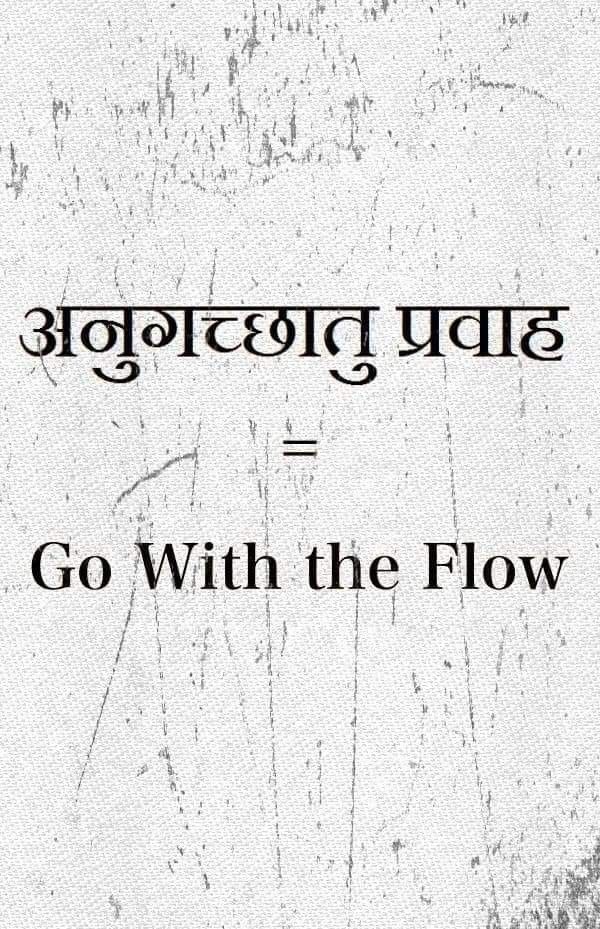






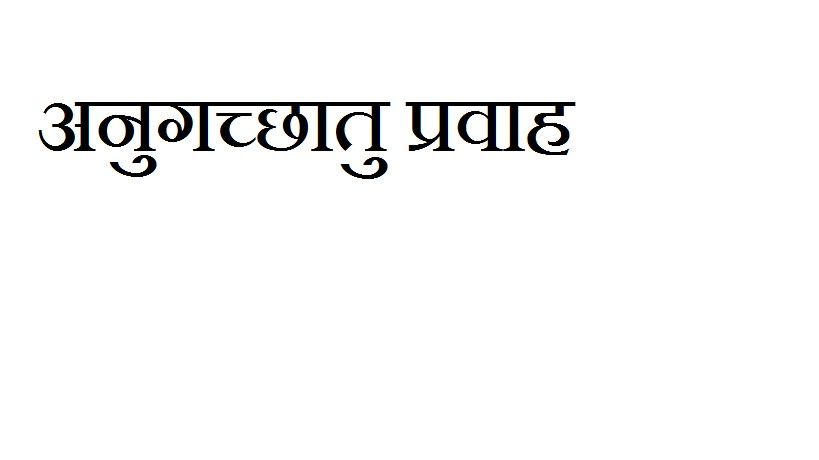



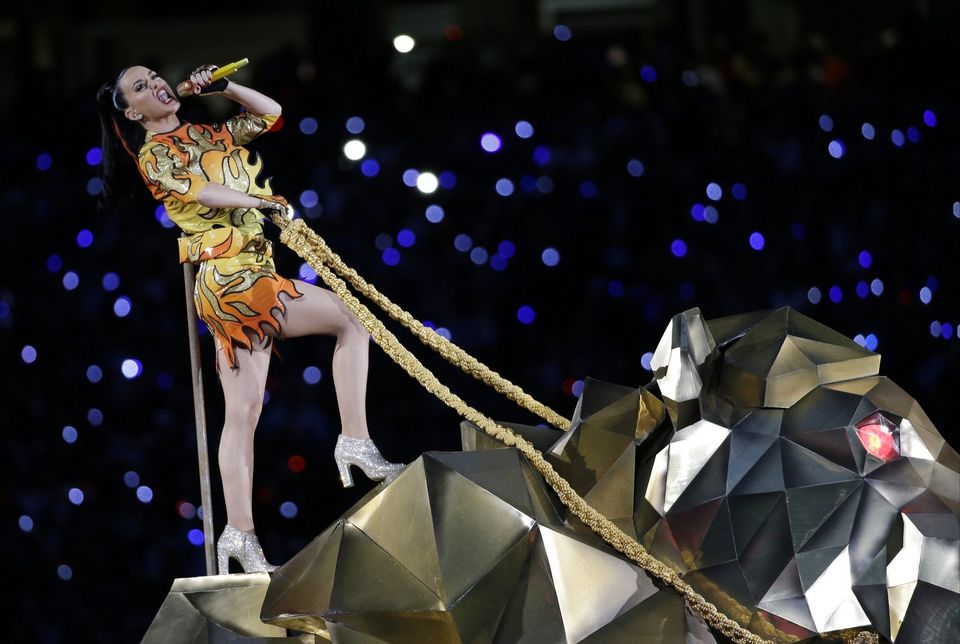













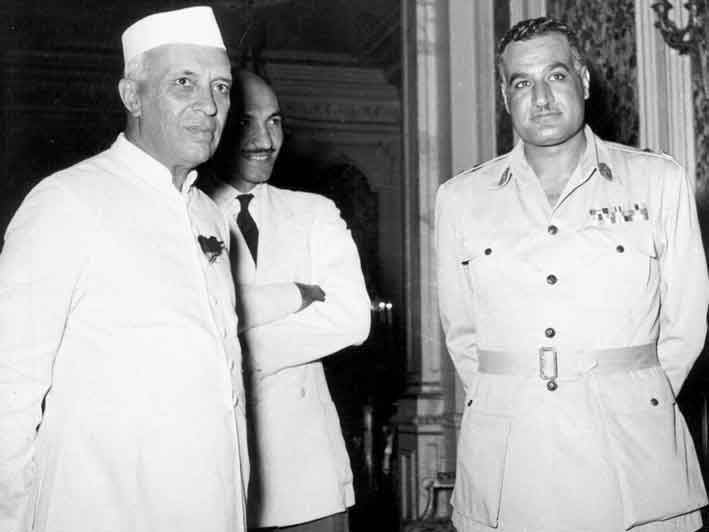




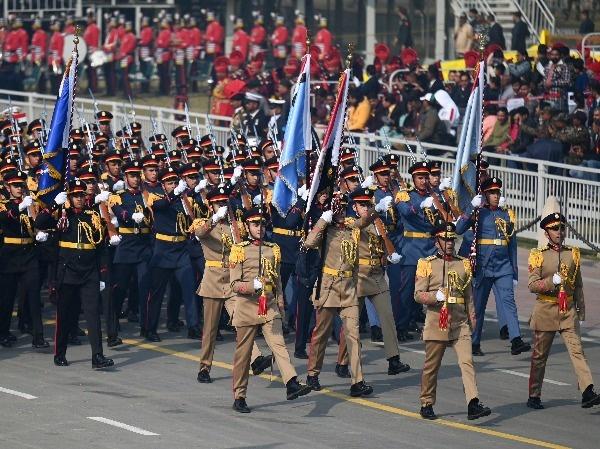

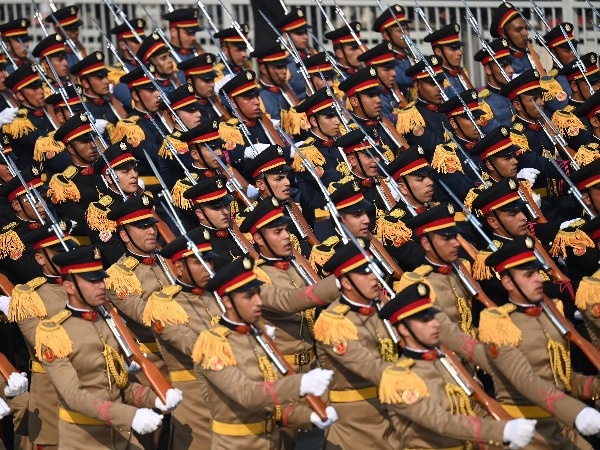


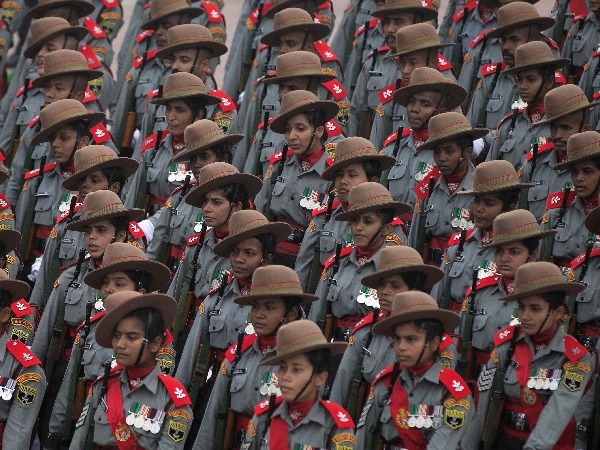
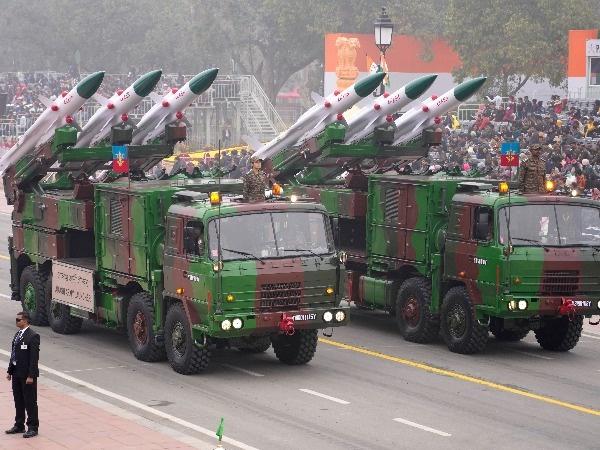
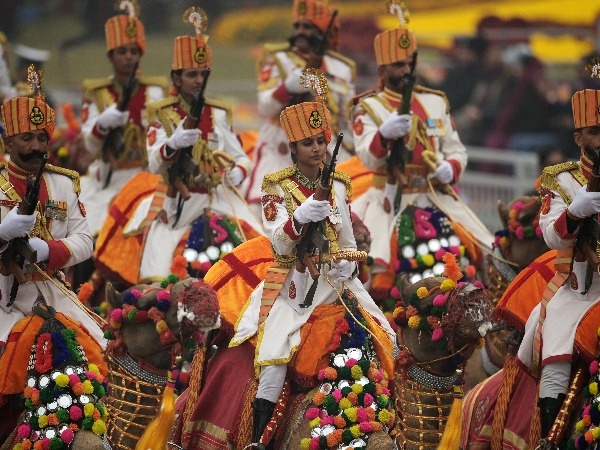



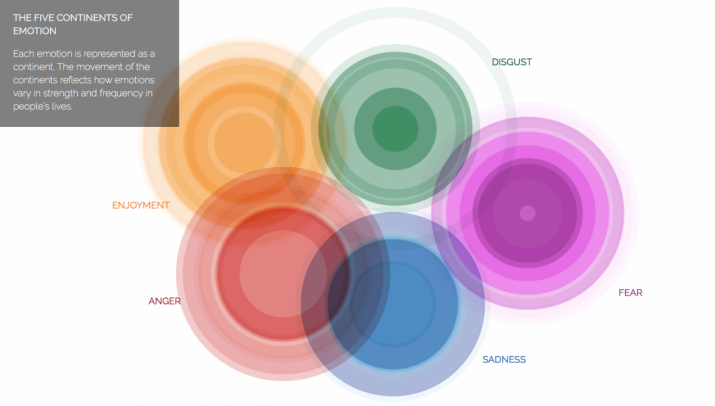


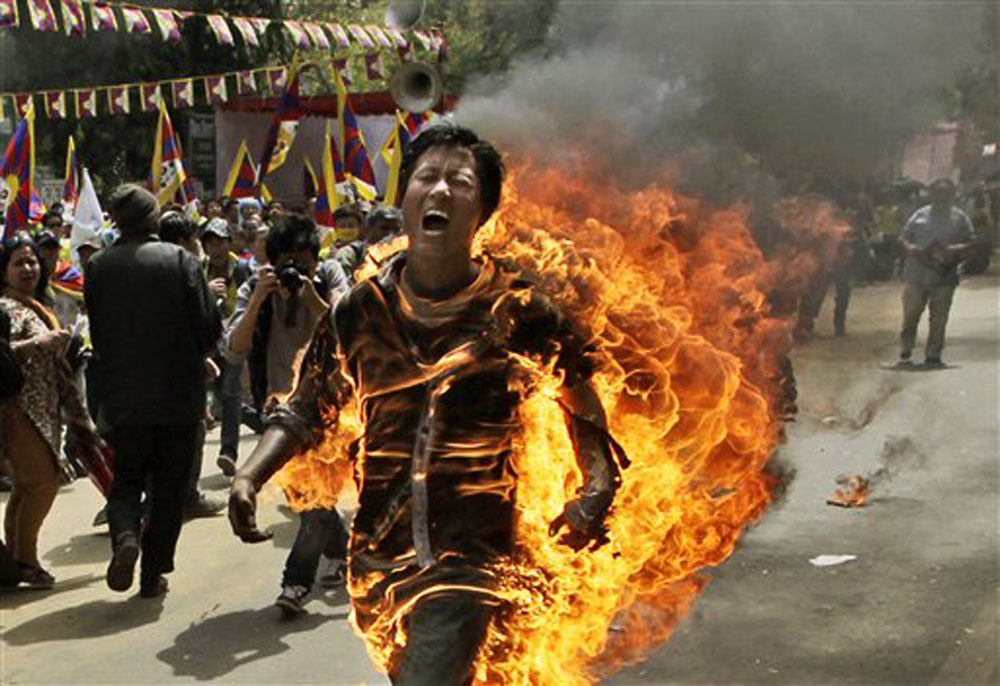


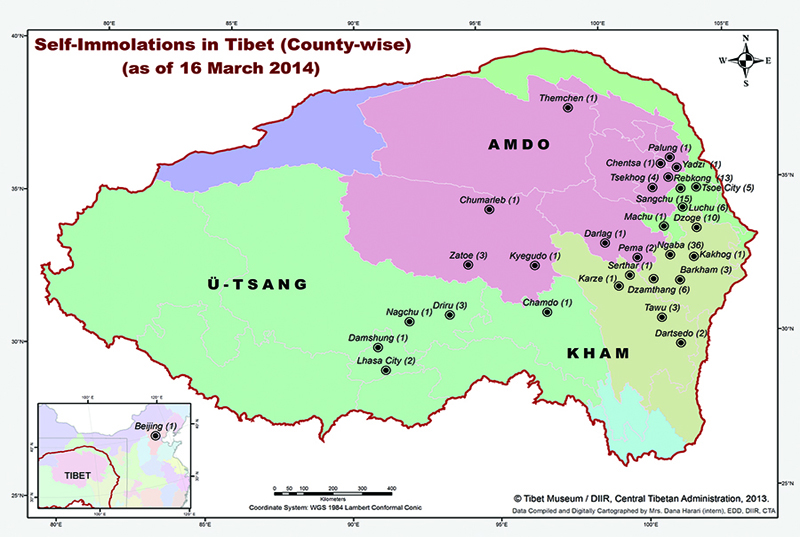

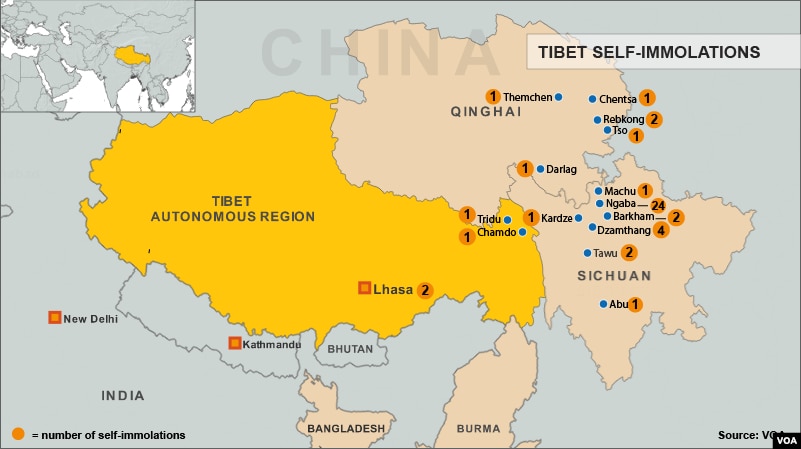


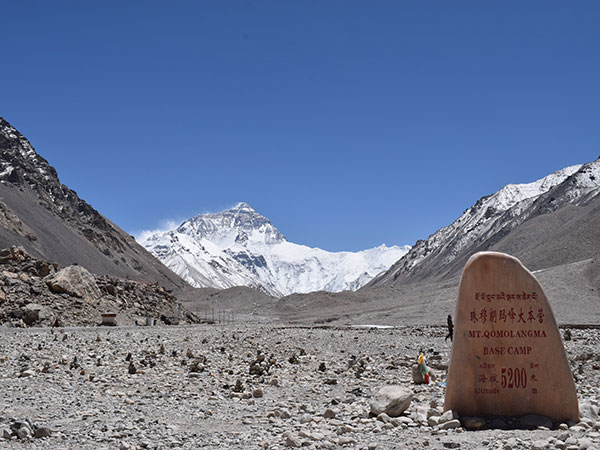




















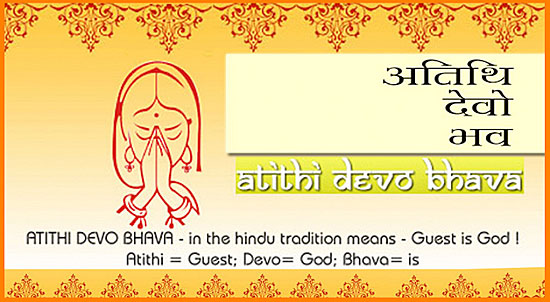






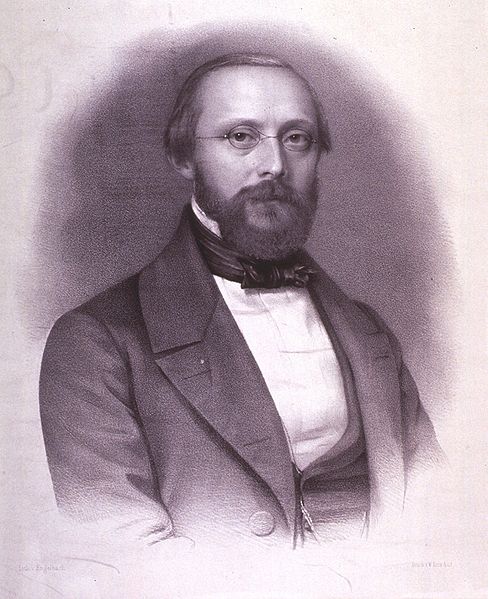


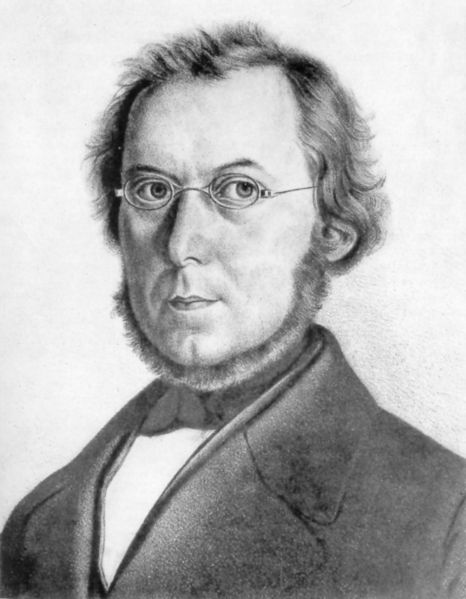
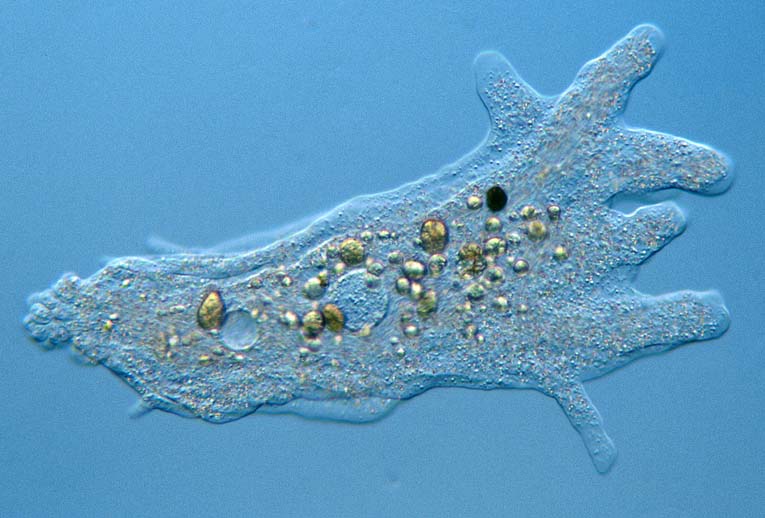


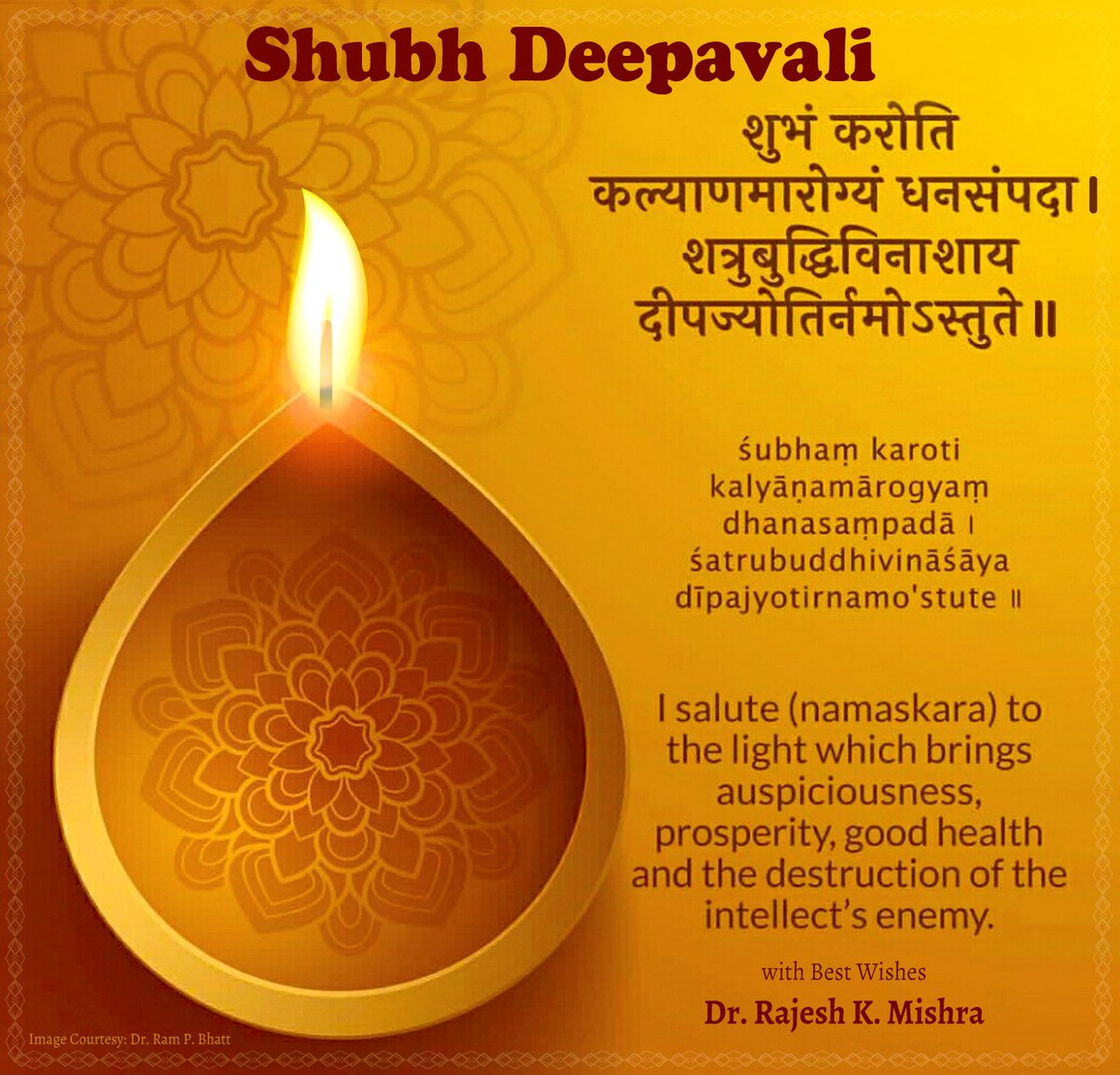

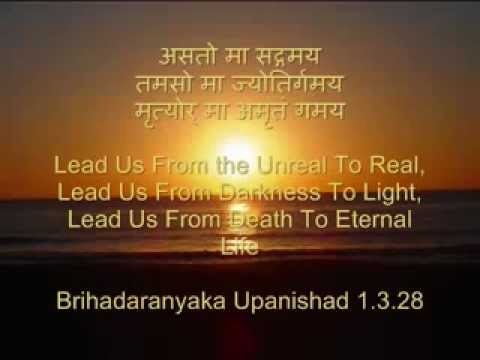






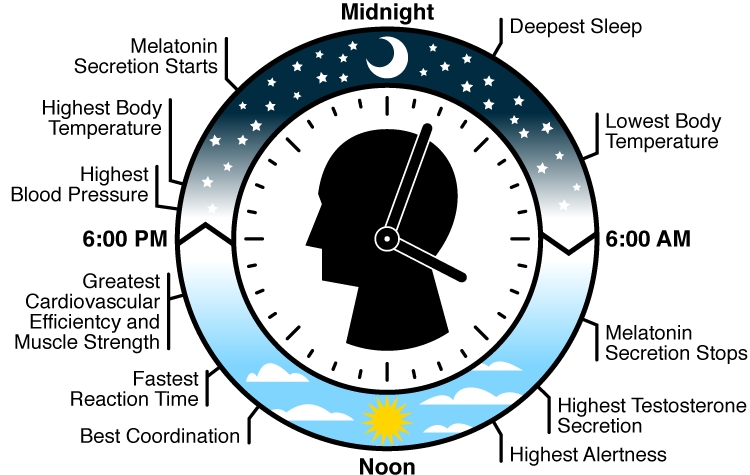




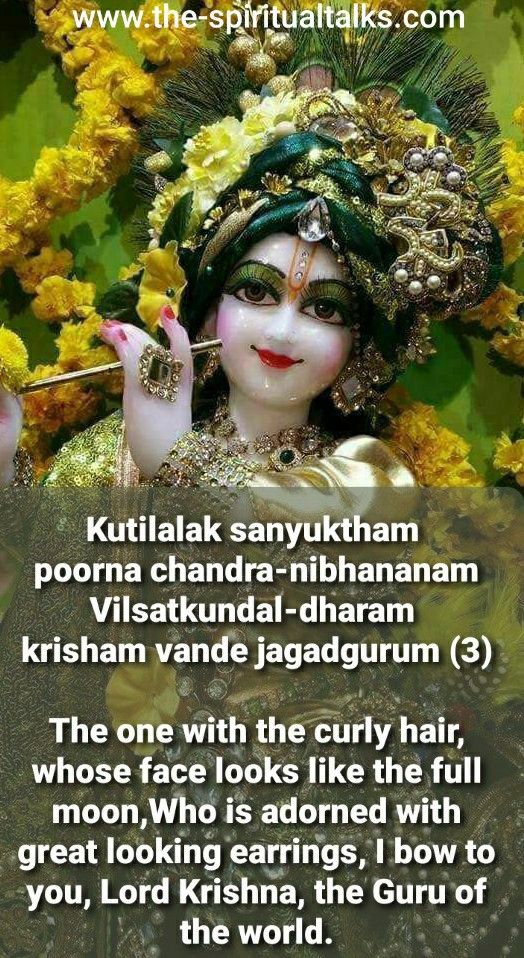
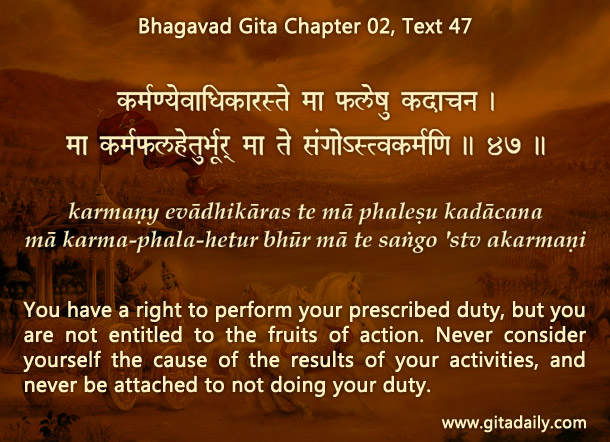





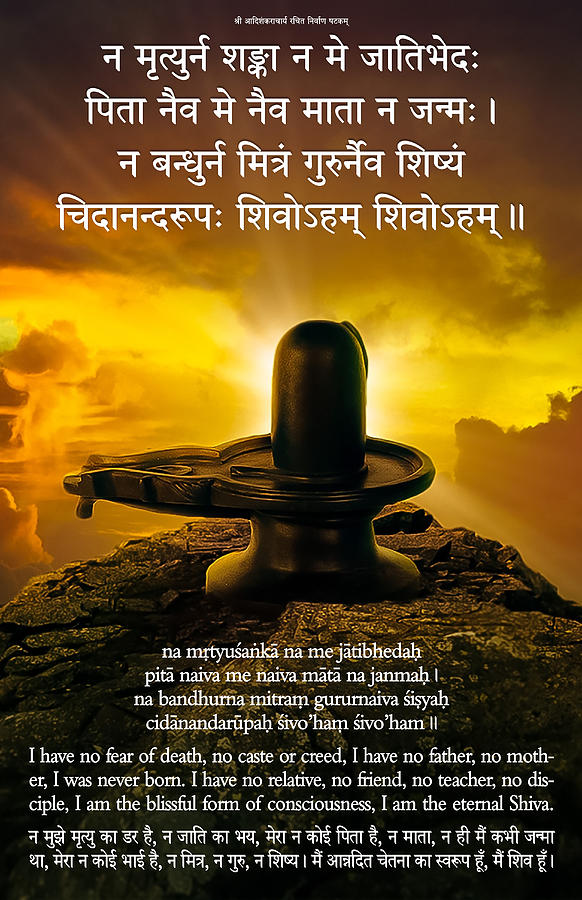




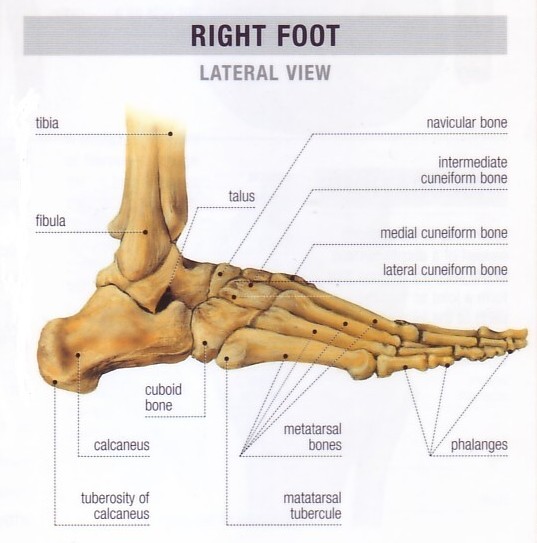




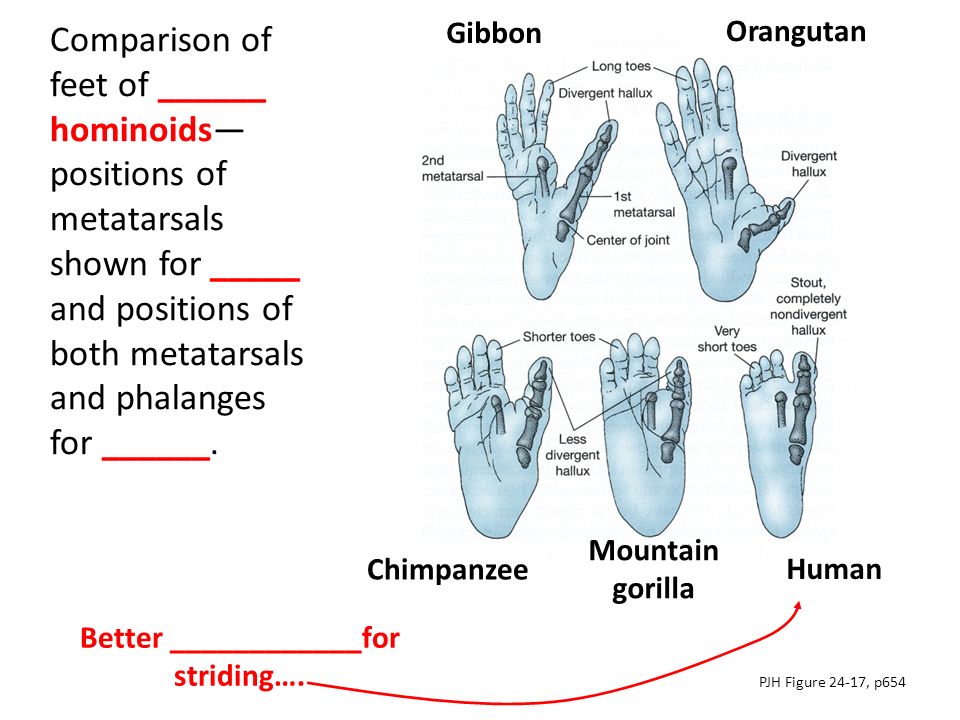
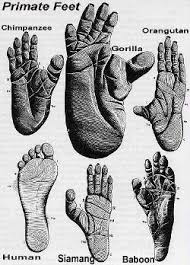
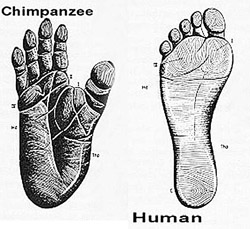


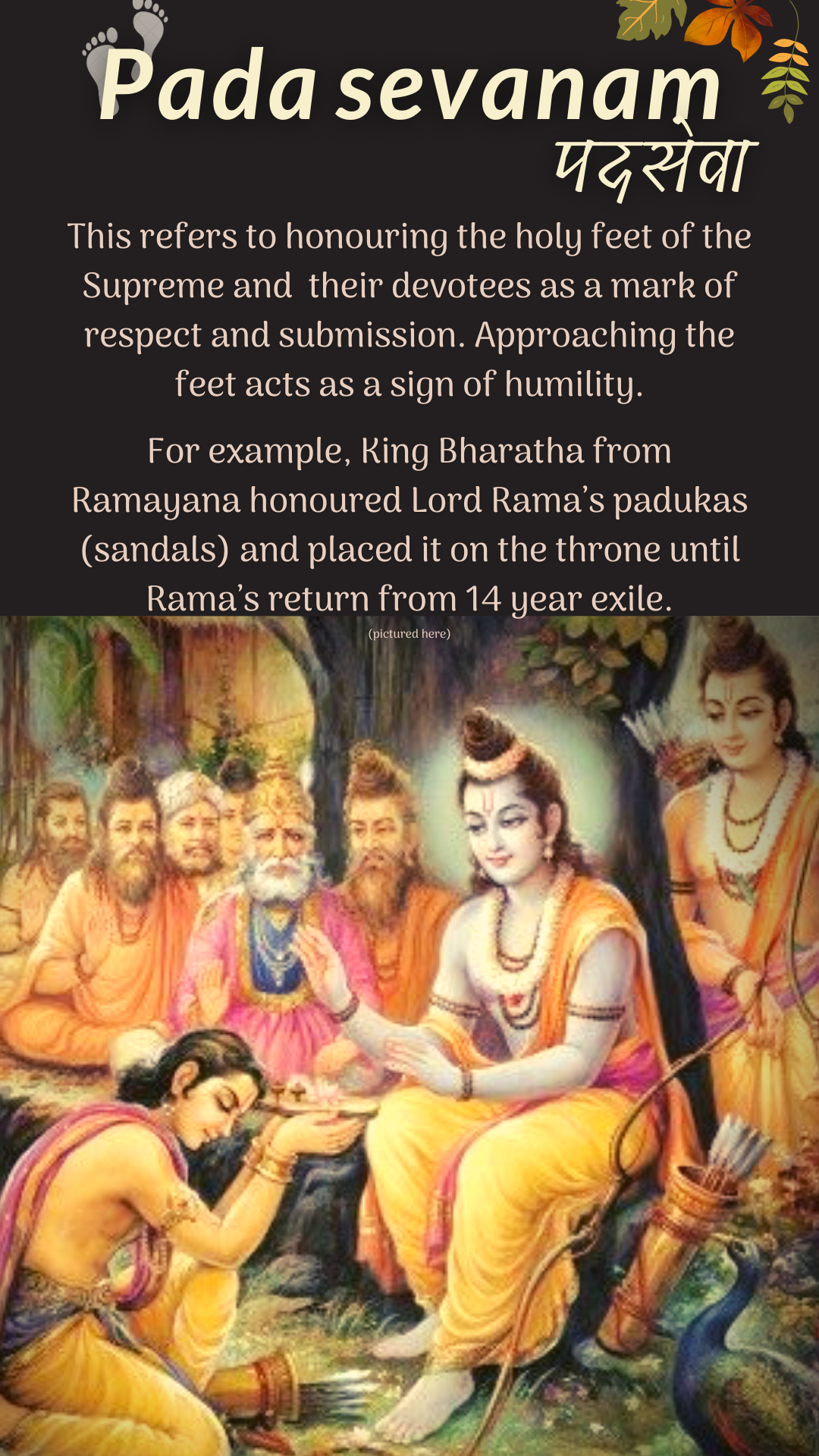
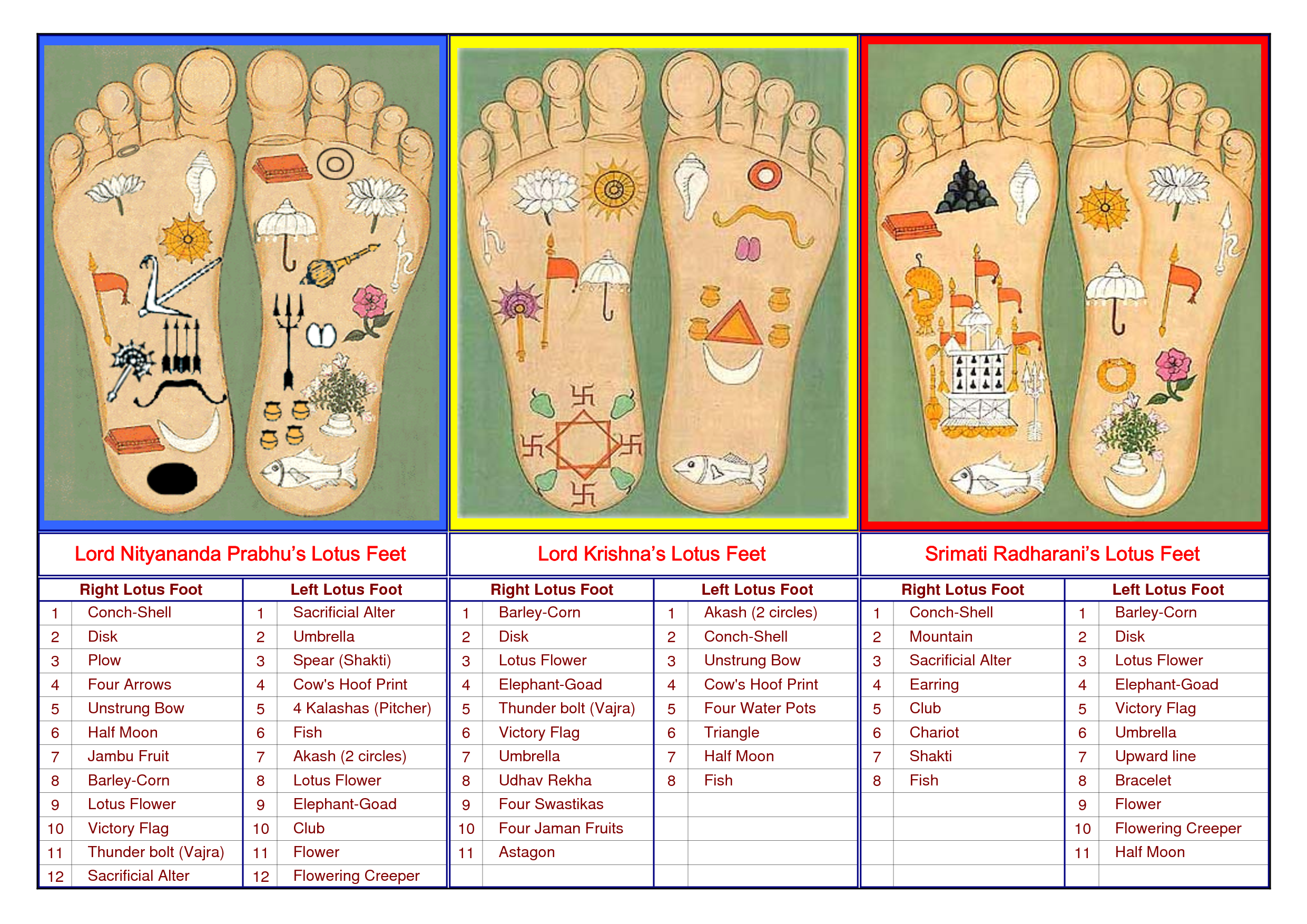








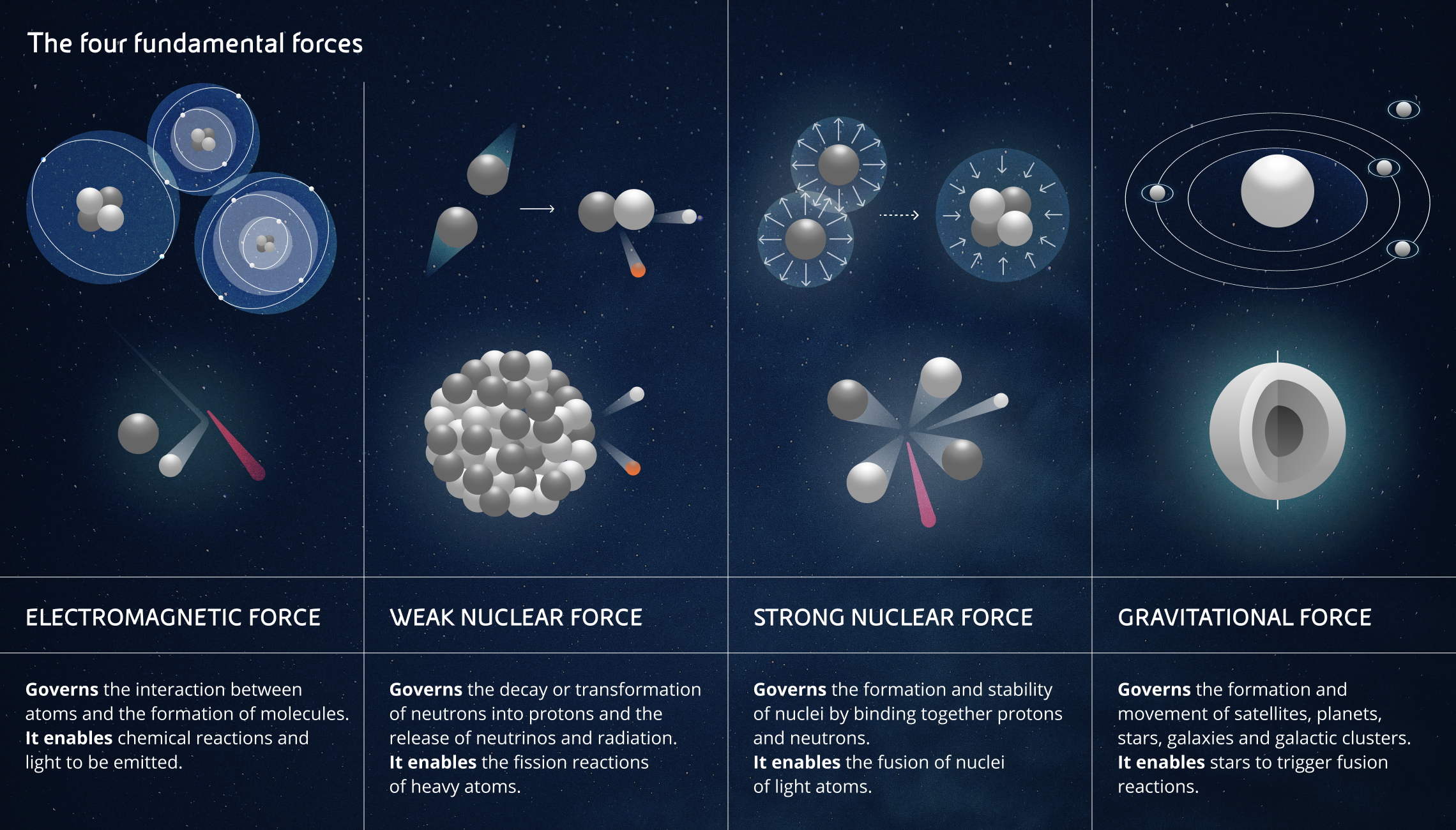
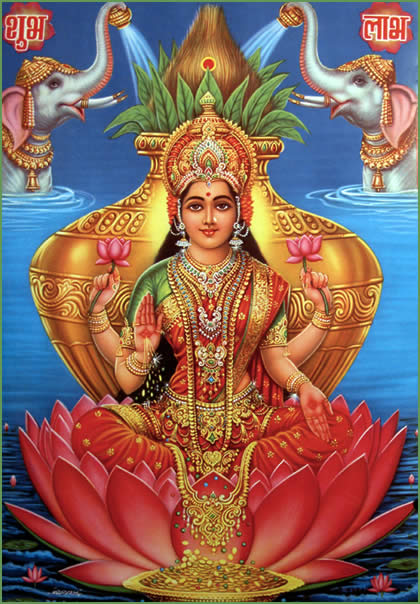













 Whole Dude - Whole Spirituality

