Vikas Regiment, Special Frontier Force, Establishment 22 – The Problem of Espionage:
Special Frontier Force-The Problem of Espionage: The Chinese military philosopher in a military treatise known as PING-FA(The Art of War) written c. 400 BC mentions the use of secret agents and the importance of good intelligence.
The term ‘intelligence’ is used to describe government operations that involve evaluation of information concerning the strength, activities, and probable course of action of its opponents. Espionage involves the gathering of ‘intelligence’ information which is further used in evaluation to design a political or a military course of action to deter the enemy. Radug Ngawang had exposed his participation in espionage by releasing the following photo images that were taken at Establishment No. 22/Special Frontier Force during 1971-1975 prior to his dismissal from Service in 1976. He clearly understands that the possession of these images is illegal and he is fully aware of the fact that the people shown in the images had no clue that they were being secretly photographed and did not know that the photo images will be released without official permission.
Special Frontier Force-The Problem of Espionage: Establishment 22 or Special Frontier Force represents a military alliance/pact between the United States, India, and Tibet to confront the military threat posed by the Communist Red Dragon’s occupation of Tibet since 1950. It is no surprise that at Special Frontier Force we have constantly experienced the problem of espionage orchestrated by the People’s Republic of China.
To obtain knowledge of the enemy’s intentions intelligence systems have been in use from ancient times. The concept of intelligence is not new. The military treatise “PING-FA” (The Art of War) written c. 400 BC by the Chinese philosopher Sun-Tzu mentions the use of secret agents and the importance of good intelligence. The intelligence service of the People’s Republic of China is known as the Social Affairs Department. The term espionage describes the process of obtaining information using spies, secret agents, and involves the use of illegal monitoring devices. At Vikas Regiment, Establishment 22 or Special Frontier Force the evidence for espionage conducted by the People’s Republic of China is revealed by the photo images obtained by spies and secret agents. After an investigation, the Department of Security of Central Tibetan Administration had dismissed from Service its top military leader/Political Leader/Dapon Radug (or Ratuk) Ngawang during 1976. Another Senior Political Leader Jamba Kalden had voluntarily retired from Service during 1977 after admitting that he had failed to stop or prevent the acts of espionage. It is very interesting to mention that Dapon Ratuk Ngawang had actually escorted His Holiness the 14th Dalai Lama on his way to India after the failed National Uprising Day (March 10, 1959 ) in Lhasa, Tibet. Ratuk Ngawang, is currently 85-years old (in 2013, the original date of this article), is not formally charged for any crime or illegal activity by the Government of India or Tibetan Government-in-Exile. After his retirement, he was permitted to live in India in the Capital City of New Delhi and he draws a modest amount of pension for the years he spent in Service. I worked with him at Establishment 22/Special Frontier Force from September 1971 to December 1974. His wife was in charge of the camp where we trained the female paratroopers of SFF. She released some of the prohibited, illegal photo images captured by the enemy agents sheltered by Ratuk Ngawang. I am fully convinced that he supported espionage activity at my military organization. It is not surprising to find Communist China is always ahead of the combined Intelligence Gathering Mission of the United States, India and Tibet.
Special Frontier Force – The Problem of Espionage. January 21 is Squirrel Appreciation Day. My reflections on “Chakrata Karma” with the help of a Squirrel Story. During January 1974, there was an attempt on my life at the Military Hospital Wing, Chakrata. This type of Charcoal burner was placed in my duty room in an attempt to poison me. I suspect the involvement of Political Leader Ratuk Ngawang and his wife who could have used a Tibetan female nurse to place this burner in the small duty room.Special Frontier Force-The Problem of Espionage: Chinese Intelligence correctly guessed that the 14th Dalai Lama had escaped from Lhasa to seek asylum in India after the failed Day of National Uprising in Tibet. Peking (Beijing) announced that the 14th Dalai Lama had arrived in India, a day before New Delhi could make a formal announcement. Chinese intelligence always remained ahead of the United States, India, and Tibet.Special Frontier Force-The Problem of Espionage: 54 years ago, His Holiness the 14th Dalai Lama had arrived in India on March 31, 1959. A Guard of Honor was presented by the Assam Rifles after he crossed into India’s North East Frontier Agency(Arunachal Pradesh) at Chutangmu/Khenzimani in TAWANG sector. The Chinese intelligence pursued him constantly monitoring his movements and activities all these years.Special Frontier Force-The Problem of Espionage: Dapon/Political Leader Radug Ngawang served in Establishment No. 22 or Special Frontier Force after arriving in India along with His Holiness the 14th Dalai Lama. The Tibetan Government-in-Exile had simply dismissed him from Service and had spared him from punitive retaliatory action even after knowing that he had harbored Communist spy or spies. His Holiness treated him with mercy and compassion in due recognition of his past performance before his falling prey to Chinese influence.Special Frontier Force-The Problem of Espionage: This is the photo image of Ratuk or Radug Ngawang at 84-years of age. While giving interviews to Indian news media and other writers, Ngawang had shared photo images that were illegally taken at Establishment No. 22 or Special Frontier Force where such photography is strictly forbidden. I have no hesitation to identify him as a Communist Agent who supported espionage activity.
The term ‘intelligence’ is used to describe government operations that involve evaluation of information concerning the strength, activities, and probable course of action of its opponents. Espionage involves the gathering of ‘intelligence’ information which is further used in evaluation to design a political or a military course of action to deter the enemy. Radug Ngawang had exposed his participation in espionage by releasing the following photo images that were taken at Establishment No. 22/Special Frontier Force during 1971-1975 prior to his dismissal from Service in 1976. He clearly understands that the possession of these images is illegal and he is fully aware of the fact that the people shown in the images had no clue that they were being secretly photographed and did not know that the photo images will be released without official permission.
Special Frontier Force-The Problem of Espionage-Photo provided by Dapon/Political Leader Ratuk Ngawang. In this illegally taken photo image, Gyalo Thondup, the 14th Dalai Lama’s elder brother is seen addressing the Tibetan men who serve in Establishment No. 22/Special Frontier Force and had encouraged them to join the War of Liberation of Bangladesh 1971. From right to left the persons seated is 1. Brigadier T S Oberoi, Commandant Establishment No. 22, 2. Mr. R. N. Kao, the Secretary, Directorate General of Security and RAW(Research and Analysis Wing), and 3. Major General Sujan Singh Uban, the Inspector General Special Frontier Force. None of us were aware that this photo was taken. Photography was strictly forbidden.The Failure of Intelligence Gathering Mission at Vikas Regiment, Special Frontier Force, Establishment 22. THE PROBLEM OF ESPIONAGE. DAPON/POLITICAL LEADER RATUK NGAWANG OF ESTABLISHMENT 22 DIED ON FEBRUARY 07, 2016 AT AGE 90. HE SHARED THIS PHOTO IMAGE WITH INDIAN NEWS MEDIA. This photo image was illegally captured without the knowledge of Gaylord Thondup, the elder brother of His Holiness the 14th Dalai Lama who is seen standing next to Dapon Ratuk Ngawang.Special Frontier Force-The Problem of Espionage: This is an illegal photo image shared by Political Leader Ratuk Ngawang who is at far left. His Holiness the 14th Dalai Lama (right), Major General Sujan Singh Uban, the Inspector General Special Frontier Force (second from right), and Senior Political Leader Jamba Kalden (third from right). A Chinese spy (later discovered in the robes of a Buddhist monk) secretly took this photo on June 03, 1972 when His Holiness visited Establishment No. 22 for the very first time after its inception in November 1962. These Political Leaders lost their jobs because of the problem of espionage.Special Frontier Force-The Problem of Espionage: Political Leader Ratuk Ngawang is seen standing at right looking towards the photographer. This illegal photo image was shared by Ratuk Ngawang and it helps me to identify him as a Communist Agent who had harbored Chinese spy/spies at Establishment No. 22. Other people, Major General Sujan Singh Uban Inspector General Special Frontier Force (second from right), Mr. R. N. Kao Secretary Directorate General of Security-Research and Analysis Wing-RAW (third from right), and Brigadier T S Oberoi Commandant Establishment No. 22 (far left). I served with these people including Ratuk Ngawang from September 1971 to December 1974 and I can very easily confirm that this photo is the evidence of the problem of espionage.Special Frontier Force-The Problem of Espionage: For the first time in the history of our military pact and alliance with Tibet, His Holiness the 14th Dalai Lama, the Head of Tibetan Government-in-exile had accepted our invitation to visit Establishment No. 22. This was entirely a private visit and it was kept as a ‘top secret’. Photography during this visit on June 03, 1972 was strictly forbidden. However, Political Leader Ratuk Ngawang had a copy of this photo and he had shared the same with a news reporter who had interviewed him at his house in New Delhi several years after his dismissal from Service during 1976. Senior Political Leader Jamba Kalden had become a victim of this espionage and had to retire from Service for he had failed to prevent this crime.Special Frontier Force-Establishment No. 22 – The Problem of Espionage – Illegal photo image was taken on June 03, 1972. His Holiness the 14th Dalai Lama maintained a safe distance from the activities of Establishment No. 22/Special Frontier Force. However, during 1971-72 he had to make an exception as he had granted his permission to train his men by allowing their participation in the Liberation War of Bangladesh 1971. I participated in this military action known as ‘Operation Eagle’. In an attempt to stall this military operation, Dr. Henry Alfred Kissinger, the US Secretary of State had personally urged China’s Prime Minister Zhou Enlai to attack India across the Himalayan frontier(North East Frontier Agency-NEFA-Arunachal Pradesh). China did not comply with that request as China gave a high priority to secure the defeat of the US Army in Vietnam.Special Frontier Force – Establishment No. 22 – The Problem of Espionage – Illegal photo image was taken on June 03, 1972. This was a historical moment and yet it was not expected to be captured in a photo image. A Chinese spy dressed in the robes of a Buddhist monk was later arrested at Establishment No. 22. I was informed about the death of this spy on January 10, 1973. I do not know the exact date of death. The body was cremated according to Buddhist rites and the cause of death was not confirmed by an autopsy. Indian Intelligence Bureau official had expressed his sense of indignation and was totally dismayed by the attitude of Political Leader Ratuk Ngawang who had failed to deliver the spy to Indian Intelligence Bureau for their interrogation and investigation of the problem of espionage. The fact that this photo image exists is the clearest evidence of the Chinese espionage at Establishment No. 22-Special Frontier Force.Special Frontier Force – Establishment No. 22 – The Problem of Espionage – Illegal photo image was taken during Prime Minister Indira Gandhi’s visit to recognize the female paratroopers of SFF. This was a historical moment and yet it was not expected to release this photo image. I can easily identify Political Leader/Dapon Ratuk Ngawang (seated at extreme Left and his wife seated Third from Right, next to Major General T S Oberoi, the Inspector General of SFF.Special Frontier Force – Establishment No. 22 – The Problem of Espionage – Illegal photo image was taken during Secretary R N Kao’s visit to recognize the female paratroopers of SFF. This was a historical moment and yet it was not expected to release this photo image. I can easily identify Political Leader/Dapon Ratuk Ngawang standing at extreme Left with his wife in front of him.
While I served in Special Frontier Force-Establishment No. 22 from September 1971 to December 1974, I interacted with Political leader Ratuk Ngawang on numerous occasions during our routine training activities. I never had the opportunity to medically examine him or interview him at my Medical Inspection Room/Hospital Wing of Establishment No. 22. I am not surprised to know about his dismissal from Service during 1976 after the Tibetan Government-in-Exile had decided not to frame any charges against him. I have no doubt in my mind that he is not fit to be a member of the Tibetan Resistance Movement. He lost his desire to resist the Enemy.
Rudra N. Rebbapragada, Ann Arbor, Michigan, USA.,
Organization: The Spirits of Special Frontier Force.
The Failure of Intelligence Gathering Mission at Establishment 22. This photo image of a Screen Shot from Movie TE3N released in 2016 is the evidence for espionage activity at Establishment 22. The image is obtained from my stolen Indian Army Picture ID.
In the Indian traditions of my Telugu or Andhra Family, such a framed portrait seen mounted on a wall in a living room is often used to show respect to a deceased person. TE3N Movie used my stolen Indian Army Picture ID photo image to prepare this framed portrait in a manner to indirectly claim the death of the person shown in the image. It is reasonable to assume that TE3N Movie Producer and Director have counted me among War Dead while knowing that I am a living person. In other words, the display of a portrait of a living person on a wall implies a non-verbal death threat or death wish.
The photo evidence for my affiliation and service at a secret military organization known as Vikas Regiment, Special Frontier Force and Establishment 22. Silver Plate presented by all Officers, D-Sector, Establishment 22 in appreciation of my Service in the North East Frontier Agency/Arunachal Pradesh in January 1973.Establishment No. 22 – Operation Eagle: This badge represents a military alliance/pact between India, Tibet, and the United States of America. Its first combat mission was in the Chittagong Hill Tracts which unfolded on 03 November 1971. It was named Operation Eagle. It accomplished its mission of securing peace in the region that is now knownas Republic of Bangladesh.
Revisiting the First Kashmir War of October 22, 1947
Kashmir stands as the witness of the Everlasting Saga of Indo -Soviet Friendship. Revisiting the First Kashmir War of October 22, 1947. Former Governor of Jammu & Kashmir Lieutenant General S K Sinha (Retd) was among the first Army-men of the Indian Army to enter Kashmir on 27 October 1947.
The landmass that we call the Republic of India has its own history. It moved across ocean to join Laurasia, a historical event that created the Himalaya Mountain range. Man has no right to create political boundaries and establish his domain in Earthly realm. In fact, God, the LORD Creator is the true owner of Land, Sea, and Air. Man cannot rule or govern his own body for the cells of his body enjoy cellular autonomy. Having said this, I submit, Republic of India’s duty demands defense of Indian Landmass from Kashmir to Kanyakumari to preserve its historical identity.
In 1947, India Deliberately Let Muzaffarabad: Lieutenant General S K Sinha (Retd)
Published on February 01, 2016.
Kashmir stands as the witness of the Everlasting Saga of Indo -Soviet Friendship
Former Governor of Jammu & Kashmir Lieutenant General S K Sinha (Retd) was among the first Army-men of the Indian Army to enter Kashmir on 27 October 1947. As a Major he was assigned the plan to plan and oversee the conduct of operations and also given the task of controlling airlift of troops from Delhi to Srinagar. Hence he is not only an eyewitness of the political and war happenings of 1947, but also performed an important role to shape them. Q. As an Army officer, in which areas you remained posted and for how long? A. From 1947 to 1949 I was posted with Tactical Headquarters Western Command, first at Jammu and then Srinagar when Lt Gen KM Carriappa took over as Army Commander from Lt Gen Sir Dudley Russell in January 1948. During this period I accompanied the Army Commander visiting forward areas where battles were taking place both in Jammu and in the Valley. I remained in Kashmir from 1947 to 1949 when cease fire came into effect on 1st January 1949. I returned to Delhi in 1949 and periodically visited Jammu and Kashmir on tour with successive Army Commanders as part of normal duty as GSO 2 (Operations). In July 1949 I went to Karachi as Secretary of Indian delegation to delineate the Cease Fire line in Kashmir. My total tenure in Jammu and Kashmir during my Army career was 10 years. As a Company Commander I served on a piquet in Gurez Valley, then in Jammu for three years, then three years in Ladakh as a Battalion Commander and after a few years as a Maj Gen commanding a Division in Akhnoor for one year. Subsequently after a long gap I got opportunity to serve people of J&K again when I was Governor of the State for five years from 2003 to 2008. Q. What date and time you landed in Kashmir? A. I landed at Srinagar grass landing ground at about noon on 27 October 1947. It was actually an airstrip amid a grassland made for personal plane of the Maharaja. I returned to Delhi later in the afternoon on that very date. Q. What was your age at the time? A. I was 21 years 10 months old. Q. Tell something about your company/regiment and what was your rank? A. I was in the rank of Major serving in the newly raised Headquarters Delhi and East Punjab Command (later Headquarters Western Command). I was GSO 2 (Operations) in Command with a skeleton staff of only 12 officers with rest all British. Lt Gen Sir Dudley Russel was the Army Commander. At that time both Indian and Pakistan Armies had number of British Officers serving in the two Armies, most of them in India were in the process of departing. The two Armies then had separate British Chiefs. No British Officer of either Army was allowed to visit Kashmir theatre for obvious reasons. Lt Gen Russell asked me to act as his eyes and ears. My responsibility in my appointment was to plan and oversee the conduct of operations as directed by my British superiors. I was also given the task of controlling airlift of troops from Safdarjang airport to Srinagar in requisitioned civilian Dakotas. Q. Those days what was the number of soldiers flown to Srinagar? A. We flew in 800 sorties of Dakotas in 15 days. 5000 troops with stores and equipments were flown into last the winter. I was shuttling between Delhi and Srinagar, often overstaying nights in Srinagar. On the first day we could fly in only 12 sorties due to non availability of aircraft. On 27 October 1947 our total strength in Srinagar was 600 troops and the enemy was reported to be 5000 to 10000 led by Maj Gen Akbar Khan of Pakistan Army. Q. If Indian Army’s was lesser in number than raiders, then why didn’t they succeed to capture Srinagar? A. They were engaged in rape, massacre and loot in Baramulla. Thus they lost the opportunity of capturing Srinagar which had no defences at that time. This is narrated by Maj Gen Akbar Khan in his book Raiders over Kashmir and also by me in my book Operation Rescue written in 1952. Q. Where you went after landing? A. As I said earlier that on 27 October 1947 I was at Srinagar landing ground for only a couple of hours. On the second day I went to Pattan where our troops had withdrawn after contacting the enemy at Baramulla. Lt Col Dewan Ranjit Rai, commanding the first lot of troops was killed at Baramulla after contact with the enemy. Q. Who were the local Kashmiris you met and what did they say? A. On first few days I met only local civilians wanting to sell apples in packed boxes at the airport at distress rates to be taken to Delhi in returning empty Dakotas. After a couple of days when we had withdrawn further from Pattan to Shelatang on the outskirts of Srinagar and the front had been stabilised I had to go to Srinagar city on 5 or 6 November 1947. There was no habitation between the landing ground and Zero bridge at that time. I met National Conference workers with lathis in their hands shouting the slogan Hamlewar Hoshiyar, Hum Kashmiri Hindu, Sikh, Muslman tyar. There was no communal tension nor communal violence in Srinagar when the rest of the Sub Continent was caught in the Partition holocaust. The Maharaja and senior officials had fled to Jammu. Q. Is it true that there was resistance by some locals so army convoys on way to Uri hoisted Pakitani flags on the vehicles? A. This is utter nonsense and total false propaganda. The only people we encountered between Baramulla and Uri were withdrawing enemy forces in disarray. At Baramulla, on 7 November 1947, we saw the body of Maqbool Sherwani nailed to a Cross just ahead of the Baramulla Convent. There were bodies of Nurses from the hospital in the well and also that of Lt Col Dikes and his wife who had come to Baramulla for a holiday from Naushera in Pakistan. The first notable Kashmiri I happened to meet was Sheikh Abdullah who had just been appointed Administrator of Jammu and Kashmir. Q. There was killing of civilians by Army at Ram Bagh? Why did army fire on civilian? A. I am not aware of this incident and I doubt the veracity of this. Q. Its said that Nehru has said or written in some book that India had asked its Army not to cross Uri. Is it true? A. I am not aware of it. What I know is that on 14 November 1947 when we reached Uri, our Army Commander, Lt Gen Sir Dudley Russell recommended to Army Headquarters at Delhi that we should pursue the fleeing enemy to Muzafarabad and seal the two bridges at Domel and Kohala and completely clear the Valley of the enemy. The British Military leadership at Delhiu comprised Mountbatten, the Viceroy, General Sir Rob Lockhart, the Army Chief and Lt Gen Sir Archibald Nye, British High Commissioner at Delhi. I believe they advised Nehru that advance to Muzaffarabad may lead to a full blown war between two Commonwealth countries, India and Pakistan. The United Nations was seized of the Kashmir problem and will resolve the issue peacefully. We also heard that Sheikh Abdullah for political reasons did not want the Army to proceed to Muzafarabad because that was a non Kashmiri speaking region where he did not have much political following. Q. What directions where you given in the field? A. In the field we got orders not to advance beyond Uri and instead proceed South to Poonch where 30000 Hindu and Sikh refugees were besieged by the enemy forces. Q. In your view, if Army was allowed to proceed ahead of Uri, what would have happened? A. Situation would have been totally different. We would have reached Muzaffarabad and cleared it of the attackers and taken it in our control. We were having a big battle advantage. Enemy was fleeing and we could have sealed the two important bridges of Domail and Kohala. Not allowing its Army to go ahead of Uri chasing the enemy was a battle blunder of India. We lost an important opportunity. If Indian army was allowed to advance beyond Uri, then Muzaffarabad would not have been under control of Pakistan Q. You have been an Army General. Why Army has failed to completely crush militancy in J&K? A. In the old days armies of Atilla, Chingiz Khan or Timur did not allow militancy to erupt by carrying out wholesale massacres. No Army in the present age can completely crush militancy. The US failed to do so in Vietnam, Pakistan in Baluchistan, China in Tibet, French in Algeria and so on despite using air power, machine gun and artillery. There has not been a single instance in 25 years in which Indian Army has used any of these heavy weapons causing indiscriminate killing of civilians. Nawab Mohammad Bugti, the veteran separatist leader was killed in a well planned attack on his location by Pakistan Air Force while veteran Kashmiri separatist leader, refused visa for treatment by the US, had been provided best available medical treatment in Mumbai and recovered from serious complicated operations. No doubt there have been some serious cases of human rights violations in Jammu and Kashmir which are inevitable in such operations. The guilty have been proceeded against and till my time in Kashmir nearly one hundred Army personnel found guilty were dismissed and given prison sentences from 2 to 14 years depending upon the gravity of the crime. Most allegations against the Army were found false or exaggerated. The human rights record of the Indian Army in such operations has been much better than any other employed in such operations. Q. What you think can be a possible solution to Kashmir issue? A. Pakistan claims that Kashmir is its jugular vein and for India, Kashmir is its soul. India’s legal claim to Kashmir was recognized in the UN Resolution of 13 August 1948 which required Pakistan to withdraw all its forces from Kashmir and allowed to retain her forces till the plebiscite which was not allowed to be held by Pakistan. The Indian Parliament has passed a unanimous resolution to recover the whole of the Sate as it stood on 22 October 1947 without legal justification invaded Jammu and Kashmir. India has been repeatedly reiterating that the whole of Jammu and Kashmir is an integral part of India. Notwithstanding all this, my own personal view is that we should recognize the LOC as international border and both sides develop cordial neighbourly relations. Zulfiqar Ali Bhutto during Shimla Accord had given verbal assurance to that effect when the term Cease Fire Line was changed to Line of Control. The latter is more indicative of a permanent solution. The four point out of box solution proposed by Parvez Musharraf was also a move in that direction and so was the call of Atal Beharee Vajpayee to settle the Kashmir issue in Insaniyat Ke Daire Me.
October 22, 2024 – A very good reason to celebrate Indo-Soviet Friendship
Kashmir stands as the witness of the Everlasting Saga of Indo -Soviet FriendshipOctober 22, 2024 – A very good reason to celebrate Indo-Soviet Friendship
Kashmir stands as the witness of the Everlasting Saga of Indo -Soviet Friendship
October 22, 2024 – A very good reason to celebrate Indo-Soviet Friendship
I ask my readers to understand the US Policy on Kashmir. The US Policy is revealed by the fact that no President of the United States visiting India had visited Kashmir.
Kashmir. The everlasting saga of Indo-Soviet Friendship.In 1955, Jawaharlal Nehru spent 16 days in the USSR, covering some 13,000km, on his first official tour to the country as the prime minister of India
In 1955, Jawaharlal Nehru spent 16 days in the USSR, covering some 13,000km, on his first official tour to the country as the prime minister of India
Kashmir. The everlasting saga of Indo-Soviet Friendship. Jawaharlal Nehru and Indira Gandhi at the Rustavi Metallurgical Plant in 1955 (Rustavi, Georgia USSR)
Jawaharlal Nehru and Indira Gandhi at the Rustavi Metallurgical Plant in 1955 (Rustavi, Georgia USSR)
After India’s independence from the British Rule, Kashmir stands as a true witness of the glorious saga of Indo-Soviet Friendship over the last seven decades.
In June 1955, Nehru visited USSR. During the visit, a joint communique was issued, which emphasized on international peace, the security of small states. Both the Prime Ministers of India and USSR felt that “it is essential to dispel fear in all possible ways.
Kashmir. The everlasting saga of Indo-Soviet Friendship. Nikita Sergeyevich Khrushchev speaking at the reception held in honor of visiting Soviet delegation at Srinagar.
Nikita Sergeyevich Khrushchev speaking at the reception held in honor of visiting Soviet delegation at Srinagar.
The visit of the Soviet leaders, Khrushchev and Bulganin to India in November-December 1955 laid the foundation of a new era in Indo- Soviet relationship. Besides Delhi, the Soviet leaders visited Calcutta, Madras, Agra, Coimbatore, and Srinagar. Crowds greeted them with thunderous applause.
Khrushchev assured Indian leadership that USSR would ever come forward to help India at times of difficulties. Speaking at a luncheon given in their honor at the Agra Circuit House by the Governor of Uttar Pradesh, KM Munshi on November 20, 1955, he stressed that “Soviet people were not just fair-weather friends of India but their friendship would last forever even when the weather frowns or the storm blows strong”.
“Let it be known to the world”, he added, “that the friendship between the two people would continue to grow even at times of difficulties and crises”. Bulganin echoed the same rhetoric in his reply to the civic address given by Coimbatore Municipal Council on November 27, 1955. He concluded his speech with “long live the great republic of India. Long live the people of India. Long live the friendship between the people of India and the Soviet Union, Hind-Russi Bhai Bhai and Hind-Russia Sahodare.” (The Hindu, November 28, 1955)
Kashmir. The everlasting saga of Indo-Soviet Friendship. Bakshi Ghulam Mohammad showing members of visiting Soviet delegation examining Kashmir handicrafts in Srinagar. The delegation included NA Bulganin, USSR Prime Minister, Khrushchev, Member, Presidium of the Soviet and many others
Bakshi Ghulam Mohammad showing members of visiting Soviet delegation examining Kashmir handicrafts in Srinagar. The delegation included NA Bulganin, USSR Prime Minister, Khrushchev, Member, Presidium of the Soviet and many others
The Soviet leaders expressed the support to the Indian stand on the Kashmir issue explicitly during the course of talks and speeches.
Speaking at the reception given by Bakshi Ghulam Mohammad, Prime Minister of Kashmir, in honor of visiting Soviet dignitaries on December 10, 1955, Khrushchev expressed the unequivocal support to the Indian stand on Kashmir.
“Kashmir is one of the states of the Republic of India that has been decided by the people of Kashmir,” he said. “It is a question that the people themselves have decided”. He viewed the Kashmir problem as an imperialist design and severely criticized the “divide and rule” policy of the imperialist powers. He held the view that the Kashmir problem emerged because some states tried to take advantage of the situation to foment animosity between India and Pakistan- countries recently emancipated from colonial oppression.
They reiterated the same on December 14, 1955, in a press conference in Delhi. Bulganin said, “As for Kashmir during our visit there we saw how greatly the Kashmirians rejoice in their national liberation, regarding their territory as an integral part of India”.
On their return to Moscow in the last week of December, they submitted their reports on the visit to the Supreme Soviet of the USSR. In his report, Bulganin argued that “on the pretext of supporting Pakistan on the Kashmir question certain countries are trying to entrench themselves in this part of India in order to threaten and exert pressure on areas in the vicinity of Kashmir. The attempt was made to sever Kashmir from India artificially and convert it into a foreign military base.”
But, Bulganin said, the people of Kashmir are emphatically opposed to this imperialist policy. “The issue has been settled by the Kashmiris themselves; they regarded themselves as an integral part of India. We became profoundly convinced of this during our meetings with the people in Srinagar, and in our conversations with the Prime Minister of Kashmir, G M Bakshi, and his colleagues”. Further, he said, “The Soviet government supports India’s policy in relations to the Kashmir issue because it fully accords with the interests of peace in this part of Asia. We declared this when we were in Kashmir; we reaffirmed our declaration at a press conference in Delhi on December 14 and we declare it today”.
Khrushchev in his speech said, “in Kashmir, we were convinced that its people regarded its territory as an inalienable part of the Republic of India. This question has been irrevocably decided by the people of Kashmir”
In pursuit of this policy, the Soviet Union opposed the draft resolution co-sponsored by Great Britain, the US, Australia, and Canada on February 14, 1957. The resolution was unacceptable to India. The resolution noted the importance the Security Council “attached to the demilitarization of the state of Jammu and Kashmir preparatory to the holding of a plebiscite”, and “Pakistan’s proposal for the use of a temporary United Nations force in connection with demilitarization”. The Security Council held “that the use of such a force deserved consideration”. (Year Book of the United Nations, 1957 pp 81) The Security Council authorized its president, Gunnar Jarring to visit India and Pakistan to bring about demilitarization or further the settlement of the dispute.
Kashmir. The everlasting saga of Indo-Soviet Friendship. Prime Minister of Kashmir Bakhshi took the visiting USSR leaders in a huge boat procession in the river Jhelum. Thousands of people were on either side of the river banks to greet them in December 1955.
Prime Minister of Kashmir Bakhshi took the visiting USSR leaders in a huge boat procession in the river Jhelum. Thousands of people were on either side of the river banks to greet them in December 1955.
On February 18, 1957, the Soviet delegate, Sobolev, proposed amendments to the above-mentioned resolution. He argued “the situation in Kashmir has changed considerably since 1948 when the Security Council had first called for a plebiscite. The people of Kashmir had settled the question themselves and now considered their territory an integral part of India”. (UN Security Council Official Records, 12th session, 768thmeeting, February 14, 1957) In his resolution, the Soviet delegate deleted the reference to “the use of a temporary UN force in connection with demilitarization” in Kashmir. After his amendments were rejected by the other Security Council members on February 20, 1957, Sobolev vetoed the Western-sponsored resolution. He justified the veto by alleging that the resolution, as it stood, favored Pakistan. (Security Council Official Records, 773rd meeting, February 20, 1957) He told the Security Council that in his government’s opinion the Kashmir question had in fact already been settled by the people of Kashmir.
In March 1959, a Soviet delegation led by A Andrew visited Kashmir to demonstrate that the Soviet Union regarded Kashmir as an Indian state. Shortly after his arrival in Srinagar, Andrew described Kashmir as “the most beautiful place of the world” and reiterated that the Soviet Union regarded “Jammu and Kashmir as an integral part of the Indian Republic”. Pointing out that Kashmir “is not far from the Southern frontier of the Soviet Union” he declared that, “in your struggle, we are your comrades”. (Security Council Official Records, 773rd meeting, February 20, 1957, pp 46.)
Next month Indian leader Karan Singh was received by leading Soviet leaders including Khrushchev in Moscow. Khrushchev welcomed the guest from “friendly India” and reiterated the Soviet support to the Indian policy in Kashmir. Karan Singh thanked Soviet leader for his unequivocal support to India and said that the Soviet policy towards Kashmir was well known.
When the UN Security Council met on April 27, 1962, to discuss the Kashmir issue, Soviet delegate, Platen Morozov, gave India total and unequivocal support. In his speech, Morozov declared, “the question of Kashmir, which is one of the states of the Republic of India and forms an integral part of India, has been decided by the people of Kashmir themselves. The people of Kashmir have decided this matter in accordance with the principle of democracy and in the interest of strengthening relations between the people of this region.”
Kashmir. The everlasting saga of Indo-Soviet Friendship. Russian premier Kosygin with his counterparts from India and Pakistan at Tasknet – Ayub Khan and Lal Bahadur Shastri.
Russian premier Kosygin with his counterparts from India and Pakistan at Tasknet – Ayub Khan and Lal Bahadur Shastri.
When the Security Council met again on June 21, 1962, the representative of Ireland, supported by the British representative, introduced a resolution. It was quite clear, according to Morozov, the ‘principal aim’ of the draft resolution was holding of a plebiscite and this would be nothing but ‘flagrant interference’ in the domestic affairs of India. (Year Book of the United Nations, 1962 pp 130)
Morozov urged the Council to reject the Irish resolution insisting it was basically in line with US dictates. When the Irish resolution was put to vote on June 23, 1962, the Soviet representative vetoed it. He declared that the question of holding a plebiscite in Kashmir was ‘dead and outdated’ and the Kashmir question had been solved ‘once for all’.
USSR supported Indian stand on Kashmir at various fora. It also supported Nehru’s decision to withdraw the special status to J&K and to integrate the state into the Indian Union. At a reception at Rumanian embassy in Moscow, Khrushchev declared that the Soviet Union extends its ‘full support’ to the integration of Kashmir to the Indian Republic, insisting his attitude towards Kashmir remains unchanged.
Kashmir. The everlasting saga of Indo-Soviet Friendship. Sadar-i-Riyasat, Dr. Karan Singh, his wife and Indira Gandhi with the visiting USSR delegation in Srinagar.
Sadar-i-Riyasat, Dr. Karan Singh, his wife and Indira Gandhi with the visiting USSR delegation in Srinagar.
When the Kashmir question came before the Security Council in February 1964, the Soviet representative, Federenko, reiterated his country’s view that the question of Kashmir had already been settled ‘once for all’. He also supported the Indian contention that a Security Council resolution would aggravate the situation and thought that the Indian proposal for a ministerial meeting to discuss the communal question and no-war treaty constituted a ‘realistic approach’ in the interests of peace in Asia and the whole world. (Year Book of The United Nations, 1964 pp 131)
After the unexpected departure of Khrushchev from the Soviet political scene, it appeared that USSR attitude towards Kashmir issue underwent change. However, the Soviet envoy to India, Benediktov assured New Delhi in October 1964 that the Soviet attitude towards Kashmir had remained unchanged. During her visit to Moscow, Indian Prime Minister, Indira Gandhi was assured by the new Soviet Prime Minister Alexi Kosygin that the Soviet support for India’s policy in Kashmir had remained unchanged and that Moscow regarded “Kashmir as an integral part of India”. (Patriot, 24 October 1964)
Kashmir. The everlasting saga of Indo-Soviet Friendship. My special thanks to Dr. Debidatta Aurobinda Mahapatra for his article.
My special thanks toDr. Debidatta Aurobinda Mahapatra for his article.
At the UN Security Council, where this matter was raised several times, Soviet delegate attempted to maintain a non-partisan view, though he referred to the Indian state of J&K. He blamed the current conflict on those ‘forces which are trying to disunite and set against each other the states that have liberated themselves from the colonial yoke’ and those ‘which are pursuing the criminal policy of dividing peoples so as to achieve their imperialist and expansionist aims’. The friendship with USSR nevertheless stood in good stead when it came to the support of India on points of objection that India raised. On October 25, 1965, the Indian Foreign Minister, Swaran Singh objected to Pakistan Foreign Minister, ZA Bhutto’s reference to the internal situation in Kashmir and held that it was India’s internal affairs. He held that the opposite view was a deviation from the agreed agenda and thus walked out in protest. USSR had shown support to the Indian interpretation that the Council’s deliberations should be only on “questions directly connected with the settlement of the armed conflict, i.e. complete ceasefire and withdrawal of armed personnel. It had also abstained from voting on the resolution adopted by the Council on November 5, 1965. (Year Book of the United Nations, 1965, pp 171) The resolutions failed to resolve the crisis.
Kashmir. The everlasting saga of Indo-Soviet Friendship. Visiting USSR delegation with Prime Minister Bakhshi’s cabinet with Sadar-i-Riyasat seen in the center.
Visiting USSR delegation with Prime Minister Bakhshi’s cabinet with Sadar-i-Riyasat seen in the center.
I thank Russian Prime Minister Vladimir Putin and the people of Russia for their consistent support to India in defending Kashmir.
October 22, 2024 – A very good reason to celebrate Indo-Soviet Friendship
Russia Backs India On J&K Move, Says Change In Status Within Constitution
October 22, 2024 – A very good reason to celebrate Indo-Soviet Friendship
Moscow said that the “change in the status of the state of Jammu and Kashmir and its division into two Union Territories has been carried out within the framework of the Constitution of the Republic of India.”
Kashmir. The everlasting saga of Indo-Soviet Friendship.
Russia is a consistent supporter of the normalization of relations between India and Pakistan.
Russia has backed India’s moves on Jammu and Kashmir, saying that the changes are within the framework of the Indian Constitution, even as it urged India and Pakistan to maintain peace.
In response to a question during its press briefing on Friday, the Ministry of Foreign Affairs of Russia said Moscow expects that India and Pakistan “will not allow aggravation of the situation in the region due to the change by New Delhi in the status of the state of Jammu and Kashmir”.
Moscow said that the “change in the status of the state of Jammu and Kashmir and its division into two Union Territories has been carried out within the framework of the Constitution of the Republic of India”.
It hoped that the two sides will “not allow a new aggravation of the situation in the region as a result of the decisions”.
Russia is a consistent supporter of the normalization of relations between India and Pakistan.
“We hope that the differences between them will be resolved by political and diplomatic means on a bilateral basis in accordance with the provisions of the Shimla Agreement of 1972 and the Lahore Declaration of 1999,” the Foreign Office said.
Relations between India and Pakistan have been tensed ever since New Delhi revoked the special status of Jammu and Kashmir and divided it into two Union Territories — J&K and Ladakh earlier this week, in order to bring in faster development and security to the state.
(This story has not been edited by NDTV staff and is auto-generated from a syndicated feed.)
Kashmir. The enduring saga of Indo-Soviet Friendship.
October 22, 2024 – A very good reason to celebrate Indo-Soviet Friendship
October 22, 2024 – A very good reason to celebrate Indo-Soviet Friendship
Kashmir stands as the witness of the Everlasting Saga of Indo -Soviet Friendship
October 22, 2024 – A very good reason to celebrate Indo-Soviet Friendship
I ask my readers to understand the US Policy on Kashmir. The US Policy is revealed by the fact that no President of the United States visiting India had visited Kashmir.
Kashmir. The everlasting saga of Indo-Soviet Friendship.In 1955, Jawaharlal Nehru spent 16 days in the USSR, covering some 13,000km, on his first official tour to the country as the prime minister of India
In 1955, Jawaharlal Nehru spent 16 days in the USSR, covering some 13,000km, on his first official tour to the country as the prime minister of India
Kashmir. The everlasting saga of Indo-Soviet Friendship. Jawaharlal Nehru and Indira Gandhi at the Rustavi Metallurgical Plant in 1955 (Rustavi, Georgia USSR)
Jawaharlal Nehru and Indira Gandhi at the Rustavi Metallurgical Plant in 1955 (Rustavi, Georgia USSR)
After India’s independence from the British Rule, Kashmir stands as a true witness of the glorious saga of Indo-Soviet Friendship over the last seven decades.
In June 1955, Nehru visited USSR. During the visit, a joint communique was issued, which emphasized on international peace, the security of small states. Both the Prime Ministers of India and USSR felt that “it is essential to dispel fear in all possible ways.
Kashmir. The everlasting saga of Indo-Soviet Friendship. Nikita Sergeyevich Khrushchev speaking at the reception held in honor of visiting Soviet delegation at Srinagar.
Nikita Sergeyevich Khrushchev speaking at the reception held in honor of visiting Soviet delegation at Srinagar.
The visit of the Soviet leaders, Khrushchev and Bulganin to India in November-December 1955 laid the foundation of a new era in Indo- Soviet relationship. Besides Delhi, the Soviet leaders visited Calcutta, Madras, Agra, Coimbatore, and Srinagar. Crowds greeted them with thunderous applause.
Khrushchev assured Indian leadership that USSR would ever come forward to help India at times of difficulties. Speaking at a luncheon given in their honor at the Agra Circuit House by the Governor of Uttar Pradesh, KM Munshi on November 20, 1955, he stressed that “Soviet people were not just fair-weather friends of India but their friendship would last forever even when the weather frowns or the storm blows strong”.
“Let it be known to the world”, he added, “that the friendship between the two people would continue to grow even at times of difficulties and crises”. Bulganin echoed the same rhetoric in his reply to the civic address given by Coimbatore Municipal Council on November 27, 1955. He concluded his speech with “long live the great republic of India. Long live the people of India. Long live the friendship between the people of India and the Soviet Union, Hind-Russi Bhai Bhai and Hind-Russia Sahodare.” (The Hindu, November 28, 1955)
Kashmir. The everlasting saga of Indo-Soviet Friendship. Bakshi Ghulam Mohammad showing members of visiting Soviet delegation examining Kashmir handicrafts in Srinagar. The delegation included NA Bulganin, USSR Prime Minister, Khrushchev, Member, Presidium of the Soviet and many others
Bakshi Ghulam Mohammad showing members of visiting Soviet delegation examining Kashmir handicrafts in Srinagar. The delegation included NA Bulganin, USSR Prime Minister, Khrushchev, Member, Presidium of the Soviet and many others
The Soviet leaders expressed the support to the Indian stand on the Kashmir issue explicitly during the course of talks and speeches.
Speaking at the reception given by Bakshi Ghulam Mohammad, Prime Minister of Kashmir, in honor of visiting Soviet dignitaries on December 10, 1955, Khrushchev expressed the unequivocal support to the Indian stand on Kashmir.
“Kashmir is one of the states of the Republic of India that has been decided by the people of Kashmir,” he said. “It is a question that the people themselves have decided”. He viewed the Kashmir problem as an imperialist design and severely criticized the “divide and rule” policy of the imperialist powers. He held the view that the Kashmir problem emerged because some states tried to take advantage of the situation to foment animosity between India and Pakistan- countries recently emancipated from colonial oppression.
They reiterated the same on December 14, 1955, in a press conference in Delhi. Bulganin said, “As for Kashmir during our visit there we saw how greatly the Kashmirians rejoice in their national liberation, regarding their territory as an integral part of India”.
On their return to Moscow in the last week of December, they submitted their reports on the visit to the Supreme Soviet of the USSR. In his report, Bulganin argued that “on the pretext of supporting Pakistan on the Kashmir question certain countries are trying to entrench themselves in this part of India in order to threaten and exert pressure on areas in the vicinity of Kashmir. The attempt was made to sever Kashmir from India artificially and convert it into a foreign military base.”
But, Bulganin said, the people of Kashmir are emphatically opposed to this imperialist policy. “The issue has been settled by the Kashmiris themselves; they regarded themselves as an integral part of India. We became profoundly convinced of this during our meetings with the people in Srinagar, and in our conversations with the Prime Minister of Kashmir, G M Bakshi, and his colleagues”. Further, he said, “The Soviet government supports India’s policy in relations to the Kashmir issue because it fully accords with the interests of peace in this part of Asia. We declared this when we were in Kashmir; we reaffirmed our declaration at a press conference in Delhi on December 14 and we declare it today”.
Khrushchev in his speech said, “in Kashmir, we were convinced that its people regarded its territory as an inalienable part of the Republic of India. This question has been irrevocably decided by the people of Kashmir”
In pursuit of this policy, the Soviet Union opposed the draft resolution co-sponsored by Great Britain, the US, Australia, and Canada on February 14, 1957. The resolution was unacceptable to India. The resolution noted the importance the Security Council “attached to the demilitarization of the state of Jammu and Kashmir preparatory to the holding of a plebiscite”, and “Pakistan’s proposal for the use of a temporary United Nations force in connection with demilitarization”. The Security Council held “that the use of such a force deserved consideration”. (Year Book of the United Nations, 1957 pp 81) The Security Council authorized its president, Gunnar Jarring to visit India and Pakistan to bring about demilitarization or further the settlement of the dispute.
Kashmir. The everlasting saga of Indo-Soviet Friendship. Prime Minister of Kashmir Bakhshi took the visiting USSR leaders in a huge boat procession in the river Jhelum. Thousands of people were on either side of the river banks to greet them in December 1955.
Prime Minister of Kashmir Bakhshi took the visiting USSR leaders in a huge boat procession in the river Jhelum. Thousands of people were on either side of the river banks to greet them in December 1955.
On February 18, 1957, the Soviet delegate, Sobolev, proposed amendments to the above-mentioned resolution. He argued “the situation in Kashmir has changed considerably since 1948 when the Security Council had first called for a plebiscite. The people of Kashmir had settled the question themselves and now considered their territory an integral part of India”. (UN Security Council Official Records, 12th session, 768thmeeting, February 14, 1957) In his resolution, the Soviet delegate deleted the reference to “the use of a temporary UN force in connection with demilitarization” in Kashmir. After his amendments were rejected by the other Security Council members on February 20, 1957, Sobolev vetoed the Western-sponsored resolution. He justified the veto by alleging that the resolution, as it stood, favored Pakistan. (Security Council Official Records, 773rd meeting, February 20, 1957) He told the Security Council that in his government’s opinion the Kashmir question had in fact already been settled by the people of Kashmir.
In March 1959, a Soviet delegation led by A Andrew visited Kashmir to demonstrate that the Soviet Union regarded Kashmir as an Indian state. Shortly after his arrival in Srinagar, Andrew described Kashmir as “the most beautiful place of the world” and reiterated that the Soviet Union regarded “Jammu and Kashmir as an integral part of the Indian Republic”. Pointing out that Kashmir “is not far from the Southern frontier of the Soviet Union” he declared that, “in your struggle, we are your comrades”. (Security Council Official Records, 773rd meeting, February 20, 1957, pp 46.)
Next month Indian leader Karan Singh was received by leading Soviet leaders including Khrushchev in Moscow. Khrushchev welcomed the guest from “friendly India” and reiterated the Soviet support to the Indian policy in Kashmir. Karan Singh thanked Soviet leader for his unequivocal support to India and said that the Soviet policy towards Kashmir was well known.
When the UN Security Council met on April 27, 1962, to discuss the Kashmir issue, Soviet delegate, Platen Morozov, gave India total and unequivocal support. In his speech, Morozov declared, “the question of Kashmir, which is one of the states of the Republic of India and forms an integral part of India, has been decided by the people of Kashmir themselves. The people of Kashmir have decided this matter in accordance with the principle of democracy and in the interest of strengthening relations between the people of this region.”
Kashmir. The everlasting saga of Indo-Soviet Friendship. Russian premier Kosygin with his counterparts from India and Pakistan at Tasknet – Ayub Khan and Lal Bahadur Shastri.
Russian premier Kosygin with his counterparts from India and Pakistan at Tasknet – Ayub Khan and Lal Bahadur Shastri.
When the Security Council met again on June 21, 1962, the representative of Ireland, supported by the British representative, introduced a resolution. It was quite clear, according to Morozov, the ‘principal aim’ of the draft resolution was holding of a plebiscite and this would be nothing but ‘flagrant interference’ in the domestic affairs of India. (Year Book of the United Nations, 1962 pp 130)
Morozov urged the Council to reject the Irish resolution insisting it was basically in line with US dictates. When the Irish resolution was put to vote on June 23, 1962, the Soviet representative vetoed it. He declared that the question of holding a plebiscite in Kashmir was ‘dead and outdated’ and the Kashmir question had been solved ‘once for all’.
USSR supported Indian stand on Kashmir at various fora. It also supported Nehru’s decision to withdraw the special status to J&K and to integrate the state into the Indian Union. At a reception at Rumanian embassy in Moscow, Khrushchev declared that the Soviet Union extends its ‘full support’ to the integration of Kashmir to the Indian Republic, insisting his attitude towards Kashmir remains unchanged.
Kashmir. The everlasting saga of Indo-Soviet Friendship. Sadar-i-Riyasat, Dr. Karan Singh, his wife and Indira Gandhi with the visiting USSR delegation in Srinagar.
Sadar-i-Riyasat, Dr. Karan Singh, his wife and Indira Gandhi with the visiting USSR delegation in Srinagar.
When the Kashmir question came before the Security Council in February 1964, the Soviet representative, Federenko, reiterated his country’s view that the question of Kashmir had already been settled ‘once for all’. He also supported the Indian contention that a Security Council resolution would aggravate the situation and thought that the Indian proposal for a ministerial meeting to discuss the communal question and no-war treaty constituted a ‘realistic approach’ in the interests of peace in Asia and the whole world. (Year Book of The United Nations, 1964 pp 131)
After the unexpected departure of Khrushchev from the Soviet political scene, it appeared that USSR attitude towards Kashmir issue underwent change. However, the Soviet envoy to India, Benediktov assured New Delhi in October 1964 that the Soviet attitude towards Kashmir had remained unchanged. During her visit to Moscow, Indian Prime Minister, Indira Gandhi was assured by the new Soviet Prime Minister Alexi Kosygin that the Soviet support for India’s policy in Kashmir had remained unchanged and that Moscow regarded “Kashmir as an integral part of India”. (Patriot, 24 October 1964)
Kashmir. The everlasting saga of Indo-Soviet Friendship. My special thanks to Dr. Debidatta Aurobinda Mahapatra for his article.
My special thanks toDr. Debidatta Aurobinda Mahapatra for his article.
At the UN Security Council, where this matter was raised several times, Soviet delegate attempted to maintain a non-partisan view, though he referred to the Indian state of J&K. He blamed the current conflict on those ‘forces which are trying to disunite and set against each other the states that have liberated themselves from the colonial yoke’ and those ‘which are pursuing the criminal policy of dividing peoples so as to achieve their imperialist and expansionist aims’. The friendship with USSR nevertheless stood in good stead when it came to the support of India on points of objection that India raised. On October 25, 1965, the Indian Foreign Minister, Swaran Singh objected to Pakistan Foreign Minister, ZA Bhutto’s reference to the internal situation in Kashmir and held that it was India’s internal affairs. He held that the opposite view was a deviation from the agreed agenda and thus walked out in protest. USSR had shown support to the Indian interpretation that the Council’s deliberations should be only on “questions directly connected with the settlement of the armed conflict, i.e. complete ceasefire and withdrawal of armed personnel. It had also abstained from voting on the resolution adopted by the Council on November 5, 1965. (Year Book of the United Nations, 1965, pp 171) The resolutions failed to resolve the crisis.
Kashmir. The everlasting saga of Indo-Soviet Friendship. Visiting USSR delegation with Prime Minister Bakhshi’s cabinet with Sadar-i-Riyasat seen in the center.
Visiting USSR delegation with Prime Minister Bakhshi’s cabinet with Sadar-i-Riyasat seen in the center.
I thank Russian Prime Minister Vladimir Putin and the people of Russia for their consistent support to India in defending Kashmir.
October 22, 2024 – A very good reason to celebrate Indo-Soviet Friendship
Russia Backs India On J&K Move, Says Change In Status Within Constitution
October 22, 2024 – A very good reason to celebrate Indo-Soviet Friendship
Moscow said that the “change in the status of the state of Jammu and Kashmir and its division into two Union Territories has been carried out within the framework of the Constitution of the Republic of India.”
Kashmir. The everlasting saga of Indo-Soviet Friendship.
Russia is a consistent supporter of the normalization of relations between India and Pakistan.
Russia has backed India’s moves on Jammu and Kashmir, saying that the changes are within the framework of the Indian Constitution, even as it urged India and Pakistan to maintain peace.
In response to a question during its press briefing on Friday, the Ministry of Foreign Affairs of Russia said Moscow expects that India and Pakistan “will not allow aggravation of the situation in the region due to the change by New Delhi in the status of the state of Jammu and Kashmir”.
Moscow said that the “change in the status of the state of Jammu and Kashmir and its division into two Union Territories has been carried out within the framework of the Constitution of the Republic of India”.
It hoped that the two sides will “not allow a new aggravation of the situation in the region as a result of the decisions”.
Russia is a consistent supporter of the normalization of relations between India and Pakistan.
“We hope that the differences between them will be resolved by political and diplomatic means on a bilateral basis in accordance with the provisions of the Shimla Agreement of 1972 and the Lahore Declaration of 1999,” the Foreign Office said.
Relations between India and Pakistan have been tensed ever since New Delhi revoked the special status of Jammu and Kashmir and divided it into two Union Territories — J&K and Ladakh earlier this week, in order to bring in faster development and security to the state.
(This story has not been edited by NDTV staff and is auto-generated from a syndicated feed.)
Kashmir. The enduring saga of Indo-Soviet Friendship.
On October 20, 2024, 62-Years after the 1962 War, ask China to share the truth
REMEMBERING A WAR – THE 1962 INDIA-CHINA WAR : India’s Spiritual response to the plight of Tibetans is the real cause of the 1962 India-China War. In this photo image dated September 04, 1959, Indira Gandhi, daughter of India’s Prime Minister Jawaharlal Nehru is seen with His Holiness the 14th Dalai Lama. I take absolute pride in this moment and if War is the price to defend Tibet and its Dignity, as an Indian, I am happy to pay the price.REMEMBERING THE 1962 INDIA – CHINA WAR : Communist China apart from its illegal military occupation of Tibet during 1949-50, illegally occupied Indian territory in Aksai Chin Region of Ladakh Province in the State of Jammu and Kashmir prior to its sudden, military attack during 1962 all along the Himalayan Frontier.The Disputed Territory : Shown in green is Kashmiri region under Pakistani occupation. The orange-brown region represents Indian-controlled Jammu and Kashmir while the Aksai Chin is under Chinese occupation. The entire territory is Indian Union State of Jammu and Kashmir.REMEMBERING THE 1962 INDIA – CHINA WAR : The McMahon Line in India’s North East Frontier Agency or the State of Arunachal Pradesh. The Top Secret of 1962 War is the number of Chinese soldiers that were killed and injured during their military attack. Communist China must take courage and admit the true numbers. This War was not a total loss. India learned its lesson. We had a spectacular Military Victory during 1971 during our Bangladesh Liberation War.
During 1962, I was a student at Giriraj Government Arts College, Nizamabad, Telangana, India. The entire student community joined together to voice their protest against Communist China’s act of brutal aggression. We raised donations to support the National Defense Fund and people across the entire Nation united to express their Love to the members of Indian Armed Forces who were fighting the battle. By 1971, I had finished my military training and was posted to an Unit that defends the Himalayan Frontier along the McMahon Line.
REMEMBERING A WAR:THE 1962 INDIA-CHINA WAR : This is a photo image taken in 1972, ten years after the 1962 War, while I proudly served the Nation in North East Frontier Agency. There was no schism or division among the Officers Corps. The Men and the Officers were totally united and were fully motivated to fight the Enemy and we had patrolled the border along the McMahon Line and went beyond the border for Operational reasons. There was no Fear and we were Prepared for the Challenge.
Kindly read the attached story titled “Remembering a War : The 1962 India-China War” and share your comments and views. The attached story is attributed to Neville Maxwell (1923 to 1974), a British journalist who worked for China’s Intelligence service. He published a book titled “India’s China War” and I call him a “Peddler” for he indulged in peddling information provided by China’s Intelligence Service. Neville Maxwell’s story is inspired by Communist China’s Intelligence Service and I am happy to give a public response to their Communist Propaganda that aims to promote fear psychosis among gullible Indian citizens and others. They must know that the people of the world are getting united to oppose China’s military occupation of Tibet.
I have the following problems with this story about “The 1962 India-China War.” You may also share it with others who have Service experience in India and Southeast Asia.
1. The author justifies Communist China’s military invasion of Tibet during 1949-50.
2. The author claims that Communist China respects the McMahon Line. In reality China occupied Aksai Chin region prior to the 1962 War. China has no legal authority inside Tibet and China cannot tell India not to cross the McMahon Line. We have valid reasons to ignore and refuse China’s legitimacy inside Tibet.
3. The author uses slander and innuendo to discredit General Kaul and there is no substance or proof to verify any of those claims. General Kaul’s only fault is that; Kaul is a Kashmiri Brahmin. His promotion and creation of a new Army Corps Commander position are justified because of enemy’s hostility and threats.
4. The author blames Mr. N. B. Mullik, the Director of Intelligence Bureau for doing his job. Mr. Mullik did his best under the given circumstances. To gather intelligence, we need to have aggressive patrolling and we must cross the McMahon Line to verify enemy’s strength and intentions. I did the same thing during 1972 while I was posted in North East Frontier Agency. I went with foot patrol parties and had deliberately, and intentionally crossed the border to know and detect enemy activities. A person with basic Infantry training knows the purpose of a patrol. It is not a picnic. India has a natural right to gather intelligence about the activities of its enemy. The enemy has no jurisdictional rights or legal authority (other than the fact of its military occupation) in that area of Indian security operations.
5. The report gives no credit to Simla Agreement of 1914 and McMahon Treaty that established the legitimate boundary between Tibet and India. Manchu China had signed this Treaty apart from Tibet. Red China invaded and occupied Tibet during 1949-50 and changed the situation for India. Since China had occupied Tibet, there was no good reason for India to initiate bilateral talks with China about border demarcation as the issue was already decided by McMahon Treaty. The essay criticizes India’s effort to control its own legitimate territory. It says India had provoked an angry reaction from China as India wanted to send armed patrols to a few selected border posts. Why should not India send patrols to define its own territory? The story says that India was a bit aggressive. Look at the aggressiveness of China which had already occupied the whole of Tibet and crushed all Tibetan resistance to its military occupation.
6. India played a reasonable role to protect its interests and used its Army with the resources they had at that time. If we are facing a superior force, it does not mean that we should remain entirely passive on our side of border. The only mistake made by Indian Prime Minister Nehru was that of not getting help from the United States to fully confront the military threat posed by Communist China. The Indian Prime Minister was constrained by the US military support for Pakistan’s acts of military aggression.
We had a very good chance to kick the Chinese out of Tibet during 1949-50 and we missed a golden opportunity on account of Pakistan’s War of Aggression in Kashmir. I still believe that India must prepare for this military challenge and stand up to defend Arunachal Pradesh and Ladakh. Unfortunately, we lost Aksai Chin to China without fighting them. After Chinese unilateral occupation of Aksai Chin, India must have joined United States to fight the threat posed by Communist China. We lost territory to China in Pakistan-occupied Kashmir. India must not relent on this border issue and our goal must be that of evicting the military occupier from Tibet.
7. This essay justifies Communist China’s military invasion of Tibet and blames India for defending its borders in the face of China’s superior strength. It has no word to blame China and its Expansionism. The author may even suggest and say that India had offended Alexander the Great and hence he had to fight and conquer India.
8. The 1962 War is not a total loss. The Top Secret of the 1962 India-China War is the number of Chinese killed and wounded in this military invasion. If Communist China has any courage, I ask them to disclose the true numbers. I am glad for we could kill the Enemy on the battlefield.
9. While I served on the Himalayan frontier (1971-December,1974), I had always medically inspected each soldier and made assessment of each soldier’s physical and mental fitness. Each was physically, and mentally fully prepared to face the challenge and fight the Enemy. I have never sent a soldier to get a medical opinion from an Army Psychiatrist. The essay talks about the divisions among the Officer Corps. I have personally met several Officers who served during 1962. In 1971, India had won a great Military Victory in the conduct of Bangladesh Operations. Indian Army, the Officers and men are totally united and worked together with no differences of opinion and executed the operation on the Battlefield. I had no personal or direct contact with very senior Officers but I know all Officers of the rank of Brigadier and below within my Formation. Both during 1962 and during 1971, the men and the Officer Corps of Indian Army were fully united to oppose the enemy and were willing to fight the enemy.
10. All said and done, the 1962 War was a good lesson and we are better prepared and more willing to fight this War again.
Neville Maxwell, a British Journalist, a paid agent of China’s Intelligence Service had named “HARRY ROSSITSKY” as the CIA Station Head in New Delhi. What was the source of this information? How did he come to this conclusion about the Identity of CIA’s Station Head in New Delhi? I welcome China’s Intelligence Service to come and verify our Identities on the Battlefield. CIA does not fight this Battle. When I served in Indian Army along the Himalayan Frontier, it was me, the Officers, and all Ranks of the Units in which I had served who trained and prepared to fight the Enemy. China must face us and not CIA on the Battlefield. There is a legitimate border between India and Tibet. As far as Communist China is concerned, I ask Indian people to define their territory by accepting the Challenge posed by Communist China’s illegal occupation of Tibet.REMEMBERING THE 1962 INDIA – CHINA WAR : I remember visiting and paying my respects at the War Memorial erected at WALONG in remembrance of the Battle fought at Namtifield or Namti Plains, near Walong, Arunachal Pradesh (North East Frontier Agency of Indian Union). Deputy Commissioner Bernard S Dougal paid his tribute in the following verse: The Sentinel hills that round us stand Bear witness that we loved our Land; Amidst shattered rocks and flaming Pine, We fought and died on Namti Plain. O’ Lohit gently by us glide, Pale stars above us softly shine, As we sleep here in Sun and rain.REMEMBERING THE 1962 INDIA – CHINA WAR : I remember visiting and paying my respects at the War Memorial erected in WALONG in remembrance of the Battle fought at Namtifield or Namti Plains, near Walong, – Lohit River: Walong War MemorialREMEMBERING THE 1962 INDIA – CHINA WAR : I remember visiting and paying my respects at the War Memorial erected in WALONG in remembrance of the Battle fought at Namtifield or Namti Plains, near Walong, Lohit River: “WALONG WILL NEVER FALL AGAIN.”
Dr. R. Rudra Narasimham, B.Sc., M.B.B.S., Personal Number. MS-8466 Rank. Captain, AMC/SSC, Medical Officer, South Column, Operation Eagle (1971-72), Personal Number. MR-03277K Rank. Major, AMC/DPC Medical Officer, Headquarters Establishment No. 22 C/O 56 APO (1971-74), Directorate General of Security, Office of Inspector General Special Frontier Force, East Block V, Level IV, R. K. Puram, New Delhi – 110 022 – India.
The story titled, “Remembering A War: The 1962 India – China War” is another face of Communist China’s propaganda warfare. China has been selling this story to gullible Indians and claims that China is a victim of India’s attack on China. This entire piece does not mention the word TIBET and Communist China’s illegal occupation of Tibet and the uprising in Tibet and H.H. Dalai Lama’s getting asylum in India. Communist China had used a massive force of Peoples’ Liberation Army to attack India all across the Himalayan frontier. The political mistake made by Prime Minister Nehru was that of not seeking help from the United States to prevent this attack. United States was willing to check Communist China’s expansionist policy and we should have kicked China out of Tibet during 1949-50.
After the 1962 war, the Indian Army commissioned Lt Gen Henderson Brooks and Brig PS Bhagat to study the debacle. As is wont in India, their report was never made public and lies buried in the government archives. But some experts have managed to piece together the contents of the report. One such person is Neville Maxwell, who has studied the 1962 war in depth and is the author of ‘India’s China War’.
In the articles that follow, Indians will be shocked to discover that, when China crushed India in 1962, the fault lay at India, or more specifically, at Jawaharlal Nehru and his clique’s doorsteps. It was a hopelessly ill-prepared Indian Army that provoked China on orders emanating from Delhi, and paid the price for its misadventure in men, money and national humiliation.This is a three part series of articles by Neville Maxwell:- Part I – The Genesis of the 1962 Sino-Indian War. Part 2 – How the East was Lost. Part 3 – India’s Shameful Debacle.
Part I – The Genesis of the 1962 Sino-Indian War
When the Army’s report into its debacle in the border war was completed in 1963, the Indian government had good reason to keep it TOP SECRET and give only the vaguest, and largely misleading, indications of its contents. At that time the government’s effort, ultimately successful, to convince the political public that the Chinese, with a sudden ‘unprovoked aggression,’ had caught India unawares in a sort of Himalayan Pearl Harbour was in its early stages, and the Report’s cool and detailed analysis, if made public, would have shown that to be self-exculpatory mendacity. But a series of studies, beginning in the late 1960s and continuing into the 1990s, revealed to any serious enquirer the full story of how the Indian Army was ordered to challenge the Chinese military to a conflict it could only lose. So, by now, only bureaucratic inertia, combined with the natural fading of any public interest, can explain the continued non-publication – the Report includes no surprises and its publication would be of little significance but for the fact that so many in India still cling to the soothing fantasy of a 1962 Chinese ‘aggression.’ It seems likely now that the Report will never be released. Furthermore, if one day a stable, confident and relaxed government in New Delhi should, miraculously, appear and decide to clear out the cupboard and publish it, the text would be largely incomprehensible, the context, well known to the authors and therefore not spelled out, being now forgotten. The Report would need an Introduction and gloss – a first draft of which this paper attempts to provide, drawing upon the writer’s research in India in the 1960s and material published later. Two Preambles are required, one briefly recalling the cause and course of the border war; the second to describe the fault-line, which the border dispute turned into a schism, within the Army’s officer corps, which was a key factor in the disaster — and of which the Henderson Brooks Report can be seen as an expression. Origins of the border conflict India, at the time of Independence, can be said to have faced no external threats. True, it was born into a relationship of permanent belligerency with its weaker Siamese twin, Pakistan, left by the British inseparably conjoined to India by the chronically enflamed member of Kashmir, vital to both new national organisms; but that may be seen as essentially an internal dispute, an untreatable complication left by the crude, cruel surgery of Partition. In 1947, China, wracked by civil war, was in what appeared to be death throes and no conceivable threat to anyone. That changed with astonishing speed, however, and, by 1950, when the new-born People’s Republic re-established in Tibet the central authority which had lapsed in 1911, the Indian government will have made its initial assessment of the possibility and potential of a threat from China, and found those to be minimal, if not non-existent. First, there were geographic and topographical factors, the great mountain chains which lay between the two neighbours and appeared to make large-scale troop movements impractical (few could then see in the German V2 rocket the embryo of the ICBM). More important, the leadership of the Indian government – which is to say, Jawaharlal Nehru – had for years proclaimed that the unshakable friendship between India and China would be the key to both their futures, and therefore Asia’s, even the world’s. The new leaders in Beijing were more chary, viewing India through their Marxist prism as a potentially hostile bourgeois state. But, in the Indian political perspective, war with China was deemed unthinkable and, through the 1950s, New Delhi’s defence planning and expenditure expressed that confidence. By the early 1950s, however, the Indian government, which is to say Nehru and his acolyte officials, had shaped and adopted a policy whose implementation would make armed conflict with China not only “thinkable” but inevitable. From the first days of India’s Independence, it was appreciated that the Sino-Indian borders had been left undefined by the departing British and that territorial disputes with China were part of India’s inheritance. China’s other neighbours faced similar problems and, over the succeeding decades of the century, almost all of those were to settle their borders satisfactorily through the normal process of diplomatic negotiation with Beijing. The Nehru government decided upon the opposite approach. India would, through its own research, determine the appropriate alignments of the Sino-Indian borders, extend its administration to make those good on the ground and then refuse to negotiate the result. Barring the inconceivable – that Beijing would allow India to impose China’s borders unilaterally and annex territory at will – Nehru’s policy thus willed conflict without foreseeing it. Through the 1950s, that policy generated friction along the borders and so bred and steadily increased distrust, growing into hostility, between the neighbours. By 1958, Beijing was urgently calling for a standstill agreement to prevent patrol clashes and negotiations to agree on boundary alignments. India refused any standstill agreement, since it would be an impediment to intended advances and insisted that there was nothing to negotiate, the Sino-Indian borders being already settled on the alignments claimed by India, through blind historical process. Then it began accusing China of committing ‘aggression’ by refusing to surrender to Indian claims. From 1961, the Indian attempt to establish an armed presence in all the territory it claimed and then extrude the Chinese was being exerted by the Army and Beijing was warning that if India did not desist from its expansionist thrust, the Chinese forces would have to hit back. On Oct 12, 1962, Nehru proclaimed India’s intention to drive the Chinese out of areas India claimed. That bravado had by then been forced upon him by public expectations which his charges of ‘Chinese aggression’ had aroused, but Beijing took it as in effect a declaration of war. The unfortunate Indian troops on the frontline, under orders to sweep superior Chinese forces out of their impregnable, dominating positions, instantly appreciated the implications: ‘If Nehru had declared his intention to attack, then the Chinese were not going to wait to be attacked.’ On Oct 20, the Chinese launched a pre-emptive offensive all along the borders, overwhelming the feeble – but, in this first instance, determined – resistance of the Indian troops and advancing some distance in the eastern sector. On Oct 24, Beijing offered a ceasefire and Chinese withdrawal on the condition that India agrees to open negotiations: Nehru refused the offer even before the text was officially received. Both sides built up over the next three weeks, and the Indians launched a local counterattack on Nov 15, arousing in India fresh expectations of total victory. The Chinese then renewed their offensive. Now many units of the once crack Indian 4th Division dissolved into rout without giving battle and, by Nov 20, there was no organised Indian resistance anywhere in the disputed territories. On that day, Beijing announced a unilateral ceasefire and intention to withdraw its forces: Nehru, this time, tacitly accepted. Naturally the Indian political public demanded to know what had brought about the shameful debacle suffered by their Army. On Dec 14, a new Army Cdr, Lt Gen JN Chaudhuri, instituted an Operations Review for that purpose, assigning the task of enquiry to Lt Gen Henderson Brooks and Brig PS Bhagat.
Part II – How the East was Lost
All colonial armies are liable to suffer from the tugs of contradictory allegiance and, in the case of India’s, that fissure was opened in the Second World War by Japan’s recruitment from prisoners of war of the Indian National Army to fight against their former fellows. By the beginning of the 1950s, two factions were emerging in the officer corps:-
· One patriotic but above all professional and apolitical, and orthodox in adherence to the regimental traditions established in the century of the Raj; · The other nationalist, ready to respond unquestioningly to the political requirements of their civilian masters and scorning their rivals as fuddy-duddies still aping the departed rulers, and suspected as being of doubtful loyalty to the new ones. The latter faction soon took on an eponymous identification from its leader, B M Kaul. At the time of Independence, Kaul appeared to be a failed officer, if not one disgraced. Although Sandhurst-trained for infantry service, he had eased through the war without serving on any frontline and ended it in a humble and obscure post in public relations. But his courtier wiles, irrelevant or damning until then, were to serve him brilliantly in the new order that Independence brought, after he came to the notice of Nehru, a fellow Kashmiri Brahmin and, indeed, distant kinsman. Boosted by the prime minister’s steady favoritism, Kaul rocketed through the Army structure to emerge in 1961 at the very summit of the Army HQ. Not only did he hold the key appointment of Chief of General Staff but the Army Commander, Thapar, was, in effect, his client. Kaul had, of course, by then acquired a significant following, disparaged by the other side as ‘Kaul boys’ (‘call-girls’ had just entered usage), and his appointment as CGS opened a putsch in HQ, an eviction of the old guard, with his rivals, until then his superiors, being not only pushed out but often hounded thereafter with charges of disloyalty. The struggle between those factions both fed on and fed into the strains placed on the Army by the government’s contradictory and hypocritical policies – on the one hand, proclaiming China an eternal friend against whom it was unnecessary to arm; on the other, exerting armed force to seize territory it knew China regarded as its own. Through the early 1950s, Nehru’s covertly expansionist policy had been implemented by armed border police under the Intelligence Bureau, whose director, NB Mullik, was another favourite and confidant of the prime minister. The Army high command, knowing its forces to be too weak to risk conflict with China, would have nothing to do with it. Indeed when the potential for Sino-Indian conflict inherent in Mullik’s aggressive forward patrolling was demonstrated in the serious clash at the Kongka Pass in Oct 1959, Army HQ and the MEA united to denounce him as a provocateur and insisted that control over all activities on the border be assumed by the Army, which thus could insulate China from Mullik’s jabs. The takeover by Kaul and his ‘boys’ at Army HQ in 1961 reversed that. Now, regular infantry would take over from Mullik’s border police in implementing what was formally designated a ‘forward policy,’ one conceived to extrude the Chinese presence from all territory claimed by India. Field commanders receiving orders to move troops forward into territory the Chinese both held and regarded as their own warned that they had no resources or reserves to meet the forceful reaction they knew must be the ultimate outcome: they were told to keep quiet and obey orders. That may suggest that those driving the forward policy saw it in kamikaze terms and were reconciled to its ending in gunfire and blood – but the opposite was true. They were totally and unshakably convinced that it would end not with a bang but a whimper – from Beijing. The psychological bedrock upon which the forward policy rested was the belief that, in the last resort, the Chinese military, snuffling from a bloody nose, would pack up and quit the territory India claimed. The source of that faith was Mullik, who from beginning to end proclaimed as oracular truth that, whatever the Indians did, there need be no fear of a violent Chinese reaction. The record shows no one squarely challenging that mantra at higher levels than the field commanders who throughout knew it to be dangerous nonsense: there were civilian ‘Kaul boys’ in the ministries of external affairs and defence too and they basked happily in Mullik’s fantasy. Perhaps the explanation for the credulousness lay in Nehru’s dependent relationship with his Intelligence Bureau chief: since the prime minister placed such faith in Mullik, it would be at the least lese majeste, and even heresy, to deny him a kind of papal infallibility. If it be taken that Mullik was not just deluded, what other explanation could there be for the unwavering consistency with which he urged his country forward on a course which, in rational perception, could lead only to war with a greatly superior military power and, therefore, defeat? Another question arises: who, in those years, would most have welcomed the great falling-out which saw India shift in a few years from strong international support for the People’s Republic of China to enmity and armed conflict with it? From founding and leading the Non-Aligned Movement to tacit enlistment in the hostile encirclement of China which was Washington’s aim? Mullik maintained close links with the CIA station head in New Delhi, Harry Rossitsky. Answers may lie in the agency’s archives. China’s stunning and humiliating victory brought about an immediate reversal of fortune between the Army factions. Out went Kaul, out went Thapar, out went many of their adherents – but by no means all. Gen Chaudhuri, appointed to replace Thapar as Army chief, chose not to launch a counter-putsch. He and his colleagues of the restored old guard knew full well what had caused the debacle: political interference in promotions and appointments by the prime minister and Krishna Menon, defence minister, followed by clownish ineptitude in the Army HQ as ‘Kaul boys’ scurried to force the troops to carry out the mad tactics and strategy laid down by the government. It was clear that the trail back from the broken remnants of the 4th Division limping onto the plains in the north-east, up through intermediate commands to the Army HQ in New Delhi and then, on to the source of political direction, would have ended at the prime minister’s door – a destination which, understandably, Chaudhuri had no desire to reach. (Mullik was anyway to tarnish him with the charge that he was plotting to overthrow the discredited civil order, but, in fact, Chaudhuri was a dedicated constitutionalist – ironically, Kaul was the only one of the generals who harbored Caesarist ambitions.)
The Investigation
While the outraged humiliation of the political class left Chaudhuri with no choice but to order an inquiry into the Army’s collapse, it was up to him to decide its range and focus, indeed its temper. The choice of Lt Gen Henderson Brooks to run an Operations Review (rather than a broader and more searching board of inquiry) was indicative of a wish not to make the already bubbling stew of recriminations boil over. Henderson Brooks (until then in command of a corps facing Pakistan) was a steady, competent but not outstanding officer, whose appointments and personality had kept him entirely outside the broils stirred up by Kaul’s rise and fall. That could be said too of the officer Chaudhuri appointed to assist Henderson Brooks, Brig PS Bhagat (holder of a WW II Victoria Cross and commandant of the military academy). But the latter complemented his senior by being a no-nonsense, fighting soldier, widely respected in the Army, and the taut, unforgiving analysis in the Report bespeaks the asperity of his approach. There is further evidence that Chaudhuri did not wish the inquiry to dig too deep, range too widely, or excoriate those it faulted. The following were the terms of reference he set:- · Training; · Equipment; · System of command; · Physical fitness of troops; · Capacity of commanders at all levels to influence the men under their command. The first four of those smacked of an inquiry into the sinking of the Titanic briefed to concentrate on the management of the shipyard where it was built and the health of the deck crew; only the last term has any immediacy, and there the wording was distinctly odd – commanders do not usually ‘influence’ those they command, they issue orders and expect instant obedience. But Henderson Brooks and Bhagat (henceforth HB/B) in effect ignored the constraints of their terms of reference and kicked against other limits Chaudhuri had laid upon their investigation, especially his ruling that the functioning of Army HQ during the crisis lay outside their purview. ‘It would have been convenient and logical’, they note, ‘to trace the events [beginning with] Army HQ, and then move down to the Commands for more details… ending up with field formations for the battle itself’. Forbidden that approach, they would, nevertheless, try to discern what had happened at Army HQ from documents found at lower levels, although those could not throw any light on one crucial aspect of the story – the political directions given to the Army by the civil authorities. As HB/B began their inquiry, they immediately discovered that the short rein kept upon them by the Army chief was by no means the least of their handicaps. They found themselves facing determined obstruction in Army HQ, where one of the leading lights of the Kaul faction had survived in the key post of director of military operations – Brigadier DK Palit. Kaul had exerted his power of patronage to have Palit made DMO although others senior to him were listed for the post, and Palit, as he was himself to admit, was ‘one of the least qualified among [his] contemporaries for this crucial General Staff appointment.’ Palit had thereafter acted as enforcer for Kaul and the civilian protagonists of the ‘forward policy,’ Mullik foremost among the latter, issuing the orders and deflecting or over-ruling the protests of field commanders who reported up their strategic imbecility or operational impossibility. Why Chaudhuri left Palit in this post is puzzling: the Henderson Brooks Report was to make quite clear what a prominent and destructive role he had played throughout the Army high command’s politicization, and, through inappropriate meddling in command decisions, even in bringing about the debacle in the north-east. Palit, though, would immediately have recognized that the HB/B inquiry posed a grave threat to his career and so did that entire he could to undermine and obstruct it. After consultation with Mullik, Palit took it upon himself to rule that HB/B should not have access to any documents emanating from the civil side – in other words, he blindfolded the inquiry, so far as he could, as to the nexus between the civil and military. As Palit smugly recounts his story, in an autobiography published in 1991, he personally faced down both Henderson Brooks and Bhagat, rode out their formal complaints about his obstructionism, and prevented them from prying into the ‘high level policies and decisions’ which he maintained were none of their business. In fact, however, the last word lies with HB/B – or will do if their report is ever published. In spite of Palit’s efforts, they discovered a great deal that the Kaul camp and the government would have preferred to keep hidden; and their report shows that Palit’s self-admiring and mock-modest autobiography grossly misrepresents the role he played. The Henderson Brooks Report is long (its main section, excluding recommendations and many annexes, covers nearly 200 typed foolscap pages), detailed and, as far as the restrictions placed upon its authors allowed, far-ranging. This introduction will touch only upon some salient points, to give the flavor of the whole (a full account of the subject they covered is in the writer’s 1970 study, India’s China War).
Part III – India’s Shameful Debacle
The Forward Policy
This was born and named at a meeting chaired by Nehru on Nov 2, 1961, but it had been alive and kicking in the womb for years before that – indeed its conception dated back to 1954, when Nehru issued an instruction for posts to be set up all along India’s claim lines, ‘especially in such places as might be disputed.’ What happened at this 1961 meeting was that the freeze on provocative forward patrolling, instituted at the Army’s insistence after Mullik had engineered the Kongka Pass clash, was ended – with the Army, now under the courtier leadership of Thapar and Kaul, eagerly assuming the task which Mullik’s armed border police had carried out until the Army stopped them. HB/B note that no minutes of this meeting had been obtained, but were able to quote Mullik as saying that ‘the Chinese would not react to our establishing new posts and that they were not likely to use force against any of our posts even if they were in a position to do so.’ That opinion contradicted the conclusion Army Intelligence had reached 12 months before: that the Chinese would resist by force any attempts to take back territory held by them. HB/B then trace a contradictory duet between the Army HQ and the Western Army Command, with HQ ordering the establishment of ‘penny-packet’ forward posts in Ladakh, specifying their location and strength, and the Western Command protesting that it lacked the forces to carry out the allotted task, still less to face the grimly foreseeable consequences. Kaul and Palit ‘time and again ordered, in furtherance of the “forward policy,” the establishment of individual posts, overruling protests made by the Western Command’. By Aug 1962 about 60 posts had been set up, most manned with less than a dozen soldiers, all under close threat by overwhelmingly superior Chinese forces. The Western Command submitted another request for heavy reinforcements, accompanying it with this admonition: ‘[I]t is imperative that political direction is based on military means. If the two are not correlated, there is a danger of creating a situation where we may lose both in the material and moral sense much more than we already have. Thus, there is no short cut to military preparedness to enable us to pursue effectively our present policy…’ That warning was ignored, reinforcements were denied, orders were affirmed and, although the Chinese were making every effort, diplomatic, political and military, to prove their determination to resist by force, again it was asserted that no forceful reaction by the Chinese was to be expected. HB/B quote Field Marshall Roberts: ‘The art of war teaches us to rely not on the likelihood of the enemy not coming, but on our own readiness to receive him; not on the chance of his not attacking, but rather on the fact that we have made our position unassailable’ But, in this instance, troops were being put in dire jeopardy in pursuit of a strategy based upon an assumption – that the Chinese would not resist with force – which the strategy would itself inevitably prove wrong. HB/B notes that from the beginning of 1961, when the Kaulist putsch reshaped Army HQ, crucial professional military practice was abandoned: This lapse in Staff Duties on the part of the CGS [Kaul], his deputy, the DMO [Palit] and other Staff Directors is inexcusable. From this stemmed the unpreparedness and the unbalance of our forces. These appointments in General Staff are key appointments and officers were handpicked by Gen Kaul to fill them. There was therefore no question of clash of personalities. General Staff appointments are stepping stones to high command, and correspondingly carry heavy responsibility. When, however, these appointments are looked upon as adjuncts to a successful career and the responsibility is not taken seriously, the results, as is only too clear, are disastrous. This should never be allowed to be repeated and the Staff as of old must be made to bear the consequences of their lapses and mistakes. Comparatively, the mistakes and lapses of the Staff sitting in Delhi without the stress and strain of battle are more heinous than the errors made by the commanders in the field of battle.
War and Debacle
While the main thrust of the Forward Policy was exerted in the western sector of the border, it was also applied in the east from Dec 1961. There the Army was ordered to set up new posts along the McMahon Line (which China treated – and treats – as the de facto boundary), and, in some sectors, beyond it. One of these trans-Line posts, named Dhola Post, was invested by a superior Chinese force on Sep 8, 1962, the Chinese thus reacting there exactly as they had been doing for a year in the western sector. In this instance, however, and although Dhola Post was known to be north of the McMahon Line, the Indian government reacted aggressively, deciding that the Chinese force threatening Dhola must be attacked forthwith, and thrown back. Now, again, the duet of contradiction began, the Army HQ and, in this case, Eastern Command (headed by Lt Gen L P Sen) united against the commands below: 33 Corps (Lt Gen Umrao Singh), 4 Div (Maj Gen Niranjan Prasad) and 7 Bde (Brig John Dalvi). The latter three stood together in reporting that the ‘attack and evict’ order was militarily impossible to execute. The point of confrontation, below Thagla ridge at the western extremity of the McMahon Line, presented immense logistical difficulties to the Indian side and none to the Chinese, so whatever concentration of troops could painfully be mustered by the Indians could instantly be outnumbered and outweighed in weaponry. Tactically, again the irreversible advantage lay with the Chinese, who held well-supplied, fortified positions on a commanding ridge feature. The demand for military action and the victory it was expected to bring was political, generated at top level meetings in Delhi. ‘The Defence Minister [Krishna Menon] categorically stated that in view of the top secret nature of conferences no minutes would be kept [and] this practice was followed at all the conferences that were held by the Defence Minister in connection with these operations’. HB/B commented: ‘This is a surprising decision and one which could and did lead to grave consequences. It absolved in the ultimate analysis anyone of the responsibility for any major decision. Thus it could and did lead to decisions being taken without careful and considered thought on the consequences of those decisions.’ Army HQ by no means restricted itself to the big picture. In mid-Sep it issued an order to troops beneath Thagla ridge to:- (a) Capture a Chinese post 1,000 yards NE of Dhola Post. (b) Contain the Chinese concentration S of Thagla.
HB/B comment: ‘The General Staff, sitting in Delhi, ordering an action against a position 1,000 yards NE of Dhola Post is astounding. The country was not known, the enemy situation vague, and for all that there may have been a ravine in between [the troops and their objective], but yet the order was given. This order could go down in the annals of History as being as incredible as the order for “the Charge of the Light Brigade.”
Worse was to follow
Underlying all the meetings in Delhi was still the conviction or by now, perhaps, prayer, that even when frontally attacked the Chinese would put up no serious resistance, still less react aggressively elsewhere. Thus it came to be believed that the problem lay in weakness, even cowardice, at lower levels of command. Gen Umrao Singh (33 Corps) was seen as the hub of the problem, since he was backing his div and brigade commanders in their insistence that the eviction operation was impossible. ‘It was obvious that Lt Gen Umrao Singh would not be hustled into an operation, without proper planning and logistical support. The Defence Ministry and, for that matter, the General Staff and Eastern Command were prepared for a gamble on the basis of the Chinese not reacting to any great extent.’ So the political leadership and Army HQ decided that if Umrao Singh could be replaced by a commander with fire in his belly all would come right, and victory be assured. Such a commander was available – Gen Kaul. A straight switch, with Kaul relinquishing the CGS post to replace Umrao Singh, would have raised too many questions, so it was decided instead that Umrao Singh would simply be moved aside, retaining his corps command but no longer being concerned with the situation on the border. That would become the responsibility of a new formation, 4 Corps, whose sole task would be to attack and drive the Chinese off Thagla ridge. Gen Kaul would command the new corps. HB/B noted how even the most secret of government’s decisions were swiftly reported in the press, and called for a thorough probe into the sources of the leaks. Many years later Palit, in his autobiography, described the transmission procedure. Palit had hurried to see Kaul on learning of the latter’s appointment to command the notional new Corps: ‘I found him in the little bedsitter den where he usually worked when at home. I was startled to see, sitting beside him on the divan, Prem Bhatia, editor of The Times of India, looking like the proverbial cat who has just swallowed a large yellow songbird. He got up as I arrived, wished [Kaul] good luck and left, still with a greatly pleased smirk on his face.’ Bhatia’s scoop led his paper next morning. The ‘spin’ therein was the suggestion that whereas, in the western sector, Indian troops faced extreme logistical problems, in the east that situation was reversed and, therefore, with the dashing Kaul in command of a fresh ‘task force,’ victory was imminent. The truth was exactly the contrary, those in NEFA faced even worse difficulties than their fellows in the west, and victory was a chimera. Those difficulties were compounded by persistent interference from the Army HQ. On orders from Delhi, ‘troops of [the entire 7 Bde] were dispersed to outposts that were militarily unsound and logistically unsupportable.’ Once Kaul took over as Corps Commander, the troops were driven forward to their fate in what HB/B called ‘wanton disregard of the elementary principles of war.’ Even in the dry, numbered paragraphs of their report, HB/B’s account of the moves that preceded the final Chinese assault is dramatic and riveting, with the scene of action shifting from the banks of the Namka Chu, the fierce little river beneath the menacing loom of Thagla ridge along which the under-clad Indian troops shivered and waited to be overwhelmed, to Nehru’s house in Delhi – whither Kaul rushed back to report when a rash foray he had ordered was crushed by a fierce Chinese reaction on Oct 10. To follow those events, and on into the greater drama of the ensuing debacle is tempting but would add only greater detail to the account already published. Given the nature of the dramatic events they were investigating, it is not surprising that HB/B’s cast of characters consisted in the main of fools and/or knaves on the one hand, their victims on the other. But they singled out a few heroes too, especially the jawans, who fought whenever their commanders gave them the necessary leadership, and suffered miserably from the latter’s often gross incompetence. As for the debacle itself, ‘Efforts of a few officers, particularly those of Capt NN Rawat’ to organize a fighting retreat, ‘could not replace a disintegrated command;’ nor could the cool-headed Brig Gurbax Singh do more than keep his 48 Brigade in action as a cohesive combat unit until it was liquidated by the joint efforts of higher command and the Chinese. HB/B place the immediate cause of the collapse of resistance in NEFA in the panicky, fumbling and contradictory orders issued from Corps HQ in Tezpur by a ‘triumvirate’ of officers they judge to be grossly culpable: Gen Sen, Gen Kaul, and Brig Palit. Those were, however, only the immediate agents of disaster: its responsible planners and architects were another triumvirate, comprised of Nehru, Mullik and again, Kaul, together with all those who accompanied them into the fantasy that a much stronger neighbor could be confronted and overcome through guile and puny force.
The Great Lesson Learned from the 1962 India-China War:
I shared my view in my blog post titled “Tibet’s Independence is India’s Security.” Kindly view the same at this page:
REMEMBERING THE 1962 INDIA – CHINA WAR :”AHIMSA PARAMO DHARMA; DHARMA HIMSA TATHAIVA CHA” – Non-Violence is the highest principle, and so is Violence (use of Force or HIMSA ) in defense of the Righteous. I am not opposed to use of the force or violence to defend this Flag of Tibet and restore the true Tibetan Identity and its Independence. The Great Lesson learned from the 1962 War: EVICT THE MILITARY OCCUPIER FROM THE LAND OF TIBET.
TEN TRUTHS ABOUT THE 1962 INDIA-CHINA WAR: The first truth is that of the military occupation of Tibet. His Holiness The 14th Dalai Lama fled to India during 1959 after a failed Tibetan uprising against Chinese occupation.
1. The truth is that of Communist China’s military occupation of Tibet during 1950.
2. The truth is that of India not preparing for this military threat by joining a military alliance or pact like the Southeast Asia Treaty Organization (1955-1976) for India simultaneously faced a huge threat in Kashmir on account of Pakistan’s acts of military aggression.
3. The truth is that of India’s Prime Minister trying to appease the Communist Red China by signing a treaty of friendship in an apparent attempt to please the Soviet Union.
4. The truth is that of not recognizing Tibet as an independent nation.
5. The truth is that of not using military force to fight the illegal invasion and occupation of Tibet during 1950.
6. The truth is that of failing to impose trade embargo and diplomatic sanctions to curb and contain Communist China.
7. The truth is that of not recognizing enemy’s military and intelligence capabilities.
8. The truth is that of not recognizing the limitations of covert operations.
9. The truth is that of each nation acts in accordance to its vested interest.
10. The truth is that of the War that is not yet fought; the War to establish Freedom, and Democracy in Tibet.
Ten Truths about the 1962 India-China War: Indian Army fought this War with utmost devotion to duty and entire Battalions had literally sacrificed their lives defending the Nation. India’s Defence Minister, A.K. Antony paid his tribute to the martyrs on the 50th Anniversary of this War.Richard M. Helms, the CIA Director from 1966 to 1973. He was skeptical about the likely success of large- scale covert operations that are meant to manipulate political and economic conditions in other countries. However, in Richard Helms, Intelligence in service to Liberty found an unsurpassed Champion. In his words, he had stated the limitations of Intelligence Service, “GOD DID NOT GIVE PRESCIENCE TO HUMAN BEINGS.”
In my opinion, the 1962 India-China was the direct consequence of the military occupation of Tibet. Both the United States and India have responded to this military threat in an incomplete and inadequate manner. They relied upon a covert CIA mission to help the Tibetan resistance which was not really capable of achieving its objective. Both CIA and Indian Intelligence Bureau had grossly underestimated the Intelligence and Military capabilities of their enemy. China had tricked them to believe that it would not retaliate by using direct, military action. During late 1950s, after Indian Intelligence Bureau had established close relations with the U.S. Central Intelligence Agency for support of Tibetan resistance that culminated in a massive, Tibetan National Uprising on March 10, 1959, China had viewed India as a partner of an imperialist conspiracy to challenge its power inside Tibet. In China’s calculation, India was no longer following the principle of “Non-Alignment Movement.” China carefully planned a massive retaliation strike across the Himalayan frontier to teach India a lesson and both CIA and Intelligence Bureau had failed to recognize this risk. China declared unilateral ceasefire on November 21, 1962 and withdrew from captured territory as it realized that United States may use the opportunity to directly intervene in the military confrontation. However, I commend both the CIA and India’s Intelligence Bureau for taking the initiative to respond to the military threat posed by Communist China. I call Richard M. Helms, the CIA Director an unsurpassed Champion in service to Liberty, Freedom, and Democracy. He is a Cold War era Hero. In his words, “God did not give prescience to human beings.”
I state that the shortcomings of Intelligence is not important as we cannot depend upon covert operations to defend our vital, national security interests. A direct, military action during 1950s following Communist China’s invasion of Tibet would have prevented the 1962 India-China War and would have helped the cause of Freedom, Liberty, and Democracy. India has no reason to discuss the boundaries of its Himalayan frontier with People’s Republic of China. India has a right to defend its national interests along its entire border with Tibet and should not take cognizance of China’s military occupation and give it any legitimacy. India and China do not share a common border. In future, this War must be fought to liberate Tibet from its military occupation. The only maps that we need are the maps to establish the boundaries between Tibet and People’s Republic of China.
Richard McGarrah Helms (March 30, 1913 – October 22, 2002) was the chief architect of the legislation that created the Central Intelligence Agency during 1947. He served in CIA in various positions and was its Director from June 1966 to February 1973. The 1962 India-China War was the consequence of a failed CIA mission inside Tibet.
Service Information:
R. Rudra Narasimham, B.Sc., M.B.B.S., Personal Numbers: MS-8466/MR-03277K. Rank:Lieutenant/Captain/Major. Branch:Army Medical Corps/Short Service Regular Commission (1969-1972); Direct Permanent Commission (1973-1984). Designation: Medical Officer. Unit:Establishment No.22 (1971-1974)/South Column,Operation Eagle (1971-1972). Organization: Special Frontier Force/Establishment 22/Vikas Regiment (Special Frontier Force is a multinational defense plan to establish Freedom and Democracy in the occupied Land of Tibet.)
Rajaram’s Introduction:
India – Tibet – China Relations in 1956.
No one in India has studied the tangled India-China-Tibet relations more comprehensively than the Auroville based French-born scholar ClaudeArpi. In a series of books beginning with the Fate of Tibet (1999) to his latest 1962 and the McMahon Line, he has laid bare the incompetence of Indian governments, beginning with Nehru and his hunger for international glory culminating in the disaster of 1962. Two chapters in his latest book, Chapter 15 on Mao’s return to power passes through India and Chapter 16 entitled Why the Henderson Brooks report has never been released, justify reading the book. His insight on the dynamics of China’s domestic politics leading Mao to launch the attack as a diversion from his problems is hardly known in India.
REMEMBERING THE 1962 INDIA – CHINA WAR : Communist China apart from its illegal military occupation of Tibet during 1949-50, had illegally occupied Indian territory in Aksai Chin Region of Ladakh Province in the State of Jammu and Kashmir prior to its sudden, military attack during 1962 all along the Himalayan Frontier. India’s Prime Minister Jawahar Lal Nehru failed to request for military assistance from the United States to oppose this military occupation and land grab by Communist China.
What is clear from Arpi’s monumental effort is that while the armed forces learnt their lessons, the Army today is stronger than before, the politicians apparently have not. The India-China boundary was not demarcated then and it still is not. In the 1950s China was anxious for a boundary settlement but Nehru arrogantly dismissed Zhou Enlai’s repeated overtures. Since there is no official boundary India is in no position to say that the Chinese violated the boundary and is therefore the aggressor! This simple fact seems to escape the thinking of Indian politicians. I recently heard a senior politician thunder: We are going to take back OUR territory in Aksai Chin! How do we know what is OUR territory when WE have not demarcated any boundary? Pray how are we going to retake it? By sending kar sevaks (temple servants) but without maps? That is pretty much what Nehru asked the Army to do in 1962.
The history of Special Frontier Force-Establishment No. 22: The photo image of His Holiness the 14th Dalai Lama in Peking. Tibet tried its very best to appease the Communist Chairman Mao Tse-Tung until 1954-1955. China took full political, and military advantage of Tibet’s isolationism.
An official report observes: Across the board, the biggest failure in 1962 war was the inability of our political leadership to visualize Chinese aims in both the Eastern and Western Sectors. Both the government and military hierarchy thought that the Chinese hordes will come down and cross Brahmaputra in the East and capture Leh in the Western Sector giving little thought to where the Chinese claim lines were. In the event the Chinese did not cross their claim line both in the East as well as in the West and withdrew unilaterally.
In short, the Chinese had a clear idea of where their claim lines were while the Indians did not. Apparently they still do not.
Dr. N.S. Rajaram.
Ten truths about the 1962 War – Claude Apri
Here are some truths about the 1962 China’s War which are not often mentioned in history books or reports from the Government. Of course, this list is not exhaustive. 1. No precise location of the border: In the Army HQ in Delhi as well as locally in the NEFA, nobody was really sure where exactly the border (the famous McMahon Line) was. It is the reason why the famous Henderson Brooks report has been kept out of the eyes of the Indian public for fifty years. Till the fateful day of October 20, 1962, the Army bosses in Delhi were unable to tell the local commanders where the border in Tawang sector precisely was? [Sic: Releasing the report would expose Nehru’s incompetence in not having a boundary demarcated despite repeated efforts by China. [ NSR] 2. There was no map: Lt. Gen. Niranjan Prasad, General Officer Commanding 4 Infantry Division wrote in his memoirs (The Fall of Tawang): It is hard to understand how any purposeful negotiation could have been conducted with Communist China [in 1960] when even such elementary details as accurate maps were not produced; or, if they were in existence, they were certainly not made available to the Army, who had been given the responsibility for ensuring the security of the border. When Lt. Gen. Kaul was evacuated from the Namkha Chu on October 8, having fallen sick due to the altitude, he was carried pick-a-back by local porters. It was later discovered that one of them was a Chinese interpreter in a POW camp in Tibet. The secrets were out!
REMEMBERING THE 1962 INDIA – CHINA WAR : The McMahon Line in India’s North East Frontier Agency or the State of Arunachal Pradesh. The Top Secret of 1962 War is the number of Chinese soldiers that were killed and injured during their military attack. Communist China must take courage and admit the true numbers. This War was not a total loss. India learned its lesson. We had a spectacular Military Victory during 1971 during our Bangladesh Liberation War.
The Army had no map: There is the story of Capt. H.S. Talwar of the elite 17 Parachute Field Regiment who was asked to reinforce Tsangle, an advance post, north of the Namkha Chu on October 16. Without map, he and his men roamed around for 2 days in the snow; they finally landed a few kilometers east at a 2 Rajputs camp (and were eventually taken POWs to Tibet along with Brig. John Dalvi on October 21).
3. Some troops fought extremely well: Take the example of the 2 Rajputs under the command of Lt. Col. Maha Singh Rikh who moved to the banks of the Namka Chu river by October 10 as part of 7 Infantry Brigade. The brigade was stretched out along nearly 20 kilometers front beside the river. It was a five-day march to walk from an end to the other (the confluence with the Namjiang Chu). Not a single man from the Rajputs was awarded any gallantry medal, because there was no one left to write the citations; all the officers or JCOs who were not killed or seriously wounded were taken POWs . Out of 513 all ranks on the banks of the river, the 2 Rajput lost 282 men, 81 were wounded and captured, while 90 others were taken prisoners. Only 60 other ranks, mostly from the administrative units got back. Major B.K. Pant of 2 Rajput displayed exemplary heroism while wounded in the stomach and legs. Though his company suffered heavy casualties, he continued to lead and inspire his men, exhorting them to fight till the last man. When the Chinese finally managed to kill him, his last words were: Men of the Rajput Regiment, you were born to die for your country. God has selected this small river for which you must die. Stand up and fight like true Rajputs. Ditto for 4 Rajputs under Lt. Col. B. Avasthi in the Sela-Bomdila sector. The Indian troops fought pitched battles in the Walong sector of the NEFA and Chushul in Ladakh inflicting heavy losses on the Chinese. [Sic: The credit for this should go to the superior leadership in the Western sector compared to what was given in the east. (See below.) – NSR] 4. A complete intelligence failure: The flamboyant new Corps Commander, Lt. Gen. B.M. Kaul planned Operation Leghorn to evict the Chinese by October 10. Kaul took over Corps IV, a Corps especially created to throw the Chinese out. On his arrival in Tezpur, Kaul addressed the senior officers: The Prime Minister himself had ordered these posts [near the Thagla ridge] to be set up and he had based his decision on the highest Intelligence advice.The highest intelligence inputs from Mullick turned out to be a sad joke on the 7 Infantry Brigade. [Sic: It was the same B.M. Kaul who had himself admitted to a New Delhi hospital on the verge of the Chinese attack due to altitude sickness. A good organizer and staff officer, Kaul had no field experience and should not have been placed in command of a Corps (Corps IV) at such a strategically important theater. But Kaul was related to Prime Minister Nehru and his appointment as Corps Commander was seen as a stepping stone towards his eventual elevation to the post of Army Chief. He was made Commander of Corps IV replacing his senior General Umrao Singh and superseding half a dozen better qualified officers. The Chinese attack and the disintegration of the Corps IV under his ineffective leadership put an end to Kaul’s meteoric career. I (NSR) write this with mixed feelings, even a twinge of regret, for Kaul was a very nice man and a staunch patriot who took his downfall with exemplary grace. Only he was unfit for command. – NSR] Until the last fateful minute, the arrogant Intelligence Bureau Chief, B.N. Mullick said the Chinese would not attack, they don’t have the capacity. Such a blunder! The Prime Minister himself, at Palam airport on his way to Colombo told the waiting journalists that he had ordered the Indian Army to throw the Chinese out. He generously left the time to the discretion of the Army. This was on October 12, 1962, just 8 days before the fateful day. He had received intelligence inputs from Mullick.
5. Chinese spies: Just as today Beijing can hack into any computer system, in Mao’s days, the Chinese intelligence knew everything about Kaul’s and his acolyte plans. The Chinese had infiltrated the area using different methods. In his memoirs, Prasad recalled: From our own Signals channels I had received reports of a pirate radio operating somewhere in our area, but when we referred this to higher authorities the matter was dismissed: we were curtly told that there was no pirate radio transmitter on our side of the border. Subsequently it was confirmed that the Chinese had indeed sneaked in a pirate transmitter to Chacko (on the road to Bomdila) in the Tibetan labor camp. The aerial [antenna] of their transmitter was concealed as a tall prayer-flagstaff so common in the Buddhist belt of the Himalayas. This is probably how Mao became aware of Operation Leghorn. Some war veterans recall that on the way to Bomdila, there was a dhaba (a small restaurant) manned by two beautiful local girls. All officers and jawans would stop there, have a chai and chat with the girls. It turned out later that they were from the other side. An informant told me that when Lt. Gen. Kaul was evacuated from the Namkha Chu on October 8, having fallen sick due to the altitude, he was carried pick-a-back by local porters. It was later discovered that one of them was a Chinese interpreter in a POW camp in Tibet. The secrets were out!
HISTORY OF THE US-INDIA-TIBET RELATIONS: THE 1962 INDIA-CHINA WAR FOR ALL PRACTICAL CONSIDERATIONS IS THE PHYSICAL EVIDENCE FOR THE US-INDIA-TIBET RELATIONS WHICH REMAIN SHROUDED BY SILENCE IMPOSED BY COLD WAR ERA SECRET DIPLOMACY.
6. Gallantry Awards: The entire operation theater was plunged in deep chaos due to contradictory orders from the Army HQ (Lt. Gen. B.M. Kaul, the Corps Commander was directing the Operation from his sick-bed in Delhi). Ad-hocism was the rule before, during and after the Operations. [Sic: According to those who were with him at the time Kaul had a nervous breakdown when he heard the Chinese attacked or even earlier. His Corps IV virtually disappeared and the retreat became a rout with each man having to fend for himself. The consequences were far more serious than a few misinformed gallantry awards. (See below.) – NSR] To cite an example, the GOC, 4 Division was not informed that Subedar JoginderSingh was awarded the Param Vir Chakra for some actions in Bumla (he later died of a gangrenous foot in a POW camp in Tibet). An officer who had run away was given the Maha Vir Chakra, the second highest gallantry award. The Government had distributed these lollipops to each regiment to show that everyone fought well. The awards were decided by Delhi without consulting the local commanders. [Sic: There were few local commanders left to consult. The topmost, Corps Commander Kaul had left the scene and was trying to direct operations from a hospital bed in New Delhi, while others on the scene, without a leader were either killed or captured by the Chinese. – NSR] 7. The role of some Monpas: A senior war veteran, Maj. Gen. Tewari who spent nearly 7 months as a POW in Tibet wrote: Kameng Frontier Division (Tawang) itself, they had many local people on their pay roll. They had detailed maps and knowledge of the area, how otherwise can you explain that they were able to build 30 km of road between Bumla and Tawang in less than 2 weeks?
According to local Monpas (Tibetan ethnicity) only a few villages sided with the Chinese under duress (after all they were ‘chinkya’ like us, said the Chinese). Tewari recalled: I was in for a still bigger shock when it was discovered that almost all the secondary batteries had arrived without any acid. I presume that what had happened is that the porters must have found it lighter without liquid and they probably decided to lighten their loads by emptying out the acid from all the batteries. It was an indirect collaboration with China, though the majority of the Monpas were quite patriotic. 8. Pensions and pay: About 500 Indian jawans and officers were taken prisoner in the Tawang sector alone. As Brig. A.J.S. Behl says in his interview: My family got two telegrams: 2nd Lt Behl missing, believed dead. Till the Chinese authorities sent the names of the prisoners to the Indian Red Cross, all those killed and taken prisoners were considered as missing-in-action and their salaries were cut. For no fault of theirs, their wives and families had to manage on their own. 9. Mao’s return to power: In early 1962, Mao was out of power due to the utter failure of his Great Leap Forward. Some 45 million Chinese had died after a 3-year man-made famine. Mao Zedong managed to come back on the political scene in September 1962. If he had not managed to return at that time, the war with India would have probably not taken place. Of course, with many sections of world history could be rewritten, but it is a fact that once Mao’s ideological hard-line prevailed in Beijing, it was difficult to avoid a clash. [Sic: This is new insight offered by the author, Mao launched the attack for domestic reasons, to divert attention from his failures. Interestingly, Chinese history books barely mention the 1962 war and 90 percent of the Chinese are totally unaware of what happened! Where mentioned at all the Chinese claim that India attacked and they fought in self-defence. – NSR]
10. America’s dubious role: Averell Harriman, the US Assistant Secretary of State and Duncan Sandys, the British Secretary for Commonwealth Relations visited India on November 22, 1962. This was the day China declared a unilateral ceasefire in the war with India. The visit was supposedly to assess India’s needs to resist Communist China; but both envoys made clear their government’s willingness to provide military assistance to India but pointed out the related need for negotiations to resolve the Kashmir dispute. A clear signal was given to India who had hardly recovered from the blackest month of her history: she had to compromise on Kashmir. Consequently six rounds of talks between India and Pakistan were held to find a solution for the vexed issue, but to no avail. However, Ayub Khan, the Pakistani President, must have taken the Western intervention as an encouragement for his claim. The Kennedy and later the Johnson Administrations thought of re-balancing the assistance to Pakistan, with the condition that India should accept to settle the Kashmir issue. [Sic: Kennedy who like many Western leaders had fought in World War II had nothing but contempt for Indian leaders. When the Indian Ambassador (and Prime Minister Nehru’s cousin) B.K. Nehru went to see Kennedy and appealed for help, Kennedy scornfully said: The British fought the Germans for two years before we went to their help, and you couldn’t fight them for two days? [NSR]
Claude Arpi is French-born (1949) author, journalist, historian and tibetologist who lives in Auroville, India.
The US halts Red China’s Military Adventurism. THE 1962 INDIA – CHINA WAR AND THE US FACTOR. PRESIDENT KENNEDY PLANNED TO NUKE CHINA IN 1962.
Whole Existence – They Exist, Therefore I am Whole Dude: The Concept of Whole Dude relates to this Idol which personifies the Everlasting Principle as “Ardhanarishwara,” Half-Male and Half-Female at one and the same time. The Male represents the Originating Principle and the Female represents the Source Principle and their Union represents a Perfect Union of Matter, Form and Energy which is always mistaken as a Singular Entity called “I.” The Singular Entity “I” has no Existence of its own unless it is united with the Everlasting Principle to become a Being called “I am.”
Excerpt: Whole Existence – They Exist, Therefore I am Whole Dude: The Concept of Whole Dude relates to this Idol which personifies the Everlasting Principle as “Ardhanarishwara,” Half-Male and Half-Female at one and the same time. The Male represents the Originating Principle and the Female represents the Source Principle and their Union represents a Perfect Union of Matter, Form and Energy which is always mistaken as a Singular Entity called “I.” The Singular Entity “I” has no Existence of its own unless it is united with the Everlasting Principle to become a Being called “I am.”
Yes indeed, Life is complicated and it demands answers which can only be revealed by exploring the nature of human existence. The expression of Identity demands the use of a Personal Pronoun. To express Identity, I coined a Personal Pronoun Whole Dude to make the Proposition, “They Exist, Therefore I am Whole Dude. The fact of Existence is always the affirmation of existence of other Nouns and the Gender Identity is not a Singular Identity for existence includes the connection with an Everlasting Principle that is both Male and Female at one and the same time.
Spirituality – Aham Brahmasmi – Unity vs Identity:
This article is dedicated to this Indian Lady who symbolizes the Principle of Unity that appears as the verbal sound or Shabda called Asmi which means Always Present, or Ever-Existing. God (Brahman) is defined as the First Cause and Man’s Existence becomes the Single, Harmonious Effect of that Original Cause that brings Unity between the Three Orders called God, Soul and Matter. I Exist, Therefore I am. Spirituality Science – The Knower – The Knowing-Self: Man in his inquiry about Self, must understand the relationship between Matter and Form as both represent the divine attributes of a Single, Infinite Substance. God created Cytoplasm or Protoplasm as the Ground Substance of Spirituality.
This article is dedicated to this Indian Lady who symbolizes the Principle of Unity that appears as the verbal Sound or “Shabda” called “Asmi” which means always present or ever-existing.
Indians celebrate the festival of Karthigai Deepam, Karthikai Deepam, or Katrina Deepam. Should Man search inwards or search outwards to find God? I can search if and only if I have established the reality of my own Existence. To establish Existence, I depend upon the photoreceptive ability of plants while plants lack the ability called Vision. God (Brahman) is defined as the First Cause and Man’s Existence becomes the Single, Harmonious Effect of that Original Cause that brings Unity between the Three Orders called God, Soul and Matter. I Exist, Therefore I am. Spirituality Science – The Knower – The Knowing-Self: Man in his inquiry about Self, must understand the relationship between Matter and Form as both represent the divine attributes of a Single, Infinite Substance. God created Cytoplasm or Protoplasm as the Ground Substance of Spirituality.
Should man search inwards or search outwards to find God? I can search, if and only if I am experiencing the reality of my own existence. For my existence, I depend upon the ability of plants called Photoreception. If God is Light, the Light that sustains Life is not about the human ability of sensory perception called Vision.
The Thoughts of various Indian Thinkers have to be carefully interpreted. Everything that exists is not exactly the Same or identical to Brahman. It will be correct to interpret the above statement to describe the Unity of Three Orders called God, Soul, and Matter. This Unity or Eikyata is the Fundamental Basis fro Existence and is called Asmi to describe Brahman as the Cause of Existence.God (Brahman) is defined as the First Cause and Man’s Existence becomes the Single, Harmonious Effect of that Original Cause that brings Unity between the Three Orders called God, Soul and Matter. I Exist, Therefore I am. Spirituality Science – The Knower – The Knowing-Self: Man in his inquiry about Self, must understand the relationship between Matter and Form as both represent the divine attributes of a Single, Infinite Substance. God created Cytoplasm or Protoplasm as the Ground Substance of Spirituality.
I am asking my readers, specially those who study the Indian Schools of Thought, to recognize the need for careful interpretation of the insights provided by Indian thinkers. The concern is not about duality and differentiation. The problem is not that of establishing the exact Identity between God and orders like Matter, Energy, Time, Space, Man, and Living Entities. The concern is about the fact of existence. Everything that exists is not exactly the same or identical to Brahman. It may be correct to state that everything finds its existence because of Unity or “Eikyata”, the fundamental basis for existence and this Unity becomes the verbal Sound known as “Asmi” which describes Brahman as the Cause of all that exists.
In this presentation, I stress the importance of the verbal Sound called Asmi that describes the Unity between God and Man. Hence, the issue is not that of Identity or Differentiation of Man and God. God (Brahman) is defined as the First Cause and Man’s Existence becomes the Single, Harmonious Effect of that Original Cause that brings Unity between the Three Orders called God, Soul and Matter. I Exist, Therefore I am. Spirituality Science – The Knower – The Knowing-Self: Man in his inquiry about Self, must understand the relationship between Matter and Form as both represent the divine attributes of a Single, Infinite Substance. God created Cytoplasm or Protoplasm as the Ground Substance of Spirituality.
It is indeed true that a man’s existence on planet Earth could be short-lived, ephemeral, transitory, and may even last only one day. Man is an organism with a brief life cycle. But, the Physical Reality of this existence demands the Unity described by the verbal Sound called “Asmi” which means ‘always present’, or ‘ever-existing’. The Physical Dimension of human life and human existence cannot be rejected as unreal. It is not an illusion for there are always both subjective and objective criteria to verify and to validate the physical form and physical appearance that is said to be existing. A man’s true or real Essence called Self or Atman cannot manifest itself in the physical world without Unity between the mortal nature of man’s conditioned existence and the eternal nature of Brahman which is always present, or ever-existing.
The Spirit, Soul, or Atman has to be interpreted as the Vital, Animating Principle that is primarily involved in establishing Man’s physical existence in the World and the issue is not about its existence when separated from the human body. God (Brahman) is defined as the First Cause and Man’s Existence becomes the Single, Harmonious Effect of that Original Cause that brings Unity between the Three Orders called God, Soul and Matter. I Exist, Therefore I am. Spirituality Science – The Knower – The Knowing-Self: Man in his inquiry about Self, must understand the relationship between Matter and Form as both represent the divine attributes of a Single, Infinite Substance. God created Cytoplasm or Protoplasm as the Ground Substance of Spirituality.
I use the word Spirit, Soul, or Atman to describe the Vital, Animating Principle that is involved in establishing a man’s physical existence in the world. The issue is not about Soul or Atman’s existence when separated from its human body. The human form, the human appearance, and the human existence at any given age or condition is always dependent upon the Unity between Body and Soul.
The Existence of Self or Atman represents the condition called Asmi, the Verbal Sound for Unity between Brahman, Atman and Man. God (Brahman) is defined as the First Cause and Man’s Existence becomes the Single, Harmonious Effect of that Original Cause that brings Unity between the Three Orders called God, Soul and Matter. I Exist, Therefore I am. Spirituality Science – The Knower – The Knowing-Self: Man in his inquiry about Self, must understand the relationship between Matter and Form as both represent the divine attributes of a Single, Infinite Substance. God created Cytoplasm or Protoplasm as the Ground Substance of Spirituality.
It should not be of any surprise to note that ATMAN could be Unborn, Eternal, Everlasting, Immortal, and Imperishable. Those are the fundamental attributes of all Physical Matter that exists in this Universe. Matter is made up of Chemical Elements and the Fundamental Laws of Conservation state that Matter is neither created, nor destroyed.
TO UNDERSTAND THE CONCEPT OF UNITY AND UNIFYING PRINCIPLE, WE NEED NOT IGNORE THE BEAUTIFUL REALITY THAT MANIFESTS ITSELF IN NUMEROUS, COUNTLESS FORMS AND SHAPES. THERE ARE NO IDENTICAL LIVING THINGS. EVERY LIVING THING, EVERY MEMBER OF ALL KNOWN LIVING SPECIES SIMPLY EXIST AS INDIVIDUALS WITH INDIVIDUALITY AND THERE IS NO SECOND ONE OR A COPY, A TRUE REPLICA OF THE ORIGINAL FORM.God (Brahman) is defined as the First Cause and Man’s Existence becomes the Single, Harmonious Effect of that Original Cause that brings Unity between the Three Orders called God, Soul and Matter. I Exist, Therefore I am. Spirituality Science – The Knower – The Knowing-Self: Man in his inquiry about Self, must understand the relationship between Matter and Form as both represent the divine attributes of a Single, Infinite Substance. God created Cytoplasm or Protoplasm as the Ground Substance of Spirituality.
To understand the concept of Unity and the Unifying Principle, we need not ignore the beautiful Reality that manifests itself in numerous, countless forms and shapes. There are no identical living things. Every living thing, every member of all known living species simply exist as Individuals with Individuality. The Statement about The Atman, “The One Without Second” is a mere reflection of the Reality that Science can experimentally verify. To know about Life, we have to know about each individual, living thing.
GOD IS DESCRIBED AS THE CREATOR, THE ARTIST, THE DESIGNER, AND THE ARCHITECT OF THE UNIVERSE. EVERY CREATED OBJECT EXISTS AS AN ORIGINAL, UNIQUE, DISTINCT, AND ONE OF ITS OWN KIND OF OBJECT. AND YET THIS DIFFERENTIATION IS DEPENDENT UPON A MATERIAL SUBSTANCE AND NATURE THAT IS SHARED BY ALL CREATED OBJECTS.God (Brahman) is defined as the First Cause and Man’s Existence becomes the Single, Harmonious Effect of that Original Cause that brings Unity between the Three Orders called God, Soul and Matter. I Exist, Therefore I am. Spirituality Science – The Knower – The Knowing-Self: Man in his inquiry about Self, must understand the relationship between Matter and Form as both represent the divine attributes of a Single, Infinite Substance. God created Cytoplasm or Protoplasm as the Ground Substance of Spirituality.
Brahman or God is variously described as the Creator, the Artist, the Designer, and the Architect of the Universe. Every created object exists as an original, unique, distinct, and one of its own kind of object. For the Architect uses Imagination to draw a Plan or Design, there is Unity while there is Diversity, Variation, and Differentiation of various parts that come together in Harmony to give the harmonious, singular, Whole Experience.
THE MORTALITY OF ALL LIVING THINGS RELATES TO THEIR INDIVIDUALISTIC IDENTITIES. DEATH INVOLVES THE SPECIFIC FORM AND ITS APPEARANCE AND NOT THE SUBSTANCE AND THE CHEMICAL ELEMENTS THAT CONSTITUTE PHYSICAL MATTER. God (Brahman) is defined as the First Cause and Man’s Existence becomes the Single, Harmonious Effect of that Original Cause that brings Unity between the Three Orders called God, Soul and Matter. I Exist, Therefore I am. Spirituality Science – The Knower – The Knowing-Self: Man in his inquiry about Self, must understand the relationship between Matter and Form as both represent the divine attributes of a Single, Infinite Substance. God created Cytoplasm or Protoplasm as the Ground Substance of Spirituality.
The discussion about Life and Death need not involve the separation of human body into separate or distinct parts like the Body, and Soul. At no time, the Body exists without its operating Principle called Soul, or Atman. The phenomenon of Death involves the physical form and appearance and not that of the Substance and the Chemical Elements that constitute the Living Things.
IT WILL BE DIFFICULT TO SPEAK OF ABSOLUTE, TOTAL IDENTITY BETWEEN GOD AND MAN FOR LORD KRISHNA IN THIS STATEMENT CLAIMS THAT HE IS THE CAUSE OF ALL THINGS, AND ALL THINGS EXIST IN HIM, WHILE HE NEED NOT DWELL IN THEM, OR HE CAN BE DETACHED FROM THEM. God (Brahman) is defined as the First Cause and Man’s Existence becomes the Single, Harmonious Effect of that Original Cause that brings Unity between the Three Orders called God, Soul and Matter. I Exist, Therefore I am. Spirituality Science – The Knower – The Knowing-Self: Man in his inquiry about Self, must understand the relationship between Matter and Form as both represent the divine attributes of a Single, Infinite Substance. God created Cytoplasm or Protoplasm as the Ground Substance of Spirituality.
The man’s mortal or conditioned existence demands the operation of Unity or Unifying Principle that allows man and other living entities to exist in relationship with God. At the same time, Lord Krishna in the above image (The Bhagavad Gita, Chapter IX, Verse.4) clarifies that God’s Existence is Unconditioned and God does not depend upon man and other living entities to maintain or sustain His own eternal, everlasting Existence.
I WOULD BE VERY CAREFUL TO INTERPRET THE ABOVE STATEMENT AS MAN HAS NO ABILITY TO SEPARATE THE LIVING ENTITY FROM ITS LIVING PRINCIPLE.. THE UNION OF BODY AND SOUL IS NOT ACCOMPLISHED BY MAN’S MENTAL OR PHYSICAL ACTIONS AND MAN EXISTS WITH NO CONTROL OR ABILITY TO RULE OR GOVERN HIS OWN EXISTENCE AT ANY GIVEN INSTANT.God (Brahman) is defined as the First Cause and Man’s Existence becomes the Single, Harmonious Effect of that Original Cause that brings Unity between the Three Orders called God, Soul and Matter. I Exist, Therefore I am. Spirituality Science – The Knower – The Knowing-Self: Man in his inquiry about Self, must understand the relationship between Matter and Form as both represent the divine attributes of a Single, Infinite Substance. God created Cytoplasm or Protoplasm as the Ground Substance of Spirituality.
Indian tradition such as the above image of a statement from Kathoponishad (Katha + Upanishad) may suggest the feasibility of separating the human body from its indwelling Soul, Atman, or Purusha but, I ask my readers to be very careful to make an interpretation after recognizing the simple fact that man has no ability to separate the living entity from its Living Principle. Man may kill himself, man can kill another man and other forms of Life. But, the Union of Body and its Soul or Atman, or Purusha is not accomplished by man’s mental, or physical actions. The man exists with no Control, or ability to Rule or Govern his own existence at any given instant.
MAN IS NOT THE CAUSE OF HIS OWN EXISTENCE. MAN MAY DESCRIBE HIS EXISTENCE AS THAT OF UNITY BETWEEN MAN AND PURUSHA, THE ETERNAL, COSMIC PERSON. MAN’S LIFE AND EXISTENCE HAS SEVERAL DIMENSIONS AND THE PRINCIPLE OF UNITY OR UNIFYING PRINCIPLE REPRESENTS THAT SINGLE, HARMONIOUS EFFECT THAT BRINGS STRUCTURAL, AND FUNCTIONAL UNITY BETWEEN VARIOUS INTERACTING PARTS.God (Brahman) is defined as the First Cause and Man’s Existence becomes the Single, Harmonious Effect of that Original Cause that brings Unity between the Three Orders called God, Soul and Matter. I Exist, Therefore I am. Spirituality Science – The Knower – The Knowing-Self: Man in his inquiry about Self, must understand the relationship between Matter and Form as both represent the divine attributes of a Single, Infinite Substance. God created Cytoplasm or Protoplasm as the Ground Substance of Spirituality.
Indian Tradition often describes the Identity between the Self, Atman, and Purusha, the Eternal Cosmic Person. For I recognize that Man is not the Cause or Originating Seed of his own existence, Man must carefully describe his existence as that of Unity between Man, and Purusha, the Eternal Cosmic Person. Man is the result of the harmonious effect that brings Structural, and Functional Unity between various interacting parts such as the trillions of individual, independent, living cells that constitute the human organism.
THE COMPLEXITY OF BRAHMAN, THE PURUSHA, OR THE COSMIC PERSON CAN BE UNDERSTOOD BY VIEWING THIS IMAGE OF “VIRAT PURUSHA” IN WHICH EVERY ENERGY, FORCE, OR POWER IS DEPICTED WITH A DISTINCT PHYSICAL APPEARANCE AND FORM. MAN’S OWN PHYSICAL FORM AND APPEARANCE IS SIMPLY ONE AMONG THE NUMEROUS MANIFESTATIONS.God (Brahman) is defined as the First Cause and Man’s Existence becomes the Single, Harmonious Effect of that Original Cause that brings Unity between the Three Orders called God, Soul and Matter. I Exist, Therefore I am. Spirituality Science – The Knower – The Knowing-Self: Man in his inquiry about Self, must understand the relationship between Matter and Form as both represent the divine attributes of a Single, Infinite Substance. God created Cytoplasm or Protoplasm as the Ground Substance of Spirituality.
The Complexity of Brahman, The Purusha, or The Cosmic Person can be understood by viewing the above image of “Virat Purusha” in which every Energy, Force, or Power is depicted with a distinct physical appearance and form.
I Exist, Therefore I am. The Correct interpretation is I am + Brahman, or I am + Divine, the man-God Connection, the Original Seed, the Prime Cause of Existence. God (Brahman) is defined as the First Cause and Man’s Existence becomes the Single, Harmonious Effect of that Original Cause that brings Unity between the Three Orders called God, Soul and Matter. I Exist, Therefore I am. Spirituality Science – The Knower – The Knowing-Self: Man in his inquiry about Self, must understand the relationship between Matter and Form as both represent the divine attributes of a Single, Infinite Substance. God created Cytoplasm or Protoplasm as the Ground Substance of Spirituality.
The man’s own physical form and appearance is derived from this Universal Form and it simply represents one aspect among the numerous manifestations. Hence I submit that the “Mahavakya” or the Great Statement that appears in the Brihadarnyaka Upanishad, “Aham Brahmasmi” should be interpreted with a pinch of salt and in reality, man may speak of his Unity and not of Identity with “Virat Purusha.” The Correct interpretation of Aham Brahmasmi is I am + Brahman, I am + Divine which describes the Man – God Connection, the Original Seed, the Prime Cause of Existence.
I Exist, Therefore I am. The man-God Connection, the Original Seed, the Prime Cause of Existence.God (Brahman) is defined as the First Cause and Man’s Existence becomes the Single, Harmonious Effect of that Original Cause that brings Unity between the Three Orders called God, Soul and Matter. I Exist, Therefore I am. Spirituality Science – The Knower – The Knowing-Self: Man in his inquiry about Self, must understand the relationship between Matter and Form as both represent the divine attributes of a Single, Infinite Substance. God created Cytoplasm or Protoplasm as the Ground Substance of Spirituality.
Yes indeed, Life is complicated. I coined the phrase Whole Spirituality to bring Unity between the Three Orders described as 1. Whole Food, 2. Whole People, and 3. Whole Planet. God created the Ground Substance of Unity and Spirituality.
THERE IS NO ESSENCE, THERE IS NO IDENTITY, AND THERE IS NO EXISTENCE OF MAN IF THERE IS NO UNITY BETWEEN THE THREE FUNDAMENTAL ORDERS CALLED 1. GOD, 2. SOUL, AND 3. MATTER. THE WORD “ASMI” STANDS FOR UNITY OR “EIKYATA.” FOR UNITY ALONE IS EVERLASTING AND IS ALWAYS PRESENT.God (Brahman) is defined as the First Cause and Man’s Existence becomes the Single, Harmonious Effect of that Original Cause that brings Unity between the Three Orders called God, Soul and Matter. I Exist, Therefore I am. Spirituality Science – The Knower – The Knowing-Self: Man in his inquiry about Self, must understand the relationship between Matter and Form as both represent the divine attributes of a Single, Infinite Substance. God created Cytoplasm or Protoplasm as the Ground Substance of Spirituality.
There is no ‘Essence’, there is no ‘Identity’, and there is no ‘Existence’ of man if there is no ‘Unity’ between the three fundamental orders called 1. God, 2. Soul, and 3. Matter. The Sanskrit word “Asmi” (always present, ever existing) stands for ‘Unity’ or “Eikyata” of the three fundamental orders. I invite my readers to join me in a discussion to interpret the terms Essence, Identity, Unity, and Existence that appear in the Indian Holy Scriptures and are variously interpreted by the major Indian Schools of Thought known as ‘Advaita’ (Unqualified Non-Dualism), ‘Visistadvaita’ (Qualified Non-Dualism), and ‘Dvaita’ (Dualism).
ADI SHANKARA(c.788 – c.820?), EXPONENT OF ADVAITA OR NON-DUALISM AND THE THEORY OF MAYA OR ILLUSION.God (Brahman) is defined as the First Cause and Man’s Existence becomes the Single, Harmonious Effect of that Original Cause that brings Unity between the Three Orders called God, Soul and Matter. I Exist, Therefore I am. Spirituality Science – The Knower – The Knowing-Self: Man in his inquiry about Self, must understand the relationship between Matter and Form as both represent the divine attributes of a Single, Infinite Substance. God created Cytoplasm or Protoplasm as the Ground Substance of Spirituality.
Adi Shankara held that the Divine Soul or Paramatma, and the individual soul or Jeevatma are identical or the same. He did not account for the existence of his human body. He was satisfied by claiming that his human body does not describe his true or real identity or essence. In his view, the material world including the appearance of man is deceptive for it is the product of illusion.
RAMANUJA (c.1017 – c.1137), EXPONENT OF QUALIFIED NON-DUALISM OR VISISTADVAITA. HE STATED HIS GOAL OF ACHIEVING SOUL’S UNION WITH A PERSONAL GOD THROUGH THE PRACTICE OF BHAKTI OR DEVOTION.God (Brahman) is defined as the First Cause and Man’s Existence becomes the Single, Harmonious Effect of that Original Cause that brings Unity between the Three Orders called God, Soul and Matter. I Exist, Therefore I am. Spirituality Science – The Knower – The Knowing-Self: Man in his inquiry about Self, must understand the relationship between Matter and Form as both represent the divine attributes of a Single, Infinite Substance. God created Cytoplasm or Protoplasm as the Ground Substance of Spirituality.
Ramanuja held the view that God is modified by the orders of Matter and Soul. He stated that the Soul is modified by the body for the body has no separate existence from its Soul. Similarly, the Soul modifies God for it has no separate existence apart from God. His aim was to achieve Soul’s Union with a Personal God. He had not accounted for the existence of the living human being whose Body, and Soul have no separate existence without maintaining Unity with God.
MADHVA (c. 1199 – c.1278), EXPONENT OF DVAITA OR DUALISM. HE REJECTED THE THEORY OF MAYA OR ILLUSION. HE CLAIMED THAT THERE IS A BASIC DIFFERENCE IN KIND BETWEEN GOD AND INDIVIDUAL SOULS. BUT, THE FACT OF DIFFERENCE OR DISTINCTION BETWEEN SOUL AND GOD WILL NOT ACCOUNT FOR MAN’S EXISTENCE.God (Brahman) is defined as the First Cause and Man’s Existence becomes the Single, Harmonious Effect of that Original Cause that brings Unity between the Three Orders called God, Soul and Matter. I Exist, Therefore I am. Spirituality Science – The Knower – The Knowing-Self: Man in his inquiry about Self, must understand the relationship between Matter and Form as both represent the divine attributes of a Single, Infinite Substance. God created Cytoplasm or Protoplasm as the Ground Substance of Spirituality.
Madhva maintained that the simple fact that things are transient and ever changing does not mean that they are not real. He rejected Shankara’s Theory of Maya or Illusion but, at the same time he may have failed to acknowledge that the phenomenon of Illusion could be an important basis for the reality of man’s existence on the surface of a very fast spinning object like Earth. Man’s existence demands a blissful state of ignorance of the realities of motion of planet Earth while he synchronizes his existence taking the cues from Sun’s apparent motions across the sky that generate the experience of Sunrise and Sunset.
AITAREYA UPANISHAD CLAIMS THAT GOD IS THE CAUSE OF ALL KINDS OF EXISTENCE. God (Brahman) is defined as the First Cause and Man’s Existence becomes the Single, Harmonious Effect of that Original Cause that brings Unity between the Three Orders called God, Soul and Matter. I Exist, Therefore I am. Spirituality Science – The Knower – The Knowing-Self: Man in his inquiry about Self, must understand the relationship between Matter and Form as both represent the divine attributes of a Single, Infinite Substance. God created Cytoplasm or Protoplasm as the Ground Substance of Spirituality.
Aitareya Upanishad claims that Consciousness is God or Brahman and it states that all existence is supported by Consciousness. To that extent, Consciousness can be defined as the awareness of the fact of one’s own Existence. In my view, the ‘Essence’ and ‘Identity’ of a thing can be described if, and only if the thing had a past ‘Existence’, or is existing in the present, or has the potential ability to exist in the future. Essence and Identity are predetermined by the requirement called ‘Existence’.
THE TERM SOUL OR ATMAN HAS TO BE INTERPRETED TO ACCOUNT FOR THE REALITY OF MAN’S EXISTENCE THAT NEEDS A BODY THAT IS DIFFERENTIATED, HAS A FORM AND APPEARANCE THAT HELPS MAN TO ACKNOWLEDGE THE PERSON AS “I AM.”God (Brahman) is defined as the First Cause and Man’s Existence becomes the Single, Harmonious Effect of that Original Cause that brings Unity between the Three Orders called God, Soul and Matter. I Exist, Therefore I am. Spirituality Science – The Knower – The Knowing-Self: Man in his inquiry about Self, must understand the relationship between Matter and Form as both represent the divine attributes of a Single, Infinite Substance. God created Cytoplasm or Protoplasm as the Ground Substance of Spirituality.
If the universe is accounted by three distinct or separate orders such as God (“Brahman”), Soul (“Atman”), and Matter, Man represents the single, harmonious effect called ‘Unity’ or “Asmi.” The terms such as Soul or “Atman”, or “Jeevatma” may have to be used to explain the fact of ‘Unity’ and the manifestation called ‘Existence’ by which the thing called “I” gets its name, and form, becomes differentiated and can be recognized as “I am.” I want to categorically claim that it will be of no help or use if terms such as Soul, Atman, and Jeevatma are narrowly defined to simply describe the Essence or Identity of man. I would like to direct this discussion towards the importance of ‘Unity’ or of the term “ASMI” which means always present, and ever existing. Thus ‘Existence’ becomes the defining feature or chief attribute of all things and without the fact or reality called ‘Existence’, no truth can be known, and things have no Identity or Essence.
My Identity – My Connection – Rebbapragada – Kasturi – Sarvepalli – Connection:
MY IDENTITY AND MY CONNECTION. I CALL MYSELF AS ‘REBBAPRAGADA’, BUT MY MOTHER BELONGS TO THE ‘KASTURI’ FAMILY. THIS IS A PICTURE OF KASTURI BROTHERS. FROM LEFT TO RIGHT, 1. DR. KASTURI NARAYANA MURTHY, M.D.(MY MATERNAL GRANDFATHER), 2. KASTURI. SESHAGIRI RAO( MARRIED TO MRS. RUKMINI, DAUGHTER OF DR. SARVEPALLI RADHAKRISHNAN), 3. KASTURI NARASIMHA RAO, 4. KASTURI RAMACHANDRA RAO, 5. KASTURI SOMESHWARA RAO, 6. KASTURI KRISHNA RAO, AND 7. KASTURI SIVAPRASADA RAO (FAR RIGHT).God (Brahman) is defined as the First Cause and Man’s Existence becomes the Single, Harmonious Effect of that Original Cause that brings Unity between the Three Orders called God, Soul and Matter. I Exist, Therefore I am. Spirituality Science – The Knower – The Knowing-Self: Man in his inquiry about Self, must understand the relationship between Matter and Form as both represent the divine attributes of a Single, Infinite Substance. God created Cytoplasm or Protoplasm as the Ground Substance of Spirituality.
I am able to recognize and describe the ‘Identity’ of my maternal grandfather and his brothers for a man always comes into existence with an original form, and gets a name for it can be clearly differentiated from all other men. My maternal grandfather’s younger brother was married to Mrs. Rukmini, daughter of Dr. Sarvepalli Radhakrishnan. This ‘Connection’ with Sarvepalli family is important for several reasons. Most of my readers of this blog post in India can easily identify the person who existed as Sarvepalli Radhakrishnan. He served as India’s first Vice President for two consecutive terms from 1952 to 1962, and served as India’s second President from May 13, 1962 to May 13, 1967. Apart from being a statesman, Dr. Radhakrishnan is recognized as an Indian philosopher and had published 56 books. His most popular books are Indian Philosophy, two-volumes and The Principal Upanishads (1953).
I RECOGNIZE THE IDENTITY OF THIS PERSON AND DESCRIBE HIM AS DR. SARVEPALLI RADHAKRISHNAN FOR MAN ALWAYS EXISTS WITH A DIFFERENTIATED FORM THAT IS GIVEN A PROPER NAME. THIS INDIAN PHILOSOPHER HAD INTERPRETED INDIAN SCHOOLS OF THOUGHT IN SEVERAL BOOKS THAT HE HAD AUTHORED. IN MY OPINION, HE DID NOT EMPHASIZE THE IMPORTANCE OF UNITY AND EXISTENCE IN HIS ANALYSIS OF THE MEANING OF GOD (BRAHMAN) AND SOUL (ATMAN OR JEEVATMA).God (Brahman) is defined as the First Cause and Man’s Existence becomes the Single, Harmonious Effect of that Original Cause that brings Unity between the Three Orders called God, Soul and Matter. I Exist, Therefore I am. Spirituality Science – The Knower – The Knowing-Self: Man in his inquiry about Self, must understand the relationship between Matter and Form as both represent the divine attributes of a Single, Infinite Substance. God created Cytoplasm or Protoplasm as the Ground Substance of Spirituality.DR SARVEPALLI RADHAKRISHNAN’S MOST POPULAR BOOK, INDIAN PHILOSOPHY MAY NOT ACCOUNT FOR THE MEANING OF MAN AS A SUBSTANCE AND FAILS TO DESCRIBE THE BASIS FOR MAN’S PHYSICAL REALITY IN THIS WORLD.God (Brahman) is defined as the First Cause and Man’s Existence becomes the Single, Harmonious Effect of that Original Cause that brings Unity between the Three Orders called God, Soul and Matter. I Exist, Therefore I am. Spirituality Science – The Knower – The Knowing-Self: Man in his inquiry about Self, must understand the relationship between Matter and Form as both represent the divine attributes of a Single, Infinite Substance. God created Cytoplasm or Protoplasm as the Ground Substance of Spirituality.
The man must understand what it is to be a Substance and what it is to Exist. The Indian traditional thoughts about man tend to divide man into two categories; 1. The Sentient Soul or the Conscious Being, and 2. The Insentient or the Physical Being (not conscious) that is unreal, constantly changing, perishable, and leads a mortal, transient, or evanescent existence.
IN INDIAN TRADITION, IT IS OFTEN CLAIMED THAT THE HUMAN BODY IS PERISHABLE. THIS REQUIRES CLARIFICATION. CHEMICAL ELEMENTS ARE NOT PERISHABLE. IT IS THE FORM, AND APPEARANCE THAT IS SUBJECT TO THE NATURAL LAWS OF AGING AND DEATH.God (Brahman) is defined as the First Cause and Man’s Existence becomes the Single, Harmonious Effect of that Original Cause that brings Unity between the Three Orders called God, Soul and Matter. I Exist, Therefore I am. Spirituality Science – The Knower – The Knowing-Self: Man in his inquiry about Self, must understand the relationship between Matter and Form as both represent the divine attributes of a Single, Infinite Substance. God created Cytoplasm or Protoplasm as the Ground Substance of Spirituality.
The above statement that claims that the universe consists of a combination of the perishable and imperishable may need further clarification. It cannot be entirely true for the Chemical Elements that constitute Physical Matter cannot be destroyed and they are imperishable. Indian tradition describes man as “Deha”, the physical body which is often compared to an empty vessel or house which is distinct, and separate from an entity called “Dehe”, or “Dehinah”, the indweller, the embodied being, the tenant who occupies a place of dwelling or residence. The indweller of the physical human body is identified as Soul, Atman, or Jeevatma. This separation of Body/Mind, and its Soul into unrelated, or independent entities poses huge problems if I have to account for the physical reality of man’s Subjective and Objective Existence in the present world, the world that exists today as a self-evident truth.
MAN’S EXISTENCE BEGINS WITH THE ACT CALLED CONCEPTION, THE UNION OF ORIGINATING PRINCIPLE OR SEED WITH EGG CELL. LORD KRISHNA CLAIMED THAT HE IS THE ORIGINATING SEED OF ALL TYPES OF EXISTENCE.God (Brahman) is defined as the First Cause and Man’s Existence becomes the Single, Harmonious Effect of that Original Cause that brings Unity between the Three Orders called God, Soul and Matter. I Exist, Therefore I am. Spirituality Science – The Knower – The Knowing-Self: Man in his inquiry about Self, must understand the relationship between Matter and Form as both represent the divine attributes of a Single, Infinite Substance. God created Cytoplasm or Protoplasm as the Ground Substance of Spirituality.
Theman’s existence in the world begins with the act called ‘Conception’, the Union of the originating Principle or Seed (the Sperm Cell) with the Source Principle called the Egg Cell. In the Divine Song of The Bhagavad Gita, Chapter X, verse 39, Lord Krishna claims that He is the Originating Seed of all types of Existence and hence it must be understood that the fact of Existence requires an Original Cause, an Original Purpose, and an Originating Seed or Principle.
Man’s Physical Existence demands the operation of an Original Cause, Original Purpose, and an Originating Seed or Originating Principle. God (Brahman) is defined as the First Cause and Man’s Existence becomes the Single, Harmonious Effect of that Original Cause that brings Unity between the Three Orders called God, Soul and Matter. I Exist, Therefore I am. Spirituality Science – The Knower – The Knowing-Self: Man in his inquiry about Self, must understand the relationship between Matter and Form as both represent the divine attributes of a Single, Infinite Substance. God created Cytoplasm or Protoplasm as the Ground Substance of Spirituality.Indian Holy Scripture “Yajur Veda”explains the Connection between Existence and God (Brahman).God (Brahman) is defined as the First Cause and Man’s Existence becomes the Single, Harmonious Effect of that Original Cause that brings Unity between the Three Orders called God, Soul and Matter. I Exist, Therefore I am. Spirituality Science – The Knower – The Knowing-Self: Man in his inquiry about Self, must understand the relationship between Matter and Form as both represent the divine attributes of a Single, Infinite Substance. God created Cytoplasm or Protoplasm as the Ground Substance of Spirituality.
If God is viewed as the fosterer of the People, and if God is explained as the Originating Seed that accounts for man’s existence, God, and man’s physical body cannot be separated into separate parts.
God (Brahman) is defined as the First Cause and Man’s Existence becomes the Single, Harmonious Effect of that Original Cause that brings Unity between the Three Orders called God, Soul and Matter. I Exist, Therefore I am. Spirituality Science – The Knower – The Knowing-Self: Man in his inquiry about Self, must understand the relationship between Matter and Form as both represent the divine attributes of a Single, Infinite Substance. God created Cytoplasm or Protoplasm as the Ground Substance of Spirituality.The Cause, the Origin, the Essence, the Identity of Man have a Single Purpose for there is always Unity in the Body of God who is the Controller of all Existence.I Exist, Therefore I am. Spirituality Science – The Knower – The Knowing-Self: Man in his inquiry about Self, must understand the relationship between Matter and Form as both represent the divine attributes of a Single, Infinite Substance. God created Cytoplasm or Protoplasm as the Ground Substance of Spirituality.
For God (Brahman) is defined as the ‘First Cause’, the man’s physical existence can be accounted as the single, harmonious “Effect” of that Original Cause that brings Unity between the three orders called God, Soul, and Matter.
This Fertilized Human Ovum or Egg Cell begins the Life Journey of Man. From the Beginning, there is Unity between Body, Mind, Soul and God.I Exist, Therefore I am. Spirituality Science – The Knower – The Knowing-Self: Man in his inquiry about Self, must understand the relationship between Matter and Form as both represent the divine attributes of a Single, Infinite Substance. God created Cytoplasm or Protoplasm as the Ground Substance of Spirituality.
The man’s physical existence begins with the stage called ‘Zygote’, the fertilized human ovum or Egg Cell. This single cell grows, multiplies, and fully differentiates to develop all the tissues, organs, and organ systems that are parts of the human body. The human body is the “Effect” of an Originating Seed, and cannot be considered as an empty vessel or an empty dwelling that is apart from its resident or indweller.
The Single, Fertilized, Egg Cell rapidly divides and develops into an Embryo that implants itself into the tissues of mother’s womb to further secure its own existence. The Embryo is conscious of the fact or reality of its own existence.I Exist, Therefore I am. Spirituality Science – The Knower – The Knowing-Self: Man in his inquiry about Self, must understand the relationship between Matter and Form as both represent the divine attributes of a Single, Infinite Substance. God created Cytoplasm or Protoplasm as the Ground Substance of Spirituality.
The Single, Fertilized Egg Cell is conscious of its own existence and the developing Embryo on its sixth day of existence implants itself into the tissues of Mother’s womb to secure its own further existence.
The Newborn Baby always arrives into the world with an original, unique, distinct, and one of its own kind of Genome that has never existed in the past and will never exist again in the future.I Exist, Therefore I am. Spirituality Science – The Knower – The Knowing-Self: Man in his inquiry about Self, must understand the relationship between Matter and Form as both represent the divine attributes of a Single, Infinite Substance. God created Cytoplasm or Protoplasm as the Ground Substance of Spirituality.
The Newborn Baby always arrives into the world with an original, unique, distinct, and one of its own kind of genome that has never existed in the past, and will never exist again in the future. Every man who is born can only exist as an Individual with Individuality. Every man can be identified as a specific individual. The Law of Generation and Propagation is based on the principle of Creation that always causes the production of original objects that cannot be further duplicated. For man’s form, and appearance is always associated with differentiation, man’s identity can be easily described by attaching a proper name.
Man’s Existence is governed by the Eternal Law of Aging. Man exists while he passes through various stages such as Boyhood, Youth, Adulthood, and Old Age associated with changes in form and appearance.I Exist, Therefore I am. Spirituality Science – The Knower – The Knowing-Self: Man in his inquiry about Self, must understand the relationship between Matter and Form as both represent the divine attributes of a Single, Infinite Substance. God created Cytoplasm or Protoplasm as the Ground Substance of Spirituality.
The word ‘Essence’ (Latin. Essentia) describes that something which makes an entity what it is; intrinsic, fundamental nature, the most important quality of something to constitute its essential being. Essence is used to describe the inward nature of anything that is important to know its manifestations that can be physically observed. The word ‘Spirit’ or ‘Soul’ are often used to describe the ‘true’ or unchanging principle of man for man’s physical identity is not constant. The term ‘Identity’ (Latin. idem) means the same (Sanskrit. idam). The Latin word identitas is related to Latin. essentitas and hence Identity and Essence are always related and they help to know the thing or entity that they describe. Identity is about the condition or fact of being the same, or exactly alike, sameness or oneness. In modern times, identity is about the condition or fact of being a specific person or thing. Whereas the term ‘Individuality’ describes the sum of characteristics or qualities that set one person or thing apart from others. Individuality is the condition of the Individual who exists as a single, separate, or a particular thing. For man, his Individuality sets him apart from all other men. The term ‘Existence’ (Latin. existere, or exsistere) is about the act of existing, the state, or the fact, or the reality of actual being. Existence demands that the thing or entity must come forth, stand forth, to manifest, living, or being alive. The term ‘Unity’ implies the state of being united to make something complete in itself, the quality or fact of being a totality or ‘Whole’. Unity is used to signify a Complex, the product of a Union of related parts, or an arrangement of parts that will produce a single, harmonious effect. Unity is thus concerned about the ‘Effect’ it generates while a thing could be made up of diverse elements or individuals. For human body is constituted by trillions of Individual, and Independent Living Units called Cells, the ‘Effect’ called ‘Unity’ is of fundamental importance to know man’s ‘Essence’, or ‘Identity’ that is manifested by his ‘Existence.
Yes indeed, Life is complicated for God created the Living Matter called Protoplasm or Cytoplasm and separated it from the Nonliving Matter. Rudi acknowledges his German heritage when he discovered the spiritual connection between man, food, and Providence. Whole Food, Whole People, and Whole Planet are connected by a material substance called Protoplasm or Cytoplasm, a divine plan to provide nourishment to Life.
The Rudolf and Rudi Doctrine of Spiritualism can be best described as the concept of Whole Spirituality, the three dimensional spiritual relationship between the multicellular human organism, food, and the Divine Providence.
Rudolf is reborn as Rudi to describe the spiritual connection between Cell and its Energy Provider. The 3-Dimensional Spiritual Relationship between Man, Food, and God.I Exist, Therefore I am. Spirituality Science – The Knower – The Knowing-Self: Man in his inquiry about Self, must understand the relationship between Matter and Form as both represent the divine attributes of a Single, Infinite Substance. God created Cytoplasm or Protoplasm as the Ground Substance of Spirituality.
Spiritualism – The Cell Theory of Spirituality:
The Rudolf and Rudi Connection. The Discovery of Whole Spirituality. I Exist, Therefore I am. Spirituality Science – The Knower – The Knowing-Self: Man in his inquiry about Self, must understand the relationship between Matter and Form as both represent the divine attributes of a Single, Infinite Substance. God created Cytoplasm or Protoplasm as the Ground Substance of Spirituality.
In Biology, cell is the basic or fundamental unit of structure, function, and organization in all living things or it is the building block of life. Let me begin with my respectful tribute to some of the people who contributed to ‘The Cell Theory’, one of the foundations of Biological Sciences. Cells were first observed in the 17th century shortly after the discovery of the microscope. Robert Hooke, british curator of instruments at The Royal Society of London, during 1665 coined the word cell. Dutch microscopist Antonie Van Leeuwenhoek (1632-1723) made over 247 microscopes and examined microorganisms and tissue samples. He gave the first complete descriptions of bacteria, protozoa (which he called animalcules), spermatozoa, and striped muscle. He also studied capillary circulation and observed Red Blood Cells.
Robert Hooke, British curator of instruments at The Royal Society of London coined the term cell during 1665.I Exist, Therefore I am. Spirituality Science – The Knower – The Knowing-Self: Man in his inquiry about Self, must understand the relationship between Matter and Form as both represent the divine attributes of a Single, Infinite Substance. God created Cytoplasm or Protoplasm as the Ground Substance of Spirituality.Dutch microscopist Antonie Van Leeuwenhoek (1668-80) studied capillary circulation and observed Red Blood Cells.I Exist, Therefore I am. Spirituality Science – The Knower – The Knowing-Self: Man in his inquiry about Self, must understand the relationship between Matter and Form as both represent the divine attributes of a Single, Infinite Substance. God created Cytoplasm or Protoplasm as the Ground Substance of Spirituality.
Improvements in microscopy during early 19th century permitted closer observation and the significance of cells had received better understanding. Matthias Jakob Schleiden (1838), German botanist, Theodor Schwann (1839), German physiologist, and Rudolf Virchow (1855), German pathologist, and others made important contributions to the Cell Theory that describes cell as the building block of all Life.
Schleiden, Professor of Botany, The University of Jena studied plant structure under the microscope, published “Contibutions to Phytogenesis”(1838). He had also published the two-volume text of ‘Principles of Scientific Botany’.I Exist, Therefore I am. Spirituality Science – The Knower – The Knowing-Self: Man in his inquiry about Self, must understand the relationship between Matter and Form as both represent the divine attributes of a Single, Infinite Substance. God created Cytoplasm or Protoplasm as the Ground Substance of Spirituality.Schwann founder of modern Histology extended the Cell Theory of Plants to animals in his ‘Microscopic Researches into Accordance in the Structure and Growth of Animals and Plants(1839).I Exist, Therefore I am. Spirituality Science – The Knower – The Knowing-Self: Man in his inquiry about Self, must understand the relationship between Matter and Form as both represent the divine attributes of a Single, Infinite Substance. God created Cytoplasm or Protoplasm as the Ground Substance of Spirituality.Schwann discovered Myelin Sheath covering peripheral axons, now termed Schwann Cells. He coined the term ‘Metabolism’ for the chemical changes that take place in living tissues. I Exist, Therefore I am. Spirituality Science – The Knower – The Knowing-Self: Man in his inquiry about Self, must understand the relationship between Matter and Form as both represent the divine attributes of a Single, Infinite Substance. God created Cytoplasm or Protoplasm as the Ground Substance of Spirituality.Rudolf Virchow, German pathologist in 1855 coined the biological dictum “OMNIS CELLULA E CELLULA” – All living cells arise only from pre-existing living cells.I Exist, Therefore I am. Spirituality Science – The Knower – The Knowing-Self: Man in his inquiry about Self, must understand the relationship between Matter and Form as both represent the divine attributes of a Single, Infinite Substance. God created Cytoplasm or Protoplasm as the Ground Substance of Spirituality.
The Cell is the smallest unit in the living organism that is capable of carrying on the essential life processes of sustaining metabolism for producing energy and reproducing. Many simple, small, single-celled organisms like Protozoa perform all life functions. In higher, complex, bigger, multicellular organisms, groups of cells are structurally and functionally differentiated into specialized tissues and organ systems. Thus, the Cell Theory includes the following foundational principles of the Biological Sciences:
1. All living things are made up of cells. Cell is the most elementary or basic unit of Life.
2. Cell is a fundamental unit of structure, function, and organization in all living things including plants and animals.
3. Cells only rise from division of previously existing cells.
4. All cells are similar in composition, form, and function. All cells are basically the same in chemical composition (in spite of variations) in organisms of similar species. For example, all the solid tissues in the human body can be shown to consist largely of similar cells; differing it is true, but that are essentially similar to an Ovum.
5. The cells exhibit functional autonomy. The activity of an organism depends on the total activity of ‘independent’ cells.
6. Energy flow (metabolism and biochemistry) occurs within cells.
7. Cells contain hereditary, biological information (DNA) which is passed from cell to cell during cell division.
The Cell Theory of Spirituality:
The Rudolf and Rudi Connection. The Discovery of Whole Spirituality. I Exist, Therefore I am. Spirituality Science – The Knower – The Knowing-Self: Man in his inquiry about Self, must understand the relationship between Matter and Form as both represent the divine attributes of a Single, Infinite Substance. God created Cytoplasm or Protoplasm as the Ground Substance of Spirituality.
The basic or fundamental unit of life of the human organism is derived from the fertilized egg cell that eventually develops into a complete organism. The most significant feature of similarity between the cells of the human body is the presence of a soft, gelatinous, semi-fluid, granular material inside the cell. This substance known as Protoplasm or Cytoplasm, or Cytosol is similar to the ground substance found in the Ovum or the Egg Cell.
I Exist, Therefore I am. Spirituality Science – The Knower – The Knowing-Self: Man in his inquiry about Self, must understand the relationship between Matter and Form as both represent the divine attributes of a Single, Infinite Substance. God created Cytoplasm or Protoplasm as the Ground Substance of Spirituality. The basic or fundamental unit of life of the human organism is derived from the Fertilized Egg Cell.
This viscous, translucent, colloidal substance is enclosed in a membrane called Cell Membrane, Plasma Membrane or Biological Membrane. A small spherical body called nucleus is embedded in the Protoplasm of the cell. The three essential features of any living cell in the human body are that of the presence of protoplasm, the nucleus, and the cell membrane.
Protoplasm – The Ground Substance of Spiritualism and Spirituality
I seek the existence of Soul or Spirit in a substance that is basic to life activities, and in a material that is responsible for all living processes. I, therefore, propose that the understanding of the true or real nature of this ground substance of all living matter will help man to discover peace, harmony, and tranquility in all of his internal and external relationships while man exists in a physical environment as a member of a social group, social community, and Society. In this blog post, I would like to pay my respectful tribute to Jan Evangelista Purkinje and Hugo Von Mohl for their great contribution to the scientific understanding of the living substance, living material, and living matter.
Jan Evangelista Purkyne(Czech name), Jan Evangelista Purkinje(German name)also known as Johannes Evangelist Purkinje, b. December 17, 1787, d. July 28, 1869. The pioneer Czech experimental Physiologist whose investigations in the fields of Histology, Embryology,and Pharmacology helped create a modern understanding of the eye and vision, brain and heart function, mammalian reproduction, and the composition of cells.I Exist, Therefore I am. Spirituality Science – The Knower – The Knowing-Self: Man in his inquiry about Self, must understand the relationship between Matter and Form as both represent the divine attributes of a Single, Infinite Substance. God created Cytoplasm or Protoplasm as the Ground Substance of Spirituality.
Purkinje conducted his research on human vision at the University of Prague and later on, he served there as a Professor of Physiology (1850-69). He went to Germany and was appointed the Chair of Physiology and Pathology (1823-50) at the University of Breslau, Prussia. There Purkinje created the world’s first independent Department of Physiology (1839) and the first Physiological Laboratory (Physiological Institute, 1842). He is best known for his discovery of large nerve cells with many branching extensions found in the cortex of Cerebellum of the brain (Purkinje Cells, 1837). He discovered the fibrous tissue that conducts electrical impulses from the ‘pacemaker’ called Atrioventricular node or A-V node along the inside walls of the ventricles to all parts of the heart to help in Cardiac contractile function (Purkinje Fibers, 1839). In 1835, he invented and introduced the scientific term ‘Protoplasm’ to describe the ground substance found inside young animal embryo cells. He discovered the sweat glands of the skin (1833); he discovered the nine configuration groups of Fingerprints used in biometric identification of man (1823); he described the germinal vesicle or nucleus of the unripe ovum that now bears his name (1825), and he noted the protein digesting power of pancreatic extracts (1836).
Hugo Von Mohl, b. April 08, 1805, d. April 01, 1872, German Botanist noted for his research on the anatomy and physiology of plant cells.I Exist, Therefore I am. Spirituality Science – The Knower – The Knowing-Self: Man in his inquiry about Self, must understand the relationship between Matter and Form as both represent the divine attributes of a Single, Infinite Substance. God created Cytoplasm or Protoplasm as the Ground Substance of Spirituality.
Hugo Von Mohl named the granular, colloidal material that made up the main substance of the plant cell as “Protoplasm” in 1846. Purkinje invented the word, but Hugo gave more clarity, understanding, and knowing the nature of this ground substance. He viewed cell as an “elementary organ” and in Physiology he explained Protoplasm as an organ of Motion or Movement, Nutrition, and Reproduction. It is the preliminary material in cellular generation. He was the first to propose that new cells are formed by division of preexisting cells and he had observed this process of Cell Division in the algal cells of Conferva glomerata. His observations are very important to understand the Cell Theory that explains cells as the basic building blocks of Life. He was the first to investigate the phenomenon of the stomatal openings in leaves.
The Ground Substance of Spiritualism and Spirituality. The vital characteristics, the animating principles of Protoplasm could be known by observing Amoeba proteus. The Living Substance works as an organ of Motion or Movement, as an organ of Nutrition, and as an organ of Reproduction to generate new cells which have a life span of their own. In these physiological functions, I describe the characteristics such as Cognition, Consciousness, Memory, and Intelligence which have a Spiritual role as they bring functional unity and harmony in the interactions between different parts of the same individual organism while it exists in an environment as a member of a biological community.
Protoplasm is a complex, viscous, translucent solution of such materials as salts and simple sugars with other molecules, mostly proteins and fats, in a colloidal state, that is dispersed but not dissolved in one another. Carbon, Hydrogen, Oxygen, and Nitrogen constitute more than 90 percent of Protoplasm.
I Exist, Therefore I am. Spirituality Science – The Knower – The Knowing-Self: Man in his inquiry about Self, must understand the relationship between Matter and Form as both represent the divine attributes of a Single, Infinite Substance. God created Cytoplasm or Protoplasm as the Ground Substance of Spirituality.I Exist, Therefore I am. Spirituality Science – The Knower – The Knowing-Self: Man in his inquiry about Self, must understand the relationship between Matter and Form as both represent the divine attributes of a Single, Infinite Substance. God created Cytoplasm or Protoplasm as the Ground Substance of Spirituality.
It exhibits properties such as Protoplasmic Streaming or Cytoplasmic Streaming or Motion that is called “Amoeboid Movement.” It has the intrinsic power to change its shape and position. It has the power of Nutrition by which it can attract and obtain the materials necessary for its growth and maintenance from surrounding matter/environment.
I Exist, Therefore I am. Spirituality Science – The Knower – The Knowing-Self: Man in his inquiry about Self, must understand the relationship between Matter and Form as both represent the divine attributes of a Single, Infinite Substance. God created Cytoplasm or Protoplasm as the Ground Substance of Spirituality.
The living functions such as Nutrition, Cellular Respiration, and Reproduction performed by Cytoplasm involve acquiring, processing, retaining, and using information to perform tasks in a sequential manner for a predetermined purpose and hence describe Consciousness, Memory, and Intelligence.
I Exist, Therefore I am. Spirituality Science – The Knower – The Knowing-Self: Man in his inquiry about Self, must understand the relationship between Matter and Form as both represent the divine attributes of a Single, Infinite Substance.God created Cytoplasm or Protoplasm as the Ground Substance of Spirituality. Cellular respiration is a set of metabolic reactions and processes that take place in the cells of organisms to convert biochemical energy from nutrients into adenosine triphosphate (ATP), and then release waste products.I Exist, Therefore I am. Spirituality Science – The Knower – The Knowing-Self: Man in his inquiry about Self, must understand the relationship between Matter and Form as both represent the divine attributes of a Single, Infinite Substance. God created Cytoplasm or Protoplasm as the Ground Substance of Spirituality.I Exist, Therefore I am. Spirituality Science – The Knower – The Knowing-Self: Man in his inquiry about Self, must understand the relationship between Matter and Form as both represent the divine attributes of a Single, Infinite Substance. God created Cytoplasm or Protoplasm as the Ground Substance of Spirituality.I Exist, Therefore I am. Spirituality Science – The Knower – The Knowing-Self: Man in his inquiry about Self, must understand the relationship between Matter and Form as both represent the divine attributes of a Single, Infinite Substance.God created Cytoplasm or Protoplasm as the Ground Substance of Spirituality.
The terms Soul and Spirit belong to the materialistic realm where the Physical Reality of man’s biological existence is established. I have not yet discovered any good reason to use the terms Soul and Spirit as a metaphysical or transcendental Reality.
The Inheritance of Cytoplasmic Membrane or Cell or Plasma Membrane:
God created Cytoplasm or Protoplasm as the Ground Substance of Spirituality. Living cells have a corporeal substance called Protoplasm that has the ability of Spiritual Biotic Interactions. The Biological Membrane or Cell Membrane separates the cell from its environment and other living cells present in the environment. Cells use unique proteins, biological molecules and receptor sites to recognize the other living cells and use chemical signals to facilitate the interactions. Such interactions between living cells have the characteristics of consciousness or awareness.I Exist, Therefore I am. Spirituality Science – The Knower – The Knowing-Self: Man in his inquiry about Self, must understand the relationship between Matter and Form as both represent the divine attributes of a Single, Infinite Substance.God created Cytoplasm or Protoplasm as the Ground Substance of Spirituality. Cytoplasmic Membrane or Cell Membrane is an integral feature of Cytoplasm, a limiting membrane devised by Cytoplasm to create boundaries to perform its numerous living functions.
The Functions of Cytoplasmic Membrane or Cell Membrane or Biological Membrane:
1. Protection: It protects the cell from its surroundings or extracellular environment. Plant cell possess wall over the plasma membrane for extra protection and support.
2. Holding cell contents: Plasma membranes hold the semi fluid protoplasmic contents of the cell intact; thus keeping the individuality of the cell.
3. Selective Permeability: Cell membrane allows only selected or specific substances to enter into the cell and are impermeable to others.
Gases like O2 and CO2 can diffuse rapidly in solution through membranes.
Small compounds like H2O and methane can easily pass through where as sugars, amino acids and charged ions are transported with the help of transport proteins.
The size of the molecules which can pass through the plasma membrane is 1-15 A0. This property is responsible for keeping a cell ‘as a cell’, an individual unit.
4. Shape: It maintains form and shape of the cell. It serves as site of anchorage or attachment of the cytoskeleton; thus providing shape to the cell (especially in animal cells without cell wall).
5. Organelles: Cell membrane delimits or covers all sub-cellular structures or organelles like nucleus, mitochondria, plastids, Golgi apparatus, endoplasmic reticulum, microbodies etc. thus protecting them form the surroundings and also helps in maintaining a constant internal environment.
6. Compartmentalization: Cell membrane separate the cells from their external environment and cell organelle from cytosol. It help the cells and their organelles to have their own microenvironments, structural and functional individuality.
7. Cell Recognition: With the help of glycolipids and glycoproteins on its surface, cell membranes are able to differentiate similar cells from dissimilar ones, foreign substances and cells own materials. Cell recognition is useful for tissue formation and defence against microbes.
8. Antigens: Cell membranes possess antigens which determine blood grouping, immune response, acceptance or rejection of a transplant (graft rejection by MHC’s on plasma membrane).
9. Microvilli: They are microscopic finger like projections of plasma membrane present on some cells like intestinal epithelial cells, which are involved in a wide variety of functions, including increasing surface area for absorption, secretion, cellular adhesion etc.
10. Sheaths of cilia and flagella: Cilia and flagella are projections from the cell; made up of microtubules which are covered by an extension of the plasma membrane.
11. Cytoplasmic bridges in plasmodesmata and gap junctions: Plasmodesmata in plant cells and gap junctions in animal cells; meant for intercellular transport and communication, form cytoplasmic bridges between adjacent cells through plasma membrane.
12. Endocytosis and Exocytosis: Bulk intake of materials or endocytosis occurs through development of membrane vesicles or invagination and engulfing by plasma membrane.
Exocytosis: It is reverse of endocytosis that provides for releasing waste products and secretory materials ot of the cells with the help of plasma membrane.
13. Impulse transmission in neurons: The transmission of a nerve impulse along a neuron from one end to the other occurs as a result of electrical changes across the plasma membrane of the neuron
14. Cell metabolism: Cell membranes control cell metabolism through selective permeability and retentivity of substances in a cell.
15. Electron transport chain in bacteria: In bacteria; Electron transport chain is located in cell membrane.
16. Osmosis through cell membrane: It is movement of solvent molecules (generally water) from the region of less concentrated solution to the region of high concentrated solution through a semi permeable membrane. Here the semi permeable membrane that helps in osmosis is the cell membrane. Eg: Root cells take up water from the soil by osmosis
17. Carrier proteins for active transport: They occur in the cell membranes and control active transport of substances. Example, GLUT1 is a named carrier protein found in almost all animal cell membranes that transports glucose across the bilayer or plasma membrane.
18. Plasma Membrane enzymes: Many enzymes are present on the plasma membrane with wide variety of catalytic activity. Example: Red blood cell plasma membranes contain a number of enzymes such as ATPases, anion transport protein, glyceraldehyde 3-phosphate dehydrogenase, protein kinases, adenylate cyclase, acetylcholinesterase.
19. Cell Membrane Receptors: Receptor on the plasma membrane performs signal transduction, converting an extracellular signal into an intra-cellular signal. Membrane possess receptors for hormones, neurotransmitters, antibodies and several other biochemicals.
20. Plasma membrane assisted Cell movements: Undulation and pseudopodia are cell membrane phenomenon involved in cell movement. Amoeba, macrophages and WBCs move with the helps of temporary organelles like pseudopodia. Pseudopods are temporary cytoplasmic projections of the cell membrane in certain unicellular protists such as Amoeba. Some mammalian cells such as fibroblasts can move over a solid surface by wave like undulations of the plasma membrane.
The Ground Substance of Spiritualism and Spirituality. The vital characteristics, the animating principles of Protoplasm could be known by observing Amoeba proteus. The Living Substance works as an organ of Motion or Movement, as an organ of Nutrition, and as an organ of Reproduction to generate new cells which have a life span of their own. In these physiological functions, I describe the characteristics such as Cognition, Consciousness, Memory, and Intelligence as spiritual attributes of Life as they bring functional unity and harmony in the interactions between different parts of the same individual organism while it exists in an environment as a member of a biological community.
The Spirituality of Substance, Function, Organization, Action, and Interactions:
The Rudolf and Rudi Connection. The Discovery of Whole Spirituality. I Exist, Therefore I am. Spirituality Science – The Knower – The Knowing-Self: Man in his inquiry about Self, must understand the relationship between Matter and Form as both represent the divine attributes of a Single, Infinite Substance.
To establish the biological existence of the human organism, I add the concept of Spiritualism and Spirituality to the Cell Theory.
I Exist, Therefore I am. Spirituality Science – The Knower – The Knowing-Self: Man in his inquiry about Self, must understand the relationship between Matter and Form as both represent the divine attributes of a Single, Infinite Substance. God created Cytoplasm or Protoplasm as the Ground Substance of Spirituality.
The Single Fertilized Egg Cell has ground substance that is of Spiritual nature and the Spiritualism and Spirituality consists of the following functional, and organizational characteristics:
1. The Cell is Conscious of its own existence and knows its internal condition and knows it external environment.
2. The Cell is intelligent and it has the cognitive abilities like perception and memory to acquire information, to retain information, to recall information, and to use information in the performance of its complex tasks in a sequential manner.
3. The Cell has the ability to show characteristics such as mutual cooperation, mutual tolerance, and display functional subordination and subservience while being independent.
4. The Cell grows, divides, and develops into a complete organism while it acquires substances and energy from an external environment. The power of Protoplasm/Cytoplasm to attract matter found in its external environment is called Nutrition. The Cell continuously transforms matter to build matter of its own kind for its own benefit to sustain its existence with its own identity and individuality. The Organism represents a social group or a biological community of Cells. The Spiritual nature of Protoplasm/Cytoplasm brings this functional harmony and unity in the Social Group or Biotic Community of Cells by bringing together its Essence and Existence.
5. The Cell Theory is incomplete for it does not describe the conditioned nature of the Cell’s existence. The Cell represents a Living System that is thermodynamically unstable. It requires a constant supply of matter and energy from its external environment to sustain its living functions. The concept of Whole Spirituality formulates the connection between the Cell and its external source of matter and energy.
The Rudolf and Rudi Connection. The Discovery of Whole Spirituality. The Bone Marrow smear from a patient of Leukemia or Blood Cancer helps to illustrate the nature of Biotic Interactions in the Social Group or Biotic Community that represents the singularity called man. The true or real man can only be discovered by the microscopic study of the Cells that constitute the Organism.
The theoretical claims about Spirit and Soul, the religious and philosophical doctrines of Spiritualism and Spirituality must be verified using the Cell Theory that defines the human organism. To describe Soul or Spirit as nonmaterial or immaterial Self will not help man to know the real or true man.
I Exist, Therefore I am. Spirituality Science – The Knower – The Knowing-Self: Man in his inquiry about Self, must understand the relationship between Matter and Form as both represent the divine attributes of a Single, Infinite Substance. God created Cytoplasm or Protoplasm as the Ground Substance of Spirituality.
Whole Foods, Whole People, and Whole Planet come together in a Wholesome Relationship as God is the Energy Provider, the Original Source of Matter and Energy for Life.
Rudolf is Reborn as Rudi to describe the spiritual connection between the Cell and its Energy Provider. I Exist, Therefore I am. Spirituality Science – The Knower – The Knowing-Self: Man in his inquiry about Self, must understand the relationship between Matter and Form as both represent the divine attributes of a Single, Infinite Substance.I Exist, Therefore I am. Spirituality Science – The Knower – The Knowing-Self: Man in his inquiry about Self, must understand the relationship between Matter and Form as both represent the divine attributes of a Single, Infinite Substance.
How to survive on the Battlefield of Doomed Love Relationships?
A Soldier’s Musings on the Battlefield of Doomed Love Relationships.
Yes indeed, Life is Complicated. The most complex issues of Life involve the problems of interpersonal relationships. In the arena of interpersonal relationships, Love always sneaks in like a thief as Love is an inescapable, inevitable, and unavoidable phenomenon of human existence. Life gets transformed into a Battlefield of Love. In my analysis, the choices, and the moves to formulate love relationships are predestined. The concern must not be about finding happiness, the concern must be about truth, integrity, and trust in one’s own character that guides behavior and actions.
A Soldier’s Musings on the Battlefield of Doomed Love Relationships.
The famous poem, La Belle Dame Sans Merci by John Keats narrates the plight of a Knight-at-Arms who believed he was in a Love relationship with an unknown, beautiful woman to eventually lose his life just like other kings and princes who got enticed by this enchanting Beauty. The Soldier known as the Whole Dude survives in the never ending Battle of Love for he uses the armor called Self-Love.
A Soldier’s Musings on the Battlefield of Rotten Love Relationships.
La Belle Dame Sans Merci’ was originally the name of an anonymous fourteenth-century English poem about a cruel woman, but the title ‘La Belle Dame Sans Merci’ is more commonly associated with John Keats’s poem which tells the story of a knight-at-arms who was seduced by a woman who was more fairy than human, lured back to her cave, and then abandoned on the cold hillside.
La Belle Dame Sans Merci
A Soldier’s Musings on the Battlefield of Doomed Love Relationships.
O what can ail thee, knight-at-arms, So haggard and so woe-begone? The squirrel’s granary is full, And the harvest’s done.
I see a lily on thy brow, With anguish moist and fever-dew, And on thy cheeks a fading rose Fast withereth too.
I met a lady in the meads, Full beautiful—a faery’s child, Her hair was long, her foot was light, And her eyes were wild.
I made a garland for her head, And bracelets too, and fragrant zone; She looked at me as she did love, And made sweet moan
I set her on my pacing steed, And nothing else saw all day long, For sidelong would she bend, and sing A faery’s song.
She found me roots of relish sweet, And honey wild, and manna-dew, And sure in language strange she said— ‘I love thee true’.
She took me to her Elfin grot, And there she wept and sighed full sore, And there I shut her wild wild eyes With kisses four.
And there she lullèd me asleep, And there I dreamed—Ah! woe betide!— The latest dream I ever dreamt On the cold hill side.
I saw pale kings and princes too, Pale warriors, death-pale were they all; They cried—‘La Belle Dame sans Merci Thee hath in thrall!’
I saw their starved lips in the gloam, With horrid warning gapèd wide, And I awoke and found me here, On the cold hill’s side.
And this is why I sojourn here, Alone and palely loitering, Though the sedge is withered from the lake, And no birds sing.
La Belle Dame sans Merci: summary
A Soldier’s Musings on the Battlefield of Doomed Love Relationships.
La Belle Dame sans Merci.’ ‘The woman is beautiful, but merciless.’ Keats’s title, which he got from a 15th-century courtly love poem by Alain Chartier (La Belle Dame sans Mercy), provides a clue to the poem’s plot: in summary,the poem begins with the speaker asking a knight what’s wrong – this knight-at-arms is on his own, looking pale as he loiters on a hillside. This knight-at-arms has a lily-white forehead (i.e. he’s pale), and a rose-coloured cheek. But symbolically, this rose is withering: love has gone rotten.
It’s at this point that the voice in the poem shifts from this first speaker – the one questioning the knight about what’s up with him – to the knight-at-arms himself. The knight then tells us his story: he met a beautiful lady in the meadows, who the knight believes was the child of a faery – there was something fey or supernatural and otherworldly about this woman. She had wild eyes, which imply an unpredictability in her nature.
The knight tells his interlocutor how he was inspired to shower this ‘faery’s child’ with gifts: a garland or wreath for her head, bracelets for her wrists, and a sweet-smelling girdle for her waist. The woman looks as though she loves these gifts, and moans sweetly. The knight puts the lady up on his horse and rides all day without taking his eyes off her. As the lady delicately rides his horse side-saddle, as befits a lady, she sings a ‘faery’s song’.
As if to complement the three gifts (garland, bracelets, ‘zone’ or girdle) the knight gave her, the belle dame sans merci gives the knight three sweet gifts: sweet relish, wild honey, and manna-dew (implying something almost divine: ‘manna’ was the foodstuff that fell from heaven in the Old Testament). In a strange language, the lady tells the knight she loves him. She takes him to her Elfin grotto, where she proceeds to weep and sigh; the knight silences her with four kisses. The lady, in turn, silences the knight by lulling him to sleep – presumably with another ‘faery’s song’ – and the knight dreams of men, pale kings and princes, crying that ‘La belle dame sans merci’ has him enthralled or enslaved.
In the evening twilight, the knight sees the starved lips of these men – men who have presumably also been enthralled or bewitched by such a belle dame sans merci – as they try to warn him, and then the knight awakens and finds himself alone on the hillside where the poem’s original speaker encountered him. And that’s how he ended up here, alone and palely loitering.
La Belle Dame sans Merci: analysis
A Soldier’s Musings on the Battlefield of Doomed Love Relationships.
There’s a sense of reciprocity between the knight and the lady, but how equal are they? She is the one who is given star billing in the poem’s title, of course, suggesting that the knight is merely the passive observer, used by her, yet another victim to fall under the spell of the beautiful woman without mercy.
Running against this, however, is the to-and-fro of the action: the knight gives the lady three gifts, and she responds with three gifts for him. He silences her sighs with kisses, before she silences him in sleep by singing him a lullaby.
And whether she has even been won over by his gifts remains unknowable for sure. The line ‘She looked at me as she did love’ implies that she loves them, and perhaps even him, but the wording of ‘as she did love’ hovers delicately between two quite different meanings: it could mean ‘because she did love’ or ‘as if she did love’, i.e. ‘but in reality, she didn’t; she only looked as if she did’. And love what? The verb here is left as an intransitive one, without an object, allowing us to guess whether she loves him or whether she merely loves the garland and bracelet he’s fashioned for her (if she even loves them or merely appears to).
Sure enough, we learn later that she loves him truly: she tells him plainly enough. Or does she? She speaks the words ‘I love thee true’, but ‘in language strange’ (presumably her own faery language), and this information is being related to us by the knight, who may have been hearing what he wanted to hear. (She swore she loved me, honest, she just came out and said it: ‘I love thee true.’) Whether he can even speak or understand her ‘language strange’ remains unknown, but the fact that he describes it as a ‘strange’ language invites reasonable doubt.
A Soldier’s Musings on the Battlefield of Predestined Love Relationships.
In short, then, ‘La Belle Dame sans Merci’ is a fascinating poem because of its unreliability and what it refuses to tell us. We have a mystified speaker relating a story to us which he has heard from a (less-than-impartial) knight who has apparently come under the spell of the ‘beautiful lady without mercy’. John Keats famously advocated something he called ‘Negative Capability’: namely, as Keats himself said, ‘when a man is capable of being in uncertainties, mysteries, doubts, without any irritable reaching after fact and reason.’
‘La Belle Dame sans Merci’ inspires such negative capability within us as readers. We cannot arrive at a neat analysis of this bewitching poem: like the lady herself, the strange story is beautiful not least because it remains only half-understood.
What is Love?
A Soldier’s Musings on the Battlefield of Doomed Love Relationships.
Love is a powerful emotion felt for another person manifesting itself in deep affection, devotion or sexual desire. If love is viewed as fondness or affection it may include or based in part on sexual attraction which is related to libido (sexual urge or instinct), and lust (a desire to gratify the senses or bodily appetite that seeks unrestrained gratification).
Love implies feelings that are attached to relationships or objects and assumes various forms such as sexual love, brotherly love, and love of God. The attachment may be felt for inanimate things as well as people, or ideas, or expressed as an abstraction. There are many different kinds of love; different in object, different in tendency, and different in expression.
The problem of the kinds of love is further complicated by the need to differentiate and relate love and desire. The category of love known as sexual love has the tendency to desire possession of the object that is loved. The tendency of desire is acquisitive. Sexual love is a love born of desire, and the drive of desire continues until it is satisfied by possession of the loved object. Physical possession is the basis for the satisfaction of sexual desire, sexual appetite, or sexual hunger, or sexual thirst. The other forms of love do not tend to possess the object loved but seek to benefit the object that is loved. Love is selfish when it acts like hunger, thirst, or appetite which need to be satisfied for the benefit of the person expressing that love.
Love is altruistic when it acts for the good or the benefit of the beloved. Conjugal love may include a combination of selfishness and altruism. The ancient languages have three distinct words for the main types of love; Eros, Philia, and Agape in Greek language; Amor, Amicita or Dilectio, and Caritas in Latin language. However, English language has no such distinct words and hence it becomes necessary to use such phrases as “sexual love”, “love of friendship”, and “love of charity” in order to indicate plainly that love is common to all three, and to distinguish the three meanings.
The Musings of a Soldier on the Battlefield of Rotten Love Relationships. What is Love?
The idea of love expressed in Biblical Scriptures makes no distinction between Amor, Dilectio, and Caritas. For example, in The Gospel according to Saint Matthew, Chapter 22, verses 37, 38, and 39 Jesus proclaims the Great Commandments while endorsing the Laws of Moses: Jesus said unto him, “Thou shalt love the Lord thy God with all thy heart, and with all thy soul, and with all thy mind. This is the first and great commandment. And the second is like unto it. Thou shalt love thy neighbour as thyself.” Jesus brings unity between the idea of self-love, love of God, and the love of one another without making distinction between the three different kinds of love. Jesus does not specify if man should wish and expect to be loved in return. Jesus did not attach any purpose to this act of love, and did not describe the nature of desire, the attachment, and the gratification that may operate the Love Commandment.
The Origin of Love:
The Musings of a Soldier on the Battlefield of Rotten Love Relationships. Sigmund Freud places the origin of Love in sexual instincts and he claims that the many varieties or categories of Love are simply the forms which love takes as the libido fixes upon various objects.
Sigmund Freud’s theory places the origin of love in the sexual instincts, and so for him the many varieties of love are simply the forms which love takes as the ‘Libido’ fixes upon various objects. He states, “The nucleus of what we mean by love naturally consists …… in sexual love with sexual union as its aim. We do not separate from this; on the one hand, self-love, and on the other, love for parents and children, friendship and love for humanity in general, and also devotion to concrete objects and to abstract ideas….. All these tendencies are an expression of the same instinctive activities…. They differ from sexual love only because they are diverted from its aim or prevented from reaching it, though they always preserve enough of their original nature to keep their identity recognizable.”
If love is the passion of the sexual instinct, temperance is an inadequate restraint. Neither reason nor law is adequate to the task of subduing the nature of the sexual instinct. Sexual instinct is a very powerful biological instinct and it profoundly influences human behavior. Hence it becomes necessary to transform sexual love either by repressing it, or sublimating it, or mixing it with tenderness or kindness. In that context, friendship, charity or compassion, and devotion to God could be stated as transformations of sexual love. Sexual instincts are inhibited or actually repressed in the expression of brotherly love, or feelings of deep affection for children and others where the relationship should not be based upon feelings of sexual attraction.
The Complexity of Love:
A Soldier’s Musings on the Battlefield of Doomed Love Relationships.
Love is a very complex emotional instinct and it is complex as it may not always provide a sense of joy or happiness. There is a fact about love; love frequently turns into its opposite, Hate. Sometimes there is love and hate of the same object; sometimes love inspires hate, and love may also cause jealousy, anger, and fear. Love seems to be the primal passion, generating all the others according to the oppositions of pleasure and pain and by relation of cause and effect. The individual’s experience of love is extremely variable and it includes the operation of both positive and negative impulses.
A Soldier’s Musings on the Battlefield of Doomed Love Relationships.
The Indian tradition has carefully examined this complex instinctual behavior and it instructs people to understand the three major distinctions or categories of love and to apply a sense of restraint, or that of repression. It brings love under the purview of morality, the code of Right Conduct or Dharma. Indian Culture does not provide the linguistic tools to express feelings associated with sexual passion without using temperance. There is no linguistic equivalent in classical Indian languages to profess love. The terms and words that Indians use have specific meaning attached to them.
Love vs Prema:
A Soldier’s Musings on the Battlefield of Doomed Love Relationships.
Love is not a universal term and this idea is not expressed in Indian tradition and classical literature. The word “Love” appears repeatedly in the Bible, in several different editions of Bible. I am not a language expert and I believe that people who translated Bible have exercised great care to convey the meaning of love. Many editions of Bible have further clarified the meaning of Love in their glossary section or Bible dictionary and define Love as a deep sense of affection, devotion for someone or something and they very carefully exclude sexual desire and sexual passion. In English speaking world, and in English literature, the word Love is used to describe desire, libido, lust, and passion based upon sexual attraction. So, Love is a generic term and it may not always mean brotherly love and goodwill.
A Soldier’s Musings on the Battlefield of Doomed Love Relationships.
Indian Culture has erected subtle barriers and has not provided linguistic tools to use the word Love as we like. It separates Love into various categories and sets them apart. The feelings of affection, or fondness that are associated with sexual attraction are specifically known as ‘Kama’ and intense sexual passion or desire is called ‘Moha’. Any intense or passionate desire could be called Kama and to act under its influence is stated as Moha. My love for God could only be expressed in terms of Bhakti or Devotion, and the desire could be called Preet. The desire called Preeti or Preet is a legitimate desire. It is also called “Ishta.” I am allowed to seek or desire certain things in my life and that desire is subject to the rule of Good Conduct or Dharma. I can express the sentiment of Preet only when, and where such desire is allowed to be stated in a legitimate manner, and is acceptable to tradition and established conventions and social norms. If I entertain thoughts of sexual attraction about my attractive and rich neighbor, I am not allowed to express my feelings as Preet. It can not be called “Ishta”. I can call it Kama or Moha. In the epic poem of Ramayana, when King Ravana, the King of Lanka desired to marry Princess Sita and had attended her ‘Swayamvara’, his desire was legitimate as he intended to seek the gratification of the feelings of sexual attraction through rightful conduct called marriage. But, when he abducted her while she was lawfully married to Prince Rama, that desire and sexual attraction represents an impulsive action of Moha, and Kama. King Ravana was not entitled to express his Love for Sita if it is formulated by Kama, and intense sexual passion known as lust or Moha. Similarly, a man can express his love or Preet for a woman in a respectful or legitimate manner and to seek a valid relationship based upon trust, respect, and commitment. If the relationship is illegal, it can not be called Preet. A father’s love, or mother’s love, or brother’s love is described as “Vatsalya,” a natural sense of affection and fondness which is not related to sexual attraction or desire. The word “Prema” or “Prem” is used to describe the feelings of affection, fondness, Friendship (Sneha or Maitri)), Kindness (Daya, or Karuna), Compassion (Krupa), Happiness, Joy (Ananda) that have no direct relationship to the satisfaction of sexual desires and passions. The deep sense of affection between husband and wife is often called “Anurag” which indicates an intimate friendship. I can not literally translate this word Love into any of the Indian languages as such expression is not allowed without stating the nature of its contents. If Jesus gives the Commandment of Love your neighbour as thyself; I would not be able to express that thought in Indian languages. Jesus has not stated that idea in terms of Friendship (Sneha), Kindness (Daya), or giving Happiness (Ananda). Only when, and if those qualities of friendship, kindness, and giving joy or happiness are specifically included Jesus could Command others to express Prema to one another. However, in the Indian tradition, the deep sense of affection or fondness of God is stated as Bhakti or Devotion. Mirabai has expressed such deep sense of affection and I would not describe it as her love of Krishna. Jayadeva in his famous description of Lord Krishna’s creative activities in Brindavan (Vrindavan) depicts the intense erotic feelings of the young maidens as a product of their intense devotion to the Lord. I can not use the word Love to describe the sexual passions of the Gopi or the young maidens of Brindavan.
Self-Love and Narcissism:
A Soldier’s Musings on the Battlefield of Rotten Love Relationships.
My concern is not about Prema or Love. My concern is about self-love, a man’s love of himself. In psychology the word ‘Narcissism’ is used to describe excessive self-love. In my medical practice, I have not encountered such narcissistic tendencies among people of Indian origin. The Indian tradition has erected barriers and would not easily let us identify ourselves with the physical-self. The Indian tradition repeatedly instructs us about our Essence and true Identity and reminds us not to get attached to the physical-self. If I have no feelings of attachment to my physical-self, I can not really love myself. If I can not truly love myself, I can not also love my neighbor in the same manner, or to a same degree of my self-love. If man is not expected to love himself, the issue of loving the neighbor is redundant.
The Concept of Whole Love to Formulate Wholesome Interpersonal Relationships
Whole Dude Loves Whole Cookie.
Who is Whole Dude?
What is Man? Who is Whole Dude? The understanding of human nature will help to promote the man’s well-being.
The word ‘Whole’ as an adjective describes quality of being healthy, sound, auspicious, not broken, not defective, entire, undivided, complete, containing or constituting the entire amount, or having all of its natural elements. The word ‘Whole’ is also used as a noun to describe a thing or entity that is complete in itself and which lacks none of its parts. Whole Dude is a phrase that refers to Whole Man in all aspects of one’s being, including physical, mental, social, moral, rational, creative and spiritual. The man exists because of functional unity of the entire system and hence the singularity of the multicellular organism called man may not be divided into its constituent parts like body, mind, and soul which have no independent existence of their own.
I prefer the phrase Whole Dude over other often used phrases such as Whole Man, Whole Person, Whole Self, and others. Just like ‘White Light’, the singularity described as a man is in reality a spectrum of seven colors. The seven dimensions of the man are, 1. The Physical, 2. The Mental, 3. The Social, 4. The Moral, 5. The Spiritual, 6. The Creative, and 7. The Rational. The description of the man as a created, spiritual, and rational being is fundamental to defining the man as a Whole Dude.
Who is Whole Cookie?
A Soldier’s Musings on the Battlefield of Doomed Love Relationships. The concept of Whole Cookie refers to the dimension called Madhu or Sweetness personified by Goddess Madhavi.A Soldier’s Musings on the Battlefield of Doomed Love Relationships: In the Divine Song called Bhagavad Gita, Chapter X, ‘The Infinite Glories of the Ultimate Truth’-‘VIBHUTI VISTARA YOGA’ that describes the LORD God Creator’s Infinite Divine Attributes, in verse # 35, Lord Krishna describes Himself as The Lord of Spring Season – The Flowery Season: “Rtunam Kusumakarah.”
The phrase Whole Dude somehow misses the flavor called Woman. God created both man and woman in His own image and hence God is both male and female at one and the same time. In the common usage of the term God, most often writers refer to God as if He is exclusively Male or of the masculine gender. From the very beginning, the Indian tradition views God as the First Male and the First Female and named the Male Principle as Father and the Female Principle as Mother. Father is the Originating Principle, and Mother is the Source Principle. The Indian tradition describes the Mother as the Divine Source of Matter, Energy, Knowledge, and Life or as the Constitutive Principle. Father is described as the Lord, the Owner, the Ruler, the Governor, the Controller, the Protector, the Sustainer, the Maintainer, the Preserver or as the Regulative Principle that rules, regulates, and governs all the operations of matter, energy, knowledge, and life in the created, natural Cosmic Order.
A Soldier’s Musings on the Battlefield of Doomed Love Relationships: THE CREATION OF ADAM AND EVE IN GOD’S OWN IMAGE: THE OLD TESTAMENT BOOK OF GENESIS IS A WRITTEN RECORD OF THE LIFE-SPAN OF HEBREW PEOPLE. HUMAN HISTORY AND THE RECORDS OF HUMAN LONGEVITY BEGIN WITH THE CREATION OF ADAM AND EVE IN THE GARDEN OF EDEN. THE HEBREW WORD ADAM MEANS MAN.
Just like the phrase Whole Dude, I coined the phrase Whole Cookie to specifically refer to the feminine gender created by God. The word Cookie is often applied to describe a young, attractive woman, a sweet thing, whose flavor is reflected in the language, behavior, and mannerisms that contribute to the constitution of the female personality. I love Whole Cookie for she brings to my experience the sweetness of the Divine Mother called Madhavi. The name Madhavi is derived from the word Madhu, a sweet substance found in nectar, honey, wine, sugarcane, and others.
Whole Dude – Whole Discovery:
A Soldier’s Musings on the Battlefield of Doomed Love Relationships: WHOLE DUDE-WHOLE CREME: THE DISCOVERY OF WHOLE LOVE IS AS SIGNIFICANT AS THE DISCOVERY OF AMERICA ON OCTOBER 12, 1492 BY CHRISTOPHER COLUMBUS (1451-1506) . THE LAND HE DISCOVERED WAS NOT INDIA AND THE PEOPLE HE FOUND ARE NOT INDIANS. YOU CANNOT FIND LOVE IN LIFE WITHOUT KNOWING THE PEOPLE WITH WHOM YOU GET ATTACHED. ON WEDNESDAY, JULY 30, 2014, I CLAIM THAT I DESERVE THE RECOGNITION FOR DISCOVERING THE MEANING OF WHOLE LOVE.
On Wednesday, July 30, 2014, I discovered the meaning of Whole Love. I am the ‘Creme’ just like the Creme of a Sandwich Creme Cookie and my original human nature reflects the sweetness of God’s Love. I discovered the three fundamental dimensions of Love, which must come together to give the experience of Whole Love.
Christopher Columbus (1451-1506) discovered America on October 12, 1492 for he was determined to reach India by sailing West. He had indeed discovered the New World but failed to discover Love or the meaning of Love. The Land that Columbus discovered was not India and he mistakenly identified its people as Indians. The Discovery of America by Columbus resulted in the introduction of sexually transmitted infection like Syphilis from the New World to the Old World. That is the reason I choose to compare my Discovery with the historical Discovery of America. My discovery is not about the New World, or the Old World. My discovery will be known as the Whole Discovery, the discovery of all the dimensions of Love, a discovery with a potential to transform the Whole World.
A Soldier’s Musings on the Battlefield of Doomed Love Relationships: WHOLE DUDE-WHOLE CREME: THE DISCOVERY OF THE NEW WORLD BY CHRISTOPHER COLUMBUS MAY HAVE CAUSED THE TRANSMISSION OF THIS BACTERIUM CALLED TREPONEMA PALLIDUM FROM THE NEW WORLD TO THE OLD WORLD. THIS INFECTION IS ACQUIRED DURING LOVE-MAKING AND IN REALITY IT IS A SYMPTOM OF THE ABSENCE OF WHOLE LOVE.
Love is about relationships and it is central to the man’s connection with God, and the man’s relation to other persons.
Whole Creme – Whole Cookie – Whole Discovery:
A Soldier’s Musings on the Battlefield of Doomed Love Relationships: WHOLE DUDE LOVES WHOLE COOKIE. THE EXPERIENCE CALLED WHOLE LOVE INVOLVES BEING THE SUBJECT AND THE OBJECT OF THE EXPERIENCE OF LOVE.
In Ann Arbor, Michigan, the Whole Dude has formally announced his Whole Discovery, the discovery of the experience called Whole Love. Love is an emotional experience and it is both a Subjective, and an Objective experience. Love is a personal experience and the experience can be objectively verified. The mental experience called Love demands a Subject who may experience the feelings termed as Love and at the same time, Love demands an Object that may experience those feelings described as Love. Love is always manifested as a connection, a relationship, as an attachment, a bonding, or a cementing feeling that brings together the persons involved in the attraction called Love. Hence, there are three fundamental aspects of the experience called Love. These are, 1. The Subject who experiences Love by expressing Love of another person which is identified as the Object loved, and 2. Experiencing Love for being the Object of another person’s Love, and 3. To have the experience called Whole Love each person needs to be both the Subject who is Loving, and also be the Object that is Loved.
A Soldier’s Musings on the Battlefield of Doomed Love Relationships: WHOLE CREME – WHOLE COOKIE – WHOLE DISCOVERY – WHOLE LOVE: IN ANN ARBOR, MICHIGAN, USA, WHOLE DUDE MADE HIS WHOLE DISCOVERY OF WHOLE LOVE. TO DESCRIBE WHOLE LOVE, THE FIRST INGREDIENT IS WHOLE CREME, THE WHOLE SUBSTANCE THAT PROVIDES THE BASIS FOR EMOTIONAL ATTACHMENTS. THE OTHER TWO ASPECTS OF LOVE ARE DEFINED BY THE TWO, DIFFERENT COOKIES THAT ARE FOUND INTIMATELY ATTACHED TO THE WHOLE CREME ON EITHER SIDE.
It may be very easy to claim that Love is a mutually shared experience and state that the partners in a Love relationship experience Love for one another to the same extent. When you examine the reality of the present day world, very few people may truly claim that they have discovered Love. To be the Subject who is Loving and simultaneously be the Object that is Loved on a reciprocal basis is not happening as frequently as people would expect to find. There is a gap or a ‘Mismatch’ between the feelings expressed and the feelings returned. Many relationships are simply ending when they find this gap or Mismatch a bit overwhelming. For Love involves mental attachments, a person in Love needs the experience of an emotional attachment from the person that he truly loves and get the feeling that he is the most loved person when that person feels attached to him through expression of the sentiments of love.
A Soldier’s Musings on the Battlefield of Doomed Love Relationships: Whole Dude Loves Whole Cookie. The Sandwich Creme I Love, The Mismatch I Love, The Vanilla Cookie I Love, The Chocolate Cookie I Love, The Whole Cookie I Love. The Cookie I Love, and the Cookie that Loves me come together as the Whole Cookie for I am the Original Whole Creme.
On Wednesday, July 30, 2014, I purchased Sandwich Cremes to declare that, “I am the Creme of Life. The Vanilla Cookie gives me the feeling that I am the most Loved Person in the World. And the Chocolate Cookie gives me the feeling that I have never, ever experienced for being so much in Love during my entire Life.” For I am the Creme of Life, I can experience all the dimensions of Whole Love at the same time. The Two Cookies, get transformed into a singularity that I call Whole Cookie by getting intimately attached to my Whole Body, Mind, Heart, and Soul, giving me the Full, Total, Complete, and the Whole experience called Whole Love.
A Soldier’s Musings on the Battlefield of Doomed Love Relationships: WHOLE DUDE – WHOLE COOKIE -WHOLE LOVE: REFLECTIONS ON WHOLESOME INTERPERSONAL RELATIONSHIPS.
God’s Unconditioned Love goes beyond Good and Evil. However, the human interpersonal relationships will not be Wholesome unless they are based upon the pillars of trust, respect, and commitment. In other words, the human love relationships will never last unless the feelings of mutual attraction include the foundational values of trust, respect, and commitment. Whole Love in its essence reflects the three dimensions of Love. These dimensions are, 1. Self-Love, 2. Love of another person, and 3. God’s Love.
A Soldier’s Musings on the Battlefield of Doomed Love Relationships: The concept of Whole Love to formulate Wholesome Interpersonal Relationships. Matthew 5:45. Sun shines on good and evil and the blessings of rain reach both just and unjust.
Whole Dude Lives in Love, the Force that sets Life in Motion:
Yes indeed, Life is complicated. Whole Dude cannot support his mortal existence on the basis of his physical and mental work. Whole Dude lives in Love, the Love that brings together Whole Food, Whole People, and the Whole Planet, the Force that sets Life in Motion.
Love is a Fundamental Force
A Soldier’s Musings on the Battlefield of Doomed Love Relationships: Whole Dude Lives in Love, the Force that sets Life in Motion. Physics of Spirituality Science. Love is a Fundamental Force.
Physics of Spirituality Science: Physics fails to account for interactions between Living and Nonliving Matter. Physics cannot account for two types of Motion. These are, 1. Observed variations in the rotational spins of planets, and 2. Motion of Living Matter, Protoplasm or Cytoplasm.
A Soldier’s Musings on the Battlefield of Doomed Love Relationships: Whole Dude Lives in Love, the Force that sets Life in Motion.
In Physics, the term Fundamental is used to describe a principle, theory, law etc., serving as a basis forming a foundation that is essential to explain other interactions in the natural world. In Physics, the term Force is used to describe the cause or agent that puts an object at rest into motion or alters motion of a moving object. In natural world, there are interactions between living and Nonliving matter which are different from the Four Fundamental Interactions explained by Physics. All known physical interactions of Matter occur through the agency of four basic, or Fundamental kinds of Forces; 1. Strong Nuclear Force, 2. Weak Nuclear Force, 3. Electromagnetic Force, and 4. Gravitation Force. Most natural phenomena can be accounted for in terms of the Four Fundamental Interactions. Gravitation and Electromagnetism act over long distances and it is easy to observe their effects. Strong and Weak Nuclear Forces act over subatomic distances and the range of their effects is limited.
Whole Dude Lives in Love, the Force that sets Life in Motion. Gravitation is the pervasive Fundamental Interaction.
Gravitation is the pervasive Fundamental Interaction. Every particle of matter seems to attract every other particle with a Force that is proportional to the Mass of each and inversely proportional to the square of their separation. This relationship was first proposed by Sir Isaac Newton. His theory of Gravitation is Fundamental in the sense that all Motion due to the gravitational forces exerted on all objects can be described as a result of the same force. Gravitation causes apples to fall from trees and also determines the orbits of planets around Sun.
Whole Dude Lives in Love, the Force that sets Life in Motion.
Mechanics is the branch of Physics that deals with motion of material bodies and the phenomena of action of forces on bodies. Celestial Mechanics is the study of motion of astronomical bodies as they move under the influence of their mutual gravitation. If the forces acting on a System do not cancel, Motion will result. Calculation of such motions is complicated because many separate forces are acting at once and all bodies are moving simultaneously. Isaac Newton’s Laws of Motion and Theory of Universal Gravitation provide a great understanding of the simple elliptical orbits as described by Kepler’s Laws of Planetary Motion.
A Soldier’s Musings on the Battlefield of Doomed Love Relationships: Whole Dude Lives in Love, the Force that sets Life in Motion. Kepler’s Laws account for orbital motions of planets. How about explaining the rotational spins of planets?
It is interesting to note Hindu Scriptures called Vedas may describe or mention Earth’s rotational spin. Neither Vedas, nor Science have accounted for a ‘Force’ that initiated rotational spin of various celestial bodies. Rotational Spin is different from orbital motion displayed by planets. Rotational Spin of planets cannot be explained as caused by physical forces of mutual attraction between celestial objects. Newton maintained that mere Motion does not require application of Force. In Space, there is no friction to restrain motions of celestial bodies.
A Soldier’s Musings on the Battlefield of Doomed Love Relationships: Whole Dude Lives in Love, the Force that sets Life in Motion. Gravitation accounts for Earth’s Orbit or Revolution around Sun. There is no known physical force to account for Earth’s rotation on its axis.
Physics of Spirituality Science – Love is a Fundamental Force: PHYSICAL FORCE SUCH AS GRAVITATION ACCOUNTS FOR EARTH’S ORBIT OR REVOLUTION AROUND SUN. THERE IS NO KNOWN PHYSICAL FORCE TO ACCOUNT FOR EARTH’S ROTATION ON ITS AXIS.
The man’s existence on surface of Earth cannot be fully accounted by physical force of Gravitation that explains Earth’s orbit or revolution around Sun. Man travels about 67, 000 miles per hour during Earth’s yearly orbit around Sun. Man’s lifetime or lifespan on Earth is determined by alternating periods of Day and Night caused by Earth’s rotational spin. Physical Forces act mechanically without sense of purpose or goal. Earth’s rotational spin serves a specific purpose for it directs Biological Rhythms of Living Systems.
A Soldier’s Musings on the Battlefield of Doomed Love Relationships: Whole Dude Lives in Love, the Force that sets Life in Motion. Living Things have synchronized their Biological Rhythms with Rotational Spin of Earth which serves a specific purpose by causing alternate periods of Light and Darkness called Day and Night.
Physics of Spirituality Science – Love is a Fundamental Force: Physical Force may account for the Speed of a point on the surface of Earth. Living Systems have synchronized their Biological Rhythms with Rotational Spin of Earth which serves specific purpose by causing alternate periods of Light and Darkness called Day and Night.
A Soldier’s Musings on the Battlefield of Doomed Love Relationships: Whole Dude Lives in Love, the Force that sets Life in Motion. Earth’s Orbital Motion does not determine Man’s lifetime or lifespan. Man’s lifetime is measured by alternating periods of Day and Night caused by Earth’s Rotational Spin.
Physics of Spirituality Science – Love is a Fundamental Force: Man travels nearly 67,000 miles per hour in yearly orbit around the Sun. Earth’s Orbital Motion does not determine Man’s lifetime or lifespan. Man’s lifetime is measured by alternating periods of Day and Night caused by Earth’s rotational spin. Within our Solar System, no celestial object shares spin characteristics of another object. Each planet spins at a different speed and exhibits different Axial Tilt. On each planet, we will experience Day and Night and Seasons in different manners as they orbit around Sun. Each planet is unique, distinctive, original, and one of its own kind of celestial object. Space Exploration discovered thousands of planets, but none of them share identical rotational spins, in fact each planet displays individualistic variation in its spin characteristics. So, we need to recognize existence of an”UNKNOWN” Force that may have imparted energy to initiate rotational spin of each celestial object. Earth’s Axial Tilt and Rotational Speed are purposive and goal-oriented as they operate the Biological Rhythms.
A Soldier’s Musings on the Battlefield of Doomed Love Relationships: Whole Dude Lives in Love, the Force that sets Life in Motion. Axial Tilt and Rotational Speed of Planets show individualistic variations. Earth’s Axial Tilt and Rotational Speed are purposive and goal-oriented as they operate the Biological Rhythms.
I am using the term ‘Love’ to define it as a Fundamental Force that brings Unity and Harmony in Interactions between Inanimate and Animate Matter to establish Natural Order. Love is Fundamental to existence of Sensible or Living Matter. Living Things have the ability to perceive Love which instruments developed by man cannot measure.
A Soldier’s Musings on the Battlefield of Doomed Love Relationships: Whole Dude Lives in Love, the Force that sets Life in Motion. A Soldier’s Musings on the Battlefield of Doomed Love Relationships: Whole Dude Lives in Love, the Force that sets Life in Motion.
Tat Asmi PrabhO – Fifth Mahavakya – Panchama Mahavakya discovered by Dr. Sarvepalli Anantha Padmanabha Rao, M.S.
Tat Asmi PrabhO – Fifth Mahavakya – Panchama Mahavakya discovered by Dr. Sarvepalli Anantha Padmanabha Rao, M.S.
Excerpt: Dr. Sarvepalli Anantha Padmanabha Rao, M.S., distilled the wisdom of Vedas, and Upanishads by discovering “Panchama MahaVakya” or 5th Great Aphorism that states “Tat Asmi PrabhO.” India’s great teacher Adi Shankaracharya composed a single verse, “Eka Shloki” in Sanskrit to capture the essence of the “Four Mahavakyas” (MahaVakya Chatushtaya), Upanishadic Aphorisms. Dr. Sarvepalli went ahead to encapsulate Knowledge and Wisdom or ‘Upadesha’ of Great Guru Shankara in one short, brief, and a precise statement which in Indian tradition can be called the ‘Fifth or Panchama MahaVakya’.
Light of Lights: Light is the Source of illumination, Knowledge is the object of illumination, and Mind is the Observer of illumination. There is Unity between the Source, the Object Known, and the Knower to manifest the Phenomenon of Knowing.
I am pleased to share an article titled “Light of Lights” published by Dr. Sarvepalli Anantha Padmanabha Rao, M.S. who served for many years as Professor of Surgery, and as Director of Medical Education in the Government of Andhra Pradesh Medical and Health Services.
Light of Lights, article published by Dr. S.A. Padmanabha Rao, M.S.
Tat Asmi PrabhO – Fifth Mahavakya – Panchama Mahavakya discovered by Dr. Sarvepalli Anantha Padmanabha Rao, M.S.Light of Lights – The Phenomenon of illumination. The Divine Song called The Bhagavad Gita illumined the mind of Prince Arjuna with Knowledge and the Source of all Knowledge.
Light illumines manifold objects in varying degrees of darkness; that is its property. Sources of such light may be external or internal to us. Examples of the former class are well-known, such as Sun, moon, fire, various kinds of lamps etc; The latter class, the internal, would be the psychic apparatus of man, comprising the sense organs, intelligence, intuition and above all the transcendental ‘Oversoul’ of R W Emerson the American philosopher. Vedanta too subscribes to such a transcendental super-conscious entity, illumining all, comprehending all and all-encompassing supreme Brahman. Flashes of intuition reveal discoveries which remain obscure prior to such overpowering experiences. Archimedes, crying out ‘eureka – eureka’ and Newton when the apple fell and the law of gravitation revealed are instances of such intuitions. A deeper mental cloud prevents one from knowing who one exactly is in the ultimate analysis.
There is, in Greek mythology, a river named ‘Lethe’ whose waters, when drunk, would make the drinker profoundly forgetful. One would forget, who one was, the ‘whence and wherefore’ of one’s own very self. A great philosopher likened our human predicament, to such a state of congenital amnesia, in which we lost our moorings, our “original innocence” as it were. Nescience is the technical term used for this state of primordial ignorance, which is said to cover one’s wisdom, ‘like smoke shrouds the fire or as dust sullies a mirror or as the womb envelops an embryo’ as the Bhagavadgita puts it. This is the ultimate darkness which needs for its dispelling, no less a light than that of the ‘Lord’, quoted in the GITA chapter XI-12 ever so stunningly – “if the light of a thousand suns were to blaze forth in the sky all at once, that might resemble the splendor of that exalted Being” – nothing short of an ‘apocalypse’, as it were, a revelation, of anything previously known or realized. Oppenheimer, the nuclear physicist, whose name is associated with the first atom bomb and who was a witness to its detonation.was so awe-struck at the sight that this line of the Gita chapter XI-32 flamed in his mind, “I am the full-blown, the all-destroying Time.” It was an indubitable intimation from the depths of his being and not much later, his intuitive insight was proved right, by the nuclear holocaust, the mayhem and the destruction at Hiroshima and Nagasaki which was cataclysmic in proportion.
Tat Asmi PrabhO – The Discovery of 5th Great Aphorism. It emerges at the conclusion of Light of Lights, the analysis of Eka Shloki, the verse composed by Adi Shankara to reflect his interpretation of the Four Mahavakyas of the Upanishads.
Sankara, that transcendental spiritual genius, ascribed a one-stanza poem, by name, ‘ekashloki’. In it, is encapsulated the pith, quintessence of the celebrated “mahavakya”s or the four great Vedic statements, called as such in the Advaita Vedanta. They are culled one from each of the four Vedas those statements or rather ‘truths’ are:
Light of Lights: praGYAnam Brahma, (Rigveda) pristine consciousness is Brahman.
a) praGYAnam Brahma, (Rigveda) pristine consciousness is Brahman,
Light of Lights: Ayam aatmaa Brahma (Atharva Veda) – consciousness in all its apparent transformations is Brahman
b) Ayam aatmaa Brahma (Atharva Veda) – consciousness in all its apparent transformations is Brahman,
Light of Lights: “tat tvam asi” (Samaveda)- You are, in essence, that consciousness, the eternal nitya, the unsullied shuddha, the fully awakened Buddha, and unfettered – Mukta; the corollary follows that you are not the ignorant embodied jiiva, which you imagine you are.
C) “tat tvam asi” (Samaveda)- You are, in essence, that consciousness, the eternal nitya, the unsullied shuddha, the fully awakened Buddha, and unfettered – Mukta; the corollary follows that you are not the ignorant embodied jiiva, which you imagine you are.
Light of Lights: “Aham Brahma Asmi” (Yajurveda) I am indeed that all-encompassing consciousness.
d) Aham Brahma Asmi ” (Yajurveda) I am indeed that all-encompassing consciousness.
It is with considerable trepidation that I have dared to translate the ‘mahaavaakya’s for fear that they may suffer the ‘noble transmutation from gold to lead’, in the process.
The order in which they are recounted here is not the temporal order in which they occur in the Veda but they seem, to me, to be the order adopted by Sankara in this small ‘upadesha’ work, namely, the ekashlokii ’ As will become clear in the sequel, what is attempted here is not a word-for-word translation of the Sanskrit texts, not even a paraphrase but rather an unfolding of the traditional thought couched in the highly compressed poem.
Light of Lights: The analysis of Eka Shloki, Shankara’s Upadesha.
Before reproducing the Sanskrit verse, a short anecdotal account of the poignant scene in which it is set, would be well in order, One might be tempted to ask ‘why only one verse-an ekashloki? Had not Sankara composed his ‘shatashloki’ of hundred verses and his Upadesha Sahasri of thousand teachings? After all, what were the extenuating circumstances? As though in answer to such questions, a story is recounted thus: Sankara, on one of his peregrinations, chanced upon a spiritual aspirant who was in the throes of death. bemoaning his fate of his having to die before he could get his ‘beatitude’. The compassionate master had empathy with the man’s plight and knowing well the Shruti declaration that “he who departs from this world without realizing the ‘axara‘, the Imperishable entity, is a veritable wretch a ‘kRRipaNa,” the master devised for him the shortest discourse and the ekashloki was the result. The verse was composed in a frisky meter named ‘shArdUla vikrIditam’ which has four quarters of 19 syllables each, to enable him to pack all the punch at his command, in a single stanza. This imaginative story illustrates the truth that, when an exceptional master and a pupil desperately thirsting for the ‘saving wisdom’ come together, spiritual enlightenment cannot be far behind.
Light of Lights: The analysis of Eka Shloki, Shankara’s Upadesha
Unless the composition is split up at the right places, it would seem baffling at the first sight, to a beginner. The piece is in the form of a catechism or what in modern pedagogy would be called a ‘one on one’ interactive session. There are five question-answer pairs, one affirmation and one authoritative live-wire exhortation of the teacher and a final total concurrence, by the disciple, after his instant transformation. We shall now proceed with what may, euphemistically, be termed an exegesis of the verse. As will be seen in the sequel, what is attempted here is not a word-to-word rendering in to English, nor even a mere paraphrasing of the work; it is rather an attempt to enter to, and to bring out the traditional import of this Vedantic composition, to the extent my limited faculties permit. Much pertinent digression from the text has been indulged in, in the exposition.
The break up of the verse, is as follows :-
Q 1: Kim jyotih tava? – what is your illuminator? By this question, the teacher is trying to ascertain a ‘baseline’, as it were, of the pupil’s understanding so as to lead him thence to higher levels. This was a well-established methodology of spiritual instruction in the days of yore. It may be noted here that the question is a general one with no adjuncts of time or place specified. The student, however, thinks the question pertains to daytime and to things within his visual range.
A: bhhaanumaan ahani me – The daylight of the Sun sir. This answer establishes that the seeker has his vision riveted on the external objects – the out-going vision, the so-called ‘paraak pasyati’ concept of the KaThopaniShad.
Q 2 : raatrau ? what after Sun-down ? what illumines then ?
A: pradiipa aadikam– light of the various kinds of lamps which includes illumination from the moonlight, bonfires, lighted torches et cetera; it may be noted that the field being covered is still the outer world.
Affirmation: syaad evam. rightly so my dear; here the guru seems to be saying to himself “ Oh my! your answers are correct as far as they go, but they do not go very far. Here is the next question:
Q 3 Ravi diipa Darshana vidhau Kim Jyoti? Akhyaahi me – Now tell me what enables you to visualize the objects so illumined by the Sun, the lamps etc. Here the preceptor is shifting focus from the outer to the inner world of the mind. Even the sun, the lamps etc. stand in the relation of visible objects to the perceiving eye.
A: caxuH– “My eye, sir, is the perceiving light in this context” Now the student is made to understand the eye as the window to his inner cognitive apparatus – the mind.
Q4: tasya nimiilana Adi samaye? If your eyes are shut, what then? The reasons for the shut-down may be many; one may choose to turn a blind eye like Nelson or to give a more noble example, one may actually be blind like Helen Keller. ‘ The word ‘adi’ in the Sanskrit original in the above question may include legion instances. The guru is taking the student into deeper waters here, to turning his mind’s eye inward and enable him to watch the gyrations of his own mind.
A: dhiiH, sir, it is my intellect that provides me the illumination necessary for my purposes, I can think thoughts that would navigate the scenes for me.
Q 5: dhiyaH darshane (kim)? you are right again my son! But a thought is like a spring or a fountain. There must be some faculty to get to its mainspring its source as it were What ultimate light is it that stands as a ‘witness’ or ‘sAxI’ as it is technically termed, to your cognitive equipment?
A: ‘Tatra Aham ’ sir, Shorn of the baggage of all acquired accretions, appurtenances and appearances – in short, of all objective super-impositions I stand in all my majestic aloofness, and isolation (kaivalya). as ‘Myself’.
The great spiritual warrior in Sankara has finally drawn the bitterest foe of his pupil -the beginning-less spiritual ignorance’ to the edge of the precipice, with a view to pushing it over to its final annihilation. With a solemn and apocalyptic, coup de maître – a masterstroke, he is going to deliver the final push the student would be led to his beatitude meaning perfect blessedness or happiness. In devising this stepwise instruction Sankara has trodden the path of the ancient sages, established for ages. The famous dialogue between the sage YaaGYavalkya and Janaka the king in the BRRihadaaranyaka Upanishad chapter iv-3, the Katha Upanishad III-10 as also the Bhavadgiitaa chapter III-42 has laid down the same rising hierarchical levels of consciousness viz – sense objects, sense organs, intelligence, intellect and the highest of all the Purusha– the nonplus ultra, higher than Which there can be nothing. To use those very Sanskrit words pregnant with proven meaning – proven to mystic seers of all creeds and climes in their deepest visions down the millennia – saa kaashThaa, saa paraa gatiH. THAT is the summum bonum the last post.
And what may that stupendous, staggering declaration be? Let us see that in the next line:-
THE FINAL PUSH: ataH bhavaan paramakam jyotiH Therefore my child, you are verily that Light of lights, which the Vedanta asserts in stentorian voice and peremptory tone- tat tvam asi – THAT THOU ART. It is not the denoted dictionary meanings of the words of the scriptural testimony that will bring the peace that passes understanding but the inner experience of the truth which is transforming in nature.
The finish: Tat Asmi Prabho !!! Oh, my Master, I am indeed that Light of Lights because I have just experienced that ecstatic mystic state, by your bounteous grace. It is another matter if the experience of that state is communicated in words only after descending somewhat from those Olympian heights. But at all events, he has been raised to that dizzy altitude of sage-hood, the memory of which shall stamp its hallmark on every thought word and deed ever-after.
The Phenomenon of Illumination – The Phenomenon of Knowing:
The Phenomenon of illumination: The illumined Mind knows the Knower, the Knowledge, and the Source of Knowledge
It is important to know the views shared by the traditional thinkers of India. Indian Schools of Thought such as “Advaita” (Non-Dualism) have formulated their theories about the true or real essence of man or “Self” (Atman) that may have independent existence while it is totally detached from the Body and Mind of its thinker. While Mysticism is a part of various religious traditions, I am asking my readers to seek “The Whole illumination” by investigating and by exploring the basis for man’s existence in the natural world. Any such explanation or clarification would conclude and assert that man needs an association, connection, partnership, relationship, bonding, cooperation, assistance, patronage, or Unity with a source of Energy that exists in the man’s external environment. Man cannot maintain the fact or reality of his physical existence without Unity with an Immortal, Everlasting Principle, (or “Asmi” in Sanskrit) with Lord God Creator called “Prabhu.” Dr. Sarvepalli described this underlying unity from his analysis of Shankara’s statement, “Tat Asmi PrabhO.” Further, using introspection, meditation, or contemplative prayer man can illuminate his “Inner World” and seek “Inner Vision”, a vision or illumination that describes the Identity of man’s true or real “Self’ (Atman) and its perfect, complete, and wholesome Divine Nature.
The Phenomenon of illumination: The illumined Mind knows the Knower, the Knowledge, and the Source of Knowledge
Light of Lights: Light is the Source of illumination, Knowledge is the object of illumination, and Mind is the Observer of illumination. There is Unity between the Source, the Object Known, and the Knower to manifest the Phenomenon of Knowing.
The term illumination describes lighting or light. It is often used as the act or process of making something clearer or brighter or as a device for doing so. The word ‘illuminating’ or ‘illuminated’ is often applied to clarification or explanation that sheds light on a subject that needs a careful interpretation of information. In Physics, illumination is about the intensity of light per unit of area; the luminous flux per unit area at any point on a surface exposed to incident light. It is also called ‘illuminance’.
However, in Biology, the phenomenon of Illumination requires study of Optics, Photoreception, and Photochemistry. The biological processes that involve the response of a living thing to the Light stimulus need to be stated as Photochemical Reactions which could be energy dependent and involve the use of chemical energy provided by molecules of Adenosine Triphosphate (ATP).
The Phenomenon of ‘illumination’ in Biology requires operation of three conditions; 1. The Source of Light or Lighting, 2. The Object that is Illuminated, and 3. The Observer who has Sensory Perception called Vision, or ability called Photoreception to acknowledge the phenomenon that is observed. Using the nature of photochemical reaction that is observed, living things can be broadly classified into two kinds; 1. Plants that respond to Light stimulus to trap its radiant Energy but have no Sensory Perception called Vision, and 2. Animals (man included) that have Sensory Perception called Vision but do not have the ability to trap the Light Energy. For human existence, we need all those three conditions, 1. The Sun as the Source of Light, 2. The Plants that trap the radiant energy of Sunlight using their ability called Photoreception, and 3. The man, or Purusha who uses the ability called Sensory Perception or Vision and interprets that Light is God. For man is a rational being, he investigates to find the Source of Light that establishes Sun as a luminous, radiant, celestial object.
The Phenomenon of illumination: For Man to describe his sensory experience called vision, or inner vision, apart from a source of external or internal light, needs the support of a vital function called Breathing (Prana) which establishes man as a breathing, living thing or Prani or Pranavanta.
The above picture image of a verse from Brihadaranyak Upanishad 4:5:11 helps us to understand nature of vital function known as Breathing and Respiration which is the physiological mechanism that man uses to oxidize food substances and derive energy which he further uses for his physical and mental work. If Vedas and Holy Scriptures are seen as the Source of knowledge, transmission of that Knowledge involves the use of Breathing. If “Knowing” is compared to the phenomenon of ‘illumination’, the act of Knowing will only be possible if there is Unity between God, the Source of Knowledge, Knower, the Individual called Jeeva who performs all his living functions because of Knowledge implanted in his substance that makes him a Sentient or Sensible thing, to establish him as the “Knowing-Self.”
The natural phenomenon of Life and Living can be defined as ‘Knowledge in Action’. In Indian tradition, the “Self” or “Atman” is the source of Inner Light that illuminates the entire human body. I am suggesting that the Light called Self or Atman illuminates by making it possible for a man to maintain his connection with an external source of energy present in the environment. After having established his living condition or living state, a man may find perfect Identity with God through the process called Inner Vision, Introspection, Meditation, or Contemplative Prayers with an attitude of “Whole Detachment” or separation from all things present in the external world. I like Dr. Sarvepalli’s presentation “Light OF Lights” for it nicely explains the thoughts of Shankara. The Fifth Maha Vakya, “Tat Asmi PrabhO” emerges at end of his analysis of Shankara’s interpretation of Four MahaVakyas (MahaVakya Chatushtaya) or Upanishadic Aphorisms. It simply describes Unity (Asmi) between man (Tat) and the Lord (Prabhu) without which there is no human existence. Man’s ability of Sensory Perception called Vision, and the ability of Inner Vision are of secondary importance as Existence depends directly on the act of Breathing and the LORD or Prabhu is that source of Knowledge used in performing the living function of Breathing.
Light of Lights: The Phenomenon of illumination: For Man to describe his sensory experience called vision, or inner vision, apart from a source of external or internal light, needs the support of a vital function called Breathing (Prana) which establishes man as a breathing, living thing or Prani or Pranavanta. Cellular respiration is a set of metabolic reactions and processes that take place in the cells of organisms to convert biochemical energy from nutrients into adenosine triphosphate (ATP), and then release waste products.
Whole Dude – Whole Misery: October 01, 1949 – I can never ever live my life as a normal person. Long life is indeed a burden when it’s spent in Misery. Questions are a burden to others; answers are a prison for oneself.
Excerpt: The content discusses the historical event of October 1, 1949, when Mao Zedong, Chairman of the Communist Party, announced the creation of the People’s Republic of China. The author refers to the immediate imposition of misery on the Tibetan population and the author’s personal life as not being ‘normal’. The piece reflects on the US’s reaction to communist China, the nuclear threat from the Soviet Union, and accusations of the Truman administration mishandling the situation. It also recounts US refusal to acknowledge communist China and the eventual diplomatic recognition in 1979 as part of President Richard Nixon’s visit.
OCTOBER 01, 1949 – I CAN NEVER EVER LIVE MY LIFE AS A NORMAL PERSON
Whole Dude – Whole Misery: October 01, 1949 – I can never ever live my life as a normal person. Long life is indeed a burden when it’s spent in Misery. Questions are a burden to others; answers are a prison for oneself.
On ‘This Day in History’, October 01, 1949, Communist Party Chairman Mao Zedong proclaimed the founding of People’s Republic of China with profound consequences to lives of individuals as well as nations of Asia and World. Communist China wasted no time to impose a life of Whole Misery on the lives of Tibetan people.
Whole Dude – Whole Misery: October 01, 1949 – I can never ever live my life as a normal person. Long life is indeed a burden when it’s spent in Misery. Questions are a burden to others; answers are a prison for oneself.
Long life is indeed a burden when it’s spent in misery. Questions are a burden to others; answers are a prison for oneself. On Tuesday, October 01, 2024, I live in a free country without freedom for I am a refugee without a refuge.
Whole Dude – Whole Misery: October 01, 1949 – I can never ever live my life as a normal person. Long life is indeed a burden when it’s spent in Misery. Questions are a burden to others; answers are a prison for oneself.
Whole Dude – Whole Misery: October 01, 1949 – I can never ever live my life as a normal person. Long life is indeed a burden when it’s spent in Misery. Questions are a burden to others; answers are a prison for oneself. RED CHINA IS OBSESSED WITH A PASSIONATE DESIRE TO EXPAND HER INFLUENCE IN THE ENTIRE WORLD .
Naming himself head of state, communist revolutionary Mao Zedong officially proclaims the existence of the People’s Republic of China; Zhou Enlai is named premier. The proclamation was the climax of years of battle between Mao’s communist forces and the regime of Nationalist Chinese leader Chiang Kai-Shek, who had been supported with money and arms from the American government. The loss of China, the largest nation in Asia, to communism was a severe blow to the United States, which was still reeling from the Soviet Union’s detonation of a nuclear device one month earlier.
State Department officials in President Harry S. Truman’s administration tried to prepare the American public for the worst when they released a “white paper” in August 1949. The report argued that Chiang’s regime was so corrupt, inefficient, and unpopular that no amount of U.S. aid could save it. Nevertheless, the communist victory in China brought forth a wave of criticism from Republicans who charged that the Truman administration lost China through gross mishandling of the situation. Other Republicans, notably Senator Joseph McCarthy, went further, claiming that the State Department had gone “soft” on communism; more recklessly, McCarthy suggested that there were procommunist sympathizers in the department.
The United States withheld recognition from the new communist government in China. The outbreak of the Korean War in 1950, during which communist Chinese and U.S. forces did battle, drove an even deeper wedge between the two nations. In the ensuing years, continued U.S. support of Chiang’s Republic of China, which had been established on the island of Taiwan, and the refusal to seat the People’s Republic of China at the United Nations made diplomatic relations impossible. President Richard Nixon broke the impasse with his stunning visit to communist China in February 1972. The United States extended formal diplomatic recognition in 1979.
Also on this day
Whole Dude – Whole Misery: October 01, 1949 – I can never ever live my life as a normal person. Long life is indeed a burden when it’s spent in Misery. Questions are a burden to others; answers are a prison for oneself. Yosemite, Yo-Che-Ma-Te (Some Among Them Are Killers) National Park.
1890
Yosemite National Park established
On this day in 1890, an act of Congress creates Yosemite National Park, home of such natural wonders as Half Dome and the giant sequoia trees. Environmental trailblazer John Muir (1838-1914) and his colleagues campaigned for the congressional action, which was signed into law by President Benjamin Harrison.
Congress creates Yosemite National Park
On this day in 1890, the United States Congress decrees that about 1,500 square miles of public land in the California Sierra Nevada will be preserved forever as Yosemite National Park.
Once the home to Indians whose battle cry Yo-che-ma-te (“some among them are killers”) gave the park its name.
Whole Dude – Whole Misery: October 01, 1949 – I can never ever live my life as a normal person. Long life is indeed a burden when it’s spent in Misery. Questions are a burden to others; answers are a prison for oneself. Yosemite, Yo-Che-Ma-Te (Some Among Them Are Killers) National Park.Whole Dude – Whole Misery: October 01, 1949 – I can never ever live my life as a normal person. Long life is indeed a burden when it’s spent in Misery. Questions are a burden to others; answers are a prison for oneself. RED CHINA IS OBSESSED WITH A PASSIONATE DESIRE TO EXPAND HER INFLUENCE IN THE ENTIRE WORLD .
SPIRITUALITY SCIENCE – ESSENCE – IDENTITY – UNITY – EXISTENCE: DR SARVEPALLI RADHAKRISHNAN’S MOST POPULAR BOOK, INDIAN PHILOSOPHY MAY NOT ACCOUNT FOR THE MEANING OF MAN AS A SUBSTANCE AND FAILS TO DESCRIBE THE BASIS FOR MAN’S PHYSICAL REALITY IN THIS WORLD.
Yes Indeed, Life is Complicated. The complexity of Life involves the fundamental nature of existence. Philosophers and Theologians have for a very long time are using terms such as Soul and Spirit without bothering to clarify the distinction between the Living and the Nonliving Matter and further, they leave things to their readers’ imagination without specifying the substance that constitutes the Spirit or Soul.
Dr. Sarvepalli Radhakrishnan (1888 -1975). I met this President during his retired life at his residence in Mylapore,Madras (Chennai). I am related to this President on my maternal side. His daughter married my maternal grandfather’s( Dr. Kasturi. Narayana Murty, M.D. Professor of Medicine Madras Medical College, Madras ) younger brother Kasturi. Seshagiri Rao who practiced Law. Mylapore is my birthplace and I grew up there. The reasons for strengthening these connections are as follows: 1. Dr. Sarvepalli studied in Madras Christian College and worked in Presidency College, Madras. My father also studied and worked in Presidency College. I am related and worked with people who studied in Madras Christian College. 2. My father taught Indian History and Sarvepalli Gopal also taught Indian History. 3. Apart from my father, several of my relatives belong to Teaching Profession. 4. As a child, I was aware of Vice President and later President of India in the context of India’s Diplomacy during Cold War Era. 5. The 1962 War happened during his Presidency and Special Frontier Force was formulated during his Presidency. These events shaped my choice to serve in the Indian Army since September 1969. I was granted Direct Permanent Regular Commission in the Army Medical Corps in March 1973 while I served as Medical Officer at Doom Dooma, Assam with Special Frontier Force. Posted by Dr. Rudra Narasimham, Rebbapragada, B.Sc., M.B.B.S.
September 05, President Sarvepalli Radhakrishnan’s birthday is celebrated as Teachers’ Day in India. On Thursday, September 05, 2024, I want to share my reflections on the philosophy of Sarvepalli Radhakrishnan.
In my analysis, President Sarvepalli Radhakrishnan, like all other Indian thinkers, thinks of Spirit, Soul, or Atman as an immaterial principle and hence fails to examine the Material Basis of Spirit and Soul, or Atman. At a fundamental level, he fails to make the distinction between Physical Matter and Living Matter. He discusses the nature of human form and human body without sharing any thought about the living corporeal substance of the human body and human form.
Dr. Sarvepalli Radhakrishnan and the history of Special Frontier Force, Establishment No. 22, Vikas Regiment: In India, school children celebrate Dr. Radhakrishnan’s birthday (05 September) as Teachers’ Day and every year that I spent as a student, I had a special reason to remember my family connection with his daughter.
Sarvepalli Radhakrishnan (1888—1975)
As an academic, philosopher, and statesman, Sarvepalli Radhakrishnan (1888-1975) was one of the most recognized and influential Indian thinkers in academic circles in the 20th century. Throughout his life and extensive writing career, Radhakrishnan sought to define, defend, and promulgate his religion, a religion he variously identified as Hinduism, Vedanta, and the Religion of the Spirit. He sought to demonstrate that his Hinduism was both philosophically coherent and ethically viable. Radhakrishnan’s concern for experience and his extensive knowledge of the Western philosophical and literary traditions has earned him the reputation of being a bridge-builder between India and the West. He often appears to feel at home in the Indian as well as the Western philosophical contexts, and draws from both Western and Indian sources throughout his writing. Because of this, Radhakrishnan has been held up in academic circles as a representative of Hinduism to the West. His lengthy writing career and his many published works have been influential in shaping the West’s understanding of Hinduism, India, and the East.
September 05. My Musings on President Sarvepalli Radhakrishnan’s Philosophy.This photo image shows Vice President Radhakrishnan at his New Delhi residence during 1960. I met President Radhakrishnan at his Mylapore, Madras (Chennai) residence after completion of his term of presidency in 1967. He prefers to read while relaxing in his bed. This is the image, I still carry in my memory.
Radhakrishnan located his metaphysics within the Advaita (non-dual) Vedanta tradition (sampradaya). And like other Vedantins before him, Radhakrishnan wrote commentaries on the Prasthanatraya (that is, main primary texts of Vedanta ): the Upanishads (1953),Brahma Sutra (1959), and the Bhagavadgita (1948).
As an Advaitin, Radhakrishnan embraced a metaphysical idealism. But Radhakrishnan’s idealism was such that it recognized the reality and diversity of the world of experience (Prakrit) while at the same time preserving the notion of a wholly transcendent Absolute (Brahman), an Absolute that is identical to the self (Atman). While the world of experience and of everyday things is certainly not ultimate reality as it is subject to change and is characterized by finitude and multiplicity, it nonetheless has its origin and support in the Absolute (Brahman) which is free from all limits, diversity, and distinctions (Nirguṇa). Brahman is the source of the world and its manifestations, but these modes do not affect the integrity of Brahman.
In this vein, Radhakrishnan did not merely reiterate the metaphysics of Shankara (8th century C.E.), arguably Advaita Vedanta’s most prominent and enduring figure, but sought to reinterpret Advaita for present needs. In particular, Radhakrishnan reinterpreted what he saw as Shankara’s understanding of Maya strictly as illusion. For Radhakrishnan, Maya ought not to be understood to imply a strict objective idealism, one in which the world is taken to be inherently disconnected from Brahman, but rather Maya indicates, among other things, a subjective misconception of the world as ultimately real. [See Donald Bauer, Maya in Radhakrishnan’s Thought: Six Meanings Other Than Illusion (1985) for a full treatment of this issue.]
The Material Basis of Spirituality Science. The Truth about Soul or Spirit. Adi Shankara (c. 788 A.D. – c. 820 A.D.), the founder of the Non-Dualist or ADVAITA School of Indian Philosophy has shared his ideas about human soul or spirit which is called ATMA or ATMAN in the Indian Sanskrit language. What is the Truth about Soul or Spirit?
President Sarvepalli Radhakrishnan just like Adi Shankara is fully convinced in his belief that ‘A’ (Soul or Spirit, or Atman) and the human body ‘B’ are not connected or related. It must be noted that, ‘A’ or “AHAM” refers to a singular person called ‘I’ and that singular person ‘I’ is in a state called ‘Being’, one who lives, or exists. If ‘A’ is stated to be existing as an entity called I am, I would like to ask the following questions:
1. Who is Existing?
2. What is Existing?
3. When it is Existing?
4. Where it is Existing?
5. Why it is Existing?
If the Subject ‘A’, or “AHAM” (I AM), has no size, no shape, and no form, how could we establish the fact that ‘A’ is existing?
Adi Shankara/ Dr Radhakrishnan fail to categorically state the place or site where Spirit, Soul, or Atman could be existing.
If ‘A’ is existing, we may like to know the purpose of this existence. If there is a purpose for the existence of ‘A’, the question would be, What is that purpose? How is the nature of ‘A’ or the nature of ‘C’ (Ultimate Reality or God) is related to its purpose?
The Truth and Reality about human Soul, or Spirit, or Atman can be verified, can be corroborated, and can be validated by knowing the structural, functional, mental, moral, social, and spiritual relationship, partnership, connection, association, or bonding between ‘A’, ‘B’, and ‘C’. Indian tradition suggests that the human body has three aspects; “Tri-ani-pada”, or three-in-one; and the three aspects of human body are, 1. Causal, 2. Spiritual, and 3. Material. There is a material connection between ‘A’, ‘B’, and ‘C’, if the human body has a ‘causal, and a ‘spiritual’ dimension.
It would be very interesting to note that Adi Shankara and Dr Radhakrishnan specifically avoid to describe the connection or relationship between the human Soul and the human Consciousness. In the Sanskrit language, Consciousness is called Chetana and this term is not explored to study the conscious dimension of the human body. Indian tradition believes that consciousness is the evidence for the presence of the human Soul and there is a structural and functional relationship between Soul and the Living human entity that is Conscious.
The philosophy of the Indian President Sarvepalli Radhakrishnan. What is Spirit? The Discovery of India – The Indian Traditional Greeting known as ‘NAMASKAR’ represents the essence of Indian Culture.
In any case, Hinduism cannot be defined as the Religion of the Spirit. In my experience, most Hindus worship Mother Earth as the physical manifestation of the Absolute (Brahman). In my analysis, the Spirituality of the Hindu experience always includes a Material Basis to account for the relationship between the man, the Earth, and God.
We need to explain the concepts of Subject-Object, Appearance-Reality, Perceptual-Categorical, Immanent-Transcendent, Regulative-Constitutive, Conditioned-Unconditioned Dualism in respect of man’s existence and man’s status in Nature.
September 05: President Sarvepalli Radhakrishnan fails to examine the Material Basis of Spirit, Soul, or Atman.
We need a methodology to study philosophy and to understand philosophical statements. Logical Positivism, also known as Scientific Empiricism aims to clarify concepts in both everyday and scientific language. It describes analysis of language as the function of philosophy. This analysis of language and of concepts is important to understand questions of belief and ideology which affect what we think we ought to do individually and socially. I would use this method of ‘Applied Philosophy’ to analyze the philosophical doctrine of ‘Advaita’ and to study the views and philosophy of Adi Shankara and his efforts to interpret the true or real identity.
In the study of a man, the know-er and the known are one. The man is the observer and the observed fact is that of the man’s nature. If a man has to know the truth about his true or real self, the man has to understand the truth and reliability of his own cognitive powers. If the Subject called man is identified as an Object called Soul, or Spirit, the Truth or Reality of Soul, or Spirit involves a structural/functional relationship between the Subject and its Object.
September 05. My Musings on the Philosophy of President Sarvepalli Radhakrishnan. MAN’S EXISTENCE IS SHAPED BY FLAT EARTH WITH ARCHED DOME EXPERIENCE.
Dr. Sarvepalli Radhakrishnan’s metaphysics fails to account for the existence of the Spirit in the physical, material, terrestrial, or immanent realm called Earth. Just like Shankara, Radhakrishnan claims that the Absolute (Brahman) is identical to the true or real Self (Atman) without clarifying the structural and the functional relationship between the human body and its indwelling Soul, Spirit, or Atman.
In any case, Hinduism cannot be defined as the Religion of the Spirit. In my experience, most Hindus worship Mother Earth as the physical manifestation of the Absolute (Brahman). In my analysis, the Spirituality of the Hindu experience always includes a Material Basis to account for the relationship between man, Earth, and God.
September 05: President Sarvepalli Radhakrishnan fails to examine the Material Basis of Spirit and Soul, or Atman.


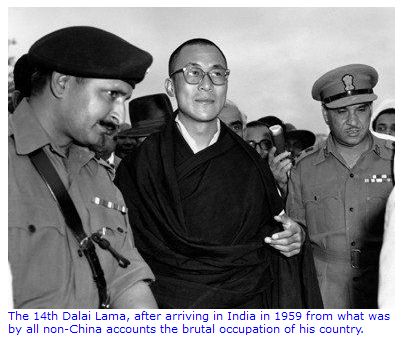

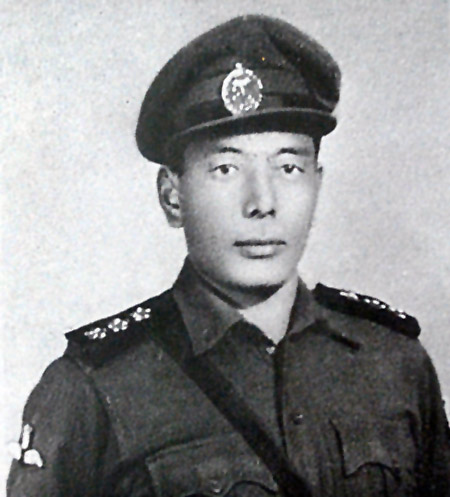
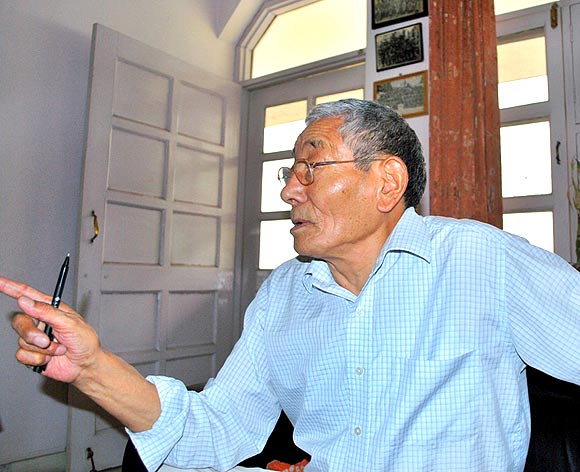


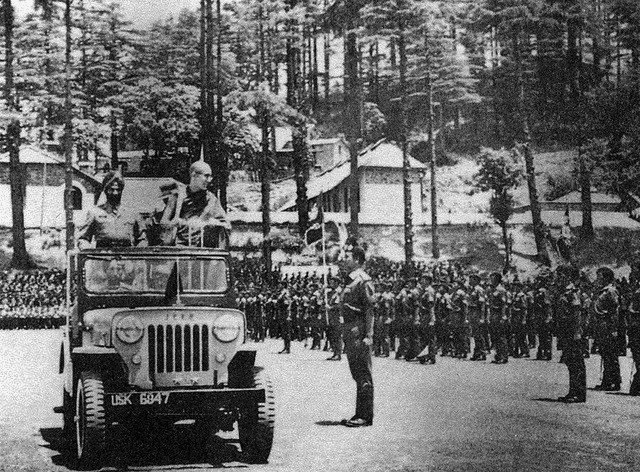
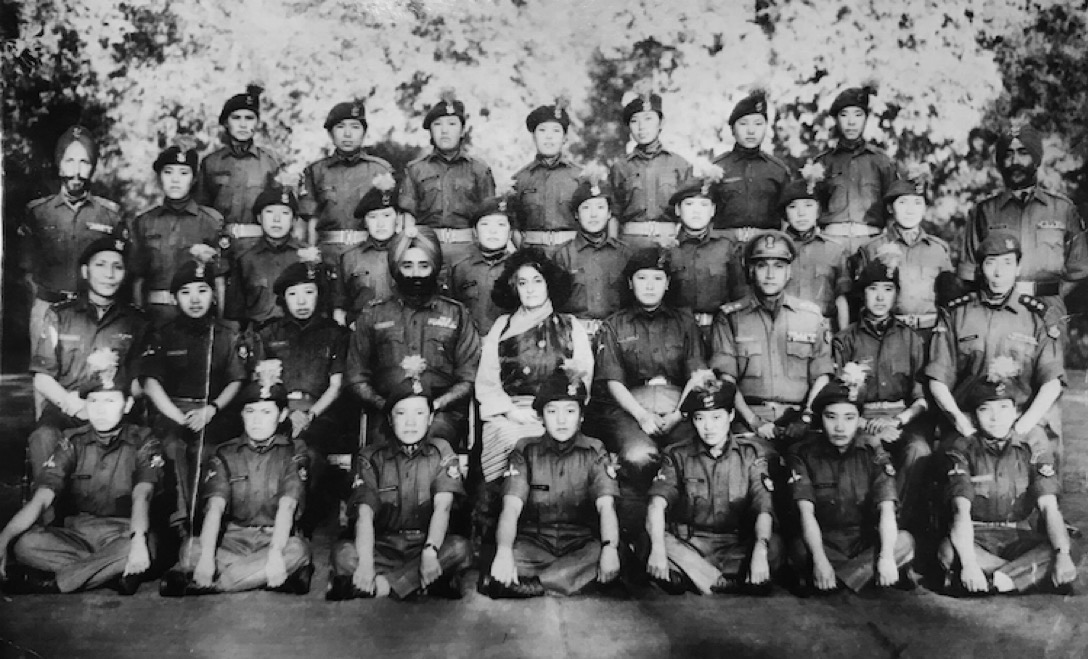


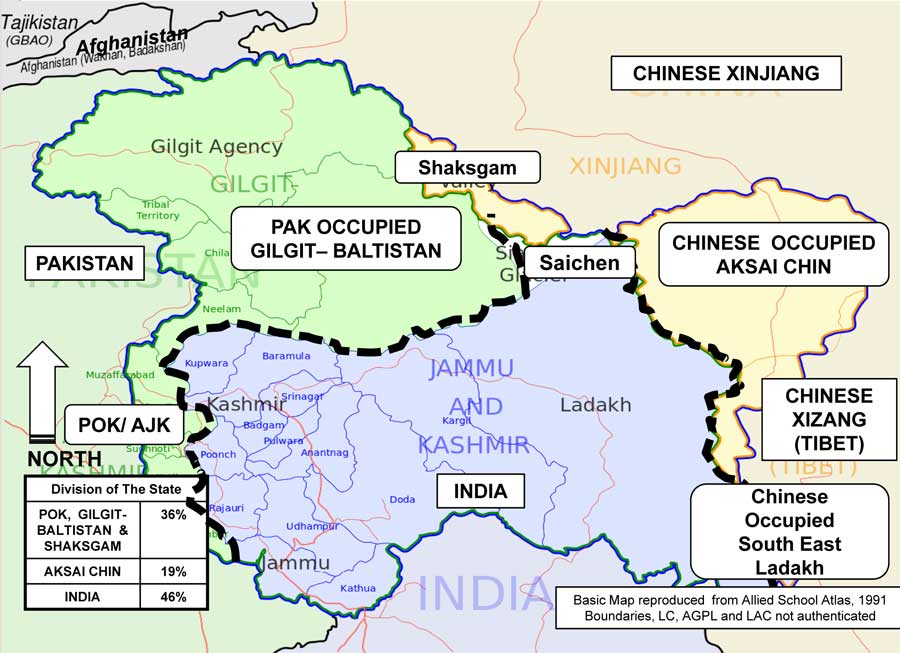

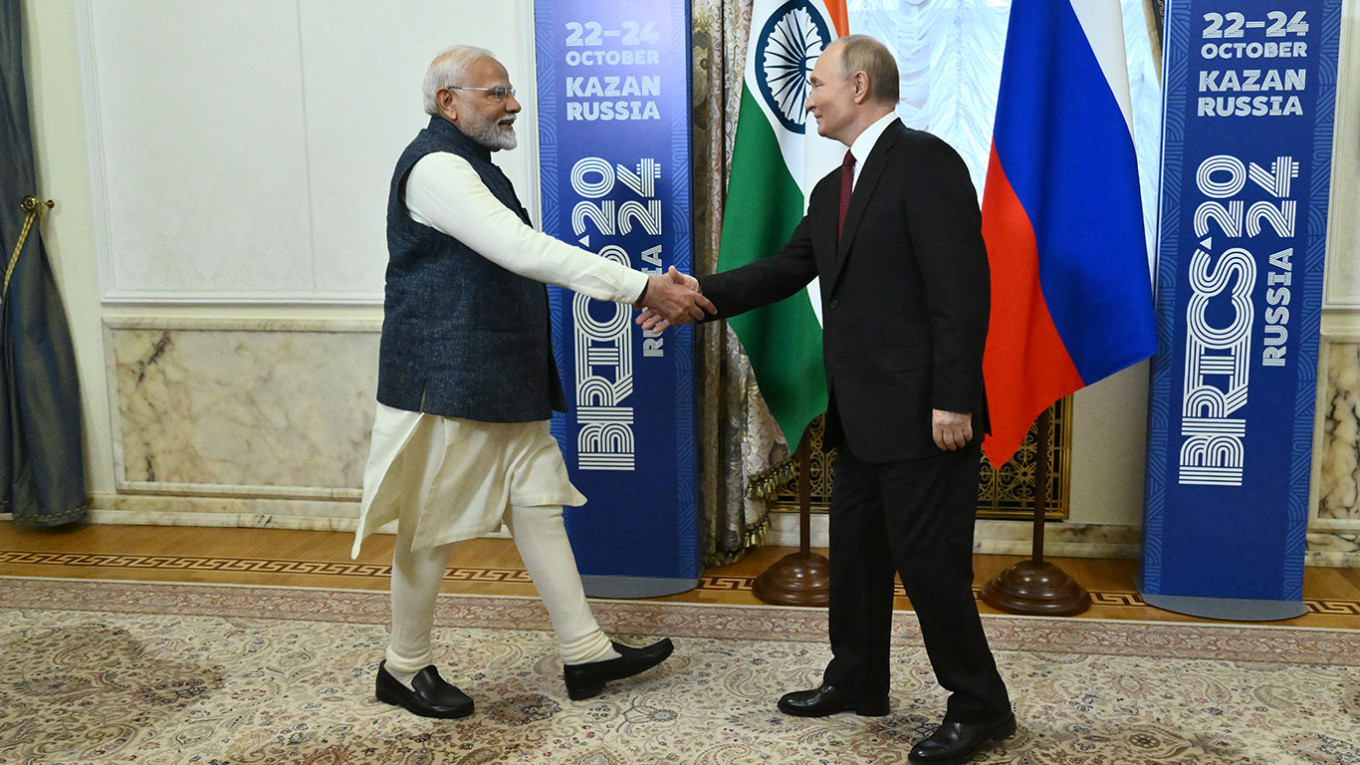


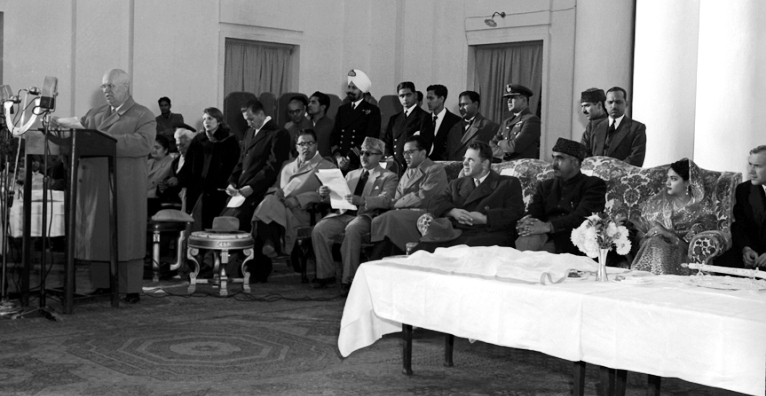


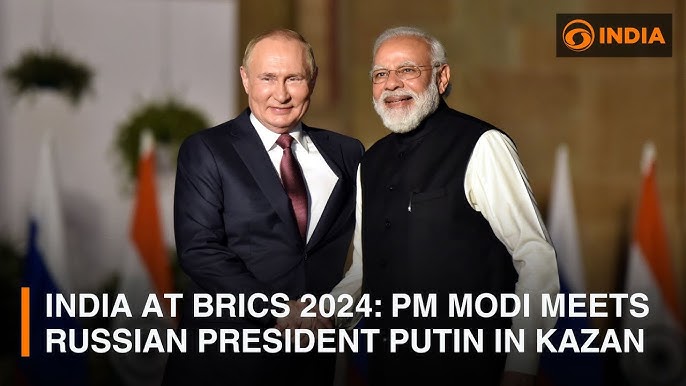


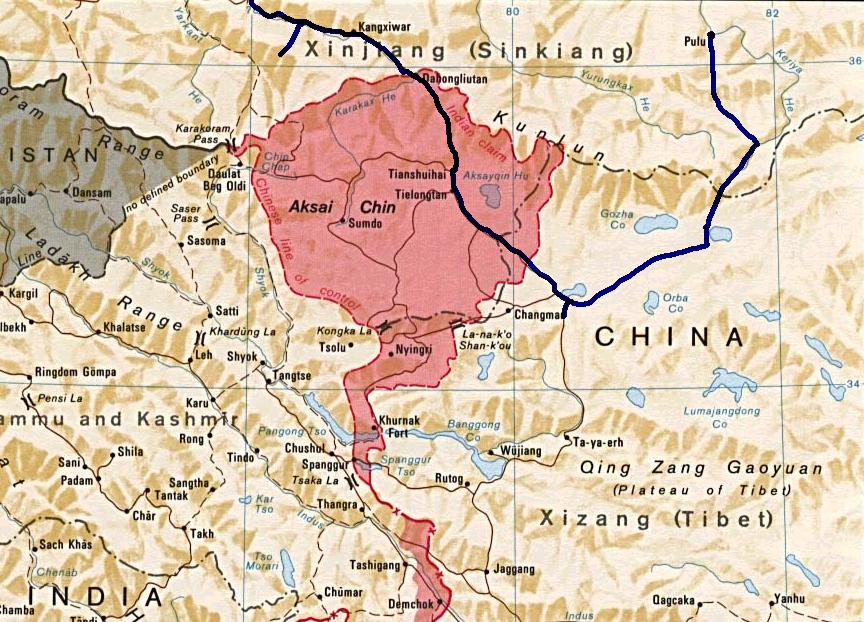


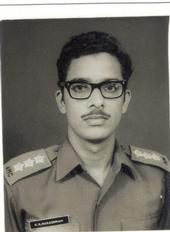
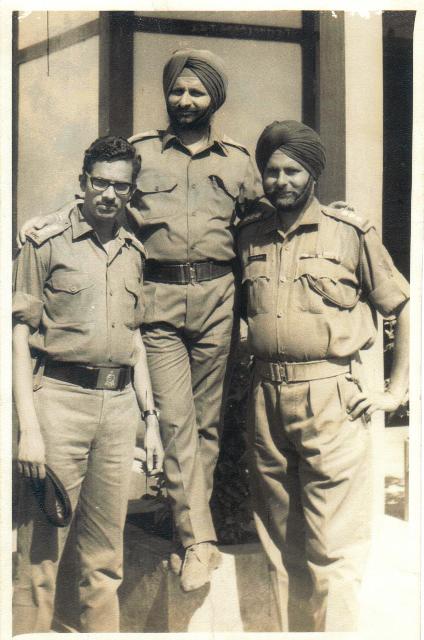
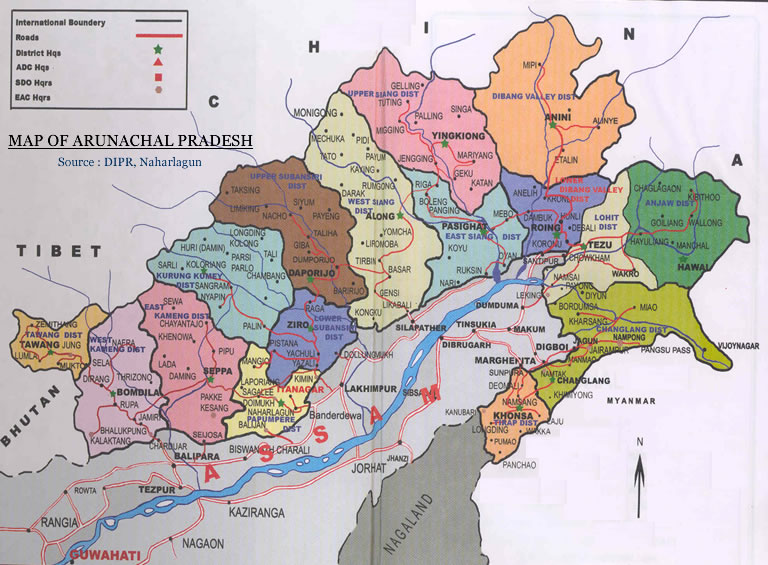
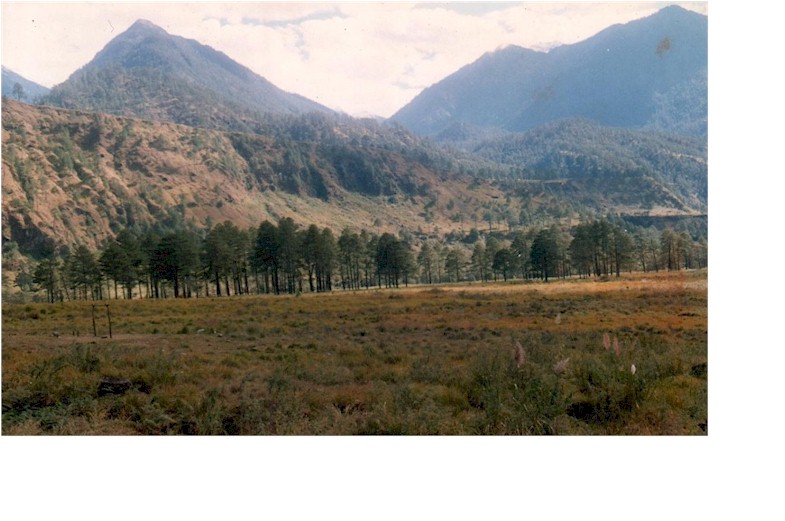



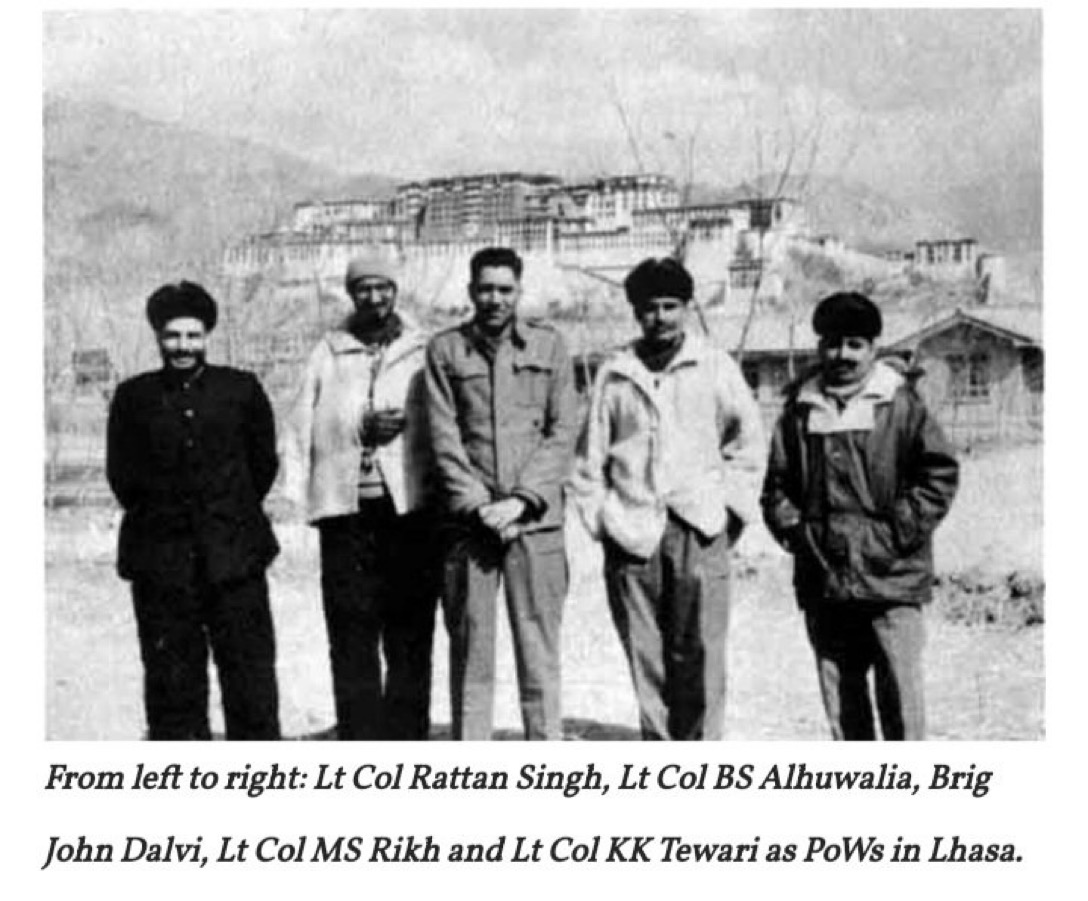


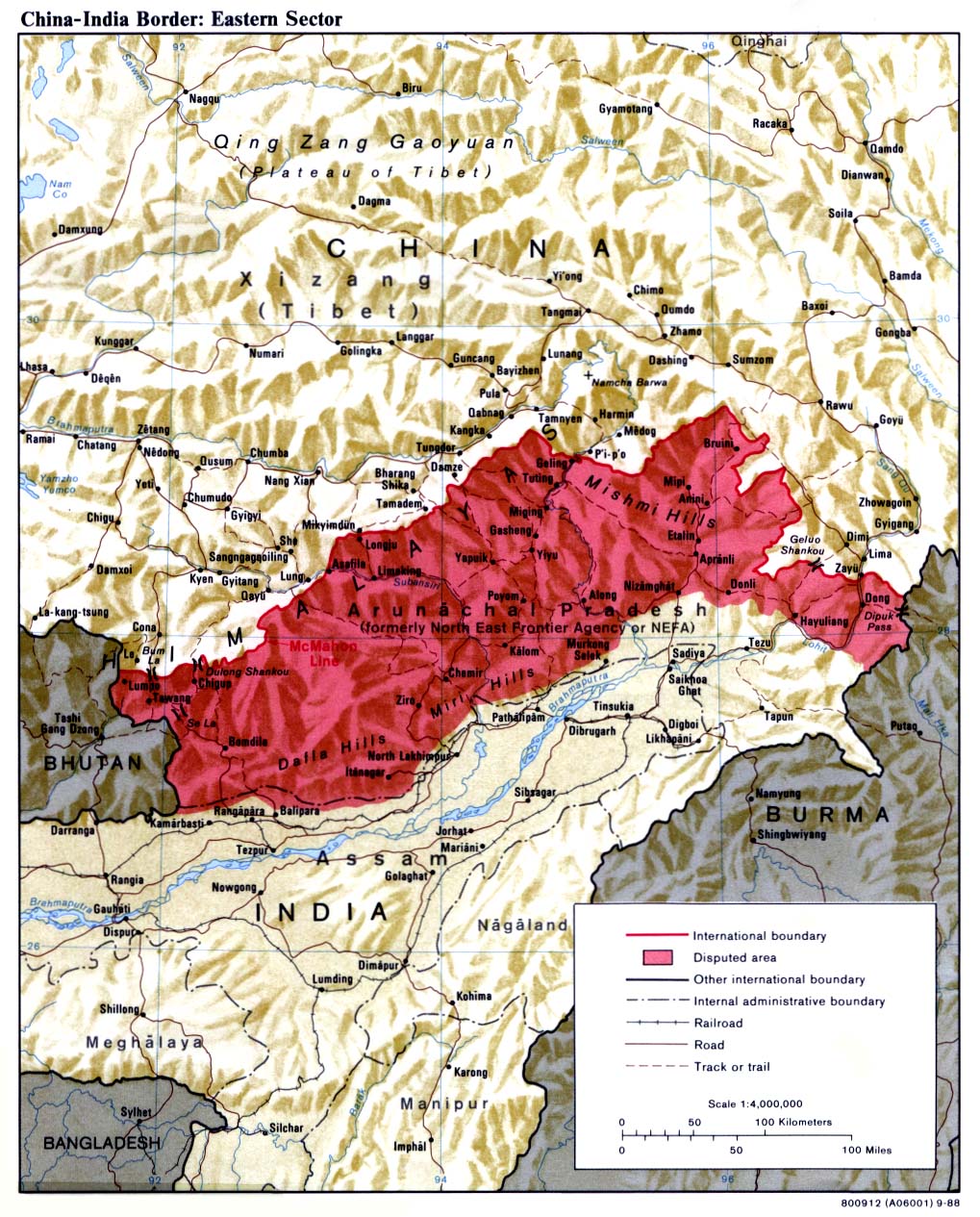


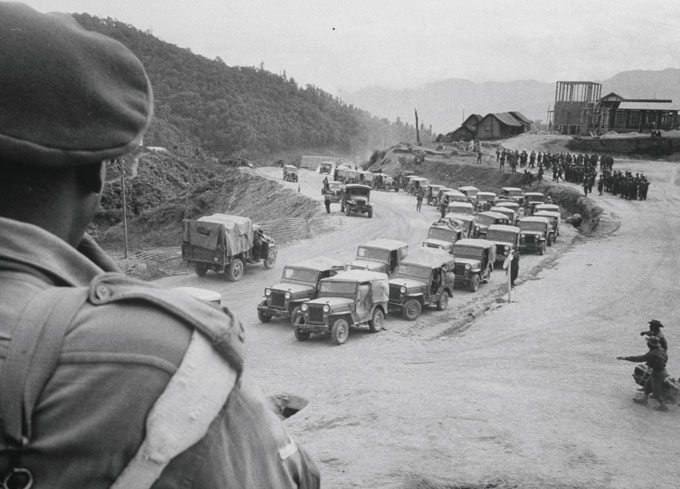





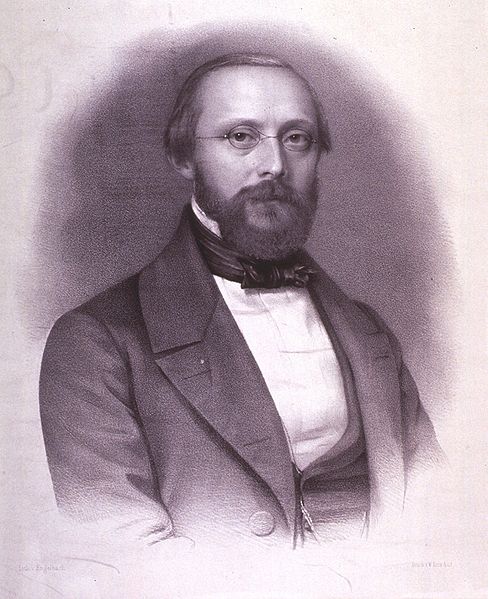
























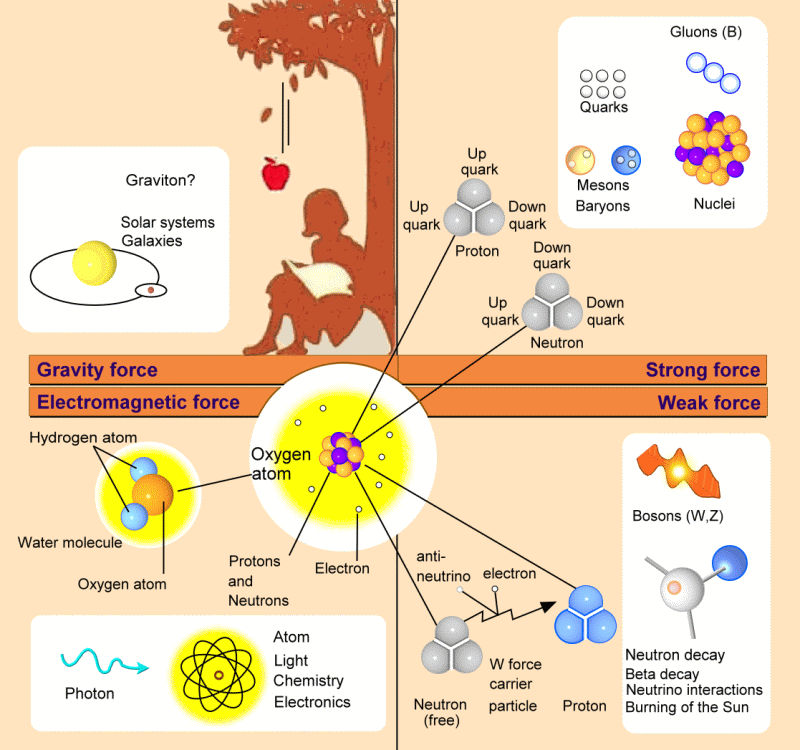











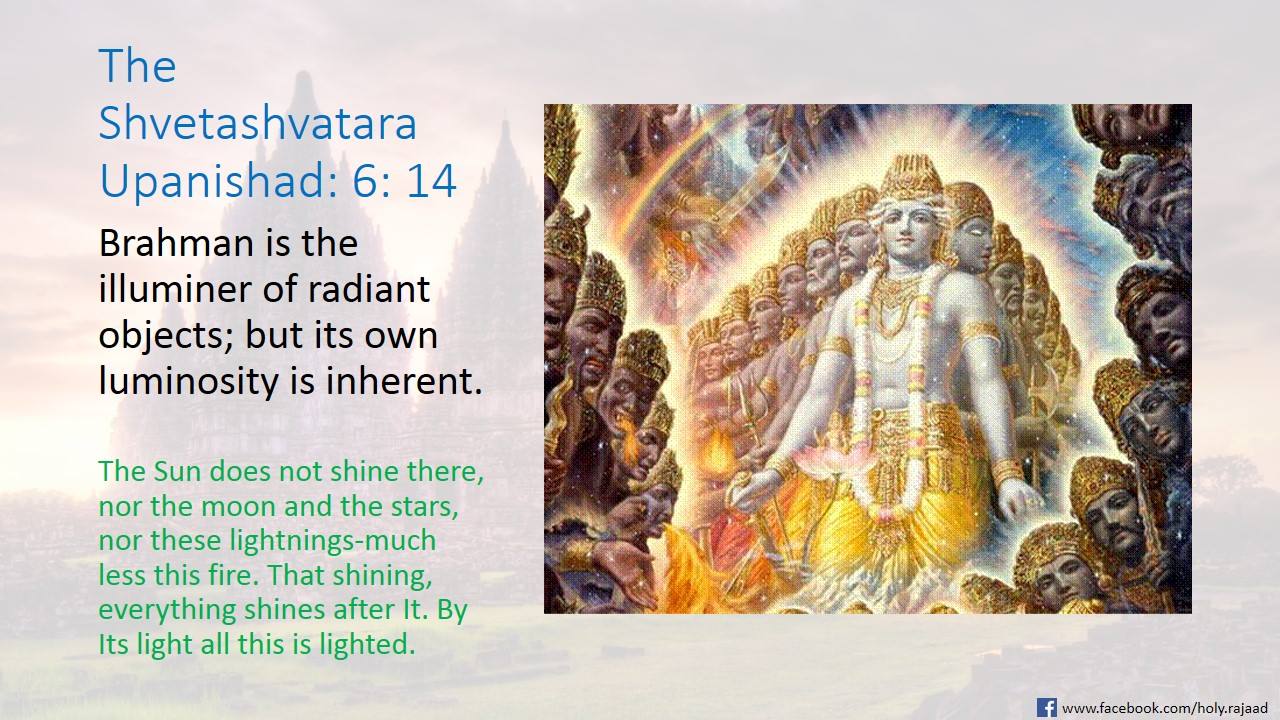
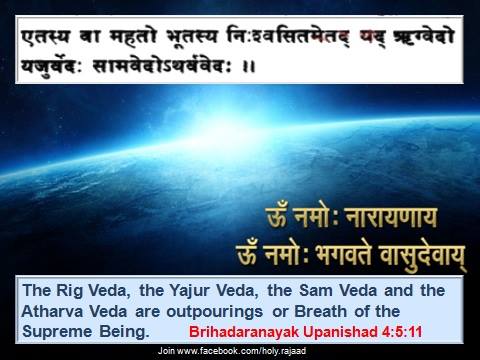





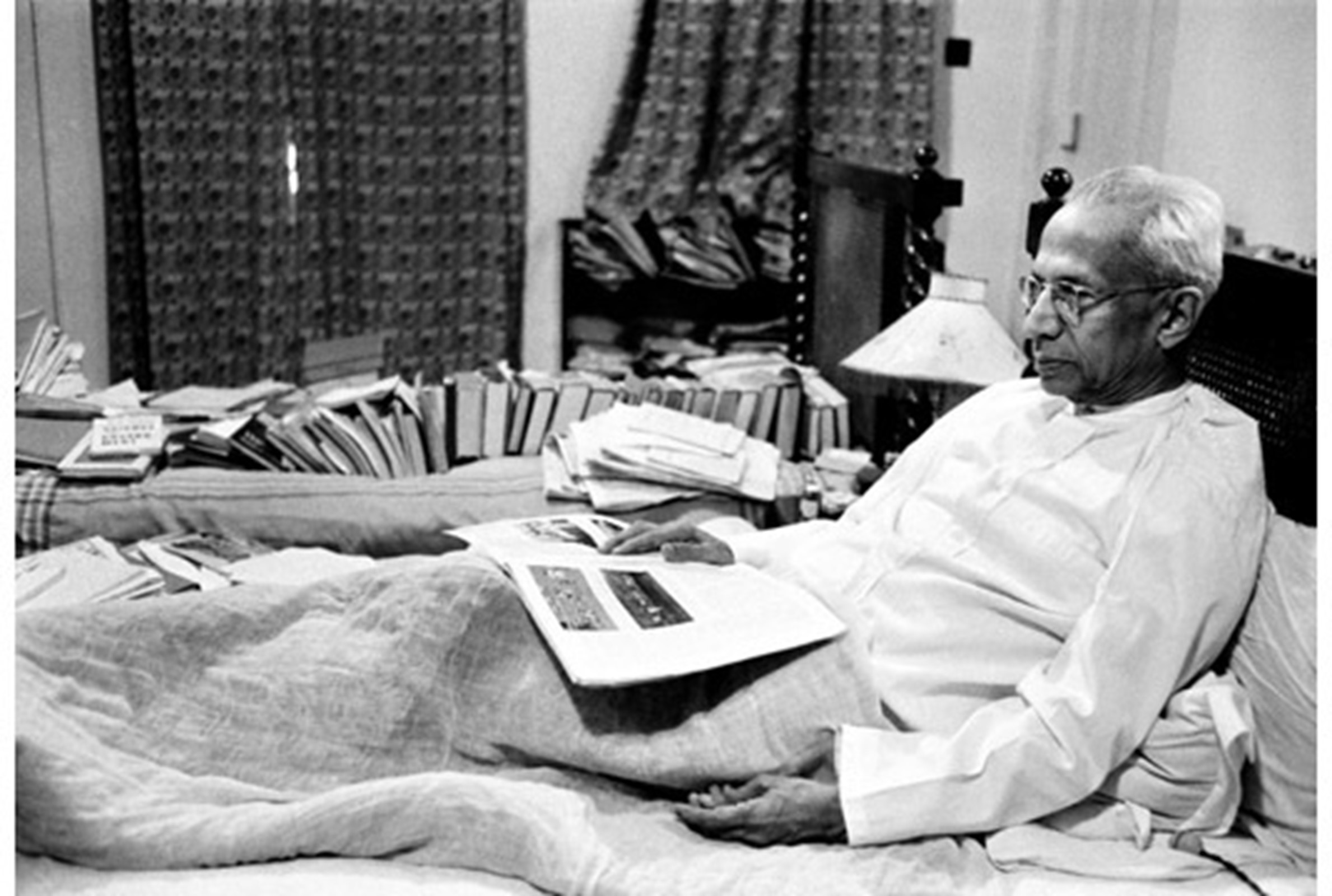



 Whole Dude - Whole Spirituality