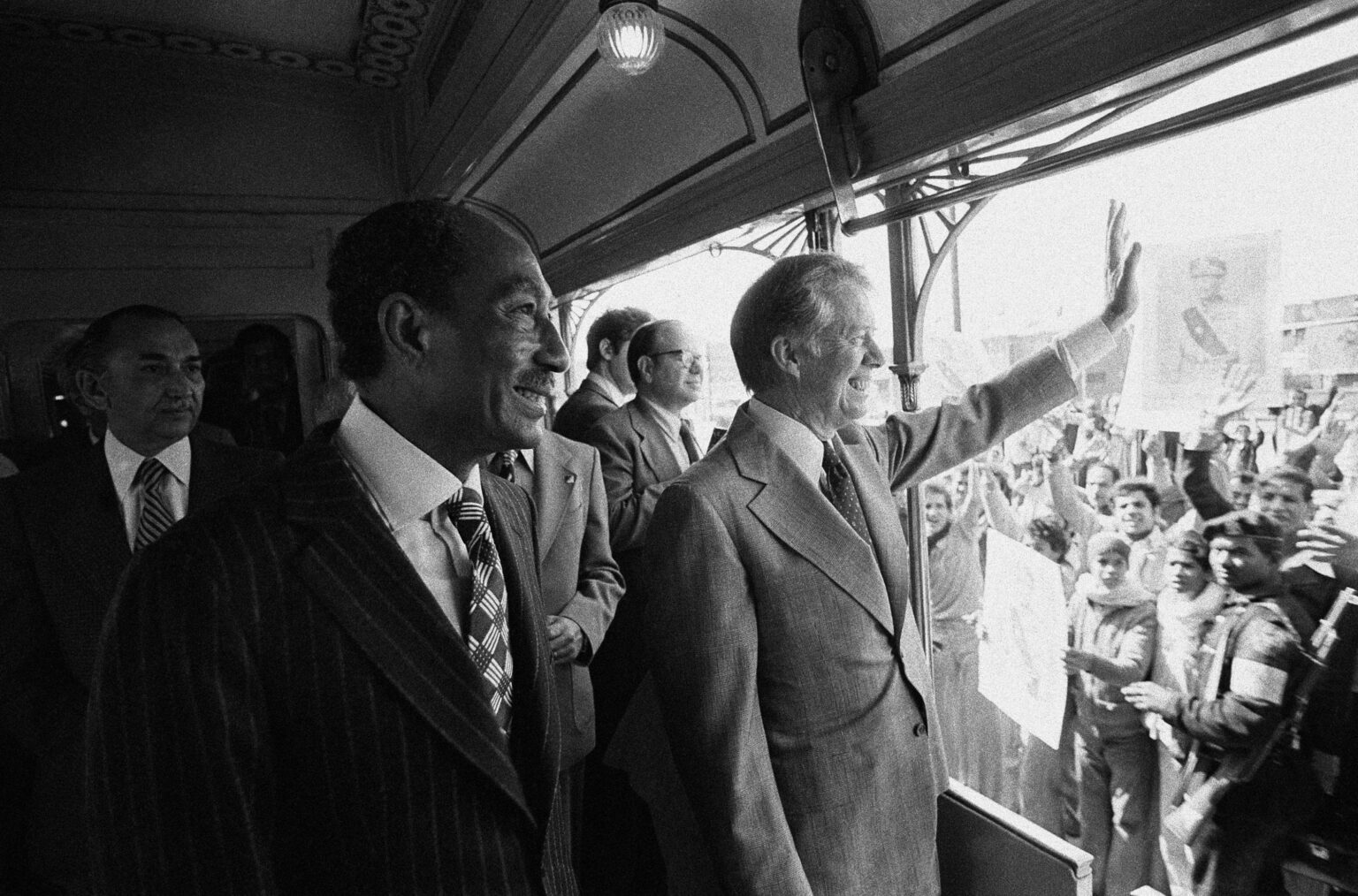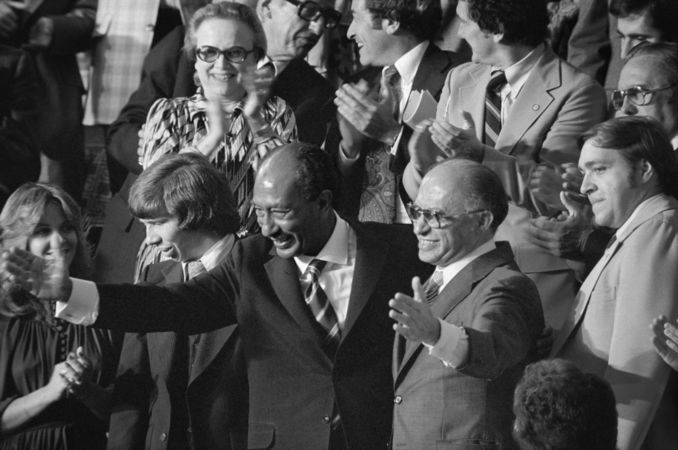
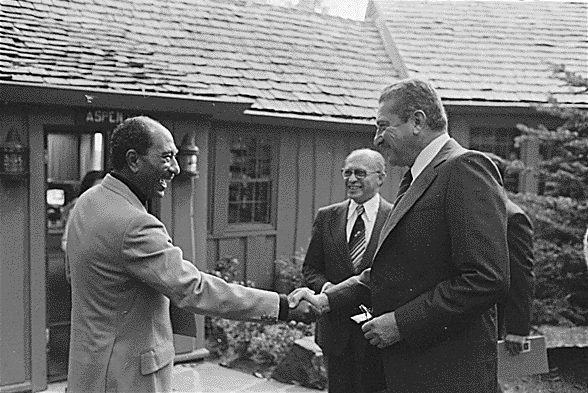
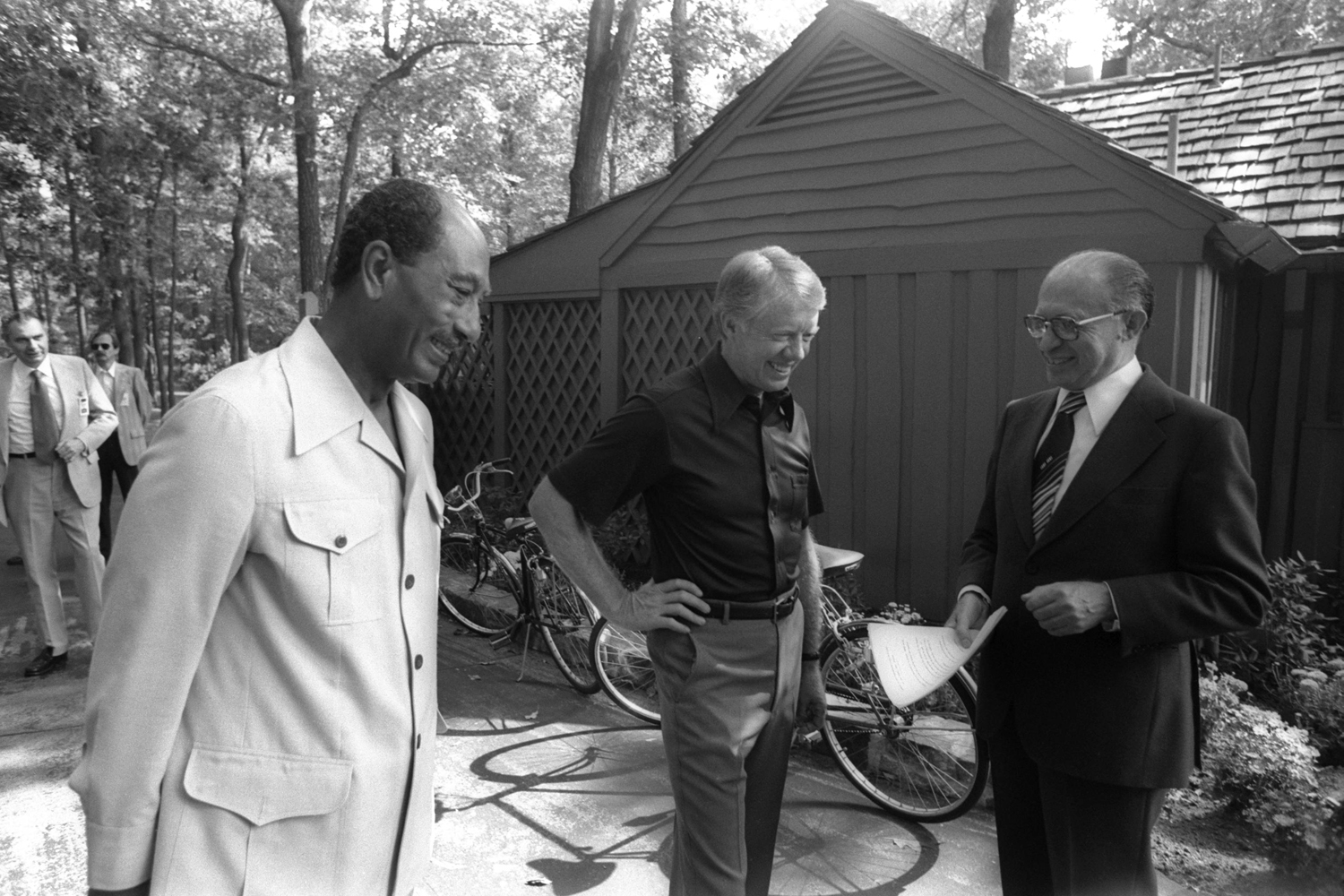
Camp David Peace Accords of 1978 – The Peace initiative of President Anwar El Sadat
I have a special reason to remember the Six Day Arab-Israel War of 1967 and Yom Kippur War of October 1973. I served in the Unit named South Column, Hq Establishment No. 22 (Special Frontier Force-Vikas Regiment) during Bangladesh Operations of 1971 when India initiated the Liberation of Bangladesh with military action in the Chittagong Hill Tracts.

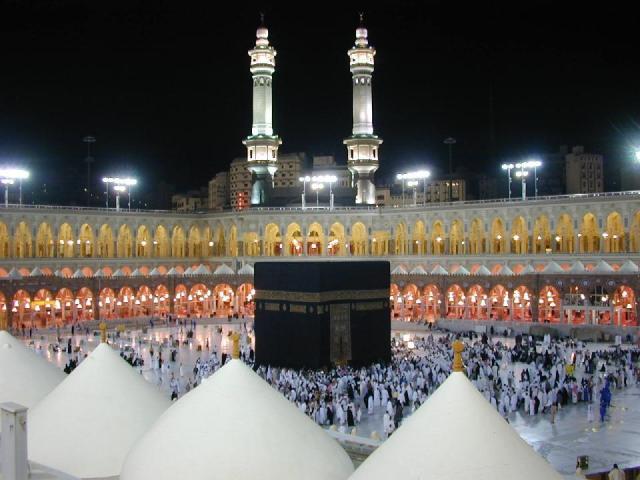
A Sermon in Kaptai, Bangladesh Ops 1971-72. A personal tribute to Colonel B K Narayan, Islamic Scholar who served in Olive Green Uniform. The Imam of Friday Prayer in Kaptai on December 17, 1971: Glorious Quran, Surah VIII, SPOILS OF WAR, Verse 01: “And if they incline to peace, incline thou also to it, and trust in Allah.Lo! He is the Hearer, the Knower.”
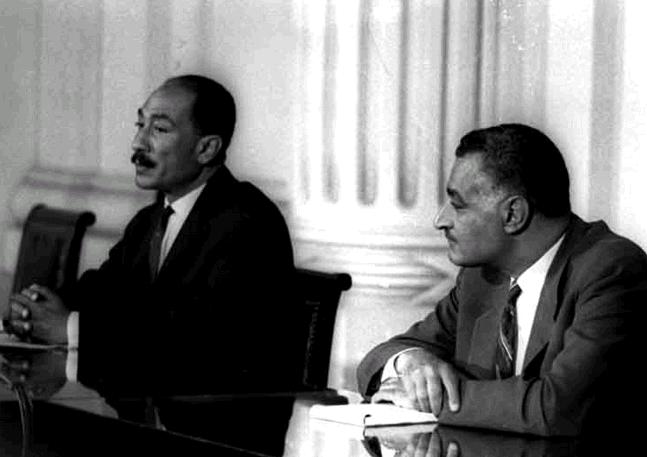
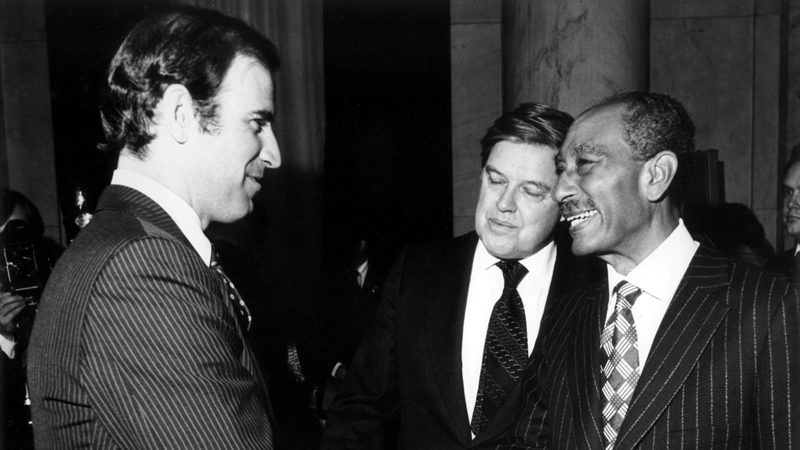
Lieutenant Colonel B K Narayan, the Regiment of Artillery of Indian Army was my Unit Commander. Prior to joining the South Column of Special Frontier Force in October 1971, he served in Egypt as Military attaché at the Indian Embassy in Cairo. He was an expert in Arabic Language and a scholar of Islamic Studies. He memorized Islam’s Holy Book Quran and was able to make a scholarly interpretation of Quran. He served in Cairo during the presidency of Gamal Abdel Nasser and Anwar El Sadat and had personal friendly relationship with both the Egyptian presidents. In 1971, Lieutenant Colonel Narayan knew President Anwar El Sadat’s mind and predicted that Egypt will sign Peace Treaty with Israel long before the Camp David Talks of 1978. In his conversations, Colonel Narayan described aspects of Islam, and Arab Culture that desire Peace and Reconciliation to resolve conflicts. I am not at all surprised to find President Anwar El Sadat participating in Camp David Talks after waging war against Israel in 1967 and 1973.
Rudra Narasimham Rebbapragada
Ann Arbor, MI 48104-4162 USA
SPECIAL FRONTIER FORCE-ESTABLISHMENT NO. 22-VIKAS REGIMENT
Books authored by Colonel B K Narayan (Narayan B K):
1. Lessons and Consequences of the October War. Vikas Publishing House 1977.

2. Anwar El Sadat: A Man with a Mission. Vikas Publishing House 1977.
3. Mohammed, the Prophet of Islam: A Flame in the Desert. Lancers 1978.
4. An Autobiography General J N Chaudhuri. Advent Books Division 1978.
UNITED WITH ISRAEL
(Photo: Jewish Virtual Library)

Yom Hazikaron: Remembering the Six Day War
In 1967, during the days leading up to the Six Day War, Israel faced a threat to her very existence but miraculously dealt a devastating blow to her enemies.
IDF soldiers in the Six Day War
On May 15, 1967, Israel Independence Day, Egyptian forces began to amass along the border. The next day, then-Egyptian President Gamal Abdel Nasser ordered the withdrawal of UN forces from the Israeli-Egyptian border, so that no international observers could impede his assault on the Jewish State.
On May 18, 1967, Nasser declared on Voice of the Arabs radio, “The sole method we should apply against Israel is total war, which will result in the extermination of the Zionist existence.”
Other Arab leaders made similar statements. PLO leader Ahmed Al Shuqayri proclaimed, “We shall destroy Israel and its inhabitants. As for the survivors, if there are any, the boats are ready to deport them.” Syrian Defense Minister Hafez Assad asserted, “Our forces are now entirely ready to […] explode the Zionist presence in the Arab homeland. The Syrian army, with its finger on the trigger, is united. I as a military man believe that the time has come for the battle of annihilation.”
As leaders across the Arab world called for the destruction of the world’s Jewish state and the slaughter of her inhabitants, the Straits of Tiran were closed to Israeli shipping, Egypt violated Israeli air space by engaging in aerial spying over the city of Dimona and hostile forces prepared to attack Israel on three different fronts.
It was a very scary time in Israel. According to Israeli historian Michael Oren, former Israeli Ambassador to the United States, “Many Israelis feverishly dug trenches and filled sandbags, while others secretly dug 10,000 graves for the presumed victims.Some 14,000 hospital beds were arranged and gas masks distributed to the civilian population. The Israel Defense Forces (IDF) prepared to launch a pre-emptive strike to neutralize Egypt, the most powerful Arab state, but the threat of invasion by other Arab armies remained.”
Egypt engaged in six different actions, which according to international law granted Israel the legal right to respond to the Arab aggression by declaring war. These included: conspiring with Syria and Jordan to attack Israel; barring Israeli access to international waterways; violating the 1956 armistice agreements by mobilizing its forces in the Sinai; expelling UN peacekeepers from the Israeli-Egyptian border; flying an illegal spy place over militarily sensitive sites within Israel and amassing Arab troops and tanks along Israel’s borders.
Thus Israel engaged in a preemptive strike. As Oren related, “The Arabs readied to strike — but Israel did not wait. ‘We will suffer many losses, but we have no other choice,’ explained IDF Chief of Staff Yitzhak Rabin. The next morning, on June 5, Israeli jets and tanks launched a surprise attack against Egypt, destroying 204 of its planes in the first half-hour. By the end of the first morning of fighting, the Israeli Air Force had destroyed 286 of Egypt’s 420 combat aircraft, 13 air bases, and 23 radar stations and anti-aircraft sites. It was the most successful single operation in aerial military history.
Israel liberated the historic Jewish capital of Jerusalem in the Six Day War.
“But, as feared, other Arab forces attacked,” Oren continued. “Enemy planes struck Israeli cities along the narrow waist, including Hadera, Netanya, Kfar Saba, and the northern suburbs of Tel Aviv; and thousands of artillery shells fired from the West Bank pummeled greater Tel Aviv and West Jerusalem. Ground forces, meanwhile, moved to encircle Jerusalem’s Jewish neighborhoods as they did in 1948.”
As journalist-historian Abraham Rabinovich wrote, “Jerusalem was spread out below in the throes of apocalypse. Every quarter on the Jewish side of the city was being pounded by shellfire. Tracers from machine guns raced toward each other across no-man’s-land, and flares hung suspended on the horizon like Chinese lanterns.”
Six Day War: Israel Defied Her Enemies

Soldiers who recaptured the Temple Mount in the Six Day War stand in awe.
However, despite extensive Arab efforts to destroy the Jewish state, Israel emerged victorious after only six days of fighting. While 776 Israelis lost their lives the carnage was not as great as expected. Furthermore, Israel managed to reclaim the Jewish heartland of Judea and Samaria as well as to re-unite the Holy City of Jerusalem, thus fulfilling the Zionist dream to establish a Jewish state in the Land of Israel with Jerusalem as its capital. Upon regaining control of the Western Wall and the Dome of the Rock, Israel immediately issued a declaration to the Christian and Muslim residents of the Old City of Jerusalem guaranteeing to protect their right to religious expression, a promise which Israel has kept to this day.
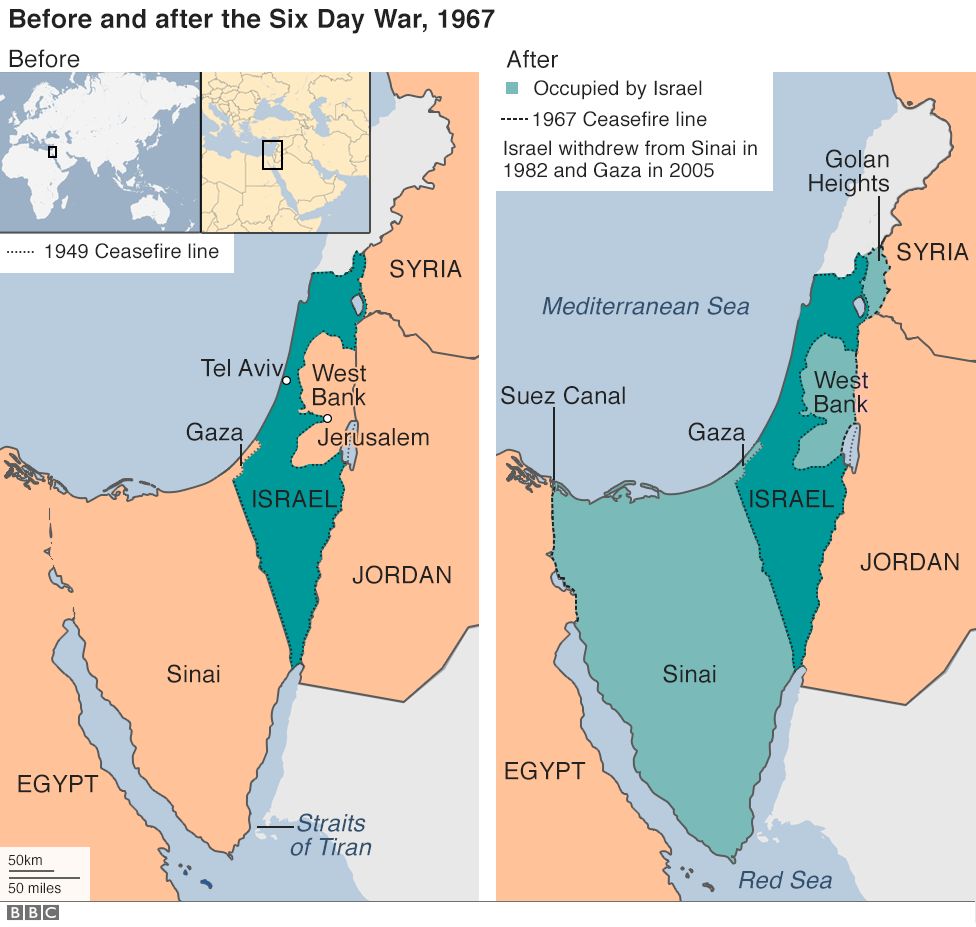
Additional gains in the Six Day War were the acquisition of Gaza, the Golan Heights and the Sinai desert. The territory under Israeli control tripled in size. Israel miraculously defied those who thought the Jewish State would succumb to her enemies’ plans.
On Yom Hazikaron – Israel’s Memorial Day for Fallen Soldiers and Victims of Terror – we remember the heroism of all our fighters.
By Rachel Avraham
© United with Israel 2016