TIBET AND CHINA UNION POSSIBLE IF COMMUNIST GOVERNANCE OF CHINA ENDS

TIBET AND CHINA UNION POSSIBLE IF COMMUNIST GOVERNANCE OF CHINA ENDS

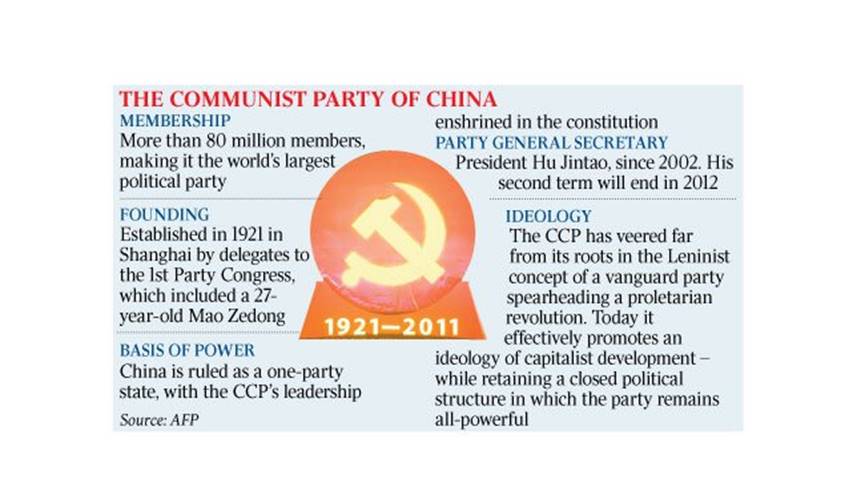
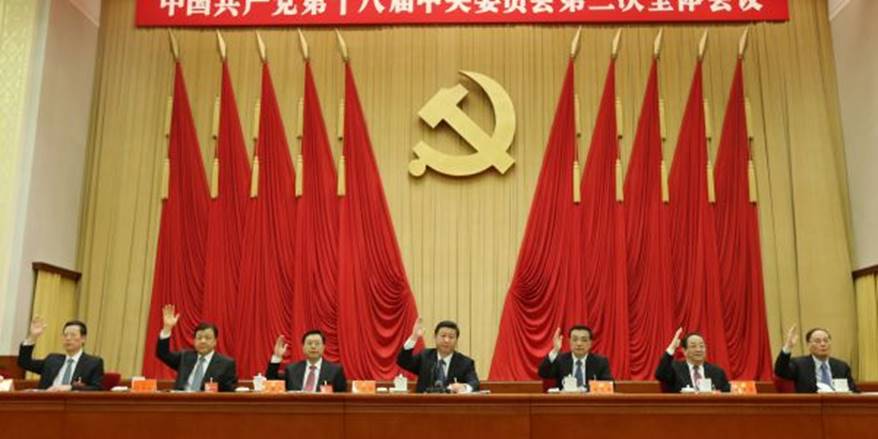
In my analysis, Tibet can exist with China like ‘European Union’ if Communist Party governance of People’s Republic of China comes to an end. As such, European Union is not governed by principles of political doctrine called Communism.

Rudranarasimham Rebbapragada

SPECIAL FRONTIER FORCE

TIBET CAN EXIST WITH CHINA LIKE ‘EUROPEAN UNION’: DALAI LAMA

Clipped from: https://www.reuters.com/article/us-china-tibet/tibet-can-exist-with-china-like-european-union-dalai-lama-idUSKCN1GS0C7

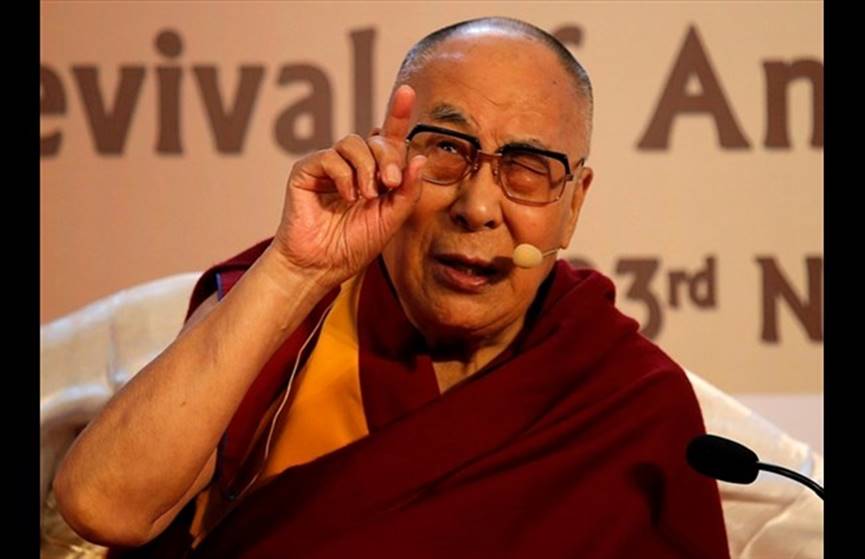
BEIJING (Reuters) – Tibet can exist within China in the same spirit as the European Union sticks together, the territory’s spiritual leader, the Dalai Lama, considered a dangerous separatist by Beijing, said.

The Dalai Lama fled to India in 1959 after an abortive uprising against Chinese rule and set up a government in exile in the foothills of Dharamshala. Chinese troops had seized control of Tibet nine years earlier.

He says he only seeks autonomy for his homeland, not outright independence. He has also expressed a desire to return to Tibet.

“I always, you see, admire the spirit of (the) European Union,” the Dalai Lama said in a video message to the International Campaign for Tibet on the Washington D.C.-based group’s 30th anniversary on Thursday.

“Common interest (is) more important rather than one’s own national interest. With that kind of concept, I am very much willing to remain within the People’s Republic of China. The Chinese word, “gongheguo” (republic), shows some kind of union is there.”

China says Tibet in an integral part of its territory and has been for centuries. Beijing also says its rule ended serfdom and brought prosperity to what was a backward region, and that it fully respects the rights of the Tibetan people.

Beijing insists that the Dalai Lama is a “splittist” in a monk’s robes and has warned foreign leaders against meeting him, even in a personal capacity.

Donald Trump has not met with the Dalai Lama since become president in January last year. All recent U.S. presidents before Trump had held meetings with the Dalai Lama.

While the Dalai Lama reiterated his desire for reconciliation as Xi Jinping begins his second five-year term as China’s president, he also said the Tibetan issue was not about to go away.

“Among the Chinese hard-liners, in their mind, it seems some kind of dilemma is there about their present policy – whether, you see, it can solve Tibetan problem or not,” he said.

Reporting by Ryan Woo; Editing by Nick Macfie

Created with Microsoft OneNote 2016.

WISDOM OF BUDDHA DALAI LAMA SUPREME RULER OF TIBET LIVING IN EXILE

WISDOM OF BUDDHA DALAI LAMA SUPREME RULER OF TIBET LIVING IN EXILE

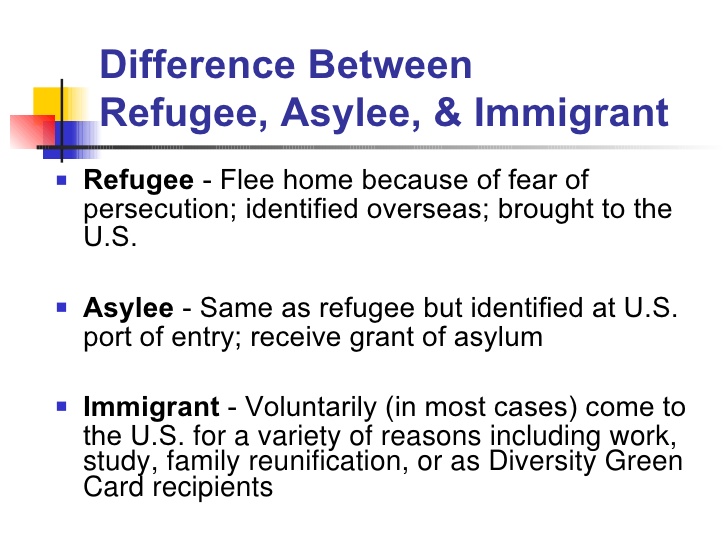
In my analysis, the 14th Dalai Lama remains the Supreme Ruler of Tibet while he lives in exile. He is neither a refugee nor an asylee. To describe him as religious leader of Buddhism or as spiritual leader is incorrect. The reality of Dalai Lama must be accounted in terms of real or true Tibetan Experience of Life, Death, and Rebirth.

Rudranarasimham Rebbapragada

SPECIAL FRONTIER FORCE

THE ANCIENT WISDOM THE DALAI LAMA HOPES WILL ENRICH THE WORLD BBC NEWS

Clipped from: http://www.bbc.com/news/world-asia-india-43208568

Justin Rowlatt South Asia correspondent @BBCJustinR on Twitter

Image caption BBC correspondent Justin Rowlatt (L) meets the Dalai Lama

It isn’t often you meet the leader of a world religion – rarer still that he tweaks your cheek. But that’s what happened when I met the 14th Dalai Lama last month.

You know when he has entered a room. First there is a hush and, almost immediately after that, a ripple of infectious laughter. Next, there he is, his face creased into a mischievous smile, his eyes twinkling behind his tinted spectacles.

I met his holiness in Bodh Gaya, the northern Indian town where Buddha himself is said to have attained enlightenment. It is an auspicious place to meet the leader of Tibetan Buddhism, and it was also an auspicious day.

The Dalai Lama had just published the first volume of what he hopes will be a key pillar of his legacy- a four volume series bringing together ancient Buddhist scientific and philosophical explorations of the nature of reality.

He chuckled when I greeted him, clearly delighted to talk about the book. It draws on the wisdom of thousands of sutras and treatises written in Sanskrit by scholars in the historic university of Nalanda, he told me.

Nalanda is a legendary place, founded more than a millennium and a half ago on a site about 100km (60 miles) from Bodh Gaya in India’s eastern state of Bihar.

Contemporary accounts describe an astonishing complex of temples, reading rooms, gardens and lodging houses; a veritable city with pointed turrets, sparkling roof tiles, glimmering lotus ponds and peaceful flowering groves.

It was one of the world’s first universities and – at its peak – one of the greatest centers of learning on the planet, with some 10,000 students. Such was its scale that when it was razed to the ground by Muslim invaders in the 12th Century, the libraries were said to have burned for three whole months.

The only reason these ancient Buddhist texts survived the destruction, the Dalai Lama explained, is because, centuries earlier, Tibetan monks had trekked down to the hot Indian plains from their icy redoubts in the Himalayas to translate them.

They returned to their monasteries in the mountains with these Tibetan versions.

Now the Dalai Lama wants to make them available to the whole world. "The wisdom came from India", he said, giggling – everything he said seemed to be accompanied by a chuckle – "but now we know it better than the original Indian masters".

The Dalai Lama is in his early 80s now, but he’s still sprightly. Apparently, his doctor has told him he needs to reduce how much he travels, but looking at his schedule this only seems to mean that he now travels once a fortnight rather than every week.

Image copyright Getty Images Image caption The Dalai Lama(L) and Indian’s first prime minister, Jawaharlal Nehru, in Delhi

But as he grows older, his followers have been forced to consider what will happen when he eventually passes away.

His death – and eventual rebirth – will be a major geopolitical issue. The Chinese have regarded him as an enemy – " a wolf in monk’s clothes", they once called him – ever since he rejected Beijing’s rule and fled Tibet in 1959 for sanctuary in India.

In exile, he’s become an extraordinarily effective ambassador – not only of the Tibetan cause, but for Buddhism in general.

With his cheerful smile and burgundy robes, he has come to embody the Western ideal of Buddhism: a wise monk on a peaceful journey in search of self-enlightenment.

Buddhism needs a popular champion now more than ever.

Buddhist Myanmar’s brutal attack on its Rohingya Muslim minority is just the most dramatic example of how, in South East Asia and elsewhere, the tradition has become increasingly entwined with a strain of toxic and often violent nationalism.

Image copyright Getty Images Image Caption Ruins of the historic Nalanda University

As the leader of Tibetan Buddhism, the Dalai Lama couldn’t intervene directly, but last year, as Buddhist mobs torched Rohingya villages, he urged Myanmar to "remember Buddha".

The books he is writing aim to bring the wisdom of Buddha to a wider audience. He hopes they will encourage people to study what he calls "the system of emotion" as an academic discipline. "Education everywhere is considered important," he explains.

"But if you look, the content of so-called modern education – very much orientated about material value. Not talking about inner value. So now, today, the best educated people, emotionally – lot of problem!" he says, and once again bursts into delighted laughter.

"I love to tease other people and so now I want to tease you", he tells me, rubbing my shoulder.

I brace myself.

"You see this country traditionally rich in the knowledge of emotion." He pauses, and gently tweaks my cheek with a finger: "You Britishers introduced modern education!"

There is another explosion of laughter and then his holiness moves slowly down the room, chuckling as he greets the hundreds of other people waiting to see him.

Created with Microsoft OneNote 2016.

LIVING TIBETAN SPIRITS – NEITHER REFUGEE NOR ASYLEE

LIVING TIBETAN SPIRITS – NEITHER REFUGEE NOR ASYLEE

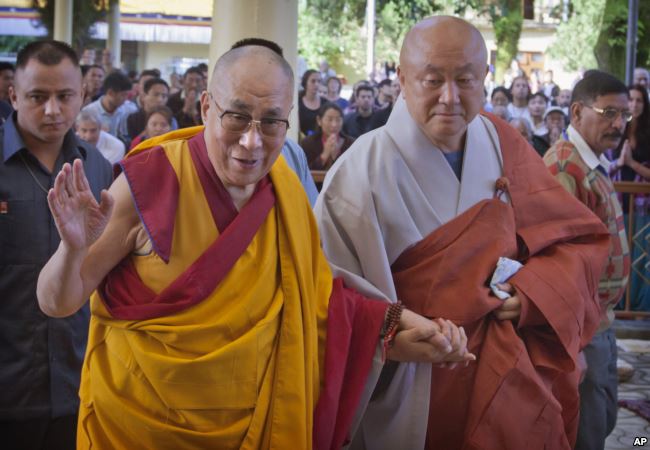
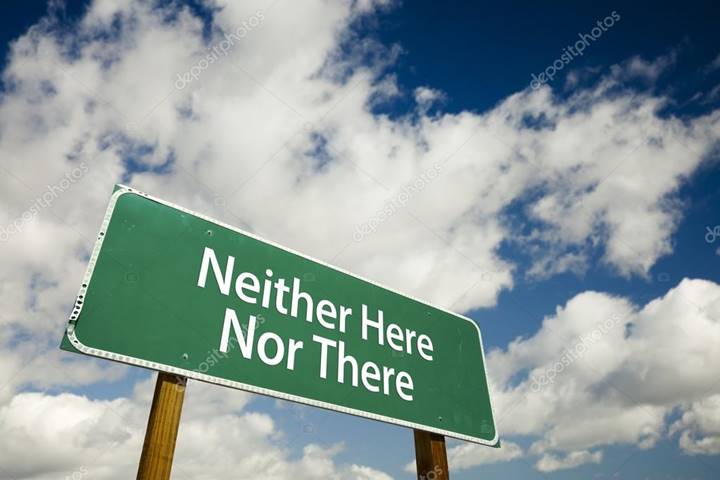
On March 13, 1959, Dalai Lama, Supreme Ruler of Tibet began a difficult journey of his life. Today, he may describe himself as ‘Son of India’ but he is neither refugee nor asylee. However, using the quote from William Shakespeare’s ‘OTHELLO’, it can be said, "Tis Neither Here Nor There."

In my analysis, "Thank You India" Dalai Lama event moved out of Indian Capital of New Delhi entirely because of US President Donald Trump’s reluctance to meet with Dalai Lama, Supreme Ruler of Tibet while living in exile.

Rudranarasimham Rebbapragada

SPECIAL FRONTIER FORCE

DALAI LAMA EVENT MOVED OUT OF INDIAN CAPITAL – VOICE OF AMERICA NEWS

Clipped from: https://www.voanews.com/a/dalai-lama-event-moved-out-of-indian-capital/4282352.html

Tibetan spiritual leader the Dalai Lama wears the ceremonial hat of the Gelug school of the Tibetan Buddhism as he prays during his religious talk at the Tsuglakhang temple in Dharmsala, India, March 2, 2018.

NEW DELHI —

A high-profile function to be attended by Tibetan spiritual leader the Dalai Lama to mark the start of his 60th year in exile in India has been moved from New Delhi to Dharamsala days after India told top officials to stay away from such events, calling it a “very sensitive time” for relations with China.

Sonam Dagpo, spokesman for the Tibetan exile government told VOA, “we came to know about the Indian government’s circular and we decided we respect the position and we shifted it to Dharamsala.”

A directive by India’s top bureaucrat saying it is “not desirable” for Indian officials to participate in these events was first reported in the Indian Express newspaper.

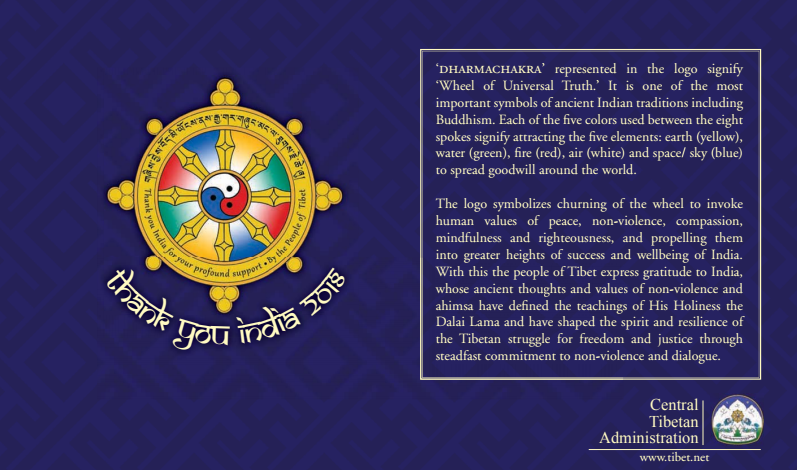
The Dalai Lama’s “Thank You India” public function on April 1 was the high point of a series of yearlong events planned by the Tibetan exile government based in Dharamsala. A tree planting ceremony by the Dalai Lama scheduled for the previous day in New Delhi has been scrapped.

The move to steer away from the Tibetan leader’s events is seen as an effort by New Delhi to not rile China at a time when ties between the two countries are strained.

Analysts see this as a reversal of a tougher posture taken by Prime Minister Narendra Modi’s government in the last two years.

FILE – Tibetan spiritual leader the Dalai Lama delivers teachings at the Thupsung Dhargyeling Monastery in Dirang, Arunachal Pradesh, India, April 6, 2017.

Last April it allowed the Dalai Lama to visit the sensitive border region of Arunachal Pradesh, partly claimed by China, overriding Beijing’s strong warnings that it would damage ties. Prior to that, the Tibetan leader was hosted, along with other Nobel Laureates, by the Indian president for a meeting about children’s rights, also infuriating China.

Beijing regards the Dalai Lama as a dangerous separatist and says he is trying to break Tibet away from Chinese control.

“There is definitely an attempt to extend the olive branch and reset the ties,” said Alka Acharya, a professor of Chinese Studies at the Jawaharlal Nehru University in New Delhi. “They are reverting back to a much more formally and officially correct position which is that the government will distance itself from activities of the Dalai Lama which may have a political implication.”

FILE – Tibetan spiritual leader the Dalai Lama, left, greets devotees as he arrives to give a talk at the Tsuglakhang temple in Dharmsala, India, Sept. 7, 2015.

Although the Dalai Lama lives in India along with tens of thousands of Tibetan refugees, New Delhi has usually been careful to avoid showing him official support.

After news of the note emerged, the Indian Foreign Ministry said in a statement that the Dalai Lama is “deeply respected by the people of India” and there is no change in that position. His holiness is accorded all freedom to carry out his religious activities in India.”

The note advising Indian officials not to attend the Dalai Lama events was apparently written on the advice of India’s Foreign Secretary, Vijay Gokhale, who visited Beijing last month in what observers said was a visit to stabilize the rocky ties, which hit a low point last July when they were involved in a tense military standoff in the Himalayan mountains.

Dagpo from the Tibetan government in exile meanwhile said they were in favor of better relations between the two Asian neighbors. “If relations between India and China improves that will also help in resolving the Tibet issue,” he said.

Created with Microsoft OneNote 2016.

LIVING TIBETAN SPIRITS: TIS NEITHER HERE NOR THERE

LIVING TIBETAN SPIRITS: TIS NEITHER HERE NOR THERE

I survive in world as host of Living Tibetan Spirits. I cannot claim that I am ‘Son of India’ for I stayed away from India since 1984. I cannot claim that I am Tibetan for I host Living Tibetan Spirits. I cannot claim that I am American for my association with America has a purpose of its own. My Spirit still aspires for Freedom, Democracy, Peace, and Justice in Occupied Tibet. I claim that I live in Exile for I am Neither Here nor There.

Rudranarasimham Rebbapragada

SPECIAL FRONTIER FORCE

MY POSITION IRRELEVANT NOW, TIBETANS MUST DECIDE ON IT, SAYS ‘SON OF INDIA’ DALAI LAMA

Clipped from: https://in.news.yahoo.com/don-apos-t-care-formalities-032117643.html

Speaking to senior journalist Vir Sanghvi on CNN-News18’s show Virtuosity, the Dalai Lama said it was more about how you feel for Tibetans and how Tibetans feel for India.

Dharamsala: Tibetan spiritual leader the Dalai Lama says he doesn’t care about alleged pressure from China forcing the cancellation of events in Delhi to mark 60 years of the Tibetan government’s exile in India. He also said the position of the Dalai Lama has become irrelevant now and that the Tibetan people must decide on whether to continue it.

Speaking to senior journalist Vir Sanghvi on CNN-News18’s show Virtuosity, the Dalai Lama said, "As early as 1969, in an official statement, I had mentioned whether the very institution of the Dalai Lama should continue or not is up to the Tibetan people. I very much admire democracy and feel the Tibetan system is feudal, is wrong.”

"As soon as I reached India, I took the responsibility to set up a Reform Committee to change some of our systems and practices which failed to succeed as the Chinese government wanted reforms in their own way. Even spirituality should have democratic representatives…. People should focus on studying in order to preserve the Tibetan spirituality and not on the institution of the Dalai Lama. I feel the Dalai Lama is not relevant anymore."

The spiritual leader also identified himself as the "son of India".

"I certainly feel at home in India for two reasons. Firstly, since the 8th century, Tibet has followed Nalanda traditions. So,from a very young age, I started studying certain texts from Nalanda University… Secondly, for 70 years, my body has survived on Indian dal, rice and chapatti. Sometimes, I describe myself as a son of India,” the spiritual leader said.

He also spoke about how he was originally influenced by Chinese Marxism and felt he was a Marxist "as far as social economy is concerned".

The Dalai Lama escaped from Tibet to India in March 1959. The Tibetan government-in-exile is about to complete 60 years in the country. Amid the recent tensions with China, the Centre was reported to have cautioned its senior officials to stay away from events aimed at marking the start of the Dalai Lama’s 60th year of exile.

"I don’t care about the formalities, have a formal function and deliver a speech. It doesn’t matter, what is important is here (in heart). Tibetan people, whether they are at home or away, they have the Tibetan spirit that is wonderful. And I think, a majority — about 99 per cent of them — are Buddhists and about 1% comprise Muslims, Christians etc."

Pressed further on how it didn’t matter to him, the Dalai Lama replied that the Tibetan knowledge of Buddha dharma teaches "a good self-confidence".

"You see the totalitarian Marxism… very narrow-minded and short-sighted. I must make it clear that as far as Marxism is concerned, as far as the social economy is concerned, I am Marxist. Marxist economy emphasizes on equal distribution. That’s very good. The emphasis and special right is given to the working-class people, it’s so wonderful."

He said he was originally impressed by Chinese communism that nourished during the time of Mao Zedong. He also spoke about his demands for autonomy and recalled how in 1974 the Tibetans gradually decided to talk with the Chinese government and gave up their demand for separation or independence "but at the same time not satisfied with the present condition".

"Every Chinese knows that we are not seeking separation… we are simply seeking the right which is mentioned in Chinese constitution… regarding preservation of our culture, including Tibetan language."

He said the Tibetans established some contacts with successive Chinese governments without any major headway. "In 2001 or 2002, there was a revival or direct contact under the leadership of (then President) Ziang Zemin. There was a meeting with Chinese officials in 2010 that was the last time. Since then, there has been no direct contact."
Asked about what severed the communication, he said he didn’t know but "I think some of them are hard-liners".

Created with Microsoft OneNote 2016.

RED CHINA ON SLIPPERY SLOPE BECAUSE OF DEFENSE SPENDING

RED CHINA ON SLIPPERY SLOPE BECAUSE OF DEFENSE SPENDING

In my analysis, Red China lives on Slippery Slope because of defense spending. The reason is not that of amount spent on boosting military power. Red China cannot save herself from consequences of use of military power in performing evil actions. Defense spending did not save Soviet Union from falling apart.

Rudranarasimham Rebbapragada

SPECIAL FRONTIER FORCE

No. 2 SPENDER CHINA TO BOOST DEFENSE SPENDING IN 2018 – ABC NEWS

Clipped from:

The Associated Press

Chinese soldiers in usher uniforms march past journalists who line up to enter the Great Hall of the People for a press conference ahead of Monday’s opening session of China’s National People’s Congress in Beijing, Sunday, March 4, 2018. (AP Photo/Andy Wong)

China’s defense budget will rise 8.1 percent to 1.1 trillion yuan ($173 billion) this year as the country prepares to launch its second aircraft carrier, integrate stealth fighters into its air force and field an array of advanced missiles able to attack air and sea targets at vast distances.

The figure released in a report Monday to the ceremonial National People’s Congress is an increase in the growth rate from last year, when finance ministry officials said the budget was rising 7 percent to 1 trillion yuan ($151 billion).

Years of double-digit percentage growth have given China the world’s second-largest defense budget after the United States, which is in a class of its own with a proposed budget of $716 billion for next year.

"We will stick to the Chinese path in strengthening our armed forces, advance all aspects of military training and war preparedness," Premier Li Keqiang said as he read a report to nearly 3,000 delegates at the Great Hall of the People.

The armed forces will "firmly and resolutely safeguard national sovereignty, security and development interests," Li said.

China has the world’s largest military by number of personnel, but Li said the country had "basically completed" the target of reducing the size of the armed forces by 300,000 troops. That would leave the People’s Liberation Army’s strength at around 2 million troops.

But China’s defense spending as a share of GDP and the budget remains lower than that of other major nations, Zhang Yesui, a spokesman for the legislature, said Sunday.

This year’s defense budget comes to about 1.3 percent of last year’s GDP of 82.7 trillion yuan ($12.4 trillion).

Analysts don’t consider China’s publicly announced defense spending to be entirely accurate since defense equipment projects account for a significant amount of "off book" expenditures.

Noting that this year’s increase was roughly the same as last year’s when adjusted for inflation, Shanghai military expert Ni Lexiong said China was seeking to avoid a full-on arms race based on quantity of weapons, choosing instead to invest in high-tech systems and training.

Rivals such as the U.S., Japan and India should be less anxious at the moderate rate of budget growth, although they "won’t feel happy" to see rapid enhancements in China’s air, naval, missile and anti-satellite capabilities, said Ni, a professor at Shanghai University of Political Science and Law.

China’s defense budget is so large now that double-digit annual percentage increases are no longer necessary, said military commentator Song Zhongping.

New funds are going mainly to raise living standards for service members, increase training and prepare for potential crises on the Korean Peninsula, the border with India or in the South China Sea or Taiwan Strait, Song said.

Much of China’s energies have been focused on what is known as anti-access/area denial, or A2/AD operations, which seek to scare the U.S. Navy and other forces far from China’s shores.

China’s navy has been training rigorously on the Liaoning aircraft carrier, which was bought from Ukraine and heavily refurbished. In April, it launched a 50,000-ton carrier built entirely on its own based on the Ukrainian model.

It will join the improved Type 093B Shang class nuclear-powered attack submarine equipped with anti-ship missiles — considered only slightly inferior to the U.S. Navy’s mainstay Los Angeles class boats — and the Type 055 guided-missile destroyers at the forefront of China’s naval technology.

Such vessels stand to alter the balance of power in the Indo-Pacific, where the U.S. Navy has long been dominant and regional rivals such as Japan and India are stepping up their presence. Most navy ships already have anti-ship cruise missiles with longer ranges than those of their U.S. counterparts.

China’s navy is also relying on numerical superiority to boost its influence.

All three of China’s sea forces — the navy, coast guard and maritime militia — are the largest of their types by number of ships, allowing them to "maintain presence and influence in vital seas," according to Andrew S. Erickson of the U.S. Naval War College’s China Maritime Studies Institute.

All three fleets are growing "leaner and meaner" due to a greater emphasis on technical sophistication, Erickson wrote, adding that the U.S. also anticipates facing a Chinese submarine fleet twice its number, though less technologically advanced.

In the air, China last month said it had begun equipping combat units with its J-20 stealth fighter jet, the country’s answer to fifth-generation jets such as the U.S. F-22 and F-35. No less impressive is China’s missile technology, particularly the DF-21D, which is built to take out an aircraft carrier, and a new air-to-air missile with a range of some 400 kilometers (249 miles) that could attack assets such as early warning aircraft and refueling tankers crucial to U.S. Air Force operations.

In a further display of sophistication, China said in early February that it had successfully tested a mid-course anti-missile defense system, deploying similar technology to that used to destroy a defunct Chinese satellite in 2007.

China’s military planners have also taken note of the U.S. shift this year in its threat analysis from terrorism to rivals Russia and China, said Yue Gang, a retired colonel and military analyst.

Though China doesn’t wish to be seen as a Russian ally, there is a renewed sense of big-power competition, Yue said.

"The smell of gunpowder is growing thicker," he said.

Created with Microsoft OneNote 2016.

FRIDAY, MARCH 02, 2018 – BHARAT DARSHAN – CELEBRATION OF HOLI

FRIDAY, MARCH 02, 2018 – BHARAT DARSHAN – CELEBRATION OF HOLI

Indians celebrate Holi for they have the choice to choose their personal God. For them God comes in various vibrant colors giving them sense of joy from several directions.

Rudranarasimham Rebbapragada

BHAVANAJAGAT.ORG

WHY INDIA CELEBRATES HOLI: THE LEGENDS BEHIND THE FESTIVAL OF COLOR – CNN

Clipped from: https://www.cnn.com/2018/03/01/asia/india-holi-explainer-intl/index.html

By Manveena Suri, CNN

Updated 5:27 AM ET, Fri March 2, 2018

Chat with us in Facebook Messenger. Find out what’s happening in the world as it unfolds.

New Delhi (CNN)It’s the bold image of India most often seen in ad campaigns, films and music videos.

But what is Holi and why do Indians celebrate it?

Hindu devotees play with color during Holi celebrations at the Banke Bihari temple on March 27, 2013 in Vrindavan, India.

The beginning of Spring

Holi is a Hindu festival that marks the start of Spring.

Celebrated across India, it’s an ancient festival with the first mentions of it dating all the way back to a 4th century poem.

It was even described in detail in a 7th century Sanskrit play called "Ratnavali," written by the Indian emperor Harsha.

"Witness the beauty of the great cupid festival which excites curiosity as the townsfolk are dancing at the touch of brownish water thrown … Everything is colored yellowish red and rendered dusty by the heaps of scented powder blown all over," wrote Harsh.

Indian students smear colored powder during an event to celebrate the Hindu festival of Holi in Kolkata on February 26, 2018.

How it looks today

Although a Hindu festival, Holi is celebrated by Indians across the country and is a great equalizer.

Children can douse elders with water, women splash men with color and the rules of caste and creed are briefly forgotten with everyone taking part.

The evenings are spent visiting friends and family.

A national holiday, it takes place on the last full moon day of the Hindu lunisolar calendar month, which is usually March.

This year’s national holiday falls on Friday, March 2.

The festival takes place a day earlier in the eastern states of West Bengal and Odisha. In some parts of northern Uttar Pradesh state, the festivities take place over a week.

An Indian artist dressed as Hindu god Lord Shiva takes part in a procession ahead of the Holi festival in Amritsar on February 26, 2018.

Mythological roots

The roots of the festival lie in the Hindu legend of Holika, a female demon, and the sister of the demon, King Hiranyakashayap.

Hiranyakashayap believed he was the ruler of the universe and superior to all the gods.

But his son, Prahlad, followed the god Vishnu, the preserver and protector of the universe.

Prahlad’s decision to turn his back on his father left Hiranyakashayap with no choice. He hatched a plot with Holika to kill him.

It was a seemingly foolproof plan; Holika would take Prahlad onto her lap and straight into a bonfire. Holika would survive because she had an enchanted shawl that would protect her from the flames.

But the plan failed. Prahlad was saved by Vishnu and it was Holika who died as she was only immune to fire if she was alone. Soon after, Vishnu killed Hiranyakashayap and Prahlad became king.

The moral of the story is that good always triumphs over evil.

Indian Hindu devotees throw colored powder during celebration of Holi Festival at Sriji temple in Barsana in the northern Indian state of Uttar Pradesh on February 23, 2018.

The love story behind Holi

In modern day Holi celebrations, Holika’s cremation is often reenacted by lighting bonfires on the night before Holi, known as Holika Dahan.

Some Hindus collect the ashes and smear them on their bodies as an act of purification

Rangwali Holi takes place the next day and is an all-day affair where people throw and smear colored powder on each other.

Indian college girls throw colored powder to one another during Holi festival celebrations in Bhopal on February 28, 2018.

The tradition of throwing colored powder and water is believed to originate from the mythological love story of Radha and Krishna.

Krishna, the Hindu god depicted with dark blue skin, is believed to have complained to his mother about Radha’s fair complexion.

To ease her son’s sadness, his mother suggests he Radha’s skin color by smearing her with paint. It’s believed that this is where the custom of smearing loved ones with color during Holi came from.

Created with Microsoft OneNote 2016.

MARCH 01, 2018 – A PASSAGE TO INDIA

MARCH 01, 2018 – A PASSAGE TO INDIA

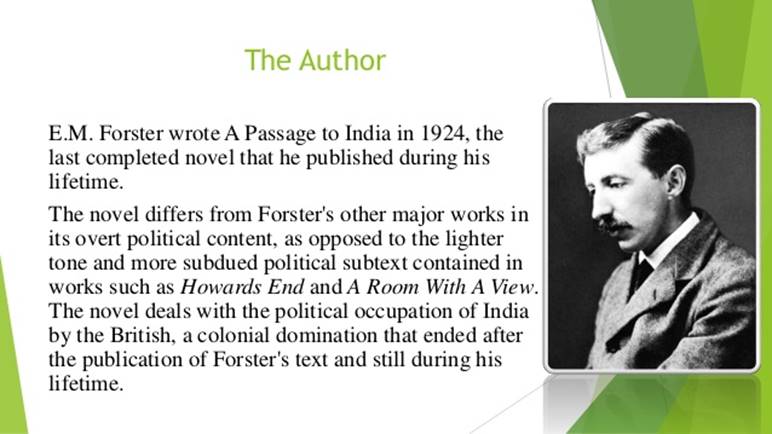
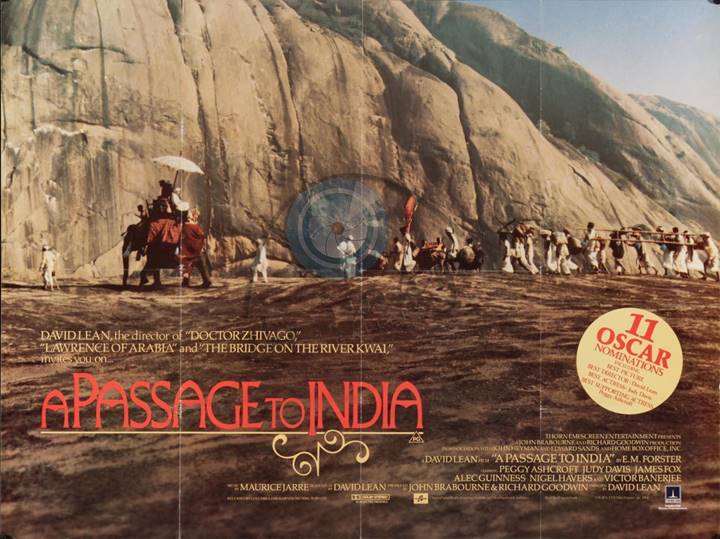
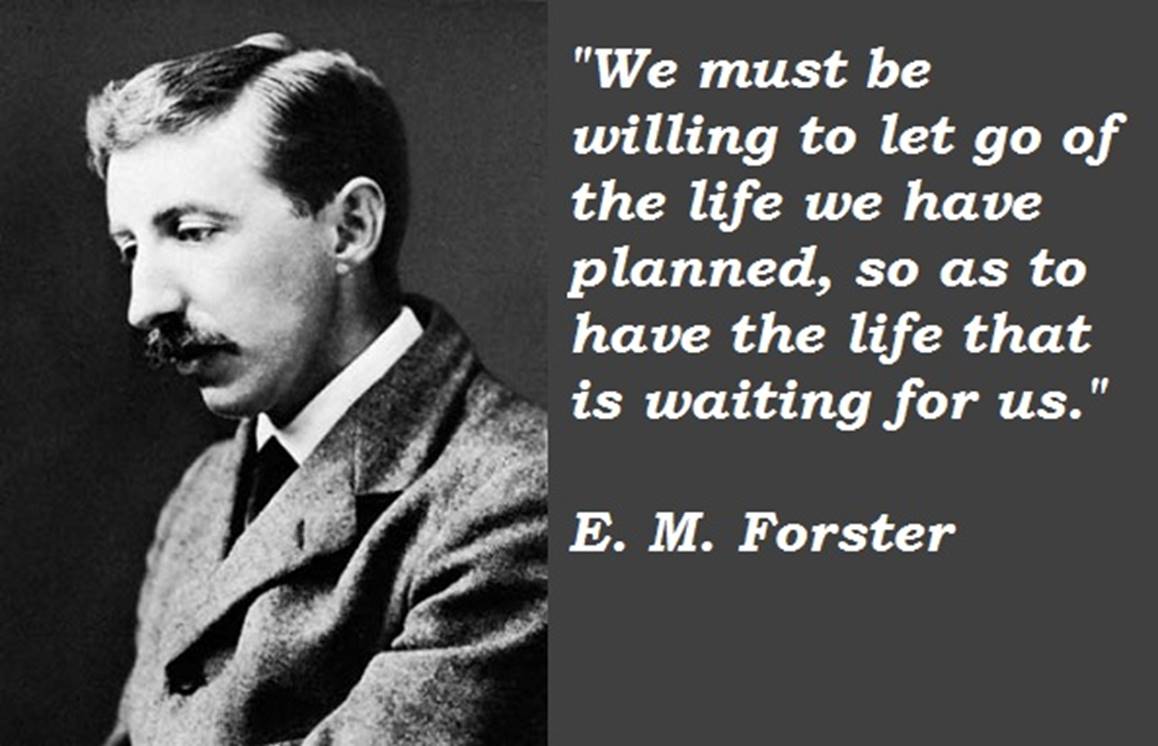
On March 01, 1964, I was a student of Bachelor of Science(B.SC.)3-Year Degree Course at Giriraj Government Arts College, Nizamabad, India. My Spirit of Nationalism was at its peak after I witnessed China’s War of Aggression in 1962. My English Language Course introduced me to ‘A Passage to India’ novel authored by E.M. Forster, a story that deals with British Colonial domination of India.

I left India in January 1984 and arrived in Ann Arbor, Michigan, U.S.A. during July 1986. To my surprise, I learned about Forster’s visit to Ann Arbor.

On March 01, 2018, I reflect upon prospects of my own ‘Passage to India’. I cannot confirm it for I am not sure about Final Destination of my mortal Life Journey. If I have to revisit India which I have not done since 1984, I ask God to do the favor of giving me an opportunity to share my story as ‘A Passage to India’, the one and only story I love to publish.

Rudranarasimham Rebbapragada

SPECIAL FRONTIER FORCE

E.M. FORSTER TAKES A PASSAGE TO INDIA – MAR 01, 1921 – HISTORY.com

Clipped from: http://www.history.com/this-day-in-history/e-m-forster-takes-a-passage-to-india?

Literary

1921

Forty-one-year-old British writer E.M. Forster embarks on his second trip to India after an absence of eight years. Forster would turn his observations of the country into his fifth and most critically acclaimed novel, A Passage to India, published in 1924. The novel explored racism and colonialism through the story of an English tourist who accuses a respected Indian doctor of attacking her.

Forster was born in London in 1879, the son of an architect. His father died before he was two, and he spent most of his childhood with his mother and a great-aunt in an old house called Rooksnest, which later became the model for the country estate portrayed in Howard’s End. Forster was teased and tormented mercilessly at the private school he attended as a day student and remained shy and timid throughout the rest of his life. However, he found intellectual companionship during his university years at King’s College, Cambridge, where he joined a secret society of intellectuals called the Apostles.

Forster began contributing essays and stories to the newly formed Independent Review in 1903 and published his first novel, Where Angels Fear to Tread, two years later. Like his later books, the novel looked at English discomfort with foreign cultures. Forster traveled widely, visiting Greece, Italy, and India, and later served with the Red Cross in Alexandria, Egypt, from 1915 to 1919. Forster made many close friends among the intellectual and literary “Bloomsbury set,” including Virginia Woolf.

Forster published five novels by 1924 and received an honorary fellowship from his alma mater in 1946, which allowed him to live in Cambridge for the rest of his long life. Although Forster lived to be 91, he published no novels in his lifetime after A Passage to India, although a sixth novel, Maurice, which dealt with homosexuality, was published after his death.

Created with Microsoft OneNote 2016.

WHAT IS AHAMKARA? WHAT IS SELFDOM OR SELFHOOD?

WHAT IS AHAMKARA? WHAT IS SELFDOM OR SELFHOOD?

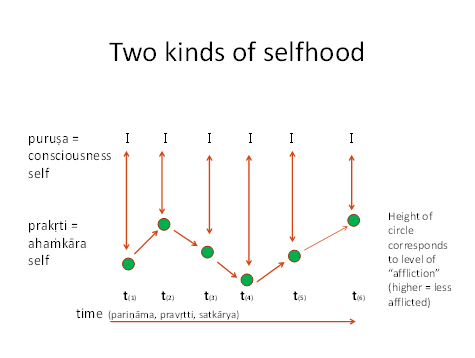
What is Ahamkara? What is Selfdom or Selfhood? Man has no choice other than that of being an Individual with Individuality. On bhavanajagat.com

To begin with, every person born has to exist as ‘Individual with Individuality’. I often explain it as Law of Individuality and Biogeneration. The DNA molecules express individualistic variation under identical, experimental conditions. They differ while performing similar functions. Even with reproductive technologies like cloning, man cannot create identical human beings even if they share the same genome. The genetically identical twins have no choice other than that of existing as Individuals with Individuality. There is no Self-Pride involved. I can be proud, arrogant, disobedient, disrespectful, etc., but I have no claim for Self-Pride for I have no control on my Individualistic existence. I can express behavior and action that can be viewed as arrogant while my Human Nature is beyond my control. Man has no ability to manipulate, rule, govern, or exploit his real, original Human Nature. However, man can be ignorant of his true, real, and original nature. This ignorance, alienation, separation, and estrangement is reflected in human action and behavior.

What is Ahamkara? What is Selfdom or Selfhood? In Essence, Man exists without Self-Pride.

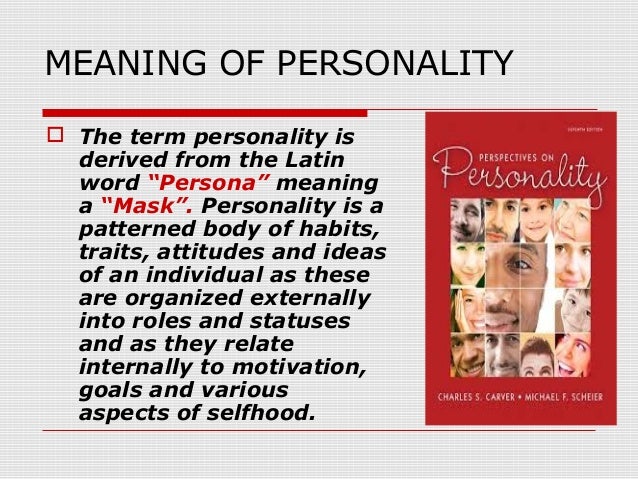
To perform good actions and to display good behavior no training or education is really required. I met scores of Indians all over the country who live not only simple and humble lives but also remain good to the core. None of them have gone to school and have read scriptures. You need to meet them and know them to comprehend basic essence of man for man exists without Self-Pride. It’s not about ‘personality’. They are not actors. They do not wear a mask. They expose intrinsic goodness for they are not pretentious. Have you known or experienced what am I saying? All said and done, it is not easy to educate people about their own true, or real nature. That’s why Indian tradition demands respect and obedience as precondition before imparting education of any kind.

Rudranarasimham Rebbapragada
Ann Arbor, MI 48104-4162 USA
BHAVANAJAGAT.ORG

What is Ahamkara? What is Selfdom or Selfhood? In essence, real or true man exists without Self-Pride. On www.svabhinava.org

I am sharing concerns about interpretation of words and their meanings in the study of Gurbani. My concern pertains to the use of word ‘ego’ in English translation of Gurbani. Apparently, ‘ego’ is used to translate the word “AHAMKARA.” Words lose their meaning if they are not used as per cultural traditions associated with words. In Indian tradition, the four types of activities, manas, buddhi, chitta, and ahamkara, together account for ‘inner mind’. Very often, Indian thinkers give attention to one type of activity such as chitta, buddhi, or ahamkara. It does not mean they are independent of each other. None of them occur as isolated mental activity. In man, there is singular effect as these attributes get merged in varying proportions. The term ‘ego’ exists in relationship with “Id” and “Superego.” Indian tradition does not recognize “Id” and “Superego.” We cannot use the word “ego” in English translation of Gurbani as it will communicate a meaning which is not intended by authors of Gurbani. Similarly, several Indian terms that refer to Indriyas(Organs of Sense Perception, and Organs of Action), and Bhutas(Five Components of Nature) cannot be discussed as isolated phenomena. They always work or interact together to produce singular effect. What we call air(VAYU) really consists of Water vapor apart from mixture of gases. On Earth, atmosphere is unique for it has Water vapor. What we call ‘Akasa'(Sky – the Blue Sky) is a natural phenomenon limited to Earth’s atmosphere. A person standing on Moon will not be able to use the term Akasa.

In Indian tradition, Soul or Atman represents true or real Self. For that reason, I claim that four types of mental activities such as manas, buddhi, chitta, and ahamkara do not really belong to my real or true Self. Those activities represent external environmental stimuli. The ‘Inner Mind’ reacts with external environment whereas Soul is not concerned for it is always Unchanging Principle independent of Inner Mind and its activities, thoughts, feelings, and moods. Actually, man cannot regulate or change the Operating Principle for God is the Supreme Controller. For that reason, man who knows Self, surrenders to Supreme Being.

Rudranarasimham Rebbapragada
Ann Arbor, MI 48104-4162 USA
SPECIAL FRONTIER FORCE

On 28 Feb 2018, at 03:33, R.Rudranarasimham wrote:

I ask my readers to read and review posts at awordathought.com which teaches one word at a time from Gurbani. It explores the word’s meaning and its origin. In Indian languages such as Sanskrit, and Punjabi there is no word like ‘EGO’ coined by Psychoanalyst Dr. Freud to account for human personality and behavior.

For Punjabi Version Click Here
For English Version Click Here
Listen Audio Listen to Pronunciation
Listen Audio Listen to Message
awordathought.com Vol. 5, Iss. 08, Pt. 1 (Feb 26, 2018)
Theme for the Week:
World Writers’ Day is celebrated on 3rd March every year. Hence, this week’s AWAT issues will feature words related to some precious possessions of writers: pen, paper, ink and inkpot.
The Gurbani quotes of this week are filled with some incredibly inspiring messages for all, writers and non-writers alike.
ਲੇਖਾਰੀ (lekharee)
Meaning: noun: Writer, scribe, scholar.
Quote:
ਧਨੁ ਲੇਖਾਰੀ ਨਾਨਕਾ ਪਿਆਰੇ ਸਾਚੁ ਲਿਖੈ ਉਰਿ ਧਾਰਿ॥
ਹੇ ਨਾਨਕ! ਉਹ ਲਿਖਾਰੀ ਧਨਤਾ-ਜੋਗ ਹੈ , ਜੋ ਸੱਚ ਨੂੰ ਹਿਰਦੇ ਵਿਚ ਧਾਰਦਾ ਅਤੇ ਸੱਚ ਲਿਖਦਾ ਹੈ।dhan lekhaaree naankaa piaare saach likhai ur dhaar.
O Nanak! Blessed is the scribe who enshrines Truth within his or her heart, and writes Truth. -Guru Nanak Sahib, Guru Granth Sahib, 636
Message: There are many important virtues required for leading a good and fruitful life. Cherishing truth, however, is the first and foremost of them. Truthfulness is the foundation of all the virtues of humanity.
Blessed are such writers who cultivate love and have yearning for truth. The writers who live their life truthfully will become true motivators of humans. Such writers will utilise all their sensual faculties and mind’s energy to nurture and develop their intrinsic worth and potential to make life better, for themselves as well as for others.
Etymology: Perhaps from Sanskrit lekhahaarin (taking or conveying a letter on) or modification of Sanskrit/Pali lekhak (scribe) from lekh(writing).
Have something to say about today’s issue? Please post it here.Do share today’s message with your circle of friends. Let it reach out to others as well!

Please like our Facebook page and get information in your newsfeed on current and upcoming issues. Follow this link
https://www.facebook.com/ awordathought/

color-facebook-48.png Share
377f00f1-c441-43fc-b4e5-30d3198be05f.jpg Follow
color-twitter-48.png Tweet
color-googleplus-48.png +1
color-forwardtofriend-48.png Forward
Daily Hukamnama
Subscribe | Archives| Contact Us | Update Address | UnsubscribeWWW.AWORDATHOUGHT.COM

Copyright © 2018 Shabad Foundation, All rights reserved.

I ask my readers to join in a meaningful conversation after making the distinction between Human Nature and Human Behavior. Human Nature is operated by Unchanging Operating Principle called Spirit or Soul. Whereas Human Behavior is the product of interaction between man and his external environmental stimuli. You will be able to make this distinction if you read about bandit known as Ratnakar and his transformation into India’s Prime Poet known as Balmiki or Valmiki.

About Bhavana Jagat « WHOLEDUDE - WHOLE PLANET
On wholedude.com

BEIJING’S DEBT CRISIS CHINA’S MILITARY INSECURITY

BEIJING’S DEBT CRISIS CHINA’S MILITARY INSECURITY

Beijing’s Debt Crisis – China’s Military Insecurity.

In my analysis, China’s greater defense spending reflects her military insecurity driven by insurmountable Debt Crisis. The World’s largest military will bite dust for its doom cannot be warded off by paying ransom.

Rudranarasimham Rebbapragada

SPECIAL FRONTIER FORCE

Beijing’s Debt Crisis – China’s Military Insecurity

CHINA’S MILITARY FLEXES MUSCLES FOR DOMESTIC OBJECTIVE: MORE FUNDING

Beijing’s Debt Crisis – China’s Military Insecurity

Clipped from: https://www.reuters.com/article/us-china-defence/chinas-military-flexes-muscles-for-domestic-objective-more-funding-idUSKCN1GC0KJ

BEIJING (Reuters) – With stealth jets entering service, leaked pictures of new high-tech naval artillery and proud reports of maneuvers that “dare to shine the sword,” China’s armed forces are putting on a show of power as they lobby for greater defense spending.

Although it is the world’s largest military, the People’s Liberation Army has been privately unhappy that it got less than double-digit funding increases the past two years. It has recently been making the case that it needs more money to deal with increased global uncertainty, diplomats and several sources with ties to the armed forces say.

In the run-up to the defense budget’s release at the annual meeting of China’s parliament next week, state media outlets have been filled with coverage of military drills, advanced new equipment and thrilling tales of derring-do in a new film very loosely based on China’s evacuating people from Yemen’s civil war in 2015.

The overall message is clear: China faces serious challenges, from U.S. President Donald Trump’s threats of force against nuclear-armed North Korea to an increasingly tense border dispute with India and what Beijing sees as efforts by self-ruled Taiwan to assert its sovereignty.

Confronting those challenges requires cash, a point the military is now trying to drive home.

“If you keep telling your people China is facing all these threats, you have to be able to back it up to show you are spending enough,” said a senior Beijing-based Western diplomat.

President Xi Jinping promised in his keynote speech to the Communist Party Congress in October to make China’s armed forces world-class by the middle of the century. The military has deployed an increasingly sophisticated propaganda machine to make sure that promise stays top of mind.

A professionally shot air force video released to celebrate the Lunar New Year this month entitled “New fighters of the great power to safeguard the new era” led with footage of the latest fighter to enter service, the J-20 stealth jet, designed as a counterpart to the radar-evading the Lockheed Martin F-22 Raptor.

“It looks like they are making the case for a large rise in defense spending,” said an Asian diplomat, speaking of the recent uptick in military-related stories in China.

NERVOUS NEIGHBORS

China’s defense spending is only about one-quarter that of the United States, if official figures are accurate. China has repeatedly said that it has no hostile intent, that its military is for defensive missions, and that defense spending is transparent.

Many of the country’s neighbors beg to differ, calling out what they see as Chinese saber-rattling as it ramps up drills in the region.

Vietnam, one of the most vocal opponents of China’s South China Sea claims, has tightened its military relationship with the United States. Taiwan has pledged to grow defense spending, and wants to buy new, advanced U.S. equipment.

Beijing’s Debt Crisis – China’s Military Insecurity.

FILE PHOTO: Soldiers of China’s People’s Liberation Army (PLA) take part in a military parade to commemorate the 90th anniversary of the foundation of the army at the Zhurihe military training base in Inner Mongolia Autonomous Region, China, July 30, 2017. China Daily via REUTERS/File Photo

The official People’s Liberation Army Daily said this month that although China was committed to a defensive military policy, it had to “dare to shine the sword” with air patrols far from China’s coast, whether close to Taiwan or over uninhabited islets disputed with Japan in the East China Sea.

Such flights, it said, protected China’s “bottom line” on strategic issues.

One source with ties to the military said another pressing area for more spending was salaries, which have not kept up with those of private-sector workers.

“Simply relying on ‘the great Xi to lead us to victory’ won’t cut it,” the source said, referring to efforts to recruit the best and the brightest into the military by appealing to national pride.

BETWEEN THE LINES

Beijing’s Debt Crisis – China’s Military Insecurity.

The defense budget will only disclose a top-line number, with a percentage comparison to the previous year. No breakdown on spending is provided.

Last year, China’s parliament did not initially release the figure, sparking questions over transparency. But when it did, the budget increase was 7 percent, the smallest in more than a decade.

The budgeted increase of 7.6 percent for 2016 was the lowest in six years and the first single-digit rise since 2010, following a nearly unbroken two-decade run of double-digit increases.

Experts say the true figure is likely much higher than what is officially reported, with money for some military projects included in ostensibly non-military spending.

“Particularly given China’s civil-military integration, it is difficult to know where defense spending ends” and civilian research and development begins, said another Western diplomat, who analyses China’s military.

Some defense experts say that China is eroding the United States’ military technology dominance and that the People’s Liberation Army could surpass the U.S. military in artificial intelligence capabilities, which have become a spending priority for Beijing.

But in the absence of transparency about new technologies, such as an experimental electromagnetic railgun state media suggested this year was being tested aboard a Chinese war ship, there is skepticism about their combat readiness.

China has not fought a war since 1979, a brief invasion of Vietnam that ended badly for China.

China’s Defense Ministry declined to comment ahead of the figure being released by parliament. The general percentage rise is typically given the day before parliament opens, and the raw figure the next day. Parliament opens March 5.

Reporting by Ben Blanchard and Michael Martina; Editing by Gerry Doyle

Beijing’s Debt Crisis – China’s Military Insecurity.


RED CHINA’S IMPERIALISM – ERA OF EMPEROR XI JINPING

RED CHINA’S IMPERIALISM – ERA OF EMPEROR XI JINPING

In my analysis, Red China’s Imperialism will perish without any human intervention. Era of Emperor Xi Jinping will end by heavenly strike as mentioned in REVELATION Chapter 18.

Rudranarasimham Rebbapragada

SPECIAL FRONTIER FORCE

CHINA PRESIDENT’S POSSIBLE INDEFINITE TERM RAISES CONCERNS AMONG CITIZENS

Clipped from: http://www.ibtimes.com/china-presidents-possible-indefinite-term-raises-concerns-among-citizens-2657905

Political commentators and business people in China voiced their displeasure on the proposal for an indefinite term for President Xi Jinping, Time Magazine reported.

In a rare event that was close to an expression of public dissent, prominent people in China penned open letters urging lawmakers to reject the plan to extend the term of the president.

Li Datong, a former editor for the state-run China Youth Daily wrote in a statement on WeChat — a social media mobile application — that lifting the term limit will “sow the seeds of chaos.”

Wang Ying, a business woman who in the past advocated for government reforms, viewed the move by lawmakers as a betrayal.

“I know that you (the government) will dare to do anything,” Wang wrote on WeChat. “And one ordinary person’s voice is certainly useless. But I am a Chinese citizen, and I don’t plan on leaving. This is my motherland too!”

Xi is viewed as the most powerful leader in China since Mao — the founding father of People’s Republic of China.

Li told the Associated Press on Tuesday: “If there are no term limits on a country’s highest leader, then we are returning to an imperial regime.”

“My generation has lived through Mao. That era is over. How can we possibly go back to it?” she added.

The officials in China said they were not aware of the open letters.

Under China’s constitution the president is allowed two terms in office, but the current president sought additional terms to realize the agenda set by his office to fight corruption, eliminate poverty and transform China into a thriving country.

On Sunday, lawmakers in China said they were pursuing an amendment in the constitution in which the term limit can be indefinitely extended so Xi can stay in power.

Foreign Ministry spokesman Lu Kang said Monday the proposal “was made in accordance with new situation and the practice of upholding and developing socialism with Chinese characteristics in the new era.”

The statements indicating discontent on the move to extend the term limit, started making rounds shortly after lawmakers declared they were looking into the possibility.

According to the report in Time, the National People’s Congress was sure the bill to amend the constitution will pass at the next annual session early next month, which would grant Xi a second five-year term and appoint new ministers and other government officials.

“The strong leadership of the [Communist party of China] has proved to be a decisive factor for what this country has achieved both economically and politically over the past four decades,” the China Daily argued in an editorial.

The Guardian reported that the English newspaper China Daily, an international voice for the affairs in Beijing, said the move was “necessitated by the need to perfect the party and the state leadership system.”

Created with Microsoft OneNote 2016.