KNOWLEDGE AND RATIONALITY: THE CONCEPT OF WHOLE NIHILISM
Knowledge and Rationality: The concept of Whole Nihilism. German philosopher Friedrich Wilhelm Nietzsche(1844 to 1900) often thought of his writings as struggles with “Nihilism.” In his view, Knowledge and Rationality in themselves do nothing to justify Human Existence and do nothing to justify the existence of the World. I appreciate this thought shared by Nietzsche and would like to keep my independence by contesting his views on Human Existence.
Nietzsche often thought of his writings as struggles with Nihilism. In his view, Knowledge and Rationality in themselves do nothing to justify Human Existence and do nothing to justify the existence of the World. I agree and at the same time, I disagree with him. I would like to share my concept of “Whole Nihilism” to contest his views on Nihilism. In my opinion, Nietzsche has failed to make the following distinctions and hence failed to establish his thesis of Nihilism. The fundamental distinctions that we need to consider are:
1. The distinction between Acquired Knowledge and Innate Knowledge,
2. The distinction between Human Essence and Human Existence,
3. The distinction between Human Behavior and Human Nature,
4. The distinction between Human Identity and Human Individuality, and
5. The distinction between a Mortal Being and a Created Being.
Firstly, I would like to describe Nietzsche’s thoughts on Nihilism and explain his views on this subject.
Knowledge and Rationality: The concept of Whole Nihilism. In the emergence of 19th-century “POSITIVISM”, Nietzsche predicted the ushering of a new era that dissolves the religious and philosophical absolutes. Nietzsche visualized the collapse of the metaphysical and theological foundations and sanctions for traditional morality. The decadence of the sustaining values of Western Civilization would leave behind a pervasive sense of purposelessness and meaninglessness. And the triumph of meaninglessness is the triumph of Nihilism.
“POSITIVISM” is a system of philosophy basing Knowledge solely on the data of sense experience. It is a system of philosophy originated by French philosopher Auguste Comte(1798-1857) who demanded that Knowledge must be exclusively based on observable scientific facts and their relation to each other, and he rejected speculations about or search for ultimate origins. Positivism as a theory of Knowledge is fundamentally flawed for it fails to acknowledge the existence of Innate Knowledge. For example, the genetic information and biological information implanted in the living cells is the Knowledge that is used to perform a variety of complex, sequential, goal-oriented living functions. In the absence of this Innate Knowledge, life and existence are simply impossible. For this reason, I define Life as Knowledge in Action. Having said this, I recognize that in the 19th-century Positivism, Nietzsche had visualized the emergence of an age that dissolved the religious and philosophical absolutes. Nihilism as a philosophical doctrine denies the existence of any basis for Knowledge or Truth. Nihilism is often stated as the belief that there is no meaning or purpose in Human Existence.
Knowledge and Rationality: The concept of Whole Nihilism. What is Reality and What is Appearance? What is Timeless and What is Temporal? Can mind, and senses explain the reality of this World?
Nihilism demands the rejection of customary beliefs to religion, and morality. Nietzsche used the term Nihilism to describe the devaluation of the highest values or the ‘ascetic ideal’ postulated by traditional philosophy and religion. Nietzsche was apparently preoccupied with the origin and function of values in human life. In his view, life neither possesses nor lacks intrinsic value and yet is always being evaluated. He concluded that the evaluations of life must be read as symptoms of the condition of the evaluator. It seems that Nietzsche wants to suggest that any evaluation of life is simply a matter of subjective opinion and there is no objective basis for evaluation of human life.
Knowledge and Rationality: The concept of Whole Nihilism. What is Reality and What is Appearance? What is Timeless and What is Temporal? Can mind, and senses explain the reality of this World?
I find a problem with Nietzsche’s view and want to state that the fact of life, the condition of life, and the state of life do always have an objective basis and the objective basis of life could be verified by other scientific observers and by experimentation. Nietzsche probed the fundamental cultural values of Western philosophy, religion, and morality which he characterized as expressions of the ascetic ideal. Nietzsche claims that the ascetic ideal is born when suffering becomes endowed with ultimate significance. The Judeo-Christian tradition makes suffering tolerable by interpreting it as God’s intention and as an occasion for atonement. In Nietzsche’s opinion, Christianity makes a deceptive claim by attaching cosmic significance to each individual’s life and death. Similarly, Nietzsche points out that traditional philosophy expressed the ascetic ideal when it privileged soul over body, mind over senses, duty over desire, reality over appearance, and the timeless over the temporal. Nietzsche attached no merit in Christianity’s promise of Salvation to the Sinner who repents and to the same extent he ridicules the promise of Emancipation or Enlightenment offered by a philosophy to the seekers of its Knowledge. Nietzsche makes a valid point in his statement about religion and philosophy which make the assumption that existence requires explanation, justification, and some form of expiation by either paying a penalty or by atonement. Nietzsche argued that both religion and philosophy denigrated experience in favor of the true world. He viewed both as symptoms of a declining life in distress. In the decadence, in the decline and in the eventual collapse of the metaphysical and theological foundations and sanctions of traditional morality, Nietzsche apprehends a huge void, a pervasive sense of purposelessness, and meaninglessness. And the triumph of meaninglessness is the triumph of Nihilism. From this perspective, Nietzsche claims that “God is Dead.”
THE DOCTRINE OF WHOLE NIHILISM:
Knowledge and Rationality: The concept of Whole Nihilism. Man is a Created Being. The Conception of Human Life involves the use of a Creative mechanism that ensures the birth of a human Individual who exists with a unique, distinctive, one of its own kind of Genome that never existed in the past, and will not again exist in the future. Life can only be explained as the Unity of Matter, Energy, and Soul functioning in Space under the influence called Time which makes the man a Mortal Being.
At a fundamental level, man has no ability to attach meaning, purpose, or values to his own human existence. The religious doctrines, the different schools of philosophy do not provide the basic Knowledge and information that is used by the fertilized Egg Cell that divides, multiplies, grows, and develops into the complex, multicellular human organism. Man has no choice other than that of existing as an Individual with Individuality. Each human being arrives into the World as a Created Being and man has no ability to create a replica of this one of its own kind of living object. The fertilized Egg Cell does not depend upon Knowledge that is exclusively acquired from Sensory Experience. To establish the fact of human life, the fertilized Egg Cell does not depend upon learning from Knowledge contained in books or imparted by educational experience. The ‘ascetic ideal’ stated by Nietzsche has no relevance and has no significance as human life is not guided by those metaphysical, or theological values. Man cannot simply choose to exist by defining his Essence through his actions or things he wants to do. The fact of Existence must always precede the ability to describe the attributes called Essence. The fertilized Egg Cell proceeds to perform its functions without any concerns about the meaning, purpose, or significance of the Life that it establishes as a Physical, Objective Reality. Human Knowledge and Human Rationality are not the requirements for establishing the fact, the state, and the condition called Human Existence. To the same extent, it may be said that man is a Mortal Being as his Human Existence in Space is operated under the influence of Time and not by Human Knowledge and Rationality.
Knowledge and Rationality: The concept of Whole Nihilism. What is Reality and What is Appearance? What is Timeless and What is Temporal? Can mind, and senses explain the reality of this World?
The man may never know the distinction between Reality and Appearance as he ceases to exist in the absence of an influence called Illusion. Man’s physical existence on planet Earth has a cosmic significance as Human Existence depends upon an extraterrestrial or Cosmic source of Energy. The external source of energy required for Life is not found on planet Earth and it has to be continuously supplied. This source of external Energy does not depend upon man’s ability to find meaning or purpose in his own existence. The concept of ‘Whole Nihilism’ describes the fact, the reality, and the truth of Human Existence without any concern for meaning or purpose for that Existence.
Knowledge and Rationality: The concept of Whole Nihilism. What is Reality and What is Appearance? What is Timeless and What is Temporal? Can mind, and senses explain the reality of this World?
THE CONCEPT OF BHAVANAJAGAT REFUTES THE DOCTRINE OF ETERNAL RECURRENCE:
Friedrich Wilhelm Nietzsche(1844 to 1900), German philosopher in his most celebrated book ‘Thus Spake Zarathustra'(1883-85) introduced in eloquent poetic prose the concepts of the ‘Superman or ‘Superior Man’, and the ‘Will to Power’ using his doctrine of Eternal Recurrence.The German word ‘Übermensch’ means a Superman or a Superior Man. Nietzsche argued for the “Natural Aristocracy” of the ‘Superman’ who driven by the ‘Will to Power’ celebrates life on Earth rather than sanctifying it for some heavenly reward. Nietzsche described the concept of ‘Superman’ or ‘Superior Man’ based on his doctrine of “Eternal Recurrence.”
Nietzsche in his most celebrated book ‘Thus Spake Zarathustra’ introduced the concepts of the Superman or Superior Man and the Will to Power. The basic conception of Thus Spoke Zarathustra asks the question: “How well disposed of would a person have to become to himself and to life to crave nothing more fervently than the infinite repetition without alternation, of each and every moment?” Nietzsche says, the person who could accept recurrence without self-deception or evasion would be a superhuman being or “UBERMENSCH”, a Superman whose distance from the ordinary man is greater than the distance between man and ape. This Superior Man would not be a product of long evolution; rather, he would emerge when any man with superior potential completely masters himself and strikes off conventional Christian “Herd Mentality” to create his own values, which are completely rooted in life on this Earth. Nietzsche attacked Christianity and Democracy as moralities for the “Weak Herd”. He argued for the “Natural Aristocracy” of the Superman who driven by the ‘Will to Power’ celebrates life on Earth rather than sanctifying it for some heavenly reward. Such a heroic man of merit has the courage to live “dangerously” and thus rise above the masses, developing his natural capacity for the creative use of passion. Nietzsche’s goal was a “Caesar with Christ’s Soul.”
Nietzsche described the concept of “UBERMENSCH”, the Superman or the Superior Man. Nietzsche’s goal was a “Caesar with Christ’s Soul.” Nietzsche argued for the “Natural Aristocracy” of the Superman and ridiculed the idea of the “MEEK” inheriting Earth.
George Bernard Shaw popularized the term “Superman” by his play ‘Man and Superman'(1903).
Nietzsche’s concept of Superman was popularized by George Bernard Shaw in his play ‘Man And Superman’. This is a picture of the cast of Roundabout Theatre’s production of that play directed by William Woodman. The cast includes Kim Hunter, David Birney, John Carpenter, Frances Conroy, Michael Cumpsty, Anthony Fusco, I.M. Hobson, Jonathan Walker, and Harriet Harris.
THE CONCEPT OF “BHAVANAJAGAT”:
Nietzsche’s concept of Superman, Superior Man or “UBERMENSCH” is based on the Doctrine of Eternal Recurrence. In the concept of ‘BHAVANAJAGAT,’ the world or ‘JAGAT’ exists in a constant state of motion. Fundamentally, there is no possibility of the infinite repetition without alteration of each and every moment as visualized by Nietzsche.
Nietzsche’s concept of Superman, Superior Man or “UBERMENSCH” is based on his doctrine of Eternal Recurrence. He visualized the possibility of the infinite repetition without alteration of each and every moment. In my concept of “BHAVANAJAGAT”, the term ‘JAGAT’ refers to planet Earth which exists in a state of constant motion without giving the possibility of the infinite repetition without alteration of each and every moment. Man’s thoughts, ideas, and the power of imagination have no effect on the reality of planet Earth and its nature of existence. Earth churns each future moment into a past moment without ever giving the man the opportunity to know the existence of any present moment. Each moment in the life of planet Earth is a new moment and there is no infinite repetition of any given or recognized moment. Man has to recognize the basic reality about Earth where there can never be two identical moments. “BHAVANAJAGAT” uses the term ‘BHAVANA’ to describe the Unchanging Principle that establishes human existence in a constantly changing world. For man has no power to experience the repetition of any single moment during his entire period of physical existence, there is no possibility of man evolving into a Superman, Superior Man, or “UBERMENSCH”. Nietzsche’s concept is fundamentally flawed; his doctrine of Eternal Recurrence is a simple product of his mental imagination and it has no correspondence with any external reality. In fact, man has no physical or mental power to establish his own existence on Earth. Man has no intrinsic superior potential to master himself. Man is designed to exist in a constantly changing world without any potential to govern or rule the functions of the independent cells that constitute his body.
The Material Basis of Spirituality Science.The Clinton Curse. A Balanced Budget vs Foreign Debt.The Material Basis of Spirituality Science. The Clinton Curse. A Balanced Budget vs Foreign Debt.
I ask my readers to make the distinction between Budget Deficit and Foreign Debt. I describe the phrase ‘The Clinton Curse’ from my reading the Book of Deuteronomy which specifically mentions the Curse relating to a debt owed to foreign nations.
The Material Basis of Spirituality Science. The Clinton Curse. A Balanced Budget vs Foreign Debt. The Material Basis of Spirituality Science. The Clinton Curse. A Balanced Budget vs Foreign Debt.
The concept of Spiritual well being always includes the dimension of the physical or the material well being of the man. In the present times, the physical or the material well being of the man always includes the concern about fair and just access to the economic resources to provide for the daily necessities of life particularly during old age after the attainment of the legally determined full retirement age.
In my analysis, ‘The Clinton Curse’ demands the Repeal of Bill Clinton’s Public Law called PRWORA or The Welfare Reform Act of 1996.
The Material Basis of Spirituality Science. The Clinton Curse. A Balanced Budget vs Foreign Debt. The Material Basis of Spirituality Science. The Clinton Curse. A Balanced Budget vs Foreign Debt.The Material Basis of Spirituality Science. The Clinton Curse. A Balanced Budget vs Foreign Debt. The Material Basis of Spirituality Science. The Clinton Curse. A Balanced Budget vs Foreign Debt.The Material Basis of Spirituality Science. The Clinton Curse. A Balanced Budget vs Foreign Debt.The Material Basis of Spirituality Science. The Clinton Curse. A Balanced Budget vs Foreign Debt.
SURPRISE! The budget deficit is soaring! 🚀🚀🚀
The Material Basis of Spirituality Science. The Clinton Curse. A Balanced Budget vs Foreign Debt.
“US budget deficit running 15% higher than a year ago.”
The story cites this monthly report from the Treasury Department detailing these few eye-popping facts:
1) The budget deficit grew $146.9 million in the month of March alone. 2) The deficit for this fiscal year is now $691 billion — a 15% increase (or roughly $100 billion) from where we were at this point in 2018. 3) Treasury is projecting that the deficit will surge over $1 trillion by the end of the fiscal year in September.
To which, our politicians have responded: 😒
“Nobody cares,” White House chief of staff Mick Mulvaney reportedly told a group of Republicans who wondered why President Donald Trump wasn’t going to mention the ever-growing deficit in his State of the Union Speech earlier this year.
That’s a massive change from where Trump, Mulvaney and the rest of the Republican Party were on the dangers of debt and deficits just a few years ago. Here’s Trump talking to Sean Hannity in 2016 about how easily he will balance the federal budget:
“It can be done. … It will take place and it will go relatively quickly. … If you have the right people, like, in the agencies and the various people that do the balancing … you can cut the numbers by two pennies and three pennies and balance a budget quickly and have a stronger and better country.”
So, well, it hasn’t turned out that way. At all.
Here’s the kicker: Trump isn’t likely to pay a price — either within his own party or the broader electorate — for the soaring deficit. Less than 50% of people in a January Pew poll said that lowering the federal deficit should be a top priority of Washington policymakers. That’s down, rapidly, from 72% who said the same earlier this decade.
The Point: Deficits have lost their salience as a political issue. But that doesn’t mean they are going away. And, at some point, our political (and economic) systems will be forced to deal with our growing mountain of debt.
— Chris
How the U.S. Deficit and Debt Are Different?
The U.S. budget deficit was $211 billion in August 2018. That’s much lower than the record high of $1.4 trillion reached in FY2009
The U.S. debt exceeded $22 trillion on February 11, 2019. That’s more than triple the $6 trillion debt in 2000.
What is Foreign Debt?
Foreign debt is an outstanding loan or set of loans that one country owes to another country or institutions within that country. Foreign debt also includes obligations to international organizations such as the World Bank, Asian Development Bank or Inter-American Development Bank. Total foreign debt can be a combination of short-term and long-term liabilities. Also known as external debt, these outside obligations can be carried by governments, corporations or private households of a country. In fact, the national debt went from $4.4 Trillion at the end of 1993 to almost $5.7 Trillion at the end of 2000, U.S. Treasury data shows, a 28 percent increase in the debt over this time when our nation supposedly was running a balanced budget. The reason for the confusion is that the reported budget deficit/surplus does not take into account new debt being incurred by the Social Security and Medicare Trust Funds and other government loan programs. So, when the budget appeared to have gone down by $69 billion in 1998, the national debt increased by $109 billion, similarly, in 1999, the budget surplus appeared to be $126 billion, the actual national debt rose from just under $5.5 trillion to just over $5.6 trillion.
The Material Basis of Spirituality Science. The Clinton Curse. A Balanced Budget vs Foreign Debt.The Material Basis of Spirituality Science. The Clinton Curse. A Balanced Budget vs Foreign Debt.
“Tough times never last, but Tough people do.” The Enduring Saga of The Dalai Lama.
The 14th Dalai Lama flees from Tibet to India across the Himalayas, 1959. He is riding a white pony, third from the right. Photograph: Popperfoto/Getty Images
The Chinese were yesterday using planes and some fifty thousand troops, including paratroops, to search the Tibetan mountain passes for the Dalai Lama. But according to reports from Kalimpong, in North-east India, the Tibetan religious leader, moving only by night, was expected to cross the frontier within a few days.
Meanwhile, in New Delhi, Mr. Silun Lukhangwa, a former Tibetan Premier, said it was hoped to send a delegation to the United Nations to protest against Chinese action in his country. He was speaking after two Tibetan groups had appealed for Indian aid in the crisis in an interview with Mr. Nehru. An Indian official press release merely said: “Mr. Nehru spoke to them briefly, expressing the hope that the present difficulties in Tibet would end peacefully. He made it clear that India was not in a position to intervene and in fact, would not like to take any steps which might aggravate the situation there.”
The Dalai Lama is accompanied on his flight by his mother and sisters, as well as most members of the Tibetan Cabinet, it was learned yesterday. His progress on the 200-mile trek to safety is slow, but it was believed in Kalimpong yesterday that reports that he had been injured in a fall were incorrect. The territory through which he is believed to be moving is the roadless mountainous region of the Tibetan plateau, south-east of Lhasa, bordering Bhutan and the Indian North-east Frontier Agency. The Indian north-east frontier region has been closed to anyone without a permit, and it was stated in New Delhi that no permits could be issued at present.
Reports said the Chinese were dropping paratroopers in an effort to intercept the Dalai Lama. Other troops were going from village to village and monastery to monastery “harassing” inhabitants and monks to try to extort information about him. Strong cordons of Chinese soldiers were being thrown around many monasteries, including the one at Rongbuk, near Mount Everest.
The Tibetan delegation gave Mr. Nehru a memorandum asking him:
1. To lend his active support in securing the personal safety of the Dalai Lama.
2. To send immediately a mercy mission to Tibet with medical supplies.
3. To sponsor the Tibetan cause before the United Nations.
4. To permit Tibetan refugees to cross over freely into India.
It was thought in New Delhi that Mr. Nehru might well pass on the memorandum to the Chinese for their information. The Tibetan groups’ leader, Mr. Lukhangwa, told reporters: “The Dalai Lama’s wishes are the wishes of the people of Tibet. Whatever he says, we will follow him.”
“Tough times never last, but tough people do.” The Enduring Saga of The Dalai Lama.
MARCH 29, 1973: THE UNFINISHED WAR TO CONTAIN COMMUNISM
March 29, 1973: The Unfinished War to contain Communism.
On March 29, 1973, the U.S. withdraws combat troops from Vietnam after the signing of the Vietnam Peace Agreement in Paris on January 29, 1973. However, the War to contain the threat posed by the spread of Communism to Asia is not over.
Two months after the signing of the Vietnam peace agreement, the last U.S. combat troops leave South Vietnam as Hanoi frees the remaining American prisoners of war held in North Vietnam. America’s direct eight-year intervention in the Vietnam War was at an end. In Saigon, some 7,000 U.S. Department of Defense civilian employees remained behind to aid South Vietnam in conducting what looked to be a fierce and ongoing war with communist North Vietnam.
In 1961, after two decades of indirect military aid, U.S. President John F. Kennedy sent the first large force of U.S. military personnel to Vietnam to bolster the ineffectual autocratic regime of South Vietnam against the communist North. Three years later, with the South Vietnamese government crumbling, President Lyndon B. Johnson ordered limited bombing raids on North Vietnam, and Congress authorized the use of U.S. troops. By 1965, North Vietnamese offensives left President Johnson with two choices: escalate U.S. involvement or withdraw. Johnson ordered the former, and troop levels soon jumped to more than 300,000 as U.S. air forces commenced the largest bombing campaign in history.
During the next few years, the extended length of the war, the high number of U.S. casualties, and the exposure of U.S. involvement in war crimes, such as the massacre at My Lai, helped turn many in the United States against the Vietnam War. The communists’ Tet Offensive of 1968 crushed U.S. hopes of an imminent end to the conflict and galvanized U.S. opposition to the war. In response, Johnson announced in March 1968 that he would not seek reelection, citing what he perceived to be his responsibility in creating a perilous national division over Vietnam. He also authorized the beginning of peace talks.
In the spring of 1969, as protests against the war escalated in the United States, U.S. troop strength in the war-torn country reached its peak at nearly 550,000 men. Richard Nixon, the new U.S. president, began U.S. troop withdrawal and “Vietnamization” of the war effort that year, but he intensified bombing. Large U.S. troop withdrawals continued in the early 1970s as President Nixon expanded air and ground operations into Cambodia and Laos in attempts to block enemy supply routes along Vietnam’s borders. This expansion of the war, which accomplished a few positive results, led to new waves of protests in the United States and elsewhere.
Finally, in January 1973, representatives of the United States, North and South Vietnam, and the Vietcong signed a peace agreement in Paris, ending the direct U.S. military involvement in the Vietnam War. Its key provisions included a cease-fire throughout Vietnam, the withdrawal of U.S. forces, the release of prisoners of war, and the reunification of North and South Vietnam through peaceful means. The South Vietnamese government was to remain in place until new elections were held, and North Vietnamese forces in the South were not to advance further nor be reinforced.
However, the agreement was little more than a face-saving gesture by the U.S. government. Even before the last American troops departed on March 29, the communists violated the cease-fire, and by early 1974 full-scale war had resumed. At the end of 1974, South Vietnamese authorities reported that 80,000 of their soldiers and civilians had been killed in fighting during the year, making it the costliest of the Vietnam War.
On April 30, 1975, the last few Americans still in South Vietnam were airlifted out of the country as Saigon fell to communist forces. North Vietnamese Colonel Bui Tin, accepting the surrender of South Vietnam later in the day, remarked, “You have nothing to fear; between Vietnamese, there are no victors and no vanquished. Only the Americans have been defeated.” The Vietnam War was the longest and most unpopular foreign war in U.S. history and cost 58,000 American lives. As many as two million Vietnamese soldiers and civilians were killed.
March 29, 1973. The Unfinished War to contain Communism
“Our strength, our power is based on truth. Chinese power based on the gun,” the Dalai Lama said. “So for short term, the gun is much more decisive, but long term truth is more powerful.”
In my analysis, the Battle for Tibet will not be decided by either Chinese Gun or American Gun. The truth will prevail. China will reap the consequences of her own Evil actions. Tibet’s Identity is shaped by Natural Forces, Natural Causes, and Natural Factors that condition the nature of Tibetan Existence. Nature will unleash a physical force to compel China to withdraw from illegally occupied Tibetan Territory.
Rudranarasimham Rebbapragada
Special Frontier Force
The Battle for Tibet’s Soul. Truth vs Gun.
Exclusive: Dalai Lama contemplates Chinese gambit after his death. Reuters
The Dalai Lama, the spiritual leader of Tibetan Buddhism, said on Monday it was possible that once he dies his incarnation could be found in India, where he has lived in exile for 60 years, and warned that any other successor named by China would not be respected.
Sat in an office next to a temple ringed by green hills and snow-capped mountains, the 14th Dalai Lama spoke to Reuters a day after Tibetans in the northern Indian town of Dharamshala marked the anniversary of his escape from the Tibetan capital, Lhasa, disguised as a soldier.
He fled to India in early 1959 after a failed uprising against Chinese rule and has since worked to draw global support for linguistic and cultural autonomy in his remote and mountainous homeland.
China, which took control of Tibet in 1950, brands the 83-year-old Nobel peace laureate a dangerous separatist.
Pondering what might happen after his death, the Dalai Lama anticipated some attempt by Beijing to foist a successor on Tibetan Buddhists.
“China considers Dalai Lama’s reincarnation as something very important. They have more concern about the next Dalai Lama than me,” said the Dalai Lama, swathed in his traditional red robes and yellow scarf.
“In future, in case you see two Dalai Lamas come, one from here, in a free country, one chosen by Chinese, then nobody will trust, nobody will respect (the one chosen by China). So that’s an additional problem for the Chinese! It’s possible, it can happen,” he added, laughing.
China has said its leaders have the right to approve the Dalai Lama’s successor, as a legacy inherited from China’s emperors.
But many Tibetans – whose tradition holds that the soul of a senior Buddhist monk is reincarnated in the body of a child on his death – suspect any Chinese role as a ploy to exert influence on the community.
Born in 1935, the current Dalai Lama was identified as the reincarnation of his predecessor when he was two years old.
Speaking in Beijing at a daily news briefing on Tuesday, Chinese foreign ministry spokesman Geng Shuang said the 14th Dalai Lama himself was chosen by following centuries-old religious rituals and history, which were “respected and protected” in rules and ordinances regulating religion.
“Therefore reincarnations, including that of the Dalai Lama, should observe the country’s laws and regulations and follow the rituals and history of religion,” Geng said.
UP FOR DISCUSSION
Many of China’s more than 6 million Tibetans still venerate the Dalai Lama despite government prohibitions on displays of his picture or any public display of devotion.
The Dalai Lama said contact between Tibetans living in their homeland and in exile was increasing, but that no formal meetings have happened between Chinese and his officials since 2010.
Informally, however, some retired Chinese officials and businessman with connections to Beijing do visit him from time to time, he added.
He said the role of the Dalai Lama after his death, including whether to keep it, could be discussed during a meeting of Tibetan Buddhists in India later this year.
He, however, added that though there was no reincarnation of Buddha, his teachings have remained.
“If the majority of (Tibetan people) really want to keep this institution, then this institution will remain,” he said. “Then comes the question of the reincarnation of the 15th Dalai Lama.”
The Battle for Tibet’s Soul. Truth vs Gun.
FILE PHOTO: Tibetan spiritual leader the Dalai Lama, Patron of Children in Crossfire, speaks during a press conference in Londonderry, Northern Ireland September 11, 2017. REUTERS/Clodagh Kilcoyne/File Photo
If there is one, he would still have “ no political responsibility”, said the Dalai Lama, who gave up his political duties in 2001, developing a democratic system for the up to 100,000 Tibetans living in India.
SEMINAR IN CHINA?
During the interview, the Dalai Lama spoke passionately about his love for cosmology, neurobiology, quantum physics and psychology.
If he was ever allowed to visit his homeland, he said he’d like to speak about those subjects in a Chinese university.
But he wasn’t expecting to go while China remained under Communist rule.
“China – great nation, ancient nation – but its political system is a totalitarian system, no freedom. So, therefore, I prefer to remain here, in this country.”
The Dalai Lama was born to a family of farmers in Taktser, a village on the northeastern edge of the Tibetan plateau, in China’s Qinghai province.
During a recent Reuters visit to Taktser, police armed with automatic weapons blocked the road. Police and more than a dozen plain-clothed officials said the village was not open to non-locals.
“Our strength, our power is based on truth. Chinese power based on the gun,” the Dalai Lama said. “So for short term, the gun is much more decisive, but long term truth is more powerful.”
Reporting by Krishna N. Das; Additional reporting by Philip Wen in BEIJING; Editing by Simon Cameron-Moore
God must reincarnate to defy the Chinese Rule over Tibet.
The Dalai Lama, the Tibetan spiritual leader, warned that the successor chosen by China could not be trusted Credit: BIJU BORO/AFP/Getty Images
The Dalai Lama has warned of a possible “double reincarnation” with one from a “free country” after Beijing reiterated that his next incarnation must comply with Chinese law.
The Tibetan Buddhist leader on Monday warned that a successor chosen by Beijing after his eventual death could not be trusted.
He said it is possible that his reincarnation could be found in India, where he has lived in exile for 60 years upon fleeing Tibet following a failed uprising against Chinese rule.
“In future, in case you see two Dalai Lamas come, one from here, in a free country, one chosen by Chinese, then nobody will trust, nobody will respect [the one chosen by China].
“So that’s an additional problem for the Chinese! It’s possible, it can happen,” he told Reuters in an interview.
God must reincarnate to defy the Chinese Rule over Tibet.
The Dalai Lama has lived in exile in northern India since the failed uprising, along with other Tibetans Credit: MONEY SHARMA/AFP/Getty Images
China stated in response that its leaders have the right to approve the Dalai Lama’s successor. The selection process “must comply with Chinese laws and regulations,” according to Geng Shuang, a spokesman for the foreign ministry.
Chinese state media highlighted those laws, titled “New Regulations on Religious Affairs and the Rules on the Management of the Reincarnation of Tibetan Living Buddhas.”
Many Tibetans, who believe that the soul of a senior Buddhist monk is reincarnated into the physical body of a child upon his death, worry a successor chosen by Beijing will be under the thumb of the ruling Communist Party.
The current Dalai Lama was identified as the reincarnation of his predecessor when he was two years old.
Now at 83, it’s getting harder for him to travel the world to boost awareness, and his influence is waning just as China’s is growing on the world stage.
God must reincarnate to defy the Chinese Rule over Tibet.
The Dalai Lama is now 83. Credit: STR/AFP/Getty Images
Beijing has recently cracked down heavily on religion under president Xi Jinping after the government vowed to “Sinicise” faith. The wave of repression has affected Muslims, Christians, and Buddhists.
“China considers Dalai Lama’s reincarnation as something very important,” the Dalai Lama said in an interview with Reuters. “They have more concern about the next Dalai Lama than me.”
Beijing has previously co-opted the spiritual reincarnation process with a goal of bringing Tibetan Buddhism within party lines.
In 1995, the Dalai Lama named a young Tibetan boy as the reincarnation of the previous Panchen Lama – the second highest in spiritual authority after himself. But the child was then put under what Chinese officials described as protective custody.
Beijing put forth another successor and the Dalai Lama’s choice – then only six years old – disappeared from public.
‘Chinese interference is routine’
God must reincarnate to defy the Chinese Rule over Tibet.
The Chinese government has sought to discredit the Dalai Lama. In February, Wu Yingjie, leader of a parliamentary delegation from Tibet, said that Tibetans didn’t love the Dalai Lama at all.
“Since Dalai Lama defected from Tibet, he has never done a single thing that was for the benefit for the Tibetan people,” Mr. Wu said. Instead, “they are grateful for what the Party brings to them.”
Last May, Tashi Wangchuk, a Tibetan businessman, was given a five-year prison sentence by China for promoting the Tibetan language, based on comments made in interviews with the New York Times.
The Tibet Autonomous Region, in China’s far west, is considered a homeland to many Tibetans and remains on lockdown. Travel in and out of the region is difficult, even for Tibetans.
Foreign journalists cannot visit without government permission, and those requests are frequently denied. Chinese officials have said they are concerned this is out of concern that foreigners may find it difficult to acclimate to the high altitudes on the Tibetan plateau.
God must reincarnate to defy the Chinese Rule over Tibet.
“The domain of cognitive science occupies the intersection of philosophy, neuroscience, linguistics, cognitive psychology, and computer science (artificial intelligence).” Gerrig et al. (2008, p. 248). Gerrig, R. J., Zimbardo, P. G., Campbell, A. J., Cumming, S. R., & Wilkes, F. J. (2008). Psychology and life (Australian edition). Sydney: Pearson Education Australia. (Photo credit: Wikipedia)
WHOLE DUDE – WHOLE INTELLIGENCE:
Albert Einstein stated that Time is not Absolute and is relative to the motion of the observer.
The word ‘intelligence'( Latin. intelligentia) involves perception, discernment, the ability to learn or understand from experience, ability to acquire and retain knowledge. While psychologists are not able to come to a common understanding to define ‘intelligence’, it is clearly understood that ‘intelligence’ can only exist in living entities that have the abilities of perception, cognition, memory, responsiveness, communication, awareness, and consciousness.
‘Intelligence’ is used to indicate all-around effectiveness of an individual’s mental processes, particularly capabilities of comprehension, learning and recall, and thinking and reasoning. I want to suggest that it would be incorrect to conceive ‘intelligence’ as innate brain power, an attribute which distinguishes the more highly ‘evolved’ animals from simpler organisms, and geniuses from average persons. I would like to contest this commonly held view or opinion about ‘intelligence’ which defines ‘intelligence’ as a unitary power or faculty of the mind.
Whole Dude-Whole Intelligence: Albert Einstein( b. March 14, 1879, d. April 18, 1955) won Nobel Prize for Physics in 1921, German-American Physicist who developed the Special and General Theories of Relativity, the Photoelectric Law, theoretical physics such as the equivalence of mass and energy, and the Photon Theory of Light. He demonstrated the relationship between Creative and Analytical Thought.
INTELLIGENCE AND WHOLE INTELLIGENCE:
On the 14th Day of March, I would like to pay my tribute to Albert Einstein for his ‘intelligence’ and for demonstrating the relationship between creative thought and analytical thought.
While I agree that ‘intelligence’ is the abstract faculty that apprehends, conceptually and perceptually, relations among objects. The size of the object is also important when we consider the existence of microscopic objects like the size of living cells, bacteria, viruses, proteins, and organic and inorganic molecules of numerous varieties.
It is now agreed that ‘intelligence’ is a collection of a large number of highly varied, although overlapping skills rather than as a single faculty. ‘Intelligence’ may include 120 specific abilities which could be classified into three categories: logical processes, the kinds of information processed, and the products of such processing. ‘Intelligence’ includes factors such as verbal, spatial, memorizing, and reasoning abilities and needs to connect creative thought with analytical thought. All these things that are mentioned in the context of describing ‘intelligence’ focus on a combination of the innate characteristics of an individual’s Central Nervous System which is molded by experience, learning, heredity, and environmental factors.
The term ‘Intelligence Quotient’ or IQ is often used to show the relation of or ratio of mental to the chronological age of the given person. Tests have been devised to measure ‘Intelligence Quotient’ or IQ of people.
I would like to introduce the concept of ‘Whole Intelligence’ and describe it as the ability of Living Matter or that of Living Entities to know a range of information, process information, and perform functions using the stored information and that of acquired information. It needs ‘Whole Intelligence’ to perform the numerous, complicated tasks that are essential to maintain life and to sustain the living functions. ‘Whole Intelligence’ is characterized by the presence of knowledge in the Living Matter. Knowledge means the act of knowing, the state of knowing, and the fact of knowing a range of information. The living cell typically uses a vast variety of biological information to perform functions of its metabolism, growth, maintenance, and reproduction. These functions require the abilities of recognition of specific molecules and other microscopic materials to use them or dispose of them in a very selective manner involving precise, sequential reactions. The non-living matter has no intelligence.
The Laws of Physical Science operate in the material universe. ‘Whole Intelligence’ describes the ability to exploit the Laws of Physical Science for the material benefit of the living, intelligent entity. Physical systems that are non-living do not apply intelligence of their own in their operations and they function according to the design of the system. Whereas a living system uses its ‘Whole Intelligence’ to preserve, to sustain, and to promote its living condition.
I or Albert Einstein do not have the ‘Intelligence’ capabilities displayed by the cells, tissues, organs and various organ systems that constitute our human bodies. We do not have those abilities to perform the tasks they perform. I say, my heart is beating and pumping all the time using ‘Whole Intelligence’ and if not, I would be Brain Dead. What would do you say???? Please share your thoughts and views.
THIS DAY IN HISTORY
March 14
Albert Einstein born
On March 14, 1879, Albert Einstein is born, the son of a Jewish electrical engineer in Ulm, Germany. Einstein’s theories of special and general relativity drastically altered man’s view of the universe and his work in particle and energy theory helped make possible quantum mechanics and, ultimately, the atomic bomb.
After a childhood in Germany and Italy, Einstein studied physics and mathematics at the Federal Polytechnic Academy in Zurich, Switzerland. He became a Swiss citizen and in 1905 was awarded a Ph.D. from the University of Zurich while working at the Swiss patent office in Bern. That year, which historians of Einstein’s career call the annus mirabilis–the “miracle year”–he published five theoretical papers that were to have a profound effect on the development of modern physics.
In the first of these, titled “On a Heuristic Viewpoint Concerning the Production and Transformation of Light,” Einstein theorized that light is made up of individual quanta (photons) that demonstrate particle-like properties while collectively behaving like a wave. The hypothesis, an important step in the development of quantum theory, was arrived at through Einstein’s examination of the photoelectric effect, a phenomenon in which some solids emit electrically charged particles when struck by light. This work would later earn him the 1921 Nobel Prize in Physics.
In the second paper, he devised a new method of counting and determining the size of the atoms and molecules in a given space, and in the third, he offered a mathematical explanation for the constant erratic movement of particles suspended in a fluid, known as Brownian motion. These two papers provided indisputable evidence of the existence of atoms, which at the time was still disputed by a few scientists.
Einstein’s fourth groundbreaking scientific work of 1905 addressed what he termed his special theory of relativity. In special relativity, time and space are not absolute, but relative to the motion of the observer. Thus, two observers traveling at great speeds in regard to each other would not necessarily observe simultaneous events in time at the same moment, nor necessarily agree in their measurements of space. In Einstein’s theory, the speed of light, which is the limiting speed of any body having mass, is constant in all frames of reference. In the fifth paper that year, an exploration of the mathematics of special relativity, Einstein announced that mass and energy were equivalent and could be calculated with an equation, E=mc2.
Although the public was not quick to embrace his revolutionary science, Einstein was welcomed into the circle of Europe’s most eminent physicists and given professorships in Zurich, Prague, and Berlin. In 1916, he published “The Foundation of the General Theory of Relativity,” which proposed that gravity, as well as motion, can affect the intervals of time and of space. According to Einstein, gravitation is not a force, as Isaac Newton had argued, but a curved field in the space-time continuum, created by the presence of mass. An object of very large gravitational mass, such as the sun, would, therefore, appear to warp space and time around it, which could be demonstrated by observing starlight as it skirted the sun on its way to earth. In 1919, astronomers studying a solar eclipse verified predictions Einstein made in the general theory of relativity, and he became an overnight celebrity. Later, other predictions of general relativity, such as a shift in the orbit of the planet Mercury and the probable existence of black holes, were confirmed by scientists.
During the next decade, Einstein made continued contributions to quantum theory and began work on a unified field theory, which he hoped would encompass quantum mechanics and his own relativity theory as a grand explanation of the workings of the universe. As a world-renowned public figure, he became increasingly political, taking up the cause of Zionism and speaking out against militarism and rearmament. In his native Germany, this made him an unpopular figure, and after Nazi leader Adolf Hitler became chancellor of Germany in 1933 Einstein renounced his German citizenship and left the country.
He later settled in the United States, where he accepted a post at the Institute for Advanced Study in Princeton, New Jersey. He would remain there for the rest of his life, working on his unified field theory and relaxing by sailing on a local lake or playing his violin. He became an American citizen in 1940.
In 1939, despite his lifelong pacifist beliefs, he agreed to write to President Franklin D. Roosevelt on behalf of a group of scientists who were concerned with American inaction in the field of atomic-weapons research. Like the other scientists, he feared sole German possession of such a weapon. He played no role, however, in the subsequent Manhattan Project and later deplored the use of atomic bombs against Japan. After the war, he called for the establishment of a world government that would control nuclear technology and prevent future armed conflict.
In 1950, he published his unified field theory, which was quietly criticized as a failure. A unified explanation of gravitation, subatomic phenomena, and electromagnetism remains elusive today. Albert Einstein, one of the most creative minds in human history, died in Princeton in 1955.
SPIRITUALITY SCIENCE – SPIRIT AND SOUL ARE TWO SIDES OF THE SAME COIN. SPIRIT IS RELATED TO HUMAN NATURE THAT SEEKS FREEDOM. SOUL IS RELATED TO THE RELATIONSHIP THAT ESTABLISHES THE DEPENDENT NATURE OF HUMAN EXISTENCE. ALBERT EINSTEIN FAILED TO EXAMINE THE TWO ASPECTS OF HUMAN NATURE AND ITS CONDITIONED EXISTENCE.
THE SUPREME RULER OF TIBET IS TRAPPED IN EXILE SINCE 1959
The Dalai Lama’s Recollection: Prime Minister Nehru predicted that the Americans will not fight the Chinese Communists. As there was no other choice, India and Tibet agreed for the covert US assistance in the hope that the military occupier of Tibet would be evicted sooner or later.
“[First Indian Prime Minister] Pandit Nehru told me, ‘America will not fight the Chinese communists in order to liberate Tibet, so sooner or later you have to talk with the Chinese government,’” the Dalai Lama recalls.
The Supreme Ruler of Tibet is trapped in Exile since 1959.
On Saturday, March 09, 2019 I want to remind my readers that the Supreme Ruler of Tibet is trapped to live in exile since 1959. In my analysis, both India and Tibet made a serious miscalculation. They hoped that the Americans will eventually fight the Chinese Communists. My concern is not about the face of Tibetan Buddhism. I am talking about the face of Tibetan Ruler.
Rudranarasimham Rebbapragada
SPECIAL FRONTIER FORCE
The Dalai Lama on Donald Trump, China and His Search for Joy | Time
The Supreme Ruler of Tibet is trapped in Exile since 1959.
Morning has broken on the cedar-strewn foothills of the Himalayas. His Holiness the 14th Dalai Lama sits in meditation in his private chapel in Dharamsala, a ramshackle town perched on the upper reaches of North India’s Kangra Valley. Rousing slowly, he unfolds his legs with remarkable agility for a man of 83, finds the red felt slippers placed neatly beneath his seat and heads outside to where a crowd has already gathered.
Around 300 people brave the February chill to offer white khata scarves and receive the Dalai Lama’s blessing. There’s a group from Bhutan in traditional checkered dress. A man from Thailand has brought his Liverpool F.C. scarf, seeking divine benediction for the U.K. soccer team’s title bid. Two women lose all control as they approach the Dalai Lama’s throne and are carried away shaking in rapture, clutching prayer beads and muttering incantations.
The Dalai Lama engages each visitor like a big kid: slapping bald pates, grabbing onto one devotee’s single braid, waggling another’s nose. Every conversation is peppered with giggles and guffaws. “We 7 billion human beings — emotionally, mentally, physically — are the same,” he tells TIME in a 90-minute interview. “Everyone wants a joyful life.”
The Supreme Ruler of Tibet is trapped in Exile since 1959.
Ruven Afanador for TIME
His own has reached a critical point. The Dalai Lama is considered a living Buddha of compassion, a reincarnation of the bodhisattva Chenrezig, who renounced Nirvana in order to help mankind. The title originally only signified the preeminent Buddhist monk in Tibet, a remote land about twice the size of Texas that sits veiled behind the Himalayas. But starting in the 17th century, the Dalai Lama also wielded full political authority over the secretive kingdom. That changed with Mao Zedong’s conquest of Tibet, which brought the rule of the current Dalai Lama to an end. On March 17, 1959, he was forced to escape to India.
In the six decades since, the leader of the world’s most secluded people has become the most recognizable face of a religion practiced by nearly 500 million people worldwide. But his prominence extends beyond the borders of his own faith, with many practices endorsed by Buddhists, like mindfulness and meditation, permeating the lives of millions more around the world. What’s more, the lowly farmer’s son named as a “God-King” in his childhood has been embraced by the West since his exile. He won the Nobel Peace Prize in 1989 and was heralded in Martin Scorcese’s 1997 biopic. The cause of Tibetan self-rule remains alive in Western minds thanks to admirers ranging from Richard Gere to the Beastie Boys to Democratic House Speaker Nancy Pelosi, who calls him a “messenger of hope for millions of people around the world.”
Yet as old age makes travel more difficult, and as China’s political clout has grown, the Dalai Lama’s influence has waned. Today the Chinese Communist Party (CCP) that drove him out of Tibet is working to co-opt Buddhist principles — as well as the succession process itself. Officially atheist, the party has proved as adaptive to religion as it is to capitalism, claiming a home for faith in the nationalism Beijing has activated under Xi Jinping. In January, the CCP announced it would “Sinicize” Buddhism over the next five years, completing a multimillion-dollar rebranding of the faith as an ancient Chinese religion.
The Supreme Ruler of Tibet is trapped in Exile since 1959.
The Dalai Lama delivers a lecture from his throne on Feb. 18 to mark Losar, the Tibetan new year.
Ruven Afanador for TIME
From Pakistan to Myanmar, Chinese money has rejuvenated ancient Buddhist sites and promoted Buddhist studies. Beijing has spent $3 billion transforming the Nepalese town of Lumbini, the birthplace of Lord Buddha, into a luxury pilgrimage site, boasting an airport, hotels, convention center, temples, and a university. China has hosted the World Buddhist Forums since 2006, inviting monks from all over the world.
Although not, of course, the world’s most famous. Beijing still sees the Dalai Lama as a dangerous threat and swiftly rebukes any nation that entertains him. That appears to be working too. Once the toast of capitals around the world, the Dalai Lama has not met a world leader since 2016. Even India, which has granted asylum to him as well as to about 100,000 other Tibetans, is not sending senior representatives to the diaspora’s commemoration of his 60th year in exile, citing a “very sensitive time” for bilateral relations with Beijing. Every U.S. President since George H.W. Bush has made a point of meeting the Dalai Lama until Donald Trump, who is in negotiations with China over reforming its state-controlled economy.
Still, the Dalai Lama holds out hope for a return to his birthplace. Despite his renown and celebrity friends, he remains a man aching for home and a leader removed from his people. Having retired from “political responsibility” within the exiled community in 2011, he merely wants “the opportunity to visit some holy places in China for pilgrimage,” he tells TIME. “I sincerely just want to serve Chinese Buddhists.”
Despite that, the CCP still regards the Dalai Lama as a “wolf in monk’s robes” and a dangerous “splittist,” as Chinese officials call him. He has rejected calls for Tibetan independence since 1974 — acknowledging the geopolitical reality that any settlement must keep Tibet within the People’s Republic of China. He instead advocates for greater autonomy and religious and cultural freedom for his people. It matters little.
“It’s hard to believe a return would happen at this point,” says Gray Tuttle, a professor of modern Tibetan studies at Columbia. “China holds all the cards.”
The Supreme Ruler of Tibet is trapped in Exile since 1959.
The boy born Lhamo Thondup was identified as the 14th incarnation of the Dalai Lama at just 2 years old, when a retinue of top lamas, or senior Buddhist Tibetan monks, followed a series of oracles and prophecies to his village in northeastern Tibet. The precocious toddler seemed to recognize objects belonging to the 13th Dalai Lama, prompting the lamas to proclaim him the celestial heir. At age 4, he was carried on a golden palanquin into the Tibetan capital, Lhasa, and ensconced in its resplendent Potala Palace. A daily routine of spiritual teaching by top religious scholars followed.
“Sometimes my tutor kept a whip to threaten me,” the Dalai Lama recalls, smiling. “The whip was yellow in color, as it was for a holy person, the Dalai Lama. But I knew that if the whip was used, it made no difference — holy pain!”
It was a lonely childhood. The Dalai Lama rarely saw his parents and had no contact with peers of his own age, save his elder brother Lobsang Samden, who served as head of household. Despite his tutors’ focus on spiritual matters, or perhaps because of it, he was fascinated by science and technology. He would gaze from the Potala’s roof at Lhasa street life through a telescope. He took apart and reassembled a projector and camera to see how they functioned. “He continually astonished me by his powers of comprehension, his pertinacity and his industry,” wrote the Austrian mountaineer Heinrich Harrer, who became the Dalai Lama’s tutor and was one of six Europeans permitted to live in Lhasa at the time. Today the Dalai Lama proudly describes himself as “half Buddhist monk, half scientist.”
The Dalai Lama was only supposed to assume a political role on his 18th birthday, with a regent ruling until then. But the arrival of Mao’s troops to reclaim dominion over Tibet in 1950 caused the Tibetan government to give him full authority at just 15. With no political experience or knowledge of the outside world, he was thrust into negotiations with an invading army while trying to calm his fervent but poorly armed subjects.
Conditions worsened over the next nine years of occupation. Chinese proclamations calling Lord Buddha a “reactionary” enraged a pious populace of 2.7 million. By March 1959, rumors spread that the Dalai Lama would be abducted or assassinated, fomenting a doomed popular uprising that looked likely to spill into serious bloodshed. “Just in front of the Potala [Palace], on the other side of the river, there was a Chinese artillery division,” the Dalai Lama recalls. “Previously all the guns were covered, but around the 15th or 16th, all the covers were removed. So then we knew it was very serious. On the 17th morning, I decided to escape.”
The two-week journey to India was fraught, as Chinese troops hunted the party across some of the world’s most unforgiving terrain. The Dalai Lama reached India incognito atop a dzo, a cross between a yak and a cow. Every building in which he slept en route was immediately consecrated as a chapel, but the land he left behind was ravaged by Mao’s disastrous Great Leap Forward and Cultural Revolution. Hundreds of thousands died. By some reckonings, 99.9% of the country’s 6,400 monasteries were destroyed.
Tibet’s desire to remain isolated and undisturbed had served it poorly. The kingdom had no useful allies, the government of Lhasa having declined to establish official diplomatic relations with any other nation or join international organizations. The Dalai Lama’s supplications were thus easy to ignore. Tibet had remained staunchly neutral during World War II, and the U.S. was already mired in a fresh conflict on the Korean Peninsula.
“[First Indian Prime Minister] Pandit Nehru told me, ‘America will not fight the Chinese communists in order to liberate Tibet, so sooner or later you have to talk with the Chinese government,’” the Dalai Lama recalls.
The Supreme Ruler of Tibet is trapped in Exile since 1959.
Around 300 devotees line up early at Tsuglagkhang temple to offer the Dalai Lama traditional khata scarves and to receive his blessing.
Ruven Afanador for TIME
When Tibetans first followed the Dalai Lama into India, they lived with bags packed and did not build proper houses, believing a glorious return would come at a moment’s notice. It never did.
Four decades of conversations between China and exiled Tibetan leadership have led nowhere. Consolatory talks began in the 1970s between the Dalai Lama’s envoys and reformist Chinese leader Deng Xiaoping and continued under Deng’s successor, Jiang Zemin. The talks stipulated that Tibetan independence was off the table, but even so, the drawn-out process was suspended in 1994 and after briefly resuming in the 2000s is again at a standstill.
Meanwhile, Tibet remains firmly under the thumb of Beijing. The U.N. High Commissioner for Human Rights has lamented that conditions are “fast deteriorating” in the region. In May, Tibetan businessman Tashi Wangchuk was jailed for five years merely for promoting the Tibetan language. In December, the government issued a directive to stop the Tibetan language and culture from being taught in monasteries. Once known as the “abode of the gods,” Lhasa has become a warren of neon and concrete like any other Chinese city. Although the U.S. officially recognizes Tibet as part of China, Vice President Mike Pence said in July that the Tibetan people “have been brutally repressed by the Chinese government.”
Many allege their cultural and religious freedom is under attack by the Beijing government. Some in Tibet resort to extreme measures to protest their treatment. Since 2009, more than 150 Tibetans — monks, nuns, and ordinary civilians — have set themselves ablaze in protest. Often self-immolators exalt the Dalai Lama with their final breaths. Despite his message of nonviolence, the Dalai Lama has been criticized for refusing to condemn the practice. “It’s a very difficult situation,” he says. “If I criticize [self-immolators], then their family members may feel very sad.” He adds, however, that their sacrifice has “no effect and creates more problems.”
Beijing vehemently refutes accusations of human-rights violations in Tibet, insisting that it fully respects the religious and cultural rights of the Tibetan people, and highlights how development has raised living standards in the previously isolated and impoverished land. China has spent more than $450 million renovating Tibet’s major monasteries and religious sites since the 1980s, according to official figures, with $290 million more budgeted through 2023. The world’s No. 2 economy has also greenlighted massive infrastructure projects worth $97 billion, with new airports and highways carving through the world’s highest mountains, nominally to boost the prosperity of the 6 million ethnic Tibetans.
This level of investment presents a dilemma for Tibetans stranded in exile. The majority live in India, under a special “guest” arrangement by which they can work and receive an education but, crucially, not buy property. Many toil as roadside laborers or make trinkets to sell to tourists. And so large numbers of young Tibetans are making the choice to return, lured to a homeland they have never known. “If you want a safe and secure future for your children, then either you go back to Tibet or some other country where you can get citizenship,” says Dorji Kyi, director of the Lha NGO in Dharamsala, which supports Tibetan exiles.
The Supreme Ruler of Tibet is trapped in Exile since 1959.
At 83, the Buddhist leader reflects on a life spent away from his native Tibet.
Ruven Afanador for TIME
Many of the returnees are armed with better education and world experience than their peers who grew up in Tibet. “Some of them do well,” says Thupten Dorjee, president of Tibetan Children’s Village, a network of five orphanages and eight schools that have cared for 52,000 young Tibetans in India. “But if they get involved in political things then they land into trouble.”
Tibet still has a government-in-exile, the Central Tibetan Administration (CTA) in Dharamsala, but it is dogged by infighting and scandal. Exiles are instead forging their own path. Last September, the Dalai Lama himself was filmed at his temple telling young Tibetans that it was better to live under Beijing’s rule than stay as “beggars” in exile. Speaking to TIME, he said it was “no problem” if exiled Tibetans chose to return to China.
Even those who have achieved prosperity elsewhere are opting to return. Songtsen Gyalzur, 45, sold his real estate business in Switzerland, where his Tibet-born parents immigrated after first fleeing to India, to start China’s Shangri-La Highland Craft Brewery in 2014. Today his award-winning brewery has an annual capacity of 2.6 million gallons of lagers, ales, and porters. He recruits 80% of the staff from orphanages his mother set up in Tibetan areas in the 1990s. “Tibet has so many well-educated, well-trained professionals abroad who could have a real impact on people’s lives here,” he says.
Despite the “Lost Horizon” legend, the kingdom was never a spiritual and agrarian utopia. Most residents lived a Hobbesian existence. Nobles were strictly ranked in seven classes, with only the Dalai Lama belonging to the first. Few commoners had any sort of education. Modern medicine was forbidden, especially surgery, meaning even minor ailments were fatal. The sick were typically treated with a gruel of barley meal, butter and the urine of a holy monk. Life expectancy was 36 years. Criminals had limbs amputated and cauterized in boiling butter. Even the wheel wasn’t commonly employed, given the dearth of passable roads.
The Dalai Lama has admitted that Tibet was “very, very backward” and insists he would have enacted reforms. But he also emphasizes that traditional Tibetan life was more in communion with nature than the present. Tibet hosts the largest store of fresh water outside the Arctic and Antarctic, leading some environmentalists to term its frozen plateau the “third pole,” and especially vulnerable to the choking development unleashed by the Beijing government.
“Global warming does not make any sort of exception — just this continent or that continent, or this nation or that nation,” the Dalai Lama says. Asked who is responsible for fixing the crisis, he points not to Beijing but to Washington. “America, as a leading nation of the free world, should take more serious consideration about global issues.”
The Supreme Ruler of Tibet is trapped in Exile since 1959.
The Dalai Lama meditates in his private chapel inside his residence on Feb. 18.
Ruven Afanador for TIME
The Dalai Lama is a refreshingly unabashed figure in person. His frequent laughter and protuberant ears make him seem cuddly and inoffensive, and it’s difficult to overstate how tactile he is. He appears equally at home with both the physical and the spiritual, tradition and modernity. He meditated within reach of an iPad tuned to an image of a babbling brook and mountains and a few minutes later turned to Tibetan scriptures written on wide, single sheets, unbound. He retires at 6 p.m. and rises at 4 a.m. and spends the first hours of his day in meditation.
“Western civilization, including America, is very much oriented toward materialistic life,” he says. “But that culture generates too much stress, anxiety, and jealousy, all these things. So my No. 1 commitment is to try to promote awareness of our inner values.” From kindergarten onward, he says, children should be taught about “taking care of emotion.”
“Whether religious or not, as a human being we should learn more about our system of emotion so that we can tackle destructive emotion, in order to become calmer, have more inner peace.”
The Dalai Lama said his second commitment is to religious harmony. Conflicts in the Middle East tend to involve sectarian strife within Islam. “Iran is mainly Shi‘ite. Saudi Arabia, plus their money, is Sunni. So this is a problem,” he says, lamenting “too much narrow-mindedness” and urging people of all faiths to “broaden” their thinking.
Buddhism has its own extremists. The themes of Buddhism, as a nontheistic religion with no single creator deity, are more accessible to followers of other faiths and even ardent atheists, emphasizing harmony and mental cleanliness. But the Dalai Lama says he is “very sad” about the situation in Myanmar, where firebrand Buddhist monks have incited the genocide of Rohingya Muslims. “All religions have within them a tradition of human loving kindness,” he says, “but instead are causing violence, division.”
He keeps a sharp eye on global affairs and is happy to weigh in. Trump’s “America first” foreign policy and obsession with a wall on the southern U.S. border make him feel “uncomfortable,” he says, calling Mexico “a good neighbor” of the U.S. Britain’s impending exit from the European Union also warrants a rebuke, as he has “always admired” the E.U.
The Supreme Ruler of Tibet is trapped in Exile since 1959.
Six decades on, the Dalai Lama still hopes he will visit his birthplace again.
Ruven Afanador for TIME
In his ninth decade and moving with the help of assistants, the Dalai Lama continues to explore human consciousness and question long-held shibboleths. During a series of lectures in February to mark the Tibetan new year, he pontificates on everything from artificial intelligence — it can never compete with the human mind, he says — to blind deference to religious dogma. “Buddha himself told us, ‘Do not believe my teaching on faith, but rather through thorough investigation and experiment,’” he says. “So if some teaching goes against reason, we should not accept it.”
This includes the institution of the Dalai Lama itself. Even as a young boy, his scientific mind led him to question the idea that he was the 14th incarnation of a deity king. His former tutor recalled that he found it odd that the prior Dalai Lama “was so fond of horses and that they mean so little to me.” Today the Dalai Lama says the institution he embodies appears “feudal” in nature. Leaving the spiritual element aside, he says he doesn’t believe any political authority should be conferred when he dies. “On one occasion the Dalai Lama institution started,” he says. “That means there must be one occasion when the institution is no longer relevant. Stop. No problem. This is not my concern. China’s communists, I think, are showing more concern.”
Indeed they are. In a blow to the Tibetan exile community, China has set about bringing the leadership of Tibetan Buddhism into the party fold. When the Dalai Lama named a Tibetan child as the reincarnation of the previous Panchen Lama in 1995 — the second highest position in Tibetan Buddhism after himself — China put the boy into “protective custody” and installed a more pliant figure instead. The whereabouts of the Dalai Lama’s choice remain unknown.
So when the Dalai Lama leaves this plane of existence, it’s highly likely a 15th incarnation will be chosen by the godless CCP. “It’s pretty obvious the Chinese state is preparing for it, which is absurd,” Tuttle says. Tibetan Buddhists will be forced to choose between the party’s Dalai Lama and the selection of Tibetan exiles. On this point, at least, the incumbent is very clear. Any decision on the next Dalai Lama, he says, should be “up to the Tibetan people.”
No doubt the party’s desire to name a Dalai Lama stems from the fact that there are 244 million Buddhists in China — a cohort that dwarfs the CCP membership by 3 to 1. The party craves legitimizing its power above all else and believes yoking it to the institution of the Dalai Lama will provide that. But Beijing clearly also hopes it will be a symbolic final nail in the coffin of Tibetan self-rule, completing the absorption of Tibet into the People’s Republic of China that began seven decades ago.
So in a twist of irony, it seems the incumbent God-King’s wish will eventually be granted. One day a Dalai Lama will return to China — in this body or the next, with his blessing or without.
Correction, Mar. 7
A photo caption in the original version of this story misidentified a group of people waiting to see the Dalai Lama. They are devotees, not Buddhist monks.
SPIRITUALITY SCIENCE: THE UNITY OF MAN IN BODY, MIND, AND SOUL. The word Spiritual describes the relationship between a changing object and its unchanging spiritual nature. This baby which started its existence as a single, fertilized Egg-Cell will continue to grow and develop undergoing a series of changes in physical appearance or Identity and yet will retain the same Individuality during the entire course of Life’s Journey.
Human existence is conditioned and man experiences the aging process without any choice and the existence is viewed as transient, ephemeral and even illusory for man is constituted as a mortal being. However, the fact of this temporary existence demands the Unity of Body, Mind and Soul apart from yoking, joining together or association with an everlasting God Principle. This Unity of mortal Body, Mind and Soul with Divine Operating Principle does not imply that the human soul is the same as or shares the entire Identity of the Divine Supersoul. While describing the Unity of Body, Mind and Soul, man can still set his true or real Identity apart from his own body and mind which is the seat of his thoughts, feelings, cravings and moods. Such separation of man into two categories will have practical applications to practice the Art of Self-Discipline and to prevent problems like Substance Abuse, Suicide and other behavioral disorders.
Spirituality Science. The Self and The Knowing-Self.
“Ekam evaditiyam” – This statement in the Sanskrit language is from Chandogya Upanishad (6:2:1) and it means: “I, one alone and there is no second.” The original intent of this statement is that of seeking the Unity of the Objective Reality of Man known as ‘Atma’ (the Individual Soul ) and the Ultimate Reality known as ‘Paramatma’ or Supersoul. There is no Duality between the two and there is no disunity between Man and God. However, God is not an object which is under Man’s control and the views about God are subjective opinions. I am quoting this statement to find the Unity of Man in body, mind, and soul. Man’s greatest need is not only to know the world around him but also to know himself better. Man must understand what it is to be a substance and what it is to exist. We need to establish knowledge about Man on a firm basis and the information it provides must be tested for its accuracy and consistency with external reality. Dr. William James in his book, The Principles of Psychology, has observed: “True ideas are those we can assimilate, validate, corroborate, and verify.” The separation of man into body, mind, and soul is not supported by a scientific study of man.
It is impossible to describe the concept called “SOUL”, or “SPIRIT” if it is never associated with its human body. If “SOUL” is defined as the vital, animating, Life Principle, the word Spiritual speaks of the existence of a Living Soul or Spirit.
The man comes into existence from a single fertilized Egg Cell. This Man cannot be separated into two distinct entities like insentient material being and sentient spiritual being. The physical being and the conscious being are the same. The division of Man into a physical substance and a thinking substance or that of a physical body and a thinking mind is not valid as they have no independent existence of their own. The division of Man into a physical body and an immortal, non-material or immaterial Soul is not also valid as the Soul is described as the vital, animating principle that is the chief characteristic of Life.
The Egg Cell is the source of Man’s Life. The Spiritual Nature of Man could be discovered and could be described from the biological properties, characteristics, and nature of the corporeal substance found in the Egg Cell.
The Spiritual Nature of Man is not a mental function. The Spiritual Nature of Man could be discovered and could be described from the biological properties, characteristics, and nature of Man’s corporeal substance found in the fertilized Egg Cell. This substance is Conscious. This Single Egg Cell grows, divides, develops, and builds the cells, the tissues, and the organ systems that constitute the Human Individual. The Spiritual Nature of the substance present in the Single, fertilized Egg Cell brings the functional unity of all the cells, tissues, and organ systems to establish the Physical Reality called Man.
Human Embryo Implantation at about six days after Conception. The Single, fertilized Egg Cell and the Human Embryo that develops from it is Conscious of its existence reflecting its Spiritual Nature.
About six days after Conception, the developing Human Embryo implants itself into maternal tissues by establishing an anatomical connection called Placenta. The implantation of Human Embryo does not involve any human thought and the Mother has no cortical awareness of the fact of implantation. The implantation demonstrates the Consciousness of the Human Embryo which is aware of the fact of its own existence. The phrase Spiritual defines the internal, mutually beneficial relationship, partnership, association, and the connection between the cells, tissues, organs, and organ systems for the benefit of the Human Person who exists because of their living functions. The Subject that is born from the Single, fertilized Egg Cell is always a new, original, distinctive, unique, one of its own kind of Object that exists because of the innate Spiritual Nature of the material substance. Being born relates Man to the Subjective and Objective Realities of his biological existence.
There is structural and functional unity between Man and his Body, Mind, and Soul. There is no Life, and there is no Human Existence if these entities are separated. Spiritualism is the potency that brings Man’s Essence and Man’s Existence to come together to provide Man the Subjective and Objective Reality of his own biological existence in the physical and material world. Man is not an embodied Soul and Man is a Living Soul.
What is Man?
WHAT IS MAN? MAN IS LIVING THING AND IS COMPOSITE OF TWO PRINCIPLES, 1. FORM, AND 2. MATTER.
I will be repeatedly asking this same question in several of my blog posts on the subject of Spirit and Soul. I want to remind myself that the motivation for asking this question comes from a statement expressed in the Sanskrit language: “Sarvesham Swastir Bhavatu”, a statement which seeks the well-being of all humans, of all races, of all cultures, of all religions, and of all nations. The meaning and purpose of human life are affected by whatever we think is the real or true nature of man. It is more important to recognize that our efforts to support the well-being of man would require correct understanding and knowledge of the real or true man.
The Self and The Knowing-Self:
FACIAL RECOGNITION-IDENTITY AND INDIVIDUALITY-THE SELF and THE KNOWING-SELF: Identity describes the external reality of man and it helps to know the man as a specific Individual. This Individual exists with unchanging Individuality which describes the internal reality of man. Identity provides awareness of the Self and Individuality involves the Knowledge of the Knowing-Self.
To know about Man, we can observe the various activities that describe the Man. The Physical being known as Man is known from the living functions performed by the tissues and organ systems of his body. This Physical being has Identity or identifying features such as age, gender, race, ethnicity and other biometric information to know the person as a specific Individual. Factors like language, religion, culture, education, social occupation, nationality, and sexual orientation are also used to describe the Man. The Mental being known as Man is described from mental functions such as intellect, thoughts, moods, feelings, cravings, and self-pride. Man, the Social being is known from his social interactions and much of human action and behavior involves interacting with other individuals present in his social environment. Man, the Moral being is known from the choices he makes in the performance of his actions where discernment plays a role to distinguish right from wrong, and good from evil. Man, the Spiritual being is known from the nature of his existence seeking peace, harmony, and tranquility within himself and with others in his environment and community. I designate the term ‘Self’ to describe Man as a Physical, Mental, Social, Moral, and Spiritual being. I have also observed that the Physical being is in reality consists of about 100 trillion individual living cells that show complex structural differentiation and functional organization. The corporeal substance is of spiritual nature and hence Man, the Physical being has no choice other than that of existing as a Spiritual being. The question is not that of, How Man knows himself? The question that I would like to ask is, How does the body know the Identity of the Man who lives? If the body knows its Owner, there is an anatomical structure that is associated with the function called The Knowing-Self.
The Function of The Knowing-Self:
How does the body know the Identity of the Man who lives? If the body knows its Owner, there is an anatomical structure that is associated with the function called The Knowing-Self.
The Reticular Formation (RF) is in the central Brain Stem and extends from Medulla to Thalamus. It consists of more than about 100, 000 Brain Stem nuclei. It is estimated that a single neuron in this network may have synapses with as many as 25,000 other neurons. The RF has connections with almost all other parts of the Central Nervous System including Spinal Cord, Cranial Nerve nuclei, Cerebellum, Hypothalamus, Thalamus, Corpus Striatum, Limbic System, and Cerebral Cortex. Thus, the RF helps to coordinate and integrate actions of different parts of the Central Nervous System such as 1. regulation of muscle and reflex activity, 2. central transmission of sensory impulses, 3. respiration, 4. cardiovascular responses, 5. behavioral Arousal, and 6. Alert/Sleep Cycle.
How does the body know the Identity of the Man who lives? If the body knows its Owner, there is an anatomical structure that is associated with the function called The Knowing-Self.
There are two distinct aspects of human Consciousness namely, 1. the Capacity for Consciousness and 2. the Content of Consciousness. When Consciousness is viewed as a psychological or strictly as a mental function, it is represented by the Content of Consciousness called Cortical Awareness which is a function of the Cerebral Cortex. When Consciousness is understood as a biological function that includes the maintenance of vital functions like respiration, and circulation apart from various homeostatic mechanisms to preserve a constant internal environment, it is represented by the aspect of Capacity for Consciousness.
How does the body know the Identity of the Man who lives? If the body knows its Owner, there is an anatomical structure that is associated with the function called The Knowing-Self.
The Knowing-Self is in the Reticular Formation of the Brain Stem and its functions are of critical importance in the clinical diagnosis of Brain Death. During Life, the cells, tissues, and various organ systems of the human body work together for the benefit of ‘Self’ which is known and recognized by this Knowing-Self.
Man is a Spiritual Being:
THE GREAT BANYAN TREE OF KOLKATA – THE TREE OF KNOWLEDGEThe Banyan Tree offers the unusual appearance. It has roots that appear growing from its branches and the roots are located upwards and away from the ground; it has trunks and branches growing downwards apart from the normal branches that grow upwards and outwards. Because of its adventitious roots, Banyan Tree spreads to cover a wide area and lives for a long time. Knowing and understanding this Asvattha Tree is important to gain the Knowledge of Vedas, the Hindu Scriptures that reveal the Knowledge of the Spiritual Self or Adhyatma Vidya.
The Knowledge of Asvatta, The Fig Tree:
Adhyatma Vidya. The Knowledge of the Spiritual Self. Ficus religiosa or the Bodhi Tree is often worshipped in India. The tree is also described as “Sthaanuu” which means immovable.
I ask readers to visualize the Banyan tree called Ficus benghalensis rather than the holy tree called Ficus religiosa, or the Bodhi tree under which Lord Gautama Buddha experienced Enlightenment.
Adhyatma Vidya. The Knowledge of Spiritual Self. The Knowledge of Banyan Tree.Spirituality Science. The Self and The Knowing-Self.
The Hindu Scripture of The Bhagavad Gita, Chapter XV known as Purusottama Yoga speaks about the nature of the Supreme Person. It metaphorically compares the Supreme Being to the popularly known Fig Tree called Ficus religiosa. The first verse reads as follows: Sri Bhagavan Uvacha: “Urdhva-Mulam adhah-sakham Asvattham prahur avyayam, Chandamsi yasya parnani yas tam Veda sa Veda vit.”The Supreme Lord Krishna said: There is a Fig Tree which has its roots upwards and its branches down and metaphorically it is imperishable, and the Vedic hymns are its leaves. One who knows this Tree is the Knower of the Vedas (the person attains the Knowledge of the Ultimate Reality or the Supreme being). When we know the Fig Tree and its apparent imperishable quality, we may understand the true nature of Man.
Man is a spiritual being. The truth or falsity of this proposition depends on the fact of man’s having a substance that is of spiritual nature. Such a substance of spiritual kind is perceptible to the senses, is amenable to direct observation, and could be subject to verification by experimental science. To establish the fact of man’s spiritual nature, it needs reasoning based upon scientific validity. The structure and the behavior of things contribute to their individual being and function. If a man has a set of defining features based upon his structure (Human Anatomy), function (Human Physiology), and behavior (Human Behavioral Science), the spiritual nature of man could be proved on theoretical and practical grounds and could be verified by scientific experiments. I am not seeking to discover a soul or spirit that could have an existence independent of man’s physical being. It will be important to note that it is not possible to conceive of a soul or spirit if it is never associated with its human body. My purpose is that of describing the spiritual nature of the human organism and of other living beings. To understand the true nature of human being, we need to ascertain the validity of Knowledge that pertains to the Spiritual Self.
Man is a Mortal Being:
Man is a mortal being who must eventually die. When Lazarus died and was laid in a tomb for four days, Jesus performed a miracle and Lazarus came back to life from death. The Book of John, Chapter 11, narrates this event. In verses 41 and 42, Jesus said,”Father, I thank You that You have heard Me. And I know that You always hear Me, but I said this for the benefit of the people who are standing here, that they may believe that You sent Me.” The risen Lazarus had eventually died.
Man’s greatest need is not only to know the world around him but also to know himself better. Man must understand what it is to be a substance and what it is to exist. Man is a physical being or thing with matter and form. The corporeal body of man is composite of two principles; matter, and form. What is called matter is a potentiality, and what is called form is an actuality. The corporeal substance called protoplasm becomes an actuality and is recognized as a living person because of the uniqueness of its genome that operates its living functions and defines its size, shape, color, and external form or morphological appearance. However, life comes into existence only when matter or substance has the ability to acquire energy from its external environment. The human being comes to life when his corporeal substance uses its potential ability and power called ‘Nutrition’ to acquire energy and material from its environment. Life begins with fertilization, the union of sperm with an egg cell, and this event called conception proceeds to develop a human being after an important event called implantation. The life journey after conception continues if there is a connection between the energy seeking embryo and its maternal energy provider. To exist means that the substance is maintaining a relationship, a partnership, a connection, or association with its source of energy. Man leads an energy dependent existence deriving energy and material from nature which supports other living forms with a similar corporeal substance called protoplasm. The mortality of man must be understood as the dissolution of man’s physical form. The dissolution of living man into non-living molecules and physical elements would not alter that potentiality of protoplasm to acquire energy and material to create its own substance. Things in Nature change with Time, but what is called Nature remains unchanged even under the influence of Time. As per The Laws of Conservation of Mass and Energy, as described in classical Physics, mass or energy remain constant. The potentiality of living substance to acquire energy and material to form its own kind of substance has remained unchanged or unaffected by major natural calamities and other cataclysmic events. Life forms perish and yet Life continues as new life forms. During the billions of years of existence, planet Earth experienced several minor, and major Extinction Events described in its geological history. The Science of Paleontology offers scientific evidence to support an argument based upon theoretical and practical grounds to propose that the substance called protoplasm could be eternal, immovable, immutable, and indestructible. At a fundamental level, it could be stated that man is a mortal or materialistic being who derives his physical form because of its association with an imperishable substance. During any stage of his existence, the form called a man cannot be separated from the eternal nature of its substance.
Adhyatma Vidya. The Knowledge of the Spiritual Self. California State Tree known as Redwood includes Sequoia sempervirens and the Giant Sequoia is known as Sequoia gigantea. The Redwoods are the most massive trees in the world and could attain a trunk diameter as large as 30 feet. They also include the tallest trees in the world averaging about 300 feet high. They include the oldest known living trees and may reach ages of over 3,000 years. What is that corporeal substance that is living apparently in an imperishable manner?Adhyatma Vidya. The Knowledge of the Spiritual Self.Sequoia sempervirens. The man has officially designated this tree as the State Tree of California State. What is the connection between man and plants or trees? What is the corporeal substance shared or common to all living entities?Adhyatma Vidya. The Knowledge of the Spiritual Self. Sequoia gigantea is a massive tree. A living thing has a form and has matter. We often recognize the form and give it a name. What about the “MATTER” that constitutes the substance of this living thing? We need to understand the ‘potentiality’ of the Matter to know the nature of the Form. The Form has no independent existence of its own. The Form lives if and only if it has Matter that is living.
What is Soul or Spirit?
Traditionally, man has been divided into two parts; body, and soul. In common usage, the term soul represents the immaterial aspect of a human being. The Soul is further defined as that part of the individual which is considered to survive the death of the body. The term spirit is often used to describe a disembodied soul. As per various human traditions, on separation from the human body, the soul or spirit has a life of its own, a capacity for independent existence or self-subsistence which describes its immortality.
The Conceptions of Soul:
The Book of Genesis, Chapter 1, verse 27:”So God created man in His own image; in the image of God He created him; male and female He created them.”
There are a variety of conceptions about soul or spirit. Some of the traditional conceptions of the soul are the following: 1. The Soul is the immaterial substance, form, or principle of self-motion, vitality, life force, or life in living things. The insentient body is completely distinct from the sentient soul. 2. Soul describes the Doctrine of the Self and is considered to be synonymous with the True-Self. In a human being, the soul confers the Individuality and its nature of humanity. 3. The Soul is often described as a thinking substance and is equated with the ‘Mind’. The soul has knowledge of itself by reflection of its acts. The soul is the knower and it knows the physical, and mental acts of the human body where it resides. 4. The Soul is important to maintain and to preserve life. The Soul may not directly participate in the activities of the human body. However, the activities of the human body may have a polluting effect on the Soul. If the Soul is tainted or contaminated by the sinful acts of the body, the soul may obtain purification by its release from the body. Some form of human effort, activity, attitude, and behavior is essential to keep the soul in its natural, pure, and perfect condition. 5. The soul that has experienced the polluting effects by its association with a human body would be forced to experience perpetual reincarnation by a process called transmigration. The soul continues to reside as a prisoner in different bodies until such time it attains its original state or condition of purity and perfection. 6. The Soul is a transcendental or noumenal object that is real but not visible and could not be detected by human sensory perception. The human body that is visible is, in fact, unreal or is a product of sensory illusion.
The Relationship between Soul and Human Body:
Most religions and cultures speak about soul and describe it as some incorporeal or immaterial substance/principle of human life that is distinct from the body. Despite the frequent acceptance of the existence of a soul, different religions and philosophers have developed a variety of theories as to the nature of the soul and its relationship to the human body. There are divergent views about the origin of the soul, when and how it gets implanted into the human body, and the mortality or when and if the soul dies. I would like to share the view that is attributed to Lord Krishna, the avatar or reincarnation of Hindu God Lord Vishnu.
Adhyatma Vidya – The Bhagavad Gita:
Adhyatma Vidya. The Knowledge of the Spiritual Self.
The word ‘vidya’ is related to acquired knowledge derived from studies. The term ‘adhyatma’ pertains to the individual soul, Atma, or atman which describes the Spiritual Self. The phrase ‘Adhyatma Vidya’ could be described as the Knowledge of the Spiritual Self. The legendary Indian Sage Veda Vyasa or Krishna Dvaipayana, the author of the epic poem ‘The Mahabharata’ (Great Epic of the Bharata Dynasty) is recognized as the compiler of ancient Hindu texts known as Vedas. In the Book VI of Mahabharata, Lord Krishna had a conversation with Prince Arjuna while the warring parties of Pandavas and Kauravas had assembled at the battlefield of Kurukshetra. Lord Krishna revealed His views about the soul, the human body and their relationship in “The Song of the Lord” known as ‘The Bhagavad Gita’.
Spirituality Science. The Knowledge of Spiritual Self. Adhyatma Vidya. Bhagavad Gita, Chapter 10, text 39.
These poems of The Bhagavad Gita give a synopsis of the religious thought and experience of India through the ages. Chapter X of The Bhagavad Gita is titled ‘Vibhuti-Vistara Yoga’ and it describes the divine or transcendental attributes of the Supreme Lord. In verse #39, the Lord claims, “I am the generating seed of all existences. There is no being, moving or unmoving( “Chara-acharam” ) that can exist without Me.” In verse #32, the Lord proclaims, “….of all the branches of Learning and Knowledge, I am the Knowledge of the Spiritual Self (Adhyatma Vidya).
Adhyatma Vidya. The Knowledge of the Spiritual Self. In all living beings, I am consciousness.
In verse #22, the Lord describes the nature of His connection with the living beings that He has generated, “…. and in living beings, I am Consciousness (“Bhutanam Asmi Chetana”).” He also clarifies that Consciousness or Chetana represents a different functional activity and has separated it from activities of mind, intellect and sense perception. The Mind is traditionally viewed as the major organ of sense perception, the seat of thoughts, intellect, emotions, feelings, and self-ego. Chetana is associated with the characteristics of a Living Thing that sets it apart from Non-Living Things. The Lord had also cited The Vedanta Sutra to make the distinction between the body, the soul, and the Supersoul. The Vedanta, the insights from Vedic Scriptures describe three manifestations of the Supreme Lord’s Energy. These are 1. Annamoya or dependence upon Food for existence, 2. Pranamoya or the manifestation of the living symptoms and life forms, and 3. Jnanamoya or the Knowledge of the distinction between the body the field of activity and the Knower who resides in the body. If a living being needs food for its existence and performs its living functions in a state or condition called awareness or consciousness, it could be described as the manifestation of the Supreme Lord’s Energy. In Chapter VII titled ‘Paramahamsa Vijnana Yoga’ or Knowledge of the Ultimate Truth, in verse #9 Lord Krishna claims: “I am the life( “Jivanam” ) of all that lives.” He had demonstrated a connection between life and consciousness to describe the spiritual nature of Self. The Chapter XIII of The Bhagavad Gita titled ‘Kshetra – Kshetrajna Vibhaga Yoga’ deals with the dichotomy or distinction between the material body, immortal soul, and the Supersoul. It states the view that the material body is called the field of activity or Kshetra. One who knows this body, the field of activity is called the Knower of the Field or Kshetrajna. The Knower of the Field is the Owner of the body. The Supreme Lord is also the Knower of the field of activity in all bodies( verse #3 ). In this human body, there is another indwelling observer, a Sanctioner, a Preserver, an Enjoyer, and indeed ultimate Controller called ‘Paramatma’ or Supersoul. The Supreme Lord or Paramesvaram is residing equally in all living entities( verses # 23, 27, and 28 ). Just like the Sun who illuminates the entire living world, the soul within the body illuminates the entire field of activity of the physical body by Chetana or Consciousness( verse #34 ). This view as stated suggests that consciousness is the proof or the symptom of the presence of the soul. A similar view is shared in Chapter II titled ‘Sankhya Yoga’. The imperishable or indestructible soul pervades or permeates the entire physical body( verse #7 ). What is spread all over the body? Consciousness could be described as spread over the entire body and it leads to the interpretation that the symptom of the soul’s presence is perceived as individual consciousness.
Spirituality Science. The Self and The Knowing-Self.
The final Chapter XVIII of The Bhagavad Gita titled ‘Moksha-Opadesa Yoga’ comes to an interesting conclusion about the Single Reality that pervades all existence that is divided into innumerable forms. Verse #20 reads as follows:”Sarva bhutesu yenaikam bhavam avyayam iksate avibhaktam vibhaktesu taj jnanam viddhi Sattvikam.””Understand that Knowledge by which one undivided, imperishable( “Avyayam” )reality is seen within all diverse living entities is in the nature of goodness( Sattvikam” ). What is that undivided reality that is imperishable that connects all the diverse, living entities?
The Body-Soul Dichotomy:
Adhyatma Vidya. The Knowledge of the Spiritual Self: Existence Precedes Essence.
In the Indian tradition, the individual soul is known as Atma or Atman. The Supreme Soul or the Supersoul is known as Paramatma, Paramesvaram, or Brahman, the Ultimate Truth, and the Reality. However, the concepts about Atma or individual soul vary and Hindus belong to different schools of thought. While the concepts about individual soul are different, there is general agreement among various Indian thinkers and philosophers about the distinction between the material, insentient, and perishable human body and the immaterial, sentient, and imperishable or immortal soul. The Soul is independent and is not attached and it still requires the substance of the corporeal body. However, I am not able to draw that distinction and make that separation from the substance and its function. To describe the function, I need the substance. Man lives and functions with consciousness because of the fundamental nature of the corporeal substance called protoplasm, and this substance is apparently imperishable, indestructible, and immortal. We could destroy the physical form of man and of several other living forms. But, either man or nature and the influencer called Time has not demonstrated an ability to destroy this living substance which has survived on planet Earth continuously over billions of years. Man cannot create life and man cannot destroy life. Man can only live or exist because of the spiritual nature of his corporeal substance with which he can not seek separation until the time of his death. The substance has a life of its own and continues to create a new substance of its own kind and becomes visible as a living life form with a different identity or morphological appearance.
The Book of Genesis, Chapter 1, verse 27: “So God created man in His own image; in the image of God He created him; male and female He created them.”
The Neuro-biological aspects of Consciousness:
Reticular Formation of Brain Stem has connections with almost all other parts of the Central Nervous System and it helps to coordinate and integrate actions of different parts of the CNS. It is important for Behavioral Arousal and the Capacity for Consciousness.
In the Human Brain Stem, several neurons, and nuclei which are in an area called Reticular Formation are functionally adapted to compose the contents of human consciousness. The Reticular Formation gives the Capacity for Consciousness. The contents of this consciousness are read in the cortical areas of the cerebral hemispheres and described as Cortical awareness. Most philosophers, most of the psychologists, and several of the religious thinkers pay attention to this Cortical awareness and describe that as human consciousness. We tend to ignore the fact that there would be no Cortical awareness unless there is a Capacity for Consciousness. Most recently, the surgeons had removed the complete left cerebral hemisphere from a child to stop convulsive seizures. The child is alive, fully conscious, and hopefully would continue to live in the future with some neurological deficits. Just like the human heart which has four different muscular chambers and each has a function of its own; we need to understand consciousness by knowing its components. We need to use separate terms to distinguish these different components. There would be confusion if a term is used without attaching a specific meaning. Cortical awareness is important and is very interesting and yet man can exist and survive with minimal cortical awareness. We have seen children with severe degrees of mental retardation, and they can keep their biological existence if they retain the ability to Compose Consciousness. I want to designate the upper Brain Stem as the Seat of Consciousness and the word consciousness itself must describe the functions of the Brain Stem which are most important for man’s biological existence. A man is clinically dead in the absence of these Brain Stem functions involved in the Capacity of Consciousness. In Clinical Medicine, the term conscious is often used to measure the degree of Arousal or Cortical awareness and hence this subject matter would remain confusing for a long time. If a subject is unconscious, I would not issue a ‘death certificate’. In Clinical Medicine, the term used is ‘Brain Death’ and when Brain Death is diagnosed, the human person for all practical purposes is dead. I would suggest that we must use the term ‘Unconscious’ specifically to indicate the Brain Death which is diagnosed by testing the Brain Stem Reflexes. If the human person is viewed as a single physical thing or object, the integration of functions is achieved at the Brain Stem (Reticular Formation), and he maintains his individuality throughout his physical existence only when this part of the brain is functioning. If you like the term individual soul or Jeeva Atma, its existence is a reflection of this function. To see a reflection, we need two things; the physical object and a reflective surface. The quality of reflecting objects may depend upon the presence of Knowledge. It is not known if this particular kind of knowledge exists as organic molecules; however, it is very well understood that most of the knowledge to perform a variety of biological functions is contained in organic molecules and the most well-known group of these organic molecules are known as DNA. There are Viruses which can function with RNA. Hence, there is still a possibility of finding organic molecules that could be associated with the functional ability called consciousness, awareness, cognition, recognition, responsiveness, perception, memory, intelligence, and association. The most important aspect of ‘association’ is ‘God Connection’ and without this function of ‘association’, man cannot keep his biological existence.
Consciousness is awareness of existence, the facts that relate to the state or condition of existence. Behavioral Arousal and Cortical awareness of thoughts, feelings, and sensations is an important component of total Biological Existence.
Identity and Individuality:
The Eternal Reality of Soul’s Immortality is described in The Bhagavad Gita, Chapter II, verse 13. Lord Krishna spoke to the Pandava Prince Arjuna. The morphological Identity constantly changes under the influence of Time.
For each of us, our Individuality existed in the past and our Individuality will continue in the future without interruption. Certainly, never did I not exist, nor you, nor all these Kings and certainly never shall we cease to exist in the future.
The issue of spirituality, the nature of Soul and consciousness must be explored in the context of arriving at an understanding of man’s Identity and Individuality. If a man is viewed as an association of trillions of cells, we need to know the Identity of that Subject who lives because of the functions of the trillions of cells.
The Eternal Reality of Soul’s Immortality is described in The Bhagavad Gita, Chapter II, verse 12. Lord Krishna spoke to the Pandava Prince Arjuna: “Na tv evaham jatu nasam na tvam neme JanadhipaH; Na chaiva na bhavisyamaH, sarve vayam ataH param.” For each of us, our Individuality existed in the past and our Individuality will continue in the future without interruption. Certainly, never at any time did I not exist, nor you, nor all these Kings and certainly never shall we cease to exist in the future.
The purpose of consciousness at a cellular level is to foster functional unity of the multicellular organism and to establish it as an Individual. In a multicellular organism, cells have short lives as individuals. The Subject or the whole organism has a life span of its own and it has effects on individual cells. Multicellularity is accompanied by adaptive subordination of all cells to the requirements of the organism as a whole. To achieve a proper numerical balance between functionally related cell groups, the death of many cells is necessary for other cells to reach maturity. This programmed cell death plays an important role in embryological development. Such programmed cell death events are essential if the organism as a whole is to develop its normal final form. Waves of genetically driven cell deaths are critical to the proper modeling of organs and organ systems. We need to know and understand that the death of cells is a must to establish the Identity and to sustain the Individuality of the human being. The dying process helps man to understand his Individuality. The Individuality is preserved while death is a daily event at the cellular level. The phenotype or the morphological appearance of the human Subject undergoes constant change during the Life journey and yet the Individuality remains unchanged. We recognize the death of this human Subject when his Soul departs from his body. The Soul may be stated as an entity which is regarded as being immortal or spiritual part of the person. The Spirit of a dead person generally refers to a principle separate from the body and leading an existence of its own. If Soul is viewed as a Non-thing or Nothingness, it comes into the world of existence by entering the physical being at its conception which becomes conscious or aware of its existence. This consciousness has also existed in a previously existing Living Egg Cell which is the Mother of Life, Energy, and Knowledge. Consciousness by its very nature is immortal, it is eternal, and it has no birth or death. We recognize the arrival and departure of the new product during the Life-Death continuum where the Individuality is unaffected by the changes that are caused by the powerful influence of Time.
Adhyatma Vidya – The Discovery of True or Real Self: The Knower – The Knowing-Self: The Man, the entire human organism is derived from a single, fertilized Egg Cell. How does this complex multicellular organism recognizes its own Identity?
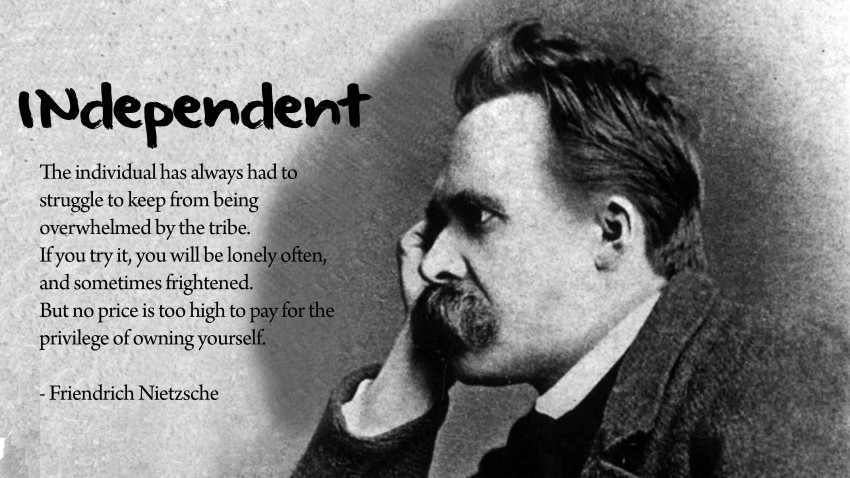


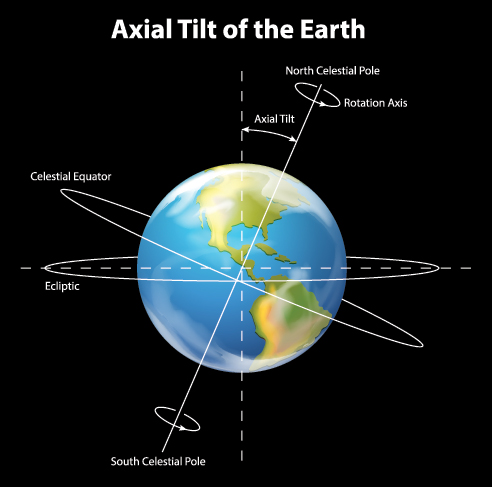



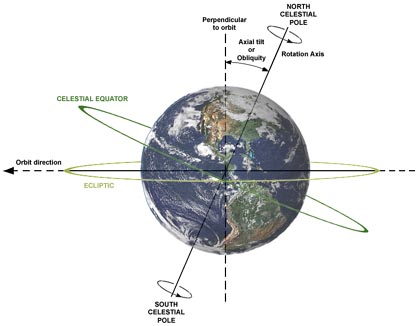







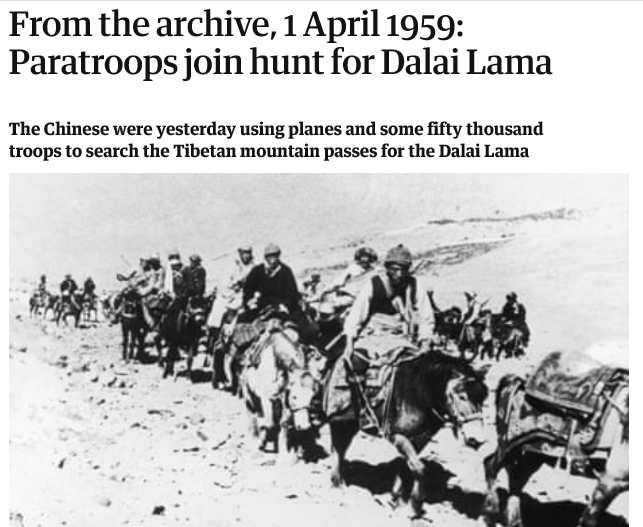


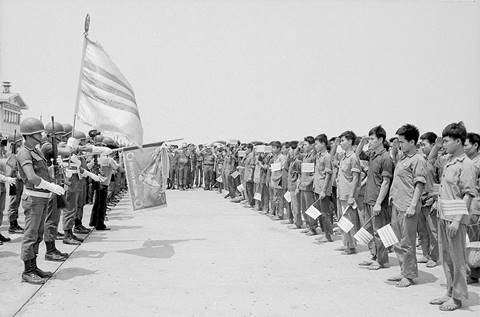




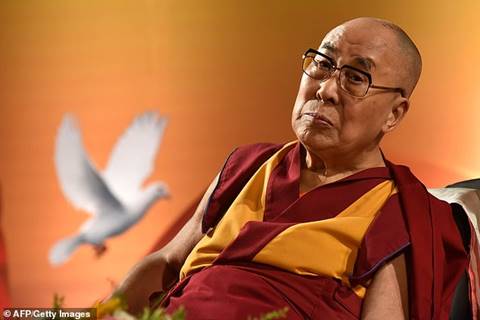
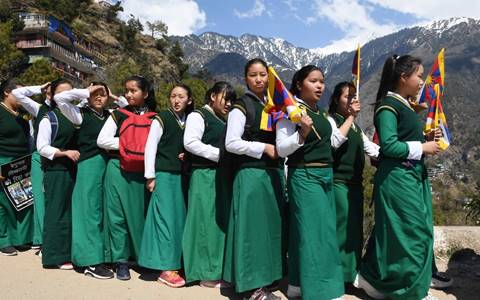




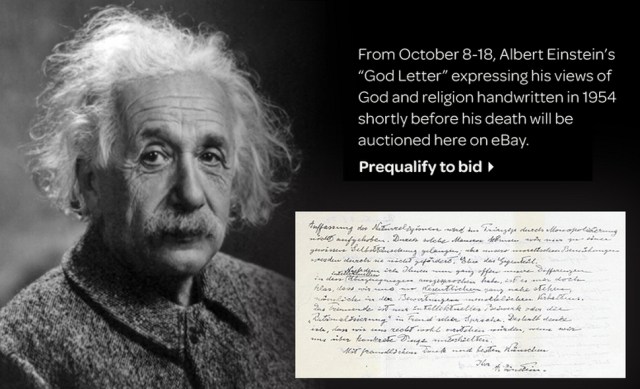


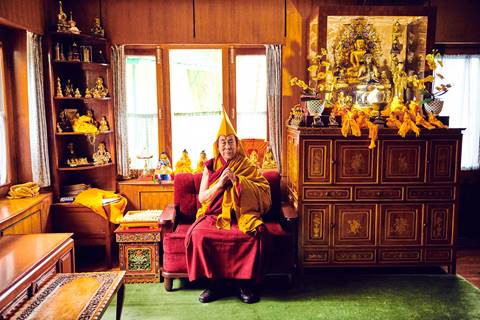
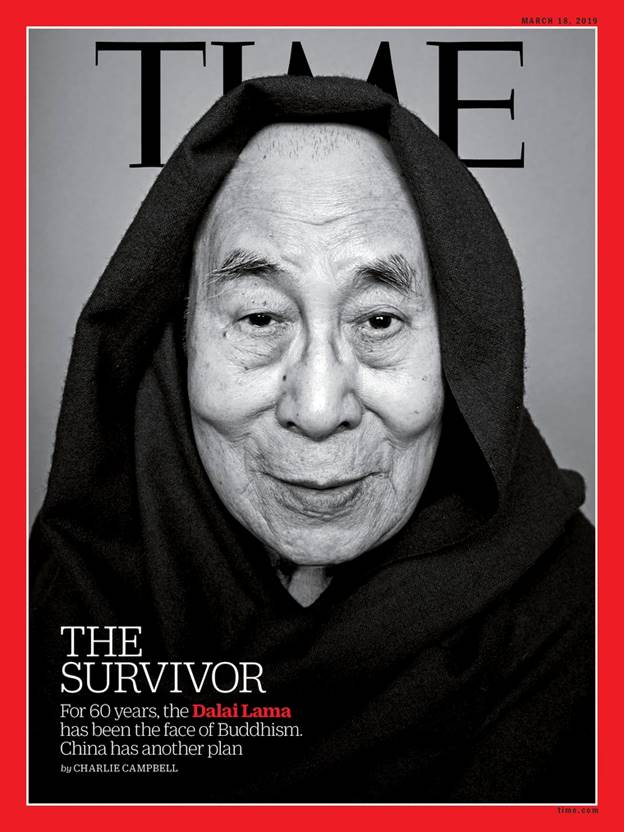

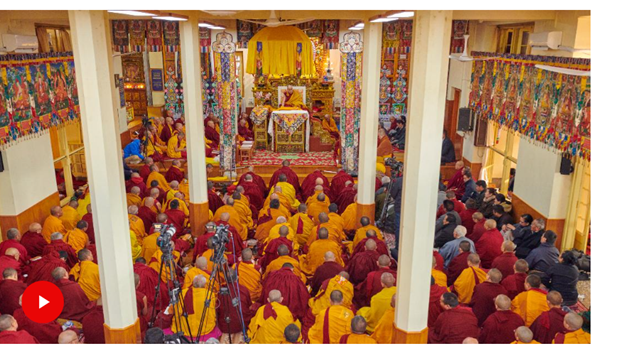
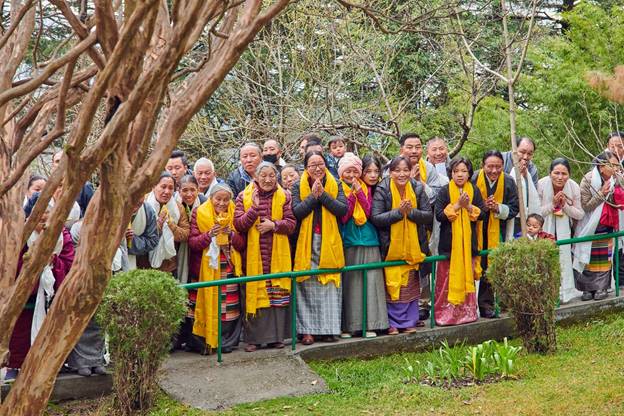
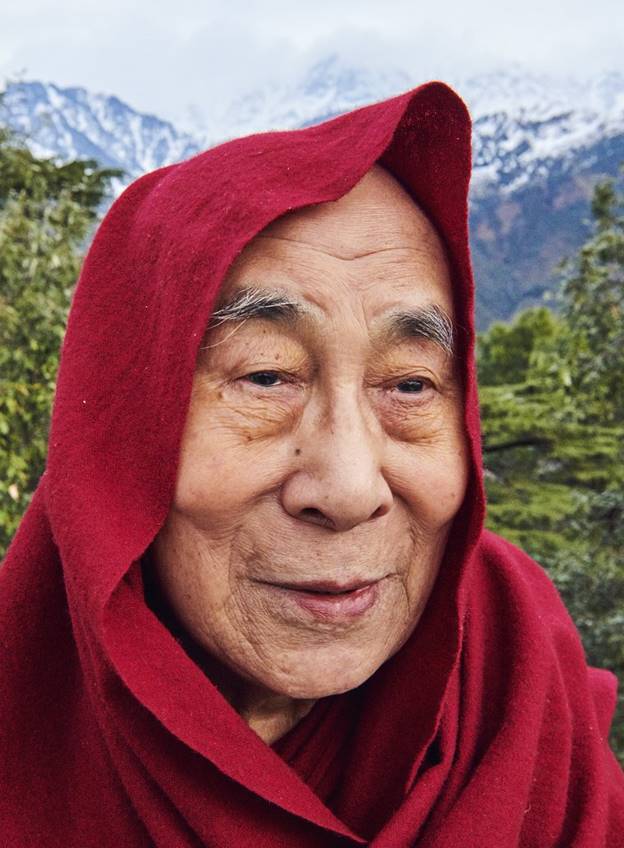
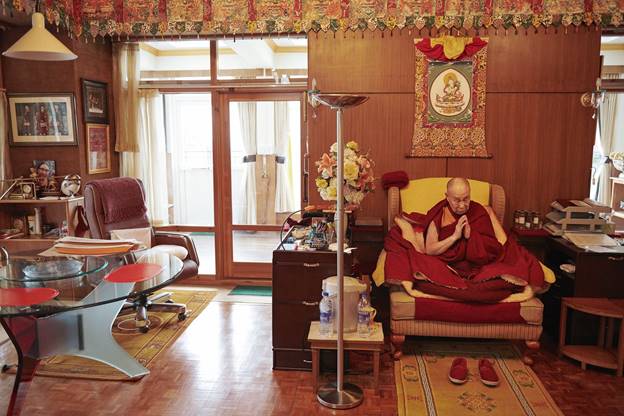
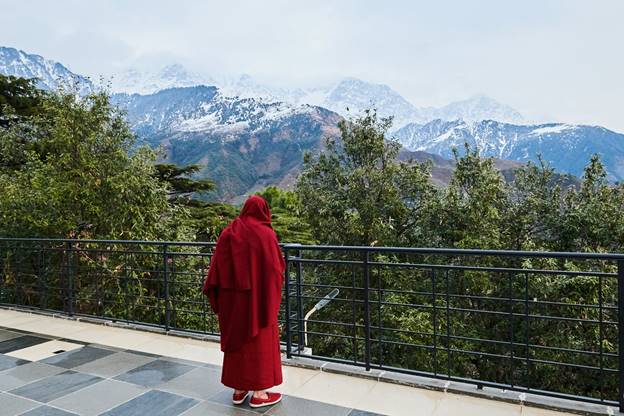


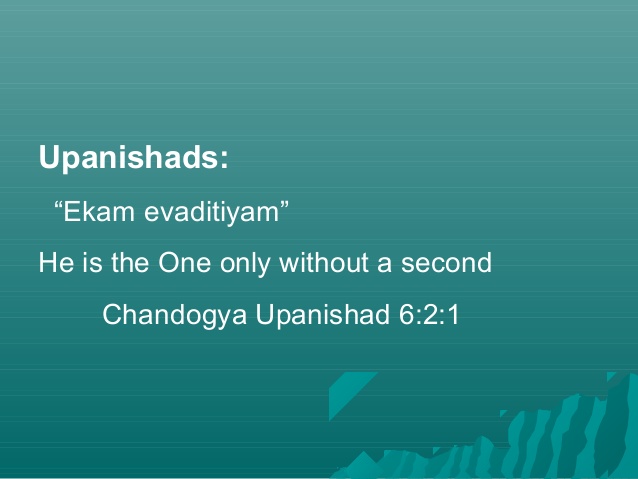
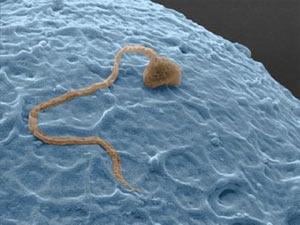
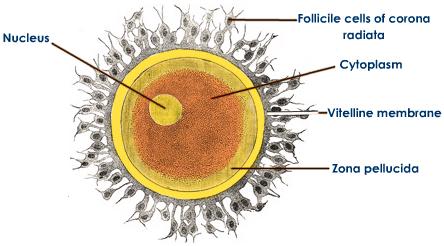



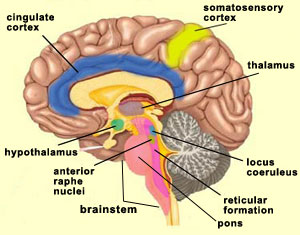
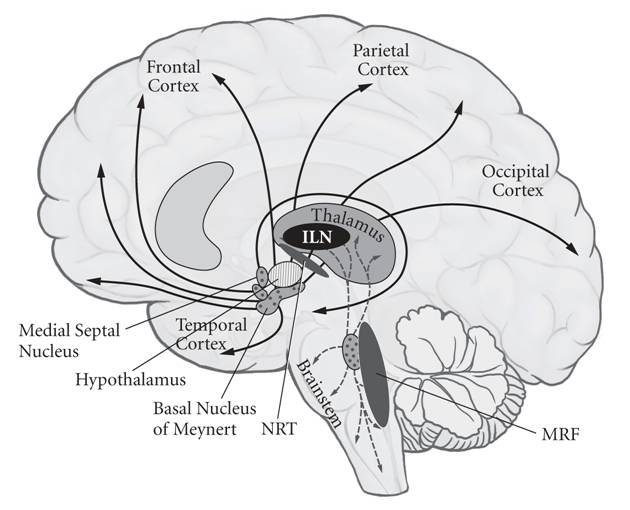


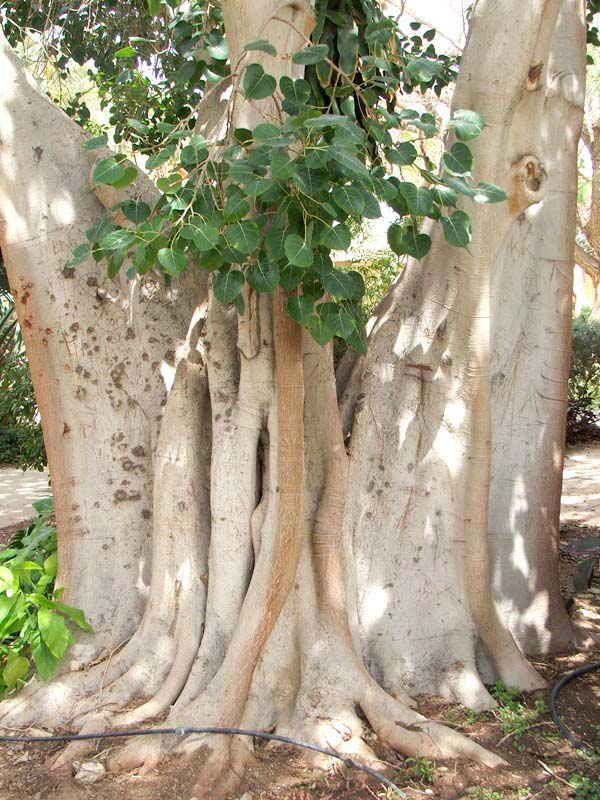
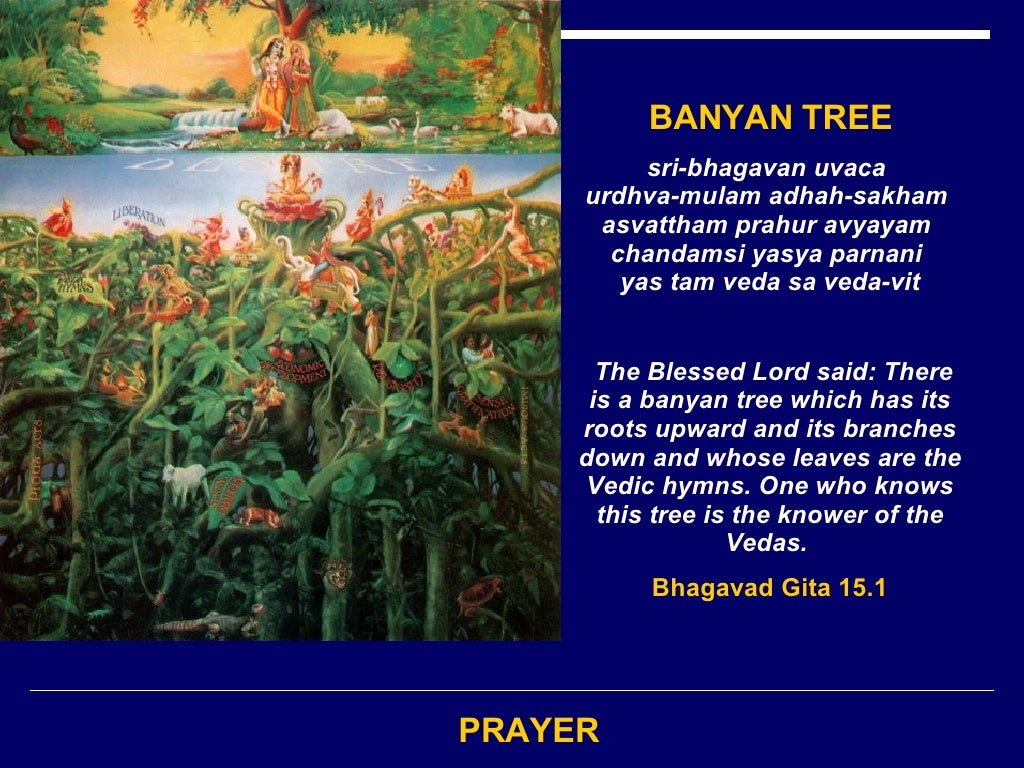
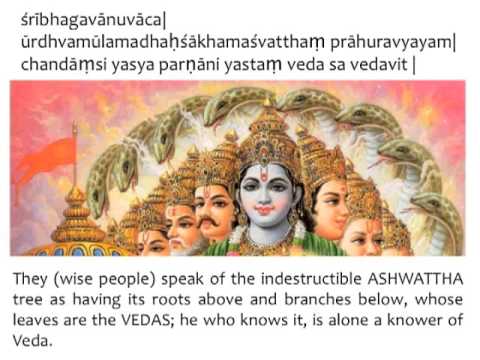



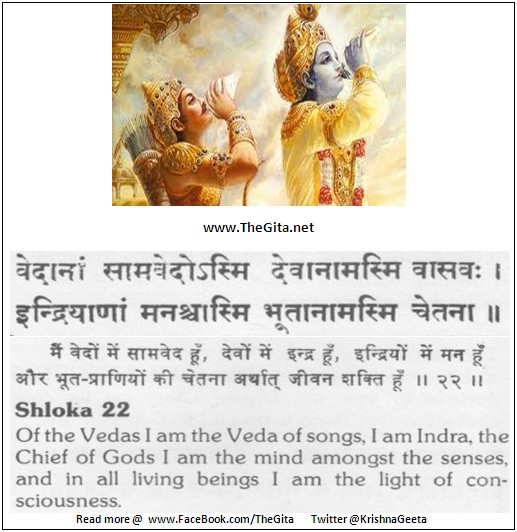
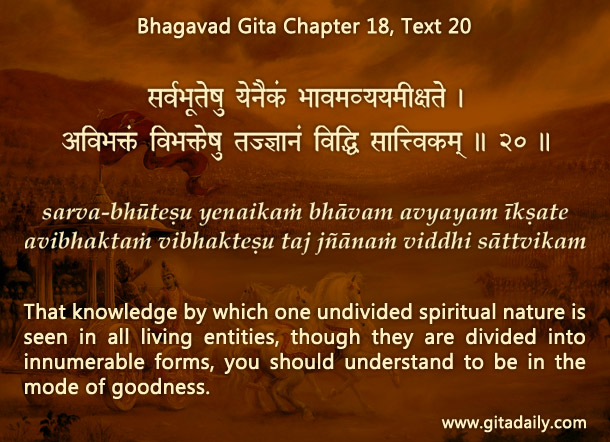
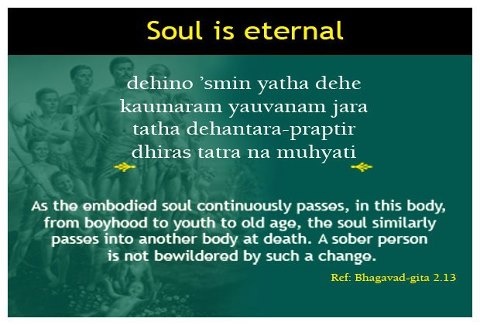
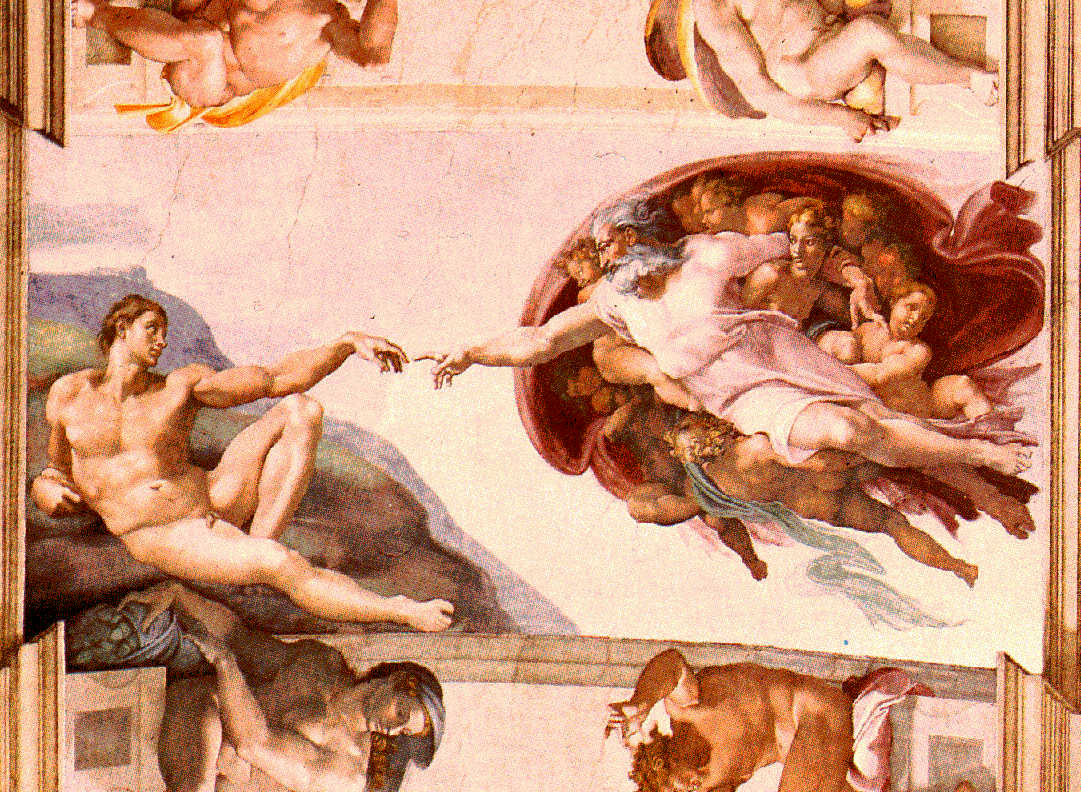
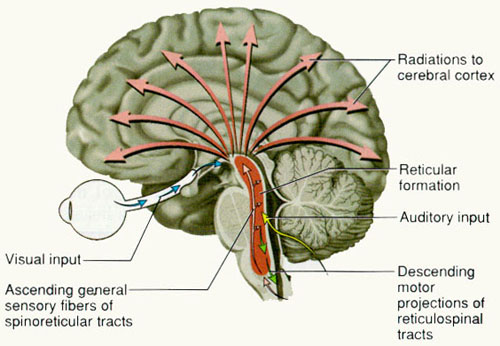
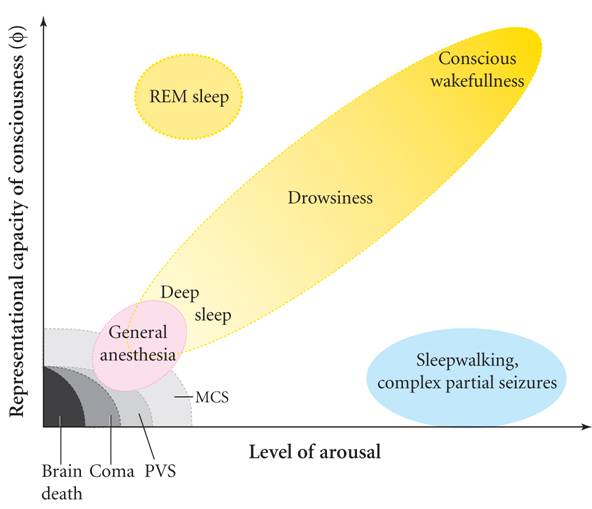


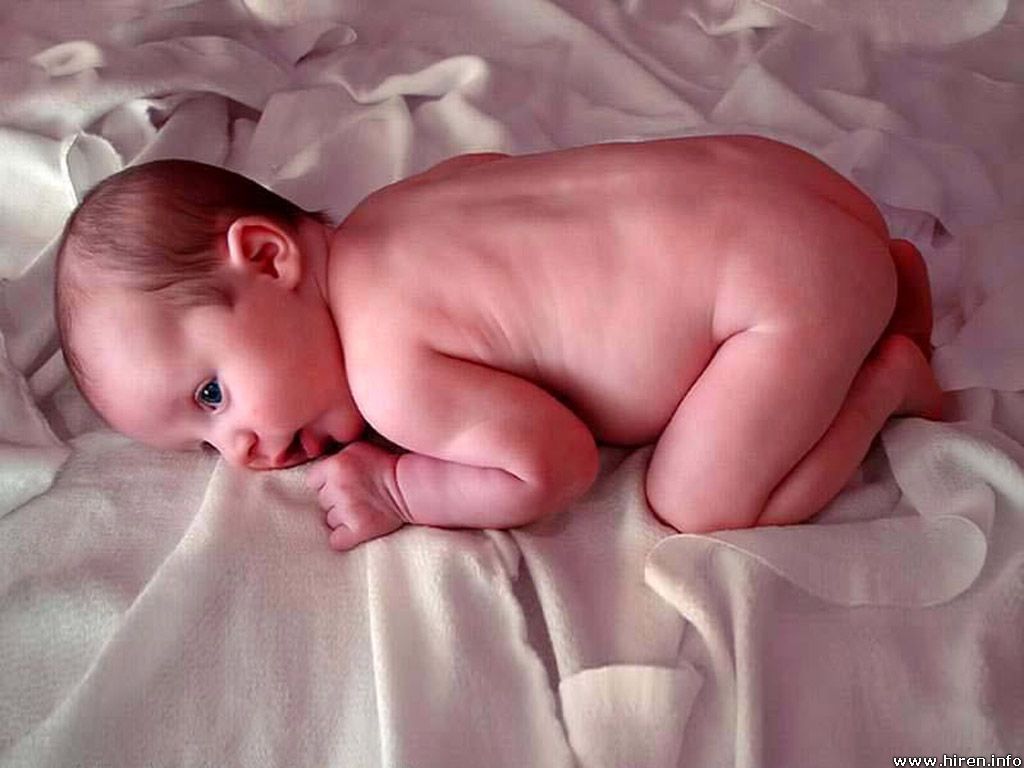
 Whole Dude - Whole Spirituality
