THE US-CHINA TRADE WAR. MY REFLECTIONS ON PRESIDENT NIXON’S ORIGINAL SIN
The term ‘sin’ is portrayed using a variety of terms. The biblical writers describe sin as that condition and activity of human beings that is offensive to God. Sin is a revolt against holiness and sovereign will of God. It is both a condition of the heart, mind, will, affections and the practical outworking of that condition in thoughts, words, and deeds that offend God and transgress His holy law. In secular terms, sin means any offense against good morals, any offense against established law of the Land, and any violation of standard code for human behavior and action.
THE FOUNDING PRINCIPLES OF THE UNITED STATES
My Reflections on President Nixon’s Original Sin: Sin is that condition of the heart, mind, will, affections and the practical outworking of that condition in thoughts, words, and deeds that offend this Declaration of Independence and sin is any action that transgresses the intent of this Declaration of Independence upon which the nation called the United States of America is created.
The Declaration of Independence adopted July 04, 1776 to pronounce the creation of the United States spells in very clear, and transparent terms the American ideal of Government based on the Theory of Natural Rights. This Declaration states the philosophy of Human Freedom and the Nation and its Government is formed by Social Contract. The United States and its elected officials who represent the entity called Government have to adhere to these founding principles and they must be guided by the Laws of Nature which guarantee inalienable rights of man.
Governments are instituted among men to secure their unalienable rights and Governments derive their just powers from the consent of the governed. And for the support of this Human Freedom, we must mutually pledge to each other our Lives, our Fortunes, and our sacred Honor. In this context, I would like to define the term “WHOLE SIN” as a condition of the heart, mind, will, affections and the practical outworking of that condition in thoughts, words, and deeds that offend the Declaration of Independence and transgress the Laws of Nature.
REMEMBERING NIXON-KISSINGER VIETNAM TREASON:
Memorial is anything that serves to help people to remember some person or event. I would like to share the photo images of the Vietnam Veterans War Memorials to remind people that we fought these wars to contain the threat posed by Communism to the doctrine of Human Freedom, and the Rule of Governance called Democracy.
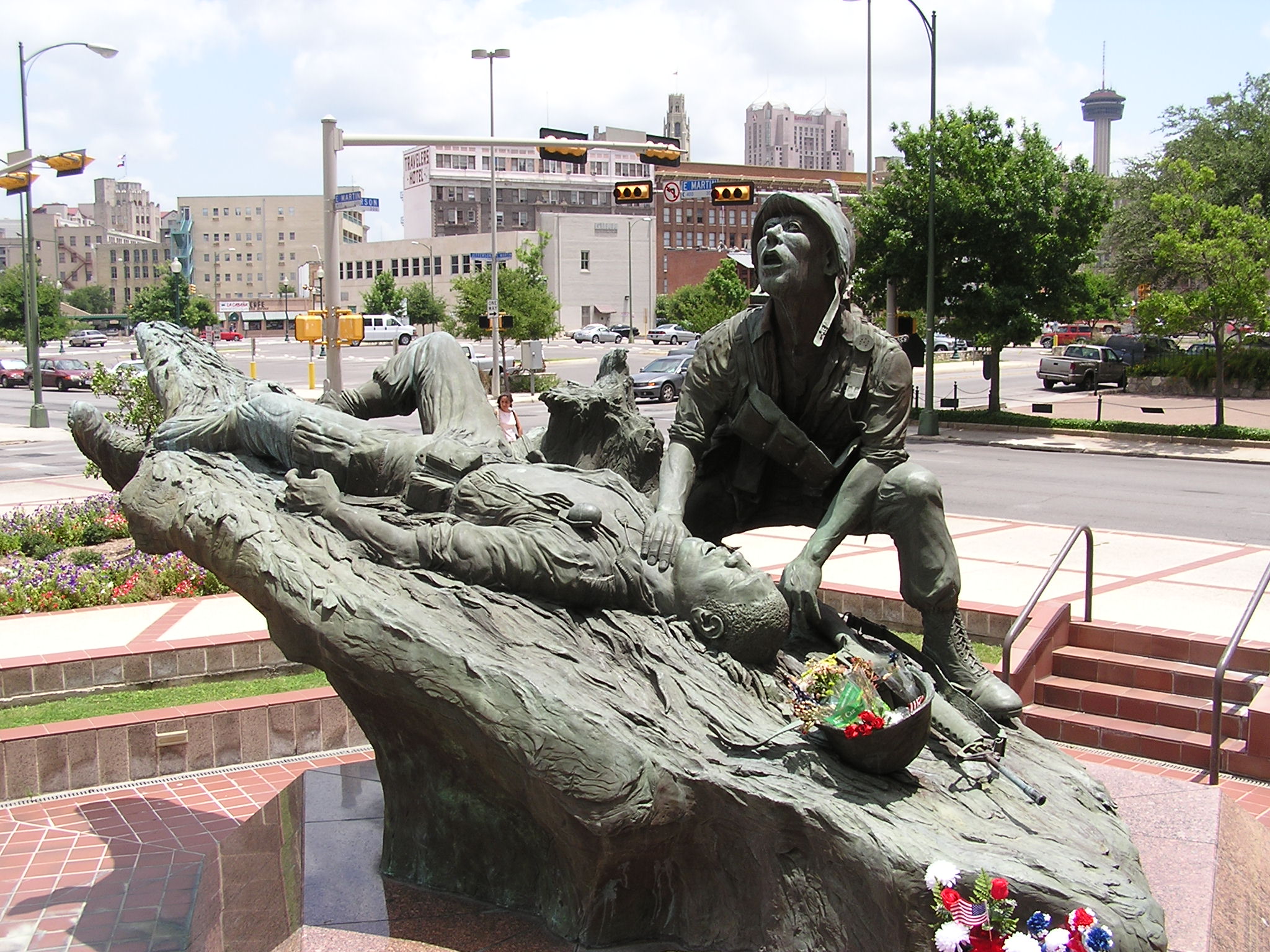
My Reflections on President Nixon’s Original Sin: Remember the Vietnam War. America called its sons and daughters to pledge their Lives, their Fortunes, and their Sacred Honor to fight the Enemy called Communism.My Reflections on President Nixon’s Original Sin: SAN ANTONIO, TEXAS VIETNAM VETERANS MEMORIAL. This monument reminds people that the sons and daughters of the United States of America have pledged their Lives, their Fortunes, and their Sacred Honor to defend Human Freedom, and Democracy and fought the Enemy called Communism.
THE ORIGINAL SIN OF NIXON AND KISSINGER:
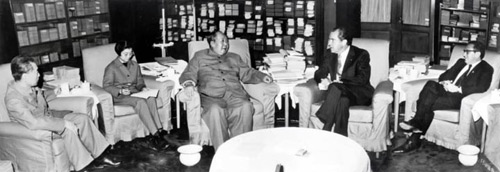
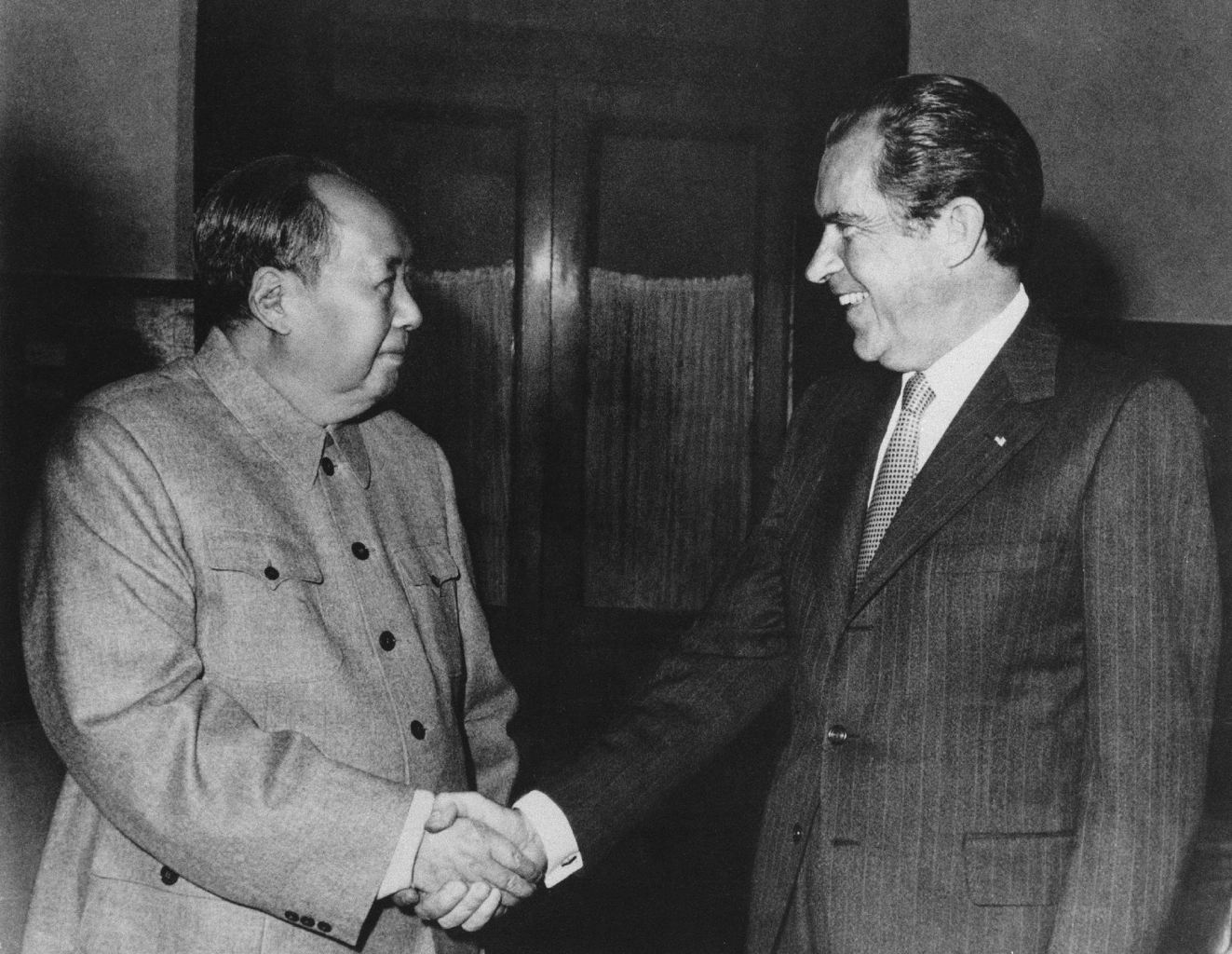
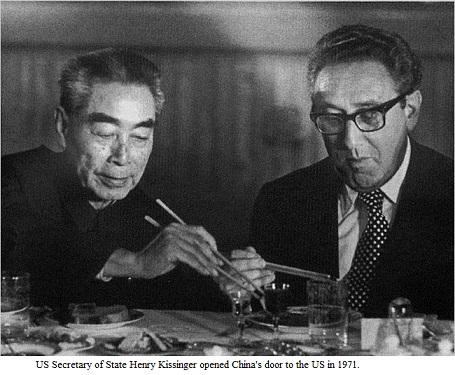
My Reflections on President Nixon’s Original Sin: The prophecy revealed by Father Moses in The Old Testament, The Fifth Book of Moses, The Book of Deuteronomy, Chapter 28, verses 47 to 50 has come true in the lives of American people. The RED DRAGON, The People’s Republic of China, the Communist nation is the Enemy that Americans will be forced to serve as slaves.My reflections on President Nixon’s Original Sin: This photo image is the evidence for the “Original Sin.” Chairman Mao Zedong, and Prime Minister Zhou-Enlai are guilty of the crime called “GENOCIDE.” The UN Convention of 1949 defined the crime of Genocide; the systematic destruction by government of a racial, religious, or ethnic group. Dr. Henry Alfred Kissinger of National Security Affairs is guilty of the crime called the misuse and abuse of power. His sinful actions represent the violation of the Supreme Law established by the Constitution of The United States of America. He usurped the powers entitled to the Secretary of State. He conducted secret diplomacy before he was administered the oath to the Office and before he pledged his allegiance to the Constitution.
In the history of the nation called The United States of America, President Richard Milhous Nixon(37th president of the US 1969-1974), and Dr. Henry Alfred Kissinger( initially appointed by President Nixon in 1969 as an Adviser, National Security Affairs and later the Secretary of State from September 1973-1977) are guilty of the offense called ‘The Original Sin’ for they transgressed the Supreme Law of this nation.
We have to recognize China’s Cultural Revolution of 1966 – 1969 as a mass campaign sponsored by the Communist government to commit “GENOCIDE.” Many thousands died and there was no proper accounting of the atrocities committed and there was never a full inquiry of this human tragedy. The Cultural Revolution officially ended in 1969, but we all know that many of its excesses continued until the death of Communist Party leader Mao Tse-Tung in 1976.
In the words that I chose from The Old Testament, The Fifth Book of Moses, The Book of Deuteronomy, Chapter 28, verses 47 to 50, I describe their actions of “WHOLE SIN” and its consequences as follows:
“Because you did not serve the LORD your God joyfully and gladly in the time of prosperity, therefore in hunger and thirst, in nakedness and dire poverty, you will serve the enemies the LORD sends against you. The LORD will bring a nation against you from far away, from the ends of the Earth, like an eagle swooping down, a nation whose language you will not understand, a fierce-looking nation without respect for the old or pity for the young.”
I would like to share some of these photo images that reveal the transgression of Natural Law and its consequences. The people of The United States of America failed to serve the LORD GOD joyfully and gladly in the time of prosperity, will now serve the Enemy that LORD sent against them.
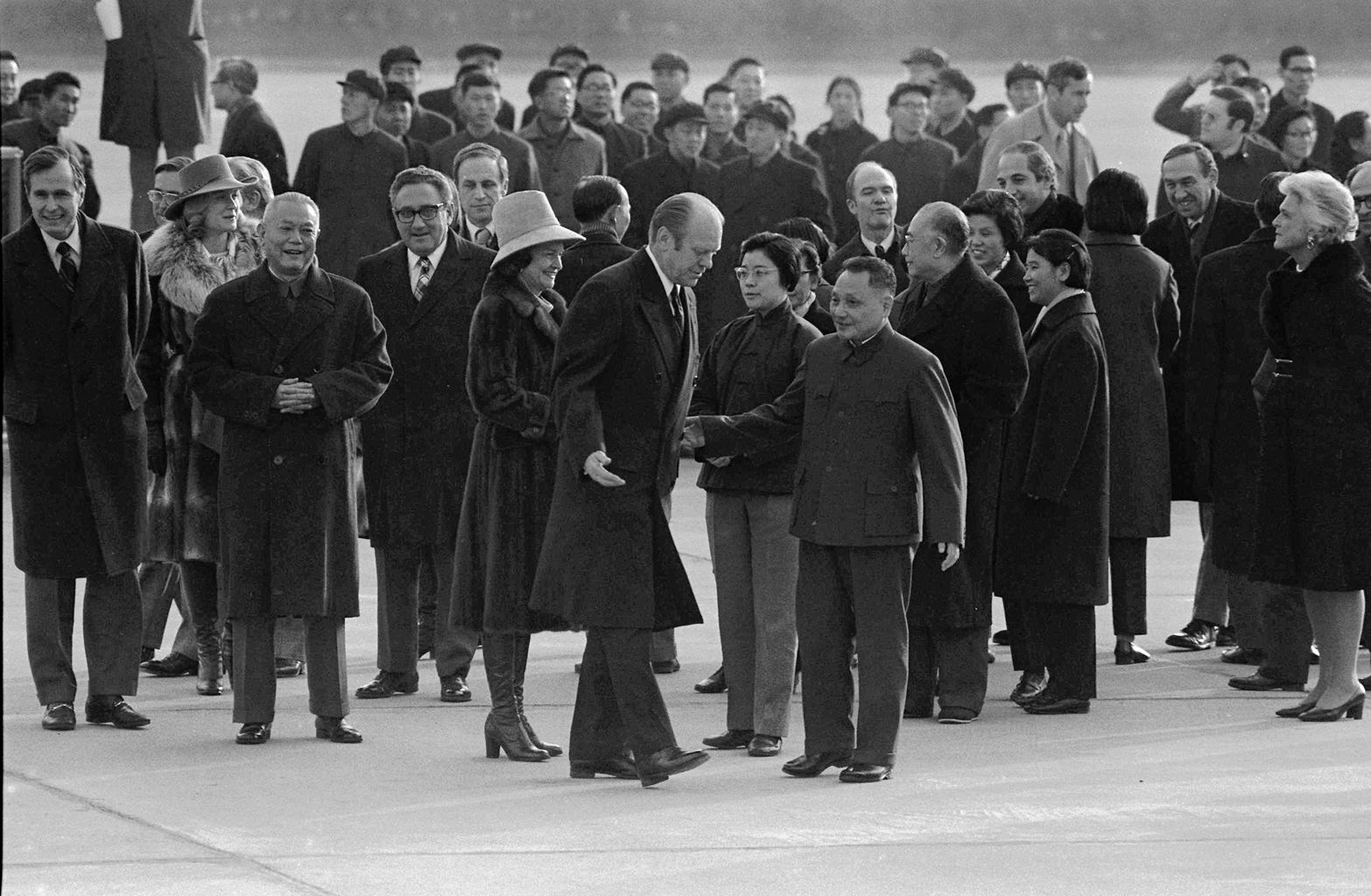
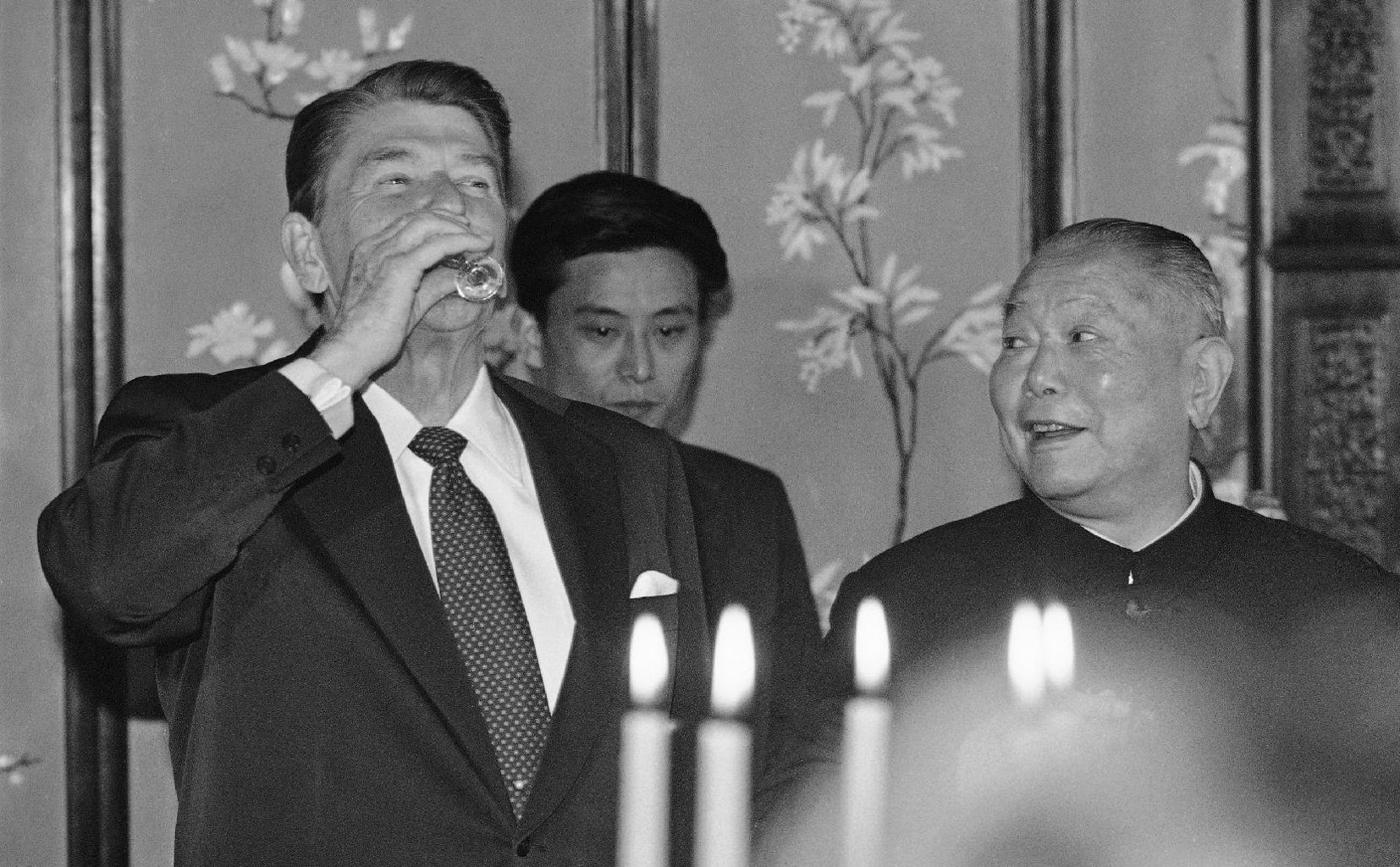
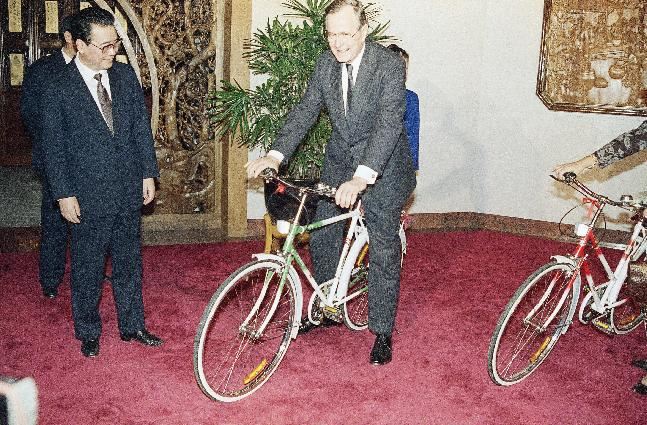
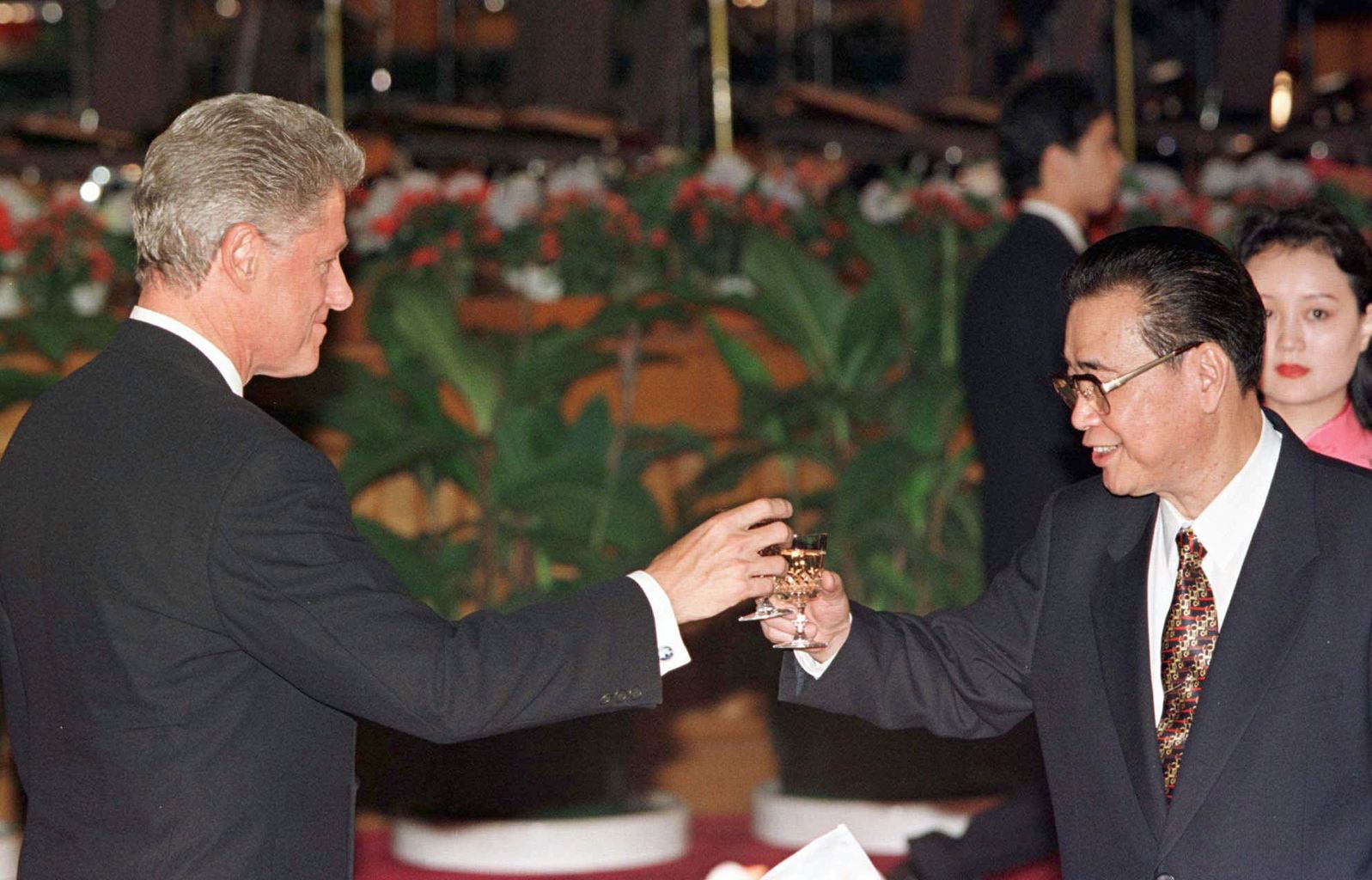
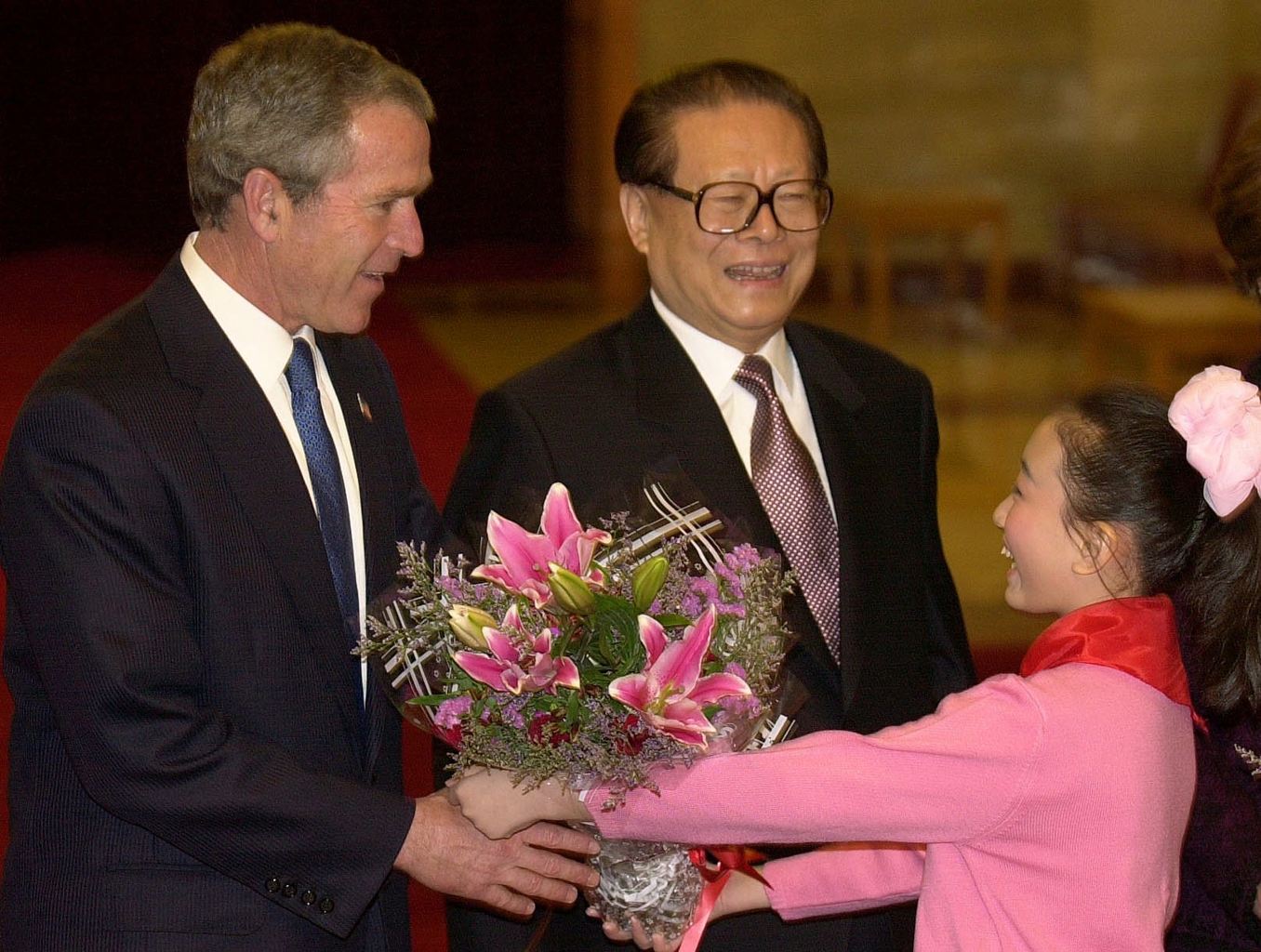
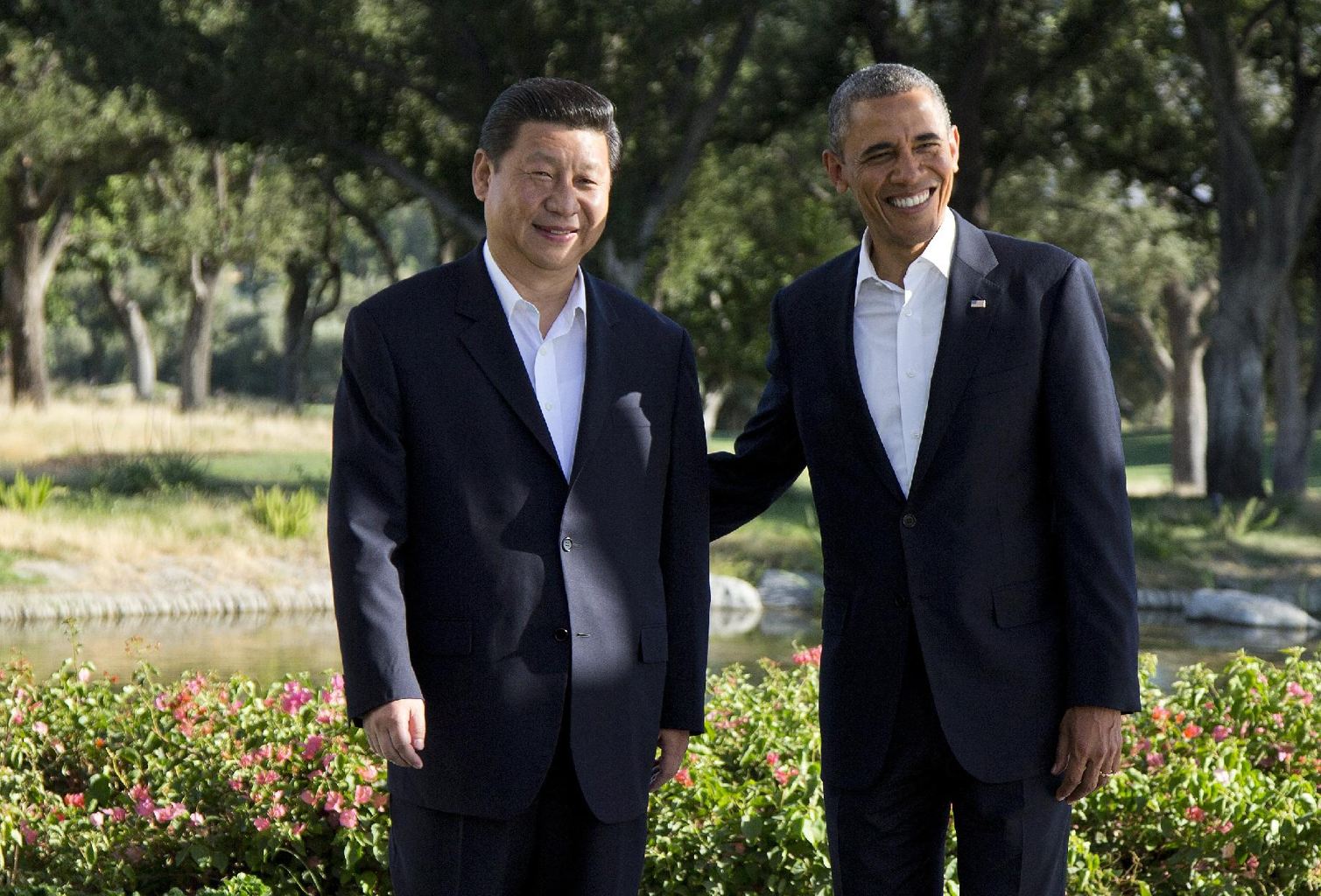
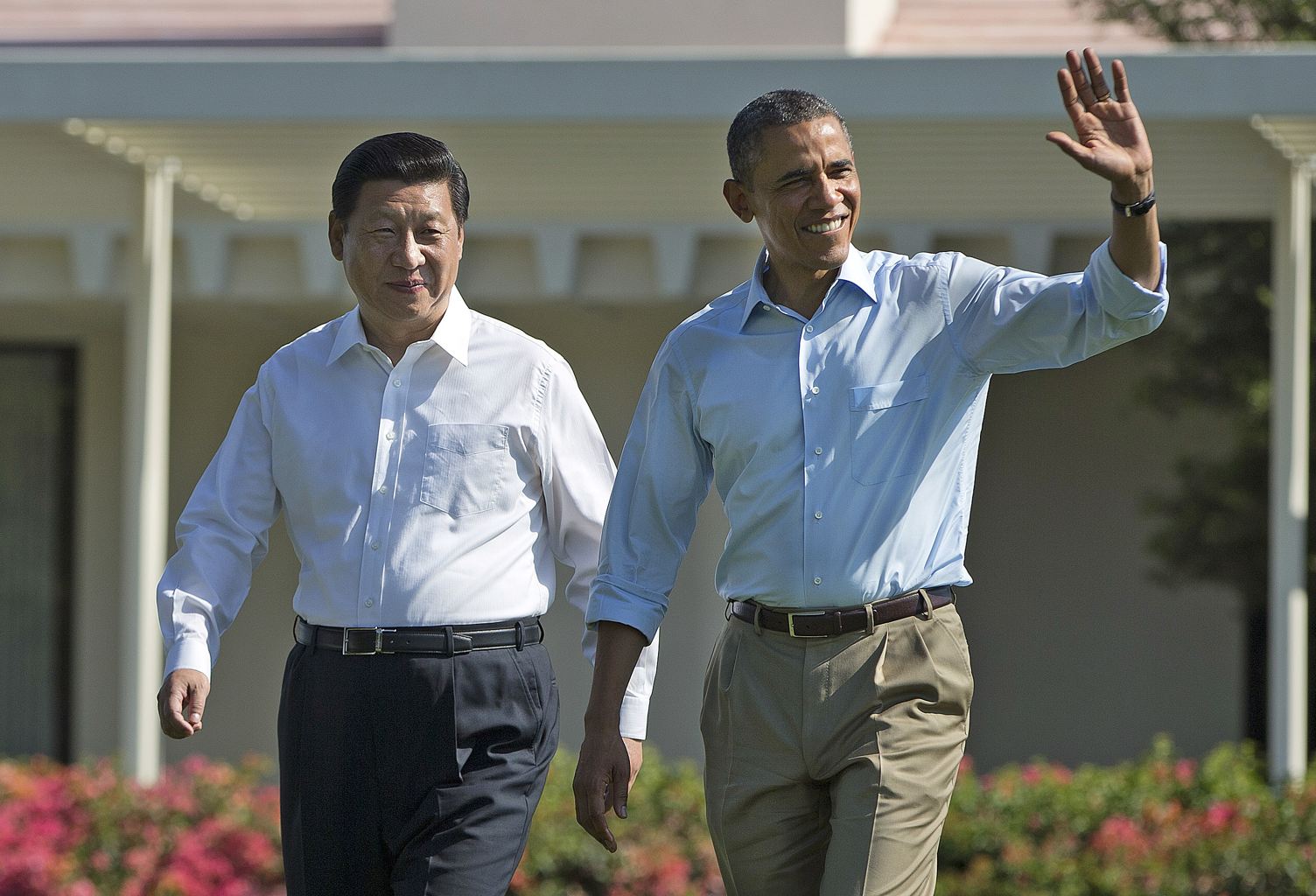
My Reflections on President Nixon’s Original Sin: February 21, 1972. President Richard Nixon with Communist leader Mao-Tse Tung in Peking(Beijing). Chairman Mao represents the Face of Crimes Against Humanity. The UN Convention of 1949 has defined the crime of Genocide as systematic destruction by a government of a racial, religious, or ethnic group. When this photo was taken, the United States was officially engaged in a battle in Vietnam to contain the direct threat posed by Communism. China’s Communist Party leader represents the face of that Enemy.My Reflections on President Nixon’s Original Sin: Communist China’s Premier Zhou En-Lai and the US National Security Adviser Dr. Henry Alfred Kissinger are the faces that represent the Original Sin, they are guilty of the offense called transgression of Law. William P. Rogers was the Secretary of State from 1969 to 1973. Dr. Kissinger had usurped the powers of the Secretary of State and had misused and had abused his office to conduct secret diplomatic negotiations with the Enemy while the United States was openly fighting a grim battle to contain the threat of Communism in Vietnam.My Reflections on President Nixon’s Original Sin: December 01, 1975. President Gerald Ford with China’s Communist leader Deng Xiaoping in Beijing. George Herbert Walker Bush who later became CIA’s Director on January 30, 1976, is also seen in this photo. Both President Ford and George Bush were fully aware of America’s partnership with India, and Tibet to fight the military threat posed by Communism.My Reflections on President Nixon’s Original Sin: January 30, 1979. The White House Ceremony. President James Earl Carter(39th president of the US 1977-1981) with Chinese Communist Party leader Teng Hsiao Ping. Does the Declaration of Independence envisage friendly relations with the Communists?My Reflections on President Nixon’s Original Sin: April 26, 1984. President Ronald Wilson Reagan(40th president of the US 1981-1989) with China’s Communist Party leader and President Li Xiannian. President Reagan, who demanded the tearing down of the ‘Berlin Wall’, must have avoided the immoral friendship with the Communists.My Reflections on President Nixon’s Original Sin: February 25, 1989. President George Herbert Walker Bush(41st president of the US 1989-1993) riding the bike given by China’s Communist Party leader, Premier Li Pang in Beijing. President Bush who had earlier served as the Director of CIA is fully aware of the US military alliance/pact with India, and Tibet to face the military threat posed by Communist China’s occupation of Tibet since 1950.My Reflections on President Nixon’s Original Sin: June 27, 1998. President William Jefferson Clinton(42nd President of the US 1993-2001) with China’s Communist Party leader and Premier Li Peng in Beijing. A willingness to serve the Enemy.My Reflections on President Nixon’s Original Sin: February 21, 2002. President George W. Bush(43rd president of the US) with China’s Communist Party leader, President Jiang Zemin in Beijing. Communist China’s lack of respect for Human Rights should deter the United States from pursuing this path of self-destruction.My Reflections on President Nixon’s Original Sin: Friday, June 07, 2013. President Barack Obama with China’s Communist Party leader and President Xi Jinping. The prophecy predicted in the Book of Deuteronomy, Chapter 28, verses 47-50 is coming true.My Reflections on President Nixon’s Original Sin: Saturday, June 08, 2013. Rancho Mirage, California. President Barack Obama with China’s Communist Party leader, President Jiang Zemin. The word ‘Mirage’ describes an Optical Illusion, something that falsely appears to be real. American Citizens have to wake up to the reality of the Enemy who has arrived on their shores from a distant land. ( The Book of Deuteronomy, Chapter 28, verses 47-50.)
The Supreme Law of the United States of America is called The Constitution of The United States of America. The Constitution was preceded by The Declaration of Independence, the written document that pronounced the creation of the nation called The United States of America. I am respectfully claiming that the elected representatives and other officials that constitute the Government have transgressed the Laws of the nation when they began the unholy relationship with Communist China which is opposed to Human Freedom, and the principle of governance by Social Contract called Democracy.
Rudra N. Rebbapragada, Ann Arbor, Michigan, U.S.A.,
In my analysis, the Tibetan Identity, the Identity of the Land and all of its denizens is predetermined, predestined, and is defined by Nature; by Natural Causes, Natural Forces, Natural Conditions, Natural Mechanisms, and Natural Factors.
Tibet is never a part of China. It may be correct to claim that China is inside Tibet due to the unjust, unfair, and illegal occupation using brute military force which is trying to mask the Natural Reality called Tibet.
Rudra Narasimham Rebbapragada
SPECIAL FRONTIER FORCE
A REFLECTION
A trip to Tibet: Whose country is it anyway?
By Peter Fabricius• 16 August 2019
Tibetan performers dance the Tibetan traditional Guozhuang dance during the opening ceremony of Naqu Horse Racing Festival in Naqu country, Tibet, China, 10 August 2013. The Naqu Horse Racing Festival is held during August 10 to 14 attracting local Tibetan horse riders to compete in traditional equestrianism and display their horse-riding skills. It also as an opportunity for Tibetan families to gather enjoying their leisure time. EPA/WU HONG
China has been trying for decades to convince the world that it is the true custodian – and liberator – of a magical, spiritual land high in the Himalaya mountains. The government recently took a group of South African opinion-makers to Tibet to show them what it’s been doing there since its army invaded in 1951.
“Seeing is believing,” China’s ambassador to South Africa Lin Songtian said before we left for Tibet. His idea was that the visit would dispel the Western-propagated, anti-Chinese myths about this controversial – what to call it, country? – for many Tibetans. For the Chinese government, it is the “Tibet Autonomous Region” (TAR) of China.
There is much to see and marvel at in Tibet, though believing is inevitably a little more complicated. Certainly, it’s easy to see why Tibetans love their country and why some (who knows how many?) would like it to be just Tibet.
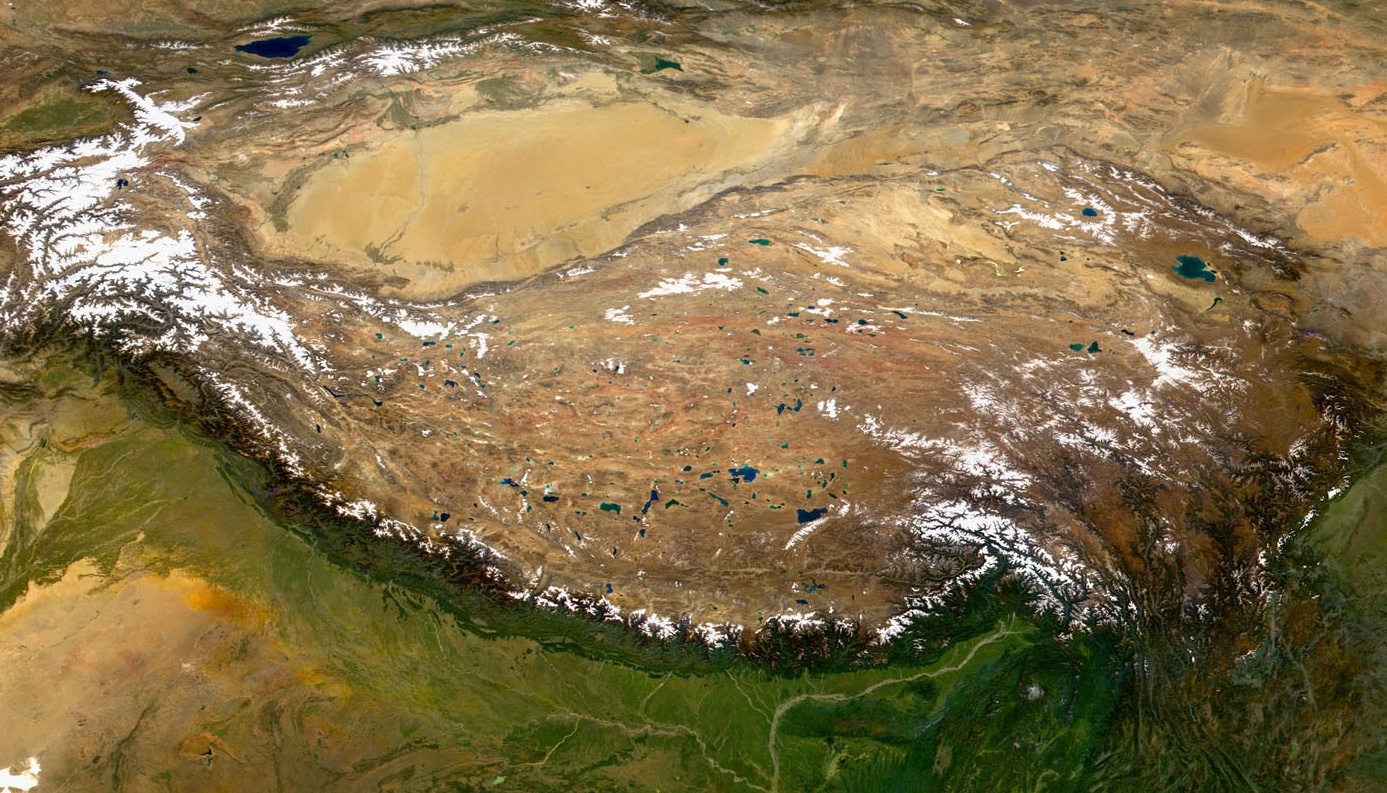
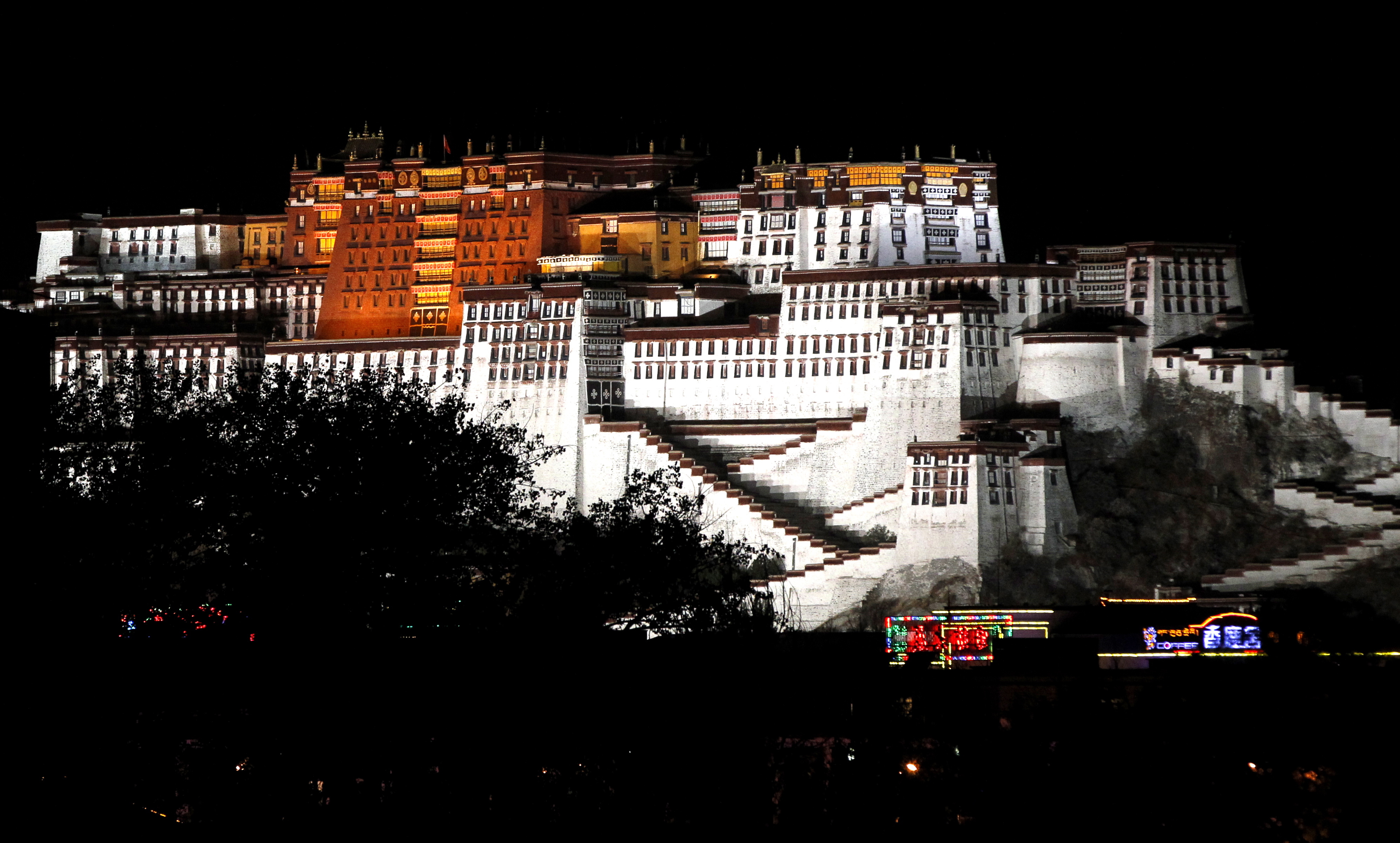
The majestic backdrop of the soaring misty snow-capped peaks of the Himalayas and its foothills, disgorging countless churning rivers and streams to rush through grassy uplands dotted with shaggy yaks to the distant sea, the monumental Potala Palace and the Jokhang Temple with its golden roofs in Lhasa … all these and more give this place its unique character as “The Roof of the World” – in the words of tourist brochures.
The night lit Potala Palace as it towers over the city of Lhasa, one of the highest cities in the world and the capital of Tibet, 18 October 2011. TEPA/BARBARA WALTON
The South African journalists and academics on this trip can attest to the loftiness of Tibet. Lhasa perches at 3,600 meters (twice as high as Johannesburg) in the Himalayan foothills. One day we climbed to 5,200 meters (just shy of the summit of Kilimanjaro, for comparative purposes) to reach the shimmering iridescent blue lake of Namtso. Our hosts considerately provided a large cylinder of oxygen in our bus at all times so we could gulp high-octane air when altitude sickness threatened.
There were also oxygen canisters in our hotel rooms in the aptly named Shangri-La Hotel, which also boasted an “oxygen lounge” where one could breathe oxygenated air.
Like their landscape, the Tibetan people are quite distinct, ethnically and culturally, with their own language; their own, often fervent, a brand of Buddhism; their physical appearance, with coppery-bronze skin color; and their unique clothing and customs.
Does this distinct identity not justify the demand for self-determination – or at least a greater measure of it – by the Dalai Lama and his government-in-exile in India, I asked at the China Tibetology Research Center in Beijing.
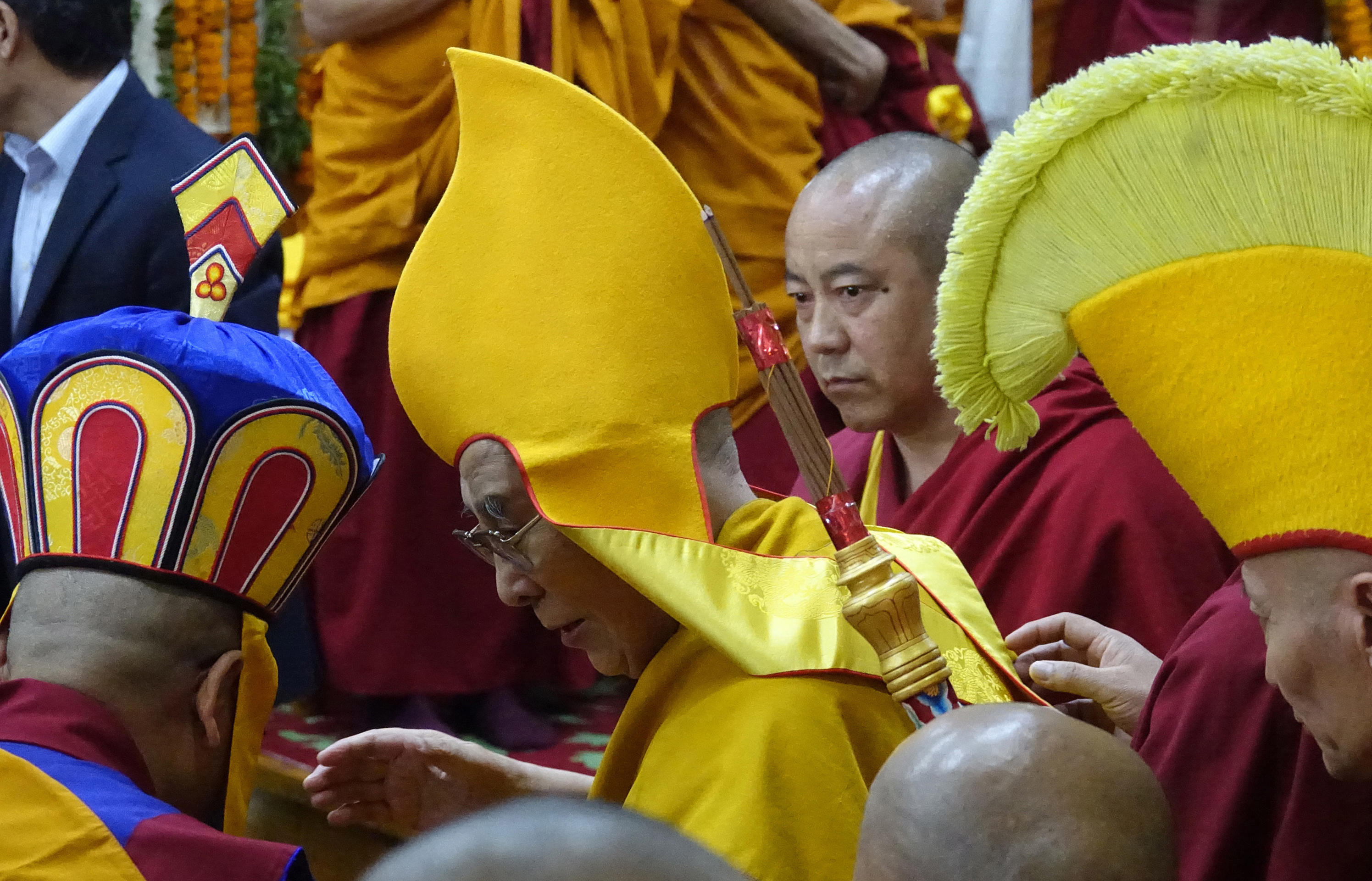
Tibetan spiritual leader Dalai Lama (C) attends a Long Life offering prayer, at the main Buddhist temple of Tsuglagkhang, near the town of Dharamsala, India, 17 May 2019. EPA-EFE/SANJAY BAID
Yao Maochen, the curator of the museum of Tibetan culture at the center, acknowledged that, according to original Marxist doctrine, different ethnic groups do have to the right to seek independence and said the Communist Party of China (CPC) explored this possibility before it came to power in 1949.
“But, for the country and society, stability comes first,” Yao added. “On the one hand, we have to respect the identity of ethnic groups. But, on the other hand, we have to maintain national stability because only with national stability can peace, happiness and development become possible.”
To discuss ethnic independence theoretically was meaningless, he said, without putting it in the context of not only of China’s national stability but also its national law – which makes splitting up the country illegal. Independence for any part of China would also be contrary to the will of the majority of the Chinese as it would violate the Chinese tradition of different ethnic groups working together against foreign aggression and coexisting “like the seeds of a pomegranate”.
According to Sam van Schaik in his “Tibet; A History”, Mao Zedong himself argued in the 1930s that Tibetan, Mongol and Muslim minorities should be allowed independence, but by the 1940s his view had hardened to offering them just autonomy within China. Van Schaik thought Mao came to believe China would be much safer defending its southwestern flank behind the towering Himalayas than it would be doing so on the exposed banks of the Yangzi and other rivers.
These arguments, however, put China’s interests before Tibet’s, one might counter. What about the Tibetans? China does have one big argument for why it was also in the interest of Tibet’s people that China entered Tibet in 1951 and began a process of “peaceful democratic reform”.
It says it did so to emancipate most Tibetan people from serfdom under what it calls the feudal theocracy of the 14thDalai Lama (the same man the world now knows simply as “the Dalai Lama”, though he is the latest in a long line of Dalai Lamas who governed Tibet with lesser or greater success from 1543 – until he fled into exile in 1959).
The Exhibition Hall on the Emancipation of Tibet from Serfdom in Lhasa’s Tibet Museum of Natural Science tells horrific illustrated stories of atrocities allegedly conducted by the feudal masters – the landlords, senior government officials and high lamas (or religious leaders) – against the serfs. These include photographs of manacled and shackled people sweating in the fields, living in animal pens and “suffering savage punishments, including cutting off hands or feet and even peeling off skins”.
The photographs show instruments that were allegedly “used to gouge out eyes of the serfs”’, along with a “scorpion cave to torture serfs”.
The museum avers that 5% of the ruling class owned 95% of the wealth of society.
The exhibition suffers from inattention to chronological detail. For instance, our guide was unable to say when the photographs were taken. Were conditions still so atrocious when China entered in 1951 or had they improved by then?
What is not in dispute is that Tibet was a feudal society under the Dalai Lamas (and before them), with most citizens bonded to landlords and unable to sell their labor on an open market; i.e. virtual slaves.
The Chinese did indeed emancipate the population, seizing the land of theocrats and handing it to workers. Several senior officials we met proudly told us “my father was a serf”.
“The serfs are now masters of their own destiny” was a slogan we heard from many officials.
The government in Beijing has also brought broader development to Tibet, including several new towns, 90,000kms of roads, several new railways – including extending the mainline from Beijing to reach Lhasa – five modern airports, an electric power grid that reaches 2.19 million people or 70% of the population. And so on. The scale of infrastructural development is typically Chinese: monumental.
Ambassador Lin is particularly proud of the fact that the national government has made a special effort to elevate much of the road and railway networks to allow animals such as yak and Tibetan antelope, to move freely beneath them across their ranges.
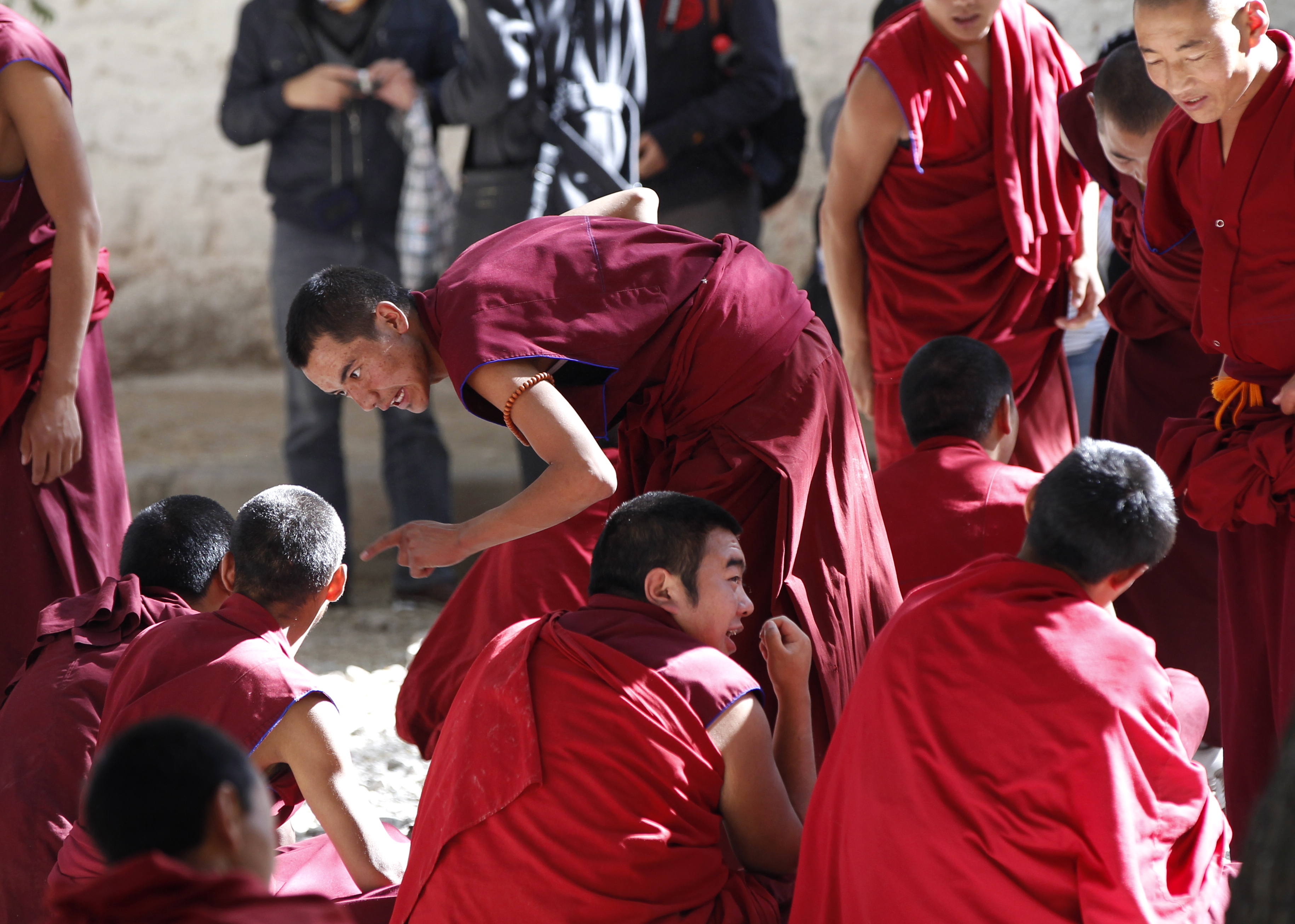
Tibetan Buddhist monks debate Buddhism in the courtyard of the Sera monastery in Lhasa, one of the highest cities in the world and the capital of Tibet, 18 October 2011. EPA/BARBARA WALTON
Beijing and the government of the Tibet Autonomous Region have also focussed on education, raising primary school enrolment to 99.64% and decreasing illiteracy from 95% in the early 1950s to less than 0.57% today, according to government statistics.
Nine years of compulsory education are provided in all counties and 15 years of free education in agricultural and pastoral areas and to the disadvantaged.
Officials like to say life expectancy has doubled under Chinese rule, from 35.5 years in 59 to 70.6 today. Medical treatment is cheap for all and free for the needy.
Tibet’s gross domestic product was 147,76 yuan (or RMB) last year, which, in a population of some 3.4 million and with a current exchange rate of about seven yuan to the US dollar, gives a GDP per capita per annum of about $6,154.
Wang Daiyuan, Head & Research Fellow, Institute of Economic Studies of the Academy of Social Science in Lhasa, described this as being “just under” China’s overall GDP per capita.
Most statistics put the latter at about $9,770, so Tibet has some way to go. Wang’s explanation is that Tibet is still catching up after a slow start and, helped by Beijing’s emphasis on developing its outlying areas, its GDP is growing faster than that of any other region and it will match the national average in a two to three years.
His colleague Duoqing, head of the academy’s Institute of Rural Economic Studies, notes that the number of Tibetans still living in poverty has been brought down from 850,000 a few years ago to 150,000.
The government intends to reduce that number to zero by the end of this year, through its targeted poverty alleviation strategy. “Targeted”, as he underscores, means the authorities have to know the reasons for the poverty of each of those 150,000 people.
The strategy includes industrial development (though avoiding damage to the pristine environment); resettlement of farmers in more fertile areas; better education, including scholarships; ecological stewardship – in the form of government-paid jobs to take care of grasslands and rivers; providing for the basic needs of elderly; and skills training.
We saw varied examples of Beijing’s developmental interventions, including a free home in Lhasa for elderly people who have no family to care for them; a yak-meat agro-business where the hydroponic growth of barley feed for the animals is controlled remotely from Beijing, and a barley-beer brewery where the young entrepreneur gets 100,000 yuan a year from the central government to train college graduates to run pubs he is establishing to sell his product.
But if Beijing has brought impressive general development to Tibet, has it also preserved and nurtured the unique Tibetan culture? This includes the Buddhist religion, which arrived there 1,400 years ago and was inextricably intertwined with its politics – until the Peoples’ Republic moved in in 1951?
During the early years, peaking with Mao’s disastrous Great Leap Forward and Cultural Revolution in the late 1950s and early 1960s, many monasteries, and Buddhist artifacts were destroyed in the orgy of iconoclastic pillaging that ravaged China, Van Schaik notes.
China came to realize that to compete with the Dalai Lama on the world stage, and in Tibet itself, it had to reinvent itself as a custodian of Tibetan culture, including Buddhism.
Now it boasts of spending large amounts of money on preserving and maintaining Tibetan cultural relics – including more than two billion yuan from 2001 to 2015, with another 1,8 billion-plus earmarked for 2016 to 2020.
It says it has allocated funds and gold and silver to maintain and protect some of Tibet’s fabulous temples and monasteries such as Potala Palace, Jokhang Temple, the ornate former Dalai Lama’s summer residence Norbulingka and the equally historic Sakya monastery.
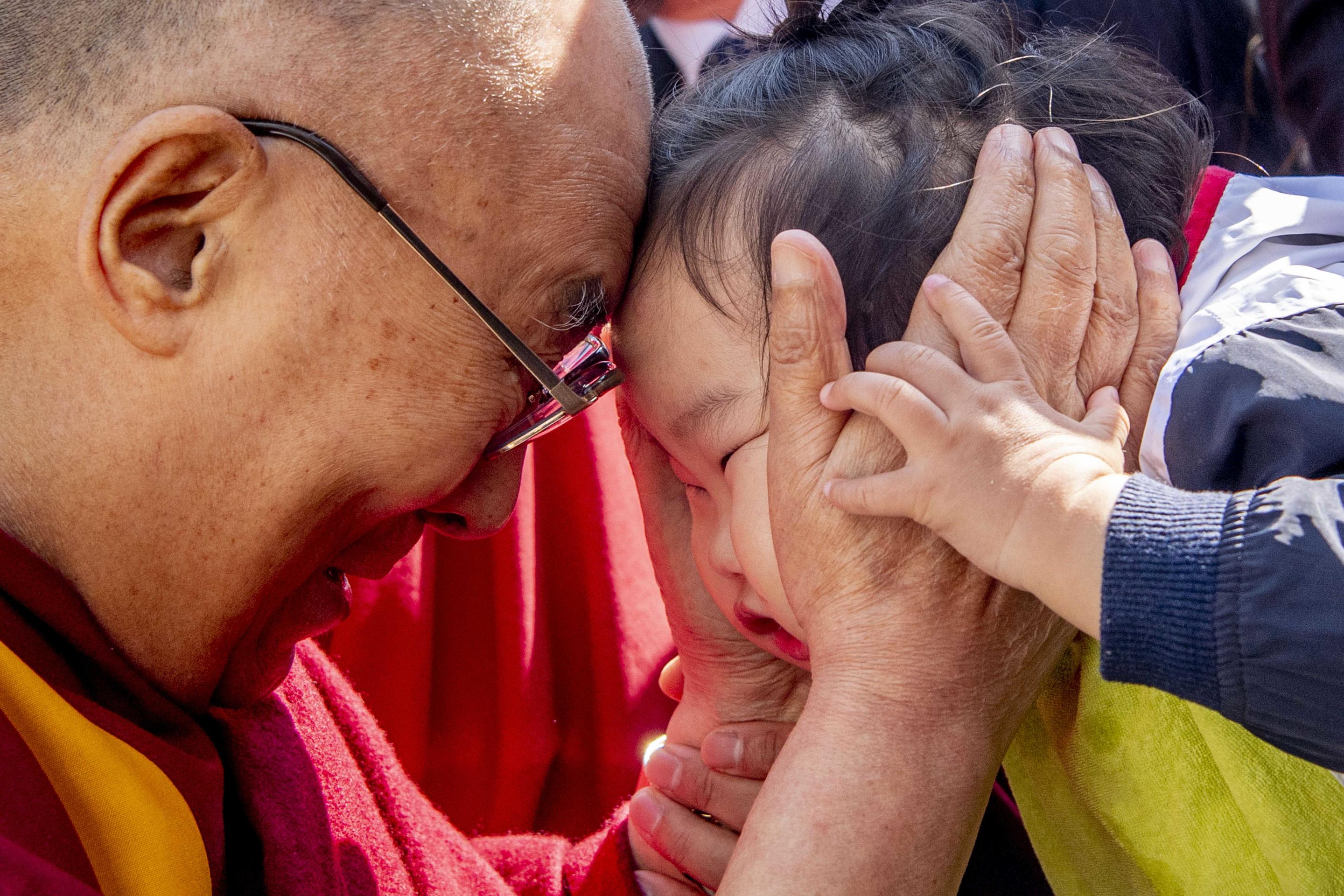
Tibetan spiritual leader Dalai Lama greets a child as he meets with supporters after his arrival at the Bilderberg Parkhotel in Rotterdam, The Netherlands, 14 September 2018, EPA-EFE/ROBIN UTRECHT
More than 40 million yuan has gone on a 20-year project to revise and publish the ancient Tibetan Buddhist canons, Kangyur and Tengyur.
Critics complain that China is in reality “Sinofying” Tibet. They point out that, despite notable achievements in education, teaching in the Tibet language does not continue until the end of schooling, so pupils must go to the Chinese mainland to complete their education.
It is also claimed that China is diluting Tibetan ethnicity by bringing in large numbers of settlers from the ethnic Han group, which is dominant in China.
Zhang Yun, director of the Institute of Tibetan History Studies at the China Tibetology Research Center, denies the latter charge, insisting that 3.13 million (or 92%) of the total 3.43 million population of the Tibet Autonomous Region’s remains ethnic Tibetan. Han number only 30,000, with other ethnic minorities making up the rest. He says the ethnic ratio has remained largely unchanged since the 1950s.
Deciding who owns, or ought to own, a particular territory is usually a fraught exercise. China’s assertion is that Tibet has been part of China since the Yuan dynasty conquered Tibet in 1290. But Van Shaik points out that the “Yuan dynasty” is more accurately described as a Mongol invasion of both China and Tibet under Kubilai Khan and that when the Ming dynasty overthrew the Mongols – in China itself – in 1368, the Chinese regarded this as a return to Chinese rule.
It is true that in 1720 the Manchu dynasty entered Tibet with a force comprising Manchus, Chinese, Tibetan and Mongol troops to oust the brutal Junghar Mongol faction. Ironically, their purpose was to restore the seventh Dalai Lama to his throne.
The Manchus maintained a presence in Tibet for decades after that, but ruled, if that is the word, mostly by proxy through Tibetan proconsuls. So, the relationship between Tibet and China has always been hard to define.
How would Tibet have fared if the Chinese had stayed out in 1951 and the Dalai Lama had remained in charge? He was just 16 when the People’s Liberation Army crossed the border, having been enthroned aged five in 1940. Photographs show an understandably bewildered-looking boy on the throne of power.
China now portrays him as a grasping politician, not the spiritual leader portrayed by him and the West. It’s true that Dalai Lamas have always been political as well as religious leaders. The “Great Fifth” Dalai Lama, as he is called, was not above enlisting Mongol warriors to slaughter adherents of rival Buddhist sects and put him in charge in the 17th century.
Van Schaik paints the current Dalai Lama as a moderate figure who, despite his tender years, in 1951 felt that Marxism was closer to his Buddhist humanitarian ideals than was traditional Tibetan society.
He and then-moderate Mao got on well at first, trying to reform Tibet, before a combination of Mao’s sudden about-turn into the excesses of the Great Leap Forward and violent resistance to land reform by some Tibetan monks and other landowners sparked an uprising that forced the Dalai Lama to flee to India.
Now, aged 84, he is reportedly very ill. The Dalai Lama succession is a complex and mystical process, involving a search for the young boy who is believed to have received the reincarnated soul of the previous incumbent.
The names of a few likely candidates are inscribed in ivory, placed in a golden urn and drawn at random to identify the new Dalai Lama. But this choice, many of our official interlocutors insisted, has to be approved by Beijing.
The message seemed to be that Beijing will have the final say in choosing the 15thDalai Lama. How that will go down in Lhasa, is hard to say. DM
Peter Fabricius traveled to Tibet with a group of South African journalists and academics as a guest of the Chinese government
SPECIAL FRONTIER FORCE VS THE EVIL RED EMPIRE : FOR OVER SEVENTY YEARS, TIBETANS HAVE LIVED UNDER MILITARY OCCUPATION . WHAT IS TIBET’S FUTURE? HOW TO EVICT THE EVIL RED EMPIRE FROM TIBET?
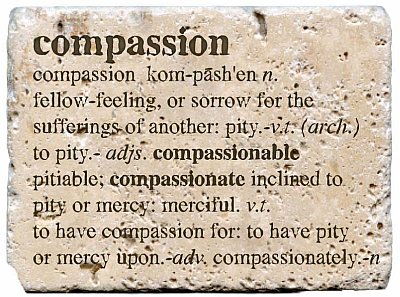
COMPASSION: IS IT VOLUNTARY OR INVOLUNTARY BEHAVIORAL RESPONSE?
In my view, Compassion is a natural, automated response generated in a person who truly experiences the feelings of grief and sorrow while actually witnessing a person or another living entity suffering on account of grief or sorrow. Compassion is neither learned nor acquired by exposure to educational experience or academic training. A professional actor can display a range of emotional responses including those of grief or sorrow. However, such enactment of behavioral response with features of grief or sorrow does not represent compassionate behavior.
In my analysis, a person who is insensitive to grief or sorrow often fails to respond in the natural, automatic manner to external stimuli. The insensitivity of the person can be attributed to his alienation, estrangement, separation, aloofness, ignorance, or distancing himself from his own true or real human nature.
To provide compassionate care or service, the person needs to discover his own true or real Self, the image in which God created man, giving or sharing with man His own Nature full of Grace, Mercy, and Compassion. To demonstrate Compassion, man has to get connected to the original source of Compassion
Why I Spoke with the Dalai Lama About Compassion in Medicine
July 23rd, 2019
I distinctly recall the moment I decided to become a physician. I was sitting on a bench in the hallway of Coney Island Hospital in Brooklyn, besides my aunt and older cousin, as we waited for the physicians to complete their examination of my beloved grandmother, in her early 90s, who was seriously ill. She doted on all of her grandchildren, particularly me, as I was the youngest. I loved my grandmother dearly. I recall seeing the doctors, dressed in their white uniforms, emerge from her room, holding her life in their hands. They eagerly reported what turned out to be good news, and thankfully, she lived over a year, and I entered the path to spend my life as a physician. Clearly, what drove me into the field of medicine was the compassion these doctors exhibited—their sincere desire to care for and improve the lives of others.
Amazingly, thirty-seven years later, I found myself as chancellor for health affairs at Duke University and dean of the Duke University School of Medicine where I oversaw the selection of our medical students. The school was in an enviable position of having thousands of applicants with the highest academic standards for a class of 100 students. While maintaining the most rigorous standards for scholastic achievement, we selected only those who convincingly demonstrated their compassion to serve the needs of others. But, what has become apparent to me is that the sincere desire to deliver compassionate care—what drives most individuals to become physicians—is greatly challenged by the rigor and difficulties of medical education and even more so by the current practice of medicine. Many factors are responsible for this, including the increasingly technical nature of medicine, the shortage of time available to engage with patients, and the ongoing bureaucratic issues needed for compliance. However, the lack of focus on compassion, the basic emotion bringing physicians to medicine, has, in my view, greatly reduced the joy of practicing medicine and the benefits that physicians can bring to their patients. Importantly, the lack of deep meaningful engagement between physicians and patients also greatly diminishes the value of care as patient behavior changes to achieve the best outcome is greatly dependent on the physician-patient relationship.
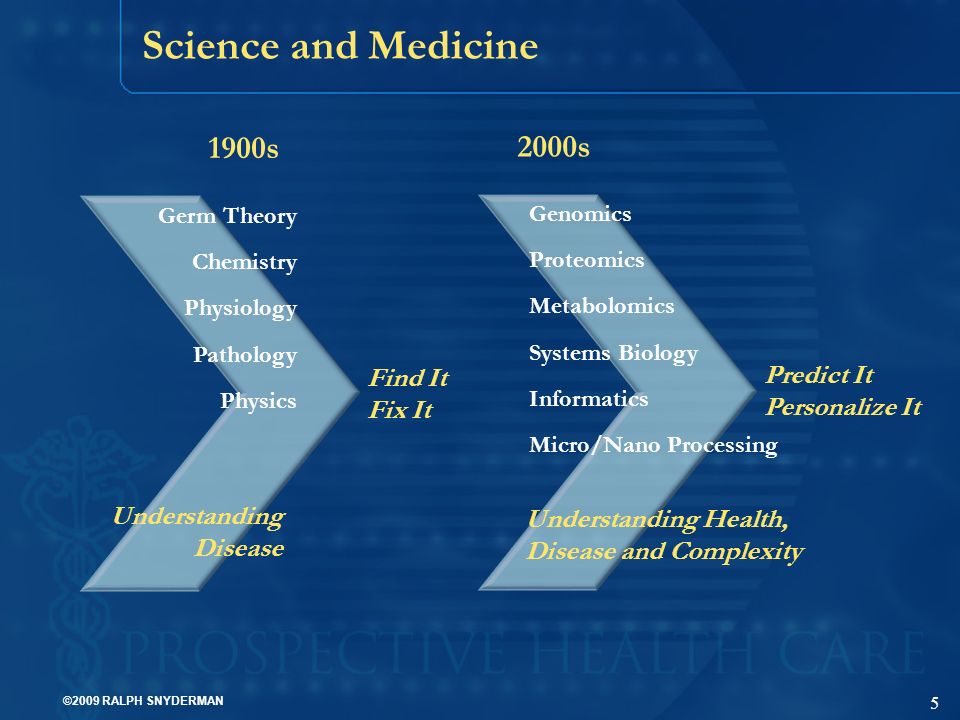
Being committed to developing more effective, proactive, personalized models of care delivery, I have become increasingly interested in developing approaches to care that maximize compassionate interaction between the patient and their physician, while increasing the effectiveness and enjoyment of this engagement. This being the case, I sought the opportunity to discuss compassion with the most recognized expert in compassion in the world, His Holiness the 14th Dalai Lama. Join me in learning what resulted from this meeting and how compassion can be brought back to the practice of medicine in my recent Academic Medicine Invited Commentary.
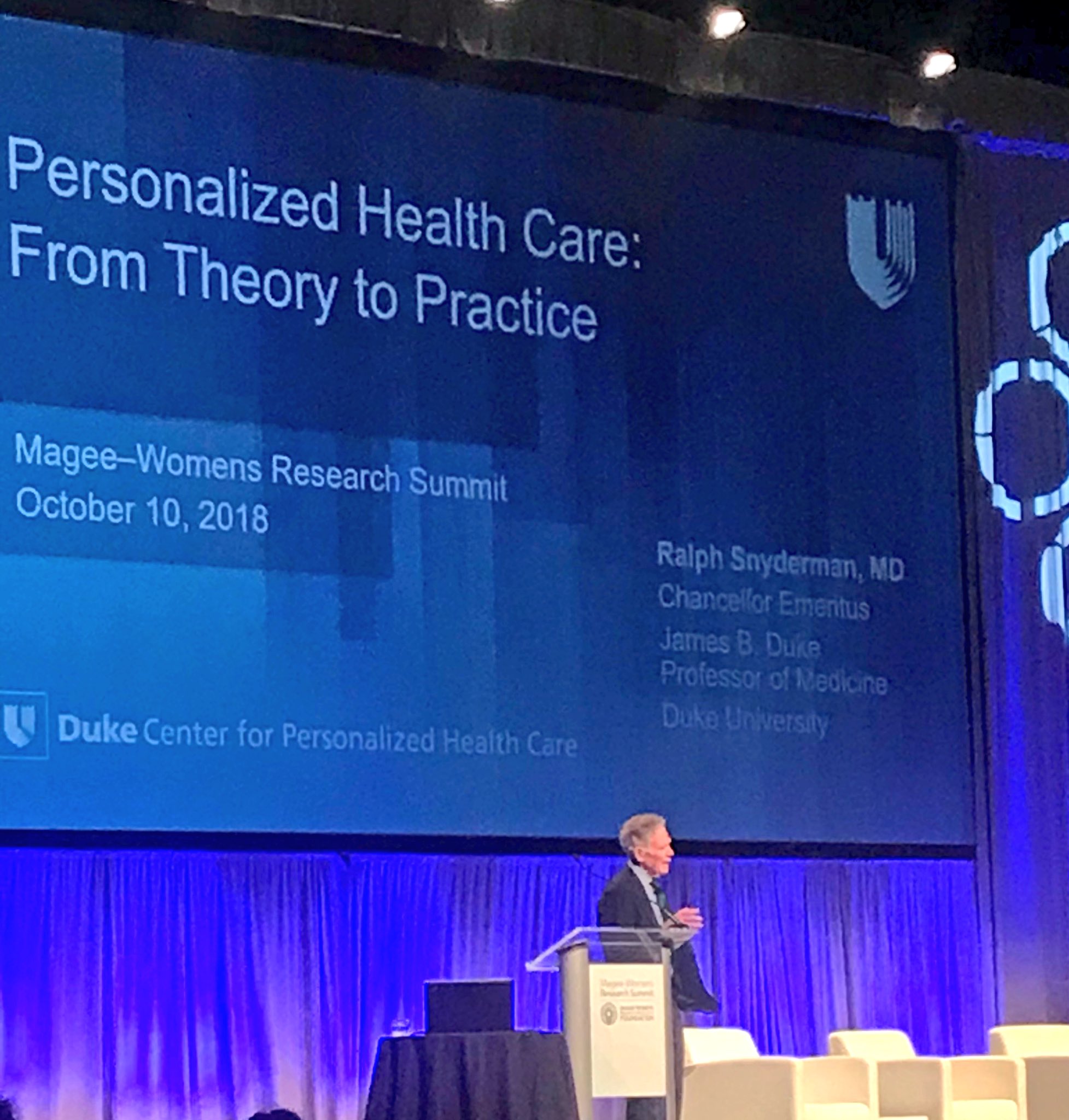
By Ralph Snyderman, MD
R.S. is James B. Duke Professor of Medicine and Director, Center for Personalized Health Care, Duke University School of Medicine, and chancellor emeritus, Duke University, Durham, North Carolina.
Further Reading
Snyderman, R. Compassion and health care: A discussion with the Dalai Lama [published online ahead of print March 12, 2019]. Acad Med. doi: 10.1097/ACM.0000000000002709.
What are the differences between voluntary actions and involuntary actions?
The article gives an incorrect impression about actions described as the delivery of compassionate care. The problem arises, as the author makes no distinction between voluntary actions and involuntary actions. The behavioral response characterized as compassionate care is always initiated as an involuntary response to an external environmental stimulus that evokes the feelings of sorrow, or grief. In other words, I cannot display any compassionate action in any given situation without experiencing grief or sorrow which acts as a trigger to elicit the response.
PERSONALIZED MEDICINE- THE VERIFICATION OF PERSONALIZED EXPERIENCE
I am very pleased to read the article published by Dr. Ralph Snyderman, the Director of the Duke Center for Personalized Health Care. I want to reproduce the statement that attracted my attention.
“While maintaining the most rigorous standards for scholastic achievement, we selected only those who convincingly demonstrated their compassion to serve the needs of others.”
Compassion is not an emotion that can be enacted by an actor. To qualify as a true, personal, subjective experience, the expression of compassion can only be verified by objective evidence. The person expressing compassion has to suffer mentally to share the pain and misery of another individual who is suffering at the time the instinct or innate response identified as compassion comes into play.
I ask Dr. Snyderman to share the methodology used by him to verify that the student applicants have convincingly demonstrated their compassion to serve the needs of others.
I am not claiming that the demonstration of compassion cannot be objectively verified. At a minimum, the student applicants must be observed by checking their emotional response while they are in real physical contact with person/s experiencing pain and misery. For example, student applicants can be observed while they respond to the victims in a natural disaster zone or at the Emergency Care Center of a hospital when the victims of pain arrive for medical attention. I have to observe and verify the fact of sorrow expressed by student applicants for the sufferings of another person or another living entity in a painful or miserable condition.
Rudra Narasimham Rebbapragada
BHAVANAJAGAT.ORG
Why I Spoke with the Dalai Lama About Compassion in Medicine
I distinctly recall the moment I decided to become a physician. I was sitting on a bench in the hallway of Coney Island Hospital in Brooklyn, besides my aunt and older cousin, as we waited for the physicians to complete their examination of my beloved grandmother, in her early 90s, who was seriously ill. She doted on all of her grandchildren, particularly me, as I was the youngest. I loved my grandmother dearly. I recall seeing the doctors, dressed in their white uniforms, emerge from her room, holding her life in their hands. They eagerly reported what turned out to be good news, and thankfully, she lived over a year, and I entered the path to spend my life as a physician. Clearly, what drove me into the field of medicine was the compassion these doctors exhibited—their sincere desire to care for and improve the lives of others.
Amazingly, thirty-seven years later, I found myself as chancellor for health affairs at Duke University and dean of the Duke University School of Medicine where I oversaw the selection of our medical students. The school was in an enviable position of having thousands of applicants with the highest academic standards for a class of 100 students. While maintaining the most rigorous standards for scholastic achievement, we selected only those who convincingly demonstrated their compassion to serve the needs of others. But, what has become apparent to me is that the sincere desire to deliver compassionate care—what drives most individuals to become physicians—is greatly challenged by the rigor and difficulties of medical education and even more so by the current practice of medicine. Many factors are responsible for this, including the increasingly technical nature of medicine, the shortage of time available to engage with patients, and the ongoing bureaucratic issues needed for compliance. However, the lack of focus on compassion, the basic emotion bringing physicians to medicine, has, in my view, greatly reduced the joy of practicing medicine and the benefits that physicians can bring to their patients. Importantly, the lack of deep meaningful engagement between physicians and patients also greatly diminishes the value of care as patient behavior changes to achieve the best outcome is greatly dependent on the physician-patient relationship.
Being committed to developing more effective, proactive, personalized models of care delivery, I have become increasingly interested in developing approaches to care that maximize compassionate interaction between the patient and their physician, while increasing the effectiveness and enjoyment of this engagement. This being the case, I sought the opportunity to discuss compassion with the most recognized expert in compassion in the world, His Holiness the 14th Dalai Lama. Join me in learning what resulted from this meeting and how compassion can be brought back to the practice of medicine in my recent Academic Medicine Invited Commentary.
R.S. is James B. Duke Professor of Medicine and Director, Center for Personalized Health Care, Duke University School of Medicine, and chancellor emeritus, Duke University, Durham, North Carolina.
Further Reading
Snyderman, R. Compassion and health care: A discussion with the Dalai Lama [published online ahead of print March 12, 2019]. Acad Med. doi: 10.1097/ACM.0000000000002709.
“We selected only those who convincingly demonstrated their compassion to serve the needs of others.”
I would like to know the methodology involved in verifying compassion demonstrated by students applying for admission to the Medical School.
Compassion is viewed as an innate trait and it comes into play when the individual comes to witness the pain and misery that is being experienced by another living entity. At a minimum, to demonstrate the trait called compassion needs the verification by observing the interaction between the student applicant and a victim enduring a very painful situation that impacts the viewer.
What is Personalized Health Care? Who is the Person?
What is Personalized Health Care? Who is the Person?What is Personalized Health Care? Who is the Person?
I ask Dr. Ralph Snyderman M.D. the Director of the Duke Center for Personalized Health Care to define the “Person,” the human subject, the beneficiary of the Health Care Plan called Personalized Health Care.
Rudra Narasimham Rebbapragada
Bhavanajagat
Recruiting The Dalai Lama To Bring Compassion Back Into Medicine
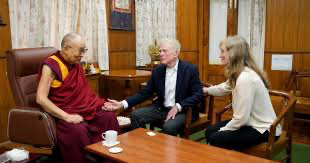
Ralph Snyderman spoke with the Dalai Lama at the leader’s residence in India last year.
Why I Spoke with the Dalai Lama About Compassion in Medicine
Posted on by Ralph Snyderman Posted in Uncategorized
I distinctly recall the moment I decided to become a physician. I was sitting on a bench in the hallway of Coney Island Hospital in Brooklyn, beside my aunt and older cousin, as we waited for the physicians to complete their examination of my beloved grandmother, in her early 90s, who was seriously ill. She doted on all of her grandchildren, particularly me, as I was the youngest. I loved my grandmother dearly. I recall seeing the doctors, dressed in their white uniforms, emerge from her room, holding her life in their hands. They eagerly reported what turned out to be good news, and thankfully, she lived over a year, and I entered the path to spend my life as a physician. Clearly, what drove me into the field of medicine was the compassion these doctors exhibited—their sincere desire to care for and improve the lives of others.
Amazingly, thirty-seven years later, I found myself as chancellor for health affairs at Duke University and dean of the Duke University School of Medicine where I oversaw the selection of our medical students. The school was in an enviable position of having thousands of applicants with the highest academic standards for a class of 100 students. While maintaining the most rigorous standards for scholastic achievement, we selected only those who convincingly demonstrated their compassion to serve the needs of others. But, what has become apparent to me is that the sincere desire to deliver compassionate care—what drives most individuals to become physicians—is greatly challenged by the rigor and difficulties of medical education and even more so by the current practice of medicine. Many factors are responsible for this, including the increasingly technical nature of medicine, the shortage of time available to engage with patients, and the ongoing bureaucratic issues needed for compliance. However, the lack of focus on compassion, the basic emotion bringing physicians to medicine, has, in my view, greatly reduced the joy of practicing medicine and the benefits that physicians can bring to their patients. Importantly, the lack of deep meaningful engagement between physicians and patients also greatly diminishes the value of care as patient behavior changes to achieve the best outcome is greatly dependent on the physician-patient relationship.
Being committed to develop more effective, proactive, personalized models of care delivery, I have become increasingly interested in developing approaches to care that maximize compassionate interaction between the patient and their physician, while increasing the effectiveness and enjoyment of this engagement. This being the case, I sought the opportunity to discuss compassion with the most recognized expert in compassion in the world, His Holiness the 14th Dalai Lama. Join me in learning what resulted from this meeting and how compassion can be brought back to the practice of medicine in my recent Academic Medicine Invited Commentary.
R.S. is James B. Duke Professor of Medicine and director, Center for Personalized Health Care, Duke University School of Medicine, and chancellor emeritus, Duke University, Durham, North Carolina.
RalphSnyderman is known as “The Father of Personalized Medicine.” He used to oversee the selection of medical students at Duke University in his role as chancellor for health affairs at Duke University and Dean of the Duke School of Medicine. He focused on admitting students who showed a clear desire for empathy and to serve the needs of others.
But he realized compassionate care is difficult to achieve in the current health system in the United States because of a variety of factors. Synderman now directs the Duke Center for Personalized Health Care. His mission is to create more personalized and compassionate ways of delivering medicine. Earlier this year he published a conversation he had with the 14th Dalai Lama about how to foster that change. The revelations from that conversation became a manuscript entitled “Compassion and Health Care: A Conversation with the Dalai Lama” recenlty published in the medical journal “Academic Medicine.”
What is Personalized Health Care? Who is the Person?
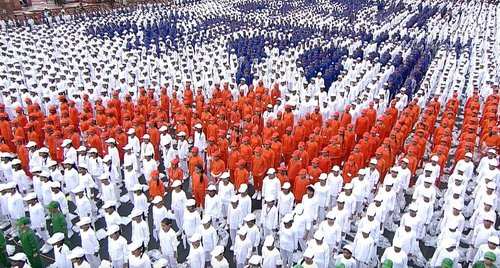
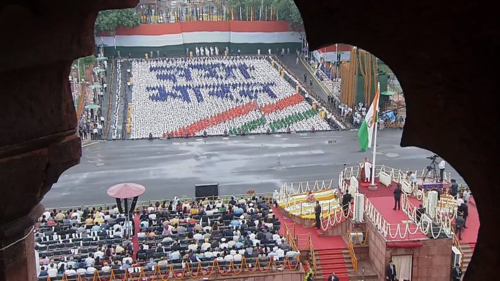
BHARAT DARSHAN: THE CELEBRATION OF 73rd INDEPENDENCE DAY OF MY LIFE’S JOURNEY
Bharat Darshan. The Celebration of 73rd Independence Day of my life.
“ONE NATION, ONE CONSTITUTION”
Special aboutIndiaIndependence Day 2019
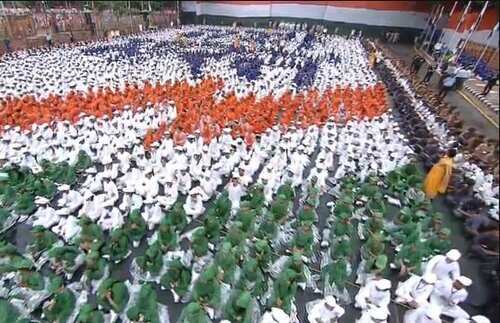
After removal of Article 370 and declaring Ladakh and J&K as Union Territories, for the first time in history, J& K will hoist tricolor in their state with the national anthem. This year, Panchayat Heads of Bhartiya Janata Party in J&K will hoist the Tricolor on their houses. This time the National flag will fly high in the sky with the slogan of “One nation, One Constitution”
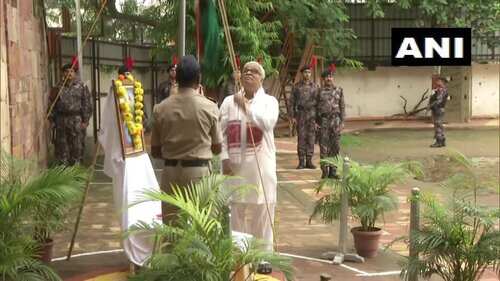
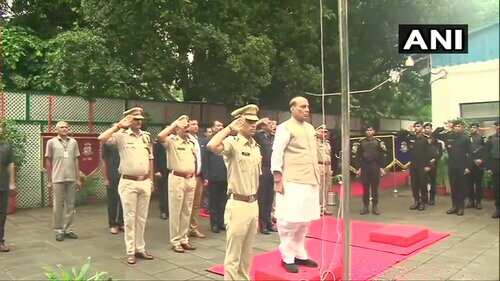
Ambassador Ausaf Sayeed hoists the National Flag at the Indian Embassy in Saudi Arabia. The celebration was attended by more than 800 Indian expats living there.
12:56 (IST), AUG 15
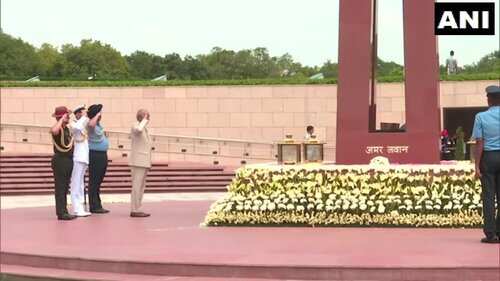
President Ram Nath Kovind and three Service Chiefs pay tribute at National War Memorial
11:48 (IST), AUG 15
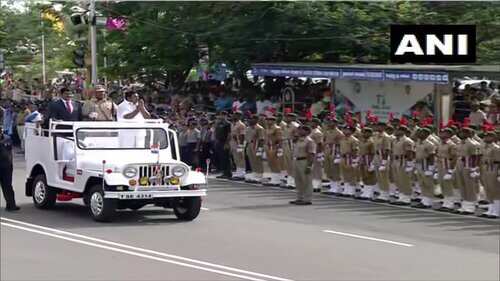
Andhra Pradesh chief minister Jagan Mohan Reddy in Amravati
11:48 (IST), AUG 15
Tamil Nadu chief minister Edappadi K Palaniswami in Chennai
11:47 (IST), AUG 15
Kerala chief minister Pinarayi Vijayan in Trivandrum
11:35 (IST), AUG 15
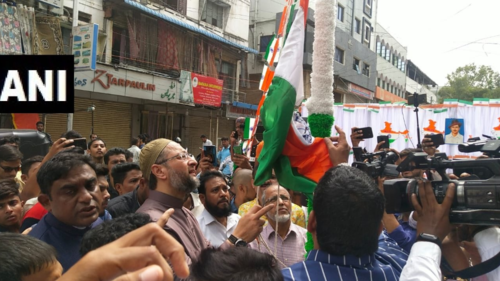
AIMIM chief Asaduddin Owaisi unfurls Tricolor in Hyderabad
11:01 (IST), AUG 15
President of Russia Vladimir Putin writes to PM Modi and President Kovind on 73rd Independence Day
Kindly accept cordial congratulations on the national day of the Republic of India, the Independence Day, the letter stated
10:45 (IST), AUG 15
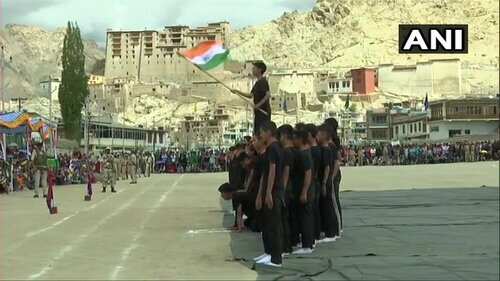
Ladakh: Independence Day celebrations underway in Leh
10:42 (IST), AUG 15
Sonia Gandhi hoists the tricolor at Congress party office in Delhi
10:13 (IST), AUG 15
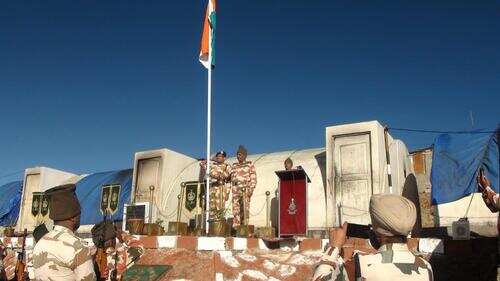
Indo-Tibetan Border Police (ITBP) personnel hoist the tricolor at OP Dorjila Post (altitude of 18,800 feet) in Sikkim.
10:03 (IST), AUG 15
Sweets exchanged at India-Bangladesh border between Border Security Force (BSF) and Border Guards Bangladesh (BGB) in West Bengal’s Phulbari
10:02 (IST), AUG 15
Home minister Amit Shah hoists tricolor at his residence
09:29 (IST), AUG 15
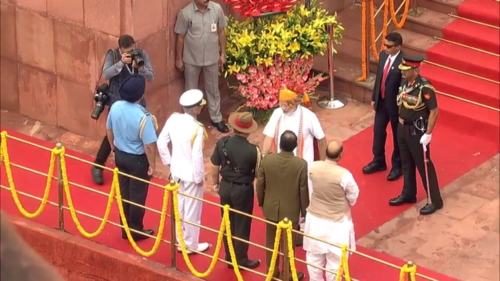
PM Modi meets Army chief General Bipin Rawat, Navy chief Admiral Karambir Singh, and Air Chief Marshal BS Dhanoa at Red Fort
09:19 (IST), AUG 15
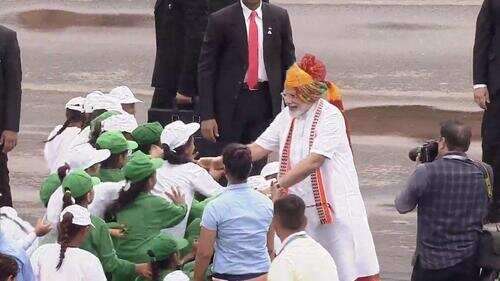
Visual: PM Modi meets children at Red Fort on the occasion of 73rd Independence Day
09:18 (IST), AUG 15
‘Huge’ scope to improve India’s tourism sector: PM Modi
There is a “huge” scope to improve India’s tourism sector. He said earlier people aspired to have a good mobile phone, but now they want more data and better speed. He said the time has come to boost exports and that each district of India has much to offer.
09:14 (IST), AUG 15
PM announces the creation of Chief of Defence Staff
In a major decision, Prime Minister Narendra Modi has announced the creation of a Chief of Defence Staff (CDS) as head of the tri-services. The prime minister said the CDS will ensure synergy among the three services and provide effective leadership to them.
09:11 (IST), AUG 15
PM Modi concludes the Independence Day speech, outlines govt’s roadmap for the next five years
09:05 (IST), AUG 15
Meanwhile, Rashtriya Swayamsevak Sangh (RSS) general secretary Bhaiyaji Joshi unfurls the national flag at RSS headquarters in Nagpur
09:03 (IST), AUG 15
India has so much to offer. I know people travel to different countries for holidays but can we think of visiting at least 15 tourist destinations in India before 2022, when we mark 75 years of freedom: PM Modi
09:00 (IST), AUG 15
There is a ‘huge’ scope to improve India’s tourism sector: PM Modi
08:58 (IST), AUG 15
Travel to 10 new places in India. It’s important to preserve culture: PM Modi’s message to encourage tourism
08:56 (IST), AUG 15
Let us further the use of digital payments all over the nation: PM Modi
08:53 (IST), AUG 15
Will urge shopkeepers to stop using plastic bags: PM Modi promotes ‘let’s make India plastic-free’
08:51 (IST), AUG 15
PM Modi emphasizes on the discarding of plastic bags, tells the nation to use cloth and jute bags
08:48 (IST), AUG 15
India will have a Chief of Defence Staff (CDS). This is going to make the forces even more effective: PM Modi
08:43 (IST), AUG 15
Afghanistan to celebrate 100th independence in a few days. PM Modi congratulates the neighboring country
08:41 (IST), AUG 15
The fundamentals of our economy are strong: PM Modi
08:40 (IST), AUG 15
Today, the government in India is stable, policy regime is predictable … the world is eager to explore trade with India: PM Modi
08:38 (IST), AUG 15
India can become a global hub of tourism: PM Modi
08:37 (IST), AUG 15
Each district of India has so much to offer. Let us make local products attractive. May more export hubs emerge. Our guiding principle is ‘zero defect, zero effect: PM Modi
08:36 (IST), AUG 15
We have to keep in mind global best practices and build good systems: PM Modi
08:35 (IST), AUG 15
Our aim is to reach among the first 50 nations in ease of doing business: PM
08:32 (IST), AUG 15
Citizens have to take up the responsibility, need to dream together. Reaching $5-trillion-economy mark by 2024 is achievable: PM Modi
08:30 (IST), AUG 15
Rural India immensely developed in the last five years. Rs 100 trillion will be invested towards infrastructure in five years: PM Modi
08:28 (IST), AUG 15
A high jump is needed, our thought process has to be expanded. We have to keep in mind global best practices and build good systems: PM Modi
08:25 (IST), AUG 15
Today the world acknowledges India’s growth globally: PM Modi
08:24 (IST), AUG 15
I always ask- can we not remove the excess influence of Governments on people’s lives. Let our people have the freedom of pursuing their own aspirations, let the right ecosystem be made in this regard: PM Modi
08:23 (IST), AUG 15
PM Modi talks about minimum interference of govt, adds citizens shouldn’t feel lack of govt either
08:21 (IST), AUG 15
Every effort made to remove corruption and black money is welcome. These are menaces that have ruined India for 70 long years. Let us always reward honesty: PM Modi
08:18 (IST), AUG 15
Those who follow the policy of small family also contribute to the development of the nation. It is also a form of patriotism: PM Modi
08:17 (IST), AUG 15
There is a need to have greater discussion and awareness on population explosion: PM Modi
08:16 (IST), AUG 15
PM Modi advocates family planning, says social awareness must be spread on population control
08:13 (IST), AUG 15
Population growth is a huge challenge. We must safeguard the future of India: PM Modi
08:12 (IST), AUG 15
The movement towards water conservation has to take place at the grassroots level: PM Modi
08:10 (IST), AUG 15
Tackling the water crisis is a huge priority for us: PM Modi
08:08 (IST), AUG 15
PM Modi calls for conservation of water
08:07 (IST), AUG 15
Govt would constantly work to take potable water to every household under Jal Jeevan Mission: PM Modi
08:06 (IST), AUG 15
PM Modi delivers the message of integration: GST brought to life the dream of ‘one nation, one tax’. India has also achieved ‘one nation, one grid’ in the energy sector. Arrangements have been made for ‘one nation, one mobility card’. Today, India is talking about ‘one nation, one election’
08:02 (IST), AUG 15
Politics comes and goes but steps in the interest of the nation are paramount: PM Modi
08:01 (IST), AUG 15
‘One nation, one constitution’: PM Modi says on scrapping of Article 370
08:00 (IST), AUG 15
If Article 370 was so important, why it was not made permanent, PM Modi says
07:59 (IST), AUG 15
The old arrangement in Jammu, Kashmir, and Ladakh encouraged corruption, nepotism but there was injustice when it came to rights of women, children, Dalits, tribal communities. How can we accept such a situation: PM Modi
07:58 (IST), AUG 15
NDA govt abrogated Article 370 which was pending for last 70 years: PM Modi
07:57 (IST), AUG 15
Peoples trust in us have given us new strength. The 2019 mandate shows that hopelessness has given way to hope among masses: PM Modi
07:55 (IST), AUG 15
If we can take steps against ‘Sati’ custom, female foeticide, and dowry, then why not against instant triple talaq: PM Modi
07:54 (IST), AUG 15
Remember how scared the Muslim women were, who suffered due to Triple Talaq but we ended the practice: PM Modi on scrapping Triple Talaq
07:49 (IST), AUG 15
Meanwhile, Rahul Gandhi tweets on the occasion of 73rd Independence Day
Complete independence will be complete only to the extent of our approach in practice to truth and nonviolence- Mahatma Gandhi My best wishes to all of you on this our 73rd Independence Day.
07:47 (IST), AUG 15
In the last five years, we tried to improve the ease of living. We will work harder in the next five years: PM Modi
07:44 (IST), AUG 15
2019-2024 will be a period of fulfilling the aspirations of the nation: PM Modi
07:42 (IST), AUG 15
In this short span of time in every sector we have taken important steps. Article 370 and 35A being revoked are steps towards realizing the dream of Sardar Patel: PM Modi
07:40 (IST), AUG 15
PM Modi highlights the steps taken by the government within 10 weeks of assuming office in the second term
07:39 (IST), AUG 15
PM Modi remembers freedom fighters
07:37 (IST), AUG 15
Several parts in the country are reeling under the floods. Centre, states, and all other stakeholders are working relentlessly: PM Modi expresses condolence to victims
07:35 (IST), AUG 15
I congratulate everyone on the occasion of Raksha Bandhan: PM Modi
07:34 (IST), AUG 15
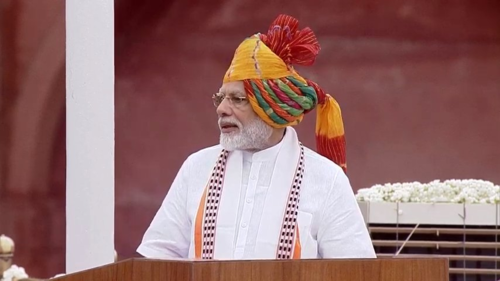
Visual: PM Modi addressing the nation on 72 years of Independence
07:33 (IST), AUG 15
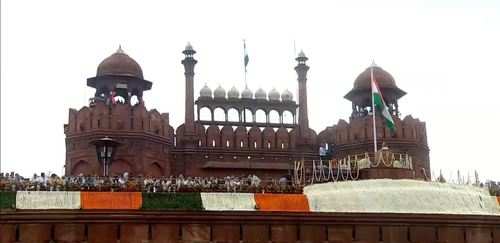
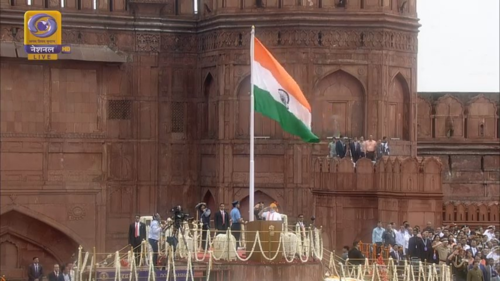
PM Modi unfurls the National Flag at Red Fort
07:32 (IST), AUG 15
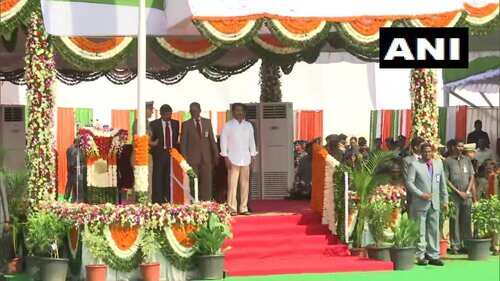
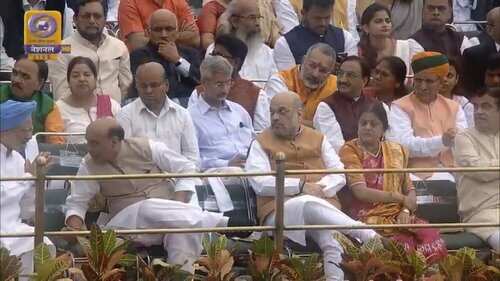
Visual: Leaders and dignitaries present at the ceremony
07:28 (IST), AUG 15
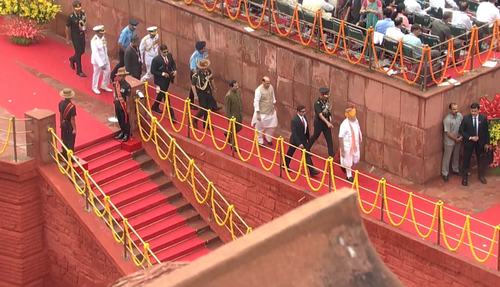
Visual: PM Modi walking towards the dais to address the Nation at the Red Fort
07:25 (IST), AUG 15
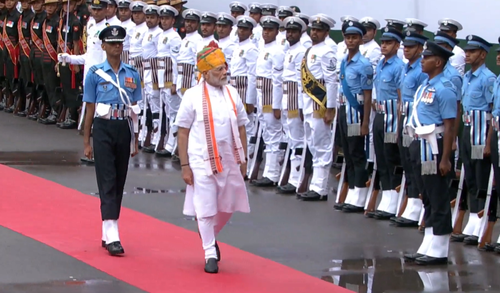
Visual: PM Modi inspecting the Guard of Honour at Red Fort
07:23 (IST), AUG 15
Salute all the brave men and women who sacrificed their lives for India’s freedom: Union minister Piyush Goyal tweeted
As we celebrate our 73rd #Independence Day, let us salute all the brave men and women who sacrificed their lives for India’s freedom. Also, let us pledge to work together for the growth and prosperity of our nation & build together a New India. Jai Hind!
07:21 (IST), AUG 15
PM Modi arrives at Red Fort, to address the nation shortly
07:19 (IST), AUG 15
Multi-layered security arrangement in Delhi for I-Day celebrations
SWAT commandos and NSG snipers have been deployed while for the first time cameras with facial recognition software are being used to secure the historic Red Fort where Prime Minister Narendra Modi will hoist the national flag on the 73rd Independence Day.
07:16 (IST), AUG 15
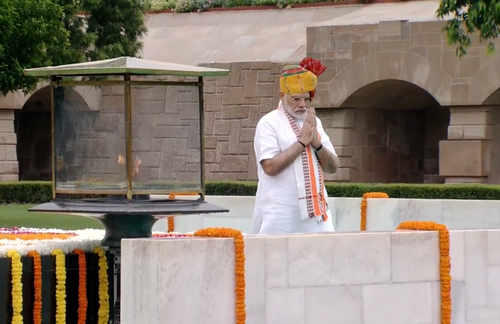
Visual: PM Modi pays homage at Rajghat
07:14 (IST), AUG 15
Visual: Last-minute preparations underway at Red Fort ahead of hoisting of National Flag and PM Modi address
07:10 (IST), AUG 15
PM Modi arrives at Raj Ghat, to address the nation shortly
07:07 (IST), AUG 15
PM Modi to deliver Independence Day speech from Red Fort at 7.30 am
07:05 (IST), AUG 15
Visual: Defence minister Rajnath Singh hoists the tricolor at his residence
06:34 (IST), AUG 15
PM Narendra Modi wishes Indians on Independence Day
Narendra Modi
✔@narendramodi
सभी देशवासियों को #स्वतंत्रतादिवस की हार्दिक शुभकामनाएं। जय हिंद!
Happy Independence Day to all my fellow Indians. Jai Hind!
06:16 (IST), AUG 15
Expect rainy I-Day, more showers over the week
The IMD has forecast rain for Independence Day, which could play spoilsport during the Prime Minister’s speech at Red Fort in the morning. The Met Office said strong surface winds and light showers are expected on Thursday.
05:46 (IST), AUG 15
As I said during my recent visit to India, the United States and India are great democracies, global powers, and good friends. I wish the people of India a joyful Independence Day, says Pompeo (ANI)
05:44 (IST), AUG 15
QUOTE
Our shared democratic values, strong people-to-people ties, commitment to economic growth further cemented our relationship. Over the past 2 decades, our friendship has flourished into a strategic partnership & we now cooperate on a range of important issues.
US secretary of state Mike Pompeo statement on India’s Independence Day (ANI)
05:41 (IST), AUG 15
On behalf of US government, I extend my best wishes to the people of India on your Independence Day, says US secretary of state Mike Pompeo, reports ANI
The United States and India have enjoyed close ties of friendship since the US-supported India’s independence 72 years ago.
05:29 (IST), AUG 15
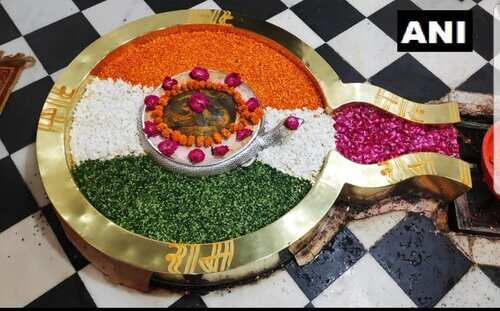
‘Shivalinga’ at Chandreshwar Mahadev temple in Rishikesh decorated in the colours of the Tricolour, reports ANI
05:17 (IST), AUG 15
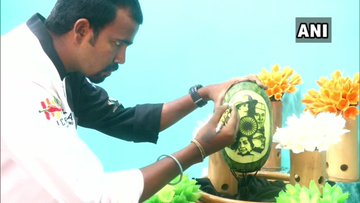
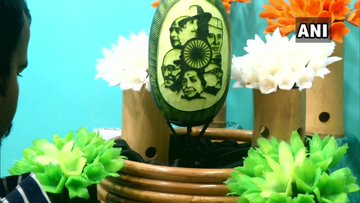
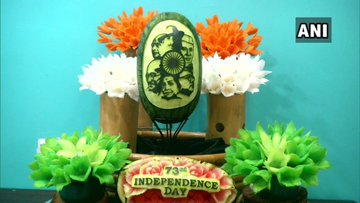
A vegetable carving artist in Coimbatore, Santosh, has carved faces of Mahatma Gandhi, Sardar Vallabhbhai Patel, Bhagat Singh, Jawaharlal Nehru, Netaji Subhash Chandra Bose & Sarojini Naidu on watermelon
ANI
✔@ANI
Tamil Nadu: A vegetable carving artist in Coimbatore, Santosh, has carved faces of Mahatma Gandhi, Sardar Vallabhbhai Patel, Bhagat Singh, Jawaharlal Nehru, Netaji Subhash Chandra Bose & Sarojini Naidu on watermelon, celebrating 73rd #IndependenceDay
05:05 (IST), AUG 15
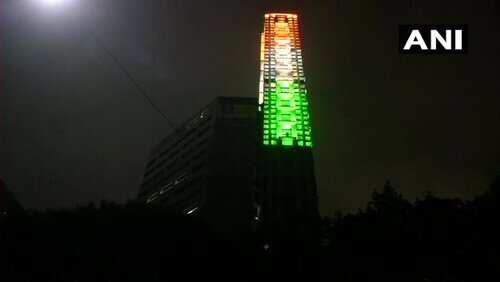
The tallest building in India, ‘The 42’ illuminated on Independence Day
I ask you to learn the correct manner in which you answer the basic questions about Life and Living. What do you do for a living? The answer does not require your nationality, citizenship status, your race, your gender, your educational experience, and not even your occupational history.
WHAT DO YOU DO FOR A LIVING? I LIVE ON WHOLE FOOD.
WHOLE DUDE WHOLE TIME-WHOLE JOB-WHOLE LIFE. Not a part-time, not a full-time, not a temporary, not a permanent, not a seasonal and not a regular employee.. I live on Whole Food. Whole Foods sent me an invitation. “We’re growing something good and we want you to be part of it. If you’re ready to make a difference, bring your Whole Self to Whole Foods.” Whole Dude-Whole Time makes the Whole Difference.
WHAT DO YOU DO FOR A LIVING? I LIVE ON WHOLE FOOD WORKING WHOLE TIME
Whole Foods-Whole Promise: What You do for a Living? I work not as a part-time, or full-time, not as a temporary or permanent, not as a seasonal or regular employee.. I LIVE ON WHOLE FOOD WORKING WHOLE TIME. We’re growing something good and we want you to be part of it. If you’re ready to make a difference, bring your Whole Self to Whole Foods. Whole Dude-Whole Time makes the Whole Difference.
On Tuesday, the Sixth Day of August 2019, I coined the phrase ‘WHOLE DUDE-WHOLE TIME’ to answer the question, “What do you do for a Living?” I live on Whole Food working Whole Time. I do this Whole Job to live as Whole Dude my Whole Life. In my analysis, the very complex natural phenomenon called Living always demands the support from an external agency and the wages or salary earned by any person simply accounts for the icing on the cake.
WHOLE FOODS – WHOLE PROMISE
Bringing Your Whole Self
Your whole self isn’t just the way you dress or show up to work. For us, it’s expressed in the very way we do business. We volunteer at and donate to organizations that matter to you. We build a career path around your goals. And we hire teams that feel like families. When you’re here, you can be you.
I received a letter from the Whole Foods Market inviting me to shop at Whole Foods, Ann Arbor. The letter reads:
“We’re growing something good and we want you to be part of it. If you’re ready to make a difference, bring your Whole Self to Whole Foods.”
In my analysis, I cannot be classified either as White-Collar, or Blue-Collar Worker. I cannot be described as a Part-Time, or Full-Time, a Temporary or Permanent, a Seasonal, or Regular Employee of any entity that provides the earnings, or wages in exchange for any mental or physical work performed by my human body.To live as Whole Dude is a Whole Time Job.
Whole Dude, Whole Man, Whole Person , or Whole Self works Whole Time during his Whole Life, from the moment of his conception until his death, by performing the Whole Job or Whole Work called Cellular Respiration even when he watches the TV relaxing on his couch or even when he is snoring, fast asleep in his bed.
The Fair Labor Standards Act (FLSA) does not define full-time employment or part-time employment. This is a matter generally to be determined by the employer. Whether an employee is considered full-time or part-time does not change the application of the FLSA, nor does it affect the application of the Service Contract Act or Davis-Bacon and Related Acts wage and fringe benefit requirements.
Whole Team Members who like to upgrade their work status to “Whole Time” can apply for the same by Leaving a Comment on this blog post. Please scroll down to find the Leave a Comment tab. Please click on it and fill in your comment in the box. Your private information need not be disclosed. Your e-mail ID will not be published.
What You Do For a Living? I live on Whole Food Working Whole Time.WHOLE DUDE-WHOLE TIME-WHOLE JOB-WHOLE LIFE: WHOLE DUDE’- WHOLE DEAL. 20 Oz box of 365 EVERYDAY VALUE MISMATCHED SANDWICH CREMES GIVEN AWAY AS SIGN-UP BONUS . SORRY. MILK IS NOT INCLUDED IN THIS WHOLE DEAL. APPLY TODAY TO GET YOUR WHOLE TIME STATUS.WHOLE DUDE – WHOLE CREME: WHOLE DUDE LOVES 365 EVERYDAY VALUE MISMATCHED SANDWICH CREMES. HE CLAIMED ON WEDNESDAY, JULY 30, 2014, “I AM THE CREME OF LIFE. VANILLA COOKIE LOVES ME MOST AND CHOCOLATE COOKIE IS THE ONE THAT I LOVE THE MOST.
Each one of the first 200 Whole Team Members who apply for the Whole Time Work Status Upgrade will get a 20 Oz box of 365 Everyday Value Mismatched Sandwich Cremes as Sign-Up Bonus (Milk not included). Please scroll down to find the tab ‘Leave a Comment’.
What do You do for a Living? To reply the question, I ask You to Think Outside the Box.
I ask my readers to totally avoid the narrow perspective of equating the term job with the complex phenomenon called living. I am asking you to step outside the “BOX.”
I ask you to learn the correct manner in which you answer the basic questions about Life and Living. What do you do for a living? The answer does not require your nationality, citizenship status, your race, your gender, your educational experience, and not even your occupational history.
WHAT DO YOU DO FOR A LIVING? I LIVE ON WHOLE FOOD WHOLE TIME.
Whole Job-Whole Life. What are Living Functions?
What do You do for a Living? Whole Dude-Whole Time. Living as the Whole Dude is a Whole Time Whole Job for Whole Life.
Spirituality Science. What do you do for a Living?
THE PROCESS, THE MECHANISM CALLED CELLULAR RESPIRATION IS NOT A LEARNED OR ACQUIRED EXPERIENCE. NO SPIRITUAL TEACHER, NO SPIRITUAL MASTER, AND NO SPIRITUAL GUIDE CAN IMPLANT THIS KNOWLEDGE IN MAN.
At a fundamental level, the Living System called man is thermodynamically unstable and it means that the System demands a constant supply of energy from an external source. The process or the mechanism called ‘Cellular Respiration’ is involved in energy acquisition, energy manipulation, energy transformation, and energy expenditure involved in the performance of the numerous Living Functions that establish the fact of the Living Thing existing in its given environment at any given place and time.
The Knowledge Theory vs The Living Functions:
What You do for a Living? Whole Dude-Whole Time. Living as the Whole Dude is a Whole Time Job for Whole Life.
Spirituality Science. What do you do for Living? Many important biological processes involve Redox or Oxidation and Reduction Chemical Reactions. These chemical reactions reveal a dynamic process that is the characteristic of both Life and Death. If Life is explained by a series of chemical reactions, the same process continues into Death.
WHAT IS LIFE? LIFE IS KNOWLEDGE IN ACTION:
What do You do for a Living? Whole Dude-Whole Time. What do you do for your living? Living as the Whole Dude is a Whole Time Whole Job for Whole Life.
I SAY I GRIND, YOU GRIND, LIFE IS NOTHING BUT A DAILY GRIND.
What do you do for a Living? I live on Whole Food working Whole Time.What do You do for a Living? I SAY I GRIND, YOU GRIND, LIFE IS NOTHING BUT A DAILY GRIND.
MAYA. A FIFTH FUNDAMENTAL FORCE OPERATING THE MAGIC OF CREATION
MAYA. THE CONCEPT OF A FIFTH FUNDAMENTAL FORCE OPERATING THE MAGIC OF CREATION
Maya. The Fifth Fundamental Force to account for the mechanics of rotational spin of any given planet.
Man has already discovered numerous exoplanets outside our Solar System. Some of these exoplanets are described as ‘Earth-Like’ and even thought of as potentially habitable.
Maya. The Fifth Fundamental Force and the Mechanics of Rotational Spins of Planets.
In my analysis, the known Fundamental Force such as the Gravitation can account for the revolving orbits or orbital motions of planets around their Sun. I am introducing the term “MAYA” described in the Sanskrit language as a creative force. In my view, the creativity is reflected in the varying rotational spin characteristics of all the known planets. To create original, new, one of its own kind of celestial objects, the Creator could be applying the creative force called “MAYA” to impart varying amounts of momentum to new planets as they are born to begin their varying rotational spins. No two planets are alike when we compare their rotational spins.
Maya. The Fifth Fundamental Force to account for the mechanics of rotational spins of planets.
Rudranarasimham Rebbapragada
BHAVANAJAGAT.ORG
NASA Discovers 3 New Worlds 73 Light-Years Away: Are They Potentially Habitable?
Scientists from NASA have discovered three new alien planets orbiting a distant host star. According to their discovery, one of the planets could be habitable due to its environmental condition.
Using the space agency’s Transiting Exoplanet Survey Satellite (TESS), scientists discovered a small system of planets and catalogued it into their TESS Object of Interest (TOI) program.
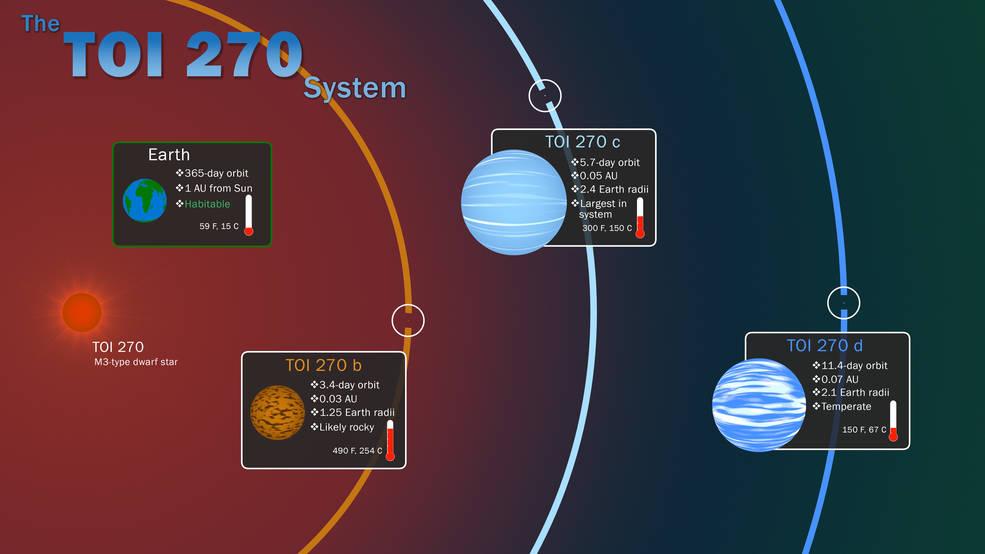
At the center of this system is an M3-type of dwarf star known as TOI 270. According to the scientists, the star is about 40 percent smaller than the Sun and is located about 73 light-years away. Orbiting around the star are three planets known as TOI 270 B, TOI 270 C and TOI 270 D.
The scientists noted that the conditions within these planets vary depending on their distance from TOI 270.
“This system is exactly what TESS was designed to find – small, temperate planets that pass or transit, in front of an inactive host star, one lacking excessive stellar activity, such as flares,” lead researcher Maximilian Gunther of the Massachusetts Institute of Technology said in a statement.
“This star is quiet and very close to us, and therefore much brighter than the host stars of comparable systems,” he added. “With extended follow-up observations, we’ll soon be able to determine the make-up of these worlds, establish if atmospheres are present and what gases they contain and more.”
The planet TOI 270 B orbits closest to the host star and is about 25% larger than Earth. Due to its close proximity to TOI 270, scientists believe it has oven-like conditions and has an equilibrium temperature of around 490 degrees Fahrenheit.
The other two planets are about twice as big as Earth. Of the two, the planet farthest from the star, known as TOI 270 D, has the lowest temperature. Scientists estimated that it has an equilibrium temperature of 150 degrees Fahrenheit.
Scientists believe that further studies on this planet will reveal more helpful information regarding its environmental conditions. These future observations could also reveal if the planet is habitable.
“TOI 270 is perfectly situated in the sky for studying the atmosphere of its outer planets with NASA’s future James Webb Space Telescope,” the study’s co-author Adina Feinstein of the University of Chicago said.
“It would be observable by Webb for over half a year, which could allow for really interesting comparison studies between the atmospheres of TOI 270 C and D,” she added.
The findings of the scientists were detailed in a new study published in Nature Astronomy.
Maya. The Fifth Fundamental Force to account for the mechanics of rotational spins of planets.
This infographic illustrates key features of the TOI 270 system, located about 73 light-years away in the southern constellation Pictor. The three known planets were discovered by NASA’s Transiting Exoplanet Survey Satellite through periodic dips in starlight caused by each orbiting world. Insets show information about the planets, including their relative sizes, and how they compare to Earth. Temperatures given for TOI 270’s planets are equilibrium temperatures, calculated without the warming effects of any possible atmospheres.
Photo: NASA’s Goddard Space Flight Center/Scott Wiessinger
Maya. The Fifth Fundamental Force to account for the mechanics of rotational spins of planets.
‘TIBETAN NATIONALISM’. ‘THE LUNG OF LHASA’ BREATHES TIBETAN AIR
‘THE LUNG OF LHASA’ BREATHES TIBETAN AIR FOR THE LAND AND ITS DENIZENS SHARE THE TIBETAN IDENTITY.
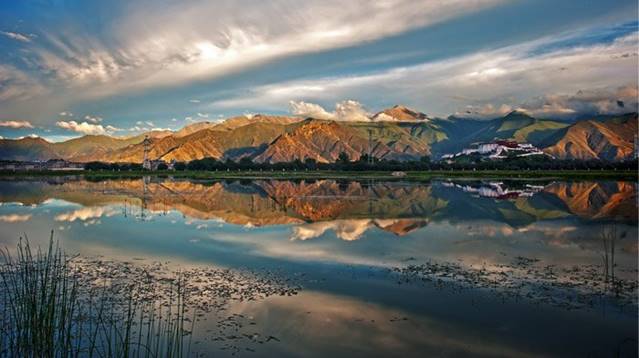
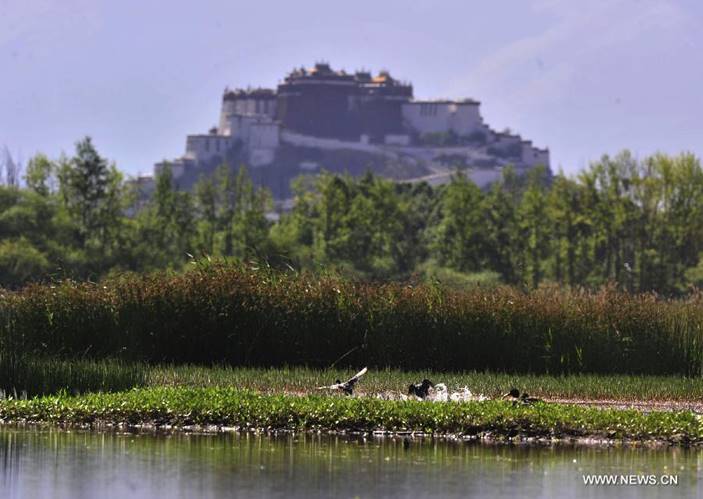
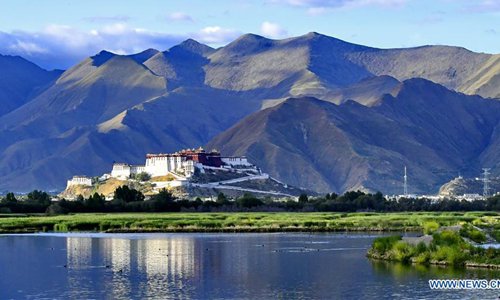
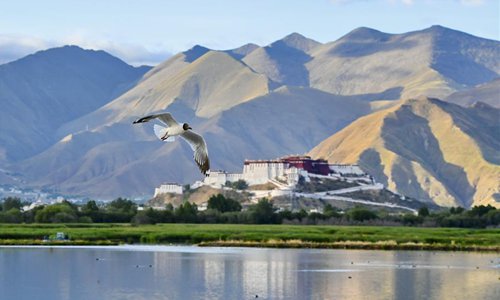
Lhalu wetland, ‘The Lung of Lhasa’ breathes Tibetan air.
Rudranarasimham Rebbapragada
SPECIAL FRONTIER FORCE
Lhalu wetland, ‘the Lung of Lhasa’ in Tibet
·
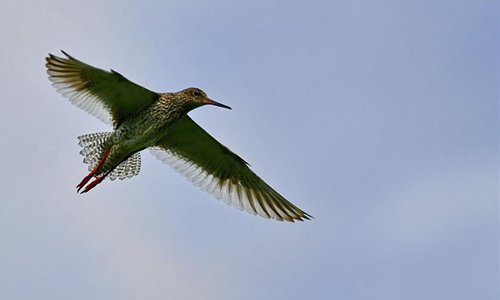
A common redshank is seen at Lhalu wetland in Lhasa, June 27, 2019. Lhalu wetland national nature reserve is known as "the Lung of Lhasa". (Xinhua/Zhang Rufeng)
Wild ducks swim at the Lhalu wetland in Lhasa, June 26, 2019. Lhalu wetland national nature reserve is known as "the Lung of Lhasa". (Xinhua/Zhang Rufeng)
A night heron is seen at Lhalu wetland in Lhasa, June 26, 2019. Lhalu wetland national nature reserve is known as "the Lung of Lhasa". (Xinhua/Zhang Rufeng)
Common redshanks are seen at Lhalu wetland in Lhasa, June 26, 2019. Lhalu wetland national nature reserve is known as "the Lung of Lhasa". (Xinhua/Zhang Rufeng)
A common redshank flies over Lhalu wetland in Lhasa, June 26, 2019. Lhalu wetland national nature reserve is known as "the Lung of Lhasa". (Xinhua/Zhang Rufeng)
Photo taken on June 27, 2019 shows the view of the Lhalu wetland in Lhasa. Lhalu wetland national nature reserve is known as "the Lung of Lhasa". (Xinhua/Zhang Rufeng)
A brown-headed gull flies over Lhalu wetland in Lhasa, June 27, 2019. Lhalu wetland national nature reserve is known as "the Lung of Lhasa". (Xinhua/Zhang Rufeng)
HIGH-ENERGY COLLISION CANRESOLVE THE GREAT TIBET PROBLEM
HIGH-ENERGY COLLISION CAN RESOLVE THE GREAT TIBET PROBLEM
The Great Tibet Problem is described as illegal, illegitimate, military occupation of Tibetan Territory by a foreign invading force. The Great Tibet can be resolved by the application of physical force of a great magnitude that can evict the Occupier of Tibet without any further human intervention or effort.
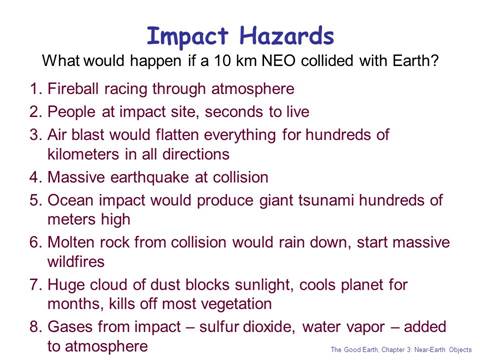
Such forces with devastating power do exist in Nature. Planet Earth experienced the serious consequences of heavenly bodies such as asteroids, bolides, and meteorites colliding with Earth. These heavenly bodies acquire massive amounts of energy as Earth’s Force of Gravitation accelerates them as they enter Earth’s atmosphere.
The discovery of the highest-energy gamma rays by the Tibet ASgamma Experiment gives the hope of a Heavenly Strike acting to neutralize the military power of Tibet’s Occupier. While the gamma rays are prevented by Earth’s atmospheric shield from causing damage, the impacts by Near Earth Objects will not be undermined by the natural protection afforded by the Magnetosphere.
Rudranarasimham Rebbapragada
Special Frontier Force
The highest-energy gamma rays discovered by the Tibet ASgamma experiment
The left figure shows the Tibet ASgamma experiment observed the highest energy gamma rays beyond 100 Teraelectron volts (TeV)from the Crab Nebula with low background noise, the cross mark indicates the Crab pulsar position. And the right figure shows the Crab Nebula taken by the Hubble Telescope Credit: NASA
The Tibet ASgamma experiment, a China-Japan joint research project, has discovered the highest energy cosmic gamma rays ever observed from an astrophysical source—in this case, the Crab Nebula. The experiment detected gamma rays ranging from > 100 Teraelectron volts (TeV) (Fig.1) to an estimated 450 TeV. Previously, the highest gamma-ray energy ever observed was 75 TeV by the HEGRA Cherenkov telescope.
Researchers believe the most energetic of the gamma rays observed by the Tibet ASgamma experiment were produced by interaction between high-energy electrons and cosmic microwave background radiation, remnant radiation from the Big Bang.
The Crab Nebula is a famous supernova remnant in the constellation Taurus. It was first observed as a very bright supernova explosion in1054 AD (see Fig.1). It was noted in official histories of the Song dynasty in ancient China as well as in Meigetsuki, written by the 12th century Japanese poet Fujiwara no Teika. In the modern era, the Crab Nebula has been observed using various types of electromagnetic waves including radio and optical waves, X-rays and gamma rays.
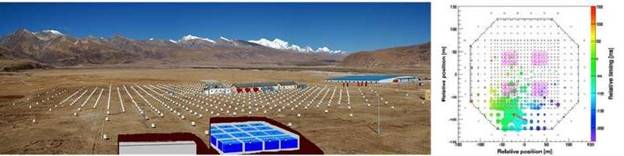
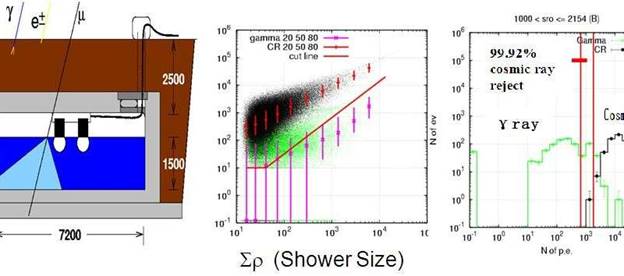
The Tibet ASgamma experiment has been operating since 1990 in Tibet, China, at an altitude of 4300 meters above sea level. The China-Japan collaboration added new water Cherenkov-type muon detectors under the existing cosmic-ray detectors in 2014 (see Fig.2). These underground muon detectors suppress 99.92 percent of cosmic-ray background noise (see Fig.3). As a result, 24 gamma-ray candidates above 100 TeV have been detected from the Crab Nebula with low background noise. The highest energy is estimated at 450 TeV (see Fig.2).
The left figure shows the Tibet ASgamma experiment (Tibet-III array+ Muon Detector array); The right figure shows an event display of the observed 449TeV photon-like air shower. Credit: IHEP
The researchers hypothesize the following steps for generating very-high-energy gamma rays: (1) In the nebula, electrons are accelerated up to PeV, i.e., peta (one thousand trillion) electron volts within a few hundred years after the supernova; (2) PeV electrons interact with the cosmic microwave background radiation (CMBR) filling the whole universe; (3) A CMBR photon is kicked up to 450 TeV by the PeV electrons. The researchers thus conclude that the Crab Nebula is now the most powerful natural electron accelerator discovered so far in our galaxy.
This pioneering work opens a new high-energy window for exploring the extreme universe. The detection of gamma rays above 100 TeV is a key to understanding the origin of very-high-energy cosmic rays, which has been a mystery since the discovery of cosmic rays in 1912. With further observations using this new window, we expect to identify the origin of cosmic rays in our galaxy, namely, pevatrons, which accelerate cosmic rays up to PeV energies.
The China-Japan collaboration placed new water Cherenkov-type muon detectors under the existing cosmic-ray air-shower array in 2014. These underground muon detectors can suppress 99.92% of cosmic-ray background noise. Credit: IHEP
"This is a great first step forward," said Prof. HUANG Jing, co-spokesperson for the Tibet ASgamma experiment. "It proves that our techniques worked well, and gamma rays with energies up to a few hundred TeV really exist. Our goal is to identify a lot of pevatrons, which have not yet been discovered and are supposed to produce the highest-energy cosmic rays in our galaxy."

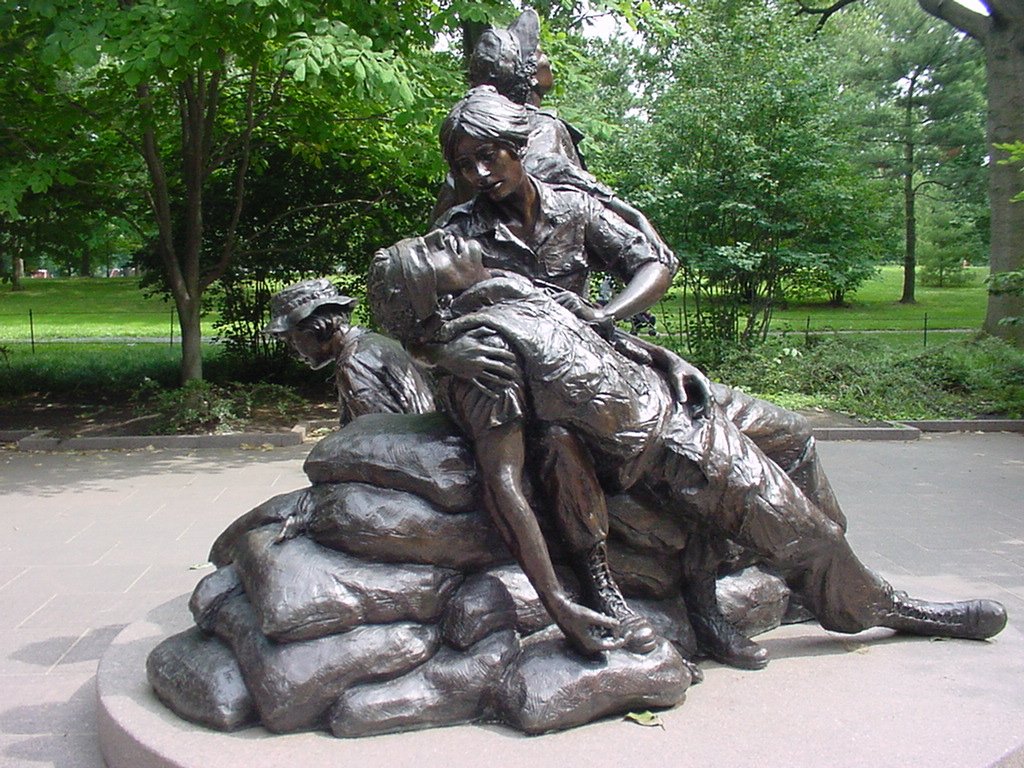































“We selected only those who convincingly demonstrated their compassion to serve the needs of others.”
I would like to know the methodology involved in verifying compassion demonstrated by students applying for admission to the Medical School.
Compassion is viewed as an innate trait and it comes into play when the individual comes to witness the pain and misery that is being experienced by another living entity. At a minimum, to demonstrate the trait called compassion needs the verification by observing the interaction between the student applicant and a victim enduring a very painful situation that impacts the viewer.