The Sky is Blue. It may reveal that planet Earth is a designed, unique, original, distinct, one of its own kind of celestial object. Rayleigh Scattering accounts for the coming together of the man, Earth, Light, and the Sky.
The appearance of Sky’s color when viewed by an observer on planet Earth is Blue, and yet this appearance is not common in the vast universe that man has explored. It may be suggested that planet Earth is unique, original, distinct, and one of its own kind of celestial object and it meets the criteria that are required to name an object as a designed object.
Category Archives: Andhra Pradesh Medical Council Register
Philosophy of Medicine – Lesson. 7 – Scientific Naturalism – The Designing of Natural Colors of Living Things

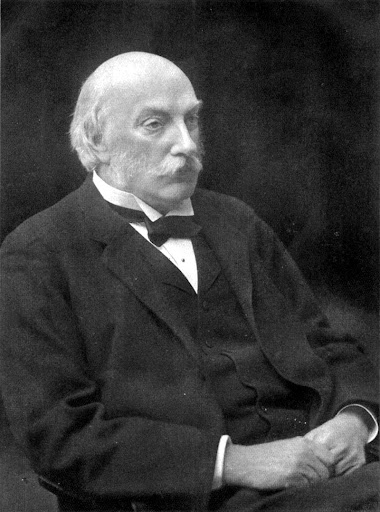
The comprehensive understanding of biological coloration demands a study of Physics, Chemistry, Physiology, Biology, Psychology and other subjects. It is equally important to pay tribute to people who have contributed to a better understanding of the principles involved in color production. I am happy to introduce John Tyndall (1820-1893), Irish-British physicist, professor and Superintendent at the Royal Institution, London (1853-1887) to my readers. As a public intellectual, Tyndall’s was one of the loudest voices advocating a scientific explanation for the natural world and for life itself, a scientific naturalism.
The diffusion of light by large molecules is important to understand the phenomenon of biological coloration. These molecules are able to interact because of the design created with a purpose by the Whole Designer.
Philosophy of Medicine – Lesson. 6 – The creative use of pigments
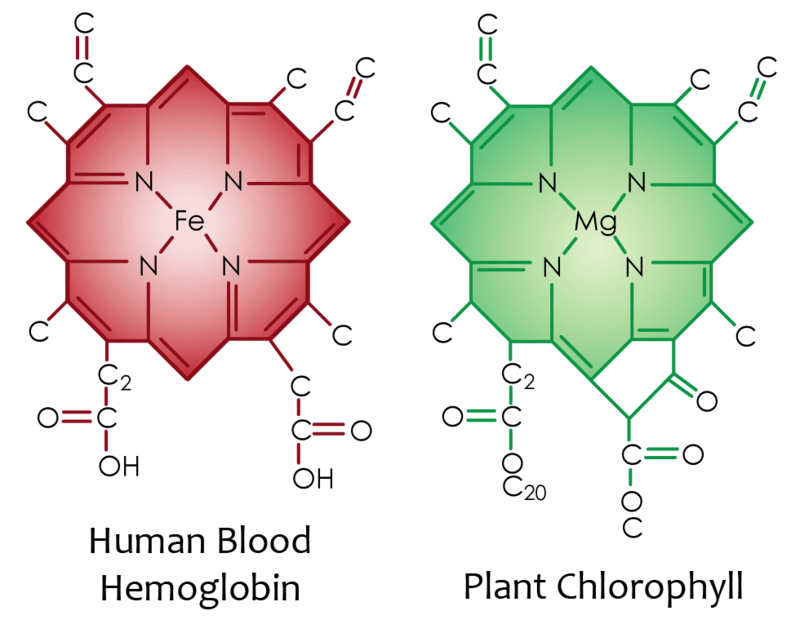
Pigments are substances that impart color to other materials. Most paint pigments are metallic compounds. Some metallic pigments occur naturally. Plants and animals contain pigments. Most opaque substances owe their color to a combination of scattering and absorption within the body of the material. The production of color depends upon the wavelength of incident light, the diameter of the pigment particle, and the relationship between the refractive index of the pigment and that of the vehicle in which the pigment particles are suspended.
The role of pigments in biological coloration displays the role of an artist who chooses the pigments to generate a desired visual effect in organisms that have the visual capacity to recognize the color.
Philosophy of Medicine – Lesson. 5 – The Tristimulus Theory of Color – Who is the Artist?
The Tristimulus Theory of Color is important, and we have to know the connection between the stimulus and the psychological satisfaction experienced by the viewer.
No single function can explain the coloration of living things. We need a comprehensive theory that predicts the lines and patterns of coloration of plants and animals. An artist’s palette containing only three properly chosen colors is entirely adequate under most circumstances to produce the various visual effects of color that is observed. The optical mechanisms involved in the production of color are complex. Coloration is a dynamic and complex characteristic and the term must be clearly distinguished from the term ‘color’ which only refers to the spectral qualities of emitted or reflected light. It is apparent that plants, and animals have no cognitive abilities to produce the coloration by which they are recognized. However, the coloration displayed gives us a clue about the nature of the “Whole Artist” who could be using imagination, has feelings for the forms created and seeks satisfaction from the visual effects that he produced.
Philosophy of Medicine – Lesson. 4 – The Spiritual Dimension of the Colors of Life
The New Testament Book of The Gospel According to Apostle John, Chapter 1, verses 3 and 4 read: ” Through Him all things were made, without Him nothing was made that has been made. In Him was life, and that life was the light of men.” There is a direct relationship between life and light and hence there is a need to describe Spiritual Optics and know the coloration of living things as a spiritual function.
What is the True Color of Man? What is Color? These questions demand understanding the role of color in performing living functions.
Philosophy of Medicine – Lesson. 3 – Spiritual Optics defines the Material Basis of Spirituality Science

God is Light. Light is Life. Optics, the scientific study of Light must include the spiritual functions and properties of Light.
Whole Dude at Whole Foods discovers the Material Basis of Spirituality Science to describe the concept of Whole Optics. Spiritual Light and Spiritual Optics involves a scientific study of Light or Optics. God is Light or God created Light; Light is Energy, Light is Energy of Life and Color is the evidence for the use of imagination to formulate spiritual relationships between energy dependent life and energy providing Supreme Being.
Philosophy of Medicine – Lesson. 2 – The Doctrine of Whole Optics accounts for the phenomenon of Biological Coloration

No single function can explain the coloration of living things. We need a comprehensive theory that predicts the lines and patterns of coloration of plants and animals. An artist’s palette containing only three properly chosen colors is entirely adequate under most circumstances to produce the various visual effects of color that is observed. The optical mechanisms involved in the production of color are complex. Coloration is a dynamic and complex characteristic and the term must be clearly distinguished from the term ‘color’ which only refers to the spectral qualities of emitted or reflected light. It is apparent that plants, and animals have no cognitive abilities to produce the coloration by which they are recognized. However, the coloration displayed gives us a clue about the nature of the “Whole Artist” who uses imagination, has feelings for the forms created and seeks satisfaction from the visual effects that He produced. If man has the ability called visual perception, he must use the ability to visualize the “Whole Artist” who is at work.
Philosophy of Medicine – Lesson. 1 – Man is the Spectrum of Seven Colors
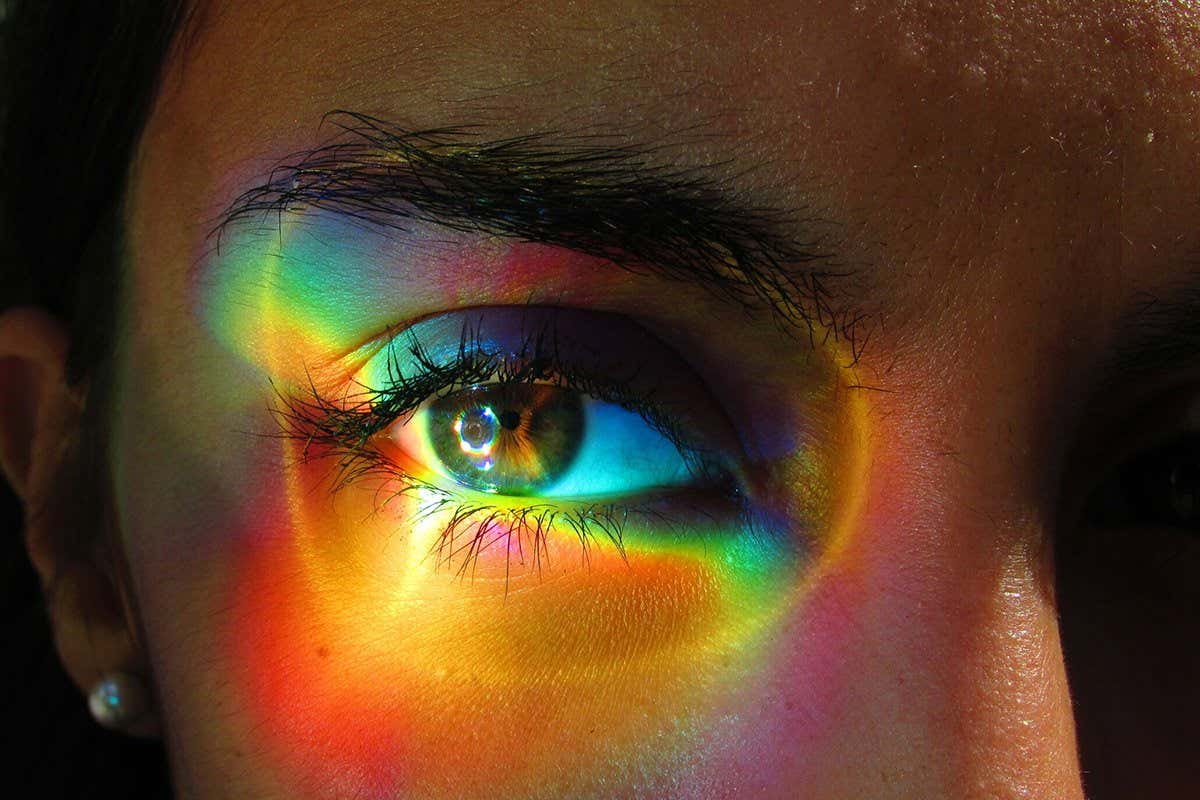
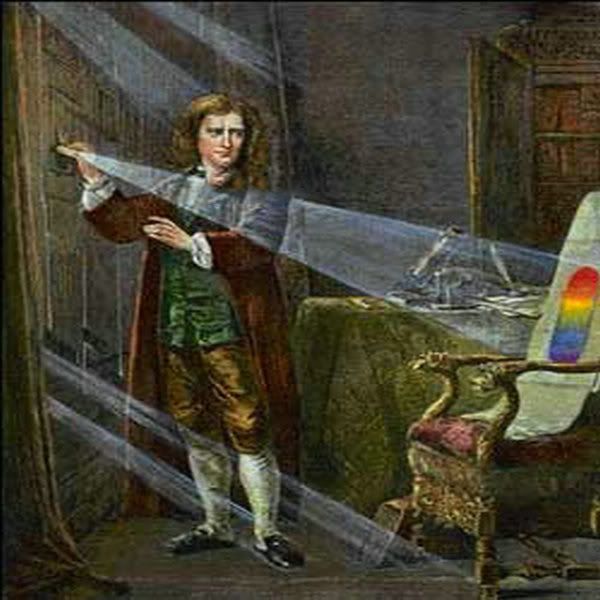
Whole Dude’s Whole Theory of Man defines Man as the ‘Spectrum of Seven Colors’. The Seven Colors or Dimensions of Man are, 1. The Physical, 2. The Mental, 3. The Social, 4. The Moral, 5. The Spiritual, 6. The Creative and 7. The Rational. Isaac Newton could easily verify his ‘Theory of Light’ by conducting his critical experiment in which he used two prisms to breakdown and to reconstitute white light rays. In case of Man, such experimental verification is not possible as Science does not have the capability to breakdown Man and reconstitute him. However, Science provides verified information about the building blocks of life and about basic living functions such as ‘Metabolism’ which essentially involve making, breaking, and repairing ‘Molecules of Life’.
 Whole Dude - Whole Spirituality