DEFENCE INTELLIGENCE AGENCY – KNOW YOUR ENEMY

DEFENCE INTELLIGENCE AGENCY – KNOW YOUR ENEMY

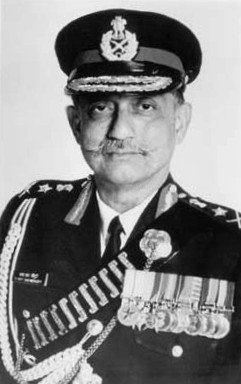
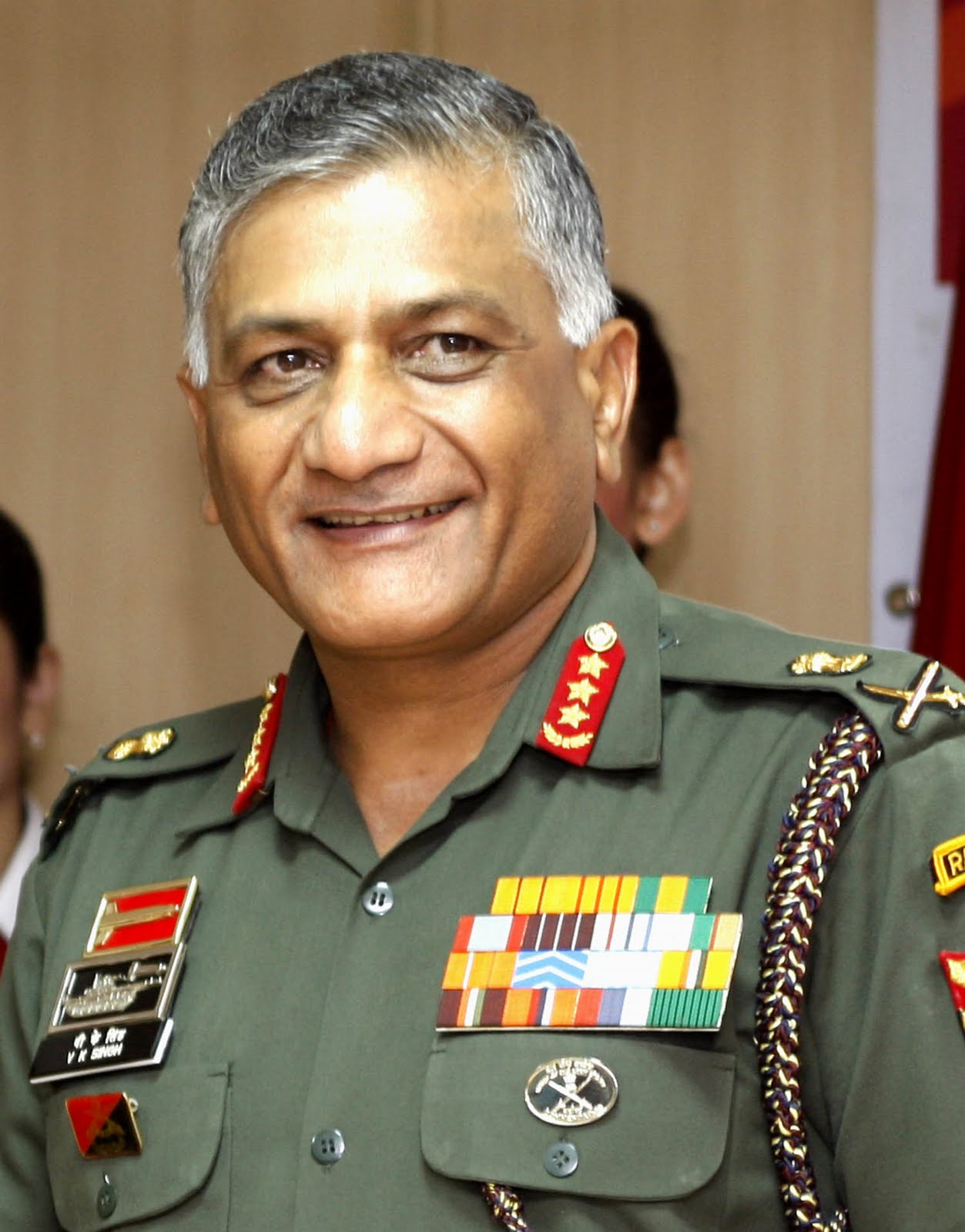
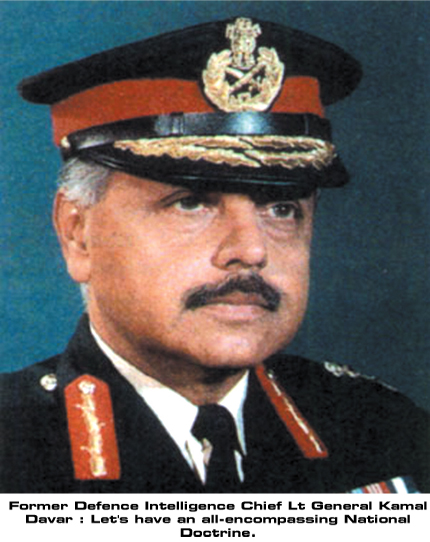
DEFENCE INTELLIGENCE AGENCY – KNOW YOUR ENEMY. LIEUTENANT GENERAL KAMAL DAVAR WAS APPOINTED ON MARCH 05, 2002 AS DIRECTOR GENERAL OF THE DEFENCE INTELLIGENCE AGENCY(DDG DSC) AFTER THE KARGIL WAR. On indianarmy.nic.in

Please take a look at Directorates and Branches of Indian Army Organization. Deputy Chief of Army Staff DCOAS(P&S) includes Director General of the Defence Intelligence Agency(DDG DSC) which was set up after the Kargil War. The idea is that of integrating defence intelligence gathering. Lieutenant General Kamal Davar was appointed as Director General DSC on March 05, 2002. He recommended all-encompassing National Doctrine to meet with India’s Intelligence Gathering demands.

Defence Intelligence Agency - Know Your Enemy. General Kamal Davar recommended formulating 'National Doctrine' for India's Intelligence requirements.
Defence Intelligence Agency – Know Your Enemy. General Kamal Davar recommended formulating comprehensive ‘National Doctrine’ for India’s Intelligence Gathering.
Defence Intelligence Agency – Know Your Enemy. India’s first Director General of the Defence Intelligence Agency.

Intelligence demands keeping tabs or a tab which means to keep a check on, follow or watch every move. The primary mission of Armed Forces is that of fighting War or defending against War. To perform this duty, Armed Forces draw authority or power sanctioned by Constitution of India which created posts such as President of India, and Prime Minister of India. In Army, we are trained to receive orders given by a Superior Officer and there is an obligation to reject illegal orders. In ultimate analysis, legality of any order including orders issued by President or Prime Minister depend upon their allegiance to Constitution of India that created Republic of India.

To accomplish their sacred duty, to fulfil their obligation, Army Establishment( just like the Supreme Court of India) has to recognize the Supreme Authority, the Supreme Power, and the Supreme Law of Republic of India. Director General DSC has the obligation to gather intelligence, to keep tabs on all Indians including President, and Prime Minister as Republic of India can potentially face threats from both internal and external sources, known or unknown. DDG DSC has to know activities of politicians as well as those of Police and various kinds of security forces operating in India. Armed Forces has to keep tabs on their own personnel as a matter of principle. Director General DSC has to know as to what is going on within the organization to prepare for eventualities.

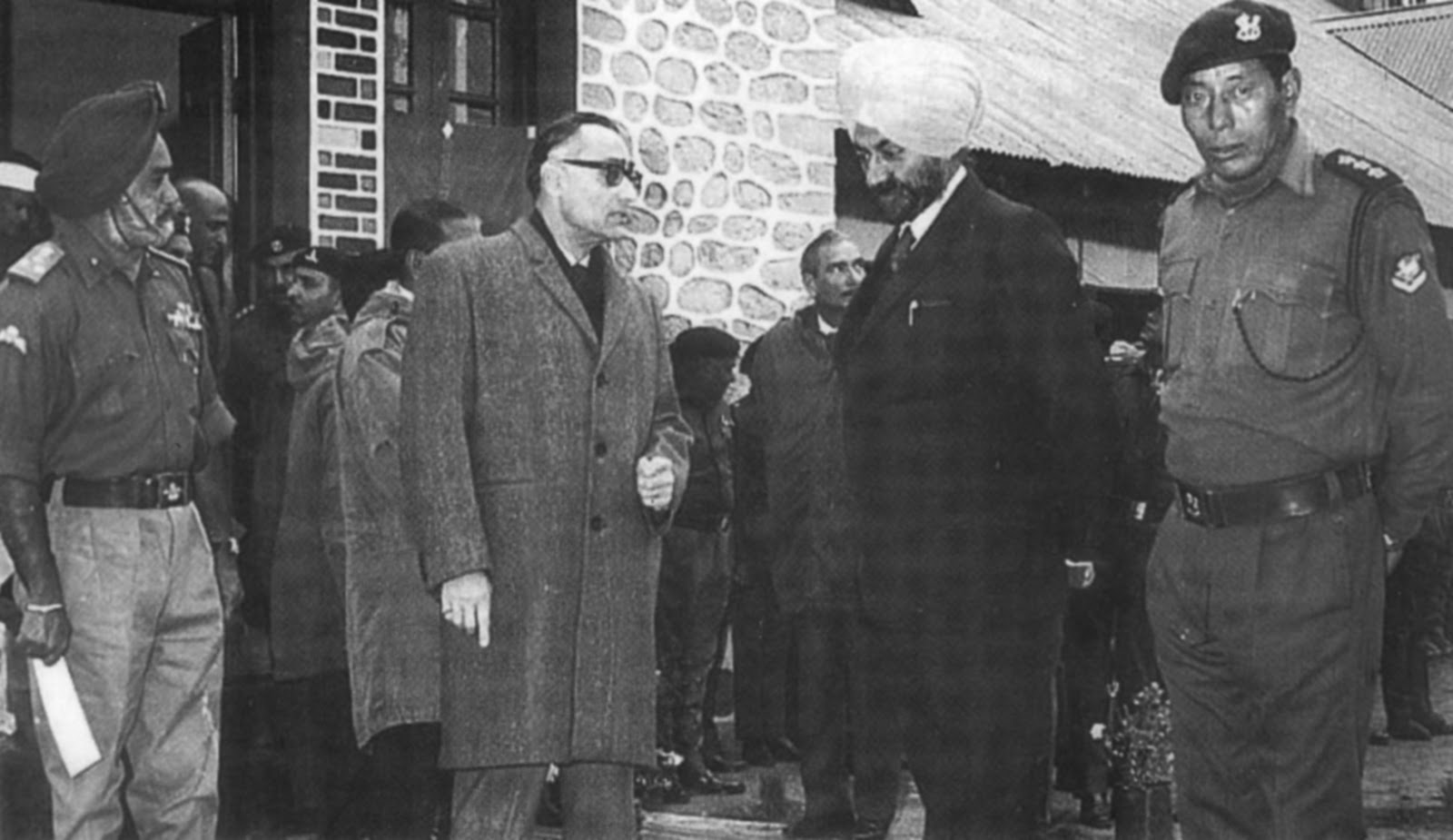
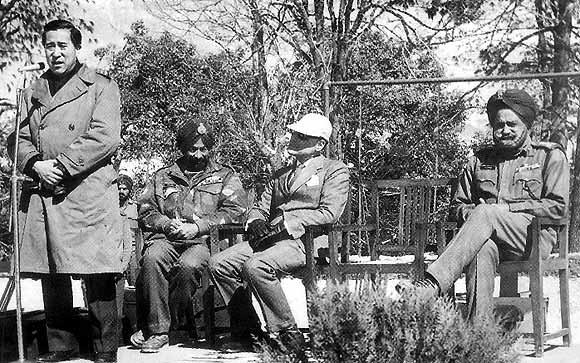
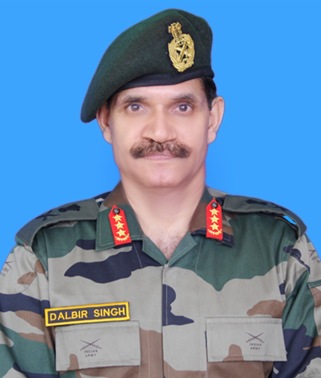
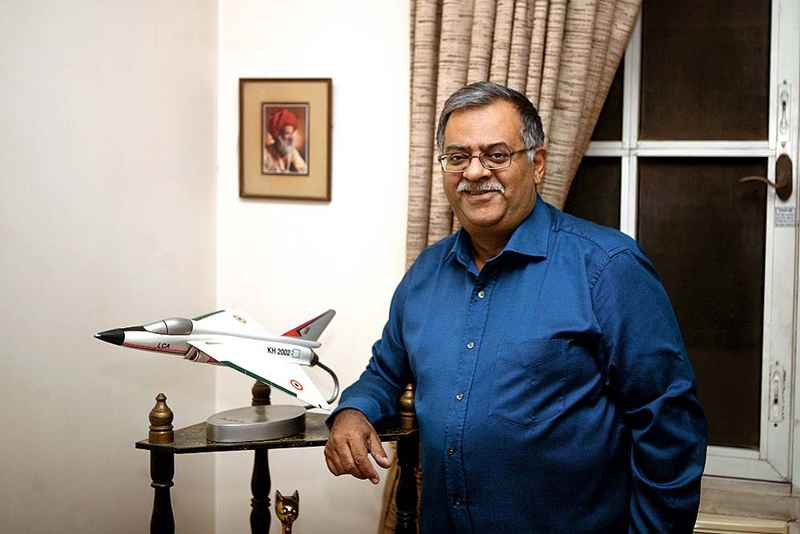
DEFENCE INTELLIGENCE AGENCY - KNOW YOUR ENEMY. LIEUTENANT GENERAL ANIL K BHALLA WAS APPOINTED AS DIRECTOR GENERAL, DEFENCE INTELLIGENCE AGENCY ON JANUARY 02, 2014. HE IS SEEN WITH CHIEF MINISTER OF HIMACHAL PRADESH IN PHOTO IMAGE OF JANUARY 08, 2013.
DEFENCE INTELLIGENCE AGENCY – KNOW YOUR ENEMY. LIEUTENANT GENERAL ANIL K BHALLA WAS APPOINTED AS DIRECTOR GENERAL, DEFENCE INTELLIGENCE AGENCY ON JANUARY 02, 2014. HE IS SEEN WITH CHIEF MINISTER OF HIMACHAL PRADESH IN PHOTO IMAGE OF JANUARY 08, 2013.

Director General DSC should not be a ceremonial appointment. This Branch requires more personnel to gather intelligence from a variety of sources. Today, I do not see that kind of Intelligence or Intelligence gathering effort to monitor suspicious activities that endanger National Security. We are not prepared to face security threats. The attack on IAF Pathankot Base shows that we have not gathered any relevant intelligence even after creating the Defence Intelligence Agency. India immediately needs National Doctrine on Intelligence.

Rudranarasimham Rebbapragada
Ann Arbor, MI 48104-4162 USA
SPECIAL FRONTIER FORCE


INDIA’S CIVIL_MILITARY DISSONANCE: ROAD TO PERDITION?

DEFENCE INTELLIGENCE AGENCY – KNOW YOUR ENEMY. INDIA NEEDS ALL-ENCOMPASSING NATIONAL DOCTRINE FOR INTELLIGENCE GATHERING. ADMIRAL ARUN PRAKASH OF INDIAN NAVY.

Admiral Arun Prakash

India’s Republic Day on Tuesday (January 26) will be celebrated with traditional pageantry and the citizen gets a panoramic view of the country’s military capability. Intelligence inputs warn that it will be yet another test for the national security apparatus. However, it provides an opportune occasion to objectively review how India has dealt with its complex security challenges. Regrettably in India’s National Security ‘Hall of Shame’ we can now add, ‘Pathankot 2016’ after ‘Kandahar 1999’, ‘Parakram 2002’ and ‘Mumbai 2008.’

Given that India is a nuclear weapon state, which fields one of the world’s largest armed forces and spends upwards of $40 billion annually on defence, one cringes at accounts of our seemingly inept handling of yet another terrorist attack. Equally disheartening is the fact that, eight years after 26/11, we lack the ability to deter the architects of this attack, and the will to punish its perpetrators.

It is a matter of sheer good fortune that the cross-border terrorists who managed to enter the Pathankot air base failed to target aircraft, helicopters and missiles as well as the huge bomb-dump and fuel-storage facilities. We overlook the fact that some of our air bases, adjuncts to the nuclear deterrent, may also house nuclear warhead components. So, while cautioning the world about the dangers of Pakistani warheads falling into jihadist hands, we need to ensure that a similar fate does not befall our own.

The calibre of a nation’s leadership is tested by a crisis. Whether it is floods, an aircraft hijacking or a terror strike, India’s response to any crisis has followed a depressingly familiar sequence. Regardless of intelligence inputs, the onset of a crisis finds multiple agencies pulling in different directions, lacking unitary leadership, coordination and, above all, a cohesive strategy. Ad-hoc and sequential damage-control measures eventually bring the situation under control, with loss of life and national self-esteem. After a free-wheeling blame-game, the state apparatus relapses into its comatose state – till the next disaster.

From the media discourse, it appears that this template was faithfully followed in the Pathankot episode. While the military has due processes for learning from its mistakes and dealing with incompetence, one is not sure about the rest of our security system.
Whether or not India-Pakistan peace talks are resumed, the Pakistani ‘deep state’ has many more ‘Pathankots’ in store for India. For Pakistan’s Inter-Services Intelligence (ISI), cross-border terrorism is an inexpensive method of keeping India off-balance. The strategy of plausible deniability and threat of nuclear ‘first-use’ assures them of impunity from retribution. Such situations call for all components of India’s national security, military, intelligence, bureaucracy, central and state police forces to work in the closest synergy and coordination. Regrettably, civil-military relations have, of late, been deeply vitiated and the resultant dissonance could have adverse consequences for the nation’s security.

What is worse; civil-military recriminations, so far, confined within the walls of South Block, seem to be proliferating. Post-Pathankot, the constabulary has jumped into the fray and, if an intemperately-worded newspaper article (Indian Express, January 13) by a serving Indian Police Service (IPS) officer is an indicator, civil-military relations may be entering a downward spiral. This outburst should compel the political leadership to undertake a re-appraisal of the prevailing civil-military equation which contains many anomalies; one of them being the role of the police forces.

Worldwide, an unmistakable distinction is maintained between the appearance and functions of the military and civilian police, the latter being charged with the maintenance of law and order, crime prevention/investigation and traffic regulation et al. India’s unique security compulsions have seen the Indian Police Service (IPS) not only retaining the colonial legacy of sporting army rank badges and star plates but also garnering unusual influence in national security matters over the years.

Many of our Central Armed Police Forces (CAPFs) have blurred the distinction between police and military; terming themselves ‘para-militaries’, with constables wearing military style combat fatigues and being addressed as ‘jawans’. There are only three, duly constituted, para-military forces in India: the Coast Guard, Assam Rifles and the Special Frontier Force; all headed by armed forces officers. The five CAPFs, namely BSF, CRPF, ITBP, CISF and SSB – cumulatively over a million strong – are headed by IPS officers.

The deployment of CAPFs in border-guarding as well as counter-insurgency roles calls for military (read infantry) skills; for which neither the police constables nor officers receive adequate training. This lack of training and motivation as well as a leadership deficit has manifested itself in: (a) these forces repeatedly suffering heavy casualties (confined only to constables) in Maoist ambushes; and (b) recurring instances of infiltration taking place across borders guarded by CAPFs.

In the case of the anti-terrorist National Security Guard (NSG), its combat capability comes from the army; yet, by government mandate, it is headed by a police officer. The fact that this elite force has seen 28 directors general in 31 years makes one wonder if round holes are being filled by square pegs.

A second anomaly in the civil-military matrix pertains to the fact that the Government of India Rules of Business have designated the civilian secretary heading the defence ministry as the functionary responsible “for the defence of India and for the armed forces”. Since no military officer, including the three chiefs, finds mention in the Business Rules, the Service HQs are subaltern to a 100 percent civilian ministry. Every major decision – whether it pertains to finance, acquisition, manpower or organization – requires a ministry nod which can take decades.

A false and dangerous belief prevails on Raisina Hill that civil-military relations constitute a zero-sum game in which ‘civilian control’ is best retained by boosting the bureaucracy and police at the expense of the military. Post-independence, the civil-military balance has been steadily skewed by pushing the military officer well below his civilian counterparts with the same years of service. This has caused deep resentment in the military, and the resultant hierarchical distortion could lead to a civil-military logjam – the last thing the nation needs at this juncture.

It is high time the Indian politician shed his traditional indifference to national security issues and took tangible measures to ensure a stable and equitable civil-military paradigm – one which ensures a say for the military in matters impinging on the nation’s safety and security. Until that happens, the Republic Day parade will remain a vainglorious display of hardware and pageantry – and the nation’s security in parlous straits.

__

KOSOVO’S INDEPENDENCE THREATENS THE REPUBLIC OF INDIA

Kosovo’s independence threatens the Republic of India.

KOSOVO’S INDEPENDENCE THREATENS REPUBLIC OF INDIA

Kosovo’s independence threatens the Republic of India. Jay Bhattacharjee alerts readers on demographic changes in West Bengal, India that resemble Kosovo-like situations that resulted in the dismemberment of Yugoslavia and Serbia.

Kosovo and South Sudan are independent nations not because of people demanding independence. Independence imposed on Kosovo and South Sudan describes Superpower’s concept of Just World Order. To promote peace and justice and to establish its own vision of World Order, Super Power takes action to dismember rogue nations by inciting unrest among people taking advantage of their demographic identities. The motivation or drive for separating Kosovo from the Republic of Serbia(Yugoslavia) originated from an external source and Kosovo Muslim population simply swallowed independent status served on a silver plate. Kosovo’s independence threatens the Republic of India as external powers can use the same strategy to dismember the Republic of India.

Kosovo independence threatens the Republic of India. India can be dismembered using demographic changes as a tool to tear territory.

Rudranarasimham Rebbapragada

Ann Arbor, MI 48104-4162 USA
SPECIAL FRONTIER FORCE

KOSOVO’S INDEPENDENCE – A THREAT TO INDIA

Kosovo independence threatens India.

I claimed Kosovo’s Independence as a threat to India in my blog post dated April 04, 2008.

Rudra Narasimham Rebbapragada
Ann Arbor, MI 48104-4162 USA
SPECIAL FRONTIER FORCE-ESTABLISHMENT No. 22-VIKAS REGIMENT

Jay Bhattacharjee’s analysis of the Kosovo-like situation in the Republic of India.

WEST BENGAL MAY BE HEADED FOR A KOSOVO-LIKE SITUATION WITH THE RISE OF ISLAMISM

JAY BHATTACHARJEE

Jay Bhattacharjee is a policy and corporate affairs analyst based in Delhi.

18 Jan 2016

The commonality between Bengal and Kosovo is clear and ominous. The recent events in Malda should be a warning signal for those who are still in denial.

The recent events in Malda, West Bengal, sent a warning signal to the whole country about the dangers posed to national integrity and security by aggressive Islamist forces. The unease was compounded by the complete self-imposed censorship of the events in the mainstream media, especially the English broadsheets and TV channels, who are normally so vociferous about “intolerance”. The spread of the Malda virus to the neighboring Purnea district in Bihar led to some coverage in the national media, but this was again perfunctory.

Interestingly, carefully engineered and orchestrated Islamist outrage had been seen for the last six to seven weeks in UP and, on one occasion, in Bhopal in next-door MP. In every one of the UP incidents, one saw huge crowds, extremely belligerent and hostile, gathering in medium-sized towns and bringing normal civic life to a complete halt. The slogan-mongering in these “protest” rallies was incendiary, to say the least. The outrage, of course, was directed at some strong remarks purportedly made by a minor UP-based Hindu political activist against the prophet of the Muslims.

However, it is a matter of record that this alleged offense was in response to an undeniably outrageous statement made by the paragon of secularism and tolerance, Azam Khan, a key member of the Samajwadi Party government that rules UP.

All these would have been bagatelles, had not the protest gatherings been so flagrant in their anti-national posturing and so provocative in their communal speeches. In this age of electronic surveillance and data-gathering, it is just not possible to hide or camouflage these disturbing and dangerous developments.

Of course, West Bengal under the Trinamool Congress (TMC) chief Mamata Banerjee and her rabble-rousing cronies, has been on the slippery road to disaster for a number of years. The assiduous courting of the minority vote-bank, coupled with a dangerous tolerance of cross-border infiltration, not just by the TMC, but also by its predecessor, the CPM-Left Front regime, for more than four decades, has created drastic demographic changes in at least four districts of West Bengal, all of which are on the Bangladesh border. Worse, the TMC has steadfastly refused to clamp down on aggressive communal grandstanding by certain segments of the Muslim population.

Kosovo’s independence threatens the Republic of India. West Bengal, India is getting alienated from India due to demographic changes encouraged by politicians.

Last year, in May, I had analyzed and assessed this disturbing scenario in this portal, in which I highlighted the very uncomfortable, and indeed dangerous scenario that prevailed in Bengal. This essay also underscored the importance of the demographic changes that were impacting West Bengal

If anything, such elements in West Bengal have become much more aggressive and combative. A recent article in Swarajya also looks at the events closely and sounds a warning bell for the Indian government and policymakers.

Against this backdrop, it would be most interesting if we were to study the real-life example of a country that was dismembered through a demographically engineered coup. This, of course, is the example of Yugoslavia, a multilingual, multi-ethnic and multi-religious federal republic like India, which was once touted as a model country that harmonized and integrated its different roots. The Yugoslav experiment lasted for barely 70-and-odd years.

A few years ago, at a seminar in Delhi, I presented a paper that studied the break-up of Yugoslavia and pointed out the dangerous similarities between the south European country and India and warned that the fault-lines in our country closely resembled those in Yugoslavia. For the benefit of the readers of this portal, I would like to go through the process of disintegration of that country and emphasize the critical factors that were at play then and which continue to influence events in our shores.

The lynchpin in the break-up of Yugoslavia was Kosovo, as we all know. I should emphasize here the critical importance of Kosovo in the Serbian/Slavic psyche. The Serbian army was defeated by the invading Ottoman Turks in 1389 in the infamous battle of Kosovo Polje. Understandably, the Serbs view Kosovo as the cradle of their civilization. The monastery of Vrdnik-Ravanica, which houses the remains of King Lazar, who led the Serb army in Kosovo and was killed in the battle, is also in Kosovo. If one were to seek a parallel, Kosovo is as important to the Serbs, as Chittorgarh and Jallianawalla Bagh are for us.

In a wider context, the Kosovo defeat was unprecedented, for the Slavic world and for Europe, vis-à-vis the world of Islam. It marked the beginning of Turkish domination in the Balkans that was to last till 1918. The steady Islamization and Ottomanisation of Kosovo continued for centuries. Along with this, it grew the myth of Turkish rule being tolerant and just. This sold the idea that Turkish rule over Christians in its European provinces was hunky-dory.

Kosovo’s independence threatens the Republic of India.

Location of Kosovo in the Balkan region (David Liuzzo/Wikimedia Commons)

Readers will notice the ominous parallel to the mythologizing of Islamic rule in India by some historians and scholars. In reality, the Ottoman Empire was created by centuries of jihad against Christian populations. Consequently, the rules of jihad, elaborated by Arab-Muslim theologians from the 8th to the 10th centuries, were applied to the subjected Christian and Jewish populations of the Turkish-Islamic dominions. Those regulations were an integral part of the Islamic legislation pertaining to the non-Muslim vanquished Peoples. Therefore, they presented a certain homogeneity throughout the Arab and Turkish empires, as in Muslim Asia and India.

With this historical backdrop in place, we must fast forward to the beginning of the 20th century. After years of slow demographic change in Kosovo after Serbia’s capitulation to the Ottoman Empire, the population composition of Kosovo in 1900 was as follows: 50 percent Serbs, with another 5–7 percent of Goranis (a Slavic Muslim group), Jews and Gypsies. The balance of 43-47 percent was made up of Albanian Kosovars. By 2000, the picture had changed to the following :

ETHNIC COMMUNITY

PERCENTAGE OF TOTAL POPULATION

Albanians 87%

Serbs 9%

Others 4%

In other words, there was a complete demographic restructuring in Kosovo within 100 years.

There were many factors that operated throughout the 20th century to bring about this transformation.

The Albanian population of Kosovo grew constantly, both in absolute and relative terms, according to all the post-Second World War censuses 498,000 (68.5 percent) in 1948; 647,000 (67.2 percent) in 1961; 916,000 (73.7 percent) in 1971; and 1,227,000 (77.5 percent) in 1981. The critical element here was the high Albanian birth rate of 32 per 1,000 (the highest in Europe), coupled with the accelerated exodus of Serbs and Montenegrins after the riots in the spring of 1981. This further accentuated the demographic strength of the Albanians in this southern province of Yugoslavia.

In sharp contrast, the Serbian population of Kosovo increased only in absolute terms (171,000, 189,000, 227,000, and 228,000 in 1948, 1953, 1961, and 1971, respectively), while initially stagnating and then declining in relative terms (23.6 percent, 23.5 percent, 23.6 percent, and 18.4 percent). By 1981, however, there were 209,792 Serbs in Kosovo, comprising only 13.2 percent of the total population. Between 1971 and 1981, the number of Serbs in Kosovo decreased by 18,208 in absolute terms.

Perhaps the most profound demographic change in Kosovo took place between 1971 and 1981 when over 100,000 Serbs and Montenegrins left the region. Since the violent 1981 riots in Kosovo, during which ethnic Albanian demands included the province’s political separation from Serbia and the establishment of a Kosovo Republic, the tempo of Serbian and Montenegrin emigration accelerated. In 1982 alone, 5,810 Serbs and Montenegrins left Kosovo and during the first three months of 1983 yet another 1,180. The ethnic cleansing of the Serbs and fellow-Slavs in Kosovo culminated in the almost complete Albanisation of Kosovo by 2007. Out of an estimated population of 2.1. million in 2007, Albanians constituted around 92 percent. The demographic coup was over.

What are the lessons that West Bengal and India can draw from the Kosovo experiment and the debacle of Yugoslavia? For certain observers and analysts of a certain hue, the recent events in West Bengal (and indeed in parts of UP and Bihar) are nothing but expressions of “minority rights”, “secularism” etc. Clearly, these people are not prepared to look at hard reality and realize that Islamism is a political ideology and is not something that has been dreamt up in a laboratory peopled by “right-wing extremists”.

In this context, in my earlier paper, I outlined the paradigm of demographic destruction of a multi-ethnic, multi-religious nation and the creation of a mono-ethnic and mono-religious country, based on the real-life experiment in Yugoslavia and Kosovo. Readers will see the parallels between what happened thousands of miles from India and what is now taking place in our shores.

One critical fact in the historical canvas must be spelled out at this stage. This is the policy of the post-war Yugoslav leader Tito to appease the Kosovo Albanians. The Kosovo imbroglio must take into account the consequences of this misconceived idea.

Tito, after his falling-out with the Soviet Union in 1948, sought to build up an alliance with Albania, whose leader, Enver Hoxha, though an avowed Marxist and atheist, was also a committed Albanian nationalist. Tito and the Yugoslav senior leadership mistakenly assumed that taking a soft-line on Albanians in Kosovo and on the rapidly changing demographics balance in that province (in favor of the Albanians) would give Yugoslavia a stable relationship with its southern neighbor.

The paradigm of a demographic coup must now be spelled out in some detail. The process can be summarized quite easily :

­Bring about drastic demographic change in a province or part of a federal country, through the inward population, flows of a particular group (religious, ethnic or linguistic) from a neighboring country or through significantly higher birth-rates domestically.

­Create law and order problems for the federal/central authorities and administration.

­Terrorise the erstwhile majority (that has been reduced to a minority) and force them to emigrate from their original homelands (Kashmir earlier and Bengal in the near future).

­Create civil-war conditions or tensions in the province/region.

­Internationalise the conflict and involve other regional and global powers.

­Leverage historical rivalries to invite physical foreign intervention.

­Use the international Islamic lobby to finance insurrection and obtain arms to combat the federal/central forces, and also to project their “cause” in international organizations and forums.

Indian citizens, who are concerned about the nation’s well-being and security, will certainly observe the surreal similarity of current developments in Bengal with the Kosovo paradigm. The commonality is clear and ominous. We can only hope that our public opinion and the country’s national decision-making apparatus will realize that the experience of a far-off country is of great relevance to us. We can protect and safeguard ourselves only if we draw the appropriate and correct lessons from history.

Kosovo’s independence threatens the Republic of India due to the threat posed by American interventionism.

WHAT IS MILITARY INTELLIGENCE? A BRAVE GENERAL NOT PREPARED FOR 1962 WAR

WHAT IS MILITARY INTELLIGENCE? A BRAVE GENERAL NOT PREPARED FOR 1962 WAR

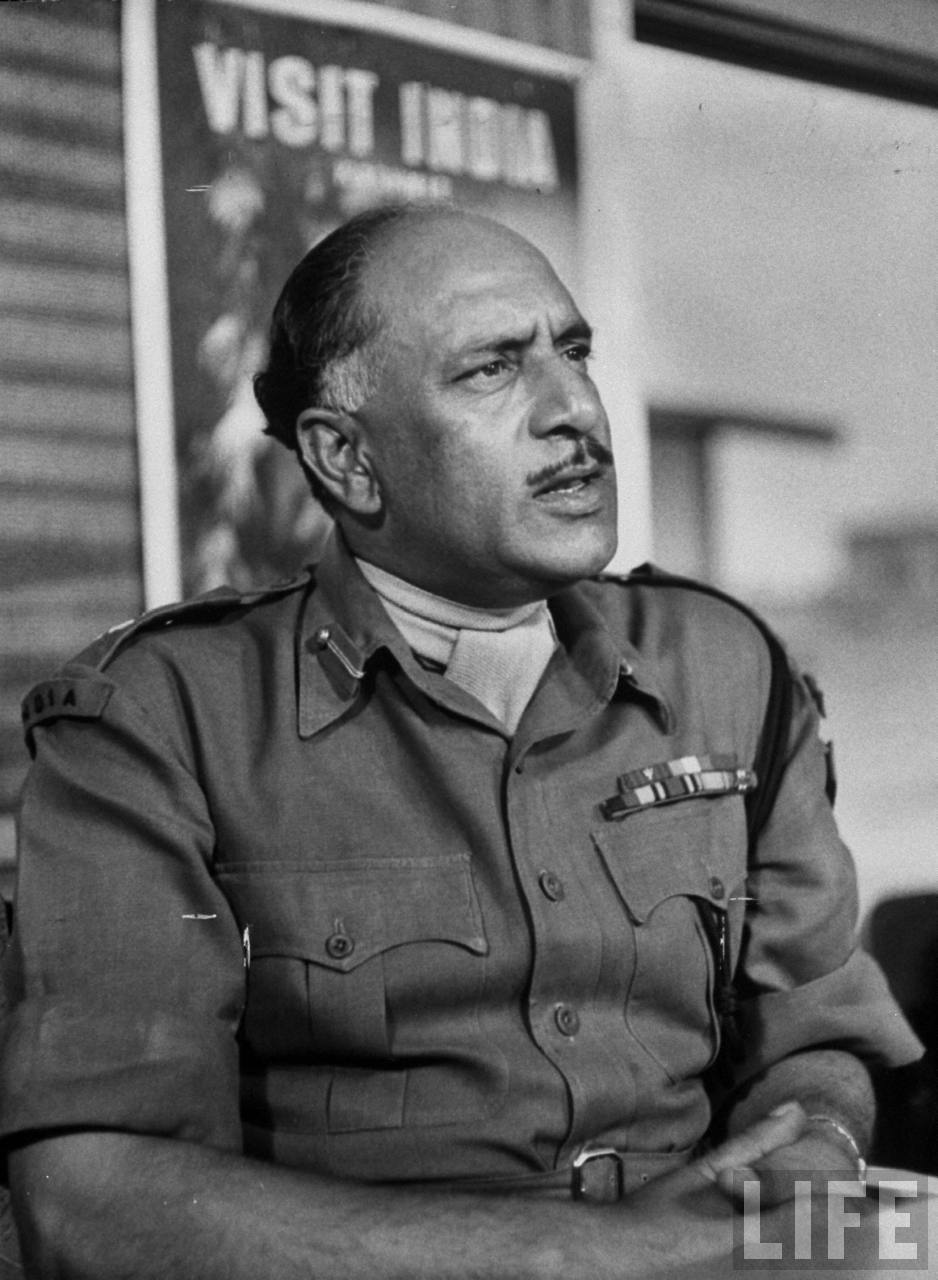
WHAT IS MILITARY INTELLIGENCE? A BRAVE GENERAL NOT PREPARED FOR 1962 WAR. GENERAL K S THIMAYYA. INDIAN ARMY CHIEF FROM 08 MAY 1957 TO 07 MAY 1961.

Shiv Kunal Verma’s book titled, “1962: THE WAR THAT WASN’T” tries to give a complete account of 1962 War between India and China. General Kodandera Subayya Thimayya, Padma Bhushan, DSO was Indian Army Chief from 08 May 1957 to 07 May 1961, and General Pran Nath Thapar served as Indian Army Chief from 08 May 1961 to 19 Nov 1962. The War was initiated by China during October 1962 and ended on November 21, 1962 when China declared unilateral cease-fire and withdrew from captured territory.To accomplish this military mission which barely lasted one month, China admitted a price tab of 2,419 casualties(722 dead and 1,697 wounded).

KNOW YOUR ENEMY - GENERAL NOT PREPARED FOR 1962 WAR.
WHAT IS MILITARY INTELLIGENCE – A BRAVE GENERAL NOT PREPARED FOR 1962 WAR. SHIV KUNAL VERMA, AUTHOR OF BOOK TITLED, “1962: THE WAR THAT WASN’T” FAILED TO KNOW INDIA’S ENEMY.

In my analysis, this outcome would have been different if Indian Army prepared for this War. This shortcoming in Indian Army’s military preparedness is due to weakness in ‘intelligence gathering’. I am not speaking about performance of Mr. Bhola Nath Mullik who served as India’s Director of Intelligence Bureau from 1950 to 1964. I am specifically addressing the lack of ‘military intelligence’ capabilities of Indian Armed Forces. Indian Army had enough time to prepare for this armed conflict and yet failed for Indian Army Generals lacked ‘military intelligence’ capabilities, an essential ingredient in formulating military operations.

WHAT IS MILITARY INTELLIGENCE?

Intelligence is described as the general mental ability involved in processes such as calculating, reasoning, classifying, and learning the use of information, and adjusting to new situations. Intelligence in government operations involves evaluated information concerning the strength, activities, and probable course of action of its opponents. The concept of intelligence is not new. To obtain knowledge of enemy’s intentions, intelligence systems have been in use from ancient times. Intelligence gathering involves securing military, political, or other information of enemy or opponent to make an estimate of one’s own strength or weakness. It includes the analysis of diplomatic reports, publications, statistics, news reports, broadcasts, and espionage or spying. Modern techniques include spy satellites, long-distance photography, aerial surveillance, sophisticated sensing and listening devices and computer analysis. I am not speaking about the lack of modern techniques of ‘intelligence gathering’ during 1960s. Indian Army lacked in military intelligence and hence General Thimayya was totally surprised and was taken aback when Indian Prime Minister Nehru assigned the task of defending North East Frontier Agency to Indian Army. It is the duty of this General to anticipate such request from Prime Minister. It is totally appropriate for this brave General to be ready with a military plan to defend North East Frontier Agency much before receiving a formal request from Prime Minister. While General Thimayya could be correct about Army’s resources, he would still have professional obligation to formulate battle plan for North East Frontier Agency after consulting Hq Eastern Command, Corps Commanders, and Divisional Commanders. It was his duty to put a plan in place and communicate that plan to all command and control structures up to unit level who execute the plan.

Military primarily conducts four types of military operations; 1. Offensive Operations in which army aggressively attacks or assaults using a variety of hostile actions to score against its enemy, 2. Defensive Operations involve acts of defending or guarding against attack or danger posed by enemy and it includes a plan or system for defending and formulating ‘defensive’ position on ground, 3. Withdrawal Operations that involve drawing back, to retreat, or to retract to a position other than that of a position used for Offense or Defense, and 4. Counterattack Operations which is reprisal for another attack so as to offset the enemy’s attack. Whether Prime Minister of India assigns or not, Indian Army Chief must be ready with his military operational plans to respond to military threats that may suddenly manifest in either North East Frontier Agency or elsewhere. Military Intelligence provides ability to draw such military plans in advance of anticipated military threats.

The story shared by Shiv Kunal Verma and various others describe state of confusion, lack of planning and lack of coordination all along the Chain of Army Command Structures during 1962 War. This reflects upon failure of military leadership and inadequate planning at Army Headquarters. No Army General can complain that enemy’s attack is sudden, for enemy will always prefer to launch an Offensive Operation that include Element of Surprise.

WHAT IS MILITARY INTELLIGENCE? A BRAVE GENERAL NOT PREPARED FOR 1962 WAR. INDIAN ARMY HEADQUARTERS BRANCHES AND DIRECTORATES.

In recent times, Indian Army may have reorganized its Command and Control elements. Director General of the Defence Intelligence Agency is a new appointment created after the KARGIL War who integrates defence intelligence gathering. Deputy Chief of Army Staff,DCOAS(P & S) includes Directorate General of Perspective Planning(DG PP), the ‘Think Tank’ of Indian Army which is involved in developing military strategic options, and threat assessment. But, in absence of such organizational Branches or Directorates, Indian Army Chief should still have the basic ability to anticipate military threats and prepare battle plan options for varied operational sectors.

Rudranarasimham Rebbapragada
Ann Arbor, MI 48104-4162 USA
SPECIAL FRONTIER FORCE

HUMILIATION OF AN ARMY GENERAL

By R Prasannan | January 24, 2016
WHAT IS MILITARY INTELLIGENCE? A BRAVE GENERAL NOT PREPARED FOR 1962 WAR. INDIAN ARMY CHIEF GENERAL K S THIMAYYA LACKED SUPPORT OF MILITARY INTELLIGENCE SERVICE.
  • Disciplined days: From the day he had taken charge, General K.S. Thimayya had been focused on redressing the various problems that faced the Indian Army | Getty Images
  • WHAT IS MILITARY INTELLIGENCE? A BRAVE GENERAL NOT PREPARED FOR 1962 WAR. INDIAN ARMY CHIEF K S THIMAYYA HAD A CHANCE TO FORMULATE BATTLE PLANS BUT FAILED DUE TO WEAKNESS OF MILITARY INTELLIGENCE.

    On war-footing: A truck convoy on its way to the northeast border-China front | Getty Images

  • Shiv Kunal Verma’s latest book gives a total picture of the 1962 war, including the politics behind it
  • Military historian and filmmaker Shiv Kunal Verma has the military all around him, except in his clothes—he is a civilian. His father had fought as a captain in the 1962 war and retired as a major-general. Verma has been filming and writing about the military for a quarter century now. His documentaries—Salt of the Earth on the Army, Akaash Yodha on the Indian Air Force, The Naval Dimension on the Navy—have been widely acclaimed in military circles, and his film on the National Defence Academy, The Standard Bearers, is considered a classic. He has also written a brilliantly illustrated account of the Siachen conflict titled The Long Road to Siachen, and a northeast trilogy.
    His latest book, 1962: The War that Wasn’t, is a gripping narration of the controversial and heroic incidents that happened in the mountain battlefields and in the closed-door meetings in the Army headquarters and the defence ministry. Apart from gleaning through the official records of the period, Verma has picked up the threads of the story from the officers and men who planned and fought the war. While most previous accounts, like J.P. Dalvi’s Himalayan Blunder and B.M. Kaul’s The Untold Story (which give contrary views) have been largely single-person autobiographical accounts trying to justify the authors’ own conduct or assessment, Verma’s book is one of the few comprehensive accounts pieced together to give the total picture—not only of the battlescape, but also the political space. The book opens with the infamous run-ins between the Jawaharlal Nehru-Krishna Menon political leadership and the K.S. Thimayya-led military on the other, but quickly moves on to be with the officers and men on the ground. It presents the story of how they fought the Chinese and among themselves and against the ferocious forces of weather against which they had no defence.

    Excerpts from the book

    Nehru was waiting for Thimayya and for the first time, the normally reticent Timmy exchanged angry words with the prime minister. He told Nehru that his arbitrary decision of making NEFA [North-East Frontier Agency] the responsibility of the army, made public in Parliament, was preposterous and completely against Indian interests. Thimayya felt that Nehru had completely compromised the army.
    Without providing the additional resources required, handing over the borders to the army was a meaningless gesture; this would allow the Chinese the opportunity to claim that the Indians were the aggressors, for they always went to great pains to describe their own troops as border guards. Thimayya asked Nehru to find a way out of the mess in the next couple of weeks, after which he departed. Immediately after Thimayya’s departure, the shaken prime minister summoned Krishna Menon to Teen Murti.

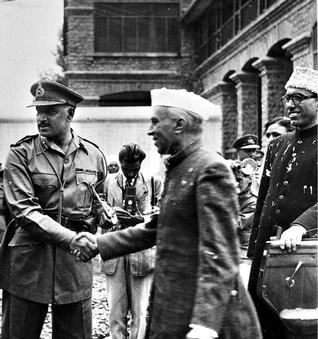
    WHAT IS MILITARY INTELLIGENCE? A BRAVE GENERAL NOT PREPARED FOR 1962 WAR. INDIAN PRIME MINISTER NEHRU WITH DEFENCE MINISTER V K KRISHNA MENON. 1962 WAR SIMPLY REFLECTS WEAKNESS OF MILITARY INTELLIGENCE GATHERING ABILITY.

    Talking heads: Prime Minister Jawaharlal Nehru and Defence Minister V.K. Krishna Menon | Getty Images

    Nehru and Krishna Menon knew that the prime minister was in serious trouble. He had got away with the admission in Parliament earlier in the day only because the triple whammy—ongoing clashes on the border, the construction of National Highway G219 across the Aksai Chin and the Khenzemane and Longju incidents—had come as a shock to the members of the House. At any rate, it was unlikely that any of the parliamentarians knew the terrain or understood matters pertaining to the military to raise any meaningful questions. Thimayya wanted Nehru to undo the mistake; but should the prime minister formally withdraw his statement about deploying the army and revert to the previous arrangement, he would be committing political hara-kiri. The threat of Thimayya taking over the reins of government, at least in Nehru’s mind, was very real.
    Politics is full of subterfuge, and survival, when the chips are down, is perhaps the biggest challenge. Not only did the Nehru-Menon team now have to survive, they had to neutralize Thimayya. Three days later, Krishna Menon sent for Thimayya in ‘a highly excited state of mind’ and vented his anger at the chief for having approached the prime minister directly, suggesting instead that the matter should have been resolved at his level. Threatening Thimayya of ‘possible political repercussions if the matter became public’ Krishna Menon ended the meeting. A seething Thimayya returned to his office, and after a brief conversation with his wife, Neena, promptly sent in his resignation letter.
    The letter, which was received by Teen Murti on the afternoon of 31 August, was put up to Nehru who promptly sent for Thimayya in the afternoon. By now Nehru was far more assured in his manner, using his authority and personal charm to good effect. After a long conversation in which the prime minister persuaded the army chief to withdraw his resignation letter in the larger interest of the nation, especially since the problem with the Chinese had flared up, the matter of the resignation was deemed closed.
    However, after Thimayya’s departure, news of his resignation was deliberately leaked to the media while the subsequent rescinding of the letter was held back. Quite expectedly, the Thimayya resignation made banner headlines the next morning. Through the day, there was no formal reaction from the government, as the prime minister was preoccupied with General Ayub Khan, the president of Pakistan, who was in transit through New Delhi. By the evening the Press Trust of India had announced that Krishna Menon had also resigned, only to withdraw its report a short while later.
    On 2 September 1959, the prime minister once again rose in Parliament to make a statement. He told the Lok Sabha that he had persuaded the chief to withdraw his resignation. He then went on to speak about the supremacy of the civilian authority over the military and then, had surprisingly, proceeded to castigate Thimayya, saying the issues that led to his resignation were ‘rather trivial and of no consequence’, and that they arose ‘from temperamental differences’. He then chided the chief and reproached him for ‘wanting to quit in the midst of the Sino-Indian border crisis’.
    Even today, the contents of Thimayya’s resignation letter remain a highly guarded secret. Instead, vague stories about Thimayya’s resignation were routinely floated where it was said that Timmy had resigned out of pique because of the manner in which Krishna Menon treated him. On careful scrutiny, that doesn’t hold water.
    The much adored prime minister, who could do no wrong in the eyes of the public, had betrayed General Thimayya. Trapped in this bad situation, the chief had no option but to quietly endure the humiliation and get on with the job of trying to prepare the army to face the Chinese when the need arose.
    The prime minister’s attitude towards Thimayya was damaging to the chief as well as the army. A whispering campaign started that speculated on the ‘rather trivial’ reasons for Thimayya’s resignation. That the chief was unhappy with the defence minister’s insistence on promoting certain officers was a well-known fact and pre-dated the Longju incident. It was hinted that the ‘temperamental differences’ were a direct result of this difference of opinion. General Thimayya was, by all accounts, a seasoned, disciplined soldier who would hardly have made issues over trifles. Only overriding national interests could have provoked him to take this step. Further, as a disciplined soldier he had accepted his prime minister’s assurance and withdrawn his resignation. From the day he had taken charge, Thimayya had been focused on redressing the various problems that faced the Indian Army, especially the evolving civil-military equation where the army seemed quite removed from the decision-making process on matters relating to defence. However, he found himself up against a wall in the form of the Ministry of Defence, which was either indifferent or hostile to his moves. After the resignation drama Thimayya was seen as an alarmist and a defeatist. Having thus weakened the office of the army chief, the prime minister now placed his hope in the man he believed had all the answers. In the corridors of power in New Delhi, it was Lieutenant General B. M. ‘Bijji’ Kaul whose star was on the rise.
    The Chinese had the first laugh, as the Indians had so far played the game just as they would have wished them to. Even according to Chinese records, at no stage had there been any action that pitted more than an Indian infantry company against at least four to five times the number of Chinese troops. The Chinese officially admit to 2,419 casualties (722 dead and 1,697 wounded). The figure is quite stunning, given the situation in which each Indian position was asked to fight.
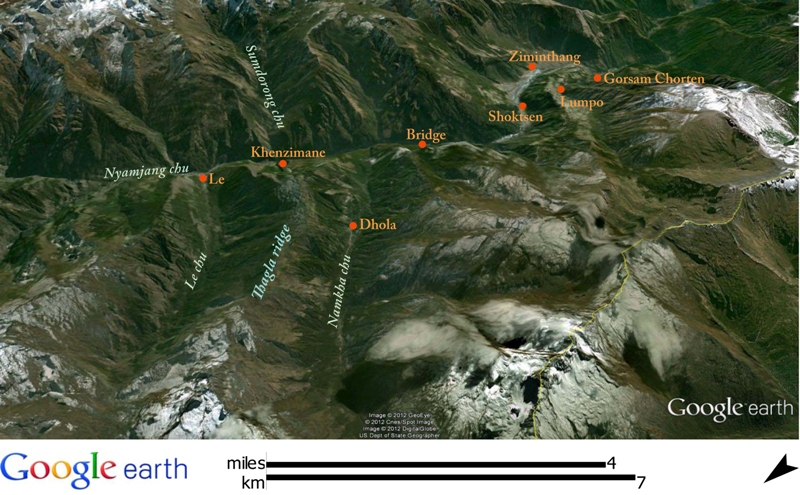
    From all accounts, Bogey Sen’s presence in Tawang between 22 and 23 October only added to the confusion. Before landing at Tawang, the army commander had flown towards Zimithang to get an idea of the terrain which he was not familiar with at all. Once in Tawang, as we have seen, Sen did nothing to bolster the confidence of the garrison. The meeting with [Lt Gen Niranjan] Prasad later in the evening focused on two issues: the Nam Ka Chu rout of 7 Brigade and the immediate withdrawal from Tawang. Bogey Sen opposing a withdrawal only amounted to theatrics, for had he wished, as the army commander, he had the authority to overrule Prasad.
    Both officers at the time were unaware that Army HQ, now represented by Monty Palit, was pushing for the same decision. There was a critical difference though—Prasad was planning on falling back on Bomdila with Se-la only playing the part of a delaying obstacle. Palit, on the other hand, based on the one incomplete reconnaissance made almost two years ago, had made up his mind to dig in at Se-la. [Army chief Pran Nath] Thapar having gone along with his DMO, who now had the tacit approval of Nehru, was relegated to the role of a spectator. The Thorat Plan, even though it hadn’t been implemented, at least had had some discussions around it and plans had been drawn up. Just as Tawang was abandoned on a whim, Se-la was seemingly chosen arbitrarily by Monty Palit who played the ‘cleared by the cabinet’ card to ride roughshod over any opposition.
    In the coming days, the Indian military high command would take decisions that lacked even the most basic common sense. Even as Palit was coming out of the defence minister’s room with Nehru’s ‘the military must decide where to fight’ mandate, Bogey Sen had decided to sack Niranjan Prasad as GOC 4 Division. Less than three hours previously, as he was leaving Tawang, Sen had eventually endorsed Prasad’s decision to pull back from Bum-la and evacuate Tawang. Surely, having seen for himself the effect of the headlong retreat from Zimithang on Prasad and other senior officers, Sen was experienced enough to know that to pull back any further would result in losing not just all the supplies and material that had so painstakingly been put together, but a withdrawal without a fight would further sap the morale of the men and officers. So far, after the first couple of hours of fighting on the Nam Ka Chu, Tsangdhar, Khenzemane, and Bum-la, all Indian units that had come into contact with the Chinese were only fighting in penny packets or withdrawing. Had it been decided that Tawang was to be held at all costs, it would have made perfect sense to replace Prasad as the GOC since the army commander felt he had lost the will to fight. But to institute this change after the withdrawal order was given was to add considerably to the existing chaos.

    What is military intelligence? A brave General not prepared for 1962 War.

    On the evening of 23 October neither Delhi, Lucknow nor Tezpur had any idea where the next defensive line was supposed to be; the only orders given until then were to abandon Tawang and Bum-la and fall back on Jang. When Palit took the draft of the order to hold Se-la to the chief, it was decided that Thapar, Palit and the IB chief, [B.N.] Mullik, would fly immediately to Tezpur and discuss the matter with Bogey Sen in person. From all indications,Thapar was still not fully convinced about the decision to hold Se-la. On his own initiative, Palit put into place steps for the stocking of supplies for Se-la, working on the assumption that five battalions would be required to hold the feature.
    1962: The War That Wasn’t
    By Shiv Kunal Verma
    Published by Aleph Book Company
    Pages 512; price Rs995

    What is Military Intelligence? A Brave General Not Prepared For 1962 War.
    What is Military Intelligence? A Brave General Not Prepared For 1962 War. India-China War of 1962 shows importance of Military Intelligence in preparing Battle Plans.
    WHAT IS MILITARY INTELLIGENCE? A BRAVE GENERAL NOT PREPARED FOR 1962 WAR. INDIAN ARMY MILITARY PREPAREDNESS IS WEAK DUE TO SHORTCOMING OF MILITARY INTELLIGENCE.
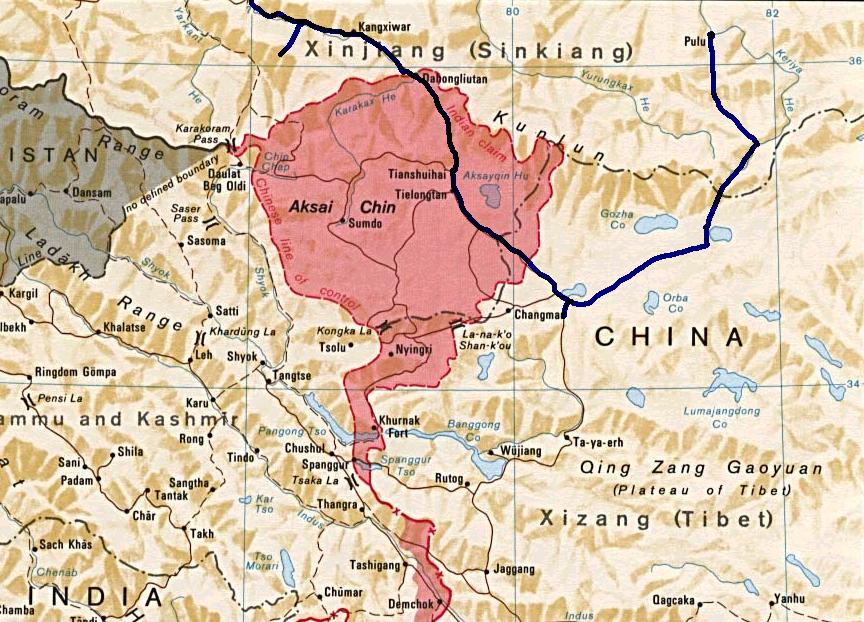
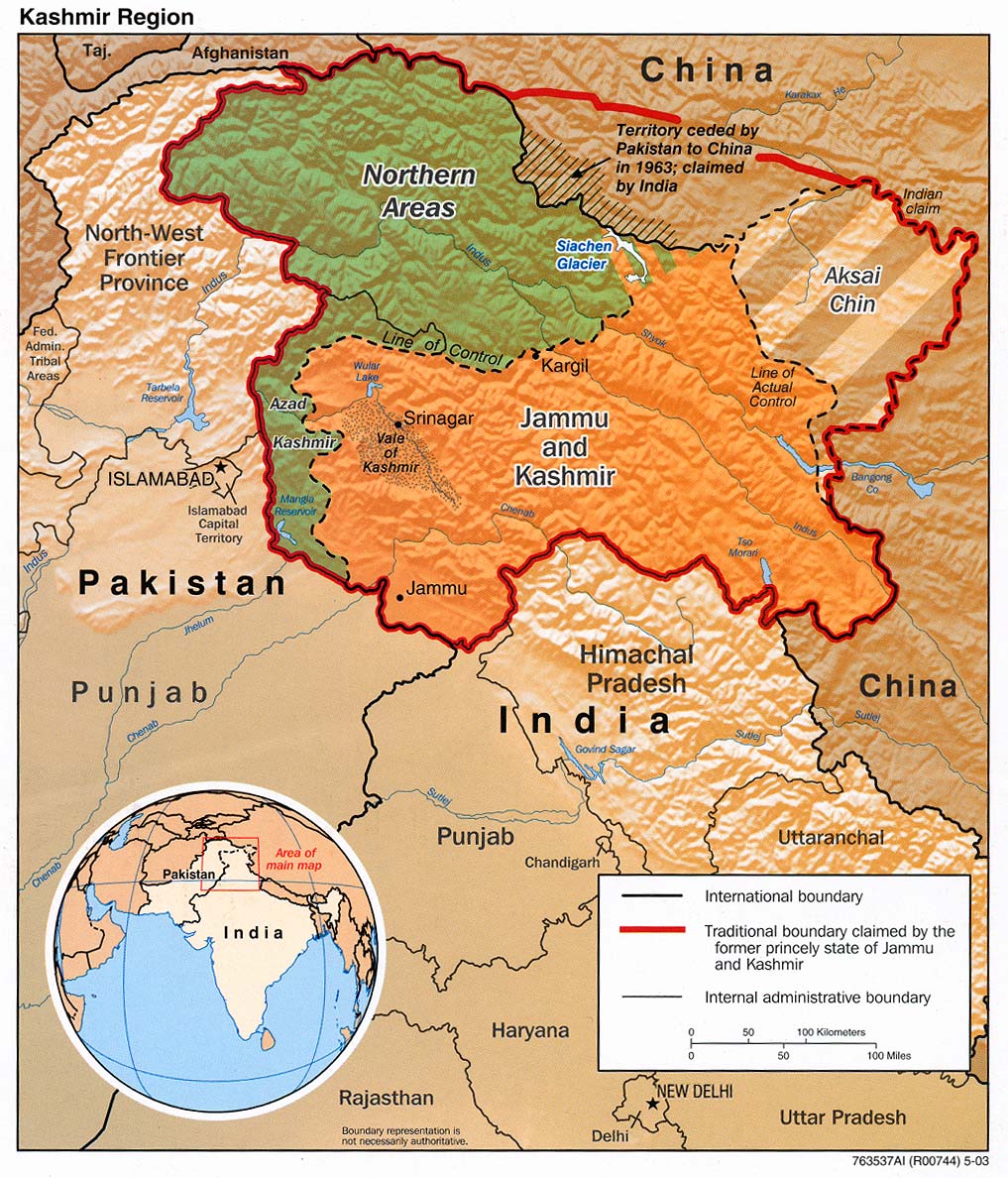
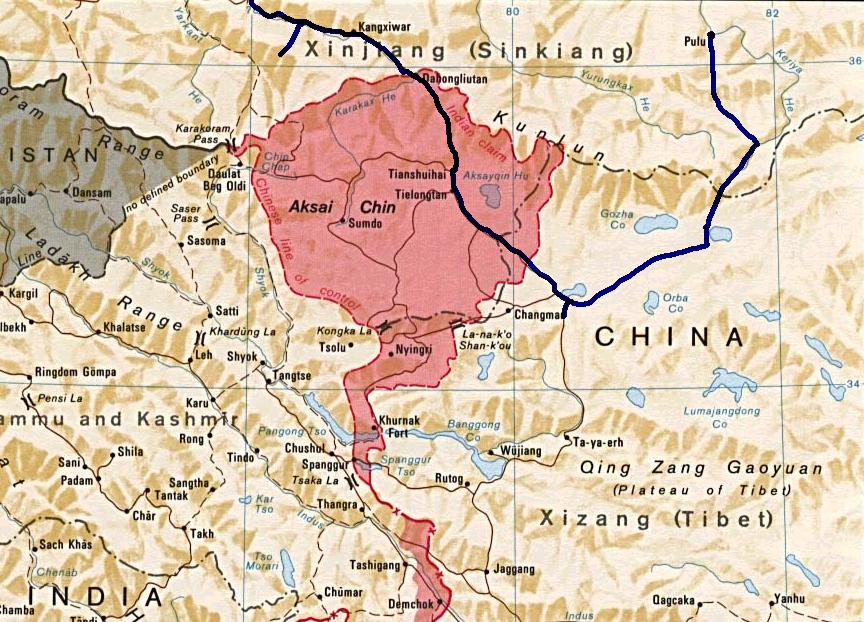
    REMEMBERING THE 1962 INDIA – CHINA WAR : Communist China apart from its illegal military occupation of Tibet during 1949-50, had illegally occupied Indian territory in Aksai Chin Region of Ladakh Province in the State of Jammu and Kashmir prior to its sudden, military attack during 1962 all along the Himalayan Frontier. India’s Prime Minister Jawahar Lal Nehru failed to request for military assistance from the United States to oppose this military occupation and land grab by Communist China.
    WHAT IS MILITARY INTELLIGENCE? A BRAVE GENERAL NOT PREPARED FOR 1962 WAR.
    WHAT IS MILITARY INTELLIGENCE? A BRAVE GENERAL NOT PREPARED FOR 1962 WAR
    What is Military Intelligence? A Brave General Not Prepared For 1962 War.
    WHAT IS MILITARY INTELLIGENCE? A BRAVE GENERAL NOT PREPARED FOR 1962 WAR.
    WHAT IS MILITARY INTELLIGENCE? A BRAVE GENERAL NOT PREPARED FOR 1962 WAR.
    WHAT IS MILITARY INTELLIGENCE? A BRAVE GENERAL NOT PREPARED FOR 1962 WAR.
    WHAT IS MILITARY INTELLIGENCE? A BRAVE GENERAL NOT PREPARED FOR 1962 WAR.
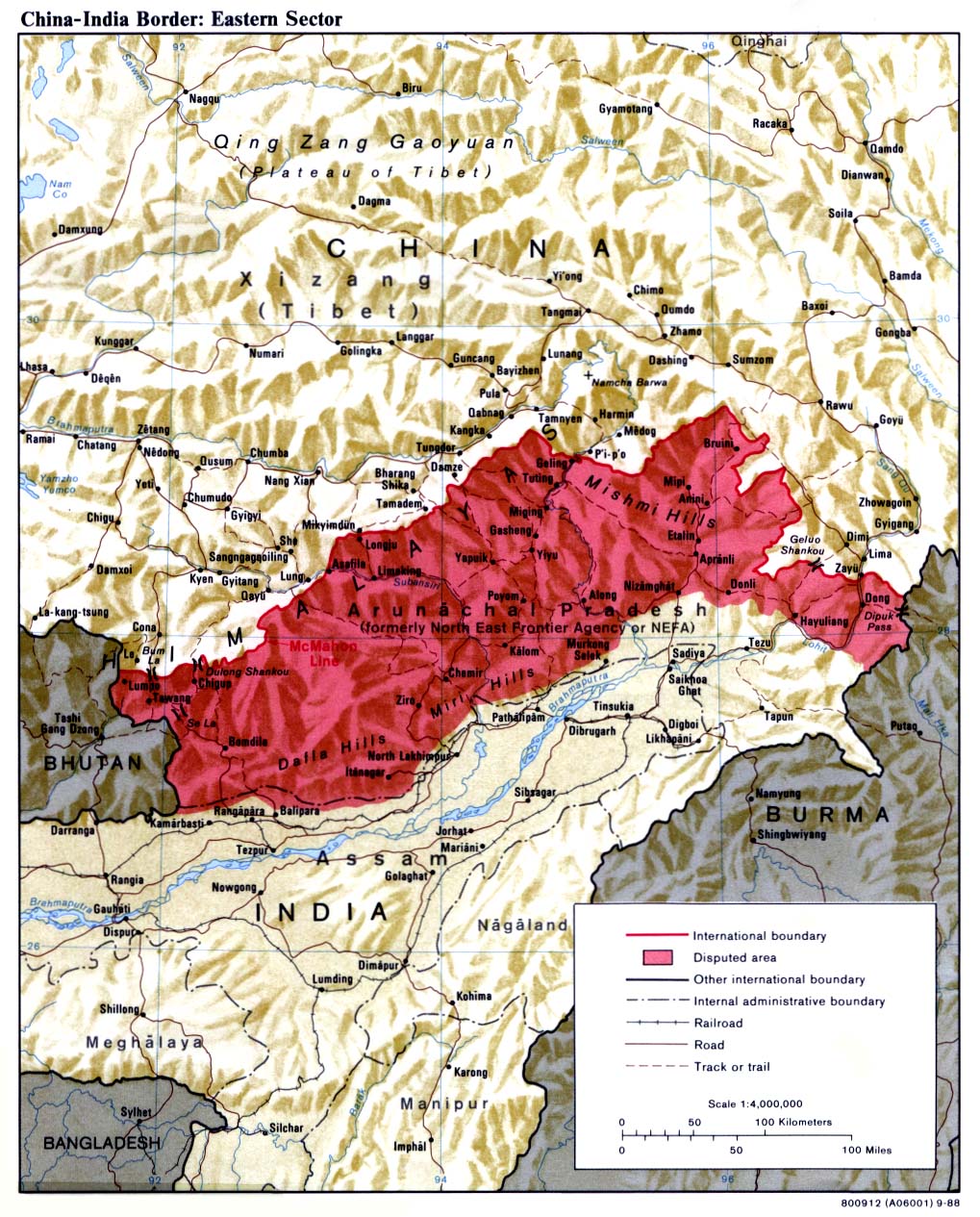
    WHAT IS MILITARY INTELLIGENCE? A BRAVE GENERAL NOT PREPARED FOR 1962 WAR. McMAHON LINE AND AKSAI CHIN SECTOR OF INDIA’S JAMMU AND KASHMIR.
    WHAT IS MILITARY INTELLIGENCE? A BRAVE GENERAL NOT PREPARED FOR 1962 WAR.On bhavanajagat.com
    WHAT IS MILITARY INTELLIGENCE? A BRAVE GENERAL NOT PREPARED FOR 1962 WAR. General K S Thimayya's Battle Plan for North East Frontier Agency.
    WHAT IS MILITARY INTELLIGENCE? A BRAVE GENERAL NOT PREPARED FOR 1962 WAR. General K S Thimayya’s Battle Plan for North East Frontier Agency.
    What is Military Intelligence? A Brave General Not Prepared For 1962 War. General K S Thimayya's Battle Plan for North East Frontier Agency.
    What is Military Intelligence? A Brave General Not Prepared For 1962 War. General K S Thimayya’s Battle Plan for North East Frontier Agency.
    What is Military Intelligence? A Brave General Not Prepared For 1962 War. General K S Thimayya's Battle Plan For North East Frontier Agency.
    What is Military Intelligence? A Brave General Not Prepared For 1962 War. General K S Thimayya’s Battle Plan For North East Frontier Agency.
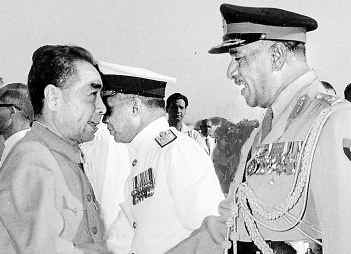
    What is Military Intelligence? A Brave General Not Prepared For 1962 War. General Pran Nath Thapar, Indian Army Chief May 1961 to November 1962. Battle Plan For North East Frontier Agency.
    What is Military Intelligence? A Brave General Not Prepared For 1962 War. General Pran Nath Thapar, Indian Army Chief May 1961 to November 1962. Battle Plan For North East Frontier Agency.

    Bharat Darshan – 67th Republic Day Greetings

    BHARAT DARSHAN - 67th REPUBLIC DAY GREETINGS.
    BHARAT DARSHAN-67th REPUBLIC DAY GREETINGS

    On Tuesday, January 26, 2016, I share feelings of Joy and Pride with my readers celebrating Republic of India’s 67th Republic Day.

    Rudra Narasimham Rebbapragada

    SPECIAL FRONTIER FORCE-ESTABLISHMENT NO. 22-VIKAS REGIMENT

    BHARAT DARSHAN - 67th REPUBLIC DAY CELEBRATION ON TUESDAY, JANUARY 26, 2016.
    BHARAT DARSHAN-67th REPUBLIC DAY CELEBRATION ON TUESDAY, JANUARY 26, 2016.
    BHARAT DARSHAN - 67th REPUBLIC DAY GREETINGS - TRUTH ALONE TRIUMPHS.
    BHARAT DARSHAN-67th REPUBLIC DAY GREETINGS – TRUTH ALONE TRIUMPHS.
    BHARAT DARSHAN - 67th REPUBLIC DAY GREETINGS - PRAYER FOR STRENGTH THROUGH UNITY.
    BHARAT DARSHAN-67th REPUBLIC DAY GREETINGS – PRAYER FOR STRENGTH THROUGH UNITY.
    Bharat Darshan - 67th Republic Day Greetings - PROUD TO BE INDIAN
    Bharat Darshan-67th Republic Day Greetings – PROUD TO BE INDIAN
    Bharat Darshan - 67th Republic Day Greetings - Blessings of Freedom in Mind.
    Bharat Darshan-67th Republic Day Greetings – Blessings of Freedom in Mind.
    Bharat Darshan - 67th Republic Day Greetings - Blessings of Peace and Prosperity.
    Bharat Darshan -67th Republic Day Greetings – Blessings of Peace and Prosperity.
    Bharat Darshan - 67th Republic Day Greetings - ONE NATION UNDER GOD.
    Bharat Darshan-67th Republic Day Greetings – ONE NATION UNDER GOD.
    Bharat Darshan - 67th Republic Day Greetings from Prime Minister of India.
    Bharat Darshan-67th Republic Day Greetings from the Prime Minister of India.

    NIXON-KISSINGER TREASON IN VIETNAM – EVIL SHADOW OF DARKNESS

    NIXON-KISSINGER TREASON IN VIETNAM – EVIL SHADOW OF DARKNESS

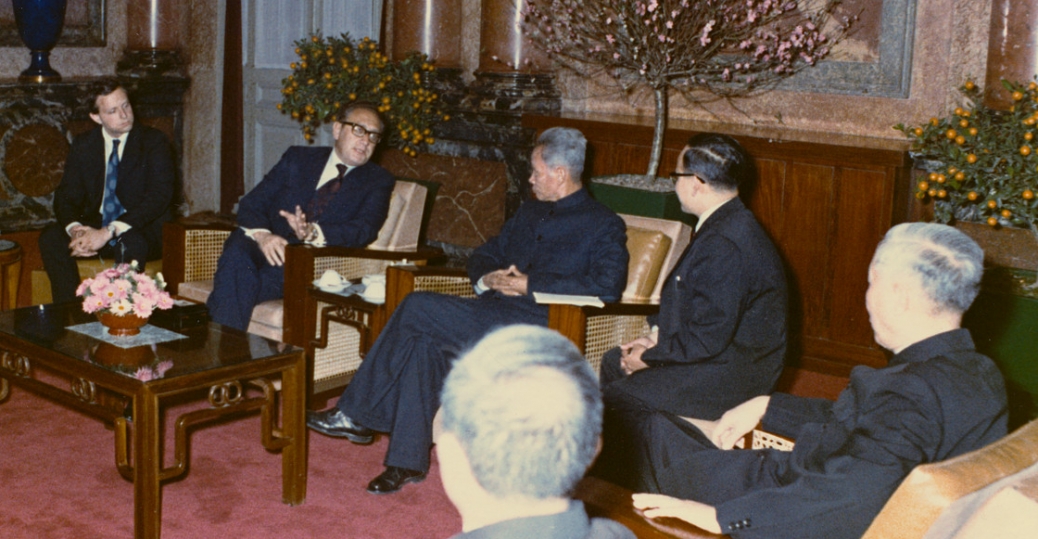
    NIXON-KISSINGER TREASON IN VIETNAM – EVIL SHADOW OF DARKNESS. DR. HENRY ALFRED KISSINGER WAS SWORN-IN AS THE US SECRETARY OF STATE ON SEPTEMBER 22, 1973. HIS ACTIONS FROM 1969 TO SEPTEMBER 1973 ARE ILLEGAL AS PER THE US CONSTITUTIONAL LAW.On bhavanajagat.com

    On January 23, 2016, I recall the historical announcement made by President Richard M Nixon on January 23, 1973. Both President Nixon and his National Security Adviser, Dr. Henry Kissinger fully recognized that the United States military campaign using aerial bombardment was not making its expected impact. United States was not able to stop the flow of war supplies into North Vietnam. It is no surprise for Nixon-Kissinger team had failed in their duty to identify the ‘ENEMY’. Success in Warfare is practically impossible without knowing Enemy. In Vietnam War, North Vietnam was not the chief opponent. As the United States engaged in  brutal, bloody, and costly War to arrest the spread of Communism in Southeast Asia, for all practical purposes, ‘ENEMY’ is defined as Communist Powers, namely, Soviet Union, and Communist China. North Vietnam was able to fight against the United States as the War was fought with full support from Soviet Union and Communist China. US campaign of aerial bombardment of North Vietnam was not working for it failed to put a dent on Enemy’s war effort. At that critical juncture, from July 1971, Nixon-Kissinger embraced a course of action to betray the United States and provide aid and comfort to Communist China which was fully engaged in sending military supplies to North Vietnam to injure and kill Americans defending South Vietnam. Nixon-Kissinger ensured ‘The Fall of Saigon’ and denied opportunity to the United States to conclude Vietnam War without losing Pride, Honor, and Dignity of Americans who gave their precious lives, and limbs to defend Freedom and Democracy opposed by Communism. I ask my readers to note that Dr. Henry Alfred Kissinger was appointed as the US Secretary of State during September 1973. His secret diplomacy and his actions involving meeting foreign Heads of State between 1969 to September 1973 are illegal as per the US Constitutional Law.

    Rudranarasimham Rebbapragada
    Ann Arbor, MI 48104-4162 USA
    SPECIAL FRONTIER FORCE


    THE WASHINGTON POST

    KISSINGER: THE DR. FRANKENSTEIN OF FOREIGN AFFAIRS, OR JUST SELF-PROMOTER?


    BY EVAN THOMAS

    Evan Thomas is the author of “Being Nixon: A Man Divided.”

    KISSINGER’S SHADOW – THE LONG REACH OF AMERICA’S MOST CONTROVERSIAL STATESMAN

    BY GREG GRANDIN

    Metropolitan. 270 pp. $28

    Henry Kissinger has not held high government office since 1977, almost 40 years ago. True, he accomplished a great deal during his eight years as national security adviser and secretary of state in the Nixon and Ford administrations — for better (opening China, arms control with the Soviet Union, peace in the Middle East) or for worse (secret bombings and cold-blooded diplomacy that, some scholars argue, contributed to genocidal outcomes in Bangladesh and Cambodia). Nonetheless, it is remarkable how visible, even at age 92, Kissinger remains.

    Conservatives who once denounced him as a dangerous appeaser now seek his autograph and blessing, especially if they’re running for president and want access to his pals in the New York money crowd. He has not lost his power to charm. Just over a year ago, Samantha Power, President Obama’s human-rights-activist ambassador to the United Nations, went to a New York Yankees game with Kissinger. The two reportedly engaged in light banter about the geopolitical symbolism of their baseball fandom (Kissinger backing the historically hegemonic Yankees, Power rooting for the less-fortunate Boston Red Sox).

    ‘Kissinger’s Shadow: The Long Reach of America’s Most Controversial Statesman’ by Greg Grandin (Metropolitan)

    Greg Grandin, an accomplished historian, wants us to think of Kissinger as the Dr. Frankenstein of foreign affairs. He blames Kissinger and “Kissingerism” for a perpetual national security state that engages in “constant, unending war” and has coarsened our national morality. Kissinger, Grandin argues, has accomplished this by the power of his personality and undeniable brilliance — and by metaphysics. Deconstructing Kissinger’s 1950 PhD thesis, which Grandin contends still informs his worldview, the author argues that Kissinger has touched on the “most American of conceits: self-creation.” With his funereal German accent and fond allusions to Metternich and the Congress of Vienna, he sounds like a gloomy Old World realist resigned to cynical zero-sum games. Actually, he believes that since life is “ultimately meaningless and . . . history is tragic,” Americans — or right-thinking ones — are free to endlessly shape their own reality, or so Grandin argues. Meaning comes from the exercise of power; morality is mostly what you make it. There are a few limits, but most can be ignored — the key is to act. Grandin would have us believe that Kissinger laid the foundation for a national security state that is in constant motion, with spy satellites and drones relentlessly attacking our enemies and creating new ones.

    Grandin is a persuasive polemicist, and he has a lot of material to work with. It is hard not to cringe while reading transcripts of White House tapes that recorded Kissinger and President Richard Nixon cynically talking about a “decent interval” in Vietnam — building in enough time between America’s exit and the inevitable fall of Saigon to protect Nixon’s political fortunes.

    Grandin reports on a conversation between Kissinger and Chinese Chairman Mao Zedong, the ultimate cynic. Mao and Kissinger, Grandin writes, “shared a mutual appreciation of German metaphysics.” In November 1973, after the Vietnam War was over, Mao said to Kissinger, “You are now freer than before,” meaning that with the war ended and Nixon reelected by a landslide, the Americans were freer to do what they wanted on the world stage. “Much more,” Kissinger replied. You can almost picture him rubbing his hands! But the cost, Grandin argues, drawing heavily on the work of Seymour Hersh (“The Price of Power”), was genocide in Cambodia.

    Grandin, a professor at New York University, is one of a small group of academics who defy the stereotype of a turgid, jargon-ridden pedant whose prose is accessible only to his colleagues (and not always to them). Writing fluently on an interesting variety of topics, Grandin has escaped narrow specialization. He is the author of well-regarded books as wide-ranging as “Fordlandia,” about Henry Ford’s misbegotten attempt to build a middle-class suburbia in the Brazilian rain forest, and “The Empire of Necessity,” about African slavery. He writes with literary flair and a sharp eye for the absurdities of politics. But he has perhaps credited the protean Kissinger with too much sinister influence.

    Grandin acknowledges that the national security state existed before Kissinger came along, but he slides past just how secretive and powerful it was. When Franklin Roosevelt wanted to help Britain before Pearl Harbor, he was not shy about bending the rules. President Dwight Eisenhower, to his later regret, virtually gave carte blanche to the CIA to conduct covert operations around the world. Congress looked the other way as CIA operatives overthrew governments in Guatemala and Iran and tried to do the same in several other countries.

    President Lyndon Johnson lied so much and so often about Vietnam that he opened the Credibility Gap, which gave rise to the aggressive journalism that brought down Nixon. At the FBI, J. Edgar Hoover ran a personal empire with bugging and black-bag jobs, not to mention unsubtle blackmailing of politicians with secrets to hide.

    Kissinger did help reinvent and legitimize the national security machinery after Watergate and the 1975 revelations of the Church Committee on abuses in intelligence-gathering. He has been a persistent presence in influential journals and has served as an informal adviser to presidents and their deputies. But it gives him entirely too much credit — or blame — to suggest that his metaphysical musings, however backed by force of will, have so permeated the national security establishment that we live in his permanent shadow. He has made a lot of money as a strategic consultant, and he has remarkable access to policymakers and aspiring presidents. But Kissingerism is hardly U.S. foreign policy dogma. Indeed, the prevailing political stance now seems to be against a true boots-on-the-ground war with the Islamic State.

    Kissinger is one of the most influential and fascinating men of the past half-century, but his greatest success has been the promotion of his own celebrity.

    washingtonpost.com  © 1996-2015 The Washington Post 

    NIXON-KISSINGER TREASON IN VIETNAM – POLICY OF POLITICAL OPPORTUNISM

    NIXON-KISSINGER TREASON IN VIETNAM – POLICY OF POLITICAL OPPORTUNISM

    NIXON-KISSINGER VIETNAM TREASON - POLICY OF POLITICAL OPPORTUNISM. ON JANUARY 23, 1973, PRESIDENT NIXON ANNOUNCED PARIS PEACE ACCORDS.
    NIXON-KISSINGER VIETNAM TREASON – POLICY OF POLITICAL OPPORTUNISM. ON JANUARY 23, 1973, PRESIDENT NIXON ANNOUNCED PARIS PEACE ACCORDS.


    Paris Peace Accords of January 23, 1973 fully expose Nixon-Kissinger Treason in Vietnam. Nixon-Kissinger pursued a policy of ‘Political Opportunism’ which describes the practice of adapting one’s actions, judgments, etc., to circumstances in order to further one’s immediate interests without regard for basic principles or eventual consequences. Nixon-Kissinger sacrificed national interests and handed down historical defeat to US Armed Forces without any concern for Pride and Honor of men and women of USA who serve their country in uniform.

    Rudranarasimham Rebbapragada
    Ann Arbor, MI 48104-4162 USA
    SPECIAL FRONTIER FORCE

    THIS DAY IN HISTORY : JANUARY 23


    VIETNAM WAR – 1973

    NIXON ANNOUNCES PEACE SETTLEMENT REACHED IN PARIS

    Author History.com Staff

    Website Name : History.com

    Year Published -2009

    President Nixon announces that Henry Kissinger and Le Duc Tho, the chief North Vietnamese negotiator, have initialled a peace agreement in Paris “to end the war and bring peace with honor in Vietnam and Southeast Asia.”

    Kissinger and Tho had been conducting secret negotiations since 1969. After the South Vietnamese had blunted the massive North Vietnamese invasion launched in the spring of 1972, Kissinger and the North Vietnamese had finally made some progress on reaching a negotiated end to the war. However, a recalcitrant South Vietnamese President Nguyen Van Thieu had inserted several demands into to the negotiations that caused the North Vietnamese negotiators to walk out of the talks with Kissinger on December 13.

    President Nixon issued an ultimatum to Hanoi to send its representatives back to the conference table within 72 hours “or else.” The North Vietnamese rejected Nixon’s demand and the president ordered Operation Linebacker II, a full-scale air campaign against the Hanoi area. This operation was the most concentrated air offensive of the war. During the 11 days of the attack, 700 B-52 sorties and more than 1,000 fighter-bomber sorties dropped roughly 20,000 tons of bombs, mostly over the densely populated area between Hanoi and Haiphong. On December 28, after 11 days of intensive bombing, the North Vietnamese agreed to return to the talks. When the negotiators met again in early January, they quickly worked out a settlement.

    Under the terms of the agreement, which became known as the Paris Peace Accords, a cease-fire would begin at 8 a.m., January 28, Saigon time (7 p.m., January 27, Eastern Standard Time). In addition, all prisoners of war were to be released within 60 days and in turn, all U.S. and other foreign troops would be withdrawn from Vietnam within 60 days. With respect to the political situation in South Vietnam, the Accords called for a National Council of Reconciliation and Concord, with representatives from both South Vietnamese sides (Saigon and the National Liberation Front) to oversee negotiations and organize elections for a new government.

    The actual document was entitled “An Agreement Ending the War and Restoring Peace in Vietnam” and it was formally signed on January 27.

    © 2016, A&E Television Networks, LLC. All Rights Reserved.


    NIXON-KISSINGER TREASON IN VIETNAM – LUST FOR POLITICAL POWER

    NIXON-KISSINGER TREASON IN VIETNAM – LUST FOR POLITICAL POWER

    Presidential inaugurations of yesteryear
    On darkroom.baltimoresun.com

    On January 23, 2016, I recall the events of January 23, 1973 to describe Nixon-Kissinger Treason in Vietnam. Nixon-Kissinger pursued the practice or policy of adapting one’s actions, judgments, etc., to circumstances in order to further their own immediate interests without regard for basic principles or eventual consequences. Nixon-Kissinger acted in a reckless manner driven by lust for political power. These actions make them guilty of treason as they constitute betrayal of trust, and violation of the allegiance owed to the United States by giving aid and comfort to Enemy at time of War.

    Rudranarasimham Rebbapragada
    Ann Arbor, MI 48104-4162 USA
    SPECIAL FRONTIER FORCE

    THE WASHINGTON POST

    Woodward and Bernstein: 40 years after Watergate, Nixon was far worse than we thought

    By Carl Bernstein and Bob Woodward June 8, 2012

    As Sen. Sam Ervin completed his 20-year Senate career in 1974 and issued his final report as chairman of the Senate Watergate committee, he posed the question: “What was Watergate?”

    Countless answers have been offered in the 40 years since June 17, 1972, when a team of burglars wearing business suits and rubber gloves was arrested at 2:30 a.m. at the headquarters of the Democratic Party in the Watergate office building in Washington. Four days afterward, the Nixon White House offered its answer: “Certain elements may try to stretch this beyond what it was,” press secretary Ronald Ziegler scoffed, dismissing the incident as a “third-rate burglary.”

    History proved that it was anything but. Two years later, Richard Nixon would become the first and only U.S. president to resign, his role in the criminal conspiracy to obstruct justice — the Watergate coverup — definitively established.

    Another answer has since persisted, often unchallenged: the notion that the coverup was worse than the crime. This idea minimizes the scale and reach of Nixon’s criminal actions.

    Ervin’s answer to his own question hints at the magnitude of Watergate: “To destroy, insofar as the presidential election of 1972 was concerned, the integrity of the process by which the President of the United States is nominated and elected.” Yet Watergate was far more than that. At its most virulent, Watergate was a brazen and daring assault, led by Nixon himself, against the heart of American democracy: the Constitution, our system of free elections, the rule of law.

    Today, much more than when we first covered this story as young Washington Post reporters, an abundant record provides unambiguous answers and evidence about Watergate and its meaning. This record has expanded continuously over the decades with the transcription of hundreds of hours of Nixon’s secret tapes, adding detail and context to the hearings in the Senate and House of Representatives; the trials and guilty pleas of some 40 Nixon aides and associates who went to jail; and the memoirs of Nixon and his deputies. Such documentation makes it possible to trace the president’s personal dominance over a massive campaign of political espionage, sabotage and other illegal activities against his real or perceived opponents.
    In the course of his five-and-a-half-year presidency, beginning in 1969, Nixon launched and managed five successive and overlapping wars — against the anti-Vietnam War movement, the news media, the Democrats, the justice system and, finally, against history itself. All reflected a mind-set and a pattern of behavior that were uniquely and pervasively Nixon’s: a willingness to disregard the law for political advantage, and a quest for dirt and secrets about his opponents as an organizing principle of his presidency.

    Long before the Watergate break-in, gumshoeing, burglary, wiretapping and political sabotage had become a way of life in the Nixon White House.
    What was Watergate? It was Nixon’s five wars.

    1. The war against the antiwar movement

    Nixon’s first war was against the anti-Vietnam War movement. The president considered it subversive and thought it constrained his ability to prosecute the war in Southeast Asia on his terms. In 1970, he approved the top-secret Huston Plan, authorizing the CIA, the FBI and military intelligence units to intensify electronic surveillance of individuals identified as “domestic security threats.” The plan called for, among other things, intercepting mail and lifting restrictions on “surreptitious entry” — that is, break-ins or “black bag jobs.”

    Thomas Charles Huston, the White House aide who devised the plan, informed Nixon that it was illegal, but the president approved it regardless. It was not formally rescinded until FBI Director J. Edgar Hoover objected — not on principle, but because he considered those types of activities the FBI’s turf. Undeterred, Nixon remained fixated on such operations.

    In a memorandum dated March 3, 1970, presidential aide Patrick Buchanan wrote to Nixon about what he called the “institutionalized power of the left concentrated in the foundations that succor the Democratic Party.” Of particular concern was the Brookings Institution, a Washington think tank with liberal leanings.

    On June 17, 1971 — exactly one year before the Watergate break-in — Nixon met in the Oval Office with his chief of staff, H.R. “Bob” Haldeman, and national security adviser Henry Kissinger. At issue was a file about former president Lyndon Johnson’s handling of the 1968 bombing halt in Vietnam.

    “You can blackmail Johnson on this stuff, and it might be worth doing,” Haldeman said, according to the tape of the meeting.
    “Yeah,” Kissinger said, “but Bob and I have been trying to put the damn thing together for three years.” They wanted the complete story of Johnson’s actions.
    “Huston swears to God there’s a file on it at Brookings,” Haldeman said.
    “Bob,” Nixon said, “now you remember Huston’s plan? Implement it. . . . I mean, I want it implemented on a thievery basis. God damn it, get in and get those files. Blow the safe and get it.”

    Nixon would not let the matter drop. Thirteen days later, according to another taped discussion with Haldeman and Kissinger, the president said: “Break in and take it out. You understand?”

    The next morning, Nixon said: “Bob, get on the Brookings thing right away. I’ve got to get that safe cracked over there.” And later that morning, he persisted, “Who’s gonna break in the Brookings Institution?”

    For reasons that have never been made clear, the break-in apparently was not carried out.

    2. The war on the news media

    Nixon’s second war was waged ceaselessly against the press, which was reporting more insistently on the faltering Vietnam War and the effectiveness of the antiwar movement. Although Hoover thought he had shut down the Huston Plan, it was in fact implemented by high-level Nixon deputies. A “Plumbers” unit and burglary team were set up under the direction of White House counsel John Ehrlichman and an assistant, Egil Krogh, and led by the operational chiefs of the future Watergate burglary, ex-CIA operative Howard Hunt and former FBI agent G. Gordon Liddy. Hunt was hired as a consultant by Nixon political aide Charles Colson, whose take-no-prisoners sensibility matched the president’s.

    An early assignment was to destroy the reputation of Daniel Ellsberg, who had provided the Pentagon Papers, a secret history of the Vietnam War, to the news media in 1971. Publication of the documents in the New York Times, the Washington Post and eventually other newspapers had sent Nixon into rants and rages, recorded on his tapes, about Ellsberg, the antiwar movement, the press, Jews, the American left and liberals in Congress — all of whom he conflated. Though Ellsberg was already under indictment and charged with espionage, the team headed by Hunt and Liddy broke into the office of his psychiatrist, seeking information that might smear Ellsberg and undermine his credibility in the antiwar movement.

    “You can’t drop it, Bob,” Nixon told Haldeman on June 29, 1971. “You can’t let the Jew steal that stuff and get away with it. You understand?”
    He went on: “People don’t trust these Eastern establishment people. He’s Harvard. He’s a Jew. You know, and he’s an arrogant intellectual.”

    Nixon’s anti-Semitic rages were well-known to those who worked most closely with him, including some aides who were Jewish. As we reported in our 1976 book, “The Final Days,” he would tell his deputies, including Kissinger, that “the Jewish cabal is out to get me.” In a July 3, 1971, conversation with Haldeman, he said: “The government is full of Jews. Second, most Jews are disloyal. You know what I mean? You have a Garment [White House counsel Leonard Garment] and a Kissinger and, frankly, a Safire [presidential speechwriter William Safire], and, by God, they’re exceptions. But Bob, generally speaking, you can’t trust the bastards. They turn on you.”

    Ellsberg’s leak seemed to feed his prejudice and paranoia.

    In response to suspected leaks to the press about Vietnam, Kissinger had ordered FBI wiretaps in 1969 on the telephones of 17 journalists and White House aides, without court approval.

    Many news stories based on the purported leaks questioned progress in the American war effort, further fueling the antiwar movement. In a tape from the Oval Office on Feb. 22, 1971,

    Nixon said, “In the short run, it would be so much easier, wouldn’t it, to run this war in a dictatorial way, kill all the reporters and carry on the war.”
    “The press is your enemy,” Nixon explained five days later in a meeting with Adm. Thomas H. Moorer, the chairman of the Joint Chiefs of Staff, according to another tape. “Enemies. Understand that? . . . Now, never act that way . . . give them a drink, you know, treat them nice, you just love it, you’re trying to be helpful. But don’t help the bastards. Ever. Because they’re trying to stick the knife right in our groin.”

    3. The war against the Democrats

    In Nixon’s third war, he took the weapons in place — the Plumbers, wiretapping and burglary — and deployed them against the Democrats challenging his reelection.

    John N. Mitchell, Nixon’s campaign manager and confidante, met with Liddy at the Justice Department in early 1972, when Mitchell was attorney general. Liddy presented a $1 million plan, code-named “Gemstone,” for spying and sabotage during the upcoming presidential campaign.

    According to the Senate Watergate report and Liddy’s 1980 autobiography, he used multicolored charts prepared by the CIA to describe elements of the plan. Operation Diamond would neutralize antiwar protesters with mugging squads and kidnapping teams; Operation Coal would funnel cash to Rep. Shirley Chisholm, a black congresswoman from Brooklyn seeking the Democratic presidential nomination, in an effort to sow racial and gender discord in the party; Operation Opal would use electronic surveillance against various targets, including the headquarters of Democratic presidential candidates Edmund Muskie and George McGovern; Operation Sapphire would station prostitutes on a yacht, wired for sound, off Miami Beach during the Democratic National Convention.

    Mitchell rejected the plans and told Liddy to burn the charts. At a second meeting, less than three weeks later, Liddy presented a scaled-back, $500,000 version of the plan; Mitchell turned it down again. But soon after, Mitchell approved a $250,000 version, according to Jeb Magruder, the deputy campaign manager. It included intelligence-gathering on the Democrats through wiretaps and burglaries.

    Under oath, Mitchell later denied approving the plan. He testified that he told Magruder: “We don’t need this. I’m tired of hearing it.” By his own account, he did not object on the grounds that the plan was illegal.

    On Oct. 10, 1972, we wrote a story in The Post outlining the extensive sabotage and spying operations of the Nixon campaign and White House, particularly against Muskie, and stating that the Watergate burglary was not an isolated event. The story said that at least 50 operatives had been involved in the espionage and sabotage, many of them under the direction of a young California lawyer named Donald Segretti; several days later, we reported that Segretti had been hired by Dwight Chapin, Nixon’s appointments secretary. (The Senate Watergate committee later found more than 50 saboteurs, including 22 who were paid by Segretti.) Herbert Kalmbach, Nixon’s personal attorney, paid Segretti more than $43,000 from leftover campaign funds for these activities. Throughout the operation, Segretti was contacted regularly by Howard Hunt.

    The Senate investigation provided more detail about the effectiveness of the covert efforts against Muskie, who in 1971 and early 1972 was considered by the White House to be the Democrat most capable of beating Nixon. The president’s campaign paid Muskie’s chauffeur, a campaign volunteer named Elmer Wyatt, $1,000 a month to photograph internal memos, position papers, schedules and strategy documents, and deliver copies to Mitchell and Nixon’s campaign staff.

    Other sabotage directed at Muskie included bogus news releases and allegations of sexual improprieties against other Democratic candidates — produced on counterfeit Muskie stationery. A favored dirty trick that caused havoc at campaign stops involved sweeping up the shoes that Muskie aides left in hotel hallways to be polished, and then depositing them in a dumpster.

    Haldeman, the White House chief of staff, advised Nixon of the Chapin-Segretti sabotage plan in May 1971, according to one of the president’s tapes. In a memo to Haldeman and Mitchell dated April 12, 1972, Patrick Buchanan and another Nixon aide wrote: “Our primary objective, to prevent Senator Muskie from sweeping the early primaries, locking up the convention in April, and uniting the Democratic Party behind him for the fall, has been achieved.”

    The tapes also reveal Nixon’s obsession with another Democrat: Sen. Edward Kennedy. One of Hunt’s earliest undertakings for the White House was to dig up dirt on Kennedy’s sex life, building on a 1969 autoaccident at Chappaquiddick, Mass., that resulted in the death of a young Kennedy aide, Mary Jo Kopechne. Though Kennedy had vowed not to seek the presidency in 1972, he was certain to play a big role in the campaign and had not ruled out a 1976 run.

    “I’d really like to get Kennedy taped,” Nixon told Haldeman in April 1971. According to Haldeman’s 1994 book, “The Haldeman Diaries,” the president also wanted to have Kennedy photographed in compromising situations and leak the images to the press.

    And when Kennedy received Secret Service protection as he campaigned for McGovern, the Democratic presidential nominee, Nixon and Haldeman discussed a novel plan to keep him under surveillance: They would insert a retired Secret Service agent, Robert Newbrand, who had been part of Nixon’s protection detail when he was vice president, into the team protecting Kennedy.

    “I’ll talk to Newbrand and tell him how to approach it,” Haldeman said, “because Newbrand will do anything that I tell him.”
    “We just might get lucky and catch this son of a bitch and ruin him for ’76,” replied the president, adding, “That’s going to be fun.”

    On Sept. 8, 1971, Nixon ordered Ehrlichman to direct the Internal Revenue Service to investigate the tax returns of all the likely Democratic presidential candidates, as well as Kennedy. “Are we going after their tax returns?” Nixon asked. “You know what I mean? There’s a lot of gold in them thar hills.”

    4. The war on justice

    The arrest of the Watergate burglars set in motion Nixon’s fourth war, against the American system of justice. It was a war of lies and hush money, a conspiracy that became necessary to conceal the roles of top officials and to hide the president’s campaign of illegal espionage and political sabotage, including the covert operations that Mitchell described as “the White House horrors” during the Watergate hearings: the Huston Plan, the Plumbers, the Ellsberg break-in, Liddy’s Gemstone plan and the proposed break-in at Brookings.

    In a June 23, 1972, tape recording, six days after the arrests at the Watergate, Haldeman warned Nixon that “on the investigation, you know, the Democratic break-in thing, we’re back in the problem area, because the FBI is not under control . . . their investigation is now leading into some productive areas, because they’ve been able to trace the money.”

    Haldeman said Mitchell had come up with a plan for the CIA to claim that national security secrets would be compromised if the FBI did not halt its Watergate investigation.
    Nixon approved the scheme and ordered Haldeman to call in CIA Director Richard Helms and his deputy Vernon Walters. “Play it tough,” the president directed. “That’s the way they play it, and that’s the way we are going to play it.”

    The contents of the tape were made public on Aug. 5, 1974. Four days later, Nixon resigned.

    Another tape captured discussions in the Oval Office on Aug. 1, 1972, six weeks after the burglars’ arrest, and the day on which The Post published our first story showing that Nixon campaign funds had gone into the bank account of one of the burglars.

    Nixon and Haldeman discussed paying off the burglars and their leaders to keep them from talking to federal investigators. “They have to be paid,” Nixon said. “That’s all there is to that.”

    On March 21, 1973, in one of the most memorable Watergate exchanges caught on tape, Nixon met with his counsel, John W. Dean, who since the break-in had been tasked with coordinating the coverup.
    “We’re being blackmailed” by Hunt and the burglars, Dean reported, and more people “are going to start perjuring themselves.”
    “How much money do you need?” Nixon asked.
    “I would say these people are going to cost a million dollars over the next two years,” Dean replied.
    “And you could get it in cash,” the president said. “I, I know where it could be gotten. I mean, it’s not easy, but it could be done.”
    Hunt was demanding $120,000 immediately. They discussed executive clemency for him and the burglars.
    “I am not sure that you will ever be able to deliver on the clemency,” Dean said. “It may just be too hot.”
    “You can’t do it till after the ’74 election, that’s for sure,” Nixon declared.

    Haldeman then entered the room, and Nixon led the search for ways “to take care of the jackasses who are in jail.”

    They discussed a secret $350,000 stash of cash kept in the White House, the possibility of using priests to help hide payments to the burglars, “washing” the money though Las Vegas or New York bookmakers, and empaneling a new grand jury so everyone could plead the Fifth Amendment or claim memory failure. Finally, they decided to send Mitchell on an emergency fundraising mission.

    The president praised Dean’s efforts. “You handled it just right. You contained it. Now after the election, we’ve got to have another plan.”

    5. The war on history

    Nixon’s final war, waged even to this day by some former aides and historical revisionists, aims to play down the significance of Watergate and present it as a blip on the president’s record. Nixon lived for 20 years after his resignation and worked tirelessly to minimize the scandal.

    Though he accepted a full pardon from President Gerald Ford, Nixon insisted that he had not participated in any crimes. In his 1977 television interviews with British journalist David Frost, he said that he had “let the American people down” but that he had not obstructed justice. “I didn’t think of it as a coverup. I didn’t intend a coverup. Let me say, if I intended the coverup, believe me, I would have done it.”

    In his 1978 memoir “RN,”Nixon addressed his role in Watergate: “My actions and omissions, while regrettable and possibly indefensible, were not impeachable.” Twelve years later, in his book “in the Arena,” he decried a dozen “myths” about Watergate and claimed that he was innocent of many of the charges made against him. One myth, he said, was that he ordered the payment of hush money to Hunt and others. Yet, the March 21, 1973, tape shows that he ordered Dean to get the money 12 times.

    Even now, there are old Nixon hands and defenders who dismiss the importance of Watergate or claim that key questions remain unanswered. This year, Thomas Mallon, director of the creative writing program at George Washington University, published a novel called “Watergate,” a sometimes witty and entirely fictional story featuring many of the real players. Frank Gannon, a former Nixon White House aide who now works for the Nixon Foundation, reviewed the book for the Wall Street Journal.

    “What emerges from ‘Watergate’ is an acute sense of how much we still don’t know about the events of June 17, 1972,” Gannon wrote. “Who ordered the break-in? . . . What was its real purpose? Was it purposely botched? How much was the CIA involved? . . . And how did a politician as tough and canny as Richard Nixon allow himself to be brought down by a ‘third rate burglary?’

    “Your guess is as good as mine.”

    Of course, Gannon is correct in noting that there are some unanswered questions — but not the big ones. By focusing on the supposed paucity of details concerning the burglary of June 17, 1972, he would divert us from the larger story.

    And about that story, there is no need to guess.

    In the summer of 1974, it was neither the press nor the Democrats who rose up against Nixon, but the president’s own Republican Party.

    On July 24, the Supreme Court ruled 8 to 0 that Nixon would have to turn over the secret tapes demanded by the Watergate special prosecutor. Three of the president’s appointees to the court — Chief Justice Warren E. Burger, Justice Harry Blackmun and Justice Lewis Powell — joined that opinion. The other Nixon appointee, Justice William Rehnquist, recused himself.

    Three days later, six Republicans on the House Judiciary Committee joined the Democrats in voting, 27 to 11, to recommend Nixon’s impeachment for nine acts of obstruction of justice in the Watergate coverup.

    By August, Nixon’s impending impeachment in the House was a certainty, and a group of Republicans led by Sen. Barry Goldwater banded together to declare his presidency over. “Too many lies, too many crimes,” Goldwater said.

    On Aug. 7, the group visited Nixon at the White House.

    How many votes would he have in a Senate trial? the president asked.

    “I took kind of a nose count today,” Goldwater replied, “and I couldn’t find more than four very firm votes, and those would be from older Southerners. Some are very worried about what’s been going on, and are undecided, and I’m one of them.”

    The next day, Nixon went on national television and announced that he would resign.

    In his last remarks about Watergate as a senator, 77-year-old Sam Ervin, a revered constitutionalist respected by both parties, posed a final question: “Why was Watergate?”
    The president and his aides, Ervin answered, had “a lust for political power.” That lust, he explained, “blinded them to ethical considerations and legal requirements; to Aristotle’s aphorism that the good of man must be the end of politics.”

    Nixon had lost his moral authority as president. His secret tapes — and what they reveal — will probably be his most lasting legacy. On them, he is heard talking almost endlessly about what would be good for him, his place in history and, above all, his grudges, animosities and schemes for revenge. The dog that never seems to bark is any discussion of what is good and necessary for the well-being of the nation.

    The Watergate that we wrote about in The Washington Post from 1972 to 1974 is not Watergate as we know it today. It was only a glimpse into something far worse. By the time he was forced to resign, Nixon had turned his White House, to a remarkable extent, into a criminal enterprise.

    On the day he left, Aug. 9, 1974, Nixon gave an emotional farewell speech in the East Room to his staff, his friends and his Cabinet. His family stood with him. Near the end of his remarks, he waved his arm, as if to highlight the most important thing he had to say.

    “Always remember,” he said, “others may hate you, but those who hate you don’t win unless you hate them, and then you destroy yourself.”
    His hatred had brought about his downfall. Nixon apparently grasped this insight, but it was too late. He had already destroyed himself.

    Carl Bernstein and Bob Woodward are the co-authors of two Watergate books, “All the President’s Men,” published in 1974, and “The Final Days,” published in 1976. This is their first joint byline in 36 years.

    washingtonpost.com © 1996-2015 The Washington Post On historymusings.wordpress.comOn carlanthonyonline.comOn http://www.gentlemansgazette.comOn http://www.theday.comOn http://www.cnn.com
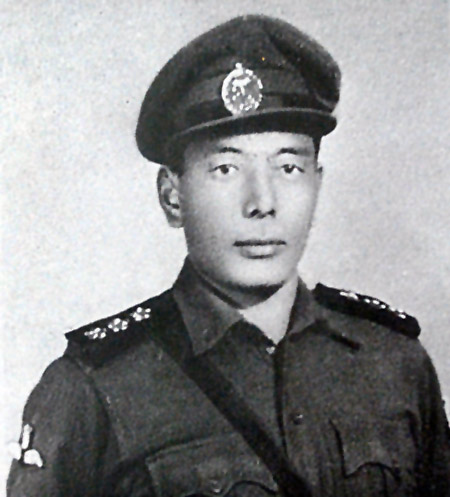
    Nixon-Kissinger Treason in Vietnam – Remembering January 23, 1973

    NIXON-KIISINGER TREASON IN VIETNAM – REMEMBERING JANUARY 23, 1973

    ... were also wounded 40 us involvement in the war ends january 23 1973
    On www.haikudeck.com
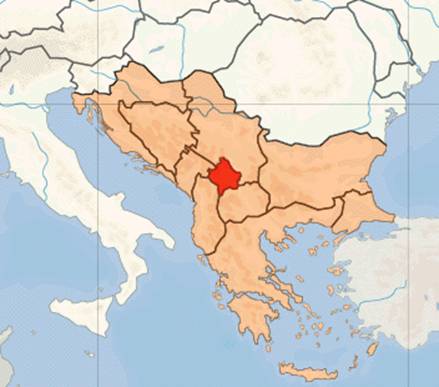
    On January 23, 1973, President Nixon announced about ‘The Agreement on Ending the War and Restoring Peace in Vietnam’ popularly known as Paris Peace Accords. This Vietnam Peace Treaty was signed on January 27, 1973 with cease-fire effective from January 28, 1973. Nixon-Kissinger are guilty of treason in Vietnam for President Nixon won his election for first-term in 1968, and later won his election for second-term in 1972 by using Vietnam War for political gain and not to serve the purpose of the United States which was at War actively fighting against enemy. For all practical purposes, ‘The Fate of Saigon’, and ‘The Fall of Saigon’ on April 30, 1975 was decisively concluded on January 23, 1973.

    Rudranarasimham Rebbapragada
    Ann Arbor, MI 48104-4162 USA
    SPECIAL FRONTIER FORCE

    THE WASHINGTON POST

    SECRET ARCHIVE OFFERS FRESH INSIGHT INTO NIXON PRESIDENCY

    By David E. Hoffman October 11 at 9:29 AM

    The Post’s Bob Woodward, author of the new book, “The Last of the President’s Men,” talks to former Nixon aide Alexander Butterfield about a previously undisclosed top-secret memo updating Nixon on war developments. (Ultan Guilfoyle and Tom LeGro/The Washington Post)

    President Richard Nixon believed that years of aerial bombing in Southeast Asia to pressure North Vietnam achieved “zilch” even as he publicly declared it was effective and ordered more bombing while running for reelection in 1972, according to a handwritten note from Nixon disclosed in a new book by Bob Woodward.

    Nixon’s note to Henry Kissinger, then his national security adviser, on Jan. 3, 1972, was written sideways across a top-secret memo updating the president on war developments. Nixon wrote: “K. We have had 10 years of total control of the air in Laos and V.Nam. The result = Zilch. There is something wrong with the strategy or the Air Force.”

    The day before he wrote the “zilch” note, Nixon was asked about the military effectiveness of the bombing by Dan Rather of CBS News in an hour-long, prime-time television interview. “The results have been very, very effective,” Nixon declared.

    Nixon’s private assessment was correct, Woodward writes: The bombing was not working, but Nixon defended and intensified it in order to advance his reelection prospects. The claim that the bombing was militarily effective “was a lie, and here Nixon made clear that he knew it,” Woodward writes.

    Nixon’s note, which has not previously been disclosed, was found in a trove of thousands of documents taken from the White House by Alexander P. Butterfield, deputy to H.R. Haldeman, Nixon’s chief of staff, and not made public until now. Butterfield’s odyssey through Nixon’s first term is the subject of Woodward’s book, “The Last of the President’s Men,” to be published Tuesday by Simon & Schuster.

    AP_74080901111444251250-1024x699.jpg&w=480

    Richard Nixon performs the last acts of his devastated presidency in the White House East Room on Aug. 9, 1974, as he bids farewell to his Cabinet, aides and staff. (AP)

    Butterfield became a key figure in the Watergate scandal when he revealed to Senate investigators the existence of the White House taping system. The tapes captured Nixon’s role in the coverup and marked a critical turning point in the collapse of his presidency. He resigned in 1974. Woodward and Carl Bernstein exposed the Watergate story in The Washington Post.

    The new book, based on the documents and more than 46 hours of interviews with Butterfield, offers an intimate but disturbing portrayal of Nixon in the Oval Office. Butterfield depicts Nixon, who died in 1994, as forceful and energetic, but also vengeful, petty, lonely, shy and paranoid.

    Butterfield felt deeply conflicted; he was proud to be serving but chagrined to be caught up in the underside of Nixon’s presidency. “The whole thing was a cesspool,” he told Woodward.

    butterfield_10561444511891.jpg&w=480

    Alexander Butterfield is photographed in Washington, D.C., on Oct. 10. (Nikki Kahn/The Washington Post)

    Butterfield, now 89, was in charge of preventing other Nixon staffers from leaving the White House with government documents, but he saw many, including the late Nixon counselor Arthur Burns, haul away boxes when they left.

    Butterfield anticipated writing a memoir, so when he left the White House in 1973, “I just took my boxes of stuff and left,” he told Woodward, packing them into his and his wife’s car. Woodward writes that the boxes contained everything from routine chronologies and memos to some top-secret exchanges with Kissinger and a few highly classified CIA bulletins.

    The new book by The Post’s Bob Woodward, “The Last of the President’s Men,” is based on previously undisclosed documents and more than 46 hours of interviews with Alexander Butterfield, the Nixon aide who revealed the existence of the White House taping system. (Ultan Guilfoyle and Tom LeGro/The Washington Post)

    Butterfield acknowledged to Woodward that it was improper and wrong to remove them, and pledged to ensure that they will be deposited with a proper archive.
    Woodward, who wrote that he thought the Nixon story was over for him after his book on Mark Felt, the FBI associate director and secret source known as Deep Throat, said he was “shocked” at the existence of Butterfield’s secret files. “So the story, like most of history, does not end,” he writes.

    ‘SHAKE THEM UP!!’

    The Vietnam War had been all-consuming for Nixon’s presidency. The antiwar movement was strong in the United States, and Nixon was under political pressure to end the conflict. The centerpiece of Nixon’s approach was “Vietnamization”: withdraw U.S. troops so the South Vietnamese could take over, and negotiate a peace settlement “with honor,” avoiding anything that could be labeled a defeat.

    As ground troops withdrew, air power was one of Nixon’s few remaining tools to pressure Hanoi. In late December 1971, Nixon ordered renewed bombing of North Vietnamese targets for five days.

    By early 1972, Nixon was on the verge of announcing his reelection campaign and taking his momentous trip to China. But he was worried about reports of a major North Vietnamese buildup, foreshadowing a possible offensive.

    On Jan. 2, 1972, in the CBS television interview, Rather asked Nixon, “On everyone’s mind is the resumption of the widespread bombing of North Vietnam. Can you assess the military benefits of that?” Nixon reiterated what he had often said about the bombing, that it was “very, very effective,” and added, “I think that effectiveness will be demonstrated by the statement I am now going to make.” Nixon then announced that he would soon bring home more troops — virtually removing any U.S. combat force in Vietnam.

    The next day, writing his private thoughts to Kissinger, Nixon added, “There is something wrong with the strategy or the Air Force. I want a ‘bark-off’ study — no snow job — on my desk in two weeks as to what the reason for the failure is.” Nixon added that “otherwise continued air operations make no sense in Cambodia, Laos, etc. after we complete withdrawal — Shake them up!!” Nixon underlined the last words twice.

    Woodward said he could find no evidence that the study was ever carried out.
    [How Mark Felt Became ‘Deep Throat’]

    In another memo written a few months later, also found in the Butterfield files, Nixon complained to Kissinger that the military and bureaucracy were too timid. Nixon demanded action that is “strong, threatening and effective” to “punish the enemy” and “go for broke.” Nixon may also have been frustrated at North Vietnamese resilience. Woodward cites CIA, Defense Intelligence Agency and Pentagon memos showing that the bombing was not that effective because the North was getting more supplies than it needed to fight the ground war in the south, and could hold out for two years even if the bombing continued.

    Kissinger, in an interview, told Woodward he agreed with the conclusion that years of bombing North Vietnam had failed, and he recalled that Nixon was frustrated. “He was in the habit of wanting more bombing . . . his instructions most often were for more bombing,” Kissinger said.

    Woodward writes: “The ‘zilch’ conclusion had grown over three years. In what way and when did he realize this? History may never know. Maybe Nixon never knew, never grasped the full weight of his own conclusion.”

    Woodward concludes that while Nixon knew the bombing was militarily futile, he believed it would reap political rewards at home. After Nixon resigned, papers found in his hideaway office in the White House included a GOP polling study, commissioned in 1969, that showed that the American people would favor bombing and blockading North Vietnam for six months. Woodward cites the work of Ken Hughes of the University of Virginia’s Miller Center to show that “the massive bombing did not do the job militarily but it was politically popular. Hughes argues with a great deal of evidence that the bombing was chiefly designed so Nixon would win re-election.”
    [Woodward and Bernstein: Nixon was far worse than we thought]

    The “zilch” note was followed in February by orders for intensified bombing of North Vietnam. On May 8, Nixon ordered the mining of Haiphong Harbor and bombing of key military targets. On Sept. 8, Nixon reported to Kissinger that poll numbers favored the bombing. “It’s two-to-one for bombing,” he boasted.

    On Oct. 16, just weeks before the election, Nixon recalled the May 8 decision to mine the harbor and told Kissinger, “May 8 was the acid test. And how it’s prepared us for all these things. The election, for example.” Kissinger replied, “I think you won the election on May 8.” Nixon was reelected by a landslide in November.

    In that election year, the United States dropped 1.1 million tons of bombs in the Vietnam War, including 207,000 tons in North Vietnam alone, Woodward reports, citing Pentagon records.

    ‘DEEP, DEEP RESENTMENTS’

    Before joining the White House, Butterfield was a 42-year-old U.S. Air Force colonel with an assignment in Australia. After Nixon’s triumph in the 1968 election, Butterfield reached out to Haldeman, an acquaintance from their university years at UCLA. Haldeman then hired Butterfield as his White House deputy. Butterfield was an outsider, unlike many of the others around Nixon, and what he saw in the next four years left a vivid impression.

    When Butterfield was introduced to the president in the Oval Office by Haldeman, Nixon mumbled, cleared his throat and gestured. “No words came out, only a kind of growl,” Woodward writes, based on Butterfield’s recollection. Another time, also in the White House, Nixon dropped by a birthday party for Paul Keyes, a comedy writer and Nixon friend who had helped on the 1968 campaign. When Nixon entered the room, there was an unnatural hush. No one offered a handshake or a glass of wine. Nixon seemed at a loss. Keyes was wearing a solid green blazer. “Ah, ah, ah . . . uh,” Nixon muttered, according to Woodward’s account. “Then Nixon pointed down at the carpet, a worn, faded maroon. He spoke in a deep but barely audible voice. ‘Green coat . . . red rug . . . Christmas colors.’ He then wheeled around and strode out of the room to the Oval Office.”

    butterfield0011444416010horiz1444417570-1024x818.jpg&w=480

    Alexander Butterfield, administrator of the Federal Aviation Administration, arrives at the Rayburn Building to testify before the Judiciary Committee in Washington, D.C., on July 2, 1974.
    (Bob Burchette/The Washington Post)

    Woodward says Butterfield felt that “Nixon was quickly becoming the oddest man he’d ever known.”

    “It was if he were locked in his own deeply personal world, thinking, planning and churning,” Woodward writes of Butterfield’s impressions. Butterfield described Nixon as so lonely that he often took dinner by himself in the Old Executive Office Building, sitting with his suit coat still on, writing on his legal pad. “He was happiest when he was alone,” Butterfield recalled.

    Nixon’s relationship with his wife, Pat, was cold, Butterfield observed. At the Winter White House, a compound in Key Biscayne, Fla., she stayed in a separate house.

    On Christmas Eve 1969, Nixon walked through the Executive Office Building adjacent to the White House to wish employees a merry Christmas. The president discovered that some support staff employees had prominently displayed photographs of President John F. Kennedy — and that one worker had two. Nixon was furious and ordered Butterfield to remove all photos of other presidents. On Jan. 16, 1970, Butterfield wrote a memo to the president, titled “Sanitization of the EOB,” describing how all 35 offices displayed only Nixon’s photograph.

    Alexander Butterfield, deputy assistant to President Richard Nixon, describes to The Post’s Bob Woodward how Nixon barred certain reporters from traveling with him to China in 1972. (Ultan Guilfoyle and Tom LeGro/The Washington Post)

    Butterfield learned that Nixon did not just have an “enemies list” with dozens of names, but also an “opponents list” and a “freeze list.” One day Nixon exploded in anger after finding out that Derek Bok, then the president of Harvard University, was at the White House. “I don’t ever want that son of a bitch back here on the White House grounds,” he told Butterfield. “And you get those enemies lists, make sure everybody knows who’s on them.”
    [Kissinger: the Dr. Frankenstein of foreign affairs, or just self-promoter?]

    The president constantly scrutinized event invitation lists, striking names. Nixon organized a procedure with Butterfield so that during coffee after a state dinner, only a pre-selected group of five out of some 100 invited guests would get a chance to talk to the president. No one else could approach him.

    Butterfield told Woodward that Nixon was controlled by “his various neuroses, the deep, deep, deep resentments and hatreds — he seemed to hate everybody. The resentments festered. And he never mellowed out.”

    Butterfield did not know about the specifics of the Watergate break-in, but witnessed how Nixon’s obsessions led to it. At one point, Butterfield was given the assignment to plant a spy in the Secret Service detail of Sen. Edward M. Kennedy (D-Mass.). Nixon later mused that the spy — a retired agent who was reactivated — might find information that would “ruin him for ’76,” when Kennedy might be considered a possible presidential candidate. Butterfield knew the plan was illegal, and told Woodward that he was surprised at himself for going along with it.

    Alexander Butterfield, deputy assistant to President Richard Nixon, talks to The Post’s Bob Woodward about revealing the existence of the White House taping system. (Ultan Guilfoyle and Tom LeGro/The Washington Post)

    It fell to Butterfield to organize the White House taping system, installed at Nixon’s behest in February 1971. Although Nixon endlessly explored and sifted his options on most issues, Woodward reports that “there was apparently no discussion about the merits or risks of such a taping system.” It was installed over a weekend by the Secret Service while the president was out of town. Five microphones were put in the president’s desk, on the top, concealed with a coating of varnish. The lights on the mantel in the Oval Office also carried microphones, a place where Nixon often took guests, including heads of state, to chat. The microphones were connected to voice-activated tape recorders behind a metal door in the basement.

    When the Watergate scandal broke, “I was thinking of the tapes the whole time,” Butterfield recalled. “God, if they only knew. If they only knew. In a way I wanted it to be known. In the deep recesses of my brain, I was eager to tell.” Woodward devotes several chapters to Butterfield’s personal struggle over whether to reveal the secret taping system, which Nixon thought would never be made public.

    On the day of Nixon’s departure from the White House, Aug. 9, 1974, Butterfield saw many White House officials and workers weeping in the East Room. “I could not believe that people were crying in that room,” he told Woodward. “It was sad, yes. But justice had prevailed. Inside I was cheering. That’s what I was doing. I was cheering.”

    Secret archive offers fresh insight into Nixon presidency

    washingtonpost.com

    © 1996-2015 The Washington Post On learning.blogs.nytimes.comOn http://www.nytimes.comOn http://www.nydailynews.comOn http://www.nixonlibrary.govOn carlanthonyonline.comOn http://www.politico.com

    FRIEND OR FOE – KNOWING INDIA’S ENEMY

    FRIEND OR FOE – KNOWING INDIA’S ENEMY

    FRIEND OR FOE – KNOWING INDIA’S ENEMY – THE ART OF MILITARY INTELLIGENCE. SUN TZU WISDOM. INDIA HAS TO LEARN THE ART OF PREPARING FOR WAR.

    I am sharing analysis titled ‘The Future of India’s Security – A Analysis Post Pathankot’ authored by Brahma Challaney. The Art of Warfare primarily involves ‘Knowing Your Enemy’. Mr. Challaney’s analysis is incomplete for it makes no attempt to know the ‘ENEMY’. This attack on Indian Air Force Base in Pathankot is a mere symptom of an underlying disease. In my diagnosis, the disease that is afflicting Pakistan is that of ‘Foreign Domination’. Pakistan is virtually under siege from various external influences; political, economic, and military Expansionism of United States, Saudi Arabia, and People’s Republic of China. To confront the problem of Communist Expansionism in Afghanistan, United States launched an illegitimate campaign to train militants to fight the Soviets. The campaign against the Soviets included several militant groups who are primarily involved in attacking India in Kashmir, Punjab, and other areas to weaken Republic of India and to promote dismemberment of India, a tactic that was successfully used in Europe to tear Republic of Yugoslavia. For India’s Security threat is from Superpowers such as the US and China, India has to seek military cooperation with Russia to display a sense of willingness to fully engage Enemy in recognition of Enemy’s intentions.. To counter foreign influence over Pakistan, India needs meaningful defense arrangement with Russia and deploy Russian troops on Indian territory to send a clear signal to Enemy about India’s military preparedness. United States is driven by a sense of fear; the fear of Soviet or Russian political domination of India. United States has responded by strengthening Pakistan and by encouraging polarization within India to break Indian Union apart to reduce impact of Soviet or Russian domination. Under these circumstances, India has no choice other than that of embracing an Enemy that India’s Enemy fears.

    Rudranarasimham Rebbapragada

    Ann Arbor, MI 48104-4162 USA

    SPECIAL FRONTIER FORCE

    The future of India’s security –  an analysis post Pathankot
    Pakistan’s military employs terrorist surrogates as a cost-effective force multiplier to undermine India’s rise ________________________________

    Brahma Chellaney

    Make no mistake: the four-day terrorist siege of the Pathankot air base was the equivalent of the 26 November 2008 Mumbai terror strikes. In both cases, the Pakistani terrorists were professionally trained, heavily armed and dispatched by their masters for a specific suicide mission. The main difference is that in Mumbai the terrorist proxies struck civilian sites, while in the latest case their assigned target was a large military facility.

    After the widespread anger and indignation triggered by the recent Paris and San Bernardino attacks, a Mumbai-style strike on civilian targets was not a credible option for the Pakistani military, especially because of the risk that such an attack would invite Indian retaliation.

    So, it chose a military target in India, orchestrating the attack through a terror group it founded in 2000 by installing as its head one of the terrorists the Atal Bihari Vajpayee government unwisely released to end the hijacking of Indian Airlines Flight 814.

    That a pivotal Indian air base against Pakistan came under an extended siege represented a bigger hit for the terror sponsors than the earlier coordinated attacks on soft Mumbai targets. And this hit occurred without the international spotlight and outrage that the Mumbai strikes drew.

    It was not an accident that the Pathankot attack coincided with a 25-hour gun and bomb siege of the Indian consulate in Mazar-i-Sharif, Afghanistan. The twin attacks, outsourced to Jaish-e-Mohammed, were designed as a New Year gift to India.

    How did India come out from the crisis? Put simply, not looking good.

    Leadership is the key to any country effectively combating the scourge of terrorism. India, however, has faced a protracted crisis of leadership for more than a generation since 1989. In this period, Pakistan has gone from inciting a Jammu and Kashmir insurrection, which ethnically cleansed the Kashmir Valley of its 300,000 Pandit residents, to scripting terror attacks across India.

    Narendra Modi’s election win reflected the desire of Indians for a dynamic leader to end political drift. Yet, since Modi’s victory, cross-border terrorists have repeatedly tested India’s resolve—from Herat to Pathankot via Gurdaspur and Udhampur. And each time, India flunked the test, as it has done since the Vajpayee era.

    The Pathankot strike, above all, constituted an act of war, presenting Modi with his first serious national security challenge. Modi’s leadership, however, was found wanting in nearly every aspect—from leading from the front to reassuring the Indian public.

    For almost the first two days of the siege, Modi chose to be away in Karnataka. And the only statement he made during the entire siege seemed to signify euphemism as escapism. Just as he called the Paris strikes an “attack on humanity”, he said the Pathankot terror siege was by “enemies of humanity” (he could not bring himself to say even “enemies of India”). Not a single meeting of the Cabinet Committee on Security was held during the crisis.

    Operationally, the action to kill the terrorists in the air base stands out as a textbook example of how not to conduct such a mission. Despite New Delhi receiving advance intelligence of the attack, the terrorists not only gained entry into the base but the operation to flush them out was also poorly conceived and executed, without a unified operational command.

    War needs good public relations. But the Modi government appears not to have even a peacetime communication strategy. During the Pathankot siege, officials gave confusing and conflicting accounts.

    The crisis, if anything, highlighted the government’s strategic naïveté. While gun battles were still raging inside the base, the government supplied Islamabad communication intercepts and other evidence linking the attackers with their handlers in Pakistan. This was done in the fond hope that the terror masters will go after their terror proxies, despite India’s bitter experience in the Mumbai case where it presented dossiers of evidence to Pakistan.

    More laughable was New Delhi’s disclosure on the siege’s final day that, in a telephone call from Nawaz Sharif, Modi asked Pakistan’s toothless prime minister for “firm and immediate action” on the “specific and actionable information” provided by India and that Sharif promised “prompt and decisive action against the terrorists”.

    Decisive power in Pakistan rests with the military generals, with the army and the Inter-Services Intelligence, immune to civilian oversight. India is in no position to change Pakistan’s power dynamics. Yet, the critical issues that India wants to discuss with Pakistan—terrorism, infiltration, border peace and nuclear security—are matters over which the Pakistani military has the final say.

    So, how can Modi hope to buy peace with a powerless Pakistani government that has ceded its authority in foreign policy and national security to the military?

    If Pakistan wants a détente with status-quoist India, it can easily get it. Its military, however, cannot afford peace with India. It employs terrorist surrogates as a highly cost-effective force multiplier to undermine India’s rise and regional clout, which explains why Indian diplomatic missions in Afghanistan have repeatedly been attacked and why Bangladesh and Nepal have become new gateways to India for Pakistan’s proxies.

    Yet India, as if expecting the Pakistani security establishment to turn over a new leaf, supplied almost real-time evidence in the Pathankot case.

    Modi’s Christmas gift to Pakistan in the form of a surprise Lahore stopover yielded, in return, a New Year’s terror surprise for India. Rather than learn from the mistakes of his immediate two predecessors—who learned the hard way how peace overtures to Pakistan, by signalling weakness, invited cross-border aggression—Modi chose to commit the same folly, reposing his faith in Sharif, who back-stabbed Vajpayee.

    Of the 35 countries visited by Modi in his first 19 months in office, no nation has provided a payback as quickly as Pakistan. In fact, in modern history, no head of government before Modi visited an enemy country without any preparatory work and with nothing to show in results. Grabbing the international spotlight through a brief surprise visit just to have tea does not befit the leader of an aspiring power.

    Sadly, Modi is showing that showmanship is to his foreign policy what statecraft is to the diplomacy of great powers.

    The recent terror attack in San Bernardino, although not an act of international terrorism, has shaken up American politics. By contrast, multiple cross-border terror attacks have failed to galvanize India into devising a credible counterterrorism strategy. With the ISI using narcotics traffickers to send opiates and terrorists into India’s Punjab, the Pathankot killers—like the Gurdaspur attackers—came dressed in Indian army uniforms through a drug-trafficking route. The influx of narcotics is destroying Punjab’s public health.

    When the next major terror strike occurs, India will go through the same cycle again, including a silly debate on whether to talk to Pakistan or not. As army chief General Dalbir Singh said, “India needs to change its security policy towards Pakistan. Every time Pakistan bleeds us… we just talk about it for a few days and after that it is business as usual.”

    Indeed, New Delhi, forgetting Mumbai, wants Pakistan to act in the Pathankot case. And when the next major cross-border attack occurs, Pathankot will be forgotten. With New Delhi focused on the last terror strike, Pakistan has still to deliver even in the 1993 case internationally known as the Bombay bombings—the bloodiest terrorist attack in India.

    While the Pakistani military has made its government impotent by appropriating key powers, the Indian government, through inaction, is rendering its powerful military impotent to defeat terrorism. This was apparent even in the Pathankot siege, with precious time lost due to the government’s bungled decision to airlift National Security Guard commandos to the scene rather than immediately press readily available army commandos into action.

    India’s biggest threat is from asymmetric warfare, waged across porous borders or gaps in Indian frontier defences. This asymmetric warfare takes different forms—from Pakistan’s proxy war by terror and China’s furtive, salami-style encroachments into the Himalayan borderlands to Nepal serving as a conduit for India’s enemies to funnel militants, arms, explosives and fake currency to India.

    Yet India, far from focusing on neutralizing the asymmetric warfare, has sought to prepare for a full-fledged conventional war through improvident arms imports. Modi alone has sunk billions of dollars in such mega-deals. The more weapon systems India imports, the more insecure it feels.

    There are several things India can do against the terror sponsors short of war. But first, it must have political will and clear strategic objectives. Today, unfortunately, there is no long-term strategic vision or even a Pakistan policy. Under Modi, India has already made at least six U-turns on Pakistan. For example, its October stance that “talks and terror cannot go together” lasted barely 10 weeks. Almost every season in New Delhi brings a new Pakistan policy.

    An unconventional war must be countered with an unconventional war. Nuclear weapons have no deterrence value in an unconventional war. Nor can they guarantee Pakistan’s survival. The Soviet Union unravelled despite having the world’s most formidable nuclear arsenal in mega-tonnage. Why should India allow itself to be continually gored when it is seven times bigger demographically than Pakistan, almost 12 times larger in GDP terms and militarily more powerful?

    Let us be clear: No nation gets peace merely by seeking peace. To secure peace, India must be able to impose deterrent costs when peace is violated in order to tell the other side that the benefits of peaceful cooperation outweigh hostilities.

    India, unfortunately, has shied away from imposing costs, although the right to retaliate is a right enshrined in international law. Defending one’s interests against a terrorism onslaught, in fact, is a constitutional and moral obligation for any self-respecting country. The right of self-defence is embedded as an “inherent right” in the United Nations Charter. India did not impose costs on the terror masters in Pakistan even for the bloody Mumbai attacks. Will it allow them to go scot-free again?

    Brahma Chellaney is a professor at the Centre for Policy Research.

    _

    FRIEND OR FOE. KNOWING INDIA’S ENEMY. THE ART OF MILITARY INTELLIGENCE. APART FROM KNOWING ENEMY’S INTENTIONS, INDIA MUST DEMONSTRATE MILITARY PREPAREDNESS. THE ART OF PREPARING FOR WAR.

    FRIEND OR FOE – KNOWING INDIA’S ENEMY. THE ART OF MILITARY INTELLIGENCE. APART FROM KNOWING ENEMY, INDIA HAS TO DEMONSTRATE WILLINGNESS TO RESPOND TO ENEMY’S INTENTIONS BY GIVING EVIDENCE OF MILITARY PREPAREDNESS. THE ART OF PREPARING FOR WAR.


    FRIEND OR ENEMY – KNOWING INDIA’S ENEMY. THE ART OF MILITARY INTELLIGENCE. KNOWING ENEMY MEANS RESPONDING TO ENEMY’S INTENTIONS THROUGH MILITARY PREPAREDNESS. THE ART OF PREPARING FOR WAR.


    FRIEND OR FOE – KNOWING INDIA’S ENEMY. THE ART OF MILITARY INTELLIGENCE. BREAK ENEMY’S WILLINGNESS TO FIGHT WAR.


    FRIEND OR FOE – KNOWING INDIA’S ENEMY. THE ART OF MILITARY INTELLIGENCE. INDIA’S ENEMY IS VISIBLE, ENEMY’S INTENTIONS ARE TANGIBLE, AND HENCE INDIA CAN CONTROL ENEMY’S FATE.


    FRIEND OR FOE – KNOWING INDIA’S ENEMY. THE ART OF MILITARY INTELLIGENCE. KNOW THAT YOUR ENEMY KNOWS ABOUT YOUR MILITARY PREPAREDNESS.


    FRIEND OR FOE – KNOWING INDIA’S ENEMY. THE ART OF MILITARY INTELLIGENCE. THE ART OF PREPARING FOR WAR LEADS TO PEACE WITHOUT THE NEED FOR WAR.


    FRIEND OR FOE – KNOWING INDIA’S ENEMY. THE ART OF MILITARY INTELLIGENCE. APART FROM KNOWING ENEMY’S INTENTIONS, INDIA HAS TO COUNTERACT BY PREPARING FOR WAR IMPOSED BY ENEMY.


    Bharat Darshan – Proud to be Indian- Legendary Hero Maharana Pratap

    Bharat Darshan-Proud to be Indian-Legendary Hero Maharana Pratap

    My father, Professor R. Suryanarayana Murthy taught Indian History to College students in various educational institutions spread across Madras Presidency and later Andhra Pradesh of India. He was inspired by India’s legendary hero Maharana Pratap of Mewar Kingdom. He named my elder brother as ‘PRATAP’ to give honor and to celebrate the legacy of Maharana Pratap.

    Rudra Narasimham Rebbapragada
    Ann Arbor, MI 48104-4162 USA
    SPECIAL FRONTIER FORCE

    Bharat Darshan-Proud to be Indian-Legendary Hero Maharana Pratap

    The real story behind Maharana Pratap’s Death

    Author: Prateek Pathak
    Publication: Speakingtree.in
    Date: March 17, 2015

    URL: http://www.speakingtree.in/allslides/how-did-maharana-pratap-die

    1. Maharana Pratap’s Life
    Maharana Pratap was born in 1540. Rana Uday Singh of Mewar had 33 children, among them the eldest was Pratap Singh. Self-respect and virtuous behaviour were the main qualities of Pratap Singh.

    2. Bold from Childhood
    He was bold and brave right from his childhood and everyone was sure that he was going to be a very valiant person as he grew up. He was more interested in sports and learning to wield weapons rather than general education.

    3. Coronation
    During Maharana Pratap Singh’s time, Akbar was the Mughal Ruler in Delhi. His policy was to make use of the strength of Hindu kings to bring other Hindu Kings under his control. Many Rajput kings, abandoning their glorious traditions and fighting spirit, sent their daughters and daughters-in-law to the harem of Akbar with the purpose of gaining rewards and honour from Akbar.

    4. Before the king died
    Before his death, Rana Uday Singh appointed Jagammal, the son of his youngest wife, as his heir. Although Pratap Singh was elder to Jagammal but he was ready to give up his rights like Prabhu Ramchandra and go away from Mewar but the chieftains did not at all agree with their king’s decision.

    5. Courage
    Besides they were of the opinion that Jagammal did not possess qualities like courage and self-respect which were essential in a leader and king. Hence it was collectively decided that Jagammal would have to sacrifice the throne. Maharana Pratap Singh too gave due respect to the wish of the chieftains and the people of his kingdom and accepted the responsibility of leading the people of Mewar.

    6. Unbreakable Oath to free the ‘Motherland’
    The enemy had surrounded Mewar across all its boundaries. Shakti Singh and Jagammal, the two brothers of Maharana Pratap had joined Akbar. The first problem was to gather enough soldiers to fight a face-to-face war which would have required vast money.

    7. Maharana Pratap’s Trust
    But Maharana Pratap’s coffers were empty whereas Akbar had a large army, a lot of wealth and a lot more at his disposal. Maharana Pratap, however, did not get distracted or lost hope nor did he ever say that he was weak as compared to Akbar.

    8. Concern
    His only concern was to immediately free his motherland from the clutches of the Mughals. One day, he called a meeting of his trusted chieftains and made an appeal to them in his serious and lustrous speech. He said, “My brave warrior brothers, our Motherland, this holy land of Mewar, is still under the clutches of the Mughals. Today, I take an oath in front of all of you that till Chittod is freed, I will not have food in gold and silver plates, will not sleep on a soft bed and will not stay in the palace; instead I will eat food on a leaf-platter, sleep on the floor and stay in a hut. I will also not shave till Chittod is freed.

    9. Brave Warriors
    “My brave warriors, I am sure that you will support me in every way sacrificing your mind, body and wealth till this oath is fulfilled.” All the chieftains were inspired with the oath of their king and they too promised him that till their last drop of blood.

    10. Rana Pratap Singh to free Chittod
    They helped Rana Pratap Singh in fighting for Chittod and joined him in his battle against the Mughals; they would not retreat from their goal. They assured him, “Rana, be sure that we all are with you; waiting only for your signal and we are ready to sacrifice our life.”

    11. Battle of Haldighati
    Akbar tried his best to bring Rana Pratap under his clutches; but all in vain. Akbar got angry as no compromise could be arrived at with Rana Pratap and he declared a war. Rana Pratap also started preparations.

    12. Shifted his capital to Kumbhalgad
    He shifted his capital to Kumbhalgad in the Aravalli range of mountains which was difficult to access. He recruited tribal people and people dwelling in forests in his army. These people had no experience of fighting any war; but he trained them. He appealed to all Rajput chieftains to come under one flag for Mewar’s independence.

    13. Pratap’s Army
    Rana Pratap’s army of 22,000 soldiers met 2,00,000 soldiers of Akbar at Haldighat. Rana Pratap and his soldiers exhibited great valour in this battle although he had to retreat but Akbar’s army was not successful in completely defeating Rana Pratap.

    14. Chetak
    Along with Rana Pratap, his faithful horse named ‘Chetak’ also became immortal in this battle. ‘Chetak’ was seriously injured in the battle of Haldighat but to save his master’s life, it jumped over a big canal.

    15. Chetak fell down
    As soon as the canal was crossed, ‘Chetak’ fell down and died thus it saved Rana Pratap, risking its own life. The strong Maharana cried like a child over the death of his faithful horse. Later he constructed a beautiful garden at the place where Chetak had breathed its last.

    16. Akbar’s attack
    Then Akbar himself attacked Rana Pratap but even after 6 months of fighting the battle, Akbar could not defeat Rana Pratap and went back to Delhi. As a last resort, Akbar sent another great warrior General Jagannath in the year 1584 with a huge army to Mewar but after trying relentlessly for 2 years, even he could not catch Rana Pratap.

    17. Harsh destiny
    Wandering in the jungles and valleys of the mountains, Maharana Pratap used to take even his family with him. There was a constant danger of being attacked anytime from anywhere.

    18. Proper Food
    Getting proper food to eat was an ordeal in the forests. Many times, they had to go without food; they had to wander from one place to another without food and sleep in the mountains and forests. They had to leave the food and immediately proceed to another place on receiving information about the enemy’s arrival.

    19. Trapped in catastrophe
    They were constantly trapped in some catastrophe or the other. Once the Maharani was roasting ‘bhakris (Indian bread)’ in the forest; after eating their share, she asked her daughter to keep the left over ‘bhakri’ for dinner but at that time, a wild cat attacked and took away the piece of ‘bhakri’ from her hand leaving the princess crying helplessly.

    20. Piece of ‘bhakri’
    That piece of ‘bhakri’ was also not in her destiny. Rana Pratap felt sorry to see the daughter in such state; he got angry with his valour, bravery and self-respect and started thinking whether all his fighting and bravery was worth it. In such a wavering state of mind, he agreed to call a truce with Akbar.

    21. A Poet’s ovation
    A poet named Pruthviraj from Akbar’s court, who was an admirer of Maharana Pratap, wrote a long letter in the form of a poem to him in Rajasthani language boosting his morale and dissuading him from calling a truce with Akbar. With that letter, Rana Pratap felt as if he had acquired the strength of 10,000 soldiers. His mind became calm and stable. He gave up the thought of surrendering to Akbar, on the contrary, he started strengthening his army with more intensity and once again immersed himself in accomplishing his goal.

    22. Devotion of Bhamashah
    There was a Rajput chieftain serving as a minister in the regime of forefathers of Maharana Pratap. He was very much disturbed with the thought that his king had to wander in forests and was going through such hardships. He felt sorry to know about the difficult times Rana Pratap was going through. He offered a lot of wealth to Maharana Pratap that would allow him to maintain 25,000 soldiers for 12 years. Rana Pratap was very happy and felt very grateful. Initially, he refused to accept the wealth offered by Bhamashah but at his constant insistence, he accepted the offering.

    23. Wealth from Bhamashah
    After receiving wealth from Bhamashah, Rana Pratap started receiving money from other sources. He used all the money to expand his army and freed Mewar except Chittod which was still under the control of the Mughals.

    24. Last wish
    Maharana Pratap was lying on the bed made of grass even when he was dying as his oath of freeing Chittod was not still fulfilled. At the last moment, he took his son Amar Singh’s hand and handed over the responsibility of freeing Chittod to his son and died in peace.

    25. Historical Importance
    There is no comparison in history to his fight with a cruel emperor like Akbar. When almost the whole of Rajasthan was under the control of the Mughal Emperor Akbar, Maharana Pratap fought for 12 years to save Mewar. Akbar tried various means to defeat Maharana but he remained unbeatable till the end.

    26. The Great Maharana Pratap
    Besides, he also freed a large portion of land in Rajasthan from the Mughals. He underwent so much of hardship but he preserved the name of his family and his Motherland from facing defeat. His life was so bright that the other name for freedom could have been ‘Maharana Pratap’.

    Bharat Darshan-Proud to be Indian-Legendary Hero Maharana Pratap
    Bharat Darshan-Proud to be Indian-Legendary Hero Maharana Pratap
    Bharat Darshan-Proud to be Indian-Legendary Hero Maharana Pratap.
    Bharat Darshan-Proud to be Indian-Legendary Hero Maharana Pratap
    Bharat Darshan-Proud to be Indian-Legendary Hero Maharana Pratap.
    Bharat Darshan-Proud to be Indian-Legendary Hero Maharana Pratap.
    Bharat Darshan-Proud to be Indian-Legendary Hero Maharana Pratap.
    Bharat Darshan-Proud to be Indian-Legendary Hero Maharana Pratap
    Bharat Darshan=Proud to be Indian-Legendary Hero Maharana Pratap.

    Bharat Darshan – Kumbhalgarh Fort, Rajasthan

    BHARAT DARSHAN - KUMBHALGARH FORT - RAJASTHAN: KING OF MEWAR, MAHARANA RANA KUMBHA BUILT SEVERAL FORTS AND KUMBHALGARH IS ENCIRCLED BY THIRTEEN MOUNTAIN PEAKS AND IS AT A HEIGHT OF ABOUT 1,914 METERS ABOVE SEA LEVEL AND WAS NOT EASY TO CAPTURE.
    BHARAT DARSHAN – KUMBHALGARH FORT – RAJASTHAN: KING OF MEWAR, MAHARANA RANA KUMBHA BUILT SEVERAL FORTS. KUMBHALGARH IS ENCIRCLED BY THIRTEEN MOUNTAIN PEAKS AND IS AT A HEIGHT OF ABOUT 1,914 METERS ABOVE SEA LEVEL AND WAS NOT EASY TO CAPTURE. THIS GREAT KING AND HIS MAGNIFICIENT FORT ALSO REVEAL A TRAGIC ASPECT OF INDIAN PEOPLE, THEIR DISUNITY THAT HISTORICALLY PAVED THE WAY TO FOREIGN CONQUESTS.
    BHARAT DARSHAN - KUMBHALGARH FORT - RAJASTHAN: THE FORT COMPLEX INCLUDES SEVERAL PALACES. BADAL MAHAL OR PALACE OF CLOUD IS PERCHED ON THE HILLTOP.
    BHARAT DARSHAN – KUMBHALGARH FORT – RAJASTHAN: THE FORT COMPLEX INCLUDES SEVERAL PALACES. BADAL MAHAL OR PALACE OF CLOUD IS PERCHED ON THE HILLTOP.

    I want to share with my readers the beautiful pictures of Kumbhalgarh Fort of Rajasthan, India. Please click on the photo images to view them in their full size. I give my thanks to Shri. Yashvir Tuli whose mail is forwarded to me. Indeed, the Fort is a little known wonder of India. The great builder of the Fort was killed by his own son, Uday Singh I during 1468 A.D. The Fort is thought to be the birthplace of great warrior, Maharana Pratap (May 9, 1540 to January 29, 1597)  who had resisted the Mughal Emperor all his life. In the late 19th century, Rana Fateh Singh rebuilt the Palace. But, I must admit that I am disappointed to learn that this impenetrable Fort was captured by the combined forces of Raja Udai Singh, Raja Man Singh, the Sultan of Gujarat, and Mughal Emperor Akbar. 

    Rudra Narasimham Rebbapragada
    Ann Arbor, MI 48104-4162, USA
    Special Frontier Force -Establishment 22 – Vikas Regiment

    Know Your India and Tell Others Too:

    Kindly permit me to express my sense of gratitude and give the Image Credits to Flickr Users Lamentables, Bookchen, Dev, C P Chen, Dizzn an, TushyD, Honza Soukup, Kittell, Lumiere, Beth M527, Julynireland, and Plusgood. I thank all of them for sharing these beautiful images for the benefit of all others who had no chance to visit the beautiful Fort and its Great Wall at Kumbhalgarh, Rajasthan, India.

    King Maharana Kumbha began the construction of this 36 Kms long Fort Wall in 1443 and it took about one hundred years to complete it. The Wall got further enlarged during 19th century. The Fort is built over a hill-top. The Fort Wall surrounds farm lands and there are about 360 Jaina and Hindu temples on this vast campus. The Wall may have separated the Kingdoms of Mewar, and Marwar. The Fort withstood enemy attacks and in its long history of about 500 years, the Fort fell into the hands of its enemy only once which speaks of the problem of disunity among Indians.

    BHARAT DARSHAN - KUMBHALGARH FORT, RAJASTHAN.
    BHARAT DARSHAN – KUMBHALGARH FORT, RAJASTHAN.
    BHARAT DARSHAN - KUMBHALGARH, RAJASTHAN.
    BHARAT DARSHAN – KUMBHALGARH, RAJASTHAN.
    BHARAT DARSHAN - KUMBALGARH, RAJASTHAN.
    BHARAT DARSHAN – THE GREAT FORT WALL OF KUMBHALGARH, RAJASTHAN.
    Bharat Darshan-Kumbhalgarh-Great Wall of India-5
    BHARAT DARSHAN – KUMBHALGARH FORT, RAJASTHAN
    BHARAT DARSHAN - KUMBHALGARH, RAJASTHAN.
    BHARAT DARSHAN – KUMBHALGARH, RAJASTHAN.
    BHARAT DARSHAN - THE GREAT FORT WALL, KUMBHALGARH, RAJASTHAN.
    BHARAT DARSHAN – THE GREAT FORT WALL, KUMBHALGARH, RAJASTHAN.
    BHARAT DARSHAN - GREAT FORT WALL, KUMBHALGARH, RAJASTHAN.
    BHARAT DARSHAN – GREAT FORT WALL, KUMBHALGARH, RAJASTHAN.
    BHARAT DARSHAN - GREAT FORT WALL, KUMBHALGARH, RAJASTHAN.
    BHARAT DARSHAN – GREAT FORT WALL, KUMBHALGARH, RAJASTHAN.
    BHARAT DARSHAN - GREAT FORT WALL OF KUMBHALGARH, RAJASTHAN.
    BHARAT DARSHAN – GREAT FORT WALL OF KUMBHALGARH, RAJASTHAN.
    BHARAT DARSHAN - KUMBHALGARH FORT, RAJASTHAN.
    BHARAT DARSHAN – KUMBHALGARH FORT, RAJASTHAN.
    BHARAT DARSHAN, KUMBHALGARH FORT, RAJASTHAN.
    BHARAT DARSHAN, KUMBHALGARH FORT, RAJASTHAN.
    BHARAT DARSHAN - KUMBHALGARH FORT, RAJASTHAN.
    BHARAT DARSHAN – KUMBHALGARH FORT, RAJASTHAN.
    BHARAT DARSHAN - KUMBHALGARH FORT, RAJASTHAN.
    BHARAT DARSHAN – KUMBHALGARH FORT, RAJASTHAN.
    BHARAT DARSHAN - KUMBHALGARH, RAJASTHAN.
    BHARAT DARSHAN – KUMBHALGARH, RAJASTHAN.
    BHARAT DARSHAN - THE GREAT FORT WALL OF KUMBHALGARH, RAJASTHAN.
    BHARAT DARSHAN – THE GREAT FORT WALL OF KUMBHALGARH, RAJASTHAN.
    BHARAT DARSHAN - KUMBHALGARH FORT, RAJASTHAN.
    BHARAT DARSHAN – KUMBHALGARH FORT, RAJASTHAN.
    BHARAT DARSHAN - KUMBHALGARH, RAJASTHAN.
    BHARAT DARSHAN – KUMBHALGARH, RAJASTHAN.
    BHARAT DARSHAN - THE GREAT FORT WALL OF KUMBHALGARH, RAJASTHAN.
    BHARAT DARSHAN – THE GREAT FORT WALL OF KUMBHALGARH, RAJASTHAN.
    BHARAT DARSHAN - THE GREAT FORT WALL OF KUMBHALGARH, RAJASTHAN.
    BHARAT DARSHAN – THE GREAT FORT WALL OF KUMBHALGARH, RAJASTHAN.
    BHARAT DARSHAN - THE GREAT FORT WALL OF KUMBHALGARH, RAJASTHAN.  IT HAS SEVEN GATEWAYS.
    BHARAT DARSHAN – THE GREAT FORT WALL OF KUMBHALGARH, RAJASTHAN. IT HAS SEVEN GATEWAYS.
    BHARAT DARSHAN - THE GREAT FORT WALL OF KUMBHALGARH, RAJASTHAN.
    BHARAT DARSHAN – THE GREAT FORT WALL OF KUMBHALGARH, RAJASTHAN.
    BHARAT DARSHAN, KUMBHALGARH FORT AND ITS GREAT WALL IN RAJASTHAN.
    BHARAT DARSHAN, KUMBHALGARH FORT AND ITS GREAT WALL IN RAJASTHAN.
    BHARAT DARSHAN - THE GREAT FORT WALL OF KUMBHALGARH, RAJASTHAN.
    BHARAT DARSHAN – THE GREAT FORT WALL OF KUMBHALGARH, RAJASTHAN.
    BHARAT DARSHAN - KUMBHALGARH FORT, RAJASTHAN.
    BHARAT DARSHAN – KUMBHALGARH FORT, RAJASTHAN.
    BHARAT DARSHAN - THE GREAT FORT WALL OF KUMBHALGARH, RAJASTHAN.
    BHARAT DARSHAN – THE GREAT FORT WALL OF KUMBHALGARH, RAJASTHAN.
    BHARAT DARSHAN - THE GREAT FORT WALL, KUMBHALGARH, RAJASTHAN.
    BHARAT DARSHAN – THE GREAT FORT WALL, KUMBHALGARH, RAJASTHAN.
    BHARAT DARSHAN - THE GREAT FORT WALL, KUMBHALGARH, RAJASTHAN.
    BHARAT DARSHAN – THE GREAT FORT WALL, KUMBHALGARH, RAJASTHAN.
    BHARAT DARSHAN - THE GREAT FORT WALL ENTRANCE, KUMBHALGARH, RAJASTHAN.
    BHARAT DARSHAN – THE GREAT FORT WALL ENTRANCE, KUMBHALGARH, RAJASTHAN.
    BHARAT DARSHAN - THE GREAT FORT AND ITS WALL IN KUMBHALGARH, RAJASTHAN.
    BHARAT DARSHAN – THE GREAT FORT AND ITS WALL IN KUMBHALGARH, RAJASTHAN.
    BHARAT DARSHAN - THE GREAT FORT WALL OF KUMBHALGARH, RAJASTHAN.
    BHARAT DARSHAN – THE GREAT FORT WALL OF KUMBHALGARH, RAJASTHAN.
    BHARAT DARSHAN - KUMBHALGARH FORT AND ITS GREAT WALL. THE FORT INCLUDES ABOUT 360 JAINA AND HINDU TEMPLES.
    BHARAT DARSHAN – KUMBHALGARH FORT AND ITS GREAT WALL. THE FORT INCLUDES ABOUT 360 JAINA AND HINDU TEMPLES.
    BHARAT DARSHAN - THE GREAT FORT WALL OF KUMBHALGARH, RAJASTHAN.
    BHARAT DARSHAN – THE GREAT FORT WALL OF KUMBHALGARH, RAJASTHAN.
    BHARAT DARSHAN - THE GREAT FORT WALL OF KUMBHALGARH, RAJASTHAN.
    BHARAT DARSHAN – THE GREAT FORT WALL OF KUMBHALGARH, RAJASTHAN.
    BHARAT DARSHAN - A GREAT VIEW OF KUMBHALGARH FORT AND ITS GREAT WALL.
    BHARAT DARSHAN – A GREAT VIEW OF KUMBHALGARH FORT AND ITS GREAT WALL.
    BHARAT DARSHAN - KUMBHALGARH FORT.
    BHARAT DARSHAN – KUMBHALGARH FORT.
    Bharat Darshan - Kumbhalgarh Fort.
    Bharat Darshan – Kumbhalgarh Fort.
    BHARAT DARSHAN - KUMBHALGARH FORT, RAJASTHAN: THE FORT HAS SEVEN GATES AND THIS GATE IS KNOWN AS RAM POL OR RAM(LORD RAMA) GATE.
    BHARAT DARSHAN – KUMBHALGARH FORT, RAJASTHAN: THE FORT HAS SEVEN GATES AND THIS GATE IS KNOWN AS RAM POL OR RAM(LORD RAMA) GATE.
    BHARAT DARSHAN - KUMBHALGARH FORT, RAJASTHAN IS BUILT ON THE HILLTOP THAT IS IN THE ARAVALLI HILL RANGE.
    BHARAT DARSHAN – KUMBHALGARH FORT, RAJASTHAN IS BUILT ON THE HILLTOP THAT IS IN THE ARAVALLI HILL RANGE.
    BHARAT DARSHAN - KUMBHALGARH FORT, RAJASTHAN.
    BHARAT DARSHAN – KUMBHALGARH FORT, RAJASTHAN.
    BHARAT DARSHAN - KUMBHALGARH FORT, RAJASTHAN - AERIAL VIEW.
    BHARAT DARSHAN – KUMBHALGARH FORT, RAJASTHAN – AERIAL VIEW.