SLAVE IN FREE WORLD – DOG’S LIFE GOOD ENOUGH FOR ME

SLAVE IN FREE WORLD – DOG’S LIFE GOOD ENOUGH FOR ME

Slave in Free World – Dog’s Life Good Enough For Me.

SLAVE IN FREE WORLD – DOG’S LIFE GOOD ENOUGH FOR ME

Slave in Free World – Dog’s Life Good Enough For Me. If I have Life to Live Again, Lulu’s Life is Good Enough For Me.

Senior Alien’s human dignity is totally compromised for he is granted life of Slavery, Serfdom, Involuntary Servitude, and Forced Labor while he earns hourly wages laboring in Free World without any choice or option to receive retirement benefit from his own earnings recovered by US Law called Federal Insurance Contributions Act or FICA.

If Senior Alien has chance to life to live over, he would like to be Lulu, the Pup trained by Central Intelligence Agency. The Dog’s Life is Good for a Dog. For a Slave living in a Free Country, Dog’s Life is Good Enough.

Rudranarasimham Rebbapragada

SPECIAL FRONTIER FORCE

HQ ESTABLISHMENT NO.22 C/O 56 APO

Slave in Free World – Dog’s Life Good Enough For Me.
Slave in Free World – I have Life to Live Again, Lulu’s,( Dog trained by CIA) Life is Good Enough For Me.

PUPDATE: A PUP LEAVES THE CLASS – CENTRAL INTELLIGENCE AGENCY

Clipped from: https://www.cia.gov/news-information/blog/2017/pupdate-a-pup-leaves-the-class.html

For our K9 trainers, it’s imperative that the dogs enjoy the job they’re doing. Sometimes, even when a pup tests well and they successfully learn how to detect explosive odors, they make it clear that being an explosive detection K9 is not the life for them. Such is the case for one of the fall 2017 “puppy class” pups.

We are sad to announce that Lulu has been dropped from the program.

Slave in Free World – If I have Life to Live Again, Lulu’s Life is Good Enough For Me.

A few weeks into training, Lulu began to show signs that she wasn’t interested in detecting explosive odors. All dogs, just like most human students, have good days and bad days when learning something new. The same is true during our puppy classes. A pup might begin acting lazy, guessing where the odors are, or just showing a general disregard for whatever is being taught at the moment. Usually it lasts for a day, maybe two.

There can be a million reasons why a particular dog has a bad day, and the trainers become doggy psychologists trying to figure out what will help the dog come out of its funk. Sometimes the pup is bored and just needs extra playtime or more challenges, sometimes the dog need a little break, and sometimes it’s a minor medical condition like a food allergy requiring switching to a different kibble. After a few days, the trainers work the pup through whatever issue has arisen, and the dog is back eagerly and happily ready to continue training.

Slave in Free Country – If I have Life to Live Again, Lulu’s Life is Good Enough For Me.

Lulu enjoying retirement with her best buddy, Harry. But for some dogs, like Lulu, it becomes clear that the issue isn’t temporary. Instead, this just isn’t the job they are meant for. Lulu was no longer interested in searching for explosives. Even when they could motivate her with food and play to search, she was clearly not enjoying herself any longer. Our trainers’ top concern is the physical and mental well-being of our dogs, so they made the extremely difficult decision to do what’s best for Lulu and drop her from the program.

When a dog is dropped or retires from our program, the handler or handler’s family is given the chance to adopt them. Most handlers, of course, choose to do so. The dogs are their partners and have become members of their family, even after just a few weeks of training together. Lulu was a adopted by her loving handler, who had the chance to work with her during imprint training. She now enjoys her days playing with his kids, sniffing out rabbits and squirrels in the backyard, and eating meals and snacks out of a dog dish. We’ll miss Lulu, but this was the right decision for her. We wish her all the best in her new life.

Lulu was adopted by her handler, but he still needs an explosive detection K9 partner at work. Check back tomorrow to meet the newest addition to the fall 2017 puppy class.

If you miss any of the articles in this series, visit “Follow CIA’s New Puppy Class!” main page, where we are chronicling the puppies’ progresses throughout their training.

Slave in Free Country – For a man living as Slave in Free Country, Dog’s Life is Good Enough.


OCTOBER 19, 1972 – NIXON-KISSINGER VIETNAM TREASON

OCTOBER 19, 1972 – NIXON-KISSINGER VIETNAM TREASON

History recorded Nixon-Kissinger Vietnam Treason in great detail. I ask my readers to note that on October 19, 1972, Dr. Henry A. Kissinger was not the US Secretary of State. He was administered the oath to that office on September 22, 1973. For that reason, on October 19, 1972 Kissinger had no authority to negotiate with foreign Heads of State on behalf of the United States. Nixon-Kissinger negotiated Peace Treaty giving aid and comfort to the Enemy while US forces in Vietnam were still fighting against the Enemy.

Rudranarasimham Rebbapragada

SPECIAL FRONTIER FORCE

KISSINGER DISCUSSES DRAFT PEACE TREATY WITH PRESIDENT THIEU – OCTOBER 19, 1972

Clipped from: http://www.history.com/this-day-in-history/kissinger-discusses-draft-peace-treaty-with-president-thieu?

Vietnam War

1972

Henry Kissinger and U.S. officials hold meetings in Saigon with South Vietnamese President Nguyen Van Thieu to discuss the proposed peace treaty drafted by Kissinger and Le Duc Tho, the chief North Vietnamese negotiator in Paris.

Thieu remained adamant in his opposition to the draft treaty provisions that permitted North Vietnamese troops to remain in place in the South. Kissinger tried to convince Thieu to agree to the provisions anyway, but Thieu still balked. This would be a major stumbling block in the continuing negotiations. In an attempt to further the peace process, President Nixon announced a halt in bombing of North Vietnam above the 20th parallel. He also sent a message to North Vietnamese Premier Pham Van Dong confirming that the peace agreement was complete and pledging that it would be signed by the two foreign ministers on October 31.

However, Thieu’s continued recalcitrance caused so much friction at the negotiating table that the North Vietnamese walked out. They returned only after Nixon ordered the resumption of the Linebacker II bombing campaign against North Vietnam.

The peace treaty was eventually signed in January 1973 (after the United States threatened to sign it alone with the North Vietnamese if Thieu refused to participate) and the cease-fire went into effect at midnight on January 27, 1973. Under the terms of the treaty, all U.S. military forces departed two months later. As Thieu feared, the peace treaty left 160,000 troops in the South and the fighting in South Vietnam resumed after only a brief pause. As U.S. military aid, which had been promised by President Nixon, slowed and then ceased altogether, the South Vietnamese were left fighting for their very lives. They held out for two years, but succumbed to the North Vietnamese in 1975, when Saigon fell in just 55 days.

Sent from Mail for Windows 10

Virus-free. www.avast.com

RED CHINA BLAZING A NEW TRAIL OF COLONIALISM AND EXPANSIONISM

RED CHINA BLAZING A NEW TRAIL OF COLONIALISM AND EXPANSIONISM

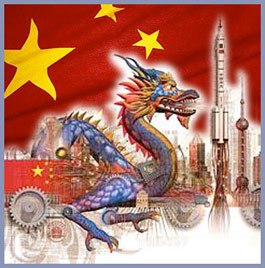
Red China blazing a new trail of Colonialism and Expansionism while promising to practice the culture of Socialism.

Rudranarasimham Rebbapragada

SPECIAL FRONTIER FORCE

MOVE OVER, AMERICA. CHINA NOW PRESENTS ITSELF AS THE MODEL ‘BLAZING A NEW TRAIL’ FOR THE WORLD.

Clipped from: https://www.washingtonpost.com/news/worldviews/wp/2017/10/19/move-over-america-china-now-presents-itself-as-the-model-blazing-a-new-trail-for-the-world/?

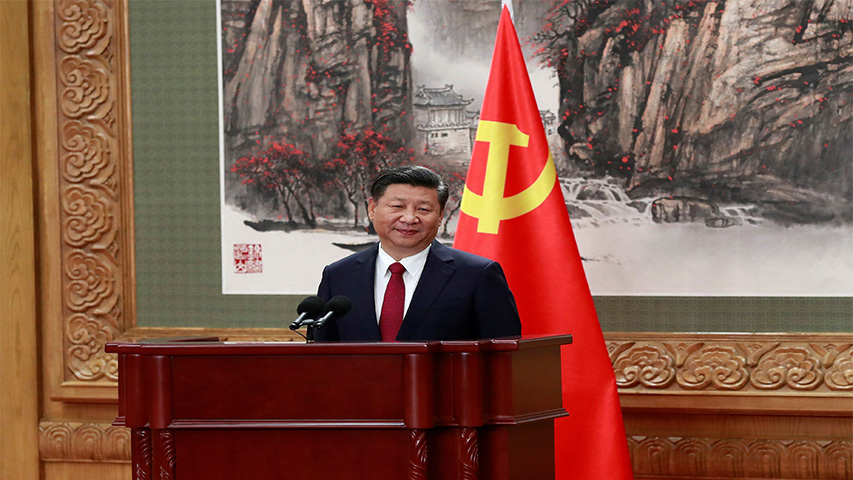
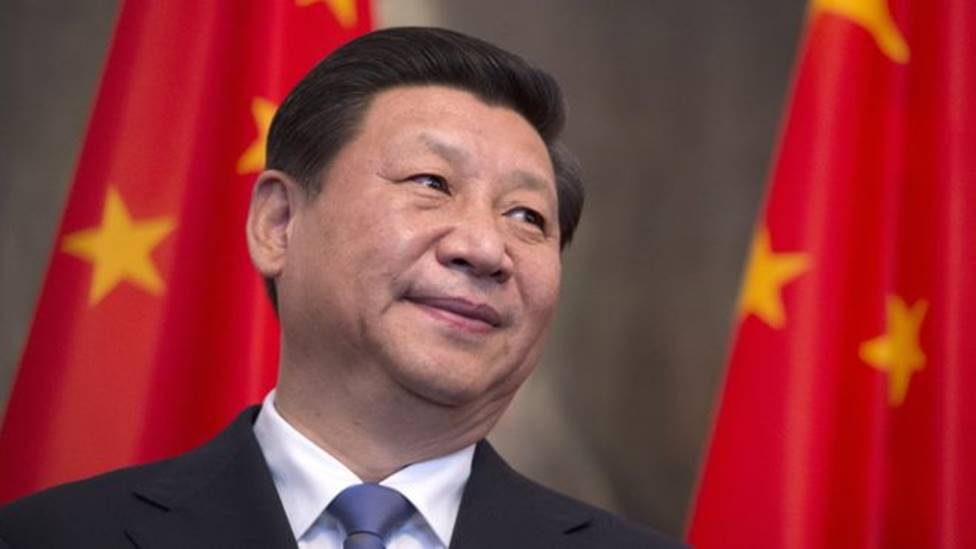
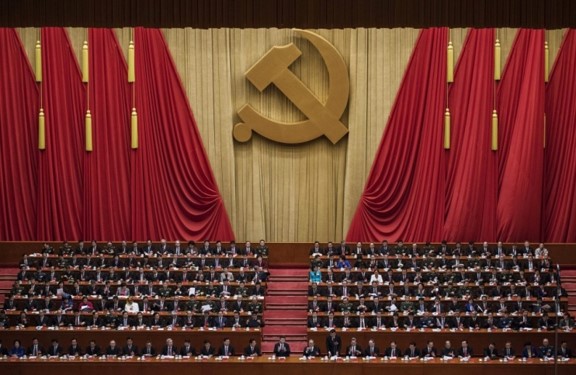
Chinese President Xi Jinping, bottom center, is applauded by senior members of the government after his speech at the opening session of the 19th Communist Party Congress on Oct. 18 in Beijing. (Kevin Frayer/Getty Images)

BEIJING — American presidents are fond of describing their nation as a “city on a hill” — a shining example for other nations to follow. But China is now officially in the business of styling itself as another polestar for the world, with a very different political, economic and cultural model.

“The banner of socialism with Chinese characteristics is now flying high and proud for all to see,” Chinese President Xi Jinping said during a mammoth speech to the Communist Party elite on Wednesday.

“It means the path, the theory, the system, and the culture of socialism with Chinese characteristics have kept developing, blazing a new trail for other developing countries to achieve modernization,” he said in the Great Auditorium of the Great Hall of the People in Beijing.

“It offers a new option for other countries and nations who want to speed up their development while preserving their independence, and it offers Chinese wisdom and a Chinese approach to solving the problems facing mankind.”

The extent to which the Chinese model is successful or even applicable to other countries is, of course, very questionable. (Although it is also true that many people outside the United States do not see Washington’s foreign policy as an unquestioned global good, or its social system as a model.)

China’s economic growth has been stunning since the country’s move from communism to state-directed capitalism, but per capita income is still a fraction of places such as Taiwan, Singapore or Chinese-controlled Hong Kong. China may have the world’s second-largest economy in aggregate, but it ranks between 70 and 80 on a ranking of nations on a per capita basis.

Rising wealth has been accompanied by rising inequality, massive environmental pollution, rampant corruption and one of the most repressive regimes on the planet.

The country has generated cheap capital for industry by keeping real interest rates negative and preventing money from leaving the country, creating an effective tax on its citizens that would not be possible in many other nations. Yet it also has benefited from the incredible industriousness of its own people together with the huge size of its own internal market.

Still, China’s Communist Party has seen events in the West — from the 2008 financial crisis to the election of Donald Trump, and even Brexit — as a vindication of its own political and economic system. On Tuesday, state news agency Xinhua spelled it out: Western democracy was divisive and confrontational, and beset with crises and chaos.

It is a message that resounds in other authoritarian states with big development ambitions, such as Ethiopia. There is no doubt that China’s economic record does attract the envy of the people in many poorer nations, especially perhaps in Africa, where the track record of Western influence — and the brand of neoliberal economics often preached by the IMF and World Bank — has not always been rosy.

A poll by Pew Research Center spanning 37 countries showed a sharp drop in U.S. favorability ratings this year, with more people trusting Xi Jinping to do the right thing regarding world affairs than President Trump — by 28 percent to 22 percent — although a majority expressed no confidence in either man.

At the same time as it scorns the Western system, a confident China has also used its growing financial clout to extend its influence across Asia and the world — through projects such as the global development plan known as Belt and Road, and the Asian Infrastructure Investment Bank — and demand a greater say in global governance.

“It will be a new era,” Xi confidently declared Wednesday, “that sees China moving closer to center stage and making greater contributions to mankind.”

In his 3½-hour speech, Xi took an uncompromising line on what the Communist Party sees as its core interests — on the question of independence for Taiwan, for example — but he took pains to stress that China was not a threat to the rest of the world, and pursues what he called a foreign policy of peace.

“No one should expect China to swallow anything that undermines its interests,” he said. But he added: “China’s development does not pose a threat to any other country. No matter what stage of development it reaches, China will never seek hegemony or engage in expansion.”

Many Tibetans, who contest Beijing’s right to rule the vast Himalayan plateau, might sharply contest that assertion. Several neighboring states would also have noted the way Xi listed “construction on islands and reefs in the South China Sea” as an achievement of his administration — in defiance of their claims and an international arbitration ruling that undermined China’s own claims.

Democrats in Hong Kong, some of whom have recently been jailed for their role in the 2014 Umbrella Movement, will have noted Xi’s assertion that the people of that territory should rule themselves — but with “patriots playing the leading role.”

The government of Taiwan also objected on Wednesday, saying it was the right of their own people to determine their own future — after Xi explicitly warned that Beijing would never allow any attempt by Taipei to declare independence.

Xi also said he wanted the country’s military to be more modern and more powerful, and ready for conflict if needed. But the main message of the foreign policy section of his speech was one of partnership, peace and cooperation, and of greater assistance to developing countries.

China, he said, will continue to play its part in international affairs “as a major and responsible country, take an active part in reforming and developing the global governance system, and keep contributing Chinese wisdom and strength to global governance.”

But Western-style democracy? No thanks. There’s no room for “erroneous” ideologies, said Xi.

“China’s socialist democracy is the broadest, most genuine, and most effective democracy, to safeguard the fundamental interests of the people,” he said.

“The very purpose of developing socialist democracy is to give full expression to the will of the people, protect their rights and interests, spark their creativity, and provide systemic and institutional guarantees to ensure the people run the country,” he continued.

Yet China’s apparent confidence cannot mask a deep paranoia at the root of its political system, and deep fear of ordinary Chinese people actually being allowed to express an opinion.

Dissidents were jailed or railroaded out of town ahead of the Party Congress, censorship of the Internet dramatically intensified and ordinary public gatherings canceled or postponed.

Sent from Mail for Windows 10

Virus-free. www.avast.com

“NEW ERA” IN CHINA – DOWNFALL OF MIGHTY CHINESE EMPIRE

"NEW ERA" IN CHINA – DOWNFALL OF MIGHTY CHINESE EMPIRE

"NEW ERA" IN CHINA – DOWNFALL OF MIGHTY CHINESE EMPIRE

Chinese President Xi Jinping vision for military and economic expansionism will not ward off Red China’s Destiny, her impending Downfall, the aftermath of her ‘Evil’ actions. Red China has no time to atone for her sins.

Rudranarasimham Rebbapragada

DOOM DOOMA DOOMSAYER

XI JINPING LAYS OUT VISION FOR A STRONGER CHINA, WITH COMMUNIST PARTY AT THE CENTER

Clipped from: http://www.latimes.com/world/asia/la-fg-china-xi-congress-speech-20171018-story.html

Five years ago, Chinese President Xi Jinping took over a Communist Party torn by infighting and deceit.

On Wednesday, he stood in the Great Hall of the People and urged a revived party to shepherd society toward renewed glory. His speech signaled a push towards greater ideological cohesion by a president who has fashioned a stronger, more aggressive China and emerged as the most authoritarian leader since Mao Tse-Tung.

“Both China and the world are in the midst of profound and complex changes,” he told more than 2,000 delegates at the opening of a twice-a-decade party gathering. “The prospects are bright but the challenges are severe.”

Xi called it “a new era.”

His keynote speech — the most important policy address since he took office — ran three and a half hours. It kicked off the weeklong 19th Party Congress, which determines leaders and policies for the next five years.

The congress ends when those new leaders walk out on a red-carpeted stage and present themselves to the world. Xi is all but certain to start another five year-term, and the people who flank him will help reveal whether he plans to groom a successor or stay in power past his decade tenure.

“Xi Jinping is emphasizing the importance of party direction and party control above all else,” said Willy Lam, an expert on elite politics at the Chinese University of Hong Kong. “And the corollary is for the party to be successful in these goals, you need a strongman at the helm.”

While predecessor Hu Jintao and 91-year-old former leader Jiang Zemin sat behind him, Xi spoke of a more accomplished China than the one he was handed.

He praised efforts to build islands in contested waters of the South China Sea, and gave a nod to his signature foreign policy initiative that will expand trade routes to Europe. He heralded tighter controls as a boon to national security, pledged to make it easier for foreign businesses to operate, and vowed to turn the military into a world-class fighting force.

But he also cautioned against any “Cold War mentality” when confronting global tensions and insisted China would never attempt global hegemony.

Xi’s list of successes belies the challenges facing his second term. China still struggles with bloated state-run companies and heavy corporate debt. Pollution continues to shroud cities. Party leaders aim to create a “moderately prosperous society,” which means continuing to ensure steady growth.

His term “has been a failure to really have bold reform domestically,” said Kerry Brown, professor of Chinese Studies at King’s College in London and author of a biography about Xi. “It’s all promises and no delivery.”

Xi’s speech was essentially a 65-page work report, which is by nature broad and vague. But the topics were striking in their breadth; he addressed issues from Hong Kong to environmental degradation. (His keynote went twice as long as Hu’s.)

He also repeated comments about the stresses on Chinese society, including income inequality and access to basic services such as healthcare.

“China’s ability to innovate needs to be stronger, the real economy awaits improvement, and we have a long way to go in protecting the environment,” he said.

This congress not only gives Xi an opportunity to lay out his vision for “socialism with Chinese characteristics for a new era,” it may help enshrine his policies — or even his name — into the constitution. It’s also likely the last one before the party’s centennial anniversary in 2021, and officials are eager to show fortitude rather than disintegration.

“The whole party must be prepared to make ever more difficult and harder efforts,” Xi said.

Hundreds sat ramrod straight in the Great Hall’s main floor and clapped in sync — including heads of state-run chemical companies from Beijing, history teachers from inner Mongolia, electrical engineers from Tibet and many military officials. Most were men in similar black suits.

Some took selfies after the speech amid stately granite columns, and praised Xi’s plan.

“His grand strategy for China to move forward on the global stage is really peaceful,” said Wang Jing, a teacher from the mountainous southern province of Yunnan. “That’s a good way to lead China.”

Xi, chosen because party leaders thought they could control him, has quickly consolidated power. He’s spearheaded a popular anti-corruption campaign that’s sidelined his challengers, taken the helm of major committees, tightened media and Internet controls, and silenced hundreds of activists.

In the run-up to the congress, certain shows deemed “too entertaining” were censored. Soldiers appeared at the entrance to Beijing subways. Civil liberty advocates were told to stay home. Reminders of “core socialist values” appeared all over China — from taxicabs in Hefei to noodle shops in Guiyang.

Leaders tend to close factories during the event to ensure blue skies, but the weather on Wednesday’s opening was a dull, rainy gray.

“The throat-clearing in [previous congresses] was assumed to be more empty words,” said Jude Blanchette, a researcher at the Conference Board in Beijing. “Now we are realizing, ‘Heck, we need to start recognizing the party’s vision for its role.’”

Gaochao Zhang in the Times’ Beijing bureau contributed to this report.

Meyers is a special correspondent.

Twitter: @jessicameyers

Sent from Mail for Windows 10

Virus-free. www.avast.com

OCTOBER 17, 1974 – NIXON-KISSINGER VIETNAM TREASON – FORGOTTEN NATIONAL TRAGEDY

OCTOBER 17, 1974 – NIXON-KISSINGER VIETNAM TREASON – FORGOTTEN NATIONAL TRAGEDY

As I live in Ann Arbor, Michigan, USA, I give close attention to Ford’s Doomed Presidency. On August 09, 1974, President Ford chose to pardon President Richard M. Nixon who resigned on August 08, 1974.

On October 17, 1974, President Ford explained to Congress as to why he had chosen to pardon President Nixon. From his explanation it is evident that Nixon-Kissinger Vietnam Treason remains ‘Forgotten National Tragedy’.

Rudranarasimham Rebbapragada

SPECIAL FRONTIER FORCE

FORD EXPLAINS HIS PARDON OF NIXON TO CONGRESS – OCT 17, 1974

Clipped from: http://www.history.com/this-day-in-history/ford-explains-his-pardon-of-nixon-to-congress?

Presidential

1974

On this day in 1974, President Gerald Ford explains to Congress why he had chosen to pardon his predecessor, Richard Nixon, rather than allow Congress to pursue legal action against the former president.

Congress had accused Nixon of obstruction of justice during the investigation of the Watergate scandal, which began in 1972. White House tape recordings revealed that Nixon knew about and possibly authorized the bugging of the Democratic National Committee offices, located in the Watergate Hotel in Washington D.C. Rather than be impeached and removed from office, Nixon chose to resign on August 8, 1974.

When he assumed office on August 9, 1974, Ford, referring to the Watergate scandal, announced that America’s “long national nightmare” was over. There were no historical or legal precedents to guide Ford in the matter of Nixon’s pending indictment, but after much thought, he decided to give Nixon a full pardon for all offenses against the United States in order to put the tragic and disruptive scandal behind all concerned. Ford justified this decision by claiming that a long, drawn-out trial would only have further polarized the public. Ford’s decision to pardon Nixon was condemned by many and is thought to have contributed to Ford’s failure to win the presidential election of 1976.
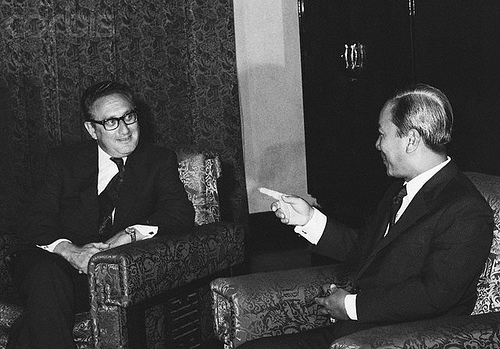
From his home in California, Nixon responded to Ford’s pardon, saying he had gained a different perspective on the Watergate affair since his resignation. He admitted that he was “wrong in not acting more decisively and more forthrightly in dealing with Watergate, particularly when it reached the stage of judicial proceedings and grew from a political scandal into a national tragedy.”

Sent from Mail for Windows 10

Virus-free. www.avast.com

CHINESE DREAM – PEOPLE’S NIGHTMARE – BEIJING DOOMED

CHINESE DREAM – PEOPLE’S NIGHTMARE – BEIJING DOOMED

People’s Republic of China uses secret rituals to select leaders of Communist Party as well as leaders of its government. Chinese Dream will unfold into People’s Nightmare as Beijing sealed its own Fate or Destiny because of her ‘EVIL’ actions. The Aftermath of Evil is called Doom, Catastrophe, Disaster, Cataclysm, and Apocalypse.

Rudranarasimham Rebbapragada

DOOM DOOMA DOOMSAYER

HOW WILL CHINA SELECT ITS NEW LEADERS AT ITS COMMUNIST PARTY CONGRESS?

Clipped from: http://www.npr.org/sections/parallels/2017/10/17/558078791/how-will-china-select-its-new-leaders-at-its-communist-party-congress

A poster in Beijing features Chinese President Xi Jinping and a slogan reading "Chinese Dream, People’s Dream." Xi is preparing to embark on a second five-year term this week. Greg Baker/AFP/Getty Images

A poster in Beijing features Chinese President Xi Jinping and a slogan reading "Chinese Dream, People’s Dream." Xi is preparing to embark on a second five-year term this week.

Preparations for a major shakeup of China’s Communist Party leadership are all but complete, ahead of a national congress that begins in Beijing on Wednesday. President Xi Jinping, the party boss, is expected to cement his already considerable power and embark on a second five-year term.

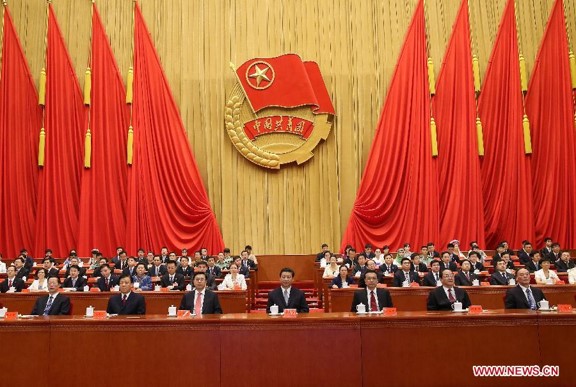
Last Saturday, in an auditorium bedecked with red flags and hammer-and-sickle emblems, the party’s outgoing central committee members raised their hands in unison to approve the congress’s final preparations.

Beijing’s streets are lined with security personnel, and police have hustled dissidents out of town on enforced "vacations" ahead of the country’s most important political event.

Held every five years, the National Congress of the Chinese Communist Party is a piece of political theater that University of Victoria political scientist Wu Guoguang describes as being at once "holy" and "hollow."

When it comes to understanding exactly how the leader of the world’s most populous nation is chosen, "In fact, nobody knows," Wu says. "It’s jungle politics," he adds. "The party does not play the game by its own rules."

According to the Communist Party’s charter, China’s nearly 90 million party members select nearly 2,300 delegates, who in turn vote for a roughly 200-member central committee. That committee then elects a 25-odd-member Politburo, a standing committee having between five and nine members and the party’s general secretary or top leader.

But in fact, "The election is a formality," Wu says. "The positions are decided in advance of the congress." Then they’re given to the delegates to rubber-stamp.

The actual selection of the party leadership, Wu adds, is done "in a black box" behind closed doors.

In other words, while power appears to flow from the bottom up, it actually goes from the top down.

Experts’ best guess, Wu says, is that around 20 people, including serving and retired members of the Politburo standing committee, bargain in secret to decide the next leader several months before the congress.

In theory, the national congress is the party’s highest organ of power. But Wu, the author of China’s Party Congress: Power, Legitimacy, and Institutional Manipulation, who helped draft political reforms for the late Chinese Premier and Communist Party boss Zhao Ziyang, says that the leadership has many ways to manipulate the institution to make sure nobody it dislikes is ever nominated — much less elected.

One such device is a sort of straw poll or dry run ahead of the congress, so that leaders can sniff out and neutralize opposition to their preferred candidates.

The selection process is full of uncertainty, says Wu. This uncertainty may be behind the event’s massive security operations, to which "every blade of grass, every tree looks like an enemy soldier," as the old Chinese saying goes.

Part of the problem is that so many successions under communist rule have ended in failure. Three of Mao Zedong’s anointed heirs, Liu Shaoqi, Lin Biao and Hua Guofeng, were purged or sidelined.

Liu was purged and persecuted during the Cultural Revolution and died in 1969. Lin died in a 1971 plane crash, after an alleged failed coup attempt. Hua served as party chairman for five years until Deng Xiaoping pushed him aside in 1981.

During the 1980s, supreme leader Deng sacked two of his appointed successors in a row, ostensibly because they were soft on dissent.

Experts point out that China has neither a hereditary dynasty nor competitive elections. To restore a semblance of order to the leadership selection process in the years following the June 4, 1989, massacre near Tiananmen Square, the party established some unwritten rules or norms to govern it.

The most important of these is an informal rule that Politburo standing committee members must retire at age 68.

But experts believe that Xi is not satisfied with the informal rules and intends to bend, break or scrap them altogether.

And if there is any unwritten rule experts say Xi cannot tolerate, it is one that could hinder his ability to designate his own successor. In Chinese politics, this is a guarantee of a retired leader’s survival and continuing behind-the-scenes influence.

Years ago, supreme leader Deng is believed to have anointed two of Xi’s predecessors. They in turn apparently designated two men, Sun Zhengcai and Hu Chunhua, as Xi’s possible successors.

But in July, Sun was sacked for corruption and violating party discipline as party boss of southwest China’s Chongqing city, and Xi signaled that he would not accept anyone else’s choice as his heir. Hu remains in place, at least for now.

Mao, Deng and many Chinese emperors centuries before them essentially ruled until they died. China’s Constitution mandates a two-term limit for its presidents, but there are no term limits for party leaders, who are above the president.

Xi serves as president, party leader and head of the military. During his first term, he outdid his predecessors with tough crackdowns on both dissent and official corruption at home along with a muscular military posture to back up China’s territorial claims in the South China Sea and the China-India border. Experts expect more of the same from a second Xi term.

Xi is not the first to challenge the party’s informal leadership succession rules. Bo Xilai, a flamboyant politician who also served as Chongqing party boss, questioned personnel arrangements for the 18th party congress in 2012, as he sought to enter the leadership’s top ranks. He challenged the leadership lineup — which included Xi — that was decided by Xi’s predecessors. The following year, Bo was sentenced to life in prison on corruption charges.

Hong Kong University of Science and Technology professor Ding Xueliang argues that Xi has wanted to overhaul the succession process for years, especially since Bo’s challenge.

"Even now," Ding says, "Xi still talks about the ‘residual toxic influence’ of Bo Xilai in Chongqing," presumably a reference to the fact that some of Bo’s allies or subordinates remain in positions of power.

Indeed, Xi has spent much of his first term getting rid of the masses of bureaucrats installed by, and still loyal to, his predecessors, lest they rebel or obstruct the implementation of his policies.

This reflects the fact, Ding observes, that personal ties remain paramount in Chinese politics and bureaucrats tend to "obey those who appointed them."

Communist personnel policies, Ding notes, make it hard to sack bureaucrats before they retire, and the bureaucrats are not subject to much independent oversight.

Ding argues that Xi has used his mass anti-corruption campaign as a tool to knock out not just rival politicians and obstinate bureaucrats but also party congress delegates. He notes that Chairman Mao did the same during the 1966-1975 Cultural Revolution.

At the 19th party congress, experts will be looking at several key details. Here are some of the questions they are asking:

· Will Xi show any indication that he might seek a third term as president, beginning in 2022? Or will he retire from his party and government posts but hang on as military chief, as some of his predecessors have done?

· Will Wang Qishan, Xi’s 69-year-old right-hand man and anti-corruption czar, retain his job? He is already past the age after which no party leaders are supposed to be appointed to new positions, according to an informal rule.

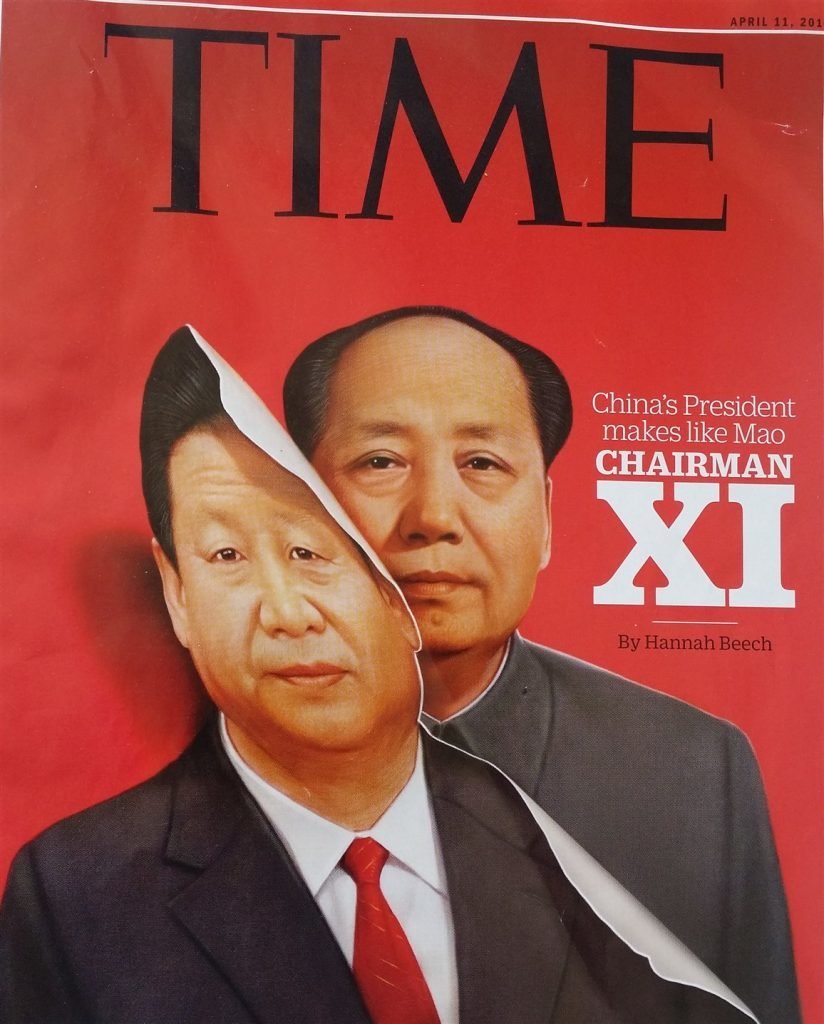
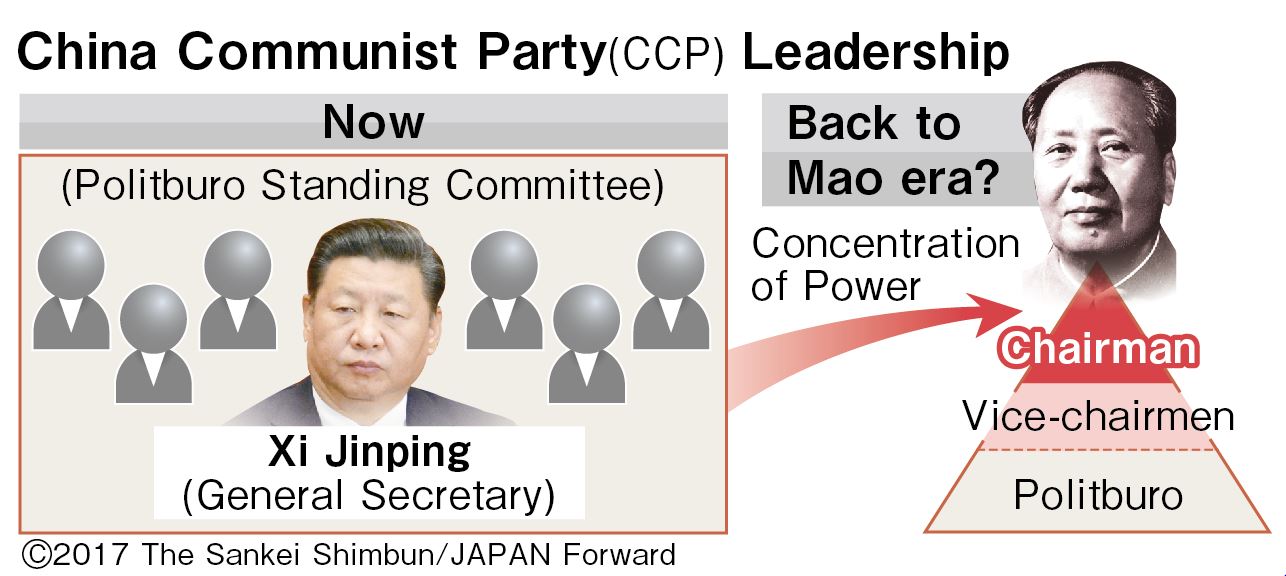
· Will Xi change his job title from general secretary of the Communist Party to chairman, the title Mao used?

· Will Xi name a successor during the party congress?

· Will Xi’s ideas be written into the party charter as "Xi Thought" or "Xi Theory," as were the ideas of Mao and Deng? Or will his ideas be written into the charter without Xi’s name, as was the case with Xi’s two less powerful immediate predecessors?

If Xi breaks the informal rules, observes Ding, the Hong Kong professor, it’s not clear what new ones he might replace them with.

And maybe it doesn’t matter. Neither formal nor informal rules have done much to constrain China’s leaders. Deng famously remained paramount leader in retirement with no higher official title than honorary chairman of the China Bridge Association.

Political arrangements in China are rarely explicit, Ding muses. "After thousands of years of Chinese politics, rulers have developed innumerable methods to get what they want," he says. "It’s never so simple."

Sent from Mail for Windows 10

Virus-free. www.avast.com

FIVE FIFTY FORUM ON TIBET EQUILIBRIUM

FIVE FIFTY FORUM ON TIBET EQUILIBRIUM

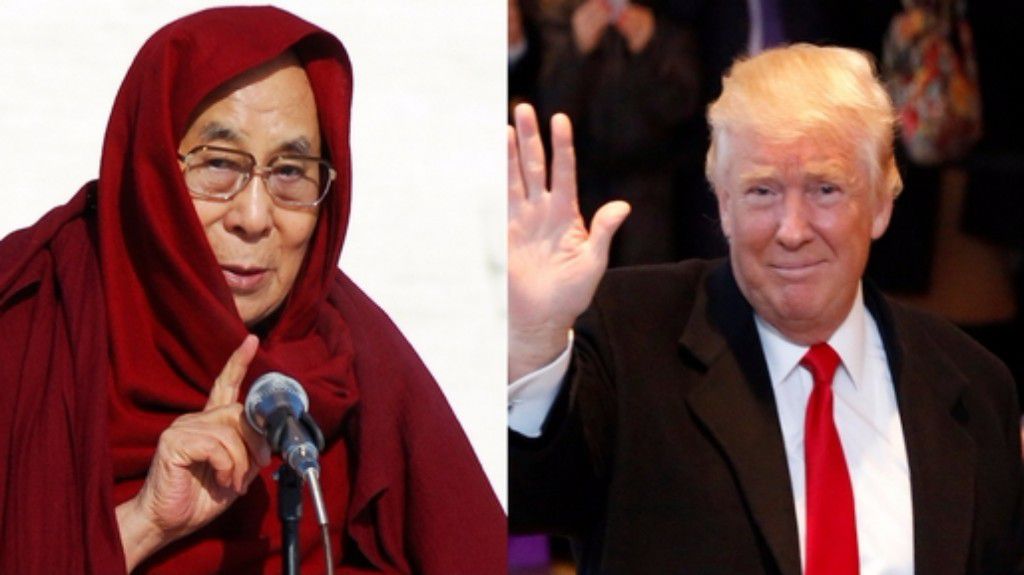
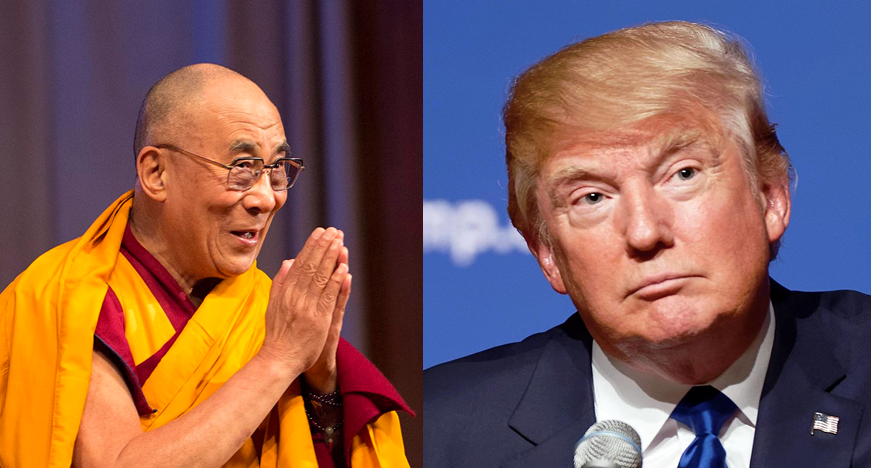
At ‘Five Fifty’ Forum on Tibet Equilibrium, His Holiness the Dalai Lama openly shared his concerns about US President Donald Trump’s reluctance to engage him in Cold War Era secret diplomacy.

Rudranarasimham Rebbapragada

SPECIAL FRONTIER FORCE

THE DALAI LAMA SPEAKS ON TRUMP AND ‘AMERICA FIRST’

Clipped from: https://www.washingtonpost.com/news/josh-rogin/wp/2017/10/11/the-dalai-lama-speaks-on-trump-and-america-first/?

The Dalai Lama during an event at American University last year. (Manuel Balce Ceneta/Associated Press)

DHARAMSALA, India

The Dalai Lama, the spiritual head of the Tibetan nation, is known worldwide for his advocacy of non-violence, peaceful coexistence, environmental protection and human rights. But the 82-year-old Buddhist monk is worried about the rise of nationalism and selfishness around the world and in the United States.

In wide ranging remarks to a unique conference of Tibet supporters here in northern India, the Dalai Lama said he was concerned about President Trump’s “America first” policy, America’s stance on global warming and the use of military tools to solve international problems. He also praised the United States and expressed hope that the American people will continue to do the right things, including with respect to Tibet.

“Your ancestors really considered the importance of liberty, freedom, democracy, these things,” the Dalai Lama said in response to my question about his current view of the United States. “The present president, in the very beginning he mentioned ‘America first.’ That sounded in my ear not very nice.”

The Dalai Lama is concerned that the United States, despite being “the leader of the free world,” was becoming more “selfish, nationalist,” he said. But the American Congress and people have long supported the cause of Tibet and human rights, and he thinks that will continue, he added.

The Dalai Lama also lamented that Trump doesn’t pay more attention to the issue of global warming, which, he said, knows no borders and no religion.

“The present president is not much paying attention to ecology. So on that, I feel some reservation,” the Dalai Lama said. “But anyway, the American people elected him, so I must respect [that].”

The event, called the Five Fifty Forum, was hosted by the Tibetan government-in-exile, which is based in this northern Indian mountain town. The Dalai Lama has been living in India since he fled Tibet in 1959 and has not been allowed to return.

The forum was held under Chatham House rules, which forbid quoting participants. But the leadership of the Tibetan government-in-exile gave me permission to publish the Dalai Lama’s remarks.

The Tibetan leader, who is believed by followers to be in his 14th reincarnation, criticized the use of military force around the world and called on nations to solve problems through diplomacy and negotiation rather than violence. He said the use of military power, even by the United States, never achieves its goal.

“Every problem on this planet, including our problem, must be solved with respect and mutually acceptable [solutions],” he said.

The Dalai Lama’s commentary on world events was not limited to the United States. He said that the Britain had erred in voting to leave the European Union, and he attributed that decision to nationalism as well.

The European Union should become the model for every region and then, when the world’s countries are all working together, they can demilitarize, the Dalai Lama explained. “That’s my vision. That’s my hope.”

The Dalai Lama said he wants to engage with China to find a mutually acceptable solution for Tibet. He added that the Tibetan people must also be ready to talk to China if there’s an opening. That doesn’t seem likely, considering that the Chinese government cut off dialogue with the Tibetans in 2010 and has pursued a brutal repression campaign in the region ever since.

Nevertheless, “for the last several centuries, praying to Buddha more or less failed,” the Dalai Lama joked. “So I think we need to take a more practical approach.”

He is arguing against current trends for a world based on common interest, global integration, defense of human rights and shared responsibility for the environment. For most of his long life, the United States has agreed with him and led that effort. Will that continue? Even the Dalai Lama doesn’t know.

Sent from Mail for Windows 10

Virus-free. www.avast.com

WHO AM I? I AM ABDUL

WHO AM I? I AM ABDUL

Abdulla by Nihadov on DeviantArt

There is no term or word other than “Abd” ( meaning Slave) in Arabic Language to describe Man’s true or real identity. I can call myself with any name as per my native tradition, but in reality, I exist in this physical world as “Slave of God” or ‘Abdullah’. Indeed, it can be argued that Man lives as ‘Slave of Sin’. In my analysis, even the ‘Sinner’ is not independent of God. All of us without any exception simply exist on account of bondage, servitude, slavery imposed by God who is full of Mercy, Grace, and Compassion.

For I have no choice of my own, I have to identify myself as ‘Abdul’ but can choose 99 names given to God to clarify my Slavery status. For example, I can be Abdul-Kareem (Slave of the Generous One), Abdul-Malik (Slave of the King or Supreme Ruler), Abdul-Rahman ( Slave of the Merciful One), Abdur-Rabb (Slave of the LORD).

Abdul Halim - Meaning of Abdul Halim, What does Abdul ...

Abdul Hakim - Meaning of Abdul Hakim, What does Abdul ...

How to Pronounce Abdul Ahad! - Middle Eastern Names - YouTube

Rudranarasimham Rebbapragada

Ann Arbor, MI 48104-4162 USA
BHAVANAJAGAT.ORG

Romans 6:16 | Spiritual Practice | Pinterest
On pinterest.com

From: Devinder Singh Gulati

Subject: Who am I

There is only one soul, says Ramana.

And that soul is God.


“Ramana Maharshi pushed every questioner back to face himself. Paul Brunton for example had asked some questions.
Maharshi: “Who is the I who asks this question?”

Brunton: “I, Paul Brunton.”

Maharshi: “Do you know him?”

Brunton: “All my life.”

Maharshi: “That refers only to the body. Who are you?

A thread runs through whatever Ramana Maharshi says:

There is only one Atman (I or Self). Everybody is That. Always. Ever. Right now. Everybody is basically perfect. Nothing is to be attained. Everybody is always only the one Self. The whole point is to get rid of a wrong idea – the idea that ‘I’ am this separate person and this body.

Thoughts are the cause for this feeling that one is the body. Thoughts dim the splendour of the Self, foremost among them the I-thought, which is the basis of all other thoughts. There is not a big I and a small I next to it. There is only one real I, from which an I-thought regarding the individual emerges. This I-thought has no substance. It is not real, yet it pretends to be the real I. This insubstantial I is the basis for everything that happens in our life and in our world. Everything revolves around this personal I which is nothing but thought.

This individual, thought-based I exists only in the waking state. In deep sleep it is not there. Yet I am no doubt continuously there – in waking, dreaming and sleeping. The personal, pseudo I emerges from the real I on waking up.”
Ramana Maharshi and the most important question in life

Ramana Maharshi and the most important question in life

India is an amazing country and unique in several aspects. For example, in every age great spiritual personaliti…

COMMUNIST CHINA’S DOCTRINE OF NEOCOLONIALISM – COLONIZATION OF EGYPT

COMMUNIST CHINA’S DOCTRINE OF NEOCOLONIALISM – COLONIZATION OF EGYPT

Communist China’s successful colonization of Egypt and Africa is of special interest to me. I served in Establishment No. 22, Special Frontier Force to defend Freedom, Democracy, and Peace in Occupied Tibet.

During 1971-72, I served under the Command of Lieutenant Colonel B K Narayan who returned from Egypt after serving as Military Attaché in Indian Embassy in Cairo. For he was an Islamic Scholar who mastered Arabic Language as well as Quran, President Nasser, and President Sadat befriended him to seek his interpretation of Quran in the conduct of Egypt’s foreign policy. He performed Hajj pilgrimage while he served in Cairo. In 1971, long before conclusion of Israel-Egypt Peace Treaty of March 26, 1979, Colonel Narayan predicted Peace between Egypt and Israel as that Peace Plan is consistent with preaching of Holy Quran.

Rudranarasimham Rebbapragada

SPECIAL FRONTIER FORCE

Clipped from:

http://www.aljazeera.com/programmes/aljazeeraworld/2017/10/egypt-china-171001122401865.html

Filmmaker: Adam Bahgat

The Chinese community in Egypt has grown to over 10,000 people, thanks to a burgeoning commercial relationship between the two countries.

Increasing numbers of Chinese have come to study, work and open businesses in the Arab world’s most populous country, where many have developed an affinity for its life, culture and its people.

For over a quarter century, China and Egypt have steadily been learning how to make money together – through a range of economic and infrastructure projects.

Egypt has awarded several contracts to Chinese companies for the construction of a $20bn administrative and residential city that will be physically linked to Cairo. And China is the lead investor in the construction of a planned multibillion-dollar industrial zone around the Suez Canal.

I love Egypt and I consider it my second home. Egyptians are generally kind and I’ve experienced a lot to confirm this … They also have a sense of humor. They’re always joking even if they’re suffering from life’s hardships … That’s why they’re happy.

Saleh Machyanj, Chinese businessman

Each new collaboration is an opportunity for the Chinese diaspora to grow their businesses.

South of Cairo, the Shaqel Thoben area is one of the world’s major production centers for marble and granite.

"The equipment and machines used here are from China," says Zhaou Ping, a marble and granite factory worker who has been in Egypt for three years.

"My boss in China asked me to come with the equipment and be a consultant … Before I came to Egypt, I worked in the same field in China. When an Egyptian manufacturer visited my factory, he asked me to work with him. I now have many Muslim friends in the factory where I work. They treat me like a brother and a friend, so I don’t feel like a stranger or foreigner in Egypt. I feel I’m in my country, with my family."

The Chinese have quite quickly helped diversify Egypt’s economy. In 1999, there were only a few hundred but their numbers continue to grow as the two countries build stronger economic ties.

Some who started out as small traders are now successful business owners, like restaurant owner Po Wein Zhoun. Po cleverly opened a Chinese restaurant when she realized there was a growing demand for it.

"I realized many Chinese in Egypt have problems finding Chinese food … So I opened a small Chinese restaurant six years ago. After two years, the restaurant started becoming successful. For a year and a half, I bought this restaurant from another Chinese," says Po, who is married to an Egyptian.

Business is the main but attraction for Chinese who come to Egypt; but some are also drawn to the country’s ancient heritage, like blogger Ali who studied Arabic and Egyptian history back in China. Fascinated, "I read an essay about Egypt and its pyramids and loved it. It’s about [the] mystery of the pyramids going back thousands of years. No one knows how they were actually built," says Ali.

For some, their love of Egypt becomes profound, forming friendships that touch them and make them want to stay permanently.

WATCH: King Cobra and the Dragon: As China increases its economic ties in Africa, has the continent entered a new era of colonialism?

Chinese businessman Saleh Machyanj has been in Egypt since the 1990s.

"I love Egypt and I consider it my second home. Egyptians are generally kind and I’ve experienced a lot to confirm this … They also have a sense of humor. They’re always joking even if they’re suffering from life’s hardships. In China, the pressure and pace of life doesn’t allow time for joking … But in Egypt, friends meet in cafes for tea or juice. They chat until the evening. That’s why they’re happy."

The Chinese want peace and stability in Egypt and across the region, for business and personal reasons.

Many investors withdrew after the 2011 Arab Spring revolution – but today, China and Egypt are redoubling efforts to strengthen their trade relationship.

The Egyptian trade minister recently said he expects China to emerge as Egypt’s fastest growing investment partner in the coming years.

If projects like the new administrative capital, and its rail link, worth billions of dollars, materialize, commercial ties between the two countries will continue to grow, as will the Chinese community in Egypt.

Source: Al Jazeera

Sent from Mail for Windows 10

KINGDOM OF HEAVEN IN TIBET

KINGDOM OF HEAVEN IN TIBET

In my opinion, Peace, Harmony, and Tranquility will get reestablished in Tibet when Kingdom of Heaven replaces Communist rule over Tibet.

Rudranarasimham Rebbapragada

DOOM DOOMA DOOMSAYER

REVIEW: BOOKS BY TWO MEN WHO HAVE SERVED TIBET

Clipped from: http://www.hindustantimes.com/books/review-books-by-two-men-who-have-served-tibet/story-OXqDAVUAlrmJilsJ9negRJ.html

While The Division of Heaven and Earth by Shokdung is about resistance within Tibet, A Life Unforeseen by Rinchen Sadutshang is about the author’s work for the government in exile

Thubten Samphel
Hindustan Times

Soldiers of the Chinese People’s Liberation Army (PLA) patrol through the streets of Lhasa in this picture taken on March 14, 2008.(AFP)

Shokdung is the pen name for Tra-gya. It means the “morning conch.” The translator, Matthew Akester, thinks it is meant as a wake-up call for Tibet, a call for a peaceful revolution against Beijing’s iron-fisted rule on the Tibetan Plateau. Indeed, the message of Shokdung takes the readers back to the 19th century when a powerful West confronted and encroached upon a weakened Manchu China. This humiliating encounter between East and West resulted in agonized soul searching among Chinese scholars on how to forge an effective response. Some scholars blamed the dead weight of tradition and Confucianism for China’s inability to confront the Western challenge. They pointed to two gentlemen, Mr. Science and Mr. Democracy, who could save China from further humiliation.

The argument Shokdung advances in his brave book is that Tibet is similarly weighed down by tradition and Buddhism. These two forces prevent Tibetans from developing an effective response to Beijing’s rule. His is a brave book because Shokdung writes from Tibet. It is a brave book in another sense because Shokdung targets the most cherished tradition of Tibet, its spiritual heritage, to the consternation of the spiritual establishment in Tibet. The American Chinese scholar, Dan Smyer Yu, calls Shokdung’s views on Tibetan culture “an anti-traditionalist imagining of modern Tibet.”

Shokdung shot to fame in Tibet and around the world in 2009 when his book The Division of Heaven and Earth was published. According to Tibet scholar, Francoise Robin, who provides a foreword to the English translation, “The book, with an initial print run of 1,000 copies, circulated unhindered in Xining and all over Tibet for six months, until the author was arrested on 23 April 2010.” Shokdung anticipated his arrest when he said, “I may lose my head because of my mouth.”

Shokdung’s comments on the nature of the party state in Tibet are brutal and unrelenting. That is why he got into trouble with the authorities. Shokdung writes, “We can see that there is no greater terrorist than the totalitarian regime… In particular, the terrorism of sealing down the bodies of the common Tibetan people, sealing up the mouths of the eminent ones, and sealing off the minds of the unthinking population, and the methods of state terrorism are something they have been practicing for the last half century, so who can deny that it is their basic character?”

Shokdung writes that Tibet’s salvation lies in organizing a coordinated non-violent civil disobedience movement. “Whether or not there will be a Tibetan Gandhi, whether or not Satyagraha has any foundation there, whether or not non-violent non-cooperation will produce results, this we cannot know without an unfailing prophecy; but if the answer is to be affirmative, that prophecy is something that each Tibetan must keep in their heart. This is my belief.”

While Shokdung is a rebel and dissident who is fortunately now out of prison, the late Rinchen Sadutshang life was one of service to Tibet both within the country and in exile. He belonged to the fabulous Sadutshang family, which once dominated the wool trade ferried on the mule train between Tibet and India for final export to America and Britain. The family had a huge wool godown in Kalimpong, which was later transformed into a school for Tibetan refugee children.

Rinchen Sadutshang career in the service of the Tibetan government began in 1948 and spanned what his daughter calls “the defining moments of Tibet’s modern history.” This included the loss of Tibet and its labored and painful reconstruction in exile. Because he enjoyed the benefit of a modern education at St Joseph’s College in Darjeeling, the author was involved in all the critical events to prevent Tibet’s current fate. As His Holiness the Dalai Lama writes in his foreword to the memoir, “He accompanied the Tibetan delegation to Beijing in 1951 when the Seventeen-Point Agreement was signed. Later, he was a member of the Tibetan delegation to the United Nations in 1959 and 1961.”

The Tibetan representation at the world body resulted in the UN General Assembly passing three separate resolutions on Tibet, the last being in 1965, that called on China to respect the fundamental human rights of the Tibetan people and their right to self-determination. The Tibetan lobby at the UN, against all odds, managed to raise the issue of Tibet for discussion and debate at the highest international level. Given the Tibetan exiles’ lack of firepower both in resources and manpower, this is an achievement to be proud of.

Later, the author was inducted into the Kashag, the highest executive body of the Central Tibetan Administration. He rounded off his career as the representative of His Holiness the Dalai Lama in New Delhi who liaises with the government of India.

As for his career in the service of the Tibetan people, Rinchen Sadutshang had this to say. “By the early 1980s, I had given the prime years of my life to the service of the Dalai Lama and my government. When I first started to work in Dharamsala, my salary was seventy-five rupees a month, barely enough to meet my own personal needs, let alone the needs of my family. Although my salary gradually increased, if I hadn’t had some money of my own, my family would have suffered. I had a wife and six children, but I put the needs of the exile government before theirs. As I mentioned, the government of Bhutan had offered me a potentially lucrative position, and the Indian Central Bureau of Investigation also offered me a good job. But I declined both opportunities because of my loyalty to my country and the Tibetan government in exile, which was sorely in need of officials who were familiar with India and who could communicate in English.”

Thubten Samphel is the director of the Tibet Policy Institute and author of Falling Through the Roof.

Created with Microsoft OneNote 2016.