THE COLD WAR IN ASIA – LESSONS OF COVERT ACTION
IN TIBET

The Cold War in Asia represents the security threat posed by the spread of Communism to mainland China. Because of my lifetime affiliation with the military organization called Special Frontier Force, I can review covert action in Tibet to draw some lessons.
In my analysis, the US, India, and Tibet lack intelligence capabilities to conduct a successful covert action in Tibet. In 1959, Tibet National Uprising failed for the CIA underestimated the enemy’s capabilities both in terms of intelligence and the use of military power to crush civilian uprising or rebellion. In 1962, the CIA again failed to know the enemy’s war preparation and the attack across the Himalayan Frontier came as a rude surprise.
I directly ask the CIA to improve its intelligence capabilities to respond to the security challenge posed by the spread of Communism to mainland China. The United States fought wars in Korea and Vietnam without testing the enemy’s military capabilities. To fight against the enemy, the United States must recognize the face of the enemy. No covert action will succeed without knowing your enemy.
Rudranarasimham Rebbapragada
LESSONS OF COVERT ACTION IN TIBET (1950-1972) –
SMALL WARS JOURNAL
Clipped from: http://smallwarsjournal.com/index.php/jrnl/art/lessons-covert-action-tibet-1950-1972
Lessons of Covert Action in Tibet (1950-1972)
Between 1950 and 1972, the Central Intelligence Agency (CIA), in close cooperation with the Departments of State (DoS) and Defense (DoD), conducted a comprehensive covert action campaign in support of Tibetan resistance movements fighting against Communist Chinese occupation of their homeland. The campaign consisted of “political action, propaganda, paramilitary, and intelligence operations” intended to internally weaken and undermine the expansionist ambitions of the People’s Republic of China (PRC).[i] Following the October 1950 invasion of Tibet by the PRC, the CIA’s Special Activities Division (SAD) inserted teams into Tibet to train, advise, and assist Tibetans who were already fighting the Communists.[ii]
A number of Tibetan resistance fighters were specially selected and exfiltrated to the Pacific island of Saipan and Camp Hale in Colorado to undergo training in demolitions, clandestine communication, and other critical skills.[iii] Operating out of neighboring Nepal and India, SAD-directed teams of Tibetan rebels waged a ceaseless campaign against the Chinese that tied down significant PRC troop strength, strengthened international opposition to Chinese atrocities against Tibetans, and prevented the PRC from effectively pursuing its regional ambitions in South Asia to further spread its communist ideology.[iv] The CIA continued to support the Tibetan resistance until 1972 when U.S. President Richard Nixon changed course and decided to normalize relations with the PRC.[v]
Though the CIA’s Tibetan covert action campaign never successfully ousted the Chinese Communists, the campaign was quite successful in accomplishing the U.S.’s limited objectives. Through its covert action campaign, the U.S. sought to internally weaken the PRC through sustained attrition and distraction in order to prevent the Chinese from spreading their brand of communism across South Asia – specifically India.[vi] The CIA’s covert action campaign succeeded in three ways: it depleted the PRC’s already limited resources, which further weakened the state; it undermined the PRC’s international standing and limited its regional influence, and it prevented the expansion of the PRC’s borders.[vii]
Specifically, the CIA’s covert action campaign forced the PRC to commit vast numbers of troops and resources to pacify Tibet, which delayed a number of other critical initiatives that the young communist state sought to pursue. In 1959, the CIA estimated that the PRC had over 60,000 soldiers deployed just to subjugate Tibet, a force that required 256 tons of supplies daily to sustain. [viii] The PRC, which had just successfully ended its own civil war in 1949, saw its military stretched incredibly thin by its Tibetan occupation. This strain likely undermined the ability of the Chinese government in Beijing to effectively consolidate full control over the expansive country, further encumbering efforts to pursue its strategic ambitions.
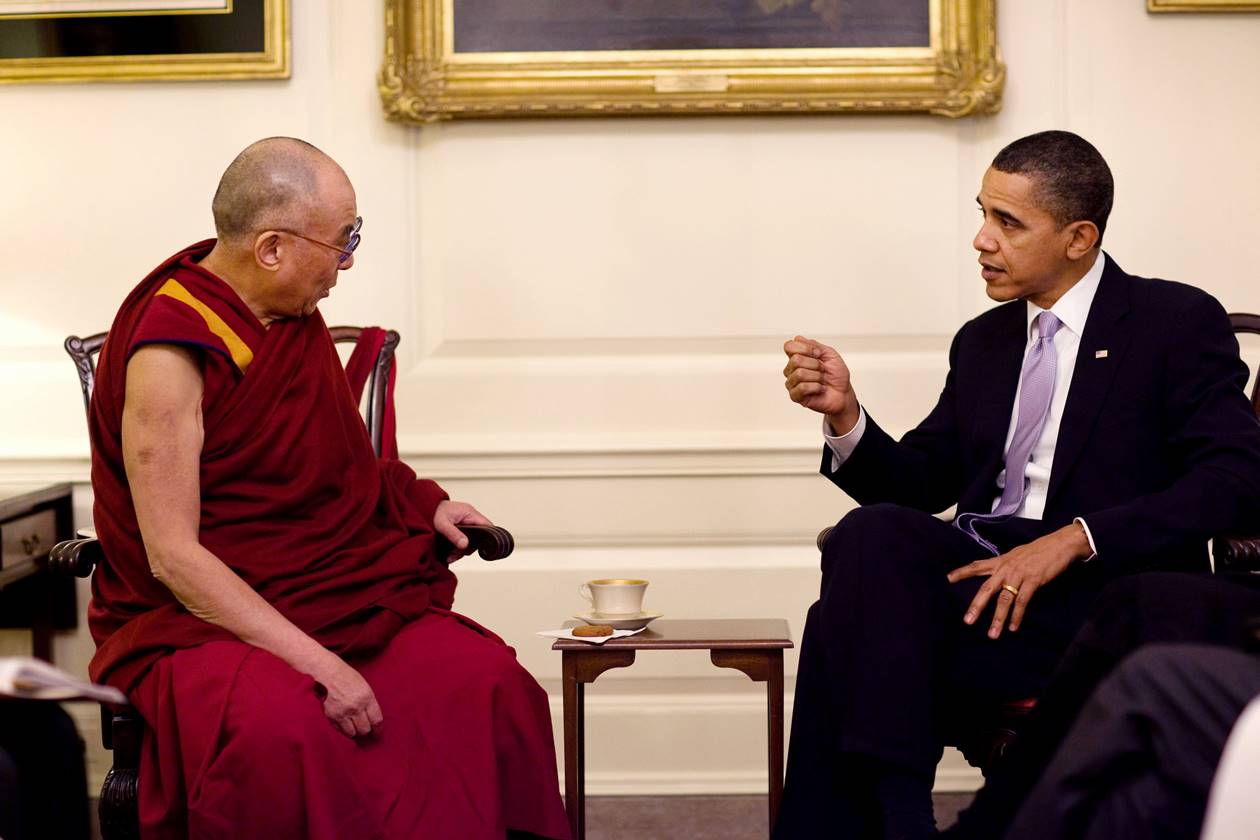
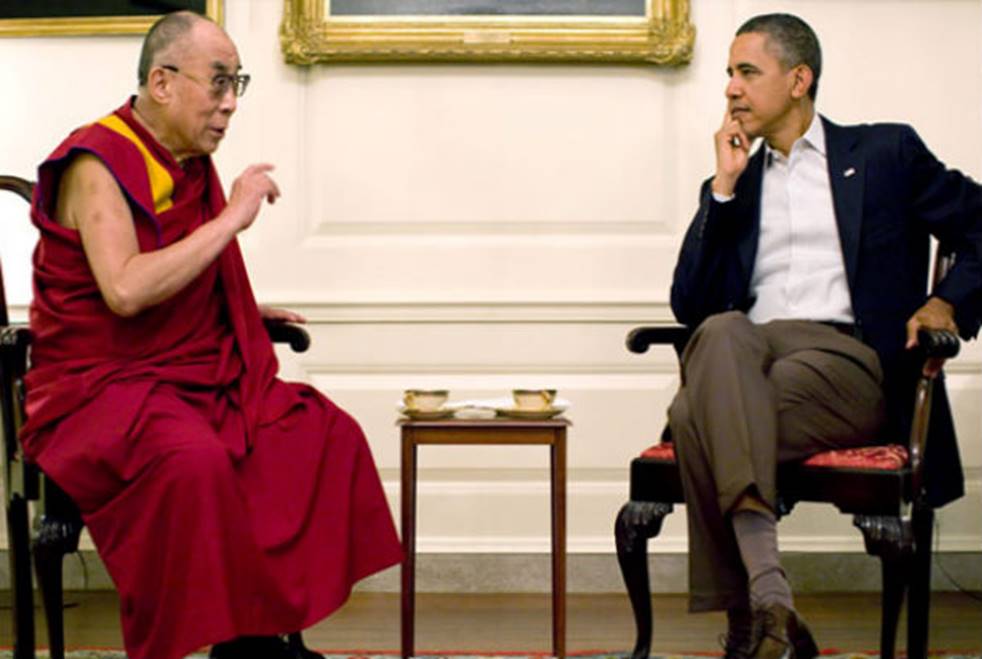
Adding to the PRC’s frustrations was the widespread international condemnation resulting from the increasingly brutal pacification campaign that China felt compelled to undertake to try and quell the Tibetan rebellion.[ix] Much of this international focus was (and still is) cultivated by Tenzin Gyatso, the 14thDalai Lama and the spiritual leader of the majority of Tibet’s Buddhists. During a particularly violent 1959 revolt, The Dalai Lama fled from Tibet with over 100,000 of his followers, escaping with the help of the CIA to India where he established a Tibetan “government in exile”.[x] This government has been a constant thorn in the PRC’s side, with the Dalai Lama and his disciples incessantly lobbying the international community for Tibetan rights and autonomy from China.[xi] The sustained focus on Chinese atrocities against the Tibetans significantly undermined the PRC’s regional standing and efforts to strengthen ties with neighbors.
Finally, the CIA’s covert action campaign was successful in its primary objective of preventing the spread of communism across South Asia. Mao Tsetung, the chairman of the PRC’s Communist Party, was convinced during an extended stay in the Soviet Union between 1949 and 1950 to undertake the leadership role in “liberating” Asia for the cause of global communism.[xii] However, the PRC’s inability to fully control Tibet, largely due to the CIA’s covert action campaign that sustained indigenous resistance, denied China the use of key terrain that might have enabled military action against India or even the Middle East.[xiii] The covert action campaign thus protected the U.S. or its allies from the need to fight a major land conflict in South Asia against the military forces of the PRC.
The CIA achieved a significant victory for the U.S. with a minimal commitment of American resources: total expenditures per year amounted to roughly $1.7 million dollars.[xiv] However, it is important to note that the CIA’s covert action campaign cost tens of thousands of Tibetans their lives, and the supported resistance encouraged violent oppression from the Chinese occupiers. Further, when relations between the U.S. and China normalized under President Nixon, many Tibetans and even a few CIA SAD officers saw the abrupt decision in 1972 to cease support of the Tibetan resistance as tantamount to betrayal.[xv] The Dalai Lama described this sentiment with some bitterness in a 1998 interview, saying that the CIA had aided his cause, “not because they cared about Tibetan independence, but as part of their worldwide efforts to destabilize all Communist governments.”[xvi] Despite such accusations of duplicity, the CIA achieved its stated objectives through this covert action campaign.
The CIA’s efforts in Tibet were successful because the objectives of the covert action campaign were reasonably limited and achievable with the resources available. While the Tibetans themselves may have nursed illusions of eventually driving all Chinese occupiers from their homeland, it is clear from the available records that the CIA and the political leadership in Washington were content to simply destabilize China and frustrate the Communists’ designs to spread their ideology throughout Asia.[xvii] Once the political winds changed and relations started to improve between the U.S. and China, the continuation of support to the Tibetan resistance was no longer in the best interests of the U.S. The U.S. successfully achieved its objectives through this covert action campaign because those objectives were achievable without escalating into a wider conflict.
Other successful covert actions, such as the SAD-spearheaded coups that toppled the governments of Mohammed Mossadegh of Iran in 1953[xviii] and Jacobo Arbenz of Guatemala in 1954[xix] are thought by historians to have given the CIA and subsequent U.S presidents an overly optimistic opinion of the potential for covert action to achieve outsized objectives. This overconfidence likely led to the 1961 “Bay of Pigs” invasion in Cuba, which was a tremendous failure because its objectives were overly ambitious and unachievable given the limited resources that the U.S. committed.[xx] Rather than be greeted as liberators and reinforced by masses of Cubans dissidents flocking to their cause, the US-backed Cuban rebel forces were quickly overwhelmed. The most important lesson that covert action practitioners and policymakers who consider the use of covert action should take from the highly effective campaign in Tibet is that such campaigns must be reasonably limited in their objectives to maximize the chances of success.
[i] “Memorandum for the 303 Committee,” U.S. Department of State Office of the Historian, January 28, 1968, accessed October 10, 2017, https://history.state.gov/historicaldocuments/frus1964-68v30/d342.
[ii] Kenneth Conboy and James Morrison, The CIA’s Secret War in Tibet, The University Press of Kansas, 2002.
[iii] John Roberts and Elizabeth Roberts, Freeing Tibet: 50 Years of Struggle, Resilience, and Hope, (New York, AMACOM Books, 2009), 43-46.
[iv] Joe Bageant, “CIA’s Secret War in Tibet,” History.net, June 12, 2006, accessed October 10, 2017, http://www.historynet.com/cias-secret-war-in-tibet.htm.
[v] Jonathan Mirsky, “Tibet: The CIA’s Cancelled War,” The New York Review of Books, April 9, 2013, accessed October 10, 2017, http://www.nybooks.com/daily/2013/04/09/cias-cancelled-war-tibet/.
[vi] “Chinese Communist Motives in Invasion of Tibet,” Central Intelligence Agency, November 16, 1950, accessed October 10, 2017, https://www.cia.gov/library/readingroom/docs/CIA-RDP82-00457R006300270010-6.pdf.
[vii] “Memorandum for the 303 Committee,” U.S. Department of State Office of the Historian, January 28, 1968.
[viii] “Logistical Problems of the Tibetan Campaign,” Central Intelligence Agency, April 17, 1959, accessed October 10, 2017, https://www.cia.gov/library/readingroom/docs/CIA-RDP79T01049A001900130001-6.pdf.
[ix] “Tibet and China Background Paper,” Central Intelligence Agency, April 27, 1959, accessed October 10, 2017, 35-38, https://www.cia.gov/library/readingroom/docs/CIA-RDP82R00025R000100060022-5.pdf.
[x] Jennifer Latson, “How and Why the Dalai Lama Left Tibet,” Time Magazine, March 17, 2015, accessed October 10, 2017, http://time.com/3742242/dalai-lama-1959/.
[xi] Michael Backman, “Behind Dalai Lama’s Holy Cloak,” The Age, May 23, 2007, accessed October 10, 2017, http://www.theage.com.au/news/business/behind-dalai-lamas-holy-cloak/2007/05/22/1179601410290.html.
[xii] “Chinese Communist Motives in Invasion of Tibet,” Central Intelligence Agency, November 16, 1950, accessed October 10, 2017, https://www.cia.gov/library/readingroom/docs/CIA-RDP82-00457R006300270010-6.pdf.
[xiii] “Resistance in Tibet,” Central Intelligence Agency, July 21, 1958, accessed October 11, 2017, https://www.cia.gov/library/readingroom/docs/CIA-RDP79-01006A000100090001-7.pdf.
[xiv] “Memorandum for the Special Group,” U.S. Department of State Office of the Historian, January 9, 1964, accessed October 10, 2017, https://history.state.gov/historicaldocuments/frus1964-68v30/d337.
[xv] Joe Bageant, “CIA’s Secret War in Tibet,” History.net, June 12, 2006, accessed October 10, 2017, http://www.historynet.com/cias-secret-war-in-tibet.htm.
[xvi] Jim Mann, “CIA Gave Aid to Tibetan Exiles in ’60s, Files Show,” Los Angeles Times, September 15, 1998, accessed October 10, 2017, http://articles.latimes.com/1998/sep/15/news/mn-22993.
[xvii] “Memorandum for the Special Group,” Department of State Office of the Historian, January 9, 1964.
[xviii] James Risen, “SECRETS OF HISTORY: The C.I.A. in Iran — A special report. How a Plot Convulsed Iran in ’53 (and in ’79),” The New York Times, April 16, 2000, accessed October 10, 2017, http://www.nytimes.com/2000/04/16/world/secrets-history-cia-iran-special-report-plot-convulsed-iran-53-79.html?pagewanted=all.
[xix] Nick Cullather, Secret History: The CIA’s Classified Account of Its Operations in Guatemala, 1952–1954, (Stanford University Press: 1999).
[xx] Grayston Lynch, Decision for Disaster: Betrayal at the Bay of Pigs, (Dulles, VA: Potomac Books, 2000).






























 Whole Dude - Whole Spirituality