Special Frontier Force-Establishment No. 22-Vikas Regiment-Operation Eagle 1971 and the Vietnam War – The Great Eagle ConnectionThe Bald Eagle-The Golden Eagle-Operation Eagle: What is the Connection? Indian Prime Minister Indira Gandhi with the US President Richard Nixon at the White House, Washington, D.C. on November 04, 1971. The US did not sanction Operation Eagle.The Bald Eagle-The Golden Eagle-Operation Eagle: What is the Connection? Indian Prime Minister Indira Gandhi with the US President Richard Nixon in Washington, D.C. on November 03/04, 1971. The US did not sanction Operation Eagle.The Bald Eagle-The Golden Eagle-Operation Eagle: What is the Connection? Indian Prime Minister Indira Gandhi with the US President Richard Nixon in the White House, Washington, D.C. on November 03/04, 1971. The US did not sanction Operation Eagle. The Bald Eagle-The Golden Eagle-Operation Eagle: What is the Connection? Indian Prime Minister Indira Gandhi with the US President Richard Nixon in Washington, D.C. on November 04, 1971. The US did not sanction Operation Eagle.The Bald Eagle-The Golden Eagle-Operation Eagle: What is the Connection? Indian Prime Minister Indira Gandhi with the US President Richard Nixon in Washington, D.C. on November 03, 1971. The US did not sanction Operation Eagle.
Special Frontier Force – Establishment No. 22 – Vikas Regiment – Operation Eagle 1971 and the Vietnam War:
The Great Eagle Connection: THE BALD EAGLE-THE GOLDEN EAGLE-OPERATION EAGLE – WHAT IS THE CONNECTION?
The military action in the Chittagong Hill Tracts that initiated the Liberation of Bangladesh during 1971 is known as Operation Eagle. This military action used the military power of ‘The Bald Eagle’ and is executed by ‘The Golden Eagle’ without getting the formal approval or sanction of the US President.
Operation Eagle was a very modest military confrontation as compared to the Vietnam War. However, a comparison must be made to understand the use of military force to defeat an enemy to obtain a political objective. The Operation Eagle was executed using the US weapons, ammunition, US military radios, medical supplies, assorted tools and equipment, field gear, and U.S. Military Field Rations-Meals Ready to Eat or MREs that the US Army was using in the conduct of the Vietnam War.
In a hilly, forest terrain, the use of aerial firepower or bombing campaigns will not dislodge the enemy. The enemy must be found on the ground and must be directly attacked. This is a view of Mizo Hills of India taken from Chittagong Hill Tracts in the foreground.
The military objectives of the Vietnam War could not be accomplished because of the reliance placed upon aerial bombardment to defeat the enemy. Operation Eagle was small in its scope and size. But, it did not rely upon the use of aerial bombardment. We operated on a ‘manpack’ basis, went in search of enemy positions, and directly challenged the enemy at his own post. United States failed to attack the enemy on the ground during the Vietnam War. To defend South Vietnam, the military strategy and planning would call for Infantry attacks on the enemy inside North Vietnam. United States used more bombs as compared to the number of bombs that were dropped during the Second World War and yet could not dislodge the enemy from his entrenched positions. We need to fight and engage the enemy on the ground. Secondly, during Nixon’s presidency (1969-1974), while engaged in War, the President conceded the battle by befriending the Enemy.
Operation Eagle 1971 and the Vietnam War Infantry Weapons and field gear:
OPERATION EAGLE 1971 AND THE VIETNAM WAR INFANTRY WEAPONS, FIELD GEAR AND COMMUNICATION EQUIPMENT. INDIA’S GOLDEN EAGLE SYMBOLIZES THE MILITARY OPERATION THAT WAS WAGED WITH THE MILITARY EQUIPMENT PROVIDED BY THE BALD EAGLE THAT SYMBOLIZES AMERICAN MILITARY POWER.
A military action by Infantry is best understood by examining the weapons that are used. During Operation Eagle 1971 and the Vietnam War, the Infantry used the same kinds of Infantry weapons. We must ignore the sophisticated technology and the firepower of United States Navy and Air Force. The battle must be won on the ground. During Operation Eagle 1971 we used the same Infantry weapons, equipment, and other supplies more effectively in our battle as compared to US Armyin its combat missions against its enemy in Vietnam. We did not use helicopters as gunships or to attack the enemy in support of ground troops. I would like to share some of the photo images of the Infantry Weapons and equipment that were used in the Vietnam War and which I have seen during Operation Eagle 1971.
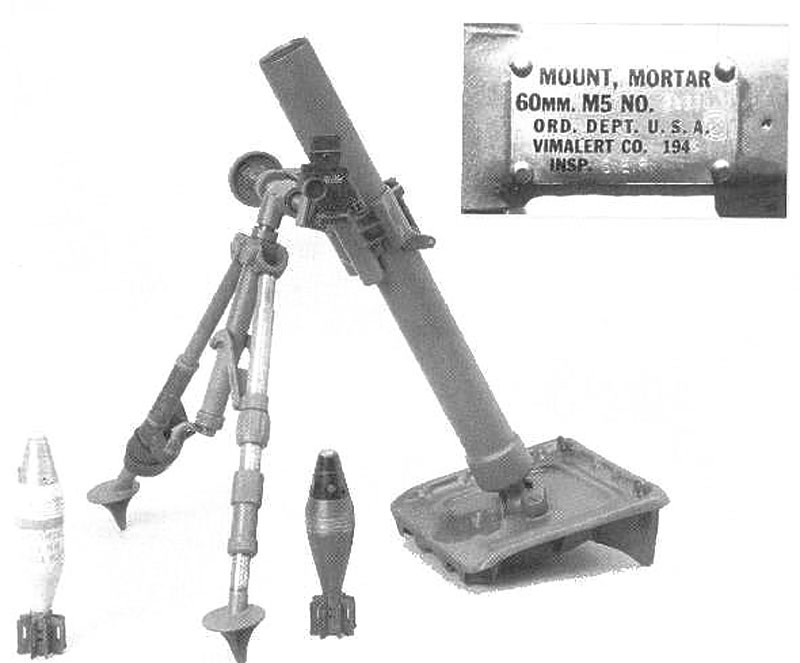
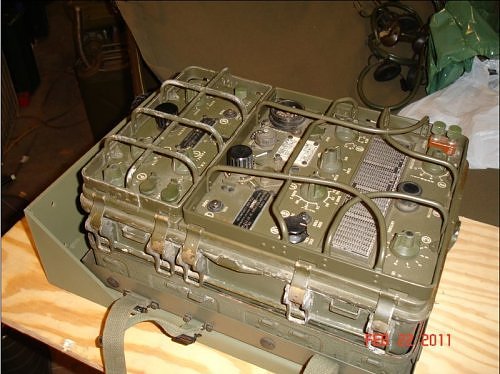
The General Purpose Machine Gun M60 was designed for use in the Vietnam War was equally useful for Operation Eagle in the Chittagong Hill Tracts.M1 Muzzle loading 81mm Mortar is a heavy piece of Infantry weapon which provides indirect fire support. During Operation Eagle, our men carried them on their backs and used them to fire upon the enemy patrols and enemy posts. The most common weapon used by American Infantry Battalions in World War II, Korea, and Vietnam. Operation Eagle was fought on a manpack basis and this short-range, lightweight mortar was very useful.Rifle is the most basic Infantry weapon. M14 Infantry Assault Rifle was used in Vietnam. During Operation Eagle 1971, I politely refused to use this M14 Rifle as my personal weapon.The men used this Rifle. During Operation Eagle 1971, I could not bring my Sub Machine Gun or SMG and willingly participated in the battle without carrying the M14 Rifle.During Operation Eagle 1971 we were not allowed the use of cameras or photography. I would have looked like this man wearing Olive Green Coat Poncho. I used US Army Cap-Field.A Soldier needs his gun, boots, and clothing to protect himself. During Operation Eagle 1971, I used this US Army Nylon Poncho with Hood(Olive) to sleep on the ground and as a coat to protect myself from intense fog and dew prevalent in the Chittagong Hill Tracts.Operation Eagle 1971 and the Vietnam War – The Great Eagle ConnectionOperation Eagle 1971 and the Vietnam War – The Great Eagle ConnectionOperation Eagle 1971 and the Vietnam War – The Great Eagle ConnectionOperation Eagle 1971 and the Vietnam War – The Great Eagle ConnectionShort-range, manpack, portable, frequency modulated(FM) transceiver that provides two-way voice communication. Radio Set AN/PRC – 25 is used in the Vietnam War and I used the same in Operation Eagle. Two-way voice communications could be easily monitored by the enemy. Fortunately, It posed no problem as the enemy in the Chittagong Hill Tracts had no linguistic experts. I openly communicated with my Unit Commander in my native language of Telugu and there was absolutely no risk of revealing any sensitive information.The Bald Eagle-The Golden Eagle-Operation Eagle: What is the Connection?The Bald Eagle-The Golden Eagle-Operation Eagle: What is the Connection?The Bald Eagle-The Golden Eagle-Operation Eagle – What is the Connection? We used the same military water canteens and water purification pills.The U.S. Army uses a variety of Individual Field Medical Kits. The Kits issued to us during Operation Eagle 1971 were Olive Green Canvas pouches worn on the belts by each individual. The medical supplies included Water Purification Tablets for use in water bottles, anti-Malaria pills, Insect Repellent Solution(DBP), Insect Repellent Cream(DMP), Injectable Tubonic Morphine, tetracycline tablets, Multivitamin tablets, Field dressings, bandages and others. The Kits were not stamped but the contents reveal the place of origin.The Bald Eagle-The Golden Eagle-Operation Eagle – What is the Connection? We used the same tools to accomplish the military mission.Infantry marches on its feet. Boots are the most important equipment apart from Guns. I used Ankle Canvas Boots during Operation Eagle and marched on feet to fight and dislodge the enemy from the Chittagong Hill Tracts. The Canvas Boots lasted for the entire duration of Operation Eagle. They were better than the leather boots that I would use in other operational areas.
WAR AND PEACE – A FAILURE OF U.S. DIPLOMACY:
United States failed in Vietnam as it failed to develop a clear vision to achieve its goal of resisting and containing the expansion of Communist Power in Southeast Asia. The U.S. efforts to stop the spread of Communism got derailed by Dr. Henry Kissinger who chose the option of backstabbing people who support the United States in its global mission to oppose Communism using diplomacy and military power. U.S. gave away a lot during the Paris Peace Talks basically defeating the accomplishments of its military and literally ridiculing their sacrifices. The several concessions given to the Peoples’ Republic of China to win its cooperation failed to stop the flow of military assistance to North Vietnam.
The establishment of US-China relations gave no advantage to the United States for its War in Vietnam. United States added insult to its own injuries by seeking the support of Communist China to attack India across its Himalayan frontier in the North East Frontier Agency in a vain bid to stop India in its efforts to liberate Bangladesh during 1971.
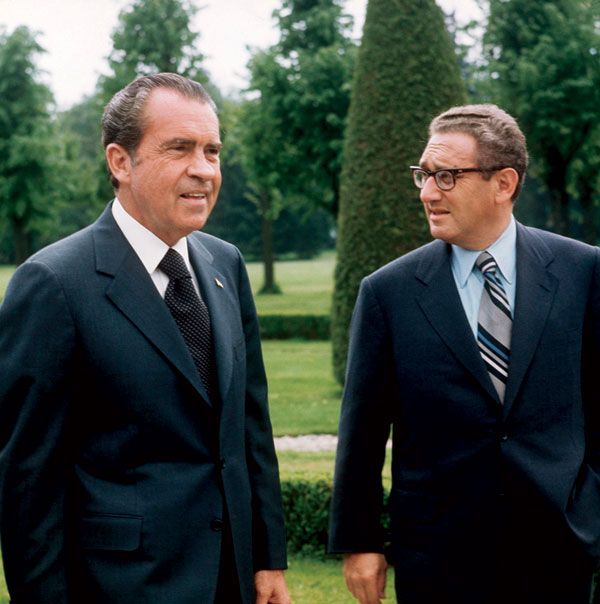
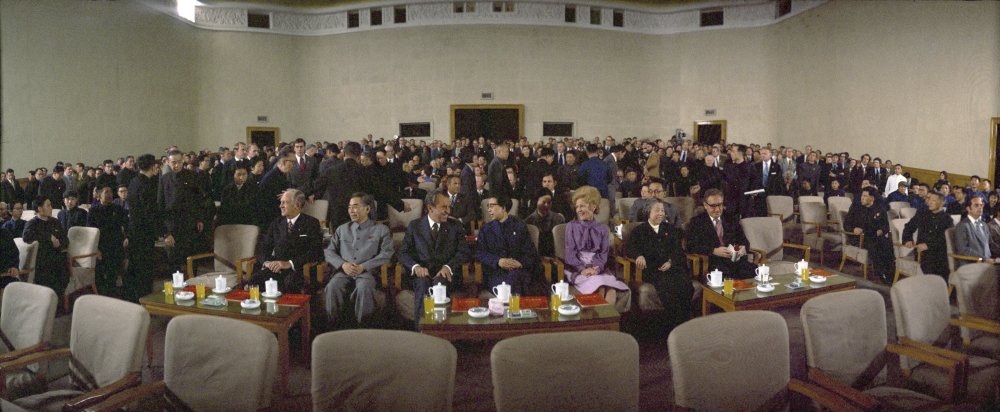
President Nixon and Dr Henry Kissinger failed in their attempt to block the launching of Operation Eagle, the Bangladesh Ops of 1971.Operation Eagle 1971 and the Vietnam War – The Great Eagle Connection. Nixon-Kissinger in Peking befriending the Enemy.During 1971, Richard Nixon and Dr. Kissinger played on the Sino-Soviet Split. United States moved to normalize trade with China. Dr. Kissinger and President Nixon visited Peking(Beijing) to befriend Communist China. Did it stop China from delivering military assistance to North Vietnam? Did this famous meeting stop Hanoi’s EASTER OFFENSIVE in March 1972?President Nixon met Communist China’s Prime Minister Chou Enlai. Did this act of friendship help the US Army in the Vietnam War? Could it stop Communist North Vietnam from launching its major invasion of South Vietnam during March 1972? Using this friendship, both President Nixon and Dr. Kissinger tried their best to stop India from Liberating Bangladesh during 1971. This Nixon and Chou Enlai friendship did not stop the Liberation of Bangladesh which India initiated with Operation Eagle in the Chittagong Hill Tracts.Dr. Kissinger’s diplomatic initiatives totally fail the US Policy in Southeast Asia. Communist China remains a huge military threat in this region and United States fails in its mission to curb the expansion of Communist Power.
THE BALD EAGLE AND THE GOLDEN EAGLE – THE GREAT EAGLE CONNECTION:
The Bald Eagle and the Golden Eagle came together as Operation Eagle.
My Unit participated in Operation Eagle during 1971-72 to gain practical experience of Infantry Combat Operations to fight against Communists in a future battle.
The Operation Eagle 1971-72 was inclined towards peace. It intended to deliver peace to the people of Bangladesh who declared their independence from Pakistan during March 1971.
The War in Vietnam is over and yet the threat of Communism still persists in Southeast Asia. To deliver peace to people of Southeast Asia, the United States must learn from its failure in Vietnam. The failure was not that of the US Army which willingly sacrificed the lives of over 58,000 of its fighting men and women. The US political leadership had failed the US military mission in Vietnam. United States must seek assistance from the people of Southeast Asia and fight its enemy on the ground and dislodge the enemy in a ground battle.
Operation Eagle and the Vietnam War. Major Survendra Singh Negi, The Grenadiers was a Company Commander in my South Column Unit during Operation Eagle, in the Chittagong Hill Tracts.Operation Eagle 1971 and the Vietnam War.
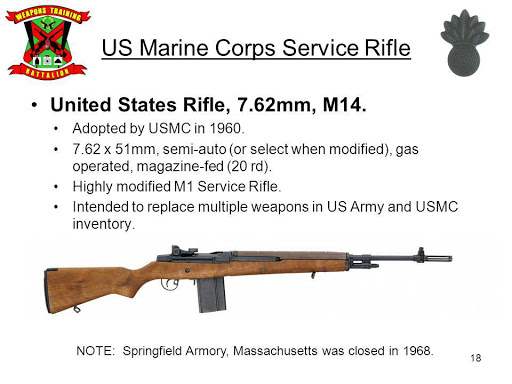
Establishment No. 22 – Operation Eagle: This badge represents a military alliance/pact between India, Tibet, and the United States of America. Its first combat mission was in Chittagong Hill Tracts which unfolded on 03 November 1971. It was named Operation Eagle. It accomplished its mission of securing peace in the region that is now knownas Republic of Bangladesh.OPERATION EAGLE IS THE CODE NAME FOR MILITARY ACTION THAT INITIATED THE LIBERATION OF BANGLADESH ON NOVEMBER 03, 1971 WITH STRIKES ON THE ENEMY MILITARY POSTS IN CHITTAGONG HILL TRACTS.THE EAGLE CONNECTION: THE BALD EAGLE – THE GOLDEN EAGLE – OPERATION EAGLE – WHAT IS THE CONNECTION?The Bald Eagle which represents the United States as a Military Power has a lesson to learn from its Vietnam War experience. United States has to still find military interventions to stop the growing military threat of Communist Power in Southeast Asia. People of Southeast Asia are willing to fight the Communists and why should the United States ignore the offer of our friendship and willingness to challenge and confront the Communists on the Battlefield? Operation Eagle. The military action to initiate the Liberation of Bangladesh involved the use of this US Marine Corps Service Rifle.Operation Eagle 1971 and the Vietnam War – The Great Eagle Connection
Whole Man - Whole Theory: I intentionally combined the words Whole and Dude to describe the Unity of Body, Mind, and Soul to establish the singularity called Man.
View more posts
Join the Conversation
2 Comments
Dear DefenceForumIndia.com Members,
Thanks for visiting my blog post. Kindly note Special Frontier Force represents a Military Organization of an Alliance or Pact between India, Tibet, and the United States. Initially, the US had accepted the responsibility of both funding and equipping this Force apart from providing Instructors in using the US equipment.
An interesting review of US jungle boots og the Vietnam war era (with both Vibram and Panama out-soles) can be accessed at: http://cartalana.com/002-143.php#0066ba
Nex and previous pages can be accessed by pressing the appropriate arrows below.












Dear DefenceForumIndia.com Members,
Thanks for visiting my blog post. Kindly note Special Frontier Force represents a Military Organization of an Alliance or Pact between India, Tibet, and the United States. Initially, the US had accepted the responsibility of both funding and equipping this Force apart from providing Instructors in using the US equipment.
LikeLike
An interesting review of US jungle boots og the Vietnam war era (with both Vibram and Panama out-soles) can be accessed at: http://cartalana.com/002-143.php#0066ba
Nex and previous pages can be accessed by pressing the appropriate arrows below.
LikeLike