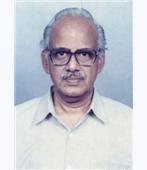
Dr. Sarvepalli Anantha Padmanabha Rao, M.S., distilled the wisdom of Vedas, and Upanishads by discovering “Panchama MahaVakya” or 5th Great Aphorism that states “Tat Asmi PrabhO.” India’s great teacher Adi Shankaracharya composed a single verse, “Eka Shloki” in Sanskrit to capture the essence of the “Four Mahavakyas” (MahaVakya Chatushtaya), Upanishadic Aphorisms. Dr. Sarvepalli went ahead to encapsulate Knowledge and Wisdom or ‘Upadesha’ of Great Guru Shankara in one short, brief, and a precise statement which in Indian tradition can be called the ‘Fifth or Panchama MahaVakya’.
Tag Archives: Dr Sarvepalli Anantha Padmanabha Rao
The Material Basis of Spirituality Science. Animate vs Inanimate Dualism
The division or separation, or distinction of man as perishable body and imperishable Soul is fundamentally flawed for both Animate and Inanimate Matter derive their nature from unvarying and unchanging properties of the Chemical Elements. Animate vs Inanimate Dualism is primarily based upon Vital Operations and Mechanical Operations and it is not concerned with physical or chemical properties of Matter. To that extent, in my analysis, the Four Upanishadic Aphorisms or Mahavakyas make claims not supported by the real nature of Matter.
The Constitutive and the Regulative Principles of Human Existence
What it is to be a Substance? and What it is to Exist? We need to establish knowledge about the man on a firm basis and the information it provides must be tested for its accuracy and consistency with an external reality. We have to make the fundamental distinction between the living and the non-living …
Continue reading “The Constitutive and the Regulative Principles of Human Existence”
TAT ASMI PRABHO – FIFTH MAHAVAKYA – ANIMATE VS INANIMATE DUALISM
TAT ASMI PRABHO – FIFTH MAHAVAKYA – ANIMATE VS INANIMATE DUALISM Indian Schools of Thought, ADVAITA(NONDUALISM), VISISHTADVAITA(QUALIFIED NONDUALISM), and DVAITA(DUALISM) account for man and world by describing three fundamental orders called 1. God, 2. Soul, and 3. Matter. However, they fail to account for Animate vs Inanimate Dualism. This distinction is very important as most …
Continue reading “TAT ASMI PRABHO – FIFTH MAHAVAKYA – ANIMATE VS INANIMATE DUALISM”
TAT ASMI PRABHO – FIFTH MAHAVAKYA – MATERIAL vs SPIRITUAL DUALISM
TAT ASMI PRABHO – FIFTH MAHAVAKYA – MATERIAL vs SPIRITUAL DUALISM In Indian tradition, the phenomenon of universe, world, and everything that exists is divided into three fundamental orders; 1. Matter, 2. Soul, and 3. God. To account for three distinct orders, Indian tradition applies three fundamental divisions or Dualism; 1. Animate – Inanimate, 2. …
Continue reading “TAT ASMI PRABHO – FIFTH MAHAVAKYA – MATERIAL vs SPIRITUAL DUALISM”
FIFTH MAHAVAKYA – TAT ASMI PRABHO – FUNDAMENTAL DUALISM
Aphorism refers to a short, concise statement of principle. The ‘Upanishads’ are commentaries on texts called Rig Veda, Sama Veda, Yajur Veda, and Atharva Veda. The Upanishads include four short, pointed sentences expressing a general truth. These Upanishadic Aphorisms are popularly known as ‘MahaVakya Chatushtaya’ or Four MahaVakyas. These four statements are primarily concerned with …
Continue reading “FIFTH MAHAVAKYA – TAT ASMI PRABHO – FUNDAMENTAL DUALISM”
 Whole Dude - Whole Spirituality