TIBET DEVELOPMENTS – FUTURE OF SPECIAL FRONTIER FORCE
TIBET DEVELOPMENTS – FUTURE OF SPECIAL FRONTIER FORCE
From September 1971 to December 1974 I served in Establishment No. 22 to provide military service to the Central Intelligence Agency on behalf of Research and Analysis Wing (RAW) which is directly supervised by Cabinet Secretariat and Prime Minister’s Office(PMO), Government of India.
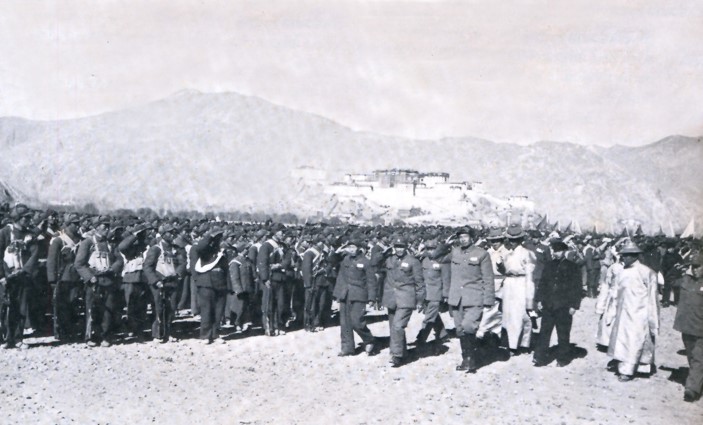
In my analysis, there is no change in the military mission assigned to Special Frontier Force. All said and done, Tibet remains under military occupation and Communist governance of People’s Republic of China poses threat to Freedom, Peace, Democracy, and Justice to all nations of the region. There will be no compromise for world still needs ‘Tibet Equilibrium’.
Samdong Rimpoche’s visit to China materialized against the backdrop of strained India-China relations consequent to the face-off between Indian and Chinese troops at Doklam, says former RA&W officer Jayadeva Ranade.
There have been important developments relating to Tibet since the Chinese Communist Party congress ended in Beijing on October 25, 2017 and the two months thereafter.
All of them have implications for India and some could potentially put India under sustained pressure.
The first was the indication that the Chinese Communist Party’s central committee’s united front work department, which is responsible for supervising non-Communist parties and ethnic minorities including the Tibet and Xinjiang Autonomous Regions, was preparing to take fresh initiatives.
This was the dramatic ‘leak’ that Samdong Rimpoche — a former two-term Kalon Tripa (‘prime minister’) of the Tibetan administration-in-exile and among the Dalai Lama’s most trusted advisers — had quietly travelled to China in late November 2017.
Samdong Rimpoche, who was nominated a month earlier as the Dalai Lama’s envoy for talks with the Chinese authorities, would certainly have met senior Communist party leaders during his four-day stay in Kunming, capital of China’s Yunnan province.
There is speculation that Rimpoche could have met You Quan, a former party secretary of Fujian province whom Chinese President Xi Jinping appointed director of the united front work department in November or Zhang Yijiong, executive vice minister of the UFWD.
If Rimpoche met Chinese leaders, this would be the first acknowledged contact between an envoy of the Dalai Lama and Chinese Communist officials since negotiations between the two sides were suspended in 2010.
China’s official media has, however, not yet mentioned a visit by a senior leader to Kunming during this period.
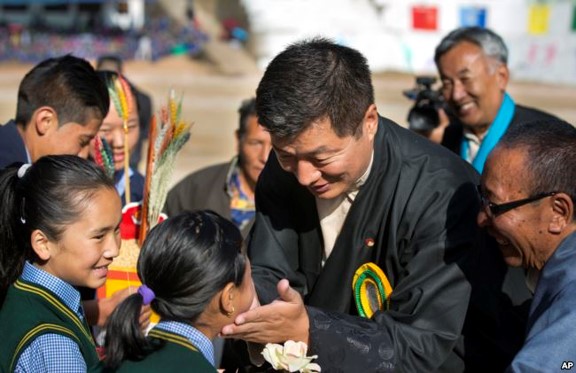
Dr Lobsang Sangay, the Sikyong (head) of the Central Tibetan Administration, obliquely confirmed that Professor Rimpoche had visited China. He was replying to a question posed by former foreign secretary Kanwal Sibal on the sidelines of the M L Sondhi memorial lecture in New Delhi on December 14, when he cautioned ‘Don’t read too much into it. At most it’s a private visit and it’s too early to say anything.’
It is pertinent that Lobsang Sangay — who is the other envoy nominated by the Dalai Lama for talks with the Chinese — did not accompany Samdong Rimpoche probably because China continues to adhere to its policy of not recognizing the Central Tibetan Administration in Dharamsala. No relaxation has been noticed in China’s policies towards Tibetans or Tibet so far.
Samdong Rimpoche’s visit also materialized against the backdrop of strained India-China relations consequent to the face-off between Indian and Chinese troops at Doklam and threats made at the time by China through its official media.
It comes too in the wake of an international conference convened by the Tibetan administration-in-exile in October 2017 to finalize a long-term action plan, including revival of Tibetan Buddhism in the Indo-Himalayan border belt.
At the same time a securitization of Tibet is taking place. Following up on Xi Jinping’s work report to the party congress — which for the first time devoted an entire section to poverty alleviation — the Tibet Autonomous Region has launched a campaign to tackle poverty and simultaneously enhance security.
It has decided to build ‘well-off border villages’ along Tibet’s ‘borders with India, Nepal, Bhutan and other neighboring countries to ensure the security of the borders and maintain stability’ in the region.
The State-owned Global Times newspaper on December 25, 2017 asserted that ‘confronting separatism remains a challenge for the region. Raising living standards for local residents is a fundamental way to guard against activity sabotaging China’s sovereignty and territorial integrity’.
‘Tibet’s rural poverty alleviation,’ the newspaper added, will help maintain stability in the border areas’.
Tibetan Buddhist monks and nuns in the TAR are being co-opted to sensitize people and ensure that Buddhism serves socialism.
Additionally, the decision to bring the people’s armed police force (PAPF) directly under the central military commission with effect from January 1, 2018 puts Tibet under the direct control of the people’s liberation army (PLA).
Xi Jinping had earlier appointed PLA officers loyal to him as the commander and political commissar of the PAPF.
Since the PAPF is deployed in strength in Tibet’s main towns, rural countryside and border areas, the PLA officers — who are now being re-inducted into the party standing committees at the provincial and county levels — will have an enhanced role.
In addition to deploying PAPF troops when civilian authorities request assistance, the PLA officers will have a greater role in military-civil coordination and be directly involved in building the ‘well-off border villages’.
Each of these villages is to be connected by road, thereby facilitating military movement along the border with India.
Finally, the TAR leadership is being encouraged to push the Belt and Road Initiative and Bangladesh China India Myanmar Corridor with Tibet’s neighbours.
To promote the BRI and BCIM, China has announced it will expand TAR’s road network from 82,000 kms to 89,000 kms by 2020.
Chinese officials have earlier pointed out that there are 70 road links between China and Nepal and there have been suggestions of a new China-Nepal-India Corridor.
The aim will be to build pressure on India by creating public opinion, including by co-opting Tibetans, to endorse the BRI and China’s plans of connectivity.
Jayadeva Ranade, a former Additional Secretary, Cabinet Secretariat, Government of India, is presently President, Centre for China Analysis and Strategy.
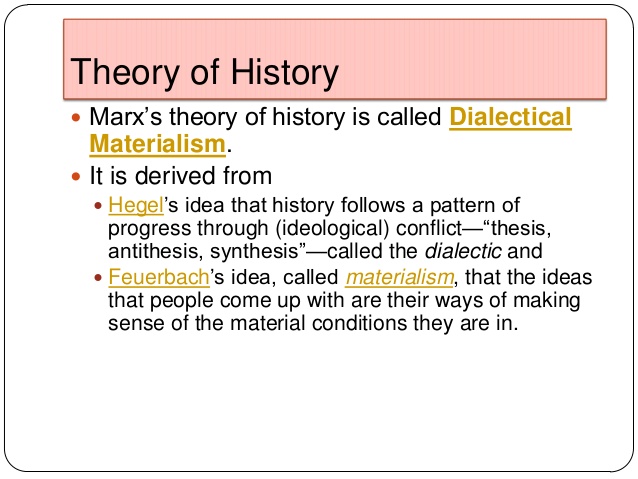
On January 04, 1950 Harpers published a collection of essays titled, “The God That Failed.” On January 04, 2018 I publish my story “The God That Won.” I use theory advocated by Karl Marx and I use my “In God We Trust” doctrine to ratify Marxist Theory.
In my analysis, the success of Karl Marx’s Theory of Dialectical Materialism is predicted by Jesus who described fulfillment of prophecy shared by Prophet Isaiah(ISAIAH 6:9-10)
new year greetings wisdom to guide in 2018 matthew 13 verses 14151
new year greetings wisdom to guide in 2018 isaiah6 91
The healing anticipated by Isaiah 6: 9-10, and Matthew 13: 14-15 has not taken place and hence Marx’s prediction remains true. I say, God predetermined Marx’s correct prediction on the course of Human History. God keeps people’s heart waxed until such time they find the chance to get converted.
The God That Failed, a collection of essays by six writers and intellectuals who either joined or sympathized with the communist cause before renouncing the ideology, is published by Harpers.
The book provided interesting insight into why communism originally appealed to, and then disappointed, so many adherents in the United States and Europe, particularly during the 1920s and 1930s. The essays also showed that many individuals of good conscience and intentions desperately hoped that communism would bring order, justice, and peace to a world they worried was on the brink of disaster.
The six men who contributed to the book were all writers or journalists. Two were American (Louis Fischer and the African-American novelist Richard Wright); the rest were from Europe (Andre Gide from France, Arthur Koestler and Stephen Spender from England, and Ignazio Silone from Italy). Of these, Spender, Wright, Koestler, and Silone had been members of the Communist Party for varying lengths of time. Gide and Fischer, though they sympathized with the communist ideology, never formally joined the party. Each man, in his turn, eventually turned against communist ideology.
According to the volume’s editor, British politician and essayist Richard Crossman, the very fact that these intelligent and compassionate individuals were drawn to communism was “an indictment of the American way of life,” and evidence of “a dreadful deficiency in European democracy.” All of the writers–particularly during the 1920s and 1930s, when fascism and totalitarianism were on the march and the Western democracies seemed unable or unwilling to intercede–turned to communism as the hope for a better, more democratic, and more peaceful world. Each man eventually broke with the communist ideology, however. Some were disturbed by the Soviet-Nazi pact of 1939; others had traveled to the Soviet Union and were appalled by the poverty and political oppression.
The book, which was published the same year that former State Department official Alger Hiss was convicted of perjury related to his alleged role in a communist spy ring in the United States, was an interesting contribution to the ongoing national debate concerning communism.
A WORLD SANS MILITARY – DEMILITARIZE OCCUPIED TIBET
A World sans Military – Demilitarize Occupied Tibet. National Uprising of Tibet was direct consequence of People’s Liberation Army’s military conquest of Tibet.
I recommend His Holiness the Dalai Lama’s vision for a demilitarized world. To implement his ideal, I ask the world to demilitarize ‘Occupied Tibet’. The Great Tibet Problem can be resolved without use of military force. Peace, Harmony, Tranquility, Equilibrium, and Freedom in Tibet is Nature’s Gift to all denizens of Tibetan Plateau.
A WORLD SANS MILITARY – DEMILITARIZE OCCUPIED TIBET.
VARANASI: Dalai Lama advocated for a demilitarized world and revival of ancient Indian knowledge for global peace.
“In all my life I have noticed too many killings. Human beings killing thousands of human beings has become normal. It is really terrible. We must change it. We must think or try to demilitarize the world,” he said while delivering his concluding remarks at the two-day international conference on ‘Mind in Indian philosophical school of thought and modern science’ at the Central Institute of Tibetan Higher Studies, Sarnath, on Sunday.
He said killing enemies was prevalent in ancient time but not in today’s world.
“There are a lot of self-created problems due to lack of knowledge on how to deal with destructive emotions. The ancient Indian knowledge is relevant to tackle our emotions,” he said.
A World sans Military – Demilitarize Occupied Tibet.
CHRISTMAS DAY 2017 – THE UPLIFTING POWER OF CHRIST: HUMAN EXISTENCE AND THE GAME OF CHESS:
I view human existence as a game of chess. Depending upon the nature of the opponent, human existence faces challenges from several directions. It’s not easy to anticipate the challenges and man may or may not be able to escape from the danger posed to his existence.
Christmas Day 2017 – The Uplifting Power of Christ. Man vs God Chess Game.
CHRIST – THE DIVINE CHESS PLAYER
The popular game of Chess, played on a Chessboard, involves two players each with 16 pieces. The game pieces have varying abilities of movement over the Chessboard. The piece identified as ‘King’ can move in all directions but can only move by one space during a given move.
Christmas Day 2017 – The Uplifting Power of Christ. Human Existence can be compared to the board game called Chess. I need to know my opponent.
Human Existence could be viewed as a Game of Chess. If I am the player, who would be my opponent?
Christmas Day 2017 – The Uplifting Power of Christ. Comparing human existence to board game called Chess. The challenge of defending the King.
In the Game of Chess, the King moves one space in any direction.
The object of the Game of Chess is to ‘Checkmate’ the opponent player’s King. The move that is known as ‘Checkmate’ wins the Chess game by checking the opponent’s King so that it cannot be protected. The status or condition of King after such a move indicates complete defeat or that the King is dead.
Christmas Day 2017 – The Uplifting Power of Christ. How to save or defend the King?
The move known as ‘Checkmate’ – Its relevance to Human Existence
Human Existence could be compared to the Game of Chess. A variety of physical, chemical, and biological factors constantly challenge human existence. The man learns to survive by making the necessary moves and by deploying all of his defensive mechanisms and resources. During his life’s journey, man eventually finds himself in a position without any escape route. Just like the ‘Checkmated’ King, man may get cornered in a situation which is beyond his control. The Chess game pieces have no ability other than movement as per rules of the Game. Unlike the Chess Game, the man whose existence is ‘Checkmated’, the man feeling undefended; the man who is not capable of making any more moves to protect his own existence, may get rescued by a ‘Uplifting Power’; and such an ‘Upward’ move is not described in the Game of Chess.
MAN vs GOD – THE JOY OF GETTING ‘CHECKMATED’ :
Christmas Day 2017 – The Uplifting Power of Christ. How to save the King?
MAN vs GOD – THE JOY OF GETTING ‘CHECKMATED’.
Christmas Day 2017 – The Uplifting Power of Christ. Man vs God Chess Game.
IN HIS AUTOBIOGRAPHICAL SKETCH ‘SURPRISED BY JOY, C.S. LEWIS DESCRIBED A GAME OF CHESS.
Clive Staples Lewis ( 1898 – 1963 ), Oxford and Cambridge Scholar, novelist, writer of stories for children, and Literary Critic, in his Autobiographical Sketch titled ‘Surprised by Joy’ has visualized his existence as that of a ‘Divine Pursuit’. It is not man who searches and eventually finds God. It is rather God who pursues the man throughout his life’s moves. God is the one who searches for man and not vice versa. God goes about seeking the souls that are His. If man wanders off, God goes to man in order to reconcile him. God’s searching for man is serious and is not ostensible. If life could be described as Man vs God Chess Game; God skillfully places the man in a position which gives no option of escape and finally God captures man. C.S. Lewis has entitled the penultimate chapter of his Autobiography as “Checkmate”. Lewis describes God as the Divine Chess player who gradually maneuvers him into an impossible position. “All over the board my pieces were in the most disadvantageous positions. Soon I could no longer cherish even the illusion that the initiative lay with me. My Adversary began to make His final moves.” When God is the Divine Chess player, getting ‘Checkmated’ is only moment of great Joy. The ‘Uplifting Power’ of Mercy, Grace, and Compassion of the Divine Chess player saves man in his defeat, while pursued and out maneuvered.
THE UPLIFTING POWER OF CHRIST:
Christmas Day 2017 – The Uplifting Power of Christ.
THE UPLIFTING POWER OF CHRIST
In the New Testament Book of the Gospel according to John, Chapter 10, Jesus describes Himself. In verse 11, He states : “I am the Good Shepherd, the Good Shepherd lays down his life for the sheep.” And He further clarifies in verses 14 and 15 by stating: “I am the Good Shepherd; I know my sheep and my sheep know me – just as the Father knows me and I know the Father – and I lay down my life for the sheep.”
Christmas Day 2017 – The Uplifting Power of Christ.
THE BOOK OF LUKE, CHAPTER 19, VERSE 10 : “FOR THE SON OF MAN CAME TO SEEK AND TO SAVE WHAT WAS LOST.”
THE SHEPHERD AND HIS FLOCK :
As the shepherd marches ahead, the sheep of his flock follow him from behind and recognize him by the commands of his voice. In the Book of Matthew, Chapter 18, verses 12 to 14 , Jesus describes the Parable of the Lost Sheep : “What do you think ? If a man owns a hundred sheep, and one of them wanders away, will he not leave the ninety-nine on the hills and go to look for the one that wandered off ? And if he finds it, I tell you the truth, he is happier about that one sheep than about the ninety-nine that did not wander off.” God is not really willing that any of us should be lost. In case we choose to wander off, He is willing to search for us, find us and take us back to His Home. And after saving the lost sheep, Jesus tells about the shepherd : “Rejoice with me ; I have found my lost sheep.” ( Book of Luke, Chapter 15, verses 3 – 7 ). God actually delights Himself by finding the lost among us.
THE PROBLEM OF BLACK SHEEP :
Christmas Day 2017 – The Uplifting Power of Christ. The problem of ‘Black Sheep’.
BLACK SHEEP – WHAT IS THE PROBLEM ???
The problem of “Black Sheep” is not about its color. The word ‘black’ reflects the discredited status of the sheep. Black Sheep means a member of a family or group regarded as not so respectable or successful as the rest. The flock rejects one of its own, and the discredited member is described as the “Black Sheep”. The Shepherd tends to His flock of sheep who recognize Him and follow Him. In the Book of John, Chapter 10, verse 9, Jesus describes Himself as the Gate of His sheep pen, and said : “If anyone enters by Me, he will be saved, and will go in and out and find pasture.” What happens to the “Black Sheep” who is not a member of His flock? The non-member could be described as a disbeliever. Who would rescue the “Black Sheep” that has wandered off ? As a discredited member of my community and my country, the concept of “Black Sheep” and its “Uplift” is of a great interest and concern to me.
Christmas Day 2017 – The Uplifting Power of Christ.
THE PROBLEM OF “BLACK SHEEP” – WOULD THE GOOD SHEPHERD LOOK FOR LOST “BLACK SHEEP”?
Jesus assures us that He is aware of the existence of sheep that may not belong to His sheep pen. In the Book of John, Chapter 10, verse 16, He gives a sense of great hope to others who may not know Him and may not live under His protection : “I have other sheep that are not of this sheep pen. I must bring them also. They too will listen to My voice, and there shall be One flock and One Shepherd.
Christmas Day 2017 – The Uplifting Power of Christ.
JESUS WOULD ALSO FIND THE OTHER SHEEP THAT ARE NOT OF HIS SHEEP PEN. THERE SHALL BE ONE FLOCK AND ONE SHEPHERD.
THE JOY OF CHRISTMAS :
Christmas Day 2017 – The Uplifting Power of Christ.
KING OF KINGS AND LORD OF LORDS – THE BOOK OF REVELATIONS, CHAPTER 19, VERSE 16
The Joy of Christmas comes from the fact that God knows you, and He takes pleasure in finding you and He gets you back into His Protection even if you have wandered away from Him and got lost. He is aware of the sheep that are not in His sheep pen. Even the “Black Sheep” belong to His sheep pen and He would rejoice when He rescues one lost sheep.
SEPTUAGENARIAN AWAITS THE ARRIVAL OF ‘GOOD SAMARITAN’ ON CHRISTMAS DAY
Septuagenarian awaits the arrival of Good Samaritan on Christmas Day. There is no hope in waiting for the Second Coming of Christ.
I am presenting the story of Senior Alien who lives in the U.S. without retirement option. Like many other senior citizens, Senior Alien works in a job where the pension plan failed to offer retirement income as the plan lost his savings due to improper investment choices made by the plan administrators. Secondly,rules imposed by PRWORA of 1996 disqualify Senior Alien from receiving his monthly retirement benefit payment from Social Security without any concerns for the Social Security taxes he paid for decades laboring on the US soil.
Septuagenarian awaits the arrival of Good Samaritan on Christmas Day. Thanks to PRWORA which disqualifies him from receiving retirement monthly benefit after paying Social Security taxes over decades of labor.
The constitutional validity of regulations imposed by PRWORA is not known as it is not tested in any U.S. Court of Law. In my analysis, PRWORA imposes Involuntary Servitude, Forced Labor, Compulsory Service and Slavery as Senior Alien is not allowed the Right to his own earnings held in Public Trust Fund administered by Social Security Administration. This situation seems to be unfair and unjust as the US Labor Laws uphold the principle of Equal Treatment of all workers at the workplace.
In my view, Americans get alienated from virtue called Mercy while they generously contribute to various charitable organizations to claim the benefit of tax deduction.
On Monday, December 25, Christmas Day of 2017, Senior Alien simply awaits the arrival of ‘Good Samaritan’ that Jesus described in a parable. There is no hope of Jesus returning in a few years and for that reason, Senior Alien has no hope to quit working in a few years.
“As long as I sit down for about 10 minutes every hour or two, I’m fine,” he said during a break. Diagnosed with spinal stenosis in his back, he recently forwarded a doctor’s note to managers. “They got me a stool.”
The way major U.S. companies provide for retiring workers has been shifting for about three decades, with more dropping traditional pensions every year. The first full generation of workers to retire since this turn offers a sobering preview of a labor force more and more dependent on their own savings for retirement.
Years ago, Coomer and his co-workers at the Tulsa plant of McDonnell-Douglas, the famed airplane maker, were enrolled in the company pension, but in 1994, with an eye toward cutting retirement costs, the company closed the plant. Now, The Washington Post found in a review of those 998 workers, that even though most of them found new jobs, they could never replace their lost pension benefits and many are facing financial struggle in their old age: One in seven has in their retirement years filed for bankruptcy, faced liens for delinquent bills, or both, according to public records.
Those affected are buried by debts incurred for credit cards, used cars, health care and sometimes, the college educations of their children.
Some have lost their homes.
And for many of them, even as they reach beyond 70, real retirement is elusive. Although they worked for decades at McDonnell-Douglas, many of the septuagenarians are still working, some full-time.
Lavern Combs, 73, works the midnight shift loading trucks for a company that delivers for Amazon. Ruby Oakley, 74, is a crossing guard. Charles Glover, 70, is a cashier at Dollar General. Willie Sells, 74, is a barber. Leon Ray, 76, buys and sells junk.
Septuagenarian awaits the arrival of Good Samaritan on Christmas Day.
Likewise, Oakley, a crossing guard at an elementary school, said she took the job to supplement her Social Security.
“It pays some chump change — $7 an hour,” Oakley said. She has told local officials they should pay better. “I use it for gas money. I like the people. But we have to get out there in the traffic, and the people at the city think they’re doing the senior citizens a favor by letting them work like this.”
Glover works the cash register and does stocking at a Dollar General store outside Tulsa to make ends meet. After working 27 years at McDonnell-Douglas, Glover found work at a Whirlpool factory, and then at another place that makes robots for inspecting welding, and also picked up some jobs doing AutoCAD drawing.
Septuagenarian awaits the arrival of Good Samaritan on Christmas Day.
“I hope I can quit working in a few years, but the way it looks right now, I can’t see being able to,” Glover said recently between customers. “I had to refinance my home after McDonnell-Douglas closed. I still owe about 12 years of mortgage payments.”
For some, financial shortfalls have grown acute enough that they have precipitated liens for delinquent bills or led people to file for bankruptcy. None were inclined to talk about their debts.
“It’s a struggle, just say that,” said one woman, 72, who filed for bankruptcy in 2013. “You just try to get by.”
A perk that became too costly
The notion of pensions — and the idea that companies should set aside money for retirees — didn’t last long. They really caught on in the mid-20th century, but today, except among government employers, the traditional pension now seems destined to be an artifact of U.S. labor history.
The first ones offered by a private company were those handed out by American Express, back when it was stagecoach delivery service. That was in 1875. The idea didn’t exactly spread like wildfire, but under union pressure in the middle of the last century, many companies adopted a plan. By the 1980s, the trend had profoundly reshaped retirement for Americans, with a large majority of full-time workers at medium and large companies getting traditional pension coverage, according to Bureau of Labor Statistics data.
Then corporate America changed: Union membership waned. Executive boards, under pressure from financial raiders, focused more intently on maximizing stock prices. And Americans lived longer, making a pension much more expensive to provide.
The average life expectancy in 1950 was 68, meaning that a pension had to pay out only three years past the typical retirement age of 65. Today, average life expectancy is about 79, meaning that the same plan would have to pay out 13 years past typical retirement age.
Exactly what led corporate America away from pensions is a matter of debate among scholars, but there is little question that they seem destined for extinction, at least in the private sector.
Even as late as the early 1990s, about 60 percent of full-time workers at medium and large companies had pension coverage, according to the government figures. But today only about 24 percent of workers at midsize and large companies have pension coverage, according to the data, and that number is expected to continue to fall as older workers exit the workforce.
In place of pensions, companies and investment advisers urge employees to open retirement accounts. The basic idea is that workers will manage their own retirement funds, sometimes with a little help from their employers, sometimes not. Once they reach retirement age, those accounts are supposed to supplement whatever Social Security might pay. (Today, Social Security provides only enough for a bare-bones budget, about $14,000 a year on average.)
The trouble with expecting workers to save on their own is that almost half of U.S. families have no such retirement account, according the Fed’s 2016 Survey of Consumer Finances.
Of those who do have retirement accounts, moreover, their savings are far too scant to support a typical retirement. The median account, among workers at the median income level, is about $25,000.
“The U.S. retirement system, and the workers and retirees it was designed to help, face major challenges,” according to an October report by the Government Accountability Office. “Traditional pensions have become much less common, and individuals are increasingly responsible for planning and managing their own retirement savings accounts.”
The GAO further warned that “many households are ill-equipped for this task and have little or no retirement savings.”
The GAO recommended that Congress consider creating an independent commission study the U.S. retirement system.
“If no action is taken, a retirement crisis could be looming,” it said.
‘We were stunned’
Employees at McDonnell-Douglas in the early ’90s enjoyed one of the more generous types of pensions, those known as “30 and out.” Employees with 30 years on the job could retire with a full pension once they reached age 55.
But, as the employees would later learn, the generosity of those pensions made them, in lean times, an appealing target for cost-cutters.
Those lean times for McDonnell-Douglas began in earnest in the early ’90s. Some plants closed. But for the remaining employees, including those at the Tulsa plant, executives said, there was hope: if Congress allowed the $6 billion sale of 72 F-15s to Saudi Arabia, the new business would rescue the company. In fact, the company said in its 1991 annual report, it would save 7,000 jobs.
To help win approval for the sale, Tulsa employees wrote letters to politicians. They held a rally with local politicians and the governor of Oklahoma. And eventually, in September 1992, President George H.W. Bush approved the sale. It seemed that the Tulsa plant had weathered the storm.
The headline in the Oklahoman, one of the state’s largest newspapers, proclaimed: “F-15 Sale to Saudi Arabia Saves Jobs of Tulsa Workers.”
But it hadn’t. Within months, executives at the company again turned to cost-cutting. They considered closing a plant in Florida, another in Mesa, Ariz., or the Tulsa facility. Tulsa, it was noted, had the oldest hourly employees — the average employee was 51 and had worked there for about 20 years. Many were close to getting a full pension, and that meant closing it would yield bigger savings in retirement costs.
“One day in December ’93 they came on the loudspeaker and said, ‘Attention, employees,’ Coomer recalled. “We were going to close. We were stunned. Just ran around like a bunch of chickens.”
A few years later, McDonnell-Douglas, which continued to struggle, merged with Boeing. But the employees had taken their case to court, and in 2001, a federal judge agreed that McDonnell-Douglas had illegally considered the pensions in its decision to close the plant. The employees case, presented by attorneys Joe Farris and Mike Mulder, showed that the company had tracked pension savings in its plant closure decisions.
The judge found McDonnell-Douglas, moreover, had offered misleading testimony in its defense of the plant closing. The judge, Sven Erik Holmes, blasted the company for a “corporate culture of mendacity.”
Employees eventually won settlements — about $30,000 was typical. It helped carry people over to find new jobs. But the amount was limited to cover the benefits of three years of employment — and it was far less than the loss in pension and retiree health benefits. Because their pension benefits accrued most quickly near retirement age, the pensions they receive are only a small fraction of what they would have had they worked until full eligibility.
“People went to work at these places thinking they’ll work there their whole lives,” Farris said, noting that the pensions held great appeal to the staff. “Their trust and loyalty, though, was not reciprocated.”
Dreaming of work
The economic effects were, of course, immediate.
The workers, most of them over 50, had to find jobs.
Some enrolled in classes for new skills, but then struggled to find jobs in their new fields. They wondered, amid rejections, whether younger workers were favored.
Several found jobs at other industrial plants. One started a chicken farm for Tyson. Another took a job on a ranch breaking horses.
The Post acquired a list of the 998 employees, reviewed public records for them, and interviewed more than 25.
Of those interviewed, all found work of one kind or another. Yet all but a handful said their new wages were only about half of what they had been making. Typically, their pay dropped in half, from about $20 per hour to $10 per hour.
The pay cut was tough, and it made saving for retirement close to impossible. In fact, it has made retirement itself near impossible for some — they must work to pay the bills.
A few said, though, they work because they detest idleness, and persist in jobs that would seem to require remarkable endurance.
Combs, for example, works the graveyard shift, begins each workday at 1:30 a.m. His days off are Thursday and Sunday. He worked 25 years at McDonnell-Douglas, and more than 20 loading trucks.
He shrugs off the difficulty.
“I don’t want to sit around and play checkers and get fat,” Combs says. “I used to pick cotton in 90-degree heat. This is easy.”
Coomer, too, even if he would have preferred to retire, seems to genuinely enjoy his work. At Walmart, his natural cheerfulness is put to good use.
“Hi, Tom, how are you?” a customer on a motorized scooter, one of many who greet him by name, asks on her way out.
“Doing good . . . beautiful day,” he says, smiling warmly.
Later he explains his geniality.
“I like to talk to people! I like to visit with them. I can talk to anyone. I’ve always been like that, since I was a kid.”
When he sees someone looking glum, he tells them a joke.
Why does Santa Claus have three gardens?
So he can hoe, hoe, hoe.
“People really like that one,” he says.
Coomer grew up on a farm in Broken Arrow, got married when he was 17 — his wife was 15 — and says he’s always liked work.
“I really loved working at McDonnell-Douglas,” he says, One time, he says, he worked 36 days straight: 11 hours on the weekdays and eight hours on Saturdays and Sundays. He joked that the factory was his home address. All along, for his 29 years there, he had his eye on the pension. And then, for the most part, it was gone.
After the plant closed, Coomer worked as a security guard. Then he worked for a friend who had a pest-control company. When that slowed down, he picked up seasonal work at the city, doing some mowing and chipping.
Then came Walmart.
Soon, he said, he expects to cut back from full-time to about three days a week.
Along with his Walmart check, he gets $300 a month from the McDonnell-Douglas pension. Had he been able to continue working at McDonnell-Douglas, he calculates that he would have gotten about five times that amount.
“After they shut the plant down, I would dream that I was back at McDonnell-Douglas and going to get my pension,” Coomer recalled. “In the dream, I would try to clock in but I couldn’t find my time card. And then I’d wake up.”
In the dream, he would have retired years ago.
Septuagenarian awaits arrival of Good Samaritan on Christmas Day.
THE COLD WAR IN ASIA – “AMERICA FIRST – TIBET ON THE BACK BURNER” STRATEGY DOOMED
THE COLD WAR IN ASIA – “AMERICA FIRST – TIBET ON THE BACK BURNER” STRATEGY DOOMED
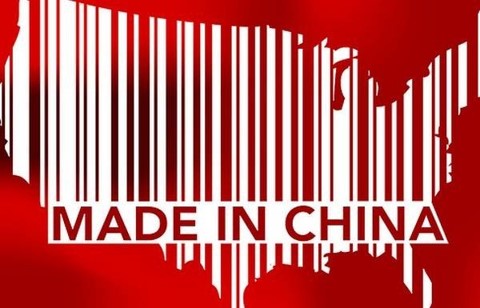
The Cold War in Asia began with spread of Communism to mainland China. It is no surprise if President Trump thinks of China as ‘Security Threat’. However, American infatuation with Communist China is not over. Americans are not yet ready to come to grips with realities of world dominated by Socialism with Chinese Characteristics. “America First – Tibet on The Back Burner” Strategy is Doomed.
Rudranarasimham Rebbapragada DOOM DOOMA DOOMSAYER
CHINA CONDEMNS US ‘COLD WAR MENTALITY’ ON NATIONAL SECURITY
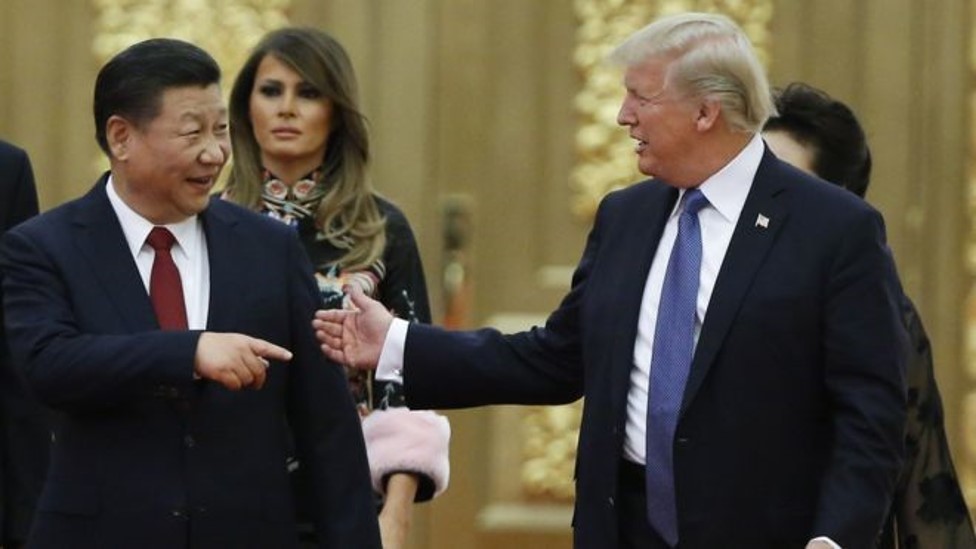
Image copyright Getty Images Image caption Chinese President Xi Jinping has enjoyed a cordial relationship with Donald Trump China has condemned the “Cold War mentality” of the White House after the publication of a new US national security policy. The document labels China and Russia as “rival powers” and lays out a number of potential threats they pose. The new strategy said Beijing and other governments were determined to challenge American power. But China’s foreign ministry criticized the strategy report, saying Washington should “abandon outdated notions”. Spokeswoman Hua Chunying said: “No country or report will succeed in distorting facts or deploying malicious slander. “We urge the US side to stop intentionally distorting China’s strategic intentions and to abandon outdated ideas of Cold War mentality and the zero-sum game.” Russia also responded to the new strategy by saying it “cannot accept” that it is treated as a threat. It also criticized what it said was the “imperialist character” of the document.
· Trump’s pragmatic view of troubled world In the new US national security strategy, China and Russia are said to “challenge American power, influence and interests, attempting to erode American security and prosperity”. “They are determined to make economies less free and less fair, to grow their militaries, and to control information and data to repress their societies and expand their influence.”
The new national security strategy contains a range of claims about China, including:
· China and Russia “are developing advanced weapons and capabilities” that could threaten the US
· Competitors such as China “steal US intellectual property valued at hundreds of billions of dollars”
· China and Russia are investing in the developing world “to expand influence and gain competitive advantages” over the US
· In Europe, China is gaining a foothold “by expanding its unfair trade practices and investing in key industries”
· China also “seeks to pull the [Central America] region into its orbit through state-led investments and loans” Some of the claims have been made before, but the new document casts them as part of a battle for dominance.
Analysis: Friends or rivals?
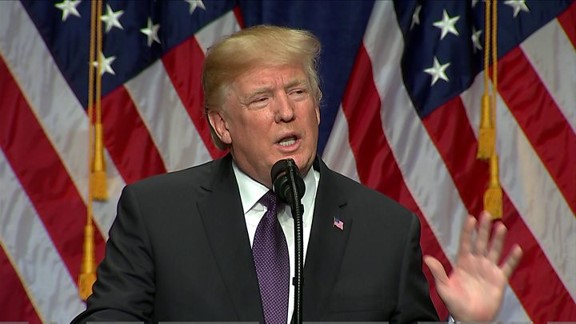
The BBC’s Robin Brant in Shanghai First at his golf club in Florida, then at the Forbidden City in Beijing, President Trump has taken every opportunity to say how close a friendship he’s built with his Chinese counterpart Xi Jinping. But now the official version is rivals – not friends. The classification sends a clear message about America’s changing stance towards a rising China, a China that’s made no secret of its plan to significantly expand its navy, assert more regional authority and expand its influence further abroad through a massive state-backed investment push. Economic rivalry is crucial to this dynamic. The Trump administration is investigating China for what it alleges is the dumping of artificially cheap aluminum products on US markets. It has threatened to do the same on steel exports. Ahead of the document’s publication, there were reports that the National Security Strategy would classify China as an economic “aggressor”, but that did not appear in the final version. Strategy documents are often released with little ceremony, but President Trump appeared at a special event to mark the release of the new strategy. In a speech about his new strategy, Mr. Trump said the US faced a new era of competition, and that China and Russia were the primary threats to US economic dominance. But, he said, the US must attempt to build a “great partnership with them”. Mr. Trump described “four pillars” to his new plan: protecting the homeland, promoting American prosperity, demonstrating peace through strength and advancing American influence. The 68-page document, which White House officials began work on 11 months ago, suggests a return to Mr. Trump’s campaign promise of “America First”.
In his speech, Mr. Trump referred to his election victory, saying that in 2016 voters chose to “Make America Great Again”. Previous American leaders had “drifted” and “lost sight of America’s destiny” he said, standing before a backdrop of American flags. “Now less than one year later I am proud to report that the entire world has heard the news and has seen the signs,” he said. “America is coming back and America is coming back strong.” He also outlined his campaign promise to build a wall on the border with Mexico, as well as reform of the immigration visa system. The new policy stresses economic security but does not recognize climate change as a national security threat. His predecessor, Barack Obama, in 2015 declared climate change an “urgent and growing threat to our national security”.
On Saturday December 16, 2017 I have no other person to join me to mourn the loss of my Freedom while Indians celebrate “VIJAY DIWAS” or Victory Day in remembrance of December 16, 1971 when India declared victory in its war against Pakistan leading to Liberation of Bangladesh.
In November-December 1971, I witnessed the loss of lives of young Tibetan soldiers during military action in Chittagong Hill Tracts. I host their spirits in my living consciousness.
Today, I find no other person, or organization willing to acknowledge the fact of losing lives of Tibetan soldiers. There is no Prime Minister, there is no President, there is no Spiritual Leader, there is no Defence Minister, there is no Army Chief, and there is no Secret Service Agency willing to acknowledge the loss of life while we took part in Operation Eagle, Bangladesh Ops that initiated Liberation of Bangladesh. I have no one to share my grief. I have no one who may extend sympathy. I have no one to give me hope. I have no one to promise Freedom down the road while my life’s journey is marching towards its inevitable destination.
SPECIAL FRONTIER FORCE PAYS TRIBUTE TO INDIAN ARMED FORCES ON VIJAY DIWAS
On behalf of Special Frontier Force, I join the nation to pay tribute to members and families of Indian Armed Forces to honor the soldiers who lost their lives in the 1971 India-Pakistan War.
Rudranarasimham Rebbapragada SPECIAL FRONTIER FORCE
Vijay Diwas: Nirmala Sitharaman, armed forces pay tributes to heroes of 1971 war
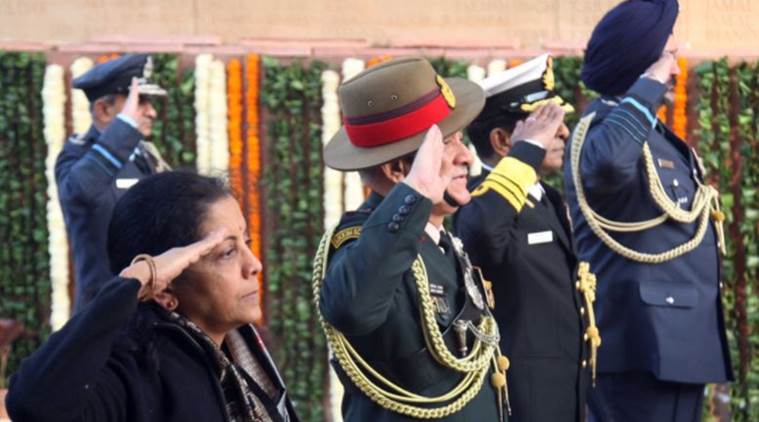
On Vijay Diwas, Defence Minister Nirmala Sitharaman and top brass of the armed forces paid tributes to the soldiers who lost their lives in the 1971 India-Pakistan war
PTI
Nirmala Sitharaman, army chief General Bipin Rawat, vice chief of the Indian Navy Vice Admiral Ajit Kumar P. and chief of the air staff Air Chief Marshal B.S. Dhanoa laid wreaths at the Amar Jawan Jyoti in India Gate on Vijay Diwas. Photo: PTI New Delhi: Defence minister Nirmala Sitharaman and top brass of the armed forces on Saturday paid tributes to the soldiers who lost their lives in the 1971 India-Pakistan war, which paved the way for the creation of Bangladesh. Sitharaman, army chief General Bipin Rawat, chief of the air staff Air Chief Marshal B.S. Dhanoa and vice chief of the Indian Navy Vice Admiral Ajit Kumar P. laid wreaths at the Amar Jawan Jyoti in India Gate, paying respect to the fallen heroes of the war.
“On #VijayDiwas, the nation remembers the courage & sacrifice of soldiers in Indo-Pak war of 1971 which led to the stunning victory of India over Pakistan,” the Defence Minister tweeted.
Vijay Diwas is commemorated on this day every year to mark India’s victory over Pakistan in the war, which had led to the creation of Bangladesh. On 16 December 1971, nearly 93,000 Pakistani soldiers had raised white flags and surrendered to the Indian Army. The victory followed the creation of Bangladesh (then East Pakistan).
A number of functions were organized in Delhi and elsewhere to commemorate India’s victory over Pakistan.
First Published: Sat, Dec 16 2017. 08 21 PM IST
Topics: Vijay Diwas Nirmala Sitharaman Bipin Rawat India Gate India Pakistan War
THE COLD WAR IN ASIA – THE DALAI LAMA WANTS TO RETURN HOME
THE COLD WAR IN ASIA – THE DALAI LAMA WANTS TO RETURN HOME
I am sharing my perspective on behalf of Special Frontier Force with which I maintain lifetime affiliation apart from my military service at Establishment No. 22 from September 1971 to December 1974. I often describe myself as Doom Dooma Doomsayer and describe Doomed American China Fantasy as ‘Doomed Gun of Doom Dooma’.
My journey to Doom Dooma, Tinsukia District, Assam started in Mylapore, Madras or Chennai and I describe it as Kasturi-Sarvepalli-Madras-India-Tibet-US Connection. On my maternal side, I am related to Dr. Sarvepalli Radhakrishnan who served as first Vice President of India for two consecutive terms(1952-62) and as second President of India from 1962-67. Most political analysts recognize Dr Radhakrishnan as a philosopher and give him no credit for his role as India’s diplomat during The Cold War Era. In my analysis, I describe Special Frontier Force as military organization that symbolizes military treaty or military pact between Tibet, India, and the US. Both India, and the US recognize His Holiness the 14th Dalai Lama as the Supreme Ruler of Tibet and hence he is in a position to enter into agreements with other nations. Due to Cold War Era secret diplomacy, the agreement between Tibet, India, and the US remains as a secret while China could easily expose its true purpose and mission. For China knows the secret, I want to affirm that our military mission is that of securing Freedom, Democracy, Peace, and Justice in Occupied Tibet. The Dalai Lama Institution of Tibetan Government for all practical purposes represents Tibetan Right to Self-Governance, and can be called Tibetan Democratic way of life. I am indeed sad, disappointed, frustrated, disenchanted by Trump presidency and there is no excuse for not agreeing for Trump-Dalai Lama meeting at The White House. Trump’s America or Americans First Policy goes against American values of celebrating Freedom, Democracy, Peace, and Human Rights. President Trump has to know that The Cold War in Asia is not over. Americans fought bloody battles in Korea and Vietnam. Those wars do not represent warfare against Koreans or Vietnamese people. Those military conflicts represent the policy of engagement to confront, and contain and even neutralize the security threat posed by Communism. China’s One-Party governance or Communism remains a regional as well as global threat to Freedom, Democracy, Peace, and Human Rights. USA has no choice and has to choose its partners or allies to resist the danger of Communism. I want to remind our readers not to ignore or underestimate the role of Natural Forces that shaped the reality of independent lifestyles of Tibetans over centuries. Indian Landmass continues to thrust against Asian Landmass, and the Himalayas continue to rise in height. I have no concern for man’s ability to use physical force to shape earthly events. I share the vision of Prophet Isiah and Prophet John( Book of Revelation) and predict heavenly strike against the Evil Empire code-named as “Babylon.”
Rudranarasimham Rebbapragada SPECIAL FRONTIER FORCE
The Chinese national flag is raised during a ceremony marking the 96th anniversary of the founding of the Communist Party of China (CPC) at Potala Palace in Lhasa in July 2017. Credit: Reuters/CNS/He Penglei The impact of the 19th Communist Party of China congress and affirmation of President Xi Jinping as China’s ‘most powerful’ leader in decades seems already to be having a bearing on India – especially on the ‘Tibet Issue’ that deeply intersects with the boundary problem. Is India bracing for the potential fallout? There may be more to the Dalai Lama’s desire to return home than meets the eye. The Tibetan leader’s November 23 statement – “The past is past, Tibetans want to stay with China” – carries a serious political overtone, coming as it does immediately after the 19th party congress and the Doklam standoff between India and China. The Dalai Lama’s statement that he is “not seeking independence for Tibet and wishing to stay with China” is not new; however, his declaration that “he would return to Tibet at once, if China agrees” has sparked fresh speculation of a possible rapprochement with Beijing. The sign of rapid thawing strangely comes on the heels of President Donald Trump’s recent visit to Beijing. Most likely, Trump wouldn’t have made Tibet a pressure point in his dealings with Beijing; rather he would have dumped the Dalai Lama (whom the US fostered for over half a century) on the altar of a better trade deal and for securing China’s commitment to exert more pressure on North Korea. During the trip US officials made to Dharamsala prior to Trump’s visit, this prospect would probably have been discussed. The inevitability of this change was clear when the US had started faltering on Tibet even earlier, when Barack Obama had to welcome the Dalai Lama through the back door of the White House, signaling Washington’s inability to withstand Beijing’s pressure. Trump was not even inclined to embrace the issue, as he refused to meet the Tibetan leader and instead proposed zero aid in 2018 to the Tibetans, reversing the decades-old American policy. The State Department has also not appointed a special coordinator for Tibet. Surely it couldn’t have been a coincidence that a week after Trump’s China visit, the Dalai Lama abruptly selected two personal emissaries (for an indefinite period) to represent him in all ‘global engagements’. He has cited increasing physical fatigue, but the decision to appoint two “trusted friends” – former ‘prime minister-in-exile‘ Samdong Rinpoche and current president of the ‘government in exile’, Lobsang Sangay – was meant to send a calibrated signal to China. Anyway, the Dalai Lama has been working on a new plan – 5/50 vision – that envisaged a five-year strategy for returning to dialogue with China, but preparing for a 50-year struggle if needed – along the “hope for the best and prepare for the worst” proverb. The 5/50 strategy reaffirmed his middle way approach (Umaylam) as a realistic political means of realizing the dual aim of his early return to Tibet and fulfilling the aspirations of the Tibetan people. Appointing personal emissaries satisfies China. Beijing has been emphatically asking the Dalai Lama to stop travelling to Western capitals, if talks are to be resumed. At the 19th party congress, the Tibet Work Forum chief told reporters that international figures have no excuse for meeting with the Dalai Lama. Recently, the Dalai Lama even had to abort his planned visit to Botswana, citing physical “exhaustion”. Within this rapidly-unfolding scenario, the Dalai Lama appears to have sent Samdong on a discreet visit to Kunming (China). Samdong’s visit, starting from mid November, must have been facilitated by no less than You Quan – newly-appointed head of the United Front Work Department that overseas Tibetan affairs. You Quan, who formerly served as party secretary of Fujian, is a close associate of President Xi. He had earlier successfully dealt with Hong Kong, Macau and Taiwan’s business communities. Clearly, Samdong’s visit forms part of the first five-year plan to engage with China, while Lobsang Sangay’s 17-day tour to Europe and Canada is meant to sustain the struggle for the next 50 years, if the first plan fails. Will the talks succeed now? In the past, Chinese leaders stymied the Dalai Lama’s desire to return to Tibet. But there is a distinct possibility that it may bear fruit this time. First, Xi, widely known to have a soft spot for Tibet, hitherto kept his own approach close to his chest, fearing resistance from hardliners. Unlike others, he held the view that the prospects for solving the Tibet problem would peter out once the Dalai Lama is no more. Xi now finds himself in a perfect position to resolve the issue as no other Chinese leader could do in the past, for he also stands to gain personally both in political and moral terms, to become the most credible leader in China’s history. Second, the Dalai Lama too long hoped for Xi to change tack, as he hailed him as “realist” and “open-minded” in contrast to his predecessors. In fact, the Tibetan leader has admitted to having received positive signals from top Chinese officials, especially from the moderate elements as streams of Han Chinese flocked to meet him during Xi’s first term. In May this year, the party was shocked to find their own party members clandestinely funding the Dalai Lama. But, most critically, Tibetans living inside Tibet may have pressured the Dalai Lama to seize the opportunity and resolve differences during Xi’s second term, before the window for a deal closes a few years from now. With time running out fast, the Dalai Lama can be anything but hopeful. He has been steadily losing international support in the face of China’s rise as a world power. No longer does any country dare to receive the Dalai Lama officially. Apart from his own ageing, the Tibetan leader faces the challenge of keeping his flock together. For example, the delay in reaching a solution causes anxiety, uncertainty and division among his people. Even inside Tibet, rising frustration and hopelessness have been highlighted by people resorting to self-immolation. The number stands at 149 so far. And so, in what must be an embarrassing climb-down for the exiled Tibetan leaders, all they can do now is settle for the cause of “development”, besides hoping that the Chinese will not resort to repression of the Tibetan people. Therefore, in a way, we are likely witness the curtains finally being drawn on Tibet’s quest for an independent state. Tim Johnson knew this when he aptly titled his book Tragedy in Crimson: How the Dalai Lama Conquered the World but Lost the Battle with China. And finally, for India, the question is whether New Delhi has any role to play in this rapidly-evolving scene, and if so under what political parameters. There is no sign of anyone having even considered the impact of this. But to be cautious, any Sino-Tibetan deal would seriously risk undercutting India’s position on the boundary dispute with China. Seemingly fretful about impending developments, the Dalai Lama now finds himself walking a political tightrope by espousing reconciliation between India and China, “living peacefully by putting the differences aside”. He maintained a hands-off position and tried not to get drawn even into the Doklam standoff – instead calling for a peaceful solution. One hopes he is successful this time. P. Stobdan, a former Indian ambassador, specializes in Chinese, Tibetan, Mongolian and Uighur affairs.
US POLICY ON OPPRESSION IN TIBET: TOO LITTLE, TOO LATE
US POLICY ON OPPRESSION IN TIBET: TOO LITTLE, TOO LATE.
US policy on ‘Oppression in Tibet’ serves no purpose for it is ‘too little, too late’. US has to make a fundamental determination of Tibet’s status as an independent nation prior to Communist China’s invasion in 1950. US has to declare the illegal nature of China’s conquest of Tibet. I ask the United States to state clearly that Tibet was not part of China before the invasion, while also declaring that China has violated international law.
US POLICY ON OPPRESSION IN TIBET: TOO LITTLE, TOO LATE.
Richard Gere at House Foreign Relations Committee’s Subcommittee on Asia and the Pacific WASHINGTON (Sinclair Broadcast Group) – Members of the House Foreign Relations Committee’s Subcommittee on Asia and the Pacific met Wednesday to discuss U.S. policy toward Tibet.; more specifically, working toward greater access, religious freedom and human rights for Tibetan citizens. Two bills pending before the subcommittee were highlighted. The H.R.1872 —Reciprocal Access to Tibet Act of 2017 would require the U.S. State Department to submit a list to Congress of senior Chinese officials in leadership positions for review. Congress would then determine the officials’ level of access to the United States contingent with the access U.S. officials are granted to Tibetan areas in China.
The second bill, H.Con.Res.89, maintains that United States policy toward Tibet and treatment of the Tibetan people should remain a factor in U.S. relations with China. Subcommittee Chairman Ted Yoho, R- Fla., discussed the ways in which the Tibetan people have had their human rights and civil liberties encroached upon. “Human rights and personal freedoms in Tibet are already in a poor and worsening state,” Yoho said. “According to a 2016 Human Rights report, the government of China engages in the severe repression of Tibet’s unique cultural and linguistic heritage by among other means strictly curtailing the civil rights of the Tibetan population, including the freedoms of speech, religion, association, assembly and movement.” The congressman added that the flow of information is heavily restricted to Tibet by China.
“Tibet remains extremely isolated. The flow of information in and out of Tibet is tightly restricted,” Yoho said. “Tibetans are prevented from obtaining passports and moving freely and foreigners especially journalists and officials are frequently denied access.” Ranking Member of the Subcommittee Brad Sherman, D- Calif., said in 2015 China expressed they had no intentions of granting autonomy to Tibet. “China’s suppression of Tibet has continued and intensified. China has not held discussions about Tibet’s status with the Dalai Lama’s representatives since January 2010,” Sherman said. Sherman then asked the lawmakers to take a stronger stance with China when conducting trade business. “To think that we allow China to exercise that kind of control while giving them free access to our markets is something Congress needs to review,” Sherman said. Chairman Emeritus of the Committee on Foreign Affairs Ileana Ros Lehtinen, R- Fla., also made a statement: “Tibet has been pushed to the periphery of U.S. foreign policy.” One of the hearing’s key witnesses was award-winning actor Richard Gere. Human rights advocacy is a subject Gere has testified on before Congress in previous hearings. He also famously took a moment during the 1993 Oscar awards to ask former Chinese leader Deng Xiaoping to “take his troops, take the Chinese away from Tibet and allow these people to live as free and independent people again.”
During Wednesday’s hearing, Gere spoke to the committee as the chair of the board of directors for the International Campaign for Tibet. He told lawmakers he was touched by their support from both sides of the aisle. “I am totally knocked out by the words I’m hearing from all of you,” Gere said. “I think everyone in this room is feeling this from a deep place. How important this is maybe not strategically but humanly and what it means to us as Americans to be coming from this place of universal responsibility protecting the welfare and human rights of everyone on this planet.” He thanked Congress for awarding the Dalai Lama with the Congressional Gold Medal in 2007. He emphasized that the current human rights issues in Tibet strike at the core of American values. “The respect for the identity of a people, of their religion, is something the American people understand very well and deeply care about,” Gere said. “Before being politicians or actors, we are human beings who understand that oppression cannot be tolerated; you understand that all human beings have the right to the pursuit of happiness and to avoid suffering.” Gere also said that while President Donald Trump did discuss human rights with China during his most reason trip to Asia, he did not publicly highlight Tibet and the need for reopening a dialogue between Chinese officials and the Dalai Lama. He said it important for there to be reciprocity in diplomatic relations, not only in trade — but in freedom of movement and information.
Hearing Witness Director of the Tibetan Service, Radio Free Asia, Tenzin Tethong, spoke candidly about the difficulty in getting fact-based news reports to the Tibetan people and the struggle their reporters go through to gain access to Tibet. “It’s extremely difficult for any of our journalists to have normal access to Tibet, which ranks among the world’s worst media environments after North Korea,” Tethong said. “Nevertheless, many of them maintain various levels of contact with vast networks of trusted sources inside who can provide tips, leads, images, video, and confirmation of events.” Tethong claims that China has become more forceful with comprehensive censorship and propaganda in Tibet. Hearing witness and President of the National Endowment for Democracy Carl Gershman, asserted that China’s behavior toward Tibet has actually worsened in comparison to previous leaders. “In fact, the threat posed by China to the world order has increased with its growing economic power, and repression is worse today than at any time since the death of Mao Zedong four decades ago,” Gershman said. “In addition to the systematic effort to destroy the Tibetan religion, language, culture, and distinct national identity, China has flooded Tibet with Han Chinese settlers, placed monasteries under direct government control, arrested and tortured writers, and forcibly resettled more than two million nomads in urban areas, destroying their traditional way of life and disrupting the fragile ecosystem of the Tibet Plateau” Gershman called on the United States to state clearly that Tibet was not part of China before the invasion, while also declaring that China has violated international law. “We also need to remember that the struggle for Tibetan rights cannot be separated from the fight for human rights and freedom in China,” Gershman said.
US POLICY ON OPPRESSION IN TIBET: TOO LITTLE, TOO LATE.
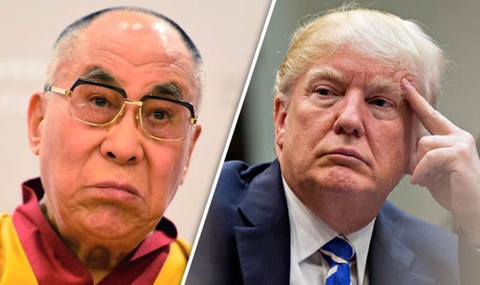
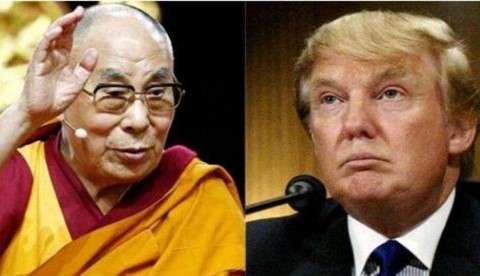
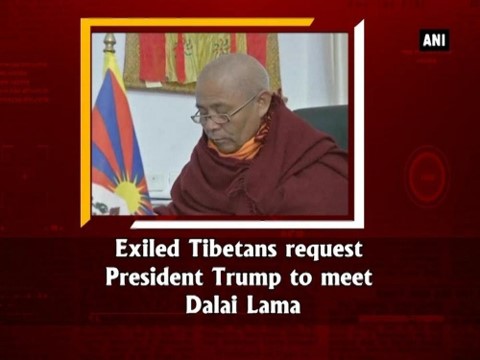
NO TRUMP MEETING WITH DALAI LAMA MEANS DALAI LAMA’S TRAVEL PLAN FOR RETURN TO TIBET
No Trump Meeting With Dalai Lama Means Dalai Lama’s Travel Plan For Return To Tibet.
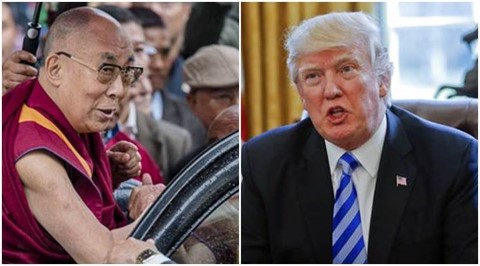
President Trump’s disinterest to meet with Dalai Lama has some consequences. Apart from Washington, Dalai Lama is making no plan to visit foreign capitals and is unwilling to meet with foreign officials. Dalai Lama not only appointed personal emissaries but also sent his personal emissary to meet with Chinese officials. By stubbornly avoiding meeting Dalai Lama, President Trump may have pushed Dalai Lama to make his travel plan for return to Tibet through direct negotiations with China.
No Trump Meeting With Dalai Lama Means Dalai Lama’s Travel Plan For Return to Tibet.
In my analysis, Dalai Lama took this action to communicate that he is discontented, dissatisfied, and disappointed with Trump presidency which degraded, devalued, and dehumanized Tibetan Suffering.
No Trump Meeting With Dalai Lama Means Dalai Lama’s Travel Plan For Return to Tibet.
CITING FATIGUE, DALAI LAMA APPOINTS PERSONAL EMISSARIES
No Trump Meeting With Dalai Lama Means Dalai Lama’s Travel Plan For Return To Tibet.
Clipped from: VOICE OF AMERICA
Citing Fatigue, Dalai Lama Appoints Personal Emissaries
Two close advisers authorized to represent Tibetan spiritual leader globally
No Trump Meeting With Dalai Lama Means Dalai Lama’s Travel Plan For Return To Tibet.
Tibetan spiritual leader the Dalai Lama sits on his ceremonial chair as he presides over inauguration of the Namgyal Monastery School in Dharamsala, India, Nov. 2, 2017. WASHINGTON — The Dalai Lama says he has appointed emissaries to attend international engagements or speak on his behalf indefinitely. Citing increasing physical fatigue, the exiled Tibetan spiritual leader made the comments while meeting with a group of international youth leaders brought to Dharamsala, India, by the Washington-based Institute of Peace. “I’m 82 years old, and since last year [my] feeling of tiredness has been much increased,” he told the group during video-recorded meetings last week. Because he may not be able to maintain a regular international travel schedule, he said, the president of Tibet’s current government-in-exile, Lobsang Sangay, along with prominent Buddhist scholar and former prime minister in exile, Samdong Rinpoche, would act as his official emissaries. These “trusted friends, they know my thinking,” he said. “Our work, continuously, should be more active [and internationally engaged], so in these two persons,” he said, pointing to Lobsang and Samdong, “I have full trust.” Looking to the dialogue moderator, USIP President Nancy Lindborg, the Dalai Lama said: “If your side … or your government’s side” has concerns, “then these two persons, either one, can participate as my representative or my personal emissary.” Penpa Tsering, representative for the Office of Tibet in Washington, which represents the Tibetan government-in-exile, downplayed the significance of the Dalai Lama’s statement.
No Trump Meeting With Dalai Lama Means Dalai Lama’s Travel Plan For Return To Tibet.
FILE – President of the Tibetan administration in exile Lobsang Sangay, center, greets a child as he arrives to attend the founding anniversary celebrations at the Tibetan Children’s Village School in Dharamsala, India, Oct. 23, 2017.
No Trump Meeting With Dalai Lama Means Dalai Lama’s Travel Plan For Return To Tibet.
“I think this was more of a general statement,” he told VOA. “His holiness is sometimes too tired to travel, and his April visit to the United States has been suspended indefinitely, but he will continue to travel in India, and Europe is only a seven hour flight.” Adding that Lobsang’s presidential term is limited to five years, and the fact that Samdong has long served as a kind of unofficial deputy to the Dalai Lama, he said the November 6 comments do not represent a major diversion or change in Dharamsala’s official representation on the world stage. Symbol of Tibet However, Carole McGranahan, a University of Colorado anthropologist and historian of Tibet, says although prioritizing the Dalai Lama’s health requires a reduction in his international travel schedule, his physical absence from global engagements cannot be substituted via proxy. “So much of the goodwill and attention Tibet receives in the world is due to his holiness, and specifically due to his personal interactions with world leaders and with the large audiences he draws around the world. His deep wisdom, his humor and charisma, his serious attention to pressing world issues, and, of course, his model of compassion and leadership, make a deep impression on people,” she told VOA’s Tibetan Service via email. “For so much of the world, the Dalai Lama is the symbol of Tibet. Will his trusted emissaries be able to achieve the same effects? Of course not, as no one can truly stand in for the Dalai Lama,” she wrote. “They will be able to represent him, but no one can embody the message of Tibet as he does. His Holiness’s stepping back from international travel will signal a new era of Tibetan diplomacy in the world.”
FILE – Tibetan spiritual leader Dalai Lama (L) greets Prime Minister of the Tibetan government-in-exile Samdong Rinpoche (R) during celebrations of the 360th anniversary of the creation of the Tibetan government, in Dharamsala, India, June, 5, 2002. Robert Barnett, director of the Modern Tibet Studies Program at Columbia University, says the decision may be a signal to Beijing. “Of course, there’s always the possibility that this move is intended as a post-19th Party Congress signal to Beijing of increased openness to a resumption of talks, or possibly even a response to a request from there,” he said. “It certainly should make Zhang Yijiong happier,” he added, referring to Communist Party’s Tibet working group chief, who told reporters on the sidelines of the party congress that international figures have no excuse for meeting with the Dalai Lama. “Except … it seems unlikely that war horses of that type can ever be appeased,” Barnett added, again referring to Zhang. This story originated in VOA’s Tibetan Service. Pete Cobus contributed original reporting.
No Trump Meeting With Dalai Lama Means Dalai Lama’s Travel Plan For Return to Tibet.No Trump Meeting With Dalai Lama Means Dalai Lama’s Travel Plan For Return To Tibet.TRUMP TALKS, DALAI LAMA LISTENS.







































 Whole Dude - Whole Spirituality
