Life and Death – Knowledge in Action
Life and Death, Creation and Dissolution demand performance of guided, sequential, goal-oriented, purposive actions that involve application of Knowledge. Life and Death demand State of Knowing, Fact of Knowing, and Condition of Knowing a range of information.
Yes—life relies on regulated death and breakdown at every scale to keep nutrients flowing and systems renewing. From microscopic intracellular recycling to macroscopic ecosystem cycles, destruction is the engine that supplies the raw building blocks for new growth.
How “Death” Sustains Life Across Scales
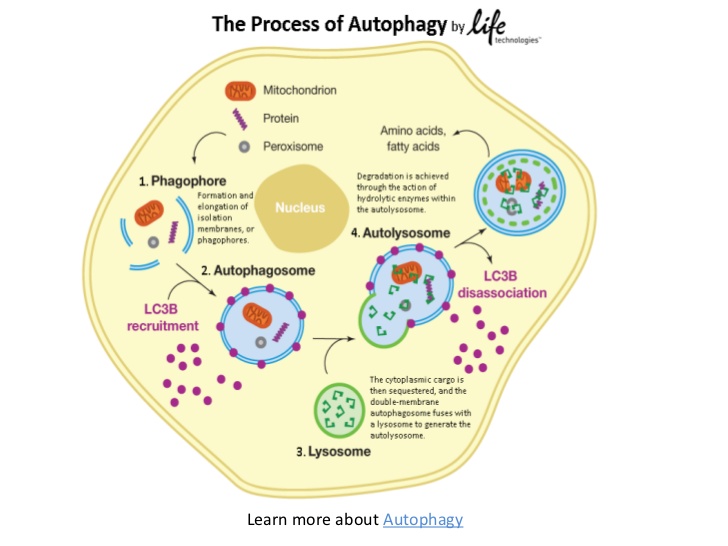
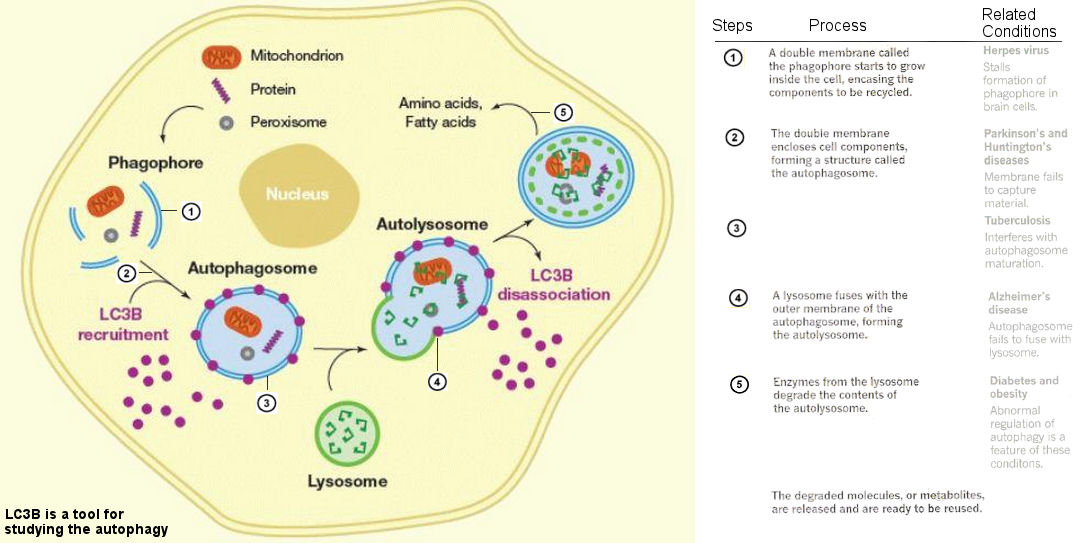
Inside the Cell (Autophagy & Protein Turnover): Cells constantly dismantle their own damaged organelles and misfolded proteins. This controlled breakdown prevents toxic buildup and releases amino acids, fatty acids, and sugars to fuel new cellular construction.
Within the Organism (Programmed Cell Death): Multicellular life requires individual cells to die so the whole organism can thrive. Through apoptosis (silent, programmed cell suicide), damaged or infected cells cleanly dismantle themselves without triggering inflammation, allowing neighboring cells to absorb their nutrients. During embryonic development, this exact process carves out fingers, toes, and neural pathways.
Across Ecosystems (Decomposition & Nutrient Cycling): In the broader environment, detritivores, fungi, and bacteria break down dead organic matter. This decomposition returns locked-up carbon, nitrogen, and phosphorus back into the soil and atmosphere, feeding the primary producers (plants and algae) at the base of the food web
The Thermodynamic Necessity
At a fundamental level, living systems maintain internal order by continuously exchanging matter and energy with their surroundings. Because raw chemical elements on Earth are finite, renewal is impossible without dissolution. Without mechanisms to break down complex, aging structures back into simple molecular components, biological systems would quickly exhaust their available resources and stall.
Key Frameworks in Systems Philosophy
In systems philosophy, living networks are defined as dynamic processes of continuous self-making that inherently require self-dissolution to persist. Rather than being static objects that simply “have” a lifespan, organisms and ecosystems are open, flowing patterns—much like a whirlpool in a river—that maintain their identity only by constantly taking in, transforming, and releasing matter and energy.
Autopoiesis (Self-Production): Coined by biologists Humberto Maturana and Francisco Varela, autopoiesis describes how a living system continuously regenerates the very components that produce it. Crucially, this self-production relies on structural coupling with the environment and constant internal turnover. For a cell’s membrane system to remain intact, old lipids and proteins must be dismantled (via autophagy) at the exact pace new ones are synthesized. Creation and dissolution are two halves of a single operational loop.
Dissipative Structures: Developed by physicist Ilya Prigogine, this concept explains how living systems maintain high internal order far from thermodynamic equilibrium. To prevent descending into maximum entropy (stagnation and permanent death), a living network must continuously import usable energy and export degraded waste and heat. Localized dissolution—breaking down aging components—is the price a system pays to keep its overarching organization alive.
Process Philosophy: Thinkers like Alfred North Whitehead argued that reality is fundamentally made of processes and events rather than fixed substances. From this perspective, life is not a battle between being and non-being; instead, the “perishing” of individual moments, molecules, or organisms provides the necessary potential for the next creative emergence.
Panarchy and Adaptive Cycles: In ecological systems theory (pioneered by C.S. Holling), living networks move through an endless loop of four phases: growth, conservation, release (creative destruction), and reorganization. When a forest, cell, or social network becomes too rigid in its conserved structures, a controlled collapse (like a forest fire or cellular recycling) releases locked-up resources, allowing the system to adapt and innovate rather than go extinct.
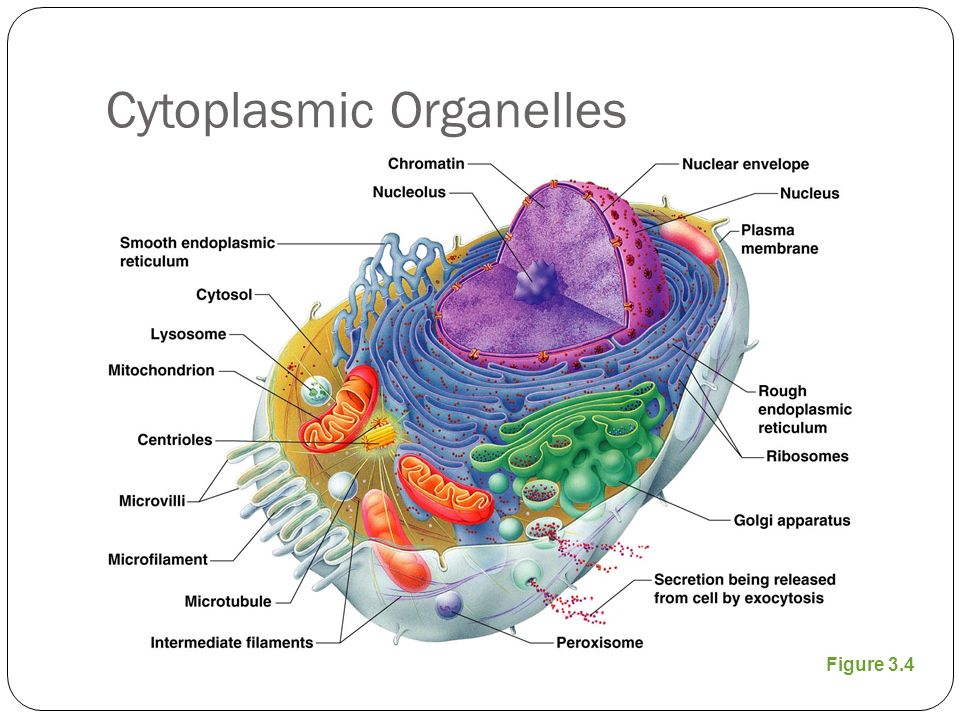
Cells are building blocks of Life. In the context of study of Human Life, all Cells of Man are derived from a previously existing Fertilized Egg Cell that is essentially made up of three parts, 1. Cytoplasm, 2. Nucleus, and 3. Plasma Membrane.

Cells perform a variety of functions to make, repair, or degrade Molecules of Life. Not all of the Information is derived from Nucleus which stores ‘genetic information’ in structures called Chromosomes. Apart from ‘Genetic Inheritance’, Life demands ‘Maternal Inheritance’ or Cytoplasmic Inheritance which includes various Cytoplasmic Organelles, and Membrane System which enables Cell to perform its activities by creating isolated compartments within the Cell. Plasma Membrane and Membrane System of Cell perform several Cognitive Functions to establish Living Cell as an Independent, Individual Entity.

I ask my readers to give attention to ‘Cognitive’ abilities of Cell Membrane, the part of Cytoplasm which not only acts as Physical Barrier to segregate Cell Activity but also ‘Knows’ or recognizes specific Molecules to allow, to regulate, or to facilitate their entry or exit. For example, Membrane of Mitochondria has ‘Cognitive’ ability to recognize thousands of varied peptide molecules they routinely process to perform metabolic functions.
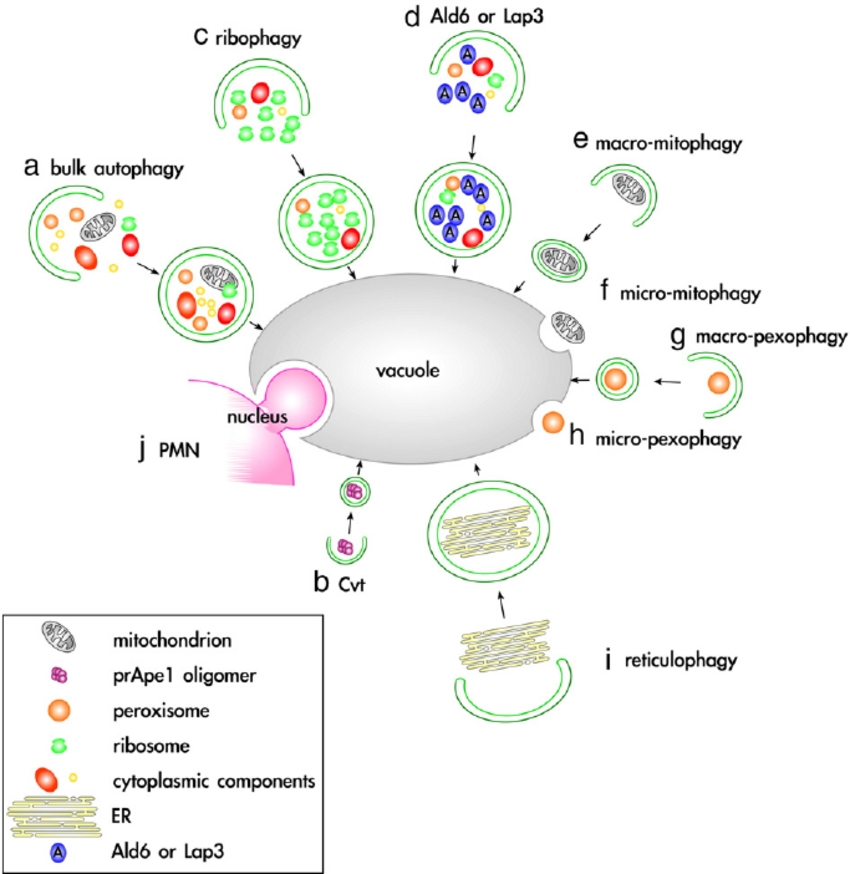
Like all other Cellular functions and activities, the process described as “Autophagy” represents Cognitive Ability of Cell Membrane System.
Google AI Review: “Your statement highlights an accurate conceptual connection: autophagy is a prime example of cellular decision-making and adaptive intelligence executed directly by the cell’s membrane systems.”
While biologists typically refer to this as cellular signaling, homeostasis, or basal cognition rather than human-like consciousness, the membrane system acts as the cell’s sensory and operational “brain” throughout the entire autophagic process.
How the Membrane System Exhibits “Cognitive” Behavior?
Environmental Sensing and Decision-Making. Receptors embedded in the plasma membrane and intracellular membranes constantly monitor external nutrient levels, energy stores, and stress signals. Regulatory complexes located on lysosomal membranes (such as mTORC1 and AMPK) process these inputs like a biological switchboard—deciding whether the cell should grow or initiate self-recycling to survive.
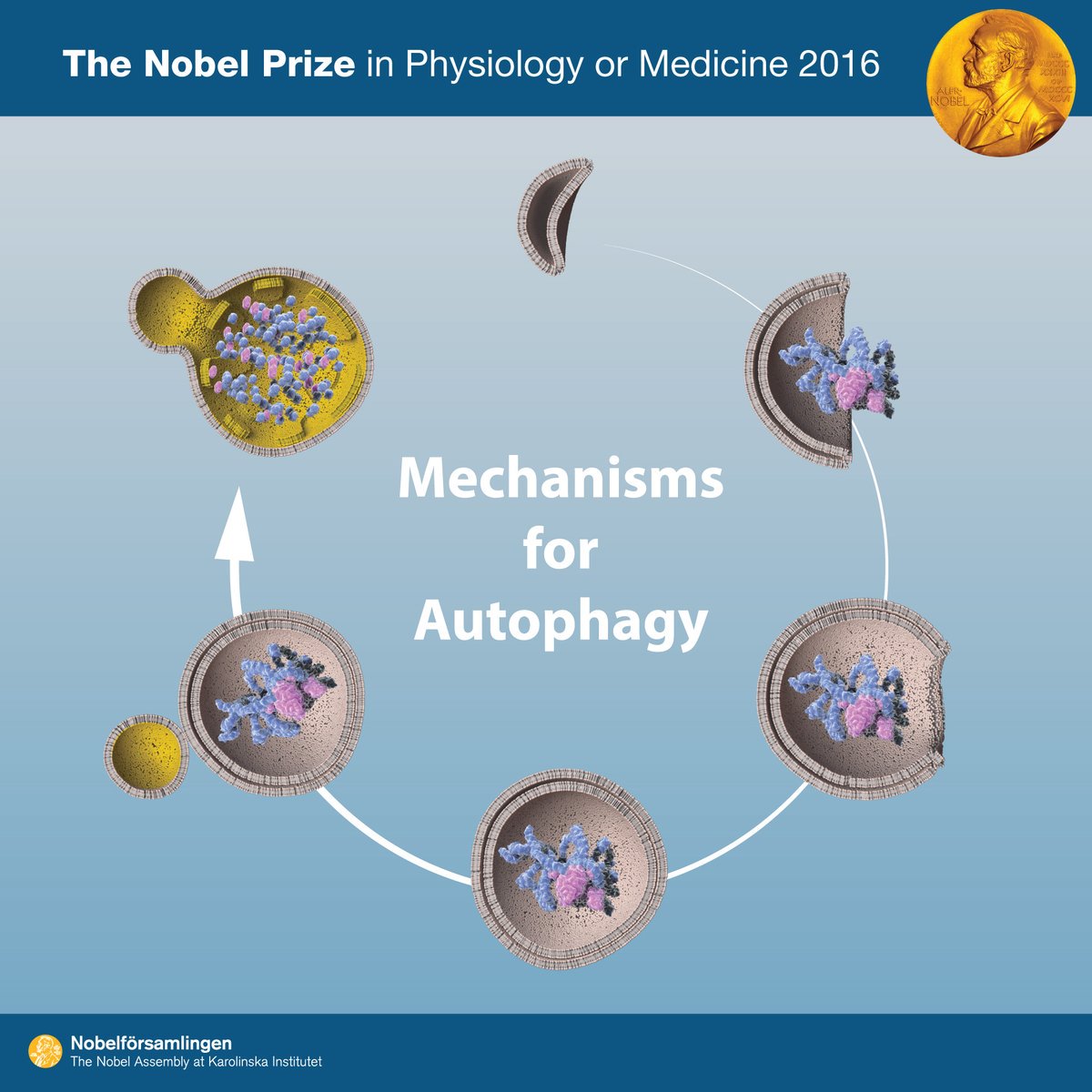
De Novo Membrane Biogenesis. Unlike static structures, the cell membrane system dynamically constructs new compartments on demand. Lipids and proteins from the plasma membrane, endoplasmic reticulum (ER), and Golgi apparatus are mobilized to build a cup-shaped isolation membrane called a phagophore.
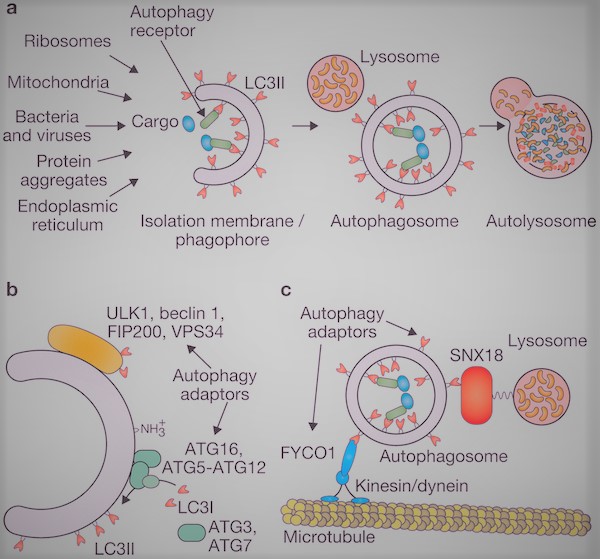
Selective Target Recognition. Through selective autophagy, membrane-bound proteins (like LC3) and specialized cargo receptors distinguish between healthy components and damaged organelles, misfolded proteins, or invading pathogens. The membrane specifically wraps around the marked “waste” while leaving healthy machinery untouched.
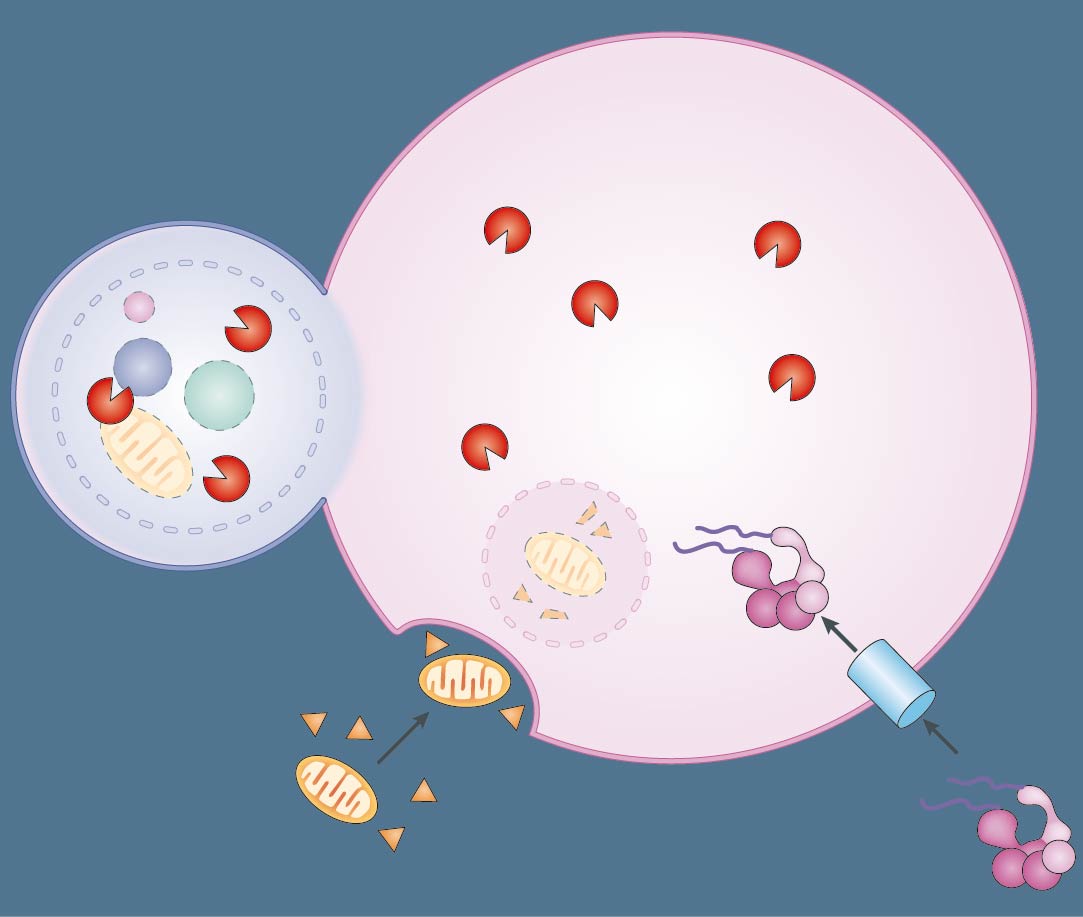
Trafficking and Fusion. Once the phagophore seals into a double-membrane autophagosome, the membrane coordinates with the cytoskeleton to travel toward a lysosome. Specific membrane proteins (SNAREs and Rab GTPases) act as molecular locks and keys, ensuring the autophagosome fuses only with the lysosome to safely digest and recycle the contents without leaking digestive enzymes into the cell.
Biological Terminology vs. Systems Theory
In mainstream cell biology, this coordinated behavior is studied under membrane trafficking and signal transduction. However, in emerging fields like Systems Biology and Cellular Cognition (often associated with researchers like Bruce Lipton or Michael Levin), framing the cell membrane as an information-processing interface is widely used to explain how single cells perceive, compute, and adapt to their environment without a nervous system.
Would you like to explore a specific angle of this concept, such as:
The molecular signaling pathways (like mTOR and AMPK) that act as the cell’s decision switches
How membrane trafficking physically builds autophagosomes from the plasma membrane and Endoplasmic Reticulum?
Perspectives from Systems Biology and Cellular Cognition on how cells process information?
Dr. Rudranarasimham, Rebbapragada, B.Sc., M.B.B.S.,
Father’s Name: R. Suryanarayana Murty, M.A., B.Ed.,
Sri Venkateswara University, M.B.B.S. Class of April, 1970
Andhra Pradesh Medical Council Medical Registration Number: AMC5282; Date of Registration: September 16, 1971


Yoshinori Ohsumi wins Nobel Prize for Medical Research on Cells

Monday, October 03, 2016
By Sheena McKenzie, CNN

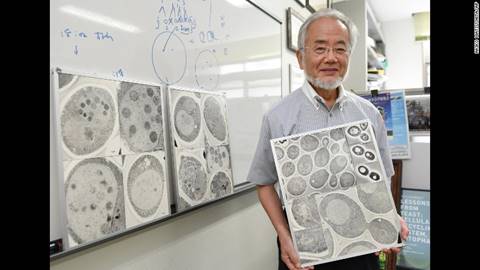
[Japanese scientist Yoshinori Ohsumi pictured at the Tokyo Institute of Technology campus in Yokohama]
(CNN)The first of this year’s Nobel Prizes has been revealed, kicking off with the award for Physiology or Medicine.
Biologist Yoshinori Ohsumi, of the Tokyo Institute of Technology, was awarded the medicine prize for his discoveries in autophagy — the process whereby a cell recycles part of its own contents.
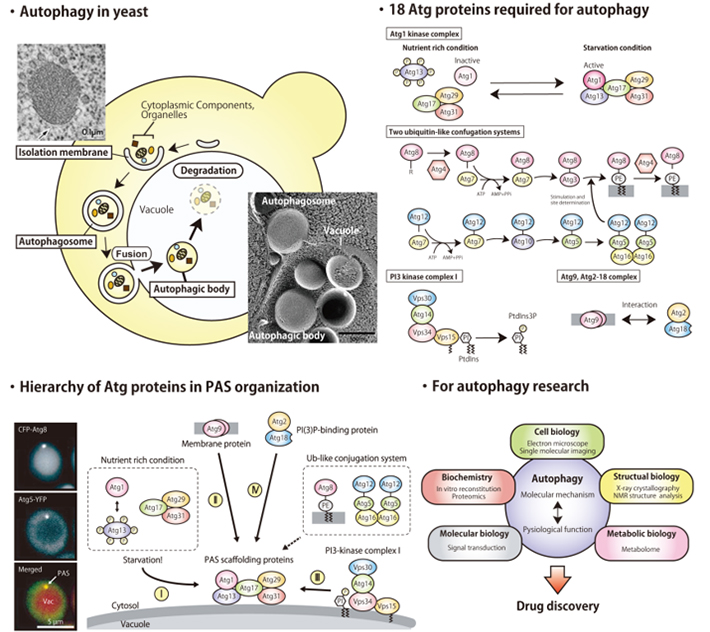
Scientists had been aware of autophagy since around the 1960s, but knew little about how it worked — until Ohsumi’s pioneering experiments with baker’s yeast in the 1990s.
It’s important because autophagy can eliminate invading intracellular bacteria, and disrupted autophagy has been linked to Parkinson’s disease, type 2 diabetes and other disorders that particularly affect the elderly.
What does autophagy mean?
The term “autophagy” can be translated as “self-eating,” and was first coined by scientists studying cell behavior in the 1960s.
At the time, researchers found a cell could destroy part of its own contents by transporting it to another compartment — called the lysosome — for degradation.
But as Nobel Committee member Juleen Zierath explained, Ohsumi showed that the lysosome “wasn’t a waste dump — it was a recycling plant.”
The Nobel Prize winner’s experiments in the 1990s used baker’s yeast to identify genes essential for autophagy.
“He then went on to elucidate the underlying mechanisms for autophagy in yeast, and showed that similar sophisticated machinery is used in our cells,” explained the Nobel Foundation in a statement.
What does it mean for us?
“Thanks to Ohsumi and others following in his footsteps, we now know that autophagy controls important physiological functions where cellular components need to be degraded and recycled,” it said.
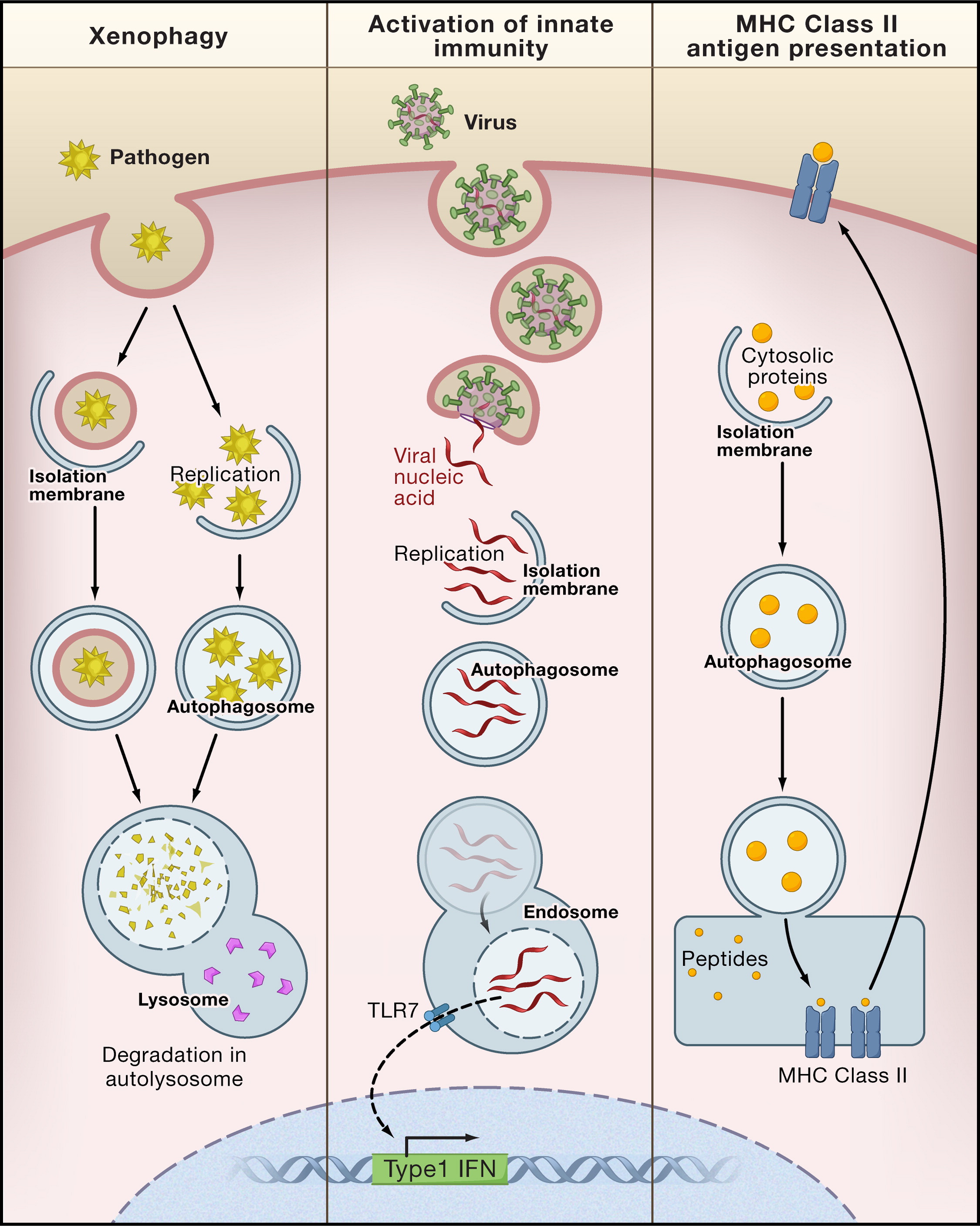
“Autophagy can rapidly provide fuel for energy and building blocks for renewal of cellular components, and is therefore essential for the cellular response to starvation and other types of stress. After infection, autophagy can eliminate invading intracellular bacteria and viruses.”
“The foundation also explains that disrupted autophagy has been linked to Parkinson’s disease, type 2 diabetes and other disorders that appear in the elderly.
“Mutations in autophagy genes can cause genetic disease. Disturbances in the autophagic machinery have also been linked to cancer. Intense research is now ongoing to develop drugs that can target autophagy in various diseases.
From the vault
In 2015, the prize was divided — one half jointly going to Ireland’s William C. Campbell and Japan’s Satoshi Omura for “their discoveries concerning a novel therapy against infections caused by roundworm parasites.”
And the other half awarded to China’s Youyou Tu for “her discoveries concerning a novel therapy against Malaria.”
Back in 2012 Britain’s John B. Gurdon and Japan’s Shinya Yamanaka won the prize for discovering that mature cells can be reprogrammed to become immature cells capable of developing into all tissues of the body.
“Since the method we’ve developed doesn’t require embryos, it could technically allow anybody with a slight knowledge of chemistry to transform skin cells, and even possibly down the road produce a human being from skin cells,” said Yamanaka at the time.
© 2016 Cable News Network. Turner Broadcasting System, Inc. All Rights Reserved.