LIVING TIBETAN SPIRITS DEMAND US-DALAI LAMA DIRECT-DIALOGUE

LIVING TIBETAN SPIRITS DEMAND US–DALAI LAMA DIRECT-DIALOGUE

Living Tibetan Spirits demand US–Tibet direct-dialogue. Firstly, United States must accord formal diplomatic recognition to Tibetan Government-in-Exile to facilitate direct-dialogue between US President and Dalai Lama. I am demanding putting an end to close door secret diplomacy. What China must do can be discussed by holding direct talks between US and Tibet. I do not account for past White House meetings between Dalai Lama and US President as “direct-dialogue.”

Rudranarasimham Rebbapragada

SPECIAL FRONTIER FORCE

CHINA NEEDS TO ENGAGE IN DIRECT-DIALOGUE WITH DALAI LAMA: POMPEO

Clipped from: https://in.news.yahoo.com/china-needs-engage-direct-dialogue-070501846.html

China needs to engage in direct-dialogue with Dalai Lama: Pompeo

13 Jun 2018: China needs to engage in direct-dialogue with Dalai Lama: Pompeo

Ahead of his Beijing visit, US Secretary of State Mike Pompeo said the US should express publicly that China needs to engage in meaningful and direct dialogue with Dalai Lama or his representatives, without preconditions, to lower tensions.

Pompeo also said, “I will urge China to cease restrictions on human rights of Tibetans as well as their religious, linguistic and cultural traditions.”

Here’s more.

Discussion: Pompeo to discuss bilateral ties with Chinese counterpart tomorrow

Pompeo, who was responding to questions asked by Members of the US Senate Foreign Relations Committee, said: “I will also raise concerns (with China) about the lack of regular access to the Tibetan Autonomous Region (TAR) for US journalists, diplomats, academics and others.”

Pompeo will visit China tomorrow and will discuss the bilateral ties and major global and regional issues of common concern.

Tibetan Policy Act: Will fully implement the Tibetan Policy Act: Pompeo to lawmakers

The top American diplomat assured the lawmakers that he will fully implement the Tibetan Policy Act and in particular “will urge China for the release of Tibetan political prisoners.”

Pompeo said he will also press the Chinese Government to respect the decision of Tibetan Buddhists in selecting, educating, and venerating the lamas who lead the faith, such as the Dalai Lama.

Fact: Dalai Lama’s successor should take approval from Communist Party: China

China said that the successor to Dalai Lama must be chosen according to the religious rituals and historical conventions as well as the backing from ruling Communist Party.

Living Tibetan Spirits demand Direct Negotiations between US President and Supreme Ruler of Tibet.
Living Tibetan Spirits demand Direct Talks between US President and Supreme Ruler of Tibet.
Living Tibetan Spirits are calling for Direct-Dialogue between US President and Supreme Ruler of Tibet.
Living Tibetan Spirits are asking for direct talks between US President and Supreme Ruler of Tibet.
Living Tibetan Spirits want direct talks between US President and Supreme Ruler of Tibet.
Living Tibetan Spirits expect Direct Discussion between US President and Supreme Ruler of Tibet.
Living Tibetan Spirits anticipate Direct-Dialogue between US President and Supreme Ruler of Tibet.
Living Tibetan Spirits invite Direct Negotiations between US President and Supreme Ruler of Tibet.
Living Tibetan Spirits want Direct-Dialogue between US President and Supreme Ruler of Tibet.


LIVING TIBETAN SPIRITS OPPOSE COLONIZATION OF LAND OF TIBET

LIVING TIBETAN SPIRITS OPPOSE COLONIZATION OF LAND OF TIBET
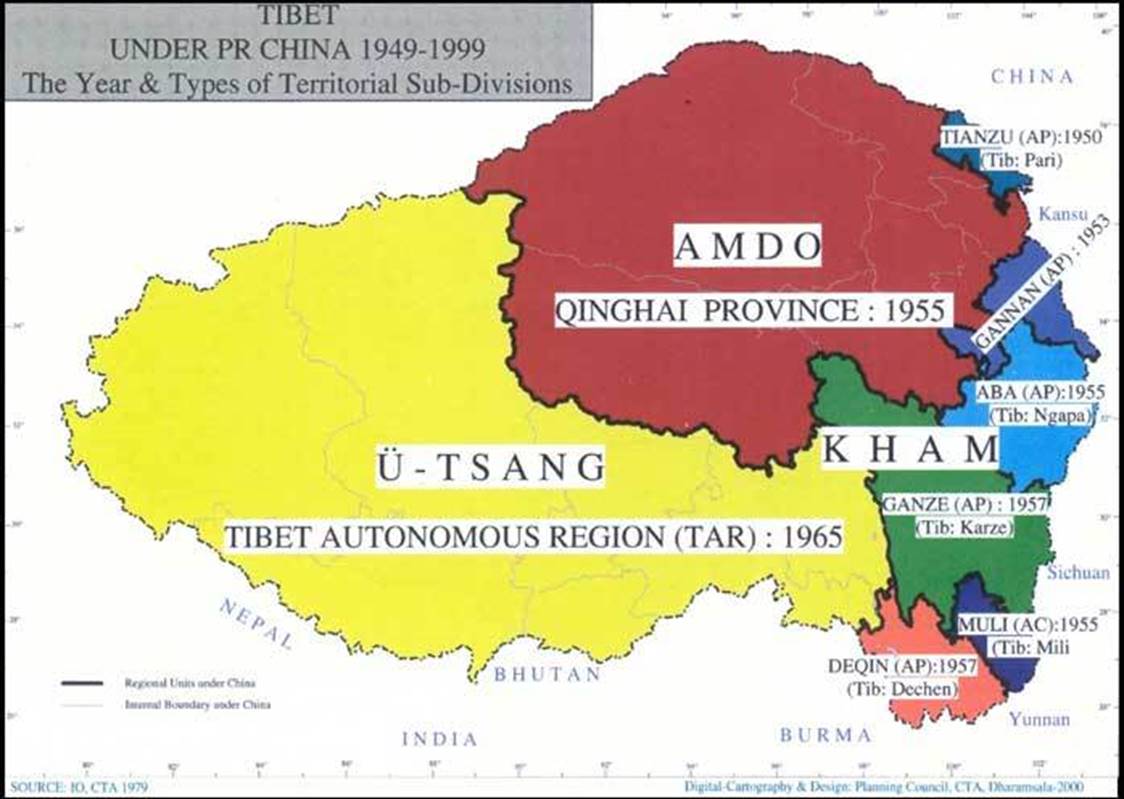
India, "ARYABHOOMI" of Tibet won freedom to reject colonization of India by British Empire. For the same reason, Living Tibetan Spirits oppose colonization of Land of Tibet by evil Red Chinese Empire. Colonization of Tibet poses grave dangers to environment and climate of India as well as all other nations of South Asia.

Rudranarasimham Rebbapragada

SPECIAL FRONTIER FORCE

INDIA IS OUR ARYABHOOMI, SAYS THE DALAI LAMA – THE HINDU

Clipped from: http://www.thehindu.com/society/india-is-our-aryabhoomi-dalai-lama/article24180001.ece

The 14th Dalai Lama, Tenzin Gyatso. | Photo Credit: M.A. SRIRAM

Giving up the idea of an independent Tibet, the Dalai Lama talks of peace, democracy and self-rule

The institution of the Dalai Lama, the spiritual and political head of the Tibetans, has survived for over 400 years. Since 2001, however, the 14th Dalai Lama, Tenzin Gyatso, has reduced his involvement in politics in a bid to introduce representative democracy. In an exclusive interview, the Nobel Peace Prize winner spoke about seeking autonomy for Tibet within China, and his commitment to reviving ancient Indian Buddhist teachings. Edited excerpts:

On 60 years of exile and the possibility of returning home.

I have lived in India for the better part of my life, but the possibility of returning to Tibet is there. Since we are not seeking separation, there’s a good chance that we may return. I admire the model of the European Union where sovereign nations come together to protect common regional interests. In our times, sovereignty is important but protecting common interest more so. Tibet is an independent nation, but now the time has come for it to embrace change. The ancient reality has changed. We will remain within the People’s Republic of China, but we should have the full right to preserve our ecology and culture. Tibetan refugees have preserved well our traditional language and knowledge systems. Our people have been the most successful refugee community anywhere. They are hardworking and law-abiding. While the main base is India, they have also moved to Canada, Switzerland, and other European countries.

What about the Tibetans in Tibet?

There are six million Tibetans living inside Tibet who trust me. So, I have the moral responsibility to protect them as well. Although I gave up handling political matters since 2001, when I retired, I continued to be partially involved for the next 10 years. In 2011, I retired fully. Since childhood, I have admired democracy. Our old system of the Dalai Lama and regents has too much power vested in a few people. That is a mistake. The best thing is a democratic system. So I began work on creating a democratic system for Tibetans. We created the system of elected political leadership in 2001.

Within Tibet, my priority is the environment. All major rivers of Asia come from Tibet. I think over a billion people depend on rivers originating from Tibet — Brahmaputra, Mekong, Indus, etc. Due to global warming and other reasons, this is affected. Once I met a Chinese ecologist who said that global warming levels in the Tibetan plateau are as much as in the North and South Poles, so he called Tibet the Third Pole. The environmental damage and deforestation needs to stop.

Ourpeople have been the most successful refugee community anywhere. They are hardworking and lawabidingDalai Lama

On reviving ancient Indian knowledge systems.

Since childhood, we have studied texts authored by Indian Buddhist scholars such as Nagarjuna, Aryadeva, Buddhapalita and Dharmakirti; all our knowledge comes from India. Buddha attained enlightenment here. All the great masters of Nalanda are Indian. Hence, we Tibetans refer to India as our Aryabhoomi (precious land). Historically, our relation is very deep. When Buddhists go to Bodh Gaya, they collect the leaves of the Bodhi tree and sometimes even the bird droppings! (laughs) When we come to India, we feel we have returned to our spiritual home. So, I feel very strongly about subjects such as ancient Indian psychology. Practices such as Shamata and Vipassana involve analytical meditation, and single-minded focus to analyze the nature of reality. In the Judeo-Christian tradition, this is not emphasized.

The problems of the current world are our own creation. War mobilizes violence. It is a human creation. We need to revive the ancient Indian concept of karuna (compassion) and ahimsa (non-violence). The 1,000-year-old tradition of secularism is very relevant to today’s world. I consider myself a messenger of ancient Indian thought.

The Nalanda tradition is a scientific way. The Buddha himself once asked his followers to not accept his teachings out of faith or devotion, but only after thorough investigation. In fact, some of his teachings were rejected by his followers this way. It was around 8 CE that an Indian Buddhist master, Santarakshita, brought Buddha dharma to Tibet. I strongly feel this tradition must be preserved, as an academic subject. Tibetan knowledge is Indian knowledge. It’s a pity that modern India has completely neglected it.

On religious harmony.

Though the fundamental message of all religions is the same, people continue to fight over it. In Sri Lanka, Buddhists are fighting with Tamil Hindus, and in Myanmar, they are fighting with Muslims. The Buddhists don’t believe in god. So between Buddhists and non-Buddhists there are serious differences. This ought to be resolved through intellectual debate. Many Nalanda masters learnt much from non-Buddhists through constructive debate. That is the greatness of India. Though there were differences in philosophical thought, it was never used for propagating violence. Hindu, Jain and Buddhist philosophies are home-grown, and Zoroastrian, Judaism and Christianity came from outside. Today, they all live together here. I am completely convinced that religious harmony is possible everywhere.

vidya.v

Created with Microsoft OneNote 2016.

LIVING TIBETAN SPIRITS DISCOVER INVASIVE SPECIES IN TIBET

LIVING TIBETAN SPIRITS DISCOVER INVASIVE SPECIES IN TIBET

Living Tibetan Spirits acknowledge Han Chinese as the most dangerous invasive species found in Tibet since 1950. Tibet Plateau is recognized as ‘Protective Shield’ and invasion by Han Chinese species endangers Tibet Equilibrium.

Rudranarasimham Rebbapragada

SPECIAL FRONTIER FORCE

OVER 150 INVASIVE SPECIES DISCOVERED IN TIBET – XINHUA

Clipped from: http://www.xinhuanet.com/english/2018-06/11/c_137246351.htm

LHASA, June 11 (Xinhua) — Scientists have found over 150 unsafe invasive species in Tibet Autonomous Region after two years of research.

Led by Tibet’s regional institute of plateau biology, the research team found over 130 invasive plants including crotton weed, and more than 20 invasive animals in the region, like bull frogs and the red-eared slider (a type of turtle), both on the list of the world’s 100 most invasive species. They are also found in other parts of China.

Tu Yanli, associate researcher with the institute, said the drastic increase of these species in the area is due to the rapidly growing economy and the more convenient transportation.

The Qinghai-Tibet Plateau, where Tibet is located, has long been recognized as a natural biological shield.

To prevent the invasive species from damaging the local environment, the regional government has taken various measures such as strengthening border inspection and establishing quarantine zones.

Created with Microsoft OneNote 2016.

LIVING TIBETAN SPIRITS SHARE GLIMPSES OF NORBULINGKA – SUMMER PALACE OF THE DALAI LAMA

LIVING TIBETAN SPIRITS SHARE GLIMPSES OF NORBULINGKA – SUMMER PALACE OF THE DALAI LAMA

Clipped from: http://www.china.org.cn/travel/2018-06/08/content_51817810.htm

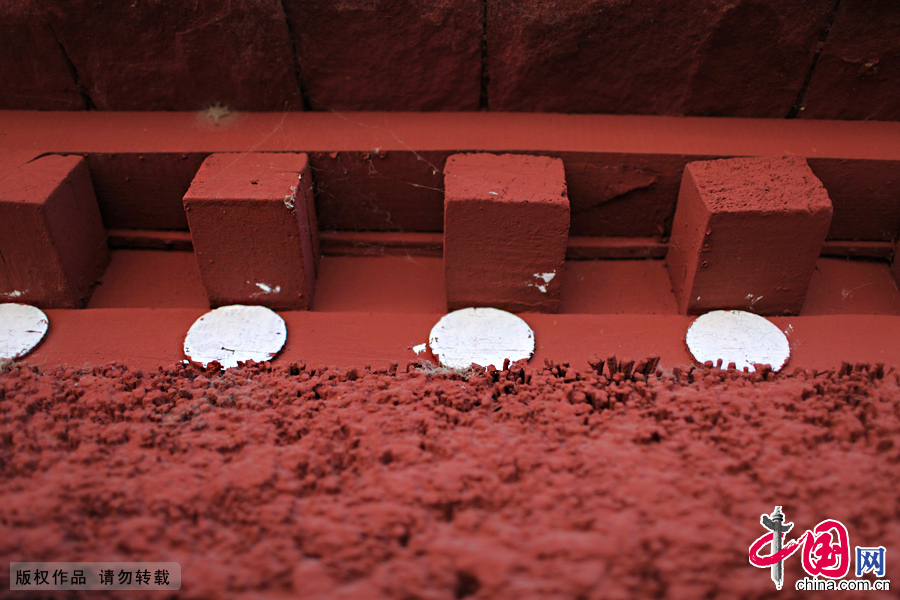
Norbulingka, literally the "Jeweled Garden," is a palace and its surrounding parks located in a western suburb of Lhasa. It was constructed in the 1740s as a summer palace for the Dalai Lama and later served the whole governmental administration. The place boasts typical Tibetan palace architecture, as well as gentle streams, dense and lush forestry, birds and animals. Covering an area of around 36 hectares, it is considered to be the largest man-made garden in Tibet. Being part of the "Historic Ensemble of the Potala Palace," Norbulingka is recognized as a UNESCO World Heritage Site, and was added as an extension to this Historic Ensemble in 2001.[China.org.cn]

Created with Microsoft OneNote 2016.
LIVING TIBETAN SPIRITS SHARE GLIMPSES OF NORBULINGKA – 12

LIVING TIBETAN SPIRITS SHARE GLIMPSES OF NORBULINGKA – 12

Clipped from: http://www.china.org.cn/travel/2018-06/08/content_51817810_2.htm

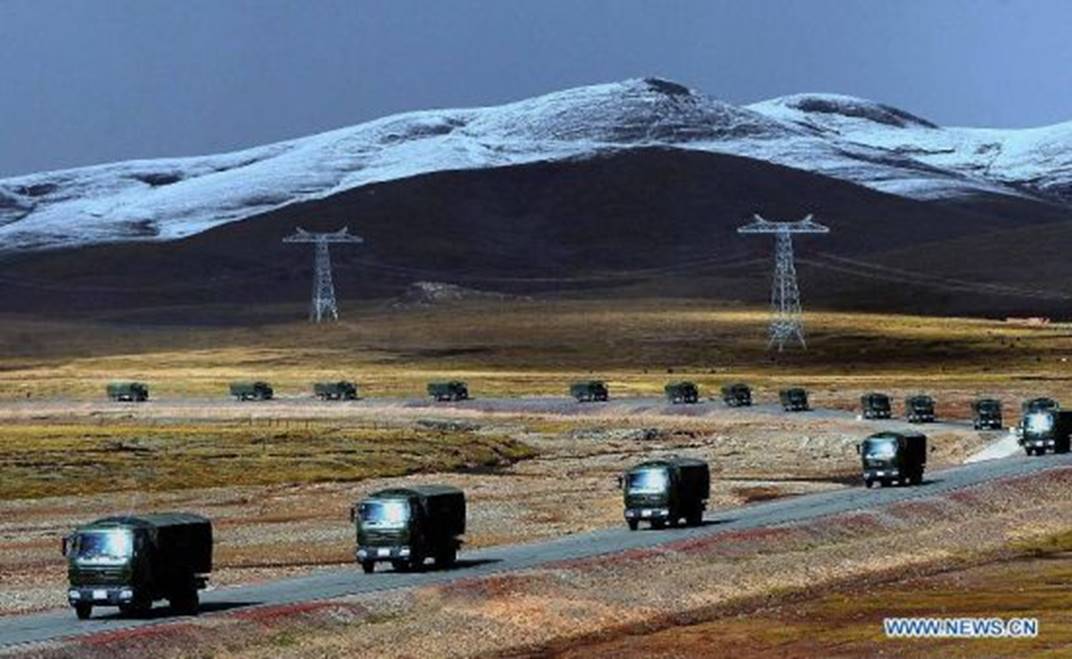
Norbulingka, literally the "Jeweled Garden," is a palace and its surrounding parks located in a western suburb of Lhasa. It was constructed in the 1740s as a summer palace for the Dalai Lama and later served the whole governmental administration. The place boasts typical Tibetan palace architecture, as well as gentle streams, dense and lush forestry, birds and animals. Covering an area of around 36 hectares, it is considered to be the largest man-made garden in Tibet. Being part of the "Historic Ensemble of the Potala Palace," Norbulingka is recognized as a UNESCO World Heritage Site, and was added as an extension to this Historic Ensemble in 2001.[China.org.cn]

Created with Microsoft OneNote 2016.

LIVING TIBETAN SPIRITS SHARE GLIMPSES OF NORBULINGKA – 11

LIVING TIBETAN SPIRITS SHARE GLIMPSES OF NORBULINGKA – 11

Clipped from: http://www.china.org.cn/travel/2018-06/08/content_51817810_3.htm

Norbulingka, literally the "Jeweled Garden," is a palace and its surrounding parks located in a western suburb of Lhasa. It was constructed in the 1740s as a summer palace for the Dalai Lama and later served the whole governmental administration. The place boasts typical Tibetan palace architecture, as well as gentle streams, dense and lush forestry, birds and animals. Covering an area of around 36 hectares, it is considered to be the largest man-made garden in Tibet. Being part of the "Historic Ensemble of the Potala Palace," Norbulingka is recognized as a UNESCO World Heritage Site, and was added as an extension to this Historic Ensemble in 2001.[China.org.cn]

Created with Microsoft OneNote 2016.

LIVING TIBETAN SPIRITS SHARE GLIMPSES OF NORBULINGKA – 10

LIVING TIBETAN SPIRITS SHARE GLIMPSES OF NORBULINGKA – 10

Clipped from: http://www.china.org.cn/travel/2018-06/08/content_51817810_4.htm

Norbulingka, literally the "Jeweled Garden," is a palace and its surrounding parks located in a western suburb of Lhasa. It was constructed in the 1740s as a summer palace for the Dalai Lama and later served the whole governmental administration. The place boasts typical Tibetan palace architecture, as well as gentle streams, dense and lush forestry, birds and animals. Covering an area of around 36 hectares, it is considered to be the largest man-made garden in Tibet. Being part of the "Historic Ensemble of the Potala Palace," Norbulingka is recognized as a UNESCO World Heritage Site, and was added as an extension to this Historic Ensemble in 2001.[China.org.cn]

Created with Microsoft OneNote 2016.
LIVING TIBETAN SPIRITS SHARE GLIMPSES OF NORBULINGKA – 9

LIVING TIBETAN SPIRITS SHARE GLIMPSES OF NORBULINGKA – 9

Clipped from: http://www.china.org.cn/travel/2018-06/08/content_51817810_5.htm

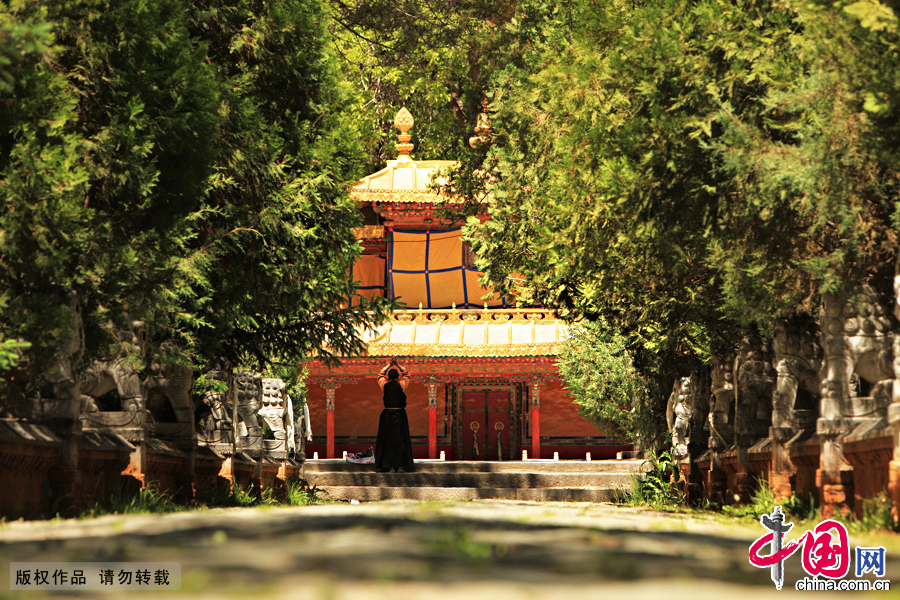
Norbulingka, literally the "Jeweled Garden," is a palace and its surrounding parks located in a western suburb of Lhasa. It was constructed in the 1740s as a summer palace for the Dalai Lama and later served the whole governmental administration. The place boasts typical Tibetan palace architecture, as well as gentle streams, dense and lush forestry, birds and animals. Covering an area of around 36 hectares, it is considered to be the largest man-made garden in Tibet. Being part of the "Historic Ensemble of the Potala Palace," Norbulingka is recognized as a UNESCO World Heritage Site, and was added as an extension to this Historic Ensemble in 2001.[China.org.cn]

Created with Microsoft OneNote 2016.

LIVING TIBETAN SPIRITS SHARE GLIMPSES OF NORBULINGKA – 8

LIVING TIBETAN SPIRITS SHARE GLIMPSES OF NORBULINGKA – 8

Clipped from: http://www.china.org.cn/travel/2018-06/08/content_51817810_6.htm

Norbulingka, literally the "Jeweled Garden," is a palace and its surrounding parks located in a western suburb of Lhasa. It was constructed in the 1740s as a summer palace for the Dalai Lama and later served the whole governmental administration. The place boasts typical Tibetan palace architecture, as well as gentle streams, dense and lush forestry, birds and animals. Covering an area of around 36 hectares, it is considered to be the largest man-made garden in Tibet. Being part of the "Historic Ensemble of the Potala Palace," Norbulingka is recognized as a UNESCO World Heritage Site, and was added as an extension to this Historic Ensemble in 2001.[China.org.cn]

Created with Microsoft OneNote 2016.

LIVING TIBETAN SPIRITS SHARE GLIMPSES OF NORBULINGKA – 7

LIVING TIBETAN SPIRITS SHARE GLIMPSES OF NORBULINGKA – 7

Clipped from: http://www.china.org.cn/travel/2018-06/08/content_51817810_7.htm

Norbulingka, literally the "Jeweled Garden," is a palace and its surrounding parks located in a western suburb of Lhasa. It was constructed in the 1740s as a summer palace for the Dalai Lama and later served the whole governmental administration. The place boasts typical Tibetan palace architecture, as well as gentle streams, dense and lush forestry, birds and animals. Covering an area of around 36 hectares, it is considered to be the largest man-made garden in Tibet. Being part of the "Historic Ensemble of the Potala Palace," Norbulingka is recognized as a UNESCO World Heritage Site, and was added as an extension to this Historic Ensemble in 2001.[China.org.cn]

Created with Microsoft OneNote 2016.