
Whole Dude chooses to be Whole Foolish



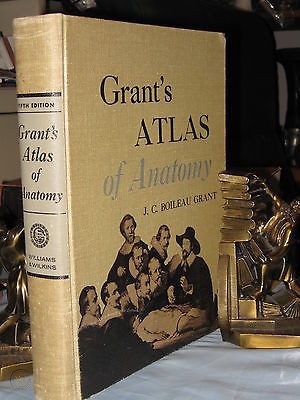
In 1965, while Whole Dude was a student of Human Anatomy at Kurnool Medical College, they had the opportunity to know about Dr. J. C. B. Grant (1886-1973), the author of Grant’s Atlas of Anatomy. The 5th Edition of his Atlas was published in 1962 and was available in India in our Medical College Library.
Born in Loanhead (south of Edinburgh) in 1886, Grant studied medicine at the University of Edinburgh Medical School and graduated with an M.B., Ch.B. degree in 1908. While at Edinburgh, he worked under the renowned anatomist Daniel John Cunningham.


Grant became a decorated serviceman of the Royal Army Medical Corps during the First World War before moving to Canada. He established himself as an ‘anatomist extraordinary’ at the University of Toronto, publishing three textbooks that form the basis of Grant’s Anatomy. The textbooks are still used in anatomy classes today, and made unforgettable memories for those who found themselves in his classes nearly a century ago. One of Grant’s many accomplishments was establishing a division of histology within the department.

As a medical student, Whole Dude used Grant’s Atlas of Anatomy, the seminal work of Scottish-born Dr. John Charles Boileau Grant, who would become the chair of Anatomy at the University of Toronto in 1930 and retired in 1965.
John Charles Boileau Grant (1886–1973)
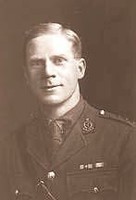
The author of Grant’s Atlas of Anatomy (1943), Grant used to train thousands of medical students around the world. He came to University of Toronto’s Faculty of Medicine from University of Manitoba (and previously Edinburgh), and was Chair of the Department of Anatomy there from 1930 to 1965. Although he is best known for this famous atlas, his research and teaching also included biological anthropology, as evidenced by such work as Anthropometry of the Cree and Saulteaux Indians in Northeastern Manitoba (Archaeological Survey of Canada 1929). The human skeletal collection he formed, the “J.C.B. Grant Collection,” is still a core collection for human osteology in the Department of Anthropology at University of Toronto. He is also remembered in the Grant’s Museum at the Medical Sciences Building at the University of Toronto. This museum, with its displays of anatomical specimens, many of which were dissected by Grant himself, continues to be used in an active learning environment by more than 1000 students each year.
Students continue to use Grant’s textbooks today, and for the more artistic anatomist there’s even a Grant’s Anatomy Coloring Book, published in 2018.

At the University of Toronto, Dr.McMurrich, Chair of Anatomy was succeeded as chairman in 1930 by Dr. John Charles Boileau Grant. Dr. Grant wrote three text books, of which “An Atlas of Anatomy” (published in 1943) rapidly gained international prominence and is still, one of the most widely used anatomical atlases in the world. It is now known as “Grant’s Atlas of Anatomy” and is in its tenth edition. The atlas was based on a series of elegant dissections done either by Grant or by others under his supervision. Many of these dissections are currently housed in Grant’s Museum at the University of Toronto.
The Whole Dude at Whole Foods is about knowing the Whole Man, the building blocks and the structural units and organization of the Whole Body. To defend human existence, the Whole Dude at Whole Foods lays the emphasis on knowing the Whole Person who is at risk apart from knowing the agents posing the risk.

The Identity of Multicellular Human Organism:
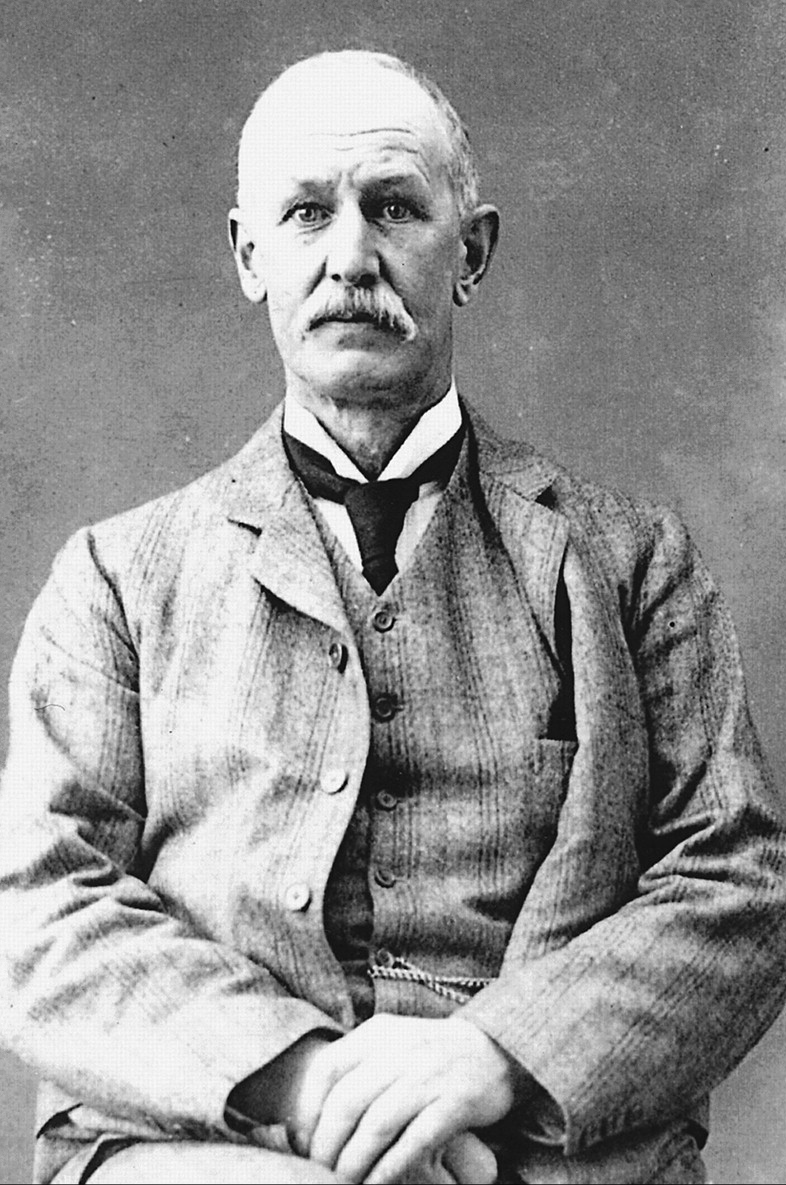
Daniel John Cunningham was born on 15 April 1850 in Scotland. After his initial schooling at his home town, Crieff, he took up the study of medicine at the University of Edinburgh and passed with honours. He is best known for the excellent series of dissection manuals, namely Cunningham’s Dissection Manuals. Cunningham’s Manual of Practical Anatomy has provide the learning tools to know and understand Man’s External and Internal Reality and its Identity as described by Cells, Tissues, Organs,and Organ Systems.


Whole Dude learned the truths about the living human body and about Life while dissecting the dead human bodies in a systematic manner. The Manual of Practical Anatomy which guides us through this entire process was published in England. The author Dr. Daniel John Cunningham prepared the Manual while dissecting cadavers of British or Irish citizens. He had never encountered cadavers of Indian citizens. At Kurnool Medical College, Kurnool, Andhra Pradesh, India, where Whole Dude was a student, the Department of Anatomy obtains dead bodies from Government General Hospital Kurnool and most of the deceased are the poor, illiterate people of that region. None of the deceased had the chance to know this man called Cunningham and Cunningham had no knowledge about the existence of these people who arrive on our dissection tables. But, as the dissection of the human body proceeds, inch, by inch, we recognize the anatomical parts as described by Cunningham. The manual also lists some anatomical variations and we very often exchange information between various dissection tables and recognize the variations mentioned. The dissections also involve slicing the organs and studying them, both macroscopically, and microscopically. We did not miss any part of the human body.
So what is the Identity of this Human Person or Human Subject? How does the living Human organism maintains its Identity and Individuality? Apart from the Cultural Traditions of India, several Schools of Religious Thought claim that the Human Individual and its Identity is represented by Human Soul. Do men have an internal, invisible organ called Soul? Where does this soul exist in the human body? What is the location if the soul is present in the living person? How does the human organism acquires Knowledge about its own structures and the functions they perform or how do these building blocks of Life recognize the Identity of that Human Person who lives because of the living functions that they perform?
A pound of foolish belief is better than a penny of human wisdom

Darwin revolutionized biology with his Theory of Evolution. He claimed that all living species have evolved from preexisting forms and it brought about a reevaluation of the position of humans in relation to all other living forms. Darwin arrived at the idea that species descend or evolve from other species for he had observed that things in nature change with time.
Things in Nature Change With Time:

On November 24, 1859, Darwin published his theory under the title “On the Origin of Species by Means of Natural Selection, or the Preservation of Favoured Races in the Struggle for Life.” Species evolve from more primitive species through the process of Natural Selection which involves adaptations to a particular ecological way of life. In The Descent of Man and Selection in relation to Sex (1871), Darwin provided evidence for human evolution from more primitive species and discussed the role of sexual selection in evolution.
Darwinism accounts for Origin of Man that excludes the principles of Creation. Could We Teach Wisdom to Our Cells?

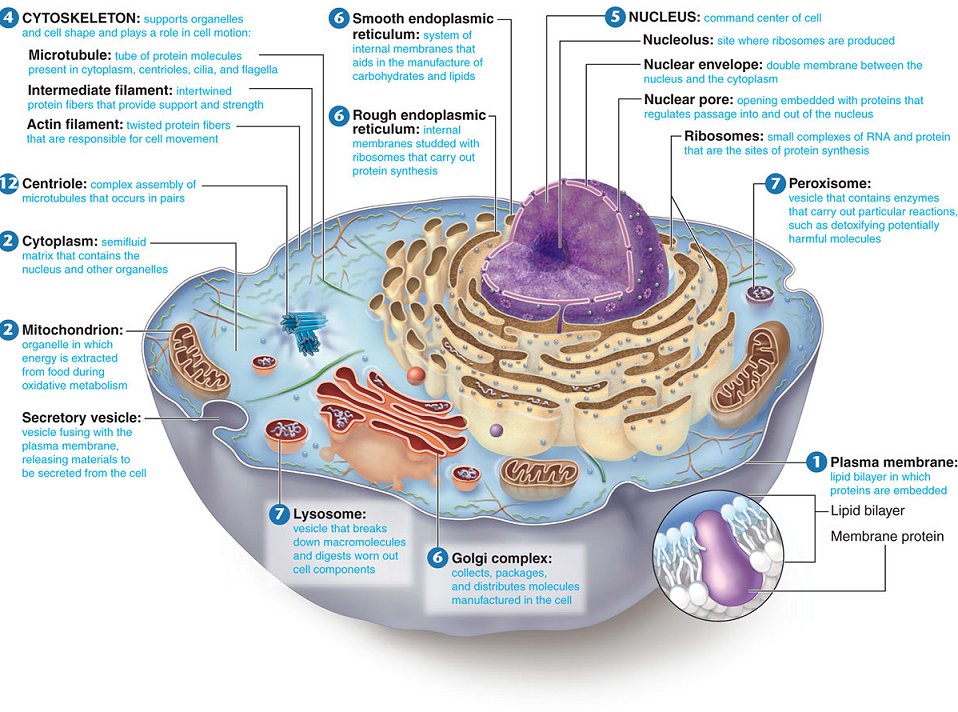
In the “Struggle for Life”, could we succeed by teaching wisdom to our cells? Could we direct our cells to choose those adaptations to a particular ecological way of life that would guarantee our survival? Do Species evolve from another species by changing their genetic codes? Genetic codes could be changed by changing nuclear DNA. Darwin’s claim of evolution demands incremental changes in the genetic code because of random and unguided or spontaneous mutations. It does not mention the role of Cytoplasm and Cytoplasmic inheritance to account for the ability to survive in Nature.

The process of adaptation and Natural Selection or exposure to ionizing radiation from cosmos or from Earth itself could lead to changes in DNA and mutations which are very harmful to the health and wellbeing of the organism. The DNA inside the cells is damaged on a regular basis due to products of cell’s own metabolism (Oxidation), or due to exposure to drugs, toxic chemicals and sources of ionizing radiation such as X-rays and microwave. Cells are continuously involved in repairing the damaged DNA. Could you help your cells to choose particular kinds of DNA change that would give you an advantage in terms of survival or in evolving into a better species? What is man’s essence and what does he do to exist?
We could use wisdom to fight disease, we could protect ourselves by avoiding exposure to drugs, toxic chemicals and radiation. We could provide nutrients and anti-oxidants to cells and help their metabolic functions. However, cells are functionally autonomous. If cells display an erratic behavior such as when they develop tumors or multiply in an unregulated manner causing cancer, we could only hope to destroy or kill those erratic cells. We may not be able to impart our wisdom to our cells and guide them to function at our will.

Charles Darwin is correct in his observations. Things in nature will change with time. It is a foundational principle and Time not only changes things but also dissolves all things including the youthful vigor, wealth, social status, intelligence and wisdom of the individual. Truth or Reality which may not be subject to a change would prevail. In our Struggle for Life, how could we just depend upon our intelligence and wisdom which could change with Time?

Man begins his life journey as a single cell and the phenotype or the external morphological appearance changes as man passes from infancy, boyhood, adolescence, youth, manhood, and old age. However, the genotype remains the same. Man’s individuality remains the same or constant during his entire life journey while the physical identity is subject to change. The Identity and Individuality are two sides of the same coin. The genome by its functional variation keeps changing the phenotype or the physical identity. Man does not exist in Nature because of this ability to change his Identity in relation to Time.

Man exists in Nature because of his ability to acquire energy from Nature, his physical environment. Man is able to acquire energy because of the connection between the energy seeker and the energy provider. Man does not establish this connection because of his physical or mental effort. Man is conscious or aware of his energy dependence and is able to make a connection for his energy acquisition because of Knowledge that is implanted in the Egg Cell which further grows and develops into an embryo and a fetus. Man’s status in Nature is described by his partnership, association, or connection with his energy provider. The Theory of Evolution speaks about random, unguided mutations of the genetic code and fails to describe the nature of association, partnership, and connection that is fundamental to the process called Living.

Man does not exist in Nature because of his Wisdom. It could be foolish but man may save his individuality by his faith, a belief that is not derived by reason, or understanding.
A Pound of Foolishness is Better than A Penny of Wisdom:
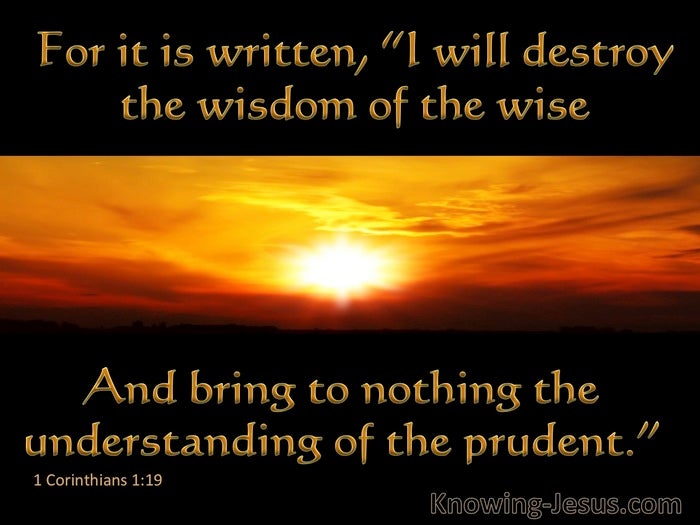
For it is written :
“I will destroy the wisdom of the wise;
the intelligence of the intelligent I will frustrate.”

Where is the wise man ? Where is the scholar ? Where is the philosopher of this age ? Has not God made foolish the wisdom of the world ?

For since in the wisdom of God, the world through its wisdom did not know Him, God was pleased through the foolishness of what was preached to save those who believe. (The Holy Bible, The New Testament, 1 CORINTHIANS, Chapter 1, verses 19-21)
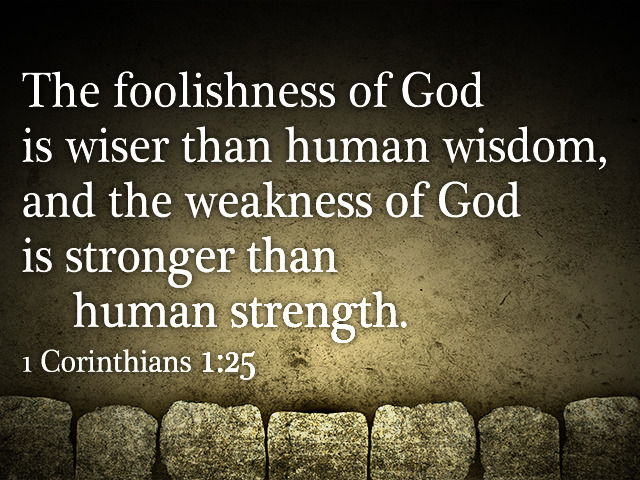
Wisdom may not last long enough to help you to survive, but through your foolishness if you choose to believe there is a better chance to get saved.

 Whole Dude - Whole Spirituality