Griffin James Quinoa Challenge Award at Whole Foods, Ann Arbor


James Griffin is an expert in Food Retail Industry. To promote knowledge of food products, in 2014, he announced the “James Griffin Quinoa Challenge Award” and the same was presented to me at Whole Foods Market Inc., Ann Arbor, Michigan, USA on Sunday, May 18, 2014. This award describes importance of the development of a food database that food consumers can easily use to make important decisions about the food products they purchase to promote their health and to prevent diseases like cancer. I ask my readers to acknowledge the creative use of putrid smelling Nitrogen containing unchanging biomolecules that operate the creation of life and the dissolution of life. The fact of Creation is simply revealed by knowing the Smell, the Scent, the Aroma, the Flavor and the Odor of Polyamine Molecules that declare their presence in the performance of human Reproduction as well as the nature of Mortal Existence making it extremely difficult to conceal the forensic evidence of Death.
Polyamines continue to be a subject of intense study, with over 75,000 papers written on the topic since 1900. Since 2013, after reporting my Whole Discovery at Whole Foods, Ann Arbor, no researcher has shared my findings on the role of the Sense of Olfaction in describing the presence of Polyamines in aromatic compounds synthesized by Plants.
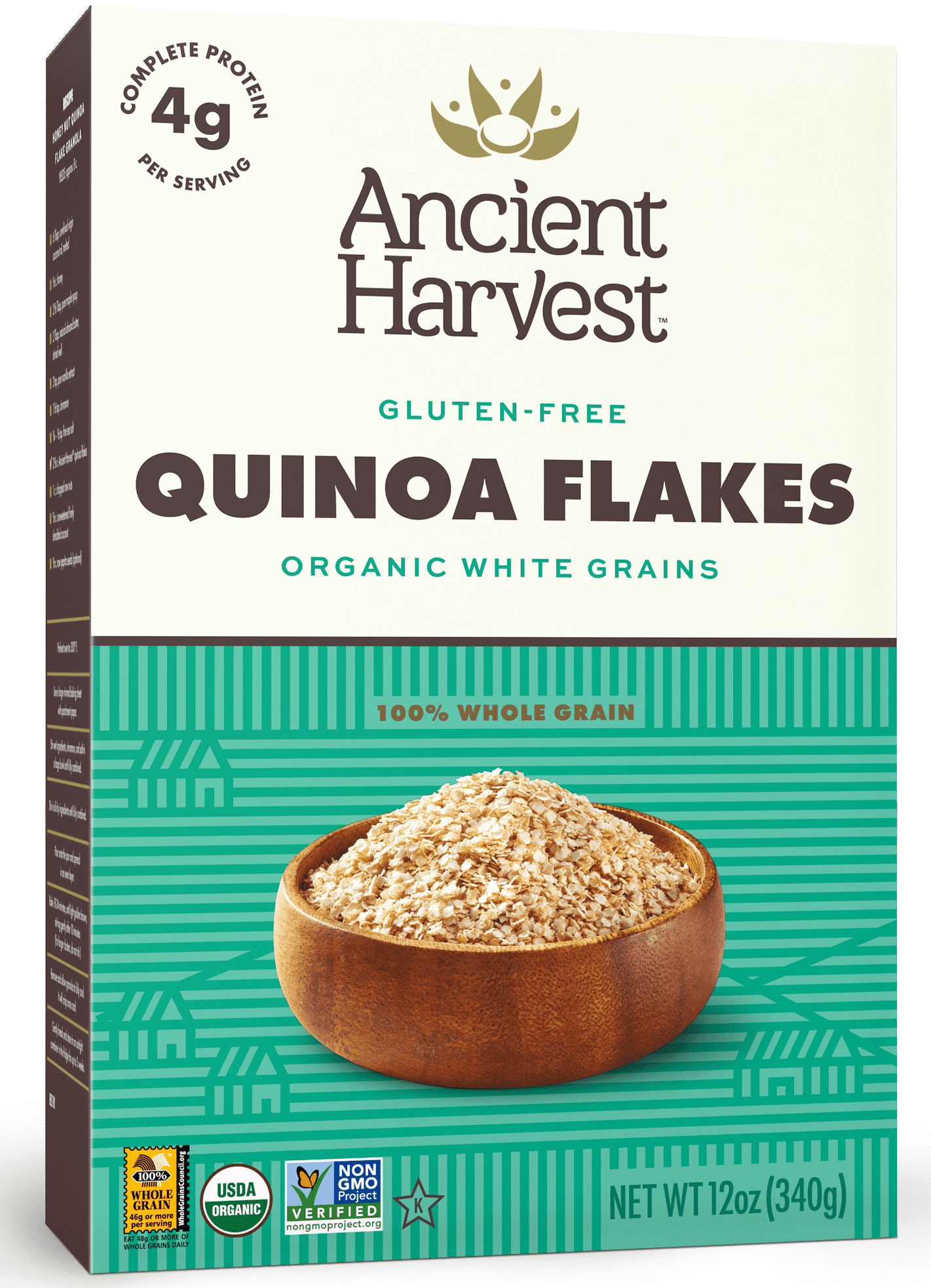
Incas have been continuously cultivating Quinoa for the last 7,000 years. They may not be aware of the chemical compounds made by these plants. However, they should be able to very easily recognize the smell, the odor, the scent, the aroma, and the flavor of the plant products that they use. A ‘Smell Test’ can accurately detect presence of some odoriferous chemical molecules and man will be able to describe the odor without being a Chemist, or a Biochemist.


On Griffin’s recommendation, the Whole Foods Market in Ann Arbor presented to me the “Griffin James Quinoa Challenge Award” on May 18, 2014 (Sunday). This award describes the importance of the development of a food database that food consumers can easily use to make important decisions about the food products that they may want to purchase and use to promote their health and to prevent diseases like cancer.

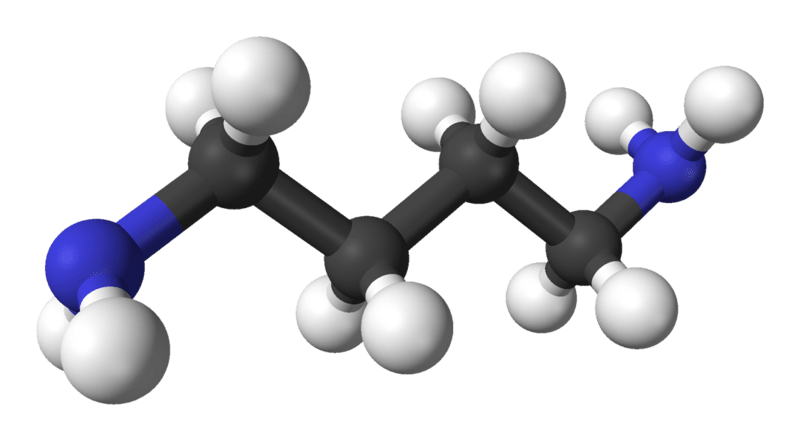
Nitrogen containing amino compounds such as Putrescine, Spermidine, and Spermine are commonly described as Food Polyamines. There are three sources of Polyamines; 1. Synthesis within the human body, 2. Production by microorganisms residing in the human gut or intestinal tract, and 3. Contribution from the diet. There is extensive literature to describe the role of Polyamines in plants and animals. The Polyamines are ubiquitous polycationic compounds and are essential to male and female reproductive processes and to embryo/fetal development. Indeed their absence is characterized by infertility and arrest in embryogenesis. Mammals synthesize Polyamines de novo from amino acids or import these compounds from the diet. Polyamines are essential regulators of cell growth and gene expression and they are implicated in both mitosis and meiosis. In male reproduction, Polyamine expression correlates with stages of spermatogenesis and they function to promote sperm motility. In the female reproductive system, Polyamines are involved in ovarian follicle development and ovulation and Polyamine synthesis is required for steroidogenesis (production of steroid hormones) in the ovary. Polyamines play a role in implantation, in decidualization, in placenta formation and its function. Polyamine deprivation during gestation results in intrauterine growth retardation. Dietary arginine (amino acid) and dietary Polyamines can be stated as nutritional regulators of human fertility.
Polyamines were first discovered in 1678 by Antonie van Leeuwenhoek, who observed crystalline substances in human semen that were later identified as spermine phosphate. The chemical structures of the primary polyamines (spermidine and spermine) were determined in the early 20th century, and the biosynthetic pathways were established by the late 1950s, notably through the work of Herb and Celia Tabor. These developments led to intense research into their functions, revealing their critical roles in cell growth, proliferation, and their involvement in various diseases, including cancer.
Key Figures and Discoveries of Biomolecules of Amino Compounds
- Antonie van Leeuwenhoek (1678): The pioneer of microscopy observed crystalline substances in human semen, which were the first polyamines to be discovered.
- Rosenheim (1910s): Further investigations by Rosenheim elucidated the structure of the substance Van Leeuwenhoek observed.
- Herb and Celia Tabor & Sanford Rosenthal (late 1950s): Their work was crucial in identifying the biosynthetic pathways of polyamines, which spurred significant interest in their physiological roles.
- Russell (late 1970s): Russell’s findings that polyamines were excreted in the urine of cancer patients brought polyamines to the attention of oncologists.
- Seymour Cohen: His book, “The Guide to the Polyamines,” is mentioned as a work of great scholarship on the subject.
Polyamines in Research
Essential for Cell Growth: Polyamines are vital for cell growth and proliferation in all known species.
Involvement in Disease: High levels of polyamines are often observed in cancer cells.
Therapeutic Potential: Their crucial role in cell processes has led to research into their potential as therapeutic agents and in the development of new drugs, such as the drug DFMO for neuroblastoma treatment.
Ongoing Research: Polyamines continue to be a subject of intense study, with over 75,000 papers written on the topic since 1900.


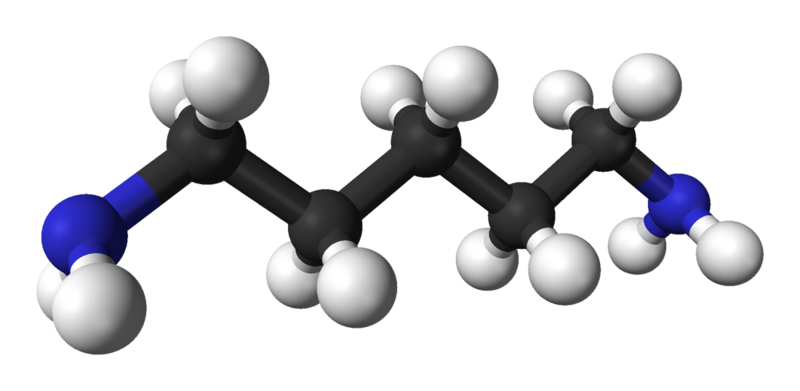

Polyamines are universally distributed in all living cells. Biosynthesis of Polyamines from amino acids ornithine and methionine fluctuates according to the metabolic needs of the cell. Polyamines specifically interact with Nucleic Acids (DNA and RNA) and these compounds are found in intracellular organelle called ribosomes where they stimulate protein and RNA synthesis. There is an extensive literature indicating the physiological significance of these amino compounds.


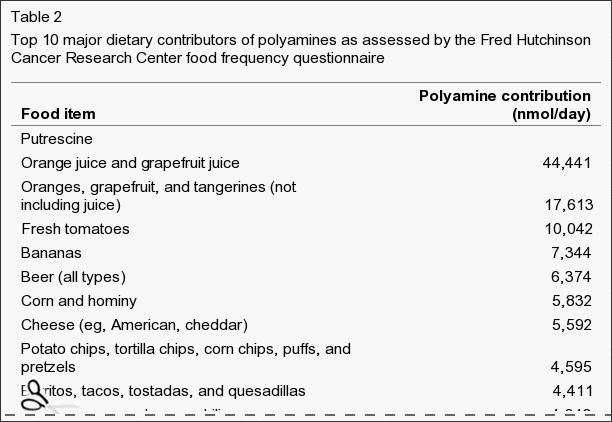
However, it must be noted that current research indicates the importance of reducing the concentration of Polyamines in the body pool in slowing the growth of cancerous tumors. Since dietary Polyamines significantly contribute to the body pool of Polyamines, quantifying them in diet is important.


Dietary polyamines are essential for numerous biological functions, including promoting cell growth, proliferation, differentiation, and stabilizing DNA and RNA, which are crucial for human health and longevity. They also possess important antioxidant and anti-inflammatory properties that can protect against age-related diseases. However, in some contexts, particularly with high intake and certain genetic predispositions, dietary polyamines may also promote cancer growth.
Key Biological Roles of Polyamines:
- Cell Regulation: Polyamines are vital for cell growth, proliferation, and differentiation, as well as the normal processes of apoptosis (programmed cell death).
- Nucleic Acid and Protein Synthesis: They stabilize the negative charges on DNA and RNA, and play a role in protein synthesis and the stability of nucleic acids.
- Immune Response: Dietary polyamines help in the development and differentiation of the immune system.
- Intestinal Health: They are essential for the development, maturation, and barrier function of the intestinal lining.
Health Benefits of Polyamines
- Antioxidant and Anti-inflammatory Effects: Polyamines have antioxidant properties, protect against harmful stimuli, and can mitigate inflammation, which is beneficial for preventing chronic diseases.
- Longevity: A correlation has been observed between higher levels of luminal polyamines and increased longevity in mice, suggesting a role in healthy aging.
Potential Health Risks of Polyamines
- Cancer Promotion: High dietary polyamine intake has been linked to increased risk of cancer growth and metastasis in some cases. For example, high intake was found to induce carcinogenic growth in the rat colon.
- Tumor Growth: Elevated polyamine levels are often observed in tumor cells, and their uptake can be promoted by dietary sources.
Dietary Sources of Polyamines
Endogenous and Dietary Intake: While the body synthesizes polyamines, a significant source comes from the diet, particularly from foods rich in fermented products like sauerkraut, anchovies, certain cheeses, and sausages.
Absorption: Polyamines from food are rapidly and completely absorbed in the small intestine.
Griffin James Quinoa Challenge Award promotes the importance of knowing the levels of Polyamines in different foods. It is of interest due to the association of these bioactive nutrients to health and diseases like cancer. There is a lack of relevant information on their content in foods. For that reason, I would ask all of my readers to demand the US Department of Agriculture, Food Manufacturers and Food Retailers to disclose the Dietary Polyamine content of all food items sold in the US Markets.
References:
1. Food Polyamines – Putrescine, Spermidine, Spermine.
2. Biological Significance of Dietary Polyamines.
3.Polyamines on the Reproductive Landscape.


 Whole Dude - Whole Spirituality