

May is Mental Health Month, a time to shine a light on the importance of mental health to personal wellbeing and overcome reluctance to seeking help. Mental health is key to positive relationships and feelings of satisfaction and fulfillment in life.
Mental health is defined as the capacity in an individual to form harmonious relations with others and to participate in or contribute constructively to changes in the social environment
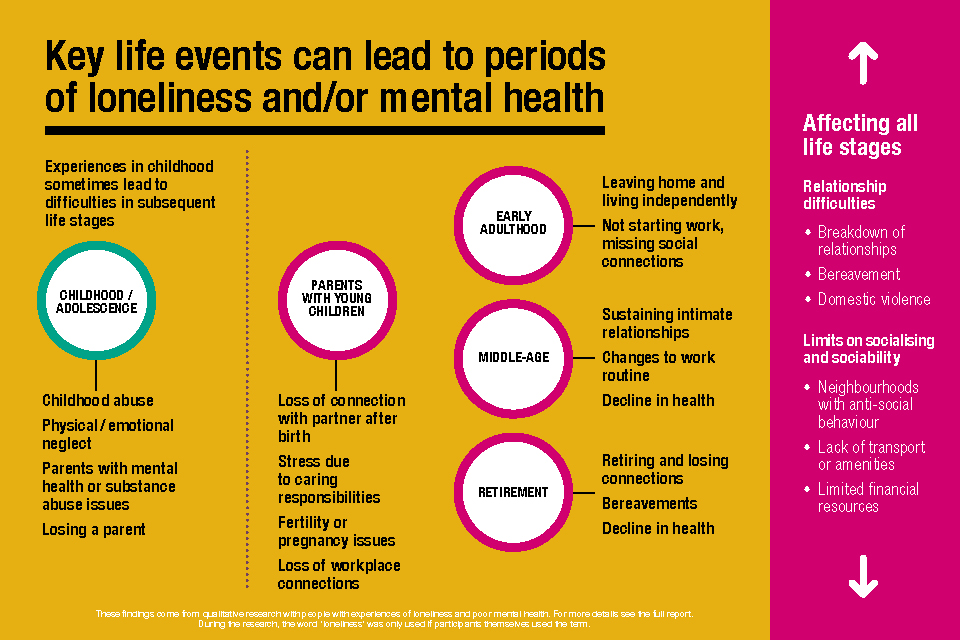
Feeling lonely can have a negative impact on mental health, especially if these feelings have lasted a long time. Some research suggests that loneliness is associated with an increased risk of certain mental health problems, including depression, anxiety, low self-esteem, sleep problems and increased stress.
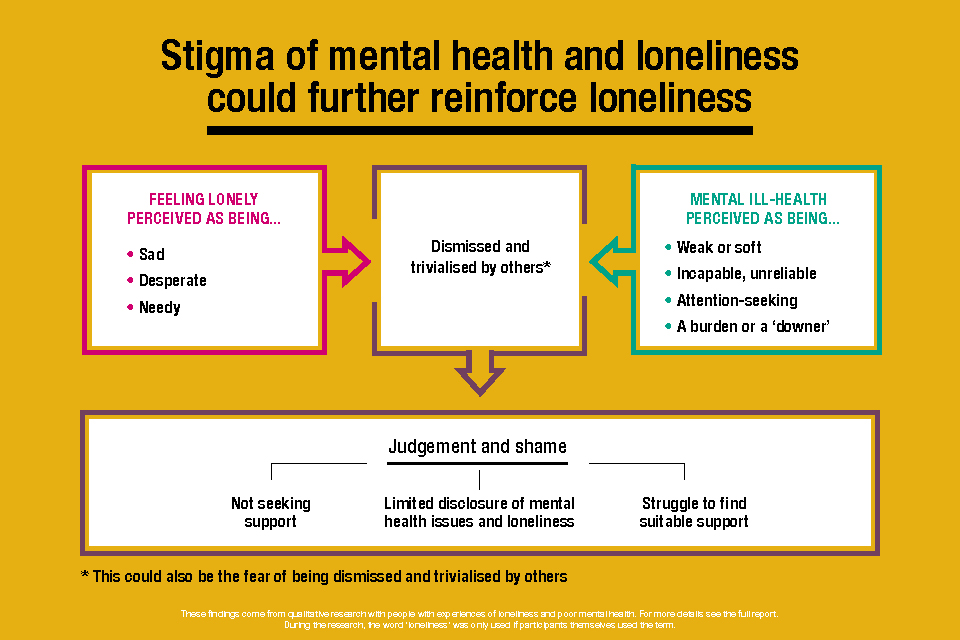
Research has linked social isolation and loneliness to higher risks for a variety of physical and mental conditions: high blood pressure, heart disease, obesity, a weakened immune system, anxiety, depression, cognitive decline, Alzheimer’s disease, and even death.

Loneliness is a subjective, unwelcome feeling of lack or loss of companionship, which happens when there is a mismatch between the quantity and quality of the social relationships that we have, and those that we want (Perlman and Peplau, 1981)
There are different types of loneliness: emotional, and social and existential loneliness.
- Emotional loneliness is the absence of a significant other with whom a close attachment or meaningful relationship existed (a partner or close friend).
- Social loneliness is the lack of a wider social network of friends, neighbors or colleagues.
- Existential loneliness is described as a universal aspect of the human condition which expresses the separateness of the person from others.
Loneliness can be a transient feeling that comes and goes. It can also be situational; for example only occurring at certain times like Sundays, bank holidays or Christmas. Or loneliness can be chronic; this means someone feels lonely all or most of the time.
Loneliness can also be characterised by its intensity, or how strongly it is felt, which can change from moment to moment and over different durations of time.
Man’s Physical Existence:

If man is viewed as a multicellular human organism, we may have to ask ourselves the following question. Who or what is the subject who lives because of the functions of the trillions of cells? Man has to explore the biological basis for his existence in nature. The subjective reality of man’s physical existence is conditioned by his physical, mental, social, moral, rational, and spiritual well-being. Mental health is an important component of the total positive health when health is defined as not the mere absence of disease, but as a state of man’s physical, mental, social, moral, rational, and spiritual well-being.

The man is conditioned to exist under the influence of a grand illusion such as the Sunrise and Sunset which regulates the biological rhythms. The man must find a rational basis for his physical existence as the realities of existing on the surface of a fast, spinning planet impose limitations on man’s cognitive abilities. In the final analysis, the man must face the challenges of living his mortal life finding solutions in a logical and rational manner. Physical conditions and ailments affect mental well-being. Mental health and well-being could have important consequences affecting the physical, and social well-being of the man and may even threaten his ability to maintain the biological integrity to survive as a human organism.
The Unity of Man and God

To account for man’s existence in physical world, the Sanskrit language created a new word known as “Asmi.” It means always present, or ever-existing. Man is a Mortal, Physical Being who leads a transient, or ephemeral existence. However, to establish the Subjective and Objective Reality of man in natural world, man needs to yoke, join, come together, unite, pair, bond, connect, relate, and seek partnership with an external Reality that is always present, or ever-existing. The Sanskrit word “Asmi” thus signifies Unity of man and God which transforms the Subject “I” into an Object that identifies itself as “I am.”
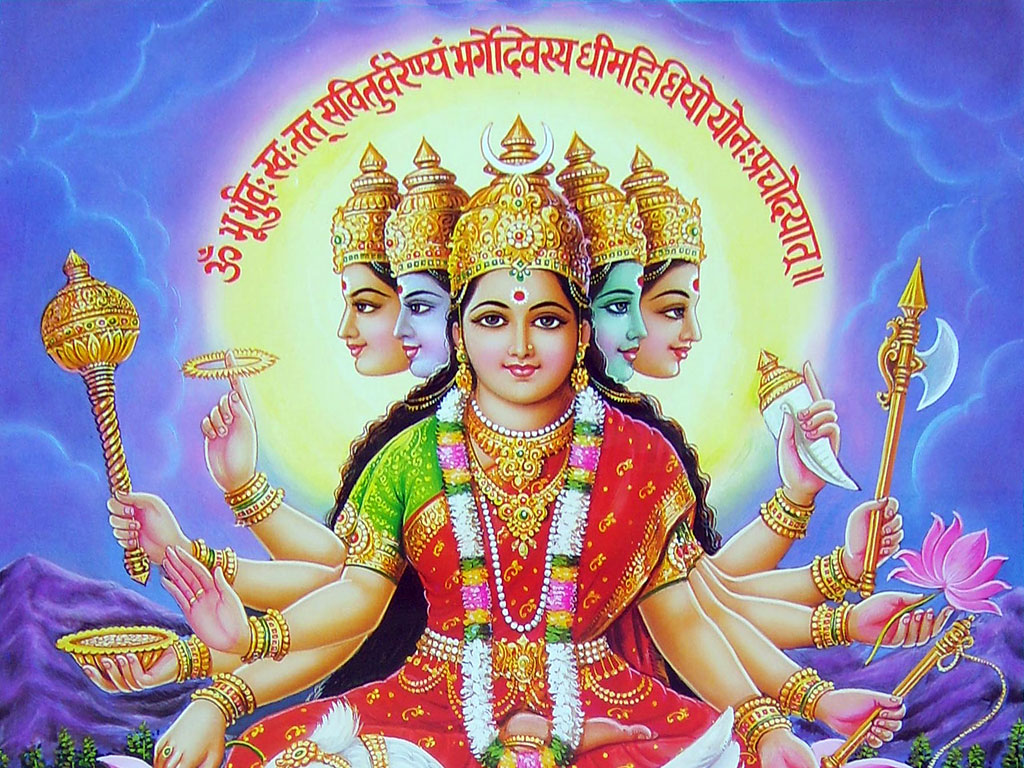
The Instrument of Unity – Gayatri

Biological Diversity is a creative process as living organisms have no choice other than that of existing as Individuals with Individuality. Ever since Life arrived on planet Earth, living matter, living substance, or living material has remained the same while diverse forms of life lived and became extinct during different periods of geological time. When we speak about biological diversity, we have to constantly remind ourselves that there are certain values which never change under the influence of time. Things in Nature change if and only if the change is operated by an underlying unchanging principle.
Language is the peculiar possession of anatomically modern humans. Prehistoric man could paint, draw, and carve images but did not use human language. Linguistic diversity has to be known by recognizing unchanging human anatomical and physiological mechanisms involved in generating sound, and perception of sound which includes analysis of sound information. Human Speech and Human Writing are two-faces of same language ability and in Clinical Medicine they constitute problems of Speech Disorders.
Life is about using Knowledge to perform a myriad of living functions. In other words, Life is Knowledge in Action. All living functions without any exception need an external source of energy. Life on planet Earth is possible as living forms have capacity to use energy from an extraterrestrial source. Earth and living forms belong to Natural Realm, and the source of energy belongs to Supernatural or heavenly Realm. We see Sun in the sky, but it belongs to Supernatural or Heavenly Realm. Fortunately, there is a barrier between these two realms to make life possible. For Sun is the Source of Supernatural Power/Energy/Force, Sun is the source of Knowledge that living forms use to perform diverse living functions including the use of Speech. Diversity that we experience on Earth is possible for Sun’s Energy is that unchanging Principle that operates all natural phenomena.
The Relevance of Sanskrit in Present Times:
The relevance of Sanskrit in present times becomes apparent when we try to account for man’s existence; how does the ‘Subject’ called “I” becomes the Object called “I Am” that can be verified by Science. The thing called “I” will not be known until and unless it is transformed into a living being that claims, “I Am.” Science is not able to fully account for the phenomenon called human existence. We all know that man exists in present day phenomenal world but we are not able to explain it as to how such existence is possible.
The Sanskrit word or ‘Sabda’ (verbal sound) called “Asmi” accounts for transformation of “I” into a recognizable entity called “I am.” Asmi describes “Unity” or ‘Eikyata’, the coming together, yoking, or joining of “I” with an external, unchanging Reality, the fundamental basis for all Existence. Things in Nature change under the influence of Time, but every natural change is operated by an Unchanging Principle. There is no natural phenomenon of this world which may not require operation of an underlying unchanging principle.
To answer problems of this age, man has to know himself and know the World in which he exists. Knowing “Asmi” is the beginning of that learning process.
Man never exists all alone

In my final analysis, Man can never have the Subjective experience of the reality of his own physical existence without the Fundamental Unity between Man and God. The problem of human loneliness simply disappears when Man accounts the reason for his own existence in the physical world.


 Whole Dude - Whole Spirituality