Revisiting the First Kashmir War of October 22, 1947

The landmass that we call the Republic of India has its own history. It moved across ocean to join Laurasia, a historical event that created the Himalaya Mountain range. Man has no right to create political boundaries and establish his domain in Earthly realm. In fact, God, the LORD Creator is the true owner of Land, Sea, and Air. Man cannot rule or govern his own body for the cells of his body enjoy cellular autonomy. Having said this, I submit, Republic of India’s duty demands defense of Indian Landmass from Kashmir to Kanyakumari to preserve its historical identity.
In 1947, India Deliberately Let Muzaffarabad: Lieutenant General S K Sinha (Retd)
Published on February 01, 2016.
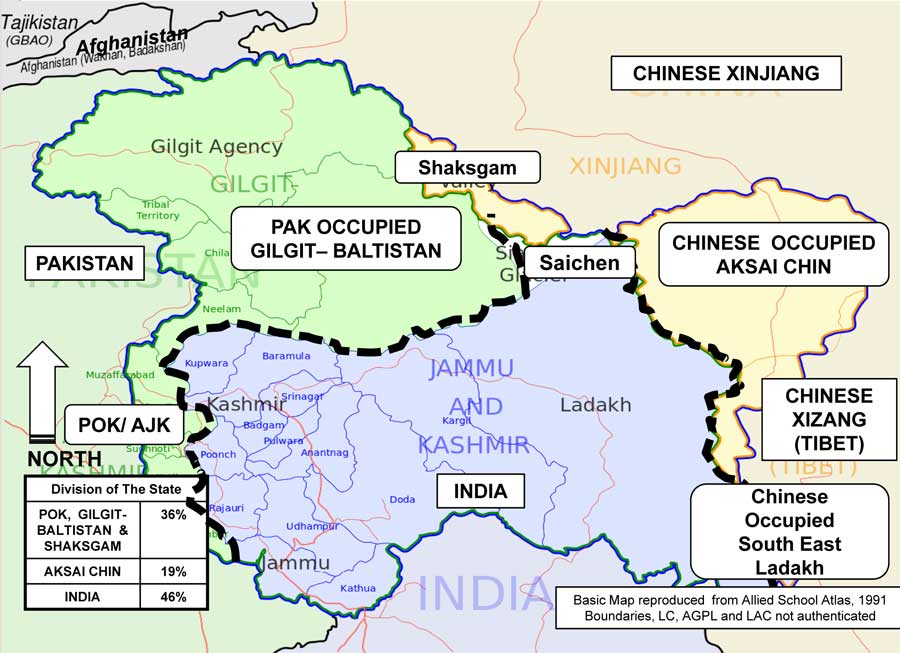
Former Governor of Jammu & Kashmir Lieutenant General S K Sinha (Retd) was among the first Army-men of the Indian Army to enter Kashmir on 27 October 1947. As a Major he was assigned the plan to plan and oversee the conduct of operations and also given the task of controlling airlift of troops from Delhi to Srinagar. Hence he is not only an eyewitness of the political and war happenings of 1947, but also performed an important role to shape them.
Q. As an Army officer, in which areas you remained posted and for how long?
A. From 1947 to 1949 I was posted with Tactical Headquarters Western Command, first at Jammu and then Srinagar when Lt Gen KM Carriappa took over as Army Commander from Lt Gen Sir Dudley Russell in January 1948. During this period I accompanied the Army Commander visiting forward areas where battles were taking place both in Jammu and in the Valley.
I remained in Kashmir from 1947 to 1949 when cease fire came into effect on 1st January 1949. I returned to Delhi in 1949 and periodically visited Jammu and Kashmir on tour with successive Army Commanders as part of normal duty as GSO 2 (Operations). In July 1949 I went to Karachi as Secretary of Indian delegation to delineate the Cease Fire line in Kashmir.
My total tenure in Jammu and Kashmir during my Army career was 10 years. As a Company Commander I served on a piquet in Gurez Valley, then in Jammu for three years, then three years in Ladakh as a Battalion Commander and after a few years as a Maj Gen commanding a Division in Akhnoor for one year. Subsequently after a long gap I got opportunity to serve people of J&K again when I was Governor of the State for five years from 2003 to 2008.
Q. What date and time you landed in Kashmir?
A. I landed at Srinagar grass landing ground at about noon on 27 October 1947. It was actually an airstrip amid a grassland made for personal plane of the Maharaja. I returned to Delhi later in the afternoon on that very date.
Q. What was your age at the time?
A. I was 21 years 10 months old.
Q. Tell something about your company/regiment and what was your rank?
A. I was in the rank of Major serving in the newly raised Headquarters Delhi and East Punjab Command (later Headquarters Western Command). I was GSO 2 (Operations) in Command with a skeleton staff of only 12 officers with rest all British. Lt Gen Sir Dudley Russel was the Army Commander. At that time both Indian and Pakistan Armies had number of British Officers serving in the two Armies, most of them in India were in the process of departing. The two Armies then had separate British Chiefs. No British Officer of either Army was allowed to visit Kashmir theatre for obvious reasons. Lt Gen Russell asked me to act as his eyes and ears. My responsibility in my appointment was to plan and oversee the conduct of operations as directed by my British superiors. I was also given the task of controlling airlift of troops from Safdarjang airport to Srinagar in requisitioned civilian Dakotas.
Q. Those days what was the number of soldiers flown to Srinagar?
A. We flew in 800 sorties of Dakotas in 15 days. 5000 troops with stores and equipments were flown into last the winter. I was shuttling between Delhi and Srinagar, often overstaying nights in Srinagar. On the first day we could fly in only 12 sorties due to non availability of aircraft. On 27 October 1947 our total strength in Srinagar was 600 troops and the enemy was reported to be 5000 to 10000 led by Maj Gen Akbar Khan of Pakistan Army.
Q. If Indian Army’s was lesser in number than raiders, then why didn’t they succeed to capture Srinagar?
A. They were engaged in rape, massacre and loot in Baramulla. Thus they lost the opportunity of capturing Srinagar which had no defences at that time. This is narrated by Maj Gen Akbar Khan in his book Raiders over Kashmir and also by me in my book Operation Rescue written in 1952.
Q. Where you went after landing?
A. As I said earlier that on 27 October 1947 I was at Srinagar landing ground for only a couple of hours. On the second day I went to Pattan where our troops had withdrawn after contacting the enemy at Baramulla. Lt Col Dewan Ranjit Rai, commanding the first lot of troops was killed at Baramulla after contact with the enemy.
Q. Who were the local Kashmiris you met and what did they say?
A. On first few days I met only local civilians wanting to sell apples in packed boxes at the airport at distress rates to be taken to Delhi in returning empty Dakotas. After a couple of days when we had withdrawn further from Pattan to Shelatang on the outskirts of Srinagar and the front had been stabilised I had to go to Srinagar city on 5 or 6 November 1947. There was no habitation between the landing ground and Zero bridge at that time. I met National Conference workers with lathis in their hands shouting the slogan Hamlewar Hoshiyar, Hum Kashmiri Hindu, Sikh, Muslman tyar. There was no communal tension nor communal violence in Srinagar when the rest of the Sub Continent was caught in the Partition holocaust. The Maharaja and senior officials had fled to Jammu.
Q. Is it true that there was resistance by some locals so army convoys on way to Uri hoisted Pakitani flags on the vehicles?
A. This is utter nonsense and total false propaganda. The only people we encountered between Baramulla and Uri were withdrawing enemy forces in disarray. At Baramulla, on 7 November 1947, we saw the body of Maqbool Sherwani nailed to a Cross just ahead of the Baramulla Convent. There were bodies of Nurses from the hospital in the well and also that of Lt Col Dikes and his wife who had come to Baramulla for a holiday from Naushera in Pakistan. The first notable Kashmiri I happened to meet was Sheikh Abdullah who had just been appointed Administrator of Jammu and Kashmir.
Q. There was killing of civilians by Army at Ram Bagh? Why did army fire on civilian?
A. I am not aware of this incident and I doubt the veracity of this.
Q. Its said that Nehru has said or written in some book that India had asked its Army not to cross Uri. Is it true?
A. I am not aware of it. What I know is that on 14 November 1947 when we reached Uri, our Army Commander, Lt Gen Sir Dudley Russell recommended to Army Headquarters at Delhi that we should pursue the fleeing enemy to Muzafarabad and seal the two bridges at Domel and Kohala and completely clear the Valley of the enemy. The British Military leadership at Delhiu comprised Mountbatten, the Viceroy, General Sir Rob Lockhart, the Army Chief and Lt Gen Sir Archibald Nye, British High Commissioner at Delhi. I believe they advised Nehru that advance to Muzaffarabad may lead to a full blown war between two Commonwealth countries, India and Pakistan. The United Nations was seized of the Kashmir problem and will resolve the issue peacefully. We also heard that Sheikh Abdullah for political reasons did not want the Army to proceed to Muzafarabad because that was a non Kashmiri speaking region where he did not have much political following.
Q. What directions where you given in the field?
A. In the field we got orders not to advance beyond Uri and instead proceed South to Poonch where 30000 Hindu and Sikh refugees were besieged by the enemy forces.
Q. In your view, if Army was allowed to proceed ahead of Uri, what would have happened?
A. Situation would have been totally different. We would have reached Muzaffarabad and cleared it of the attackers and taken it in our control. We were having a big battle advantage. Enemy was fleeing and we could have sealed the two important bridges of Domail and Kohala.
Not allowing its Army to go ahead of Uri chasing the enemy was a battle blunder of India. We lost an important opportunity. If Indian army was allowed to advance beyond Uri, then Muzaffarabad would not have been under control of Pakistan
Q. You have been an Army General. Why Army has failed to completely crush militancy in J&K?
A. In the old days armies of Atilla, Chingiz Khan or Timur did not allow militancy to erupt by carrying out wholesale massacres. No Army in the present age can completely crush militancy. The US failed to do so in Vietnam, Pakistan in Baluchistan, China in Tibet, French in Algeria and so on despite using air power, machine gun and artillery. There has not been a single instance in 25 years in which Indian Army has used any of these heavy weapons causing indiscriminate killing of civilians. Nawab Mohammad Bugti, the veteran separatist leader was killed in a well planned attack on his location by Pakistan Air Force while veteran Kashmiri separatist leader, refused visa for treatment by the US, had been provided best available medical treatment in Mumbai and recovered from serious complicated operations. No doubt there have been some serious cases of human rights violations in Jammu and Kashmir which are inevitable in such operations. The guilty have been proceeded against and till my time in Kashmir nearly one hundred Army personnel found guilty were dismissed and given prison sentences from 2 to 14 years depending upon the gravity of the crime. Most allegations against the Army were found false or exaggerated. The human rights record of the Indian Army in such operations has been much better than any other employed in such operations.
Q. What you think can be a possible solution to Kashmir issue?
A. Pakistan claims that Kashmir is its jugular vein and for India, Kashmir is its soul. India’s legal claim to Kashmir was recognized in the UN Resolution of 13 August 1948 which required Pakistan to withdraw all its forces from Kashmir and allowed to retain her forces till the plebiscite which was not allowed to be held by Pakistan. The Indian Parliament has passed a unanimous resolution to recover the whole of the Sate as it stood on 22 October 1947 without legal justification invaded Jammu and Kashmir. India has been repeatedly reiterating that the whole of Jammu and Kashmir is an integral part of India. Notwithstanding all this, my own personal view is that we should recognize the LOC as international border and both sides develop cordial neighbourly relations. Zulfiqar Ali Bhutto during Shimla Accord had given verbal assurance to that effect when the term Cease Fire Line was changed to Line of Control. The latter is more indicative of a permanent solution. The four point out of box solution proposed by Parvez Musharraf was also a move in that direction and so was the call of Atal Beharee Vajpayee to settle the Kashmir issue in Insaniyat Ke Daire Me.
October 22, 2024 – A very good reason to celebrate Indo-Soviet Friendship


Kashmir stands as the witness of the Everlasting Saga of Indo -Soviet Friendship
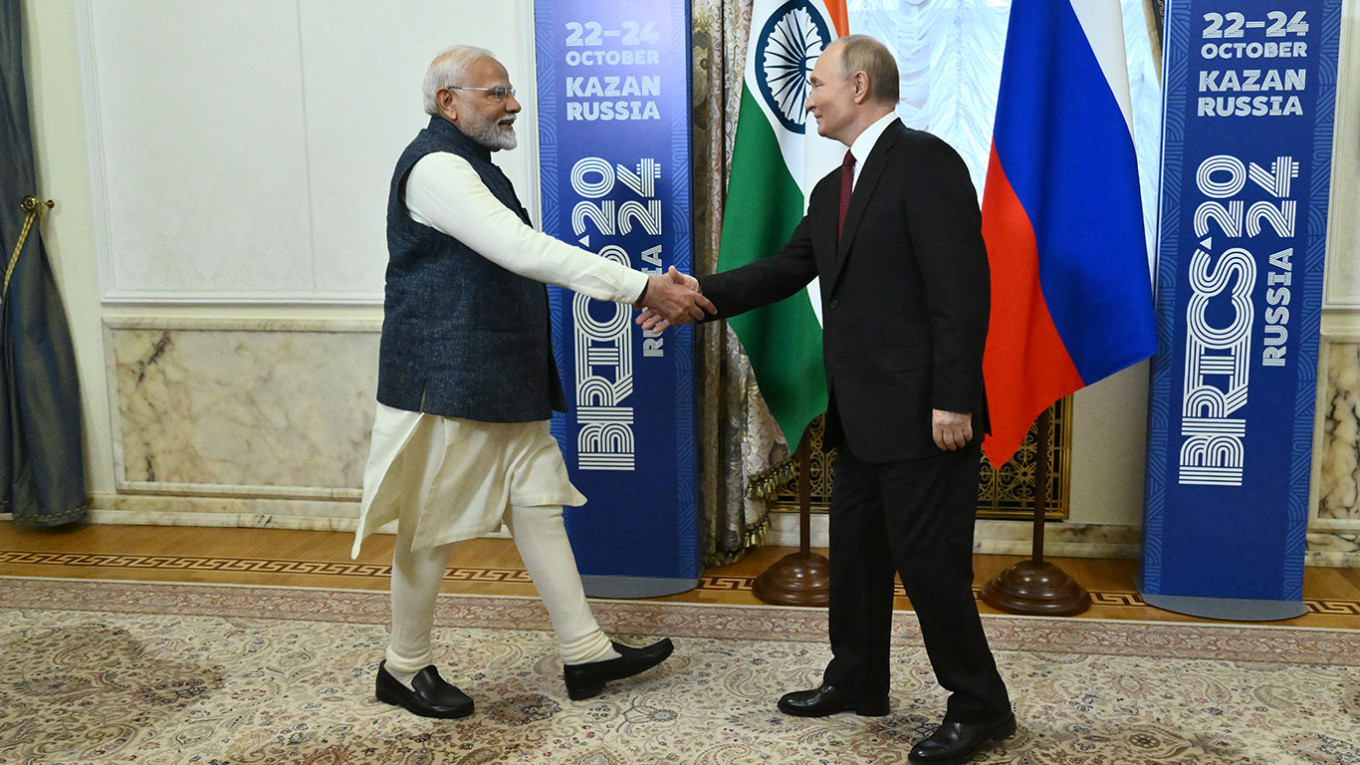
I ask my readers to understand the US Policy on Kashmir. The US Policy is revealed by the fact that no President of the United States visiting India had visited Kashmir.

In 1955, Jawaharlal Nehru spent 16 days in the USSR, covering some 13,000km, on his first official tour to the country as the prime minister of India

Jawaharlal Nehru and Indira Gandhi at the Rustavi Metallurgical Plant in 1955 (Rustavi, Georgia USSR)
After India’s independence from the British Rule, Kashmir stands as a true witness of the glorious saga of Indo-Soviet Friendship over the last seven decades.
In June 1955, Nehru visited USSR. During the visit, a joint communique was issued, which emphasized on international peace, the security of small states. Both the Prime Ministers of India and USSR felt that “it is essential to dispel fear in all possible ways.
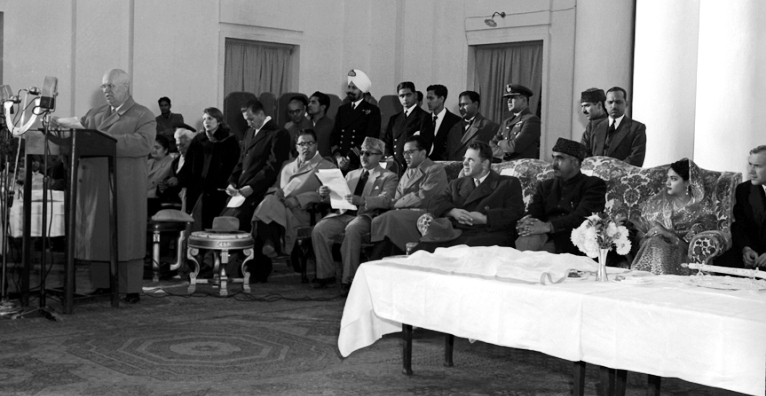
Nikita Sergeyevich Khrushchev speaking at the reception held in honor of visiting Soviet delegation at Srinagar.
The visit of the Soviet leaders, Khrushchev and Bulganin to India in November-December 1955 laid the foundation of a new era in Indo- Soviet relationship. Besides Delhi, the Soviet leaders visited Calcutta, Madras, Agra, Coimbatore, and Srinagar. Crowds greeted them with thunderous applause.
Khrushchev assured Indian leadership that USSR would ever come forward to help India at times of difficulties. Speaking at a luncheon given in their honor at the Agra Circuit House by the Governor of Uttar Pradesh, KM Munshi on November 20, 1955, he stressed that “Soviet people were not just fair-weather friends of India but their friendship would last forever even when the weather frowns or the storm blows strong”.
“Let it be known to the world”, he added, “that the friendship between the two people would continue to grow even at times of difficulties and crises”. Bulganin echoed the same rhetoric in his reply to the civic address given by Coimbatore Municipal Council on November 27, 1955. He concluded his speech with “long live the great republic of India. Long live the people of India. Long live the friendship between the people of India and the Soviet Union, Hind-Russi Bhai Bhai and Hind-Russia Sahodare.” (The Hindu, November 28, 1955)

Bakshi Ghulam Mohammad showing members of visiting Soviet delegation examining Kashmir handicrafts in Srinagar. The delegation included NA Bulganin, USSR Prime Minister, Khrushchev, Member, Presidium of the Soviet and many others
The Soviet leaders expressed the support to the Indian stand on the Kashmir issue explicitly during the course of talks and speeches.
Speaking at the reception given by Bakshi Ghulam Mohammad, Prime Minister of Kashmir, in honor of visiting Soviet dignitaries on December 10, 1955, Khrushchev expressed the unequivocal support to the Indian stand on Kashmir.
“Kashmir is one of the states of the Republic of India that has been decided by the people of Kashmir,” he said. “It is a question that the people themselves have decided”. He viewed the Kashmir problem as an imperialist design and severely criticized the “divide and rule” policy of the imperialist powers. He held the view that the Kashmir problem emerged because some states tried to take advantage of the situation to foment animosity between India and Pakistan- countries recently emancipated from colonial oppression.
They reiterated the same on December 14, 1955, in a press conference in Delhi. Bulganin said, “As for Kashmir during our visit there we saw how greatly the Kashmirians rejoice in their national liberation, regarding their territory as an integral part of India”.
On their return to Moscow in the last week of December, they submitted their reports on the visit to the Supreme Soviet of the USSR. In his report, Bulganin argued that “on the pretext of supporting Pakistan on the Kashmir question certain countries are trying to entrench themselves in this part of India in order to threaten and exert pressure on areas in the vicinity of Kashmir. The attempt was made to sever Kashmir from India artificially and convert it into a foreign military base.”
But, Bulganin said, the people of Kashmir are emphatically opposed to this imperialist policy. “The issue has been settled by the Kashmiris themselves; they regarded themselves as an integral part of India. We became profoundly convinced of this during our meetings with the people in Srinagar, and in our conversations with the Prime Minister of Kashmir, G M Bakshi, and his colleagues”. Further, he said, “The Soviet government supports India’s policy in relations to the Kashmir issue because it fully accords with the interests of peace in this part of Asia. We declared this when we were in Kashmir; we reaffirmed our declaration at a press conference in Delhi on December 14 and we declare it today”.
Khrushchev in his speech said, “in Kashmir, we were convinced that its people regarded its territory as an inalienable part of the Republic of India. This question has been irrevocably decided by the people of Kashmir”
In pursuit of this policy, the Soviet Union opposed the draft resolution co-sponsored by Great Britain, the US, Australia, and Canada on February 14, 1957. The resolution was unacceptable to India. The resolution noted the importance the Security Council “attached to the demilitarization of the state of Jammu and Kashmir preparatory to the holding of a plebiscite”, and “Pakistan’s proposal for the use of a temporary United Nations force in connection with demilitarization”. The Security Council held “that the use of such a force deserved consideration”. (Year Book of the United Nations, 1957 pp 81) The Security Council authorized its president, Gunnar Jarring to visit India and Pakistan to bring about demilitarization or further the settlement of the dispute.

Prime Minister of Kashmir Bakhshi took the visiting USSR leaders in a huge boat procession in the river Jhelum. Thousands of people were on either side of the river banks to greet them in December 1955.
On February 18, 1957, the Soviet delegate, Sobolev, proposed amendments to the above-mentioned resolution. He argued “the situation in Kashmir has changed considerably since 1948 when the Security Council had first called for a plebiscite. The people of Kashmir had settled the question themselves and now considered their territory an integral part of India”. (UN Security Council Official Records, 12th session, 768thmeeting, February 14, 1957) In his resolution, the Soviet delegate deleted the reference to “the use of a temporary UN force in connection with demilitarization” in Kashmir. After his amendments were rejected by the other Security Council members on February 20, 1957, Sobolev vetoed the Western-sponsored resolution. He justified the veto by alleging that the resolution, as it stood, favored Pakistan. (Security Council Official Records, 773rd meeting, February 20, 1957) He told the Security Council that in his government’s opinion the Kashmir question had in fact already been settled by the people of Kashmir.
In March 1959, a Soviet delegation led by A Andrew visited Kashmir to demonstrate that the Soviet Union regarded Kashmir as an Indian state. Shortly after his arrival in Srinagar, Andrew described Kashmir as “the most beautiful place of the world” and reiterated that the Soviet Union regarded “Jammu and Kashmir as an integral part of the Indian Republic”. Pointing out that Kashmir “is not far from the Southern frontier of the Soviet Union” he declared that, “in your struggle, we are your comrades”. (Security Council Official Records, 773rd meeting, February 20, 1957, pp 46.)
Next month Indian leader Karan Singh was received by leading Soviet leaders including Khrushchev in Moscow. Khrushchev welcomed the guest from “friendly India” and reiterated the Soviet support to the Indian policy in Kashmir. Karan Singh thanked Soviet leader for his unequivocal support to India and said that the Soviet policy towards Kashmir was well known.
When the UN Security Council met on April 27, 1962, to discuss the Kashmir issue, Soviet delegate, Platen Morozov, gave India total and unequivocal support. In his speech, Morozov declared, “the question of Kashmir, which is one of the states of the Republic of India and forms an integral part of India, has been decided by the people of Kashmir themselves. The people of Kashmir have decided this matter in accordance with the principle of democracy and in the interest of strengthening relations between the people of this region.”

Russian premier Kosygin with his counterparts from India and Pakistan at Tasknet – Ayub Khan and Lal Bahadur Shastri.
When the Security Council met again on June 21, 1962, the representative of Ireland, supported by the British representative, introduced a resolution. It was quite clear, according to Morozov, the ‘principal aim’ of the draft resolution was holding of a plebiscite and this would be nothing but ‘flagrant interference’ in the domestic affairs of India. (Year Book of the United Nations, 1962 pp 130)
Morozov urged the Council to reject the Irish resolution insisting it was basically in line with US dictates. When the Irish resolution was put to vote on June 23, 1962, the Soviet representative vetoed it. He declared that the question of holding a plebiscite in Kashmir was ‘dead and outdated’ and the Kashmir question had been solved ‘once for all’.
USSR supported Indian stand on Kashmir at various fora. It also supported Nehru’s decision to withdraw the special status to J&K and to integrate the state into the Indian Union. At a reception at Rumanian embassy in Moscow, Khrushchev declared that the Soviet Union extends its ‘full support’ to the integration of Kashmir to the Indian Republic, insisting his attitude towards Kashmir remains unchanged.

Sadar-i-Riyasat, Dr. Karan Singh, his wife and Indira Gandhi with the visiting USSR delegation in Srinagar.
When the Kashmir question came before the Security Council in February 1964, the Soviet representative, Federenko, reiterated his country’s view that the question of Kashmir had already been settled ‘once for all’. He also supported the Indian contention that a Security Council resolution would aggravate the situation and thought that the Indian proposal for a ministerial meeting to discuss the communal question and no-war treaty constituted a ‘realistic approach’ in the interests of peace in Asia and the whole world. (Year Book of The United Nations, 1964 pp 131)
After the unexpected departure of Khrushchev from the Soviet political scene, it appeared that USSR attitude towards Kashmir issue underwent change. However, the Soviet envoy to India, Benediktov assured New Delhi in October 1964 that the Soviet attitude towards Kashmir had remained unchanged. During her visit to Moscow, Indian Prime Minister, Indira Gandhi was assured by the new Soviet Prime Minister Alexi Kosygin that the Soviet support for India’s policy in Kashmir had remained unchanged and that Moscow regarded “Kashmir as an integral part of India”. (Patriot, 24 October 1964)

My special thanks to Dr. Debidatta Aurobinda Mahapatra for his article.
At the UN Security Council, where this matter was raised several times, Soviet delegate attempted to maintain a non-partisan view, though he referred to the Indian state of J&K. He blamed the current conflict on those ‘forces which are trying to disunite and set against each other the states that have liberated themselves from the colonial yoke’ and those ‘which are pursuing the criminal policy of dividing peoples so as to achieve their imperialist and expansionist aims’. The friendship with USSR nevertheless stood in good stead when it came to the support of India on points of objection that India raised.
On October 25, 1965, the Indian Foreign Minister, Swaran Singh objected to Pakistan Foreign Minister, ZA Bhutto’s reference to the internal situation in Kashmir and held that it was India’s internal affairs. He held that the opposite view was a deviation from the agreed agenda and thus walked out in protest. USSR had shown support to the Indian interpretation that the Council’s deliberations should be only on “questions directly connected with the settlement of the armed conflict, i.e. complete ceasefire and withdrawal of armed personnel. It had also abstained from voting on the resolution adopted by the Council on November 5, 1965. (Year Book of the United Nations, 1965, pp 171) The resolutions failed to resolve the crisis.

Visiting USSR delegation with Prime Minister Bakhshi’s cabinet with Sadar-i-Riyasat seen in the center.
I thank Russian Prime Minister Vladimir Putin and the people of Russia for their consistent support to India in defending Kashmir.
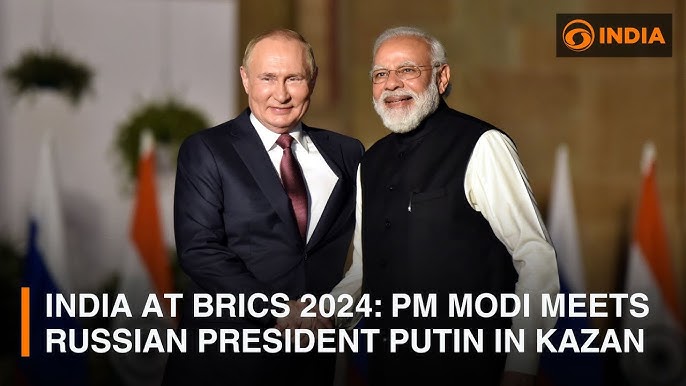
Russia Backs India On J&K Move, Says Change In Status Within Constitution

Moscow said that the “change in the status of the state of Jammu and Kashmir and its division into two Union Territories has been carried out within the framework of the Constitution of the Republic of India.”

Russia is a consistent supporter of the normalization of relations between India and Pakistan.
Russia has backed India’s moves on Jammu and Kashmir, saying that the changes are within the framework of the Indian Constitution, even as it urged India and Pakistan to maintain peace.
In response to a question during its press briefing on Friday, the Ministry of Foreign Affairs of Russia said Moscow expects that India and Pakistan “will not allow aggravation of the situation in the region due to the change by New Delhi in the status of the state of Jammu and Kashmir”.
Moscow said that the “change in the status of the state of Jammu and Kashmir and its division into two Union Territories has been carried out within the framework of the Constitution of the Republic of India”.
It hoped that the two sides will “not allow a new aggravation of the situation in the region as a result of the decisions”.
Russia is a consistent supporter of the normalization of relations between India and Pakistan.
“We hope that the differences between them will be resolved by political and diplomatic means on a bilateral basis in accordance with the provisions of the Shimla Agreement of 1972 and the Lahore Declaration of 1999,” the Foreign Office said.
Relations between India and Pakistan have been tensed ever since New Delhi revoked the special status of Jammu and Kashmir and divided it into two Union Territories — J&K and Ladakh earlier this week, in order to bring in faster development and security to the state.
(This story has not been edited by NDTV staff and is auto-generated from a syndicated feed.)


 Whole Dude - Whole Spirituality