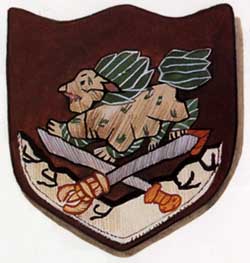
India is not a US ally for the US-India relations exist as a trilateral partnership with Tibet

“Strange bedfellows” is an idiom that refers to an unlikely or unusual combination of people, ideas, or things who are associated or working together, often in a way that is unexpected. It suggests that the individuals or entities involved would not typically be seen together.

The phrase “strange bedfellows” is adapted from a line in Shakespeare’s play, The Tempest: “Misery acquaints a man with strange bedfellows”. It describes an unusual or unexpected alliance or combination of people or things, often due to circumstances. The original context in The Tempest is a jester finding shelter with a monster, but the phrase has evolved to have a metaphorical meaning, like in the common saying “Politics makes strange bedfellows”.

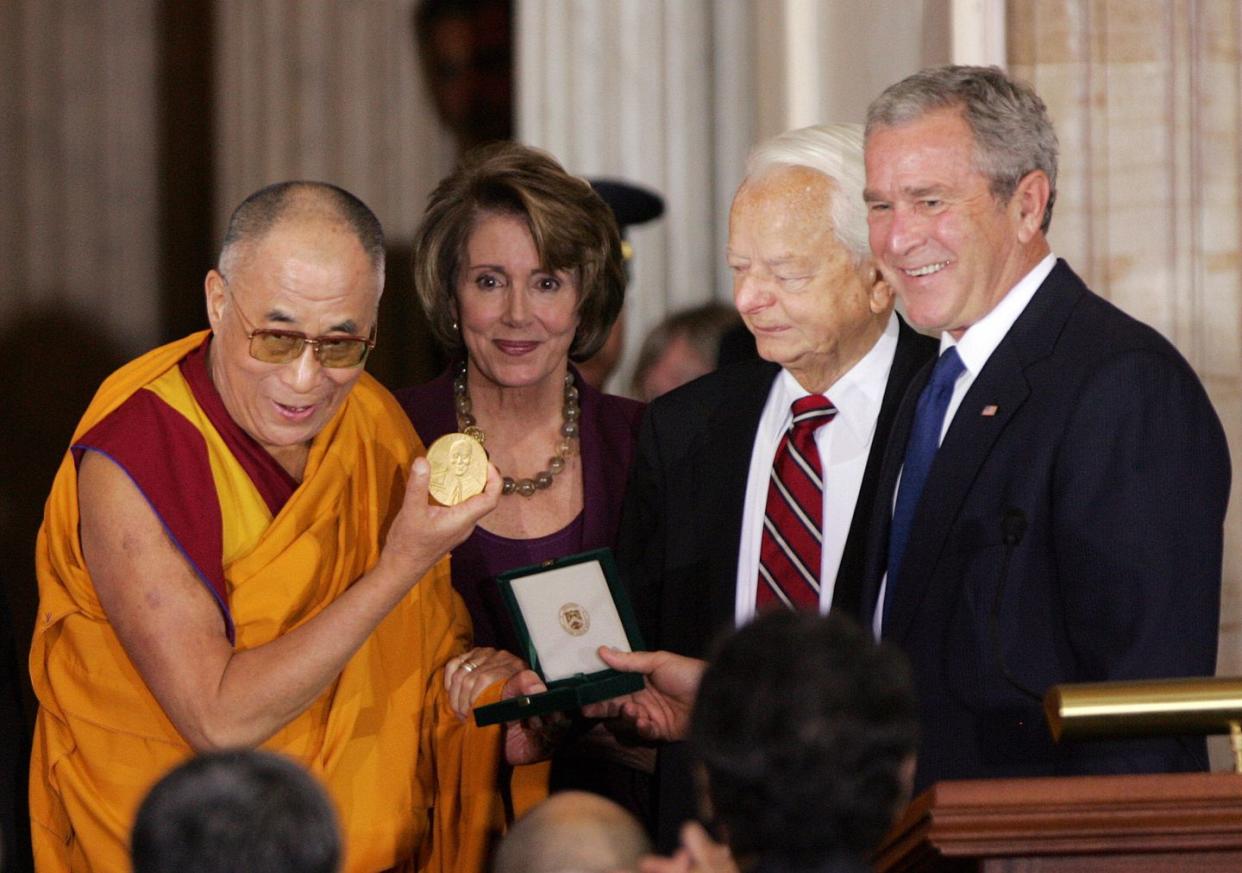
It is entirely true to claim that India is not a US ally. Soon after India’s independence in 1947, the US and the UK joined forces to instigate an unprovoked attack to occupy Kashmir illegally while India was waiting with patience to obtain the merger of Kashmir with India using the due process. The First Kashmir War of 1947-48 provides the evidence to show that India is not a US ally.
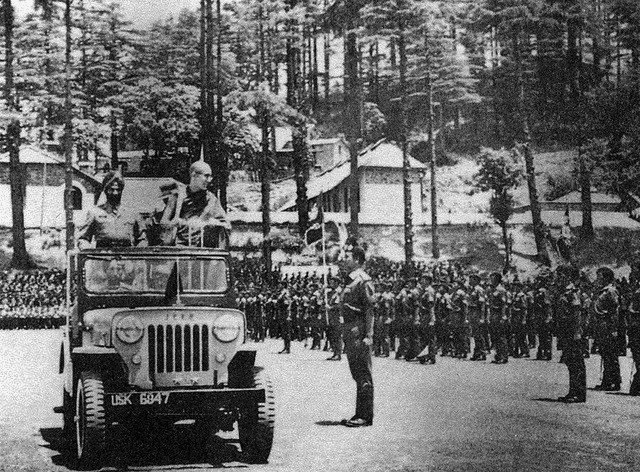
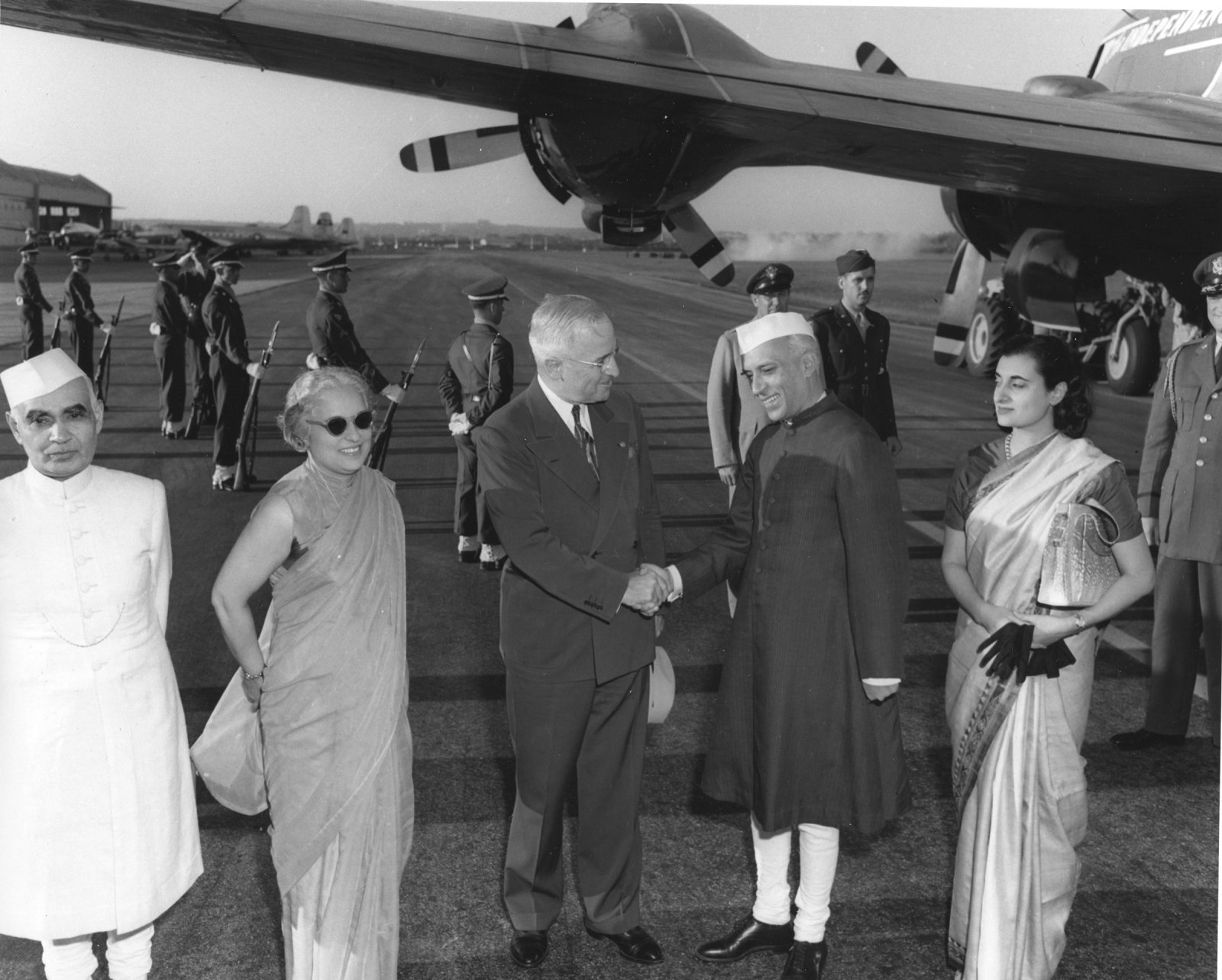
But, it is indeed true to claim that the convergence of interests govern relationships between nations. In 1949, with the birth of Communist China on October 01, the Indian Prime Minister visited the US seeking friendship to formulate a trilateral relationship between the US, India, and Tibet. Since then, the relationship has endured strictly as a trilateral relationship and not a bilateral relationship.

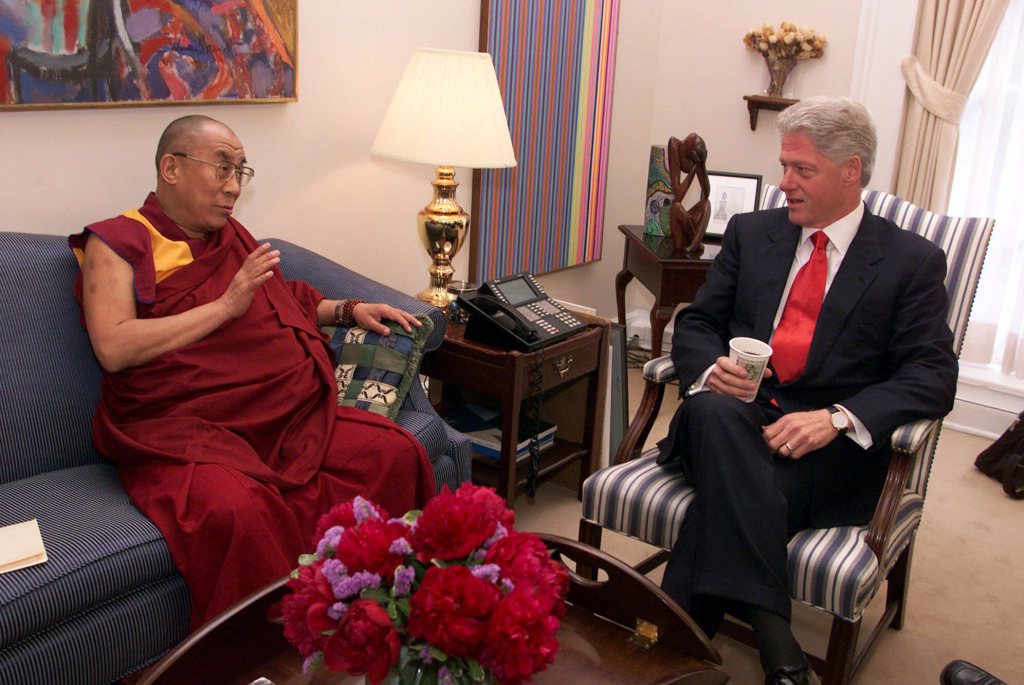


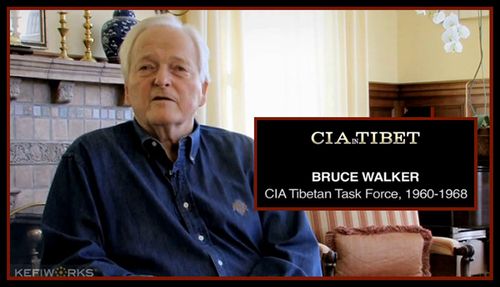


If the third partner of this relationship is excluded for any reason, the US-India relationship just dissipates as the US continues to support the plan to dismember the Republic of India in the name of advocating the human rights of Muslims, Sikhs, and other ethnic minorities of India.
Rudra Narasimham Rebbapragada,
Special Frontier Force – Establishment No. 22 – Vikas Regiment

India Is Not a U.S. Ally—and Has Never Wanted to Be
BY ALYSSA AYRES
JUNE 21, 2023 6:00 AM EDT
Ayres is dean and professor of history and international affairs at the George Washington University Elliott School of International Affairs, and adjunct senior fellow for India, Pakistan, and South Asia at the Council on Foreign Relations. She is the author of Our Time Has Come: How India is Making Its Place in the World.
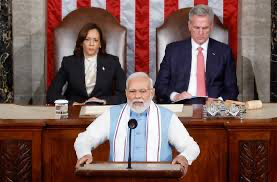
With Indian Prime Minister Narendra Modi slated for a June 22 State Visit to Washington, India will, if briefly, be front-page news in the United States. Since President Clinton ended a chill in U.S.-India relations almost 25 years ago, successive American and Indian administrations across political parties have worked to strengthen ties. So it’s fair to ask: how robust is this relationship today? As with the blind men and the elephant, the answer varies. Is India a bad bet, or is it, as the White House senior Asia policy official said recently, “the most important bilateral relationship with the United States on the global stage”?
Despite careful nurturing by Washington over the years, many aspects of U.S. ties with India remain challenging. Bilateral trade has grown tenfold since 2000, to $191 billion in 2022, and India became the ninth-largest US trading partner in 2021. But longstanding economic gripes persist, meriting 13 pages in the 2023 Foreign Trade Barriers report from the U.S. Trade Representative. Multilaterally, India’s role in the fast-consolidating “Quad” consultation (comprised of the United States, Australia, India, and Japan) has brought shared purpose to Washington and New Delhi, both of which harbor concerns about China. But New Delhi also champions alternative non-Western groupings like the BRICS, and it remains outside bodies central to U.S. diplomacy like the U.N. Security Council and the G7.
Today, U.S.-India cooperation spans defense, global health, sustainable development, climate, and technology, among other things. But deep differences remain, including concerns in Washington about India’s democratic backsliding under Modi, and India’s failure to condemn the Russian invasion of Ukraine. In other words, the U.S.-India relationship has been transformed over the past quarter-century, but that transformation has not delivered a partnership or alignment similar to the closest U.S. alliances
This shouldn’t surprise anyone. India is not a U.S. ally, and has not wanted to become one. To see relations with rising power India as on a pathway that culminates in a relationship like that the United States enjoys with Japan or the United Kingdom creates expectations that will not be met. Indian leaders across parties and over decades have long prioritized foreign policy independence as a central feature of India’s approach to the world. That remains the case even with Modi’s openness to the United States.
For India’s first Prime Minister, Jawaharlal Nehru, protecting his country’s hard-fought independence was a guiding principle for foreign policy. Speaking in the Indian Parliament in March 1951, Nehru noted that “By aligning ourselves with any one Power, you surrender your opinion, give up the policy you would normally pursue because somebody else wants you to pursue another policy.” Twelve years later, evaluating his country’s nonalignment policy in the pages of Foreign Affairs, Nehru went on to observe that it had not “fared badly,” and that “essentially, ‘non-alignment’ is freedom of action which is a part of independence.”
PhotoQuest/Getty Images)
For famously allied Washington, nonalignment in the 20th century was a bridge too far; in 1956 then-Secretary of State John Foster Dulles proclaimed that neutrality was “an obsolete conception…immoral and shortsighted.” It did not help matters that the United States had entered an alliance with India’s arch-rival Pakistan in 1954, and sided with the Pakistani military in the bloody civil war that gave birth to Bangladesh in 1971. Nor, too, when Indian Prime Minister Indira Gandhi signed a “Treaty of Peace, Friendship, and Cooperation” with the USSR in 1971, definitively tilting India toward the Soviet Union even as the United States had tilted toward Pakistan.
Especially since the end of the Cold War, Indian leaders have sought to improve ties with Washington, but not by curtailing India’s independent approach to foreign policy. Former Prime Minister Atal Bihari Vajpayee proclaimed India and the United States “natural allies” in a landmark 1998 speech in New York. Yet this was perhaps more a term of art than a call for an alliance as it occurred against the backdrop of India’s nuclear tests, underscoring New Delhi’s willingness to upset global nuclear nonproliferation conventions, which it never joined. Indian Prime Minister Manmohan Singh, whose 10 years at the helm greatly improved Indo-U.S. relations, pursued a civil-nuclear agreement with Washington and ushered in new cooperation in high technology, defense, and clean energy. But his government too defended its principle of “strategic autonomy” as a redline for its foreign policy even as it moved closer to Washington than ever in the past. Defending the civil-nuclear deal with Washington before Parliament in 2008, Singh twice asserted that “Our strategic autonomy will never be compromised.”
In important ways, Prime Minister Modi represents a break with India’s past, most notably in his emphasis on India’s Hindu, rather than syncretic and secular, cultural heritage. But his approach to the United States remains consistent with the history of his country’s foreign policy independence.
Modi has deepened ties with the United States, now across three U.S. presidents, through increased partnership in defense, in advanced technology, and in energy, just to name a few, as well as through moments of high symbolism, like his 2015 Republic Day invitation to former President Barack Obama, the first time an American president joined this day honoring India’s constitution. Even so, Modi has leaned into the United States while leaning into many other partners around the world. The Modi government invokes a Sanskrit saying, the “world is one family” (vasudhaiva kutumbakam), to frame Indian diplomacy. This approach has been termed “multialignment,” a theory of seeking positive ties as far and as widely as possible, without seeing contradictions in this approach.
In practice, New Delhi has carefully managed its relationships with Saudi Arabia as well as Iran; with Israel as well as the Palestinian Territories; with the United States as well as Russia. India’s G20 presidency this year encapsulates this orientation, with its Sanskritic theme of “One Earth, One Family, One Future,” and its twin efforts to lead the forum for the world’s 20 largest economies while self-consciously presenting itself as the “Voice of the Global South.”
With this history in mind, it’s easier to perceive that momentum in the U.S.-India relationship does not necessarily imply a path to a formal alliance or mutual defense treaty. In the United States, the mental model for positive international cooperation defaults to seeing “ally” as the ultimate endpoint. For India, that suggests a curtailment of independence. And with India, even as cooperation becomes more extensive than ever in the past, consequential differences remain.
For many in Washington, the dramatic growth of coordination and joint activities under the Quad consultative group fills a growing need in light of China’s rise, encompassing subjects as far-flung as maritime security, infrastructure, climate and resilience, vaccines, technology standards, and higher education—all underlining Indian strategic convergence with the United States in the Indo-Pacific. Yet strategic convergence there does not mean everywhere: Russia’s invasion of Ukraine and its year-long war has elicited a tepid tut-tut from New Delhi, while India has escalated its purchases of cheap Russian oil at a time Washington seeks to isolate Moscow.
On closer examination this foreign policy independence and desire to define its own path so prized by India may offer lessons for U.S. foreign policy. The unipolar moment has passed; in its place we have more actors with their own perspectives, and a rising China with global ambitions and its own priorities increasingly shaping the priorities of others. The array of special relationships and alliances nurtured by the United States over decades are still in place, but many of these are now inflected by divergences with Washington. Take Turkey, or France, or Egypt, Pakistan, or Brazil. These U.S. allies do not always see their alliance relationship with Washington as barriers to taking decisions that contradict U.S. preferences. Indeed, President Emmanuel Macron too invokes “strategic autonomy.”
It’s here that India’s ambivalence offers a lens onto the world Washington is likely to encounter on a growing scale. In this world of more diffused power—a world with more diverse actors taking more distinctive foreign policy steps—partnerships and even alliances marked by substantial disagreements might be the new normal. In fact, managing ambivalence may be the central skill for American foreign policy in the years ahead.




 Whole Dude - Whole Spirituality