
Prayers for the Fulfillment of the Law by enacting a new holiday tradition
Easter 2025 will be observed on Sunday, April 20. Easter is a “movable feast” that is always held on a Sunday between March 22 and April 25.

Easter this year happens after March Equinox full Moon (Sunday, April 13), which is the first full Moon to occur after the ecclesiastical spring equinox (March 21) and is therefore known in the Christian calendar as the “Paschal Full Moon.”

Easter always occurs on the first Sunday after the Paschal Full Moon. Specifically, Easter is celebrated on the first Sunday following the full Moon that occurs on or just after the ecclesiastical spring equinox (March 21).

The ecclesiastical spring equinox (in other words, the date observed by the Christian Church) has a set date of March 21. The first full Moon to occur after March 21 rises on Sunday, April 13, this year. Therefore, Easter will be observed on the subsequent Sunday, which is Sunday, April 20, 2025.

Note that the equinox date used by the Christian Church (the “ecclesiastical” date) is different from the astronomical date of the equinox, which can change from year to year. In 2025, the astronomical date of the equinox was Thursday, March 20. This discrepancy between the astronomical equinox date and the Church’s observed equinox date can sometimes cause confusion, as it did in 2019, when the full Moon and the astronomical equinox occurred on the same day—Wednesday, March 20. According to the formula above, this should have meant that Easter would be observed on Sunday, March 24. However, because the Church observes the equinox on March 21, the full Moon technically did not occur “on or just after” the equinox, meaning that the next full Moon would determine Easter’s date instead. Thus, in 2019, Easter was held on Sunday, April 21, after the full Moon on Friday, April 19.

The word “Paschal,” which is used in the ecclesiastical (Christian church) calendar, comes from “Pascha,” a transliteration of the Aramaic word meaning “Passover.”
In reference to the full Moon, Paschal refers to the date of the full Moon determined many years ago as the 14th day of a lunar month. Ancient calculations (made in a.d. 325) did not take into account certain lunar motions.
So, the Paschal Full Moon is the 14th day of a lunar month occurring on or after March 21 according to a fixed set of ecclesiastical calendar rules, which does not always match the date of the astronomical full Moon nearest the astronomical spring equinox.
He is Risen!

Easter is the most important feast day in the Christian calendar.

Regularly observed from the earliest days of the Church, Easter celebrates Christ’s resurrection from the dead, following crucifixion. It marks the end of Holy Week, the end of Lent, and the last day of the Easter Triduum (starting from the evening of Maundy Thursday, through Good Friday, Holy Saturday, and Easter Sunday), as well as the beginning of the Easter season of the liturgical year.
Easter, also called Pascha or Resurrection Sunday, is a festival and holiday commemorating the resurrection of Jesus from the dead.

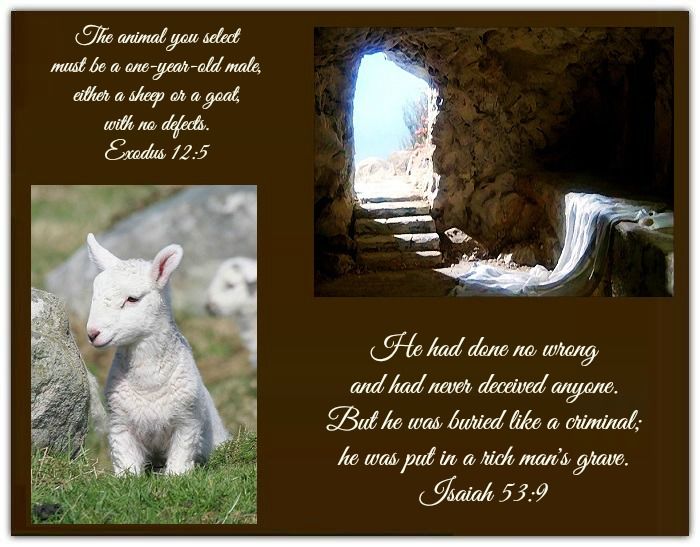
Let’s start with Pascha (Latin) which comes directly from Pesach, the Hebrew word for Passover. Going back to the Hebrew Bible and the story of the first Passover, Moses tells the Israelites to slaughter a passover lamb and paint its blood on their door. The Lord protected the Israelites from death by passing over their doors and would not “allow the destroyer to enter your houses to strike you down” (Exodus: 12:23).
In the New Testament (1 Corinthians 5:7), Apostle Paul connects the resurrected Christ to Passover. He refers to Jesus as the paschal lamb who has been sacrificed for his people’s salvation. Jesus celebrated the Last Supper with his disciples during Passover, so it makes sense that the Feast of the Resurrection is connected with the Jewish holiday. Today, Christians celebrate the “Paschal mystery.”

The word Love does not appear in the Torah (Law) given to the Jews at Mount Sinai. I conducted a study of the holiday traditions of the US and I am totally surprised to note that there is no traditional celebration of the Proclamation of the two Great Love Commandments of Jesus Christ. Jewish Holiday Shavuot celebrates the giving of the Torah (the LAW or Instruction) to the Jews. God gave the Ten Commandments (The Decalogue, The Code of The Ten Words) on the sixth night of the Hebrew month of ‘Sivan’. Shavuot always falls 50 days (Pentecost) after the second night of Passover. The 49 days between Passover and Shavuot are known as ‘Omer’. While Jesus Christ has retained the essence of The Code of The Ten Words; but, He has changed the Operating Principle of the Torah or The Law. Jesus instructs that the Law would be followed by His believers not through the use of force or authority but by simply embracing the equally powerful influence called Love.

I am posting this article to make an open appeal to all the members of the US Congress to pass a decree or law to commence a new tradition in the national life that celebrates the central role of love in developing wholesome human relationships.

Holiday is a day of freedom from labor sanctioned by God, and it is set aside for leisure and recreation to renew man’s relationship with his Creator. I am using the term ‘Whole Holiday’ to recognize a specific day that is set aside by Human Law in recognition of the Divine Law that is conducive to the development of harmonious, or wholesome interpersonal relationships that are essential to promote the health, and well-being of all people. In the US, there are several holidays that are legal and none of them directly address the central issue of developing interpersonal Love relationships.
Christmas holiday is not in remembrance of God’s Law. Jesus Christ established Love as the God’s Greatest Commandment.
Matthew (Chapter 22, verses 37-40), and Mark (Chapter 12, verses 28-31) describe the Commandments of Love: “Love the LORD your God with all your heart and with all your soul and with all your mind and with all your strength. This is the first great commandment. The second is this: ‘Love your neighbor as yourself.’ There is no commandment greater than these. All the Law and the Prophets hang on these two Commandments.”

John, Chapter 13, verse 34 describes the need for neighborly relations among people based upon Love: “A new command I give you: Love one another, as I have loved you, so you must love one another.”
Whole Love – Whole Law – Whole Holiday – Whole Tradition:
In the United States, we have no Law, or a cultural tradition to commemorate the event in which Jesus Christ issued the two great commandments asking people to observe the Law of ‘Whole Love’ which demands, 1. The Love of God with Whole Body, Heart, Mind, and Soul, and 2. The Love of Neighbor as a requirement of God’s Law for man.

I am writing this appeal to ask all the members of the US Congress to approve a new Law to observe the last Wednesday of July as the ‘Whole Love Holiday’. The choice of Wednesday is very appropriate as most other legal holidays are observed on Mondays as a matter of convenience and not for the purposes of obedience to a Divine Law which should be the source and inspiration for the Human Law. The concept of ‘Whole Love’ represents the ‘Whole Law’ that is explicitly pronounced by Jesus Christ as the only Commandment that man must follow and observe in his lifetime. To acknowledge the ‘Whole Law’, to celebrate its pronouncement, we need a new ‘Whole Tradition’ which is reflected by instituting a new ‘Whole Holiday’.

The remembrance of the ‘Love Commandments’, the honoring of its Proclamation and a traditional celebration of ‘Whole Love’ will definitely promote the development of social harmony, is conducive to peaceful enjoyment of life and will establish tranquility in human interactions. We need Wholesome Relations between individuals and between nations to prepare the Whole World for the dawn of the Kingdom of Heaven on Earth.


 Whole Dude - Whole Spirituality